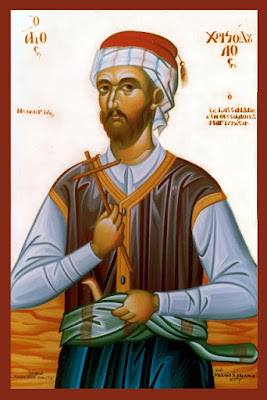
Blessed Christodoulus was born in the village of Kassandra in Halkidiki, Macedonia. He was a young tailor in Thessaloniki during a period of occupation by Ottoman Turks. Seeing local Christians giving in to pressure and proclaiming themselves Muslim, Christodoulus took a cross and went into the streets to encourage Christians, as well as into the coffee shops were the ‘ceremony’ of conversion would take place, and offered them the cross to kiss as a sign of their faith, urging them to recover, repent, and stand strong in the love of Christ. Most courageously, he would make the Sign of the Cross over crowds of Turks as well as the dreaded Janissaries, the most fanatical muslim warriors of all, the elite bodyguard of the Sultan. Janissaries who were themselves once Christian, before being enslaved by the Ottoman emperors as youth.
Enraged by this, the Turks imprisoned and tortured Christodoulus. They urged him to deny the Faith, but in return he urged them to turn away from the false religion of Islam. Driven to an excess of hatred by this, the Turks tortured him gruesomely and then hung him in front of a church in 1777.
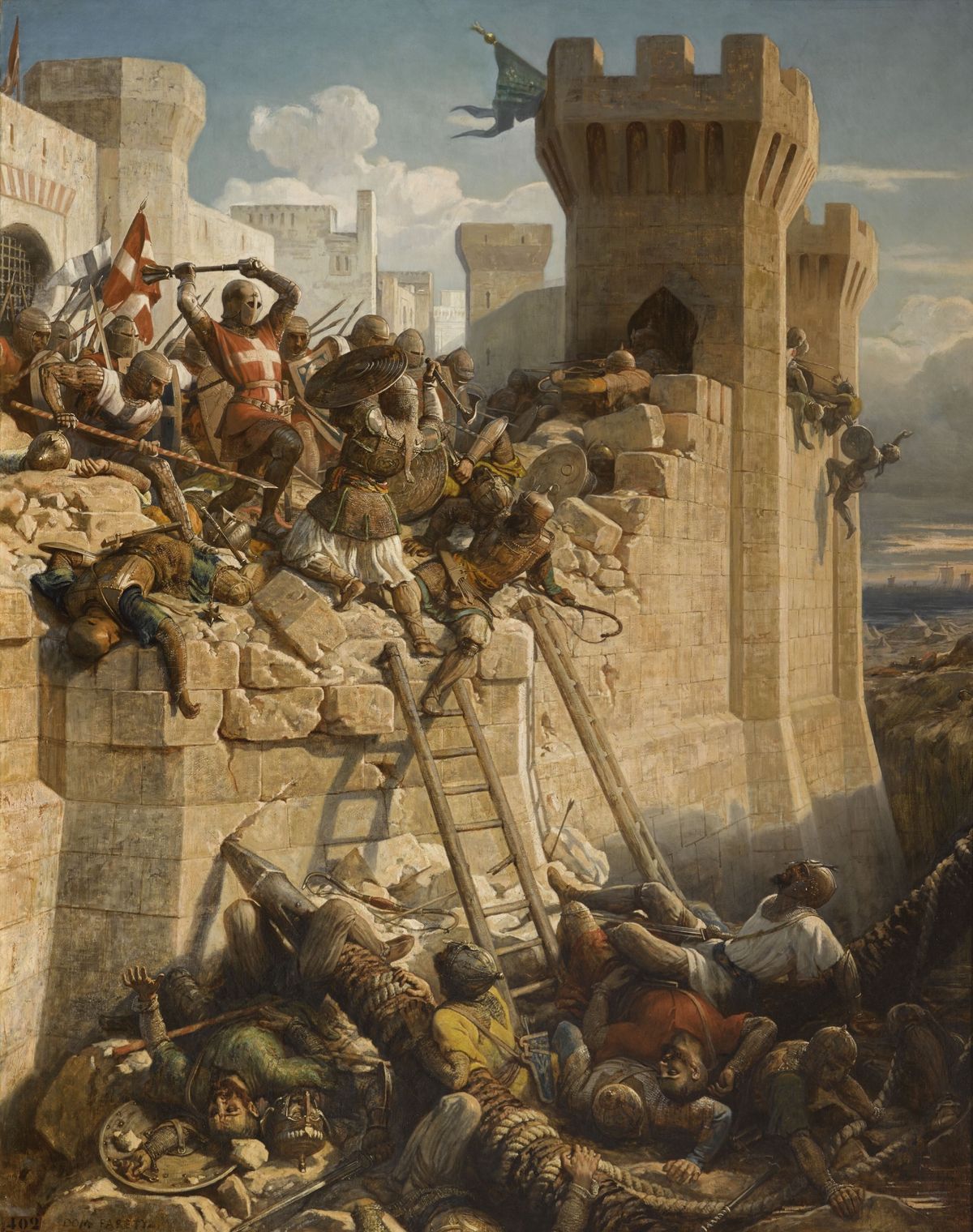
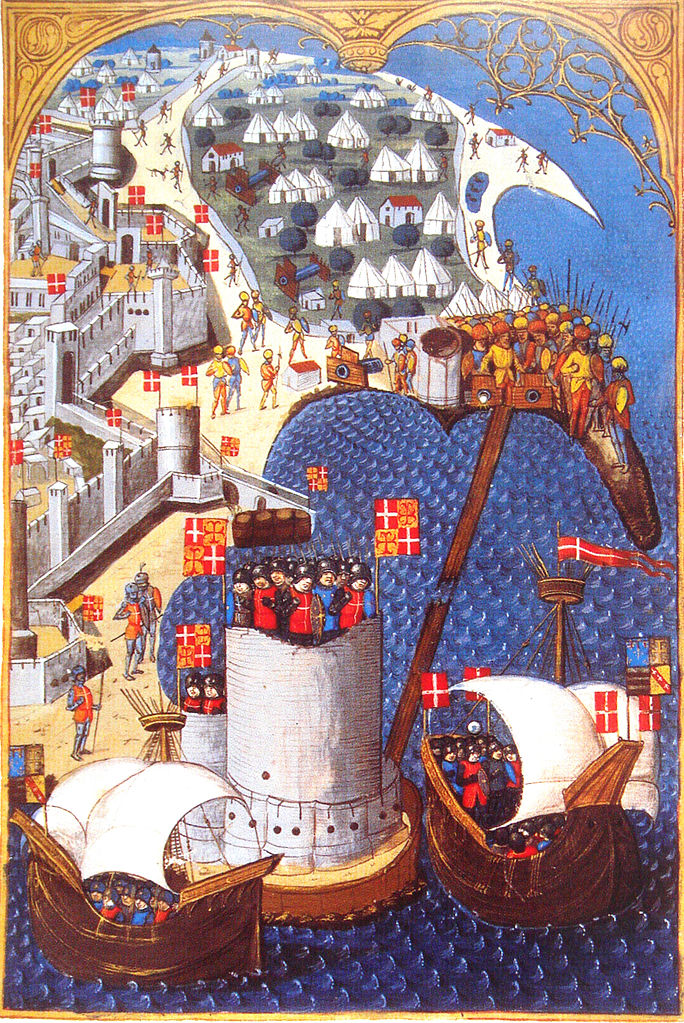
The Siege of Rhodes. Victory over the Turks by the Knights Hospitaller at Rhodes in 1480 through the intercession of Our Lady, final battle 27 July 1480 – commemorated on 28 July:
Constantinople, the capital of the Byzantine Empire, the last remnant of the Holy Roman Empire, fell to the “Scourge of Europe,” the Sultan Mehmet II, in the year 1453. This dire news was almost impossible to believe in the rest of Christendom but, it was sadly true and Constantinople was made into the new seat of the Ottoman Empire.
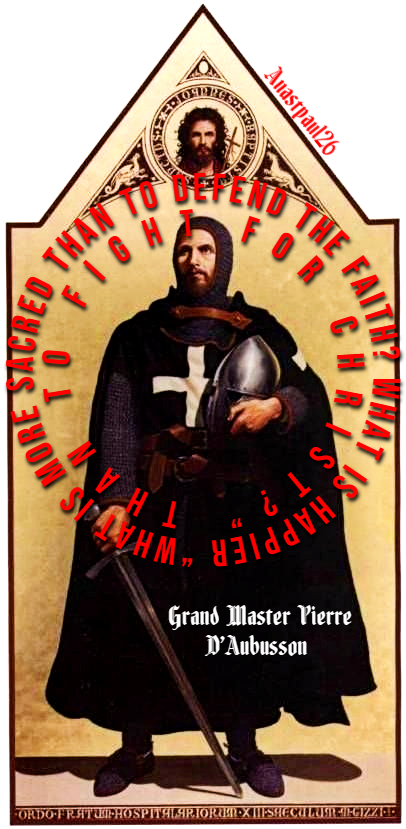
A few short years later, Pierre D’Aubusson was Grand Master of the Hospitallers, the Knights of Saint John, living on the island of Rhodes. He and his Knights were untiring opponents of Islam, sworn to do everything in their power to fight against them. Having made the island of Rhodes their home, the Knights harassed Ottoman shipping lanes and assisted with attacks against the Ottoman Empire.
In the year 1479, D’Aubusson refused to pay tribute to Mehmet in exchange for peace and furthermore, had the audacity to continue harassing the sultan’s shipping lanes. The Grand Master continued to work on the massive fortifications on Rhodes as he awaited the siege of Rhodes that he knew would soon come. His walls were strong but the Grand Master had only a few hundred Knights and about 2,000 natives to defend them.
Mehmet was not intimidated by the Christian defenses on Rhodes, for he had huge cannons and basilisks which had blasted holes in the stout walls of Constantinople. He also had over 70,000 men in his army, and he was determined to wipe out “that abode of the sons of Satan,” as he referred to the Catholic Knights of Rhodes.
The Siege of Rhodes began with a tremendous bombardment on the Tower of Saint Nicholas. Grand Master Pierre D’Aubusson was not intimidated as he asked: “What is more sacred than to defend the Faith? What is happier than to fight for Christ?”
Breaches were eventually made in the walls and the Muslim’s unremittingly attempted to rush through the breaches. Many of the Turks had to be forced to attack the defenses, as their commanders lashed them forward with whips and chains. The Janissaries, however, did not have to be urged, for they were the sultan’s finest troops. They were warriors to the core and advanced over the fallen bodies of their comrades, anxious to cross swords with the Catholic Knights.
Finally, the Tower of Italy began to crumble from the terrific assault, and large breaches opened in the wall. The Bashi-Bazouks and Janissaries rushed into the breach, placing the standard of Islam above the Tower.
On witnessing this act, the Grandmaster rushed into the breach together with a few of his excellent Knights. Howling and raging like madmen, the Janissaries pressed the assault, for the Knights seemed too few to stand against their wave after wave of thousands of elite warriors. Yet, the Grandmaster stood, insensible of any wounds he received in return for the carnage he wreaked among the fanatical Muslim warriors.
Fighting with broken blades and notched axes, the Knights of Saint John continued to hold the breach, cutting down any who approached them, until a huge Janissary rose up and hurled a spear with all his might directly at the Grand Master. Propelled at incredible speed, the sharp steel tip easily pierced D’Aubusson’s breastplate, puncturing a lung. The Grand Master went down beneath a torrent of hacking blades as the Knights struggled to drag his body from the fray.
By his courageous stand D’Aubusson had proven he was at least the equal of any Grand Master in history, but now, he was wounded unto death and could do no more. The siege of Rhodes appeared to be lost as D’Aubusson’s Knights struggled to haul him to safety. Thousands of Jannisaries were rushing into the breach with no-one to stop them and at this point the Knights knew, it would take a miracle to keep Rhodes from being overrun.
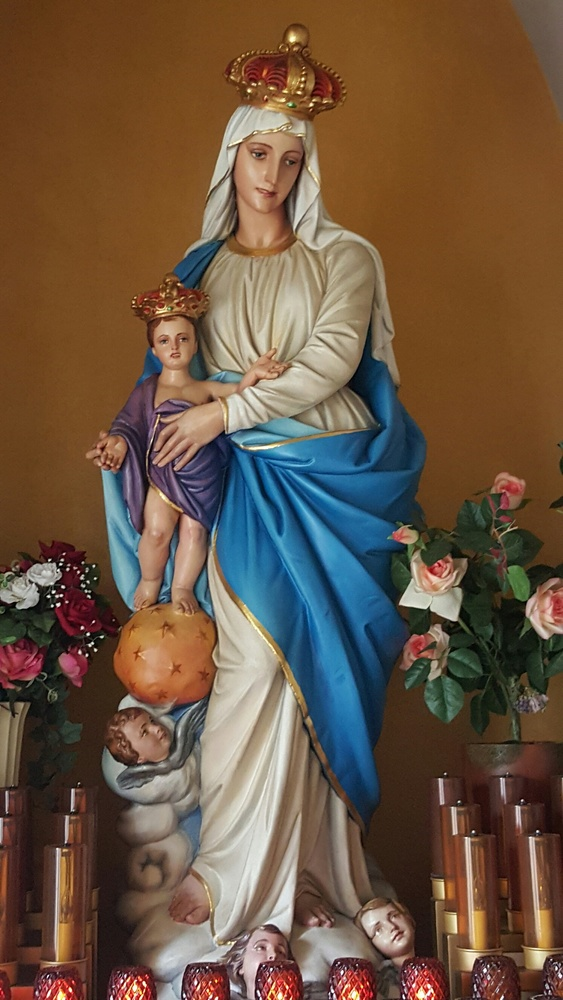
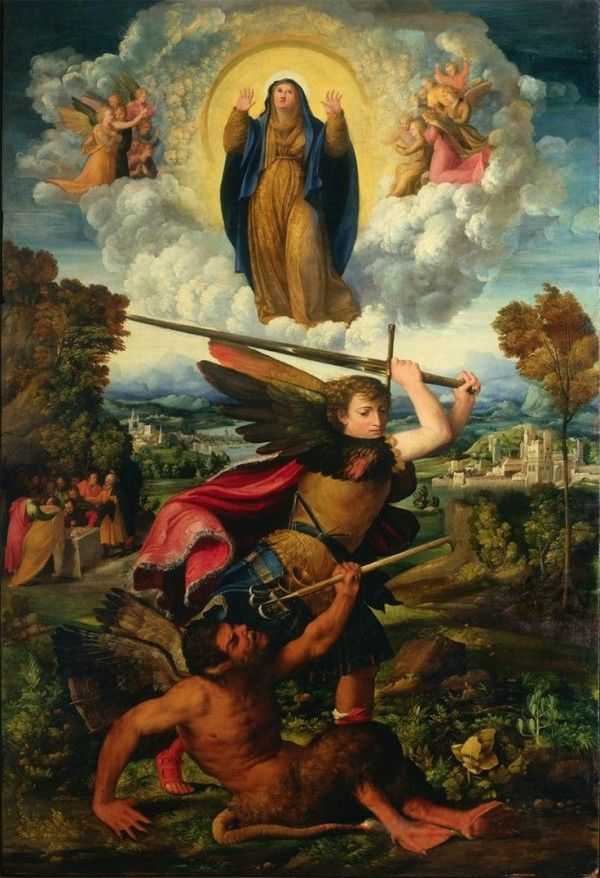
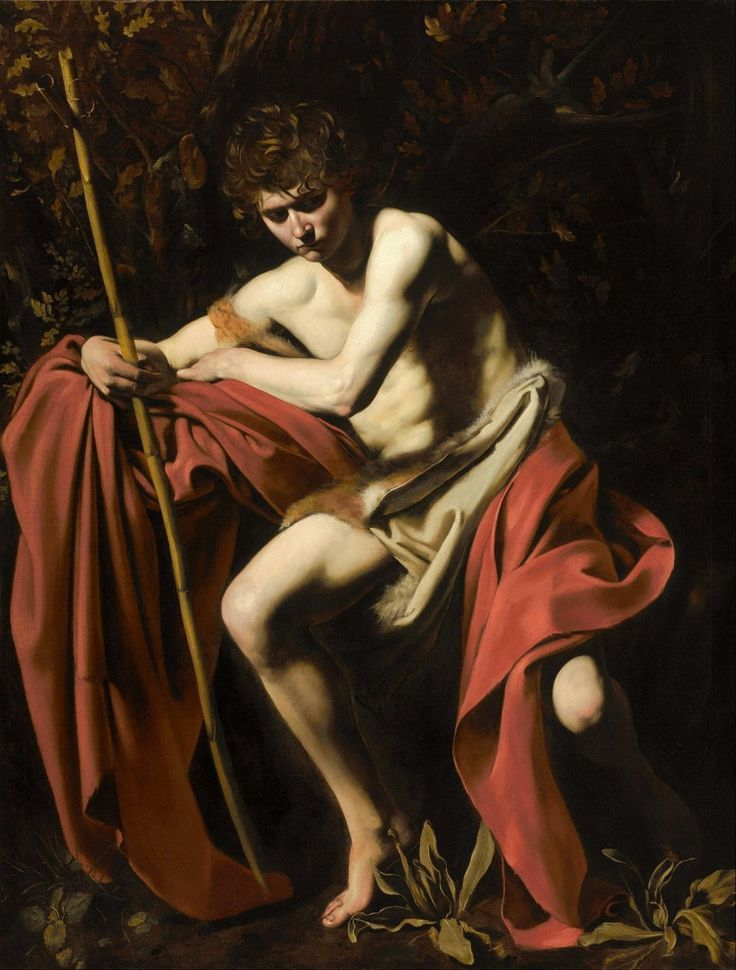
A miracle is exactly what they got. Suddenly there appeared in the sky “a refulgent cross of gold, by the side of which stood a beautiful woman clothed in garments of dazzling white, a lance in her hand and a shield on her arm, accompanied by a man dressed in goatskins and followed by a band of heavenly warriors armed with flaming swords.” It was the glorious figures of Saint John the Baptist, the Patron Saint of the Order of Saint John, Saint Michael the Archangel brandishing his unsheathed sword and the Queen of Heaven, the Blessed Virgin Mary herself, dressed in battle array!
The Turks turned at the sight and ran in panic-stricken flight. Thousands fell as they fled, cut down and pursued through the breaches by the Knights of Rhodes and their heavenly allies. Chased all the way back to their camp, it was now the defeated Muslims who suffered the insult of having their sultan’s own standard captured.
The siege of Rhodes had ended, and Grandmaster D’Aubusson later recovered of his wounds. He had lost 231 of his Knights but that was nothing compared to the thousands upon thousands of Muslim warriors who lay dead upon his shores.
It was in the year of Our Lord 1480 that the Knights of Rhodes had gained this signal victory over the Turks, by the help of the Blessed Virgin, whom the Knights regarded ever after as Our Lady of Victory. They renewed their dedication to her who had appeared on the walls during the siege of Rhodes holding a lance in her hand to defend them, bringing with her Saint Michael the Archangel and a heavenly army. She, the Patroness of the Sovereign and Military Order of Hospitallers, had turned the formerly obstinate enemy, who retired in disorder, to lose the greater part of their army. Thanks BE to Our Lady of Victory, the all-conquering sword of Mehmet II had shattered upon the walls of Rhodes!
St Acacius of Miletus
St Arduinus of Trepino St Botwid of Sudermannland St Camelian of Troyes St Celsus of Rome Bl Christodoulos Bl Davíd Carlos-Marañon St Eustathius of Galatia St Pope Innocent I (Died 417) St Irene of Cappadocia Bl John Soreth St José Caselles-Moncho Bl José Melchór García-Sampedro Suárez Bl Josep Castell-Camps St Longinus of Satala St Lucidius of Aquara St Lyutius Bl Manuel Segura-López St Nazarius of Rome
Martyred in the Spanish Civil War – Thousands of people were murdered in the anti-Catholic persecutions of the Spanish Civil War from 1934 to 1939.
Martyrs of Fernán Caballero – 14 beati: Fourteen Claretian clerics who were martyred together in the Spanish Civil War. – 28 July 1936 in Fernán Caballero, Ciudad Real, Spain. Bl Antolín Astorga Díez Bl Enrique Serra Chorro Bl Gregorio Charlez Ribera Bl Joan Ayats Plantalech Bl Joan Bover Teixidor Bl Joan Costa Canal Bl José Aurelio Calleja de Hierro Bl José Gutiérrez Arranz Bl Josep Camí y Camí Bl Josep Martí Coll Bl Lluis Casanovas Vila Bl Lorenzo Arribas Palacio Bl Manuel Collellmir Sentíes Bl Miguel Léibar Garay Bl Narcís Felíu Costa Bl Pedro Alonso Fernández Bl Pelagi Ayats Vergés Bl Pere Vilar Espona Bl Primitivo Sandín Miñambres Bl Ramon Gros Ballbé Bl Vicente Toledano Valenciano
Our Morning Offering – 28 July – “Month of the Most Precious Blood”
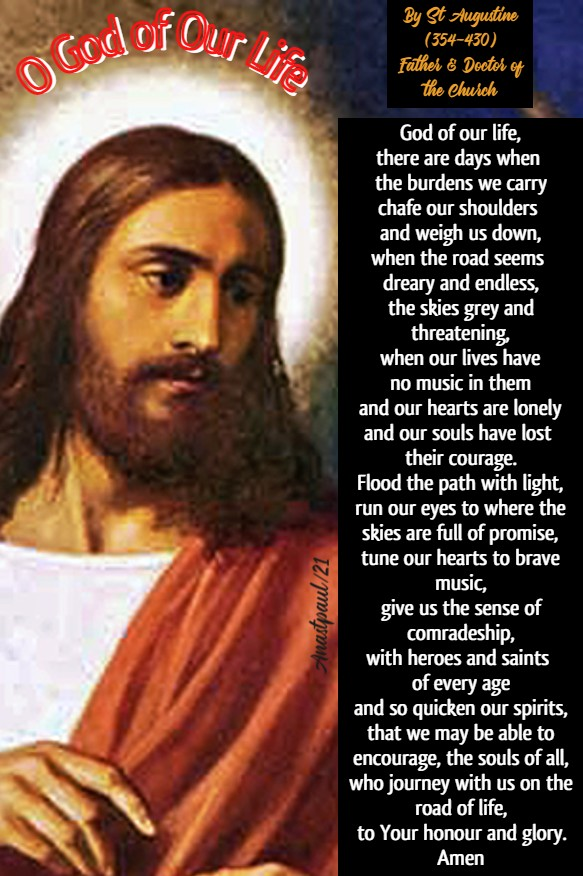
O God of Our Life By St Augustine (354-430) Father & Doctor of the Church
O God of our life, there are days when the burdens we carry chafe our shoulders and weigh us down, when the road seems dreary and endless, the skies grey and threatening, when our lives have no music in them and our hearts are lonely and our souls have lost their courage. Flood the path with light, run our eyes to where the skies are full of promise, tune our hearts to brave music, give us the sense of comradeship, with heroes and saints of every age and so quicken our spirits, that we may be able to encourage, the souls of all, who journey with us on the road of life, to Your honour and glory. Amen
But you will be delivered up by your parents and brothers and relatives and friends; and some of you they will put to death. And you will be hated by all for My name’s sake; yet not a hair of your head shall perish. By your patience you will win your souls.
Luke 21:9-19
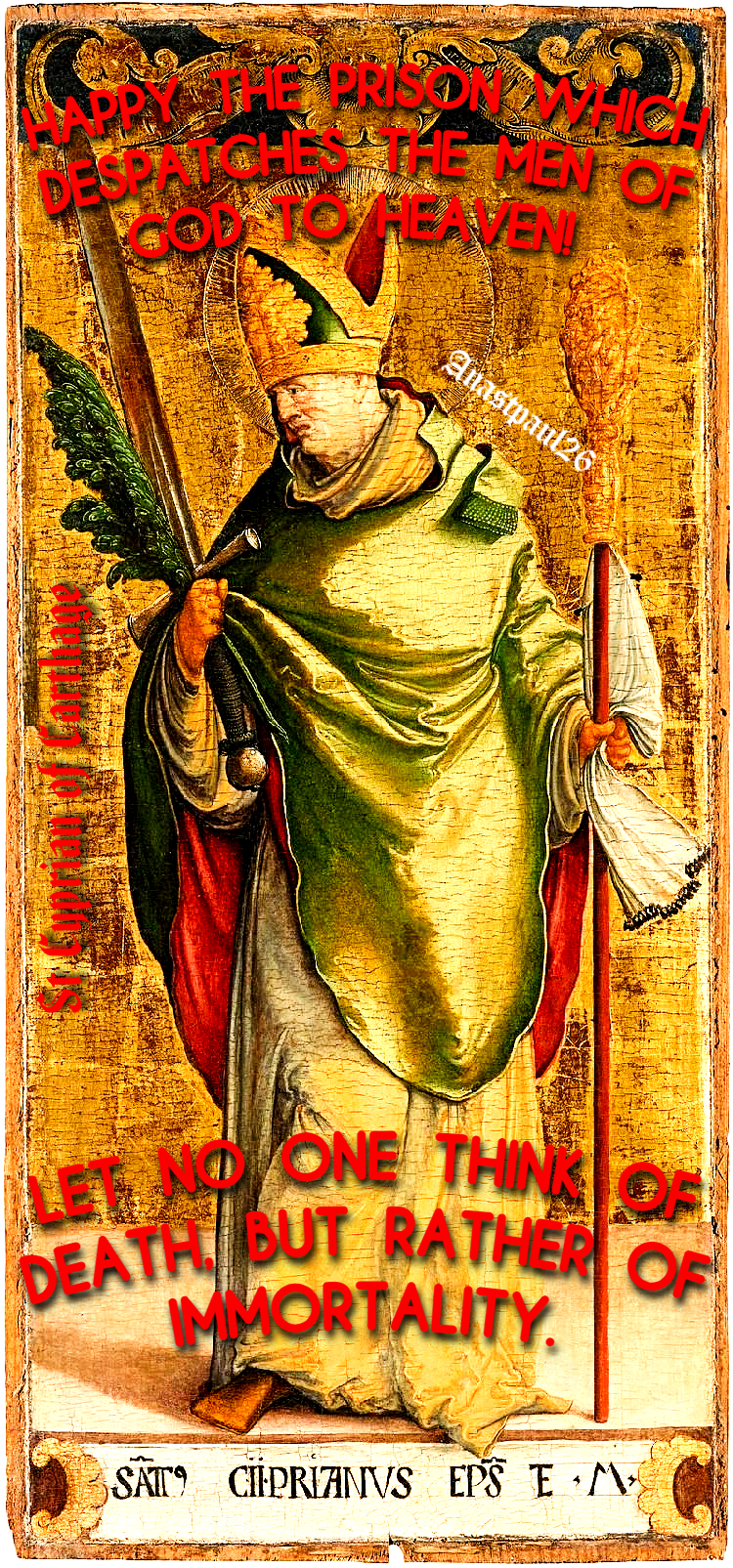
REFLECTION – Persevere with strength and constancy in witnessing to divine grace … ; press on to receive the crown in the power of the Spirit. The Lord will be your protector and guide, as he has said: “Lo, I am with you always, to the close of the age”. Happy the prison which despatches the men of God to heaven!
Let there be nothing in your hearts and minds now except God’s words. It is by these that the Holy Spirit has all along strengthened you for suffering. Let no one think of death, but rather of immortality; do not think of the passing pain but of everlasting glory, as it is written: “Precious in the eyes of the Lord is the death of his faithful”. Again, when scripture speaks of the sufferings which consecrate the martyrs to God … “Though in the sight of men they were punished, their hope is full of immortality! They will govern nations and rule over peoples, and the Lord will reign over them for ever”. When you reflect that you will be judges and will reign with Christ the Lord, you must rejoice. In the light of the joy that is to come, you must trample on present sufferings.
The Lord made himself a model of all this. He taught us that no one can come to his kingdom except those who followed him on his way, when he said: “He who loves his life will lose it. And he who hates his life in this world will keep it for eternal life”, Saint Paul, too, exhorts us that if we wish to attain the Lord’s promises, we should imitate the Lord in everything: “We are children of God,” he says, “and if children, then heirs, heirs of God and fellow heirs with Christ, provided we suffer with him in order that we may also be glorified with him”.
PRAYER – Remember Lord, Your solemn Covenant, renewed and consecrated by the Blood of the Lamb, so that Your people may obtain forgiveness for their sins and continued growth by grace. May the Blessed Virgin, the Mother of Christ, our Treasure, intercede for our salvation. We make our prayer through Jesus Christ Your Son, in the unity of the Holy Spirit, one God with You Father, now and forever, amen.
Quote/s of the Day – 28 July – “Month of the Most Precious Blood” – Readings: Ps 78:11; 78:12; 78:10, Ps 78:1, Wis 10:17-20, Luke 21:9-19
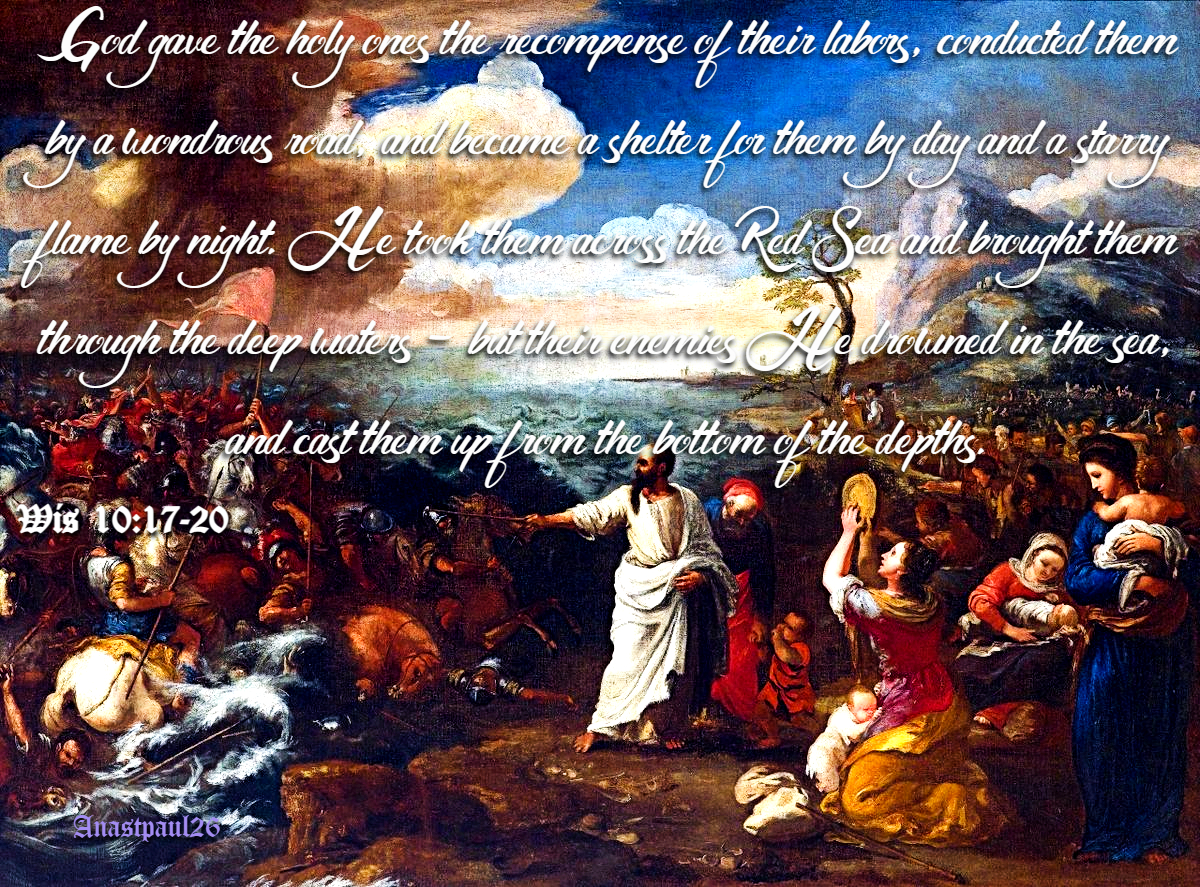
God gave the holy ones the recompense of their labors, conducted them by a wondrous road, and became a shelter for them by day and a starry flame by night. He took them across the Red Sea and brought them through the deep waters – but their enemies He drowned in the sea, and cast them up from the bottom of the depths.
Wis 10:17-20
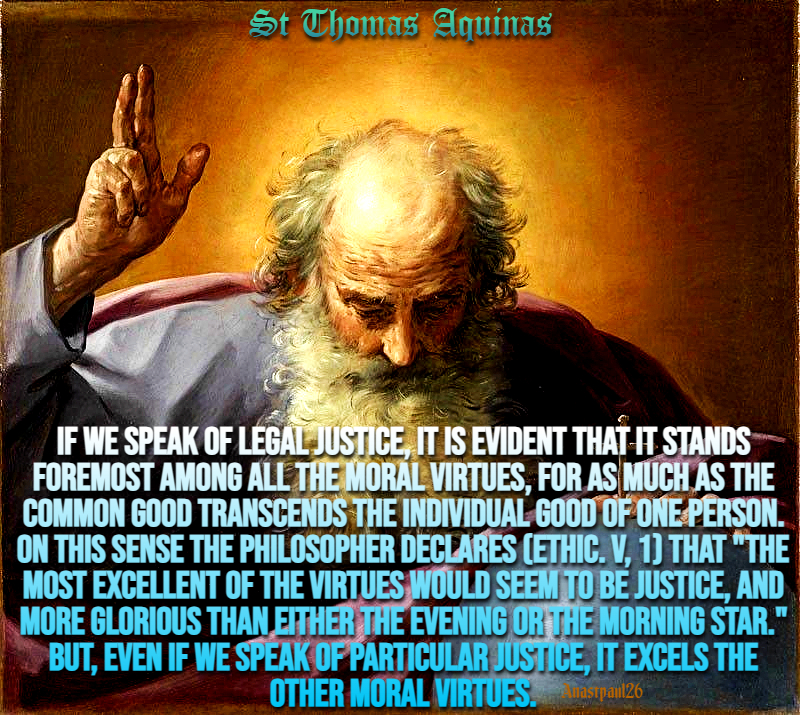
If we speak of legal justice, it is evident that it stands foremost among all the moral virtues, for as much as the common good transcends the individual good of one person. On this sense the Philosopher declares that “the most excellent of the virtues would seem to be justice, and more glorious than either the evening or the morning star.” But, even if we speak of particular justice, it excels the other moral virtues for two reasons. The first reason may be taken from the subject, because justice is in the more excellent part of the soul, viz. the rational appetite or will, whereas the other moral virtues are in the sensitive appetite, whereunto appertain the passions which are the matter of the other moral virtues. The second reason is taken from the object, because the other virtues are commendable in respect of the sole good of the virtuous person himself, whereas justice is praiseworthy in respect of the virtuous person being well disposed towards another, so that justice is somewhat the good of another person.
St Thomas Aquinas (Summa Theologica, Question 58 – Justice)
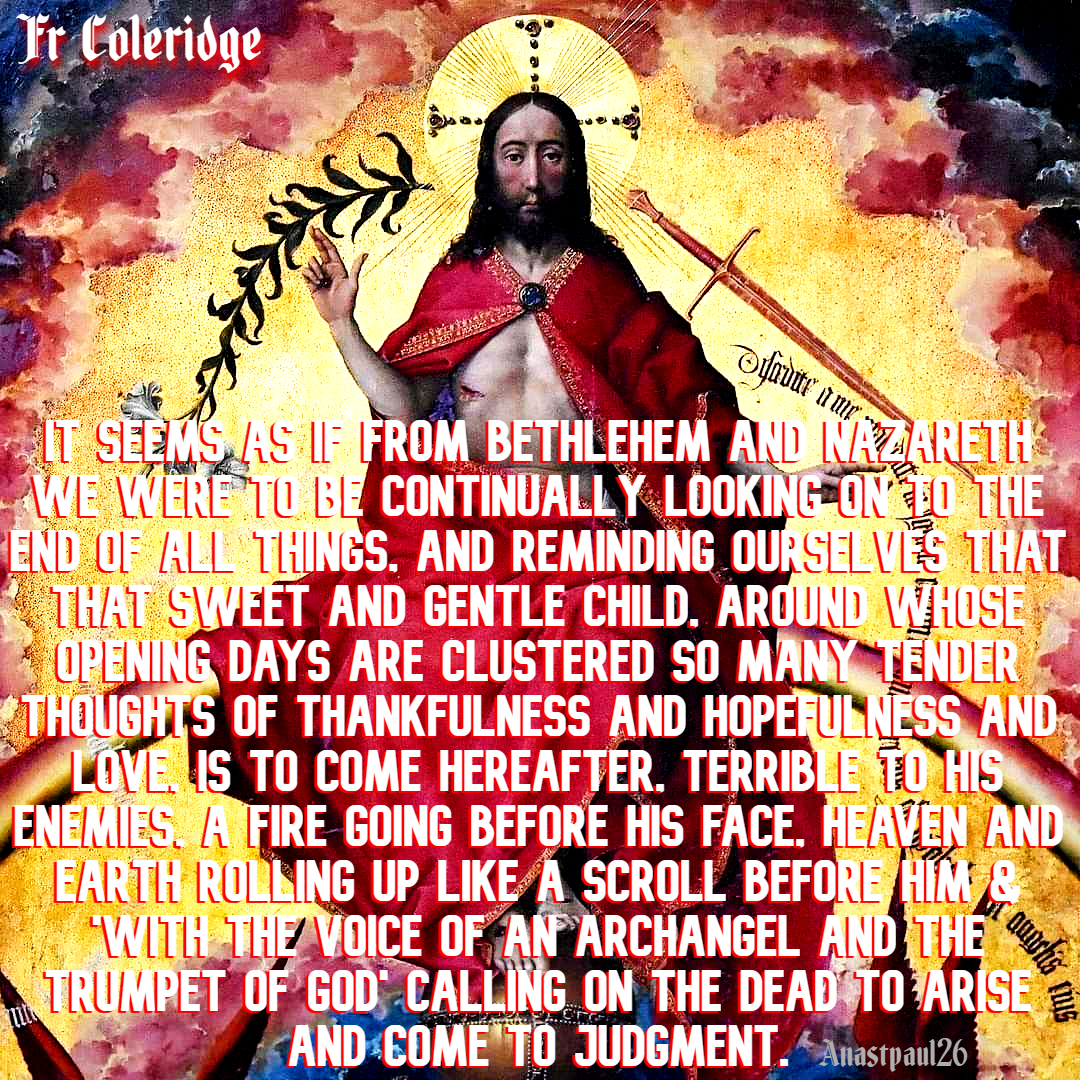
It seems as if from Bethlehem and Nazareth we were to be continually looking on to the end of all things, and reminding ourselves that that sweet and gentle Child, around Whose opening days are clustered so many tender thoughts of thankfulness and hopefulness and love, is to come hereafter, terrible to His enemies, a fire going before His face, Heaven and earth rolling up like a scroll before Him, & ‘with the voice of an Archangel and the trumpet of God’ calling on the dead to arise and come to judgment.
Fr Coleridge SJ. 1822 -1893 (The Return of the King)
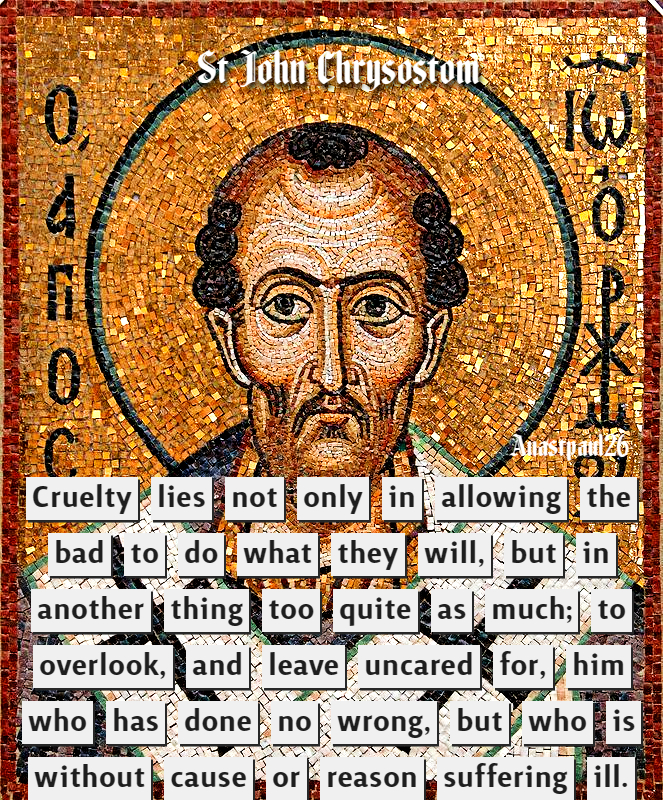
Cruelty lies not only in allowing the bad to do what they will, but in another thing too quite as much; to overlook, and leave uncared for, him who has done no wrong, but who is without cause or reason suffering ill. For tell me; were any one to gather together wicked men from all quarters, and arm them with swords, and bid them go about the whole city, and massacre all that came in their way, could there be anything more like a wild beast than he? And what if some other should bind, and confine with the utmost strictness those whom that man had armed, and should snatch from those lawless hands them, who were on the point of being butchered; could anything be greater humanity than this?
St John Chrysostom (Homily 16 on Matthew)
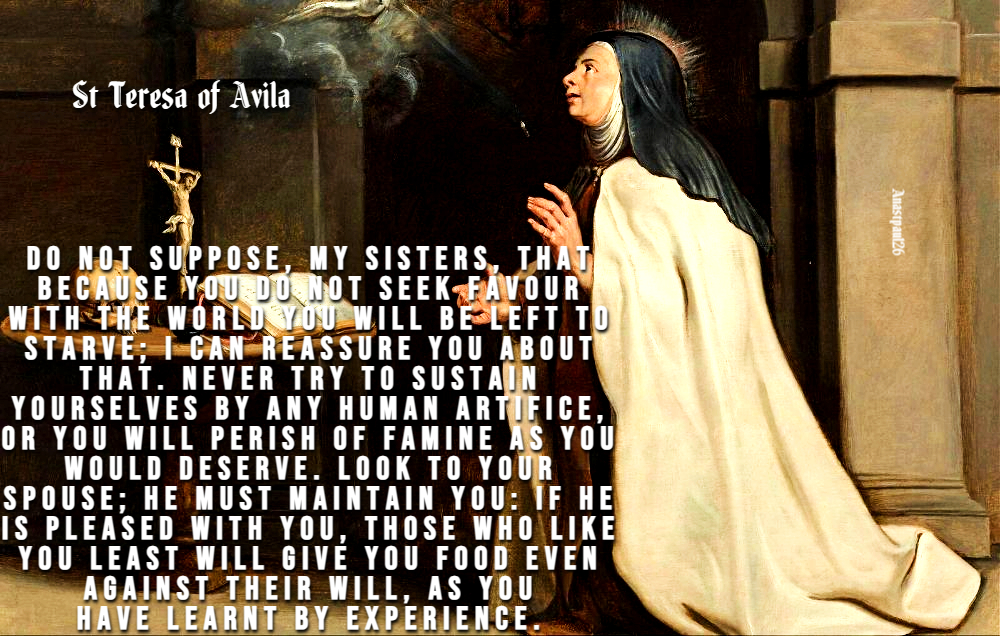
Do not suppose, my sisters, that because you do not seek favour with the world you will be left to starve; I can reassure you about that. Never try to sustain yourselves by any human artifice, or you will perish of famine as you would deserve. Look to your Spouse; He must maintain you: if He is pleased with you, those who like you least will give you food even against their will, as you have learnt by experience.
St Teresa of Avila (The Way of Perfection)
Oh grateful and delightsome service of God, whereby man is made truly free and holy! Oh sacred condition of the religious servant, which maketh man equal to the Angels, well-pleasing unto God, terrible to evil spirits, and acceptable to all faithful ones! Oh service to be embraced and ever desired, in which the highest good is promised, and joy is gained which shall remain for evermore!
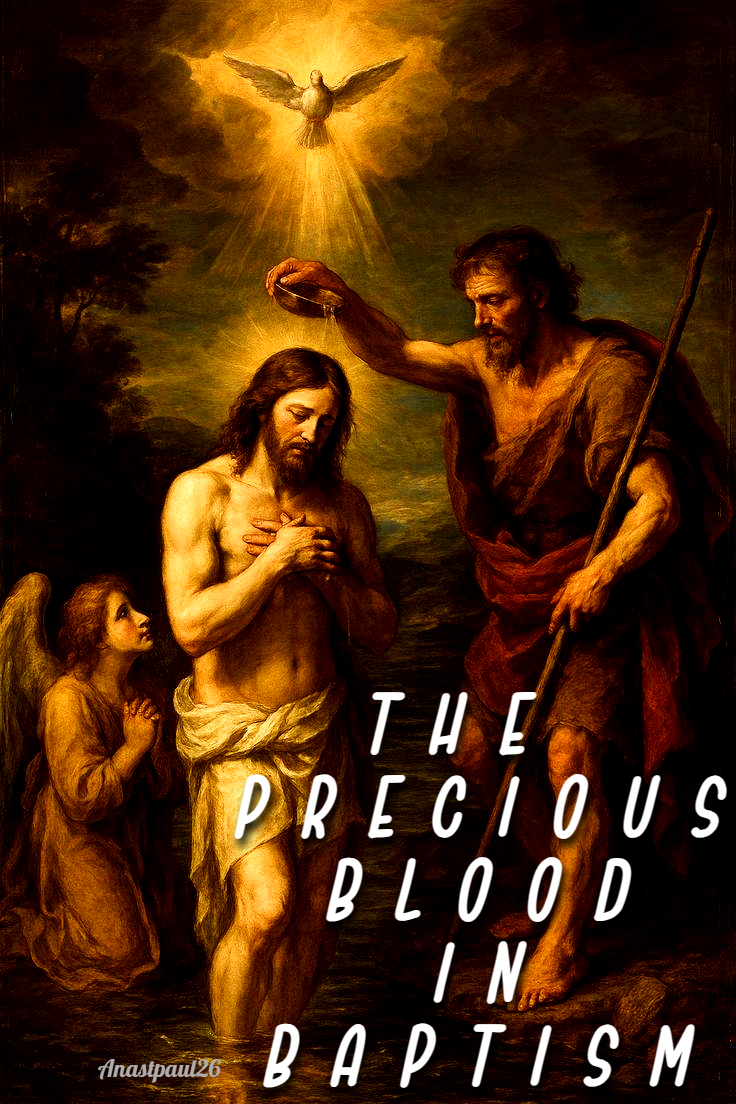
In Baptism the Precious Blood washes away from the soul of the new-born child, or of the adult who approaches the sacrament in good dispositions, the stain of original sin. This privilege extends to all, whether within the Church or outside of it, who are validly baptised with water, and the words prescribed and the intention on the part of him who administers it to do that which the Catholic Church does in the baptism of her children. Thus through the power of the Precious Blood hundreds and thousands of little children are enabled to see the face of God forever in heaven.
It is not merely the absence of what is hateful to God that is the result of Baptism. The soul of the baptised child receives a share of all the perfections and graces won for us by the Precious Blood. It is not merely cleansed, but sanctified. It is not colourless like water, but red with the charity of which the Precious Blood is the sign and symbol. It is filled with all the gifts of the Holy Ghost, the virtues of faith, hope and charity are poured into it. It is beautiful exceedingly in God’s sight, for it has a supernatural likeness to Him.
This beauty remains in the soul of all baptised persons until they commit a mortal sin. It goes on increasing with every action done for God. Nothing can take it away from us except a deliberate or grave act of disobedience to His holy law. Pray for a continually increasing sense of the incomparable beauty of baptismal innocence.



You must be logged in to post a comment.