Posted in Uncategorized

Notre-Dame-de-Gray / Our Lady of Gray, France (1602) and Memorials of the Saints – 30 July

Notre-Dame-de-Gray / Our Lady de Gray, France (1602) – 30 July:
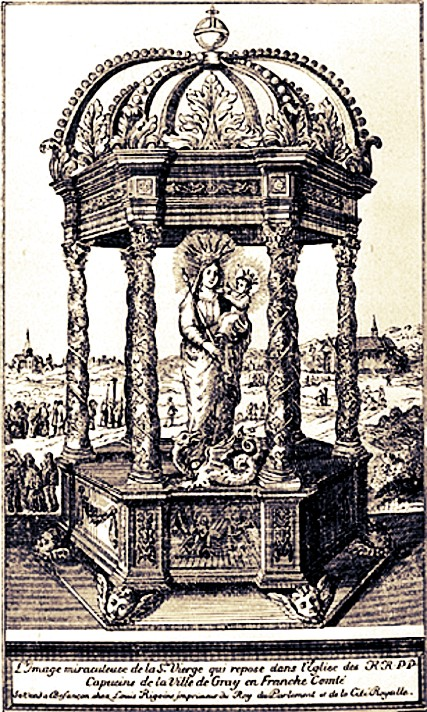
The Shrine of Notre-Dame-de-Gray, or Our Lady of Gray, is located near Besancon in Northern France near Franche-Comte. The Statue of Our Lady of Gray is made of an oak tree from Montaigu, has a dark wooden colour and is only 14.5 centimeters tall. It is much honoured in the country and there are many miracles and graces granted to petitioners that are attributed to Our Lady’s intercession at this shrine.

About five centuries ago, on a hill near Montaigu, a pious person placed a small statue of the Blessed Virgin Mary upon an old oak tree. The tree itself is believed to date from the time of the Druids and crested one of the hills in the Diocese of Malines. Soon the faithful began to come in crowds from throughout the region, for there were miraculous cures and various miracles granted to the pilgrims who invoked Mary under the name of Our Lady of the Oak.

In the year 1602 a small wooden chapel was built on the hill of Montaigu. The oak upon which the statue of Our Lady had once been displayed was now cut up into small pieces and carved by a local craftsman into statuettes of the same image. These statues were presented as a mark of respect to patrons of the shrine. Even the wood of the oak was considered almost a precious relic, for it had once touched the miraculous statue of the Blessed Virgin.
Wherever they went these figures were enshrined with honour and it seemed as if Our Lady of Montaigu sent her favour, for her miraculous power went with them.

In the year 1613, a poor, seventy year old widow named Jeanne Bonnet de Salins made a pilgrimage to the shrine. She obtained a piece of the venerable old oak and took it to a sculptor named Jean Brange to carve into a statue similar to that of the original. On 4 April 1613, the Archbishop of Besancon blessed the Statue and allowed it to be exhibited for public veneration.

It is reported, that Jeanne Bonnet was rewarded by signal graces she obtained through Our Lady’s intercession. She intended to give the statue to a local church but, in 1616, yielded to the repeated entreaties of Father Gabriel Appremont, who wanted to have the image for the Capuchins of Gray. A special chapel was richly decorated to receive it. The news soon spread in the region of Gray and the faithful flocked to pay their respects to the new Madonna, Our Lady of Gray.
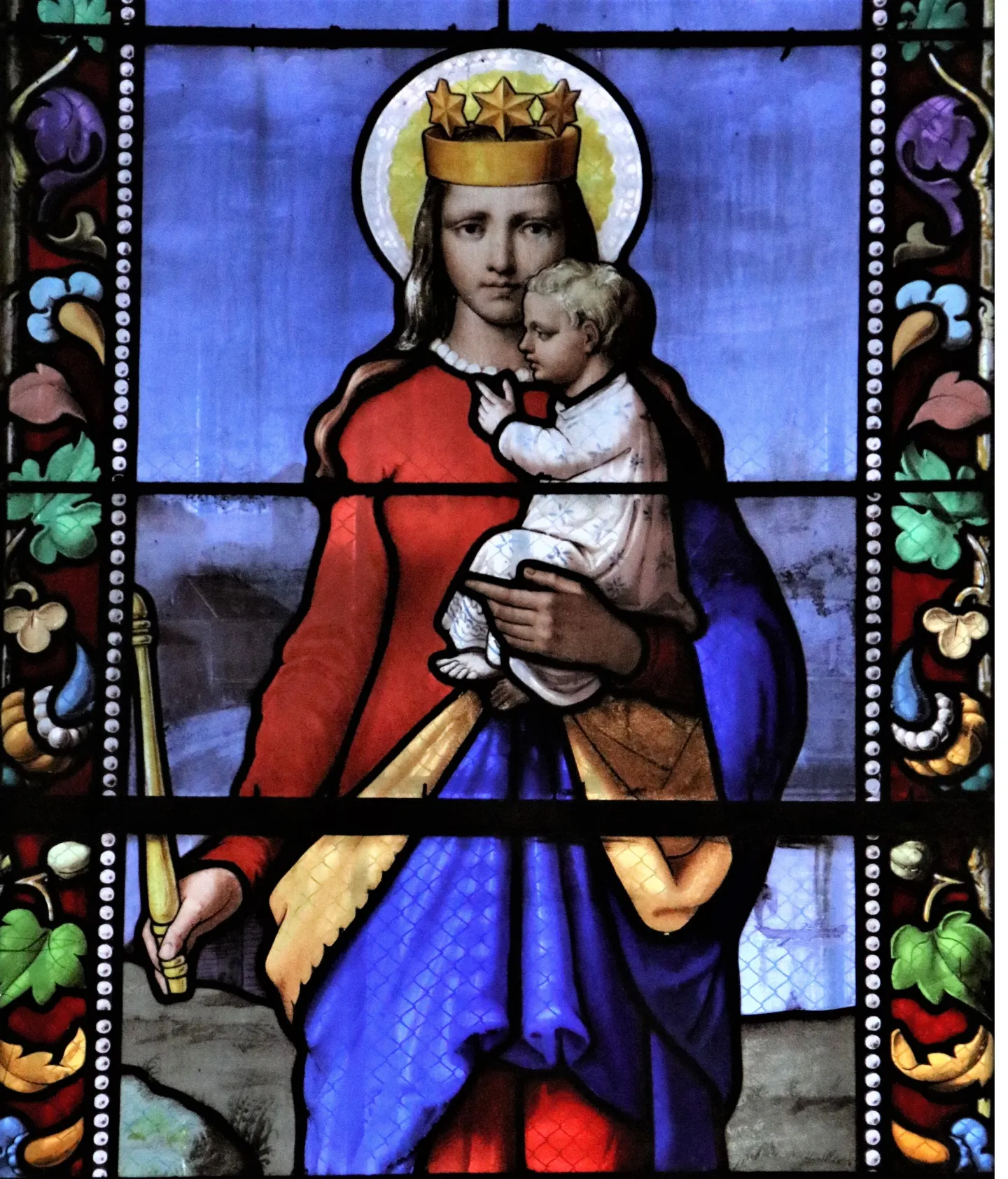
Our Lady of Gray holds in her right hand a gleaming sceptre of gold that a parishioner donated in the year 1807. It was at this time that the chapel – now a Basilica (see below), was undergoing reconstruction after the ravages of the French Revolution. There are also three semi-precious stones set in the front of the base of the statue that were given by grateful petitioners to the Blessed Virgin. Finally, the two gold crowns were created in 1909 on the occasion of the celebration of the coronation of the statue of Our Lady of Gray.
St Peter Chrysologus (c 400-450) (Optional Memorial) “Golden Words,” Father and “Doctor of Homilies” of the Church

St Abdon
Bl Antonio di San Pietro
Bl Edward Powell
St Ermengyth
St Hatebrand
St Julitta of Caesarea
Blessed Manés de Guzmán OP (c 1168-1235) Dominican Priest and Friar, Brother of Saint Dominic

Bl Richard Featherstone
St Rufinus of Assisi
St Senen
St Tatwine of Canterbury
St Terenzio of Imola
Bl Thomas Abel
St Ursus of Auxerre
Bl Vicenta Chavez-Orozco

Martyrs of Castelseras: Three Dominicans, two of them priests, one a novice, who were martyred together in the Spanish Civil War for refusing to renounce Christianity.
• Joaquín Prats Baltueña
• José María Muro-Sanmiguel
• Zosimo Izquierdo Gil
They were shot on 30 July 1936 at a farm house outside Castelserás, Teruel, Spain.

Martyrs of Tebourba – 3 saints: Three girls martyred together in the persecutions of Diocletian. We know little else about them but the names – Donatilla, Maxima and Secunda. 304 at Tebourba in North Africa.

The Martyrs of the Spanish Civil War:
Bl Alejandro González Blanco
Bl Eugenio García Tribaldos
Bl Guillermo Álvarez Quemada
Bl Juan Lanz Palanca
Bl Luis Herrero Arnillas
Bl Miguel Solas del Val
Bl Pablo Díaz de Zárate y Ortiz de Zárate
Bl Racardo Pla Espí
Bl Sergio Cid Paz

Posted in SAINT of the DAY

Saint of the Day – 30 July – Blesseds Edward Powell, Thomas Abel and Richard Fetherston

Blessed Edward Powell

Edward Powell (c.1478 – 30 July 1540) was a Welsh priest, theologian, and opponent to King Henry VIII. He was beatified in 1886. Powell was born in Wales, was M.A. of the University of Oxford, and a Fellow of Oriel College. He received the degree of Doctor of Divinity on 26 June 1506 and was styled perdoctus vir by the university.

A court preacher in high favour with Henry VIII, he helped the King write Assertio Septem Sacramentorum, a reply to Martin Luther, and then published his own work on the subject in December 1523. The University of Oxford commended this work, and styled Powell “the glory of the university” in a letter to the king. Powell was one of the four theologians selected to defend the legality of the king’s marriage of Catherine of Aragon, in connection with which he wrote the “Tractatus de non dissolvendo Henrici Regis cum Catherina matrimonio”.

In March, 1533, Powell was selected to answer Hugh Latimer at Bristol, and was alleged to have disparaged his moral character. Latimer complained to Thomas Cromwell, and Powell fell into further disfavour by denouncing Henry’s marriage with Anne Boleyn. He was discharged from the proctorship of Salisbury in January, 1534, and in November he was attainted, together with John Fisher, for high treason in refusing to take the oath of succession, deprived of his benefices, and imprisoned in the Tower of London.

The sentence was not carried out until 30 July 1540. Three Catholics (Powell, Abel, and Richard Featherstone) and three Protestants suffered together. (The protestants were were condemned for teaching Zwinglianism.) The victims were dragged on hurdles from the Tower to Smithfield, a Catholic and a Protestant on each hurdle. Powell’s companion was Robert Barnes, the Protestant divine. The Catholics were hanged, drawn, and quartered as traitors; the others were burned as heretics.

The site of executions at Smithfield

Blessed Thomas Abel

Blessed Thomas Abel (also Able, or Abell), priest and martyr, born about 1497; died 30 July, 1540. He was chaplain to Queen Catherine, and defender of the validity of her marriage to Henry VIII, for which reason he was put to death. He was a graduate of Oxford, and taught the queen modern languages and music. After a journey to Spain on her behalf, he received the parochial benefice of Bradwell in Sussex. He soon published in defence of the queen’s marriage a work entitled: “Invicta Veritas, an answer to the determination of the most famous Universities, that by no manner of law it may be lawful for King Henry to be divorced from the Queen’s grace, his lawful and very wife”. The work contained an answer to the numerous tracts supporting Henry’s ecclesiastical claims. The king, enraged and terrified, bought up copies of the book in order to destroy them.

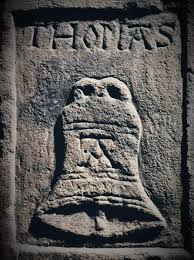
A carving Blessed Thomas created in Beauchamp Tower

For his defence of holy matrimony, he was thrown into Beauchamp Tower, and after a year’s liberation again imprisoned, in December, 1533, on the charges of disseminating the prophecies of the Maid of Kent, encouraging the queen “obstinately to persist in her wilful opinion against the same divorce and separation”, and maintaining her right to the title of queen. He was kept in close confinement until his execution at Tyburn, two days after the execution of Cromwell himself. There is extant a very pious Latin letter written by him to a fellow-martyr, and another to Cromwell, begging for some slight mitigation of his “close prison” — i.e. “license to go to church and say Mass here within the Tower and for to lie in some house upon the Green”. It is signed “by your daily bedeman, Thomas Abell, priest”.

His act of attainder states that he and three others “have most traitorously adhered themselves unto the bishop of Rome, being a common enemy unto your Majesty and this your Realm, refusing your Highness to be our and their Supreme Head of this your Realm of England“.

The Tyburn ‘Tree’

Blessed Richard Fetherston

Blessed Richard Fetherston (Fetherstone, Featherstone) was an English priest. He was Archdeacon of Brecon, Chaplain to Catherine of Aragon, and Latin tutor to her daughter, Mary Tudor. He was executed on 30 July 1540 and beatified by Pope Leo XIII on 29 December 1886.

Richard Featherstone studied at Cambridge where he became a doctor of divinity. In 1523 he was appointed archdeacon of Brecon in South Wales. By 1525 he had become the Princess Mary’s Latin tutor. When the Convocation of Canterbury met in November 1529 and considered whether Henry VIII and Queen Catherine were truly married, he spoke in defence of the marriage. The Act of Parliament which condemned St John Fisher in 1534 for his refusal to take the Oath of Succession, also referred to Fetherstone, who was sent to the Tower of London on 13 December of the same year. There he was confined until his execution in 1540. As in these cases, the limbs of all three were fixed over the gates of the city, and their heads were placed upon poles on London Bridge.

London Bridge, with heads on spikes

Posted in ONE Minute REFLECTION

One Minute Reflection – 30 July – “If this day you only knew what makes for peace”

One Minute Reflection – 30 July – “Month of the Most Precious Blood”– Readings: Ps 53:6-7, Ps 53:3, 1 Cor. 10:6-13, Luke 19:41-47

If you had known, in this your day, even you, the things that are for your peace!

Luke 19:41-47

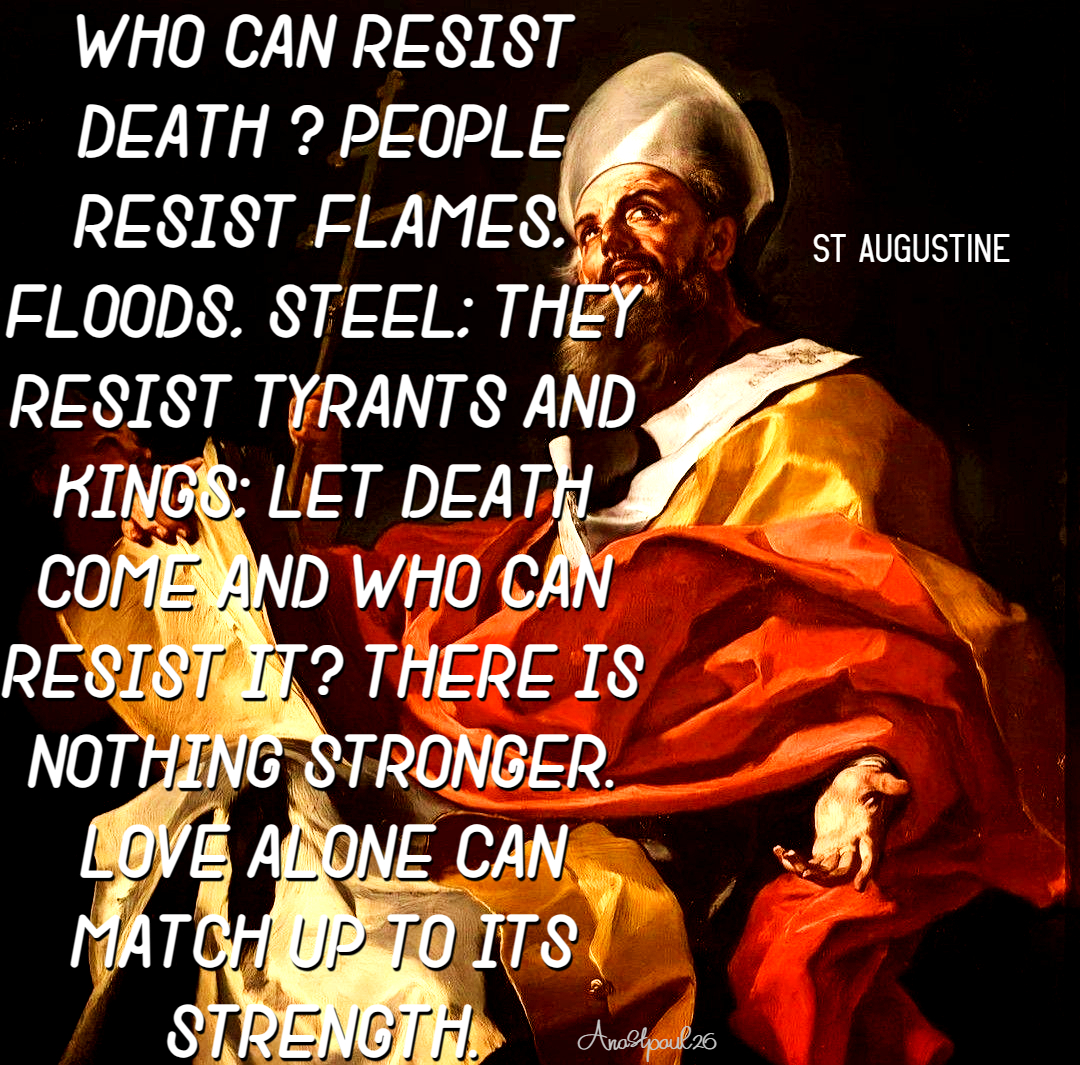
REFLECTION – “May peace reign in your walls”. O Jerusalem, built as a city with compact unity”, peace in your strength, peace in your love! For your strength is your love. Listen to the Song of Songs: “Love is strong as death”. What wonderful words, brethren !… Who can resist death ? People resist flames, floods, steel; they resist tyrants and kings; let death come and who can resist it? There is nothing stronger. Love alone can match up to its strength. It can be said that love is strong as death. Because love kills what we used to be to make us become what as yet we were not, it carries out in us a work of death. Saint Paul died this death. He said: “The world is crucified to me and I to the world”, and those to whom he said: “You have died and your life is hidden with Christ in God” died this death.

Love is strong as death… let peace, therefore, be in your strength, Jerusalem; let peace be in your love. And by this strength, love, peace “may prosperity be in your towers”, that is to say, on your heights. Profusion of delights, countless riches, this is the God who is one, this is he with whom all this city’s inhabitants hold communion. This is he who will be our abundance in the city of Jerusalem.

St Augustine (Discourse on the Psalms, Ps 121[122])

PRAYER – Lord God, You hold out the light of Your Word to those who do not know You. Strengthen in our hearts the faith You have given us, so that no trials may quench the fire Your Spirit kindled within us. Grant that the prayers of Your faithful St Peter Chrysologus, may assist us to grow in love. Through Jesus Christ, our Lord, with the Holy Spirit, one God forever, amen.

Posted in Our MORNING Offering

Our Morning Offering – 30 July – A Prayer to Seek the Consolation of the Cross

Our Morning Offering – 30 July – “Month of the Most Precious Blood”

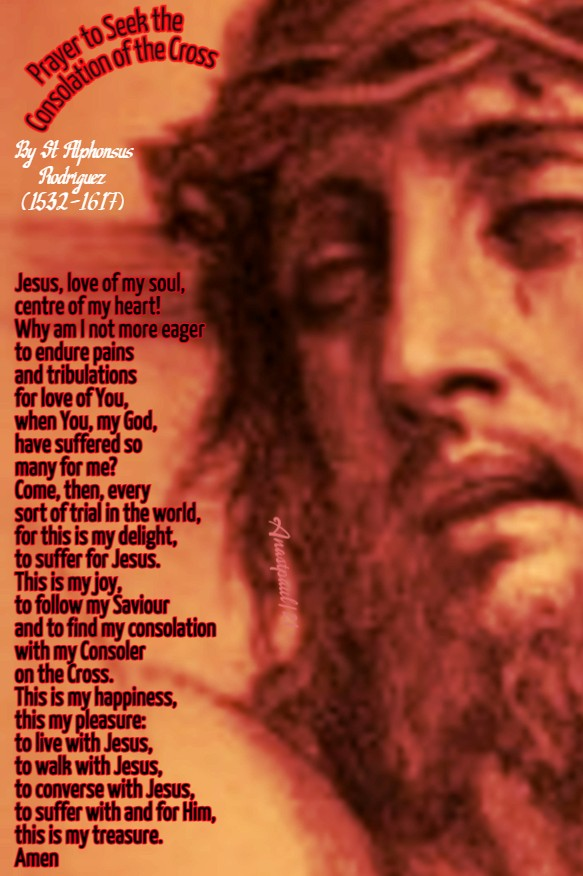
A Prayer to Seek the Consolation of the Cross
By St Alphonsus Rodriguez SJ (1532-1617)

Jesus, love of my soul,
centre of my heart!
Why am I not more eager to endure pains
and tribulations for love of You,
when You, my God,
have suffered so many for me?
Come, then, every sort of trial in the world,
for this is my delight, to suffer for Jesus.
This is my joy, to follow my Saviour
and to find my consolation
with my Consoler on the Cross.
This is my happiness,
this my pleasure:
to live with Jesus,
to walk with Jesus,
to converse with Jesus,
to suffer with and for Him,
this is my treasure.
Amen

Posted in CATHOLIC Quotes

Quote/s of the Day – 30 July – St Peter Chrysologus

Quote/s of the Day – 30 July – “Month of the Most Precious Blood”– The Memorial of St Peter Chrysologus (c 400-450) “Golden Words,” Father & Doctor of the Church

Impiety always suffers from a fever, cruelty is always possessed by madness. Fury does not know that it is depriving itself of clemency, for indeed he rages against himself as often as he aims for another, he punishes himself by striking down the innocent, he is completely destroying himself when he is cruel to a just person. See how John, as you yourself say, is now alive in Christ. He who has come to cure all with heavenly grace returns to punish you.

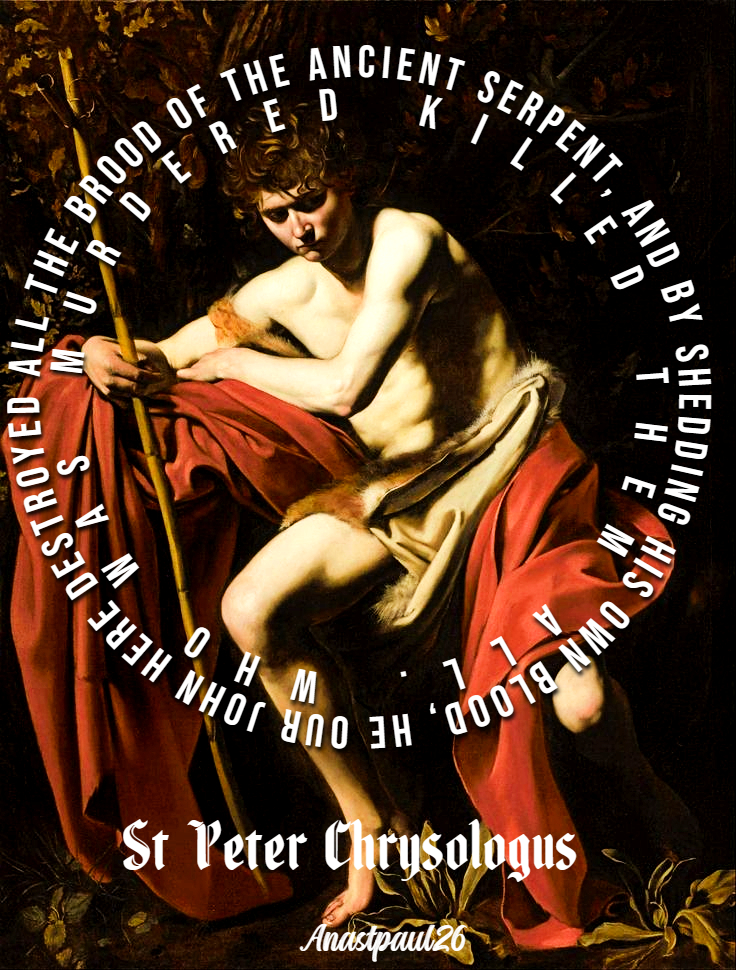
In concluding our remarks, we bring to your attention that the serpent ran in vain, for our John here destroyed all the brood of the ancient serpent, and by shedding his own blood, he who was murdered killed them all.

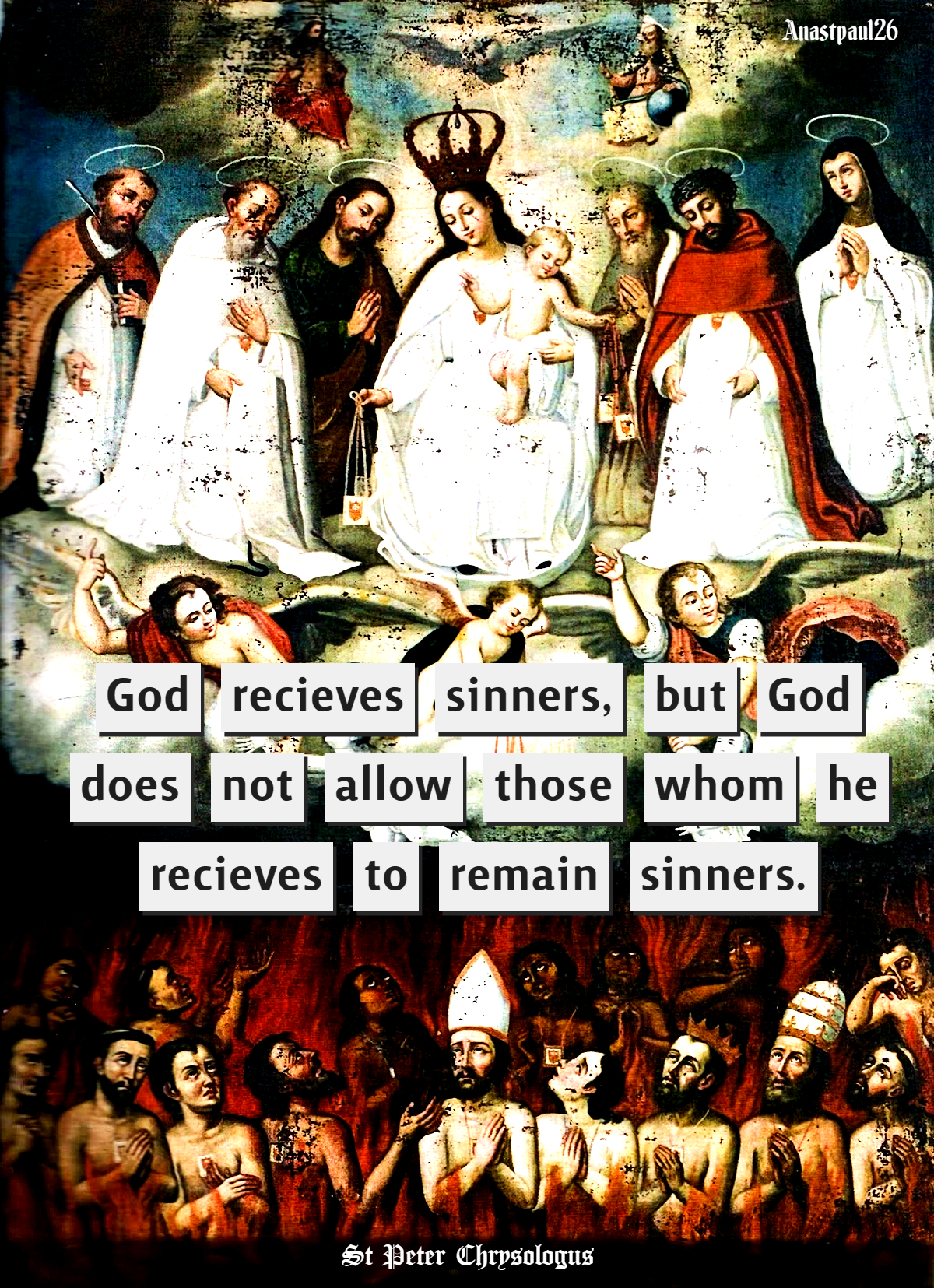
God recieves sinners, but God does not allow those whom he recieves to remain sinners.

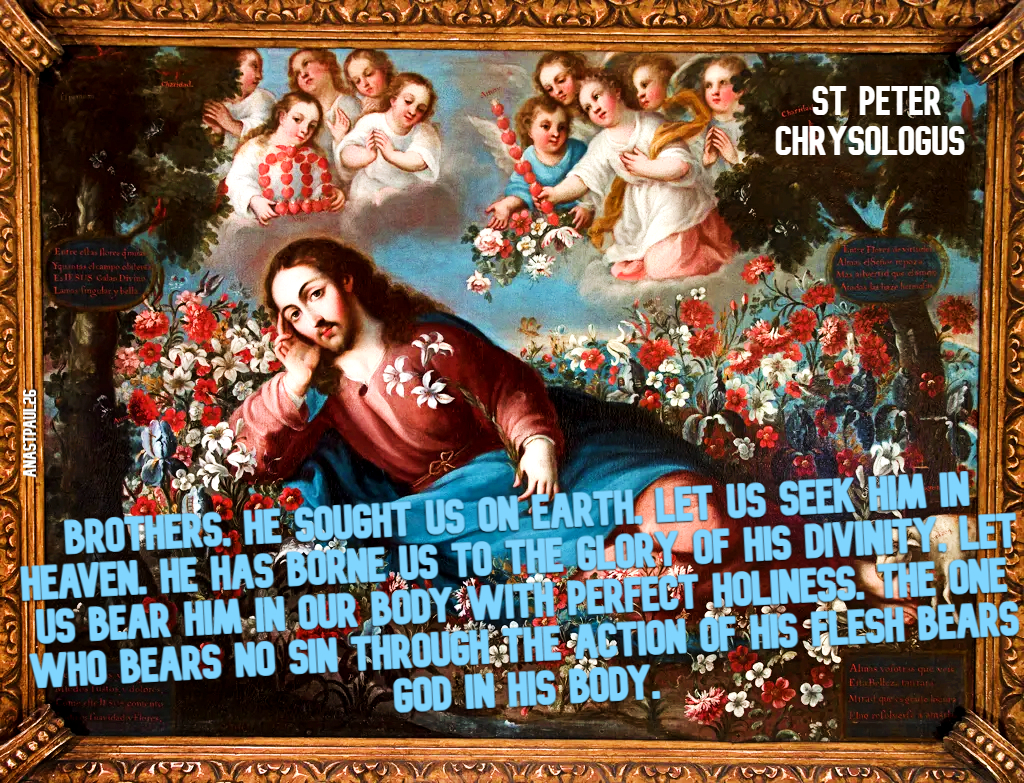
Brothers, he sought us on earth, let us seek him in heaven. He has borne us to the glory of His divinity, let us bear him in our body with perfect holiness. The one who bears no sin through the action of his flesh bears God in his body.

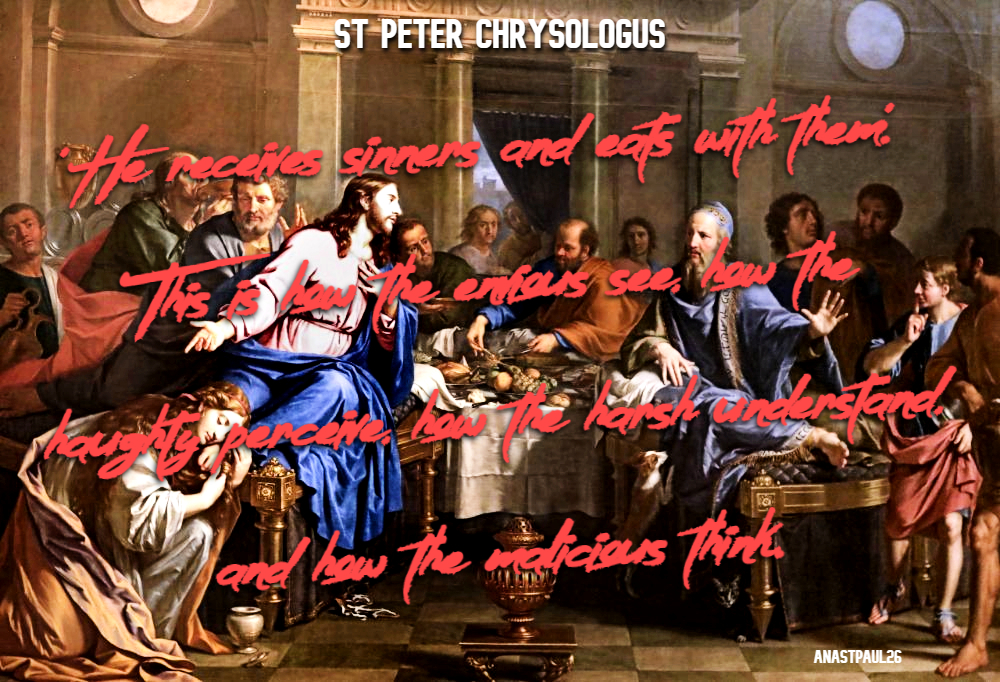
‘He receives sinners and eats with them.’ This is how the envious see, how the haughty perceive, how the harsh understand, and how the malicious think.

‘Give it me on a dish.’ Why on a dish? Why do you carry about in a precious vessel the one whom you have killed so cheaply, except for the reason that ‘precious in the sight of the Lord is the death of his saints’? This very thing that you want, you do not accomplish as you yourself want, since a heavenly purpose is at work doing something other than what you want.

Summon the sky and invoke the earth, so that both the earth be amazed and the sky marvel at the new kind of mercy presented by the Lord. What mind perceives, what ear grasps, what teaching has communicated the lesson to which the evangelist draws his Christian audience when he says: Love your enemies. Mortal perception does not absorb this, the human heart does not grasp this, the fleshy condition rejects this, the world’s hearing does not let this in. The feeble mind is insufficient to love those who love it, and fickle human nature is able only with difficulty to be charitable to those who are charitable.

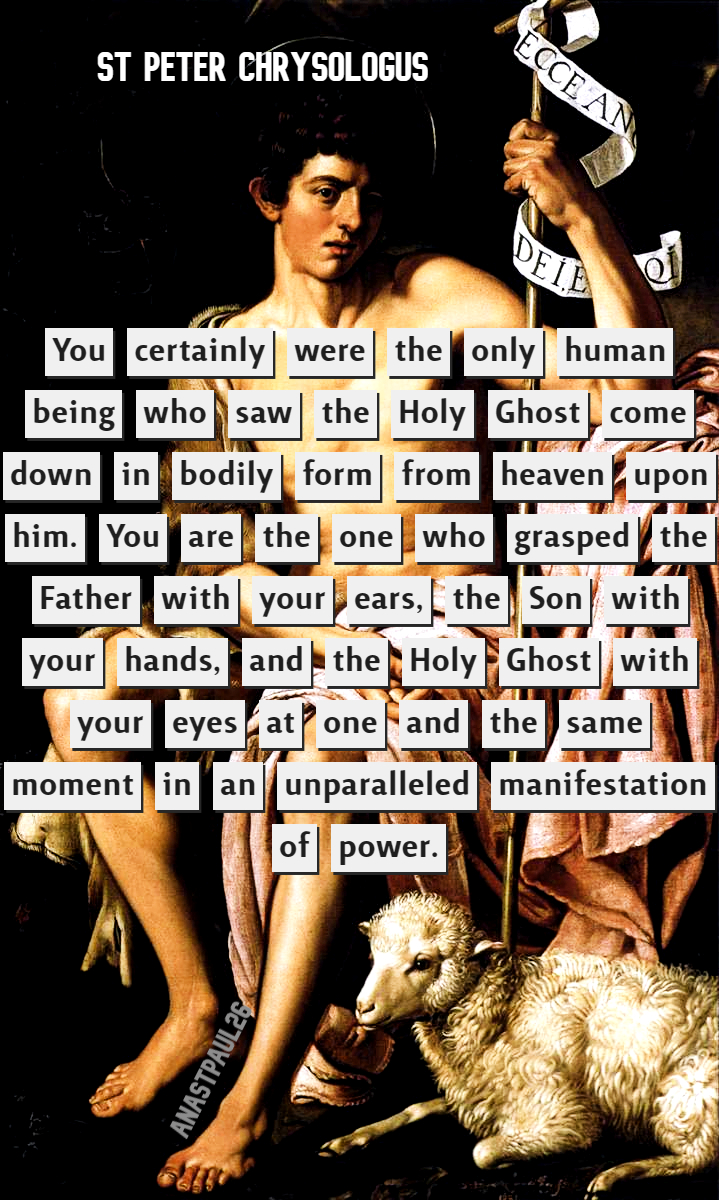
You certainly were the only human being who saw the Holy Ghost come down on bodily form from heaven upon him. You are the one who grasped the Father with your ears, the Son with your hands, and the Holy Ghost with your eyes at one and the same moment in an unparalleled manifestation of power.

Posted in JULY - The MOST PRECIOUS BLOOD, Uncategorized

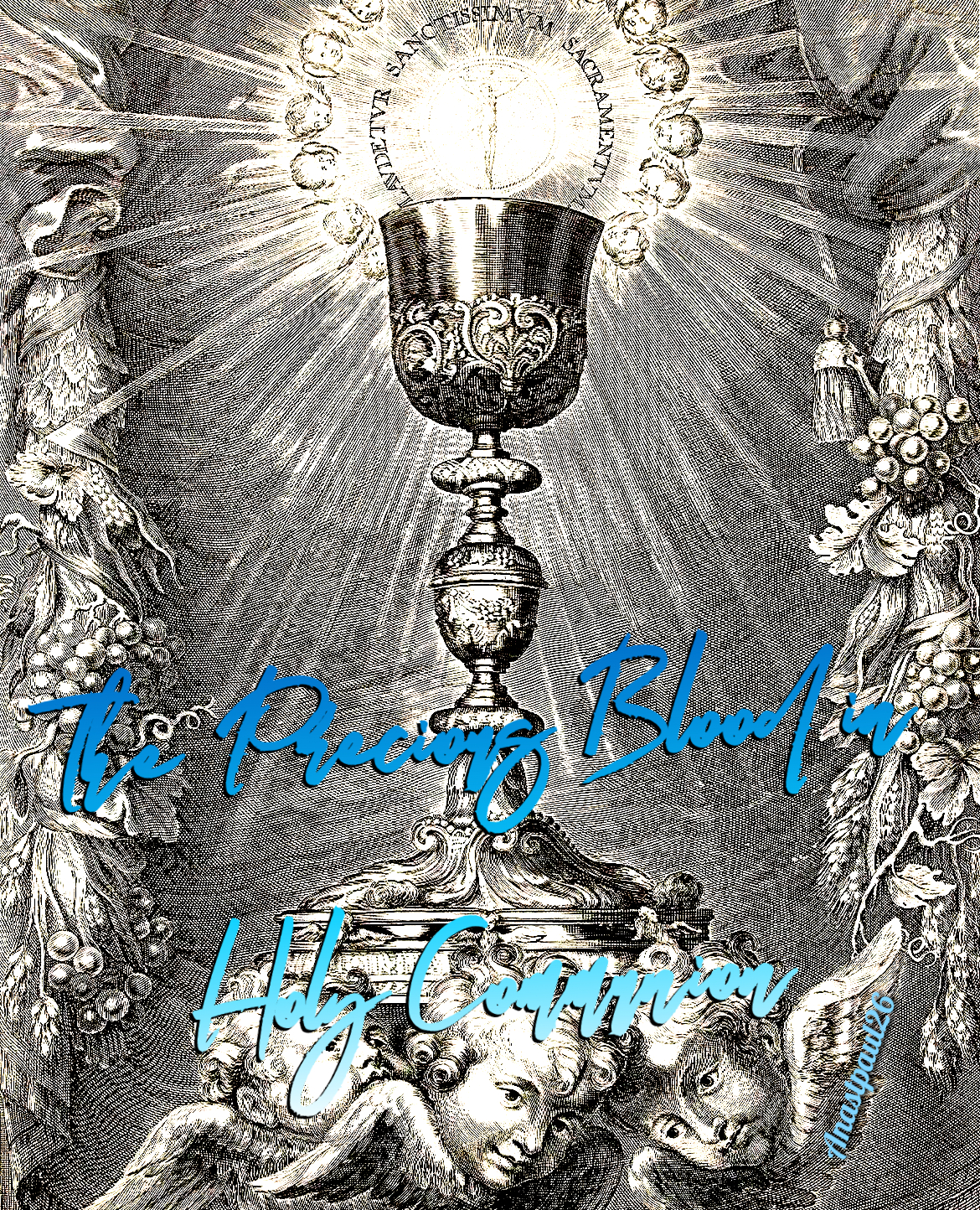
Thought for the Day – 30 July – The Precious Blood in Holy Communion

The Precious Blood – Short Meditations for July

By Rev. Richard F. Clarke

30th Day – The Precious Blood in Holy Communion

If in other sacraments the Precious Blood is morally applied to the souls of those who receive them, in holy Communion it is physically communicated to body as well as soul. We have the wonderful privilege of being brought into bodily contact with the Precious Blood, whether it be under the species of wine in the chalice, or of bread in the Sacred Host. How pure our bodies should be if they are thus to touch the Source of all purity, the Holy of holies, the God Whose infinite purity is such that the very angels are not pure in His sight! How can we venture thus to touch Christ Himself? To receive the Precious Blood into our sinful and impure bodies?

Yet Christ Our Lord invites us to do so. In His inexplicable love for us, He desires us, asks us to receive His Precious Blood in holy Communion. Instead of saying, as he did to Mary, Touch Me not, He says, Drink, O My friends, and be inebriated, O my dearly beloved. Admire His divine condescension, and beware of presuming on His patience and His love.

How are we to account for Jesus’ willingness, nay, anxiety, to be thus received by sinful men. It is because in thus communicating Himself to us, He makes us more like to what He Himself is, and what He desires us to be. The Precious Blood imparts to our souls all heavenly gifts and graces if we receive it as we ought. O Jesus, grant that I may receive Thee frequently, fervently, with a complete oblation of my whole self!