Posted in MARIAN TITLES

Notre-Dame -de- lure / Our Lady of Lure, Avignon, France (1110) and Memorials of the Saints – 12 July

Notre-Dame -de- lure / Our Lady of Lure, Avignon, France (1110) – 12 July:
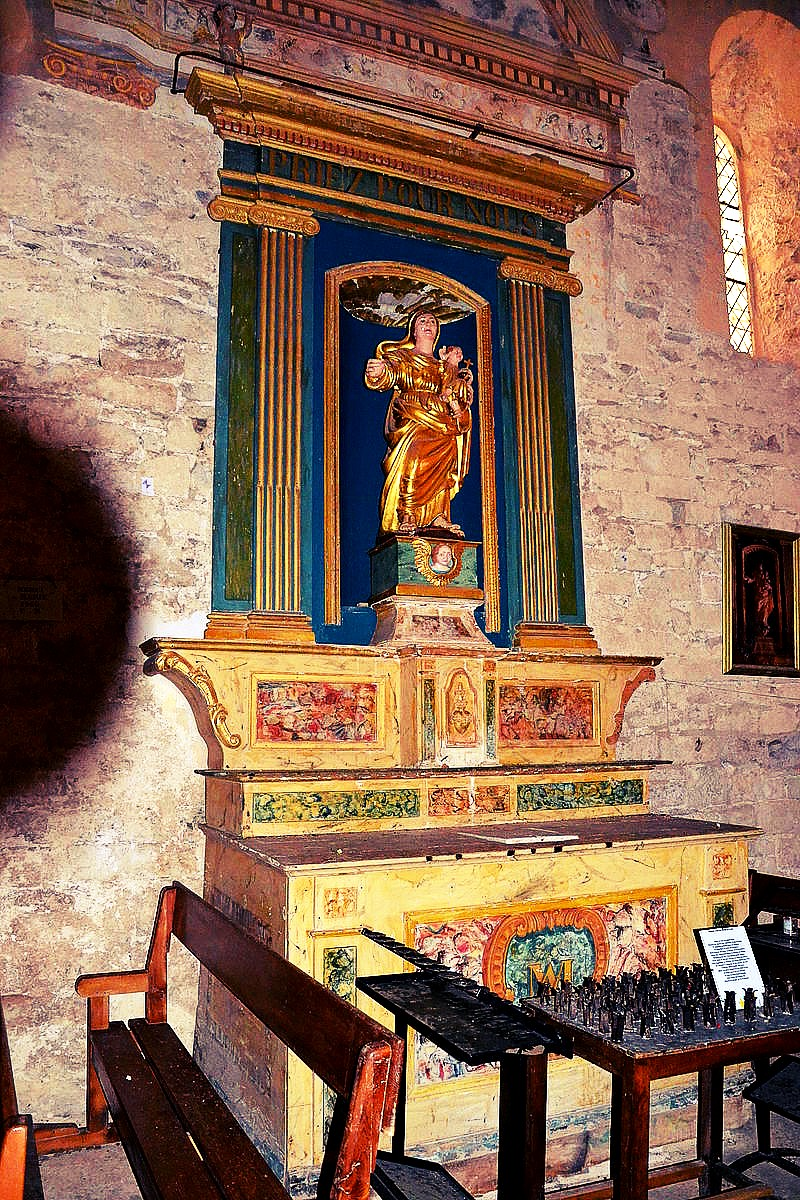
At the beginning of the 6th century, a Priest from Orleans, France, named Saint Donat du Val, in search of solitude, made his way into the Alps. The mountain of Lure seemed to be the kind of place he was looking for and with the approval of the Bishop of Sisteron, he settled there. On the side of the mountain he built an oratory for which he himself made the Statue of Our Lady, carving it from native stone. When after 32 years he died, having spent these years in penance and apostolic work, he was replaced by the Benedictines of Val-Benoit.

A Chapel was built to replace the oratory which proved too small to accommodate the many pilgrims. When the Saracens invaded Provence, the religious had to flee and so they hid the Statue. Barbarians ravaged the country several times and the Convent was destroyed.

In 1110, the Countess Adelaide, to whom the land of Lure belonged, gave the place of the original oratory to the Bishop of Sisteron. Several nobles aided in the work of restoring the Monastery of Our Lady of Lure. The ancient sSatue was found and placed above the tomb of Saint Donat. The Church became well known and pilgrimages were well attended. In 1318, Pope John XXII attached the Shrine of Our Lady of Lure, to the metropolitan area or See of Avignon. In 1481, Pope Sixtus IV called back to Avignon the 12 canons at the Shrine. The Church fell into disrepair. For 80 years the place remained desolate. One day a shepherd, who was resting near the ruins, heard a voice saying, “Oh, how many graces I would give to men in this place, if my Sanctuary were rebuilt.”

The ecclesiastics to whom he told his story took the shepherd seriously. The Shrine was rebuilt and the Statue rescued from the debris, was placed on a new Altar which was Consecrated in 1637. Pilgrimages again flourished. During the French Revolution the Chapel was pillaged and the Statue mutilated.

With the return of peace, pilgrims again came. On a number of occasions, Mary granted the miracle of an abundant rain to pilgrims that had come to seek this favour. The largest number of pilgrims were wont to come on Pentecost, the Feast of the Assumption and the Nativity of Our Lord.

St Agnes De
St Andreas the Soldier
St Ansbald of Prum
St Balay
St Clement Ignatius Delgado Cebrian
St Colmán of Cloyne (c 522-600) Priest, Monk
Bl David Gonson
St Epiphana
St Faustus the Soldier
St Felix of Milan

St Fortunatus of Aquileia (1st Century – Died c 66) Deacon
St Hermagorus of Aquileia (1st Century – Died c 66) Bishop, Disciple of St Mark the Evangelist
St Hilarion of Ancyra
St Jason of Tarsus
Bl Jeanne-Marie de Romillon

St John Gualbert (c 985-1073) Abbot, Founder of the Vallumbrosan Order and many Monasteries. “The Merciful Knight.”

St John Jones OFM (c 1574 – 1598) Priest and Martyr, Franciscan Friar, Missionary.

St John the Georgian
Bl Lambert of Cîteaux

Bl Madeleine-Thérèse Talieu
Bl Marguerite-Eléonore de Justamond
Bl Marie Cluse
St Menas the Soldier
St Menulphus of Quimper
St Nabor of Milan
St Paternian of Bologna
St Paulinus of Antioch
St Phêrô Khan
St Proclus of Ancyra
St Proculus of Bologna
St Uguzo of Carvagna
St Ultán

St Veronica – The woman who who wiped the Face of Jesus on the way to His Crucifixion. The cloth is believed to exist today in the Vatican and is considered one of the most treasured relics of the Church.

St Viventiolus of Lyons

Martyrs of Nagasaki – 8 beati: Additional Memorial – 10 September as one of the 205 Martyrs of Japan
Eight lay people, many them related to each other, who were martyred together:
• Catharina Tanaka
• Ioannes Onizuka Naizen
• Ioannes Tanaka
• Ludovicus Onizuka
• Matthias Araki Hyozaemon
• Monica Onizuka
• Petrus Araki Chobyoe
• Susanna Chobyoe
12 July 1626 in Nagasaki, Japan
Beatified on 7 May 1867 by Pope Blessed Pius IX.
Posted in SAINT of the DAY

Saint of the Day – 12 July – Saint Uguzo of Cavargna

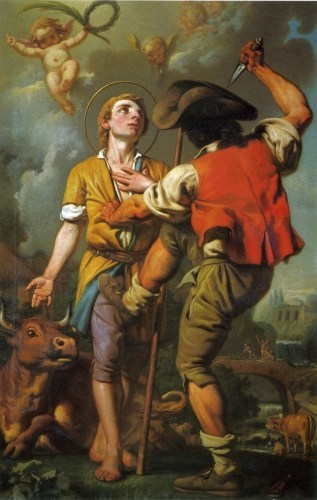
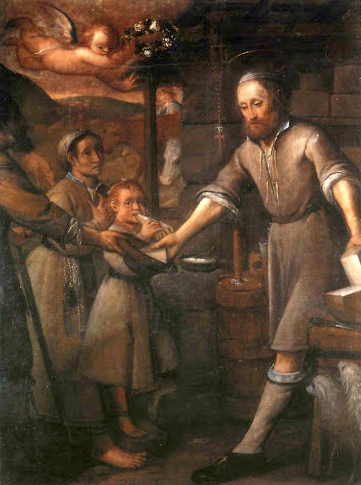
Also known as Lucio, Lucius, Luguzzone, Uguzon, Uguzzone. Died before 1200. He was a poor shepherd who lived near Cavargna and was extremely generous in charity towards the poor and needy. According to legend, he discovered that the yield from cheese-making is greater if the milk is heated before it is made into cheese. According to another legend, he heated the whey produced during cheese-making and collected the flocculated protein to make cheese.

Uguzo gave the surplus cheese obtained by his discovery to the poor to feed. Suspecting that the shepherd was giving away his property, Uguzo’s employer drove him away, only for his land to go foul and his sheep to stop producing milk. Uguzo’s subsequent employer prospered from the moment he hired him, and he was blessed with a miracle as when he cut cheese from his employer’s cheese rounds to distribute to the needy, the rounds would miraculously be reformed. Hatred and envy of Uguzo and his blessings and reputation drove the first employer to kill the shepherd. The cult of Uguzo was authenticated as early as 1280 at Milan and has been honored by various popes.

The San Lucio Pass, where he was murdered, is named for him, and at the summit is a 14th-century church, dedicated to him. At the place where Uguzo was slain, a spring gushed forth that is said to this day to have healing powers, especially for eye ailments.

He is the patron of cheese-makers and is invoked in cases of cattle and eye diseases, and favorable weather conditions. He appears in iconography with a cheese-cutter and a cheese with a slice cut out of it.

Posted in Our MORNING Offering

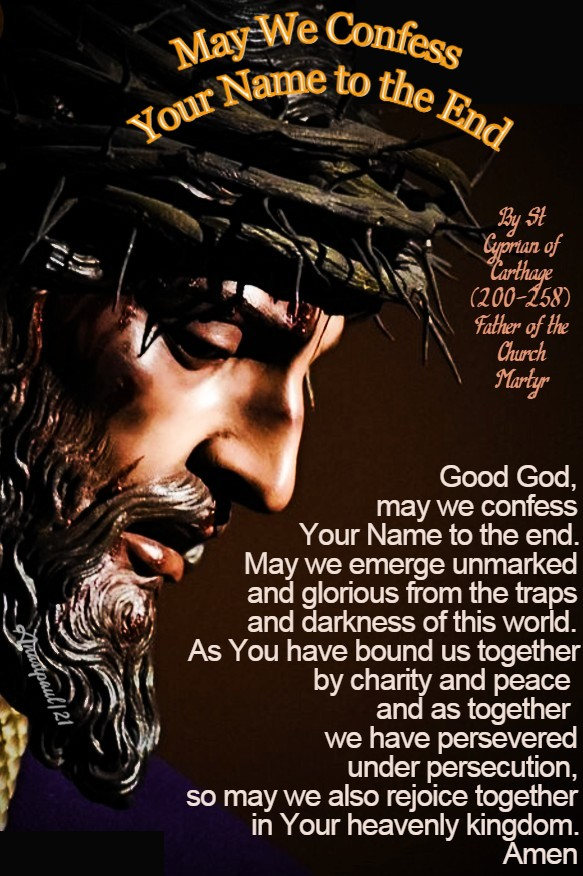
Our Morning Offering – 12 July – May We Confess Your Name to the End

May We Confess Your Name to the End
By St Cyprian of Carthage (200-258)
Bishop and Martyr
Father of the Church

Good God,
may we confess Your Name to the end.
May we emerge unmarked
and glorious from the traps
and darkness of this world.
As You have bound us together
by charity and peace
and as together
we have persevered under persecution,
so may we also rejoice together
in Your heavenly kingdom.
Amen

Posted in ONE Minute REFLECTION

One Minute Reflection – 12 July – By their fruits you will know them.

By their fruits you will know them. Do men gather grapes from thorns, or figs from thistles?”- Matthew 7:16

REFLECTION – We should inquire as to the kind of fruit the Lord wishes us to recognize, so that we may be able to distinguish the tree. Many persons reckon as fruits certain things which are indeed the suitable clothing of sheep, for instance, fastings, prayers, and almsgivings. Such people are deceived by wolves, for, if these things could not be done also by hypocrites, the Lord would not have previously said: “Take heed not to practice your righteousness before men, in order to be seen by them.” Many persons bestow much upon the poor, not through mercy, but for the sake of display; many persons pray-or, rather, they seem to pray-without directing their attention toward God, but seeking to please men; and many persons fast and display a wonderful degree of self-denial before those who think such things difficult and praiseworthy. These are not the fruits by which a tree can be recognized in accordance with the Lord’s admonition. When these things are truly done with a good intention, they are rightly called the clothing of sheep.

The Apostle Paul tells us what are the known fruits by which we may recognize a bad tree. He says: “Now the works of the flesh are manifest: they are immorality, uncleanness, licentiousness, idolatry, witchcraft, enmity, contention, jealousy, animosity, quarrels, heresies, faction, envy, drunkenness, carousings, and such like things”. And the same Apostle goes on to tell us also what are the fruits by which we may recognize a good tree, for he says: “But the fruit of the spirit is: charity, joy, peace, patience, kindness, goodness, faith, modesty, continence.”

So, also, the word ‘joy’ is likewise used in its proper sense here, for evil men are not said to rejoice, but to enjoy pleasure. It is in this proper sense that the good use the word when they say: “Rejoicing is not for the wicked, says the Lord”. The same applies to the true faith. In wicked and deceitful men there are also certain semblances of the other virtues that may thoroughly deceive anyone who does not keep clear and single the eye through which one is able to recognize those virtues.

Saint Augustine 

PRAYER – We humbly supplicate and beseech thee, O thrice blessed Augustine, that thou wouldst be mindful of us poor sinners this day, daily, and at the hour of our death, that by thy merits and prayers we may be delivered from all evils, as well of soul as body, and daily increase in virtue and good works; obtain for us that we may know our God and know ourselves, that in His mercy He may cause us to love Him above all things in life and death; impart to us, we beseech thee, some share of that love with which thou so ardently glow, that our hearts being all inflamed with this divine love, happily depart- ing out of this mortal pilgrimage, we may deserve to praise with thee the loving heart of Jesus for a never ending eternity.  Amen.

Posted in JULY - The MOST PRECIOUS BLOOD

Quote/s of the Day – 12 July – A good tree cannot bear bad fruit, nor can a bad tree bear good fruit.

Quote/s of the Day – 12 July – “Month of the Most Precious Blood” – Readings: Ps 46:2, Ps 46:3, Rom 6:19-23, Ps 33:12, 6, Ps 46:2, Matt 7:15-21

A good tree cannot bear bad fruit, nor can a bad tree bear good fruit. Every tree that does not bear good fruit is cut down and thrown into the fire. Therefore, by their fruits you will know them.

Matt 7:15-21

“Take heed that you are not led astray,
for many will come in my name,
saying, ‘I am he!’

Luke 21:8

“If you believe what you like in the Gospels
and reject what you don’t like,
it is not the Gospel you believe
but yourself.”

Saint Augustine (354-430)

At that time, Jesus said to His disciples: Beware of false prophets, who come to you in sheep’s clothing, but inwardly are ravenous wolves. By their fruits you will know them. Do men gather grapes from thorns, or figs from thistles? Even so, every good tree bears good fruit, but the bad tree bears bad fruit. A good tree cannot bear bad fruit, nor can a bad tree bear good fruit. Every tree that does not bear good fruit is cut down and thrown into the fire. Therefore, by their fruits you will know them.

Matt 7:15-21

Not everyone who says to Me, ‘Lord, Lord,’ shall enter the kingdom of heaven; but he who does the will of My Father in heaven shall enter the kingdom of heaven.

Matt 7:15-21

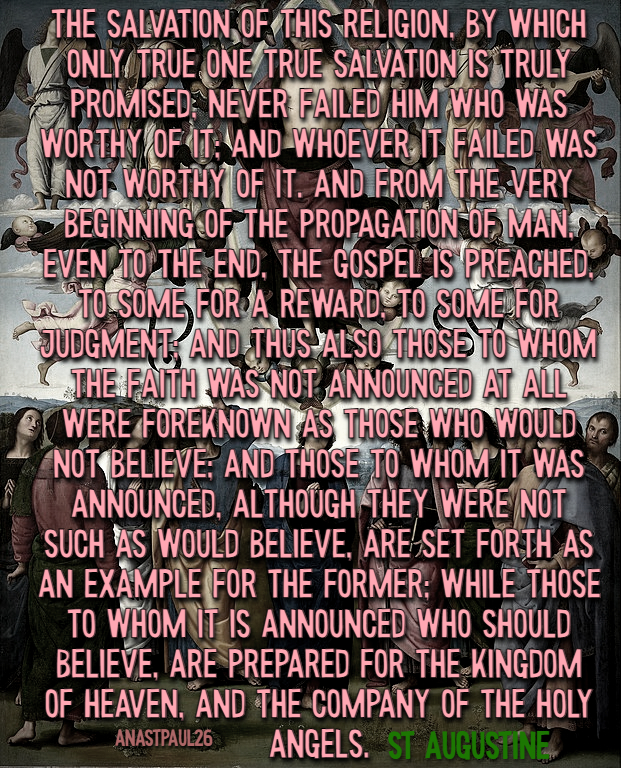
 For as some are mentioned in the sacred Hebrew books, as early as the time of Abraham — neither of his fleshly race nor of the people of Israel nor of the foreign society among the people of Israel — who were, nevertheless, sharers in their sacrament, why may we not believe that there were others elsewhere among other people, here and there, although we do not read any mention of them in the same authorities? Thus the salvation of this religion, by which only true one true salvation is truly promised, never failed him who was worthy of it; and whoever it failed was not worthy of it. And from the very beginning of the propagation of man, even to the end, the gospel is preached, to some for a reward, to some for judgment; and thus also those to whom the faith was not announced at all were foreknown as those who would not believe; and those to whom it was announced, although they were not such as would believe, are set forth as an example for the former; while those to whom it is announced who should believe, are prepared for the kingdom of heaven, and the company of the holy angels.

St Augustine (On the Predestination of the Saints)

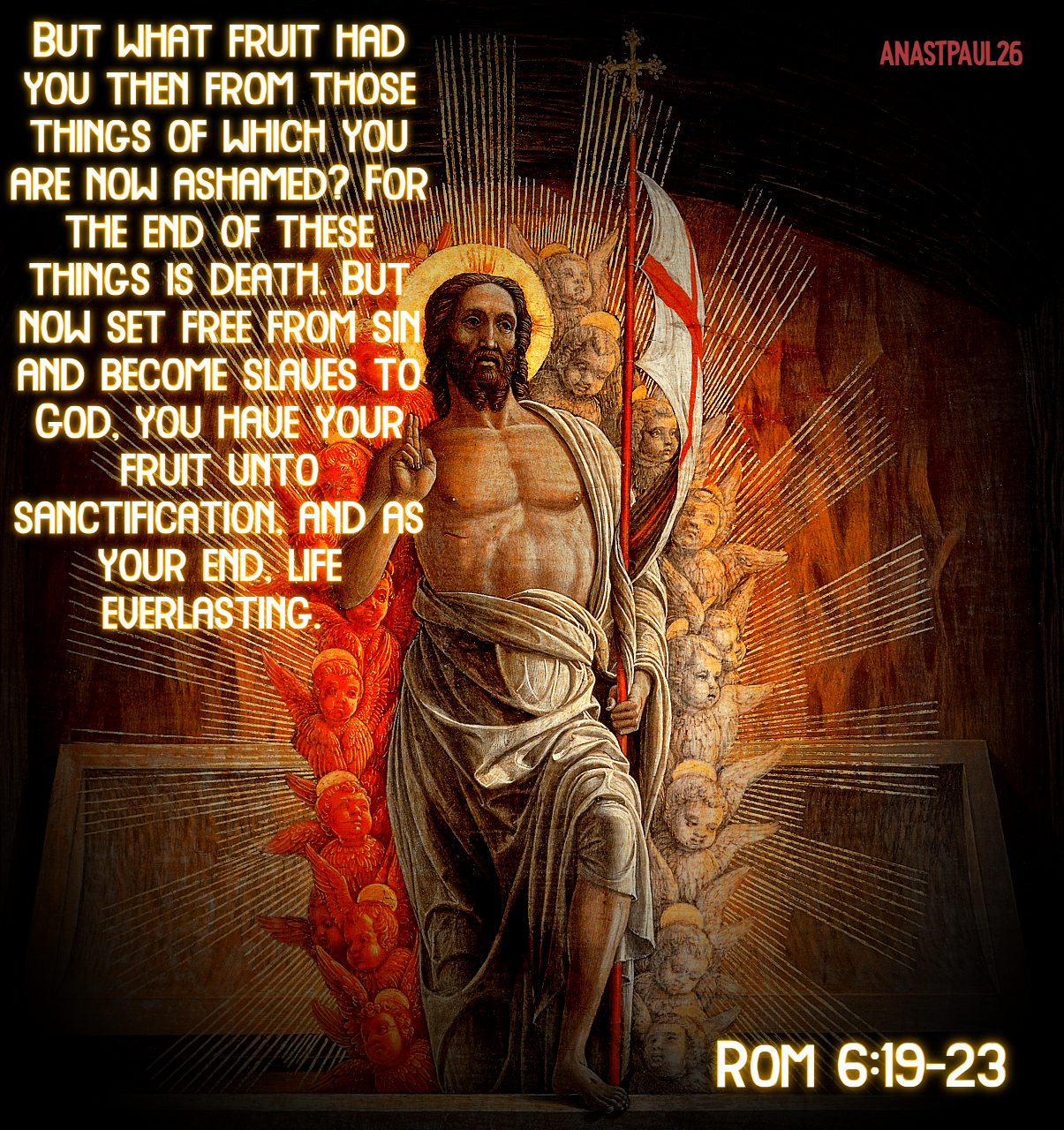
Brethren: I speak in a human way because of the weakness of your flesh; for as you yielded your members as slaves of uncleanness and iniquity unto iniquity, so now yield your members as slaves of justice unto sanctification. For when you were slaves of sin, you were free as regards justice. But what fruit had you then from those things of which you are now ashamed? For the end of these things is death. But now set free from sin and become slaves to God, you have your fruit unto sanctification, and as your end, life everlasting. For the wages of sin is death, but the gift of God is life everlasting in Christ Jesus our Lord.

Rom 6:19-23

Posted in JULY - The MOST PRECIOUS BLOOD

Thought for the Day – 12 July – 12th Day – The Victories of the Precious Blood

The Precious Blood – Short Meditations for July

By Rev. Richard F. Clarke

12th Day – The Victories of the Precious Blood

The Precious Blood has conquered sin and Satan. It was the shedding of it on the cross which gave the death-blow to the kingdom of the devil. It was when the Son of God had by the loss of His Sacred Blood been reduced to the extremity of weakness and of misery, and brought down to the very gates of death, that He triumphed over the tyrant that had enslaved the world, and compelled all the rebel angels to bow the knee before His sacred humanity. Rejoice with your victorious King, and pray that you may deserve to share His triumph.

The Precious Blood has also conquered sinner by thousands, who, if it had not been shed, would have remained hardened sinners unto the end. Who can withstand its silent appeal, as it trickles down from His head, His hands, His feet? Who can refuse to listen to its silent pledgings? Who can turn away from Him Who has thus loved us even unto death? O my Jesus, may I never turn away from Thy voice calling me from Thy throne upon the cross to love Thee and obey Thy voice!

The Precious Blood has also conquered and averted the anger of God, Whose decree of just retribution would but for it have fallen upon sinners. Can the Father resist the pleadings of his co-equal Son when He holds out His hands, still marked with the scars of His sacred wounds, and asks for mercy and forgiveness for the sinner? May Thy wounds, O Jesus, plead for me now and at the hour of death!