Posted in MARIAN TITLES

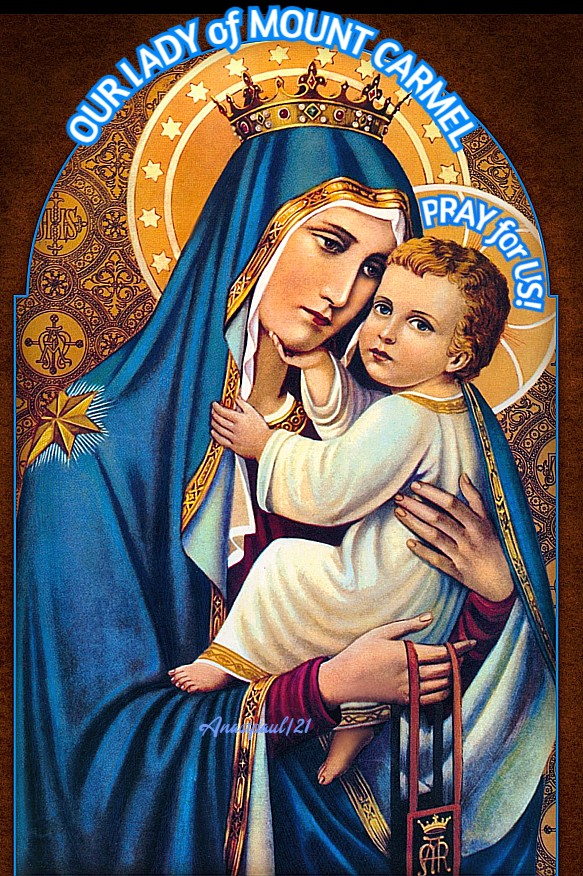
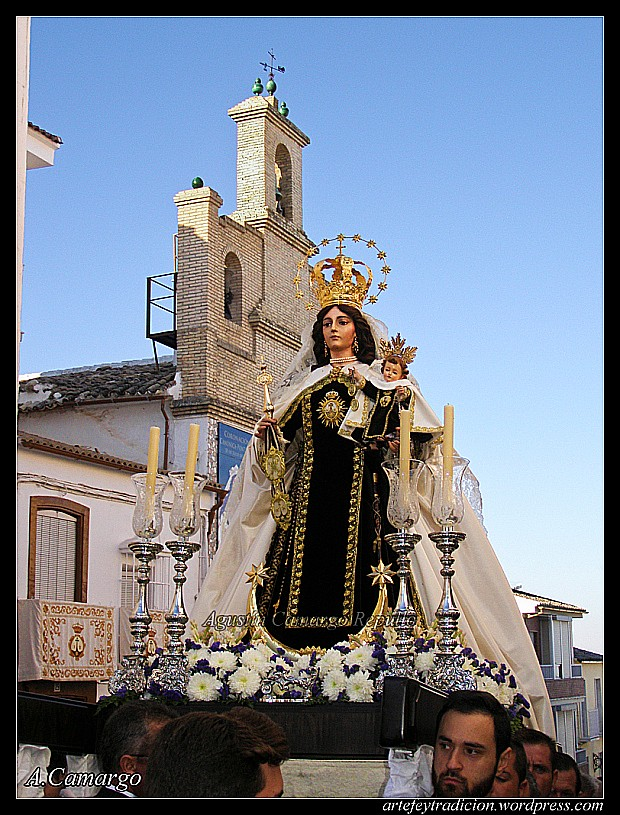
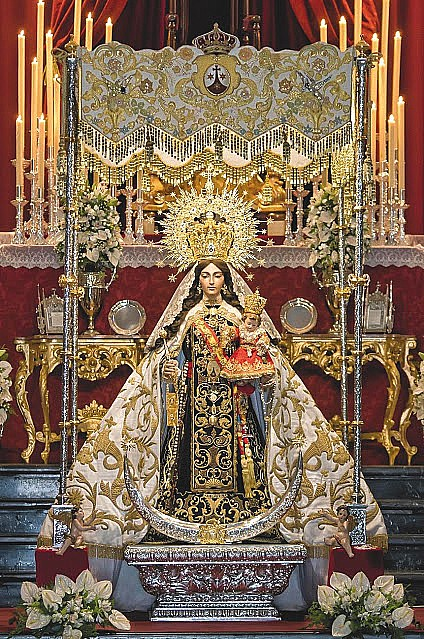
Our Lady of Mount Carmel, Nuestra Señora del Carmen (Rute, Córdoba, Andalucía, Spain) (17th Century) and Memorials of the Saints – 16 July

Our Lady of Mount Carmel -Mary is said to have given the Scapular to an early Carmelite named Saint Simon Stock. (Optional Memorial)
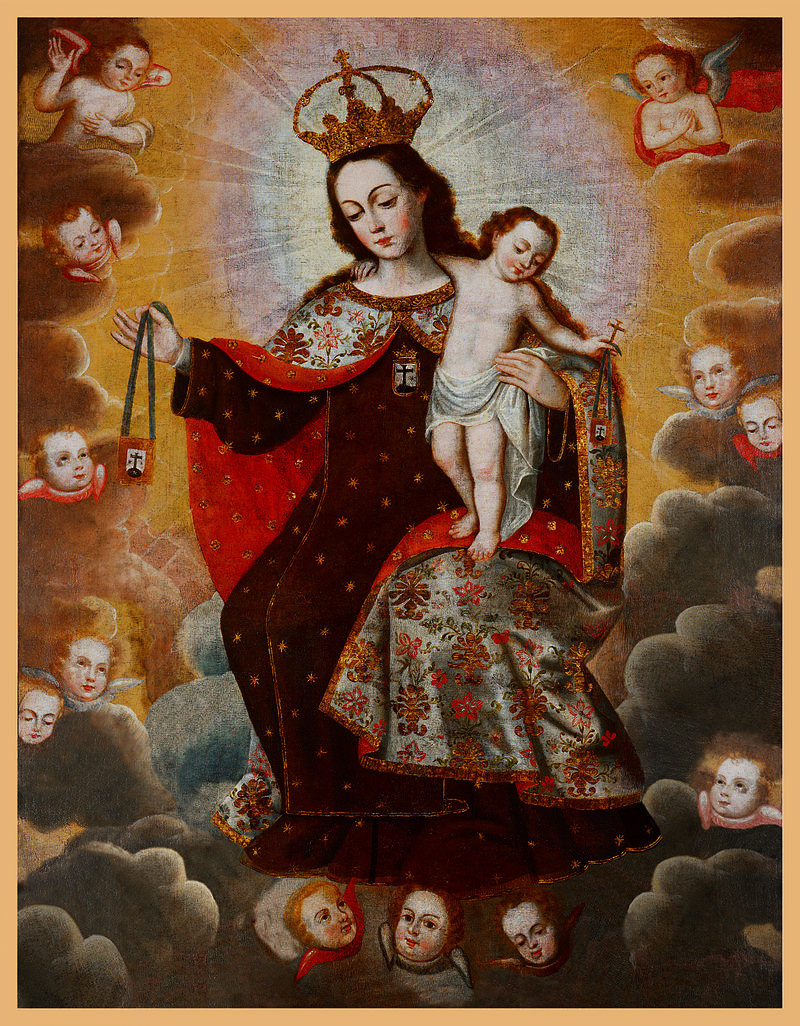
The Brown Scapular of Our Lady of Mount Carmel

Nuestra Señora del Carmen (Rute, Córdoba, Andalucía, Spain) (17th Century) 16 July, 13 February – Patron of Rute:
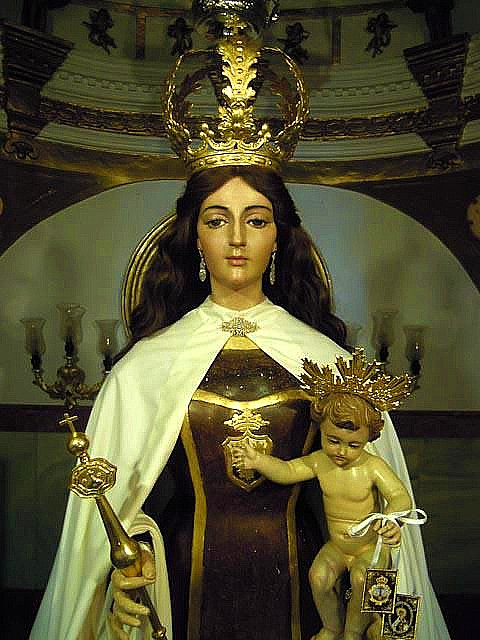
By order of Pope Pius XI, Our Lady of Mount. Carmel was proclaimed Patron of the Town of Rute in southern Spain on 13 February1924. Her beloved image goes back to the late 1600s, when Luisa Roldán (La Roldana) of Seville carved the head and hands. Made to be dressed, the Statue did not have a proper body until the 1960s.
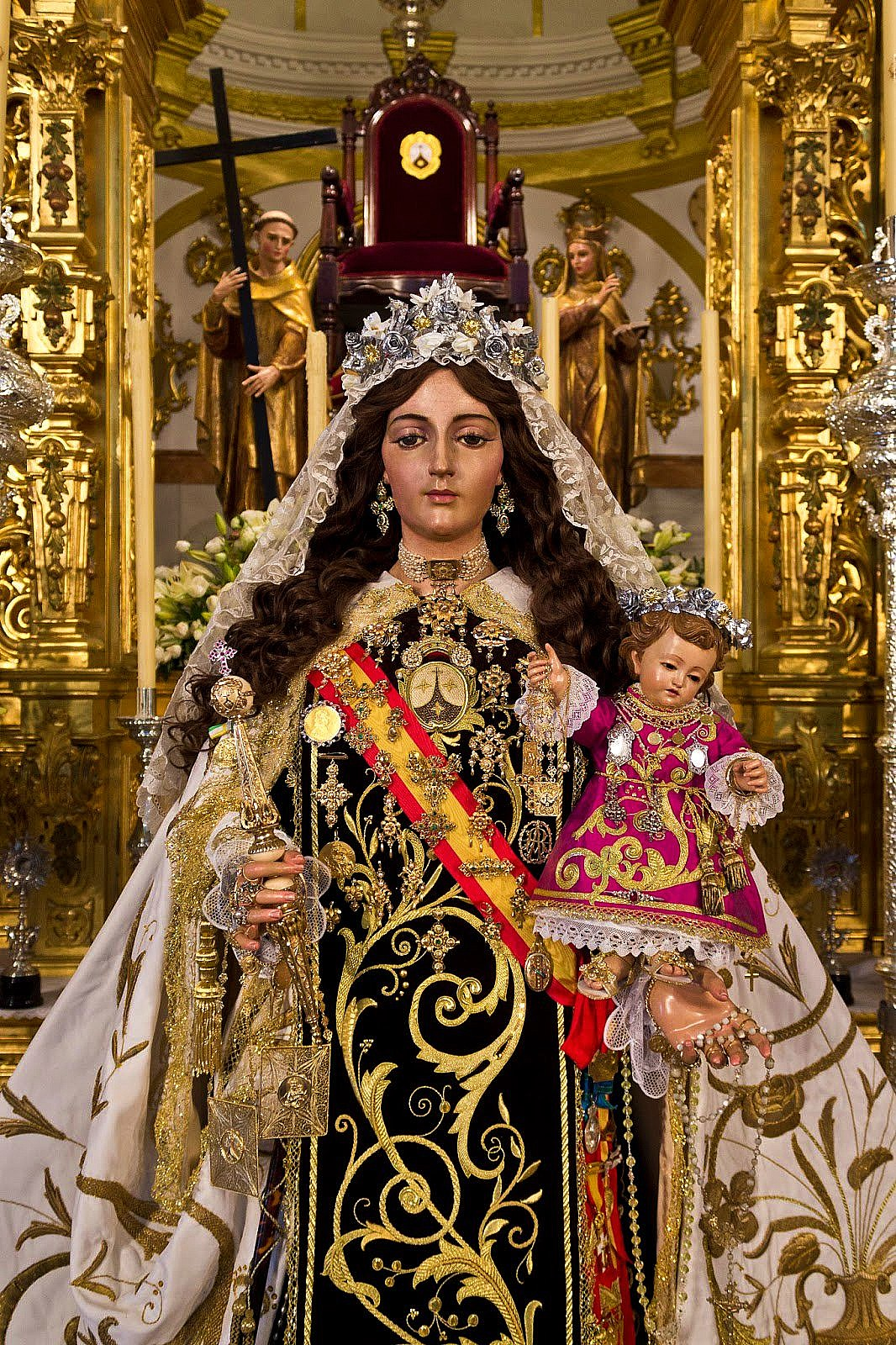
It occupies a neo-baroque setting over the High Altar, also of the 1960s. Rute honours its Patron several times a year. The anniversary celebration lasts three days, culminating on 13 February with Mass, presentations to the Chief of the Brotherhood and the Fiesta Queen of gifts made for the Virgin, and a ceremony of kissing the Scapular of Our Lady of Mount. Carmel. Her liturgical feast day, 16 July is the focus of another three-day celebration. On the last Sunday of June, the procession is held, when the Statue goes in procession through the neighbourhood to the main Parish Church of Santa Catalina Mártir. Another triduum is celebrated around the feast of the Assumption, 14-16 August.
Bl André de Soveral
St Andrew the Hermit
St Antiochus of Sebaste
Bl Arnold of Clairvaux
Bl Arnold of Hildesheim

Blessed Arnulf of Hildesheim
St Athenogenes of Sebaste

St Bartholomew of Braga OP – Archbishop of Braga also known as Bl Bartholomew of the Martyrs (Bartolomeu Fernandez dei Martiri Fernandes) (1514-1590) Portuguese Dominican Friar and Priest, Writer, Theologian, Advisor, Teacher and Catechetical writer, Apostle of Charity founding a series of hospitals and hospices in Braga and surrounds.

St Benedict the Hermit

Blessed Ceslaus Odrowaz OP (c 1184– 1242) (Brother of St Hyacinth) Priest and Friar of the Order of Preachers, Confessor, Spiritual Advisor, miracle-worker.

Bl Claude Beguignot
Bl Domingos Carvalho
St Domnin
St Domnio of Bergamo
Bl Dorothée-Madeleine-Julie de Justamond
St Elvira of Ohren
St Eugenius of Noli
St Faustus
St Faustus of Rome and Milan
St Fulrad of Saint Denis
St Generosus of Poitou
St Gobbán Beg
St Gondolf of Saintes
St Grimoald of Saintes
St Helier of Jersey
Bl Irmengard
Bl John Sugar
St Landericus of Séez
Bl Madeleine-Françoise de Justamond
Bl Marguerite-Rose de Gordon
Bl Marguerite-Thérèse Charensol
Bl Marie-Anne Béguin-Royal
Bl Marie-Anne Doux

St Marie-Madeline Postel (1756-1846) Religious Sister and Founder of the Sisters of Christian Schools of which she is the Patron, Teacher, Franciscan tertiary.

Bl Marie-Rose Laye
Bl Milon of Thérouanne
Bl Nicolas Savouret
Bl Ornandus of Vicogne
St Paulus Lang Fu
St Reinildis of Saintes ( c 630 – c 700) Virgin, Laywoman, Martyr
Bl Robert Grissold
Bl Simão da Costa
St Sisenando of Cordoba
St Tenenan of Léon
St Teresia Zhang Heshi
St Valentine of Trier
St Vitalian of Capua
St Vitaliano of Osimo
St Yangzhi Lang

Martyrs of Antioch – 5 saints: Five Christians who were martyred together. No details about them have survived by the names – Dionysius, Eustasius, Maximus, Theodosius and Theodulus. They were Martyred in Antioch, Syria, date unknown.
Posted in SAINT of the DAY

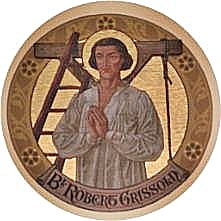
Saint of the Day – 16 July – Bl Robert Grissold

One of the English Martyrs. Blessed Robert Grissold (or Greswold) was a native of Rowington, the son of John and Isabel Grissold of Poundley End, Rowington. John was a weaver and he and his wife had seven sons and one daughter. Of yeoman stock, and he was the servant of a Mr Sheldon of Broadway in Worcestershire. Both Robert and his brother John had a reverence for Catholic priests. John was the servant of Fr Henry Garnet, SJ, and was so badly racked after the Gunpowder Plot that it was rumoured he was dead. It was probably in Mr Sheldon’s service that Robert encountered John Sugar, who had been a clergyman of the Anglican Church but had become a Catholic, studied at the English College, Douai, and was ordained a priest on 21st April 1601. Having returned to England, he travelled on foot throughout Warwickshire, Staffordshire and Worcestershire, where he ministered to the ‘poorer and meaner sort of Catholics.’ Robert accompanied the priest to his old home, where news of the priest’s arrival was noised abroad.

On Sunday, 8th July 1603 a warrant was issued to search the house of a Catholic dwelling in Rowington for the arrest of a Catholic priest who was rumoured to be there. This was probably the house of William Skynner, Lord of the Manor or Rowington, a Catholic who in 1592 had been in trouble for harbouring a priest. On this occasion no priest was found and the searchers went to the house of Robert, Henry and Ambrose Grissold, Robert’s three unmarried uncles, who kept house together and were known to be Catholics. One of the searchers was Clement Grissold, nephew of the three brothers and first cousin of Robert; he it was who directed the search to the Grissold household. Again, no priest was found.

However, on the highway near Baddesley the search party encountered Robert and John Sugar. They were betrayed by a relative of Grissold who offered to let him leave. “Cousin, if you will go your way you may,” said Clement; but Robert replied, “I will not, except I may have my friend with me.”

Both were imprisoned in Warwick Gaol, where they languished for a year. On 13th July 1604 John Sugar was arraigned for being a Catholic priest and was condemned to be hanged, drawn and quartered. Authorities offered both men a final chance at pardon if they would conform to the Church of England by attending Anglican services, but Grissold, approximately 29 years old, steadfastly refused, affirming his loyalty to the Catholic faith.

On 16th July they were taken to the place of execution, known as Gallows Hill. John Sugar was drawn on a hurdle. Robert was given the opportunity of not following through the mud, but he replied, ‘I have not thus far followed him to leave him now for a little mire.’

Fr Sugar was executed first. He said on the scaffold: “Be ye all merry, for we have not occasion of sorrow but of joy: for although I shall have a sharp dinner, yet I trust in Jesus Christ that I shall have a most sweet supper.”

Seeing the halter with which he was to be hanged lying on the ground, Robert went and dipped it in John Sugar’s blood, and going up the ladder he said to the people, ‘Bear witness, good people, that I die here not for theft, nor for felony, but for my conscience.’ Then he forgave his persecutors and the hangman, made an act of contrition, and called on the name of Jesus. Lastly, he commended himself into the hands of Almighty God and was turned off the ladder; he hanged until he was quite dead. He was buried beneath the gallows, while the head and quarters of John Sugar were set up on the gates of Warwick.

Posted in Our MORNING Offering

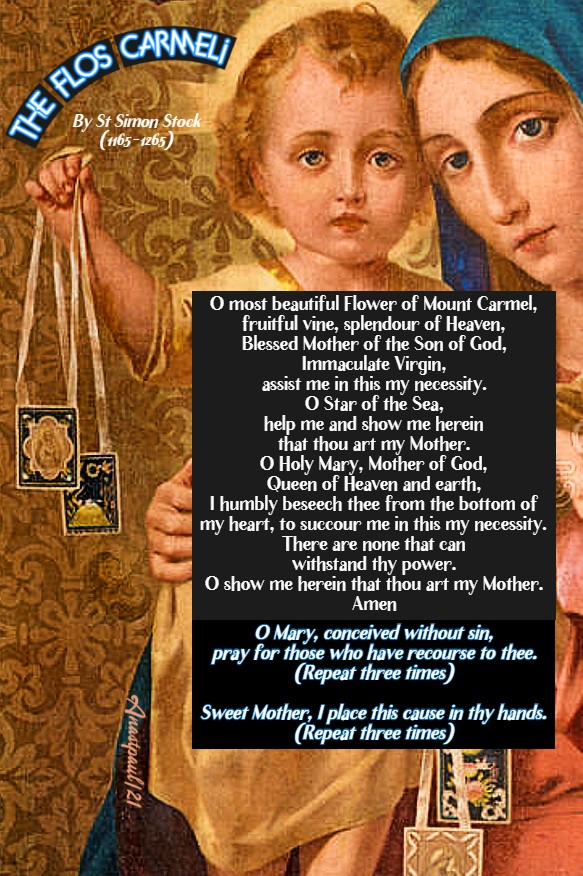
Our Morning Offering – 16 July – “The Flos Carmeli”

Our Morning Offering – 16 July – The Memorial of Our Lady of Mount Carmel

“The Flos Carmeli
The Flower of Carmel”
By St Simon Stock (1165-1265)

O most beautiful Flower of Mount Carmel,
fruitful vine, splendour of Heaven,
Blessed Mother of the Son of God,
Immaculate Virgin,
assist me in this my necessity.
O Star of the Sea,
help me and show me herein
that thou art my Mother.
O Holy Mary, Mother of God,
Queen of Heaven and earth,
I humbly beseech thee from the bottom of my heart,
to succour me in this my necessity.
There are none that can withstand thy power.
O show me herein, that thou art my Mother. Amen.

O Mary, conceived without sin,
pray for those who have recourse to thee.

(Repeat three times)

Sweet Mother, I place this cause in thy hands.
(Repeat three times)

This prayer, the “Flos Carmeli” (“The Flower of Carmel”), was composed by St Simon Stock (1165-1265), a Carmelite, so-called because he and other members of his order lived atop Mount Carmel in the Holy Land. St Simon Stock was visited by the Blessed Virgin Mary on 16 July 1251, at which time, she bestowed upon him a scapular, or habit, (commonly called “the Brown Scapular”), which became part of the liturgical clothing of the Carmelite order
Oral tradition tells of St Simon Stock praying, with a passionate intensity to Our Lady of Mount Carmel, during a time of great distress and hardship for the Order. With fervour and faith, he prayed his prayer, the Flos Carmeli for the first time. And Our Lady answered his prayer. Thus, for seven centuries the Flos Carmeli continues to be prayed to the Blessed Mother with the firm faith that she she will answer its request with her powerful help.

Posted in ONE Minute REFLECTION

One Minute Reflection – 16 July – Beware of false prophets, who come to you in sheep’s clothing, but inwardly are ravenous wolves

Beware of false prophets, who come to you in sheep’s clothing, but inwardly are ravenous wolves.

Matt 7:15-21

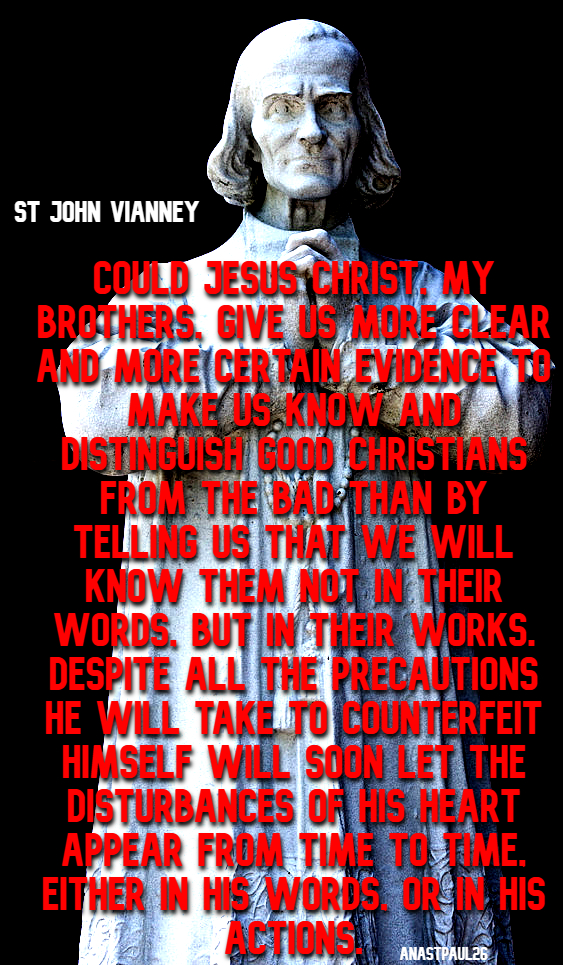
REFLECTION – Could Jesus Christ, my brothers, give us more clear and more certain evidence to make us known and distinguish good Christians from the bad, than by telling us that we will know them, not in their words, but to their works. A good tree, he tells us, cannot bear bad fruits, like a bad tree cannot bear good ones. Yes, my brothers, a Christian who has only a false devotion, an affected virtue and who is only external, despite all the precautions he will take to counterfeit himself, will soon let the disturbances of his heart appear from time to time, either in his words, or in his actions. No, my brothers, there is nothing so common that these virtues be ‟apparent”, that is to say a hypocrisy. We will see at the last judgment that most Christians have only had a religion of whim or mood, that is to say, inclinations, and that very few have only sought God in what they have done.

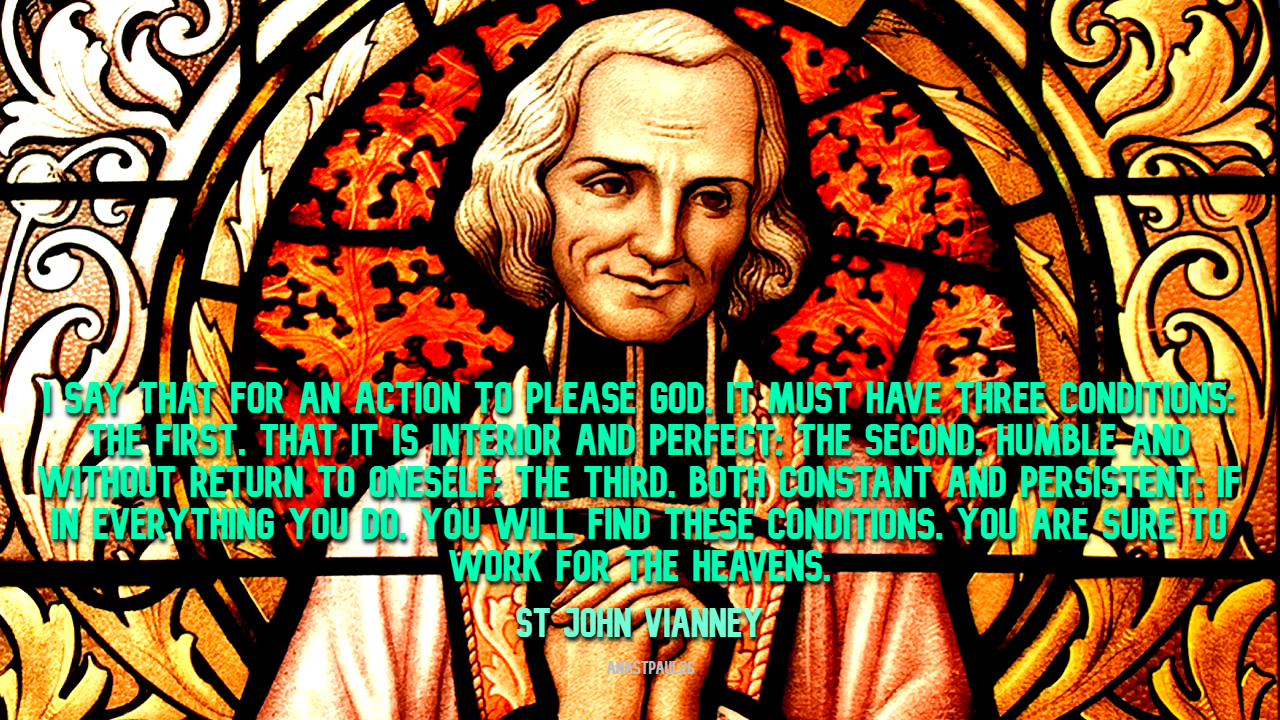
We first say that a Christian who wants to work sincerely in his salvation, must not be content to do good works; But he still has to know who he does them for and how he should do them. Secondly, we say that it is not enough to appear virtuous in the eyes of the world, but that it is still necessary to be in the heart. If, now, my brothers, you ask me how we can know that a virtue is true and that it will lead us to heaven, my brothers, here it is: listen to it well, gravel it well in your heart; so that each action you will do, you can know if it will be rewarded in heaven. I say that for an action to please God, it must have three conditions: the first, that it is interior and perfect; the second, humble and without return to oneself; the third, both constant and persistent: if in everything you do, you will find these conditions, you are sure to work for the heavens.

St John Vianney (Sermon for the 4th Sunday after Pentecost)

PRAYER – Almighty God, to whom this world with all its goodness and beauty belongs, give us grace joyfully to begin this day in Your name and to fill it, with an active love for You and for our neighbour. Grant us the grace to repent of our sins, to turn to the Cross of Your Son and to beg Him, in His great love and suffering, to forgive us again! Mary, the Madonna of Humility, intercede for us in our weakness and help us become humble and look only at the face of Christ. Amen

Posted in CATHOLIC Quotes

Quote/s of the Day – 16 July – The Lord, the Most High, the awesome, is the great King over all the earth

Quote/s of the Day – 16 July – “Month of the Most Precious Blood” – Readings: Ps 46:2, Ps 46:3, Rom 6:19-23, Matt 7:15-21

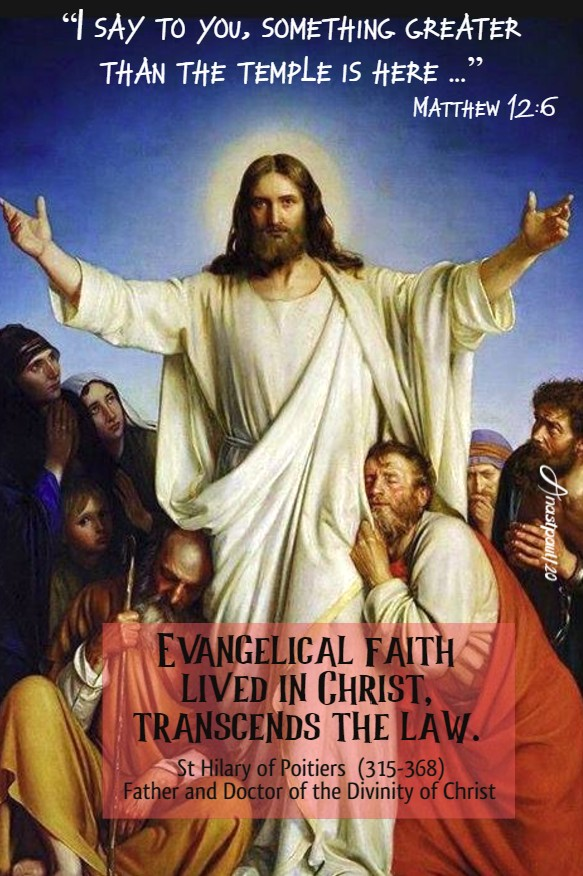
“I say to you,
something greater
than the temple is here …”

Matthew 12:6

“The Word of God, as consubstantial with the Father,
has all things in common with Him and, therefore,
has necessarily supreme and absolute dominion,
over all things created.”

St Cyril of Alexandria (376-444) Father & Doctor of the Church

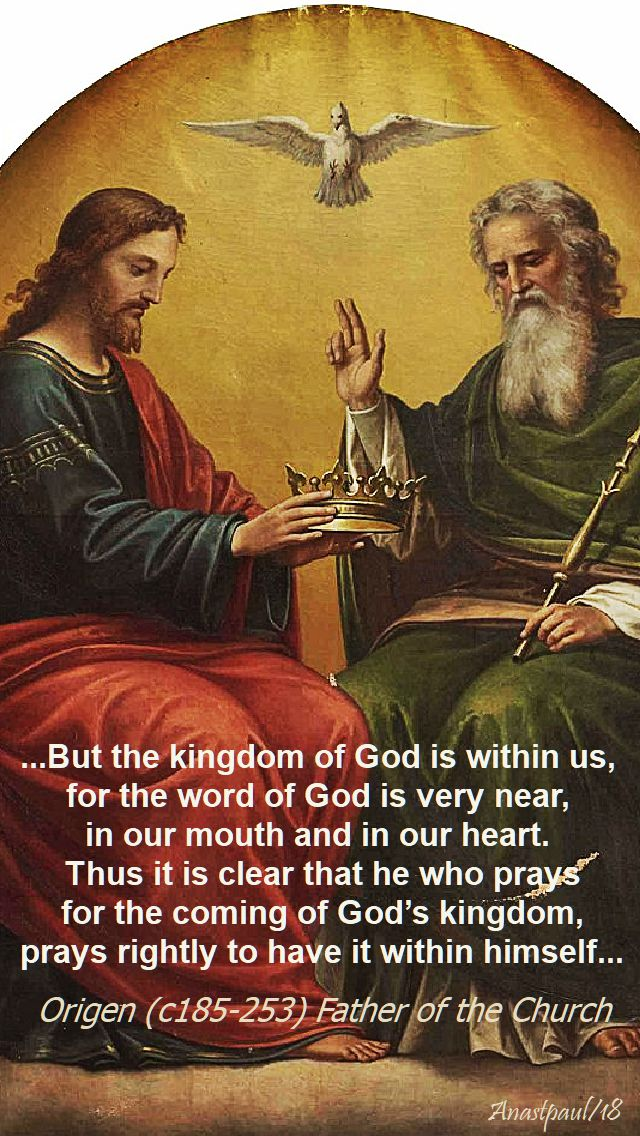
“The kingdom of God, in the words of our Lord and Saviour,
does not come for all to see; nor shall they say:
Behold, here it is, or behold, there it is;
but the kingdom of God is within us,
for the word of God is very near, in our mouth and in our heart.
Thus it is clear that he who prays for the coming of God’s kingdom,
prays rightly to have it within himself,
that there it might grow and bear fruit and become perfect. For God reigns in each of his holy ones.

Origen (c185-253) Father of the Church

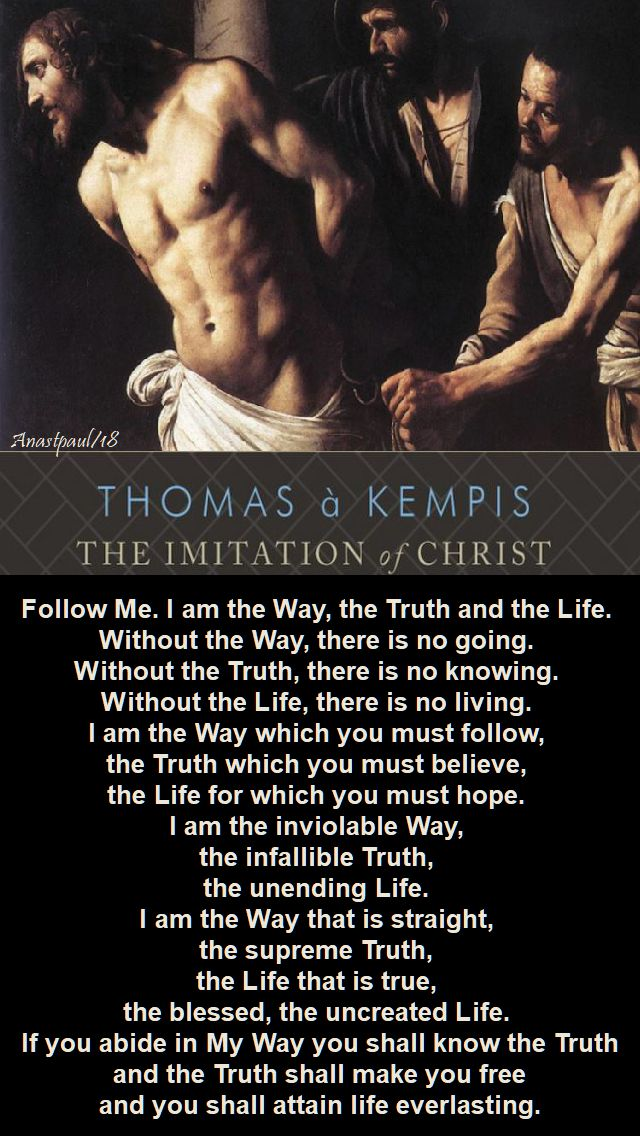
“Follow Me. I am the Way, the Truth and the Life. 
Without the Way, there is no going. 
Without the Truth, there is no knowing. 
Without the Life, there is no living. 
I am the Way, which you must follow, 
the Truth, which you must believe, 
the Life, for which you must hope. 
I am the inviolable Way, 
the infallible Truth, 
the unending Life. 
I am the Way that is straight, 
the supreme Truth, 
the Life that is true, 
the blessed, the uncreated Life. 
If you abide in My Way, you shall know the Truth
and the Truth shall make you free
and you shall attain life everlasting.”

Thomas à Kempis

Posted in JULY - The MOST PRECIOUS BLOOD

Thought for the Day – 16 July – The Trampling on the Precious Blood

The Precious Blood – Short Meditations for July

By Rev. Richard F. Clarke

16th Day – The Trampling on the Precious Blood

There are some who not only waste the Precious Blood, but actually trample it under their feet. These are they who, being washed from all their sins in the most Precious Blood of Jesus, deliberately turn back again to the sins they have abandoned, and set at naught His proffered love and friendship, and become far worse at the end than they were at the beginning. My Jesus! may I never be guilty of such base ingratitude!

But there are other still worse, who, after having been enrolled in the army of Jesus Christ, desert His standard and profess themselves unable to accept the teaching of the Church. Through pride or vice or covetousness they lose all their love of their holy faith and appreciation of its truth. These do indeed trample on the Precious Blood, and put Christ Our Lord to shame. Yet at any time, without God’s grace, I might be guilty of a like abandonment of my faith. O my God, make me always faithful to Thee!

There is a still lower depth. Some not only lose their faith, but become it enemies and traducers. They esteem the blood with which they are sanctified an unclean thing, and offer an affront to the Spirit of grace. They assail the Church, its ministers, its sacraments, its doctrines, with lying lips and open insult. How can any ever fall so low as this? Yet among them all will be found some who were once more pleasing to God than I. May I take warning from them and humble myself, and cherish as an inestimable treasure the grace won for me by the Precious Blood!