Posted in MARIAN TITLES

Notre-Dame de Boulogne -sur-Mer , France / Our Lady of Boulogne-Sur-Mer (1469) and Memorials of the Saints – 10 July

Notre-Dame de Boulogne -sur-Mer , France / Our Lady of Boulogne-Sur-Mer (1469) – 10 July:
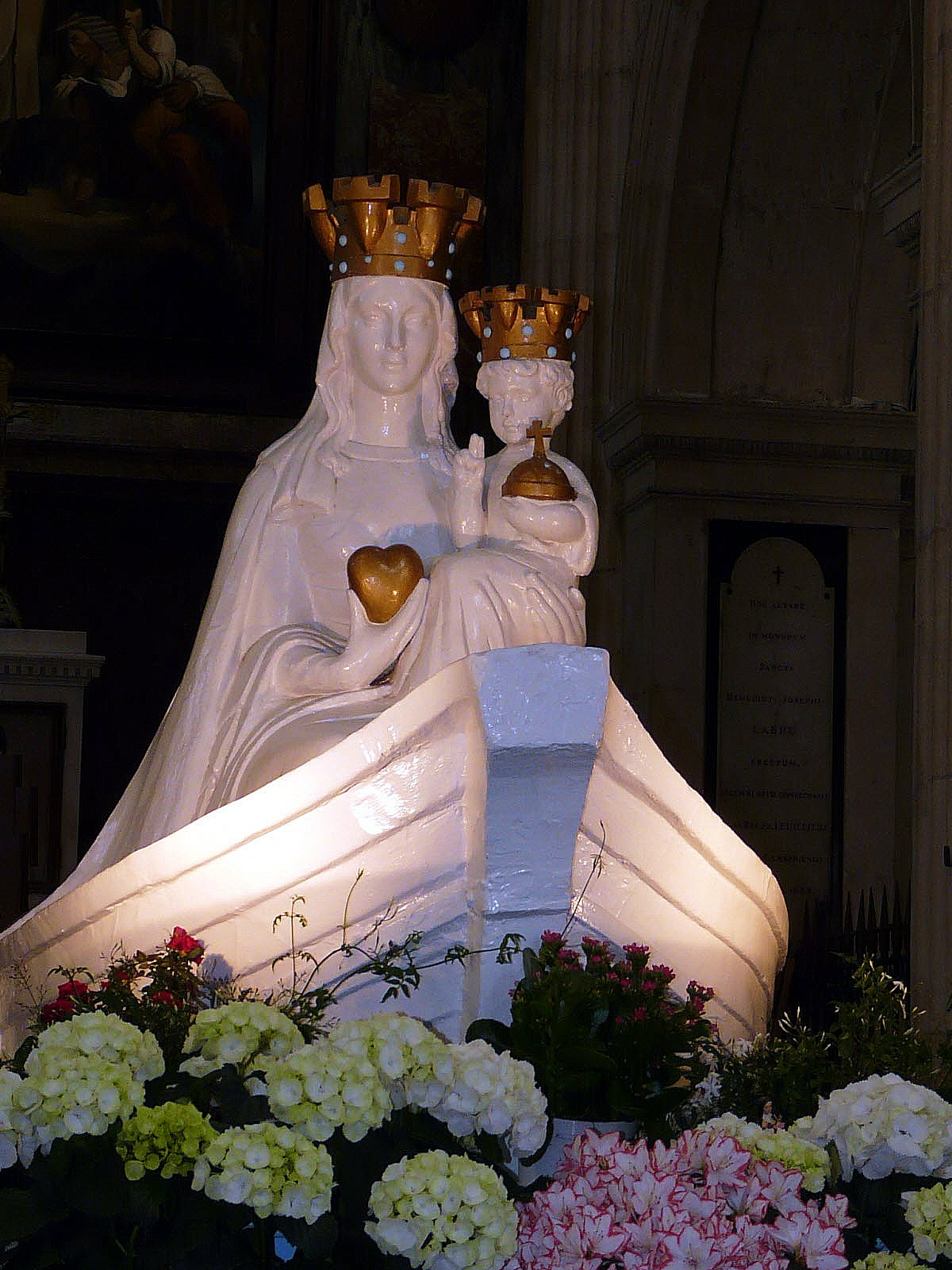
In the year 636, a small group of people standing on the seashore witnessed a boat without oars or sails came into the harbour of Boulogne. It finally came to rest in the estuary, seemingly of its own accord. One of the witnesses boarded the boat and confirmed that there was none aboard, and that the vessel had no rudder, oars or sails. The ship, however, bore a luminous Statue of Our Lady. Taking hold of it to bring it to land, a voice was heard saying, “I choose your City as a place of grace.” The citizens welcomed Mary to their City by erecting a Shrine in her honour, which reached its height of glory in the 12th Century.
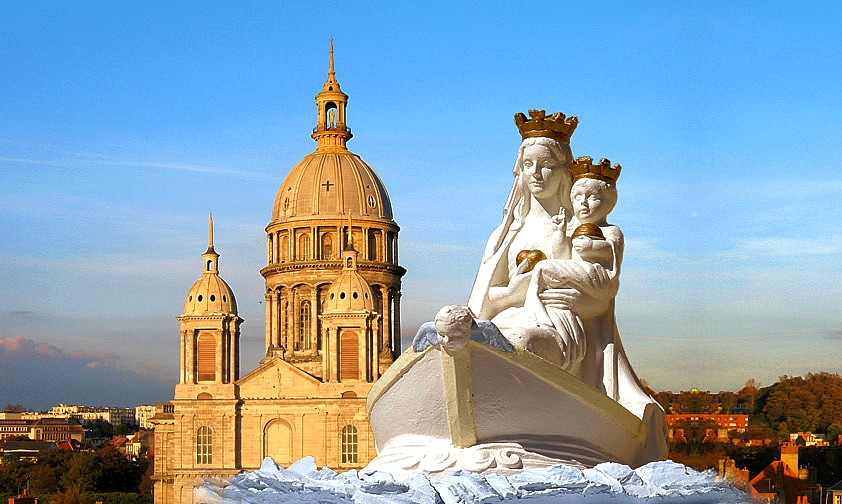
King Henry VIII is reported to have stolen the Statue of Our Lady of Boulogne and taken it to England. After many negotiations, the French managed to get it back. The image had been stolen and hidden many other times, but always saved and returned.

World War II almost completely destroyed the Statue. In modern times, four exact replicas of Our Lady of Boulogne toured France for more than seven years as a symbol of French devotion to Mary. One of these was taken to Walsingham, England, in 1948 and carried in procession by the Cross-bearing pilgrims.

Boulogne was one of the most important Lady Shrines of medieval France; among its noted pilgrims have been: Henry III, Edward II, the Black Prince, John of Gaunt.
The dedication of a new Church built in honour of Our Lady of Boulogne was Consecrated in the year 1469 by Bishop Chartier of Paris. The confraternity of Our Lady of Boulogne was so celebrated, that six French Kings have chosen to belong to it.

At the French Revolution, the Statue was burnt to ashes and the Church pulled down. A new Statue was made in 1803 and pilgrimages began again. The image represents the Mother with the Child in her arms, standing in a boat, with an angel on either side. At the Marian Congress in Bolougne in 1938, a the custom began, to take replicas of this Statue on visitations through France and abroad. A branch of the Confraternity of Our Lady of Compassion at Boulogne has been established for the reconciliation of the Church of England.
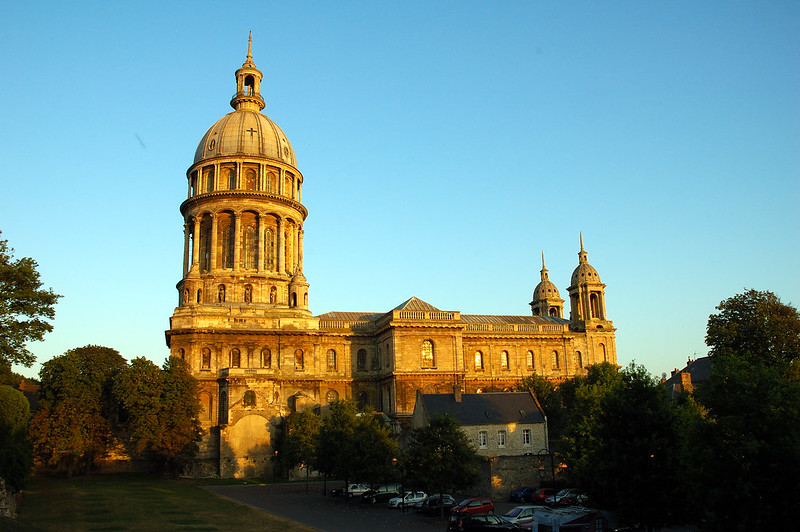
The Sanctuary Church at Boulogne was badly damaged during World War II, and Mary’s image smashed but the return, the “Great Return” of one of the copies of the Statue which had been sheltered at Lourdes, took place in 1943, and the occasion will long be remembered by lovers of the Blessed Virgin Mary. There is an ancient offshoot of this Shrine at Boulogne-sur-Seine.
St Amalberga of Mauberge (Died 690) Wife, Mother of 3 Saints: Gudila, Reinelda, and Emembertus. She and her husband mutually agreed to separate to become a Monk and a Nun, respectively, once the children were grown.

St Anatolia & Victoria (Died 250) Martyrs, Sisters who gave their lives for Christ.

St Antôn Nguyen Huu Quynh

St Apollonius of Sardis
Bl Arnold of Camerino
St Bianor of Pisidia

St Canute IV (c 1042-1086) Martyr, King of Denmark, known as “Canute the Holy.”

St Cuán of Airbhre
St Elilantus
St Etto
Bl Euménios
St Lantfrid
Bl Marie-Gertrude de Ripert d’Alauzier
Bl Parthenios
St Pascharius of Nantes
St Peter Vincioli
St Phêrô Nguyen Khac Tu
St Rufina and St Secunda of Rome (3rd Century) Virgin Martyrs
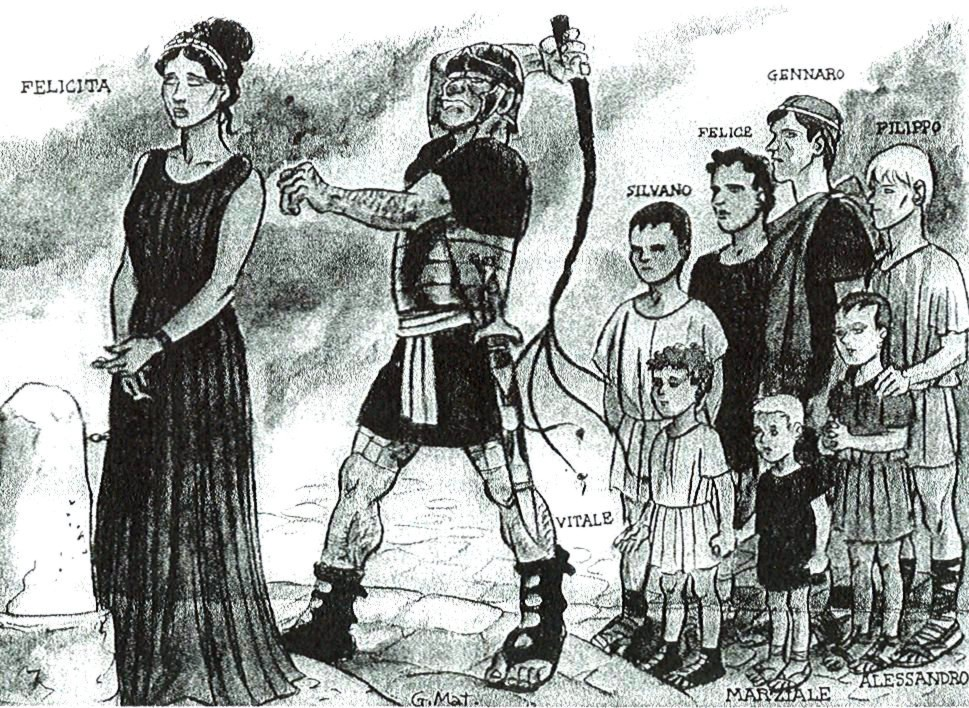
Seven Holy Brothers and their mother, St Felicitas (Died c 165) Martyrs. The Seven Sons of St Felicitas were the very first victims sacrificed by Emperor Marcus Aurelius to satisfy his false philosophy and the superstitions of his pagan subjects. St Felicitas is also celebrated separately on 23 November .

St Sylvanus of Pisidia
Bl Sylvie-Agnès de Romillon
St Waltram

Martyrs of Africa – 4 saints: A group of Christians martyred together in Africa. The only information that has survived are four of their names – Felix, Januarius, Marinus and Nabor.

Martyrs of Antioch – 10 saints: A group of ten Christians martyred together. We have no details about them but the names – Diogenes, Domnina, Esicius, Macarius, Maxima, Maximus, Rodigus, Timoteus, Veronia and Zacheus. They were martyred in Antioch, date unknown.

Martyrs of Damascus – 11 beati: A group of Franciscans and laymen ordered by Druz Muslims to convert to Islam. They refused and were hacked to pieces.
• ‘Abd Al-Mu’ti Masabki
• Carmelo Bolta Bañuls
• Engelbert Kolland
• Francisco Pinazo Peñalver
• Fransis Masabki
• Juan Jacobo Fernández y Fernández
• Manuel Ruiz López
• Nicanor Ascanio de Soria
• Nicolás María Alberca Torres
• Pedro Soler Méndez
• Rufayil Masabki
They were cut to pieces on 9-10 July 1860 in Damascus, Syria.
Beatified on 10 October 1926 by Pope Pius XI.

Martyrs of Nicopolis – 45 saints: A group of 45 Christians tortured and martyred together in the persecutions of emperor Licinius. We know nothing else but six of their names – Anicetus, Anthony, Daniel, Leontius, Mauritius and Sisinno. c 329 in Nicopolis, Armenia (modern Koyulhisar, Turkey).

Martyrs of Nitria – 5 saints: Fathers of Nitria – Four monks and the bishop of Alexandria, Egypt who were martyred by heretics. Saint John Chrysostom wrote about them but their names have not come down to us. They were martyred in the 4th century in Nitria, Egypt.
Posted in SAINT of the DAY

Saints of the Day – 10 July – St Bianor and Silvanus of Pisidia

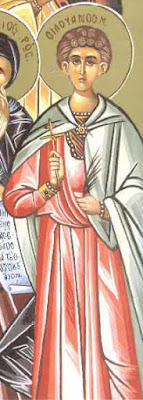
Saint Bianor came from the Pisidia district of Asia Minor. As a confessor of Christianity they brought him to the prefect of the city of Isauria in Lykaonia, who demanded that Saint Bianor renounce Christ. The saint stood steadfast in the true Faith, in spite of the refined tortures applied to him. A man by the name of Silvanus beheld the suffering of the martyr. The endurance and bravery of Saint Bianor inspired Silvanus, and he openly declared his faith in Christ. They cut out his tongue and then cut off his head. Saint Bianor, after long torture, was also beheaded.

The date of the suffering of the holy Martyrs Bianor and Silvanus is not precisely known. It is presumed that they died in Pisidia under the Roman emperor Diocletian (284-305).

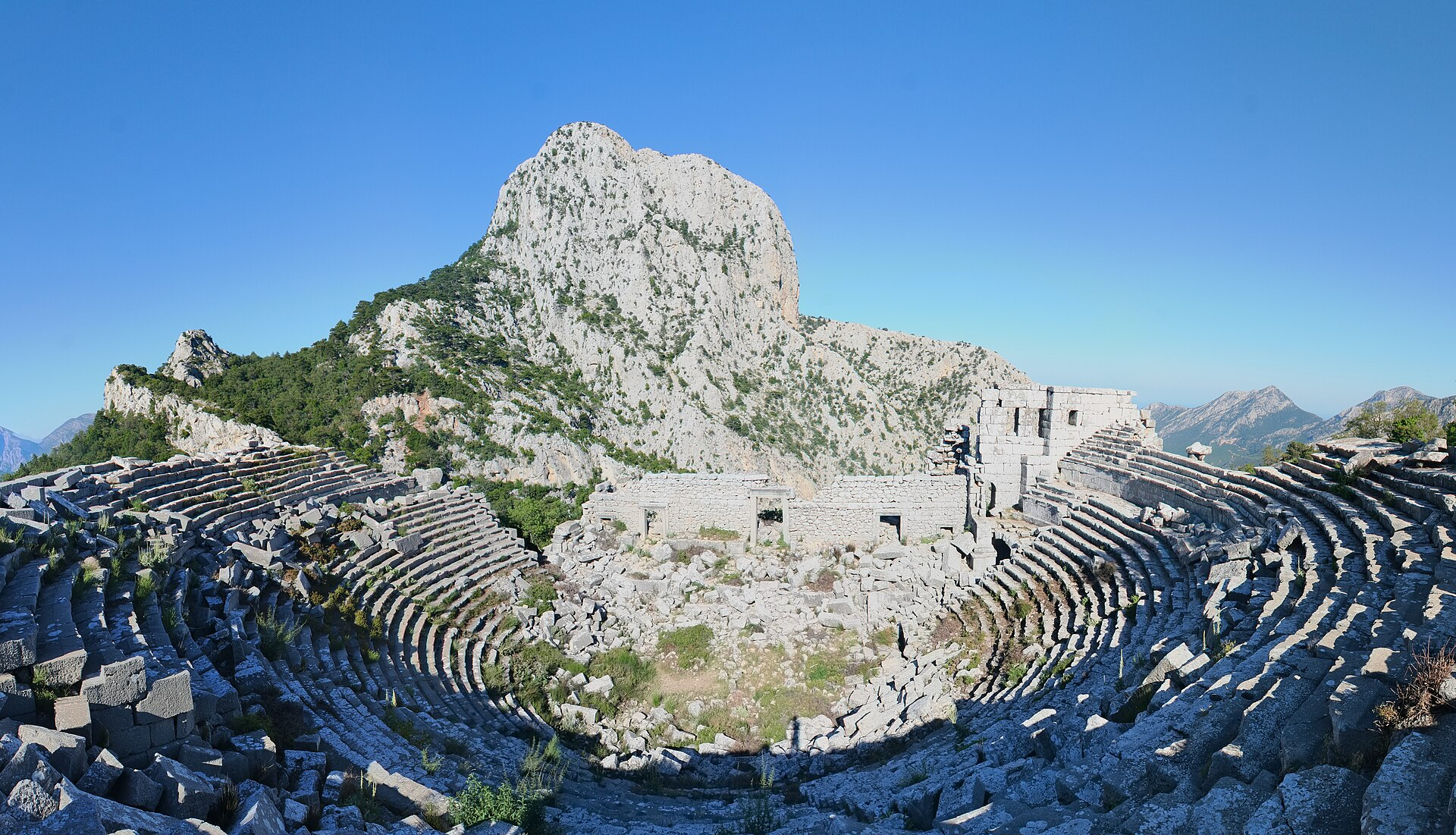
The theatre in Termessos, a Pisidian city.

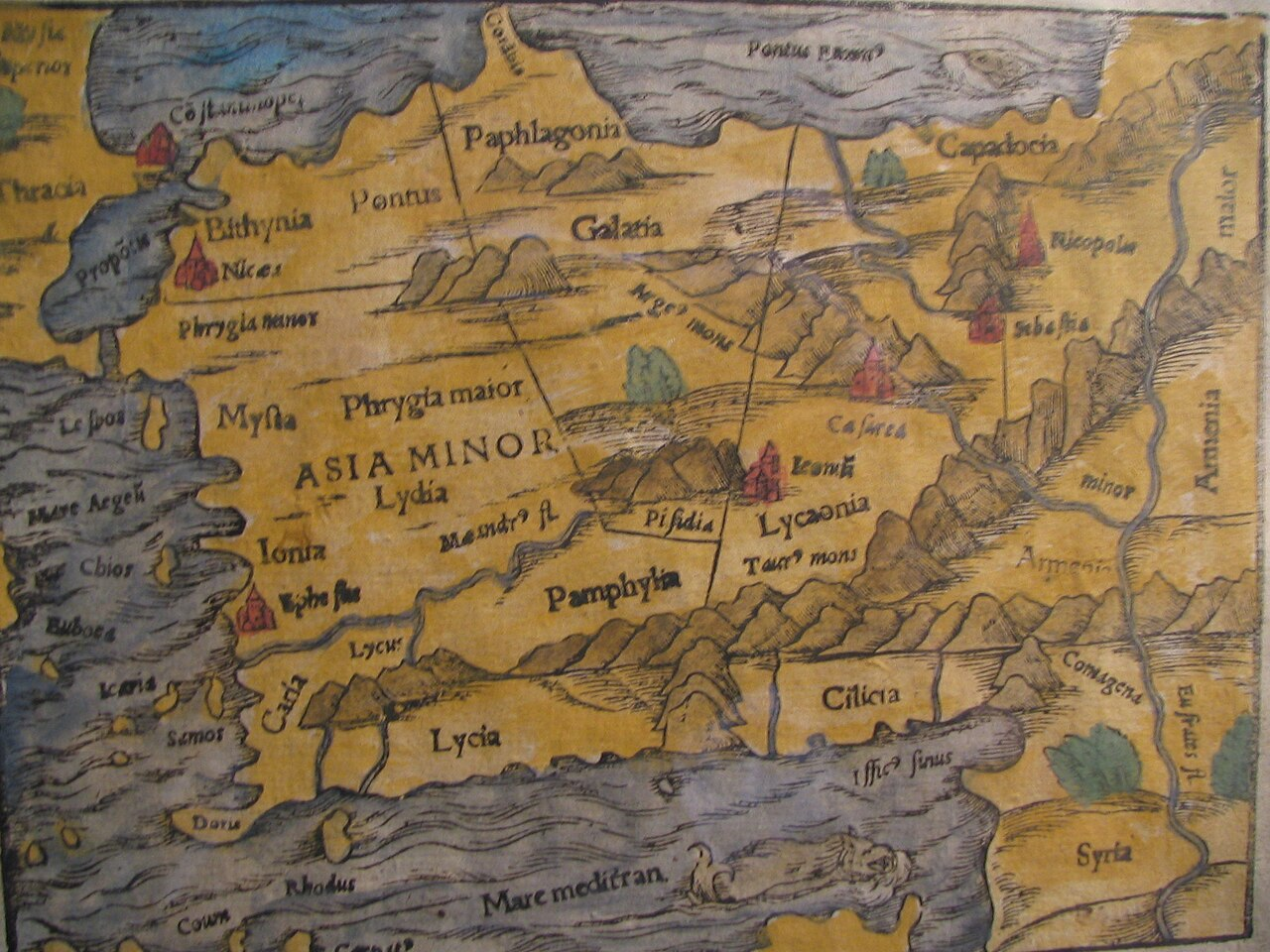
A 15th-century map showing Pisidia

Posted in The BLESSED VIRGIN MARY

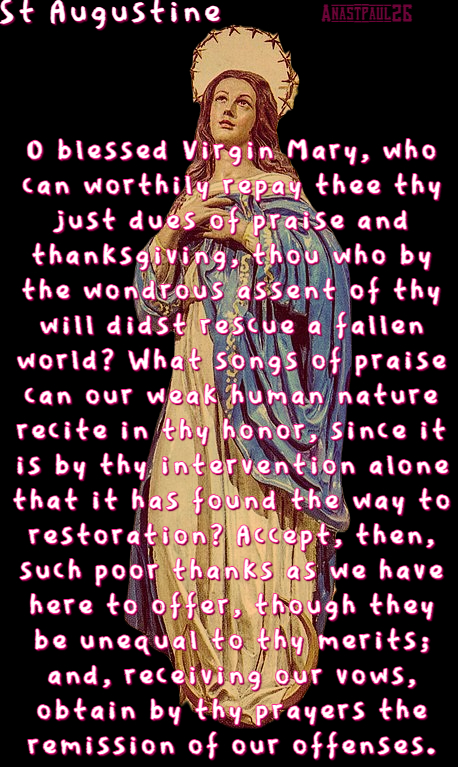
Our Morning Offering –10 July – Prayer to the Blessed Virgin Mary by St. Augustine

Prayer to the Blessed Virgin Mary by St. Augustine

O blessed Virgin Mary, who can worthily repay thee thy just dues of praise and thanksgiving, thou who by the wondrous assent of thy will didst rescue a fallen world? What songs of praise can our weak human nature recite in thy honor, since it is by thy intervention alone that it has found the way to restoration? Accept, then, such poor thanks as we have here to offer, though they be unequal to thy merits; and, receiving our vows, obtain by thy prayers the remission of our offenses.

Carry thou our prayers within the sanctuary of the heavenly audience, and bring forth from it the antidote of our reconciliation. May the sins we bring before Almighty God through thee, become pardonable through thee; may what we ask for with sure confidence, through thee be granted. Take our offering, grant us our requests, obtain pardon for what we fear, for thou art the sole hope of sinners. Through thee we hope for the remission of our sins, and in thee, O blessed Lady, is our hope of reward. Holy Mary, succour the miserable, help the fainthearted, comfort the sorrowful, pray for thy people, plead for the clergy, intercede for all women consecrated to God; may all who keep thy holy commemoration feel now thy help and protection. Be thou ever ready to assist us when we pray, and bring back to us the answers to our prayers. Make it thy continual care to pray for the people of God, thou who, blessed by God, didst merit to bear the Redeemer of the world, who liveth and reigneth, world without end. Amen..

(Indulgence of 3 years)

Posted in ONE Minute REFLECTION

One Minute Reflection – 10 July – When one finds a worthy wife, her value is far beyond pearls.

When one finds a worthy wife, her value is far beyond pearls. Her husband, entrusting his heart to her, has an unfailing prize. She brings him good, and not evil, all the days of her life.

– Prov 31:10-31

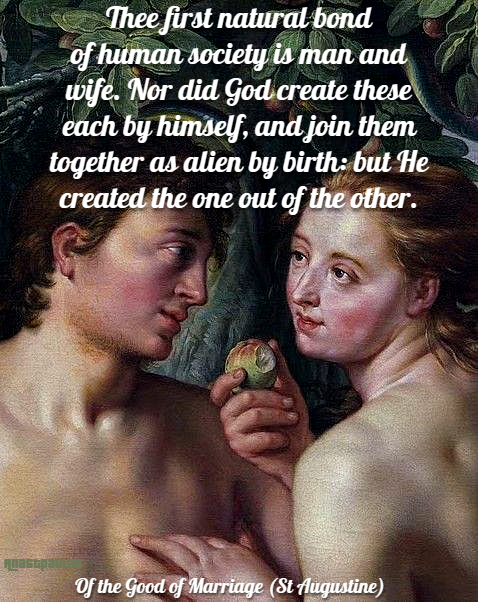
REFLECTION –  Forasmuch as each man is a part of the human race, and human nature is something social, and has for a great and natural good, the power also of friendship; on this account God willed to create all men out of one, in order that they might be held in their society not only by likeness of kind, but also by bond of kindred. Therefore the first natural bond of human society is man and wife. Nor did God create these each by himself, and join them together as alien by birth: but He created the one out of the other, setting a sign also of the power of the union in the side, whence she was drawn, was formed. For they are joined one to another side by side, who walk together, and look together whither they walk. Then follows the connection of fellowship in children, which is the one alone worthy fruit, not of the union of male and female, but of the sexual intercourse. For it were possible that there should exist in either sex, even without such intercourse, a certain friendly and true union of the one ruling, and the other obeying.

This we now say, that, according to this condition of being born and dying, which we know, and in which we have been created, the marriage of male and female is some good; the compact whereof divine Scripture so commends, as that neither is it allowed one put away by her husband to marry, so long as her husband lives: nor is it allowed one put away by his wife to marry another, unless she who have separated from him be dead.

Therefore, concerning the good of marriage, which the Lord also confirmed in the Gospel, not only in that He forbade to put away a wife, save because of fornication, but also in that He came by invitation to a marriage, there is good ground to inquire for what reason it be a good. And this seems not to me to be merely on account of the begetting of children, but also on account of the natural society itself in a difference of sex. Otherwise it would not any longer be called marriage in the case of old persons, especially if either they had lost sons, or had given birth to none. But now in good, although aged, marriage, albeit there has withered away the glow of full age between male and female, yet there lives in full vigor the order of charity between husband and wife: because, the better they are, the earlier they have begun by mutual consent to contain from sexual intercourse with each other: not that it should be matter of necessity afterwards not to have power to do what they would, but that it should be matter of praise to have been unwilling at the first, to do what they had power to do. If therefore there be kept good faith of honor, and of services mutually due from either sex, although the members of either be languishing and almost corpse-like, yet of souls duly joined together, the chastity continues, the purer by how much it is the more proved, the safer, by how much it is the calmer. Marriages have this good also, that carnal or youthful incontinence, although it be faulty, is brought unto an honest use in the begetting of children, in order that out of the evil of lust the marriage union may bring to pass some good. Next, in that the lust of the flesh is repressed, and rages in a way more modestly, being tempered by parental affection. For there is interposed a certain gravity of glowing pleasure, when in that wherein husband and wife cleave to one another, they have in mind that they be father and mother.

Of the Good of Marriage (St Augustine)

PRAYER – 

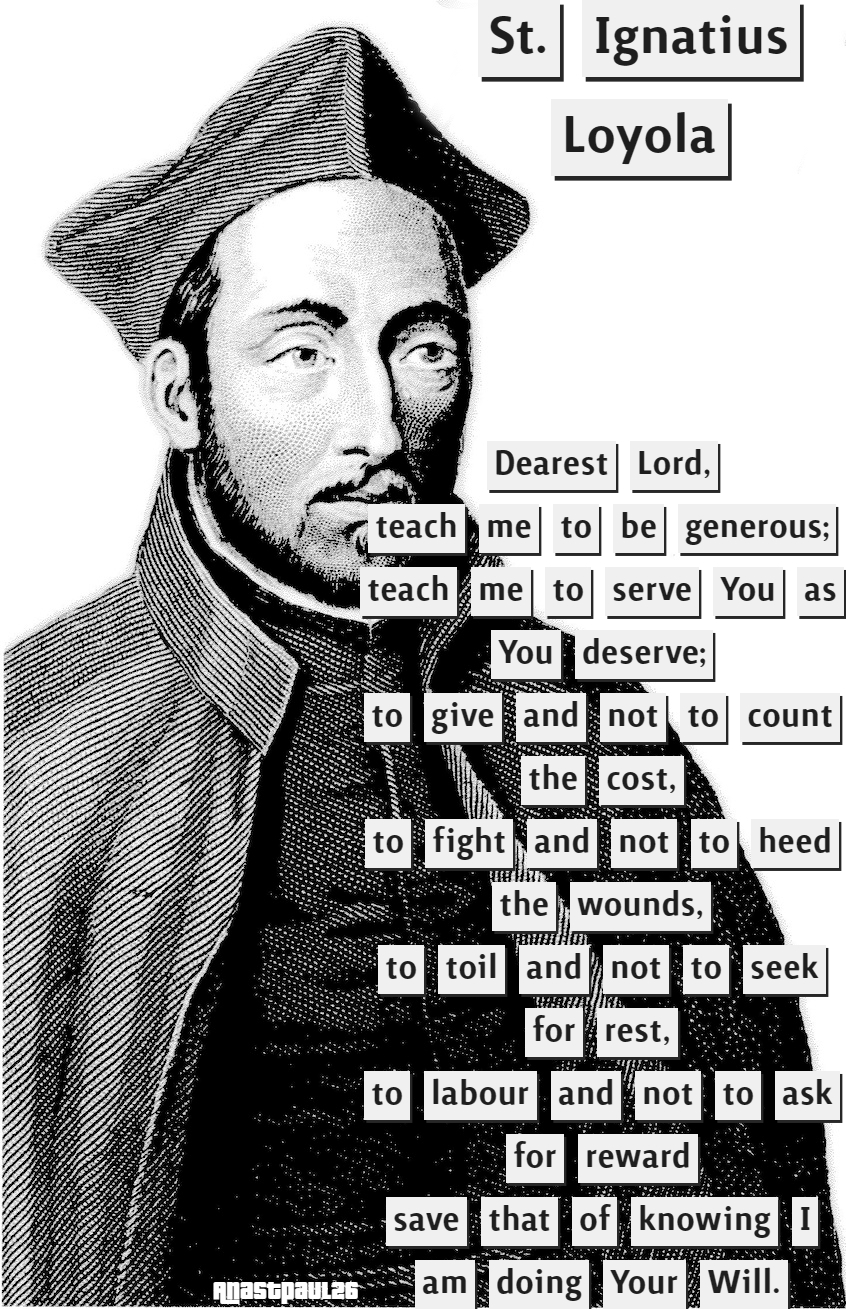
Dearest Lord,
teach me to be generous;
teach me to serve You as You deserve;
to give and not to count the cost,
to fight and not to heed the wounds,
to toil and not to seek for rest,
to labour and not to ask for reward
save that of knowing I am doing Your Will.

(St. Ignatius Loyola)

Posted in Holy Name PRAYERS

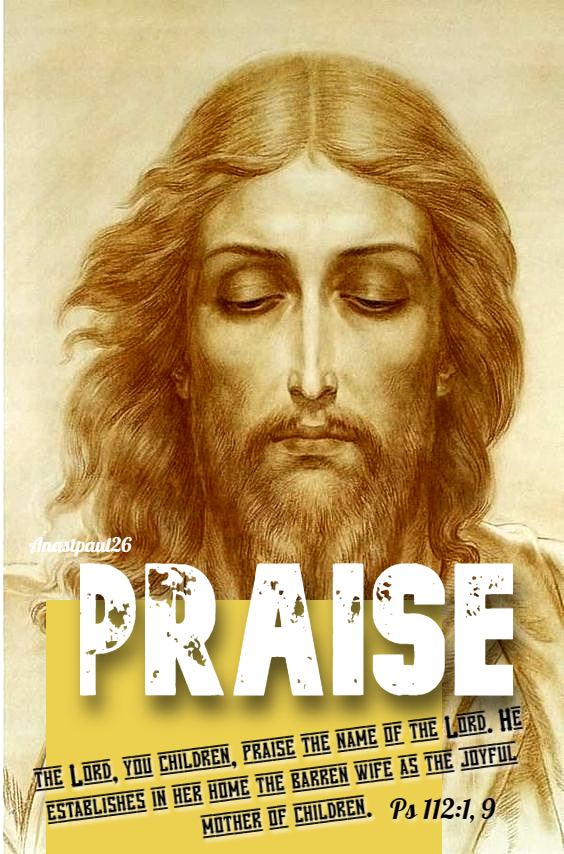
Quote/s of the Day – 10 July – Praise the Lord, you children, praise the name of the Lord (Ps 112:1, 9)

Quote/s of the Day – 10 July – “Month of the Precious Blood” – Readings: Ps 112:1, 9, Ps 112:2, Prov 31:10-31, Ps 123:7-8, Matt 12:46-50

Praise the Lord, you children, praise the name of the Lord. He establishes in her home the barren wife as the joyful mother of children.

Ps 112:1, 9

Praise the Lord, you children, praise the name of the Lord. He establishes in her home the barren wife as the joyful mother of children.

Ps 112:1, 9

Blessed be the name of the Lord both now and forever.

Ps 112:2

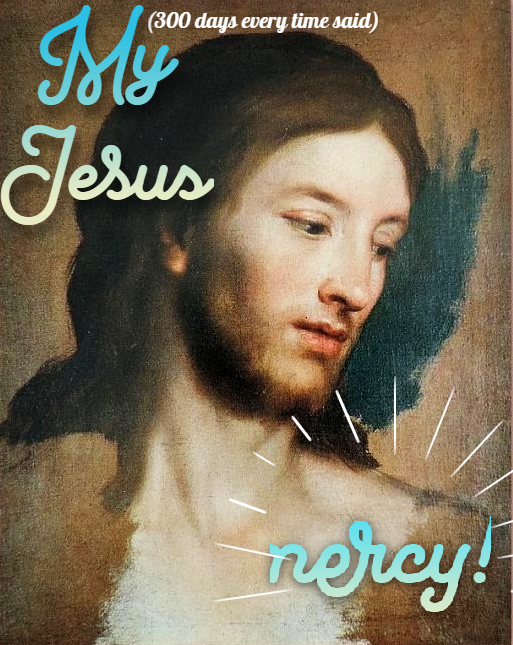
My Jesus, mercy!

(300 days every time said)

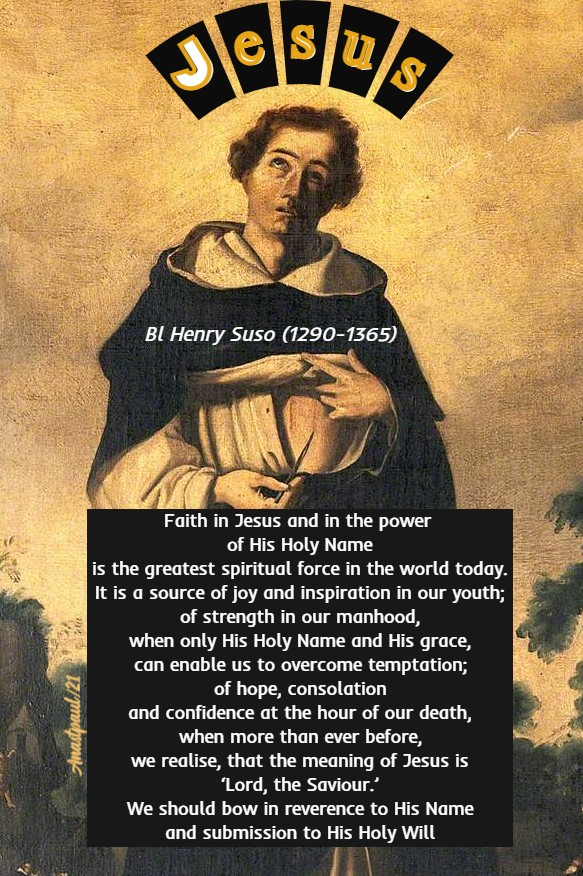
“Faith in Jesus and in the power of His Holy Name
is the greatest spiritual force in the world today.
It is a source of joy and inspiration in our youth;
of strength in our manhood,
when only His Holy Name and His grace,
can enable us to overcome temptation;
of hope, consolation
and confidence at the hour of our death,
when more than ever before,
we realise, that the meaning of Jesus is
‘Lord, the Saviour.’
We should bow in reverence to His Name
and submission to His Holy Will.”

Bl Henry Suso (1290-1365)

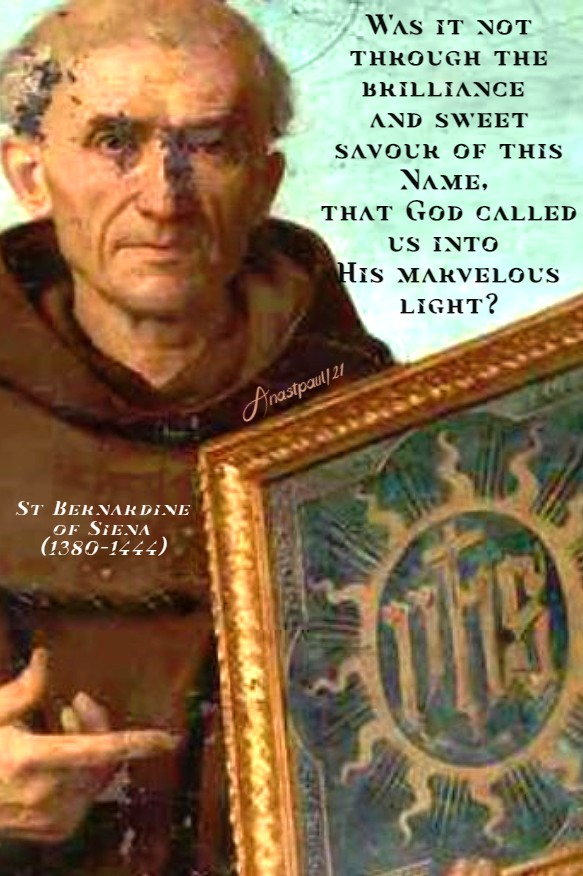
“Was it not through the brilliance
and sweet savour of this Name,
that God called us into
His marvelous light?”

St Bernardine of Siena (1380-1444)

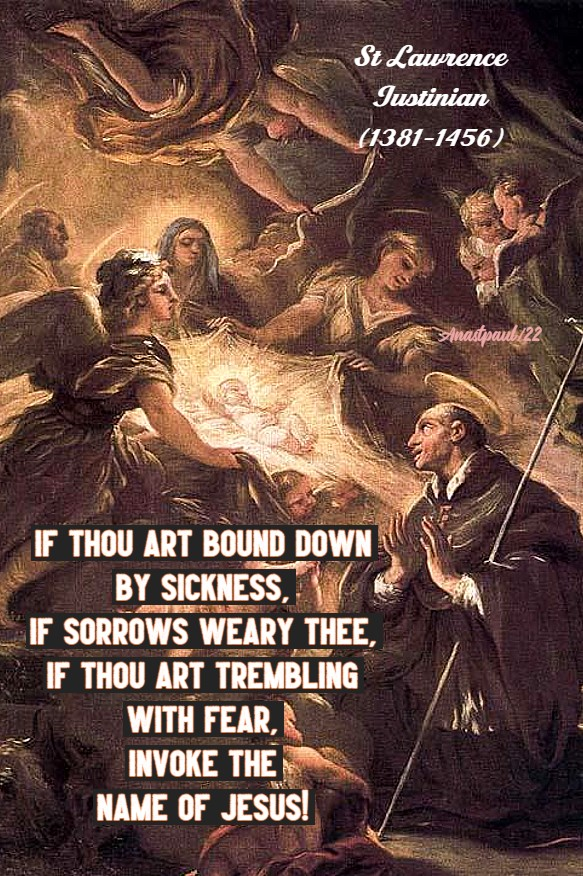
“If thou are bound down by sickness,
if sorrows weary thee,
if thou are trembling with fear,
invoke the name of Jesus.”

St Lawrence Justinian (1381-1456)

Posted in JULY - The MOST PRECIOUS BLOOD

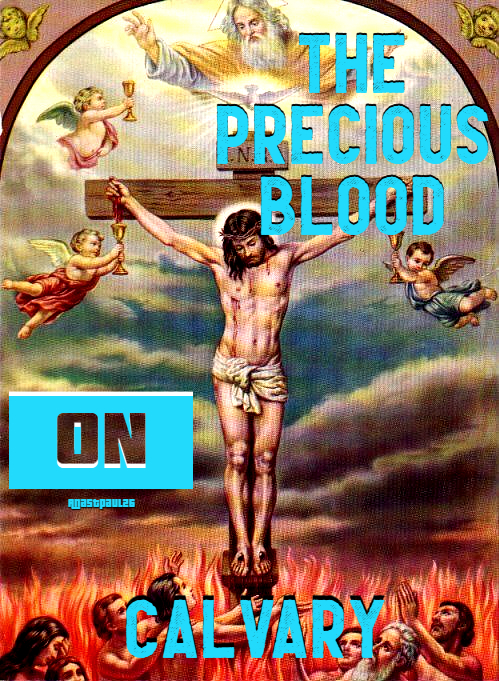
Thought for the Day – 10 July – 10th Day – The Precious Blood on Calvary

The Precious Blood – Short Meditations for July

By Rev. Richard F. Clarke

10th Day – The Precious Blood on Calvary

In old pictures and engravings of the crucifixion we often see angels holding a chalice to catch the drops of the Precious Blood as they fall from the sacred wounds in the hands and feet of Jesus. We are also told that the angels collected all the blood that Our Lord had shed during His Passion, that not a drop might be lost. How they must have counted each drop as a treasure of infinite value. What were all the treasures of the earth compared with these drops, instinct with the Godhead of Jesus! Pray that you may scorn all earthly things in comparison with the Precious Blood of Jesus.

The angels not only treasure up the Precious Blood, but they pay to each drop their supreme homage. So we kneel and adore the Precious Blood in the chalice upon the altar. In each drop Christ is present whole and undivided. Make an act of faith in this wondrous miracle, and pray that you may adore with a reverent homage like that of the angels present at the crucifixion.

As the three hours advance, the body of Jesus is more and more drained of the Precious Blood. Hence follows a thirst so agonising that it forced from the lips of Jesus the cry, ‘I thirst!’. When our lips are parched and dry in sickness or in the agony of death, may we remember Thee, O Lord, and Thy sacred thirst endured for us, and may we offer up our sufferings in union with Thy unspeakable and agonising thirst upon the cross!