Posted in MARIAN TITLES

Notre-Dame-de-Bonne Délivrance / Our Lady of Good Deliverance, Schwarzen Madonna / Black Madonna of Einsiedeln, Schwyz, Switzerland (853) and Memorials of the Saints – 18 July

Notre-Dame-de-Bonne Délivrance / Our Lady of Good Deliverance (14th Century): 18 July
Since the 1000s, the Church of Saint-Etienne-des-Grès in the old Latin Quarter of Paris had a chapel to Our Lady of Good Deliverance, where, across the centuries, pilgrims sought the Virgin’s help in their of sufferings. During the Wars of Religion and counter-Reformation, her Confraternity had 12,000 members, including the King and Queen of France.

Schwarzen Madonna / Black Madonna of Einsiedeln, Schwyz, Switzerland (853) – First Sunday after Our Lady of Mount Carmel:
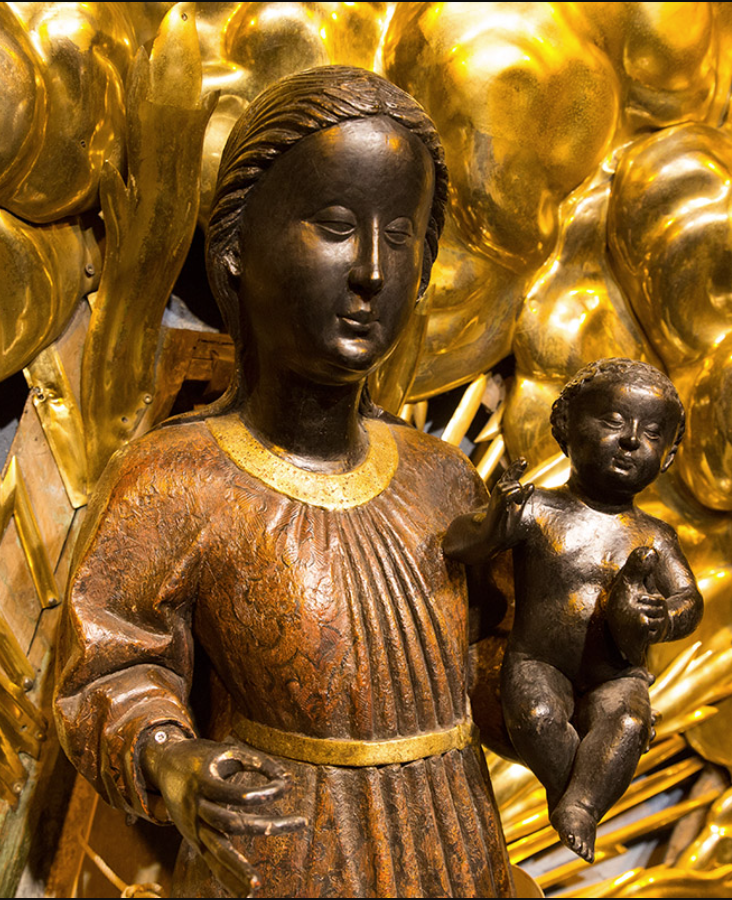
“Einsiedeln” means “hermitage.” It was the home of St Meinrad (c 797–861) Martyr, a Benedictine Monk who retreated to this place in the pine woods to live in solitude, with a pair of tame crows for company. Abbess Hildegarde of Zurich gave him a Statue of the Madonna for the forest Chapel built in 853, which soon became a place of pilgrimage. In 863, hoping to get his stash of pilgrim donations, two thieves murdered the Saint, who was living in poverty. The crows alerted people, who found and buried the body and executed the killers.

In 948, Benedictines built a Church on the site of St Meinrad’s hermitage. On 14 September, the night before Bishop Conrad was to bless the new Church, he dreamed that Jesus Himself was blessing it. In the morning, when he began the ceremony, everyone heard a voice say, “Stop, for the Church has been Consecrated divinely.” In 1028 the first of five fires destroyed everything but the Chapel containing the Statue. These miracles increased popular devotion to the Shrine, which was repeatedly rebuilt.
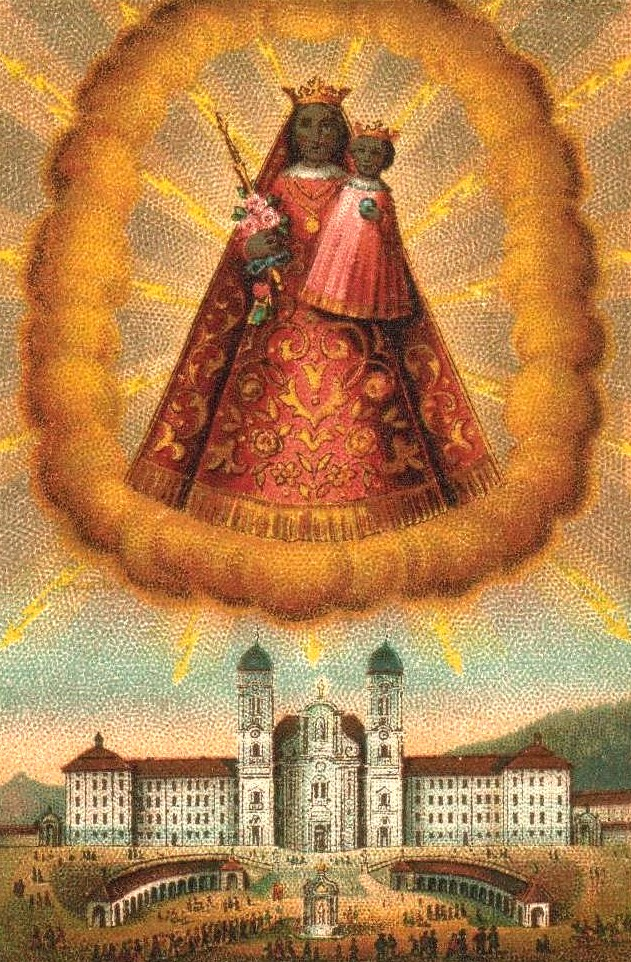
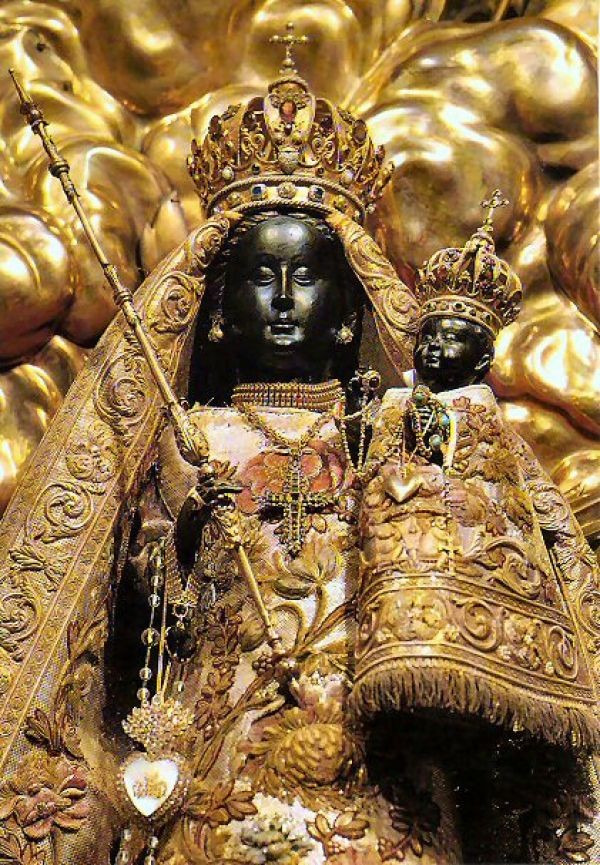
Although tradition holds the present Statue to be the original, it is unlike any that remain from the Ottonian period. Carved of dark wood, the graceful, sweet-faced Madonna, her right knee slightly bent, stands a little over three feet tall, holding the Divine Child in her left arm. This is a typical late Gothic work of the mid-1400s, possibly installed after the third fire in 1465. Displayed before a great aureole of golden rays,the Statue has worn elaborate vestments in colours matching those of Priests for each liturgical season. The Feast of Our Lady of Einsiedeln is 16 July but is usually celebrated on the Sunday following. Even greater pilgrimages occur on 14 September in honour of the Church’s miraculous Consecration.
St Aemilian of Dorostorium
St Alanus of Sassovivo
St Alfons Tracki
Blessed Angeline of Marsciano
Bl Arnold of Amiens
St Arnold of Arnoldsweiler
St Arnoul the Martyr
St Arnulf of Metz (c 580-640) Bishop
St Athanasius of Clysma
Bl Bernard de Arenis
Bl Bertha de Marbais

St Bruno of Segni OSB (1049-1123) Benedictine Bishop, Confessor, Missionary, Papal Advisor, Theologian.

St Ðaminh Ðinh Ðat
St Edburgh of Bicester (Died c 620) Abbess, Nun, Pr5incess
St Elio of Koper

St Frederick of Utrecht (c 815 – c 838) Martyr Bishop

St Goneri of Treguier
St Gundenis of Carthage
Bl Herveus
Bl Jean-Baptiste de Bruxelles
St Marina of Ourense
St Maternus of Milan
St Minnborinus
St Pambo of the Nitrian Desert
St Philastrius of Brescia
St Rufillus of Forlimpopoli
St Scariberga of Yvelines

St Simon (Szymon) of Lipnica OFM Cap (1435/1440-c 1482) Priest of the Franciscan Order of Friars Minor Capuchin.

St Theneva
St Theodosia of Constantinople

Martyrs of Silistria – 7 saints: Seven Christians who were martyred together. No details about them have survived but the names – Bassus, Donata, Justus, Marinus, Maximus, Paulus and Secunda. They were martyred in Silistria (Durostorum), Moesia (in modern Bulgaria), date unknown.

Martyrs of Tivoli – 8 saints: A widow, Symphorosa and her seven sons ( Crescens, Eugene, Julian, Justin, Nemesius, Primitivus and Stracteus) martyred in Tivoli, Italy in the 2nd-century persecutions of Hadrian.
Posted in SAINT of the DAY

Saint of the Day – 18 July – Saint Clair of Epte

St Clair of Epte, also known as Clair of Beauvais or Clare. The name Sinclair comes indirectly from St. Clare or St. Clere, or St. Clair, or in Latin, Sanctus Clarus. He lived near the town that is now called St. Clair sur l’Epte, northwest of Paris in France, on the edge of Normandy.

Born to the nobility, Clair felt a call to religious life, and lived at home much like a monk. His father arranged a marriage for him to a nearby wealthy heiress, and when the young man said he preferred to devote himself to God, the woman tried to seduce him in order to joined the two families together. When he refused her, she became enraged, and swore vengeance. Clair fled to the region of Normandy, France, where he lived as a hermit. Word spread of his wisdom and ability to heal by prayer, and Clair had to keep moving from place to place in order to have solitude. Ordained a priest in 870. Hermit in the woods around Nacqueville, France, and then at a hermitage on the banks of the river Epte where he lived with brother hermit and spiritual son named Cyrin. He was finally located by agents sent by his spurned would-be wife, and murdered on her orders.

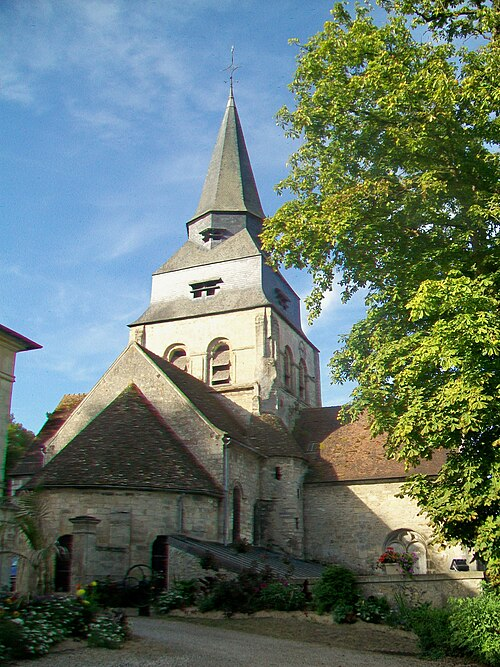
The church of Our Lady, in Saint-Clair-sur-Epte

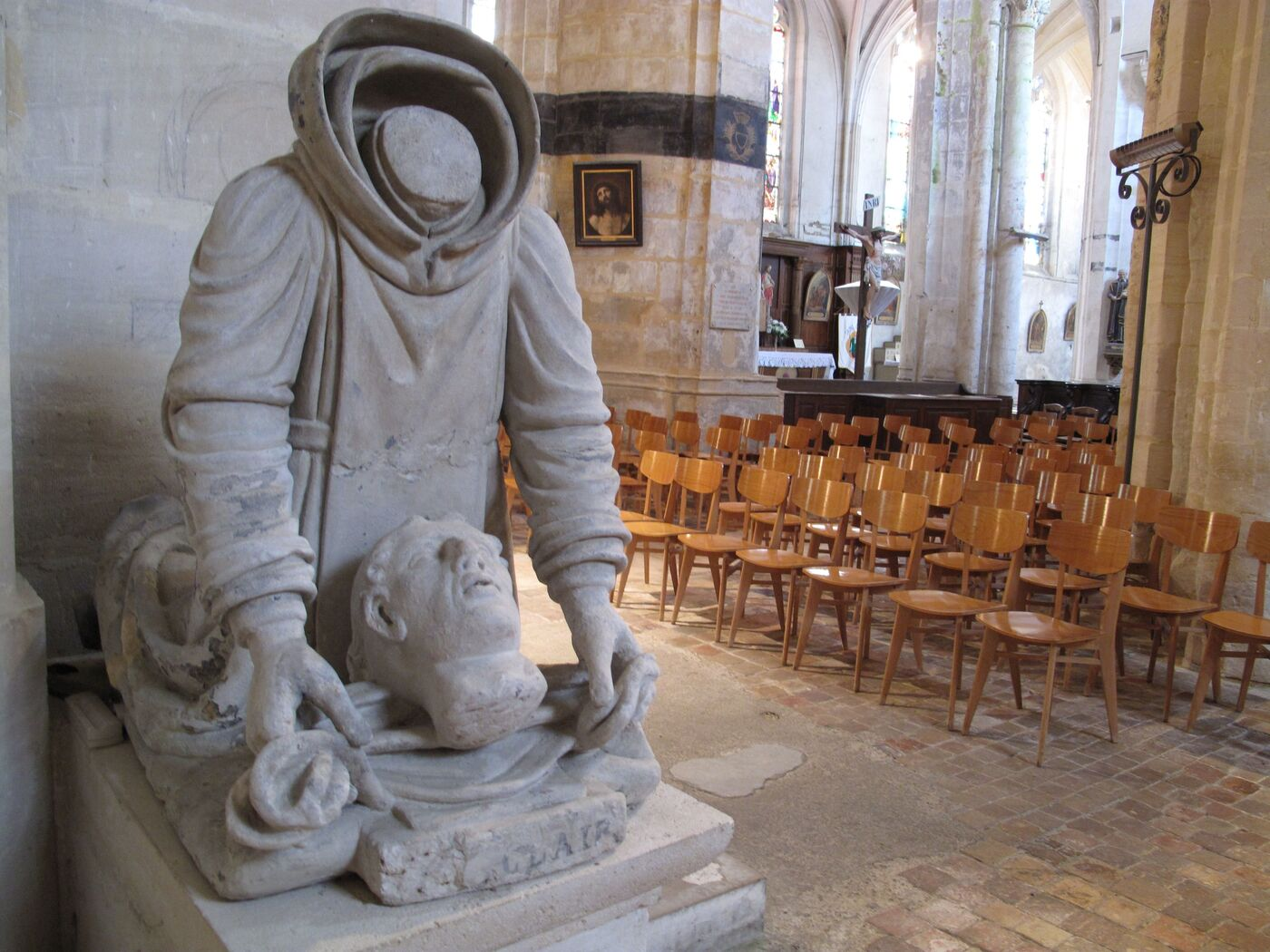
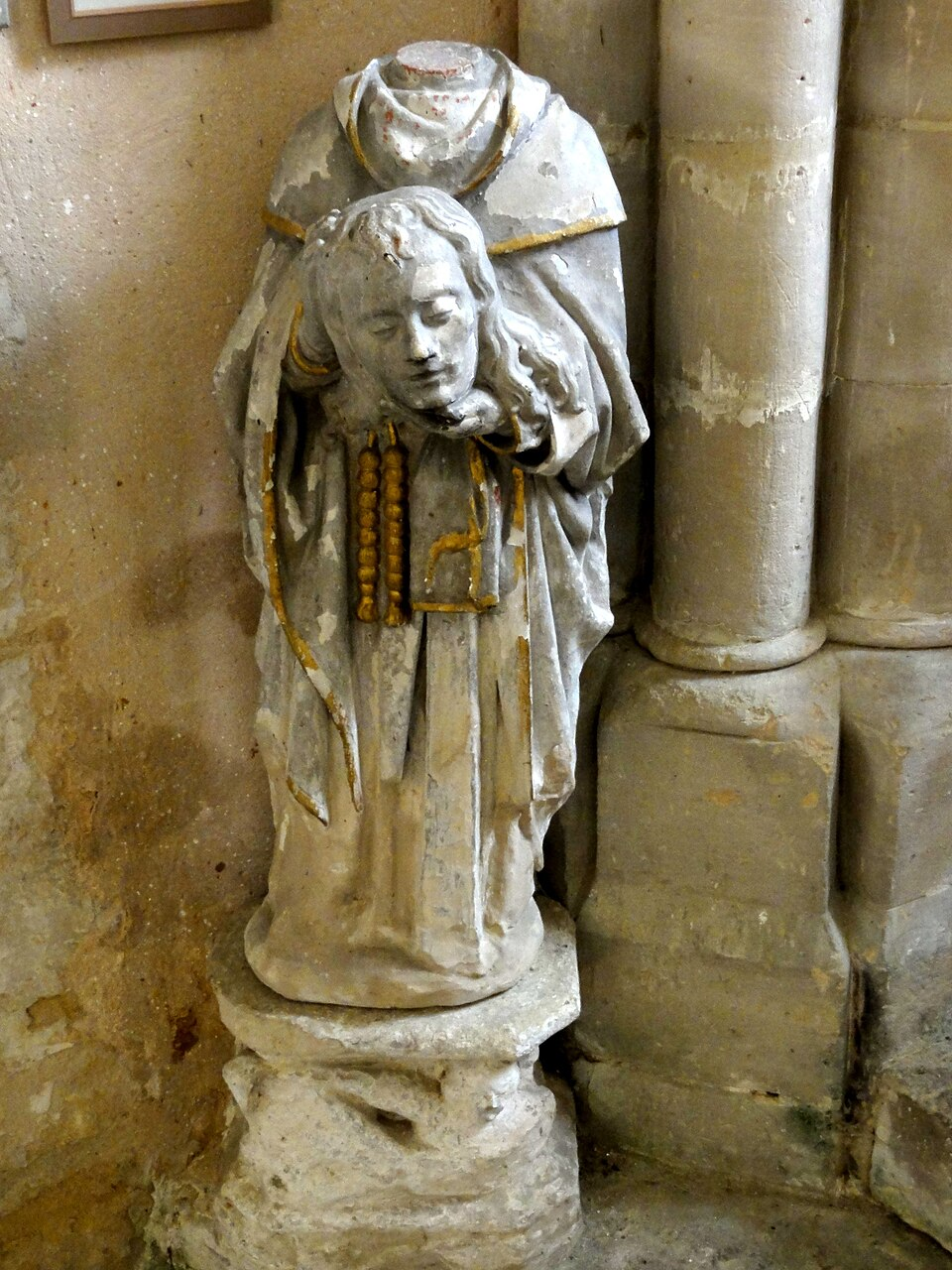
One of the agents beheaded Clair whilst he knelt in prayer, which is why he is frequently depicted, like St Denis, holding his head in his hands. The blood flowed copiously from his neck but a spring instantly flowed out of the ground and washed away all signs of it.

Clair’s death and the miracle of the spring increased his renown. His hut was transformed into a chapel and eventually a church was built on the spot. Ten years after the murder enough houses were built at the spot to establish a village which was named, St Clair, after the martyr.

The treaty of Saint-Clair-sur-Epte in 911 established Rollo, a Norse warlord and Viking leader, as the first Duke of Normandy.

Posted in Our MORNING Offering

Our Morning Offering – 18 July – Anima Christi

Our Morning Offering – 18 July – “Month of the Most Precious Blood”

Anima Christi

Soul of Christ, sanctify me
Body of Christ, save me
Blood of Christ, inebriate me
Water from the side of Christ, wash me
Passion of Christ, strengthen me
Good Jesus, hear me
Within Your wounds, shelter me
from turning away, keep me
From the evil one, protect me
At the hour of my death, call me
Into Your presence lead me
to praise You with all Your saints
Forever and ever,
Amen

For many years the Anima Christi was popularly believed to have been composed by Saint Ignatius Loyola (1491-1556) , as he puts it at the beginning of his Spiritual Exercises and often refers to it. In the first edition of the Spiritual Exercises Ignatius merely mentions it, evidently supposing that the reader would know it. In later editions, it was printed in full. It was by assuming that everything in the book was written by Ignatius that it came to be looked upon as his composition. On this account the prayer is sometimes referred to as the Aspirations of St. Ignatius Loyola and so my image shows St Ignatius at prayer.

However, the prayer actually dates to the early fourteenth century and was possibly written by Pope John XXII but its authorship remains uncertain. It has been found in a number of prayer books printed during the youth of Ignatius and is in manuscripts which were written a hundred years before his birth. The English hymnologist James Mearns found it in a manuscript of the British Museum which dates to about 1370. In the library of Avignon there is preserved a prayer book of Cardinal Pierre de Luxembourg (died 1387), which contains the prayer in practically the same form as we have it today. It has also been found inscribed on one of the gates of the Alcázar of Seville, which dates back to the time of Pedro the Cruel (1350–1369).

The invocations in the prayer have rich associations with Catholic concepts that relate to the Eucharist (Body and Blood of Christ), Baptism (water) and the Passion of Jesus (Precious Blood and Holy Wounds).

Posted in ONE Minute REFLECTION

One Minute Reflection – 18 July – This is My commandment, that you love one another as I have loved you

This is My commandment, that you love one another as I have loved you.

John 15:12-16

REFLECTION – Since all of our Lord’s sacred utterances contain com­mandments, why does he say about love as if it were a special commandment: “This is my commandment, that you love one another?” It is because every commandment is about love, and they all add up to one commandment be­cause whatever is commanded is founded on love alone. As a tree’s many branches come from one root, so do many virtues come forth from love alone. The branch which is our good works has no sap unless it remains attached to the root of love. Our Lord’s commandments are then both many and one: many through the variety of the works, one in their root which is love.

Our Lord himself instructs us to love our friends in him, and our enemies for his sake. That per­son truly possesses love who loves his friend in God and his enemy for God’s sake.

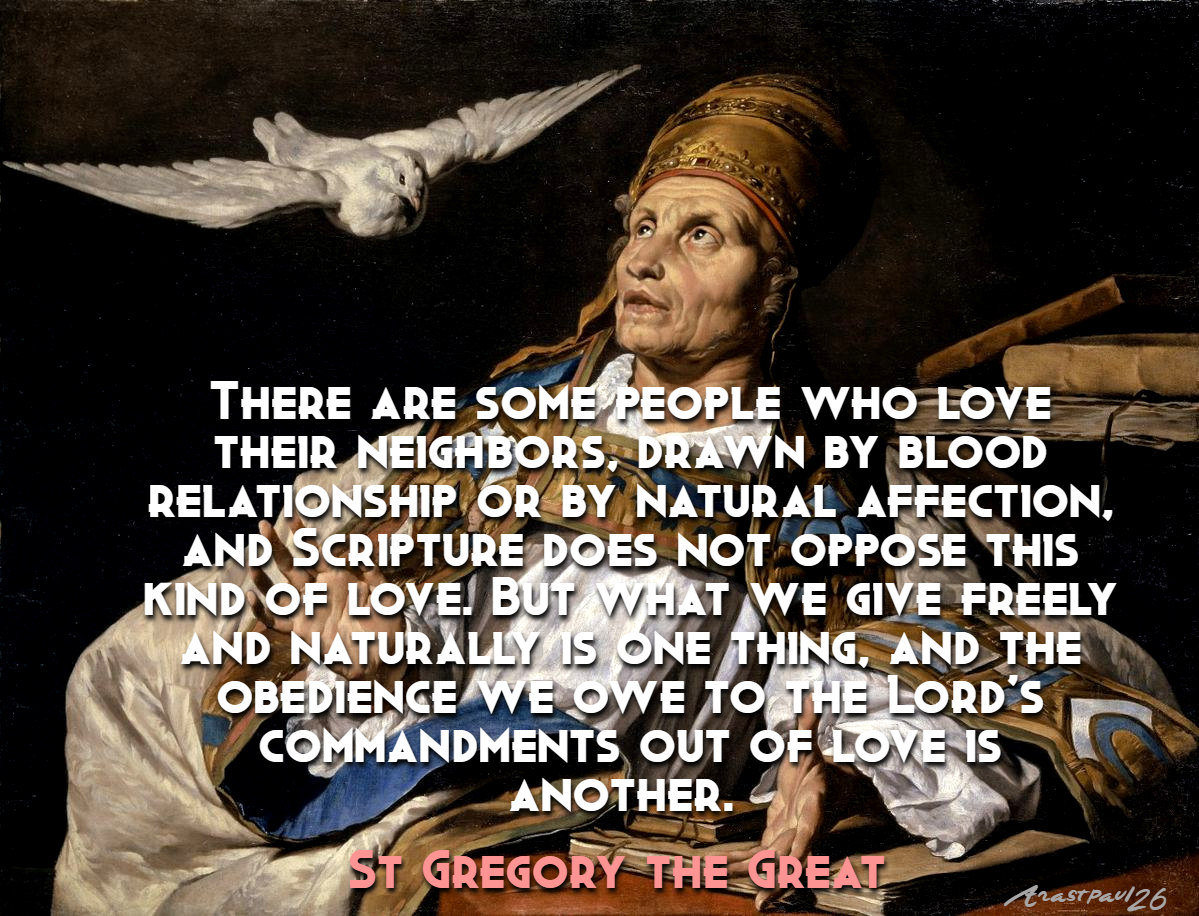
There are some people who love their neighbors, drawn by blood relationship or by natural affection, and Scripture does not oppose this kind of love. But what we give freely and naturally is one thing, and the obedience we owe to the Lord’s commandments out of love is another. Those I’ve mentioned indisputably love their neighbors… but their love does not come from spiritual but from natural motives. Therefore when the Lord said: “This is my commandment, that you love one another”, he added immediately: “Just as I have loved you,” meaning, “You must love for the same reason that I have loved you.”

Saint Gregory the Great ( Homilies on the Gospels, no. 27)

PRAYER – O Lord Jesus, I adore you wounded on the Cross, having drunk vinegar and gall. I beg you, that your wounds may be the remedy of my soul. Amen. Our Father. Hail Mary.

Posted in QUOTES on LOVE, QUOTES on LOVE of GOD

Quote/s of the Day – 18 July – Greater love than this no one has, that one lay down his life for his friends

Quote/s of the Day – 18 July – “Month of the Most Precious Blood” – Readings: John 15:13, Ps 40:2, 1 John 3:13-18, John 15:12-16

Greater love than this no one has, that one lay down his life for his friends.

John 15:13

Suffering is the ancient law of love;
there is no quest without pain;
there is no lover who is not also a Martyr.

Bl Henry Suso (1295-1366)

Wherefore, O blessed, you may regard yourselves as having been translated from a prison to, we may say, a place of safety. It is full of darkness, but you yourselves are light; it has bonds, but God has made you free. Unpleasant exhalations are there, but you are an odour of sweetness. The judge is daily looked for, but you shall judge the judges themselves. Sadness may be there for him who sighs for the world’s enjoyments. The Christian outside the prison has renounced the world, but in the prison he has renounced a prison too. It is of no consequence where you are in the world — you who are not of it. And if you have lost some of life’s sweets, it is the way of business to suffer present loss, that after gains may be the larger.

Tertullian (To the Martyrs)

 Moreover, also, the blessed Saturus related this his vision, which he himself committed to writing:— We had suffered, says he, and we had gone forth from the flesh, and we were beginning to be borne by four angels into the east; and their hands touched us not. And we floated not supine, looking upwards, but as if ascending a gentle slope. And being set free, we at length saw the first boundless light; and I said, ‘Perpetua’ (for she was at my side), ‘this is what the Lord promised to us; we have received the promise.’ And while we are borne by those same four angels, there appears to us a vast space which was like a pleasure-garden, having rose-trees and every kind of flower. And the height of the trees was after the measure of a cypress, and their leaves were falling incessantly. Moreover, there in the pleasure-garden four other angels appeared, brighter than the previous ones, who, when they saw us, gave us honour, and said to the rest of the angels, ‘Here they are! Here they are!’ with admiration. And those four angels who bore us, being greatly afraid, put us down; and we passed over on foot the space of a furlong in a broad path. There we found Jocundus and Saturninus and Artaxius, who having suffered the same persecution were burnt alive; and Quintus, who also himself a martyr had departed in the prison. And we asked of them where the rest were. And the angels said to us, ‘Come first, enter and greet your Lord.’

Tertullian (The Passion of the Holy Martyrs Perpetua and Felicity)

Wherefore, continuing to enjoy fair winds, we were reluctantly hurried on in one day and a night, mourning [as we did] over the coming departure from us of this righteous man. But to him this happened just as he wished, since he was in haste as soon as possible to leave this world, that he might attain to the Lord whom he loved.

The Martyrdom of Ignatius

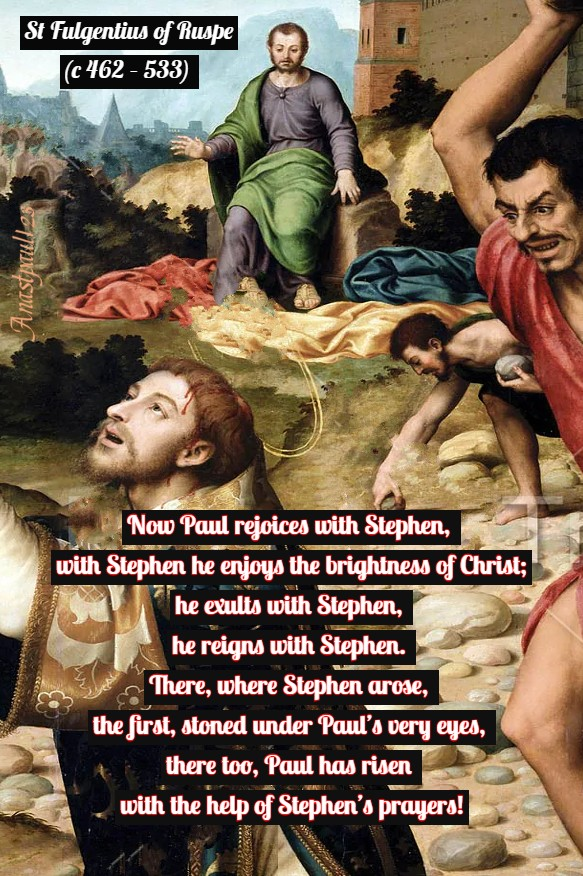
Now Paul rejoices with Stephen,
with Stephen he enjoys the brightness of Christ;
he exults with Stephen,
he reigns with Stephen.
There, where Stephen arose,
the first, stoned under Paul’s very eyes,
there too, Paul has risen
with the help of Stephen’s prayers!

St Fulgentius of Ruspe (c 462 – 533)
Bishop in North Africa

Posted in JULY - The MOST PRECIOUS BLOOD

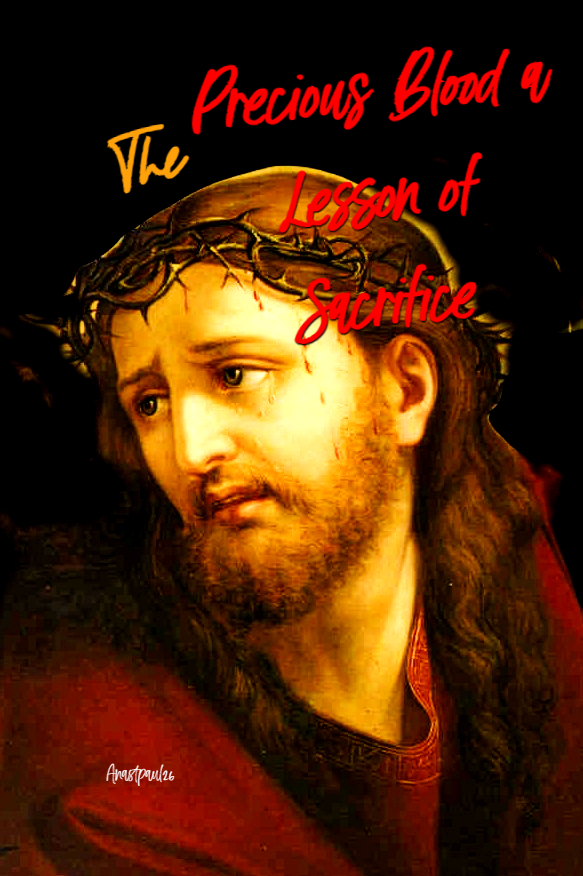
Thought for the Day – 18 July – 18th Day – The Precious Blood a Lesson of Sacrifice

The Precious Blood – Short Meditations for July

By Rev. Richard F. Clarke

18th Day – The Precious Blood a Lesson of Sacrifice

Why did the Eternal Father choose for His co-equal Son that He should close His sojourn on earth by the cruel agony and unspeakable degradation of shedding for man the last drop of the Precious Blood? Would it not have sufficed to redeem us from sin if He had appeared on earth for one instant clad in human form? Yes, but then man would never have learnt the lesson of sacrifice. He would not have been moved to regard suffering as a necessary part of the ideal life. We thank Thee, O Lord, for this Thy commiseration for our blindness and our ignorance!

The lesson of sacrifice for the sake of others is one that Our Lord’s life teaches us throughout. Nothing for Himself, no concession to His human nature for its own sake. No avoiding of pain or reproach on account of the suffering it entailed, but rather a joyful acceptance of all that might be to man a source of grace and a motive of virtue. May I rejoice, O Lord, to have the privilege of following Thee step by step along Thy path of suffering.

This road of suffering is also one that leads us to solid happiness in this world and eternal joy in the next. It is for our own interest to sacrifice ourselves. Who are so happy as they who shed their blood for Christ? For them no purgatory, whatever their past life, but an immediate entrance into the celestial paradise. Such a sacrifice as this may not be asked of me, but how do I make those that I know would be pleasing to Him Who sacrificed Himself wholly for me?