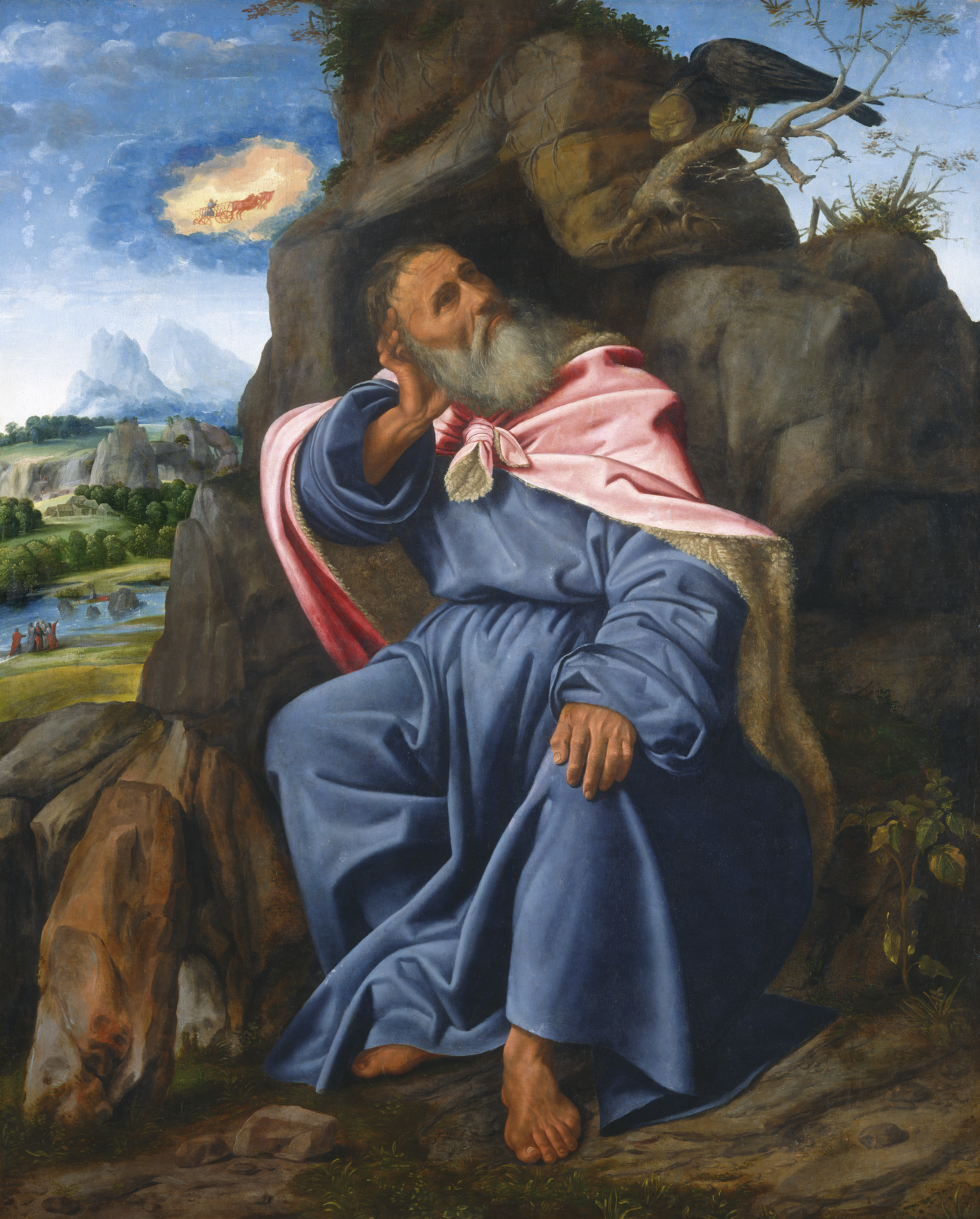
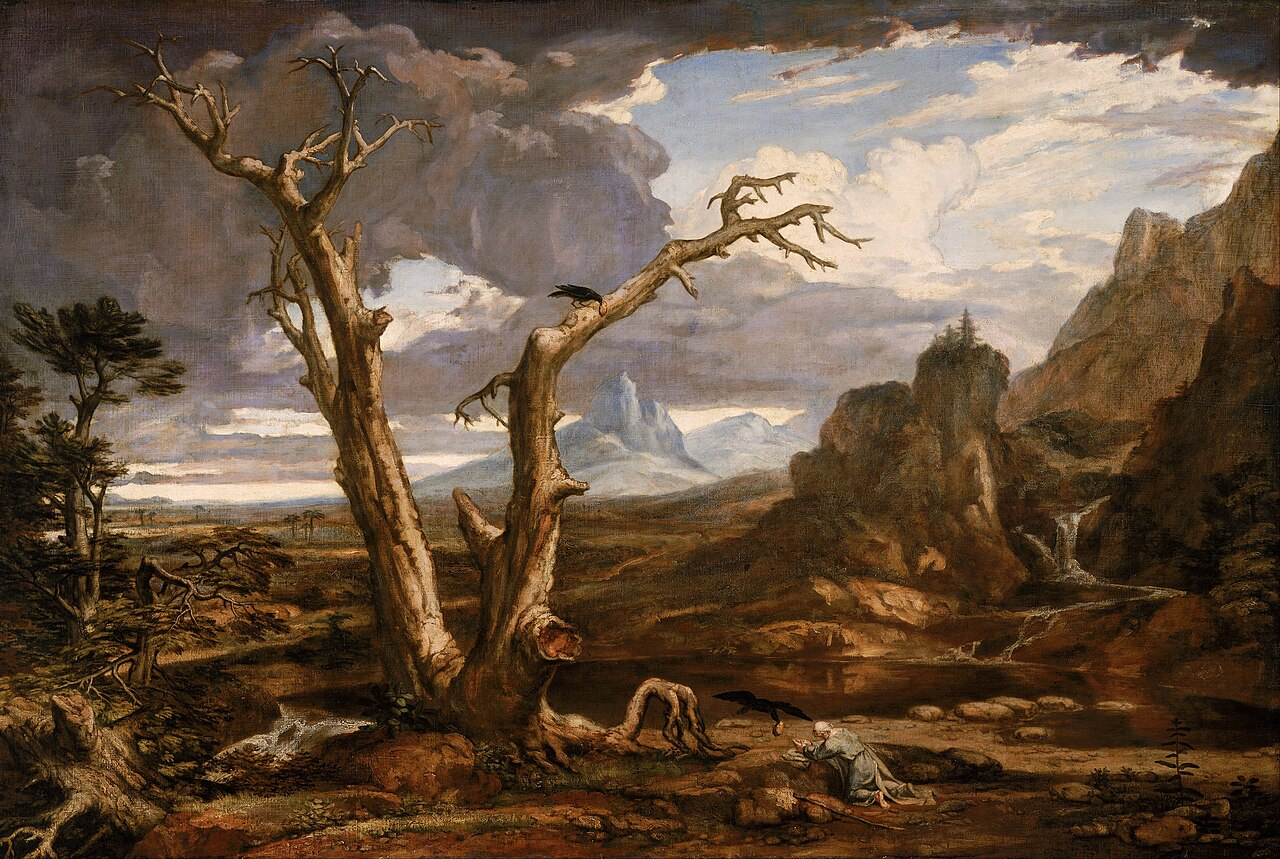
Saint Elijah the Prophet, also known as Elias. Elijah (‘My God is Yahweh’) was a prophet and miracle worker who lived in the northern kingdom of Israel during the reign of King Ahab (9th century BC). He announced to the king (he who was married to the infamous Jezebel) that God would avenge the apostasy of Israel by bringing a long drought on the land. During the drought, which lasted three years, Elias withdrew to the vicinity of the brook Carith, where he was fed by ravens. After the brook dried up he crossed over to Sarepta, where he was hospitably received by a poor widow, whose charity he rewarded by increasing her store of meal and oil and by raising her child to life.
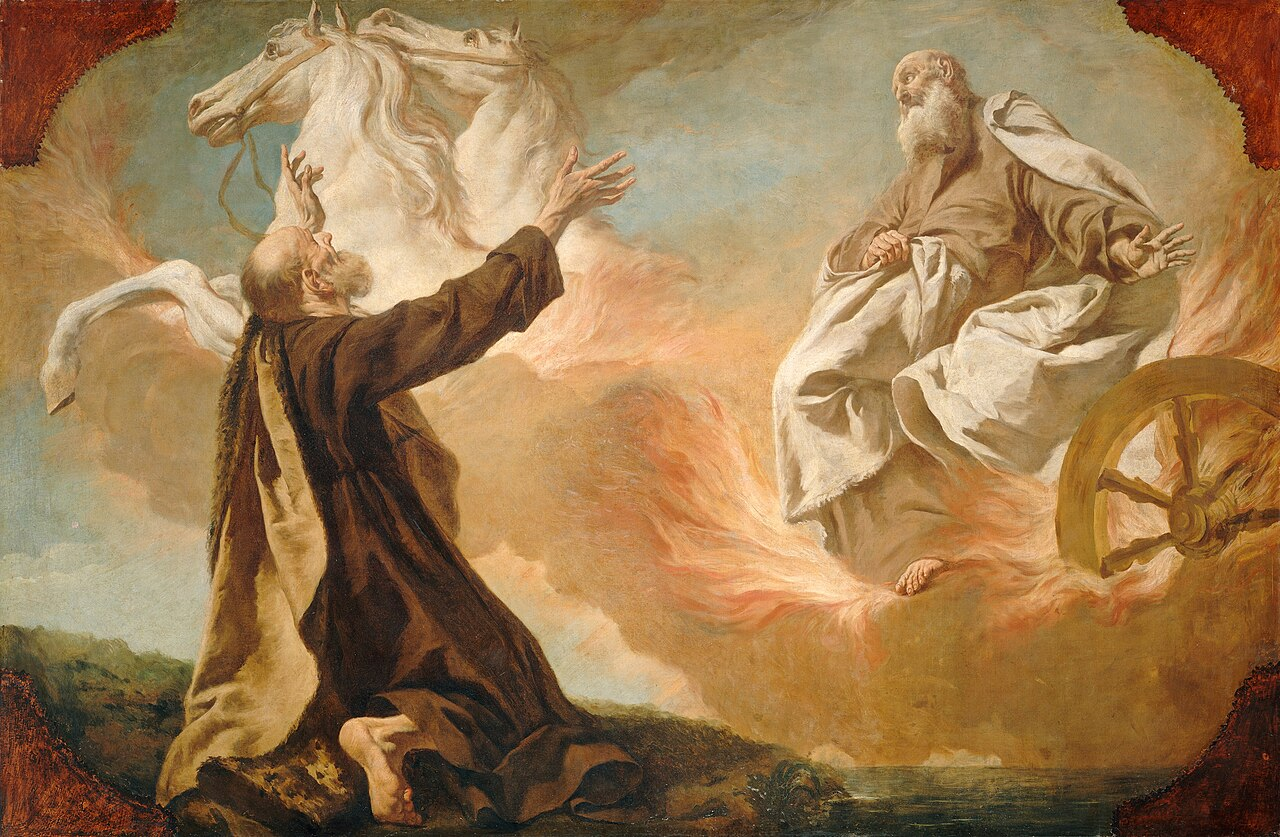
Later he confronted the king again and challenged the prophets of Baal to a contest on Mount Carmel, when Elijah’s oblation was consumed by fire from heaven, and the false prophets were slain by the people at his command. He was obliged to flee from the wrath of Jezebel and while on Mount Horeb was commanded by God to anoint Hazael to be King of Syria, Jehu to be King of Israel, and Eliseus to be his own successor. Subsequently he denounced Achab for the murder of Naboth and reprimanded Ochozias and Joram, King of Juda. While conversing with Eliseus on the hills of Moab he was translated to heaven in a fiery chariot. The Carmelite Order traces its origin to him.
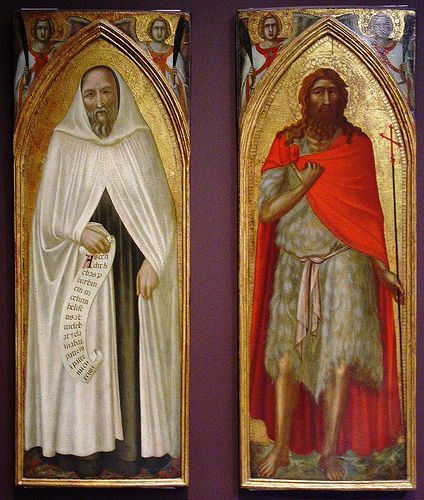
The Book of Malachi prophesies Elijah’s return “before the coming of the great and terrible day of the Lord”. The New Testament makes it clear that St John the Baptist is “the Elijah” who was promised to come.
Patronages: Air Forces, Carmelites, civil aeronautics, Romanian Air Force
Our Morning Offering – 20 July – “Month of the Most Precious Blood”
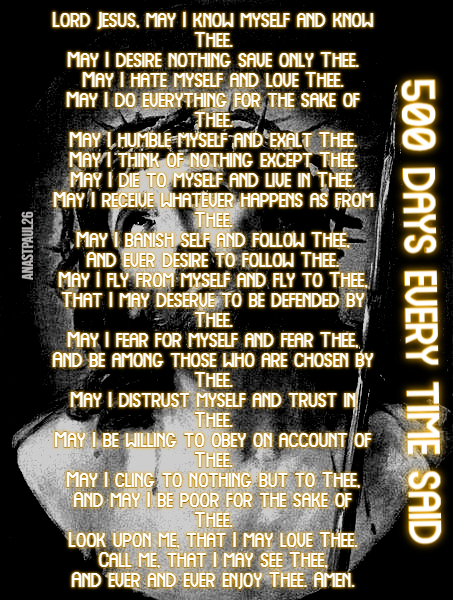
Indulgenced – 500 days every time said
Lord Jesus, may I know myself and know Thee. May I desire nothing save only Thee. May I hate myself and love Thee. May I do everything for the sake of Thee. May I humble myself and exalt Thee. May I think of nothing except Thee. May I die to myself and live in Thee. May I receive whatever happens as from Thee. May I banish self and follow Thee, And ever desire to follow Thee. May I fly from myself and fly to Thee, That I may deserve to be defended by Thee. May I fear for myself and fear Thee, And be among those who are chosen by Thee. May I distrust myself and trust in Thee. May I be willing to obey on account of Thee. May I cling to nothing but to Thee, And may I be poor for the sake of Thee. Look upon me, that I may love Thee. Call me, that I may see Thee, And ever and ever enjoy Thee. Amen.
Share your bread with the hungry, shelter the oppressed and the homeless; clothe the naked when you see them, and do not turn your back on your own.
Isa 58:7-11
REFLECTION – We should not reject those goods that may potentially be of use to our neighbor. It is in the nature of possessions to be possessed and that of goods to spread good. God intended them for man’s well being. Our goods lie in our hands like tools, instruments that we can put to good use so long as we know how to wield them… Nature has made a servant of wealth, not a mistress. So we shouldn’t decry it since it is neither good not bad in itself but completely neutral. We ourselves are alone responsible for the use, good or bad, which we make of it. Our minds, our consciences are entirely set free from disposing as they choose of the goods entrusted to them. What we should destroy are not our goods but the covetousness that perverts their use. When we have acquired integrity then we shall know how to use them with integrity. Those goods we are told to get rid of we should understand to be the unregulated desires of the soul. You gain nothing from depriving yourself of your money if you remain rich in unregulated desires.
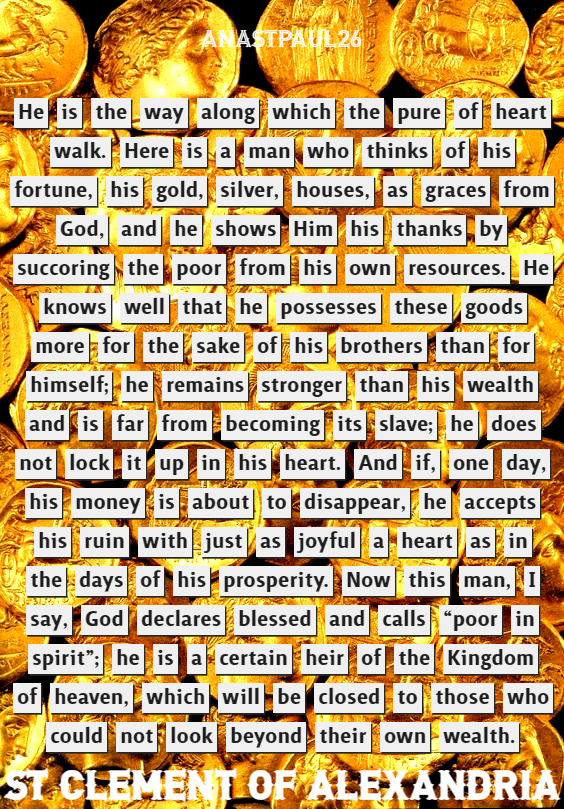
See how the Lord conceived of the use of external goods: we need to detach ourselves, not from the money that enables us to live, but from the forces that cause us to use it badly, namely sicknesses of the soul. We need to purify our souls, that is to say, make them poor and naked and, in that state, listen to the Lord’s call: “Come, follow me.” He is the way along which the pure of heart walk. Here is a man who thinks of his fortune, his gold, silver, houses, as graces from God, and he shows Him his thanks by succoring the poor from his own resources. He knows well that he possesses these goods more for the sake of his brothers than for himself; he remains stronger than his wealth and is far from becoming its slave; he does not lock it up in his heart. And if, one day, his money is about to disappear, he accepts his ruin with just as joyful a heart as in the days of his prosperity. Now this man, I say, God declares blessed and calls “poor in spirit”; he is a certain heir of the Kingdom of heaven, which will be closed to those who could not look beyond their own wealth.
St Clement of Alexandria (Homily “How can the rich be saved?”)
PRAYER – Almighty Father, You made us Your children, You called us from all ages and You formed us by Holy Mother Church. Grant, we pray, that by Your grace, we may be ever faithful to her and be guided by Your Holy Spirit of love. O God, may Your Mother and ours and Your holy Angels and Saints intercede for us that, being made imitators of the Lord’s Passion, we may merit to be co-heirs of His Kingdom. Who lives and reigns with You in the unity of the Holy Spirit, one God, forever, amen.
Quote/s of the Day – 20 July – “Month of the Most Precious Blood” – Readings: Lam 2:11, Ps 112:1, Isa 58:7-11, Matt 19:13-21
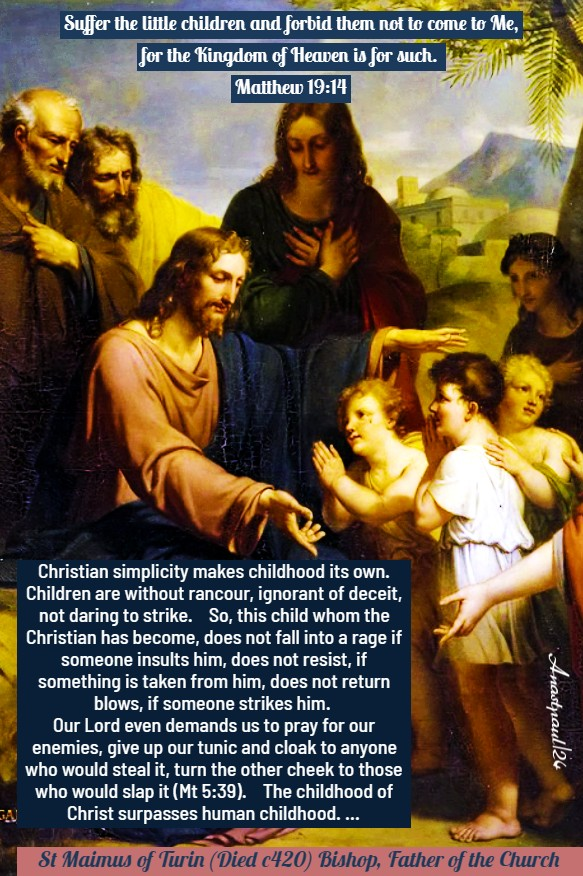
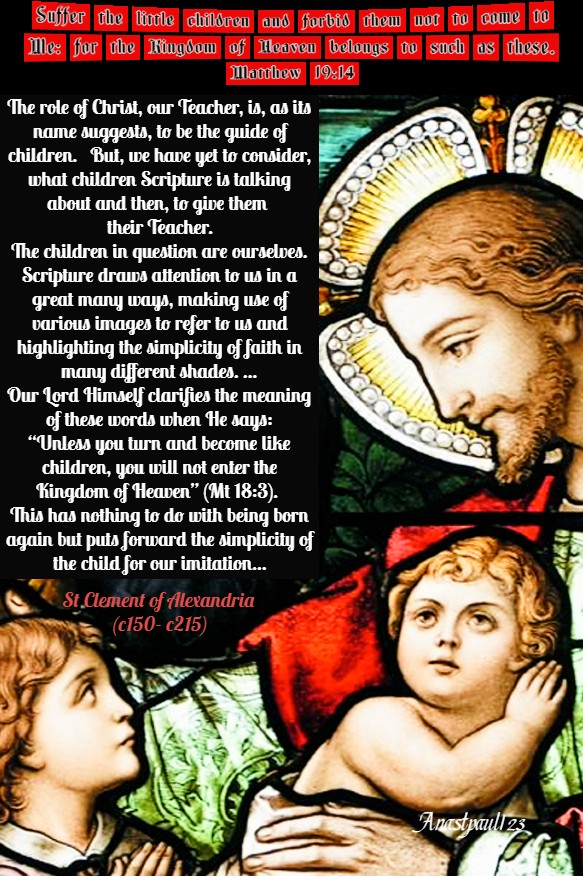
At that time, little children were brought to Jesus, that He might lay His hands on them and pray; but the disciples rebuked them. But Jesus said to them, Let the little children be, and do not hinder them from coming to Me, for of such is the kingdom of heaven.
Matt 19:13-21
Christian simplicity makes childhood its own. Children are without rancour, ignorant of deceit, not daring to strike. So, this child whom the Christian has become, does not fall into a rage if someone insults him, does not resist, if something is taken from him, does not return blows, if someone strikes him. Our Lord even demands us to pray for our enemies, give up our tunic and cloak to anyone who would steal it, turn the other cheek to those who would slap it. The childhood of Christ surpasses human childhood. …
St Maximus of Turin(Homily 58 for Easter)
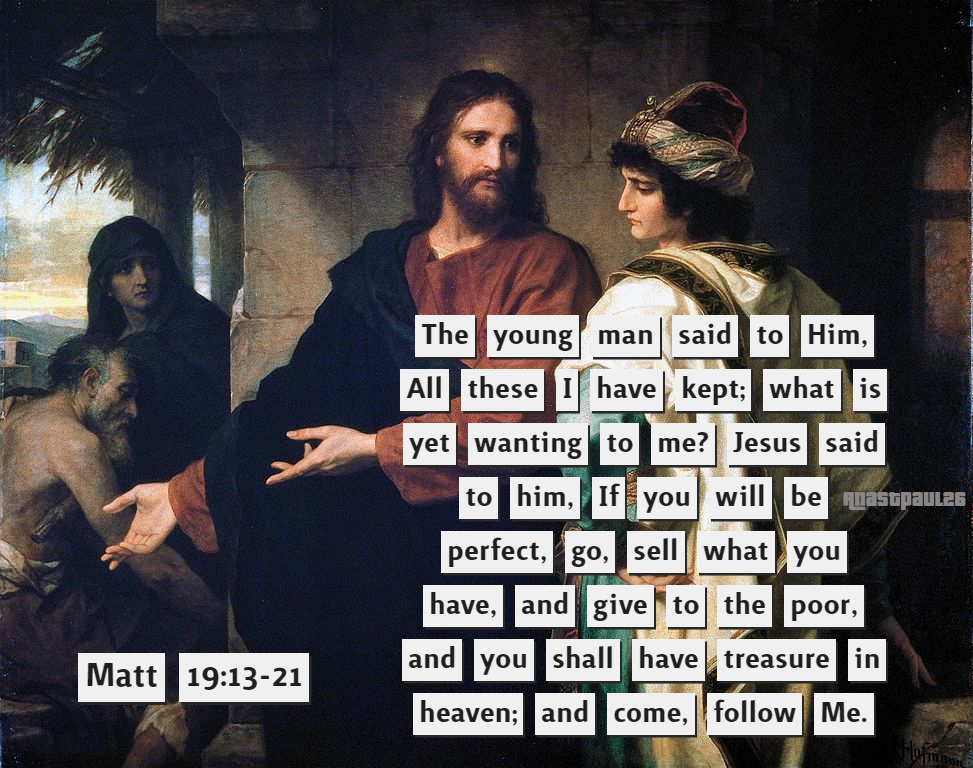
The young man said to Him, All these I have kept; what is yet wanting to me? Jesus said to him, If you will be perfect, go, sell what you have, and give to the poor, and you shall have treasure in heaven; and come, follow Me.
Matt 19:13-21
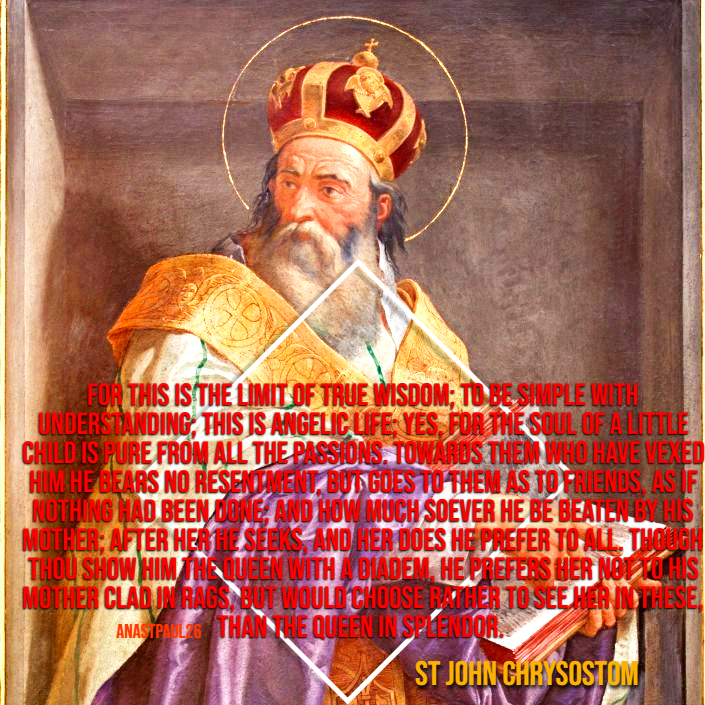
For this is the limit of true wisdom; to be simple with understanding; this is angelic life; yes, for the soul of a little child is pure from all the passions. Towards them who have vexed him he bears no resentment, but goes to them as to friends, as if nothing had been done; and how much soever he be beaten by his mother; after her he seeks, and her does he prefer to all. Though thou show him the queen with a diadem, he prefers her not to his mother clad in rags, but would choose rather to see her in these, than the queen in splendor. For he uses to distinguish what pertains to him and what is strange to him, not by its poverty and wealth, but by friendship. And nothing more than necessary things does he seek, but just to be satisfied from the breast, and then he leaves sucking. The young child is not grieved at what we are grieved, as at loss of money and such things as that, and he does not rejoice again at what we rejoice, namely, at these temporal things, he is not eager about the beauty of persons.
St John Chrysostom (Homilies on Matthew:62)
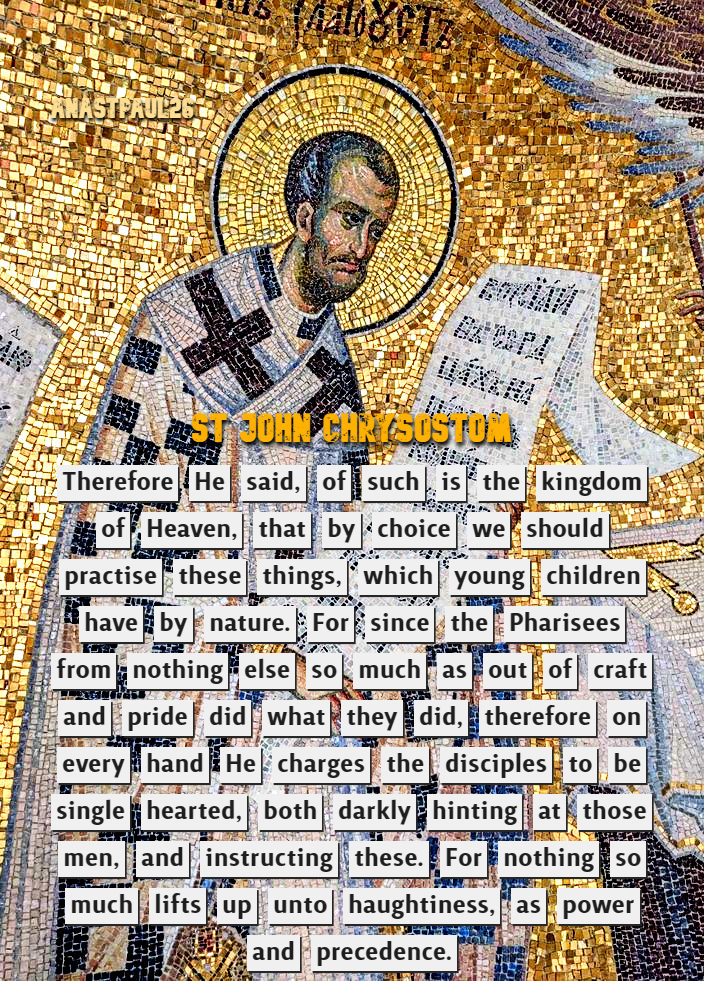
Therefore He said, of such is the kingdom of Heaven, that by choice we should practise these things, which young children have by nature. For since the Pharisees from nothing else so much as out of craft and pride did what they did, therefore on every hand He charges the disciples to be single hearted, both darkly hinting at those men, and instructing these. For nothing so much lifts up unto haughtiness, as power and precedence. Forasmuch then as the disciples were to enjoy great honors throughout the whole world, He preoccupies their mind, not suffering them to feel anything after the manner of men, neither to demand honors from the multitude, nor to have men clear the way before them.
St John Chrysostom (Homilies on Matthew:62)
“The role of Christ, our Teacher, is, as its name suggests, to be the guide of children. But, we have yet to consider, what children Scripture is talking about and then, to give them their Teacher. The children in question are ourselves. Scripture draws attention to us in a great many ways, making use of various images to refer to us and highlighting the simplicity of faith in many different shades.
St Clement of Alexandria (The Pedagogue I, 12, 17)
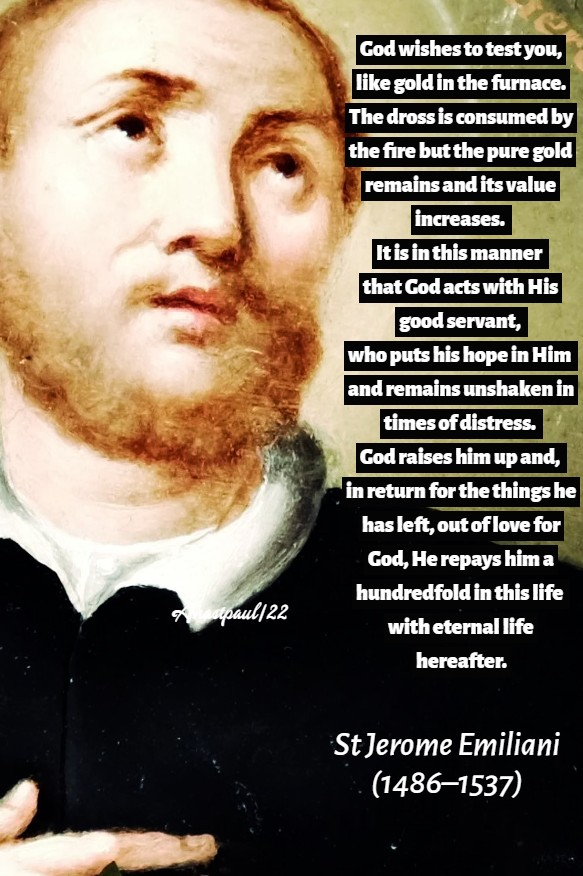
“God wishes to test you, like gold in the furnace. The dross is consumed by the fire but the pure gold remains and its value increases. It is in this manner that God acts with His good servant, who puts his hope in Him and remains unshaken in times of distress. God raises him up and, in return for the things he has left, out of love for God, He repays him a hundredfold in this life, with eternal life hereafter.”
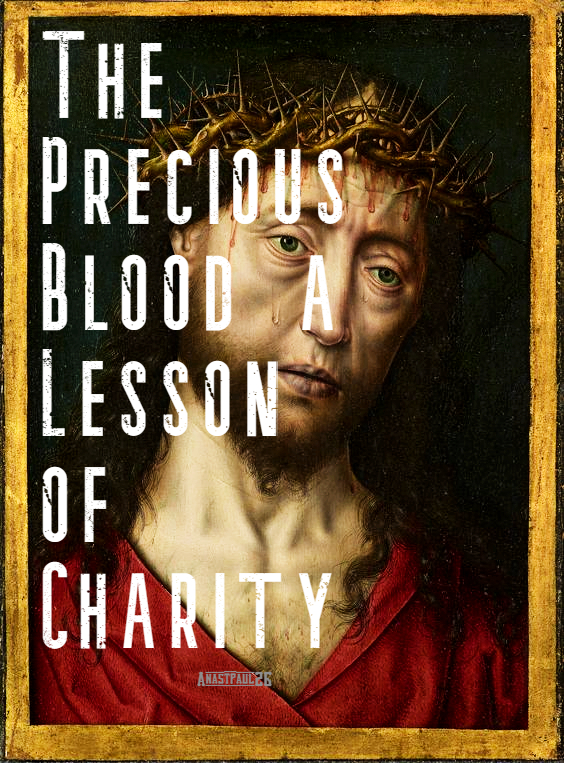
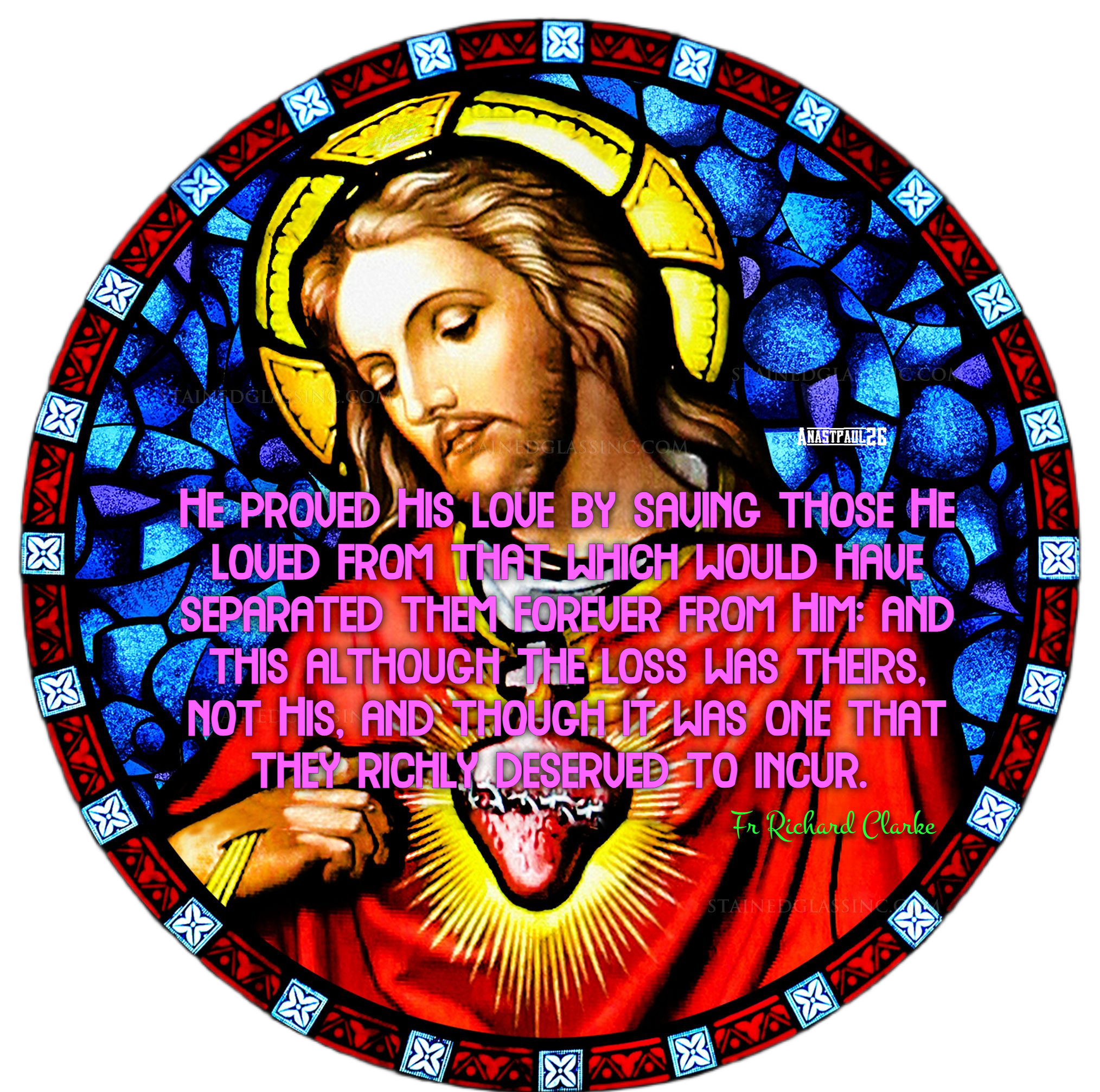
“He loved us, and washed us from our sins in His own Blood.” (Apoc. i. 5) St John, the apostle of love, mentions this as the primary mark of the love of Jesus for us. He proved His love by saving those He loved from that which would have separated them forever from Him: and this although the loss was theirs, not His, and though it was one that they richly deserved to incur. Here is a model for us, when others wrong us and return ill-will for our love.
This reconciliation He effected at the cost of His own blood. We read sometimes of a child who sheds his blood for father or mother, or a husband who shed his blood for his beloved spouse. We admire exceedingly such noble and generous self-devotion. But who ever heard of one who shed his blood in order to reconcile to himself, and restore peace and happiness to, enemies who had willfully and deliberately insulted him? Love so wonderful as this was possible only to the Son of God.
Yet if we are really to learn of Him to follow in His footsteps, we must imitate Him in this love for enemies. He Himself commands it: “Love your enemies!” “If you love them that love you, what reward shall you have?” The precept seems impossible, and becomes possible only when we contemplate Him Who shed the last drop of His blood for those who hated Him. Looking at Thee, O Lord, I not only will forgive those who have offended me, but I will seek to do them good, that I may have the happiness of doing to them as Thou hast done to me!
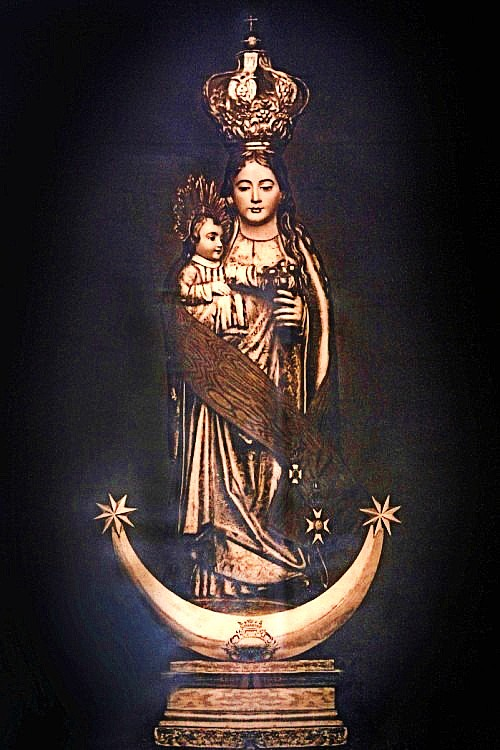
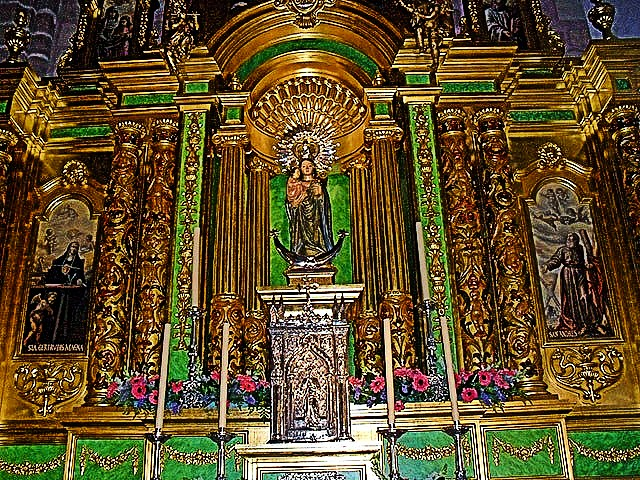
Nuestra Señora de Zocueca / Our Lady of Zocueca, Bailén, Jaén, Andalucía, Spain (1808 – 20 July:
Around 1150, Mozarabic Christians built a rudimentary Chapel near the Rumblar River, the Guadalquivir tribuitary that waters this region in southern Spain, at a place called Zocueca. When Alfonso VII reconquered the area in 1155, people gave thanks to the Virgin at the Shrine. In the 1400s it was was rebuilt, and from this period the graceful, standing Gothic Statue of the Mother and Child seems to date, although tradition holds it to be older than the first Chapel.
During the cholera epidemic of 1681, the people vowed to hold an annual feast in honour of the Virgin, preceded by a day of fasting, if she would save them. The promise has been kept on 5 August ever since. The Chapel was re-decorated in Baroque style in the 1700s.
In 1808, people again thanked the Virgin of Zocueca for her help during the Battle of Bailén, the first Spanish victory against Napoleon. Annually since 1810, the municipality commemorates the battle with a series of civil, patriotic, and religious events from 17-22 July, reaching their greatest splendour on the 20th, when the Patroness, the Virgin of Zocueca, goes through the City streets in procession. Another event in her honour, the romería or pilgrimage, takes place on the last Sunday in September in thanks for her help in ending a plague of locusts which threatened the region’s crops in the late 1800s. Men carry the Statue, bristling with decorations, on their shoulders from its usual home in the Church of the Incarnation in Bailén, to the Sanctuary four miles distant, where overnight vigil is kept before a sunrise Mass. In 1925, the Virgin of Zocueca was proclaimed “Captain General” and her Statue given a military sash. After the Statue burned in the Civil War, religious sculptor Jose Maria Alcacer made a replica, blessed on 5 August1954.
Bl Anne Cartier St Ansegisus St Aurelius of Carthage St Cassian of Saint Saba St Chi Zhuze St Elijah the Prophet
St Elswith
Blessed Gregory Lopez (1542-1596) “The Mystery Man” – Hermit, Spiritual Advisor, Writer. Around 1585, word of a “Mystery Man” began to leak into Mexico City, a strange hermit who lived out in the lonely valley of Guesteca, who walked miles to go to Mass, lived totally subject to “Lady Poverty” and had travelled from the Shrine of Our Lady of Guadalupe in Spain (which dates from 712), to her Shrine in Mexico (which dates from 1531).
St Margaret of Antioch (3rd century) Virgin Martyr. Margaret is one of the Fourteen Holy Helpers and is one of the Saints who spoke to St Joan of Arc.
St Maria Fu Guilin St Mère St Paul of Saint Zoilus St Rorice of Limoges St Severa of Oehren St Severa of Saint Gemma St Wulmar
Martyrs of Corinth – 22 saints: 22 Christians who were martyred together. We know nothing else about them but the names – • Appia • Calorus • Cassius • Celsus • Cyriacus • Donatus • Emilis • Felix • Fructus • Magnus • Maximus • Nestita • Partinus • Pasterus • Paul • Romanus • Spretus • Tertius • Theodolus • Ueratia • Valerian • Victor. They were martyred in Corinth, Greece.
Martyrs of Damascus – 16 saints: 16 Christians who were martyred together. We know the names of six of then, but no details about any of them – Cassia, Julian, Macrobius, Maximus, Paul and Sabinus. They were martyred in Damascus, Syria, date unknown.
Martyrs of Seoul – 8 saints: Eight lay native Koreans in various states of life who were murdered together for their faith. • Anna Kim Chang-gum • Ioannes Baptista Yi Kwang-nyol • Lucia Kim Nusia • Magdalena Yi Yong-hui • Maria Won Kwi-im • Martha Kim Song-im • Rosa Kim No-sa • Theresia Yi Mae-im They were martyred on 20 July 1839 at the Small West Gate, Seoul, South Korea
Martyrs of Zhaojia – 3 saints: Married lay woman and her two daughters in the apostolic vicariate of Southeastern Zhili, China. During the persecutions of the Boxer Rebellion, the three of them hid in a well to avoid being raped. They were found, dragged out, and killed for being Christian. Martyrs. They were – Maria Zhao Guoshi (mother), Maria Zhao and Rosa Zhao (sisters). They were martyred in late July 1900 in Zhaojia, Wuqiao, Hebei, China.
Martyrs of Zhujiahe – 4 saints: Two Jesuit missionary priests and two local lay people who supported their work who were martyred together in the Boxer Rebellion during and immediately after Mass. • Léon-Ignace Mangin • Maria Zhu Wushi • Paul Denn • Petrus Zhu Rixin They were martyred on 20 July 1900 in church in Zhujiahe, Jingxian, Hebei, China
Martyred in the Spanish Civil War: • Blessed Abraham Furones y Furones • Blessed Antoni Bosch Verdura • Blessed Francisca Aldea y Araujo • Blessed Jacinto García Riesco • Blessed Joan Páfila Monllaó • Blessed Josep Tristany Pujol • Blessed Matías Cardona-Meseguer • Blessed Rita Josefa Pujalte y Sánchez • Blessed Vicente López y López

 AnaStpaul
You must be logged in to post a comment.