Mare de Déu de Canòlich / Mother of God of Canòlich, Canòlich, Sant Julià de Lòria, Andorra, Spain (1223) – 14 July and 4th Saturday of May
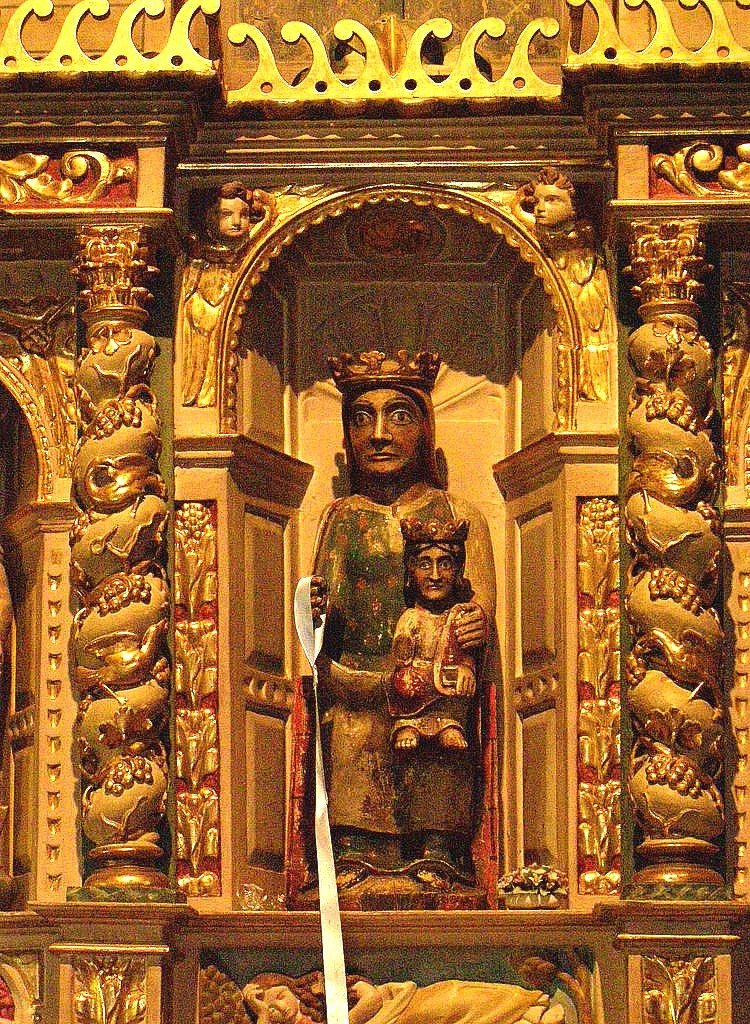
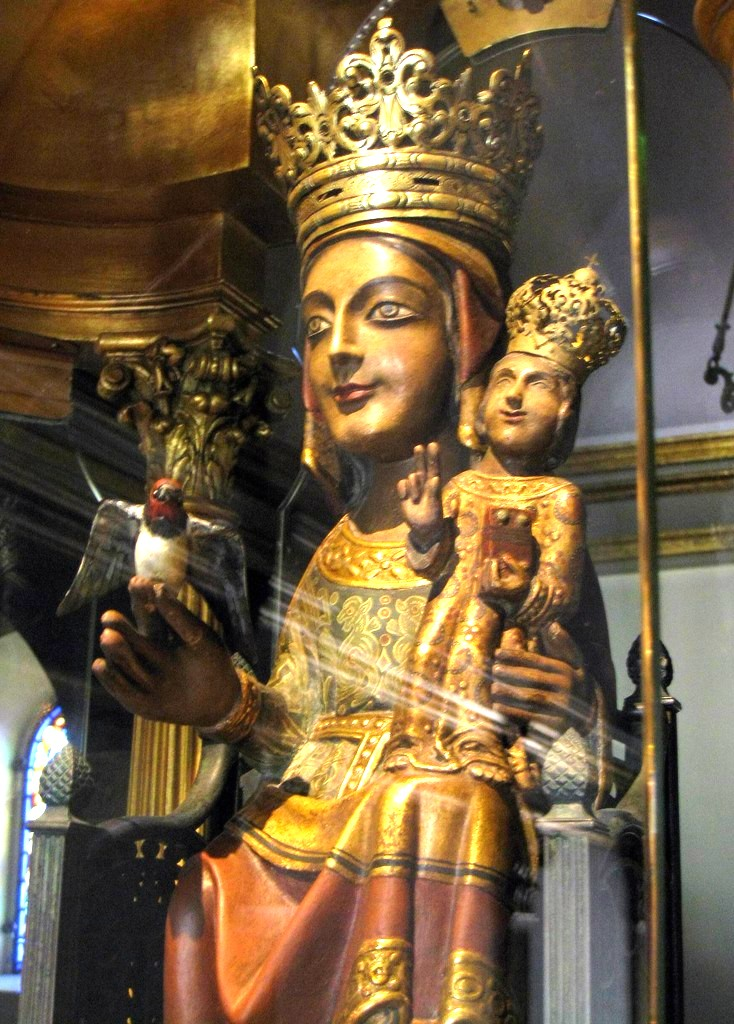
On 14 July 1223, a shepherd was pasturing his flock near the village of Canòlich in southern Andorra, when suddenly a bird with brilliant plumage came to rest on an outcrop. The shepherd approached and caught the bird with no trouble and carried it to his house. The next day the bird had disappeared and again he found it in the field. The sequence recurred three times but the last time, the shepherd found an image of the Virgin Mary in a niche in the rock.
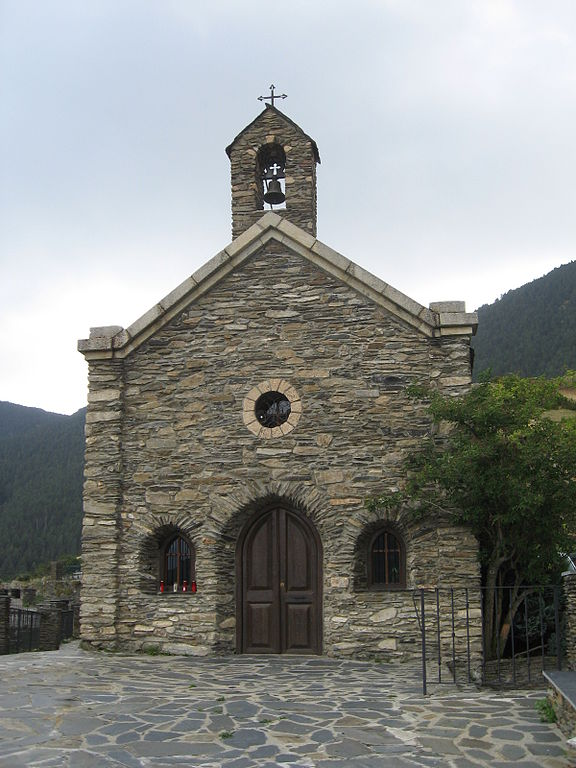
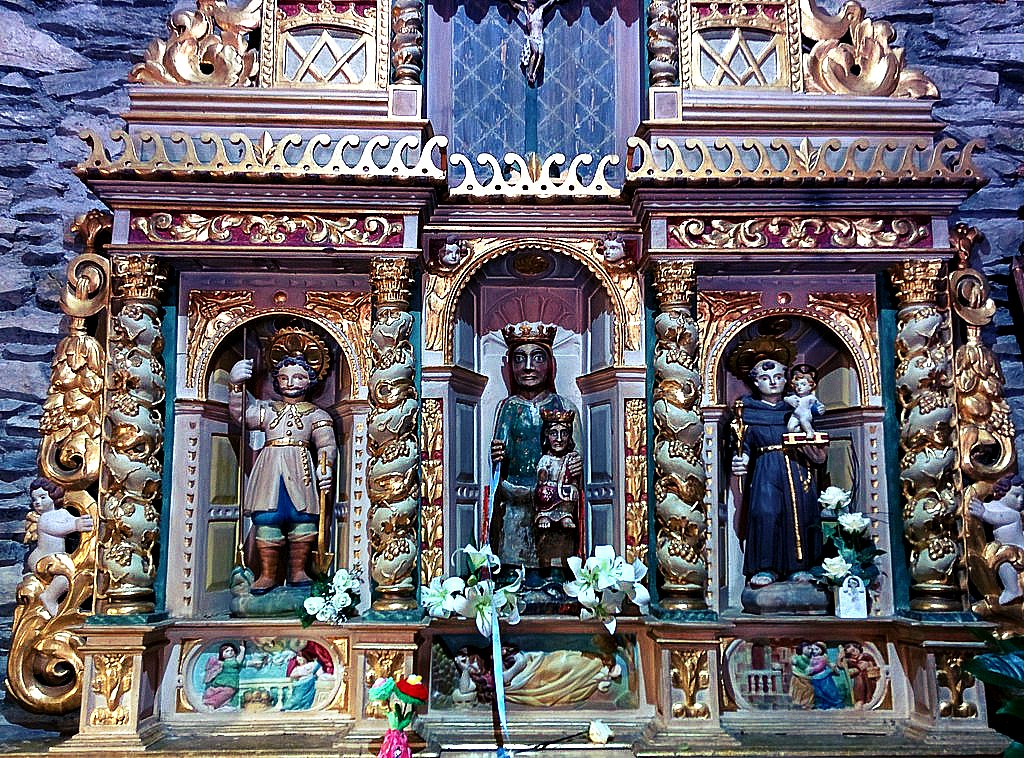
In response to this prodigy, the people of Sant Julià de Lòria Parish decided to build a Shrine to the Virgin where her Statue was found. Many miracles ensued at the Shrine and still do. Sadly now, nothing remains of that Church. The present Sanctuary, containing a baroque Altarpiece from a previous Shrine, dates from the 1970s. The Romanesque image of the Mother of God of Canòlich resides in the Parish Church of Sant Julià y San Germà in the urban centre of Sant Julià de Lòria: a wooden Statue from the late 1100s, with original polychrome.
On the last Saturday in May, parishioners gather in Sant Julià de Lòria for morning fireworks and Mass in the Virgin’s honour. Then the celebration — moves to Canòlich, for Masses at the Sanctuary and after Mass, dancing, and blessing and distribution of bread.
St Camillus de Lellis MI (1550-1614) (Optional Memorial) Priest and Founder the Order of the Ministers of the Sick, or simply as the “Camillians,” known as “The Giant of Charity.”
Bl Boniface of Canterbury St Colman of Killeroran St Cyrus of Carthage St Deusdedit of Canterbury St Donatus of Africa Bl Dorotea Llamanzares Fernández
St Francisco Solano y Jiménez OFM (1549 – 1610) Priest , Friar of the Order of Friars Minor, Missionary, Musician, Preacher, Miracle worker, Apostle of the Blessed Sacrament, the Holy Virgin Mother and of Prayer, Polyglot – “The Wonder Worker of Whe New World. ”
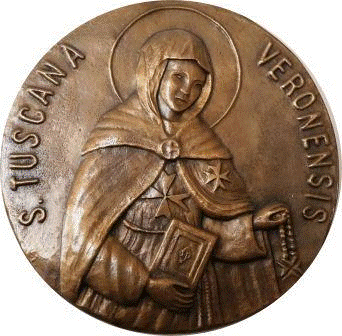
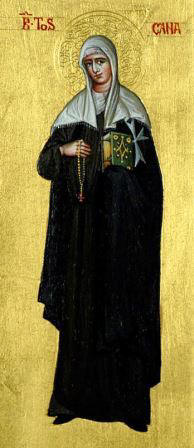
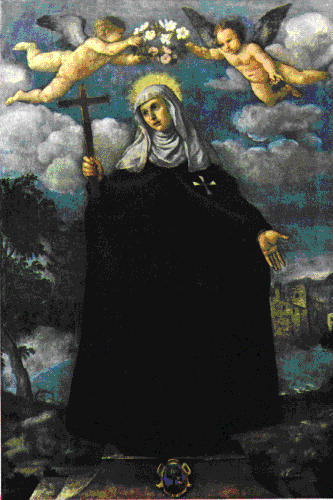
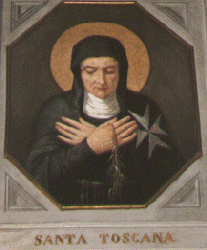
She was born in Zevio, near Verona about 1280. Her parents were noble and good Christians. As a child she had a great devotion for virginity so she refused all her suitors. But her family insisted that she marry. So she married a nobleman, Alberto, of the house of Occhi di Cape. She went to live in Verona with him, where she imitated the women of the Old Testament, as well as Saint Anna and Saint Elizabeth, living in perfect matrimonial chastity and taking care of her husband and her house, and also doing good works. She gave all the alms she could, and each day at three in the afternoon, she went to the Hospital of the Holy Sepulchre belonging to the Order of Saint John of Jerusalem in order to visit the poor and wash their feet, to take care of the sick and wounded, from whose ulcers she pressed the pus without showing disgust or revulsion.
She did not bear any children, and so, when her husband died young, she took a vow of chastity. She mourned he companion and said:
“I thank Thee, o Christ! for having delivered my husband from the perils of the world and from its trials and tribulations, and me from the very heavy burden of marriage. Now, I consecrate myself entirely to Thee; now, I offer Thee myself as Thy servant and Thy slave. I desire no other husband or beloved than Thee; no one, if not Thee, will I take as a second husband. I love no one. Receive me. I shall follow the path which is straight in Thine eyes. In Thee are my hope and my faith. Thou wilt give me strength and aid; then I shall overcome the very cunning enemy. What can man do without Thee? And what would the creature do without its Creator? If Thou art present, I am victorious. If Thou bringest help, I win a glorious triumph.”
With these words she began an angelic life of prayer, penance, and works of mercy. The price of her labour was always divided into three parts: one for the priests, the other for the pilgrims and the poor, and the third for her own livelihood. In spite of the austerity of her life, her beauty only increased. Three young men saw her, admired her, and were impelled by the devil to plot to share her, with or without her consent.
One evening, Toscana was absorbed in contemplation in her room when one of these wicked men entered through the window and approached her. But he had not taken three steps when the Lord permitted the devil to choke him; the fiend fell to the floor, dead. Horrified, the saint did not dare call out, for fear of scandal, and, feeling faint with fear before the lifeless body, she besought God’s counsel: she knelt and began to pray. Meanwhile, the second would-be thief of honour grew impatient outside. He was troubled by the long silence, expecting a great deal of commotion. He followed the path taken by the first. Stunned, he noticed the corpse and the woman prostrated at its feet. Seized by fright, he was rushing headlong toward the window when the Evil One seized him by the collar and strangled him. At the outcry of his companion, the third malefactor rushed in. Before the terrifying spectacle, he fell stone dead.
Although her embarrassment grew, the saint did not lose confidence and awaited the Lord’s decision. It appeared in the guise of the parents of the three young men. Surprised at not seeing them return to tell of their progress, the parents came for news to the young widow’s house. How great was their consternation when received by the saint, they found their offspring lifeless! They threw themselves at her feet and implored her to restore the men to life so that they might do penance for their sin. She consented to do so and began to pray fervidly; the three villains revived, went to confession, said their prayers and died again – an event which excited the greatest astonishment and the most respectful fears in the city.
But this incident convinced Toscana of the difficulty a young woman experiences when living alone in the world. She decided to enter the Order of Saint John of Jerusalem to which she had already rendered so many services. She obtained a very solitary little cell in the garden of the convent of the Holy Sepulchre, in Verona. She took on the habit of the sisters and continued with renewed ardour her noble work.
She begged for her food and ate only bread and water, never eating to satiety. On Sundays, she made a feast of vegetables mixed with a small amount of oil. Entirely free now, she visited the churches and the holy places of Verona on solemn occasions in order to earn indulgences. But not to be seen. – she went there as soon as dawn appeared in the sky, when there was still no one in the streets. One day, as she went toward the church of the Holy Apostles, she met some thieves who took her poor cloak. She relinquished it to them gladly and ran away. But they wishing to divide their booty, drew their swords; immediately their hands withered. Stunned and grieving, they ran after the saint, returned her cloak, and implored her forgiveness. She consented to pray for them, made the sign of the cross on the hands struck by the wrath of God, and they became whole again as before. But she did not allow these wretches to leave without delivering to them a sermon to exhort them to change their lives and do penance.
She was seized by a serious attack of fever, and an angel came to warn her that her end was near. She felt such deep joy at the news that she gave thanks profusely. Then she had herself laid on the bare ground and remained there in the greatest spirit of mortification. She asked to be buried in the gateway of the Hospital, in the road, without honours. Finally she died, saying:
“I have chosen to be scorned in the house of God, rather than to live under the tents of sinners”.
As she was closing her eyes there was heard, like an echo, the sound of angels answering her in Latin:
Veni, famula Christi, Toscana, accipe coronam quam tibi Dominus praeparavit in aeternum.
Come bride of Christ, accept the crown ; which the Lord has prepared for you.
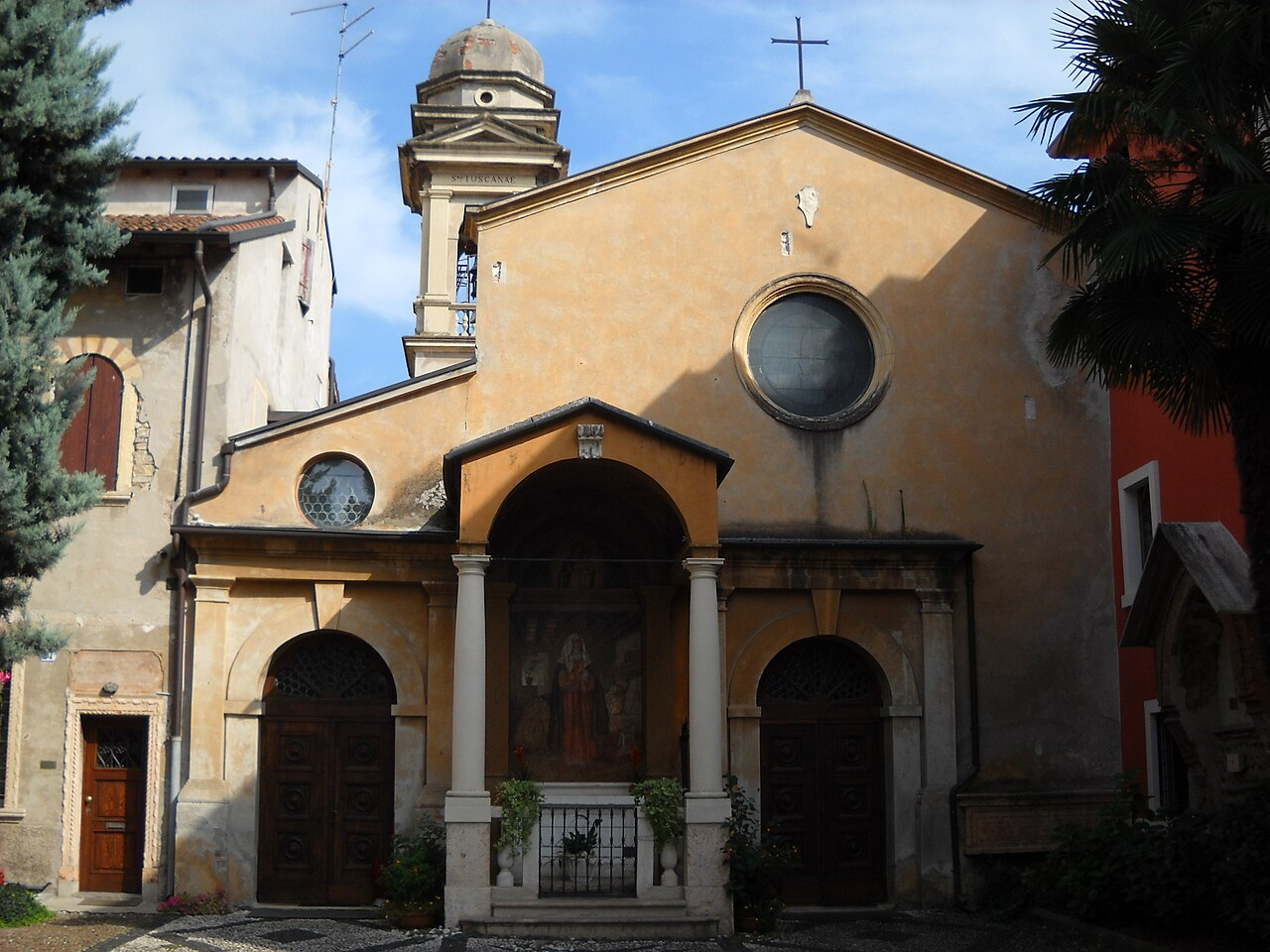
Santa Toscana – In 1342, the Knights Hospitaller acquired the relics of Santa Toscana which were placed in an ark atop the main altar.
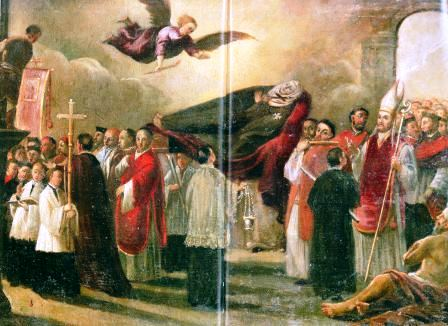
“Transfer of the body of Saint Toscana”, oil painting on canvas, end of the 17th century, at the seat of the Delegation of the Order of Malta in Verona
Our Morning Offering – 14 July – “Month of the Most Precious Blood”
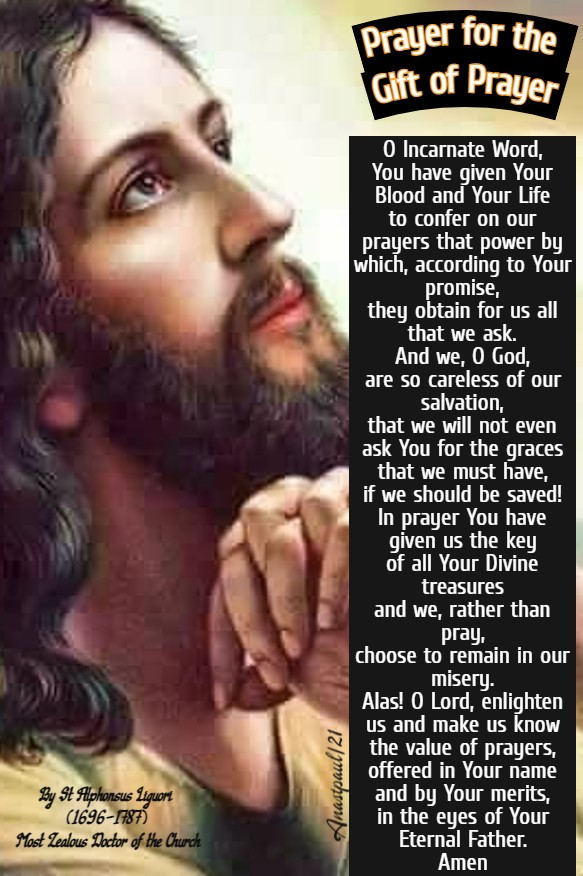
Prayer for the Gift of Prayer By St Alphonsus Liguori (1696-1787) Most Zealous Doctor of the Church
O Incarnate Word, You have given Your Blood and Your Life to confer on our prayers that power by which, according to Your promise, they obtain for us all that we ask. And we, O God, are so careless of our salvation, that we will not even ask You for the graces that we must have, if we should be saved! In prayer You have given us the key of all Your Divine treasures and we, rather than pray, choose to remain in our misery. Alas! O Lord, enlighten us, and make us know the value of prayers, offered in Your name and by Your merits, in the eyes of Your Eternal Father. Amen
One Minute Reflection – 14 July – “Month of the Most Precious Blood” – Readings: Sir 15:5, Ps 91:2, 2 Tim 4:1-8, Matt 5:13-19
In that time Jesus said to His disciples: You are the salt of the earth. But if the salt lose its savour, wherewith shall it be salted? It is good for nothing any more but to be cast out, and to be trodden on by men.
REFLECTION – Now then, after giving them due exhortation, He refreshes them again with praises. As thus: the injunctions being high, and far surpassing those in the Old Testament; lest they should be disturbed and confounded, and say, How shall we be able to achieve these things? hear what He says: You are the salt of the earth. Implying, that of absolute necessity He enjoins all this. For not for your own life apart, says He, but for the whole world, shall your account be. For not to two cities, nor to ten or twenty, nor to a single nation am I sending you, as I sent the prophets; but to earth, and sea, and the whole world; and that in evil case. For by saying, You are the salt of the earth, He signified all human nature to have lost its savor, and to be decayed by our sins. For which cause, you see, He requires of them such virtues, as are most necessary and useful for the superintendence of the common sort. For first, the meek, and yielding, and merciful, and righteous, shuts not up his good deeds unto himself only, but also provides that these good fountains should run over for the benefit of others. And he again who is pure in heart, and a peacemaker, and is persecuted for the truth’s sake; he again orders his way of life for the common good. Think not then, He says, that you are drawn on to ordinary conflicts, or that for some small matters you are to give account.You are the salt of the earth.
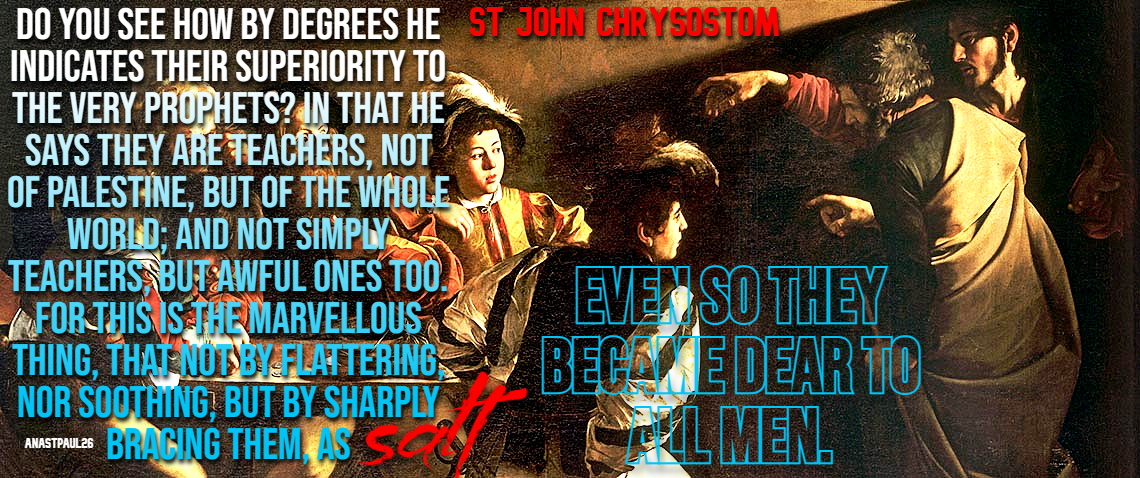
Do you see how by degrees He indicates their superiority to the very prophets? In that He says they are teachers, not of Palestine, but of the whole world; and not simply teachers, but awful ones too. For this is the marvellous thing, that not by flattering, nor soothing, but by sharply bracing them, as salt, even so they became dear to all men.
St John Chrysostom (Homily 15 on Matthew)
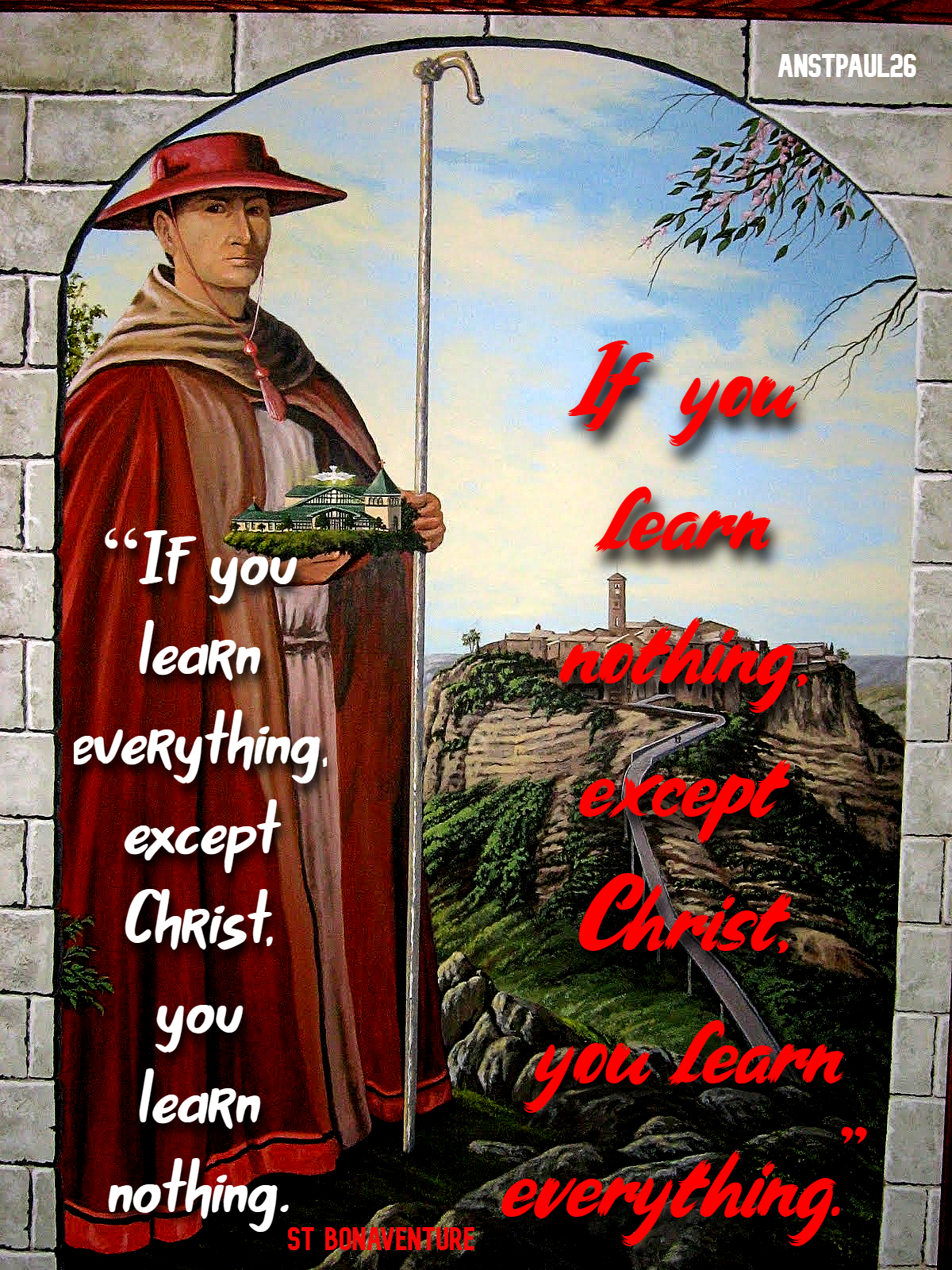
PRAYER – May the annual festival of blessed Bonaventura, Your Confessor and Bishop, we beseech You, O Lord, render us pleasing to Your loving kindness, so that this service of sacred propitiation may be a blessed recompense for him and secure for us the gifts of Your grace. Through our Lord…
“If you learn everything, except Christ, you learn nothing. If you learn nothing, except Christ, you learn everything.”
Dearly beloved: I charge thee, before God and Jesus Christ, who shall judge the living and the dead, by his coming, and his kingdom: Preach the word: be instant in season, out of season: reprove, entreat, rebuke in all patience and doctrine.
2 Tim 4:1-8
For there shall be a time, when they will not endure sound doctrine; but, according to their own desires, they will heap to themselves teachers, having itching ears: And will indeed turn away their hearing from the truth, but will be turned unto fables.
2 Tim 4:1-8
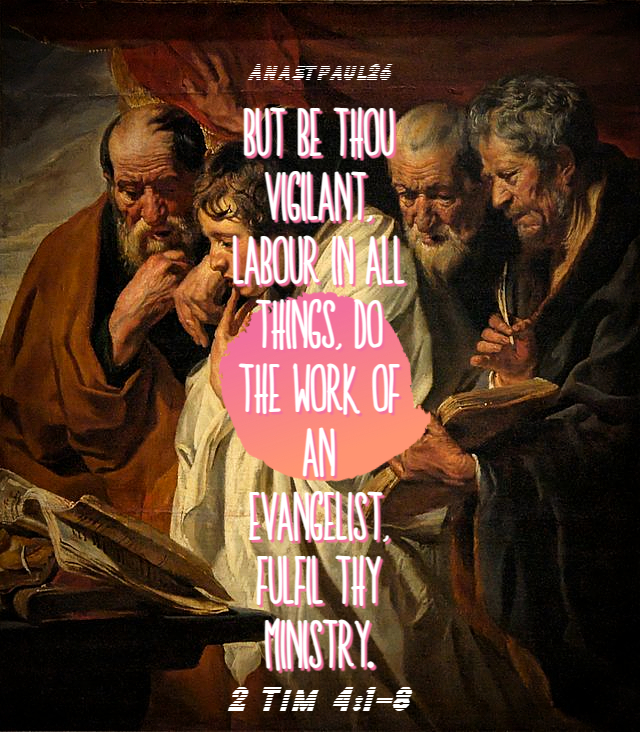
But be thou vigilant, labour in all things, do the work of an evangelist, fulfil thy ministry.
2 Tim 4:1-8
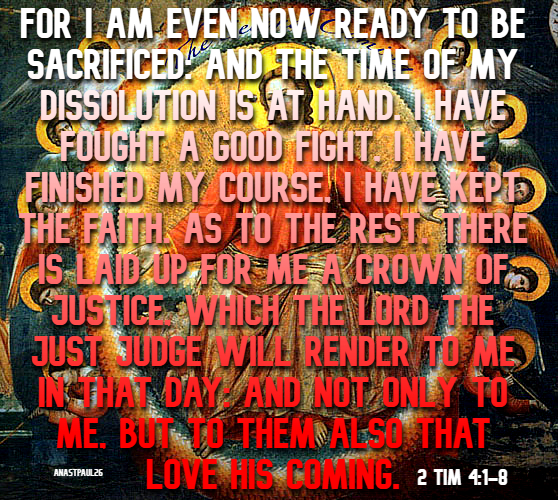
For I am even now ready to be sacrificed: and the time of my dissolution is at hand. I have fought a good fight, I have finished my course, I have kept the faith. As to the rest, there is laid up for me a crown of justice, which the Lord the just judge will render to me in that day: and not only to me, but to them also that love His coming.
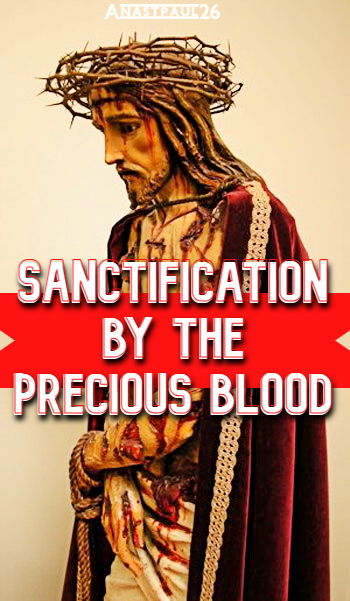
The Precious Blood does not only wash away the sins of men and restore them to friendship with God. This is but the commencement of its work of love and mercy. It has in it unlimited power to carry them on to the heights of sanctity, to engender in them every virtue, to implant in the soul all the gifts of the Holy Ghost. So we read in the Apocalypse that the Lamb of God has not only washed us from our sins in His own blood, but also made us to be kings and priests of God. So through the Precious Blood there is bestowed on me not only cleannes from my past sins, but graces to make me beautiful in the sight of God.
How does the Precious Blood win these graces for us? It appeals to the love of God and reminds Him that, as He has given us the surpassing gift of His own Son to be sacrificed for us, He must with Him also freely give us all things. In that one gift all else is contained, and we have a sort of claim to whatever we want from the hands of God.
The Precious Blood of Christ also obtains our sanctification by the merits that it won for us. Each drop that was shed was enough, and more than enough, to purchase graces without limit or end. All the actions of Our Lord had an infinite value by reason of His infinite dignity. How much more the shedding of that Blood which in itself calls for the highest adoration!





You must be logged in to post a comment.