Posted in MARIAN TITLES, SAINT of the DAY

Our Lady of Refuge, Matamoros, Tamaulipas, Mexico (1720) and Memorials of the Saints – 4 July

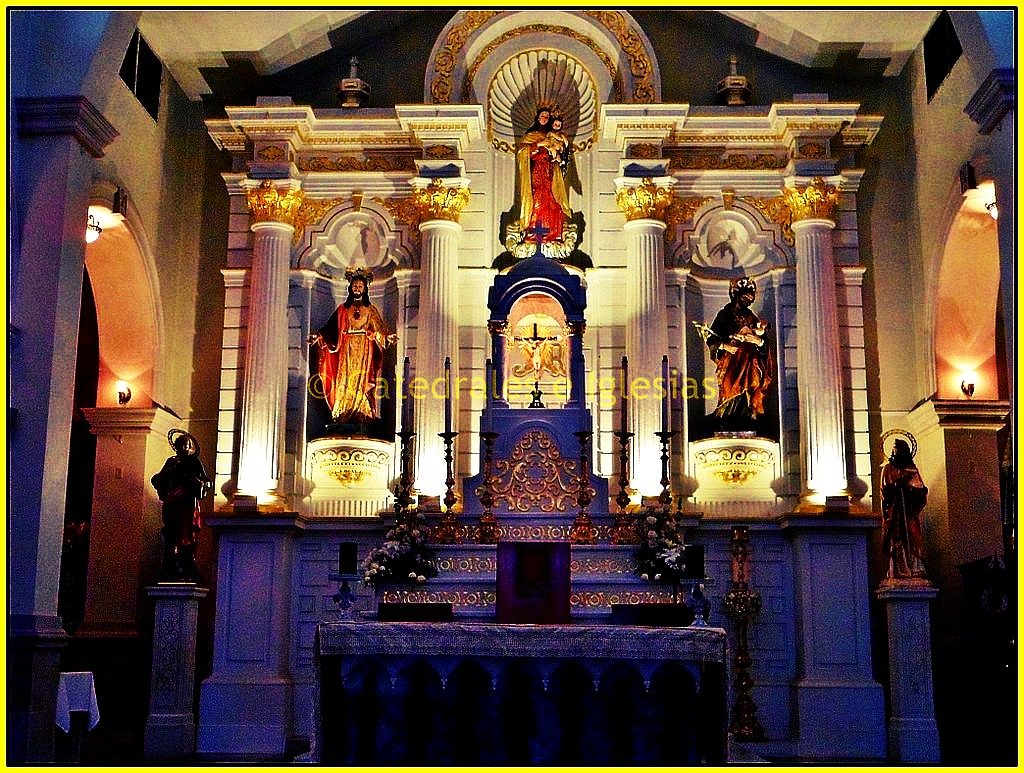
Nuestra Señora del Refugio / Our Lady of Refuge, Matamoros, Tamaulipas, Mexico (1720) – 4 July:
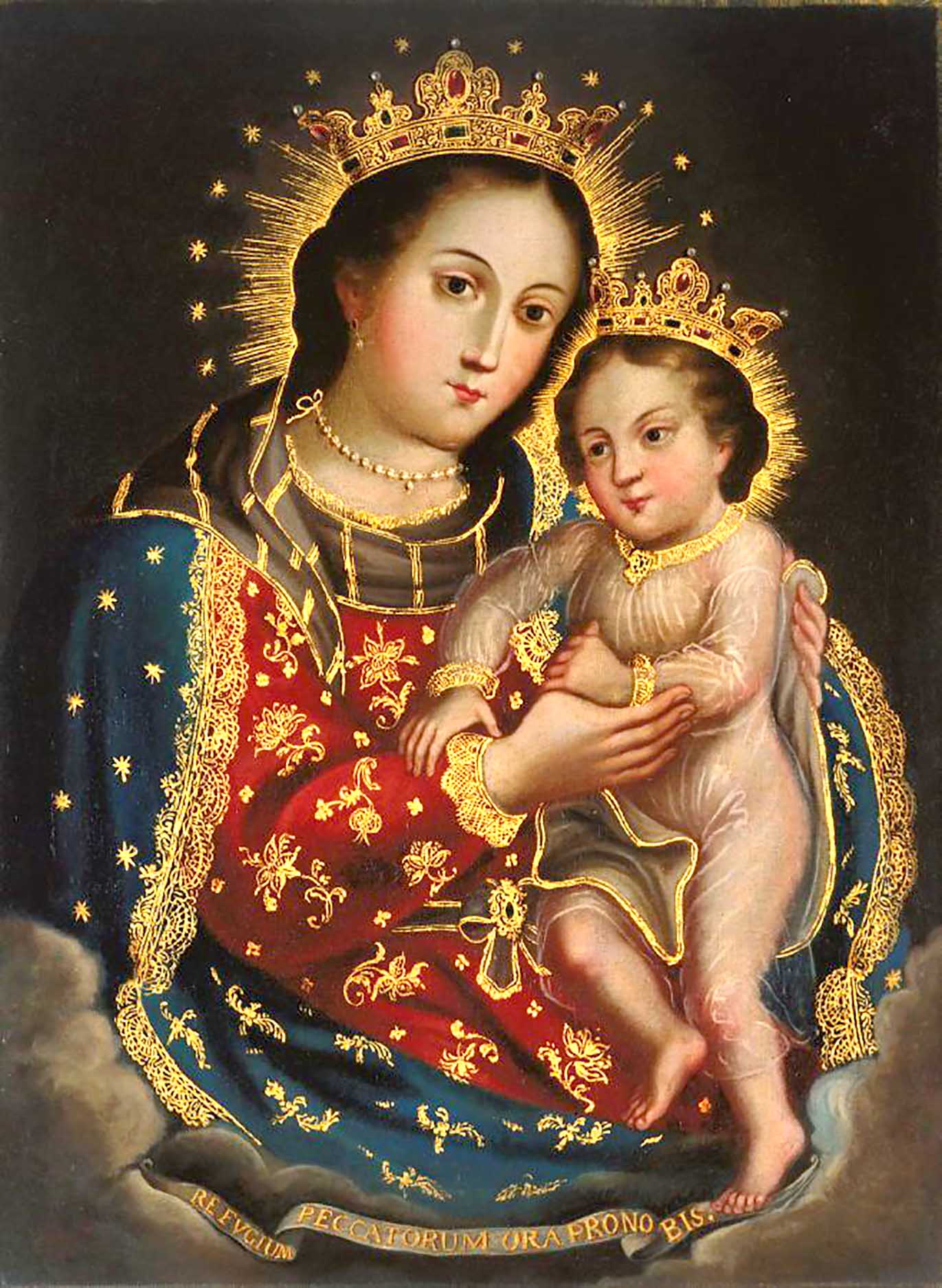
Jesuit Missionary Father Juan José Güica brought a painting of Our Lady, Refuge of Sinners from Italy to Mexico in 1720. In a dream, the Virgin told Padre Güica to ask the Franciscans of Zacatecas to use and promote the image; – they distributed over 150 copies, making this one of the most widespread Marian devotions in Mexico.

In 1793 Franciscan Friars came to the new settlement which would become Matamoros, renaming the area “Nuestra Señora del Refugio de los Esteros Hermosos” (Our Lady of the Refuge of the Lovely Marshes).

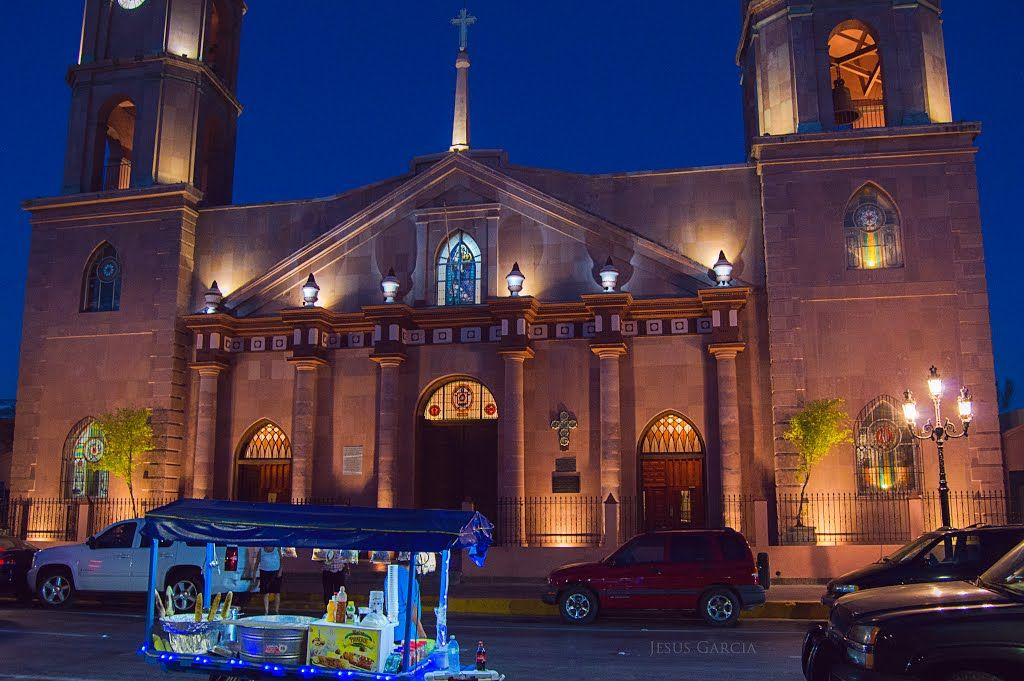
The Cathedral of Our Lady of Refuge, built in 1832, displays an 1886 painting of her. Her fiesta, celebrated in many Mexican Towns, commemorates the coronation of the original “Refugium Peccatori” in the Jesuit Church of Frascati, Italy, on 4 July 1717.
St Elizabeth of Portugal TOSF (1271-1336) Queen Consort, Franciscan Tertiary, Apostle of Charity and Peace, political negotiator and mediator.
Biography:

https://anastpaul.com/2018/07/04/saint-of-the-day-4-july-st-elizabeth-of-portugal-t-o-s-f-1271-1336/

Bl Agatha Yun Jeom-Hye
St Albert Quadrelli
St Andrew of Crete
St Anthony Daniel
St Aurelian of Lyons
St Bertha of Blangy
St Carileffo of Anille
Bl Catherine Jarrige
St Cesidio Giacomantonio
Bl Damiano Grassi of Rivoli
St Donatus of Libya
St Edward Fulthrop
St Elias of Jerusalem
St Finbar of Wexford
St Fiorenzo of Cahors
St Flavian of Antioch
St Giocondiano
Bl Giovanni of Vespignano
St Haggai the Prophet
Bl Hatto of Ottobeuren
Bl Henry Abbot
St Henry of Albano
St Hosea the Prophet
St Innocent of Sirmium
Bl John Carey
Blessed John Cornelius SJ (1557– 1594) Martyr, English Priest of the Society of Jesus, Missionary.
Bl Jozef Kowalski
St Jucundian
St Laurian of Seville
St Lauriano of Vistin
Bl Maria Crocifissa Curcio
St Namphanion the Archmartyr
Bl Natalia of Toulouse
St Odo the Good
Bl Odolric of Lyon
Bl Patrick Salmon
Bl Pedro Romero Espejo

Blessed Petrus Kasui Kibe SJ (c 1587-1639) Priest of the Society of Jesus and Martyr
The first of the 188 Japanese Martyrs
His Life and Death:

https://anastpaul.com/2020/07/04/saint-of-the-day-4-july-blessed-petrus-kasui-kibe-sj-c-1587-1639-priest-and-martyr-a-christian-walking-through-the-world/

St Sebastia of Sirmium
St Theodore of Cyrene
St Theodotus of Libya
Bl Thomas Bosgrave
Bl Thomas Warcop

St Ulric of Augsburg (c 890–973) Bishop of Augsburg, Germany, miracle-worker.
His Life:
https://anastpaul.com/2019/07/04/saint-of-the-day-4-july-saint-ulric-of-augsburg-c-890-973/

St Ulric of Ratzeburg
St Valentine of Langres
St Valentine of Paris
Bl William Andleby
Bl William of Hirsau
Posted in SAINT of the DAY

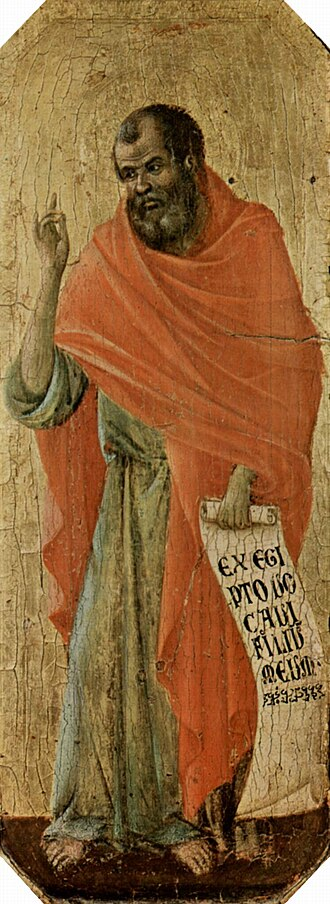
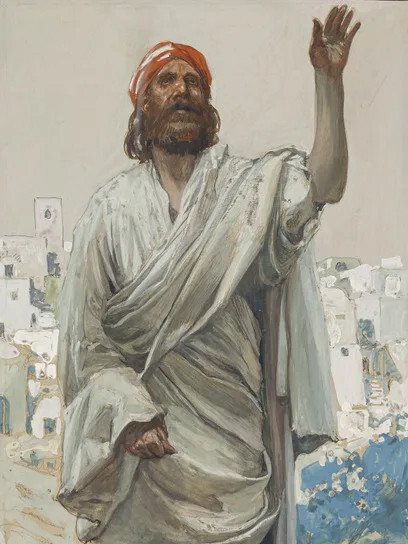
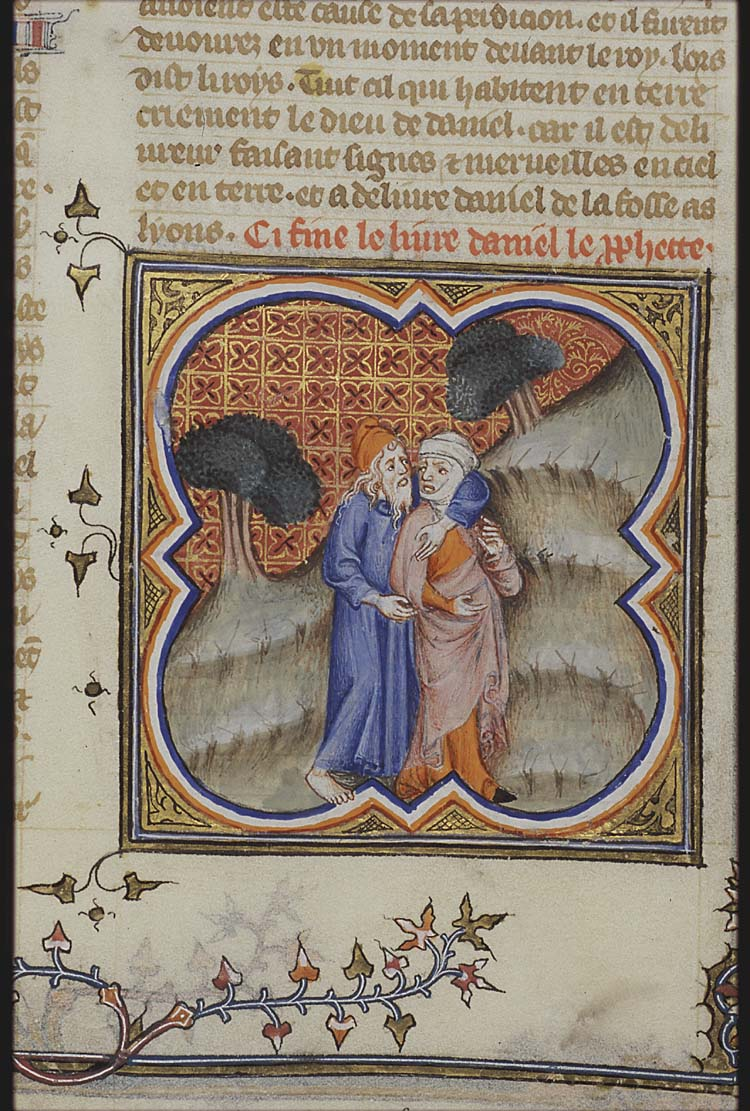
Saint of the Day – 4 July – St Hosea the Prophet

Hosea (‘Salvation’), also known as Osee, son of Beeri, was an 8th-century BC prophet in Israel and the author of the Book of Hosea. He is the first of the Twelve Minor Prophets. Hosea is often seen as a “prophet of doom”, but underneath his message of destruction is a promise of restoration. Hosea was a contemporary of Jonah, Amos, Isaiah and Micah.

He married Gomer, but she proved to be unfaithful. Hosea knew she would be such, as God tells him so in the opening statements of the book. This marriage was arranged in order to serve as a symbol of Israel’s unfaithfulness to the Lord, and dramatizes the breakdown in the relationship between God and his people Israel. Hosea’s family reflected the adulterous relationship which Israel built with other gods.

His children’s names likewise represent God’s estrangement from Israel. They are prophetic of the fall of the ruling dynasty and the severed covenant with God. The name of Hosea’s daughter, Lo-ruhamah, which translates as ‘not pitied’, is chosen as a sign of displeasure with the people of Israel for following false gods. The name of Hosea’s son, Lo-ammi, which translates as ‘not my people’, is chosen as a sign of the Lord’s displeasure with the people of Israel for following those false gods.

Even though Gomer runs away from Hosea and sleeps with another man, he loves her anyway and forgives her. Likewise, even though the people of Israel worshipped false gods, God continued to love them and did not abandon his covenant with them. The buying back of Gomer is also an analogy to the redemptive qualities of Jesus Christ’s sacrifice on the cross, and his buying back of the human race from the devil.

Posted in JULY - The MOST PRECIOUS BLOOD

One Minute Reflection – 4 July – “So he could not perform any mighty deed there, … ” – Mark 6:5

One Minute Reflection – 4 July – “Month of the Precious Blood” – Ezekiel 2: 2-5, Psalms 123: 1-2, 2, 3-4, Second Corinthians 12: 7-10, Mark 6: 1-6

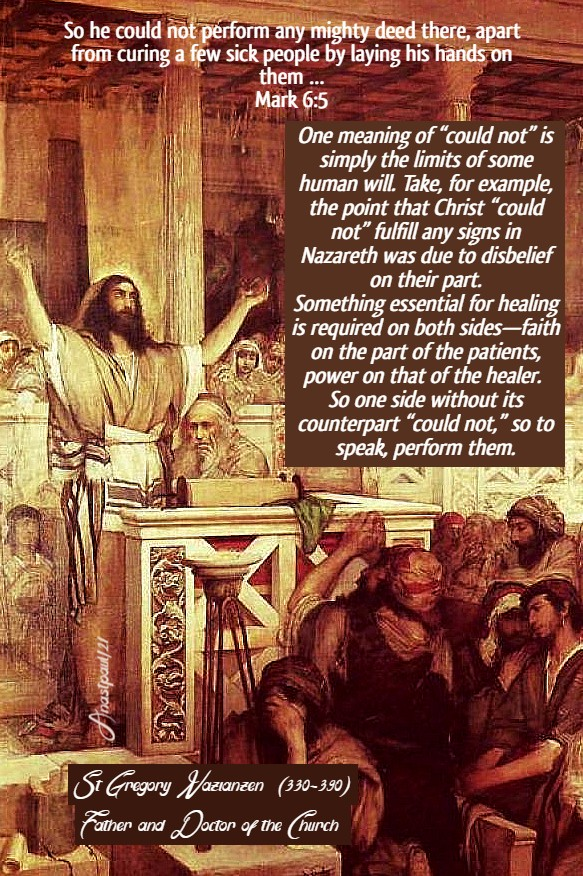
So he could not perform any mighty deed there, apart from curing a few sick people by laying his hands on them …” – Mark 6:5

REFLECTION – “One meaning of “could not” is simply the limits of some human will. Take, for example, the point ,that Christ “could not” fulfill any signs in Nazareth was due to disbelief on their part. Something essential for healing is required on both sides—faith on the part of the patients, power on that of the healer. So one side without its counterpart “could not,” so to speak, perform them.

As this can be seen in medical care, it can also be seen in moral transformation. Similarly involving the limits of the will are the texts: “The world cannot not hate you” and “How can you speak good, being evil?” The metaphor of “impossibility” here must mean free refusal by the will. The same idea applies to those passages which say that what is, impossible for humanity is possible for God.

Note also those passages that say that a person “cannot” (in one sense) be born a second time and a needle’s eye “cannot” let a camel through. What would stop these events happening if God willed them directly? Besides all these, there is, as in the case we are presently considering, a “cannot” in the sense of that which is totally inconceivable. We cannot conceive that God can be evil or fail to exist. It is inconceivable that reality cannot exist or two times two is fourteen. So here, it cannot be the case, that the Son would do anything which the Father would not do!” – St Gregory Nazianzen (330-390) Archbishop of Constantinople, Father and Doctor of the Church – Oration 30 (On the Son),10-11.

PRAYER – Lord our God, make us love You above all things and all our fellow-men, with a love that is worthy of You. May we look to Your Divine Son in total trust, faith, love and imitation. Grant too, that by the prayers of the Blessed Virgin Mary, we too may be granted the grace to follow Your only Son, no matter our sufferings, to one day reach You, in our heavenly home. We make our prayer, through Christ our Lord, in the unity of the Holy Spirit, one God, forever amen.

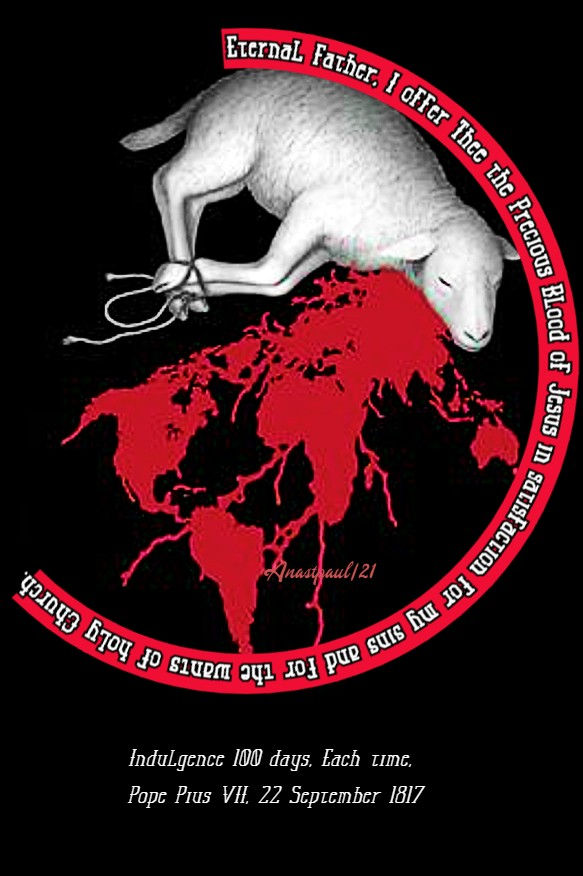
Eternal Father, I offer Thee the Precious Blood of Jesus in satisfaction for my sins and for the wants of holy Church. – Indulgence 100 days, Each time, Pope Pius VII, 22 September 1817.

Posted in JULY - The MOST PRECIOUS BLOOD

Quote/s of the Day – 4 July – “Month of the Precious Blood”

Quote/s of the Day – 4 July – “Month of the Precious Blood”

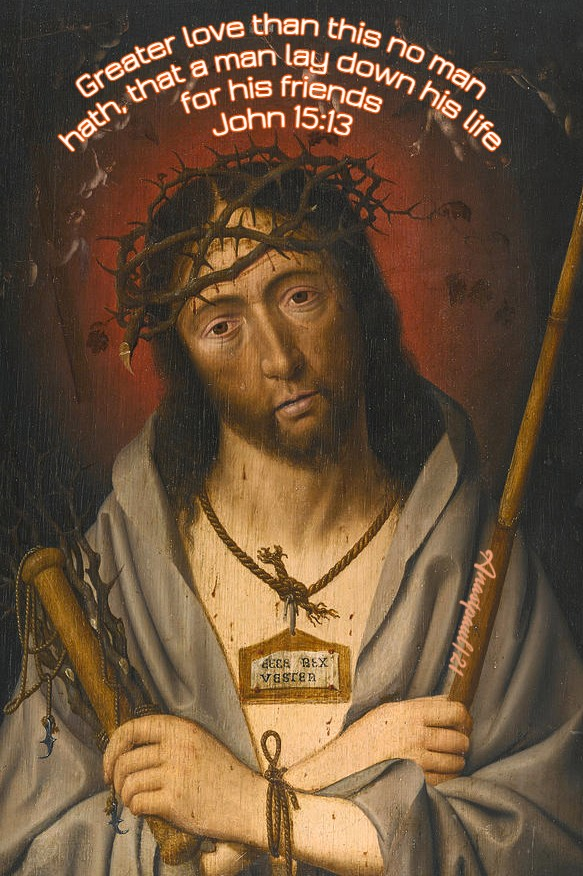
“Greater love than this
no man hath,
that a man lay down his life
for his friends.”

John 15:13

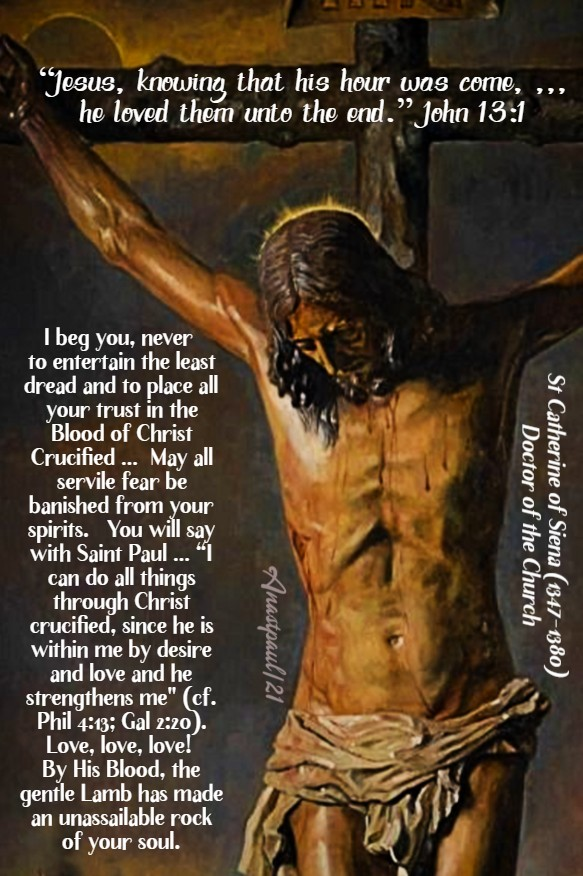
“Jesus, knowing that his hour was come, …
he loved them unto the end.”

John 13:1

I beg you never to entertain
the least dread and to place
all your trust in the Blood of Christ Crucified …
May all servile fear be banished from your spirits.
You will say with Saint Paul …
“I can do all things through Christ crucified,
since he is within me by desire
and love and he strengthens me”
(cf. Phil 4:13; Gal 2:20).
Love, love, love!
By His Blood, the gentle Lamb
has made an unassailable rock of your soul.”

St Catherine of Siena (1347-1380)
Doctor of the Church

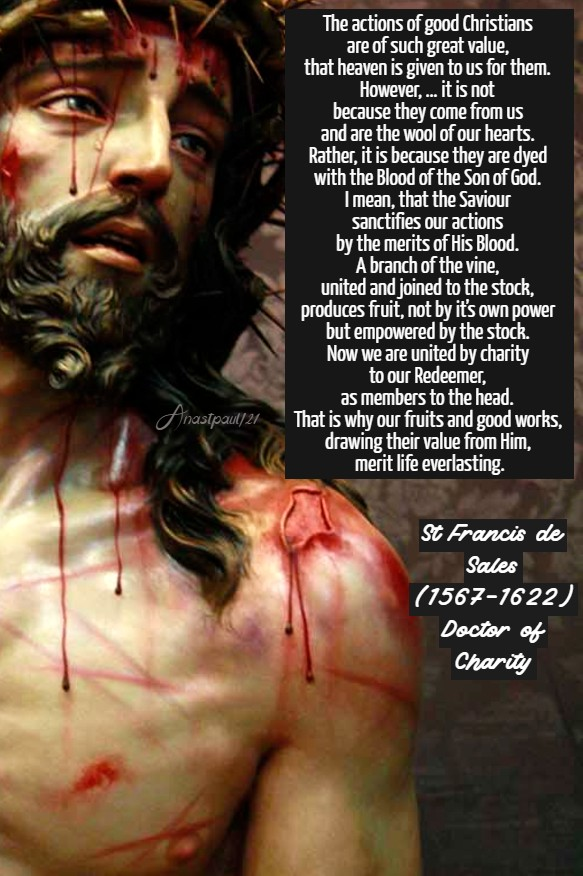
“The actions of good Christians
are of such great value,
that heaven is given to us for them.
However, … it is not because they come from us
and are the wool of our hearts.
Rather, it is because they are dyed
with the Blood of the Son of God.
I mean, that the Saviour sanctifies our actions
by the merits of His Blood.
A branch of the vine,
united and joined to the stock,
produces fruit, not by it’s own power
but empowered by the stock.
Now we are united by charity
to our Redeemer,
as members to the head (Eph 4:15-16).
That is why our fruits and good works,
drawing their value from Him,
merit life everlasting.”

St Francis de Sales (1567-1622)
Doctor of Charity

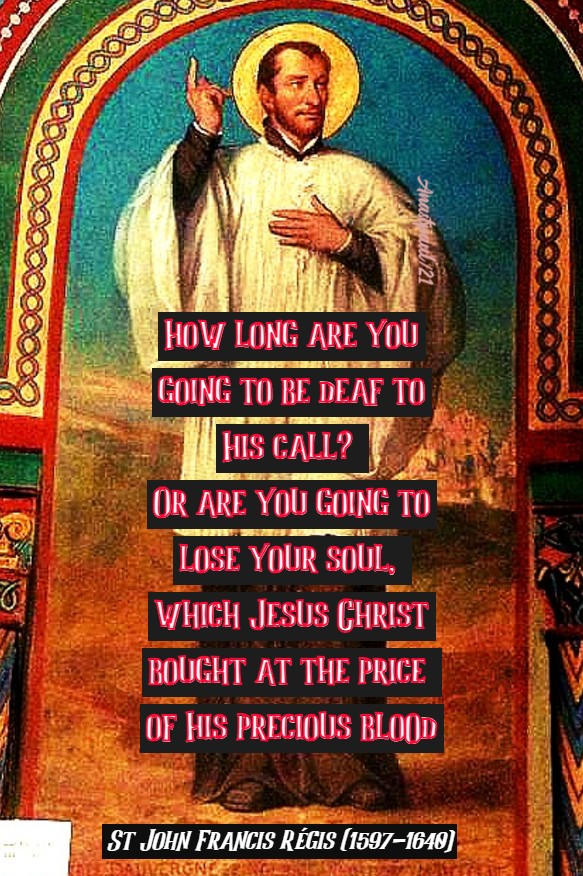
“How long are you going to be deaf to His call?
Or are you going to lose your soul,
which Jesus Christ bought at the price
of His Precious Blood?”

St John Francis Régis (1597-1640)

Posted in PRAYERS

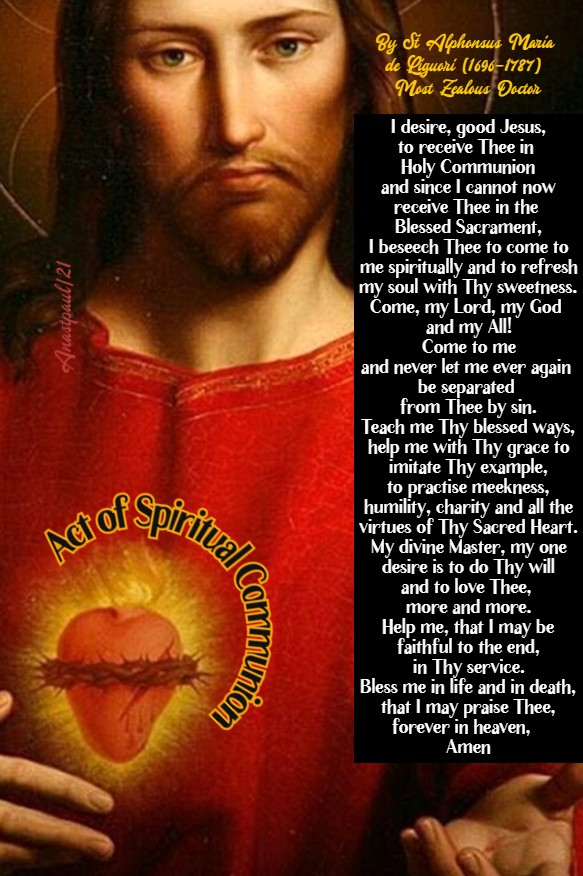
Our Morning Offering – 4 July – Act of Spiritual Communion By St Alphonsus

Our Morning Offering – 4 July – “Month of the Precious Blood”

For those unable to attend Holy Mass today and for all of us, everyday!

Act of Spiritual Communion
By St Alphonsus Maria de Liguori (1696-1787)
Most Zealous Doctor

I desire, good Jesus,
to receive Thee in Holy Communion
and since I cannot now receive Thee
in the Blessed Sacrament,
I beseech Thee to come to me spiritually
and to refresh my soul with Thy sweetness.
Come, my Lord, my God and my All!
Come to me
and never let me ever again
be separated from Thee by sin.
Teach me Thy blessed ways,
help me with Thy grace to imitate Thy example,
to practise meekness, humility,
charity and all the virtues of Thy Sacred Heart.
My divine Master, my one desire is to do Thy will
and to love Thee, more and more.
Help me, that I may be faithful to the end, in Thy service.
Bless me in life and in death,
that I may praise Thee, forever in heaven,
Amen

Posted in JULY - The MOST PRECIOUS BLOOD, The MOST PRECIOUS BLOOD

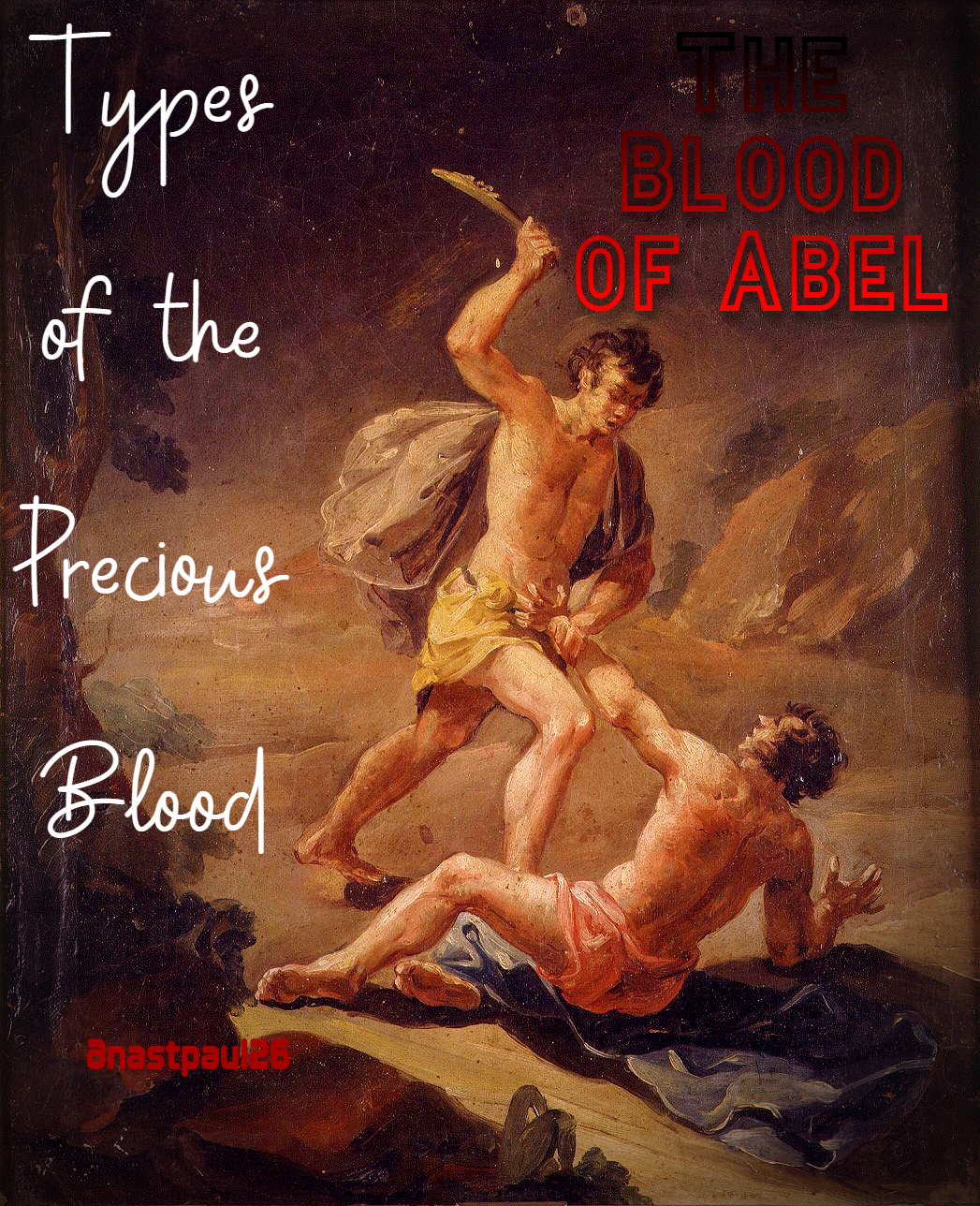
Thought for the Day – 4 July – Types of the Precious Blood (1) The Blood of Abel

The Precious Blood – Short Meditations for July

By Rev. Richard F. Clarke

4th Day – Types of the Precious Blood (1) The Blood of Abel

Abel was slain by his cruel brother, Cain, because he offered to God a sacrifice exceeding that of Cain, and his brother, filled with rage at the acceptance of Abel’s sacrifice, deliberately shed his innocent blood. So the Jews, filled with rage at the exceeding holiness of Jesus’ life, and at the sweet attractiveness of His words, and the divine beauty of His works of mercy, shed His Precious Blood. So the wicked are ever enraged against the good and grudge them their favour with God.

The blood of Abel cried out to God for vengeance on his murderer. The blood of Jesus, which speaketh better things than that of Abel, cries out to God for mercy on those who have outraged Him and put Him to death. Even while Jesus hung on the cross, He prayed His father to forgive them, and ever since, as long as the world shall last, His blood still cries, “Father, forgive them, for they know not what they do!” O Jesus, may Thy blood thus cry out for me!

Yet at the same time, it cries for vengeance on those who deliberately and willfully reject Him. Long, indeed, He bears with them, long and patiently. Yet, if in the end they spurn His Precious Blood, His very mercy will bring upon them a vengeance in proportion to His offer of love. O Jesus! may I never reject Thee or refuse Thy love and mercy!