
Blessed Edward Powell
Edward Powell (c.1478 – 30 July 1540) was a Welsh priest, theologian, and opponent to King Henry VIII. He was beatified in 1886. Powell was born in Wales, was M.A. of the University of Oxford, and a Fellow of Oriel College. He received the degree of Doctor of Divinity on 26 June 1506 and was styled perdoctus vir by the university.
A court preacher in high favour with Henry VIII, he helped the King write Assertio Septem Sacramentorum, a reply to Martin Luther, and then published his own work on the subject in December 1523. The University of Oxford commended this work, and styled Powell “the glory of the university” in a letter to the king. Powell was one of the four theologians selected to defend the legality of the king’s marriage of Catherine of Aragon, in connection with which he wrote the “Tractatus de non dissolvendo Henrici Regis cum Catherina matrimonio”.
In March, 1533, Powell was selected to answer Hugh Latimer at Bristol, and was alleged to have disparaged his moral character. Latimer complained to Thomas Cromwell, and Powell fell into further disfavour by denouncing Henry’s marriage with Anne Boleyn. He was discharged from the proctorship of Salisbury in January, 1534, and in November he was attainted, together with John Fisher, for high treason in refusing to take the oath of succession, deprived of his benefices, and imprisoned in the Tower of London.
The sentence was not carried out until 30 July 1540. Three Catholics (Powell, Abel, and Richard Featherstone) and three Protestants suffered together. (The protestants were were condemned for teaching Zwinglianism.) The victims were dragged on hurdles from the Tower to Smithfield, a Catholic and a Protestant on each hurdle. Powell’s companion was Robert Barnes, the Protestant divine. The Catholics were hanged, drawn, and quartered as traitors; the others were burned as heretics.

The site of executions at Smithfield
Blessed Thomas Abel
Blessed Thomas Abel (also Able, or Abell), priest and martyr, born about 1497; died 30 July, 1540. He was chaplain to Queen Catherine, and defender of the validity of her marriage to Henry VIII, for which reason he was put to death. He was a graduate of Oxford, and taught the queen modern languages and music. After a journey to Spain on her behalf, he received the parochial benefice of Bradwell in Sussex. He soon published in defence of the queen’s marriage a work entitled: “Invicta Veritas, an answer to the determination of the most famous Universities, that by no manner of law it may be lawful for King Henry to be divorced from the Queen’s grace, his lawful and very wife”. The work contained an answer to the numerous tracts supporting Henry’s ecclesiastical claims. The king, enraged and terrified, bought up copies of the book in order to destroy them.
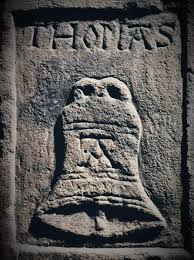
A carving Blessed Thomas created in Beauchamp Tower
For his defence of holy matrimony, he was thrown into Beauchamp Tower, and after a year’s liberation again imprisoned, in December, 1533, on the charges of disseminating the prophecies of the Maid of Kent, encouraging the queen “obstinately to persist in her wilful opinion against the same divorce and separation”, and maintaining her right to the title of queen. He was kept in close confinement until his execution at Tyburn, two days after the execution of Cromwell himself. There is extant a very pious Latin letter written by him to a fellow-martyr, and another to Cromwell, begging for some slight mitigation of his “close prison” — i.e. “license to go to church and say Mass here within the Tower and for to lie in some house upon the Green”. It is signed “by your daily bedeman, Thomas Abell, priest”.
His act of attainder states that he and three others “have most traitorously adhered themselves unto the bishop of Rome, being a common enemy unto your Majesty and this your Realm, refusing your Highness to be our and their Supreme Head of this your Realm of England“.

The Tyburn ‘Tree’
Blessed Richard Fetherston
Blessed Richard Fetherston (Fetherstone, Featherstone) was an English priest. He was Archdeacon of Brecon, Chaplain to Catherine of Aragon, and Latin tutor to her daughter, Mary Tudor. He was executed on 30 July 1540 and beatified by Pope Leo XIII on 29 December 1886.
Richard Featherstone studied at Cambridge where he became a doctor of divinity. In 1523 he was appointed archdeacon of Brecon in South Wales. By 1525 he had become the Princess Mary’s Latin tutor. When the Convocation of Canterbury met in November 1529 and considered whether Henry VIII and Queen Catherine were truly married, he spoke in defence of the marriage. The Act of Parliament which condemned St John Fisher in 1534 for his refusal to take the Oath of Succession, also referred to Fetherstone, who was sent to the Tower of London on 13 December of the same year. There he was confined until his execution in 1540. As in these cases, the limbs of all three were fixed over the gates of the city, and their heads were placed upon poles on London Bridge.

London Bridge, with heads on spikes


One thought on “Saint of the Day – 30 July – Blesseds Edward Powell, Thomas Abel and Richard Fetherston”