Posted in SAINT of the DAY

Saint of the Day – 30 July – Blesseds Edward Powell, Thomas Abel and Richard Fetherston

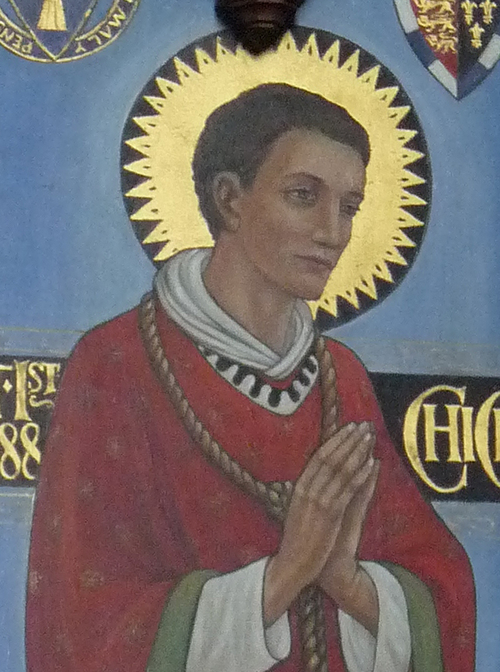
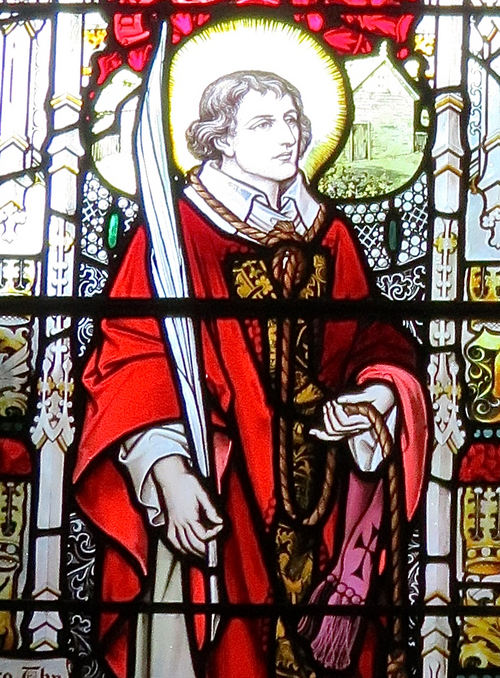
Blessed Edward Powell

Edward Powell (c.1478 – 30 July 1540) was a Welsh priest, theologian, and opponent to King Henry VIII. He was beatified in 1886. Powell was born in Wales, was M.A. of the University of Oxford, and a Fellow of Oriel College. He received the degree of Doctor of Divinity on 26 June 1506 and was styled perdoctus vir by the university.

A court preacher in high favour with Henry VIII, he helped the King write Assertio Septem Sacramentorum, a reply to Martin Luther, and then published his own work on the subject in December 1523. The University of Oxford commended this work, and styled Powell “the glory of the university” in a letter to the king. Powell was one of the four theologians selected to defend the legality of the king’s marriage of Catherine of Aragon, in connection with which he wrote the “Tractatus de non dissolvendo Henrici Regis cum Catherina matrimonio”.

In March, 1533, Powell was selected to answer Hugh Latimer at Bristol, and was alleged to have disparaged his moral character. Latimer complained to Thomas Cromwell, and Powell fell into further disfavour by denouncing Henry’s marriage with Anne Boleyn. He was discharged from the proctorship of Salisbury in January, 1534, and in November he was attainted, together with John Fisher, for high treason in refusing to take the oath of succession, deprived of his benefices, and imprisoned in the Tower of London.

The sentence was not carried out until 30 July 1540. Three Catholics (Powell, Abel, and Richard Featherstone) and three Protestants suffered together. (The protestants were were condemned for teaching Zwinglianism.) The victims were dragged on hurdles from the Tower to Smithfield, a Catholic and a Protestant on each hurdle. Powell’s companion was Robert Barnes, the Protestant divine. The Catholics were hanged, drawn, and quartered as traitors; the others were burned as heretics.

The site of executions at Smithfield

Blessed Thomas Abel

Blessed Thomas Abel (also Able, or Abell), priest and martyr, born about 1497; died 30 July, 1540. He was chaplain to Queen Catherine, and defender of the validity of her marriage to Henry VIII, for which reason he was put to death. He was a graduate of Oxford, and taught the queen modern languages and music. After a journey to Spain on her behalf, he received the parochial benefice of Bradwell in Sussex. He soon published in defence of the queen’s marriage a work entitled: “Invicta Veritas, an answer to the determination of the most famous Universities, that by no manner of law it may be lawful for King Henry to be divorced from the Queen’s grace, his lawful and very wife”. The work contained an answer to the numerous tracts supporting Henry’s ecclesiastical claims. The king, enraged and terrified, bought up copies of the book in order to destroy them.

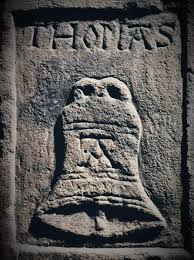
A carving Blessed Thomas created in Beauchamp Tower

For his defence of holy matrimony, he was thrown into Beauchamp Tower, and after a year’s liberation again imprisoned, in December, 1533, on the charges of disseminating the prophecies of the Maid of Kent, encouraging the queen “obstinately to persist in her wilful opinion against the same divorce and separation”, and maintaining her right to the title of queen. He was kept in close confinement until his execution at Tyburn, two days after the execution of Cromwell himself. There is extant a very pious Latin letter written by him to a fellow-martyr, and another to Cromwell, begging for some slight mitigation of his “close prison” — i.e. “license to go to church and say Mass here within the Tower and for to lie in some house upon the Green”. It is signed “by your daily bedeman, Thomas Abell, priest”.

His act of attainder states that he and three others “have most traitorously adhered themselves unto the bishop of Rome, being a common enemy unto your Majesty and this your Realm, refusing your Highness to be our and their Supreme Head of this your Realm of England“.

The Tyburn ‘Tree’

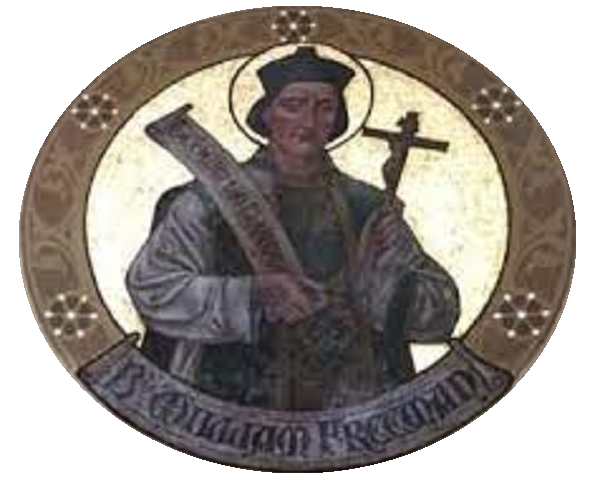
Blessed Richard Fetherston

Blessed Richard Fetherston (Fetherstone, Featherstone) was an English priest. He was Archdeacon of Brecon, Chaplain to Catherine of Aragon, and Latin tutor to her daughter, Mary Tudor. He was executed on 30 July 1540 and beatified by Pope Leo XIII on 29 December 1886.

Richard Featherstone studied at Cambridge where he became a doctor of divinity. In 1523 he was appointed archdeacon of Brecon in South Wales. By 1525 he had become the Princess Mary’s Latin tutor. When the Convocation of Canterbury met in November 1529 and considered whether Henry VIII and Queen Catherine were truly married, he spoke in defence of the marriage. The Act of Parliament which condemned St John Fisher in 1534 for his refusal to take the Oath of Succession, also referred to Fetherstone, who was sent to the Tower of London on 13 December of the same year. There he was confined until his execution in 1540. As in these cases, the limbs of all three were fixed over the gates of the city, and their heads were placed upon poles on London Bridge.

London Bridge, with heads on spikes

Posted in QUOTES on PRIESTS, the PRIESTHOOD and CONSECRATED LIFE

Quote/s of the Day – 23 July – He cares for you

Quote/s of the Day – 23 July – “Month of the Most Precious Blood” – Readings: Dan 3:84, 87, Dan 3:57, 1 Pet. 5:1-11, Luke 22:24-30

“God, resists the proud, but gives grace to the humble.” Humble yourselves, therefore, under the mighty hand of God, that He may exalt you in the time of visitation; cast all your anxiety upon Him, because He cares for you.

1 Pet. 5:1-11

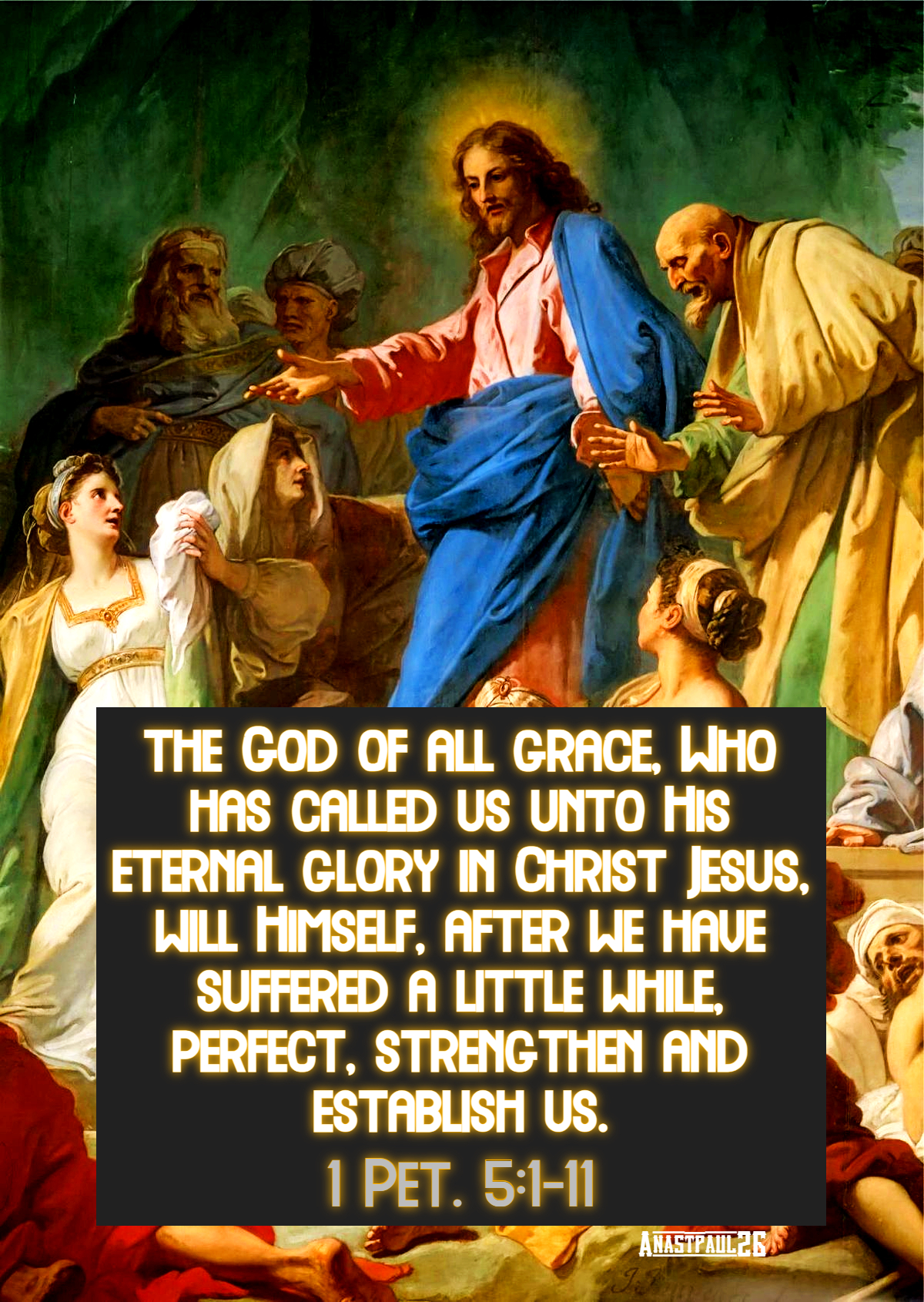
Be sober, be watchful! For your adversary the devil, as a roaring lion, goes about seeking someone to devour. Resist him, steadfast in the faith, knowing that the same suffering befalls your brethren all over the world. But the God of all grace, Who has called us unto His eternal glory in Christ Jesus, will Himself, after we have suffered a little while, perfect, strengthen and establish us. To Him is the dominion forever and ever. Amen.

1 Pet. 5:1-11

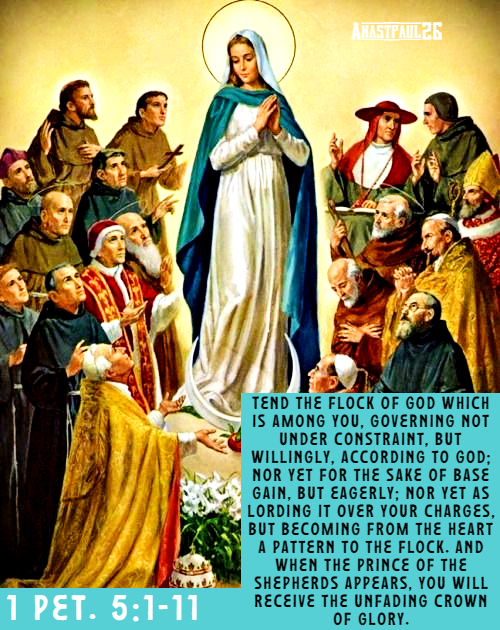
Beloved: I exhort the presbyters among you – I, your fellow-presbyter and witness of the sufferings of Christ, the partaker also of the glory that is to be revealed in time to come – tend the flock of God which is among you, governing not under constraint, but willingly, according to God; nor yet for the sake of base gain, but eagerly; nor yet as lording it over your charges, but becoming from the heart a pattern to the flock. And when the Prince of the shepherds appears, you will receive the unfading crown of glory. Likewise, you who are younger, be subject to the presbyters.

1 Pet. 5:1-11

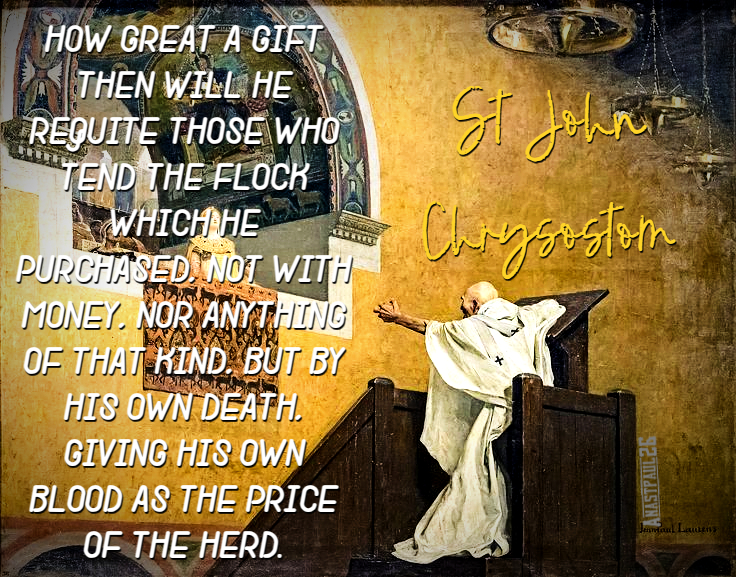
This being plain, it will likewise be manifest that a great and unspeakable reward will be reserved for him whose labors are concerned with these sheep, upon which Christ places such a high value. For when we see any one bestowing care upon members of our household, or upon our flocks, we count his zeal for them as a sign of love towards ourselves: yet all these things are to be bought for money:— with how great a gift then will He requite those who tend the flock which He purchased, not with money, nor anything of that kind, but by His own death, giving his own blood as the price of the herd.

St John Chrysostom (On the Priesthood, Book II)

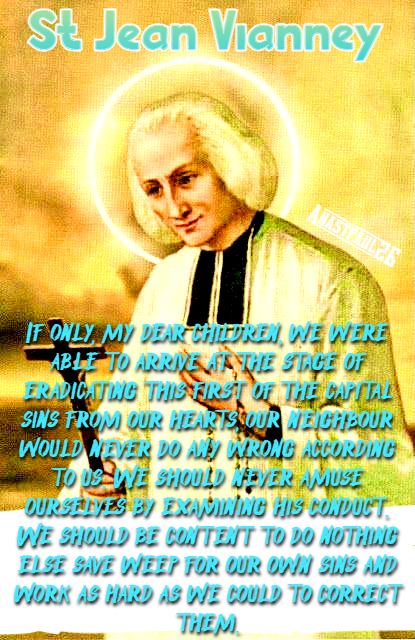
Yes, my dear brethren, all these rash judgments and all these interpretations come only from a person who has a secret pride, who does not know himself, and who dares to wish to know the interior life of his neighbour, something which is known to God alone. If only, my dear children, we were able to arrive at the stage of eradicating this first of the capital sins from our hearts, our neighbour would never do any wrong according to us. We should never amuse ourselves by examining his conduct. We should be content to do nothing else save weep for our own sins and work as hard as we could to correct them.

St Jean Vianney ( The Sermons of the Curé of Ars)

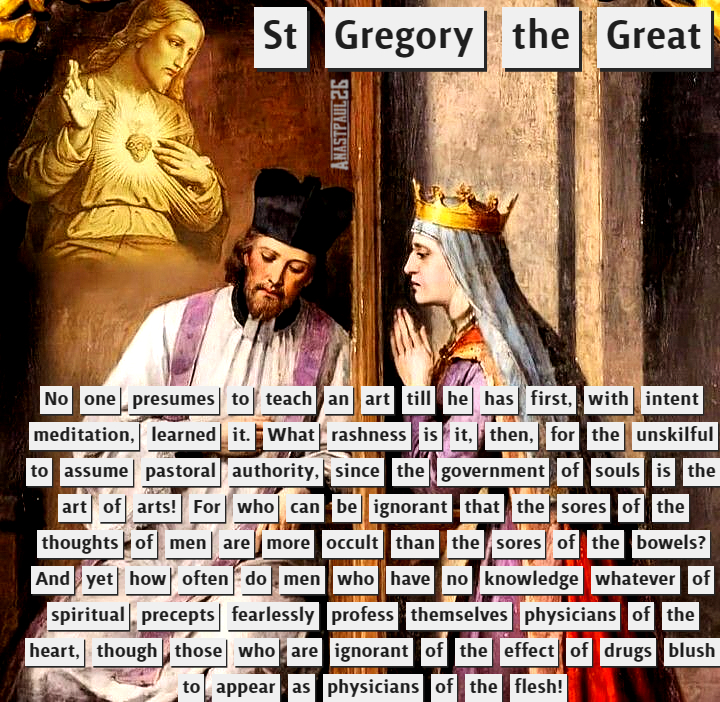
No one presumes to teach an art till he has first, with intent meditation, learned it. What rashness is it, then, for the unskilful to assume pastoral authority, since the government of souls is the art of arts! For who can be ignorant that the sores of the thoughts of men are more occult than the sores of the bowels? And yet how often do men who have no knowledge whatever of spiritual precepts fearlessly profess themselves physicians of the heart, though those who are ignorant of the effect of drugs blush to appear as physicians of the flesh!

St Gregory the Great (Pastoral Rule, Book I)

Posted in JULY - The MOST PRECIOUS BLOOD

One Minute Reflection – 7 July – I send you forth

Whatever town you enter, and they receive you, eat what is set before you, and cure the sick who are there, and say to them, ‘The kingdom of God is at hand for you.’ – Luke 10:1-9

REFLECTION What advantage, pray, could be greater than to be seen doing those things which Christ with his own lips declared to be proofs of love to Himself? For addressing the leader of the apostles He said, Peter, do you love me? and when he confessed that he did, the Lord added, if you love me tend my sheep. The Master asked the disciple if He was loved by him, not in order to get information (how should He who penetrates the hearts of all men?), but in order to teach us how great an interest He takes in the superintendence of these sheep. This being plain, it will likewise be manifest that a great and unspeakable reward will be reserved for him whose labors are concerned with these sheep, upon which Christ places such a high value. For when we see any one bestowing care upon members of our household, or upon our flocks, we count his zeal for them as a sign of love towards ourselves: yet all these things are to be bought for money:— with how great a gift then will He requite those who tend the flock which He purchased, not with money, nor anything of that kind, but by His own death, giving his own blood as the price of the herd.

Wherefore when the disciple said, You know Lord that I love You, and invoked the beloved one Himself as a witness of his love, the Saviour did not stop there, but added that which was the token of love. For He did not at that time wish to show how much Peter loved Him, but how much He Himself loved His own Church, and he desired to teach Peter and all of us that we also should bestow much zeal upon the same. For why did God not spare His only-begotten Son, but delivered Him up, although the only one He had? It was that He might reconcile to Himself those who were disposed towards Him as enemies, and make them His peculiar people. For what purpose did He shed His blood? It was that He might win these sheep which He entrusted to Peter and his successors. Naturally then did Christ say, Who then is the faithful and wise servant, whom his lord shall make ruler over His household. Again, the words are those of one who is in doubt, yet the speaker did not utter them in doubt, but just as He asked Peter whether he loved Him, not from any need to learn the affection of the disciple, but from a desire to show the exceeding depth of his own love: so now also when He says, Who then is the faithful and wise servant? he speaks not as being ignorant who is faithful and wise, but as desiring to set forth the rarity of such a character, and the greatness of this office. Observe at any rate how great the reward is — He will appoint him, he says, ruler over all his goods.

PRAYER – Holy God and Almighty Father, we are the disciples of Your Son as we follow Him home to You, grant us we pray, the strength and love to imitate Him in all things and to daily, pick up our cross with joy and commitment. May the Blessed Virgin, be a constant protection and assistance in our times of struggle and may all your Angels , the Apostles and Saints and Martyrs, pray for us, through our Lord Jesus Christ, with the Holy Spirit, God for always and forever, amen.

Posted in QUOTES on PRIESTS, the PRIESTHOOD and CONSECRATED LIFE

Quote/s of the Day – 7 July – “May Your priests, O Lord, be clothed with justice; let Your faithful ones shout merrily for joy.…“

Quote/s of the Day – 7 July – “Month of the Most Precious Blood” – Readings: Ps 131:9-10, Ps 131:1, Ps 131:16-17, Ps 109:4, Heb 7:23-27, Luke 10:1-9, Ps 67:36, Matt 10:27

“And He said to them, The harvest indeed is great, but the laborers are few. Pray therefore the Lord of the harvest to send forth laborers into His harvest.”

Luke 10:1-9

“Go. Behold, I send you forth as lambs in the midst of wolves.”

Luke 10:1-9

“A person who wishes
to become the Lord’s disciple
must repudiate a human obligation,
however honourable it may appear,
if it slows us, ever so slightly,
in giving the wholehearted obedience
we owe to God.”

St Basil the Great (329-379)
Father and Doctor of the Church

“He wants you to become
a living force for all mankind,
lights shining in the world.
You are to be radiant lights
as you stand beside Christ,
the Great Light,
bathed in the glory of Him
who is the Light of Heaven.”

St Gregory Nazianzen (330-390)
Father & Doctor of the Church

“Pray as though everything depended on God.
Work as though everything depended on you.”

St Augustine (354-430)
Father & Doctor of the Church

“What a tragedy,
how many souls
are being shut out of heaven
and falling into hell,
thanks to you!”

St Francis Xavier (1506-1552)

Posted in DOCTORS of the Church, FATHERS of the Church, MORNING Prayers, QUOTES of the SAINTS

Quote/s of the Day – 15 August – The Memorial of St Simplicain, Friend and Teacher of St Ambrose and the “spiritual father of my soul” of St Augustine, both Fathers and Doctors of the Church

Quote/s of the Day – 15 August – The Memorial of St Simplicain, Friend and Teacher of St Ambrose and the “spiritual father of my soul” of St Augustine, both Fathers and Doctors of the Church

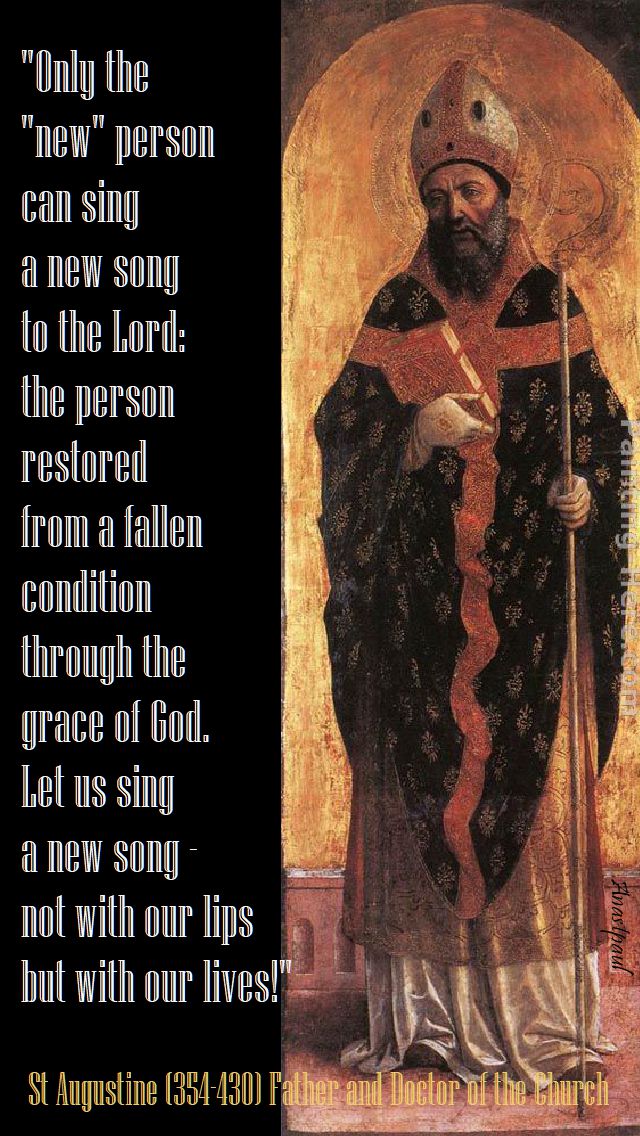
“Only the “new” person can sing a new song to the Lord:
the person restored from a fallen condition through the grace of God.
Let us sing a new song –
not with our lips
but with our lives!”

St Augustine (354-430) Father and Doctor of the Church

only the new person NO 2 - st augustine


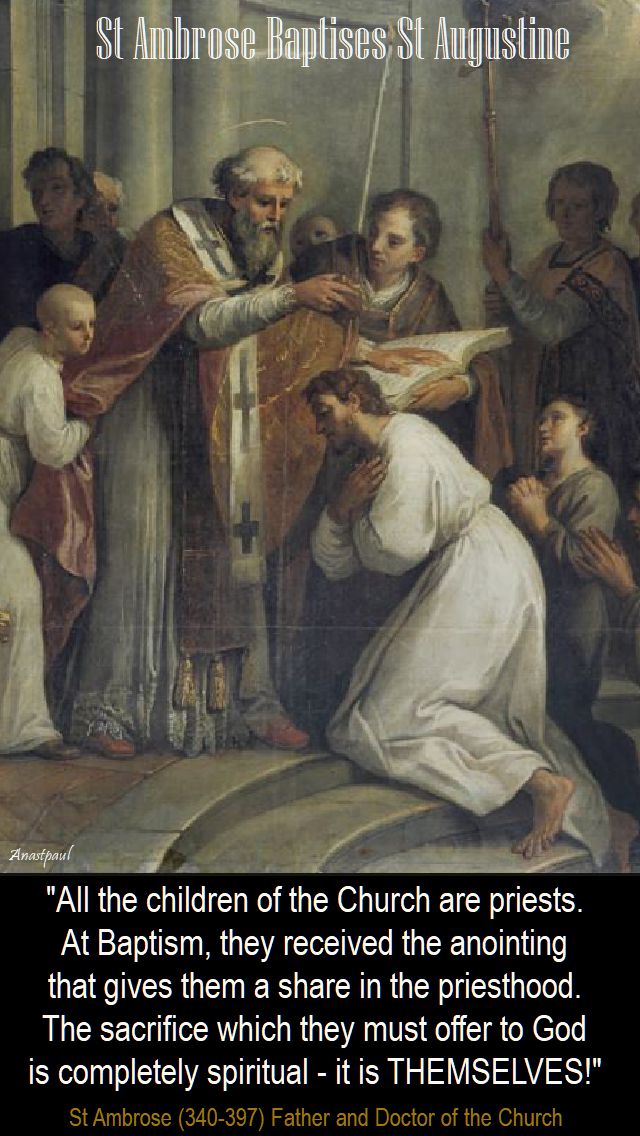
“All the children of the Church are priests.
At Baptism, they received the anointing
that gives them a share in the priesthood.
The sacrifice which they must offer to God
is completely spiritual – it is THEMSELVES!”

St Ambrose (340-397) Father and Doctor of the Church

ALL THE CHILDREN OF THE CHURCH - NO 2 - ST AMBROSE

Posted in HOLY WEEK, MORNING Prayers, PRAYERS for PRIESTS

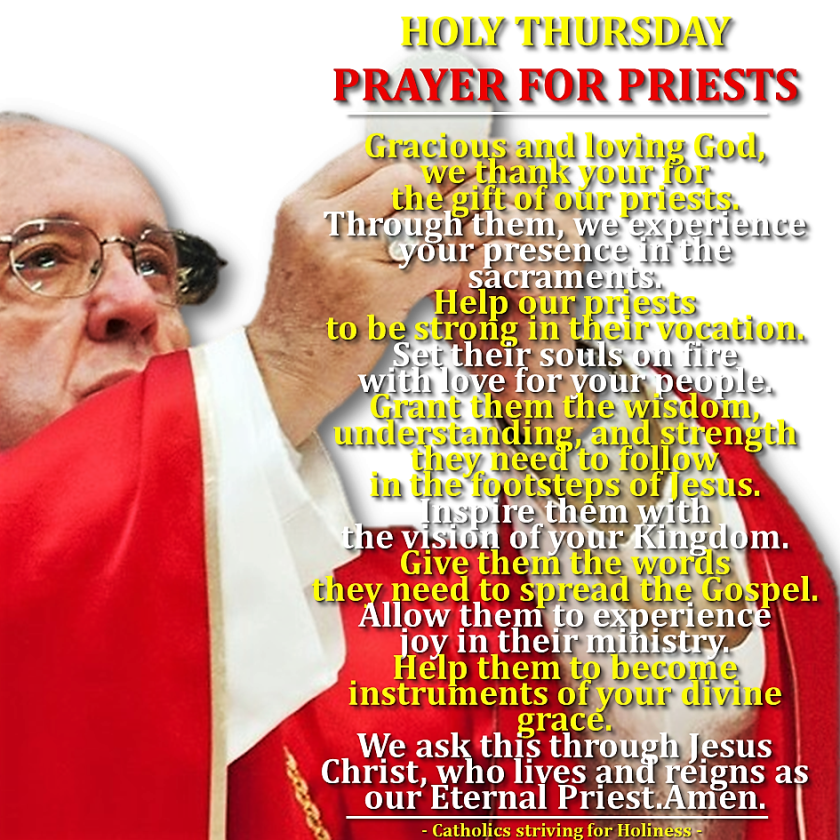
HOLY THURSDAY: PRAYER FOR PRIESTS