Posted in MARIAN TITLES

Dedication of the Basilicas of Peter and Paul and Memorials of the Saints – 18 November

Dedication of the Basilicas of Peter and Paul:
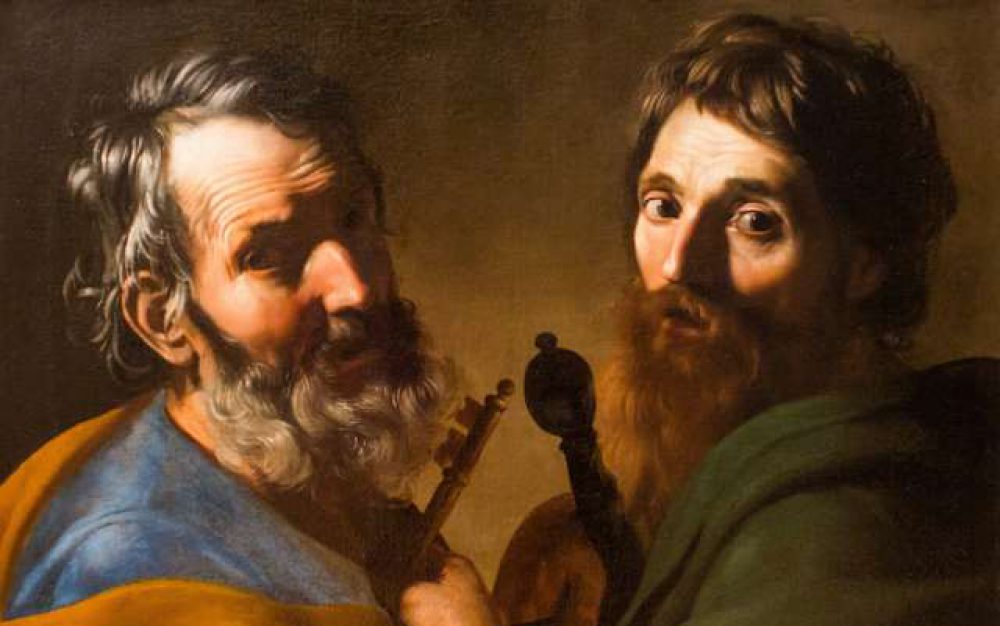
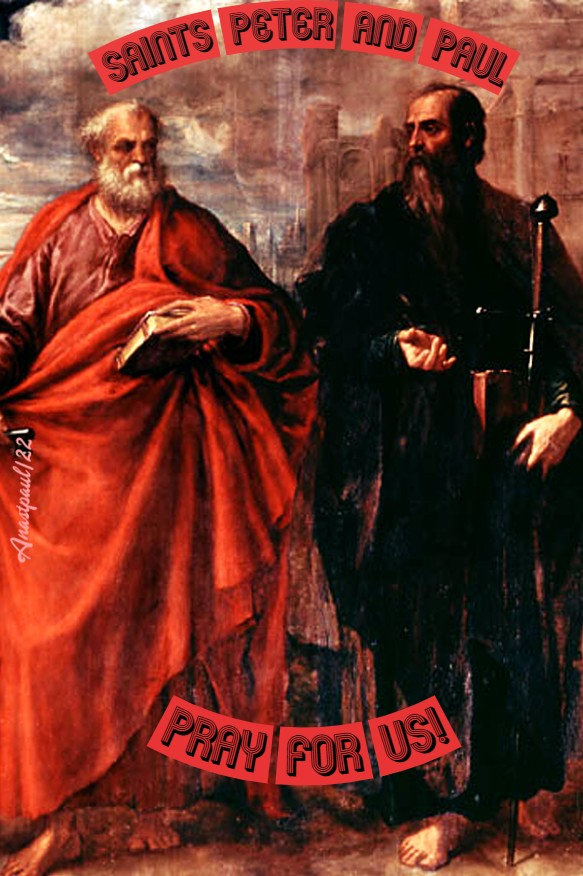
From the twelfth century the Dedications of the Vatican Basilica of St Peter and the Basilica of St Paul on the Via Ostiense, have been celebrated on this day, as the anniversary of their dedication by St Pope Silvester and St Pope Siricius in the fourth century. In more recent times, this feast has been extended to the whole Roman Rite. As the anniversary of the Dedication of the Basilica of St Mary Major (5 August) honours the motherhood of Our Lady, so this Feast honours the memory of the two Princes of the Apostles.

St Amandus of Lérins
Bl Andreas Murayama Tokuan
St Anselm of Lérins
St Augusto Cordero Fernández
St Barulas
St Constant
Bl Cosmas Takeya Sozaburo
Bl Domingos Jorge
St Emiliano Martínez de La Pera Alava
St Esteban Anuncibay Letona
St Francisco Marco Alemán
St Germán García y García
Bl Guilminus
Bl Ioannes Yoshida Shoun
St José María Cánovas Martínez
St Keverne
Bl Leonard Kimura
St Mawes
St Maximus of Mainz
St Modesto Sáez Manzanares
St Mummolus of Lagny
St Nazarius of Lérins
St Noah the Patriarch

St Odo of Cluny (c 880–942) Monk and Abbot, Reformer.

St Oriculus
St Patroclus of Colombier
St Romfarius of Coutances
St Romanus of Antioch (Died c 303) Deacon Martyr
St Teofredo of Vellaicum
St Thomas of Antioch
St Vidal Luis Gómara

Posted in SAINT of the DAY

Saint of the Day – 18 November – Saint Noah the Patriarch

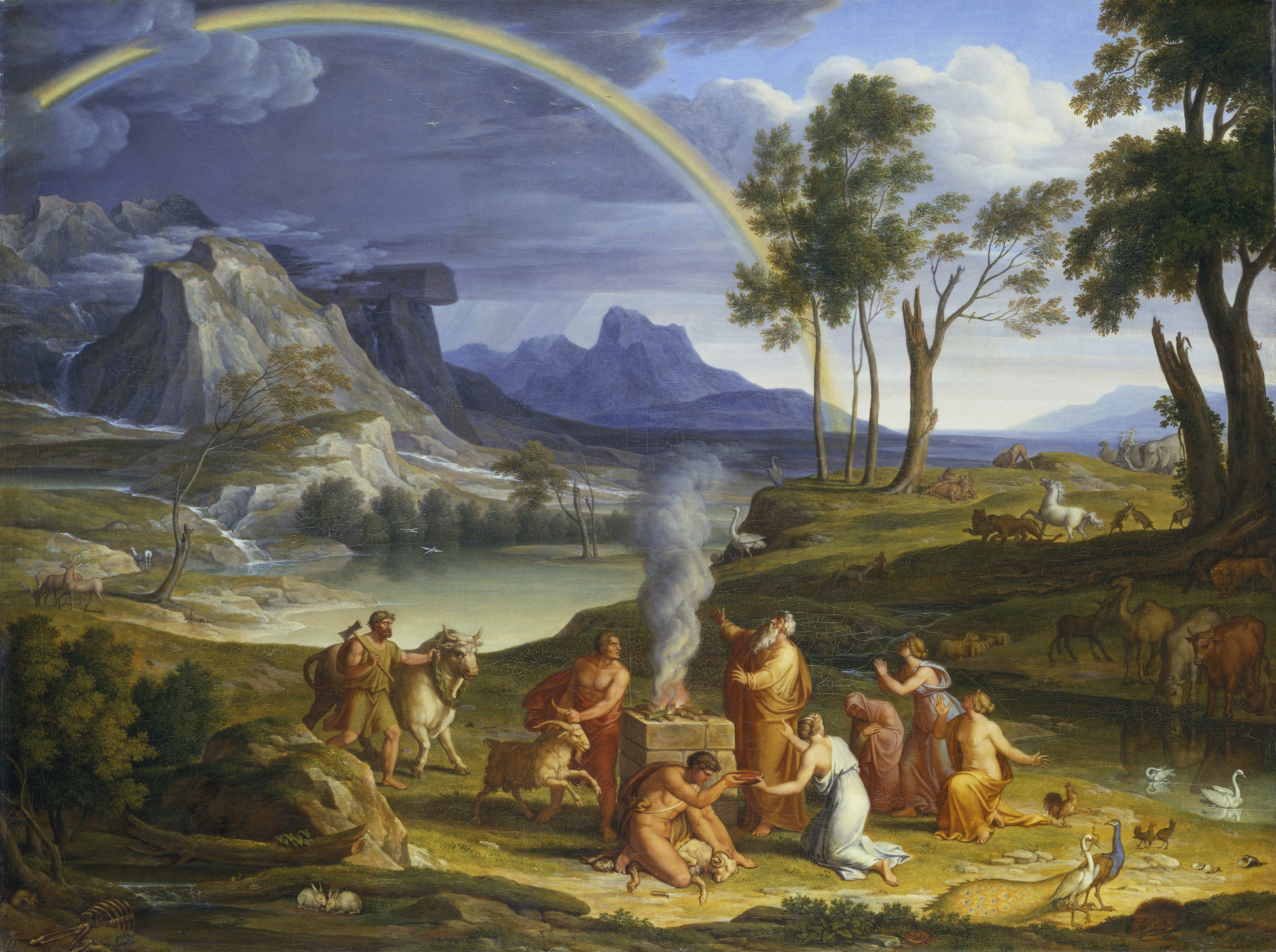
Saint Noah the Patriarch, also known as Noe, Nuh, was the son of Lamech, and the ninth patriarch of the Sethite line. As people in the past lived much longer than modern people do (and were also of gigantic stature), Lamech was 182 years old when Noah was born, and Noah was 500 years old when his sons Shem, Ham and Japheth were born.

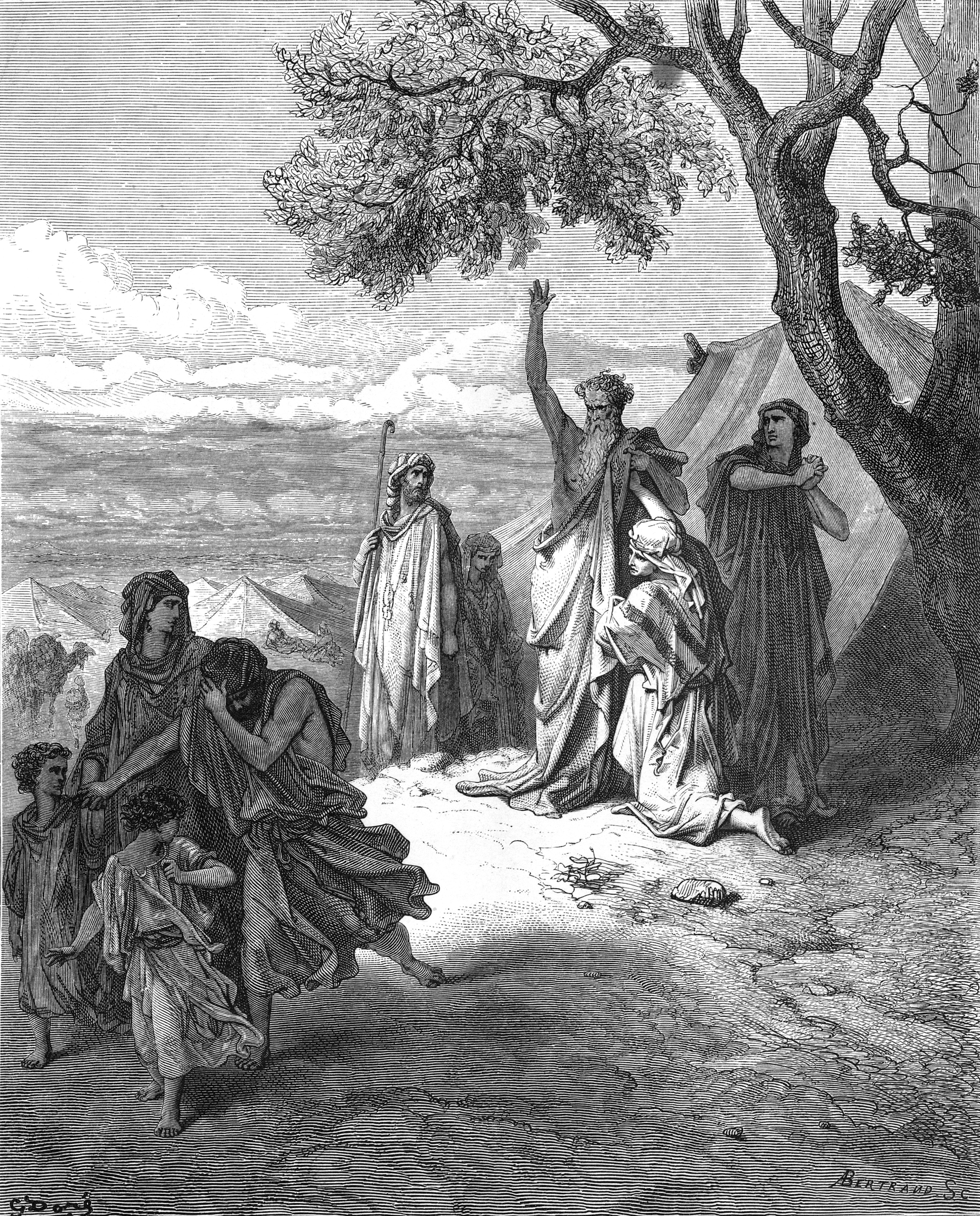
Noah warning

Noah, whose name means ‘rest/consolation’ was the the last of the Antediluvian patriarchs. After God decided to punish the world for falling to evil, Noah laboured for 120 years to build the Ark and warn people of the impending Flood. Noah was also portrayed as a “tiller of the soil” who was the first to cultivate the vine. God intended to return the Earth to its pre-Creation state of watery chaos by flooding the Earth because of humanity’s misdeeds and then remake it. Thus, the flood was no ordinary overflow but a reversal of Creation.

As a pledge of this gracious covenant with man and beast which God made with Noah, the rainbow was set in the clouds. Injunctions were laid upon Noah: eating of animal food was permitted and the shedding of the blood of man by man was made a crime punishable by death at the hands of man.

Noah died 350 years later at the age of 950. Human size and the maximum human lifespan gradually diminished thereafter, from almost 1,000 years to the 120 years of Moses.

Many non-Catholics maintain that the Bible narrative is derived from a Babylonian epic, but numerous and important discrepancies render this untenable. The scriptural story is the true original while all others are parallel derivative or independent forms forming a common tradition amongst mankind concerning a single supercataclysmic event.

Posted in Our MORNING Offering

Our Morning Offering – 18 November – Æterna Cæli Gloria, Eternal glory of Heaven

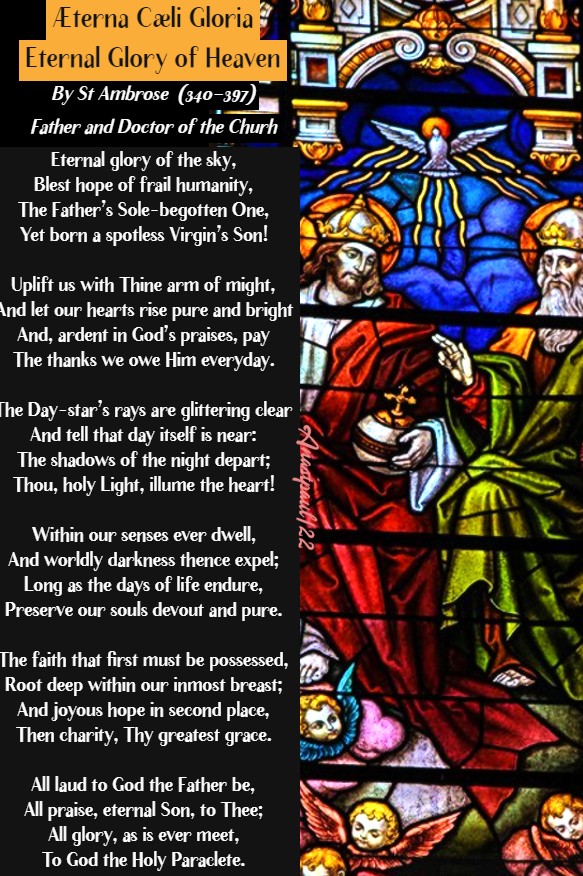
Æterna Cæli Gloria
Eternal Glory of Heaven
By St Ambrose (340–397)
Father and Doctor of the Churh

Eternal glory of the sky,
Blest hope of frail humanity,
The Father’s Sole-begotten One,
Yet born a spotless Virgin’s Son!

Uplift us with Thine arm of might,
And let our hearts rise pure and bright
And, ardent in God’s praises, pay
The thanks we owe Him everyday.

The Day-star’s rays are glittering clear
And tell that day itself is near:
The shadows of the night depart;
Thou, holy Light, illume the heart!

Within our senses ever dwell,
And worldly darkness thence expel;
Long as the days of life endure,
Preserve our souls devout and pure.

The faith that first must be possessed,
Root deep within our inmost breast;
And joyous hope in second place,
Then charity, Thy greatest grace.

All laud to God the Father be,
All praise, eternal Son, to Thee;
All glory, as is ever meet,
To God the Holy Paraclete.

Posted in ONE Minute REFLECTION

One Minute Reflection – 18 November – The Power of Rome

One Minute Reflection – 18 November – Feast of the Dedication of the Basilicas of Peter and Paul – Readings: Gen. 28:17, Ps 83:2-3, Rev 21:2-5, Luke 19:1-10

In those days, I saw the holy city, New Jerusalem, coming down out of heaven from God, made ready as a bride adorned for her husband.

Rev 21:2-5

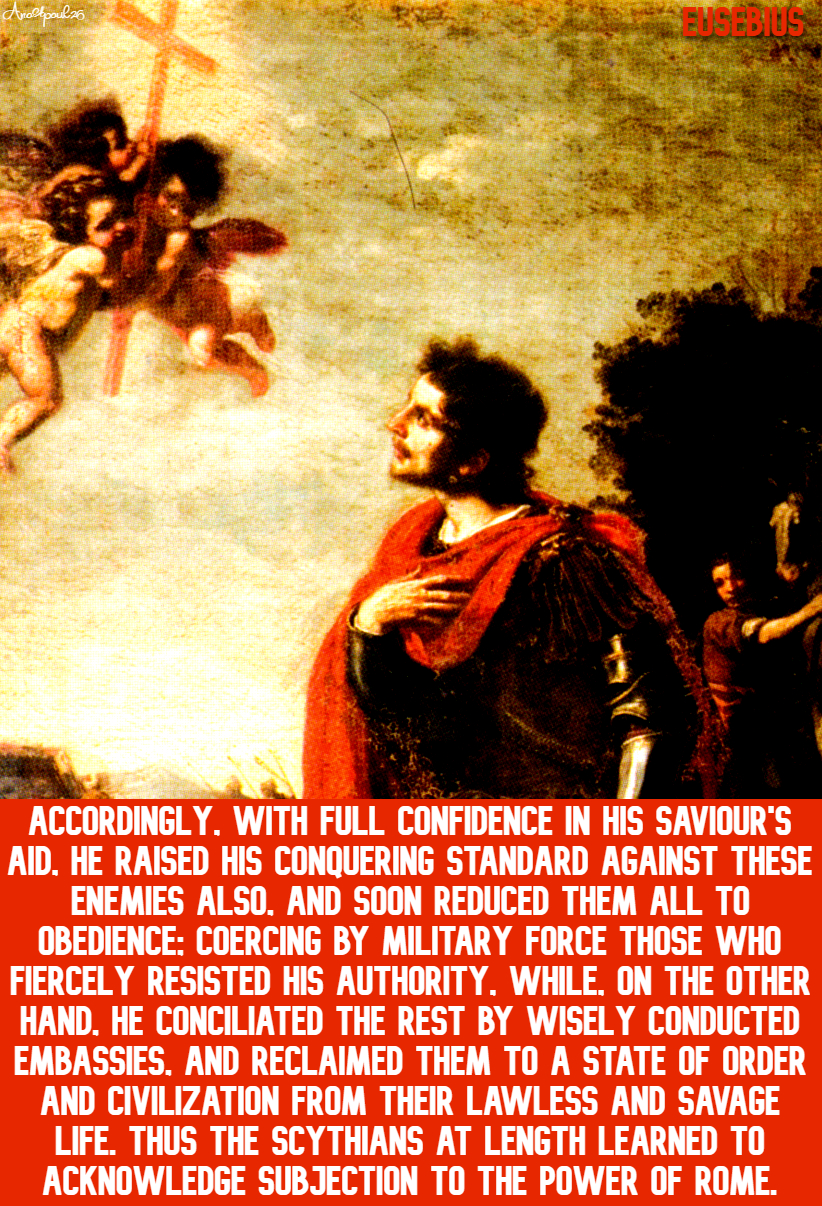
REFLECTION – And why should I relate even briefly and incidentally, how he subjected barbarous nations to the Roman power; how he was the first who subjugated the Scythian and Sarmatian tribes, which had never learned submission, and compelled them, how unwilling soever, to own the sovereignty of Rome? For the emperors who preceded him had actually rendered tribute to the Scythians: and Romans, by an annual payment, had confessed themselves servants to barbarians; an indignity which our emperor could no longer bear, nor think it consistent with his victorious career to continue the payment his predecessors had made. Accordingly, with full confidence in his Saviour’s aid, he raised his conquering standard against these enemies also, and soon reduced them all to obedience; coercing by military force those who fiercely resisted his authority, while, on the other hand, he conciliated the rest by wisely conducted embassies, and reclaimed them to a state of order and civilization from their lawless and savage life. Thus the Scythians at length learned to acknowledge subjection to the power of Rome.

With respect to the Sarmatians, God himself brought them beneath the rule of Constantine, and subdued a nation swelling with barbaric pride in the following manner. Being attacked by the Scythians, they had entrusted their slaves with arms, in order to repel the enemy. These slaves first overcame the invaders and then, turning their weapons against their masters, drove them all from their native land. The expelled Sarmatians found that their only hope of safety was in Constantine’s protection: and he, whose familiar habit it was to save men’s lives, received them all within the confines of the Roman empire. Those who were capable of serving he incorporated with his own troops: to the rest he allotted lands to cultivate for their own support: so that they themselves acknowledged that their past misfortune had produced a happy result, in that they now enjoyed Roman liberty in place of savage barbarism. In this manner God added to his dominions many and various barbaric tribes.

Life of Constantine (Eusebius)

PRAYER – O God, Who for us brings each year, the recurrence of the Consecration day of this Thy holy temple and always brings us back safely to the sacred rites, hear the prayers of Thy people and grant that whoever enters this temple, to pray for blessings, may rejoice in having obtained whatever he sought. Through Jesus Christ, Thy Son our Lord, Who lives and reigns with Thee, in the unity of the Holy Ghost, God, world without end. Amen

Posted in CATHOLIC Quotes

Quote/s of the Day – 18 November – Feast of the Dedication of the Basilicas of Peter and Paul

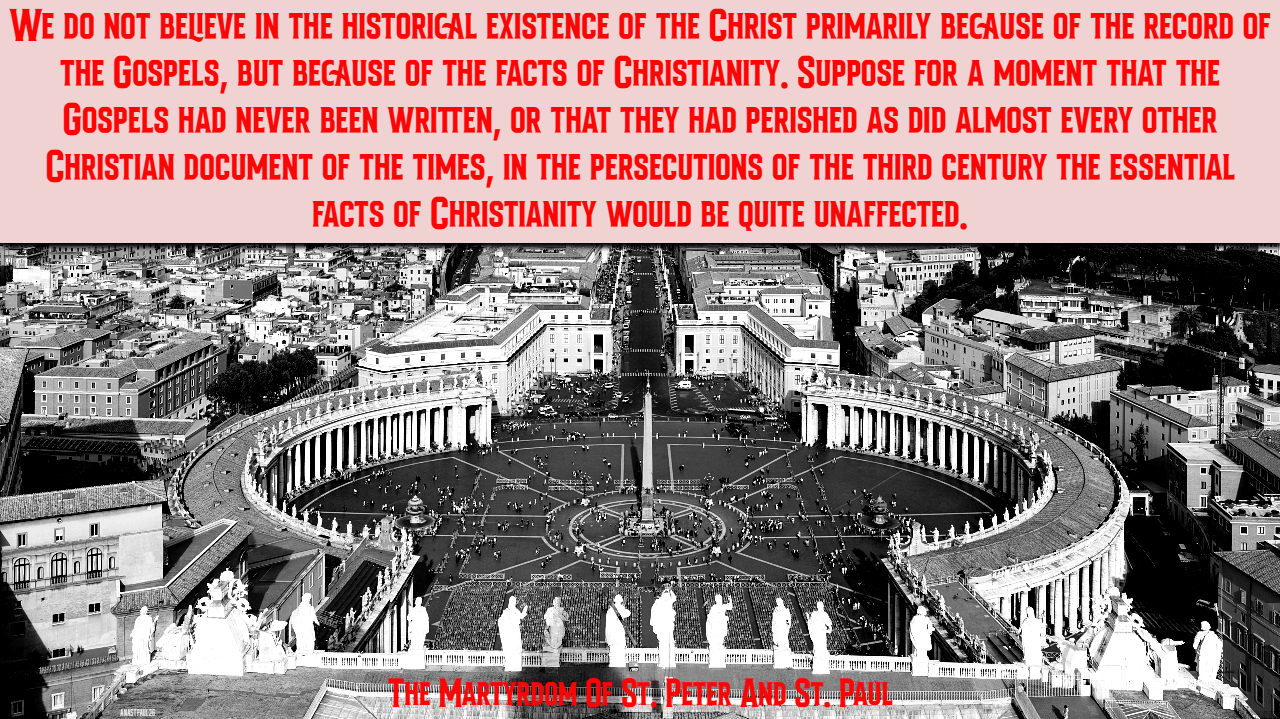
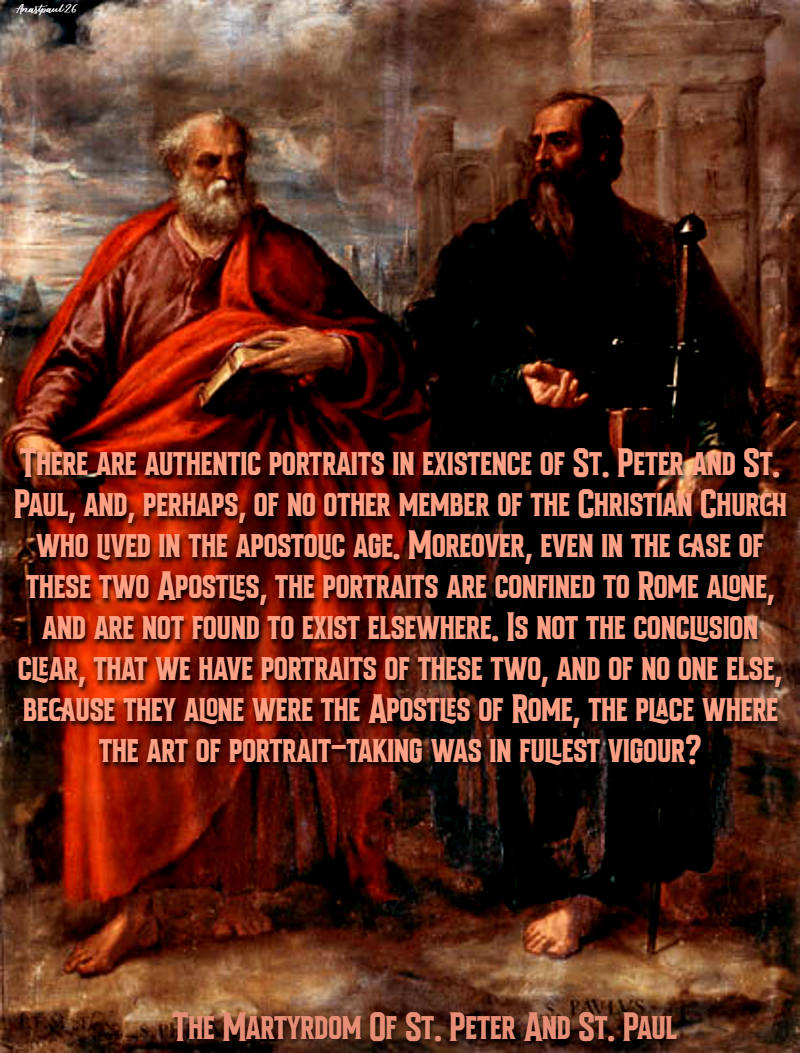
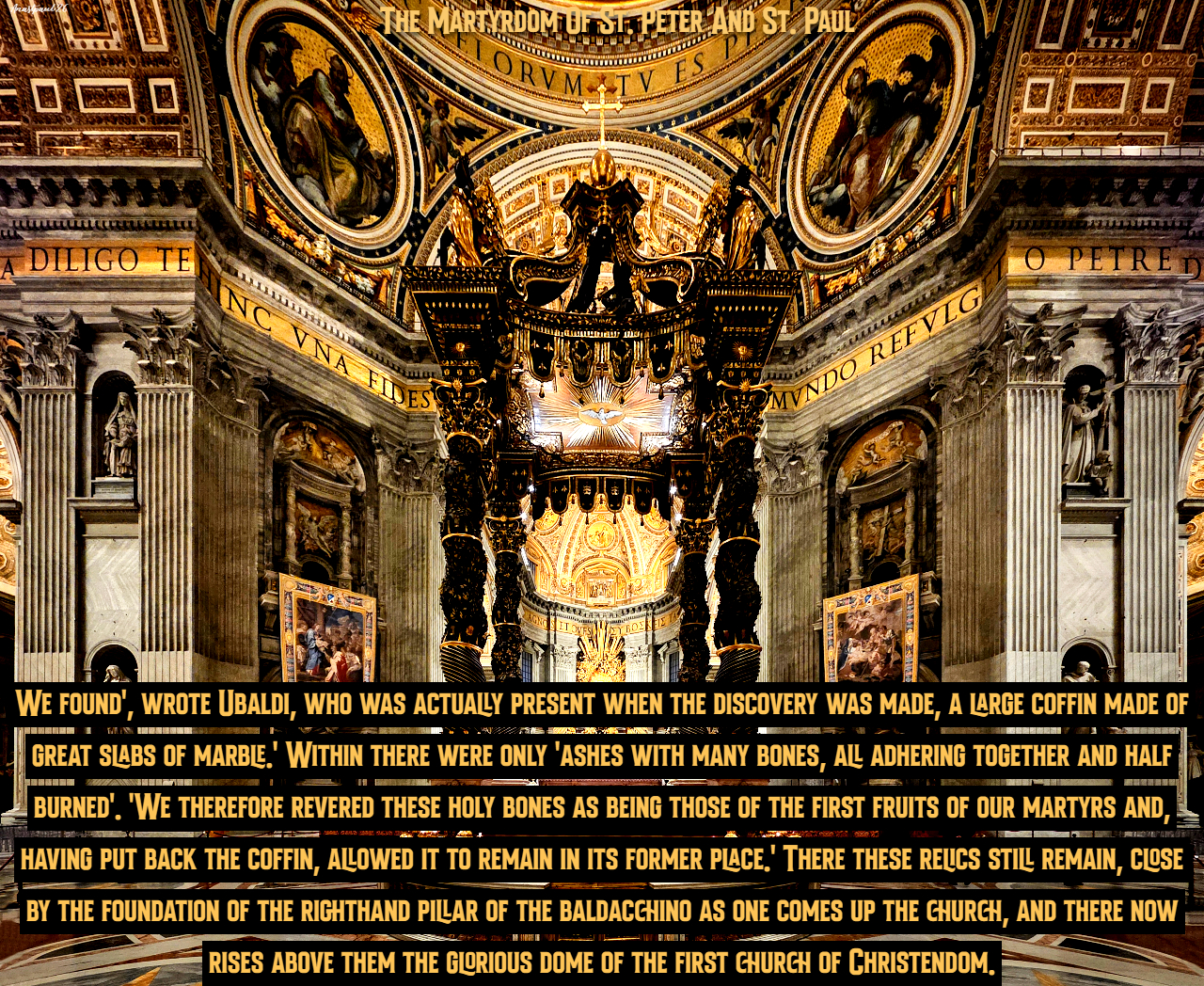
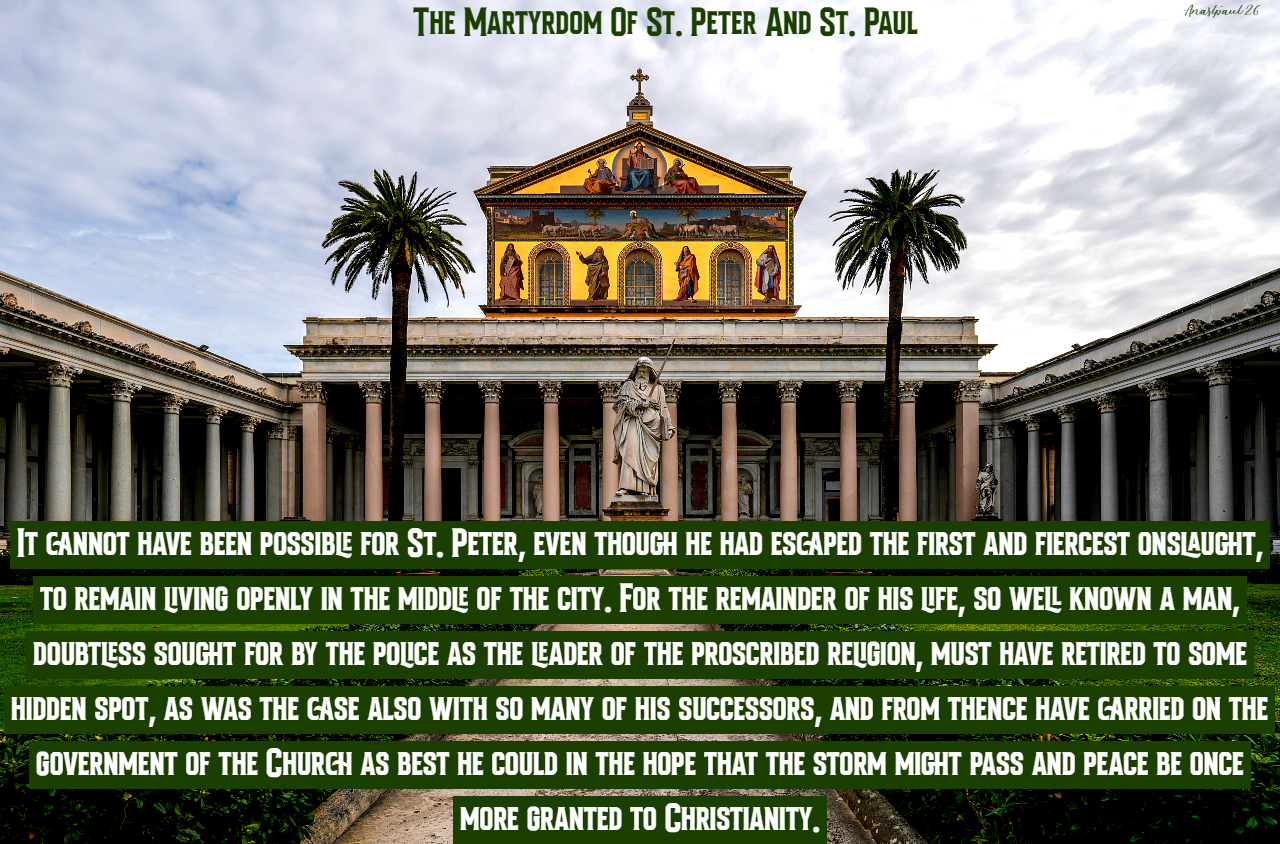
The Martyrdom Of St. Peter And St. Paul
by Arthur Stapylton Barnes

We do not believe in the historical existence of the Christ primarily because of the record of the Gospels, but because of the facts of Christianity. Suppose for a moment that the Gospels had never been written, or that they had perished as did almost every other Christian document of the times, in the persecutions of the third century the essential facts of Christianity would be quite unaffected.

There are authentic portraits in existence of St. Peter and St. Paul, and, perhaps, of no other member of the Christian Church who lived in the apostolic age. Moreover, even in the case of these two Apostles, the portraits are confined to Rome alone, and are not found to exist elsewhere. Is not the conclusion clear, that we have portraits of these two, and of no one else, because they alone were the Apostles of Rome, the place where the art of portrait-taking was in fullest vigour?

We found’, wrote Ubaldi, who was actually present when the discovery was made, a large coffin made of great slabs of marble.’ Within there were only ‘ashes with many bones, all adhering together and half burned’. ‘We therefore revered these holy bones as being those of the first fruits of our martyrs and, having put back the coffin, allowed it to remain in its former place.’ There these relics still remain, close by the foundation of the righthand pillar of the baldacchino as one comes up the church, and there now rises above them the glorious dome of the first church of Christendom.

It cannot have been possible for St. Peter, even though he had escaped the first and fiercest onslaught, to remain living openly in the middle of the city. For the remainder of his life, so well known a man, doubtless sought for by the police as the leader of the proscribed religion, must have retired to some hidden spot, as was the case also with so many of his successors, and from thence have carried on the government of the Church as best he could in the hope that the storm might pass and peace be once more granted to Christianity.

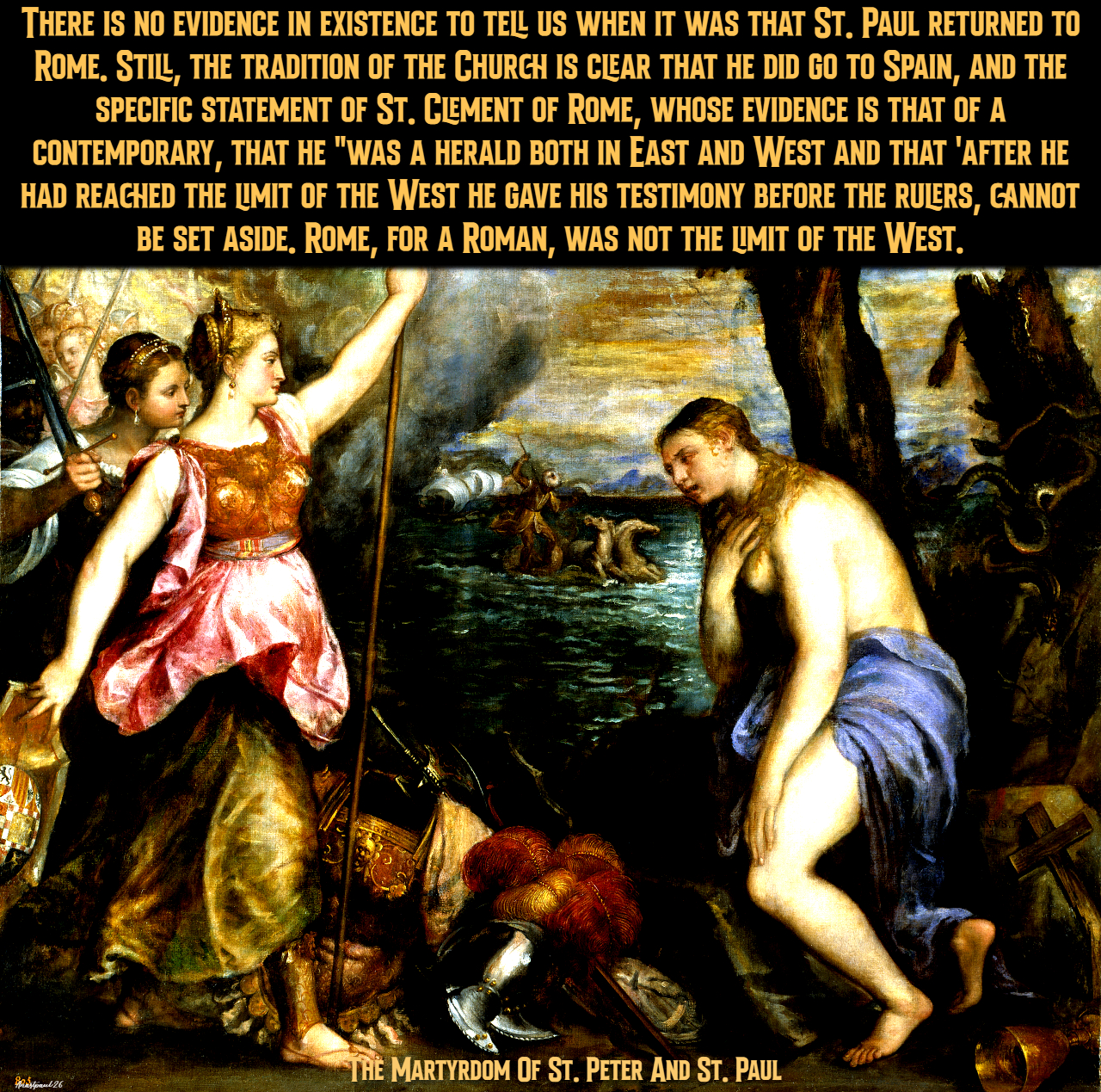
There is no evidence in existence to tell us when it was that St. Paul returned to Rome. Still, the tradition of the Church is clear that he did go to Spain, and the specific statement of St. Clement of Rome, whose evidence is that of a contemporary, that he “was a herald both in East and West and that ‘after he had reached the limit of the West he gave his testimony before the rulers, cannot be set aside. Rome, for a Roman, was not the limit of the West.

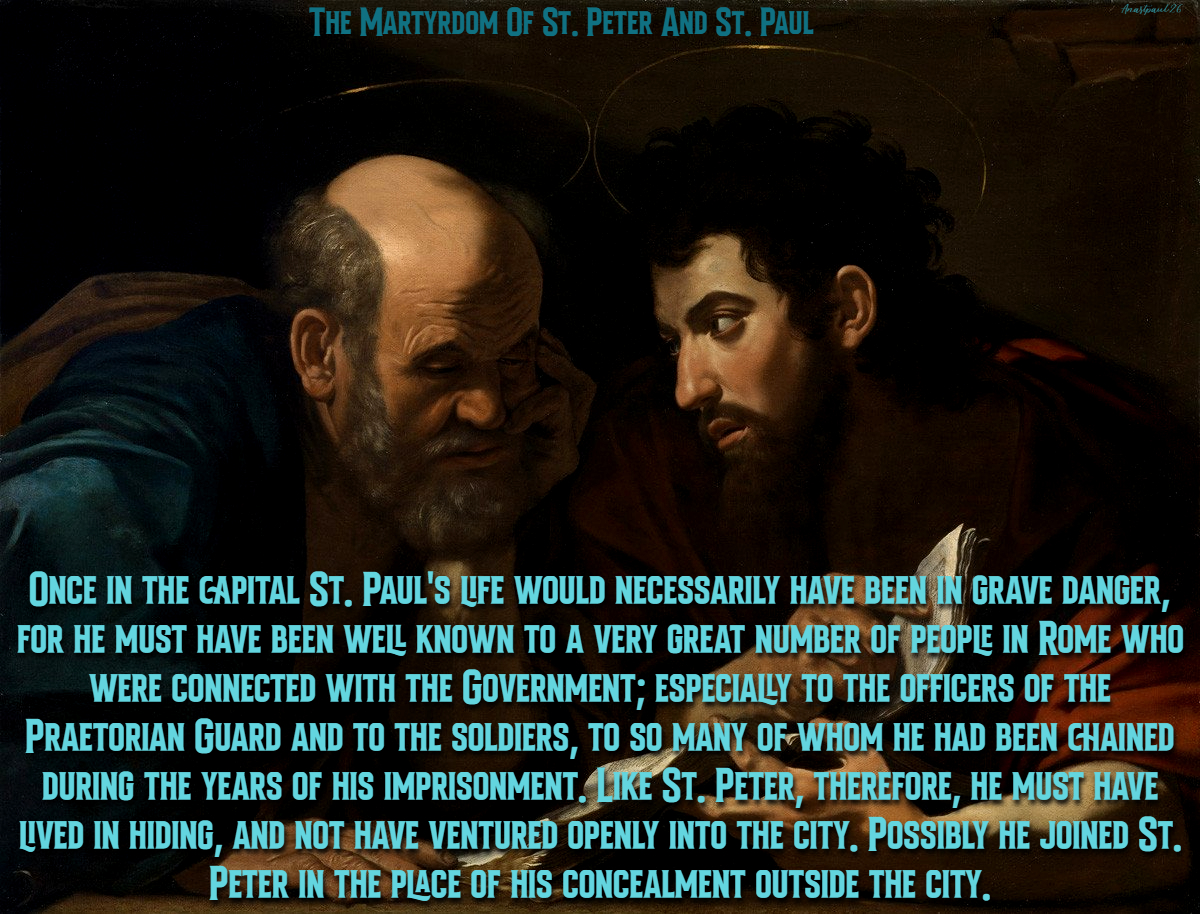
Once in the capital St. Paul’s life would necessarily have been in grave danger, for he must have been well known to a very great number of people in Rome who were connected with the Government; especially to the officers of the Praetorian Guard and to the soldiers, to so many of whom he had been chained during the years of his imprisonment. Like St. Peter, therefore, he must have lived in hiding, and not have ventured openly into the city. Possibly he joined St. Peter in the place of his concealment outside the city.

Posted in NOVEMBER - Month of the SOULS in PURGATORY

Thought for the Day – 18 November – The saint applies all that she has said

Treatise on Purgatory

St Catherine of Genoa

CHAPTER XVII

That which I have thus described as going on within the souls who are actually in purgatory, I have experienced in my own soul, especially during the last two years ; and each day I see and feel it more clearly. I perceive my soul in the midst of my body as in a purgatory, conformed and like to the true purgatory, in measure, however, that the body may be able to endure it and not die ; yet the pain goes on increasing gradually until death. I see the soul estranged to all things, even spiritual, which can give it nourishment as joy, delight, consolation ; and it has no power of tasting anything temporal or spiritual by will, by understanding, by memory, so that I can say, “This thing pleases me more than that other.”

My soul is, as it were, besieged in such a manner that all spiritual or bodily refreshments are gradually cut off ; and when they have been cut off, the soul, although it knows well how it could have been fed and comforted by them, looks on them with feelings of hatred and abhorrence, and rejects them all with out repairing its loss. This happens because there exists within the soul an impulse to get rid of every hindrance to its perfection ; and that, too, with such severity to itself, that it would almost suffer itself to be cast into hell to reach this end : and so it goes on, removing everything which might feed the inward man, and besieges itself so straitly, that not even the least particle of imperfection can pass without being spied out, and rejected with abhorrence.

My body, too, since it can no longer communicate with the soul, is in like manner besieged, and unable to obtain any thing to refresh its human nature ; there is no comfort for it but God, Who does all He does to satisfy His justice lovingly and with great mercy. When I see this, I feel satisfaction and peace ; but my sufferings are not the less, nor am I the less straitly besieged. No sufferings, however, could make me wish it otherwise than God has determined for me ; I remain in my prison without a wish to come out till God has done all that I need.

My happiness is that God should be satisfied ; and the greatest pain I could endure would be being excluded from His ordinance, for I see how just and merciful it is. I am sensible of all these things I have described as it were by sight and touch, but I cannot find fitting words to express myself as I could wish. I have said what I have, because I was conscious of its going on spiritually within me. The prison in which I fancy myself shut up is the world ; the chain by which I am held is the body ; the soul enlightened is she who, knowing well the grievousness of being detained and kept back by any hindrance from reaching her end, suffers thereby great pain, inasmuch as she is very tender. God, by His grace, bestows upon her a dignity which makes her like God, and not only like God, but even one with Him through participating in His goodness ; and as it is impossible that God should suffer pain, so it is with the souls that approach Him ; and the nearer they approach Him, the more they share in that which belongs to Him.

The hindrance, then, that the soul meets with, causes it to feel an intolerable pain ; and the pain, together with the hindrance, obstruct those properties which it has by nature and which by grace are revealed to it ; and not being able to attain them, although capable of them, the soul remains in suffering great in proportion to its appreciation of God. This appreciation of God grows with its knowledge of God ; and its knowledge is greater the more it is free from sin : and the delay becomes more and more terrible, because the soul wholly immersed in God, knows Him without error, there being nothing in the way to prevent such knowledge.

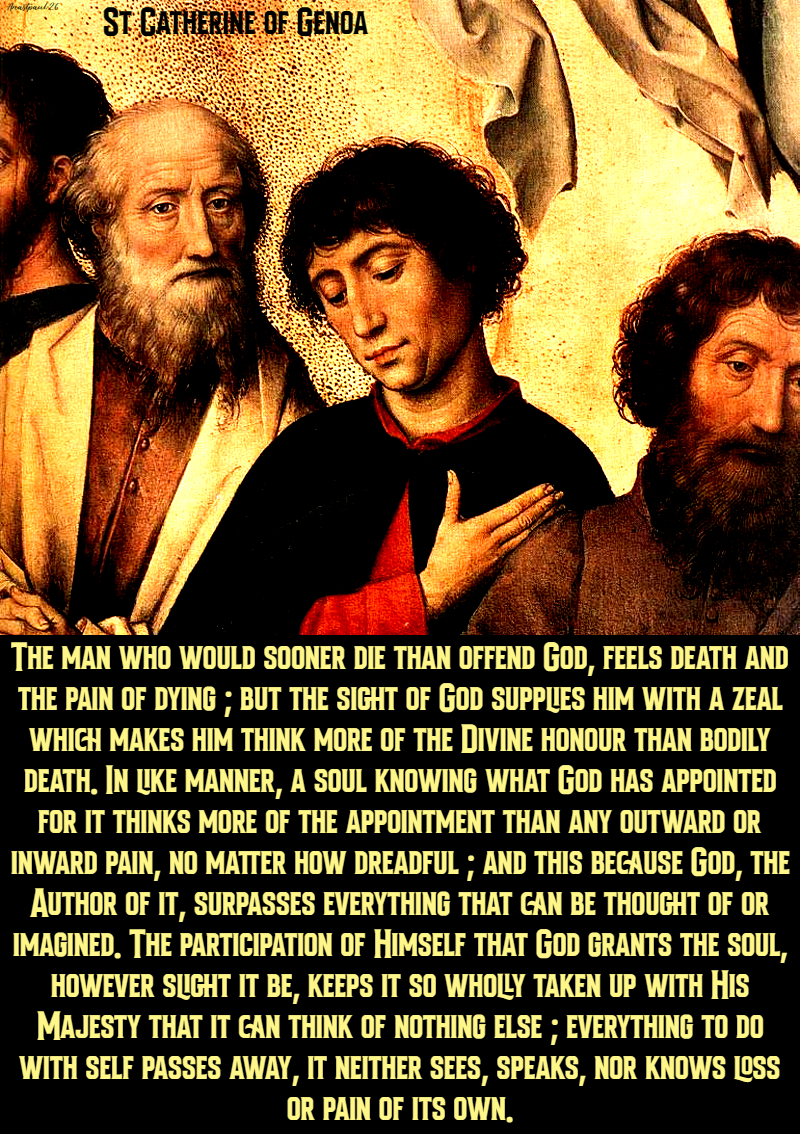
The man who would sooner die than offend God, feels death and the pain of dying ; but the sight of God supplies him with a zeal which makes him think more of the Divine honour than bodily death. In like manner, a soul knowing what God has appointed for it thinks more of the appointment than any outward or inward pain, no matter how dreadful ; and this because God, the Author of it, surpasses everything that can be thought of or imagined. The participation of Himself that God grants the soul, however slight it be, keeps it so wholly taken up with His Majesty that it can think of nothing else ; everything to do with self passes away, it neither sees, speaks, nor knows loss or pain of its own ; but all this, as has been already clearly said, it perceives at the instant of passing from this life. Finally, in conclusion, I mean that God, who is good and great, destroys all which is of man, and purgatory purifies it.