Posted in MARIAN TITLES

Nossa Senhora do Português / Our Lady of the Portuguese, Diu, India (1546) and Memorials of the Saints – 11 November

Nossa Senhora do Português / Our Lady of the Portuguese, Diu, India (1546) – 11 November:
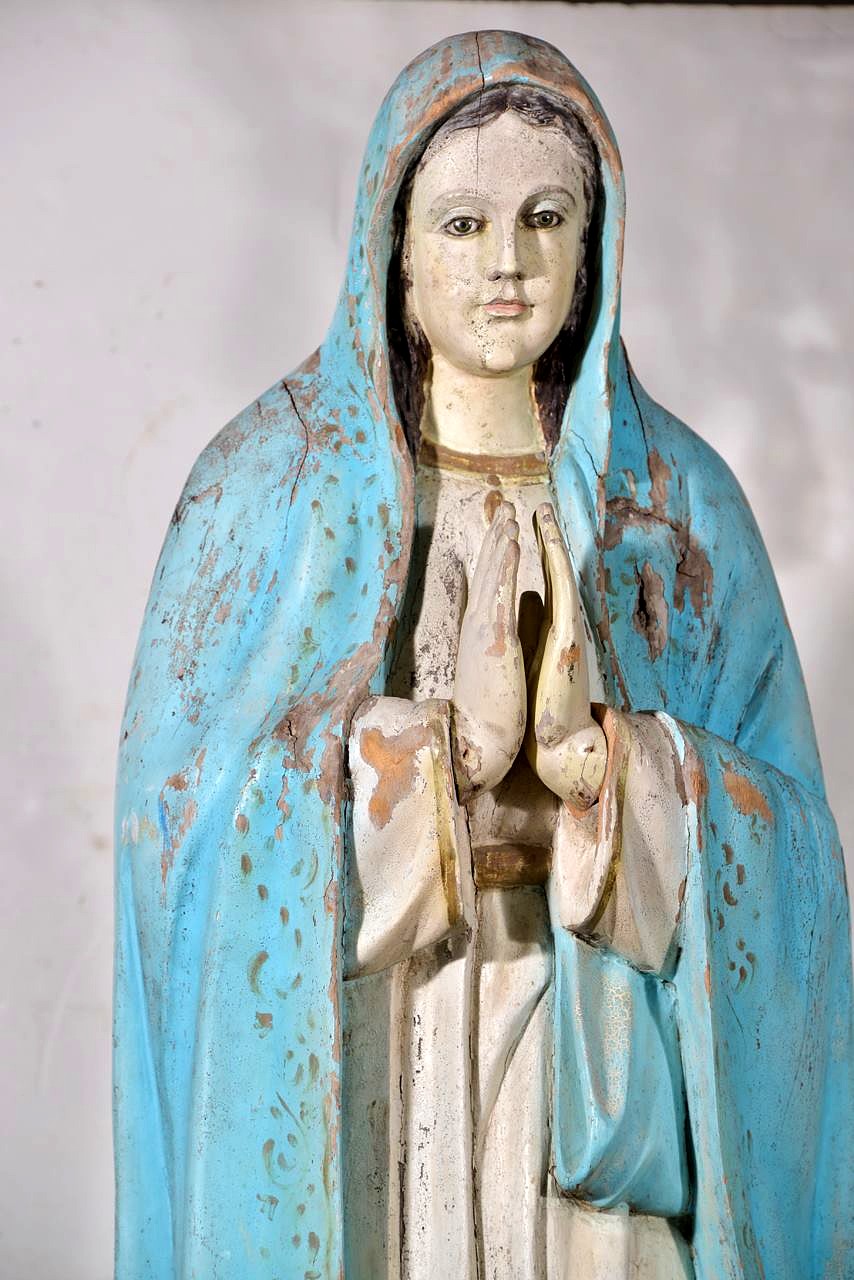
The Abbot Orsini wrote: “On this day, about the year 1546, the Portuguese gained a great victory over the infidels, who had been before the castle of Die, in the East Indies, for the space of seven months and who would have carried it by storm, if Our Lady had not appeared upon the walls – which caused so great terror in the enemy’s camp, that the siege was at once raised.”

The Portuguese began building the stronghold of Diu, their symbol of Portuguese influence and authority in the region, protecting their lucrative trade with India, on 20 November 1535 and finished the work a short time later, on 29 February of the following year. The fort was circular in shape, having walls 6 metres high and 3.50 metres thick, made of solid stone and lime. There was a deep ditch immediately before these stout walls and the fort had three triangular shaped bastions. Manned with a garrison of three hundred and fifty men, it was further supported by a fleet of eleven ships. Manuel De Souza was named the fort’s first Captain.

It was not long before the Portuguese came under siege, as a powerful Ottoman fleet made up of 72 ships laid siege to the stronghold in September of 1538. The Turks arrived with an army of at least 20,000 men, far more than the 400 or so Portuguese who made up the entire garrison.

There were many pitched battles after an intense bombardment and as time wore on the Portuguese suffered from an acute shortage of men and ammunition and a lack of adequate nutrition, bringing scurvy and great suffering to the remaining defenders.

The defenders were at their last extreme and the fort had less than 40 men left alive when the siege suddenly ended. Modern history records that, “for unknown reasons” the savage Turks gave up the siege and sailed away for no reason. It was obvious to the battle hardened Turkish troops, that the defence was about to collapse and that victory was at hand, so there must have been a reason that they fled. The Portuguese defenders could have said that the victory was the result of their gallantry defending the fort and to the grim determination with which they held the bastions against every manner of assault. Instead, however, the Portuguese recalled that Our Lady appeared on the battlements herself, as had recently happened at the Siege of Rhodes and that it was their fear of her ,that the Turks ran for their lives.

In 1546 there was a second assault on Diu that began on the eve of Easter and this time the Portuguese thwarted the efforts of the Turks to capture the fort in a pitched battle recorded as one of the greatest ever fought by the Portuguese troops in India. The siege had continued uninterrupted from 20 April 1546 until 7 November, when a Portuguese fleet finally arrived on the scene under Viceroy Juan de Castro.

The Portuguese success in Diu confirmed Portuguese dominion and their hold over the region. Contemporary accounts, of course, do not mention the miraculous intervention of the Blessed Virgin Mary during the siege, even though it was recorded that she appeared on the ramparts holding a lance in her hand to defend the fort from the enemy, for the ‘City of Men’ cannot accept the glories of God!

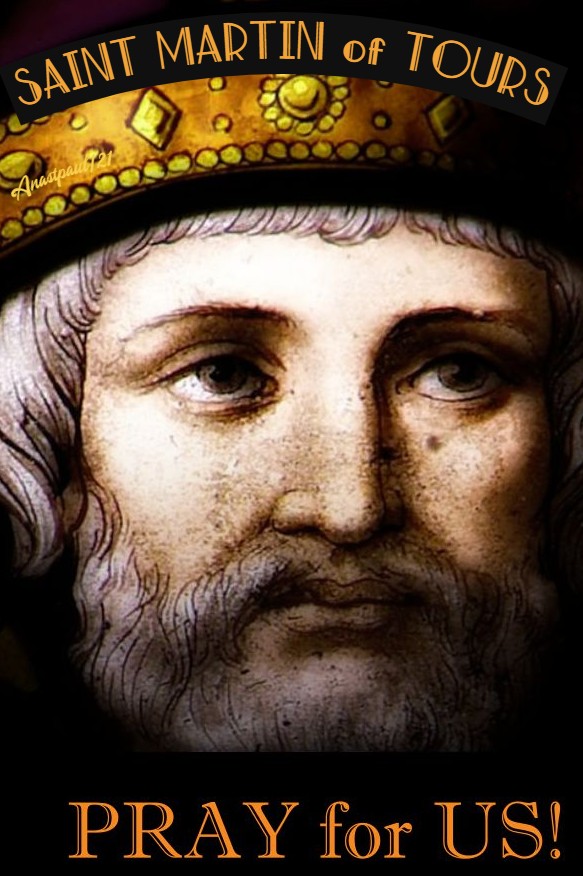
St Martin of Tours (c 316-397) (Memorial) “Martin the Merciful,” Bishop, Confessor, Miracle-Worker.

Bl Alicia Maria jadwiga Kotowska
St Bartholomew of Rossano (c 970-c 1065) Abbot Confessor
St Bertuin of Malonne
St Cynfran of Wales
St Isidre Costa Hons
Bl Josaphat Chichkov
Bl Kamen Vitchev

St Marina of Omura
St Menas Kallikelados
St Mennas of Santomenna
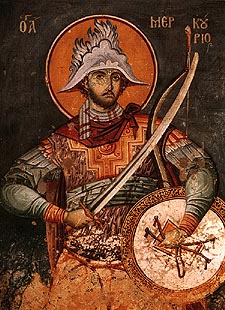
St Mercurius the Soldier
Bl Pavel Dzjidzjov
St Rhediw
St Theodore the Studite
St Turibius of Palencia
St Veranus of Lyon
St Veranus of Vence
Blessed Vincent Eugene Bossilkoff
—
Martyrs of Torredembarra: Members of the Brothers of the Christian Schools, Discalced Carmelites, and Carmelite Tertiaries of Education who were martyred together in the Spanish Civil War.
• Blessed Bonaventura Toldrà Rodon
• Blessed Damián Rodríguez Pablo
• Blessed Felipe Arce Fernández
• Blessed Frederíc Vila Bartolì
• Blessed Isidre Tarsá Giribets
• Blessed Joan Roca Vilardell
• Blessed José Alberich Lluch
• Blessed Josep Boschdemont Mitjavila
• Blessed Josep Maria Bru Ralduá
• Blessed Julio Alameda Camarero
• Blessed Lluís Domingo Oliva
• Blessed Mariano Navarro Blasco
• Blessed Miquel Saludes Ciuret
• Blessed Pedro de Eriz Eguiluz
They were martured on 11 November 1936 in Torredembarra, Tarragona, Spain, Beatification celebrated in Tarragona, Spain.
Posted in SAINT of the DAY

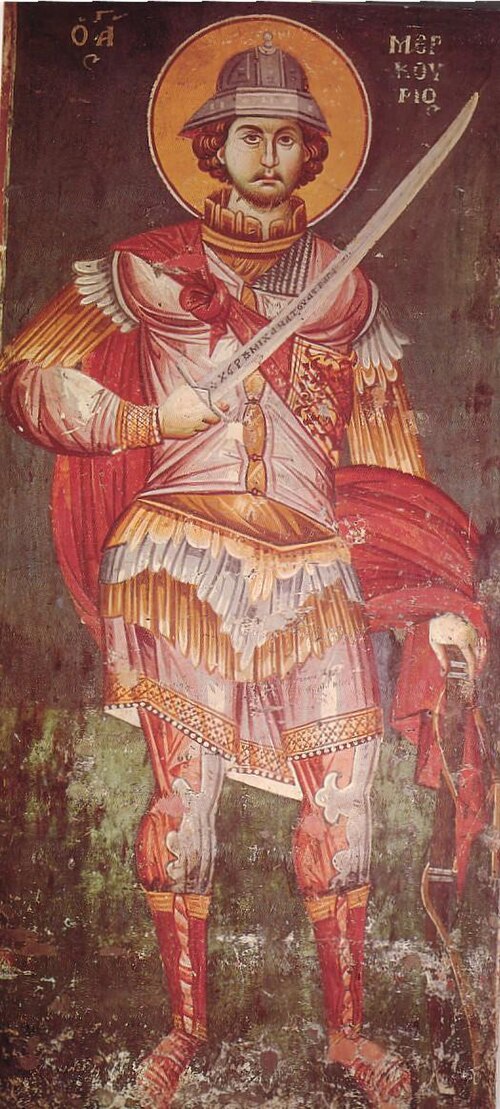
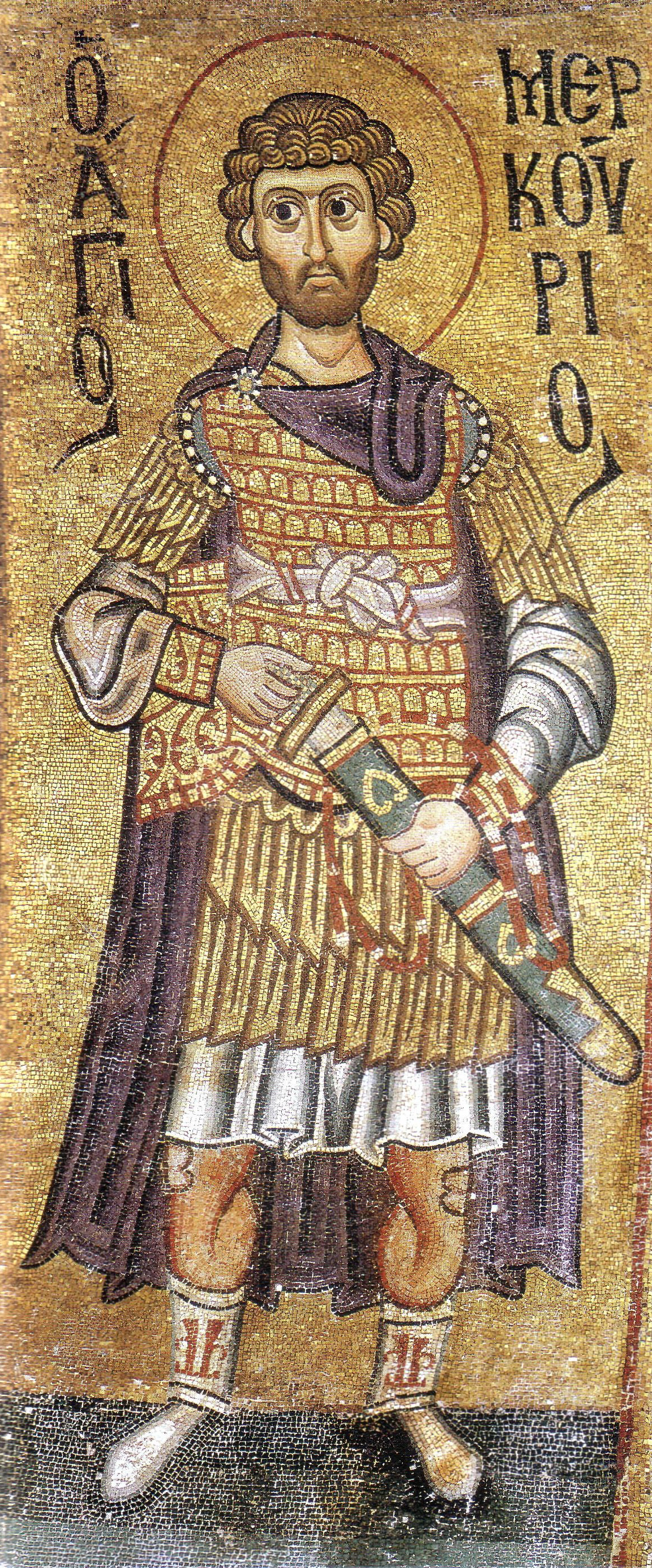
Saint of the Day – 11 November – Saint Mercurius the Soldier

Saint Mercurius the Soldier, also known as Abu-Sayfain, Abu-Sifin or Abu-Sefein, was a martyr and the one who slew Julian the Apostate. Born in 224 in Cappadocia, he was of Scythian (Indo-Persian) descent and the son of an officer in the imperial Roman army. Abu-Sefein means “wielder of two swords”, referring to the second sword given to him by the Archangel Michael.

His parents were converts to Christianity and they called him “Philopateer” or “Philopatyr” (‘Lover of the Father’). They raised him in a Christian manner. At the age of 17 he enlisted in the Roman army during the reign of Emperor Decius. He gained a great reputation among his superiors as a swordsman and a tactician.

After the death of Mercurius’ father, Decius chose him to replace his father. When barbarians attacked Rome, Decius went out to fight them but became afraid when he saw how many there were. Mercurius then came to him and said, “Do not be afraid, because God will kill our enemies and will bring us victory.”

After several days of fighting, the Archangel Michael appeared to Mercurius holding a shining sword. With this he conquered the barbarians. When Decius heard news of the triumphant victory, he named Mercurius a prince.

In 249 AD, Decius began his persecution of Christians, compelling everyone to offer sacrifices to his pagan gods. The Archangel Michael appeared to Mercurius and told him to remember God and not be fearful of persecution. Mercurius was encouraged and spent the whole night praying fervently, confessing his weakness to God. The emperor sent messengers to summon him to the palace, saying: “Dear Mercurius, let us go offer incense to the gods who helped us attain victory in the war.” As they were leaving, Mercurius slipped through the crowd and went away. However, one of the guards reported his absence, and the emperor called Mercurius and asked him: “Is it true that you refused to worship the idols who helped us during the war?” Mercurius declared himself a Christian, saying, “I do not worship anyone except my Lord and my God, Jesus Christ.”

The emperor tried to persuade him to give up his faith but failed. He then ordered Mercurius to be stripped of his rank and tortured. Fearing a revolt because the people loved Mercurius, the emperor had him bound in iron fetters and sent him to Caesarea. Mercurius was beheaded on 4 December 250 AD. He was 25 years old.

After the end of the first persecution, the place of Mercurius’s burial was revealed. Mercurius appeared to a poor man in the city and told him that he was “Mercurius, the Martyr of the Lord” and that “my body is buried in Cappadocia Gardens, under the old house on the way to the royal palace. My body looks as white as snow, because Jesus was present at the time of my martyrdom.”

The next morning, the man went to dig under the old house. He began to smell the scent of perfume, seeing the body of Mercurius. The news spread quickly and many people came to take a look at the blessed body. They moved it temporarily to the local church until they built a new church bearing his name where Mercurius’ body was buried with respect and devotion.

Christ appearing to Saints Mercurius and Catherine of Alexandria in the act of tyrannicide

Saint Basil once prayed before an icon on which Mercurius was portrayed as a soldier carrying a spear. He asked God not to permit the emperor Julian the Apostate to return from his war against the Persians and resume his oppression of Christians. The image of the holy Mercurius depicted on the icon became invisible, only to reappear later with a bloodied spear. Julian the Apostate, on his Persian campaign, was mortally wounded by the spear of an unknown Persian soldier. He also appeared and fought with the Christian forces in the First Crusade.

Posted in Our MORNING Offering

Our Morning Offering – 11 November – Indulgenced prayers

Indulgenced Prayers to the Holy Ghost

O Holy Spirit, Spirit of truth, come into our hearts; shed the brightness of Thy light on all peoples, that in the unity of faith they may be pleasing to Thee.

(300 days every time said)

O Holy Spirit, sweet Guest of my soul, remain with me and see that I ever remain with Thee.

(300 days every time said)

Come, Holy Ghost, fill the hearts of Thy faithful and kindle in them the fire of Thy love.

V. Send forth Thy Spirit, and they shall be created;

R. And Thou shalt renew the face of the earth.

Let Us Pray

O God, Who by the light of the Holy Ghost didst instruct the hearts of the faithful, grant us by the same Spirit to relish what is right and ever to rejoice in His consolation. Through Christ Our Lord. Amen.

(5 years every time said)

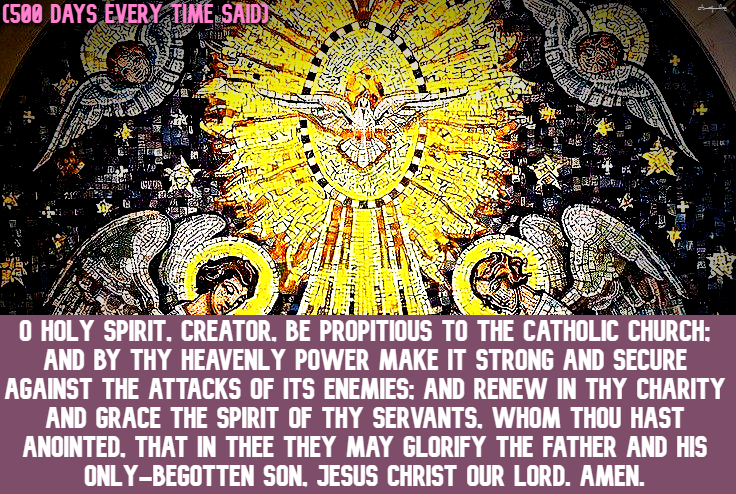
O Holy Spirit, Creator, be propitious to the Catholic Church; and by Thy heavenly power make it strong and secure against the attacks of its enemies; and renew in Thy charity and grace the spirit of Thy servants, whom Thou hast anointed, that in Thee they may glorify the Father and His only-begotten Son, Jesus Christ Our Lord. Amen.

(500 days every time said)

Posted in ONE Minute REFLECTION

One Minute Reflection – 11 November – Discernment is the lantern of the soul

One Minute Reflection – 11 November – Readings: Sir 45:30, Ps. 131:1, Sir 44:16-27; 45:3-20, Luke 11:33-36

The lamp of your body is your eye. If your eye be sound, your whole body will be full of light. But if it be evil, your body also will be full of darkness.

Luke 11:33-36

REFLECTION – Discernment is a kind of eye and lantern of the soul, as is said in the gospel passage: “The light of the body is the eye; if therefore your eye is pure, your whole body will be full of light. But if your eye is evil, your whole body will be full of darkness. And this is just what we find; for the power of discernment, scrutinizing all the thoughts and actions, distinguishes and sets aside everything that is base and not pleasing to God and keeps us free from delusion.

The Apostle calls this virtue the sun, as we can see from his saying: "Do not let the sun go down on your anger. It is also called the guidance of our lives, as when it is written: "Those who have no guidance fall like leaves". Wisdom, intellect and perceptiveness are united in discernment, and without these our inner house cannot be built nor can we gather spiritual wealth, for it is written: "Through wisdom a house is built, through understanding it is established, and through good judgment its storehouses will be filled with wealth". Discernment is also called the solid food that is "suitable for those who have their organs of perception trained by practice to discriminate between good and evil". These passages show very clearly that without the gift of discernment no virtue can stand or remain firm to the end, for it is the mother of all the virtues and their guardian.

We should therefore make every effort to acquire for ourselves this gift of discernment which is able to keep us from excess in either direction. For, as the Fathers have said, all extremes are equally harmful. Abba Moses so cheered us with teaching of this kind that we could not help glorifying the Lord who grants such great wisdom to those who fear him. To him belong honor and power through all the ages. Amen.

St John Cassian

PRAYER – Our Father, hallowed be Your name, Your kingdom come, Your will be done! Grant us Lord, a true knowledge of our salvation, so that freed from fear and from the power of our foes, we may serve You faithfully, all the days of our lives and thus attain eternal joy with You. May the prayers of St Martin of Tours and St Bartholomew of Rossano, on our behalf, be a succour to us all. Through our Lord Jesus Christ with the Holy Spirit, one God for all eternity, amen.

Posted in CATHOLIC Quotes

Quote/s of the Day – 15 November – The Priesthood

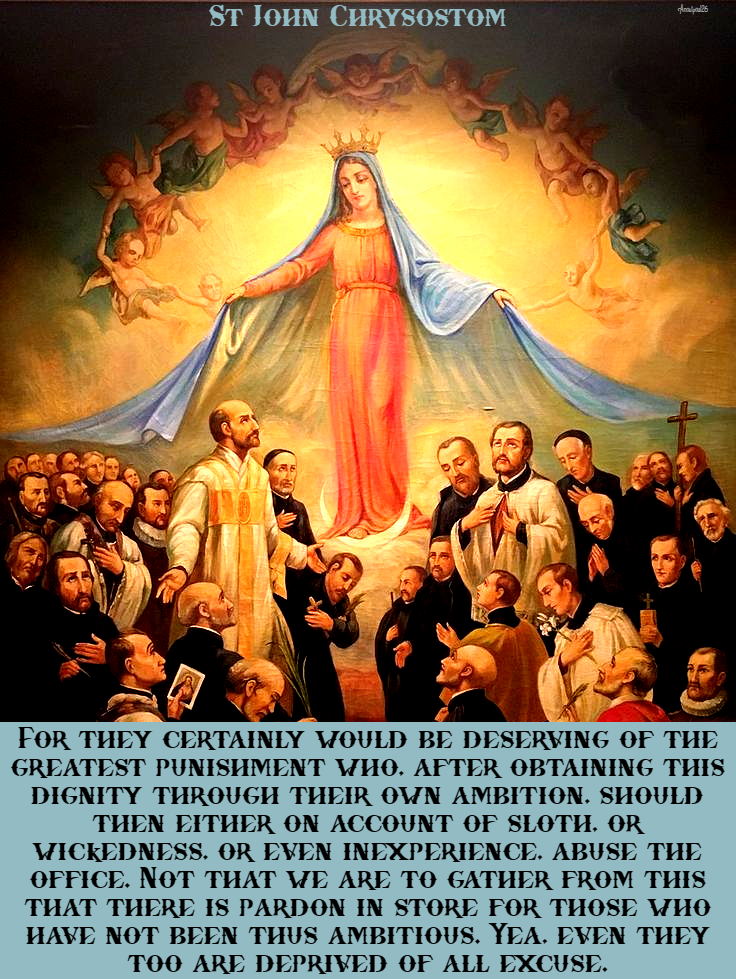
For they certainly would be deserving of the greatest punishment who, after obtaining this dignity through their own ambition, should then either on account of sloth, or wickedness, or even inexperience, abuse the office. Not that we are to gather from this that there is pardon in store for those who have not been thus ambitious. Yea, even they too are deprived of all excuse.

St John Chrysostom

There is nothing more important, nothing better, than to enter into a state of life to which God has called us, and to make choice of a vocation which His providence has destined for us. This is not what the majority do, it is mere chance, caprice, a spirit of interested ambition, or a blind love which leads them onwards, it is through such irregular motives which lead them to adopt a particular state of life.

Le Pere Nepvue

He who does not follow the will of God in his choice of a state of life, is always in danger, and on the other hand, he who follows the path which our Lord has marked out for him, is always safe.

Massillion

When seculars have once chosen their secular state, let them persevere in it, and in the devout exercises which they have begun, and in their works of charity, and they shall have contentment at their death.

St Philip Neri

Learn then, Priest and Levite, what it means to wash your clothes. You must have a pure body wherewith to offer up the sacraments. If the people were forbidden to approach their victim unless they washed their clothes, do you, while foul in heart and body, dare to make supplication for others? Do you dare to make an offering for them?

St Ambrose

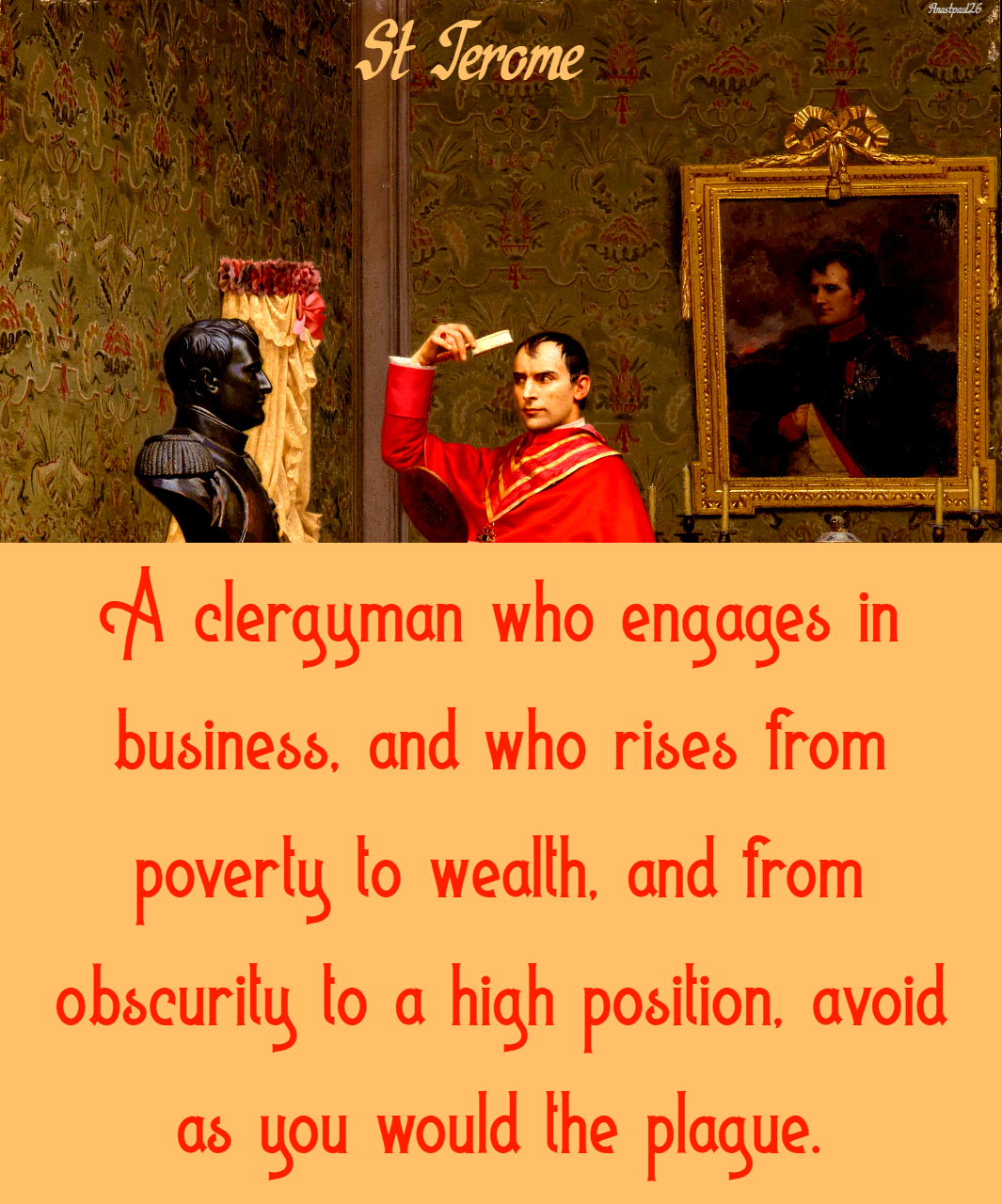
A clergyman who engages in business, and who rises from poverty to wealth, and from obscurity to a high position, avoid as you would the plague.

St Jerome

Posted in NOVEMBER - Month of the SOULS in PURGATORY

Thought for the Day – 11 November – How God makes use of Purgatory to render souls perfectly pure

Treatise on Purgatory

St Catherine of Genoa

CHAPTER X

Again, I see that the love of God directs towards the soul certain burning rays and shafts of light, which seem penetrating and powerful enough to annihilate not merely the body, but, were it possible, the very soul itself. These work in two ways ; they purify, and they annihilate. Look at gold : the more it is melted, the better it becomes ; and it could be melted so as to destroy every single defect. Such is the action of fire on material things.

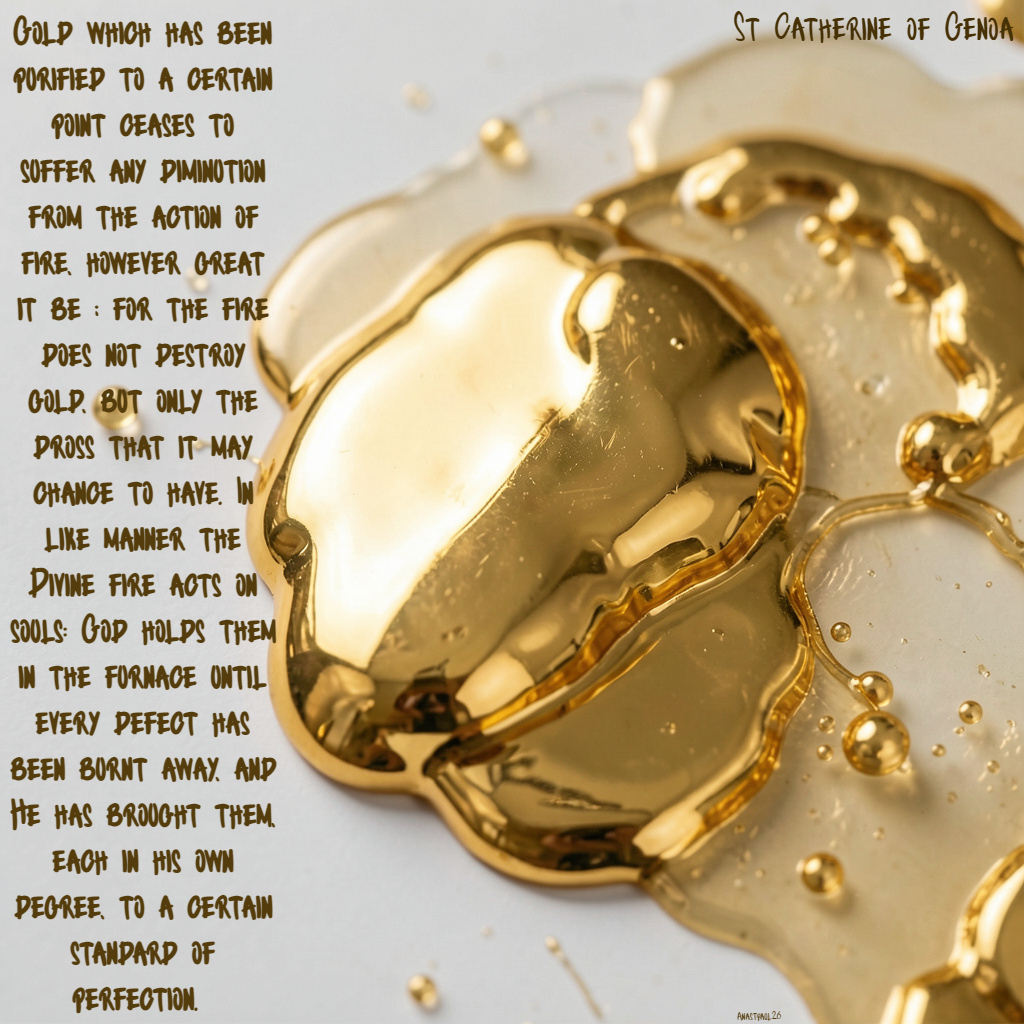
Now the soul cannot be annihilated so far as it is in God, but only in itself ; and the more it is purified, so much the more it annihilates self, till at last it becomes quite pure and rests in God. Gold which has been purified to a certain point ceases to suffer any diminution from the action of fire, however great it be ; for the fire does not destroy gold, but only the dross that it may chance to have. In like manner the Divine fire acts on souls: God holds them in the furnace until every defect has been burnt away, and He has brought them, each in his own degree, to a certain standard of perfection. Thus purified, they rest in God without any alloy of self: their very being is God ; they become impassible because there is nothing left to be consumed. And if in this state of purity they were kept in the fire, they would feel no pain ; rather it would be to them a fire of Divine Love, burning on without opposition, like the fire of life eternal.