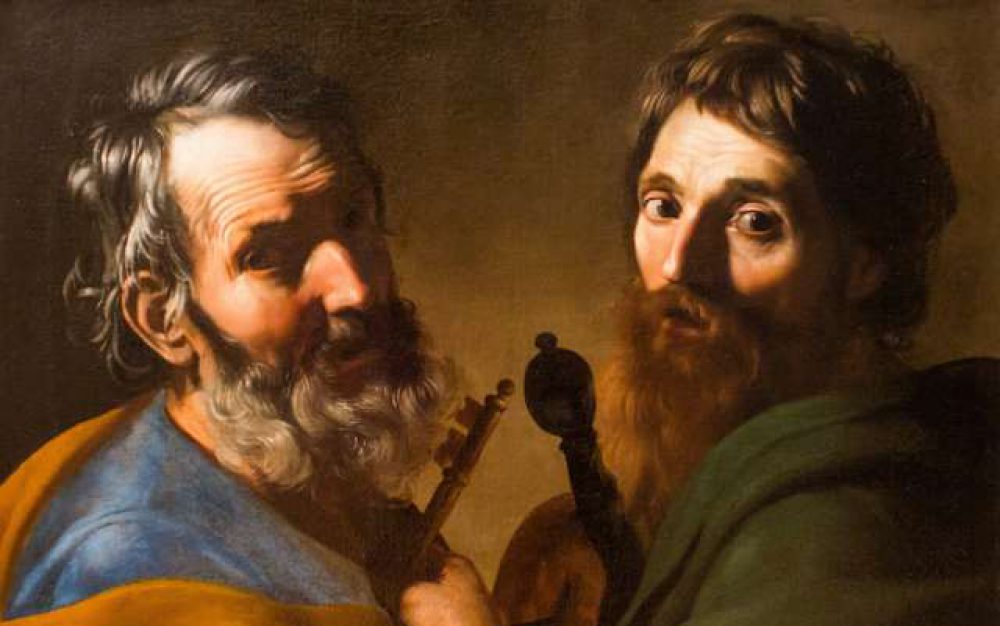
Saint Stephen the Younger, also known as Stephen the New, was a martyr monk born in 714 at Constantinople.
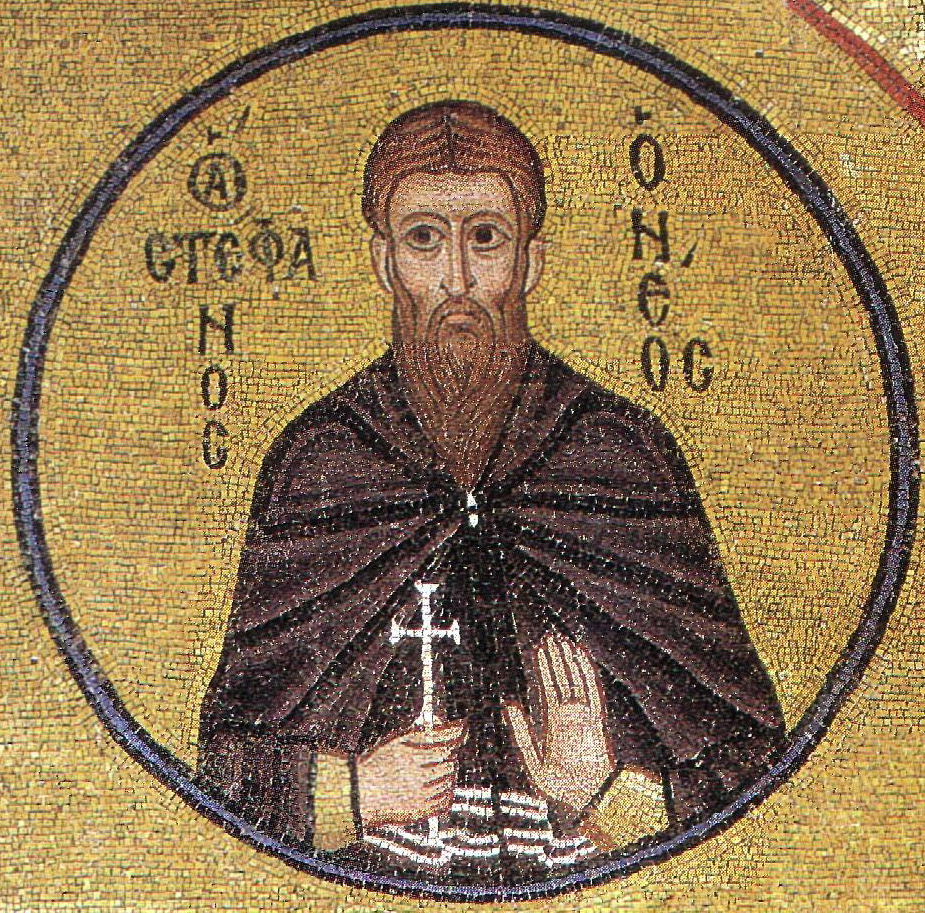
His father, Gregory, was a craftsman. His mother was called Anna, and he had two older sisters, Theodote and an unnamed one. On Holy Saturday 716, he was baptised in the Hagia Sophia by Patriarch Germanus I. In his sixteenth year, he was brought by his parents to Mt. Auxentius in Bithynia, where he became a monk. He visited Constantinople again for his father’s funeral some years later and brought his mother and sisters to the convent of Mt. Auxentius. In his 31st year, his mentor, John, died, and Stephen succeeded him, founding a monastery. In his 42nd year, he retired to live as a hermit in a cave.
Soon after, the iconoclast movement became very active in the area, led by Emperor Constantine Copronynus V. The emperor tried to enlist Stephen in the movement, but the holy hermit refused, and was exiled. He refused to accept the decisions of the iconoclast Council of Hieria, but it was not until circa 760 that he began suffering persecution: he was accused of sexual relations with his mother, and of illegally tonsuring George Synkletos, a favourite of the Emperor Constantine V.
Years later he returned, and to prove how important it was to respect icons and other religious art, Stephen went to the emperor, pulled out a coin that bore the emperor’s likeness, threw it onto the floor, and stomped on it; as the emperor understood the importance of his own image, he imprisoned Stephen for 11 months.
On his release, Stephen returned to the court and resumed the argument as though nothing has happened.
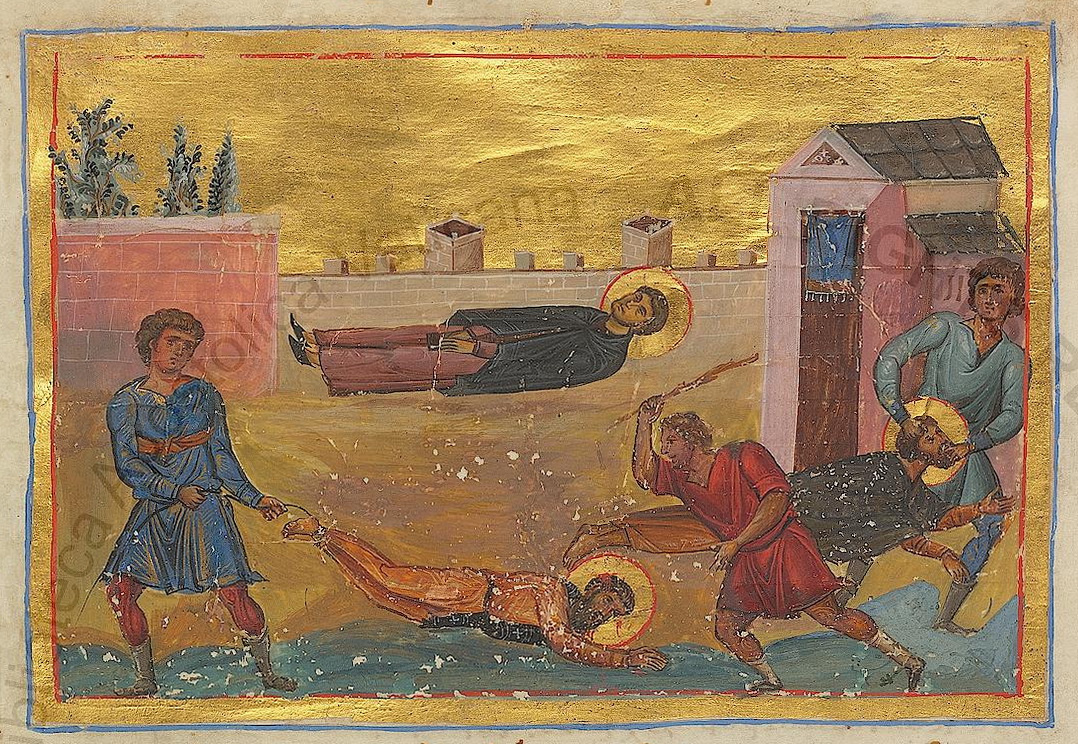
Constantine V sent soldiers who arrested him and brought him to a monastery in Chrysopolis. There again he refused to accept the decisions of Hieria, and was banished to the island of Prokonnesos. In his second year of exile, he was brought to the Phiale prison in Constantinople and was questioned by the emperor himself. After almost a year of imprisonment in the prison of the city’s praetorium, he was condemned to death by Constantine alongside 300 others who opposed iconoclasm, and dragged by soldiers through the streets, where he was clubbed to death. His corpse was dragged through the streets, while his skull was rescued by one of his followers and brought to the Dius Monastery. His relics are recorded in various Constantinopolitan churches and monasteries during the 13th–15th centuries.
Constantine V died of an infestation of boils while failing to restore peace to the Balkans.


One thought on “Saint of the Day – 28 November – Saint Stephen the Younger”