
‘In the town of Thora, on lake Velino, in Italy, the martyrdom of
the Saints Anatolia and Audax, under the emperor Decius. Anatolia, a virgin consecrated to Christ, cured, through the whole province of Picenum, many persons laboring under various infirmities, and made them believe in Christ. By order of the judge Fustinian, she was condemned to various
kinds of punishments. She was cured of the sting of a serpent to which she had been exposed; a miracle which converted Audax to the faith. Finally
she was transpierced with a sword, whilst her hands were extended in prayer. Audax was committed to prison, and being without delay sentenced
to capital punishment, obtained the crown of a martyr.’
(The Roman Martyrology)
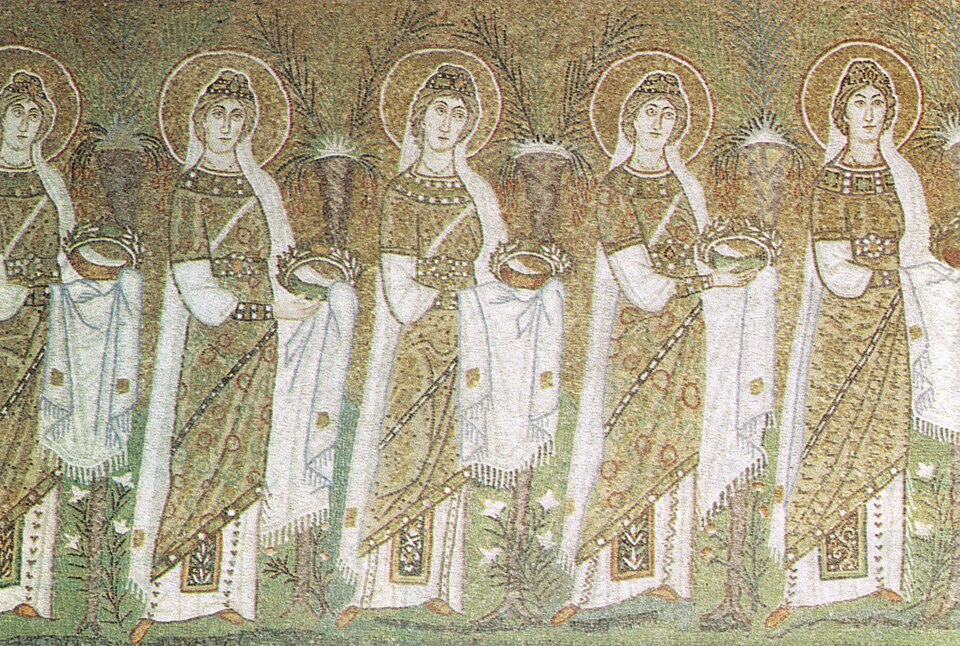
In the time of the Emperor Decius, Anatolia and Victoria were sisters whose marriage was arranged to two noble, non-Christian Roman men. They resisted this. Their prospective grooms were reluctant to denounce them as Christians as that would mean that the women’s possessions would be forfeited to the state, so instead they received permission to imprison the women on their estates and convince them to renounce their faith. Anatolia’s suitor, Titus Aurelius, gave up, and gave her back to the authorities. Victoria’s suitor, Eugenius, was more persistent, but also ended up returning her to the authorities.
Victoria’s legend states that she was stabbed through the heart in 250 AD at Trebula Mutuesca after chasing away a dragon terrorizing the residents in exchange for their conversion. An elaboration states that her murderer was immediately struck with leprosy, and died six days later. Anatolia was killed, also in 250 AD, at Thora. Her legend states that she was at first locked up with a poisonous snake. The snake refused to bite her, and a soldier named Audax was sent into her cell to kill her. The snake attacked him instead, but Anatolia saved him from it. Impressed by her example, he converted to Christianity and was martyred by the sword with her.
Due to the translation of their relics, their cult spread across Italy. Some relics of Saint Victoria were transferred in 827 by Abbot Peter of Farfa from the Abbey to Mount Matenano in the Picene area because the Abbey was besieged by Saracens. The town of Santa Vittoria in Matenano is named after her. Ratfredus, a later Abbot of Farfa, brought the body from Farfa to Santa Vittoria in Matenano on 20 June 931.
The bodies of Anatolia and Audax were transferred by Abbot Leo to Subiaco around 950. At an unknown date, a scapula of Anatolia was translated to the present-day Sant’Anatolia di Borgorose and an arm of the saint was translated to the present-day Esanatoglia. The bodies of Anatolia and Audax still rest at Subiaco in the basilica of Santa Scholastica, under the altar of the sacrament.
St Mary’s Cathedral, Kilkenny, Ireland also claims to hold St Victoria’s body, preserved in wax, along with a chalice containing some of her blood. These were sent to Kilkenny in 1845 by Pope Gregory XVI.
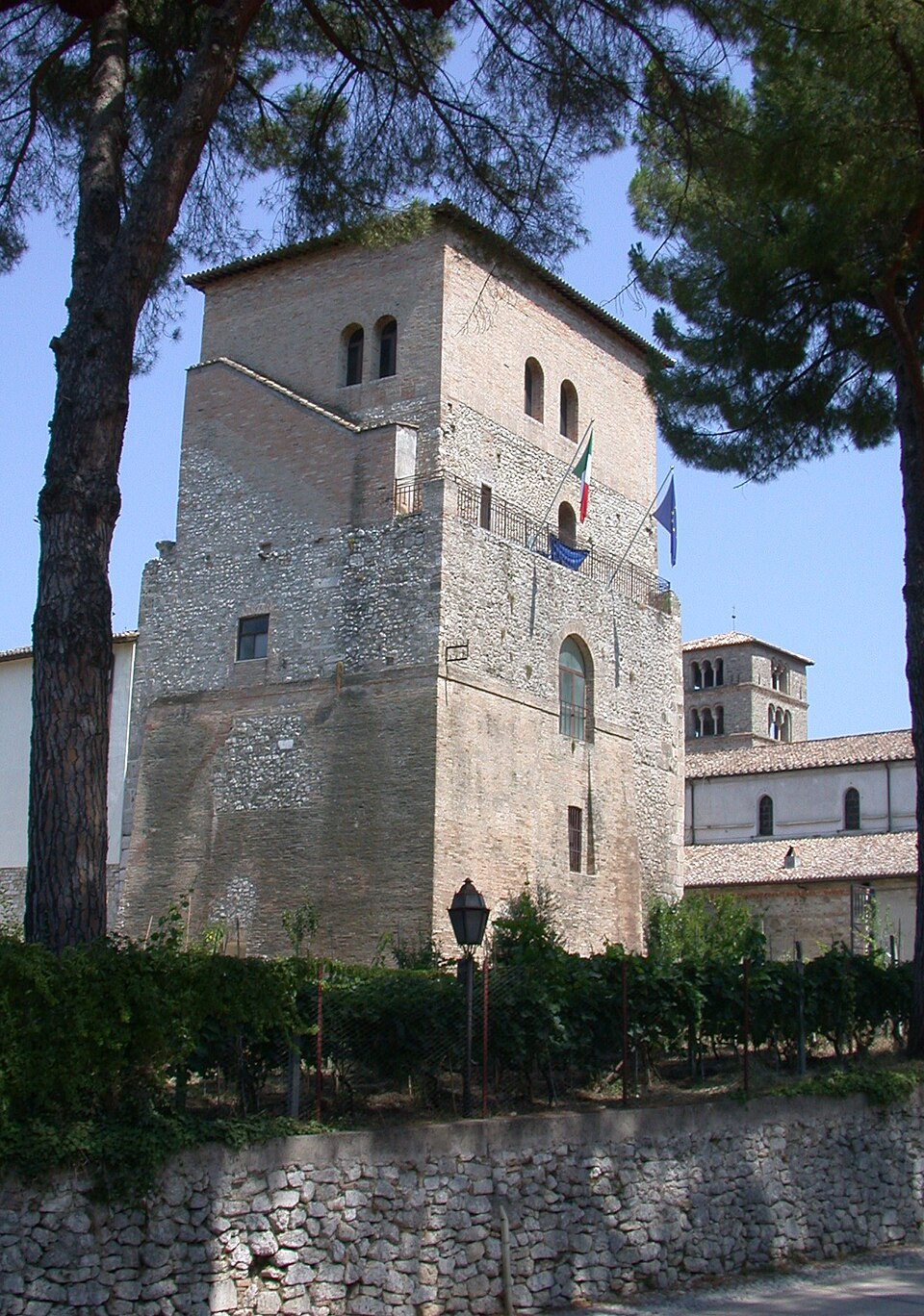
The Abbey of Farfa


