Posted in MARIAN TITLES

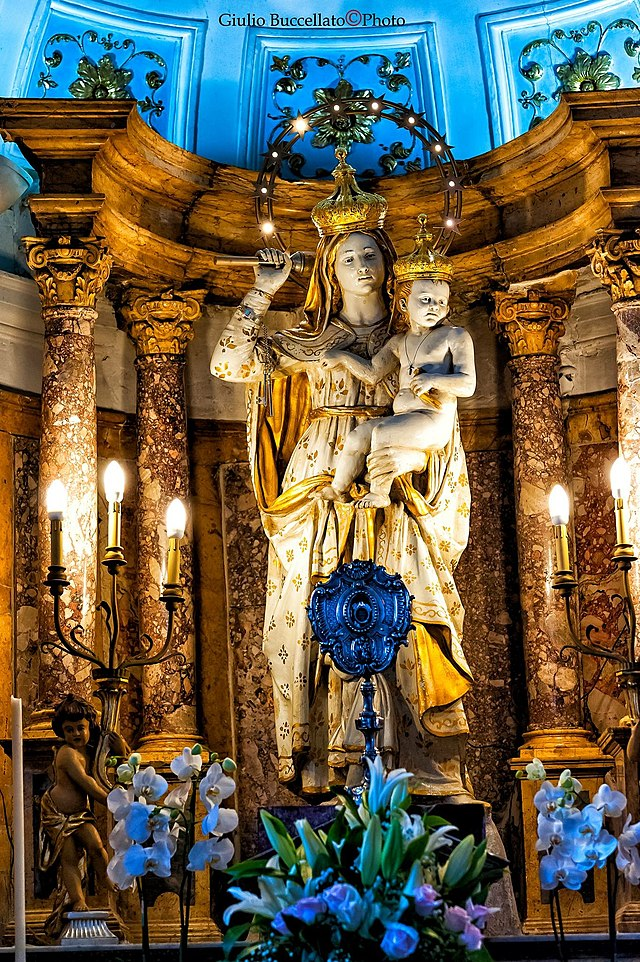
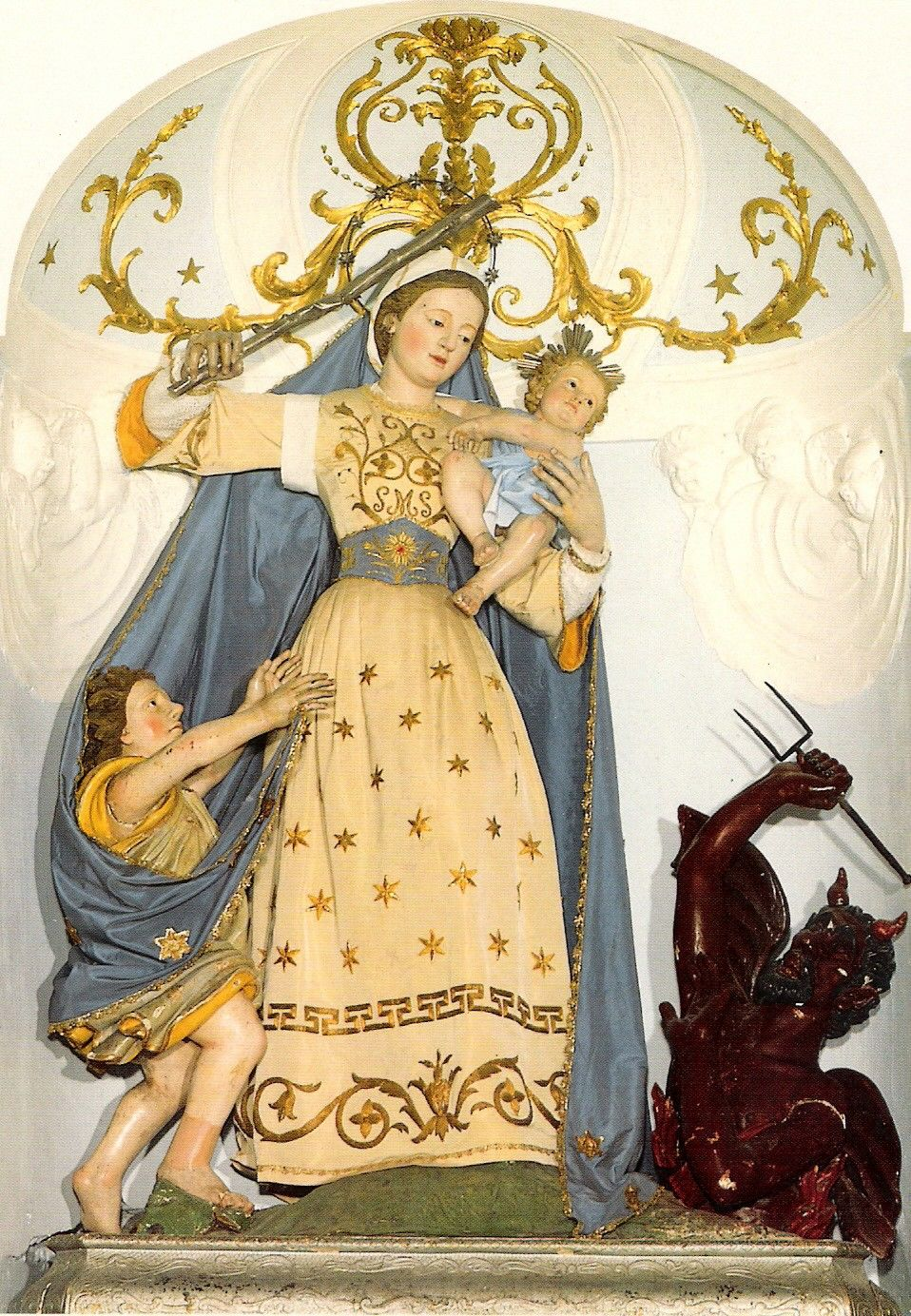
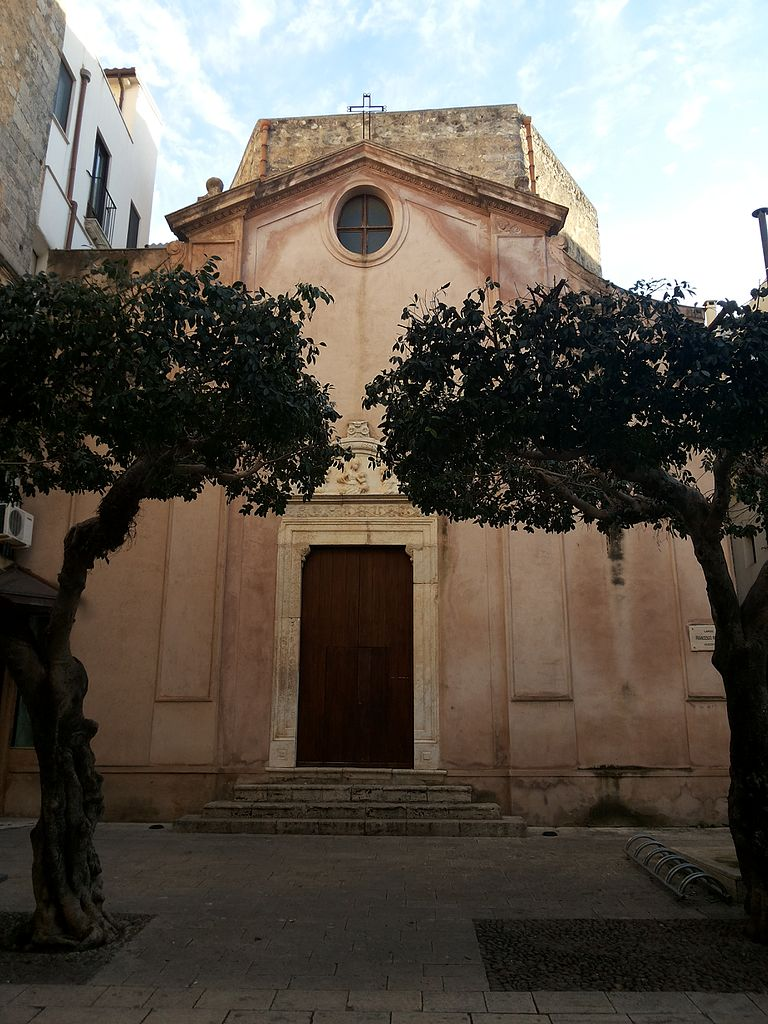
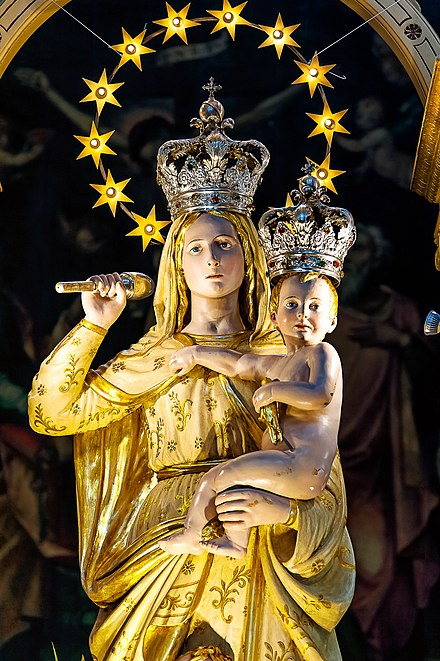
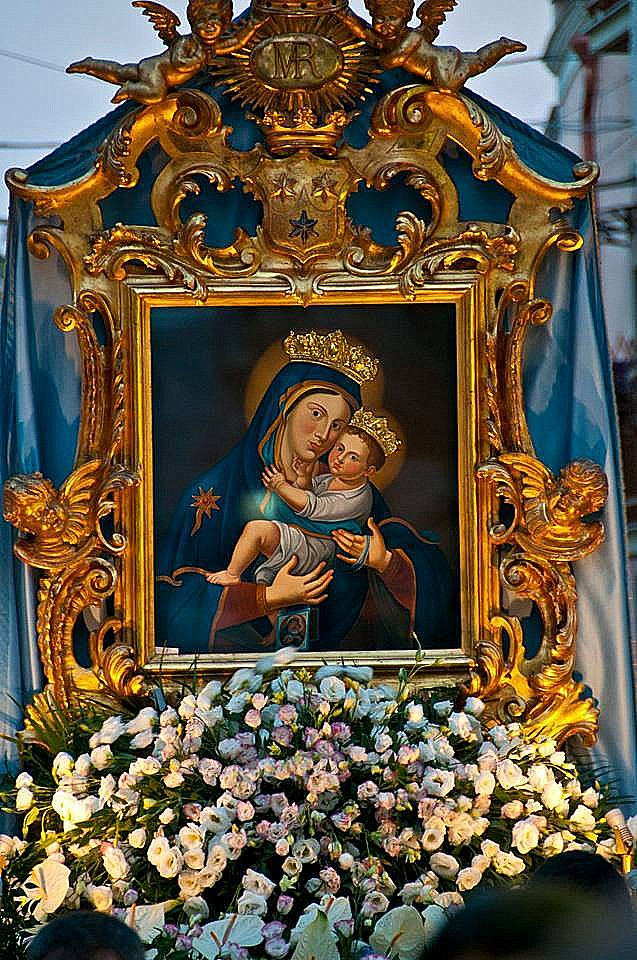
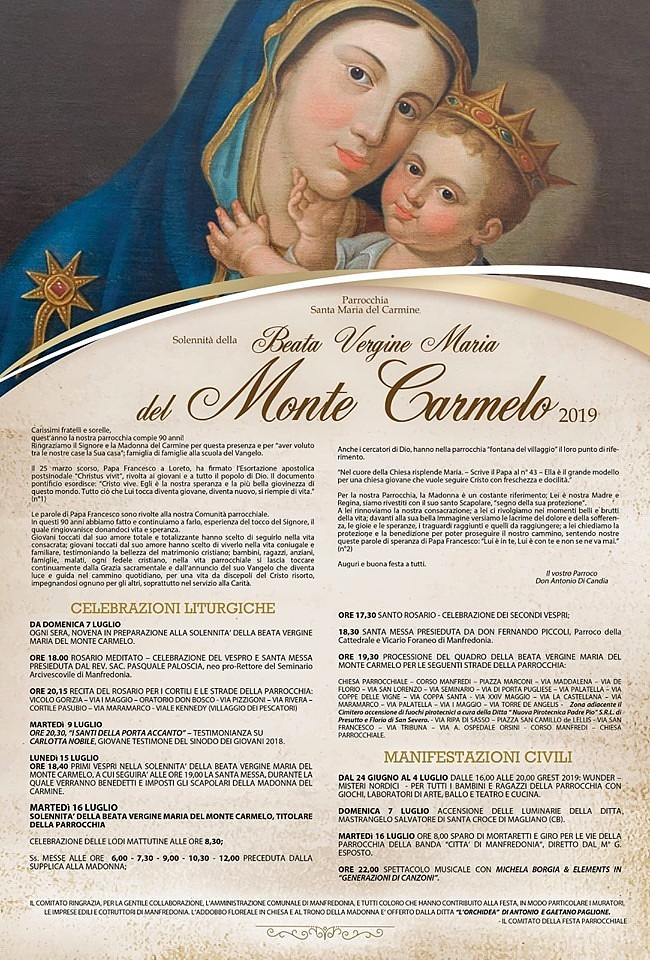
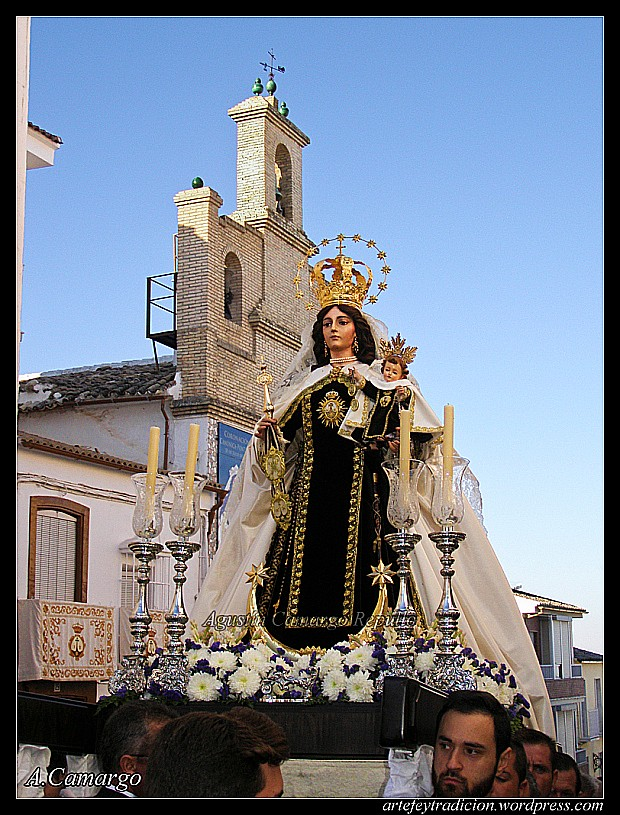
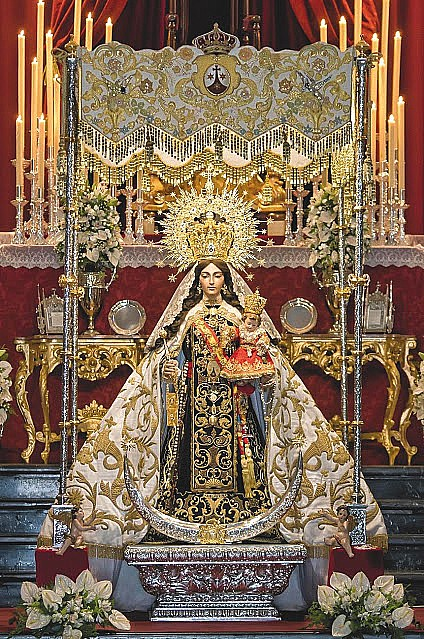
Our Lady of Mount Carmel, Nuestra Señora del Carmen (Rute, Córdoba, Andalucía, Spain) (17th Century) and Memorials of the Saints – 16 July

Our Lady of Mount Carmel -Mary is said to have given the Scapular to an early Carmelite named Saint Simon Stock. (Optional Memorial)
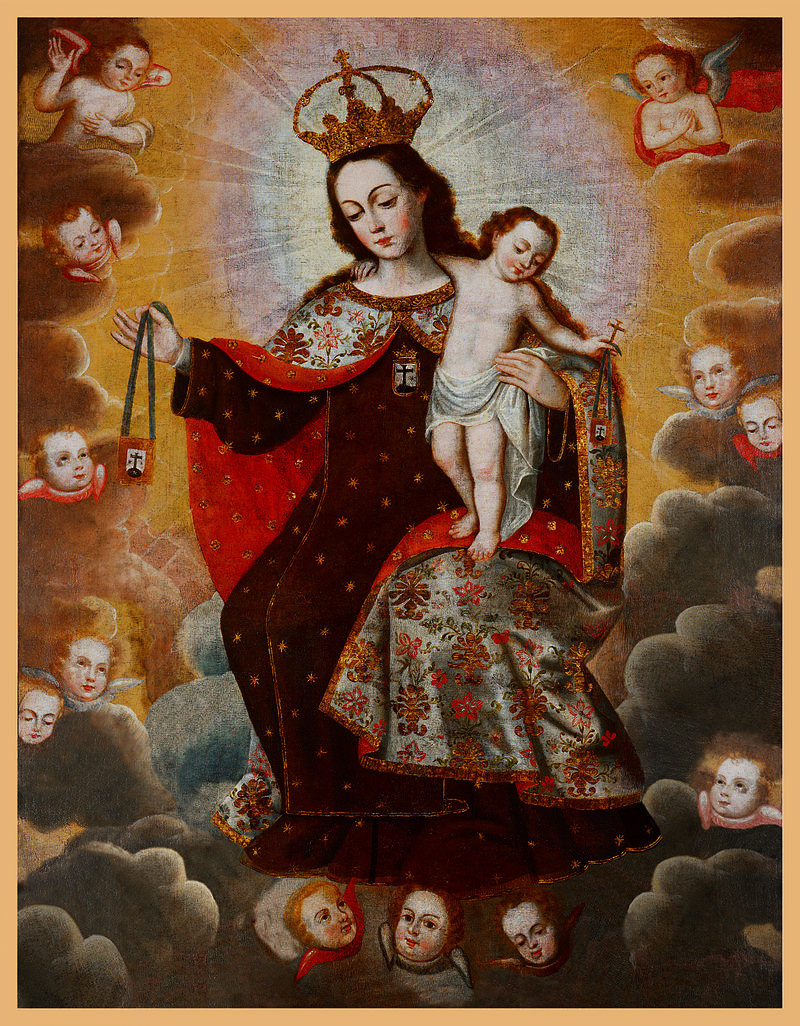
The Brown Scapular of Our Lady of Mount Carmel

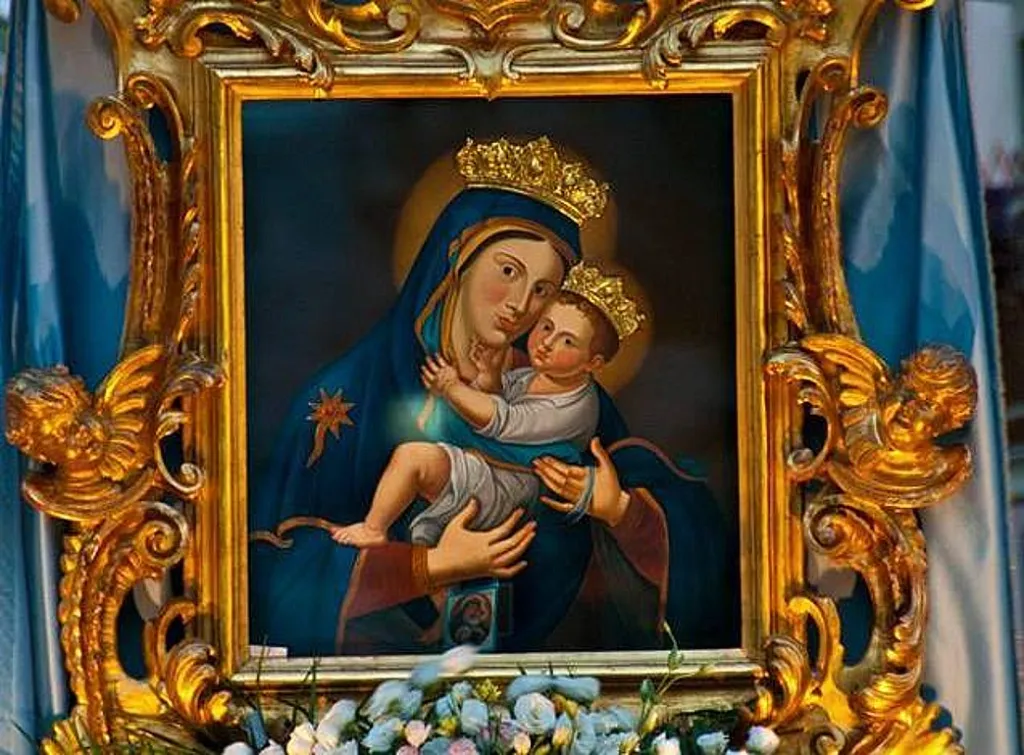
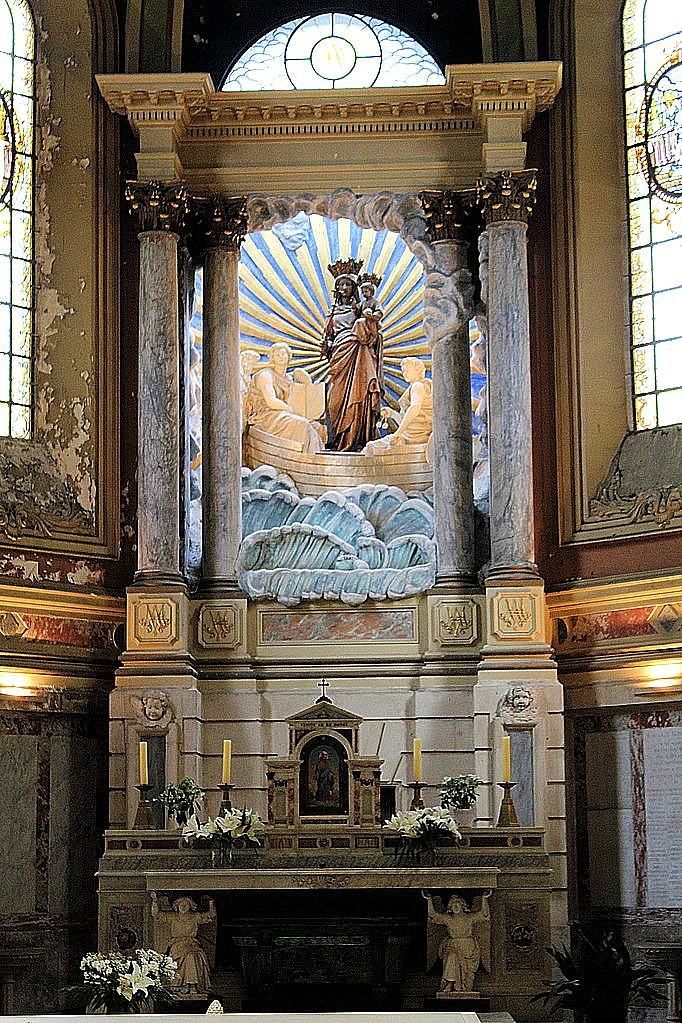
Nuestra Señora del Carmen (Rute, Córdoba, Andalucía, Spain) (17th Century) 16 July, 13 February – Patron of Rute:
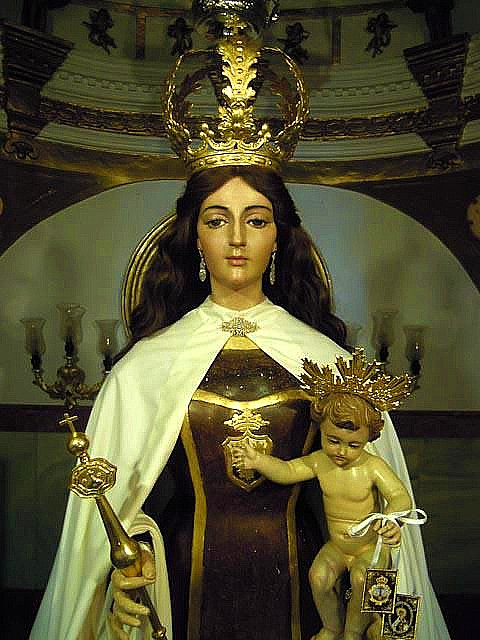
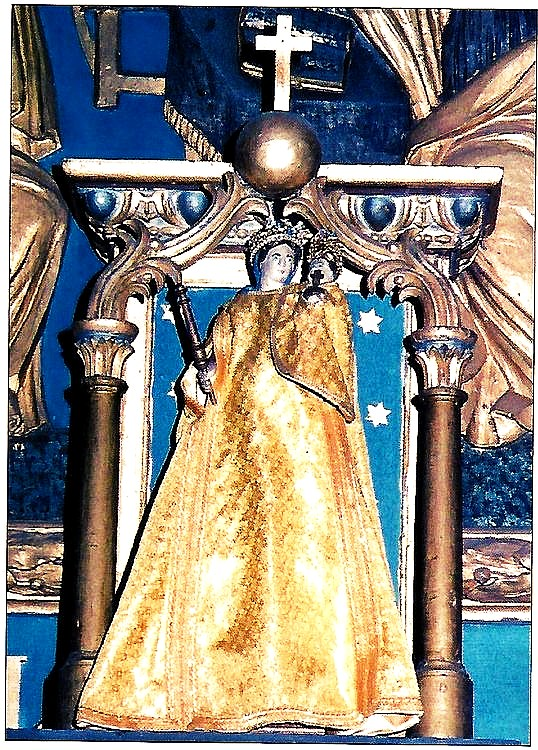
By order of Pope Pius XI, Our Lady of Mount. Carmel was proclaimed Patron of the Town of Rute in southern Spain on 13 February1924. Her beloved image goes back to the late 1600s, when Luisa Roldán (La Roldana) of Seville carved the head and hands. Made to be dressed, the Statue did not have a proper body until the 1960s.
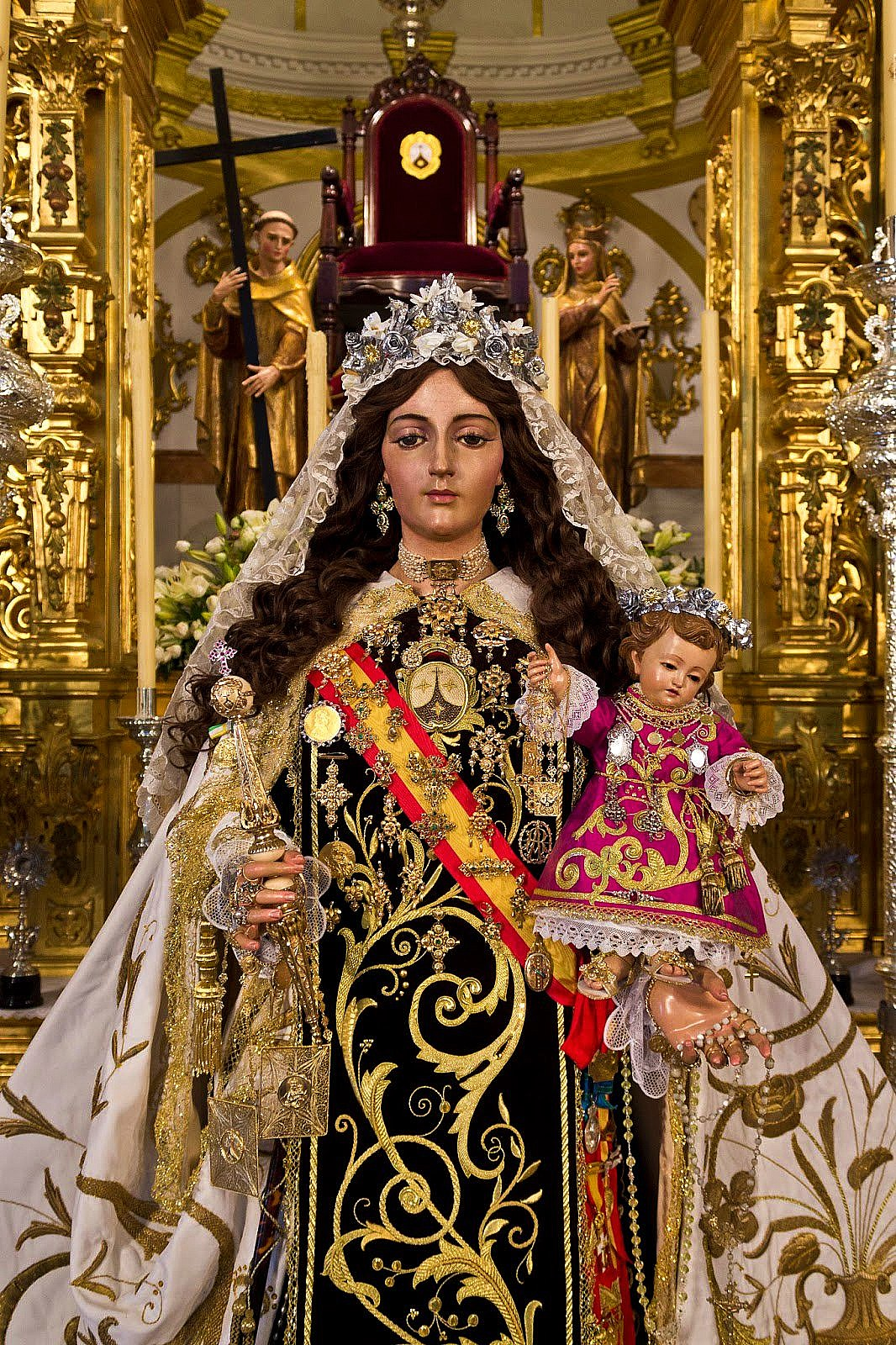
It occupies a neo-baroque setting over the High Altar, also of the 1960s. Rute honours its Patron several times a year. The anniversary celebration lasts three days, culminating on 13 February with Mass, presentations to the Chief of the Brotherhood and the Fiesta Queen of gifts made for the Virgin, and a ceremony of kissing the Scapular of Our Lady of Mount. Carmel. Her liturgical feast day, 16 July is the focus of another three-day celebration. On the last Sunday of June, the procession is held, when the Statue goes in procession through the neighbourhood to the main Parish Church of Santa Catalina Mártir. Another triduum is celebrated around the feast of the Assumption, 14-16 August.
Bl André de Soveral
St Andrew the Hermit
St Antiochus of Sebaste
Bl Arnold of Clairvaux
Bl Arnold of Hildesheim

Blessed Arnulf of Hildesheim
St Athenogenes of Sebaste

St Bartholomew of Braga OP – Archbishop of Braga also known as Bl Bartholomew of the Martyrs (Bartolomeu Fernandez dei Martiri Fernandes) (1514-1590) Portuguese Dominican Friar and Priest, Writer, Theologian, Advisor, Teacher and Catechetical writer, Apostle of Charity founding a series of hospitals and hospices in Braga and surrounds.

St Benedict the Hermit

Blessed Ceslaus Odrowaz OP (c 1184– 1242) (Brother of St Hyacinth) Priest and Friar of the Order of Preachers, Confessor, Spiritual Advisor, miracle-worker.

Bl Claude Beguignot
Bl Domingos Carvalho
St Domnin
St Domnio of Bergamo
Bl Dorothée-Madeleine-Julie de Justamond
St Elvira of Ohren
St Eugenius of Noli
St Faustus
St Faustus of Rome and Milan
St Fulrad of Saint Denis
St Generosus of Poitou
St Gobbán Beg
St Gondolf of Saintes
St Grimoald of Saintes
St Helier of Jersey
Bl Irmengard
Bl John Sugar
St Landericus of Séez
Bl Madeleine-Françoise de Justamond
Bl Marguerite-Rose de Gordon
Bl Marguerite-Thérèse Charensol
Bl Marie-Anne Béguin-Royal
Bl Marie-Anne Doux

St Marie-Madeline Postel (1756-1846) Religious Sister and Founder of the Sisters of Christian Schools of which she is the Patron, Teacher, Franciscan tertiary.

Bl Marie-Rose Laye
Bl Milon of Thérouanne
Bl Nicolas Savouret
Bl Ornandus of Vicogne
St Paulus Lang Fu
St Reinildis of Saintes ( c 630 – c 700) Virgin, Laywoman, Martyr
Bl Robert Grissold
Bl Simão da Costa
St Sisenando of Cordoba
St Tenenan of Léon
St Teresia Zhang Heshi
St Valentine of Trier
St Vitalian of Capua
St Vitaliano of Osimo
St Yangzhi Lang

Martyrs of Antioch – 5 saints: Five Christians who were martyred together. No details about them have survived by the names – Dionysius, Eustasius, Maximus, Theodosius and Theodulus. They were Martyred in Antioch, Syria, date unknown.
Posted in SAINT of the DAY

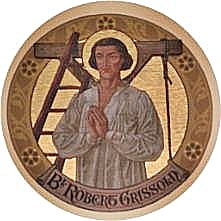
Saint of the Day – 16 July – Bl Robert Grissold

One of the English Martyrs. Blessed Robert Grissold (or Greswold) was a native of Rowington, the son of John and Isabel Grissold of Poundley End, Rowington. John was a weaver and he and his wife had seven sons and one daughter. Of yeoman stock, and he was the servant of a Mr Sheldon of Broadway in Worcestershire. Both Robert and his brother John had a reverence for Catholic priests. John was the servant of Fr Henry Garnet, SJ, and was so badly racked after the Gunpowder Plot that it was rumoured he was dead. It was probably in Mr Sheldon’s service that Robert encountered John Sugar, who had been a clergyman of the Anglican Church but had become a Catholic, studied at the English College, Douai, and was ordained a priest on 21st April 1601. Having returned to England, he travelled on foot throughout Warwickshire, Staffordshire and Worcestershire, where he ministered to the ‘poorer and meaner sort of Catholics.’ Robert accompanied the priest to his old home, where news of the priest’s arrival was noised abroad.

On Sunday, 8th July 1603 a warrant was issued to search the house of a Catholic dwelling in Rowington for the arrest of a Catholic priest who was rumoured to be there. This was probably the house of William Skynner, Lord of the Manor or Rowington, a Catholic who in 1592 had been in trouble for harbouring a priest. On this occasion no priest was found and the searchers went to the house of Robert, Henry and Ambrose Grissold, Robert’s three unmarried uncles, who kept house together and were known to be Catholics. One of the searchers was Clement Grissold, nephew of the three brothers and first cousin of Robert; he it was who directed the search to the Grissold household. Again, no priest was found.

However, on the highway near Baddesley the search party encountered Robert and John Sugar. They were betrayed by a relative of Grissold who offered to let him leave. “Cousin, if you will go your way you may,” said Clement; but Robert replied, “I will not, except I may have my friend with me.”

Both were imprisoned in Warwick Gaol, where they languished for a year. On 13th July 1604 John Sugar was arraigned for being a Catholic priest and was condemned to be hanged, drawn and quartered. Authorities offered both men a final chance at pardon if they would conform to the Church of England by attending Anglican services, but Grissold, approximately 29 years old, steadfastly refused, affirming his loyalty to the Catholic faith.

On 16th July they were taken to the place of execution, known as Gallows Hill. John Sugar was drawn on a hurdle. Robert was given the opportunity of not following through the mud, but he replied, ‘I have not thus far followed him to leave him now for a little mire.’

Fr Sugar was executed first. He said on the scaffold: “Be ye all merry, for we have not occasion of sorrow but of joy: for although I shall have a sharp dinner, yet I trust in Jesus Christ that I shall have a most sweet supper.”

Seeing the halter with which he was to be hanged lying on the ground, Robert went and dipped it in John Sugar’s blood, and going up the ladder he said to the people, ‘Bear witness, good people, that I die here not for theft, nor for felony, but for my conscience.’ Then he forgave his persecutors and the hangman, made an act of contrition, and called on the name of Jesus. Lastly, he commended himself into the hands of Almighty God and was turned off the ladder; he hanged until he was quite dead. He was buried beneath the gallows, while the head and quarters of John Sugar were set up on the gates of Warwick.

Posted in MARIAN TITLES

Mariae Virginis Molanus / Our Lady of Molanus, Jerusalem (1099) and Memorials of the Saints – 15 July

Mariae Virginis Molanus / Our Lady of Molanus, Jerusalem (1099) – 15 July :

In the year 1099, the Christian armies arrived in Jerusalem, overjoyed that they had survived and reached their objective. Their joy turned nearly to despair, however, as they ran short of food and suffered greatly with a plague during the siege of the City.

The leaders of the Crusade concluded, that they could not win without courting the Divine Assistance. It was agreed by all, that they should march together barefoot around the City while singing litanies to the Blessed Virgin Mary. This they did, as the Jews had done centuries before at Jericho, while praying, fasting and giving alms. Eight days later, Godfrey of Bouillon, known as the “Defender of the Holy Sepulchre,” was the first to breach the walls and set foot in Jerusalem, which was then swiftly taken.

The Muslims were finally defeated after what had been a long and difficult siege and the First Crusade ended with a Christian victory. Now that the City was in Christian hands, the Crusaders desired that they should have a king for the new Kingdom of Jerusalem. The nobleman Raymond of Saint Gilles was offered the crown but he refused, as it did not seem proper to him to be named king in that holy place. Next, Robert Courte-Heuse also refused. Finally, Godfrey of Bouillon, who had so distinguished himself in the taking of Jerusalem, was asked to accept the crown.

Godfrey of Bouillon was a good man, the son of Blessed Ida of Bouillon, whose father was the Duke Godfrey of Lorraine, himself a descendent of Blessed Charles the Great. Although Godfrey agreed to be made king, still, as they were about to crown him King of Jerusalem, Godfrey pushed aside the crown, saying, “I cannot wear a diadem in the place where my Lord wore a Crown of Thorns.” Instead, as he had prayed at Our Lady at Boulogne-sur-mer before leaving on the Crusade, he credited the Blessed Virgin Mary with the victory, and symbolically gave the crown to Our Lady of Molanus.
After the victory, clad in white garments, the Crusaders expressed, in solemn procession, hymns and prayers, their gratitude to the Mother of God for giving them this singular victory over the enemies of the Church.

The annual celebration in remembrance of the victory occurs each year on 15 July with a Mass offered to Our Lady of Molanus. Formerly the feast of this event was celebrated with a double office and octave.

St Bonaventure of Bagnoregio OFM (1221-1274) – Seraphic Doctor of the Church – Friar of the Friars Minor Order of St Francis, Bishop, Theologian, Philosopher, Writer, Mystic, Preacher, Teacher. One of the early Biographers of St Francis.(Memorial)

Dispersion of the Apostles: Commemorates the missionary work of the Twelve Apostles. It was first mentioned in the 11th century and was celebrated in the northern countries of Europe during the Middle Ages. It is now observed in Germany, Poland and some dioceses of England, France and the United States.

St Abundantia of Spoleto
St Abudemius of Bozcaada
St Adalard the Younger
St Anrê Nguyen Kim Thông

Blessed Anne-Mary Javouhey (1779-1851) “The Mother of the Slaves,” Religious Sister, Missionary and Founder of the Sisters of Saint Joseph of Cluny. Imagine a Mother Teresa in the France of Napoleon’s day and you will have a picture of Anne-Marie Javouhey. Nanette, as she was called, was a “velvet brick,” a thin layer of gentleness covering her determined core. A competent leader, Nanette dominated every scene in her adventurous life. Blessed Anne-Marie was Beatified on 15 October 1950 by Ven Pope Pius XII.

Bl Antoni Beszta-Borowski
St Apronia
St Athanasius of Naples
St Antiochus of Sebaste
St Benedict of Angers
Blessed Bernard of Baden TOSF (1428-1458)
St David of Sweden
St Donivald
St Eberhard of Luzy
St Edith of Tamworth
St Eternus
St Felix of Pavia
St Gumbert of Ansbach
St Haruch of Werden
St Jacob of Nisibis
St Joseph Studita of Thessalonica
Bl Michel-Bernard Marchand
Bl Peter Aymillo
St Phêrô Nguyen Bá Tuan
St Plechelm of Guelderland
Bl Roland of Chézery
St Valentina of Nevers
St Vladimir I of Kiev

Martyred Jesuit Missionaries of Brazil – 40 beati: A band of forty Spanish, Portugese and French Jesuit missionaries martyred by the Huguenot pirate Jacques Sourie while en route to Brazil. They are –
• Aleixo Delgado • Alonso de Baena • álvaro Borralho Mendes • Amaro Vaz • André Gonçalves • António Correia • Antônio Fernandes • António Soares • Bento de Castro • Brás Ribeiro • Diogo de Andrade • Diogo Pires Mimoso • Domingos Fernandes • Esteban Zuraire • Fernando Sánchez • Francisco Alvares • Francisco de Magalhães • Francisco Pérez Godoy • Gaspar Alvares • Gonçalo Henriques • Gregorio Escribano • Ignatius de Azevedo • Iõao • João Fernandes • João Fernandes • Juan de Mayorga • Juan de San Martín • Juan de Zafra • Luís Correia • Luís Rodrigues • Manuel Alvares • Manuel Fernandes • Manuel Pacheco • Manuel Rodrigues • Marcos Caldeira • Nicolau Dinis • Pedro de Fontoura • Pedro Nunes • Simão da Costa • Simão Lopes •
They were martyed on 15 and 16 July 1570 on the ship Santiago near Palma, Canary Islands. They were beatified on 11 May 1854 by Pope Pius IX.

Martyrs of Alexandria – 13 saints: Thirteen Christians who were martyred together. We know the names of three, no details about them and the other ten were all children. – Narseus, Philip and Zeno. Martyred in the early 4th-century in Alexandria, Egypt.

Martyrs of Carthage – 9 saints: A group of nine Christians who were martyred together. We know nothing else but their names – Adautto, Catulinus, Felice, Florentius, Fortunanziano, Januarius, Julia, Justa and Settimino. They were martyred in Carthaginian and their relics at the basilica of Fausta at Carthage.

Martyrs of Pannonia – 5 saints: Five 4th-century martyrs killed together. No information about them has survived except the names – Agrippinus, Fortunatus, Martialis, Maximus and Secundinus.

Posted in MARIAN TITLES

Madonna del Soccorso / Our Lady of Soccorso, Castellammare del Golfo, Trapani, Sicily, Italy ( 1718) and Memorials of the Saints – 13 July

Madonna del Soccorso / Our Lady of Soccorso, Castellammare del Golfo, Trapani, Sicily, Italy ( 1718)- 13 July

In Castellammare del Golfo, in the Province of Trapani, a miraculous event occurred on 13 July 1718, when the Town was in the midst of war between Philip V and Amedeo di Savoia, for the possession of Sicily. A Spanish ship, pursued by five English ships, arrived to take refuge under the castle, from where the enemy ships were repelled.

The people, frightened, cried out for a miraculous help to their Patron – all fled the City, and despite the blows of the English artillery, no-one was killed or injured. But all of a sudden, to everyone’s amazement, the white-dressed Madonna appeared from Mount delle Scale, followed by a group of Angels, who descended towards Cala Marina. This vision terrified the British who hastened in retreat and left the port.

The name of Madonna del Soccorso derives from this extraordinary event.
Every two years, in fact, on 13 July in the Town of the Gulf the “Historical Re-enactment” of the miraculous intervention of Maria Santissima del Soccorso, in the City of Castellammare.

Devotion to the Madonna del Soccorso is particularly felt in the Magolà hamlet, in Lamezia Terme but also, in the whole area. The Sanctuary of the Madonna del Soccorso is located on a green hill overlooking the City of Lamezia Terme and overlooking the plain of Sant’Eufemia, in the most panoramic point . The presence of this Church then gave its name to the whole area. According to a historical research by Don Pietro Bonacci ( 1915 – 2007 ), devotion to the Madonna del Soccorso is very ancient and was initially practiced in the Church of the Reformed Fathers of St Frances (currently the Church of Santa Maria Maggiore) in very remote times. This devotion was also in use in the Church of Santa Lucia , which until the eighteenth century, had the title of Parish of St Maria del Soccorso, then passed to the Church of Magolà. It is said that the Reformed Fathers decorated with great piety and love, a miraculous image of the Madonna painted by St Luke and brought from Jerusalem by a Franciscan Friar who landed in Sant’Eufemia, fell ill and died with the Reformed Fathers. This image was of great veneration for its continuous graces but no trace has been found, it has disappeared.

The current Church was built shortly after the construction of the votive Shrine. In fact, a document reports that it was completed in 1740. . At the beginning of the nineteenth century cholera broke out and a small hospital was built to treat the sick. In the twentieth century everything returned to normal and the celebrations in honour of the Madonna began, which were established on the third Sunday of July, preceded by the Novena. On Saturdays it was customary to celebrate The Rosary and other Marian devotions, in which one spent a whole day with the Madonna and sang traditional hymns. On the day of the festival, after several Masses, the procession with the Statue of the Madonna begins,and looks out from the hill to bless the City. There was also a great fair. Today the festival is held the same way.

St Henry (972-1024) Holy Roman Emperor (Optional Memorial) Henry was well known for his missionary spirit and for his protection of the Pope in times of trouble. Henry ruled with a spirit of great humility and always sought to give the glory to God. He used his position to promote the work of the Church and the peace and happiness of the people.

Bl Anne-Andrée Minutte
St Arno of Würzburg
Bl Barthélemy Jarrige de la Morelie de Biars
Bl Berthold of Scheide

St Clelia Barbieri (1847-1870) Foundress of the Congregation of the Little Sisters of the Mother of Sorrows, Mystic.

St Dogfan
Bl Élisabeth Verchière
St Emanuele Lê Van Phung
St Esdras the Prophet
St Eugene of Carthage
Bl Ferdinand Mary Baccilleri
St Iosephus Wang Kuiju
Blessed James of Voragine OP (c 1226 – 3 or 16 July 1298) Bishop, Author of the ‘Golden Legend.’
Bl Jean of France
St Joel the Prophet
Bl Louis-Armand-Joseph Adam

Bl Marie-Anastasie de Roquard
Bl Marie-Anne Depeyre
Bl Marie-Anne Lambert
St Mildred of Thanet
St Muritta of Carthage
St Myrope
St Paulus Liu Jinde
St Salutaris of Carthage
St Sarra of Egypt
St Serapion of Alexandria
Serapion of Macedonia
Bl Thérèse-Henriette Faurie
Bl Thomas Tunstal
St Turiaf

Martyrs of Cyprus – 300 saints: 300 Christians who retired to Cyprus to live as cave hermits, devoting themselves to prayer and an ascetic life devoted to God. Tortured and martyred for their faith and their bodies dumped in the various caves in which they had lived. We know the names of five of them but no other details even about them – Ammon, Choulélaios, Epaphroditus, Eusthénios and Héliophotos. They were beheaded in the 12th century on Cyprus and their bodies dumped in the cave where they had lived and only rediscovered long afterwards.

Martyrs of Philomelio – 31 saints: 31 soldiers martyred for their faith in the persecutions of prefect Magno, date unknown. The only name that has come down to us is Alexander. In Philomelio, Phrygia (in modern Turkey).
Posted in SAINT of the DAY

Saint of the Day – 12 July – Saint Uguzo of Cavargna

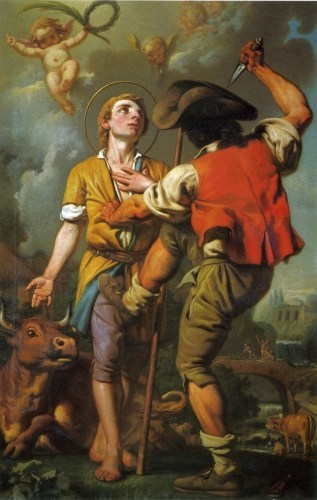
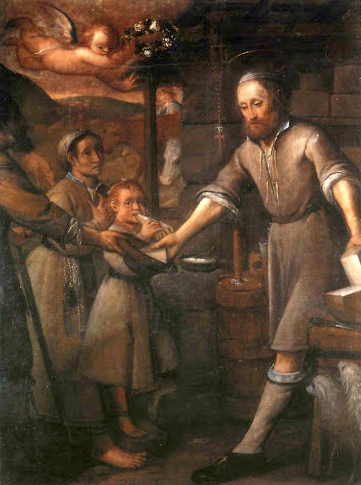
Also known as Lucio, Lucius, Luguzzone, Uguzon, Uguzzone. Died before 1200. He was a poor shepherd who lived near Cavargna and was extremely generous in charity towards the poor and needy. According to legend, he discovered that the yield from cheese-making is greater if the milk is heated before it is made into cheese. According to another legend, he heated the whey produced during cheese-making and collected the flocculated protein to make cheese.

Uguzo gave the surplus cheese obtained by his discovery to the poor to feed. Suspecting that the shepherd was giving away his property, Uguzo’s employer drove him away, only for his land to go foul and his sheep to stop producing milk. Uguzo’s subsequent employer prospered from the moment he hired him, and he was blessed with a miracle as when he cut cheese from his employer’s cheese rounds to distribute to the needy, the rounds would miraculously be reformed. Hatred and envy of Uguzo and his blessings and reputation drove the first employer to kill the shepherd. The cult of Uguzo was authenticated as early as 1280 at Milan and has been honored by various popes.

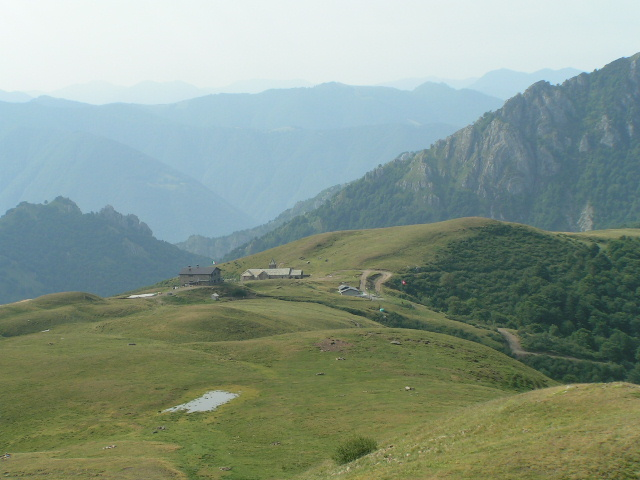
The San Lucio Pass, where he was murdered, is named for him, and at the summit is a 14th-century church, dedicated to him. At the place where Uguzo was slain, a spring gushed forth that is said to this day to have healing powers, especially for eye ailments.

He is the patron of cheese-makers and is invoked in cases of cattle and eye diseases, and favorable weather conditions. He appears in iconography with a cheese-cutter and a cheese with a slice cut out of it.

Posted in MARIAN TITLES

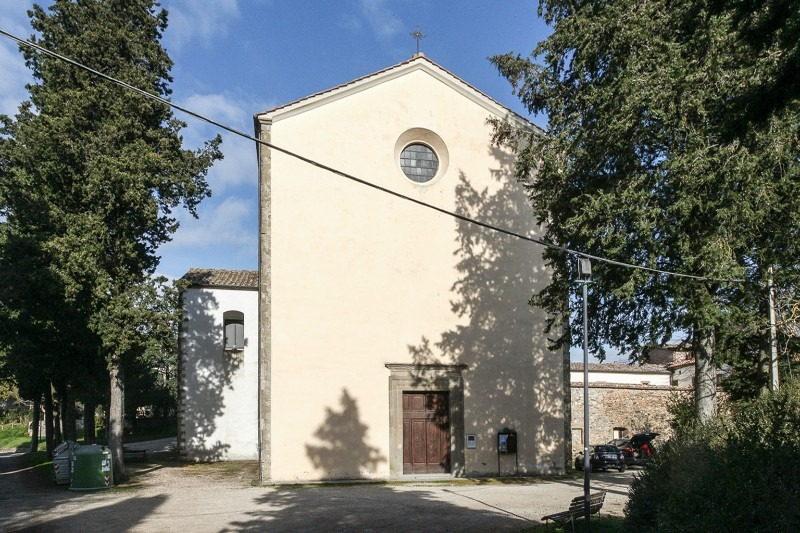
Madonna del Carmine / Our Lady of Carmine, Combarbio di Anghiari, Arezzo, Tuscany, Italy, (1536) and Memorials of the Saints – 11 July

Madonna del Carmine / Our Lady of Carmine, Combarbio di Anghiari, Arezzo, Tuscany, Italy, (1536) – 11 July:

A 12-year-old shepherdess, Marietta Del Mazza, reported apparitions of the Virgin on 11 July 1536 and days following. When news spread through the region, along with reports of miracles attributed to the Virgin’s intercession, the Bishops of Arezzo and Sansepolcro, conducted an investigation and authorised a Shrine at the apparition site.

The Shrine was completed in 1539. The Sanctuary was staffed by the Franciscan order at first, then by the Carmelites until 1782. Since 1987 it has been under the jurisdiction of the local Bishop.

The Sanctuary took the name of Our Lady of Carmel and over the centuries, it has continued uninterruptedly to recall the devotion of the people of the surrounding area. A fervent testimony of trust and love to Our Lady of Carmel occurred on the evening of 11 July 1986, 450 years anniversary from the date of the first apparition.

On the main Altar you can admire a beautiful Florentine school painting representing the Madonna and the Child with Saint John the Baptist pointing to the Lord, from the 16th century.

St Benedict of Nursia OSB (c 480-547) (Memorial) Patron of Europe and Founder of Western Monasticism

St Abundius of Ananelos
St Amabilis of Rouen
St Anna An Jiaoshi
St Anna An Xingshi
Bl Antonio Muller
St Berthevin of Lisieux
St Cindeus
St Cowair
St Cyprian of Brescia
St Cyriacus the Executioner
St Hidulf of Moyenmoutier
St Januarius
St John of Bergamo
Bl Kjeld of Viborg
St Leontius the Younger
St Marcian of Lycaonia
St Marciana of Caesarea
Bl Maria An Guoshi
Bl Maria An Linghua
Bl Marie-Clotilde Blanc
Bl Marie-Elisabeth Pélissier
Bl Marie-Marguerite de Barbégie d’Albrède

St Olga Queen of Kiev (c 890-969) She was known as a ruthless and effective ruler but “when Olga was enlightened, she rejoiced in soul and body. The Bishop, who instructed her in the faith, said to her, ‘Blessed art thou among the women of Rus’, for thou hast loved the light and quit the darkness. The sons of Rus’ shall bless thee to the last generation of thy descendants.”

St Pelagia
St Pius I, Pope (Died c 154) (Martyr?) The ninth successor of St Peter.
St Placid of Dissentis
Bl Rosalie-Clotilde Bes
St Sabinus of Brescia
St Sabinus of Poitiers
St Sidronius
St Sigisbert of Dissentis
Bl Thomas Hunt
Bl Thomas Sprott
St Thurketyl

Blessed Valeriu Traian Frentiu (1875-1952) Martyr Bishop of the Greek-Catholic Rite.

Posted in SAINT of the DAY

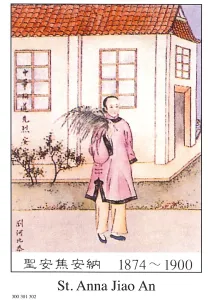
Saints of the Day – 11 July – Bl Anna Jiao An, Bl Anna An Xin

Anna Xin An (聖安辛安納)

Anna Jiao An (聖安焦安納)

During the Boxer Rebellion, Christians were persecuted in China. Anna An Jiao was arrested by the rebels on July 11, 1900, along with her family ( Anna An Xin, Maria An Guo, and Maria An Linghua). They attempted to force them to renounce their faith. When they refused, they were tortured and then taken outside the village and murdered.

“If you wish to remain alive, you must give up your western Catholic beliefs.” said the rebels.

This subgrouping of the Martyrs of China incorporates three generations of the An family. They were among the 2,072, killed between June and August 1900. There is a statue of Anna Wang outside the Cathedral of the Immaculate Conception in Beijing, which was originally built by Jesuit missionaries in the 17th century. The cathedral was severely damaged during the Boxer Rebellion, but was later restored. Anna Wang was beatified by Pope Pius XII on November 24th, 1946.

Posted in MARIAN TITLES

Notre-Dame de Boulogne -sur-Mer , France / Our Lady of Boulogne-Sur-Mer (1469) and Memorials of the Saints – 10 July

Notre-Dame de Boulogne -sur-Mer , France / Our Lady of Boulogne-Sur-Mer (1469) – 10 July:

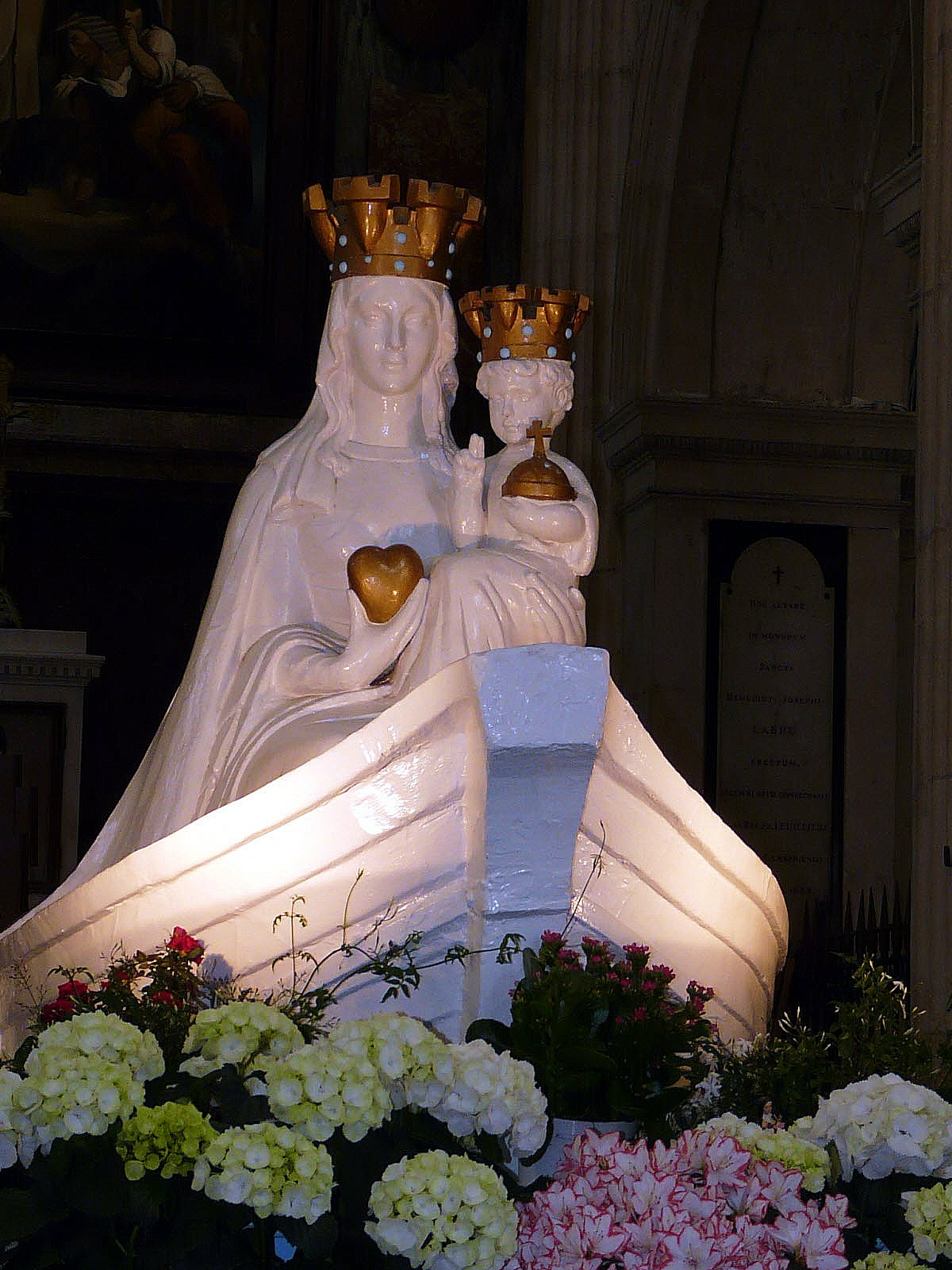
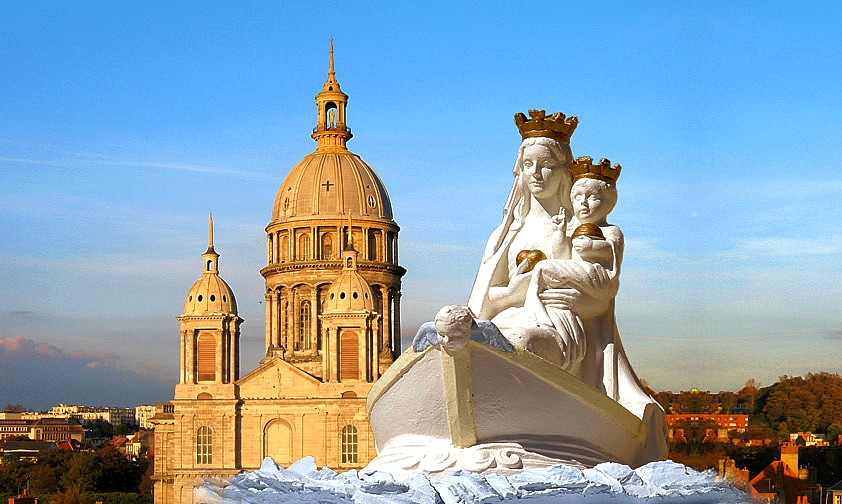
In the year 636, a small group of people standing on the seashore witnessed a boat without oars or sails came into the harbour of Boulogne. It finally came to rest in the estuary, seemingly of its own accord. One of the witnesses boarded the boat and confirmed that there was none aboard, and that the vessel had no rudder, oars or sails. The ship, however, bore a luminous Statue of Our Lady. Taking hold of it to bring it to land, a voice was heard saying, “I choose your City as a place of grace.” The citizens welcomed Mary to their City by erecting a Shrine in her honour, which reached its height of glory in the 12th Century.

King Henry VIII is reported to have stolen the Statue of Our Lady of Boulogne and taken it to England. After many negotiations, the French managed to get it back. The image had been stolen and hidden many other times, but always saved and returned.

World War II almost completely destroyed the Statue. In modern times, four exact replicas of Our Lady of Boulogne toured France for more than seven years as a symbol of French devotion to Mary. One of these was taken to Walsingham, England, in 1948 and carried in procession by the Cross-bearing pilgrims.

Boulogne was one of the most important Lady Shrines of medieval France; among its noted pilgrims have been: Henry III, Edward II, the Black Prince, John of Gaunt.
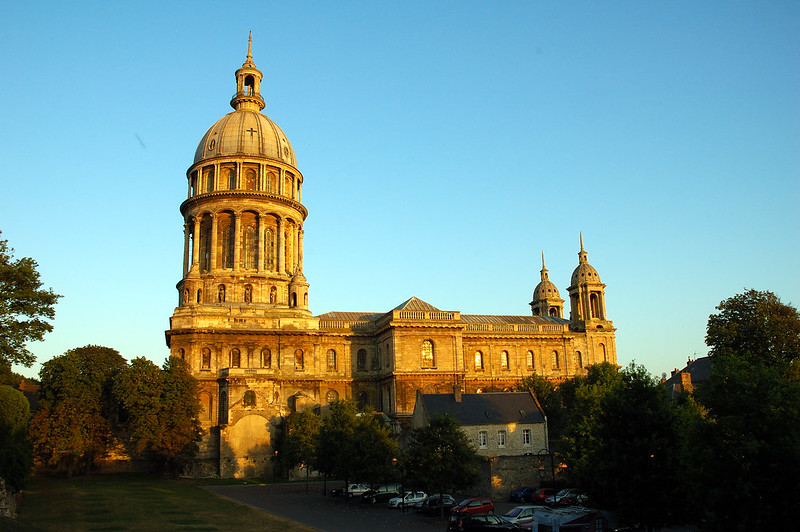
The dedication of a new Church built in honour of Our Lady of Boulogne was Consecrated in the year 1469 by Bishop Chartier of Paris. The confraternity of Our Lady of Boulogne was so celebrated, that six French Kings have chosen to belong to it.

At the French Revolution, the Statue was burnt to ashes and the Church pulled down. A new Statue was made in 1803 and pilgrimages began again. The image represents the Mother with the Child in her arms, standing in a boat, with an angel on either side. At the Marian Congress in Bolougne in 1938, a the custom began, to take replicas of this Statue on visitations through France and abroad. A branch of the Confraternity of Our Lady of Compassion at Boulogne has been established for the reconciliation of the Church of England.

The Sanctuary Church at Boulogne was badly damaged during World War II, and Mary’s image smashed but the return, the “Great Return” of one of the copies of the Statue which had been sheltered at Lourdes, took place in 1943, and the occasion will long be remembered by lovers of the Blessed Virgin Mary. There is an ancient offshoot of this Shrine at Boulogne-sur-Seine.

St Amalberga of Mauberge (Died 690) Wife, Mother of 3 Saints: Gudila, Reinelda, and Emembertus. She and her husband mutually agreed to separate to become a Monk and a Nun, respectively, once the children were grown.

St Anatolia & Victoria (Died 250) Martyrs, Sisters who gave their lives for Christ.

St Antôn Nguyen Huu Quynh

St Apollonius of Sardis
Bl Arnold of Camerino
St Bianor of Pisidia

St Canute IV (c 1042-1086) Martyr, King of Denmark, known as “Canute the Holy.”

St Cuán of Airbhre
St Elilantus
St Etto
Bl Euménios
St Lantfrid
Bl Marie-Gertrude de Ripert d’Alauzier
Bl Parthenios
St Pascharius of Nantes
St Peter Vincioli
St Phêrô Nguyen Khac Tu
St Rufina and St Secunda of Rome (3rd Century) Virgin Martyrs

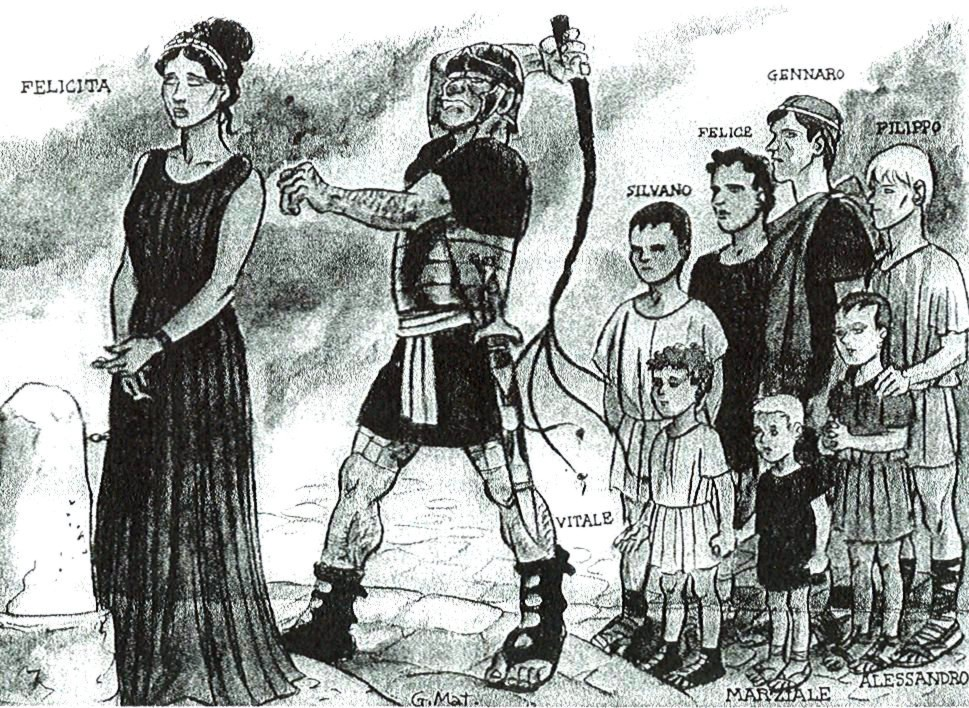
Seven Holy Brothers and their mother, St Felicitas (Died c 165) Martyrs. The Seven Sons of St Felicitas were the very first victims sacrificed by Emperor Marcus Aurelius to satisfy his false philosophy and the superstitions of his pagan subjects. St Felicitas is also celebrated separately on 23 November .

St Sylvanus of Pisidia
Bl Sylvie-Agnès de Romillon
St Waltram

Martyrs of Africa – 4 saints: A group of Christians martyred together in Africa. The only information that has survived are four of their names – Felix, Januarius, Marinus and Nabor.

Martyrs of Antioch – 10 saints: A group of ten Christians martyred together. We have no details about them but the names – Diogenes, Domnina, Esicius, Macarius, Maxima, Maximus, Rodigus, Timoteus, Veronia and Zacheus. They were martyred in Antioch, date unknown.
Martyrs of Damascus – 11 beati: A group of Franciscans and laymen ordered by Druz Muslims to convert to Islam. They refused and were hacked to pieces.
• ‘Abd Al-Mu’ti Masabki
• Carmelo Bolta Bañuls
• Engelbert Kolland
• Francisco Pinazo Peñalver
• Fransis Masabki
• Juan Jacobo Fernández y Fernández
• Manuel Ruiz López
• Nicanor Ascanio de Soria
• Nicolás María Alberca Torres
• Pedro Soler Méndez
• Rufayil Masabki
They were cut to pieces on 9-10 July 1860 in Damascus, Syria.
Beatified on 10 October 1926 by Pope Pius XI.

Martyrs of Nicopolis – 45 saints: A group of 45 Christians tortured and martyred together in the persecutions of emperor Licinius. We know nothing else but six of their names – Anicetus, Anthony, Daniel, Leontius, Mauritius and Sisinno. c 329 in Nicopolis, Armenia (modern Koyulhisar, Turkey).

Martyrs of Nitria – 5 saints: Fathers of Nitria – Four monks and the bishop of Alexandria, Egypt who were martyred by heretics. Saint John Chrysostom wrote about them but their names have not come down to us. They were martyred in the 4th century in Nitria, Egypt.

Posted in SAINT of the DAY

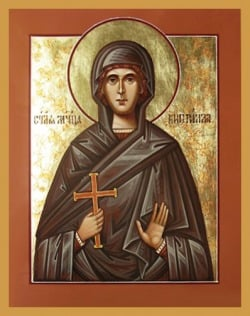
Saints of the Day – 10 July – St Bianor and Silvanus of Pisidia

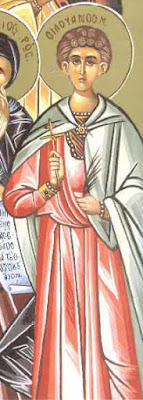
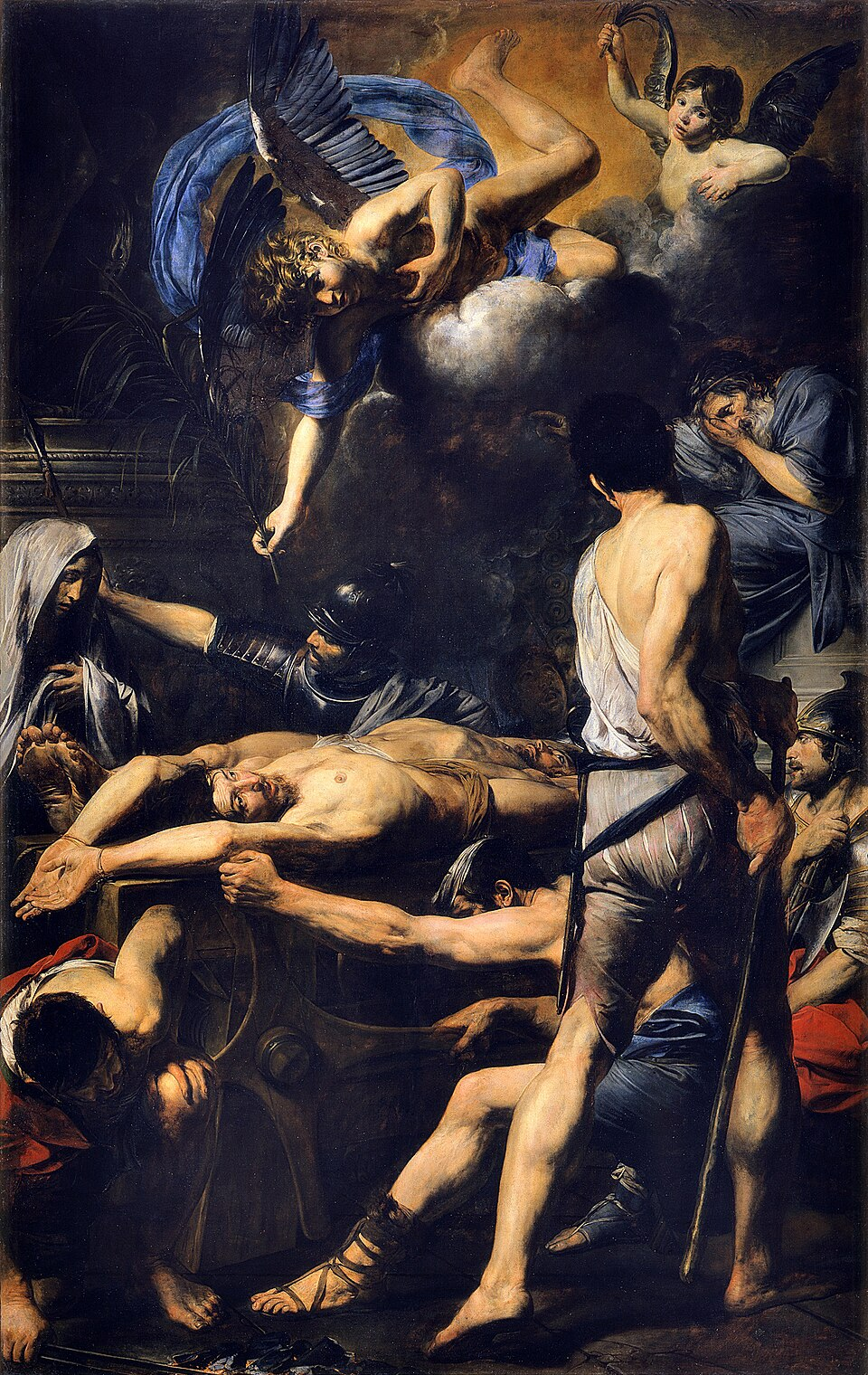
Saint Bianor came from the Pisidia district of Asia Minor. As a confessor of Christianity they brought him to the prefect of the city of Isauria in Lykaonia, who demanded that Saint Bianor renounce Christ. The saint stood steadfast in the true Faith, in spite of the refined tortures applied to him. A man by the name of Silvanus beheld the suffering of the martyr. The endurance and bravery of Saint Bianor inspired Silvanus, and he openly declared his faith in Christ. They cut out his tongue and then cut off his head. Saint Bianor, after long torture, was also beheaded.

The date of the suffering of the holy Martyrs Bianor and Silvanus is not precisely known. It is presumed that they died in Pisidia under the Roman emperor Diocletian (284-305).
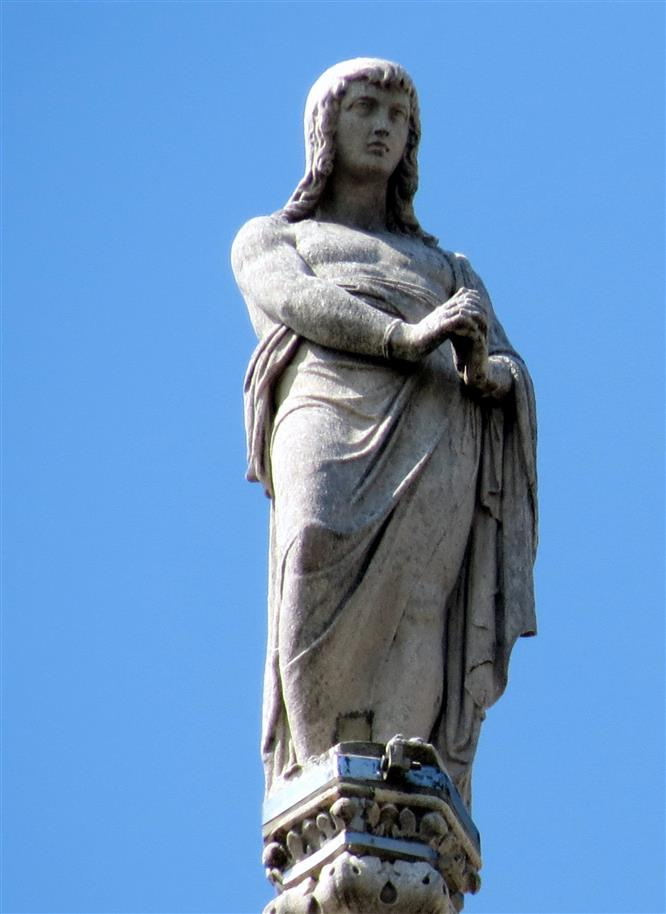
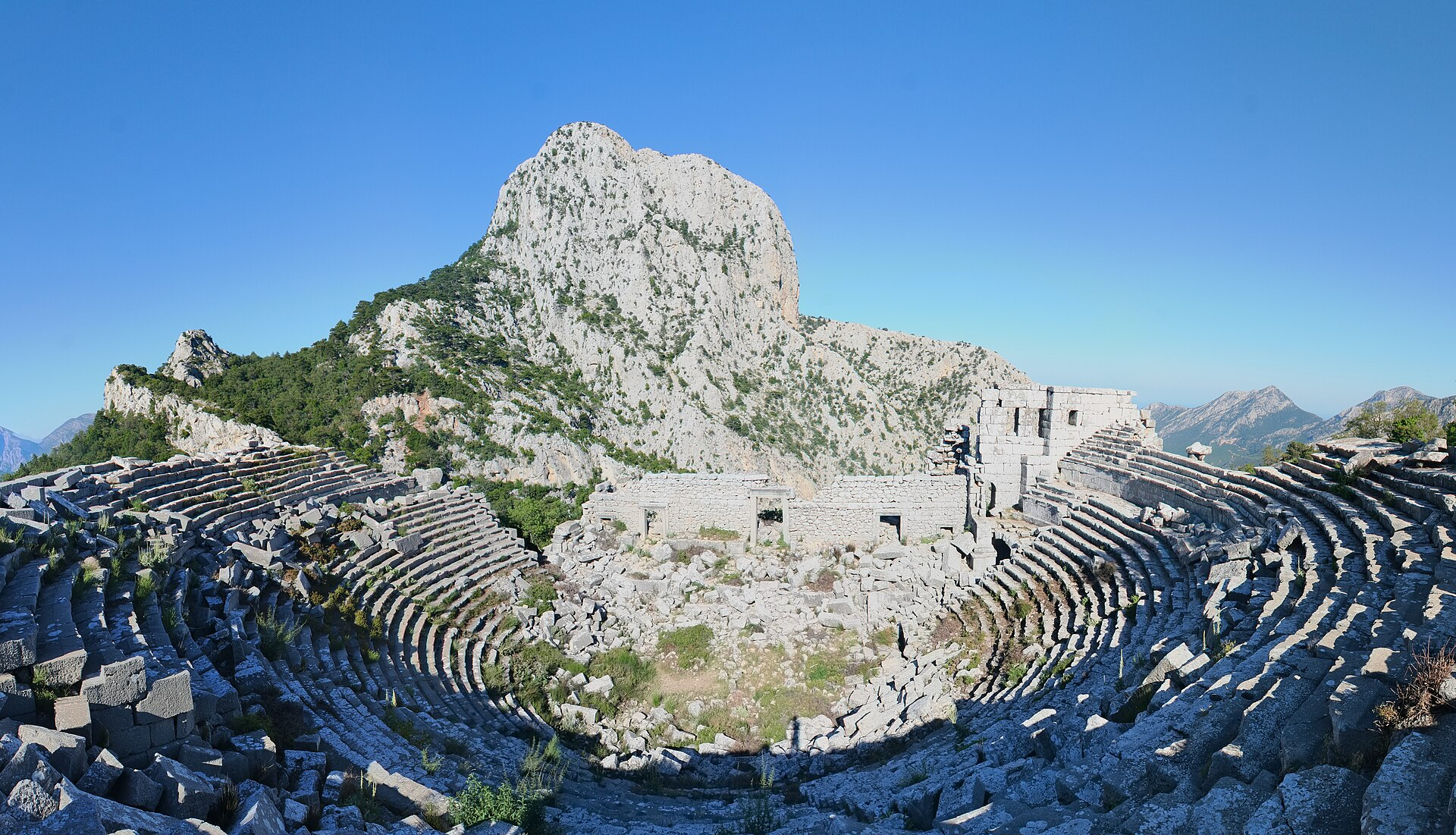
The theatre in Termessos, a Pisidian city.

A 15th-century map showing Pisidia

Posted in SAINT of the DAY

Saints of the Day – 9 July – Sts Victoria, Anatolia and Audax 

‘In the town of Thora, on lake Velino, in Italy, the martyrdom of
the Saints Anatolia and Audax, under the emperor Decius. Anatolia, a virgin consecrated to Christ, cured, through the whole province of Picenum, many persons laboring under various infirmities, and made them believe in Christ. By order of the judge Fustinian, she was condemned to various
kinds of punishments. She was cured of the sting of a serpent to which she had been exposed; a miracle which converted Audax to the faith. Finally
she was transpierced with a sword, whilst her hands were extended in prayer. Audax was committed to prison, and being without delay sentenced
to capital punishment, obtained the crown of a martyr.’

(The Roman Martyrology)

In the time of the Emperor Decius, Anatolia and Victoria were sisters whose marriage was arranged to two noble, non-Christian Roman men. They resisted this. Their prospective grooms were reluctant to denounce them as Christians as that would mean that the women’s possessions would be forfeited to the state, so instead they received permission to imprison the women on their estates and convince them to renounce their faith. Anatolia’s suitor, Titus Aurelius, gave up, and gave her back to the authorities. Victoria’s suitor, Eugenius, was more persistent, but also ended up returning her to the authorities.

Victoria’s legend states that she was stabbed through the heart in 250 AD at Trebula Mutuesca after chasing away a dragon terrorizing the residents in exchange for their conversion. An elaboration states that her murderer was immediately struck with leprosy, and died six days later. Anatolia was killed, also in 250 AD, at Thora. Her legend states that she was at first locked up with a poisonous snake. The snake refused to bite her, and a soldier named Audax was sent into her cell to kill her. The snake attacked him instead, but Anatolia saved him from it. Impressed by her example, he converted to Christianity and was martyred by the sword with her.

Due to the translation of their relics, their cult spread across Italy. Some relics of Saint Victoria were transferred in 827 by Abbot Peter of Farfa from the Abbey to Mount Matenano in the Picene area because the Abbey was besieged by Saracens. The town of Santa Vittoria in Matenano is named after her. Ratfredus, a later Abbot of Farfa, brought the body from Farfa to Santa Vittoria in Matenano on 20 June 931.

The bodies of Anatolia and Audax were transferred by Abbot Leo to Subiaco around 950. At an unknown date, a scapula of Anatolia was translated to the present-day Sant’Anatolia di Borgorose and an arm of the saint was translated to the present-day Esanatoglia. The bodies of Anatolia and Audax still rest at Subiaco in the basilica of Santa Scholastica, under the altar of the sacrament.

St Mary’s Cathedral, Kilkenny, Ireland also claims to hold St Victoria’s body, preserved in wax, along with a chalice containing some of her blood. These were sent to Kilkenny in 1845 by Pope Gregory XVI.

The Abbey of Farfa

Posted in MARIAN TITLES

Our Lady of Chiquinquirá / La Chinita, Colombia and Memorials of the Saints – 9 July

Virgen del Rosario / Our Lady of the Rosary (Chiquinquirá, Boyacá, Colombia) (1586) – 9 July, 26 December:

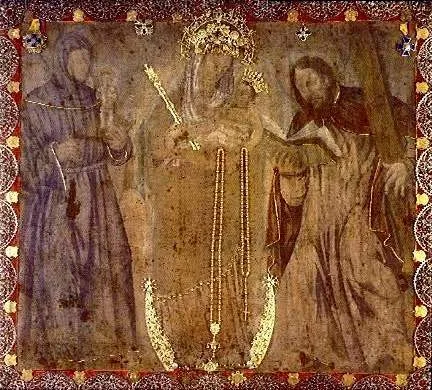
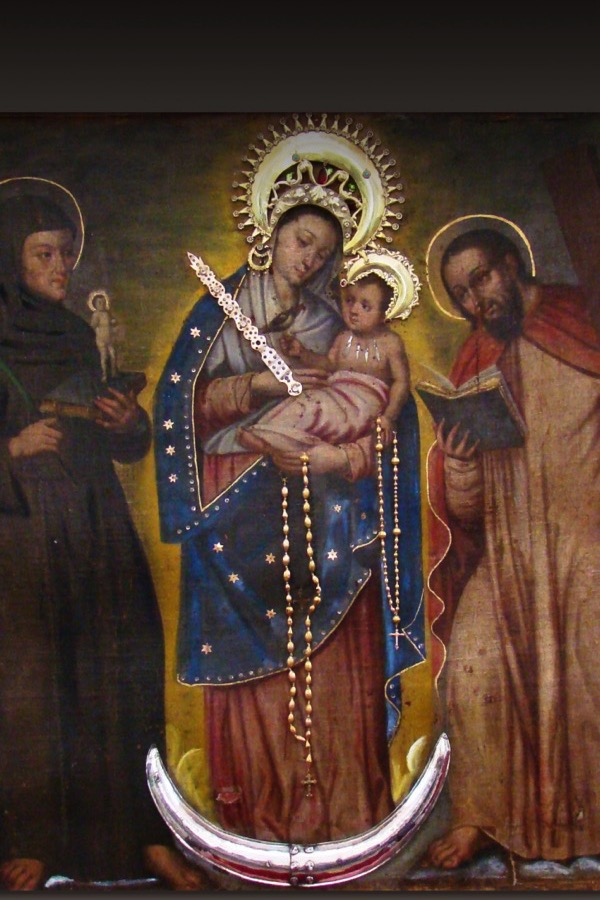
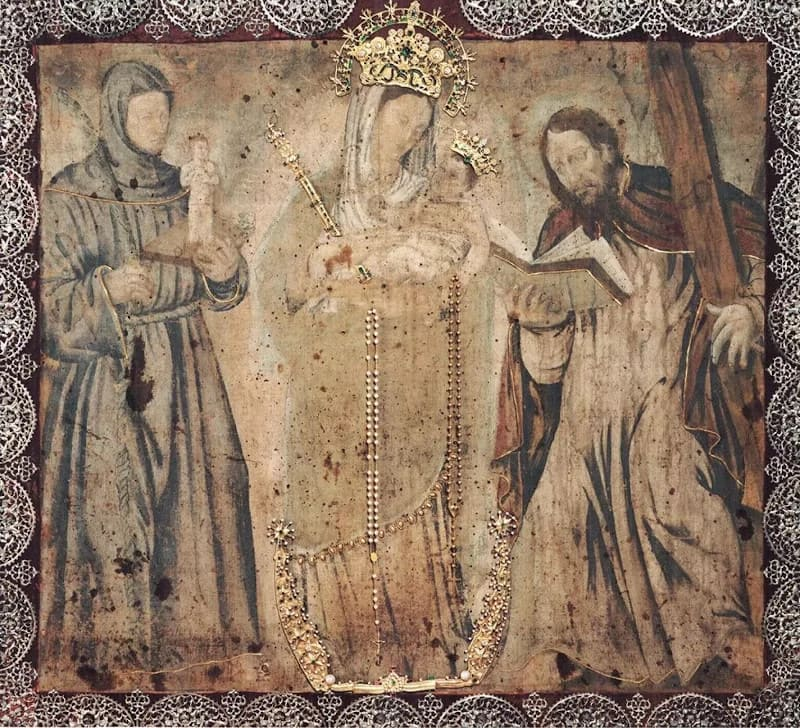
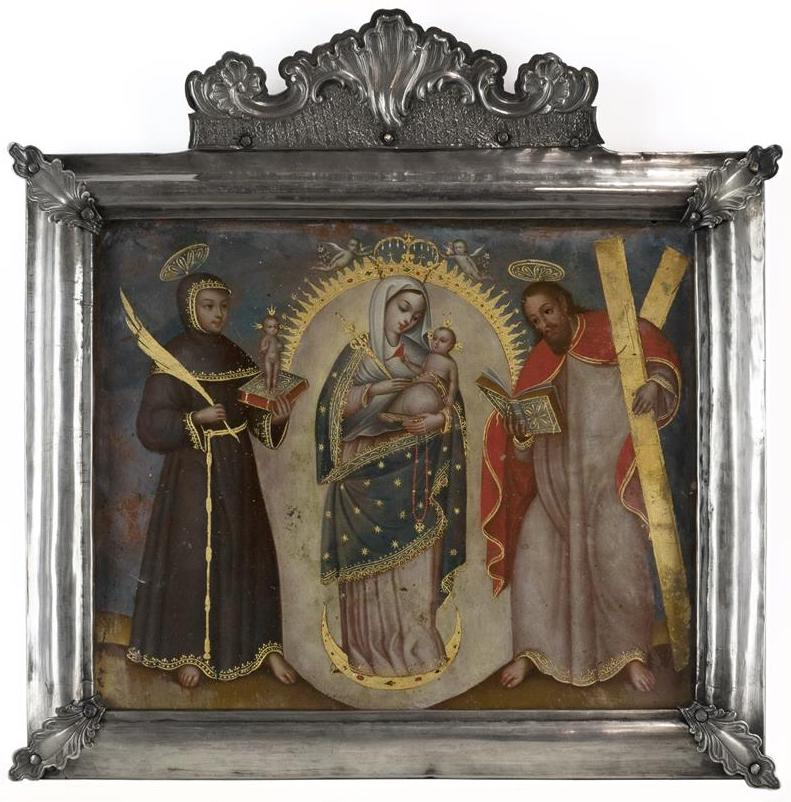
In the mid-16th century the Spanish painter Alonso de Narvaez created a portrait of the Virgin of the Rosary. He painted in pigments from the soil, herbs and flowers of the region of modern Colombia and his canvas was a rough 44 inch x 49 inch cloth woven by local Indians. The image of Mary is about a meter high. She has a small, sweet smile, both her face and the Divine Child’s are light coloured and she looks like she’s about to take a step. She wears a white toque, a rose-coloured robe and a sky blue cape. A Rosary hangs from the little finger of her left hand and she holds a sceptre in her right. She holds the Christ Child cradled in her left arm and looks toward Him. Christ has a little bird tied to His thumb and a small Rosary hangs from His left hand. To either side of Mary stand Saint Anthony of Padua and Saint Andrew the Apostle, the personal Patrons of the colonist, Don Antonio de Santana and Monk, Andrés Jadraque, who commissioned the work.

In 1562 the portrait was placed in a rustic Chapel. It was exposed to the air, the roof leaked and soon the damage caused by the humidity and sun completely obscured the image. In 1577 the damaged painting was moved to Chiquinquirá, Colombia and stored in an unused room. In 1585 Maria Ramos, a pious woman from Seville, cleaned up the little Chapel and hung the faded canvas in it. Though the image was in terrible shape, she loved to sit and contemplate it.

On Friday 26 December 1586 the faded, damaged image was suddenly restored. It’s colours were bright, the canvas cleaner, the image clear and seemingly brand new. The healing of the image continued as small holes and tears in the canvas miraculously self-sealed. It still has traces of its former damage and the figures seem brighter and clearer from a distance than up close. For 300 years the painting hung unprotected and thousands of objects were touched against the frail cotton cloth by pilgrims. This rough treatment should have destroyed it but it healed and survives. In 1829, Pope Pius VII declared Our Lady of Chiquinquirá Patroness of Colombia and granted a special liturgy. In 1897 a thick glass plate was placed over it to shield the painting from the weather and the excess zeal of the faithful. The image was canonically crowned in 1919 and in 1927 her sanctuary declared a Basilica.

Patronages – Colombia, Venezuelan National Guard.

St Augustine Zhao Rong, Priest and Martyr (Died + 1815) and his 119 companions or Martyrs of China (Died 1648–1930, Qing dynasty and Republic of China) (Optional Memorial): 25 priests, friars, nuns, seminarians and lay people. The 87 Chinese Catholics and 33 Western missionaries, from the mid-17th century to 1930, were martyred because of their ministry and, in some cases, for their refusal to apostatise.
Many died in the Boxer Rebellion, in which xenophobic peasants slaughtered 30,000 Chinese converts to Christianity along with missionaries and other foreigners.

Blessed Adrian Fortescue TOSD (1476-1539) Martyr,. A husband and father, a Justice of the Peace, a Knight of the Realm, a Knight of Malta and a Dominican Tertiary (Lay Dominican), he was at once a loyal servant of the Crown so far as he could be but still more, he was a man of unshakeable faith.

St Agrippinus of Autun
St Alexander of Egypt
St Audax of Thora
St Brictius of Martola
St Copra of Egypt
St Cyril of Gortyna
Bl Dionysius the Rhetorician
St Everild of Everingham
St Faustina of Rome
St Felician of Sicily
Bl Fidelis Chojnacki
Blessed Giovanna Scopelli O.Carm (1428 – 1491) Virgin, Religious of the CarmelitesIncorrupt.
St Floriana of Rome
St Hérombert of Minden
St Joachim Ho
Bl Luigi Caburlotto
Bl Marguerite-Marie-Anne de Rocher
Bl Marie-Anne-Madeleine de Guilhermier

St Patermutius of Egypt
St Paulina do Coração Agonizante de Jesus

St Veronica/Ursula Giuliani OSC Cap. (1660-1727) Italian Capuchin Poor Clares nun, Abbot, Mystic, Stigmatist.

Four Holy Polish Brothers – 4 saints: Four brothers who became hermits, Benedictine monks and saints – Andrew, Barnabas, Benedict and Justus. They were born in Poland and died in 1008 of natural causes.

Martyrs of Gorkum – 19 saints: Nineteen martyrs killed by Calvinists for loyalty to the Pope and for their belief in the Real Presence in the Eucharist. They are –
• Adrianus van Hilvarenbeek • Andreas Wouters • Antonius van Hoornaar • Antonius van Weert • Cornelius van Wijk • Francisus de Roye • Godfried van Duynen • Godfried van Melveren • Hieronymus van Weert • Jacobus Lacops • Joannes Lenaerts • John of Cologne • Leonardus van Veghel • Nicasius Janssen van Heeze • Nicolaas Pieck • Nicolaas Poppel • Petrus van Assche • Theodorus van der Eem • Willehad van Deem •
They werehanged on 9 July 1572 in Brielle, Zuid-Holland, Netherlands.
Beatified on 24 November 1675 by Pope Clement X and Canonised on 29 June 1867 by Pope Pius IX.

Martyrs of Orange – 32 beati: 32 nuns from several orders who spent up to 18 months in prison and were finally executed for refusing to renounce Christianity during the persecutions of the French Revolution.
• Anne Cartier • Anne-Andrée Minutte • Dorothée-Madeleine-Julie de Justamond • élisabeth Verchière • élisabeth-Thérèse de Consolin • Jeanne-Marie de Romillon • Madeleine-Françoise de Justamond • Madeleine-Thérèse Talieu • Marguerite-Eléonore de Justamond • Marguerite-Marie-Anne de Rocher • Marguerite-Rose de Gordon • Marguerite-Thérèse Charensol • Marie Cluse • Marie-Anastasie de Roquard • Marie-Anne Béguin-Royal • Marie-Anne Depeyre • Marie-Anne Doux • Marie-Anne Lambert • Marie-Anne-Madeleine de Guilhermier • Marie-Claire du Bac • Marie-Clotilde Blanc • Marie-Elisabeth Pélissier • Marie-Gabrielle-Françoise-Suzanne de Gaillard de Lavaldène • Marie-Gertrude de Ripert d’Alauzier • Marie-Marguerite Bonnet • Marie-Marguerite de Barbégie d’Albrède • Marie-Rose Laye • Rosalie-Clotilde Bes • Suzanne-Agathe Deloye • Sylvie-Agnès de Romillon • Thérèse-Henriette Faurie
They were guillotined between 6 July and 26 July 1794 at Orange, Vaucluse, France.
Beatified on 10 May 1925 by Pope Pius XI.

Martyrs of the Baths – 10,204 saints: A group of Christians enslaved by Diocletian to build the gigantic baths in imperial Rome, Italy. The end of their labours coincided with the beginning of the great persecutions of Diocletian and they were all executed. Ancient records indicated there were 10,204 of them; Zeno of Rome is the only one whose name has come down to us and we know nothing else about any of their individual lives.

Posted in SAINT of the DAY

Saint of the Day – 6 July – St Tranquillinus of Rome

‘At Rome, the holy martyr Tranquillinus, father of the holy martyrs Mark and Marcellian. He had been converted to Christ by the preaching of the holy martyr Sebastian, baptized by the blessed Priest, Polycarp, and himself ordained a Priest by the holy Pope Caius. He was praying at the grave of blessed Paul, upon the Octave Day of the Apostles, when the pagans under the Emperor Diocletian tried and stoned him. And so he finished his testimony, (in the year 286.)’ (Roman Martyrology)

Posted in SAINT of the DAY

Saint of the Day – 5 July – Saint Cyrilla of Cyrene

Saint Cyrilla of Cyrene, also known as Cyrilla of Libya, Ciprilla, Cirilla, Cypria, or Cyprille, was an elderly widow who lived during the time of the persecutions of Emperor Diocletian. She was a devout Christian who refused to worship idols, no matter what she was threatened with. Coming from the city of Cyrene in Libya, her unbreakable faith made her a target for the pagan authorities. Despite her advanced age, she became one of the countless victims of the brutal persecution campaign. The barbaric Romans concocted a wicked ploy to force her to make a sacrifice to their gods by placing live coals and incense in her bare hands, so as to force her to drop the flaming mass onto the altar and make it appear as though she had consented.

But, demonstrating heroic fortitude and resolution, she instead clung tightly to the coals, refusing to cooperate with the demon worshippers. Her refusal to renounce her faith left her tormentors astounded and enraged. Undeterred by her unwavering commitment to the faith, they resorted to further extreme measures. They subjected her to various forms of torture in an attempt to break her spirit, but she remained utterly resolute in her commitment to Christ. Ultimately, Cyrilla was tortured to death. Her body was torn apart with metal hooks, an experience she endured with incredible bravery and unwavering faith.

Posted in SAINT of the DAY

Saint of the Day – 3 July – St Hyacinth of Caesarea

Hyacinth was a native of Caesarea in Cappadocia, and a member of a Christian family. As a boy, he was appointed to serve as an assistant to the chamberlain to the Emperor Trajan. His failure to participate in the sacrifices to the official Roman gods soon came to be noticed by other members of the Imperial household. One day, while the emperor and his entourage were offering sacrifice to idols, Hyacinth remained at the palace, shut himself up in a small room, and prayed fervently to the Lord Jesus Christ. One of the servants overheard him praying and denounced him to the emperor.

When he was denounced as a Christian, Hyacinth proclaimed his faith. He was brought to trial before Trajan, who tried to persuade him to deny Christ and sacrifice to idols, but the young boy refused. As a result, he was imprisoned and underwent numerous scourgings and tortures. He was deliberately served only food which had been blessed for sacrifice to the gods, the eating of which was banned to Christians. Thus, he starved to death after thirty-eight days, dying at the age of twelve. Just before his death, his jailers saw him being comforted by a pair of angels, one who covered him with his own robe, the other who bestowed a crown on him.

Hyacinth died in the city of Rome. Later, his relics were transferred to Caesarea.

Posted in MARIAN TITLES

Notre Dame de la Visitation / Our Lady of the Visitation, Lescure, Valuéjols, Cantal, Auvergne, France (1717) and Memorials of the Saints – 2 July

Our Lady of the Walnut
Our Lady of Madhu
Our Lady of Montallegro
Our Lady of the Grove
Our Lady of the Leśniów Spring
Our Lady of the Visitation
Our Lady of the Way of Leon
Our Lady of Vaussivieres

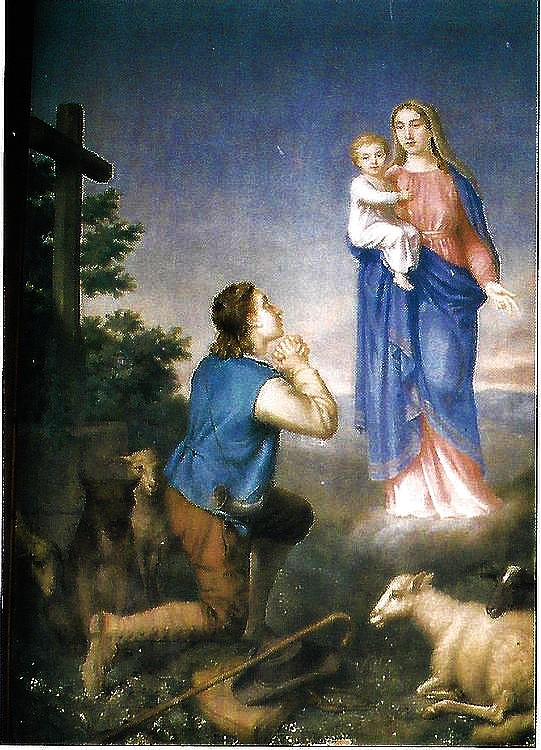
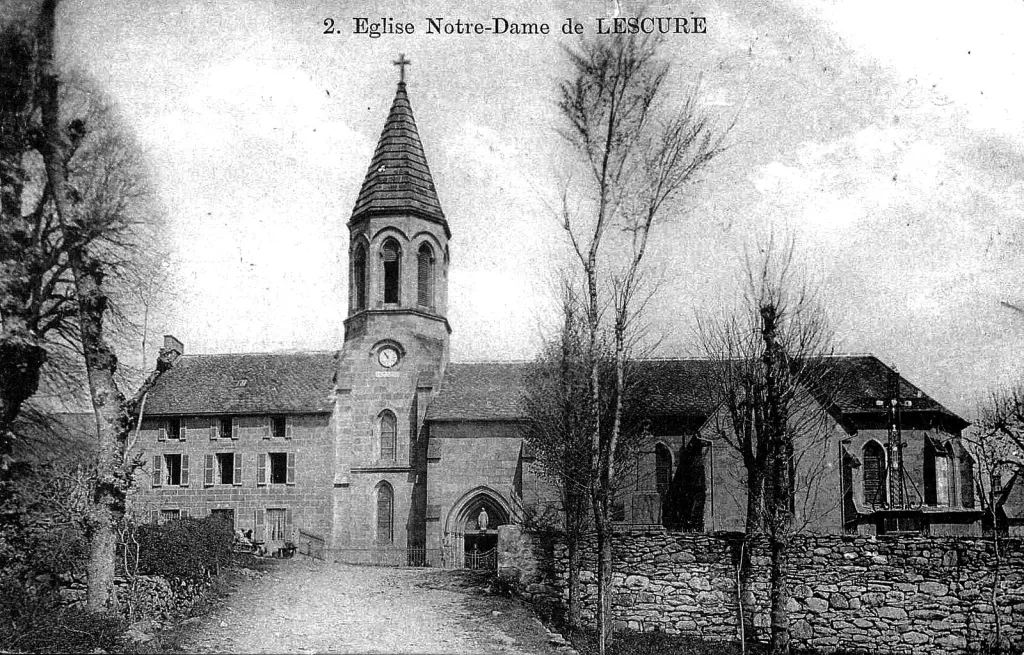
Notre Dame de la Visitation / Our Lady of the Visitation, Lescure, Valuéjols, Cantal, Auvergne, France (1717) – Commemorated on the Fourth Sunday of June, 2 July :

At around 19 years old, Shepherd Jean Paillé was devoted to the Virgin Mary, and would daily lead his flock, from his little village in central France ,to a wayside Cross on a bluff, where he would kneel to say the Rosary. On 2 July, 1717, his prayers at the Cross were met by an apparition of the Virgin herself, who asked that a Church be built on that spot, leaving behind a small Statuette of herself at the foot of the Cross. She returned several times with the same request. Finally, Jean answered, “But no one will believe me.” “Keep telling the people of Lescure,” she said “and eventually they will listen.” Both were right. When the shepherd mustered the courage to tell the villagers about his visions, they ridiculed him as a simpleton. So he built a small Shrine in the holy place himself, of dry stone, placing the Statuette inside it.

When bad weather threatened, Jean would go there to pray for help. Seeing those prayers answered, the villagers began to believe in his communication with the Virgin and decided to build her a Church in the village. Jean argued that the Holy Virgin wanted her Church on the promontory but wanting the convenience of building and having it in town, the people built the new Church in Lescure and installed the Statuette there. But, the next day, it had returned to the bluff. Jean was suspected of moving it but the same thing kept happening, even with the shepherd under watch, so finally everyone agreed, that Heaven wanted the Virgin’s Chapel to be on the heights and not in the town. This time Jean Paillé himself organised the work. Building materials poured in, which oxen carried up the hill as easily if they were made of feathers.
In 1724, some 3,000 pilgrims camped in the open air to witness the Consecration of the new Church. The Bishop’s delegate dedicated the Sanctuary to Our Lady of the Visitation, in memory of the first apparition date, 2 July, then the Catholic Feast of the Visitation, commemorating the visit of Mary, pregnant with Jesus, to her cousin Elizabeth, pregnant with John the Baptist. In recent years, the Feast of the Visitation has been moved to 31 May and the Solemnity of Our Lady of Lescure to the last Sunday in June.

She is invoked against illness, of the sick and for cures.
Notre-Dame de Lescure, santé des infirmes, priez pour nous.
Our Lady of Lescure, health of the sick, pray for us.

Bl Benedict Metzler

St Bernadino Realino SJ (1530-1616) Priest of the Society of Jesus, Lawyer, Teacher, Apostle of Charity. 
Biography:

https://anastpaul.com/2017/07/02/saint-of-the-day-2-july-st-st-bernadino-realino-sj/

Servant of God Bernard of Quintavalle OFM ( Died 1q241) “The First fruits of the Minor Orders” – The First Follower of St Francis of Assisi.

Blessed Eugénie Joubert (1876–1904) Religious of the Sisters of the Holy Family of the Sacred Heart She died aged 28.
Her Life:

https://anastpaul.com/2019/07/02/saint-of-the-day-blessed-eugenie-joubert-1876-1904/

Bl Giovanni da Fabriano Becchetti
St Jacques Fermin
Bl Jarich of Mariengaarde
St Jéroche
St Lidanus of Sezze
St Martinian of Rome
St Monegundis
St Oudoceus

Blessed Peter of Luxembourg (1369-1387) Bishop and Cardinal. Because of his prudence and sanctity, at the early age of fifteen he was appointed Bishop of Metz.   He made his public entry into his See barefoot and riding on a donkey.
About Blessed Peter:

https://anastpaul.com/2018/07/02/saint-of-the-day-2-july-blessed-peter-of-luxembourg-1369-1387/

Bl Pietro Becchetti da Fabriano
St Processus of Rome

St Swithun (c 800-863) Bishop of Winchester, Miracle-worker.
About St Swithun:

https://anastpaul.com/2020/07/02/saint-of-the-day-2-july-saint-swithun-c-800-863-bishop/

Martyred Soldiers of Rome – 3 saints: Three soldiers who were converted at the martyrdom of Saint Paul the Apostle. Then they were martyred, as well. We known nothing else about them but their names – Acestes, Longinus and Megistus. Martyred c68 in Rome, Italy

Martyrs in Carthage by Hunneric – 7 saints: A group of seven Christians tortured and murdered in the persecutions of the Arian Vandal king Hunneric for remaining loyal to the teachings of orthodox Christianity. They were some of the many who died for the faith during a period of active Arian heresy. – Boniface, Liberatus, Maximus, Rogatus, Rusticus, Septimus and Servus.

Martyrs of Campania – 10 saints: A group of ten Christians marytred together in the persecutions of Diocletian. The only details about them to have survived are their names – Ariston, Crescention, Eutychian, Felicissimus, Felix, Justus, Marcia, Symphorosa, Urban and Vitalis. Martyred in 284 in Campania, Italy.
Martyrs of Seoul – 8 saints: Additional Memorial – 20 September as part of the Martyrs of Korea.

A group of eight Christians who were martyred together as part of the lengthy persecutions in Korea.
• Agatha Han Sin-ae
• Antonius Yi Hyeon
• Bibiana Mun Yeong-in
• Columba Gang Wan-suk
• Ignatius Choe In-cheol
• Iuliana Gim Yeon-i
• Matthaeus Gim Hyeon-u
• Susanna Gang Gyeong-bok
They were martyred on 2 July 1801 at the Small West Gate, Seoul, South Korea. Beatified on 15 August 2014 by Pope Francis.

Posted in Uncategorized

Saint of the Day – 2 July – St Martinian of Rome

Saint of the Day – 2 July – St Martinian of Rome

Saint Martinian of Rome was a member of the Praetorian Guard, the soldiers tasked with guarding the emperor. Assigned as the warden of Saint Peter and Saint Paul in the Mamertine Prison, the apostles converted him after a spring flowed miraculously in the prison. Peter then baptized him in these miraculous waters, which then led to Martinian’s own imprisonment within that very prison.

During his imprisonment, Martinian experienced visions and spiritual encounters that strengthened his resolve. Saint John the Baptist appeared to him, encouraging him in his suffering and reaffirming his faith. This spiritual encounter bolstered Martinian’s courage and determination to face martyrdom rather than renounce Christianity.

By order of the emperor Nero, Martinian was then tortured and beheaded. After his martyrdom with Paul, Lucina, a sympathizer, buried him in her own cemetery along the Aurelian Way. Pope Paschal I (817–824) translated the bones of the martyr to a chapel in the old Basilica of St. Peter. They still rest under the altar dedicated to him (and his fellow martyr, Processus) in the south transept of the present St. Peter’s Basilica.

Posted in Uncategorized

Saint of the Day – 1 July – St Nicasius of Jerusalem

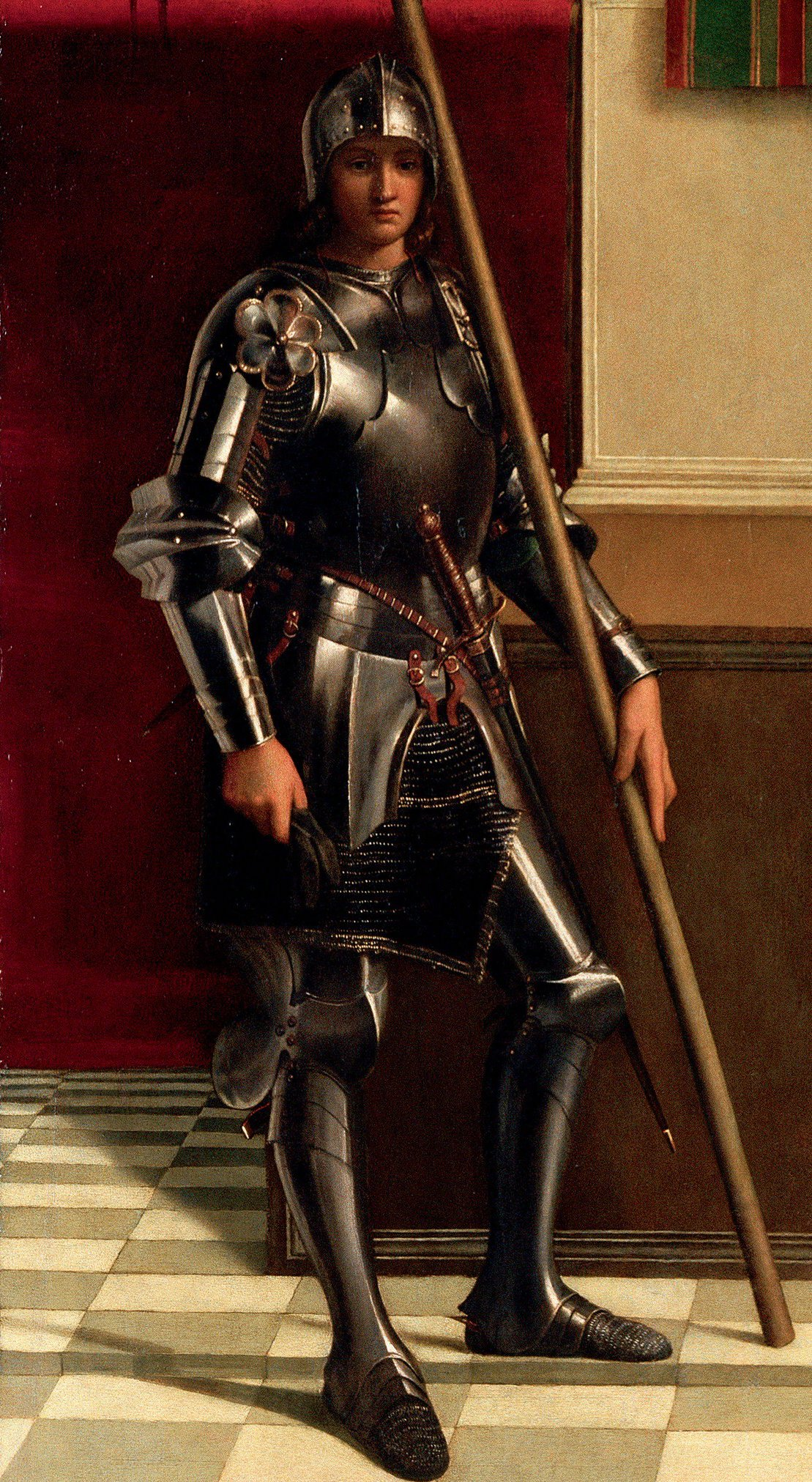
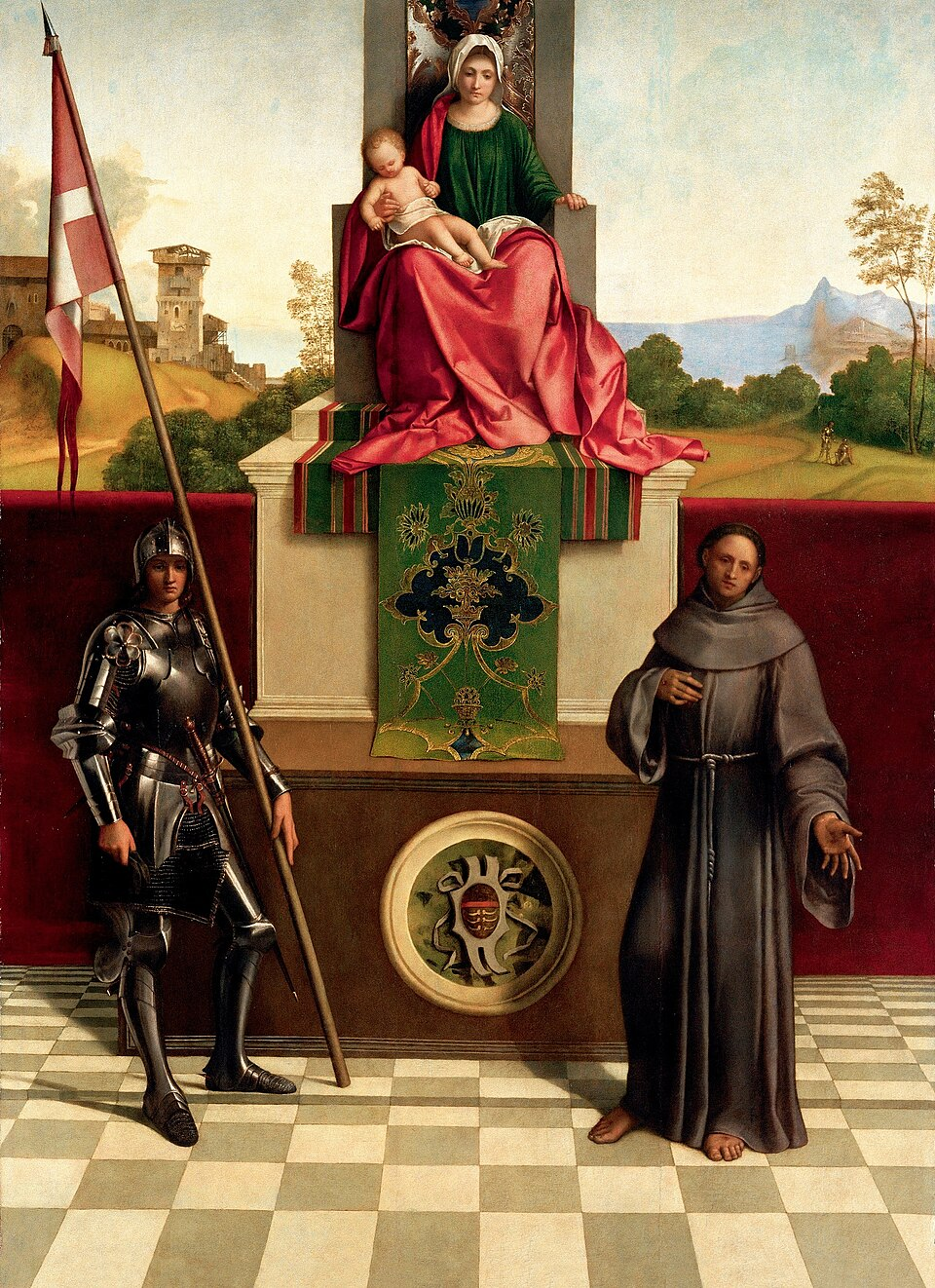
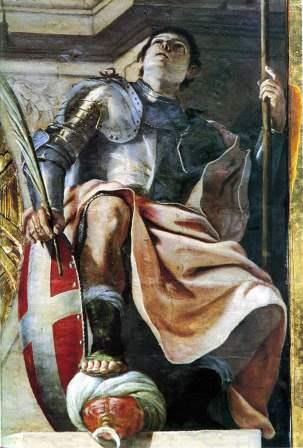
Saint Nicasius of Jerusalem, was born around 1135 in Sicily, Italy. The son of Roberto de Burgio and his wife Aldegonda, Nicasius descended from the Saracens on his father’s side and from the Normans on the mother’s. He joined the Knights Hospitaller with his brother, Ferrandino, and in 1185 they answered the call of Roger de Moulins and travelled to the Holy Land.

The Order of Saint John of Jerusalem (now known as the Order of Malta) was a monastic community founded to care for the sick and pilgrims traveling to the Holy Land. With the creation of the Kingdom of Jerusalem, the Order added a military side to its religious character, because it now had to defend pilgrims and the sick, together with the Holy Places and all of Christianity, as well as care for them. Care for the sick and pilgrims, commitment to Christian solidarity, justice and peace according to evangelical teaching, and the defense of the Christian faith were the basis of the Order. Nicasio and his brother took the three monastic vows of Poverty, Chastity, and Obedience.

As a captain, Nicasius fought in the defense of Acre, and during the battle he was captured by the Saracens. They demanded that he renounce his Christian faith and convert to Islam. But he remained steadfast and refused to renounce Christianity, choosing martyrdom over apostasy. He was decapitated in the presence of Saladin himself.

Saint Nicasius is particularly venerated in Caccamo, Italy. Numerous miracles were obtained there through the intercession of this glorious martyr, amongst them deliverances from the plague in 1575 and 1624. Saint Nicasius is invoked to free supplicants from terror, from infectious diseases, from maladies of the throat, neck, and lymph glands, and for the healing of scrofula.

Posted in Uncategorized

Saint of the Day – 30 June – Blessed Philip Powell OSB (1594 – 1646) Priest, Martyr, Benedictine Monk

Saint of the Day – 30 June – Blessed Philip Powell OSB (1594 – 1646) Priest, Martyr, Benedictine Monk – born on 2 February 1594 in Tralon, Brecknockshire, England and died by being hang, drawn and quartered on 30 June 1646 at Tyburn, London, England. He is  also remembered on 4 May with the Forty Martyrs of England and Wales. Also known as – Philip Morgan, Philip Powel, Philip Prosser.

Philip Powell was the son of Roger and Catherine Powell (nee Morgan) and was brought up to the law by David Baker, afterwards Dom Augustine Baker OSB. At the age of sixteen he became a student in the Temple, London but went to Douai three or four years later to study for the Priesthood.

He was Ordained a Priest in 1618 and was professed a Monk on 15 August 1619, having studied under Dom Leander Jones OSB.   He was next made Cellarer of St Gregory’s Monastery, Douai and then was sent on the English mission on 7 March 1622. He lived with Dom Baker OSB for sixteen months in Gray’s Inn Lane, London. For the following twenty years he was Chaplain to various families in Devon and Somerset until the Civil War broke out.

After serving as a Chaplain to Royalist troops, he tried to make his way to Monmouthshire in 1646. He was arrested off the Mumbles on 22 February 1646 by Capt Crowther, who kept him confined in his ship for two months in Penarth Roads and then sent him by sea to London. There he was confined in St Catherine’s Gaol, Southwark, where the harsh treatment he received brought on a severe attack of pleurisy.

His trial, which had been fixed for 30 May, did not take place till 9 June, at Westminster Hall. He was found guilty of being a Catholic Priest and was hanged, drawn and quartered at Tyburn.

It is recorded that when informed of his death sentence, Powell exclaimed “Oh what am I, that God thus honours me and will have me to die for His sake?” and called for a glass of sack (or sherry).

At the instance of the Common Council of London, his head and quarters were not exposed but were buried in the old churchyard at Moorfields.

The Martyr’s Crucifix, which had formerly belonged to Feckenham, last Abbot of Westminster, is preserved at Downside, with some of his hair and a cloth stained with his blood.

He was Beatified by Pope Pius XI on 15 December 1929.

Posted in MORNING Prayers, PRAYERS of the SAINTS, SAINT of the DAY

Our Morning Offering – 24 March – The Memorial of Bl ÓSCAR ROMERO (1917-1980) Martyr

Our Morning Offering – 24 March – The Memorial of Bl ÓSCAR ROMERO (1917-1980) Martyr

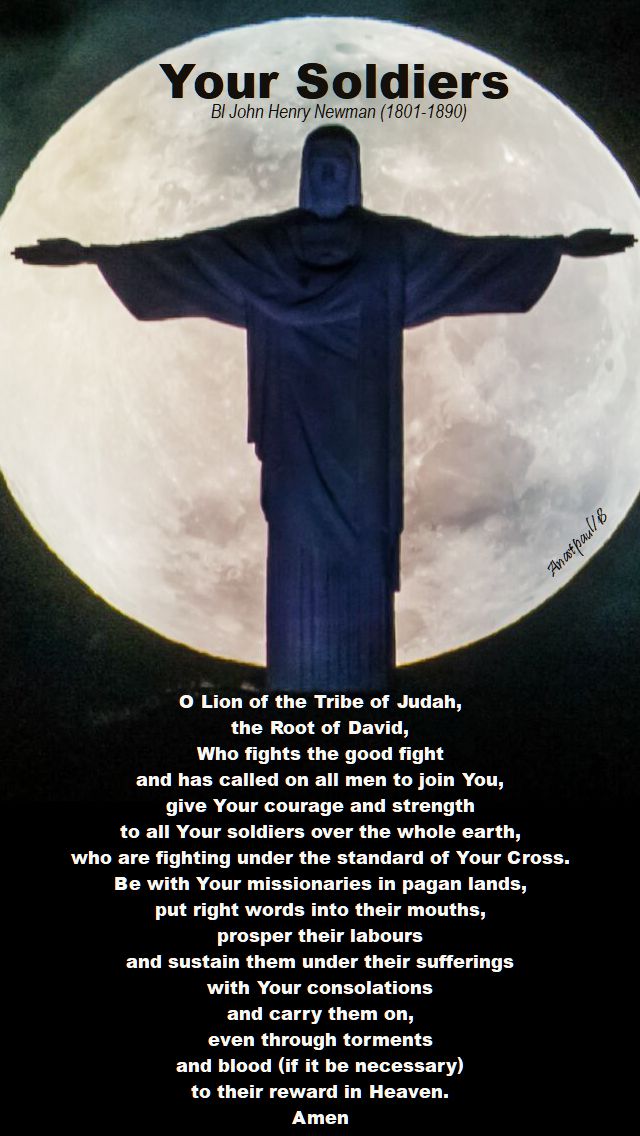
Your Soldiers
Blessed John Henry Newman (1801-1890)

O Lion of the Tribe of Judah,
the Root of David,
Who fights the good fight
and has called on all ment to join You,
give Your courage and strength
to all Your soldiers over the whole earth,
who are fighting under the standard of Your Cross.
Be with Your missionaries in pagan lands,
put right words into their mouths,
prosper their labours
and sustain them under their sufferings
with Your consolations
and carry them on,
even through torments
and blood (if it be necessary)
to their reward in Heaven.
Ameno lion of the tribe of judah - your soldiers - bl john henry newman - prayer for martyrs - 28 aug 2018 and 24 march 2018