Saint of the Day – 31 October – St Foillan of Fosses (Died 655) Bishop, Martyr, Missionary, Abbot. Born in the 7th Century in Ireland and died by murder on 31 October 655 in the forest near Nivelles, Belgium, Patronages – children’s nurses, dentists, Fosses, Belgium, surgeons, truss makers, Diocese of Mechelen and Tournai., Belgium. Also known as – Faelan, Faillan, Faolan, Feuillien, Foalan, Foelan. Additional Memorial – 5 November in the Diocese of Mechelen and Tournai.
Foillan was one of the numerous Irish missionaries who, in the course of the seventh century, evangelised in Europe, bringing the liturgy and sacred vessels, founding prosperous Monasteries and sharing considerably in the propagation of the Faith in these countries. Foillan played a significant part in Frankish ecclesiastical history, as shown by his share in the direction of Nivelles and by the foundation of the Monastery of Fosses-la-Ville.
Foillan was born in Ireland early in the seventh century and was the brother of Saints Ultan and Fursey, the latter a famous Missionary who preached the Faith to the Irish, the Anglo-Saxons and the Franks. Foillan, probably in company with Ultan, went with his brother Fursey, when the latter, fleeing from his country then devastated by foreign invaders, retired to a lonely islands. Fursey soon went among the Anglo Saxons and built a Monastery at Burgh Castle (Cnoberesburg) in Suffolk, between 634 and 650.
Seized again with the desire for solitude, Fursey left the Monastery in the care of Foillan, who remained at the head of the community and had the happiness of once more seeing his brother Fursey, who, having since gone to the kingdom of the Franks, came to visit him about 650. Soon a disastrous war broke out between Penda, the Mercian Chief and Ana, King of the Eastern Anglo-Saxons. Ana, having been put to flight, the Monastery of Cnoberesburg fell into the hand of the enemies. It was pillaged,and its Abbot, Foillan, barely escaped death. He hastened to ransom the captive Monks, recovered the relics, put the holy books and objects of veneration on board ship and departed for the country of the Franks, where his brother Fursey was buried. He and his companions, were well received at Péronne by Erconwald, Mayor of the Palace. But soon, for some unknown reason, Foillan and his companions left Péronne and went to Nivelles, a Monastery founded by St Ita and St Gertrude, wife and daughter of Duke Pepin I.
Foillan, like so many other Irishmen who went to the Continent in the seventh century, was invested with episcopal dignity, having doubtless been a monastic Bishop at Cnoberesburg. He was, therefore ,of great assistance in the organisation of worship and the holy books and relics, which he brought, were great; treasures for St Ita and St Gertrude. As the Monastery of Nivelles was under Irish discipline, the companions of Foillan were well received and lived, side by side, with the holy women, occupying themselves with the details of worship under the general direction of the Abbess. Through the liberality of Ita, Foillan was enabled to build a Monastery at Fosses, not far from Nivelles, in the Province of Namur.
The Church at Fosses
After the death of Ita in 652, Foillan came one day to Nivelles and sang Mass, on the eve of the feast of St Quentin. The ceremony being finished, he resumed his journey, doubtless undertaken in the interests of his Monastery. In the forest of Senege the Saint and his companions fell into a trap set by bandits who inhabited that solitary place. They were slain, stripped, and their bodies concealed. But they were recovered by St Gertrude and when she had taken some relics of the Saint, his body was borne to the Monastery of Fosses, where it was buried in 655.
It is not surprising, after his death and because of his work in the area, that St Foillan should be honoured and venerated both at Nivelles and Fosses and, to find at Le Roeulx (Belgium) a Monastery bearing his name. As late as the twelfth century the veneration in which he was held, inspired Philippe Le Harvengt, Abbot of Bonne-Espérance, to compose a lengthy biography of the Saint. He is the Patron of Fosses, near Charieroi. In the Diocese of Namur his feast is celebrated on 31 October, in the Dioceses of Mechlin and Tournai on 5 November.
Saint of the Day – 18 October – St Amabilis of Auvergne (c 397- c 475) Priest, Confessor, Miracle-worker. Tradition tells that snakes and demons fled from his voice, often the images and medals depicting him bear the words “The demons flee as well as snakes and fire.” Born probably in Rimo, France in c 397 and died in Auvergne in c 475 of natural causes. Patronages – against demonic possession, against fire, against mental illness, against poison, against snake bite, against wild beasts, of Auvergne, France, of Riom, France. Also known as – Amabilis of Riom, Amabilis the Cantor. Additional Memorial – 1 November.
In the sixth century, St Gregory of Tours in his ‘De gloria confessorum,’ described the popular belief in this Saint’s power over demons and serpents as well as the veneration at his tomb. Gregory reports that he, himself witnessed two miracles there.
Notice the snake at his feet
Amabilis served as a Cantor in the Church of Saint Mary at Clermont and then as the Precentor at Clermont Cathedral . Later as Parish Priest at Riom, where, in 1120, a Church was dedicated to him. He acquired a reputation for holiness in his lifetime.
In the seventh century his relics were transferred to Riom from Clermont. Riom grew up around the collegiate Church of Saint Amable, which was the object of pilgrimages. In the eighteenth century a dispute occurred over these relics between neighbouring Clermont and Riom, where Amabilis is Patron.
Chapel of St Amabilis in the Church dedicated to him at Riom
Relics
St Amabilis Church
Public processions in his honour have been traditional in Riom for more than 1500 years, where he is invoked against fire and snakes. Father Antoine Déat, a Missionary in Canada , introduced his cult to North America, where he is also still venerated today. A chapel is dedicated to him in the Notre-Dame Basilica in Montreal.
Saint of the Day – 17 October – Blessed Contardo Ferrini TOSF (1859-1902) Layman, Third Order Franciscan, Profesor, Civil and Canon Lawyer, Apostle of the poor, writer, A recognised specialist in Roman and Byzantine law, Contardo Ferrini was a Professor at several Universities but his name is mainly linked to the University of Pavia , where he studied in 1880 and later became a Professor. He was also a fervent Roman Catholic, who lived a devout life of prayer and service to the poor. Born on 4 April 1859 at Milan, Italy and died on 17 October 1902 at Suna, Verbano-Cusio-Ossola, Italy of typhus, aged 43. Patronages – academics, colleges, schools, universities.
The Roman Martyrology mentions him today: “In Suna near Lake Maggiore, Blessed Contardo Ferrini, who, in educating young people, with his example of faith and Christian life, went far beyond human science.“
Contardo Ferrini was born on 5 April 1859 in Milan to Rinaldo Ferrini and Luigia Buccellati. He was Baptised at the font where Blessed Frédéric Ozanam, also a native of Milan, had been Baptised 46 years before. After receiving his First Holy Communion at age 12, he joined a Blessed Sacrament Confraternity.
Contardo’s father, a Professor of mathematics and science, taught his son at an early age. By the time he was a young man, he spoke several languages. His apparent love for his faith caused friends to call him by the nickname St. Aloysius (St. Aloysius Gonzaga). He entered University of Pavia at age 17 and, two years later, was appointed Dean of Students. At age 21 he became a Doctor of the law at the University. His doctoral thesis, which related penal law to Homeric poetry, was the basis of his being awarded a scholarship to the University in Berlin, where he specialised in Roman-Byzantine law, a field in which he became internationally acclaimed as expert.
Blessed Bartholomew Longo and Contardo Ferrini
During Contardo’s stay in Berlin, he wrote of his excitement at receiving the Sacrament of Reconciliation for the first time in a foreign country. The experience brought home to him, he wrote, the universality of the Church.
Upon his return to Italy, he was a Lecturer in Universities at Messina, Modena and Pavia. He received his first Professorship at age 26. Contardo, atthis time, attempted to discern a vocation as a secular priest, a religious, or as a married person. Ultimately, he remained an unmarried layperson. He vowed himself to God, became a member of the Third Order of St. Francis in 1886 and was a member of the Saint Vincent de Paul Society, to which he had been introduced by his father, a member of a St Vincent de Paul Conference himself.
As a faculty member at the University of Pavia, he was considered an expert in Roman Law. Over the course of his career he published books, articles and reviews. He taught for a time at the University of Paris. He became a Canon Lawyer in addition to being a Civil Lawyer. Mountaineering was an favourite hobby.
An anecdote, unsourced, about Contardo is that he was asked to attend a dinner party and, once there, found it tedious. His resort was to invite all the guests to join him in praying the Rosary.
In 1900, Contardo developed a heart lesion. In Autumn 1902, he went to his country home in Suna in order to rest. There he became ill with typhus. He died at age 43 on 17 October 1902. Residents of Suna immediately declared him a saint. His fellow faculty members at the University of Pavia wrote letters in which he was described as a saint. In 1909 Pope Pius X appointed Cardinal Ferrari to open a cause. Contardo was declared Venerable by Pope Pius XI and he was Beatified by Pope Pius XII on 13 April 1947. His body is venerated in a Chapel of Milan’s Catholic University. He is a patron of universities, colleges and academics. Yesterday we read some of the history of Milan Duomo and the 3159 Saint Statues there. One of the 2245 Spire Saints, on one the lofty Spires of this breathtaking Cathedral, resides our Blessed Contardo.
Saint of the Day – 16 October – St Hedwig of Andechs (1174-1243) Mother, Widow, High Duchess of Poland, Apostles of orphans, the poor, the sick, founder with her husband of Monasteries, schools and Churches, Administrator, peace-maker, Born in 1174 in Castle Andechs, Bavaria (part of modern Germany) and died on 15 October 1243 at at Trzebnica, Silesia (part of modern Poland). Also known as – Hedwig of Silesia, Hedwig von Andechs, Jadwiga Slaska, Hedvigis, Hedwiges, Avoice.Patronages – against jealousy, brides, duchesses, death of children, difficult marriages, widows, Silesia, Diocese of Görlitz, Germany, Andechs Abbey, Bavaria, Germany, 6 cities. She was Canonised on 26 March 1267 by Pope Clement IV.
An example of all virtues, especially worthy to be imitated, is presented to us today, in the life of St Hedwig. Her father was Berthold, Duke of Carinthia and Count of Meran. Her mother, Agnes, was of equally high birth. She was one of eight children – of her four brothers, two became Bishops, Ekbert of Bamberg and Berthold of Aquileia. Mechtilde became Abbess of Kitzingen and another sister, became the mother of St Elizabeth of Hungary. Already in Hedwig’s childhood it was visible that God had gifted her with a mind far beyond her age. She possessed an innate inclination to all virtues and nothing of what usually delights the young, touched her heart, just as little pleasure did she evince, in later years, in the honours, riches and amusements of the world. Reading and praying were her only enjoyments. All her books were devout works and her prayers were said mostly before an image of the Blessed Virgin, whom she loved and honoured like a worldly mother.
When scarcely twelve years old, she was given in marriage to Henry, Duke of Poland and Silesia. Although married so early in life, her conduct was so sensible and virtuous, that everyone was greatly astonished at it. Among her maxims was this: “The greater one is by birth, the greater one must be in virtue and the more distinguished we are in station, the more we must distinguish ourselves by our conduct, in order to be a bright example to others.” She became the mother of three sons and three daughters, all of whom she educated most piously.
She was a little over twenty, and her husband thirty years of age, when their sixth child was born; after which, desiring to serve God more perfectly, she made a vow before the Bishop, in which her husband joined, to live in future in perpetual continence.
From that hour, Hedwig grew daily more and more perfect in all Christian virtues, occupying every moment left her from the cares she bestowed upon her children, in prayers and deeds of charity. She found especial comfort in assisting at Holy Mass; hence, she was not satisfied with one but went to as many as she could; and the manner in which she conducted herself in Church was a proof of her deep devotion. Towards widows and orphans, her kindness was truly motherly and many of them she fed in her palace, serving them herself, sometimes on bended knees. She frequently visited the sick in the hospitals; encouraged them to be patient and assisted them by rich alms. She never hesitated to wash the feet of the lepers, or to kiss the sores of the sufferers. She persuaded the Duke, her husband, to build a large convent not far from Breslau, for the Cistercian nuns, which she made a home for poor children, who were educated there and afterwards, provided for according to their station. Nothing could be more modest and plain than the garments of the holy Duchess and her example in this respect induced others living at Court to attire themselves with great simplicity. In the midst of the dissipation of the Court, the Saint lived so austere a life, that it was more to be admired than to be followed.
To prove her virtue, God visited her with a great many cares and sorrows. The enemy invaded the dominions of her spouse, who was wounded in a battle and made prisoner. When this news was brought to her, she raised her eyes confidently to heaven, saying: “I hope to see him again soon, well and free.” She herself went to Conrad, the Duke who had imprisoned her husband and spoke so earnestly to him that he restored her husband to liberty. Soon after, Henry became dangerously ill and Hedwig nursing him most faithfully, did everything to make his death happy. To those who pitied her after his death, she said: “We must adore the decrees of the Almighty, not only in days of happiness but also in those of sorrow and bereavement.” Three years later, she lost her first-born son, who was killed in a battle with the Tartars and this sad event found her as submissive to the will of Providence as she had been on the death of her husband.
Soon after the burial of the Duke in 1238, at the Cistercian Monastery of Nuns, Trzebnica Abbey, Hedwig had too followed him into the Convent, which, at her request, he had founded, to be further removed from all temporal vanity and to serve the Lord more peacefully and perfectly. The widow moved into the Convent of Cistercian Nuns which was led by her daughter Gertrude, assuming the position of a lay sister and donning the habit. She observed most strictly the regulations of the Order, desiring to do the meanest work and to be considered the least of the Sisters. In her austerity to herself she had now full liberty. She fasted daily, except on Sundays and festivals but her fasts were much more rigorous than those of others, for she abstained from all meat and wine and partook only of herbs, bread and water. She wore, day and night, rough hair-cloth and an iron girdle which she had already worn while at Court. She went bare-footed over snow and ice and slept, when well, on the bare boards and when ill, on straw covered with a coarse cloth. Her sleep lasted hardly three hours before Matins; the remainder of the night she occupied in prayer, which she only interrupted to scourge herself to blood. So severe a life emaciated her body to a skeleton. While working, she always raised her soul to the Most High by mental prayer,and she was often found in an ecstasy, or raised high above the ground. Her conversation was only of God, virtue and piety. Towards the Crrucified Saviour, she bore the deepest devotion and the mysteries of His bitter Passion and Death were the objects of her daily meditations, during which, she frequently shed tears. Mary, the Blessed Virgin, was most ardently loved by her,and her whole countenance glowed at the bare mention of her holy name.
So holy a life could only be followed by a happy death, of which a severe sickness was the messenger. Before others became aware that her life was in danger, the Saint asked for the last Sacraments and she received them with a devotion which drew tears from the eyes of all who were present. Before her end, S. Catherine of Alexandria, St Thecla, St Ursula and St Magdalen appeared to her, all of whom she had greatly honoured during her life. These heavenly visitors comforted her and accompanied her to the mansions of everlasting bliss.
Twenty-five years after her death, her holy body was exhumed, as so many extraordinary miracles had taken place at her intercession. On opening the coffin, the whole Church was filled with fragrance. The flesh of the whole body was consumed, except that of three fingers on her left hand. With these she had frequently held a picture of the Blessed Virgin, which she constantly carried with her. While dying, she held this picture so fast, that after her death it could not be removed and it was buried with her. Pope Clement IV. placed the Duchess among the Saints on account of her many great virtues, of the miracles which she had wrought while she lived and of those which took place after her death, through her intercession. The inhabitants of Poland venerate her as one of their special Patrons. (By Father Francis Xavier Weninger, 1876)
Saint of the Day – 9 October – Saint Donnino of Città di Castello (Died 610) Lay Hermit Also known as – Donino. Patronages – of Città di Castello together with Saint Flordio and Saint Amanzio, against arthritis, epilepsy, against rabid dog attacks
The Roman Martyrology states: “In Città di Castello in Umbria, St. Donnino, a hermit.”
Donnino collaborated with the Bishop Florido and the Priest Amanzio in the reconstruction of Città di Castello (then Castrum Felicitatis) after the destruction suffered during the Greek-Gothic war.
Hagiographies written of him in the 17th and 18th centuries recall his devotion and zeal. On the death of Bishop Florido (599 or 600) and of St Amanzio, shortly after, Donnino abandoned public life to retire to live in the hermitic solitude at the Rubbiano locality. He then moved to a second hermitage, closer to Città di Castello, today called Villa San Donino. Here he lived on wild herbs and spent his time in prayer and in the company of a dog. The saintly hermit died on 9 October 610.
During the years of the Donnino’s life the news of his presence, his holiness and spiritual gifts spread rapidly and large crowds began to visit him. Donino became their spiritual guide and an intercessor with God.
His body is now preserved inside an urn placed in the Church of Saint Donnino. Another place linked to the memory of this Saint is near Rubbiano, where there are some boulders and a miraculous spring where pilgrims pray for cures especially from arthritis and epilepsy.
Although a layman, Donino was in the past depicted with priestly vestments and the chalice and next to a small dog. The oldest representation is contained in the embossed and chiselled silver frontal donated by Pope Celestine II to the Cathedral of Città di Castello in 1144, where Donino is depicted together with the Saints Florido and Amanzio. His relics were subjected to canonical recognition in the years 1543, 1791 and 1869.
Saint of the Day – 6 October – Saint Faith of Agen (Died 3-4th Century) Virgin Martyr, Confessor. Born at Agen, Aquitaine, (modern France) and died by being cooked on a brazier, then beheaded. Also known as – Fides, Foi, Foy, Fe, Faith of Conques. Patronages – eye diseases and blindness, Pilgrims, prisoners. soldiers. Our little Faith today must not be was confused with the three legendary sisters known as Faith, Hope and Charity., Virgin Martyrs of the 2nd Century whose feast day is 1 August.
The Roman Martyrologgy states: “ At Agen, in France, the birthday of St Faith, Virgin and Martyr whose example encouraged the blessed Caprasius so much, that he happily terminated his combat by Martyrdom.“
Faith was a beautiful 12-year-old girl living in Agen, Aquitaine, France, during the reign of Diocletian and Maximian. Her parents, wealthy pagans, left her rearing to a nurse, who happened to be Christian. Growing up in a beautiful, mosaic-encrusted villa, Faith had everything the world could offer and her future looked bright, except for one thing – she had accepted her nurse’s Christian faith.
To understand why this was a problem, we must understand Emperor Diocletian. He had announced, on assuming office, his intention to revive morality within the realm, since immorality was sapping Roman virtue and, therefore, the Empire’s viability and strength. He also believed that a revival of the traditional Roman gods was key, because an empire united in its religious praxis would be stronger. This was not a problem for most pagans in most places because gods were gods, even if their names varied by region. This was obviously not the case for Christians, however.
Diocletian launched a persecution designed to force everyone to the same cult. Dacian, Prefect of the Province in which Faith lived, came to Agen to observe his subjects’ loyalty—that is, to see if they were being good pagans and, if not, to kill them.
While many Christians were terrified but Faith voluntarily surrendered to the authorities. Imagine how frightened she must have been. She likely prayed for strength and for the words to convert her persecutors. Dacian probably had some nervousness too. After all, putting a twelve-year-old girl on trial would be a touchy situation, especially for a capital crime. Who wants to execute a child? Better to get her to apostatise but how? During the trial Faith gave a brave, remarkable defense of Christianity. Fine, Dacian told her, keep your beliefs. Just sacrifice to the goddess Diana in the town’s temple.
Faith refused and Dacian lost patience with the girl. He ordered her bound to a brazen bed and roasted. Pitch was thrown on the fire to make its flames flare and burn her legs. This happened in public, so that the crowds could witness the fate awaiting Christians.
Medieval depiction of Faith’s Martyrdom.
The problem for Dacian was that little Faith refused to cooperate. She cried, yes but she did not scream or beg for mercy. After a miraculous rainstorm extinguished the flames, Dacian had her beheaded. Seeing all this, the mob was moved, not to contempt for Christianity but to pity for Faith. Their only contempt was for Dacian, the child executioner. They wondered what god of theirs could give a mere maiden such strength. Realising the answer was “None,” many converted on the spot. In turn, most of these received martyrdom days later.
After her death St Faith developed a reputation as something of a practical joker. If someone was stingy with a donation left for her Shrine’s upkeep, small misfortunes might befall them. For instance, a dying woman promised S. Faith she would will her most precious ring to the Abbey. Afterward her husband—possibly for its sentimental value, or maybe the thing had cost him a good deal of money—thought better of his wife’s last pledge. He instead used the ring as his second wife’s wedding band. Shortly the ring finger of the new wife swelled so much that it became unbearably painful. The couple beat a hasty path to the Shrine. There, when the lady blew her nose, the ring flew off her hand with such force that it left a crack in the flooring.
On another occasion, Faith’s prayers restored sight to a man named Guibert, whose eyes had been torn from their sockets. Wanting to keep the recipient of so great a miracle close, the Monks who cared for St Faith’s Shrine gave him the job of selling candles. It seems Guibert was a good businessman and soon became quite rich. But as so often happens, when success came, devotion to Our Lord went. St Faith reproached Guibert for his ingratitude. She had prayed Jesus would restore his sight, and this is how Guibert repaid her? So Guibert lost sight in one eye. This happened repeatedly: He would mend his ways, gain his eyes, grow successful again, fall into sin, lose the eye, and so on.
The Monks would parade Faith’s relics around the Monastery grounds. With the greatest pomp, they processed while holding candles and they sang all day. By evening they were exhausted and famished. Once when many people had prayed, the intercession of St Faith wrought many miracles. With each miracle the Monks would sing a Te Deum. At the end of the day, the Monks sat down under a tree to have a picnic but each time they were about to sink their teeth into their meager food, someone would cry, “A miracle!” and the Monks would have to get up and sing again.
Thirty-eight churches in England alone are named after St Faith. There are many more in northern Spain and southern France and her fame spread to the Americas via the conquistadors. Indeed, at least four Cities in the United States are named after her, including Santa Fe, New Mexico. And in Brazil alone 22 Cities bear her name.
Except for what she said in court, St. Faith never preached. She never wrote an epistle. Her preaching and writing were her actions. The bravery and resolve of this young maiden astounded the crowds. Perceiving something special about the God she worshiped, they converted. And she was just a child. God makes up for what we lack.
Holy Spirit, through Your ineffable gifts, draw us to constant conversion. Renew our hearts. Let our actions preach eloquent sermons that draw people to Christ, far better than our poor words could do. Help us to love You, Holy Father, to do everything for You, and to remain firm in that love, no matter the hardships we encounter, so that, with St Faith, we may wear an eternal crown in Heaven. (Partially excerpted from “Saint Who?: – 39 Holy Unknowns” by Brian O’Neel).
In the fifth century, Dulcitius, Bishop of Agen, ordered the construction of a Basilica dedicated to her, later restored in the 8th century and enlarged in the 15th but sadly demolished in 1892 for urban development – horrible
Contrary to all custom, however, the centre of the cult of Faith was not the Basilica but the Church of Conques-enRouergue, where in the 9th Century. some of her relics had been transported, see the Reliquary below. Here there was also a Monastery, which, due to being on the road frequented by pilgrims Compostella, became in turn, famous and a pilgrimage destination in its own right. The cult of Faith thus spread throughout Europe and then also in America, where numerous cities and churches were dedicated to her. Among the most important are the Conches Abbey in Normandy and the Church of Sélestat, in Alsace.
Ninth Century Reliquary of Saint Faith at Conques.
Saint of the Day – 22 September – Saint Gunthildis of Suffersheim (Died c 1057) Laywoman, Apostle of the poor. Patronages – cattle, lepers, servants. Also known as Gunthild.
Historical certainty of her life has not been passed down. The name comes from Old High German and means “the combative fighter.” She is said to have been a pious maid who was distinguished by special charity. She died around 1057 in Suffersheim in Bavaria. According to another tradition, Gunthildis is said to have been a disciple of St Willibald who came to Germany from southern England in the 8th century.
Gunthildis from Suffersheim served as a cattle maid and led a very pious and devout life in the midst of her rural work. She remains a constant model for all the maidservants in the country. Devoted to all virtues, she was especially distinguished by compassion and merciful love. Her greatest joy was giving alms to the poor. Through her prayer God caused two crystal-clear springs to appear, one from a rock. Through the latter, a leper obtained perfect healing. Gunthildis drove the cattle to these sources of clear and refreshing water. After drinking from these springs, the cows gave an extraordinary amount of milk. Gunthildis shared this abundant blessing with the poor of the neighbourhood.
The Gunthildis spring near Suffersheim
When she once wanted to carry the milk she had saved from her own mouth to poor people, she met her employer. Very angry, he asked her what she was carrying. She replied that it was only lye. And the employer only saw lye when he opened the vessel. In this service, the pious maid endured until the end of her life. She died a blessed death, rich in graces and virtues.
The body of the maid, generally venerated as a Saint, was loaded onto a cart and two untamed oxen hitched to it. They calmly carried her body to Suffersheim. Here they stopped. Thus it was understood that Gunthildis should be buried there. Soon afterwards, many miracles occurred at her grave. As a result, a Chapel was built over this grave, although it no longer exists. Today, next to the foundations of this Chapel uncovered in 1957, there is a new Gunthildis Chapel built from 1993 to 1995.
Saint of the Day – 19 September – St Maria de Cervellón OdeM (1230– 1290) Virgin, Catalan Superior of the Second Order of Mercedarians in her region, known as “Maria of Help,” Mystic, graced with the gift of bilocation, Apostle of the poor, the abandoned, the needy. She was the first woman to wear the Habit of the ‘ Order of the Blessed Virgin Mary of Ransom. She is considered the Founder of the Mercedary Nuns. Born in 1230 at Barcelona, Spain and died on 19 September 1290 at Barcelona, of natural causes. Patronages – Mercedarian Nuns and Sisters, Navigators, against shipwreck, Spanish sailors., of the abandoned. Also known as – Maria di Cervellon, Maria dell’Aiuto, Maria de Socos., Mary of Cerevellone. Her body is incorrupt.
Her entry in the Roman Martyrology states: “At Barcelona in Spain, blessed Maria de Cervellione, Virgin of the Order of Our Lady of Ransom. She is commonly called Maria of Help on account of the prompt assistance she renders to those who invoke her.“
María de Cervellón was born in Barcelona on 1 December 1230. At that time, the Mercedarian Friars had been redeeming captives from the power of the Saracens for several years,and in that seaport and commercial City, there was talk about the great work of charity and of the growing needs of the Friars in financing redemptions and the upkeep of the Hospital of St. Eulalia, where the ransomed were kept once they returned.
As with every young woman in her time, her family had made other plans for her future. They had tried several times to marry her off to various and prominent men so as to strategically improve their familial alliances and strengthen their position. However, Maria’s heart belonged to Another and she refused each offer her family made on her behalf. She had become the bride of Christ the Redeemer and would spend her life in service to her Spouse in the guise of the captive, the wounded, the sick and the needy. With the assistance of Fr. Bernardo de Corbera, she consecrated herself to God in the Order of Mercy on 25 May 1265, together with other young women from Barcelona.
Maria was not the first, for there is written evidence that the female branch of the Order of Mercy began earlier but she is the first one whose self-offering we know about. From then on, her life would be spent between her house and the Hospital of Saint Eulalia, on the sea, on the shore of Villanova, where it was built thanks to a donation by Raimundo de Plagamans. The Sisters were not originally formed as a contemplative family, but their life was centred on prayer. They were not founded as cloistered Nuns, but gathered in fellowship to be able to live out the Lord’s command – “There is no greater love than to lay down one’s life for one’s friends.” Maria took this call to heart and was able to convince others to follow the path that she had set out on. They formed a community of Sisters who were ready to share in the work of redemption, even to the end.
It is reported that Maria had the gift of bilocation. In Spanish, she was known by the surname de Socós or de Socorro (meaning helper), because she was seen coming to the aid of the ransom ships, walking in the midst of the waves of stormy and rough seas, in order to guide the sailors and their precious cargo to safety.
She died on 19 September 1290, and her remains are preserved in the Basilica of La Merced in Barcelona.
On 13 February1692, Pope Innocent XII gave a favourable judgement and confirmed her immemorial cult;and she was introduced into the Roman Martyrology as a Saint on 8 November 1729. Today, the Nuns and Sisters of the Order proclaim her as a strong woman who followed Jesus Christ, taking flesh in the realities of captivity, so as to be redeemers with Christ through prayer and various apostolates according to their respective constitutions.
Saint of the Day – 13 September – Saint Notburga (c 1265-1313) Virgin, Laywoman, Servant, Apostle of the poor, Born in c 1265 at Rattenberg, Austria and died on 13 September 1313 at Buch , Austria. Patronages – Servants and peasants. Also known as – Notburga of Rattenberg or Notburga of Eben.
Long revered as the Patron Saint of servants and peasants, Notburga is an example of a Saint whose care for the poor, sprung not out of her own wealth but followed the example of the widow with two mites, whose overflowing generosity compelled her to give all that she had, even though it was little (Lk 21:1-4). Notburga was born circa 1265 at Rattenberg, in the present-day state of Bavaria, Germany. Notburga is a popular German Saint,and three primary legends constitute the core of her biography.
Notburga served as a cook in the family of Count Henry of Rothenburg and used the little authority she had in this position, to assist the poor in the community. Her mistress Ottilia ordered Notburga to feed the leftover food from their dinner table, to the swine but Notburga gave it instead to the hungry. When she was discovered, she instead saved some of her own food and brought it to the poor, especially on Fridays, in observance of the Friday fast and duty of penance. On one such Friday, Notburga encountered her Master on her mission to the poor and Henry commanded her to show him the food that she was carrying. Notburga obeyed but in place of food, Henry saw only wood shavings and sawdust and, when sipping the wine, he tasted only vinegar. As a result, the family dismissed her. But Otilla soon fell dangerously ill. Despite being dismissed from the family service, Notburga remained with her former mistress without pay, to nurse her through her sickness.
Afterward, Notburga entered the service of a peasant in the Town of Eben, with the single condition that she be permitted to go to Mass on holy days. Instead of going during the day and diminishing her hours of work, Notburga would go in the evening. One evening, her master urged her to continue working in the field instead of going to Mass. Seeking some divine assistance to make her case, Notburga threw her sickle into the air and said: “Let my sickle be judge between me and you.” Notburga’s employer watched, astonished, as the sickle remained suspended in mid-air.
St Notburga’s life in pictures
After Notburga left his employ, Count Henry of Rothenburg’s fortunes took a serious turn for the worse. His household suffered endless hardships and bad fortune, which Henry began to ascribe to his dismissal of Notburga. In order to regain his good fortune, Henry sought out Notburga and implored her to return to work for him. Graciously, Notburga agreed and, upon her return, Henry’s estate prospered like never before.
As Notburga approached death, she instructed her Master to place her corpse on a wagon drawn by two oxen and to bury her wherever the oxen would stop. Upon her death, on 13 September 1313, Henry did as she commanded. His oxen drew the wagon to the Chapel of St Rupert near Eben, where she was laid to rest and where she still draws pilgrims who beg her ipowerful ntercession. Her cult was ratified on 27 March 1862 by Pope Pius IX and her feast is celebrated on the 13th of September. Notburga is usually represented with an ear of corn or flowers and a sickle in her hand or suspended in the air.
Saint Notburga, whose generous and faithful love inspired the rich and poor alike—pray for us!
Saint of the Day – 10 September – Saint Pulcheria (399-453) Virgin Empress, Widow, (remaining chaste during her marriage), Defender of the Faith against heresy, Apostle of the poor. Born on 19 January 399 and died in July 453 of natural causes. Patronages – against in-law problems, against the death of parents, empresses, orphans, people in exile, victims of betrayal. Also known as – Pulqueria.
The Roman Martyrology states: “At Constantinople, Pucheria, Virgin and Empress, distiniguished by her piety and zeal for the True Faith.“
The daughter of Arcadius and Aelia Eudoxia, the Emperor and Empress of the Eastern Roman Empire, Pulcheria was an exceptional woman. Her mother lived the life one would expect of Royalty — not immoral in our sense but luxurious and gaudy. She (Eudoxia) ran afoul of Saint John Chrysostom, Bishop of Constantinople, who declared that a silver statue of the Empress (and the unveiling celebration for it) dishonoured the Church. John had already been exiled and recalled once for criticising Eudoxia — his comparison of her to Herodias and himself to John the Baptist earned him exile to the Caucasus. When he was writing letters, critical of the Imperials, they further relocated him to Georgia, but he died on the way.
Eudoxia, died not long after, soon followed by her husband. Pulcheria, who was still a minor and her younger brother, who became Emperor were governed by regents who were appointed to administer the kingdom. These were veteran Palace administrators, loyal and wise but Pulcheria, even at fifteen, was a woman who knew her on mind.
One of the regents offered to arrange a marriage for her, perhaps to his grandson. But Pulcheria was determined to consecrate her virginity to God. Having come of age, she thanked the regent for his good service and appointed herself regent for her younger brother and set about training him in all ways to be emperor, instituting a monastic way of life in the Palace. Pulcheria insisted on chanting and praying and fasting for herself, her sisters and all the servants of the Palace. They gave up the jewelry and finery, preferred instead to provide food and clothing for the poor. This and the restoration of honours for St John Chrysostom, after his death, led to her being much admired by the Church.
Pulcheria arranged a marriage for her brother when he was twenty but the young wife was always jealous of her sister-in-law’s influence over Theodosius and the two quarreled. When Theodosius died on 26 July 450, Pulcheria married Marcian, allowing her to continue to rule in place of her brother, while simultaneously not violating her vow of virginity. She died three years later, in July 453.
Pulcheria influenced the Church and its theological development by being involved in the Council of Ephesus and guiding the Council of Chalcedon, in which the Church ruled on Christological issues.
Pulcheria also engaged in a fierce battle with the Nestor, the Archbishop of Constantinople, who accused her of adultery. Eventually, in the arguments over the human nature of Christ, Nestor was vanquished and exiled. There is no doubt that Pulcheria was in the thick of fight against his heresy.
Saint of the Day – 31 August – Saint Joseph of Arimathea (Died 1st Century) “The Secret Disciple of Jesus” Born in Arimathea, Palestine and died in the 1st century. Patronages – of pallbearers, funeral directors, morticians, undertakers, tin miners, tin smiths, Catholic Cemeteries of the Archdiocese of Vancouver, Glastonbury Cathedral. Additional Memorial – 16 October (translation of Relics to Jerusalem).
St Joseph of Arimathea by Pietro Perugino, a detail from his Lamentation over the Dead Christ.
The only definitive information we have concerning Joseph of Arimathea comes to us from the four Gospel accounts of Jesus’ Passion, Death and Resurrection. Many other legends exist that detail what happened to him after these events took place and, although they make interesting reading, none of them can be verified as the truth.
What we do know is that Joseph of Arimathea was a wealthy member of the Sanhedrin and a follower of Jesus, although a secret one “for fear of the Jews” (Jn 19:38). Described as a “good and just man” in the Gospel of Luke (23:50), he was one of the Jewish leaders who did not take part in the condemnation of Jesus on the night we call Maundy or Holy Thursday. Instead, after Jesus’ death, Joseph boldly asked Pontius Pilate for His Body so that it could receive a proper burial before the Sabbath, which began at sundown. This was a more courageous act on Joseph’s part than we might imagine, as Jesus had died a condemned criminal, publicly executed for sedition.
Remarkably, Pilate agreed and Joseph, along with another of Jesus’ secret followers, Nicodemus, arranged to have the body prepared for burial according to Jewish custom – Jesus was then laid in Joseph’s own tomb, which was as yet unused and newly hewn out of rock. Finally, a large stone was rolled in front of the tomb’s entrance, the same stone that would later be found rolled away on Easter Sunday morning.
At this point, the biblical story of Joseph comes to a close and the legendary stories begin. During the Middle Ages, Joseph’s narrative somehow became connected with the lore surrounding King Arthur; he is featured in a 12th-century tale by Robert de Boron as the Keeper of the Holy Grail, which was the cup used by Jesus at the Last Supper. An earlier version of the story has Joseph receiving the cup from an apparition of Jesus, which later finds its way to Great Britain by way of some of Joseph’s followers. A revised version has Joseph himself coming to the British Isles with the Grail, which he subsequently buried in a secret place. It was this Holy Grail which was at the centre of so many Arthurian quests.
Glastonbury Abbey also lays claim to part of Joseph’s legend. It is said that when Joseph arrived in Great Britain with the Grail around the year 63, he landed on the island of Avalon and climbed the hill there. Weary from his journey, he thrust his staff into the ground and rested, by morning, the staff had taken root and produced a thorn tree, which reportedly bloomed every Christmas. It was also upon this land that Joseph and 12 of his followers are said to have built Glastonbury Abbey, although it was actually constructed around the seventh century. Today it is maintained as an important archeological site.
Legends aside, it is Joseph’s service to Jesus our Saviour and Redeemer, that Christians remember today.
Merciful God, Whose servant, Joseph of Arimathaea with reverence and godly fear, prepared the Body of our Lord and Saviour for burial and laid it in his own tomb – Grant to us, Your faithful people, grace and courage to love and serve Jesus with sincere devotion all the days of our life. Through Jesus Christ our Lord, Who lives and reigns with You and the Holy Spirit, one God, forever and ever. Amen
Saint of the Day – 30 August – Blessed John Roche (Died 1588) Lay Martyr Born in Ireland and died by being hanged on 30 August 1588 at Tyburn, London, England. Also known as – John Neele, John Neale. Patronages – boatmen, mariners, sailors, watermen. Additional feast days – He is counted among the English Martyrs on 22 November and is also venerated in Ireland where his feast is celebrated on 20 June.
John Roche was born in Ireland and, as a young man, he went to London where he found work as a servant and a waterman. As was common at that time, Catholics often worked under an alias and Roche sometimes used the name of John Neale. A devout Catholic, he became involved with Margaret Ward and others who were aiding persecuted Priests. One such Priest was Fr William/Richard Watson.
Fr Watson had been arrested and tortured and, upon learning of this, Margaret Ward began visiting the Priest in Bridewell Prison. Eventually she devised a plan to help him escape. She smuggled a length of rope into the prison and , at a prearranged time, he was to let himself down from his cell which was at the top of the prison building. She found two Catholic watermen who would be waiting nearby with a boat to spirit the Priest away. However, the two watermen lost their nerve and backed out. Margaret did not give up! She approached John Roche who readily agreed to assist the Priest. Disastrously, the rope was too short and the Priest had to jump the remaining distance. He crashed down onto a shed below, breaking his right arm and leg. Immediately, John Roche ran to his assistance and carried him to the boat.
Of course, the clatter had alerted the jailor and others and the rope, still dangling from the cornice, was discovered. Margaret Ward, being Fr Watson’s only visitor, was swiftly arrested.
John had managed to get the Priest to safety and he was recuperating in John’s house. When he had recovered, John swapped clothes with him and the Priest got safely away. Sadly, John, in the Priest’s clothes, was spotted by the jailor who arrested him. He was vigorously interrogated and eventually admitted his role in the escape of Fr Watson. He was charged with treason and condemned to death. Offered a full pardon if he would seek the Queen’s forgiveness and attend a Protestant service, John Roche refused both!
On 30 August 1588, John Roche and Margaret Ward were hanged, drawn and quartered at Tyburn. Four other Catholics, including Welshman Richard Flowers, were executed with them that day.
On 15 December 1929, Pope Pius XI Beatified John Roche.
Saint of the Day – 14 August – Saint Werenfridus OSB (Died c 780) Priest, Confessor, Monk, Missionary in Frisia. Born in England and died in c 780 at Arnheim, Netherlands. Patronages – against gout, against arthritis and stiff joints, of vegetable gardeners, of Arnheim, Netherlands, Elst, Netherlands and Westervoort, Netherlands. Additionl Memorials in different parts of the Netherlands – 27 August and 8 November. Also known as – Werenfrid, Werenfried.
Werenfried (Latinised – Werenfridus) means: – “keep the peace.” The name is made up of two Germanic words: weer (meaning to keep) and fried (meaning peace).
Werenfridus was an Englishman by birth and was probably born in the kingdom of Northumbria. He forsook country and friends, to dedicate himself wholly to the service of God and his fellow creatures. He went to Ireland, where he served God in solitude and recollection. He is said to have been one of those twelve apostolic men belonging to the English nation, who were destined for a missionary career.
With their leader St Willebrord, these were sent out of Ireland by St. Egbert. They were destined to carry the word of life to the Frisons, Saxons and other pagans in the German territories. . The exact time of St. Werenfridus arrival there, is not known. He was one of those Gospel preachers, however, to whom the Netherlanders are indebted for their Christian teaching. About St Willibrord – https://anastpaul.com/2018/11/07/saint-of-the-day-7-november-st-willibrord-c-658-739-apostle-to-the-frisians/
He particularly planted the faith and Church of Christ in the Isle of Batavia or Betuwe. He likewise converted the inhabitants of Medemblik, Durostadt, Elst, and Westerwort. His admirable virtues were very remarkable. And as he planted the Faith, so too he planted vegetables and taught others to do so too – hence his patronage of vegetable gardeners.
The writer of his Acts assures us, that it was impossible to express how rich he was in all good works and how careful he had been in administering comfort to the afflicted. He was incomparable for his kindness while he was an exemplar of charity towards the poor. He was assiduous in his watching, and rigorous in his fasting. He was diligent in prayer and he excelled in all devotion. In fine, he was conspicuous for all virtues. Great success attended his labours in gaining souls to Christ.
In a good old age, he received the reward of his labour. He departed some time around 780. Because the inhabitants of Elst and Westervoort could not agree on where he should be buried, they decided that he should decide for himself and so his coffin was placed in a boat that was washed down the Rhine and came to rest in Elst, where it was interred. The Overbetuwe municipal Coat of Arms depicts this event, see below. There formerly stood a collegiate Church dedicated to God in his name. This was much frequented, because miracles were often wrought within it by the Saint’s intercession.
The body of Saint Werenfridus remained in Elst until the time of the Reformation. It was feared that the body would be destroyed or removed by the Protestants. Therefore, he was transferred in 1664 to the Jesuit Church in Emmerich, which is located in Germany.
St. Werenfridus Feast is kept as a Double in the Diocese of Utrecht, on the 27th day of August. The 14th was the day of his decease, however, according to the best accounts. There are many Churches sprinkled around Holland and Germany dedicated to him.
Saint of the Day – 3 August – St Aspren (1st Century) the first Bishop of Naples, Consecrated by St Peter as Bishop. Patronages – Archdiocese of Naples, Italy, against migraine. Also known as – Asprenato, Aspronas, Aspremo.
The Roman Martyrology states of him today: “At Naples, in Campania, St Aspren, Bishop, who was cured of a sickness by the Apostle St Peter and after being Baptised, was Consecrated as Bishop of that City.”
Luca Giordano, The Patron Saints of Naples (Baculus, Januarius, Francis Borgia, Aspren (kneeling), and Candida the Elder) adoring the Crucifix, 17th century. Palazzo Reale, Naples.
Naples boasts the Basilica of Saint Peter in Aram, which, according to tradition, was founded on the place where St.Peter baptised St Aspren,, the first Bishop of Naples. It also houses the Ara Petri, the Altar on which the Prince of the Apostles prayed and celebrated the Eucharist before going to Rome. The famous Basilica, which, over the centuries, has undergone various renovations, is so antique that Pope Clement VII (1523-1534) granted it the privilege of celebrating and hosting the Jubilee one year after that of Rome: this custom was maintained throughout the 16th century (1526, 1551, 1576). Inside, there is also a Chapel dedicated to Aspren, considered the founder of the primitive place of worship from which the present Basilica originated.
St Peter’s BasilicaAra Petri
But under what circumstances did the Saint celebrated today become a Christian? Hagiography links his name to that of Candida la Vecchia, a Jewish woman who, during Saint Peter’s stay in Naples, begged him to cure her of a serious illness, promising to convert to Christianity. The Apostle healed her. And Candida, venerated as a Saint, decided to bring him a sick friend, our Aspren, who was in turn cured and converted. It is handed down that Peter himself Consecrated him Bishop and that among the acts of his episcopate there was the foundation of another paleo-Christian place of worship, dedicated to Santa Maria del Principio, later incorporated in today’s Basilica of Saint Restituta.
St Peter Consecrates St Asdpren with St Candida la Vecchia on the left
Among the documents of the first millennium that attest to his episcopal ministry is the Marmoreal Calendar of Naples, engraved in the 9th century. Aspren is invoked against migraine and venerated as the second Patron Saint of the capital of Campania, after Saint Januarius (and remembering that Santa Maria Assunta, Our Lady of the Assumption, to whom the Cathedral is dedicated, is officially the first Patroness of the City). Two historic Neapolitan Churches are named after him, namely Sant’Aspreno ai Crociferi (begun in 1633) and the older Sant’Aspreno al Porto, built where, according to tradition, the Saint’s dwelling was located: in a cave.
s ant’Aspreno ai Crociferi
After Aspren’s death, numerous miracles were attributed to him and his sepulcher rested in the oratory of Santa Maria del Principio. John IV, Bishop of Naples translated Aspren’s relics to the Basilica of Santa Restituta, in the Chapel dedicated to Aspren . A silver bust of Aspren is found in Naples Cathedral.
Saint of the Day – 26 July – St Parasceva of Rome (Died c 180) Virgin Martyr, Confessor. Born near Rome in the 2nd Century and died by beheading in c 180. Patronage – invoked against blindness, healer of the blind.
Parasceva was born in a village near Rome, likely during the reign of the Roman Emperor Hadrian (117-138). Her parents, Agathon and Politia, were Christians of Greek origin and had prayed for many years to have a child. When Politia finally bore a child, she was born on a Friday, the day of Our Lord’s suffering. They, therefore, named the baby girl Parasceva, meaning “Friday” in Greek (literally “preparation (day)” for the sabbath – cf. Mark 15:42). Parasceva grew up to be a devout and well-read woman, who rejected many suitors.
After the death of her parents, she gave away all of her possession and became the head of a Christian community of young virgins and widows. She also began to preach the Christian faith and at the age of 30, left Rome and ministered in many Towns and Villages.
In the Village of Therapia, Constantinople, she was arrested by soldiers of the Emperor Antoninus Pius and brought to trial. The charge was blasphemy and they charged her with inciting resistance to authorities. Antoninus Pius attempted to convince her to denounce her faith and even offered to marry her. Parasceva refused and was beaten and tortured by having a steel helmet lined with nails placed on her head and tightened with a vice. No pain seemed to affect her and her endurance caused many to convert to Christianity. Eventually, at his wit’s end, Antoninus Pius demanded that Parasceva be immersed into a large kettle of oil and tar. However, she emerged from even this unscathed. When she was accused of using magic, she responded by throwing the liquid into the Emperor’s face. He was blinded, and desperately asked for her help. Antoninus Pius regained his sight. This miracle moved him to convert to Christianity and set Parasceva free. Neither die he persecute Christians thereafter.
The Martyrdom of St Parasceva
However, after the death of Antoninus Pius, the laws changed once again under the Emperor Marcus Aurelius. A plague struck the Roman people and many, including Marcus Aurelius, considered Christians responsible for angering the gods. Parasceva was again arrested amongst many other Christians in a City governed by a man named Asclepius, who threw her into a pit with a large snake. She, however, made a Sign of the Cross and the snake fell asleep or dead. Just as with Antoninus Pius, Parasceva ‘s miracle converted Asclepius to Christianity and he released her. She continued to travel from Town to Town, preaching the Faith.
Finally, Parasceva was arrested for the last time by a Roman official named Tarasius and taken to the Temple of Apollo. Upon entering the Temple, Parasceva made a Sign of the Cross and all the idols in the Temple were instantly destroyed. Instead of converting the onlookers to Christianity, however, they became enraged, and beat her. Taracius then had her beheaded.
Her remains were eventually taken to Constantinople. Although it is not certain when or how her relics reached Constantinople, it seems that they were exhibited there in around 1200 to pilgrims.
Saint of the Day – 18 July – Saint Arnulf of Metz (c 580-640) Bishop of Metz, France, Monk, miracle-worker, widower and father. Born in c 580 at Lay-Saint-Christophe, France and died in c 640 near Remiremont , France. Also known as – Arnold, Arnoul. Patronage – of Brewers.
The Roman Martyrology states of him today: “At Metz in France, St Arnulf, a Bishop illustrious for holiness and the gift of miracles. He chose an eremitical life and ended his blessed career in peace.”
Arnulf’s parents belonged to a distinguished Frankish family and lived in the eastern section of the kingdom founded by Clovis.
In the school where Arnulf was placed as a boy, he excelled through his talent and his good behaviour. According to the custom of the age, he was sent in due time to the Court of Theodebert II, King of Austrasia (595-612), to be initiated in the various branches of the government. Under the guidance of Gundulf, the Mayor of the Palace, he soon became so proficient that he was placed on the regular list of Royal Officers and among the first of the King’s ministers. He distinguished himself both as a military commander as well as in the civil administration and at one time, he had six distinct Provinces under his care.
In due course, Arnulf was married to a Frankish woman of noble lineage, by whom he had two sons – Anseghisel and Clodulf. While Arnulf was enjoying worldly emoluments and honours, he did not forget higher and spiritual things. His thoughts often dwelt on monasteries and with his friend Romaricus, also an Officer of the Court, he planned to make a pilgrimage to the Abbey of Lérins, evidently for the purpose of devoting his life to God.
However, in the meantime, the Episcopal See of Metz became vacant. Arnulf was universally designated as a worthy candidate for the office and he was Consecrated Bishop of that See around 611, before this he had become a widower. In his new position he set the example of a virtuous life to his community and attended to matters of ecclesiastical government. In 625 he took part in a Council held by the Frankish Bishops at Reims. With all these different activities, Arnulf still retained his station at the Court of the King, and played a prominent role in the national life of his people.
In 613, after the death of Theodebert, he, with Pepin of Landen and other nobles, called on Clothaire II, King of Neustria with a view to friendship. When, in 625, the realm of Austrasia was entrusted to the late King’s son Dagobert, Arnulf became, not only the tutor but also the chief minister, of the young King. At the time of the estrangement between the two Kings, (Clothaire II and Dagobert) in 625 Arnulf, with other Bishops and nobles, tried to bring about a reconciliation. Arnulf now dreaded the responsibilities of the episcopal office, and grew weary of Court life.
About the year 626 he obtained the appointment of a successor to the Episcopal See of Metz and he and his friend, Romaricus withdrew to a solitary place in the mountains of the Vosges. There he lived in communion with God until his death.
His remains, interred by Romaricus, were transferred about a year afterwards, by Bishop Goeric, to the Basilica of the Holy Apostles in Metz.
Miracles of St Arnulf: Arnulf was tormented by the violence that surrounded him and feared that he had played a role in the wars and murders that plagued the ruling families. Obsessed by these sins, Arnulf went to a bridge over the Moselle river. There he took off his Bishop’s ring and threw it into the river, praying to God to give him a sign of absolution by returning the ring to him. Many penitent years later, a fisherman brought to the Bishop’s kitchen a fish in the stomach of which was found the Bishop’s ring. Arnulf repaid the sign of God by immediately retiring as Bishop and becoming a hermit for the remainder of his life.
At the moment Arnulf resigned as Bishop, a fire broke out in the cellars of the Royal Palace and threatened to spread throughout the City of Metz. Arnulf, full of courage and feeling unity with the townspeople, stood before the fire and said, “If God wants me to be consumed, I am in His hands.” He then made the Sign of the Cross, at which point, the fire immediately abated.
It was July 642 and very hot, when the Parishioners of Metz, went to Remiremont to recover the remains of their former Bishop. They had little to drink and the terrain was inhospitable. At the point when the exhausted procession was about to leave Champigneulles, one of the Parishioners, Duc Notto, prayed “By his powerful intercession the Blessed Arnold will bring us what we lack.” Immediately, the small remnant of beer at the bottom of a pot multiplied, in such amounts, that the pilgrims’ thirst was quenched and they had enough to enjoy the next evening when they arrived in Metz. For this reason he is known as the Patron Saint of Brewers.
Saint of the Day – 16 July – St Reinildis of Saintes ( c 630 – c 700) Virgin, Laywoman, Martyr, Pilgrim. Born in c 630 in Kontich, Belgium and died by being beheaded in c 700 outside a Chapel in Saintes (in modern Halle), Belgium. by the invading Huns. Also known as – Reinildis of Condacum, Reinildis of Kontich, Rainelde, Raineldis, Reinaldes, Reineldis, Reinhild. Patronage – against eye diseases, the Town of Saintes.
The Roman Martyrology states: “At Saintes, in France, this holy Martyrs Reinildis, Virgin and her companions. who were massacred by bbarbarians for the Christian Faith.”
Reinildis was the daughter of St Amalberga (10 July – here: https://anastpaul.com/2017/07/10/saint-of-the-day-10-july-st-amalberge-of-mauberg/) but her birthplace is under discussion, since it is not known whether it is Kontich, just outside Antwerp, or Condésur-Escaut in present-day northern France. although the former seems more likely. Tradition holds that when her parents and sister, St Gudula (8 January), embraced the religious life, Reinildis followed her father to the Abbey of Lobbes, hoping to be able to enter it, giving the Abbey most of her riches and possessions . However, she did not enter for unknown reasons and instead left on a pilgrimage to the Holy Land, where she stayed for seven years (some sources claim only two) and returned with many relics.
On her return she lived in Saintes, near Hal, southwest of Brussels, devoting all her time to assisting the poor and the sick. of the area. She was killed in Saintes during a barbarian raid. With her at the time of her Martyrdom was the servant Gandolfo and a sub-Deacon called Grimoaldo, all three venerated as Martyrs.
A cult began immediately after her death and in 866, the Bishop, St John of Cambrai, exhumed the relics and buried them again in a solemn ceremony. The first Life of St Reinildis dates from this period.
A document from the twelfth century describes the transfer of her relics to Lobbes Abbey probably in 1170 and their authentication by the local Bishop. It seems that this document was a homily written by a Monk of Lobbes on the day of the anniversary of the translation, and it is more hagiographic than historical but, at least it is a reliable testimony, that the cult of Reinildis was widespread in the Saintes area and in the Abbey of Lobbes.
Saint Reinildis’ Patronage against eye diseases is due to the association with a well in Saintes known as “Sainte Renelde’s Well,” the water of which is believed to cure eye diseases.
Saint Reinildis is greatly venerated in Saintes as the Patron Saint of the Town. Some sources even indicate that Saintes owes its name to Reinildis” Martyrdom
The Parish Church of Saintes is, since the Middle Ages, dedicated to Sainte Reinildis and has preserved some of her relics.
Saint of the Day – 30 June – St Donatus of Münstereifel (c 140-c 180) Martyr, Roman Soldier , Confessor, Miracle-worker. Born in c 140 in Rome, Italy and died in c 180 in modern Hungary. He was buried by his mother in the Saint Agnes Catacomb outside Rome. Patronages – against lightning, against storms, against fire, bakers, wine makers, Buda, Hungary, Saint Donatus, Iowa (named in his honour by Luxembourgish immigrants). Additional Memorials – 2nd Sunday in May (Euskirchen, Germany during which a fair is held), 2nd Sunday in July (Archdiocese of Cologne, Germany during which a pilgrimage to his relics is held), 7 August (Balaton wine region in Hungary during which his intercession is asked for the wine harvest). Also known as – Donato.
Saint Donatus was a 2nd-century Roman soldier and Martyr. His parents were named Faustus and Flaminia. When Faustus was deathly ill, his wife Flaminia sought the intercession of Saint Gervasius, who assured her that her husband would recover and beget a son . This came to pass and Flaminia named the boy Donatus, which means“gift.” She educated him in the Christian faith. At the age of 17, he enlisted in the famed 12th Legion “Fulminatrix”, i.e., the “Thundering Legion.”. He rapidly rose through the ranks and soon became a personal bodyguard to the Emperor, Marcus Aurelius.
In the year 173, the 12th Legion was engaged in the Marcomannic Wars in Moravia along the Danube frontier. According to the contemporary writer Dio Cassius, part of the legion was surrounded and nearly overwhelmed when it was miraculously saved by a divine thunderstorm. Cassius attributed the thunderstorm to the invocation of Mercurius by Aurelius’ Egyptian sorcerer, Arnuphis but Tertullian and other Christian writers, ascribed the miracle to the prayers of the many Christians in that Legion. Later legend credited Donatus as the leader of the Christians’ prayers. After the miracle, Donatus gave thanks to God and he was Martyred by the Emperor.
He was buried by his mother in the Catacombs of Saint Agnes. Over the centuries, access to the Catacombs was lost. In 1646, the Catacombs were re-opened and the relics of Donatus and many other Saints were re-discovered. Pope Innocent X bequeathed Donatus’s relics to the Jesuit Church in Muenster Eifel and they were carried in procession from Rome to the Rhineland. On 30 June 1652 the relics were at St Martin’s Church in Euskirchen. as a Jesuit priest, Fr Heerde, was saying Mass in the morning, at the conclusion of Benediction, lightning struck the Church and set the Altar and the Priest on fire. He immediately invoked the aid of Saint Donatus and was miraculously restored unharmed. This miracle spread the fame of the Roman Martyr throughout the region.
Saint Donatus is a Patron against lightning strikes. His cultus is closely linked to that of Saint Florian, who is the protector against May frost. The two together are often invoked to protect the wine harvest, particularly in Hungary. Although he is not in the Roman Martyrology, he shares an additional feast day with his namesake, Saint Donatus of Arezzo, on 7 August. He is also commonly venerated today, the anniversary of his miracle in Euskirchen. There is an annual fair in his honour in Euskirchen on the 2nd Sunday of May. The Archdiocese of Cologne sponsors an annual pilgrimage to Bad Muenstereifel on the 2nd Sunday of July. In Hungary, where he has a widespread cult in the Balaton wine region, his protection for the vintage is asked on7 August He is depicted in art wearing Roman armor, and armed with a thunderbolt.
Saint of the Day – 21 June – Saint Alban of Mainz (Died c 400) Martyr, Priest, Missionary, Confessor Born in Greece or Albania (sources vary) and died in c 400 by pagan Vandals at Hanum, Germany. His body was beheaded post-mortem. Patronages – against epilepsy, of epileptics, against kidney stones, against hernia; hernia victims. Also known as – Albano di Magonza, Albinus of Mainz.
The Roman Martyrology states of him today: “St Alban. Martyr, who was made worthy of the crown of life, after long laours and severe combats.”
The oldest surviving substantial source about Alban of Mainz is the Martyrologium (c 845) of Blessed Rabanus Maurus (776-856), who had two separate entries for the Mainzer Alban and the English Alban. Concerning Alban of Mainz, he wrote:
21 June: The Martyr Alban from native Moguntia [Mainz], who during the reign of Emperor Theodosius went forward from the island of Namsia with the Saint Theonestus and Ursus and reached Mediolanum [Milan] and from there he went out and, with the help of the Lord, he arrived in the provinces of Gaul, and stayed there in the Saviour’s name, willing to suffer Martyrdom in the service of God. But after Martyrdom took the blessed Ursus in the City of Augusta, Theonestus arrived with Alban in Moguntiacum [Mainz]; while preaching the word of God there, his pupil Alban fulfilled Martyrdom and was buried there, near the City.
— Rabanus Maurus, Martyrologium. Iunius (c. 845)
The second substantial source is the Passio sancti Albani, an incomplete hagiography written in the 1060s or 1070s by schoolmaster Gozwin, who lamented that very little evidence about Alban had survived to his day. Gozwin’s account is much longer and adds many elements not found in Rabanus’ Martyrologium, including a prologue about the First Council of Nicaea (325) which condemned Arianism, that, nevertheless, persisted until Honorius and Arcadius succeeded Theodosius (395). In that time, Alban is mentioned as one of four disciples of St Theonestus, the others being Sts Ursus, Tabraha and Tabratha. These five Catholic clerics are forced to flee from North Africa to Italy after being persecuted by Huneric, the fiercely Arian King of the Vandals, travelling to St Ambrose, Bishop of Milan. The most wise Ambrose teaches Theonestus and his disciples refined theology and sends them out to convert the ‘Arian beasts’ in Gaul and Germany. They pass a City called Augusta, where Ursus is killed by Arians, and Alban is eventually beheaded in Mainz by local Arians to whom he was preaching the Catholic doctrine of the Trinity. The legend finishes by narrating, that Alban carried his head in his hands to the place where he wanted to be buried.
A Church and Monastery were built in Mainz in 804 to honour Alban. A map of Fulda from 786 seems to have already mentioned a chapel in Mainz dedicated to Alban. It became the centre of Saint Alban’s Abbey, a large Benedictine Monastery, which was renovated by Charlemagne in 806. The Monastery was devastated in 1557 and never restored.
Albert II, Count of Namur founded the collegiate Church of St Alban at Namur in 1047. When the Diocese of Namur was created in 1559, it was expanded as St Aubin’s Cathedral, which claims to possess relics of Alban of Mainz.
Saint of the Day – 10 May – Saint Catald of Taranto (Died c 685) Bishop, Monk, miracle-worker. Born in the 7th century Munster, Ireland and died in c. 85 in Taranto, Italy of natural causes. Also known as – Catald of Tarentum, Catald of Rachau, Cataldus, Cathal, Cattaldo, Cathaluds, Cathaldus, Cataldo. Patronages – against blindness, against drought, against epilepsy, against hernias, against paralysis, against plague, against storms, blind people, drought relief, epileptics, paralyzed people, Massa Lubrense, Italy, Taranto, Italy.
Born in Munster, Ireland, Catald was a pupil, then the headmaster of the monastic school of Lismore in Waterford, after the death of its founder, St Carthage.
Upon his return from a pilgrimage to the Holy Land, he was shipwrecked at Taranto in southern Italy and ,chosen by the people as their Bishop and then Archbishop of the Diocese.
Some of the miracles claimed in Catald’s name include protecting the City against the plague and floods that, apparently, had occurred in neighbouring areas.
He is the titular of Taranto’s Cathedral and the principal Patron of the Diocese. This epitaph is given under an image of Saint Catald in Rome:
Statue of Saint Catald at Taranto
Me tulit Hiberne, Solyme traxere, Tarentum Nunc tenet: huic ritus, dogmata, jura dedi.
This has been loosely translated as: Hibernia gave me birth, thence wafted over, I sought the sacred Solymean shore. To thee Tarentum, holy rites I gave, Precepts divine and thou to me a grave. (Hibernia is the classical Latin name for Ireland).
It is odd that an Irishman, should be so honoured throughout Italy, Malta,and France but have almost no recognition in his homeland. His Irish origins were discovered only two or three centuries after his death, when his relics were recovered during the renovation of the Cathedral of Taranto. When his coffin was open at that time, a pastoral staff of Irish workmanship was found with the inscription Cathaldus Rachau. Further investigations identified him with Cathal, the teacher of Lismore.
Veneration to Catald spread, especially in southern Italy, after the 10 May 1017, translation of his relics when the Cathedral was being rebuilt, following its destruction at the hands of Saracens in 927. Four remarkable cures occurred as the relics were moved to the new Cathedral. There is a Town of San Cataldo in Sicily and another on the southeast coast of Italy .
Cathedral of St Catald in Taranto, Italy
Cathedral of St Catald in Taranto, Italy
Saint Catald is depicted in art as an early Christian Bishop with a mitre and pallium in a 12th century mosaic at Palermo (Roeder). He is the subject of a painting on the 8th pillar of the nave ,on the left in the Basilica of the Nativity in Bethlehem There are also 12th-century mosaics in Palermo and Monreale depicting the Saint.
Saint of the Day – 29 April – St Hugh of Cluny (1024-1109) St Hugh the Great, Priest, Abbot of Cluny from 1049 until his death., Founder-builder of numerous Monasteries, Convents , Hospitals and the biggest Church in Europe (the Abbey Church at C luny) prior to the building of St Peter’s, Apostle of the poor, the sick, the marginalised by the feudal system, Ecclesiastical Reformer, holy father to his Monks and servant to all who needed him,. He was one of the most influential leaders of the monastic orders from the Middle Ages. Born on 13 May 1024 at Semur-en-Brionnais, Brionnais (now Saône-et-Loire), in the Diocese of Autun, France as Hugues de Semur and died on 28 April 1109 at Cluny Monastery, Brionnais (now Saône-et-Loire), France. Patronage – aganst fever, bodily ills. Also known as Hugh of Semur.
Saint Hugh was a Prince related to the Sovereign House of the Dukes of Burgundy and received his education under the tutelage of his pious mother and by the solicitude of Hugh, Bishop of Auxerre, his great-uncle. From his infancy he was given to prayer and meditation and his life was remarkably innocent and holy.
One day, hearing an account of the wonderful sanctity of the Monks of Cluny under Saint Odilo, he was so moved, that he set out at that moment and going there, he humbly begged the monastic habit. After a rigid novitiate, he made his profession in 1039, at the age of sixteen years. His extraordinary virtue, especially his admirable humility, obedience, charity, sweetness, prudence and zeal, gained him the respect of the entire community.
At the death of Saint Odilo in 1049, though Saint Hugh was only twenty-five years old, he succeeded to the government of that great Abbey, which he continued for sixty-two years. During those years, the role of Cluny was immense. From it came four very illustrious Popes, including Pope Urban II and Pope Pascal II, both disciples of Saint Hugh.
The King of Castille, Alphonsus VI, owed his deliverance from an imprisonment to the prayers and intervention of Saint Hugh. A Count of Macon entered the Monastery with thirty knights and a great many servants, while the Countess, his wife, retired to a convent founded by Saint Hugh. Donations of large terrains were made to this Abbey, permitting innumerable foundations. Abbot Hugh built the third Abbey Church at Cluny, the largest structure in Europe for many centuries.
Pope Urban II gave Saint Hugh the right to wear pontifical ornaments for the solemn feast days.
For the Monks under his care, Hugh was a model of fatherly forethought, of devotion to discipline and prayer and of unhesitating obedience to the Holy See. In furtherance of the great objects of his order, the service of God and personal sanctification, he strove to impart the utmost possible splendour and solemnity to the liturgical services at Cluny. Some of his liturgical ordinances, such as the singing of the Veni Creator at Tierce on Pentecost Sunday (subsequently also within the octave), have since been extended to the entire Roman Church. He began the magnificent church at Cluny — now unfortunately entirely disappeared — which was, until the erection of St Peter’s at Rome, the largest Church in Christendom, and was esteemed the finest example of the Romancsque style in France.
Hugh gave the first impulse to the introduction of the strict cloister into the Convents of nuns, prescribing it first for that of Marcigny, of which his sister became first prioress in 106 and where his mother also took the veil. Renowned for his charity towards the suffering poor, he built a hospital for lepers, where he himself performed the most menial duties. It is impossible to trace here the effect which his granting of personal and civic freedom to the bondsmen and colonists feudatory to Cluny and the fostering of tradesmen’s guilds — the nuclei from which most of the modern Cities of Europe sprang — have had on civilisation.
In the case of comparatively few of our Saints has the decision of their own and subsequent ages, been so unanimous, as in that of St.Hugh. Living in an age of misrepresentation and abuse, when the Church had to contend with far greater domestic and external inimical forces ,than those marshalled by the so-called Reformation, not a single voice was raised against his character — for we disregard the criticism of the French Bishop, who in the heat of a quarrel, pronounced hasty words, afterwards to be recalled and who, was subsequently one of Hugh’s panegyrists.
In one of his letters Pope Gregory declares that he confidently expects the success of ecclesiastical reform in France through God’s mercy and the instrumentality of Hugh, “whom no imprecation, no applause or favours, no personal motives can divert from the path of rectitude” (Gregorii VII Registr., IV, 22). In the “Life of Bishop Arnulf of Soissons,” Arnulf says of Hugh: “Most pure in thought and deed, he is the promoter and perfect guardian of monastic discipline and the regular life, the unfailing support of the true religious and of men of probity, the vigorous champion and defender of the Holy Church” (Mabillon, op. cit. infra, saec. VI, pars II, P. 532). And of his closing years Bishop Bruno of Segni writes: “Now aged and burdened with years, reverenced by all and loved by all, he still governs that venerable Monastery with the same consummate wisdom — a man in all things most laudable, difficult of comparison,and of wonderful sanctity” (Muratori, “Rerum Ital. script.”, III, pt. ii, 347).
Emperors and Kings vied with the sovereign Pontiffs in bestowing on Hugh marks of their veneration and esteem. Henry the Black, in a letter which has come down to us, addresses Hugh as his “very dear father, worthy of every respect,”,declares that he owes his own return to health and the happy birth of his child to the Abbot’s prayers and urges him to come to the Court at Cologne the following Easter to stand sponsor for this son (the future Henry IV).
Hugh was chosen by the Kings and Princes of the various Christian Kingdoms of Spain as arbiter to decide the question of succession. When Robert II of Burgundy refused to attend the Council of Autun (1065), at which his presence was necessary, Hugh was sent to summon the Duke and remonstrated with him, so eloquently, in the interests of peace that Robert accompanied the Abbot unresistingly to the Council, became reconciled with those who had put his son to death and promised to respect ,thenceforth, the property of the Church.
William the Conqueror of England, shortly after the Battle of Hastings (1066), made rich presents to Cluny and begged to be admitted a confrater of the Abbey like the Spanish Kings. St Anselm of Canterbury, was one of the many Bishops, who consulted Hugh in their difficulties and trials and, on three occasions — once during his exile from England — visited the Abbot at Cluny.
Cluny Abbey
In the spring of 1109, Hugh, worn out with years and labours and feeling his end approaching, asked for the Last Sacraments, summoned around him his spiritual children and, having given each the kiss of peace, dismissed them with the greeting: Benedicite. Then, asking to be conveyed to the Chapel of our Blessed Lady, he laid himself in sackcloth and ashes before her Altar and thus breathed forth his soul to his Creator on the evening of Easter Monday (28 April).
His tomb in the Abbey Church was soon the scene of miracles,and to it Pope Gelasius I made a pilgrimage in 1119, dying at Cluny on 20 January. Elected at the Monastery on 2 February, Callistus II began immediately the process of Canonisation, and, on 6 January, 1120, declared Hugh a saint, appointing 29 April his feast-day.
In honour of St.Hugh ,the Abbot of Cluny was ,henceforth, accorded the title and dignity of a cardinal. At the instance of Honorius III the translation of the Saint’s remains took place on 23 May 1220 but, during the uprising of the Huguenots (1575), the remains and the costly Shrine disappeared with the exception of a few relics.
St Hugh of Cluny in the Refectory of the Carthusians, 1633 St Hugh on the right
Saint of the Day – 23 April – Saint William Firmatus (1026–1103) Priest, Pilgrim Hermit, Physician, miracle-worker. He had a great infinity with and love for, all animals, who were tame and docile in his hands. Born as Guillaume Firmat in 1026 and died in 1103 of natural causes. Patronages – against headaches, of animals. Also known as William Firmatus of Tours.
William Firmatus was a Canon and a Physician of Tours, France. Following a spiritual prompting against greed, he gave away all his possessions to the poor. He lived a reclusive life with his mother until he entered a hermitage near Laval, Mayenne. He spent the rest of his life on pilgrimages and as a hermit at Savigny and Mantilly.
According to legend, he saved the people of Choilley-Dardenay during drought by striking the ground with his pilgrim’s staff, which caused a spring of water to bubble up. He died in 1103 of natural causes.
William is especially noted for his love of wildlife and the unusual level of communication he seemed to have had with animals. This was so much so, that the local people used to ask his help with animals that raided their crops. One particular miracle involved a wild boar, which William led by the ear from a farmer’s plot, instructing it to fast for the night in a solitary cell.
The Little Bollandists go on to record, along with the boar miracle:
It is said of him, that even the wildest birds would approach him without fear and come and eat out of his hand and take refuge under his clothes from the cold. When he sat by a pond near his cell, the fish would swim to his feet and readily allow themselves to be taken up by the Servant of God, who put them back into the water, without hurting them.
Upon William’s death, three townships disputed possession of his remains. The winner was Mortain, which, to procure the relics, used the full force of “its entire clergy and an innumerable crowd of its people”.
Saint William is also venerated at Savigny and Mantilly. The Catholic Encyclopedia mentions William in its article on Coutances, which accords him special honour as well and, mentions his Patronage of the collegiate Church of Mortain. He is a Patron against headaches and of all wild and domestic animals.
Saint of the Day – 23 April – Saint Giorgio di Suelli (Died 1117) Bishop, Apostle of the poor, Miracle-worker. Born in the 11th century Cagliari, Italy and died on 23 April 1117 at Suelli, Italy of natural causes. Patronages – against famine, of te Diocese of Lanusei, Italy, Suelli, Italy. He is also known as George of Suelli.
The Roman Martyrology states: “In Suelli in Sardinia, commemoration of St George, Bishop.”
According to his ancient biography, the only reliable source, Giorgio was born in the 11th century in Cagliari, Italy. His mothers had been childless, it was late in her life and she was visited in a dream by an angel who foretold the birth. His parents Lucifer and Vivenzia, were serfs of a certain Greek but virtuous and God-fearing man.
Already as a child, Giorgio proved to be penitent and full of virtue. He studied Latin and Greek, which ,at that time, was of great importance and consideration and at the age of 22, he was appointed Bishop of Suelli.
For the Diocese he was a true shepherd, a lover of the poor whom he helped and of whom he had a list. He was devoted to prayer and fasting and lived a life of penitence and poverty.
The Lord gratified him with the gift of miracles some mentioned include the resurrected a boy in Lotzorai and the cure of a blind man in Urzulei. It is not clear how long he ruled the Diocese but he died on 23 April 1117 and was buried in his Cathedral.
The Bisopric of Suelli (south-eastern Sardinia) appears in documents for the first time at the beginning of the 11th century; the cult of George was already widespread at least from the beginning of the thirteenth century. This is confirmed by the Office in his honour, the Churches dedicated to him in Suelli, Lotzorai, Urzulei, Perfugas, Ossi, Anela, Bitti and the Chapels in Tortolì and Girasole.
In Cagliari in 1601, the Bishop Lasso Sedeno, transformed, into a Church, a house in the district of Stampace, considered to be the birthplace of the holy Bishop, Giorgio and also established the annual feast on 23 April. A Canon opposed this honour, as he considered the existence and life of Giorgio to be untrue,claiming instead, that it he the same St George Martyr also remembered today.
To clarify the situation, the Bishop’s successor, Msgr Desquivel had historical research carried out, the results of which, were sent to Rome to the Sacred Congregation of Rites. In 1609 Pope Paul V definitively confirmed the cult of George, Bishop of Suelli and Canonised him.
His mitre is kept in the Cathedral of Cagliari where he is buried and the faithful venerate him there. He is invoked against famine.
Saint of the Day – 22 April – Saint Leonides Adamantius of Alexandria (Died 202) Martyr – Layman – Father of Origen (Adamantius), Husband and Father, Philosopher, Rhetorician, a great scholar. Died by beheading in 202 at Alexandria, Egypt. Patronage – large families. Also known as Leonidas.
The Emperor Severus, in the year 202, during the tenth of his reign, raised a bloody persecution, which filled the whole empire with martyrs but especially in Egypt. One renowned Martyr, whose triumph ennobled and edified the City of Alexandria, was Leonides, father of the great Origen who sadly later fell into heresy..
Leonides was a Christian philosopher learned in both the profane and sacred sciences. He had seven sons whom he raised with abundant care. The eldest son, Origen, took after his father with a love for learning and piety. Leonides loved his children with paternal affection, seeing each as a temple of the Holy Spirit.
When the persecution raged at Alexandria under Lætus, the Governor of Egypt, Leonides was cast into prison. Origen, who was then only seventeen, burned with fearless zeal for the Gospel but was spared martyrdom for some divine design which he could discern at the time.
Cautioned and impelled by his mother toward temperance and courage, rather than recklessness, Origen cared for his family and his mother’s well-being. He then wrote to his father in very moving terms, strongly exhorting him to look on the crown that was offered him with courage and joy, adding this clause, “Take heed, sir, that for our sakes you do not change your mind.”
Leonides was accordingly beheaded for the faith in 202. His estates and goods were confiscated and his widow was left with seven children to maintain in the poorest condition imaginable. Divine Providence was both her comfort and support andthe Lord worked great signs through her family and children. The extant works of Origen inspired Christian Science and formed Christian thought and doctrine ever since and still does.
The Roman Martyrology for oday states: ” At Alexandria, the birthday of the holy and learned Martyr, Saint Leonides, who suffered under Severus.”
Saint of the Day – 18 April – Blessed Idesbald of Our Lady of the Dunes O.Cist (c 1095-1167) Cistercian Priest and Abbot of Ten Duinen Abbey, Our Lady of the Dunes from 1155 until his death, Widower. Born in c 1095 in Flanders, Belgium and died in 1167 of natural causes. Patronages – against fever, against rheumatism, against gout, sailors, shrimp fishers, polder farmers, Flemnish nobility, Sint-Idesbald, Belgium.
The Roman Martyrology states: “In Bruges in Flanders, in today’s Belgium, Blessed Idesbaldo, Abbot, who, soon became a widower and exercised for another thirty years, duties in the palace of the Counts, entered the Monastery of Dune at a mature age, which he held holy, as the third Abbot for twelve years.”
As a youth Idesbald was a Courtier and Page to the Count of Flanders. It is believed that he proceeded from the noble family of Van der Gracht, lords of Moorsel.
He had married but was widowed shortly thereafter. In 1135 he was Ordained a Priest and Canon at Veurne, Belgium. In 1150, after 15 years of pastoral service, Idesbald became a Cistercian Monk at the Abbey of Our Lady of the Dunes serving as Abbot with a great reputation for holinessm from 1155 to his death in 1167.
The veneration of the Incorrupt Body of Bl Idesbald
Idesbald was buried in the Abbey in a lead coffin. In 1577, a confederacy of Dutch protestants, plundered the Abbey, and the Monks transported Idesbald’s relics to an outlying Monastic property at Bogaerde.On 13 November 1623, his coffin was opened in the presence of several witnesses so that the relics could be inspected and authenticated – Idesbald’s body was found to be incorrupt. For many days, his body was exposed for the veneration of the faithful, who came en masse, including well known Spanish ecclesiatics as well as the Papal Nuncio many miracles took place on that occasion and his cult was extended more and more.
Again, in 1796, Idesbald’s body was transported to safety from Bruges where he was, to save him from the French Revolutionary troops and finally, in 1830 he was placed in the Chapel associated with the Abbey of Our Lady of the Potteries at the Abbey, where he still is today.
His cult was approved in 1894 by decree of the Diocese of Bruges. On 23 June 1894, Pope Leo XIII confirmed his cultus by an official Beatification.
Saint of the Day – 16 April – Blessed Joachim Piccolomini of Siena OSM (1258–1305) Lay brother Friar of the Tertiaries of the Order of the Servants of Mary (the Servites), Apostle of charity of the sick, devotee of the Sorrows of the Blessed Virgin. Born in 1258 at Siena, Italy and died on Good Friday, 16 April 1306 at Siena, Italy of natural causes. Patronage – against epilepsy. Additional Memorial – 4 February (Servites). Also known as – Gioacchino Piccolomini, Joachim of Siena.
Blessed Joachim and the epileptic
Joachim Piccolomini was born into a ancient and noble family of Siena, Italy. A pious youth, he was especially noted for his devotion to the Blessed Virgin Mary. His greatest childhood pleasure was to pray the Ave Maria before an image of the Blessed Lady of Sorrows. He was also known from an early age to exhibit extreme sensitivity to the plight of the poor. He gave them his own clothes and spent his pocket money on almsgiving. One day when Joachim urged his father to increase his aid to the distressed, his father argued that prudence ought to moderate his liberality. Otherwise, he would reduce his whole family to poverty. Joachim is said to have replied, “You have taught me that an alms is given to Jesus Christ, in the persons of the poor. Can we refuse Him anything? And what is the advantage of riches but that they be employed in purchasing treasures in heaven?” Hearing these sentiments, his father wept for joy.
Joachim joined the Servites as a lay-brother at the age of fourteen, becoming a spiritual student of Saint Philip Benizi, one of the seven Holy Founders. By all reports, he was a perfect model of virtue; it was not unusual to find him at midnight, praying, while the rest of the house slept and on Saturdays, Joachim abstained from all food in honour of the Seven Dolours of the Virgin. His fervour grew, yet instilled in him an extraordinary humility. Joachim was urged by his brothers to study and be ordained a Priest but he felt he was unworthy, and wanted nothing grander than to be an Altar Server. It would appear that his whole life was an attempt to hide himself from the eyes of others and live in obscurity. In fact, he had become so well-respected and widely known for his sanctity that he requested that he be transferred to Arezzo. The move aroused such a stir of complaints in Siena that he was ordered to return.
According to the legend Joachim reportedly died when he was unable to console an epileptic with words, so he begged God that he might take the illness upon himself. He died of epilepsy in 1305.
Blessed Joachim and the epileptic
One account of Joachim’s hagiography has the Blessed Virgin appearing to him at important times in his life, such as in his adolescence, when she urged him to join the Servites. The second time, she appeared with two crowns in her hands; one of rubies to reward him for his compassion in her sorrows and the other of pearls, in recompense for his virginity, which he had vowed in her honour.
Shortly before his death, the account continues, she once more appeared. Joachim begged her that he would die on the same day on which Jesus Christ had died. The Virgin immediately gratified him, saying, “It is well, prepare thyself; for tomorrow, Good Friday, thou shalt die suddenly as thou desirest—tomorrow thou shalt be with me in heaven.” So, during the singing of the Passion according to Saint John, at the words “Now there stood by the cross of Jesus, His Mother” (John 19:25), Joachim fell into his last struggles of death and at the words “He bowed down his head and expired” (John 19:30), Joachim died. The whole Church was filled with an extraordinary light and a sweet-smelling perfume.
Blessed Joachim Piccolomini was Beatified by Pope Paul V on 21 March 1609. He is commonly depicted as a Servite holding a book and a flower and is venerated especially in Arezzo and Siena.
A little note of interest concerning the family of our saint – the Church has elected 2 Piccolomini Popes Pius II and Pius III and another relative of Siena, is also a Blessed – Ascanio Piccolomini (1628-1671).
Saint of the Day – 6 April – Saint Juliana of Cornillon (c 1192-1258) Nun, Mystic “Apostle of the Blessed Sacrament.” Born in c 1192 or 1103 at Retinnes, Flanders, Belgium and died on 5 April 1258 of natural causes. Patronage– Devotion to the Blessed Sacrament. St Juliana is little known but the Church is deeply indebted to her, not only because of the holiness of her life but also because, with her great fervour, she contributed to the institution of one of the most important solemn Liturgies of the year, namely the Solemnity of Corpus Christi. She is also known as Juliana of Mount Cornillon, Julliana, Juliana of Liège.
We know several facts about her life, mainly from a Biography that was probably written by a contemporary cleric; it is a collection of various testimonies of people who were directly acquainted with the Saint.
Juliana was born near Liège, Belgium between 1191 and 1192. It is important to emphasise this place because at that time, the Diocese of Liège was, so to speak, a true “Eucharistic Upper Room.” Before Juliana, eminent theologians had illustrated the supreme value of the Sacrament of the Eucharist and, again in Liège, there were groups of women generously dedicated to Eucharistic worship and to fervent communion. Guided by exemplary Priests, they lived together, devoting themselves to prayer and to charitable works.
Orphaned at the age of five, Juliana, together with her sister Agnes, was entrusted to the care of the Augustinian nuns at the Convent and leprosarium of Mont-Cornillon. She was taught mainly by a Sister called “Sapienza” [wisdom], who was in charge of her spiritual development to the time Juliana received the religious habit and thus became an Augustinian Nun.
She became so learned that she could read the words of the Church Fathers, of St Augustine and St Bernard in particular, in Latin. In addition to a keen intelligence, Juliana showed a special propensity for contemplation from the outset. She had a profound sense of Christ’s presence, which she experienced by living the Sacrament of the Eucharist especially intensely and by pausing frequently to meditate upon Jesus’ words: “And lo, I am with you always, to the close of the age” (Mt 28:20).
When Juliana was 16 she had her first vision, which recurred subsequently several times during her Eucharistic adoration. Her vision presented the moon in its full splendour, crossed diametrically by a dark stripe. The Lord made her understand the meaning of what had appeared to her. The moon symbolized the life of the Church on earth, the opaque line, on the other hand, represented the absence of a liturgical feast for whose institution Juliana was asked to plead effectively, namely, a feast in which believers would be able to adore the Eucharist so as to increase in faith, to advance in the practice of the virtues and to make reparation for offences, to the Most Holy Sacrament.
The vision of St Juliana
Juliana, who in the meantime had become Prioress of the convent, kept this revelation that had filled her heart with joy a secret for about 20 years. She then confided it to two other fervent adorers of the Eucharist, Blessed Eva, who lived as a hermit, and Isabella, who had joined her at the Monastery of Mont-Cornillon. The three women established a sort of “spiritual alliance” for the purpose of glorifying the Most Holy Sacrament. They also chose to involve a highly regarded Priest, John of Lausanne, who was a Canon of the Church of St Martin in Liège. They asked him to consult theologians and clerics on what was important to them. Their affirmative response was encouraging.
What happened to Juliana of Cornillon occurs frequently in the lives of Saints. To have confirmation that an inspiration comes from God, it is always necessary to be immersed in prayer to wait patiently, to seek friendship and exchanges with other good souls and to submit all things to the judgement of the Shepherds of the Church. It was in fact Bishop Robert Torote, Liège who, after initial hesitation, accepted the proposal of Juliana and her companions and first introduced the Solemnity of Corpus Christi in his Diocese. Later other Bishops following his example and instituted this Feast in the territories entrusted to their pastoral care.
However, to increase their faith the Lord often asks Saints to sustain trials. This also happened to Juliana who had to bear the harsh opposition of certain members of the clergy and even of the Superior on whom her Monastery depended. Of her own free will, therefore, Juliana left the Convent of Mont-Cornillon with several companions. For 10 years — from 1248 to 1258 — she stayed as a guest at various Monasteries of Cistercian sisters. She edified all with her humility, she had no words of criticism or reproach for her adversaries and continued zealously to spread Eucharistic worship.
She died at Fosses-La-Ville, Belgium, in 1258. In the cell where she lay, the Blessed Sacrament was exposed and, according to her biographer’s account, Juliana died contemplating with a last effusion of love Jesus in the Eucharist, Whom she had always loved, honoured and adored.
Jacques Pantaléon of Troyes was also won over to the good cause of the Feast of Corpus Christi during his ministry as Archdeacon in Lièges. It was he, who, having become Pope with the name of Urban IV in 1264, instituted the Solemnity of Corpus Christi on the Thursday after Pentecost as a Feast of precept for the universal Church.
In the Bull of its institution, entitled Transiturus de hoc mundo, (11 Aug. 1264), Pope Urban even referred discreetly to Juliana’s mystical experiences, corroborating their authenticity. He wrote: “Although the Eucharist is celebrated solemnly everyday, we deem it fitting, that at least once a year. it be celebrated with greater honour and a solemn commemoration.
Indeed we grasp the other things we commemorate with our spirit and our mind but this does not mean, that we obtain their real presence. On the contrary, in this sacramental commemoration of Christ, even though in a different form, Jesus Christ is present with us in His own substance. While He was about to ascend into Heaven, He said ‘And lo, I am with you always, to the close of the age’ (Matthew 28:20)”.
The Pontiff made a point of setting an example by celebrating the solemnity of Corpus Christi in Orvieto, the town where he was then residing. Indeed, he ordered that the famous Corporal with the traces of the Eucharistic miracle which had occurred in Bolsena the previous year, 1263, be kept in Orvieto Cathedral — where it still is today.
While a Priest was consecrating the bread and the wine, he was overcome by strong doubts about the Real Presence of the Body and Blood of Christ in the Sacrament of the Eucharist. A few drops of blood began miraculously to ooze from the consecrated Host, thereby confirming what our faith professes.
Urban iv asked one of the greatest theologians of history, St Thomas Aquinas — who at that time was accompanying the Pope and was in Orvieto — to compose the texts of the Liturgical Office for this great Feast. They are masterpieces, still in use in the Church today, in which theology and poetry are fused into glorious prayers. These texts pluck at the heartstrings in an expression of praise and gratitude to the Most Holy Sacrament, while the mind, penetrating the mystery with wonder, recogniSes in the Eucharist, the Living and Real Presence of Jesus, of His Sacrifice of Love, that reconciles us with the Father and gives us salvation.
Although, after the death of Urban iv the celebration of the Feast of Corpus Christi was limited to certain regions of France, Germany, Hungary and Northern Italy, it was another Pontiff, John XXII who in 1317, re-established it for the universal Church. Since then, the Feast experienced a wonderful development and is still deeply appreciated by the Catholic faithful.
In remembering St Juliana of Cornillon, let us also renew our faith in the Real Presence of Christ in the Eucharist. As we are taught “Jesus Christ is present in the Eucharist in a unique and incomparable way. He is present in a true, real and substantial way, with His Body and His Blood, with His Soul and His Divinity. In the Eucharist, therefore, there is present in a sacramental way, that is, under the Eucharistic Species of bread and wine, Christ whole and entire, God and Man” (n. 282). (Excerpt – Pope Benedict XVI)
St Juliana was Canonised in 1869 by Blessed Pope Pius IX.
The Saints never failed to find strength, consolation and joy in the Eucharistic encounter. Let us repeat before the Lord present in the Most Blessed Sacrament ,the words of the Eucharistic hymn “Adoro te devote”: [Devoutly I adore Thee]: Make me believe ever more in you, “Draw me deeply into faith, / Into Your hope, into Your love.”
Saint of the Day – 2 April – Saint Urban of Langres (c 327-c 390) Bishop, the sixth Bishop of Autun and Langres, in Burgundy, France from 374 until his death, Confessor. Saint Leodegaria was his sister. Patronages – Langres, Dijon, vine-growers, vine-dressers, gardeners, vintners, invoked against blight (mildew or fungus infestation in plants), frost, storms, alcoholism and faintness. Additional Memorial – 23 January in Langres, France.
Urban was Bishop of the See of Autun and Langres during a time of political upheaval. At one point, he fell foul of the local Duke, an unpleasant man by the name of Junius Medellius. Urban found support from a patron of his, named Maceratius, who owned a vineyard and he was able to hide among the vines. The vine-dressers in the area concealed him and he took the opportunity to convert them to Christianity. Those same vine-dressers then helped him in his covert ministry, as he moved from one town to another via their vineyards.
There is a legend told that, on one sunny morning, some soldiers had been tracking the movements of Urban’s followers and they narrowed his position down to a specific row of vines. By the time they had decided to apprehend him, a wind picked up and would not subside. The soldiers took a few steps but heavy rain began falling and they could not get close to Urban for a massive hailstorm descended upon them, denting their armour and sending them iscurrying into retreat and back to their camp. So it was, that Urban survived his own storm, coming out of hiding and eventually becoming the Patron saint of wine amd against storms.
Due to St Urban’s work and to his devotion to the Holy Blood, he developed a great affection for all the people in the wine industry and they for him. Urban is thus the Patron saint of all those who work in the wine industry and is invoked against blight and alcoholism.
The cult of St Urban of Langres spread rapidly, especially among in wine growing areas. The German vineyard owners seemed to have adopted him as their own. His cult was closely associated with the weather too. Several old German sayings reflect this:
“The weather on St Urban’s Day, will indicate what the autumn weather will be.“
“If there is sunshine on St Urban’s Day,the wine thrives afterwards, they say.“
“O holy Urban, bring us comfort! Give us this year much noble must.“
“ What the weather is like on St Urban’s day, orders the same for 20 days.“
Saint of the Day – 26 March – Saint Castulus of Rome (Died c 288) Martyr, married to Saint Irene of Rome (the woman who assisted St Sebastian after he had been wounded by the Imperial archers), Military Officer and he was the Chamberlain (or officer, valet) of Emperor Diocletian. Martyred in c in 288 on the Via Labicana outside Rome near the Colosseum. Patronages – against blood poisoning, against drowning, against skin diseases and rashes, against fever, against horse theft, against lightning, against storms, against wildfire, cowherds, farmers, shepherds, Hallertau, Germany, Moosburg an der Isar, Germany.
The Roman Martyrology states: “At Rome, on the Labicana road, St Castulus, Martyr, Chamberlain in the Palace of the Emperor. For harbourig Christians, he was three times suspended by the hands, three times cited before the Tribunals and as he persevered in the confession of the Lord, he was thrown into a pit, overwhelmed with a mass of sand and thus obtained the crown of martyrdom.”
Castulus was a convert to the Christian religion. He sheltered Christians in his home and arranged for religious services, unbelievably, inside Emperor Diocletian’s Palace. Among those he sheltered, were the Saints and Marytrs, Mark and Marcellian. He is one of the saints associated with the life and martyrdom of Saint Sebastian.
With his friend Saint Tiburtius, he converted many men and woman to Christianity and brought them to Pope Saint Caius to be baptised. He was betrayed by an apostate named Torquatus and taken before Fabian, prefect of the City.
He was tortured and executed by being buried alive in a sand pit on the Via Labicana. According to traditional sources, his wife, Irene subsequently buried the body of the martyred Saint Sebastian. She was later be martyred herself, it is thought also in c 288.
A Church is dedicated to him in Rome, built on the site of his martyrdom and has existed, from at least the seventh century.
Castulus was venerated in Bavaria after relics of his were taken to Moosburg. Duke Heinrich der Löwe started the construction of the Castulus Cathedral in 1171.
In 1604, relics were also brought to Landshut, Germany. His relics still rest in Landshut’s Church of St Martin’s and in the Church of St Castulus, Prague.
Saint of the Day – 25 March – Saint Dismas “The Good Thief” the first Saint – crucified alongside Jesus Christ in 33. Patronages – condemned prisoners, all prisoners, dying people, funeral directors, penitents, penitent criminals, prison chaplains, prisoners, prisons, reformed thieves, undertakers, Przemysl, Poland, Archdiocese of, Merizo, Guam. Also known as The Penitent Thief, The Good Thief on the Cross, Demas, Desmas, Dimas, Dysmas, Rach, Titus, Zoatham.
The Roman Martyrology, on the 25th of March, makes mention of the Good Thief, who, according to tradition, is called Dismas, in the following words:
“At Jerusalem, on this day, is the Feast of the Good Thief, who acknowledged Christ on the Cross and from Him, deserved to hear the words: ‘This day shalt thou be with Me in Paradise.“
The sudden change and conversion, for Dismas from a sinner, became a penitent and Saint, has been rightly attributed to the prayers of our Blessed Lady. Mary, say the holy Fathers, who had obtained the soul of the malefactor, as a recompense of her sorrows and the price of her compassion.
Saint Peter Damien assures us, that Mary prayed for the thief who was on the right side of the Cross, on which side she also stood and exhorted him, to hope in Jesus and to do penance.
Saint Anselm, in a treatise on the youth of Jesus, relates the following incident about the early years of Saint Dismas, which he says is a pious legend:
“Dismas was living in a forest on the confines of Egypt, when Mary went thither with the Child Jesus, to escape the rage of Herod. He was a highwayman and the son of the chief of a band of robbers. One day, as he lay in ambush, he saw a man, a young woman and a little Child approaching, from whom he rightly expected no opposition. Therefore, he went towards them, with his comrades, with the intention to ill-treat them. But he was at once so charmed with the supernatural beauty and grace which shone on the countenance of Jesus, that instead of doing them harm, he gave them hospitality in the cave which he inhabited and made ready for them, everything of which they stood in need. Mary was grateful for the tenderness and care, which the robber bestowed on her Beloved Son and warmly thanking him, she assured him that he would be rewarded before his death. This promise was fulfilled later, when Dismas was crucified with the Saviour of the World and obtained the grace of repentance in his last hour, openly confessing Jesus Christ’s Divinity. When the Apostles had fled, he had the happiness of receiving the first fruits of the Redeemer’s Sacrifice and soon after, entered the Heavenly Kingdom with his Saviour.”
Dismas is considered the Patron of penitents and is especially invoked for the conversion of hardened and obstinate criminals and sinners.
The Church has indeed sanctioned the veneration given to this Saint, with a most beautiful Office, in his honour.

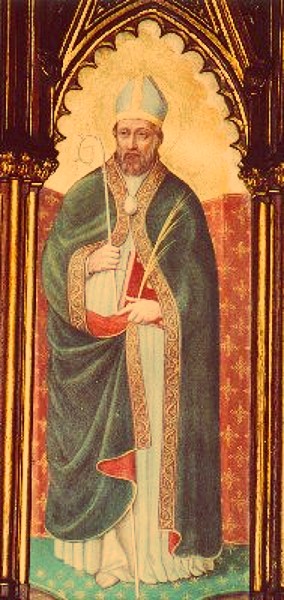
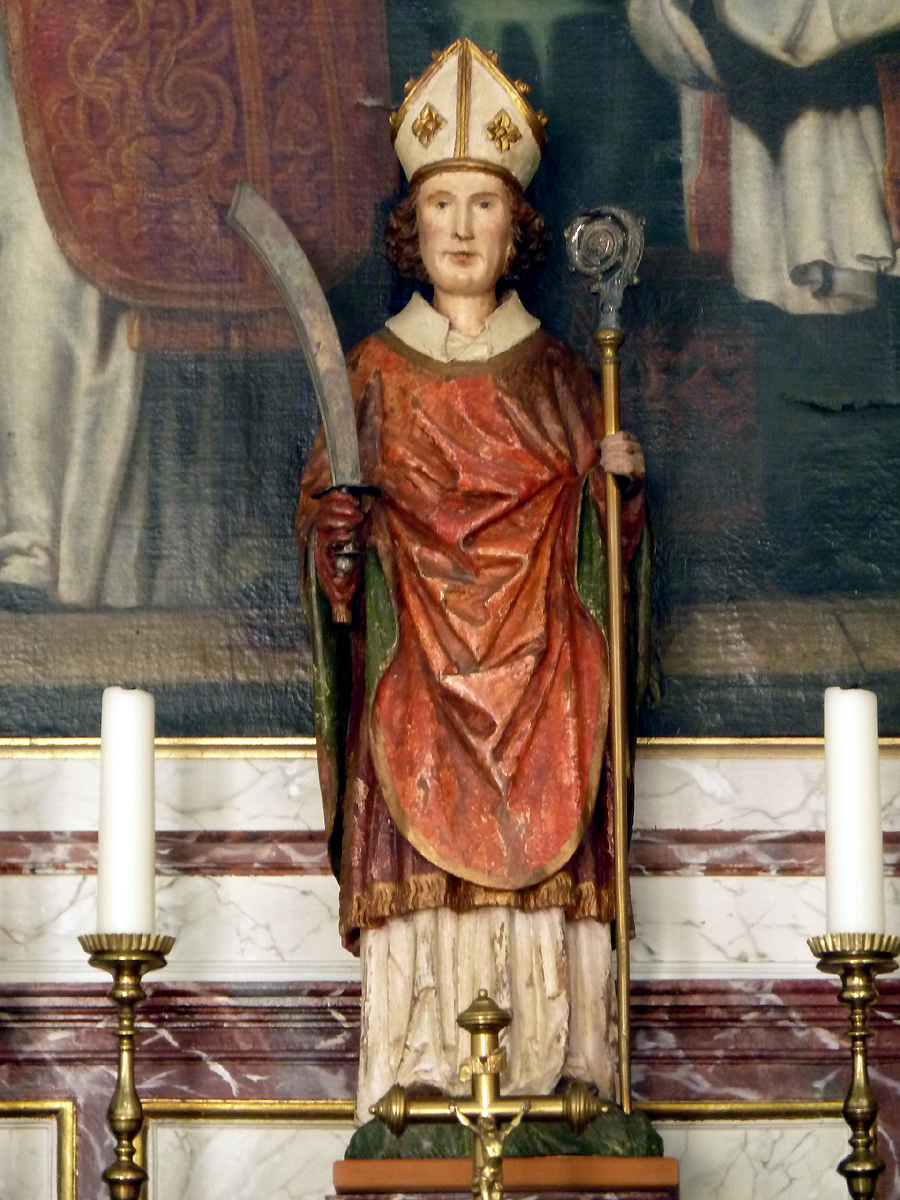
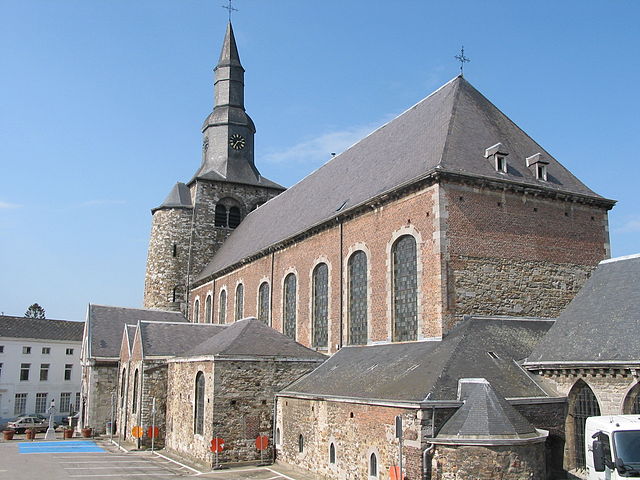
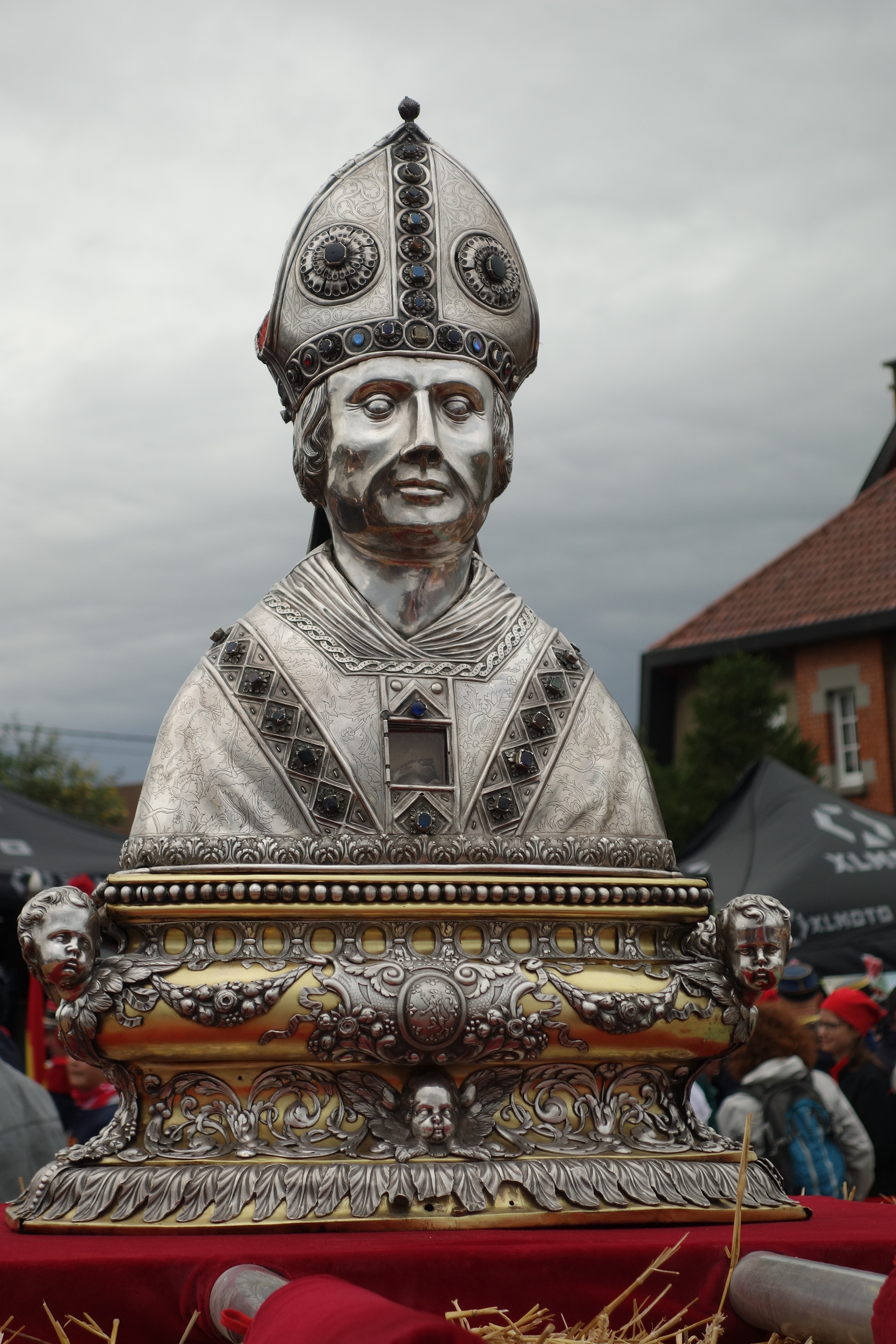

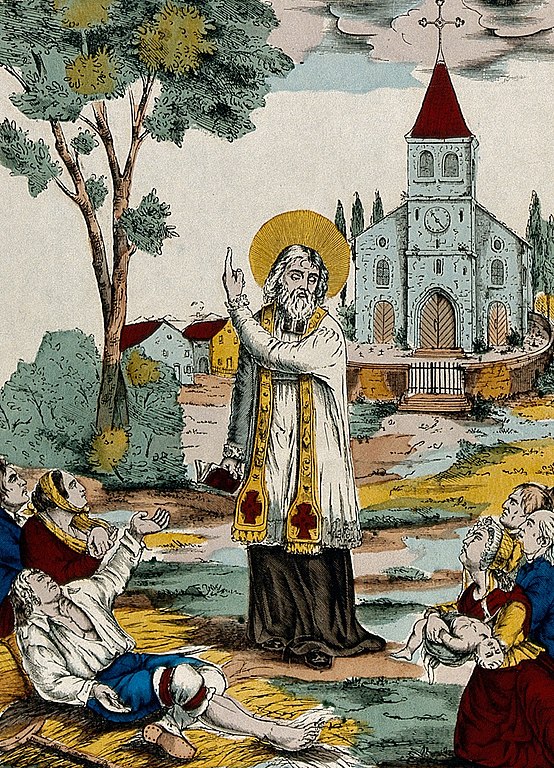
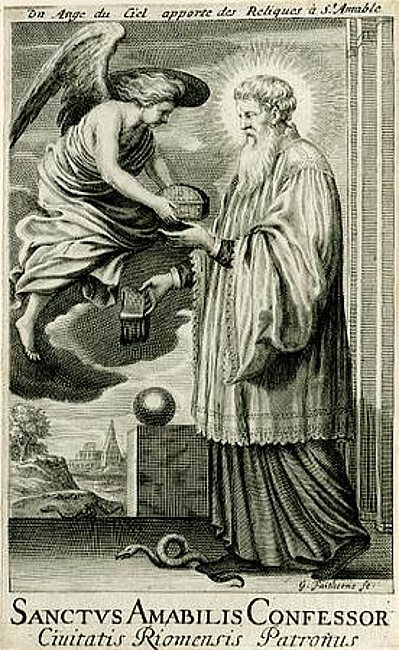
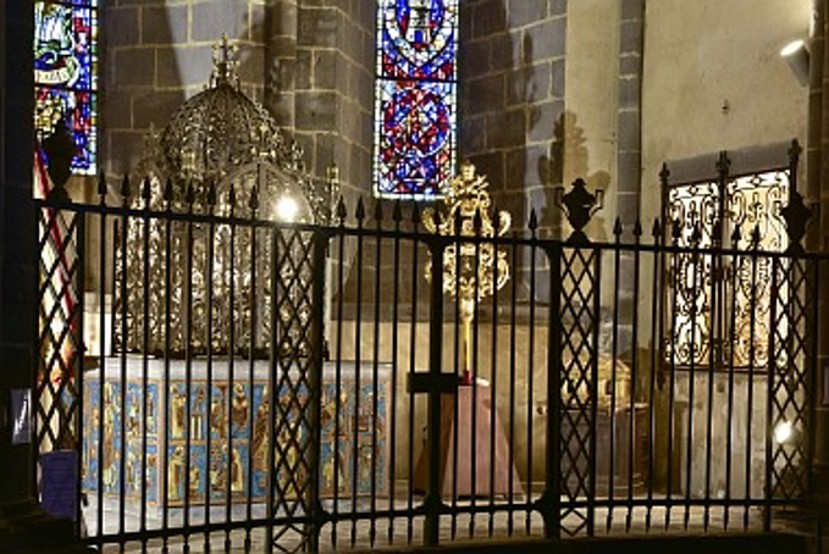
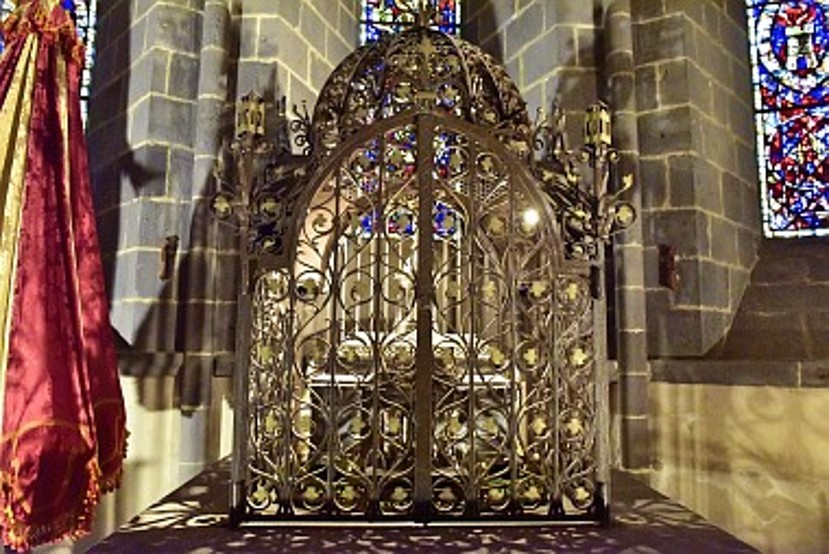
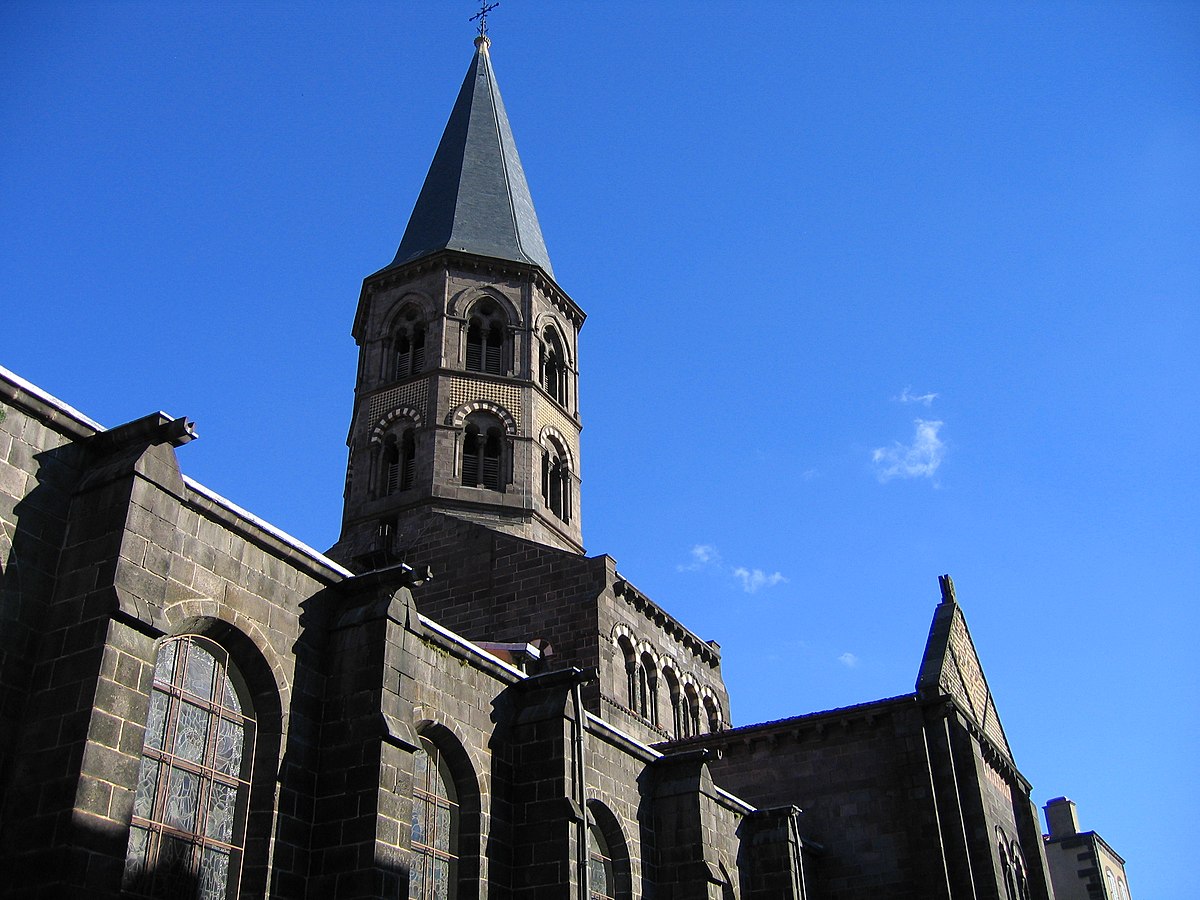
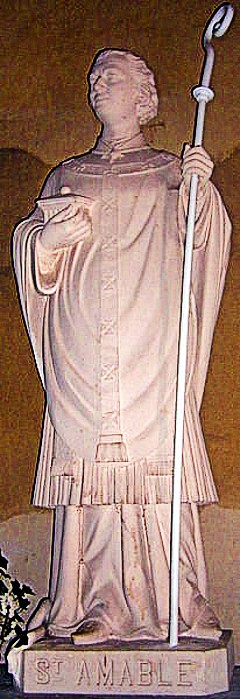

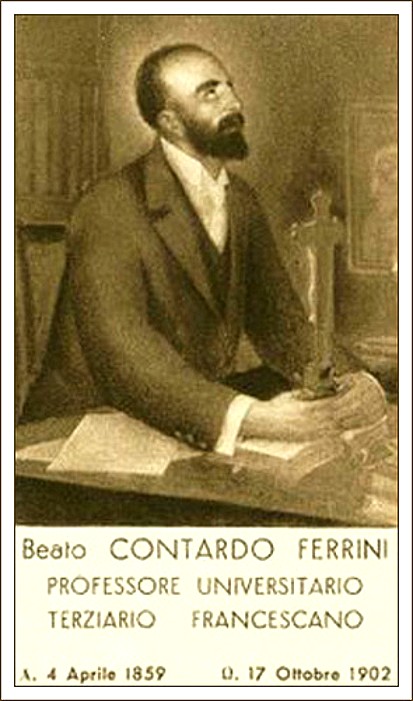
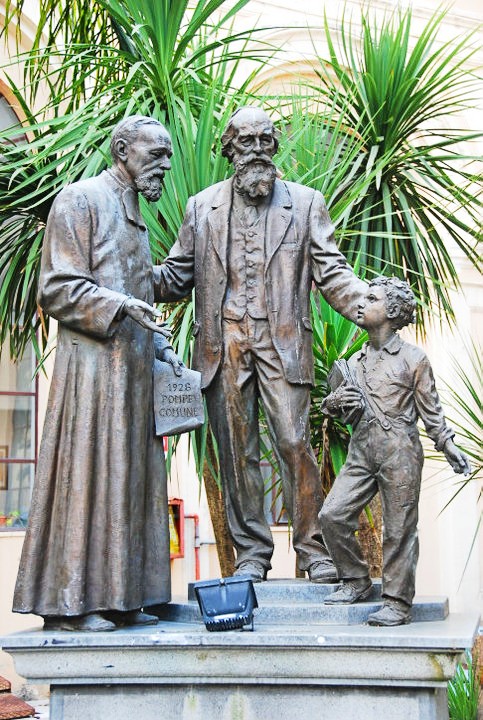
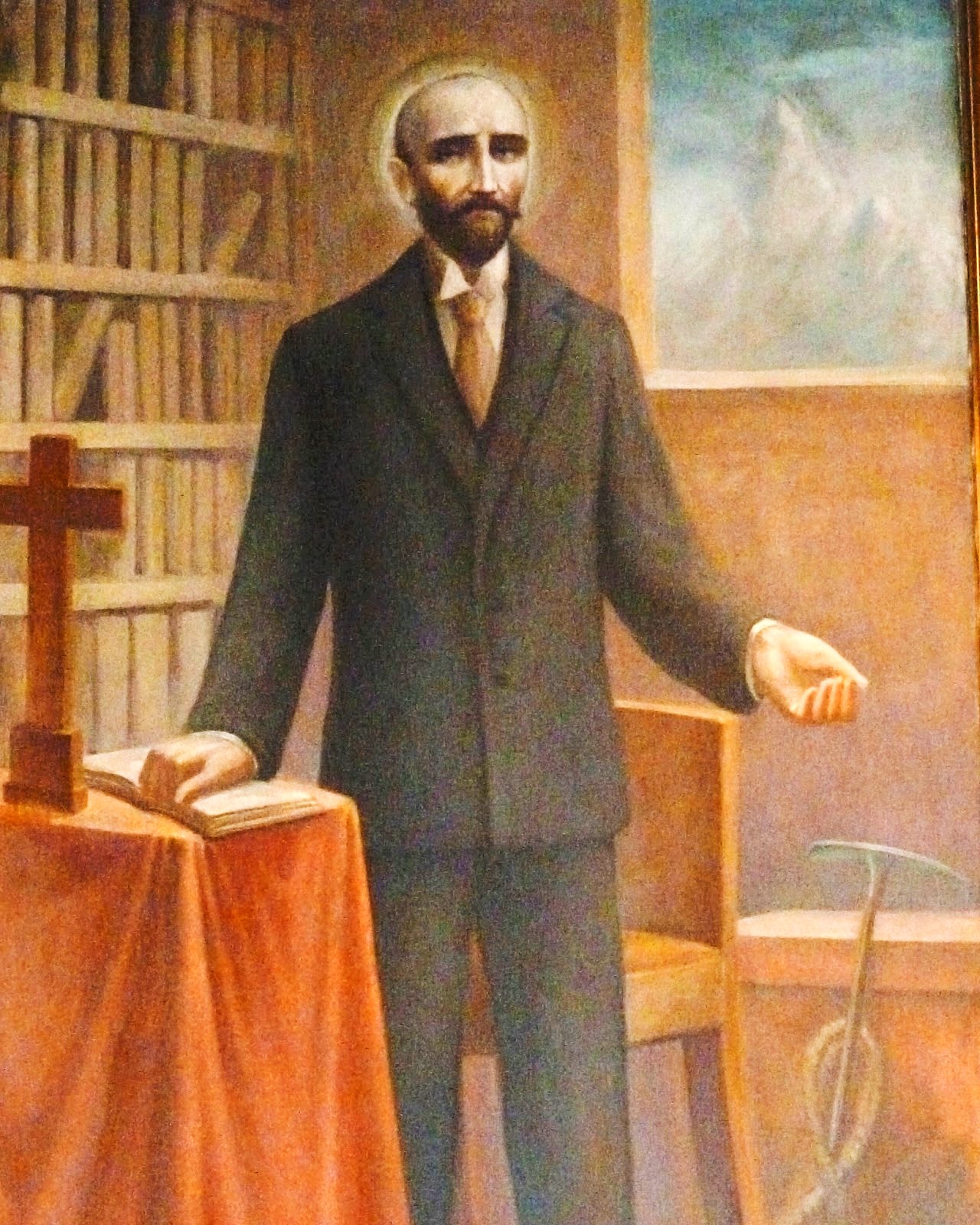

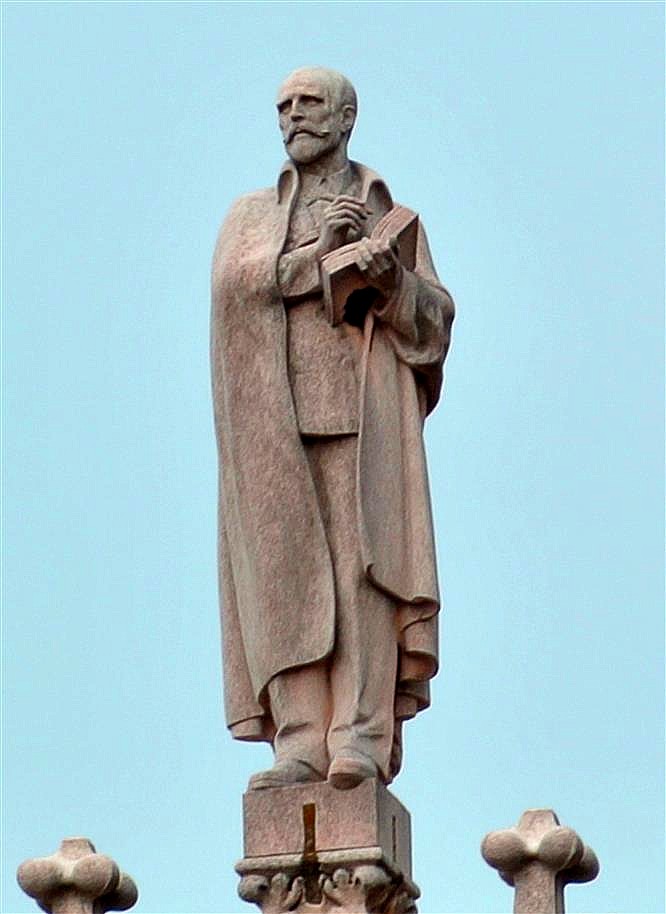
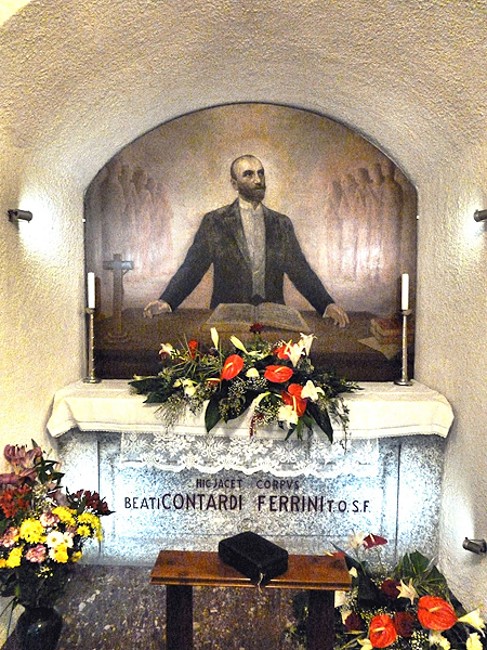

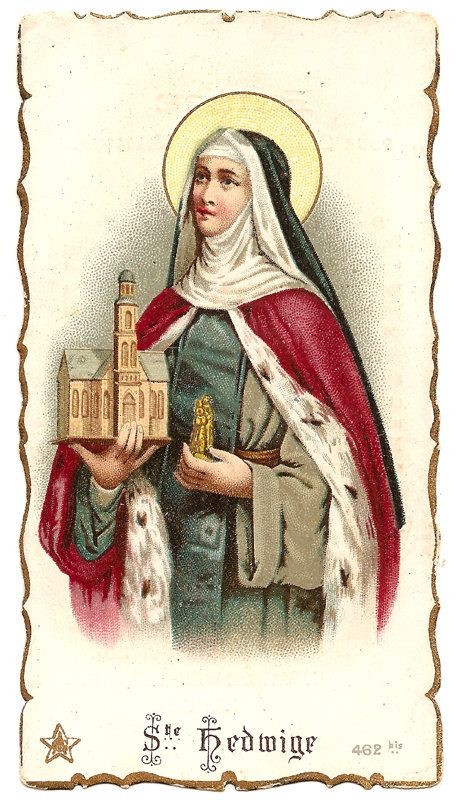
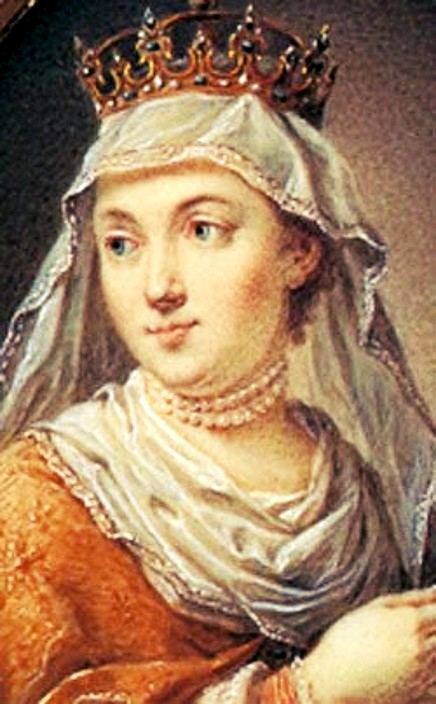
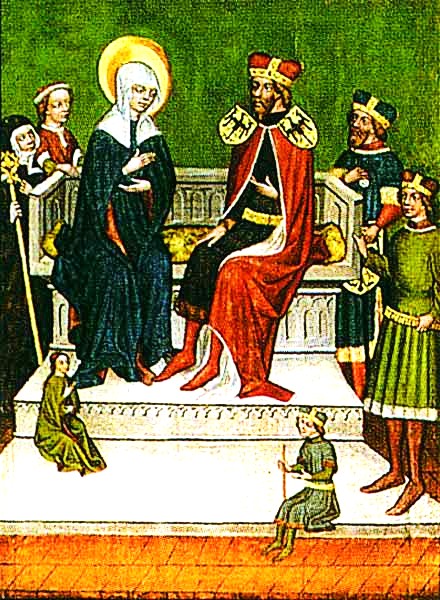

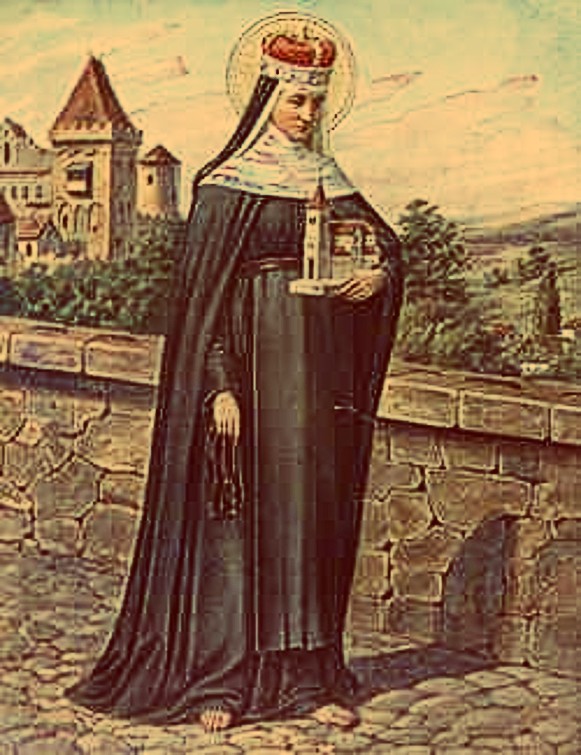

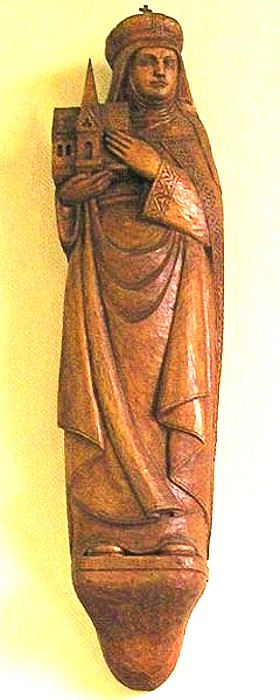

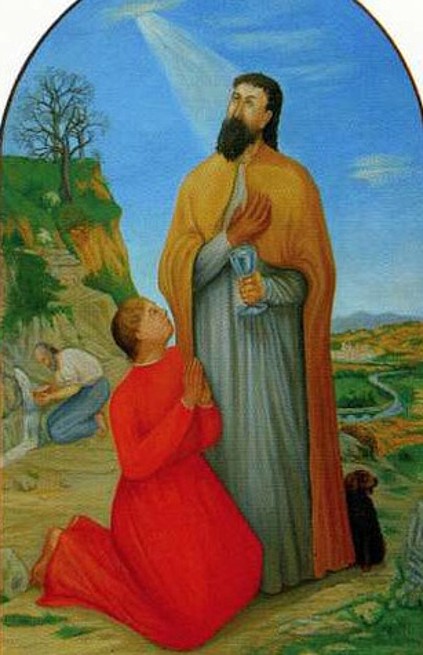
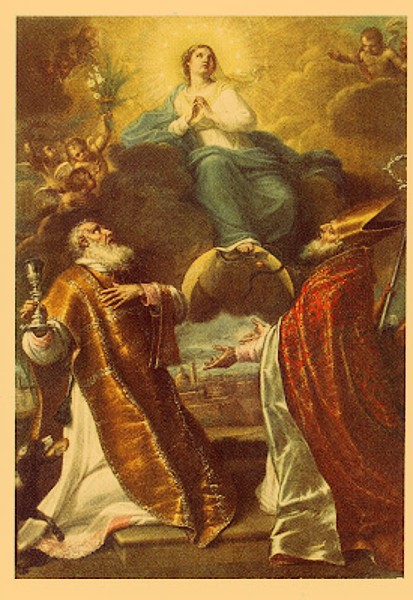


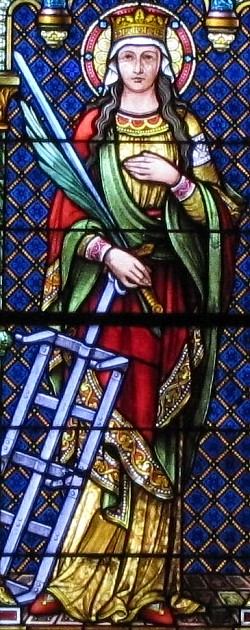

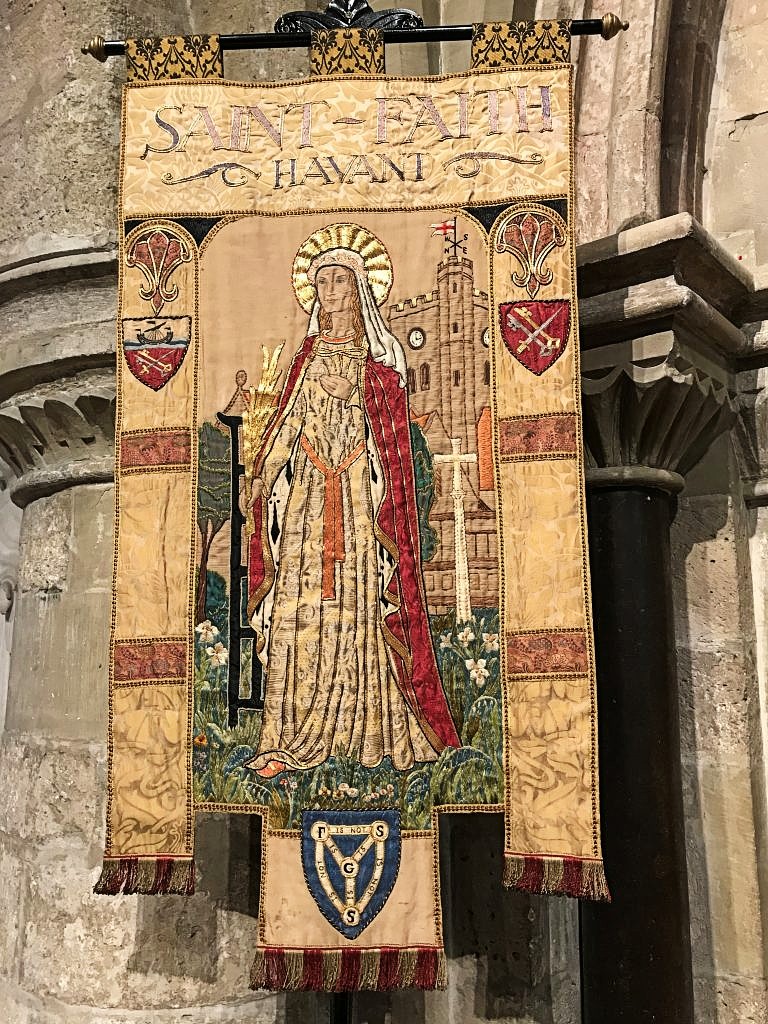
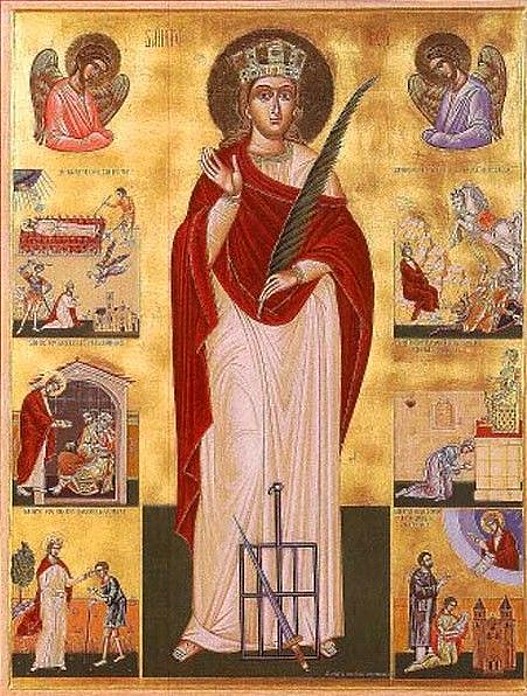
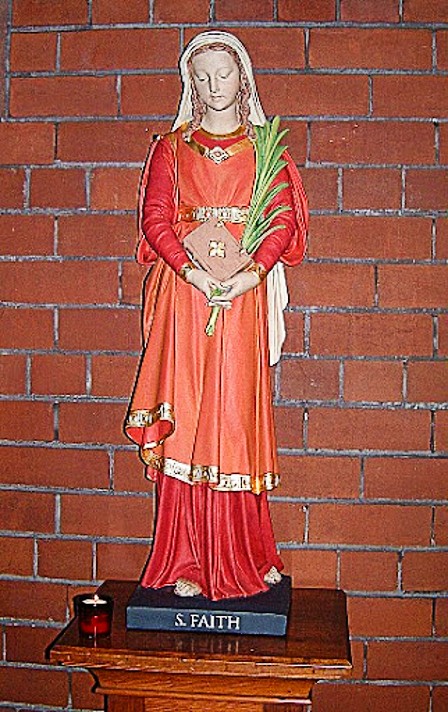
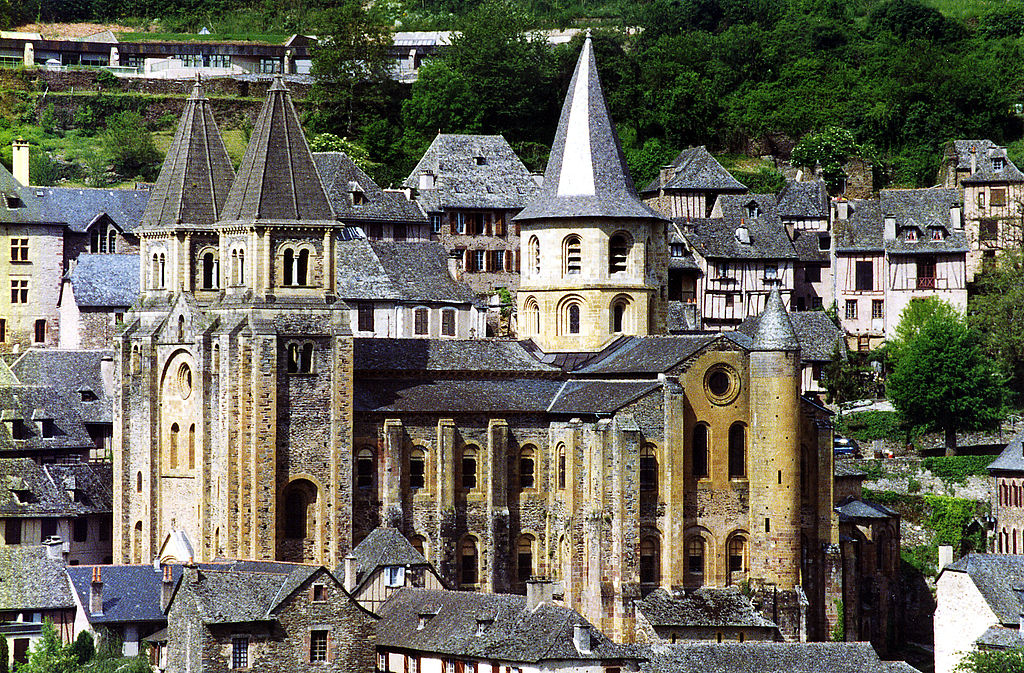
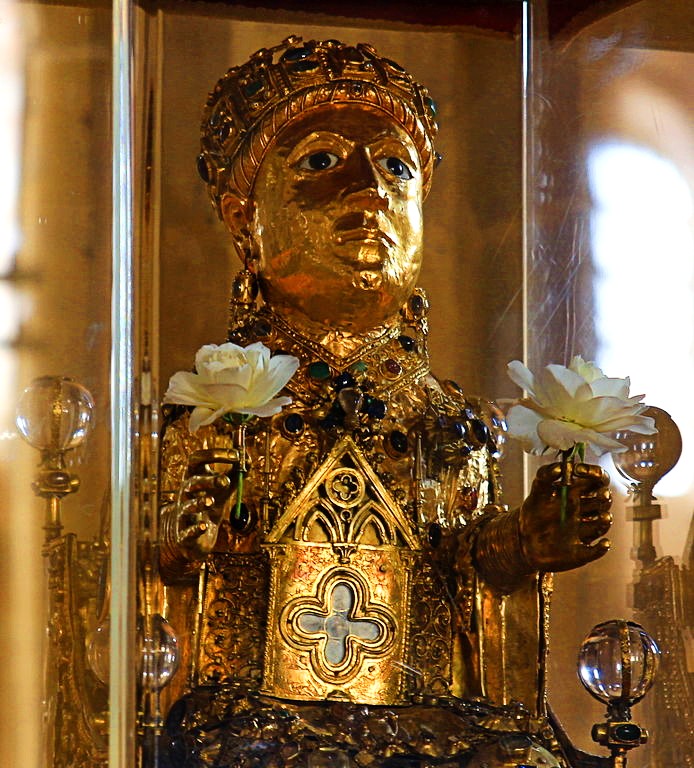
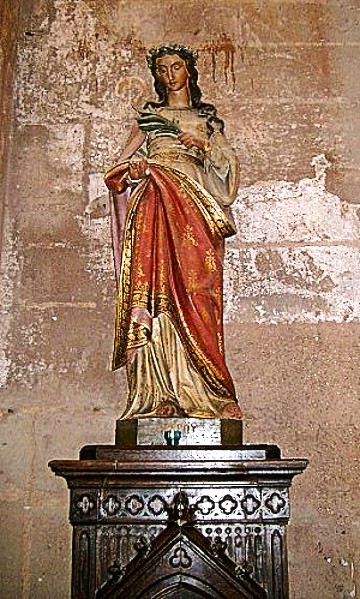


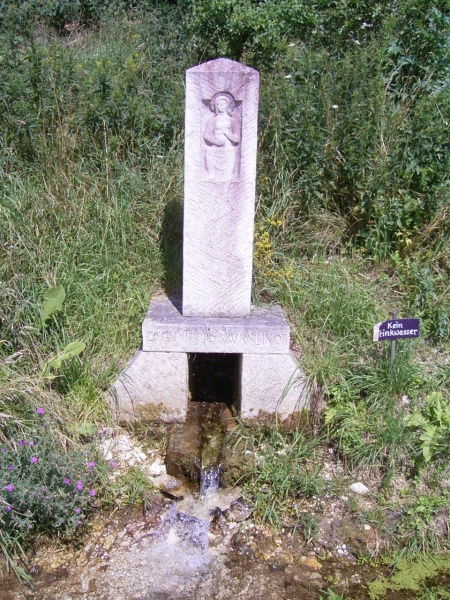
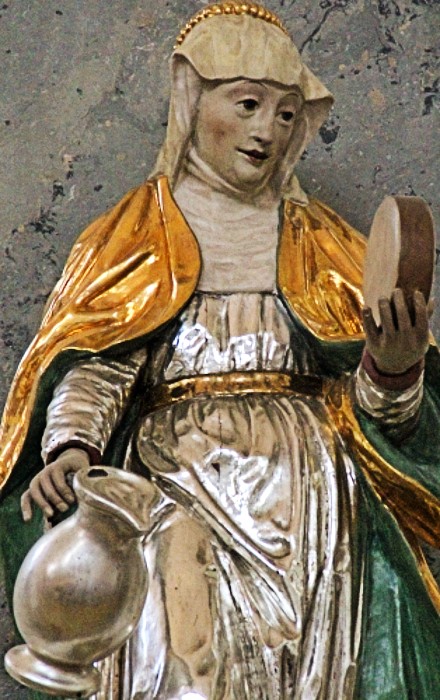
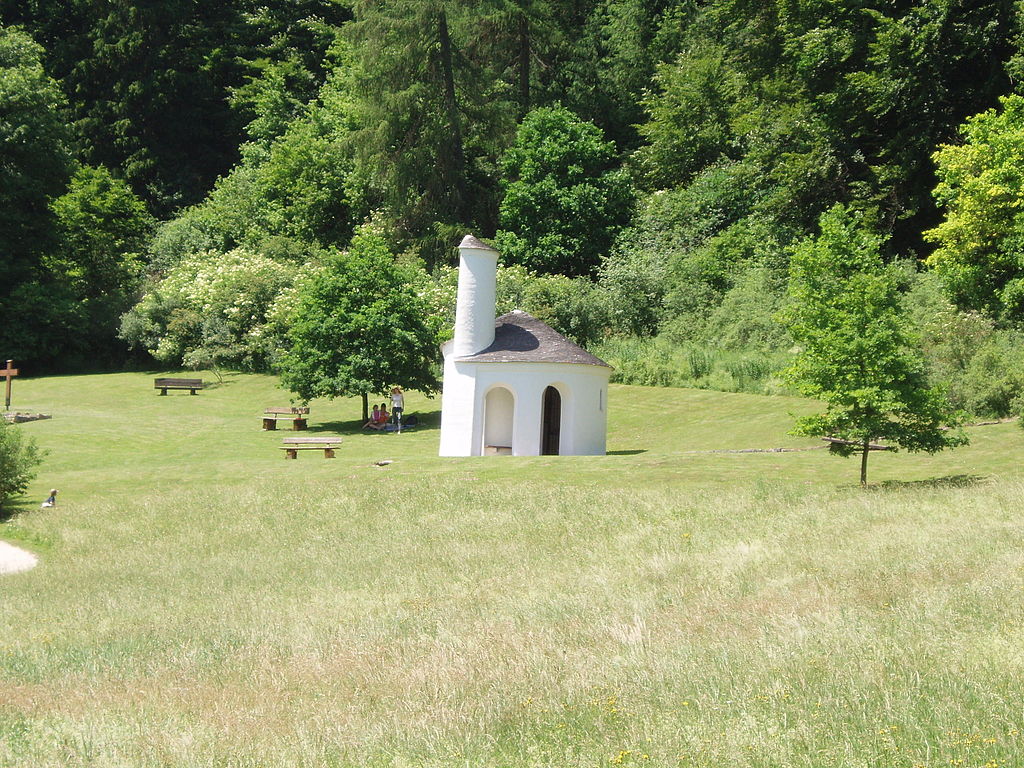

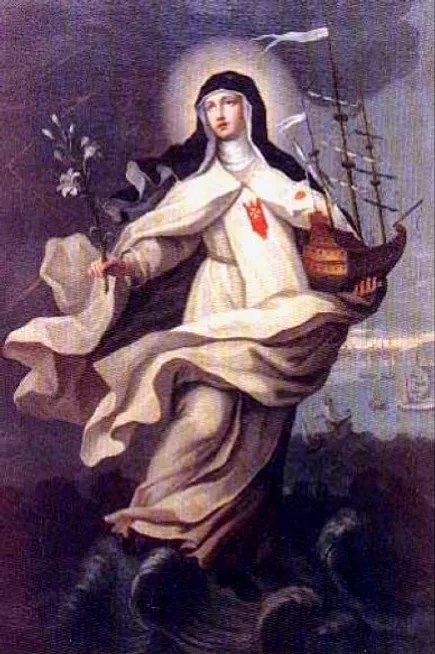
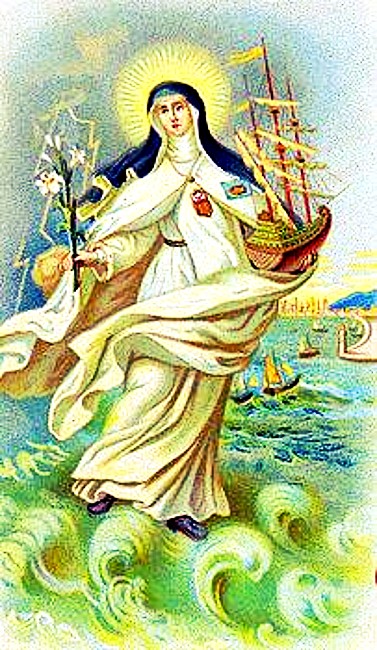
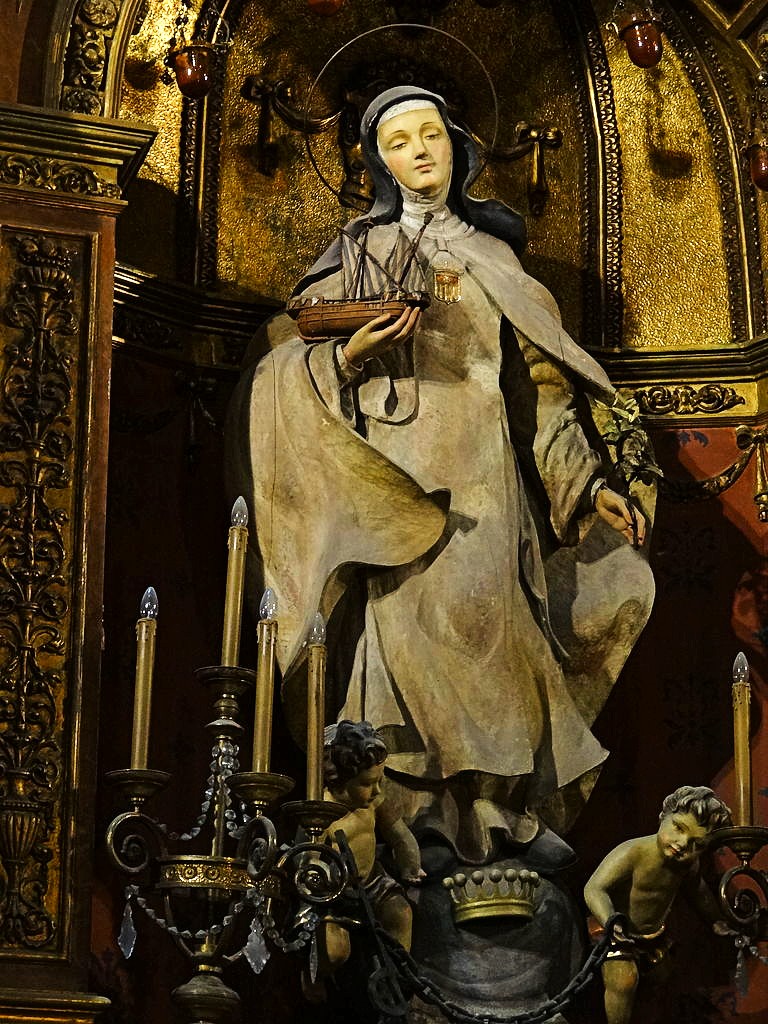
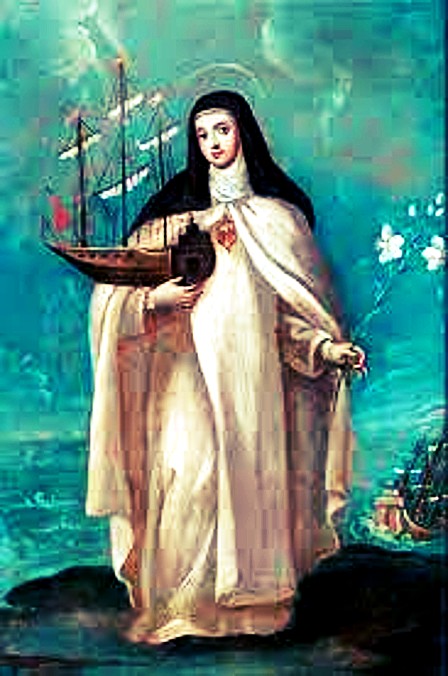
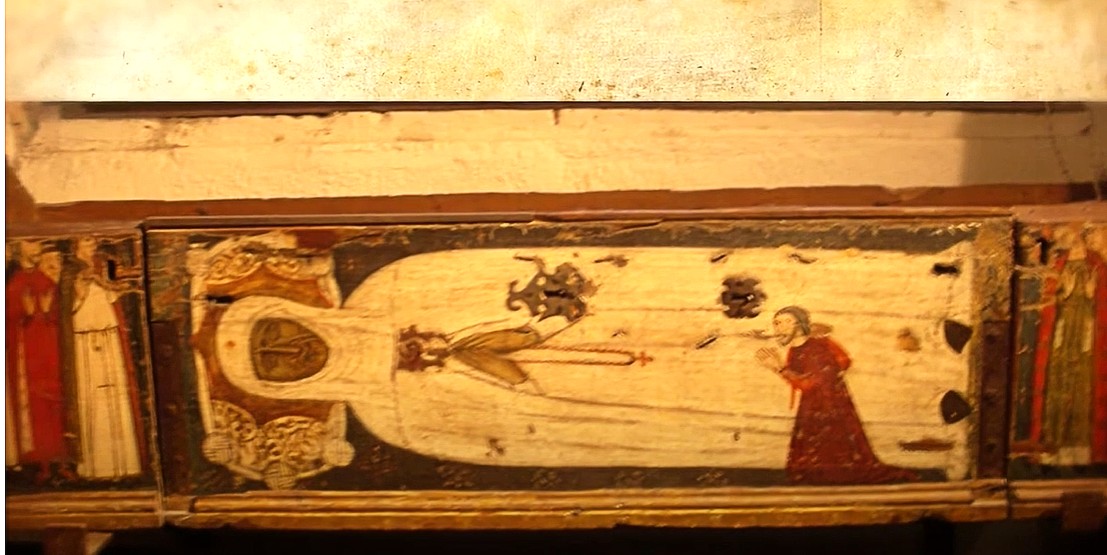


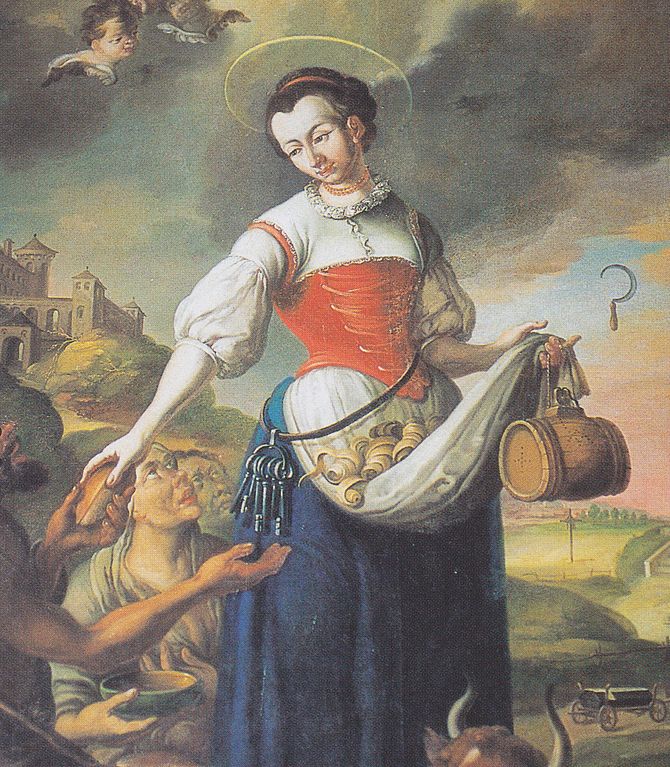
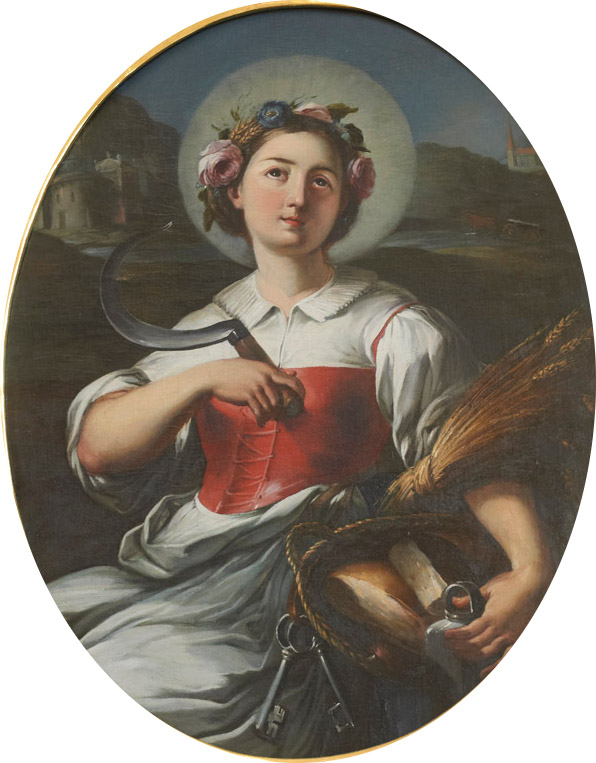
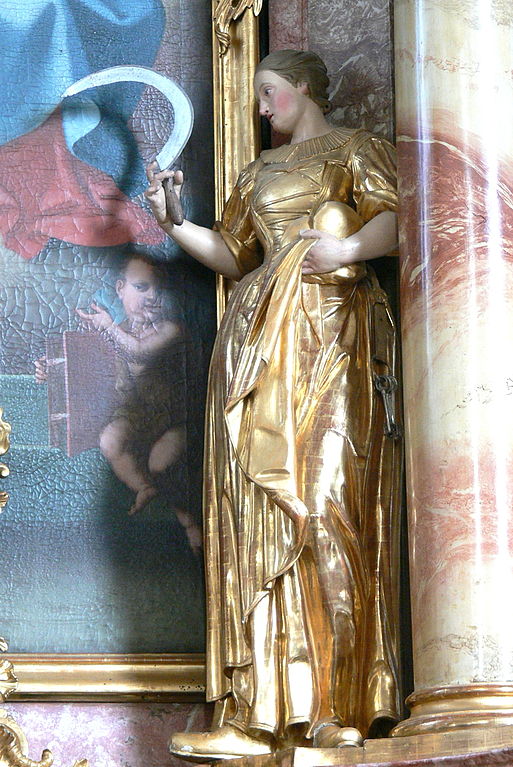
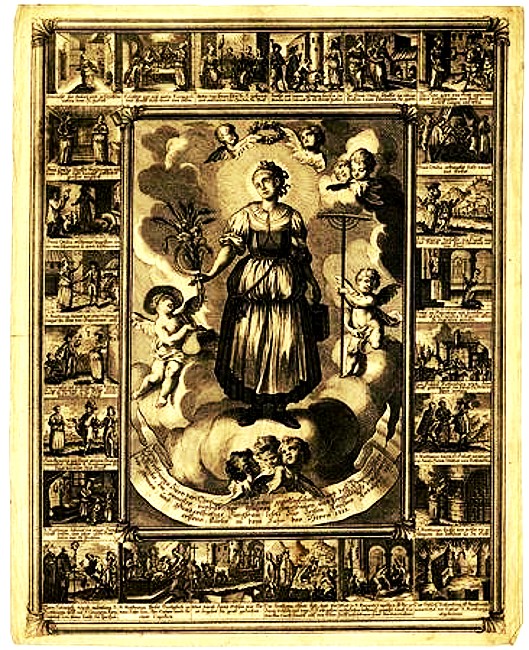
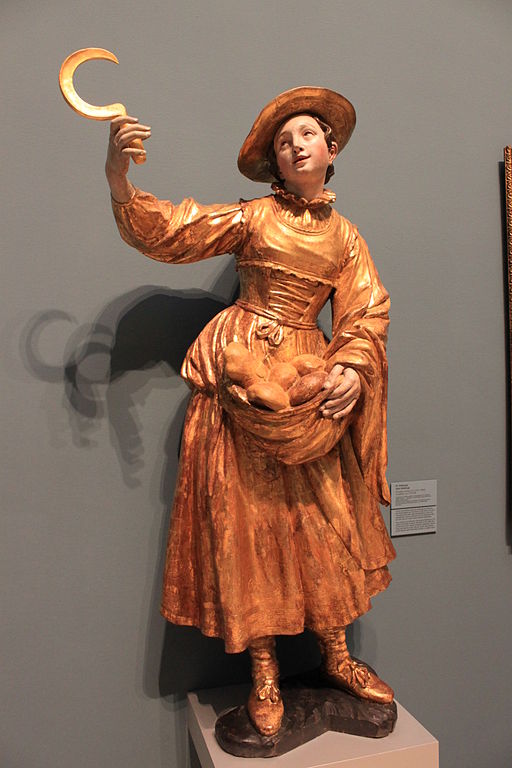
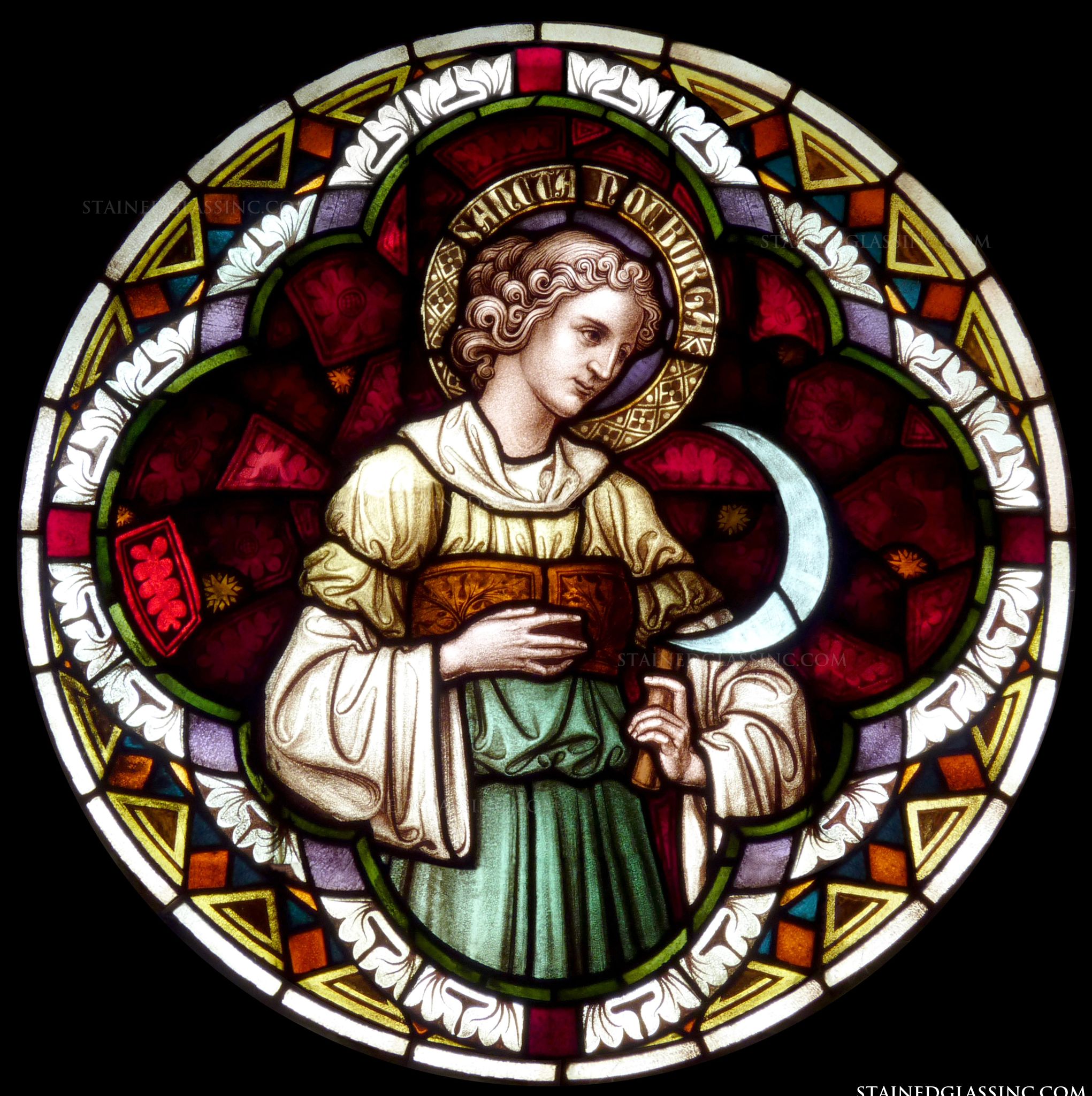

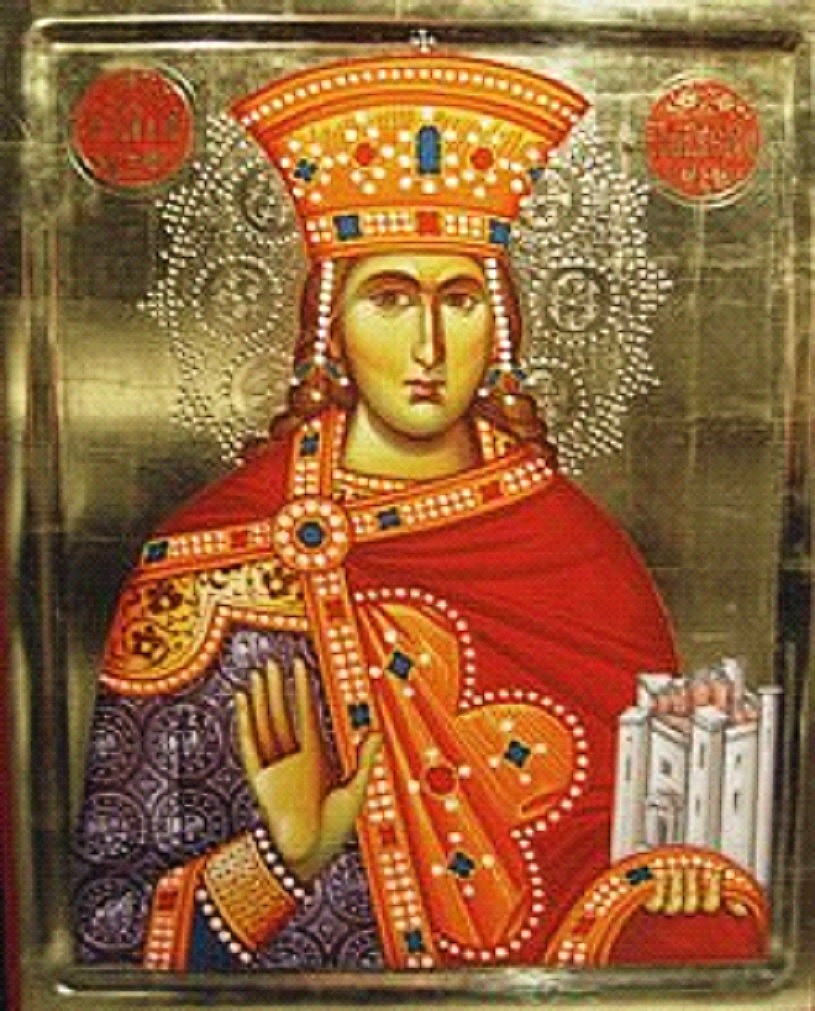
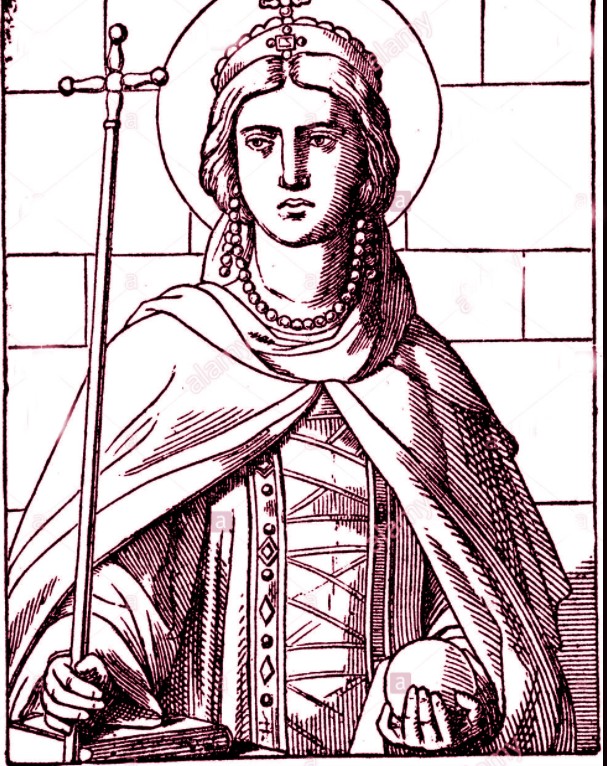
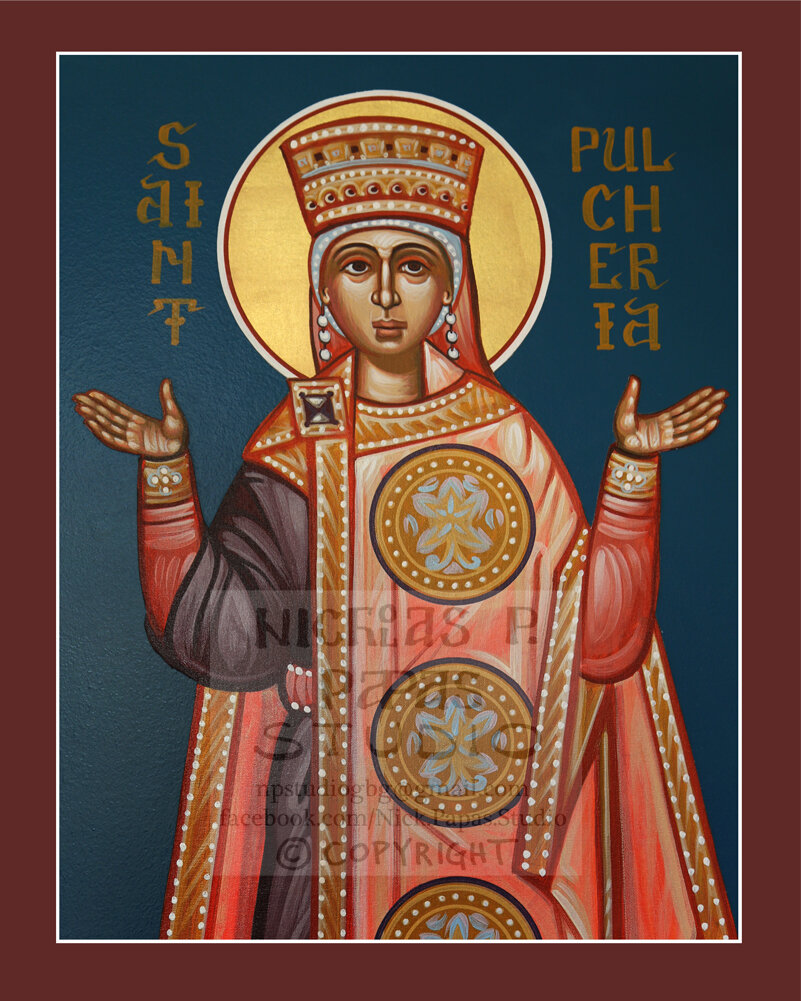

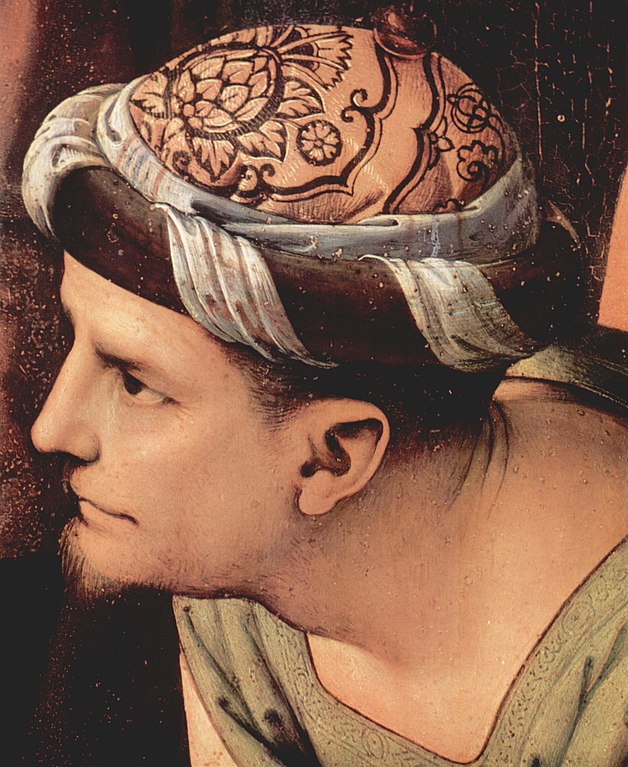

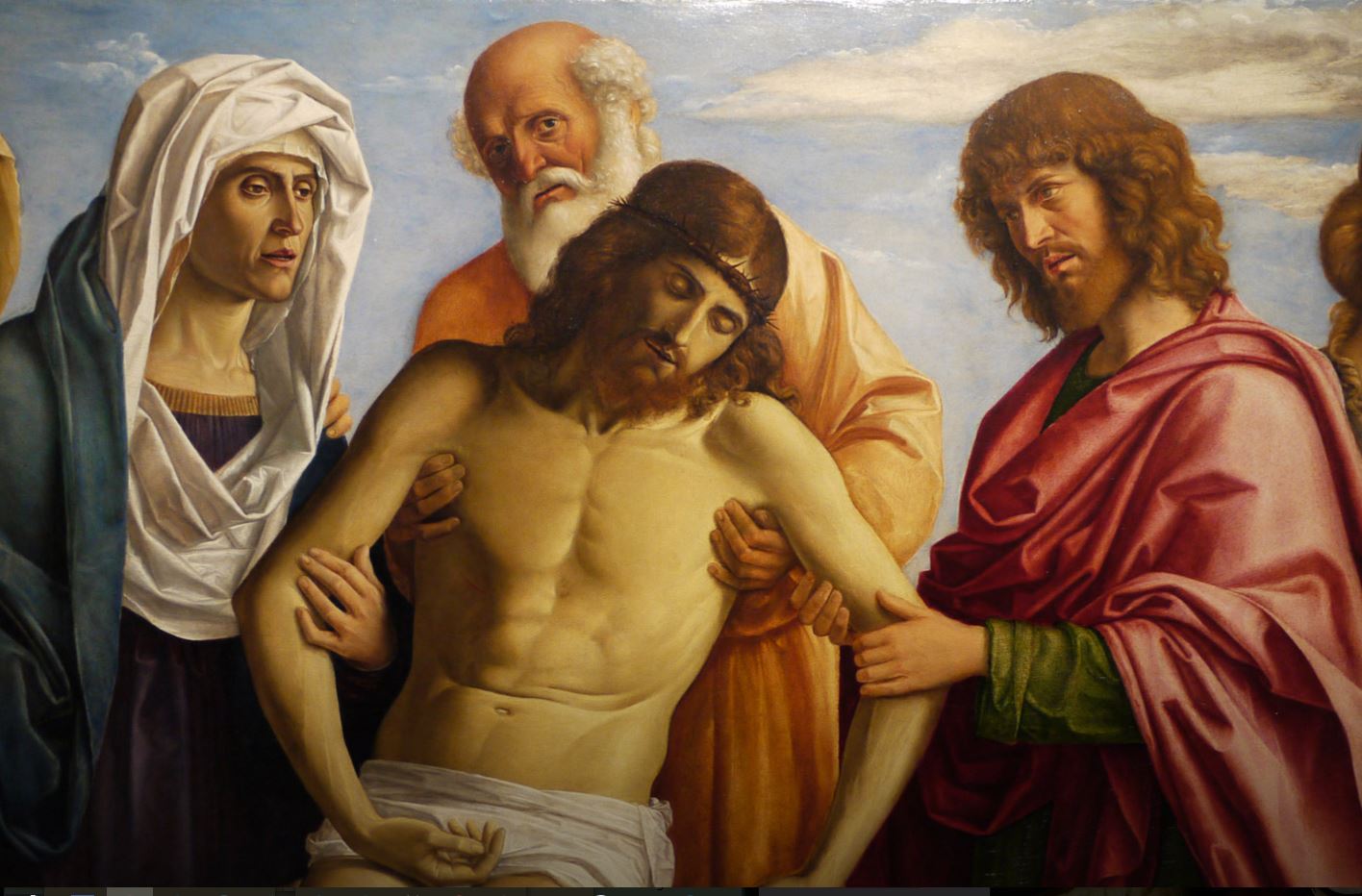
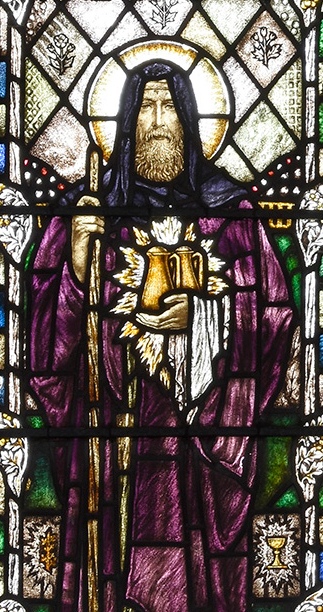
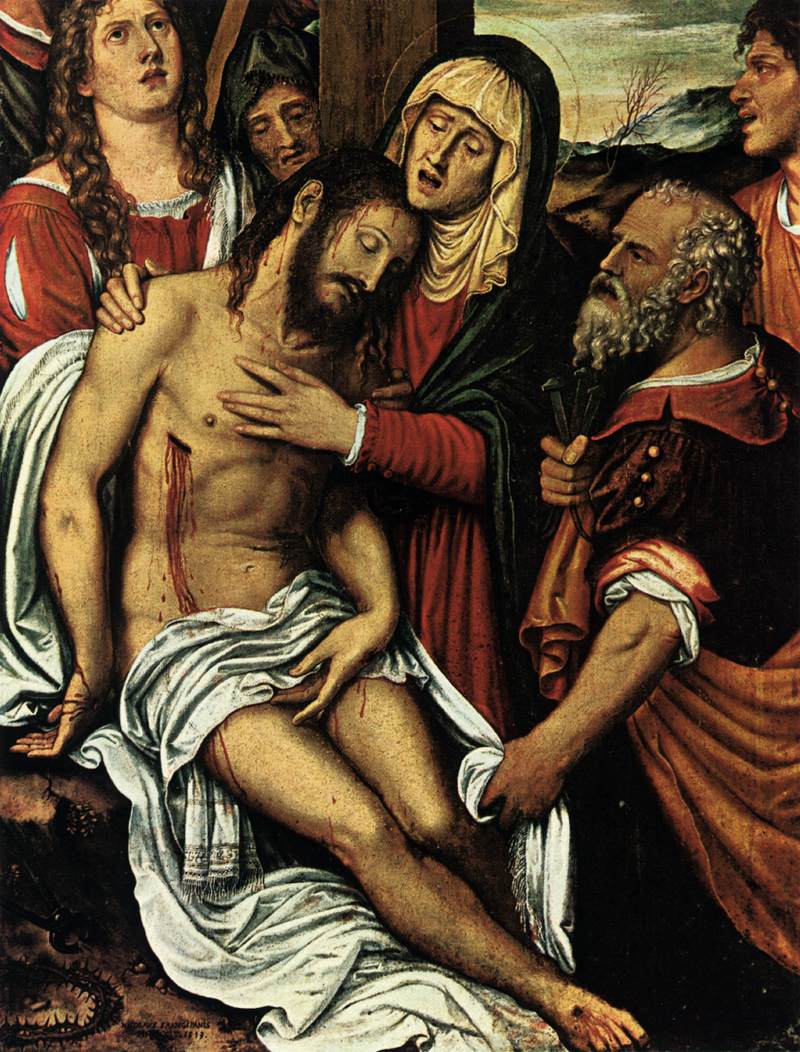




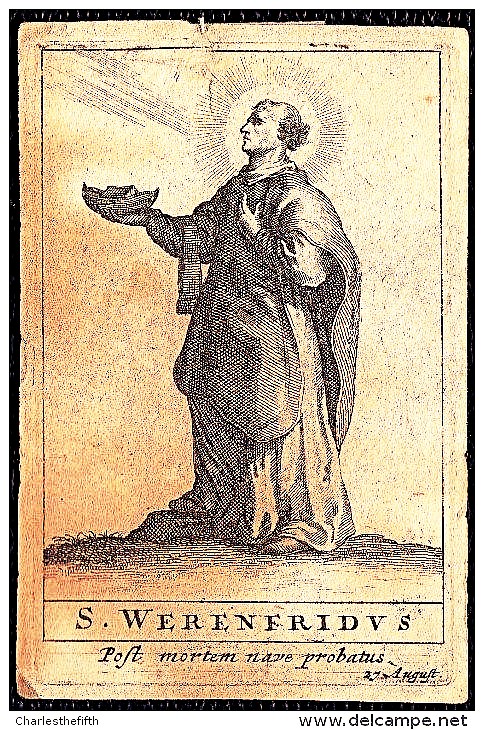
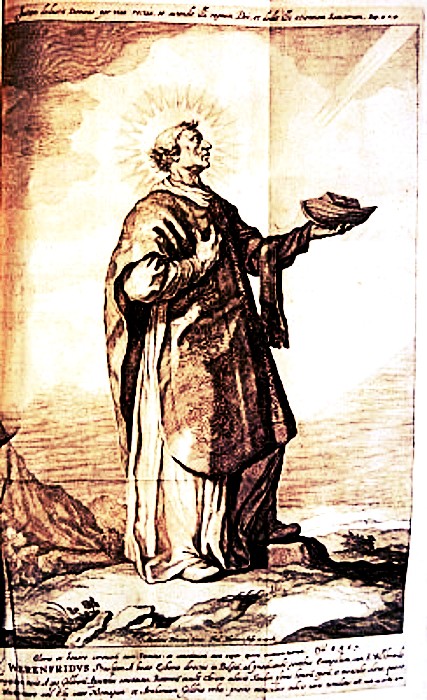
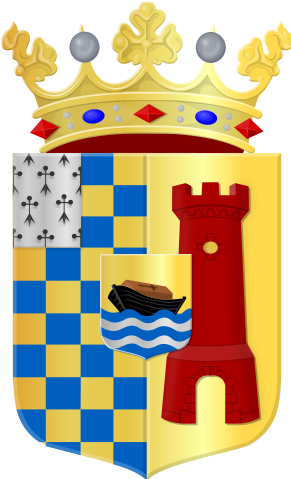
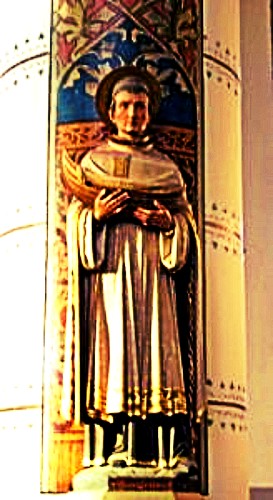

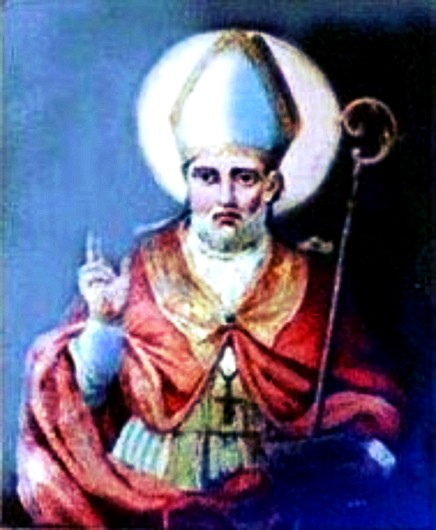
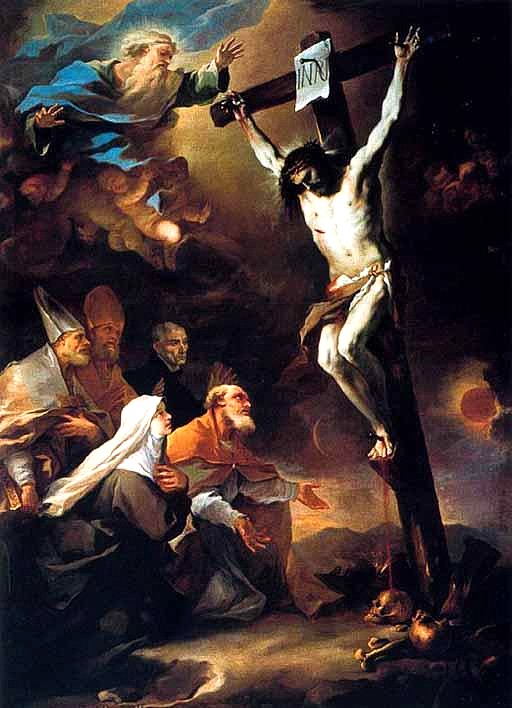
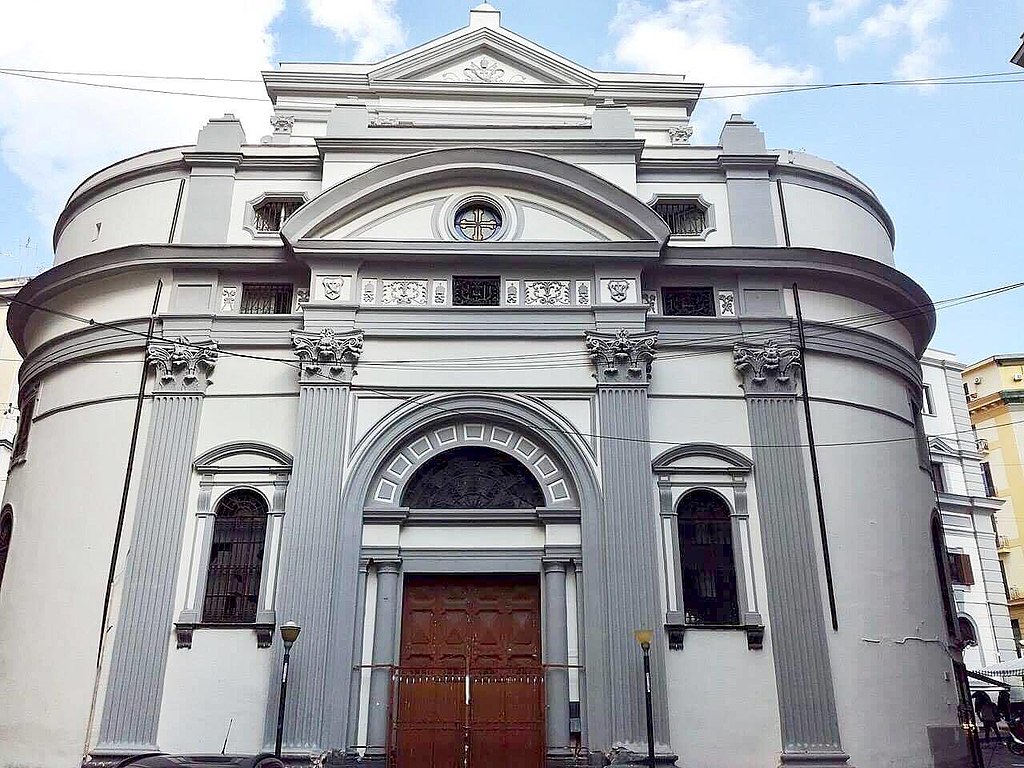
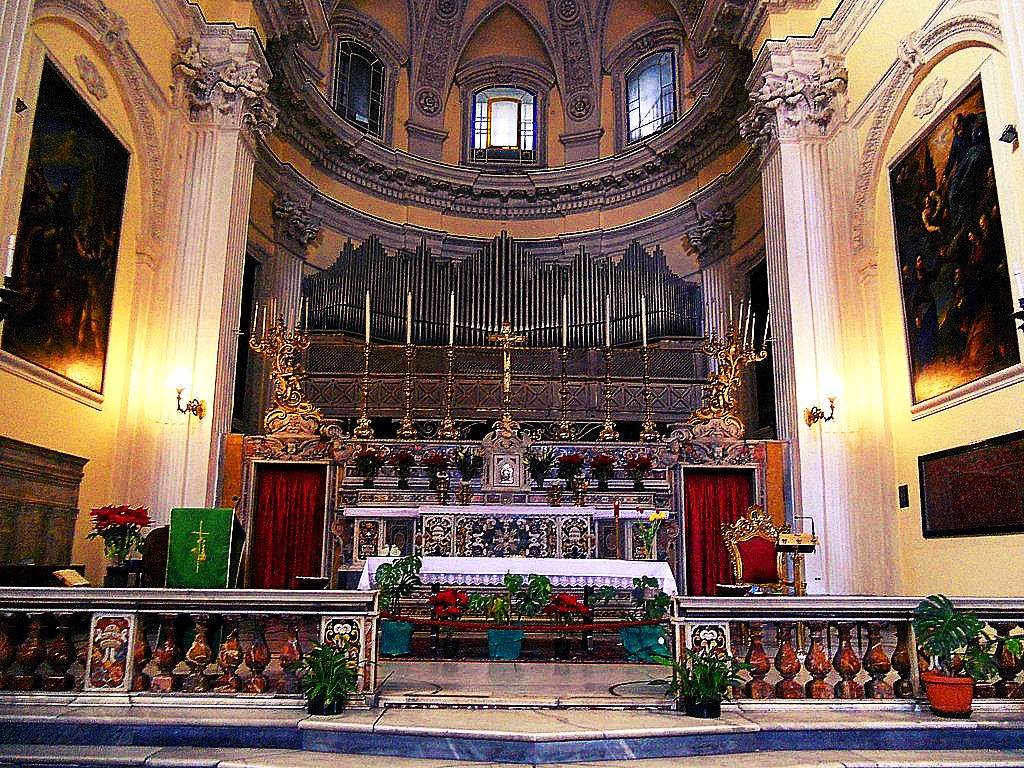
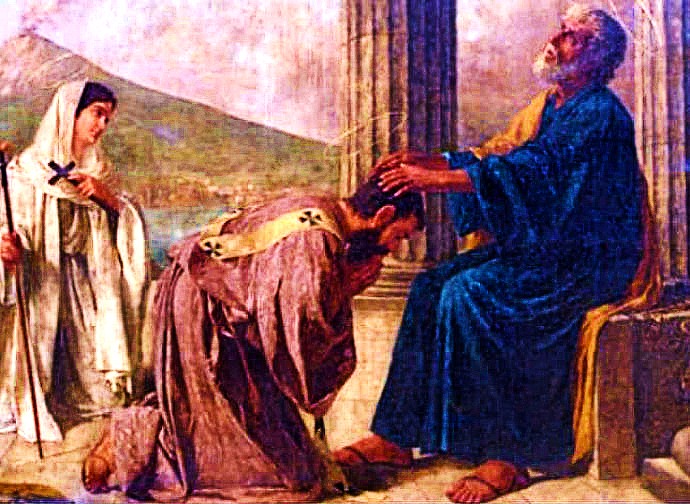
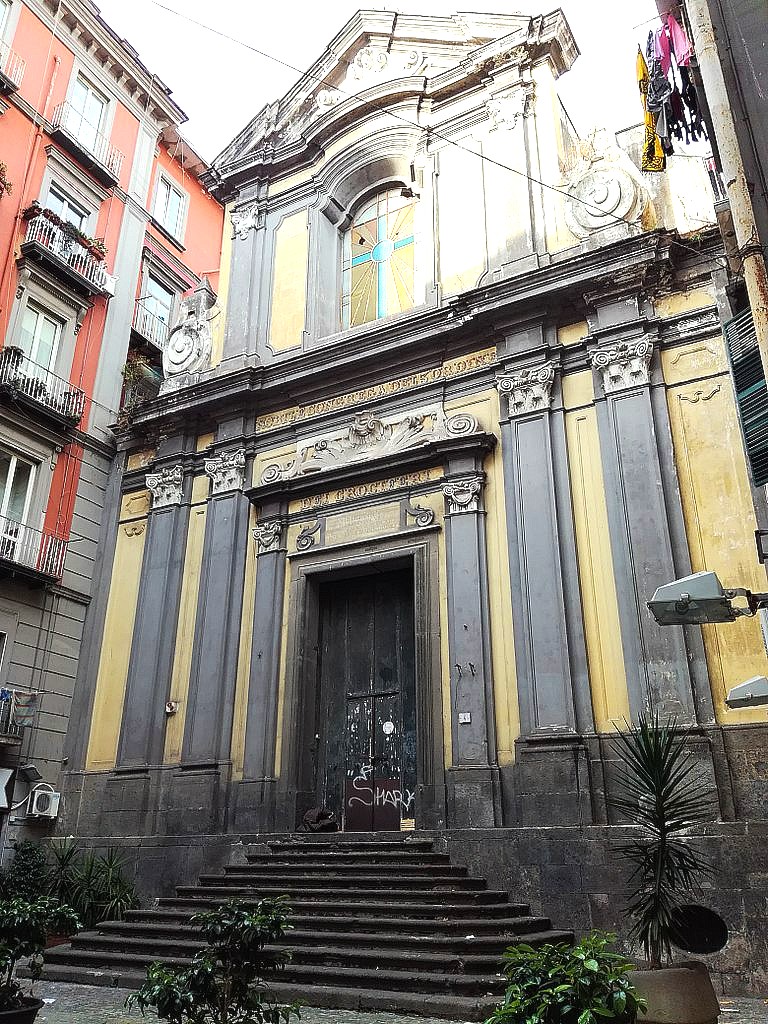
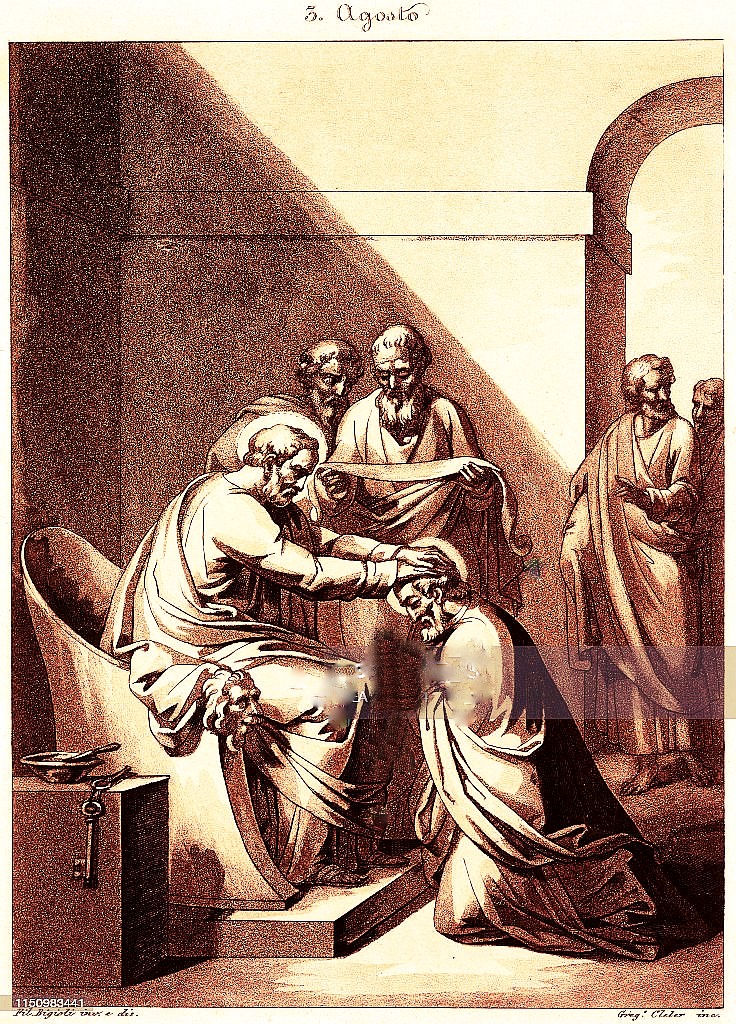

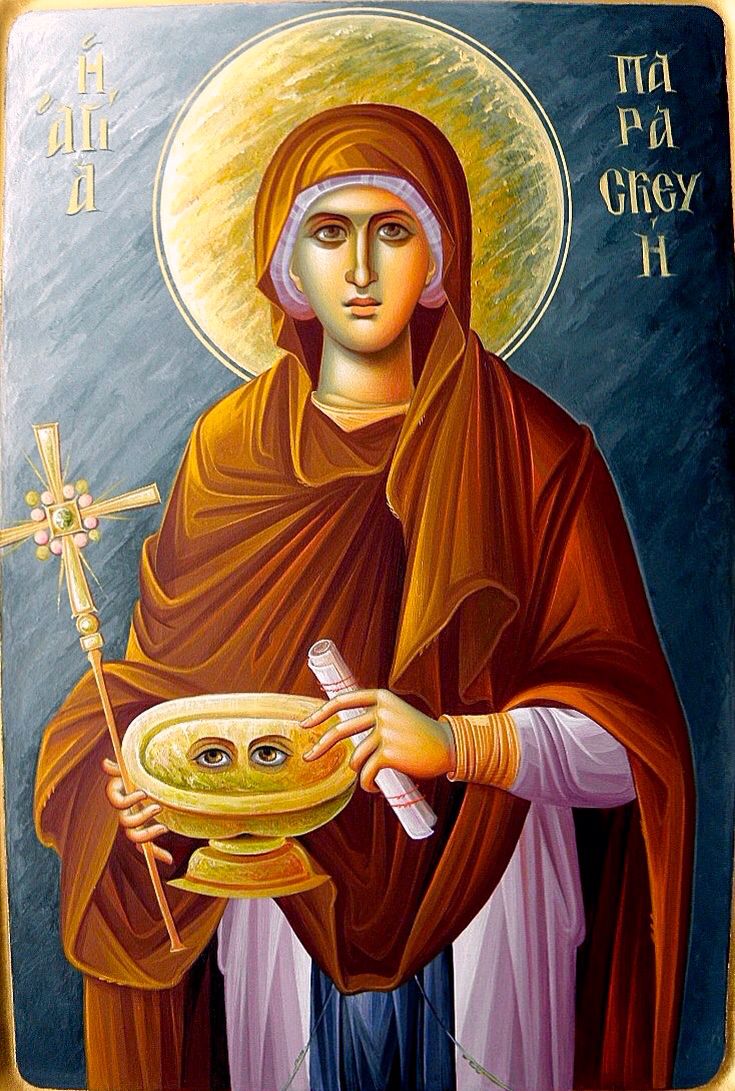
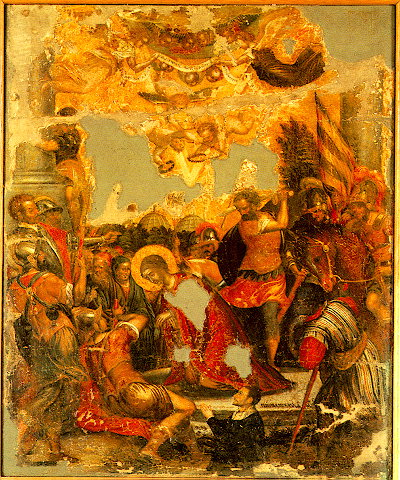
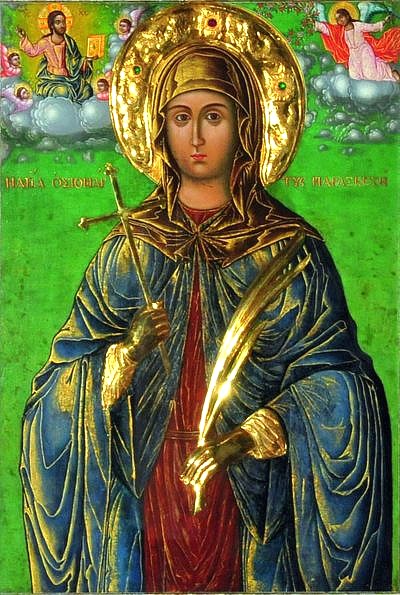

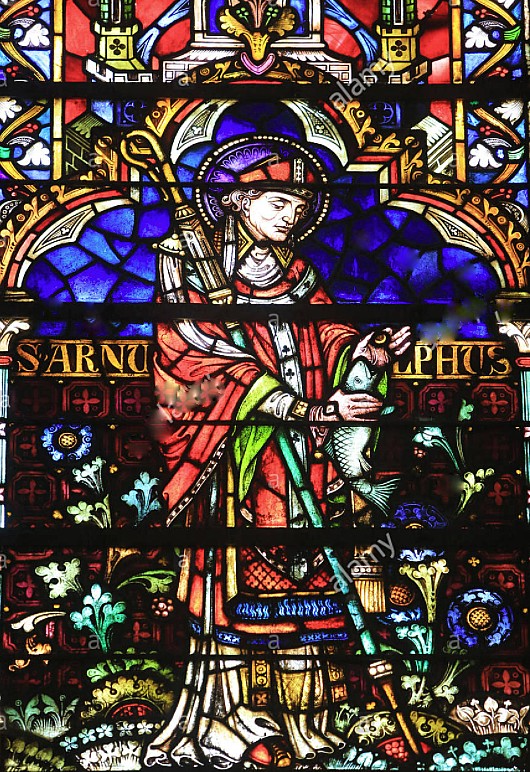
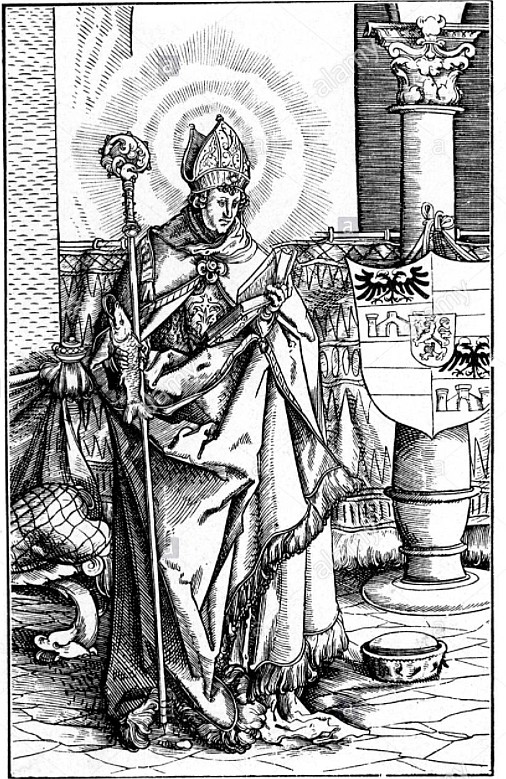
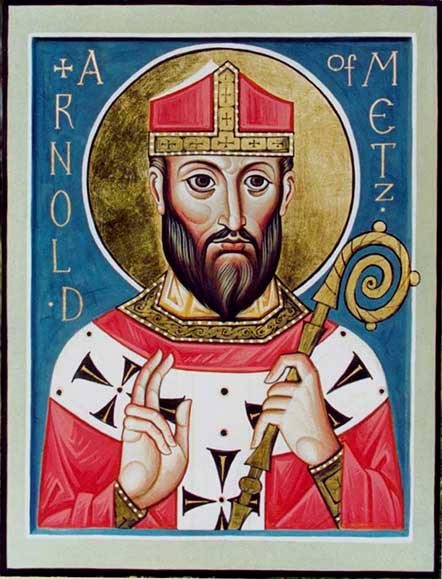
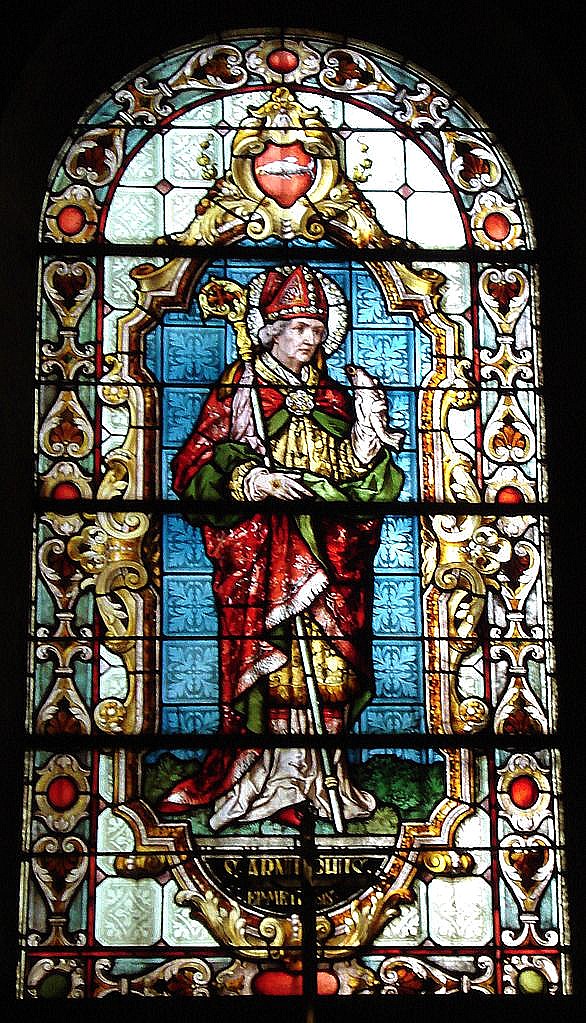
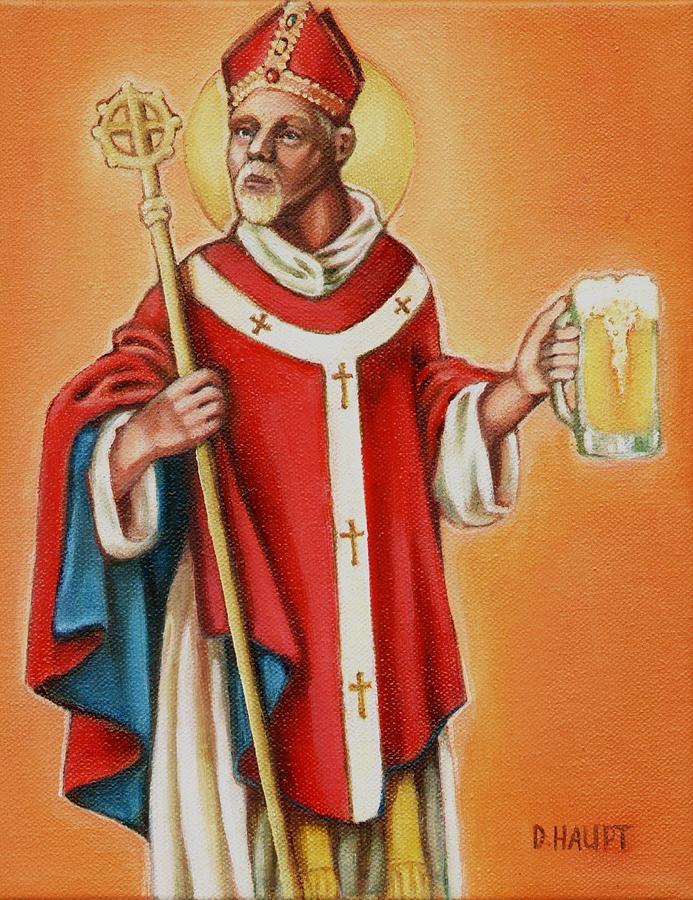
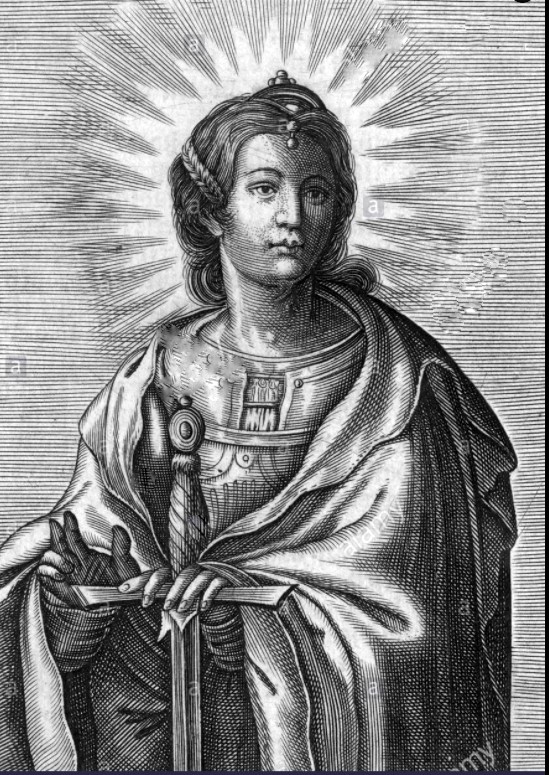
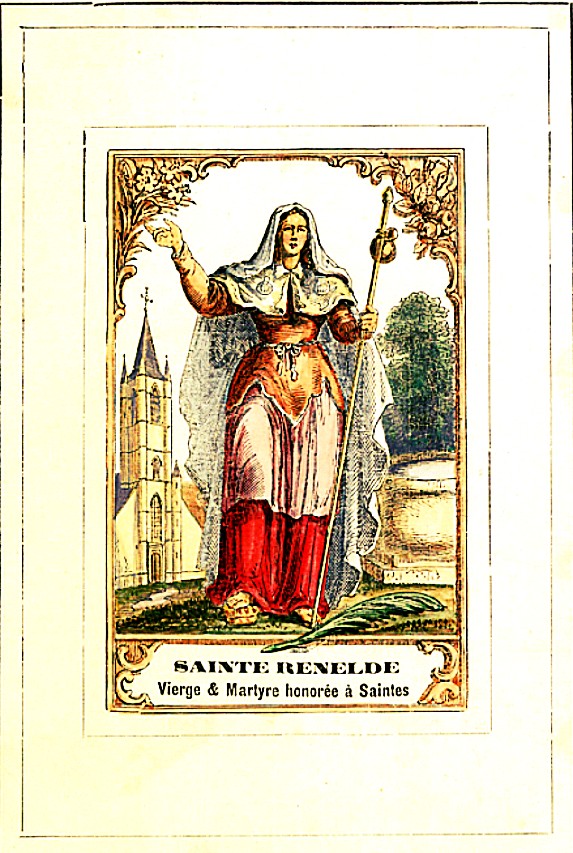
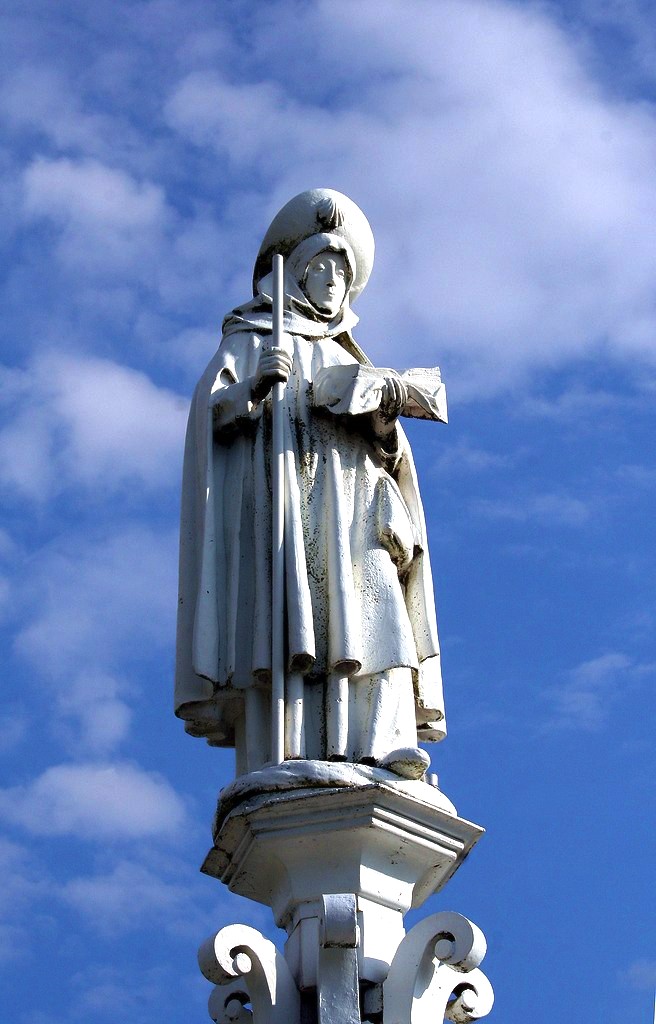
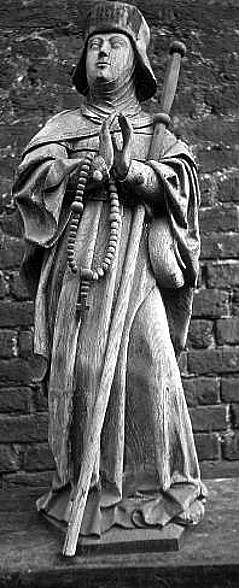
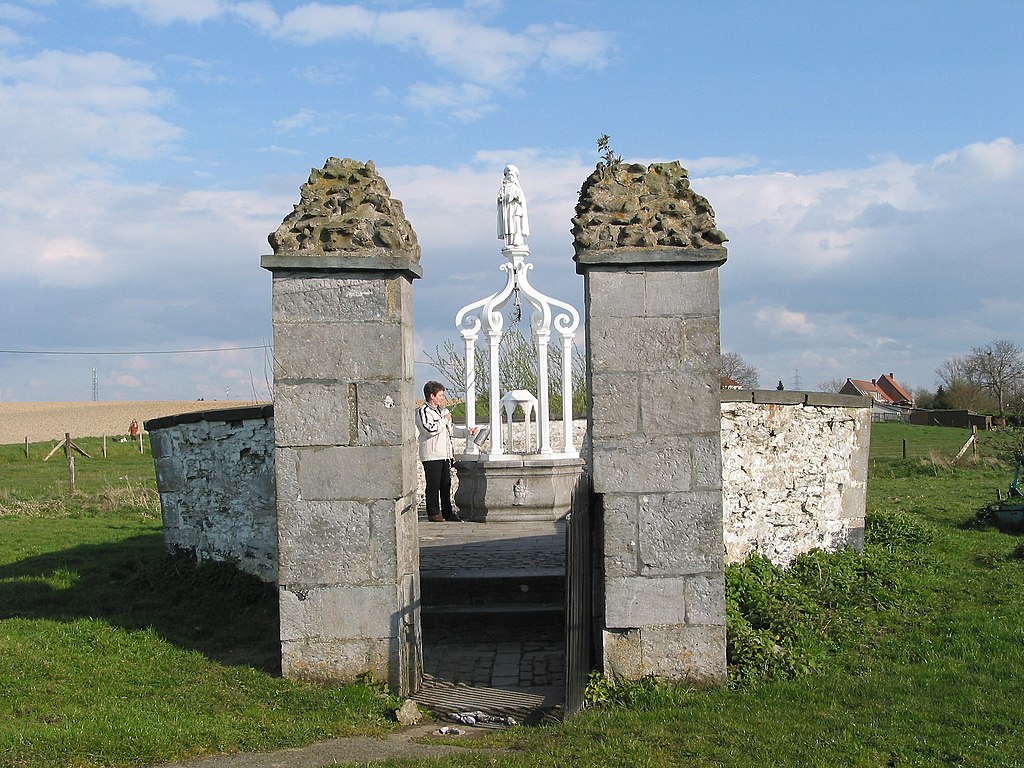


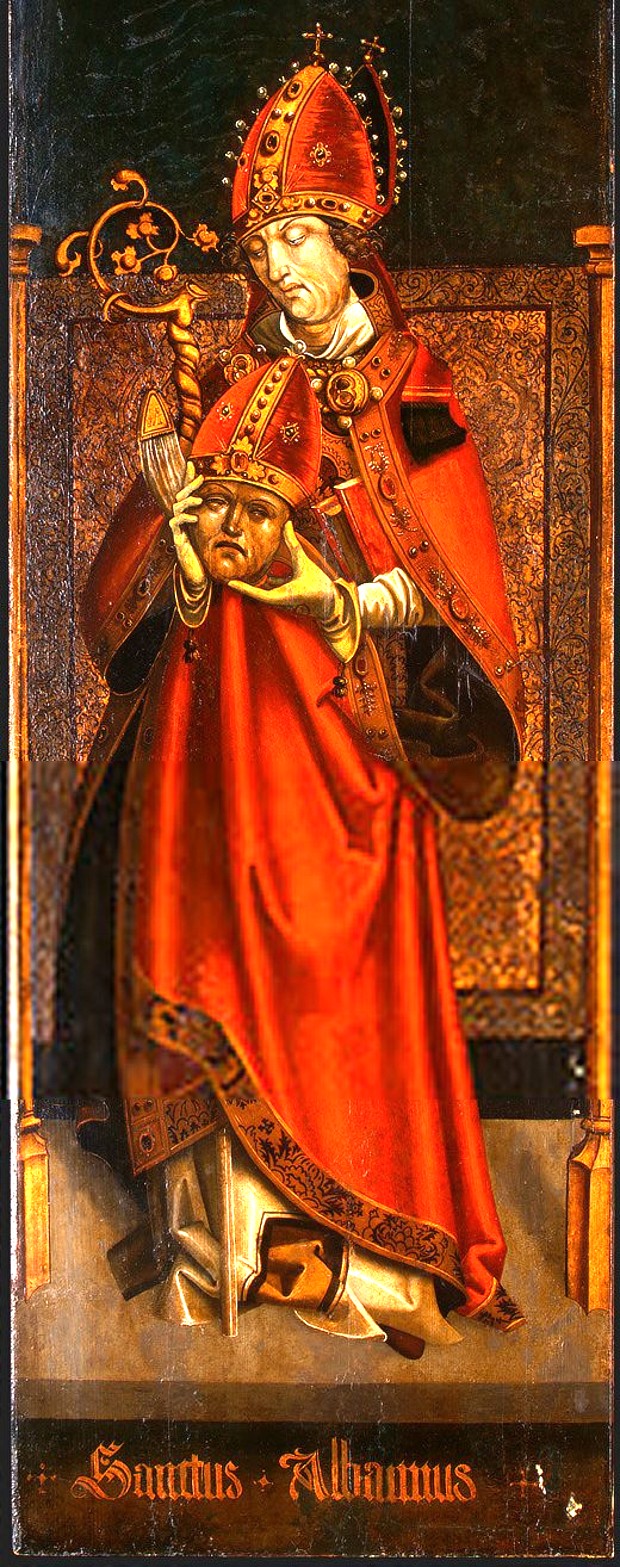
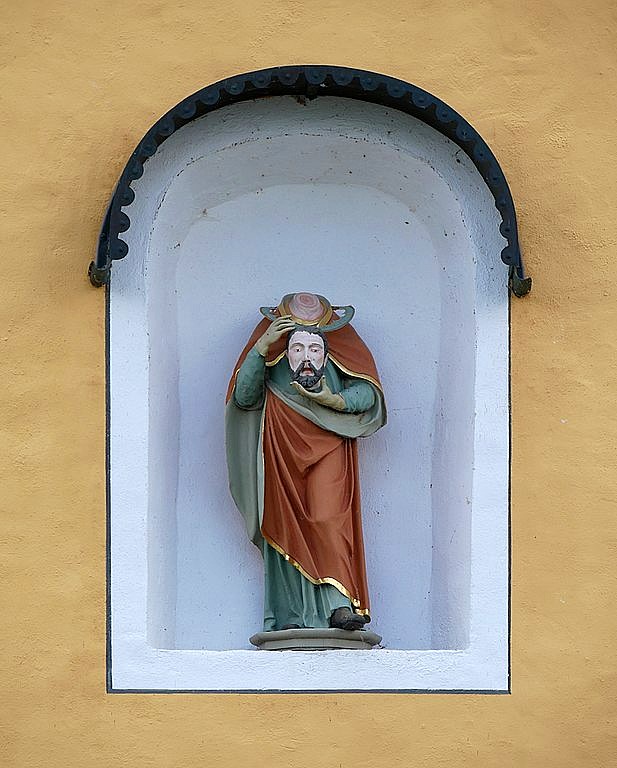

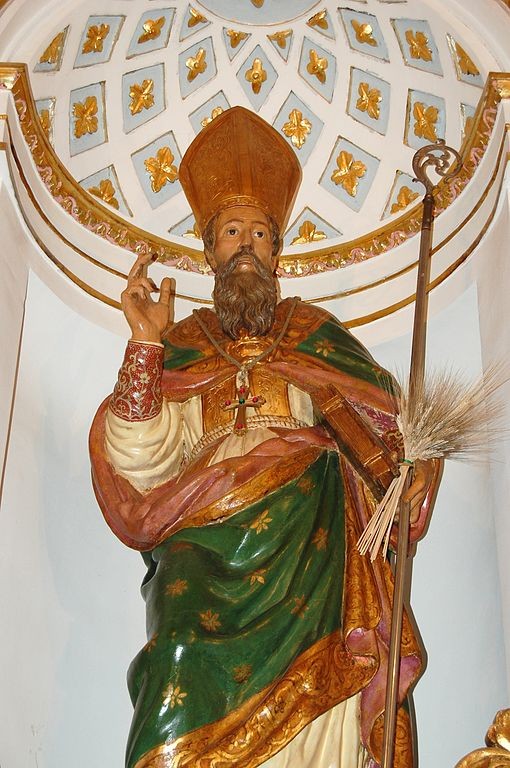
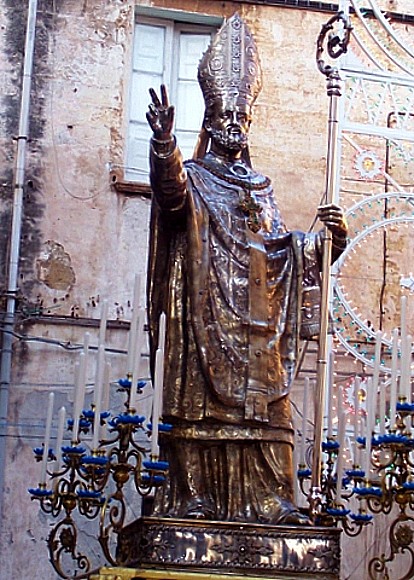
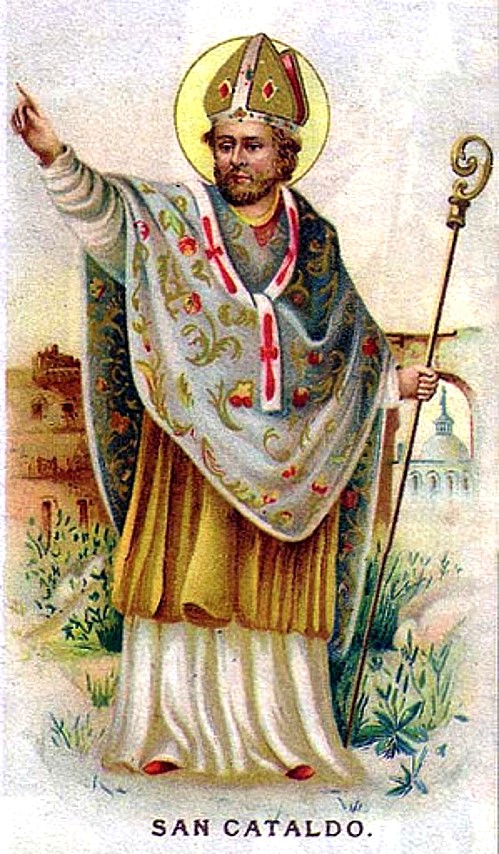

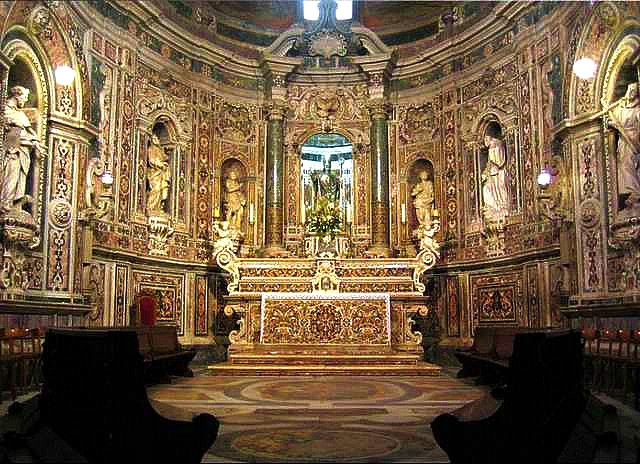
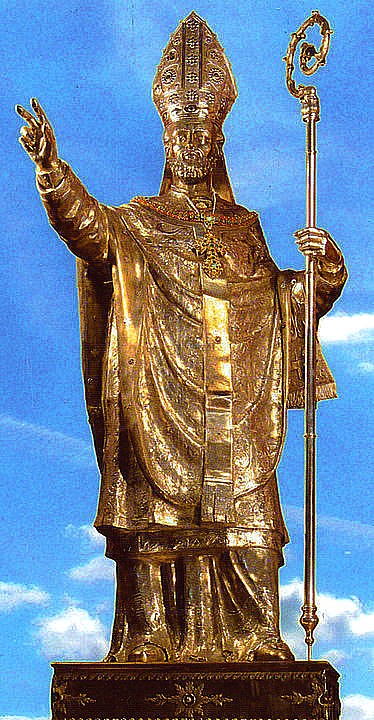
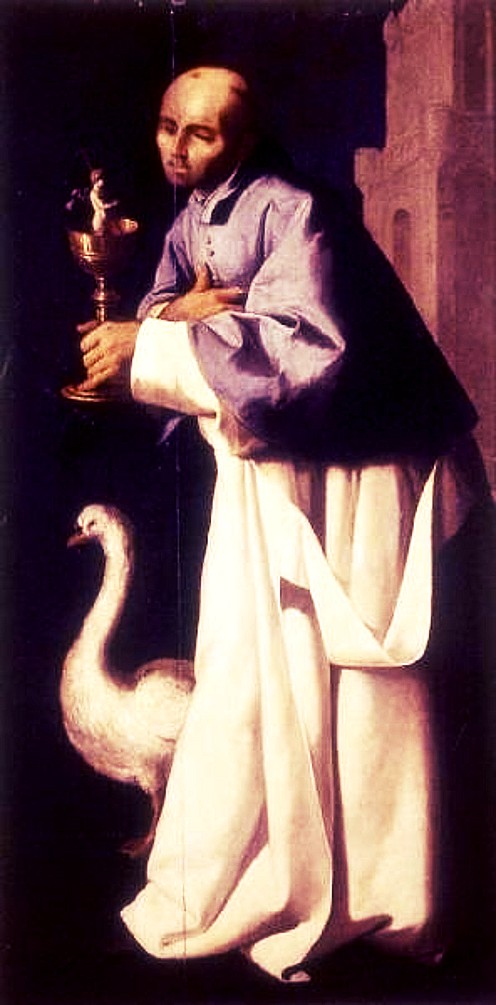
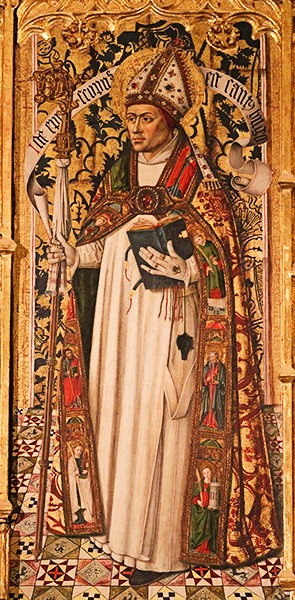
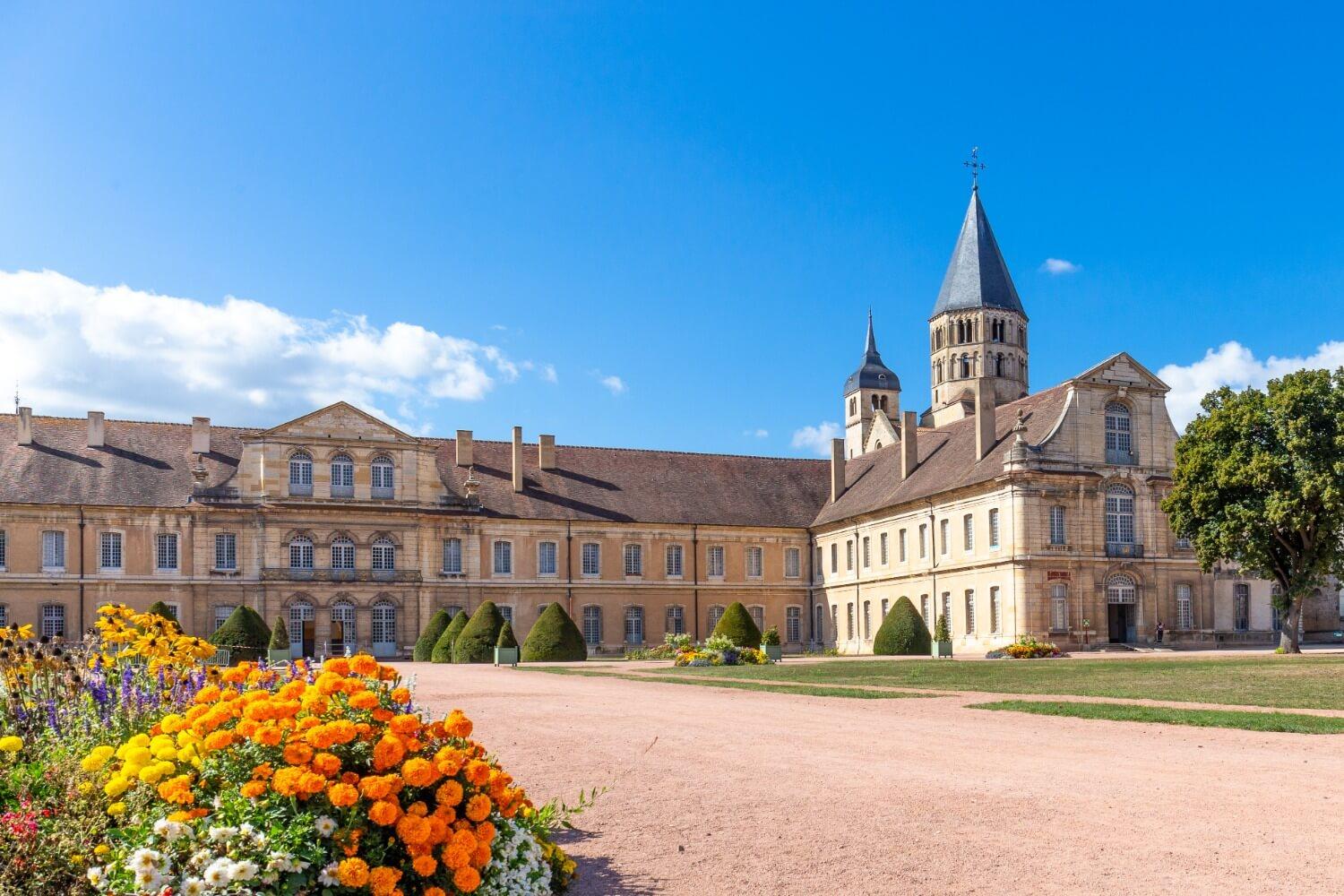
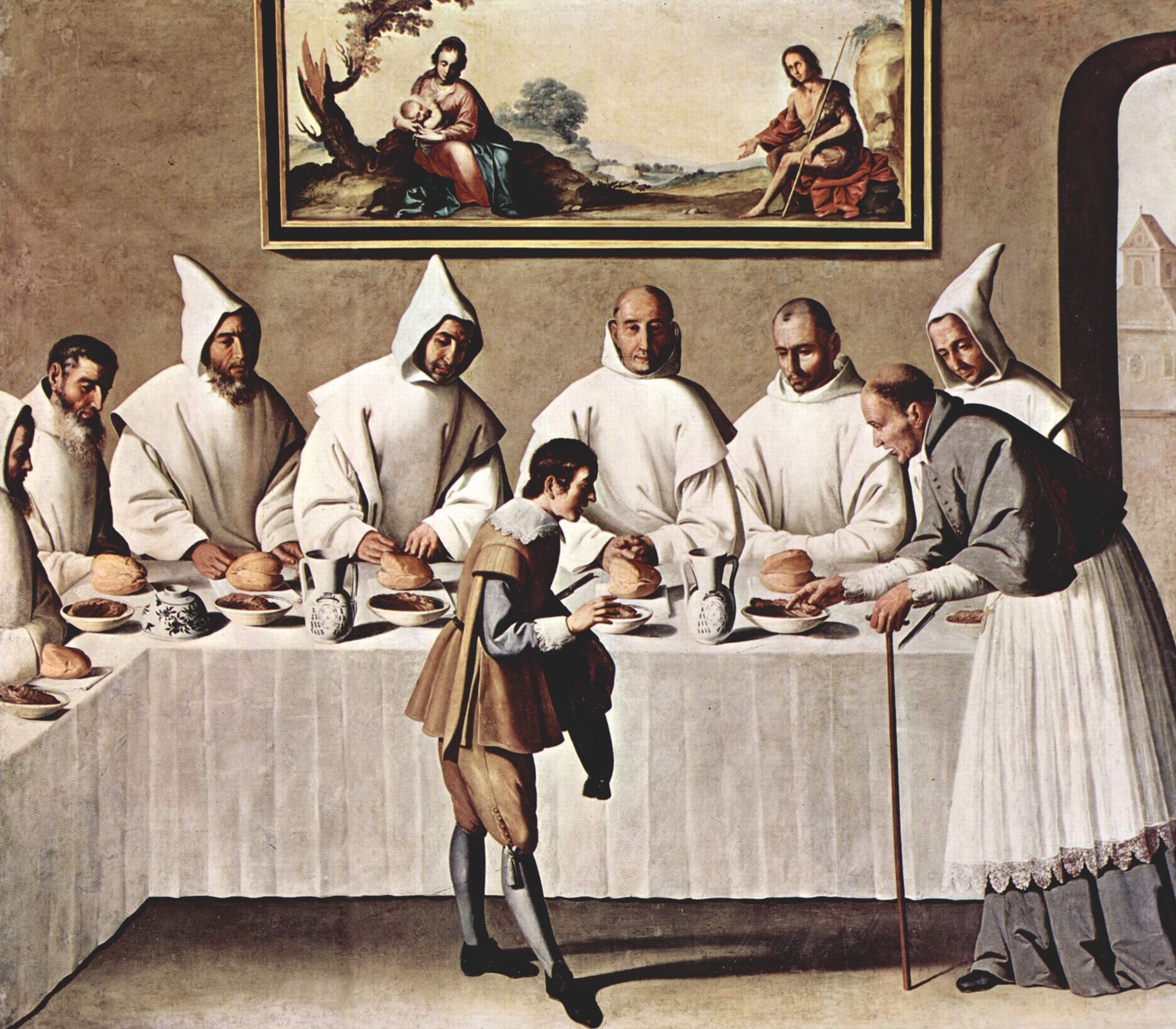

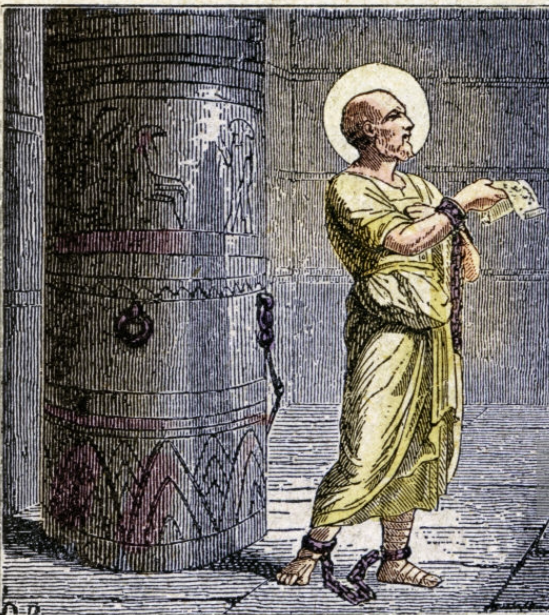
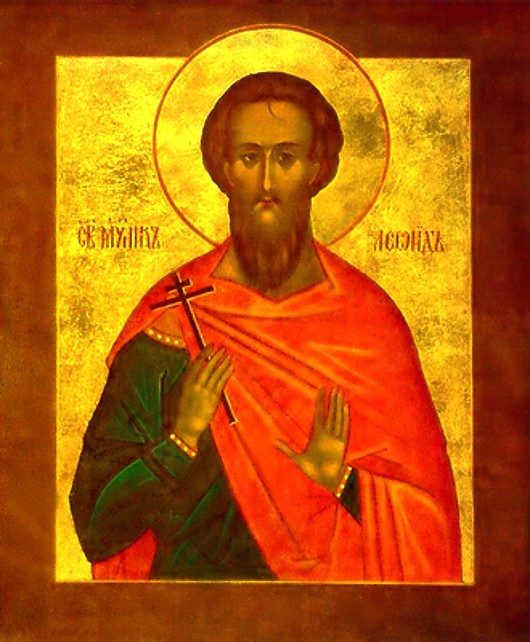
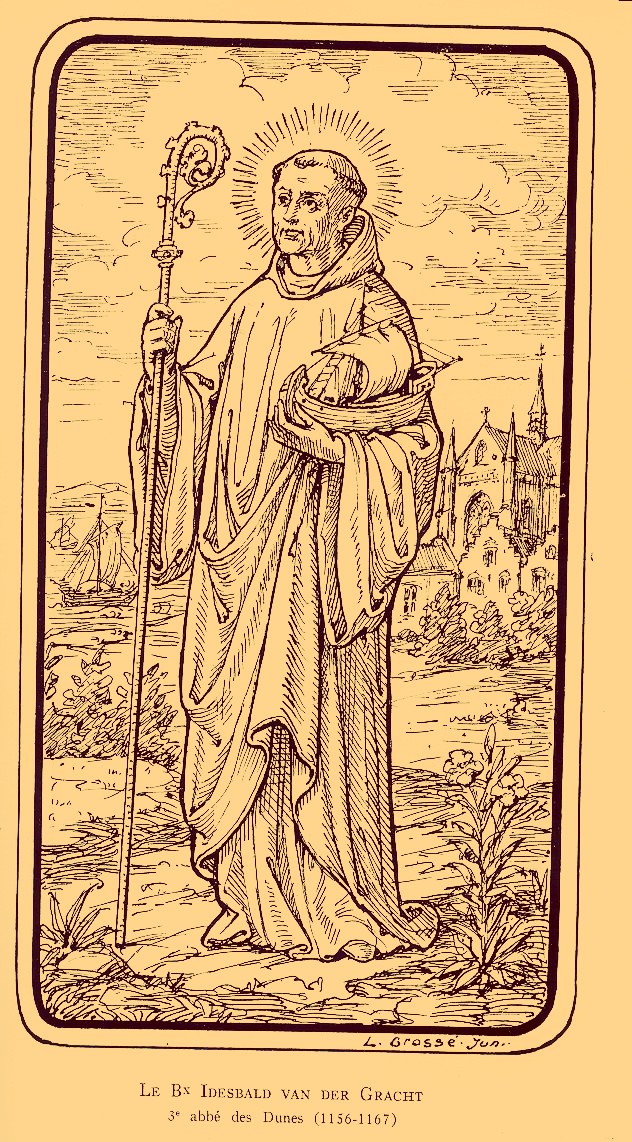
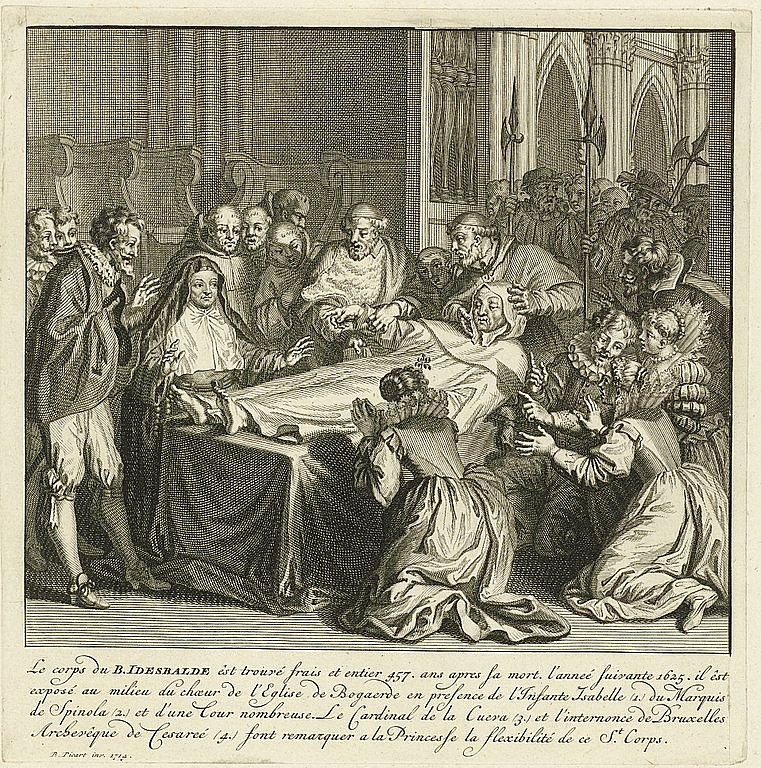






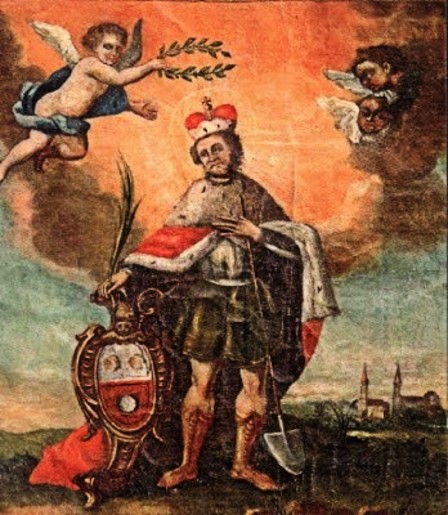

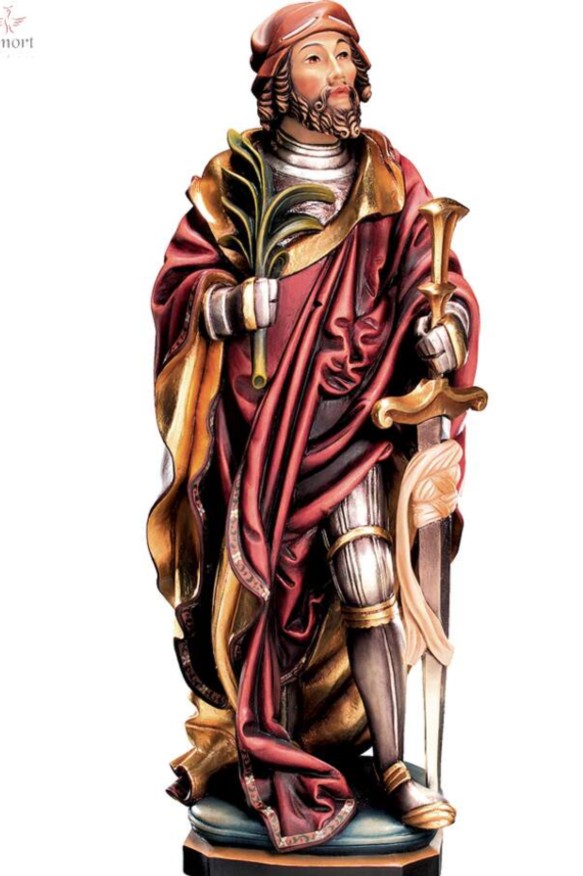
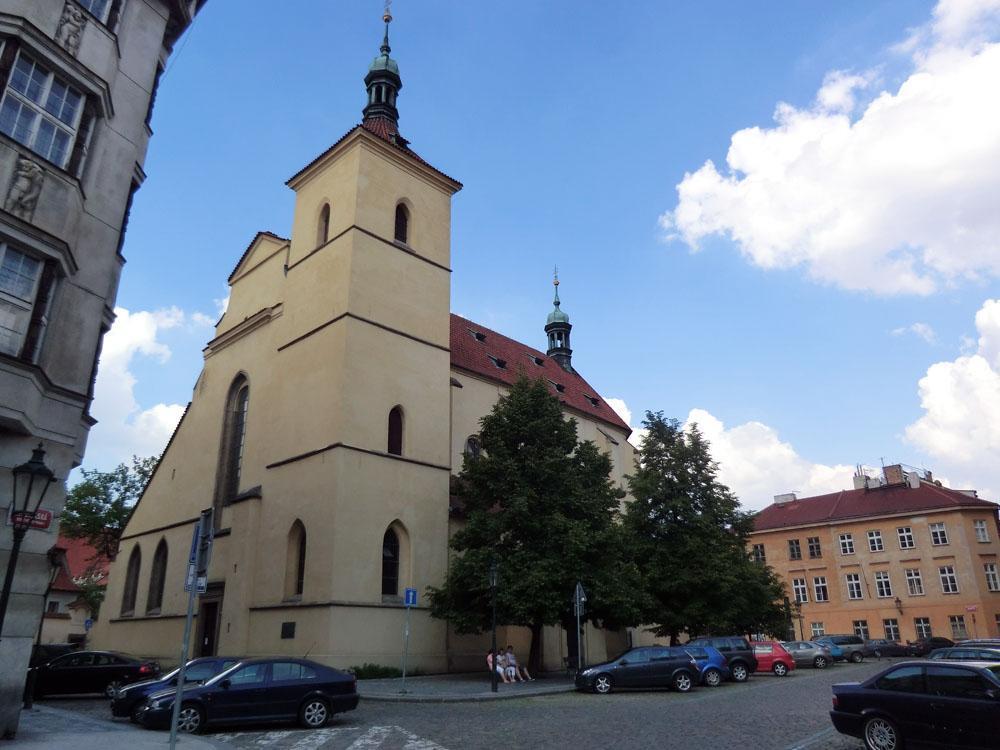
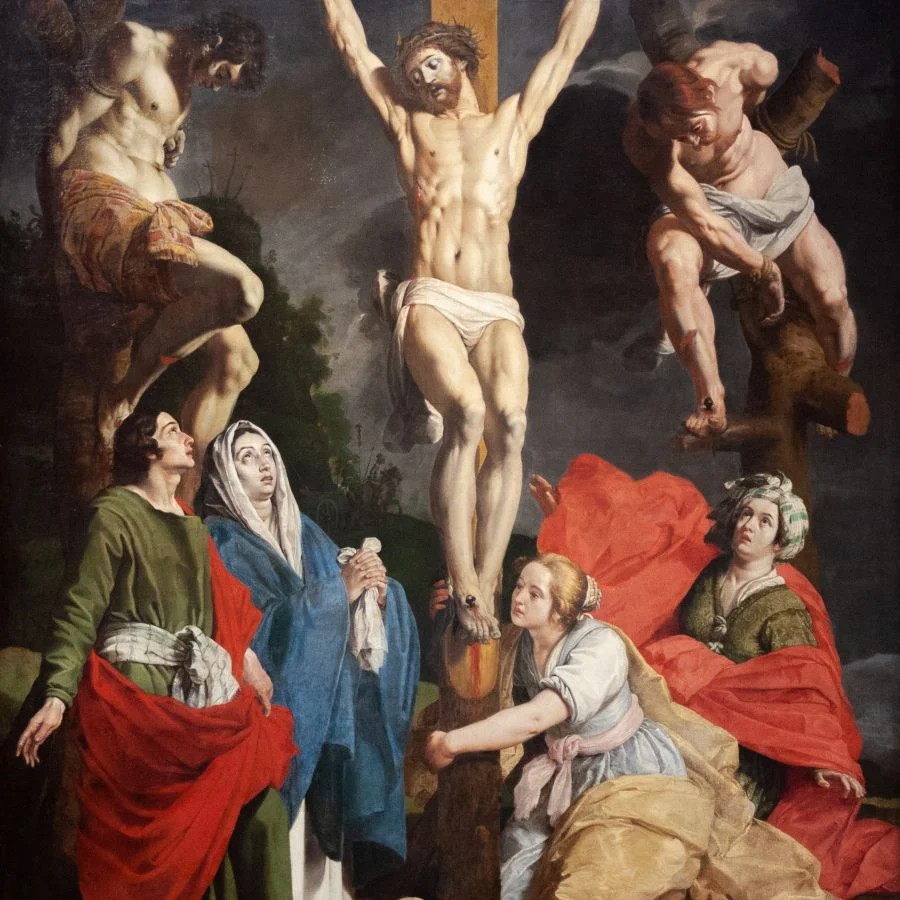

 AnaStpaul
You must be logged in to post a comment.