Our Morning Offering – 11 October – Friday of the Twenty Seventh week in Ordinary Time, Year C and the Memorial of St Pope John XXIII (1881-1963)
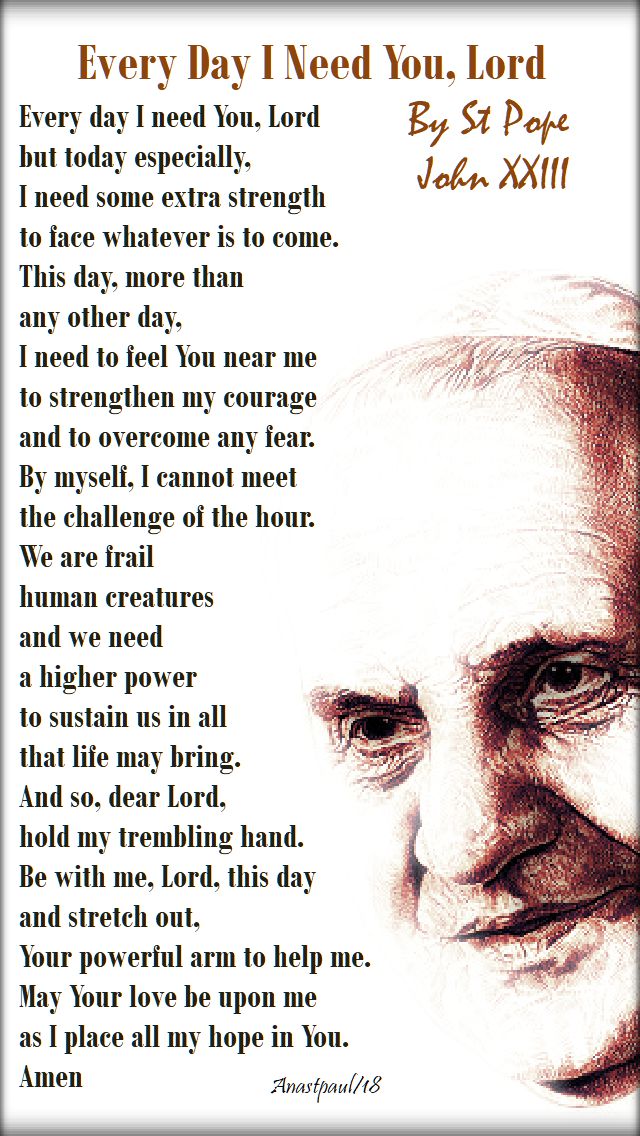
Every Day I Need You, Lord By St Pope John XXIII
Every day I need You, Lord
but today especially,
I need some extra strength
to face whatever is to come.
This day, more than any other day,
I need to feel You near me
to strengthen my courage
and to overcome any fear.
By myself, I cannot meet
the challenge of the hour.
We are frail human creatures
and we need a higher power
to sustain us in all that life may bring.
And so, dear Lord,
hold my trembling hand.
Be with me, Lord, this day
and stretch out,
Your powerful arm to help me.
May Your love be upon me
as I place all my hope in You.
Amen
One Minute Reflection – 9 October – Wednesday of the Twenty Seventh Week in Ordinary Time, Year C, Gospel: Luke 11:1–4 and the Memorial of Blessed John Henry Newman (1801-1890)
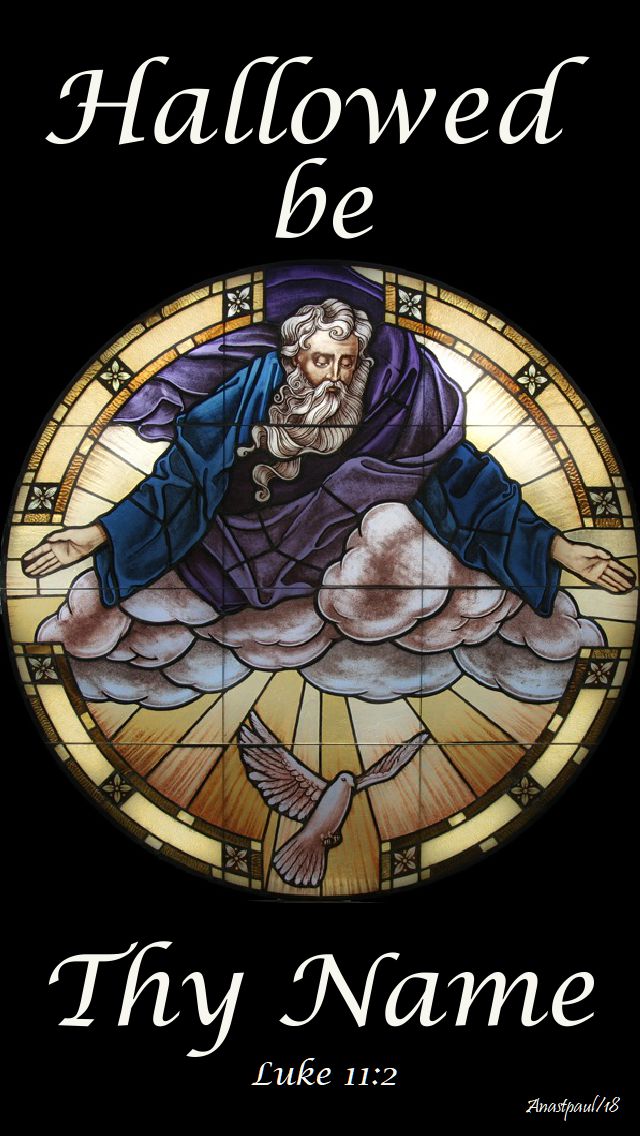
“Father, hallowed be thy name.”…Luke 11:2
REFLECTION – “Thou art all-holy, yet I come before Thee. I place myself, under Thy pure and piercing eyes which look me through and through and discern every trace and every motion of evil within me. Why do I do so?
First of all, for this reason. To whom should I go? What can I do better? Who is there in the whole world that can help me? Who that will care for me, or pity me, or have any kind thought of me, if I cannot obtain it of Thee? I know Thou art of purer eyes than to behold iniquity but I know again, that Thou art all-merciful and that Thou so sincerely desires my salvation, that Thou has died for me. Therefore, though I am in a great strait, I will rather fall into Thy hands, than into those of any creature ….
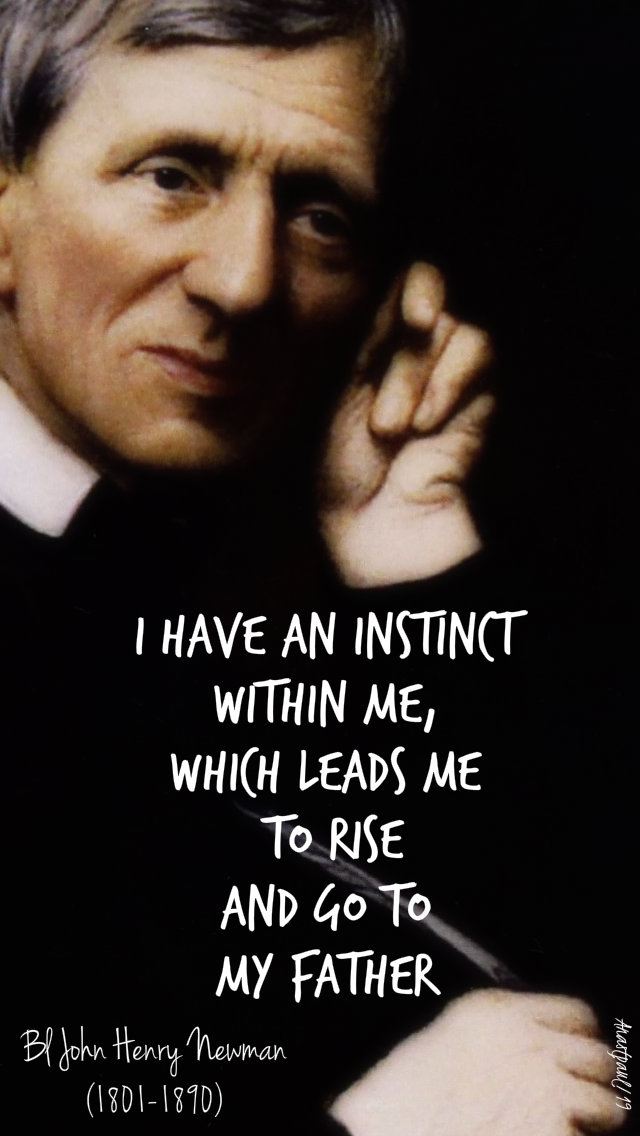
I have an instinct within me, which leads me to rise and go to my Father, to name the Name of His well-beloved Son and having named it, to place myself, unreservedly in His hands, saying “if Thou, Lord, will mark iniquity, Lord, who shall stand it? For with Thee, there is merciful forgiveness.” … Blessed John Henry Newman (1801-1890)To My Father
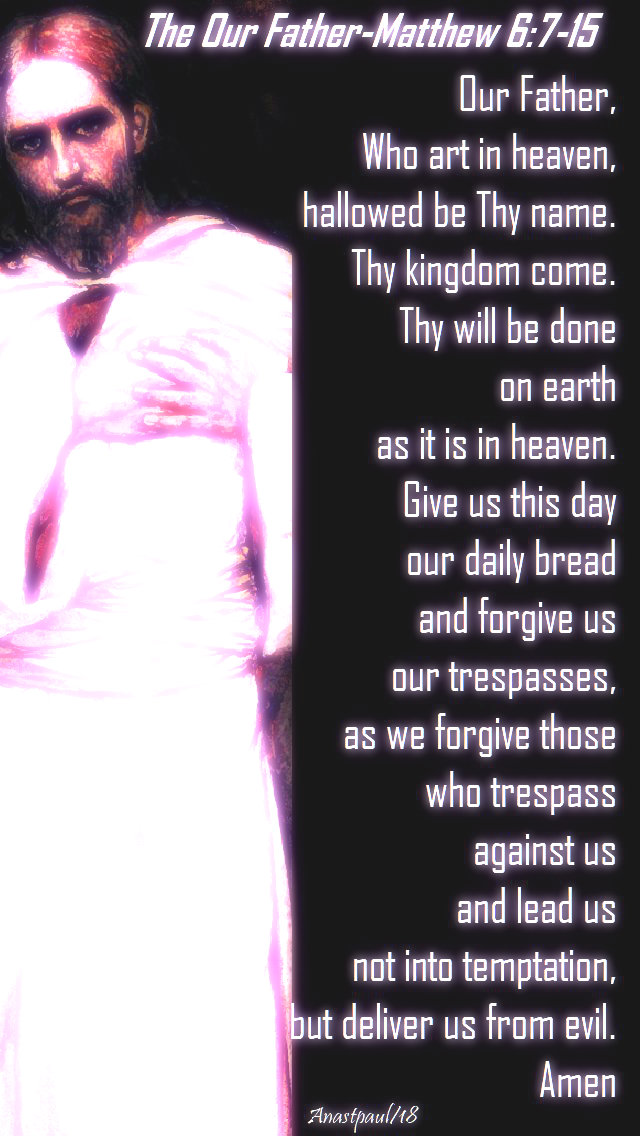
PRAYER – Our Father, who art in heaven, hallowed be Thy name. Thy Kingdom come, Thy will be done on earth as it is in heaven. Give us this day our daily bread and forgive us our trespasses, as we forgive those who trespass against us and lead us not into temptation but deliver us from evil. And grant us Lord, our Father, that the prayers of Blessed John Henry Newman, the Blessed Virgin Mary and all our holy saints, may help us in our needs. We make our prayer, through Jesus Christ, with the Holy Spirit, one God forever, amen.
Thought for the Day – 8 October – Tuesday of the Twenty Seventh week in Ordinary Time, Year C, Gospel: Luke 10:38–42
Reaching out towards God
Saint Gertrude the Great of Helfta (1256-1301) The Herald of Divine Love, Book III, SC 143
On a certain occasion, while she was interiorly worrying that she was unable to feel as much desire as was fitting to the glory of God, Gertrude received this divine explanation: that God is fully satisfied when a person, without being able to do more, is in a state of wanting, if possible, to have great desires. Just as great as they would like to have, so they are before God. In a heart filled with the desire, of wanting to desire, God finds greater delights to dwell, than we do in the flowering of early spring.
On another occasion, due to illness, she had been less attentive to God for several days when, regaining consciousness of this fault, she started to confess this negligence to the Lord with a pious humility. And as she was fearing she would have to bear a long delay before recovering the former sweetness of the divine presence, all at once, in a flash, she was aware that God was bending towards her with a truly loving embrace with these words: “Daughter, you are always with me and all that is mine, is yours” (cf. Lk 15:31). She understood by this reply that, even though, through the weakness of nature, a person might sometimes omit to direct their attention to God, nevertheless, in His merciful kindness, He Himself does not neglect to hold all our works, as worthy of an eternal reward, provided only, that we do not deliberately turn away from Him and that we always repent of everything, for which our consciences reproach us.
“You are always with me and all that is mine, is yours”
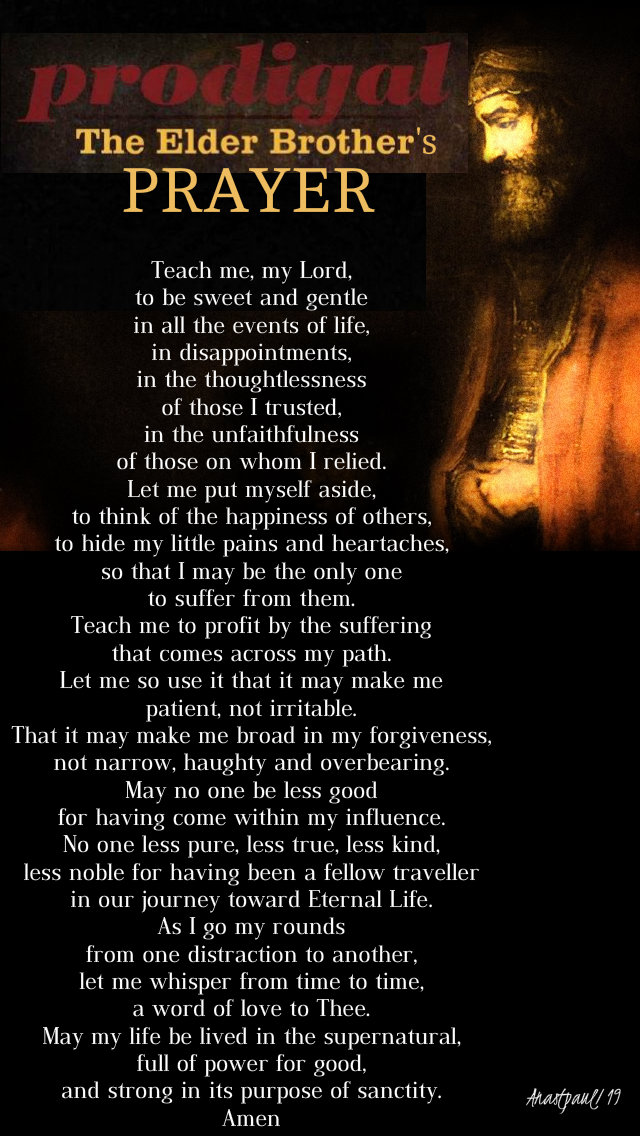
The Elder Brother’s Prayer
Teach me, my Lord,
to be sweet and gentle in all the events of life,
in disappointments,
in the thoughtlessness of those I trusted,
in the unfaithfulness of those on whom I relied.
Let me put myself aside,
to think of the happiness of others,
to hide my little pains and heartaches,
so that I may be the only one to suffer from them.
Teach me to profit by the suffering
that comes across my path.
Let me so use it that it may make me
patient, not irritable.
That it may make me broad in my forgiveness,
not narrow, haughty and overbearing.
May no one be less good
for having come within my influence.
No one less pure, less true, less kind,
less noble for having been a fellow traveller
in our journey toward Eternal Life.
As I go my rounds from one distraction to another,
let me whisper from time to time,
a word of love to Thee.
May my life be lived in the supernatural,
full of power for good,
and strong in its purpose of sanctity.
Amen
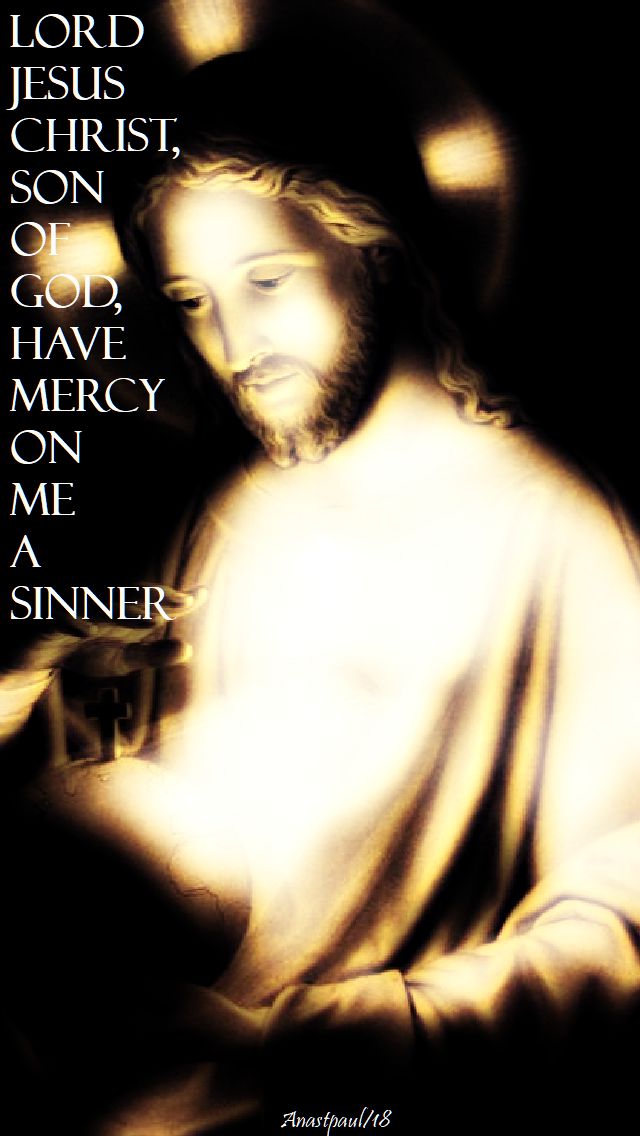
Lord Jesus Christ, Son of God, have mercy on me a sinner!
Our Morning Offering – 8 October – Tuesday of the Twenty Seventh week in Ordinary Time, Year C
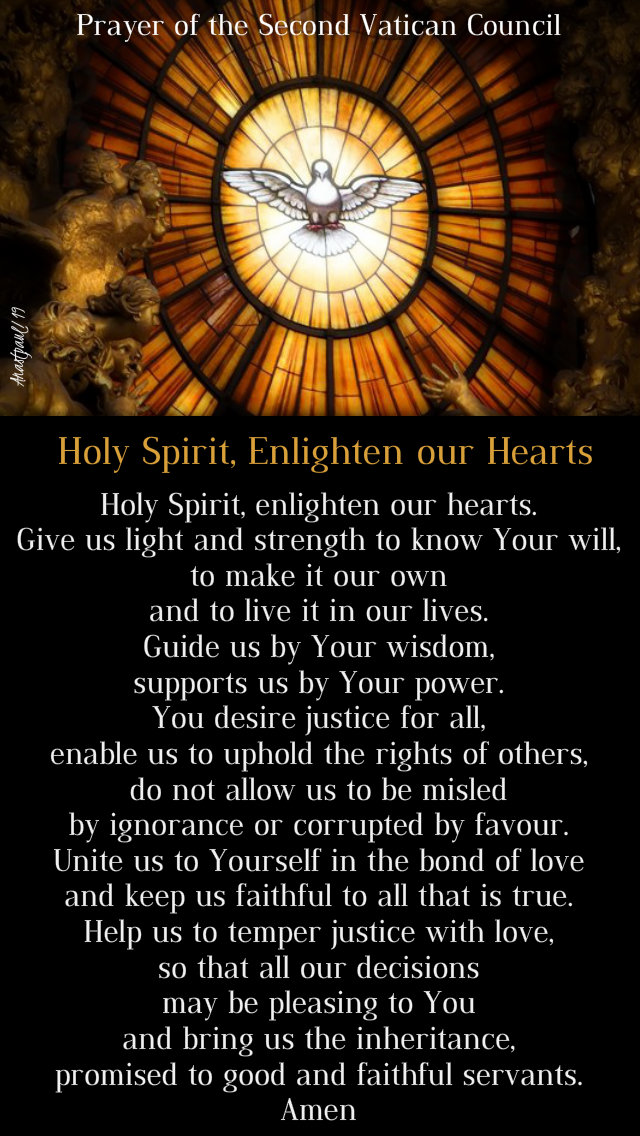
Holy Spirit, Enlighten our Hearts Prayer recited before the Sessions of the Second Vatican Council
Holy Spirit, enlighten our hearts.
Give us light and strength to know Your will,
to make it our own
and to live it in our lives.
Guide us by Your wisdom,
supports us by Your power.
You desire justice for all,
enable us to uphold the rights of others,
do not allow us to be misled
by ignorance or corrupted by favour.
Unite us to Yourself in the bond of love
and keep us faithful to all that is true.
Help us to temper justice with love,
so that all our decisions
may be pleasing to You
and bring us the inheritance,
promised to good and faithful servants.
Amen
Our Morning Offering – 7 October – The Memorial of Our Lady of the Holy Rosary Bl Bartholomew Longo (1841-1926) – Apostle of the Holy Rosary and the Month of the Holy Rosary
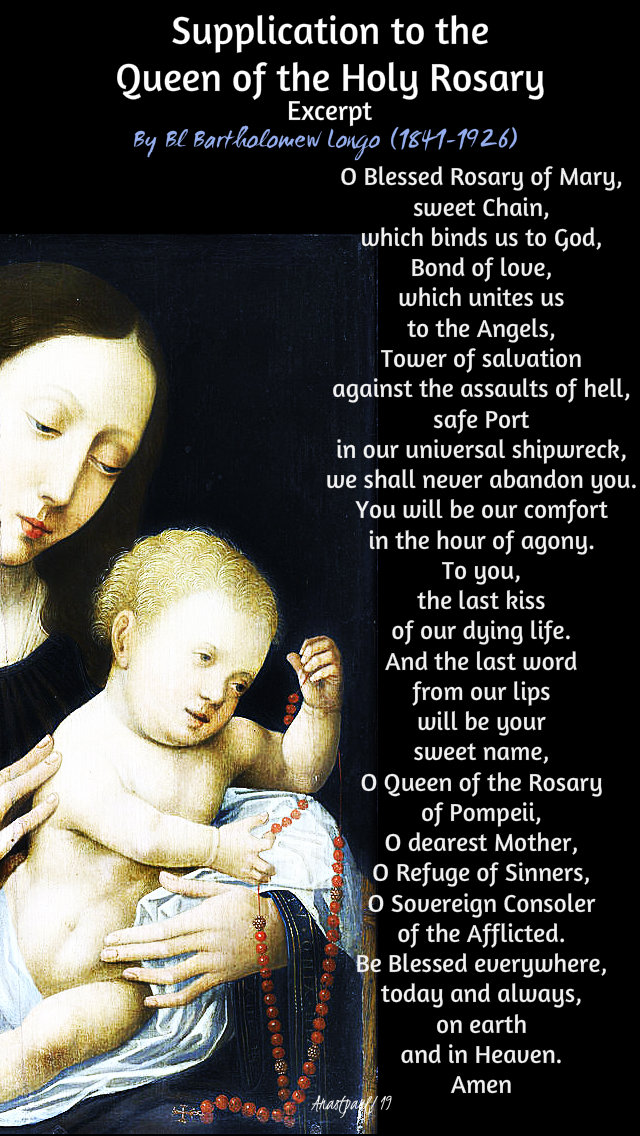
Excerpt from the Petition to Our Lady of the Rosary of Pompeii also known as Supplication to the Queen of the Holy Rosary By Blessed Bartholomew Longo (1841-1926)
O Blessed Rosary of Mary,
sweet Chain,
which binds us to God,
Bond of love,
which unites us to the Angels,
Tower of salvation
against the assaults of hell,
safe Port in our universal shipwreck,
we shall never abandon you.
You will be our comfort
in the hour of agony.
To you, the last kiss of our dying life.
And the last word from our lips
will be your sweet name,
O Queen of the Rosary of Pompeii,
O dearest Mother,
O Refuge of Sinners,
O Sovereign Consoler of the Afflicted.
Be Blessed everywhere,
today and always,
on earth and in Heaven.
Amen
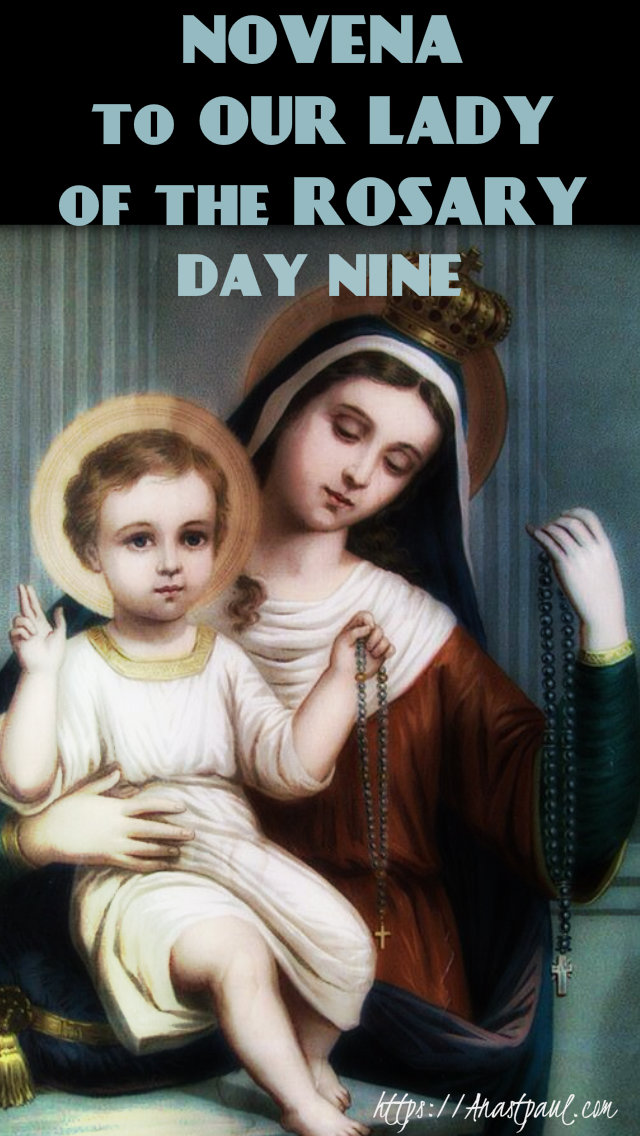
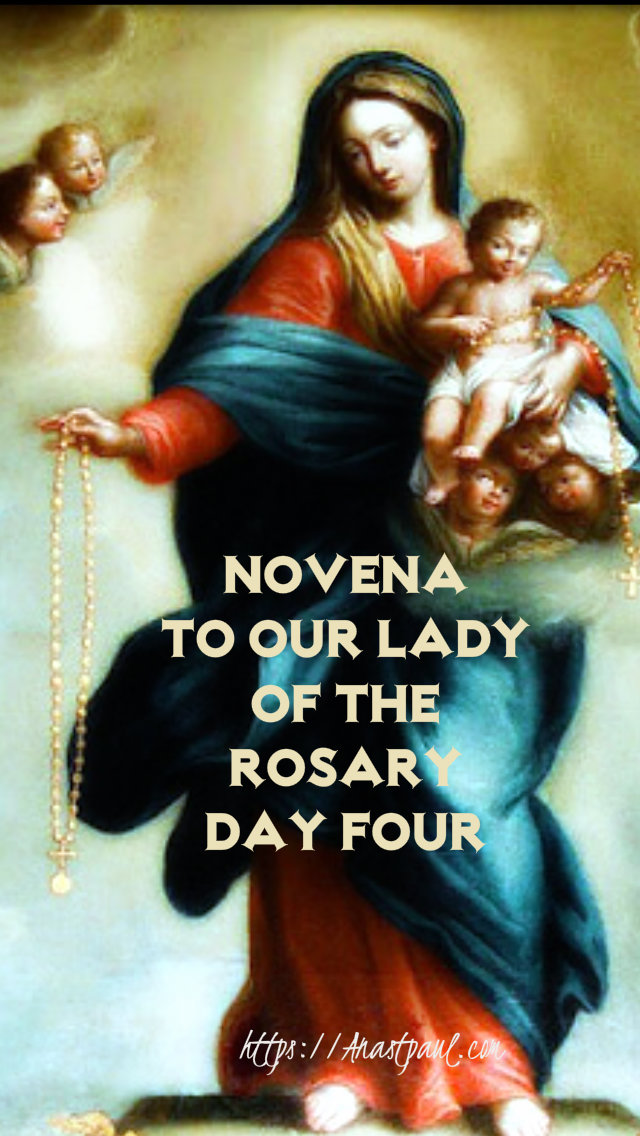
Novena to Our Lady of the Rosary – Day Nine – 6 October
Day Nine: We Pray for the Virtue of Wisdom
and for our private intentions
At the end of this journey of prayer together,
Let us today, turn to Our Divine Father
and pray, so that we may be granted
the gift of wisdom and discernment,
to enable us to
Understand,
Distinguish,
Separate
and Decide between the good and evil.
We pray for the ability
to make the right judgement for
and about others, as well as for ourselves,
according to God’s Will.
Amen
Daily Prayer along with our Daily Rosary:
My dearest Mother Mary, behold me, your child, in prayer at your feet.
Accept this Holy Rosary, which I offer you in accordance with your requests at Fatima, as a proof of my tender love for you, for the intentions of the Sacred Heart of Jesus, in atonement for the offenses committed against your Immaculate Heart and for this special favour which I earnestly request in my Rosary Novena: ………………………….. (Mention your request).
I beg you to present my petition to your Divine Son.
If you will pray for me, I cannot be refused.
I know, dearest Mother, that you want me
to seek God’s holy Will concerning my request.
If what I ask for should not be granted,
pray that I may receive that which will be of greater benefit to my soul.
I offer you this spiritual Bouquet of Roses because I love you.
I put all my confidence in you,
since your prayers before God are most powerful.
For the greater glory of God and for the sake of Jesus,
your loving Son, hear and grant my prayer.
Sweet Heart of Mary, be my salvation.
Our Lady of the Rosary,
pray for our Holy Mother Church
and for our country.
Our Lady of Fatima,
obtain for humanity a lasting peace.
Sweet Heart of Jesus,
be my love.
Sweet Heart of Mary,
at the hour of my death,
lead me home.
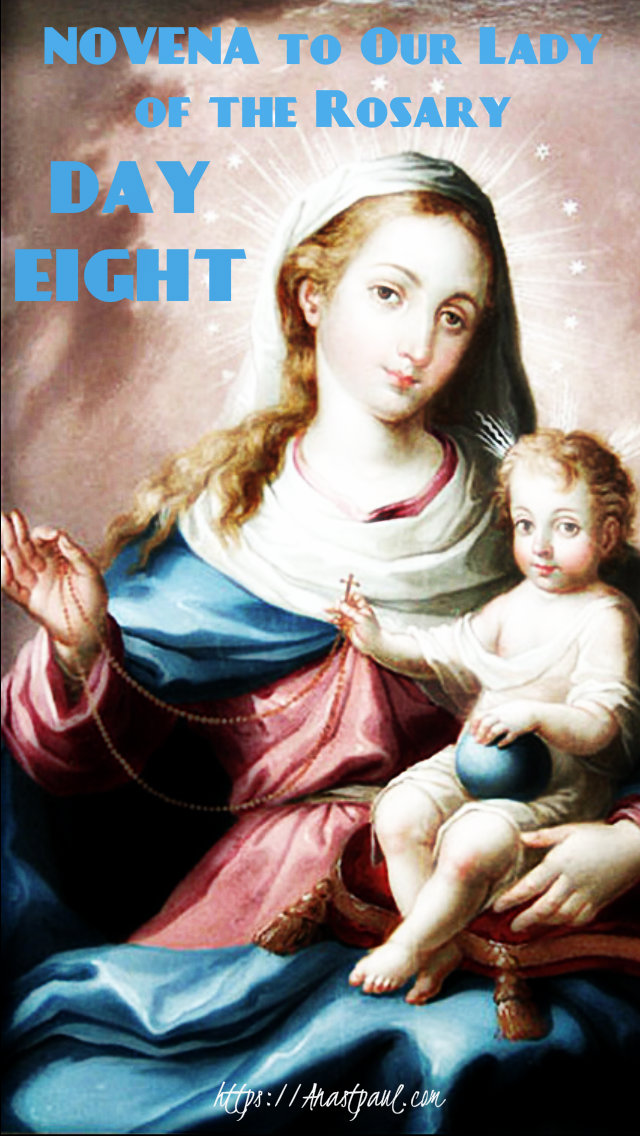
Novena to Our Lady of the Rosary – Day Eight – 5 October
Day Eight: We Pray for the Virtue of Faith
and for our private intentions
Thank You, Jesus
You our Great Mystery,
For Your life
that transcends our understanding,
For Your presence
from which we can never flee,
for Your Resurrection
which is never defeated
and for the gift of faith
that enables us to trust
even in the midst of our doubts
and fears.
Amen
Daily Prayer along with our Daily Rosary:
My dearest Mother Mary, behold me, your child, in prayer at your feet.
Accept this Holy Rosary, which I offer you in accordance with your requests at Fatima, as a proof of my tender love for you, for the intentions of the Sacred Heart of Jesus, in atonement for the offenses committed against your Immaculate Heart and for this special favour which I earnestly request in my Rosary Novena: ………………………….. (Mention your request).
I beg you to present my petition to your Divine Son.
If you will pray for me, I cannot be refused.
I know, dearest Mother, that you want me
to seek God’s holy Will concerning my request.
If what I ask for should not be granted,
pray that I may receive that which will be of greater benefit to my soul.
I offer you this spiritual Bouquet of Roses because I love you.
I put all my confidence in you,
since your prayers before God are most powerful.
For the greater glory of God and for the sake of Jesus,
your loving Son, hear and grant my prayer.
Sweet Heart of Mary, be my salvation.
Our Lady of the Rosary,
pray for our Holy Mother Church
and for our country.
Our Lady of Fatima,
obtain for humanity a lasting peace.
Sweet Heart of Jesus,
be my love.
Sweet Heart of Mary,
at the hour of my death,
lead me home.
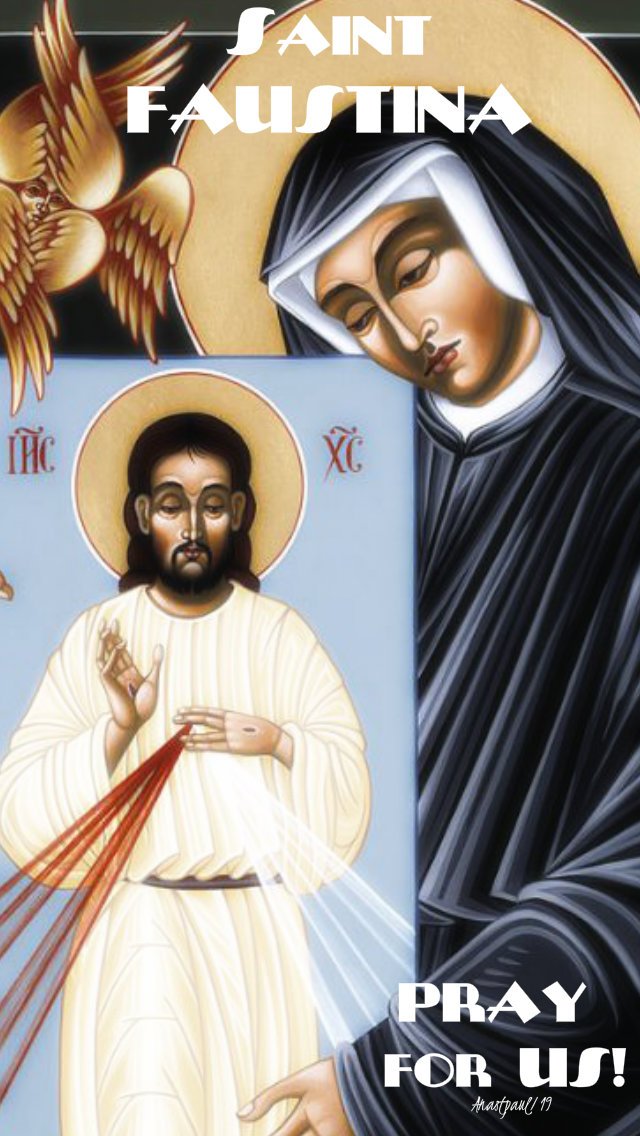
Thought for the Day – 5 October – The Memorial of St Maria Faustina Kowalska (1905-1938)
And you, Faustina, a gift of God to our time, a gift from the land of Poland to the whole Church, obtain for us an awareness of the depth of divine mercy, help us to have a living experience of it and to bear witness to it among our brothers and sisters.
May your message of light and hope spread throughout the world, spurring sinners to conversion, calming rivalries and hatred and opening individuals and nations to
the practice of brotherhood.
Today, fixing our gaze with you on the Face of the risen Christ, let us make our own your prayer of trusting abandonment and say with firm hope:
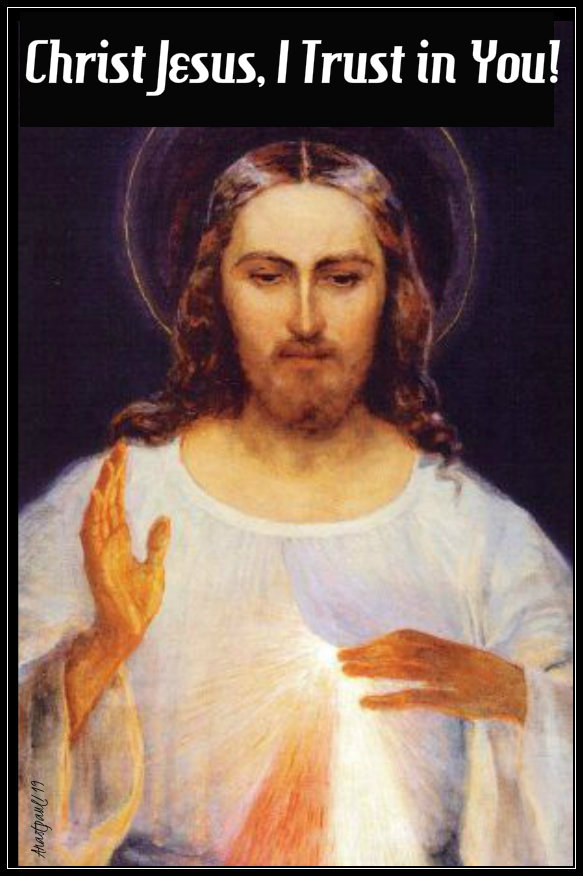
Christ Jesus, I trust in you! Jezu, ufam tobie!
(From St John Paul’s Canonisation Homily, St Peter’s Square, 30 April 2000)
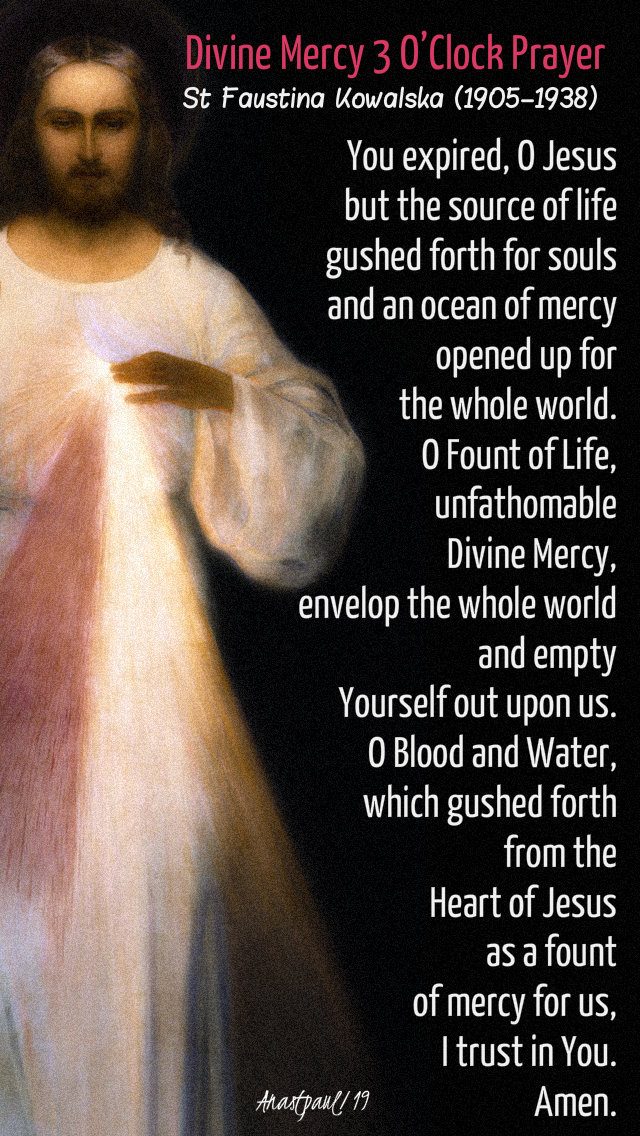
The red and pale white rays, emanating from the Heart of Jesus, in the Image of Divine Mercy represent the blood and water, which gushed forth from His pierced Heart on Good Friday. Jesus asked that all who venerate His mercy, honour His Passion, by remembering Him with this prayer, at 3 O’Clock in the afternoon.
Divine Mercy 3 O’Clock Prayer St Faustina Kowalska (1905–1938)
You expired, O Jesus,
but the source of life
gushed forth for souls
and an ocean of mercy
opened up for the whole world.
O Fount of Life,
unfathomable Divine Mercy,
envelop the whole world
and empty Yourself out upon us.
O Blood and Water,
which gushed forth
from the Heart of Jesus
as a fount of mercy for us,
I trust in You.
Amen
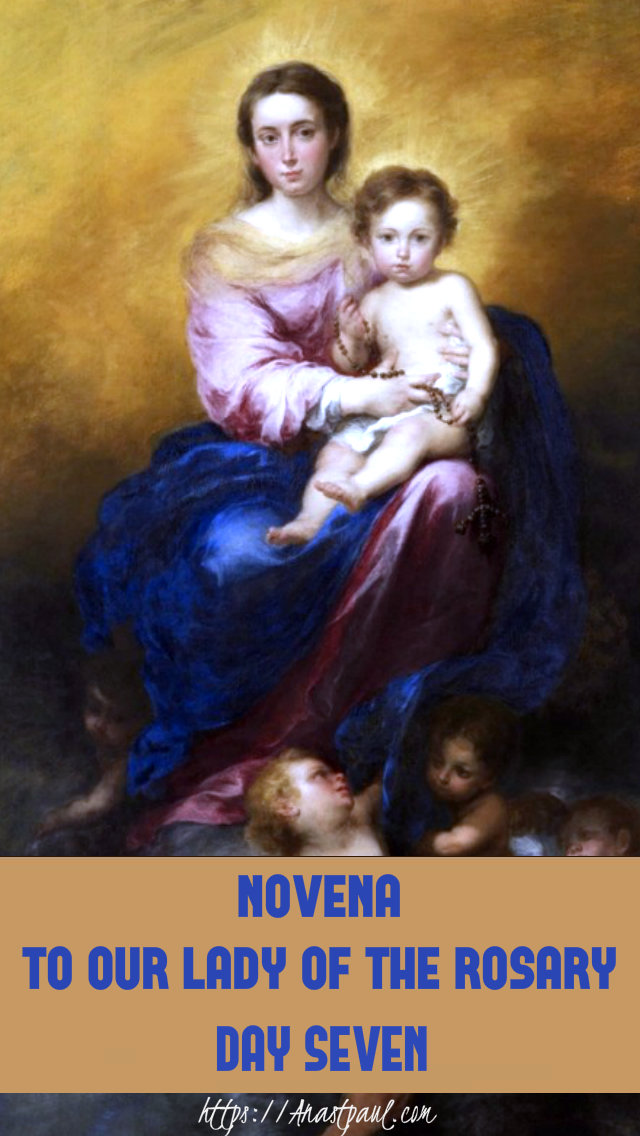
Novena to Our Lady of the Rosary – Day Seven – 4 October
Day Seven: We Pray for the Virtue of Fortitude
along with our private intentions
Holy Spirit,
may we be granted today,
the virtue by which
we do the right thing,
even in the midst of hardship.
We ask Thee to consider our need
for courage and bravery,
so that we may stay strong,
to do what is good.
You alone know how often,
in our lives, many situations arise
in which it becomes difficult
to do the right thing,
even when we know what it is.
We ask this through Jesus Christ,
Our Lord
Amen
Daily Prayer along with our Daily Rosary:
My dearest Mother Mary, behold me, your child, in prayer at your feet.
Accept this Holy Rosary, which I offer you in accordance with your requests at Fatima, as a proof of my tender love for you, for the intentions of the Sacred Heart of Jesus, in atonement for the offenses committed against your Immaculate Heart and for this special favour which I earnestly request in my Rosary Novena: ………………………….. (Mention your request).
I beg you to present my petition to your Divine Son.
If you will pray for me, I cannot be refused.
I know, dearest Mother, that you want me
to seek God’s holy Will concerning my request.
If what I ask for should not be granted,
pray that I may receive that which will be of greater benefit to my soul.
I offer you this spiritual Bouquet of Roses because I love you.
I put all my confidence in you,
since your prayers before God are most powerful.
For the greater glory of God and for the sake of Jesus,
your loving Son, hear and grant my prayer.
Sweet Heart of Mary, be my salvation.
Our Lady of the Rosary,
pray for our Holy Mother Church
and for our country.
Our Lady of Fatima,
obtain for humanity a lasting peace.
Sweet Heart of Jesus,
be my love.
Sweet Heart of Mary,
at the hour of my death,
lead me home.
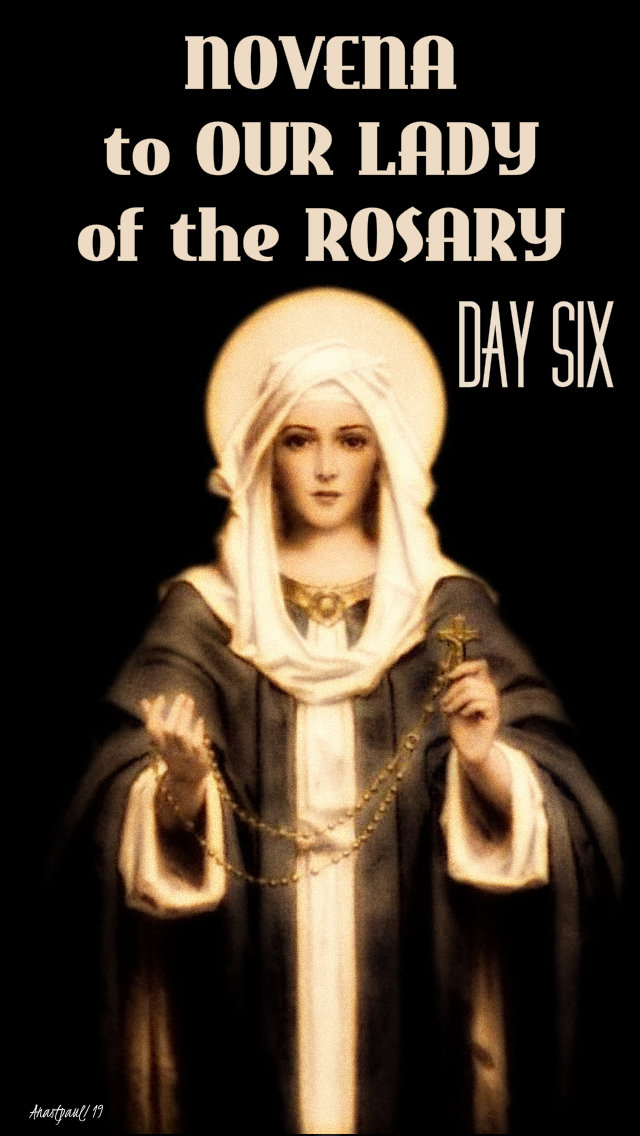
Novena to Our Lady of the Rosary – Day Six – 3 October
Day Six: We Pray for the Virtue of Meekness
along with our private intentions.
O Jesus,
our pride, stubbornness
and lack of faith labelled each thorn
as it pierced Your Sacred Head.
Our exclusion of spiritual realities
tightened the branches around Your Head.
Our lack of confidence in Your Mercy
and the lukewarmness of our love,
braided torture into a wreath of unspeakable pain.
O Jesus, let us NEVER forget Your love for us all
and the reparation You offered the Father for our sake.
Let our soul magnify the Lord by humility of heart,
purity of mind
and a gentle spirit,
so that we may overcome pride, vainglory and resentments
and look forward for an increase in faith.
Send Your beloved Mother and ours, O Lord,
to teach us meekness and humility.
Make us like unto Yourself, O Lord, “for I am meek and humble of heart.”
Amen
Daily Prayer along with our Daily Rosary:
My dearest Mother Mary, behold me, your child, in prayer at your feet.
Accept this Holy Rosary, which I offer you in accordance with your requests at Fatima, as a proof of my tender love for you, for the intentions of the Sacred Heart of Jesus, in atonement for the offenses committed against your Immaculate Heart and for this special favour which I earnestly request in my Rosary Novena: ………………………….. (Mention your request).
I beg you to present my petition to your Divine Son.
If you will pray for me, I cannot be refused.
I know, dearest Mother, that you want me
to seek God’s holy Will concerning my request.
If what I ask for should not be granted,
pray that I may receive that which will be of greater benefit to my soul.
I offer you this spiritual Bouquet of Roses because I love you.
I put all my confidence in you,
since your prayers before God are most powerful.
For the greater glory of God and for the sake of Jesus,
your loving Son, hear and grant my prayer.
Sweet Heart of Mary, be my salvation.
Our Lady of the Rosary,
pray for our Holy Mother Church
and for our country.
Our Lady of Fatima,
obtain for humanity a lasting peace.
Sweet Heart of Jesus,
be my love.
Sweet Heart of Mary,
at the hour of my death,
lead me home.
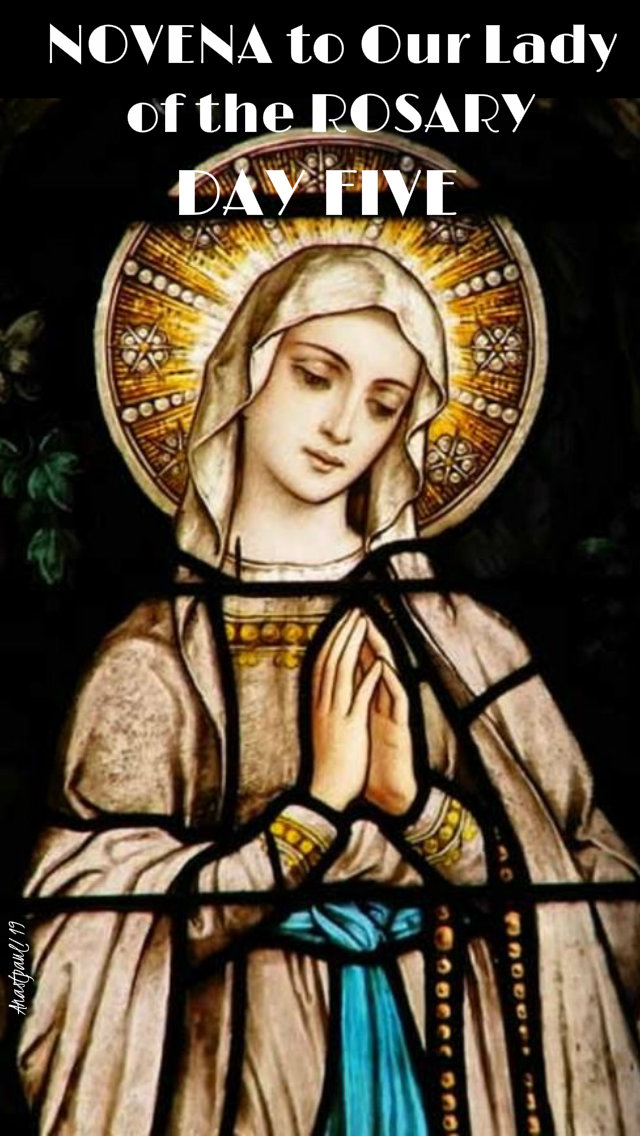
Novena to Our Lady of the Rosary – Day Five – 2 October
Day Five – We Pray for Purity of Heart
and our personal intention:
The Ever-Virgin Mary was
and remains pure in charity,
chastity and love of truth and orthodoxy of faith.
And that purity is divine
because it is inspired by God!
Each of us benefits from the purity of Mary,
regardless of how difficult it is
to be pure in charity, chastity
and right belief,
IT IS POSSIBLE… We WILL be pure
when we adopt the attitude of Our Blessed Lady
and seek the divine purity
that even yet radiates from Her.
By abandoning ourselves to God as she did,
we open ourselves to fresh opportunities of achieving purity. (The Virtue of Purity: An Undivided Heart by Msgr Charles M Mangan)
To Our most holy Mother.
To you do we pray first with heartfelt thanks
for your YES to the Father.
Grant us your guidance
and assistance to become as pure as you are.
Daily Prayer along with our Daily Rosary:
My dearest Mother Mary, behold me, your child, in prayer at your feet.
Accept this Holy Rosary, which I offer you in accordance with your requests at Fatima, as a proof of my tender love for you, for the intentions of the Sacred Heart of Jesus, in atonement for the offenses committed against your Immaculate Heart and for this special favour which I earnestly request in my Rosary Novena: ………………………….. (Mention your request).
I beg you to present my petition to your Divine Son.
If you will pray for me, I cannot be refused.
I know, dearest Mother, that you want me
to seek God’s holy Will concerning my request.
If what I ask for should not be granted,
pray that I may receive that which will be of greater benefit to my soul.
I offer you this spiritual Bouquet of Roses because I love you.
I put all my confidence in you,
since your prayers before God are most powerful.
For the greater glory of God and for the sake of Jesus,
your loving Son, hear and grant my prayer.
Sweet Heart of Mary, be my salvation.
Our Lady of the Rosary,
pray for our Holy Mother Church
and for our country.
Our Lady of Fatima,
obtain for humanity a lasting peace.
Sweet Heart of Jesus,
be my love.
Sweet Heart of Mary,
at the hour of my death,
lead me home.
Novena to Our Lady of the Rosary – Day Four – 1 October
Day Four – We Pray for the Virtue of Humility
and our personal intention:
May Almighty God
give us compassion
and humility in our hearts.
Let us be kind, gentle, generous,
loving, giving and forgiving
wherever we may go.
Allow pride to never get the best of us
as You fulfil our dreams.
Help us not to have a boastful tongue
against our brothers.
Let humility invade our souls…
Amen
Daily Prayer along with our Daily Rosary:
My dearest Mother Mary, behold me, your child, in prayer at your feet.
Accept this Holy Rosary, which I offer you in accordance with your requests at Fatima, as a proof of my tender love for you, for the intentions of the Sacred Heart of Jesus, in atonement for the offenses committed against your Immaculate Heart and for this special favour which I earnestly request in my Rosary Novena: ………………………….. (Mention your request).
I beg you to present my petition to your Divine Son.
If you will pray for me, I cannot be refused.
I know, dearest Mother, that you want me
to seek God’s holy Will concerning my request.
If what I ask for should not be granted,
pray that I may receive that which will be of greater benefit to my soul.
I offer you this spiritual Bouquet of Roses because I love you.
I put all my confidence in you,
since your prayers before God are most powerful.
For the greater glory of God and for the sake of Jesus,
your loving Son, hear and grant my prayer.
Sweet Heart of Mary, be my salvation.
Our Lady of the Rosary,
pray for our Holy Mother Church
and for our country.
Our Lady of Fatima,
obtain for humanity a lasting peace.
Sweet Heart of Jesus,
be my love.
Sweet Heart of Mary,
at the hour of my death,
lead me home.
Our Morning Offering – 26 September – Thursday of the Twenty Fifth week in Ordinary Time, Year C and The Memorial of Saints Cosmas and Damian (Died c 286) Martyrs
Lord, God, Your Light which Dims the Stars Breviary Hymn By the Benedictine Nuns of Stanbrook Abbey
Lord, God, Your light
which dims the stars
Awakes all things,
And all that springs to life in You
Your glory sings.
Your peaceful presence,
giving strength,
Is everywhere,
And fallen men may rise again
On wings of prayer.
You are the God whose mercy rests
On all You made.
You gave us Christ,
whose love through death
Our ransom paid.
We praise You, Father, with Your Son
And Spirit blest,
In whom creation lives and moves,
And finds its rest.
Thought for the Day – 25 September – The Memorial of Blessed Herman of Reichenau/the Cripple OSB (1013–1054) the Author of the Salve Regina
THE “SALVE, REGINA” RECEIVES AN ADDITION
In the year 1146 Saint Bernard, the illustrious doctor of the Church and abbot of Clairvaux, was travelling through Germany and by the power of his eloquence was rousing the people of that country to the necessity of entering upon another crusade, a spirited one, in order to wrest from the iron grasp of the heathens those places in Palestine that had been sanctified by the footsteps and moistened with the blood, of our holy Redeemer.
Passing from Switzerland, by way of Strasbourg, Saint Bernard sailed down the river Rhine and landed at Spire, on Christmas Eve, 1146. In a grand procession, composed of the civic societies and trades unions, with their banners waving in the air and holding lighted tapers in their hands, followed in turn by the clergy with their bishop clad in pontifical robes, Saint Bernard was conducted, amid every sign of respect from the multitudes who lined the streets of the city, to the majestic cathedral.
Here, amid the chant of the choristers and the joyful pealing of the bells, the great preacher of the holy wars was met by the Emperor Conrad and all the royal princes of the court, who tendered to their illustrious guest the welcome of their realm.
It was a scene of great magnificence as the saint crossed the threshold of the sacred edifice. Thousands had to remain outside the building, for the saint’s great reputation for sanctity and the fame of the wondrous miracles that he had wrought, as well as his renowned eloquence, had drawn vast crowds from far and near, eager to get a glimpse of his venerable person.
As the solemn procession, preceded by the cross and other standards, marched slowly up the grand aisle of the cathedral, a choir of a thousand voices chanted the hymn, “Salve, Regina,” or “Hail, holy Queen.” The lofty vaults of the sacred edifice spanning many altars ablaze with a thousand lights, the soldierly form of the emperor, the venerable mien of the holy bishops, the long files of white-robed priests, the vast crowds of admiring people, the inspiring strains of the music and all this but the expression of truly Catholic hearts, over-powered the soul of Saint Bernard with emotions of intense gratitude to God and His blessed Mother.
The altar was reached as the singers’ voices repeated the last words of the “Salve, Regina.” A profound silence ensued as the words, “Et Jesum, benedictum fructum ventris tui, nobis post hoc exilium ostende” – that is, “Show unto us the blessed fruit of thy womb, Jesus,” died away. In a moment of inspiration, and overwhelmed with the loftiest sentiments of piety towards the Blessed Virgin, the great Saint Bernard, in thrilling tones, exclaimed spontaneously, “O clemens, O pia, O dukis Virgo Maria!” that is, “O element, O loving, O sweet Virgin Mary!”
From that moment the “Salve, Regina” continued to have a new ending. The love-breathing words of Saint Bernard, the honey-tongued doctor, as holy Church styles him, were universally adopted and added, with a will by all, to the “Salve, Regina” originally composed by Blessed Herman the Cripple.
They form a beautiful and fitting ending to a beautiful apostrophe to the Mother of God. In the cathedral at Spire, every day, from that time till our day, the “Salve, Regina” is sung solemnly in memory of the events so sacred which led to the inspired composition of its present ending and in memory of the saint who uttered the beautiful words.
Salve Regina, Pray for us, O Holy Mother of God!
V Pray for us, O holy Mother of God,
℟ that we may be made worthy
of the promises of Christ.
Blessed Herman, Pray for Us!
St Bernard, Pray for us!
Quote/s of the Day – 25 September – The Memorial of Blessed Herman of Reichenau/the Cripple OSB (1013–1054) the Author of the Salve Regina, the Veni Sancte Spiritus and the Alma Redemptoris Mater
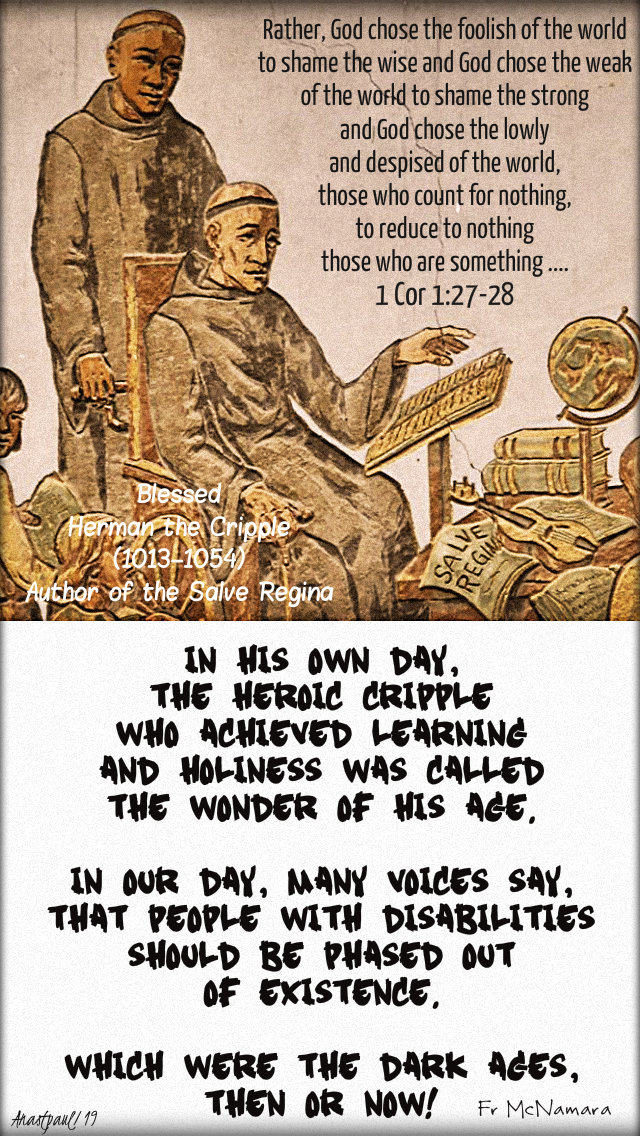
Let us thank God for Blessed Herman the Cripple. He stands as a shining light reminding us that God purposely chose what the world considers nonsense, in order to shame the wise and He chose what the world considers weak, in order to shame the powerful. He chose what the world looks down on and despises and thinks is nothing, in order to destroy what the world thinks is important.
Rather, God chose the foolish of the world, to shame the wise and God chose the weak of the world, to shame the strong and God chose the lowly and despised of the world, those who count for nothing, to reduce to nothing those who are something ….
1 Corinthians 1:27-28
“In his own day, the heroic cripple who achieved learning and holiness
was called ‘The Wonder of His Age’.
In our day, many voices say
that people with disabilities.
should be phased out of existence.
Which were the Dark Ages, then or now!” … Father McNamara
Veni Sancte Spiritus This translation was by Father Edward Caswall (1814-1878)
Holy Spirit, Lord of light,
From Thy clear celestial height
Thy pure beaming radiance give.
Come, Thou Father of the poor,
Come with treasures which endure,
Come, Thou Light of all that live.
Thou, of all consolers best,
Thou, the soul’s delightsome Guest,
Dost refreshing peace bestow.
Thou in toil art comfort sweet,
Pleasant coolness in the heat,
Solace in the midst of woe.
Light immortal, Light divine,
Visit Thou these hearts of Thine,
And our inmost being fill.
If Thou take Thy grace away,
Nothing pure in man will stay;
All his good is turned to ill.
Heal our wounds; our strength renew;
On our dryness pour Thy dew;
Wash the stains of guilt away.
Bend the stubborn heart and will;
Melt the frozen, warm the chill;
Guide the steps that go astray.
Thou, on those who evermore
Thee confess and Thee adore,
In Thy sevenfold gifts descend:
Give them comfort when they die,
Give them life with Thee on high;
Give them joys that never end.
++++++++++++++++++
Alma Redemptóris Mater, quæ pérvia cæli Porta manes, et stella maris, succúrre cadénti, Súrgere qui curat pópulo: tu quæ genuísti, Natúra miránte, tuum sanctum Genitórem Virgo prius ac postérius, Gabriélis ab ore Sumens illud Ave, peccatórum miserére.
Mother of Christ! Hear thou thy people’s cry,
Star of the deep and portal of the sky!
Mother of Him Who thee from nothing made,
Sinking we strive and call to thee for aid;
Oh, by that joy which Gabriel brought to thee,
Thou Virgin first and last, let us thy mercy see.
Our Morning Offering – 25 September – Wednesday of the Twenty-fifth week in Ordinary Time, Year C and the Memorial of Blessed Herman of Reichenau/the Cripple OSB (1013–1054) the Author of the Salve Regina
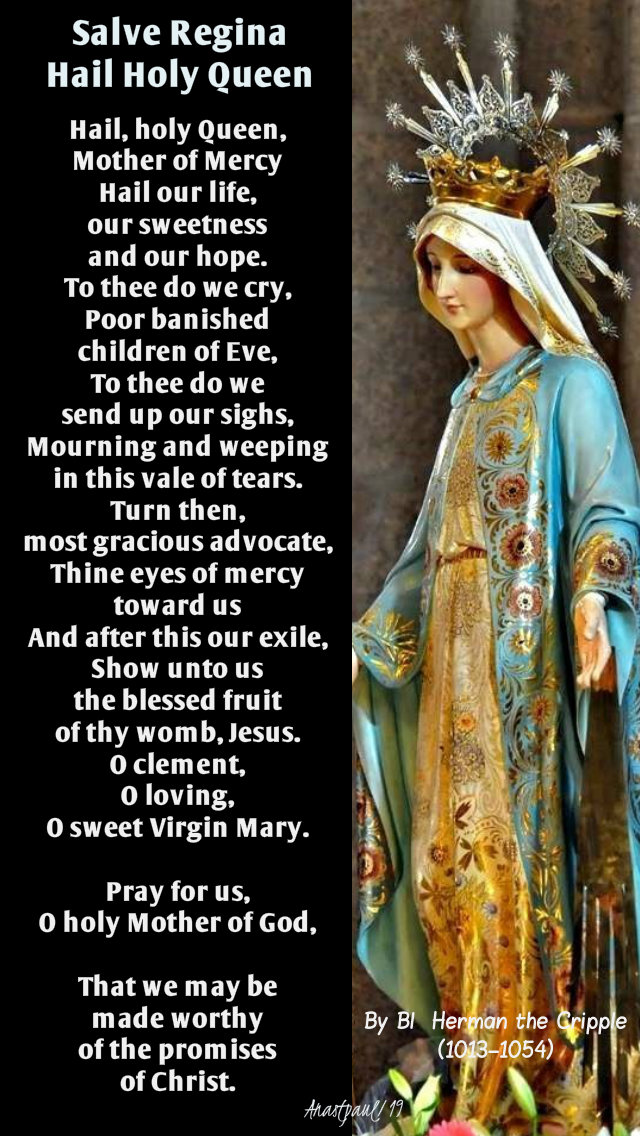
Salve Regina Hail Holy Queen By Blessed Herman the Cripple (1013–1054)
Hail, holy Queen, Mother of Mercy
Hail our life, our sweetness and our hope.
To thee do we cry,
Poor banished children of Eve,
To thee do we send up our sighs,
Mourning and weeping in this vale of tears.
Turn then, most gracious advocate,
Thine eyes of mercy toward us
And after this our exile,
Show unto us the blessed fruit of thy womb, Jesus
This line by St Bernard (1090-1153) Doctor of the Church O clement, O loving, O sweet Virgin Mary.
℣ Pray for us, O holy Mother of God,
℟ that we may be made worthy
of the promises of Christ.
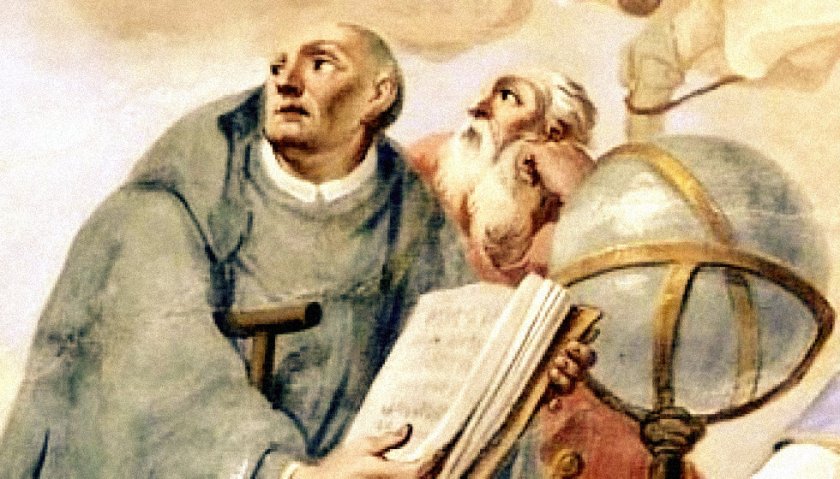
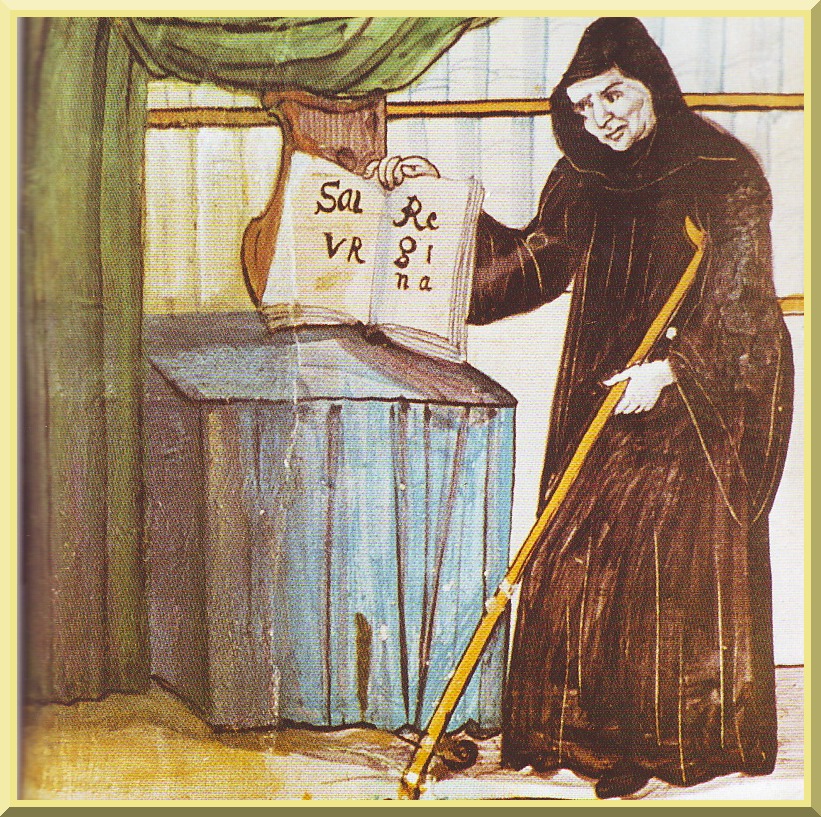
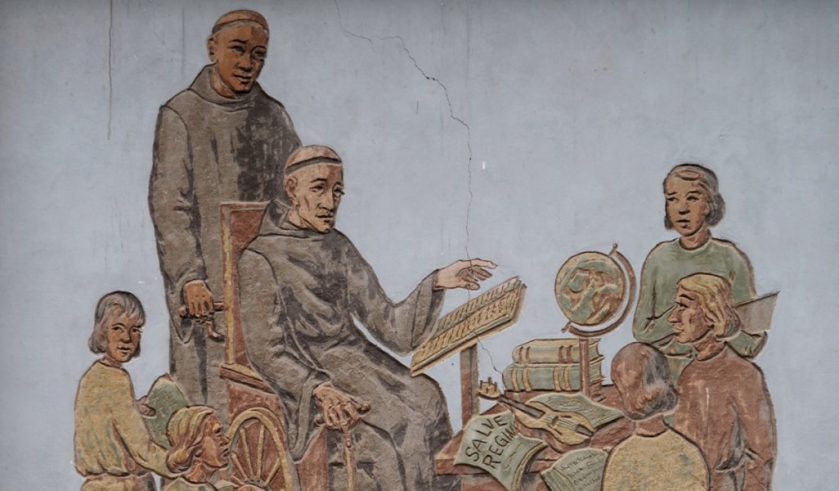
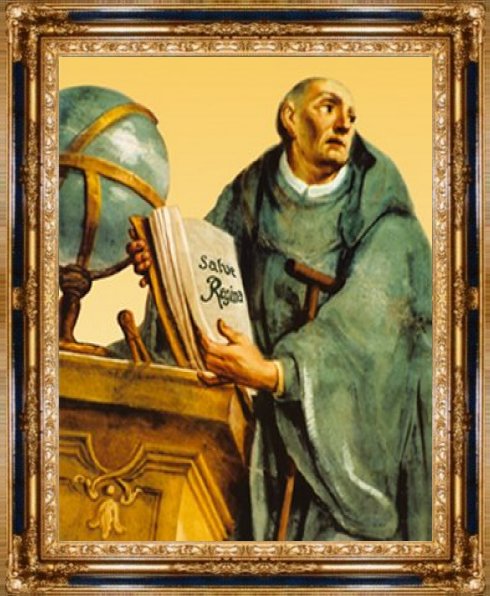
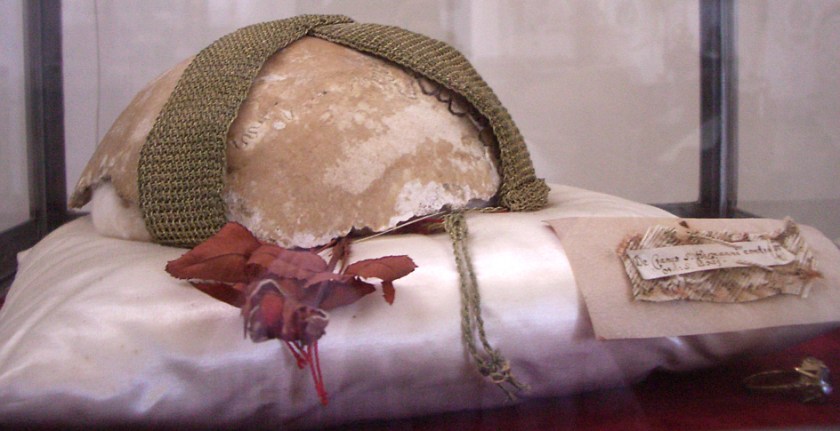
Saint of the Day – 25 September – Blessed Herman of Reichenau/the Cripple OSB (1013–1054) Benedictine Monk, Confessor, Scholar, Scientist, Writer, Hymnist, Poet, Musical Composer, Teacher – born on 18 February 1013 at Altshausen, Swabia (in modern Germany) and died on 21 September 1054 at Reichenau abbey, Germany of natural causes. Also known as Hermann Contractus, Herimanus Augiensis, Hermann von Reichenau.
In his own day, the heroic cripple who achieved learning and holiness was called ‘The Wonder of His Age’. He composed works on history, music theory, mathematics and astronomy, as well as many hymns. Composer of the “Salve Regina” Hail Holy Queen, “Veni Sancte Spiritus” Come Holy Spirit and “Alma Redemptoris Mater” Nourishing Mother of the Redeemer. He was renowned as a religious poet and musical composer. Among his surviving works are officia for St Afra and St Wolfgang. When he went blind in later life, he began writing hymns and these have carried the Church and still do for a 1000 years in joy and glory!
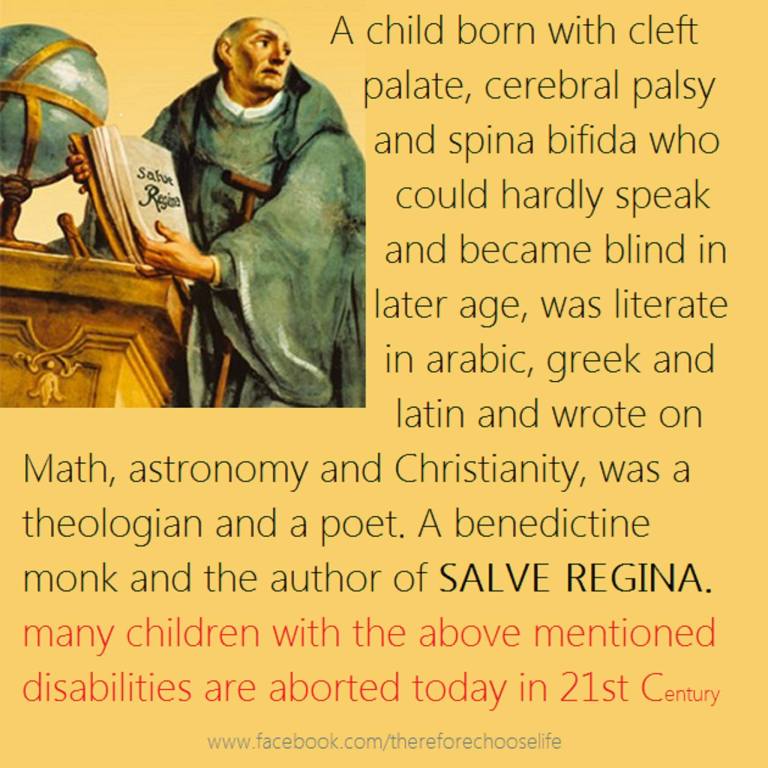
Blessed Herman was the son of Count Wolverad II von Altshausen. Being a cripple (born with a cleft palate, cerebral palsy and possibly spina bifida – though today it is thought that he had amyotrophic lateral sclerosis or spinal muscular atrophy) from birth (hence the surname Contractus) he was powerless to move without assistance and it was only by the greatest effort that he was able to read and write but he was so highly gifted intellectually, that when he was but seven years of age his parents confided him to the learned Abbot Berno, on the island of Reichenau.
His great love and sincere devotion for the “Mother of the afflicted ” secured him peace of soul and even lightened his bodily sufferings. We are told, however, that he continued to pray to his beloved Mother for restoration to health and strength, if it should be pleasing to God. Pious legend informs us, that when he had prayed thus for some months, the Blessed Virgin appeared to him and offered him the choice between two gifts, namely, health or wisdom. Herman, without hesitating a moment, chose the gift of wisdom. He made a wise selection, for notwithstanding his bodily infirmities he became one of the most learned men of his time. Under the poor form of a deformed body there dwelt a noble soul, a clear and richly gifted intellect and a humble and charitable heart.
Herman spent his entire life in the monastery Reichenau as a teacher, researcher and musician. Herman was bound to a carrying chair and was completely dependent on his servants. He could only write with difficulty and one may assume that he has dictated a large part of his works. And even that might have been difficult, as his biographer writes that he could only speak with difficulty and was barely understandable. But if we are allowed to believe Berthold, his charisma, his cheerfulness and his modesty of intelligence were so impressive that everyone had to love him.
A good student of theology, he could also produce works of spiritual depth. For a readership of nuns he wrote a discourse “On the Eight Principal Vices.” It was cast in poetry and he handled the versification with great lyricism. He also knew how to give serious matters a light touch. The treatise for nuns was witty and he even began his world chronicle with a touch of self-depreciation: “Herman, the rubbish of Christ’s little ones, lagging behind the learners of philosophy more slowly than a donkey or a slug … ”
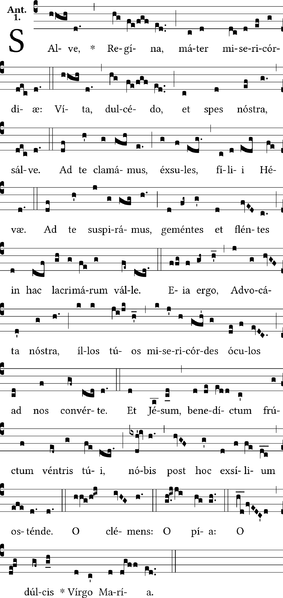
Herman was not just a music theoretician but, with that, he took on a special position – he himself created melodies – and he may be considered one of the first known composers of Gregorian chants. In contrast to the strict Gregorian chant, his music show an almost romantic melody. His “Salve Regina” is clearly the work of a master.
Herman gave instructions on how to measure the circumference of the earth at a time when there was not even clarity about the spherical shape of the earth. One of Herman’s inventions was the pillar sundial , which he called the horologium viatorum.
His iron will overcame all obstacles and it was not long before his brilliant attainments made him a shining light in the most diversified branches of learning, including, besides theology, mathematics, astronomy, music, the Latin, Greek and Arabic tongues. Students soon flocked to him from all parts, attracted not only by the fame of his scholarship but also by his monastic virtue and his lovable personality.
We are indebted to him chiefly for a chronicle of the most important events from the birth of Christ to his day. It is the earliest of the medieval universal chronicles now extant and was compiled from numerous sources, being a monument to his great industry as well as to his extraordinary erudition and strict regard for accuracy. While it is not improbable that this work was based on a previous state chronicle of Swabia, since lost (called “Chronicum Universale Suevicum”, or “Epitome Sangallensis”), it has nevertheless a significance entirely its own. But the full measure of his genius appears from the objectivity and clearness with which he wrote the history of his own time, the materials of which were accessible to him only by means of verbal tradition.
In later life he became blind and had to give up his academic writing.
He died on the island of Reichenau, Lake Constance, 21 September, 1054. He was Beatified in 1863 by Pope Pius IX.
Three of five symphonies that were written by Russian composer Galina Ustvolskaya are based on his texts.
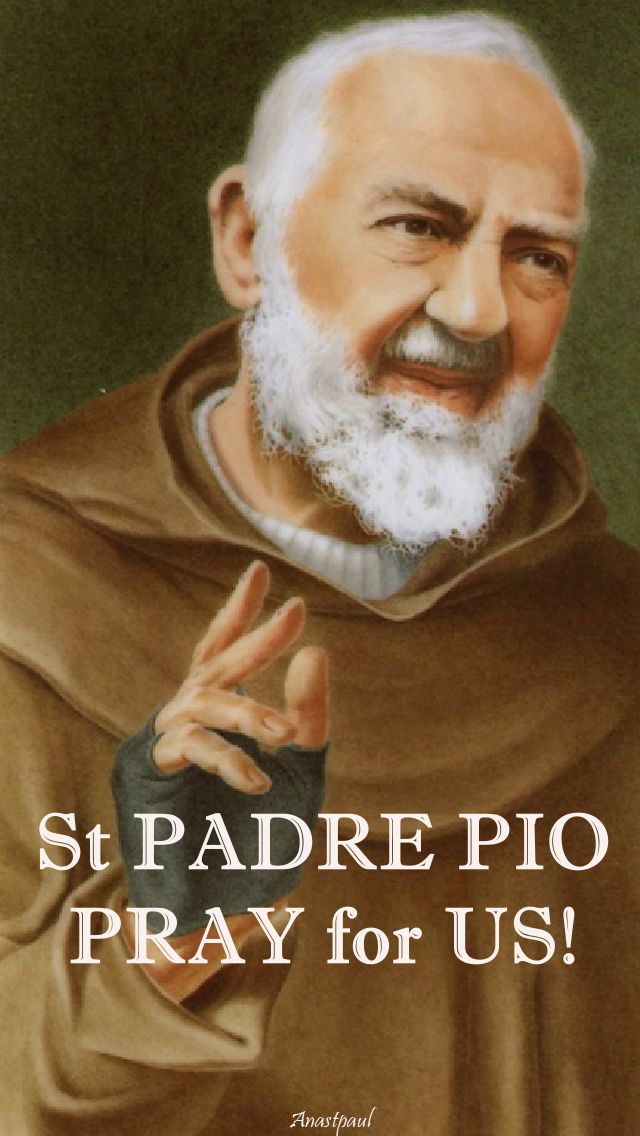
Thought for the Day – 23 September – The Memorial of St Padre Pio (1887-1968)
St Pio, the Madonna and her Holy Rosary
“For the stigmatist of the Gargano, love for the Madonna meant perpetual imitation of her, if Jesus is the way and the light that leads to the Father, Mary is the way and the light which leads to Jesus. With Mary’s help and by imitating her virtues, Padre Pio drew ever closer to Jesus, so very close as to be transformed into Him.
His imitation of Mary meant, most importantly, imitation of her humility. For him, that humility was a constant interior torment, a slow and painful agony, the anguish of not knowing whether he was corresponding to divine grace. You could read that deep humility on his face even when he was surrounded by clamorous crowds who believed in him, who trusted in his prayers and expected so many miracles from him every day. He always remained collected. His humility made it possible for him to be serene and dignified as he silently accepted mortification, slander, quarrels, humiliation and sorrow.
For him, love of the Madonna signified perpetual mortification. He implored his spiritual director to allow him to make a vow of abstinence from fruit on Wednesdays, he also asked him to suggest a means of pleasing the Blessed Mother in all things at all times.
Love of the Madonna animated Padre Pio and inspired him all the more to become an apostle. “I should like to have a voice strong enough to invite all the sinners of the world to love the Madonna.”God heard this sigh of love, he was given a voice that could be heard even when he was silent. It was a voice that touched the depths of people’s hearts and that penetrated their consciences, a voice that tormented and shook those who were dormant. It was a voice that was as terrible as the crashing of thunder in the night, yet as sweet as a caress. It was a voice that was threatening yet inviting, a voice that annihilated yet restored, that consoled and pardoned.
To all those who recommended themselves to his prayers, Padre Pio would say: “Love the Madonna. Recite the Rosary!”
One day, his guardian asked him how many rosaries he recited daily. Padre Pio answered, “Well, I have to tell my Guardian the truth, I have recited thirty-four!”For him, the rosary was a perpetual meditation on the profound mysteries of Calvary, on Jesus’s plan of salvation, on His sorrowful Mother. Padre Pio was fascinated by the Hail Mary.
…His love became an endless, ardent, faithful prayer. Who could possibly count the rosaries that he recited over the course of his marvellous life? He was the Friar of the rosary. He always carried it in his hand or on his arm as if it were a bracelet or a shield. He had other rosaries under the pillow of his bed, on the bureau in his cell. He called the rosary his weapon.
One night when he was sick in bed, he was unable to find his rosary beads, so he called Fr Onorato of San Giovanni Rotondo, saying, “Young man, get me my weapon, give me my weapon.”
The rosary was his favourite pray,r; he recited it continually. He devoured the rosary with insatiable hunger, it was the prayer that he had learned from the Virgin herself, the Virgin of Pompeii, Lourdes and Fatima, as a means of obtaining the conversion and salvation of sinners.
At certain hours, he would walk down the centre path of the friary garden, absorbed in his suffering and in his love, while the beads slipped through the fingers of his wounded hands. in his pockets he carried rosary beads, which he would give to anyone who requested a set, even today, people still hold these dear, saying, “This is a rosary which Padre Pio gave me, I treasure it with all my heart!”
Excerpted from Padre Pio: A Personal Portrait, by Fr Francesco Napolitano OFM Cap Padre Pio: A Personal Portrait is a classic introduction to one of the most intriguing saints of the twentieth century—written five years after the saint’s death by someone who worked alongside the Capuchin priest and knew him well, this account is now in print in English for the first time in more than forty years.
Our Morning Offering – 15 September – Twenty Fourth Sunday in Ordinary Time, Year C
As we celebrate today the holy mystery of the Sacrifice of the Mass,
let us contemplate our Lord Crucified.
Sonnet to our Lord Crucified Anonymous
I am not moved to love You, O my God,
That I might hope in promised heaven to dwell,
Nor am I moved by fear of pain in hell,
To turn from sin and follow where You trod.
You move me, Lord, broken beneath the rod,
Or stretched out on the cross, as nails compel
Your hand to twitch. It moves me that we sell,
To mockery and death, Your precious blood.
It is, O Christ, Your love which moves me so,
That my love rests not on a promised prize,
Nor holy fear on threat of endless woe,
It is not milk and honey but the flow
Of blood from blessed wounds before my eyes,
That waters my buried soul and makes it grow.
Amen
One Minute Reflection – 14 September – Feast of the Exaltation of the Holy Cross, Gospel: John 3:13–17
“…And as Moses lifted up the serpent in the wilderness, so must the Son of man be lifted up, that whoever believes in him may have eternal life.”…John 3:14-15
REFLECTION – “We are celebrating the feast of the cross which drove away darkness and brought in the light… Had there been no cross, Christ could not have been crucified. Had there been no cross, Life Itself could not have been nailed to the tree. And if Life had not been nailed to it, they would be no streams of immortality pouring from Christ’s side, blood and water for the world’s cleansing. The legal bond of our sin would not be cancelled, we should not have obtained our freedom, we should not have enjoyed the fruit of the tree of life and the gates of paradise would not stand open. Had there been no cross, death would not have been trodden underfoot, nor hell despoiled… The cross is called Christ’s glory, it is saluted as His triumph.”….St Andrew of Crete (650-740)
PRAYER – O God, who willed that Your Only Begotten Son should undergo the Cross to save the human race, grant, we pray, that we, who have known His mystery on earth, may merit the grace of His redemption in heaven. For You placed the salvation of the human race on the wood of the Cross, so that, where death arose, life might again spring forth and the evil one, who conquered on a tree, might likewise on a tree be conquered through Christ. O cross, You are the glorious sign of victory. Through your power may we share in the triumph of Christ Jesus. We adore you Christ and we praise you, for by your holy Cross you have redeemed the world. Amen
Our Morning Offering – 12 September – Feast of the Most Holy Name of Mary
Hail Mary, the Angelic Salutation
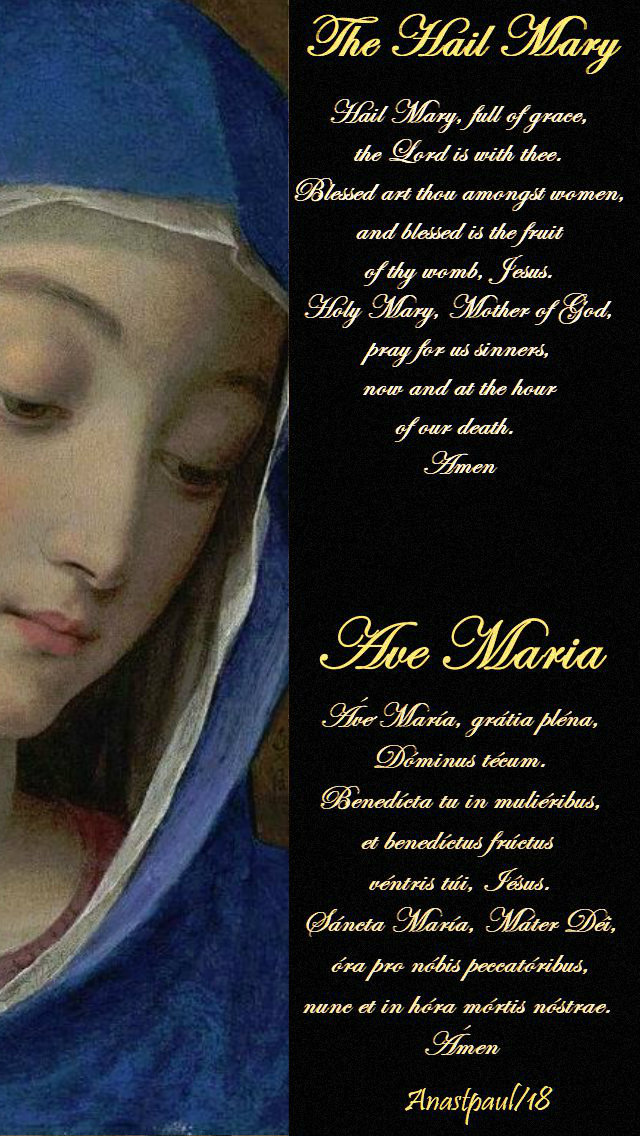
The Hail Mary/Ave Maria
Hail Mary, full of grace,
the Lord is with thee.
Blessed art thou amongst women,
and blessed is the fruit of thy womb, Jesus.
Holy Mary, Mother of God,
pray for us sinners,
now and at the hour of our death.
Amen.
Áve María, grátia pléna,
Dóminus técum.
Benedícta tū in muliéribus,
et benedíctus frúctus véntris túi, Iésus.
Sáncta María, Máter Déi,
óra pro nóbis peccatóribus,
nunc et in hóra mórtis nóstrae.
Ámen.
Thought for the Day – 8 September – Twenty-third Sunday in Ordinary Time, Year C, Luke 14:25–33
“If anyone comes to me without hating his father and mother, wife and children, brothers and sisters and even his own life, he cannot be my disciple.”… Luke 14:26
Saint Augustine comments on this verse from the Gospel proclaimed during today’s Mass:
“The Lord gives the signal for us to stand guard in camp and to build the tower from which we may recognise and ward off the enemy of our eternal life. The heavenly trumpet of Christ urges the soldier to battle and his mother holds him back.
What does she say or what argument does she give? Perhaps is it those ten months when you lay in her womb and the pangs of birth and the burden of rearing you? You must kill this with the sword of salvation. You must destroy this in your mother that you may find her in life eternal. Remember, you must hate this in her if you love her, if you are a recruit of Christ and have laid the foundations of the tower. Passers-by may not say, “This man began to build and was not able to finish.” That is earthly affection. It still has the ring of the “old man.” Christian warfare invites us to destroy this earthly affection both in ourselves and in our relatives. Of course, no one should be ungrateful to his parents or mock the list of their services to him, since by them he was brought into this life, cherished and fed. A man should always pay his family duty but let these things keep their place where higher duties do not call.
Mother church is also the mother of your mother. She conceived you both, in Christ. Know that, her Spouse took human flesh, that you might not be attached to fleshly things. Know that, all the things for which your mother scolds you were undertaken by the eternal Word, that you might not be subject to the weakness of flesh. Ponder his humiliations, scourging and death, even the death of the cross.” (Letter 243)
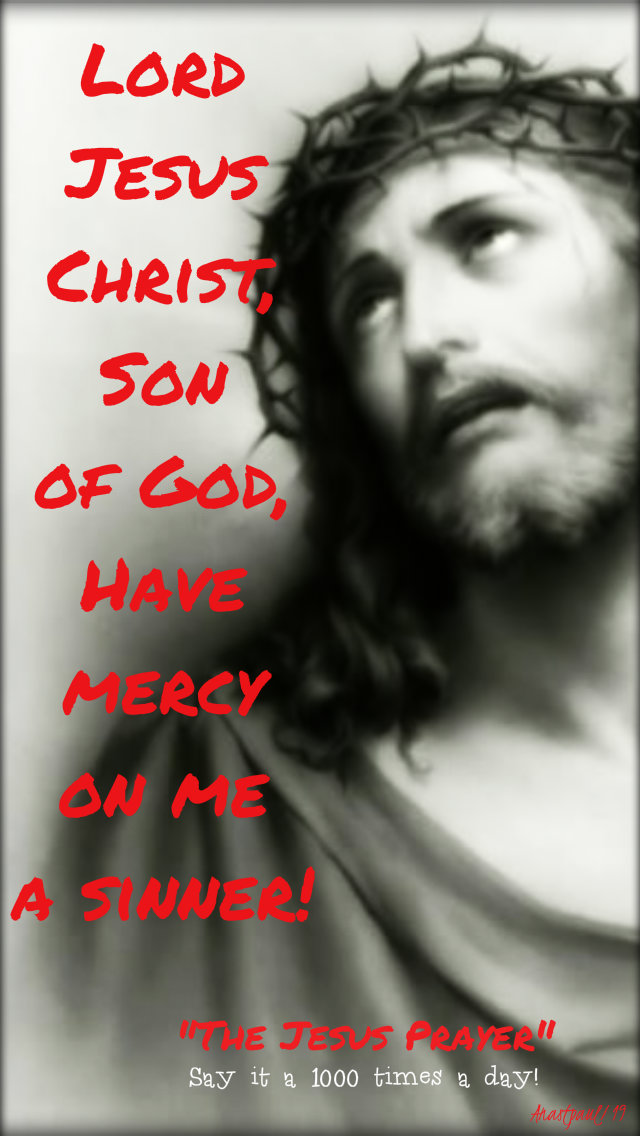
Lord Jesus Christ, Son of God, Have mercy on me a sinner!
Our Morning Offering – 31 August – Saturday of the Twenty-first week in Ordinary Time, Year C and the last day of the Month of the Immaculate Heart of Mary
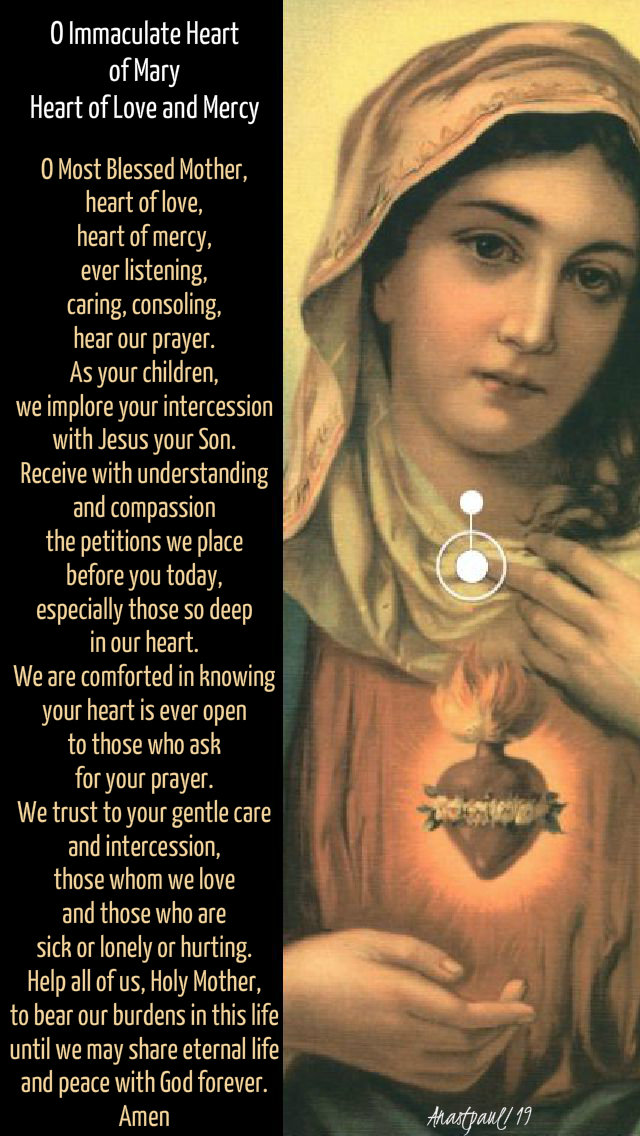
O Immaculate Heart of Mary Heart of Love and Mercy
O Most Blessed Mother,
heart of love,
heart of mercy,
ever listening, caring, consoling,
hear our prayer.
As your children,
we implore your intercession
with Jesus your Son.
Receive with understanding
and compassion
the petitions we place before you today,
especially those so deep in our heart.
We are comforted in knowing
your heart is ever open
to those who ask for your prayer.
We trust to your gentle care and intercession,
those whom we love
and those who are sick or lonely or hurting.
Help all of us, Holy Mother,
to bear our burdens in this life
until we may share eternal life
and peace with God forever.
Amen
Our Morning Offring – 22 August – Celebrating the Queenship of Mary
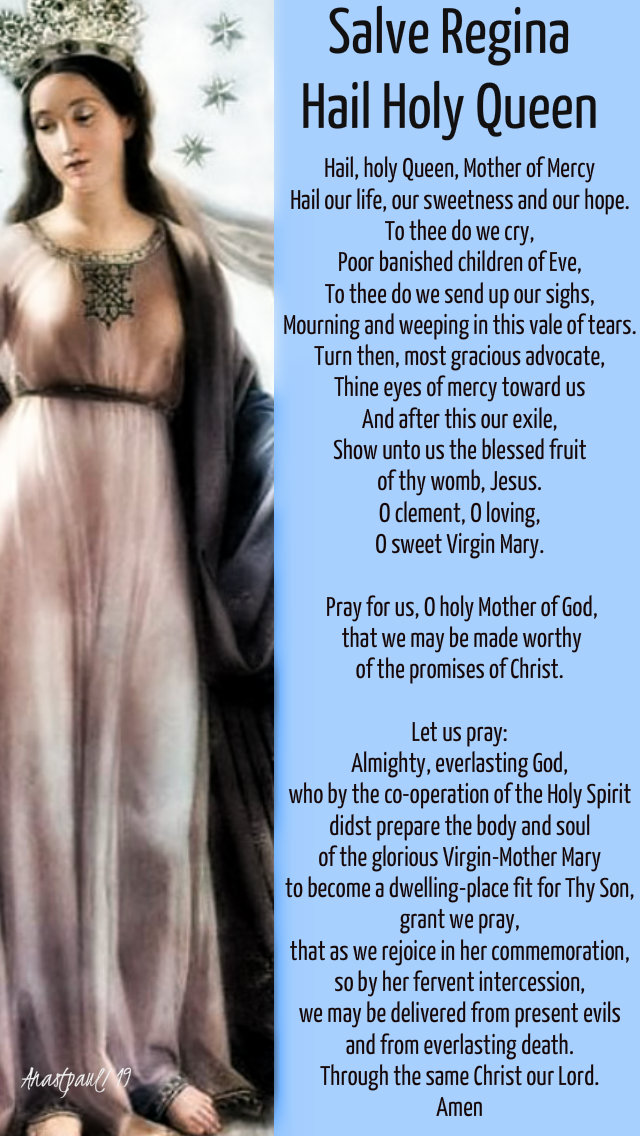
Salve Regina Hail Holy Queen
Hail, holy Queen, Mother of Mercy
Hail our life, our sweetness and our hope.
To thee do we cry,
Poor banished children of Eve,
To thee do we send up our sighs,
Mourning and weeping in this vale of tears.
Turn then, most gracious advocate,
Thine eyes of mercy toward us
And after this our exile,
Show unto us the blessed fruit of thy womb, Jesus.
O clement, O loving, O sweet Virgin Mary.
℣ Pray for us, O holy Mother of God,
℟ that we may be made worthy
of the promises of Christ.
Let us pray:
Almighty, everlasting God,
who by the co-operation of the Holy Spirit
didst prepare the body and soul
of the glorious Virgin-Mother Mary
to become a dwelling-place fit for Thy Son,
grant we pray,
that as we rejoice in her commemoration,
so by her fervent intercession,
we may be delivered from present evils
and from everlasting death.
Through the same Christ our Lord.
Amen
The Hail Holy Queen or Salve Regina is a choral anthem going back to the eleventh century. Since the thirteenth century it is the last evening chant in many religious communities. The authorship is not clearly defined. The Salve is first mentioned in a meditation by Anselm II, Bishop of Lucca, 1073-86 (PL 184, 1078-98) and (erroneously) to Hermannus Contractus (1013-54) of Reichenau.
The “Hail, Holy Queen” is a salutation deprecatonia, a greeting of petition and intercession. Mary is called mother of mercy because Christ her Son, is the incarnation of God’s love and mercy. Giving us Christ, she gave us, sinful humans, the life and hope we need (as baptised children of Eve) to survive in this vale of tears. This antiphon is not part of the rosary but represents the same spirit. It is part of the official prayer of the Church (Liturgy of the Hours: Vespers and/or Compline) and thus is even more precious than the rosary. Sung, it becomes a wonderful expression of our spiritual intimacy with Mary.
It is interesting that it was a Domenican (like today’s Saint Giacomo Bianconi), Blessed Jordan of Saxony OP (1190-1237) who initiated the custom of singing the Salve Regina in procession each night after Compline in the Dominican Order, to ask Our Lady’s protection of the brothers against temptations from the devil. This is a custom still practised by Dominicans throughout the world and by our community each night.
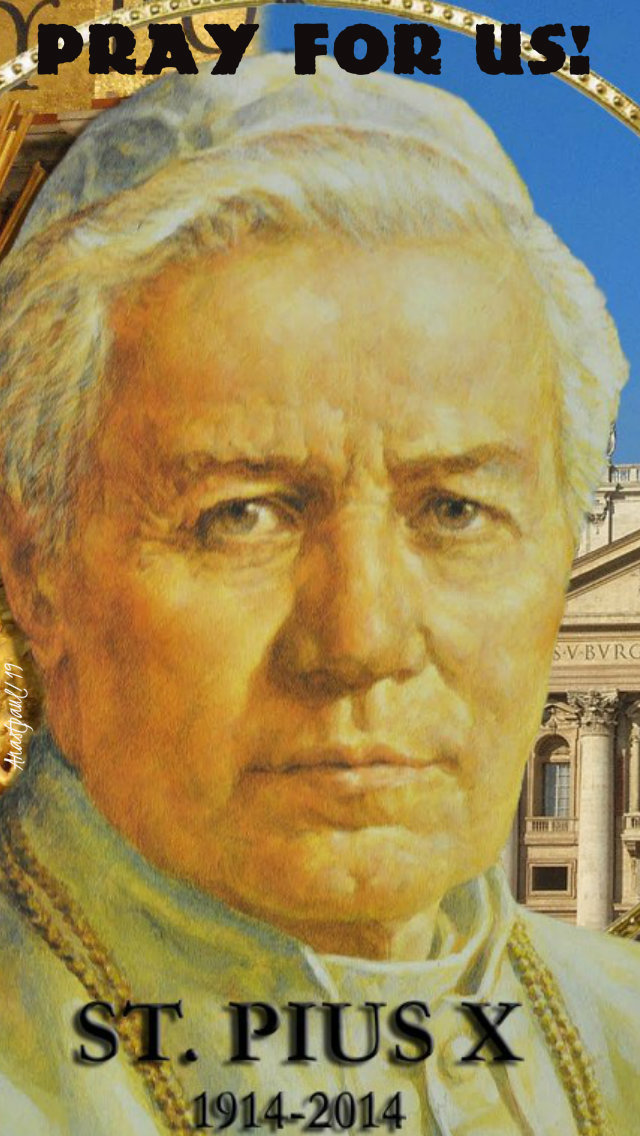
Thought for the Day – 21 August – Wednesday of the Twentieth week in Ordinary Time, Year C and The Memorial of St Pope Pius X (1835-1914
The Song of the Church
Saint Pius X
Bishop of Rome
An excerpt from his Apostolic Constitution, Divino afflatu
The collection of psalms found in Scripture, composed as it was under divine inspiration, has, from the very beginnings of the Church, shown a wonderful power of fostering devotion among Christians, as they offer to God a continuous sacrifice of praise, the harvest of lips blessing His name. Following a custom already established in the Old Law, the psalms have played a conspicuous part in the sacred liturgy itself and, in the divine office. Thus was born what Basil calls the voice of the Church, that singing of psalms, which is the daughter of that hymn of praise (to use the words of our predecessor, Urban VIII) which goes up, unceasingly, before the throne of God and of the Lamb and which teaches those especially charged with the duty of divine worship, as Athanasius says, the way to praise God and the fitting words in which to bless Him. Augustine expresses this well when he says: God praised himself so that man might give him fitting praise, because God chose to praise himself man found the way in which to bless God.
The psalms have also a wonderful power to awaken in our hearts the desire for every virtue. Athanasius says: Though all Scripture, both old and new, is divinely inspired and has its use in teaching, as we read in Scripture itself, yet the Book of Psalms, like a garden enclosing the fruits of all the other books, produces its fruits in song and in the process of singing, brings forth its own special fruits to take their place beside them. In the same place Athanasius rightly adds: The psalms seem to me to be like a mirror, in which the person using them can see himself and the stirrings of his own heart, he can recite them against the background of his own emotions. Augustine says in his Confessions: How I wept when I heard your hymns and canticles, being deeply moved by the sweet singing of your Church. Those voices flowed into my ears, truth filtered into my heart and from my heart surged waves of devotion. Tears ran down and I was happy in my tears.
Indeed, who could fail to be moved by those many passages in the psalms which set forth so profoundly the infinite majesty of God, His omnipotence, His justice and goodness and clemency, too deep for words and all the other infinite qualities of His that deserve our praise? Who could fail to be roused to the same emotions by the prayers of thanksgiving to God for blessings received, by the petitions, so humble and confident, for blessings still awaited, by the cries of a soul in sorrow for sin committed? Who would not be fired with love as he looks on the likeness of Christ, the redeemer, here so lovingly foretold? His was the voice Augustine heard in every psalm, the voice of praise, of suffering, of joyful expectation, of present distress.
Sunday Reflection – 18 August – Twentieth Sunday in Ordinary Time, Year C,
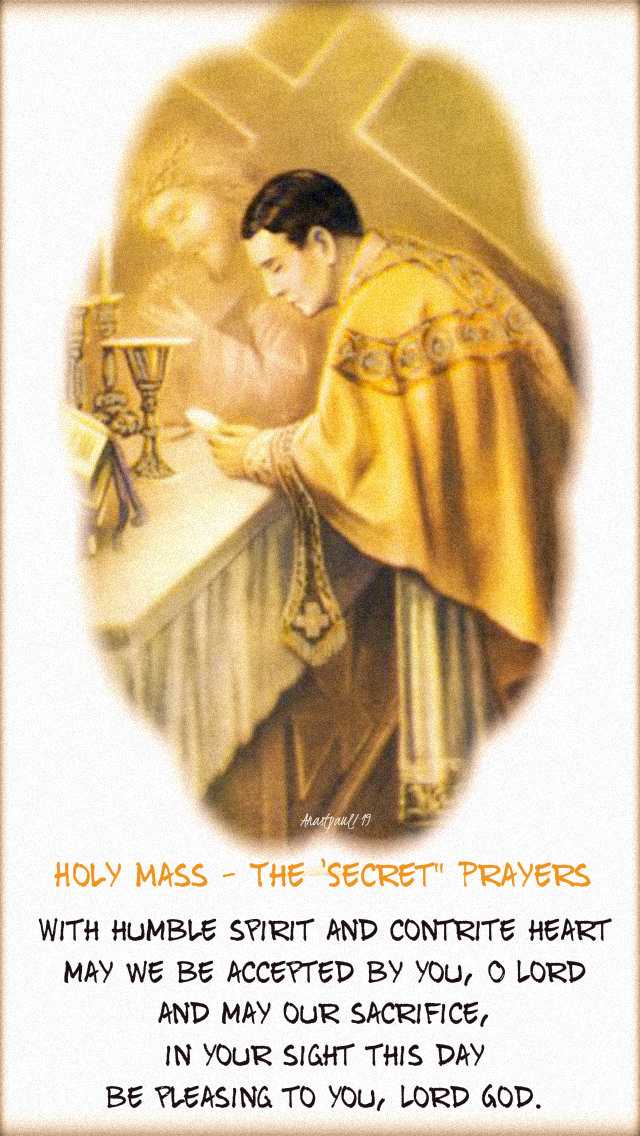
The ‘Secret’ Prayers (Offertory)
If you watch very closely, you’ll notice that the priest is moving his lips and praying some prayers very, very quietly during the preparation of the Gifts. The rubrics indicate that the priest should pray them ‘sub secreto’, which is translated as ‘inaudibly’ or ‘secret.’
But there’s really no secret, because the prayers are printed in the Roman Missal or other worship resources for the whole world to see. And even though the rubrics indicate that the priest is to pray these prayers, there is absolutely no reason why you can’t do that too!
As the priest pours wine and a little water into the chalice, he prays quietly: “By the mystery of this water and wine may we come to share in the divinity of Christ, who humbled himself to share in our humanity.”
Then the priest bows profoundly and says quietly: “With humble spirit and contrite heart may we be accepted by you, O Lord and may our sacrifice in your sight this day be pleasing to you, Lord God.”
Finally, as he washes his hands he prays, “Wash me, O Lord, from my iniquity, and cleanse me from my sin.”
One Minute Reflection – 16 August – Friday of the Nineteenth week in Ordinary Time, Year C, Gospel: Matthew 19:3–12 and The Memorial of St Stephen of Hungary (c 975- 1038)
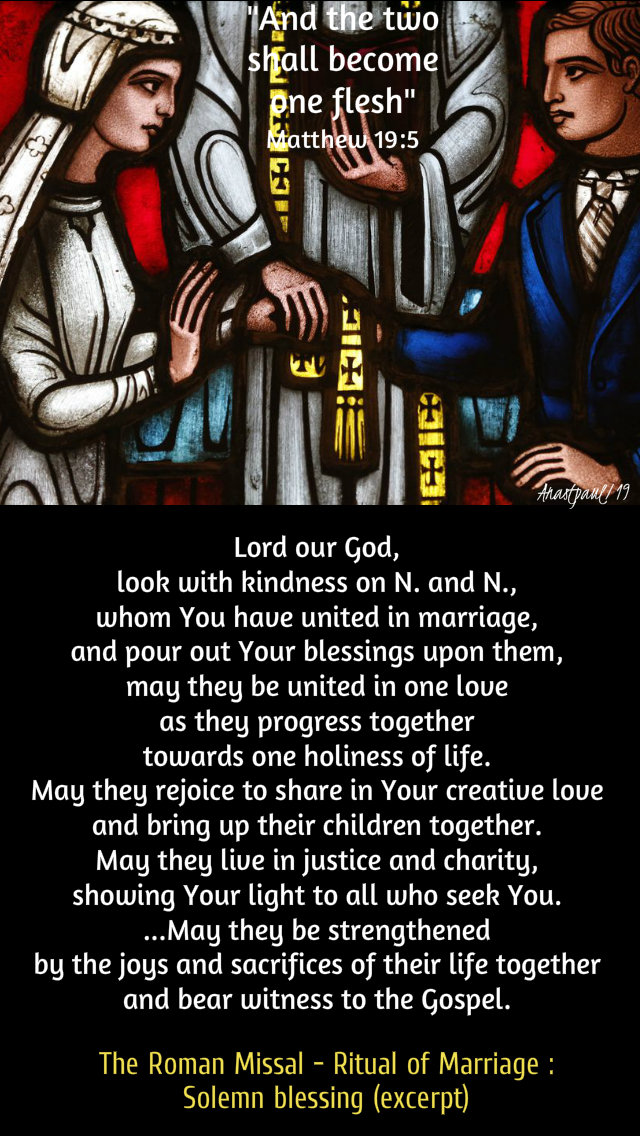
‘And the two shall become one flesh’ … Matthew 19:5
REFLECTION – “Lord our God,
look with kindness on N. and N.,
whom You have united in marriage,
and pour out Your blessings upon them,
may they be united in one love
as they progress together
towards one holiness of life.
May they rejoice to share in Your creative love
and bring up their children together.
May they live in justice and charity,
showing Your light to all who seek You.
May their household be ever open to the service of their brothers and sisters
and may they be always ready to answer to their needs.
May they be strengthened by the joys and sacrifices of their life together
and bear witness to the Gospel.
May they have a long life together, without misfortune or sickness
and may the work of both be blessed.
May they see their children grow up in peace
and enjoy the support of a happy family.
May they come at last, with all those who have gone before them,
to the dwelling where their love will last eternally.
N. and N. and all you who are present here,
may God the all-powerful bless you,
the Father, the Son and the Holy Spirit.” … The Roman Missal – Ritual of Marriage : Solemn blessing
PRAYER – Almighty Father, let Your light so penetrate our hearts and minds, that walking by Your commandments, we may always follow You, our teacher and our guide. Grant that the prayers of St Stephen of Hungary may continue to defend us, as he did in the world. Through Jesus our Lord, with the Holy Spirit, one God forever, amen.
Our Morning Offering – 15 August – Solemnity of the Assumption of the Blessed Virgin Mary into Heaven
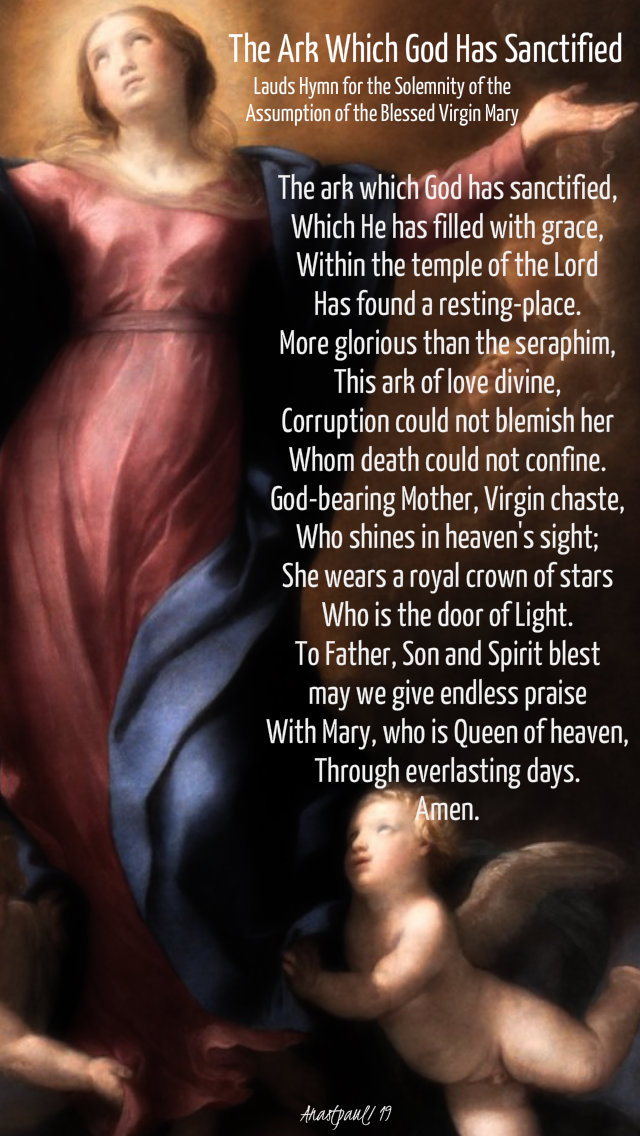
The Ark Which God Has Sanctified
The ark which God has sanctified,
Which He has filled with grace,
Within the temple of the Lord
Has found a resting-place.
More glorious than the seraphim,
This ark of love divine,
Corruption could not blemish her
Whom death could not confine.
God-bearing Mother, Virgin chaste,
Who shines in heaven’s sight;
She wears a royal crown of stars
Who is the door of Light.
To Father, Son and Spirit blest
may we give endless praise
With Mary, who is Queen of heaven,
Through everlasting days.
Amen.
The Ark Which God Has Sanctified is written by the Benedictine Nuns of Stanbrook Abbey. In the Divine Office (1974) it is sung with Morning Prayer on 15 August, the Solemnity of the Assumption of the Blessed Virgin Mary. It is set to the 1836 tune – St Peter (Reinagle) by Alexander Robert Reinagle (1799-1877).
Our Morning Offering – 5 August – Monday of the Eighteenth week in Ordinary Time, Year C and the Memorial of the Dedication of Mary Major
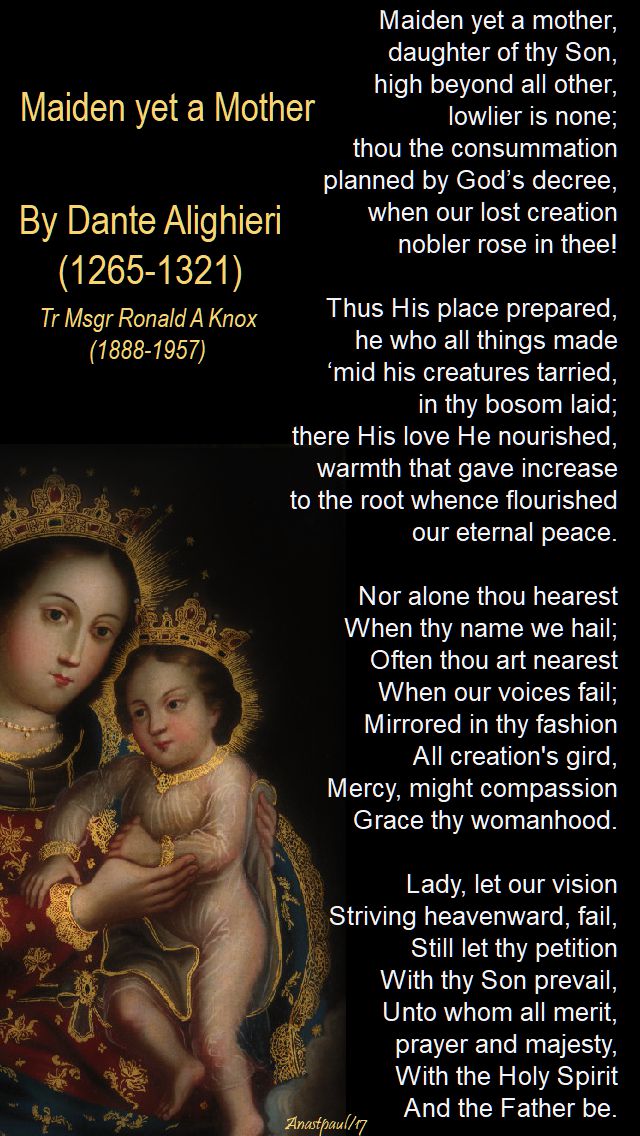
Maiden yet a Mother By Dante Alighieri (1265-1321) Tr Msgr Ronald A Knox (1888-1957)
Maiden yet a mother,
daughter of thy Son,
high beyond all other,
lowlier is none;
thou the consummation
planned by God’s decree,
when our lost creation
nobler rose in thee!
Thus His place prepared,
he who all things made
‘mid his creatures tarried,
in thy bosom laid;
there His love He nourished,
warmth that gave increase
to the root whence flourished
our eternal peace.
Nor alone thou hearest
When thy name we hail;
Often thou art nearest
When our voices fail;
Mirrored in thy fashion
All creation’s gird,
Mercy, might compassion
Grace thy womanhood.
Lady, let our vision
Striving heavenward, fail,
Still let thy petition
With thy Son prevail,
Unto whom all merit,
prayer and majesty,
With the Holy Spirit
And the Father be.
Maiden Yet A Mother is a translation of a poem by Durante (Dante) degli Alighieri (c 1265–1321). It is based upon the opening verses of Canto 33 of the Paradiso from his Divine Comedy in which St Bernard of Clairvaux (1090–1153) praises and prays to the Virgin Mother on behalf of Dante. It was translated from the original Italian into English by the Catholic convert, Monsignior Ronald A Knox (1888-1957). It is one of the Marian Hymns in the Breviary.







 AnaStpaul
You must be logged in to post a comment.