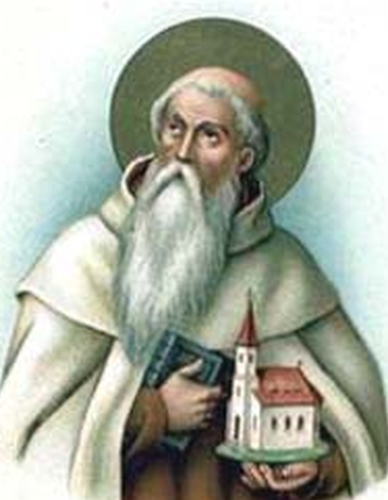
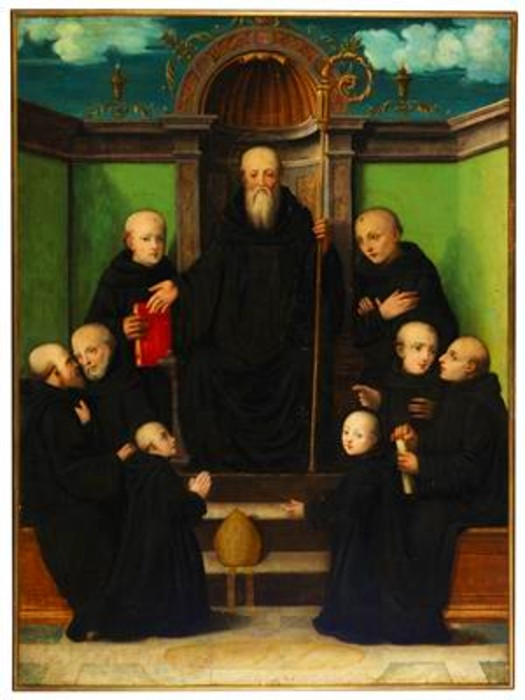
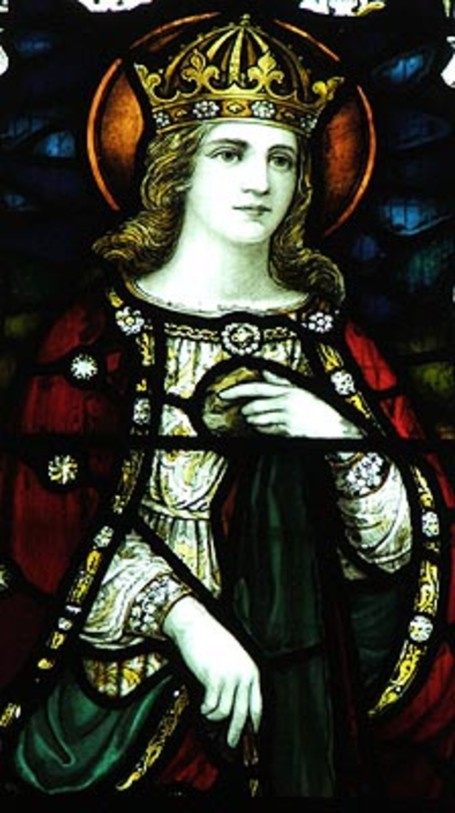
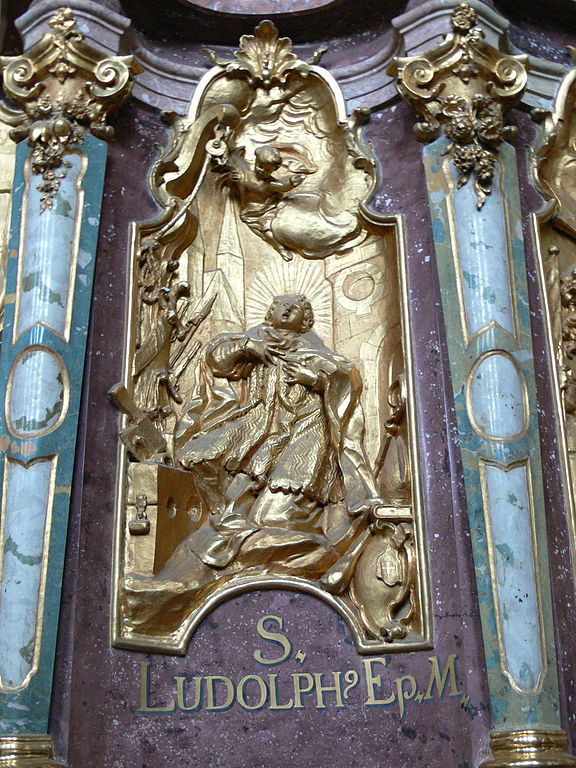
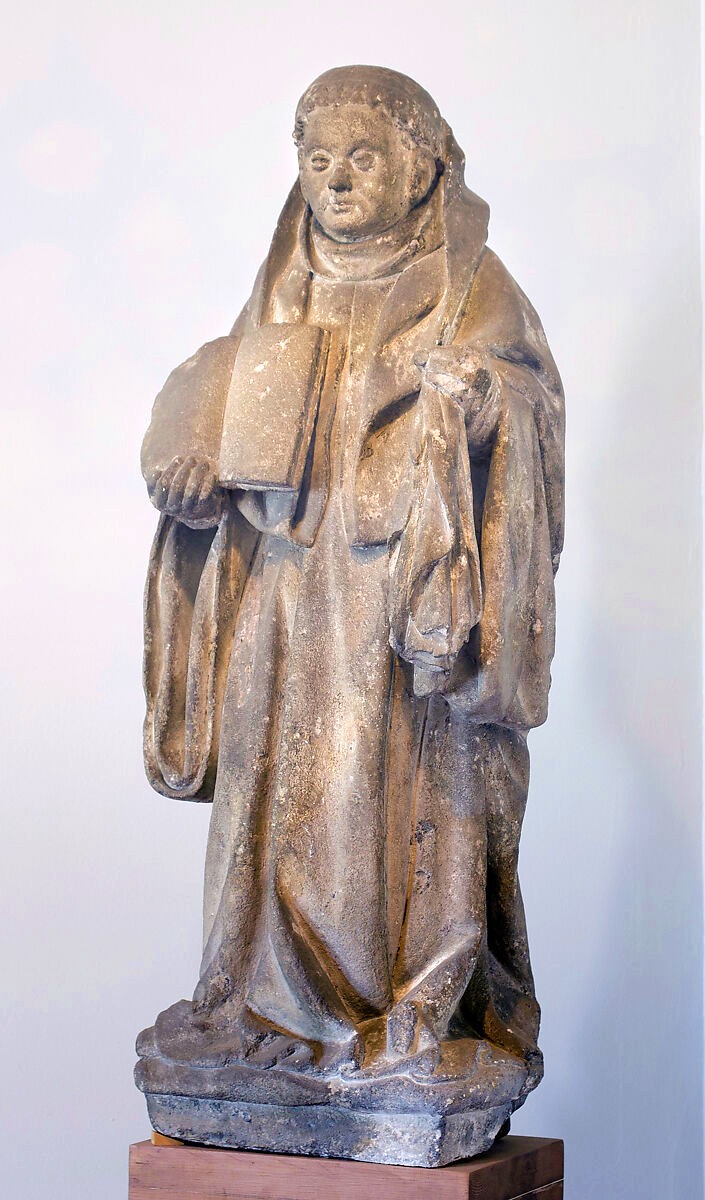
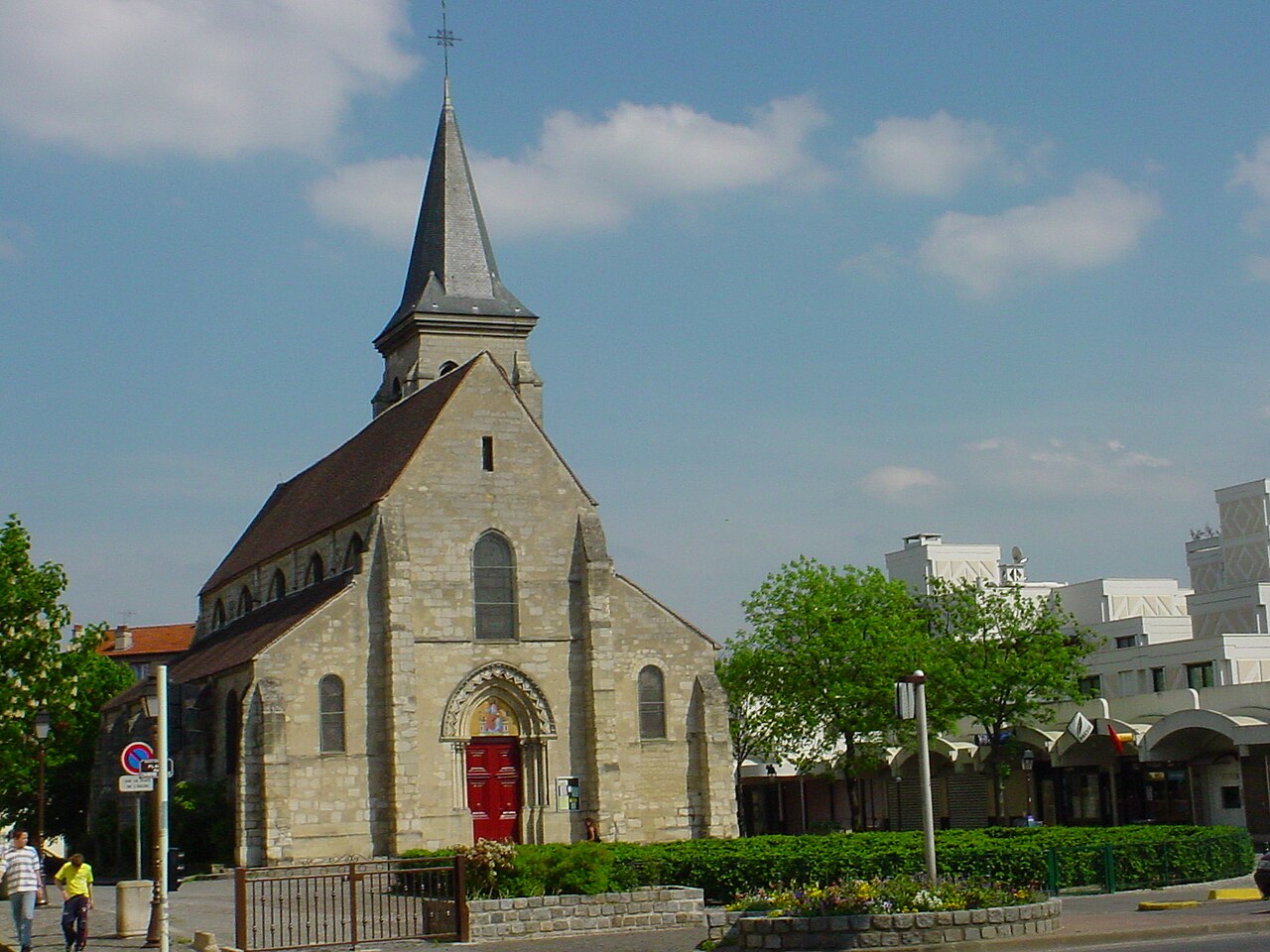
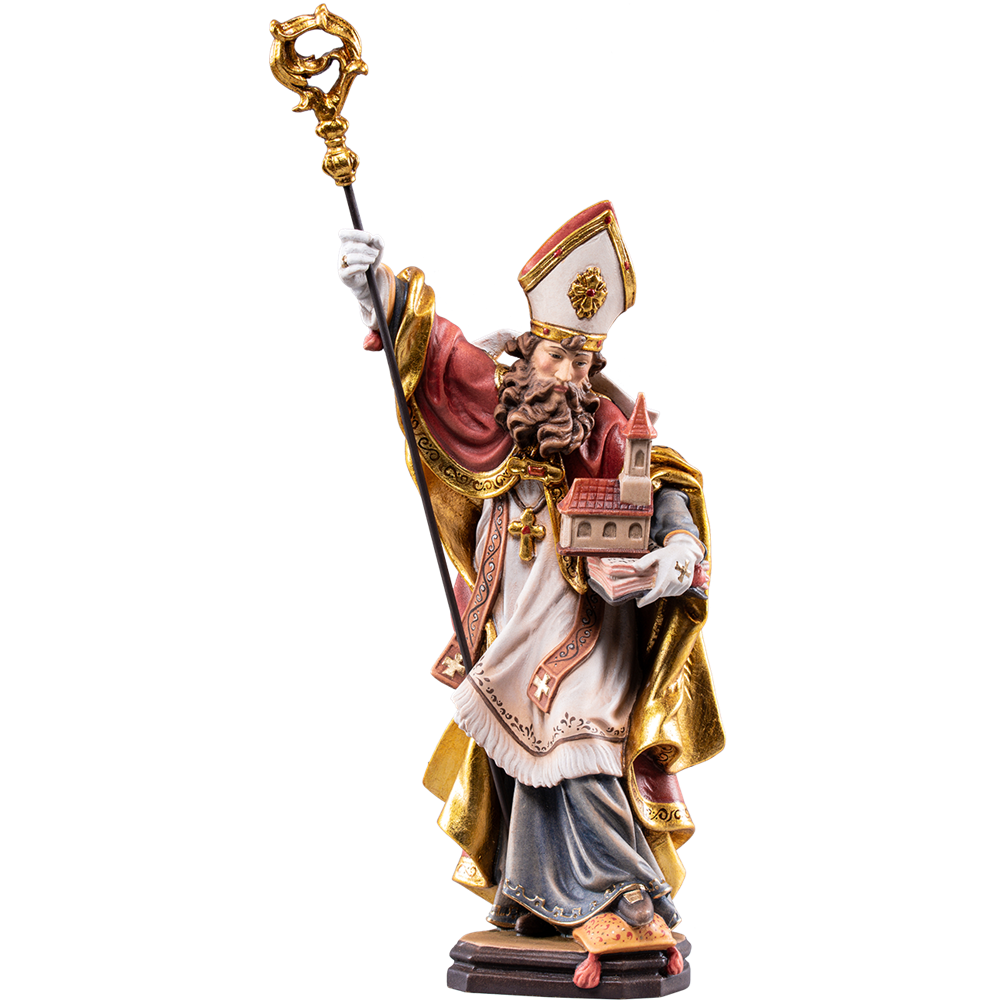
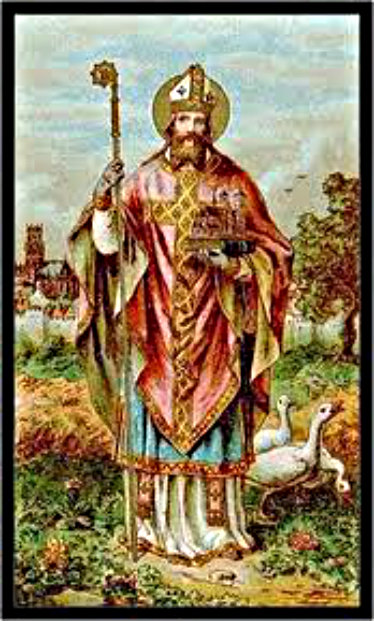
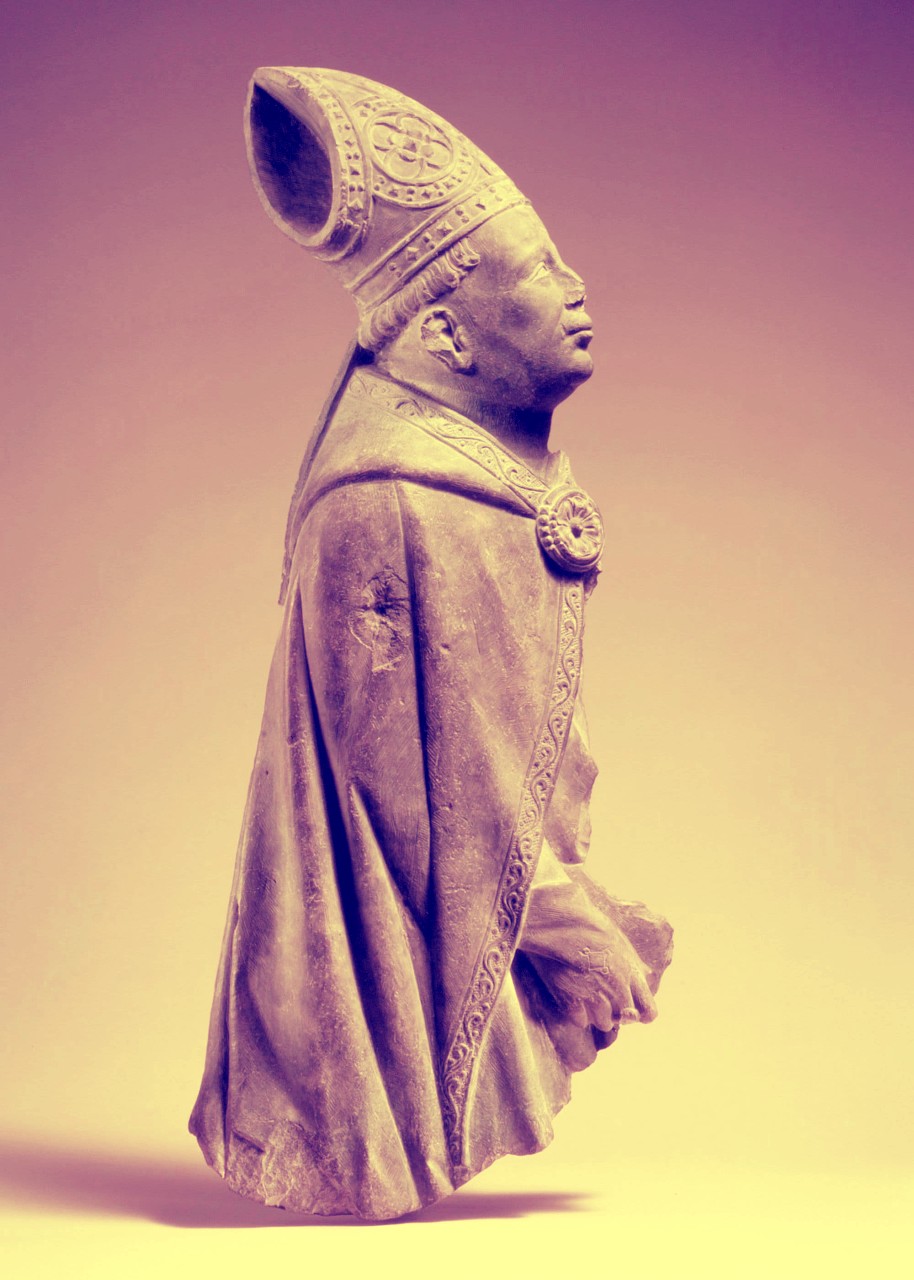
Saint of the Day – 28 December – Saint Domnion (Died c395) Priest of Rome, assistant to St Jerome and being highly regarded for his work in sourcing and locating ancient writingsand in facuilitating the publication of St Jerome’s finished work. Also known as Dominius, Dominio.
The Roman Martyrology reads today: “At Rome, St Domnion, Priest.”
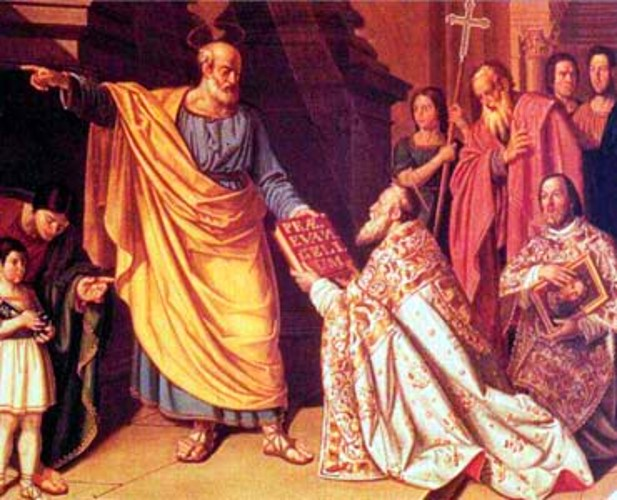
Saints Jerome and Augustine – By Alonso Coello
The contemporaries of our Saint Doimnion, Saints Jerome and Augustine speak of him n glowing terms.
He published the Sacred Scriptures which St Jerome had just translated into Latin (the Vulgate).
Domnion is also known for his care of Pilgrimss and his fight against the moral decay of Rome.
He died in c395 and he is remembered today, 28 Dece,ber/
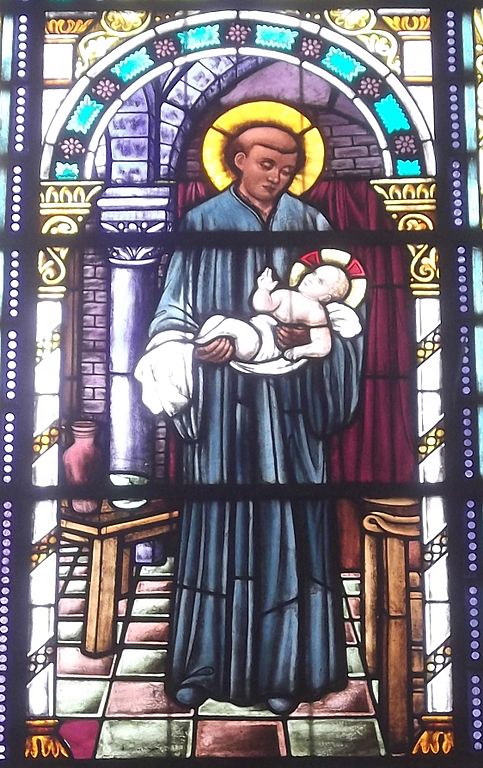
St Anthony of Lérins (c428-c520) Monk, Hermit, Miracle-worker. The Roman Martyrology states: “Commemoration of Saint Anthony, a Monk, who, a man distinguished by grace and preparation, after having led a solitary life, retired, by now an old man in the Monastery of Lérins in Provence, where he piously fell asleep in the Lord.” His Fervent Life: https://anastpaul.com/2021/12/28/saint-of-the-day-28-december-saint-anthony-of-lerins-c-428-c-520/
BL Claudia Weinhardt St Conindrus St Domitian the Deacon St Domnion (Died c395) Priest of Rome St Eutychius Bl Gregory of Cahors St Iolande of Rome
Bl Nicolas Mello Bl Hermann of Heidelberg Bl Otto of Heidelberg St Romulus St Simon the Myroblite St Theonas of Alexandria St Theodore of Tabenna St Troadius of Pontus
Martyrs of Africa – 3 Saints: Three Christians murdered together in Africa for their faith. The only details to survive are their names – Castor, Rogatian and Victor.
Saint of the Day – 26 December – Saint Theodore the Sacristan (Died c560). Also known as – Theodorus.
The Roman Martyrology reads today: “At Rome, St Theodore, Sacristan of St Peter’s Church, who is mentioned by the blessed Pope, St Gregory.”
St Peter
That which is known of Theodore’s life comes from St Gregory the Great’s Dialogues, where he appears in Book III, Chapter 24. There, St Gregory records that Theodore once rose very early in the morning in order to tend the lamps which hung at the door of the Basilica. He was upon a ladder refilling the oil, when Saint Peter appeared to him vested in a white stole. The saint asked him, “Theodore, why have you risen so early?” a nd immediately disappeared. Theodore was struck by great anxiety and in his shock was unable to arise from his bed for the next several days.
St Gregory goes on, saying that the apparition was a sign of Saint Peter’s favour towards Theodore: “The blessed Apostle wished to show those who served him that whatever they did for his honour, he always and unceasingly observed it, for the recompense of their reward.”
When the interlocutor of the Dialogues, Peter the Deacon, questions why Theodore would have been shocked by having seen Saint Peter, St Gregory replies with a citation from Scripture in which the Prophet Daniel is likewise shocked into illness by a troubling vision: “And I Daniel languished, and was sick for some days: […] and I was astonished at the vision and there was none that could interpret it” (Daniel 8:27).
St Gregory mentions Theodore alongside another saintly Sacristan of St Peter’s, St Abundius.
Theodore died in c560. His body is believed to have been laid to rest in the Basilica where he served, although the precise location is not known.
Blessed Giovanni Orsini (1333-1411) Cardinal Archbishop of Turin for forty-seven year! Reformer both socially and within the Church, Apostle of the poor and needy, carer of Monasteries Convents and the Religious who inhabited them. No images of this holy man have been found. The Shrine pictured below, is described in the last paragraph and resides at the Cathedral in Turin. The Life of a True Shepherd: https://anastpaul.com/2023/12/26/saint-of-the-day-26-december-blessed-giovanni-orsini-1333-1411-cardinal-archbishop/
Bl Jean of Hainaut St Margaret of Hohenfels Bl Marinus of Rome Bl Paganus of Lecco Bl Pierre Boffet St Tathai of Wales St Theodore the Sacristan (Died c560) St Zeno of Gaza
St Pope Zosimus (Died 418) Bishop of Rome from 18 March 417 to his death on 26 December 418, Confessor. Greek by birth, his short Pontificate was characterised by serious conflicts with the Bishops of Gaul and those of Africa. St Zosimus’ Life: https://anastpaul.com/2021/12/26/saint-of-the-day-saint-pope-zosimus-died-418/
Saint of the Day – 25 December – Saint Eugenia (Died c258) Virgin Martyr of Rome. Born in Rome and died there by being martyred. Also known as – Eugenia of Alexandria.
The Roman Martyrology reads today: “At Rome, in the Cemetery of Apronian, St Eugenia, virgin. In the time of the Emperor Gallienus, after working many miracles and gathering to Christ, troops of sacred virgins and after long combats under Nicetius, Prefect of the City, she was finally put to the sword.”
Eugenia was the daughter of the Roman nobleman Philip, who, by order of the Emperor Commodus, was appointed as the Prefect of Alexandria in Egypt, a post he accepted and travelled to that City with his entire family.
In Alexandria, Eugenia refused marriage to Aquilius, the Consul’s son and, aided by the eunuchs Saints Protus and Hyacinthus, her guardians, she secretly entered a Monastery, then an all-male Monastery, dressed as a man.
Her family believed her missing and grieved her possible death. In the Monastery, disguised and under the name of Eugenius, she distinguished herself by exceptional virtues, for which the Monks elected her their Abbot.
A noble matron, Melanthia, attracted by Eugenia’s reputation for sanctity, wanted to meet the Abbot but fell in love with her, unaware that she was a woman.
Rejected, Melanthia, filled with hatred, denounced the Abbot for immoral advances. A trial began during which Eugenia’s true identity was revealed, to the great joy of the family, who immediately converted to Christianity. Her father, Philip, distinguished himself for helping the poor, to the point that the Alexandrians appointed him as the Bishop of the City. The new Prefect had him killed because he was a Christian.
The rest of the family then returned to Rome, where Eugenia’s mother, Claudia, established a shelter for widows and Eugenia assisted her and by her great virtue and piety attraced many disciples. Among them, a certain Bassilla, a relative of the Emperor Gallienus, was entrusted to the Saints Protus and Hyacinthus for a Christian education. Bassilla then, disiring to consecrate her virginity to the Lord rejected marriage. But her betrothed, Pompeius, took reveng by denouncing everyone to the Emperor, who had Bassilla, Protus and Hyacinthus killed and then, on 25 December, Eugenia too. Her mother, Claudia followed shortly thereafter.
Eugenia is certainly a Roman Martyr and her Tomb is near that of Protus Hycianth and Bassilla. A Basilica was built over her Tomb and she is depicted in mosaics in Ravenna, Naples and in Greece.
Today, her Relics rest in the Roman Church of the Holy Apostles. Her name is of Greek origin and means ‘well-born.‘
The Nativity of Our Lord, Christmas Day!Naturally a Holy Day of Obligation. Celebration of the Anniversary of the Birth of Our Lord. In the earliest days of the Church there was no such Feast, the Saviour’s Birth was commemorated with the Epiphany by the Greek and other Eastern Churches. First mention of the Feast, then kept on 20 May, was made by St Clement of Alexandria in c200. In c300, the Latin Church began to observe 25 December, although there is no certainty that Our Lord was born on that day. Today, Priests have the privilege of saying three Masses, at midnight, daybreak and morning. This was originally reserved to the Holy Father alone – beginning about the 4th Century he celebrated a midnight Mass in the St Saviour’s Lateran Basilica (in which the Manger of Bethlehem is preserved), a second in the Church of Saint Anastasia, whose Feast comes on 25 December and a third at the St Peter’s Vatican Basilica. Many peculiar customs of the day are the outcome of the pagan celebrations of the January calendar. The Christmas tree, of which the first known mention was made in 1605 at Strasbourg, was introduced into France and England in 1840. The Feast is a Holy Day of Obligation, preceded by the preparatory season of Advent and by a special Vigil – should it fall on a Friday it abrogates the law of abstinence. Of course, Christmas attracts an Octave, when this wonderful Mystery and Miracle is celebrated for eight days. How glorious and grateful we are, Deo Gratias! https://anastpaul.com/2019/12/25/the-solemnity-of-the-nativity-of-our-lord-jesus-christ-25-december-2/ AND: https://anastpaul.com/2018/12/25/the-solemnity-of-the-nativity-of-our-lord-jesus-christ-25-december/ AND: https://anastpaul.wordpress.com/2017/12/25/25-december-the-solemnity-of-the-birth-of-our-lord-jesus-christ-2/
Saint of the Day – 24 December – St Euthymius (Died c303) Martyr of Nicomedia in Asia Minor.
The Roman Martyrology reads today: “At Nicomedia, during the persecution of Diocletian, St Euthymius, Martyr, who encouraged and inspired many before him to hold firmly to their Faith during tortures. Being pierced with a sword, he followed them to share their Crowns.” [The image below is St Ste[hen the 1st Martyr].
During the verocious persecutions of Diocletian, Euthymius encouraged Christians to display firm and courageous witness to their faith in Christ and ensured their holy Christian burial to Martyrs.
For this he was in turn arrested and executed for his enduring and loving faith in the Lord, Jesus Christ.
The Vigil of the Nativity oL Our Lord Jesus Christ Midnight Mass is the first Liturgy of Christmastide which is celebrated on the night of Christmas Eve, traditionally beginning at midnight when Christmas Eve gives way to Christmas Day. This popular Christmas custom is a jubilant celebration of the Mass in honour of the Nativity of Jesus Christ.
Christmas Novena to the Divine Infant Jesus By St Alphonsus, THE NINTH DAY
The Miraculous Monthly Novena to the Infant Jesus of Prague The Ninth Day
St Gregory (Died c304) Priest Martyr. Died in Spoleto, Italy after many tortures. The Roman Martyrology reads today: “At Spoleto, the holy Priest, Gregory. In the time of the Emperors Diocletian and Maximian, he was first beaten with rough clubs and then, after being exposed on the gridiron and improised, was struck on the knees with iron carding instrucments, burned on the sides with firebrands and finally, beheaded.” His Life and Death: https://anastpaul.com/2024/12/24/saint-of-the-day-24-december-saint-gregory-of-spoleto-died-c304-priest-martyr/
St Irmina (Died c716) Virgin Princess, Nun, Abbess, Founder and Co-founder of 2 Monasteries, benefactress of St Willibrord, the great Missionary Saint of Germany. The Roman Martyrology states: “In Trier in Austrasia, in Germany, Saint Irmina, Abbess of the Monastery of Öhren, who, a virgin consecrated to God, gave Saint Willibrord a small Monastery she founded in her villa in Echternach and was a generous giver of her goods.” Her Life: https://anastpaul.com/2021/12/24/saint-of-the-day-24-december-saint-irmina-of-oehren-died-c-716/
St Mochua of Timahoe
St Trasilla (6th Century) Virgin, Aunt of Saint Pope Gregory the Great (540-604) The Roman Martyrology reads today: “At Rome, the birthday of the holy Virgin, Trasilla, Aunt of St Gregory, Pope, who writs of her that at the hour of her death, she saw Jesus coming to her.” St Trasilla’s Life: https://anastpaul.com/2022/12/24/saint-of-the-day-24-december-st-trasilla-sixth-century-virgin/
Blessed Mercedarian Brother: Blessed Dionysius Roneo Blessed Philip Claro Blessed Giulio Pons Blessed Peter of Valladolid
Blessed Mercedarian Sisters: Blessed Anna Maria Prieto Blessed Anna de Arrano Blessed Orsola de Larisgoizia Blessed Maguna Mary Blessed Margaret Blessed Mary of the Assumption Sarria
Martyred Maidens of Antioch – 40 Saints: A group of forty Virgins Martyred in the persecutions of Decius. None of their names have come down to us. They were martyred in 250 in Antioch, Syria.
Martyrs of Tripoli – 6 Saints: A group of Christians Martyred together, date unknown. The only details that have survived are six of the names – Drusus, Lucian, Metrobius, Paul, Theotimus and Zenobius. They were martyred in Tripoli, Libya.
Saint of the Day –23 December – Saint Victoria (Died c250) Virgin Martyr of Rome. Born in Rome and died there by being stabbed through the heart. Many believe her body is incorrupt but I can find no conclusive evidence.
The Roman Martyrology reads today: “At Rome, the holy virgin Victoria, a Martyr in the persecution of Emperor Decius. She had been promised in marriage to a pagan names Eugene but because she refused to marry him and to offer sacrifices to idols and because, by working many miracles, she brought many to the service of God, she was at the request of her betrothed, stabbed in the heart with a sword by the executioner.”
Victoria was a Christian noblewoman. She, was forced into an arranged betroyal to a pagan nobleman. Desiring to devote and consecrate herself entirely to God rather than marry, she refused all connections with any man.
Upon this refusal, her suitor denounced her as Christians to the authorities under the persecution of Roman Emperor Decius. Victoria was seized and put under house arrest in order to break her courageous resistance and faith and convince her to marry. Instead of weakening, her faith in Christ, by His grace, became more resolute.
While under house arrest she sold all of her belongings, gave the proceeds to the poor and inspired and converted many young virgins as well as the servants and guards to Christianity.
This so infuriated her rejected suitor, Eugene, he demanded immediate death by stabbing. She was stabbed through the heart. Below is her body in her Shrine in Rome.
St Ivo (c1040-1115) Bishop of Chartres, France from 1090 until his death, Confessor, Reformer, Defender of the Faith, Lawyer, Canon Lawyer, Teacher and Theologian, Writer. The Roman Martyrology states: “In Chartres in France, Saint Ivo, Bishop, who re-established the Order of the Canons and did much work and wrote to promote harmony between the clergy and the civil powers and for the good of the Church.” Ardent Holy Ivo: https://anastpaul.com/2021/12/23/saint-of-the-day-23-december-saint-ivo-of-chartres-c-1040-1115/
St John Cirita St John Stone St Mardonius of Rome St Mazota of Abernethy St Migdonius of Rome
St Servulus (Died c590) Beggar, paralysed by Palsy from birth. Saint Servulus was a perfect model of submission to the Divine Will; it would be difficult to offer a more consoling example to persons afflicted by poverty, illnesses and the other miseries of life. It is Saint Gregory the Great who narrates for us his edifying tale. St Servulus’ Life of devotion: https://anastpaul.com/2020/12/23/saint-of-the-day-23-december-saint-servulus-died-c-590/
Martyrs of Crete – 10 Saints: A group of ten Christians who died in the persecutions of Decius. They were – Agathopus • Basilides • Cleomenes • Eunician • Euporus • Evaristus • Gelasius • Saturninus • Theodulus • Zeticus They were martyred in 250 on the island of Crete.
Quote/s of the Day – 22 December – “The Month of the Divine Infancy and the Immaculate Conception of the Blessed Virgin Mary” – The Feast Day of St Frances Xavier Cabrini (1850-1917)
“I trust in Thee, my Jesus. I place my poor soul in Thy Hands – mould me according to Thy Divine Will.”
“Work in me, oh adorable Heart of Jesus because Thou knowest well, how incapable I am of doing perfectly everything which Thou wishes of me.”
“My God, Thou hast created me for Thyself and I must serve Thee with all my being.”
Saint of the Day – 22 December – Saint Ischyrion (Died c250) Martyr of Alexandria, Officier of the Imperial Army in Egypt. Also known as – Ischirione
The Roman Martyrology reads today: “At Alexandria, the holy Martyr, Ischyrion. Because he despised all the cruelties they made him suffer to force him to sacrifice to idols, they transpierced his bowels with a sharp pointed stake and thus put him to death.”
Ischyrion was a subordinate Officer serving under a Magistrate in Egypt. His master commanded him to offer sacrifice to the idols and because he refused to commit that sacrilege, reproached him in the most abusive and threatening language.
Giving way to passion and superstition, the Commanding Officer at length worked himself up to such a degree of frenzy as to run a stake into the entrails of the meek servant of Christ, who by his patient constancy attained to the glory of Martyrdom.
Reflection: It is not a man’s terrestrial condition but his virtue which can make him truly great and truly happy. However lowly a person’s station or circumstances may be, the road to both greatness and happiness, is open to him. And, there is not a servant or slave, whom God will not sustain, if he is enflamed with the laudable ambition of arriving at the summit of Christian perfection. (Rev Fr Alban Butler).
St Abban of New Ross Bl Adam of Saxony St Amaswinthus of Málaga St Athernaise of Fife St Bertheid of Münster St Chaeremon of Nilopolis
St Flavian (Died 363) Martyr Layman, Prefect of Imperial Rome, Husband of Saint Dafrosa, Father of Saint Bibiana and Saint Demetria. The Roman Martyrology states: “At Rome, ex-Prefect, who, under Julian the Apostate, was condemned to be branded for Christ and banished to Aquae Taurinae, where he gave up his soul to God in prayer.” His Life and Death: https://anastpaul.com/2021/12/22/saint-of-the-day-22-december-saint-flavian-of-acquapendente-died-363-martyr/
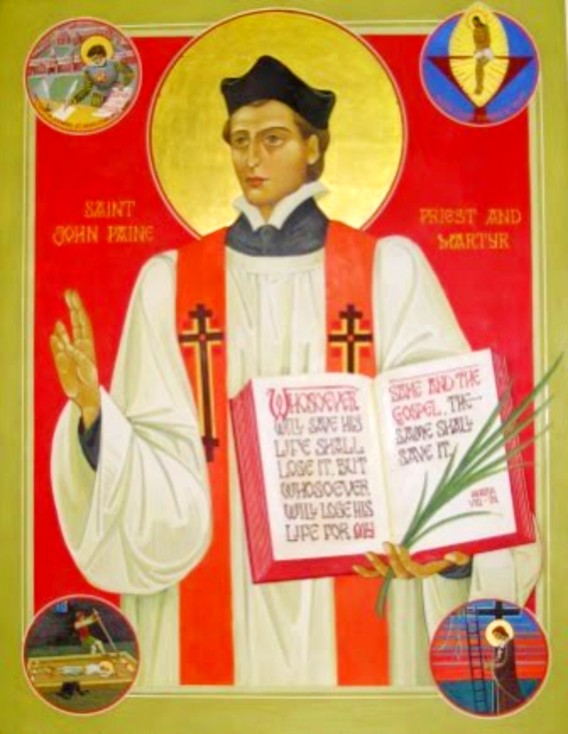
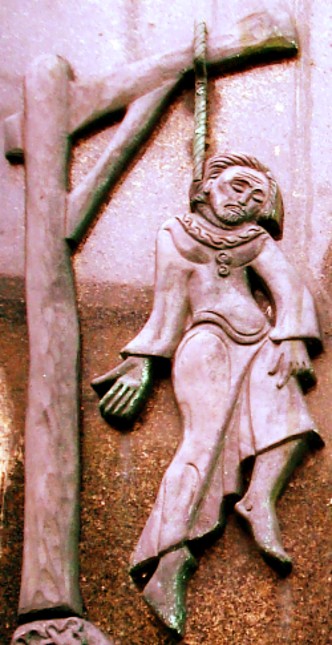
Blessed Thomas Holland SJ (1600-1642) Priest of the Society of Jesus and Martyr. of England and Wales. With eyes closed in prayer, Fr Holland looked at a Priest secretly in the crowd and received absolution. After he was hanged, his body was beheaded and quartered and exposed on London Bridge. Fr Holland was only forty-two years of age and a Jesuit for eighteen years. Pope Pius XI Beatified him on 15 December 1929. His Life and Death: https://anastpaul.com/2019/12/22/saint-of-the-day-22-december-blessed-thomas-holland-sj-1600-1642-priest-and-martyr-his-faith-was-his-crime/
Martyrs of Ostia – 3 Saints: A group of Christians Martyred together. The only details about them to survive are three names – Demetrius, Florus and Honoratus. They were martyred at Ostia, Italy.
Martyrs of Rhaitu – 43 Saints: 43 Monks Martyred by Blemmyes, in Raíthu, Egypt, date unknown.
Martyrs of Via Lavicana – 30 Saints: A group of 30 Christians Martyred together in the persecutions of Diocletian. Died in c 303 in Rome, Italy and were buried between two bay trees on the Via Lavicana outside Rome.
DISCLAIMER: Please note: I cannot control the content of the Advertisements on this Site, or of pop-ups which may appear, The revenue from the Advertisements, however, does provide a little assistance in the support of the Site. I do apologise for any inappropriate content.
Saint of the Day – 21 December – St Baudacarius (Died 650) Monk at the Monastery of St Columban in Bobbio, Provincia di Piacenza, Emilia-Romagna, Italy, Miracle-worker. Also known as – Baudachariu.
Bobbio Monastery
Baudacarius lived during the time of Abbot St Bertulf (Died 640) and was one of the 25 Monks whose Relics are venerated in the Crypt of the Basilica of St Columban.
Jonah, his cotemporary, recounts that, as he was the guardian of the Monastery’s vineyards and was unable to keep away the birds and other animals which were damaging the vines, 30 of his fellow Monks were sent to help him. One day, to feed them all, he multiplied the only loaf of bread he had.
Baudacarius died around 650; his Relics were transferred on 16 March 1482. He is remembered on 21 December and 31 October in Bobbio.
St Baudacarius (Died 650) Monk in Bobbio, Italy St Beornwald (8th Century) Priest of Bampton, England. No further information has survived. Bl Bezela of Göda
Saint of the Day – 20 December – St Paul (Died c956) Abbot, Hermit on Mount Latrus near the City of Miletus in Caria (now western Turkey). Born in Pergamon in modern Turkey and died in Samos, Greece in 956 .
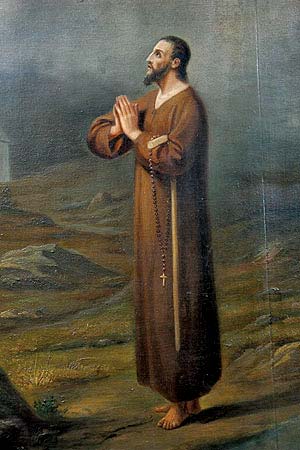
van Staveren, Jan Adriaensz.; A Hermit at Prayer
Paul spent most of his religious life as a Hermit on Mount Latrus. He later founded a Monastery there and became its Abbot. He is regarded as the spiritual father of many Monks.
Paul generally avoided the powerful and preferred the company of the humble and meek who sought him out for spiritual counsel but he received letters from Tsar Peter I of Bulgaria and wrote to the Emperor urging the removal of Manichaeans heretics from the territories.
Paul was indefatigable in the exercise of holy prayer and having no other desire than to gain Heaven, laboured seriously to subdue his body by mortification. He never lay himself down to sleep but only leaned his head against a stone or tree. No unprofitable word was ever heard from his mouth and the sight of the fire, which put him in mind of hell, drew tears from his eyes without intermission whenever he was employed in the kitchen.
Towards the end of his life he drew up rules for his Monastery. On the 6th of December in 956, foreseeing his death draw near, he came down from his cell, said Holy Mass earlier than usual, then took to his bed, being seized with a violent fever. He spent his last moments in prayer and in repeating tender instructions to his Monks until his happy death.
St Attala of Strasbourg St Bajulus of Rome St Crescentius of Africa St Damian of Padua St Dominic Bishop and Confessor of Brescia
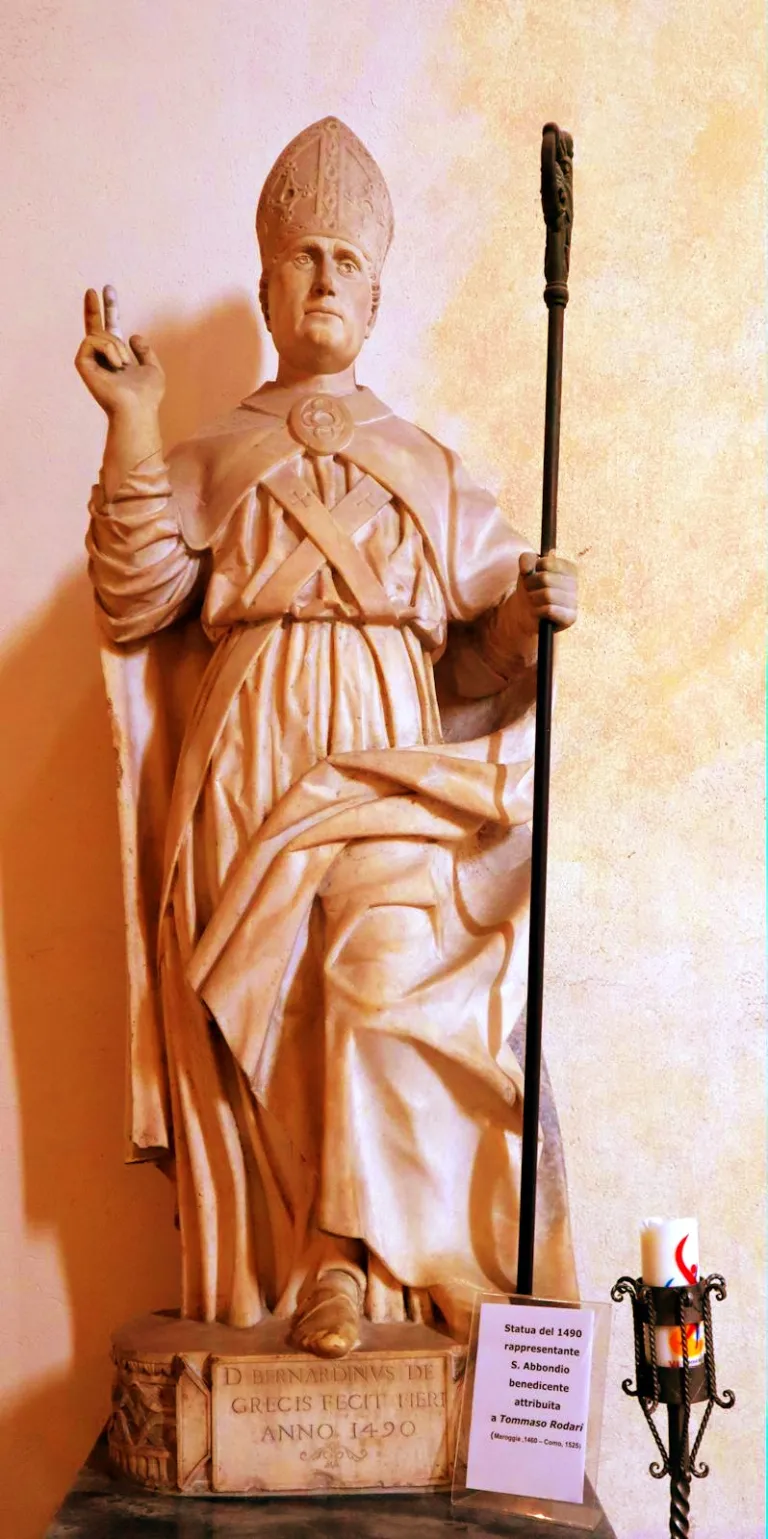
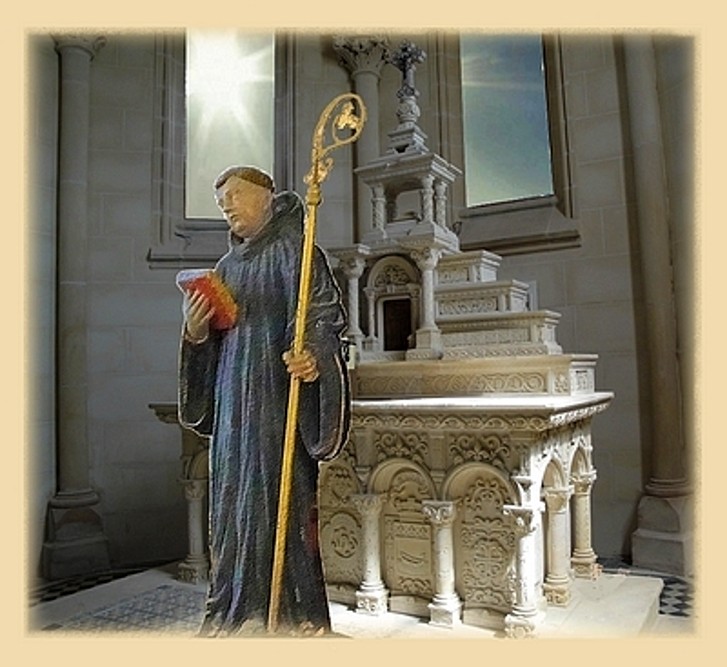
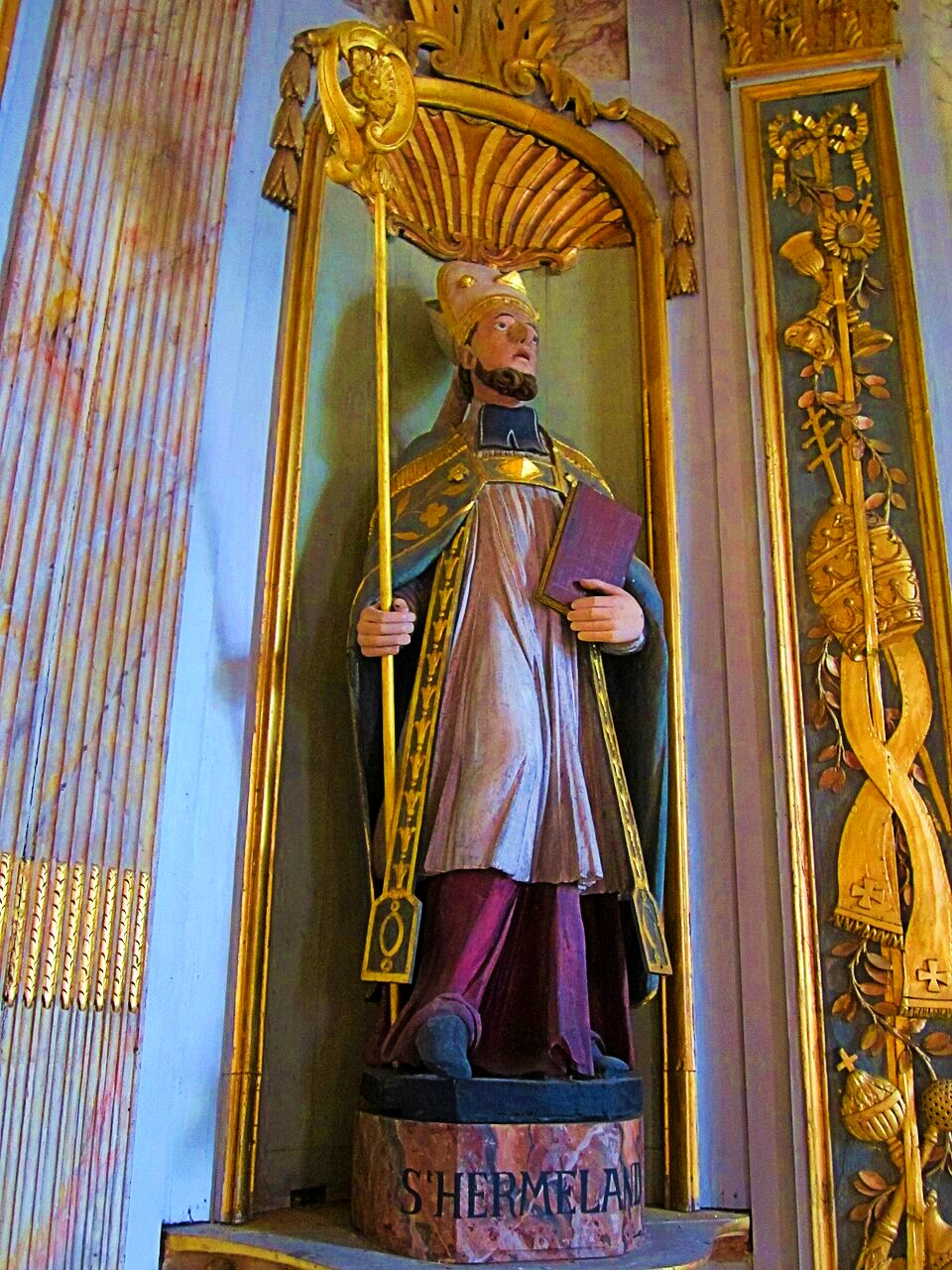
St Dominic de Silos OSB (1000-1073) Abbot. He was a Spanish Monk, to whom the Abbey of Santo Domingo de Silos, where he served as the Abbot, is dedicated. The mother of the better-known Saint Dominic de Guzmán, the Blessed Joan of Aza, prayed at his Shrine before she was able to conceive the son she named for him. That son would grow up to found the Dominican Order. Dominic’s special patronage thus became connected with pregnancy and until the establishment of the Second Spanish Republic in 1931, his abbatial crozier was used to bless the queens of Spain and was placed by their beds when they were in labour. His Namesake is more Renowned than he is: https://anastpaul.wordpress.com/2017/12/20/saint-of-the-day-20-december-st-dominic-de-silos-o-s-b-c1000-1073/
Bl John de Molina St Julius of Gelduba Bl Lorenzo Company St Liberatus of Rome St Macarius of Arabia St Malou Priest at Hautvillers, Marne, France. No other information has survived. St Paul (Died c956) Hermit of Latra, Greece Blessed Peter de la Cadireta
St Ursicinus of Saint-Ursanne (c552-c625) Abbot, Hermit, disciple of St Columban (543-615). Born in c552 in either France or Ireland and died on 20 December in c625 near modern St-Ursanne, Jura, Switzerland of natural causes. Patronages – against stiff neck, Besançon in France, in Switzerland – Basel, Saint-Ursanne. A Saint Patron against a Stiff Neck!: https://anastpaul.com/2023/12/20/saint-of-the-day-20-december-saint-ursicinus-of-saint-ursanne-c552-c625-abbot/
Saint of the Day – 19 December – St Avitus (Died c530) Abbot of Saint-Mesmin de Micy Abbey near Orleans and later at his own Monastery now called St Avy of Chateau-dun. St Avitus was renowned for demonstrating the grace of prophecy. Also known as – Adjutus, Avit, Avy. Additional Memorial – 17 June on some calendars.
The Roman Martyrology reads today: “At Orleans, St Avitus, an Abbot renowned for the spirit of prophecy.”
Micy Abbey: drawing by Louis Boudan, 1707
Avitus was a native of Orleans and retiring into Auvergne, took the monastic habit together with St Calais in the Abbey of Menat, at that time very small; though afterwards enriched by Queen Brunehault and by St Boner, the Bishop of Clermont.
The two Saints soon after returned to Micy, a famous Abbey situated on the Loiret, a league and a half below Orleans. It was founded towards the end of the reign of Clovis I. by St Euspicius a holy Priest and his nephew, St Maximin, or Mesmin, whose name this Monastery, which is now of the Cistercian order bears.
Many call St Maximin the 1st Abbot, others St Euspicius the 1st, St Maximin the 2nd and St Avitus the 3rd. But our Saint and St Calais, did not remain very long at Mici, although St Maximin gave them a gracious reception.
In quest of a closer union with God, Avitus, who had succeeded St Maximin, soon after resigned the Abbacy, as Lethuld, a learned Monk of Micy, assures us and, with St Calais lived as Hermits in the territory now called Dunois, on the frontiers of la Perche.
Others joining them, St Calais retired into a forest in Maine and King Clotaire built a Church and Monastery for St Avitus and his companions. This is at present a Carmelite Nunnery called St Avy of Chateau-dun and is situated on the Loire at the foot of the hill on which the Town of Chateau-dun is built, in the Diocese of Chartres.
Three famous Monks, Leobin, afterwards Bishop of Chartres, Euphronius and Rusticus, attended our Saint to his happy death which happened about the year 530. His body was carried up the Loire to Orleans and buried with great pomp in that City. A Church was built over his Tomb which still subsists and his Feast is kept in Orleans, Paris and in other places.
Some distinguish St Avitus Abbot of Micy from the Abbot of Chateau-dun but all circumstances show that it was the same holy man who retired from Mici into the territory of Chateau-dun. See the life of St Avitus published by Henschenius in 1701 and also the New Paris Breviary on the 17th of June.
St Adelaide (c1014-1091) Countess, Married Laywoman, mother of 5, widowed 3 times. Born in c1014 in Turin, Italy and died on 19 December 1091 also in Italy. Adelaide made donations to the Monasteries of Turin, founded the Monastery of Santa Maria at Pinerolo and received communication from many leading Ecclesiastical dignitaries of the day. She also furthered the processes of reform within the Church hierarchy. Her Devoted Life: https://anastpaul.com/2023/12/19/saint-of-the-day-19-december-saint-adelaide-of-susa-c1014-1091-widow/
St Avius (Died c530) Abbot of Saint-Mesmin de Micy Abbey near Orleans Bl Berengar of Banares
Blessed Mercedarian Fathers – (6 Beati): A group of Mercedarian Friars noted for their dedication to the Order’s Rule, for their continuous prayer life and their personal piety. Blessed Bartolomeo of Podio Blessed Giovanni of Verdera Blessed Guglielmo de Gallinaris Blessed Guglielmo of Prunera Blessed Pietro of Benevento Blessed Pietro of Gualba
Martyrs of Nicaea – (4 Saints): A group of Christians Martyred together. The only surviving details are four of their names – Darius, Paul, Secundus and Zosimus. They were martyred at Nicaea, Bithynia (modern Izmit, Turkey).
Martyrs of Nicomedia – 5 Saints: A group of Christians Martyred together in the persecutions of Diocletian. We know little more than the names of five – Anastasius, Cyriacus, Paulillus, Secundus and Syndimius. They were martyred in 303 at Nicomedia, Asia Minor.
Saint of the Day – 18 December – Saint Desiderius (8th Century) Monk of Fontenelle in Normandy, France and a disciple of its Founder, St Wandrille. Also known as – Desideratus.
Illumination of Fontanelle, perhaps showing St Wandrille,the King and perhaps St Desiderius
The Abbey of Saint Wandrille of Fontenelle, located in Normandy, was founded in 667 by Saint Wandrille, who built it on land obtained through the intercession of his friend St Auden, Archbishop of Rouen.
We have some information about Desiderius in the text on the life of Saint Auden. This text recounts that Desideratus was the son of Saint Waning, the Founder of Fécamp Monastery, who, when he was an official at the Royal Court of Clotaire III, assisted Saint Wandrille in the construction of the Monastery of Fontanelle.
The young Desiderius was entrusted to the Founder of the Monastery of Fontanelle and became his disciple. Desiderius was commemorated with his own cult in Fontanelle.
We do not know the year in which he died, while there is an historical trace of the translation of his Relics to Ghent in modern Belgium which took place in the year 859.
The remembrance of Saint Desideriud was fixed on his Feast Day, set for 18 December.
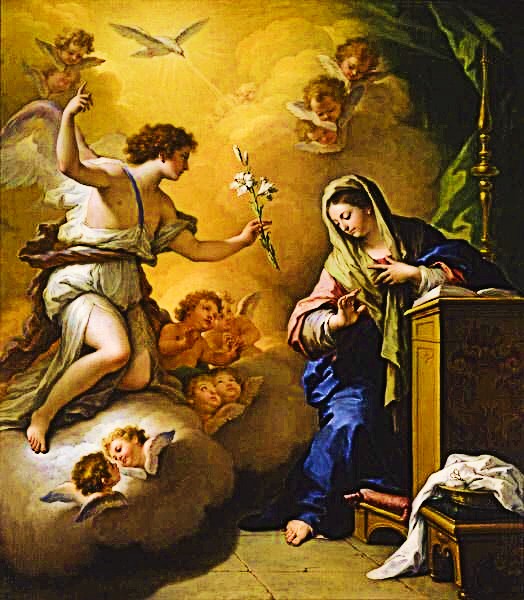
Our Lady of the Expectation – This Feast originated in Spain. When the Feast of the Annunciation (25 March) was transferred to 18 December because of the regulation forbidding Feasts in Lent, it remained on this date after the Annunciation was again celebrated on its original date. It impressed on the faithful, the sentiments of the Blessed Virgin as the time of her delivery approached. More about the Feast here: https://anastpaul.com/2018/12/18/the-feast-of-our-lady-of-expectation-18-december/
Christmas Novena to the Christ Child – Day Three:THE THIRD DAY
The Monthly Novena to the Infant of Prague – LINK : The Third Day
St Mawnan of Cornwall – He is included in various calendars in the British Isles. A Town in the County of Cornwall is named in his memory. No reliable information about his life has survived. St Rufus of Philippi +
Mercedarians Redeemers – Also known as “Blessed Redentori.” A group of Mercedarian Friars who worked together, under the leadership of Saint Peter de Amer, to ransom prisoners and minister to them after. Blessed Bernardo de Pratis Blessed Giacomo de Lara Blessed Louis Gasco Blessed Peter de Quesada Blessed Peter of Barcelona Blessed William de Quadres
Martyrs of Northwest Africa – 42 Saints: Mercedarian Redeemers – 6 beati – These are a group of Mercedarian Friars who worked together, under the leadership of Saint Peter de Amer, to ransom (e.g., redeem) prisoners
Saint of the Day – 17 December – Saint Yolanda (c1231-c1283) OP Virgin, Nun of the Order of Preachers, the daughter of the Count of Vianden. Also known as – Yolande, Iolanda, … of Vianden.
Yolanda life is famously recorded in the epic poem “Yolanda von Vianden” written by Friar Hermann of Veldenz OP which is one of only two works we have from him, the other being a prose account Vita of her life.
This poem recounts how, as a young girl, she wished to become a Nun but her parents wished her to make a good marriage. Indeed, her mother had hoped to arrange a marriage to the noble Walram of Monschau, in order to consolidate the influence of the Counts of Vianden, especially in their relations with the Counts of Luxembourg.
In 1245, when Yolanda was 14, her mother, the Marchioness Marguerite of Courteney, brought Yolanda along as her companion on a visit to the Dominican Monastery of Marienthal, where Yolanda unexpectedly fled into the protection of its cloister and gained admission as a Novice.
A year later, in 1236, her mother returned, now with the armed support of several noblemen, threatening to destroy the Monastery unless Yolanda agreed to leave. The girl was thus persuaded to return to Vianden where her parents once again attempted to change her wishes by keeping her in Vianden Castle. But Yolanda did not waver. If anything, she became more steadfast and reinforced in her views through discussions with well-known Dominican Friars such as Walter von Meisemburg and St. Albertus Magnus.
Finally, even her mother relented and agreed that Yolanda should return to Marienthal. Entering a life of prayer and charity, Yolanda developed in her monastic life through the years and, in 1258, was eventually elected the Monastery’s Prioress. She remained there until hr death 25 years later in c1283. Her mother also joined the Monastery after the death of her husband during a Crusade (1252).
There is little remaining evidence of the life of Yolanda apart from a skull, said to be hers which is displayed at the Church of the Trinitarians in Vianden. As the monastery was closed in the 18th Century, there is no trace of her there today.
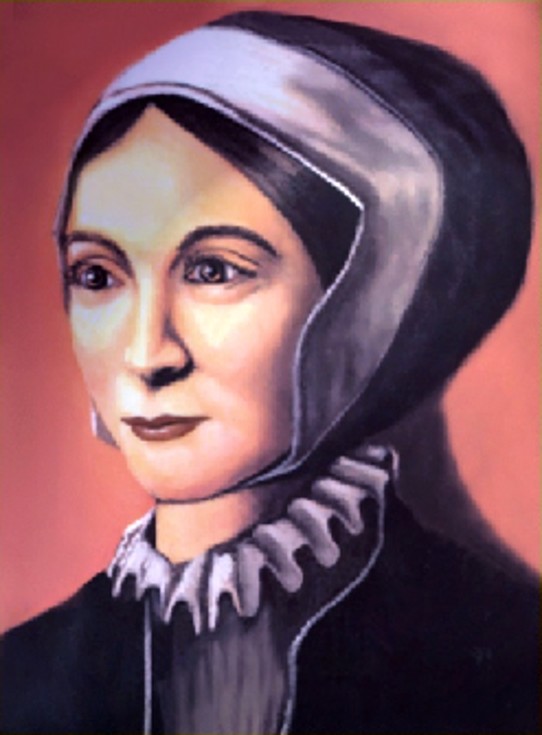
Yolanda’s steadfast resolve to leave the riches and privileges of the nobility in favouur of an austere and devout life in a monastery was as sensational as it was inspiring. ,no doubt explains why Friar Hermann was inspired to write her life story and why she has become such a revered Saint, above all, for Luxembourgish women.
St Begga of Ardenne (c613-693) Widow, Mother of 3 children, Founder of Churches and a Monastery of which she became the first Abbess. Patronages – Ardenne, against stuttering and of stutterers. he Roman Martyrology reads: “At Ardenne, at the Seven Churches, St Begga Widow, sister of St Gertrude of Nivelles.” St Begga’s Holy Life: https://anastpaul.com/2023/12/17/saint-of-the-day-17-december-saint-begga-of-ardenne-c613-693-widow/
St Yolanda (c1231-c1283)OP Virgin, Nun of the Order of Preachers
Martyrs of Eleutheropolis – (60+ Martyrs-Beati): Approximately 60 Christian soldiers in the imperial Roman army of emperor Heraclius; they were murdered as a group for their faith by invading Saracen Muslims. We know the names of two of them – Calaoicus and Florian. 638 in Eleutheropolis (Beit Jibrin), Palestine.
Saint of the Day – 16 December – St Macarius (Died 1005) Abbot of Collesano, Ascetic, spiritual guide, a man of great humility and charity, miracle-worker. Born of Italian and Greek heritage in the 9th Century.
Macarius’ life is linked to that of his father, Christopher and his brother, Saba. Christopher, having taken refuge in the Monastery of San Filippo d’Agira at the foot of Mount Etna, received the Habit from the Abbot Nicephorus, who authorised him to lead a Hermit’s life in the forest of San Michele di Crisma. There he was joined by his wife Cali and his sons Saba and Macario, who all took the monastic Habit.
A severe famine which struck Sicily in 940-941, forced them to take refuge in Calabria; disembarking at Cessaniti, near Nicotera, they wandered through the mountains and woods until they reached the famous Monastic of Mercurio, on the north-western border of Calabria with Lucania.
Here they founded the two Monasteries of San Michele Arcangelo and San Stefano Protomartyr. They then went on a pilgrimage to Rome to venerate the tombs of the Apostles and, on their return, stopped at the Monastery of San Lorenzo, near Latiniano, where Christopher died, followed shortly thereafter by Cali, who was head of a community of women.
The two brothers, Saba and Macarius, took charge of the various Monasteries of Mercurion, encouraging the Monks to persevere in their vocation and not to be discouraged by the constant Saracen raids.
Upon Saba’s death in 995, Macarius succeeded him in the direction of the Monasteries scattered throughout Mercurion and Latiniano.
The biographer testifies to the prudence with which he governed, his profound humility and, above all, his great purity. To these virtues he combined the exercise of that excessive corporal rigour which characterised the Italo-Greek Monks of the time.
He performed many miracles, causing his cell to become a destination for pilgrims of all kinds.
His life ended ten years after that of his brother, on 16 December 1005. St Macarius is remembered on this day by both the Roman and Greek Monks.
St Beoc St Dominic Dosso Bl Elizabeth of Saint Francis
St Everard of Friuli (c815-867) Duke, Count, Soldier, Founder of Churches and a Monastery. In contrast to his soldiering life, St Everard was a peacemaker, a humble and loving Master with a social conscience, striving always to free serfs, wherever possible or at least to free them from their burdens and assisting the poor and needy in all their deprivations. His Humble Life: https://anastpaul.com/2021/12/16/saint-of-the-day-16-december-saint-everard-of-friuli-c-815-867/
St Irenion (Died 389) Bishop No further information can be found Bl James of Tunis St Macarius (Died 1005) Abbot of Collesano
Martyred Women of North-West Africa: A large group of women Martyred in the persecutions of Hunneric, Arian King of the Vandals. 482 in North-West Africa.
Martyrs of Ravenna – 4 Saints: A group of Christians Martyred together. Four names and no other information has survived – Agricola, Concordius, Navalis and Valentine. c 305 at Ravenna, Italy.
Saint of the Day – 15 December – Saint Maximinus (Died c520) Confessor and Abbot of the Abbey of Micy, Orleans, France. He was the 2nd Abbot of Micy Abbey, founded by his uncle, St Eusebius, with Maximinus assistance and was the 1st Abbot. At this time Maximinus was Ordained to the Priesthood and is renowned in his region for Miracles. Later in life Maximinus became a Hermit. Born in Verdun and died in Micy, both in France. Also known as – Mesmin (Maximin.
The Roman Martyrology reads today: “In the Diocese of Orleans, St Maximinus, Confessor.”
The oldest document relating to Maximinus, who lived in the late 5th and early 6th Century, is a Vita written in the first half of the 9th Century by a certain Berthold, a Monk of Micy and dedicated to Jonah, the then Bishop of Orléans. Three Centuries separate the events from the account, so the historical facts might require a certain amount of the historian must exercise caution.
According to this Vita, Maximinus was originally from Verdun and the nephew of a Priest of the City named Euspicius, to become a Saint too. The inhabitants of Verdun had rebelled against King Clovis I (481-511), who came to lay siege to the City but then, through the intervention of St Euspicius, pardoned the rebels. Upon retiring from the City, the King took St Euspicius and Maximinus with him and went to Orléans, where he recommended them to the City’s Bishop and donated the district of Micy, located four kilometers west of the City (now Saint-Pryvé Saint-Mesmin), to found a Monastery. St Euspicius, already elderly, had arranged for the deed of gift to be drawn up in Maximinus’ name. Maximinus was Ordained Deacon and Priest and, even before his uncle’s death which occurred two years after their arrival in Orléans, became the Abbot of Micy.
Under Maximinus’ rule, the new Monastery developed rapidly and the community grew significantly. According to his biographer, Maximinus performed several miracles, most notably the slaying of a dragon which had its lair in a cave on the banks of the Loire and is believed to have taken this cave as his cell when he became a Hermit in his last years.
He died on 15 December in an unspecified year and was buried in the Dragon’ Cave by the same Bishop Eusebius (500-530), who had welcomed his uncle and himself upon their arrival in Orléans.
At the end of the 7th Century, Maximinus’s Relics were transferred to Orléans by Bishop Sigobert, who also dedicated a Church to the Saint in the City. Bishop Jonah (818-842) returned them to the Abbey of Micy, restored after a long period of decline.
The cult of Maximinus spread throughout France in the Middle Ages; his Feast is celebrated in the Dioceses of Orléans, Tours, Paris, Beauvais and Bordeaux. He is always listed in the Proper of Orléans on 15 December, the date on which he is inscribed in the Roman Martyrology.
The Octave Day of the Immaculate Conception of the Blessed Virgin Mary
The Christmas Novena to the Divine Infant Jesus by St Alphonsus Maria de Liguori – BEGINS on 16 December: This Novena is translated from the Italian of Saint Alphonsus Maria de Liguori and was first published in 1758. Although this Novena is intended, primarily as a preparation for the Feast of our Lord’s Nativity, it can be used with spiritual profit at any time of the year, as a devotion in honour of the Infant Jesus. This translation by the Redemptorists of the UK.
AND/OR: December, naturally being the Month of the Divine Infant, is a wonderful time to begin this Monthly practice: The Monthly Novena to the Infant Jesus of Prague From 16 to 24 December (and of every Month on the same dates).
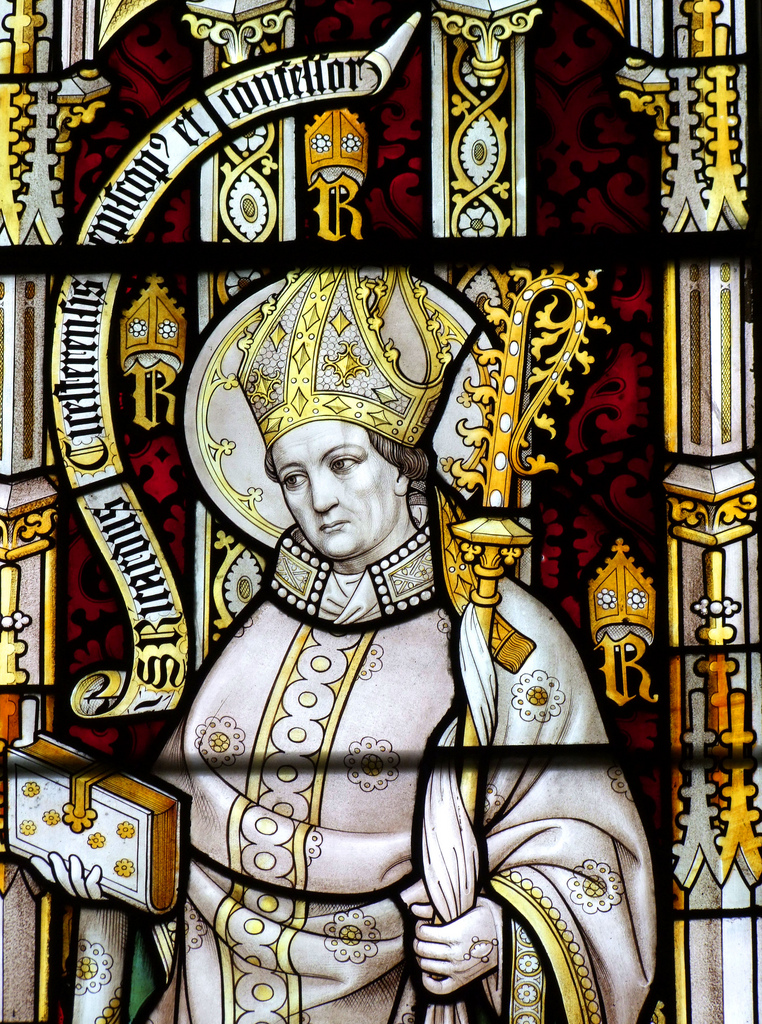
St Maximinus (Died c520) Confessor and Abbot of the Abbey of Micy, Orleans, France St Offa of Essex St Paul of Latros St Silvia of Constantinople St Urbicus
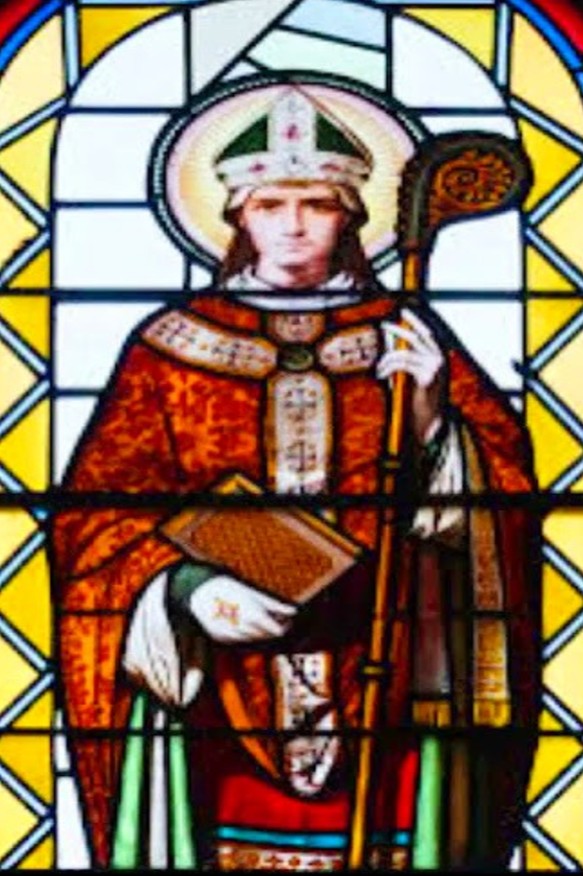
St Valerian(c377-c457) Confessor, Bishop of Abbenza . The Roman Martyrology this day states: “In Africa, the holy Bishop Valerian, who, being upwards of eighty years old, in the persecution of the Vandals, under the Arian King Genseric, was asked to deliver the Sacred vessels of the Church and, as he constantly refused, an order was issued to drive him, all alone, out of the City and all were forbidden to allow him to stay, either in their houses or on their land. For a long time, he remained lying on the public roads in the open air and thus, in the confession and defence of the Catholic verity, closed his blessed life.” Pray for Us, Holy St Valerian: https://anastpaul.com/2023/12/15/saint-of-the-day-15-december-saint-valerian-of-abbenza-c377-c457-
Martyrs of North Africa – 7 Saints: A group of Christians Martyred together for their faith in North Africa. The only details about them that survive are their names – Caelian, Candidus, Faustinus, Fortunatus, Januarius, Lucius and Mark.
Martyrs of Rome – 22 Saints: A group of 22 Christians Martyred together in the persecutions of Valerian. The only details we have are five of their names – Antonius, Irenaeus, Saturnin, Theodorus and Victor. c 258 in Rome, Italy.
DISCLAIMER: Please note: I cannot control the content of the Advertisements on this Site, or of pop-ups which may appear, The revenue from the Advertisements, however, does provide a little assistance in the support of the Site. I do apologise for any inappropriate content.
Saint of the Day – 14 December – Saint Pompey (4th Century?) Bishop of Pavia, Italy. Also known as Pompeius.
The Roman Martyrology reads today: “Ar Pavia, Pompey, Bishop.”
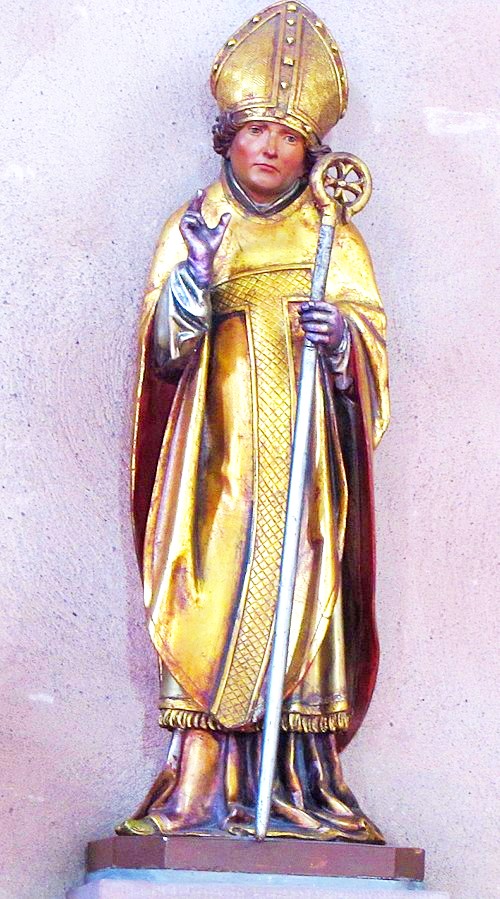
A Bishop Saint – Master of the Graduals of San Salvatore in Pavia | Italy, Lombardy c1500
Five days ago, on 9 December, we celebrated Saint Syrus, the first Bishop of Pavia and the legendary evangeliser of much of the Po Valley. In the imposing task of casting the net of the fisher of men over that flat and fertile land, stretching as far as the eye could see, around the towers and bell towers of Pavia, he had, as his collaborator Saint Pompey.
Pompey succeeded Saint Syrus when the latter—it is not clear in what year, or even in what Century—rested in deserved glory. There is, therefore, little more to add about this Saint, the second Bishop in the list of shepherd which tradition assigns to Pavia. Also because, about Saint Pompey, very little is known, if anything, at all. One must turn to the life of Saint Strus himself to learn that Pompey’s Episcopate was brief and peaceful. Nothing else.
He was succeeded by Bishop Saint Giovenzo; while Saint Pompey was buried, with Saint Syrus, in that Church of Saints Gervasius and Protasius.
Given this scant and precarious information, it would not have been necessary to dedicate the day to Saint Pompey—and this would not have diminished the true and great glories of the City of Pavia. If we have done so, it is because, for better or worse, he is the most celebrated of the Saints named Pompey.
Of the Saints, however, even when we know almost nothing about them, as in the case of Saint Pompey, we can be sure of one thing; we remember them for having performed, certainly and only, good works for the glory of Christ and His Church. (Source: Parish Archive).
Saint of the Day – 13 December – St Antiochus (2nd Century) Martyr of Sulci, Sardinia, Italy. Died by being beaten to death in the first quarter of the 2nd Century on Sulci, Sardinia. Patronages – of miners, of the following places in Italy: Atzara, the Diocese of Iglesias, the City of Ozieri, the Diocese of Ozieri, Palmas Arborea, the City of Sant’Antioco, the Island of Sant’Antioco, in Sardinia. Also known as – Antiochus of Plumbaria, Antioco…
The Roman Martyrology reads today: “Near Sardinia, on the Island of Solta, the Martyrdom of St Antiochus, under the Emperor Adrian.”
On the Feast Day of Saint Lucy, Sardinia also commemorates another Martyr, Saint Antiochus. He is linked to the region’s mines, where the Romans also forced many Christians to work during the persecutions.
Among them is Antiochus, who was exiled to the splendid Island which bears his name (now connected to the mainland by a bridge).
Antiochus was an Physician who, in the first half of the 2nd Century, during the reign of Emperor Hadrian, travelled through Galatia and Cappadocia, caring, not only for the bodies but also for the souls, of those he encountered. The conversions he inspired led to his arrest and exile in Sardinia.
Even as a prisoner, his Christian witness was so strong that it opened the heart of the Soldier Cyriacus, his jailer, to faith in Christ.
This infuriated the imperial authorities, who sentenced him to death. Before dying, however, Antiochus invoked God’s protection over Sardinia and its people, who still venerate him today.
The Church in the Island’s capital Sant’Antioco, named after Antiochus, was dedicated to him in the 5th Century. His Tomb is in the Crypt beneath ithis Church.
Additional Feast Days in Italy: 13 November (Dioceses of Iglesias and Ozieri, Italy) 16 July (Island of Sant’Antioco) 1 August (Island of Sant’Antioco) 15th day after Easter (Island of Sant’Antioco) 2nd Sunday after Easter (Palmas Arborea, Italy)
St Antiochus (2nd Century) Martyrof Sulci, Sardinia, Italy
Blessed Antonio Grassi Cong. Orat. (1592 – 1671) Priest of the Oratorians of St Philip Neri, Confessor, Tertiary of the Order of St Francis, Spiritual advisor, Counsellor, Mediator, Miracle Worker, Apostle of the poor and the sick. He was Beatified on 30 September 1900 by Pope Leo XIII. Blessed Antonio’s Holy Life: https://anastpaul.com/2018/12/13/saint-of-the-day-13-december-blessed-antonio-grassi-cong-orat-1592-1671/
Bl Bartholomew of Tuscany St Edburgh of Lyminge St Einhildis of Hohenburg Bl Elizabeth Rose St Jodocus
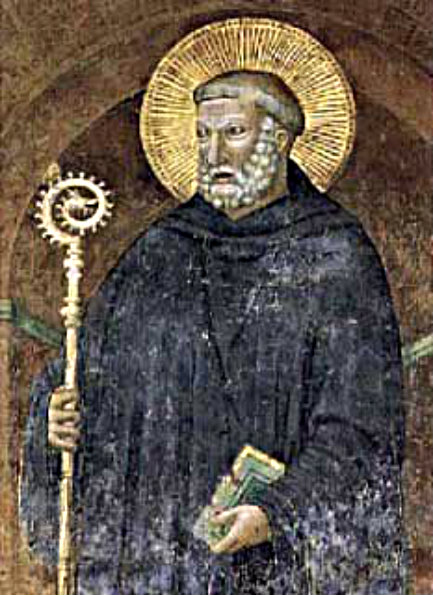
Blessed Giovanni Marinoni CR (1490-1562) Priest of the Theatines of St Cajetan (1480-1547) (The Congregation of the Clerics Regular of the Divine Providence), renowned Preacher and spiritual director. Patron of Preachers. He was Beatified on 5 December 1764, by a Bull of Pope Clement XIII, who also granted an Office in his honour, to his Order, to be celebrated on 13 December. Holy and Blessed Priest: https://anastpaul.com/2019/12/13/saint-of-the-day-blessed-giovanni-marinoni-cr-1490-1562/
St Martino de Pomar St Roswinda St Tassio of Bavaria
Blessed Mercedarian Knights – 7 Beati: A group of Mercedarian Knights who fought the enemies of the Catholic faith in the first Century of the Order. Blessed Bernardo de Podio Blessed Giacomo de Copons Blessed Giovanni de Bruquera Blessed Guglielmo de Sa Blessed Pietro Boguer Blessed Pietro Ricart Blessed Raimondo de Frexa
Martyrs of Sebaste – 5 Saints: A group of Christians Martyred together in the persecutions of Diocletian. We know little more than their names – Auxentius, Eustratius, Eugene, Mardarius and Orestes. They were martyred in c 302 at Sebaste, Armenia (in modern Turkey) and their relics are enshrined at the church of Saint Apollinaris in Rome, Italy.
You must be logged in to post a comment.