Thirtieth Sunday in Ordinary Time +2020 Christ the King (Traditional Calendar)
St Alfons Arimany Ferrer St Bernard of Calvo St Canna verch Tewdr Marw St Chrysanthus St Crispin & St Crispian – (†285 or 286) Martyrs Their Story: https://anastpaul.com/2018/10/25/saints-of-the-day-25-october-sts-crispin-crispinian-%e2%80%a0285-or-286-martyrs/ St Cyrinus of Rome St Daria St Dulcardus Bl Edmund Daniel St Fronto of Périgueux St Fructus of Segovia St Gaudentius of Brescia St George of Périgueux St Goeznoveus of Leon St Guesnoveus Bl Henry of Segusio St Hilary of Javols St Hilary of Mende St Hildemarca of Fecamp St Januarius of Sassari St Lucius of Rome St Lupus of Bayeux St Mark of Rome St Maurus of Pécs OSB (c 1000-c 1075) Bishop St Miniato of Florence St Peter of Rome St Protus of Sassari St Recaredo Centelles Abad St Tabitha Blessed Thaddeus McCarthy (c 1455–1492) “White Martyr of Munster” – Bishop The Pain of Earthly Rejection but Beloved of the Lord: https://anastpaul.com/2019/10/25/saint-of-the-day-25-october-blessed-thaddeus-mccarthy-c-1455-1492-the-white-martyr-of-munster/ St Theodosius of Rome — Martyrs of Constantinople: Marciano Martirio
Martyrs of Cruz Cubierta – 5 beati: A mother, Blessed María Teresa Ferragud Roig de Masiá and her four daughters, Blessed María Joaquina Masiá Ferragud, Blessed María Vicenta Masiá Ferragud, Blessed María Felicidad Masiá Ferragud and Blessed Josefa Ramona Masiá Ferragud, all nuns, who were Martyred in the Spanish Civil War, on 25 October 1936 in Cruz Cubierta, Alzira, Valencia, Spain. They were Beatified on 11 March 2001 by St Pope John Paul II.
Forty Martyrs of England and Wales – 40 saints: Following the dispute between the Pope and King Henry VIII in the 16th century, faith questions in the British Isles became entangled with political questions, with both often being settled by torture and murder of loyal Catholics. In 1970, the Vatican selected 40 martyrs, men and women, lay and religious, to represent the full group of perhaps 300 known to have died for their faith and allegiance to the Church between 1535 and 1679. They each have their own day of memorial, but are remembered as a group on 25 October.
• Alban Roe • Alexander Briant • Ambrose Edward Barlow • Anne Line • Augustine Webster • Cuthbert Mayne • David Lewis • Edmund Arrowsmith • Edmund Campion • Edmund Gennings • Eustace White • Henry Morse • Henry Walpole • John Almond • John Boste • John Houghton • John Jones • John Kemble • John Lloyd • John Pain • John Plesington • John Rigby • John Roberts • John Southworth • John Stone • John Wall • Luke Kirby • Margaret Clitherow • Margaret Ward • Nicholas Owen • Philip Evans • Philip Howard • Polydore Plasden • Ralph Sherwin • Richard Gwyn • Richard Reynolds • Robert Lawrence • Robert Southwell • Secular Clergy • Swithun Wells • Thomas Garnet. Canonised on 25 October 1970 by St Pope Paul VI
Martyrs of Rome – 67 saints: A group of 46 soldiers and 21 civilians martyred together in the persecutions of Claudius II. 269 in Rome, Italy.
Martyred in the Spanish Civil War: • Blessed Alfons Arimany Ferrer • Blessed Recaredo Centelles Abad
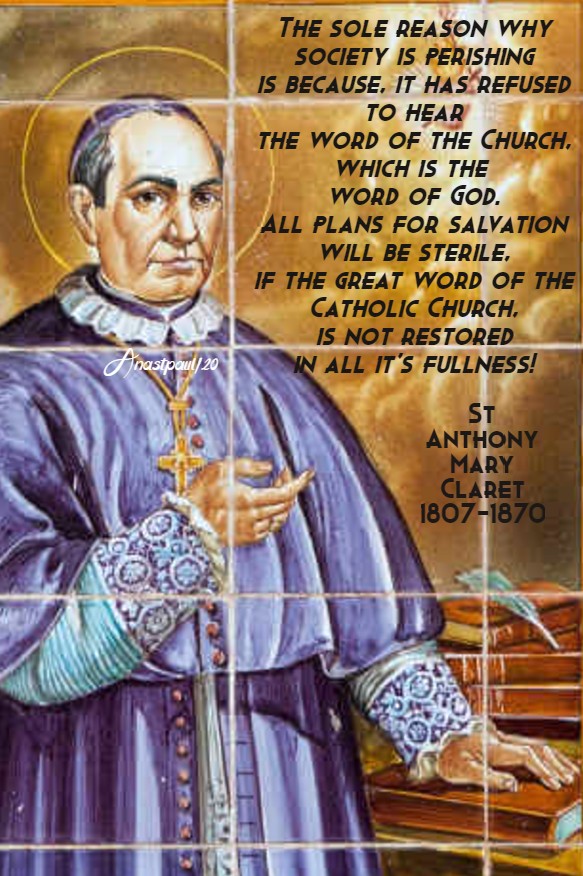
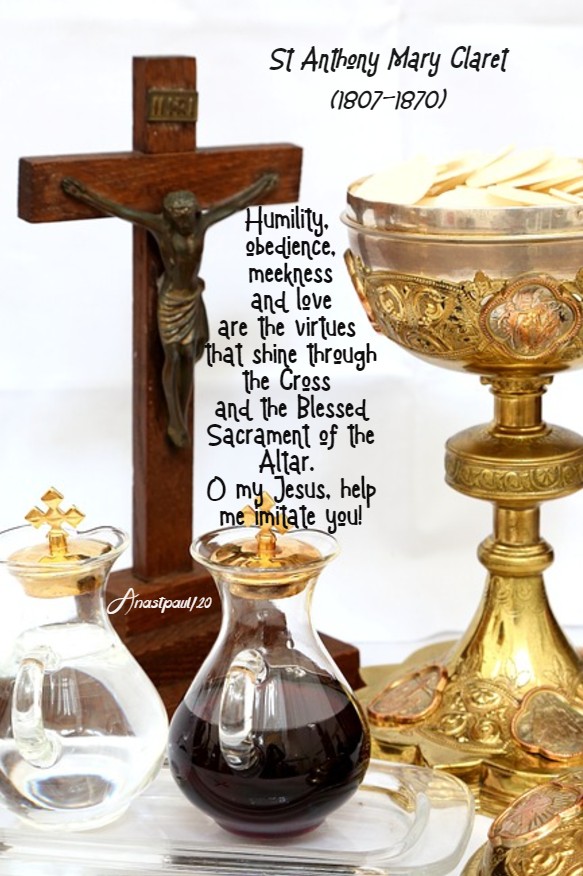
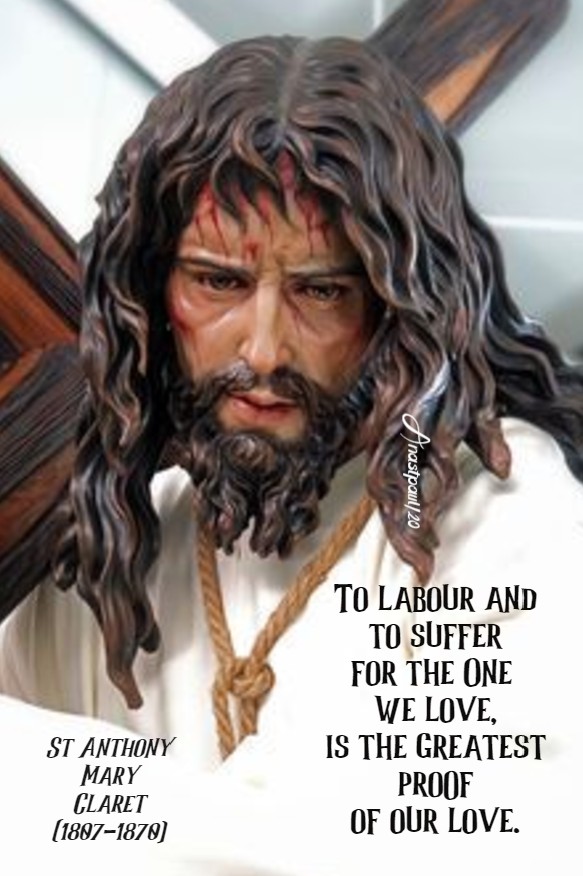
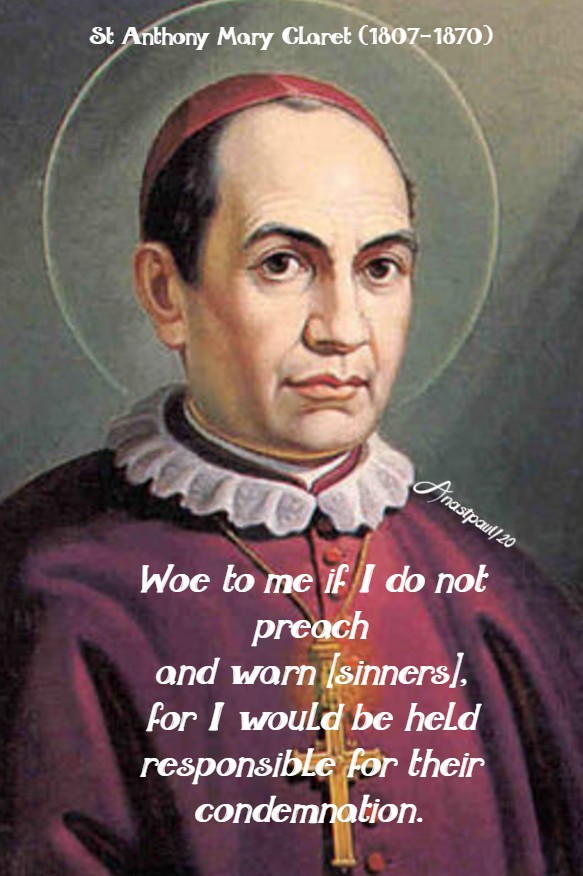
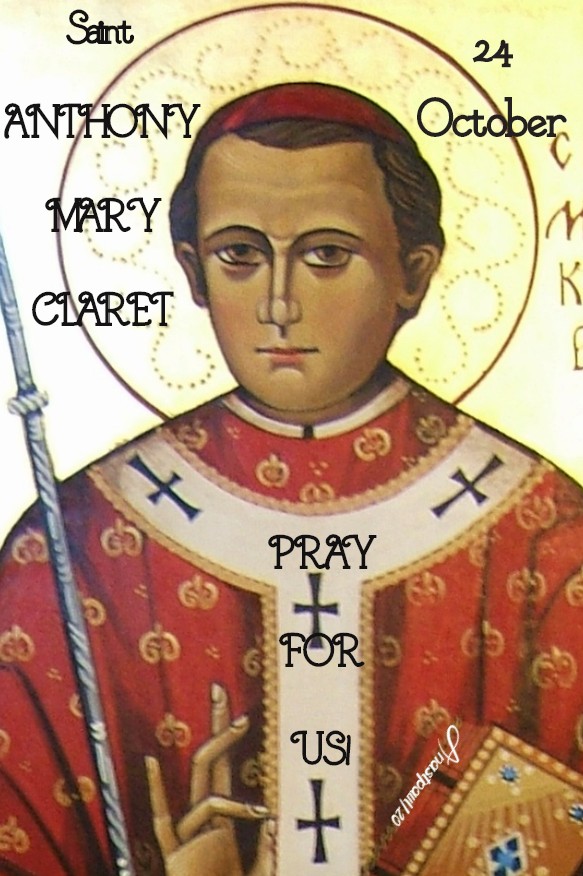
Quote/s of the Day – 24 October – The Memorialof St Anthony Mary Claret CMF (1807-1870) Archbishop and Founder of the Claretians
“The sole reason why society is perishing is because, it has refused to hear the word of the Church, which is the word of God. All plans for salvation will be sterile, if the great word of the Catholic Church, is not restored in all it’s fullness!”
“Humility, obedience, meekness and love are the virtues that shine through the Cross and the Blessed Sacrament of the Altar. O my Jesus, help me imitate you!”
“To labour and to suffer for the One we love, is the greatest proof of our love.”
“Woe to me if I do not preach and warn [sinners], for I would be held responsible for their condemnation.”
One Minute Reflection – 24 October – Saturday of the Twenty Ninth week in Ordinary Time, Readings: Ephesians 4:7-16, Psalms 122:1-2, 3-4, 4-5, Luke 13:1-9 and the Memorial of St Anthony Mary Claret CMF (1807-1870)
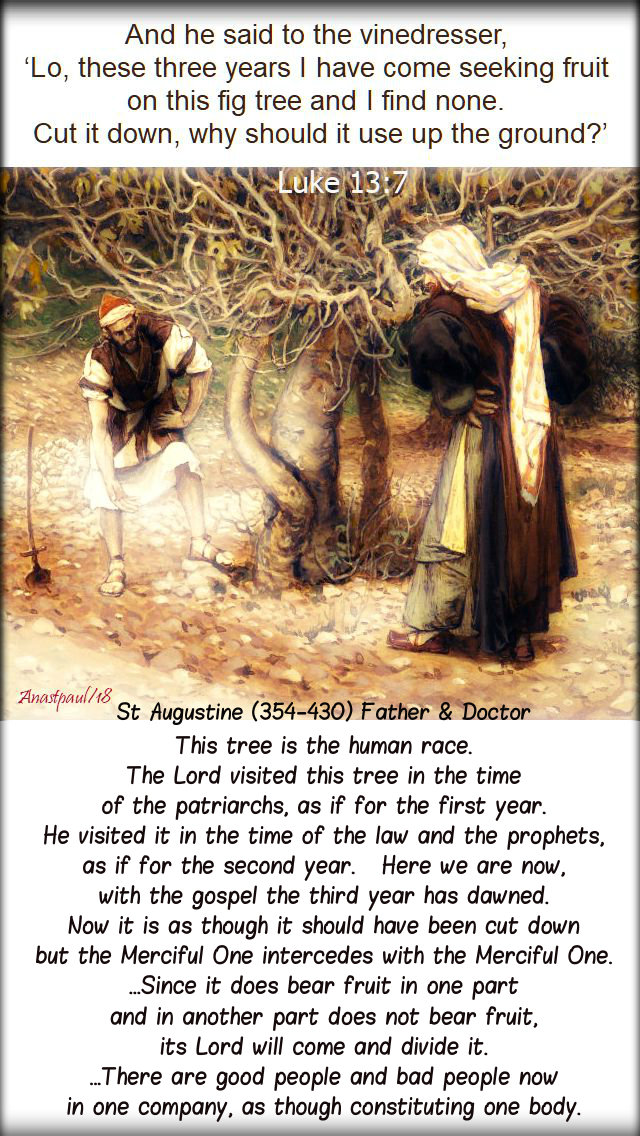
And he said to the vinedresser, “Lo, these three years I have come seeking fruit on this fig tree and I find none. Cut it down, why should it use up the ground? ” – Luke 13:7
REFLECTION – “The Lord also has something very fitting to say about a fruitless tree, “Look, it is now three years that I have been coming to it. Finding no fruit on it, I will cut it down, to stop it blocking up my field.” The gardener intercedes.
This tree is the human race. The Lord visited this tree in the time of the patriarchs, as if for the first year. He visited it in the time of the law and the prophets, as if for the second year. Here we are now, with the gospel the third year has dawned. Now it is as though it should have been cut down but the merciful one intercedes with the merciful one. He wanted to show how merciful he was and so he stood up to himself with a plea for mercy. “Let us leave it,” he says, “this year too. Let us dig a ditch around it.” Manure is a sign of humility. “Let us apply a load of manure, perhaps it may bear fruit.” Since it does bear fruit in one part and in another part does not bear fruit, it’s Lord will come and divide it. What does that mean, “divide it?” There are good people and bad people now in one company, as though constituting one body.” – St Augustine (354-430)Doctor of Grace – Sermon 254
PRAYER – Heavenly Father, help me to keep my death constantly before my eyes, for this is my final account. I pray You for a holy life that my death may be holy and that I may come to You and live for all eternity with You. May each moment of my life bear abundant fruit for love of You. When my hour is come, bid me come to You, Lord. Hear the prayers of your Saints, Anthony Mary Claret, who lived each moment of his life for the glory of Your Kingdom. We ask this through Christ, our Lord with the Holy Spirit, God forever, amen.
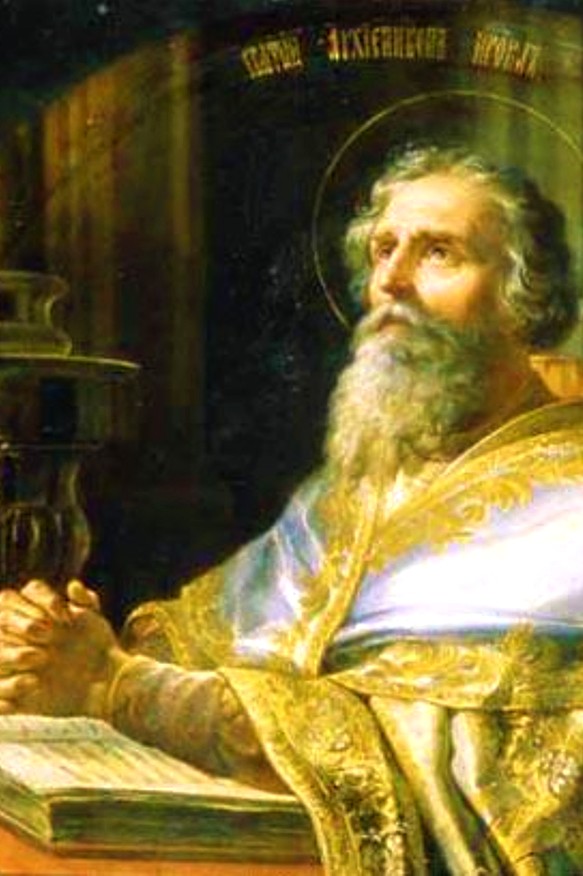
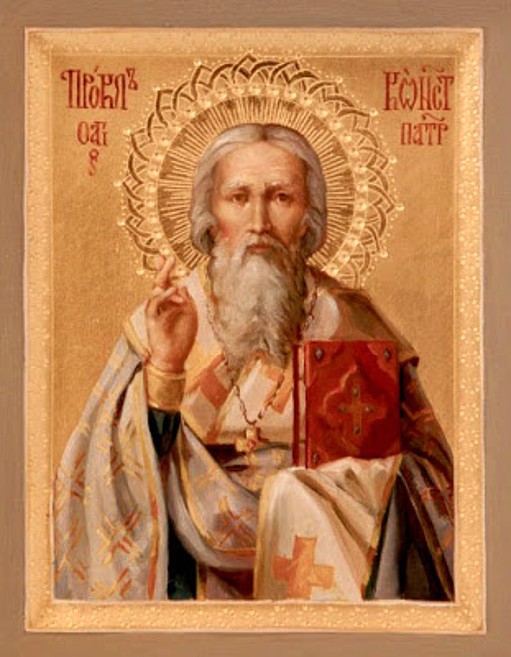
Saint of the Day – 24 October – Saint Proclus of Constantinople (Died c 446) Confessor, Archbishop of Constantinople, Defender of the Church and of the Blessed Virgin, Writer, renowned Preacher – born in Constantinople (modern Istanbul, Turkey) and died in c 446 in the area of modern Turkey of natural causes. He defended the divine maternity of Mary, fought against the heresy of Nestorius and, after Nestorius’ deposition, became Bishop of Constantinople. Roman Martyrology: In Constantinople, St Proclus, Bishop, who courageously proclaimed Blessed Mary as the Mother of God and brought the body of St John Chrysostom back from exile to the city with a solemn procession, thus deserving the title of the Ecumenical Council of Chalcedon, as “Great.”
The friend and disciple of Saint John Chrysostom, Proclus became secretary to Archbishop Atticus of Constantinople (406–425), who ordained him Deacon and Priest. Atticus’ successor, Sisinnius I (426–427), consecrated him Bishop of Cyzicus but the Nestorians there, refused to receive him and he remained at Constantinople. On the death of Sisinnius, the infamous Nestorius succeeded as Archbishop of Constantinople (428–431) and early in 429, on a festival of the Blessed Virgin Mary, Proclus preached his celebrated sermon on the Incarnation, which was later inserted in the beginning of the Acts of the Council of Ephesus. Below is an excerpt from St Proclus sermon:
“Our present gathering in honour of the Most Holy Virgin inspires me, brethren, to offer her a word of praise, of benefit also for those who have come to this holy celebration. It is a praise of women, a glorification of their gender, which (glory) she brings to it, she who is both Mother and Virgin at the same time.
O desired and wondrous gathering! O nature, celebrate that whereby honour is rendered to woman! Rejoice, O human race, that in which the Virgin is glorified. “But where sin abounded, grace did much more abound” [Romans 5:20]. The Holy Mother of God and Virgin Mary has gathered us here. She is the pure treasure of virginity, the intended paradise of the Second Adam, the place where the union of natures (divine and human) was accomplished and the Counsel of salvific reconciliation was affirmed.
Who has ever seen, who has ever heard, that the Limitless God would dwell within a womb? He Whom the Heavens cannot circumscribe is not limited by the womb of a Virgin! He Who is born of woman is not just God and He is not just Man. He Who is born has made woman the gateway of salvation. Where evil poured forth its poison, bringing on disobedience, there the Word made a living temple for Himself, bringing obedience there. From the place where the archsinner Cain sprang forth, there Christ the Redeemer of the human race was born without seed. The Lover of Mankind did not disdain to be born of woman, since She gave Him life (in His human nature). He was not subject to impurity by being in the womb which He Himself arrayed free from all harm. If this Mother had not remained a Virgin, then the Child born of her might be a mere man and the birth would not be miraculous in any way. Since she remained a Virgin after giving birth, then how is He Who is born not God? It is an inexplicable mystery, for He Who passed through locked doors without hindrance was born in an inexplicable manner. Thomas cried out, “My Lord, and my God!” [John 20:28], thus confessing the union of two natures in Him.”
When Archbishop Maximianus (431–434) died on Holy Thursday, Proclus was immediately enthroned by the permission of the Emperor Theodosius II and the Bishops gathered at Constantinople. His first care was the funeral of his predecessor and he then sent to both Bishops, St Cyril of Alexandria and St John of Antioch, the usual synodical letters announcing his appointment, both of whom approved of it.
In 436 the Bishops of Armenia consulted Proclus upon certain doctrines prevalent in their country and attributed to Theodore of Mopsuestia, asking for their condemnation. Proclus replied the next year in the celebrated letter known as the Tome to the Armenians, which he sent to the Eastern Bishops, asking them to sign it and to join in condemning the doctrines arraigned by the Armenians. They approved the letters but from admiration of Theodore, hesitated to condemn the doctrines attributed to him. Proclus replied that while he desired the extracts subjoined to his Tome to be condemned, he had not attributed them to Theodore or any individual, not desiring the condemnation of any single person.
A rescript from Theodosius procured by Proclus, declaring his wish that all should live in peace and that no imputation should be made against anyone who died in communion with the church, appeased the storm. The whole affair showed, conspicuously, the moderation and tact of Proclus. In 438, he transferred the relics of his old master, Saint John Chrysostom, from Comana back to Constantinople, where he interred them with great honour in the Church of the Twelve apostles. This action reconciled to the church those of Saint John’s adherents, who had separated themselves in consequence of his unjust removal as Archbishop.
In 439, at the request of a deputation from Caesarea in Cappadocia, Proclus selected as their new Bishop Thalassius, who was about to be appointed praetorian prefect of the East.
Proclus died most probably in October, 446. He appears to have been wise, moderate and conciliatory, desirous, while strictly adhering to Orthodoxy himself, to win over those who differed from him by persuasion rather than force.
The works of Proclus consist of 20 sermons. Five were published by Cardinal Mai, of which 3 are preserved only in a Syriac version, the Greek being lost; 7 letters, along with several addressed to him by other persons and a few fragments of other letters and sermons.
Proclus was cited by St John Henry Newman for his work on Mariology and his strong support of the conciliar dogma on the Mother of God. With his Marian doctrine, St Proclus opened the door to the further development of Marian doctrine during the period following the Council of Ephesus. Thanks to him, the faithful understood in a clearer way the great dignity of Mary, the power of her intercession and the need to honour her with special devotion.
St Maglorius of Wales St Marcius of Monte Cassino St Martin of Vertou St Proclus of Constantinople (Died c 446) Bishop St Senoch St Senócus of Tours St Septimus of Thibiuca — Martyrs of Ephesus – 3 saints: Three Christians martyred together. All we know about them are the names Mark, Sotericus and Valentina. They were stoned to death near Ephesus, Asia Minor (in modern Turkey). Their relics are enshrined on the island of Tasos.
One Minute Reflection – 23 October – Friday of the Twenty Ninth week in Ordinary Time, Readings: Ephesians 4:1-6, Psalms 24:1-2, 3-4, 5-6, Luke 12:54-59 and the Memorial of Blessed John Angelo Porro OSM (1451-1505)
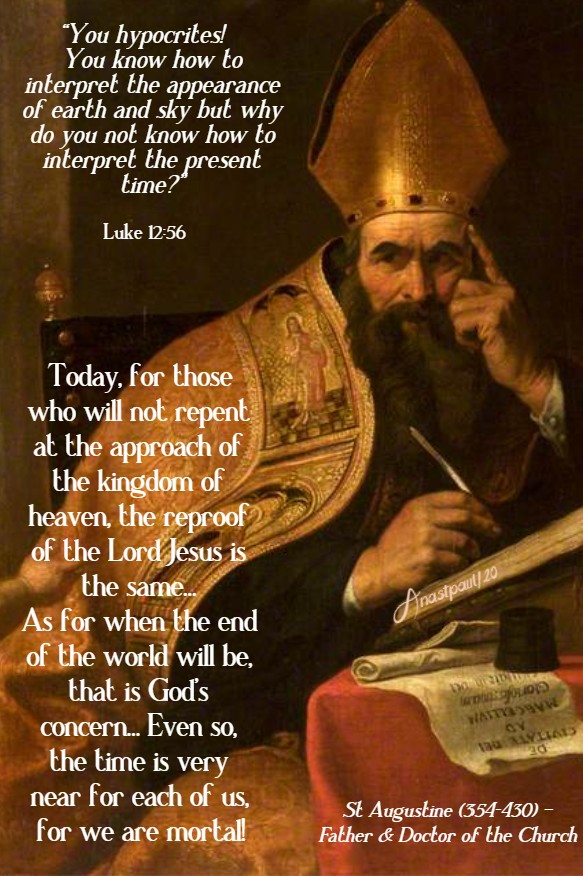
“You hypocrites! You know how to interpret the appearance of earth and sky but why do you not know how to interpret the present time?”… Luke 12:56
REFLECTION – “The gospel tells us that some people were rebuked by the Lord because, clever as they were at reading the face of the sky, they could not recognise the time for faith when the kingdom of heaven was at hand. It was the Jews who received this reprimand but it has also come down to us. The Lord Jesus began His preaching of the gospel with the admonition: “Repent, for the kingdom of heaven is at hand” (Mt 4:17). His forerunner, John the Baptist, began his in the same way: “Repent,” he said, “for the kingdom of heaven is at hand” (Mt 3:2). Today, for those who will not repent at the approach of the kingdom of heaven, the reproof of the Lord Jesus is the same… As for when the end of the world will be, that is God’s concern… Even so, the time is very near for each of us, for we are mortal. There are hazards all around us. We should be in less danger from them were we made of glass. What more fragile than a vessel of glass? And yet it can be kept safe and last indefinitely. Of course it is exposed to accidents but it is not liable to old age and the suffering it brings. We, therefore, are the more frail and infirm. In our weakness we are haunted by fears of all the calamities that regularly befall the human race and if no such calamity overtakes us, still, time marches on. We may evade the blows of fortune but shall we evade death? We may escape perils from without but shall we escape what comes from within us? Now, suddenly, we may be attacked by any malady. And if we are spared? Even so, old age comes at last and nothing will delay it.”… St Augustine (354-430) – Father & Doctor of the Church – Sermon 109
PRAYER – Lord God, You fill us with Your grace and teach us true faith. Strengthen in our hearts that faith that no trials may quench the fire, that we may seek Your face in every moment and accept AND LIVE all of Your will. Send us Your Spirit to keep the fire blazing. By the inspiration and prayers of Blessed John Angelo Porro, may we grow in sanctity and may the humble love and intercession of Mary Mother of our faith, be our succour. Through Jesus Your Son our Lord, with the Holy Spirit, God forever, amen.
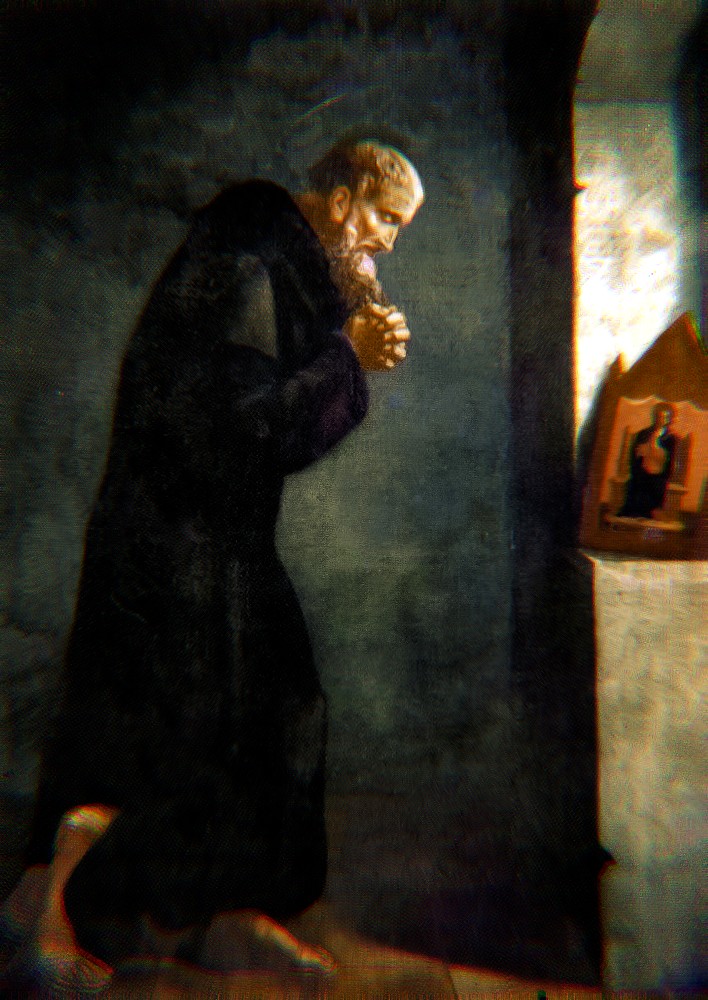
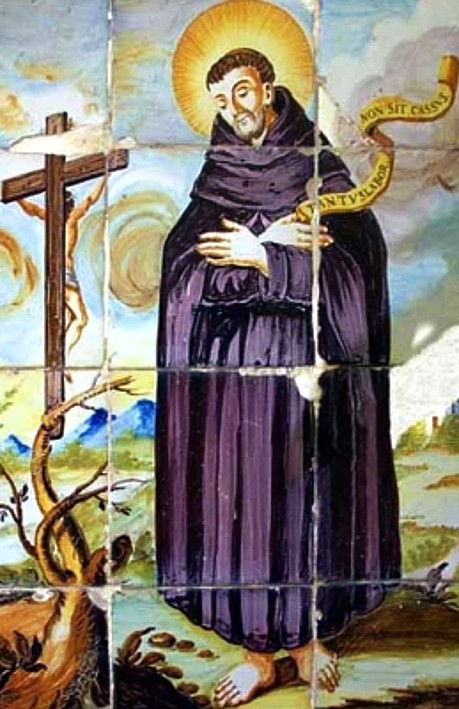
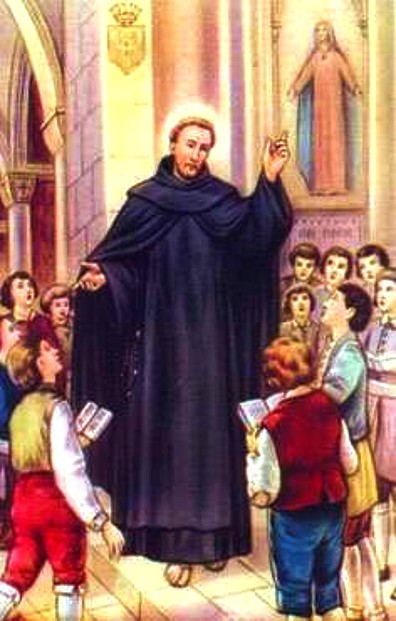
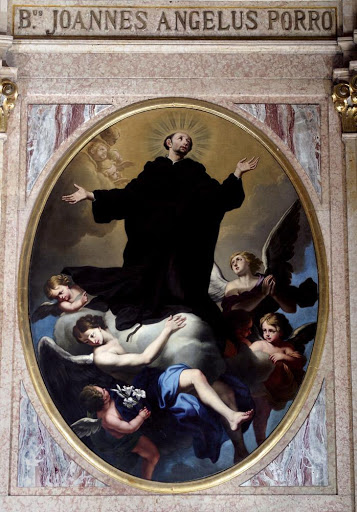
Saint of the Day – 23 October – Blessed John Angelo Porro OSM (1451-1505) Priest, Religious of the Order of Servants of Mary, Penitent, Catechist, Hermit – born in 1451 in Seveso, Duchy of Milan and died on 23 October 1505 (aged 54) Milan, Italy. Patronage – Sick children. Blessed John’s tomb became a place of pilgrimage where miracles were said to have occurred. One mother bought her ill son, Charles Borromeo, for a cure to his illness and he was cured. Borromeo removed a small bone from Porro’s foot – he was incorrupt – and St Charles always carried it as a reminder of that miracle.
John Angelo was born in 1451 in the Duchy of Milan of Protasio Porro and Franceschina de Guanzate, good Christians from Barlassina near Seveso. In 1468 he received the habit of the Servants and lived for five years in the Priory of Saint Mary in Milan. According to some of the Order’ s writers, he then retired to the solitude of Cavacurta on the right bank of the River Adda to lead a life of contemplation and penance.
In 1474 John Angelo was sent to the Annunziata in Florence where he was noted for his regular observance. During this period he completed his studies and was Ordained to the Priesthood. He continued to consider the possibility of a hermit’s life and eventually went to Monte Senario which had been restored at the beginning of the fifteenth century by a group of friars who had desired the solitary life.
Blessed John Angelo’s stay on Monte Senario was of such particular importance in his life and spiritual development, he even came to be known as “John of the Mountain.” Whenever he had to leave Senario for reasons of health or obedience he would always return to its solitude with great personal joy.
In 1484 Antonio Alabanti, the Prior of the Annunziata, called John Angelo to Florence to instruct the novices for whom he seems to have written some “useful instructions.” Three years later, Alabanti, who was now Prior General, named John Angelo Rector of the hermitage of Monte Senario, a position which he filled with responsibility, competence and holy wisdom. The Prior General greatly esteemed his prudence and religious spirit and often sought his help in directing the hermitage in Chianti as well.
After Alabanti’s death, John Angelo returned to Milan about 1495 and it seems that he was elected Prior. Even in the centre of that famous city, he managed to preserve something of the solitary life which he so loved. His biographer Fra Filippo Ferrari tells us that “he lived in a room a little removed from the others.”
It was during this period that another important aspect of John Angelo’s apostolate developed – the education of children in Christian doctrine. Ippolito Porro writes that “even though he was Prior, every feast day he would stand at the church doors or wander through the streets attracting the children to himself that he might teach them Christian doctrine.”
Corroboration for this comes from the marble bas-relief of the mid-sixteenth century which shows the Blessed in church teaching children.
John Angelo died on 23 October 1505, in the priory of Milan and was mourned by both friars and laity.
In Blessed John Angelo we see the image and model of a life centred on contemplation and the knowledge of God, which has found a way to express itself throughout the Order’s history. John Angelo had a special love for prayer and silence. He sought an ever deepening intimacy with God in prayer and was, therefore, drawn to solitude and away from associations which “wasted time.”
Not infrequently, though, his fraternal charity won out over his love for solitude. He loved the Order and was always concerned for it’s individual members. Though somewhat frail physically, he gained control over his body through constant renunciation. Poverty and simplicity of life were especially important for him. He had great reverence for Our Lady and composed a prayer in her honour, which he recited daily.
On 15 July 1737 Pope Clement XII proc1aimed John Angelo blessed. His incorrupt body is venerated in Milan in the Church of San Carlo, formerly known as the Church of Saint Mary of the Servants. Following a very old custom, sick children are still brought to his tomb to ask his intercession for their cure.
Prayer O Lord, John Angelo was faithful in his religious life and zealous in teaching Christian doctrine. May he pray for us, that we may always be close to You, observe the counsels of the gospel and be fervent in apostolic work. We ask this through our Lord Jesus Christ. Amen
St Benedict of Sebaste St Clether St Domitius St Elfleda St Ethelfleda St Gratien of Amiens St Henry of Cologne St Ignatius of Constantinople Blessed John Angelo Porro OSM (1451-1505) Bl John Buoni St John of Syracuse St Oda of Aquitaine St Phaolô Tong Viet Buong St Romanus of Rouen Bl Severinus Boethius St Severinus of Cologne Syra of Faremoutiers St Theodoret of Antioch Bl Thomas Thwing St Verus of Salerno — Martyrs of Cadiz – 2 saints Germanus Servandus Martyrs of Hadrianopolis – 2 saints Dorotheus Severus Martyrs of Nicaea – 3 saints Euerotas Socrates Theodota
Martyrs of Valenciennes – 6 beati: A group of Urusuline and Briggittine nuns murdered together in the anti-Christian excesses of the French Revolution. They were guillotined on 23 October 1794 in Valenciennes, Nord, France and Beatified on 13 June 1920 by Pope Benedict XV. • Anne-Joseph Leroux • Clotilde-Joseph Paillot • Jeanne-Louise Barré • Marie-Augustine Erraux • Marie-Liévine Lacroix • Marie-Marguerite-Joseph Leroux
Martyred in the Spanish Civil War including Martyrs of Manzanares (7 beati): • Agapit Gorgues Manresa • Agustín Nogal Tobar • Andrés Navarro Sierra • César Elexgaray Otazua • Cristóbal González Carcedo • Dorinda Sotelo Rodríguez • Eduardo Valverde Rodríguez • Felipe Basauri Altube • José María Fernández Sánchez • Juan Nuñez Orcajo • Leonardo Olivera Buera • Manuel Navarro Martínez • Roque Guillén Garcés • Toribia Marticorena Sola
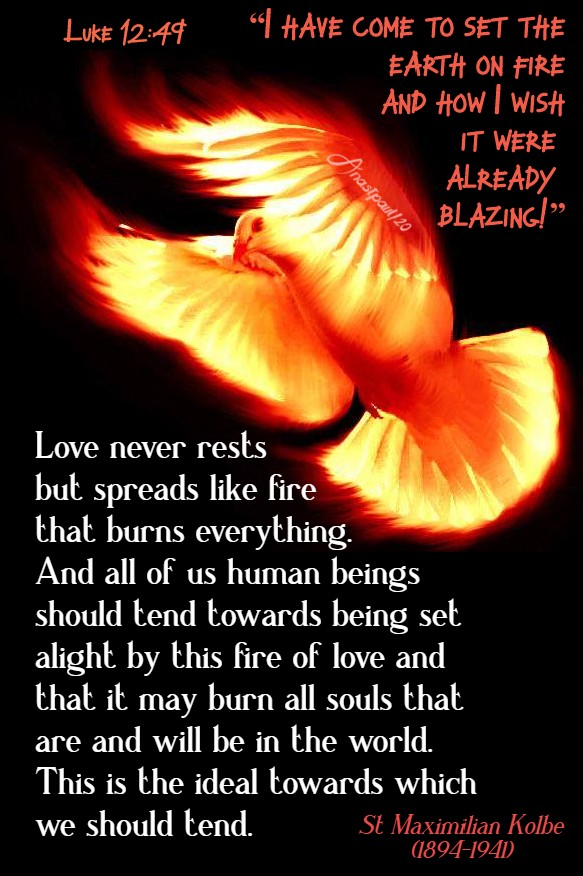
“I have come to set the earth on fire and how I wish it were already blazing!” – Luke 12:49
REFLECTION – “Everything we are about to do, even if it were a supremely heroic action destroying the foundations of all evil on earth, that act will have no value, except to the extent, with which our will accords with the will of the Immaculate and, through her, with the will of God … It is love in all it’s profundity (beyond feelings, even though that is also beautiful) that must transform us … It should consume us and, through us, set fire to the world and destroy and burn all the evil it finds there. This is the fire of which the Saviour said: “I have come to cast fire on the earth and what how I wish that it were already burning!” (Lk 12:49). Consumed by this fire of divine love (I repeat, it is not a question here of sweet tears or of feelings but of the will, even in the midst of disgust and antipathy), we will set the whole world ablaze! Love never rests but spreads like fire that burns everything. And all of us human beings should tend towards being set alight by this fire of love and that it may burn all souls that are and will be in the world. This is the ideal towards which we should tend. We must remember the words of Jesus: “I have come to set the earth on fire” (Lk 12:49). On our part we should do all we can to make this fire light up more and more everyday.” – St Maximilian Kolbe OFM (1894-1941) Priest, Martyr – Conferences
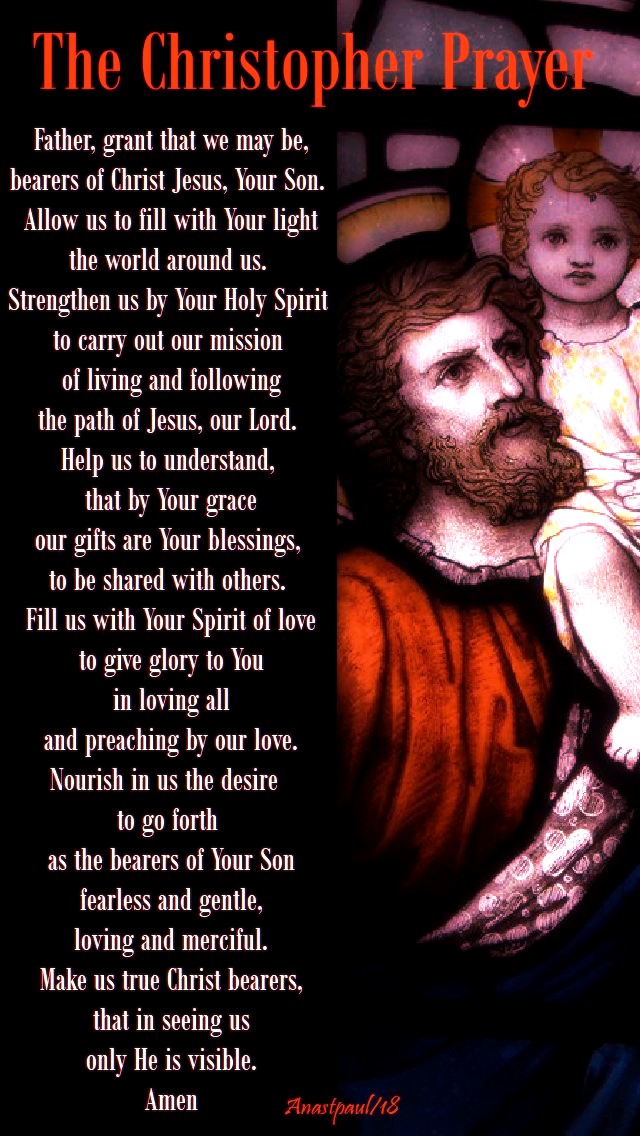
PRAYER – Father, grant that we may be, bearers of Christ Jesus, Your Son. Allow us to fill with Your light the world around us. Strengthen us by Your Holy Spirit to carry out our mission of living and following the path of Jesus, our Lord. Help us to understand, that by Your grace our gifts are Your blessings, to be shared with others. Fill us with Your Spirit of love to give glory to You in loving all and preaching by our love. Nourish in us the desire to go forth as the bearers of Your Son fearless and gentle, loving and merciful. Make us true Christ bearers, that in seeing us only He is visible. Amen (The Christopher Prayer)
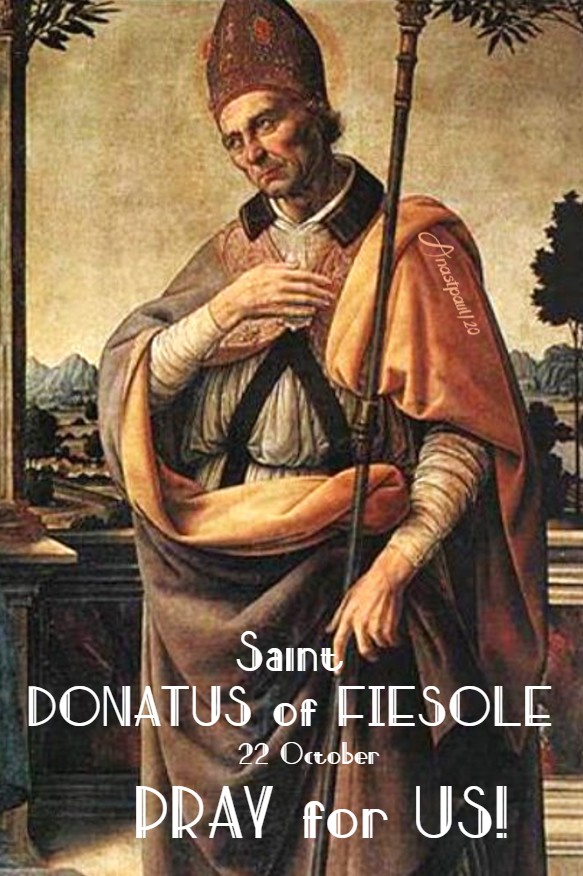
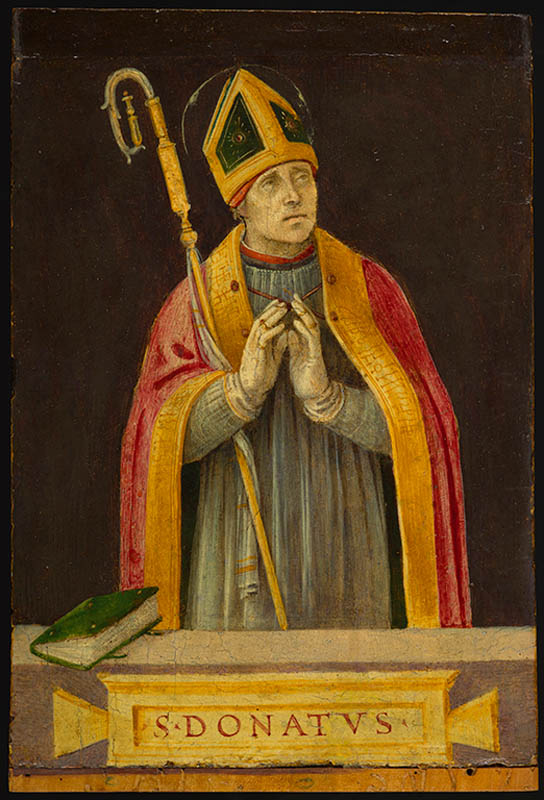
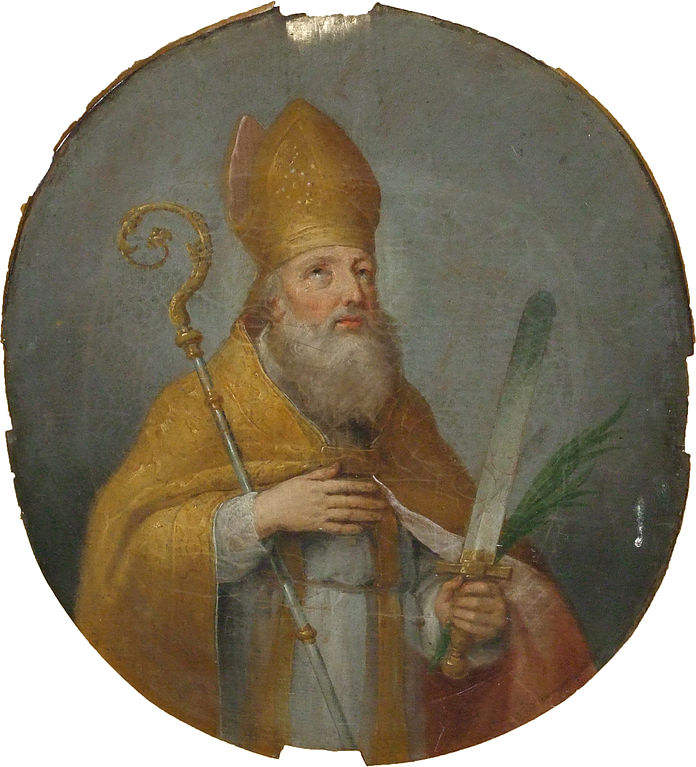
Saint of the Day – 22 October – St Donatus of Fiesole (Died 874) Bishop – 9th century Irish Nobleman, Monk, Priest, Poet, Confessor, Writer, Scholar, Professor, Bishop of Fiesole, Adviser to Emperors Louis the Pious and Lothair I, Founder of San Martino a Mensola Abbey and leader of two military expeditions against the Saracens. Born in Ireland and died in Fiesole, Italy. St Donatus is also known as Donat, Donato, Donagh. Patronage – Fiesole.
Donatus was born in Ireland of noble parents towards the end of the eighth century. There is good reason to believe that he was educated in the monastic school of Inishcaltra, a little island in Lough Derg, near the Galway shore, now better known as Holy Island: so he was probably a native of that part of the country. Here he studied with great industry and success. He became a Priest and, in course of time, a Bishop. He was greatly distinguished as a professor. Having spent a number of years teaching, he resolved to make a pilgrimage, visiting many holy shrines and then to arrive at his final destination, in Rome, to venerate the great Apostles who are buried there.
In 816 he achieved his goal and visited the tombs of the Apostles in Rome with his friend, St Andrew Scotus, the brother of St Brigid, both siblings had studied under our Saint. They remained in Rome for a considerable time and then having obtained the Pope’s blessing, set out once more, directing their steps now towards Tuscany, till at length they reached Fiesole, where they entered the hospice of the monastery, intending to rest there for a week or two and then to resume their journey.
He was led by Divine Providence to the Cathedral of Fiesole, which he entered at the moment when the people were grouped around their altars praying for a Bishop to deliver them from temporal and spiritual evils. When Donatus entered, the bells spontaneously began ringing and the candles lit themselves. The people believed God meant this stranger to be their Bishop! They elected him, although some said it’s possible no local wanted the position because the feudal lords had drowned the previous bishop. Raised by popular acclaim to the See of Fiesole, Donatus instituted a revival of piety and learning in the church over which he was placed. Donatus made Andrew his Deacon. This was in or about the year 824.
He founded the Abbey of San Martino di Mensola. He was a teacher in service to the Frankish kings; there is a record, from 850, of his giving a church and hospice, St Brigid’s at Piacenza, to the abbey founded by St Columban at Bobbio. Donatus not only battled sin, he was also a military leader, organising armies to lead two expeditions against the Saracens. He was an adviser to Emperor Louis and Frankish King Lothair I. He judged a disagreement between the Bishops of Arezzo and Siena. He also attended the Roman synod of Pope Nicholas I on 18 November 861.
During the last years of his life he built a church at his own expense in Piacenza and dedicated it to St Brigid. This church he left in his will to the Abbey of Bobbio, with the obligation of maintaining a hospice for Irish pilgrims. The work and constructive ability of St Donatus have always remained an example to members of the Church. He is still remembered in Tuscany and many boys are christened with his name in the provinces of Florence, Pisa, Leghorn and Lucca.
According to St Donatus, St Brigid visited his deathbed to give him spiritual strength and comfort. His story, preserved in manuscript in the Laurentian Library in Florence, tells of this miracle – the great saint flew to his deathbed and before she touched him, she hung her cloak on a sunbeam to dry. He was buried in the Cathedral of Fiesole, where his epitaph, dictated by himself, may still be seen. And here it is:
“Here I, Donatus, sprung from Scottish blood, Alone in this tomb, among the worms and dust dissolve. For many years I served the kings of Italy, Lothair the Great and Louis the Good.’ For more than eight lustrums and seven years I was ruler in the city of Fiesole; I dictated exercises in grammar to my pupils, Metrical schemes and the lives of the blessed saints. You traveller, whoever you are, for Christ’s sake Be not unwilling to behold my tomb. And pray to God, who rules in highest heaven, That He may grant to me His blessed kingdom.”
The old biographer of Donatus, at the conclusion of his history, adds this prayer : — ” Let us, therefore, all unite and say. Oh, Saint of God and beloved confessor. Father and pontiff. Educator and nourisher, ruler and shepherd. Help with thy prayers the destitute and fallen. Have pity on the widow and the captive. Help the orphan and the weak. Help those who live today and those who will come after, Give aid to those who live and those who die; Refuse not, we beseech thee, to listen to our prayers, Who, though imprisoned in the bonds of iniquity, Yet so far as their ignoble nature may permi,. Make offering of these things to their superiors. Them we implore with all our might To amend that which is faulty and to be indulgent to All that, which is worthless, and to pity our presumption, And since we cannot of ourselves mount to the pastures of Paradise, Help us to pray that so we may entreat the aid of Jesus Christ, To whom, with the Holy Trinity, are all things, world without end.”
The numerous locations and churches incorporating his name, St Donatus, provide evidence of his influence and popularity throughout Tuscany.
St Abericus Marcellus St Alodia of Huesca St Apollo of Bawit St Benedict of Macerac St Bertharius of Monte Cassino St Cordula St Donatus of Fiesole (Died 874) Bishop Bl Esclaramunda of Majorca St Hermes of Adrianople St Ingbert St Leothade of Auch St Lupenzius St Mark of Jerusalem St Mary Salome (First Century) Mother of Sts James and John, Apostles of Christ: https://anastpaul.com/2019/10/22/saint-of-the-day-22-october-saint-mary-salome-first-century-disciple-of-jesus/ St Maroveus of Precipiano St Mellon St Moderan of Rennes St Nepotian of Clermont St Nunctus of Mérida St Nunilo of Huesca St Philip of Adrianople St Philip of Fermo St Rufus of Egypt St Symmachus of Capua St Valerius of Langres St Verecundus of Verona — Martyrs of Heraclea – 4 saints: A group of four clerics in Heraclea (modern Marmara Ereglisi, Turkey) who were arrested in the persecutions of Diocletian. They were imprisoned, abused and ordered to turn over all the scriptures that they had hidden from authorities; they refused and were executed together. Martyrs. – Eusebius, Hermes, Philip and Severus. They were burned at the stake in 304 in Adrianople (modern Edirne, Turkey).
Martyrs of Adianople: • Blessed Alexander • Blessed Anna • Blessed Elisabeth • Blessed Glyceria • Blessed Heraclius • Blessed Theodota
Martyred in the Spanish Civil War: • Blessed Álvaro Ibáñez Lázaro • Blessed Andrés Zarraquino Herrero • Blessed Estanislao García Obeso • Blessed Germán Caballero Atienza • Blessed José Menéndez García • Blessed Josep Casas Lluch • Blessed Luis Minguel Ferrer • Blessed Pedro Lorente Vicente • Blessed Victoriano Ibañez Alonso
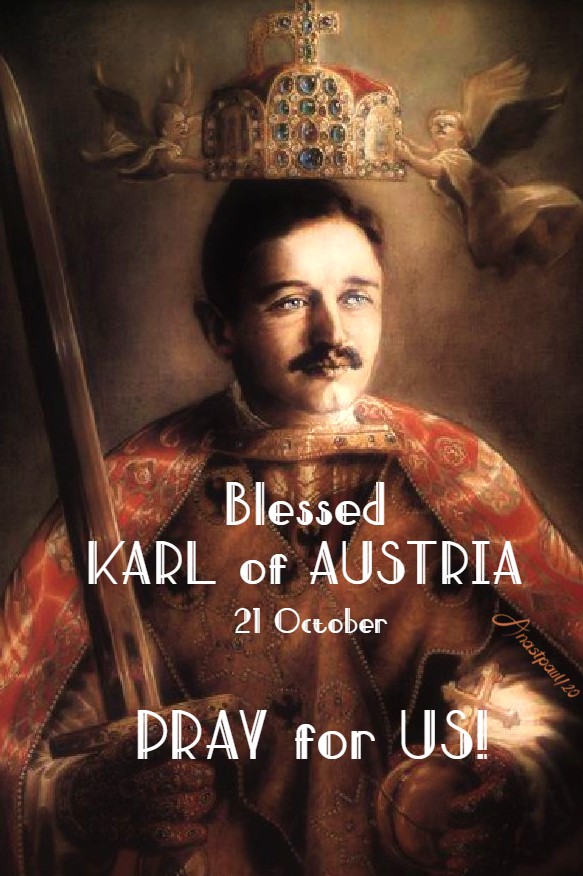
One Minute Reflection – 21 October – Wednesday of the Twenty Ninth week in Ordinary Time, Readings: Ephesians 3:2-12, Responsorial Psalm: Isaiah 12:2-3, 4,5-6, Luke 12:39-48 and the Memorial of Blessed Karl of Austria (1887 – 1922)
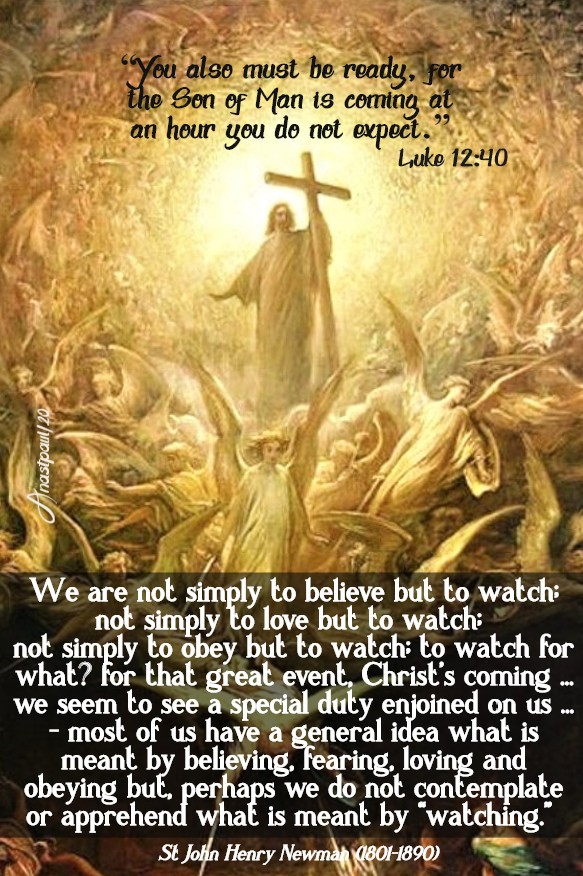
“You also must be ready, for the Son of Man is coming at an hour you do not expect.” – Luke 12:40
REFLECTION – “Watch!” Our Saviour gave this warning when He was leaving this world—leaving it, that is, as far as His visible presence is concerned. He looked forward to the many hundred years which were to pass before He came again. He knew His own purpose and His Father’s purpose gradually to leave the world to itself, gradually to withdraw from it the tokens of His gracious presence. He contemplated, as contemplating all things, the neglect of Him, which would spread, even among his professed followers … He foresaw the state of the world and the Church, as we see it this day, when His prolonged absence has made it practically thought, that He never will come back in visible presence.
Today, He mercifully whispers into our ears, not to trust in what we see, not to share in that general unbelief, not to be carried away by the world but to “take heed, watch and pray,” (Lk 21:34.36) and look out for His coming. Surely this gracious warning should be ever in our thoughts, being so precise, so solemn, so earnest.
Our Saviour foretold His first coming, yet He took His Church by surprise when He came; much more will He come suddenly the second time and overtake men, now that He has not measured out the interval before it, as then He did but left our watchfulness to the keeping of faith and love … We are not simply to believe but to watch; not simply to love but to watch; not simply to obey but to watch; to watch for what? for that great event, Christ’s coming … we seem to see a special duty enjoined on us … – most of us have a general idea what is meant by believing, fearing, loving and obeying but, perhaps we do not contemplate or apprehend what is meant by “watching.” – St John Henry Newman (1801-1890) Cardinal, Founder of the Oratory in England, Theologian – Sermon “ Watching ” PPS, t. 4, n° 22
PRAYER – Holy Father, grant me an operative faith, a faith that will move mountains. Enlighten my soul with Your Light, Goodness, Power and Wisdom. Let my faith be an image of You by lively deeds and love and by conforming myself to Your Will in all things. Blessed Karl of Austria, amidst the fineries of your earthly kingship, you longed only to serve the God of all and searched for complete closeness and abandonment to Him, teach us by your prayer, to serve God alone with upright hearts and thus manifest a true faith, through Christ our Lord, with the Holy Spirit, God forever, amen.
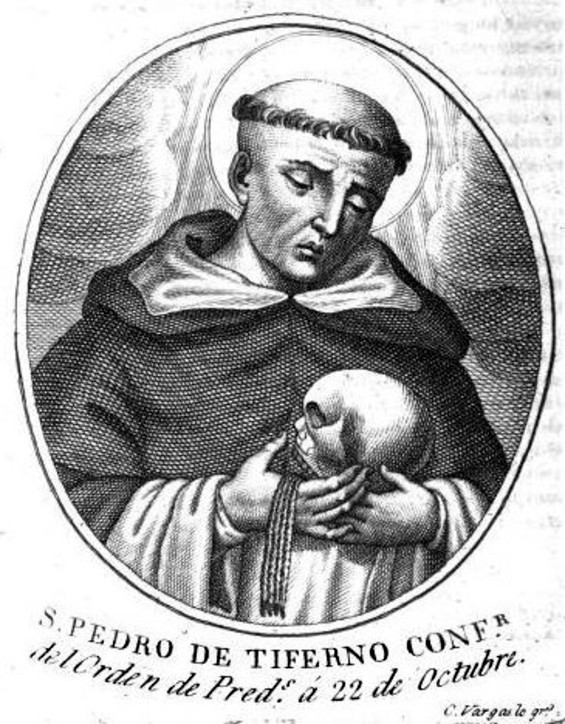
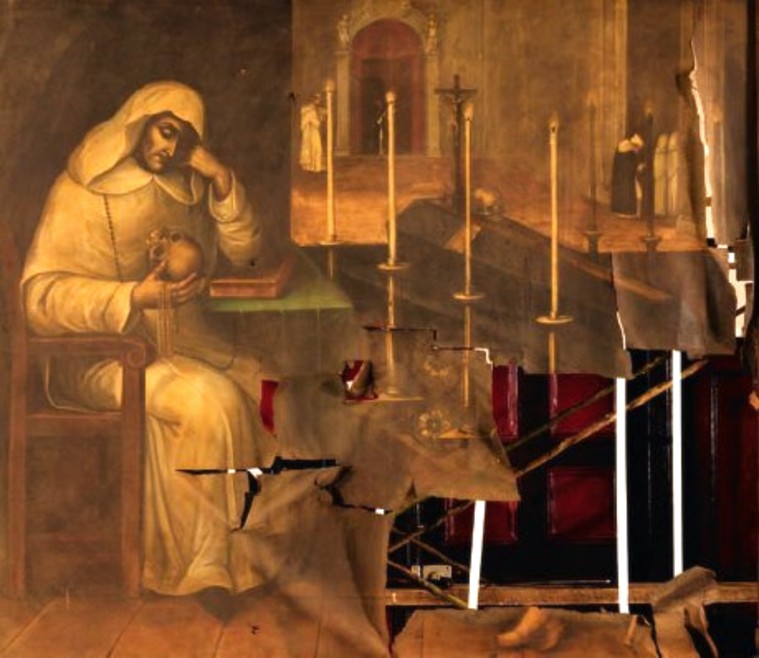
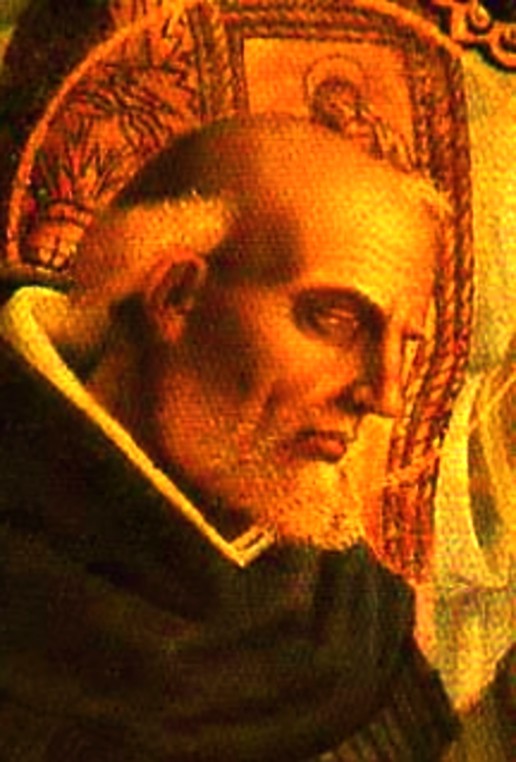
Saint of the Day – 21 October – Blessed Peter Capucci OP (1390-1445) Priest, Domincan Friar, Confessor, Penitent, Wonderworker, he was called“the Preacher of Death,”– born as Pedro Capucci in 1390 at Città di Castello, Tiferno, Italy and died on 21 October 1445 of natural causes. He is also known as Pedro de Tiferno, Peter of Tiferno and of Città di Castello. Patronage – Città di Castello.
After an uneventful childhood, Peter Capucci applied for admission to the Dominicans. He and the frail, youthful Saint Antoninus (1389–1459) were both received into the order on the Vigil of the Feast of the Assumption 1405. Their novice master was Blessed Lawrence of Ripafratta. Peter counted the artist-brothers, Blessed Fra Angelico and Fra Benedetto as his friends. Peter spent his novitiate at Cortona, remained there when some of his community moved to Fiesole, was Ordained and began his apostolate all in Cortona.
Not much about Peter is truly remarkable when he is viewed in the light of his neighboring luminaries but he glittered enough to have gained the attention of the Church. He was noted for regularity, patience and humility–virtues not terribly common in any age. He took upon himself the job of begging for alms as a means of atoning for his noble birth. Of course, just as we might treat the homeless, some treated Peter rudely but that did not disturb him. He quietly persisted in his humble work to ensure that his brothers had food and that there were alms for the poor. We are told that one rich wine merchant refused Peter, saying that the barrels in the cellar were all empty. A little later he found to his horror that they were indeed all empty. He immediately sent for the friar, apologised and begged him to bless the barrels and restore the wine–which Peter did without hesitation.
Other miracles were attributed to Peter, too. A woman’s withered hand was restored. Two unjustly condemned men were miraculously preserved from execution. Once, walking through the cloister, Peter came upon a disreputable man. Peter prophesied that the man would die within a day. The man laughed but died in the middle of the night after having sent for Peter to give him the sacraments. Peter Capucci became known as “the Preacher of Death,” because he used to preach with a skull in his hands. He apparently had the ability to read hearts and could expertly point out uncomfortable truths to unwilling listeners.
When Peter died, he was buried in a humble grave. Miracles began to occur there; thus, his fame grew. A prominent man who had been paralysed for three years, received the use of his limbs at the grave, after he had promised to pay the expenses for an annual celebration in Peter’s honour. In 1597, Peter’s relics were moved to a more suitable place (Benedictines, Dorcy).
Blessed Peter’s cultus was confirmed by Pope Pius VII with an official Beatification on 11 May 1816.
O God, who hast declared that Thy faithful, by continually remembering their latter end, shall never sin, grant, through the prayers and example of Blessed Peter, Thy Confessor, that we may so bear in mind our temporal death, that, by continually weeping over the sins we have committed, we may avoid eternal death. Through Christ our Lord. Amen
Bl Gundisalvus of Lagos St Hilarion of Gaza (c 291-371) Biography here: https://anastpaul.wordpress.com/2017/10/21/saint-of-the-day-21-october-st-hilarion-of-gaza-c-291-371/ Bl Hilarion of Moglena St Hugh of Ambronay Bl Imana of Loss Bl Iulianus Nakaura St John of Bridlington St Laura of Saint Catherine of Siena St Letizia St Maurontus of Marseilles St Malchus of Syria Blessed Peter Capucci OP (1390-1445) Priest St Petrus Yu Tae-Ch’ol St Pontius de Clariana St Raymond of Granada Bl Sancho of Aragon Bl Severinus of Bordeaux Bl Tuda of Lindisfarne Bl Viator of Lyons St Wendelin St William of Granada St William of Montreal St Zaira St Zoticus of Nicomedia — Martyrs of Nicaea – 279 saints:
Martyrs of Nicomedia – 3 saints: Caius of Nicomedia Dasius of Nicomedia Zoticus of Nicomedia
Martyred in the Spanish Civil War: • Blessed Genaro Fueyo Castañon • Blessed Isidro Fernández Cordero • Blessed Segundo Alonso González
Saint Ursula and Companions: (238) Legendary princess, the daughter of a Christian British king and Saint Daria. She travelled Europe in company of either 11 or 11,000 fellow maidens; the 11,000 number probably resulted from a misreading of the term “11M” which indicated 11 Martyrs, but which a copyist took for a Roman numeral. Ursula and her company were tortured to death to get them to renounce their faith, and old paintings of them show many of the women being killed in various painful ways. Namesake for the Ursuline Order, founded for the education of young Catholic girls and women. There are other saints closely associated with Ursula and her story – travelling companions who were martyred with her
Antonia of Cologne Cesarius of Cologne Cyriacus of Cologne Daria Fiolanus of Lucca Ignatius of Cologne James of Antioch Mauritius of Cologne Pontius of Cologne Sulpitius of Ravenna Vincent of Cologne
Travelling companion, but escaped the massacre: • Cunera led by a dove to the lost tomb of Ursula: • Cunibert of Cologne
One Minute Reflection – 20 October – Tuesday of the Twenty Ninth week in Ordinary Time, Readings: Ephesians 2:12-22,Psalms 85:9-10,11-12, 13-14, Luke 12:35-38 and the Memorial of Blessed James Strepar OFM (c 1340-1409)
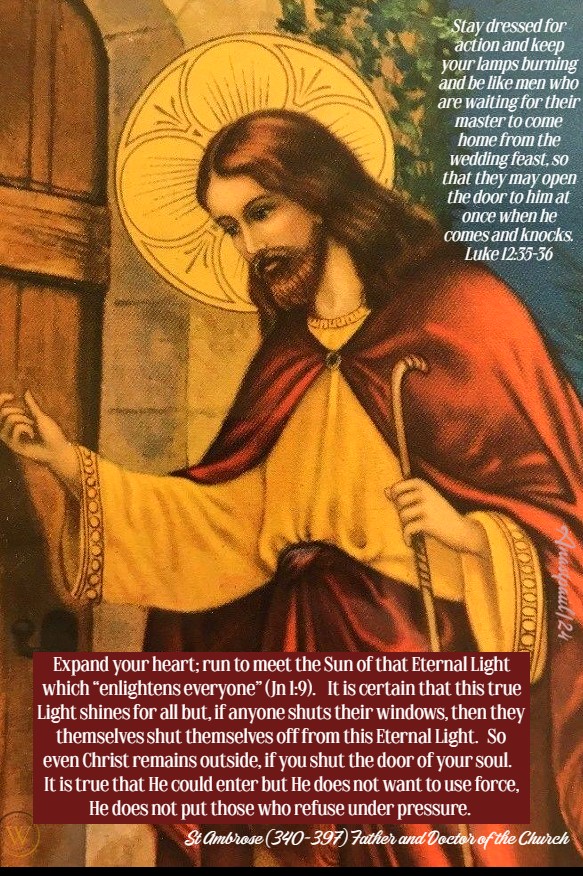
“Stay dressed for action and keep your lamps burning and be like men who are waiting for their master to come home from the wedding feast, so that they may open the door to him at once when he comes and knocks.” – Luke 12:35-36
REFLECTION – “God, the Word, stirs up the lazy and arouses the sleeper. For indeed, someone who comes knocking at the door is always wanting to come in. But it depends on us if He does not always enter or always remain. May your door be open to Him who comes; open your soul, enlarge your spiritual capacities that you may discover the riches of simplicity, the treasures of peace and sweetness of grace. Expand your heart; run to meet the Sun of that Eternal Light which “enlightens everyone” (Jn 1:9). It is certain that this true Light shines for all but, if anyone shuts their windows, then they themselves shut themselves off from this Eternal Light.
So even Christ remains outside, if you shut the door of your soul. It is true that He could enter but He does not want to use force, He does not put those who refuse under pressure. Descended from the Virgin, born from her womb, He shines throughout the universe to give Light to all. Those who long to receive the Light which shines with an everlasting brightness, open to Him. No night comes to intervene. Indeed, the sun we see each day gives way to night’s darkness but the Sun of Justice (Mal 3:20) knows no setting for Wisdom is not overcome by evil.” – St Ambrose (340-397) Bishop of Milan and Father and Doctor of the Church – 12th Sermon on Psalm 118
PRAYER – All-powerful, eternal God and Father, grant us the grace of Your Spirit and fill us with the light of understanding and love. May we learn to truly pray and by our prayers to entreat You to bless us in Your goodness and lead us to true faith in Your eternal light and Word sent to redeem us. May we always be waiting and prepared to open the door of our hearts to Jesus Christ our Lord, who comes in light, love and peace. Grant that by the prayers of Blessed James Strepar we may be strengthened. Holy Mother, be our protection and our guide. We make our prayer through Jesus Christ, our Lord with the Holy Spirit, God now and forever, amen.
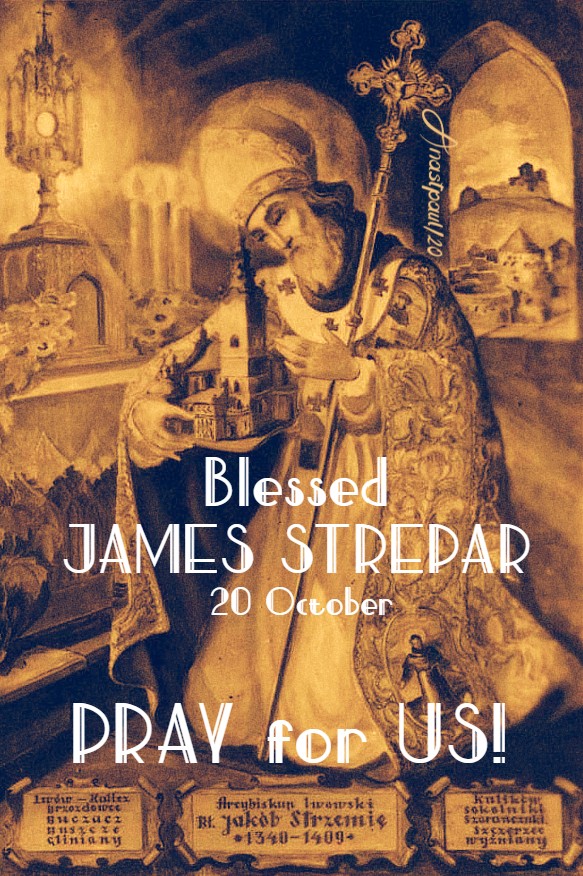
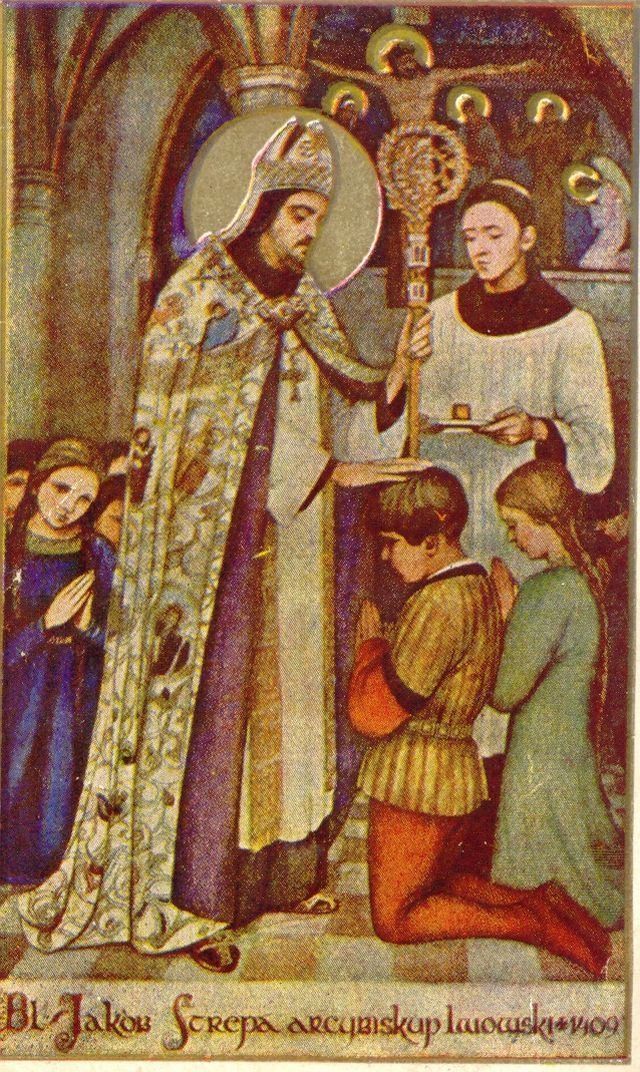
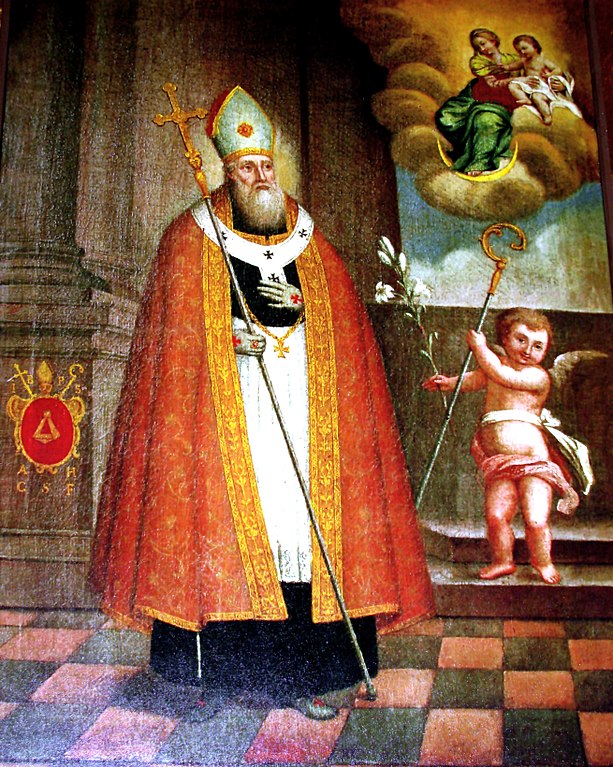
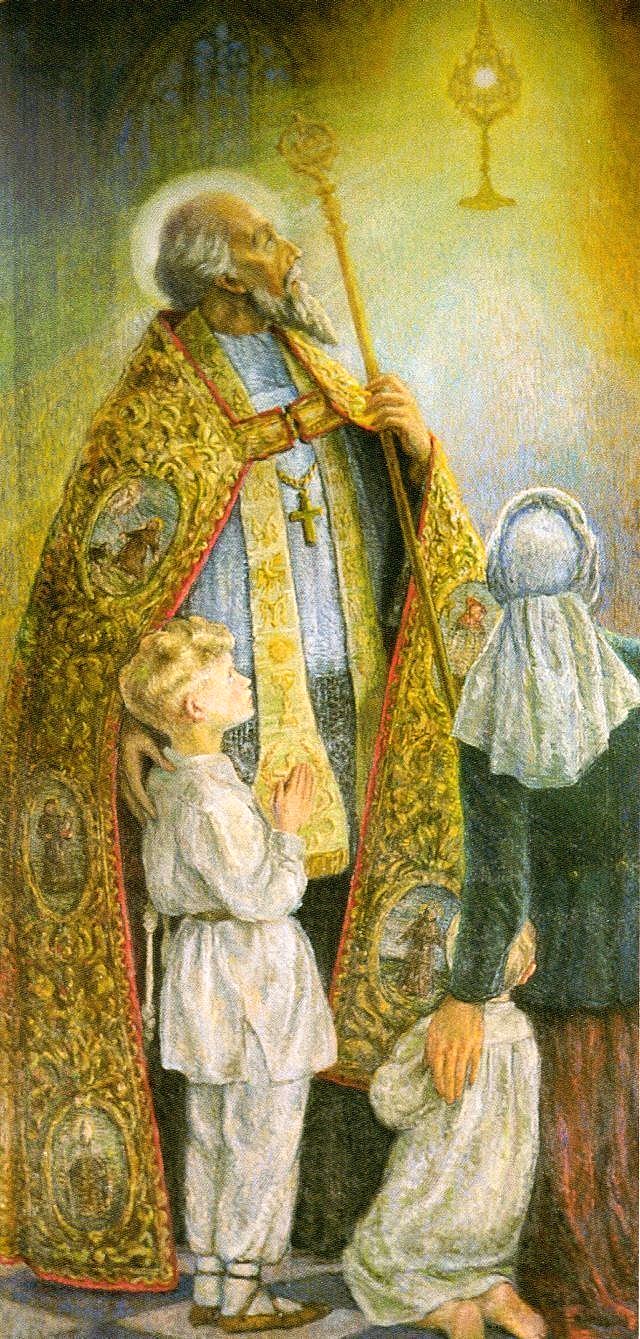
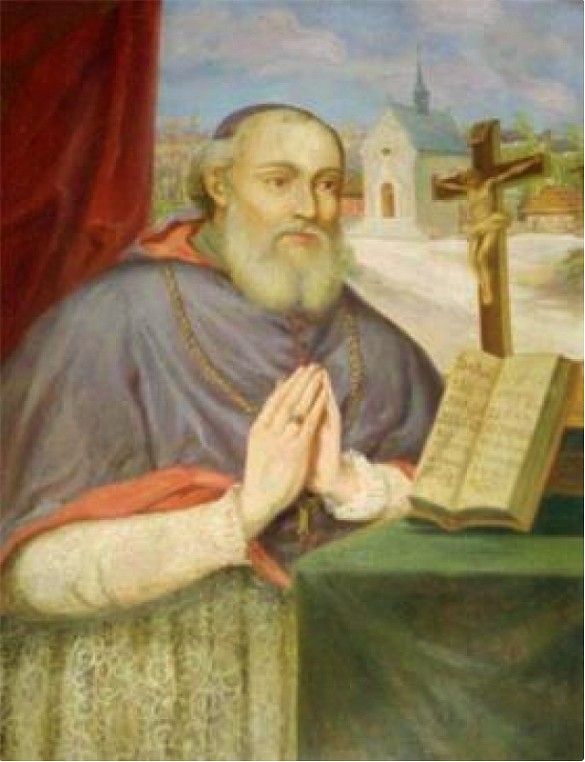
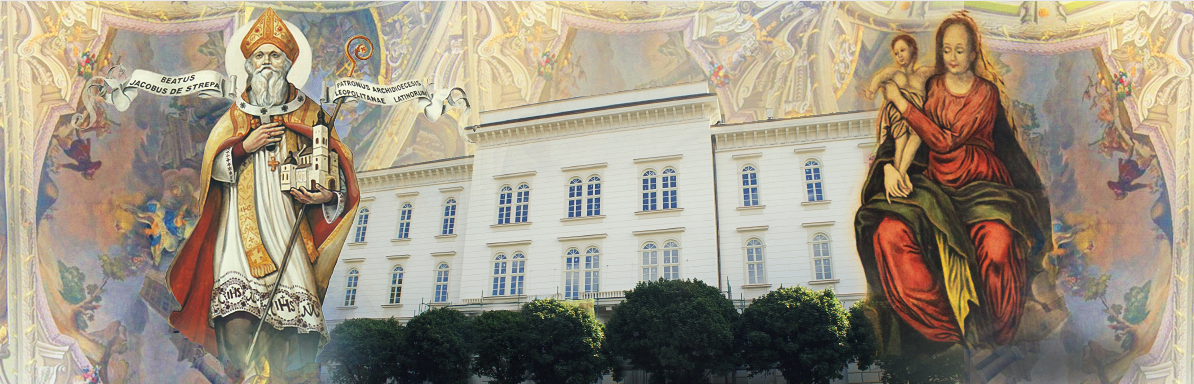
Saint of the Day – 20 October – Blessed James Strepar OFM (c 1340-1409) Archbishop, Religious Priest of the Order of Friars Minor, Missionary, Apostle of the Holy Eucharist, Eucharistic Adoration, the Blessed Virgin and the Holy Rosary. He founded Churches, Monateries, Schools, Hospitals, apostolates of Eucharistic Adoration and promoted the prayer of the Holy Rosary, apostle of the poor and needy. He was given the title of “Protector of the Kingdom, Defender and Guardian of the Homeland” – born as Jakub Strzemię in c 1350 in Galacia, Poland and died on 1 June 1411 (aged 69) at Lviv, Poland (in modern Ukraine) of natural causes. Patronages – Archdiocese of Lviv, Diocese of Zamość-Lubaczów, against headaches and on 16 March 1910, St Pius X proclaimed Blessed James, along with St Anthony of Padua, the Patrons of the Conventual Franciscan Order of Krakow Province. He is also known as Jakob/James Strepa or Strzemie. He served as the Archbishop of Halicz from 1392 until his death, when the Archdiocese was incorporated into that of the Archdiocese of Lviv. He was an indefatigable Apostle of Poland and Russia during the fourteenth century, who, rich by birth, put into practice, the invitation addressed by Jesus to the rich young man of the Gospels – to leave all his possessions and follow Him. His body is incorrupt.
James was born in the Diocese of Krakow, to a Polish noble family, around the year 1340. He was very young when, fascinated by and, devoted to Saint Francis of Assisi and by the Franciscan ideal, he entered a convent of Friars Minor.
He joined the Society of Pilgrim Friars, made up of both Franciscans and Dominicans and, with a strong missionary yearning, set Ukraine as his goal. He was elected Superior of the convent of Lviv (a city founded around 1250) in a troubled moment in the ecclesiastical history of that city. There were in fact, contrasts between the Diocesan clergy and the religious and between Catholics and Orthodox. Furthermore, holding the position of inquisitor of the faith in Ruthenia, for ten years his apostolate was tireless.
At the height of his maturity, a new great mission appeared to him – to preach the Word of Christ in Russia. Such was his success, that he was appointed Vicar General and then Bishop of Halicz, a bishopric that was later transferred to Leopoli. Fr James was fifty-two years old.
Tirelessly, the new Bishop employed all his strength, with an extraordinary commitment, for the good of the Diocese. He built Churches in the most remote places and erected Parishes, entrusting them to Priests of proven virtues, who sometimes came especially from Poland.
Attentive to the needs of the poor and places of worship, he donated the income of the Bishopric to these purposes. He engaged in the construction of Monasteries, schools and hospitals.
On foot, without any honour, in the simple Franciscan habit, he visited every community. He was an example of humility, accompanying the active apostolate with personal penances. In every action he was driven by a great interior faith, transmitting his devotions to the Blessed Sacrament and to Our Lady. He instituted Perpetual Adoration and depicted the Virgin in the bishop’s coat of arms, inviting people to recite the Rosary everyday. So much zeal bore the fruits of a widespread religious awakening of the people. The Friar Bishop maintained unchanged, his missionary character towards atheists and towards the Orthodox, strongly desiring the unity of Christians while, due to his high moral authority, he was appointed senator of the Council of the Fatherland. In this capacity he gave practical suggestions for the administration of the city, one day finding himself facing even the incursions of the barbarians.
He died on 20 October 1409, receiving the title of “Protector of the Kingdom, Defender and Guardian of the Homeland” for his exceptional merits, including civil ones. Such was he considered by all.
His body, with the Habit and the Bishop’s insignia, was buried in the Church of the Franciscans. The fame of holiness was vast, pilgrimages to his tomb continued endlessly, while miracles occurred through his intercession. Ten years after his death, the body was exhumed and appeared uncorrupted. The cult, widespread in Poland, Lithuania and Russia, was confirmed by Pope Pius VI on 11 September 1791.
Today his relics are venerated in the Cathedral of Lviv (L’viv), the important Ukrainian city rich in history and culture, which has among it’s fathers the noble Friar who came from Poland.
Blessed James encouraged the faithful to donate books, liturgical garments, kitchenware to Monasteries. In everyday life, Bishop James was noted for his simplicity and Franciscan poverty – King Władysław II Jagiełło donated to James an estate in the centre of Lviv but he decided to live in a modest wooden house wearing a Franciscan habit. Bl James was sensitive to the needs of the poor and sick – he donated his episcopal income to the hospital of the Holy Spirit and to a shelter for the poor, sick and pilgrims. In his will he asked to give a mitre, silver ecclesiatical vessels, a Franciscan habit, books and all his belongings to the poor and use them for acts of mercy and for the celebration of Masses for his soul.
PRAYER O God, that with the apostolic labours of Bishop Blessed James Strepar you have placed the seeds of faith in the Church of Poland and Russia, through his intercession grant us to live our Christian vocation in an authentic way . Through Christ our Lord. Amen
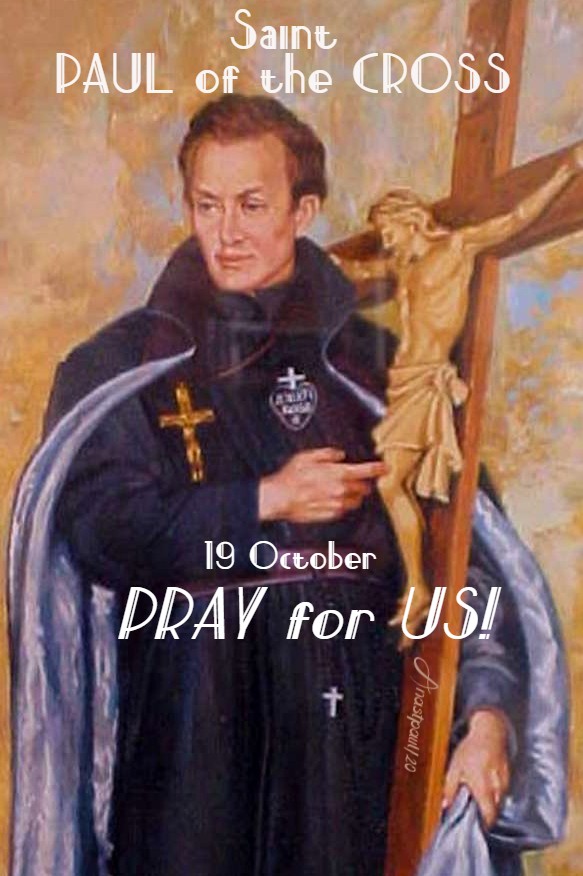
Quote/s of the Day – 19 October – The Memorial of St Paul of the Cross CP (1604-1775)
“We ought to glory in nothing other than, the Cross of our Lord Jesus Christ. You are blessed and don’t know it. You have Jesus Crucified, with you!”
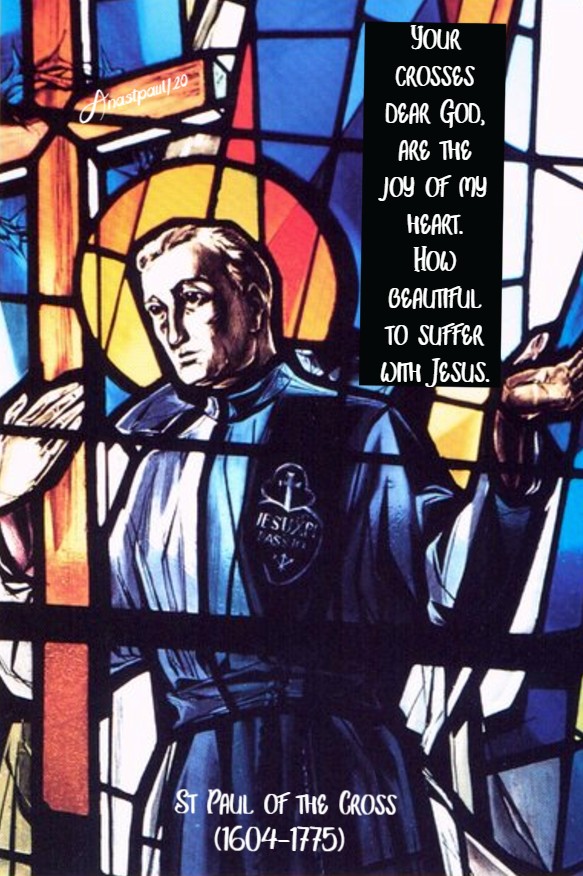
“Your crosses dear God, are the joy of my heart. How beautiful to suffer with Jesus.”
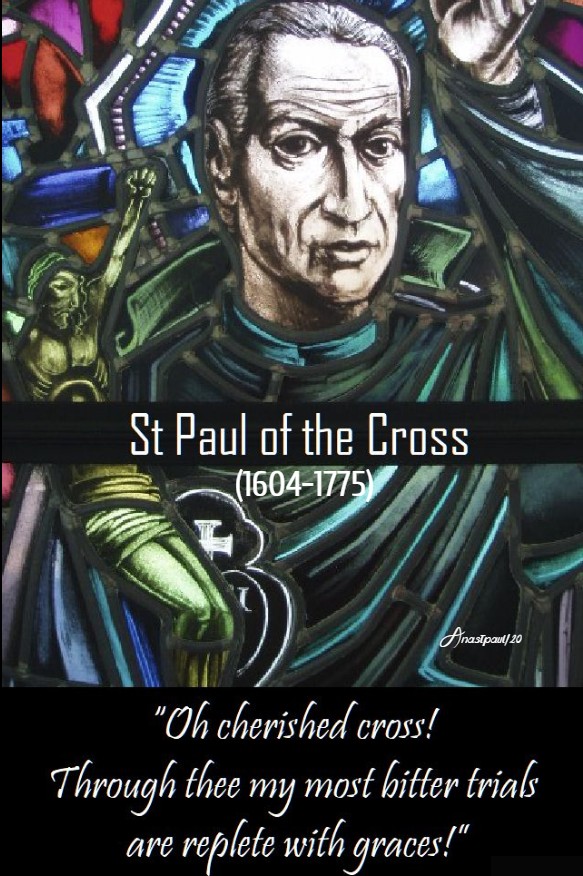
“Oh cherished cross! Through thee my most bitter trials are replete with graces!”
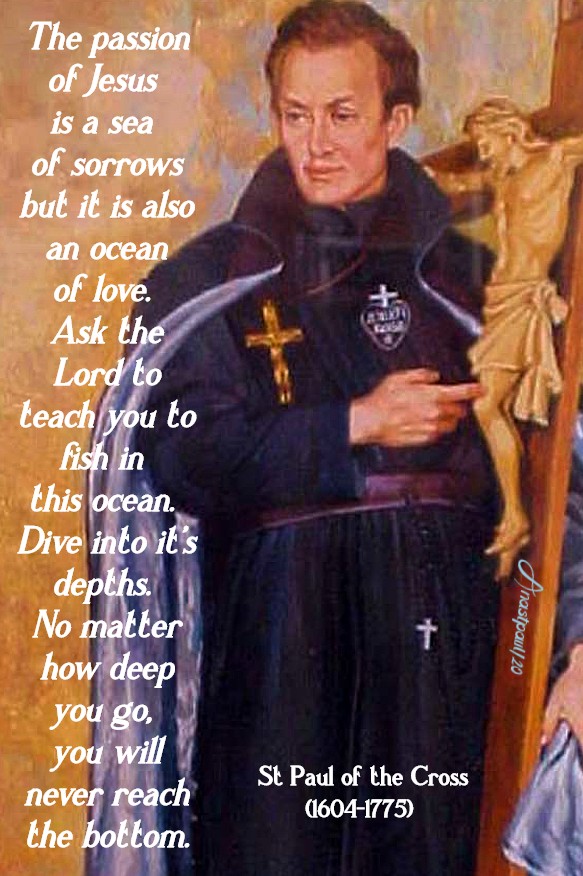
“The passion of Jesus is a sea of sorrows but it is also an ocean of love. Ask the Lord to teach you to fish in this ocean. Dive into its depths. No matter how deep you go, you will never reach the bottom.”
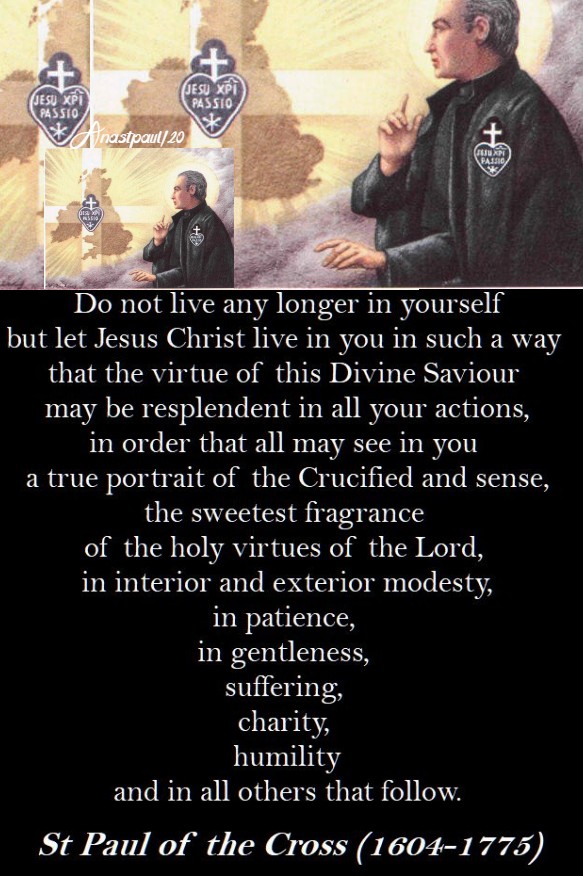
“Do not live any longer in yourself but let Jesus Christ live in you in such a way that the virtue of this Divine Saviour may be resplendent in all your actions, in order that all may see in you a true portrait of the Crucified and sense, the sweetest fragrance of the holy virtues of the Lord, in interior and exterior modesty, in patience, in gentleness, suffering, charity, humility and in all others that follow.”
“Look upon the face of the Crucified, who invites you to follow Him. He will be a Father, Mother–everything to you.”
One Minute Reflection – 19 October – Monday of the Twenty Ninth week in Ordinary Time, Readings: Ephesians 2:1-10, Psalms 100:1-2, 3,4, 4-5, Luke 12:13-21 and the Memorial of St Paul of the Cross CP (1604-1775)
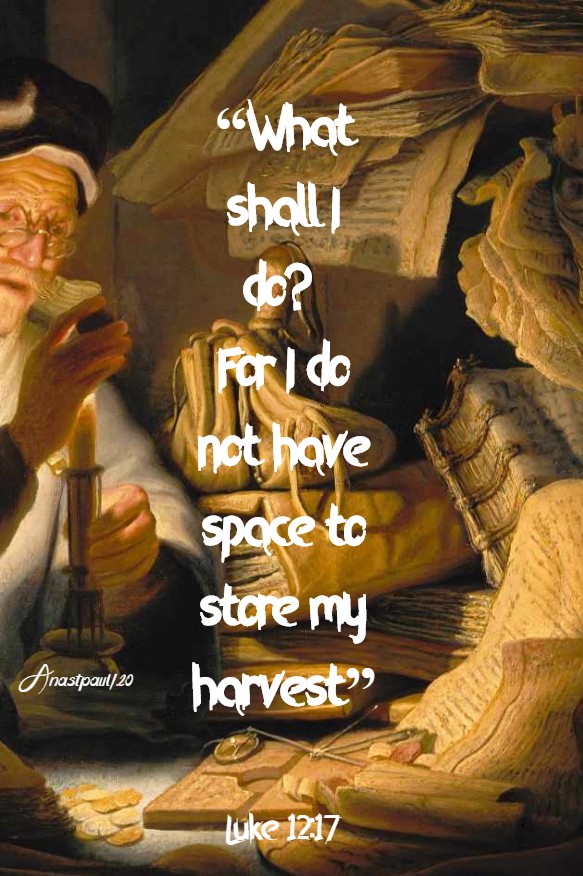
“What shall I do? For I do not have space to store my harvest ” – Luke 12:17
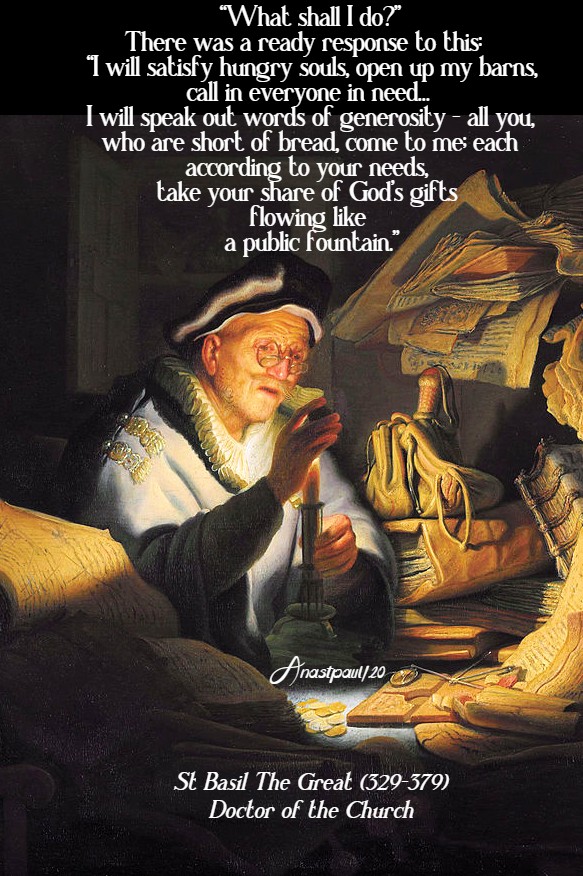
REFLECTION – “What shall I do?” There was a ready response to this: “I will satisfy hungry souls, open up my barns, call in everyone in need… I will speak out words of generosity – all you, who are short of bread, come to me; each according to your needs, take your share of God’s gifts flowing like a public fountain.” Yet you, you foolish rich man, are very far from doing this! And why? Jealous of seeing others enjoy their wealth you give yourself up to wretched calculations – you are not anxious about how to distribute to each according to their need but how to take everything and deprive everyone else, of the profit they might have drawn from it…
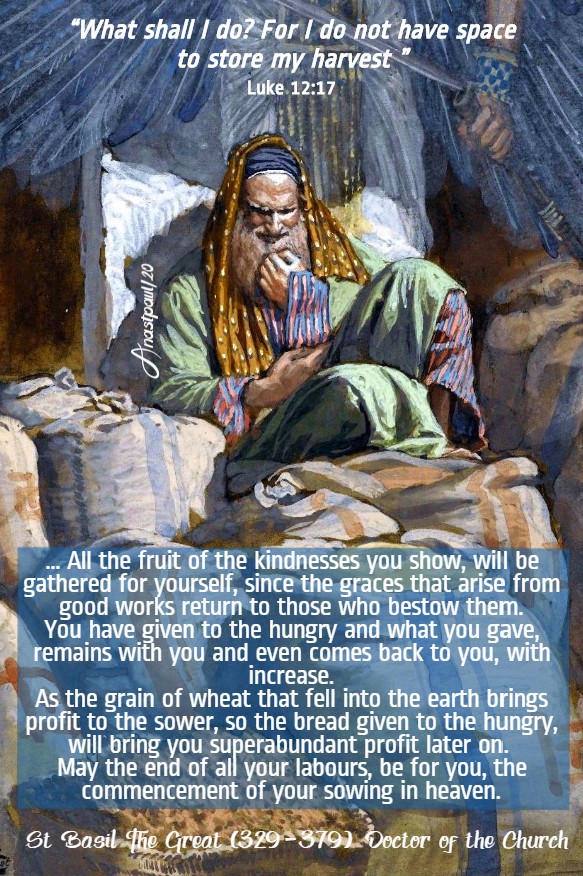
So then, my brethren, take care you don’t experience the same fate as that man! If Scripture gives us this example, it is so, that we can avoid behaving in the same way. Imitate the earth! – bear fruit and don’t prove yourself worse than it, soulless as it is. It yields crops, not for it’s own pleasure but to serve you. To the contrary, all the fruit of the kindnesses you show, will be gathered for yourself, since the graces that arise from good works, return to those who bestow them. You have given to the hungry and what you gave, remains with you and even comes back to you, with increase. As the grain of wheat that fell into the earth brings profit to the sower, so the bread given to the hungry, will bring you superabundant profit later on. May the end of all your labours, be for you, the commencement of your sowing in heaven.” – St Basil The Great (329-379) Monk and Bishop of Caesarea in Cappadocia, Father and Doctor of the Church – Sermon 6, on Wealth
PRAYER – Almighty God, Your Priest Saint Paul, loved only the cross. May he obtain Your grace for us, so that, inspired with a new courage and the virtue of obedience and sacrifice, by his example, we may take up our cross without flinching. We make our prayer through Jesus Christ our Saviour, who lives and reigns with You and the Holy Spirit, God now and for all eternity, amen.
Our Morning Offering – 19 October – Monday of the Twenty Ninth week in Ordinary Time and the Memorial of St Paul of the Cross CP (1604-1775)
Oh Jesus, My Love By St Paul of the Cross (1604-1775)
Oh Jesus, my Love, may my heart be consumed in loving Thee. Make me humble and holy; giving me childlike simplicity; transform me into Thy holy Love. O Jesus, life of my life, joy of my soul, God of my heart, accept my heart as an altar, on which I will sacrifice to Thee, the gold of ardent charity, the incense of continual, humble and fervent prayer and the myrrh of constant sacrifices! Amen
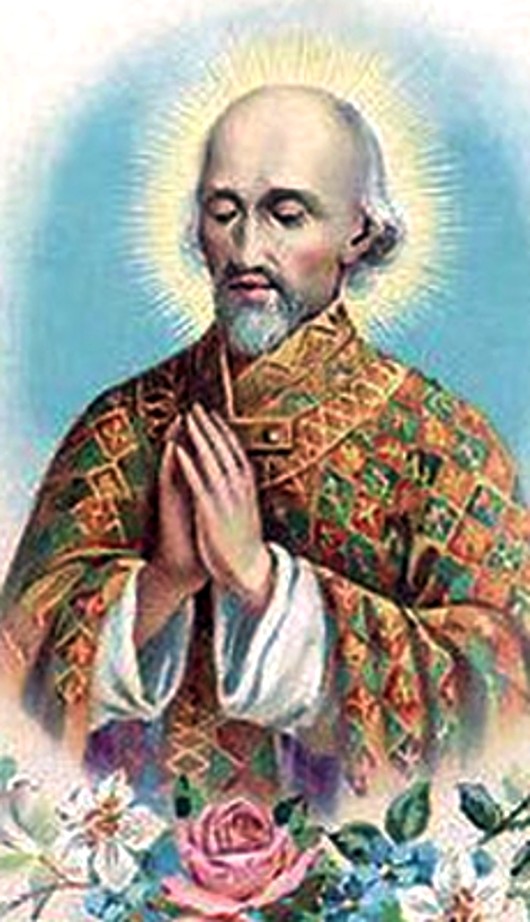
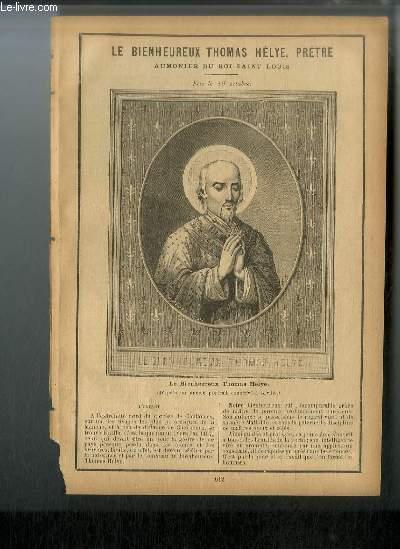
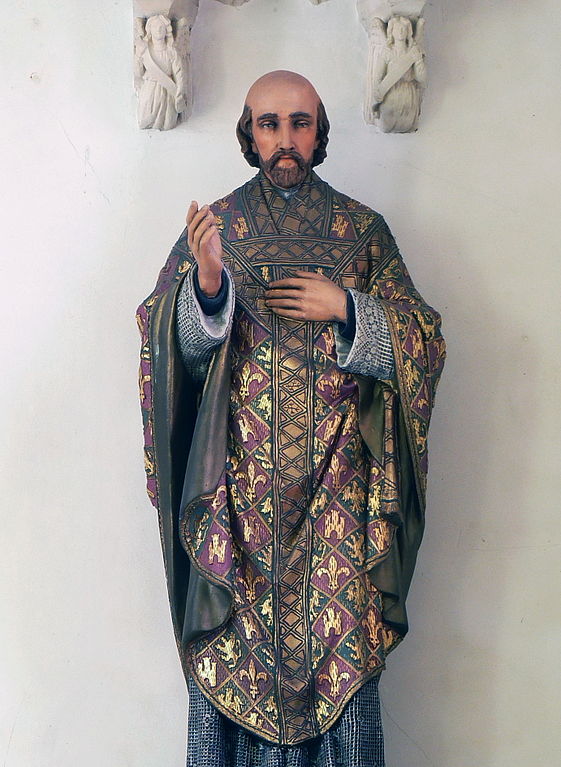
Saint of the Day – 19 October – Blessed Thomas Hélye (c 1180-1257) Priest, Penitent, Teacher, Missionary and renowned Preacher. Patronage – Biville, France.
Thomas Hélye was born between 1180 and 1187 in the hamlet of Gardin in the Parish of Saint-Pierre de Biville, France. Thomas’s parents, Hélye and Mathilde, were of modest means.
After having studied with the Benedictine monks of the priories of Vauville and Héauville and with the Augustinian canons of the Abbey of Notre-Dame du Vœu. In 1206, he became the Principal of the School of Cherbourg. He excelled in his talents as a teacher and was promoted to Governor of the schools of the region.
Following a serious illness which led him to the gates of death, he experienced a true conversion. Retiring to his brother, a Priest Fr Guillaume, in the hamlet of Gardin in his native parish of Biville, he led a life of penance. He neglected his person and concentrated solely on prayer, fasting and mortification.
In 1226, having learnt of his conduct, the Bishop of Coutances – Hugues de Morville – summoned him and encouraged him to consider his future. He made pilgrimages to Rome and Santiago de Compostella and thereafter, studied theology in Paris for four years. There his Professor and Confessor, both future cardinals, were impressed by his piety.
In 1235 he was Ordained a Priest by the Bishop of Morville. The Bishops of Coutances and Avranches who had noted his preaching abilities and his great desire to envanglise and teach the faithful, then entrusted him with a missionary ministry as an itinerant preacher. For twenty-two years, Thomas visited all the parishes of these diocese. He was greeted with fervour by the crowds with cries of “Here is the saint!” Here is the man of God! ”
At the end of his life, weakened by his privations and tireless missionary travels, Thomas Hélye retired to the manor of his friend Gauvain, Lord of Vauville . He died there on 19 October 1257. The next day, his body was taken to his native parish in neighbouring Biville supported by a huge crowd of mourners.
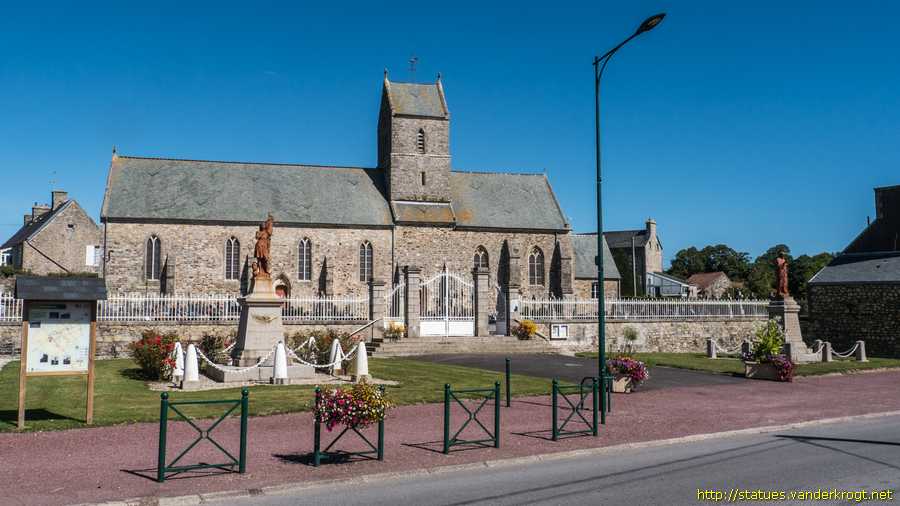
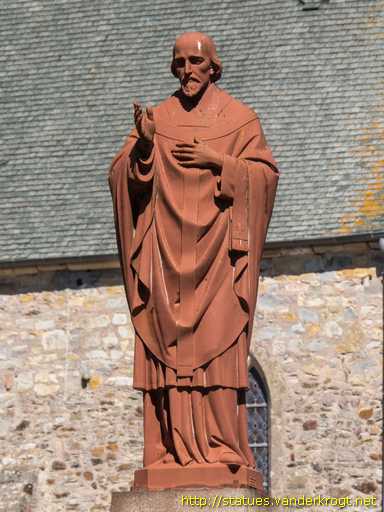
the Church of St Peter in Biville
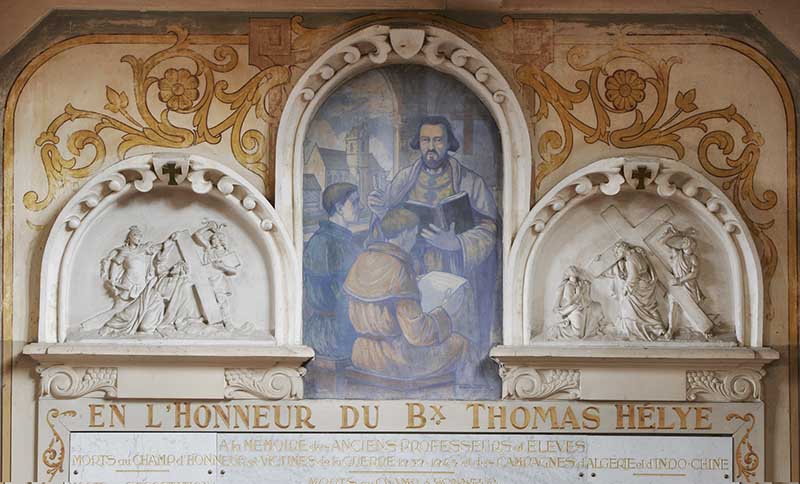
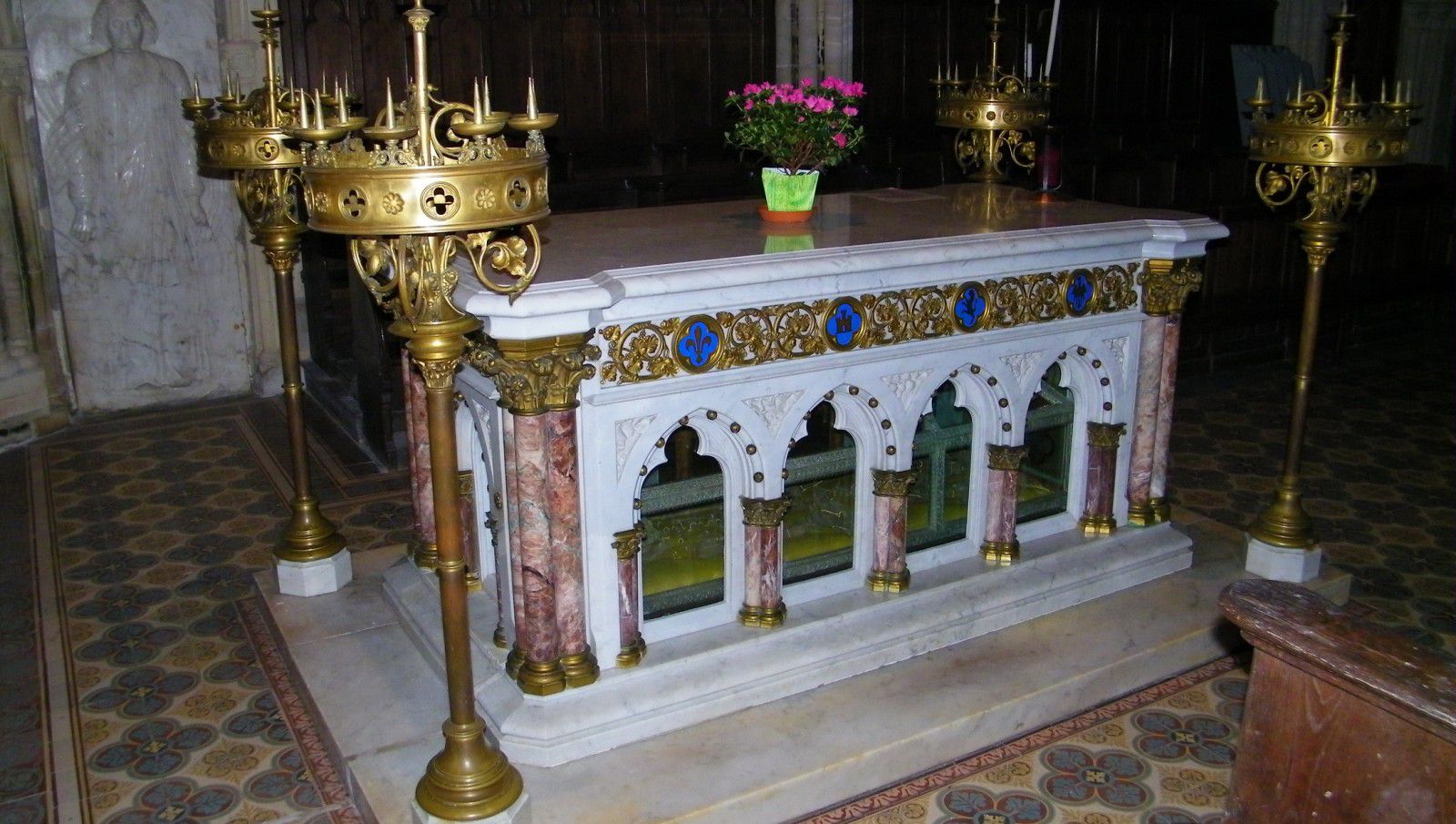
In 1794, his relics were hidden to prevent their destruction during the persecutions of the French Revolution. In 1910 his glass coffin was enclosed in a marble sarcophagus. If you look carefully at the photograph below, you will see a marble slab with a relief of Blessed Thomas. This slab covered the original tomb and has now been reset into the wall. The sarcophagus resides in the choir of the St Peters in Biville where he is venerated by many pilgrims and where many miracles have been reported. During the annual festivals of his feast day, pilgrims come from all over the region.
North American Martyrs (Optional Memorial) – 8 saints: Two priests and six lay-brothers, all Jesuits, who were sent as missionaries to the area of modern Canada and New York and who were murdered by the locals for their work. • Saint Antoine Daniel • Saint Charles Garnier • Saint Gabriel Lalemant • Saint Isaac Jogues • Saint Jean de Brébeuf • Saint Jean de la Lande • Saint Noel Chabanel • Saint Rene Goupil Canonised – 29 June 1930 by Pope Pius XI
St Philip Howard St Potenzianus of Sens St Ptolemy of Rome St Sabiniano of Sens St Theofrid Blessed Thomas Hélye (c 1180-1257) Priest St Varus of Kemet St Verano of Cavaillon — Martyred in the Spanish Civil War: 18 Beati • Blessed Antonio Elizalde Garvisu • Blessed Constantino Miguel Moncalvillo • Blessed Dionisio Arizaleta Salvador • Blessed Emiliano Pascual Abad • Blessed Eusebio de Las Heras Izquierdo • Blessed Ferran Castán Messeguer • Blessed Francesc Solá Peix • Blessed Francisco Marco Martínez • Blessed Francisco Milagro Mesa • Blessed Francisco Simón Pérez • Blessed Josep Ferrer Escolà • Blessed Josep Ribé Coma • Blessed Julio Leache Labiano • Blessed Juan Senosiaín Zugasti • Blessed Manuel Font y Font • Blessed Narcís Simón Sala • Blessed Nicolas Campo Giménez • Blessed Pere Vives Coll
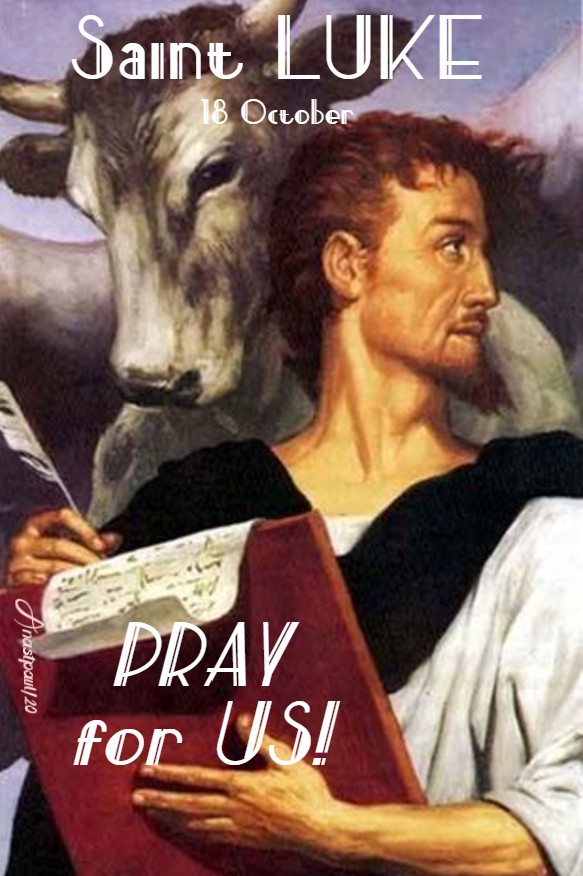
Quotes of the Day – 18 October – Feast of St Luke the Evangelist
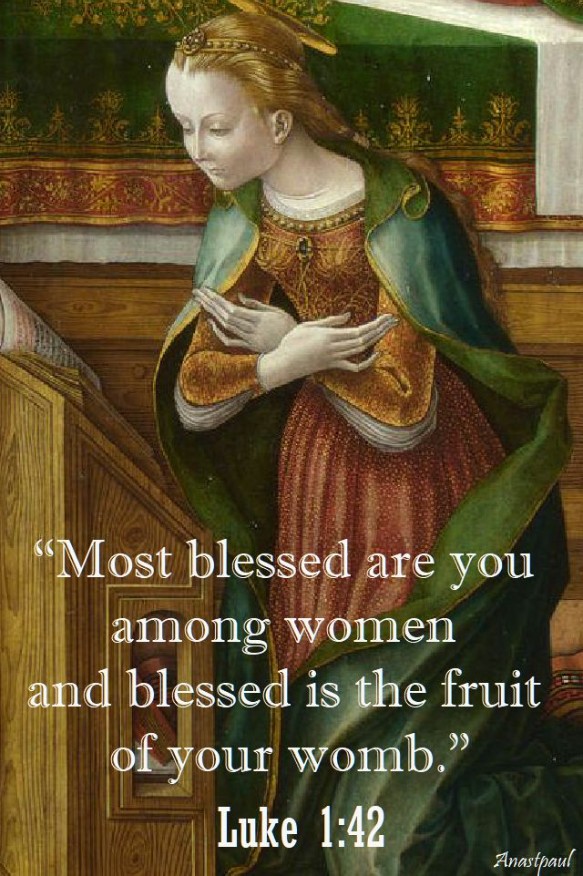
“Most Blessed are you among women and blessed is the fruit of your womb.”
Luke 1:42
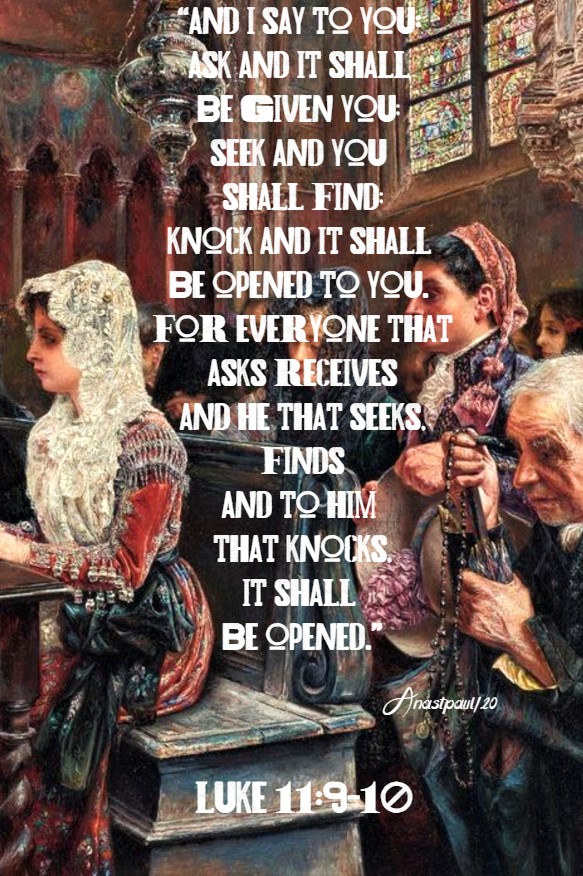
“And I say to you: Ask and it shall be given you; seek and you shall find; knock and it shall be opened to you. For everyone that asks receives and he that seeks finds and to him that knocks, it shall be opened.”
Luke 11:9-10
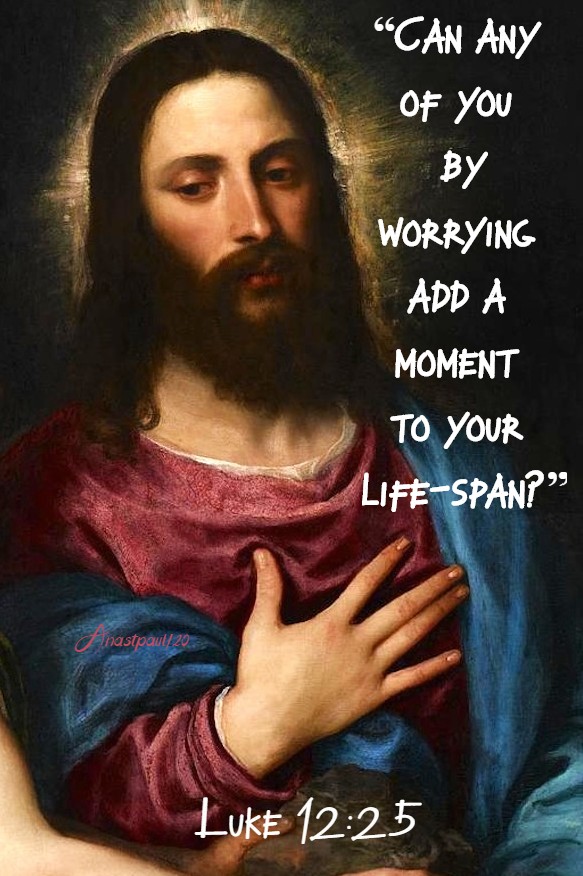
“Can any of you by worrying add a moment to your life-span?”
Luke 12:25
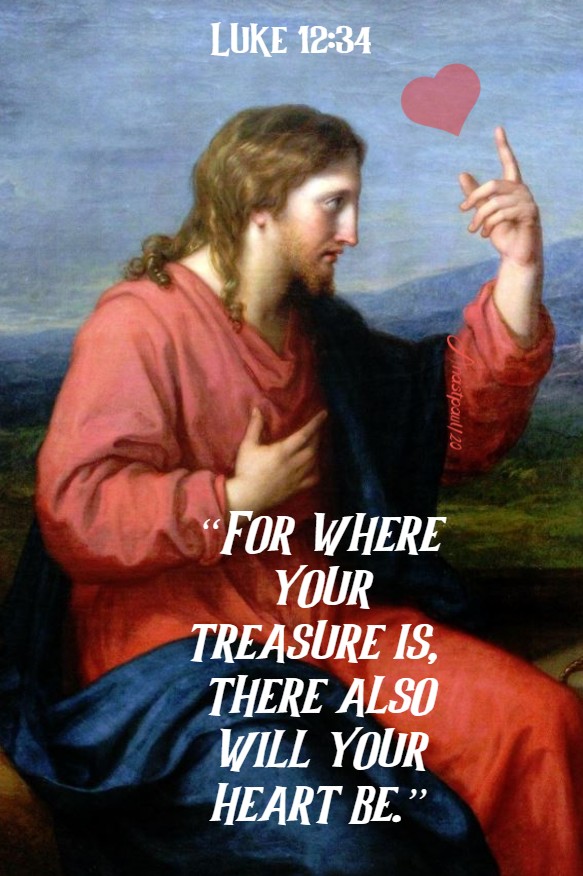
“For where your treasure is, there also will your heart be.”
Luke 12:34
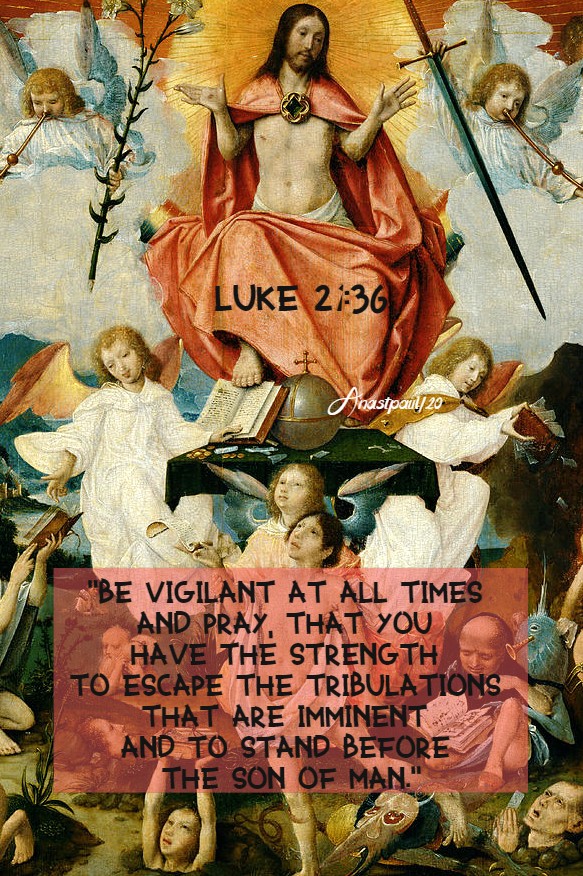
“Be vigilant at all times and pray that you have the strength to escape the tribulations that are imminent and to stand before the Son of Man.”
Luke 21:36
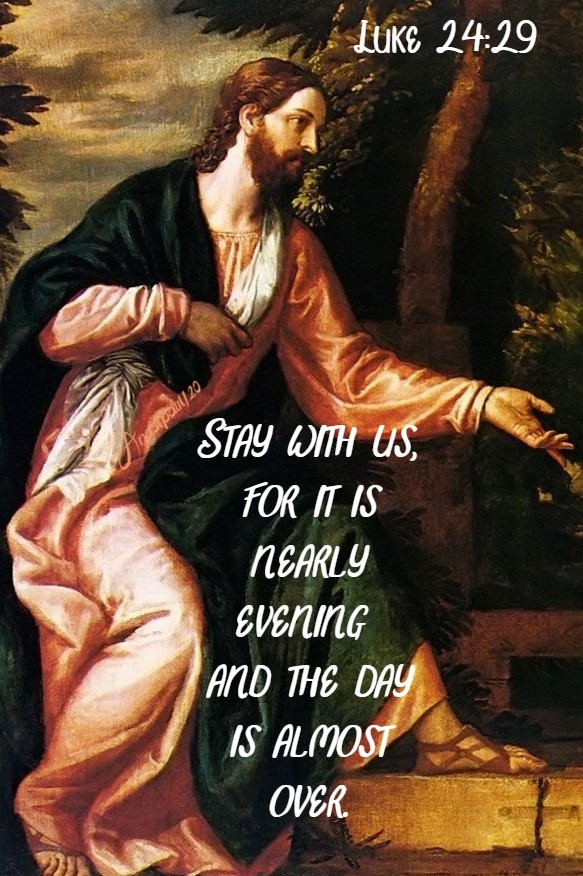
“Stay with us, for it is nearly evening and the day is almost over.”
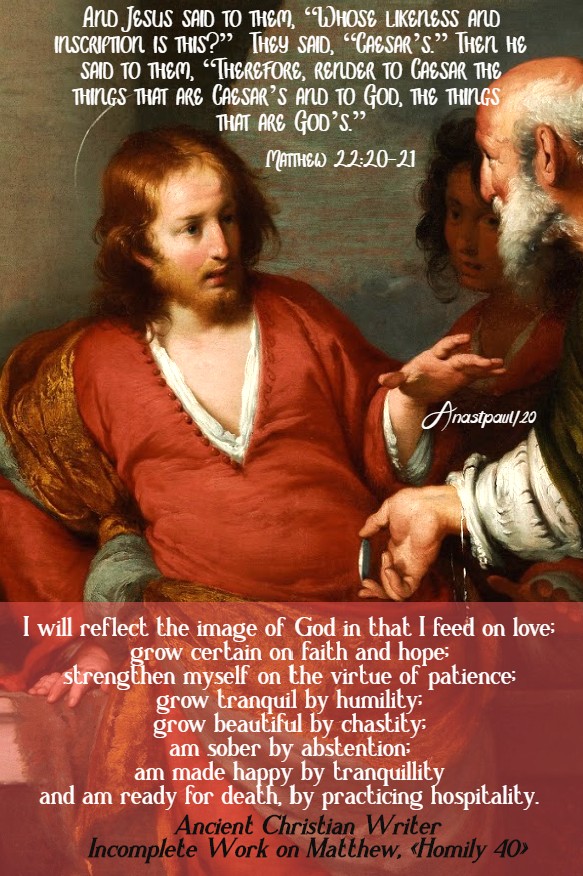
And Jesus said to them, “Whose likeness and inscription is this?” They said, “Caesar’s.” Then he said to them, “Therefore, render to Caesar the things that are Caesar’s and to God, the things that are God’s.” – Matthew 22:20-21
REFLECTION – In an ancient work known as the Incomplete Work on Matthew, an anonymous Ancient Christian Writer (ACW) offers the following insight on these verses from today’s Gospel: “The image of God is not depicted on gold but is imaged in humanity. The coin of Caesar is gold; that of God, humanity. Caesar is seen in his currency; God, however, is known through human beings. And so give your wealth to Caesar but reserve for God the sole innocence of your conscience, where God is beheld. For the hand of Caesar has crafted an image by likenesses and lives each year by renewable decree. However, the divine hand of God has shown His image in ten points.
What ten points? From five carnal ones and five spiritual ones through which we see and understand what things are useful under God’s image. So let us always reflect the image of God in these ways:
I do not swell up with the arrogance of pride; nor do I droop with the blush of anger; nor do I succumb to the passion of avarice; nor do I surrender myself to the ravishes of gluttony; nor do I infect myself with the duplicity of hypocrisy; nor do I contaminate myself with the filth of rioting; nor do I grow flippant with the pretension of conceit; nor do I grow enamoured of the burden of heavy drinking; nor do I alienate by the dissension of mutual admiration; nor do I infect others with the biting of detraction; nor do I grow conceited with the vanity of gossip.
Rather, instead,
I will reflect the image of God in that I feed on love; grow certain on faith and hope; strengthen myself on the virtue of patience; grow tranquil by humility; grow beautiful by chastity; am sober by abstention; am made happy by tranquillity and am ready for death, by practicing hospitality.
It is with such inscriptions that God imprints His coins with an impression made neither by hammer nor by chisel but has formed them, with His primary divine intention. For Caesar required his image on every coin but God has chosen man, whom He has created, to reflect His glory.” (Incomplete Work on Matthew, «Homily 40»)
PRAYER – Lord God, You chose St Luke to reveal the mystery of Your love in his preaching and his writings. Grant, we pray, that we may grow in love for the Holy Face of Christ, His words and His directions, revealed to us in the Gospels, in the example of your saints. Today, on his feast, we especially look to St Luke, to guide, teach and pray for us. We make our prayer through our Lord Jesus Christ, with the Holy Spirit, one God with You, forever and ever, amen.
Saint of the Day – 18 October – Saint Julian Sabas the Hermit (4th Century) Confessor and miracle-worker. He lived an ascetic life of fasting and prayer. He is also known as St Julian the Hermit of Mesopotamia.
St Julian, for his wisdom and prudence, was surnamed Sabas, which signifies in Syriac, the Grey or Old Man.
He flourished in the fourth century, living first in a damp cave near Edessa in Mesopotamia and afterwards on Mount Sinai in Arabia. Austere penance, manual labour and assiduous prayer and contemplation were the means by which he sanctified his soul.
He saw in spirit the death of Julian the Apostate in Persia, by which God delivered His Church from the storm with which that persecutor then threatened it.
When the Arians under Valens, were abusing the Church of Christ, he left his solitude and went to Antioch to dispute them and there, he wrought many miracles. When he had given an ample testimony to the true faith, he returned to his cell, where he instructed a great number of disciples, who edified the Church long after his death.
St John Chrysostom calls him a wonderful man and describes the great honour with which he was venerated both while he lived and after his death.
Through the efforts of Saint Julian, a Church was built on Mount Sinai, in memory of the obtaining of the tablets of the Law, by the holy Prophet Moses. The Church was built were it is believed that Moses was standing, when he received the tablets.
St Acutius of Pozzuoli St Asclepiades of Antioch St Athenodorus St Brothen Bl Burchard I St Cadwaladr of Brittany Bl Domenico of Perpignano St Eutychius of Pozzuoli St Gwen St Gwen of Tagarth St Gwendoline St Isaac Jogues St Julian Sabas the Hermit (4th Century) St Justus of Beauvais (c 278—c 287) Child of nine About St Justus: https://anastpaul.com/2019/10/18/saint-of-the-day-18-october-st-justus-of-beauvais-c-278-c-287-martyr/ Bl Margherita Tornielli St Monon of Nassogne St Proculus of Pozzuoli Bl Theobald of Narbonna St Tryphonia of Rome — Martyrs of Africa – 9 saints: A group of Christians martryed together in Africa. The only details that have survived are the names – Beresus, Dasius, Faustinus, Leucius, Lucius, Martialis, Victoricus, Victrix and Viktor. They were martyred in c.300 in Africa.
Martyred in the Spanish Civil War: • Blessed Alfredo Almunia López-Teruel • Blessed Francisco Roselló Hernández • Blessed Isidro Juan Martínez
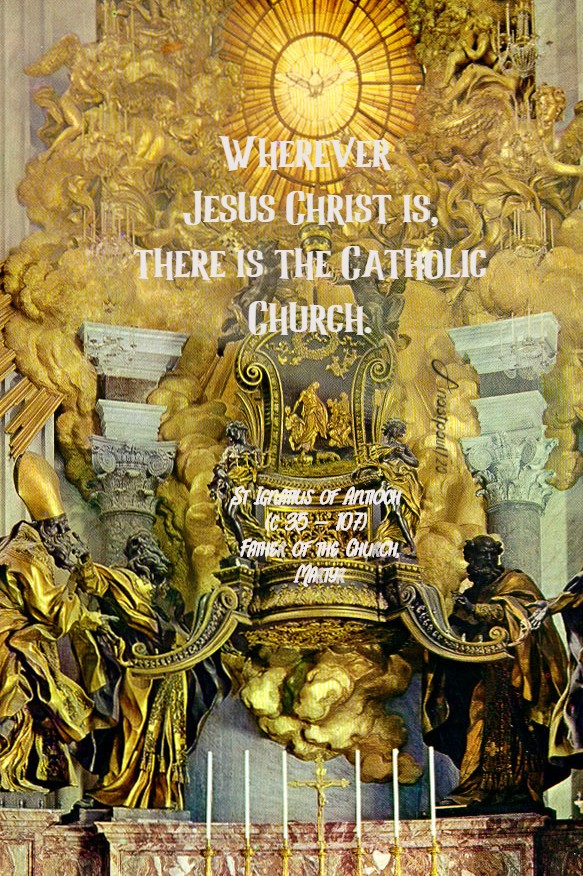
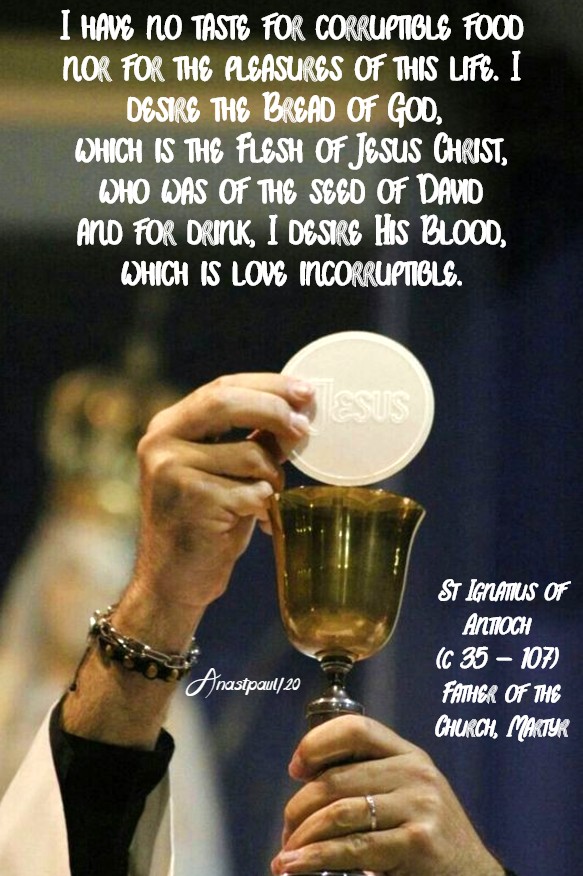
Quote/s of the Day – 17 October – The Memorial of St Ignatius of Antioch (c 35 – 107) Father of the Church, Martyr
“Wherever Jesus Christ is, there is the Catholic Church.”
(Letter to the Smyrnaeans, Ch 8)
“I have no taste for corruptible food nor for the pleasures of this life. I desire the Bread of God, which is the Flesh of Jesus Christ, who was of the seed of David and for drink, I desire His Blood, which is love incorruptible.”
“Only let it be in the name of Jesus Christ, that I may suffer together with Him! I endure everything because He Himself, Who is perfect man, empowers me.”
One Minute Reflection – 17 October – Saturday of the Twenty-eighth week in Ordinary Time, Readings: Ephesians 1:15-23, Psalms 8:2-3, 4-5, 6-7, Luke 12:8-12 and the Memorial of St Ignatius of Antioch (c 35 – 107) Father of the Church, Martyr
“The Holy Spirit will teach you in that very hour what you ought to say.” … Luke 12:12
REFLECTION – “All the saints were arrested and brought before the urban prefect at Rome, a man named Rusticus. After they had been arraigned, the prefect said to Justin: (…) “What are the doctrines that you practise ?” “I have tried to become acquainted,” said Justin, “with all doctrines. But I have committed myself to the true doctrines of the Christians (…)” “What belief do you mean?” Justin said: “The belief that we piously hold regarding the God the Christians, whom alone we hold to be the craftsman of the whole world from the beginning and also regarding Jesus Christ, child of God, who was also foretold by the prophets, as one who was to come down to mankind as a herald of salvation and teacher of good doctrines. What I say is insignificant when measured against His Godhead but, I acknowledge the power of prophecy (…), for you must know that in earlier times the prophets foretold His coming among men.”
Rusticus the prefect said: “Tell me, where do you meet, where do you gather together your disciples?” Justin said: “I have been living above the baths of a certain Martinus, son of Timothy (…) Anyone who wished could come to my abode and I would impart to him the words of truth.” “You do admit, then, that you are a Christian?” “Yes, I am”. To Chariton, the prefect, Rusticus said: “Chariton, are you a Christian, too?” “I am,” said Chariton, “by God’s command” (…) “And what are you Evelpistus?” “I too am a Christian. I have been freed by Christ and I share in the same hope by the favour of Christ” (…) “Did Justin convert you to Christianity?” “I have long been a Christian and ever shall be (…) I listened gladly to the teaching of Justin but my Christianity I received from my parents.” (…) Paeon arose and spoke: “I am a Christian also.” The prefect Rusticus said to Liberian: “And what have you to say? Are you a Christian and do you also refuse to be pious?” Liberian said: “Yes, I too am a Christian. I believe in the one, true God and worship Him.”
The prefect turned to Justin: “You are said to be learned and you think you know the true doctrine. Now listen – if you are scourged and beheaded, do you suppose that you will ascend to heaven (…) to receive certain worthy rewards?” “I have confidence that, if I endure all this, I shall possess His mansions. Indeed, I know that for all those who lead a just life, there awaits the divine gift even to the consummation of the whole world (…) I do not think it but I have accurate knowledge of it; I am fully convinced of it.” … Acts of the Martyrdom of Saint Justin and his companions (c 165).
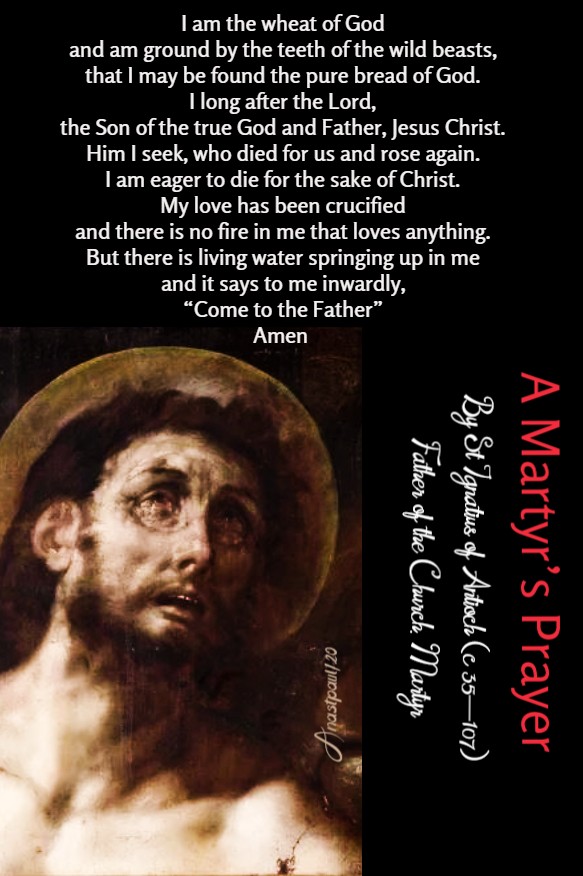
PRAYER – “I am the wheat of God and am ground by the teeth of the wild beasts, that I may be found the pure bread of God. I long after the Lord, the Son of the true God and Father, Jesus Christ. Him I seek, who died for us and rose again. I am eager to die for the sake of Christ. My love has been crucified and there is no fire in me that loves anything. But there is living water springing up in me and it says to me inwardly, “Come to the Father” Amen – A Martyr’s Prayer – By St Ignatius of Antioch (c 35 – 107) Father of the Church, Martyr
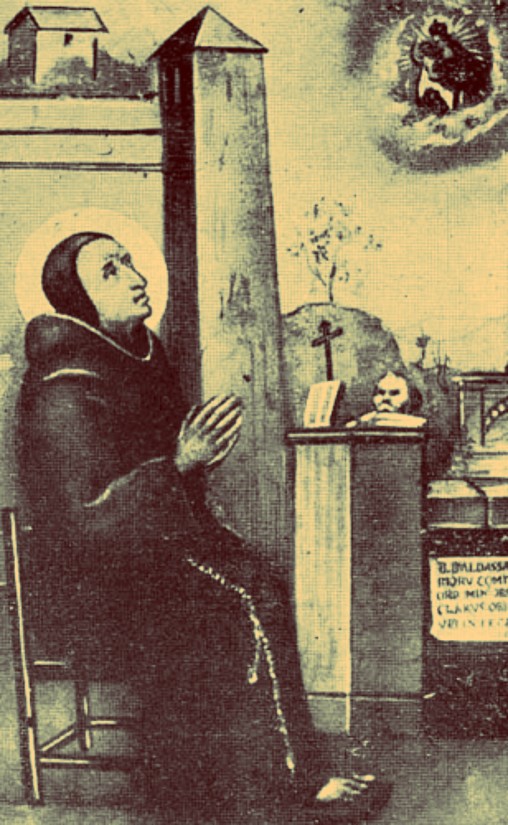
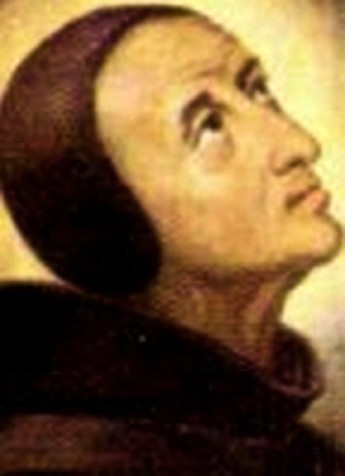
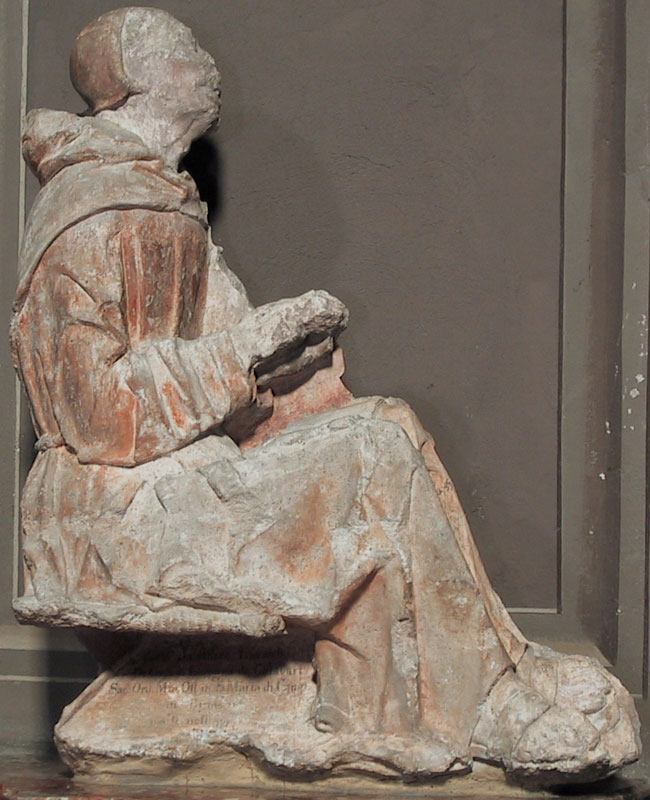
Saint of the Day – 17 October – Blessed Balthassar of Chiavari OFM (1420–1492) Religious Priest of the Order of Friars Minor of the strict observance, Confessor, renowned Preacher, Professor of Theology, Superior General. Born in 1420 in Chiavari, Genoa, Italy as Baldassare Ravaschieri and died on 17 October 1492 in Binasco, Milan, Italy of natural causes. Patronages – Chiavari, against gout.
After his Ordination and his work in the Seminary as a Lecturer of Theology, he was appointed as the Guardian (Superior) of the Monastery of Chiavari and Provincial General of the province of Genoa. Unfortunately, his work was interrupted by his ever-deteriorating health after he developed gout but this did not stop his pastoral activities completely. When he was too ill to walk, he made sure that he was carried into the Church so that he could assist at Mass and the Office and he developed a special service in the confessional. Large crowds flocked to the city to confess to him and to receive spiritual guidance.
To gain some time and peace for his own spiritual needs, he used to be carried out into the nearby forests, where he stayed for periods of meditation and reading. During one of these periods, he was granted a vision of the Virgin Mary and it was said that he was miraculously sheltered from a dangerous snowfall, the spot he was sitting in, remained free of snow.
He distinguished himself in all the virtues of a good religious, practiced the greatest personal severities, fasted much and considered it a real pleasure to be accounted the last among his brethren.
After he had completed his term in office, Blessed Balthassar of Chiavari withdrew to the Convent at Binasco. There he devoted himself entirely to the contemplation of heavenly things and to the salvation of immortal souls.
We can also labour for souls by our good example. While Balthassar was a Superior in the Order, he set a good example to his brother friars. Words stir people but example carries them away, says a Latin proverb. Hence, St Paul says to Timothy: “Be an example to the faithful in word, in conversation.” (I Tim 4,12).
He died on 17 October 1492, aged 73, in Binasco between Milan and Pavia in northern Italy. His mortal remains were moved from there to Pavia in 1805. A local cult developed very quickly and it has continued ever since. He was Beatified on 8 January 1930 by his cult being confirmed by Pope Pius XI. Blessed Balthassar is honoured in the Diocese of Pavia on 25 October.
St Anstrudis of Laon Blessed Balthassar of Chiavari OFM (1420–1492) Bl Battista de Bonafede St Berarius I of Le Mans St Catervus St Colman of Kilroot St Ethelbert of Eastry St Ethelred of Eastry St Florentius of Orange St Francois Isidore Gagelin (1799-1833) Priest and Martyr His Life and Death: https://anastpaul.com/2019/10/17/saint-of-the-day-17-october-saint-francois-isidore-gagelin-1799-1833-priest-and-martyr/ Bl Gilbert the Theologian St Heron of Antioch Bl Jacques Burin St John the Short/Dwarf St Louthiern St Mamelta of Persia St Nothelm of Canterbury St Richard Gwyn St Rudolph of Gubbio St Rufus of Rome St Serafino of Montegranaro St Solina of Chartres St Zosimus of Rome — Martyrs of Nicomedia – 3 saints: A group of Christians martyred in the persecutions of Diocletian. The only details about them that have survived are their names – Alexander, Marianus and Victor. 303 in Nicomedia (in modern Turkey).
Martyrs of Valenciennes -5 beati: A group of Ursuline nuns martyred in the persecutions of the French Revolution. • Hyacinthe-Augustine-Gabrielle Bourla • Jeanne-Reine Prin • Louise-Joseph Vanot • Marie-Geneviève-Joseph Ducrez • Marie-Madeleine-Joseph Déjardins
Martyrs of Volitani: A group of martyrs who were praised by Saint Augustine of Hippo. In Volitani, proconsular Africa (in modern Tunisia).
Martyred in the Spanish Civil War: • BlessedFidel Fuidio Rodriguez • BlessedJosé Sánchez Medina • BlessedPerfecto Carrascosa Santos • BlessedTársila Córdoba Belda de Girona












 AnaStpaul
You must be logged in to post a comment.