Posted in SAINT of the DAY

Saint of the Day – 29 September – Blessed Charles de Blois TOSF (1319–1364)

Saint of the Day – 29 September – Blessed Charles de Blois TOSF (1319–1364)
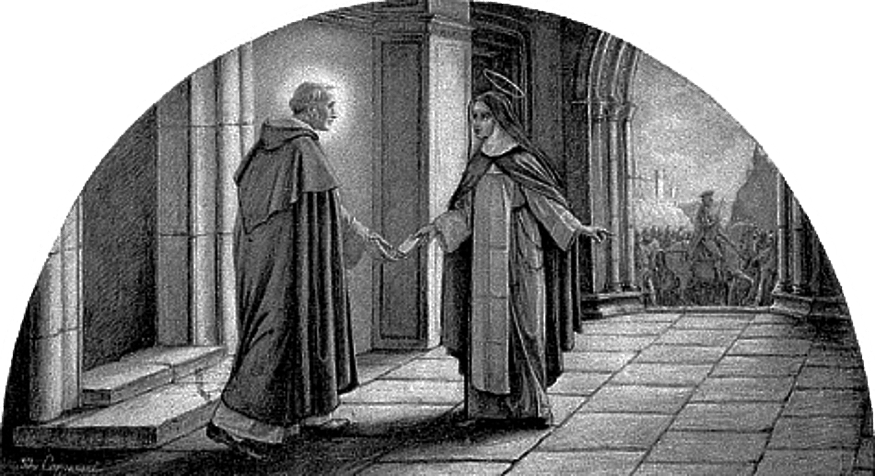
French nobleman, Knight, ascetic, Franciscan tertiary, Duke of Brittany, Count of Penthièvre and Goëllo and Viscount of Limoges. He was born in 1319 and was killed at the Battle of Auray on this day in 1364. Patronage -Army soldiers, Agricultural workers.

Charles was born in Blois, son of Guy de Châtillon, Count of Blois, by Margaret of Valois, a sister of king Philip VI of France. A devout ascetic from an early age, he showed interest in religious books but was forbidden from reading them by his father, as they did not seem appropriate to his position as a Knight. As he grew older, Charles took piety to the extreme of mortifying his own flesh. He placed pebbles in his shoes, slept on straw instead of a bed, confessed every night in fear of sleeping in a state of sin and wore a cilice (a spiked garter) under his armour in battle. He was nevertheless an accomplished military leader, who inspired loyalty by his religious fervour.

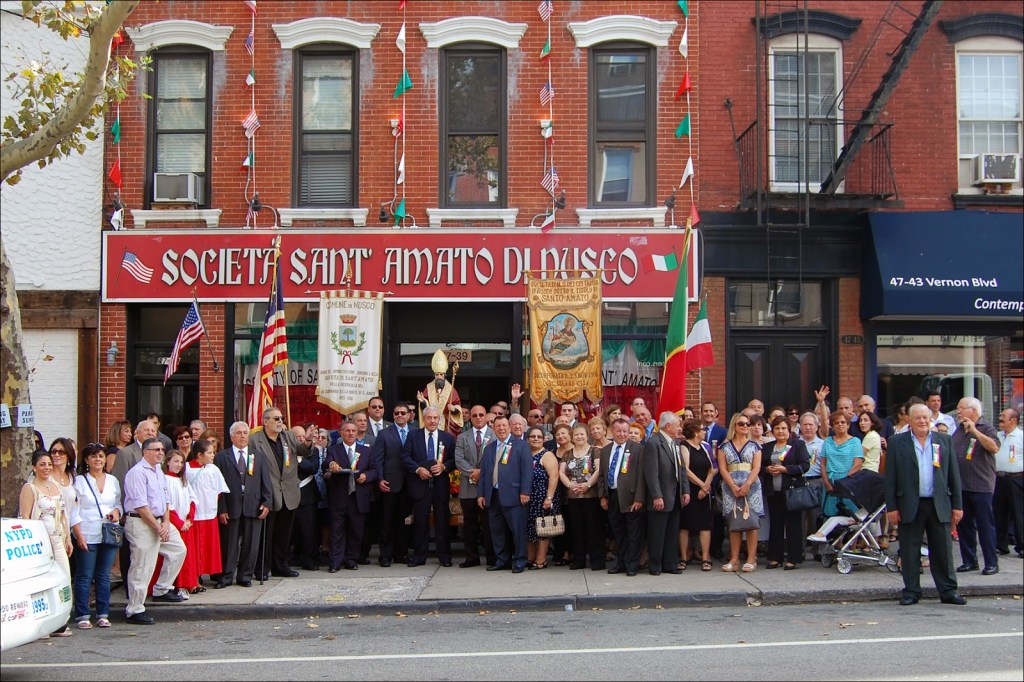
OLYMPUS DIGITAL CAMERA

On 4 June 1337 in Paris, he married Joanna of Penthièvre, heiress and niece of duke John III. Together, Charles and Joanna de Châtillon fought the House of Montfort in the Breton War of Succession (1341–1364), with the support of the crown of France. After initial successes, Charles was taken prisoner by the English in 1347. His official captor was Thomas Dagworth.

He stayed nine years as prisoner in the Kingdom of England. During that time, he used to visit English graveyards, where he prayed and recited Psalm 130 much to the chagrin of his own squire. When Charles asked the squire to take part in the prayer, the younger man refused, saying that the men who were buried at the English graveyards had killed his parents and friends and burned their houses.
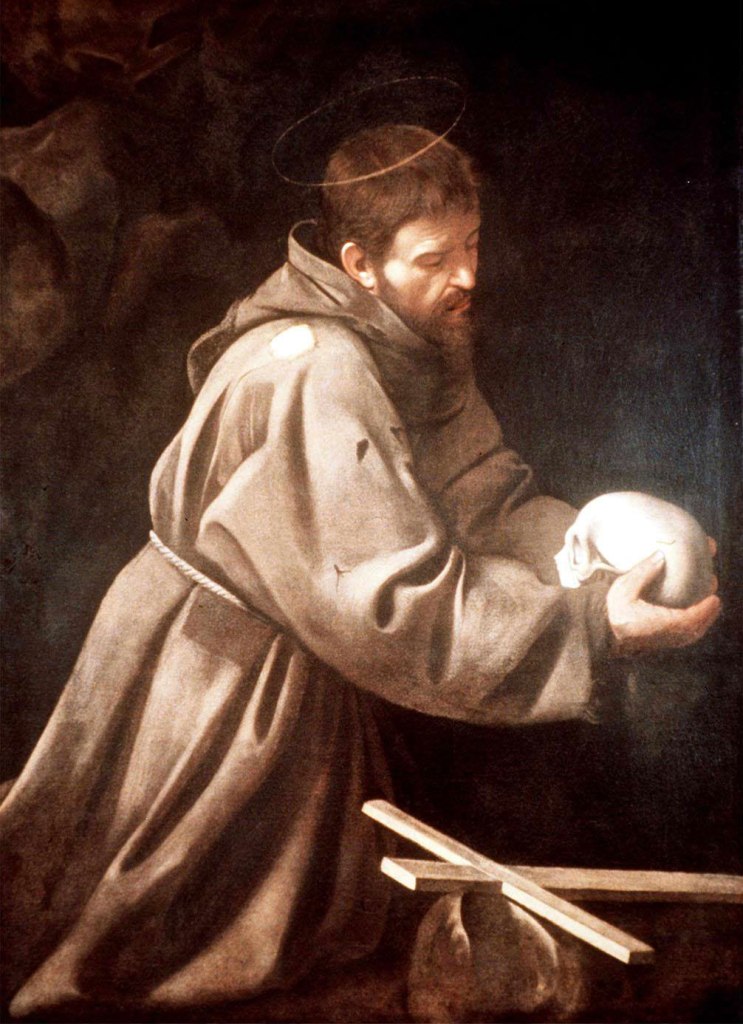
Charles was released against a ransom of about half a million écus in 1356. Upon returning to France, he decided to travel barefoot in winter from La Roche-Derrien to Tréguier Cathedral out of devotion to Saint Ivo of Kermartin. When the common people heard of his plan, they placed straw and blankets on the street but Charles promptly took another way. His feet became so sore that he could not walk for 15 weeks. He then resumed the war against the Montforts. Charles was eventually killed in combat during the Battle of Auray in 1364, which with the second treaty of Guerande in 1381, determined the end of the Breton War of Succession as a victory for the Montforts.

Battle of Auray 1364

By his marriage to Joanna, he had five children:
John I, Count of Penthièvre (1340–1404)
Guy
Henry (d. 1400)
Mary (1345–1404), Lady of Guise, married in 1360 Louis I, Duke of Anjou
Margaret, married in 1351 Charles de la Cerda (d. 1354)

Chateau de Blois

Charles was buried at Guingamp, where the Franciscans actively promoted his unapproved cult as saint and martyr. Such variety of ex votos bedecked his tomb, that in 1368 Duke John IV of Brittany persuaded Pope Urban V to issue a bull directing the Breton Bishops to stop this. But the Bishops failed to enforce it.

Nonetheless, his family successfully lobbied for his Canonisation as a Saint of the Roman Catholic church for his devotion to religion. Pope Urban authorised a commission to study the matter but died before it’s completion. Urban died December 1370 to be succeeded by Pope Gregory XI. The commission held its first meeting in Angers in September 1371 and forwarded its report to Avignon the following January. Gregory appointed three Cardinals to review the matter. The Pope returned to Italy in September 1376, arriving in Rome in November 1377; he died the following March. Gregory was succeeded in Avignon by Clement VII but the documents were probably in Rome with Pope Urban VI. There appears to be no record of further activity regarding Charles’ cause for Canonisation at this time. In 1454, Charles’ grandson urged his relatives to continue to advocate for his recognition.
The process was re-opened in 1894 and in 1904, Charles de Blois-Châtillon was Beatified by St Pope Pius X, as Blessed Charles de Blois.

Posted in ArchAngels and Angels, FEASTS and SOLEMNITIES, SAINT of the DAY

Feast of the Archangels Gabriel, Michael and Raphael and Memorials of the Saints – 29 September

St Gabriel the Archangel (Feast)
St Michael the Archangel (Feast)
St Raphael the Archangel (Feast)
About the three Archangels here:

https://anastpaul.wordpress.com/2017/09/29/saints-of-the-day-feast-of-the-three-archangels-29-september/

Bl Alericus
St Anno of Eichstätt
St Casdoe of Persia
St Catholdus of Eichstätt
Blessed Charles de Blois TOSF (1319–1364) Duke of Brittany
St Dadas of Persia
St Diethardus of Eichstätt
St Fraternus of Auxerre
St Gabdelas of Persia
St Grimoaldus of Pontecorvo
St Gudelia
St Guillermo Courtet
Blessed Jean de Montmirail / Baron de Montmirail, O. Cist (1165 – 1217)
His Life:
https://anastpaul.com/2019/09/29/saint-of-the-day-29-september-blessed-jean-de-montmirail-o-cist-1165-1217/
Bl John of Ghent
St Lazaro of Kyoto
St Liutwin of Trier
Blessed Luigi Monza (1898 – 1954)
Biography:

https://anastpaul.com/2018/09/29/saint-of-the-day-29-september-blessed-luigi-monza-1898-1954/
St Miguel de Aozaraza
St Quiriacus of Palestine
St Rene Goupil
St Rhipsime
Bl Richard Rolle
St Sapor of Persia
St Theodota of Thrace
St Vicente Shiwozuka de la Cruz

Martyrs of Thrace – 3 saints: Three Christian men murdered in Thrace for their faith. They are – Eutychius, Heracleas and Plautus.

Martyred in the Spanish Civil War:
• Blessed Antonio Arribas Hortigüela
• Blessed Antonio Martínez López
• Blessed Dario Hernández Morató
• Blessed Francesc de Paula Castelló Aleu
• Blessed Francisco Edreira Mosquera
• Blessed José Villanova Tormo
• Blessed Pau Bori Puig
• Blessed Vicente Sales Genovés
• Blessed Virgilio Edreira Mosquera

Posted in HYMNS, ON the SAINTS, PRAYERS of the CHURCH, PRAYERS to the SAINTS, QUOTES - J R R Tolkien and MORE, QUOTES on ALMS, QUOTES on CHARITY, QUOTES on MERCY, SAINT of the DAY

Quote/s of the Day – 28 September – Good King Wenceslaus

Quote/s of the Day – 28 September – The Memorial of St Wenceslaus (907-935) King of Bohemia, Martyr

St Wenceslas was considered a Martyr and a Saint immediately after his death, when a cult of Wenceslas grew up in Bohemia and in England. Within a few decades of Wenceslas’ death, four biographies of him were in circulation. These hagiographies had a powerful influence on the High Middle Ages conceptualisation of the rex justus, or “righteous king”, that is, a monarch whose power stems mainly from his great piety, as well as from his princely vigour. The chronicler Cosmas of Prague, writing in about the year 1119, states:

But his deeds I think you know better than I could tell you; for, as is read in his Passion, no-one doubts that, rising every night from his noble bed, with bare feet and only one chamberlain, he went around to God’s churches and gave alms generously to widows, orphans, those in prison and afflicted by every difficulty, so much so, that he was considered, not a prince but the father of all the wretched.

Several centuries later the legend was claimed as fact by Pope Pius II.

The hymn “Svatý Václave” (Saint Wenceslas) or “Saint Wenceslas Chorale” is one of the oldest known Czech hymns in history. It’s roots can be found in the 12th century and it still belongs to the most popular religious songs to this day. In 1918, in the beginning of the Czechoslovak state, the song was discussed as one of the possible choices for the national anthem. His feast day is celebrated today, while the translation of his relics, which took place in 938, is commemorated on 4 March.

Good King Wenceslaus

Good King Wenceslas looked out, on the Feast of Stephen,
When the snow lay round about, deep and crisp and even;
Brightly shone the moon that night, tho’ the frost was cruel,
When a poor man came in sight, gath’ring winter fuel.

“Hither, page, and stand by me, if thou know’st it, telling,
Yonder peasant, who is he? Where and what his dwelling?”
“Sire, he lives a good league hence, underneath the mountain;
Right against the forest fence, by Saint Agnes’ fountain.”

“Bring me flesh and bring me wine, bring me pine logs hither:
Thou and I will see him dine, when we bear them thither.”
Page and monarch, forth they went, forth they went together;
Through the rude wind’s wild lament and the bitter weather.

“Sire, the night is darker now and the wind blow stronger;
Fails my heart, I know not how; I can go no longer.”
“Mark my footsteps, my good page. Tread thou in them boldly
Thou shalt find the winter’s rage freeze thy blood less coldly.”

In his master’s steps he trod, where the snow lay dinted;
Heat was in the very sod which the saint had printed.
Therefore, Christian men, be sure, wealth or rank possessing,
Ye who now will bless the poor, shall yourselves find blessing.

Posted in "Follow Me", CHRIST, the WAY,TRUTH,LIFE, DOCTORS of the Church, FATHERS of the Church, ONE Minute REFLECTION, QUOTES for CHRIST, QUOTES of the SAINTS, QUOTES on CONVERSION, QUOTES on DISCIPLESHIP, QUOTES on ENVY, QUOTES on HUMILITY, QUOTES on INNOCENCE, QUOTES on PRIDE, QUOTES on the DEVIL/EVIL, SAINT of the DAY, The WORD

One Minute Reflection – 28 September – ‘… Being like-minded with Him and anxious to walk in His steps.’ – Luke 9:48

One Minute Reflection – 28 September – Monday of the Twenty Sixth week in Ordinary Time, Readings: Job 1:6-22Psalms 17:12-36-7Luke 9:46-50 and The Memorial of Blessed Bernardine of Feltre OFM (1439-1494)

“Whoever receives this child in my name receives me and whoever receives me, receives him who sent me, for he who is least among you all, is the one who is great.” … Luke 9:48

REFLECTION – “The passion and lust of pride attacked some of the holy apostles. The mere argument about who of them was the greatest is the mark of an ambitious person, eager to stand at the head of the rest. Christ, who did not sleep, knows how to deliver. He saw this thought in the disciple’s mind, springing up, in the words of Scripture, like some bitter plant. He saw the weeds, the work of the wicked sower. Before it grew up tall, struck its root down deep, grew strong and took possession of the heart, He tears up the evil by the very root. In what way does the Physician of souls amputate pride’s passion? How does He deliver the beloved disciple from being the prey of the enemy and from a thing hateful to God and man? “He took a child,” it says, “and set it by him.” He made the event a means of benefiting both the holy apostles themselves and us their successors. This illness, as a rule, preys upon all those who are in any respect superior to other people.

What kind of type and representation did He make the child He had taken? He made the child a representation of an innocent and humble life. The mind of a child is empty of fraud and his heart is sincere. His thoughts are simple. He does not covet rank and does not know what is meant by one man being higher than another is. Christ brought forward the child as a pattern of simplicity and innocence and set him by Him. He showed him as in an object lesson, that He accepts and loves those who are like the child. He thinks they are worthy of standing at His side, as being like-minded with Him and anxious to walk in His steps.” … St Cyril of Alexandria (376-444) Father and Doctor of the Church – Commentary on Luke, Homily 54

PRAYER – Lord God, You hold out the Light of Your Word to those who do not know You. Strengthen in our hearts, the faith You have given us and the Credo we profess, so that no trials and pride may quench the fire Your Spirit has kindled in us. May the intercession of Blessed Bernardine of Feltre, grant us the grace of following the way of the Cross, to stand beneath it with our Mother, the Mother of God, Ave Maria! We make our prayer through Jesus Christ with the Holy Spirit, one God forever, amen.

Posted in franciscan OFM, Of BANKERS, SAINT of the DAY

Saint of the Day – 28 September – Blessed Bernardine of Feltre OFM (1439-1494

Saint of the Day – 28 September – Blessed Bernardine of Feltre OFM (1439-1494) Priest, Franciscan Friar, Missionary Preacher, Poet, peace-maker, Civil protestor against the practice of usury, defender of the poor. He was a true ‘child prodigy’ – by the time he was 12 he was fluent in Latin and at the age of 15 he composed a poem and read it in the Town Square to celebrate a local peace treaty. He is remembered most especially, in connection with the “Monti di Pietà” “Mount of Piety” of which he was the reorganiser and, in a certain sense, the Founder, together with the Blesseds Francisco Piani and Michele Carcano. Born as Martin Tomitani in 1439 at Feltre, Italy and died on 28 September 1494 of natural causes. Patronages – bankers, pawnbrokers. He is also sometimes known as Bernardino of Feltre or Martin Tomitani.

A “Mount of Piety” is an institutional pawnbroker run as a charity in Europe from Renaissance times until today. Similar institutions were established in the colonies of Catholic countries; the Mexican Nacional Monte de Piedad is still in operation. It gave poor people access to loans with reasonable interest rates. It used funds from charitable donors as capital and made loans to the poor so they could avoid going to exploitative lenders. Borrowers offered valuables as collateral, making the Mount of Piety more like a pawn shop than a bank. The Monte di Pietà was developed on the principle of charity. It was designed to aid less fortunate people by providing an alternative to the socially unaccepted Jewish money lending system.

Obligation of the Monte di Pietà della Citta di Firenze, issued 21 October 1719

Martin Tomitani was born to the noble family of Tomitano and was the eldest of nine children. He achieved acclaim in his studies and to please his father he proceeded to study law. In 1456, while a law student in Padua, he heard St James of the Marches preach the Lenten course and was inspired to enter the Franciscan order. St James of the Marches himself, gave him the name Bernardine, after St Bernardine of Siena.

In May that year he joined the “Observantine” Franciscans, an austere branch of the Franciscan friars. He completed successfully his studies at Mantua and was Ordained Priest in 1463. He was small, shy and stammered but his superiors assigned him to preach home-missions. Cured of an impediment in his speech, Bernardine began his apostolate up and down the Italian peninsula. Every city of note and every province from Lombardy in the north to Sardinia and the provinces of the south became successively the scene of his missionary labours.

He was an extremely popular preacher because he spoke simply and powerfully against the vanity, ambition and greed rife at the time. The crowds that flocked to hear him were too large for the local churches, so he addressed them in the city squares and the fields. Like many other missionaries of his century, he had made a vast outdoor bonfire called “burning the Devil’s stronghold.” The crowds were asked to throw into the fire all objects of vanity and sin such as playing cards, dice, pornographic books and pictures, jewelry, wigs, superstitious charms, cosmetics and so forth.

Bernardine was able to reconcile warring communities. He also sought civic legislation to correct public injustices such as usury, the charging of excessive interest for loans, which was especially onerous on the poor.

In 1484, Bernardine established the charitable credit organisation, “Monti di Pietà” “Mount of Piety,” run by a joint committee of clergy and laymen. The institution was founded as an alternative to the high interest loans of the money lenders and Lombard travelling bankers of the Middle Ages.

Monte di Pietà Offices in Rome

His fund raising drives were generally preceded with a procession featuring an image of either the Man of Sorrows or Pietà to encourage charitable donations. His insistence on charging a low interest to protect the institution’s permanency raised a controversy among the theologians who thought it promoted the continuance of usury. (In 1515, Pope Leo X declared the institution meritorious and it spread rapidly throughout France, Italy and Spain.)

Donatello (Italian, 1386–1466), “The Dead Christ Supported by Angels,” 1446–50. Bronze relief, 58 × 56 cm. Basilica di Sant’Antonio, Padua, Italy. Carved for the high altar. Includes two wings, not shown. https://www.pinterest.com/pin/467248530063361702/

In 1491, Bernardine was expelled from Milan by Ludovico Sforza for contesting with the Duke’s astrologer.

Bernardine is generally represented in iconography as carrying in his hand a Monti di Pietà, that is, a little green hill composed of three mounds and on the top either a cross or a standard with the inscription Curam illius habe ‘Take care of’ (a snippet from the Vulgate translation of the Gospel of Luke’s Parable of the Good Samaritan).

The authorship of the well-known Anima Christi has as often as not been ascribed to Bernardine of Feltre. The fact, however, that the Anima Christi was composed sometime before 1439 disproves any claim that he might have of being its author, though much like St Ignatius of Loyola, Bernardine made frequent use of it and recommended it to his brethren.

On  13 April 1654, Pope Innocent X confirmed the culktus of Blessed Bernardine and he was formally Beatified in 1728 by Pope Benedict XIII.

Posted in SAINT of the DAY

Memorials of the Saints – 28 September

St Lorenzo Ruiz (1600-1637) First Saint and Protomartyr of the Philippines (Optional Memorial)
His Life and Death:

https://anastpaul.com/2019/09/28/saint-of-the-day-28-september-st-lorenzo-ruiz-1600-1637-first-saint-and-protomartyr-of-the-philippines/

St Wenceslaus (907-935) King of Bohemia, Martyr (Optional Memorial)
About St Wenceslaus here:
https://anastpaul.wordpress.com/2017/09/28/saint-of-the-day-28-september-st-wenceslaus-907-935-king-of-bohemia/

Bl Aaron of Auxerre
St Alodius of Auxerre
St Annemond of Lyons
St Bardomianus
Blessed Bernardine of Feltre OFM (1439-1494) Priest

St Chariton of Palestine
Bl Christian Franco
St Conval of Strathclyde
St Eucarpus
St Eustochium
St Exuperius of Toulouse
St Faustus of Riez
St John of Dukla
St Laurence of North Africa
St Lioba of Bischofsheim
St Machan
St Martial of North Africa
St Martin of Moyenmoutier
St Paternus of Auch
St Privatus of Rome
St Salonius of Geneva
St Silvinus of Brescia
St Simón de Rojas O.SS. (1552-1624) Apostle of the Ave Maria
About St Simon:

https://anastpaul.com/2018/09/28/saint-of-the-day-28-september-st-simon-de-rojas-o-ss-1552-1624-father-ave-maria-apostle-of-the-ave-maria/
St Solomon of Genoa
St Stacteus
St Tetta of Wimborne
Bl Thiemo
St Willigod of Moyenmoutier
St Zama of Bologna

Augustinian Martyrs of Japan: The first Augustinian missionaries arrived in Japan in 1602 and met with immediate success; many were brought to the faith; many of them became Augustinians; and many of them were martyred in the periodic persecutions of Christians. This memorial commemorates all of them, whether they have a sanctioned Cause for Canonisation or not. They include:
• Blessed Bartolomé Gutiérrez Rodríguez
• Blessed Ferdinand Ayala
• Blessed Francisco Terrero de Ortega Pérez
• Blessed Ioannes Mukuno Chozaburo
• Blessed Laurentius Kaida Hachizo
• Blessed Mancius Yukimoto Ichizaemon
• Blessed Martín Lumbreras Peralta
• Blessed Melchor Sánchez Pérez
• Blessed Michaël Ichinose Sukezaemon
• Blessed Pedro de Zúñiga
• Blessed Petrus Sawaguchi Kuhyoe
• Blessed Thomas Jihyoe of Saint Augustine
• Blessed Thomas Terai Kahyoe
• Blessed Vicente Simões de Carvalho
• Saint Magdalena of Nagasaki

Martyrs of Antioch – 37 saints: A group of 30 soldiers and 7 civilians who were murdered together for their faith. The names that have come down to us are – Alexander, Alphinus, Heliodorus, Mark, Neon, Nicon and Zosumus. c 303 at Antioch, Pisidia (in modern Turkey).

Martyrs of China – 120 saints: A common memorial for the hundreds of the faithful, lay and clergy, who have died for their faith in the last couple of centuries in China. They were Canonised on 1 October 2000 by Pope John Paul II.

Martyred in the Spanish Civil War:
• Blessed Amalia Abad Casasempere de Maestre
• Blessed Francesc Xavier Ponsa Casallach
• Blessed Josep Casas Juliá
• Blessed Josep Casas Ros
• Blessed Josep Tarrats Comaposada
• Blessed María Fenollosa Alcaina

Posted in "Follow Me", INCORRUPTIBLES, ON the SAINTS, PRACTISING CATHOLIC, QUOTES of the SAINTS, QUOTES on HEAVEN, QUOTES on HUMILITY, QUOTES on LOVE of GOD, QUOTES on SIN, QUOTES on the DEVIL/EVIL, QUOTES on TRUST and complete CONFIDENCE in GOD, QUOTES on WORRY/ANXIETY, SOLDIERS/ARMOUR of CHRIST, The FAITHFUL on PILGRIMAGE, The WILL of GOD

Quote/s of the Day – 27 September – St Vincent de Paul

Quote/s of the Day – 27 September – The Memorial of St Vincent de Paul (1581-1660)

“The most powerful weapon
to conquer the devil is humility.
For, as he does not know at all,
how to employ it,
neither does he know
how to defend himself from it.”

“Free your mind from all that troubles you;
God will take care of things.
You will be unable to make haste in this (choice) without,
so to speak,
grieving the heart of God
because He sees that you do not honour Him sufficiently
with holy trust.
Trust in Him, I beg you
and you will have the
fulfilment
of what your heart desires.”

“He who allows himself to be ruled or guided
by the lower and animal part of his nature,
deserves to be called a beast,
rather than a man.”

“Perfection consists in one thing alone,
which is doing the will of God.
For, according to Our Lord’s words,
it suffices for perfection to deny self,
to take up the cross and to follow Him.
Now who denies himself
and takes up his cross
and follows Christ better,
than he who seeks not to do his own will
but always that of God?
Behold, now, how little is needed
to become as Saint?
Nothing more than to acquire the habit of willing,
on every occasion,
what God wills.”

“Our business is, to gain heaven;
everything else, is a sheer waste of time.”

More here:
https://anastpaul.com/2018/09/27/quote-s-of-the-day-27-september-the-memorial-of-st-vincent-de-paul-c-m-1581-1660/
AND here:
https://anastpaul.com/2019/09/27/quote-s-of-the-day-27-september-st-vincent-de-paul/

St Vincent de Paul (1581-1660)

Posted in INCORRUPTIBLES, ONE Minute REFLECTION, QUOTES of the SAINTS, QUOTES on CONVERSION, QUOTES on FAITH, QUOTES on FORGIVENESS, QUOTES on GRACE, QUOTES on REPENTANCE, QUOTES on SIN, The WORD

One Minute Reflection – 27 September – ‘… This is the time for each one of us to go out…’ Matthew 21:28

One Minute Reflection – 27 September – Twenty Sixth Sunday in Ordinary Time, Readings: Ezekiel 18:25-28, Psalms 25:4-5, 6-7, 8-9, Philippians 2:1-11, Matthew 21:28-32 and the Memorial of St Vincent de Paul (1581-1660)

‘Son, go and work in the vineyard today.’ … Matthew 21:28

REFLECTION – “My brethren, this is the time for each one of us to go out, for our part, from the place our sin. Let us go out from our Babylon to meet God our Saviour, as the prophet warns us: “Prepare to meet God our Saviour, O Israel, for he comes!” (cf Am 4:12). Let us leave the depth of our sin and consent to set out towards the Lord, who assumed “the likeness of our sinful flesh” (cf Rm 8:3). Let us leave sin’s will and set out to do penance for our sins. Then we shall find Christ – He Himself made expiation for the sin He had certainly not committed. Then He who saves the repentant will grant us salvation: “He shows mercy to those who are converted” (Sir 12:3).

But you are going to say to me (…): “Who is able to depart from sin by himself?” Indeed, it is true, the greatest sin is the love of sin, the desire to sin. Therefore, leave this desire (…), hate sin and see yourself departed from sin. If you hate sin, you have met Christ where He is to be found. To whoever hates sin, (…) Christ forgives their fault while waiting to root out our evil habits.

But you will say that even this is a great deal for you and that, without the grace of God, it is impossible to hate one’s sin and desire justice: “Let them thank the Lord for his mercy, such wondrous deeds for the children of Adam!” (Ps 106[107]:8). (…) O Lord, with a mighty hand, Jesus all-powerful, come to free my captive reason from the demon of ignorance and snatch my sick will, from the plague of it’s lusts. Free my capacities, so that I may act with strength as I desire to do with all my heart.Bl Isaac of Stella O.Cist (c 1100 – c 1170) Cistercian Monk, Abbot, Theologian, Philosopher – Sermon for Lent

PRAYER – Lord God, You hold out the Light of Your Word to those who do not know You. Strengthen in our hearts, the faith You have given us and the Credo we profess, so that no trials may quench the fire Your Spirit has kindled in us. May the intercession of St Vincent de Paul, grant us the grace of following the way of the Cross, to stand beneath it with our Mother, the Mother of God, Ave Maria! We make our prayer through Jesus Christ with the Holy Spirit, one God forever, amen.

Posted in Our MORNING Offering, PRAYERS of the SAINTS, SAINT of the DAY

Our Morning Offering – 27 September – Lord, Teach me How to Pray By St Vincent de Paul

Our Morning Offering – 27 September – Twenty Sixth Sunday in Ordinary Time and the Memorial of St Vincent de Paul (1581-1660)

Lord, Teach me How to Pray
By St Vincent de Paul

Oh Lord,
You selected the poor
and simple people to be Your Apostles.
Look upon Your poor servant
kneeling before You now.
I recognise that I am simple and poor too.
Dear Lord, please teach me how to pray
as You taught Your disciples
upon their humble request.
If it pleases You in Your goodness
to grant me that grace,
I shall be able to pray well
and much better
than I could ever hope for
if left to my own efforts.
Lord, I trust that You will bless me
with the fulfilment of this request.
Amen

Posted in SAINT of the DAY

Saint of the Day – 27 September – Saint Bonfilius of Foligno OSB (1040-1125)

Saint of the Day – 27 September – Saint Bonfilius of Foligno OSB (1040-1125) Bishop of Foligno, Benedictine Monk and Abbot – born in 1040 in Osimo, Italy and died 0n 27 September 1125 of natural causes. Patronage – Foligno, Italy. Additional memorial – 28 September in Folgino, so as not to clash with the feast of St Vincent de Paul on 27 September.

Bonfilius was born in 1040 in Osimo, in the Marche, of a noble family. He entered the Abbey of Santa Maria di Storaco of which, later, he became Abbot.

He was Bishop of Foligno and succeeded Azzo around 1070. His life was written by San Silvestro Guzzolini, Founder of the Benedictine monastic congregation of Silvestrina and his first biographer, a century after the saint’s death.

Bonfilius, as Bishop, took part in the crusade in the Holy Land, where he remained from 1096 to 1104, leading a penitent life in perfect solitude.

Returning to Italy, he went to Rome, then returned to his Diocese of Foligno but found it occupied by the young Bishop Andrea, appointed by the Pope at the request of the people, who for a long time had received no news from their Bishop. Bonfilius humbly recognised the new Bishop’s election and retired to the Abbey of Storaco.

Here, some of his Monks made his life impossible and he was forced to flee to the hermitage of Nostra Signora della Fara, in the Diocese of Cingoli and died, worn out by austerity and penance, on 27 September 1125.

The Roman Martyrology states: In Fara near Cingoli in the Marche, St. Bonfilius, who, after being Bishop of Foligno, spent ten years in the Holy Land. He then returned to Italy, lived as a monk in the Monastery of Storaco, of which he had been Abbot in the past and finally died in solitude.

Posted in SAINT of the DAY

Memorials of the Saints – 27 September

St Vincent de Paul CM (1581-1660) (Memorial)
Biography here:
https://anastpaul.com/2018/09/27/saint-of-the-day-27-september-st-vincent-de-paul-c-m-1581-1660-the-great-apostle-of-trumpets/
AND:
https://anastpaul.wordpress.com/2017/09/27/saint-of-the-day-27-september-st-vincent-c-m-1581-1660/

AND – Serving the Poor is to be Our First Preference Saint Vincent de Paul
Priest and Founder

https://anastpaul.com/2019/09/27/thought-for-the-day-27-september-serving-the-poor-is-to-be-our-first-preference/

St Adheritus
St Adolphus of Cordoba
St Antonio de Torres
St Barrog the Hermit
St Bonfilius of Foligno OSB (1040-1125) Bishop, Abbot
St Ceraunus of Paris
St Chiara of the Resurrection
Blessed Delphine TOSF
St Deodatus of Sora
St Elzear TOSF
St Epicharis
St Fidentius of Todi
St Florentinus the Hermit
St Gaius of Milan
St Hilary the Hermit
St Hiltrude of Liessies
Bl Jean-Baptiste Laborie du Vivier
St John of Cordoba
Blessed Lorenzo of Ripafratta OP (c 1373-1456)
About Blessed Lorenzo:

https://anastpaul.com/2019/09/27/saint-of-the-day-27-september-blessed-lorenzo-of-ripafratta-op-c-1373-1456/
St Marcellus of Saint Gall
St Terence of Todi

Martyrs of Aegea – (3 saints)

Martyred in the Spanish Civil War:
• Blessed Crescencia Valls Espí
• Blessed Herminia Martínez Amigó de Martínez
• Blessed José Fenollosa Alcaina
• Blessed Maria Carme Fradera Ferragutcasas
• Blessed Maria Magdalena Fradera Ferragutcasas
• Blessed Maria Rosa Fradera Ferragutcasas

Posted in FATHERS of the Church, ONE Minute REFLECTION, QUOTES for CHRIST, QUOTES on FAITH, QUOTES on the CROSS of CHRIST, SAINT of the DAY, The PASSION, The REDEMPTION, The WORD

One Minute Reflection – 26 September – But they did not understand … Luke 9:44-45

One Minute Reflection – 26 September – Saturday of the Twenty Fifth week in Ordinary Time, Readings: Ecclesiastes 11:9–12:8, Psalms 90:3-4, 5-6, 12-13, 14,17, Luke 9:43-45 and the Memorial of St Nilus the Younger (910-1005)

“Let these words sink into your ears, for the Son of man is to be delivered into the hands of men.” But they did not understand this saying and it was concealed from them … Luke 9:44-45

REFLECTION – “Of all Christ’s miracles and mighty acts, it is this one that far exceeds the limits of human wonder. It goes far beyond the weak power of the human mind to perceive or comprehend, how it is supposed to believe, that the divine majesty, that very Word of the Father (Jn 1:1) and Wisdom of God in which “all things were created, visible and invisible” (cf. Col 1:15), was held within the confines of the man who appeared in Judaea and, even more, that the Wisdom of God entered into the womb of a woman and was born a baby, who cried and wailed just like all little babies. And it is further reported that He suffered the anguish of death, as He Himself admitted by saying: “My soul is very sorrowful, even to death” (Mt 26:38 par) and in the end, He was led to that death which is reputed to be the most shameful among men, even though He did rise again on the third day…

To present this to human ears and explain it in words far surpasses our poor merits… Indeed the explanation of this mystery is probably beyond the grasp even of the whole creation of heavenly powers.” … Origen (c 185-253) Priest, Theologian, Father – Treatise on First Principles

PRAYER – Holy God, help me to amend my life constantly and be sincerely converted to You. Let me seek Your interests rather than my own and be ever more closely united with You. Send Your Spirit of understanding to enkindle our minds but most of all, fill us with Your grace of faith, that whether we understand or not, our love and obedience, is our only guide. St Nilus, you constantly sought to bring all to Christ, your beloved, please pray for us. We make our prayer through Christ our Lord, in the unity of the Holy Spirit, God for all eternity, amen.

Posted in SAINT of the DAY

Saint of the Day – 26 September – Saint Nilus the Younger (910-1005)

Saint of the Day – 26 September – Saint Nilus the Younger (910-1005) Monk, Abbot, Confessor and Founder of Italo-Greek Monasticism in southern Italy.. St Nilus was a charismatic leader and leading spiritual personality of his time. Born in 910 at Rossano, Calabria, Italy and died on 27 December 1005 at Grottaferrata, Frascati, Italy of natural causes. Patronages – Grottaferrata, Italy, Rossano, Italy. He is also known as Nilus of Calabria, Nilus of Rossano, Nilo….

Portrait of St Nilus, in the Sanctuary of San Nicodemo in Mammola

Some miles from Rome stands an Abbey that has a far greater significance than, as a sight for admiring tourists or a treasure for antiquarians. The Exarchic Greek Abbey of Grottaferrata, with its Basilian Monks, is the centre of an important revival of studies of Byzantine Catholicism and of the Oriental apostolate.

The Abbey owes its origin to Saint Nilus. He was born circa 910 in Rossano, to one of the foremost Greek families of Calabria, a southern province of Italy. This area was in ancient times founded as a Greek colony and was afterwards part of the Byzantine Empire until 1059.

The child was Baptised Nicholas, was given a good education and grew up a fervent young man. The monastic life had some attraction for him but he married and it was only after afterwards he seriously turned to God, in the year 940. It was a sombre age, disturbed by internal war between Byzantines and Lombards and suffering frequent Saracen raids on the coasts. After fleeing his own town of Rossan,o he became a Monk and settled at a Monastery near Palma on the Tyrrhenian Sea. A Moslem attack caused the community to flee but Nilus became a Hermit in a nearby forest. Later, at Rossano, he ruled a convent and gained fame for his wisdom and prudence. Here, he interceded with the authorities for mutineers condemned to death and with the Jewish community for a young man who had killed a Jew and once, he succeeded in ransoming a number of enslaved Christians. The position of Archbishop was offered him but Nilus refused.

When a Byzantine Prince asked the Benedictine Monks at Monte Cassino to give Nilus and his fellow Monks a Monastery, the Abbot sent them an invitation to come to Monte Cassino. Their Eastern liturgy were a strange sight to the Benedictines but they provided a Monastery at Valleluce, where the community remained for fifteen years and then moved to Serperi, near Gaeta. Emperor Otto III offered him a Monastery richly endowed but Nilus asked the Emperor only for his promise of repentance and a good life, saying “You are a good emperor, you are mortal and must die. You must render an account of your deeds, good or evil.” Otto bent his crowned head for the old man’s blessing.

Sometime in 1004, Nilus set out on a visit to a Monastery and fell ill near Tusculum. A vision of the Mother of God showed him, that this was to be the permanent home of his Basilian monks. This promise was fulfilled when the count of Tusculum offered land on the slopes of Mount Cavo and the community – of about 60 monks – was sent for. But Nilus died before the monastic buildings could be begun.

The Grottaferrata Abbey with it’s Basilian Monks today is a shining symbol of the Byzantine Catholics who never separated themselves from the unity of the Church under the Holy See.
The monks of this ancient Abbey are Catholics of the Byzantine-Greek Rite and represent the Italian Congregation of Basilian Monks, an institution created in the Catholic Church to bring together the Monasteries of the Byzantine Rite present in southern Italy.
Currently the Greek Abbey of Grottaferrata (see below) is the last of the numerous Byzantine Monasteries that were widespread throughout southern Italy and in Rome itself in the Middle Ages. It is also unique in that, founded fifty years before the Schism that led to the separation of the Churches of Rome and Constantinople, it has always been in communion with the Bishop of Rome, while preserving the Byzantine-Greek Rite and the oriental monastic tradition of the origins.

The Chapel of St Nilus at Grottaferrata
Posted in SAINT of the DAY

Memorials of the Saints – 26 September

St Cosmas (Optional Memorial)
St Damian (Optional Memorial)
(Died c 286 ) Martyrs
Their Story:
https://anastpaul.com/2019/09/26/saints-of-the-day-26-september-saints-cosmas-and-damian-died-c-286-martyrs/

North American Martyrs (Optional Memorial) – 8 saints: Two priests and six lay-brothers, all Jesuits, who were sent as missionaries to the area of modern Canada and New York and who were murdered by the locals for their work.
• Saint Antoine Daniel
• Saint Charles Garnier
• Saint Gabriel Lalemant
• Saint Isaac Jogues
• Saint Jean de Brébeuf
• Saint Jean de la Lande
• Saint Noel Chabanel
• Saint Rene Goupil
Canonised – 29 June 1930 by Pope Pius XI

St Amantius of Tiphernum
St Callistratus of Constantinople
St Colman of Elo
St Cyprian of Antioch
St Eusebius of Bologna
St John of Meda
St Justina of Antioch
Bl Louis Tezza MI (1841-1923) the “Apostle of Lima”
Blessed Louis’ Story:

https://anastpaul.com/2018/09/26/saint-of-the-day-26-september-blessed-louis-tezza-m-i-1841-1923-the-apostle-of-lima/
St Marie Victoire Therese Couderc
St Meugant
St Nilus the Younger (910-1005) Abbot and Confessor
St Senator of Albano
St Vigilius of Brescia

Martyrs of Korea – 12 saints: Twelve lay people in the apostolic vicariate of Korea who were imprisoned, tortured and martyred together in the persecutions in Korea.
• Saint Agatha Chon Kyong-Hyob
• Saint Carolus Cho Shin-Ch’ol
• Saint Catharina Yi
• Saint Columba Kim Hyo-Im
• Saint Ignatius Kim Che-Jun
• Saint Iulitta Kim
• Saint Lucia Kim
• Saint Magdalena Cho
• Saint Magdalena Ho Kye-Im
• Saint Magdalena Pak Pong-Son
• Saint Perpetua Hong Kum-Ju
• Saint Sebastianus Nam I-Gwan
They were beheaded September 1839 in Seoul Prison, South Korea and Canonised on 6 May 1984 by St Pope John Paul II.

Martyred in the Spanish Civil War:
• Blessed Amalia Abad Casasempere de Maestre
• Blessed Andreu Felíu Bartomeu
• Blessed Antonio Cid Rodríguez
• Blessed Josefa Romero Clariana
• Blessed Manuel Legua Martí
• Blessed María Jord´ Botella
• Blessed Pau Castell´ Barber´
• Blessed Teresa Rosat Balasch

Posted in ONE Minute REFLECTION, QUOTES - J R R Tolkien and MORE, QUOTES on the CROSS of CHRIST, SAINT of the DAY, The PASSION, The REDEMPTION, The WORD

One Minute Reflection – 25 September – … The Son of Man must suffer many things – Luke 9:22

One Minute Reflection – 25 September – Friday of the Twenty-fifth week in Ordinary Time, Readings: Ecclesiastes 3:1-11Psalms 144:123-4Luke 9:18-22 and the Memorial of Saint Finbar (c 550– 623) Bishop of Cork

“The Son of Man must suffer many things and be rejected by the elders and chief priests and scribes and be killed and on the third day be raised.” … Luke 9:22

REFLECTION – “Jesus made His way of His own free will towards the sufferings Scripture had foretold. He had frequently predicted them to His disciples and had even severely rebuked Peter, who had received their discovery with indignation (Mt 16:23). Finally, He showed how they were the cause of the world’s salvation. This was why, to the men coming to arrest Him, He referred to Himself as: “I am he whom you are seeking” (cf. Jn 18:5.8) (…) He was struck, covered with spittle, mocked, tortured, scourged and, in the end crucified. He allowed two outlaws, one at His right and one at His left, to share His suffering. Classed alongside murderers and criminals He took vinegar and gall, fruits of a bitter vine. He was struck in mockery by a reed, pierced by a lance in His side and, in the end, laid in a tomb.

All this He suffered while working our salvation (…) By His thorns He brought an end to the punishment laid on Adam, since the latter, having sinned, received this sentence: “Cursed be the ground because of you! Thorns and thistles shall it bring forth to you” (Gn 3:17-18). With the gall He took to Himself all that is bitter and painful in mortal life and sorrowful to men. With the vinegar He accepted human nature’s decline and bestowed on it, it’s restoration to a higher state. By the purple he symbolised His royalty; with the reed He indicated how weak and feeble the devil’s power is. Being slapped, He made known our enfranchisement [just as we do in the case of a slave]. He bore with the abuse, punishment and beating due to us.

He was struck in the side, making Him more like Adam. But, far from bringing forth the woman who, by her straying, gave birth to death, He made a spring of life to gush out (Gn 2:21; Jn 19:34). And this gives life to the world by means of a twofold stream – the first renews and re-clothes us in the garment of immortality in the baptistery and following this birth, the second, feeds us at God’s table, just as one suckles a newborn child.” … Theodoret of Cyrus (c 393-c 460) Bishop – Treatise on the Incarnation, 26-27

PRAYER – O God of love, You sent Your beloved Son to the world to proclaim the Good News of Salvation, to heal every illness and to cure all infirmity of body and soul. Help us to continue the mission of the merciful Christ in the service towards our neighbour, preaching the Gospel and offering our help in whatever way we can. May the example of Your saints, teach us how to love and serve You. Through their intercession, grant us the grace to go forth in love. We ask this through Jesus Christ our Lord, with the Holy Spirit, one God forever, amen.

Posted in CATHOLIC-PRAYERS OF THE CHURCH, MARIAN Antiphons, MARIAN PRAYERS, MOTHER of GOD, Our MORNING Offering, SAINT of the DAY, The BLESSED VIRGIN MARY, The MOST HOLY REDEEMER, Our SAVIOUR

Our Morning Offering – 25 September – Alma Redemptoris Mater, Loving Mother of the Redeemer

Our Morning Offering – 25 September – The Memorial of Blessed Herman of Reichenau/the Cripple OSB (1013–1054) the Author of the Salve Regina, the Veni Sancte Spiritus and the Alma Redemptoris Mater amongst others

Alma Redemptoris Mater
Loving Mother of the Redeemer
By Blessed Herman of Reichenau/the Cripple OSB (1013–1054)

Loving Mother of the Redeemer!
Hear thou thy people’s cry,
Star of the deep
and portal of the sky!
Mother of Him
Who thee from nothing made,
Sinking we strive
and call to thee for aid;
Oh, by that joy
which Gabriel brought to thee,
Thou Virgin first and last,
let we thy mercy see.

Alma Redemptóris Mater,
quæ pérvia cæli
Porta manes, et stella maris,
succúrre cadénti,
Súrgere qui curat pópulo:
tu quæ genuísti,
Natúra miránte,
tuum sanctum Genitórem
Virgo prius ac postérius, Gabriélis ab ore
Sumens illud Ave,
peccatórum miserére.

Let us thank God for Blessed Herman the Cripple. He stands as a shining light reminding us that God purposely chose what the world considers nonsense, in order to shame the wise and He chose what the world considers weak, in order to shame the powerful. He chose what the world looks down on and despises and thinks is nothing, in order to destroy what the world thinks is important.

Posted in SAINT of the DAY

Saint of the Day – 25 September – Saint Finbar of Cork (c 550– 623)

Saint of the Day – 25 September – Saint Finbar of Cork (c 550– 623) Bishop of Cork and Abbot – born in c 550 at Connaught, Ireland as Lóchán and died on 25 September 623 at Cloyne, Ireland of natural causes. Patronages – City and Diocese of Cork, Ireland, Barra in Scotland. Finbar is also known as Bairre, Barr, Barrocus, Finbarr, Findbar, Finnbarr, Fionnbharr, Lochan, Finbarro.

Several lives of this saint have been written. According to these, the saint’s original name was Lóchán but when he went as a young man, to be tonsured as a Monk for the first time, the man shaving his head said: “The hair of this servant of God is beautiful.” Another said: “You have spoken well, because his name will be changed and he shall be called Finn-barr, that is ‘beautiful hair’, from the beautiful head he offered in sacrifice to God.” So he was called Finbar by some and Barra by others, Barra being generally used in the Irish language.

Finbar was the son of a metal-worker. He studied in the Monastic school and was Ordained. On completion of his education he returned home and lived for some time on an island in the small lake then called Loch Irce. He founded a number of schools in the surrounding area. He did not hesitate to join in the manual work of constructing the buildings for his community.

He went on Pilgrimage to Rome with some of the monks, visiting St David in Wales on the way back. Whilst there are also many places in Scotland that have the name Barra this is probably more due to missionary journeys made by Finbar’s disciples than to journeys made by himself.

He settled for about the last seventeen years of his life as Bishop, in the area then known as the Great Marsh of Munster, now the City of Cork, where he gathered around him monks and students. This became an important centre of learning, giving rise to the phrase, “Where Finbar taught, let Munster learn” which is now the motto of today’s University of Cork.

The Church and Monastery he founded in 606 were on a limestone cliff above the River Lee, an area now known as Gill Abbey. It continued to be the site of the Cathedral of his Diocese.

Finbar died at Cell na Cluaine, while returning from a visit to Gougane Barra. He was buried in the cemetery attached to his Cathedral in Cork.

Posted in MARIAN TITLES, SAINT of the DAY

Santa Maria del Rosario / Our Lady of the Rosary, San Nicolás, Buenos Aires, Argentina (1983) and Memorials of the Saints – 25 September

Santa Maria del Rosario / Our Lady of the Rosary, San Nicolás, Buenos Aires, Argentina (1983) – 25 September:

An ordinary housewife, a mother and grandmother who had no formal education and no knowledge of the Bible or theology claimed that she was visited by the Blessed Mother daily for a period of over 6 years. She reportedly additionally received 68 messages from Jesus Christ. Numerous healings, including the cure of a boy with a brain tumour, have been documented.

Every 25 September, the city of San Nicolás hosts hundreds of thousands of pilgrims and faithful who meet to venerate and honour the statue of Our Lady of the Rosary of St Nicholas. In 2003, on the twentieth anniversary of the first apparition of Our Lady, the second largest group ever congregated – 400,000 faithful. Pilgrims came from all the provinces of Argentina, with a group of more than 1,000 people from Buenos Aires who travelled the whole 240 km distance on foot – a distance three times greater than that from Buenos Aires to the national Basilica of Our Lady of Luján. On 25 September 2013, thirty years after the first apparition of Our Lady, 500,000 people gathered surpassing the record of 2004 when the greatest number of pilgrims visited.

In a decree signed on 22 May 2016 and made public a few days later, Héctor Cardelli, Bishop of the Diocese of San Nicolás, declared that the apparitions that took place in city of San Nicolás were supernatural in origin. The devotion is thus approved at the Diocesan level within the Catholic Church.

St Anacharius of Auxerre
St Aurelia of Macerata
St Caian of Tregaian
St Ceolfrid
St Cleopas
St Egelred of Crowland
St Ermenfridus of Luxeuil
St Finbar (c 550– 623) Bishop and Abbot
St Firminus of Amiens
St Fymbert
St Herculanus the Soldier
Bl Herman of Reichenau/the Cripple (1013–1054)
His Amazing Life and Works:

https://anastpaul.com/2019/09/25/saint-of-the-day-blessed-herman-of-reichenau-the-cripple-osb-1013-1054-the-wonder-of-his-age/

Bl Marco Criado
St Mewrog
St Neomisia of Mecerata
St Paphnutius of Alexandria
St Principius of Soissons
St Sergius of Moscow
St Solemnis of Chartres
St Vincent Strambi CP (1745-1824)
Biography here:

https://anastpaul.wordpress.com/2017/09/25/23731/
AND MORE HERE:
https://anastpaul.com/2018/09/25/saint-of-the-day-25-september-st-vincent-strambi-c-p-1745-1824/

Martyrs of Damascus: A Christian family of six who were tortured to death in a persecution by Roman authorities. They were: Eugenia, Maximus, Paul, Rufus, Sabinian and Tatta. They were tortured to death in Damascus, Syria, date unknown.

Martyred in the Spanish Civil War:
• Blessed Jose María Bengoa Aranguren
• Blessed Josep Maria Vidal Segú
• Blessed Juan Agustín Codera Marqués
• Blessed Julio Esteve Flors
• Blessed Pedro Leoz Portillo
• Blessed Rafael Pardo Molina
• Blessed Tomás Gil de La Cal

Feast of the Holy Bishops of Milan – a 1st Century Diocese!

Imagine being part of a diocese in which 37 of your past bishops are saints and some are also Doctors of the Church and Popes (and others being considered for sanctity)! The latest addition to this illustrious role-call, is Pope Paul VI.
Today, the Church in Milan commemorates these holy bishops.
They are:
• Blessed Alfredo Ildefonso Schuster
• Blessed Andrea Carlo Ferrari
• Pope Pius XI
• Saint Ambrose of Milan
• Saint Ampelius of Milan
• Saint Anathalon of Milan
• Saint Antoninus of Milan
• Saint Auxanus of Milan
• Saint Benedict Crispus of Milan
• Saint Benignus of Milan
• Saint Calimerius of Milan
• Saint Castritian of Milan
• Saint Charles Borromeo
• Saint Datius of Milan
• Saint Dionysius of Milan
• Saint Eugene of Milan
• Saint Eusebius of Milan
• Saint Eustorgius II of Milan
• Saint Eustorgius of Milan
• Saint Gaius of Milan
• Saint Galdinus of Milan
• Saint Geruntius of Milan
• Saint Glycerius of Milan
• Saint Honoratus of Milan
• Saint John Camillus the Good
• Saint Lazarus of Milan
• Saint Magnus of Milan
• Saint Mansuetus of Milan
• Saint Marolus of Milan
• Saint Martinian of Milan
• Saint Mirocles of Milan
• Saint Mona of Milan
• Saint Natalis of Milan
• Saint Pope Paul VI
• Saint Protasius of Milan
• Saint Senator of Milan
• Saint Simplician of Milan
• Saint Venerius of Milan

Posted in "Follow Me", CHRIST, the WAY,TRUTH,LIFE, GOD ALONE!, ONE Minute REFLECTION, PRACTISING CATHOLIC, QUOTES for CHRIST, SAINT of the DAY, The WORD

One Minute Reflection – 24 September – “… Who is this about whom I hear such things?” And he sought to see him.” … Luke 9:9

One Minute Reflection – 24 September – Thursday of the Twenty Fifth week in Ordinary Time, Readings: Ecclesiastes 1:2-11Psalms 90:3-45-612-1314 and 17Luke 9:7-9 and the Memorial of St Gerard Sagredo OSB (980-1046) Bishop and Martyr

“… Who is this about whom I hear such things?”
And he sought to see him.”
… Luke 9:9

REFLECTION – “He who wishes for anything but Christ, does not know what he wishes;
he who asks for anything but Christ, does not know what he is asking;
he who works and not for Christ, does not know what he is doing.” … St Philip Neri (1515-1595)

PRAYER – Shepherd of Your Church and we, the sheep of Your flock, who follow You and hear and do Your Word. Support us with grace those who are constantly striving to do Your will, so that following the example of the humble fiat of Your blessed Mother and ours, we may devote all our powers and talents to love of You and our neighbour and finally arrive safely in our heavenly home. May the prayers of St Gerard Sagredo, your faithful servant, be assistance in strengthening us in this vale of tears. In God, our Father we pray through You who live in union with Him and the Holy Spirit, one God, for ages and ages. Amen

Posted in SAINT of the DAY

Saint of the Day – 24 September – Saint Gerard Sagredo OSB (980-1046) Bishop and Martyr, “The Apostle of Hungary,”

Saint of the Day – 24 September – Saint Gerard Sagredo OSB (980-1046) Bishop and Martyr, “The Apostle of Hungary,” Venetian nobleman, Benedictine monk, Prior of San Giorgio, Missionary to Hungary, Adviser to King Saint Stephen, Tutor to Prince Saint Emeric, Hermit, Bishop of Csanád, Writer, Reformer and Martyr, murdered by pagans on this day in 1046. Born on 23 April 980 in Venice, Italy and died by being stabbed to death with a lance on 24 September 1046 at Buda, Hungary. Also known as Gerard of Hungary, Collert, Gerardo, Gellért.

At Baptism he received the name Jorge and belonged to a family from Dalmatia, which is descended from the Sagredo lineage. At the age of 5 he had a serious fever that his parents implored the grace of Saint George to heal.

Once cured and he had reached the required age, he entered the Benedictine Monastery of San Giorgio Maggiore on the Maggiore Island in Venice and in memory of his recently deceased father, he took the name Gerard. After a few years he was elected Prior of the Monastery and later Abbot but shortly after he resigned because he wanted to go on pilgrimage to Bethlehem.

He left in a ship, reached Zara, from where instead of continuing to the Holy Land, he went to Hungary where he settled. He was persuaded by Saint Stephen of Hungary to work in the evangelisation of the Magyars. However, he did not want to stay at the Court and for seven years he lived as a Hermit in the Beel.

Later he was Tutor to Prince Saint Emeric and in 1035, he was elected the first Bishop of Csnád; he worked with the utmost zeal, especially in liturgical observance and in the evangelisation of the people; they called him the Apostle of Hungary.

St Gerard with St Emeric

During the pagan reaction to the death of King Saint Stephen, he was martyred in Buda, where he was stoned and pierced by spears, locked in a barrel, he was thrown into the Danube from the top of a hill that today is called “Gellerthegy”“Mount of San Gerard”; Gerard had refused to crown idolatrous kings.

Martyrdom of St Gerard
Life of St Gerard

He wrote several works among which the “Commentary on Daniel” is the most higly revered. He is considered the Apostle and Protomartyr of Hungary.

Statue of St Gerard in Budepest
Posted in MARIAN TITLES, SAINT of the DAY

Nuestra Señora de las Mercedes / Our Lady of Mercy/Our Lady of Ransom, Our Lady of Walsingham/Virgin of the Sea – 24 September and Memorials of the Saints

Nuestra Señora de las Mercedes / Our Lady of Mercy/Our Lady of Ransom, Barcelona, Spain (1218) – 1 August, 10 August – The Founding of the Mercedarian Order and 24 September:

Commemorates the foundation of the Mercedarian Order and the apparition of Our Lady of Ransom. In this appearance she carried two bags of coins for use in ransoming Christians imprisoned by Moors. On 10 August 1218, the Mercedarian Order was legally constituted at Barcelona, Spain by King James of Aragon and was approved by Pope Gregory IX on 17 January 1235. The Mercedarians celebrated their institution on the Sunday nearest to 1 August because it was on 1 August 1218 that the Blessed Virgin showed Saint Peter Nolasco the white habit of the Order. This custom was approved by the Congregation of Rites on 4 April 1615. On 22 February 1696 it was extended to the entire Latin Church and the date changed to 24 September. St Peter Nolasco (1189-1256) was the Founder of the Mercedarian Order – Memorial 28 January.
Patronages – Bahía Blanca, Argentina, archdiocese of, Barcelona, Spain, Dominican Republic.

Our Lady of Walsingham / Virgin of the Sea (1061) – 24 September:
In 2012 the Personal Ordinariate of the Chair of Saint Peter for Anglicans joining the Church was given its Patron as the Blessed Virgin Mary under the title Our Lady of Walsingham. Patronages – England,East Anglia, England, diocese of, Personal Ordinariate of the Chair of Saint Peter.

St Anathalon of Milan
St Andochius of Autun
St Anthony Gonzalez
Blessed Anton Martin Slomsek (1800-1862)
Biographical details here:

https://anastpaul.wordpress.com/2017/09/24/saint-of-the-day-24-september-blessed-anton-martin-slomshek-1800-1862/
AND:
https://anastpaul.com/2018/09/24/saint-of-the-day-24-september-blessed-anton-martin-slomsek-1800-1862/

St Chuniald
Bl Colomba Matylda Gabriel
St Coprio
St Erinhard
St Felix of Autun
St Gerard Sagredo OSB (980-1046) Bishop and Martyr, “The Apostle of Hungary”
St Geremarus
St Gislar
St Isarnus of Toulouse
St Lupus of Lyons
St Pacificus of Severino OFM (1653-1721)
His Life:

https://anastpaul.com/2019/09/24/saint-of-the-day-24-september-saint-pacificus-of-severino-ofm-1653-1721/
St Paphnutius of Egypt
Bl Robert Hardesty
St Rusticus of Clermont
St. Rupert of Salzburg
St Terence of Persaro
St Thyrsus of Autun
St Ysarn of Saint Victor
Bl William Spenser

Martyrs of Chalcedon – (49 saints): Forty-nine Christian choir singers of the church in Chalcedon in Asia Minor who were martyred together in their persecutions of Diocletian in 304.

Martyred in the Spanish Civil War:
• Blessed Antonio Pancorbo López
• Blessed Esteban García y García
• Blessed José María Ferrándiz Hernández
• Blessed Juan Francisco Joya Corralero
• Blessed Luis de Erdoiza Zamalloa
• Blessed Manuel Gómez Contioso
• Blessed Melchor Rodríguez Villastrigo
• Blessed Pascual Ferrer Botella
• Blessed Rafael Rodríguez Mesa
• Blessed Santiago Arriaga Arrien

Posted in "Follow Me", CHRIST, the WAY,TRUTH,LIFE, DOCTORS of the Church, FATHERS of the Church, QUOTES of the SAINTS, QUOTES on FAITH, QUOTES on GRACE, QUOTES on INDIFFERENCE, QUOTES on MORTIFICATION, QUOTES on OBEDIENCE, QUOTES on SACRIFICE, QUOTES on SANCTITY, QUOTES on SELF-DENIAL, QUOTES on TRUST and complete CONFIDENCE in GOD, QUOTES on WILL (Reasonable or Superior), SAINT of the DAY, The WILL of GOD

Quote/s of the Day – 18 September – St Joseph of Cupertino and Free Will – “Our Unique Possession”

Quote/s of the Day – 18 September – The Memorial of St Joseph of Cupertino OFM Conv. (1603-1663)

Free Will – “Our Unique Possession”

“Clearly, what God wants, above all,
is our will,
which we received as a free gift from God in creation
and possess as though our own.
When a man trains himself to acts of virtue,
it is with the help of grace from God,
from whom all good things come …
The will is what man has,
as his unique possession.”

St Joseph of Cupertino (1603-1663)

“A man may lose the good things
of this life against his will
but, if he loses the eternal blessings,
he does so with his own consent.”

St Augustine (354-430)
Father and Doctor of Grace

“God desires, not death but faith.
God thirsts, not for blood but for self-surrender.
God is appeased, not by slaughter
but by the offering of your free will.”

St Peter Chrysologus (c 400-450)
Bishop, Father & Doctor of Homilies

“Remove grace
and you have nothing,
whereby to be saved.
Remove free will
and you have nothing,
that could be saved.”

St Anselm (1033-1109)
Doctor of the Church

“Lord what will Thou have me do?
Behold the true sign of a totally perfect soul –
when one has reached the point
of giving up his will so completely
that he no longer seeks,
expects or desires
to do ought
but that which God wills.”

St Bernard (1090-1153)
Mellifluous Doctor

“Happiness is secured through virtue,
it is a good attained by man’s own will.”

St Thomas Aquinas (1225-1274)
Angelic Doctor

“But do not forget,
that all the saints cannot endear you to Christ
as much as you can yourself.
It is entirely up to you!”

St Cajetan (1480-1547)

“More determination is required
to subdue the interior man
than to mortify the body
and to break one’s will,
than to break one’s bones.”

St Ignatius Loyola (1491-1556)

“A man makes the most progress
and merits the most grace,
precisely in those matters,
wherein he gains
the greatest victories over self
and most mortifies his will.”

St Francis de Sales (1567-1622)
Doctor of Charity

“I will attempt, day-by-day,
to break my will into pieces.
I want to do God’s Holy Will,
not my own!”

By St Gabriel Francis Possenti
of Our Lady of Sorrows (1838-1862)

Posted in franciscan OFM, SAINT of the DAY

Saint of the Day – 18 September – Blessed Ambrosio María de Torrent (Salvador Chuliá Ferrandis) TC (1866-1936) Priest and Martyr

Saint of the Day – 18 September – Blessed Ambrosio María de Torrent (Salvador Chuliá Ferrandis) TC (1866-1936) Priest and Martyr of the Spanish civil War. Blessed Ambrosio was a religious Friar and Priest of The Amigonian Friars. He was a man of deep piety, a devotee of the Eucharist, a great apostle of the confessional and a competent director of souls. Born on 16 April 1866 in Torrent, Valencia, Spain and died by being shot at dawn on 18 September 1936 in Torrent, Valencia, Spain.

The Amigonian Friars and Sisters, are a religious institute of religious founded in Spain during the 19th century which specialises in working with young boys facing issues of juvenile delinquency and drug addiction. They follow the Rule of the Third Order Regular of St Francis. The Friars follow a spirituality based on the vision of St Francis of Assisi, given to them by their founder, a Capuchin Friar Minor. They also model themselves on the role of Our Lady of Sorrows, who stood at the foot of the Cross, sharing her Son’s agony and love for the world. She is a model to the Friars, of the generosity, mercy, strength and tenderness needed in the mission of serving their charges.

Salvador Chuliá Ferrandis , which was his civil name, was born in Torrent (Valencia) on 16 April 1866. He studied ecclesiastical studies at the Conciliar Seminary of Valencia but, once he received the diaconate, he entered the Capuchin Tertiary. On 4 April 1892, he was Ordained a Priest, making his perpetual religious vows on 5 July 1898, taking the name Ambrosio María de Torrent.

A man of broad culture but rather gentle in character and of little authority, he was always more inclined to exercise obedience than to command. In his pastoral ministry, he manifested himself as a man of council and spiritual director of the fraternity, confessor of religious and students.

Captured in his father’s house on 21 August 1936, he was taken to La Torre prison, in his hometown. In that prison, Father Ambrosio and nine other Capuchin Tertiaries practically led community life. From the street, you could hear them sing the Sorrows of the Virgin and the wounds of Saint Francis.

In the early hours of 18 September 1936, he was executed in the area of La Mantellina, Torrent, along with seven other Priests and Friars. Father Ambrosio, despite his shyness, was the one who bravely faced Martyrdom and encouraged his companions by raising, at the final moment, his hands to bless and forgive the executioners.

When trying to delineate his spiritual silhouette, the various biographers agree that Father Ambrosio was a little Franciscan flower – simple, humble, conciliatory, poor, obedient, silent, sparing in words, that he did not speak ill of anyone and that he always looked to find the good in all. Likewise, they define him as a man of deep piety, a devotee of the Eucharist, a great apostle of the confessional and a competent director of souls.

His mortal remains rest in the Chapel of Los Mártires, in the parish of Nuestra Señora de Monte Sión de Torrent (Valencia), where they are frequently visited.

Blessed Ambrosio was Beatified by Pope John Paul II togther with 232 others who were Martyred during the Spanish Civil War. The Image below shows the Martyrs of the Amigonian Orders.

Posted in SAINT of the DAY

Memorials of the Saints – 18 September

Blessed Ambrosio María de Torrent (Salvador Chuliá Ferrandis) TC (1866-1936) Priest and Martyr
St Ariadne
St Dominic Trach Doai
St Eumenius Thaumaturgus
St Eustorgius of Milan
St Ferreolus the Tribune
St Ferreolus of Limoges
St Hygbald
St Irene of Egypt
St Joseph of Cupertino OFM Conv. (1603-1663)
All about the this holy Flying Saint here:
https://anastpaul.wordpress.com/2017/09/18/saint-of-the-day-18-september-st-joseph-of-cupertino-o-f-m-conv-1603-1663/

St Józef Kut
St Juan Macias OP (1585-1645)
About St Juan:

https://anastpaul.com/2018/09/18/saint-of-the-day-18-september-st-juan-macias-o-p-1585-1645/

St Oceano of Nicomedia
Saint Richardis (839-c 895)
Biography:

https://anastpaul.com/2019/09/18/saint-of-the-day-18-september-saint-richardis-839-c-895/
St Sophia of Egypt

Martyred in the Spanish Civil War:
• Blessed Ambrosio María de Torrent (Salvador Chuliá Ferrandis)
• Blessed Carlos Eraña Guruceta
• Blessed Fernando García Sendra
• Blessed Jacinto Hoyuelos Gonzalo
• Blessed Jesus Hita Miranda
• Blessed José García Mas
• Blessed José María Llópez Mora
• Blessed Justo Lerma Martínez
• Blessed Salvador Fernández Pérez
• Blessed Vicente Gay Zarzo
• Blessed Vicente Jaunzarás Gómez

Posted in CHRIST, the WAY,TRUTH,LIFE, DOCTORS of the Church, GOD ALONE!, GOD is LOVE, JESUIT SJ, MARIAN QUOTES, QUOTES for CHRIST, QUOTES of the SAINTS, QUOTES on CHARITY, QUOTES on DISCIPLESHIP, QUOTES on FAITH, QUOTES on LOVE of GOD, QUOTES on SIN, QUOTES on TEMPTATION, QUOTES on the CHURCH, QUOTES on the DEVIL/EVIL, SAINT of the DAY

Quote/s of the Day – 17 September – St Robert Bellarmine

Quote/s of the Day – 17 September – The Memorial of St Robert Bellarmine SJ (1542-1621) Doctor of the Church

“The school of Christ
is the school of love.
In the last day,
when the general examination takes place …
Love will be the whole syllabus.”

“What is easier, sweeter, more pleasant,
than to love goodness, beauty and love,
the fullness of which, YOU ARE,
O Lord, my God?”

“It is granted to few,
to recognise the true Church,
amidst the darkness,
of so many schisms and heresies
and, to fewer still,
so to love the Truth
which they have seen,
as to fly to it’s embrace!”

“Charity is that, with which no man is lost
and without which, no man is saved.”

“It seems unbelievable
that a man should perish
in whose favour Christ said to His Mother:
‘Behold thy son’,
provided that he has not turned a deaf ear
to the words, which Christ addressed to him:
‘Behold thy Mother.’”

St Robert Bellarmine (1542-1621)
Doctor of the Church

More here:
https://anastpaul.com/2018/09/17/quote-s-of-the-day-17-september-the-memorial-of-st-robert-bellarmine-sj-1542-1621-and-st-hildegard-von-bingen-osb-1098-1179-both-doctors-of-the-church/

Posted in CONFESSION/PENANCE, DIVINE Mercy, Goodness, Patience, DOCTORS of the Church, ONE Minute REFLECTION, QUOTES - J R R Tolkien and MORE, QUOTES for CHRIST, QUOTES on CONVERSION, QUOTES on DOUBT, QUOTES on FAITH, QUOTES on FORGIVENESS, QUOTES on GRACE, QUOTES on REPENTANCE, QUOTES on SIN, SAINT of the DAY, The WORD

One Minute Reflection – 17 September – “Your sins are forgiven.” ~ Luke 7:48

One Minute Reflection – 17 September – Thursday of the Twenty Fourth week in Ordinary Time, Readings: 1 Corinthians 15:1-11Psalms 118:1-216-1728Luke 7:36-50 and the Memorial of St Robert Bellarmine (1542-1621) Doctor of the Church

“Your sins are forgiven. Your faith has saved you; go in peace.” ~ Luke 7:48,50

REFLECTION – “A sinful woman has proclaimed to us that God’s love has gone forth in search of sinners. For when He called her, Christ was inviting our whole race to His love and, in her person, He was drawing all sinners to His forgiveness. He spoke to her alone but He was drawing all creation to His grace. (…)

Who would not be struck by the mercy of Christ, who accepted an invitation to a Pharisee’s house in order to save a sinner! For the sake of the woman who hungered for forgiveness, He, Himself felt hunger for the table of Simon the Pharisee and all the while, under the guise of a meal of bread, He had prepared for the sinner a meal of repentance! (…)

In order that you may have the same experience, reflect within yourself that your sin is great but that it is blasphemy against God and an injury to yourself, to despair of His forgiveness, because your sin seems to you to be too great. He has promised to forgive your sins, however many they are; will you tell Him you cannot believe this and dispute with Him, saying that your sin is too great and He cannot heal your sickness? Stop at that point and cry out with the prophet: “Lord, I have sinned against you” (Ps 51[50]:6). At once He will reply, “As for me, I have overlooked your fault, you shall not die.” Glory to Him from us all, through all ages! Amen, Amen.” ~ An anonymous Syrian writer of the 6th century From a collection of homilies on the sinful woman, 1, 4.5.19.26.28 (Eastern Syrian)

PRAYER – Heavenly Father, teach me to do everything for Your honour and glory. Grant me the grace to work out my salvation with anxious concern each day of my life. St Robert Bellarmine, as you worked tirelessly for the salvation of souls, so now pray for us all, as tirelessly, that we may achieve eternal joy, amen.

Posted in ACT of CONTRITION, DOCTORS of the Church, LENT, Our MORNING Offering, PRACTISING CATHOLIC, PRAYERS for VARIOUS NEEDS, PRAYERS of the SAINTS, SAINT of the DAY

Our Morning Offering – 17 September – O Infinite Goodness By St Robert Bellarmine

Our Morning Offering – 17 September – Thursday of the Twenty Fourth week in Ordinary Time and the Memorial of St Robert Bellarmine (1542-1621) Doctor of the Church

O Infinite Goodness
Act of Contrition
By St Robert Bellarmine (1542-1621)
Doctor of the Church

O my God,
I am exceedingly grieved,
for having offended Thee
and with my whole heart,
I repent of the sins I have committed.
I hate and abhor them above every other evil,
not only because, by so sinning,
I have lost heaven and deserved hell
but still more because I have offended Thee,
O infinite Goodness,
who art worthy to be loved above all things.
I most firmly resolve,
by the assistance of Thy grace,
never more to offend Thee for the time to come
and to avoid those occasions
which might lead me into sin.
Amen

Posted in SAINT of the DAY

Saint of the Day – 17 September – St Lambert (c 635-c 700)

Saint of the Day – 17 September – St Lambert (c 635-c 700) Bishop and Martyr, Bishop of Maastricht, Confessor, Missionary. Born in c635 at Maastricht, Netherlands and died by stabbing through the heart by a javelin in c 700 at the Chapel of Saint Cosmas and Saint Damian, Liège, Belgium while celebrating Mass. Patronages – Liège, Belgium, Diocese of Middelaar, Netherlands,Freiburg , Gladbeck and Lambrecht in the Palatinate; of farmers, surgeons, dentists, against kidney disease, against diseases of domestic animals, as well as against hernia, gallstones and epilepsy. Finally, he is the patron saint of fowl. St Lambert is also known as Lambert of Liege or of Maastricht, Lamberto, Lambertus, Landebertus.

The Martyrdom of St Lambert and his 2 newphews

Lambert was from a noble family of Maastricht, the supposed son of Apre, lord of Liège, and his wife Herisplende, both from noble families. The child was Baptised by his godfather, the local bishop, Remaclus and educated by Landoald, Archpriest of the city. Lambert was also related to the seneschal Hugobert, father of Plectrude, Pepin of Herstal’s lawful wife and thus an in-law of hereditary mayors of the palace who controlled the Merovingian kings of Austrasia.

Lambert appears to have frequented the Merovingian Court of King Childeric II and was a protégé of his uncle, St Theodard, who succeeded Remaclus as Bishop of Maastricht. He is described by early biographers as “a prudent young man of pleasing looks, courteous and well-behaved in his speech and manners, well-built, strong, a good fighter, clear-headed, affectionate, pure and humble and fond of reading.” When Theodard was murdered soon after 669, the councillors of Childeric made Lambert Bishop of Maastricht. After five years he was involved in the political turmoil following the death of Childeric II. Lambert was then exiled from his seat by Ebroino, the previous mayor of the Neustria palace. 

He withdrew to the Monastery of Stavelot where he lived for seven years as one of the Monks, claiming no privileges despite his office. Once, getting up to pray during the night, he accidentally disturbed the monastic silence.

The Abbot called out for whoever was responsible, to do penance by standing barefoot in the snow, before a Cross outside the Monastery Church. In the morning, the Abbot was dismayed to see the Bishop standing barefoot, covered with snow, before the Cross, his face shining. The Abbot sought to apologise but Lambert replied that he was honoured to serve God like the Apostles, in cold and nakedness.

When King Pepin of Heristal took power in 681, he restored Lambert to his See, despite the Saint’s desire to remain in obscurity. The holy Bishop renewed his pastoral labours with vigour, visiting the most distant parishes and preaching the Gospel to the pagans who still inhabited the area, despite danger and threats.

In company with St Willibrord, who had come from England in 691, Lambert preached the gospel in the lower stretches of the Meuse, in the area to the north. In conjunction with St Landrada, he founded a female Convent at Munsterblizen. Lambert was also the spiritual director of the young noble Hubertus, eldest son of Bertrand, Duke of Aquitaine. Hubertus would later succeed Lambert as Bishop of Maastricht.

Lambert seems to have succumbed to the political turmoil that developed when various clans fought for influence as the Merovingian dynasty gave way to the Carolingians. Historian Jean-Louis Kupper says that the Bishop was the victim of a private struggle between two clans seeking to control the Tongres-Maastricht see. Lambert is said to have denounced Pepin’s adulterous liaison with Alpaida, who was to become the mother of Charles Martel. This aroused the enmity of either Pepin, Alpaida, or both. The Bishop was murdered at Liege by the troops of Dodon, Pepin’s domesticus (manager of state domains), father or brother of Alpaida.

The year of his death is variously given for some time between 700 and 709. Lambert came to be viewed as a Martyr for his defence of the Sacrament of Marriage and marital fidelity. Lambert’s two nephews, Peter and Audolet, were also killed defending their uncle. They too, were viewed as saints.

Although Lambert was buried in his family’s vault in the cemetery of Saint Peter, Maastricht, Netherlands, his successor as Bishop, St Hubertus, translated his relics to Liège, to which the see Maastricht was eventually moved. To enshrine Lambert’s relics, Hubertus, built a Basilica near Lambert’s residence which became the true nucleus of the city. The shrine became St Lambert’s Cathedral which was destroyed in 1794. Its site is the modern Place Saint-Lambert. Lambert’s tomb is now located in the present Liège Cathedral. The Cathedral of Our Lady and St Lambert in Liege was built in his honour.

Liege Cathedral
The Cathedral of Our Lady and St Lambert in Liege

Saint Lambert is one of the best-loved Saints of Belgium, where many Parish Churches are dedicated to him. St Lambert’s admiration was also particularly widespread in the Archdiocese of Cologne. Near Lambrecht in the Palatinate Forest, in Germany now but bordering on France, is the Lambert Cross, a stone cross, which bears the name of Lambert, from which the town takes its name.

Posted in DOCTORS of the Church, franciscan OFM, SAINT of the DAY

Memorials of the Saints – 17 September

St Robert Bellarmine SJ (1542-1621) Doctor of the Church (Optional Memorial)

St Robert’s life here:
https://anastpaul.wordpress.com/2017/09/17/saint-of-the-day-17-september-st-robert-bellarmine-s-j-doctor-of-the-church/

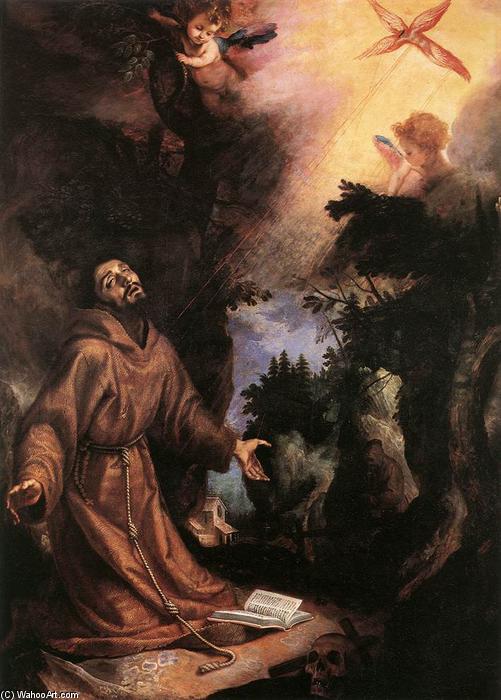
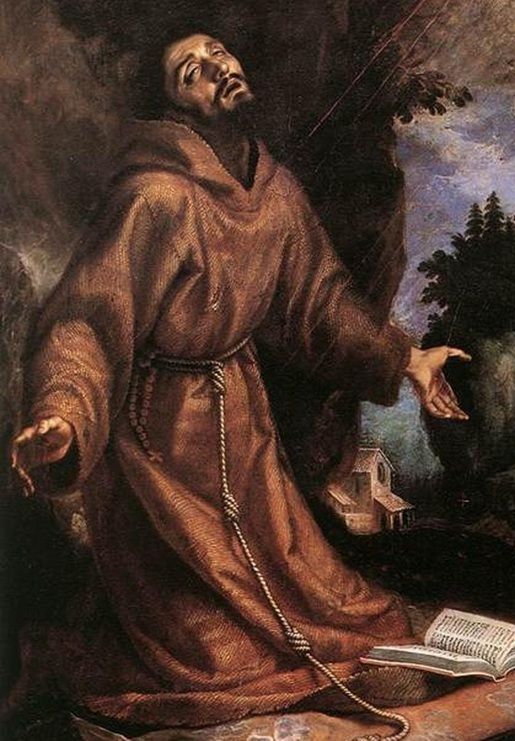
Stigmata of St Francis of Assisi:
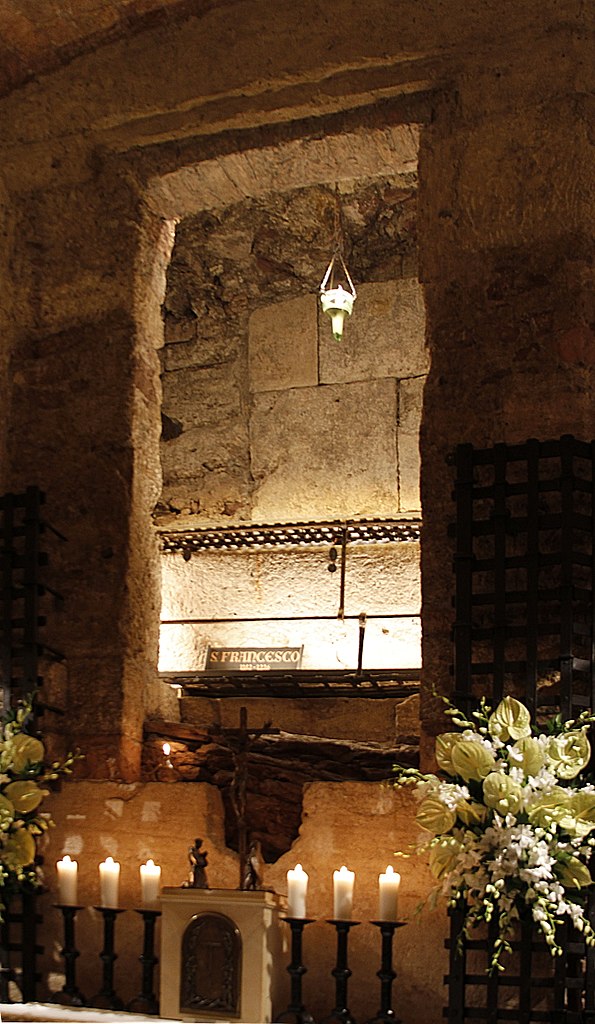
Two years before the great Saint Francis of Assisi died and when he was forty-two years old — one year after he had built the first crib in honour of Our Lord — he went off to a lonely mountain called Mount Alvernia, to prepare himself by forty days of fasting and prayer for the feast of Saint Michael, the greatest of God’s angels, whose feast day is 29 September. On the feast of the Exaltation of the Holy Cross on 14 September, Saint Francis received in his hands, feet and side the Sacred Wounds from Our Lord’s own body.

Never was a saint more beautifully loved by Jesus than Saint Francis of Assisi. The wounds Jesus gave him stayed in his hands, feet and side and continually bled for two more years, until he died in 1226. The day on which Saint Francis received the Five Wounds of Our Lord was 14 September but so, that this beautiful event might have a feast day for itself, the Stigmata of Saint Francis is commemorated today, on 17 September. The simple liturgy of this holy saint’s life might be put this way – the crib in 1223 and the Cross in 1224.

St Agathoclia
St Brogan of Ross Tuirc
St Columba of Cordova
St Crescentio of Rome
St Emmanuel Nguyen Van Trieu
St Flocellus
St Hildegard von Bingen OSB (1098-1179) Doctor of the Church
Biography:

https://anastpaul.com/2018/09/17/saint-of-the-day-17-september-st-hildegard-von-bingen-osb-1098-1179-doctor-of-the-church/

St Justin of Rome
St Lambert (c 635-c 700) Bishop & Martyr
St Narcissus of Rome
St Peter Arbues
St Rodingus
St Satyrus of Milan
St Socrates
Bl Stanislaus of Jesus and Mary
St Stephen
St Theodora
St Uni of Bremen
St Zygmunt Sajna
St Zygmunt Szcesny Felinski TOSF (1822-1895)
His Life:

https://anastpaul.com/2019/09/17/saint-of-the-day-17-september-saint-zygmunt-szcesny-felinski-1822-1895/

Martyred in the Spanish Civil War
• Blessed Álvaro Santos Cejudo Moreno Chocano
• Blessed Juan Ventura Solsona
• Blessed Timoteo Valero Pérez

Posted in FATHERS of the Church, QUOTES for CHRIST, QUOTES of the SAINTS, QUOTES on FAITH, QUOTES on GRACE, QUOTES on HELL, QUOTES on HERESY, QUOTES on the CHURCH, QUOTES on THE MYSTICAL BODY, QUOTES on the PRIESTHOOD, QUOTES on TRUST and complete CONFIDENCE in GOD, QUOTES on WEALTH/RICHES, SAINT of the DAY, The FAITHFUL on PILGRIMAGE

Quote/s of the Day – 16 September – St Cyprian’s Words of Wisdom for our times!

Quote/s of the Day – 16 September – The Memorial of Sts Cornelius & Cyprian

“The world is going mad
in mutual extermination and murder,
considered as a crime, when committed individually,
becomes a virtue, when it is committed by large numbers.
It is the multiplication of the frenzy,
that assures impunity to the assassins.”

“You cannot have God for your Father
if you do not have the Church for your mother.”

“There is one God and one Christ and one Church
and one Chair founded on Peter,
by the word of the Lord.
It is not possible to set up another altar
or for there to be another priesthood
besides that one altar and that one priesthood.
Whoever has gathered elsewhere, is scattering!”

“Their property held them in chains…
chains which shackled their courage
and choked their faith
and hampered their judgement
and throttled their soul…
If they stored up their treasure in heaven,
they would not now have an enemy and a thief
within their own household…
They think of themselves as owners,
whereas it is they rather, who are owned –
enslaved as they are to their own property,
they are not the masters of their money
but it’s slaves!”

“We have solemnly
renounced the world
and therefore,
whilst we continue in it,
we should behave
like strangers and pilgrims.”

“He [Christ], protects their faith
and gives strength to believers,
in proportion to the TRUST,
that each man,
who receives that strength,
is willing to place in Him.”

“The wretched bodies
of the condemned
shall simmer
and blaze
in those living fires.”

St Cyprian of Carthage (c 200- c 258)
Bishop and Martyr, Father of the Church

More from St Cyprian here:
https://anastpaul.com/2019/09/16/quote-s-of-the-day-16-september-the-wisdom-of-st-cyprian-of-carthage/

And St Cyprian’s letter to St Cornelius here:
https://anastpaul.com/2019/09/16/thought-for-the-day-16-september-a-faith-that-is-ready-and-unshaken-st-cyprian-of-carthage-to-st-pope-cornelius/