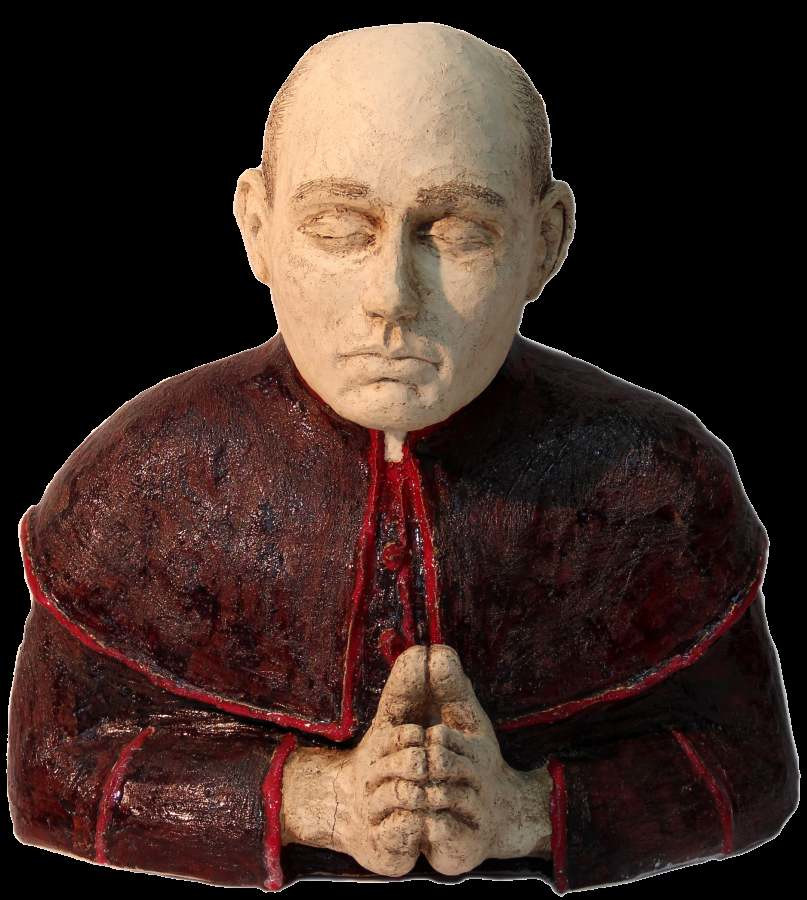
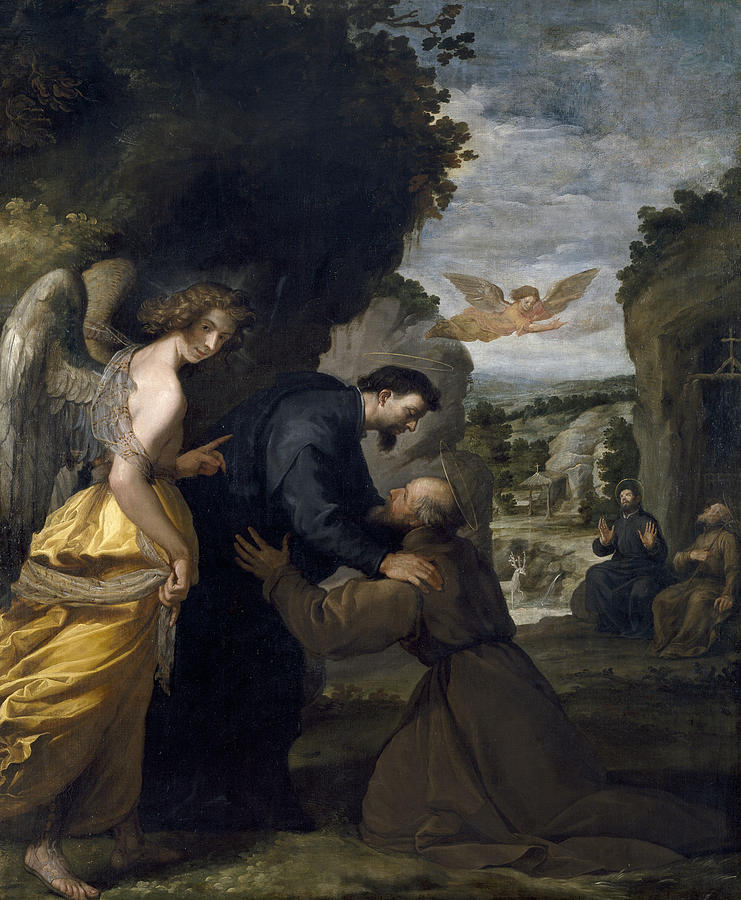
Saint of the Day – 11 December – Blessed Francesco Lippi O.Carm (1211-1291) also known as Blessed Franco of Siena – Carmelite Hermit, Mystic, Penitent, with the gift of prophesy. Born in c 1211 at Grotti-Siena, Italy and died on 11 December 1291 in Siena, Italy of natural causes, aged 80.
Blessed Francesco was born at Grotti, Italy of the noble parents, Matteo and Dorotea Lippi.
He spent his dissolute adolescence as a soldier who indulged in many vices. His military unit captured Sarteano from the Orvientani but, during the fighting, he was blinded in 1261. In his supplication in prayer, he promised to change his life if he was healed and regained his sight. After praying fervently to Saint James for his intercession, his sight was indeed restored.
He travelled on a pilgrimage to Campostella and to the Basilica di San Nicola in Bari to visit the tomb of Saint Nicholas. He also travelled to Loreto, Rome and Siena, where he heard the preaching of Blessed Ambrose Sansedoni OP, a renowned preacher whose oratory, simple rather than elegant, was most convincing and effective. Thereafter, Blessed Francesco resolved to live the remainder of his life as a hermit and to do penance for his earlier life. He shut himself in a small cell and remained there from 1261 to 1266.
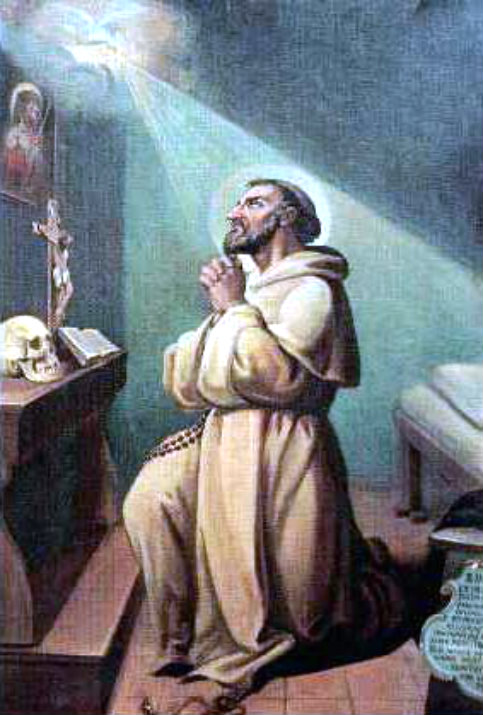
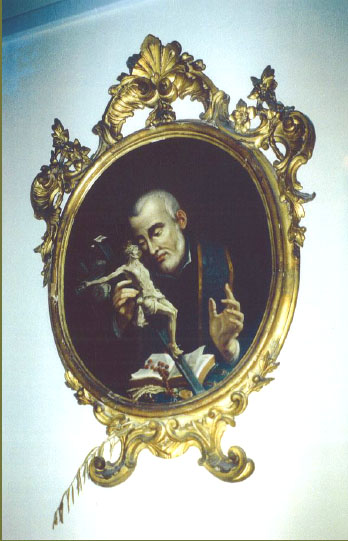
Painting in San Martino in Bologna. This depiction includes a chain and a ball indicating the penitential nature of Blessed Francesco’s life.
Then he entered the Carmelite Order and continued to live as a hermit. He experienced visions of Jesus Christ and the Madonna as well as seeing angels and experiencing the temptations of demons. He became well-known for his prophetic gifts.
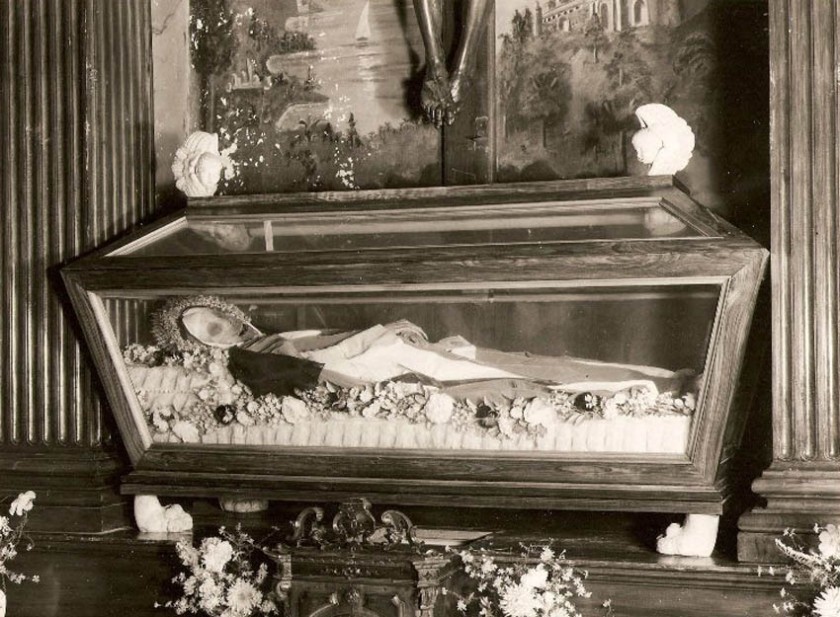
He died on 11 December 1291. Part of his relics were relocated to a Carmelite convent in Cremona in 1341.
The confirmation of the late Lippi’s ‘cultus’ (or popular devotion) allowed for Pope Clement X to approve his Beatification in 1670.
St Aithalas of Arbela
St Apseus of Arbela
Bl Arthur Bell
Barsabas of Persia
St Cian
St Daniel the Stylite
Bl David of Himmerod
Bl Dominic Yanez
St Eutychius the Martyr
St Fidweten Bl Francesco Lippi O.Carm (1211-1291)
Bl Hugolinus Magalotti
Bl Jean Laurens
Bl Kazimierz Tomasz Sykulski St María Maravillas de Jesús OCD (1891-1974) St Maria’s Story: https://anastpaul.com/2018/12/11/saint-of-the-day-11-december-st-maria-maravillas-de-jesus-ocd-1891-1974/
Bl Martín Lumbreras Peralta
Bl Martino de Melgar
Bl Melchor Sánchez PérezPens
Bl Pilar Villalonga Villalba
Bl Severin Ott
Martyrs of Saint Aux-Bois – (3 saints): Two Christian missionaries and one of their local defenders who faith in the persecutions of governor Rictiovarus – Fuscian, Gentian and Victoricus. They were beheaded in 287 in Saint Aux-Bois, Gaul (in modern France).
Martyrs of Rome – (3 saints): Three Christians murdered in the persecutions of Diocletian for giving aid to Christian prisoners – Pontian, Practextatus and Trason. They were imperial Roman citizens. They were martyred in c 303 in Rome, Italy.
Thought for the Day – 10 December – The First Universal Memorial of Our Lady of Loreto
In the liturgy of the Western Church the word litany is derived from litania, meaning prayer of invocation or intercession. It also meant, up to the twelfth century, a procession with intercessory character, also known under the designation of rogation. Speaking of litanies in the classical sense, the Church has approved for official use the following ones: The Litanies of All Saints, probably the oldest, the Litanies of the Names of Jesus (1886), the Litanies of the Sacred Heart of Jesus (1899), those in honour of Saint Joseph (1909) and the Precious Blood (1960) as well as the Litanies of Loreto.
THE LITANY OF LORETO
The Litany of Loreto, so called because of its use in the sanctuary of Loreto (Italy) since at least as far back as 1531, was officially approved in 1587 by Pope Sixtus V. Its origin is believed to be a medieval rhymed litany influenced by Eastern Marian devotion, in particular by the famous Hymnos Akathistos. Contrasting with the older Litany of All Saints, the components of the Loreto Litany are purely ad- or invocational prayers. It is the only approved Marian litany. As can be observed, for example, in the so called Officia Mariana, many more Marian litanies were and are in use but designated for private devotion.
MODERN ADVOCATIONS
The 1587 version of the Litany of Loreto was subsequently enriched with new advocations.
1675 Queen of the most Holy Rosary (for the confraternities of the Holy Rosary) 1883 Queen Conceived without Original Sin (Leo XIII for the whole Church) 1903 Mother of Good Counsel (Leo XIII) 1917 Queen of Peace (Benedict XV) 1950 Queen Assumed into Heaven (Pius XII) 1980 Mother of the Church (John Paul II) 1995 Queen of Families (John Paul II)
On 24 March 1920, Pope Benedict XV (1854-1922) approved the Patronage of Aviation, air passengers, pilots, etc to Our Lady of Loreto.
The reason for this is the reference to the Holy House. According to ancient tradition, the Holy House–that of Mary and Jesus, where the Word of God became flesh–arrived by sky or sea, on the hill of Loreto at the end of the thirteenth century. It reached Loreto, Italy after a brief stay at Tersato, Dalmatia, 1291 and landed 1294 at a location called Recanati (today’s Loreto) in a wooded area belonging to a nobleman named Loreta. The dimensions of the House of Loreto are identical to those of the House of the Holy Family that is missing from its enshrinement place at the Nazareth Basilica. The Church of Mary of Loreto was first mentioned in 1315. Construction of a large church is cited in 1468. In 1586, Loreto was granted city status and the church was raised to a Cathedral, only to become a Basilica in 1728. It has been an episcopal cathedral since 1965.
Loreto is one of the most famous Marian shrines in Italy. It is a worldwide centre of Marian prayer (Litany of Loreto), celebrating the “ineffable mystery of the Incarnation of the Word” (John Paul II) and inviting all Christian families to take as their model the Family of Nazareth.
Pope Benedict XV approved a special blessing for the Patronage of aviation, in 1920:
“O merciful God, You have consecrated the house of the Blessed Virgin Mary with the mystery of the Word Incarnate and placed it in the midst of Your children. Pour forth Your blessing on this vehicle so that those who take an aerial trip in it, may happily reach their destination and return safely home under Mary’s protection.”
Lord, have mercy. Christ, have mercy. Lord, have mercy. Christ, hear us. Christ, graciously hear us. God, the Father of heaven, Have mercy on us. God the Son, Redeemer of the world, Have mercy on us. God the Holy Spirit, Have mercy on us. Holy Trinity, one God. Have mercy on us.
Response for the following: Pray for us.
Holy Mary Holy Mother of God Holy Virgin of virgins, Mother of Christ Mother of the Church Mother of divine grace Mother most pure Mother most chaste Mother inviolate Mother undefiled Mother most amiable Mother most admirable Mother of good counsel Mother of our Creator Mother of our Saviour Virgin most prudent Virgin most venerable Virgin most renowned Virgin most powerful Virgin most merciful Virgin most faithful Mirror of justice Seat of wisdom Cause of our joy Spiritual vessel Vessel of honour Singular vessel of devotion Mystical rose Tower of David Tower of ivory House of gold, Ark of the covenant Gate of heaven Morning star Health of the sick Refuge of sinners Comforter of the afflicted Help of Christians Queen of angels Queen of patriarchs Queen of prophets Queen of apostles Queen of martyrs Queen of confessors Queen of virgins Queen of all saints Queen conceived without original sin Queen assumed into heaven Queen of the most holy Rosary Queen of families Queen of peace
Lamb of God, You take away sins of the world; Spare us, O Lord.
Lamb of God, You take away the sins of the world; Graciously hear us, O Lord.
Lamb of God, You take away the sins of the world; Have mercy on us.
V. Pray for us, O Holy Mother of God.
R. That we may be made worthy of the promises of Christ.
Let us pray:
Grant, we beg You, O Lord God, that we Your servants may enjoy lasting health of mind and body and by the glorious intercession of the Blessed Mary, ever Virgin, be delivered from present sorrow and enter into the joy of eternal happiness. Through Christ our Lord. R. Amen
During Advent:
Let us pray: O God, You willed that, at the message of an angel, Your word should take flesh in the womb of the Blessed Virgin Mary; grant to Your suppliant people, that we, who believe her to be truly the Mother of God, may be helped by her intercession with You. Through the same Christ our Lord. R. Amen
Our Morning Offering – 10 December – The Second Sunday of Advent and the First Universal Memorial of Our Lady of Loreto
Maiden yet a Mother By Dante Alighieri (1265-1321) Tr Msgr Ronald A Knox (1888-1957)
Maiden yet a mother,
daughter of thy Son,
high beyond all other,
lowlier is none;
thou the consummation
planned by God’s decree,
when our lost creation
nobler rose in thee!
Thus His place prepared,
he who all things made
‘mid his creatures tarried,
in thy bosom laid;
there His love He nourished,
warmth that gave increase
to the root whence flourished
our eternal peace.
Nor alone thou hearest
When thy name we hail;
Often thou art nearest
When our voices fail;
Mirrored in thy fashion
All creation’s gird,
Mercy, might compassion
Grace thy womanhood.
Lady, let our vision
Striving heavenward, fail,
Still let thy petition
With thy Son prevail,
Unto whom all merit,
prayer and majesty,
With the Holy Spirit
And the Father be.
Maiden Yet A Mother is a translation of a poem by Durante (Dante) degli Alighieri (c 1265–1321). It is based upon the opening verses of Canto 33 of the Paradiso from his Divine Comedy in which St Bernard of Clairvaux (1090–1153) praises and prays to the Virgin Mother on behalf of Dante. It was translated from the original Italian into English by the Catholic convert, Monsignior Ronald A Knox (1888-1957).
Saint of the Day – 10 December – The First Universal Memorial of Our Lady of Loreto
The Holy House of Loreto – The feast is so named from the tradition that the house where the Holy Family lived in Nazareth, was transported by angels to the city of Loreto, Italy. The Holy House is now encased by a basilica. It has been one of the famous shrines of the Blessed Virgin since the 13th century.
A complete background here: https://anastpaul.wordpress.com/2017/12/10/the-feast-of-the-our-lady-of-loreto-and-the-holy-house-10-december/
Congregation for Divine Worship and the Discipline of the Sacraments
DECREE
on the celebration of the Blessed Virgin Mary of Loreto to be inscribed in the General Roman Calendar
Since the Middle Ages veneration for the Holy House of Loreto has been the origin of that particular shrine which still today is visited by many faithful pilgrims in order to nourish their faith in the Word of God made flesh for us.
This shrine recalls the mystery of the Incarnation, leading all those who visit it to consider “the fullness of time,” when God sent His Son, born of a woman, as well as to meditate, both on the words of the Angel announcing the Good News and on the words of the Virgin in response to the divine call. Overshadowed by the Spirit, the humble handmaid of the Lord so became the dwelling-place of divinity, the purist image of the holy Church.
Closely bound to the Apostolic See this shrine, praised by Popes and known throughout the world, has, over the years and no less than Nazareth in the Holy Land, been able to illustrate powerfully the evangelical virtues of the Holy Family.
In the Holy House, before the image of the Mother of the Redeemer and of the Church, Saints and Blesseds have responded to their vocation, the sick have invoked consolation in suffering, the people of God have begun to praise and plead with Mary using the Litany of Loreto, which is known throughout the world . In a particular way, all those who travel via aircraft have found in her their heavenly patron.
In light of this, Pope Francis has decreed, by his own authority, that the optional memorial of the Blessed Virgin Mary of Loreto should be inscribed in the Roman Calendar on 10 December, the day on which the feast falls in Loreto and celebrated every year. This celebration will help all people, especially families, youth and religious to imitate the virtues of that perfect disciple of the Gospel, the Virgin Mother, who, in conceiving the Head of the Church also accepted us, as her own.
Therefore, the new Memorial must appear in all Calendars and Liturgical Books for the celebration of Mass and the Liturgy of the Hours, the relative texts are attached to this decree and their translations, approved by the Episcopal Conferences, will be published after confirmation by this Dicastery.
Anything to the contrary nothwithstanding.
From the Congregation for Divine Worship and the Discipline of the Sacraments, 7 October 2019, the memorial of the Blessed Virgin Mary of the Rosary.
Robert Cardinal Sarah Prefect
The shrine of Our Lady of Loreto is located on the Adriatic coast of Italy, three hours from Rome. It is the third largest shrine to Mary in Europe, next to Lourdes and Fatima. The ministry of the shrine is the hospitality shown to pilgrims especially through the Sacrament of Penance.
Basilica of Loreto in which the Holy House resides
The tradition of the shrine at Loreto goes back to the year 1291. As the last of the crusaders returned to Western Europe they brought with them a number of relics, objects of devotion and remembrances of holy shrines. It happened that the dwelling of the Blessed Virgin Mary, the house which both tradition and Christian devotion had maintained, as the site of the appearance of the archangel Gabriel and, therefore, the Incarnation of our Saviour, was moved from Nazareth to Christian Europe. The house arrived at Loreto on 10 December 1294.
We firmly believe that by the power of the Holy Spirit, God has become man in Jesus Christ – a man like us in all things but sin. In His humanity the eternal Word was born of the Blessed Virgin Mary, in His humanity He died on the cross, at the foot of which stood the Blessed Virgin Mar, in His humanity He rose from the dead and appeared to the disciples and to Mary in the upper room. The holy house of Mary at Loreto has been preserved by our fathers and mothers in the faith, to serve for generations as a reminder of the faith of the Blessed Virgin Mary and of her love of God in Jesus Chris,t by the power of the Holy Spirit. We, too, are called to be homes, dwellings and tabernacles of the Lord by the power of the Holy Spirit.
It is our mission as Catholics now to recall for one another, for our neighbourhoods, our communities and our world, that Jesus Christ became man, that He rose from the dead and that He is alive. This we are called to do, above all, by showing to the world that Jesus Christ lives in us, that Jesus Christ, by the power of the Holy Spirit, has made His home in us, as He did in the womb of Mary and in the house of Nazareth. Amen
First Universal Memorial of Our Lady of Loreto +2019
The title Our Lady of Loreto refers to the Holy House of Loreto, the house in which Mary was born and where the Annunciation occurred and to an ancient statue of Our Lady which is found there. Tradition says that a band of angels scooped up the little house from the Holy Land and transported it first to Tersato, Dalmatia in 1291, then Recanati, Italy in 1294 and finally to Loreto, Italy where it has been for centuries. It was this flight that led to her patronage of people involved in aviation and the long life of the house that has led to the patronage of builders, construction workers, etc. It is the first shrine of international renown dedicated to the Blessed Virgin and has been known as a Marian center for centuries. Popes have always held the Shrine of Loreto in special esteem and it is under their direct authority and protection.
The Holy House of Loreto – The feast is so named from the tradition that the house where the Holy Family lived in Nazareth, was transported by angels to the city of Loreto, Italy. The Holy House is now encased by a basilica. It has been one of the famous shrines of the Blessed Virgin since the 13th century. A complete background here:
St Abundius
St Albert of Sassovivo
St Angelina of Serbia
Bl Brian Lacey
BL Bruno of Rommersdorf
St Caesarius of Epidamnus
St Carpophorus
St Deusdedit of Brescia
St Edmund Gennings
St Emérico Martín Rubio
St Florentius of Carracedo
St Fulgentius of Afflighem
St Gemellus of Ancyra
St Gonzalo Viñes Masip St Pope Gregory III (Died 741) Biography: https://anastpaul.com/2018/12/10/saint-of-the-day-10-december-st-pope-gregory-iii-died-741/
Bl Guglielmo de Carraria
St Guitmarus
St Hildemar of Beauvais
Bl Jerome Ranuzzi
Bl John Mason
St Julia of Merida
St Lucerius
Bl Marco Antonio Durando
St Maurus of Rome
St Mercury of Lentini
St Pope Miltiades
St Polydore Plasden
Bl Sebastian Montanol
Bl Sidney Hodgson
St Sindulf of Vienne
St Swithun Wells
St Thomas of Farfa
Bl Thomas Somers
St Valeria
Martyrs of Alexandria – 3 saints – A group of Christians murdered for their faith in the persecutions of Galerius Maximian – c312. The only details that have survived are three of the names – Eugraphus, Hermogenes and Mennas.
Saint of the Day – 9 December – Blessed Liborius Wagner (1593-1631) Priest and Martyr, Teacher, Confessor, Apostle of Charity, Teacher – born on 5 December 1593 at Mühlhausen, Unstrut-Hainich, Thuringia, Germany and died by being beaten to death with swords and firearms on 9 December 1631 near the River Main, Schonungen, Schweinfurt, Germany. He administered throughout his pastoral mission in Würzburg and was killed “in odium fidei” (in hatred of the faith). He performed a wide range of charitable acts and he was more than willing to shed his blood for his beliefs and for his fellow Christians. Patronage – of persecuted Christians.
He grew up in a Protestant household during the Counter-Reformation period. His decision in 1613, to learn Counter-Reformation theological matters in Würzburg and this was a decision that his parents disapproved of. This led him to convert to the Catholic Faith which earned the ire of his parents especially when he continued his studies in order to become a Priest.
He became a teacher in 1617 and was ordained as a priest on 29 March 1625. Thereafter, the became the parish priest of an area split between Protestants and Catholics. He attempted to reconcile both, as best he could but the divisions made this process extremely painful and difficult..
Fr Liborius was driven from his parish to another town during a time of conflict in Central Europe. Swedish Protestant soldiers apprehended him in a schoolhouse and tortured him for almost a week. He refused to renounce his faith and killed him on 9 December 1631. The immediate cause of his death was beating with firearms and swords.
His body was stripped of his priestly garments to make identification more difficult and thrown into the River Main but was recovered from the river by Catholics living nearby and buried. Following the end of Swedish rule in the area, his body was re-interred in the chapel of the castle of Mainberg and finally re-interred in the parish church of San Lorenzo, Heidenfeld, Germany on 15 December 1637, where his Shrine now resides, see the images below. It is a place of pilgrimage for many Catholics, especially those suffering persecution.
St Pope Paul VI declared Blessed Liborius a Venerable in 1973 then Beatified him on 24 March 1974 as a Martyr.
St Adam Scotus
Bl Agustín García Calvo *
Bl Antonio Martín Hernández *
St Auditor of Saint-Nectaire
St Balda of Jouarre
St Bernhard Mariea Silvestrelli
St Budoc of Brittany
Bl Carmen Rodríguez Banazal *
St Caesar of Korone
St Cephas
Bl Clara Isabella Fornari
St Cyprian of Perigueux
Bl Dolores Broseta Bonet *
Bl Estefanía Irisarri Irigaray *
St Ethelgiva of Shaftesbury
St Gorgonia
Bl Isidora Izquierdo García *
Bl José Ferrer Esteve *
Bl José Giménez López *
Bl Josefa Laborra Goyeneche *
Bl Josep Lluís Carrera Comas *
St Julian of Apamea
Bl Julián Rodríguez Sánchez *
St Leocadia of Toledo Blessed Liborius Wagner (1593-1631) Priest and Martyr
Bl María Pilar Nalda Franco *
St Michaela Andrusikiewicz
St Nectarius of Auvergne
St Proculus of Verona
Bl Recaredo de Los Ríos Fabregat *
St Syrus of Pavia
St Valeria of Limoges
St Wulfric of Holme
Blessed Mercedarian Fathers – (10 beati): The memorial of ten Mercedarian friars who were especially celebrated for their holiness.
• Arnaldo de Querol • Berengario Pic • Bernardo de Collotorto • Domenico de Ripparia • Giovanni de Mora • Guglielmo Pagesi • Lorenzo da Lorca • Pietro Serra • Raimondo Binezes • Sancio de Vaillo
Martyred Salesians of Valencia – (5 beati)
Martyrs of North Africa – (4 saints): Twenty-four Christians murdered together in North Africa for their faith. The only details to survive are four of their names – Bassian, Peter, Primitivus and Successus.
Martyrs of Paterna – (7 beati)
Martyrs of Samosata – (7 saints): Seven martyrs crucified in 297 in Samosata (an area of modern Turkey) for refusing to perform a pagan rite in celebration of the victory of Emperor Maximian over the Persians. They are – Abibus, Hipparchus, James, Lollian, Paragnus, Philotheus and Romanus. They were crucified in 297 in Samosata (an area in modern Turkey).
Martyrs of the Spanish Civil War – (13 beati):
• Blessed Agustín García Calvo
• Blessed Antonio Martín Hernández
• Blessed Carmen Rodríguez Banazal
• Blessed Dolores Broseta Bonet
• Blessed Estefanía Irisarri Irigaray
• Blessed Isidora Izquierdo García
• Blessed José Ferrer Esteve
• Blessed José Giménez López
• Blessed Josefa Laborra Goyeneche
• Blessed Josep Lluís Carrera Comas
• Blessed Julián Rodríguez Sánchez
• Blessed María Pilar Nalda Franco
• Blessed Recaredo de Los Ríos Fabregat
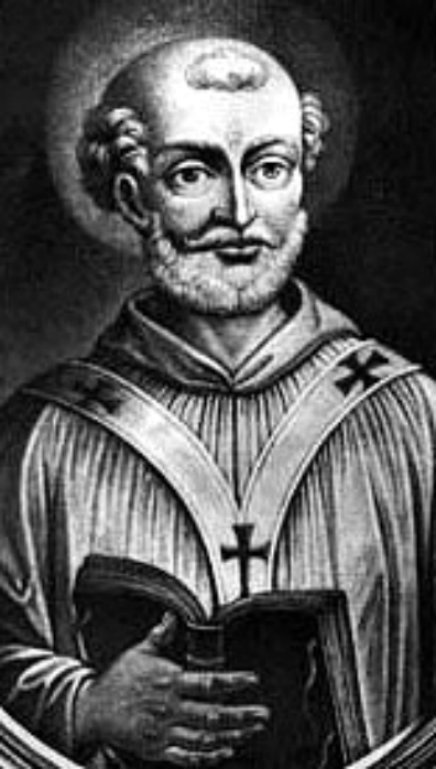
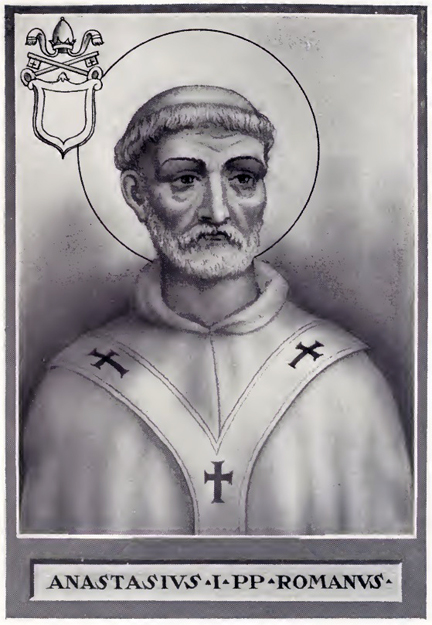
Saint of the Day – 8 December – Saint Pope Eutychian (Died 283) – Born in Etruria or Tuscany (both in modern Italy) and died on 7 December 283. The Church states his reign as January, 275 to 7 December 283.
This was a time of relative quiet in the Roman Church. There was no persecution or outright hostilities. However, the Empire was in deep trouble. This era is called the Crisis of the Third Century. Emperors were assassinated with great frequency. While the Church fought battles over dogma, the Empire, in only 20 years, had to go through many battles over land.
Eutychian was thus free to fight internal battles which threatened to divide the Church. The two biggest battles were the Novationist schism and the Trinitarian controversy. Novatian had begun his campaign during the time of Pope Cornelius. The persecutions had scared many into denouncing Christianity to save themselves. After peace came, many wanted to come back to communion with the Church. Could they be given absolution? Novatian said no. He was so adamant and pushed his teaching so convincingly that he was elected pope by some in Rome, claiming primacy from 251 to 258. This led to the question of whether a schismatic presbyter could validly baptise someone, or did that person need to be re-baptised. Although previous popes declared that not to be so, it was still a point of contention during Eutychian’s papacy. Although Novatian left Rome during another series of persecutions, giving up his claim to antipope and no-one hearing from him again, his concepts lasted for several centuries.
The other battle waged in Rome was the question of the Trinity. It was obvious that God the Father, God the Son and God the Holy Spirit were mentioned individually in the New Testament. Were they three modes of God’s being? Or were they three “persons” in one God? There is no record of Eutychian’s opinion. The established concept was not decided on his watch.
Under Eutychian’s papacy and the next few, as well, the Roman Catholic Church became a main cultural institution in the empire. Peaceful acceptance of the religion had begun. This is his legacy.
St Eutychian was the last pope buried in the papal crypt at the Catacombs of Callixtus.
Second Sunday of Advent, Year A +2019
Solemnity of the Immaculate Conception – MOVED to 9 December +2019
Bl Alojzy Liguda
St Anastasia of Pomerania
St Anthusa of Africa
St Antonio García Fernández
St Casari of Villeneuve-lès-Avignon
St Eucharius of Trier St Pope Eutychian (Died 283) The 27th Pope
St Gunthildis of Ohrdruf
Bl Jacob Gwon Sang-yeon
Bl Johanna of Cáceres
Bl José María Zabal Blasco
St Macarius of Alexandria
St Marin Shkurti
St Patapius
Bl Paul Yun Ji-chung
St Rafael Román Donaire
St Romaric of Remiremont
St Sofronius of Cyprus
Thought for the Day – 7 December – The Memorial of St Ambrose (c 340-397)- Father and Doctor of the Church
One of Ambrose’s biographers observed that at the Last Judgment, people would still be divided between those who admired Ambrose and those who heartily disliked him. He emerges as the man of action who cut a furrow through the lives of his contemporaries. Even royal personages were numbered among those who were to suffer crushing divine punishments for standing in Ambrose’s way.
When the Empress Justina attempted to wrest two basilicas from Ambrose’s Catholics and give them to the Arians, he dared the eunuchs of the court to execute him. His own people rallied behind him in the face of imperial troops . In the midst of riots, he both spurred and calmed his people with bewitching new hymns set to exciting Eastern melodies.
In his disputes with the Emperor Auxentius, he coined the principle – “The emperor is in the Church, not above the Church.”He publicly admonished Emperor Theodosius for the massacre of 7,000 innocent people. The emperor did public penance for his crime. This was Ambrose, the fighter sent to Milan as Roman governor and chosen while yet a catechumen to be the people’s bishop.
There is yet another side of Ambrose—one which influenced Augustine of Hippo, whom Ambrose converted. Ambrose was a passionate little man with a high forehead, a long melancholy face and great eyes. We can picture him as a frail figure clasping the codex of sacred Scripture. This was the Ambrose of aristocratic heritage and learning.
Augustine found the oratory of Ambrose less soothing and entertaining but far more learned than that of other contemporaries. Ambrose’s sermons were often modelled on Cicero and his ideas betrayed the influence of contemporary thinkers and philosophers. He had no scruples in borrowing at length from pagan authors. He gloried in the pulpit in his ability to parade his spoils—“gold of the Egyptians”—taken over from the pagan philosophers.
His sermons, his writings and his personal life reveal him as an otherworldly man involved in the great issues of his day. Humanity for Ambrose was, above all, spirit. In order to think rightly of God and the human soul, the closest thing to God, no material reality at all was to be dwelt upon. He was an enthusiastic champion of consecrated virginity.
The influence of Ambrose on Augustine seems to be universally accepted. The Confessions reveal some manly, brusque encounters between Ambrose and Augustine but there can be no doubt, of Augustine’s profound esteem for the learned bishop.
Neither is there any doubt that Saint Monica loved Ambrose as an angel of God who uprooted her son from his former ways and led him to his convictions about Christ. It was Ambrose, after all, who placed his hands on the shoulders of the naked Augustine as he descended into the baptismal fountain to put on Christ.
Ambrose exemplifies for us the truly catholic character of Christianity. He is a man steeped in the learning, law and culture of the ancients and of his contemporaries. Yet, in the midst of active involvement in this world, this thought runs through Ambrose’s life and preaching – The hidden meaning of the Scriptures calls our spirit to rise to another world.
Quote/s of the Day – 7 December – The Memorial of St Ambrose (c 340-397) Father and Doctor of the Church and St Maria Giuseppa Rosello FdM (1811-1880)
“Let your door stand open to receive Him, unlock your soul to Him, offer Him a welcome in your mind and then you will see the riches of simplicity, the treasures of peace, the joy of grace. Throw wide the gate of your heart, stand before the sun of the everlasting light.”
“If it is “daily bread,” why do you take it once a year? . . . Take daily what is to profit you daily. Live in such a way that you may deserve to receive it daily. He who does not deserve to receive it daily, does not deserve to receive it once a year.”
St Ambrose (c 340-397)
Father and Doctor of the Church
“Go to Jesus. He loves you and is waiting for you, to give you many graces. He is on the Altar, surrounded by angels adoring and praying. Let them make some room for you and join them in doing what they do.”
Saint of the Day – 7 December – St Maria Giuseppa Rosello FdM (1811-1880) Religious sister and Founder of the Daughters of Our Lady of Mercy. Also known as St Maria Joseph Rosello – Born as Benedetta Rosello on 27 May 1811 at Albissola Marina, Liguria, diocese of Savona, Italy and died on 7 December 1880 (aged 69) in Savona, Italy. She is the Patron of the Order she founded.
Three hundred years after the apparitions of Our Lady of Mercy on the hillsides of Savona, Italy in 1536. That same city was the scene of another important event – the founding of the Congregation of the Daughters of Our Lady of Mercy in 1837.
Chosen by God to accomplish this task was an unassuming young woman named Benedetta Rossello, today invoked as Saint Maria Joseph Rossello. Pope Pius XII raised her to the altars of sainthood on 12 June 1949.
One of nine children, her father was a potter. Born in poverty, she suffered from poor health all her life. Pious from early youth she tried to enter a religious order but was refused admission due to her health and lack of dowry. The pious, childless couple she worked for could have given her a dowry but would not because they did not want to lose her as member of their family. Benedetta was devoted to the Blessed Virgin Mary which led her to becoming a member of the Third Order of Saint Francis at the age of sixteen. Benedetta would become the sole support of her family after the death of her mother and second brother and her sister, Josephine and then her father too.
“Oh, that I could find a generous person who would care for these neglected children of my flock.” These were the words of Bishop De Mari of Savona one day as he came upon a group of uncouth girls playing on the street. Benedetta heard them as words from heaven and offered her services to the Bishop immediately.
Bishop DeMari was quick to see in the young woman before him a truly apostolic and generous person whom God had destined for great work. He did not hesitate to confide his plans to her, as he realised that God had sent Benedetta to him.
On 10 August 1837, Benedetta Rossello and three companions who shared her vision laid the foundation of a new religious family in the Church – the Congregation of the Daughters of Our Lady of Mercy. They began in a small unpretentious house in the city of Savona on a street called Vico del Vento.
After a brief but intense period of preparation, the Bishop presented a religious habit to each young woman as well as a new name to symbolise their consecration to God and His service. Benedetta became Sister Maria Joseph because Saint Joseph was to be her protector, provider and father throughout her whole life. Two years later, the new Sisters sealed their consecration to God by taking the three vows – poverty, chastity and obedience. These new Religious – the first Daughters of Our Lady of Mercy – dedicated themselves wholeheartedly to the work for which God had called the new Congregation to life – the education of youth, the care of the sick and all the works of mercy.
The Daughters of Our Lady of Mercy spread rapidly throughout Italy and during the lifetime of the Foundress, even to South America. In 1875, Saint Maria Joseph Rossello sent 15 Sisters to Buenos Aires, Argentina and there too, they spread far and wide, now having foundations in Brazil, Chile, Uruguay, Peru and many parts of Argentina.
In 1919, the Daughters of Our Lady of Mercy arrived in North America in response to an appeal similar to that of Bishop DeMari. They were requested to open a Social and Parish Mission Center in Springfield, MA, principally to offer religious Instruction to the children. Thus the mission and spirit of St Maria Joseph Rossello was extended to the United States.
Presently, the Daughters of Our Lady of Mercy minister in 19 countries on 5 continents. They may be found in Italy, Africa, India, Germany, Romania as well as North and South America and the Caribbean Islands.
St Agatho of Alexandria
St Anianas of Chartres
St Antonius of Siya
St Athenodoros of Mesopotamia
St Buithe of Monasterboice
St Burgundofara
St Charles Garnier
St Diuma
St Geretrannus of Bayeux
Bl Humbert of Clairvaux
St John the Silent
St Martin of Saujon St Maria Giuseppa Rosello FdM (1811-1880)
St Nilus of Stolbensk
St Polycarp of Antioch
St Sabinus of Spoleto
St Servus the Martyr
St Theodore of Antioch
St Urban of Teano
St Victor of Piacenza
Thought for the day – 6 December – Friday of the First week of Advent, Year A – Readings: Isaiah 29:17-24, Psalm 27:1, 4, 13-14, Matthew 9:27-31 and the Memorial of St Nicholas (270-343)
Each is the Administrator of Their Own Grace
Saint Maximus the Confessor (c 580-662)
Monk and Theologian
Fifth Century on Theology, nos. 34-35, 42, 45
“Each one of us possesses the manifest energy of the Spirit in proportion to the faith within them (cf Rm 12:6). And so, each is the administrator of their own grace. Someone, who is well disposed, could never be envious of anything, in the one who is honoured with graces, provided that the disposition towards receiving God’s graces, rests upon him. What determines that the gifts of God dwell in us, is the measure of each one’s faith. Because it is to the extent that we believe, that the enthusiasm to act is given us. And so those who act, reveal the measure of their faith proportionate to their action, they receive their measure of grace according to what they have believed. (…)
By means of the incomplete elevations of the virtues, we make the charisms that have been shared out to us, converge towards their cause, with the help of God, so that, by letting ourselves drift little by little into negligence, we might make our faith blind and sightless, deprived of the lights that the works of the Spirit gives us and may be justly punished for endless ages, for having blinded the divine eyes of faith in ourselves, insofar as it was in our power. (…)
The person who does not fulfil the divine commands of faith, has a faith that is blind. For if God’s Commands are lights (cf Is 26:9), this means, that whoever does not fulfil the Commands of God, is without divine light. He leaves the divine call without an answer. He does not really respond to him.”
Nicholas was loved for one reason. He loved. He loved God and God’s people so much that he would do anything for them. He was so grateful for the life God had given him that he just couldn’t stop giving joy and hope to others—no matter how far he had to travel or how many roofs he had to climb!
Saint of the Day – 6 December – Saint Peter Pascual (c 1227 – 1299) Bishop and Martyr, Theologian – born in 1227 at Valencia, Spain (as Spanish: Pedro Pascual, Valencian: Pere Pasqual) and died by beheading on 6 December 1300 at Granada, Spain.
Peter Paschal was born in Valencia on Spain’s east coast in the year 1227. Peter’s parents were devout Mozarabs (Iberian Christians) who lived under Muslim rule, paying a yearly tax known as a jizyah. The Mozarabs and the Muslim Arabs co-existed and even spoke a similar language known as Mozarabic.
The founder of the Mercedarians (The Royal, Celestial and Military Order of Our Lady of Mercy and the Redemption of the Captives), St Peter Nolasco (1189–1256), was very good friends of Peter’s family and he and his Mercedarian companions would often stay at Peter’s home when they were on a mission to free Christian captives. This exposure to these pious men helped to instil in young Peter a deep sense of piety. Combined with the virtuous, charitable and caring influence of his parents, Peter Paschal grew into a deeply devoted servant of God.
Ironically, the primary influence in Peter’s educational journey was a teacher whom Peter’s parents had ransomed from the Moors years before. The young man travelled with him to Paris and, under his guidance, studied, preached and taught, developing a fine reputation as a learned and pious man.
Peter then returned to Valencia and Peter Nolasco became his spiritual advisor. After another year of preparation, he became a full member of the Order of the Blessed Virgin Mary of Mercy, the Mercedarians. It was time for him to begin redeeming captive Christians.
Peter Paschal had a brilliant mind and James I, the King of Arragon, appointed him as a teacher of his son, Sanchez. Sanchez was so influenced by Peter that he himself became a Mercedarian Priest and, in 1262, was made the Archbishop of Toledo. Since Prince Sanchez was too young to be consecrated, Peter Paschal was appointed to govern the Diocese and was ordained the Bishop of Granada. Granada was under the control of the Muslims.
As Bishop of Grenada, Peter Paschal preached tirelessly about Christianity. He became known for his intense determination and zeal in redeeming captive Christian slaves who had been imprisoned by the Moors. His preaching was so potent that many Muslims began to embrace the doctrines of Jesus Christ and convert to Christianity.
Besides preaching, Peter not only continually ransomed captive Christians from the Moors, he also comforted those imprisoned and preached the gospel to their captors. His ability to bring the Moors to the Church was the reason he was finally arrested. Orders were given that no-one was allowed to visit or speak to Peter. He was held in prison and constantly treated cruelly and with disdain. But he was given permission to offer the Holy Sacrifice of the Mass every day. And this is where the beautiful miracle, for which St Peter is well-known happened.
One morning, the story goes, while Peter was preparing for Mass, a little boy about the age of five appeared before him. The boy was dressed in the clothes of a slave and told the Bishop he would gladly serve Mass for him if he would let him. Peter asked him who he was and the boy said, “I will tell you who I am when you have finished Mass.” After Mass was finished, Peter asked the boy a few questions and was amazed at the wisdom coming forth from the child. Then he asked the boy, “Tell me, who is Jesus Christ?”
The boy answered: “I am Jesus Christ. It is I Who was crucified for your salvation and for that of the whole world, look at My hands and My feet and My side and you will recognise the wounds I received during My Passion. Because you, have of your own choice, remained prisoner in order to procure freedom for my captive children and because, to obtain their freedom, you spent money sent to procure your own, you have made Me your Prisoner.” Then the little boy disappeared. Peter Paschal was filled with an indescribable joy.
His Muslim captors sensed and actually revered the sanctity of their prisoner. They told him if he would never say anything against Mohammad they would give him his freedom. He said he could never make such a promise. Shortly thereafter, as Bishop Peter Paschal was saying his thanksgiving after Mass, an executioner came up from behind him and cut off his head. The date was 6 January 1300. He was Beatified and Canonised by Pope Clement X on 14 August 1670.
St Peter was one of the first theologians to proclaim that Mary was Immaculately Conceived.
St Abraham of Kratia
St Aemilianus the Martyr
Bl Angelica of Milazzo
St Asella of Rome
St Boniface the Martyr
St Dativa the Martyr
St Dionysia the Martyr
St Gerard of La Charite
St Gertrude the Elder
St Giuse Nguyen Duy Khang
St Isserninus of Ireland
Bl Janos Scheffler
St Leontia the Martyr
St Majoricus the Martyr Saint Peter Pascual (Died 1299) Martyr
St Polychronius
St Tertus
—
Martyred in the Spanish Civil War:
• Blessed Esteban Vázquez Alonso
• Blessed Florencio Rodríguez Guemes
• Blessed Gregorio Cermeño Barceló
• Blessed Heliodoro Ramos García
• Blessed Ireneo Rodríguez González
• Blessed Juan Lorenzo Larragueta Garay
• Blessed Luis Martínez Alvarellos
• Blessed Luisa María Frías Cañizares
• Blessed Miguel Lasaga Carazo
• Blessed Narciso Pascual y Pascual
• Blessed Pascual Castro Herrera
• Blessed Vicente Vilumbrales Fuente
Saint of the Day – 5 December – Blessed Jean-Baptiste Fouque (1851-1926) Priest, Apostle of Charity known as “Saint Vincent de Paul of Marseilles,” Founder of numerous charitable organisations for the poor, the sick, the elderly, children and orphans. Born on 12 September 1851 in Marseille, Bouches-du-Rhône, France and died on 5 December 1926 at the Saint John Hospital in Marseille, Bouches-du-Rhône, France of natural causes. Patronage – Saint John’s Hospital.
He tended to the poor during his time as a parish priest in Marseilles and was noted for his desire to create a large and free hospital for them. He achieved this in 1921 and tended to the old and infirm in the hospital. Fouque also was known for his ministering to displaced peoples during World War I and for his commitment to evangelisation.
Jean-Baptiste Fouque was born on 19 September 1851 in Marseilles to Louis Fouque and Adèle Anne Remuzat. His parents married on 29 October 1850 and were devout in their faith.
He studied in the school that the Servant of God Joseph-Marie Timon-David had opened, both David and Jean-Joseph Allemand proved to be Fouque’s spiritual masters during his education and were also influences on his desire to enter the priesthood. Timon-David helped Jean-Baptiste discern his call to the priesthood which he had felt since the beginning of his adolescence. This event – his Ordination – took place in Marseilles on 10 June 1876.
His first assignment was to serve as a pastor in Auriol at the Sainte-Marguerite parish and then in La Major. His final assignment was to serve at the Sainte Trinité parish from 15 April 1888 until his death over three decades later.
Fr Jean-Baptiste opened the “Le Sainte Famille,” ” The Holy Family ” home for girls that he later entrusted to the nuns from the Presentation order from Tours. In December 1891 the archdiocesan vicar general asked him to tend to the abandoned and to orphans. He threw himself into this work and opened an orphanage “House of the Holy Guardian Angels” that was transferred to a new location in 1894 and entrusted to nuns.
In 1903 he helped to establish a house for girls and also a home for poor domestic workers both in Marseilles. In 1903 he also re-opened the former boarding school of the Ladies of the Christian Doctrine and in 1905 – in a former convent – created “L’oeuvre de Salette” for the old and infirm. Fouque later founded “Le travail de l’enfance” on 27 November 1913 in Saint-Tronc which he later entrusted to the direction of a group of priests.
Between 1914 and 1918 – upon the outbreak of World War I – he tended to the wounded and displaced peoples. He had no financial means following the war but decided to appeal to doctors to care for the poor who had no finances to pay for medical attention. There were some doctors who agreed and Fr Jean-Baptiste proceeded to open a small clinic and hospital which would ensure better treatment of the poor. He asked industrialists and merchants to help finance this venture which became the basis for his idea in 1919 to create a large and free hospital for the poor in Marseilles. The people rallied behind him in this project and offered financial aid which resulted in Fr Jean-Baptiste finally opening and dedicating the Saint John Hospital on 20 March 1921.
Fr Jean-Baptiste died on 5 December 1926 in the Saint John Hospital. The people revered him as a saint and even referred to him as the “Saint Vincent de Paul of Marseilles.” His remains were later transferred to the Saint Joseph’s chapel in his first hospital on 29 April 1993.
He was Beatified on 30 September 2018 by Cardinal Giovanni Angelo Becciu in the Cathedral of Sainte-Marie-Majeure, Marseille on behalf of Pope Francis. Pope Francis said on that day at St Peter’s, Rome:
“The diocesan priest Jean-Baptiste Fouque, who was an assistant pastor throughout his life, is being proclaimed Blessed today in Marseilles. A fine example for social climbers! He lived in the 19th and 20th centuries and promoted numerous welfare and social works in favour of young people, the elderly, the poor and the sick. May the example and intercession of this Apostle of Charity, support us in the commitment to welcome and share with the weakest and most underprivileged people. A round of applause for the newly Blessed Jean-Baptiste!”
St Abercius
St Anastasius
St Aper of Sens
St Bartholomew Fanti of Mantua
St Basilissa of Øhren
St Bassus of Lucera
St Bassus of Nice
St Cawrdaf of Fferreg
St Christina of Markyate
St Consolata of Genoa
St Crispina
St Cyrinus of Salerno
St Dalmatius of Pavia
St Firminus of Verdun
St Gerald of Braga
St Gerbold
St Gratus Blessed Jean-Baptiste Fouque (1851-1926)
St Joaquín Jovaní Marín
St John Almond
Bl Giovanni/John Gradenigo
St Justinian
St Martiniano of Pecco
Bl Narcyz Putz
St Nicetius of Trier
Bl Niels Stenson
St Pelinus of Confinium Blessed Philip Rinaldi SDB (1856-1931) Biography: https://anastpaul.com/2017/12/05/saint-of-the-day-5-december-blessed-philip-rinaldi-s-d-b-1856-1931/
St Sabbas of Mar Saba
St Vicente Jovaní Ávila
—
Martyrs of Thagura – (12 saints): A group of twelve African Christians who were martyred together in the persecutions of Diocletian. The only details about them that have survived are five of their names – Crispin, Felix, Gratus, Juliua and Potamia.
302 in Thagura, Numidia
Martyred in the Spanish Civil War:
• Blessed Joaquín Jovaní Marín
• Blessed Vicente Jovaní Ávila
Thought for the Day – 4 December – The Memorial of St John Damascene (676-749) – Father and Doctor of the Church
From The Statement of Faith by St John Damascene, Priest
You have called me, Lord, to minister to Your people. O Lord, You led me from my father’s loins and formed me in my mother’s womb. You brought me, a naked babe, into the light of day, for nature’s laws always obey Your commands.
By the blessing of the Holy Spirit, You prepared my creation and my existence, not because man willed it or flesh desired it but by Your ineffable grace . The birth You prepared for me, was such, that it surpassed the laws of our nature You sent me forth into the light by adopting me as Your son and You enrolled me among the children of Your holy and spotless Church.
You nursed me with the spiritual milk of Your divine utterances. You kept me alive with the solid food of the body of Jesus Christ, Your only-begotten Son for our redemption. And He, undertook the task willingly and did not shrink from it. Indeed, He applied Himself to it as though destined for sacrifice, like an innocent lamb. Although He was God, He became man and in His human will, became obedient to You, God His Father, unto death, even death on a cross.
In this way You have humbled Yourself, Christ my God, so that You might carry me, Your stray sheep, on Your shoulders. You let me graze in green pastures, refreshing me with the waters of true teaching at the hands of Your shepherds. You pastured these shepherds and now they, in turn, tend Your chosen and special flock. Now, You have called me, Lord, by the hand of Your bishop to minister to Your people. I do not know why You have done so, for You alone know that.
Lord, lighten the heavy burden of the sins through which I have seriously transgressed. Purify my mind and heart. Like a shining lamp, lead me along the straight path. When I open my mouth, tell me what I should say. By the fiery tongue of Your Spirit make my own tongue ready. Stay with me always and keep me in Your sight.
Lead me to pastures, Lord and graze there with me . Do not let my heart lean either to the right or to the left but let Your good Spirit guide me along the straight path. Whatever I do, let it be in accordance with Your will, now until the end.
And you, O Church, are a most excellent assembly, the noble summit of perfect purity, whose assistance comes from God. You in whom God lives, receive from us, an exposition of the faith that is free from error, to strengthen the Church, just as our Fathers handed it down to us.
Quote/s of the Day – 4 December – The Memorial of St John Damascene (676-749) – Father and Doctor of the Church
“Think of the Father as a spring of life begetting the Son, like a river and the Holy Ghost like a sea, for the spring and the river and sea are all one nature. Think of the Father as a root and of the Son as a branch and the Spirit as a fruit, for the substance in these three is one. The Father is a sun with the Son as rays and the Holy Ghost as heat.”
“‘How can this come about?’ Mary asked. ‘The Holy Spirit will come upon you,’ the angel answered’ and the power of the Most High will cover you with its shadow.’ And now you are the one who puts the question: ‘How can bread become Christ and wine His Blood?’ I answer: ‘The power of the Holy Spirit will be at work to give us a marvel which surpasses understanding.’”
“If the Word of God is living and powerful and if the Lord does all things whatsoever he wills; if he said, “Let there be light” and it happened; if he said, “let there be a firmament” and it happened; …if finally the Word of God Himself willingly became man and made flesh for Himself, out of the most pure and undefiled blood of the holy and ever Virgin, why should He not be capable of making bread, His Body and wine and water, His Blood?… God said “This is my Body” and “This is my Blood.”
Our Morning Offering – 4 December – The Memorial of St John Damascene (675-749) Father and Doctor of the Church
O Mary, my Hope! St John Damascene (675-749)
I salute you, O Mary!
you are the hope of Christians.
Receive the prayer of a sinner,
who loves you tenderly,
honours you in a special manner
and places in you the whole hope
of his salvation.
From you I have my life.
You reinstate me in the grace of your Son:
you are the sure pledge of my salvation.
I beseech of you, therefore, to deliver me
from the burden of my sins,
dispel the darkness of my mind,
banish from my heart the love of the world,
repress the temptations of my enemies
and so rule my whole life, that by your means
and under your guidance,
I may obtain everlasting happiness in heaven.
Amen
Saint of the Day – 4 December – Saint Barbara (3rd Century) Martyr – died by being beheaded by her father c 235 at Nicomedia during the persecution of Maximinus of Thrace. Patronages – against death by artillery, against explosions, against fire, against impenitence, against lightning, against storms ,against vermin, ammunition workers, architects, armourers, artillerymen, boatmen, bomb technicians. brass workers, brewers, builders, carpenters, construction workers, dying people, fire prevention, firefighters, fireworks manufacturers, fortifications, foundry workers, geologists, gravediggers, gunners, hatmakers, mariners, martyrs, masons, mathematicians, miners, ordnance workers, prisoners, saltpetre workers, smelters, stonecutters, Syria, tilers, warehouses, 8 Cities. Saint Barbara is one of the Fourteen Holy Helpers. Her association with the lightning, which killed her father has caused her to be invoked against lightning and fire. By association with explosions, she is also the patron of artillery and mining.
St Barbara with her attributes – three-windowed tower, central panel of St Barbara Altarpiece (1447), National Museum in Warsaw
Because of doubts about the historicity of her legend, she was removed from the General Roman Calendar in the 1969 revision, though not from the Catholic Church’s list of saints.
Saint Barbara is often portrayed with miniature chains and a tower. As one of the Fourteen Holy Helpers, Barbara continues to be a popular saint in modern times. A 15th-century French version of her story credits her with thirteen miracles, many rest upon the security she offered, that her devotees would not die before getting to make confession and receiving extreme unction.
According to the hagiographies, Barbara, the daughter of a rich pagan named Dioscorus, was carefully guarded by her father who kept her locked up in a tower in order to preserve her from the outside world. Having secretly become a Christian, she rejected an offer of marriage that she received through her father.
Before going on a journey, her father commanded that a private bath-house be erected for her use near her dwelling and during his absence, Barbara had three windows put in it, as a symbol of the Holy Trinity, instead of the two originally intended. When her father returned, she acknowledged herself to be a Christian, whereupon he drew his sword to kill her but her prayers created an opening in the tower wall and she was miraculously transported to a mountain gorge, where two shepherds watched their flocks. Dioscorus, in pursuit of his daughter, was rebuffed by the first shepherd but the second betrayed her. For doing this, he was turned to stone and his flock was changed to locusts.
Dragged before the prefect of the province, Martinianus, who had her cruelly tortured, Barbara remained faithful to her Christian faith. During the night, the dark prison was bathed in light and new miracles occurred. Every morning, her wounds were healed. Torches that would be used to burn her, were extinquished as they approached her. Finally, she was condemned to death by beheading. Her father himself carried out the death-sentence. However, as punishment, he was struck by lightning on the way home and his body was consumed by flame. Barbara was buried by a Christian, Valentinus and her tomb became the site of miracles. This summary omits picturesque details, supplemented from Old French accounts.
According to the Golden Legend, her martyrdom took place on 4 December “in the reign of emperor Maximianus and Prefect Marcien” (r. 286–305); the year was given as 267 in the French version.
St Ada of Le Mans
St Adelmann of Beauvais
Bl Adolph Kolping
St Anno II
St Apro St Barbara (Died 3rd Century) Martyr
St Bernardo degli Uberti
St Bertoara of Bourges
St Christianus
St Clement of Alexandria
St Cyran of Brenne
St Eraclius
St Eulogio Álvarez López
St Ezequiel Álvaro de La Fuente
St Felix of Bologna
Bl Francis Galvez
St Francisco de la Vega González
St Giovanni Calabria
St Heraclas of Alexandria
St Jacinto García Chicote
Bl Jerome de Angelis
St John the Wonder Worker
St Maruthas
St Melitus of Pontus
St Osmund of Salisbury
Bl Pietro Tecelano
St Prudens
St Robustiano Mata Ubierna
St Sigiranus
Bl Simon Yempo
St Sola
St Theophanes
Martyred in the Spanish Civil War:
• Blessed Eulogio Álvarez López
• Blessed Ezequiel Álvaro de La Fuente
• Blessed Francisco de la Vega González
• Blessed Jacinto García Chicote
• Blessed Robustiano Mata Ubierna
Thought for the Day – 3 December – Tuesday of the First week of Advent, Year A and The Memorial of St Francis Xavier SJ (1506-1552)
Woe to Me if I do not Preach the Gospel
Saint Francis Xavier (1506-1552) Priest and Missionary
An excerpt from Letters to Saint Ignatius
“We have visited the villages of the new converts who accepted the Christian religion a few years ago. No Portuguese live here—the country is so utterly barren and poor. The native Christians have no priests. They know only that they are Christians. There is nobody to say Mass for them, nobody to teach them the Creed, the Our Father, the Hail Mary and the Commandments of God’s Law.
I have not stopped since the day I arrived. I conscientiously made the rounds of the villages. I bathed in the sacred waters all the children who had not yet been baptised. This means that I have purified a very large number of children so young that, as the saying goes, they could not tell their right hand from their left. The older children would not let me say my Office or eat or sleep until I taught them one prayer or another. Then I began to understand – the kingdom of heaven belongs to such as these.
I could not refuse so devout a request, without failing in devotion myself. I taught them, first the confession of faith in the Father, the Son and the Holy Spirit, then the Apostles’ Creed, the Our Father and Hail Mary. I noticed among them persons of great intelligence. If only someone could educate them in the Christian way of life, I have no doubt, that they would make excellent Christians.
Many, many people hereabouts, are not becoming Christians for one reason only – there is nobody to make them Christians. Again and again, I have thought of going round the universities of Europe, especially Paris and everywhere crying out like a madman, riveting the attention of those with more learning than charity – “What a tragedy, how many souls are being shut out of heaven and falling into hell, thanks to you!”
I wish they would work as hard at this as they do at their books and so settle their account with God, for their learning and the talents entrusted to them.
This thought would certainly stir most of them to meditate on spiritual realities, to listen actively to what God is saying to them. They would forget their own desires, their human affairs and give themselves over entirely to God’s will and His choice. They would cry out with all their heart – Lord, I am here! What do you want me to do? Send me anywhere you like—even to India.”
How can we too fail!
It is Advent. All our answers remain fragmentary. The first thing we have to accept is, ever and again, the reality of an enduring Advent. If we do that, we shall begin to realise that the borderline between “before Christ” and “after Christ” does not run through historical time, in an outward sense and cannot be drawn on any map, it runs through our own hearts. Insofar, as we are living on a basis of selfishness, of egoism, then even today, we are “before Christ.” But in this time of Advent, let us ask the Lord to grant that we may live less and less “before Christ” and certainly not “after Christ” but truly “with Christ and in Christ” – with Him who is indeed Christ yesterday, today and forever.
Joseph Ratzinger (1964)
aka Pope Emeritus Benedict XVI
Quote/s of the Day – 3 December – The Memorial of St Francis Xavier SJ (1506-1552)
“Leave your country, your people and your father’s household and go to the land I will show you.”
Genesis 12:1
“I am in a country where all the niceties of life are lacking. But I am filled with many inner consolations. Indeed, I run the risk of crying my eyes out because of my tears of joy”
“When trying to evangelise, no tool is more effective, than that of personal witness. …People can argue with points of doctrine but no-one can argue, with a personal testimony!”
“Prayer is powerful! It fills the earth with mercy, it makes the Divine clemency pass from generation to generation, right along the course of the centuries. wonderful works have been achieved. through prayer.”
Advent Reflection – 3 December – Tuesday of the First week of Advent, Year A and the Memorial of St Francis Xavier SJ (1506-1552)- Readings: Isaiah 11:1-10, Psalm 72:1-2, 7-9, 12-13, Luke 10:21-24
“There shall come forth a shoot from the stump of Jesse and a branch shall grow out of his roots.”
Isaiah 11:6
Reflection
“In these passages, the meaning of Christmas shines through – God fulfils the promise by becoming man, not abandoning His people, He draws near to the point of stripping Himself of His divinity. In this way God shows His fidelity and inaugurates a new Kingdom, which gives a new hope to mankind. And what is this hope? Eternal life. ”
... Pope Francis – General audience 21 December 2016
Advent Action
Advent is a time to practice discipleship and the joy of sharing the message given to us! Today, share just a little of this joy of the Gospel and the hope of Christ, with those around you. Giving this gift is immense, as the Lord shared His Father in the Gospel of today, so we share Him. Spiritual love is tender, it is holy ground. There is simply no greater investment.
” …. Paul does not seek himself, he does not want to make a fan club for himself, he does not wish to go down in history as the head of a school of great knowledge, he is not self-seeking, rather, St Paul proclaims Christ and wants to gain people for the true and real God. Paul’s wish is to speak of and preach the One who entered his life and who is true life, who won him over on the road to Damascus. Therefore, talking about God means making room for the One who enables us to know Him, who reveals His face of love to us; it means emptying ourselves of our own ego, offering it to Christ, in the awareness that it is not we who can win over others for God but, that we must expect God to send them, we must entreat God for them. Talking about God, therefore, stems from listening, from our knowledge of God which is brought about through familiarity with Him, through the life of prayer and in accordance with the Commandments.” … Pope Benedict XVI (Excerpt – How to speak about God – The Year of Faith – 28 November 2012)
Prayer
Lord, it is my hope that I may always be in “Your will
and way.”
Sometimes I am selfish with my time and my own desires.
Today, help me sort out things in my life.
I need to make You the first priority in my life
and not the things that really do not matter.
Assist me in conducting myself in ways that are most pleasing to You.
Lord, it is my desire to live more for You this day
and share the joy of Your love with all I meet.
And today, we remember St Francis Xavier, the “second Paul”
Our Morning Offering – 3 December – The Memorial of St Francis Xavier SJ (1506-1552)
I Love Thee, God, I love Thee By St Francis Xavier
Translated by Gerard Manley Hopkins SJ (1844-1889)
I love Thee, God, I love Thee—
Not out of hope for heaven for me
Nor fearing not to love and be
In the everlasting burning.
Thou, my Jesus, after me
Didst reach Thine arms out dying,
For my sake suffered nails and lance,
Mocked and marred countenance,
Sorrows passing number,
Sweat and care and cumber,
Yea and death and this for me,
And Thou could see me sinning.
Then I, why should not I love Thee,
Jesu so much in love with me?
Not for heaven’s sake, not to be
Out of hell by loving Thee,
Not for any gains I see,
But just the way that Thou didst me
I do love and will love Thee.
What must I love Thee, Lord, for then?
For being my king and God.
Amen
Saint of the Day – 3 December – Blessed Johann Nepomuk von Tschiderer zu Gleifheim (1777-1860) Bishop of Trent from 1834 until his death, Professor, Apostle of Charity, Reformer, Founder of numerous schools, seminaries and churches, negotiator in peace settlements, Writer. He was born to Austrians but was considered to be an Austro-Italian as he was born in the Italian town of Bolzano. He was born on 15 April 1777 as Johann Nepomuk von Tschiderer zu Gleifheim in Bolzano, diocese of Trent, Italy and died on 3 December 1860 at Trent, Italy of natural causes.
Johann Nepomuk von Tschiderer zu Gleifheim was born as the fifth of seven males to Joseph Joachim von Tschiderer zu Gleifheim and Caterina de Giovanelli. His parents emigrated from the Grisons close to the Italian border in 1529 as the Emperor Ferdinand III had given the Tschiderer family a paten,t making them nobles in 1620. He was baptised moments after his birth at the Assumption church.
He received his education from the Order of Friars Minor in 1786 after completing his initial education and resided with his maternal grandfather. He relocated to Innsbruck with his parents in Austria in 1792 and underwent theological and philosophical studies at the Seminary there. He was elevated to the Diaconate on 24 June 1800 and later received his Ordination to the Priesthood on 27 July 1800. Tschiderer celebrated his first Mass at San Antonio di Padua church at Collalbo.
From 1800 to 1802 he spent time as an assistant priest and then travelled to Rome for further studies and a pilgrimage where he was named as an Apostolic Nuncio. He met the new Pope Pius VII several times during the course of 1802. He later returned and assumed pastoral work once more in the German part of Trent and was made a Professor of moral and pastoral theological studies there. In 1810 he became the parish priest at Sarentino – where he opened a small school – and then as the new parish priest at Merano.
On 26 October 1826 the Bishop Luschin appointed him as the Cathedral Canon and then on 26 December 1827 pro-vicar at Trent. On 24 February 1832 the Bishop Galura from Brixen selected him as Titular Bishop of Heliopolis – which received papal confirmation – and then as the Vicar-General for Vorarlberg while also being named as an Auxiliary Bishop of Brixen at the same time. He received his Episcopal Consecration on 20 May 1832 in a Servite church. In 1834 the Emperor Francis I nominated him as the new Bishop of Trent, which the Holy Father confirmed.
He spent his Episcopate writing and preaching as well as teaching catechism. He devoted a considerable part of his revenues to the building and restoration of over 60 churches and to the purchase of books for the parsonages and chaplains’ houses. He used the third centennial of the opening of the Council of Trent to promote religious revival through popular pastoral initiatives.
His charitable outreach to the poor and the sick was carried so far that he was often left without much himself. He left his residence to the institution for the deaf and dumb at Trent and to the educational institute for seminarians that he had founded and was later named after him as the “Joanneum”. Tschiderer tended to the victims of cholera epidemics in 1836 and in 1855 as well as to those affected in a war in 1859.
He intervened to prevent the 20 March 1848 uprising becoming a bloodbath and was hailed as a hero. He tried to appeal to the Austrian forces to spare the lives of 21 members of the Franco-Italian forces who were captured but was denied, so provided religious assistance and a solemn burial for them after their executions. Tschiderer ordained as a priest Saint Daniel Comboni in 1854. He promoted the Redemptorists and Jesuits in the region.
Tschiderer planned a pilgrimage to Rome in 1854 to commemorate the dogma of the Immaculate Conception but his ill health prevented him from doing so. He died during the evening of 3 December 1860 after suffering high fevers and being bedridden while also suffering from a heart ailment since 1859. He received the Anointing of the Sick prior to his death and received a papal blessing from Pope Pius IX.
St Pope John Paul II Beatified him in Trent on 30 April 1995 before 100 000 people. The cause started in 1886 under Pope Leo XIII and St Pope Paul VI titled him as Venerable in 1968. The Beatification miracles include the healing of blindness of a 4-year-old in 1867 and the 1871 cure of a young priest who was on his death-bed with tuberculosis.
You must be logged in to post a comment.