One Minute Reflection – 5 October – Saturday of the Twenty Sixth week in Ordinary Time, Year C, Gospel: Luke 10:17–24 and the Memorial of St Faustina Kowalska (1905-1938)
In that same hour he rejoiced in the Holy Spirit and said, “I thank thee, Father, Lord of heaven and earth…” … Luke 10:17
REFLECTION – “Christian joy is, essentially, a spiritual participation in the boundless joy, at the same time both divine and human, in the heart of Jesus Christ glorified… Let us now pause to contemplate the person of Jesus during His earthly life. In His humanity, He had experienced our joys. He has manifestly known, appreciated and celebrated a whole range of human joys, those simple daily joys within the reach of everyone. The depth of His interior life did not blunt His concrete attitude or His sensitivity. He admires the birds of heaven, the lilies of the field. He immediately grasps God’s attitude towards creation at the dawn of history. He willingly extols the joy of the sower and the harvester, the joy of the man who finds a hidden treasure, the joy of the shepherd who recovers his sheep or of the woman who finds her lost coin, the joy of those invited to the feast, the joy of a marriage celebration, the joy of the father who embraces his son returning from a prodigal life and the joy of the woman who has just brought her child into the world.
For Jesus, these joys are real because for Him they are the signs of the spiritual joys of the kingdom of God, the joy of people who enter this kingdom return there or work there, the joy of the Father who welcomes them. And for His part Jesus Himself manifests His satisfaction and His tenderness when He meets children wishing to approach Him, a rich young man who is faithful and wants to do more, friends who open their home to Him, like Martha, Mary and Lazarus. His happiness is, above all, to see the Word accepted, the possessed delivered, a sinful woman or a publican like Zacchaeus converted, a widow taking from her poverty and giving. He even exults with joy when He states that the little ones have the revelation of the kingdom which remains hidden from the wise and able. Yes, because Christ was “a man like us in all things but sin,” (PE 4) He accepted and experienced affective and spiritual joys, as a gift of God. And He did not rest until “to the poor he proclaimed the good news of salvation…and to those in sorrow, joy.” … St Paul VI (1897-1978) Pope from 1963-1978 – Apostolic exhortation on Christian joy ‘Gaudete in Domino’ (PE 4; cf Lk 4:10).
PRAYER – Lord God, You called St Faustina to serve You in a life of complete communion with Your Son and your people. Amidst this world’s changes, help us, by her prayers, to set out hearts always on You. Heavenly Father, let me realise that You guide our lives through Your Providence, Your Word, Your Mercy and Sacraments. Help me to be obedient to the rules for my state in life and so be obedient to Your will for me. Grant that the prayers of St Faustina may assist us as we strive to grow in humility and in joy! Through our Lord, Jesus Christ, Your Son in union with the Holy Spirit, one God forever and ever, amen.
Our Morning Offering – 5 October – Saturday of the Twenty Sixth week in Ordinary Time, Year C, the Memorial of St Faustina Kowalska (1905-1938) and a Marian Saturday
O Mary, My Mother By St Faustina Kowalska (1905–1938)
O Mary, my Mother
and my Lady,
I offer You my soul, my body,
my life and my death
and all that will follow it.
I place everything in Your hands.
O my Mother,
cover my soul with Your virginal mantle
and grant me the grace
of purity of heart, soul and body.
Defend me with Your power against all enemies
and especially against those
who hide their malice
behind the mask of virtue.
O lovely lily!
You are for me a mirror,
O my Mother!
Amen
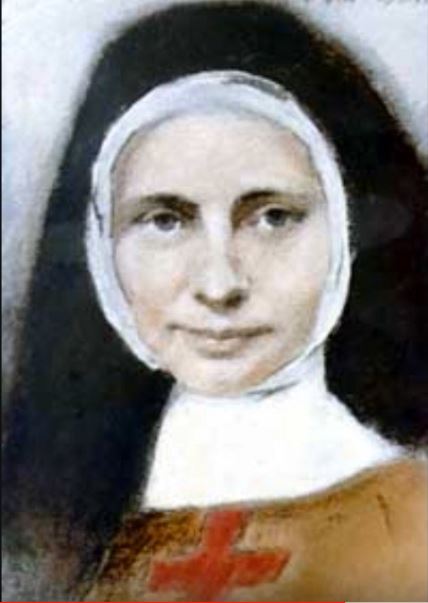
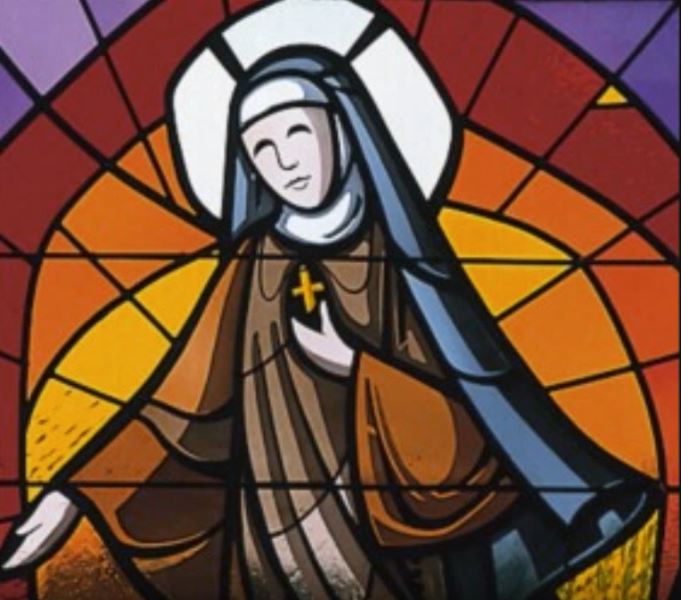
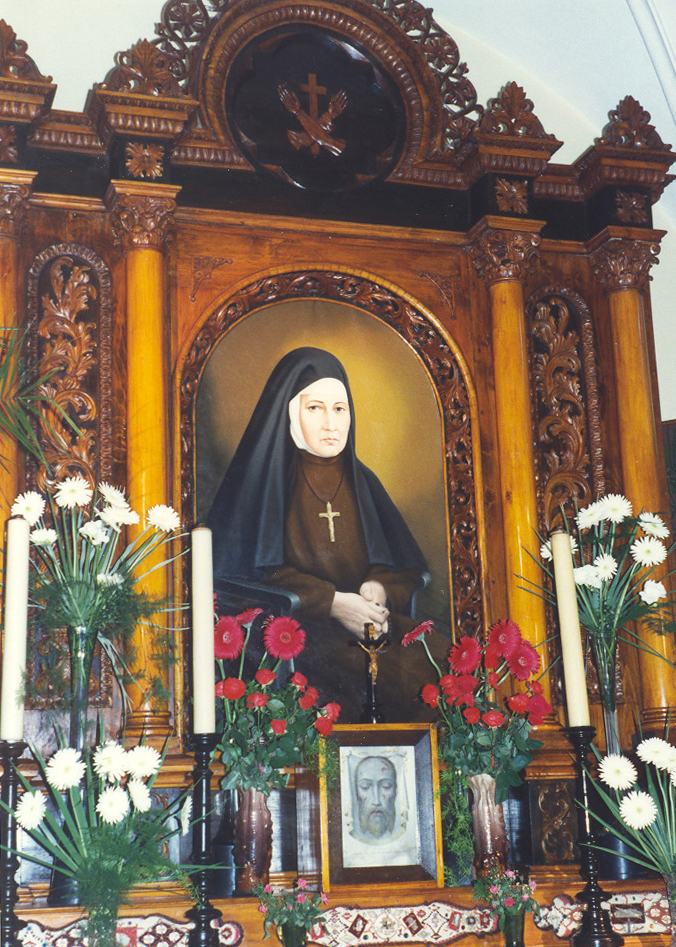
Saint of the Day – 5 October – Saint Faustina Kowalska (1905-1938) Maria Faustyna Kowalska of the Blessed Sacrament “Apostle of Divine Mercy”, “Secretary of Divine Mercy”, Virgin, Religious, Mystic – born “Helena” on 25 August 1905 at Glogowiec, Poland as Elena (Helena) Kowalska and died on 5 October 1938 at Krakow, Poland of tuberculosis.
Sister Mary Faustina, an apostle of the Divine Mercy, belongs today to the group of the most popular and well-known saints of the Church. Through her, the Lord Jesus communicates to the world, the great message of God’s mercy and reveals the pattern of Christian perfection, based on trust in God and on the attitude of mercy toward one’s neighbours.
She was born on 25 August 1905 in Gogowiec in Poland of a poor and religious family of peasants, the third of ten children. She was baptised with the name Helena in the parish Church of Ðwinice Warckie. From a very tender age she stood out because of her love of prayer, work, obedience and also her sensitivity to the poor. At the age of nine she made her first Holy Communion, living this moment very profoundly in her awareness of the presence of the Divine Guest within her soul. She attended school for three years . At the age of sixteen she left home and went to work as a housekeeper in order to find the means of supporting herself and of helping her parents.
At the age of seven she had already felt the first stirrings of a religious vocation. After finishing school, she wanted to enter the convent but her parents would not give her permission. Called during a vision of the Suffering Christ, on 1 August 1925 she entered the Congregation of the Sisters of Our Lady of Mercy and took the name Sister Maria Faustina. She lived in the Congregation for thirteen years and lived in several religious houses. She spent time at Kraków, Pock and Vilnius, where she worked as a cook, gardener and porter.
Externally, nothing revealed her rich mystical interior life. She zealously performed her tasks and faithfully observed the rule of religious life. She was recollected and at the same time very natural, serene and full of kindness and disinterested love for her neighbour. Although her life was apparently insignificant, monotonous and dull, she hid within herself an extraordinary union with God.
It is the mystery of the Mercy of God which she contemplated in the word of God, as well as in the everyday activities of her life, that forms the basis of her spirituality. The process of contemplating and getting to know the mystery of God’s mercy, helped develop within Sr Faustina the attitude of child-like trust in God as well as mercy toward the neighbours. “O my Jesus, each of Your saints reflects one of Your virtues; I desire to reflect Your compassionate heart, full of mercy, I want to glorify it. Let Your mercy, O Jesus, be impressed upon my heart and soul like a seal and this will be my badge in this and the future life” (Diary 1242).
Sister Faustina was a faithful daughter of the Church which she loved like a Mother and a Mystic Body of Jesus Christ. Conscious of her role in the Church, she co-operated with God’s mercy in the task of saving lost souls. At the specific request of and following the example of the Lord Jesus, she made a sacrifice of her own life for this very goal. In her spiritual life she also distinguished herself with a love of the Eucharist and a deep devotion to the Mother of Mercy.
The years she had spent at the convent were filled with extraordinary gifts, such as: revelations, visions, hidden stigmata, participation in the Passion of the Lord, the gift of bilocation, the reading of human souls, the gift of prophecy, or the rare gift of mystical engagement and marriage. The living relationship with God, the Blessed Mother, the Angels, the Saints, the souls in Purgatory — with the entire supernatural world — was as equally real for her, as was the world she perceived with her senses . In spite of being so richly endowed with extraordinary graces, Sr Faustina knew that they do not in fact constitute sanctity. In her Diary she wrote: “Neither graces, nor revelations, nor raptures, nor gifts granted to a soul make it perfect but rather the intimate union of the soul with God. These gifts are merely ornaments of the soul but constitute neither its essence nor its perfection. My sanctity and perfection consist in the close union of my will with the will of God.” (Diary 1107).
The Lord Jesus chose Sr Maria Faustina as the Apostle and “Secretary” of His Mercy, so that she could tell the world about His great message. “In the Old Covenant — He said to her — I sent prophets wielding thunderbolts to My people. Today I am sending you with My mercy to the people of the whole world. I do not want to punish aching mankind, but I desire to heal it, pressing it to My Merciful Heart.” (Diary 1588).
The original Image of the Divine Mercy, painted under the guidance of Saint Faustina by Kazimierowski (1934)
The mission of Sister Mary Faustina consists in 3 tasks:
– reminding the world of the truth of our faith revealed in the Holy Scripture about the merciful love of God toward every human being.
– Entreating God’s mercy for the whole world and particularly for sinners, among others through the practice of new forms of devotion to the Divine Mercy presented by the Lord Jesus, such as – the veneration of the image of the Divine Mercy with the inscription: Jesus, I Trust in You, the feast of the Divine Mercy celebrated on the first Sunday after Easter, chaplet to the Divine Mercy and prayer at the Hour of Mercy (3 p.m.). The Lord Jesus attached great promises to the above forms of devotion, provided one entrusted one’s life to God and practised active love of one’s neighbour.
– The third task in Sr Faustina’s mission consists in initiating the apostolic movement of the Divine Mercy which undertakes the task of proclaiming and entreating God’s mercy for the world and strives for Christian perfection, following the precepts laid down by the Blessed Sr Faustina. The precepts in question require the faithful to display an attitude of child-like trust in God, which expresses itself in fulfilling His will, as well as in the attitude of mercy toward one’s neighbours. Today, this movement within the Church involves millions of people throughout the world, it comprises religious congregations, lay institutes, religious, brotherhoods, associations, various communities of apostles of the Divine Mercy, as well as individual people who take up the tasks which the Lord Jesus communicated to them through Sr Faustina.
The mission of the Blessed Sr Faustina was recorded in her Diary which she kept at the specific request of the Lord Jesus and her confessors. In it, she recorded faithfully all of the Lord Jesus’ wishes and also described the encounters between her soul and Him. “Secretary of My most profound mystery— the Lord Jesus said to Sr Faustina — know that your task is to write down everything that I make known to you about My mercy, for the benefit of those who by reading these things will be comforted in their souls and will have the courage to approach Me.” (Diary 1693).
In an extraordinary way, Sr Faustina’s work sheds light on the mystery of the Divine Mercy. It delights, not only the simple and uneducated people but also scholars, who look upon it as an additional source of theological research. The Diary has been translated into many languages, among others, English, German, Italian, Spanish, French, Portuguese, Arabic, Russian, Hungarian, Czech and Slovak.
Sister Maria Faustina, consumed by tuberculosis and by innumerable sufferings which she accepted as a voluntary sacrifice for sinners, died in Krakow at the age of just thirty three on 5 October 1938 with a reputation for spiritual maturity and a mystical union with God. The reputation of the holiness of her life grew as did the cult to the Divine Mercy and the graces she obtained from God through her intercession. In the years 1965-67, the investigative Process into her life and heroic virtues was undertaken in Krakow and in the year 1968, the Beatification Process was initiated in Rome. The latter came to an end in December 1992. On 18 April 1993 our Holy Father St John Paul II raised Sister Faustina to the glory of the altars. Sr Faustina’s remains rest at the Sanctuary of the Divine Mercy in Kraków-Łagiewniki, where she spent the end of her life and met confessor Józef Andrasz who also supported the message of mercy. . … Vatican.va
St Faustina was Canonised by St Pope John Paul on 30 April 2000.
Bl Alberto Marvelli
St Alexander of Trier
St Anna Schaeffer
St Apollinaris of Valence
St Attilanus of Zamora
St Aymard of Cluny Bl Bartholomew Longo (1841-1926) Apostle of the Holy Rosary Biography here:
St Boniface of Trier
St Charitina of Amasa
St Eliano of Cagliari St Faustina Kowalska OLM (1905-1938) “Apostle of Divine Mercy”
St Firmatus of Auxerre
St Flaviana of Auxerre
Bl Flora of Beaulieu
St Gallo of Aosta
St Jerome of Nevers
Bl John Hewett
St Magdalveus of Verdun
St Mamlacha
St St Marcellinus of Ravenna
Bl Marian Skrzypczak
St Meinulph
St Palmatius of Trier
Bl Raymond of Capua
Bl Robert Sutton
Bl Sante of Cori
St Thraseas of Eumenia
St Tranquilino Ubiarco Robles
Bl William Hartley
—
Martyrs of Messina – 30 saints: A group of about 30 Benedictine monks and nuns, some blood relatives, who were sent in the early days of the order to establish monasteries in the vicinity of Messina, Sicily, Italy, and who were martyred. We know the names, and a few details, about seven of them –
• Donatus
• Eutychius
• Faustus
• Firmatus
• Flavia
• Placidus
• Victorinus
6th century Messina, Sicily, Italy.
Martyred in the Spanish Civil War:
• Blessed Eugenio Andrés Amo
• Blessed Sebastià Segarra Barberá
• Blessed Rafael Alcocer Martínez
Thought for the Day – 4 October – The Memorial of St Francis of Assisi OFM (1181/2–1226)
We must be Simple, Humble and Pure
Saint Francis of Assisi Religious
An excerpt from his Letter Written to All the Faithful
It was through His archangel, Saint Gabriel, that the Father above, made known to the holy and glorious Virgin Mary, that the worthy, holy and glorious Word of the Father would come from heaven and take from her womb, the real flesh of our human frailty. Though He was wealthy beyond reckoning, He still willingly chose to be poor, with His blessed mother. And shortly before His passion, He celebrated the Passover with His disciples. Then He prayed to His Father saying – Father, if it be possible, let this cup be taken from me.
Nevertheless, He reposed His will in the will of His Father. The Father willed that His blessed and glorious Son, whom He gave to us and who was born for us, should, through His own blood, offer Himself as a sacrificial victim on the altar of the cross. This was to be done not for Himself, through whom all things were made but for our sins. It was intended to leave us an example of how to follow in His footsteps. And He desires all of us to be saved through Him and to receive Him with pure heart and chaste body.
O how happy and blessed are those who love the Lord and do as the Lord Himself said, in the gospel – You shall love the Lord your God with your whole heart and your whole soul and your neighbour as yourself. Therefore, let us love God and adore Him with pure heart and mind. This is His particular desire when He says – True worshippers adore the Father in spirit and truth. For all who adore Him must do so in the spirit of truth. Let us also direct to Him our praises and prayers saying – Our Father, who art in heaven, since we must always pray and never grow slack.
Furthermore, let us produce worthy fruits of penance. Let us also love our neighbours as ourselves. Let us have charity and humility. Let us give alms because these cleanse our souls from the stains of sin. Men lose all the material things they leave behind them in this world but they carry with them, the reward of their charity and the alms they give. For these, they will receive from the Lord, the reward and recompense they deserve. We must not be wise and prudent according to the flesh. Rather we must be simple, humble and pure. We should never desire to be over others. Instead, we ought to be servants who are submissive to every human being for God’s sake. The Spirit of the Lord will rest on all who live in this way and persevere in it to the end. He will permanently dwell in them. They will be the Father’s children who do His work. They are the spouses, brothers and mothers of our Lord Jesus Christ.
Quote of the Day – 4 October – The Memorial of St Francis of Assisi OFM (1181/2–1226)
The Angel to Gerontius
“There was a mortal, who is now above
In the mid-glory – he, when near to die,
Was given communion with the Crucified –
Such, that the Master’s very wounds were stamp’d
Upon his flesh and, from the agony
Which thrill’d through body and soul in that embrace
Learn, that the flame of the Everlasting Love
Doth burn, ere it transform ….”
From the Dream of Gerontius
Blessed John Henry Newman (1801-1890)
One Minute Reflection – 4 October – Friday of the Twenty-sixth week in Ordinary Time, Year C Gospel: Luke 10:13-16 – The Memorial of St Francis of Assisi OFM (1181/2–1226)
“He who hears you, hears me and he who rejects you, rejects me and he who rejects me, rejects him who sent me.”…Luke 10:16
REFLECTION – “The truth is that St Francis really did have an extremely intimate relationship with Jesus and with the word of God, that he wanted to pursue sine glossa – just as it is, in all its radicality and truth. It is also true, that initially he did not intend to create an Order with the necessary canonical forms. Rather he simply wanted, through the word of God and the presence of the Lord, to renew the People of God, to call them back to listening to the word and to literal obedience to Christ.”…Pope Benedict XVI – Catechesis on St Francis – General Audience, 27 January 2010
“Remember that when you leave this earth, you can take with you nothing that you have received—only what you have given – a full heart, enriched by honest service, love, sacrifice and courage.”….St Francis of Assisi
PRAYER – Lord God, You made St Francis of Assisi, Christ-like in his poverty and humility, his gentleness and charity, his love and courage. Help us to walk in his ways that, with joy and love, we may follow Christ Your Son and be united with You. May the intercession of St Francis, be an assistance on our journey. Through Christ our Lord, with the Holy Spirit, one God forever, amen.
Our Morning Offering – 4 October – The Memorial of St Francis of Assisi (1181–1226)
Morning Prayer of St Francis of Assisi (1182-1226)
Lord, help me to live this day,
quietly, easily;
to lean on Your great strength,
trustfully, restfully;
to wait for the unfolding of Your will,
patiently, serenely;
to meet others,
peacefully, joyfully;
to face tomorrow,
confidently, courageously.
Amen
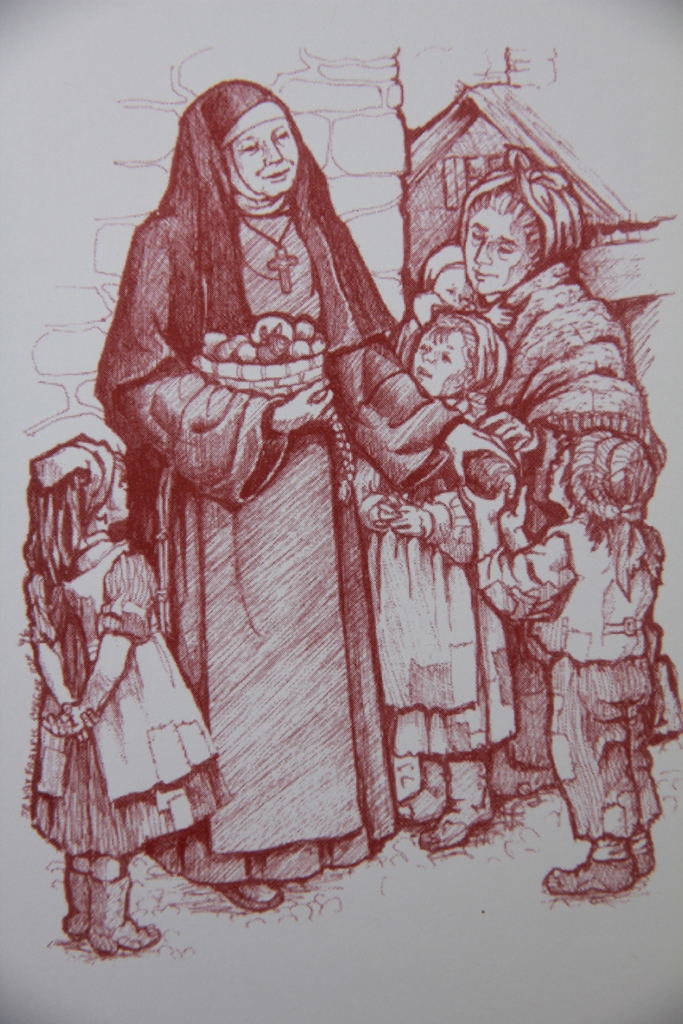
Saint of the Day – 4 October – Saint Petronius (Died c 450) – Bishop of Bologna, Italy. Patronages – Bologna, Italy, Archdiocese of and the City of Bologna.
The only certain historical information we possess concerning St Petronius is derived from a letter written by Bishop Eucherius of Lyons (died 450-5) to Valerianus and from Gennadius of Massilia (died c 496) “De viris illustribus.” Eucherius writes, that the holy Bishop Petronius was then renowned in Italy for his virtues.
From Gennadius we receive more detailed personal information – Petronius belonged to a noble family, whose members occupied high positions at the imperial Court at Milan and, in the provincial administrations, at the end of the fourth and the beginning of the fifth centuries. His father (also named Petronius) was probably a governor, since a Petronius filled this office in Gaul in 402-8. Eucherius also seems to suggest that the future bishop also held an important secular position.
Even in his youth Petronius devoted himself to the practices of asceticism and seems to have visited the Holy Places in Jerusalem, perhaps on a pilgrimage.
About 432 he was elected and consecrated Bishop of Bologna, where he erected a church to St Stephen, the building design of which, was in imitation of the shrines on Golgotha and the Holy Sepulchre in Jerusalem.
This slideshow requires JavaScript.
According to Gennadius, Petronius died during the reign of Emperor Theodosius and Valentinian, i. e., before 450., of natural causes. A biography and relics, were discovered in 1141. Shortly afterwards, a church was erected in his honour at Bologna, a second, planned on a larger site, was begun in 1390 and partially completed. In 1659 the building work was resumed and the glorious Italian-Gothic church completed as it stands to-day.
In iconography, he is depicted as a bishop holding a model of Bologna in his hand.
St Adauctus of Ephesus
Bl Alfonso Tabela
St Ammon the Great
St Aurea
Berenice
St Caius of Corinth
St Callisthene of Ephesus
St Crispus of Corinth
St Damaris of Athens
St Diogenes of Milan
St Domnina
St Hierotheus
Bl Julian Majali
St Lucius of Alexandria
St Peter of Damascus St Petronius (Died c 450)
St Prosdoce
St Quintius of Tours
—
Martyrs of Alexandria – 2+ saints: A group of Christians, men and women, young and old, murdered together for their faith. The only names that have come down to us are the brothers Mark and Marcian.
Martyred in the Spanish Civil War:
• Blessed Alfredo Pellicer Muñoz
• Blessed Avelí Martínez de Arenzana Candela
• Blessed Dionisio Ibáñez López
• Blessed Francisco Martínez Granero
• Blessed Fulgencio Martínez García
• Blessed José Aloy Doménech
• Blessed José Gafo Muñiz
• Blessed José Miguel Peñarroya Dolz
• Blessed Juan de Francisco Pío
• Blessed Juan José Orayen Aizcorbe
• Blessed Martina Vázquez Gordo
• Blessed Publio Fernández González
• Blessed Tomás Barrios Pérez
Thought for the Day – 3 October – Thursday of the Twenty Sixth week in Ordinary Time, Year C, Gospel: Luke 10:1-12 and the Memorial of Blessed Szilárd István Bogdánffy (1911-1953) Martyr
“Let us thank God for this heroic pastor of the Church who followed the Lamb to the very end! May his witness bring comfort to those, who even today, are persecuted for the sake of the Gospel.”
Pope Benedict XVI
We must always pray to the “Lord of the harvest”, namely, God the Father, that He send labourers into His field which is the world.
These imperatives show that the mission is based on prayer, that it is itinerant – it is not idle, it is itinerant, that it requires separation and poverty, that it brings peace and healing, signs of the closeness of the Kingdom of God, that it is not proselytism but proclamation and witness and that, it also requires frankness and the evangelical freedom, to leave, while highlighting the responsibility of having rejected the message of salvation but without condemnation and cursing.
If lived in these terms, the mission of the Church will be characterised by joy.
And how does this passage end? The 72 “returned with joy” (cf. v. 17). It is not an ephemeral joy, which flows from the success of the mission – on the contrary, it is a joy rooted in the promise that — as Jesus says – “your names are written in heaven” (v. 20).
Saint of the Day – 3 October – Blessed Szilárd István Bogdánffy (1911-1953) aged 42, Bishop (auxilliary), Martyr, Spiritual Director, Professor – Patronages – Bishops, Priests.
Szilárd Bogdánffy was born to Hungarian parents on 21 February 1911 in the village of Feketetó, then part of Torontál County, Austria-Hungary. He lived there with his family until 1925. He was baptised in the parish church of Čoka to which his village belonged and where his father was a cantor.
The Bogdánffy family is a Transylvanian Armenian family which was granted nobility by the Habsburgs. The Bogdánffys are a branch of an ancient Armenian Gajzágó family, one of the families that built the Transylvanian town of Szamosujvár (Armenopolis, Gherla now in Rumania) in the 18th century and which gave many Armenian Catholic (in union with Rome) Priests to the town which became the Armenian Catholic Bishopric of Transylvania.
Bogdánffy went to elementary school in Crna Bara until 1925, when the Bogdánffy family moved to Timişoara, a city in Eastern part of Banat. There he went to the Piarists high school. After his final exams, he was accepted to the Catholic seminary of the Latin-rite Diocese of Oradea. He was ordained a Priest by the Bishop of Oradea Stefan Fiedler on 29 June 1934. He continued his studies at the University of Budapest, where he earned a PhD in philosophy and dogmatics (with a thesis on “Apocalyptics in the Synoptic Gospels”). Upon his return to Romania he became professor of the Catholic seminary in Oradea and confessor at the Ursuline convent in the city. In 1939 he was followed by the Royal Romanian Secret Services for alleged anti-Romanian activity. During World War II – because he was hiding Jews – he was also interrogated by the Hungarian Fascist “Nyílas” gendarmes.
After the end of the war, the new Romanian communist leadership started a campaign against the Christian religion (especially against catholic Christians). As a consequence, the Vatican allowed secret consecration of bishops. Fr Szilárd Bogdánffy was consecrated as Bishop of Oradea of the Latins and Auxiliary Bishop of Satu Mare on 14 February 1949 by Gerald Patrick O’Hara, Regent of the Apostolic Nunciature to Bucharest. The new Bishop was arrested and imprisoned only two months later.
He had previously been approached, on several occasions, by representatives of the regime, with the request that he lead an “independent Romanian Latin-rite Church, with no ties to the Vatican” which he adamantly refused. Until his death he spent four years as a captive in various prisons throughout Romania, including the evil reputed Capul-Midia camp. He fell seriously ill, being affected by the atrocious conditions and regular torture. In Aiud Prison, as the Byzantine rite Catholic Bishop of Lugoj, Ioan Ploscaru recalled, Bishop Bogdánffy was “humble and serene, always ready to help his fellow sufferers.”Although suffering with serious pneumonia, the prison doctor refused him the necessary medication claiming he was not worthy of it. He died in solitary confinement on 3 October 1953 in the prison of Aiud, Romania.
His Beatification took place on 30 October 2010 in Oradea as approved by Pope Benedict XVI.
His Beatification Mass with 200 Priests, 42 Bishops and two Cardinal. Cardinal Péter Erdő, Archbishop of Esztergom-Budapest, President of the Council of European Bishops’ Conferences, preached. Cardinal Angelo Amato, President of the Congregation for causes of the Saints, presided on behalf of Pope Benedict XVI.
He is the first Catholic martyred during the Communist regime in Romania to be elevated to the honour of the altars.
The second stamp shows the 3 Hungarian Saints and Blessed
St Adalgott of Chur
Bl Agostina of the Assumption
St Candidus the Martyr
St Cyprian of Toulon
Bl Damian de Portu
St Dionysius the Aeropagite
Bl Dominic Spadafora
St Emilie de Villeneuve (1811–1854)
St Ewald the Black
St Ewald the Fair
St Froilan St Gerard of Brogne (c 895 – 959) St Gerard’s Story:
Bl Utto of Metten
St Widradus
—
Martyrs of Alexandria – 9 saints: A number of Christian martyrs remembered together. We know the names Caius, Cheremone, Dionysius, Eusebio, Fausto, Lucio, Maximus, Paul, Peter and that there were at least two more whose names have not come down to us, and that’s about all we know.
Martyrs of Brazil – 30 beati: On 25 December 1597 an expedition of colonists, with two Jesuit and two Franciscan evangelists, arrived at Natal, Rio Grande do Norte, Brazil. The region was colonized by Portuguese Catholics but was invaded by Dutch Calvinists who soon took over the whole territory. They immediately made a policy of the persecution of Catholics. On Sunday 16 July 1645 at Cunhau, Brazil, 69 people were gathered in the Chapel of Our Lady of the Candles for Mass celebrated by Father Andre de Soveral. At the moment of the elevation a group of Dutch soldiers attack the Chapel, murdering many of the faithful including Father Andre; the parishioners died professing their faith and asking pardon for their sins. On 3 October 1645, 200 armed Indians and a band of Flemish troops, led by a fanatical Calvinist convert, hacked to death an unknown number of people of Rio Grande including:
• Blessed Ambrosio Francisco Ferro
• Blessed André de Soveral
• Blessed Antônio Baracho
• Blessed Antônio Vilela
• Blessed Antônio Vilela Cid
• Blessed Diogo Pereira
• Blessed Domingos Carvalho
• Blessed Estêvão Machado de Miranda
• Blessed Francisco de Bastos
• Blessed Francisco Mendes Pereira
• Blessed João da Silveira
• Blessed João Lostau Navarro
• Blessed João Martins
• Blessed José do Porto
• Blessed Manuel Rodrigues de Moura
• Blessed Mateus Moreira
• Blessed Simão Correia
• Blessed Vicente de Souza Pereira
and other lay people whose names have not come down to us. They were Beatified on 5 March 2000 at Rome, Italy by Pope John Paul II.
Martyred in the Spanish Civil War:
• Blessed Crescencio García Pobo
• Blessed José María González Solís
• Blessed José María Poyatos-Ruiz
• Blessed Manuel Lucas Ibañez
• Blessed Raimundo Joaquín Castaño González
Thought for the Day – 2 October – The Memorial of the Holy Guardian Angels
Angels are messengers from God. The word angel comes from the Greek word for “messenger.” In a very real way, these powerful spirits point out to us the ways of God. Guardian Angels assist us in work or study. In times of temptation, these spiritual beings direct us to do good. St Thomas Aquinas said that angels are the most excellent of creatures because they have the greatest intelligence next to God.
Perhaps the Guardian Angels are best known for protecting us from physical danger but their main role is to care for the salvation of our souls. It is wonderful to know that God has promised to love, protect and be with us always. One way he does this is through the care of the angels. Whenever you meet with danger or discouragement, your Guardian Gngel is your personal, heavenly bodyguard. The angels also offer prayers to God for us. Because angels always see and hear God, they can intercede for us. We should love our Guardian Angels, respect them and pray to them.
In early Christianity there was no feast for the guardian angels, just one for the Archangels. But in the 15th and 16th centuries, the feast of the Guardian Angels was unofficially celebrated in Austria, Spain and Portugal. In 1608 Pope Paul V made it a universal feast. In doing so, he helped to make us aware of the guardian angels, not just one day in October but everyday of our lives.
My Oldest Friend By Blessed John Henry Newman (1801-1890)
My oldest friend, mine from the hour
When first I drew my breath,
My faithful friend, that shall be mine,
Unfailing, till my death….
Mine when I stand before the Judge,
And mine, if spared to stay
Within the golden furnace, till
My sin is burn’d away.
And mine, O Brother of my soul,
When my release shall come,
Thy gentle arms shall lift me then,
Thy wings shall waft me home.
Quote/s of the Day – 2 October – The Memorial of the Holy Guardian Angels
“Be ever more convinced, that your guardian angel is really present, that he is ever at your side. St Frances of Rome always saw him standing before her, his arms clasped at his breast, his eyes uplifted to Heaven but at the slightest failing, he would cover his face as if in shame and at times, turn his back to her.”
St John Bosco (1815-1888)
“Do you not greet warmly, all the people you love and speak to them cordially? — Well, you and I are going to greet Jesus, Mary and Joseph and our Guardian Angels, many times a day. “
One Minute Reflection – 2 October – Wednesday of the Twenty Sixth Week in Ordinary Time, Year C, Gospel: Matthew 18:1–5,10 and The Memorial of the Holy Guardian Angels
See that you do not despise one of these little ones, for I say to you that their angels in heaven always look upon the face of my heavenly Father. …Matthew 18:10
REFLECTION – “Ah, Jesus, prince of peace and angel of great counsel, may You Yourself always be the guide at my right and the guardian of my pilgrimage, lest I move away and stray from You. And deign to send from heaven Your holy angel who, under Your lovingly-kind care, will be solicitous for me and, according to Your gracious purpose, direct me and lead me, perfect, along Your way back to You. (Ex 23:20).” … St Gertrude the Great (1256-1302) Benedictine nun – Exercises I.60-63, 71-76, 78-86, 99-103.
PRAYER – Lord God of hosts, in Your all-wise providence, You send angels to guard and protect us. Surround us with their watchful care on earth and give us the joy of their company, forever in heaven. We make our prayer through Christ, our Lord, with th Holy Spirit, God for all eternity, amen.
“He hath given his angels charge over thee.” O wonderful bounty and truly great love of charity! Who? For whom? Wherefore? What has He commanded? Let us study closely, brethren and let us diligently commit to our memory, this great mandate. Who is it that commands? Whose angels are they? Whose mandates do they fulfil? Whose will do they obey? In answer, “He hath given his angels charge over thee, to keep thee in all thy ways.” And they do not hesitate even to lift thee up in their hands.
So the Supreme Majesty has given charge to the angels. Yes, He has given charge to His own angels. Think of it! To those sublime beings, who cling to Him so joyfully and intimately, to His very own He has given charge over you! Who are you? “What is man that thou art mindful of him? or the son of man that thou visit him?” As if man were not rottenness and the son of man a worm! Now why, do you think, he Has given them charge over thee? — To guard thee!
With what great reverence should you treat this word! What devotion should you proffer it, what great confidence should you place in it. Reverence because of their presence, devotion because of their benevolence, confidence because of their solicitude. Walk carefully, in all thy ways, as one with whom the angels are presen,t as He has given them charge. In every lodging, at every corner, have reverence for thy Angel. Do not dare to do in his presence what you would not dare to do if I were there. Or do you doubt that he is present whom you do not behold? What if you should hear him? What if you should touch him? What if you should scent him? Remember that the presence of something is not proved only by the sight of things.
In this, therefore, brethren, let us affectionately love His angels as one day our future coheirs, meanwhile, however, as counsellors and defenders appointed by the Father and placed over us. Why should we fear under such guardians? Those who keep us in all our ways, can neither be overcome, nor be deceived, much less deceive. They are faithful, they are pruden, they are powerful, why do we tremble? Let us only follow them, let us remain close to them and in the protection of the God of heaven, let us abide. As often, therefore, as a most serious temptation is perceived to weigh upon you and an excessive trial is threatening, call to your guard, your leader, your helper in your needs, in your tribulation, cry to him and say: “Lord, save us; we perish!”
This excerpt from a sermon by St Bernard of Clairvaux (Sermo 12 in psalmum Qui habitat, 3. 6-8: Opera omnia, Edit. Cisterc. 4 [1966], 458-462) is used in the Roman Office of Readings for the memorial of the Guardian Angels on 2 October.
St Alfonso del Rio
St Andrea Ximenez Bl Antoine Chevrier TOSF (1825-1879) About Blessed Antoince: https://anastpaul.com/2018/10/02/saint-of-the-day-2-october-blessed-antoine-chevrier-t-o-s-f-1825-1879/
St Beregisius
St Eleutherius of Nicomedia
Bl Georges-Edme René
St Gerinus
St Leodegarius of Autun
St Leudomer
St Maria Antonina Kratochwil
St Modesto of Sardinia
St Saturius of Soria
St Theophilus of Bulgaria
St Ursicinus II
—
Martyred in Antioch, Syria: Martyred in one of the early persecutions, date unknown.
St Cyril of Antioch
St Primus of Antioch
St Secundarius of Antioch
Martyred in Nagasaki, Japan: A husband, wife and two sons, who were all martyred together in the persecutions in Japan. They were beheaded on 2 October 1622 in Nagasaki, Japan and Beatified by Pope Pius IX on 7 May 1867.
• Blessed Andreas Yakichi
• Blessed Franciscus Yakichi
• Blessed Lucia Yakichi
• Blessed Ludovicus Yakichi
Martyred in the Spanish Civil War:
• Blessed Elías Carbonell Molla
• Blessed Enrique Sáiz-Aparicio
• Blesssed Felipe González de Heredia Barahona
• Blessed Francisco Carceller Galindo
• Blessed Isidoro Bover Oliver
• Blessed Juan Carbonell Molla
• Blessed Juan Iñiguez de Ciriano Abechuco
• Blessed Manuel Borrajo Míguez
• Blessed María Francisca Ricart Olmos
• Blessed Mateu Garrolera Masferrer
• Blessed Pedro Artolozaga Mellique
• Blessed Pedro Salcedo Puchades
Thought for the Day – 1 October – The Memorial of Saint Thérèse of the Child Jesus, OCD (1873 – 1897) Virgin and Doctor of the Church
In the Heart of the Church I will be Love
Saint Thérèse of the Child Jesus
Doctor of the Church
An excerpt from her autobiography
Since my longing for martyrdom was powerful and unsettling, I turned to the epistles of Saint Paul in the hope of finally finding an answer. By chance, the twelfth and thirteenth chapters of the first epistle to the Corinthians caught my attention and, in the first section, I read that not everyone can be an apostle, prophet or teacher, that the Church is composed of a variety of members and, that the eye cannot be the hand. Even with such an answer revealed before me, I was not satisfied and did not find peace.
I persevered in the reading and did not let my mind wander, until I found this encouraging theme – Set your desires on the greater gifts. And I will show you the way which surpasses all others. For the Apostle insists that the greater gifts are nothing at all without love and that this same love is surely the best path leading directly to God. At length I had found peace of mind.
When I had looked upon the mystical body of the Church, I recognised myself in none of the members, which Saint Paul described and, what is more, I desired to distinguish myself more favourably within the whole body. Love appeared to me to be the hinge for my vocation. Indeed, I knew that the Church had a body composed of various members but in this body the necessary and more noble member was not lacking, I knew that the Church had a heart and that such a heart, appeared to be aflame with love. I knew that one love drove the members of the Church to action, that if this love were extinguished, the apostles would have proclaimed the Gospel no longer, the martyrs would have shed their blood no more. I saw and realised, that love sets off the bounds of all vocations, that love is everything, that this same love, embraces every time and every place. In one word, that love is everlasting.
Then, nearly ecstatic with the supreme joy in my soul, I proclaimed –
O Jesus, my Love, at last I have found my calling, my call is love. Certainly I have found my place in the Church and You gave me that very place, my God. In the heart of the Church, my mother, I will be love and thus, I will be all things, as my desire finds its direction.
Quote of the Day – 1 October – The Memorial of Blessed Juan de Palafox Mendoza (1600–1659)
“He who finds himself benefiting without books finds himself in solitude without comfort, on a mountaintop without company, on a path without a walking stick, in the darkness without a guide.”
One Minute Reflection – 1 October – Tuesday of the Twenty Sixth week in Ordinary Time, Year C, Gospel: Luke 9:51–56 and The Memorial of St Thérèse of the Child Jesus OCD (1873 – 1897) Doctor of the Church
“Lord, do you want us to bid fire come down from heaven and consume them?” But he turned and rebuked them. … Luke 9:54-55
REFLECTION – “When someone has been made worthy to taste God’s love, he usually forgets everything else by reason of its sweetness. For once that person has tasted that love, anything visible seems of no interest. The soul joyfully draws near to the beautiful love of all people without distinction. It is never troubled by their weaknesses, which do not frighten it. Just like the blessed apostles who, in the midst of all the evils which they had to bear from their torturers were completely incapable of hating them and did not tire of loving them, this was shown by the fact that, in the end, they even bore death so as to meet them again one day in heaven.
And yet these were the very same people who, a little earlier, had begged Christ to make fire come down from heaven on the Samaritans, who had only refused to welcome them in their village. But once they had received the gift of tasting God’s love, they were made perfect even to the point of loving the wicked.” … St Isaac the Syrian (c 613-c 700) – Spiritual Discourses, 2nd Series, no. 10,36
PRAYER – God, our Father, Your promised Your Kingdom to the little ones and the humble of heart. May we love You and our neighbour, even those who hate us. Give us grace to walk confidently in the way of St Thérèse, so that helped by her prayers, we may see Your eternal glory. Through Christ our Lord, in the unity of the Holy Spirit, one God forever, amen
Our Morning Offering – 1 October – The Memorial of St Thérèse of the Child Jesus OCD (1873 – 1897)
O Jesus, dear Holy Child By St Thérèse of the Child Jesus
O Jesus,
dear Holy Child,
my only treasure,
I abandon myself
to Thy every whim.
I seek no other joy
than that of calling forth
Thy sweet Smile.
Vouchsafe to me the graces
and the virtues of
Thy Holy Childhood,
so that on the day
of my birth into Heaven
the Angels and Saints
may recognise in Thy Spouse:
Thérèse of the Child Jesus.
Amen
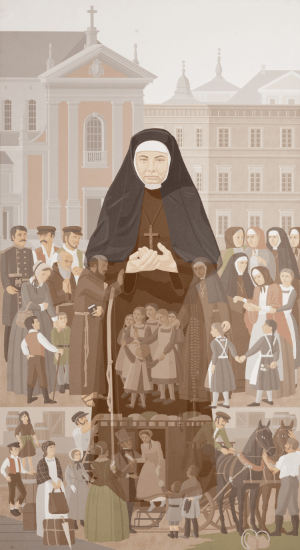
Saint of the Day – 1 October – Blessed Juan de Palafox Mendoza (1600–1659) Bishop, Spanish politician, Administrator, Prolific Writer, defender of the Mexican peoples – born Juan de Palafox y Mendoza on 24 June 1600 in Fitero, Navarra, Spain and died on 1 October 1659 in Osma, Soria, Spain of natural causes. Patronages – Dioceses of Puebla de los Ángeles and Osma-Soria. Palafox was the Bishop of Puebla (1640−1655) and the interim Archbishop of Mexico (1640−1642). He also held political office, from 10 June 1642 to 23 November 1642 as the Viceroy of New Spain. He lost a high-profile struggle with the Jesuits in New Spain, resulting in a recall to Spain, to the minor Diocese of Osma in Old Castile. Although a cause was opened for his Beatification shortly after he died in 1659, he was not Beatified until 2011.
Blessed Juan was born in Navarre, Spain, Juan Palafox de Mendoza was the natural son (“a child of transgression”) of Jaime de Palafox, the Marquis of Ariaza, of the Aragonese nobility. His mother became a Carmelite nun. He was taken in by a family of millers who gave him the name “Juan” and raised him for ten years, after which his father recognised him and had him educated at Alcalá and Salamanca.
In 1626 he was a deputy of the nobility in the Cortes de Monzón and later a prosecutor at the Council of War and a member of the Council of the Indies, the chief administrative body for administration of the overseas territories of the Spanish Empire.
He was ordained in 1629 and became the chaplain of Maria of Austria, Holy Roman Empress, the sister of King Philip IV of Spain. He accompanied her on her various trips around Europe.
In 1639 Philip IV nominated him and Pope Urban VIII appointed him, as Bishop of Puebla de los Ángeles in viceroyal Mexico. Puebla de los Ángeles was the second largest city in the Viceroyalty of New Spain (vice-royal México) then and is the present day City of Puebla. He was consecrated at Madrid on 27 December 1639.
As bishop, Palafox arrived in Veracruz on 24 June 1640. He was in the company of the new Viceroy of New Spain, Diego López Pacheco, 7th Duke of Escalona, whom he had gotten to know during the voyage. Palafox was also named Visitador (royal inspector, representative of the king), to investigate the two previous viceroys. He served as Bishop of Puebla from 1640 to 1655 and as interim Archbishop of Mexico from 1642 to 1643.
Palafox is known for being a prolific writer, a political thinker, a defender of the Mexico’s indigenous people during Colonial times, and a fair yet deeply religious man. “Historians highlight Palafox’s intelligence, integrity, activity, intellectual preparation and will, defining him as ‘one of the most brilliant men of his generation,’” says Jorge Fernández Díaz, third vice president of the Congress of Deputies, the lower house of Spain’s legislature. His writings were published in 15 volumes in Madrid in 1762.
“[Palafox is] probably the most interesting and maybe the most important figure in the whole history of 17th century Mexico.”
In Puebla, Palafox made his mark in both church and state affairs. He established the Dominican convent of St Agnes, the colleges of St Peter and St Paul and the girls school Immaculate Conception. He pushed for administrative reform within the diocese and for the completion of the city’s Cathedral, which was dedicated 1649. He also held several political offices, including that of the viceroy of New Spain in 1642.
“He was a superior man for his century, a classic in our language [Spanish] whose numerous texts were written with an elegant and eloquent style and have resulted in twelve thick volumes,” notes University of Salamanca researcher Águeda Rodríguez Cruz in a 2010 bulletin for the International Institute for Higher Education in Latin America and the Caribbean. Quoting her colleague, professor Antonio Heredia, she adds: “[Palafox] was robust in his work, although of a sensitive condition, a spender but mean with it, legalistic, while with an ascetic of sensitive piety, an expert and executor in law and politics, while at a mystic at the same time, a man of war and noise, while pacific and fond of silence, active, while contemplative; indebted, while punctual with his duties … a man of great contrasts, like life itself.”
His greatest legacy is a secular one – the Palafox Library in Puebla. Founded in 1646, the Biblioteca Palafoxiana was the first public library established in the Americas. Located inside what was once the seminary of St. John’s College — now home to Puebla’s cultural centre — the library preserves 45,058 volumes dating from just before until just after the Colonial era. Many of its works are of global importance. These include original copies of Hartmann Schedel’s Nuremberg Chronicle (1493), which charts human history according to the Bible in words and more than 2,000 illustrations – Andreas Vesalius’s On the Fabric of the Human Body (1555), a seven-volume tome that revolutionised the study of anatomy with detailed diagrams based on actual observation and dissection and books printed in Mexico before 1600, including Alonso Molina’s Vocabulary in Castilian and Mexican, essentially the earliest New World dictionary.
The bookshelves consist of finely carved cedar, wild sunflower and white pine. The library is also noteworthy for its sheer beauty. The bookshelves, commissioned by Bishop Francisco Fabián y Fuero in 1773 (and expanded to include a third level in the 1800s), consist of finely carved cedar, wild sunflower and ayacahuite, a native white pine. A three-story gold altar at the far end of the room features an oil painting of Virgen of Trapani, which is believed to be modelled after the 14th-century sculpture attributed to Italian sculptor Nino Pisano.
In 1981, the Mexican government declared the library a historic monument. In 2005, UNESCO added the Biblioteca Palafoxiana to the Memory of the World list, formally recognising its international significance. In 2010, after five years of work by 30 specialists, the first digital catalogue of the library’s complete contents was released, some 3,000 copies of the interactive disk were distributed to other libraries, universities, and research institutions. At the time, Elvia Carrillo Velázquez, a director for ADABI, the national book-preservation group that helped to create the archive, told El Universal newspaper that the interactive disc “provides access to culture and, above all, makes public knowledge part of the history of the printed word.”
This seems to be exactly what Palafox intended. A sign at the library’s entrance bears his words from 1646: “He who finds himself benefiting without books, finds himself in solitude without comfort, on a mountaintop without company, on a path without a walking stick, in the darkness without a guide. This gave me the desire to leave the library of books I’ve collected since I served his majesty the King, which is one of the best I’ve seen in Spain, ancillary to those of the church and in part and in public form, so that it may be used by all professions and people.”
Blessed Juan was Beatified by Pope Benedict XVI on 5 June 2011. His recognition celebrated at the Cathedral of La Asunción, El Burgo de Osma, Spain by Cardinal Angelo Amato.
St Aizan of Abyssinia
St Albaud of Toul
Bl Andrew Sushinda
Bl Antoni Rewera
St Aretas of Rome
St Bavo of Ghent
Bl Cecilia Eusepi
Bl Christopher Buxton
St Crescens of Tomi
St Dodo
Bl Dominic of Villanova
Bl Edward James
St Evagrius of Tomi
St Fidharleus
Bl Gaspar Fisogiro
St Gregory the Illuminator
St John Kukuzelis
Bl John Robinson Bl Juan de Palafox Mendoza (1600–1659)
St Julia of Lisbon Bl Luigi Maria Monti CFIC “Sons of the Immaculate Conception” (1825-1900)
About Blessed Luigi: https://anastpaul.wordpress.com/2017/10/01/saint-of-the-day-1-october-blessed-luigi-maria-monti-1825-1900/
St Maxima of Lisbon
Bl Nikita Budka
St Piaton of Tournai
St Priscus of Tomi
Bl Ralph Crockett
Bl Robert Widmerpool
Bl Robert Wilcox
St Romanos the Melodist
St Sazan of Abyssinia
St Verissimus of Lisbon
St Virila
St Wasnulf
—
Martyred in the Spanish Civil War:
• Blessed Carmelo Juan Pérez Rodríguez
• Blessed Higinio Mata Díez
• Blessed Juan Mata Díez
• Blessed Álvaro Sanjuán Canet
• Blessed Florencia Caerols Martínez
Thought for the Day – 30 September – The Memorial of Saint Jerome, Priest, Father and Doctor of the Church (347-419)
Ignorance of Scripture is Ignorance of Christ
Saint Jerome of Bethlehem
Priest and Great Western Father and Doctor of the Church
An excerpt from his Commentary on Isaiah
“I interpret as I should, following the command of Christ – search the Scriptures and seek and you shall find. Christ will not say to me what He said to the Jews: You erred, not knowing the Scriptures and not knowing the power of God. For if, as Paul says, Christ is the power of God and the wisdom of God and if the man who does not know Scripture does not know the power and wisdom of God, then ignorance of Scripture is ignorance of Christ.
Therefore, I will imitate the head of a household who brings out of his storehouse things both new and old and says to his spouse in the Song of Songs: I have kept for you things new and old, my beloved. In this way permit me to explain Isaiah, showing that he was not only a prophet but an evangelist and an apostle as well. For he says about himself and the other evangelists – How beautiful are the feet of those who preach good news, of those who announce peace. And God speaks to him as if he were an apostle – Whom shall I send, who will go to my people? And he answers: Here I am; send me.
No-one should think, that I mean to explain, the entire subject matter of this great book of Scripture, in one brief sermon, since it contains all the mysteries of the Lord. It prophesies that Emmanuel is to be born of a virgin and accomplish marvellous works and signs. It predicts His death, burial and resurrection from the dead as the Saviour of all men. I need say nothing about the natural sciences, ethics and logic. Whatever is proper to holy Scripture, whatever can be expressed in human language and understood by the human mind, is contained in the book of Isaiah. Of these mysteries the author himself testifies when he writes – You will be given a vision of all things, like words in a sealed scroll. When they give the writings to a wise man, they will say – Read this. And he will reply: I cannot, for it is sealed. And when the scroll is given to an uneducated man and he is told: Read this, he will reply: I do not know how to read.
Should this argument appear weak to anyone, let him listen to the Apostle – Let two or three prophets speak and let others interpret, if, however, a revelation should come to one of those who are seated there, let the first one be quiet. How can they be silent, since it depends on the Spirit who speaks through His prophets whether they remain silent or speak? If they understood what they were saying, all things would be full of wisdom and knowledge. But it was not the air vibrating with the human voice that reached their ears but rather, it was God speaking within the soul of the prophets, just as another prophet says: It is an angel who spoke in me and again, Crying out in our hearts, Abba, Father and I shall listen to what the Lord God says within me.”
Quotes of the Day – 30 September – The Memorial of Saint Jerome (347-419), Priest, Father and Doctor of the Church
St Jerome – Speaking of Holy Scripture
“The Scriptures are shallow enough, for a babe to come and drink, without fear of drowning and deep enough, for theologians to swim in, without ever reaching the bottom.”
“Make knowledge of the Scripture your love … Live with them, meditate on them, make them the sole object of your knowledge and inquiries.”
“A false interpretation of Scripture, causes, that the Gospel of the Lord, becomes the gospel of man, or, which is worse, of the devil!”
“It is worse still to be ignorant of your ignorance.”
St Jerome (347-419)
Great Western Father and Doctor of the Church
One Minute Reflection – 30 September – Monday of the Twenty Sixth week in Ordinary Time, Year C, Gospel: Luke 9:46–50 and The Memorial of St Gregory the Illuminator (c 257 – c 331)
“Whoever receives this child in my name receives me and whoever receives me, receives him who sent me, for he who is least among you all, is the one who is great.” … Luke 9:48
REFLECTION – “The passion and lust of pride attacked some of the holy apostles. The mere argument about who of them was the greatest is the mark of an ambitious person, eager to stand at the head of the rest. Christ, who did not sleep, knows how to deliver. He saw this thought in the disciple’s mind, springing up, in the words of Scripture, like some bitter plant. He saw the weeds, the work of the wicked sower. Before it grew up tall, struck its root down deep, grew strong and took possession of the heart, He tears up the evil by the very root. In what way does the Physician of souls amputate pride’s passion? How does He deliver the beloved disciple from being the prey of the enemy and from a thing hateful to God and man? “He took a child,” it says, “and set it by him.” He made the event a means of benefiting both the holy apostles themselves and us their successors. This illness, as a rule, preys upon all those who are in any respect superior to other people.
What kind of type and representation did He make the child He had taken? He made the child a representation of an innocent and humble life. The mind of a child is empty of fraud and his heart is sincere. His thoughts are simple. He does not covet rank and does not know what is meant by one man being higher than another is. Christ brought forward the child as a pattern of simplicity and innocence and set him by Him. He showed him as in an object lesson, that He accepts and loves those who are like the child. He thinks they are worthy of standing at His side, as being like-minded with Him and anxious to walk in His steps.” … St Cyril of Alexandria (376-444) Father and Doctor of the Church – Commentary on Luke, Homily 54
PRAYER – Dear and Holy God, let us offer You all our daily struggles against sin and evil. Grant us the strength to resist all forms of idolatry, to seek only You and never to allow the honour of this world to seduce us. Sustain us ever more with Your word and help us to find in it, the source of life. May the Prayers of St Gregory the Illuminator, help us on the path of holiness. We ask this through Jesus our Lord, with the Holy Spirit, one God forever, amen.
Our Morning Offering – 30 September – Monday of the Twenty Sixth week in Ordinary Time, Year C and The Memorial of St Jerome (347-419) Father and Doctor of the Church
O Lord, show Your mercy to me By St Jerome (347-419)
O Lord, show Your mercy to me
and gladden my heart.
I am like the man on the way to Jericho
who was overtaken by robbers,
wounded and left for dead.
O Good Samaritan,
come to my aid.
I am like the sheep that went astray.
O Good Shepherd,
seek me out and bring me home
in accord with Your will.
Let me dwell in Your house
all the days of my life
and praise You for ever and ever
with those who are there.
Amen
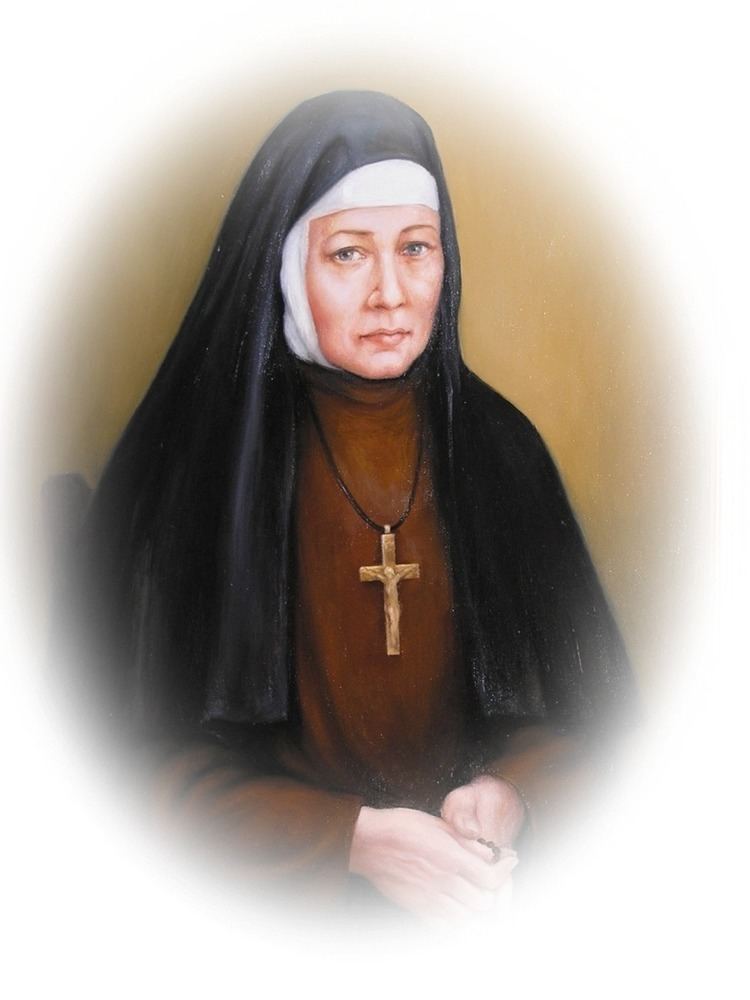
Saint of the Day – 30 September – Saint Gregory the Illuminator (c 257 – c 331) – “Apostle to Armenia” and “Father of Armenia”- Bishop, First Patriarch of the Armenian Church, Missionary, Wonder-worker – born Grigor Lusavorich in c 257 and died in c 331 of natural causes. Also known as Gregory the Enlightener. Patronage – Armenia.
The life of Saint Gregory was first recounted in a biography dating to c 460 and the more or less contemporary History of the Armenians by Agathangelos. The saint’s was born in and around Parthia between 239 to 257. He was the son of Anak Partev the Parthian, who, being in the pay of the rival Sasanian Empire in Persia (224-651), infamously murdered the Armenian king Khosrov of Kadj. The Lusavorich family was both wealthy and influential but they were all wiped out by the revenging relatives of Khosrov. Fortunately for Gregory, he, the sole survivor of the purge, was whisked away by his nanny to the safety of Cappadoccia.
Gregory was raised as a Christian and attended a Greek Christian school. On returning to Armenia, Gregory gained a position as a palace functionary at the court of the Armenian king. There he protested the pagan religion of the period and refused to participate in its rites. The reigning monarch was Tiridates IV (Trdat III or IV), or Tiridates the Great as he would become known and he had the troublesome Gregory imprisoned, tortured and thrown into the terrible Khor Virap prison at Artashat. Known as the “pit of oblivion,” nobody ever returned from Khor Virap.
When out hunting, Tiridates often behaved like a beast, hence the legend that he was transformed into a boar. A King, who was loved by his people and especially his sister, Khosrovidought, tried in vain to return him to his senses. Khosrovidought had a dream, seeing Gregory coming out of the dungeon and healing her brother! This was especially ironic, as the illness had only manifested itself following the king’s orders to murder a group of Christian nuns who had fled persecution in Rome. Khosrovidought told the people at the Court of her dream and revealed that Gregory was living and was the only man in the world who could cure the King. As Tiridat’s condition worsened his courtiers went to the pit and to their great surprise heard a feeble “yes” to the question: “Gregory, are you still alive?” For St Gregory had been in the pit for 13 years! They lowered the rope and out came a man with a long beard and soiled clothes. But his darkened face was wrapped in an aura of light. After dressing him properly,they took him to the presence of Tiridat. Moved by a powerful force which he could not control, Tiridat knelt down before his prisoner. Gregory, putting his hands on the King’s head, prayed for him. There,upon Tiridat was cured and became a new man. He said to Gregory: “Your God is my Go, your religion is my religion.” Gregory lifted him up and embraced him. From that moment, until their death, they remained faithful friends and worked together, each in his own way for the establishment of the Kingdom of God in Armenia, beginning in the year 301.
Gregory first converted the people in the capital city and in its neighbourhood. There were no bishops or clergymen left in the country, because of the severe persecutions by Tiridat. Thus, Gregory could not find people in holy orders to baptise the neophytes. Gregory himself was still a layman. Therefore, the Royal Council decided to send Gregory back to Cæsarea to be ordained as a Priest and then Bishop of Armenia.
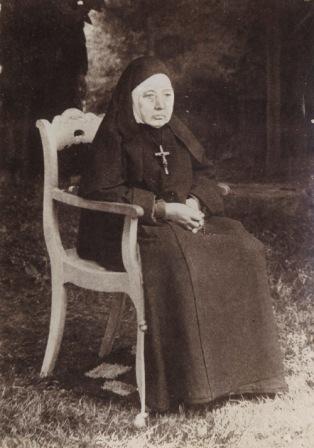
Armenia did became a Christian state and it was a momentous moment in the country’s history as the historian RG Hovannisian here explains:
“The conversion of Armenia to Christianity was probably the most crucial step in its history. It turned Armenia sharply away from its Iranian past and stamped it for centuries with an intrinsic character, as clear to the native population, as to those outside its borders, who identified Armenia almost at once as the first state to adopt Christianity.”
Armenia thus became the first nation to adopt Christianity as its official religion.
As soon as Gregory returned to Armenis as the first Bishop (Katholikos) he set about formally establishing the Christian Church. Tiridates gave Saint Gregory up to 15 provinces of territory to establish the Armenian Church. The old pagan temples were torn down and the sites were converted to Christian ones and the whole nation was obliged to embrace the new faith. Churches and monasteries sprang up everywhere, including at the Khor Virap, Gregory’s home for so long, which was eventually converted into a monastery. The Armenian aristocracy quickly followed the royal family’s example and many noble families converted to Christianity.
Later in life, Gregory retired to the seclusion of the cave of Mane in northwestern Armenia where he lived as an ascetic. Gregory died there of old age around 331. The former bishop’s remains were buried at Tordan on the Euphrates River in the western province of Daranaghik, although later his bones would become prized relics in various churches across the country.
St Gregory governed the Armenian Church for about 25 years. He diligently worked for the internal organisation of the Church. His descendants carried on his work, notably his younger son Aristakes, who, known for his asceticism, was the next bishop and who attended the First Ecumenical Council of Nicaea in 325 as St Gregory was too old.
Many Churches were built in his honour but perhaps the most celebrated was the cathedral at Ani built by the great architect Trdat for King Gagik (1001-1010).
Saint Gregory the Illuminator Cathedral, Yerevan, (finished in 2001) contains the remains of St Gregory
He is commemorated as a Canonised Saint by all the ancient churches of the East and of the West, including the Greek Orthodox and the Roman Catholic Churches. The Armenian Church has set aside three holy days in honour of St Gregory, commemorating three of the main events of his life – firstly, his sufferings and entrance into the dungeon, secondly, His release from the dungeon and the conversion of Armenia to Christianity, thirdly, the discovery of his relics.
The Right Hand of Gregory the Illuminator in the museum of the Holy See of Cilicia at Antelias, Lebanon
On St Pope John Paul II’s historic trip in 2001 to Armenia to mark the 1700thof the conversion of the Armenian nation to Christianity, he became inspired by a visit to Khor-Virab where Saint Gregory was confined. As a result, a statue of Saint Gregory the Illuminator now stands (unveiled on 19 January 2005) in the Vatican’s last remaining niche along the walls of Saints leading to St Peter’s Basilica in Rome. Almost 2,5 metres tall, it is situate at the site where visitors wait to climb the cupola. Thousands of visitors now wait under the gentle gaze of St Gregory the Illuminator of Armenia. See the Statue below.
On 26 June 2016, Pope Francis visited Armenia and made a special pilgrimage to the Church and Monastery, where St Gregory’s pit was located. It is here, in one of the Armenian Church’s most sacred places, that Francis concluded his trip. After being welcomed by the Monastery’s superior, the he and the Pope made their way down the small stairs to the room where St Gregory had been held in captivity for 13 years. There, they lit a candle in veneration. They then entered the adjacent chapel in procession and prayed in Armenian and in Italian. Finally, the Pope and Abbot Karekin went out onto the terrace overlooking Ararat and released two doves, in the direction of the Biblical mountain, which is now beyond the border in Turkey.
St Amatus of Nusco
St Antoninus of Piacenza
St Castus of Piacenza
St Colman of Clontibret
Bl Conrad of Urach
St Desiderius of Piacenza
St Enghenedl of Anglesey
St Eusebia of Marseilles Saint Francis Borgia SJ (1510-1572) – Biography: https://anastpaul.com/2017/10/10/saint-of-the-day-10-october-st-francis-borgia-s-j-1510-1572/ (This post made on 10 October 2017, is on the incorrect date. His feast day was moved to today in 1969. Today, 30 September is the day of his death.)
Bl Frederick Albert Saint Gregory the Illuminator (c 257 – c 331)
St Honoratus of Canterbury
St Ismidone of Die
Bl Jean-Nicolas Cordier
St Laurus
St Leopardus the Slave
Bl Ludwik Gietyngier
St Midan of Anglesey
St Simon of Crépy
St Ursus the Theban
St Victor the Theban
—
Martyrs of Valsery Abbey: An unknown number of Premonstratensian monks at the Abbey of Notre-Dame de Valsery, Picardie, France who were martyred by Calvinists. They were martyred in 1567 at Valsery, Pircardy, France
You must be logged in to post a comment.