Posted in JESUIT SJ, SAINT of the DAY, The HOLY ROSARY/ROSARY CRUSADE

St John Ogilvie SJ – 10 March – St John Ogilvie, his Rosary and the Baron

Blessed Memorial of St John Ogilvie SJ – 10 March – St John Ogilvie, his Rosary and the Baron

Although the judge had tried to pin the crime of treason on him, Ogilvie forced him to assert that it was for his Catholic Faith that he was being killed, rather than for treason, which Protestant history alleges.    Just as with Saint Thomas More, the heroic Jesuit protested his allegiance to the King saying that he was the King’s loyal subject but God’s servant first.    Again, as it was with Thomas More, the executioner begged the martyr’s forgiveness, which he paternally gave.

There were many brave Catholics who came to the execution site to support the saint with prayers and with shouts.   They were fearless.  John said onthe scaffold “If there be here any hidden Catholics, let them pray for me but the prayers of heretics I will not have.”   Then something spontaneous happened, by divine intervention and inspiration.   Just before they tied his hands on the scaffold the saint quickly pulled out his rosary and tossed it to the crowd as a token of farewell.   There was a Protestant Baron, a traveller, who happened to be in the crowd and the rosary bounced off his chest.   The man tried to reach down for the beads but was beaten to them by the surrounding faithful anxious to get such a relic.

This episode of the Protestant gentleman in the crowd was recounted in the records of the trial of the saint because he, the Baron John ab Eckersdorff, was converted by means of the rosary of our Jesuit martyr.   Here is how the event is related, in the words of the Baron, as we have them in Father Daniel Conway’s three part history of Venerable John Ogilvie, published in 1878, in a Glasgow diocesan journal “The Month”:

“His Rosary struck the breast of a young noble
man who was on his travels in these kingdoms.
He was a foreigner and a heretic his name, Baron
John ab Eckersdorff.  ” I was on my travels
through England and Scotland as it is the custom
of our nobility being a mere stripling, and not
having the faith. I happened to be in Glasgow the
day Father Ogilvie was led forth to the gallows,
and it is impossible for me to describe his lofty
bearing in meeting death.   His farewell to the
Catholics was his casting into their midst, from the
scaffold, his rosary beads just before he met his
fate.   That rosary, thrown haphazard, struck me
on the breast in such wise that I could have caught
it in the palm of my hand;  but there was such a
rush and crush of the Catholics to get hold of it,
that unless I wished to run the risk of being trodden
down, I had to cast it from me.   Religion was the
last thing I was then thinking about : it was not in
my mind at all; yet from that moment I had no
rest.   Those rosary beads had left a wound in my
soul; go where I would I had no peace of mind.
Conscience was disturbed, and the thought would
haunt me : why did the martyr’s rosary strike me,
and not another?   For years I asked myself this
question it followed me about everywhere.    At
last conscience won the day.   I became a Catholic;
I abandoned Calvinism – and this happy change I
attribute to the martyr’s beads and to no other
cause those beads which, if I had them now, gold
could not tempt me to part with and if gold could
purchase them, I should not spare it.”

Saint John Ogilvie, pray for us!

st-john-ogilvie-pray-for-us-10 MARCH 2017.jpg

Posted in JESUIT SJ, SAINT of the DAY

Saint of the Day – 10 March – St John Ogilvie

Saint of the Day – 10 March – St John Ogilvie SJ (1579-1615 died aged 36) MARTYR and Jesuit Priest – hanged 10 March 1615 at Glasgow, Scotland but no relic of his body has survived.  He was canonised 0n 17 October 1976 by Pope Paul VI.

saints3-9ogilivie

John Ogilvie’s noble Scottish family was partly Catholic and partly Presbyterian. His father raised him as a Calvinist, sending him to the continent to be educated.   There John became interested in the popular debates going on between Catholic and Calvinist scholars.   Confused by the arguments of Catholic scholars whom he sought out, he turned to Scripture.   Two texts particularly struck him: “God wills all men to be saved and come to the knowledge of the truth,” and “Come to me all you who are weary and find life burdensome, and I will refresh you.”

Slowly, John came to see that the Catholic Church could embrace all kinds of people. Among these, he noted, were many martyrs.   He decided to become Catholic and was received into the Church at Louvain, Belgium, in 1596 at the age of 17.

John continued his studies, first with the Benedictines, then as a student at the Jesuit College at Olmutz.   He joined the Jesuits and for the next 10 years underwent their rigorous intellectual and spiritual training. Ordained a priest in France in 1610, he met two Jesuits who had just returned from Scotland after suffering arrest and imprisonment.   They saw little hope for any successful work there in view of the tightening of the penal laws.   But a fire had been lit within John. For the next two and a half years he pleaded to be missioned there.

Sent by his superiors, he secretly entered Scotland posing as a horse trader or a soldier returning from the wars in Europe.   Unable to do significant work among the relatively few Catholics in Scotland, John made his way back to Paris to consult his superiors. Rebuked for having left his assignment in Scotland, he was sent back.   He warmed to the task before him and had some success in making converts and in secretly serving Scottish Catholics.   But he was soon betrayed, arrested and brought before the court. His trial dragged on until he had been without food for 26 hours.   He was imprisoned and deprived of sleep. For eight days and nights he was dragged around, prodded with sharp sticks, his hair pulled out.   Still, he refused to reveal the names of Catholics or to acknowledge the jurisdiction of the king in spiritual affairs. He underwent a second and third trial but held firm.   At his final trial he assured his judges: “In all that concerns the king, I will be slavishly obedient; if any attack his temporal power, I will shed my last drop of blood for him. But in the things of spiritual jurisdiction which a king unjustly seizes I cannot and must not obey.”

Condemned to death as a traitor, he was faithful to the end, even when on the scaffold he was offered his freedom and a fine living if he would deny his faith.   His courage in prison and in his martyrdom was reported throughout Scotland.   This Jesuit loved to laugh. His jokes brightened the dark days of his captivity during which his captors tried to “brainwash” him. “For eight days and nine nights, they kept me awake by using pins, needles and whips.” St. John Ogilvie was executed by hanging on March 10, 1615 and was disembowled.   A few moments before his hanging, St. John threw his Rosary into the crowd where it was caught by Baron John ab Eckersdorff a Calvinist nobleman – who later converted to Catholicism, attributing his conversion to witnessing the martyrdom and St. John’s rosary.

John Ogilvie was canonised in 1976, becoming the first Scottish saint since 1250.

Posted in SAINT of the DAY

Saints – 10 March

St Alexander of Apema
St Anastasia the Patrician
St Andrew of Strumi
St Attalas of Bobbio
St Blanchard of Nesle-la-Réposte
St Caius of Apema
St Cordratus of Nicomedië
St Droctoveus of Paris
Bl Elias del Socorro Nieves
St Emilian of Lagny
St Failbhe the Little
St Gustav the Hermit
St Himelin
Bl Jean-Marie Joseph Lataste
St John Ogilvie
Bl John of Vallombrosa
St Kessog
St Macarius of Jerusalem
St Marie Eugénie de Jésus
St Peter of Veroli
St Rufinus of Nicomedië
St Sannudius of Bagensena
St Saturninus of Nicomedië
St Sedna of Ossory
St Silvester of Ireland
St Simplicius, Pope
St Victor of North Africa
Bl Wirnto of Formbach

Anonymous Martyrs of Persia – A group of 42 Christians martyred in Persia in the 4th century.
Forty Martyrs of Armenia – Forty Christian soldiers of the Thunderstruck Legion of the Imperial Roman army who were tortured and murdered for their faith during the persecutions of Emperor Licinius. They were exposed naked on a frozen pond to freeze to death at Sebaste, Armenia in 320 and their bodies afterward were burned.

Posted in SAINT of the DAY

Thought for the Day – 9 March

Thought for the Day – 9 March

What an amazing lady!   St Frances of Rome was an ordinary wife and mother whose love for God and His children knew no bounds and who trusted in God to give her guidance.   There was nothing she felt she could not do with God and she let nothing stop her.    Looking at her exemplary life of fidelity to God and devotion to her fellow human beings which Frances of Rome was blessed to lead, one cannot help but be reminded of Saint Teresa of Calcutta, who loved Jesus Christ in prayer and also in the poor.   The life of Frances of Rome calls each of us not only to look deeply for God in prayer but also to carry our devotion to Jesus living in the suffering of our world.   Frances shows us that this life need not be restricted to those bound by vows.   We need something of her love and her trust and energy and then we too, can accomplish great things!

St Frances of Rome, pray for us!

ST FRANCIS OF ROME PRAY FOR US 2


Posted in QUOTES of the SAINTS, SAINT of the DAY

Quote/s of the Day – 9 March

Quote/s of the Day – 9 March

“Christ is the artist, tenderly wiping away
all the grime of sin that disfigures the human face
and restoring God’s image to its full beauty.”

“True perfection consists in having but one fear –
the fear of losing God’s friendship.”

St Gregory of Nyssa (Memorial 9 March)

CHRIST IS THE ARTIST-ST GREGORY OF NYSSATRUE PERFECTION-STGREGORYOFNYSSA

“Do you want many graces?
Go and visit the Blessed Sacrament often.”

“If I do not become a saint, I am doing nothing.”

St Dominic Savio (Memorial 9 March)

downloaddownload (1)

“A married woman must, when called upon,
quit her devotions to God at the altar
to find Him in her household affairs.”

St Frances of Rome (Memorial 9 March)

A MARRIED WOMAN

Posted in MORNING Prayers, QUOTES of the SAINTS, SAINT of the DAY, The WORD

One Minute Reflection – 9 March

One Minute Reflection – 9 March

Teach me to do your will, for you are my God………Psalm 143:10

REFLECTION – “Let us serve God but let us do so according to His will.   He will then take the place of everything in our lives.   He will be our strength and the reward of our labours.”………St Vincent de Paul

PRAYER – Infinite Lord, help me to serve You always in accord with Your holy will.   Show me how to make You my Lord and my All.   St Frances of Rome, you showed us all the way of holiness within the confines of our lives, always seeking to do the will of God and serve all His children, most especially those in need but remaining always true to the vows of your marriage.   Please pray for us all, amen.

PSALME 143-10 AND STVINCENTDEPAUL TEACH ME TO DO YOUR WILLST FRANCES OF ROME PRAY FOR US

Posted in Against EPIDEMICS, AVIATORS, PILOTS, AEROPLANE industry related WORKERS, Of a Holy DEATH & AGAINST A SUDDEN DEATH, of the DYING, FINAL PERSEVERANCE, DEATH of CHILDREN, DEATH of PARENTS, Of TRAVELLERS / MOTORISTS, SAINT of the DAY, The LAITY, WIDOWS and WIDOWERS

Saint of the Day – 9 March – St Frances of Rome

Saint of the Day – 9 March – St Frances of Rome Obl.S.B. (1384-1440)  Wife, Mother, Mystic, Organiser of charitable services and a Benedictine Oblate who founded a religious community of Oblates, who share a common life without religious vows – Patronages – against plague/epidemics, of automobile drivers (given in 1951), aviators, taxi drivers, death of children, the laity, motorcyclists, motorists, people ridiculed for their piety, Roman housewives, widows, women, Rome, Italy.

card_242_FRANCES_OF_ROME_1497-09282010-B-final-fro

Frances was born in 1384 in Rome to a wealthy and aristocratic couple, Paolo Bussa and Iacobella dei Roffredeschi, in the up-and-coming district of Parione and christened in the nearby Church of St Agnes on the famed Piazza Navona.   When she was eleven years old, she wanted to be a nun but, at about the age of twelve, her parents forced her to marry Lorenzo Ponziani, commander of the papal troops of Rome and member of an extremely wealthy family.   Although the marriage had been arranged, it was a happy one, lasting for forty years, partly because Lorenzo admired his wife and partly because he was frequently away at war.

With her sister-in-law Vannozza, Frances visited the poor and took care of the sick, inspiring other wealthy women of the city to do the same.   Soon after her marriage, Frances fell seriously ill.   Her husband called a man in who dabbled in magic but Frances drove him away and later recounted to Vannozza that St Alexis had appeared to her and cured her.

When her mother-in-law died, Frances became mistress of the household.   During a time of flood and famine, she turned part of the family’s country estate into a hospital and distributed food and clothing to the poor.   According to one account, her father-in-law was so angry that he took away from her the keys to the supply rooms but gave them back when he saw that the corn bin and wine barrel were replenished after Frances finished praying.

baciccio-saint_francesca_romana_giving_alms-1.jpg
St Frances of Rome Giving Alms by Baciccio

During the wars between the pope in Rome and various anti-popes in the Western Schism of the Church, Lorenzo served the former.   According to one story, their son, Battista, was to be delivered as a hostage to the commander of the Neapolitan troops.   Obeying this order on the command of her spiritual director, Frances brought the boy to the Campidoglio.   On the way, she stopped in the Church of the Aracoeli located there and entrusted the life of her son to the Blessed Mother.   When they arrived at the appointed site, the soldiers went to put her son on a horse to transport him off to captivity.   The horse, however, refused to move, despite heavy whipping.   The superstitious soldiers saw the hand of God in this and returned the boy to his mother.

During a period of forced exile, much of Lorenzo’s property and possessions were destroyed.   In the course of one occupation of Rome by Neapolitan forces in the early part of the century, he was wounded so severely that he never fully recovered.   Frances nursed him throughout the rest of his life.

Frances experienced other sorrows in the course of her marriage with Lorenzo Ponziani. They lost two children to the plague.   Chaos ruled the city in that period of neglect by the pope and the ongoing warfare between him and the various forces competing for power on the Italian peninsula devastated the city.   The city of Rome was largely in ruins—wolves were known to enter the streets.   Frances again opened her home as a hospital and drove her wagon through the countryside to collect wood for fire and herbs for medicine.   It is said she had the gift of healing, and more than sixty cases were attested to during the Canonisation proceedings.

According to the Catholic Encyclopedia, “With her husband’s consent St Frances practised continence and advanced in a life of contemplation. Saint_Frances.jpg

Her visions often assumed the form of drama enacted for her by heavenly personages.   She had the gift of miracles and ecstasy, as well as the bodily vision of her guardian angel, had revelations concerning Purgatory and Hell and foretold the ending of the Western Schism.   She could read the secrets of consciences and detect plots of diabolical origin.   She was remarkable for her humility and detachment, her obedience and patience”.francescaromana.jpg

On August 15, 1425, the feast of the Assumption of Mary, she founded the Olivetan Oblates of Mary, a confraternity of pious women, under the authority of the Olivetan monks of the Abbey of Santa Maria Nova in Rome but neither cloistered nor bound by formal vows, so they could follow her pattern of combining a life of prayer with answering the needs of their society.

In March 1433, she founded a monastery at Tor de’ Specchi, near the Campidoglio, in order to allow for a common life by those members of the confraternity who felt so called.    This monastery remains the only house of the Institute.   On 4 July of that same year, they received the approval of Pope Eugene IV as a religious congregation of oblates with private religious vows.  The community later became known simply as the Oblates of St. Frances of Rome.

Frances herself remained in her own home, nursing her husband for the last seven years of his life from wounds he had received in battle.   When he died in 1436, she moved into the monastery and became the superior.   She died in 1440 and was buried in Santa Maria Nova.

sos_T_002-pic

st-frances-of-rome-02On 9 May 1608, she was Canonised by Pope Paul V and in the following decades a diligent search was made for her remains, which had been hidden due to the troubled times in which she lived.   Her body was found incorrupt some months after her death.   Her grave was identified on 2 April 1638, (but this time only the bones remained) and her remains were reburied in the Church of Santa Maria Nova on 9 March 1649, which since then has been her feast day.   Again, in 1869, her body was exhumed and has since then been displayed in a glass coffin for the veneration of the faithful.   The Church of Santa Maria Nova is now usually referred to as the Church of St Frances.
In 1925, Pope Pius XI declared her the patron saint of automobile drivers because of a legend that an angel used to light the road before her with a lantern when she travelled, keeping her safe from hazards.   Within the Benedictine Order, she is also honoured as a patron saint of all oblates.

Frances-of-Rome_St-Peters-Basilica_Founders-Statue
St Frances of Rome Founder Statue at St Peter’s
Posted in SAINT of the DAY

Saints for 9 March

St Frances of Rome (Optional Memorial

St Antony of Froidemont
St Bosa of York
St Bruno of Querfurt
St Candidus
St Catherine of Bologna
St Constantine of Cornwall
St Cyrion
St Dominic Savio
St Gregory of Nyssa
St Mary of Seyne
St Pacian of Barcelona
St Vitalis of Calabria

Martyrs of Korea: – Ioannes Baptista Chon Chang-un, Petrus Ch’oe Hyong

Posted in MORNING Prayers, SAINT of the DAY

Thought for the Day – 8 March

The utter humility of John of God, which led to a totally selfless dedication to others, is most impressive.   Here is a man who realised his nothingness in the face of God.   The Lord blessed him with the gifts of prudence, patience, courage, enthusiasm and the ability to influence and inspire others.   He saw that in his early life he had turned away from the Lord and, moved to receive his mercy, John began his new commitment to love others in openness to God’s love.   It is amazing what good we can do for others if we only put our mind and hearts to it and don’t count the cost and don’t worry about who gets the credit! For all his work and pains, many thought St John of God was a lunatic but it didn’t stop him.   He gave back good for persecution!   An example to us all.

St John of God, Pray for us!

ST JOHN OF GOD - PRAY FOR US 2ST JOHN OF GOD - MARCH 8

Posted in MORNING Prayers, QUOTES of the SAINTS, SAINT of the DAY

Quote/s of the Day – 8 March

Quote/s of the Day – 8 March

“Have charity, first for our own souls, then with the
neighbour. For, as water quenches fire, so charity
quenches sin.”

“When I am depressed, I can find no better remedy than in
gazing in contemplation on Jesus Christ crucified and
thinking of His most holy passion and of the distress He
suffered in this life.”

“The first (virtue) is faith, believing all that
holy mother church believes and holds,
keeping and putting into practice
what she commands”

~~~~~ St John of God

HAVE CHARITY-STJOHNOFGOD

WHEN I AM DEPRESSED-STJOHNOFGODTHE FIRST VIRTUE IS FAITH-STJOHNOFGOD

Posted in MORNING Prayers, SAINT of the DAY, The WORD

One Minute Reflection – 8 March

One Minute Reflection – 8 March

If you are unfaithful, (Christ) will still remain faithful………2 Tm 2:13

REFLECTION – “Whether you like it or not, you will grow apart from human beings. However, Christ is faithful and always with you. Fot Christ provides all things.”……….St John of God

PRAYER – Lord Jesus, help me to remain faithful to You rather than to trust in others. However, should I ever be unfaithful please continue to be faithful to Your promises and grant me the grace to do penance. St John of God, pray for us, amen.

WHETHER YOU LIKE IT OR NOT-STJOHNOFGODST JOHN OF GOD - PRAY FOR US

Posted in Against ALCOHOLISM, of ALCOHOLICS, Of a Holy DEATH & AGAINST A SUDDEN DEATH, of the DYING, FINAL PERSEVERANCE, DEATH of CHILDREN, DEATH of PARENTS, Of HOSPITALS, NURSES, NURSING ASSOCIATIONS, PATRONAGE - MENTAL ILLNESS, PATRONAGE - WRITERS, PRINTERS, PUBLISHERS, EDITORS, etc, SAINT of the DAY

Saint of the Day – 8 March – St John of God OH (1495-1550)

Saint of the Day – 8 March – St John of God OH (1495-1550) – aged 55 – Founder of the  Brothers Hospitallers of Saint John of God, a worldwide Catholic religious institute dedicated to the care of the poor, sick, and those suffering from mental disorders.  Patronages –  against alcoholism and of alcoholics, against bodily ills of all sickness and of the sick, bookbinders, booksellers, publishers and printers, of the dying, firefighters, heart patients, hospitals (proclaimed on 22 June 1886 by Pope Leo XIII), hospital workers, nurses (proclaimed in 1930 by Pope Pius XI),Tultepec, Mexico

by Pedro de Raxis,

Born as João Duarte Cidade on 8 March 1495 of a noble but now impoverished family. As a 16th-century Spanish soldier, John gave up religion and led a wild life.   When he left the military at age 40, he became a shepherd.   John decided to make a radical conversion—to go to Muslim North Africa and free Christian slaves.   He saw himself dying as a martyr.   His confessor helped John settle on a more prudent plan: to open a religious bookstore in Granada, Spain.   He successfully managed this project.    It was during this period of his life that St John had a vision of the Infant Jesus, Who bestowed upon him the name by which he was later known, John of God, also directing him to go to Granada.    He then settled in that city, where he worked disseminating books, using the recent movable type printing press of Johannes Gutenberg to provide people with works of chivalry and devotional literature.

John_of_god_murillo.jpg
Saint John of God by Murillo (1672)
Manuel_Gómez-Moreno_González._San_Juan_de_Dios_salvando_a_los_enfermos_de_incendio_del_Hospital_Real_(1880).jpg
St John of God saving the Sick from a Fire at the Royal Hospital in 1549 by Manuel Gómez-Moreno González (1880)

At first, John begged for money to support those in need but soon people volunteered to help.   John led a life of total giving and constant prayer.   He found work for unemployed people.   When the archbishop called John to his office because people complained that John kept immoral women in his hospital, he was silenced by John’s humility.   John fell on his knees, saying, “I know of no bad person in my hospital except myself, who am unworthy to eat the bread of the poor.”   John soon had a flourishing hospital.   His helpers formed a community called the Brothers Hospitallers.

John of God died from pneumonia contracted while saving a drowning man. When John realised he was dying, he went over all the accounts, revised the rules and timetable and appointed a new leader.   He died kneeling before the altar in his hospital chapel.   John is the patron of hospitals.

St John of God-FounderStatue.jpg
Founder Statue at the Vatican

The first biography of John of God was written by Francisco de Castro, the chaplain at John of God’s hospital in Granada, Spain.   He drew from his personal knowledge of John as a young man and also used material gathered from eyewitnesses and contemporaries of his subject.   It was published at the express wish of the Archbishop of Granada, who gave financial backing to its publication.    Castro began writing in 1579, twenty-nine years after John of God’s death but he did not live to see it published, for he died soon after completing the work.   His mother, Catalina de Castro, had the book published in 1585.

567px-Sao_Joao_de_Deus
Statue of St John of God at the Church of Vilar de Frades, Barcelos, Portugal.
The inscription reads: All things pass, only good works last.
Posted in SAINT of the DAY

Saints for 8 March

St John of God (Optional Memorial)

St Apollonius of Antinoë
St Arianus of Alexandria
St Beoadh of Ardcarne
St Duthus of Ross
St Felix of Burgundy
St Humphrey of Prüm
St Jon Helgi Ogmundarson
St Litifredus of Pavia
St Philemon of Antinoë
St Pontius of Carthage
St Provinus of Como
St Quintilis of Nicomedia
St Rhian
St Senan of Scattery
St Stephen of Obazine
St Theophylact of Nicomedia
St Theoticus of Alexandria
St Veremundus of Irache
Bl Vincent Kadlubek of Krakow

Martyrs of North Africa – 9 saints – A bishop and some of his flock who were martyred together in North Africa. The only details that have survived are nine of the names – Beata, Cyril, Felicitas, Felix, Herenia, Mamillus, Rogatus, Silvanus, Urban

Posted in MORNING Prayers, SAINT of the DAY

Thought for the Day – 7 March

Sts Perpetua and Felicity were ordinary wives and mothers, who were swept up in the madness of persecution, who loved their families and their children and certainly were not eager to die.   But heroism is found everywhere and their example has inspired Christians who have had to suffer for their faith, throughout the ages.   They could so easily have turned back – they were not even baptised yet!   And what of their teacher Saturus, who voluntarily joined the catechumens so that he might die for Christ with them and who (we presume it was he) baptised them whilst in prison – his name, in my opinion should be included with theirs.   THIS is bravery, this is our example, are we ready, willing and able to defend, to protect, to stand tall and if necessary to die?

Sts Perpetua, Felicity and Saturus, pray for us!

STS PERPETUA & FELICITY-PRAY FOR US 2

Posted in MORNING Prayers, QUOTES of the SAINTS, SAINT of the DAY

Quote/s of the Day – 7 March

Quote/s of the Day – 7 March

“Father do you see this water jar,
or whatever it is, standing here?
Could one call it by any other name
than what it is? Well, in the same way
I cannot be called by any other name
than what I am—a Christian.”……..St Perpetua

FATHER, DO YOU SEE-ST PERPETUA

“Now it is I who suffer what I am suffering;
then, there will be another in me who will
suffer for me, because I will be suffering for Him.”…St Felicity

NOW IT IS I WHO SUFFER-ST FELICITY

Posted in PATRONAGE - of MOTHERS, MOTHERHOOD, PREGNANCY, SAINT of the DAY

Saint/s of the Day – 7 March – Saints Perpetua and Felicity

Saint/s of the Day – 7 March – Saints Perpetua and Felicity – Martyrs (died c203) in Carthage (Roman province of Africa – modern day Tunisia) – Patrons of Mothers, Expectant Mothers, ranchers, butchers, Carthage, Catalonia.sts perpetua & felicity.jpg

Vibia Perpetua was a married noblewoman, said to have been 22 years old at the time of her death and mother of an infant she was nursing.   Felicity, a slave imprisoned with her and pregnant at the time, was martyred with her.   They were put to death along with others at Carthage in the Roman province of Africa.   According to the passion, a slave named Revocatus, his fellow slave Felicitas, the two free men Saturninus and Secundulus, and Perpetua, who were catechumens, that is, Christians being instructed in the faith but not yet baptised, were arrested and executed at the military games in celebration of the Emperor Septimus Severus’s birthday.   To this group was added a man named Saturus (the Catechist of St Perpetua) who voluntarily went before the magistrate and proclaimed himself a Christian.saints-perpetua-and-felicitas-altar-philip-ralley.jpg

St Perpetua kept a diary during her last days, while she awaited her execution.   Her diary, along with an eyewitness’s account of her death, is one of the oldest, most reliable histories of a martyr’s sufferings.   This account was passed down to encourage other Christians to witness to the world with their lives—to teach others that greater than life itself is knowing Jesus and being loyal to him.

Perpetua’s account records the events that took place in Carthage, Africa, in the year 202, when the Emperor Severus issued an anti-Christian law forbidding anyone to be baptised and become a Christian.   At that time twenty-two-year-old Perpetua was a catechumen, studying to become a Christian.   She was also the mother of an infant son.   Perpetua was arrested along with four other catechumens, including Felicity, her slave woman, who was about to give birth to a child.   All were tried and sentenced to be thrown to the wild beasts in the amphitheatre during a national holiday.   Their deaths would be scheduled along with sports events and various games.

During the days before their execution, their teacher Saturus voluntarily joined the catechumens so that he might die for Christ with them.   Perpetua’s father, a wealthy pagan, pleaded with her to offer sacrifice to the pagan gods so she could be free, but she refused. She said, “Father do you see this water jar, or whatever it is, standing here? Could one call it by any other name than what it is?   Well, in the same way I cannot be called by any other name than what I am—a Christian.”www-st-takla-org-sts-perpetua-n-felicity-015.jpg

While they were awaiting death, Perpetua and her companions were baptised.   Shortly before the scheduled execution, Felicity gave birth to a baby girl.   During childbirth, she had cried out in pain.  Someone hearing her asked her how she would ever endure the suffering of martyrdom.   She replied, “Now it is I who suffer what I am suffering, then, there will be another in me who will suffer for me, because I will be suffering for Him.”

On the day of their execution, the martyrs left their prison “joyfully as though they were on their way to heaven” and entered the arena, where they were killed before the cheering crowd.   Perpetua and Felicity were beheaded; the others were killed by wild beasts.    Today these women are mentioned in the first Eucharistic Prayer.www-st-takla-org-sts-perpetua-n-felicity-021.jpg

Posted in SAINT of the DAY

Saints- 7 March

St Felicity of Carthage (Optional Memorial)
St Perpetua of Carthage (Optional Memorial)

St Ardo of Aniane
St Deifer of Bodfari
St Drausinus of Soissons
St Enodoch
St Esterwine of Wearmouth
St Eubulus of Caesarea
St Gaudiosus of Brescia
Bl Henry of Austria
Bl Leonid Feodorov
Bl Maria Antonia de Paz y Figueroa
St Paul of Prusa
St Paul the Simple
Bl St Reinhard of Reinhausen
St Teresa Margaret Redi
Bl William of Assisi

Martyrs of Carthage – 4 saints: A catechist and three students martyred together for teaching and learning the faith. We know little more than their names – Revocatus, Saturninus, Saturus and Secundulus. Mauled by wild beasts and beheaded 7 March 203 at Carthage, North Africa

Martyrs of Korea
Siméon-François Berneux
Bernard-Louis Beaulieu
Ioannes Baptista Nam Chong-Sam
Pierre-Henri Dorie
Simon-Marie-Just Ranfer de Bretenières

Martyrs of Laos
Bl Luc Sy
Bl Maisam Pho Inpèng
Martyrs of Tyburn
Bl German Gardiner
Bl John Ireland
Bl John Larke

Posted in MORNING Prayers, SAINT of the DAY

Thought for the Day – 6 March

Thought for the Day – 6 March

Like St Joan of Arc, St Colette had a mission from the Lord and, when she was sure of that mission, gave her whole life to it.   In her day, holiness had declined even among religious and she was determined to recover a life of holiness for the daughters of St Francis and St Clare.   No obstacles turned her back, for God was on her side.   With God, she believed she could and she did, accomplish all things ……. and THIS is the message to you and me – with God on our side WE CAN!

St Colette, pray for us!

st-colette-pray-for-us-2

st-colette-march-6

Posted in MORNING Prayers, QUOTES of the SAINTS, SAINT of the DAY

Quote of the Day – 6 March

Quote of the Day – 6 March

“If there be a true way
that leads to the
Everlasting Kingdom,
it is most certainly that
of suffering, patiently endured.”

St Colette

st-colette-if-there-is-a-true-way-that-leads

Posted in MORNING Prayers, QUOTES of the SAINTS, SAINT of the DAY, The WORD

One Minute Reflection – 6 March

One Minute Reflection – 6 March

Do not grow slack in zeal, be fervent in spirit, serve the Lord. Rejoice in hope, endure in affliction, persevere in prayer…….Romans 12:11-12

REFLECTION – “I dedicate myself in health, in illness, in my life, in my death, in all my desires, in all my deeds so that I may never work henceforth except for Your glory, for the salvation of souls and towards the reform for which you have chosen me.   From this moment on, dearest Lord, there is nothing which I am not prepared to undertake for love of You.”………………..St Colette

PRAYER – “We must faithfully keep what we have promised.   If through human weakness we fail, we must always without delay arise again by means of holy penance, and give our attention to leading a good life and to dying a holy death.   May the Father of all mercy, the Son by his holy passion and the Holy Spirit, source of peace, sweetness and love, fill us with their consolation. Amen.” (Prayer of St Colette) St Colette Pray for us!

i-dedicate-myself-stcolettest-colette-pray-for-us


Posted in EYES - Diseases, of the BLIND, Of a Holy DEATH & AGAINST A SUDDEN DEATH, of the DYING, FINAL PERSEVERANCE, DEATH of CHILDREN, DEATH of PARENTS, Of the SICK, the INFIRM, All ILLNESS, PATRONAGE - HEADACHES, PATRONAGE - of BASKET-WEAVERS, CRAFTSMEN, PATRONAGE-INFERTILITY & SAFE CHILDBIRTH, PREGNANCY, SAINT of the DAY, SERVANTS, MAIDS, BUTLERS, CHAMBERMAIDS

Saint of the Day – 6 March – St Colette Saint of the Day – 6 March – St Colette PCC. (1381-1447

Saint of the Day – 6 March – St Colette PCC. (1381-1447) -aged 66, Abbess and Foundress of the Colettine Poor Clares, a reform branch of the Order of Saint Clare, better known as the Poor Clares.  Patronages – against eye disorders, against fever, against headaches, against infertility, against the death of parents, of women seeking to conceive, expectant mothers and sick children, craftsmen, Poor Clares, servants, Corbie, France, Ghent, Belgium.

She was born Nicole Boellet (or Boylet) in the village of Corbie, in the Picardy region of France, on 13 January 1381, to Robert Boellet, a poor carpenter at the noted Benedictine Abbey of Corbie and to his wife, Marguerite Moyon.   Her contemporary biographers say that her parents had grown old without having children, before praying to Saint Nicholas for help in having a child.   Their prayers were answered when, at the age of 60, Marguerite gave birth to a daughter.   Out of gratitude, they named the baby after the saint to whom they credited the miracle of her birth.   She was affectionately called Nicolette by her parents, which soon came to be shorted to Colette, by which name she is known.

After her parents died in 1399, Colette joined the Beguines, she was seventeen but found their manner of life unchallenging.   She received the habit of the Third Order of St. Francis in 1402 and became a hermit under the direction of the Abbot of Corbie, living near the abbey church.

Renewing religious institutions is not easy. We would expect a person chosen to reform convents and monasteries to be formidable.   Maybe even physically tall, overbearing, and somewhat threatening.   God, however, doesn’t seem to agree.   For example, in the fifteenth century he selected St. Colette, a young woman the opposite of these characteristics, to call Franciscans to strict observance of the rules of St. Clare and St. Francis.

Not that Colette was unimpressive.   She was a beautiful woman whose radiant inner strength attracted people. However, her spirituality, her commitment to God, and her heart for souls, not her physical qualities, suited her for her reforming mission.

St. Francis appeared to her in a vision and charged her to restore the Poor Clares to their original austerity.   When Friar Henry de Beaume came in 1406 to conform her mission, Colette had the door of her hut torn down, a sign that her solitude was over and her work begun.  And she then prayed her commitment:

“I dedicate myself in health, in illness, in my life, in my death, in all my desires, in all my deeds so that I may never work henceforth except for your glory, for the salvation of souls, and towards the reform for which you have chosen me. From this moment on, dearest Lord, there is nothing which I am not prepared to undertake for love of you.”

Colette’s first reports to reform convents met vigorous opposition.   Then she sought the approval of the Avignon pope, Benedict XIII, who professed her as a Poor Clare and put her in charge of all convents she would reform.   He also appointed Henry de Beaume to assist her.   Thus equipped, she launched her reform in 1410 with the Poor Clares at Besancon. Before her death in 1447, the saint had founded or renewed seventeen convents and several friaries throughout France, Savoy, Burgundy, and Spain.

Like Francis and Clare, Colette devoted herself to Christ crucified, spending every Friday meditating on the passion.   She is said to have miraculously received a piece of the cross, which she gave to St.Vincent Ferrer when he came to visit her.

St. Joan of Arc once passed by Colette’s convent in Moulins but there is no evidence that the two met.   Like Joan, Colette was a visionary.   Once, for instance, she saw souls falling from grace in great numbers, like flakes in a snowstorm.   Afterward she prayed daily for the conversion of sinners.   She personally brought many strays back to Christ and helped them unravel their sinful patterns.   At age sixty-six, Colette foretold her death, received the sacrament of the sick and died at her convent in Ghent, Flanders.

Miracles
Helping a mother in childbirth
While traveling to Nice to meet Pope Benedict, Colette stayed at the home of a friend.   His wife was in labour at that time with their third child and was having major difficulties in he childbirth, leaving her in danger of death.   Colette immediately went to the local church to pray for her.   The mother gave birth successfully and survived the ordeal.  She credited Colette’s prayers for this.   The child born, a girl named Pierinne, later entered a monastery founded by Colette. She would become Colette’s secretary and biographer.

Saving a sick child
After the pope had authorised Colette to establish a regimen of strict poverty in the Poor Clare monasteries of France, she started with that of Besançon.   The local populace was suspicious of her reform, with its total reliance on them for the sustenance of the monastery.   One incident helped turn this around.   According to legend, a local peasant woman gave birth to a stillborn child.   In desperation, out of fear for the child’s soul, the father took the baby to the local parish priest for baptism.   Seeing that the child was already dead, the priest refused to baptise the body.   When the man became insistent, out of frustration, the priest told him to go to the nuns, which he did immediately.   When he arrived at the monastery, Mother Colette was made aware of his situation by the portress. Her response was to take off the veil given to her by the Pope, when he gave her the habit of the Second Order and told the portress to have the father wrap the child’s body in it and for him to return to the priest.   By the time he arrived at the parish church with his small bundle, the child was conscious and crying.   The priest immediately baptised the baby.

Colette was beatified 23 January 1740, by Pope Clement XII and was canonized 24 May 1807 by Pope Pius VII.

Posted in SAINT of the DAY

Saints-6 March

St Aetius
St Bairfhion
St Baldred of Strathclyde
St Baldred the Hermit
St Balther of Lindisfarne
St Basil of Bologna
St Cadroë
St Chrodegang of Metz
St Colette
St Cyriacus of Trier
St Cyril of Constantinople
St Evagrius of Constantinople
Fridolin Vandreren of Säckingen
Bl Guillermo Giraldi
St Heliodorus the Martyr
Bl Jordan of Pisa
St Julian of Toledo
St Kyneburga of Castor
St Kyneswide of Castor
St Marcian of Tortona
Bl Ollegarius of Tarragona
St Patrick of Malaga
St Rose of Viterbo
St Sananus
Bl Sylvester of Assisi
St Tibba of Castor
St Venustus of Milan

Martyrs of Amorium – 42 saints – Also known as Martyrs of Syria and Martyrs of Samarra
A group of 42 Christian senior officials in the Byzantine empire who were captured by forces of the Abbasid Caliphate when the Muslim forces overran the city of Amorium, Phrygia in 838 and massacred or enslaved its population. The men were imprisoned in Samarra, the seat of the Caliphate, for seven years. Initially thought to be held for ransom due to their high position in the empire, all attempts to buy their freedom were declined. The Caliph repeatedly ordered them to convert to Islam and sent Islamic scholars to the prison to convince them; they refused until the Muslims finally gave up and killed them. Martyrs. We know the names and a little about seven of them:
• Aetios
• Bassoes
• Constantine
• Constantine Baboutzikos
• Kallistos
• Theodore Krateros
• Theophilos
but details about the rest have disappeared over time. However, a lack of information did not stop several legendary and increasingly over-blown “Acts” to be written for years afterward. One of the first biographers, a monk name Euodios, presented the entire affair as a judgement by God on the empire for its official policy of Iconoclasm.
Deaths:
• beheaded on 6 March 845 in Samarra (in modern Iraq) on the banks of the Euphrates river by Ethiopian slaves
• the bodies were thrown into the river, but later recovered by local Christians and given proper burial

Martyrs of Nicomedia
Bassa
Claudian
Victor
Victorinus

Posted in MORNING Prayers, QUOTES of the SAINTS, SAINT of the DAY

Thought for the Day – 5 March

When St Eisebius of Cremona (memorial today) went to Rome to collect funds on behalf of St Jerome, he noticed that Rufinus, an old friend of Jerome’s – though not on good terms with him, was translating the works of Origen, against whose writing St Jerome was arguing.   Eusebius secretly removed the works and sent them to Jerome, thus in fact stealing and causing a final rift between the two.   So even saints sometimes do disgraceful things and St Eusebius’ theft of Rufinus’ manuscript was a thoughtless act of an overzealous friend embroiled in the controversies of the day.   It is good to know that even saints have faults and that such faults detract nothing from their holiness.   For – a saint is a sinner who keeps on trying!   NEVER FORGET IT!

cibw5u5uyaakn5i

Posted in SAINT of the DAY

Saint of the Day – 5 March – St Eusebius of Cremona

Saint of the Day – 5 March – St Eusebius of Cremona (died 423)  Abbot

Born in Cremona, Italy; died c. 423. Eusebius first met Saint Jerome in Rome
when Jerome was acting as secretary to Pope Saint Damasus and preaching a
strict asceticism to all who would listen.   Eusebius was so much attracted to
the stern Biblical scholar that when Jerome decided to leave for the Holy
Land, he begged to accompany him.   At Antioch they were joined by Jerome’s
other two great friends, the widow Saint Paula and her daughter Saint
Eustochium.   The four of them made a pilgrimage to all the places connected
with the earthly life of Jesus, before deciding to make Bethlehem their
home.

Jerome was much touched by the hundreds of pilgrims to Bethlehem, many of
whom were extremely poor.   Resolving to build a hostel for them, he sent
Eusebius to Dalmatia and Italy to raise money for the project.   Saint Paula
sold her Roman estate through him for this purpose and Eusebius also sold
his own property at Cremona and gave the proceeds for the building of the
hostel.

Eusebius succeeded the holy Doctor of the Church as abbot of Bethlehem and
was involved, like his friend, in bitter disputes with the followers of
Origen.   As a loyal friend of Jerome’s Eusebius became involved in Jerome’s disputes over Origen and he seems to have been responsible for Pope Anastasius’ condemnation of Origen’s writings.   There is an unsubstantiated tradition that Eusebius founded the
abbey of Guadalupe in Spain.

In 400 AD, Eusebius returned to his native Cremona, where some sources
indicate that he stayed until his death.   Others suggest that he returned to
Bethlehem to become spiritual director of one of the religious communities
there.   He may well be buried alongside Jerome in Bethlehem, where-in the
crypt of the church of the Nativity-an altar is dedicated in his name
(Benedictines, Bentley).

steusebiusofcremona-5march

Painted for the chapel founded by Domenico Gavari in the Church of Santo Domenico, in Città di Castello (Umbria, Italy), this work illustrates a miracle of St. Eusebius, the bringing back to life of three young men, in keeping with a literary source that became very popular in Italy in the 15th century. Two other paintings from the same altarpiece have also survived and are housed at the National Gallery (London) and the North Carolina Museum of Art (USA).

The narrative subtlety of the three resuscitated figures, depicting different moments in their return to life – ranging from the still prostrate body on the right to the young man on the left who is already seen in prayer – reveals Raphael’s remarkable capacity for invention.

Posted in LENT, SAINT of the DAY

Saints and Holy Days – 5 March

1st Sunday in Lent (2017)

St Adrian of Caesarea
St Caron
St Carthach the Elder
Bl Christopher Macassoli of Vigevano
St Clement of Santa Lucia
St Colman of Armagh
St Conon of Pamphylia
Bl Conrad Scheuber
St Eusebius of Cremona
St Eusebius the Martyr
St Gerasimus
Bl Giovanna Irrizaldi
Bl Ion Costist
St John Joseph of the Cross
St Kieran
Bl Lazër Shantoja
St Lucius I, Pope
St Mark the Ascetic
St Oliva of Brescia
St Phocas of Antioch
St Piran
Bl Roger
Bl Romeo of Limoges
St Theophilus of Caesarea
St Virgilius of Arles

Posted in MORNING Prayers, SAINT of the DAY

Thought for the Day – 4 March

Thought for the Day – 4 March

The calendar of the saints is studded with young saints:  Agnes, Aloysius, Doiminic Savio, Maria Goretti……many more and today’s saint, Casimir.   They chose to be different, independent and very bold during the times they lived.   They chose to stand out from the crowd (almost the complete opposite of the desire of most of the young) and because of this choice, they had to walk a very singular path to sanctity.   Casimir and Aloysius, both were princes but chose devotion to God above all, at a very early age.   Youth too, needs its. saints and God sends them to us!

St Casimir pray for us especially for our youth!

st-casimir-pray-for-us-2

st-casimir-march-4


Posted in MORNING Prayers, QUOTES of the SAINTS, SAINT of the DAY

Quote of the Day – 4 March

Quote of the Day – 4 March

““(St Casimir’s) life of purity and prayer
beckons you to practice your faith
with courage and zeal,
to reject the deceptive attractions
of modern permissive society
and to live your convictions
with fearless confidence and joy.”

St John Paul in 1984, to Lithuanian pilgrims, on the 500th anniversary of St Casimir’s death

st-john-paul-on-st-casimir

Posted in LOVE of NEIGHBOUR, ONE Minute REFLECTION, QUOTES on CHARITY, QUOTES on LOVE, QUOTES on LOVE of GOD, SAINT of the DAY, The WORD

One Minute Reflection – 4 March – “But above all these things have charity, which is the bond of perfection…” – Col 3:14

One Minute Reflection – 4 March – The Memorial of St Casimir (1458-1484) Confessor, Prince 

But above all these things have charity, which is the bond of perfection…” – Col 3:14

REFLECTION – “By the power of the Holy Ghost, Casimir burned with a sincere and unpretentious love for Almighty God that was almost unbelievable in its strength. So rich was his love and so abundantly did it fill his heart, that it flowed out from his inner spirit toward his fellow men. As a result nothing was more pleasant, nothing more desirable for him, than to share his belongings and even to dedicate and give his entire self to Christ’s poor, to strangers, to the sick, to those in captivity and all who suffer. To widows, orphans and the afflicted, he was not only a guardian and patron but a father, son and brother.” (From the Biography of Saint Casimir, written by a contemporary).

PRAYER – Loving Father, pour out Thy divine love into my heart and soul. Let me co-operate with that love and in this way strive for perfection in all virtues. St Casimir, you are a shining example to us all of how love should look, of how love should behave, please pray that we may too become beacons and hearts burning with love for all! Amen.

st-casimir-pray-for-us
Posted in Against EPIDEMICS, CHILDREN / YOUTH, INCORRUPTIBLES, Of BACHELORS, SAINT of the DAY

Saint of the Day – 4 March – St Casimir (1458-1484) Confessor

Saint of the Day – 4 March – St Casimir- (1458-148) aged 25 Confessor, Prince, Celibate, Ascetic, Apostle of Prayer, Apostle of Charity and Mercy, Marian Devotee, Eucharistic Adorer, Confessor – Patronages – against plagues/epidemics, of bachelors, kings, princes, Lithuania (proclaimed by Pope Urban VIII in 1636, Poland, Grodno, Belarus, Diocese of, youth. His body is incorrupt.

Casimir Jagiellon was born in 1458, the third of thirteen children born to Poland’s King Casimir IV and his wife Elizabeth of Austria.   He and several of his brothers studied with the Priest and Historian, John Dlugosz, whose deep piety and political expertise influenced Casimir in his education.

The young Prince had a distaste for the luxury of courtly life and instead chose the way of asceticism and devotion.   He wore plain clothes with a hair shirt beneath them, slept frequently on the ground and would spend much of the night in prayer and meditation on the suffering and death of Christ.

Casimir showed his love for God through these exercises of devotion and also through his material charity to the poor.   He was known as a deeply compassionate young man who felt others’ pains acutely.

The young Prince was only 13 years old when his father was asked by the Hungarians to offer his son as their new King. Casimir was eager to aid the Hungarians in their defence against the Turks and went to be crowned.   This plan was unsuccessful, however and he was forced to return to Poland.

After his return Casimir resumed his studies with Fr Dlugosz, while developing a canny grasp of politics by observing his father’s rule.   In 1479 the King left Poland to attend to state business in Lithuania, leaving Prince Casimir in charge of the realm .between 1481 and 1483.

Advisers to the p=Prince joined his father in trying to convince Casimir to marry.   But he preferred to remain single, focusing his life on the service of God and the good of his people.

After experiencing symptoms of tuberculosis, Casimir foresaw his death and prepared for it by deepening his devotion to God.   He died en route to Lithuania on 4 March 1484 and was buried with a copy of the Marian Hymn he sang daily “Daily, Daily Sing to Mary.” Pope Adrian VI Canonised him in 1522.   After a lapse of one hundred and twenty years, his body was taken up, and found without the slightest sign of corruption.
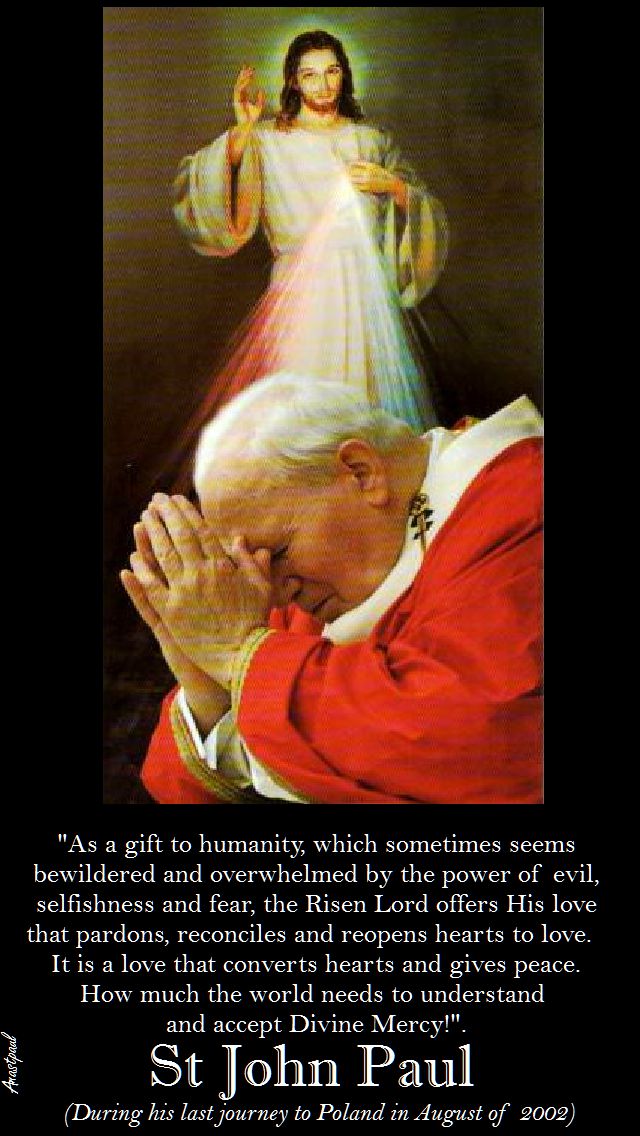
Five centuries after his death, John Paul II recalled how St Casimir “embraced a life of celibacy, submitted himself humbly to God’s will in all things, devoted himself with tender love to the Blessed Virgin Mary and developed a fervent practice of adoring Christ present in the Blessed Sacrament.

Posted in SAINT of the DAY

Saints – 4 March

St Casimir of Poland (Optional Memorial)

Adrian of May
Adrian of Nicomedia
Appian of Comacchio
Arcadius of Cyprus
Basinus of Trier
Felix of Rhuys
Gaius of Nicomedia
Giovanni Antonio Farina
Bl Humbert III of Savoy
Leonard of Avranches
Bl Marie-Louise-Élisabeth de Lamoignon de Dolé de Champlâtreux
Nestor the Martyr
Owen
Peter of Pappacarbone
Bl Placide Viel
Bl Rupert of Ottobeuren

Martyrs on the Appian Way – 900 saints – Group of 900 martyrs buried in the catacombs of Saint Callistus on the Appian Way, Rome, Italy.c260

Martyrs of Nicomedia – 20 saints – A group of 20 Christians murdered together for their faith. The only details about them to survive are three of their names – Archelaus, Cyrillos and Photius. Nicomedia, Bithynia (in modern Turkey)

Martyrs of the Crimea – 7 saints – A group of 4th century missionary bishops who evangelized in the Crimea and southern Russia, and we martyred for their work. We know little else beyond the names – Aetherius, Agathodorus, Basil, Elpidius, Ephrem, Eugene and Gapito.

Martyred by Communists: Bl Giovanni Fausti, Bl Gjelosh Lulashi, Bl Kolë Shllaku, Bl Zoltán Lajos Meszlényi

Martyred by Elizabeth I: Bl Alexander Blake, Bl Christopher Bales, Bl Nicholas Horner

Martyred by Nazis: Bl Mieczyslaw Bohatkiewicz, Bl Stanislaw Pyrtek, Bl Wladyslaw Mackowiak

Martyred in the Spanish Civil War: Bl Pedro Ruiz Ortega, Bl Pere Roca Toscas