Posted in MORNING Prayers, SAINT of the DAY, The WORD

One Minute Reflection – 17 March

One Minute Reflection – 17 March

As long as you neglected to do it to one of these least ones, you neglected to do it to me…………..Matthew 25:45

REFLECTION – “May Christ shield me today, Christ with me. Christ before me, Christ behind me………
Christ in the mouth of everyone who speaks of me, Christ in every eye that sees me, Christ in every ear that hears me.”………….St Patrick

PRAYER – Lord Jesus the Christ, be with me this day and let me see You in everyone I meet. Grant that I may always serve You in others and so arrive at Your heavenly Kingdom where I will serve You and love You and see You, for ever and ever. St Patrick, pray for us all that we may live as you did and reach our heavenly home, amen.

MATTHEW 25-45

christ in the mouth - st patrick pray for us

Posted in MORNING Prayers, SAINT of the DAY

Our Morning Offering – 17 March

Our Morning Offering – 17 March

Excerpt from St Patrick’s Breastplate (also known as The Deer Cry)

I bind unto myself today
the power of God to hold and lead,
His eye to watch, His might to stay,
his ear to hearken to my need;
the wisdom of my God to teach,
His hand to guide, His shield to ward;
the word of God to give me speech,
His heavenly host to be my guard.
[Against the demon snares of sin,
the vice that gives temptation force,
the natural lusts that war within,
the hostile men that mar my course;
of few or many, far or nigh,
in every place, and in all hours
against their fierce hostility, …….
Christ be with me, Christ within me,
Christ behind me, Christ before me,
Christ beside me, Christ to win,
Christ to comfort and restore me,
Christ beneath me, Christ above me,
Christ in quiet, Christ in danger,
Christ in hearts of all that love me,
Christ in mouth of friend and stranger.
I bind unto myself the name,
the strong name of the Trinity,
by invocation of the same,
the Three in One and One in Three,
of whom all nature hath creation,
Eternal Father, Spirit, Word.
Praise to the Lord of my salvation:
Salvation is of Christ the Lord.

EXCERPT FROM ST P'S BREASTPLATE

Posted in Against SNAKE BITES / POISON, GOLDSMITHS, SILVERSMITHS, GILDERS, MINERS, JEWELLERS, CLOCK/WATCH-MAKERS, METAL CRAFTSMEN, PATRONAGE-ENGINEERS, Electrical, Mechanical etc, SAINT of the DAY

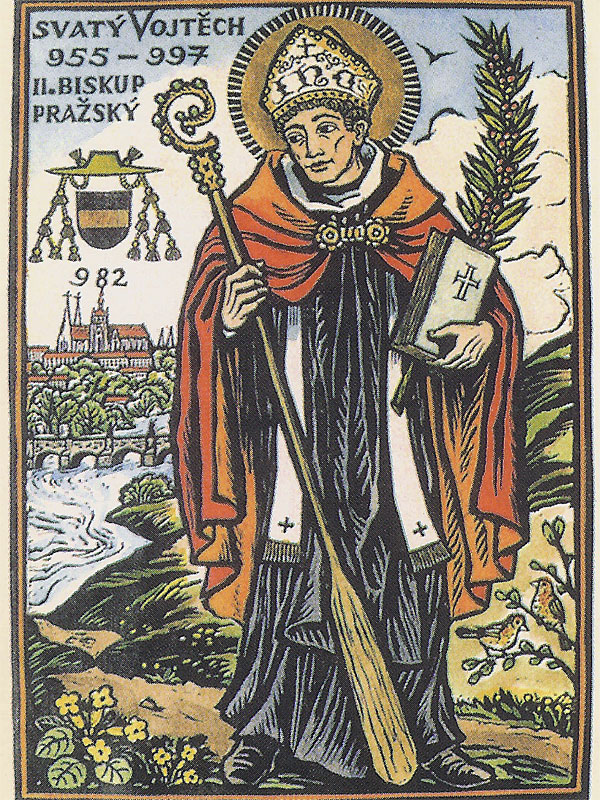
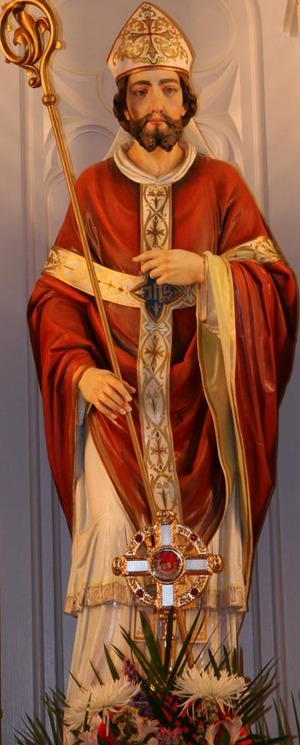
Saint of the Day – 17 March – St Patrick (c 386–461) “The Apostle of Ireland,”

Saint of the Day – 17 March – St Patrick (c 386–461) “The Apostle of Ireland,” P riest, Bishop, Missionary. Patronages – against fear of snakes or ophidiophobia. ophidiophobics, against snake bites, against snakes, of barbers, hairdressers, barrel makers; coopers, blacksmiths, cattle, engineers, excluded people, miners, Ireland, Nigeria (1961), Loiza, Puerto Rico, 29 Diocese.

Although we think of Ireland when we remember St Patrick, he wasn not born in Ireland.   He was born probably in Scotland but sources differ on this point – he might have been born in England or in France.   His father was a Deacon and his grandfather had been a Priest.  

Patrick

But Patrick’s happy, carefree childhood life ended one day when crowds of strangers appeared on the horizon.   They looked dangerous and frightening and they were.   They were pirates and thieves, on their way to capture slaves to take back to Ireland.   Patrick was one of those hundreds of captives.   He was snatched from his family and his home.   He was taken from all of his future hopes and dreams.   Patrick was thrown on a ship, bound in chains and taken over the sea to Ireland.   He was sixteen years old.   For six years, Patrick was a slave in Ireland.   He was put to work watching sheep and cattle.   Patrick had just enough food to live on and when not working, he tried to rest in tiny huts which were damp and cold.

But something strange and wonderful happened in Ireland.   All alone, frightened for his life and among people who worshiped trees and stones, Patrick opened his heart to God.

During those years, Patrick started to pray.   He thought about God all the time and it gave him peace.   He knew that no matter how much he was suffering, God loved him.

Eventually, Patrick escaped from slavery and travelled to France, which in those days was called Gaul.   We are not sure exactly how much time Patrick spent in Gaul.   But it was enough time for him to draw closer to God, as he prayed and studied in a Monastery.   One night, deep in a dreamy vision, Patrick heard voices.   He heard many voices, joined together, pleading with him.   “Come back,” the voices cried, “come back and walk once more among us.”   Patrick knew it was the Irish people calling him.

Strengthened by the courage that only God can give, Patrick went back.   He returned to the very people who had stolen him from his family, worked him mercilessly as a slave and knew little, if anything, about the love of the true God.

Before he left Gaul, Patrick was made the Bishop of Ireland.   He then travelled across the sea to teach Ireland about Jesus Christ.   It wasn’t easy. The people of Ireland practiced pagan religions.   They worshiped nature,and they practiced magic.   They feared the spirits, they believed lived in the woods.   The Irish people believed they could bring evil spirits down on those they wanted to harm.

Patrick had a big job ahead of him. He had to show a country full of students that there was no point in worshiping nature.   Trees can’t forgive your sins or teach you how to love.   The sun, as powerful as it is, could not have created the world.   Patrick explained things using simple examples that people could easily understand.   For example, he used the three-leaf clover to show people how there could be three persons in one God.   Patrick preached to huge crowds and small villages.   He preached to kings and princes.   He preached in the open air and he preached in huts.   Patrick never stopped preaching and he never stopped teaching.   He couldn’t stop—the whole country of Ireland was his classroom and he couldn’t afford to miss even one student!

Soon, Patrick had help.   Men became Priests and Monks.   Women became Nuns. Wherever they lived, those Monks and Nuns settled in Monasteries and set up schools. More students were being reached every day. But, of course, the greatest help Patrick had was from God.

When he was young, Patrick had forgotten God but that would never happen again.   He knew that God supported him in every step he took.   God gave Patrick the courage to speak, even when Patrick was in danger of being hurt by pagan priests who didn’t want to lose their power over the people.

Patrick’s most famous prayer (excerpt below) shows us how close he was to God. It’s called “St. Patrick’s Breastplate.”   A breastplate is the piece of armour that protects a soldier’s heart from harm.   We have this prayer and his own story in one of the few certainly authentic writings of Patrick – his Confessio, which is above all an act of homage to God for having called Patrick, unworthy sinner, to the apostolate.

Christ with me, Christ before me,
Christ behind me, Christ within me,
Christ beneath me, Christ above me,
Christ at my right, Christ at my left.

ST PATRICK'S CONFESSIO

Patrick banishes all snakes from Ireland
The absence of snakes in Ireland gave rise to the legend that they had all been banished by St. Patrick chasing them into the sea after they attacked him during a 40-day fast he was undertaking on top of a hill.    This hagiographic theme draws on the Biblical account of the staff of the prophet Moses.   In Exodus 7:8–7:13, Moses and Aaron use their staffs in their struggle with Pharaoh’s sorcerers, the staffs of each side morphing into snakes. Aaron’s snake-staff prevails by consuming the other snakes.

 Patrick’s walking stick grows into a living tree
Some Irish legends involve the Oilliphéist, the Caoránach and the Copóg Phádraig.   During his evangelising journey back to Ireland from his parent’s home at Birdoswald, he is understood to have carried with him an ash wood walking stick or staff.   He thrust this stick into the ground wherever he was evangelising and at the place now known as Aspatria (ash of Patrick) the message of the dogma took so long to get through to the people there that the stick had taken root by the time he was ready to move on.

St Patrick died between 461 and 464 at Saul, County Down, Ireland of natural causes

Posted in SAINT of the DAY

Saints – 17 March

St Patrick (Optional Memorial)

St Agricola of Châlon-sur-Saône
St Alexander
St Ambrose of Alexandria
Bl Conrad of Bavaria
St Diemut of Saint Gall
St Gabriel Lalemant
St Gertrude of Nivelles
Bl Gertrude of Trzebnica
St Jan Sarkander
Bl Josep Mestre Escoda
St Joseph of Arimathea
Bl Juan Nepomuceno Zegrí y Moreno
St Llinio of Llandinam
Bl Maria Bárbara Maix
St Paul of Cyprus
St Stephen of Palestrina
St Theodore of Rome
St Thomasello
St Withburga of Dereham

Martyrs of Alexandria – Also known as Martyrs of Serapis: An unknown number of Christians who were martyred together by a mob of worshippers of the Graeco-Egyptian sun god Serapis.. Died c.392 in Alexandria, Egypt

Posted in JESUIT SJ, MORNING Prayers, SAINT of the DAY

Thought for the Day – 16 March

Thought for the Day – 16 March

Potential martyrdom was a central component of the Jesuit missionary identity. Missionaries going to Canada knew they were at risk from harsh conditions, as well as from confronting alien cultures. They expected to die in the name of God; they believed the missionary life and its risks was a chance to save converts and thus be saved themselves.   The Jesuits Christophe Regnault and Paul Ragueneau provided the two accounts of the deaths of Jean de Brébeuf and Gabriel Lalement.   According to Regnault, the Jesuits learned of the tortures and deaths from Huron refugee witnesses, who had escaped from Saint-Ignace.   Regnault went to see the bodies to verify the accounts and his superior Rageuneau’s account was based on his report.   The main accounts of Brébeuf’s death come from the Jesuit Relations.   Jesuit accounts of his torture emphasize his stoic nature and acceptance, claiming that he suffered silently without complaining. Throughout the torture, Brébeuf was reported to have been more concerned for the fate of the other Jesuits and of the captive Native converts than for himself.   As part of the ritual, the Iroquois drank his blood, as they wanted to absorb Brébeuf’s courage in enduring the pain.   The Iroquois mocked baptism by pouring boiling water over his head.

Is it even a tiny iota of our faith to know and be prepared to die such a death for Christ?   When we suffer and are persecuted, in the smallest way compared to this, compared to the Cross of Christ, do we grow in faith and courage and pray for more?

St Jean de Brebeuf please pray that we may all grow in faith and courage!

STJEANDEBREBEUF-PRAY FOR US 2

Posted in JESUIT SJ, MORNING Prayers, QUOTES of the SAINTS, SAINT of the DAY, The WORD

One Minute Reflection – 16 March

One Minute Reflection – 16 March

All who believe………………have eternal life in him……….John 3:15

REFLECTION – “Faith is in no way a burden or a yoke imposed on humban beings.  Far from it! Faith is an immense benefit because it commences life in us even on this earth.”………….St Thomas Aquinas

PRAYER – Heavenly Father, thank You for giving me the gift of faith.  Help me to remain firm in my faith throughout my life and to strive, no matter to what suffering You call me, to increase in faith and love for You, day by day.  St Jean de Brebeuf, you have reached the glory of heaven and by your life and suffering for your faith, you taught us the true beauty of love for Christ the Lord, please pray for us all, amen.

FAITHIS IN NO WAY-ST THOMAS AQUINASST JEAN DE BREFEUF PRAY FOR US

Posted in LENT, MORNING Prayers, PRAYERS of the SAINTS, SAINT of the DAY

Our Morning Offering – 16 March

Our Morning Offering – 16 March

PRAYER of St JEAN de BREBEUF SJ (1593-149)

“Jesus, my Lord and Saviour,
what can I give You in return
for all the favours you have first conferred on me?
I will take from Your hand the cup of Your sufferings
and call on Your name.
I vow before Your eternal Father and the Holy Spirit,
before Your most holy Mother
and her most chaste spouse,
before the angels, apostles and martyrs,
before my blessed fathers –
Saint Ignatius and Saint Francis Xavier–
in truth, I vow to You, Jesus my Saviour,
that as far as I have the strength,
I will never fail to accept the grace of martyrdom,
if someday You in Your infinite mercy should offer it to me,
Your most unworthy servant…
My beloved Jesus,
here and now I offer my body and blood and life.
May I die only for You, if You will grant me this grace,
since You willingly died for me.
Let me so live that You may grant me
the gift of such a happy death.
In this way, my God and Saviour,
I will take from Your hand the cup of Your sufferings
and call on Your name: Jesus, Jesus, Jesus!”

PRAYER OF ST JEAN DE BREBEUF

Posted in SAINT of the DAY

Saint of the Day – 16 March – St Jean de Brebeuf SJ

Saint of the Day – 16 March – St Jean de Brebeuf SJ (1593-1949 aged 55) Priest, Martyr, Missionary “Apostle to the Hurons” – Patron of Canada.   Additional Memorial – 19 October as one of the Martyrs of North America.

St Jean was a French Jesuit missionary who traveled to New France (Canada) in 1625.  There he worked primarily with the Huron for the rest of his life, except for a few years in France from 1629 to 1633.   He learned their language and culture, writing extensively about each to aid other missionaries.   In 1649, Brébeuf and another missionary were captured when an Iroquois raid took over a Huron village (referred to in French as St. Louis). T ogether with Huron captives, the missionaries were ritually tortured and killed, being martyred on March 16, 1649.   Brébeuf was beatified in 1925 and among eight Jesuit missionaries canonised in 1930.

brebeuf

In 1649, Brébeuf and another missionary were captured when an Iroquois raid took over a Huron village (referred to in French as St. Louis). Together with Huron captives, the missionaries were ritually tortured and killed, being martyred on March 16, 1649. Brébeuf was beatified in 1925 and among eight Jesuit missionaries canonized as saints in the Roman Catholic Church in 1930.

St. John de Brébeuf was large and handsome, his presence commanded attention.   A brilliant student, gifted linguist and competent manager, he could make things happen.  He was willing to endure anything if only he could thank Christ by giving his life for the salvation of others.

Even though weakened by tuberculosis, John joined the Canada mission in 1625.   For a quarter of a century with only a four-year interlude, he evangelised the Hurons in Quebec. He lived with them, embraced their customs, mastered their language,and wrote a catechism for them.

At first he had little success because the odds were stacked against him.   The Indians viewed him as member of a conquering race.   They also blamed him for rampant diseases and everything else that went wrong.   But John persevered with the good humour you see in this letter inviting other Jesuits to join the mission:

“When you reach the Hurons, you will find us with hearts full of love.   We shall receive you in a hut, so mean that I have scarcely found in France one wretched enough to compare it with.   Fatigued as you will be, we shall be able to give you nothing but a poor mat for a bed.   Besides you will arrive when fleas will keep you awake most of the night.

Instead of being a great theologian as you may be in France, you must reckon on being here a humble scholar and then good God! with what masters—exposed to the laughter of all the savages.   The Huron language will be your St. Thomas and your Aristotle.   Glib as you are, you must decide for a long time to be mute among the barbarians.

Without exaggeration, you will pass the six months of winter in almost continual discomforts—excessive cold, smoke, the annoyance of the savages who surround our fireplace from morning until evening looking for food.

For the rest, thus far we have had only roses.   As we have Christians in almost every village, we must expect to make rounds throughout the year.   Add to all this that our lives depend upon a single thread.   Your cabin might burn down at any moment or a malcontent may cleave your head open because you cannot make it rain.

Here we have nothing that incites toward good.   We are among peoples who are astonished when you speak to them of God.”

In 1649, the Iroquois attacked the Huron village where John was living.  They brutally martyred him, Gabriel Lalement, his companion and their converts . Their suffering is indescribable: bludgeoned, burned with red-hot hatchets, baptised with boiling water, mutilated, flesh stripped off and eaten, hearts plucked out and devoured.   But John de Brébeuf had his prayer answered.   He traded his life for the seven thousand souls he had converted and baptised.


Posted in SAINT of the DAY

Saints – 16 March

St Abban of Kill-Abban
St Abraham Kidunaia
St Agapitus of Ravenna
St Aninus of Syria
St Benedicta of Assisi
St Dionysius of Aquileia
St Dentlin of Hainault
Bl Eriberto of Namur
St Eusebia of Hamage
St Felix of Aquileia
St Finian Lobhar
Bl Ferdinand Valdes
St Gregory Makar
St Heribert of Cologne
St Hilary of Aquileia
St Jean de Brebeuf
Bl Joan Torrents Figueras
Bl John Amias
Bl John Sordi of Vicenza
St Julian of Anazarbus
St Largus of Aquileia
St Malcoldia of Asti
St Megingaud of Wurzburg
St Papa of Seleucia
Bl Robert Dalby
St Tatian of Aquileia
Bl Torello of Poppi

Posted in MORNING Prayers, SAINT of the DAY

Thought for the Day – 15 March

Thought for the Day – 15 March

In different times we hold up different models as examples of holiness. In our present time, we find holiness in people such as St John Paul, St Mother Teresa and St Padre Pio. They were people so grounded in prayer and their relationship with Christ that action must flow from them.   They were each able to stand up strong about the rights and dignity of all people despite the opposition all around them.

St. Louise de Marillac, co-founder of the Daughters of Charity, died in 1660.   Yet, she wasn’t canonized until 1934.   I believe it is because she is a saint for this present time. She was a great leader and changed the face of social work forever– all this because Christ was the centre of her life.

Through this season of Lent and into Easter, have we grown in holiness?   Have we focused our lives more on Christ?   Do we reach out more to those in need as Christ did?   Especially those considered outcasts of mainstream society?   If not, the blessing is we still have today, tomorrow and the next days to work on it!”   (From the 2010 article What Does Holiness Look Like?, by Sr. Denise LaRock, DC)

St Louise de Marillac Pray for us!

ST L DE M PRAY FOR US 3

Posted in LENT, MORNING Prayers, QUOTES of the SAINTS, SAINT of the DAY

Quote/s of the Day – 15 March

Quote/s of the Day – 15 March

“I gave myself to God to accept the designs of His Providence, if He willed me to continue, for the remainder of Lent, in a state of interior abandonment and even affliction so as to honour the sufferings of Jesus Christ which the Church places before our eyes.”

“Let us love suffering then
and let us make strong resolutions
to desire as much of it as the will of God
wants us to experience.
Rest assured that it is a sign
of God’s love for you since it is through this
that He makes you somewhat like his Son.
Suffer then, in His same spirit, through
submission to all that God wills of you.”

“The person who does not love does not know God, for God is Charity.”

“Love the poor and honour them as you would honour Christ Himself,”

~~~ St Louise de Marillac

let us love suffering then-st louise de marillacTHE PERSON WHO DOES NOT LOVE-STLDEMARILLACLOVETHEPOOR-STLDEMST LOUISE DE MARILLAC - PRAY FOR US.jpg NO 2

Posted in MORNING Prayers, QUOTES of the SAINTS, SAINT of the DAY, The WORD

One Minute Reflection – 15 March

One Minute Reflection – 15 March

Look at the birds in the sky; they do not sow or reap, they gather nothing into barns, yet your heavenly Father feeds them.
Are not you more important than they?……………………Matthew 6:26

REFLECTION“If you completely entrust everything to the guidance of Divine Providence and love the most holy will of God, this will contribute greatly to your
peace of mind and heart. In fact, this is one of the most essential practices I know of for growth into holiness.”……..St Louise de Marillac

PRAYER – Loving and compassionate Father, we celebrate with great joy the faith and works of St Louise de Marillac. Instill in us the fire of her love, the tenacity of her belief and the tenderness of her care for the most abandoned. Draw us together into the light of your presence and help us to trust in the power of Your Spirit and the Light of Your Son, leading us to ever closer to You, who live and reign forever and ever. St Louise de Marillac, pray for us, amen.

MATTHEW 6-26IF YOU COMPLETELY ENTRUST=STLDEMARILLACST LOUISE DE MARILLAC - PRAY FOR US

Posted in SAINT of the DAY

Saint of the Day – 15 March – St Louise de Marillac D.C.

Saint of the Day – 15 March – St Louise de Marillac D.C.  (1591-1660 body incorupt) Wife, Mother, Widow, Foundress, Apostle of Charity – Patron of disappointing children, loss of parents, people rejected by religious orders, sick people, social workers (proclaimed on 12 February 1960 by Pope John XXIII), Vincentian Service Corps, widows.   With Saint Vincent de Paul, she founded the Daughters of Charity in 1642, receiving Vatican approval in 1655.

Louise was born and raised in Paris, during a time when great social strife had befallen the city.   The gap between the rich and poor was ever increasing, with more and more families and children suffering without the basic necessities of living.   At that time, nearly one in six citizens would die of poverty-related conditions or diseases.   Louise felt drawn to change that, but her road to ministry would be a long one.

Born the illegitimate daughter of Louis de Marillac, Louise never knew her mother was passed away shortly after her birth.   Her father graciously raised her, demonstrating great love for her, despite societal opinion.   Due to family relations, Louise grew up interacting with members of the aristocracy, specifically the royal court of Queen Marie de Medicis, receiving a formal education and instruction in deportment.   When her father remarried, Louise’s new stepmother refused to recognise her and she was sent to be schooled at the royal monastery of Poissy.   The education Louise received was among the finest available at the time and she demonstrated a keen mind and intellect, especially in practical and organizational tasks.   Her intellect was only surpassed by her dedication and commitment.

Upon her father’s death, when Louise was approximately 15 years old, she left the school and took up residence with an elderly religious, who inspired her to consider her own vocation.   Louise, who had been quite frail and frequently sick throughout her childhood, applied to the Paris order of Capuchins but was denied entrance.  Confused, and heartbroken, Louise was left without a plan for the next phase of her life. When her family arranged a marriage for her to Antoine Le Gras, a young man with an appointment to the royal court, Louise obeyed their wishes and was wed.  The union produced one child, Michel, whom Louise came to love intensely.   Louise put her energies into maintaining a household and being a mother with the same intensity that she had pursued her studies. When her husband fell ill and became bedridden, she spent her days nursing him and tending to her beloved son, who had also developed medical issues.   Through her nursing, Louise came to love her husband very much and after a period of year, when she was 32, was devastated by his death.   Not knowing where else to turn, Louise looked to God who had been her comfort throughout her life.

Directed by the Lord to that “the time would come when I would be in the position to make vows of poverty, chastity and obedience and that I would be in a small community where others would do the same,” Louise sought out a new spiritual director, Saint Vincent de Paul.   Together, these two pious saints would lastingly change the world.

Under his direction, Louise regulated her own life, creating a Rule of the World, which scheduled her service to others, prayer and contemplative time and management of household duties.   Like with many things in her life, Louise required an outside direction to temper her zeal for service and prayer, lest she damage her own frail health.   Louise began a ministry to the poor of Paris, taking four young poor women into her home and teaching them to serve those in need.   These were the first sisters of the Company of the Daughters of Charity, founded when Louise was 44 years old.   She instructed her new charges, “Love the poor and honour them as you would honor Christ Himself.” Saint Vincent, recognizing her intelligence, ability to get things done, organisation and zeal for service to the Lord encouraged and supported her Daughters of Charity and extension of his own service organisation the Confraternities of Charity.   “Your convent,” Saint Vincent said to Louise, “will be the house of the sick; your cell, a hired room; your chapel, the parish church; your cloister, the streets of the city or the wards of the hospital.”

Saint Louise went on to build and develop over 40 houses of the Company of the Daughters of Charity, throughout Paris and then extending throughout France.   The sisters served the poor and sick, expanding into orphanages, mental institutions, homes for the elderly, prisons and even battlefields.   Saint Louise had such a talent for organisation, she revolutionised the way in which religious interacted with hospital staff, creating integrated team approaches which cared for both the physical needs of the patient alongside the spiritual needs.   This model continues to be used today.

Saint Louise continued her work and direction of her sisters until the day of her death at age 68.   She said to her sisters, “Take good care of the service of the poor. Above all, live together in great union and cordiality, loving one another in imitation of the union and life of our Lord. Pray earnestly to the Blessed Virgin, that she might be your only Mother.”  Her incorrupt body lies in the Chapel of Our Lady of the Miraculous Medal, Rue du Bac, Paris.   Her work continues today, as her order and those that came after it, continue their missions of service.

After Louise’s death in 1660, one of Louise’s Daughters of Charity found her young granddaughter, tearfully praying at her grandmother’s tomb.   When asked why she was crying, Louise’s granddaughter expressed concern that the Daughters of Charity would disappear, now that her grandmother was dead.   The sister eloquently responded: “When all the poor in the world are no longer poor, when all the hungry are fed, and all the naked clothed, when the sick and the dying and the abandoned babies and the orphans and the outcast and the lonely and forsaken are all gathered in heaven, until that day, there will always be Daughters of Charity.”

Posted in SAINT of the DAY

Saints – 15 March

Bl Anthony of Milan
St Aristobulos of Britannia
Bl Arnold of Siena
Bl Artemide Zatti
St Bodian of Hanvec
St Clement Mary Hofbauer
St Eoghan of Concullen
St Eusebius II
Bl Francis of Fermo
Bl Jan Adalbert Balicki
St Leocritia of Córdoba
St Longinus the Centurian
St Louise de Marillac
Bl Ludovico de la Pena
St Mancius of Evora
St Matrona of Capua
St Matrona of Thessaloniki
St Menignus of Parium
Bl Monaldus of Ancona
St Nicander of Alexandria
St Peter Pasquale
St Pío Conde y Conde
St Sisebuto
St Speciosus
St Vicenta of Coria
Bl Walter of Quesnoy
Bl William Hart
St Pope Zachary

Posted in MORNING Prayers, SAINT of the DAY

Thought for the Day – 14 March

Thought for the Day – 14 March

St Mathilda had to be many things:  wife, mother, queen, grandmother, even regent of the kingdom.   She never had a false sense of her own importance and was simply good to everyone.   Her position enabled her to do a lot of good and she did not shirk from the effort.  She spent her days in penance and service to others, through her prayer, heartfelt repentance and penance being washed clean of her sins and reaching Christian perfection in sainthood.  This means that we too can achieve such perfection.   Our greatest opportunities for good lies in those we live with – let us open our eyes to the people around us – where are we needed, where are we called?

St Mathilda pray for us!

ST MATHILDA PRAY FOR US 2ST MATILDA - MARCH 14

Posted in MORNING Prayers, QUOTES of the SAINTS, SAINT of the DAY, The WORD

One Minute Reflection – 14 March

One Minute Reflection – 14 March

Everyone who exalts himself shall be humbled, while he who humbles himself shall be exalted……….Luke 18:14

REFLECTION – “Observe a surprising fact. God is on high. You exalt yourself and God flees from you. You humble yourself and He comes to you.
God looks upon the humble to exalt them but He regards the proud from afar to abase them.”…………….St Augustine

PRAYER – Almighty Father, whenever I seek to take pride in what I do, please remind me of the way things really are. The only good I have and am comes from You; all that is mine is my weakness. Teach me that it is only in humility that I can attain You. St Matilda, you learnt humility by the suffering you experienced at the hands of your own family, please pray for us all, amen.

LUKE 18-14OBSERVE A SURPRISING FACT-STAUGUSTINEST MATHILDA PRAY FOR US

Posted in Of a Holy DEATH & AGAINST A SUDDEN DEATH, of the DYING, FINAL PERSEVERANCE, DEATH of CHILDREN, DEATH of PARENTS, Of PARENTS & FAMILIES of LARGE Families, SAINT of the DAY, WIDOWS and WIDOWERS

Saint of the Day – 14 March – St Matilda of Saxony

Saint of the Day – 14 March – St Matilda of Saxony  (c 894-968) – Queen, Apostle of Prayer and Almsgiving, Foundress  – Patronages – of death of children, disappointing children, falsely accused people, large families, people ridiculed for their piety, queens, second marriages, widows.  Medieval chroniclers like Liutprand of Cremona and Thietmar of Merseburg celebrated Matilda for her devotion to prayer and almsgiving.   Her first biographer depicted her leaving her husband’s side in the middle of the night and sneaking off to church to pray.   St. Matilda founded many religious institutions, including the canonry of Quedlinburg, which became a center of ecclesiastical and secular life in Germany under the rule of the Ottonian dynasty.   She also founded the convents of St. Wigbert in Quedlinburg, in Pöhlde, Enger, and Nordhausen, likely the source of at least one of her vitae.

Born in Saxony, Mathilda was the daughter of Thierri, a prince of considerable importance. From an early age, Mathilda demonstrated great piety and love for the Lord and was raised by her pious grandmother, Maud, the abbess of Enford, in the cloister.   There, as she grew up, she practiced daily prayer and penance and learned a love of labour and spiritual reading.   Mathilda would have been more than content to spend her life dedicated to religious pursuits.   However, her father arranged her marriage to Henry, the son of the Duke of Saxony.   Within seven years, Henry found himself the King of Germany, and Mathilda, the queen.

804

King Henry demonstrated through his actions that he was a God-fearing and pious spouse. His equity and courage won him the respect of his subjects and he encouraged and financed Mathilda’s longing to live a life of charitable service to others.   While Henry ruled his kingdom, Mathilda devoted herself to penance and spent her days visiting the poor and sick, offering them consolation and comfort.   She also founded schools to provide education to all, visited incarcerated prisoners and worked for the conversion of souls.   Overall, her life was relatively a simple one, despite her royalty, with her primary focus on daily prayer.

66b14b42003354aa389e0136cdbdc49f

After seventeen years, Henry died of apoplexy, and Mathilda, looking to the Lord, gave up her royal vestments and jewels, laying them on the alter of the Lord.   Divesting herself of her title, she stepped aside for her children, with the eldest, Otho, becoming king. Henry became Duke of Bavaria and the youngest, Bruno, the Archbishop of Cologne.

However, all was not smooth prior to the coronation, with Henry contesting his brother’s rightful place as heir.   Mathilda, for her part, always partial to Henry, sided with him, her words creating significant discord between the brothers.   Eventually, the brothers reconciled, but turned against their mother, stripping her of her dowry,and accusing her publicly of mismanaging the royal funds in service to her charities.   Saint Mathilda accepted the punishment gracefully, recognising her sinfulness in siding with one son above another, repenting and offering herself wholly to the Lord in reparation.

The persecution and suffering of Mathilda was long and cruel but she patiently bore this all, until her son reconciled with her.   Her dowry restored, Mathilda was allowed to move back into the royal court.   However, instead, she chose to live in the Benedictine monastery of Quedlinbourg, using her funds to serve the poor and extend the religious communities in the region dedicated to charity.  he founded five monasteries, and built many churches.

Saint Mathilda grew ill and realized that death was upon her. In the presence of her community at the monastery, she made a public confession, donned sackcloth and covered herself with ashes.   She further received last sacraments from William, Archbishop of Mayence, her nephew.   Her body remains at Quedlinburg, where she is buried beside her husband.   She is venerated there today.

Posted in SAINT of the DAY

Saints-14 March

St Agno of Zaragoza
St Alexander of Pydna
St Aphrodisius of Africa
Bl Arnold of Padua
St Boniface Curitan
St Diaconus
St Eutychius of Mesopotamia
Bl Eve of Liege
Bl Giacomo Cusmano
St Lazarus of Milan
St Leo of the Agro Verano
St Leobinus of Chartres
St Matilda of Saxony
St Maximilian
Bl Pauline of Thuringia
St Peter of Africa
St Philip of Turin
St Talmach
Bl Thomas Vives

47 Martyrs of Rome – Forty-seven people who were baptised into the faith in Rome, Italy by Saint Peter the Apostle, and were later martyred together during the persecutions of Nero. Martyred c.67 in Rome, Italy

Martyrs of Valeria – Two monks martyred by Lombards in Valeria, Italy who were never identified. After the monks were dead, their killers could still hear them singing psalms. They were hanged on a tree in Valeria, Italy in the 5th

Posted in MORNING Prayers, QUOTES of the SAINTS, SAINT of the DAY, The WORD

One Minute Reflection – 13 March

One Minute Reflection – 13 March

I heard the voice of the Lord saying,
Whom shall I send?……
“Here I am”, I said, “send me!”……….Isaiah 6:8

REFLECTION – “This man of suave eloquence and eminent talent shone as brightly by his virtues as by his doctrine. By his faith and zeal the Gothic people have been converted from Arianism to the Catholic faith”…..St Isidore of Seville speaking of his brother St Leander, whom we celebrate today.

PRAYER – Help me to discern through prayer and meditation what You truly want of me. Then enable me to offer it to You – and indeed to offer myself and all I have to You. St Leander, you were and are an example to all around you, please pray for us, amen!

IS 6-8-ST LEANDER

THIS MAN-ST ISIDORE OF SEVILLE

Posted in SAINT of the DAY

Saint of the Day – 13 March – St Leander of Seville

Saint of the Day – 13 March – St Leander of Seville (c 534-600/601) – BIsho, Confessor of the Faith, Teacher, Writer Apostle of Spain and Evangelisation – Patron of Episcopal attire and Liturgical garments.   Saint Leander, as Bishop, instituted the practice of praying the Nicene Creed during Mass—a practice which continues today.  He viewed the Creed as a manner in which to proclaim the divinity of Christ at a time when the Church suffered attack from various heresies, as well as an opportunity to reinforce the faith of the people. Through his diligent work, Saint Leander saw Catholicism flourish in Spain at a time of great political and religious uncertainty.

Leander and Isidore and their siblings (all sainted) belonged to an elite family of Hispano-Roman stock of Carthago Nova.   Their father Severianus is claimed to be, according to their hagiographers, a dux or governor of Cartagena, though this seems more of a fanciful interpretation since Isidore simply states that he was a citizen.   The family moved to Seville around 554.   The children’s subsequent public careers reflect their distinguished origin: Leander and Isidore both became bishops of Seville and their sister Saint Florentina was an abbess who directed forty convents and one thousand nuns.   Even the third brother, Fulgentius, appointed Bishop of Écija at the first triumph of Catholicism over Arianism but of whom little is known, has been canonised as a saint.

The family as a matter of course were staunch Catholics, as were the great majority of the Romanised population, from top to bottom; only the Visigothic nobles and the kings were Arians.   It should be stated that there was less Visigothic persecution of Catholics than legend and hagiography have painted.   From a modern standpoint, the dangers of Catholic Christianity were more political.   Saint Leander, as bishop, instituted the practice of praying the Nicene Creed during Mass—a practice which continues today.   He viewed the Creed as a manner in which to proclaim the divinity of Christ at a time when the Church suffered attack from various heresies, as well as an opportunity to reinforce the faith of the people.   Through his diligent work, Saint Leander saw Catholicism flourish in Spain at a time of great political and religious uncertainty.

Leander, enjoying an elite position in the secure surroundings of tolerated Catholic culture in Seville, became at first a Benedictine monk and then in 579 he was appointed bishop of Seville.   In the meantime he founded a celebrated school, which soon became a centre of Catholic learning.   As Bishop he had access to the Catholic Merovingian Princess Ingunthis, who had come as a bride for the kingdom’s heir and he worked tirelessly with her to convert her husband St. Hermenegild, the eldest son of Liuvigild, an act of court intrigue that cannot honestly be divorced from a political context.   Leander defended the new convert even when he went to war with his father “against his father’s cruel reprisals,” the Catholic Encyclopedia puts it. “In endeavouring to save his country from Arianism, Leander showed himself an orthodox Christian and a far-sighted patriot.”

This action earned him the king’s wrath and exile to Constantinople, where he met and became close friends of the Papal Legate, the future Pope Gregory the Great.   Saint Leander served as a contemporary and advisor to Saint Gregory, encouraging him to write his famous commentary on the Book of Job entitled the “Moralia.”

After some time, King Leovigild summoned Leander back to Seville.   Having experienced a change of heart, he wished for Leander to instruct his son Reccared—who would inherit the throne—in the ways of the faith.   Through Leander’s instruction and model, the people of Spain were converted.   He presided over the third Council of Toledo, which upheld the consubstantiality of the Trinity and brought about many moral reforms in the Church. Saint Leader further wrote an influential Rule for Spanish nuns.  He introduced the practice of praying the Nicene Creed at Mass. A prolific writer, unfortunately most of his works have been lost to history, although much of the correspondence written by Gregory the Great to his attention remains extant.

After a long life of fighting heresies and preaching the truth, Saint Leander died around the year 600. He was succeeded by his brother, St Isidore of Seville, who is a Doctor of the Church.

Saint Isidore and Saint leander of Sevilla. Ignacio de Ries

Saint Isidore and Saint leander of Sevilla. Ignacio de Ries

San_Leandro

st_leander_and_st_bonaventura_1665-1666_XX_museum_of_fine_arts_sevilla_spain
St Bonaventure & Leander

Saint Leander of Seville313leander7

Posted in SAINT of the DAY

Saints – 13 March

Bl Agnellus of Pisa
St Ansovinus of Camerino
Bl Berengar de Alenys
St Christina of Persia
St Euphrasia
Bl Françoise Tréhet
St Gerald of Mayo
St Grace of Saragossa
St Heldrad of Novalese
Bl Judith of Ringelheim
St Kevoca of Kyle
St Leander of Seville
St Mochoemoc
St Nicephorus of Constantinople
Bl Peter II of La Cava
St Pientius of Poitiers
St Ramirus of Leon
St Sabinus of Egypt
St Sancha of Portugal

Martyrs of Cordoba: Roderick, Salomon,

Martyrs of Nicaea:
Arabia
Horres
Marcus
Nymphora
Theodora
Theusitas
Martyrs of Nicomedia
Eufrasia
Macedonius
Modesta
Patricia
Urpasian

Posted in MORNING Prayers, SAINT of the DAY

Thought for the Day – 12 March

Thought for the Day – 12 March

Sufferings and pain are difficult for anyone to bear and in St. Seraphina’s case they were a true martyrdom.   Seraphina had to make sense out of it, young as she was.   She drew strength from the sufferings of Jesus and found her happiness in God, in spite of her terrible afflictions.   We have little reason to complain about our and we have many lessons to learn from her.

St Seraphina Pray for us!

ST FINA - MARCH 12


Posted in MORNING Prayers, QUOTES of the SAINTS, SAINT of the DAY, The WORD

One Minute Reflection – 12 March

One Minute Reflection – 12 March

For his sake I have forfeited everything…..
so that Christ may be my wealth and
I may be in him…………Phil 3:8-9

REFLECTION – “An act of renunciation is an act of union with God.
The Divine Master looks lovingly upon a person who gains a victory over self.”……….St Madeleine Sophie Barat

PRAYER – Divine Master, teach me to give up all things so that I may be united closely to You. Let me be willing to lose all things rather than give up my union with You. Dear St Seraphina, so young and innocent, you knew completely serenity in suffering and union with the Father, please pray for us! Amen

phil 3-8 and 9an act of renunciation-stmadeleinesophiebaratST SERAPHINA PRAY FOR US

Posted in DOCTORS of the Church, QUOTES of the SAINTS, SAINT of the DAY

Saint of the Day – 12 March – St Seraphina

Saint of the Day – 12 March – St Seraphina/Fina – (1238-1253) – Virgin – Patron of physically challenged people, handicapped people and spinners

She was a little girl, very pretty, born into a very poor family, whose father died when she was very young.   As a little girl she learned to sew and spin, spending most of her time at home.

seraphina

After her father’s death, she was struck with a strange and paralyzing illness. She became misshapen and ugly, in constant pain, unable to get out of bed or even to move.   Her mother took care of her but had to leave her for hours at a time to attend to her work. Seraphina’s only consolation was the crucifix and she realized that she was called to imitate the suffering Christ.

So she never complained.   She managed to remain serene and something beautiful shone out of her face.   Then she was struck another blow.   Her mother died and she was left completely destitute, her neighbours repelled by her appearance and her sickness, her only friend a girl named Beldia who visited her and brought her food.

In her reading, St. Seraphina had heard of the great sufferings of Pope St. Gregory the Great and he became her special saint.   She prayed to him, drew strength from the sufferings that he had to endure and prayed that he would obtain for her the patience she needed to bear her own sufferings.   She was now so weak and helpless that it was clear to everyone she could not live very long.

Eight days before her death, alone and almost completely forsaken, St. Gregory appeared to her and told her: “Dear child, on my feast day, God will give you rest” (in those days his feast day was celebrated on March 12).   On that day, she died.   The whole city attended her funeral and from that moment everyone began to pray to her.   On the place where she had lain, her neighbours found white violets growing and even today in the village of San Geminiano where she lived, the white violets that bloom in March are called Santa Fina flowers.   She died on March 12,1253, at the age of fifteen.

Posted in SAINT of the DAY

Saints for 12 March

2nd Sunday in Lent

St Almut of Wetter
St Alphege the Bald
Bl Angela Salawa
St Basilissa of Asia
Bl Beatrix of Engelport
St Bernard of Carinola
Bl Claudius the Minor
St Egdunus
St Fechno
St Girolamo da Recanati
St Heiu of Hartlepool
St Indrecht of Iona
St Innocent I, Pope
St Joseph Zhang Dapeng
St Luigi Orione
St Maximilian of Thebeste
St Mura McFeredach
St Paul Aurelian
St Peter the Deacon
St Seraphina
St Theophanes the Chronographer

Martyrs of Nicomedia – 8 saints
Peter of Nicomedia
Doroteo of Nicomedia
Gorgonio of Nicomedia

Posted in LENT, MORNING Prayers, SAINT of the DAY

Saturday 11 March

Dear Friends

No posts today.   I should be back tomorrow.

God bless your weekend!

Ana

Posted in CATHOLIC DEVOTIONS of the Month, FEASTS and SOLEMNITIES, NOVENAS, SAINT of the DAY

Announcing a Novena to St Joseph

Novena to St Joseph

The primary feast of St Joseph is on 19 March, the husband of the Blessed Virgin Mary and the foster father of Jesus Christ.

Indeed, the Catholic Church dedicates the entire month of March to Saint Joseph and urges us to pay special attention to his life and example.

Fathers, in particular, should cultivate devotion to Saint Joseph, whom God Himself chose to care for His Son. As we learn more about Saint Joseph, we can teach our own boys about the virtues of fatherhood through his example.
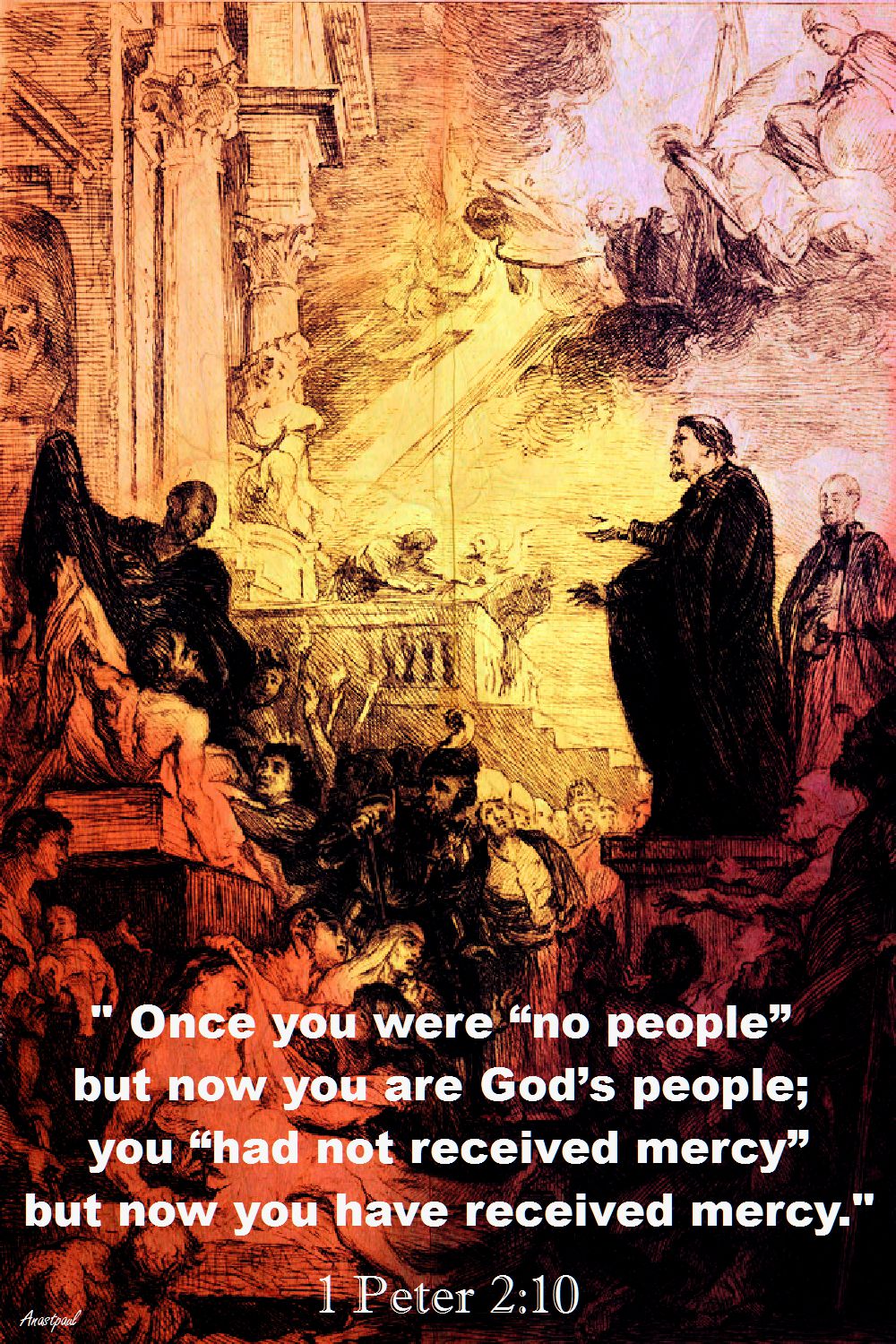
St. Teresa of Avila’s Plea

“Would that I could persuade all men to be devoted to this glorious Saint [St. Joseph], for I know by long experience what blessings he can obtain for us from God.   I have never known anyone who was truly devoted to him and honoured him by particular services who did not advance greatly in virtue: for he helps in a special way those souls who commend themselves to him.   It is now very many years since I began asking him for something on his feast and I have always received it. I  f the petition was in any way amiss, he rectified it for my greater good . . .

” I ask for the love of God that he who does not believe me will make the trial for himself—then he will find out by experience the great good that results from commending oneself to this glorious Patriarch and in being devoted to him.”

St. Alphonsus Liguori on St. Joseph,
Patron of a Happy Death

“Since we all must die, we should cherish a special devotion to St. Joseph, that he may obtain for us a happy death.   All Christians regard him as the advocate of the dying who had honoured him during their life and they do so for three reasons:

“First, because Jesus Christ loved him not only as a friend but as a father and on this account his mediation is far more efficacious than that of any other Saint.

“Second, because St. Joseph has obtained special power against the evil spirits, who tempt us with redoubled vigour at the hour of death.

“Third, the assistance given St. Joseph at his death by Jesus and Mary obtained for him the right to secure a holy and peaceful death for his servants.   Hence, if they invoke him at the hour of death he will not only help them but he will also obtain for them the assistance of Jesus and Mary.”

St Joseph we ask for your assistance in all our needs starting tomorrow, pray for us!

NOVENA TO ST JOSEPH STARTS 11 MARCH


Posted in JESUIT SJ, QUOTES of the SAINTS, SAINT of the DAY

Thought for the day – 10 March

Thought for the day – 10 March

“Ogilvie typifies what can be overlooked when we reflect the Creed, in the Creed when we say, ‘suffered under Pontius Pilate.’   In other words, Ogilvie typifies the perennial struggle of the Church with the state.   It was a civil official who condemned Christ and it is the state over the centuries, which in Augustine’s language, has become the arm of the enemies of God that gave the Church her first martyrs for 300 years and has been placing such a heavy burden on those who wish to remain faithful to Christ.   The conflict of Church and state is the final feature of John Ogilvie’s spirituality as a martyr.
Let us ask St. John Ogilvie to obtain, especially for the leaders in the Church today, something of the courage he had to be willing to proclaim the true faith even at the price of their blood.   St. John Ogilvie, pray for us.

In the name of the Father and of the Son and of the Holy Spirit. Amen.”

BY VENERABLE SERVANT OF GOD JOHN A HARDON SJ

ST JOHN OGILVIE SJ-PRAY FOR US 3

Posted in JESUIT SJ, MORNING Prayers, QUOTES of the SAINTS, SAINT of the DAY, The HOLY ROSARY/ROSARY CRUSADE

Quote/s of the Day – 10 March

Quote/s of the Day – 10 March

“In all that concerns the king, I will be slavishly obedient; if any attack his temporal power, I will shed my last drop of blood for him.
But in the things of spiritual jurisdiction which a king unjustly seizes I cannot and must not obey.”
~~ St John Ogilvie at his trial

“willingly and joyfully pour forth even a hundred lives. Snatch away that one
which I have from me and make no delay about it, but my religion you will never snatch
away from me!”

“If there be here any hidden Catholics, let them pray for me but the prayers of heretics I will not have.”— Saint John Ogilvie at his execution

“At last conscience won the day.  I became a Catholic;
I abandoned Calvinism – and this happy change I attribute to the martyr’s beads and to no other cause those beads which, if I had them now, gold could not tempt me to part with and if gold could purchase them, I should not spare it.” ~~~ Baron John ab Eckersdorff 

(St. John Ogilvie was executed by hanging on March 10, 1615.
A few moments before his hanging, St. John threw his Rosary into the crowd where it
hit Baron John ab Eckersdorff a Calvinist nobleman on the chest – he later converted to
Catholicism, attributing his conversion to witnessing the martyrdom and St. John’s
rosary.)

IF THERE BE ANY HIDDEN-STJOHNOGILVIEAT LAST CONSCIENCE-STJOHN OGILVIE

Posted in DOCTORS of the Church, JESUIT SJ, LENT, MORNING Prayers, QUOTES of the SAINTS, SAINT of the DAY, The WORD

One Minute Reflection – 10 March

One Minute Reflection – 10 March

We are ….. heirs of God, heirs of Christ, if only we suffer with him so as to be glorified with him……..Romans 8:17

REFLECTION – If we suffer with Christ, we will be glorified with Him.   The fulfilment of the promised happiness is certain for those who share in the Lord’s Passion……St Pope Leo the Great

PRAYER – Grant me Your grace to overcome my natural fear of suffering Lord.   Strengthen me to bear my sufferings in union with Your sacred Passion, for the salvation of the world.  St John Ogilvie you are an example to me, please pray that this Lenten time will assist us all in overcoming our fear of sharing in the Passion of our God. Amen

ROMANS 8-17IF WE SUFFER WITH CHRIST-STLEOTHEGREATST JOHN OGILVIE PRAY FOR US