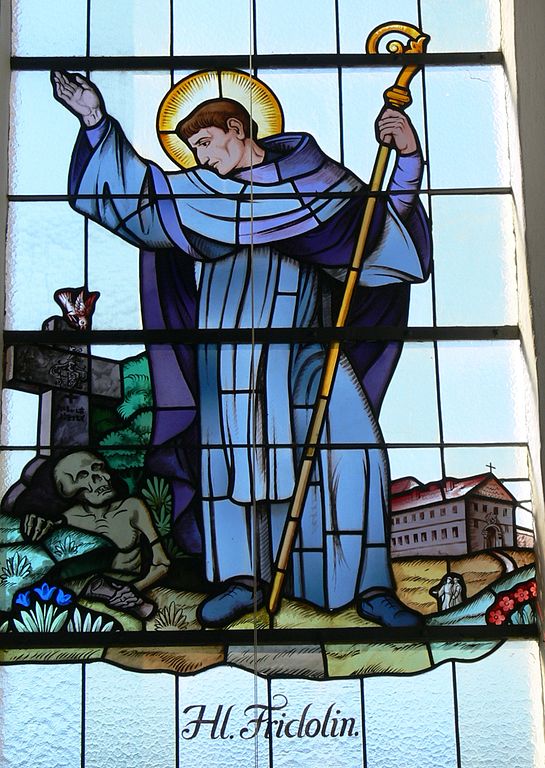
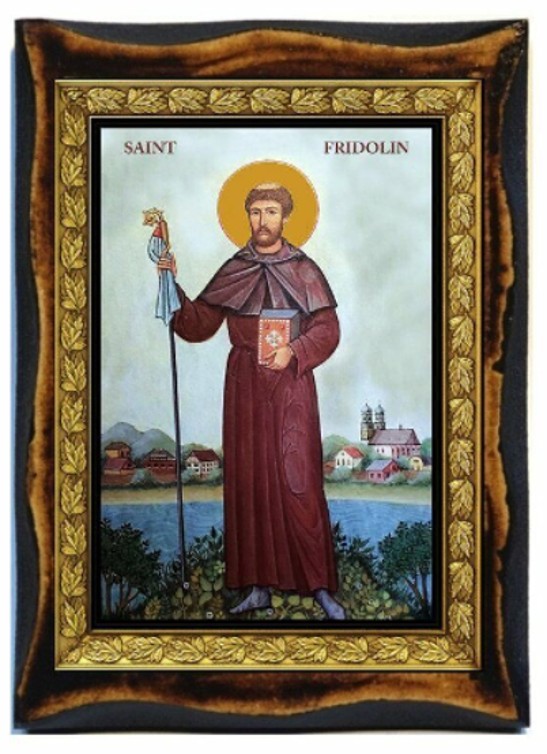
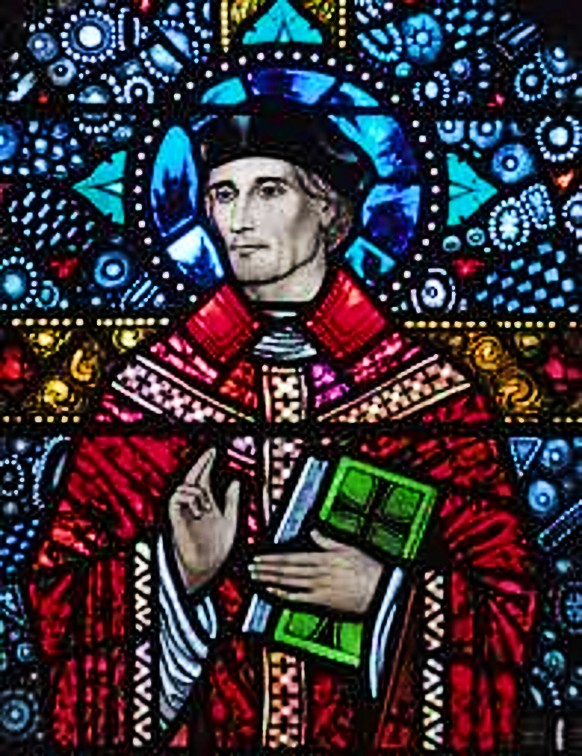
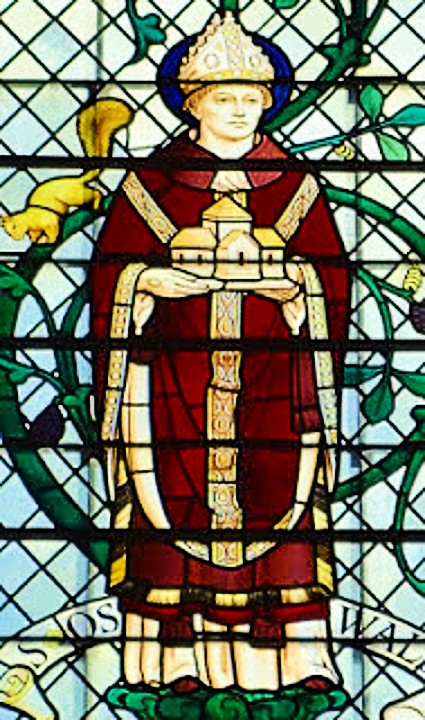
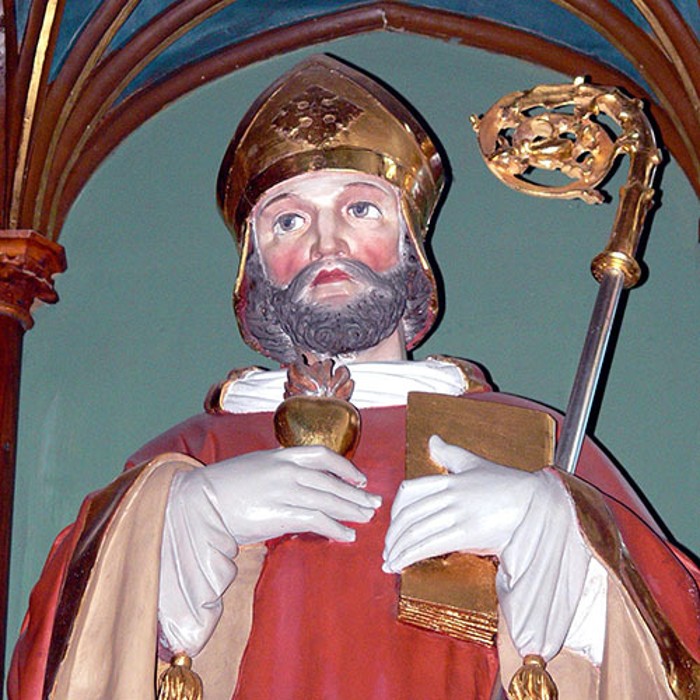
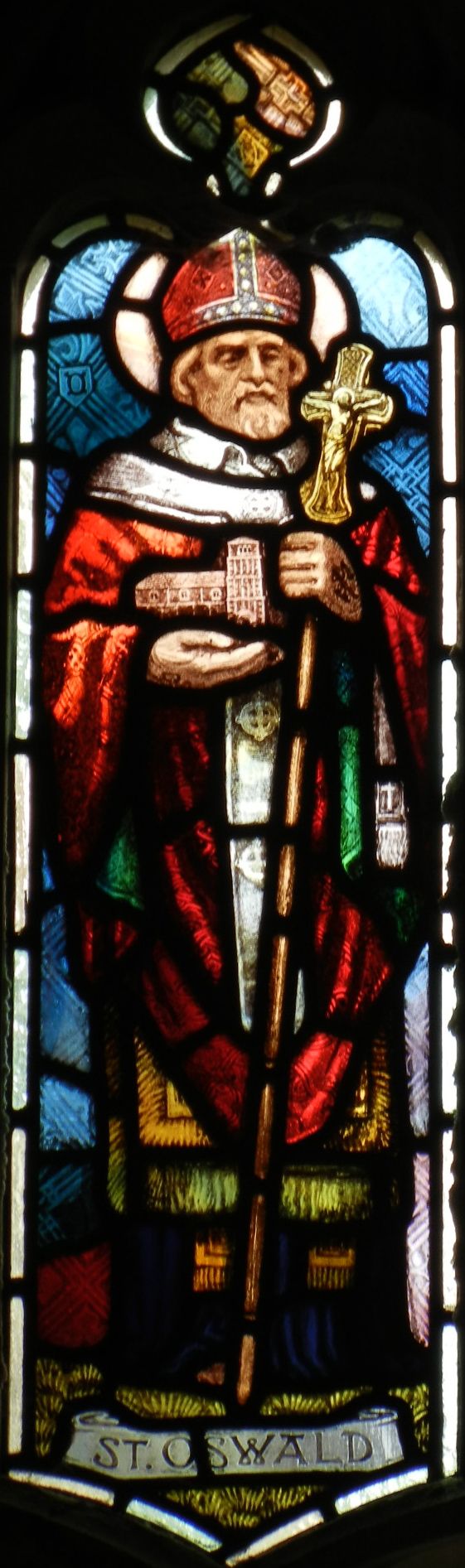
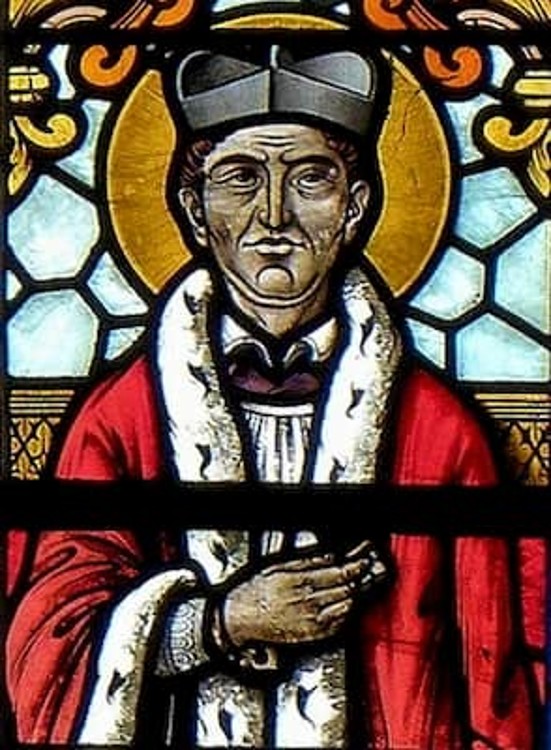
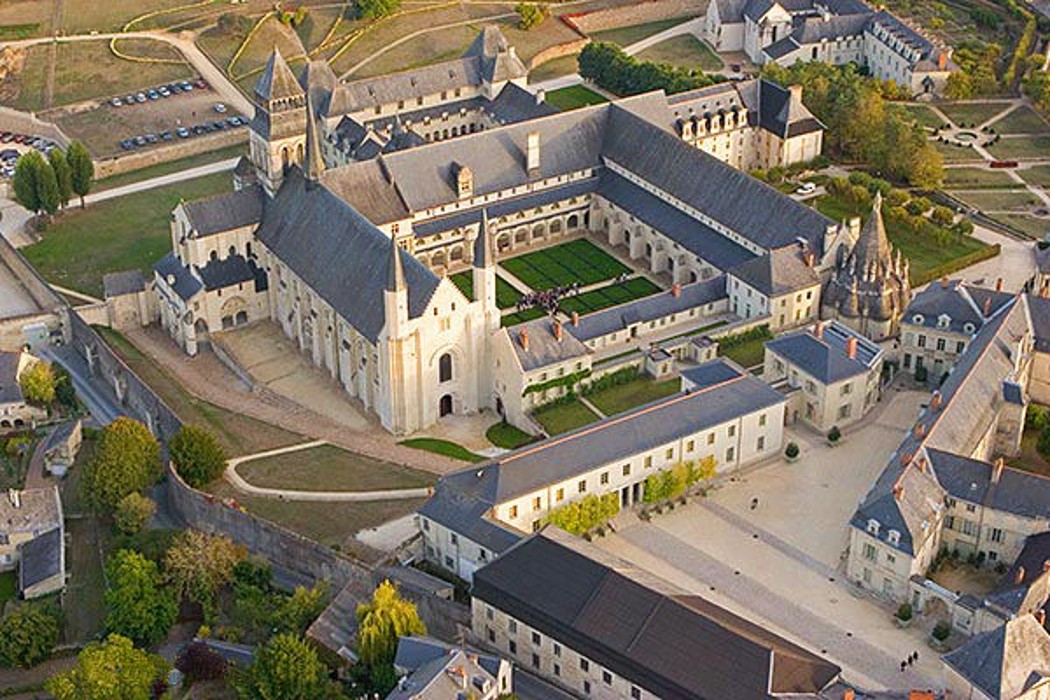
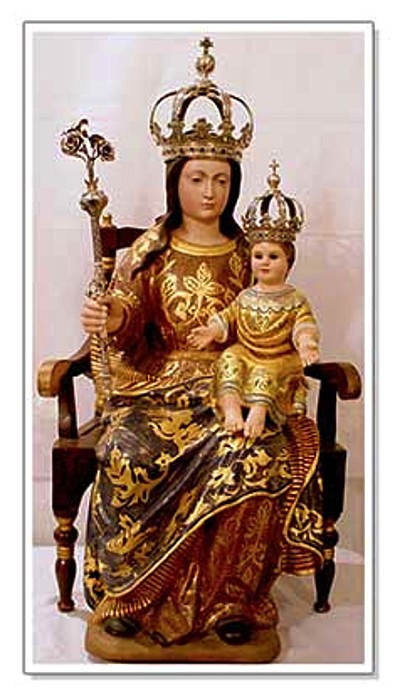
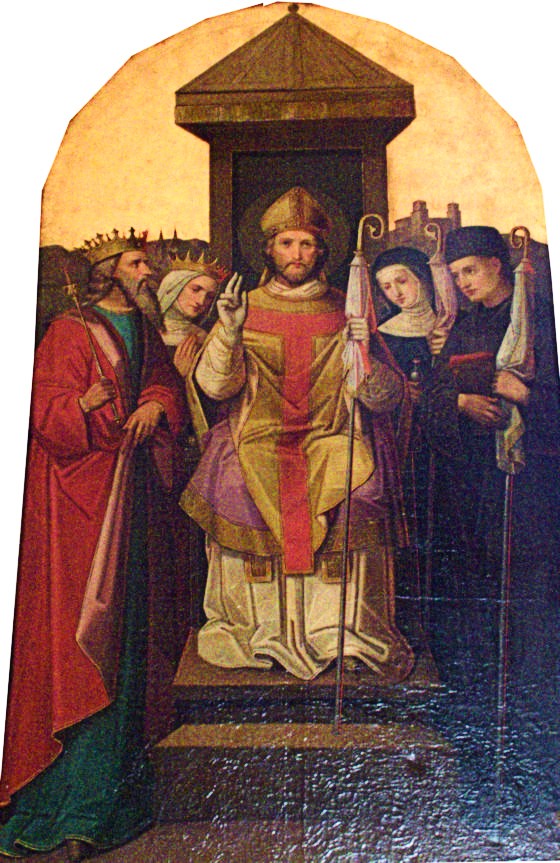
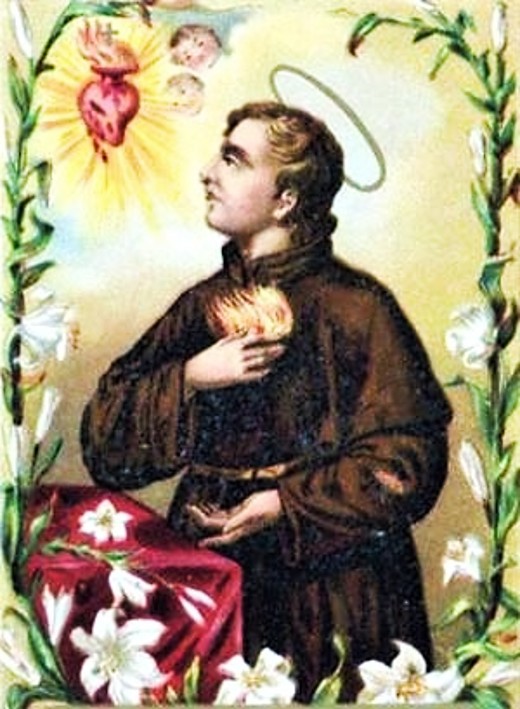
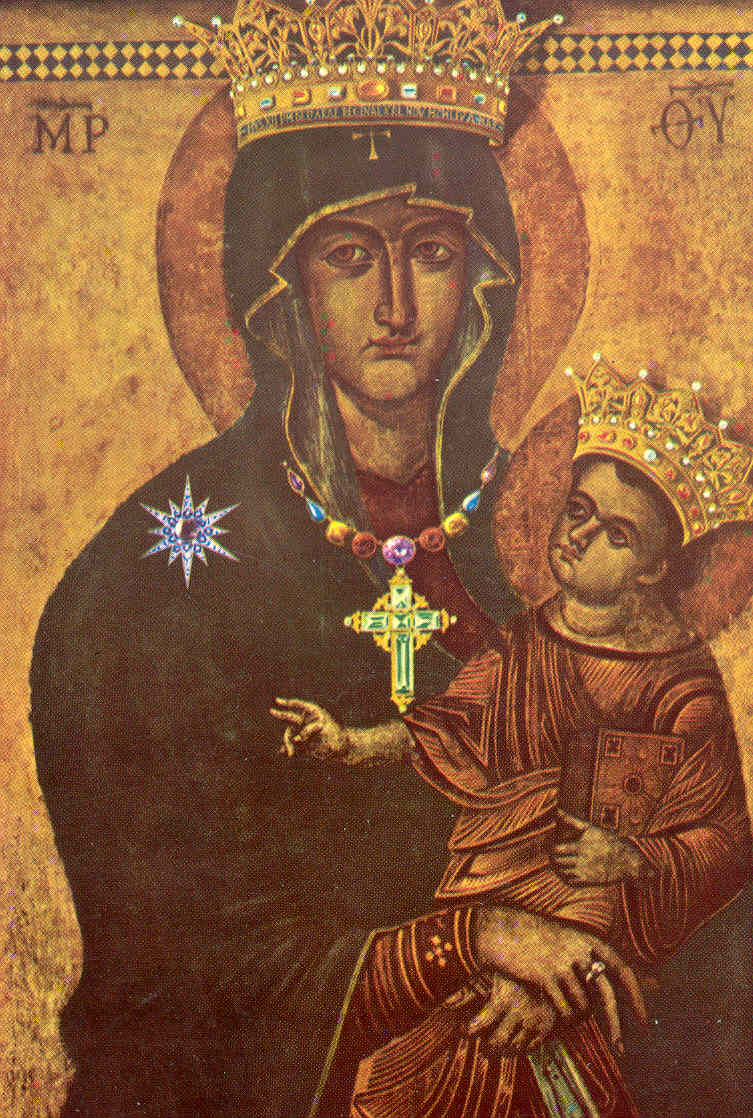
St Adelelmus (Died c 1100) Abbot St Aldegundis St Alexander of Edessa St Amnichad of Fulda St Armentarius of Antibes St Armentarius of Pavia St Barsen St Barsimaeus of Edessa
Our Prayers to the Saints – 29 January – St Francis de Sales (1567-1622) Bishop, Confessor – Doctor of the Church: Doctor Caritatis (Doctor of Charity) “The Gentle Christ of Geneva” and the “Gentleman Saint.”
O Glorious St Francis Prayer to St Francis de Sales
O Glorious St Francis, model of the interior life and full of zeal for the salvation of souls! Obtain for me the grace to employ all my faculties, not for my own sanctification alone but for that of my neighbour too that continually spreading abroad, the sweet odour of Jesus Christ, by my words and works, I may attain, with thee, the blessedness promised to the merciful: “Blessed are the merciful, for they shall obtain mercy” and that I may one day have a share in the glory which thou dost enjoy in Paradise with the Angels and Saints, where those who edify and instruct to justice, shall shine as stars for all eternity (Dan 12:3). Amen
Quote/s of the Day – 29 January – St Francis de Sales, Bishop, Confessor and Doctor of the Church
“The measure of love, is to love without measure.”
“Since God often sends us His inspirations by means of His Angels, we ought frequently to offer Him, our aspirations, through the same channel. … Call on them and honour them frequently and ask their help in all your affairs, temporal, as well as spiritual.”
“Anxiety is the greatest evil that can befall a soul, except sin. God commands you to pray but He forbids you to worry.”
“Friendships begun in this world will be taken up again, never to be broken off. ”
“Have patience with all things but chiefly, have patience with yourself. Do not lose courage in considering your own imperfections but instantly set about remedying them, everyday begin the task anew.”
“Do not look forward to the changes and chances of this life in fear – rather look to them with full hope that, as they arise, God, whose you are, will deliver you out of them. He is your keeper. He has kept you hitherto. Do you but hold fast to His dear hand and He will lead you safely through all things and, when you cannot stand, He will bear you in His arms. Do not look forward to what may happen tomorrow. Our Father will either shield you from suffering, or He will give you strength to bear it.”
“Thus we do not say that the Pope cannot err in his private opinions, as did John XXII; or be altogether a heretic, as perhaps Honorius was. Now, when he, [the Pope], is explicitly a heretic, he falls ipso facto, from his dignity and OUT of the Church! …”
“During the night we must wait for the Light.”
Hail, Sweet Jesus! Prayer to Christ in His Passion and Death By St Francis de Sales (1567-1622) Doctor of the Church
Hail, sweet Jesus! Praise, honour and glory be to Thee, O Christ, Who, of Thou own accord, embraced death, and recommending Thyself to Thy heavenly Father, bowing down Thy venerable Head, did yield up Thy Spirit. Truly thus giving up Thy life for Thy sheep, Thou hast shown Thyself, to be the Good Shepherd. Thou died, O Only-begotten Son of God. Thou died, O my beloved Saviour, that I might live forever. O how great hope, how great confidence have I reposed in Thy Death and Thy Blood! I glorify and praise Thy Holy Name, acknowledging my infinite obligations to Thee. O good Jesus, by Thy bitter Death and Passion, give me grace and pardon. Give unto the faithful departed, rest and life everlasting. Amen.
Most Holy Mary, Virgin Mother of God Act of Consecration By St Francis de Sales (1567-1622) Indulgence of 300 days, for each recitation St Pius X, 17 November 1906
Most Holy Mary, Virgin Mother of God, I ………., most unworthy though I am to be thy servant, yet touched by thy motherly care for me and longing to serve thee, do, in the presence of my Guardian Angel and all the Court of Heaven, choose thee this day to be my Queen, my Advocate and my Mother and I firmly purpose to serve thee evermore myself and, to do what I can, that all may render faithful service to thee. Therefore, most devoted Mother, through the Precious Blood thy Son poured out for me, I beg thee and beseech thee, deign to take me among thy clients and receive me as thy servant forever. Aid me in my every action and beg for me the grace never, by word or deed or thought, to be displeasing in thy sight and that of thy most holy Son. Think of me, my dearest Mother and desert me not at the hour of death. Amen
Saint of the Day – 29 January – St Francis de Sales (1567-1622) Bishop, Confessor, Doctor of the Church – Doctor Caritatis (Doctor of Charity) “The Gentle Christ of Geneva” and the “Gentleman Saint.”
From the Office of the Church for the Feast, of St Francis de Sales.
Francis was born of pious and noble parents, in the town of Sales, from which the family took their name. From his earliest years, he gave pledge of his future sanctity by the innocence and gravity of his conduct. Having been instructed in the liberal sciences during his youth, he was sent early to Paris that he might study Philosophy and Theology and, in order that his education might be complete, he was sent to Padua, where he took, with much honour, the degree of Doctor in both Civil and Canon Law. He visited the Sanctuary of Loreto, where he renewed the vow he had already taken in Paris, of perpetual virginity, in which holy resolution he continued till death, in spite of all the temptations of the devil and all the allurements of the flesh.
He refused to accept an honourable position in the Senate of Savoy and entered into the Ecclesiastical state. He was Ordained Priest and was made Provost of the Diocese of Geneva, which charge he so laudably fulfilled that Granier, his Bishop, selected him for the arduous undertaking of labouring, by the preaching of God’s Word, for the conversion of the Calvinists of Chablais and the neighbouring country round about Geneva.
This mission he undertook with much joy. He had to suffer the harshest treatment on the part of the heretics, who frequently sought to take away his life, caluminated him and laid all kinds of plots against him. But, he showed heroic courage in the midst of all these dangers and persecutions and by the Divine assistance, converted, as it is stated, seventy-two thousand heretics to the One True Catholic Faith, among whom were many distinguished by the high position they held in the world and by their learning.
After the death of Granier, who had already made him his Co-adjutor, he was made Bishop of Geneva. Then it was that his sanctity showed itself in every direction, by his zeal for Ecclesiastical discipline, his love of peace, his charity to the poor and every virtue.
From a desire to give more honour to God, he founded a new Order of Nuns, which he called the Visitation, taking for their Rule that of St Augustine, to which he added Constitutions of admirable wisdom and sweetness. He enlightened the children of the Church by the works he wrote, which are full of a heavenly wisdom and pointed out a path, which is at once safe and easy, to christian perfection.
In his fifty-fifth year, whilst returning from France to Annecy, he was taken with his last sickness, immediately after having celebrated Mass, on the Feast of St. John the Evangelist. On the following day, his soul departed this life for Heaven, in the year of our Lord 1622. His body was taken to Annecy and was buried, with great demonstration of honour, in the Church of the Nuns of the above mentioned Order. Immediately after his death, miracles began to be wrought through his intercession, which, being officially authenticated, he was Canonised by Pope Alexander the Seventh and his Feast was appointed to be kept on the twenty ninth day of January.
St Francis de Sales CO, OM, OFM (Cap) (1567-1622) Bishop, Confessor – Doctor of the Church: Doctor caritatis (Doctor of Charity) “The Gentle Christ of Geneva” and the “Gentleman Saint” – Bishop of Geneva, Doctor of Law and Theology, Writer, Theologian, Mystic, Teacher, Preacher, Founder along with St Jane Frances de Chantal, founded the women’s Order of the Visitation of Holy Mary (Visitandines). Feast Day – 29 January (General Roman Calendar of 1960 and local communities. Biography: https://anastpaul.wordpress.com/2018/01/24/saint-of-the-day-24-january-st-francis-de-sales-1567-1622-doctor-of-the-church-doctor-caritatis-doctor-of-charity/
t Abundantia the Martyr St Aphraates St Aquilinus of Milan St Barbea of Edessa St Blath of Kildare Bl Boleslawa Maria Lament St Caesarius of Angoulême Bl Charles of Sayn
Saint of the Day – 28 January – Saint Julián of Cuenca (1127-1208) the second Bishop of Cuenca, Spain from c 1196 until his death. Professor, Hermit, Reformer, Miracle-worker, basket-weaver using the money he gained from this trade to support the poor and needy, He was also a regular visitor to prisoners, assisting them spiritually and with material succour. Born as Julián Ben Tauro in c 1127 at Burgos, Spain and died on 28 January 1208 in Cuenca, Spain of natural causes, aged around 80 years. Patronages – basket-weavers, for rain, of the City and Diocese of Cuenca. Also known as – Julian of Burgos. Canonised on 18 October 1594 by Pope Clement VIII.
Saint Julián of Cuenca by Eugenio Cajes.
Most details we have collected about Saint Julián’s life are due to tradition (mixed with “pious” stories), writings that developed, especially from the 16th Century. These writings depict a holy man, chosen by God from the mother’s womb (like the prophets), a man full of humility and apostolic zeal, great benefactor of the poor, with a deep and intense spirit of prayer and great devotion to the Virgin Mary.
Julián’s name was Julián Ben Tauro (meaning Julián son of Tauro). His surname indicates his Mozarab ancestry – that is, Christians who lived in Muslim kingdoms, thus, in a delicate position. This document leads most historians to state the Toledan Mozarab origins of Julián.
Historical sources do not offer much information on the early life of Julián, except that he was born in Burgos to the nobleman Tauro. He studied at the Cathedral school there before he studied at the University of Palencia where he earned his Doctorate. In 1153, he was appointed a Professor in the philosophical and theological departments in Palencia in 1153. During his time in Palencia he worked as a basket-weaverr in order to earn extra income for the poor, as well to support himself.
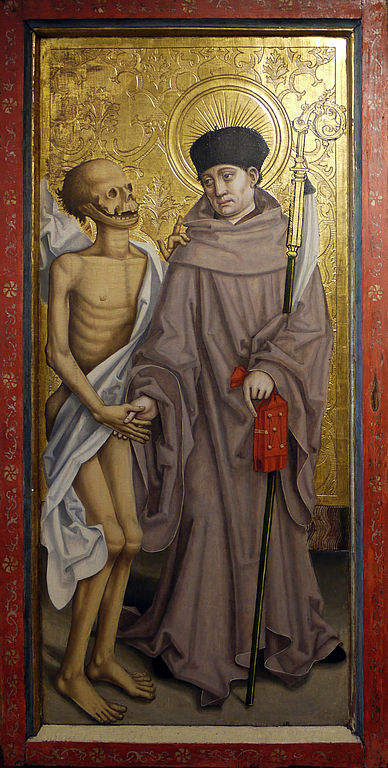
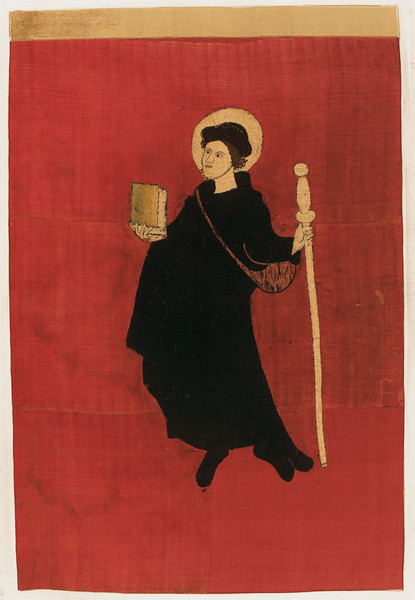
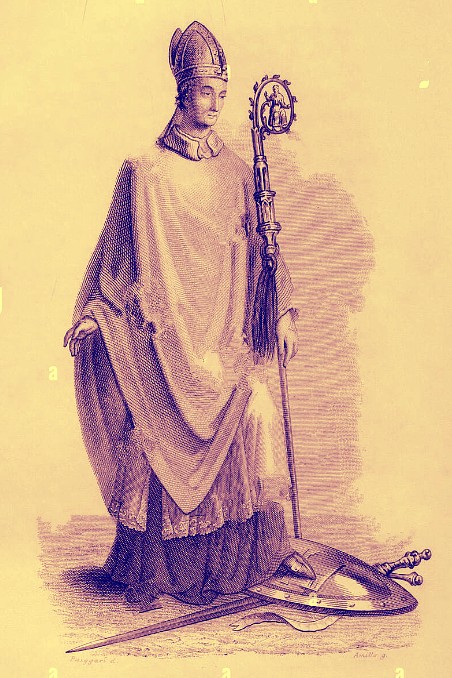
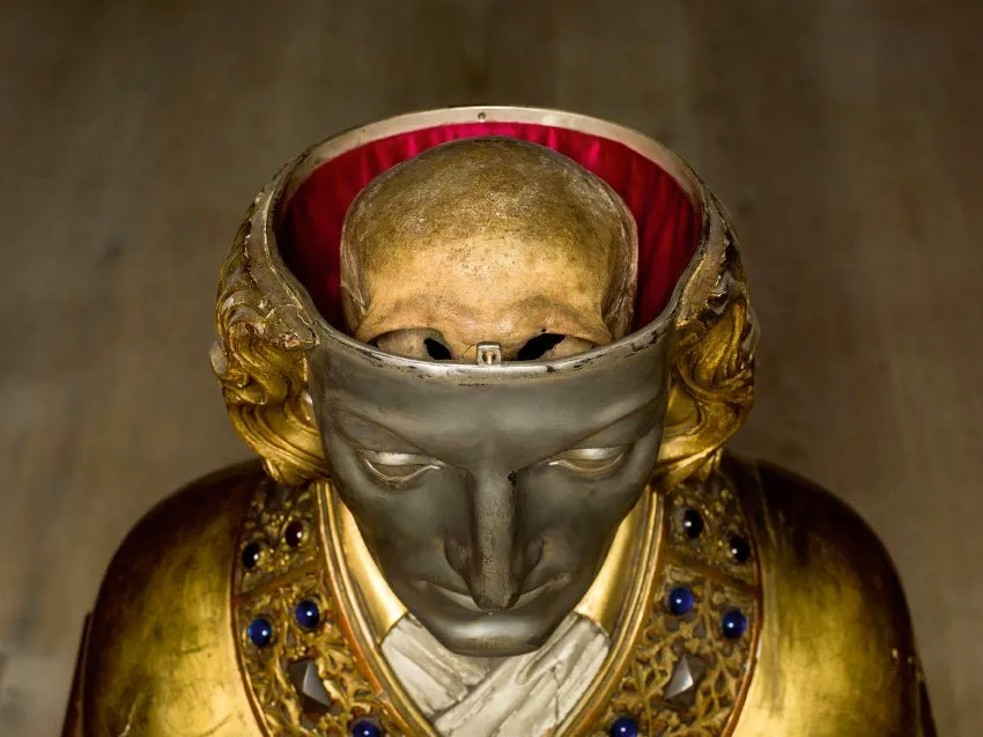
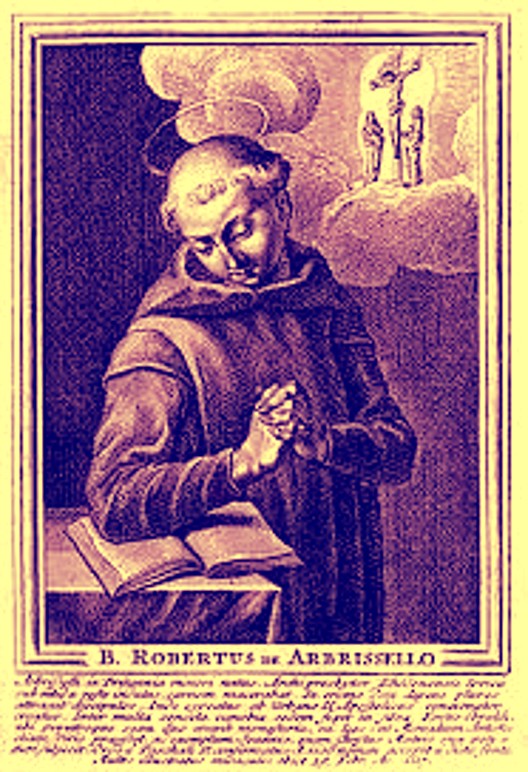
Saint Julian of Cuenca and St Adelelmus of Burgos – Spanish School, 17th Century
In 1163 he left Palencia and his teaching duties to live a life of solitude in a modest house outside Burgos, located on the banks of the Arlanzón. He was Ordained to the Priesthood in 1166 after having received the minor orders. He and his servant, Lesmes lived a life of mortification and contemplation. The two then took to the road as itinerant preachers and reached both Córdoba and Toledo in 1191. A note about Lesmes – “the figure of Lesmes, the loyal servant who would not leave the company of Saint Julián until his death.”
Saint Julián with Lesmes, his servant
But this solitude and travelling ended in 1191 when the Archbishop of Toledo, Martín II López de Pisuerga appointed Julián as the Archdeacon at Toledo. He exercised his administrative duties but continued preaching, as well as making baskets in order to generate income for the poor. From 1196, Julián served as the Archdeacon until the Bishop of Cuenca, Juan Yáñez died and Alfonso VIII of Castile chose Julián to succeed him.
The Archbishop of Toledo conferred Episcopal Consecration upon him that June of 1196. Julián was known for his almsgiving and he visited the poor in prisons too. His outreach to all faiths was equally generous and kind, as was his desire to make pastoral visits to care for the faithful in his Diocese. He often offered grain to the poor to alleviate their suffering and also aided the poor peasant farmers in the region.
He continued to preach during his travels to all the areas in his Diocese, as well as reforming the practices of the Diocesan Priests in addition to engaging with charitable organisations to better help the poor. He likewise supported these charities to provide for the needs of his flock, in addition to the Jews and Muslims. On an annual basis, he would retire to live a life of solitude and contemplation and continued his habit of making baskets. There is a wonderful miracle reported that one day Jesus Himself appeared to him in the guise of a beggar, in order to thank him.
Colonial School, Cuzco, Peru. 18th century – Saint Julian Bishop of Cuenca
He died in his Diocese in 1208. His remains were housed in the Cuenca Cathedral but his body was re-interred in 1578 under an Altar built in his honour in a side Chapel at the same Cathedral.
In the Reading V of the Office it is stated that “he was a true father of the poor and used his money and his talents to help the needy, widows and orphans. He used the yield of his Church to help the miserable, as well as to establish and decorate the Churches, using little support for himself, obtaining what he needed personally with his own hands. He was devoted to prayer, through which he achieved from God many and great things for his people. The beautiful miracle is related as follows: Since the whole Diocese suffered shortage of grain and nothing was left in the Episcopal barns, taking pity on the people suffering this great calamity, he prayed fervently to the Lord along with many tears. Then it occurred that a huge quantity of grain was transported to the gates of the Episcopal palace carried by numerous donkeys, which disappeared after leaving their load.
In memory and as a tribute to the charity of Saint Julián, the Chapter established at the beginning of the 15th century the “Chest of Saint Julián” or “of the Alms”, which became a charitable institution to attend the urgent needs of the dispossessed. Essentially it gave daily alms of bread, ensured the upbringing and accommodation of orphan children and provided dowries so orphan ladies could marry, something otherwise impossible given the customs and the way of thinking at the time. (This Chest was perpetuated in Cuenca until recent times).
According to the old obituaries of Cuenca’s Bishopric, the death or departure of Saint Julián took place on 20th January 1208, at the age of 80. However, his celebration was set on the 28th of the same month, probably for the sake of liturgical-pastoral expediency, and during centuries his festivity has been celebrated on that date in Cuenca and in other places where he is greatly venerated.
As the tradition brings to light and is easy to imagine, Saint Julián was a great preacher, going through many places of Spain preaching the Gospel of Salvation. He was an excellent missionary, also within Cuenca’s recently created Diocese, repopulated with peoples from the North, as a result of the re-conquest. Despite the many difficulties of travelling from one place to another, Julián spared no effort to preach the Gospel to everyone, as the Lord commended after His Resurrection.
Saint Julián’s Canonisation was solemnised under Pope Clement VIII on 18 October 1594.
The Second Feast of St Agnes: 28 January is traditionally the day of the “Second Feast of St Agnes,” although this very ancient observance was reduced to a commemoration in 1931 and abolished in the post-Vatican II reform (1969). It is still kept in some Churches dedicated to St Agnes, most prominent among them, the Basilica built over the site of her burial, less than a mile and a half from the gates of Rome. In liturgical books, the formal name of the feast is “Sanctae Agnetis secundo,” which literally means “the feast of St Agnes for the second time.” This title is found on the calendar of the Tridentine Missal and Breviary, as also seven centuries earlier in the Gregorian Sacramentary. The single Matins lesson in the Breviary of St Pius V tells us, that after her death, Agnes appeared first to her parents to console them and then to the Emperor Constantine’s daughter Constantia, who suffered from an incurable sore, while she was praying at her grave, exhorting Constantia to trust in Christ and receive Baptism. Having done this and been healed, Constantia later built a Basilica in the Saint’s honour.
St Aemilian of Trebi Bl Amadeus of Lausanne St Antimus of Brantôme St Archebran Bl Bartolomé Aiutamicristo St Brigid of Picardy St Callinicus St Cannera of Inis Cathaig Bl Charlemagne (a decree of Canonisation was issued by the anti-pope Paschal III but this was never ratified by valid authority.) St Constantly St Flavian of Civita Vecchia St Glastian of Kinglassie Bl James the Almsgiver St James the Hermit St Jean de Réomay
St Julian of Cuenca (c 1127-1208) Bishop St Leucius of Apollonia St Maura of Picardy Bl Odo of Beauvais St Palladius of Antioch St Paulinus of Aquileia St Richard of Vaucelles St Thyrsus of Apollonia
Martyrs of Alexandria: A group of 4th-century lay faithful in Alexandria, Egypt. During the celebration of Mass one day an Arian officer named Syrianus led a troop of soldiers into their church and proceded to murder all the orthodox Christians in the place. 356 in Alexandria, Egypt.
Our Morning Offering – 27 January – St John Chrysostom (347-407) Bishop, Confessor, Father and Doctor of the Church “Golden Mouthed”
O Lord and Lover of Men By St John Chrysostom (347-407) Father and Doctor of the Church
O Lord and Lover of men, make shine in our hearts the pure Light of Thy Divine Knowledge and open the eyes of our mind to the understanding of Thy Gospel teaching. Instill in us the fear of Thy Blessed Commandments that trampling upon all carnal desires, we may enter upon a spiritual life, willing and doing all that is Thy Good Pleasure. For Thou art the Light of our souls and of our bodies, Christ O God and we give glory to Thee together with Thine Eternal Father and Thine All-holy, Good and Life-giving Spirit, now and forever, world without end. Amen.
Saint of the Day – 27 January – St John Chrysostom (347-407) Bishop, Confessor, Father and Doctor of the Church “Golden Mouthed.”
The Church, in the Lessons of today’s Office, thus speaks the praises of our Saint.
John, surnamed Chrysostom on account of his golden eloquence, was born at Antioch. Having gone through the study of the law and the profane sciences, he applied himself, with extraordinary application and success, to the study of the Sacred Scriptures. Having been admitted to Holy Orders and made a Priest of the Church at Antioch, he was appointed Bishop of Constantinople, after the death of Nectarius, by the express wish of the Emperor Arcadius. No sooner had he entered upon the pastoral charge, than he began to inveigh against the licentious lives led by the rich. Thus, his courageous preaching procured him many enemies. He likewise gave great offence to the Empress Eudoxia because he had reproved her, for having appropriated to herself, the money belonging to a widow, name, Callitropa and for having taken possession of some land which was the property of another widow.
At the instigation, therefore, of Eudoxia, several Bishops met together at Chalcedon. Chrysostom was cited to appear, which he refused to do because it was not a Council, either lawfully or publicly convened. Whereupon, he was sent into exile. He had not been gone long, before the people rose in sedition on account of the Saint’s banishment and he was recalled, to the immense joy of the whole City.
But, his continuing to inveigh against the scandals which existed, and his forbidding the games, held before the silver statue of Eudoxia which was set up in the space opposite Sancta Sophia, were urged by certain Bishops, enemies of the Saint, as motives for a second banishment.
The widows and the poor of the City bewailed his departure as that of a father. It is incredible how much Chrysostom had to suffer in this exile and how many he converted to the Christian Faith by his sufferings!
At the very time that Pope Innocent the First, in a Council held at Rome, was issuing a Decree, ordering that Chrysostom should be set at liberty – he was being treated by the soldiers, who were taking him into exile, with unheard of harshness and cruelty. Whilst passing through Armenia, the holy Martyr Basiliscus, in whose Church he had offered up a prayer, thus spoke to him during the night: “Brother John! we shall be united together tomorrow.“ Whereupon, on the following morning, Chrysostom received the Sacrament of the Eucharist and, signing himself with the Sign of the Cross, he breathed forth his soul to his God, on the eighteenth of the Calends of October (14 September).
A fearful hail-storm happened at Constantinople after the Saint’s death and, four days after, the Empress died. Theodosius, the Son of Arcadius, had the Saint’s body brought to Constantinople, with all due honour, where, amidst a large concourse of people, it was buried on the sixth of the Calends of February (27 January). Theodosius, whilst devoutly venerating the Saint’s Relics, interceded for his parents that they might be forgiven. The body was, at a later period, translated to Rome and placed in the Vatican Basilica.
All men agree in admiring the unction and eloquence of his sermons, which are very numerous, as indeed of all his other writings. He is also admirable in his interpretation of the Sacred Scriptures which he explains in their genuine sense. It has always been thought that he was aided, in his writings and sermons, by St Paul the Apostle, to whom he entertained an extraordinary devotion.
St John Chrysostom (347-407) Bishop, Confessor, Father and Doctor of the Church – “Golden Mouthed,” Preacher, Orator, Writer, Theologian, Confessor. Name Meaning – God is gracious; gift of God (John), golden-mouthed (Chrysostom). Biography: https://anastpaul.com/2017/09/13/saint-of-the-day-13-september-st-john-chrysostom-347-407-father-and-doctor-of-the-church-golden-mouthed/ (His Feast Day is today (changed in 1969 to 13 September). The Roman Martyrology states of him today: “At Constantinople, St John, Bishop, who was surnamed Chrysostom on account of his golden flow of eloquence. He greatly promoted the interests of the Christian religion by his preaching and exemplary life and, after many toils, closed his life in banishment. His sacred body was brought to Constantinople on this day in the reign of Theodosius the younger and afterwards taken to Rome and placed in the Basilica of the Prince of the Apostles. This illustrious Preacher of the Word of God, Pope Pius X declared and appointed as the Heavenly Patron of Sacred Orators.”
St Domitian of Melitene St Emerius of Bañoles St Gilduin Bl Gonzalo Diaz di Amarante St Henry de Osso y Cervello Bl John of Warneton St Julian of Le Mans St Julian of Sora St Lupus of Châlons
St Marius of Bodon Bl Michael Pini St Natalis of Ulster St Theodoric of Orléans St Pope Vitalian
Martyrs of North Africa – 30 Saints: A group of 30 Christians Martyred together by Arian Vandals. The only details to have survived are four of their names – Datius, Julian, Reatrus and Vincent. c 500 in North Africa.
One Minute Reflection – 26 January – St Polycarp (69-155) Martyr, Bishop of Smyrna (Asia Minor), Apostolic Father – 1 John 3:10-16, Matthew 10:26-32 – Scripture search here: https://www.drbo.org/
“And fear you not them who kill the body and are not able to kill the soul …” – Matthew 10:28
REFLECTION – “They did not nail Polycarp but only tied him up. And so, he was bound, putting his arms behind his back, like a noble ram taken from a large flock for sacrifice, a burnt offering acceptable to and made ready for God. Then he gazed up to Heaven and said: “O Lord God Almighty, Father of Your beloved and blessed Son Jesus Christ, through Whom we have received knowledge of You, God of the angels and the powers and of all creation, God of the whole race of the righteous who live in Your sight: I bless You, for You have thought me worthy of this day and hour, to share the cup of Your Christ, as one of Your Martyrs, to rise again to eternal life in body and soul in the immortality of the Holy Ghost. May I be taken up today into Your Presence among Your Martyrs, as a rich and acceptable sacrifice, in the manner You have prepared and have revealed and have now brought to fulfillment, for You are the God of truth… And so also I praise You for all things; I bless and glorify you through our Eternal High Priest in Heaven (Heb 4,14), in Your beloved Child, Jesus Christ, through Whom be glory to You and to Him and to the Holy Ghost, now and for the ages to come. Amen.” – Letter of the Church of Smyrna concerning the Martyrdom of Saint Polycarp (69-155)
PRAYER – O God, Who gave us joy by the annual solemnity of blessed Polycarp, Thy Martyr and Bishop, mercifully grant that we may rejoice in his protection, whose birthday we celebrate. Through Jesus Christ, Thy Son our Lord, Who lives and reigns with Thee, in the unity of the Holy Ghost, God, world without end. Amen (Collect).
Saint of the Day – 26 January – Blessed Eystein Erlandssön (Died 1188) Bishop. Born in the 12th century in Norway and died in 1188 in Nidaros, (modern Trondheim), Norway of natural causes. Also known as – Augustine Erlandsön, Augustinus Nidrosiensi, Øystein Erlendsson.
Eystein Erlendsson was from Trøndelag, probably born just before 1130. On his mother’s side he descended from Erling Skjalgsson and he was related to most of the local nobility.
Eystein was educated at Saint-Victor, in Paris, where we presume he was Ordained too. As a Priest he served as sChaplin to King Inge Krokrygg of Norway. When Archbishop Jon Birgersson died on 24 February 1157, the King Inge appointed Eystein as the new Archbishop.
Eysteinn then travelled to Rome, where his appointment was confirmed by Pope Alexander III in 1161. He returned to Norway and attempted to strengthen the ties between Rome and the Norwegian Church. He established the communities of Augustinian Canons regular and consecrated Saint Thorlak as the Bishop of Iceland.
This was a time of tension between Royal power and the Church. During this conflict Eystein sided with Erling Skakke and his son Magnus. When Sverre Sigurdsson eventually gained control over large regions of the realm Eystein was forced into exile. He stayed in Suffolk in England for around three years before returning to Norway in the summer of 1183.
On the political level the Archbishop was forced to agree to several compromises, which included coming to terms with King Sverre (whom he had excommunicated).
From his final years, history knows Eystein best as the grand strategist during the initial great period of building Nidaros Cathedral. He had brought ideas from England about the new Gothic style and he let this style dominate the further plans for the Cathedral.
Eystein also left a lasting mark in the form of Passio Olavi, a hagiographical work written in Latin relating to the life and works of Saint Olaf, with particular emphasis on his missionary work. The title is an abbreviation for Passio Et Miracula Beati Olaui, meaning Holy Olav’s sufferings and miracles.
Eystein died in 1188. He was proclaimed a saint in 1229 but Papal approbation was not forthcoming. Eystein Erlendsson has ,nevertheless, been accepted as a Norwegian Saint – one of four. 1 Blessed Eystein’s cult was finally approved by the Vatican and he is now entered in the register of saints and the beatified. . Blessed Eystein is commemorated on the date of his death, 26 January.
St Theofrid of Corbie St Theogenes of Hippo St Tortgith of Barking
Martyred Family of Constantinople: Saint Mary and Saint Xenophon were married and the parents of Saint John and Saint Arcadius. Theirs was a wealthy family of Senatorial rank in 5th century imperial Constantinople but were known as a Christians who lived simple lives. To give their sons a good education, Xenophon and Mary sent them to study in Beirut, Phoenicia. However, their ship wrecked, there was no communication from them, and the couple assumed, naturally, that the young men had died at sea. In reality, John and Arcadius had survived and decided that instead of continuing to Beirut, they were going to follow a calling to religious life and became Monks, eventually living in a Monastery in Jerusalem. Years later, Mary and Xenophon made a pilgrimage to Jerusalem – where they encountered their sons. Grateful to have their family re-united and taking it as a sign, Xenophon and Mary gave up their positions in society in Constantinople and lived the rest of their lives as a Monk and Anchoress in Jerusalem. A few years later, the entire family was Martyred together. They were mMrtyred in 5th century Jerusalem.
St Apollo of Heliopolis Bl Archangela Girlani St Artemas of Pozzuoli St Auxentius of Epirus St Bretannion of Tomi St Donatus the Martyr St Dwynwen (Died c 460) Virgin Princess, Nun. St Eochod of Galloway St Joel of Pulsano St Juventinus of Antioch St Maximinus of Antioch St Palaemon
Our Morning Offering – 24 January – Feast of Saint Timothy, Bishop and Martyr
O Fathers of Our Ancient Faith
O Fathers of our ancient faith, With all the heav’n, we sing your fame Whose sound went forth in all the earth To tell of Christ and bless His Name.
You took the Gospel to the poor, The Word of God alight in you, Which in our day is told again, That timeless Word, forever new.
You told of God, Who died for us And out of death triumphant rose, Who gave the Truth which made us free and changeless through the ages goes.
Praise Father, Son and Holy Spirit, Whose gift is faith that never dies, A light in darkness now, until The Day-Star in our hearts arise.
O Fathers of Our Ancient Faith is written by the Benedictine Nuns of Stanbrook Abbey. In the Divine Office it is sung at Morning Prayer in the Common of Apostles. It is set to the anonymous tune associated with the 7th century Latin hymn, Creator Alme Siderum.
Saint of the Day – 24 January – Blessed Marcolino Amanni of Forli OP (1317-1397) Priest and Friar of the Dominican, the Order of Preachers, Mystic, Assistant Prior and Procurator of his Convent. Born in 1317 in Forli, Emilia, Italy and died on 24 January 1397 in Forli, Emilia, Italy of natural causes, seventy years after his entry into the Order of Preachers. Blessed John Dominici (1356-1419), Archbishop and Cardinal, wrote the life of Blessed Marcolino of Forlì . Also known as – Marcolinus of Forli, Marcolino Amannai da Forli.. Additional Memorial – 21 January in the Diocese of Forli, in order not to clash with the Novena to the Madonna del Fuoco (Our Lady of Fire).
The Roman Martyrology reads: “In Forlì, blessed Marcolino Amanni, Priest of the Order of Preachers, who lived his whole life in great humility and simplicity, in silence, in solitude, in the service of the poor and in the care of children.”
Born in Forli, Italy in 1317, Marcolino Amanni entered the Dominicans at the tender age of 10 years. He occupies a place unique in Dominican annals because he was almost purely contemplative . There is outwardly little to record of Marcolino;s life within the Order, except that for 70 years he kept the Dominican Rule in all its rigour. That is a claim to sanctity that can be made by very few, and is of itself enough to entitle him to sainthood. He did accomplish the reform of several Convents which had fallen from their primitive fervour but this he did by his prayers and his example, rather than by teaching or preaching.
However, from 1367 to 1370, he acted as Procurator and also as Assistant-prior of San Giacomo. Between 1371 and 1395 he is attested as a participant in Chapter assemblies or as a witness in notarial deeds concerning the life of the Convent.
But, for the most part, it is said that Marcolino was most at home with the lay brothers, or with the neighborhood poor, the sick, the needy and children, who enjoyed talking to him. He seldom went out of his cell, neither did he leave any writings. His work was the unseen labour presided over by the Holy Spirit, the work of contemplation. “To give to others the fruits of contemplation,” is the Dominican motto and one might be curious to know how Blessed Marcolino accomplished this.
In order to understand the need for just such a type of holiness, it is well to remember the state of the Church in the 14th Century. Devastated by plague and schism, divided and held up to scorn, preyed upon by all manner of evils, the Church militant was in need, not only of brave and intelligent action but also of prayer. Consistently through the Centuries, God has raised up such saints as could best avert the disasters that threatened the world in their day, and Marcolino was one answer to the need for mystics who would plead ceaselessly for the Church.
Marcolino’s interior life was not recorded by himself or by others. He lived the mystical life with such intensity that he was nearly always in ecstasy and unconscious of the things around him. One of his fellow friars recorded that he seemed “a stranger on earth, concerned only with the things of Heaven.” Most of his brethren thought him merely sleepy and inattentive but actually he was, for long periods, lost in converse with God. Some had heard him talking earnestly to the statue of Our Lady in his cell; some fortunate few had heard Our Lady replying to his questions, with the same simplicity.
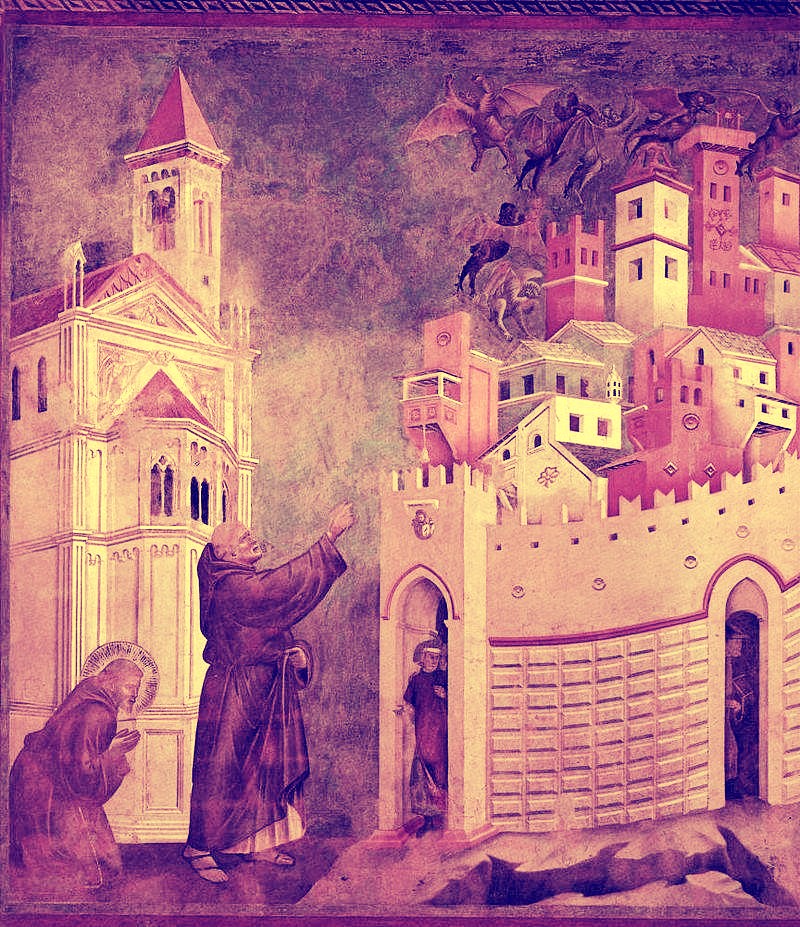
At the death of Marcolino, on 24 January, 1397, a beautiful child appeared in the streets, crying out the news to the little town that the saintly friar was dead. As the child disappeared when the message was delivered, he was thought to have been an Angel. Many miracles were worked at Marcolino’s Tomb. One was the miraculous cure of a woman who had been bedridden for 30 years. Hearing of the death of the blessed, she begged him to cure her so that she could visit his Tomb.
Upon his death, popular devotion, which considered him a saint, obtained that Marcolino, after a solemn funeral, was buried in the Dominican Church and for two months, it was not possible to close the Church, day or night, due to the large influx of faithful .
A little less than a month after Marcolino’s death, on 20 February 1397, Bello de’ Giuliani da Forlì, Vicar of the Bishop of Forlì Scarpetta Ordelaffi, sent a letter to Leonardo Dolfin, Bishop of Castello, informing him of the death of the Dominican religious, who he was described as a brother of exemplary life and full of charity.
Bello also gave news of about fifty miraculous cures performed by the intercession of Marcolino. Subsequent investigations brought this exceptional series of miracles up to 80 (report to Raimondo da Capua, general of the Order, who had been spiritual director and then biographer of Saint Catherine of Siena) and then to 188 (report from Forlì notaries to the Bishop of Forlì, Scarpetta Ordelaffi).
In 1457 Marcollino’s body was transferred to a marble monument by Antonio and Bernardo Rossellino, which had been commissioned by the fellow citizen of Forlì, Nicolò Dall’Aste, Bishop of Recanati. Marcolino’s body was then enshrined in the Forli Cathedral.
He was confirmed as a saint on 9 May 1750 by Pope Benedict XIV.
St Filip Geryluk St Guasacht St Ignacy Franczuk Bl John Grove St Julian Sabas the Elder St Macedonius Kritophagos Blessed Marcolino Amanni of Forli OP (1317-1397) Priest and Friar of the Order of Preachers, the Dominicans, Mystic.
St Projectus St Sabinian of Troyes St Suranus of Sora St Thyrsus Bl William Ireland
Martyrs of Asia Minor – 4 Saints: A group of ChristiansMmartyred together for their faith. The only details to survive are four of their names – Eugene, Mardonius, Metellus and Musonius. They were burned at the stake in Asia Minor.
Martyrs of Podlasie – 13 Beati: Podlasie is an area in modern eastern Poland that, in the 18th-century, was governed by the Russian Empire. Russian sovereigns sought to bring all Eastern-rite Catholics into the Orthodox Church. Catherine II suppressed the Greek Catholic Church in Ukraine in 1784. Nicholas I did the same in Belarus and Lithuania in 1839. Alexander II did the same in the Byzantine-rite Eparchy of Chelm in 1874 and officially suppressed the Eparchy in 1875. The Bishop and the Priests who refused to join the Orthodox Church were deported to Siberia or imprisoned. The laity, left on their own, had to defend their Church, their liturgy and their union with Rome. On 24 January 1874 soldiers entered the village of Pratulin to transfer the parish to Orthodox control. Many of the faithful gathered to defend their parish and Church. The soldiers tried to disperse the people but failed. Their commander tried to bribe the parishioners to abandon Rome but failed. He threatened them with assorted punishments but this failed to move them. Deciding that a show of force was needed, the commander ordered his troops to fire on the unarmed, hymn-singing laymen. Thirteen of the faithful died, most married men with families, ordinary men with great faith. We know almost nothing about their lives outside of this incident. Their families were not allowed to honour them or participate in the funerals and the authorities hoped they would be forgotten. Their names are:
Anicet Hryciuk
Bartlomiej Osypiuk
Daniel Karmasz
Filip Geryluk
Ignacy Franczuk
Jan Andrzejuk
Konstanty Bojko
Konstanty Lukaszuk
Lukasz Bojko
Maksym Hawryluk
Michal Wawryszuk
Onufry Wasyluk
Wincenty Lewoniuk Martyrdom:
shot on 14 January 1874 by Russian soldiers in Podlasie, Poland
buried nearby without rites by those soldiers.
Martyrs of Antioch: Babylas Epolonius Prilidian Urban
Saint of the Day – 23 January – Saint Maimbod (Died c 880) Martyr, Irish Pilgrim in France, Missionary Preacher, Born in Ireland and died in c 880 in Kaltenbrunn, Alsace, Gaul (modern France). Maimbod is regarded as an unofficial Patron of eye diseases and ailments. Also known as – Mainbeouf, Mainbodo, Maimbodus.
In the wake of St Columban, many Irish Monks travelled to France and Italy, spreading the Faith “on a pilgrimage for the love of Christ.” Maimbod was one of them, a pilgrim to the Tombs of many Saints and holy Shrines of the Blessed Virgin Mary. As he wandered, he preached, spreading the Faith throughout northern Italy and France.
In Burgundy, a nobleman gave him hospitality and unsuccessfully pressed him to settle there. Upon Maimbod’s departure, the nobleman gave Maimbod a pair of gloves as a reminder to pray for him.
He was praying at the Church of Domnipetra near Alsace, when he was set upon by robbers who, believed he had money because he was wearing gloves, murdered him.
There is a second version of his death which omits the gloves and relates his murder having been accomplished by pagans, enraged by Maimbod’s confession of Christ.
When miracles began to occur at his Tomb in Domnipetra, Count Aszo of Monteliard asked the blind Bishop Berengarius for a gift of the Saint’s Relics. Berengarius delegated the translation ceremony to his co-adjutor, Bishop Stephen. During the rite, Berengarius miraculously received his sight and instituted a Feast in honour of the Saint. Maimrod’s Relics were destroyed during the French Revolution.
Maimbod was Canonised by the confirmation of his cult on 24 November 1900 by Pope Leo XIII. His Feast today is especially celebrated in the Diocese of Besançon.
St Raymond of Peñafort OP (1175-1275) “Father of Canon Law” Dominican Priest, Doctor of Canon Law, the Third Master of the Order of Preachers, Founder of the Mercedarian friars, Writer, Teacher, Miracle-Worker. St Raymond of Peñafort’s Feast day was inserted in the General Roman Calendar in 1671 for celebration on 23 January. In 1969 it was moved to 7 January, the day after that of his death. He is the Patron Saint of canon lawyers, specifically and lawyers, in general. Biography: https://anastpaul.com/?s=st+raymond+penafort
St Abel the Patriarch St Agathangelus St Amasius of Teano St Aquila the Martyr St Asclas of Antinoe St Clement of Ancyra St Colman of Lismore St Dositheus of Gaza
St Ildephonsus (506-667) Archbishop of Toledo. Theologian, Scholar, Marian devotee, Writer, Evangeliser. Abbot Dom Guéranger calls him the Doctor of the Virginity of Mary. Saint Ildephonsus established the Feast of the Expectation of the Blessed Virgin Mary, which is still kept in some places on 18 December. Biography: https://anastpaul.wordpress.com/2018/01/23/saint-of-the-day-23-january-st-ildephonsus-607-667/
Bl Juan Infante St Jurmin St Lufthild St Maimbod (Died c 880) Martyr, Irish Pilgrim in France, Missionary Preacher, Bl Margaret of Ravenna St Martyrius of Valeria St Messalina of Foligno St Ormond of Mairé St Parmenas the Deacon St Severian the Martyr
Saint of the Day – 21 January – St Anastasius the Persian (Died 628) Martyr, Monk. Born in Persia as Magundat and died by strangulation and beheading in 628 in Persia. Patronages – against headaches, of goldsmiths.
The Roman Martyrology reads: “At Rome, at Aquiae, Salviae, St Anastasius, a Persian Monk, who, after suffering much at Caesarea in Palestine, from imprisonment, stripes and fetters, had to bear many afflictions from Chosroes, King of Persia, who caused him to be beheaded. He had sent before him, to Martyrdom, seventy of his companions, who were precipitated into rivers. His head was brought to Rome, together with his venerable likeness, by the sight of which, the demons are expelled and diseases cured, as is attested by the Acts of the Second Council of Nicacea.”
Anastasius was born in the City of Ray. He was the son of a Magian named Bau. He had a brother whose name is unknown. He was a cavalryman in the army of Khosrow II (590–628) and participated in the capture of the True Cross in Jerusalem which was carried to the Sasanian capital.
The occasion prompted him to ask for information about the Christian religion. He then experienced a conversion of faith, left the army, became a Christian and then a Monk at the Monastery of Saint Savvas (Mar Saba) in Jerusalem.
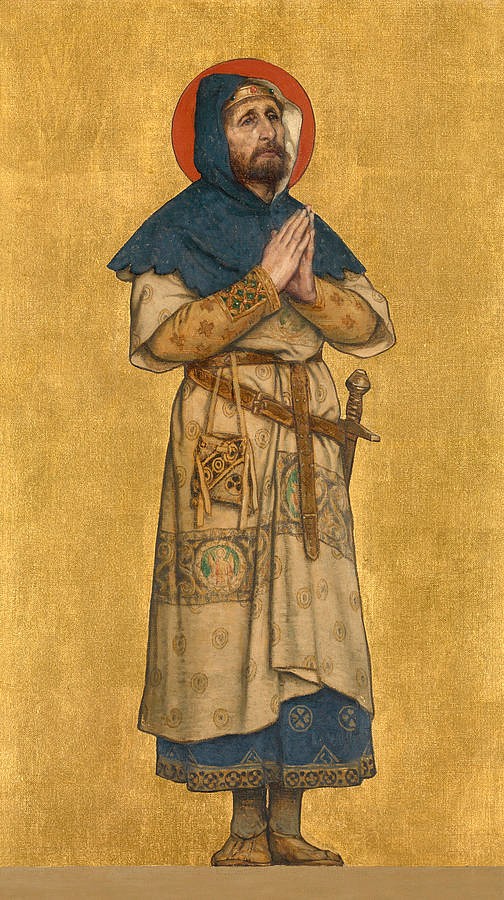
Anastasius was baptised by St Modestus, the Bishop of Jerusalem, receiving the Christian name Anastasius to honour the Resurrection of Jesus Christ (anástasis” in Greek meaning resurrection).
After seven years of the monastic observance, he was moved by the Holy Ghost to go in quest of Martyrdom and went to Caesarea, then subject to the Sasanians. There he interrupted and ridiculed the pagan priests for their religion and was, as a result, arrested by the local governor, taken prisoner, cruelly tortured to make him deny Christ and finally carried down near the Euphrates river, where his tortures was continued, while at the same time, the highest honours in the service of King Khosrow II, as a Magi, were promised him, if he would renounce Christianity.
Finally, after refusing to renounce Christ, with seventy others, he was strangled to death and decapitated on 22 January 628. His body, which was thrown to the dogs but was left untouched by them, was carried from there to Palestine, then to Constantinople and finally, to Rome, where the relics were venerated at the Tre Fontane Abbey.
A Passio written in Greek, was devoted to the Saint. An adapted Latin translation, possibly by Archbishop Theodore of Canterbury, was available to the Anglo-Saxon Historian, the Venerable St Bede, who criticised the result and took it upon himself to improve it. There are sadly, no surviving manuscripts of St Bede’s revision, although one copy did survive to the 15th Century.
St Antonio della Chiesa St Blaesilla of Rome St Brithwald of Ramsbury St Caterina Volpicelli St Dominic of Sora
Blessed Giuseppe Giaccardo SSP (1896-1948) St Guadentius of Novara
Blessed Maria Mancini of Pisa OP (1356-1431) Widow, Second Order Sister of the Order of Preachers, spiritual disciple of St Catherine of Siena, Prioress, Mystic, Reformer, Apostle of the poor and the sick. The Roman Martyrology states: “In Pisa, Blessed Maria Mancini, who, twice widowed and all her children lost, under the exhortation of St Catherine of Siena, began community life in the Monastery of St Domenic, which she led for ten years.” Her Life: https://anastpaul.com/2022/01/22/saint-of-the-day-22-january-blessed-maria-mancini-of-pisa-op-1356-1431/
Bl Walter of Himmerode Bl William Patenson
Martyrs of Puigcerda: St Orontius St Victor St Vincent
Saint of the Day – 21 January – Blessed Thomas Reynolds (1562-1642) Priest Marty.r Born in 1562 in Oxfordshire, England as Thomas Green and died by being hanged, drawn, and quartered on 21 January 1642 at Tyburn, London, England. Also known as – Richard Reynolds (not to be confused with the Saint of the same name, of the Order of Bridgettine Monks executed in England by Henry VIII), Thomas Green. Additional Memorials – 4 May as one of the 107 Martyrs of England and Wales, also known as Thomas Hemerford and One Hundred and Six Companion Martyrs, 29 October as one of the Martyrs of Douai, 1 December as one of the Martyrs of Oxford University. Thomas was Beatified on 15 December 1929 by Pope Pius XI.
Painting in of Blessed Thomas in the English College, Valladolid, Spain
We believe Thomas was born in Oxfordshire (or possibly Warwickshire) into a Catholic family. In keeping with the necessity of the times, he left England to study for the Priesthood on the continent, initially going to Rheims before continuing his studies from September 1590 in the English College, at Valladolid, Spain, as one of its first students and finally, at another newly founded Jesuit institution, the English College of St Gregory in Seville.
Thomas was Ordained a Priest in Seville in 1592 and immediately returned to England, where he ministered to the recusant Catholic community until his arrest in 1606, in the wave of anti-Catholic measures that were taken, following the Gunpowder Plot of November 1605. Whilst the duration of his early years of ministry reflected the slightly less difficult times for Catholics during that period, the Gunpowder Plot changed the atmosphere, making it far more hostile.
Thomas was one of the Priests who were fortunate, in being just exiled from England rather than immediately Martyred, in response to the Plot. However, he soon returned and once more set about caring for Catholics in secret. This he continued for about twenty years until he was arrested in 1628.
He was put on trial and condemned to death but given a reprieve at the behest of the Queen, Henrietta Maria, wife of Charles I, a Catholic. Although imprisoned, he was kept under relatively mild conditions which included being allowed to receive visitors readily. Many Catholics visited him, not only to offer him care and support but also for his spiritual guidance and the Sacraments.
In 1635 he was one of a number of Priests who would pay a bond and then be released from prison which allowed him to minister to the local Catholic population in London on a regular basis. With the Crown at that time having Catholic sympathies and the rather more anti-Catholic feelings of Parliamentarians being diffused due to Parliament’s long suspension, this was a period when the pressures on Catholics were eased. It was due to this that a number of Priests were able to act in a similar manner to Thomas.
The financial needs of King Charles I forced him to recall Parliament in 1640. At this time, Parliament was increasingly being dominated by Puritan protestants who were hostile to Catholicism. As a result, conditions for Catholics and Priests became far more difficult with Priests, once more, being confined full time to their prisons. The trials and death sentences for Priests resumed and one of the early victims was Thomas. Now eighty years of age, by nature a gentle and slightly timid person and being somewhat infirm, Thomas admitted his fears of facing execution and how he would be able to manage the ordeal he was soon to undergo. He spent his final couple of days in prayer and asking for the prayers of his fellow Priests, imprisoned with him.
On the morning of his execution, 21 January 1642, Thomas was embued by grace with a sense of complete peace and serenity. He had been filled with the courage and strength of Christ, so much so, that he was no longer afraid of what lay ahead and using supplies that had been brought to him in prison, he said his final Holy Mass, before being summoned to his execution.
On arrival at Tyburn, he addressed the assembled crowd for nearly half-an-hour. He pointed out that in forty years work as a Priest in England, no-one could testify to him having ever uttered a word of treason and that his sole aim had been to ‘reduce strayed souls to the fold of the Catholic Church.’ He added that he had no desire to criticise or meddle with the actions of Parliament but rather, that God would bless them and teach them what to do best for the kingdom. He extended his prayers to the King and Queen and all the Kingdom which he hoped would flourish. He concluded by asking forgiveness of all he had offended and granting forgiveness to any, who sought it for actions against him, particularly in regard to his imminant death. Turning to the sheriff overseeing the execution, he specifically thanked him and for his patience whilst he addressed the crowd and prayed, that God would reward him for that, by one day making him a saint in Heaven. The sheriff in turn commended himself to Reynolds and was heard to remark to one of those present that he had never seen a man die like Thomas. Having finished his address, Thomas knelt to pray. He and Roe were placed in the cart, embraced one another, then recited the Miserere Psalm in turn, until the cart was pulled away.
When the sheriff offered Thomas a blindfold, he replied: “I dare look death in the face.” The sheriff allowed the Martyrs to hang till they expired to spare them the suffering of being drawn and quartered, which he only carried out after they were dead. Catholics amongst the crowd, of which there were found to be many, came forwards to dip cloths in their blood to provide Relics for veneration.
Thomas Reynolds was Beatified by Pope Pius XI on 15 December 1929, therefore, he is among the group of One Hundred and Seven Martyrs of England and Wales. On the image below, our Blessed Thomas Reynolds appears at no 81, the 5th image on the second-last row.
St Agnes of Aislinger St Anastasius of Constantinople St Aquila of Trebizond St Brigid of Kilbride St Candidus of Trebizond Bl Edward Stransham
St Epiphanius of Pavia (c 439–496) Bishop of Pavia, Italy from from 466 until his death. Papal and Secular Mediator and Peacemaker, Known as – “Epiphanius the Peacemaker,” “The Glory of Italy,” “The Light of Bishops.” The Roman Martyrology for 21 January reads : “In Pavia, Saint Epifanio, Bishop , who, at the time of the barbarian invasions, worked zealously for the reconciliation of the peoples, for the liberation of prisoners and for the reconstruction of the destroyed City.” Biography: https://anastpaul.com/2022/01/21/saint-of-the-day-21-january-saint-epiphanius-of-pavia-439-496/
St Eugenius of Trebizond St Gunthildis of Biblisheim
Blessed Josefa María Inés de Benigánim OAD (1625–1696) Nun of the Discalced Augustinian Nuns with the religious name of “Josefa María of Saint Agnes,” Virgin, Mystic, gifted with the charism of prophecy and counsel. She became known for her profound spiritual and theological insight as well as for her severe austerities she practised during her life. Her body is incorrupt. Blessed Josefa was Beatified on 26 February 1888, at Saint Peter’s Basilica by Pope Leo XIII. Biography: https://anastpaul.com/2020/01/21/saint-of-the-day-21-january-blessed-josefa-maria-ines-de-beniganim-oad-1625-1696/
St Lawdog St Maccallin of Waulsort
St Meinrad of Einsiedeln OSB (c 797–861) “Martyr of Hospitality,” Martyr, Priest, Monk, Hermit. In 1039, the year of Meinrad’s Canonisation as a Saint, his remains were brought back to Einsiedeln. During the French Revolution, Meinrad’s relics were hidden at Tyrol, Austria, by Abbot Conrad Tanner and his reliquary is now enshrined in the Grace Chapel of the Abbey Church at Einsiedeln. St Meinrad’s Life and Death: https://anastpaul.com/2021/01/21/saint-of-the-day-21-january-saint-meinrad-of-einsiedeln-osb-c-797-861-martyr/
St Patroclus of Troyes St Publius of Malta (Died c 112) Bishop Blessed Thomas Reynolds (1562-1642) Priest Martyr St Valerian of Trebizond St Vimin of Holywood St Zacharias the Angelic
Mercedarian Nuns of Berriz – Three pious Mercedarian Nuns at the Monastery of Vera Cruz, Berriz, Spain who are remembered together on the Mercedarian calendar – Cristina, Mary Magdalene and Mary of Jesus.
Blessed Martyrs of Laval – 19 Beati: Fifteen men and four women who were Martyred in Laval, France by anti-Catholic French Revolutionaries. The were born in France and they were Martyred on several dates in 1794 in Laval, Mayenne, France. They were Beatified on 19 June 1955 by Pope Pius XII at Rome, Italy.
Blessed André Duliou
Blessed Augustin-Emmanuel Philippot
Blessed François Duchesne
Blessed François Migoret-Lamberdière
Blessed Françoise Mézière
Blessed Françoise Tréhet
Blessed Jacques André
Blessed Jacques Burin
Blessed Jean-Baptiste Triquerie
Blessed Jean-Marie Gallot
Blessed Jeanne Veron
Blessed John Baptist Turpin du Cormier
Blessed Joseph Pellé
Blessed Julien Moulé
Blessed Julien-François Morin
Blessed Louis Gastineau
Blessed Marie Lhuilier
Blessed Pierre Thomas
Blessed René-Louis Ambroise
Martyrs of Rome – 30 Saints: Thirty Christian soldiers executed together in the persecutions of Diocletian. They were Martyred in 304 in Rome, Italy.
Martyrs of Tarragona: Augurius, Eulogius, Fructuosus.
Saint of the Day – 20 January – Saint Neophytus of Nicaea (Died c 303) Martyr, Confessor, Lay Youth. Died at Nicaea by the sword.
The Roman Martyrology reads: “At Nicaea, in Bithynia (present day Turkey), St Neophytus, Martyr who, in the fifteenth year of his age was scourged, cast into a furnace and exposed to wild beasts. As he remained uninjured and constantly Confessed the Faith of Christ, he was at last killed with the sword.”
Neophytus was born to Christian parents who were named Theodore and Florentia.
During the Diocletianic persecution he presented himself to the local Governor named Decius. Roused to fury by his unexpected boldness, Decius had him scourged, then laid out on a bed of fire. When he had been preserved by grace, through these torments, he gave him up to wild beasts.
But since the Saint remained unharmed, a certain pagan fell on him with a sword and slew him. This occurred in c 303, 10 years before the Edict of Milan permanently established religious toleration for Christianity within the Roman Empire.
In 2014 the underwater Byzantine Basilica of Saint Neophytus was discovered in Lake İznik, modern-day Turkey. The Basilica had been built in the place where he was killed on the shore of the lake and subsequently became submerged after an earthquake.
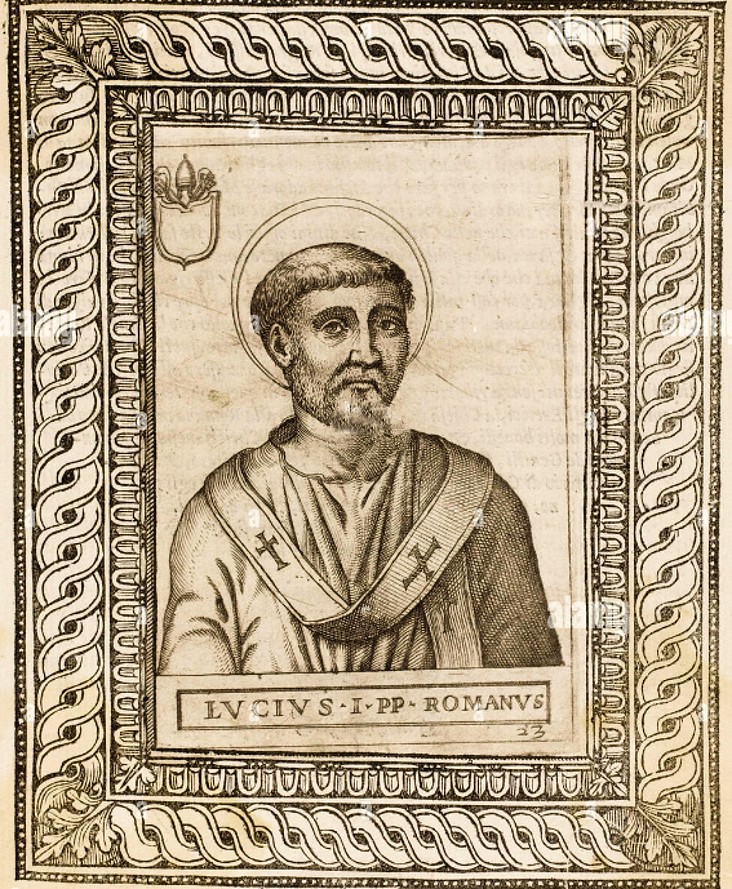
St Pope Fabian (c 200 – c 250) Martyr, Confessor, Peacemaker, Administrator and Reformer, Apostle of Charity. Bishop of Rome from 10 January 236 until his death in 250, succeeding Anterus. He is famous for the miraculous nature of his election, in which a dove is said to have descended on his head to mark him as the Holy Spirit’s unexpected choice. He was succeeded by Cornelius. Biography: https://anastpaul.com/2019/01/20/saint-of-the-day-20-january-st-pope-fabian-c-200-c-250-martyr/
St Ascla of Antinoe St Basilides the Senator St Bassus the Senator Blessed Benedict Ricasoli (Died 1107) Monk, Hermit Bl Bernardo of Poncelli Bl Cyprian Michael Iwene Tansi St Daniel of Cambron Bl Didier of Thérouanne St Eusebius the Senator
Saints of the Day – 19 January – St Marius and Family of Perisa – Martha, Audifax, Abacjum (Died c 270) Martyrs, Husband, Wife and 2 Sons – in the time of Emperor Claudius. Born in Persia and died on the Nymphae Catabassi Way in Rome in c 270. Patronage – Caselette, Italy. Also known as – Maris, Mario.
The Roman Martyrology today states: “At Rome, on the Cornelian road, the holy Martyrs, Marius and his wife Martha, with their sons, Audifax and Abachum, noble Persians, who came to Rome, through devotion, in the time of the Emperor Claudius. After they had been beaten with rods, tortured on the rack and with fire, lacerated with iron hooks and had endured the cutting off their hands, Martha was put to death in the place called Nympha. The others, were beheaded and cast into the flames.”
Marius, a Persian nobleman, his wife Martha and his sons Audifax and Abachum, came to believe in Christ and became Christians. In imitation of the early Christians of Jerusalem, they gladly gave away their fortune to the poor.
Then the family travelled to Rome to venerate the tombs of the Apostles and lend their aid to the persecuted Christians. Among other things, they gathered the ashes of the Martyrs and buried them with respect.
The family’s assistance to Christians exposed them to persecution. They were seized and delivered to the judge Muscianus or Marcianus, who, unable to persuade them to deny their faith, condemned them to various tortures. Despite the torture, the Saints refused to deny Christ.
Marius and his two sons were thus beheaded on the Via Cornelia and their bodies were burnt. Martha, meanwhile, was killed at a place called in Nymphae Catabassi (later called Santa Ninfa), thirteen miles from Rome. Tradition states that Martha was cast into a well.
According to tradition, a Roman lady named Felicitas secured the half-consumed remains of the father and sons and also the mother’s body from the well and had the sacred relics secretly interred on her estate at Buxus, today Boccea. This occurred on 20 January. A Church arose at Boccea and during the Middle Ages, it became a place of pilgrimage.
The Relics of the Martyrs later suffered various vicissitudes – some were transferred to the Churches of Sant’Adriano al Foro and Santa Prassede, in Rome and part of these Relics were sent to Eginhard, the biographer of Charlemagne, who lodged them in the Monastery of Seligenstadt. Some Relics went to Prüm Abbey where their presence was recorded in the early 11th century. The original reliquary chest was destroyed during the French occupation at the end of the 18th Century. The current chest dates from the 19th Century.
The Martyrs Feast was included today, 19 January, in the General Roman Calendar from the 9th century to 1969, when they were excluded because nothing is known with certainty about them except their names, their place of burial (the cemetery at Nymphas on the Via Cornelia) and the day of their burial (19 or 20 January).
St Marius and Martha with the Madonna and child and Saints
Sts Marius and Family of Perisa – Martha, Audifax, Abacjum (Died c 270– Martyrs, Husband, Wife and 2 Sons – in the time of Emperor Claudius.
St Canute (1040-1086) Martyr, King of Denmark, known as Canutus the Holy – Canutus was an ambitious King who sought to strengthen the Danish monarchy, devotedly supported the Roman Catholic Church and had designs on the English throne. Slain by rebels in 1086, he was the first Danish King to be Canonised. He was recognised as Patron Saint of Denmark in 1101. Biography: https://anastpaul.com/2019/01/19/saint-of-the-day-19-january-st-canutus-1040-1086/
St Abachum of Persia + (St Marius and Family of Persia – Martyrs) Bl Andrew of Peschiera St Arsenius of Corfu St Audifax of Persia + (St Marius and Family of Persia – Martyrs) St Bassian of Lodi (c 320–c 409) About St Bassian: https://anastpaul.com/2020/01/19/saint-of-day-19-january-st-bassian-of-lodi-c-320-c-413/ Bl Beatrix of Lens St Branwallader of Jersey St Catellus of Castellammare St Contentius Bl Elisabetta Berti St Faustina of Como St Fillan St Firminus of Gabales St Germanicus of Smyrna St Godone of Novalesa St John of Ravenna St Joseph Sebastian Pelczar St Liberata of Como St Martha of Persia + (St Marius and Family of Persia – Martyrs) St Messalina iof Foligno St Ponziano of Spoleto St Remigius of Rouen
St Wulstan (c 1008–1095) Bishop of Worcester , England, from 1062 to 1095, Monk, Prior, a man of extreme holiness and penitence who was admired by all, he was a he was a man of iron will, immense charm and unworldly humility and piety and suffered no luxury, preferring always the poor to himself. Biography: https://anastpaul.com/2021/01/19/saint-of-the-day-19-january-saint-wulfstan-c-1008-1095/
Martyrs of Numidia – 9 Saints: A group of Christians Martryred together for their faith. The only details to survive are nine of their names – Catus, Germana, Gerontius, Januarius, Julius, Paul, Pia, Saturninus and Successus. 2nd century Numidia in North Africa.
Martyrs of Carthage – 39 Christians Martyred together in Carthage, date unknown. We have no information about them except 9 of the names – Catus, Germana, Gerontius, Januarius, Julius, Paul, Pia, Saturninus and Successus. Died IN Carthage, North Africa (modern Tunis, Tunisia).
Saint of the Day – 18 January – Blessed Beatrix d’Este the Younger (c 1230-1262) Benedictine Nun, founded a Convent. Born in c 1230 at Castello Estense, Ferrara and died on 18 January 1262 of natural causes. Beatrix was Beatified in 1774 by Pope Clement XIV. Her memorial date was decreed by Pope Pius VI for today. Additional Memorial – 19 January. Also known as – Beatrice.
The Roman Martyrology states: “In Ferrara, Blessed Beatrice d’Este, Nun, who, on the death of her future husband, having renounced the kingdom of this world, consecrated herself to God in a Monastery founded by herself under the rule of Saint Benedict.”
By Bartolomeo Veneto, 1510
An account of her life was written, in both medieval Latin and the Italian vernacular, by a Monk, Brother Alberto of the Church of the Holy Spirit. This text was unknown for centuries, until it was rediscovered in the eighteenth Century in an “old Ferrarese codex.”
Beatrix was the daughter of Azzo IX, the Marquis d’Este and Lord of Ferrara and of Giovanna di Puglia, Beatrice was born in Ferrara around 1230. She was educated following the examples of her aunt St Beatrix the Elder, a Nun in Gemmola (Padua)
She was given in marriage to Galeazzo, son of Manfredi and Mayor of Vicenza. On travelling to join him in Milan, she received the painful news of his death in battle, against Frederick II.
She returned to Ferrara and retired to monastic life on the islet of St Lazzarus, west of the City, with some court maids, there receiving the habit.
In 1257, as the number of Nuns grew, she obtained from Pope Innocent IV, permission to move to the Monastery of St Stephen della Rotta, near which, in 1267, the Church of St Anthony Abbot was built. Beatrix made her vows by the hands of the Bishop John, embracing the Rule of St Benedict.
Beatric lived in holiness and died on 18 January 1262 and not, as Muratori believed, in 1270. She was buried in a wing of the large cloister transformed into a Chapel and her sepulchre soon became the destination of pilgrimages .
Pope Clement XIV approved the cult on 23 July 1774 and Pope Pius VI granted the Mass and the Office in 1775, setting the celebration for 19 January in Padua, since the 18th was the now suppressed Feast of the Chair of St Peter in Rome.
From Beatrix’s marble tomb, at certain times of the year, a liquid miraculously exudes and a delicate perfume is released from her bones. The many graces obtained on the occasions of public calamities, make the place an object of great veneration.
Quote/s of the Day – 17 January – St Anthony Abbot (251-356)
“The fruits of the earth are not brought to perfection immediately but by time, rain and care. Ssimilarly, the fruits of men ripen through ascetic practice, study, time, perseverance, self-control and patience.”
“Regard as free, not those, whose status makes them outwardly free but those, who are free in their character and conduct. For we should not call men truly free when they are wicked and dissolute, since they are slaves to worldly passions. Freedom and happiness of soul consist in genuine purity and detachment from transitory things.”
“. . . You should know that there is present with you, the Angel whom God has appointed for each man. . . This Angel, who is sleepless and cannot be deceived, is always present with you; he sees all things and is not hindered by darkness. You should know, too, that with him, is God!”
Saint of the Day – 17 January – Blessed Joseph of Freising (Died 764) the 3rd Bishop of Freising from 747/8 until his death., Founder of Churches and Monasteries. Died 17 January 764 of natural cause, Germanys. Also known as – Joseppus/Josef of Verona.
There is no direct evidence of Joseph’s place of origin, or place of birth. It is sometimes claimed that he was a native of Verona in Italy, whence his alternative name but it is equally possible that he was from Bavaria or northern Austria, or perhaps the Tyrol.
He is presumed to have been a Monk in St Corbinian’s new foundation, Freising Abbey before being appointed at the Bishop of Freising, the third to hold the office. The previous Bishop, St Erembert is believed to have been his Tutor and to have brought him up in the Monastery of St Corbinian.
As Bishop, Joseph paid special attention to increasing the possessions of his Diocese – a document dated in the year 750 has been preserved which records the donation to Joseph, of the area around Erching – today’s district of Hallbergmoos – by Bavarian Duke Tassilo III.
Joseph was also active as a founder of Churches and religious houses. In particular, he founded Isen Abbey in 752 and dedicated it to Saint Zeno of Verona.
After 760, he was closely involved, with the respective founders in the establishment of Schäftlarn and Scharnitz Abbeys. At Schäftlarn the founders gave him the power of supervision of the Monastery and the right to appoint the Abbots. Here, his first appointment was Aribo, Joseph’s successor as Bishop. At Scharnitz he appointed Atto, Aribo’s successor as Bishop of Freising, also to be highly successful in the acquisition of estates for the Diocese.
After his death on 17 January 764, Joseph was buried in the Church of Isen Abbey, founded by himself, where his tomb was restored in 1743. The Church survived the secularisation of Bavaria in 1802-03 and is still in service as St Zeno’s, the Parish Church of Isen.
You must be logged in to post a comment.