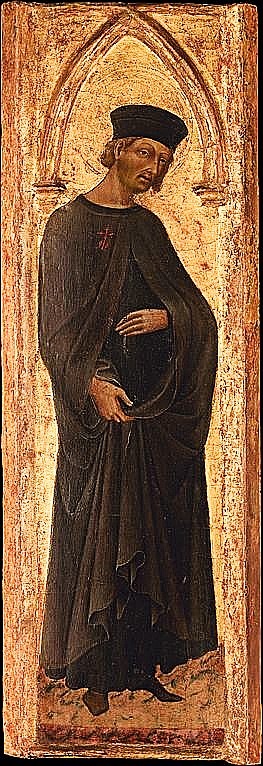
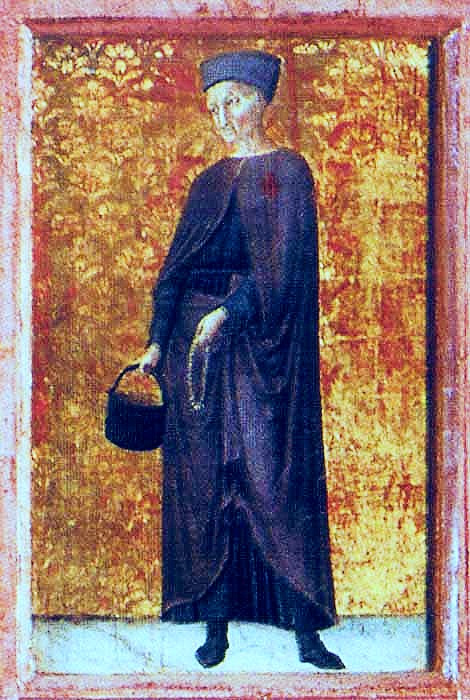
Blessed Amadeus of Savoy (1435-1472) IXth Duke of Savoy, nicknamed “the Happy,” was the Duke of Savoy, from 1465 to 1472, apostle of the poor and ill, a pious, humble and gentle ruler. Amadeus was a particular protector of Franciscan Friars and endowed other religious houses, as well as homes for the care of the poor and suffering. Biography: https://anastpaul.com/2021/03/30/saint-of-the-day-30-march-blessed-amadeus-of-savoy-1435-1472/
St Clinius of Pontecorvo St Cronan Mochua St Damiano St Domnino of Thessalonica St Fergus of Downpatrick St Irene of Rome Bl Joachim of Fiore
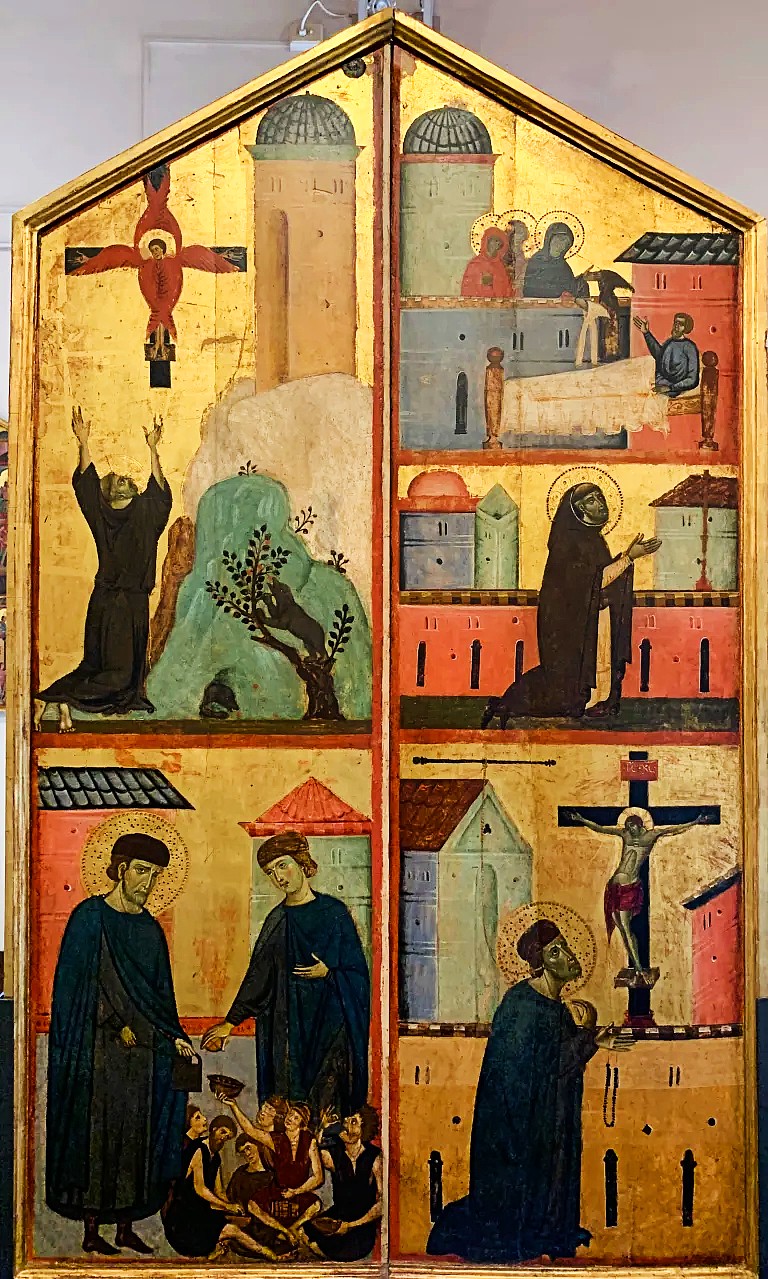
Bl Maria Restituta Kafka St Osburga of Coventry St Pastor of Orléans St Patto of Werden St Quirinus the Jailer St Peter Regalatus OFM (1320-1456) Priest, Friar of the Friars Minor.
St Regulus of Scotland St Regulus of Senlis St Secundus of Asti St Tola St Zozimus of Syracuse
Martyrs of Constantinople: Fourth-century Christians who were exiled, branded on the forehead, imprisoned, tortured, impoverished and murdered during the multi-year persecutions of the Arian Emperor Constantius. They were martyred between 351 and 359 in Constantinople.
Martyrs of Korea: Marie-Nicolas-Antoine Daveluy Iosephus Chang Chu-gi Lucas Hwang Sok-tu Martin-Luc Huin Pierre Aumaître
Saint of the Day – 29 March – Saint Eustachio of Naples (3rd Century) the Seventh Bishop of Naples. Died in the mid-3rd-Century in Naples, Italy of natural causes, Also known as – Eustasio, Eustatius. Additional Memorial – 10 May in Naples.
The Roman Martyology states: “In Naples, commemoration of Saint Eustasio, Bishop.”
In the list of Bishops of the Archdiocese og Naples, Eustachio is included in Seventh place, after St Agrippino and before St Efebo.
We know very little, only that he lived in the first half of the third century and before 343, the year in which the ninth Bishop, Fortunatus is historically ocumented.
According to the Catalogus, Eustachio governed the Diocese for seventeen years during the Pontificates of Pope Anterus and Pope Fabian.
It is reported that his remains were transferred, in the 9th century, to the main Altar of the Church of Santa Maria in Portanova.
The urn containing the body of Eustachio was found in 1616 and Archbishop Decio Carafa decided to extend the cult to the entire Diocese.
In the month of September of the year 1884, the canonical recognition of the relics was carried out and after this, on 18 December 1884, Pope Leo XIII confirmed the cult paid ab immemorial, to Saint Eustachio.
St Mark of Arethusa St Masculas of Africa St Pastor of Nicomedia St Saturus of Africa St Simplicius of Monte Cassino St Victorinus of Nicomedia St William Tempier
Martyrs of Nicomedia: Seven Christians who were Martyred together in the persecutions of Diocletian. We know nothing else about them but the names of two – Pastor and Victorinus.
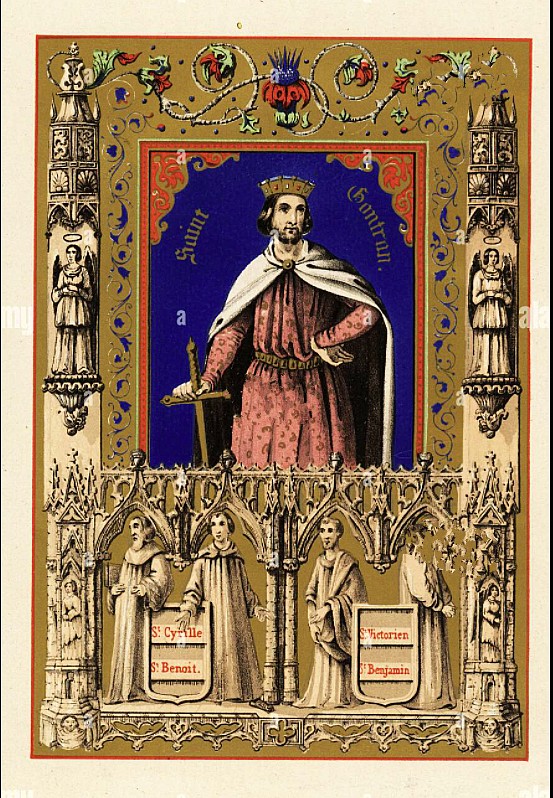
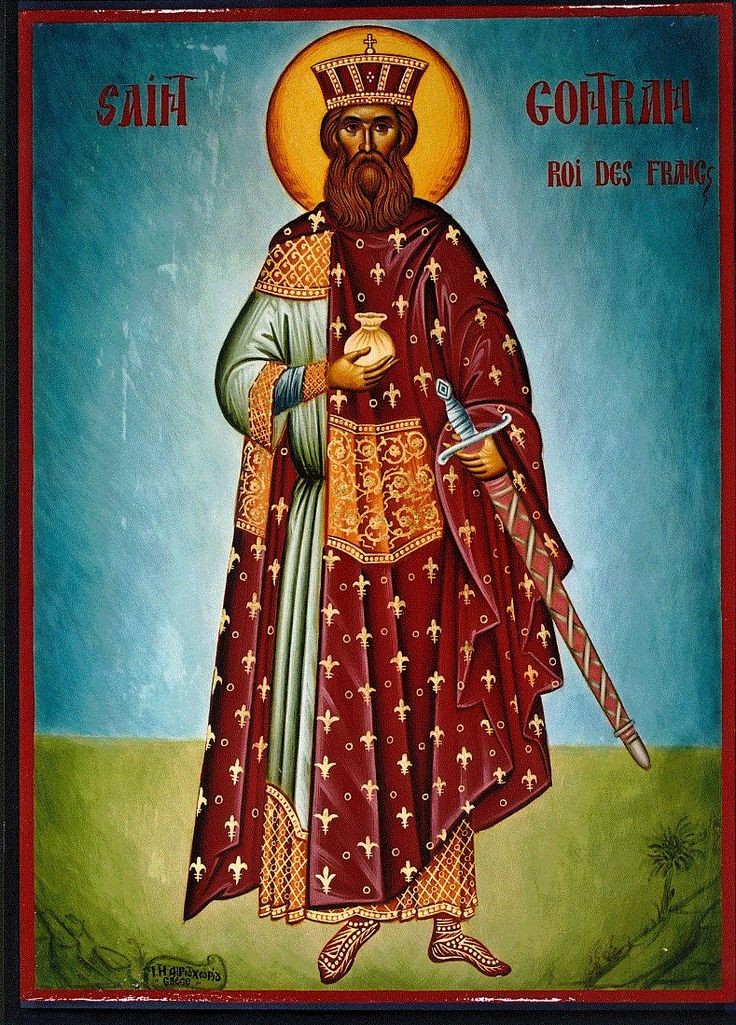
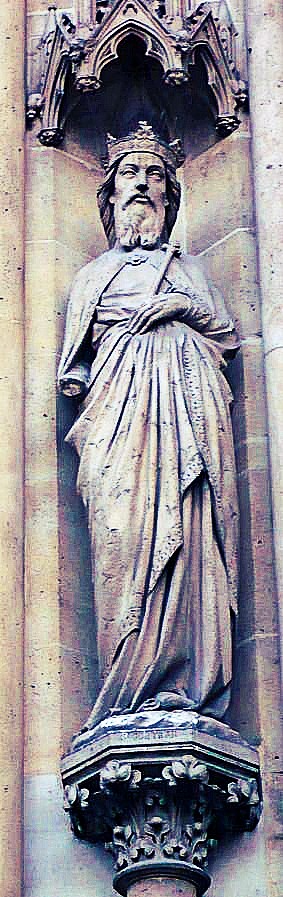
Saint of the Day – 28 March – Saint Guntramnus (Died 597) King of the Kingdom of Orléans and Burgundy from 561 until his death in 592, Confessor, Apostle of the needs of the Church and of the poor and sick, Penitent. Born in c 532 in Soissons, France and died on 28 March 592 (aged 59–60) at Chalon-sur-Saône, France. Patronages – of divorced people, guardians, reformed murderers. Also known as – Contran, Gontram, Gontran, Gontrano, Gontranno, Gunthrammus, Gunthramnus, Guntram, Guntrammo.
The Roman Martyrology reads: “At Chalons in France, the demise of St Gontran King, who devoted himself to exercises of piety, renounced the pomps of the world and bestowed his trasures on the Church and the poor.”
Guntramnus was the son of King Clotaire and grandson of Clovis I and St Clotilda but was raised without the Faith. Being the second son, while his brothers Charibert reigned at Paris and Sigebert in Austrasia, residing at Metz, he was crowned King of Orleans and Burgundy in 561, making Challons on the Saone, his Capital. When compelled to take up arms against his ambitious brothers and the Lombards, he made no other use of his victories, under the conduct of a brave general called Mommol, than to give peace to his dominions.
He protected his nephews against the practices of the wicked Dowager Queen, Brunehault of Sigebert and Fredegonde of Chilperic, the firebrands of France. He divorced his wife, Mercatrude; some time later she became seriously ill and when her physician could not cure her, he had the doctor murdered. These crimes are laid to his charge but upon his conversion to Christianity, he was so overcome with remorse for the acts of his prior life,that by tears of repentance., he sought to rmake reparation for his sins.
He governed his Kingdom, studying rather to promote the temporal happiness of others than his own, a stranger to the passions of pride, jealousy and ambition and making piety the only rule of his policy.
The prosperity of his reign, both in peace and war, condemns those who think that human policy cannot be modelled by the maxims of the Gospel, whereas nothing can render a government more flourishing.
He always treated the Priests of the Church with respect and veneration, regarding them as his fathers and honouring and consulting them as his masters. He was the protector of the oppressed and the tender parent of his subjects, whom he treated as his children. He poured out his treasures among them with a holy profusion, especially in the time of a pestilence and famine. He gave the greatest attention to the care of the sick.
He fasted, prayed, wept and offered himself to God night and day, as a victim ready to be sacrificed on the altar of his justice, to avert his indignation, which he believed he himself had provoked and drawn down upon his innocent people.
He was a severe punisher of crimes in his officers and others and, by many wholesome regulations, restrained the barbarous licentiousness of his troops but no man was more ready to forgive offences against his own person. He contented himself with imprisoning a man who, through the instigation of Queen Fredegonde, had attempted to stab him and he spared another assassin sent by the same wicked woman because he had taken shelter in a Church.
This good King died on the 28th of March, in 592, having reigned thirty-one years and some months. He was buried in the Church of Saint Marcellus, which he had founded.
The Huguenots scattered his relics in the sixteenth century, only his skull escaped their fury and is now kept there in a silver case.
St John of Capistrano OFM (1386-1456) Friar of the Friars Minor, Priest, Confessor and Preacher. Famous as a preacher, theologian and inquisitor, trained lawyer, he earned himself the nickname ‘the Soldier Saint’ when in 1456 at age 70 he led a crusade against the invading Ottoman Empire at the siege of Belgrade. Feast Day moved from 28 March in 1969. Biography: https://anastpaul.com/2017/10/23/saint-of-the-day-23-october-st-john-capistrano-ofm-1386-1456-the-soldier-saint/
St Cyril the Deacon Bl Dedë Maçaj St Donal O’NeylaC St Dorotheus of Tarsus St Gundelindis of Niedermünster St Guntramnus (c 532-592) King, Confessor St Hesychius of Jerusalem St Hilarion of Pelecete Bl Jean-Baptiste Malo Bl Jeanne Marie de Maille St Proterius of Alexandria Bl Renée-Marie Feillatreau épouse Dumont St Rogatus the Martyr St Successus the Martyr St Tutilo of Saint-Gall
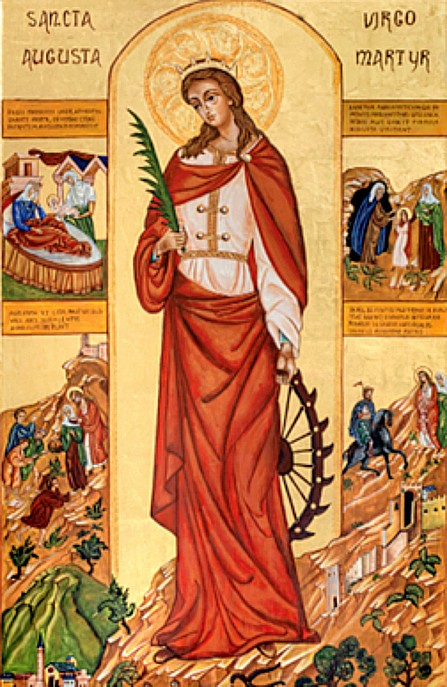
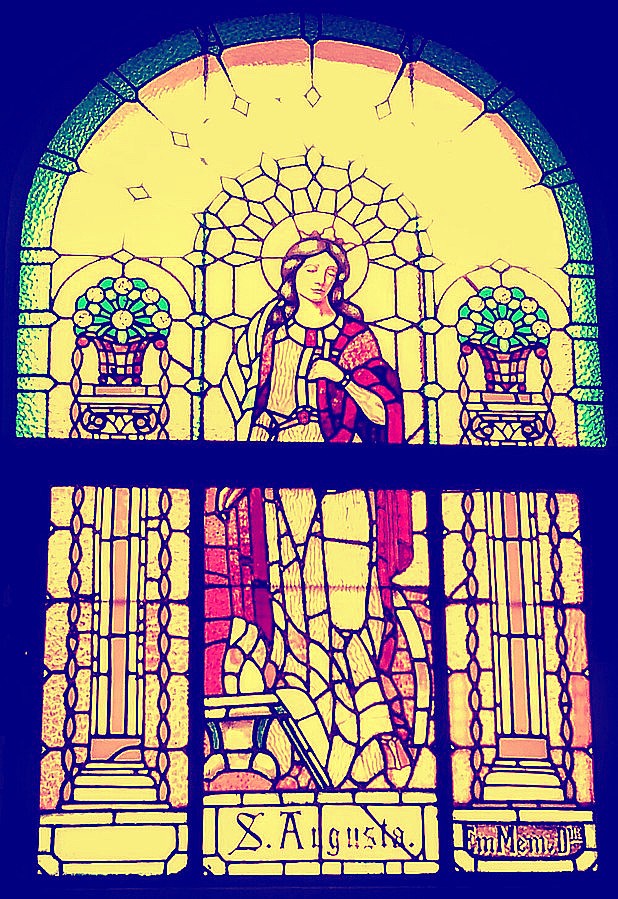
Saint of the Day – 27 March – Saint Augusta of Treviso (Died 5th Century) Virgin Martyr. Died by being beheaded by her father in the 5th century, The name Augusto means “consecrated.” Patronages – Ceneda, Italy and Serravalle, Italy. Also known as – Augusta of Ceneda, Augusta di Serravalle, Augusta of Tarvisium, Augusta the Martyr.
The “Acts” of St Augusta, that is, the reports about her life and Martyrdom, were written at the end of the 16th century by Minuccio de ‘Minucci of Serravalle,the Apostolic Protonotary and Secretary of Pope Clement VIII (1592-1605).
These “Acts” were sent to the editors of the volumes “De probatis sanctorum historiis” by Lorenzo Surio, a Carthusian and German hagiographer (1522-1578) and were included in volume VII of the edition printed in Cologne in Germany.
According to these “Acts,” Augusta was the daughter of Matruco, an Alemannic chief (Alemagna – Germany), who had conquered and subdued Friuli, Italy. He resided in Serravalle (the current ancient village of the City of Vittorio Veneto in Italy) and was a bitter enemy of the Christian religion.
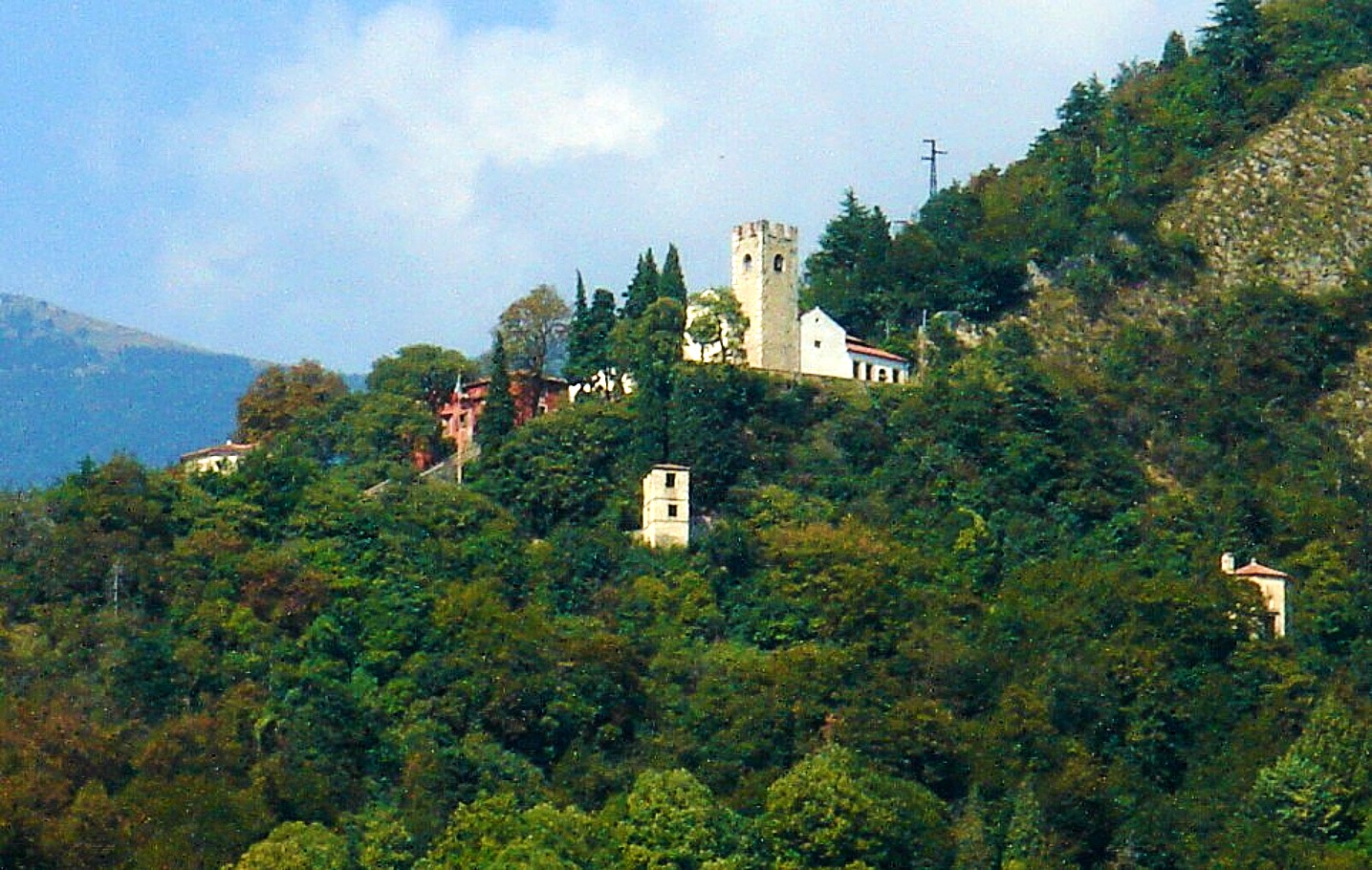
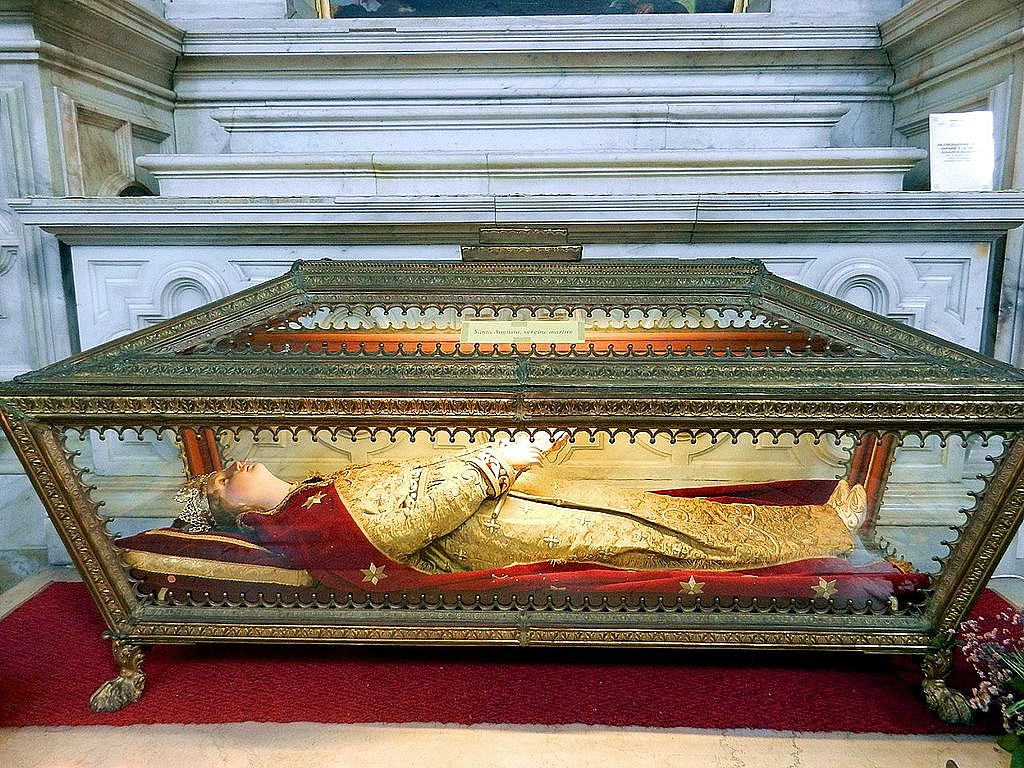
Augusta secretly embraced the Christian Faith but her father learned of it anyway and had her arrested. Since she refused to apostatise, she was thrown into a prison and after various tortures, she was beheaded by her own father. Her body was found a few years later buried on a hill overlooking Serravalle, which took her name. A Church was built and was dedicated to her – a Church and Shrine, which became very popular with the inhabitants.
The 5th Century Chuch and the Hill of St Augusta
The Saint is also known as Augusta of Ceneda, a City located at the foot of the Belluno Prealps, in the Province of Treviso).
St. Augusta is depicted with the symbols of her Martyrdom, a toothed wheel for torture, her teeth that were torn from her, mouth and her palm. On the hill of St Augusta, there are still the remains of the castle of the grim father Matruco and the large Church dedicated to her.
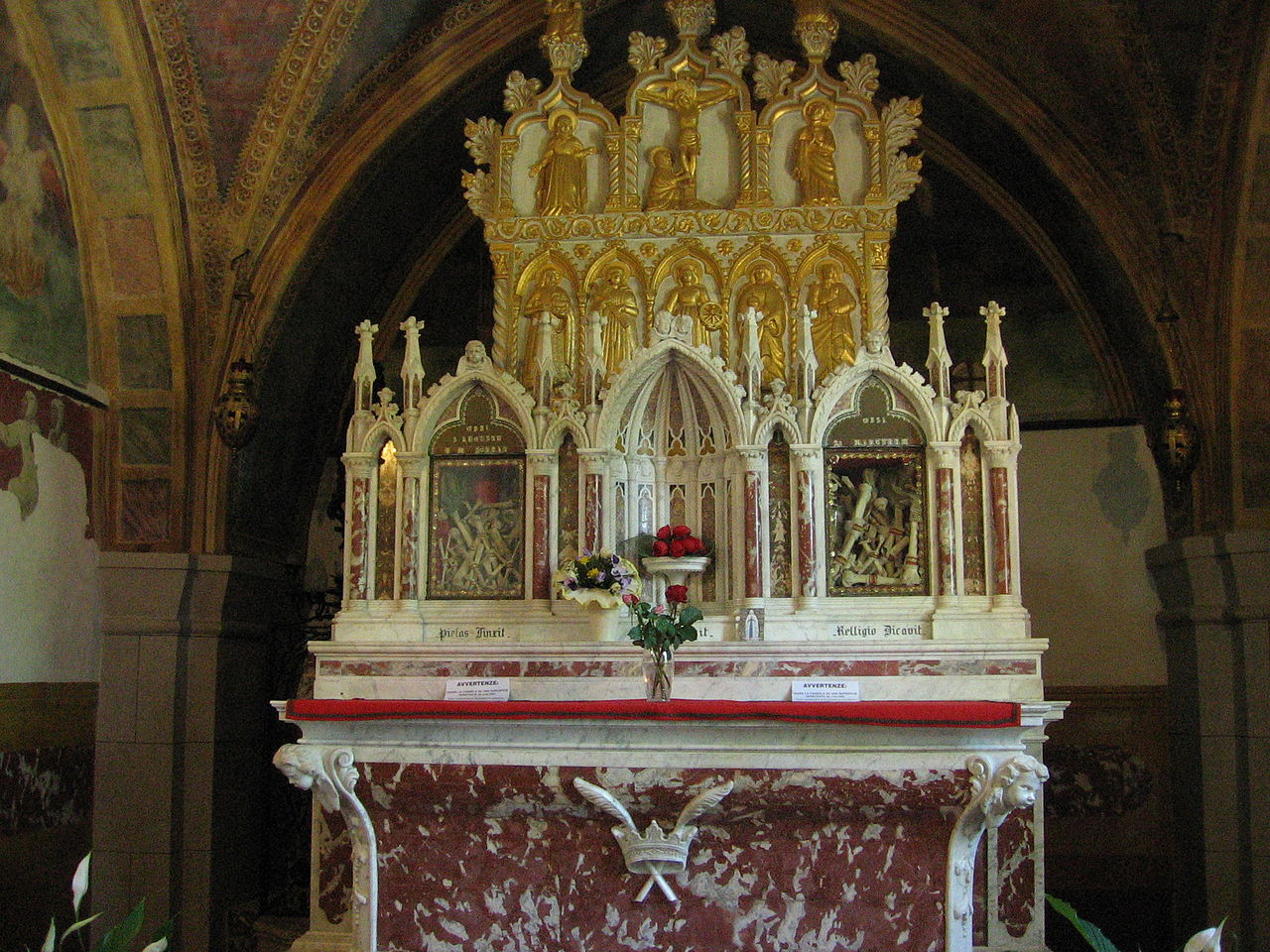
The relics of Saint Augusta. Sanctuary of Santa Augusta, Vittorio Veneto, Italy.
Bl Aimone of Halberstadt St Amphilochius of Illyria St Alexander of Drizipara St Alexander of Pannonia St Alkeld the Martyr St Amator the Hermit St Augusta of Treviso (Died 5th Century) Virgin Martyr St Claudio Gallo St Cronidas of Illyria St Ensfrid of Cologne Bl Francesco Faà di Bruno Bl Frowin of Engelberg St Gelasius of Armagh
Martyrs of Bardiaboch: A group of Christians who were arrested, tortured and executed together for their faith during the persecutions of Persian King Shapur II. Martyrs. – Abibus, Helias, Lazarus, Mares, Maruthas, Narses, Sabas, Sembeeth and Zanitas. 27 March 326 at Bardiaboch, Persia.
Saint of the Day – 26 March – Saint Basil the Younger (Died c 952) Hermit, Mystic, Miracle-worker. Died c 952 near Constantinople (modern Istanbul, Turkey) of natural causes.
As a young man, Basil began living as a hermit near Constantinople. Courtiers of the Byzantine Emperor, alarmed at his appearance and fearful of his influence, had him arrested, questioned and tortured as a spy.
Basil would say only that he was a pilgrim and stranger on earth but he denounced their immoral lifestyles.
According to his hagiography, he survived their cruel tortures and being thrown to a lion and was unharmed, he was saved from an official drowning by two dolphins.
These miracles won him freedom. Thereafter, many of the faithful came to his hermitage for cures of body and soul prophecies, instruction and performance of numerous miracles. He was gifted with the charism of prophecy, able to see the future lives of those he counselled.
A Vita, written by one of Basil’s disciples, a pious layman named Gregory, includes many details on daily life in Constantinople and provides lengthy descriptions of Basil’s visions and prophecies.
Saint of the Day – 25 March – St Lucia Filippini (1672-1732) Virgin, Religious Sister, Founder of the Religious Teachers Filippini for whom she founded countless schools all over Italy, she concentrated too on raising her students to continue the work within their families in order to strengthen familt life and the role and dignity of woman. Born on 13 January 1672 at Cornetto, Tuscany, Italy and died on 25 March 1732 of cancer at Montefiascone, Italy. Patronage – the Religious Teachers Filippini. Also known as – Lucy Filippini.
Lucia was the fifth and youngest child of Filippo Filippini and Maddalena Picchi. She had not yet reached her first birthday when her mother died and was buried in the Church of San Marco. Her father, whom she loved dearly, also died six years later and was buried in the Church of Santa Margherita in Corneto. Now orphaned, Lucia went to live with her aunt and uncle. As a child Lucy would prepare small altars and pray devoutly. It was soon clear that she possessed a precocious intelligence, an inclination toward the spiritual life and a modesty that was truly angelic. Her vision was set on God. Notwithstanding her aristocratic upbringing, she always conducted herself with modesty and its practice.
At times Lucia would seek for a serene atmosphere in the nearby Benedictine Nuns’ Monastery of Santa Lucia. Lucia visited frequently, drawn there by her desire to be among those, whose lives and goodness she admired. It was here that she received her First Communion. Here, too, Lucia received the spiritual nourishment of which she never had enough and listened attentively to the explanations of the Divine Mysteries. The grace she felt can be understood from the joy and enthusiasm expressed later as she led and instructed others. She spoke with much fervour and her words of compassion and love, brought tears to the eyes of her companions. They were a prelude to Lucia’s future mission.
When Cardinal Mark Anthony Barbarigo made his first pastoral visit to Corneto, he made a lasting impression on Lucia and she followed him to Montefiascone. Entrusting herself to the Cardinal’s guidance, Lucia was eager to leave behind all worldly things. She had a special devotion to Our Lady, her spiritual Mother and throughout her life, her deep love for Mary and her faith, sustained her. Cardinal Barbarigo envisioned her as a key factor to bring about a rebirth of Christian living. He had already begun by establishing a seminary where young priests might study and train for the ministry of the Word.
The next step was to develop a Christian conscience and encourage the practice of virtue in the home; this he resolved to do by opening schools for young ladies, particularly the children of the poor, in whom he saw hope for the future. Lucia would head the schools they founded to promote the dignity of womanhood and help influence a healthy family life. Together they looked ahead to fulfilling their generous, ardent and profound mission of faith and charity. In 1692, teachers were trained to staff the rapidly expanding schools.
The young ladies of Montefiascone were taught domestic arts, weaving, embroidering, reading and Christian doctrine. Twelve years later the Cardinal devised a set of rules to guide Lucia and her followers, in the religious life. Fifty-two schools were established during Lucia’s lifetime. As the Community grew, it attracted the attention of Pope Clement XI who, in 1707, called Lucia to Rome to start schools, which he placed under his special protection. Here she completed the work of founding the schools.
To complement the work of the schools, Lucia and her Teachers conducted classes and conferences for women, who were strengthened in their faith as they took part in prayer, meditation and good works. Her focus for the social apostolate was to encourage her Teachers to minister to the needs of the poor and the sick . Her method of teaching attracted widespread attention. The social apostolate was an extension of the classroom. She testified that the young ladies were the co-ordinating element that underlies family life: ‘Having learned in school those things that were necessary, they repeat them to parents and relatives at home and thus become so many young teachers.’
Lucy died at sixty years of age on 25 March 1732, on Feast of the Annunciation. For three centuries, the example of Christian womanhood that marked the lives of her Teachers and students was recognised by Holy Mother Church. On 22 June 1930, Lucia Filippini was declared a Saint of the Church by Pope Pius XI and her Statue was given the last available niche in the Basilica of Saint Peter in Rome. Her statue can be seen in the first upper niche from the main entrance on the left (south) side of the nave of St Peter’s. The Institute, which bears the name of Lucia Filippini, owes its birth to the Cardinal who loved schools and to the Holy Teacher, who committed her entire life to the educative-apostolic mission.
Bl Everard of Nellenburg Bl Herman of Zahringen St Hermenland St Humbert of Pelagius Bl James Bird Bl Josaphata Mykhailyna Hordashevska St Kennocha of Fife St Lucia Filippini (1672-1732) Religious Sister, Founder.
St Matrona of Barcelona St Matrona of Thessaloniki St Mona of Milan St Ndre Zadeja St Nicodemus of Mammola Bl Pawel Januszewski St Pelagius of Laodicea Bl Placido Riccardi St Procopius St Quirinus of Rome Bl Tommaso of Costacciaro
262 Martyrs of Rome: A group 262 ChristiansMmartyred together in Rome. We know nothing else about them, not even their names.
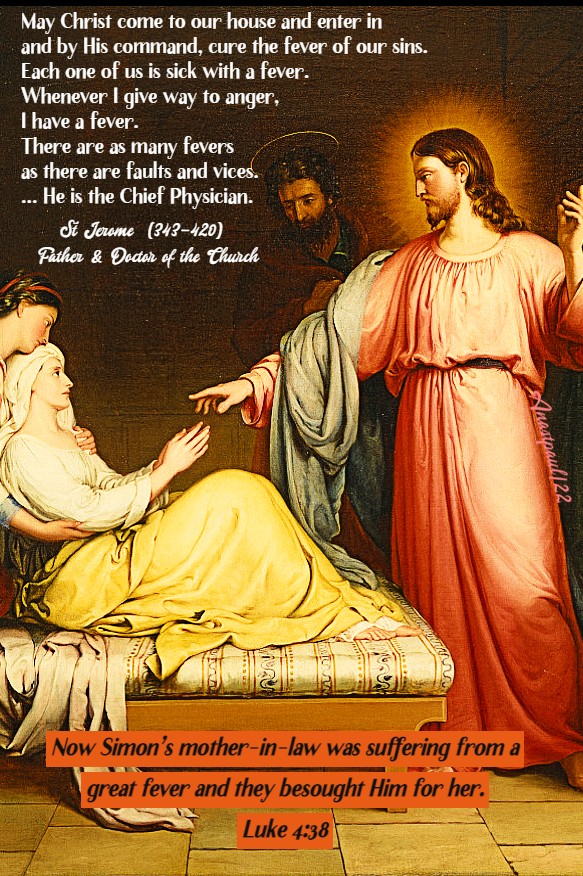
One Minute Reflection – 24 Marcr – Thursday of the Third Week of Lent – Jeremias 7:1-7, Luke 4:38-44 and the Feast Dy of St Gabriel the Archangel
“At that time, Jesus rose from the synagogue and entered Simon’s house. Now Simon’s mother-in-law was suffering from a great fever and they besought Him for her.” – Luke 4:38
REFLECTION – “Now Simon’s mother-in-law was kept in her bed sick with a fever.” May Christ come to our house and enter in and by His command, cure the fever of our sins. Each one of us is sick with a fever. Whenever I give way to anger, I have a fever. There are as many fevers as there are faults and vices. Let us beg the Apostles to intercede for us with Jesus, that He may come to us and touch our hand. If He does so, at once our fever is gone. He is an excellent Physician and truly the Chief Physician. Moses is a physician. Isaias is a physician. All the Saints are physicians but He is the Chief Physician.” – St Jerome (343-420) Father & Doctor of the Church (Homilies on the Gospel of Mark 75).
PRAYER – O God, Who, out of all the Angels, chose the Archangel Gabriel to announce the mystery of Your Incarnation, mercifully grant that we, who keep his feast on earth, may have him as our patron in Heaven. Who lives and reigns with God the Father, in the unity of the Holy Spirit, God, world without end. Amen (Collect).
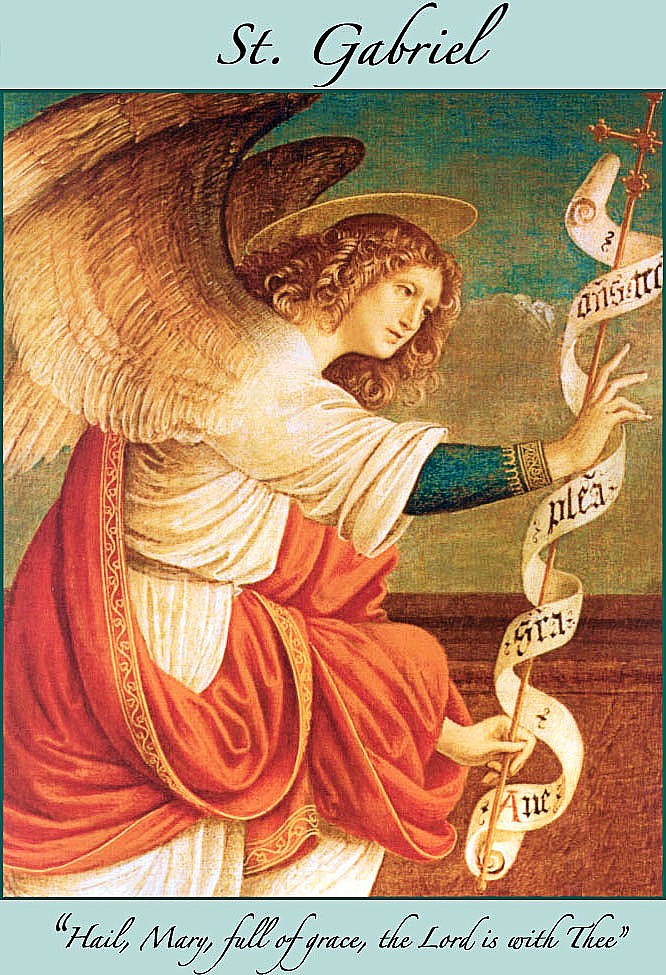
Saint of the Day – 24 March – The Archangel Saint Gabriel. The name GABRIEL is a Hebrew name generally translated “strength of God” more accurately “my strength is in God” or “God is my strength.” Gabriel appeared to the prophet Daniel (Dan 8:16; 9:21), to the priest Zachary to announce the forthcoming birth of Saint John the Baptist (Luke 1:11, 19) and to the Blessed Virgin Mary to announce the birth of Our Saviour (Luke 1:26.). His Feast Day is celebrated today 24 March. PATRONAGES – Ambassadors, Telecommunication workers, Radio and Television Broadcasters, Messengers and Couriers, Postal workers, Clerical workers, Diplomats, Stamp Collectors, Portugal, Santander in the Cebu Province in the Philippines.
Saint Gabriel, the Archangel Abbot Prosper Guéranger OSB (1805-1875)
So far in the Church’s Calendar, we have not met with any Feast in honour of the Holy Angels. Amidst the ineffable joys of Christmas Night, we mingled our timid but glad voices with the Hymns of these heavenly Spirits, who sang around the Crib of our Emmanuel. The very recollection brings joy to our hearts, saddened as they now are by penitential feelings and by the near approach of the mournful anniversary of our Jesus’ Death. Let us, for a moment, interrupt our sadness, and keep the Feast of the Archangel Gabriel. Later on, we shall have Michael, Raphael, and the countless host of the Angel Guardians but today, it is just that we should honour Gabriel. Yes, a day hence and we shall see this heavenly Ambassador of the Blessed Trinity coming down to the Virgin of Nazareth, let us, therefore, recommend ourselves to him and beseech him to teach us how to celebrate, in a becoming manner, the grand Mystery of which he was the Messenger.
Gabriel is one of the first of the Angelic Kingdom. He tells Zachary, that he stands before the Face of God (St. Luke 1:11,19.). He is the Angel of the Incarnation because it is in this Mystery, which apparently is so humble, that the power of God is principally manifested and, Gabriel signifies the strength of God. We find the Archangel preparing for his sublime office, even in the Old Testament. First of all, he appears to Daniel, after this Prophet had had the vision of the Persian and Grecian Empires and, such was the majesty of his person, that Daniel fell on his face trembling (Dan 7:17). Shortly afterwards, he appears again to the same Prophet, telling him the exact time of the coming of the Messias: Know thou and take notice: that from the going forth of the word to build up Jerusalem again, unto Christ the Prince, there shall be seven weeks and sixty-two weeks (Ibid. 9:25), that is, sixty-nine weeks of years.
Follower Francesco Solimena The Archangel Saint Gabriel appears to the Prophet Daniel
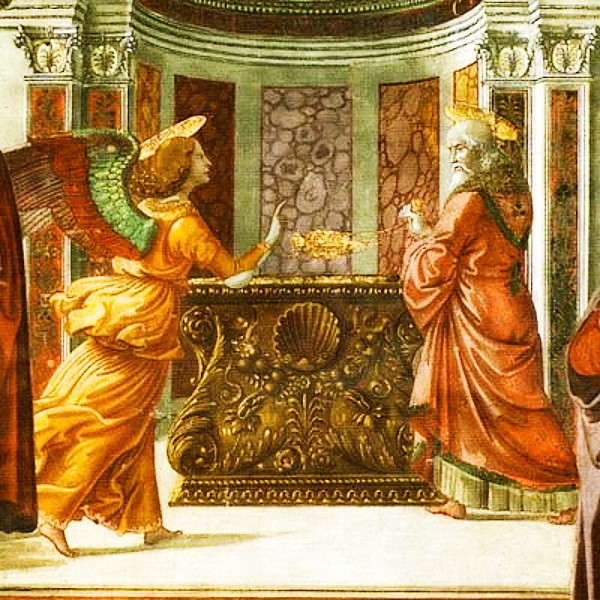
When the fulness of time had come and Heaven was about to send the last of the Prophets, he, who after preaching to men the approach of the Messias, is to show him to the people, saying: Behold the Lamb of God, who taketh away the sins of the world, Gabriel descends from Heaven to the temple of Jerusalem and prophesies to Zachary the birth of John the Baptist (Luke 1:13), which was to be followed by that of Jesus Himself.
St Gabriel appears to Zachary – Fra Angelico
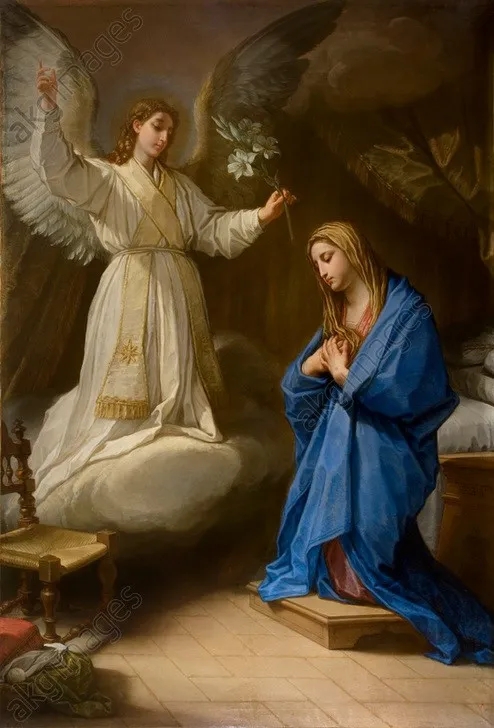
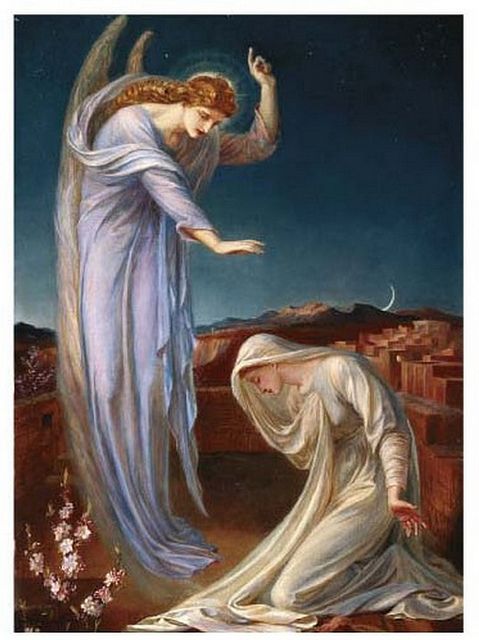
Six months later on, the holy Archangel again appears on the earth and this time it is Nazareth that he visits. He brings the great message from Heaven. Angel as he is, he reveres the humble Maid, whose name is Mary. He has been sent to her by the Most High God, to offer her the immense honour of becoming the Mother of the Eternal Word. It is Gabriel that receives the great Fiat, the consent of Mary and when he leaves this earth, he leaves it in possession of Him, for Whom it had so long prayed, in those words of Isaias: Drop down Dew, O ye Heavens (Is. 14:8.)!
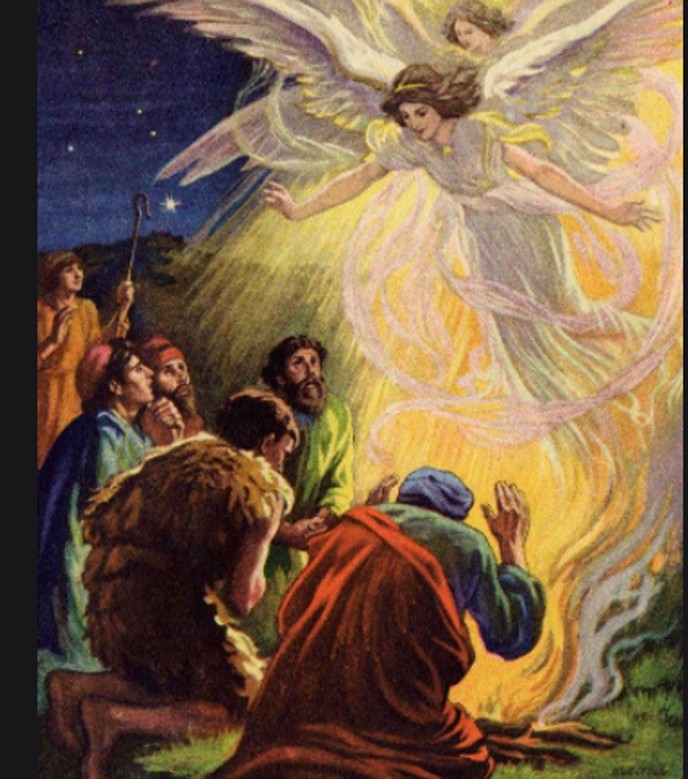
The hour at length came, when the Mother of the Emmanuel was to bring forth the Blessed Fruit of her virginal Womb. Jesus was born amidst poverty but Heaven willed that His Crib should be surrounded by fervent adorers. An Angel appeared to some Shepherds, inviting them to go to the Stable near Bethlehem. He is accompanied by a multitude of the heavenly army, sweetly singing their hymn: Glory to God in the highest and on earth peace to men of good will! Who is this Angel that speaks to the Shepherds and seems, as the chief of the other blessed Spirits that are with him? In the opinion of several learned writers, it is the Archangel Gabriel, who is keeping up his ministry as Messenger of the Good Tidings (St. Luke 2:10).
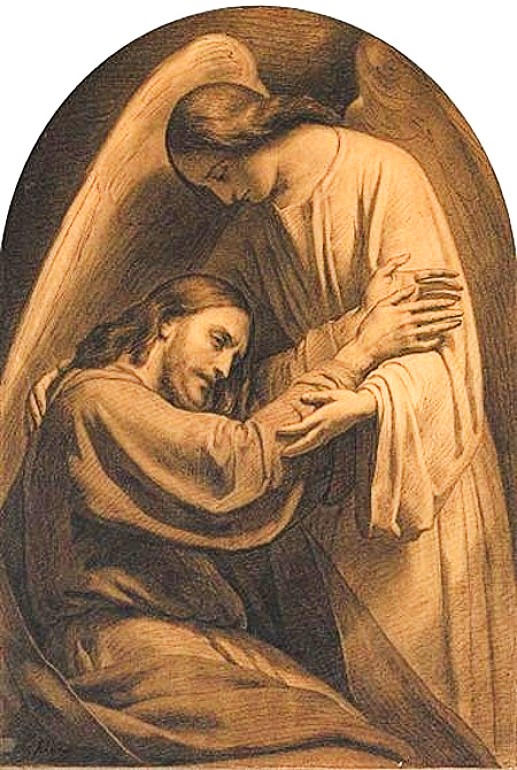
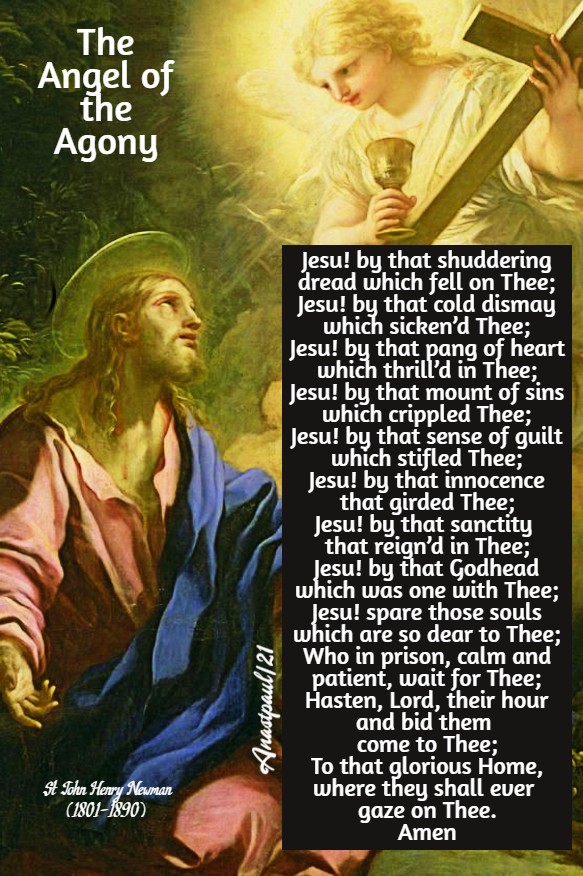
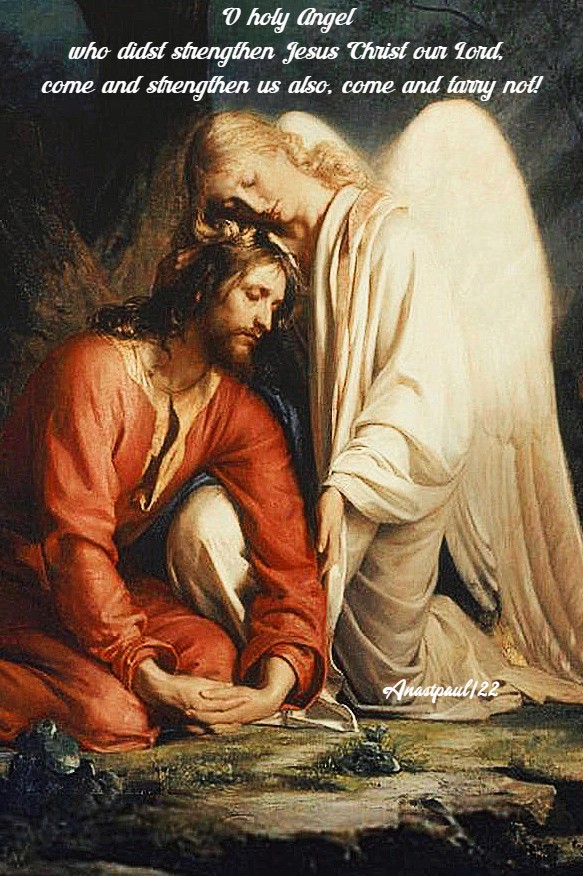
Lastly, when Jesus is suffering His Agony in the Garden of Gethsemani, an Angel appears to Him, not merely as a witness of His suffering but that He might strengthen Him, under the fear his Human Nature felt at the thought of the Chalice of the Passion He was about to drink (Ibid. 22:42, 43.). Who is this Angel? It is Gabriel, as we learn, not only from the writings of several holy and learned authors,but also, from a Hymn which the Holy See has permitted to be used in the Liturgy. …
These are the claims of the great Archangel to our veneration and love; these are the proofs he gives of his deserving his beautiful name, the Strength of God. God has employed him in each stage of the great work, in which he has chiefly manifested his power, for Jesus, even on his Cross, is the Power of God (1 Cor. 1:21.), as the Apostle tells us. Gabriel prepares the way for Jesus. He foretells the precise time of His Coming; He announces the birth of His Precursor; he is present at the solemn moment when the Word is made Flesh; he invites the Shepherds of Bethlehem to come to the Crib and adore the Divine Babe and when Jesus, in his Agony, is to receive Strength from one of His own creatures, Gabriel is found ready in the Garden of Gethsemani, as he had been at Nazareth and Bethlehem.
The Angel of the Agony John Henry Newman (1801-1890)
Jesu! by that shuddering dread which fell on Thee; Jesu! by that cold dismay which sicken’d Thee; Jesu! by that pang of heart which thrill’d in Thee; Jesu! by that mount of sins which crippled Thee; Jesu! by that sense of guilt which stifled Thee; Jesu! by that innocence that girded Thee; Jesu! by that sanctity that reign’d in Thee; Jesu! by that Godhead which was one with Thee; Jesu! spare those souls which are so dear to Thee; Who in prison, calm and patient, wait for Thee; Hasten, Lord, their hour and bid them come to Thee; To that glorious Home, where they shall ever gaze on Thee. Amen
O holy Angel who didst strengthen Jesus Christ our Lord, come and strengthen us also, come and tarry not!
The Archangel Saint Gabriel The Feast of Saint Gabriel was included by Pope Benedict XV in the General Roman Calendar in 1921, for celebration on 24 March.
St Agapitus of Synnada St Aldemar the Wise St Bernulf of Mondovi Bl Bertha de’Alberti of Cavriglia Bl Bertrada of Laon Bl Brian O’Carolan St Caimin of Lough Derg St Cairlon of Cashel
St Pigmenius of Rome St Romulus of North Africa St Secundus of North Africa St Seleucus of Syria St Severo of Catania St Timothy of Rome
Martyrs of Africa – 9 Saints: A group of Christians murdered for their faith in Africa, date unknown. The only details about their that survive are the names – Aprilis, Autus, Catula, Coliondola, Joseph, Rogatus, Salitor, Saturninus and Victorinus. .
Martyrs of Caesarea – 6 Saints: A group of Christians Martyred together in the persecutions of Diocletian. We know little else but six of their names – Agapius, Alexander, Dionysius, Pausis, Romulus and Timolaus. They were martyred by beheading in 303 at Caesarea, Palestine.
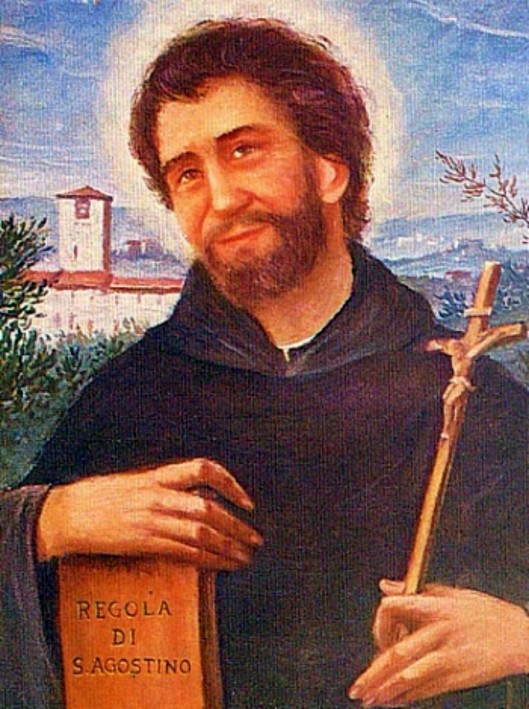
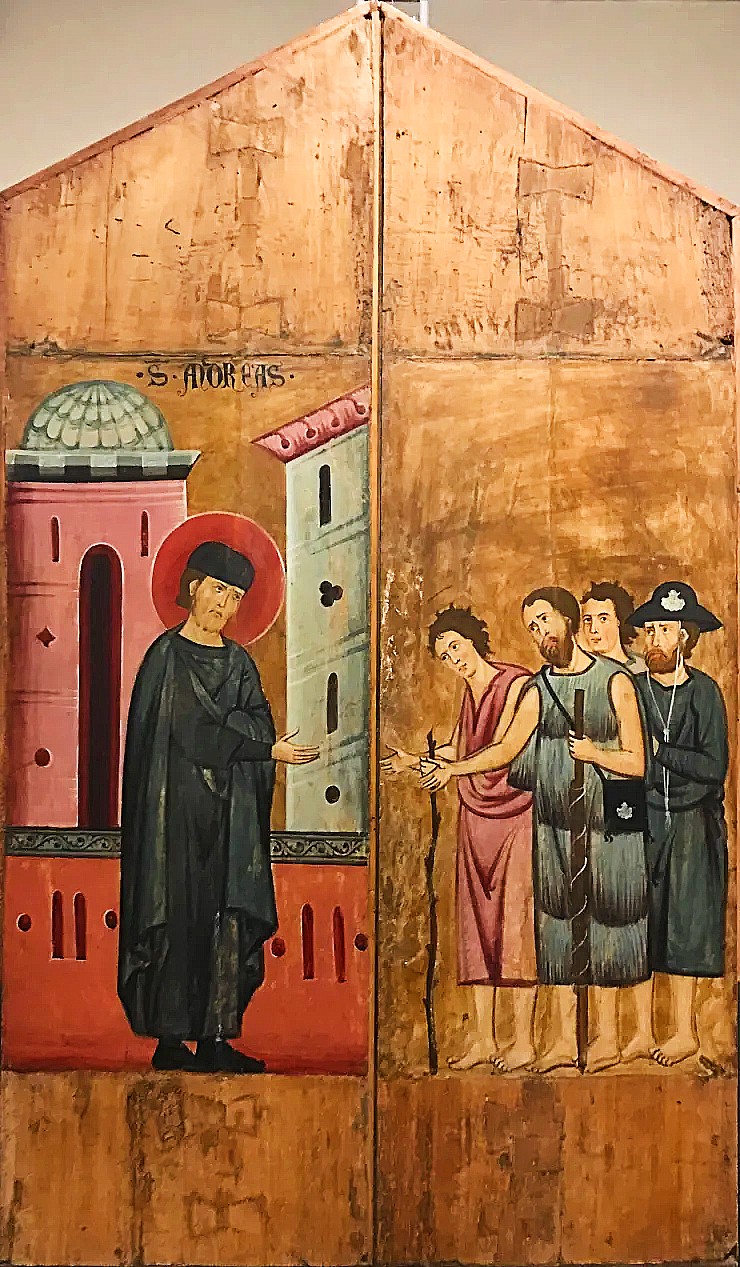
Saint of the Day – 23 March – Blessed Pietro of Gubbio OSA (Died c 1306) Priest and Friar of the Order of Hermits of St Augustine, Lawyer, noted Preacher, Envoy for the Order, Miracle-worker. Born in the early 13th century in Gubbio, Umbria, Italy and died between 1306 and 1322 in Gubbio, Umbria, Italy of natural causes. Also known as Peter of Gubbio. Additional Memorial – 29 October (The Augustinians).
Pietro of the noble Ghigenzi family, was born in the first half of the thirteenth century. He studied law first in Italy and then in Paris.
At about the age of forty, Pietro came to know the Augustinians and was drawn to them, wanting to put himself and his law practice at the disposal of the Church. He joined the Augustinians of his hometown who had come to Gubbio from the hermitage of Brettino (Fano).
As a Friar, he won the respect of his confreres and was entrusted with various duties of responsibility. He was chosen and sent by the Prior General to visit the Monasteries of France. Pietro that he travelled bare-footed and met all his brother Augustinians in that way as a sign of humility. He left a deep impression for his holiness of life, zeal for the Rule, his his patience with Augustinian brothers who had trouble living up to the Rule,and as a miracle worker.
He is described by the Anonymous Florentine, a writer of the fifteenth century, as “a man of great patience and prayer, who ended his life in the peace of the Lord and is renowned for many miracles.”
Pietro spent his later years as a prayerful Friar in the Gubbio Monastery where he had begun.
He died sometime between 1306 and 1322 and was venerated from the time of his death. His remains were buried in the common grave of Friars in the centre of the Choir area in the Augustinian Church in Gubbio.
One day, soon after his burial, the Friars were in the Choir, singing the Te Deum and they heard a voice from the tomb that responded: Te Dominum confitemur! – ‘Lord, we thank you! ‘ The frightened brothers opened the tomb and found the body of Blessed Peter on his knees, looking up and hands crossed on his chest.
Pietro’s relics are still enshrined in the Augustinian Church, where the veneration of this gentle, humble Friar were immediately and are still the subject of pilgrimages.
Bl Álvaro del Portillo Díez de Sollano Bl Annunciata Asteria Cocchetti St Benedict of Campagna St Crescentius of Carthage Bl Edmund Sykes St Ethelwald of Farne St Felix the Martyr St Felix of Monte Cassino St Fergus of Duleek St Fidelis the Martyr St Frumentius of Hadrumetum St Gwinear
St Julian the Confessor St Liberatus of Carthage St Maidoc of Fiddown Bl Metod Dominik Trcka St Nicon of Sicily St Ottone Frangipane Bl Peter Higgins Blessed Pietro of Gubbio OSA (Died c 1306) Priest
Daughters of Feradhach: They are mentioned in early calendars and martyrologies but no information about them has survived.
Martyrs of Caesarea – 5 Saints: A group of five Christians who protested public games which were dedicated to pagan gods. Martyred in the persecutions Julian the Apostate. The only details we know about them are their names – Aquila, Domitius, Eparchius, Pelagia and Theodosia. They were martyred in 361 in Caesarea, Palestine.
Saint of the Day – 22 March – Saint Epaphroditus of Terracina (1st Century) First Bishop of Terracina, Italy, Missionary, Evangelist, Disciple of the Apostles, Friend and Envoy of St Paul Apostle. St Hippolytus’ list of the Seventy Disciples includes “Epaphroditus, Bishop of Andriace. Also known as – Epaphroditus of Philippi, Epaphroditus the Apostle, Epaphroditus of Adriate, Epafrodito…
Epaphroditus is a Greek name (meaning “lovely” or “charming” and corresponds to the Latin Venustus (meaning “handsome”) and was very common in the Roman period. “The name occurs very frequently in inscriptions both Greek and Latin, whether at full length Epaphroditus, or in its contracted form Epaphras.” Our Saint is, therefore, linked with Epaphras (Colossians 1.7, 4.12; Philemon 23), with the suggestion that the latter is a “contracted” or “pet form” for the Philippian Envoy.
The Roman Martyrology reads: “At Terracina, St Epaphroditus, a disciple of the Apostles, who was Consecrated Bishop of that City by the blessed Apostle Peter.”
“With regard to Epaphroditus, my brother and co-worker and fellow soldier, your messenger and minister in my need, I consider it necessary to send him to you. For he has been longing for all of you and was distressed because you heard that he was ill. He was indeed ill, close to death but God had mercy on him, not just on him but also on me, so that I might not have sorrow upon sorrow. I send him therefore with the greater eagerness, so that, on seeing him, you may rejoice again and I may have less anxiety. Welcome him then in the Lord, with all joy and hold such people in esteem, because, for the sake of the work of Christ, he came close to death, risking his life to make up for those services to me, that you could not perform.” – Philippians 2:25-30
Epaphroditus lived in the Macedonian City of Philippi (now ruins in present-day Greece), seemingly the first European City to receive Christianity, as described in the 16th chapter of Acts. At various times after evangelising in Philippi, Paul found himself in prison. It was during one of these times of captivity that Epaphroditus left Philippi, sought out the imprisoned Paul and brought him an offering — perhaps funds or supplies. Paul was very thankful for the gifts and wrote to the Philippians in gratitude.
This unique letter that Paul wrote to the Christians of Philippi has a touching and personal ambiance. Calling him his “brother,” “co-worker” and “fellow soldier” firmly indicates that Epaphroditus was very dear to Paul’s heart ,as well as a person who worked hard to glorify God, even during times of difficulty. It appears from the letter, that Epaphroditus became very ill while visiting Paul — that he almost died! When Epaphroditus recovered, Paul decided to send him back to Philippi to deliver his letter.
Paul could tell that Epaphroditus was anxious over his brethren in Philippi and that everyone in Philippi was worried about Epaphroditus, having received reports of his illness. Paul emphasised in his letter, that Epaphroditus ought to be welcomed with joyfulness and high regard due to the way he risked death while serving Christ by travelling to help Paul.
It is believed that Epaphroditus became the first Bishop of Philippi and later of Terracina in Italy.
Blessed Clemens August von Galen (1878-1946) Martyr Boshop, known as “The Lion of Munster,” “The Bishop Who Roared Against The Nazis,” “The Bishop Who Took On the Führer.” Blessed Clemens had a great love for the Blessed Virgin, often leading pilgrimages, or going on his own, to Marian Shrines. He was too, a great lover of the Holy Eucharist and a fervent apostle of charity. Patronage – Munster. The Lion of Munster! https://anastpaul.com/2019/03/22/saint-of-the-day-22-march-blessed-clemens-august-count-von-galen-1878-1946/
St Darerca of Ireland St Deghitche St Epaphroditus of Terracina (1st Century) Bishop St Failbhe of Iona Bl François-Louis Chartier St Harlindis of Arland Bl Hugolinus Zefferini St Lea of Rome Bl Marian Górecki
Quote/s of the Day – 21 March – Monday of the Third Week of Lent – The Memorial of St Benedict OSB (c 480-547)
“Girded with faith and the performance of good works, let us follow in His paths by the guidance of the Gospel.”
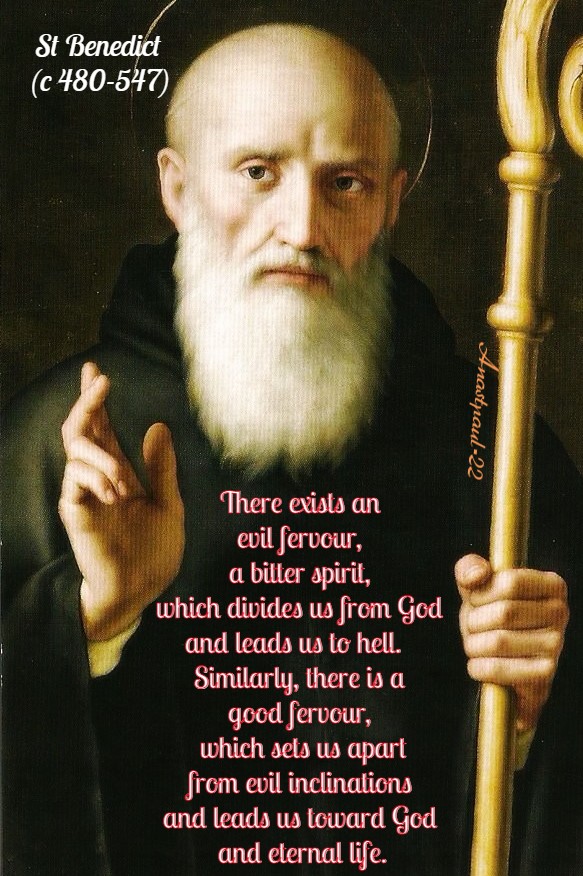
“There exists an evil fervour, a bitter spirit, which divides us from God and leads us to hell. Similarly, there is a good fervour, which sets us apart from evil inclinations and leads us toward God and eternal life.”
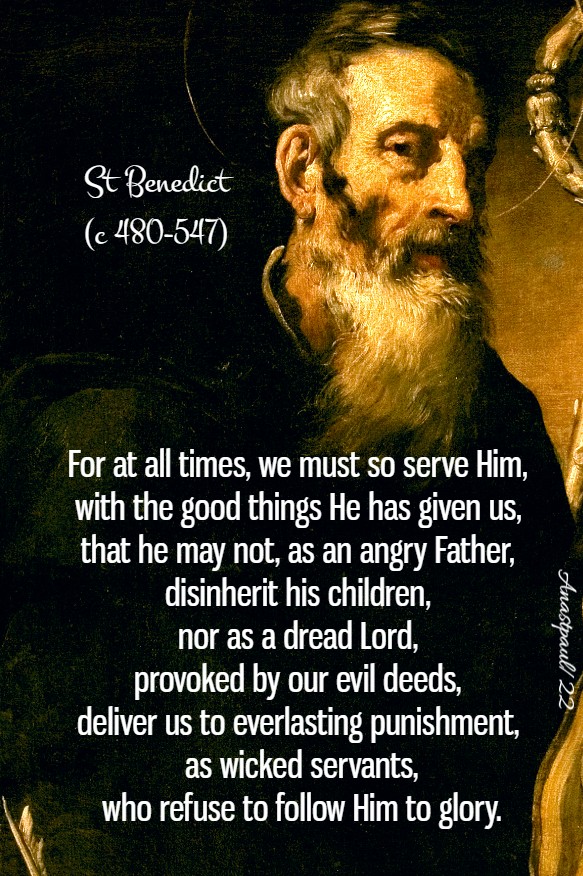
“For at all times, we must so serve Him, with the good things He has given us, that he may not, as an angry Father, disinherit his children, nor as a dread Lord, provoked by our evil deeds, deliver us to everlasting punishment, as wicked servants, who refuse to follow Him to glory.”
“The first degree of humility, is prompt obedience.”
Saint of the Day – 21 March – Saint John of Valence (Died 1146) Bishop, Founder of the Abbey of Bonnevaux, Monk, Abbot, Apostle of the poor, Social Reformer. Born at Lyons, France and died on 21 March 1146 of natural causes. Additional Memorial – 26 April on some calendars.
The Roman Martyrology reads: “In Valence in the territory of Vienne in France, St John, Bishop, who, at first Abbot of Bonnevaux, suffered many adversities for the defence of justice and with charity took care of the peasants, the poor and the merchants ruined by debts.”
Nothing is known of his early life until he became a Priest and a Canon of the Lyons Cathedral.
After a pilgrimage to Compostela, Spain John had a dream in which Christ complained: “He ought to be Mine, not as a pilgrim but as a dweller in My house.” John immediately entered Clairvaux Abbey to become a Monk under Saint Bernard. In 1117, he founded the Cistercian Abbey at Bonnevaux, became its Abbot and from which he established four daughter-houses.
In 1141 John was elected Bishop of Valence. John felt so unworthy of the position that he had to be physically carried to the Altar to be Consecrated. As Bishop, John fought zealously for his flock not just in matters spiritual but for farmers, merchants and the impoverished who were all ruined by debt during a regional financial crisis.
During his five years as the Bishop, John maintained the rigoroys life of a Monk, keeping fasts and penances. He actively alleviated the sufferings of widows, orphans and the poor and in other ways, promoted social justice.
John died on 21 March 1146 . Pope Pius X confirmed his cultus in on 3 December 1903.
St Isenger of Verdun St James the Confessor St John of Valence (Died 1146) Bishop Bl Lucia of Verona St Lupicinus of Condat Bl Mark Gjani Bl Matthew Flathers
St Nicholas of Flue (1417-1487) Swiss Hermit and Ascetic who is the Patron Saint of Switzerland. He is sometimes invoked as Brother Klaus. A husband and father, a Mystic, a Writer, farmer, military leader, Member of the assembly, Councillor, Judge, he was respected as a man of complete moral integrity. About St Nicholas: https://anastpaul.wordpress.com/2018/03/21/saint-of-the-day-21-march-st-nicholas-of-flue-1417-1487/
St Serapion the Scolastic (Died c 354-370) Bishop of Thmuis, near Diospolis in the Nile delta of Egypt, Monk and Hermit, Confessor, brilliant Scholar of great learning, Theologian, Writer, a companion to St Anthony, the Desert and a close friend of St Athanasius and gave support to him against the heretic Arians in Egypt, for which action he was exiled. St Serapion’s Life: https://anastpaul.com/2021/03/21/saint-of-the-day-21-march-saint-serapion-the-scolastic-died-c-354-370-bishop/
St Philemon of Rome Bl Santuccia Terrebotti
Bl Thomas Pilcher Bl William Pike
Martyrs of Alexandria: A large but unknown number of Catholics massacred in several Churches during Good Friday services in Alexandria, Egypt by Arian heretics during the persecutions of Constantius and Philagrio. They were Martyred on Good Friday in 342 in Alexandria, Egypt.
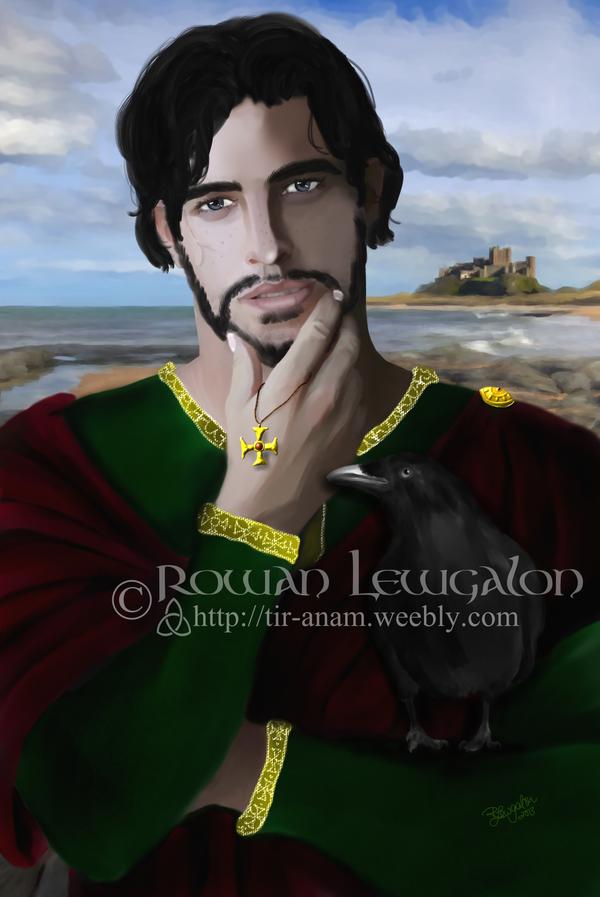
Saint of the Day – 20 March – Saint Cuthbert of Lindisfarne (c 634-687) “The Wonder-Worker of England,” Bishop of Lindisfarne, Monk, Hermit, Miracle-worker, Born in c 634 possibly in Northumbria, England and died on 20 March 687 at Lindisfarne, England of natural causes. Patronages – against plague and epidemics, of boatmen, mariners, sailors, shepherds, England, the Diocese of Hexham and Newcastle, England, Diocese of Lancaster, England, of Durham, England, Northumbria, England. Both during his life and after his death he became a popular medieval Saint of Northern England, with a cult centred on his tomb at Durham Cathedral. I am always saddened by the almost total lack of veneration at this Tomb, although there are still a few organised Catholic pilgrimages per year. The Church is now no longer ours (Anglican) and for the most part, the only visitors to the Tomb are camera-flashing tourists.
The Roman Martyrology reads today: “In England, St Cuthbert, Bishop of Lindisfarne, who, from his childhood until his death, was renowned for good works and miracles.”
Cuthbert was born in North Northumbria in about the year 634 – the same year in which St Aidan founded the Monastery at Lindisfarne. He came from a notable and wea\lthy English family and like most boys of that class, he was placed with foster-parents for part of his childhood and taught the arts of war. We know nothing of his foster-father but he was very fond of his foster-mother, Kenswith.
It seems, from stories about his childhood, that he was brought up as a Christian. He was credited, for instance, with having saved, by his prayers, some Monks who were being swept out to sea on a raft. There is some evidence that, in his mid-teens, he was involved in at least one battle, which would have been quite normal for a boy of his social background.
St Cuthbert discovers a piece of timber to save drowning Monks, from a 12th-century manuscript of St Bede’s ‘Life of St Cuthbert.’
His life changed when he was about 17 years old. He was looking after some neighbour’s sheep on the hills. (As he was certainly not a shepherd boy it is possible that he was mounting a military guard – a suitable occupation for a young warrior!) Gazing into the night sky he saw a light descend to earth and then return, escorting, he believed, a human soul to Heaven. The date was 31 August 651- the night that St Aidan died! Perhaps Cuthbert had already been considering a possible monastic calling but that was his moment of decision.
He went to the Monastery at Melrose, also founded by St Aidan and asked to be admitted as a Novice. For the next 13 years he was with the Melrose Monks. When Melrose was given land to found a new Monastery at Ripon, North Yorkshire, Cuthbert went with the founding party and was made Administrator. In his late 20s he returned to Melrose and found that his former teacher and friend, the Prior Boisil, was dying of the plague. Cuthbert became Prior (second to the Abbot) at Melrose.
In 664 the Synod of Whitby decided that Northumbria should cease to look to Ireland for its spiritual leadership and turn instead to the continent. The Irish Monks of Lindisfarne, with others, went back to Iona. The Abbot of Melrose subsequently became also Abbot of Lindisfarne and Cuthbert its Prior.
Cuthbert seems to have moved to Lindisfarne at about the age of 30 and lived there for the next 10 years. He ran the Monastery; – he was an active missionary; he was much in demand as a spiritual guide and he was graced with the charism of miraculous curing of the ill. He was an outgoing, cheerful, compassionate person and no doubt became popular. But when he was 40 years old he believed that he was being called to be a hermit and to do the hermit’s job of fighting the spiritual forces of evil in a life of solitude.
After a short trial period on the tiny islet adjoining Lindisfarne, he moved to the more remote and larger island known as ‘Inner Farne’ and built a hermitage where he lived for 10 years. Of course, people did not leave him alone – they went out in their little boats to consult him or ask for healing. However, on many days of the year the seas around the islands are simply too rough to make the crossing and Cuthbert was left in peace.
Cuthbert’s fame for piety, diligence, and obedience quickly grew.and at the age of about 50 he was asked by both Church and King to leave his hermitage and become a Bishop. He reluctantly agreed. For two years he was an active, travelling Bishop as St Aidan had been. He seems to have journeyed extensively. On one occasion he was visiting the Queen in Carlisle (on the other side of the country from Lindisfarne) when he knew by miraculous understanding that her husband, the King, had been slain by the Picts in battle in Scotland.
Feeling the approach of death, he retired back to the hermitage on the Inner Farne where, in the company of Lindisfarne Monks, he died on 20 March 687.
His body was brought back and buried at Lindisfarne. People immediately came to pray at the grave and many miracles occured. To the Monks of Lindisfarne this was a clear sign that Cuthbert was a Saint in Heaven and they, desired to declare to the world the great power of intercession, of their St Cuthbert.
They decided to allow 11 years for his body to become a skeleton and then ‘elevate’ his remains on the anniversary of this death (20 March 698). We believe that during these years, the beautiful manuscript known as ‘The Lindisfarne Gospels‘ was made, to be used for the first time at the great ceremony of the Translation of St Cuthbert. The declaration of Cuthbert’s sainthood was to be a day of joy and thanksgiving. It turned out to be also a day of surprise, even shock, for when they opened the coffin ,they found no skeleton but a complete and undecayed body. That was a sign of very great sainthood indeed.
So the cult of St Cuthbert began. Pilgrims began to flock to the Shrine. The ordinary life of the Monastery continued for almost another century until, on 8 June 793, the Vikings came. The Monks were totally unprepared; some were killed; some younger ones and boys were taken away to be sold as slaves; gold and silver was taken and the monastery partly burned down. After that, the Monastery lived under threat and it seems that in the 9th century there was a gradual movement of goods and buildings to the nearby mainland. The traditional date for the final abandonment of Lindisfarne is 875.
The body of St.Cuthbert, together with other relics and treasures which had survived the Viking attack, were carried by the Monks and villagers onto the mainland.
For over 100 years the community settled at the old Roman Town of Chester-le-Street. It was said that fear of further attack took them inland to Ripon but not for long and on their journey back from there they finally settled at Durham.
After the Norman Conquest (1066) a Benedictine community began to build the great Cathedral at Durham. They proposed to honour the body of St.Cuthbert with a new Shrine immediately east of the new High Altar and in 1104, all was ready for the translation. The Durham Monks opened up the coffin and found, that the St Cuthbert’s body was indeed still incorrupt. Throughout the Middle Ages the coffin was placed in a beautiful Shrine and visited by great numbers of pilgrims. But at the reformation, when the Monastery was dissolved, the Shrine was dismantled and the coffin opened – the body was still complete. It was buried in a plain grave behind the High Altar and the Sacred items buried with St Cuthbert were removed. Below is St Cuthbert’s Gospel of St John, recovered from his coffin; the original tooled red goatskin binding is the earliest surviving Western binding.
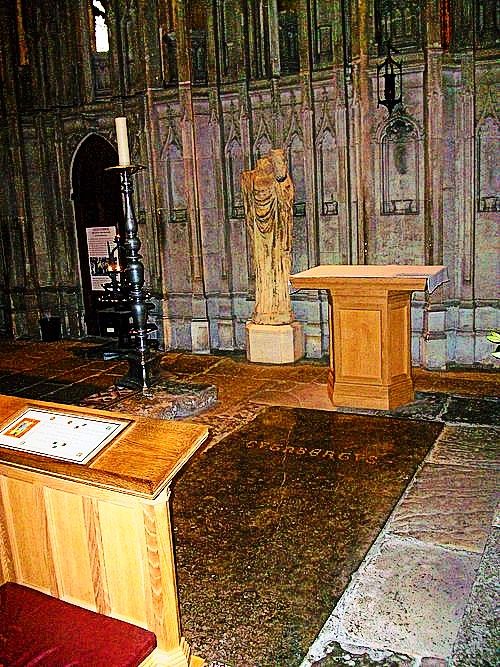
The human remains were then re-interred in the same place and marked by a plain gravestone with the name Cuthbertus. The Site, remaibs the focus of many pilgrimages today, including myself and family who have venerated St Cuthbert, a few times, in the Cathedral built to house his Shrine – of course, this is now a protestant church.
The 8th-century historian St Bede, wrote both a verse and a prose life of St Cuthbert around 720. He has been described as the most popular Saint in England prior to the death of Thomas Becket in 1170. In particular, Alfred the Great, King of Wessex, was inspired and encouraged in his struggle against the Danes by a vision or dream he had of St Cuthbert. Thereafter, the royal house of Wessex, who became the Kings of England, made a point of great devotion to St Cuthbert.
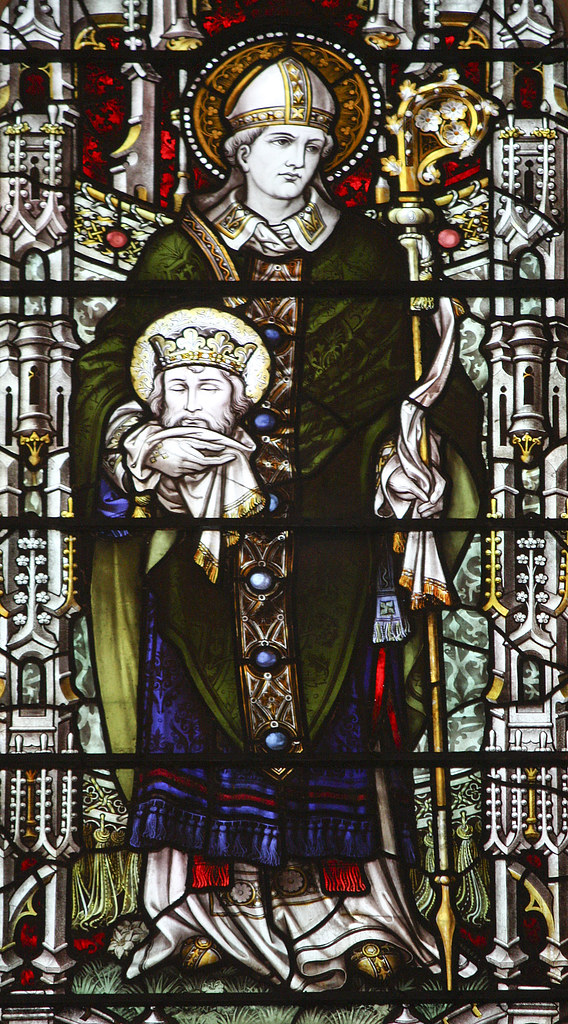
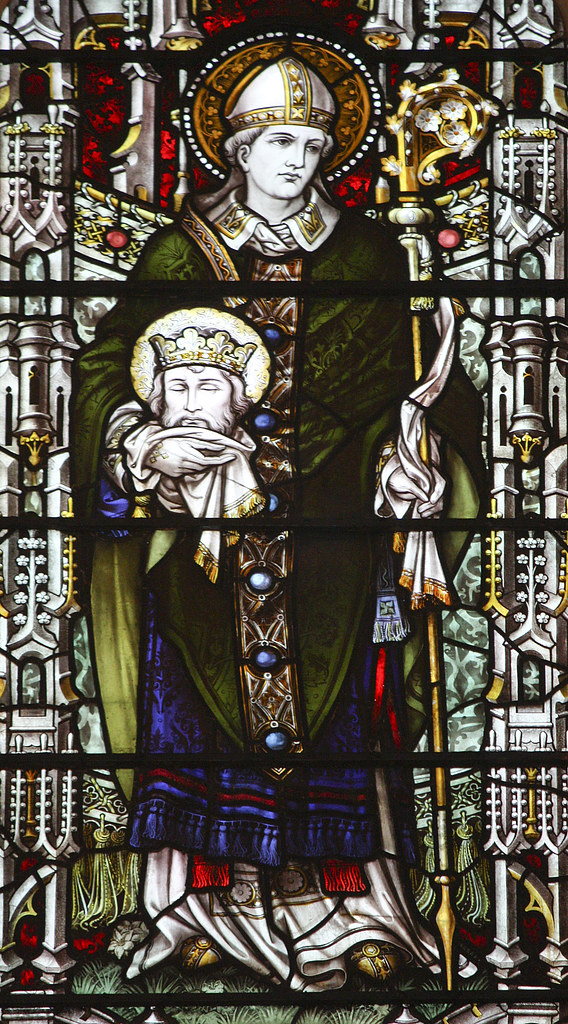
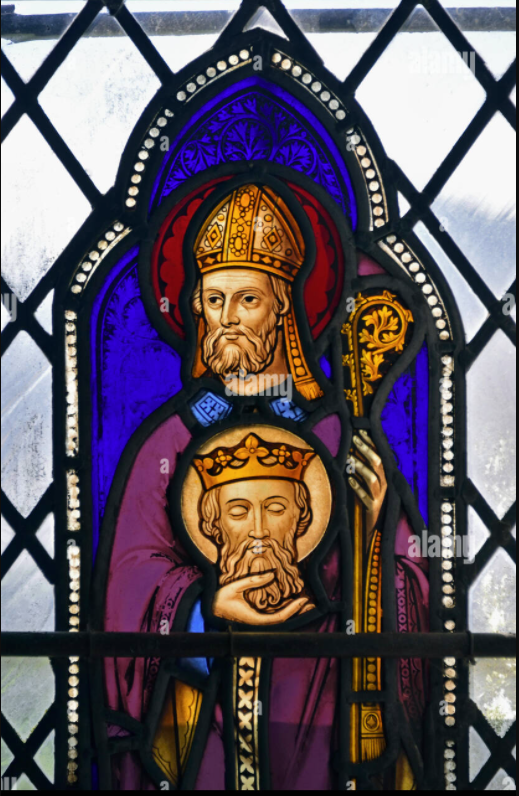
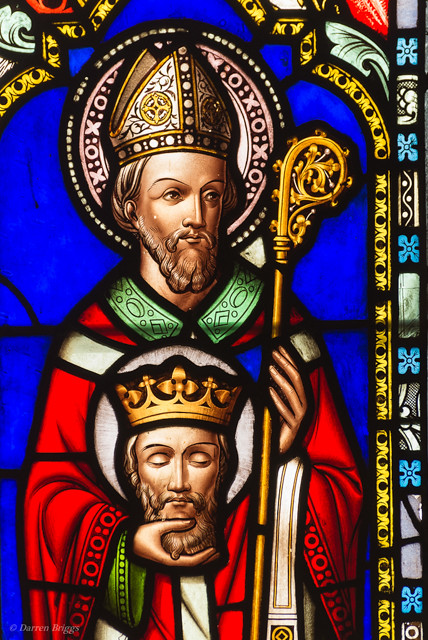
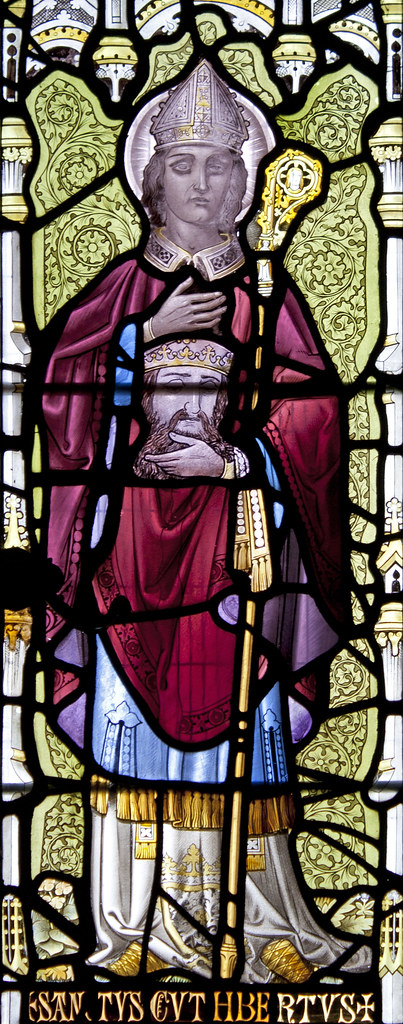
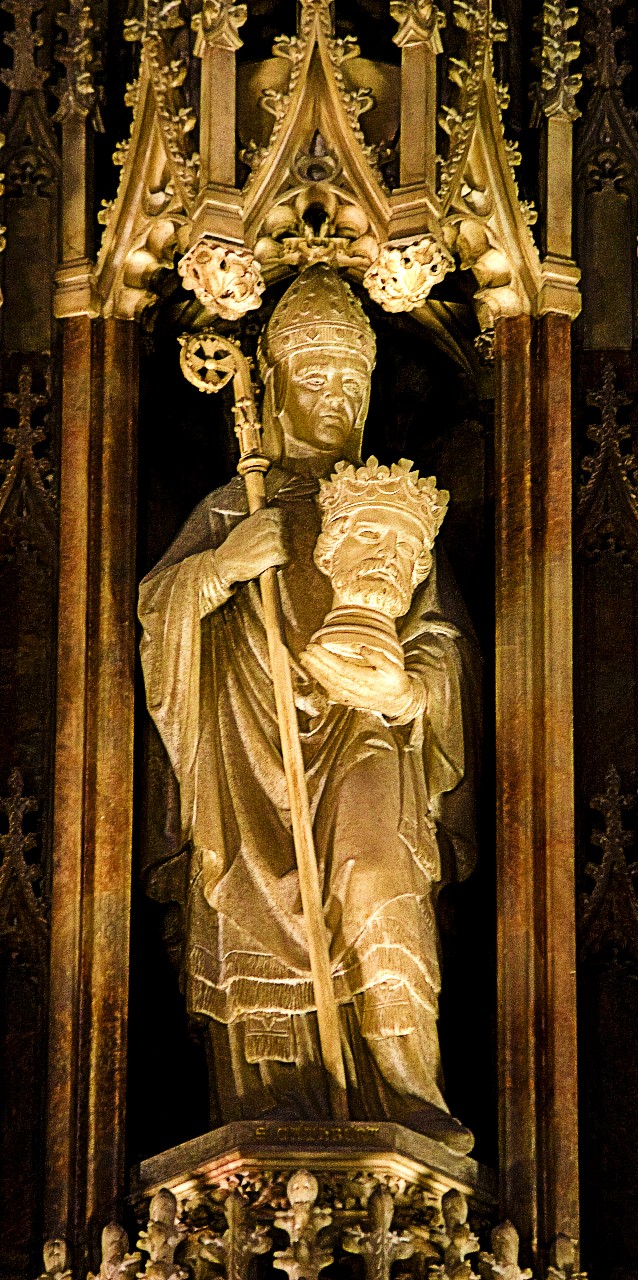
Why is St Cuthbert depicted holding St Oswald’s Head (c 605-642) King of Northumbia and why is it entombed with St Cuthbert?
St Bede tells us that Oswald was born around 605, the son of the King of Northumbria. After his father’s death, Oswald and his brothers were exiled to western Scotland, possibly to Iona, where they were inspired by St Columba’s Monks and were Baptised. In 634 Oswald returned to Northumbria where Cadwalla was massacring the people having killed King Edwin. After setting up a Cross as his standard and leading his men in prayer on the night before battle, Oswald defeated Cadwalla’s much larger army at Heavenfield and reclaimed the throne. The Intercession of St Columba,who died some 35 years earlier, assisted Oswald and his men, for Columba,appeared to Oswald in a vision and promised Heavenly assistance.
Oswald asked the Monks at Iona to send Missionaries to convert and guide his people. The first Monk they sent went back and reported that he could make no progress, due to the ungovernability, obstinacy and barbarous temperament of Oswald’s people, so they sent St Aidan instead. Oswald let Aidan choose where to base his Monastery and his mission. Aidan chose Lindisfarne and Oswald then worked closely with Aidan, travelling the countryside, acting as Aidan’s translator. In St Bede’s words, “while the Bishop, who was not fluent in the English language, preached the gospel, it was most delightful to see the King himself, interpreting the word of God to his ealdormen and thegns; for he, himself, had obtained perfect command of the Irish tongue during his long exile.”
Oswald was killed at Oswestry on 5 August 642, fighting the Mercians led by King Penda. His head was rescued from the battlefield and is buried in the Durham Cathedral, in St Cuthbert’s tomb, which is why you sometimes see pictures or statues of Cuthbert holding Oswald’s head. Soon miracles occurred at the place of his death, as they had at the place where he knelt to pray before battle and he was effectively canonised by the loving devotion of his people.
Bl Ambrose Sansedoni of Siena Anastasius XVI Archippus of Colossi St Benignus of Flay St Cathcan of Rath-derthaighe St Clement of Ireland St Cuthbert of Lindisfarne (c 634-687) Bishop Bl Francis Palau y Quer St Guillermo de Peñacorada St Herbert of Derwenwater Bl Hippolytus Galantini Bl Jeanne Veron Bl John Baptist Spagnuolo St John Nepomucene St John Sergius
St Jósef Bilczewski (1860-1923) Archbishop of Lviv, Professor of Dogmatic Theology, Apostle of the Holy Eucharist, Marian devotion, the poor, the homeless, the needy, refugees, Social Reformer and Evangelist, Apostle of Catechesis both of the laity and of priests, Peace-maker. Biography: https://anastpaul.com/2019/03/20/saint-of-the-day-20-march-st-josef-bilczewski-1860-1923/
Martyrs of Amisus – 8 Saints: A group of Christian women Martyred together in the persecutions of Diocletian. The only details we have are eight of their names – Alexandra, Caldia, Derphuta, Euphemia, Euphrasia, Juliana, Matrona and Theodosia. They were burned to death c 300 in Amisus, Paphlagonia (modern Samsun, Turkey).
St Photina & Companions / Martyrs of Rome – 9+ Saints: A group of Christians Martyred together in the persecutions of Nero. We know nothing else about them but the names Photina, Sebastian and Victor, Anatolius, Cyriaca, Joseph, Parasceve, Photis.
Martyrs of San Saba – 20 Saints: Twenty monks who were Martyred together in their monastery by invading Saracens. They were Martyred in 797 when they were burned inside the San Sabas monastery in Palestine.
Martyrs of Syria – 3+ Saints: A group of Christians who were Martyred together in Syria. We know nothing else about them but the names Cyril, Eugene and Paul.
Saint of the Day – 19 March – Blessed Andrea Gallerani (Died 1251) Layman, Penitent, Founder of a Lay Apostolate known as “The Friars of Mercy” (Frati della Misericordia). Born in the 13th century in Siena, Italy and died on 19 March 1251 in Siena of natural causes. Patronage – Parma, Italy, Also known as – Andrew Gallerani, Andrew de’Gallerani, Andre d’Gallerani. Additional Memorial – 20 June (Siena, Italy).
The Roman Martyrology states: “In Siena, Blessed Andrea Gallerani, who visited and consoled the sick and afflicted with care and gathered the Brothers of Mercy, so that, as lay people without vows, they would serve the poor and the sick.”
Andrea of the noble Sienese Gallerani family, was born in Siena in the 13th century and as a young man, as a Soldier, for unknown reasons, killed a man; the justice of the Ghibelline Municipality of Siena condemned him to exile from the City. It is not known when but as soon as he was able to return to Siena, regretting his perhaps impulsive crime, he devoted himself completely to the service of the sick and the needy.
Having possessions and precious goods, he destined them to the foundation, or he refinanced a public hospital, called della Misericordia, gathering around him a group of fellow citizens, who, following his example, dedicated themselves to charitable and assistance works and ,at the same time, conducted a life of poverty. They were called “Friars of Mercy”, which, however, was not a true religious order but only a charitable apostolate whose individual members followed a standard of spiritual life, according to their own wishes.
It was the characteristic of the Franciscan or Dominican Tertiaries. After the death of the blessed Andrea, the Friars, partially transformed into a religious Order in 1201 and was suppressed in 1571 and thereafter, took on a precedence in Siena over the lay apostolate, so it was claimed that Gallerani belonged to this Order, which he had not.
Already in life he enjoyed the fame of holiness, a fame that increased considerably after his death, which took place in Siena on 19 March 1251, so much so, that in 1274, the Bishop of the City, granted a special indulgence to those who visited his tomb on Holy Monday which was placed in the Church of the Order of Preachers.
Later, by order of Pope St Pius V (1504-1572), this indulgence was postponed to the Monday after Easter, as it is still in force today. A special Association named after him also arose in Siena, which united the nobles of the City as members.
The cult of Andrea was confirmed on 13 May 1798 by Pope Pius VI.
St Adrian of Maastricht St Alkmund of Northumbria St Amantius of Wintershoven Blessed Andrea Gallerani (Died 1251) Layman, Penitent. St Apollonius of Braga St Auxilius of Ireland Bl Clement of Dunblane St Colocer of Saint-Brieuc St Corbasius of Quimperlé St Cuthbert of Brittany St Gemus
Martyrs of Sorrento: A group of three sisters and a brother who were Martyred together. We have little more than their names – Mark, Quartilla, Quintilla and Quintius. They were martyred in Sorrento, Italy, date unknown. Mark Quartilla Quintilla Quintius
Martyred in the Spanish Civil War: • Blessed Alberto Linares de La Pinta • Blessed Jaume Trilla Lastra
St Braulio of Saragossa Bl Celestine of the Mother of God Bl Christian O’Conarchy St Edward the Martyr (962-978) Child King of England St Egbert of Ripon St Eucarpius of Nicomedia St Felix of Gerona St Finan of Aberdeen St Frigidian of Lucca Bl John Thules St Leobard of Tours St Narcissus of Gerona Bl Roger Wrenno St Salvator of Horta St Trophimus of Nicomedia
Martyrs of Nicomedia – Commemorates the Christians who were Martyred anonymously, either singly and in small groups, by local pagans in the area of Nicomedia prior to the year 300 and who may have been over-looked in the waves of Diocletian persecutions that resulted in the deaths of thousands.
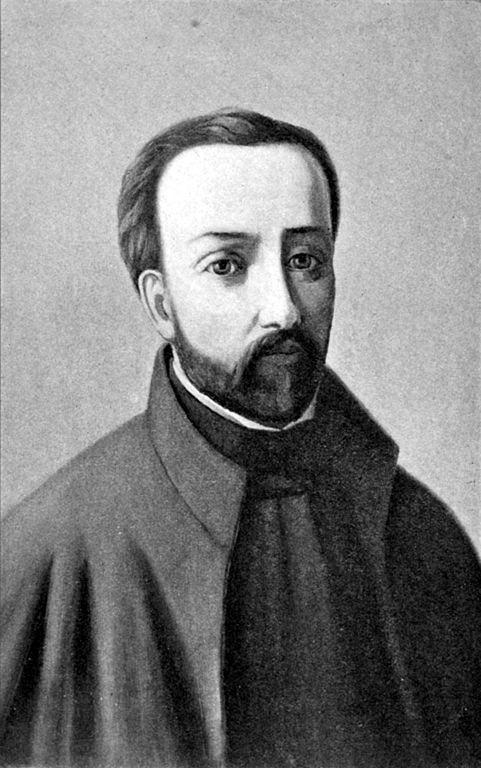
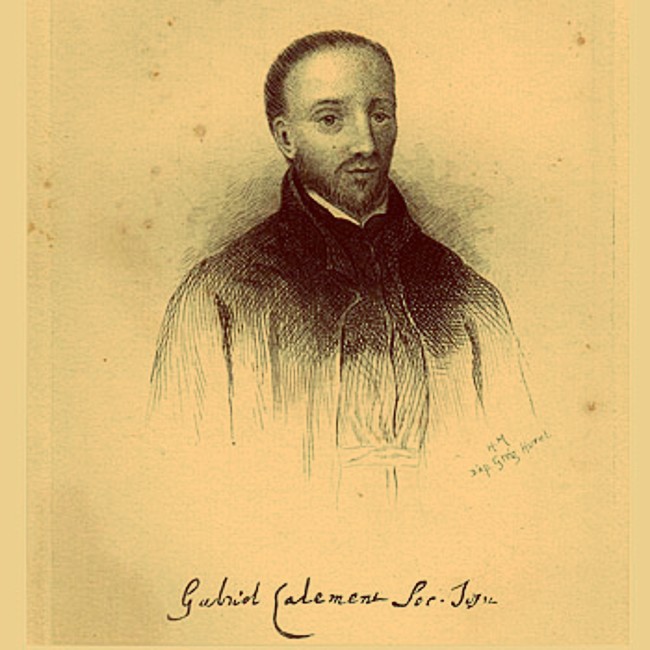
Saint of the Day – 17 March – St Gabriel Lalemant SJ (1610-1649) Martyr, French Priest of the Society of Jesus, Missionary, Professor. Born on 3 October 1610 at Paris, France and died by being tortured to death over the course of three hours on 17 March 1649 at the Saint Ignatius mission in the Huron country, Canada. Additional Memorial – 26 September (Canada) and 19 October as one of the Martyrs of North America.
Gabriel was born in Paris, on 3 October 1610, the son of a French lawyer and his wife. He was the third of six children, five of whom entered religious life. Two of Gabriel’s uncles served the Jesuits in New France – Father Charles Lalemant as the first Superior of the Jesuit missions in Canada, and Jérôme Lalemant as the Vicar-General of Quebec.
In 1630 Gabriel joined the Jesuits and in 1632 he took the vow to devote himself to foreign missions. He taught at the Collège in Moulins from 1632 to 1635. He was at Bourges from 1635 to 1639 studying theology and was Ordained there in 1638. He taught at three different schools, being Professor of Philosophy at Moulins. His repeated requests to go to New France were declined by his Superiors, partly because of his poor health. Eventually, his Uncle Jérôme, head of the Canadian mission, intervened on his behalf.
In September 1646 Gabriel arrived in Quebec, where he spent the first few months studying the Huron language and customs. Father François-Joseph Bressani, a fellow missionary in New France, referred to him as a man of extremely frail constitution. For the first two years Gabriel worked in and around Quebec and the trading centre of Trois Rivières (Three Rivers). In September 1648 he was sent to Wendake, the land of the Wyandot (Huron), as an assistant to St Jean de Brébeuf and posted to the mission at Sainte-Marie among the Hurons. In February 1649 he replaced Noël Chabanel at the mission of Saint Louis.
Only six months after he came to Sainte-Marie, he set out with St Jean de Brébeuf for the village of Saint-Louis. During the night the Iroquois attacked another village not far away and the two Jesuits knew that Saint-Louis would probably be next. On the morning of 16 March, the Iroquois attacked the Huron village and easily overcame the defences. The two Jesuits were taken prisoner because they had refused to flee into the forest before the attack. Attackers pulled out the finger nails of the two Priests and chewed their fingers before forcing them to run naked through the snow to a another village, where other Iroquois warriors waited. The captives had to run the gauntlet and then the two Jesuits were led to two posts where they were to be killed. Apparently Gabriel had to watch the torments that Brébeuf suffered, before the time came for his own torture at six in the evening. His tormentors set a fire around his feet, then burned him with heated metal hatchets and poured scalding water over his head. After they cut off his hands and gouged out his eyes, they placed hot coals in the sockets. Then they stopped for the night so that their victim could endure another day of torture. The next day they shoved burning wood into his mouth and sliced off his tongue but Father Gabriel proved as courageous as his Jesuit companion, St Jean and refused to scry out for mercy. Finally, they tore his heart out and ate it to gain his courage. The young Jesuit, only 36 years-old, died after 15 hours of unbelievable torment
After the withdrawal of the Iroquois war party from the area on 19 March, seven Frenchmen went to St Ignace to retrieve the bodies of the Jesuits and Huron. They returned them to Sainte-Marie where they were buried. Their relics are now housed at the Martyrs’ Shrine in Midland, Ontario.
Gabriel was Canonised by Pope Pius XI on 29 June 1930
St Jan Sarkander (1576-1620) Priest and Martyr of the seal of confession, Confessor – born on 20 December 1576 at Skotschau (Skoczow), Austrian Silesia (in modern Poland) and died by being covered in flammable material and set on fire on 17 March 1620 at Olomouc, Moravia (in the modern Czech Republic). Patronages – the Seal of Confession, Confessors, Moravia, Persecuted Christians. This amazing Saint’s Life and Death: https://anastpaul.com/2020/03/17/saint-of-the-day-17-march-saint-jan-sarkander-1576-1620-priest-and-martyr-of-the-seal-of-confession/
St Llinio of Llandinam Bl Maria Bárbara Maix St Paul of Cyprus St Stephen of Palestrina St Theodore of Rome St Thomasello St Withburga of Dereham
Martyrs of Alexandria – Also known as Martyrs of Serapis: An unknown number of Christians who were Martyred together by a mob of worshippers of the Graeco-Egyptian sun god Serapis. They were Martyred in c 392 in Alexandria, Egypt.
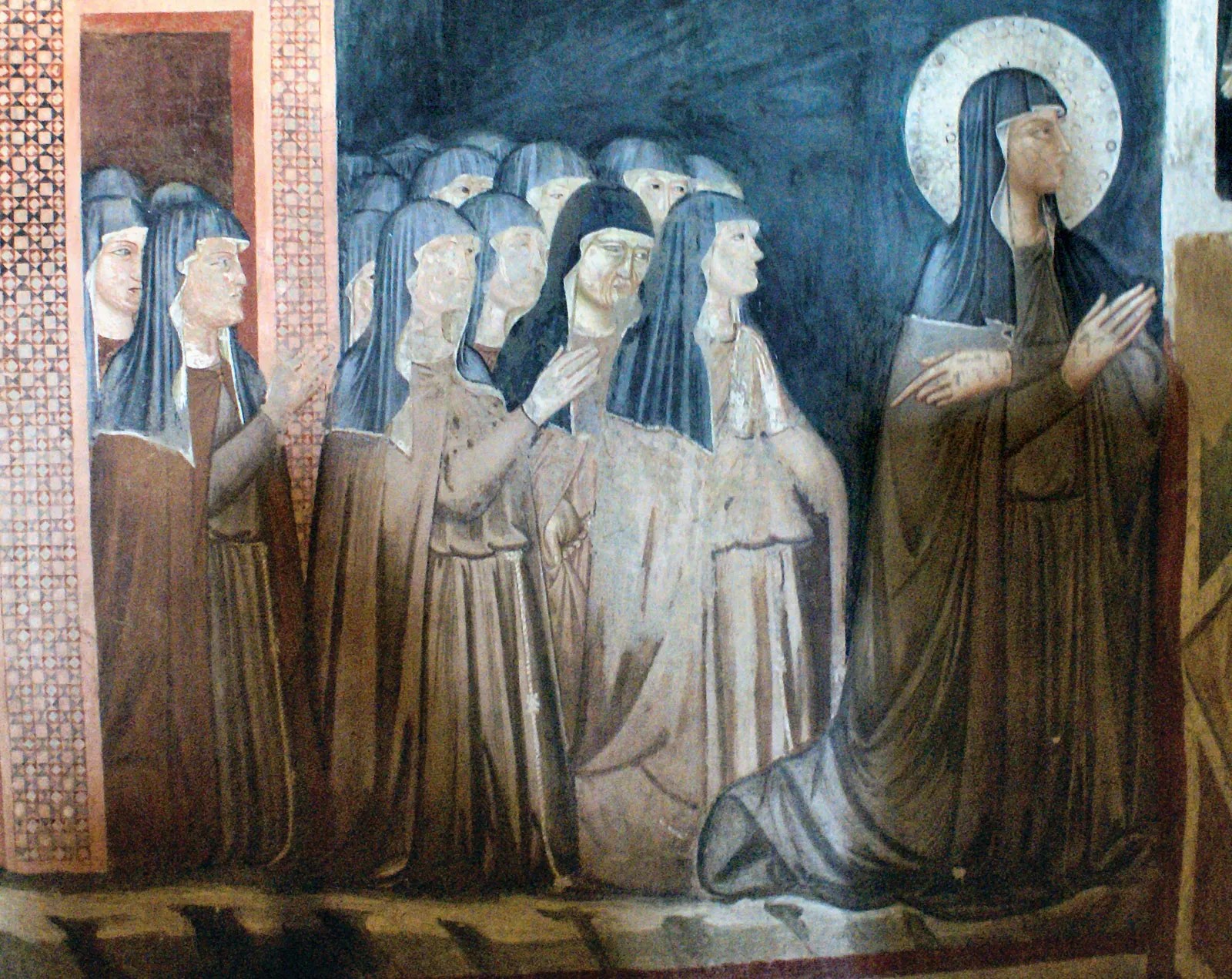
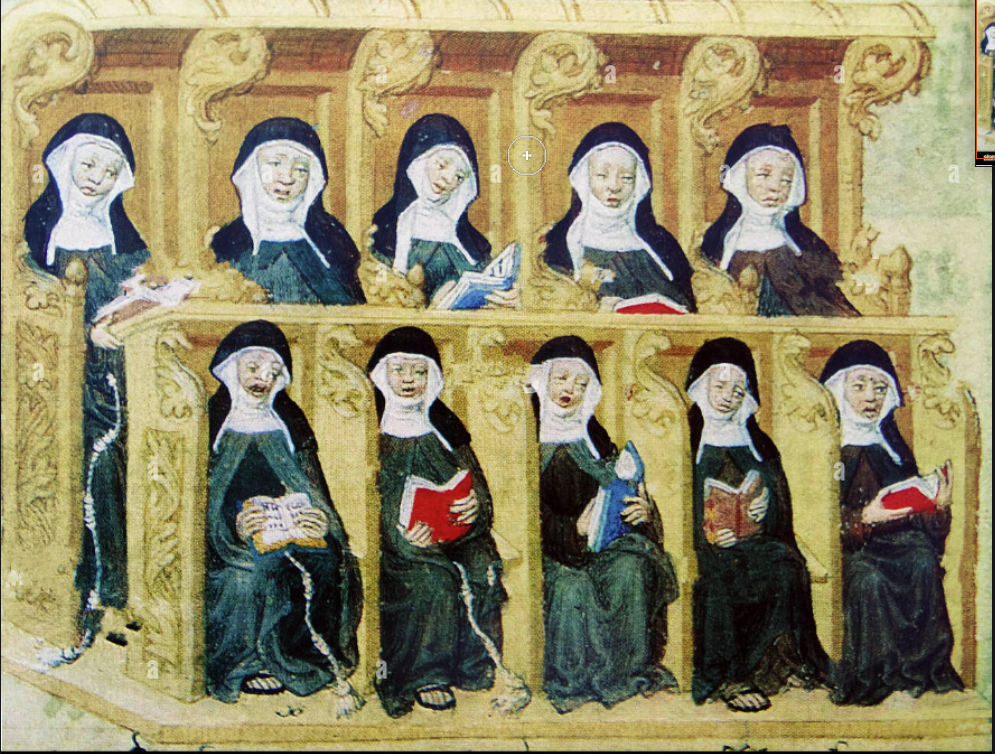
Saint of the Day – 16 March – St Benedicta of Assisi OSC i (Died 1260) Poor Clare Nun, Abbess Died 1260 of natural causes. The Franciscan Martyrology affirms, that her life shone out in singular prudence and a great reputation for virtues and miracles.
Benedicta entered the Poor Clares of Assisi in 1214, she succeeded St Clare in the government of the Monastery of St Damiano, remaining in that office until 1260.
She almost certainly is the same one we find Abbess in 1227 in Siena and from 1240 to 1248 in Vallegloria near Spello.
Benedicta was present at the process and Canonisations of St. Clare in November 1253. After Clare’s death, Brother Leone and Brother Angelo entrusted the Breviary used by St Francis to Benedicta.
She witnessed the beginning of the construction of the Basilica in honour of St Clare (1257), the transfer of the Poor Clares from St Damiano to the abuilding annexed to the old Church of St George and perhaps also, the transfer of the body of St Clare from the Church: of St George to the new Basilica, if one accepts, with the Bollandists, as the date of death on 19 October instead of 16 March. 1260.
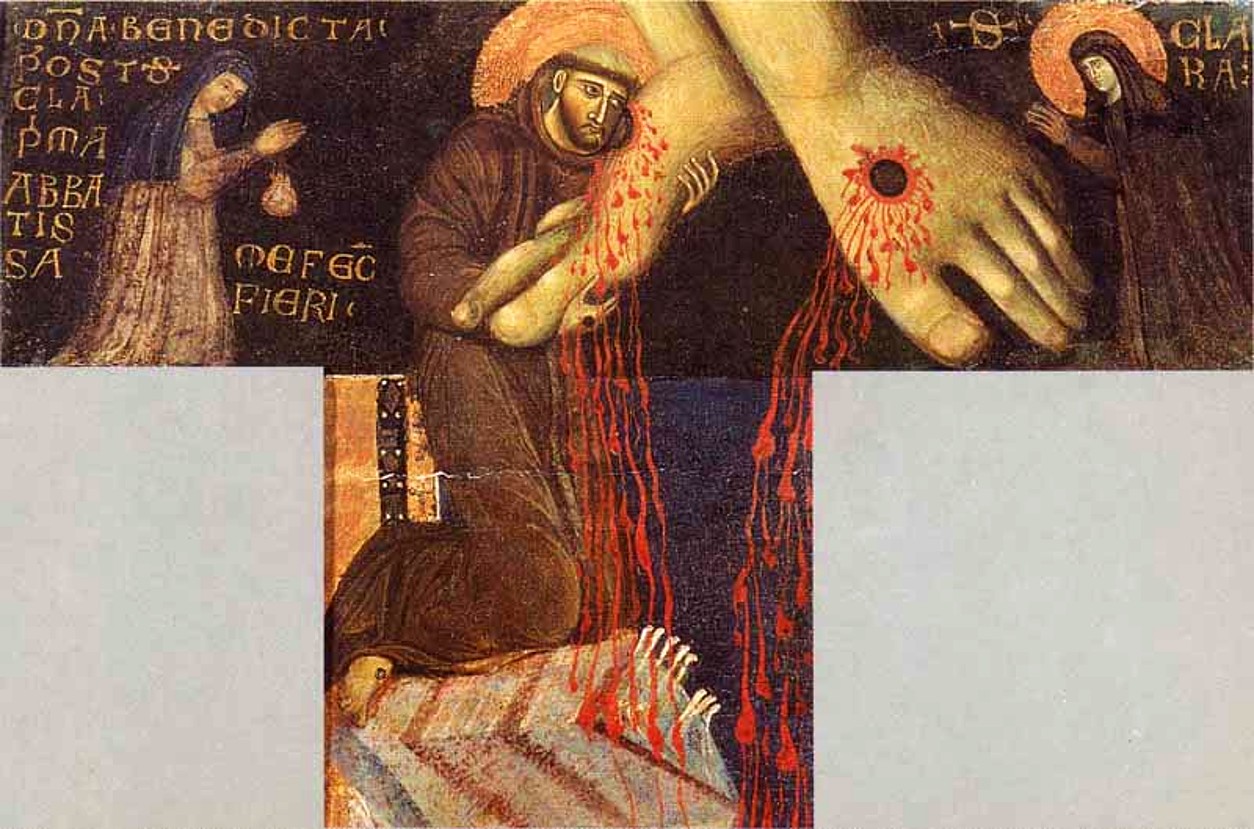
She was buried in the Church of St George. In 1602 the Bishop of Assisi, Crescenzi, had her relics placed with those of the blessed Amata and of St Agnes of Assisi in the Chapel dedicated to the latter, in the Basilica of St Clare. In it, above the main Altar, a large shaped cross is venerated, with St Clare and the blessed Benedetta and with the following legend in Gothic characters: “Domina Benedicta post Sanctam Claram before Abbatissa me fecit fieri,” – “Blessed Woman, first Abbess after St Clare.”
St Abban of Kill-Abban St Abraham Kidunaia St Agapitus of Ravenna St Aninus of Syria St Benedicta of Assisi OSC (Died 1260) Poor Clare Nun St Dionysius of Aquileia St Dentlin of Hainault Bl Eriberto of Namur St Eusebia of Hamage St Felix of Aquileia
St Hilary of Aquileia Bl Joan Torrents Figueras Bl John Amias St Julian of Anazarbus St Largus of Aquileia St Malcoldia of Asti St Megingaud of Wurzburg




















 AnaStpaul
You must be logged in to post a comment.