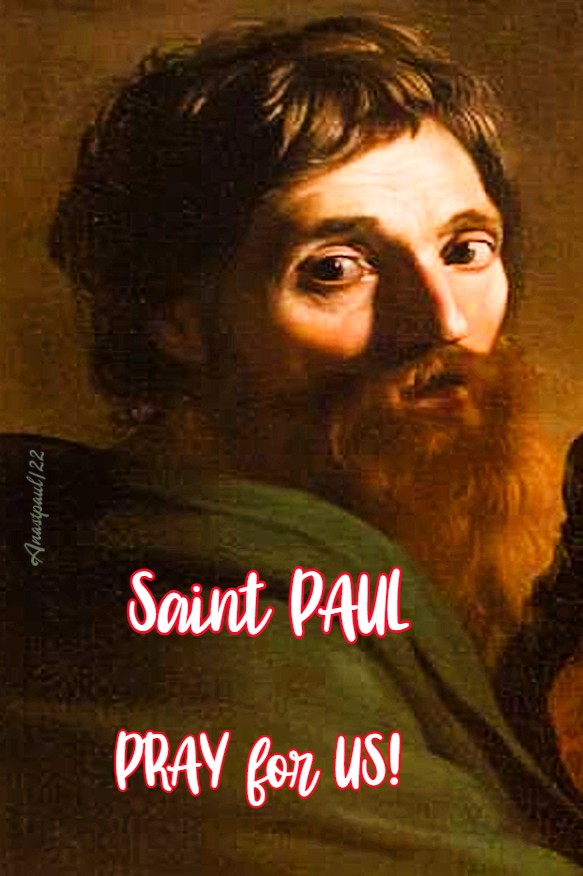
One Minute Reflection – 25 January – Feast of the Conversion of St Paul , Apostle, Acts 9:1-22, Matthew 19,27-29.
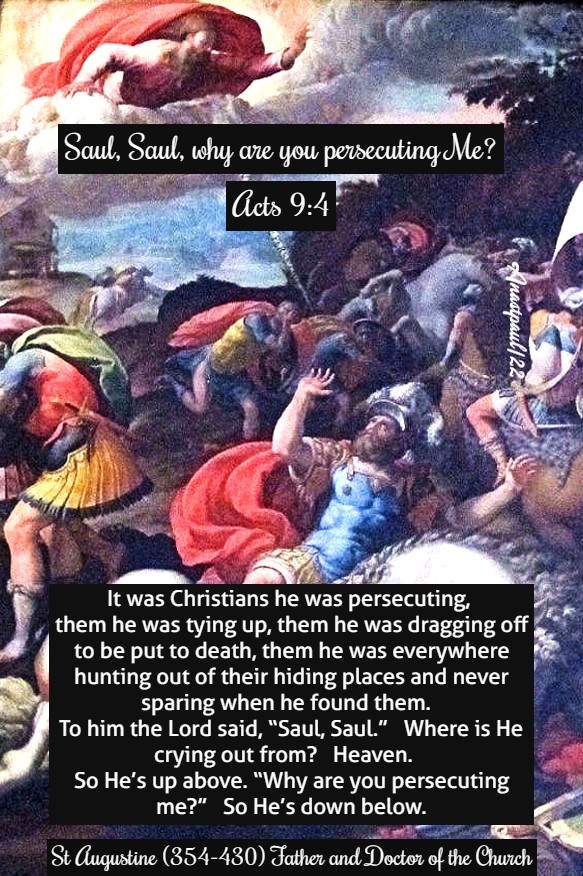
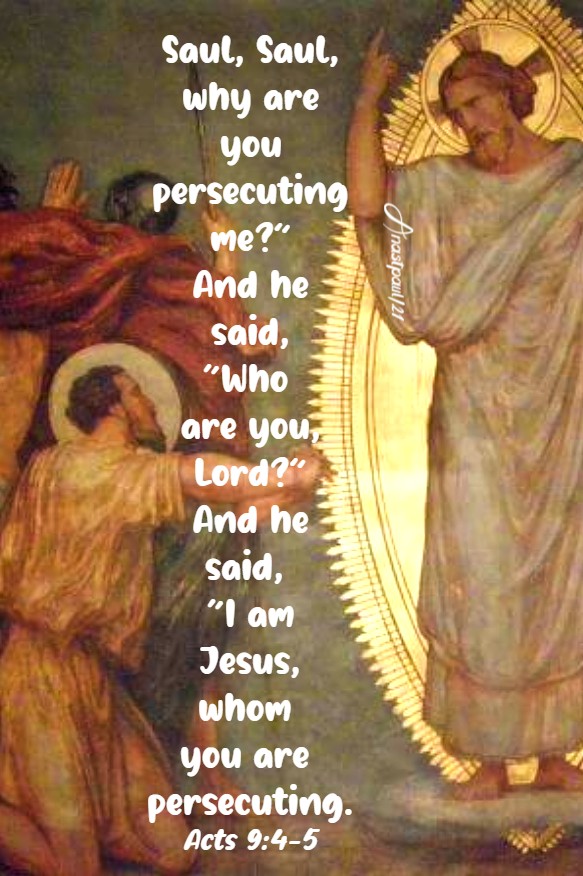
“He fell to the ground and heard a voice saying to him, “Saul, Saul, why are you persecuting Me?” – Acts 9:4.
REFLECTION – “How can we show that He is there and that He is also here? Let Paul answer for us, who was previously Saul. First of all, the Lord’s own Voice from Heaven shows this: “Saul, Saul, why are you persecuting me?” Had Paul climbed up to Heaven then? Had Paul even thrown a stone at Heaven? It was Christians he was persecuting, them he was tying up, them he was dragging off to be put to death, them he was everywhere hunting out of their hiding places and never sparing when he found them. To him the Lord said, “Saul, Saul.” Where is He crying out from? Heaven. So He’s up above. “Why are you persecuting Me?” So He’s down below.” – St Augustine (354-430) Bishop of Hippo, Father and Doctor of the Church (Sermon 122).
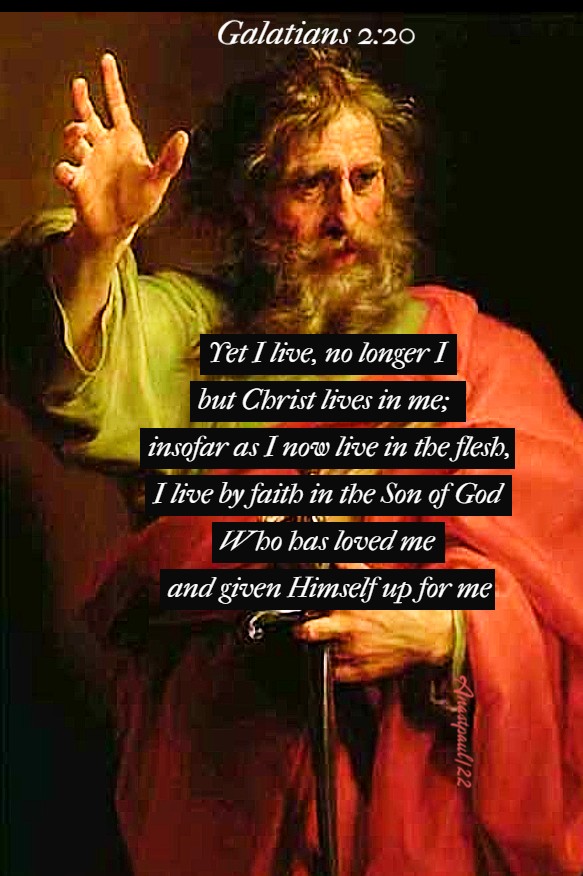
PRAYER – Today Lord, we celebrate the conversion of St Paul, Your chosen vessel for carrying Your Name to the whole world. Help us to make our way towards You by following in his footsteps and by being Your disciples before the men and women of our day. Grant that by the prayers of St Paul, we too may say, “Yet I live, no longer I but Christ lives in me; insofar as I now live in the flesh, I live by faith in the Son of God Who has loved me and given himself up for me.” (Galatians 2:20) Through Jesus Christ, our Lord, in union with the Holy Spirit, one God forever and ever, amen.
Our Morning Offering – 25 January – Feast of the Conversion of Saint Paul
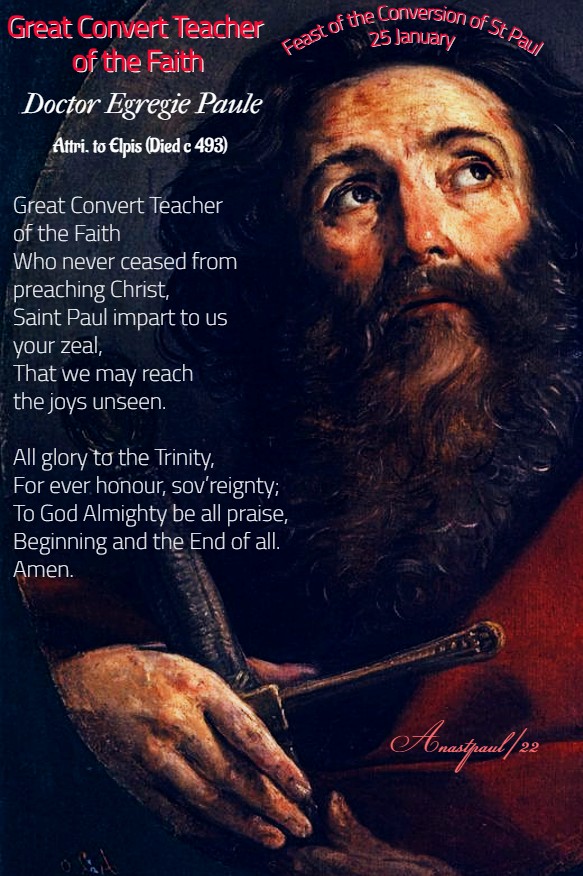
Great Convert Teacher of the Faith Doctor Egregie Paule Attri. to Elpis (Died c 493) Trans. The Benedictines of Saint Cecilia’s Abbey, Ryde, UK
Great Convert Teacher of the Faith Who never ceased from preaching Christ, Saint Paul impart to us your zeal, That we may reach the joys unseen.
All glory to the Trinity, For ever honour, sov’reignty; To God Almighty be all praise, Beginning and the End of all. Amen.
Elpis, first wife of the celebrated Philosopher Boethius, was the daughter of Festus, Consul at Rome, 472 and aunt of St Placidus, a disciple of St.Benedict. The above hymn, as well as, “Aurea luce et decore roseo” are attributed to her. Others also bear her name. She died at an early age, at Padua.
Bl Antoni Swiadek St Apollo of Heliopolis St Artemas of Pozzuoli St Auxentius of Epirus St Bretannion of Tomi St Donatus the Martyr St Dwynwen (Died c 460) Virgin Princess, Nun. St Emilia Fernández Rodríguez de Cortés St Eochod of Galloway St Joel of Pulsano St Juventinus of Antioch Bl Manuel Domingo y Sol St Maximinus of Antioch St Palaemon
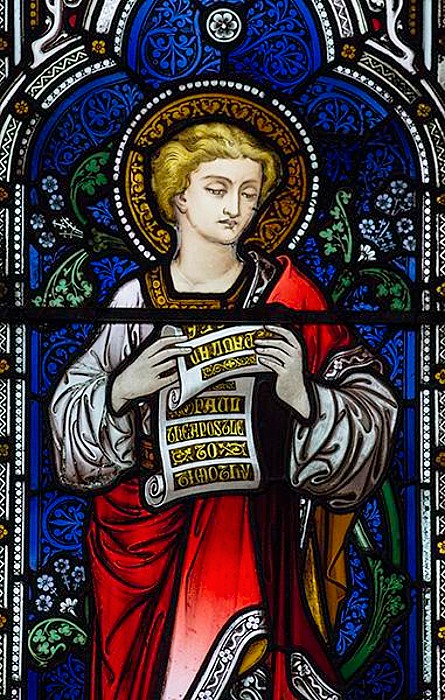
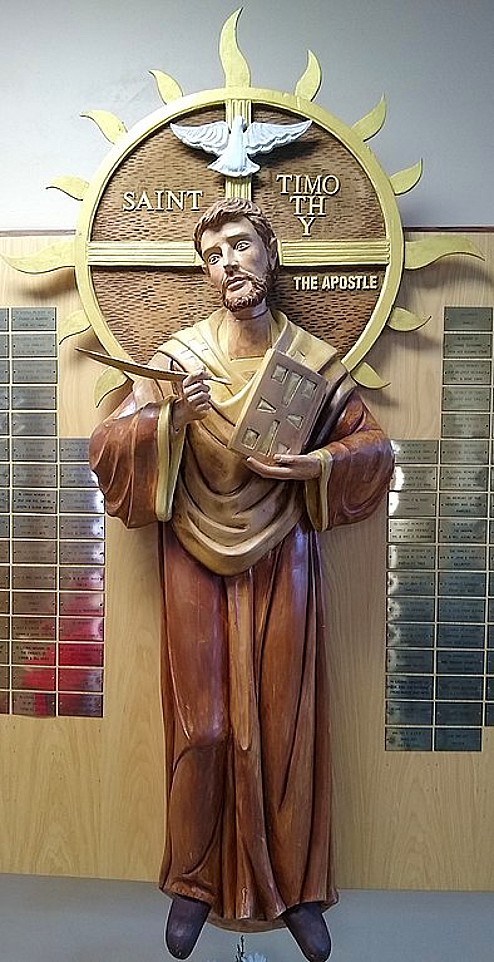
Saint of the Day – 24 January – Saint Timothy (Died c 97) Disciple of St Paul, Bishop of Ephesus and Martyr, Confessor, Missionary. Died by being stoned to death in c 97. Patronages – against intestinal disorders; of Termoli, Italy. Also known as – Timotheus. Additional Memorials – 26 January (Novus Ordo), 23 January (Australia), 27 January (Norway).
The Roman Martyrology states of St Timothy today: “The birthday of St Timothy, disciple of the Apostle, St Paul, who consecrated him Bishop of Ephesus. After many combats for Christ, he was stoned for reprehending those who offered sacrifices to Diana and shortly after, went peacefully to rest in the Lord.”
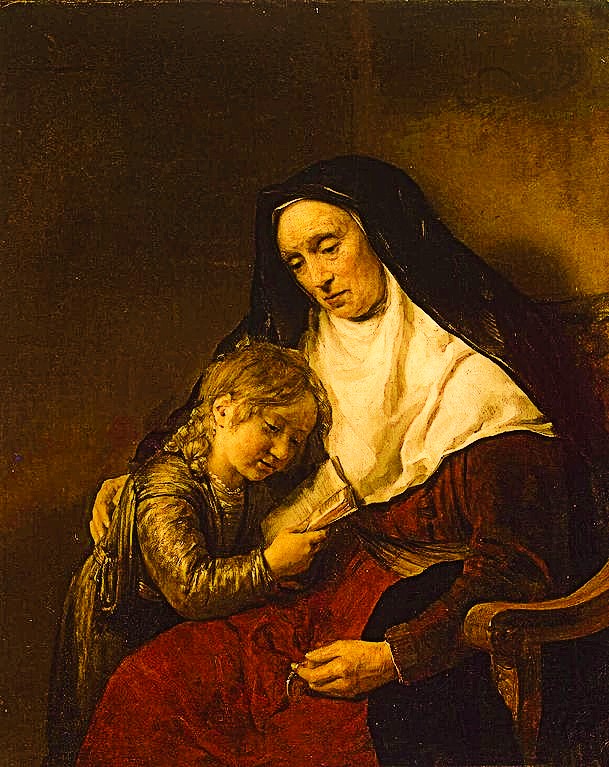
St Timothy, the beloved disciple of St Paul, was of Lycaonia and probably of the City of Lystra. His father was a Gentile but his mother, Eunice, was a Jewess. When Paul and Barnabas first visited Lystra, Paul healed a person crippled from birth, leading many of the inhabitants to accept his teaching. When he returned a few years later with Silas, Timothy was already a respected member of the Christian community as were his mother and grandmother Lois and St Paul commends their faith. Timothy had made the holy scriptures his study from his childhood. In 1 Corinthians 16:10, there is a suggestion that he was by nature reserved and quiet: “When Timothy comes, see that you put him at ease among you, for he is doing the work of the Lord.”
Rembrandt’s Timothy and his grandmother, 1648.
Timothy’s father was a Greek Gentile. Thus Timothy had not been circumcised and Paul now ensured that this was done, according to Acts 16:1-3, to enable Timothy’s acceptability to the Jews, who they would be evangelising. St Chrysostom here admires the prudence, steadiness and charity of St Paul and we may add, the voluntary obedience of our disciple, Timothy.
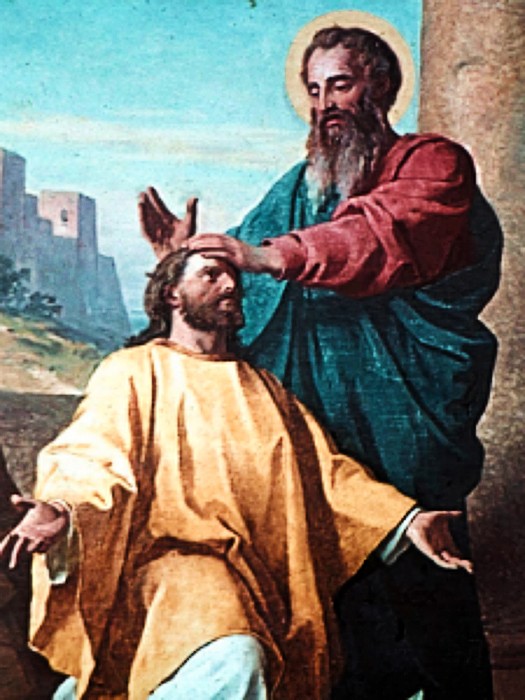
After he was circumcised, St Paul, by the imposition of hands, committed to him the ministry of preaching, his rare virtue making ample amends for his want of age. From that time the Apostle regarded him not only as his disciple and most dear son but as his brother and the companion of his labours. He calls him a man of God and tells the Philippians, that he found no-one so truly united to him in heart and sentiments, as Timothy.
Timothy became St Paul’s disciple and later his constant companion and co-worker in preaching.[18] In the year 52, Paul and Silas took Timothy along with them on their journey to Macedonia. Augustine extols his zeal and disinterestedness in immediately forsaking his country, his house, and his parents, to follow the apostle, to share in his poverty and sufferings.
Timothy may have been subject to ill health or “frequent ailments” and Paul encouraged him to “use a little wine for your stomach’s sake,” hence his patronage of stomach ailments,”
When Paul went on to Athens, Silas and Timothy stayed for some time at Beroea and Thessalonica before joining Paul at Corinth.
Timothy’s bond with Paul was close. Timothy’s name appears as the co-author on 2 Corinthians, Philippians, Colossians, 1 Thessalonians, 2 Thessalonians and Philemon. Paul wrote to the Philippians about Timothy, “I have no-one like him.”
When Paul was in prison and awaiting martyrdom, he summoned his faithful friend Timothy for a last farewell.
That Timothy was jailed at least once during the period of the writing of the New Testament is implied by St Paul in Hebrews when he mentions Timothy’s release at the end of the epistle.
Although not stated in the Scriptures other sources have records of the Apostle’s death. The apocryphal Acts of Timothy (5th Century) states that in the year 97, the 80-year-old Bishop tried to halt a procession in honour of the goddess Diana by preaching the Gospel. The angry pagans beat him, dragged him through the streets and stoned him to death.
From the 13th century until 1969 the feast of Timothy (alone, that is without St Titus whose feast day is 6 February) is today, 24 January, the day before that of the Conversion of Saint Paul.
In the 4th century, the relics of Timothy were transferred from Ephesus to Constantinople and placed in the Church of the Holy Apostles near the tombs of Saints Andrew and Luke. In the 13th century, the relics seem to have been taken to Italy by a count returning from the crusades and buried, around 1239, in the Termoli Cathedral. The remains were re-discovered in 1945, during restoration works.
Thought for the Day – 26 December – Meditations with Antonio Cardinal Bacci (1881-1971)
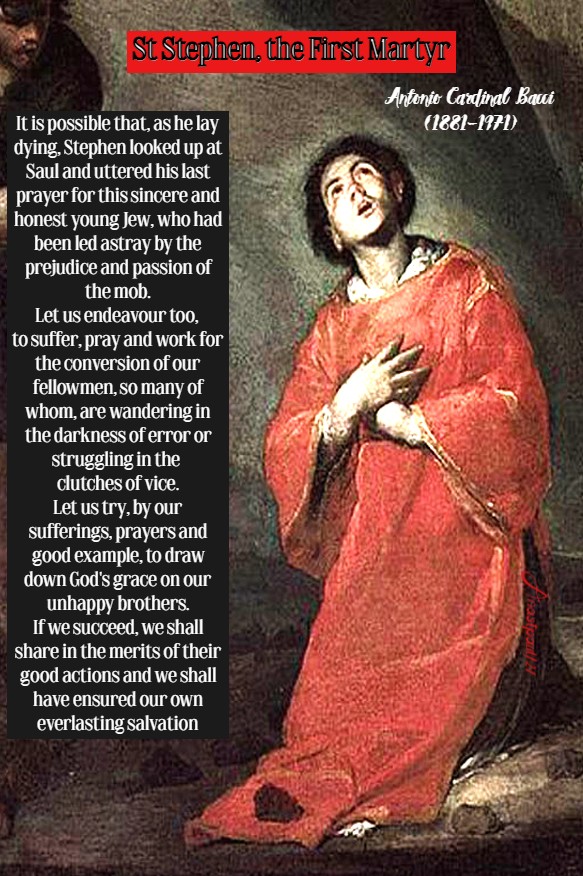
St Stephen, the First Martyr
“Saul was a member of the band which led Stephen to his death. He did not actually take part in the stoning of the saintly Deacod but, he co-operated with the executioners. It is possible that, as he lay dying, Stephen looked up at Saul and uttered his last prayer for this sincere and honest young Jew, who had been led astray by the prejudice and passion of the mob. In God’s plan, the Martyrdom of Stephen was, in some way connected with the conversion of St Paul, who was soon afterward dramatically won over by the grace of God on the road to Damascus.
Let us endeavour too, to suffer, pray and work for the conversion of our fellowmen, so many of whom, are wandering in the darkness of error or struggling in the clutches of vice. Let us try, by our sufferings, prayers and good example, to draw down God’s grace on our unhappy brothers. If we succeed, we shall share in the merits of their good actions and we shall have ensured our own everlasting salvation.”
Quote/s of the Day – 14 December – The Memorial of St Venantius Fortunatus (c 530 – c 609)
“On whose dear arms, so widely flung, The weight of this world’s ransom hung, The price of humankind to pay And spoil the spoiler of his prey All hail, O Cross, our only hope!”
“There are the gates of our true country, the two lights of the immense world. There Paul’s voice is heard like thunder; there Peter withholds or hurls the bolt . The former opens the hearts of men, the latter opens Heaven. Peter is the Foundation-stone, Paul the Architect of the temple where stands the Altar by which God is propitiated. Both together form a single Fountain, which pours out its healing and refreshing waters.”
St Venantius Fortunatus (c 530 – c 609) “The Troubadour of Christ”
Quote/s of the Day – 23 November – The Mmemorial of St Pope Clement I (Died c 101) Martyr, Apostolic Father
“Through Him, our gaze penetrates he heights of heaven and we see, as in a mirror, the most holy Face of God. Through Christ, the eyes of our hearts are opened and our weak and clouded understanding, reaches up toward the light.”
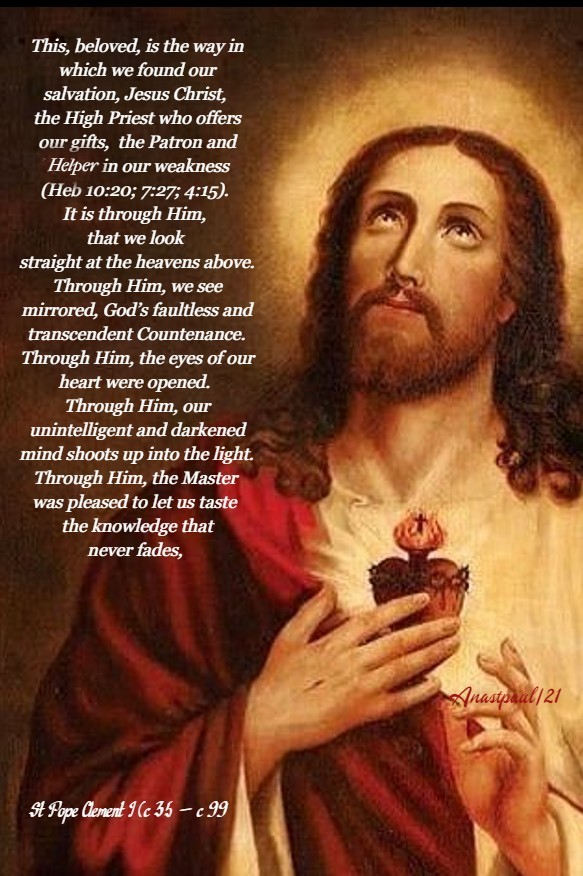
“This, beloved, is the way in which we found our salvation, Jesus Christ, the High Priest Who offers our gifts, the Patron and Helper in our weakness (Heb 10:20; 7:27; 4:15). It is through Him, that we look straight at the heavens above. Through Him, we see mirrored, God’s faultless and transcendent countenance. Through Him, the eyes of our heart were opened. Through Him, our unintelligent and darkened mind shoots up into the light. Through Him, the Master was pleased to let us taste the knowledge that never fades …”
“Charity unites us to God. There is nothing unkind in charity, nothing arrogant. Charity knows no schism, does not rebel, does all things in concord. In charity all the elect of God have been made perfect.”
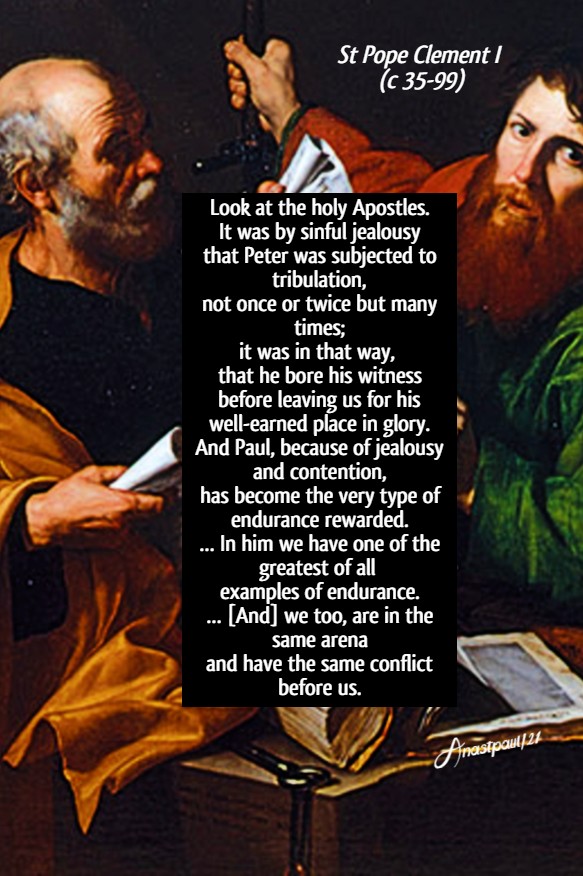
“Look at the holy Apostles. It was by sinful jealousy that Peter was subjected to tribulation, not once or twice but many times; it was in that way, that he bore his witness before leaving us for his well-earned place in glory. And Paul, because of jealousy and contention, has become the very type of endurance rewarded. … In him we have one of the greatest of all examples of endurance. … [And] we too, are in the same arena and have the same conflict before us.”
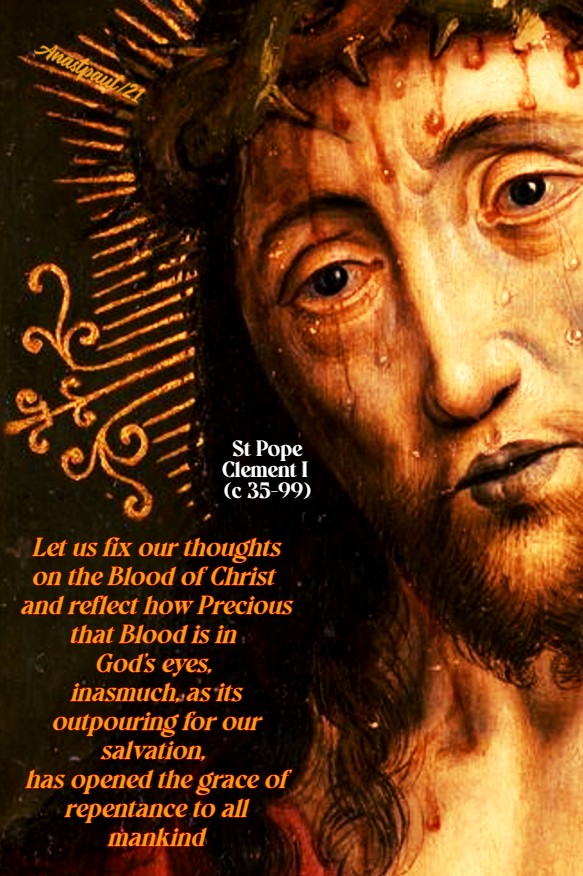
“Let us fix our thoughts on the Blood of Christ and reflect how Precious that Blood is, in God’s eyes, inasmuch, as its outpouring for our salvation, has opened the grace of repentance to all mankind.”
Quote/s of the Day – 17 October – “Month of the Most Holy Rosary” – Readings: Romans 4: 13, 16-18; Psalm 105: 6-9, 42-43; Luke 12: 8-12
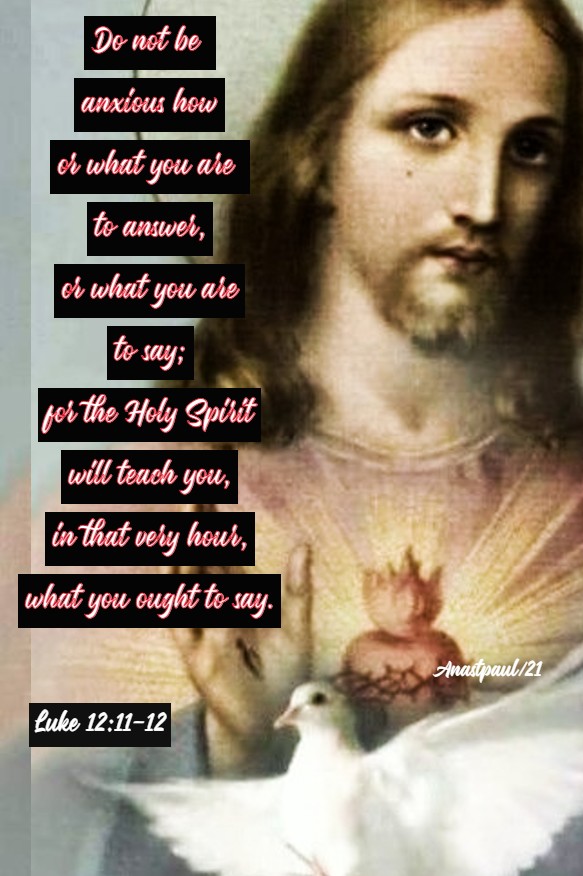
“…Do not be anxious how or what you are to answer, or what you are to say; for the Holy Spirit will teach you, in that very hour, what you ought to say.”
Luke 12:11-12
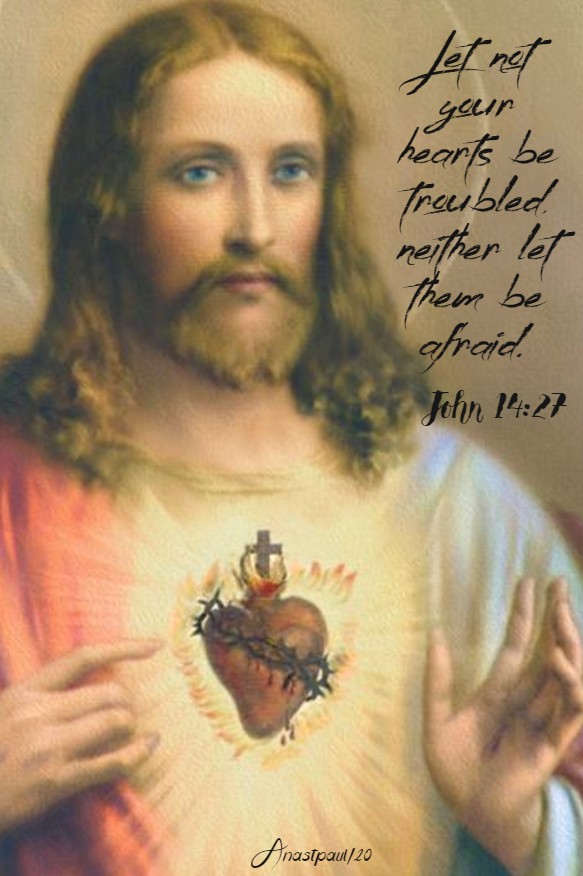
“Let not your hearts be troubled, neither let them be afraid.”
John 14:27
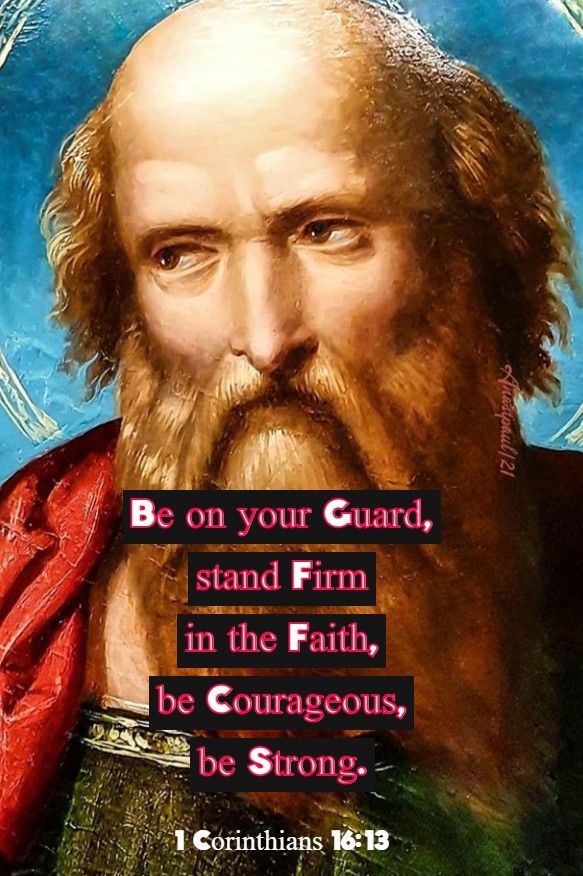
“Be on your guard, stand firm in the faith, be courageous, be strong.”
1 Corinthians 16:13
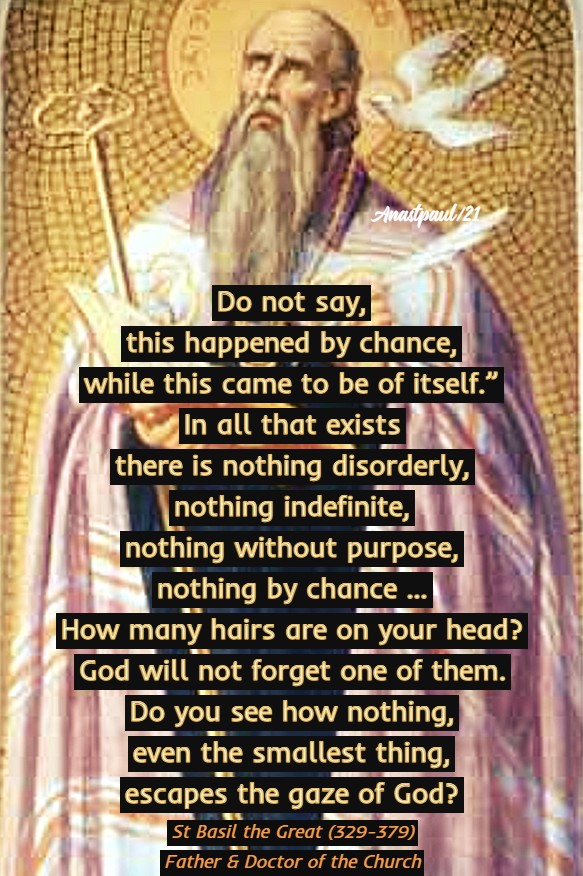
“Do not say, this happened by chance, while this came to be of itself.” In all that exists there is nothing disorderly, nothing indefinite, nothing without purpose, nothing by chance … How many hairs are on your head? God will not forget one of them. Do you see how nothing, even the smallest thing, escapes the gaze of God?”
St Basil the Great (329-379) Father & Doctor of the Church
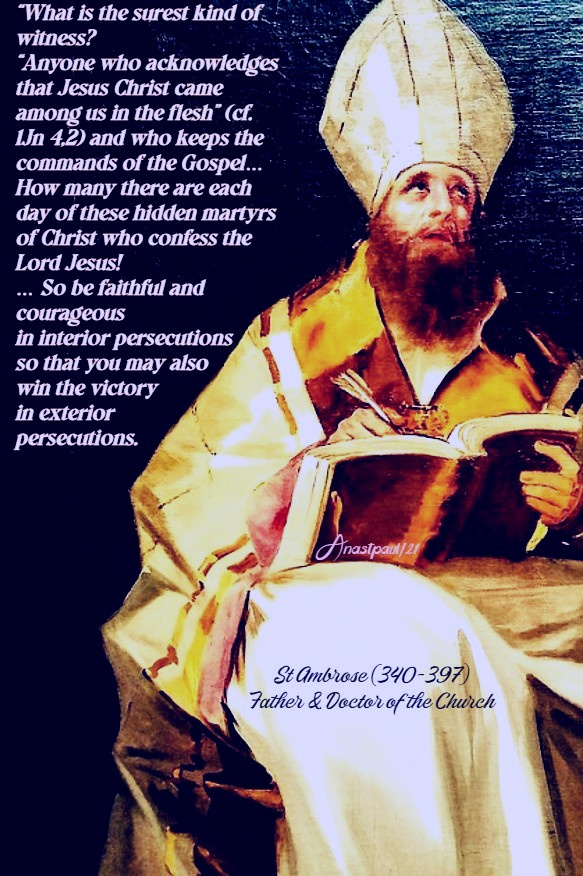
“What is the surest kind of witness? “Anyone who acknowledges that Jesus Christ came among us in the flesh” (cf. 1Jn 4,2) and who keeps the commands of the Gospel… How many there are each day of these hidden martyrs of Christ who confess the Lord Jesus! … So be faithful and courageous in interior persecutions so that you may also win the victory in exterior persecutions.”
St Ambrose (340-397) Father & Doctor of the Church
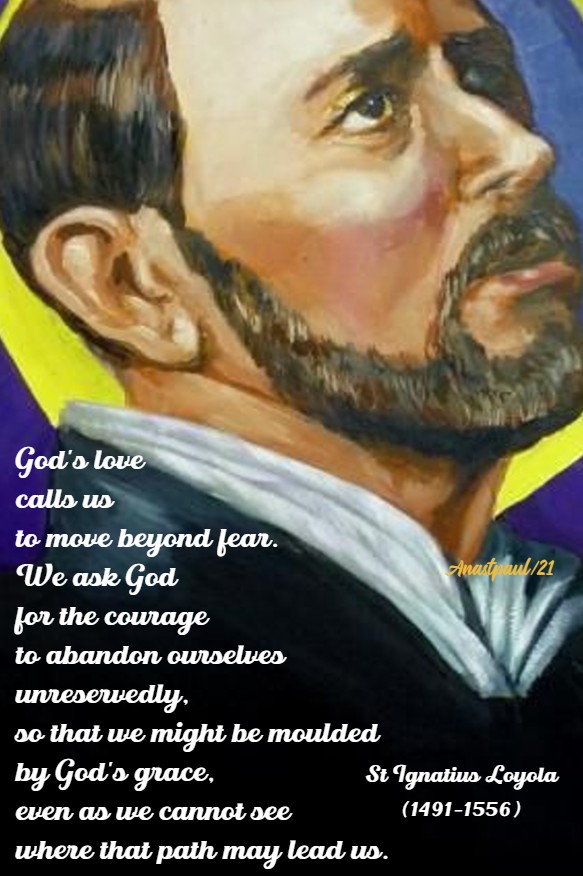
“God’s love calls us to move beyond fear. We ask God for the courage to abandon ourselves unreservedly, so that we might be moulded by God’s grace, even as we cannot see where that path may lead us.”
St Ignatius Loyola (1491-1556)
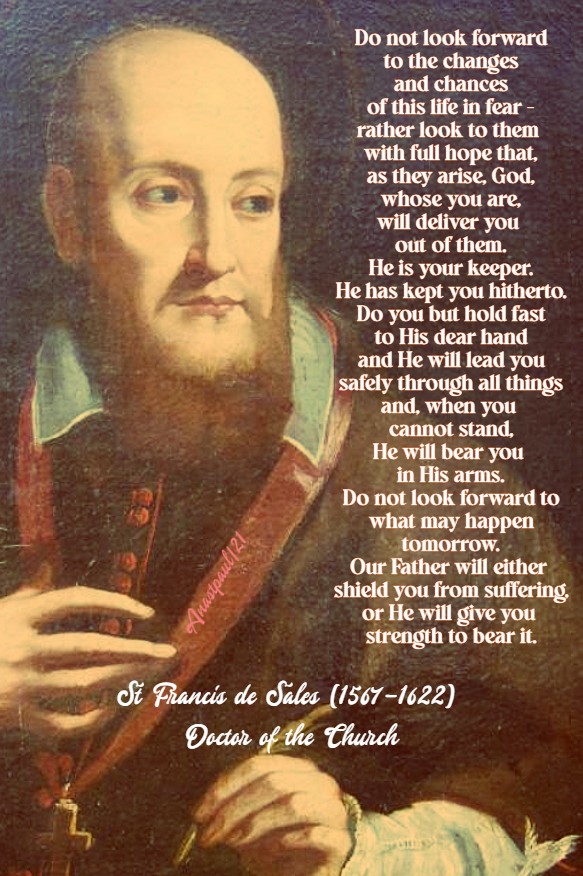
“Do not look forward to the changes and chances of this life in fear – rather look to them with full hope that, as they arise, God, whose you are, will deliver you out of them. He is your keeper. He has kept you hitherto. Do you but hold fast to His dear hand and He will lead you safely through all things and, when you cannot stand, He will bear you in His arms. Do not look forward to what may happen tomorrow. Our Father will either shield you from suffering, or He will give you strength to bear it.”
St Francis de Sales (1567-1622) Doctor of the Church
Notre-Dame-de-Bon-Secours / Our Lady of Good Help, Montréal, Québec, Canada (1672) – 30 June:
Dedicated to Our Lady of Good Help, Notre-Dame-de-Bon-Secours, has been for 350 years the Sanctuary for seamen leaving Montreal for the seven seas. A wooden Chapel was built in 1657, replaced in 1675 by a building whose foundations serve the present Church which was erected in 1771.
Over the entrance is an inscribed message: “If the love of Mary is graven in your heart, forget not a prayer in passing.”
Our Lady of Good Help is a beautiful little Church, with fine paintings. On the walls are mosaics of St Marguerite Bourgeoys, who inspired the first Chapel and of Maisonneuve, Founder of Montreal, said to have felled the first oak for the Chapel. A narrow stairway, lined with pilgrims’ acknowledgments, leads to an aerial Chapel set in the roof. Here is a facsimile of the Santa Casa, the house of the Virgin carried by angels from Nazareth to Loreto. Saint Marguerite Bourgeoys was the Founder of the Congregation of Notre Dame. When she returned from France in 1673 she brought back with her a wooden statue of Our Lady of Good Help. It can still be seen in the reliquary on the gospel side of the altar, for when the Church burned in 1754, the statue was saved from the fire. This is not to say that someone took the statue from the Church, for after the fire had ravaged the original Chapel, the statue was found uninjured among the smouldering embers that remained. The mortal remains of Saint Marguerite Bourgeoys were interred in the Sanctuary of the Church in the year 2005, the 350th anniversary of Notre-Dame-de-Bon-Secours. She rests now at the feet of the statue she herself had brought from France.
In 1849 the Bishop of Montreal placed a statue of the Blessed Virgin, Star of the Sea, atop the tower facing the harbour. For this reason, the Chapel is also known as the Sailor’s Church. There are votive offerings, carved ships, models of sailing ships suspended from the vault of the Chapel in thanksgiving to the Blessed Virgin for her assistance in their safe return from the sea.
St Adolphus of Osnabrück St Alpinian of Limoges St Alrick the Hermit Bl Ambrose de Feis Bl Anthony de Tremoulières Bl Arnulf of Villers St Austriclinian of Limoges St Basilides of Alexandria St Bertrand of Le Mans St Clotsindis of Marchiennes St Donatus of Münstereifel (c 140-c 180) Roman Soldier and Martyr Bl Elisabeth Heimburg St Emiliana of Rome St Erentrude St Eurgain St Gaius
Bl Jacob Clou St Leo the Deacon St Lucina of Rome St Lucina of the Callistus Catacombs St Marcian of Pampeluna St Martial of Limoges St Ostianus St Otto of Bamberg St Peter of Asti St Petrus Li Quanhui
St Theobald of Provins St Vihn Son Ðo Yen Bl Zenon Kovalyk — Martyrs of Africa – 7 saints: Seven Christians martyred together. No detail about them have surived but the names – Cursicus, Gelatus, Italica, Leo, Timotheus, Zoilus, and Zoticus. Date and precise location in Africa unknown.
Thought for the Day – 29 June – Meditations with Antonio Cardinal Bacci (1881-1971)
St Peter, Prince of the Apostles St Paul, the Apostle to the Gentiles
“Jesus was walking one day along the shoe of the Sea of Galilee, when He saw two fishermen casting their nets into the water. He approached them and said: “Come, follow me and I will make you fishers of men” (Mk 1:17). These two fishermen were brothers named, Simon and Andrew. The divine Master won their hearts immediately, so that they left their boat and their nets and followed Jesus. Simon was later called Peter and became the leader of the Apostles.
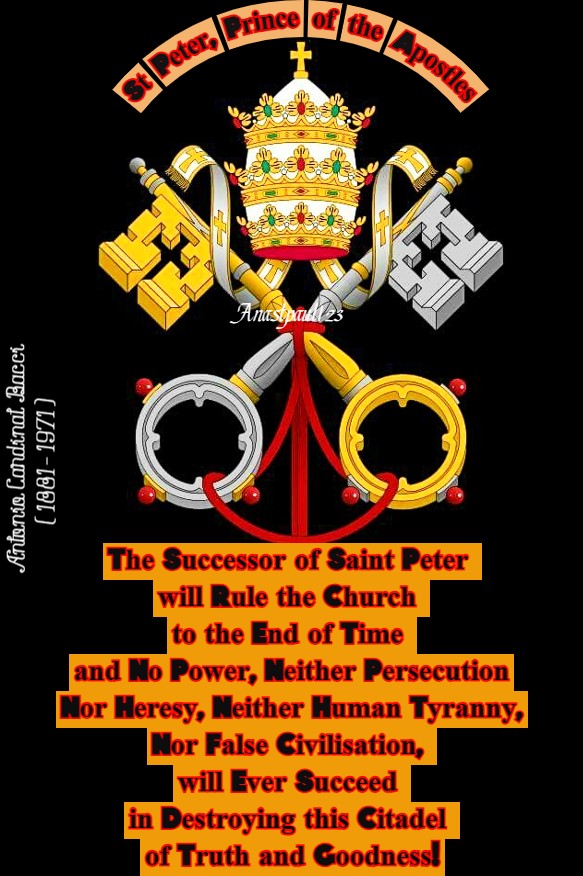
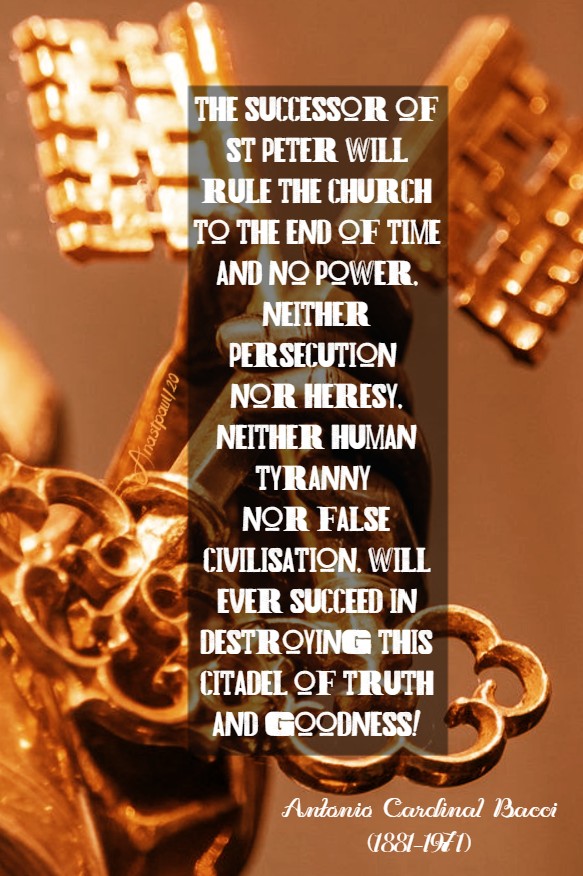
Peter’s generosity and great love for Jesus are evident in the pages of the Gospel. When Our Lord foretold the institution of the Blessed Eucharist, many of His disciples were scandalised and left Him. “Do you also wish to go away?” Jesus asked His Apostles. St Peter answered Him without delay. “Lord, to whom shall we go? Thou has the words of everlasting life and we have come to believe and to know, that Thou are the Christ, the Son of God” (Jn 6:69). On another occasion, Jesus asked His disciples – “Who do men say the Son of Man is?” The Apostles hesitated and began to suggest the names of various Prophets. But St Peter was inspired to make the reply: “Thou are the Christ, the Son of the living God.” Then Our Lord appointed him Head of the Church. “Blessed are thou, Simon Bar-Jona … thou are Peter and upon this rock I will build my Church and the gates of hell, shall not prevail against it. And I will give thee the keys of the kingdom of heaven and whatever you shall bind on earth shall be bound in heaven” (Mt 16:15-19). By these words there was instituted the loftiest and most ancient of the dynasties, the Papacy. The successor of St Peter will rule the Church to the end of time and no power, neither persecution nor heresy, neither human tyranny nor false civilisation, will ever succeed in destroying this citadel of truth and goodness!”
St Paul, the Apostle to the Gentiles
“St Paul was by nature, fiery and zealous. Once he discovered the truth, he was ready to die for it. Originally he was convinced that Judaism contained the whole truth and, for this reason he hated the Christians, whom he regarded as a sect which had corrupted the sacred Hebrew tradition. The deacon Stephen was the first victim of his persecuting zeal. As he was being stoned and beaten to death this saintly young man prayed for his persecutors. It may be that in this moment his eyes, shining with faith and love, encountered those of the man who hated him. Soon afterwards, Saul (this was Paul’s real name), left Jerusalem for Damascus, carrying letters investing him with new powers for the persecution of the infant Church. On the way, this headstrong but sincere enemy of Christianity was suddenly dazzled by a light from Heaven. He fell to the ground and heard a mysterious voice saying: “Saul, Saul, why do thou persecute me?” Terrified he answered: “Who are thou, Lord?” “I am Jesus,” the voice said, “whom thou are persecuting” (Acts 9:1-15). From that day, Saul was changed completely. Under the influence of divine grace, he became the Apostle to the Gentiles.
Before he set out on his missionary journeys, Paul wet apart into the desert of Arabia (Cf Gal 1:17), where, he remained sometime in prayer and recollection. Then he went to Jerusalem to pay homage to the Prince of the Apostles, St Peter (Gal 1:18). After this, he began his apostolic travels, in the course of which, he encountered all kinds of hardships and dangers. The Jews frequently hunted him, in order to put him to death. He was often cruelly scourged and flung into prison and, several times, he was shipwrecked and had miraculous escapes from death (CF 2 Cor 11:23-27). He bore everything joyfully however, in order to prove his liove for Jesus Christ. Charity was always his main incentive. “The love of Christ impels us” (2 Cor 5:14). Charity, he said himself, “Believes all things, hopes all things,edues all things” (Cf 1 Cor 13:4-13). His charity was so great, that he could truthfully say: “Who is weak and I am not weak? Who is made to stumble and I am not inflamed?” (2 Cor 11:29).
St Paul could make this claim because his heart had become identified with the Heart of Jesus. Therefore, he could say: “It is now no longer I that live but Christ lives in me,” (Gal 2:20) and: “For me to live is Christ and to die is gain,” (Phil 1:21) and: “I am hard pressed from both sides, desiring to depart and to be with Christ, a lot by far the better; yet, to stay on in the flesh is necessary, for your sake” (Phil 1:23-24).
Let us meditate on this ardent love of God. Let us cast aside our coldness and indifference and ask St Paul, to set us on fire with divine charity.” Amen
Quote/s of the Day – 29 June – “Month of the Sacred Heart” – The Solemnity of Saints Peter and Paul
“Look at the holy Apostles. It was by sinful jealousy that Peter was subjected to tribulation, not once or twice but many times; it was in that way, that he bore his witness before leaving us for his well-earned place in glory. And Paul, because of jealousy and contention, has become the very type of endurance rewarded. … In him we have one of the greatest of all examples of endurance. … [And] we too, are in the same arena and have the same conflict before us.”
St Pope Clement I of Rome (c 35-99)
Letter to the Corinthians, 5-7
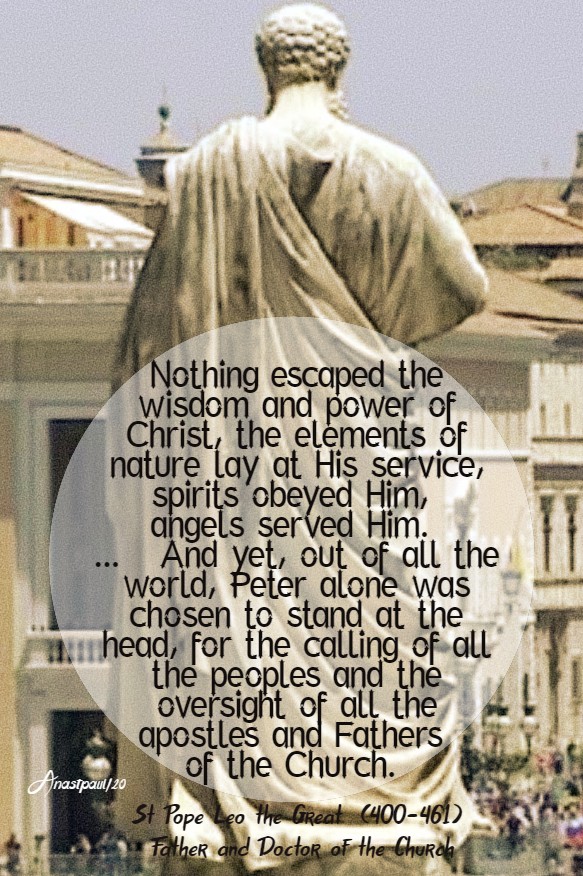
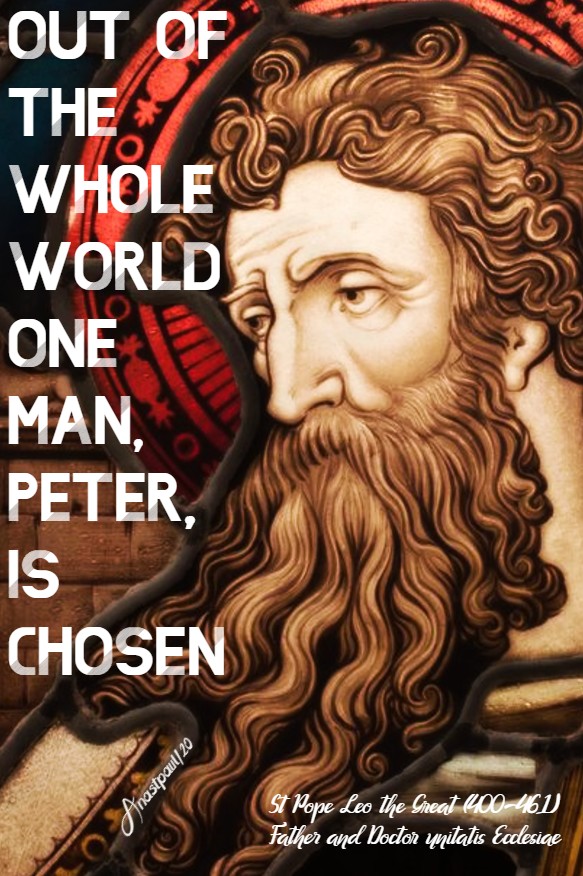
“Nothing escaped the wisdom and power of Christ, the elements of nature lay at His service, spirits obeyed Him, angels served Him. … And yet, out of all the world, Peter alone was chosen to stand at the head, for the calling of all the peoples and the oversight of all the apostles and Fathers of the Church. .”
St Pope Leo the Great (400-461) Father and Doctor of the Church
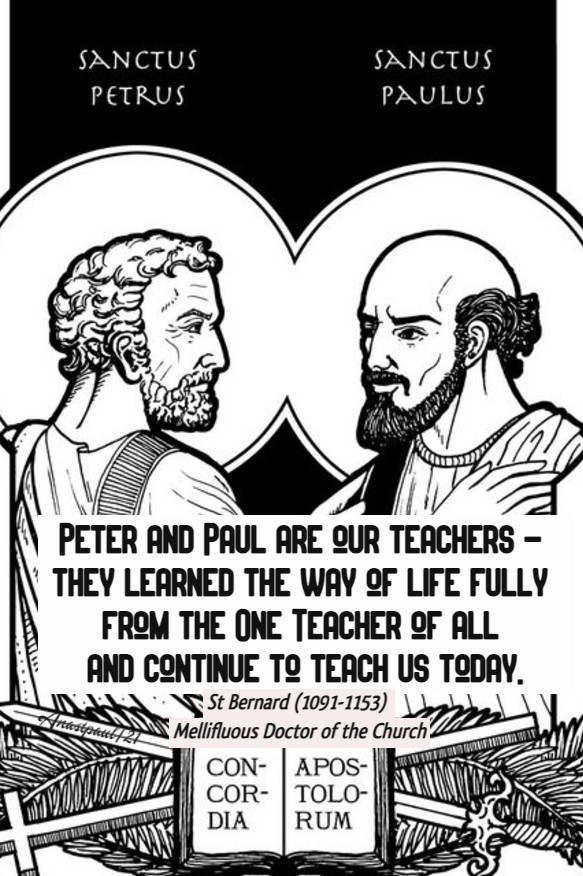
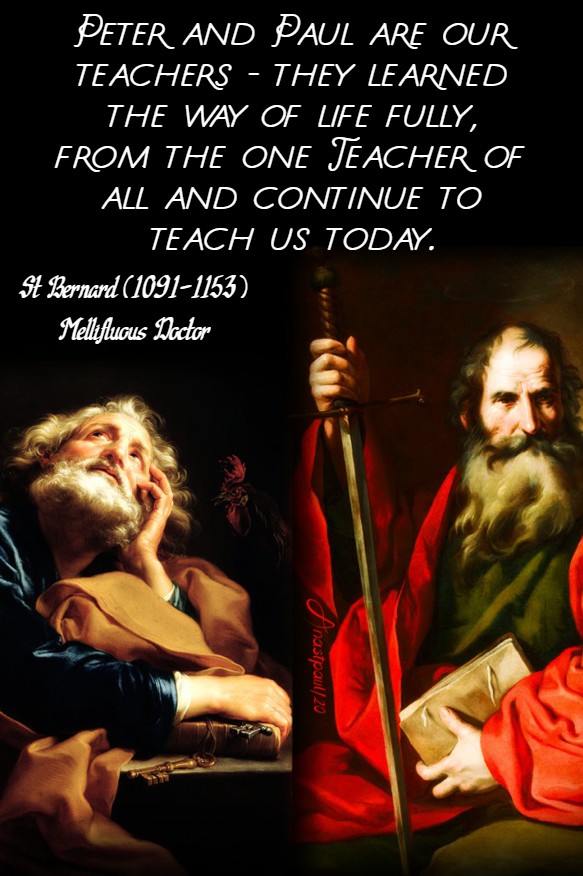
“Peter and Paul are our teachers – they learned the way of life fully from the One Teacher of all and continue to teach us today.”
St Bernard (1091-1153) Mellifluous Doctor of the Church
One Minute Reflection – 29 June – “Month of the Sacred Heart” – The Solemnity of Saints Peter and Paul, Readings: Acts 12:1-11, Psalm 34:2-9, 2 Timothy 4:6-8, 17-18, Matthew 16:13-19
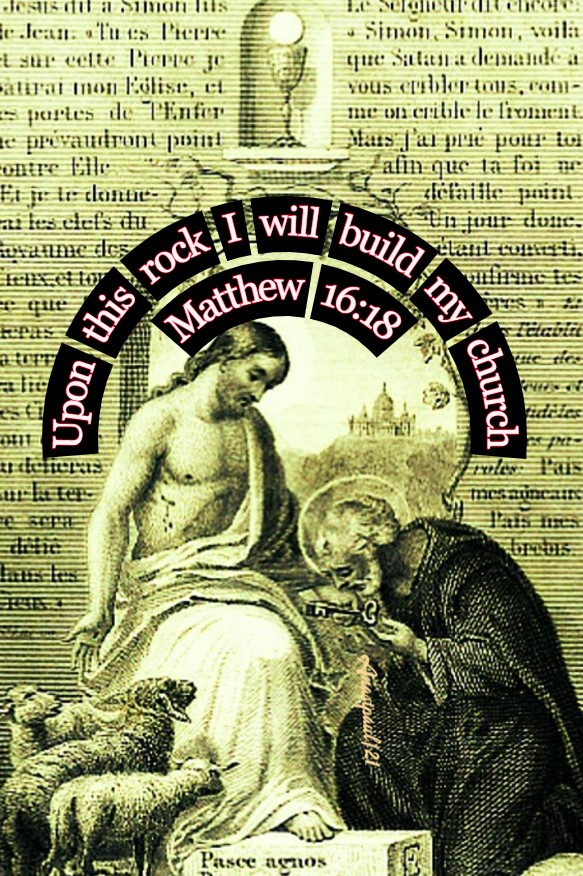
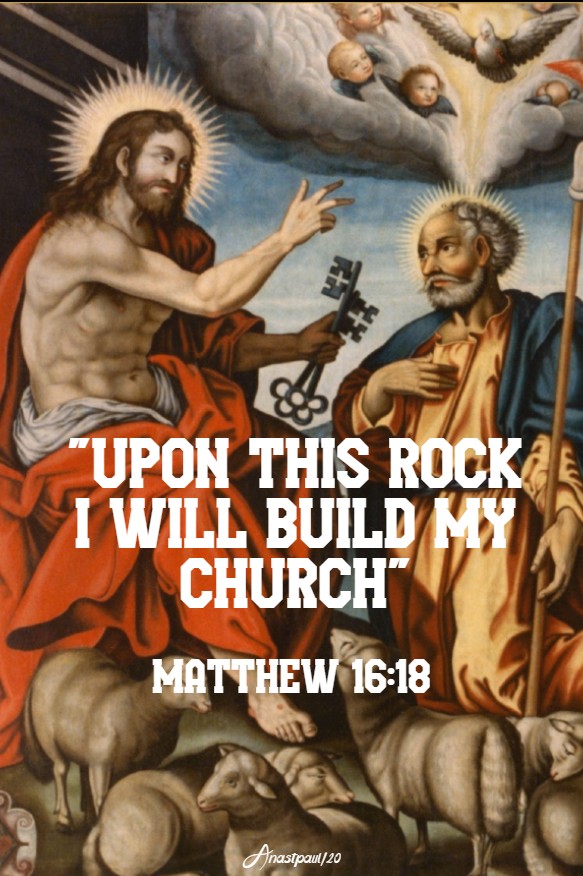
“Upon this rock I will build my church” – Matthew 16:18
REFLECTION –“Though the earth and all who dwell in it quake, I have set firm its pillars” (Ps 74[75],40). All the Apostles are pillars of the earth but, at their head, the two whose feast we are celebrating. They are the two pillars who support the Church with their teaching, their prayer and the example of their steadfastness. The Lord Himself strengthened these pillars. For at first they were weak, completely incapable of supporting either themselves or others. And in this, the Lord’s great design appears – if they had always been strong, people could have thought their strength came from themselves. That is why the Lord wanted to show, what they were capable of, before strengthening them, so that all might know their strength came from God… Peter was thrown to the ground by the voice of a mere servant… and the other pillar was very weak too: “I was once a blasphemer and persecutor and an arrogant man” (1Tm 1,13)…
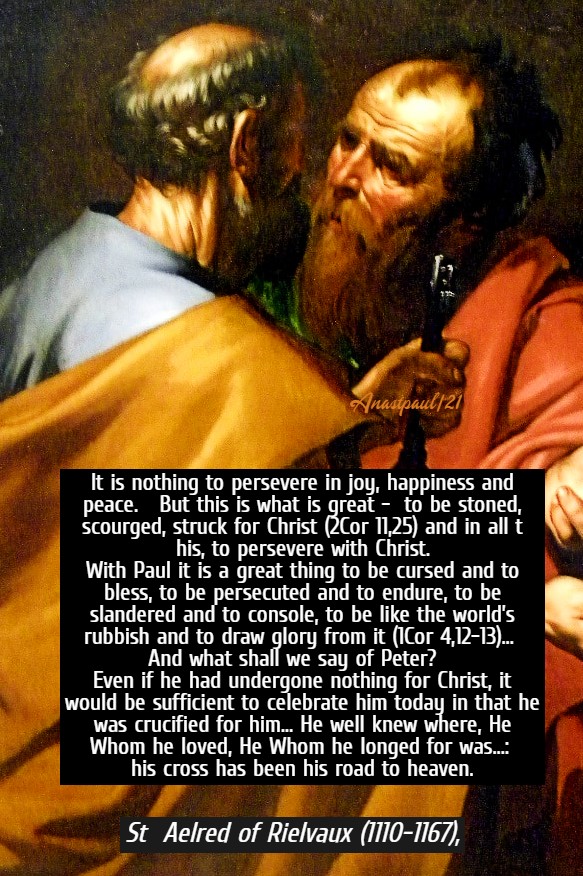
Hence, we ought to praise these Saints with all our heart – our fathers who bore such trials for the Lord’s sake and who persevered with such determination. It is nothing to persevere in joy, happiness and peace. But this is what is great – to be stoned, scourged, struck for Christ (2Cor 11,25) and in all this, to persevere with Christ. With Paul it is a great thing to be cursed and to bless, to be persecuted and to endure, to be slandered and to console, to be like the world’s rubbish and to draw glory from it (1Cor 4,12-13)… And what shall we say of Peter? Even if he had undergone nothing for Christ, it would be sufficient to celebrate him today in that he was crucified for him… He well knew where, He Whom he loved, He whom he longed for was…: his cross has been his road to heaven.” – St Aelred of Rielvaux (1110-1167), Cistercian Monk – Sermon 18, for the Feast of Saints Peter and Paul – PL 195, 298
PRAYER – Almighty ever-living God, You give us the great joy of devoting this day to the honour of the great Apostles Peter and Paul. Grant Your Church may follow their teachings fully because these are the men who first taught us to worship You in Christ, Your Son, Who lives and reigns with You and the Holy Spirit, God forever and ever, amen.
Our Morning Offering – 29 June – The Solemnity of Saints Peter and Paul
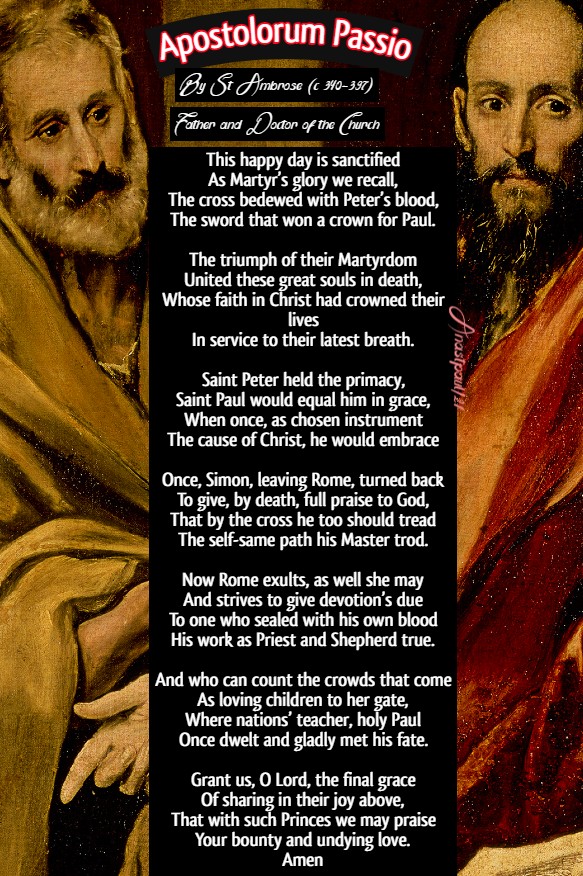
Apostolorum Passio By St Ambrose (c 340-397) Father and Doctor of the Church
This happy day is sanctified As Martyr’s glory we recall, The cross bedewed with Peter’s blood, The sword that won a crown for Paul.
The triumph of their Martyrdom United these great souls in death, Whose faith in Christ had crowned their lives In service to their latest breath.
Saint Peter held the primacy, Saint Paul would equal him in grace, When once, as chosen instrument The cause of Christ, he would embrace
Once, Simon, leaving Rome, turned back To give, by death, full praise to God, That by the cross he too should tread The self-same path his Master trod.
Now Rome exults, as well she may And strives to give devotion’s due To one who sealed with his own blood His work as Priest and Shepherd true.
And who can count the crowds that come As loving children to her gate, Where nations’ teacher, holy Paul Once dwelt and gladly met his fate.
Grant us, O Lord, the final grace Of sharing in their joy above, That with such Princes we may praise Your bounty and undying love. Amen
Translation: The Benedictines of Saint Cecilia’s Abbey, Ryde, UK
Solemnity of Saints Peter and Paul Apostles and Martyrs – 29 June
After the great Solemnities of the movable cycle, and the Feast of St John the Baptist, none is more ancient, nor more universal in the Church, than that of the two Princes of the Apostles. From the beginning, Rome celebrated their triumph on the very day itself which saw them go up from earth to heaven, 29 June. Her practice prevailed, at a very early date, over the custom of several other countries, which put the Apostles’ feast towards the close of December. It was, no doubt, a fair thought which inspired the placing of these Fathers of the Christian people in the cortege of Emmanuel at His entry into this world. But, as we have already seen, today’s teachings have intrinsically an important preponderance in the economy of Christian dogma; – they are the completion of the whole Work of the Son of God – the cross of Peter fixes the Church in her stability and marks out for the Divine Spirit, the immutable centre of His operations. Rome, therefore, was well inspired when, leaving to the Beloved Disciple the honour of presiding over his brethren at the Crib of the Infant God, she maintained the solemn memory of the Princes of the Apostles upon the day chosen by God Himself to consummate their labours and to crown, at once, both their life and the whole cycle of mysteries.
Fully today, do the heavens declare the glory of God, as David expresses it, today do they show us the course of the Spouse completed on the eternal hills (Ps. xviii. 2-6). Day unto day uttereth speech and night unto night revealeth the deep secret (Ibid. 3). From north and south of the new Sion, from either side of her stream, Peter and Paul waft one to other, as a farewell song, as a sacred Epithalamium, the good Word (Ps. xliv. 2); sublime that echo, sonorous its power, vocal still throughout the whole earth (Ibid. xviii. 4, 5), and yet, to resound as long as the world lasts. These two torches of salvation blend their flames above the palaces of ancient Rome; the passing darkness of their death, that night of which the Psalmist sings, now concentrates light, forever, in the midst of the Queen City. Beside the throne of the Bridegroom fixed forever and ever, on yonder seven hills (Ps. xliv. 7-10), the Gentile world, now become the Bride, is resplendent in glory (Eph. v. 27), all fair in that peerless purity which she derives from their blood united, as it is, to that of the Son of God.
But seemly is it, not to forget, on so great a day, those other messengers sent forth by the divine householder and who watered earth’s highways with their sweat and with their blood, the while they hastened the triumph and the gathering in of the guests invited to the Marriage feast (St.Matth. xxii. 8-10). To them is it due, if now the law of grace is definitively promulgated throughout all nations and if, in every language and upon every shore, the good tidings have been sounded (Ps. xviii. 4, 5). Thus the festival of St Peter, completed by the more special memory of St Paul his comrade in death, has been from earliest times regarded as the festival likewise of the whole Apostolic college. In those primitive times it seemed impossible to dream of separating from their glorious leader any of those whom Our Lord had so intimately joined together in the responsibility of one common work. But in course of time, however, particular solemnities were successively consecrated to each one of the Apostles and so, the feast of 29 June was more exclusively attributed to the two Princes whose Martyrdom rendered this day illustrious. (from the Liturgical Year, 1904).
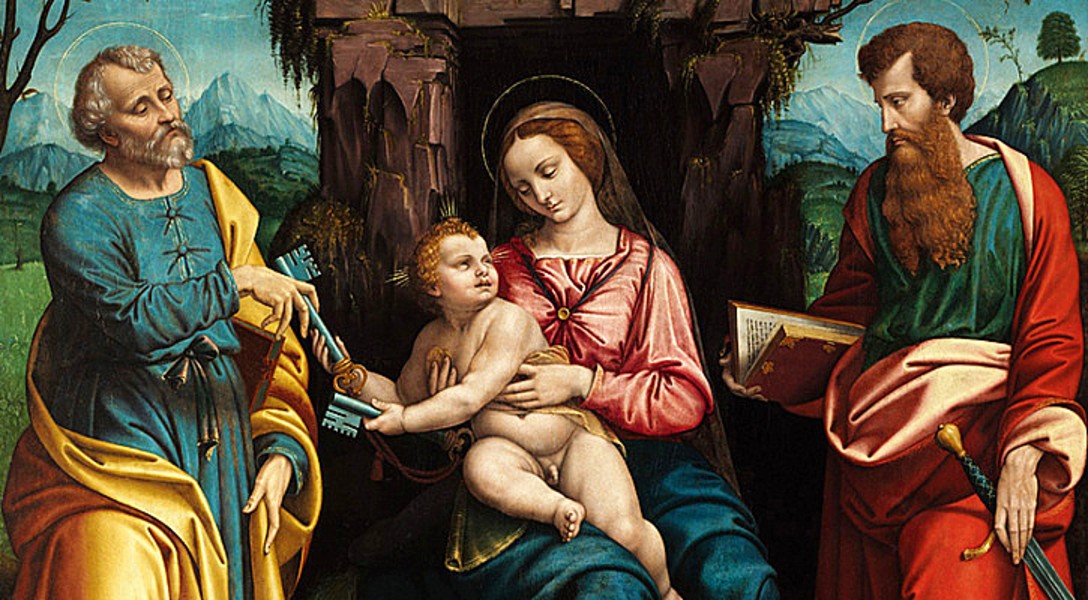
the Virgin and Child with Saints Peter and Paul by Girolamo Figino
Thought for the Day – 25 January – Meditations with Antonio Cardinal Bacci (1881-1971)
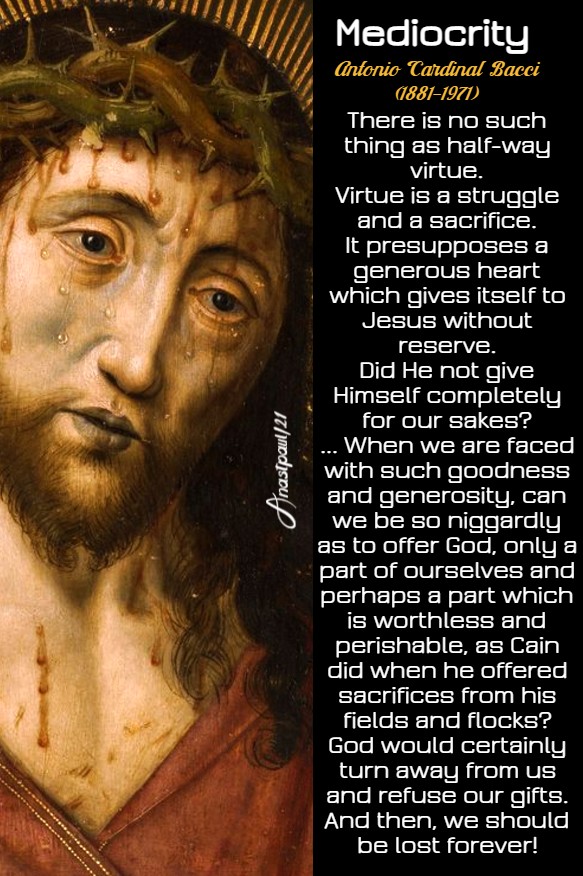
Mediocrity
“There is no such thing as half-way virtue.
Virtue is a struggle and a sacrifice. It presupposes a generous heart which gives itself to Jesus without reserve. Did He not give Himself completely for our sakes? Did He not die upon the Cross for our salvation and reopen Heaven, which had been closed to us by sin? Moreover, did He not remain hidden in our midst under the Eucharistic species in order to become our sustenance and our support?
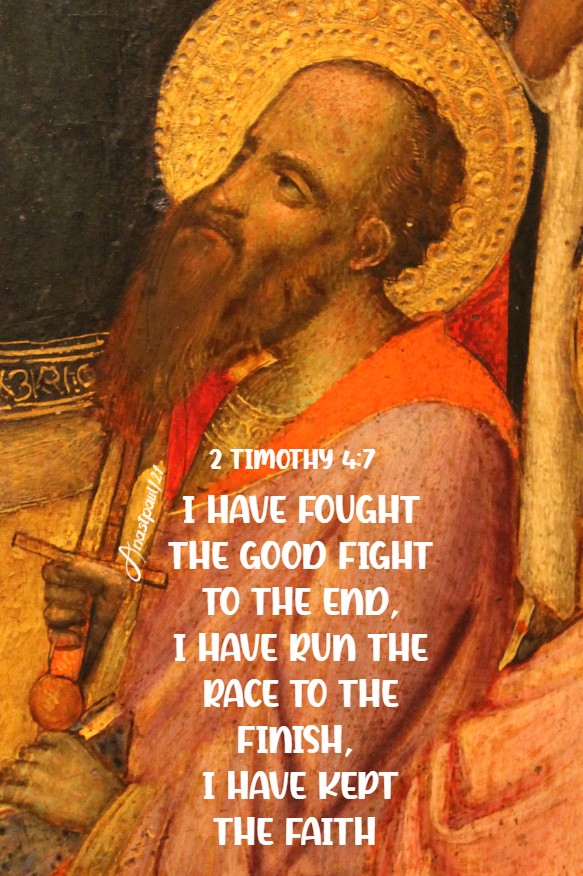
When we are faced with such goodness and generosity, can we be so niggardly as to offer God, only a part of ourselves and perhaps a part which is worthless and perishable, as Cain did when he offered sacrifices from his fields and flocks? God would certainly turn away from us and refuse our gifts. And then, we should be lost forever! Let us give ourselves completely and then be able to say with St Paul “I have fought the good fight to the end, I have run the race to the finish, I have kept the faith … ” (2 Tm 4:7)
“The time is sure to come, when people will not accept sound teaching but their ears will be itching for anything new and they will collect themselves a whole series of teachers according to their own tastes and then they will shut their ears to the truth and will turn to myths. But you must keep steady all the time; put up with suffering, do the work of preaching the gospel, fulfil the service asked of you. As for me, my life is already being poured away as a libation and the time has come for me to depart. I have fought the good fight to the end, I have run the race to the finish, I have kept the faith … ”(2 Tm 4:3-7)
Quote/s of the Day – 25 January – Feast of the Conversion of St Paul, Readings: Acts 22:3-16 or Acts 9: 1-22, Psalms 117:1, 2, Mark 16:15-18
“Saul, Saul, why are you persecuting me?” And he said, “Who are you, Lord?” And he said, “I am Jesus, whom you are persecuting.”
Acts 9:4-5
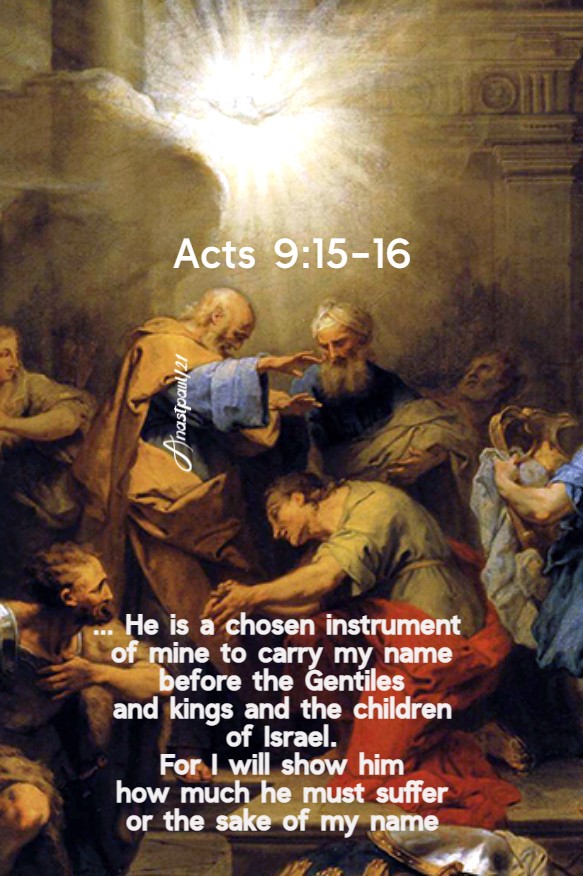
“ … He is a chosen instrument of mine to carry my name before the Gentiles and kings and the children of Israel. For I will show him how much he must suffer or the sake of my name.”
Acts 9:15-16
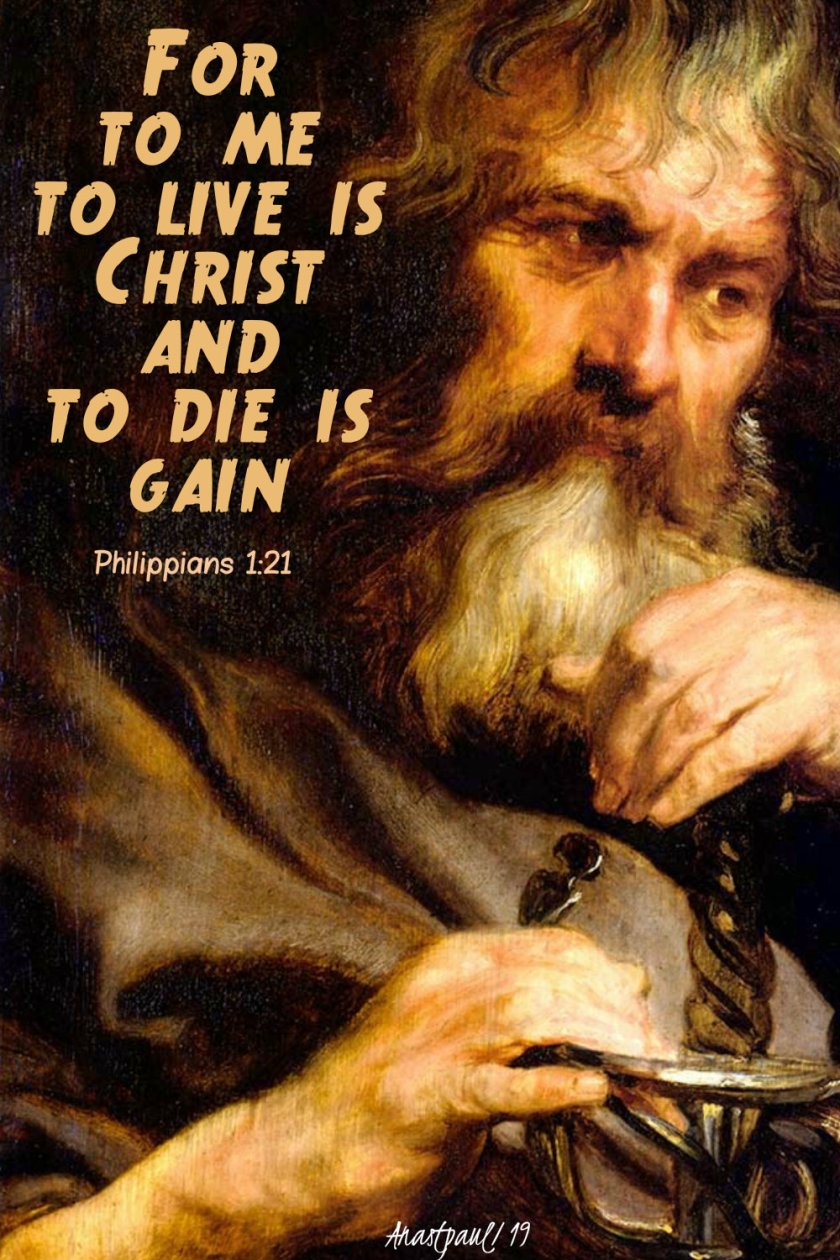
“For to me, to live is Christ and to die is gain.”
Philippians 1:21
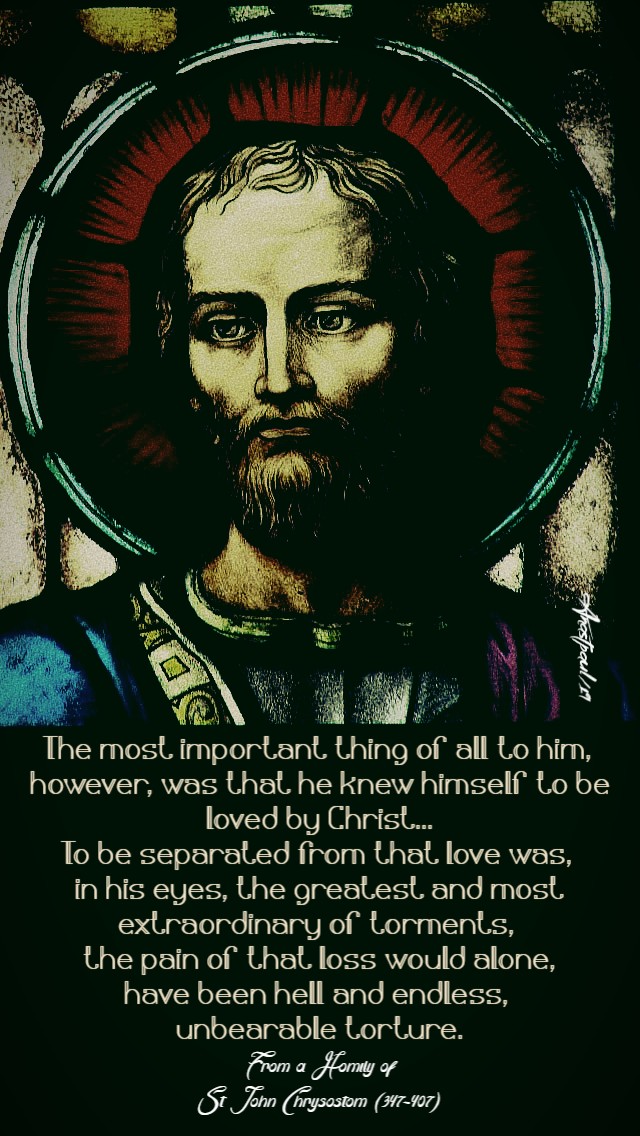
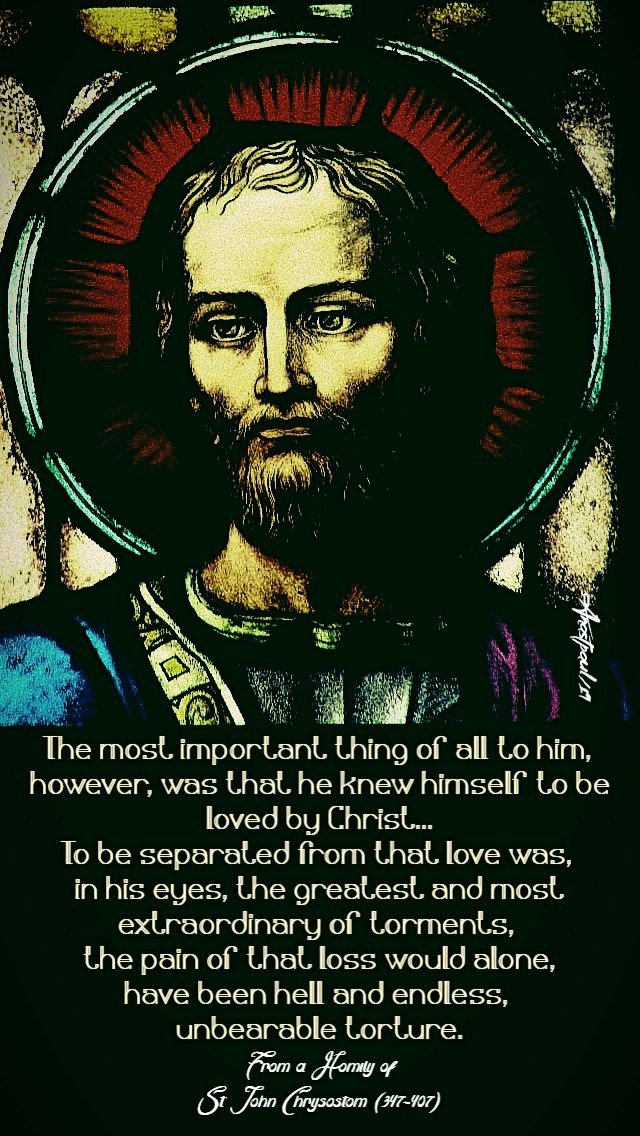
“The most important thing of all to him, however, was that he knew himself to be loved by Christ. … To be separated from that love was, in his eyes, the greatest and most extraordinary of torments, the pain of that loss, would alone, have been hell and endless, unbearable torture.”
St John Chrysostom (347-407) Father ad Doctor of the Church
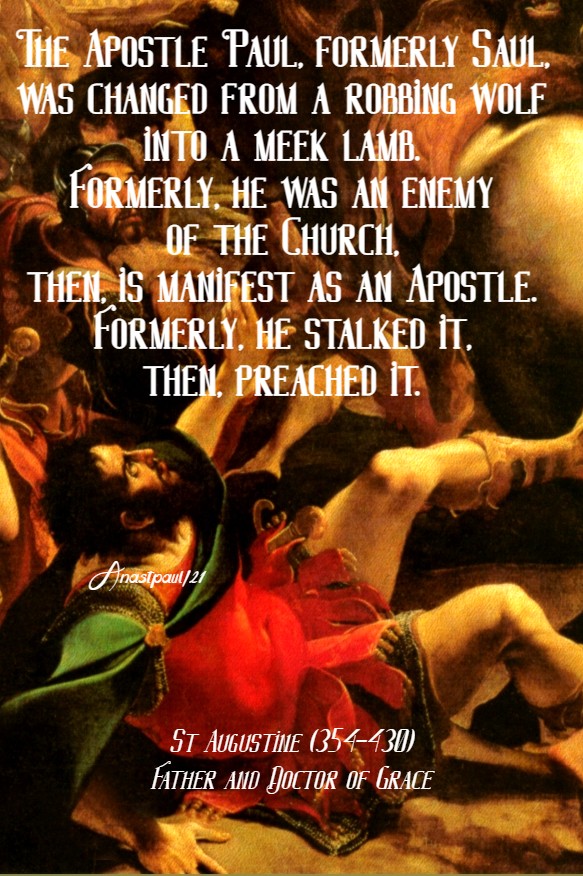
“The Apostle Paul, formerly Saul, was changed from a robbing wolf into a meek lamb. Formerly, he was an enemy of the Church, then, is manifest as an Apostle. Formerly, he stalked it, then, preached it.”
“Go into all the world and proclaim the gospel to vthe whole creation.” – Mark 16:15
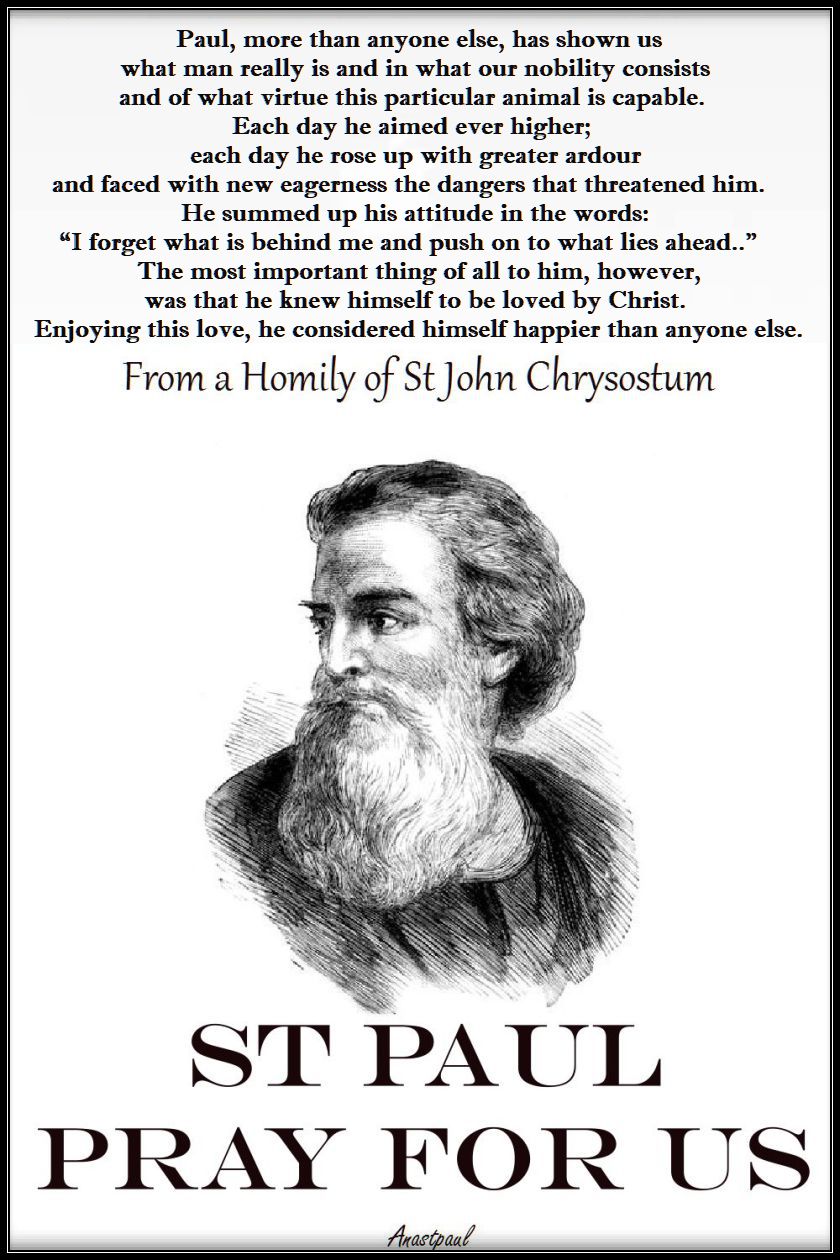
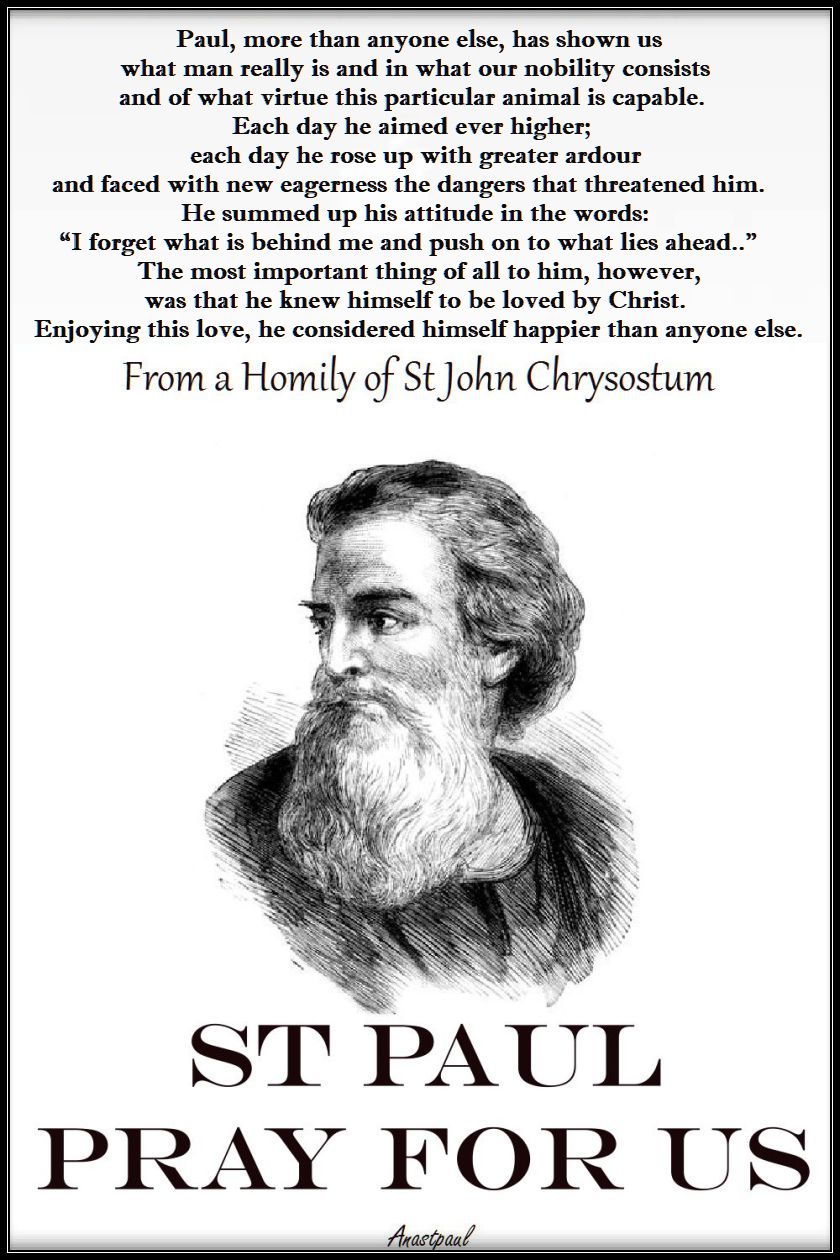
REFLECTION – “Paul, more than anyone else, has shown us what man really is and in what our nobility consists and of what virtue this particular animal is capable. Each day, he aimed ever higher; each day, he rose up with greater ardour and faced with new eagerness the dangers that threatened him. He summed up his attitude in the words: “I forget what is behind me and push on to what lies ahead”… The most important thing of all to him, however, was that he knew himself to be loved by Christ. Enjoying this love, he considered himself happier than anyone else” – St John Chrysostom (347-407) Father and Doctor
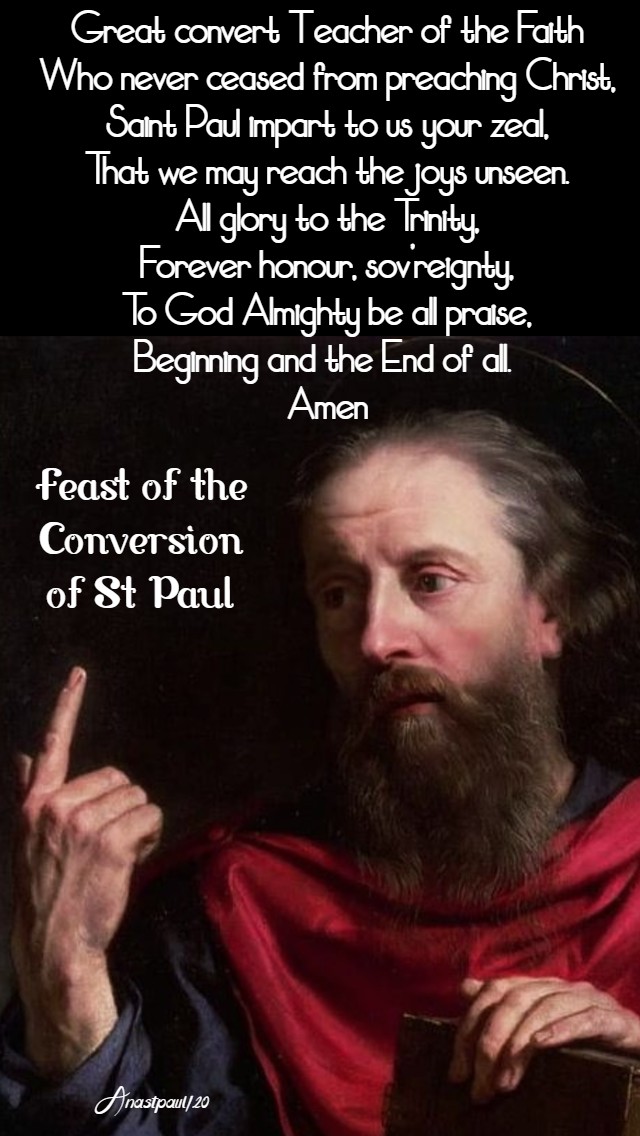
PRAYER – Great convert Teacher of the Faith Who never ceased from preaching Christ, Saint Paul impart to us your zeal, That we may reach the joys unseen.
All glory to the Trinity, Forever honour, sov’reignty, To God Almighty be all praise, Beginning and the End of all.
St Agape the Martyr St Agileus of Carthage St Amarinus of Clermont St Ananias of Damascus Blessed Antonio Migliorati OSA (1355-1450) Priest Bl Antoni Swiadek St Apollo of Heliopolis St Artemas of Pozzuoli St Auxentius of Epirus St Bretannion of Tomi St Donatus the Martyr St Dwynwen St Emilia Fernández Rodríguez de Cortés St Eochod of Galloway St Joel of Pulsano St Juventinus of Antioch Bl Manuel Domingo y Sol St Maximinus of Antioch St Palaemon St Poppo of Stavelot (977-1048) Biography: https://anastpaul.com/2020/01/25/saint-of-the-day-25-january-saint-poppo-of-stavelot-977-1048/ St Praejectus of Clermont St Publius of Zeugma St Racho of Autun St Sabinus the Martyr
Thought for the Day – 13 January – Meditations with Antonio Cardinal Bacci (1881-1971)
The Grace of God
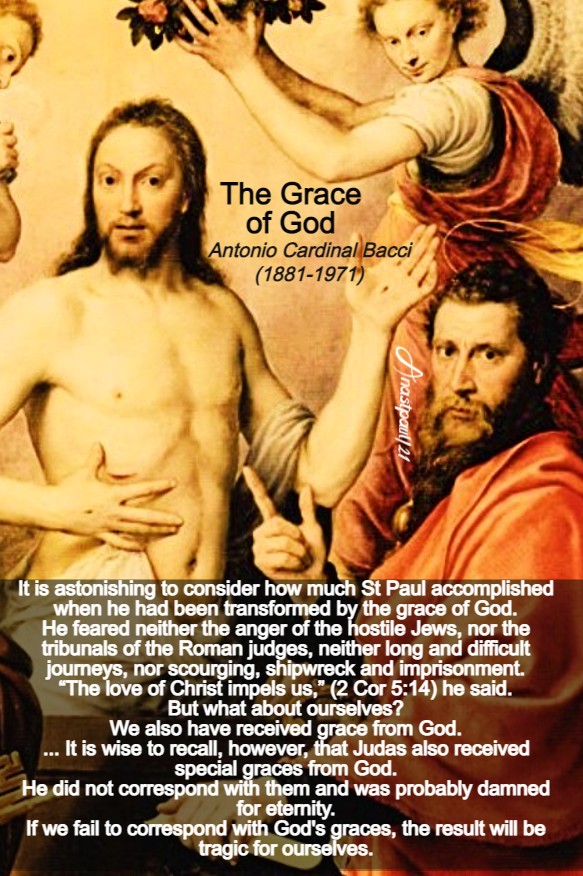
“It is astonishing to consider how much St Paul accomplished when he had been transformed by the grace of God. Formerly, a persecutor of Christians, he became the Apostle of the Gentiles. Enlightened by faith and inspired by charity, he travelled the globe, spreading everywhere, the religion of Jesus Christ.
He feared neither the anger of the hostile Jews, nor the tribunals of the Roman judges, neither long and difficult journeys, nor scourging, shipwreck and imprisonment. “The love of Christ impels us,” (2 Cor 5:14) he said. It was the love of God which drove him on and on, until he met his martyrdom. But what about ourselves? We also have received grace from God. Often we hear His voice appealing to us to abandon our sinful ways, to practise virtue, to love Him more ardently and to prove our love, by deeds. If we co-operate, we shall be able to say with St Paul: “by the grace of God, I am what I am and his grace in me has not been fruitless,” (1 Cor 15:10) and “I have laboured … yet, not I but the grace of God with me” (ibid).
It is wise to recall, however, that Judas also received special graces from God. He did not correspond with them and was probably damned for eternity. If we fail to correspond with God’s graces, the result will be tragic for ourselves.”
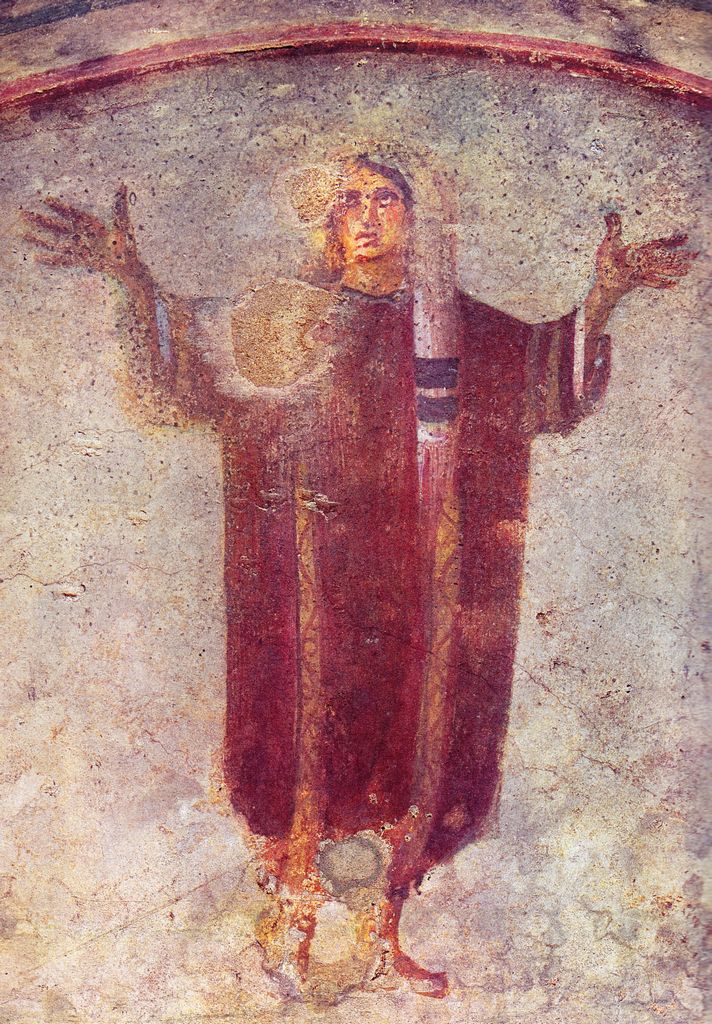
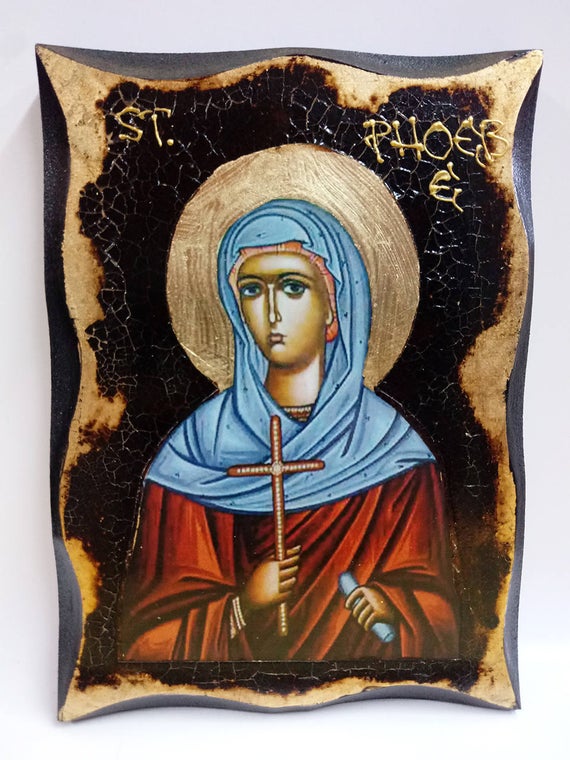
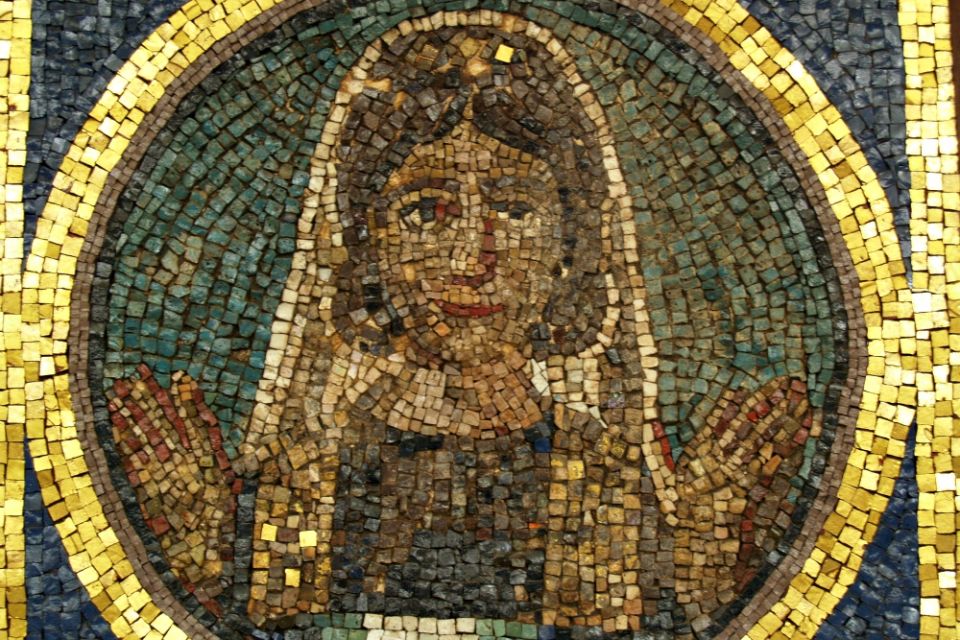
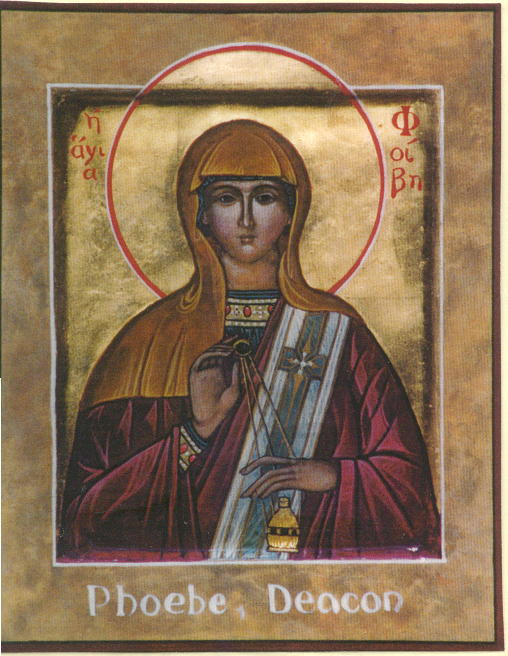
Saint of the Day – 3 September – St Phoebe (1st Century) – Deaconess at Cenchrese, Matron and possibly a widow. She is mentioned by the Apostle St Paul in his Epistle to the Romans, verses 16:1-2. A notable woman in the church of Cenchreae, she was trusted by St Paul to deliver his letter to the Romans. St Paul refers to her both as a Deacon (Gk. diakonon) and as a benefactress or patron of many (Greek. prostatis). This is the only place in the New Testament where a woman is specifically referred to with these two distinctions. Paul introduces Phoebe as his emissary to the Church in Rome and, because they are not acquainted with her, Paul provides them with her credentials. The name Phoebe means “pure”, “radiant” or “bright.”
The mission of the Church owes an enormous debt to the early Apostles and all those who assisted them as they went beyond the Jewish circles of Jesus’ heritage toward all of the world. We are indebted to St Paul and all who assisted him in a particular way. Besides being the Memorial of St Gregory today, 3 September it is also the Memorial of St Phoebe.
“I commend you to our sister Phoebe, a deacon of the church at Cenchraea, so that you may welcome her in the Lord as is fitting for the saints and help her, in whatever she may require from you, for she has been a benefactor of many and of myself, as well.” So begins the sixteenth chapter of St Paul’s letter to the Christians in Rome.
The office of Deaconess was mentioned by St Paul in the letters to the Romans and to Timothy but we also have evidence of the office in a letter from Pliny, a Roman governor who was writing to the Emperor Trajan for advice on dealing with Christians. He mentions two women ministers among the Christians in Bithynia. The office of Deaconess is also mentioned in the Apostolic Constitutions of Hippolytus and the office developed greatly during the third and fourth centuries, although it is quite different from the office Phoebe held. The Council of Chalcedon, held in the year 451, legislated that women could become Deaconesses at the age of 40.
A Deaconess was to devote herself to the care of sick and poor women; she was present at the interviews of women with Bishops, Priests, or male Deacons (so that the clergy wouldn’t be alone with strange women) and kept order in the women’s part of the church. Her most important function was the assistance at the Baptism of women. For the first five centuries of the Church, people were Baptised naked, and so, for the sake of propriety, male deacons couldn’t Baptise women. When adult Baptism became rare and was eventually replaced by infant Baptism, the office of Deaconess declined in importance. The office was actually abolished by the Council of Epaon in the year 517 but in the Nestorian Christian communities in Syria and later in India and China, Deaconesses administered Holy Communion to women and read the Sacred Scriptures in public.
In one of the later New Testament letters is a passage about diakonoi that outlines their moral qualifications. The diakonoi of 1 Timothy 3:8 were most probably official Deacons with a recognised position in the church. St John Chrysostom weighed in on the debate about whether the women in 1 Timothy 3:11 were Deacons. In his Homily 11 on 1 Timothy he wrote: “Some have thought that this is said of women generally but it is not so, for why should [Paul] introduce anything about women to interfere with his subject? He is speaking of those who hold the rank of Deaconesses.” In response to 1 Timothy 3:12, including the idiomatic phrase “a one-woman man” which some believe excludes women, he added “This must be understood therefore to [also] relate to Deaconesses. For that order is necessary and useful and honourable in the Church . . .” St John Chrysostom may have had the Deaconess Olympias, his close friend and patron, in mind when he wrote this.
I think that the fact that Phoebe was a Deacon in the Church in Cenchreae is important because it shows that women were vital to the mission of spreading the faith. Women owned house-churches, women administered and supervised the work with the poor and widows, women handled financial affairs for the churches and women helped spread the gospel. Jesus came to turn everything upside down – the last would be first and the first would be last and the Church was shaking up the society of Late Antiquity.
This feast of St Phoebe is in many ways a celebration of the on-going apostolate of women throughout the centuries, including you and me!
Saint of the Day – 4 August – Saint Aristarchus of Thessalonica (1st Century) Convert and Disciple of Saint Paul the Apostle, first Bishop of Thessalonica, Martyr. Born in Thessalonica and died by being beheaded in the 1st century in Rome, Italy. Also known as • Aristarco • Aristarque • Arystarch.
He was one of those faithful companions of the Apostle Paul who shared with him his labours and sufferings. He is first mentioned along with Gaius as having been seized by the excited Ephesians during the riot stirred up by the silversmiths (Acts 19:29). They are designated “men of Macedonia, Paul’s companions in travel.”
We learn later that he was a native of Thessalonica (Acts 20:4; 27:2). They were probably seized to extract from them information about their leader Paul but when they could tell nothing and since they were Greeks, nothing further was done to them.
When Aristarchus attached himself to Paul we do not know but he seems to have remained in Paul’s company ever after the Ephesian uproar.
He was one of those who accompanied Paul from Greece via Macedonia (Acts 20:4). Having preceded Paul to Troas, where they waited for him, they travelled with him to Palestine. He is next mentioned as accompanying Paul to Rome (Acts 27:2). There he attended Paul and shared his imprisonment.
He is mentioned in two of the letters of the Roman captivity, in the Epistle to the Church at Colossae (4:10) and in the Epistle to Philemon (1:24), in both of which he sends greetings. In the former Paul calls him “my fellow-prisoner.”
According to tradition he was Martyred during the persecution of Nero. He is mentioned in the Roman Martyrology on 4 August. Aristarchus son of Aristarchus, a politarch of Thessalonica (39/38 BC).
Thought for the Day – 29 June – “Month of the Sacred Heart” – Meditations with Antonio Cardinal Bacci (1881-1971)
St Peter, Prince of the Apostles
St Paul, the Apostle to the Gentiles
“Jesus was walking one day along the shoe of the Sea of Galilee, when He saw two fishermen casting their nets into the water.
He approached them and said: “Come, follow me and I will make you fishers of men” (Mk 1:17).
These two fishermen were brothers named, Simon and Andrew.
The divine Master won their hearts immediately, so that they left their boat and their nets and followed Jesus.
Simon was later called Peter and became the leader of the Apostles.
Peter’s generosity and great love for Jesus are evident in the pages of the Gospel.
When Our Lord foretold the institution of the Blessed Eucharist, many of His disciples were scandalised and left Him. “Do you also wish to go away?” Jesus asked His Apostles.
St Peter answered Him without delay. “Lord, to whom shall we go? Thou has the words of everlasting life and we have come to believe and to know, that Thou are the Christ, the Son of God” (Jn 6:69).
On another occasion, Jesus asked His disciples – “Who do men say the Son of Man is?” The Apostles hesitated and began to suggest the names of various Prophets.
But St Peter was inspired to make the reply: “Thou are the Christ, the Son of the living God.”
Then Our Lord appointed him Head of the Church. “Blessed are thou, Simon Bar-Jona … thou are Peter and upon this rock I will build my Church and the gates of hell, shall not prevail against it. And I will give thee the keys of the kingdom of heaven and whatever you shall bind on earth shall be bound in heaven” (Mt 16:15-19).
By these words there was instituted the loftiest and most ancient of the dynasties, the Papacy.
The successor of St Peter will rule the Church to the end of time and no power, neither persecution nor heresy, neither human tyranny nor false civilisation, will ever succeed in destroying this citadel of truth and goodness!”
St Paul, the Apostle to the Gentiles
“St Paul was by nature, fiery and zealous.
Once he discovered the truth, he was ready to die for it.
Originally he was convinced that Judaism contained the whole truth and, for this reason he hated the Christians, whom he regarded as a sect which had corrupted the sacred Hebrew tradition.
The deacon Stephen was the first victim of his persecuting zeal.
As he was being stoned and beaten to death this saintly young man prayed for his persecutors.
It may be that in this moment his eyes, shining with faith and love, encountered those of the man who hated him.
Soon afterwards, Saul (this was Paul’s real name), left Jerusalem for Damascus, carrying letters investing him with new powers for the persecution of the infant Church.
On the way, this headstrong but sincere enemy of Christianity was suddenly dazzled by a light from Heaven.
He fell to the ground and heard a mysterious voice saying: “Saul, Saul, why do thou persecute me?”
Terrified he answered: “Who are thou, Lord?” “I am Jesus,” the voice said, “whom thou are persecuting” (Acts 9:1-15).
From that day, Saul was changed completely.
Under the influence of divine grace, he became the Apostle to the Gentiles.
Before he set out on his missionary journeys, Paul wet apart into the desert of Arabia (Cf Gal 1:17), where, he remained sometime in prayer and recollection.
Then he went to Jerusalem to pay homage to the Prince of the Apostles, St Peter (Gal 1:18).
After this, he began his apostolic travels, in the course of which, he encountered all kinds of hardships and dangers.
The Jews frequently hunted him, in order to put him to death.
He was often cruelly scourged and flung into prison and, several times, he was shipwrecked and had miraculous escapes from death (CF 2 Cor 11:23-27).
He bore everything joyfully however, in order to prove his liove for Jesus Christ.
Charity was always his main incentive. “The love of Christ impels us” (2 Cor 5:14).
Charity, he said himself, “Believes all things, hopes all things,edues all things” (Cf 1 Cor 13:4-13).
His charity was so great, that he could truthfully say: “Who is weak and I am not weak? Who is made to stumble and I am not inflamed?” (2 Cor 11:29).
St Paul could make this claim because his heart had become identified with the Heart of Jesus.
Therefore, he could say: “It is now no longer I that live but Christ lives in me,” (Gal 2:20) and: “For me to live is Christ and to die is gain,” (Phil 1:21) and: “I am hard pressed from both sides, desiring to depart and to be with Christ, a lot by far the better; yet, to stay on in the flesh is necessary, for your sake” (Phil 1:23-24).
Let us meditate on this ardent love of God.
Let us cast aside our coldness and indifference and ask St Paul, to set us on fire with divine charity.” Amen
Quote/s of the Day – 29 June – “Month of the Sacred Heart” – The Solemnity of Saints Peter and Paul
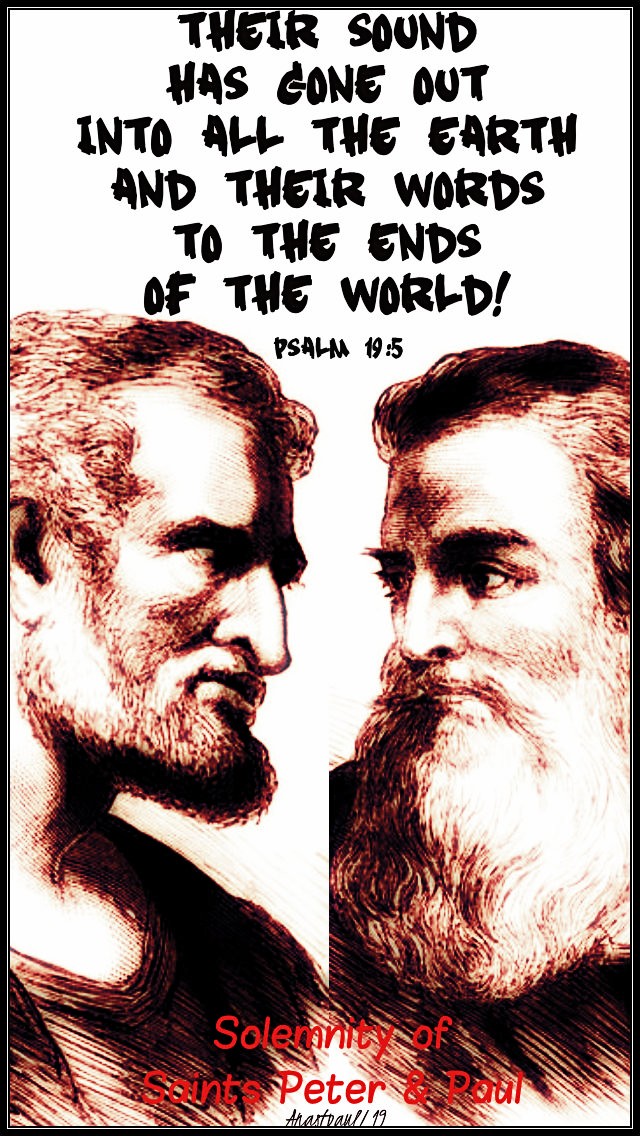
“Their sound has gone out into all the earth and their words to the ends of the world”
Psalm 19:5
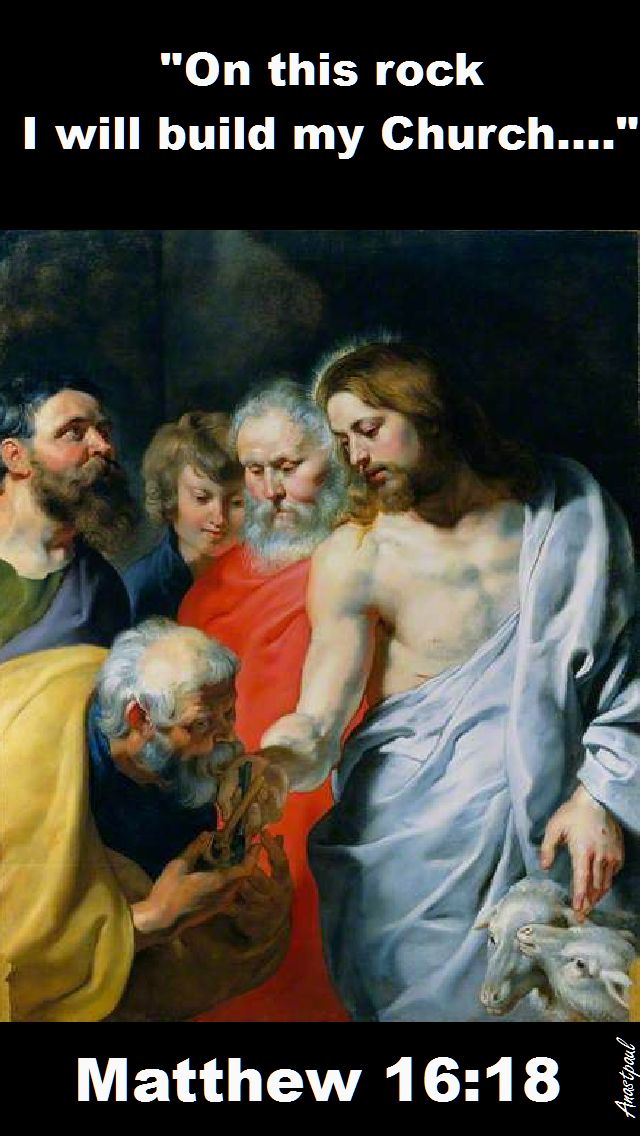
“On this rock I will build my church”
Matthew 16:18
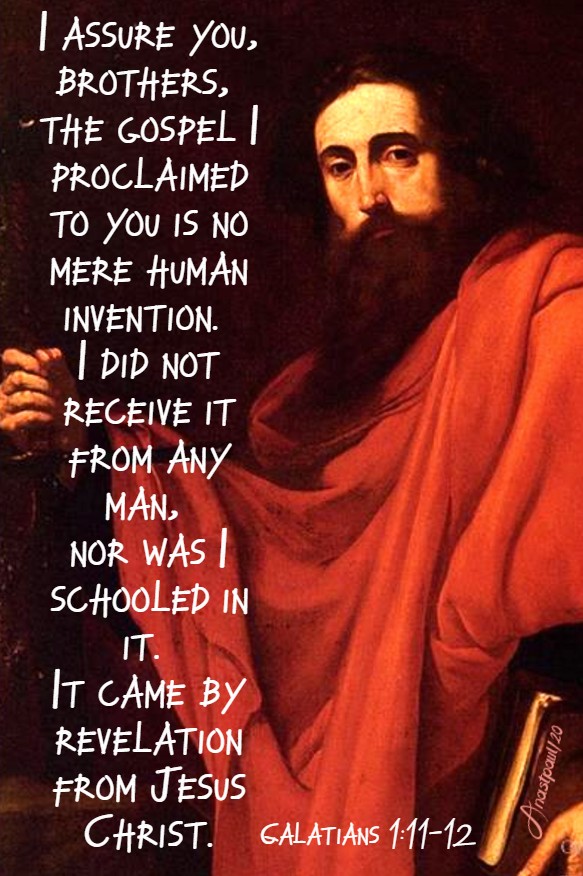
“I assure you, brothers, the gospel I proclaimed to you is no mere human invention. I did not receive it from any man, nor was I schooled in it. It came by revelation from Jesus Christ.”
Galatians 1:11-12
“….but we rejoice in our sufferings because we know, that suffering produces perseverance, perseverance, character and character, hope.”
Romans 5:4
“Paul, more than anyone else, has shown us what man really is and in what our nobility consists and of what virtue this particular animal is capable. Each day he aimed ever higher, each day he rose up with greater ardour and faced with new eagerness, the dangers that threatened him. He summed up his attitude in the words: I forget what is behind me and push on to what lies ahead. … The most important thing of all to him, however, was that he knew himself to be loved by Christ. Enjoying this love, he considered himself happier than anyone else …”
“The most important thing of all to him, however, was that he knew himself to be loved by Christ. … To be separated from that love was, in his eyes, the greatest and most extraordinary of torments, the pain of that loss would alone, have been hell and endless, unbearable torture.”
St John Chrysostom (347-407)
Father and Doctor of the Church
“There must be general rejoicing, dearly beloved, over this holy company whom God has appointed for our example in patience and for our confirmation in faith. But we must glory even more in the excellence of their fathers, Peter and Paul, whom the grace of God has raised to such a height among all the members of the Church that He has set them like twin lights of eyes in that Body whose head is Christ.”
“Out of the whole world one man, Peter, is chosen to preside at the head of all nations and to be set over all the apostles and all the fathers of the church. Though there are, in God’s people, many bishops and many shepherds, Peter is thus appointed to rule in his own person, those whom Christ also rules as the original ruler.”
Saint Pope Leo the Great (400-461)
Father Doctor unitatis Ecclesiae
“…They said that, [the] Mediator had come and gone but, had left behind Him, what was to be His representative till the end of all things, His Mystical Body, the Church, in joining which, lay the salvation of the world.”
St John Henry Newman (1801-1890)
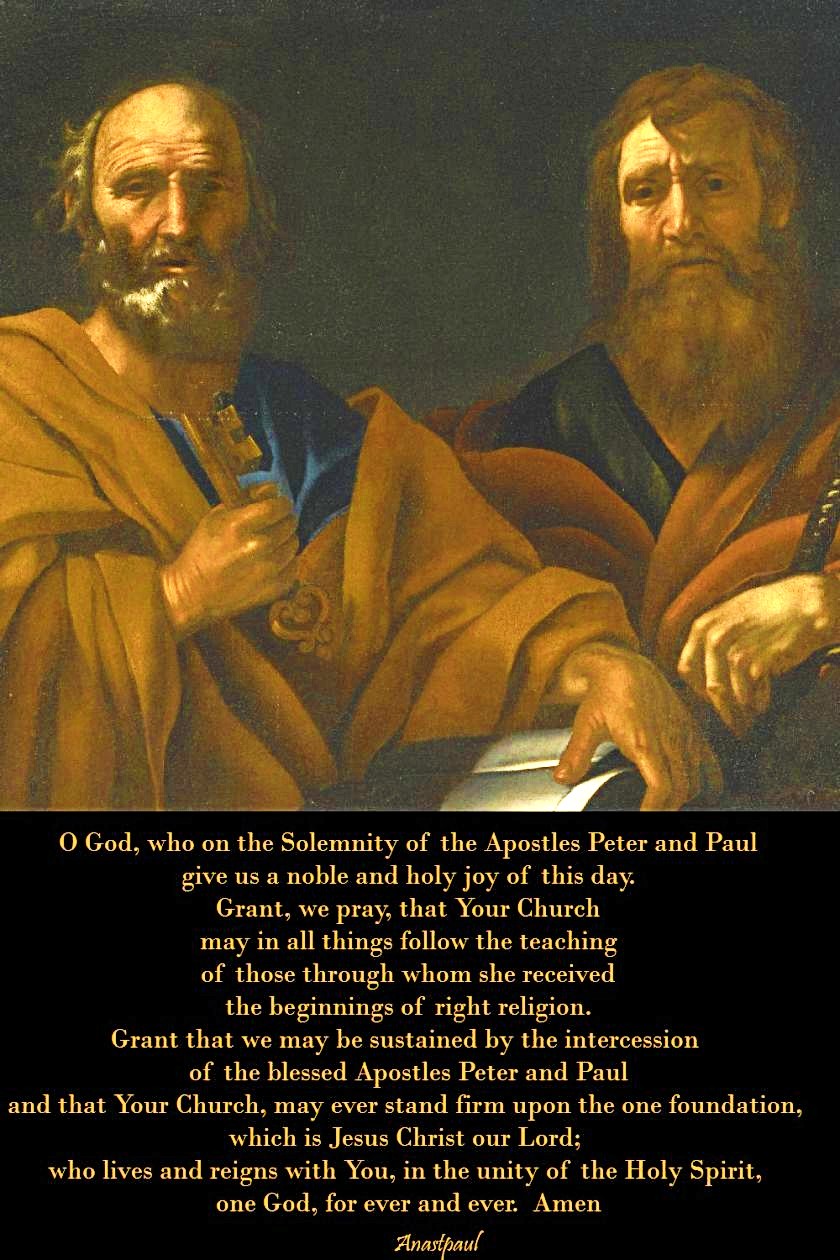
O God, who on the Solemnity of the Apostles Peter and Paul give us a noble and holy joy of this day. Grant, we pray, that Your Church may in all things follow the teaching of those through whom she received the beginnings of right religion. Grant that we may be sustained by the intercession of the blessed Apostles Peter and Paul and that Your Church, may ever stand firm upon the one foundation, which is Jesus Christ our Lord; who lives and reigns with You, in the unity of the Holy Spirit, one God, for ever and ever. Amen
“Simon Peter replied, “You are the Christ, the Son of the living God.” … Jesus said to him in reply … And so I say to you, you are Peter and upon this rock I will build my church and the gates of the hell shall not prevail against it. I will give you the keys to the kingdom of heaven. Whatever you bind on earth shall be bound in heaven; and whatever you loose on earth shall be loosed in heaven.” … Matthew 16:16,17,18-19
REFLECTION – “Christ the Mediator “ committed no sin and no deceit was found in his mouth” (1Pt 2:22). How could I venture to draw near Him, I who am a sinner, a grievous sinner whose sins are more numerous than the sands of the sea? He is all that is most pure, I am all that is most impure … This is the reason why God has given me these apostles, men and sinners – very grievous sinners – who learnt for themselves, through their own experience, how merciful they should be to others. Guilty themselves of great offences, they will grant a ready pardon to great offences and repay us according to the measure meted out to them (Lk 6:38).
The apostle Peter committed a very great sin, possibly the greatest of all. He received a forgiveness for it that was as swift as it was ready, even to not losing anything of the privilege of his primacy. And Paul, who unleashed unrestrained aggression against the newborn Church, was brought to faith at the call of God’s Son Himself. In return for so many evils, he was filled with such great blessings that he became “a chosen instrument to carry the Lord’s name before Gentiles, kings and Israelites” (Acts 9:15) (…)
Peter and Paul are our teachers – they learned the way of life fully from the one Teacher of all and continue to teach us today.” … St Bernard (1091-1153) Cistercian Monk, Theologian, Mellifluous Doctor
PRAYER – O God, who on the Solemnity of the Apostles Peter and Paul give us the noble and holy joy of this day, grant, we pray, that your Church may in all things follow the teaching of those through whom she received the beginnings of right religion. Through our Lord Jesus Christ, your Son,who lives and reigns with you in the unity of the Holy Spirit, one God, forever and ever. Amen
Our Morning Offering – 29 June – The Solemnity of Saints Peter and Paul
Apostolorum Passio By St Ambrose (c 340-397) Father and Doctor
This happy day is sanctified
As Martyr’s glory we recall,
The cross bedewed with Peter’s blood,
The sword that won a crown for Paul.
The triumph of their martyrdom
United these great souls in death,
Whose faith in Christ had crowned their lives
In service to their latest breath.
Saint Peter held the primacy,
Saint Paul would equal him in grace,
When once, as chosen instrument
The cause of Christ he would embrace
Once, Simon, leaving Rome, turned back
To give, by death, full praise to God,
That by the cross he too should tread
The self-same path his Master trod.
Now Rome exults, as well she may
And strives to give devotion’s due
To one who sealed with his own blood
His work as priest and shepherd true.
And who can count the crowds that come
As loving children to her gate,
Where nations’ teacher, holy Paul
Once dwelt and gladly met his fate.
Grant us, O Lord, the final grace
Of sharing in their joy above,
That with such princes we may praise
Your bounty and undying love.
Amen
Translation: The Benedictines of Saint Cecilia’s Abbey, Ryde, UK
Quote/s of the Day – 31 May – The Solemnity of Pentecost
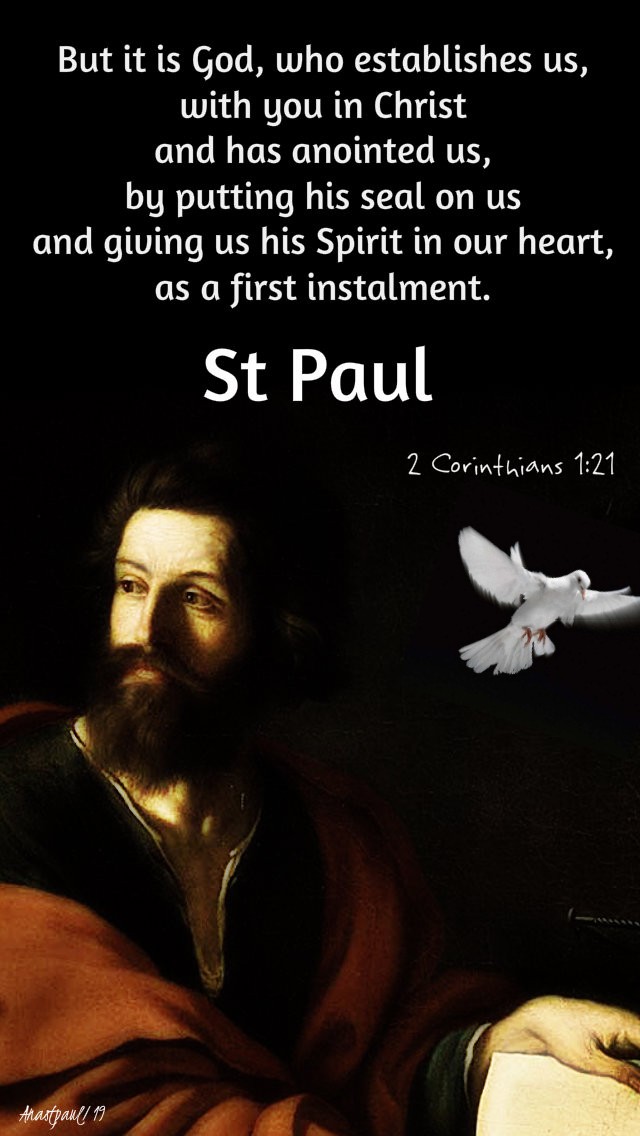
“But it is God, who establishes us, with you in Christ and has anointed us, by putting his seal on us and giving us his Spirit in our heart, as a first instalment.”
St Paul
2 Corinthians 1:21
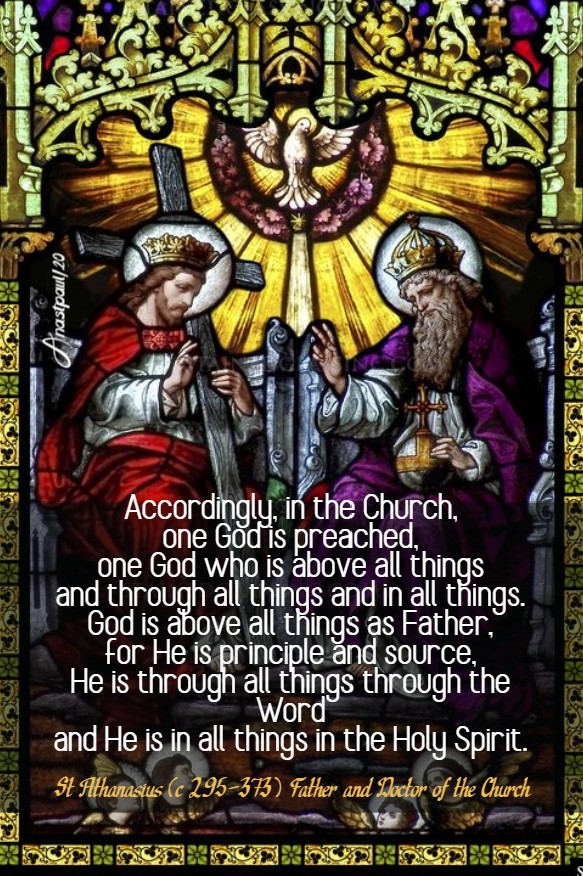
“Accordingly, in the Church, one God is preached, one God who is above all things and through all things and in all things. God is above all things as Father, for He is principle and source, He is through all things through the Word and He is in all things in the Holy Spirit.”
St Athanasius (c 295-373)
Father and Doctor of the Church
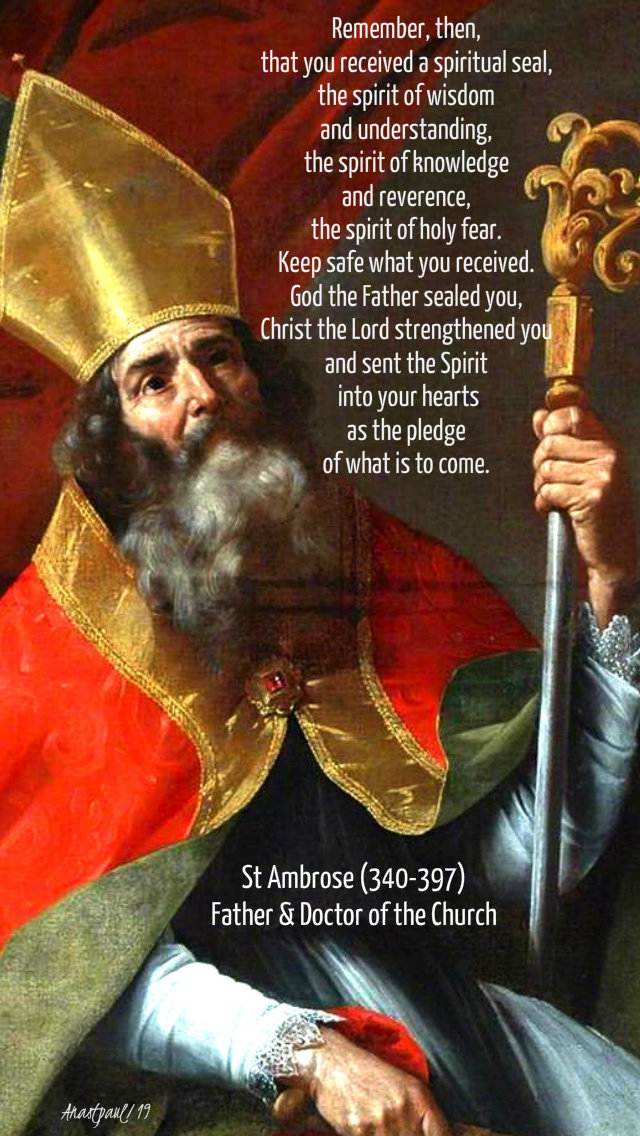
“Remember, then, that you received a spiritual seal, the spirit of wisdom and understanding, the spirit of knowledge and reverence, the spirit of holy fear. Keep safe what you received. God the Father sealed you, Christ the Lord strengthened you and sent the Spirit into your hearts as the pledge of what is to come.”
St Ambrose (340-397)
Father & Doctor of the Church
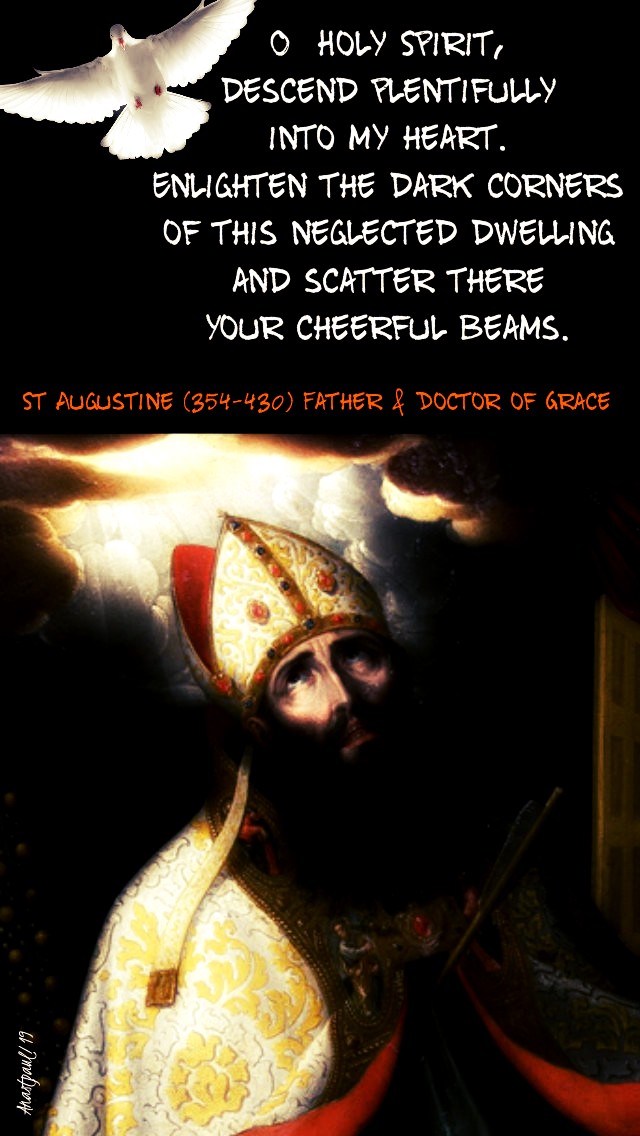
“O Holy Spirit, descend plentifully into my heart. Enlighten the dark corners of this neglected dwelling and scatter there Your cheerful beams.”
St Augustine (354-430) Father & Doctor of Grace
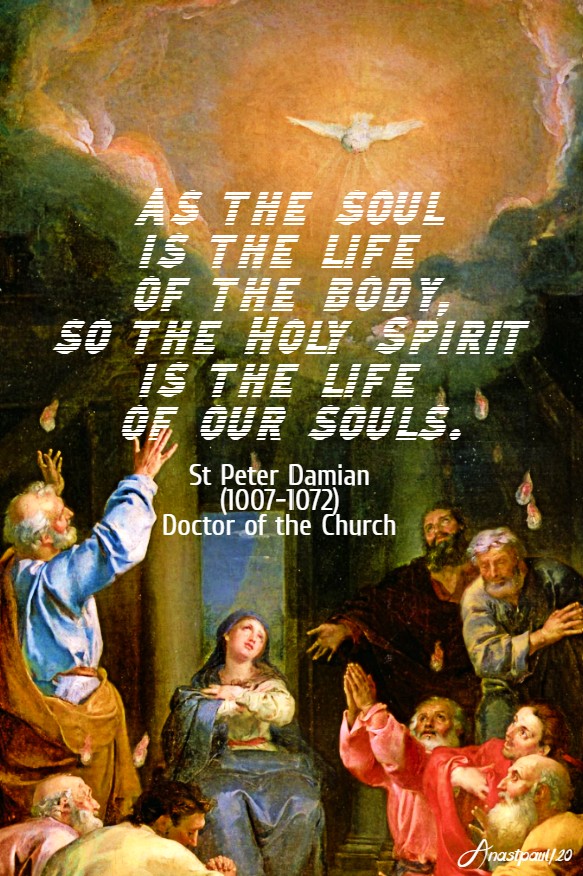
“As the soul is the life of the body, so the Holy Spirit is the life of our souls.”
St Peter Damian (1007-1072)
Doctor of the Church
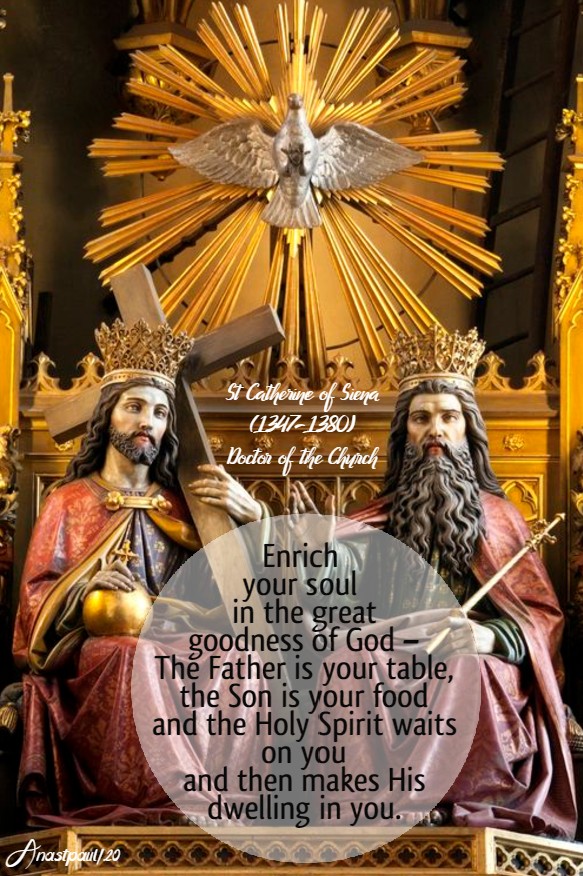
“Enrich your soul in the great goodness of God – The Father is your table, the Son is your food and the Holy Spirit waits on you and then makes His dwelling in you.”
St Catherine of Siena (1347-1380)
Doctor of the Church
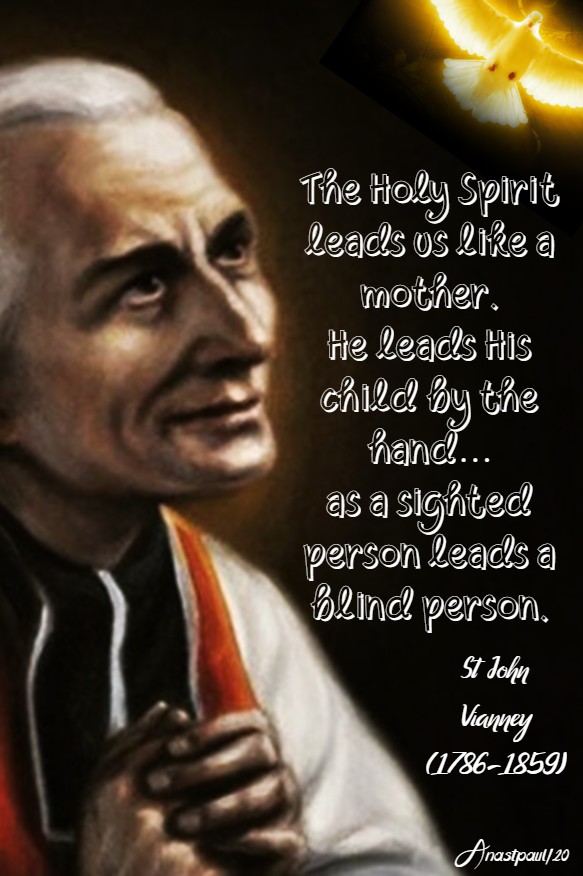
“The Holy Spirit leads us like a mother. He leads His child by the hand… as a sighted person leads a blind person.”
St John Vianney (1786-1859)
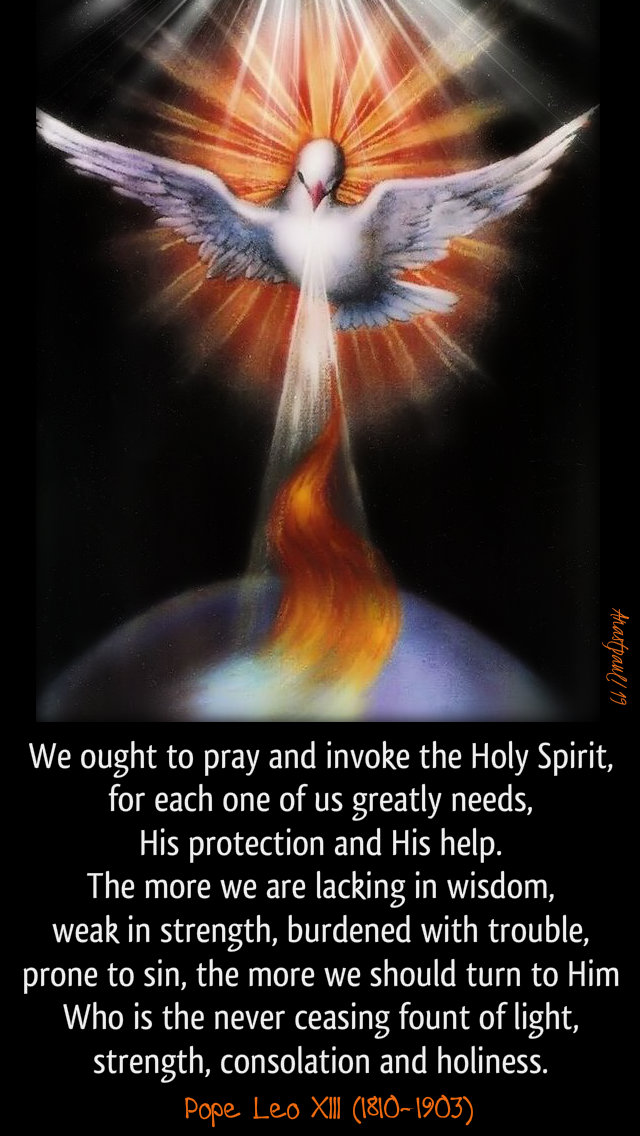
“We ought to pray and invoke the Holy Spirit, for each one of us greatly needs His protection and His help. The more we are lacking in wisdom, weak in strength, burdened with trouble, prone to sin, the more we should turn to Him, Who is the never-ceasing fount of light, strength, consolation and holiness.”
Quote of the Day – 20 May – “Mary’s Month!” – Wednesday of the Sixth Week of Easter
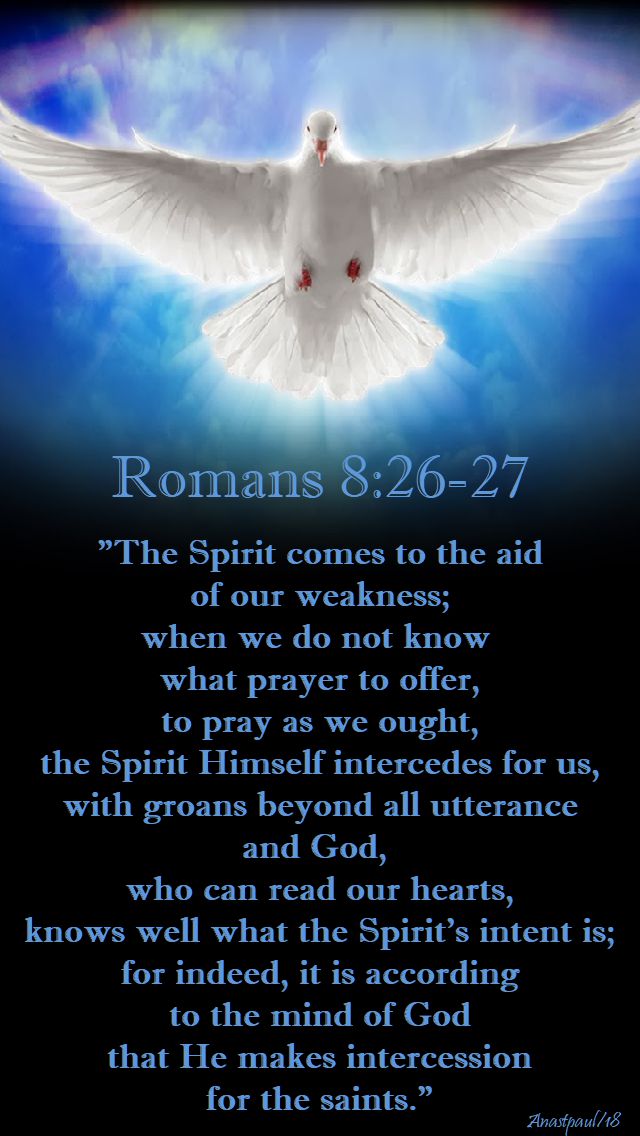
“The Spirit comes to the aid of our weakness; when we do not know what prayer to offer, to pray as we ought, the Spirit Himself intercedes for us, with groans beyond all utterance and God, who can read our hearts, knows well what the Spirit’s intent is; for indeed, it is according to the mind of God that He makes intercession for the saints.”
Quote/s of the Day – 25 January – Feast of the Conversion of St Paul
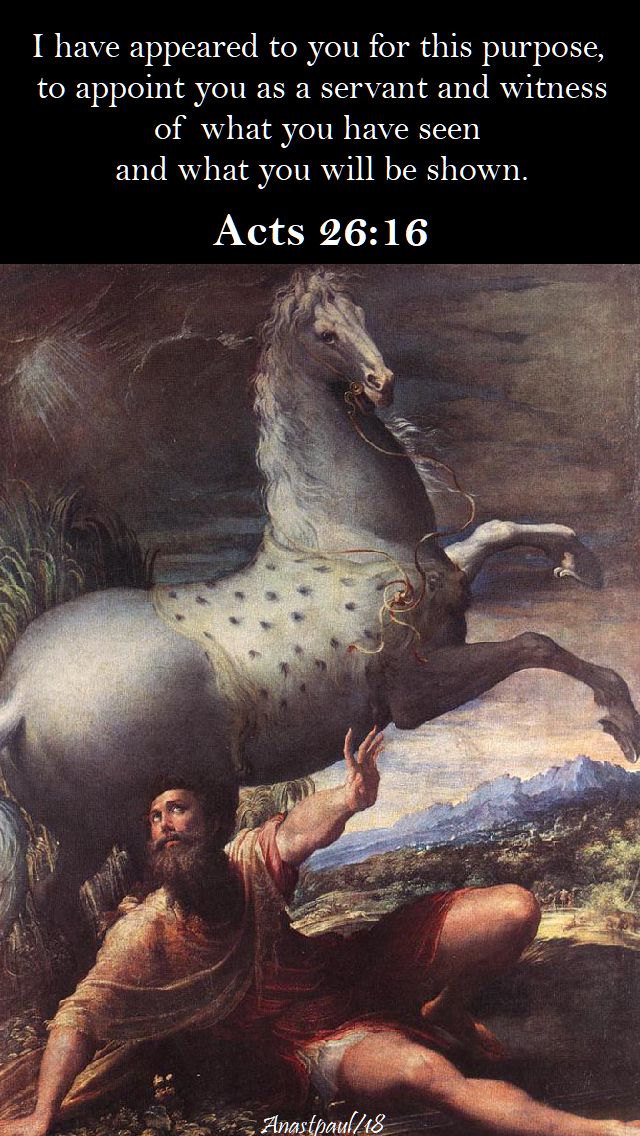
“I have appeared to you for this purpose, to appoint you as a servant and witness, of what you have seen and what you will be shown. I shall deliver you from this people and from the Gentile,s to whom I send you, to open their eyes, that they may turn from darkness to light and from the power of Satan to God, so that they may obtain forgiveness of sins and an inheritance among those, who have been consecrated by faith in me.”
Acts 26:16-18
“Paul, more than anyone else, has shown us, what man really is and in what our nobility consists and of what virtue this particular animal is capable. Each day he aimed ever higher, each day he rose up with greater ardour and faced with new eagerness, the dangers that threatened him. He summed up his attitude in the words: “I forget what is behind me and push on to what lies ahead”… The most important thing of all to him, however, was that he knew himself to be loved by Christ. Enjoying this love, he considered himself happier than anyone else.”
St John Chrysostom (347-407)
Father & Doctor of the Church
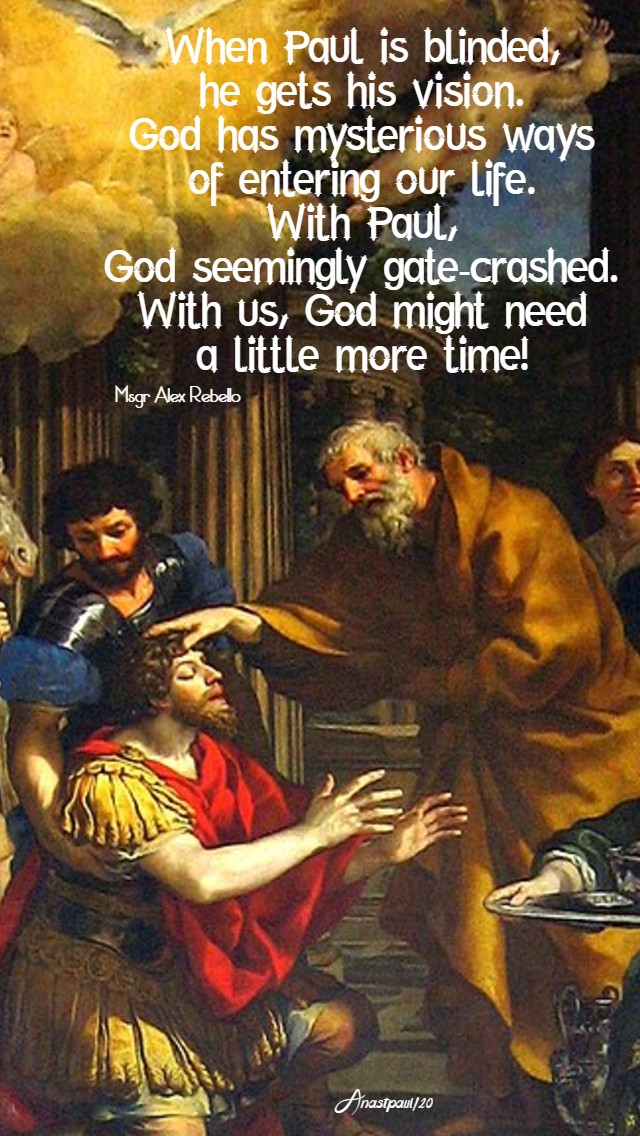
“When Paul is blinded, he gets his vision. God has mysterious ways of entering our life. With Paul, God seemingly gate-crashed. With us, God might need a little more time!”
One Minute Reflection – 25 January – Feast of the Conversion of St Paul, Reading: Acts 22:3-16, Psalm 117:1-2, Mark 16:15-18
And he said to them, “Go into all the world and preach the gospel to the whole creation.” … Mark 16:15
REFLECTION – “Paul’s encounter with Christ on the road to Damascus literally revolutionised his life (…) Thus, it is important to realise what a deep effect Jesus Christ can have on a person’s life, hence, also on our own lives (…) how does a human being’s encounter with Christ occur? And of what does the relationship that stems from it consist? (…) Paul helps us to understand the absolutely basic and irreplaceable value of faith. This is what he wrote in his Letter to the Romans: “We hold that a man is justified by faith apart from works of law” (3:28). This is what he also wrote in his Letter to the Galatians: “[M]an is not justified by works of the law but only through faith in Jesus Christ” (2:16) (…) “Being justified” means being made righteous, that is, being accepted by God’s merciful justice to enter into communion with Him and, consequently, to be able to establish a far more genuine relationship with all our brethren and this takes place on the basis of the complete forgiveness of our sins. Well, Paul states with absolute clarity that this condition of life does not depend on our possible good works but on the pure grace of God – “[We] are justified by his grace as a gift, through the redemption which is in Christ Jesus” (Rom 3:24).
With these words St Paul expressed the fundamental content of his conversion, the new direction his life took as a result of his encounter with the Risen Christ. Before his conversion, Paul had not been a man distant from God and from his Law. On the contrary, he had been observant, with an observance, faithful to the point of fanaticism. In the light of the encounter with Christ, however, he understood that with this, he had sought to build up himself and his own justice and that with all this justice, he had lived for himself. He realised that a new approach in his life was absolutely essential. And we find this new approach expressed in his words: “The life I now live in the flesh I live by faith in the Son of God, who loved me and gave himself for me” (Gal 2:20).
Paul, therefore, no longer lives for himself, for his own justice. He lives for Christ and with Christ.” … Pope Benedict XVI – General audience of 08/11/06
PRAYER – Today Lord, we celebrate the conversion of St Paul, Your chosen vessel for carrying Your name to the whole world. Help us to make our way towards You by following in his footsteps and by being Your disciples before the men and women of our day. Grant that by the prayers of St Paul, we too may say, “Yet I live, no longer I, but Christ lives in me; insofar as I now live in the flesh, I live by faith in the Son of God who has loved me and given himself up for me.” (Galatians 2:20) Through Jesus Christ, our Lord, in union with the Holy Spirit, one God forever and ever, amen.
You must be logged in to post a comment.