One Minute Reflection – 9 January – “The Month of the Most Holy Name of Jesus and of the Holy Family”– Within the Octave of The Epiphany –Isaias 60:1-6; Matthew 2:1-12 – Scripture search here: https://www.drbo.org/
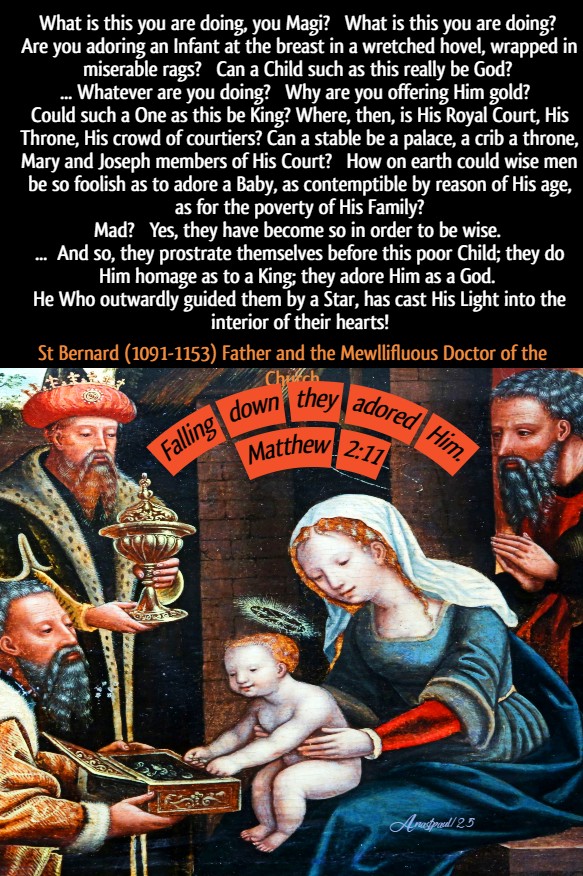
“Falling down they adored Him” – Matthew 2:11
REFLECTION – “God’s intention was not only to come down to earth but to become known there; not only to be born but to be recognised. In fact, it is with this recognition in mind that we hold this celebration of the Epiphany, the great day of His manifestation. For it was today that the Magi came from the East in search of the Sun of Justice at its rising (Mal 3:20), He of Whom we read: “Behold a Man Whose Name is the Orient,” (Zec 6:12 ). Today they have adored the Virgin’s newborn Child, following the guidance of a New Star. What great cause for joy do we not find here, my brethren, as also in those words of the Apostle Paul: “The kindness and generous love of God our Saviour have appeared,” (Tit 3:4)…
What is this you are doing, you Magi? What is this you are doing? Are you adoring an Infant at the breast in a wretched hovel, wrapped in miserable rags? Can a Child such as this really be God? Yet, “The Lord is in His holy temple, the Lord’s throne is in Heaven.” (Ps 11:4) while you are looking for Him in a common stable, held in His Mother’s arms! Whatever are you doing? Why are you offering Him gold? Could such a One as this be King? Where, then, is His Royal Court, His Throne, His crowd of courtiers? Can a stable be a palace, a crib a throne, Mary and Joseph members of His Court? How on earth could wise men be so foolish as to adore a Baby, as contemptible by reason of His age, as for the poverty of His Family?
Mad? Yes, they have become so in order to be wise. The Holy Spirit has taught them already what the Apostle Paul would later proclaim: “Whoever would be wise, let him become a fool. For since the world, in all its wisdom, did not come to know God in His Wisdom, it has pleased God to save those who believe, through the foolishness of the Gospel we proclaim, (Cf 1 Cor 1:21)… And so, they prostrate themselves before this poor Child; they do Him homage as to a King; they adore Him as a God. He Who outwardly guided them by a Star, has cast His Light into the interior of their hearts!” – St Bernard (1091-1153) Cistercian Monk, Father and Doctor of the Church (1st Sermon for the Epiphany).
PRAYER – O God, Thou Who by the guidance of a star this day revealed Thy Only-begotten Son to the Gentiles, mercifully grant that we, who know Thee now by faith, may come to behold Thee in glory. Through the same Jesus Christ, Thy Son our Lord, Who lives and reigns with Thee, in the unity of the Holy Ghost, God, world without end. Amen (Collect).
Our Morning Offering – 9 January – Within the Octave of Epiphany – “The Month of the Most Holy Name of Jesus”
The Love of Thy Name By Thomas à Kempis CRSA (1380-1471) The Imitation of Christ (Book 3 Ch 26:1-4)
My God, Sweetness beyond words, make bitter all the carnal comfort which draws me from love of the eternal and lures me to its evil self, by the sight of some delightful good in the present. Let it not overcome me, my God. Let not flesh and blood conquer me. Let not the world and its brief glory deceive me, nor the devil trip me by his craftiness. Give me courage to resist, patience to endure and constancy to persevere. Give me the soothing unction of Thy spirit, rather than all the consolations of the world and in place of carnal love, infuse into me, the love of Thy Name. Amen
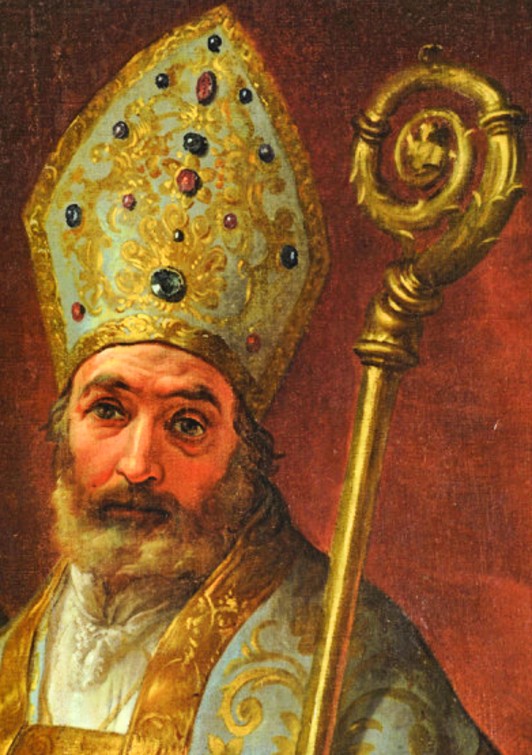
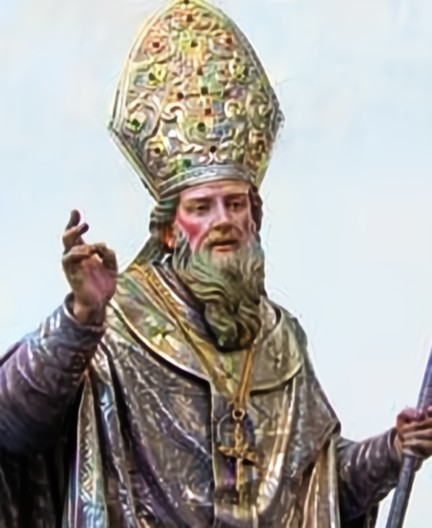
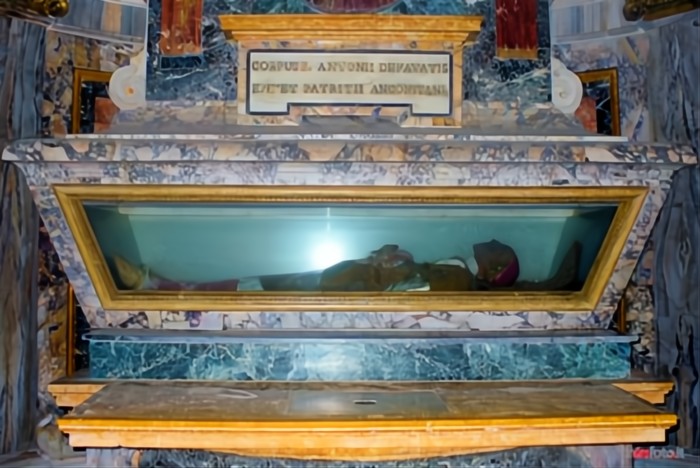
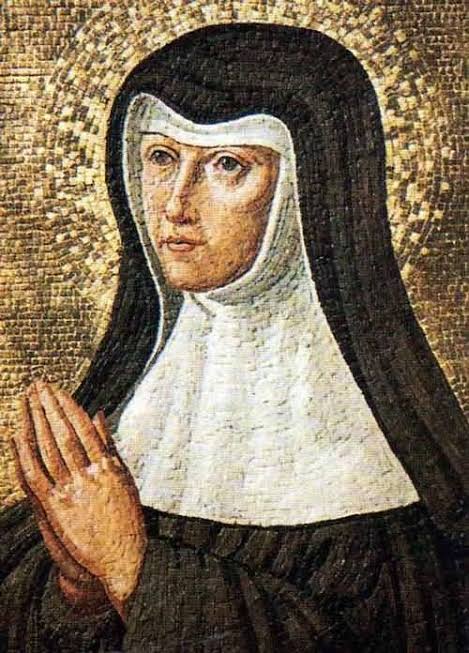
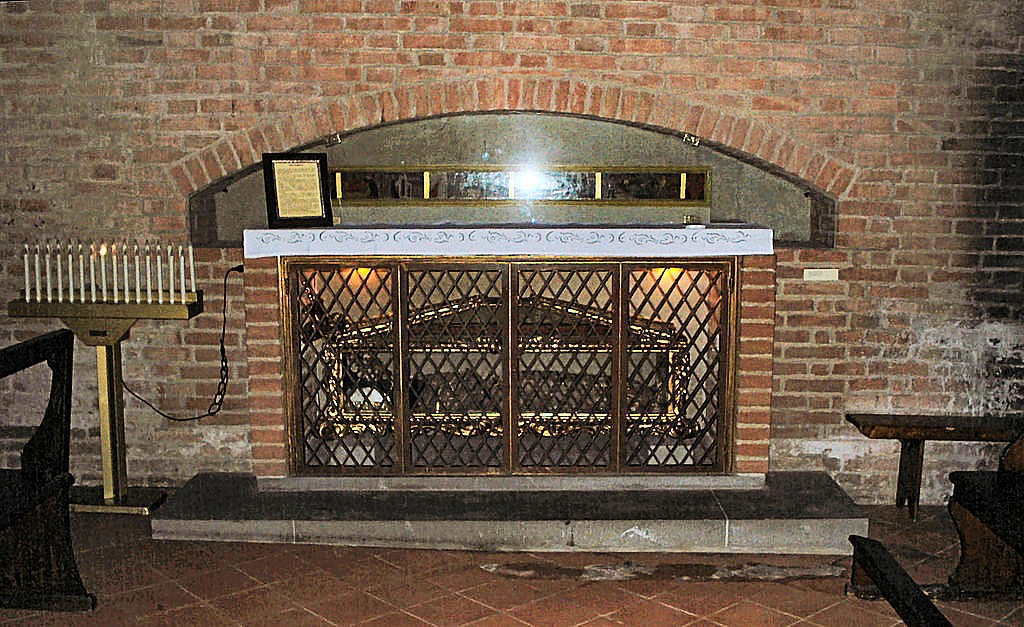
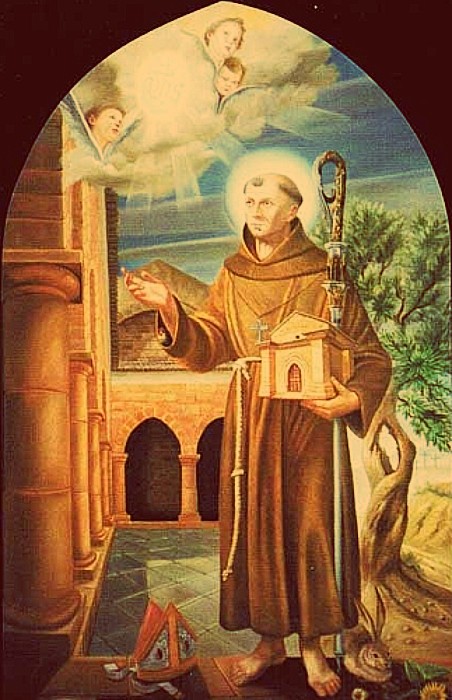
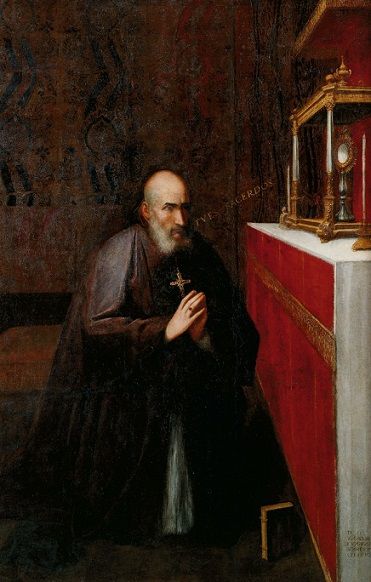
Saint of the Day – 9 January – Blessed Antony Fatati (c1410-1484) Bishop, holding many illustrious Papal appointments for a few Popes in succession. Blessed Antony was austere to himself but generous towards the poor. As the long-serving Bishop of Teramo and then of Ancona, Antony displayed the perfect example of a zealous and loving shepherd. Born in c1410 in Ancona, in the Marches, Italy and died there on 9 January 1484 of natural causes, aged around 74 years. Additional Memorial – 2 September in Ancona. Blessed Antony was Beatified by Pope Pius VI on 9 May 1795. Also known as – Anthony of Teramo, Anthony of Ancona, Antoine… Antonio… His Body is Incorrupt.
Blessed Antony Fatati was born in Ancona to a noble family. He studied in Bologna, Italy and, after Ordination, was appointed a Canon and vicar of the Vatican Chapter of St Peter’s Basilica.
He was then appointed as a senior Chaplain and Cleric of the Apostolic Camera (Treasury) in the Roman Curia, the General Treasurer of the Marches and Vicar General of that Province.
In 1450 he was elected to the Episcopal See of Teramo and, in 1463, of Ancona. In between these elections, in 1456, the King of Naples Alfonso V of Aragon, became so impressed with Antony, the King asked him to be one of his Councilors.
In his long and fruitful pastoral activity, Blessed Antony distinguished himself for his prudence, equanimity, austerity and generosity. He was a shepherd attentive to the needs of his people, whom he guided with wisdom and firmness. He worked to promote charity and social justice and to defend the Catholic Faith.
He was also a man of great culture and profound devotion and piety, devoting himself to prayer and meditation and was an example of Christian life for all who knew him.
Blessed Antony died in his Diocese on 9 January 1484. He was interred in the Diocesan Cathedral. In 1529 his body were found incorrupt after their exhumation. In 1795 a new sarcophagus was commissioned in order to display Blessed Antony’s Incorrupt body for the veneration of the faithful.
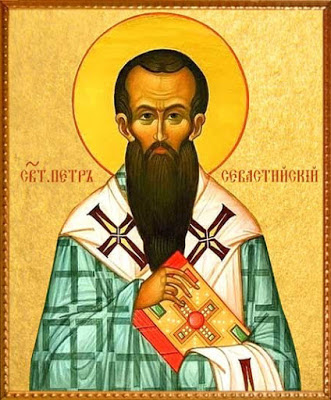
St Peter of Sebaste (c340-c391) Bishop of Sebaste in Lesser Armenia. Member of the glorious family of Saints – He was the younger brother of Basil the Great, Gregory of Nyssa, the famous Christian Hermit Naucratius and Macrina the Younger and a close friend of Gregory of Nazianzen, all Saints. Of course, Basil and Gregory of Nazianzen are both Doctors too. St Pete‘r’s Biography: https://anastpaul.com/2021/01/09/saint-of-the-day-9-january-st-peter-of-sebaste-c-340-c-391-bishop/
Blessed Antony Fatati (c1410-1484) Bishop. His Body is Incorrupt. St Brithwald of Canterbury St Eustratius of Olympus Bl Franciscus Yi Bo-Hyeon St Honorius of Buzancais
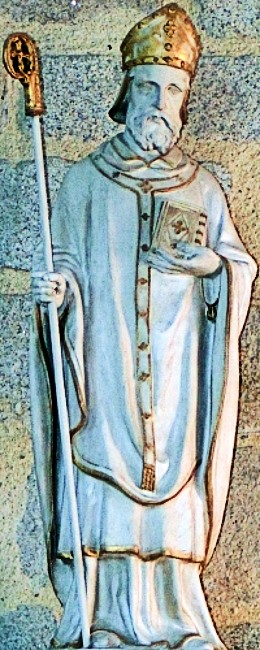
St Marcellinus of Ancona (Died c577) The 5th Bishop of Ancona, Italy. Patronages – against fire (a raging fire ceased by St Marcellinus waving his prayer book at it; the book survived the fire with only slight damage; afterwards, people who touched it, while praying, were cured of ailments), of Ancona, Italy. The Roman Martyrology reads: “At Ancona, St Marcellinus, Bishop, who, according to St Gregory the Great, miraculously delivered that City from destruction by fire.” Holy Marcellinus: https://anastpaul.com/2024/01/09/saint-of-the-day-9-january-saint-marcellinus-of-ancona-died-c577-bishop/
St Marciana Bl Martinus In Eon-min St Maurontius St Nearchus St Paschasia of Dijon St Philip Berruyer St Polyeucte
Martyrs of Africa – 21 Saints: A group of 21 Christians murdered together for their faith in the persecutions of Decius. The only details to survive are 14 of their names – Artaxes, Epictetus, Felicitas, Felix, Fortunatus, Jucundus, Pictus, Quietus, Quinctus, Rusticus, Secundus, Sillus, Vincent and Vitalis. They were Martyred in c 250.
Martyrs of Antioch – 6 Saints: A group of Christians Martyred together during the persecutions of Diocletian – Anastasius, Anthony, Basilissa, Celsus, Julian and Marcionilla.
Thought for the Day – 8 January – Meditations with Fr Richard Frederick Clarke SJ (1839-1900)
Meditations for Christmastide “The Holy Infancy” From “The Devout Year” By Fr Richard Frederick Clarke SJ (1839-1900)
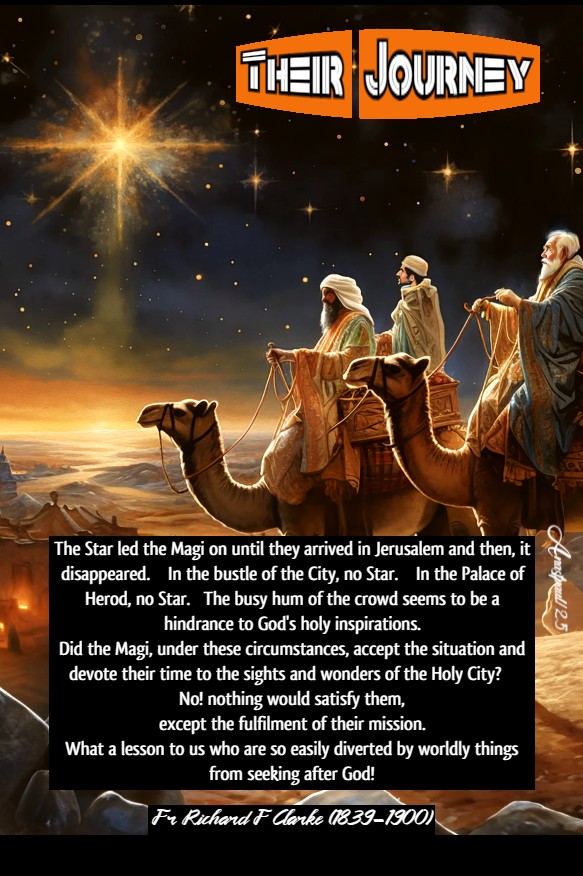
“Their Journey”
+1. The journey of the Magi from their own Country to Palestine, just because a Star appeared in a certain quarter of the heavens, was very like a fool’s errand. Was a mere floating tradition a sufficient ground for undertaking a long, arduous and costly journey? Were not their duties at home of more importance and had they not a greater claim than this strange apparition which tempted them away? What is folly to man is often wisdom to God. How often have similar arguments been used to deter Protestants from making their submission to the Church and, to dissuade Catholics, from Consecrating themselves to God! Perhaps I may sometimes have followed the dictates of mere worldly wisdom, neglecting supernatural grace?
+2. The Star led the Magi on until they arrived in Jerusalem and then, it disappeared. In the bustle of the City, no Star. In the Palace of Herod, no Star. The busy hum of the crowd seems to be a hindrance to God’s holy inspirations.
+3. Did the Magi , under these circumstances, accept the situation and devote their time to the sights and wonders of the Holy City? No! nothing would satisfy them, except the fulfilment of their mission. What a lesson to us who are so easily diverted by worldly things from seeking after God!
Quote/s of the Day – 8 January – Within the Octave of the Epiphany
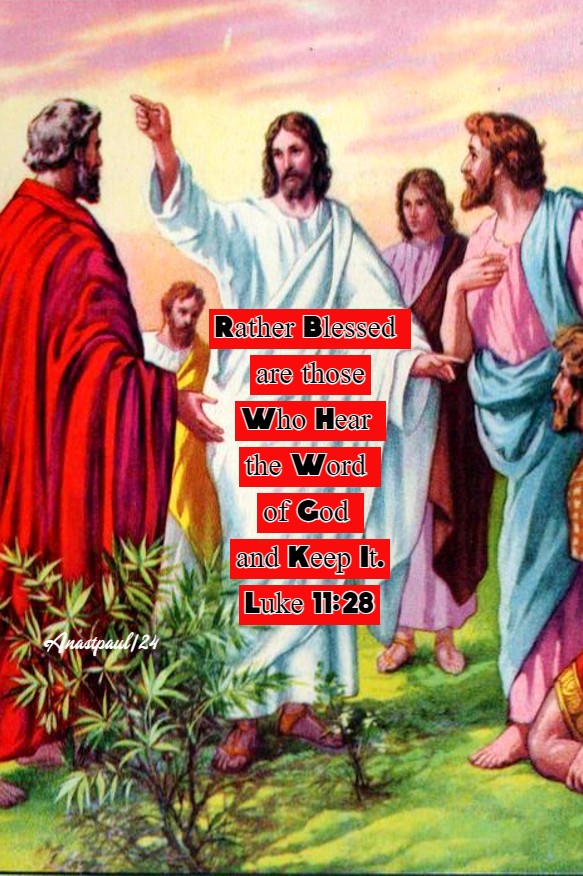
“Rather blessed are those who hear the Word of God and keep it.’”
Luke 11:28
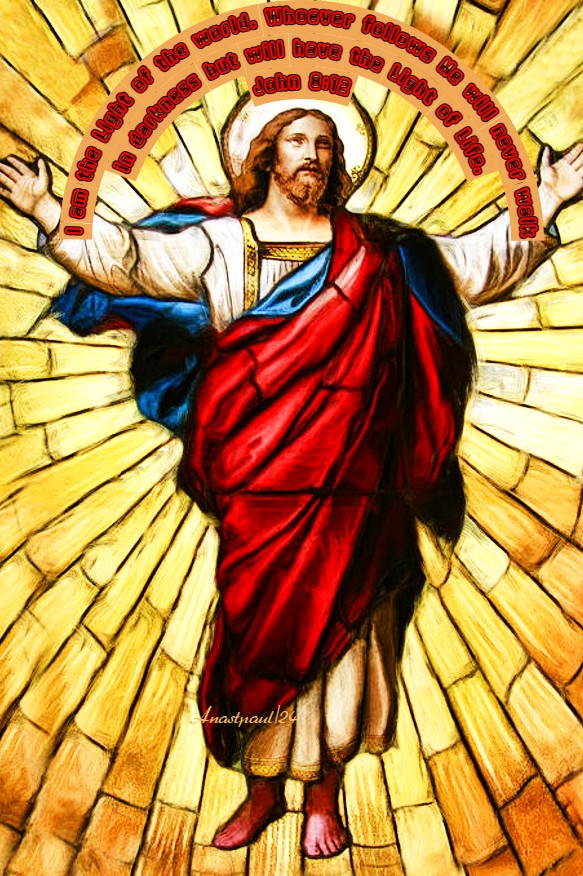
“I Am the Light of the world. Whoever follows Me will never walk in darkness but will have the Light of Life.”
John 8:12
“Our hearts were made for Thee, O God And restless must they be Until, O God, this grace accord, Until they rest in Thee!”
St Augustine (354-430) Father and Doctor of the Church
“The obedience of the Star calls us to imitate its humble service: to be servants, as best we can, of the grace which invites all men to find Christ.”
St Pope Leo the Great (400-461) Father and Doctor of the Church
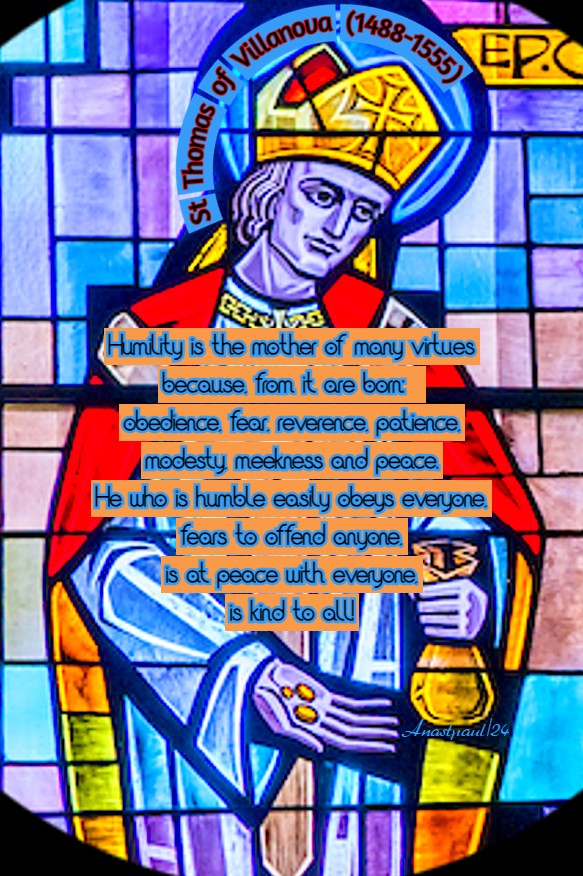
“Humility is the mother of many virtues because, from it are born: obedience, fear, reverence, patience, modesty, meekness and peace. He who is humble easily obeys everyone, fears to offend anyone, is at peace with everyone, is kind to all!”
St Thomas of Villanova OSA (1488-1555)
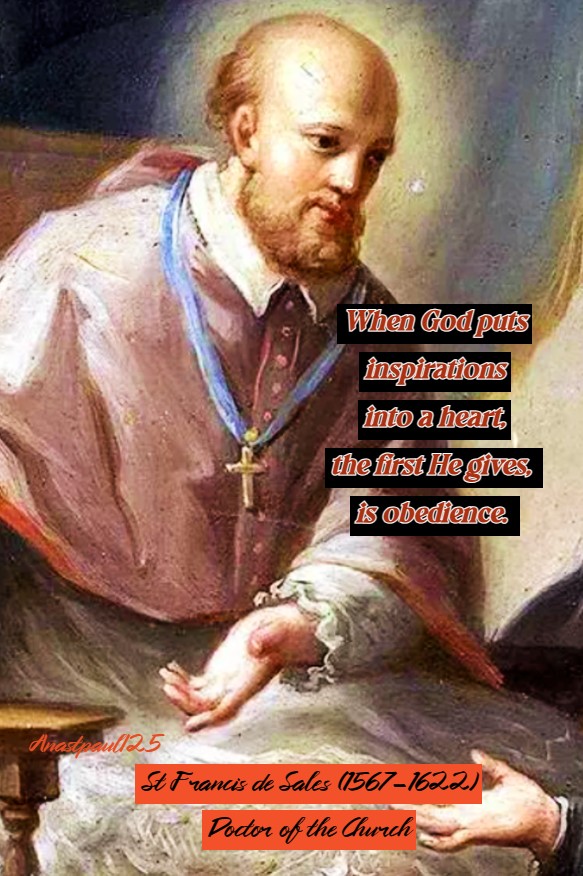
“When God puts inspirations into a heart, the first He gives, is obedience. ”
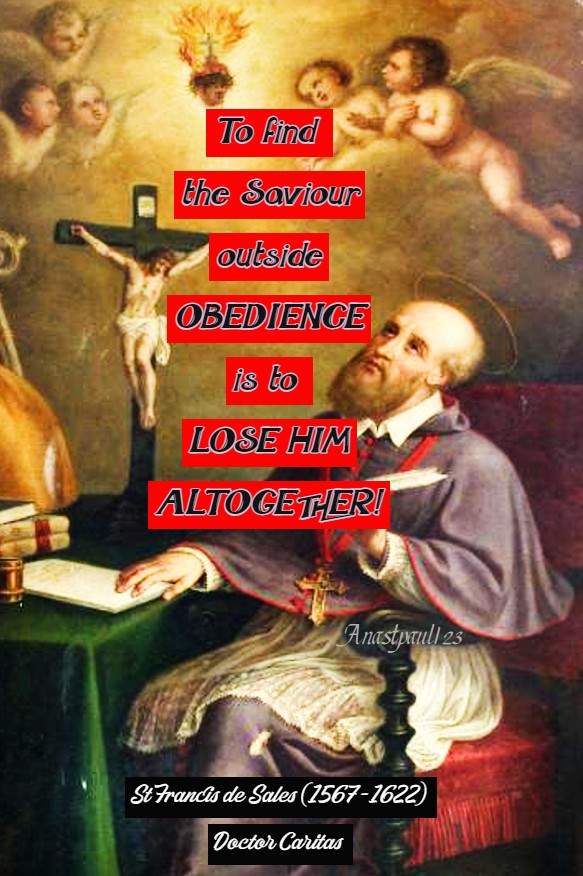
“To find the Saviour outside obedience, is to lose Him altogether.”
St Francis de Sales (1567-1622) Doctor of the Church
One Minute Reflection – 8 January – “The Month of the Holy Name of Jesus and the Holy Family” – Within the Octave of The Epiphany –Isaias 60:1-6; Matthew 2:1-12 – Scripture search here: https://www.drbo.org/
“… They fell down and worshipped him. Then, opening their treasures, they offered him gifts, gold and frankincense and myrrh.” … Matthew 2:11
REFLECTION – “But if, with careful thought, we wish to see how their threefold kind of gift, is also offered by all who come to Christ, with the foot of faith — is not the same offering repeated in the hearts of true believers? For he who acknowledges ,Christ the King of the universe brings Gold from the treasure of his heart, he who believes the Only-begotten of God to have united man’s true nature to Himself, offers Myrrh and he who confesses Him, in no wise, inferior to the Father’s Majesty, worships Him in a manner, with Incense.” … St Pope Leo the Great (400-461) Father and Doctor of the Church
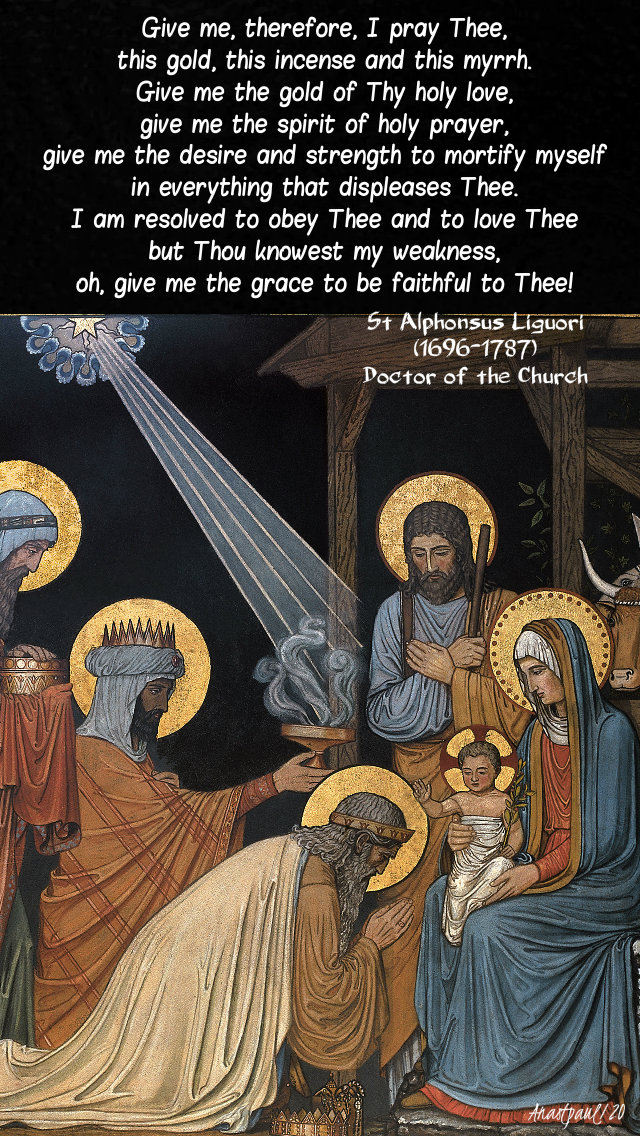
PRAYER – “Give me, therefore, I pray Thee, this gold, this incense and this myrrh. Give me the gold of Thy holy love, give me the spirit of holy prayer, give me the desire and strength to mortify myself in everything that displeases Thee. I am resolved to obey Thee and to love Thee but Thou knowest my weakness, oh, give me the grace to be faithful to Thee!” … St Alphonsus Liguori (1696-1787) Doctor of the Church
Our Morning Offering – 8 January – “The Month of the Most Holy Name of Jesus and of the Holy Family” – Within the Octave of The Epiphany
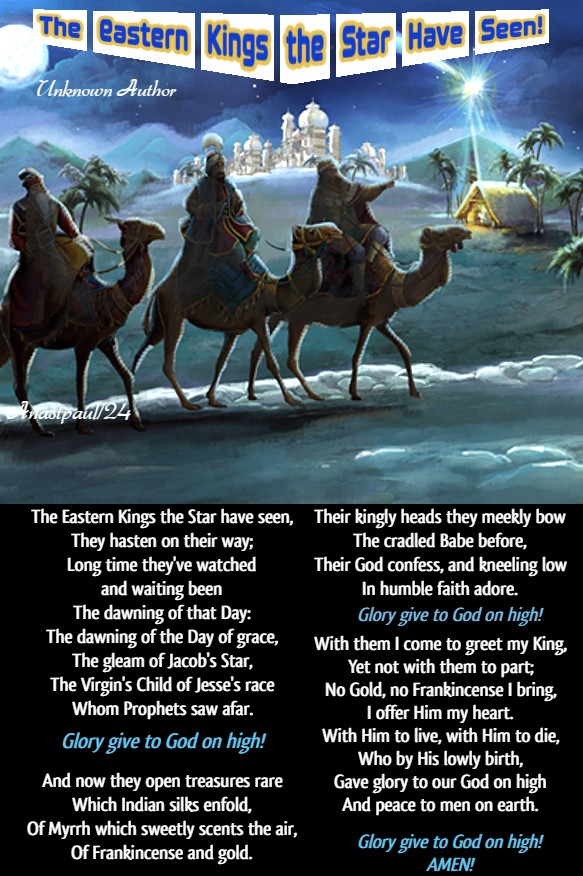
The Eastern Kings the Star Have Seen! Unknown Author
The Eastern Kings the Star have seen, They hasten on their way; Long time they’ve watched and waiting been The dawning of that Day: The dawning of the Day of grace, The gleam of Jacob’s Star, The Virgin’s Child of Jesse’s race Whom Prophets saw afar.
Glory give to God on high!
And now they open treasures rare Which Indian silks enfold, Of Myrrh which sweetly scents the air, Of Frankincense and gold. Their kingly heads they meekly bow The cradled Babe before, Their God confess, and kneeling low In humble faith adore.
Glory give to God on high!
With them I come to greet my King, Yet not with them to part; No Gold, no Frankincense I bring, I offer Him my heart. With Him to live, with Him to die, Who by His lowly birth, Gave glory to our God on high And peace to men on earth.
Saint of the Day – 8 January – Blessed Edward Waterson (Died 1593) Priest and Martyr, Missionary to his own beleagured English Catholic people under the horrors set in motion by Henry VIII and now being perpetuated by his daughter Elizabeth I. Edward was born in London, England and died by being hanged, drawn and quartered on 8 January 1593 at Newcastle-on-Tyne, England. The prison horses refused to drag Edward to the scaffold and when the guards finally got him there, the ladder for climbing to the scaffold platform, of its own volition jerked to and fro to keep them from climbing it, until Edward himself, made the Sign of the Cross over it and it settled into its position. Additional Memorial – 29 October as one of the Martyrs of Douai.
Hung, drawn and quartered
Little is known of the English Martyr, Blessed Edward Waterson, before 1588. In that year, this young English Protestant, apparently a man of some status, stopped off at Rome on the way back from a trip he had made to Turkey in the company of some British merchants. He had an unusual story to tell about the Turkish visit. There he had met a wealthy Turk who had taken such a liking to him that he offered him the hand of his daughter in marriage. With one proviso. If he chose the girl, he must first convert to Islam.
Whether the young lady appealed to Edward, the proviso did not. Sorry, he answered, he would not abandon his faith in Christ. Travelling home Edward stopped in Rome and there he must have told the tale of his refusal at the English College in Rome. This college was an ancient hospice for British pilgrims which, in 1579 had also been turned into a Seminary for the training of English Catholic young men for the secular Priesthood and the dangerous Apostolate of the English mission. Even though now a Seminary, the college still had accommodations for pilgrims and visitors to Rome. Edward’s name is entered in its Pilgrims’ Book from 29 November to 11 December 1588.
For the young Englishman who had refused to convert to Islam, that was a momentous fortnight. While at the College, he asked to be instructed in the Catholic beliefs. He received the instructions and converted to the Catholic faith of his English forefathers. Whether this decision was impromptu or long-maturing is not known.
One of the Martyrs of Douai
Edward was not even content to remain a layman. In December he left Rome for the English College at Reims, France, to enroll as a student for the Priesthood. On completing his training, he was Ordained a Priest on 11 March 1592. He had not shown himself to be a brilliant student but he was acknowledged to be a model of humility and self-denial.
In June 1592, the Church authorities at Reims sent the new Priest back to England to begin his work. He knew, of course, that he was courting death. Particularly over the past seven years, many English Douai Seminary Priests had been executed for treason as a result of a law enacted against Priests in 1585. But so great was Edward’s zeal that he declared that if given the choice between owning all France for a year or going to England on the mission, he would choose the latter.
Father Waterson’s Apostolate as a Missionary was very creditable. It was also very brief., around a year. In the summer of 1593 he was arrested and put in harsh confinement at Newcastle-upon-Tyne. At Newcastle, too, he was tried and condemned to death for functioning as a Priest. Execution was set for 7 January 1594.
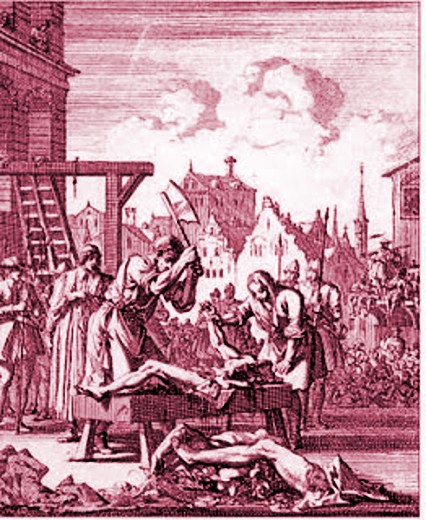
Those who attended his execution at Newcastle reported some unusual happenings. Catholic Archdeacon Trollope said that when the young Priest was tied down to the hurdle (the wicker sledge used to drag traitors to the place of execution), the horses refused to pull it, so he had to be walked to the scaffold. At the gallows, too, the ladder by which he had to mount the platform began to jerk free and twist about on its own. Only when Father Waterson made the Sign of the Cross over it did it come to rest against the platform. According to the law of execution in treasonable cases, his body was cut down from the hangman’s rope before he was dead, disemboweled and cut into four quarters.
Edward Waterson was Beatified by Pope Pius XI in 1929. Twice tested for his Faith in the Lord Jesus Christ, he had passed the test. He is an interesting illustration of how varied in background were the men and women who were Martyred during the English Reformation. Their witness to the Faith is a many-splendoured memorial!
St Apollinaris the Apologist (Died 2nd Century) Confessor, Defender of the True Faith against heretics, Writer, renowned Scholar. Bishop, Apologist. The Roman Martyrology states: “In Hierapolis in Phrygia, in today’s Turkey, Saint Apollinaris, Bishop, who shone under the Emperor Marcus Aurelius for doctrine and holiness.” A Courageous and Zealous Life: https://anastpaul.com/2022/01/08/saint-of-the-day-8-january-saint-apollinaris-the-apologist-died-2nd-century/
St Athelm of Canterbury St Atticus of Constantinople St Carterius of Caesarea
Blessed Edward Waterson (Died 1593) Priest and Martyr
St Ergnad of Ulster St Erhard of Regensburg St Eugenian of Autun St Garibaldus of Regensburg St Gudule of Brussels St Helladius St Julian of Beauvais St Lucian of Beauvais St Maximian of Beauvais St Maximus of Pavia Bl Nathalan of Aberdeen St Patiens of Metz St Pega of Peakirk
St Severinus of Noricum (c410-482) Abbot, Hermit, Missionary, the “Apostle to Noricum” (Noricum is the Latin name for the Celtic Kingdom or Federation of Tribes which included most of modern Austria and part of Slovenia). He established Monasteries and refuge centres for those stricken by war. Severinus was graced with the gifts of prophecy and miracles. Biography: https://anastpaul.com/2023/01/08/saint-of-the-day-8-january-saint-severinus-of-noricum-c-410-482-the-apostle-to-noricum/
St Theophilus the Martyr St Thorfinn St Wulsin of Sherborne
Martyrs of Greece – 9 Saints: A group of Christians honoured in Greece as Martyrs, but we have no details about their lives or deaths – Euctus, Flix, Januarius, Lucius, Palladius, Piscus, Rusticus, Secundus and Timotheus
Martyrs of Terni – 4 Saints: A group of Christian soldiers in the imperial Roman army. Executed during the persecutions of Emperor Claudius. Martyrs. – Carbonanus, Claudius, Planus and Tibudianus. They were martyred in 270 in Terni, Italy.
Thought for the Day – 7 January – Meditations with Fr Richard Frederick Clarke SJ (1839-1900)
Meditations for Christmastide “The Holy Infancy” From “The Devout Year” By Fr Richard Frederick Clarke SJ (1839-1900)
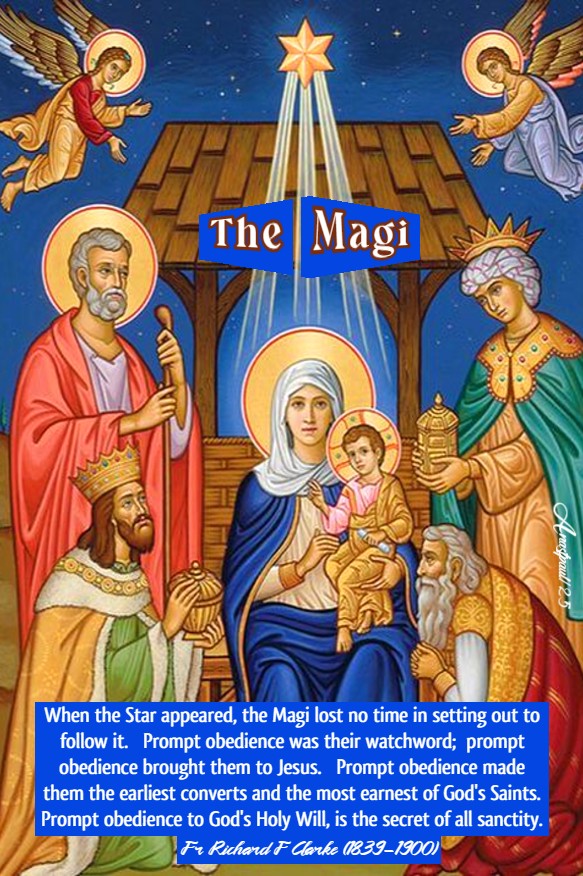
“The Magi”
+1. The three Kings who came to do honour to Jesus on the Feast of the Epiphany are also called the three Magi , or three Wise Men They were the rulers of an eastern tribe at some distance from Bethlehem. Like Abraham, they left home and country at God’s command. If Abraham thus deserved to be called the Friend of God and Father of the faithful, so these Wise Men were not only the subjects but also, the friends of Christ and the spiritual fathers of all faithful Catholics. We are their spiritual offspring; the innumerable company of Christians in Heaven willall have to thank them for having led the way to Jesus.
+2. What led them to this long and apparently aimless journey? In their tribe there had long existed a tradition that one day a Star would appear which the Princes of the tribe were to follow and following it, to find the King of Heaven Incarnate upon earth. How many generations had looked and longed for the promised sign ! Yet it came at last. God always grants, sooner or later, the desires of those who long for Him.
+3. When the Star appeared, the Magi lost no time in setting out to follow it. Prompt obedience was their watchword; prompt obedience brought them to Jesus. Prompt obedience made them the earliest converts and the most earnest of God’s Saints. Prompt obedience to God’s Holy Will, is the secret of all sanctity.
Quote/s of the Day – 7 January – “The Month of the Holy Name of Jesus and the Holy Family”and the Feast of the Holy Family
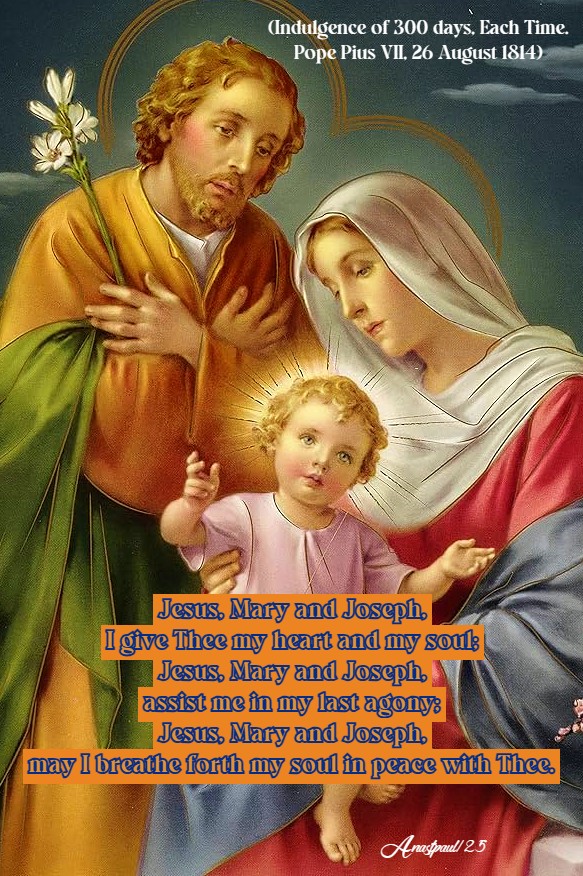
Indulgenced Holy Family Aspiration
“Jesus, Mary and Joseph, I give Thee my heart and my soul; Jesus, Mary and Joseph, assist me in my last agony; Jesus, Mary and Joseph, may I breathe forth my soul in peace with Thee.”
(Indulgence of 300 days, Each Time. Pope Pius VII, 26 August 1814)
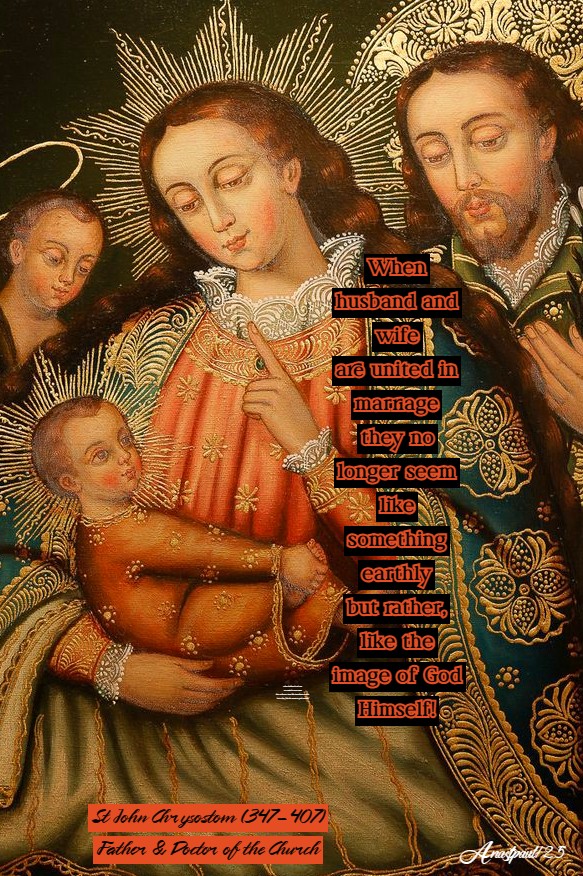
“When husband and wife are united in marriage they no longer seem like something earthly but rather, like the image of God Himself!”
St John Chrysostom (347-407) Father & Doctor of the Church
“The One Who is the Wisdom of the Father, put His arms around her neck, the One Who is the strength, that gives movement to everything, sat in her arms. He Who is the rest of souls, (Mt 11:29) rested on her motherly breast. … Filled with the Holy Spirit, she held Him close to her heart … She never had enough of seeing Him or of hearing Him, ,,, Thus Mary grew evermore in love and her mind was unceasingly attached to Divine contemplation.”
St Amadeus of Lausanne (1108-1159)
“Since God could choose for the Guardian of His Son, the man in the world, the most accomplished in all sorts of perfections, according to the dignity and excellence of his Charge, Who was His most Glorious Son, the universal Prince of Heaven and earth, how could it be that being able, He did not will it and did not do it? There is, then, NO DOUBT that St Joseph was endowed with all the graces and all the gifts that were required for the care which the Eternal Father willed to give him, of the temporal and domestic economy of our Lord and of the guidance of his family … ”
One Minute Reflection – 7 January – “The Month of the Holy Name of Jesus and the Holy Family” – Within the Octave of Epiphany – Feast of the Holy Family – Isaias 60:1-6; Matthew 2:1-12 – Scripture search here: https://www.drbo.org/
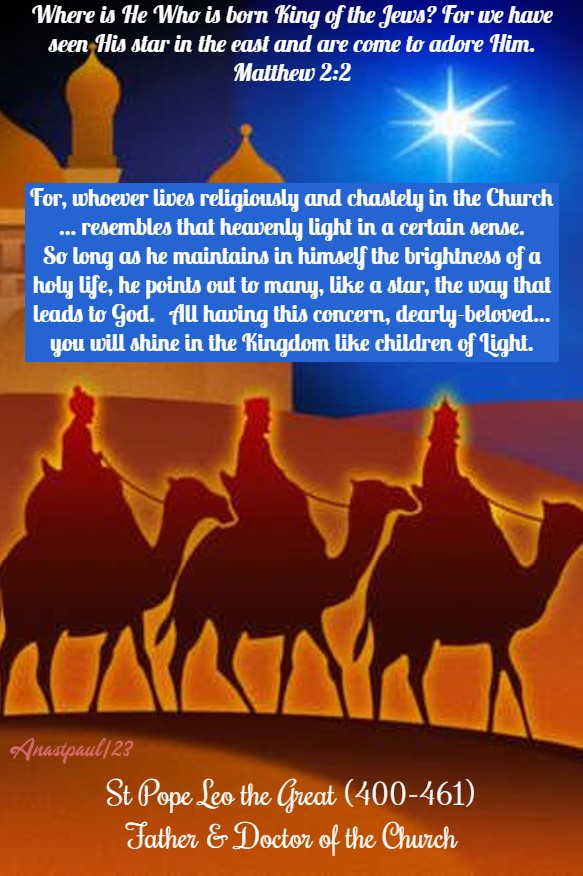
“Where is He Who is born King of the Jews? For we have seen His Star in the east and are come to adore Him.” – Matthew 2:2
REFLECTION – “All these things we know to have taken place ever since the Three Wise Men, aroused in their far-off land, were led by a Star to recognise and worship the King of Heaven and earth. The responsiveness of that Star exhorts us to imitate it’s obedience and, as much as we can, to make ourselves servants of that grace which invites us all to Christ. For, whoever lives religiously and chastely in the Church and “sets his mind on the things which are above, not on the things that are upon the earth” (Col 3:2) resembles that heavenly light in a certain sense. So long as he maintains, in himself, the brightness of a holy life, he points out to many, like a Star, the way that leads to God. All having this concern, dearly-beloved… you will shine in the Kingdom like children of Light.”… St Pope Leo the Great (400-461) Father & Doctor of the Church.
PRAYER – O God, Thou Who by the guidance of a star this day revealed Thy Only-begotten Son to the Gentiles, mercifully grant that we, who know Thee now by faith, may come to behold Thee in glory. Through the same Jesus Christ, Thy Son our Lord, Who lives and reigns with Thee, in the unity of the Holy Ghost, God, world without end. Amen (Collect).
Our Morning Offering – 7 January – Within the Octave of Epiphany – “The Month of the Most Holy Name of Jesus” and the Feast of the Holy Family
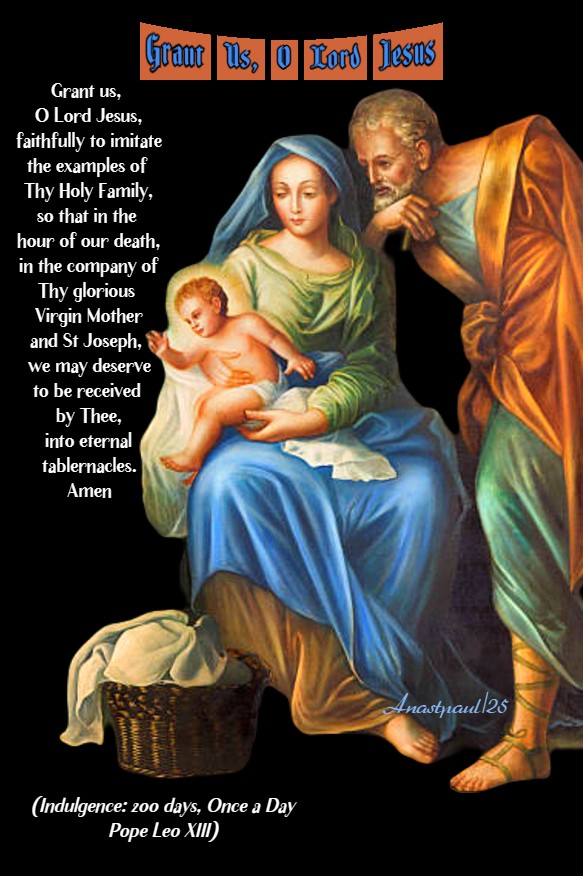
Grant Us, O Lord Jesus Indulgenced Prayer in Honour of the Holy Family (Indulgence: 200 days, Once a Day Pope Leo XIII)
Grant us, O Lord Jesus, faithfully to imitate the examples of Thy Holy Family, so that in the hour of our death, in the company of Thy glorious Virgin Mother and St Joseph, we may deserve to be received by Thee, into eternal tablernacles. Amen
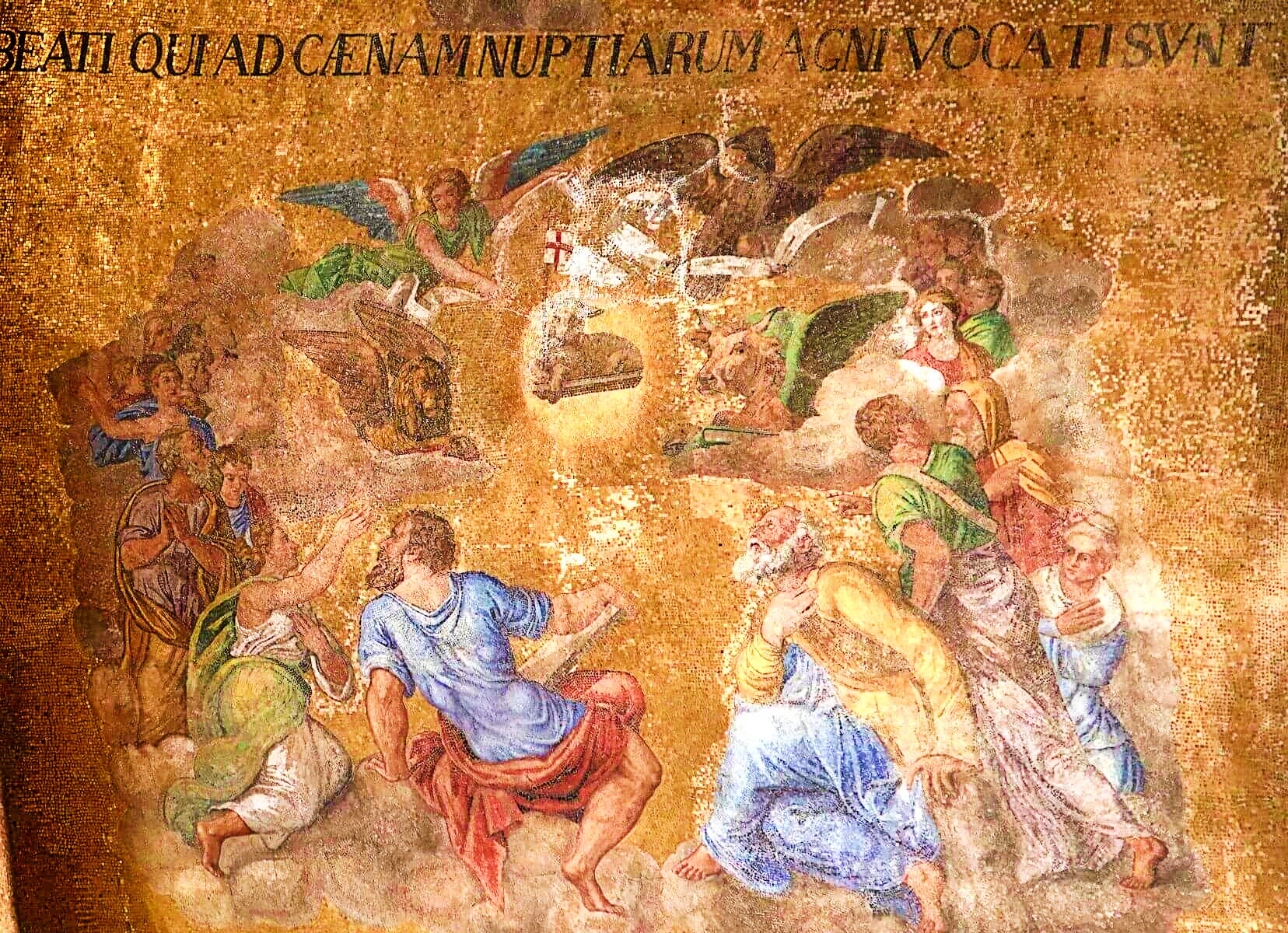
Saint of the Day – 7 January – Blessed Albert of Siena ECMC (Died c1181) Hermit of St Romuald’s Camaldolese Hermits of Mount Corona, Pilgrim, Penitent, Ascetic, Miracle-worker. Born at Asciano, near Siena in the early 1100s and died in Montealceto not far from his birth Town in c1181 of natural causes. The name Albert means – shining through nobility (Old High German). Also known as – Alberto.
Mosaic in the Cathedral of San Marco in Venice: The Blessed Albert Enter Heaven.
From his earliest childhood, Albert gave proofs of his future holiness by taking food from his mother only at certain times, as if he wanted to fast and, when he was a little older, he set aside three days a week for fasting.
In addition, he made great and long pilgrimages – to Rome, to Apulia, to Mount Gargano, to Venice, to the Promised Land and to Compostella and lived as a Hermit after his return.
The Camaldolese Monk Anselm, often came to him, where they would scourge each other to tame the flesh. Albert then went to Poitou to St William , who had previously been a Count but had given up all worldly riches and honours and become a Monk.
Albert increased his mortification and penances. He put on hair clothes, slept on the bare ground, often stayed awake all night, ate and drank little and because, he wanted to earn his bread by manual labour, like his forefathers in the Egyptian desert, he turned to farming.
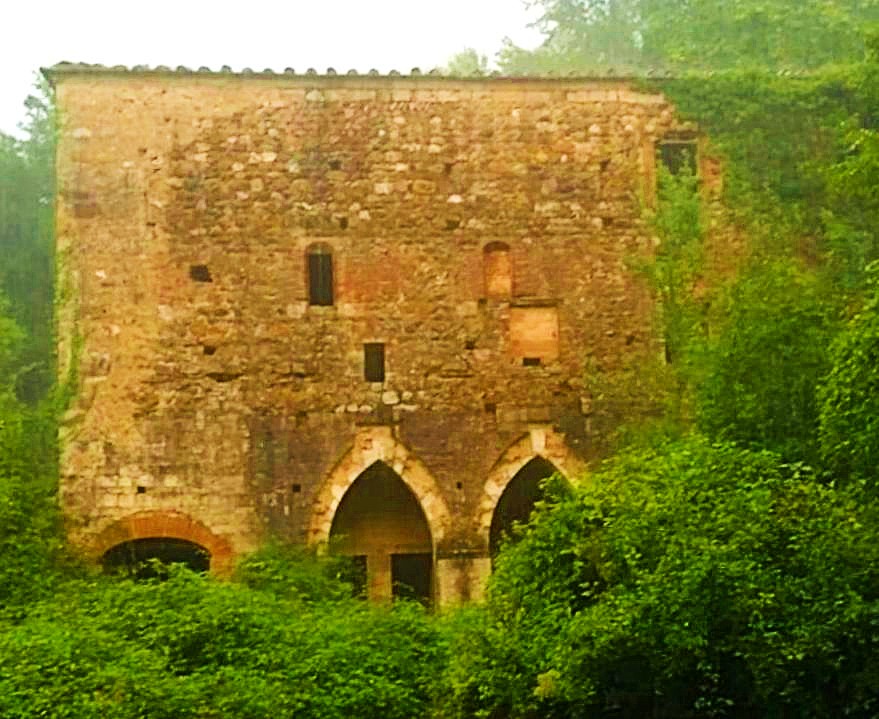
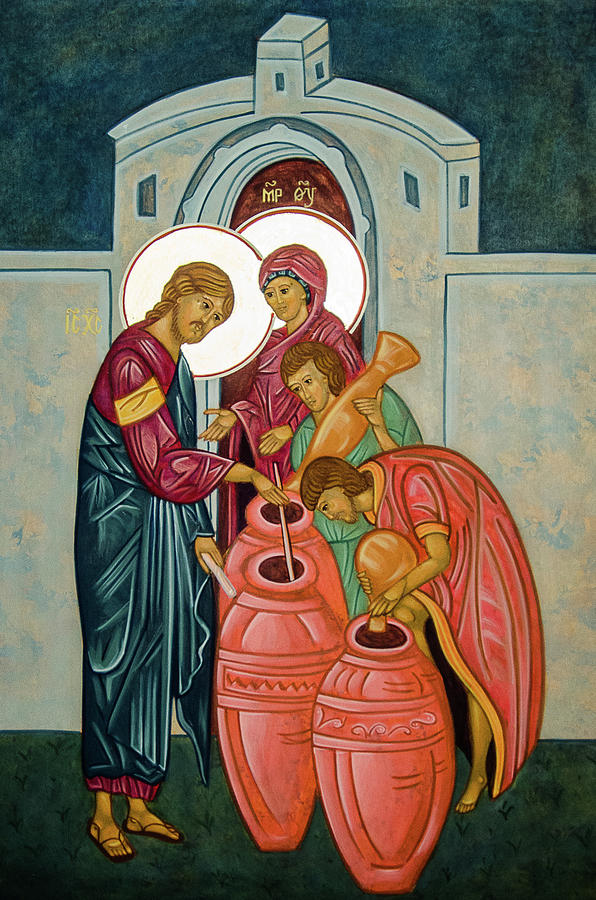
Through his intercession, many and varied miracles occurred, in particular water was often turned into wine through his prayers. But because he was held in great esteem by the people because of these miracles, Albert withdrew into solitude again and for this purpose went with his relative Grifolus to Mount Toricelli which, until there arrival had remained un inhabited due to its reputation for violent storms and high winds.
Blessed Albert’s Hermitage on Mount Toricelli
Here, he and his cousin, Grifolus, themselves little cells and Albert drove away the storms and winds by prayer which, prayer remains in force to this day, preventing the recurrence and return of sorms and high winds!
Albert refreshed the workers who came to assist the cultivation of the land, with a small vessel of wine which multiplied miraculously.
After Albert had lived a holy life on this mountain for 27 years, it happened that one day, while he was working in the fields, a hare ran up the wide sleeve of his habit. Those present wanted to kill the animal but he would not allow that and instead set it free. But the animal had hardly been outside when it jumped at him again to hide because it sensed the danger of nearby hunters. Because of this incident, Albert is depicted in paintings with a hare sitting in his sleeve.
During his holy life he had to endure many snares from the devil, who particularly attacked him in the form of a woman but he remained victorious and drove him out of his cell with blows. But, when the saint felt strong temptations, he rolled himself in nettles, following the example of St Benedict.
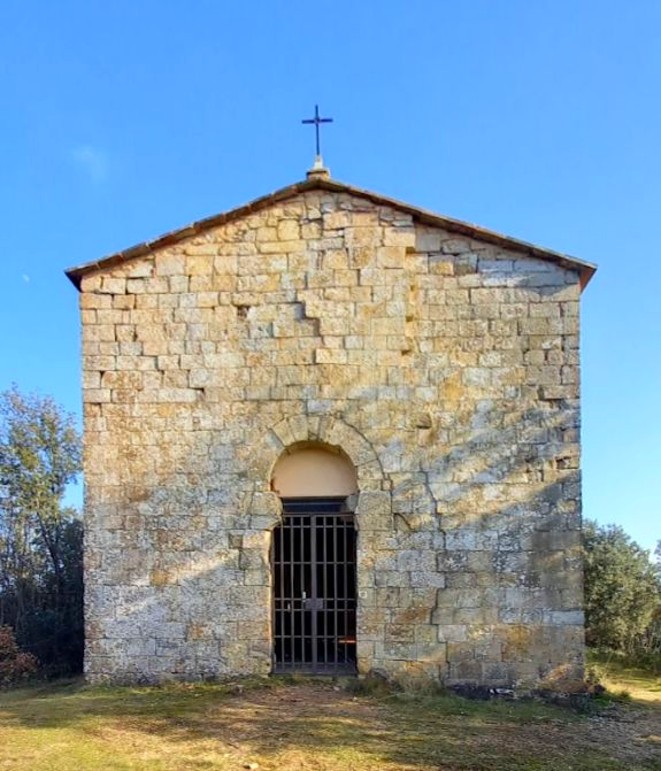
According to some traditions, Albert last lived in the Hermitage of Montalceto, not far from his hometown, He died there in the peace of Christ around the year 1181.
Blessed Albert of Siena (Died c1181) Hermit St Aldric of Le Mans Bl Ambrose Fernandez St Anastasius of Sens St Brannock of Braunton St Candida of Greece St Cedd St Clerus of Antioch St Crispin I of Pavia St Cronan Beg St Emilian of Saujon St Felix of Heraclea St Giuliano of Gozzano (c350-c391) Deacon, Missionary St Januarius of Heraclea St Julian of Cagliari St Kentigerna
St Lucian of Antioch (Died 312) Confessor, Priest, Marty, Teacher, Theologian, Writer, Founder of the renowned School of Antioch. The Roman Martyrology reads: “The birthday of the blessed Lucian. a Priest of the Church of Antioch and Martyr, who was distinguished for his learning and eloquence. He suffered at Nicomedia for the confession of Christ, in the persecution of Galerius Maximian and was buried at Helenopolis, in Bithynia. His praises have been proclaimed by St John Chrysostom.” His Life and Death: https://anastpaul.com/2024/01/07/saint-of-the-day-7-january-saint-lucian-of-antioch-died-312-confessor-priest-martyr/
St Pallada of Greece St Polyeuctus of Melitene St Reinhold of Cologne St Spolicostus of Greece St Theodore of Egypt St Tillo of Solignac
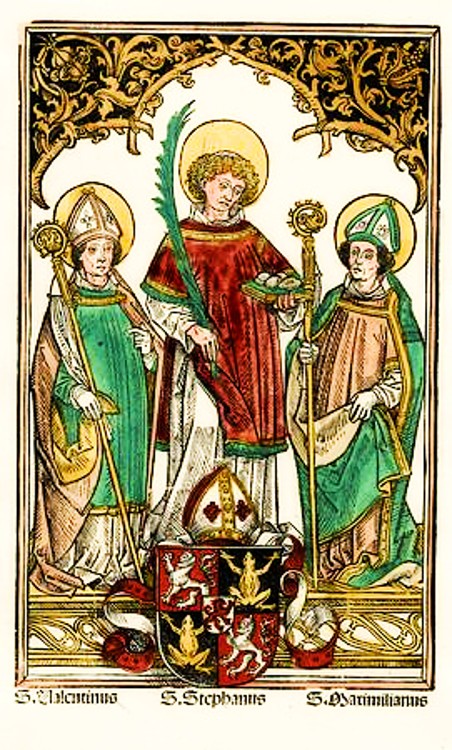
St Valentine of Passau (Died 475) Bishop in Passau in the Rhaetia region, Switzerland, an area in the border region of modern Italy, Austria and Switzerland, Monk, Abbot, Missionary, Hermit, Miracle-worker. Died on 7 January 475 at Mais, Tyrol, Austria of natural causes. Patronages – against convulsions, against cramps/stomach pain, against epilepsy, against gout, against plague/epidemics, against demonic possession, of cattle diseases, of pilgrims, poor people, City and Diocese of Passau. Biography: https://anastpaul.com/2023/01/07/saint-of-the-day-7january-st-valentine-of-passau-died-475-bishop/
St Virginia of Ste-Verge Bl Wittikund of Westphalia
Thought for the Day – 6 January – Meditations with Fr Richard Frederick Clarke SJ (1839-1900)
Meditations for Christmastide – “The Holy Infancy” From “The Devout Year” By Fr Richard Frederick Clarke SJ (1839-1900)
“The Epiphany”
+1. The Sun of Justice Who rose on Christmas morn did not shine on the Jews only. The Light Who shone upon the rejoicing earth was a Light Who was to enlighten the Gentiles as well as to be the glory of the people of Israel. The Feast of the Epiphany was the declaration of the world-wide dominion of the new-born King. It proclaimed that the kingdoms of this world were to be the Kingdoms of the Lord and of His Christ. Rejoice with the Infant King in His universal Sovereignty , and pray that His Kingdom may speedily be acknowledged by all His subjects.
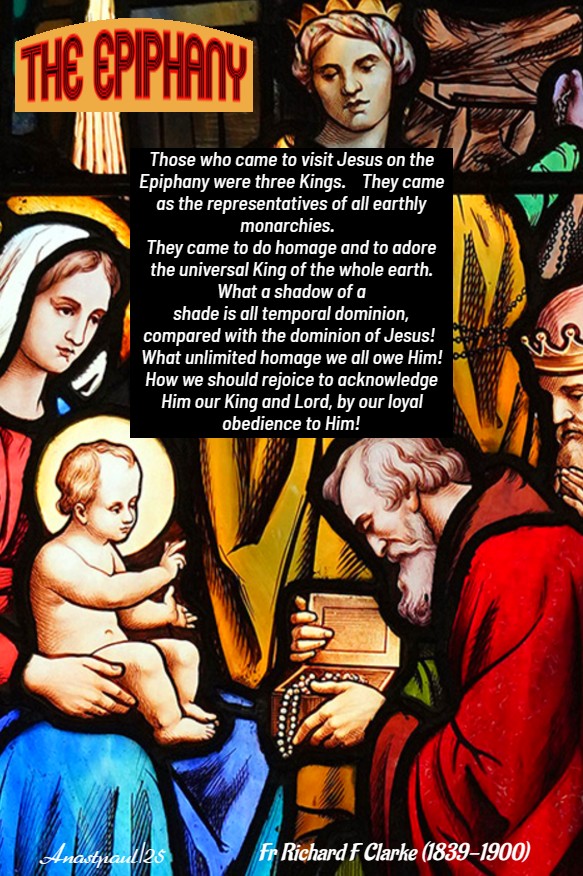
+2. Those who came to visit Jesus on the Epiphany were three Kings. They came as the representatives of all earthly monarchies. They came to do homage and to adore the universal King of the whole earth. What a shadow of a shade is all temporal dominion, compared with the dominion of Jesus! What unlimited homage we all owe Him! How we should rejoice to acknowledge Him our King and Lord, by our loyal obedience to Him!
+3. This festival is especially the festival of converts. Our ancestors were once pagans until the Vicar of Christ sent to our beloved country, the apostle who proclaimed to us the Faith of Christ This Faith in many lands, has faded now and mockery sits on Juda’s throne. Alas, to think that those who had the inheritance of the Faith have lost it How can I ever be grateful enough for the Light Who shines on me!
Quote/s of the Day – 6 January – The Epiphany of the Lord
“We have seen His Star in the east and are come to adore Him.”
Matthew 2:2
“The obedience of the Star calls us to imitate its humble service: to be servants, as best we can, of the grace which invites all men to find Christ.”
St Pope Leo the Great (400-461) Father and Doctor of the Church
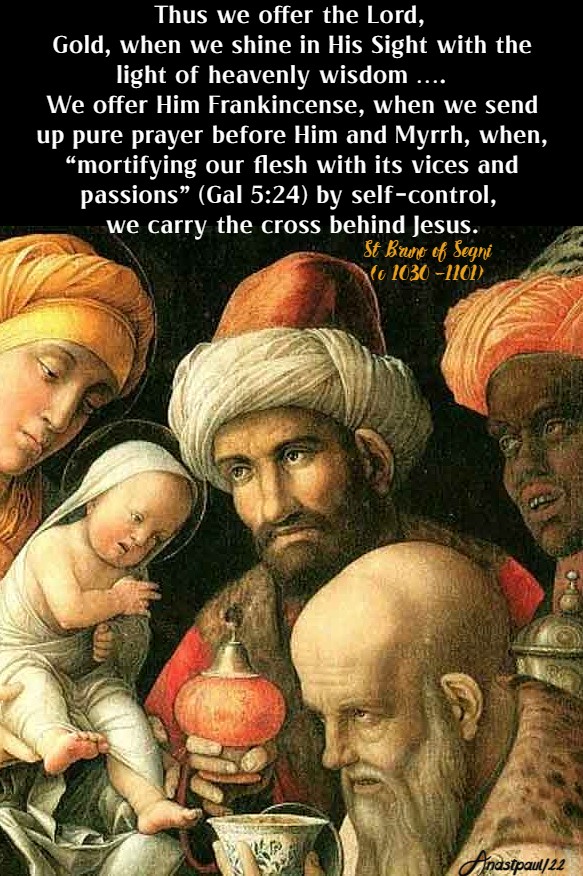
“Thus we offer the Lord, Gold, when we shine in His Sight with the Light of heavenly wisdom …. We offer Him Frankincense, when we send up pure prayer before Him and Myrrh, when, “mortifying our flesh with its vices and passions” (Gal 5:24) by self-control, we carry the cross behind Jesus.”
St Bruno of Segni O.Cart. (c 1030 -1101)
Bishop (1st Sermon on the Epiphany PL 165, 863).
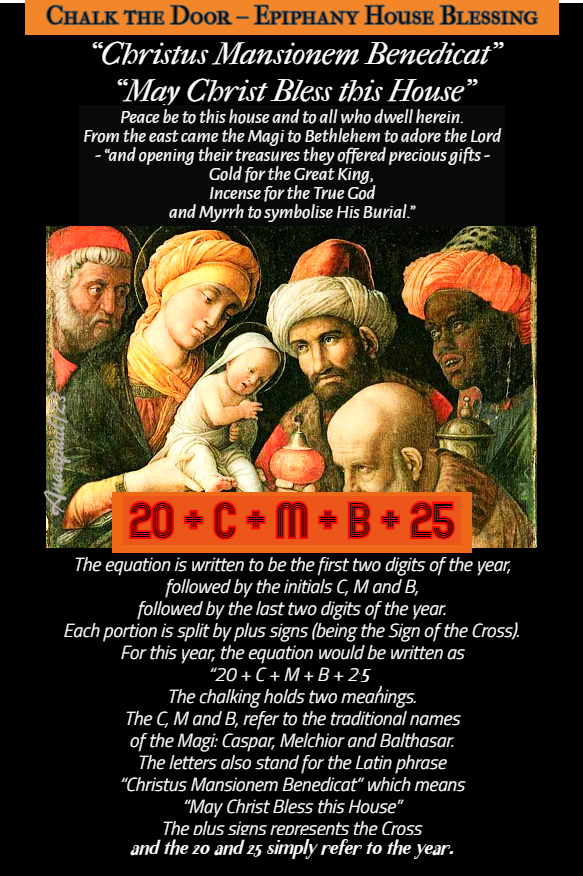
Chalk the Door – Epiphany House Blessing 20 C+M+B 25
“Christus mansionem benedicat” Peace be to this house and to all who dwell herein. From the east came the Magi to Bethlehem to adore the Lord – “and opening their treasures they offered precious gifts – Gold for the Great King, Incense for the True God and Myrrh to symbolise His Burial.”
The equation is written to be the first two digits of the year, followed by the initials C, M and B, followed by the last two digits of the year. Each portion is split by plus signs (being the Sign of the Cross). For this year, the equation would be written as “20 + C + M + B + 25” The chalking holds two meanings. The C, M and B, refer to the traditional names of the Magi: Caspar, Melchior and Balthasar. The letters also stand for the Latin phrase “Christus Mansionem Benedicat” which means “May Christ Bless this House” The plus signs represents the Cross and the 20 and 25 simply refer to the year.
One Minute Reflection – 6 January – “The Month of the Holy Name of Jesus and the Holy Family” – The Epiphany of the Lord – Isaias 60:1-6, Matthew 2:1-12 – Scripture search here: https://www.drbo.org/
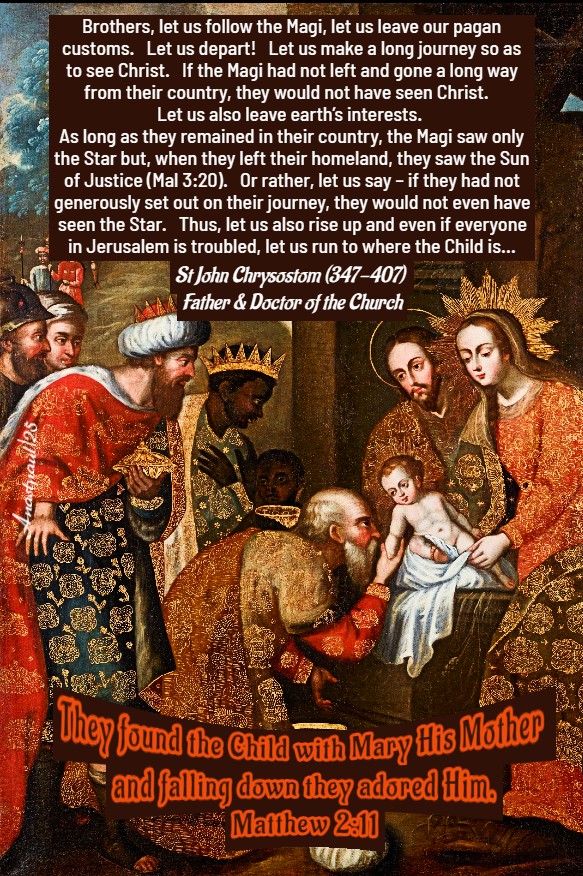
“They found the Child with Mary His Mother and falling down they adored Him.” – Matthew 2:11
REFLECTION – “Brothers, let us follow the Magi, let us leave our pagan customs. Let us depart! Let us make a long journey so as to see Christ. If the Magi had not left and gone a long way from their country, they would not have seen Christ. Let us also leave earth’s interests. As long as they remained in their country, the Magi saw only the Star but, when they left their homeland, they saw the Sun of Justice (Mal 3:20). Or rather, let us say – if they had not generously set out on their journey, they would not even have seen the Star. Thus, let us also rise up and even if everyone in Jerusalem is troubled, let us run to where the Child is…
“On entering the house, they found the Child with Mary His Mother. They prostrated themselves and did Him homage. Then they opened their coffers and presented him with gifts.” What motivated them to prostrate themselves before this Child? There was nothing remarkable in the Virgin or in the house, no object could have struck their eye and attracted them. And yet, not content with prostrating themselves, they opened their treasure, gifts which are not given to a human being but only to God – Frankincense and Myrrh symbolise Divinity. What was their reason for acting in this way? The same as that which made them decide to leave their homeland, to depart on this long journey. It was the Star, that is to say, the Light with which God had filled their heart and which led them, little by little, to a more perfect knowledge. If there had not been that Light, how could they have given such homage, when what they saw was so poor and humble? If there is not material grandeur but only a crib, a stable, a mother who is lacking in everything, it is so that you might see the Magi’s wisdom more clearly, so that you understand – they came not to a human being but to a God, to their Benefactor.” – St John Chrysostom (347-407) Bishop of Constantinople, Father & Doctor of the Church (Sermons on St Matthew 7-8).
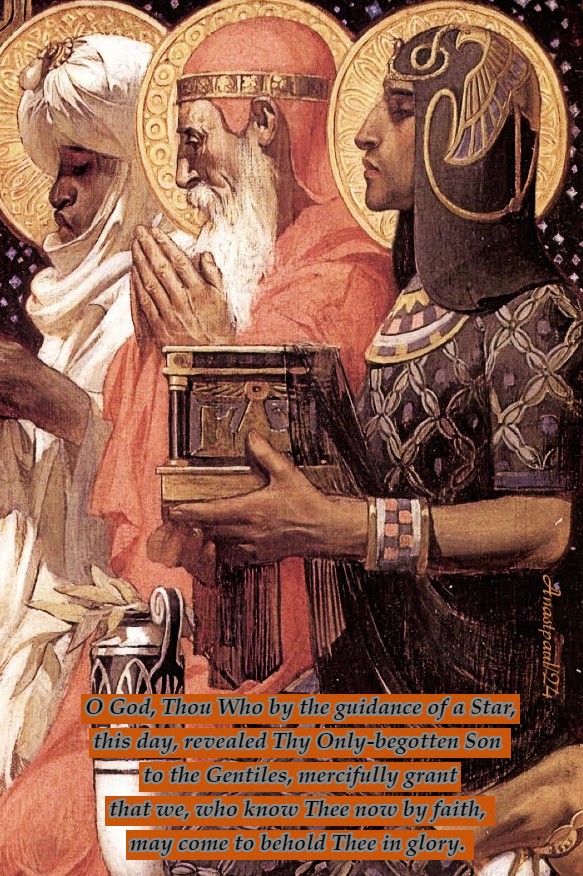
PRAYER – O God, Thou Who by the guidance of a star this day revealed Thy Only-begotten Son to the Gentiles, mercifully grant that we, who know Thee now by faith, may come to behold Thee in glory. Through the same Jesus Christ, Thy Son our Lord, Who lives and reigns with Thee, in the unity of the Holy Ghost, God, world without end. Amen (Collect).
Our Morning Offering – 6 January – “The Month of the Holy Name of Jesus and the Holy Family” – The Feast of The Epiphany of the Lord
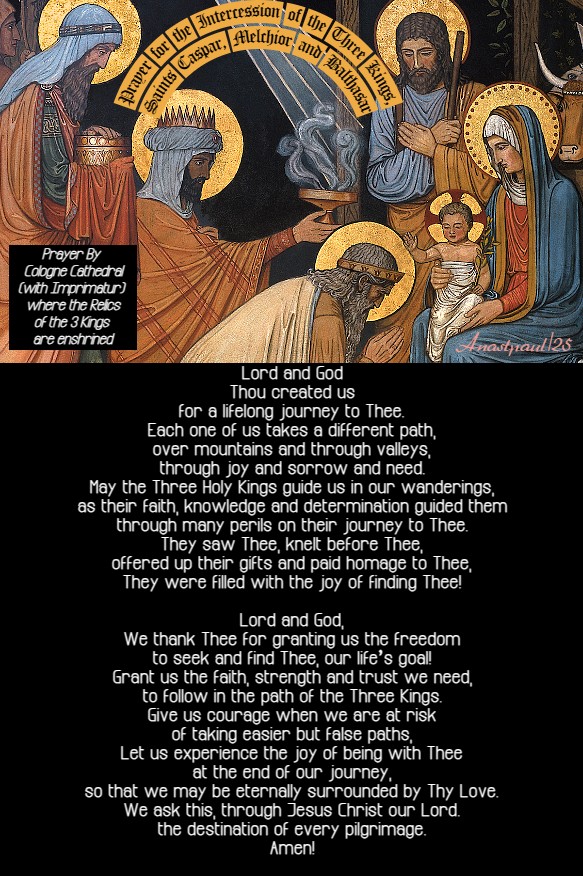
Prayer for the Intercession of the Three Kings, Saint Caspar, Saint Melchior and Saint Balthasar By Cologne Cathedral (An Imprimatur has been granted for this publication – Cologne Cathedral)
Lord and God Thou created us for a lifelong journey to Thee. Each one of us takes a different path, over mountains and through valleys, through joy and sorrow and need. May the Three Holy Kings guide us in our wanderings, as their faith, knowledge and determination guided them through many perils on their journey to Thee. They saw Thee, knelt before Thee, offered up their gifts and paid homage to Thee, They were filled with the joy of finding Thee!
Lord and God, We thank Thee for granting us the freedom to seek and find Thee, our life’s goal! Grant us the faith, strength and trust we need, to follow in the path of the Three Kings. Give us courage when we are at risk of taking easier but false paths, Let us experience the joy of being with Thee at the end of our journey, so that we may be eternally surrounded by Thy Love. We ask this, through Jesus Christ our Lord. the destination of every pilgrimage. Amen!
Saint of the Day – 6 January – Saint Nilammon of Geris (Died c404) Hermit. Born in Egypt in the 4th Century and died in the early 5th, c404 in Geris of natural but miraculous causes. Also known as – Nilammone, Nilamon, Nillammon. His name means: “the son of my people from the Nile” (Hebrew)
The Roman Martyrology reads today: “At Geris in Egypt, St Nilammon, Anchoret, who, whilst he was carried to a Bishopric againsat his will, gave up his soul to God in prayer.”
Nillammon lived as a recluse in a small stone-walled house near Geris (Gerrum) in Egypt. The people and the Patriarch Theophilos I of Alexandria – who was known for his passionate hostility to St John Chrysostom – wanted to Consecrate him as the Bishop of the City.
But he could not be persuaded to leave his little house near this Town which he had barricaded with stones and to accept the Episcopal dignity. He then locked himself in and would die praying, with scores of people pleading with him to reconsider his decision, standing outside. While he was still praying fevently to be released from this great honour but imposing Office, Nillammon died naturally.
The information about Nilammon comes from the Church Historian Sozomenus (c400-c450), who lived and worked shortly after Nilammon’s life.
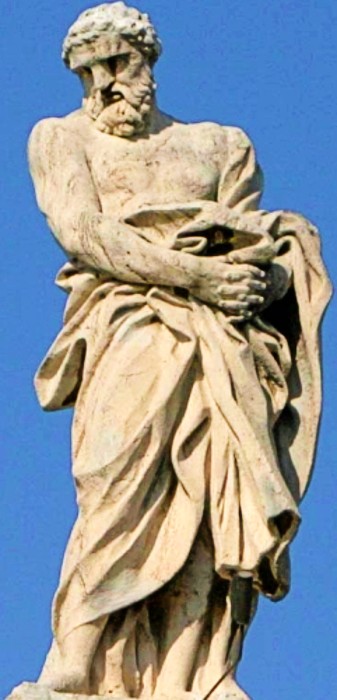
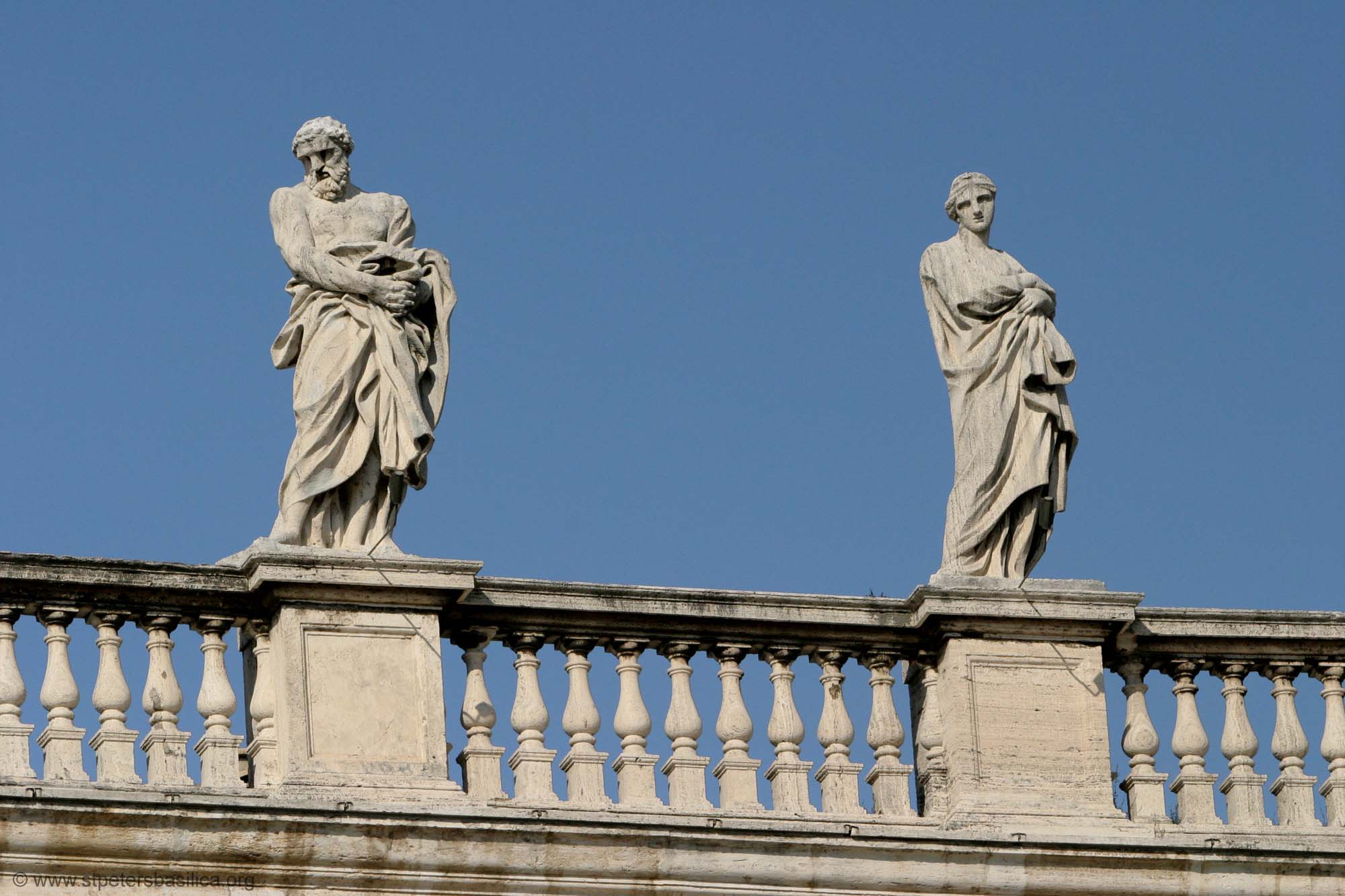
St Nilammon is one of the 140 Colonnade saints which adorn St Peter’s Basilica and surround the Square, below St Nilammon is on the left with St Fabiola on the right – this is the North Colonnade.
The Epiphany of the Lord Epiphany celebrates the visit of the three Kings or Magi (Wise Men) to the Christ Child, signifying the extension of salvation to the Gentiles. The date of Epiphany, one of the oldest Christian Feasts, is 6 January, the 12th day after Christmas. However, in some countries, the celebration of Epiphany is transferred to the Sunday which falls between 2 January and 8 January (inclusive). Greece, Ireland, Italy and Poland continue to observe Epiphany on 6 January as do traditional Catholics throughout the world. Because Epiphany is one of the most important Feasts, it is a Holy Day of Obligation.
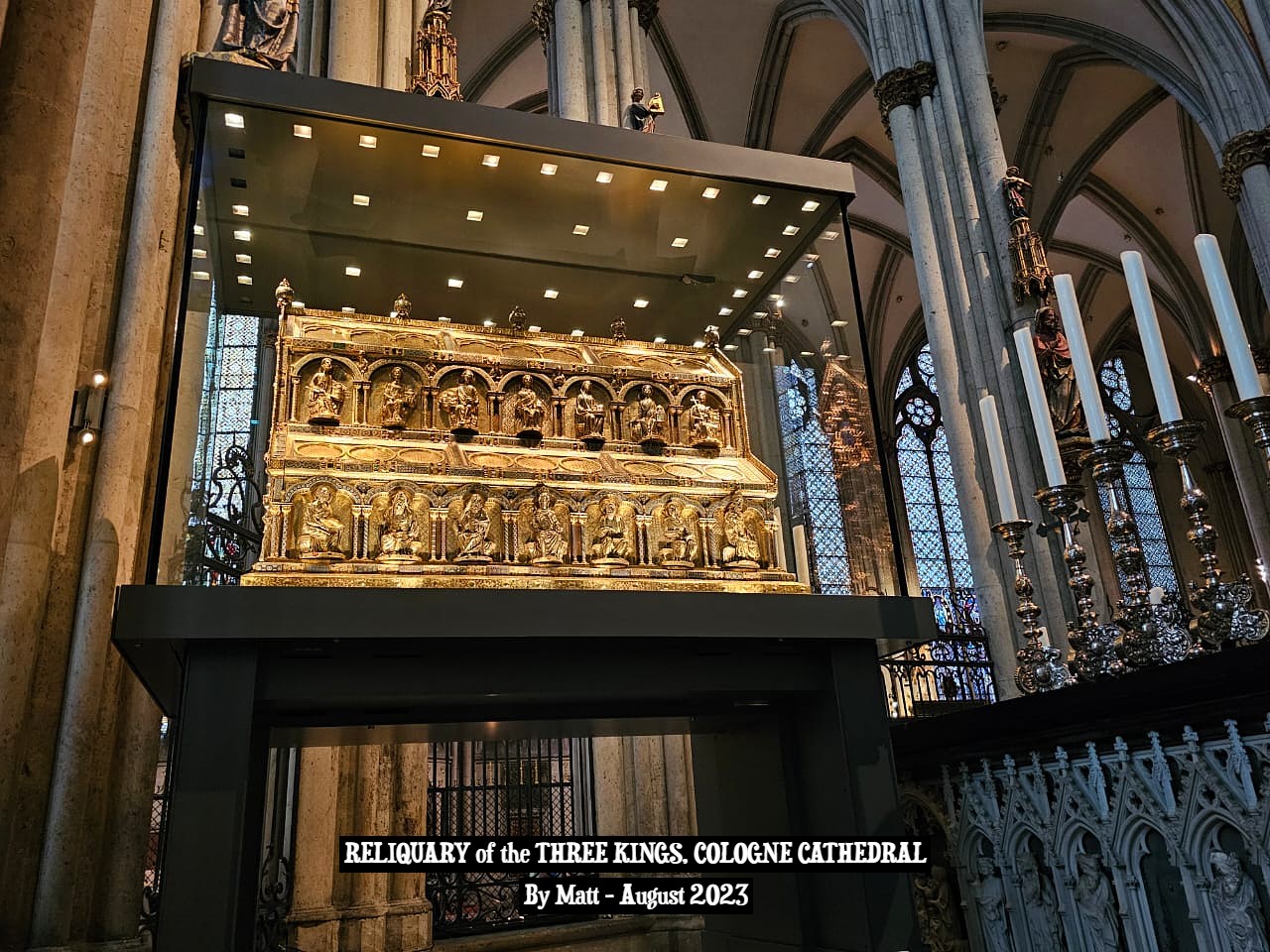
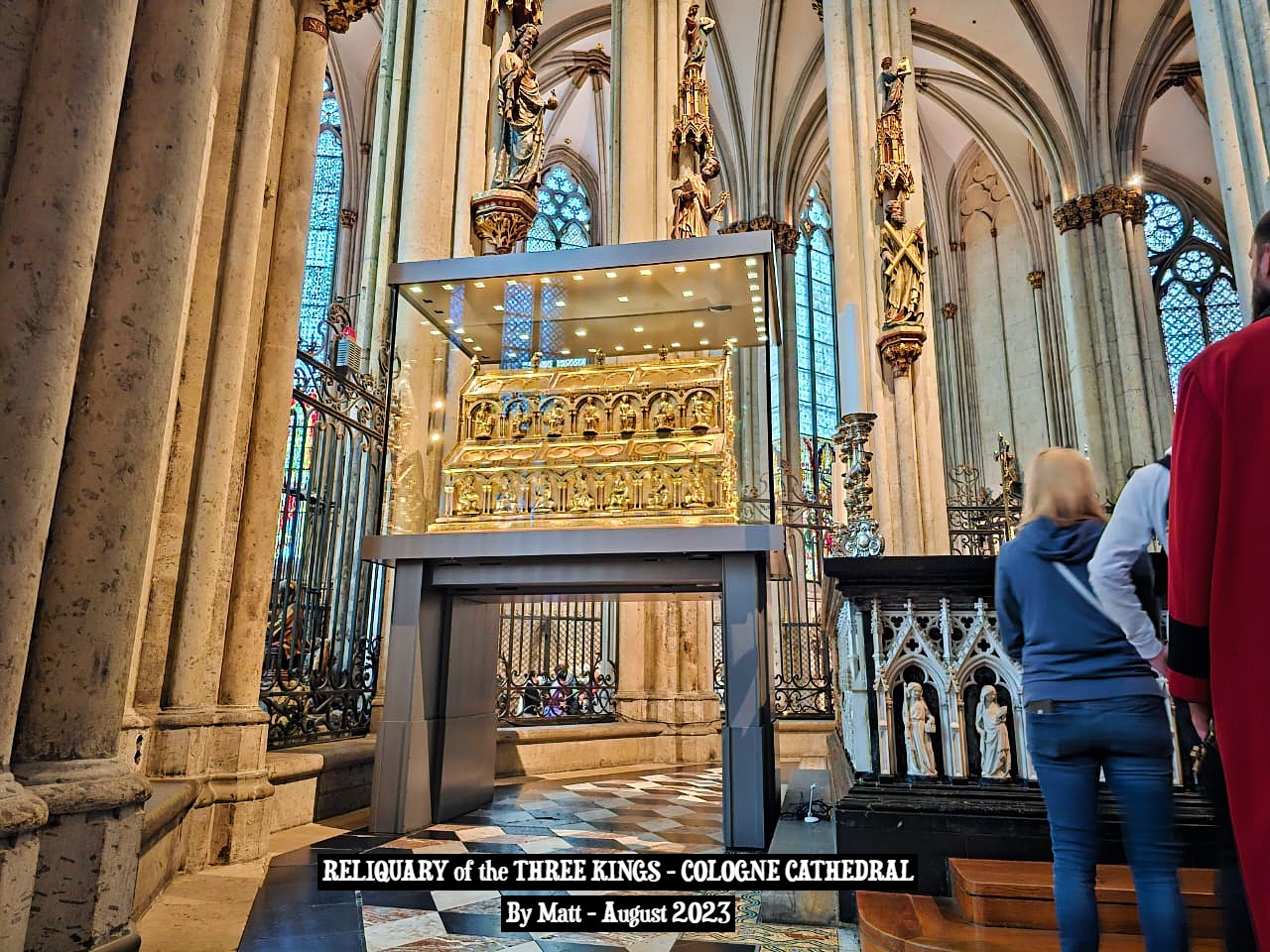
Saint Caspar, Saint Melchior and Saint Balthasar (1st Century) otherwise known as the Three Wise Men/Kings or the Magi – they are all Martyrs. Patronages – against epilepsy/of epileptics, against thunder, furriers, motorists, pilgrims, playing card manufacturers, sawmill workers, travellers, travelling merchants, Cologne, Germany, Saxony. Additional Memorials – 23 July (translation of Relics); 24 July (Cologne, Germany where their Relics lie). Their Lives and Deaths: https://anastpaul.com/2024/01/06/saints-of-the-day-6-january-saint-caspar-saint-melchior-and-saint-balthasar-1st-century-martyrs/
St Charles of Sezze OFM (1613-1670) Stigmatist, Friar, of the Friars Minor, Mystic, Writer, Advisor. His Beatification was celebrated in 1882 while Pope Pius XII approved his Canonisation in 1958 but the Pope died before he could Canonise the Friar so his successor, Pope John XXIII did so on 12 April 1959. His body is incorrupt. About St Charles: https://anastpaul.wordpress.com/2018/01/06/saint-of-the-day-6-january-st-charles-of-sezze-o-f-m-1613-1670/
St Demetrius of Philadelphia St Diman Dubh of Connor St Edeyrn St Eigrad St Erminold of Prüfening
St Julian of Antinoë St Julius Bl Luc of Roucy Bl Macarius the Scot St Macra of Rheims St Merinus
St Melaine of Rennes (Died 530) Bishop of Rennes in Brittany, France, Confessor, previously a Monk and Abbot, Royal Advisor, Miracle-worker. The Roman Martyrology reds: “At Rennes, in France, St Melanius, Bishop and Confessor, who displayed innumerable virtues and with his thoughts ever fixed on Heaven, passed from the world in glory.” Another Feast Day which should be today but was moved in 1969. His Holy Life: https://anastpaul.com/2023/11/06/saint-of-the-day-6-november-saint-melaine-of-rennes-died-c535-bishop-confessor/
St Nilammon of Geris (Died c404) Hermit St Petran of Landévennec
St Pia of Quedlinburg St Pompejanus Bl Raymond de Blanes St Schotin St Wiltrudis of Bergen
Martyrs in Africa: Unknown number of Christian men and women who were Martyred in the persecutions of Septimus Severus. They were burned to death c 210.
Martyrs of Sirmium – 8 Saints: A group of Christians Martyred together for their faith. The only surviving details are the names of eight of them – Anastasius VIII, Florianus, Florus, Jucundus, Peter, Ratites, Tatia and Tilis. They were martyred in the 4th century at Syrmium, Pannonia (modern Sremska Mitrovica, Vojvodina, Serbia).
Twelve Apostles – Saints of Ireland: Twelve 6th Century Irish Monks who studied under Saint Finian at Clonard Abbey and then spread the Faith throughout Ireland. Each has his own commemoration but on this day, they and their good works are considered and celebrated together. Although Saint Finian is sometimes included, most ancient writers list them as –
Thought for the Day – 5 January – Meditations with Fr Richard Frederick Clarke SJ (1839-1900)
Meditations for Christmastide “The Holy Infancy” From “The Devout Year” By Fr Richard Frederick Clarke SJ (1839-1900)
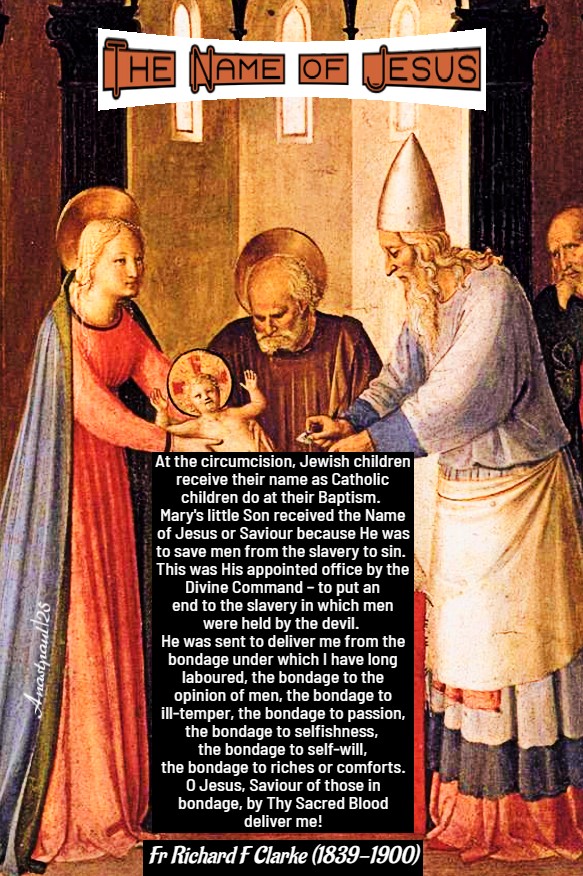
“The Name of Jesus”
+1. At the circumcision, Jewish children receive their name as Catholic children do at their Baptism. Mary’s little Son received the Name of Jesus or Saviour because He was to save men from the slavery to sin. This was His appointed office by the Divine Command – to put an end to the slavery in which men were held by the devil. He was sent to deliver me from the bondage under which I have long laboured, the bondage to the opinion of men, the bondage to ill-temper, the bondage to passion, the bondage to selfishness, the bondage to self-will, the bondage to riches or comforts. O Jesus, Saviour of those in bondage, by Thy Sacred Blood deliver me!
+2. Jesus is our Saviour from the terrible consequences of sin. Our sins were remitted by the shedding of His Precious Blood. Without the shedding of blood, says St Paul, there is no remission. What reason I have to dread the consequences due to my sins! Yet Jesus can and will save me from them, if I love Him as I ought.
+3. Jesus too, is the Saviour of all creation from the curse which came upon the whole earth at the Fall. He has sanctified it by the drops of His Precious Blood which fell upon it. Henceforward, it became a new earth and one day He will cleanse it from all its impurities and renew it to the heavenly beauty and make it worthy to be the home of His elect.
Thought for the Day – 4 January – Meditations with Fr Richard Frederick Clarke SJ (1839-1900)
Meditations for Christmastide “The Holy Infancy” From “The Devout Year” By Fr Richard Frederick Clarke SJ (1839-1900)
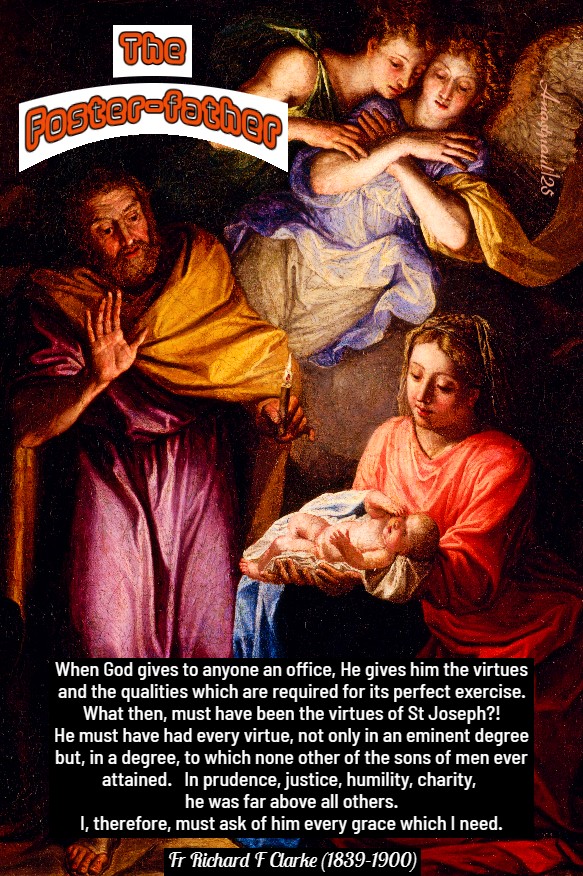
“The Foster-father”
At no great distance from the Mother of God stands His holy Foster-father St Joseph, the third person of that earthly trinity. What can we learn from him?
+1. He is the true husband of Mary, united to her by a closer bond than any on earth save that which exists between the Mother and the Son. He is, moreover, the true earthly father of Jesus in everything except the fact of carnal generation. He has committed to him, the care of God Himself and of her, who is dearer to God than all the world beside. He is, therefore, next to Mary, of all mankind, the most privileged and the most exalted. How then, can we honour him enough?
+2. When God gives to anyone an office, He gives him the virtues and the qualities which are required for its perfect exercise. What then, must have been the virtues of St Joseph?! He must have had every virtue, not only in an eminent degree but ,in a degree, to which none other of the sons of men ever attained. In prudence, justice, humility, charity, he was far above all others. I, therefore, must ask of him every grace which I need.
+3. Above all, St Joseph was eminent for his unspotted purity. Many theologians assert that he was sanctified in his mother’s womb. None save Mary was ever so pure as he This it was which qualified him for his intimate union with Jesus and Mary. If I desire to be united to them, I too must be pure of heart. St Joseph, please obtain for me this grace of purity!
Thought for the Day – 3 January – Meditations with Fr Richard Frederick Clarke SJ (1839-1900)
Meditations for Christmastide “The Holy Infancy” From “The Devout Year” By Fr Richard Frederick Clarke SJ (1839-1900)
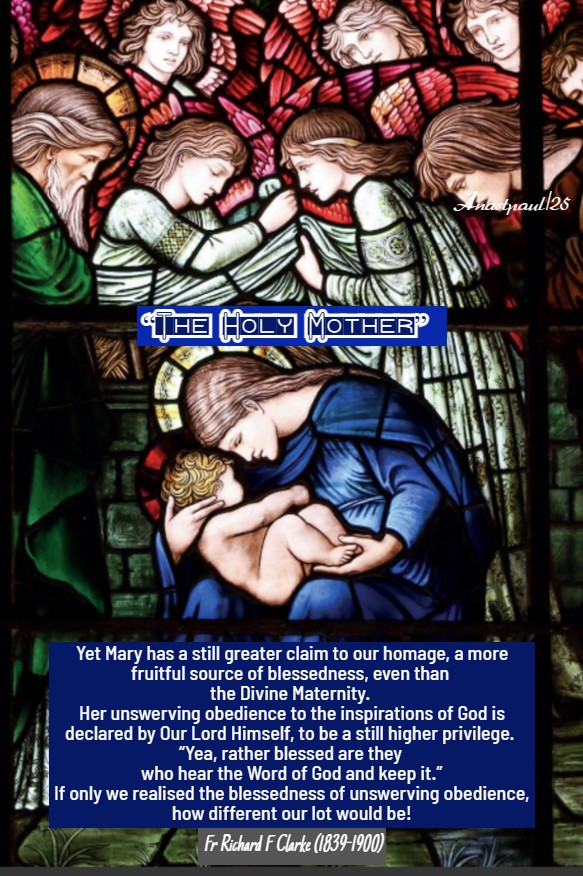
“The Holy Mother”
By the side of the manger where the Infant lies, His Mother is watching. Who is she?
+I. A poor and humble maiden but, nevertheless, the Mother of God. The Mother of God! How can this be? How can the Eternal, Infinite God have a human mother Yet so it is. Mary has a privilege which raises her immeasurably above the highest of the Seraphim, makes her more perfect in her likeness to God than is possible to any other creature. If, then, we honour the Saints and Angels, how much more should we honour God’s Own Mother!
+2. Yet Mary has a still greater claim to our homage, a more fruitful source of blessedness, even than the Divine Maternity. Her unswerving obedience to the inspirations of God is declared by Our Lord Himself, to be a still higher privilege. “Yea, rather blessed are they who hear the Word of God and keep it.” If only we realised the blessedness of unswerving obedience, how different our lot would be!
+3. What are Mary’s thoughts as she sits watching there? She has no thought save of God. She is absorbed in Him . The hours pass like minutes, they are a sort of anticipation of Paradise. She sees her God face-to-face and although His glory is veiled under the robe of flesh, yet Mary can pierce through it as none other ever could and can bask in the Divinity which it conceals. O God help me to realise now, Thy Presence when Thou art veiled under the Sacramental Species.
Thought for the Day – 2 January – Meditations with Fr Richard Frederick Clarke SJ (1839-1900)
I love the fact that Fr Clarke keeps us with the Divine Infant and His beloved Holy Family and oriantates our entire New Year to where it should be and too, still in Christmastide unlike the rest of the world around us. Alleluia. P.S. I will be back in full swing, on Monday, God willing.
Meditations for Christmastide – “The Holy Infancy” From “The Devout Year” By Fr Richard Frederick Clarke SJ (1839-1900)
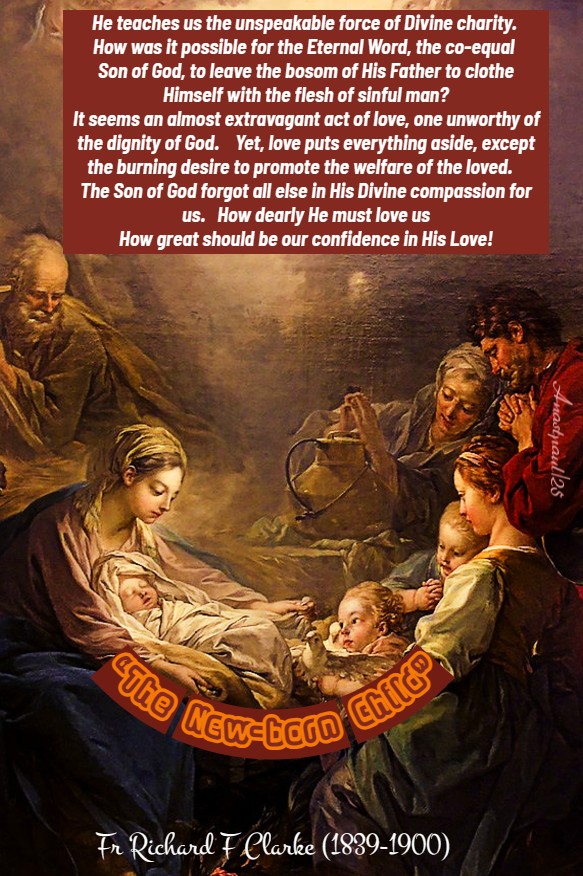
“The New-born Child”
In the cradle before us lies the new -born Infant wrapped in swaddling-clothes and laid in the manger. Let us contemplate Him for a few moments and see what lessons He teaches us.
+I. He teaches us the unspeakable force of Divine charity. How was it possible for the Eternal Word, the co-equal Son of God, to leave the bosom of His Father to clothe Himself with the flesh of sinful man? It seems an almost extravagant act of love, one unworthy of the dignity of God. Yet, love puts everything aside, except the burning desire to promote the welfare of the loved. The Son of God forgot all else in His Divine compassion for us. How dearly He must love us How great should be our confidence in His Love!
+2. He teaches us never to judge by appearances. If we had been told that God had Come to dwell on earth, would not the stable of Bethlehem have been the last place where we should have sought Him In how many a humble cottage there may still be found saints more dear to God than even those who have a worldwide repute for their holiness and virtue!
+3. He teaches us the true dignity of self-abasement. God could not do anything unworthy of Himself when clad in human flesh. It, therefore, was no disparagement to the Divine honour that He should thus infinitely condescend. Nay, it proved that the greatest possible likeness to God is attained by the most complete humiliation of self. How little I have learned to practice this lesson!
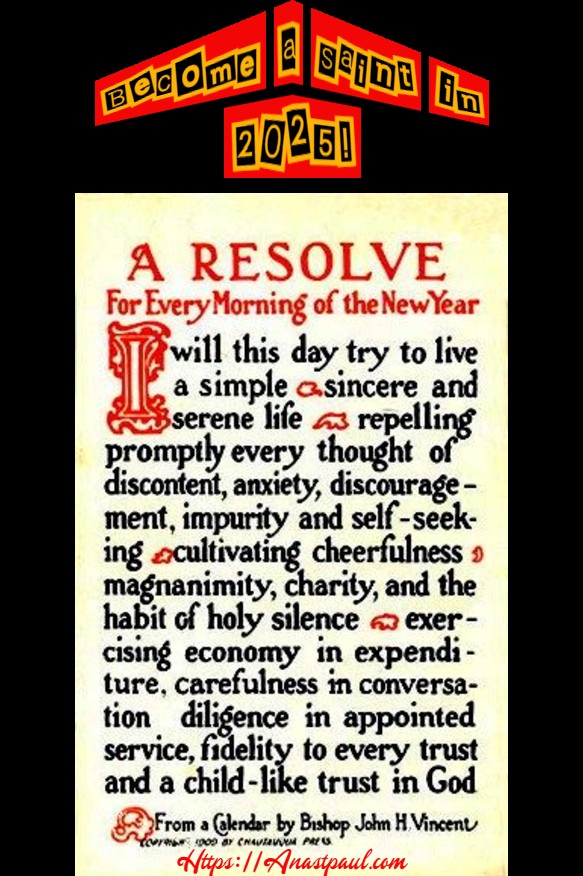
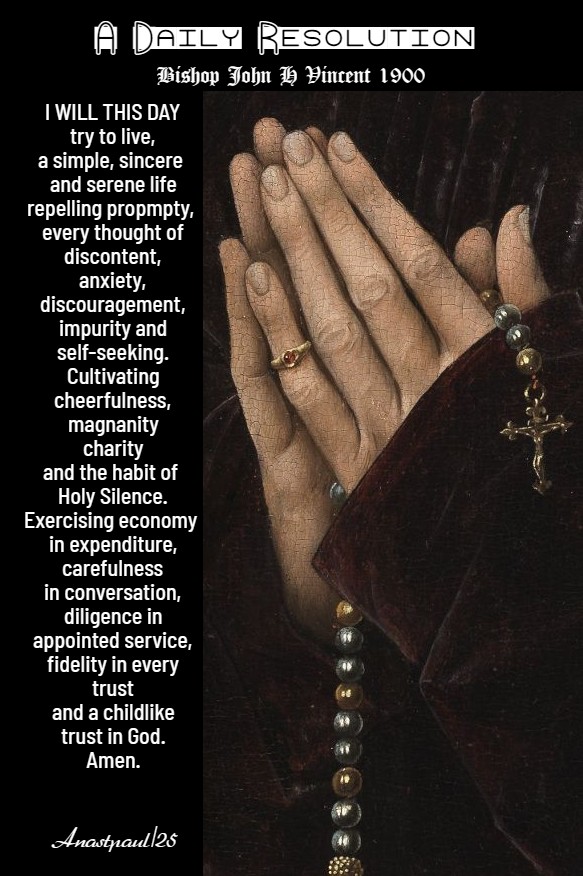
I will this day, try to live a simple, sincere and serene life, repelling promptly, every thought of discontent, anxiety, discouragement, impurity and self-seeking; cultivating cheerfulness, magnanimity, charity and the habit of holy silence, exercising economy in expenditure, carefulness in conversation, diligence in appointed service, fidelity in every trust and a child-like trust in God.
Bishop John H Vincent 1900
“What we need most, in order to make progress, is to be silent before this great God with our appetite and with our tongue, for the language He best hears is silent love.”
“Strive to preserve your heart in peace; let no event of this world, disturb it.”
St John of the Cross (1542-1591) Mystical Doctor of the Church
“Anyone who takes life seriously in the Christian sense, will regard it as a difficult journey towards perfection and towards God. This journey will be, at the same time, painful and joyful. … It is our own loss if we sit down lazily on the side of the road, which should lead us to Heaven. It is even more disastrous, if we acknowledge defeat and lay down the spiritual weapons of prayer and renunciation, in order to surrender ourselves to sin or to indifference. Everyday we should say to ourselves, in the presence of God – A new life is beginning … in You, by Your grac and for You! Amen”
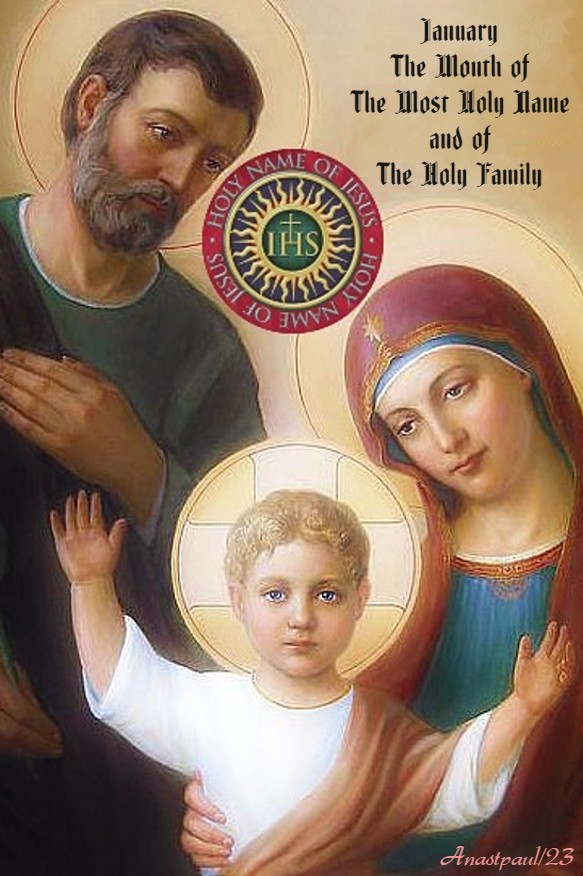
JANUARY – The Month of the Holy Name of Jesus and the Holy Family
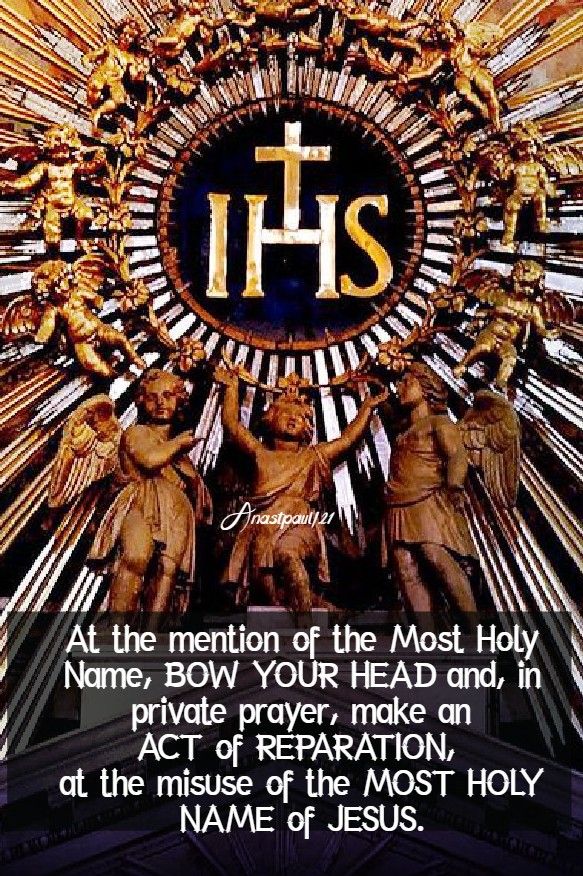
The Second Council of Lyons in 1274 decreed that “at the Name of Jesus every knee should bow; whenever that glorious Name is recalled, especially during the Sacred Mysteries of the Mass, everyone should bow the knees of his heart, which he can do even by a bow of his head.”
It may very well be that the custom of bowing the head at the Name of Jesus has passed out of general use, as have other laudable customs, in recent times but, that does not prevent us personally, from continuing to live it and passing on to our children this ancient custom.
The Holy Family – The Hidden Life
The life of each member of the Holy Family was, from the first, a hidden life, for it was a life hidden with God and concealed from the busy world. The life of Jesus in Mary’s womb, was thus the model of the lives of all, who desire to give themselves entirely to God; a life completely withdrawn from all which could interfere with a continual thought of God and, a continual union with Him, by acts of adoration and of love. This should be my aim, at least during such portions of the day as I am able to give to prayer and to spiritual things.
But a life of complete removal from external things, is not possible on earth. It is reserved for the Blessed in Heaven. Even Joseph and Mary had sometimes to turn their thoughts to earthly things and to the cares of life. Yet, they never lost sight of God and, amid the most distracting occupations, the remembrance of Him, was ever in their hearts. This should be my constant endeavour; thus, to lead a hidden life, by having ever hidden in my heart, the precious treasure of the love of God.
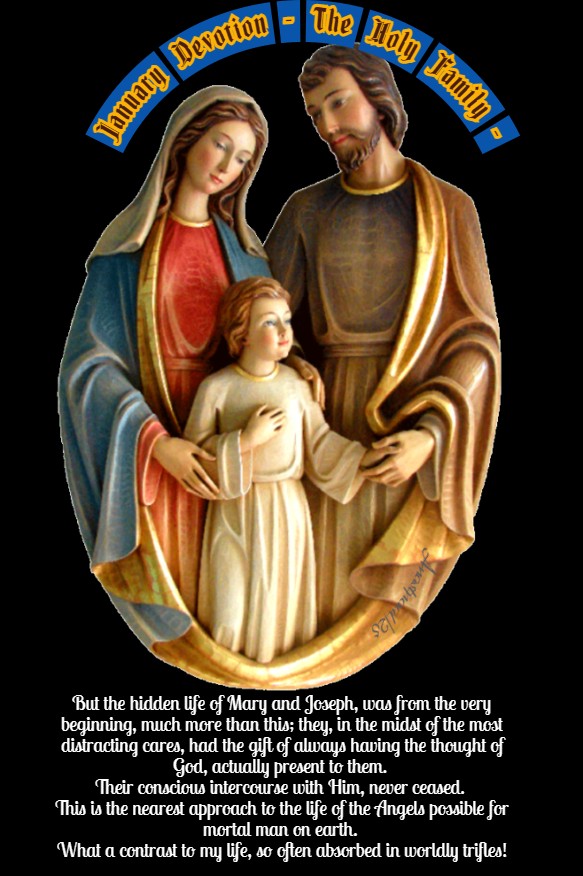
But the hidden life of Mary and Joseph, was from the very beginning, much more than this; they, in the midst of the most distracting cares, had the gift of always having the thought of God, actually present to them. Their conscious intercourse with Him, never ceased. This is the nearest approach to the life of the Angels possible for mortal man on earth. What a contrast to my life, so often absorbed in worldly trifles!
Thought for the Day – 1 January – Meditations with Fr Richard Frederick Clarke SJ (1839-1900)
I love the fact that Fr Clarke keeps us with the Divine Infant and His beloved Holy Family and oriantates our entire New Year to where it should be and too, still in Christmastide unlike the rest of the world around us. Alleluia. P.S. I will be back in full swing, on Monday, God willing.
Meditations for Christmastide – “The Holy Infancy” From “The Devout Year” By Fr Richard Frederick Clarke SJ (1839-1900)
“The Nativity”
+1. Four thousand years had passed since God promised to our first parents that a Redeemer should come to free the world from the curse which had fallen upon it, when Adam was disobedient to the Divine Command. Prophets and kings had desired to see the day when that promise should be fulfilled but had not seen it. The whole world had long expected the day of redemption. God is always slow, in His best Gifts. Hence learn to be patient. “”He will surely Come, He will not tarry.”
+2. All the world was at peace at the moment when Christ was born. The angry passions of men were hushed, as if in compliment to the Prince of Peace. He never Comes where strife and confusion prevail. If I desire that He should Come into my heart today, I must resolve to keep, in total submission and denial, my evil passions and, the self -will which dares to do battle against the Will of God!
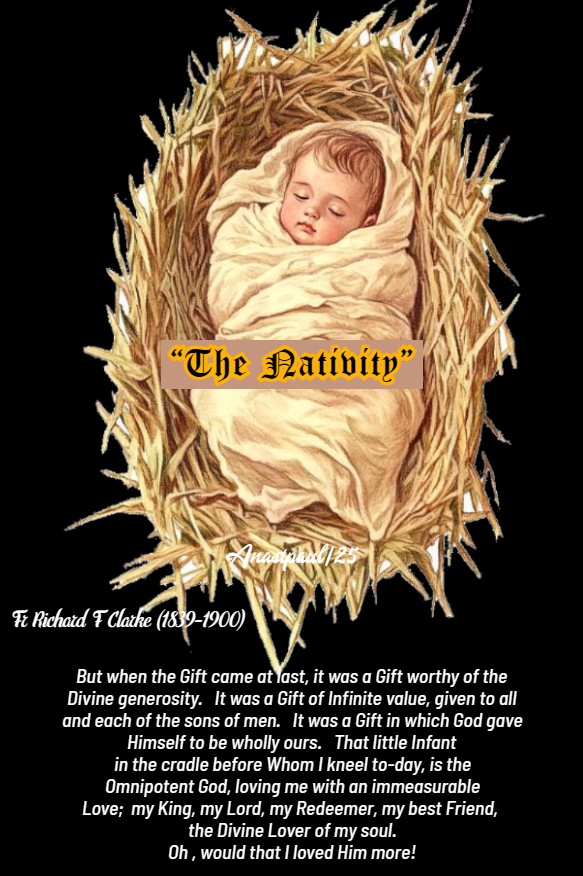
+3. But when the Gift came at last, it was a Gift worthy of the Divine generosity . It was a Gift of Infinite value, given to all and each of the sons of men. It was a Gift in which God gave Himself to be wholly ours. That little Infant in the cradle before Whom I kneel to-day, is the Omnipotent God, loving me with an immeasurable Love; my King, my Lord, my Redeemer, my best Friend, the Divine Lover of my soul. Oh, would that I loved Him more!
Thought for the Day – 31 December – Meditations with Antonio Cardinal Bacci (1881-1971)
The Last Day of the Year
“Now that the year is almost over, cast your mind back to the good resolutions which you made at the beginning of it. Have you put these resolutions into effect? Has there been any improvement in your spiritual life during these twelve months, or must you confess, that it has deteriorated? How often have you committed sin, perhaps even grave sin, during the year? When God appealed to you to perform some good action, how often did you refuse Him?
Your future outlook is very dark if your life has developed into a gradual descent towards evil. Anyday, God could grow tired of your ingratitude and obstinacy and send death to end your infidelity. Then you would almost certainly, be damned forever. If you have surrendered to spiritual languor and mediocrity, therefore, it is time for you to stir yourself. It is time to become more generous with God, to display a greater spirit of self-sacrifice in responding to His appeals and to form further resolutions.
Virtue cannot co-exist with spiritual tepidity, which leads inevitably, towards sin.”






















You must be logged in to post a comment.