One Minute Reflection – 3 March – “The Month of St Joseph” – The Third Sunday in Lent – The Third Sunday in Lent – Ephesians 5:1-9; Luke 11:14-28 – Scripture search here: https://www.drbo.org/
“Every kingdom divided against itself is laid waste.” – Luke 11:17
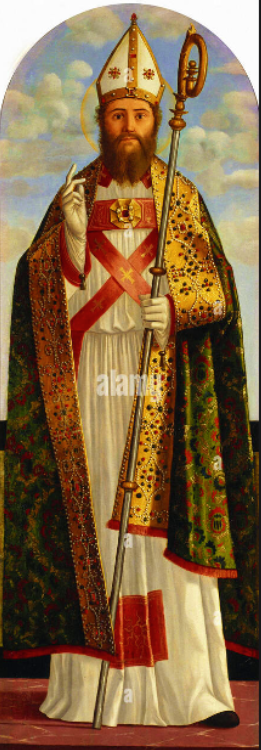
REFLECTION –“No-one can have God as his father, if he does not have the Church as his mother… The Lord warned us of this when He said: “Whoever is not with Me, is against Me and whoever does not gather together with Me, scatters.” The person who breaks the peace and concord of Christ, acts against Christ; the person who gathers together, outside of the Church, scatters the Church of Christ.
The Lord said: “The Father and I are one.” (Jn 10:30) It is also written of the Father, the Son and the Holy Ghost: “These Three are One.” (1 Jn 5:7) From now on, who can believe, that the unity which has its origin in this Divine harmony which is linked with this heavenly Mystery, can be divided up in the Church … through conflicts of will? Whoever does not observe this unity, neither observes the law of God, nor faith, in the Father and the Son – he keeps neither life, nor salvation.
In the Gospel, this sacrament of unity, this bond of concord, in indissoluble cohesion, is shown us through the Lord’s Tunic. It could neither be divided nor torn but they drew lots, so as to know who would put on Christ (Jn 19:24) … It is the symbol of unity which comes from on high!” – St Cyprian of Carthage (c 200- c 258) Bishop and Martyr, Father of the Church (On the unity of the Church).
PRAYER – We beseech Thee, Almighty God, hear the prayers of the humble and stretch forth the right hand of Thine majesty to protect us. Through Jesus Christ, Thy Son our Lord, Who lives and reigns with Thee, in the unity of the Holy Ghost, God, world without end. Amen (Collect).
Our Morning Offering – 3 March – The Third Sunday in Lent
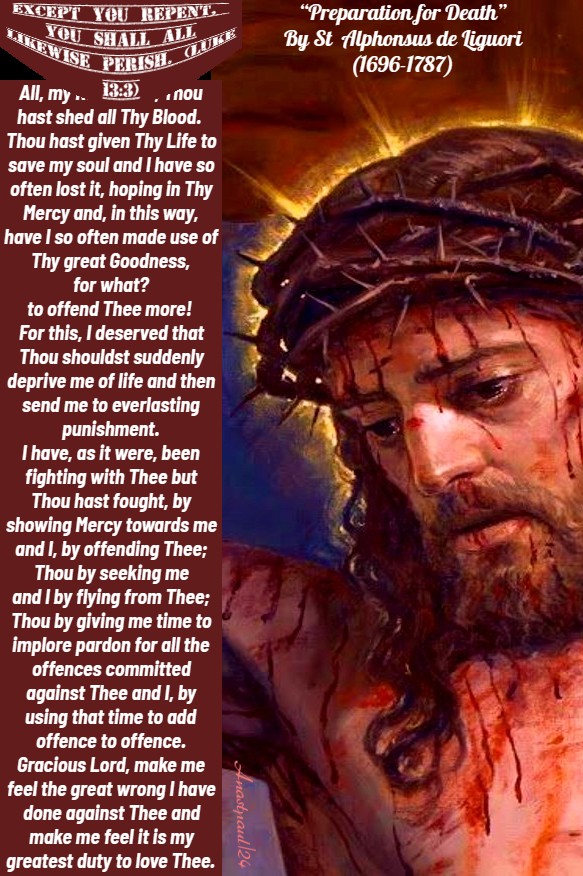
Prayer Before The Crucifix (The Holy Sacrifice of the Mass) By St Vincent Strambi (1745-1824)
Jesus, by this Saving Sign, bless this listless soul of mine. Jesus, by Thine feet nailed fast, mend the missteps of my past. Jesus, with Thine riven hands, bend my will to love’s demands. Jesus, in Thine Heart laid bare, warm my inner coldness there. Jesus, by Thine thorn-crowned head, still my pride till it is dead. Jesus, by Thine muted tongue, stay my words that hurt someone. Jesus, by Thine tired eyes, open mine to faith’s surprise. Jesus, by Thine fading breath, keep me faithful until death. Yes, Lord, by this Saving Sign, save this wayward soul of mine. Amen
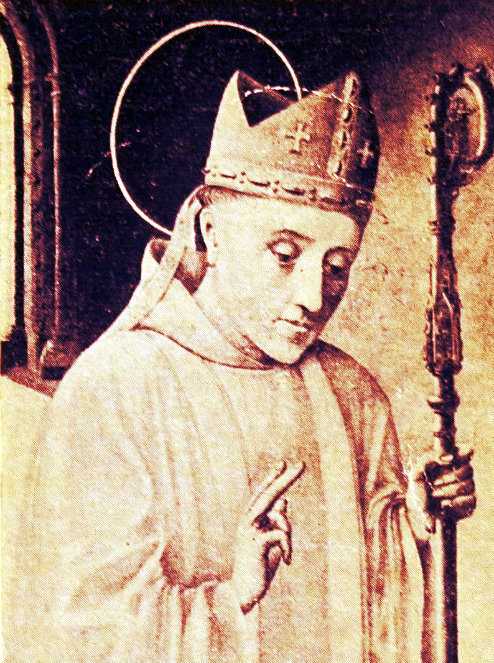
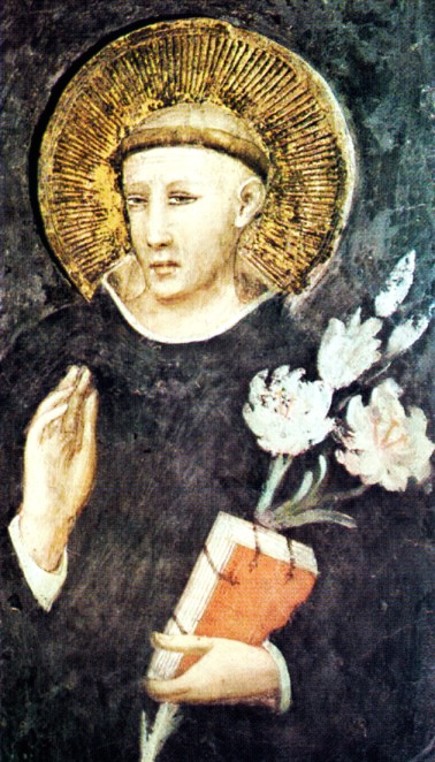
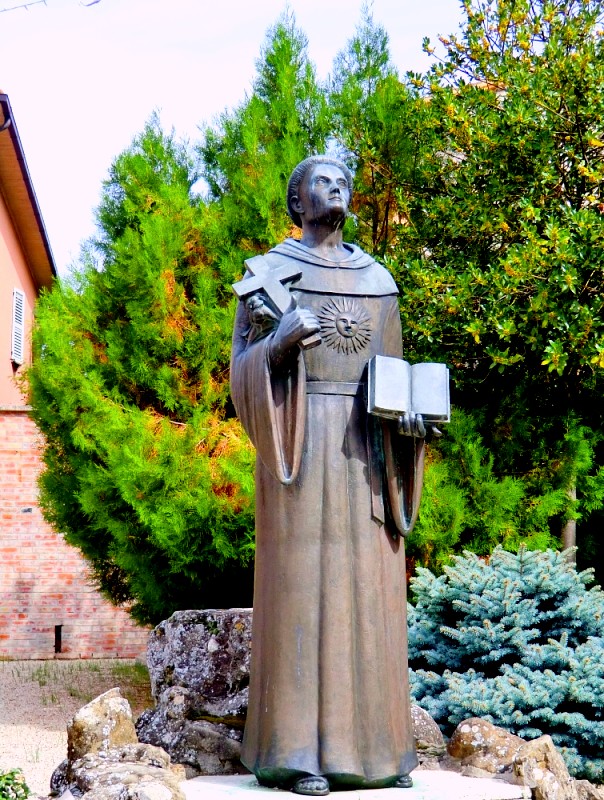
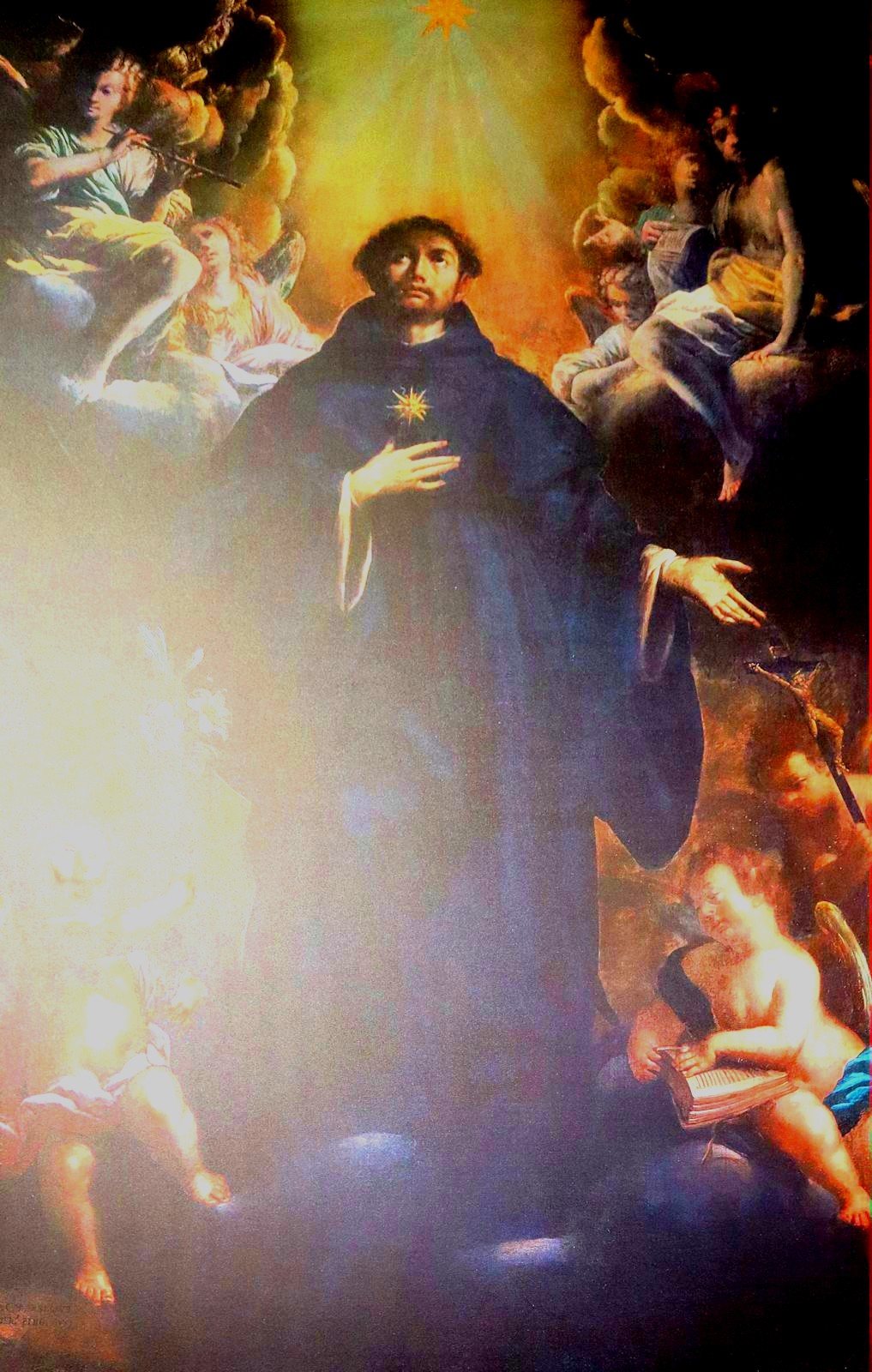
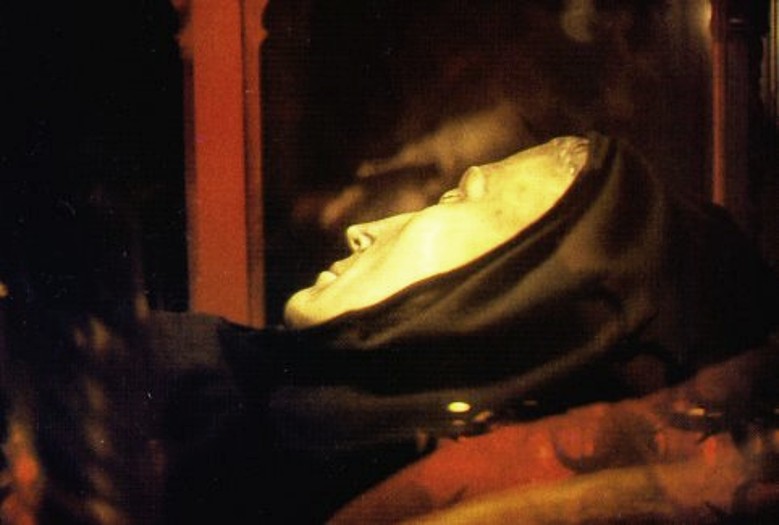
Saint of the Day – 3 March – Blessed Innocento of Berzo OFM Cap. (1844-1890) Priest, Friar of the Friars Minor of the Capuchins, Born on 19 March 1844 at Niardo, Brescia, Italy as Giovanni Scalvinoni and died on 3 March 1890 at Bergamo, Italy from influenza. Patronages – of children, Berzo Inferiore, Italy. Also known as – Giovanni Scalvinoni, Innocent, Innocenzo. Additional Memorial – 28 September (Capuchins), the Sunday after the Pardon of Assisi , that is the Sunday after 2 August at his Annunziata Convent.
Among the votive offerings preserved in the humble birthplace of Blessed Innocento in Berzo, now transformed into a Museum, there is a fragment of rope in memory of a miracle which occurred in the 1920s. A mountaineer, during a climb, fell into a crevice and, having no-one to help him, asked for the intervention of the humble Capuchin Friar, to whom he was devoted. A rope came from above while the movements to climb the cliff were suggested to him but, once he reached the top, he was astonished to see that no-one was waiting for him.
Giovanni Scalvinoni was born in Niardo (Brescia), his mother’s hometown, on 19 March 1844. A few months later a terrible disaster suddenly struck the young family. His father, in just two days, died of pneumonia. Giovannino spent his childhood simply — making the strong faith of the mountain people his own. From an early age he had great pity for the poor, generously giving what little he had to those who knocked on his door. He woulf retain this deeply experienced compassion throughout his life — when, as a Capuchin, he went around collecting alms, he was extremely satisfied to return to the Convent with an empty bag. That which he had received as an offering, he had immediately distributed to those in even more need than the Friars of the Convent.
He studied with excellent results in the Municipal College of Lovere (Bergamo) and from there, he moved onto the Seminary of Brescia, where he imposed a demanding spiritual disciplineupon himself. Giovanni was Ordained a Priest in 1867. Thereafter, he held various positions, including that of Vice Rector of the Seminary but each time he was removed because he absolutely lacked authority. His innate shyness led him to desire to live in solitude, between prayers and penances. On 16 April 1874 he finally began his Novitiate among the Capuchins, taking the name Innocento, at the Annunziata Convent. Four years later he made his Solemn Profession and was appointed Assistant Master of Novices.
Except for brief assignments and the preaching of spiritual exercises in some Lombard Convents, it was in the Annunziata Convent where he intensely experienced total abandonment to the Lord. Despite his excellent knowledge of theology, also passed onto his brothers, he always appeared humble and modest, with the desire to disappear and never be noticed. In love with the Eucharist (his Masses were of exceptional intensity), he stopped as much as he could in front of the Tabernacle. He loved the Crucifix very much too and the exercise of theWay of the Cross which he always recommended to his penitents.
On 3 March 1890, at the age of forty-six, he fell seriously ill and died in the Infirmary of the Convent in Bergamo. A few months later his mortal remains were solemnly transferred to Berzo. A reputation for sanctity had already surrounded him in life. On 21 March 1943 Innocento was venerated by Pope Pius XII by a Decree of Heroic Virtue and on 12 November 1961, John XXIII proclaimed him Blessed and Patron of children, protagonists of the two miracles of the recorded for his Beatification process.
Private Chapel of Innocento da Berzo in Piancogno
His writings (a few letters, diary fragments, notes for sermons), collected in a thousand pages, reveal the disarming secret of his sanctity — the unconditional abandonment in the arms of the Father. “Jesus is offended by everyone in the world — it is up to me not to leave Him alone in His affliction. The love of God does not consist in great feelings but in great nakedness and patience, for the beloved God. There is no other better means to guard the spirit, than to suffer, do and remain silent. I will have a great desire to be subject to everyone and I will have a horror of being preferred to the least.”
A path which leads to the Annunziata Convent, which he followed many times to reach various locations in Valcamonica, where he was sought as a Confessor and Preacher, is today named after him. From his cell, a destination for continuous pilgrimages, a small window allows you to contemplate the enchanting landscape of the lower valley, Lake Iseo and his native town of Berzo.
The Order of Friars Minor Capuchin commemorates his Feast on 28 September, while in the Sanctuary of the Santissima Annunziata, the Convent where the Blessed lived, the Feast is on the Sunday after the Pardon of Assisi (after 2 August).
Blessed Benedetto Sinigardi da Arezzo OFM (1190-1282) Friar of the Order of Friars Minor, who received the Habit directly from St Francis of Assisi. Although rarely mentioned, Blessed Benedetto is the Author of the Angelus! Furthermore, the beautiful custom of reciting the Marian Antiphon “The Angelus Domini” is attributed to Blessed Benedetto, meditating on the saving Mystery of the Incarnation of the Son of God in Mary’s virginal womb. The Angelus Domini became a pious practice firstly to the entire Franciscan Order, then to the whole Church, as it still is today. Biography: https://anastpaul.com/2023/03/03/saint-of-the-day-3-march-blessed-benedetto-sinigardi-da-arezzo-ofm-c1190-1282-the-author-of-the-angelus/
St Anselm of Nonantola St Arthelais of Benevento St Calupan St Camilla St Cele-Christ
St Cunegundes (c975-1040) Empress of the Holy Roman Empire, Nun, she took a vow of Virginity before her marriage, which, after a miracle was upheld by her husband, the King (also a Saint). Founder of Monasteries and Churches, Nun in one of her Convents, Apostle of Charity. Born in c 975 and died in 1040 of natural causes. Biography: https://anastpaul.com/2022/03/03/saint-of-the-day-3-march-st-cunegundes-c-975-1040/
St Foila Bl Frederick of Hallum St Gervinus Blessed Innocento of Berzo OFM Cap. (1844-1890) Priest Bl Jacobinus de’ Canepaci St Lamalisse St Non
Bl Pierre-René Rogue St Sacer St Teresa Eustochio Verzeri St Titian of Brescia Bishop and Confessor St Winwallus of Landévennec
40 Martyrs in North Africa – A group of Christians Martyred together in North Africa, date unknown. No details have survived, but we know these names – Antonius, Artilaus, Asclipius, Astexius, Basil, Bosimus, Carissimus, Castus, Celedonius, Claudianus, Cyricus, Donata, Emeritus, Emeterius, Euticus, Felix, Fortunatus, Frunumius, Gajola, Georgius, Gorgonius, Hemeterus, Isicus, Janula, Julius, Luciola, Luciolus, Marcia, Marinus, Meterus, Nicephorus, Papias, Photius, Risinnius, Sabianus, Savinianus and Solus
Martyrs of Pontus – 3+ Saints – A large group of Christians Martyred together in the persecutions of Emperor Maximian Galerius and governor Ascleopiodato. We have some details on three of them – Basiliscus, Cleonicus and Eutropius. 308 in Pontus (in modern Turkey) Martyrs of Caesarea; Asterius Marinus
Martyrs of Calahorra: Cheledonius Emeterius
Martyrs of Gondar, Ethiopia: Bl Antonio Francesco Marzorati Bl Johannes Laurentius Weiss Bl Michele Pío Fasol
“When you feel yourself wounded from having weakly, or it maybe, even willfully and deliberately, fallen into some sin, be not over-fearful or over-anxious but,, turn instantly to God, saying:
“Behold, O Lord, what I, of myself, have done! And what, indeed, could be expected of me but falls?”
And then, after a short pause, humble yourself in your own eyes, mourn over the offence committed against your Lord and, without falling into discouragement, be full of indignation against your evil passions, especially that which has occasioned your fall. Then say:
“Nor even here, Lord, should I have stopped, if Thine Goodness had not withheld me.”
And here give thanks to Him and love Him more than ever, wondering at the excess of His Mercy, Who, when you had so deeply offended Him, stretched out His right Hand to save you from another fall!
Lastly, say, with great confidence in His Infinite Compassion:
“Forgive me, Lord, for Thine own sake, suffer me not to depart from Thee, nor to be separated from Thee, nor evermore to offend Thee.”
And this done, do not sit down to consider whether God has pardoned you or not — for this is nothing else but pride, restlessness of mind, loss of time and, under colour of various fair pretexts, a delusion of the devil. But, committing yourself unreservedly to the Merciful Hands of God, pursue your exercise as if you had not fallen.
And if you should fall wounded many times in the day, repeat that which I have taught you, with no less faith than the first, the second, the third and even the last time and despising yourself and hating the sin, more and more, strive to lead, henceforth, a life of greater watchfulness.”
Quote/s of the Day – 2 March – 2 March – Saturday of the Second Week in Lent – Ferial Day – Genesis 27:6-40; Luke 15:11-32 – Scripture search here: https://www.drbo.org/
“I shall arise and shall go to my Father”
Luke 15:18
“Awake, O Sleeper and Rise from the Dead”
Ephesians 5:14
“Listen to the Lord’s appeal: ‘Come, then, return to Me and learn to know Me as your Father, Who repays good for evil, love for injury and boundless charity for piercing wounds!”
St Peter Chrysologus (c400-450) “Golden Words” Father & Doctor of the Church
“What better penance can a heart do which commits faults, than to submit to a continual abnegation of self-will?”
St Francis de Sales (1567-1622) Doctor of the Church
“Unfortunately, our only return for God’s continual favours, has been negligence, ingratitude and sin! Since it is an offence against God, Who is infinitely good and amiable, even venial sin cannot properly be atoned for by the merits of all the Angels and of all the Saints of Heaven. Therefore, it was necessary for the Son of God, made Man, to offer Himself as a Victim of Expiation, on our behalf. Remembering His Infinite Merits, we should humbly ask God – ‘forgive us our debts.‘ that is, our many sins and failings and, whatever punishment is owing to us, for every sin demands some expiation, either in this life or in the next!”
Our Lenten Journey with the Angels and the Saints – 2 March – Saturday of the Second Week in Lent – Ferial Day – Genesis 27:6-40; Luke 15:11-32 – Scripture search here: https://www.drbo.org/
“ It is good to give praise to the Lord and to sing to Thy Name, O most High. To shew forth Thy mercy in the morning and Thy truth in the night.” Psalm 91:2-3
“I shall arise and shall go to my Father” Luke 15:18
A Robe, a Ring and Sandals “Awake, O Sleeper and Rise from the Dead” (Ephesians 5:14)
St Ambrose (340-397) Father and Doctor of the Church
“I shall go to my father and say: ‘Father, I have sinned against Heaven and against you.’” Such is our first confession to our Creator, our merciful Lord, the Judge of our sins. For although He knows all things, God is waiting for an expression of our confession. For “if you confess with your mouth… you will be saved” (Rm 10:10)…
This is how the younger son spoke to himself. But it is not enough just to speak, unless you come to the Father. Where are we to look for Him? Where will we find Him? “He got up.” Get up first of all, you who have hitherto been sitting down asleep. This is what the Apostle Paul says: “Awake, O sleeper and rise from the dead” (Eph 5:14) … Up you get, then and hurry along to the Church — there is the Father, there the Son, there the Holy Ghost. He, Who hears you speaking in the intimate depths of your soul, is coming to meet you and, when you are still far off, He sees you and starts running. He sees your heart; he runs up lest anyone delay you and embraces you … He flings His arms around your neck to raise you up, you who were prostrate, burdened with sins, face to the ground. He turns you over to face Heaven, so that you can seek your Creator there. Christ flings His Arms around you, so as to free your neck from slavery’s yoke and set His gentle yoke upon you… He is embracing you when He says: “Come to me, all you who labour and are burdened and I will give you rest. Take my yoke upon you” (Mt 11:28). Such is His manner of embrace if you repent.
He causes a Robe, a Ring and Sandals to be brought. The Robe is the garment of wisdom… spiritual clothing — the wedding garment. What is the Ring if not the seal of a genuine faith and the imprint of truth? And as for the Sandals — these are the preaching of the Gospel.” – (Commentary on Saint Luke’s Gospel VII).
One Minute Reflection – 2 March – “The Month of St Joseph” – Saturday of the Second Week in Lent – Ferial Day – Genesis 27:6-40; Luke 15:11-32 – Scripture search here: https://www.drbo.org/
“I shall arise and shall go to my Father” – Luke 15:18
REFLECTION – “As the prodigal son, I will return to my Father’s house and I will be welcomed back home. I shall do the same, as he did – will the Father not grant my prayer too? O forgiving Father, here I am at Thy door and I knock, open to me, let me enter, so that I may not ruin myself, go away and die! Thou made me Thy heir and I neglected my inheritance and squandered my goods – from now on, may I be as a mercenary and as a servant to Thee.
As of the tax collector, have mercy on me and I shall live by Thy grace! O Son of God, forgive my sins as Thou did with the adulteress. Save me from the waves, as Thou did with Peter. Have mercy on my lowness, as Thou did for the good criminal and remember me! O Lord, come search for me, like the lost sheep and Thou will find me; carry me on Thy shoulders, Lord, to the house of Thy Father.
As Thou didst, with the blind man, open my eyes that I may see Thy Light! As for the deaf, open my ears, that I may hear Thy Voice! As for the paralytic, heal my disability so that I may praise Thy Name. As for the leper, cleanse me of my sin with Thy hyssop (cf Ps 50:9). As the young girl, the daughter of Jairus, make me live, our Lord. As Peter’s mother-in-law, heal me, for I am sick. As the young boy, the widow’s son, raise me up, that I may stand up again. As Thou did with Lazarus, cry out to me with Thy Own Voice and undo my bandages. For I am dead because of sin, like as for a sickness, raise me up from my ruin that I may praise Thy Name!
I beg Thee, Lord of Heaven and earth, come save me and show me Thy Way, so that I may come towards Thee. Bring me back to Thee, Son of the Good Lord and fill me with Thy Mercy. I will come to Thee and then will I be filled with joy!” – St Jacob of Sarug (c451-521) Bishop, Theologian, Poet, Writer, Father (A poem).
PRAYER – Grant that our fasting may be beneficial to us, we beseech Thee, O Lord, so that by chastising our flesh, we may obtain strength for our souls. Through tJesus Christ, Thy Son our Lord, Who lives and reigns with Thee, in the unity of the Holy Ghost, God, world without end. Amen (Collect).
Our Morning Offering – 2 March – “The Month ofSt Joseph” – Saturday of the Second Week in Lent and the First of the Month
Most Holy Virgin, My Consolation By St Germanus of Paris (c490-576)
Most Holy Virgin! Who art the greatest consolation which I receive from God, thou, who art the heavenly dew which assuages all my pains, thou, who art the light of my soul when it is enveloped in darkness, thou, who art my guide in unknown paths, the support of my weakness, my treasure, in poverty, my remedy, in sickness, my consolation, in trouble, my refuge, in misery, and the hope of my salvation, hear my supplications, have pity on me, as becomes the Mother of so good a God and obtain for me a favourable reception of all my petitions at the throne of mercy. Amen
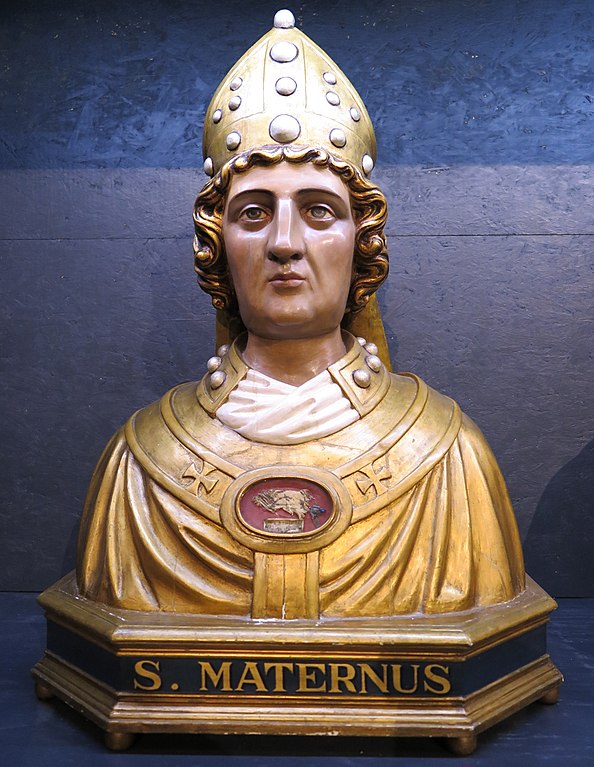
Saint of the Day – 2 March – Saint Joavan of Brittany (Died c576) Bishop. Born in Britain, probably in Wales and died at Plougen, in Brittany, France of natural causes. Patronages – against cancer, Plouvien, France. Also known as – … of Leon, Jaoua, Joevin, Joévin, Jouva, Jaouen, Yaouen, Joavan, Joavan Aurelian.
Joavan followed his uncle to Brittany to become his disciple and spiritual student. St Paul Aurelian of Léon (Died c575) (known in Breton as Paol Aorelian or Saint Pol de Léon) the first Bishop of the See of Léon and one of the seven Founder Saints of Brittany.
That great Saint chose Joavan to be his assistant in his Bishopric, when he retired a little before his death. Saint Joavan survived him only a short time, perhaps just a year.
Joavan is the titular Saint of two Parish Churches in the Diocess of Léon.
Blessed Charles the Good (c1083-1127) Martyr, Duke, Apostle, protector and defender of the poor, selling his and his kingdom’s riches to help those in need, wherever he could, a fair and just Ruler who made laws to accommodate the poor rather than the rich (the eventual cause of his Martyrdom), Knight who assisted in Secomd Crusade. Blessed Charles cultus was officially confirmed by his Beatification in 1883 by Pope Leo XIII. His Life and Death: https://anastpaul.com/2023/03/02/saint-of-the-day-2-march-blessed-charles-the-good-c1083-1127-martyr/
St Cynibild of Laestingaeu St Felix of Treves St Fergna the White St Girolamo Carmelo di Savoia St Gistilian St Joavan of Brittany (Died c576) Bishop St Jovinus the Martyr St Lorgius of Caesarea St Lucius of Caesarea
Martyrs of Campania – Approximately 400 northern Italian Christians Martyred for their faith by pagan Lombards. Their story was recorded by Pope Saint Gregory the Great, who reports that they people spent their final days supporting each other with prayer. c 579 in Camnpania, Italy.
Martyrs of Porto Romano – 4 Saints – Group of Christians Martyred in the persecution of Diocletian. The only other information that survives are the names of four of them – Heraclius, Januaria, Paul and Secondilla. c305 at Porto Romano at the mouth of the River Tiber, Rome.
The beloved Foster-Father and Guardian of Jesus and Protector of the Holy Family, is celebrated for this whole month and his Feast Day falls on 19 March .
“Quamquam Pluries” On the Devotion to St Joseph Pope Leo XIII
“On 10 March, [11 MARCH THIS YEAR], we begin the Novena to St Joseph, entrusting so many of our woes and cares to his holy and fatherly care and intercession. His Patronages are numerous, as we know, one of them will fit our needs perfectly and if not, then we should all ask him to intercede on our behalf for our families and for a Happy and Holy Death. On the 19thFEAST we pray the Consecration to St Joseph.”
Indulgenced Prayer to St Joseph O St Joseph! Pray for Us Daily O Joseph! virgin father of Jesus, pure Spouse of the Virgin Mother, pray for us daily to the Son of God, that, armed with the weapons of His grace, we may fight as we ought in life and be crowned by Him in death. Amen (Indulgence of 100 days, twice a day St Pius X 26 November 1906)
Patronages in Alphabetical Order:
of Accountants • Bursars • Cabinetmakers • Carpenters • Catholic Church • Cemetery Workers • Children • Civil Engineers • against Communism • Confectioners • Craftsmen • against Doubt and Hesitation • the Dying • Emigrants • Exiles • Expectant Mothers • Families • Fathers • Furniture Makers • Grave diggers • Happy Death • Holy Death • House Hunters • House Sellers • Immigrants • Joiners • Labourers • all the Legal Profession • Married Couples • Oblates of Saint Joseph • Orphans • Pioneers • Social Justice • Teachers • Travellers • the Unborn • Wheelwrights • Workers • Americas • Austria • Belgium • Bohemia • Canada • China • Croatian people • Korea • Mexico • New France • New World • Peru • Philippines • Vatican City • VietNam • Canadian Armed Forces • Papal States • 46 Diocese • 26 Cities,States and Regions.
Thought for the Day – 1 March– The Spiritual Combat (1589) – Dom Lorenzo Scupoli OSM (c1530-1610)
“None shall be crowned who has not fought well.” 2 Tim 2: 5
XXV: … The Soldier of Christ Must Avoid All which May Disturb His Peace of Mind (Part Three)
“And, as anxiety at the approach of adverse events, springs up even more frequently in our hearts, you have two things to do in order to ward off this assault.
+++ The FIRST is, carefully to search out and discover to what these events are adverse, whether to the soul, or to self-love and self-will. For, if they be adverse to your own will and to self-love, your chief and greatest enemy, they are not to be called adverse but, to be esteemed as special favours and aids from the Most High God, to be received with a joyful heart and with thanksgiving! And, although they should be adverse to the soul, you ought not. on this account, to lose your peace of mind, as I will show you in the following chapter.
+++ The SECOND is, to lift up the heart to God, accepting all things blindly from the Hand of His Divine Providence, ever full of manifold blessings, beyond your power to comprehend and, seeking to know nothing further!”
Quote/s of the Day – 1 March – Friday of the Second Week in Lent and the Feast of the Holy Shroud – – Genesis 37:6-22; Matthew 21:33-46.– Scripture search here: https://www.drbo.org/
“He will bring those evil men to an evil end”
Matthew 21:41
“Little children follow and obey their father. They love their mother. They know nothing of covetousness, ill-will, bad temper, arrogance and lying. This state of mind opens the road to Heaven. To imitate our Lord’s own humility, we must return to the simplicity of God’s little ones.”
St Hilary (315-368) Father and Doctor of the Church
“I see clearly with the interior eye, that the sweet God loves, with a pure love, the creature that He has created and has a HATRED for nothing but SIN, which is more opposed to Him, than can be thought or imagined.”
St Catherine of Genoa (1447-1510)
“Let us then depart, let us depart from Egypt, let us approach Our Lord, let us make provision of good works; let the feet of our affections be bare, let us clothe ourselves with innocence, let us not be satisfied with crying for mercy, let us go forth from Egypt, let us delay no longer. The hour is come to arise from sleep, since we know that He receives sinners; the Angels await our repentance, the Saints pray for it!”
St Francis de Sales 91567-1622) Doctor of the Church
“There is a golden rule which we should always remember as it will be helpful to us in fighting temptation and in resisting discouragement. It is simply this: As long as we implore God’s grace and do all we can and ought, in order to withstand the onslaught of temptation, God will do the rest! If God, nevertheless, allows us to fall, this will be in order to humble us and to make us understand, more clearly that we can do nothing without Him.”
Our Lenten Journey with the Angels and the Saints – 1 March – Friday of the Second Week in Lent and the Feast of the Holy Shroud – – Genesis 37:6-22; Matthew 21:33-46.– Scripture search here: https://www.drbo.org/
“He has not dealt with us according to our sins, nor rewarded us according to our iniquities.” Psalm 102:10
“They seized Him, threw Him out of the vineyard and killed Him.” Matthew 21:39
The Mystery of God’s Vineyard Faith, Love, Obedience, Penance …
St Bernard O.Cist. (1090-1153) Father and Doctor of the Church
“Brethren, if we understand the Lord’s Vineyard to be the Church … it seems to me that we here encounter a significant prerogative. Note,, in a special way, how the Church extended her boundaries all over the world …
By this I understand that company of believers, who were described as “of one heart and soul.” (Acts 4:32) … For during the persecution it had not been so uprooted that it could not be elsewhere replanted and leased “to other tenants, who will deliver the produce … when the season arrives.” No indeed, it did not perish, it changed in a new location; it even increased and spread further afield under the blessing of the Lord. So, brethren, lift up your eyes round about and see if “the mountains were not covered with its shade, the cedars of God with its branches; if its tendrils did not extend to the sea and its offshoots all the way to the river” (Ps 79:11-12).
No wonder this, for it is God’s building, God’s farm (1 Cor 3:9). He waters it, he propagates it, prunes and cleanses it that it may bear even more fruit. When did He ever deprive, of His care and labour that which His right Hand planted? (Ps 79:15). There can be no question of neglect, where the Apostles are the branches, the Lord is the Vine and His Father is the Vinedresser (Jn 15:1-5). Planted in faith, its roots are grounded in love, dug in with the hoe of discipline, fertilised with penitential tears, watered with the words of preachers and so, it abounds with the wine which inspires joy, rather than debauchery, wine full of the pleasure which is never licentious. This is the wine which gladdens the heart (Ps 103:15) … Be consoled, daughter of Sion! Yours is to wonder at the Mystery, rather than bewail the harm — let your heart be expanded to gather together, the fullness of the pagans!” — (Extract from Sermon 30 on the Song of Songs)
One Minute Reflection – 1 March – Friday of the Second Week in Lent and the Feast of the Holy Shroud – Genesis 37:6-22; Matthew 21:33-46 – Scripture search here: https://www.drbo.org/
“They seized him, threw him out of the vineyard and killed him.”– Matthew 21:39
REFLECTION – “I am the true vine,” Jesus says (Jn 15:1)… People dig trenches around this Vine, that is to say, cunningly dig traps. When they plot to make someone fall into a snare, it is as if they dug a pit in front of him. That is why He mourns about it, saying: “They have dug a pit before Me” (Ps 56:7)… Here is one example of these snares: “They brought a woman who had been caught in adultery” to our Lord Jesus, “saying: ‘Moses commanded us to stone such women. So what do you say?’ ” (Jn 8:3f)… And here is another: “Is it lawful to pay the census tax to the Emperor or not?” (cf. Mt 22:17)…
However, they discovered that these traps caused no harm to the Vine. To the contrary, in digging these pits, they themselves fell into them (Ps 56:7) … Then they kept on digging, not just His Hands and His Feet (Ps 21:17) but they pierced His Side with a lance (Jn 19:34) and uncovered the interior of that Sacred Heart, which had already been wounded by the spear of love. The Bridegroom says in the song of His love that: “You have wounded My heart, My sister, My spouse” (Sg 4:9). O Lord Jesus, Your Heart has been wounded with love by Your spouse, Your friend, Your sister. Why, then, was it necessary for Your enemies to wound You again? O you enemies, what are you doing?… Do you not know that this Heart of Our Lord Jesus, already pierced, is already dead, already open and cannot be touched by any other suffering? The Heart of the Bridegroom, Our Lord Jesus, has already received the wound of love, the death of love. What other death could touch Him?… The Martyrs also laugh when they are threatened, rejoice when they are struck, triumph when they are killed. Why? Because they have already died through love in their hearts, “dead to sin” (Rm 6:2) and to the world…
Thus Jesus’ Heart has been wounded and put to death for our sake… Physical death triumphed for a moment but only to be conquered forever. It was blotted out when Christ rose from the dead because “death has no power over Him anymore” (Rm 6:9). –St Bonaventure (1221-1274), Franciscan, Doctor of the Church (The Mystical Vine, ch. 3, § 5-10)
PRAYER – O God, Who hast left us a Relic of Thy passion in the Holy Shroud in which Thy body, taken down from the Cross, was wrapped by Joseph [of Arimathea], grant, we beseech Thee that through Thy Death and Burial, we may be brought to the glory of resurrection. Thou who livest and reignests with The Father, in the unity of the Holy Ghost, God, world without end. Amen (Collect).
Our Morning Offering – 1 March – Friday of the Second Week in Lent and the Feast of the Holy Shroud
Glory, Honour and Praise, To Our Lord Jesus Christ! A devout Prayer to our Lord Jesus Christ, to be said both Morning and Evening By St Robert Bellarmine (1542-1621) Doctor of the Church (From His “A Brief Christian Doctrine”)
GLory, Honour and Praise Be, May all the world adore Thee, blessed be Thy Holy Name, Who for us sinners, vouchsafest to be born of a humble Virgin and blessed be Thine Infinite Goodness, Who died upon the Cross for our Redemption. O Jesu, Son of God and Saviour of mankind, have mercy upon us and so dispose our lives here, by Thy Grace that we may, hereafter, rejoice with Thee forever in Thy Heavenly Kingdom, Amen.
Saint of the Day – 1 March – The Feast of the Holy Shroud of Jesus Celebrated on Friday after the Second Sunday of Lent
Comparison between the image on the Shroud of Turin and Leonardo da Vinci’s Salvator Mundi
The Shroud of Turin has been subjected to a variety of scientific examinations to confirm its authenticity using scientific methods, despite, the rather obvious conclusion, that the intricacy and detail on the Shroud, could not have been merely created by antiquated Medieval technology.
Holy Mass celebrated beneath the Holy Shroud in Turin
In fact, the Turin Centre of Colorado, has demonstrated that the fold marks found on the Shroud indicate it once resided in Constantinople in the 10th-11th centuries, in contrast to those who claim that the Shroud was a 14th Century forgery. Such a claim corroborates historians who maintain that the Lord’s Burial Cloth was in the possession of Byzantine Emperors before the Sack of Constantinople in 1204.
Using Modern technology to create an image of Christ
The Holy See remained silent on the Shroud until the middle of the 20th Century when, in 1940, Sister Maria Pierina De Micheli, obtained authorisation from the Archdiocese of Milan to produce the Holy Face Medal with the image of the Holy Shroud. And, in 1958, Pope Pius XII subsequently approved the image in connection with devotion to the Holy Face and the Feast of the Holy Face which he instituted to be said on Shrove Tuesday of each year in reparation for the offences of “Mardi Gras.”
The Catholic Encyclopedia, Vol 15, 1913 states: “In 1206, one of the Winding Sheets used at the burial of Christ was brought to Besançon by Otto de La Roche and the festival of its arrival (Susceptio) was ordered to be kept on 11 July. At present, it is a double of the first class in the Cathedral and of the second class in the Diocese. The Office is very beautiful. Another Feast originated ain around 1495 at Chambéry, in Savoy, to honour the Sudario of Christ which came there in 1432 from Lirey in Burgundy and which, since 1578, is venerated in the Royal Chapel of the Cathedral of Turin. This Feast is celebrated on 4 May, the day after the Discovery of the Cross and was approved in 1506 by Pope Julius II. It is now kept in Savoy, Piedmont and Sardinia, as the Patronal Feast of the Royal House of Savoy (4 May, double of the first class, with octave). A third Feast, the Fourth Sunday in Lent (translation to a new Shrine in 1092), was kept during the Middle Ages at Compiègne in France, in honour of a Winding Sheet brought there from Aachen in 877.
Today’s Feast which, since 1831, is contained in the appendix of the Breviary, on the Friday after the Second Sunday in Lent, is independent of any particular Relic but, before 1831 it was rarely found on the Diocesan Calendars. It has not yet found its way into the Baltimore Ordo. The Office is taken from the Proprium of Turin.”
St David of Wales (c542-c601) Bishop, Prince, Monk, Confessor, Missionary, Founder of Monasteries. Uncle of King Arthur. David studied under Saint Paul Aurelian. Worked with Saint Columbanus, Saint Gildas the Wise and Saint Finnigan. He was officially Canonised in 1120 by Pope Callistus II. Biography: https://anastpaul.com/2017/03/01/saint-of-the-day-1-march-st-david-of-wales/
St Abdalong of Marseilles St Adrian of Numidia St Agapios of Vatopedi St Agnes Cao Guiying
St Albinus of Vercelli St Amandus of Boixe St Antonina of Bithynia Bl Aurelia of Wirberg Bl Bonavita of Lugo St Bono of Cagliari Bl Christopher of Milan Bl Claudius Gabriel Faber St Domnina of Syria St Domnina of Syria St Donatus of Carthage St Eudocia of Heliopolis St Felix III, Pope Bl George Biandrate Bl Giovanna Maria Bonomo Bl Gonzalo de Ubeda St Hermes of Numidia St Jared the Patriarch St Leo of Rouen
St Leolucas of Corleone OBas (c815-c915) Abbot of the Basilian Order, Mystic, Ascetic, Miracle-worker. He lived as a Monk for more than 80 years. The Roman Martyrology reads: “In the Monastery of Avena between the slopes of Mount Mercurio in Calabria, St Leone Luca, Abbot of Monte Mula, who shone in the hermitic life, as in the cenobitic life, following the rules of the oriental Monks.” His Biography: https://anastpaul.com/2023/03/01/saint-of-the-day-1-march-saint-leolucas-of-corleone-obas-c815-c915-abbot/
St Lupercus St Marnock St Monan Bl Pietro Ernandez Bl Roger Lefort St Rudesind St Seth the Patriarch St Simplicius of Bourges St Siviard St Swithbert St Venerius of Eichstätt
Martyrs of Africa – A group of 13 Christians executed together for their faith in Africa. The only details about them to survive are ten names – Abundantius, Adrastus, Agapius, Charisius, Donatilla, Donatus, Fortunus, Leo, Nicephorus and Polocronius. c290
Martyrs of Antwerp – A group of 14 Christians Martyred together, buried together and whose Relics were transferred and enshrined together. We know nothing else but their names – Benignus, Donatus, Felician, Fidelis, Filemon, Herculanus, Julius, Justus, Maximus, Pelagius, Pius, Primus, Procopius and Silvius. Died in the 2nd Century in Rome. They are buried in the St Callixtus Catacombs and their Relics were enshrined in the Jesuit Church in Antwerp on 28 February 1600.
Martyrs of the Salarian Way – A group of 260 Christians who, for their faith, were condemned to road work on the Salarian Way in Rome, Italy during the persecutions of Claudius II. When they were no longer needed for work, they were publicly murdered in the amphitheatre. Martyrs. c269 in Rome.
Martyrs Under Alexander – A large but unspecified number of Christians Martyred in the persecutions of Emperor Alexander Severus and the praefect Ulpian who saw any non-state religion to be a dangerous treason. c 19.
Thought for the Day – 29 February – The Spiritual Combat (1589) – Dom Lorenzo Scupoli OSM (c1530-1610)
“None shall be crowned who has not fought well.” 2 Tim 2: 5
XXV: … The Soldier of Christ Must Avoid All which May Disturb His Peace of Mind (Part Two)
“Besides, when the heart is unquiet, it is always exposed to manifold assaults of the enemy and, moreover, in such a state, we are incapable of understanding and discovering the correct path and the sure way of holiness.
Our enemy, who, above all things, hates this peace because, the Spirit of God, dwells therein and inspires marvellous works, the devil often seeks, in a friendly disguise, to rob us of such God-given peace, by instilling into our hearts, sundry desires which have a semblance of good. But ,their deceitful nature maybe detected by this test, among others, that is – they rob us of our peace of mind!
Therefore, to avert so great an evil, when the sentinel gives notice of the approach of some new desire, on no account give it entrance into your heart, until, with a free and unbiased will, you have first presented it to God and, confessing your ignorance and blindness, have earnestly prayed to Him for light to discern whether it comes from Him or from the enemy.
Have recourse also, if possible, to the judgement of your spiritual father. And, even if the desire should be from God, do not begin to carry it into execution until you have mortified your own eagerness; for a work preceded by such mortication, will be far more acceptable to Him, than if performed with all the impetuosity of nature. Nay, sometimes it maybe that the mortication will please Him better than the work itself.
Thus, casting from you all evil desires,and not venturing to carry even good desires into effect, until you have first repressed your natural impulses, you shall keep the fortress of your heart in security and peace.
And, in order to preserve it in perfect peace, you must also guard and defend it from certain inward self-reproaches and remorseful feelings which are sometimes from the devil, although, as they accuse you of some failing, they seem to come from God. By their fruits shall you know whence they proceed! If they humble you, if they make you diligent in well-doing, if they do not take from you, your trust in God, then receive them with all thankfulness as coming from Him. But, if they discourage you, if they make you fearful, distrustful, slack and feeble in good deeds, then, be assured, they come from the enemy! Give no ear to them but continue your exercise.”
Quote/s of the Day – 29 February – Thursday in the Second Week of Lent – Jeremias 17:5-10, Luke 16:19-31 – Scripture search here: https://www.drbo.org/
“The poor man died and was carried by the Angels to Abraham’s bosom. The rich man also died and was buried and in Hades, being in torment, he lifted up his eyes and saw Abraham, far off and Lazarus in his bosom. …”
Luke 16:22-23
“… So then, you rich who have wisdom, apply yourselves to this business… Why let yourselves be transfixed by diamonds and emeralds, by houses that fire devours, time destroys, or earthquakes throw down? Aspire for nothing other than to dwell in the heavens and reign with God. A mere man, a beggar will gain you this Kingdom!”
St Clement of Alexandria (150- 215) Father of the Church
“All of our religion is but a false religion and all our virtues are mere illusions and we ourselves are only hypocrites in the sight of God, if we have not that universal charity for everyone, for the good and for the bad, for the poor people, as well as for the rich, for all those who do us harm, as much as for those, who do us good.”
Our Lenten Journey with the Angels and the Saints – 29 February – Thursday in the Second Week of Lent – Jeremias 17:5-10, Luke 16:19-31 – Scripture search here: https://www.drbo.org/
“ I am the Lord Who search the heart and prove the reins: Who give to everyone according to his way and according to the fruit of his devices.” Jeremias 17:10
“The poor man died and was carried by the Angels to Abraham’s bosom. The rich man also died and was buried and in Hades, being in torment, he lifted up his eyes and saw Abraham, far off and Lazarus in his bosom. …” Luke 16:22-23
True Wealth, True Poverty
St Augustine (354-430) Father & Doctor of the Church
“When I say that God does not incline His ear to the rich man, do not go so far as to think, my friends that God fails to answer those who have gold and silver, servants and lands. If they were born in that state and occupy that class of society, let them call to mind the saying of the Apostle Paul: “Tell the rich in the present world, not to yield to pride” (1Tm 6:17). People who do not yield to pride are poor before God, Who inclines His ear to the poor and needy (Ps 85:1). Indeed, they know their hope does not lie in gold or silver, or in those things, of which they have an abundance, for a time. It suffices that possessions are not causing their loss and that, if they do nothing for their salvation, at least they are not an obstacle to it … Therefore, when someone despises those things that feed one’s pride, he is one of God’s poor and God inclines His ear towards him, for He knows the troubles of his heart.
It is true, my brethren that the poor man Lazarus, covered with sores, who lay at the rich man’s door, was carried by Angels into the bosom of Abraham. This is what we read and believe. Whereas ,the rich man, who was clothed in purple and fine linen and feasted splendidly everyday, was thrown down to the torments of hell.
But was it really the merit of his destitution which won for the poor man, his being carried away by Angels? And was the rich man delivered up to torment because of his lavish lifestyle? We need to acknowledge that it was humility which was honoured in that poor man and pride which was punished in the rich man!” – (Discourses on the Psalms 85,3).
Our Morning Offering – 29 February –“The Month of the Most Holy and Blessed Trinity” – Thursday of the Second Week in Lent
Daily Morning Prayer Of St Francis de Sales (1567-1622) Doctor Caritatis
Lord, I lay before Thee my weak heart, which Thou fills with good desires. Thou knows that I am unable to bring the same to good effect, unless Thou bless and prosper them and, therefore, O Loving Father, I entreat Thee to help me by the merits and Passion of Thy dear Son, to Whose honour I would devote this day and my whole life. Amen
Saint of the Day – 29 February – Blessed Antonia of Florence OSC (1401-1472) Widow, Abbess of the Monastery of Corpus Christi in L’Aquila. Born in 1401 in Florence, Italy and died on 29 February 1472 in her Convent at Aquila, Italy of natural causes, her Feast Day is, therefore, celebrated on 28 February in non-Leap years. Her body is incorrupt. Antonia was Beatified in 1847 by Pope Pius IX.
Blessed Antonia of Florence was born of a noble family in Florence, Italy, in 1401. She entered the married state at a very early age, in compliance with the wish of her parents. She and her husband had one child, a son. When her husband died in 1428, she allowed nothing to induce her to contract a second marriage but resolved to withdraw from the world and live only for God and the salvation of her soul.
These were the years in which Saint Bernardino of Siena, with some companions, spread the Observance movement and the return of an original “Franciscanism” in many Italian cities. Most of the sermons were given in the square, the churches were unable to contain the crowds that punctually flocked. Brother Bernardino preached in Santa Croce in Florence from 8 March to 3 May 1425. Antonia, listening to him, responded yes, without conditions, to God’s call. She had known the experience of married life, she was a mother, but the Lord gave a turning point to her life. Four years later, once family matters were settled, she entered
In 1429, after ensuring the comfort and care of her son, she entered the Convent of Tertiaries which Blessed Angelina had ounded at Florence. Here she so distinguished herself by virtue and wisdom that after a few years, the Superiors called her to Foligno to preside as Superior of the Convent there.
A fresco of Blessed Antonia – c1500
Although, in her humility, she found it difficult to accept the advancement, she was happy to carry out the appointment under the guidance of Blessed Angelina, who, as Superior General of the several Convents she had founded, dwelt at Foligno. Antonia so availed herself of the opportunity to profit by the holy example and the good counsel of the Foundress that she could be honoured as an example of how a Superior. should conduct herself and her responsibilities.
In consequence, after a few years, Blessed Antonia of Florence was sent to establish a Convent in Aquila. There, under her maternal direction, a veritable sanctuary of holiness budded forth, the fame of which brought joy to that City and the entire vicinity.
Although the religious community zealously served God according to the rule of the Third Order, it did not satisfy Blessed Antonia in her yearning for personal perfection. She felt strongly drawn to a stricter life, to more perfect poverty and to more complete renunciation of the world, as practiced in the Order of St Clare.
At a visitation she communicated her desire to her spiritual Coinfessor, St John of Capistrano OFM (1386-1456). He approved it and, at his suggestion and with the sanction of the Holy Father, in 1447, a new Convent of the Poor Clares was founded at Aquila which ,Antonia with twelve consecrated virgins, entered. She was appointed Superior and Abbess but, while she occupied the highest place, she always strove to find the last. The lowliest tasks, worn clothes, the most disagreeable occupations she assigned to herself, while she shunned all honour and distinction. In all she did and said, there shone forth the most sincere humility.
Just as pronounced was the patience with which she bore the burdens of her position, the weakness of all her subjects, the many importunities of her relatives and finally, the sufferings of a lingering illness.
While she was extraordinarily severe with herself, she possessed truly motherly concern for her Sisters. They, in turn, clung to her with filial love and, when after seven years of administration, she was relieved of the burden, she was still considered, by the sisters, as their mother and model.
God distinguished His faithful servant with special graces. Her prayer amounted to perfect contemplation of heavenly things, the ardour of her devotion sometimes causing her to be raised aloft bodily. Once a glowing sphere was seen suspended over her head.
Blessed Antonia of Florence reached the age of seventy-one years and died on 29 February 1472, addressing words of comfort and holy exhortation to her sorrowing fellow Sister, who were gathered around her.
Numerous miracles occurred at her tomb and her body is a constant miracle, for, up to the present time, it is preserved wholly incorrupt and is of an extraordinary freshness and beauty which is emphasised by the open eyes. The uninterrupted veneration which began with the day of her death received the sanction of Pope Pius IX.
St Oswald of Worcester (Died 992) Monk, Archbishop of York from 972-992, as well as simultaneously being the Bishop of Worcester and a leading figure in the reform of the Anglo-Saxon Church which took place in the second half of the tenth Century. He died on 29 February in 992 of natural causes, a leap year, therefore, his Feast is celebrated on the 28th. (Feast Day 29 February in a Leap Year) St Oswald’s Life: https://anastpaul.com/2023/02/28/saint-of-the-day-28-february-saint-oswald-of-worcester-c912-992-bishop/
Thought for the Day – 28 February – The Spiritual Combat (1589) – Dom Lorenzo Scupoli OSM (c1530-1610)
“None shall be crowned who has not fought well.” 2 Tim 2: 5
XXV: … The Soldier of Christ Must Avoid All which May Disturb His Peace of Mind (Part One)
Antonio de Pereda y Salgado – The Liberation of St Peter by an Angel
“When we have lost our peace of mind, we should do our utmost to recover it; neither, is there any accident of life which should reasonably have power to deprive us of that peace, or even to trouble it. Over our own sins, we have indeed cause to mourn deeply but, our sorrow, as I have shown more than once, should be calm and in like manner, without any disquiet but with a holy feeling of charity, should we compassionate other sinners and weep, at least inwardly, over their offenses.
As to other sad and trying events, such as sickness, wounds, or loss of dearest friends, pestilence, fire, war, or suchlike evils – although these being painful to nature, are, for the most part, shunned by the men of this world, yet may we, by Divine grace, not only desire but, even love them, as just chastisements upon the wicked and occasions of virtue to the just. For, therefore, does our Lord God take pleasure in sending them and thus borne forward by His will, we shall pass, with a calm and quiet spirit, through all the bitterness and contradictions of this life. And be assured that all disquietude, on our part, is displeasing in His sight for, of whatever kind it be, it is never free from imperfection and always springs from some evil root of self-love.
Keep, therefore, a sentinel always on the watch, who, as soon as he shall discern the approach of anything likely to disquiet or disturb you, may give you a signal, to take up your weapons of defence!
And consider that, all these evils,and many others of a like kind, although outwardly they appear to be such, are not indeed real evils, nor can they rob us of any real good but are all ordered, or permitted by God, for the righteous ends of which we have spoken, or for others, most wise and holy, although beyond our power to discern and understand.
So, may the most untoward accident work for us much good, if we do but keep our souls in peace and tranquillity, otherwise, all our exercises will produce little, or no fruit!”
Our Lenten Journey with the Angels and the Saints – 28 February – St Gabriel of the Sorrowful Virgin/Gabriel Possenti CP (1838-1862) Confessor, – 1 John 2:14-17; Mark 10:13-21 – Scripture search here: https://www.drbo.org/
“He will not deprive, of good things, those who walk in innocence. O Lord of hosts, blessed is the man who trusts in Thee!” Psalm 83:13
“One thing is lacking to thee; go, sell whatever thou has and give to the poor and thou shalt have treasure in Heaven and come, follow Me.” Mark 10:21
Let Us Hate Our Sins and Love Him Who Will Exact Punishment for Them.
St Augustine (354-430) Father and Doctor of Grace
“What then should the Christian do? He ought to use the world, not become its slave. And what does this mean? It means having, as though not having.
So says the Apostle: “My brethren, the appointed time is short — from now on, let those who have wives, live as though they had none and those who mourn, as though they were not mourning and those who rejoice, as though they were not rejoicing and those who buy, as though they had no goods and those who deal with this world, as though they had no dealings with it.”
For the form of this world is passing away. But I wish you to be without anxiety. He who is without anxiety waits without fear until his Lord comes. For what sort of love of Christ is it to fear His coming? Brothers, do we not have to blush for shame? We love Him, yet we fear His coming! Are we really certain that we love Him? Or do we love our sins more? Therefore, let us hate our sins and love Him Who, will exact punishment for them. He will come whether we wish it or not. Do not think that because He is not coming just now, He will not come at all. He will come, you know not when and provided He finds you prepared, your ignorance of the time of His coming, will not be held against you.” (A Discourse on Psalm 95)
One Minute Reflection – 28 February – “The Month of the Most Holy and Blessed Trinity”– St Gabriel of the Sorrowful Virgin/Gabriel Possenti CP (1838-1862) Confessor, – 1 John 2:14-17; Mark 10:13-21 – Scripture search here: https://www.drbo.org/
“One thing is lacking to thee; go, sell whatever thou has and give to the poor and thou shalt have treasure in Heaven and come, follow Me.” – Mark 10:21
REFLECTION – “Blessed is the poor man who cried and whom the Lord heard. Blessed is the man poor in offence. Blessed is the man poor in vices. Blessed is the poor man, in whom the prince of this world finds nothing. Blessed is the poor man who, is like that Poor Man Who, although He was rich, became poor for our sake. Matthew fully revealed this when he said, “Blessed are the poor in spirit.” One poor in spirit is not puffed up, is not exalted in the mind of his own flesh. This Beatitude is first, when I have laid aside every sin and I have taken off all malice and I am content with simplicity, destitute of evils. All that remains is that I regulate my conduct. For what good does it do me to lack worldly goods, unless I am meek and gentle?
Although there are many charms of delights in riches, yet there are more incentives to practice virtues. Although virtue does not require assistance and the contribution of the poor person, is more commended, than the generosity of the rich, yet with the authority of the heavenly saying, He condemns, not those who have riches but those who do not know how to use them. The pauper is more praiseworthy who gives with eager compassion and is not restrained, by the bolts of looming scarcity. He thinks that he who has enough for nature, does not lack. So the rich person is the more guilty, who does not give thanks to God, for what he has received but vainly hides wealth given for the common use and conceals it, in buried treasures. Then the offence consists, not in the wealth but in the attitude.
Purify yourself with your tears. Wash yourselves with mourning. If you weep for yourself, another will not weep for you…. One who is a sinner weeps for himself and rebukes himself, that he may become righteous, for just people accuse themselves of sin. Let us pursue order because, it is written, “Set in order love in me.” I have laid down sin. I have tempered my conduct. I have wept for my transgressions. I begin to hunger. I hunger for righteousness. The sick, when he is seriously ill, does not hunger because, the pain of the illness excludes hunger. What is the hunger for righteousness? What is the bread of which it is said, “I have been young and am old and I have not seen the righteous man forsaken, nor his seed begging bread?” Surely, one who is hungry, seeks increase of strength. What greater increase of virtue is there, than the rule of righteousness?” – St Ambrose (340-397) Bishop of Milan, Father and Doctor of the Church( Exposition on the Gospel of Luke, 5).
PRAYER – O God, Who taught blessed Gabriel to meditate continually on the sorrows of Thy most sweet Mother and Who, through her, exalted him by the glory of a holy life and miracles; grant us, we beseech Thee, through his intercession and example so to share in the sorrows of Thy Mother that her motherly protection may save us. Through Jesus Christ, Thy Son our Lord, Who lives and reigns with Thee, in the unity of the Holy Ghost, God, world without end. Amen (Collect).
Our Morning Offering – 28 February – St Gabriel of Our Lady of Sorrows/Gabriel Possenti CP (1838-1862) Confessor
O Mother of Sorrows, Stand by Me in My Last Agony By St Gabriel Francis Possenti of Our Lady of Sorrows (1838-1862)
O Mother of Sorrows, by the anguish and love with which thou did stand at the Cross of Jesus, stand by me in my last agony. To thy maternal heart I commend the last three hours of my life. Offer these hours to the Eternal Father in union with the agony of our dearest Lord, in atonement for my sins. Offer to the Eternal Father the most precious blood of Jesus, mingled with your tears on Calvary, that I may obtain the grace of receiving Holy Communion with the most perfect love and contrition before my death and that I may breathe forth my soul in the adorable presence of Jesus. Dearest Mother, when the moment of my death has at last come, present me as your child to Jesus. Ask Him to forgive me for having offended Him, for I knew not what I did. Beg Him to receive me into His kingdom of glory to be united with Him forever. Amen
You must be logged in to post a comment.