Our Morning Offering – 25 May – Pentecost Saturday
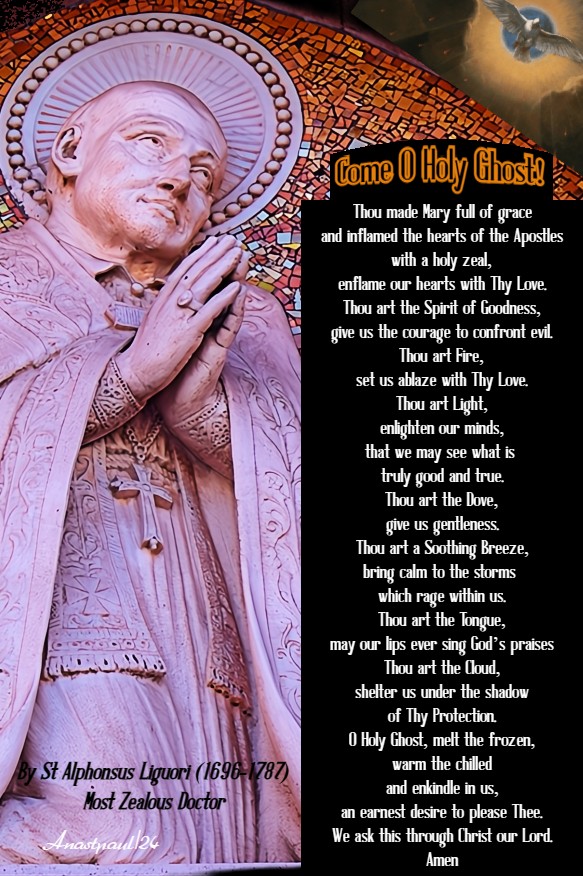
Come O Holy Ghost! By St Alphonsus Liguori (1696-1787) Most Zealous Doctor
Thou made Mary full of grace and inflamed the hearts of the Apostles with a holy zeal, enflame our hearts with Thy Love. Thou art the Spirit of Goodness, give us the courage to confront evil. Thou art Fire, set us ablaze with Thy Love. Thou art Light, enlighten our minds, that we may see what is truly good and true. Thou art the Dove, give us gentleness. Thou art a Soothing Breeze, bring calm to the storms which rage within us. Thou art the Tongue, may our lips ever sing God’s praises Thou art the Cloud, shelter us under the shadow of Thy Protection. O Holy Ghost, melt the frozen, warm the chilled and enkindle in us, an earnest desire to please Thee. We ask this through Christ our Lord. Amen
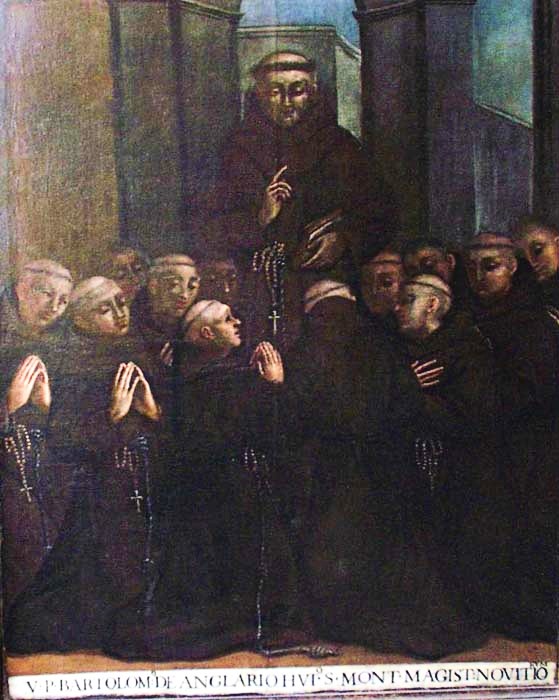
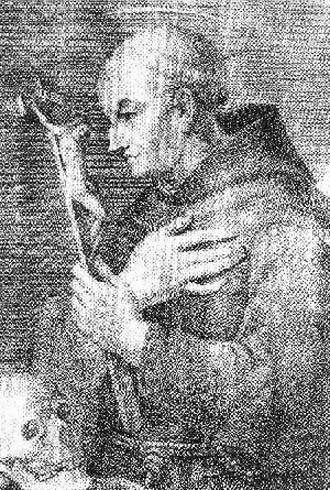
Saint of the Day – 25 May – Blessed Bartolomeus Magi di Amghiari OFM (1460-1510) Confessor, Friar of the Order of Friar’s Minor. Born in 1460 in Anghiari, Italy and died in 1510 in Empoli, Italy of natural causes. Also known as – Bartholomeo, Bartholomew. Additional Memorial – 29 August (Enshrinment of Relics)
In the Franciscan Obituary our Bartholomeus is remembers today as follows: “Near Empoli, in Tuscany, the Blessed Bartholomaeus Magi, from Anglario, a Confessor who, adorned with chastity, humility,and patience, led an almost angelic life. ”
I can find little personal detail of our Saints life but the cult and memory of Bartolomeus Magi of Anghiari, as well as within the Franciscan Order, has been a constant love over the centuries, espeically in the devotion of the Parish of Anghiari, indeed the Church of Santa Croce, with the adjoining Convent, remains a monument in honour of the Blessed.
He, by his holy advice, organised the construction of this Church which, according to his intention, was to commemorate the miracle of the of the Stigmata of Saint Francis which occurred in 1224, when he passed near the Castle and raised a Cross there.
The Church of Santa Croce in Anghiari was built and Consecrated on 15 October 1566. The faithful of Anghiari wanted to house the mortal remains of the blessed Bartolomeus Magi. But this grace was obtained only in 1603. It was on 19 August when, in the City of Empoli, Father Valerio Martelli delivered the Relics of the head of the Blessed to Mr. Maurizio di Girolamo Magi, to place them in the Church of Santa Croce in Anghiari which was officiated at the time by the Zoccolanti Fathers.
Public veneration of the Blessed Bartolomeo Magi was paid in the Church of Santa Croce by the Decree of the Bishop of Sansepolcro Fra Zanobio de Medici OP, issued on 19 June 1635. This privilege was granted at the request of the Municipal Administration of Anghiari of those times, who erected a beautiful Monument to Blessed Bartolomeo. In the Hall of the City Council of Anghiari, the marble bust of the Blessed still dominates today, as does the picture painted by Proposto Tuti in the Sacristy of the Church.
Coming to more recent times, we remember that public veneration of the Blessed Bartolomeus Magi was recognised in any Church, Oratory, or Chapel by the Bishop of Sansepolcro ,Annibale Tommasi on 2 May 1830, after having completed the recognition of the illustrious Relic. In 1907 Giovanni Volpi, Bishop of Arezzo, made his first pastoral visit to Anghiari and with the Decree of 9 June of the same year, he repeated what Monsignor Tommasi had established and was allowed to transfer the Relic from the Church of Santa Croce to that of Propositura, in order to encourage the rememberance and veneration of the faithful.
In August 1910 the IV Centenary of the death of the Blessed was celebrated in the Propositura of Anghiari and in 1922 the Association of Male Catholic Youth had the Blessed Bartolomeus Magi as its protector. In 1950, the Catholic Action Associations of the Parish, built a new Altar in the Propositura under Sogliani’s painting to give a more decorous arrangement to the Relic of the Head of the Blessed Magi, placed in a precious Reliquary.
The Feast of the Blessed is celebrated at this Altar on 29 August of each year.
St Pope Gregory VII (1015-1085) Confessor, Bishop of Rome 22 April 1073 to his death in 1085, Monk, Priest, Reformer, Administrator, Adviser. Pope Gregory “was probably the most energetic and determined man ever to occupy the See of Peter and was driven by an almost mystically exalted vision of the awesome responsibility and dignity of the papal office” (Eamonn Duffy, Saints and Sinners: A History of the Popes). Biography: https://anastpaul.com/2018/05/25/saint-of-the-day-25-may-st-pope-gregory-vii-c-1015-1085/
Bl Antonio Caixal Blessed Bartolomeus Magi di Amghiari OFM (1460-1510) Confessor, Friar of the Order of Friar’s Minor St Canio St Denis Ssebuggwawo St Dionysius of Milan St Dunchadh of Iona St Egilhard of Cornelimünster Bl Gerardo Mecatti St Gerbald St Injuriosus of Auvergne St Iosephus Chang Song-Jib Bl James Bertoni Bl Juan of Granada St Leo of Troyes
St Madeleine Sophie Barat RSCJ (1779-1865) Virgin, Religious, Foundress of the Religious of the Sacred Heart of Jesus, Institute of Teachers. Patronage – Teachers. Her body is incorupt. Saint Madeleine Sophie died in Paris on 25 May, 1865. Ascension Day. She was buried in the cemetery at Conflans. In 1904, when the French Sisters were expelled by the Combes laws, her body was transferred to the Sacred Heart at Jette, Brussels. Since her Beatification in 1908 by St Pius X, her well-preserved body has been exposed in a Shrine. She was Canonised n 24 May 1908 by Pope Pius XI Her Life of Love: https://anastpaul.com/2022/05/25/saint-of-the-day-25-may-st-madeleine-sophie-barat-rscj-1779-1865-v/
St Matthêô Nguyen Van Ðac Phuong St Maximus of Evreux Bl Nicholas Tsehelsky St Pasicrates of Dorostorum Bl Pedro Malasanch St Pherô Ðoàn Van Vân St Scholastica of Auvergne St Senzio of Bieda St Urban I, Pope St Valentio of Dorostorum St Victorinus of Acquiney St Winebald of Saint Bertin St Worad of Saint Bertin St Zenobius of Florence
Thought for the Day – 24 May – Meditations with Fr Richard Frederick Clarke SJ (1839-1900)
PATIENCE Meditations for a Month
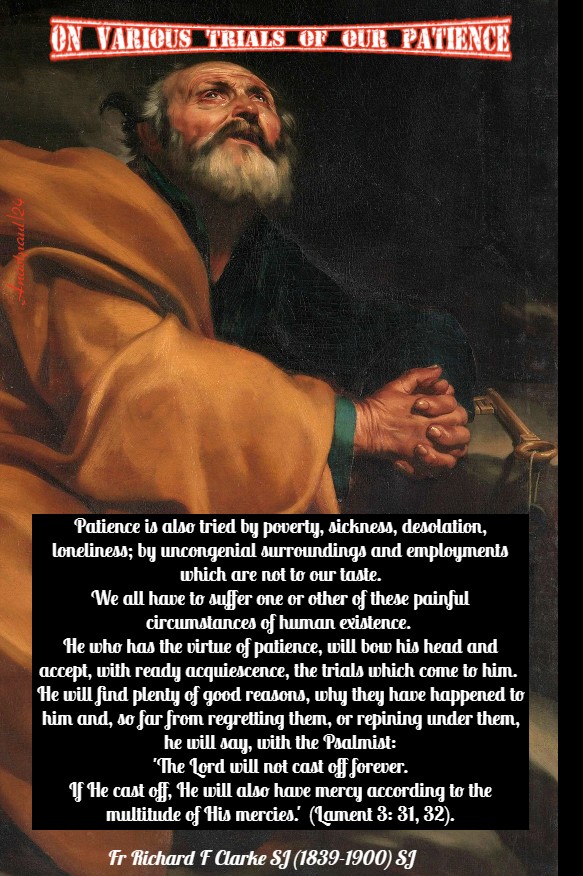
On Various Trials of our Patience
Patience is tried by everything which puts an obstacle in the way of our action – by being kept waiting long; by having to repeat, over and over again, some lesson to a dull learner; by the perverse and wayward conduct of the young; by being interrupted while speaking when we have something we want to say; by a hundred similar incidents which continually occur. All these are a good test of our possession of this virtue. How do I stand the test in each case?
Our patience is also tried by those who misunderstand and misrepresent us. It is not easy to speak and think kindly of them. We are inclined either to avoid them or to show our dislike to them. We want to let them know what we think of them and to give them a return blow for the blows we believe them to have given us. But patience bids us take the offence, real or supposed, quietly and without complaining; it checks the angry word and quenches the fire of resentment. Here, too, I have an excellent means of gauging my possession of this virtue.
Patience is also tried by poverty, sickness, desolation, loneliness; by uncongenial surroundings and employments which are not to our taste. We all have to suffer one or other of these painful circumstances of human existence. He who has the virtue of patience, will bow his head and accept, with ready acquiescence, the trials which come to him. He will find plenty of good reasons, why they have happened to him and, so far from regretting them, or repining under them, he will say, with the Psalmist: ‘The Lord will not cast off forever. If He cast off, He will also have mercy according to the multitude of His mercies.’ (Lament 3: 31, 32).
Quote/s of the Day – 24 May – “The Month of the Blessed Virgin Mary” and the Feast of Our Lady, Help of Christians/Auxilium Christianorum and the Feast Day of Saint Vincent of Lérins (Died c445) Confessor
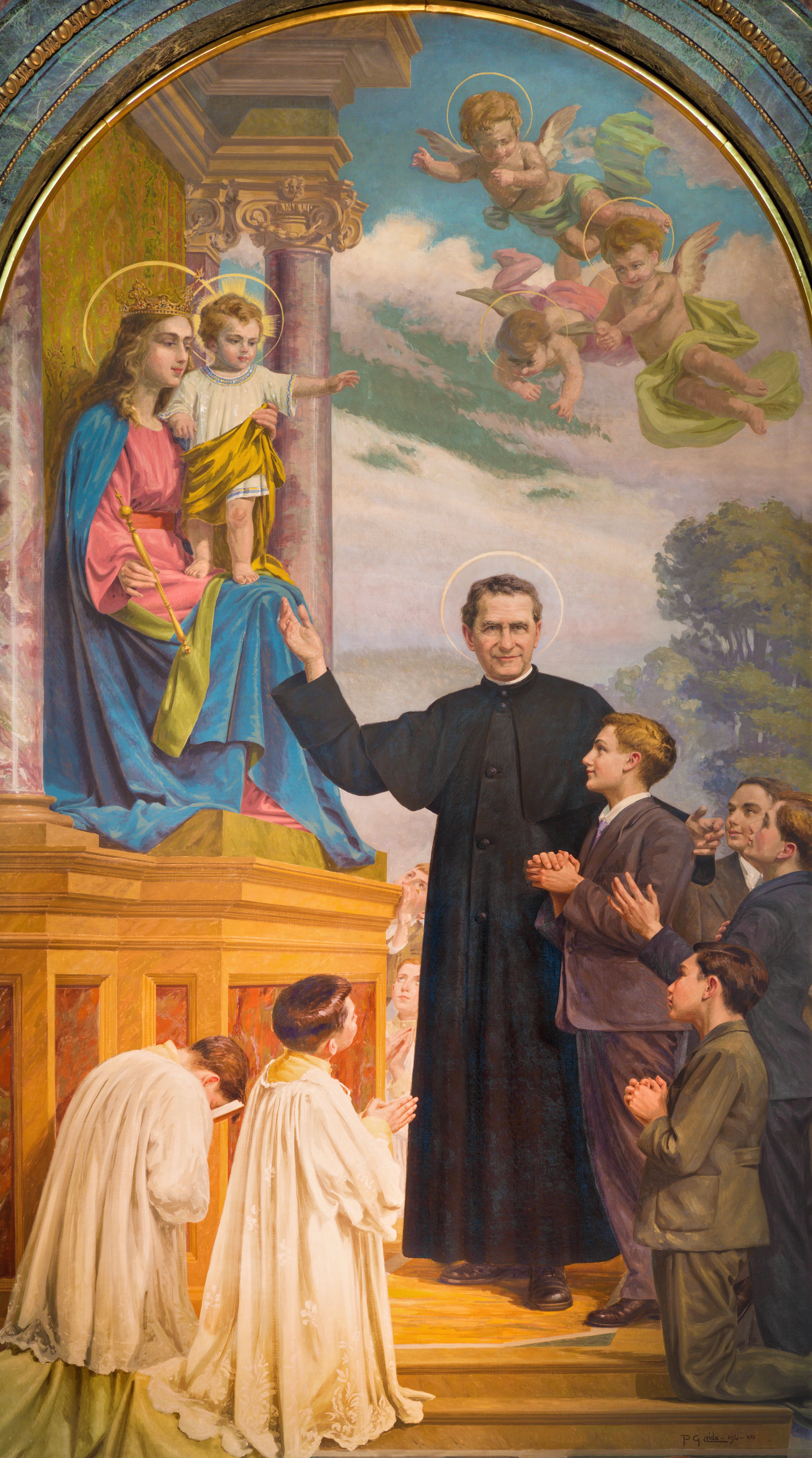
Most Holy Virgin Mary, Help of Christians By St John Bosco (1815-1888)
Most Holy Virgin Mary, Help of Christians, how sweet it is to come to thy feet imploring thy perpetual help. If earthly mothers cease not to remember their children, how can thou, the most loving of all mothers, forget me? Grant then to me, I implore thee thy perpetual help in all my necessities, in every sorrow and especially in all my temptations. I ask for thy unceasing help for all who are now suffering. Help the weak, cure the sick, convert sinners. Grant through thy intercession, many vocations to the religious life. Obtain for us, O Mary, Help of Christians, that having invoked thee on earth we may love and eternally thank thee in Heaven. Amen
One Minute Reflection – 24 May – Pentecost Thursday – Joel 2:23-24; 26-27; Luke 5:17-26 – Scripture search here: https://www.drbo.org/
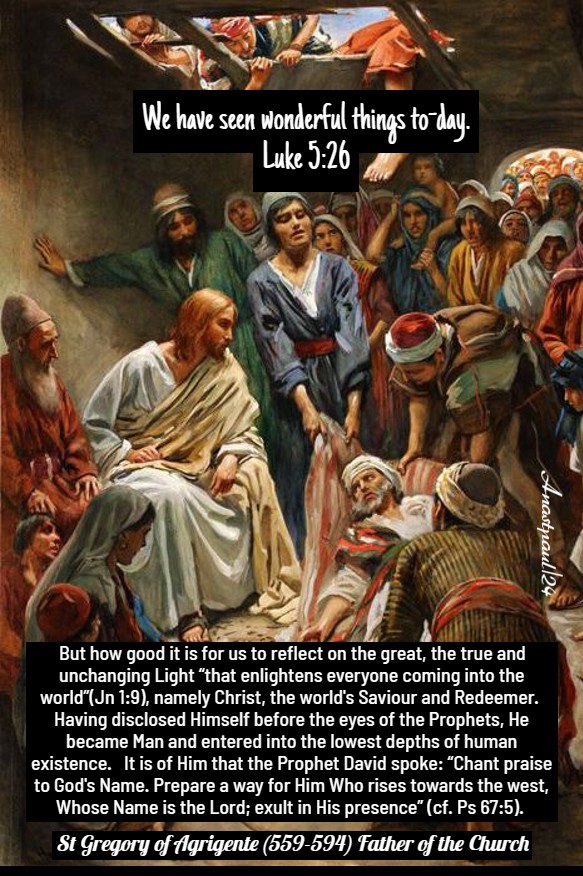
“We have seen wonderful things to-day.” – Luke 5:26
REFLECTION – “Light is sweet and it is good to see the sun, with these eyes of flesh … that is why Moses said: “And God saw the light and he said that it was good” (Gn 1:4) …
But how good it is for us to reflect on the great, the true and unchanging Light “that enlightens everyone coming into the world”(Jn 1:9), namely Christ, the world’s Saviour and Redeemer. Having disclosed Himself before the eyes of the Prophets, He became Man and entered into the lowest depths of human existence. It is of Him that the Prophet David spoke: “Chant praise to God’s Name. Prepare a way for Him Who rises towards the west, Whose Name is the Lord; exult in His presence” (cf. Ps 67:5). And Isaiah, too, cried out: “People who sit in darkness, behold this light. For yo who dwell in the land of the shadow of death, a light will shine ” (cf.9:1) …
And so, the light of the sun that is seen by these eyes of flesh makes known the spiritual Sun of Righteousness (Ml 3:20), the sweetest of all to rise on those who have the happiness of being taught by Him and seeing Him with their fleshly eyes when He dwelt among us like any ordinary man. Nevertheless, He was not just an ordinary man in that He was born true God, able to give back sight to the blind, cause the lame to walk, enable the deaf to hear, cleanse lepers and restore the dead to life by His Word (Lk 7:22).” – St Gregory of Agrigente (559-594) Bishop, Father of the Church, Friend of St Gregory the Great (On Ecclesiastes, Book 10, 2).
PRAYER – Grant to Thy Church, we beseech Thee, Almighty God, that, united by the Holy Ghost, she may in no way be harmed by any assault of the enemy. Through Jesus Christ, Thy Son our Lord, Who lives and reigns with Thee, in the unity of the Holy Ghost, God, world without end. Amen (Collect).
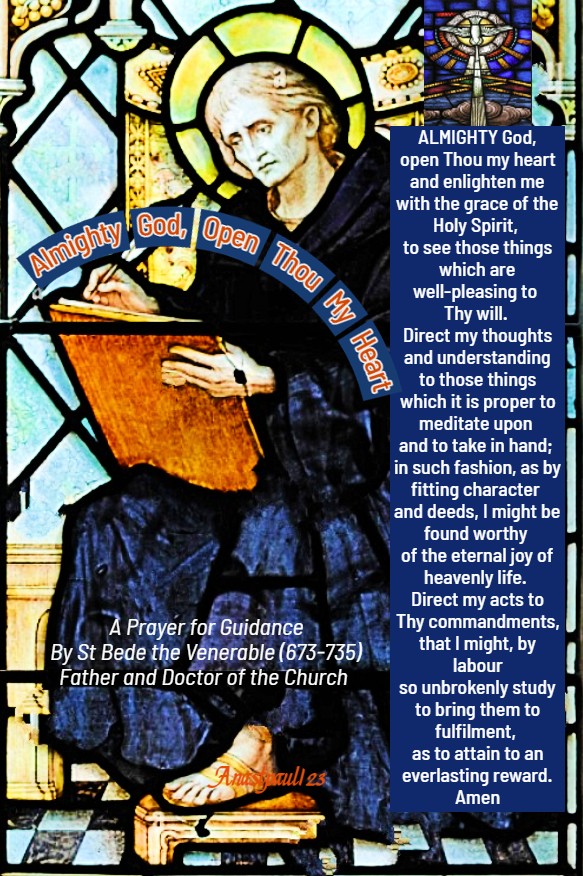
Almighty God, Open Thou My Heart A Prayer for Guidance By St Bede the Venerable (673-735) Father and Doctor of the Church
ALMIGHTY God, open Thou my heart and enlighten me with the grace of the Holy Spirit, to see those things which are well-pleasing to Thy will. Direct my thoughts and understanding to those things which it is proper to meditate upon and to take in hand; in such fashion, as by fitting character and deeds, I might be found worthy of the eternal joy of heavenly life. Direct my acts to Thy commandments, that I might, by labour so unbrokenly study to bring them to fulfilment, as to attain to an everlasting reward. Amen
Saint of the Day – 24 May – Blessed Juan del Prado OFM (1563-1631) Martyr, Priest, Religious of the Friars Minor of the Barefooted Franciscans of the Strict Observance, Missionary to Muslims in Morocco. Born in 1563 at Morgobresio, Habsburg, Kingdom of Léon, Spain and died by being burned to death on 24 May 1636 at Morocco, North Africa. Also known as – Giovanni di Prado, John of Prado.
Juan del Prado was born in 1563 in Morgovejo, Léon, Spain, to a noble Spanish family. He attended the University of Salamanca and in 1584 made his religious profession in the Order of Friars Minor. Having then received Priestly Ordination, he was initially sent to his home town to preach. He served in various communities as Novice Master and later, as Guardian. However, he was then removed from this last position following a false accusation made against him despite the holiness of life and humility which distinguished him. In 1610, having definitively established his innocence, he was able to be elected Minister of the newly formed Province of San Diego.
In the meantime, the desire to be able to dedicate himself to announcing the Gospel to the pagans, in one of the many missions already existing at that time scattered around the world, grew in his heart. When, IN 1613, the plague raged in Morocco most of his brothers in Morocco, engaged in the difficult mission with the local Muslim population, sadly succombed to the illmess. With the need to replace this sad loss, Juan was able to realise his dream and Pope Urban VIII did not hesitate to name him an Apostolic Missionary and give him special powers.
Having arrived on site, he and two companions began to take care of the Christian slaves. The local authorities ordered them to leave the Town but the three Franciscans did not give up and continued with their activity. They were then arrested near Marrakech, imprisoned and sent to crush saltpetre, the mineral for the manufacture of gunpowder. Led by the Sultan, they did not hesitate to profess their Christian faith and were, therefore, flogged and thrown back into prison. In a subsequent public interrogation, ignoring the presence of the Sultan, Juan turned his attention to some apostates present. Mulay al Walid then struck him, throwing him to the ground, he was pierced by two arrows and burned alive. Overwhelmed by the flames, he persevered in exhorting the executioners to follow Christ but one of them became impatient and smashed his head with a stone.
Pope Benedict XIII Beatified Juan deL Prado on 24 May 1728, officially recognising his Martyrdom “in odium fidei.”
Our Lady of China: Our Lady of China is a title for the Virgin Mary in China who is believed to have appeared at the small village of Donglu in 1900. In Chinese she is called Zhōnghuá Shèngmǔ. She is also known as Our Lady of Donglu.
St Afra of Brescia Bl Benedict of Cassino
St David, King of Scotland (1085-1183) King David was a social and religious Reformer, a man of great administrative skills, apostle of charity and of holy piety. He transformed his Kingdom by the widespread introduction of Catholic Churches and Monasteries, thus also assisting in the international diplomatic influence of his country, it’s farming and agricultural wealth and it’s education. He was the main force and instrument of God in Christianising Scotland. St David’s life: https://anastpaul.com/2020/05/24/saint-of-the-day-24-may-st-david-king-of-scotland-1085-1183/
Bl Diego Alonso St Donatian of Nantes St Gennadius of Astroga St Hubert of Bretigny St Joanna the Myrrhbearer Blessed Juan del Prado OFM (1563-1631) Martyr, Priest, Religious of the Friars Minor Bl John of Montfort Blessed Juan of Huete St Manahen St Marciana of Galatia St Meletius the Soldier Bl Nicetas of Pereslav St Palladia St Patrick of Bayeux
St Rogatian of Nantes St Sérvulo of Trieste St Simeon Stylites the Younger
St Susanna Martyr (Died 2nd Century) One of a group of wives of 2nd century Martyred soldiers under the command of Saint Meletius. Following the death of the soldiers, the wives and children were Martyred, as well.
Martyrs of Istria: A group of early Martyrs in the Istria peninsula. We know little more than some names – Diocles, Felix, Servilius, Silvanus and Zoëllus.
Martyrs of Plovdiv: 38 Christians Martyred together in the persecutions of Diocletian and Maximian. We don’t even known their names. They were beheaded in Plovdiv, Bulgaria.
Thought for the Day – 23 May – Meditations with Fr Richard Frederick Clarke SJ (1839-1900)
PATIENCE Meditations for a Month
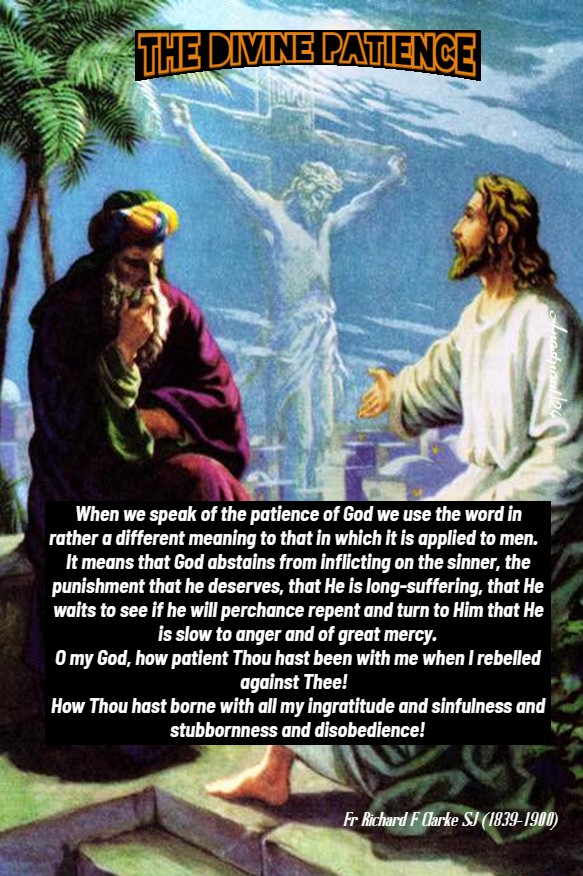
The Divine Patience
When we speak of the patience of God we use the word in rather a different meaning to that in which it is applied to men. It means that God abstains from inflicting on the sinner, the punishment that he deserves, that He is long-suffering, that He waits to see if he will perchance repent and turn to Him that He is slow to anger and of great mercy. O my God, how patient Thou hast been with me when I rebelled against Thee! How Thou hast borne with all my ingratitude and sinfulness and stubbornness and disobedience!
Holy Scripture contains many examples of the patience of God. When the human family had become so wicked that God determined to destroy them by the Flood, He waited a hundred years before carrying out the sentence. When the cry of the Cities of the Plain rose up before Him, He waited before He determined to destroy them. When Saul forfeited his kingdom by his disobedience, God waited for ten years before He carried out the sentence. Learn from God’s example to be patient with evil-doers and to love mercy rather than vengeance.
God never acts in a hurry and He, thereby desires, to teach us deliberation in all that we do. We do not leave an interval of time as He does between the wrong and the infliction of the punishment. We are so impulsive that we commit many faults which we might easily have avoided if we had learned to wait. What need was there for the delay that we find attributed to God? He, as Perfect Wisdom, needs no time for deliberation. But, it is that we may recognise the necessity of being slow to act and especially, of being slow to act in anger, that God represents Himself as always waiting.
Quote of the Day –23 May – “The Month of the Blessed Virgin Mother Mary” –
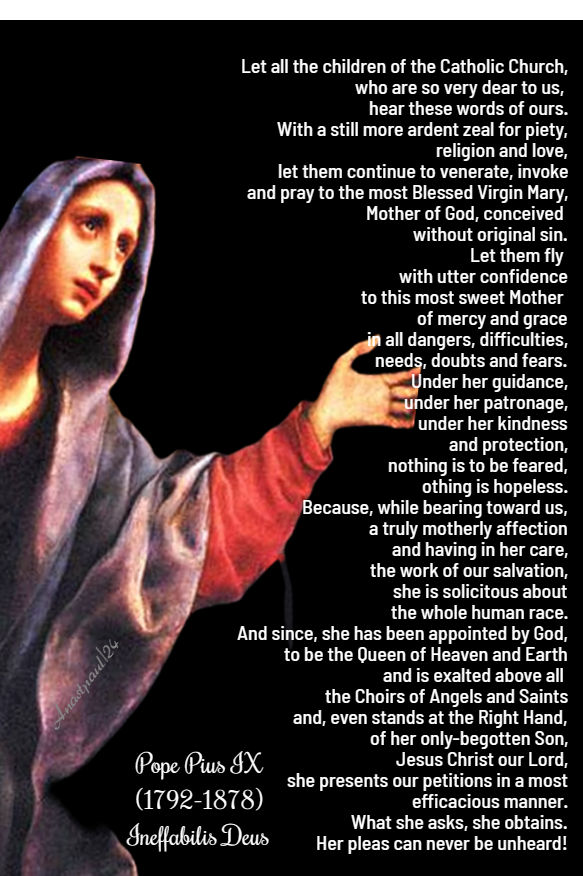
“Let all the children of the Catholic Church, who are so very dear to us, hear these words of ours. With a still more ardent zeal for piety, religion and love, let them continue to venerate, invoke and pray to the most Blessed Virgin Mary, Mother of God, conceived without original sin. Let them fly with utter confidence to this most sweet Mother of mercy and grace in all dangers, difficulties, needs, doubts and fears. Under her guidance, under her patronage, under her kindness and protection, nothing is to be feared; nothing is hopeless. Because, while bearing toward us, a truly motherly affection and having in her care, the work of our salvation, she is solicitous about the whole human race. And since, she has been appointed by God, to be the Queen of Heaven and Earth and is exalted above all the Choirs of Angels and Saints and, even stands at the Right Hand, of her only-begotten Son, Jesus Christ our Lord, she presents our petitions in a most efficacious manner. What she asks, she obtains. Her pleas can never be unheard!”
Pope Pius IX (1792-1878)
Ineffabilis Deus (which proclaimed the Dogma of the Immaculate Conception on 8 December 1854)
One Minute Reflection – 23 May – Pentecost Thursday – Acts 8:5-8; Luke 9:1-6 – Scripture search here: https://www.drbo.org/
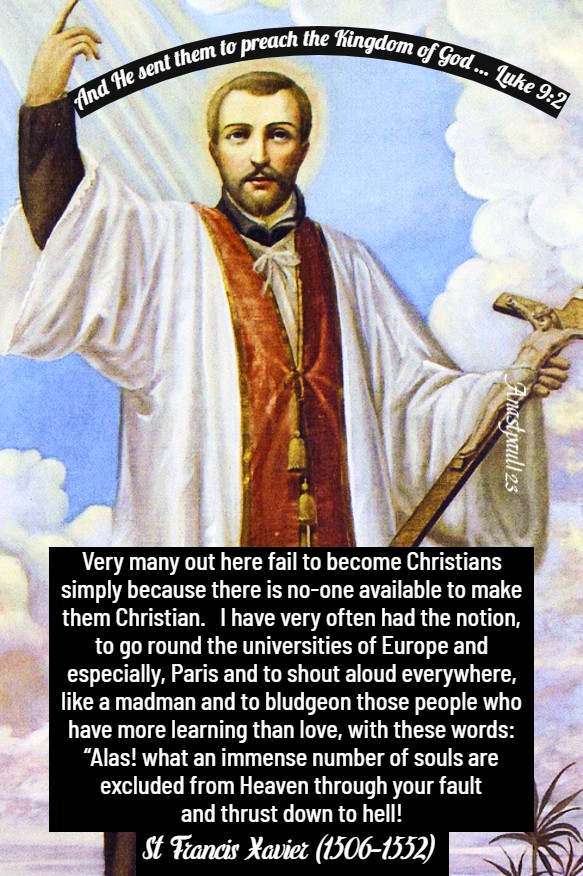
“And He sent them to preach the Kingdom of God …” – Luke 9:2
REFLECTION – “Since I came here, I have had no rest. I have been from village to village and every child not yet Baptised I have Baptised… But the children would not let me say my Office or eat or rest until I had taught them some prayers. It was then that I really began to feel that of such is the Kingdom of Heaven (Mk 10:14). I could not reject so religious a request without myself being irreligious. I made a start with the Sign of the Cross and taught them the Apostles’ Creed, the Our Father and the Hail Mary. I saw, immediately, that they were very intelligent. If only there were someone to train them in the principles of Christianity, I am sure that they would be extremely good Christians.
Very many out here fail to become Christians simply because there is no-one available to make them Christian. I have very often had the notion, to go round the universities of Europe and especially, Paris and to shout aloud everywhere, like a madman and to bludgeon those people who have more learning than love, with these words: “Alas! what an immense number of souls are excluded from Heaven through your fault and thrust down to hell!”
If only those people devoted themselves to this care in the way they do to literature. Then they would be able to render God an account of their doctrine and of the talents entrusted to them! Many of them, moved by this thought and helped by meditation on the things of God, would take pains to hear what the Lord is speaking in them and, putting aside their own selfish desires and worldly matters, would put themselves fully at God’s service and call. They would indeed cry from their soul: “Lord, here I am. What would you have me do? Send me wherever you wish, even as far as India.” – St Francis Xavier (1506-1552) Jesuit Missionary (Letters 4 and 5 to Saint Ignatius Loyola).
PRAYER – O God, Thou Who on this day have taught the hearts of the faithful by the Light of the Holy Spirit, grant us by that Holy Spirit Himself, to know what is right and ever to rejoice in His consolation. Through Jesus Christ, Thy Son our Lord, Who liveth and reigneth with Thee, in the unity of the same Holy Ghost, God, world without end. Amen (Collect).
Our Morning Offering – 23 May – Pentecost Thursday
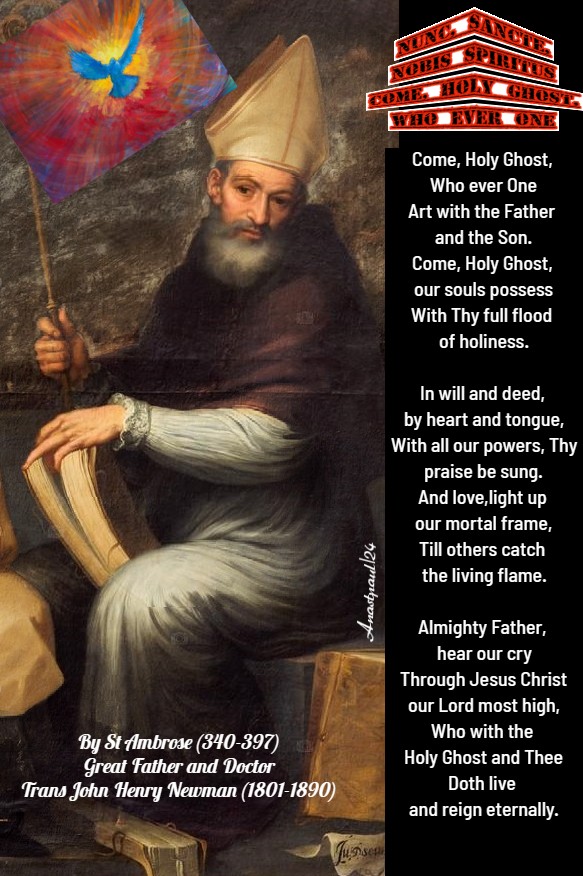
Nunc, Sancte, nobis Spiritus Come, Holy Ghost, Who ever One By St Ambrose (340-397) Trans John Henry Newman (1801-1890) Trans 1836
Come, Holy Ghost, Who ever One Art with the Father and the Son. Come, Holy Ghost, our souls possess With Thy full flood of holiness.
In will and deed, by heart and tongue, With all our powers, Thy praise be sung. And love, light up our mortal frame, Till others catch the living flame.
Almighty Father, hear our cry Through Jesus Christ our Lord most high, Who with the Holy Ghost and Thee Doth live and reign eternally.
Saint/s of the Day – 23 May – Saint Eutychius of Valcastoria (6th Century) Abbot and Confessor, Hermit and Saint Florentius of Valcastoria (6th Century) Confessor, Hermit, Miracle-worker. Also known as Eutizio and Fiorenzo. St Florentius attracts 2 additional memorils – on 1 June in Foligno and on 27 June in Norcia.
The Roman Martyrology reads: “In the territory of Norcia in Umbria, commemoration of Saint Eutizio, Abbot, who, as Pope Saint Gregory the Great recounts, first practiced a solitary life together with Saint Fiorenzo, leading many to God with their encouragement and later, governed the nearby Monastery with great holiness.”
St Gregory the Great narrates their lives in the Dialogues. There is also a legend of Eutychius of late origin, in which the events told by St Gregory are attributed to him. And what is found in the fabulous Acts of another Eutychius are also sometimes attributed to today’s Saint.
After having led a solitary life together with Florentius in the Norcia Province, Eutychius was elected Abbot of a Monastery in Valcastoria, famous in the Middle Ages which he ruled for many years and which took its name from him, even though he was not its founder.
It is believed that the arrival of Eutychius to Valcastoria and the construction of the Monastery date o the early times of the Ostrogothic invasion, i.e. after 487.
When Eutychius became the Abbot, Florentius remained alone and, suffering as a result, he prayed to the Lord to send him a companion. As soon as he left the oratory he found a bear, to which he gave the task of taking four or five goats to pasture, a job which the animal carried out with care. But four of Eutychius’ Monks, envious of Florentius’ miracles, killed the bear, causing him great pain. Eutychius went to console him but Florentius, inconsolable, asked the Lord for severe punishment of the guilty. These, struck by a mysterious illness, died miserably.
Upon Eutychius’ death, Florentius probably took himself to Foligno, where he died around 540 and where he is commemorated on 1 June. In Norcia, his Feast is 27 June. The Martyrology of Farfa, from the 16th Century commemorates both our Saints today on 23 May as Confessors. Both are registered in the Roman Martyrology on 23 May.
St Epitacius of Tuy St Euphebius of Naples St Eutychius of Valcastoria (6th Century) Abbot and Confessor St Florentius of Valcastoria (6th Century) Hermit and Confessor St Goban Gobhnena
Martyrs of Béziers: 20 Mercedarian Friars murdered by Huguenots for being Catholic. Martyrs. 1562 at the Mercedarian convent at Béziers, France.
Martyrs of Cappadocia: A group of Christians tortured and Martyred in the persecutions of Diocletian and Galerius. Their names and the details of their lives have not come down to us. They were crushed to death in c.303 in Cappadocia (in modern Turkey).
Martyrs of Carthage: When a civil revolt erupted in Carthage in 259 during a period of persecution by Valerian, the procurator Solon blamed it on the Christians, and began a persecution of them. We know the names and a few details about 8 of these martyrs – Donatian, Flavian, Julian, Lucius, Montanus, Primolus, Rhenus and Victorius. They were beheaded in 259 at Carthage (modern Tunis, Tunisia).
Martyrs of Mesopotamia: A group of Christians Martyred in Mesopotamia in persecutions by imperial Roman authorities. Their names and the details of their lives have not come down to us. They were suffocated over a slow fire in Mesopotamia.
Martyrs of North Africa: A group of 19 Christians Martyred together in the persecutions of the Arian Vandal King Hunneric for refusing to deny the Trinity. We know little more than a few of their names – Dionysius, Julian, Lucius, Paul and Quintian. c
Thought for the Day – 22 May – Meditations with Fr Richard Frederick Clarke SJ (1839-1900)
MEDITATIONS FOR A MONTH
Fr Richard Clarke was born on 25 January 1839, London, England as a protestant. After studying at Oxford and entering Anglican ministry, he converted to Catholicism and entered the Jesuit Order on 15 July 1871, at Roehampton London. He was Ordained in 1878 and made his Professed on 02 February 1887.
Fr Clarke was a prolific writer with much of his output being small, meditative booklets which assist the faithful to stop and realise that the impossible could become possible.
He has written on all the essential virtues and devotions of our Catholic Faith as we climb this steep and narrow road to sanctity, guiding, inspiring and supporting us on our pilgrimage through the Liturgical year.. Most of his works cover 30 days and the Meditations are generally brief and deeply relevant to life in the world. We will be combining 3 of them here at present. Patience, Humility and for June, the Adorable Heart of Jesus which was re-issued with a Preface and Introduction by our Fr Clarke, using a publication by Fr Joseph de Galliffet (1663-1749).
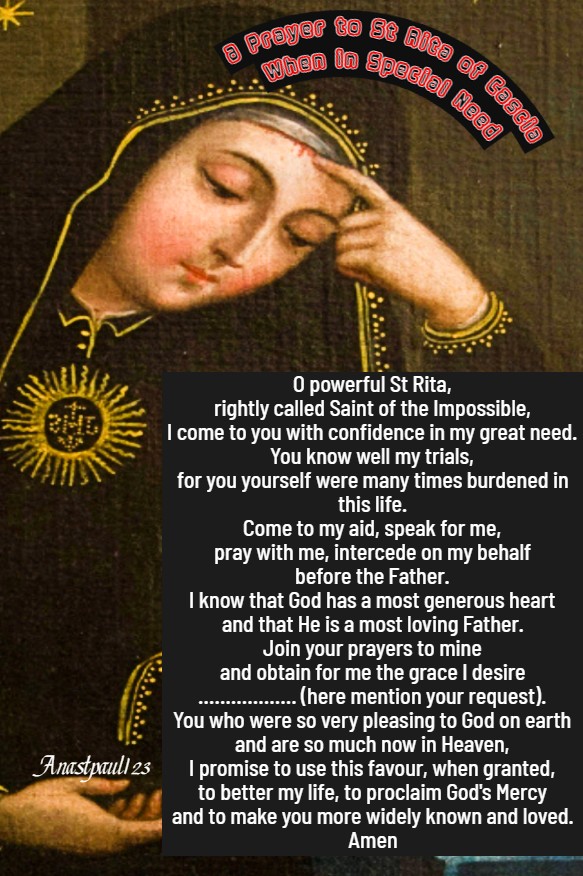
Quote of the Day – 22 May – St Rita of Cascia (1386-1457) Mother, Widow, Stigmatist, Consecrated Religious, Mystic, – Patron of Impossible Causes, Abused Wives and Widows et al
A Prayer to St Rita When in Special Need
O powerful St Rita, rightly called Saint of the Impossible, I come to you with confidence in my great need. You know well my trials, for you yourself were many times burdened in this life. Come to my aid, speak for me, pray with me, intercede on my behalf before the Father. I know that God has a most generous heart and that He is a most loving Father. Join your prayers to mine and obtain for me the grace I desire ……………… (here mention your request). You who were so very pleasing to God on earth and are so much now in Heaven, I promise to use this favour, when granted, to better my life, to proclaim God’s Mercy and to make you more widely known and loved. Amen.
One Minute Reflection – 22 May – Pentecost Wednesday – Ember Wednesday within the Octave of Pentecost – Acts 2:1-11, John 14:23-31.–St Rita of Cascia (1386-1457) Mother, Widow, Stigmatist, Consecrated Religious, Mystic – Scripture search here: https://www.drbo.org/
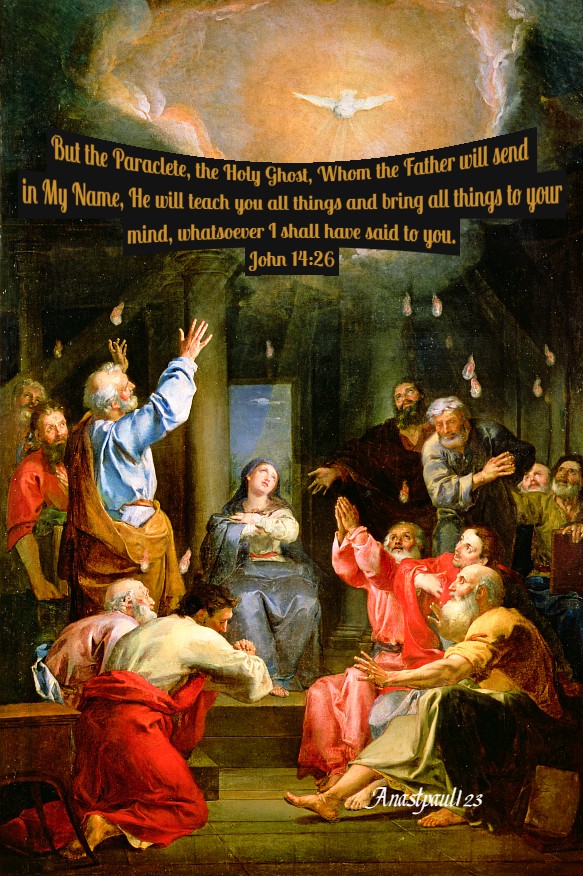
“But the Paraclete, the Holy Ghost, Whom the Father will send in My Name, He will teach you all things and bring all things to your mind, whatsoever I shall have said to you.” – John 14:26
REFLECTION – “The Apostles were sitting there in the Cenacle, the Upper Room, waiting for the Holy Ghost’s coming. Like torches, they were present there, ready and waiting to be set alight by the Holy Ghost so as to illumine the whole creation with their teaching… They were there like farm hands carrying seed in their coat pocket, waiting for the order to go out and sow. They were there like sailors whose boat is tied up in the harbour of the Son’s commandment and who are waiting for the gentle wind of the Spirit. They were there like shepherds who have just received their staff from the Chief Shepherd of the fold and who are waiting for the flock to be divided among them.
“And they began to speak in different tongues as the Spirit enabled them to proclaim.” O Cenacle, kneading trough into which has been thrown the leaven, leavening the whole world! O Cenacle, mother of all the Churches, who have witnessed the miracle of the burning bush (Ex 3). O Cenacle, amazing Jerusalem with a wonder far greater than that of the burning furnace which astonished the inhabitants of Babylon (Dn 3). The fire of the furnace burned all those around it but protected those in its midst – the flames of the Cenacle gather together those outside who wish to see them, while bringing comfort to those who receive them. O fire, whose coming is word, whose silence is light! O fire, establishing hearts in thankfulness!…
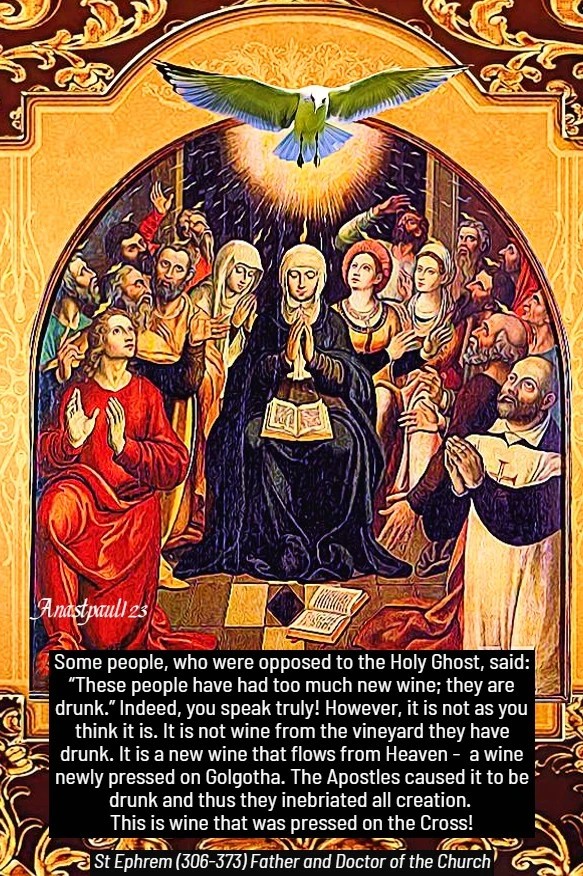
Some people, who were opposed to the Holy Ghost, said: “These people have had too much new wine; they are drunk.” Indeed, you speak truly! However, it is not as you think it is. It is not wine from the vineyard they have drunk. It is a new wine that flows from Heaven – a wine newly pressed on Golgotha. The Apostles caused it to be drunk and thus they inebriated all creation. This is wine that was pressed on the Cross!” – St Ephrem (306-373) Deacon in Syria, Father and Doctor of the Church [Added by Pope Benedict XV in 1920] – (On the outpouring of the Holy Ghost).
PRAYER – O God, Thou Who on this day have taught the hearts of the faithful by the Light of the Holy Spirit, grant us by that Holy Spirit Himself, to know what is right and ever to rejoice in His consolation. Through Jesus Christ, Thy Son our Lord, Who lives and reigns with Thee, in the unity of the Holy Ghost, God, world without end. Amen (Collect).
Our Morning Offering – 22 May – Pentecost Wednesday
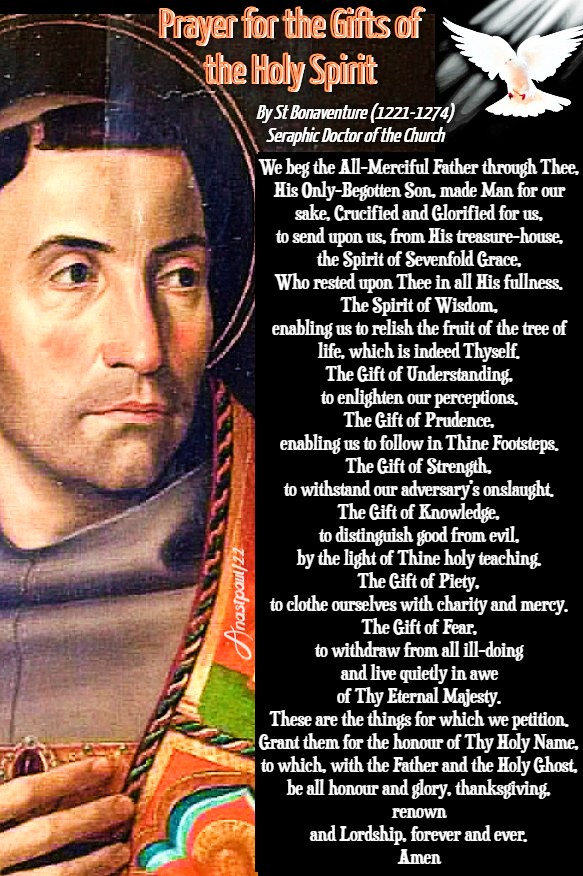
Prayer for the Gifts of the Holy Ghost By St Bonaventure (1221-1274) Seraphic Doctor of the Church
We beg the All-Merciful Father through Thee, His Only-Begotten Son, made Man for our sake, Crucified and Glorified for us, to send upon us, from His treasure-house, the Spirit of Sevenfold Grace, Who rested upon Thee in all His fullness.
The Spirit of Wisdom, enabling us to relish the fruit of the tree of life, which is indeed Thyself. The Gift of Understanding, to enlighten our perceptions. The Gift of Prudence, enabling us to follow in Thine Footsteps. The Gift of Strength, to withstand our adversary’s onslaught. The Gift of Knowledge, to distinguish good from evil, by the light of Thine holy teaching. The Gift of Piety, to clothe ourselves with charity and mercy. The Gift of Fear, to withdraw from all ill-doing and live quietly in awe of Thy Eternal Majesty.
These are the things for which we petition. Grant them for the honour of Thy Holy Name, to which, with the Father and the Holy Ghost, be all honour and glory, thanksgiving, renown and Lordship, forever and ever. Amen
Saint of the Day – 22 May – Saint Romanus of Subiaco (Died c560) Abbot, Hermit and Monk. Protector and benefactor of St Benedict during the latter’s early years as a Hermit. Also known as Romano.
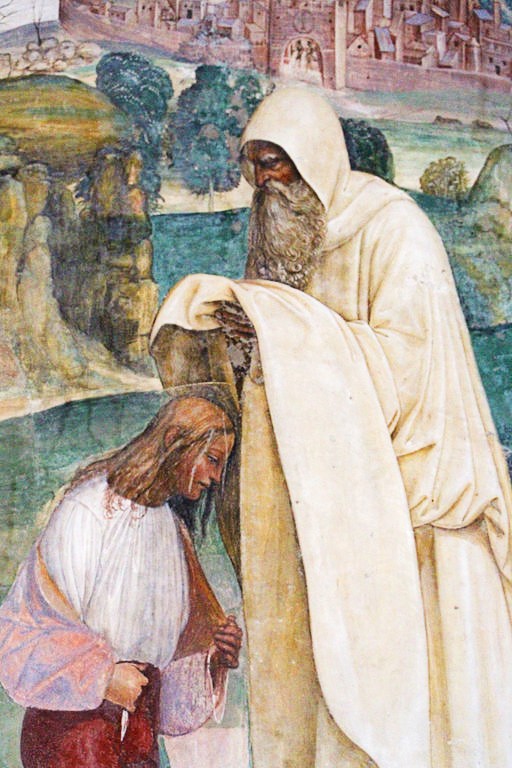
Life of St Benedict, Scene 4: The Monk Romanus Dresses Benedict by Il Sodoma,
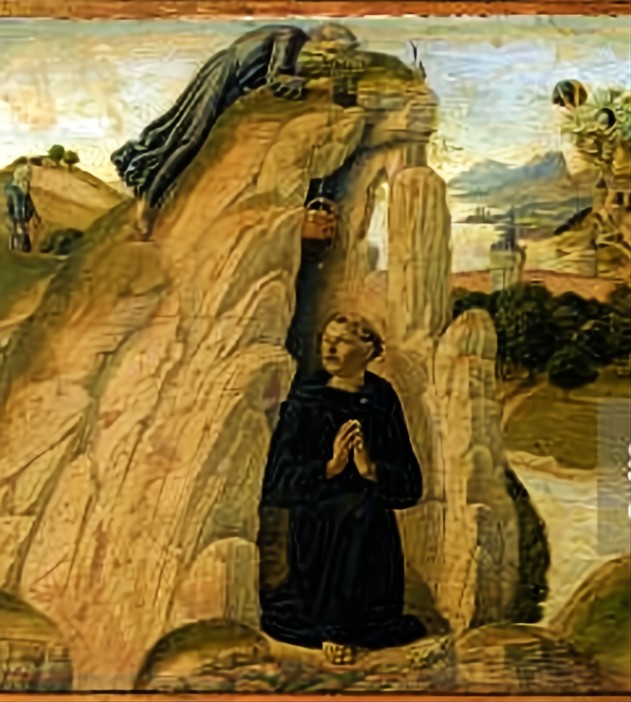
The spirituality of the great Saint Benedict, Patron Saint of Europe, originated with a three-year Retreat at the so-called “Sacro Speco” of Subiaco. In this deep, almost inaccessible cave, the young Benedict dedicated himself, body and soul, to a very harsh ascetic practice. However, not everyone knows that it was our Saint Romanus, a Monk near the Lazio village of Subiaco, who dressed the famous Saint of Norcia in the Hermit’s Habit, helped him enter the Sacro Speco and provided him with everything he needed to survive for three long years. All this, however, was done with secrecy, to prevent anyone from suspecting Benedict’s presence in the cave and possibly disturbing his asceticism.
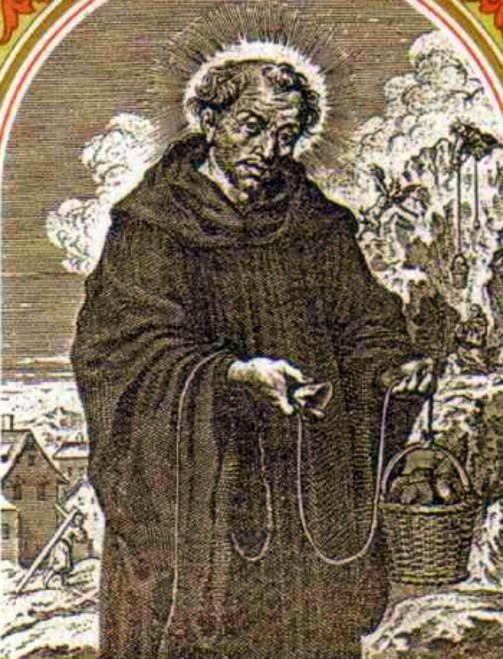
Everyday, Romanus provided the penitent boy with some bread recovered from the canteen of his Monastery, climbing the cliff above the entrance to the cavity, he warned Benedetto of his arrival with a bell and letthe supplies, just as much as was needed, down to him down with a rope.
Legend has it that one day the bell was broken by the devil, enraged by the strong ascetic and charitable virtues which he found in Benedict and Romanus respectively. The latter, however, did not limit himself exclusively to providing the Saint of Norcia with material aid but thanks to his experience and his wisdom, he was able to reveal to him, the secrets of monastic asceticism which proved to be of fundamental importance in the drafting of the Benedictine Rule.
Unfortunately, it is not known with historical certainty whether the two Sints remained in contact even at the end of the three years of collaboration at the Holy Sepulchre of Subiaco. When Saint Benedict finally became famous as Abbot of Monte Cassino, tradition rather leans towards a transfer of Romanus to France, where he did his utmost to found a new Monastery and trained many young Monks. Here, upon his death, he was venerated for his immense spiritual merits which materialised mainly in the inspiration of Saint Benedict in the foundation of the new religious family, which formed the Christian soul of the old continent.
St Boethian of Pierrepont St Castus the Martyr St Conall of Inniscoel Bl Diego de Baja Bl Dionisio Senmartin St Emilius the Martyr St Faustinus the Martyr
St Lupo of Limoges St Marcian of Ravenna Bishop and Confessor St Margaret of Hulme Bl Pedro of the Assumption St Quiteria St Romanus of Subiaco (Died c560) Abbot, Protector and benefactor of St Benedict during the latter’s early years as a Hermit. St Timothy the Martyr St Venustus the Martyr
Thou, on those who evermore Thee confess and Thee adore In Thy sevenfold Gifts, descend. Give them comfort when they die, Give them life with Thee on high, Give them joys which never end.
THE FRUITS of the HOLY GHOST
The Gifts of the Holy Ghost perfect the supernatural virtues, by enabling us to practice them with greater docility to Divine inspiration. As we grow in the knowledge and love of God, under the direction of the Holy Ghost, our service becomes more sincere and generous, the practice of virtue becomes more perfect. Such acts of virtue leave the heart filled with joy and consolation and are known as Fruits of the Holy Spirit. These Fruits, in turn, render the practice of virtue more attractive and become a powerful incentive for still greater efforts, in the service of God, to serve Whom is to reign!
Prayer
Come, O Divine Spirit, fill my heart with Thy heavenly fruits, Thy charity, joy, peace, patience, benignity, goodness, faith, mildness and temperance, that I may never weary of the service of God but by continued faithful submission, to Thy inspiration, may merit to be united eternally with Thee, in the love of the Father and the Son. Amen
Our Father and Hail Mary – ONCE. Glory be to the Father – SEVEN TIMES.
ACT OF CONSECRATION TO THE HOLY SPIRIT To be recited daily during the Novena
On my knees, I, before the great multitude of heavenly witnesses, offer myself, soul and body to Thee, Eternal Spirit of God. I adore the brightness of Thy Purity, the unerring keenness of Thy Justice and the might of Thy Love. Thou art the Strength and Light of my soul. In Thee, I live and move and am. I desire never to grieve Thee by unfaithfulness to grace and I pray with all my heart to be kept from the smallest sin against Thee. Mercifully guard my every thought and grant that I may always watch for Thy Light, listen to Thine Voice and follow Thy gracious inspirations. I cling to Thee and give myself to Thee and ask Thee, by Thy compassion, to watch over me in my weakness. Holding the pierced Feet of Jesus, looking at His Five Wounds and trusting in His Precious Blood and adoring His opened Side and stricken Heart, I implore Thee, Adorable Spirit, Helper of my infirmity, to keep me in Thy grace that I may never sin against Thee. Give me grace O Holy Spirit, Spirit of the Father and of the Son, to say to Thee, always and everywhere, “Speak Lord for Thine servant hears.” Amen.
Bend the stubborn heart and will; Melt the frozen, warm the chill; Guide the steps which go astray!
THE GIFT OF WISDOM
Embodying all the other gifts, as charity embraces all the other virtues, Wisdom is the most perfect of the gifts. Of Wisdom it is written: “all good things come to me with her and innumerable riches through her hands.” It is the gift of Wisdom which strengthens our faith, fortifies hope, perfects charity and promotes the practice of virtue in the highest degree. Wisdom enlightens the mind to discern and relish things Divine, in the appreciation of which, earthly joys lose their savour, whilst the Cross of Christ, yields a Divine sweetness, according to the words of the Saviour: “Take up thy cross and follow Me, for My Yoke is sweet and My Burden light.”
Prayer
Come, O Spirit of Wisdom and reveal to my soul, the Mysteries of heavenly things, their exceeding greatness, power and beauty. Teach me to love them above and beyond all the passing joys and satisfactions of earth. Help me to attain them and possess them forever. Amen
Our Father and Hail Mary – ONCE. Glory be to the Father – SEVEN TIMES.
ACT OF CONSECRATION TO THE HOLY SPIRIT To be recited daily during the Novena
On my knees, I, before the great multitude of heavenly witnesses, offer myself, soul and body to Thee, Eternal Spirit of God. I adore the brightness of Thy Purity, the unerring keenness of Thy Justice and the might of Thy Love. Thou art the Strength and Light of my soul. In Thee, I live and move and am. I desire never to grieve Thee by unfaithfulness to grace and I pray with all my heart to be kept from the smallest sin against Thee. Mercifully guard my every thought and grant that I may always watch for Thy Light, listen to Thine Voice and follow Thy gracious inspirations. I cling to Thee and give myself to Thee and ask Thee, by Thy compassion, to watch over me in my weakness. Holding the pierced Feet of Jesus, looking at His Five Wounds and trusting in His Precious Blood and adoring His opened Side and stricken Heart, I implore Thee, Adorable Spirit, Helper of my infirmity, to keep me in Thy grace that I may never sin against Thee. Give me grace O Holy Spirit, Spirit of the Father and of the Son, to say to Thee, always and everywhere, “Speak Lord for Thine servant hears.” Amen.
Heal our wounds our strength renew; On our dryness pour Thy dew; Wash the stains of guilt away!
THE GIFT OF COUNSEL
The gift of Counsel endows the soul with supernatural prudence, enabling it to judge promptly and rightly, that which must be done, especially in difficult circumstances. Counsel applies, the principles furnished by Knowledge and Understanding, to the innumerable concrete cases which confront us, in the course of our daily duty, as parents, teachers, public servants and Christian citizens. Counsel is supernatural common-sense, a priceless treasure in the quest of salvation. “Above all things, pray to the Most High, that He may direct thy way in truth.”
Prayer
Come, O Spirit of Counsel, help and guide me in all my ways, that I may always fulfill Thine Holy Will. Incline my heart to that which is good; turn it away from all that is evil and direct me, by the straight path of Thy commandments, to that goal of eternal life for which I long. Amen
Our Father and Hail Mary – ONCE. Glory be to the Father – SEVEN TIMES.
ACT OF CONSECRATION TO THE HOLY SPIRIT To be recited daily during the Novena
On my knees, I, before the great multitude of heavenly witnesses, offer myself, soul and body to Thee, Eternal Spirit of God. I adore the brightness of Thy Purity, the unerring keenness of Thy Justice and the might of Thy Love. Thou art the Strength and Light of my soul. In Thee, I live and move and am. I desire never to grieve Thee by unfaithfulness to grace and I pray with all my heart to be kept from the smallest sin against Thee. Mercifully guard my every thought and grant that I may always watch for Thy Light, listen to Thine Voice and follow Thy gracious inspirations. I cling to Thee and give myself to Thee and ask Thee, by Thy compassion, to watch over me in my weakness. Holding the pierced Feet of Jesus, looking at His Five Wounds and trusting in His Precious Blood and adoring His opened Side and stricken Heart, I implore Thee, Adorable Spirit, Helper of my infirmity, to keep me in Thy grace that I may never sin against Thee. Give me grace O Holy Spirit, Spirit of the Father and of the Son, to say to Thee, always and everywhere, “Speak Lord for Thine servant hears.” Amen.
If Thou take Thy grace away, Nothing pure in man will stay; All his good is turned to ill.
THE GIFT OF UNDERSTANDING
Understanding, as a Gift of the Holy Ghost, helps us to grasp the meaning of the truths of our holy religion. By faith we know them but, by Understanding, we learn to appreciate and relish them. It enables us to penetrate the inner meaning, of revealed truths and through them, to be quickened to newness of life. Our faith ceases to be sterile and inactive but, inspires a mode of life, which bears eloquent testimony, to the faith which is in us, we begin to: “walk worthily of God in all things, pleasing Him and increasing, in the knowledge of God.”
Prayer
Come, O Spirit of Understanding and enlighten our minds, that we may know and believe all the Mysteries of salvation and may merit, at last, to see the eternal light of Thy Light and in the light of glory, to have a clear vision of Thee and the Father and the Son. Amen.
Our Father and Hail Mary – ONCE. Glory be to the Father – SEVEN TIMES.
ACT OF CONSECRATION TO THE HOLY SPIRIT To be recited daily during the Novena
On my knees, I, before the great multitude of heavenly witnesses, offer myself, soul and body to Thee, Eternal Spirit of God. I adore the brightness of Thy Purity, the unerring keenness of Thy Justice and the might of Thy Love. Thou art the Strength and Light of my soul. In Thee, I live and move and am. I desire never to grieve Thee by unfaithfulness to grace and I pray with all my heart to be kept from the smallest sin against Thee. Mercifully guard my every thought and grant that I may always watch for Thy Light, listen to Thine Voice and follow Thy gracious inspirations. I cling to Thee and give myself to Thee and ask Thee, by Thy compassion, to watch over me in my weakness. Holding the pierced Feet of Jesus, looking at His Five Wounds and trusting in His Precious Blood and adoring His opened Side and stricken Heart, I implore Thee, Adorable Spirit, Helper of my infirmity, to keep me in Thy grace that I may never sin against Thee. Give me grace O Holy Spirit, Spirit of the Father and of the Son, to say to Thee, always and everywhere, “Speak Lord for Thine servant hears.” Amen.
Light immortal! Light Divine! Visit Thou these hearts of Thine, And our inmost being fill!
THE GIFT OF KNOWLEDGE
The Gift of Knowledge enables the soul to evaluate created things, at their true worth, in their relationship to God. Knowledge unmasks the pretence of creatures, reveals their emptiness and points out their only true purpose, as instruments, in the service of God. It shows us the loving care of God, even in adversity and directs us to glorify Him in every circumstance of life. Guided by its light, we put first things first and prize the friendship of God, beyond all else. “Knowledge is a fountain of life to him who possesseth it.”
Prayer
Come, O Blessed Spirit of Knowledge and grant that I may perceive the Will of the Father; show me the nothingness of earthly things, that I may realise their vanity and use them, only for Thy glory and my own salvation, looking ever beyond them to Thee and Thine Eternal Rewards. Amen.
Our Father and Hail Mary – ONCE. Glory be to the Father – SEVEN TIMES.
ACT OF CONSECRATION TO THE HOLY SPIRIT To be recited daily during the Novena
On my knees, I, before the great multitude of heavenly witnesses, offer myself, soul and body to Thee, Eternal Spirit of God. I adore the brightness of Thy Purity, the unerring keenness of Thy Justice and the might of Thy Love. Thou art the Strength and Light of my soul. In Thee, I live and move and am. I desire never to grieve Thee by unfaithfulness to grace and I pray with all my heart to be kept from the smallest sin against Thee. Mercifully guard my every thought and grant that I may always watch for Thy Light, listen to Thine Voice and follow Thy gracious inspirations. I cling to Thee and give myself to Thee and ask Thee, by Thy compassion, to watch over me in my weakness. Holding the pierced Feet of Jesus, looking at His Five Wounds and trusting in His Precious Blood and adoring His opened Side and stricken Heart, I implore Thee, Adorable Spirit, Helper of my infirmity, to keep me in Thy grace that I may never sin against Thee. Give me grace O Holy Spirit, Spirit of the Father and of the Son, to say to Thee, always and everywhere, “Speak Lord for Thine servant hears.” Amen.
Thought for the Day – 14 May – The Spiritual Combat (1589) – Dom Lorenzo Scupoli OSM (c1530-1610)
“None shall be crowned who has not fought well.” 2 Tim 2: 55
LXVI: … Concerning the Four Assaults of the Enemy at the Hour of Death. The Fourth Assault of Various Illusions Employed by the Devil at the Hour of Death
“If our persistent foe, who never ceases to persecute us, should assail us disguised as an angel of light, stand firm and steadfast, even though cognizant of your own nothingness and say to him boldly: “Return, miserable one into your realms of darkness, for I am unworthy of visions, nor do I need anything but the mercy of my Saviour and the prayers of Mary, Joseph and all the Saints.”
And although, these visions seem to bear many evidences of having been born in Heaven, still reject them as far as it is within your power to do so. And have no fear that this resistance, founded as it is on your own worthiness, will be displeasing to God. FoE, if the vision be from Him, He has the power to make the same known to you and you will suffer no detriment; for He Who gives grace to the humble, does not withdraw it because of acts which spring from humility!
These, then, are the weapons which the enemy most commonly employs against us at the hour of our death. Each individual is tempted according to the particular inclination to which he is most subject. Therefore, before the zero hour of the great conflict, we should arm ourselves securely and struggle manfully against our most violent passions that the victory may be easier in that hour which leaves no future time for preparation or resistance.”
Dom Lorenzo Scupoli
THE END
P.S. Our Spiritual Advisor, Dom Scupoli, has also written a small “Treatise on Peace of Soul and Inner Happiness” which we will investigate in the future.
Thou in toil art comfort sweet, Pleasant coolness in the heat, Solace in the midst of woe.
The Gift of Fortitude
By the Gift of Fortitude, the soul is strengthened against natural fear and supported to the end, in the performance of duty. Fortitude imparts to the will, an impulse and energy which move it to undertake, without hesitancy, the most arduous tasks, to face dangers, to trample underfoot, human respect and, to endure, without complaint, the slow martyrdom of even lifelong tribulation. “He who shall persevere unto the end, he shall be saved.”
Prayer
Come, O Blessed Spirit of Fortitude, uphold my soul in time of trouble and adversity, sustain my efforts, after holiness, strengthen my weakness, give me courage against all the assaults of my enemies that I may never be overcome and separated from Thee, my God and greatest Good. Amen.
Our Father and Hail Mary – ONCE. Glory be to the Father – SEVEN TIMES.
ACT OF CONSECRATION TO THE HOLY SPIRIT To be recited daily during the Novena
On my knees, I, before the great multitude of heavenly witnesses, offer myself, soul and body to Thee, Eternal Spirit of God. I adore the brightness of Thy Purity, the unerring keenness of Thy Justice and the might of Thy Love. Thou art the Strength and Light of my soul. In Thee, I live and move and am. I desire never to grieve Thee by unfaithfulness to grace and I pray with all my heart to be kept from the smallest sin against Thee. Mercifully guard my every thought and grant that I may always watch for Thy Light, listen to Thine Voice and follow Thy gracious inspirations. I cling to Thee and give myself to Thee and ask Thee, by Thy compassion, to watch over me in my weakness. Holding the pierced Feet of Jesus, looking at His Five Wounds and trusting in His Precious Blood and adoring His opened Side and stricken Heart, I implore Thee, Adorable Spirit, Helper of my infirmity, to keep me in Thy grace that I may never sin against Thee. Give me grace O Holy Spirit, Spirit of the Father and of the Son, to say to Thee, always and everywhere, “Speak Lord for Thine servant hears.” Amen.
Thought for the Day – 13 May – The Spiritual Combat (1589) – Dom Lorenzo Scupoli OSM (c1530-1610)
“None shall be crowned who has not fought well.” 2 Tim 2: 5
LXV:… Concerning the Four Assaults of the Enemy at the Hour of Death. The Third Assault of Temptation to Vainglory.
“The Third Assault is that of vainglory and presumption. Dread nothing as much as yielding, in the least way, to an exalted opinion of your person, or your good works. Take no glory but in the Lord and acknowledge that all that you are or ever hope to be, is to be attributed to the merits of the Life and Death of Jesus Christ. Until the very evensong of life, hear nothing within your heart but the refrain of your own nothingness. Let your humility deepen as self-love fades and unceasingly thank God, the Author of all your greatness. Stand ever in a holy and prudent fear and confirm simply that all your endeavours are vain, unless God, in Whom is all your hope, crowns them with success.
If you will follow this advice, never shall your enemy prevail against you, your road will be open before you and you may pass on joyfully to the heavenly Jerusalem!”
One Minute Reflection –13 May – The Memorial of St Robert Bellarmine SJ (1542-1621) Bishop, Confessor, Doctor of the Church – Wisdom 7:7-14, Matthew 5:13-19 – Scripture search here: https://www.drbo.org/
“But he who shall do and teach, he shall be called great in the Kingdom of Heaven.” – Matthew 5:19
REFLECTION – “The Lamp on the lampstand is our Lord Jesus Christ, Who is the Father’s true Light “Who enlightens everyone coming into the world” (Jn 1:9) in other words, the Father’s Wisdom and Word. Having accepted our flesh, He truly became and was called, the “Light of the world.” By our faith and devotion, He is honoured and exalted in the Church. In this way, He is made visible to all nations and shines out for “all the people in the house,” namely the whole world, as He said: “They do not light a lamp and then put it under a bushel basket; it is set on a lampstand where it gives light to all in the house” (Mt 5:15).
As we have seen, Christ calls Himself a Lamp. God by nature, He became flesh according to the plan of salvation – a Light held within the flesh, as if in a vase… This is what David was thinking when he said: “Your Word is a Lamp to my feet and a Light for my path” (Ps 118:105). Since He causes the darkness of ignorance and the evil of men to vanish, my Saviour and my God, is called a Lamp in Scripture. And since He is the only one able to obliterate the darkness of ignorance and disperse the shadows of sin, He has become the way of salvation for all. He leads towards the Father, all those who, through understanding and virtue, walk with Him along the path of the commandments, as on a road of righteousness.
The Lampstand is Holy Church because the Word of God shines out through her preaching. This is how the beams of its Truth, can enlighten the whole world… On one condition, however, as long as it is not hidden under the letter of the Law. Anyone who clings to Scripture according to the letter only, is living according to the flesh; he is placing the Lamp under a bushel basket. But when, to the contrary, the Church is set on the lampstand, it enlightens everyone.” – St Maximus the Confessor (580-662) Abbot and Theologian, Father (Question 63 to Thalassius)
PRAYER – O God, Who endowed blessed Robert, Your Bishop and Doctor, with wondrous learning and virtue to repel the deceits of error and to defend the rights of the Apostolic See, grant, by his merits and intercession, that we may ever grow in love of truth and that the hearts of the erring may return to the unity of Your Church. Through Jesus Christ, Thy Son our Lord, Who lives and reigns with Thee, in the unity of the Holy Ghost, God, world without end. Amen (Collect).



















You must be logged in to post a comment.