Our Morning Offering – 30 December – The Sixth Day of the Octave of Christmas – “The Month of the Divine Infant and the Immaculate Conception”
O Jesus, Dear Holy Child By St Thérèse of the Child Jesus (1873 – 1897)
O Jesus, dear Holy Child, my only treasure, I abandon myself to Thy every whim. I seek no other joy than that of calling forth Thy sweet Smile. Vouchsafe to me, the graces and the virtues of Thy Holy Childhood, so that, on the day of my birth into Heaven, the Angels and Saints may recognise in Thy Spouse, Thérèse of the Child Jesus. Amen
Saint of the Day –30 December – St Rainerius of Aquila (Died c 1077) Bishop of Forconium (modern Aquila), Abruzzi region, Italy. Also known as – Raynerius, Rainier, Raineri, Rainieri, Ranieri, Raniero, or Regnier.
Unfortunately no details of Rainerius have survived but he was noted for his excellent administrative skills and was Canonised by Pope Honorius III.
He is not to be confused with the pilgrim Saint of the same name, who is Patron Saint of Pisa, in Italy (Feast day 17 June).
The Roman Martyrology reads: “At Aquila, Abruzzi, St Rainerius, Bishop.”
St Anysia of Thessalonica St Anysius of Thessalonica
St Egwin of Worcester OSB (Died 717) Bishop of Worcester, England, Benedictine Monk, Reformer and Penitent, miracle-worker. Egwin was devout and lived for God from his youth. His biographers say, that king, clergy and the faithful, all united in demanding Egwin’s elevation to Bishop. About St Egwin: https://anastpaul.com/2020/12/30/saint-of-the-day-30-december-saint-egwin-of-worcester-osb-died-717/
St Elias of Conques St Eugene of Milan St Geremarus
St Hermes of Moesia St Jucundus of Aosta St Liberius of Ravenna
Blessed Margherita Colonna (c 1255-1284) Virgin, Nun, Mystic, Apostle of the poor. Beatified on 17 September 1847 by Pope Pius IX. The Roman Martyrology states: “At Palestrina in Lazio, Blessed Margherita Colonna, Virgin, who preferred poverty for Christ to the riches and pleasures of the world, which she served by professing the Rule of St Clare.” Her Life: https://anastpaul.com/2021/12/30/saint-of-the-day-30-december-blessed-margherita-colonna-c-1255-1284/
St Perpetuus of Tours Bl Raoul of Vaucelles St Rainerius of Aquila (Died c 1077) Bishop Bl Richard of Wedinghausen St Ruggero of Canne St Sebastian of Esztergom
Martyrs of Alexandria – 5 Saints: A group of Christians Martyred in the unrest caused by Monophysite heretics. We know the names for five of them – Appian, Donatus, Honorius, Mansuetus and Severus. They were martyred in c 483 at Alexandria, Egypt.
Martyrs of Oia – 6 Saints: A group of Christians Martyred together, date unknown. The only details to have survived are the names – Cletus, Florentius, Papinianus, Paul, Serenusa and Stephen. They were martyred in Oia, Greece.
Martyrs of Spoleto – 4 Saints: A group of Christians Martyred in the persecutions of DioSletian – Exuperantius, Marcellus, Sabinus and Venustian. They were martyred in 303 in Spoleto, Italy.
Thought for the Day – 29 December – Meditations with Antonio Cardinal Bacci (1881-1971)
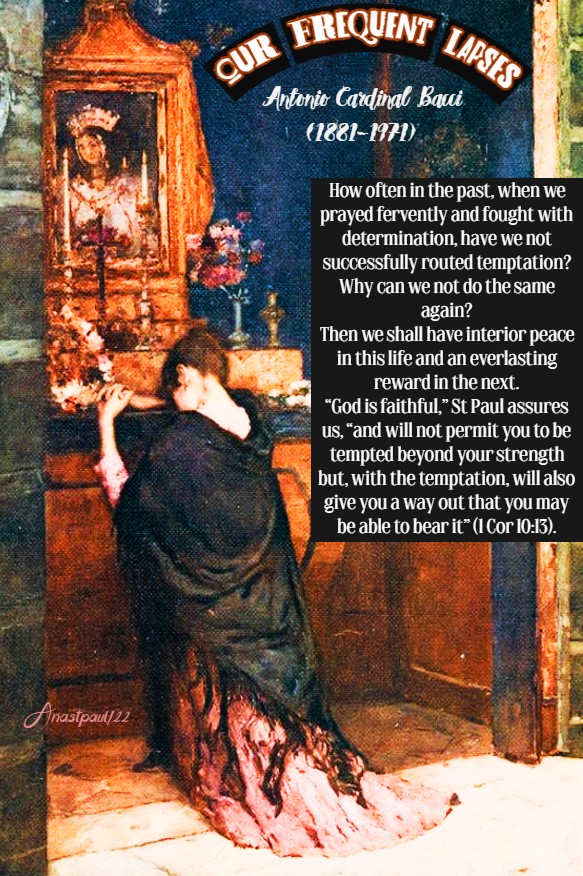
Our Frequent Lapses
“The mercy of God, however, should not provide us with a reason for continuing to fall into sin. On the contrary, it should be a motive for greater gratitude and love. We cannot claim, that it is impossible for us to conquer temptation. If we implore God’s grace and employ all the means of resistance at our disposal, temptation cannot overcome us.
How often in the past, when we prayed fervently and fought with determination, have we not successfully routed temptation? Why can we not do the same again? Then we shall have interior peace in this life and an everlasting reward in the next. “God is faithful,” St Paul assures us, “and will not permit you to be tempted beyond your strength but, with the temptation, will also give you a way out that you may be able to bear it” (1 Cor 10:13).”
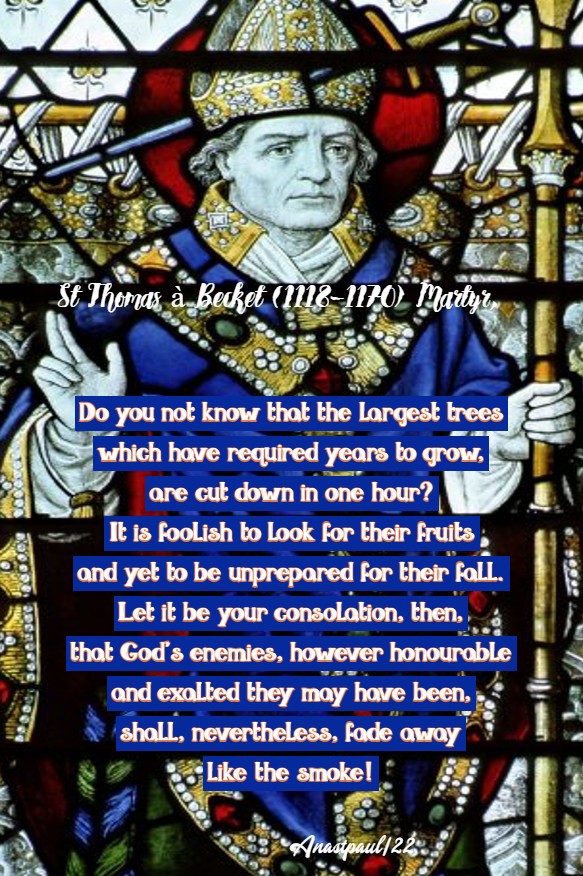
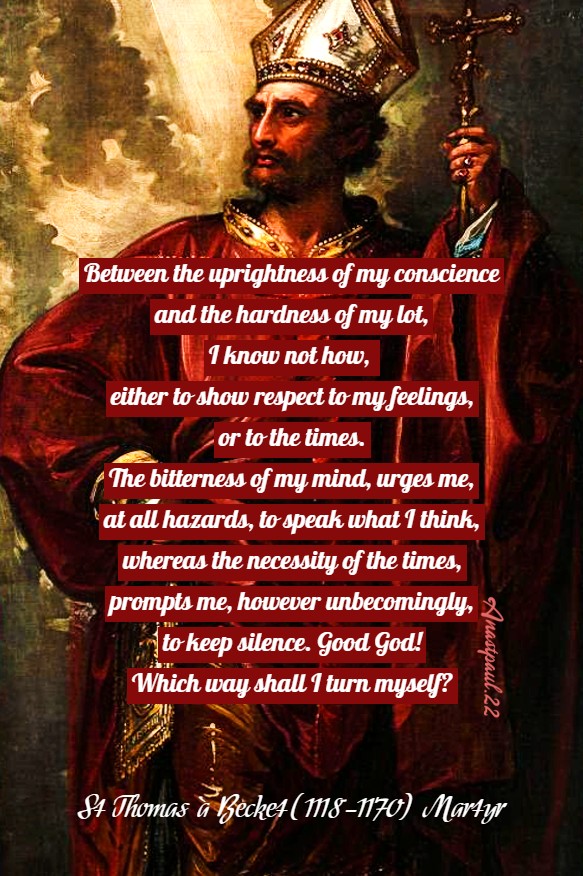
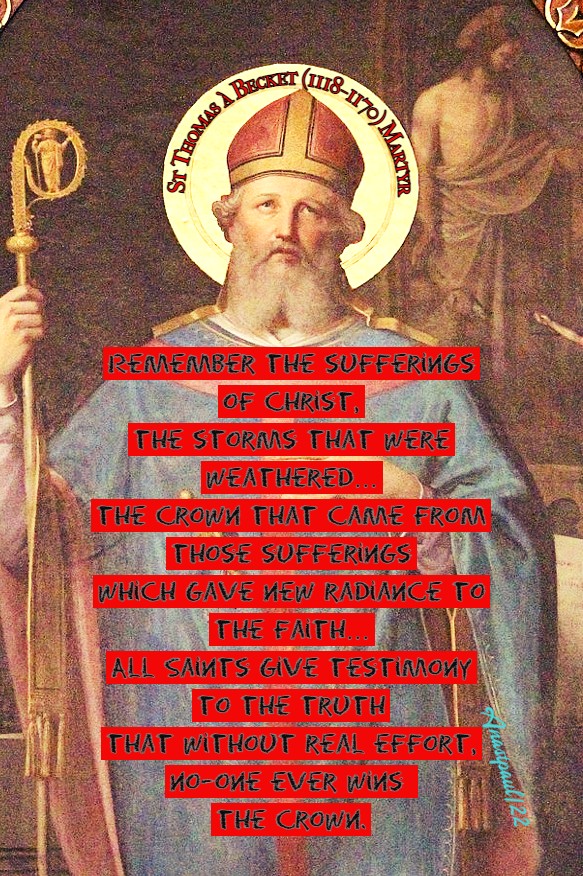
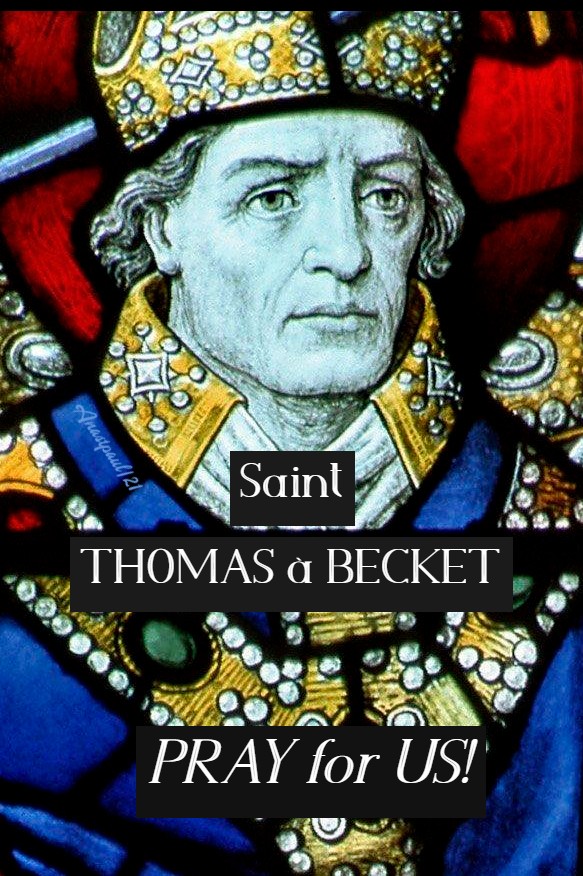
Quote/s of the Day – 29 December – The Fifth Day of the Octave of Christmas and the Memorial of St Thomas à Becket (1118-1170) Martyr, Archbishop of Canterbury
“Do you not know that the largest trees which have required years to grow, are cut down in one hour? It is foolish to look for their fruits and yet to be unprepared for their fall. Let it be your consolation, then, that God’s enemies, however honourable and exalted they may have been, shall, nevertheless, fade away like the smoke!”
“Between the uprightness of my conscience and the hardness of my lot, I know not how, either to show respect to my feelings, or to the times. The bitterness of my mind, urges me, at all hazards, to speak what I think, whereas the necessity of the times, prompts me, however unbecomingly, to keep silence. Good God! Which way shall I turn myself?”
“Remember the sufferings of Christ, the storms that were weathered… the crown that came from those sufferings which gave new radiance to the faith… All Saints give testimony to the truth that without real effort, no-one ever wins the crown.”
One Minute Reflection – 29 December – “The Month of the Divine Infant and the Immaculate Conception” – St Thomas à Becket (1118-1170) Martyr – Hebrews 5:1-6, John 10:11-16 – Scripture search here: https://www.drbo.org/
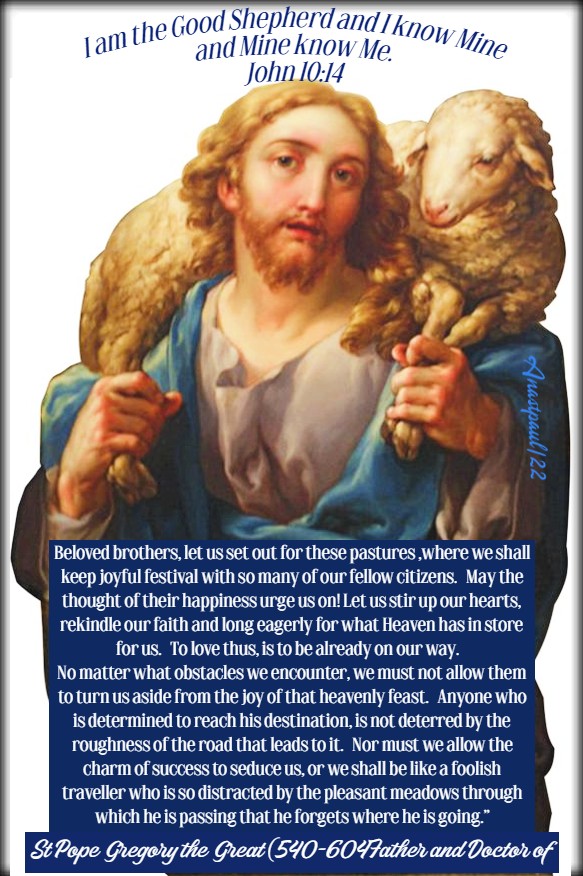
“I am the Good Shepherd and I know Mine and mine know Me.”- John 10:14
REFLECTION – “I am the good shepherd. I know My Own—by which I mean, I love them—and My Own know Me. In plain words – those who love Me are willing to follow Me, for anyone who does not love the Truth, has not yet come to know it.
My dear brethren, you have heard the test we shepherds have to undergo. Turn now to consider, how these words of our Lord, imply a test for yourselves also. Ask yourselves whether you belong to His flock, whether you know Him, whether the Light of His Truth shines in your minds. I assure you that it is not by faith that you will come to know Him but, by love, not by mere conviction but, by action. John the Evangelist is my authority, for this statement. He tells us that anyone who claims to know God, without keeping His commandments, is a liar.
Consequently, the Lord immediately adds: ‘As the Father knows Me and I know the Father and I lay down My life for My sheep.‘ Clearly, He means that laying down His life for His sheep, gives evidence of His knowledge of the Father and the Father’s knowledge of Him. In other words, by the love with which He dies for His sheep, He shows, how greatly He loves His Father.
Again He says: ‘My sheep hear My voice and I know them; they follow Me,and I give them eternal life.’ Shortly before this He had declared – ‘If anyone enters the sheepfold through Me, he shall be saved, he shall go freely in and out and shall find good pasture.‘ He will enter into a life of faith; from faith, he will go out to vision, from belief to contemplation and will graze in the good pastures of everlasting life.
So our Lord’s sheep will finally reach their grazing ground, where all who follow Him in simplicity of heart, will feed on the green pastures of eternity. These pastures are the spiritual joys of Heaven. There, the elect look upon the Face of God with unclouded vision and feast at the banquet of life, forever more.
Beloved brothers, let us set out for these pastures ,where we shall keep joyful festival with so many of our fellow citizens. May the thought of their happiness urge us on! Let us stir up our hearts, rekindle our faith and long eagerly for what Heaven has in store for us. To love thus, is to be already on our way. No matter what obstacles we encounter, we must not allow them to turn us aside from the joy of that heavenly feast. Anyone who is determined to reach his destination, is not deterred by the roughness of the road that leads to it. Nor must we allow the charm of success to seduce us, or we shall be like a foolish traveller who is so distracted by the pleasant meadows through which he is passing that he forgets where he is going.” – St Gregory the Great (540-604) Bishop of Rome and Great Western Father and Doctor of the Church (An excerpt from his Homily 14).
PRAYER – O God, for Whose Church Bishop Thomas, now in glory, fell by the swords of wicked men, grant, we beseech Thee, that the prayers of all who implore his assistanc, may be effective and may lead to salvation. Through Jesus Christ, Thy Son our Lord, Who lives and reigns with Thee, in the unity of the Holy Ghost, God, world without end. Amen (Collect).
Our Morning Offering – 29 December – The Fifth Day of the Octave of Christmas – “The Month of the Divine Infant and the Immaculate Conception”
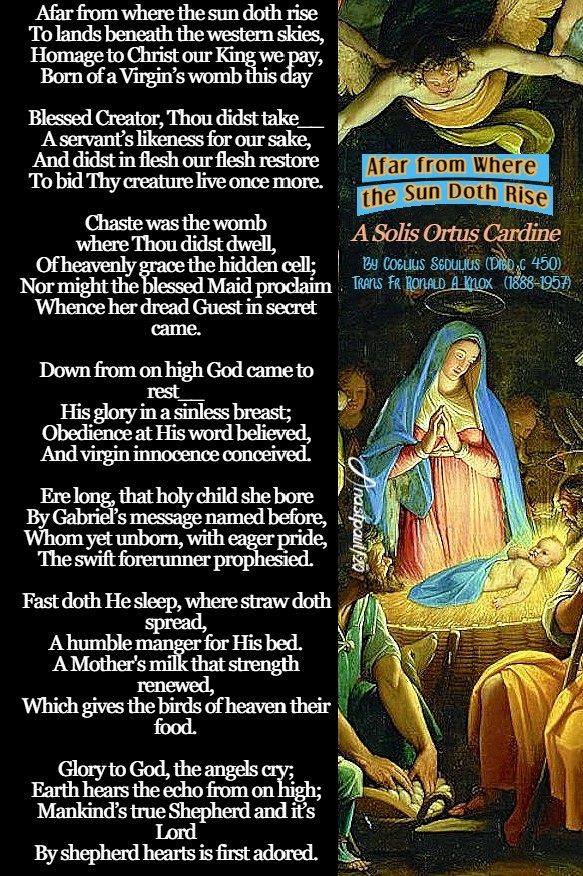
Afar from Where the Sun Doth Rise A Solis Ortus Cardine By Coelius Sedulius (Died c 450) Trans Fr Ronald A Knox (1888-1957)
Afar from where the sun doth rise To lands beneath the western skies, Homage to Christ our King we pay, Born of a Virgin’s womb this day
Blessed Creator, Thou didst take__ A servant’s likeness for our sake, And didst in flesh our flesh restore To bid Thy creature live once more.
Chaste was the womb where Thou didst dwell, Of heavenly grace the hidden cell; Nor might the blessed Maid proclaim Whence her dread Guest in secret came.
Down from on high God came to rest__ His glory in a sinless breast; Obedience at His word believed, And virgin innocence conceived.
Ere long, that holy child she bore By Gabriel’s message named before, Whom yet unborn, with eager pride, The swift forerunner prophesied.
Fast doth He sleep, where straw doth spread, A humble manger for His bed. A Mother’s milk that strength renewed, Which gives the birds of heaven their food.
Glory to God, the angels cry; Earth hears the echo from on high; Mankind’s true Shepherd and it’s Lord By shepherd hearts is first adored.
“A Solis Ortus Cardine…” (Latin for “From the Pivot of the Sun’s Rising”) is a poem by Christian Poet, Coelius Sedulius (Died c 450), recounting Christ’s life from His Birth to His Resurrection. Its 23 stanzas each begin with a consecutive letter of the Latin alphabet, making the poem an abecedarius. It is one of the oldest parts of the Roman Catholic liturgy, with two Hymns formed from the first seven and four later verses. There have been monastic translations into English and later translations into many other languages..
Saint of the Day – 29 December – Blessed Gérard Cagnoli OFM (c 1267-1342) Confessor, Hermit, Lay Brother of the Friars Minor, graced with the gift of visions and prophecy. He was known for miracles, in addition to his humble, simple childlike nature which people believed was one of the signs of his holiness. Born in c 1267 at Valencia, Italy and died in c 1342 of natural causes. Also known as – Gerardo, Gerardus. Beatified on 13 May 1908 by Pope Saint Pius X.
Gerard was born in Valencia near the River Po and belonged to the noble family of the Cagnoli. For fourteen years his mother lay ill and during all this time, Gerard waited on her with the tender devotion of a loving son. After her death, he distributed his inheritance among the poor and, impelled by motives of piety, he set out to visit the more notable Shrines of Italy.
Then going onto Sicily, he chose for himself a cell at the foot of Mt Etna, where he planned to live in perfect seclusion and to devote himself entirely to God and to the salvation of his soul. It was Christian prudence on the part of Blessed Gerard, to renounce all his possessions, all honours and pleasures, to live apart from the world and devote himself to those matters which pertain to Heaven and to eternity.
In 1307, moved, by the fame of the virtue and miracles of St Louis the Bishop of Toulouse (1274-,1297)* who was a Franciscan, he hastened to obtain admission into the Franciscan Order. From Randazzo, where he had been invested, he was transferred to Palermo. Here he took great delight in performing the humblest duties. As a cook and later on, as porter, he gained the esteem of his confreres, as well as of the people, by his conscientiousness, his spirit of prayer and his charity towards others, especially towards the poor and needy.
God Almighty favoured Blessed Gerard with the gift of prophecy and other graces. After the Blessed Virgin acquainted him with the time of his death, he peacefully surrendered his soul to Him to Whom he had dedicated all his thoughts and affections. Gerard died in the year 1342 at the age of seventy-five. His body rests in the Church of St Francis at Palermo.
The Sicilian people revered Cagnoli as a saint after his death and the fame of his holiness and miracles, spread throughout Italian regions, as far north as Liguria.
Pope Pius X ratified the veneration paid to Blessed Gerard Cagnoli from time immemorial, placing his name among the Blessed of the Church.
Prayer of the Church: Grant, we beseech Thee, O Almighty God, that spurred on to a better life by the example of Blessed Gerard, Thy Confessor, we may be led to imitate the life of him whose festival we commemorate. Through the same Christ our Lord, Who livest and reignest with Thee and the Holy Ghost, forever and ever.. Amen.
St Enrique Juan Requena St Florent of Bourges Bl Francis Ruiz Blessed Gérard Cagnoli OFM (c 1267-1342) Confessor, Lay Brother of the Friars Minor, Hermit.
St Girald of Fontenelle St Jacinto Gutiérrez Terciado St Juan Bautista Ferreres Boluda St Libosus of Vaga St Marcellus the Righteous St Martinian of Milan Bl Paul Mary Bl Peter the Venerable St Quartillosa of Carthage St Thaddeus of Scythia St Trophimus of Arles St Trophimus of Ephesus
Blessed William Howard (1614–1680) Martyr, Married Laymam and Father, 1st Viscount Stafford. William was the grandson of the Venerable Philip Howard, Earl of Arundel, fifth son of Earl Thomas (the first great art collector of England) and Uncle of Thomas Philip – Cardinal Howard. Beatified on 15 December 1929 by Pope Pius XI. His Life and Death: https://anastpaul.com/2020/12/29/saint-of-the-day-29-december-blessed-william-howard-1614-1680-martyr/
Martyrs of North Africa – 8 Saints: A group of Christians executed together for their faith. The only details to survive are eight names – Crescentius, Dominic, Honoratus, Lybosus, Primian, Saturninus, Secundus and Victor.
Martyrs of Rome – 3 Saints: A group of Christians executed together for their faith. The only details to survive are three names – Boniface, Callistus and Felix.
Thought for the Day – 28 December – Meditations with Antonio Cardinal Bacci (1881-1971)
The Value of An Hour
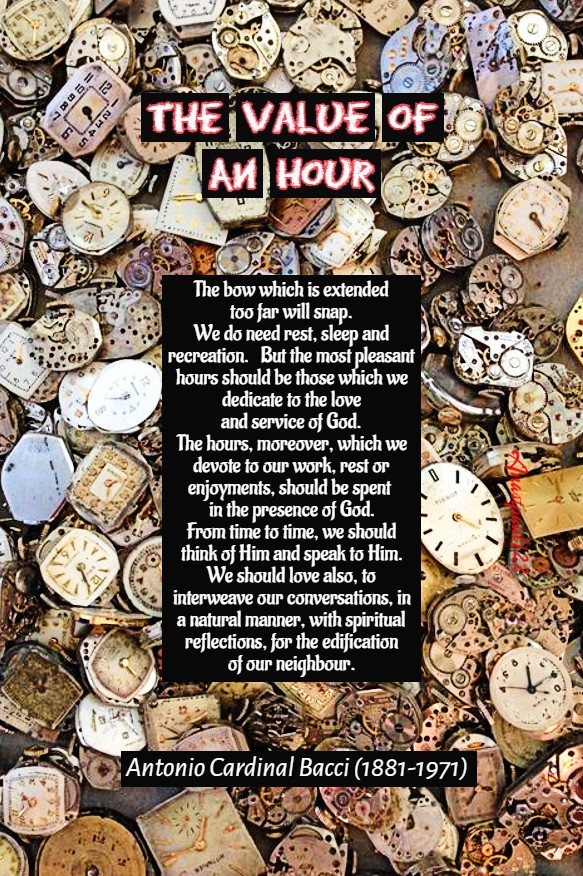
“This does not mean, of course, that we are obliged to spend all our hours engaged either in prayer or in penance, or in apostolic work. God does not demand this much. The bow which is extended too far will snap. We do need rest, sleep and recreation. But the most pleasant hours should be those which we dedicate to the love and service of God.
The hours, moreover, which we devote to our work, rest or enjoyments, should be spent in the presence of God. From time to time, we should think of Him and speak to Him. We should love also, to interweave our conversations, in a natural manner, with spiritual reflections, for the edification of our neighbour.”
Quote/s of the Day – 28 December – “The Month of the Divine Infant and the Immaculate Conception” – The Holy Innocents, Martyrs – Apocalypse 14:1-5, Matthew 2:13-18 – Scripture search here: https://www.drbo.org/
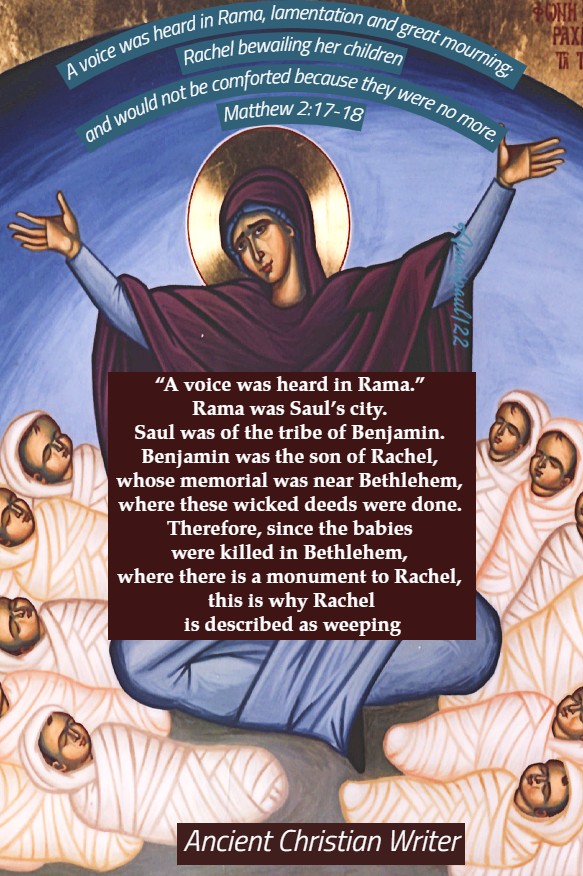
“Then was fulfilled that which was spoken by Jeremias the prophet, saying: a voice was heard in Rama, lamentation and great mourning; Rachel bewailing her children and would not be comforted because they were no more.”
Matthew 2:17-18
“A voice was heard in Rama.” Rama was Saul’s city. Saul was of the tribe of Benjamin. Benjamin was the son of Rachel, whose memorial was near Bethlehem, where these wicked deeds were done. Therefore, since the babies were killed in Bethlehem, where there is a monument to Rachel, this is why Rachel is described as weeping.”
From the work known as the “Incomplete Work on Matthew,” by an Anonymous Ancient Christian Writer (ACW)
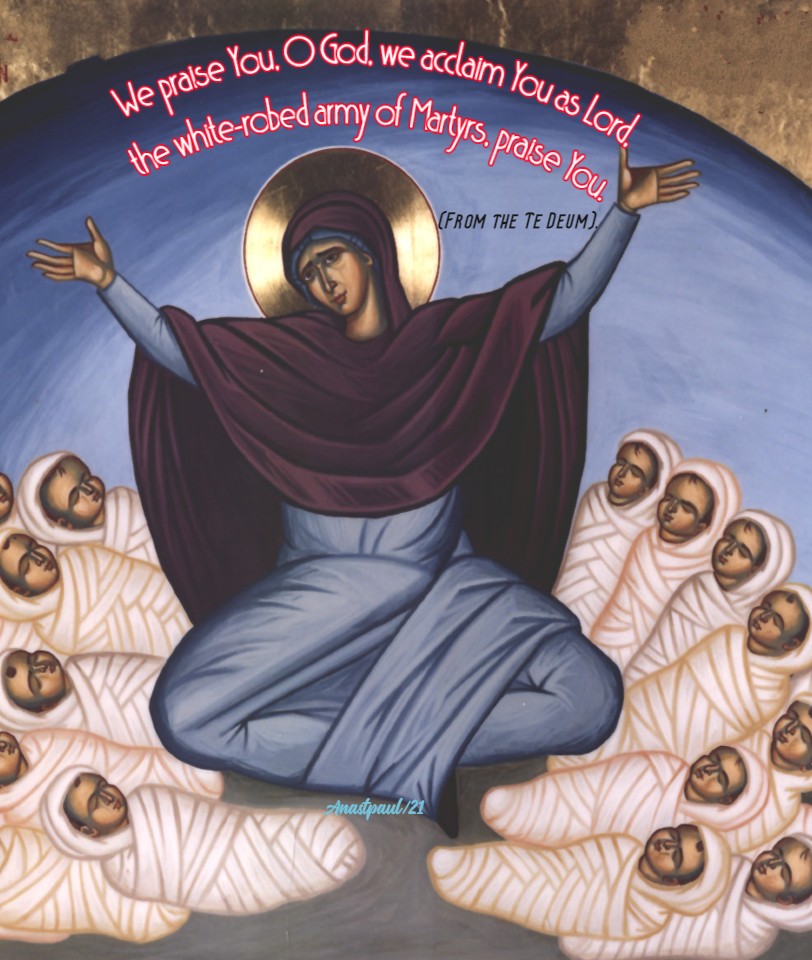
“These then, whom Herod’s cruelty tore as sucklings from their mothers’ bosom, are justly hailed as “Infant Martyr Flowers”- they were the Church’s first blossoms, matured by the frost of persecution, during the cold winter of unbelief.”
St Augustine (354-430) Father & Doctor of the Church
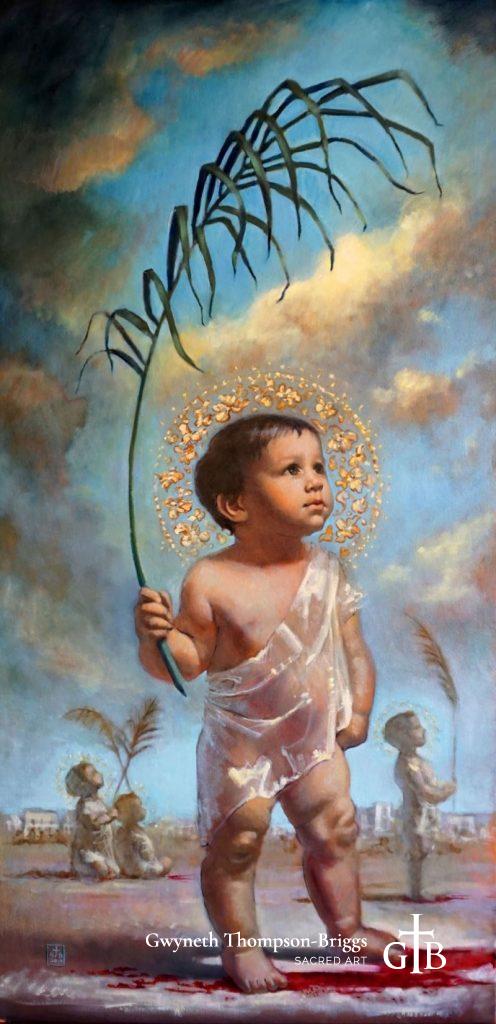
“They could not yet speak but already, they are confessing Christ. Their little bodies are, as yet, unable to engage in combat but already, they are carrying off the Palm of Victory.”
One Minute Reflection – 28 December – “The Month of the Divine Infant and the Immaculate Conception” – The Holy Innocents, Martyrs – Apocalypse 14:1-5, Matthew 2:13-18 – Scripture search here: https://www.drbo.org/
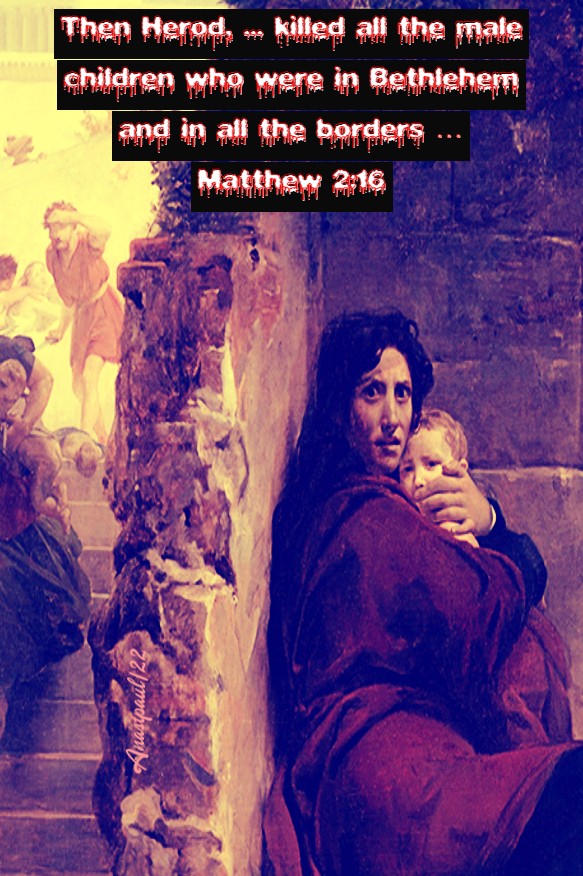
“Then Herod, perceiving that he was deluded by the wise men, was exceeding angry and sending, killed all the male children who were in Bethlehem and in all the borders …” – Matthew 2:16
REFLECTION – “Where does this jealousy lead?… The crime committed today shows us. Fear of a rival to his earthly kingdom fills Herod with anxiety, he plots to suppress “the newborn King” (Mt 2:2), the Eternal King; he fights against his Creator and puts innocent children to death… As for those children, what fault had they committed? Their tongues were dumb, their eyes had seen nothing, their ears heard nothing, their hands done nothing. They accepted death who had not known life. … Christ reads the future and knows the secrets of the heart, He weighs our thoughts and probes our intentions (cf. Ps 138[139]): why did He forsake them? … Why did the newborn heavenly King abandon these companions in innocence, forget the sentinels watching around His crib, to such an extent that the foe, who wanted to get at the King, ravaged His whole army?
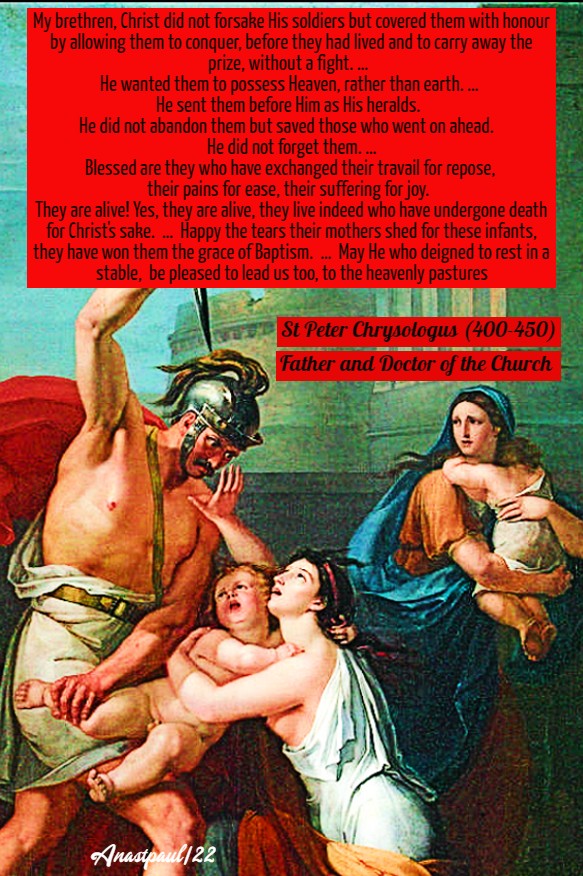
My brethren, Christ did not forsake His soldiers but covered them with honour, by allowing them to conquer, before they had lived and to carry away the prize, without a fight. … He wanted them to possess Heaven, rather than earth. … He sent them before Him as His heralds. He did not abandon them but saved those who went on ahead. He did not forget them. …
Blessed are they who have exchanged their travail for repose, their pains for ease, their suffering for joy. They are alive! Yes, they are alive, they live indeed who have undergone death for Christ’s sake. … Happy the tears their mothers shed for these infants, they have won them the grace of Baptism. … May He who deigned to rest in a stable, be pleased to lead us too, to the heavenly pastures.”– St Peter Chrysologus (400-450) Bishop of Ravenna, Father and Doctor of the Church (Sermon 152 PL 52, 604).
PRAYER – O God, Whose praise the Innocents, Thy Martyrs, this day proclaimed, not by speaking but by dying, put to death in us all the wickedness of sin, so that the faith which our tongue professes, may be proclaimed also by our life. Through Jesus Christ, Thy Son our Lord, Who lives and reigns with Thee, in the unity of the Holy Ghost, God, world without end. Amen (Collect).
Our Morning Offering – 28 December – The Feast of the Holy Innocents, Martyrs – “The Month of the Divine Infant and the Immaculate Conception”
Sleep, Holy Babe By Fr Edward Caswell C.Orat. (1814-1878)
Sleep, holy Babe, Upon Your Mother’s breast! Great Lord of earth and sea and sky, How sweet it is to see You lie In such a place of rest!
Sleep, holy Babe, Your angels watch around, All bending low with folded wings Before th’incarnate King of kings In rev’rent awe profound!
Sleep, holy Babe, While I with Mary gaze In joy upon that face awhile, Upon the loving Infant smile Which there divinely plays
Sleep, holy Babe, And take Your brief repose; Too quickly will Your slumbers break And You to lengthened pains awake, That death alone shall close. Amen
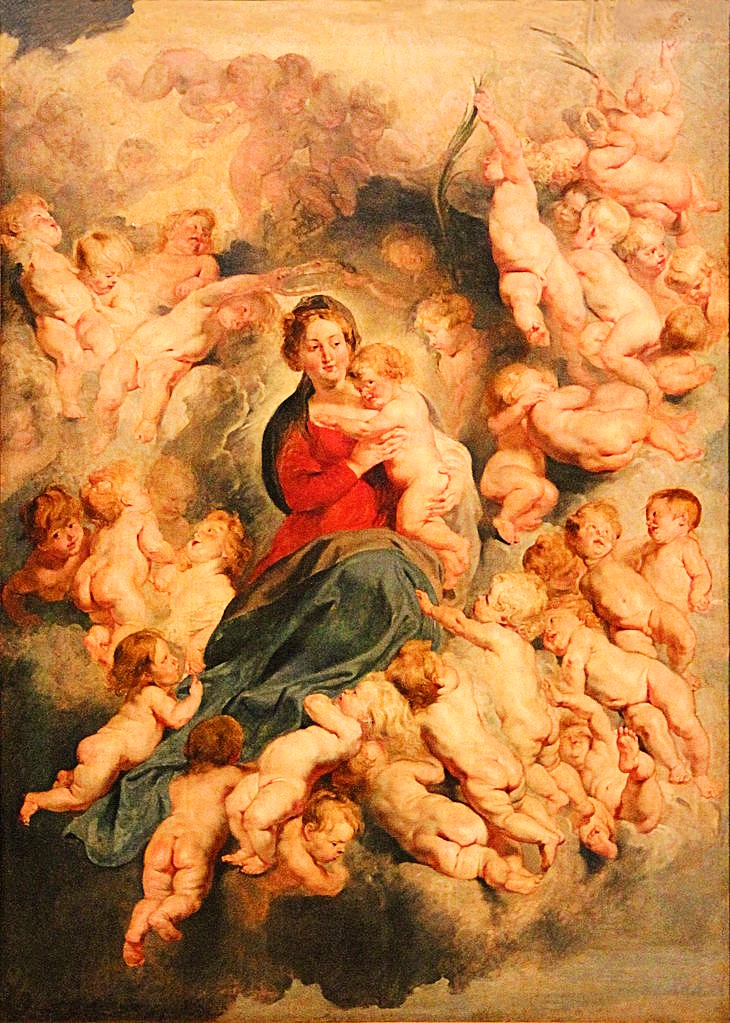
Saint of the Day – 28 December – The Holy Innocents. Patronages – • against ambition•against jealousy• altar servers•babies•children• children’s choir• choir boys• orphans• students.
The Feast of the Holy Innocents By Father Francis Xavier Weninger SJ (1805-1888)
By the Holy Innocents, who are honoured as Martyrs today by the Catholic Church, we understand those happy infants, who, by the command of King Herod, were put to death, for no other cause, than that the new-born King of the Jews might be deprived of life.
When Christ was born, Herod, well known for his cruelty, reigned at Jerusalem. He was not of the Jewish nation but a foreigner and was, therefore, hated by the Jews. Herod knew this well; hence, he feared that they would dethrone him and he had several illustrious persons executed, whom he suspected of aspiring to the throne.
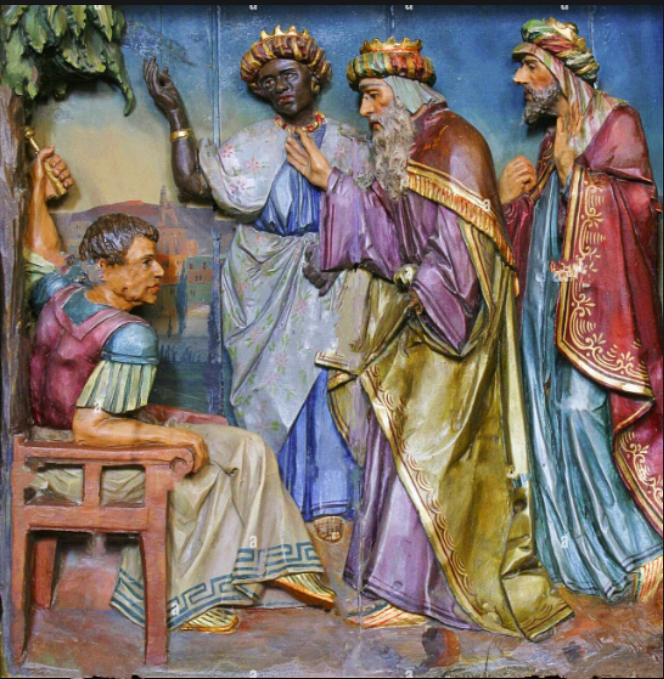
Meanwhile, it happened, that the three Magi or Kings from the East came to Jerusalem, to find and adore the new-born King, Who had been announced to them by a star. They doubted not that they would learn more of Him in the capital of Judea and they, therefore, asked without hesitation: “Where is He that is born King of the Jews? For we have seen His star in the East and have come to adore Him.”
This question seemed very strange to the Jews and the news of it spread through the whole City, until it reached the King. His fear can hardly be described, for he already believed his crown and sceptre lost. To escape the danger in which he supposed himself, he called the chief priests and scribes together,and inquired of them, where the Messiah should be born. They answered: “In Bethlehem, according to the Prophets.” Satisfied with this answer, Herod had the three wise men brought to court and speaking very confidentially with them, he asked diligently when and where the star had appeared to them. After this, he advised them to go to Bethlehem and inquire after the new-born Child and when they had found and adored Him, to return and inform Herod, as he wished to go and adore the Child too. These words of the king, who was not less cunning than cruel, were only a deceit, as he had already resolved to kill the new-born Babe.
Meanwhile, the Magi followed the advice of the king and, guided by the star, which again appeared to them when they had left Jerusalem, went to Bethlehem, found and adored the Divine Child and offered gold, frankincense and myrrh, as we read in Holy Writ. Having finished their devotion, they intended, in accordance with king Herod’s wish, to bring him word that they had happily found the Child. An Angel, however, appeared to them in their sleep and admonished them not to return to Jerusalem but to go into their own country by another way which they accordingly did.
The Massacre of the Innocents / Angelo Visconti
When Herod perceived that they had deluded him, it was too late and his rage was boundless. Hearing of what had taken place in the temple, at the Purification of Mary that the venerable Simeon had pronounced a Child which he had taken into his arms, the true Messiah, the Herod’s heart was filled with inexpressible fear and anxiety. The danger in which he was, as he imagined, of losing his crown, left him no peace day or night. He secretly gave orders to search for this Child but all was of no avail, He could not be found.
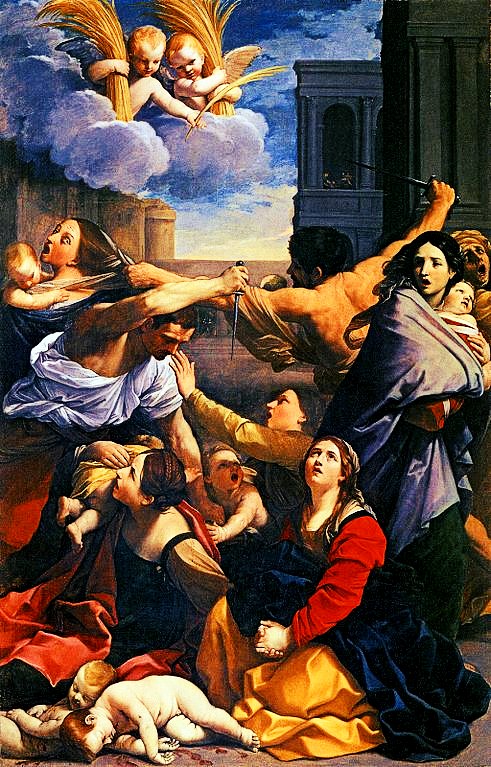
After long pondering how he might escape the danger, his unbounded ambition led him to an act of cruelty unprecedented in history. He determined to murder all the male children, in and around Bethlehem, who were not over two years of age, as he thought that thus, he could not fail to take the life of the Child so dangerous to him. This fearful design was executed amidst the despairing shrieks of the parents, especially the mothers.
How many children were thus inhumanly slaughtered is not known but the number must have been very large. Yet, the tyrant gained not his end for, the Divine Child was already in security. The Gospel tells us that an Angel appeared during the night to St Joseph, saying to him: “Arise, take the Child and His Mother and fly into Egypt and remain there until I tell thee. For, it will come to pass that Herod will seek the Child to destroy Him.” St Joseph delayed not to obey, and fled, the same night, with the Child and His Mother, into the land indicated to the Angel.
Guido Reni: Massacre of the Innocents
As this had happened before Herod executed his cruel determination, God thus frustrated the plot. Herod soon after, received his just punishment. Several terrible maladies suddenly seized him, as Josephus, the Jewish historian, relates. An internal fever consumed him and all his limbs were covered with abominable ulcers, breeding vermin. His feet were swollen, his neck, shoulders and arms drawn together, and his breast so burdened, that the unfortunate man could hardly breathe, while his whole body exhaled, so offensive an odour, that neither he nor others, could endure it. Hence, in despair, he frequently cried for a knife or a sword that he might end his own life. In this miserable condition, he ceased not his cruelties and only five days before his death, he had his son, Antipater, put to death.
As he had good reason to believe that the entire people would rejoice at his death, he wished at least, to take to the grave, the thought that many should grieve, if not for him, at least for their friends and relatives. Hence, he had the chief men of the nobility imprisoned and gave orders to his sister Salome that, as soon as he had closed his eyes, they were all to be murdered. This order, however, was not executed by Salome, who justly loathed its cruelty. In this lamentable condition, the cruel tyrant ended his life but began one in eternity, whose pains and torments were still more unendurable and from which he cannot hope ever to be released!
While the innocent children massacred by him, rejoice for all eternity in the glories of Heaven, giving humble thanks to God for having thus admitted them into His presence. The Catholic Church has always honoured them as Martyrs; because, although not confessing Christ with their lips, as many thousands of others have done, yet, they confessed Him with their death, by losing their lives for His sake. Amen.
St Anthony of Lérins (c 428-c 520) Monk, Hermit, Miracle-worker. The Roman Martyrology states: “Commemoration of Saint Anthony, a Monk, who, a man distinguished by grace and preparation, after having led a solitary life, retired, by now an old man in the Monastery of Lérins in Provence, where he piously fell asleep in the Lord.” Biography: https://anastpaul.com/2021/12/28/saint-of-the-day-28-december-saint-anthony-of-lerins-c-428-c-520/
BL Claudia Weinhardt St Conindrus St Domitian the Deacon St Domnio of Rome St Eutychius Bl Gregory of Cahors St Iolande of Rome Bl Johannes Riedgasse
Bl Nicolas Mello Bl Otto of Heidelberg St Romulus St Simon the Myroblite St Theonas of Alexandria St Theodore of Tabenna St Troadius of Pontus
Martyrs of Africa – 3 Saints: Three Christians murdered together in Africa for their faith. The only details to survive are their names – Castor, Rogatian and Victor.
Thought for the Day – 27 December – Meditations with Antonio Cardinal Bacci (1881-1971)
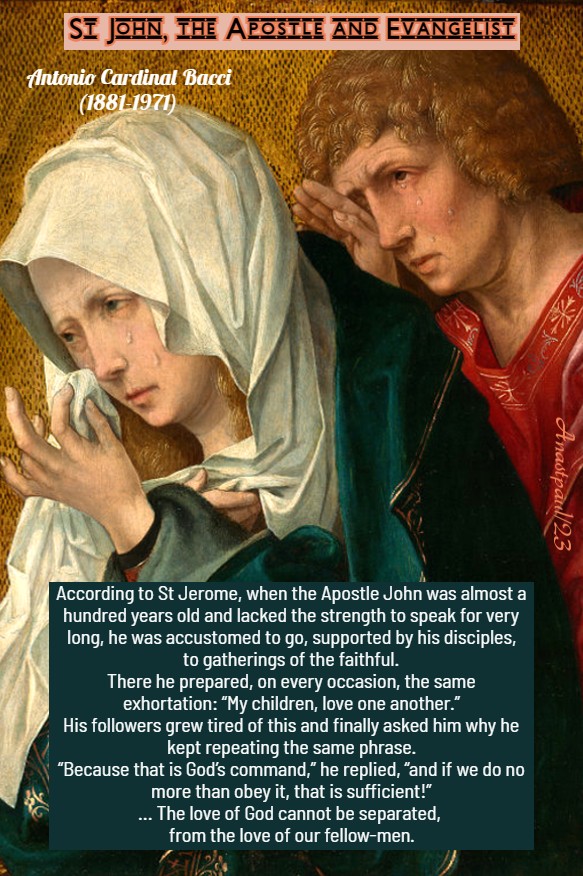
St John, the Apostle and Evangelist
“Both in his Gospel and in his letters, St John continually emphasises the virtue of charity. He stresses the need for love of God and love of our neighbour, “God is love,” he says, “and he who abides in love abides in God and God in him” (1 Jn 4:16). According to St Jerome, when the Apostle John was almost a hundred years old and lacked the strength to speak for very long, he was accustomed to go, supported by his disciples, to gatherings of the faithful. There he prepared, on every occasion, the same exhortation: “My children, love one another.” His followers grew tired of this and finally asked him why he kept repeating the same phrase. “Because that is God’s command,” je replied, “and if we do no more than obey it, that is sufficient!”
Let us meditate on his words and let us remember that our love for God is futile, unless it is accompanied by a practical love for our neighbour. The love of God cannot be separated, from the love of our fellow-men.”
Our Prayers to the Saints – 27 December – St John the Apostle and Evangelist, the Beloved
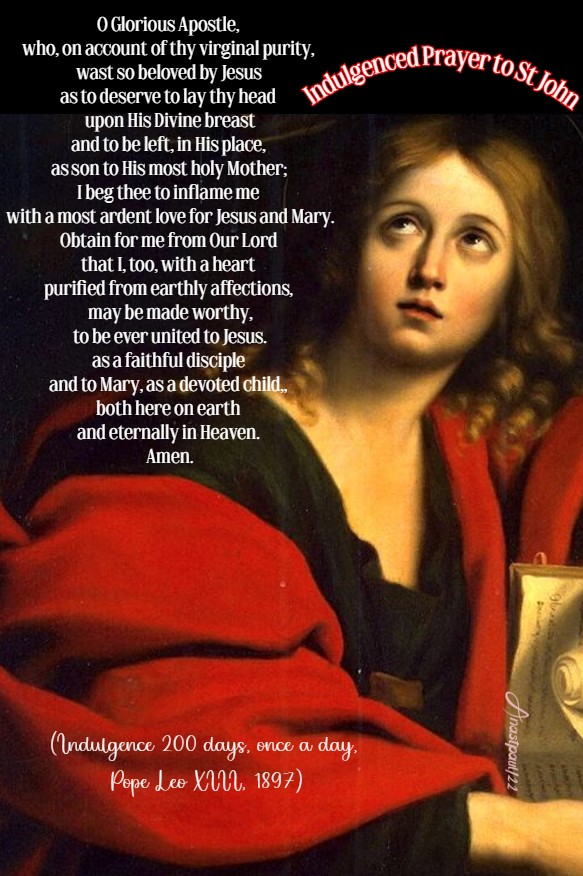
Indulgenced Prayer to St John (Indulgence 200 days, once a day, Pope Leo XIII, 1897)
O Glorious Apostle, who, on account of thy virginal purity, wast so beloved by Jesus as to deserve to lay thy head upon His Divine breast and to be left, in His place, as son to His most holy Mother; I beg thee to inflame me with a most ardent love for Jesus and Mary. Obtain for me from Our Lord that I, too, with a heart purified from earthly affections, may be made worthy, to be ever united to Jesus. as a faithful disciple and to Mary, as a devoted child,, both here on earth and eternally in Heaven. Amen.
Quote/s of the Day – 27 December – St John the Apostle and Evangelist, the Beloved – Ecclesiasticus 15:1-6, John 21:19-24 – Scripture search here: https://www.drbo.org/
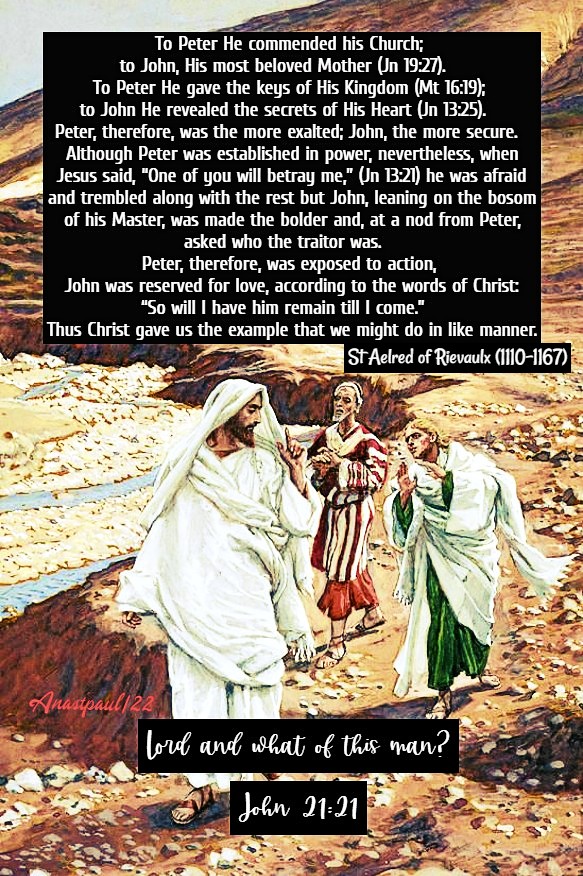
“Peter, therefore, seeing him, said to Jesus, Lord and what of this man?”
John 21:21
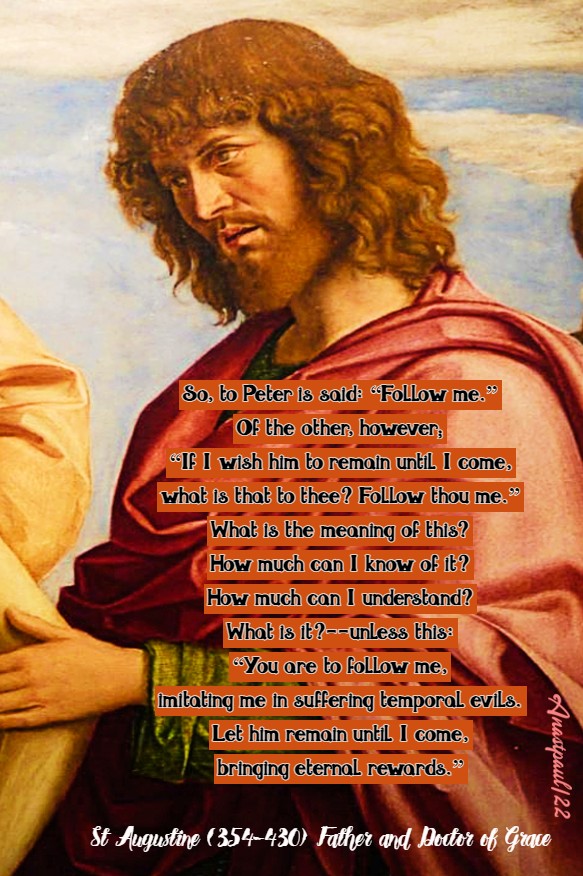
“ So, to Peter is said: “Follow me.” Of the other, however; “If I wish him to remain until I come, what is that to thee? Follow thou me.” What is the meaning of this? How much can I know of it? How much can I understand? What is it?–unless this: “You are to follow me, imitating me in suffering temporal evils. Let him remain until I come, bringing eternal rewards.”
St Augustine (354-430) Father and Doctor of Grace
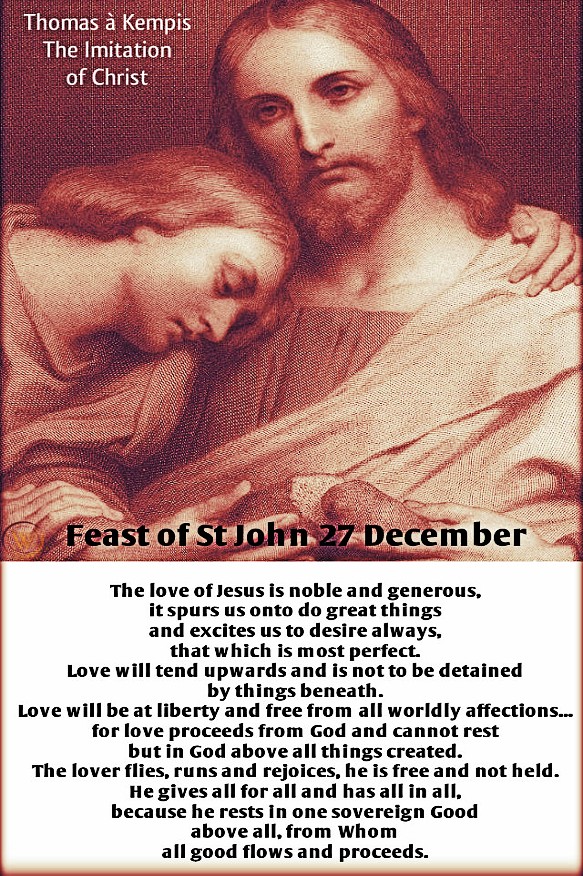
“The love of Jesus is noble and generous, it spurs us onto do great things and excites us to desire always that which is most perfect. Love will tend upwards and is not to be detained by things beneath. Love will be at liberty and free from all worldly affections… for love proceeds from God and cannot rest but in God above all things created. The lover flies, runs and rejoices, he is free and not held. He gives all for all and has all in all because he rests in One sovereign Good above all, from Whom all good flows and proceeds”
One Minute Reflection – 27 December – “The Month of the Divine Infant and the Immaculate Conception” – St John the Apostle and Evangelist, the Beloved – Ecclesiasticus 15:1-6, John 21:19-24 – Scripture search here: https://www.drbo.org/
“Peter saw following them, the disciple whom Jesus loved, the one who, at the supper, had leaned back upon His breast … Peter, therefore, seeing him, said to Jesus, Lord and what of this man?” – John 21:20-21
REFLECTION – “There are some persons who think they are not loved because they cannot be promoted and who allege that they are despised, if they are not entrusted with responsibilities and offices. We know that as a result of this type of thinking, no small discord has sprung up, among those who were considered friends, so that estrangement followed upon indignation and railings upon estrangement …
Let no-one say that he is held in contempt, for the reason that he is not promoted, since the Lord Jesus preferred Peter to John in this respect; nor did He, on that account, lessen His affection for John because He had given Peter the leadership. To Peter He commended his Church; to John, His most beloved Mother (Jn 19:27). To Peter He gave the keys of His Kingdom (Mt 16:19); to John He revealed the secrets of His Heart (Jn 13:25). Peter, therefore, was the more exalted; John, the more secure. Although Peter was established in power, nevertheless, when Jesus said, “One of you will betray me,” (Jn 13:21) he was afraid and trembled along with the rest but John, leaning on the bosom of his Master, was made the bolder and, at a nod from Peter, asked who the traitor was. Peter, therefore, was exposed to action, John was reserved for love, according to the words of Christ: “So will I have him remain until I come.” Thus Christ gave us the example that we might do in like manner.” – St Aelred of Rievaulx (1110-1167) Cistercian Monk (Spiritual Friendship, III, 115, 117).
PRAYER – O Lord, graciously shed light upon Thy Church, so that, enlightened by the teachings of blessed John, ThyApostle and Evangelist, she may gain YThy everlasting rewards.Through Jesus Christ, Thy Son our Lord, Who lives and reigns with Thee, in the unity of the Holy Ghost, God, world without end. Amen (Collect).
Our Morning Offering – 27 December – St John the Apostle and Evangelist, the Beloved – “The Month of the Divine Infant and the Immaculate Conception”
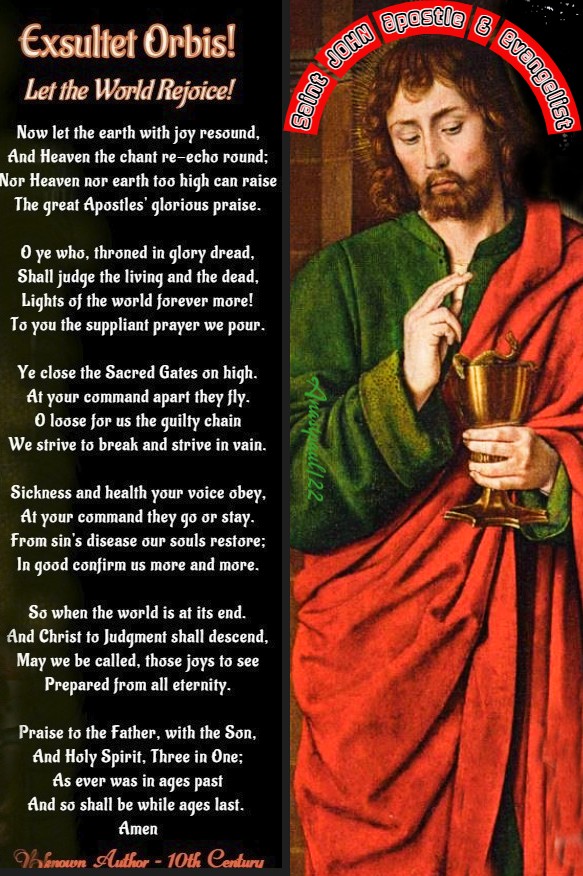
Exsultet Orbis! Let the World Rejoice! Unknown Author
Now let the earth with joy resound, And Heaven the chant re-echo round; Nor Heaven nor earth too high can raise The great Apostles’ glorious praise.
O ye who, throned in glory dread, Shall judge the living and the dead, Lights of the world forever more! To you the suppliant prayer we pour.
Ye close the Sacred Gates on high. At your command apart they fly. O loose for us the guilty chain We strive to break and strive in vain.
Sickness and health your voice obey, At your command they go or stay. From sin’s disease our souls restore; In good confirm us more and more.
So when the world is at its end. And Christ to Judgment shall descend, May we be called, those joys to see Prepared from all eternity.
Praise to the Father, with the Son, And Holy Spirit, Three in One; As ever was in ages past And so shall be while ages last. Amen
(Roman Breviary for the Common of Apostles) An Office Hymn that was traditionally prescribed for Vespers and Lauds on the Feasts of Apostles and Evangelists outside Easter time. The Hymn is found as early as the tenth century in a hymnal of Moissac Abbey.
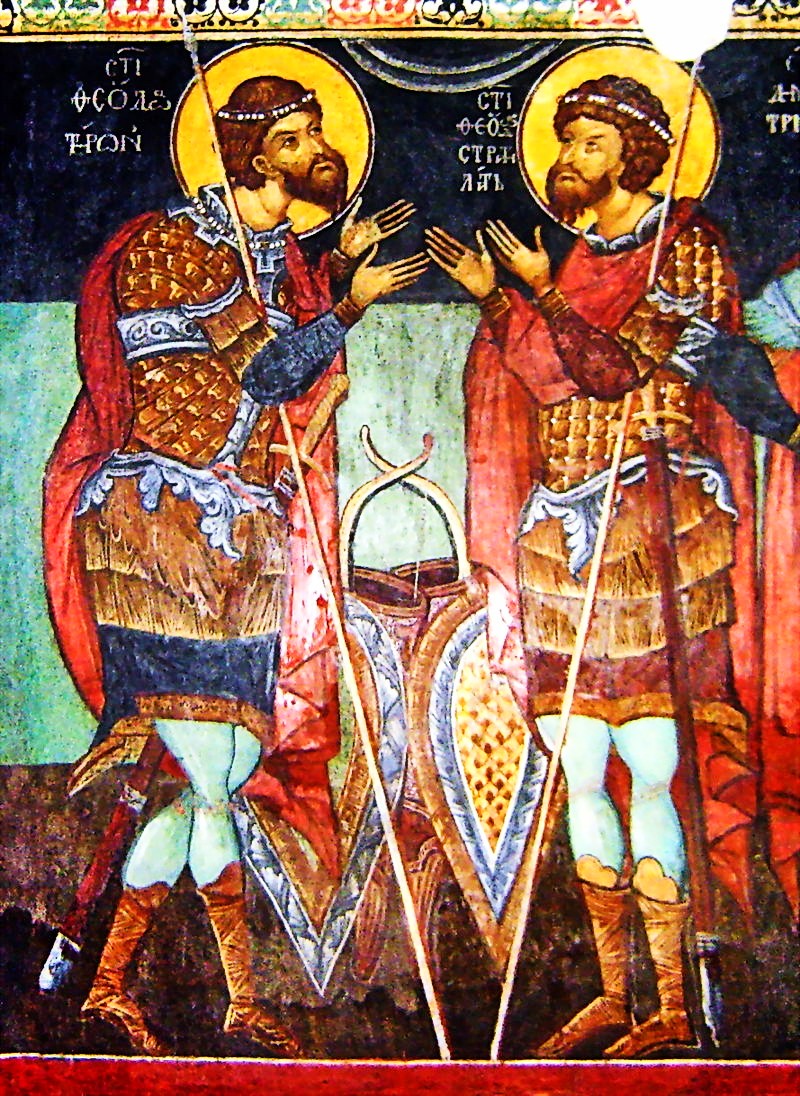
Saint of the Day – 27 December – St Theodore of Apamea (c 775-c 831) Confessor, Martyr, Monk, Brother of Saint Theophanes of Nicaea, ex-soldier, Born in c 775 at Kerak, Moab (Trans-Jordan) and died in c 831 at Apamea, Bithynia from the many tortures and the privations of prison life. Also known as = • one of the Grapti, from the Greek graptoi = “written upon”• Theodorus the Branded• Theodorus the “Lettered-Upon”.• Theodore.
The Roman Martyrology states today: “At Constantinople, the holy Confessors, Theodore and Theophanes, brothers who were brought up from their childhood in the Monastery of St Sabbas. Afterwards, combating bravely, for the worship of holy images, against Leo the Armenian, they were scourged by his command an banished. After his death, they again firmly opposed the Emperor Theophilus, who was imbued with the same impiety and were scourged a second time and driven into exile, where Theodore expired in prison. Theophanes, after peace had at length been restored to the Church, was made the Bishop of Nicaea and rested in the Lord.”
THIS saint was of the country of the Moabites but his parents, who were rich and virtuous, went and settled at Jerusalem, in order to procure for him and his sibling, the advantages of a holy education. He was placed by them, when he was very young, in the Monastery of Sabas and by his progress in learning, the extraordinary purity of his manners and the habitual mortification of his senses, attained in a short time, to an eminent degree of virtue and acquired a high reputation in the world.
The Bishop of Jerusalem obliged him to receive Priestly Orders, and when Leo, the Armenian, waged a cruel war against holy images, sent the Saint to that Emperor to exhort him not to disturb the peace of the Church. The tyrant, instead of relenting, caused St. Theodore to be scourged and banished him, with his brother Theophanes, a Monk of the same Monastery and his companion, into an island in the mouth of the Euxine sea, where they suffered much, by hunger and cold.
But they had not staid long there before the emperor died, in 882, when they returned to Constantinople and St Theodore published some writings in defence of the truth. Michael the Stutterer, who succeeded in the imperial throne and is thought either to have had no religion, or to have leaned most of that of the Manichees or Paulicians, was for steering a middle cours, between the Catholics and the Iconoclasts.
But his successor Theophilus, a violent Iconoclast and barbarous persecutor, who ascended the throne in 829, caused the two brothers to be whipped, then banished them into the island of Aphusia. Two years after, they were brought back to Constantinopl and buffeted in the presence of the Emperor, till they fell down quite stunned at his feet, then stripped and publicly scourged.
When they had lain some days in prison and still persisted in their refusal to communicate with the Iconoclasts, the Emperor commanded twelve Iambic verses, composed for that purpose by an Iconoclast courtier, to be inscribed on their foreheads. The sense of the verses was as follows: “These men have appeared at Jerusalem as vessels of iniquity, full of superstitious, error and were driven thence for their crimes and having fled to Constantinople, they forsook not their impiety. Wherefore, they have been again banished from thence and are stigmatised on their faces.”
Although the wounds which they had received were yet much inflamed and very painful, they were laid upon benches, whilst the letters which composed those verses were cut or pricked upon their faces. The operation was long and tedious and interrupted by the coming on of the night and the Confessors were sent back to prison, their faces being still bloody. They were soon after banished to Apamea, in Syria, whereTheodore died of his sufferings.
From the inscription cut in his forehead he is surnamed Grapti, which signifies in Greek, marked or engraved. Theophilus died about the same time and the Empress Theodora, a zealous Catholic, becoming Regent for her son Michael, St Methodius was made Bishop and restored holy images in 842.
Theophanes was then honoured for his glorious confession of the Faith and Consecrated Bishop of Nicaea that he might more effectually concur in overthrowing a heresy, over which he had already triumphed.
St Theodore is named in the Roman Martyrology with his brother Theophanes, on this day. The twelve iambic verses, which were written on their foreheads, with a red-hot steel pencil, are recited in the Greek liturgy on this day.
Bl Francesco Spoto Bl Hesso of Beinwil St José María Corbin-Ferrer St Maximus of Alexandria St Nicarete of Constantinople Bl Raymond de Barellis Bl Roger of Verdun St Theodore of Apamea (c 775-c 831) Confessor, Martyr, Monk, Brother of Saint Theophanes of Nicaea. St Theophanes of Nicaea Bl Walto of Wessobrünn
Thought for the Day – 26 December – Meditations with Antonio Cardinal Bacci (1881-1971)
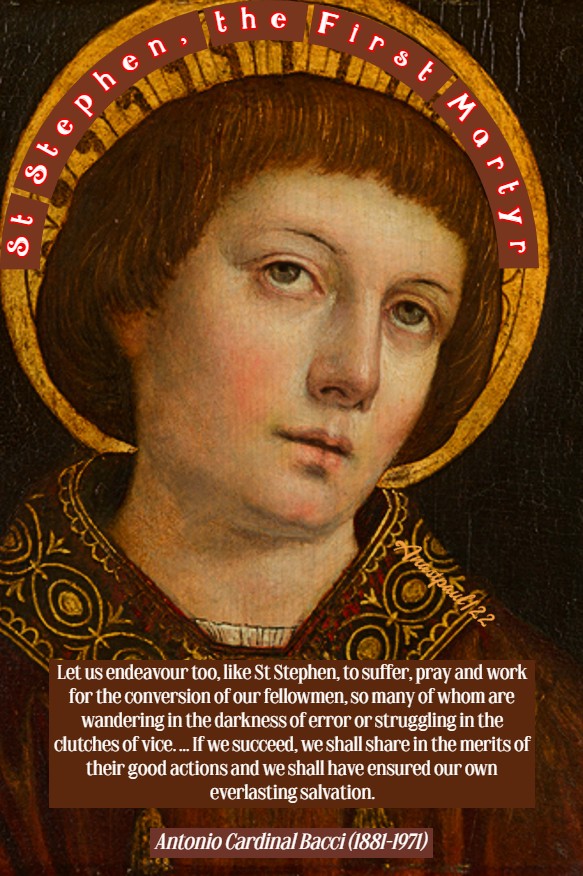
St Stephen, the First Martyr
“Let us endeavour too, like St Stephen, to suffer, pray and work for the conversion of our fellowmen, so many of whom are wandering in the darkness of error or struggling in the clutches of vice. Let us try, by our sufferings, prayers and good example, to draw down God;s grace on our unhappy brothers. If we succeed, we shall share in the merits of their good actions and we shall have ensured our own everlasting salvation.”
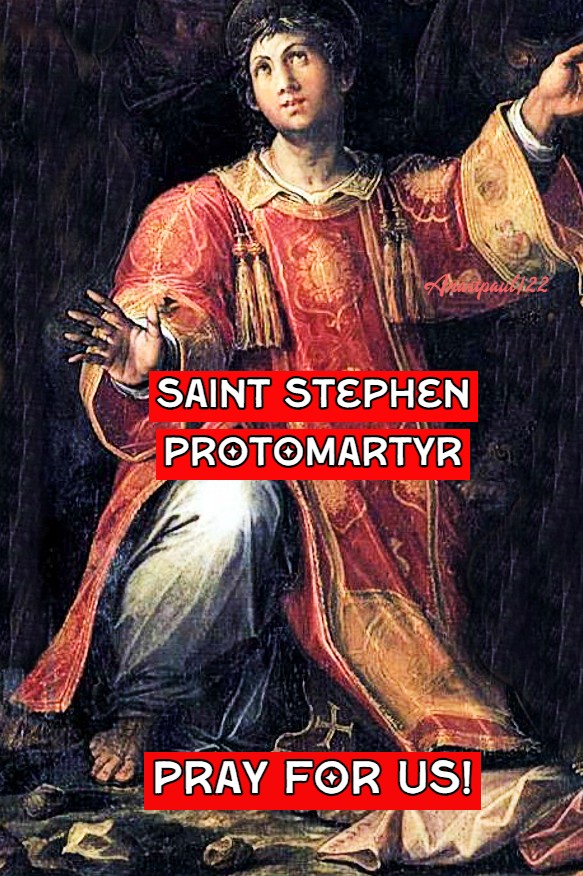
One Minute Reflection – 26 December – St Stephen the ProtoMartyr (c 05-c 34) – Acts 6:8-10; 7:54-59, Matthew 23:34-39 – Scripture search here: https://www.drbo.org/
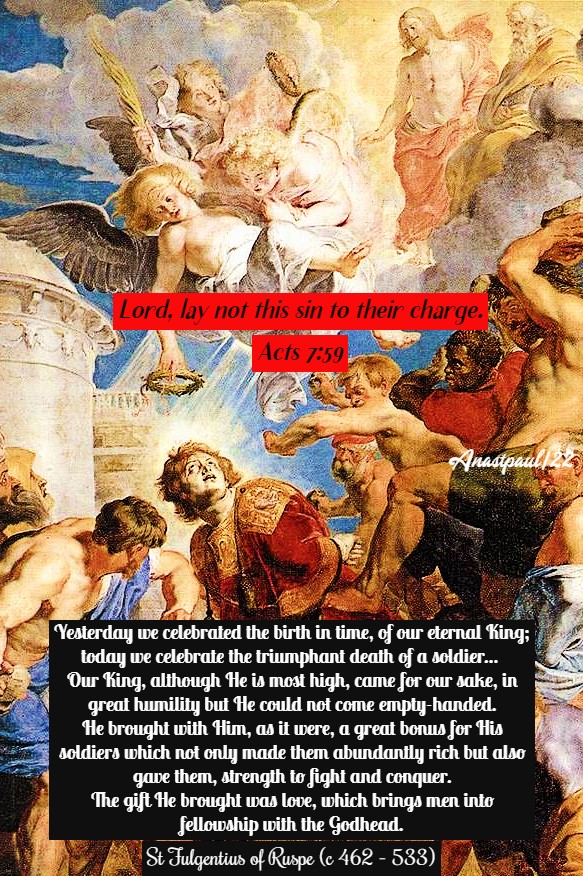
“And falling on his knees, he cried with a loud voice, saying: Lord, lay not this sin to their charge.” – Acts 7:59
REFLECTION – “Yesterday we celebrated the birth in time, of our eternal King; today we celebrate the triumphant death of a soldier… Our King, although He is most high, came for our sake, in great humility but He could not come empty-handed. He brought with Him, as it were, a great bonus for His soldiers which not only made them abundantly rich but also gave them, strength to fight and conquer. The gift He brought was love, which brings men into fellowship with the Godhead…
The love, then, that brought Christ down from Heaven to earth, lifted Stephen from earth to Heaven… And Stephen, so as to deserve to win the crown— which is what his name means—had love as his weapon and by it was everywhere victorious. Through love of God, he did not yield to the raging of his enemies and through love of his neighbour, he prayed for those who were stoning him. Through love, he accused those, who were in the wrong that they might be corrected. Through love, he prayed for those stoning him, to save them from punishment. Trusting in the strength of love, he overcame the cruel raging of Saul and so, won for himself, as a companion in men, the man who had been his persecutor on earth, This holy and untiring love, ardently desired to acquire as converts by his prayers, those whom he had been unable to convert by argument.
Now Paul rejoices with Stephen, with Stephen he enjoys the brightness of Christ; he exults with Stephen, he reigns with Stephen. There, where Stephen arose, the first, stoned under Paul’s very eyes, there too, Paul has risen with the help of Stephen’s prayers.” – St Fulgentius of Ruspe (c 462 – 533) Bishop in North Africa (Sermon 3, 1-3, 5-6).
PRAYER – Grant us, we beseech Thee, O Lord, to imitate what we celebrate, so that we may learn to love even our enemies because we keep the anniversary of the death of him, who knew how to plead, even for his persecutors with our Lord, Jesus Christ, Thy Son. Through the same Jesus Christ, Thy Son our Lord, Who lives and reigns with Thee, in the unity of the Holy Ghost, God, world without end. Amen (Collect).
Our Morning Offering – 26 December –Within the Octave – “The Month of the Divine Infant and the Immaculate Conception”
To the Infant Jesus in the Crib By St Alphonsus Maria de Liguori (1696-1787) Most Zealous Doctor of the Church
Oh, how I love Thee, Lord of Heaven above! Too well hast Thou deserved to gain my love. Sweet Jesus, I would die for love of Thee, For Thou didst not disdain to die for me.
I leave Thee, faithless world, – farewell! depart! This lovely Babe has loved and won my heart. I love Thee, loving God, Who from above Didst come on earth, a Babe, to gain my love.
Thou tremblest, darling Child and yet, I see Thy heart is all on fire with love for me! Love makes Thee thus, a Child, my Saviour dear; Love only brought Thee down to suffer here.
Love conquered Thee, Great God, love tied Thy hands, A captive here for me, in swathing-bands And love, strong love, awaits Thy latest breath, To make Thee die for me, a cruel death.
St Euthymius of Sardis St Evaristo Blessed Giovanni Orsini (1333-1411) Cardinal Archbishop of Turin Bl Jean of Hainaut St Margaret of Hohenfels Bl Marinus of Rome Bl Paganus of Lecco Bl Pierre Boffet St Tathai of Wales St Theodore the Sacristan
St Pope Zosimus (Died 418) Bishop of Rome from 18 March 417 to his death on 26 December 418, Confessor. Greek by birth, his short Pontificate was characterised by serious conflicts with the Bishops of Gaul and those of Africa. St Zosimus’ Life: https://anastpaul.com/2021/12/26/saint-of-the-day-saint-pope-zosimus-died-418/
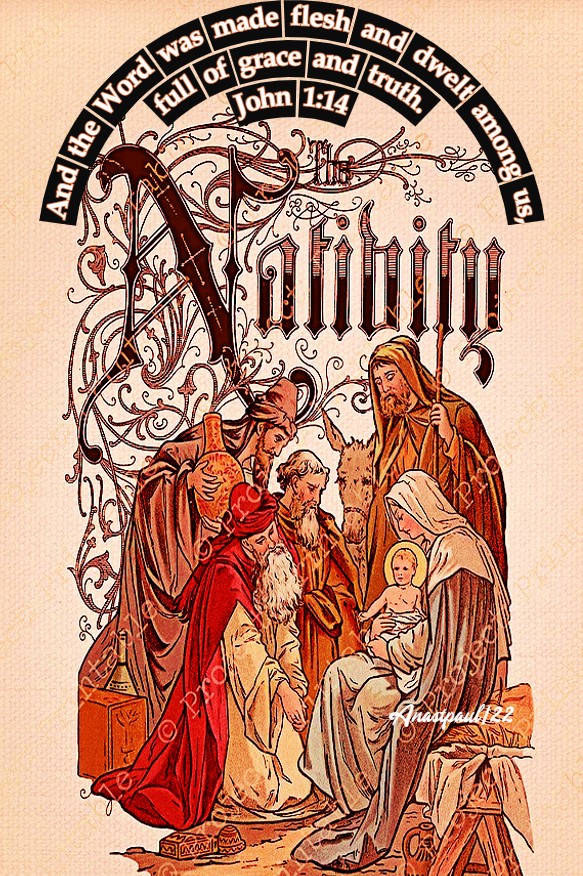
“And the Word was made flesh and dwelt among us, (and we saw His glory, the glory as it were of the Only begotten of the Father), full of grace and truth.”
John 1:14
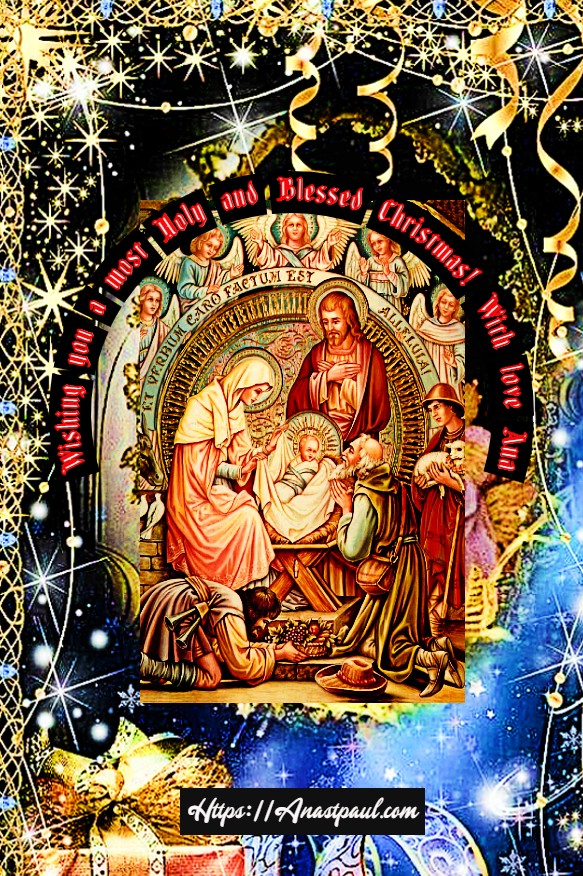
May the Divine Babe of Bethlehem fill your hearts with His joy, peace and love! And my Love and Prayers for you and yours.
My most sincere thanksgiving for those most generous and loving Benefactors, who, in their generosity, have constantly contributed to the upkeep of this site. For those who, in the midst of their manifold duties during this very busy time, have still found time to send Christmas donations and prayers. May the Divine Infant and His Immaculate Mother, Bless you all. Ana💖🙏
Thought for the Day – 25 December – Meditations with Antonio Cardinal Bacci (1881-1971)
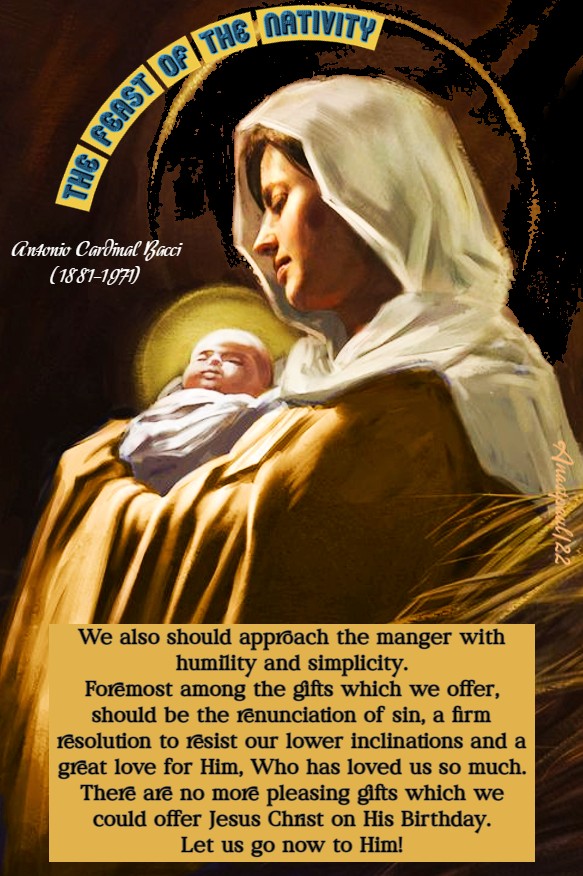
The Feast of the Nativity
“The first people to pay homage to Jesus Christ, are not men of exalted rank but humble shepherds. They come to offer their poor gifts but, above all else, they offer Him their simple and innocent hearts.
We also should approach the manger with humility and simplicity. Foremost among the gifts which we offer, should be the renunciation of sin, a firm resolution to resist our lower inclinations and a great love for Him, Who has loved us so much. There are no more pleasing gifts which we could offer Jesus Christ on His Birthday. Let us go now to Him!”
Quote/s of the Day – 25 December – The Nativity of Our Lord, Christmas Day
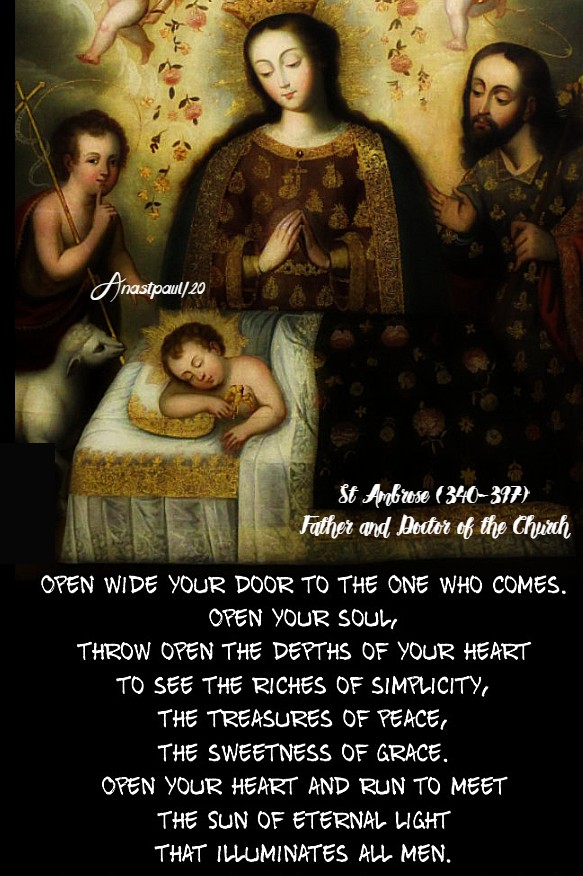
“Open wide your door to the One Who comes. Open your soul, throw open the depths of your heart to see the riches of simplicity, the treasures of peace, the sweetness of grace. Open your heart and run to meet the Sun of Eternal light that illuminates all men.”
St Ambrose (340-397) Father and Doctor of the Church
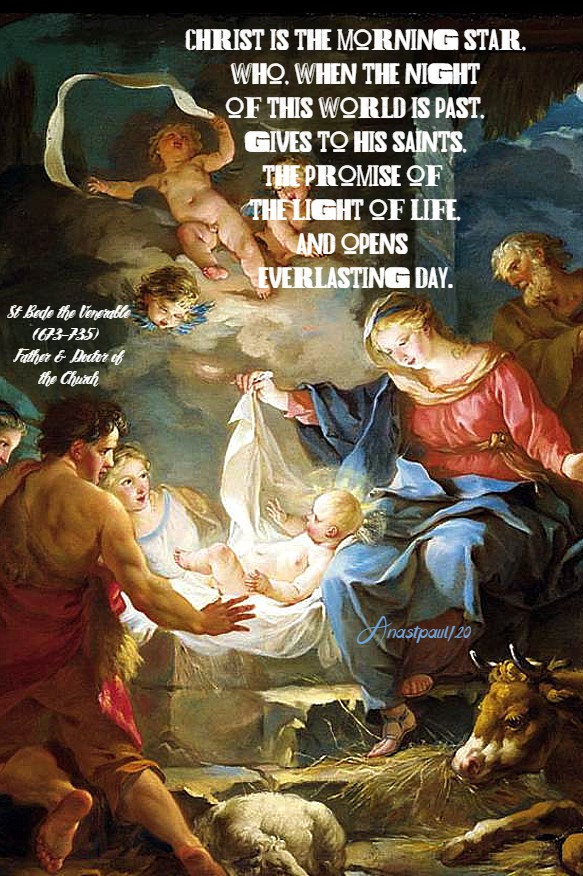
“Christ is the Morning Star, Who, when the night of this world is past, gives to His saints, the promise of the light of life, and opens everlasting day.”
St Bede the Venerable (673-735) Father & Doctor of the Church
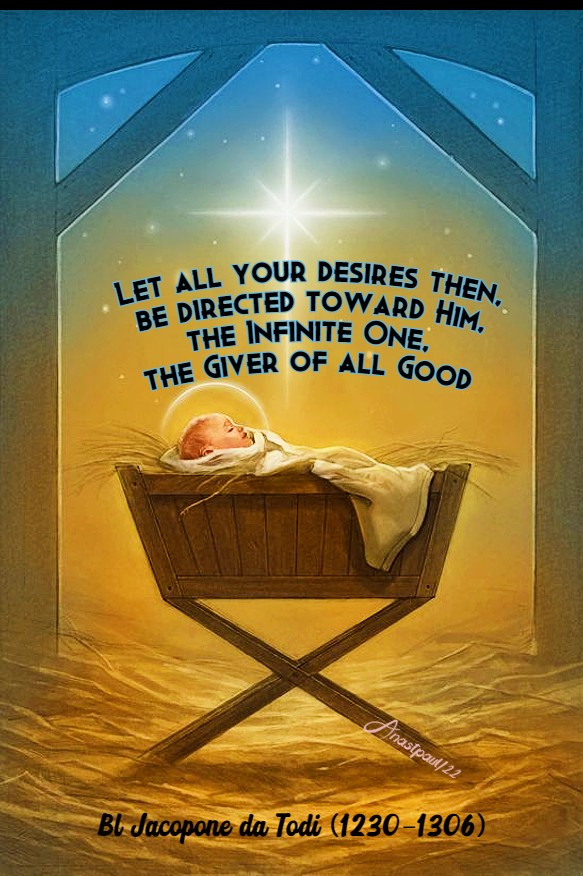
“Let all your desires then, be directed toward Him, the Infinite One, the Giver of all Good.”
Bl Jacopone da Todi (1230-1306)
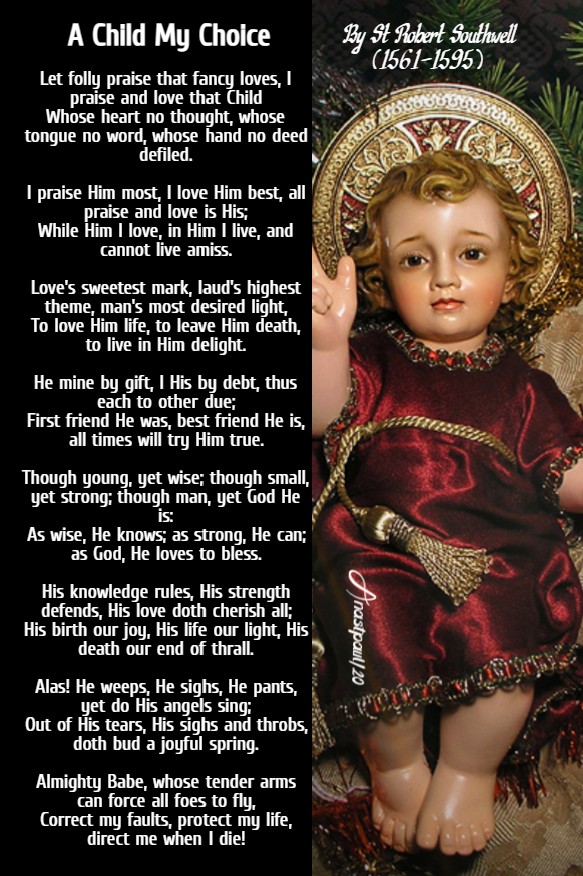
A Child My Choice By St Robert Southwell (1561-1595) Martyr
Let folly praise that fancy loves, I praise and love that Child Whose heart no thought, Whose tongue no word, Whose hand no deed defiled.
I praise Him most, I love Him best, all praise and love is His; While Him I love, in Him I live and cannot live amiss.
Love’s sweetest mark, laud’s highest theme, man’s most desired light, To love Him life, to leave Him death, to live in Him delight.
He mine by gift, I His by debt, thus each to other due; First friend He was, best friend He is, all times will try Him true.
Though young, yet wise; though small, yet strong; though man, yet God He is: As wise, He knows; as strong, He can; as God, He loves to bless.
His knowledge rules, His strength defends, His love doth cherish all; His birth our joy, His life our light, His death our end of thrall.
Alas! He weeps, He sighs, He pants, yet do His angels sing; Out of His tears, His sighs and throbs, doth bud a joyful spring.
Almighty Babe, Whose tender arms can force all foes to fly, Correct my faults, protect my life, direct me when I die!
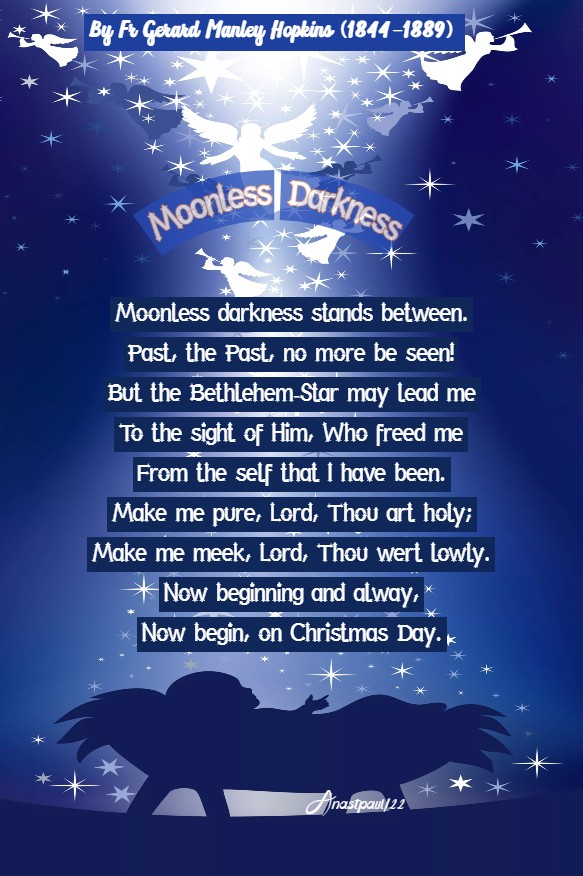
Moonless Darkness By Fr Gerard Manley Hopkins SJ (1844-1889)
Moonless darkness stands between. Past, the Past, no more be seen! But the Bethlehem-Star may lead me To the sight of Him, Who freed me From the self that I have been. Make me pure, Lord, Thou art holy; Make me meek, Lord, Thou wert lowly. Now beginning and alway, Now begin, on Christmas Day.
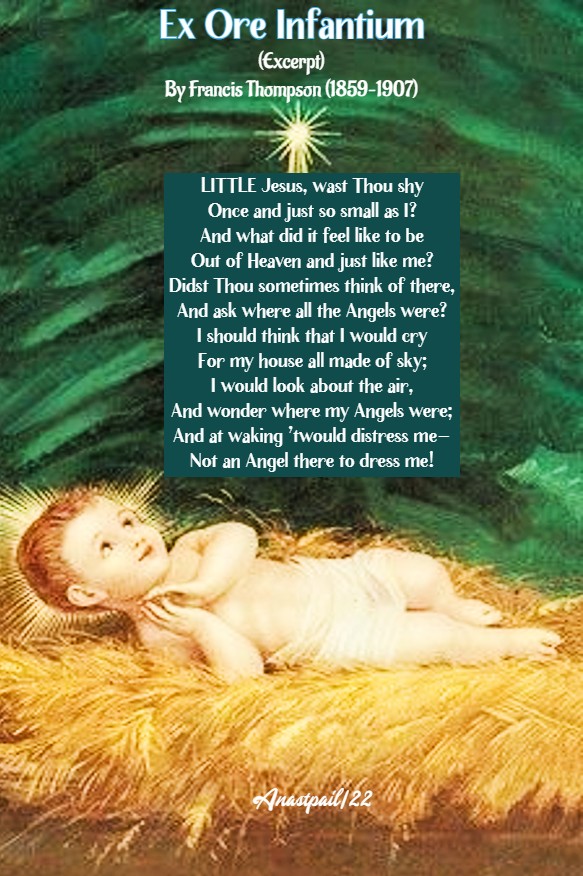
‘Ex Ore Infantium’ (From the Mouth of Chrildren) By Francis Thompson (1859–1907)
LITTLE Jesus, wast Thou shy Once and just so small as I? And what did it feel like to be Out of Heaven and just like me? Didst Thou sometimes think of there, And ask where all the Angels were? I should think that I would cry For my house all made of sky; I would look about the air, And wonder where my Angels were; And at waking ’twould distress me— Not an Angel there to dress me!
Hadst Thou ever any toys, Like us little girls and boys? And didst Thou play in Heaven with all The Angels that were not too tall, With stars for marbles? Did the things Play Can you see me? through their wings? And did thy Mother let Thee spoil Thy robes, with playing on our soil? How nice to have them always new In Heaven because ’twas quite clean blue!
Didst Thou kneel at night to pray And didst Thou join thy hands, this way? And did they tire sometimes, being young, And make the prayer seem very long? And dost Thou like it best, that we Should join our hands to pray to Thee? I used to think, before I knew, The prayer not said unless we do. And did thy Mother at the night Kiss Thee and fold the clothes in right? And didst Thou feel quite good in bed, Kiss’d and sweet and Thy prayers said?
Thou canst not have forgotten all That it feels like to be small And Thou know’st I cannot pray To Thee in my father’s way— When Thou wast so little, say, Couldst Thou talk thy Father’s way?— So, a little Child, come down And hear a child’s tongue like thy own; Take me by the hand and walk And listen to my baby-talk. To Thy Father show my prayer (He will look, Thou art so fair), And say: ‘O Father, I, Thy Son, Bring the prayer of a little one.’
And He will smile that children’s tongue, Has not changed, since Thou wast young!
Francis Joseph Thompson (16 December 1859 – 13 November 1907) was an English Poet and Catholic Mystic. One of his most famous works is the rivetting “The Hound of Heaven.” Among Thompson’s devotees was the young JR R Tolkien, who purchased a volume of Thompson’s works in 1913–1914 and later said that, it was an important influence on his own writing
One Minute Reflection – 25 December – “The Nativity of Our Lord, Christmas Day! – The Month of the Divine Infant and the Immaculate Conception” – Titus 2:11-15, Luke 2:1-14 – Scripture search here: https://www.drbo.org/
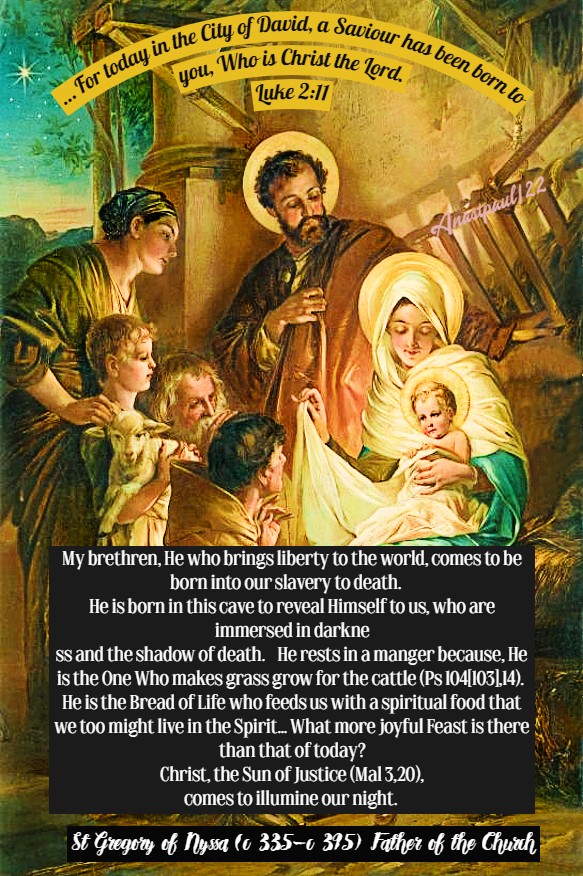
“… For today in the City of David, a Saviour has been born to you, Who is Christ the Lord.” – Luke 2:11
REFLECTION – “Brethren, now we have been told about the miracle, let us turn aside to see this unusual sight, as Moses did (Ex 3:3) – in Mary, the burning bush is not consumed, the Virgin gives birth to the Light, without defilement … Let us then run to Bethlehem, the town of the Good News! If we are real shepherds, staying awake on our watch, then it is to us that the voice of the Angels is addressed, announcing a great joy … “Glory to God in the highest for peace is coming down to earth!” There, where, only yesterday, there was nothing but misfortune, battlefields and exile, now earth receives peace for today “Truth shall spring out of the earth and justice shall look down from heaven” (Ps 84[85]:12). Behold the fruit earth gives to humankind, in reward for the goodwill reigning among men (Lk 2:14). God is joined to man, to raise man to the stature of God.
At this news, my brethren, let us go to Bethlehem to behold … the mystery of the crib, a child wrapped in swaddling clothes rests in a manger. A Virgin, after giving birth, His undefiled Mother, embraces her Son. Let us repeat the words of the prophet along with the shepherds: “As we have heard, so we have seen in the city of our God.” (Ps 47[48]:9)
But why does our Lord seek shelter in this cave at Bethlehem? Why is He sleeping in a manger? Why does He participate in Israel’s census? My brethren, He who brings liberty to the world, comes to be born into our slavery to death. He is born in this cave to reveal Himself to us, who are immersed in darkness and the shadow of death. He rests in a manger because, He is the One Who makes grass grow for the cattle (Ps 104[103],14). He is the Bread of Life, Who feeds us with a spiritual food that we too might live in the Spirit… What more joyful Feast is there than that of today? Christ, the Sun of Justice (Mal 3,20), comes to illumine our night. What had fallen, is raised up again, what was overcome, is now set free… what was dead is restored to life… Let us all sing today with one voice over all the earth: “Death came through one man, Adam, today salvation has come through One Man (cf Rom 5,17)” … St Gregory of Nyssa (c 335–c 395) Bishop, Father of the Church (Sermon on the Nativity).
PRAYER – O God, Who have brightened this most holy night with the splendour of the true Light, grant, we beseech Thee that we may know in Heaven the joy of that light which we have known mystically on earth. Through the same Jesus Christ, Thy Son our Lord, Who lives and reigns with Thee, in the unity of the Holy Ghost, God, world without end. Amen (Collect).


















 AnaStpaul
You must be logged in to post a comment.