Thought for the Day – 28 October – Meditations with Antonio Cardinal Bacci (1881-1971)
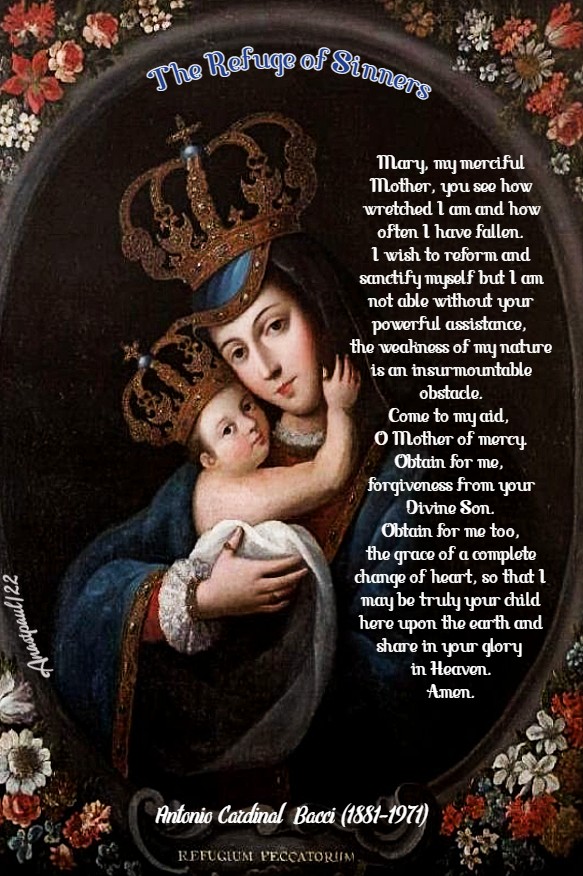
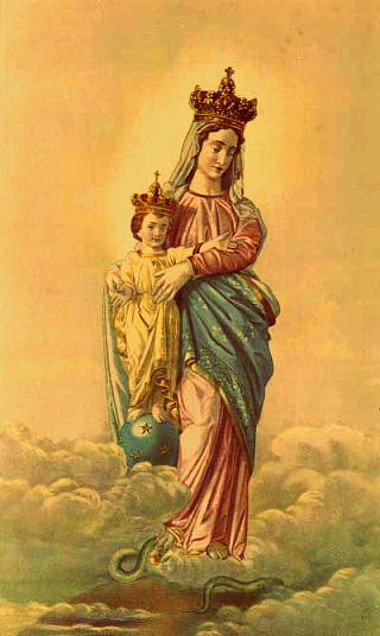
“Month of the Holy Rosary” “The Refuge of Sinners”
“Mary, my merciful Mother, you see how wretched I am and how often I have fallen. I wish to reform and sanctify myself but I am not able without your powerful assistance, the weakness of my nature is an insurmountable obstacle. Come to my aid, O Mother of mercy. Obtain for me, forgiveness from your Divine Son. Obtain for me too, the grace of a complete change of heart, so that I may be truly your child here upon the earth and share in your glory in Heaven. Amen.”
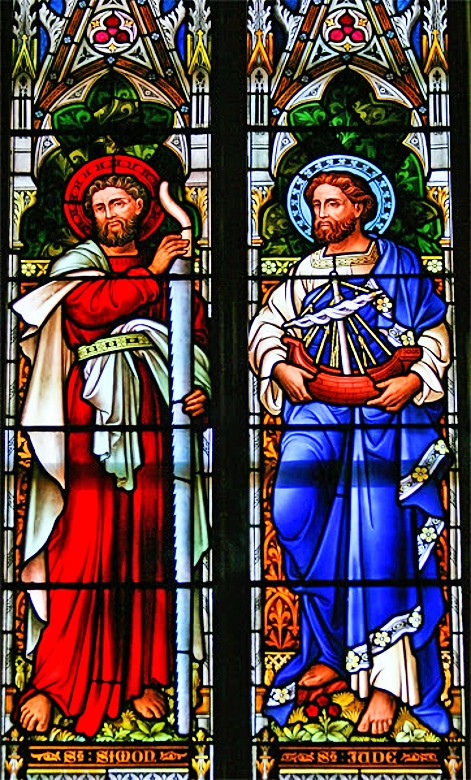
Quote of the Day – 28 October – Feast of Saints Simon and Jude, Apostles
“The Patron Saint of the Impossible:” This practice is thought to stem from the belief that few Christians invoked St Jude in prayer, due to their misplaced fear of praying to Christ’s betrayer, Judas Iscariot, the two names being so similar. Being so seldom invoked and reverenced, St Jude was and is, ready and waiting to hear the prayers of those who call upon him. Ironically, he is probably the Apostle who is the most frequently invoked in prayer and the most memorialised in Churches, with Statues and stained glass windows or other artworks. The ignored St Jude, thus became more eager to assist anyone who sought his intercession and aid, to the point of interceding in the most dire of circumstances. And so, the Title, “The Saint of Impossible Causes, for the Hopeless and the Desperate,” remains, to our benefit with the glorious Saint Jude. St Bernard and St Bridget too, both had visions from God, asking each to accept St Jude as “The Patron Saint of the Impossible.” Today, more than ever before, the merits of the beloved Saint Jude Thaddeus is being revived in people’s minds and hearts. In return, he is proving himself to be more than an ordinary advocate, taking special delight in coming to the aid of persons in desperate need.
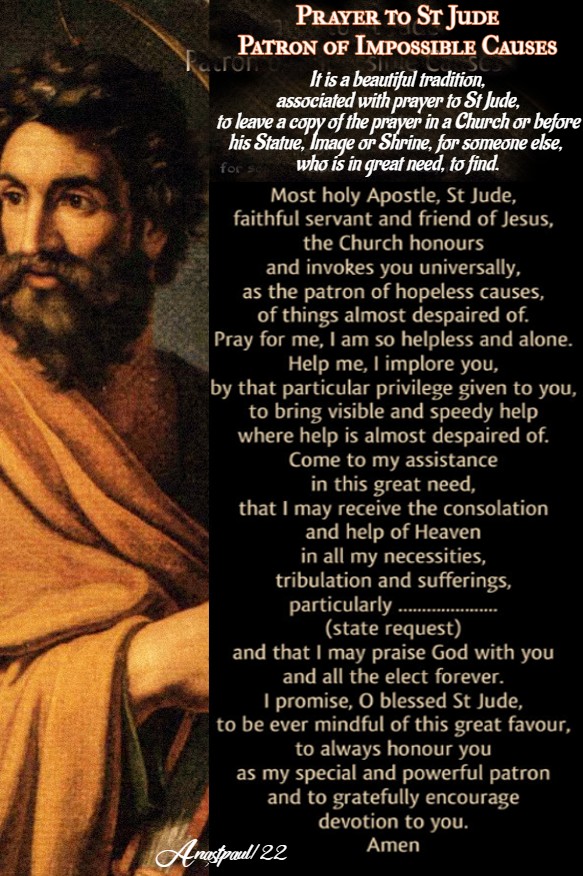
Prayer to St Jude Patron of Impossible Causes
It is a beautiful tradition, associated with prayer to St Jude, to leave a copy of the prayer in a Church or before his Statue, Image or Shrine, for someone else, who is in great need, to find.
Most holy Apostle, St Jude, faithful servant and friend of Jesus, the Church honours and invokes you universally, as the patron of hopeless causes, of things almost despaired of. Pray for me, I am so helpless and alone. Help me, I implore you, by that particular privilege given to you, to bring visible and speedy help where help is almost despaired of. Come to my assistance in this great need, that I may receive the consolation and help of Heaven in all my necessities, tribulation and sufferings, particularly ………………… (state request) and that I may praise God with you and all the elect forever. I promise, O blessed St Jude, to be ever mindful of this great favour, to always honour you as my special and powerful patron and to gratefully encourage devotion to you. Amen
One Minute Reflection – 28 October – Feast of Saints Simon and Jude, Apostles – Ephesians 4:7-13, John 15:17-25 – Scripture search here: https://www.drbo.org/
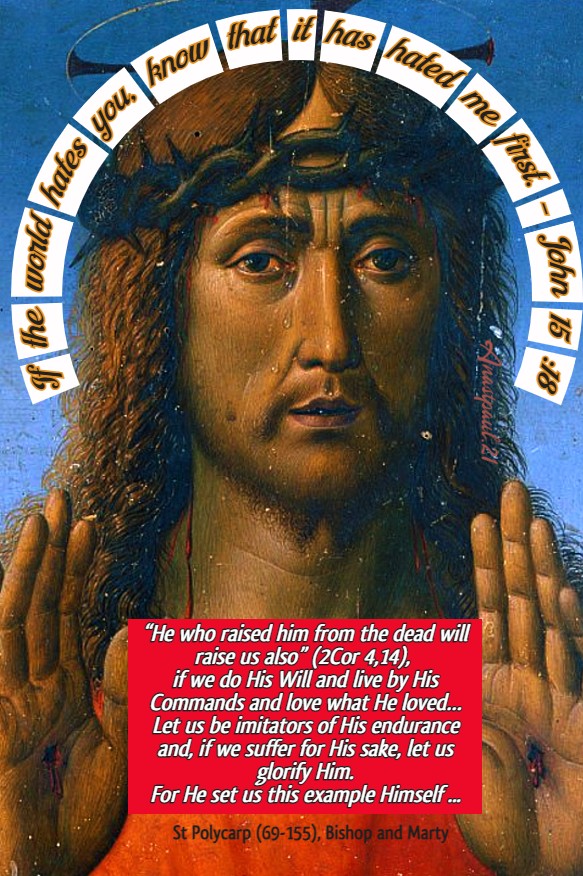
“If the world hates you, know that it has hated me first.”- John 15:18
REFLECTION –“I rejoice with you greatly in our Lord Jesus Christ, that you welcomed the copies of true love [Ignatius of Antioch and his companions]…who were encumbered with saintly chains, which are the diadems of those, truly chosen by God and our Lord. And I rejoice because the deep root of your faith, which has been renowned from early times, still lasts and bears fruit to our Lord Jesus Christ, Who for our sins, endured even facing death and Whom “God raised, releasing Him from the throes of death” (Acts 2,24). “Though you have not seen Him, you believe with unutterable, triumphant joy” (1Pt 1,8)…“He who raised Him from the dead will raise us also” (2Cor 4,14), if we do His Will and live by His Commands and love what He loved… Let us be imitators of His endurance and, if we suffer for His sake, let us glorify Him. For He set us this example Himself and this is what we have believed.
So I beg you all, to obey the message of uprightness and to exhibit all endurance, such as you saw with your own eyes, not only in the blessed Ignatius and Zosimus and Rufus but also, in others of your number and in Paul himself and the rest of the Apostles, being assured, that all these “have not run in vain” (Gal 2,2) but in faith and uprightness and, that they are in the place that they have deserved with the Lord, with and for Whom they suffered. For they did not “love the present world” (2Tm 4,10) but Christ, Who died for us and was raised up by God for our sakes.”- St Polycarp (69-155) Apostolic Father, Bishop and Martyr – Letter to the Philippians, 1-2, 8-9
PRAYER – O God, Who has given us a way of coming to know Thy Name through Thy blessed Apostles Simon and Jude, grant us to honour their everlasting glory, by becoming more holy and to become more holy by honouring it. ThroughJesus Christ, Thy Son our Lord, Who lives and reigns with Thee, in the unity of the Holy Ghost, God, world without end. Amen (Collect).
Our Morning Offering – 28 October – Feast of Saints Simon and Jude, Apostles
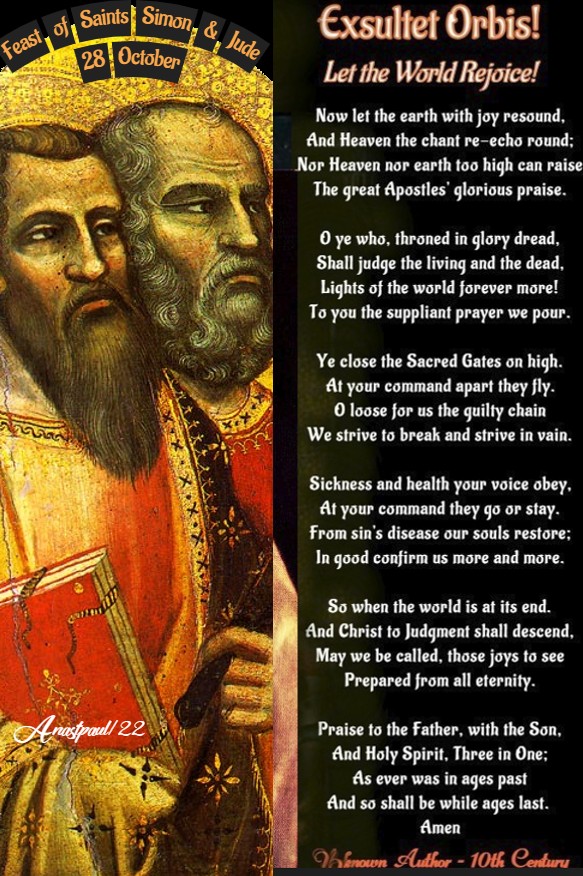
Exsultet Orbis! Let the World Rejoice! Unknown Author
Now let the earth with joy resound, And Heaven the chant re-echo round; Nor Heaven nor earth too high can raise The great Apostles’ glorious praise.
O ye who, throned in glory dread, Shall judge the living and the dead, Lights of the world forever more! To you the suppliant prayer we pour.
Ye close the Sacred Gates on high. At your command apart they fly. O loose for us the guilty chain We strive to break and strive in vain.
Sickness and health your voice obey, At your command they go or stay. From sin’s disease our souls restore; In good confirm us more and more.
So when the world is at its end. And Christ to Judgment shall descend, May we be called, those joys to see Prepared from all eternity.
Praise to the Father, with the Son, And Holy Spirit, Three in One; As ever was in ages past And so shall be while ages last. Amen
(Roman Breviary for the Common of Apostles) An Office Hymn that was traditionally prescribed for Vespers and Lauds on the Feasts of Apostles and Evangelists outside Easter time. The Hymn is found as early as the tenth century in a hymnal of Moissac Abbey.
Saints of the Day – 28 October – Feast of Saints Simon and Jude, Apostles of Christ
The Holy Apostles Simon and Jude (Excerpt) By Father Francis Xavier Weninger SJ (1805-1888)
St Simon, whose festival the Church commemorates to-day, was surnamed the Cananaean or Canaanite because he was born at Cana, a town in Galilee. In this town, Jesus wrought His first miracle, by changing water into wine, as is known from the Gospel. St Nicephorus (c 758-828) Bishop of Constantinople and some others, are of the opinion that Simon was the bridegroom whose wedding our Lord and His holy Mother honoured with their presence but that he afterwards left his bride with her consent and followed Christ.
St Jude, the brother of Simon, is called Thaddseus to distinguish him from the other Jude or Judas’ who betrayed and sold the Lord. According to St Nicephorus, Mary Cleophas was their mother and James the Lesser, their brother. Other writers say that Simon and Jude were not brothers. The Gospel tells us that both Simon and Jude were chosen by Christ as Apostles but when, or under what circumstances, this took place, is not recorded, nor have any particulars of their words and actions been left us. There is, however, not the slightest doubt that they, as all the others, constantly followed the Saviour and, although they forsook Him when He was taken prisoner, they had, after His Resurrection the grace to see Him frequently, to be present at His Ascension and to receive the Holy Ghost on Pentecost.
When later, the Apostles separated to preach the Gospel, St Simon went to Egypt and St Jude to Mesopotamia. Both, however,, were also in other lands, to preach the word of Christ and after thus spending 30 years in apostolic labours, they met again, by Divine dispensation, in Persia. On their arrival in this land, they found the Persian army in the field, for the King had declared war against India and was in the act of marching against it. Baradach, the General in Chief, had offered many sacrifices to the gods, desiring to know the issue of the war but no answer was given, which had always been given before, as the Evil spirits spoke through the idols. Hence Baradach, amazed at such unusual silence, sent to another idol which was kept in a place far from the camp and desired to know the reason of it. Satan, answering through it, said that the presence of two Apostles of the Lord Jesus Christ was the cause of the silence of the gods, as the power of these two Apostles was so great that not one of the gods, until now so greatly honoured, dared to appear before them.
Baradach, having received this answer, had the two Apostles brought before him. He met them with great manifestations of respect and listened to them, while they spoke to him of the nothingness of the gods which he worshipped. As he was desirous to know the issue of the war, they made use of the occasion to show him how false were the words of the idols and hence, how groundless was the notion, of their divinity. They bade him propose his questions to the idols, through the magicians as usual and told him that they would give his gods permission to speak. The magicians were ordered to ask the gods and returned with the answer, that the result would be a long, bloody and disastrous war. The Apostles having heard this, said to Baradach: “Now, great Prince, recognise the falsity and the deceit, as well of your magicians, as of your gods. A deputation of the Indians will arrive tomorrow, at this hour, in your camp, to request peace of you on whatever conditions you may choose to prescribe.” Baradach, surprised at these words, awaited with great impatience the following day. At the very hour the Apostles had foretold, the Indian embassy came humbly begging for peace, which was forthwith concluded.
This event was reported to the King, who resided at Babylon. He called the Apostles into his presence, listened with great attention to their words and after having been sufficiently instructed in Christianity, was Baptised by his holy teachers. The example of the King was followed by the whole Court and a great part of the City.
After this, the holy men went through the other towns and villages of the kingdom, everywhere preaching the mysteries and truths of the Christian Faith. Many thousands became converts, only the magicians and fortune-tellers remained in their blindness and seeing, with deep resentment, that they were everywhere despised and derided, they sought means to kill the holy Apostles. To this end, they excited the inhabitants of a town, which was far distant from the residence of the King, against the Saints, who had no sooner arrived there, than thay were seized and dragged, the one before an idol of the sun, the other before that of the moon and were commanded to offer incense. The holy men refused to comply with so wicked a demand, saying that they sacrificed only to the true God, after which they began to preach the Gospel. But the furious Pagans refused to listen to them and in their rage, cut St Simon asunder with a saw and beheaded St Jude. In this manner these two holy Apostles ended their lives and earned the glorious Crown of Martyrdom.
An interesting note: In the life of St Bernard we find that this Saint had a particular devotion to St Jude. He received, with extraordinary joy and veneration, the Relics of this holy Apostle which were sent to him and, on his death-bed, he requested that they should be laid on his breast and be buried with him.
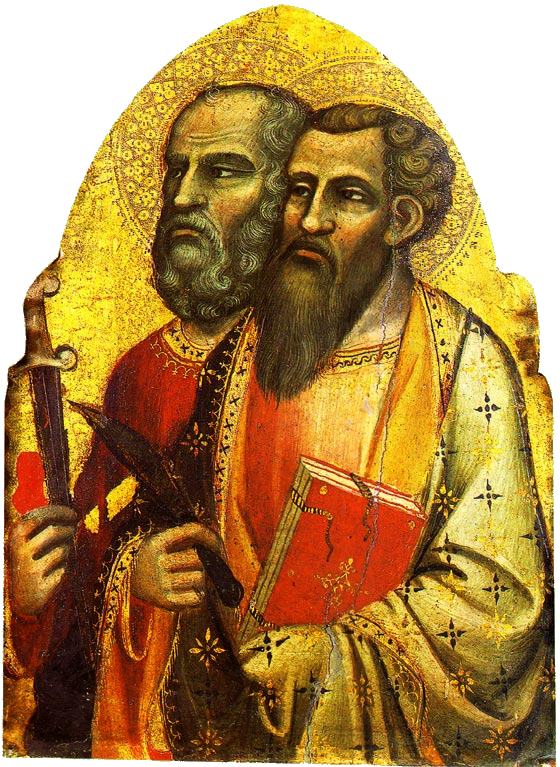
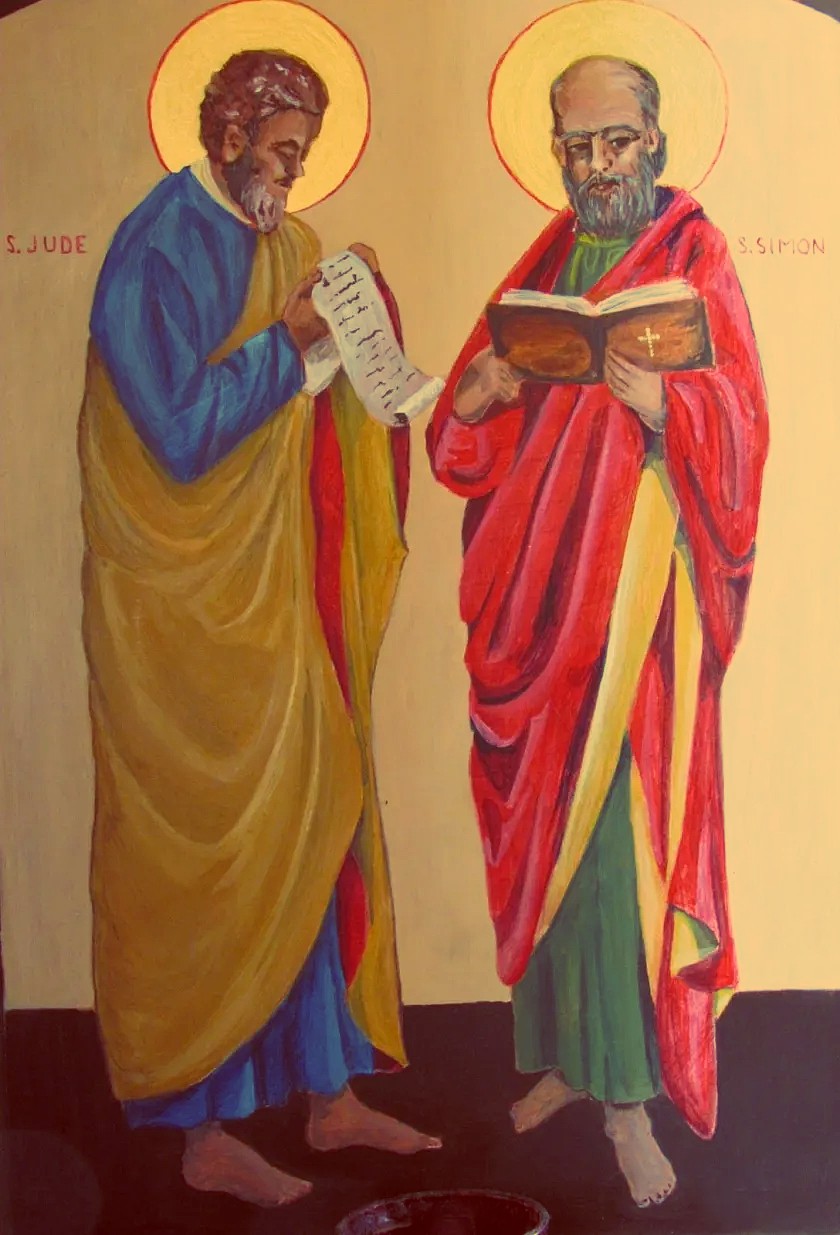
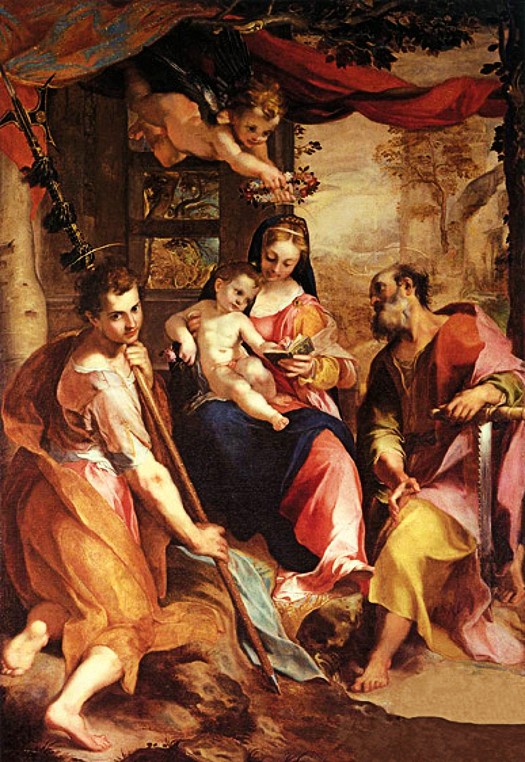
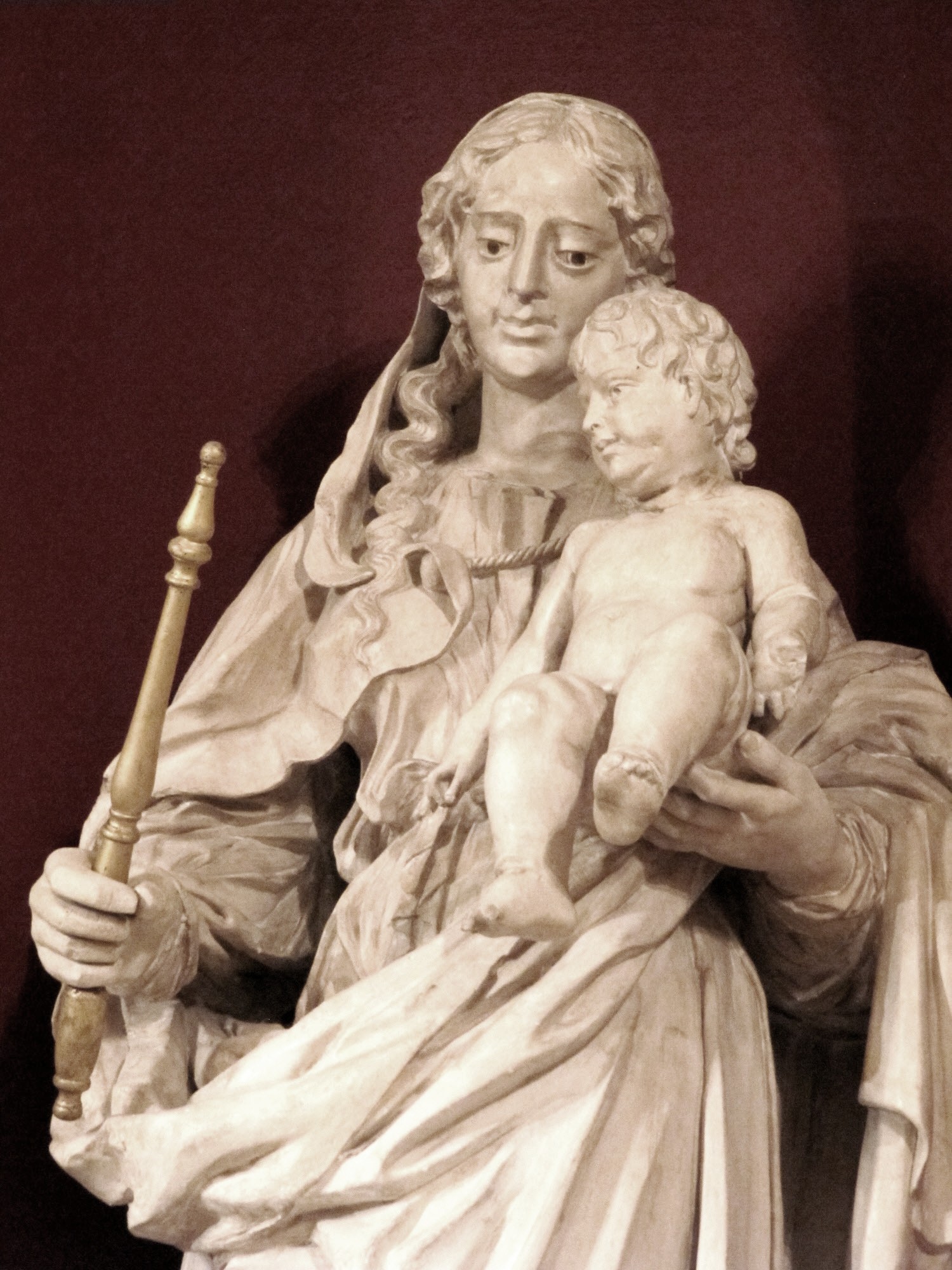
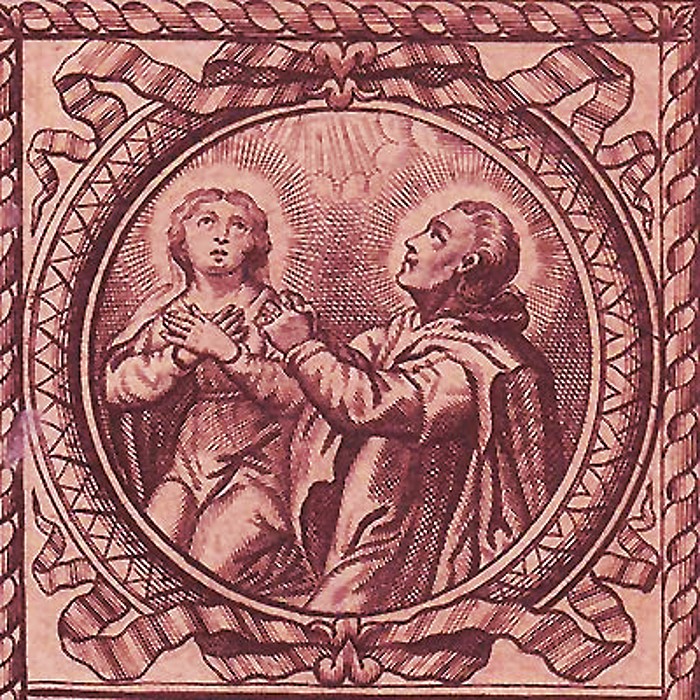
Sts Simon and Jude with the Virgin Mother and Baby Jesus
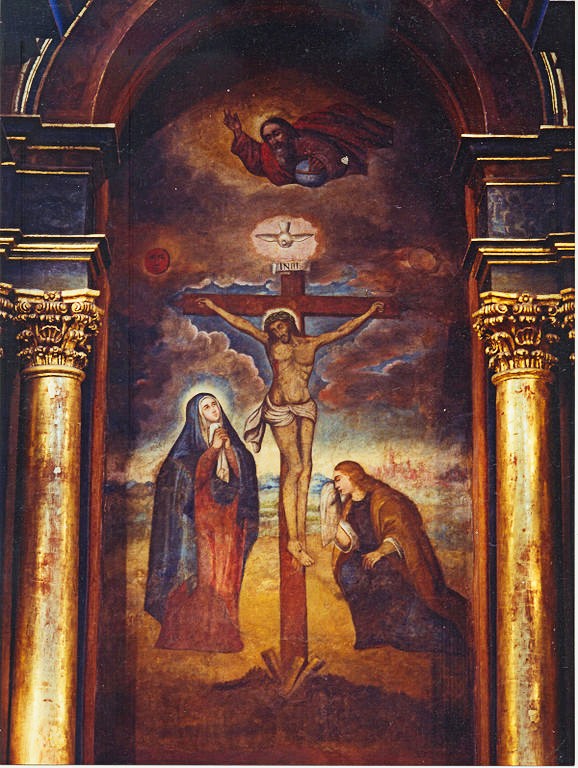
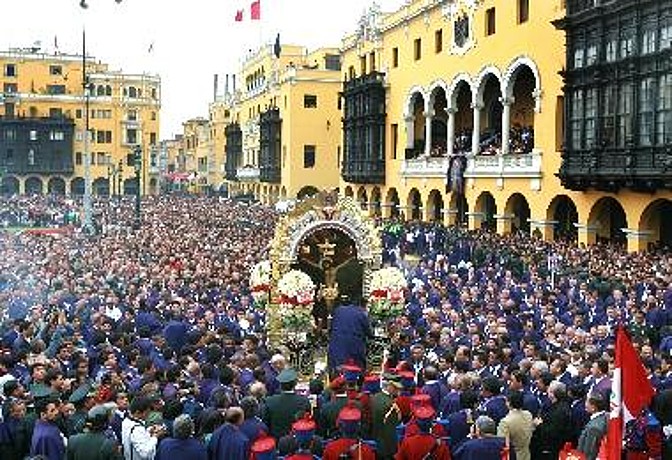
Lord of Miracles/Señor de los Milagros de Nazarenas – A mid-17th-century painting of the Crucifixion that is venerated in Lima, Peru and its celebration involves one of the largest processions in the world. It was painted by an unnamed African taken to Peru as a slave from what is now Angola. Above the Cross is the Holy Spirit and God the Father. Below and to the right of Jesus, is His mother, the Virgin Mary with her heart pierced by a sword of sorrow. Kneeling and weeping at the foot of the cross is St Mary Magdalene. The name originated on 13 November 1655 when everything around it was destroyed in an earthquake that left the painting standing and undamaged. Christ is shown enduring the pain of Crucifixion. Every year in October, hundreds of thousands of devotees from all races and economic backgrounds participate in a procession honouring the image through the streets of Lima. Boulevards are decorated in purple on 18,19 and the final Feast 28 October to celebrate the Lord of Miracles.
St Abdias of Babylon St Abraham of Ephesus St Alberic of Stavelot St Anastasia the Elder St Anglinus of Stavelot St Cyril of Rome St Cyrilla of Rome St Diomedes the Younger St Dorbhene of Iona
St Ferrutius St Genesius of Thiers Bl Germain of Talloires St Godwin of Stavelot St Maria Ascuncion St Remigius of Lyons St Rodrigo Aguilar Aleman St Salvius of Amiens
Martyrs of Avila – 3 Saints: Two sisters and a brother who, during a period of persecution, fled Talavera de la Reina, Spain, were caught and executed. Martyrs: Christeta, Sabina and Vincent. 303 in Avila, Spain.
Thought for the Day – 27 October – Meditations with Antonio Cardinal Bacci (1881-1971)
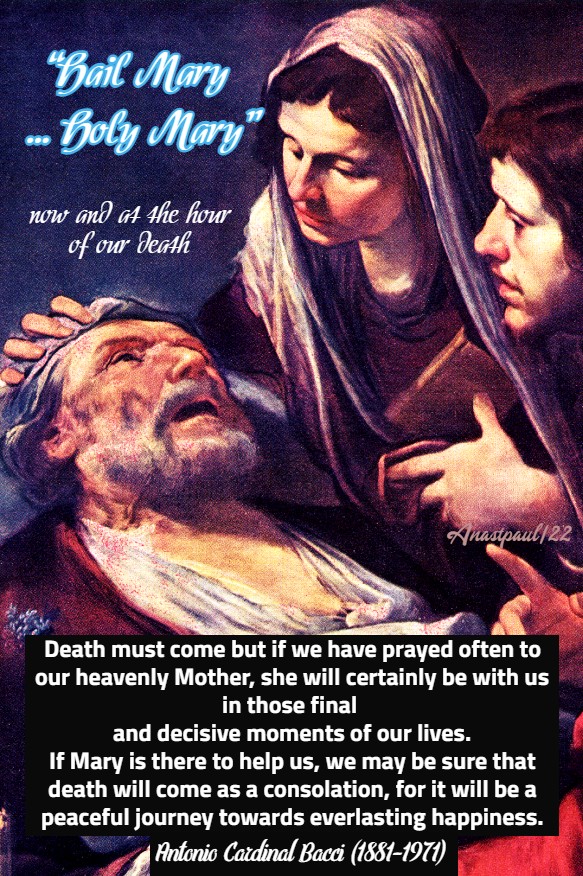
“Month of the Holy Rosary” “Hail Mary … Holy Mary”
“We seek her intercession, moreover, at the hour of death. Death must come but if we have prayed often to our heavenly Mother, she will certainly be with us in those final and decisive moments of our lives. If Mary is there to help us, we may be sure that death will come as a consolation, for it will be a peaceful journey towards everlasting happiness.”
Quote/s of the Day – 27 October – Vigil of Saints Simon and Jude – 1 Corinthians 4:9-14, John 15:1-7 – Scripture search here: https://www.drbo.org/
“I am the vine, you the branches; whoever remains in me and I in him, the same bears much fruit; for without Me you can do nothing.”
John 15:5
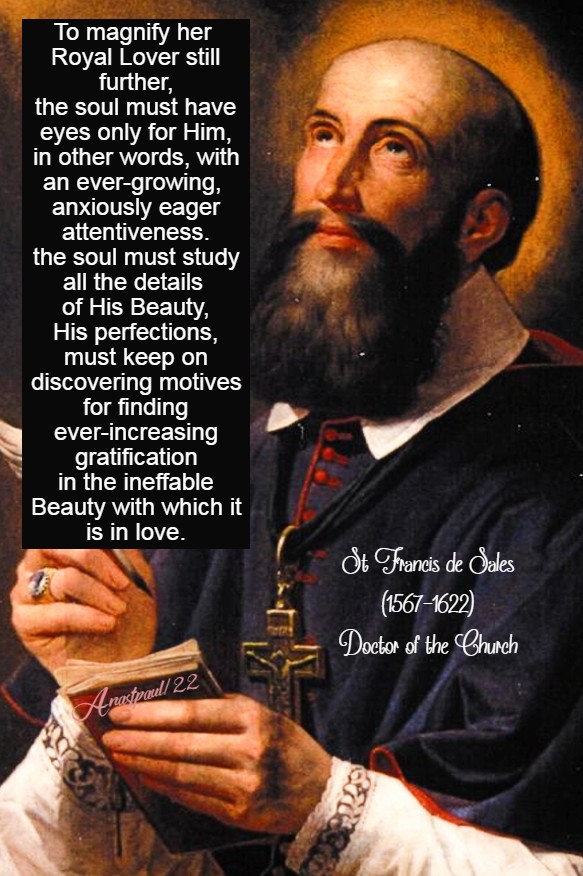
“To magnify her Royal Lover still further, the soul must have eyes only for Him, in other words, with an ever-growing, anxiously eager attentiveness. the soul must study all the details of His Beauty, His perfections, must keep on discovering motives for finding ever-increasing gratification in the ineffable Beauty with which it is in love.”
St Francis de Sales (1567-1622) Doctor of the Church
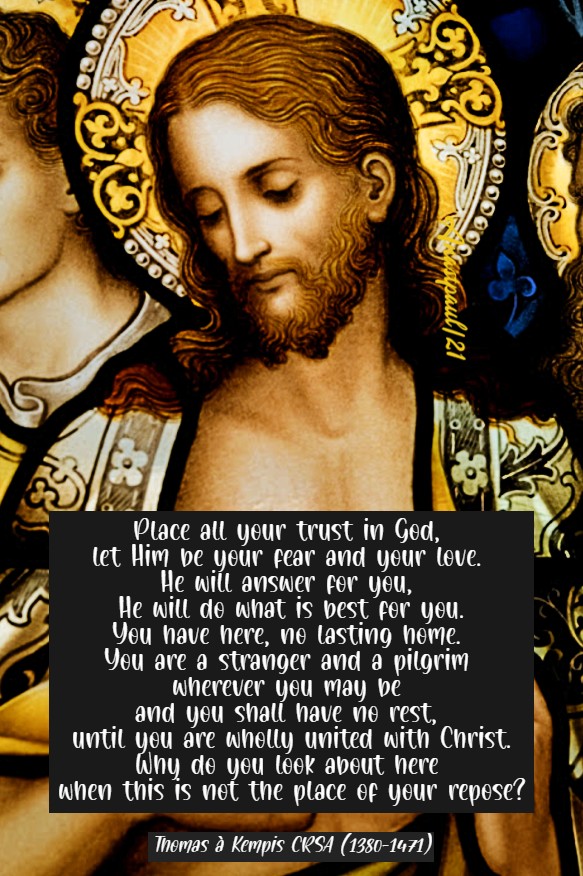
“Place all your trust in God, let Him be your fear and your love. He will answer for you, He will do what is best for you. You have here no lasting home. You are a stranger and a pilgrim wherever you may be and you shall have no rest, until you are wholly united with Christ. Why do you look about here when this is not the place of your repose?”
Thomas à Kempis CRSA (1380-1471)
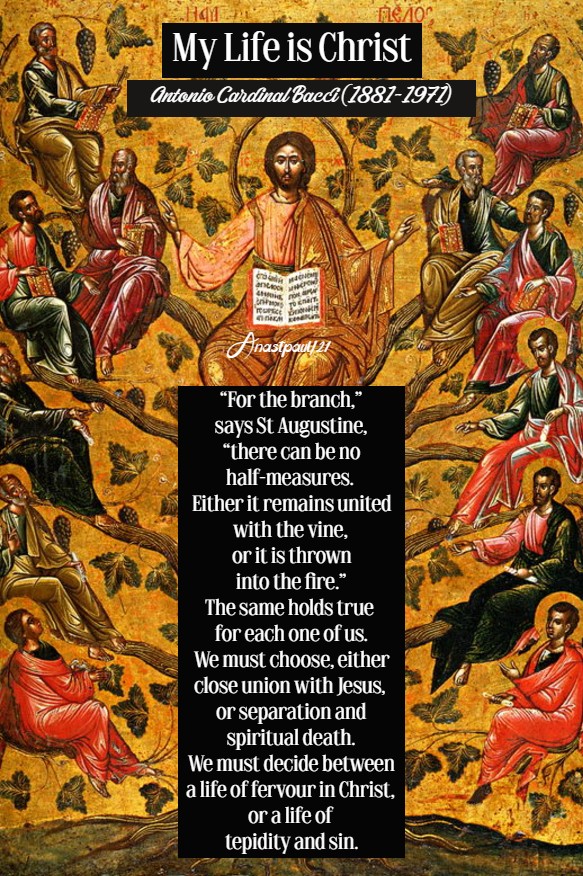
“For the branch,” says St Augustine, “there can be no half-measures. Either it remains united with the vine, or it is thrown into the fire.” The same holds true for each one of us. We must choose, either close union with Jesus, or separation and spiritual death. We must decide between a life of fervour in Christ, or a life of tepidity and sin.”
One Minute Reflection – 27 October – Vigil of Saints Simon and Jude – 1 Corinthians 4:9-14, John 15:1-7 – Scripture search here: https://www.drbo.org/
“I am the true vine and My Father is the husbandman. Every branch in me, that bears not fruit, He will take away and everyone who bears fruit, He will prune it, that it may bring forth more fruit.” – John 15:1-2
REFLECTION – “I must warn each of you about His vine, for who has never cut back everything that is superfluous in himself, to the point of thinking that there is nothing more to cut? Believe me, what has been cut, grows back – the vices that have been chased away return and we see tendencies, which had gone to sleep, waking up again. It is, therefore, not enough to cut one’s vine once; rather, we have to do it again and often and, if possible, even without ceasing! For if you are sincere, you ceaselessly find in yourself, something to cut… Virtue cannot grow among the vices; for virtue to develop, we must prevent the vices from increasing. So suppress what is superfluous, then the necessary will be able to spring up.
For us, … it is always the time for cutting; it is always necessary. For I am sure that we have already left winter behind us, we have left behind the fear without love, which introduces us all to wisdom but which does not let anyone grow in perfection. When love comes, it chases away that fear, just as the summer chases away the winter… So may the winter rains stop, that is to say, the tears of anguish that arise because of the memory of your sins and the fear of judgement… If “the winter is over” and “the rain has stopped” (Song 2:11)…, the sweetness of the spring of spiritual grace shows us, that the time has come to cut our vine. What else is there for us to do other than to become entirely committed to this work?” – St Bernard (1091-1153) Father and Doctor of the Church (Sermon 58 on the Song of Songs).
PRAYER – Grant, we beseech Thee, O Lord God, unto all Thy servants, that they may remain continually in the enjoyment of soundness, both of mind and body and by the glorious intercession of the Blessed Mary, always a Virgin, maybe delivered from present sadness and enter into the joy of Thine eternal gladness.Through Jesus Christ, Thy Son our Lord, Who lives and reigns with Thee, in the unity of the Holy Ghost, God, world without end. Amen (Collect).
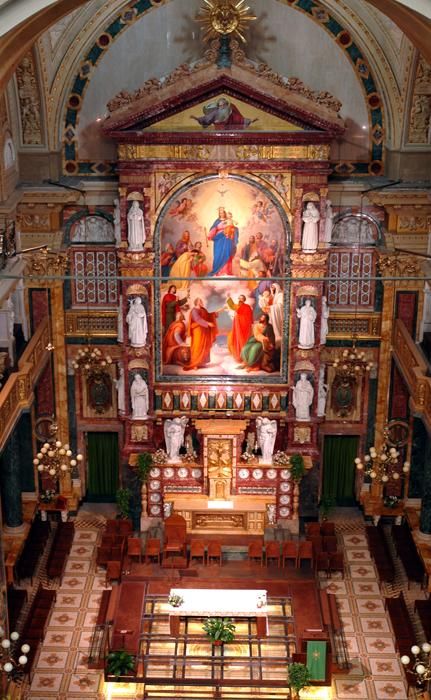
Our Morning Offering – 27 October – “The Month of the Most Holy Rosary and of the Angels” – Dedication of the Basilica of Auxilium Christianorum / Our Lady Help of Christians, Turin, Italy, built by St John Bosco (1868)
She, who stands at the Altar of the Eucharistic Sacrifice, without many of us today, will always be our help, most especially in these times of increasing persecution
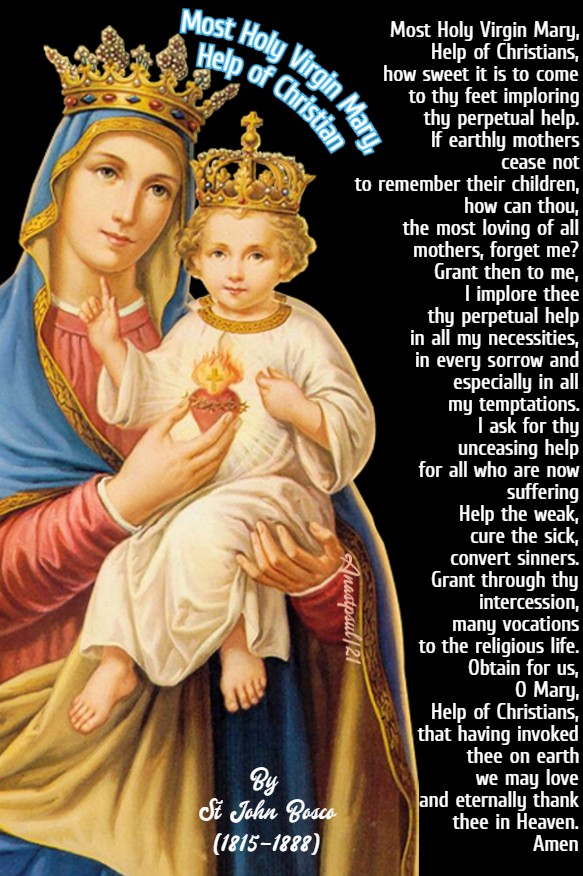
Most Holy Virgin Mary, Help of Christian By St John Bosco (1815-1888)
Most Holy Virgin Mary, Help of Christians, how sweet it is to come to thy feet imploring thy perpetual help. If earthly mothers cease not to remember their children, how can thou, the most loving of all mothers, forget me? Grant then to me, I implore thee thy perpetual help in all my necessities, in every sorrow and especially in all my temptations. I ask for thy unceasing help for all who are now suffering. Help the weak, cure the sick, convert sinners. Grant through thy intercession, many vocations to the religious life. Obtain for us, O Mary, Help of Christians, that having invoked thee on earth we may love and eternally thank thee in Heaven. Amen
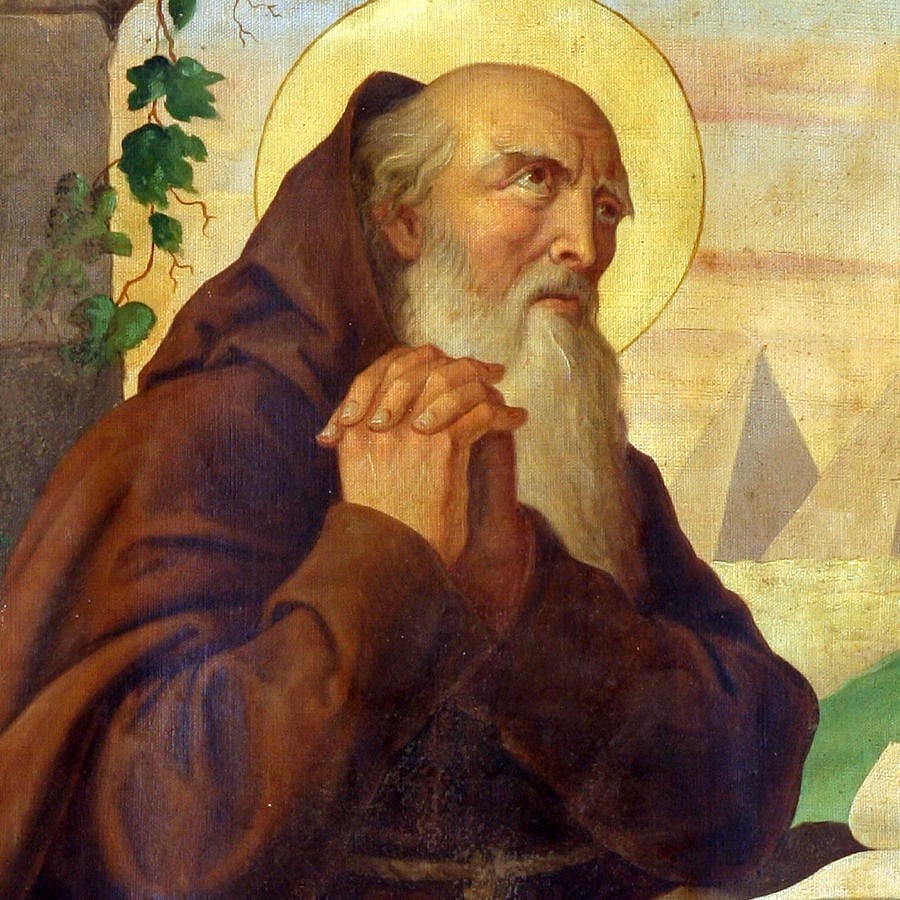
Saint of the Day – 27 October – Saint Odrian (c Died 563) Bishop of Waterford, Ireland, Abbot, Missionary. Born in County Meath, Ireland and died in c 563 at Iona Abbey, Scotland. Patronages – Silversmiths, the City and Diocese of Waterford, Ireland, Also known as – Odrioan of Waterford, Odrian of Iona, Otteran, Odhran, Odran, Oran, Oterano.
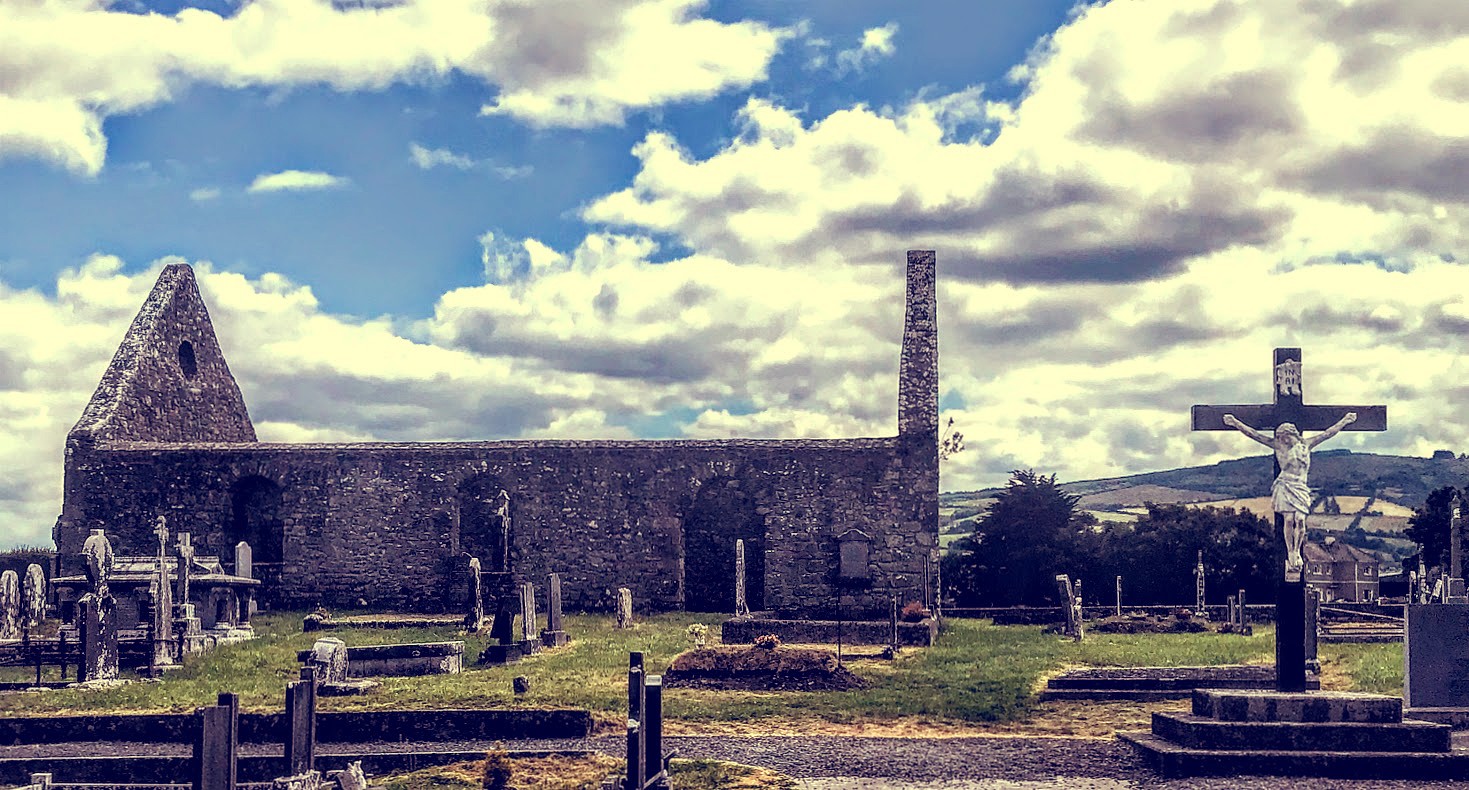
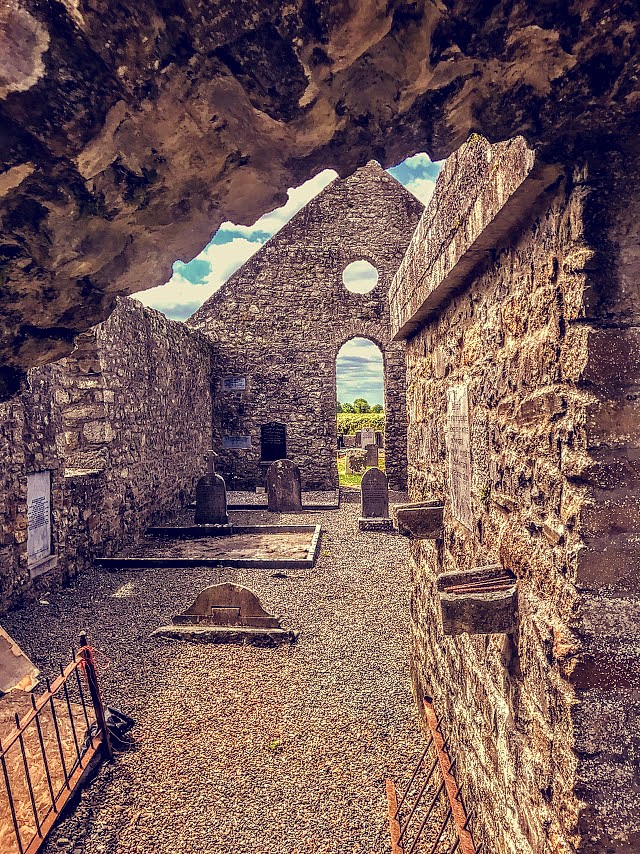
Odrian lived for over forty years in the area now known as Silvermines, in County Tipperary, Ireland, building a Church there in 520. According to Irish tradition, Odrian also served as Abbot of Meath and founded Lattreagh Monastery – images of the ruins below. He became one of the first Bishops of Waterford, Ireland. Waterford was part of an ancient deanery system at the time, ruled by an Abbot Bishop.
In 563, he was among the twelve who accompanied St Columba to the Scottish island of Iona, where he died and was buried. Columba is said to have seen devils and angels fight over Odran’s soul before it ascended into Heaven.
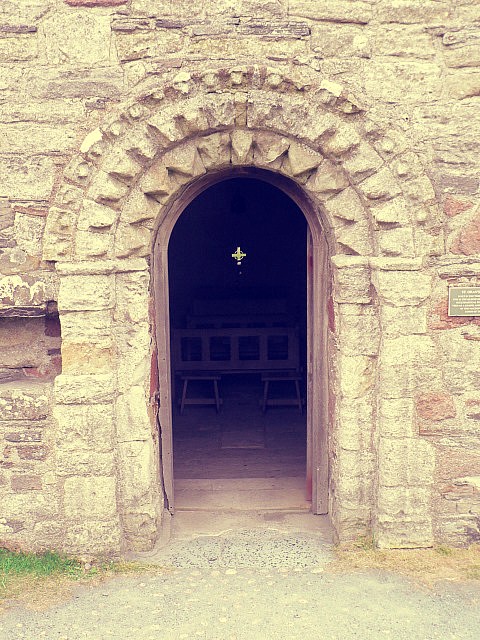
The oldest remaining Church on Iona is dedicated to Saint Odrian, see below. The surrounding cemetery is called Reilig Odhráin in his memory.
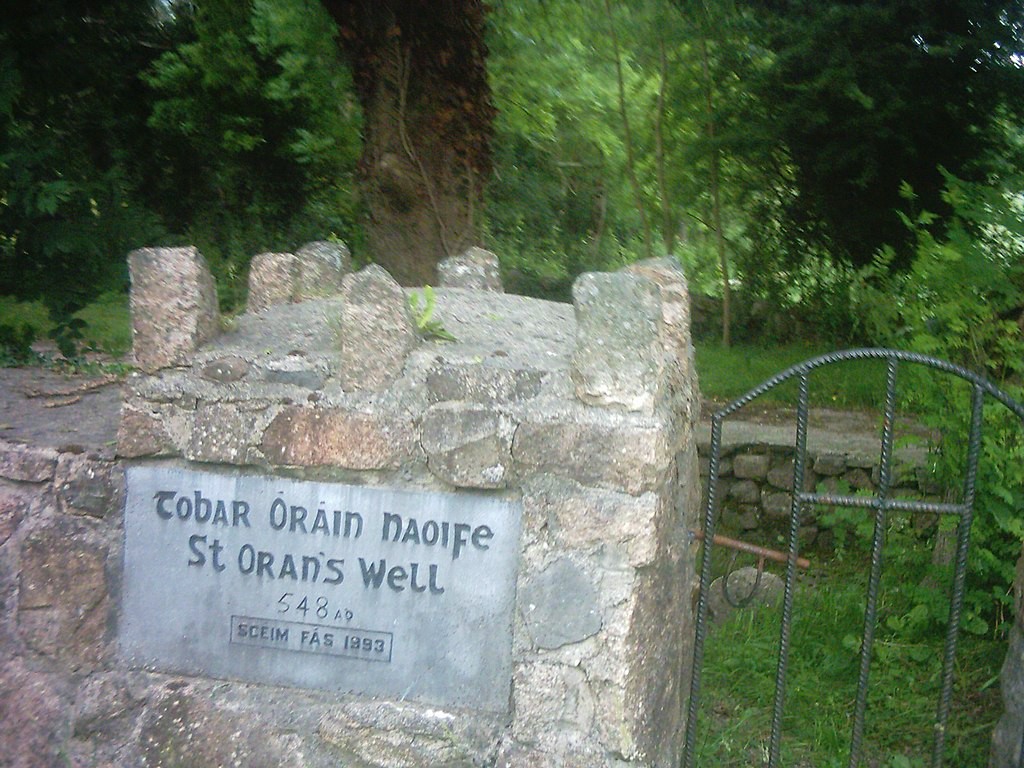
St Odrian is the Patron Saint of the Parish of Silvermines, County Tipperary. He was chosen by the Vikings as Patron of the City of Waterford in 1096 and later chosen as Patron of the Diocese. Below is St Odrian’s Well, Oranmore, County Galway.
Dedication of the Basilica of Auxilium Christianorum / Our Lady Help of Christians, Turin, Italy, built by St John Bosco (1868) – 27 October: HERE: https://anastpaul.com/2021/10/27/88503/
St Gaudiosus of Naples Bl Goswin of Clairvaux St Namatius of Clermont St Odrian (c Died 563) Bishop, Abbot, Missionary Bl Salvador Mollar Ventura St Thraseas of Eumenia St Uni
Thought for the Day – 26 October – Meditations with Antonio Cardinal Bacci (1881-1971)
“Month of the Holy Rosary” “Deliver Us From Evil”
“Deliver us, O God, from the evil of eternal damnation. Sin is the greatest evil but, as long as we are on earth, it is an evil which can still be remedied, for God, in His Infinite Mercy, is always ready to forgive and to restore us to His divine friendship, if we sincerely repent. In Hell, however, there is no further remedy, for there, the Mercy of God has been superseded by His Infinite Justice. Where the tree falls, there it must lie forever. Such dreadful unhappiness is barely conceivable!
Deliver us from sin, O God, deliver us from a bad death, deliver us from Hell. Help us to love You more and more and to serve You more faithfully, so that we may one day enjoy Your blessed company, for all eternity. Amen.”
Quote/s of the Day – 26 October – “The Month of the Most Holy Rosary and of the Angels” – 1 Peter 5:1-4; 5:10-11, Matthew 16:13-19 – Scripture search here: https://www.drbo.org/
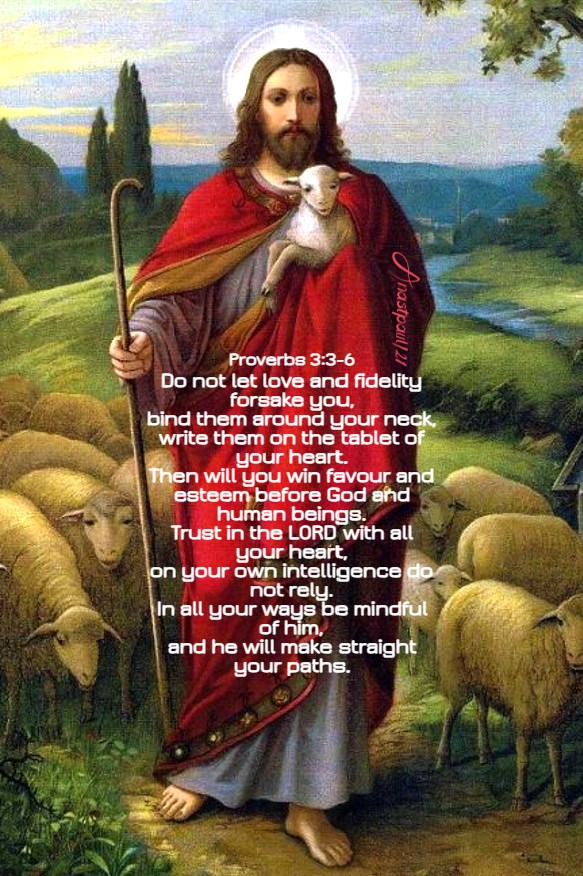
“Do not let love and fidelity forsake you, bind them around your neck, write them on the tablet of your heart. Then will you win favour and esteem before God and human beings. Trust in the LORD with all your heart, on your own intelligence do not rely. In all your ways be mindful of him, and he will make straight your paths.”
Proverbs 3:3-6
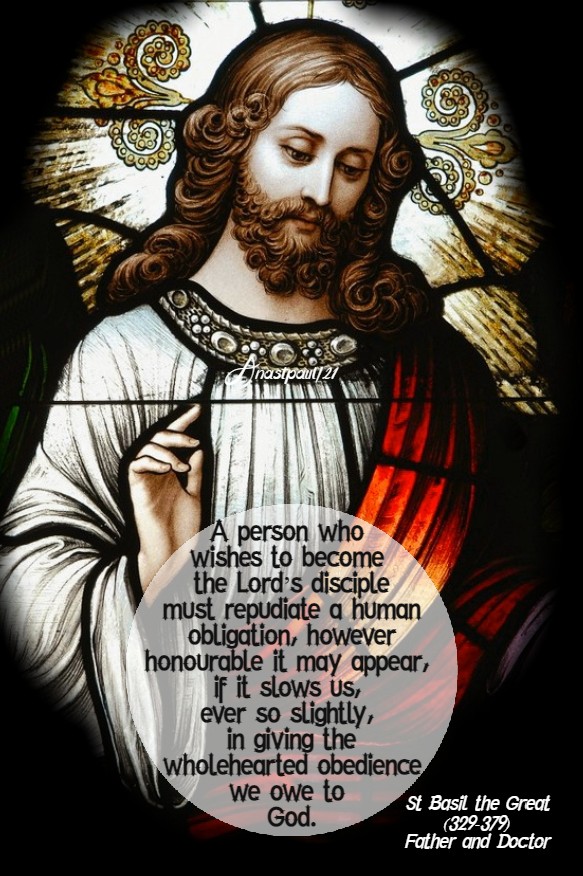
“A person who wishes to become the Lord’s disciple must repudiate a human obligation, however honourable it may appear, if it slows us, ever so slightly, in giving the wholehearted obedience we owe to God.”
St Basil the Great (329-379) Father and Doctor of the Church
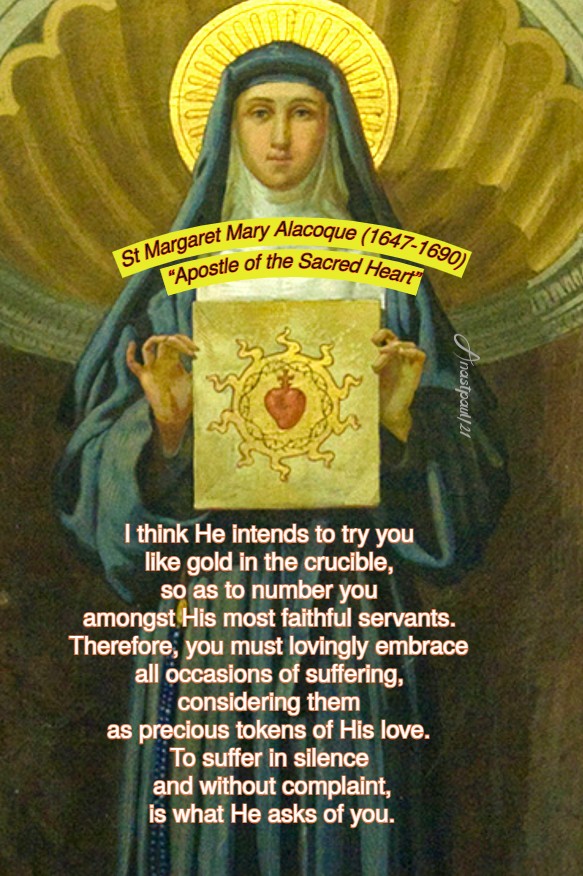
“I think He intends to try you like gold in the crucible, so as to number you amongst His most faithful servants. Therefore, you must lovingly embrace all occasions of suffering, considering them as precious tokens of His love. To suffer in silence and without complaint, is what He asks of you.”
St Margaret Mary Alacoque (1647-1690) “Apostle of the Sacred Heart”
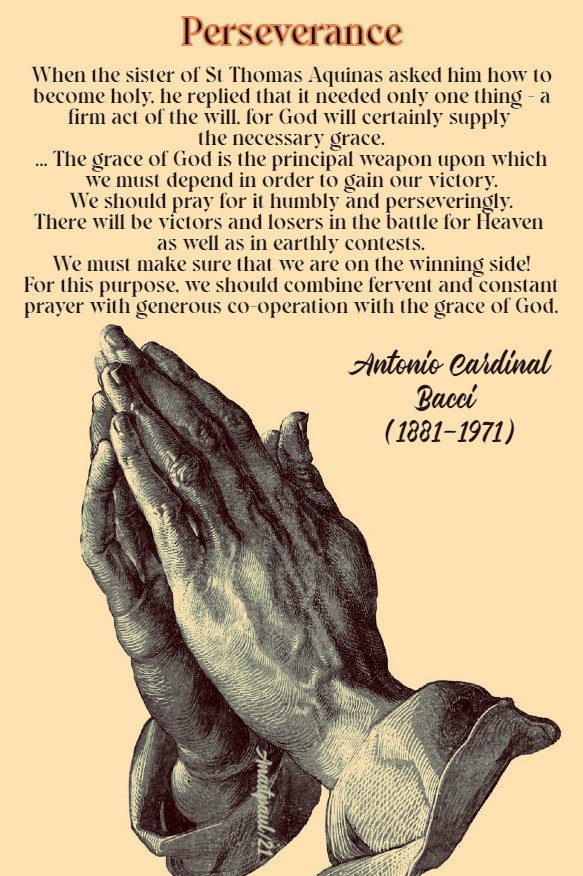
“When the sister of St Thomas Aquinas asked him how to become holy, he replied that it needed only one thing – a firm act of the will, for God will certainly supply the necessary grace..” The grace of God is the principal weapon upon which we must depend, in order to gain our victory. We should pray for it humbly and perseveringly. There will be victors and losers in the battle for Heaven, as well as in earthly contests. We must make sure that we are on the winning side! For this purpose, we should combine fervent and constant prayer with generous co-operation with the grace of God.”
Antonio Cardinal Bacci (1881-1971)
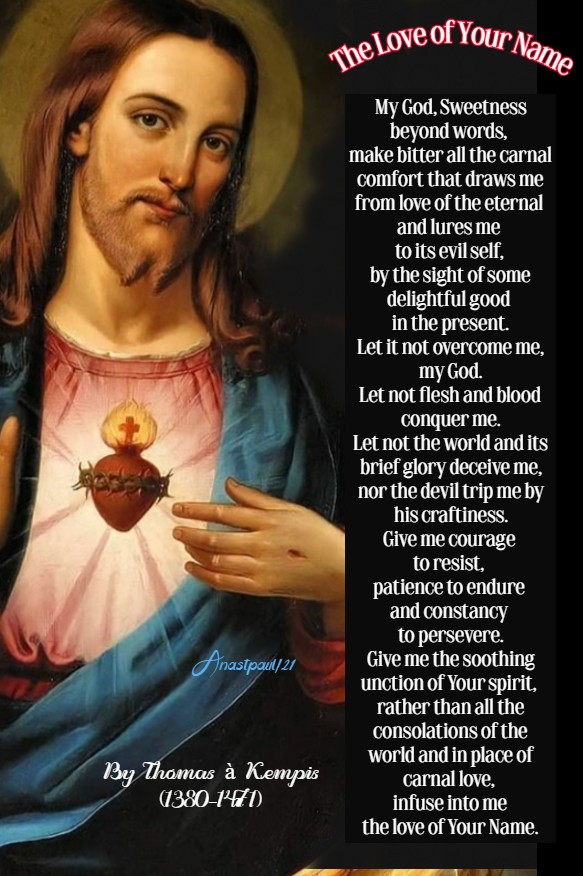
“My God, Sweetness beyond words, make bitter all the carnal comfort that draws me from love of the eternal and lures me to its evil self, by the sight of some delightful good in the present. Let it not overcome me, my God. Let not flesh and blood conquer me. Let not the world and its brief glory deceive me, nor the devil trip me by his craftiness. Give me courage to resist, patience to endure and constancy to persevere. Give me the soothing unction of Your spirit, rather than all the consolations of the world and in place of carnal love, infuse into me the love of Your Name.”
Thomas à Kempis CRSA (1380-1471) The Imitation of Christ (Book 3 Ch 26:1-4)
One Minute Reflection – 26 October – “The Month of the Most Holy Rosary and of the Angels” – 1 Peter 5:1-4; 5:10-11, Matthew 16:13-19 – Scripture search here: https://www.drbo.org/
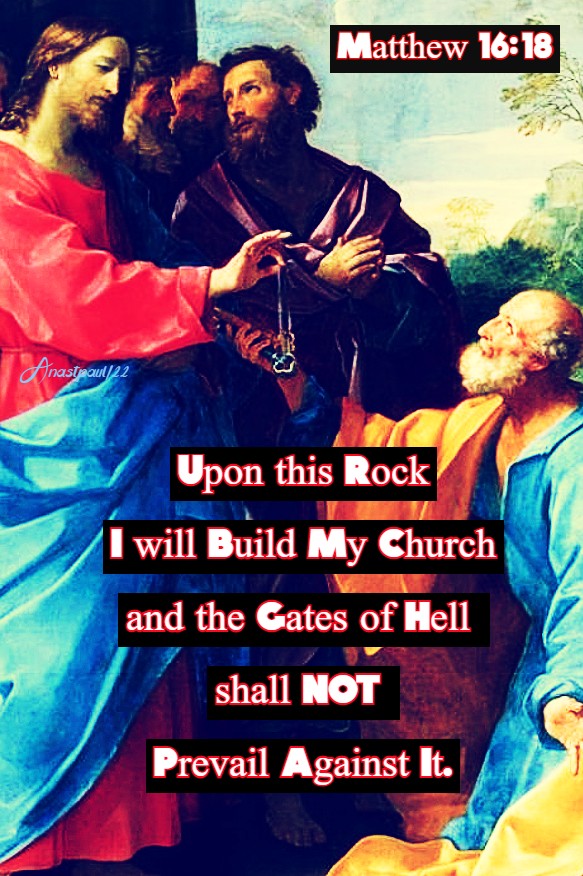
“Upon this rock I will build my church” – Matthew 16:18
REFLECTION – “Although the earth and all who dwell in it quake, I have set firm its pillars” (Ps 74[75],40). All the Apostles are pillars of the earth but, at their head, the two whose Feast we are celebrating. They are the two pillars who support the Church with their teaching, their prayer and the example of their steadfastness. The Lord Himself strengthened these pillars. For at first they were weak, completely incapable of supporting either themselves or others. And in this the Lord’s great design appears: it they had always been strong, people could have thought their strength came from themselves. That is why the Lord wanted to show what they were capable of, before strengthening them, so that all might know, that their strength came from God… Peter was thrown to the ground by the voice of a mere servant… and the other pillar was very weak too: “I was once a blasphemer and persecutor and an arrogant man” (1Tm 1,13)…
Hence we ought to praise these Saints with all our heart: our Fathers who bore such trials for the Lord’s sake and who persevered, with such determination. It is nothing to persevere in joy, happiness and peace. But this is what is great – to be stoned, scourged, struck for Christ (2 Cor 11,25) and in all this, to persevere with Christ. With Paul it is a great thing to be cursed and to bless, to be persecuted and to endure, to be slandered and to console, to be like the world’s rubbish and to draw glory from it (1 Cor 4,12-13)…And what shall we say of Peter? Even if he had undergone nothing for Christ, it would be sufficient to celebrate him today in that he was crucified for Him… He well knew where He Whom he loved, He Whom he longed for was… his cross has been his road to Heaven.” – St Aelred of Rielvaux (1110-1167) Cistercian Monk (Sermon 18, for the feast of S (ints Peter and Paul ; PL 195, 298).
PRAYER – Grant, we beseech Thee, O Lord God, unto all Thy servants, that they may remain continually in the enjoyment of soundness, both of mind and body and by the glorious intercession of the Blessed Mary, always a Virgin, may be delivered from present sadness and enter into the joy of Thine eternal gladness. Through Jesus Christ, Thy Son our Lord, Who lives and reigns with Thee, in the unity of the Holy Ghost, God, world without end. Amen (Collect).
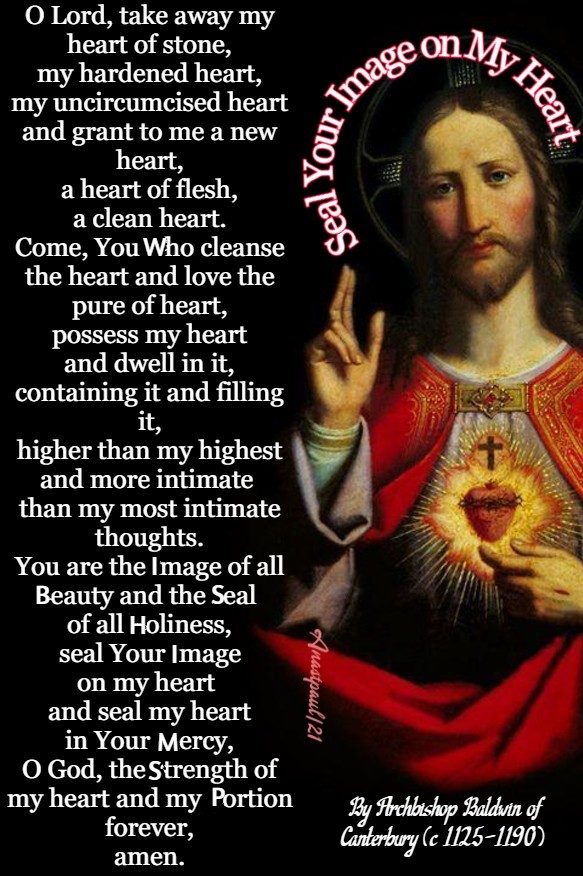
Seal Your Image on My Heart By Archbishop Baldwin of Canterbury (c 1125-1190)
O Lord, take away my heart of stone, my hardened heart, my uncircumcised heart and grant to me a new heart, a heart of flesh, a clean heart. Come, You Who cleanse the heart and love the pure of heart, possess my heart and dwell in it, containing it and filling it, higher than my highest and more intimate than my most intimate thoughts. You are the Image of all Beauty and the Seal of all Holiness, seal Your Image on my heart and seal my heart in Your Mercy, O God, the Strength of my heart and my Portion forever, Amen.
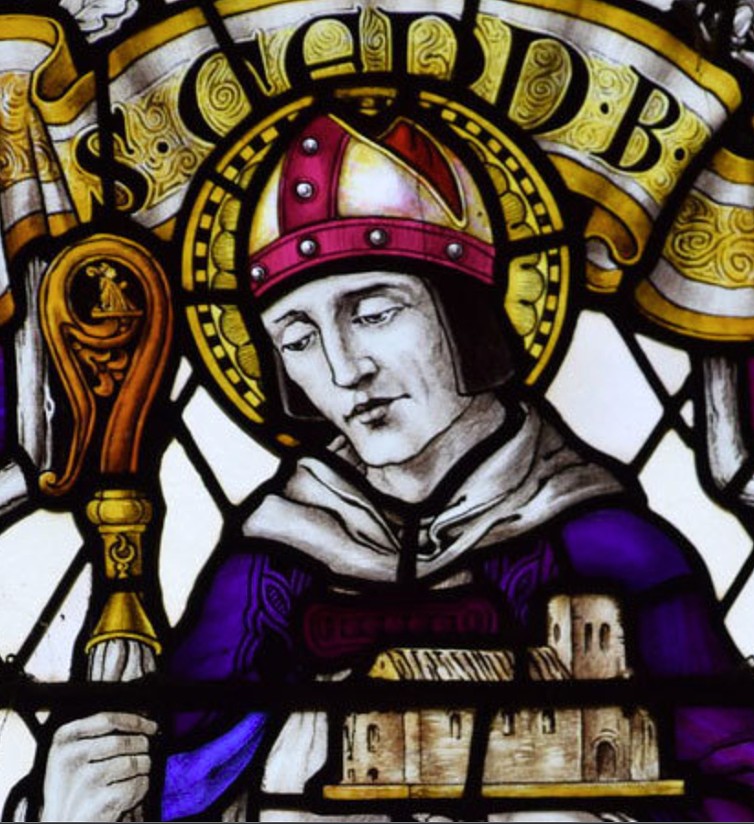
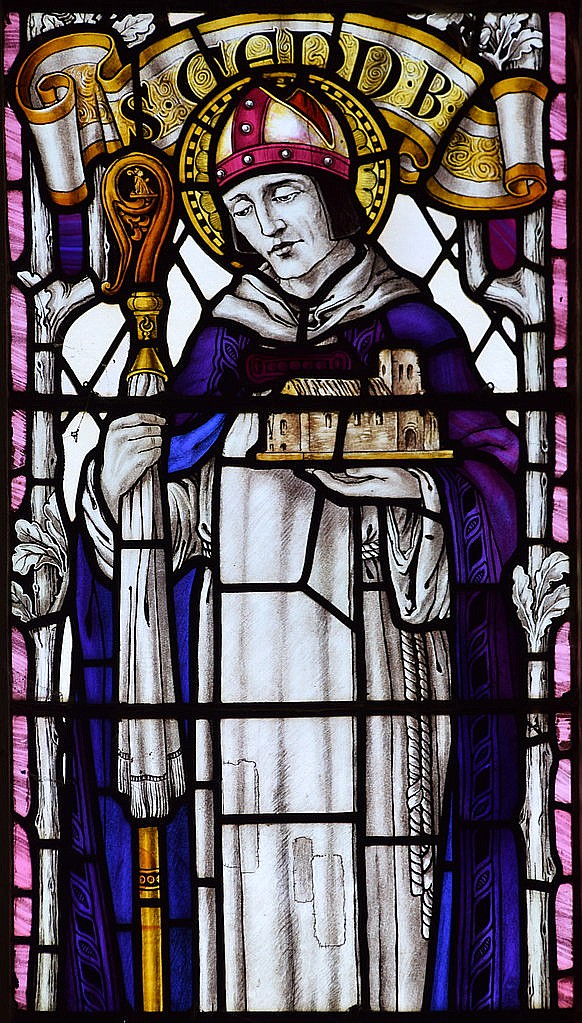
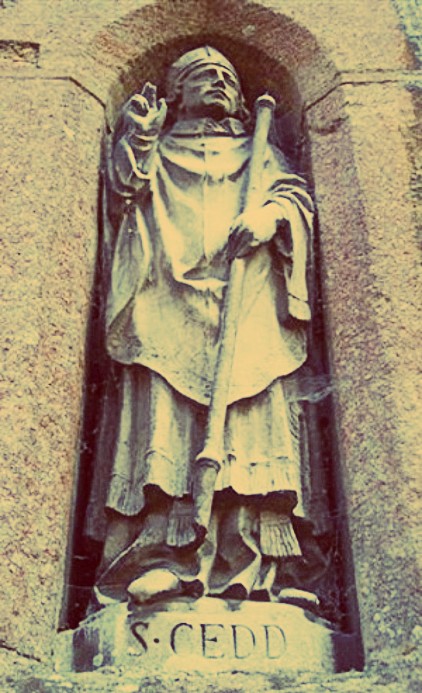
Saint of the Day – 26 October – Saint Cedd (Died 664) Bishop, Monk , Missionary, Evangelist, Founder of Monasteries and many Churches. Born inNorthumbria, England and died on 26 October 664 at Lastingham, Yorkshire, England of the plague. Patronages – of Interpreters, Essex and Lastingham, England. Also known as – Cedda, Cedde, Ceddus, Ceddi, Ceadwalla.
Cedd was the chief Evangelist of the Middle Angles and East Saxons in England and a significant participant in the Council of Whitby, a Council which resolved important differences within the Church in Ireland and England. The little that is known of St Cedd’s life, comes to us mainly from the writing of the Venerable St Bede in his Ecclesiastical History of the English People.
St Cedd, the eldest of four brothers, was born in 620 into a noble Northumbrian family at the beginning of the 7th century. With his siblings, Cynebil, Caelin and St (Ceadda) Chad (who became the first Bishop of York and then Bishop of Lichfield) he entered the school at Lindisfarne Priory at an early ae and learned the ways of the Irish Monks under Bishop St Aidan. St Aidan was well known for his personal austerity and disregard for the trappings of wealth and power. St Bede several times, stresses that Cedd and Chad absorbed St Aidan’s example and traditions. They were eventually sent to Ireland for further study and all four subsequently became Priests.
In 653, Peada, King of the Middle Angles, asked Aidan’s successor at Lindisfarne, St Finan (of Lindisfarne), for a Bishop for his region and St Finan chose four Monks, including Cedd, from Lindisfarne to evangelise Peada’s people. After making some conversions, Cedd returned to Lindisfarne to report to Finan. In recognition of his success, St Finan Consecrated him Bishop, calling in two other Irish Bishops to assist at the rite. Cedd was appointed Bishop of the East Saxons. As a result, he is generally listed among the Bishops of London.
St Bede’s record makes clear that Cedd demanded personal commitment and that he was unafraid to confront the powerful. He excommunicated a noble ,who was in an unlawful marriage and forbade Christians to accept the man’s hospitality. According to St Bede, when King Sigeberht continued to visit the man’s home, Cedd went to the house to denounce the King, foretelling that he would die in that house. St Bede asserts that the King’s subsequent murder (in 660) was his penance for defying Cedd’s injunction.
Cedd founded three Monasteries of his own, the best known being Lastingham, where he became the first Abbot and he died of the Plague in 664. St Bede has a beautiful story of Cedd’s founding of Lastingham, of how Cedd spent forty days in prayer and fasting in a remote spot given to him by King Ethelwald, to purify the site, although urgent royal business took him away after 30 days and Cynibil, his brother Bishop, took over the fast for him.
In 664, Cedd was present at the Council of Whitby and was a member of the Irish party, those wishing to retain the Irish date for Easter. But when the Council decided in favour of the Roman date, Cedd accepted the decision, not wanting to cause any further disunity in the Churches.
After the Council of Whitby, a Plague struck England,and Cedd was among those who died from the Plague. At the news of his death, thirty Monks came from London to spend their lives where their Founder had died. But they, too, caught the Plague and were buried near the little Chapel that had been erected in Cedd’s memory.
Cedd was the second Bishop of the City of London; the first was Mellitus, who came with St Augustine and later became Archbishop of Canterbury. Mellitus was driven from the See by the King of the East Saxons in 616 and London was without a Bishop until Cedd’s arrival about 654.
St Adalgott of Einsiedeln St St Alanus of Quimper St Albinus of Buraburg
St Alfred the Great (849-899) King of Wessex, Confessor, Scholar, Writer and Translator, negotiator. He administered justice with insight and fairness, protected the poor, and encouraged art and the crafts. He tried in all that he did, to rule as a model Christian King. For all this, he alone among the rulers of England is called “the Great.” This Great Saint’s Life: https://anastpaul.com/2021/10/26/saint-of-the-day-26-october-saint-alfred-the-great-849-899/
St Alorus of Quimper St Amandus of Strasburg St Amandus of Worms St Aneurin St Aptonius of Angouleme St Arnold of Queralt St Bean of Mortlach St Bernard de Figuerols
St Eadfrid St Eata of Hexham St Felicissimus of Carthage St Fulk of Piacenza St Gaudiosus of Salerno St Gibitrudis St Gwinoc St Humbert St Lucian St Marcian St Quadragesimus of Policastro St Rogatian of Carthage St Rusticus of Narbonne St Sigibald of Metz
Thought for the Day – 25 October – Meditations with Antonio Cardinal Bacci (1881-1971)
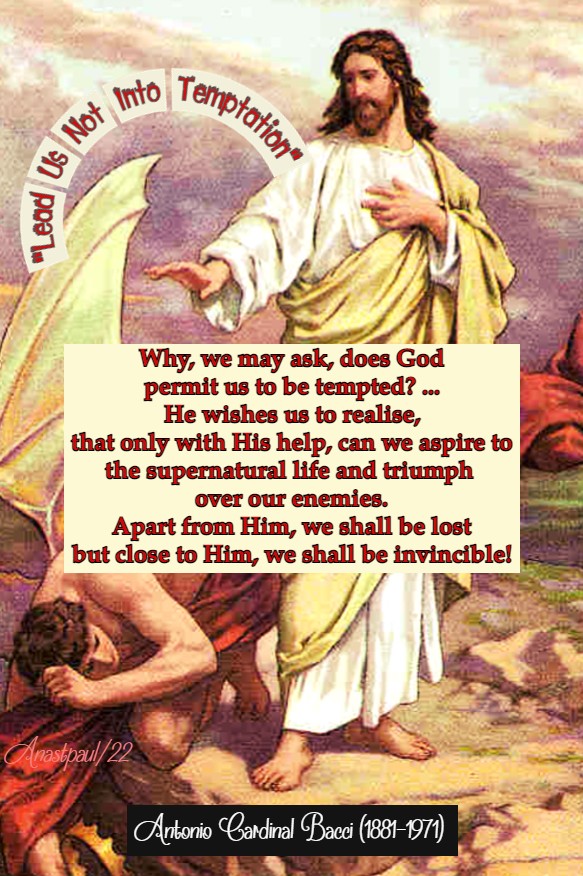
“Month of the Holy Rosary” “Lead Us Not Into Temptation”
“Why, we may ask, does God permit us to be tempted? Ir is for our own good because: (1) He desires us to co-operate with Him, in our own salvation. The crown of glory, which is to be our reward, will only be given to him who has earned it. “Blessed is the man who endures temptation,” says Sr James, “for when he has been tried, he will receive the crown of life, which God has promised to those who love Him” (Js 1:12); (2) He wishes us to understand, moreover, that we can do nothing without Him, so that we may be humble and may pray to Him with faith and perseverance; (3) He desires that we may be vigilant and may live in union with Him, by means of prayer.
He wishes us to realise, that only with His help, can we aspire to the supernatural life and triumph over our enemies. Apart from Him, we shall be lost but close to Him, we shall be invincible!”
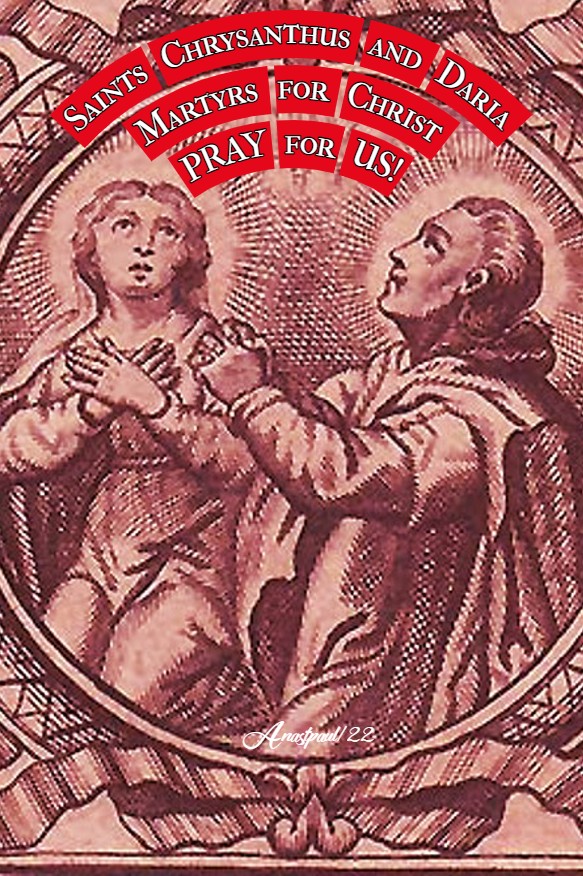
Quote/s of the Day – 25 October – Saints Chrysanthus and Daria Died c 282) Martyrs, Married Couple
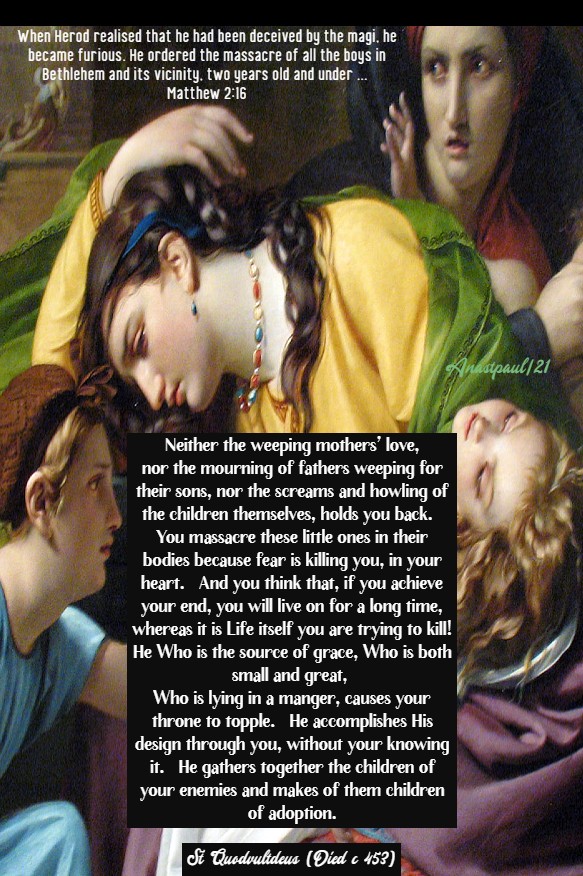
“Neither the weeping mothers’ love, nor the mourning of fathers weeping for their sons, nor the screams and howling of the children themselves, holds you back. You massacre these little ones in their bodies because fear is killing you, in your heart. And you think that, if you achieve your end, you will live on for a long time, whereas, it is Life itself, you are trying to kill! He Who is the source of grace, Who is both small and great, Who is lying in a manger, causes your throne to topple. He accomplishes His design through you, without your knowing it. He gathers together the children of your enemies and makes of them, children of adoption.”
St Quodvultdeus (Died c 453) Father of the Church, Bishop of Carthage
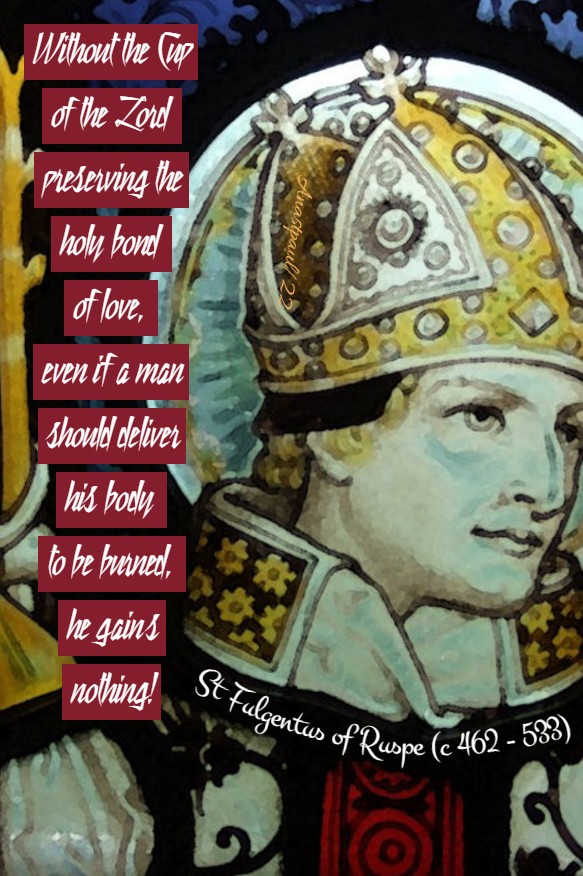
“Without the Cup of the Lord preserving the holy bond of love, even if a man should deliver his body to be burned, he gains nothing!”
St Fulgentus of Ruspe (c 462 – 533)
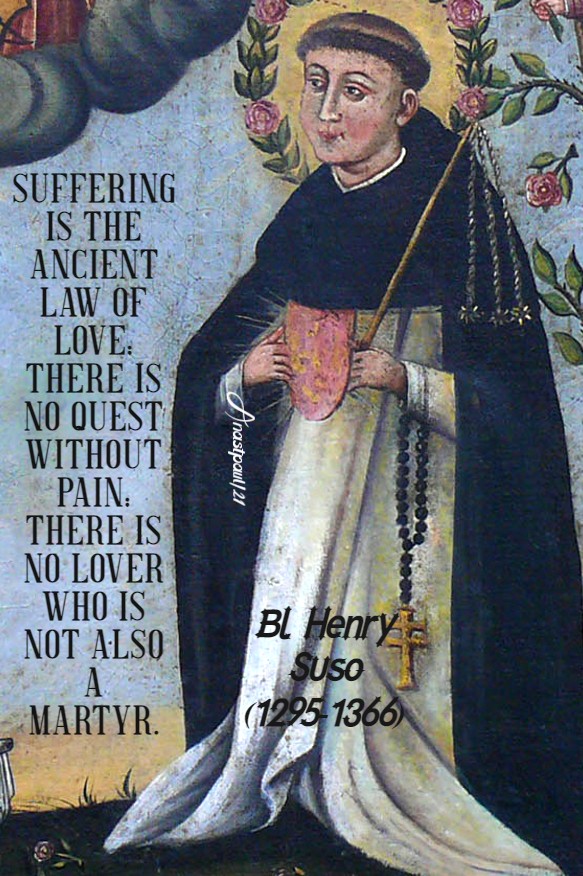
“Suffering is the ancient law of love; there is no quest without pain; there is no lover who is not also a Martyr.”
Bl Henry Suso (1295-1366)
“We should not forget, that the devil has his martyrs and that he infuses into them a false constancy. It is not the punishment but the cause, that makes the Martyr; that is – the confession of the True Faith.”
One Minute Reflection – 25 October – Saints Chrysanthus and Daria (Died c 282) Martyrs, Married Couple – Wisdom 3:1-8, Luke 11:47-51 – Scripture search here: https://www.drbo.org/
“I will send to them prophets and apostles and some of them they will kill and persecute. ” – Luke 11:49
REFLECTION – “One of you will say: “I’m not able to love my enemies at all.” All through Holy Scripture God has said to you that you can and do you answer Him that, to the contrary, you cannot!? Now think about it – who are we to believe? God or you? Since He who is Truth itself cannot lie, let human weakness leave off its futile excuses forthwith! He who is just, cannot demand something impossible and He who is merciful, will not condemn someone for something that person could not avoid. So why these evasions then? There is no-one who knows better, what we are capable of, than He who has given us the ability. Such numbers of men, women, children, tender young girls, have borne flames, fire, sword and the wild beasts for Christ’s sake, without flinching and we, do we say that we cannot bear the insults of unintelligent persons?…
Indeed, if only the good are to be loved, what are we to say of the action of our God, of whom it is written: “God so loved the world that he gave his only Son?” (Jn 3,16). For what good deeds are they, that the world had done, for God to love it so? Christ our Lord, found us all to be, not only evil but even dead, on account of original sin and yet… “he loved us and handed himself over for us” (Eph 5,2). In so acting, He loved even those who did not love Him, as the Apostle Paul also says: “Christ died for the guilty” (Rm 5,6). And in his inexpressible mercy, He gave this example to all humankind, saying: “Learn from me, for I am gentle and humble of heart” (Mt 11,29).” – St Caesarius of Arles (470-543) Bishop and Monk (Sermons to the people, no 37).
PRAYER – May the prayer of Your blessed Martyrs, Chrysanthus and Daria, defend us, O Lord, that we may ever enjoy the loving help of those whom we honour by this celebration.Through Jesus Christ, Thy Son our Lord, Who lives and reigns with Thee, in the unity of the Holy Ghost, God, world without end. Amen (Collect).
Prayer for the Gifts of the Holy Spirit By St Bonaventure (1221-1274) Seraphic Doctor of the Church
We beg the All-Merciful Father through You, His Only-Begotten Son made Man for our sake, Crucified and Glorified for us, to send upon us, from His treasure-house, the Spirit of Sevenfold Grace, Who rested upon You in all His fullness.
The Spirit of Wisdom, enabling us to relish the fruit of the tree of life, which is indeed Yourself. The Gift of Understanding: to enlighten our perceptions. The Gift of Prudence, enabling us to follow in Your Footsteps. The Gift of Strength: to withstand our adversary’s onslaught. The Gift of Knowledge, to distinguish good from evil by the light of Your holy teaching. The Gift of Piety, to clothe ourselves with charity and mercy. The Gift of Fear, to withdraw from all ill-doing and live quietly in awe of Your Eternal Majesty.
These are the things for which we petition. Grant them for the honour of Your Holy Name, to which, with the Father and the Holy Spirit, be all honour and glory, thanksgiving, renown and Lordship forever and ever. Amen
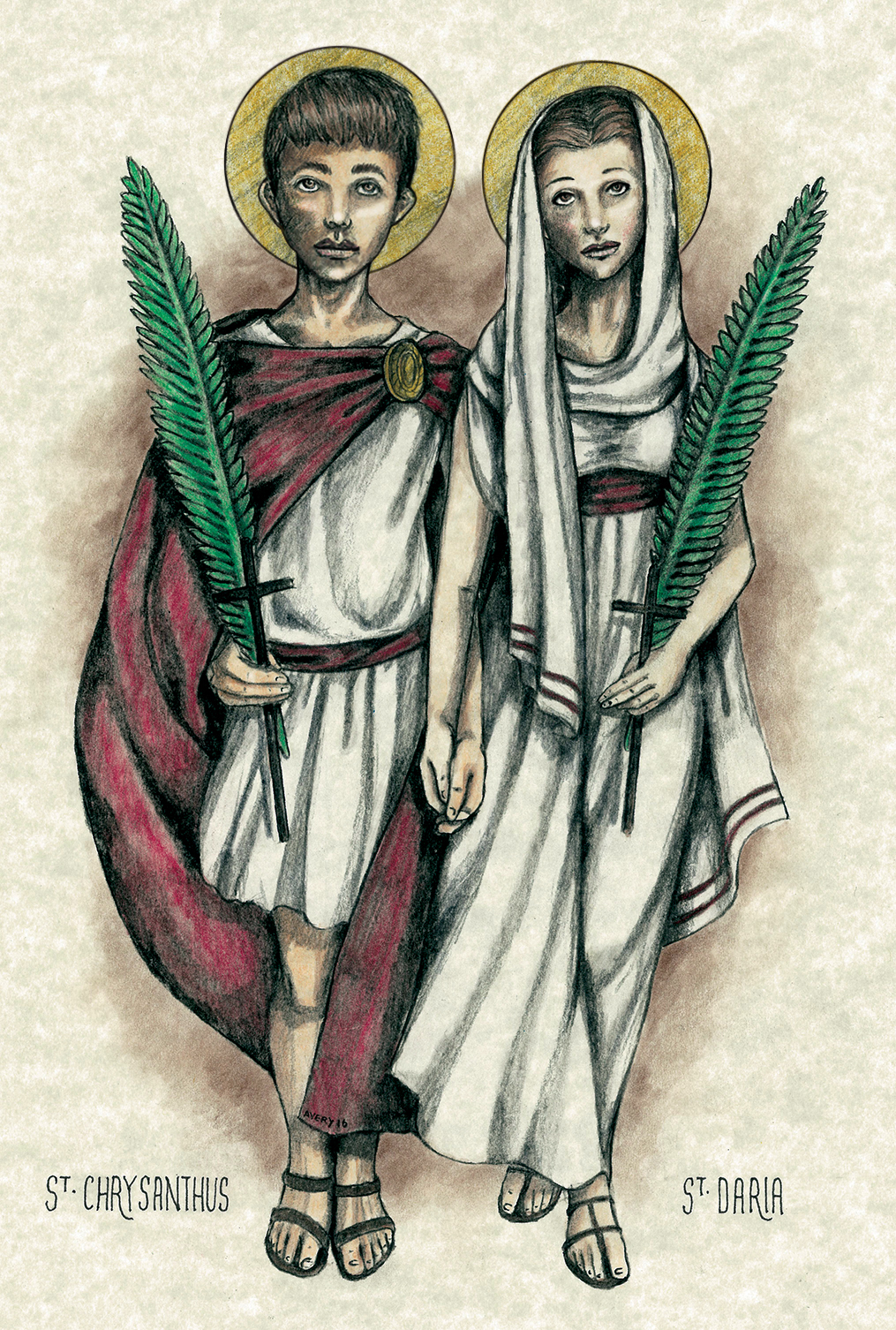
Saints of the Day – 25 October – Saint Chrysanthus and Saint Daria (Died c 282) Martyrs, Married Couple Died in c 282, by being buried alive by stones and sand in a sandpit off the Salarian Way, Rome, Italy. Also known as – Crisaunt, Crescentius, Crisanto, Dariasus. Their names appear in the Martyrologium Hieronymianum, an early martyrs list and a Church in their honour was built over their grave in Rome.
The Roman Martyrology reads: “At Rome, the holy Martyrs, Chrysanthus and his wife, Daria. After many sufferings endured for Christ, under the Prefect Celerinus, they were ordered by the Emperor Numerian, to be thrown into a sandpit on the Salarian Way, where, being overwhelmed with earth and stones, they were buried alive.”
Chrysanthus was the only son of a of an Egyptian patrician, named Polemius or Poleon, who lived in the reign of Numerian. Polemius moved from Alexandria to Rome and Chrysanthus was educated in the finest manner of the era. His superior intelligence was quickly appreciated. Convinced of the vanity of idol-worship, he undertook every means at his disposal to learn the truth and deliver his soul from the doubts afflicting him.
An elderly gentlemen was pointed out to him as a sage and Chrysanthus went to him with his questions. The old man, who was a Christian Priest named Carpophorus,.had no difficulty in opening the eyes of the young man. Chrysanthus instantly embraced the truth with ardour and became an apostle.
His father, at first astonished, became irritated and decided to bring his son back, from what he called his superstitions and errors. No means were effectual for this purpose. Thus, influenced by his associates, the father locked him in his palace and sent a courtesan to seduce his purity.
When the first one did not succeed, others were commissioned for the infamous task and finally a vestal Virgin, Daria, priestess of an idol regarded as the Empire’s bulwark, attempted every artifice to corrupt the young Christian. Instead, she herself became the conquest of grace. The two Christians saw themselves united by the bonds of faith, hope and charity and determined to add to these holy chains, those of a virginal marriage. This decision brought about liberty for Chrysanthus and gave him the means to continue his preaching of Christ.
Many conversions among the officers of the Roman society, with which he was already familiar, were the fruit of the apostolate of the young spouses, including that of the tribune Claudius, with his household and seventy soldiers. For this betrayal, the Emperor had Claudius drowned, his sons beheaded and his wife hanged at the gallows.
But complaints began to be addressed to the Prefect of Rome, who arrested the young couple. After enduring torments, Chrysanthus was shut up in the Mamertine prison and Daria was sent to a house of ill fame. But the Lord watched over both of them, as He had done over many others and they surmounted their trials, intact and pure. To be done with them, the irritated Emperor had them buried alive. It appears this torment was chosen in order to inflict on Daria, the death reserved for unfaithful vestals.
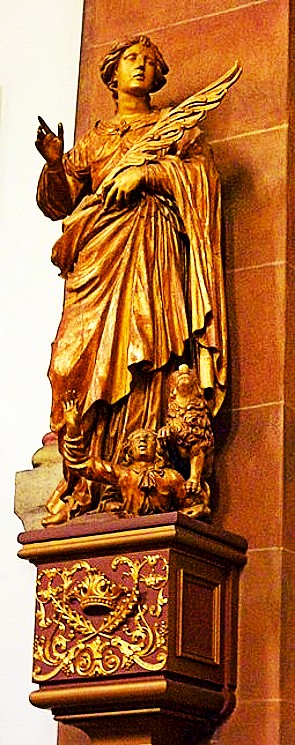
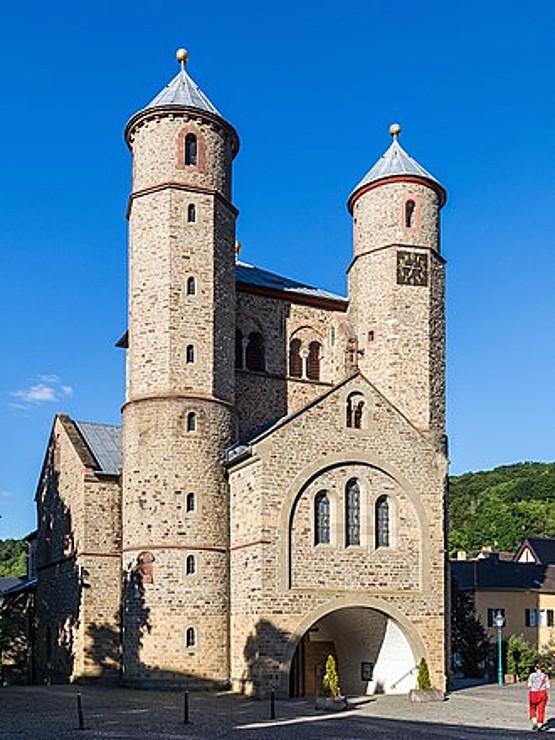
In the ninth Century, the principal relics of Chrysanthus and Daria were brought to the Church of Chrysanthus and Daria, Bad Münstereifel, Germany. This is the Church below which contains a beautiful Statue of St Daria.
St Cyrinus of Rome St Dulcardus St Fronto of Périgueux St Fructus of Segovia
St Gaudentius of Brescia (Died 410) Bishop, renowned Preacher, Theologian, Diplomatic Mediator, The Roman Martyrology states today: “In Brescia, Saint Gaudentius, Bishop, who, Ordained by Saint Ambrose, shone among the prelates of his time for doctrine and virtue, instructed his people with words and writings and founded a Basilica which he called the ‘Council of Saints.‘” Biography: https://anastpaul.com/2021/10/25/saint-of-the-day-25-october-st-gaudentius-of-brescia-died-410/
St George of Périgueux St Goeznoveus of Leon St Guesnoveus Bl Henry of Segusio St Hilary of Javols St Hilary of Mende St Hildemarca of Fecamp St Januarius of Sassari St Lucius of Rome St Lupus of Bayeux St Mark of Rome
Thought for the Day – 24 October – Meditations with Antonio Cardinal Bacci (1881-1971)
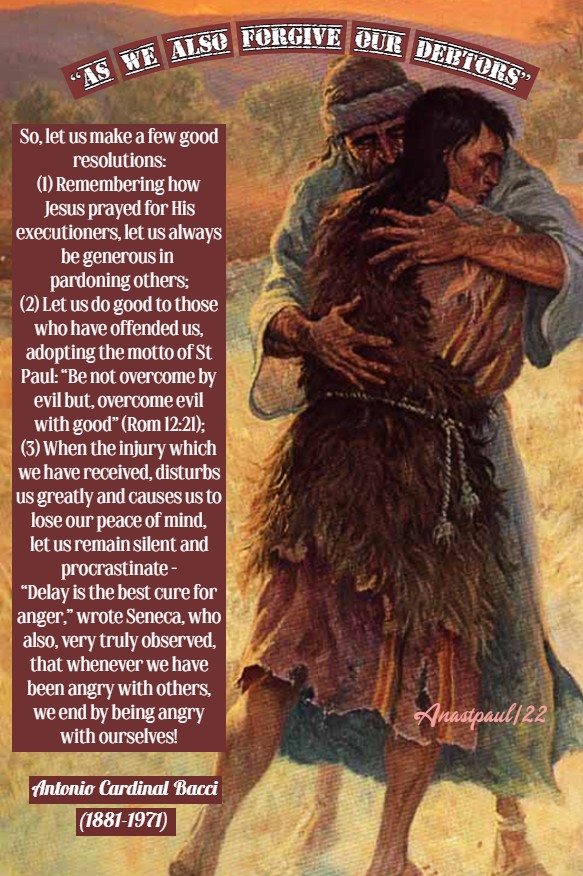
“Month of the Holy Rosary” “As We Also Forgive Our Debtors”
“Some people hold that it is base and low-spirited to forgive easily, whereas, a keen sense of honour demands revenge. Nothing could be more false. The true greatness of human nature lies in its ability to conquer the lower instincts. “It is far more difficult,” wrote a famous historian of antiquity, “to overcome oneself, than to defeat one’s enemy in battle” (Valerius Maximus, Memorable Deeds and Sayings, Bk IV, 2). Forgiveness requires a victory over pride and sensitivity towards others and is, therefore, a high act of human value.
When we forgive, we do not abase ourselves before the man who has offended us but, we raise ourselves above him by our nobility and generosity. By behaving in this manner, we display out self-control, inspire sentiments of respect and benevolence and, may even bring about a reconciliation and a renewal of friendship.
So, let us make a few good resolutions: (1) Remembering how Jesus prayed for His executioners, let us always be generous in pardoning others; (2) Let us do good to those who have offended us, adopting the motto of St Paul: “Be not overcome by evil but, overcome evil with good” (Rom 12:21); (3) When the injury which we have received, disturbs us greatly and causes us to lose our peace of mind, let us remain silent and procrastinate – “Delay is the best cure for anger,” wrote Seneca, who also, very truly observed, that whenever we have been angry with others, we end by being angry with ourselves!”
Quote/s of the Day – 25 October – Feast of St Raphael the Archangel –
“Come, follow me”
Matthew 19:21
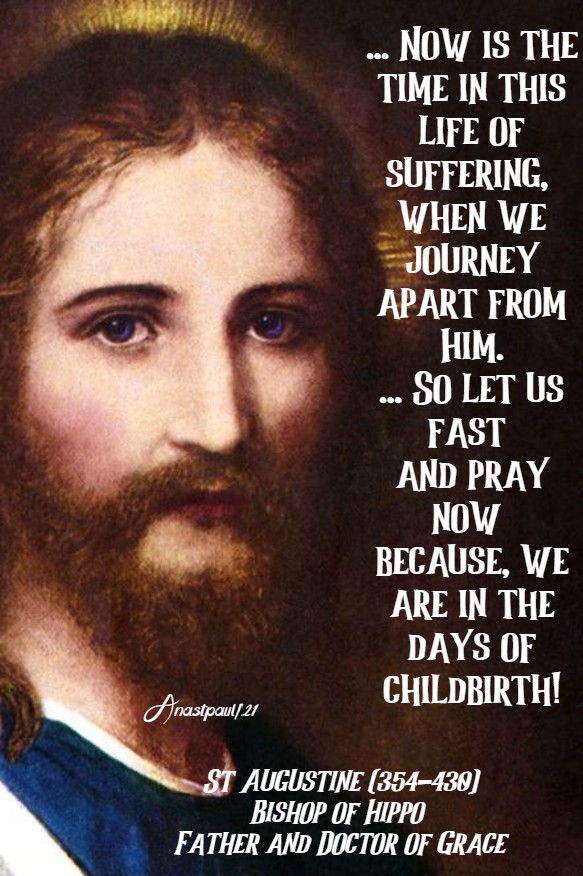
“… Now is the time in this life of suffering, when we journey apart from Him. … So let us fast and pray now because, we are in the days of childbirth!”
St Augustine (354-430) Father and Doctor of Grace
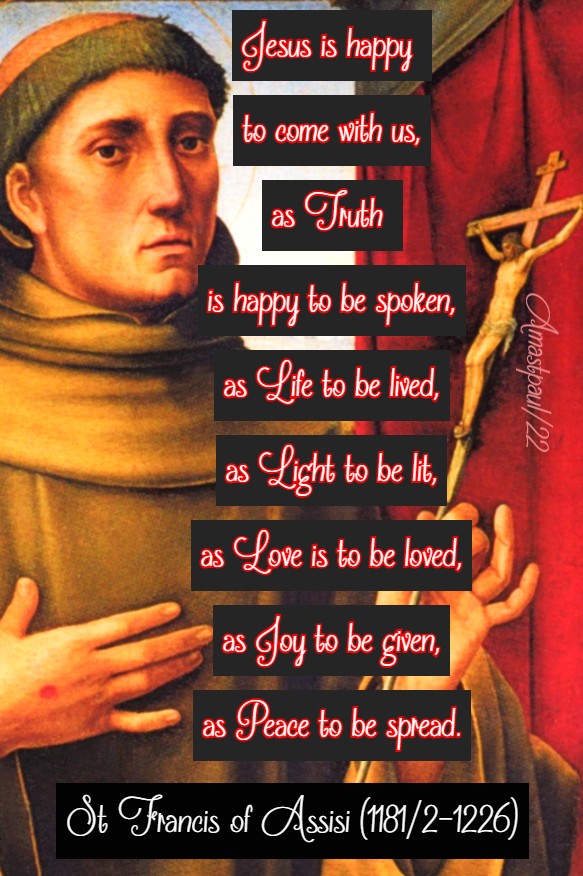
“Jesus is happy to come with us, as Truth is happy to be spoken, as Life to be lived, as Light to be lit, as Love is to be loved, as Joy to be given, as Peace to be spread.”
St Francis of Assisi (1181/2–1226)
“Better that only a few Catholics should be left, staunch and sincere in their religion, than that they should, remaining many, desire as it were, to be in collusion with the Church’s enemies and in conformity with the open foes of our faith.”
St Peter Canisius (1521-1397) Doctor of the Church
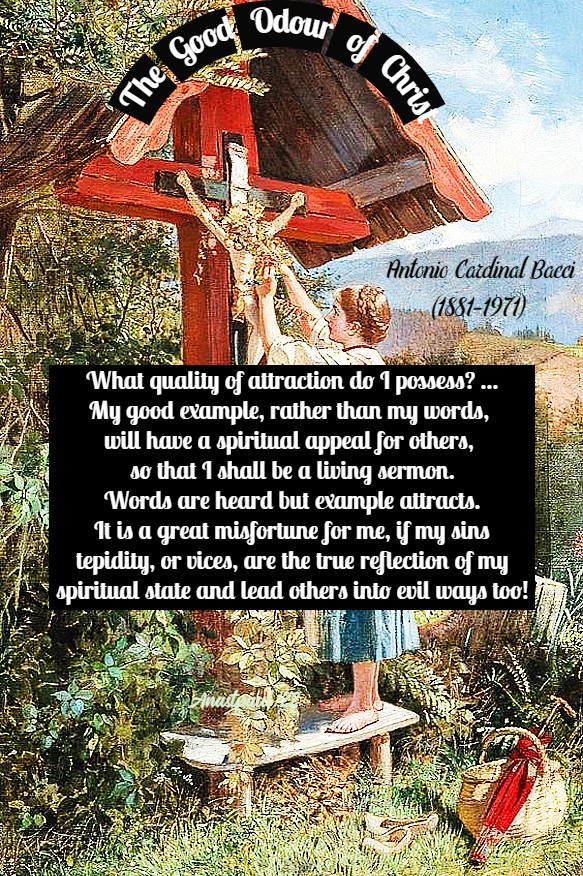
“What quality of attraction do I possess? My good example, rather than my words, will have a spiritual appeal for others, so that I shall be a living sermon. Words are heard but example attracts. It is a great misfortune for me, if my sins tepidity, or vices, are the true reflection of my spiritual state and lead others into evil ways too!”
One Minute Reflection – 24 October – “The Month of the Most Holy Rosary and of the Angels” – Feast of St Raphael the Archangel – Tobias 12:7-15, Mark 10: 46-52 – Scripture search here: https://www.drbo.org/
“And immediately he received his sight and followed him on the way” .…Mark 10:52
REFLECTION – “[Moses said to the Lord on Mount Sinai]: “Let me see your glory!” He answered: “I will make all my beauty pass before you … but my face you cannot see” (Ex 33:18 f).] Such an experience seems to me to belong to the soul which loves what is beautiful. Hope always draws the soul from the beauty which is seen, to what is beyond … And the bold request which goes up the mountains of desire, asks this – to enjoy the Beauty, not in mirrors and reflections but face-to-face. The divine Voice granted what was requested in what was denied … – the munificence of God assented to the fulfilment of the desire but did not promise any cessation or satiety of the desire … The true sight of God consists in this, that the one who looks up to God never ceases in that desire. For He says: “You cannot see my face and live” …
But when the Lord who spoke to Moses came to fulfil His own law, He likewise gave a clear explanation to His disciples, laying bare the meaning of what had previously been said in a figure, when He said: “If anyone wants to be a follower of mine “ (Lk 9:23) and not “If any man will go before me.” And to the one asking about eternal life, He proposes the same thing, for He says: “Come, follow me” (Lk 18:22). Now, he who follows, sees the back. So Moses, who eagerly seeks to behold God, is now taught how he can behold Him – to follow God wherever he might lead, is to behold God (…).
Someone who does not know the way, cannot complete his journey safely in any other way, than by following behind his guide. He who leads, then, by His guidance shows the way to the one following. He who follows, will not turn aside from the right way, if he always keeps the back of his leader in view. For he who moves to one side or brings himself to face his guide, assumes another direction for himself, than the one his guide shows him. Therefore, God says to the one who is led: “My face is not to be seen”, that is, “Do not face your guide”. If he does so, his course will certainly be in the opposite direction …. to follow God wherever He might lead, is to behold God! No longer does any offence which comes about through evil, withstand the one who thus follows Him.” – St Gregory of Nyssa (c.335-395) Bishop, Father (Brother of St Basil the Great) (The Life of Moses, II.).
PRAYER – O God, Who gave blessed Raphael the Archangel as a traveling companion to Your servant Tobias, grant us, Your servants, ever to be protected by his guardianship and by his help.Through the same Jesus Christ, Thy Son our Lord, Who lives and reigns with Thee, in the unity of the Holy Ghost, God, world without end. Amen (Collect).
Our Morning Offering – 24 October – Feast of St Raphael the Archangel
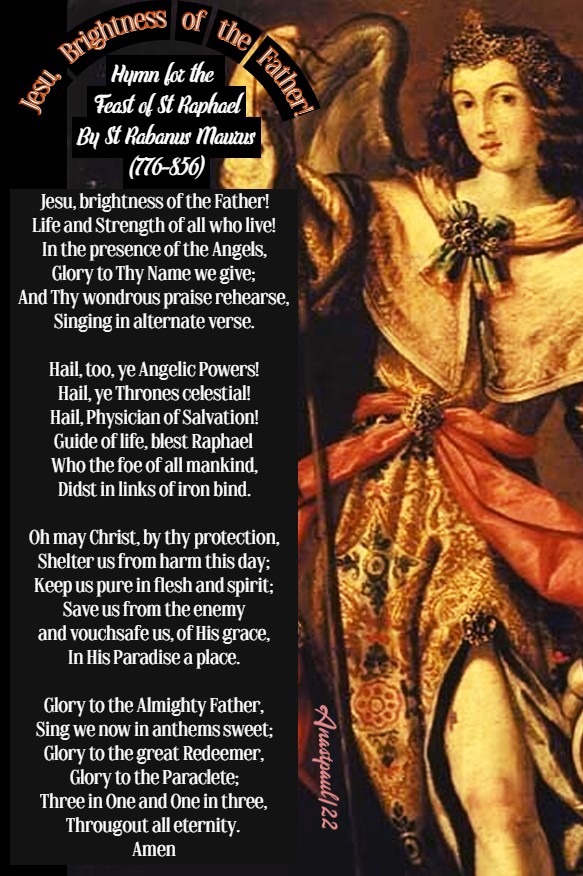
Jesu, Brightness of the Father! Hymn for the Feast of St Raphael By St Rabanus Maurus (776-856) Trans. Fr Edward Caswall (1814–1878)
Jesu, brightness of the Father! Life and Strength of all who live! In the presence of the Angels, Glory to Thy Name we give; And Thy wondrous praise rehearse, Singing in alternate verse.
Hail, too, ye Angelic Powers! Hail, ye Thrones celestial! Hail, Physician of Salvation! Guide of life, blest Raphael Who the foe of all mankind, Didst in links of iron bind.
Oh may Christ, by thy protection, Shelter us from harm this day; Keep us pure in flesh and spirit; Save us from the enemy and vouchsafe us, of His grace, In His Paradise a place.
Glory to the Almighty Father, Sing we now in anthems sweet; Glory to the great Redeemer, Glory to the Paraclete; Three in One and One in three, Througout all eternity. Amen
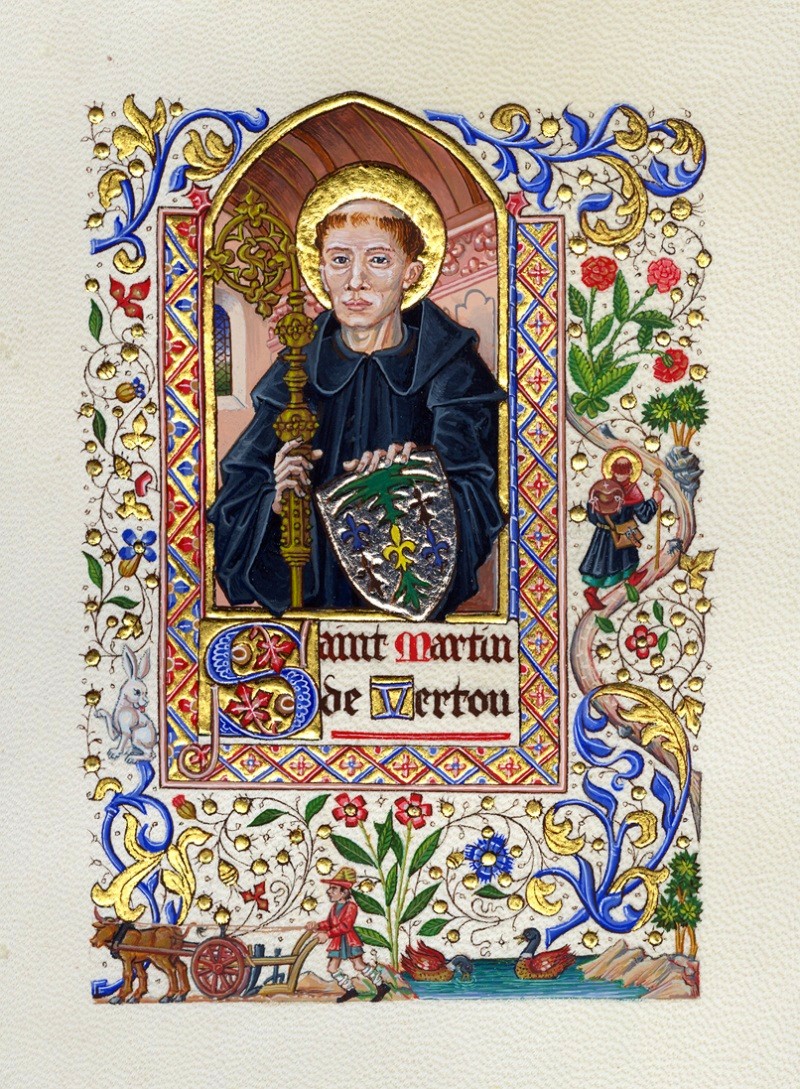
Saint of the Day – 24 October – Saint Martin of Vertou (527–601) Abbot, Hermit, Founder of Vertou Abbey and the Evangelist of the region around Nantes, Miracle-worker. Born in 527 at Nantes, France and died in 601 at Durieu, France of natural causes. Also known as – the Apostle of the Herbauges.
Martin was born into a wealthy family well-known in the region. He was distinguished by his virtue, learning and talent. He was Ordained Deacon by Saint Felix, Bishop of Nantes, who also made him Archdeacon of the Church of Nantes and charged him with converting the inhabitants of the Town and the surrounding area.
In about 577, he withdrew to Dumen forest at Brittany, to live as a Hermit. . There his obvious sanctity attracted so many followers that he was forced to found Vertou Abbey near Nantes whre he served as its first Abbot. Tradition says he was led to the site of the Monastery by an Angel.
Later Martin founded Saint Jouin-de-Marne Abbey, the Convent at Durieu and assisted in the founding of further houses.
It was at Durieu Abbey, where Martin died in 601 at the age of seventy-four.
There is a wonderful miracle told of him – he planted his pilgrim’s staff in the middle of the Abbey courtyard at Vertou and it took root, growing into a yew tree, which appears on the arms of the commune of Vertou.
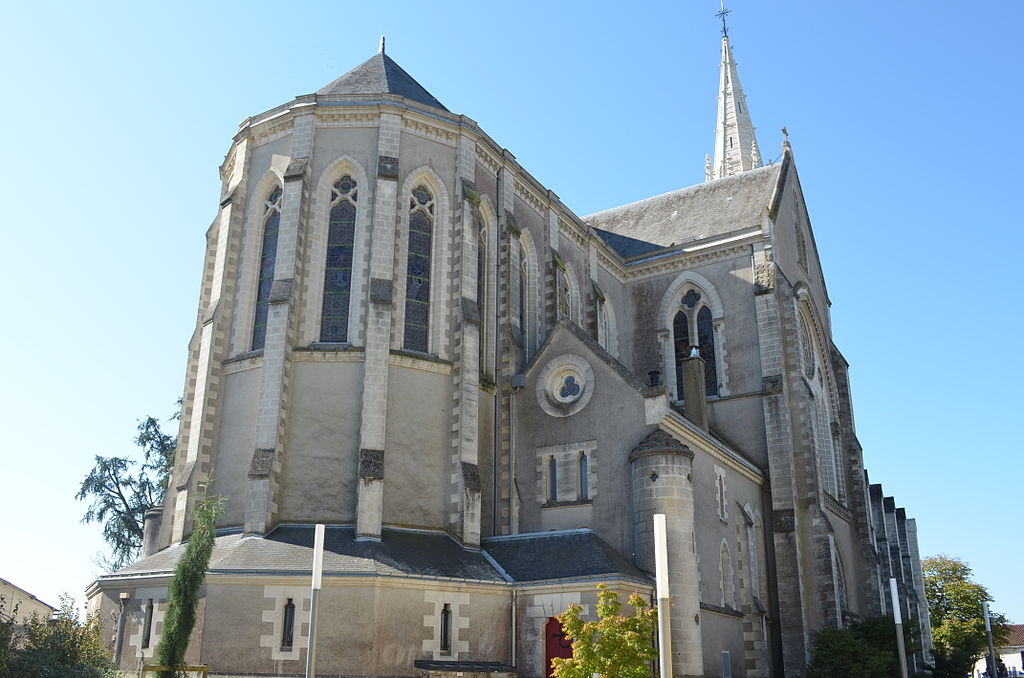
Martin is greatly honoured and venerated for many miracles in Nantes and the beautiful Cathedral below is dedicated to him.
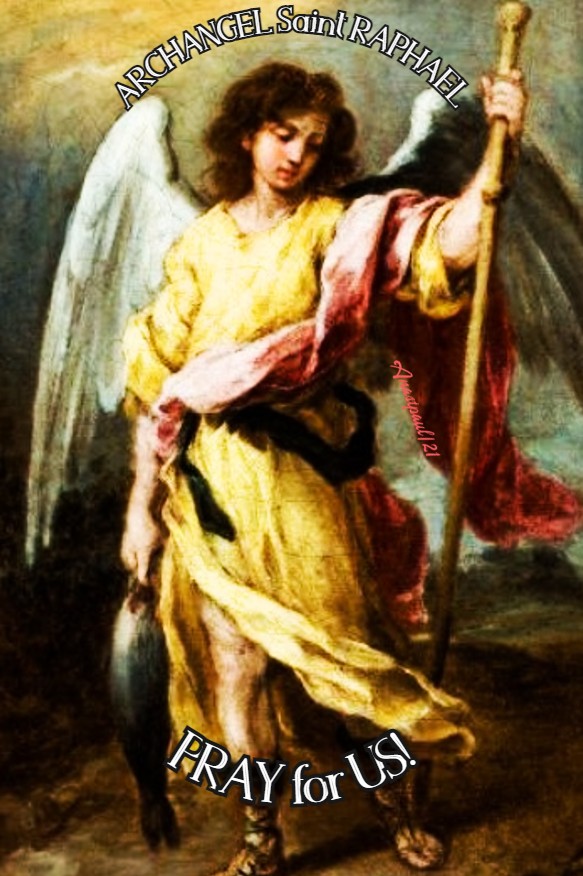
Saint Raphael the Archangel The Feast day of Saint Raphael was included for the first time in the General Roman Calendar in 1921, for celebration on 24 October. With the 1969 revision of the General Roman Calendar, the Feast was transferred to September 29 for celebration together with Archangels Saints Michael and Gabriel. St Raphael: https://anastpaul.com/2021/10/24/saint-of-the-day-24-october-st-raphael-the-archangel/
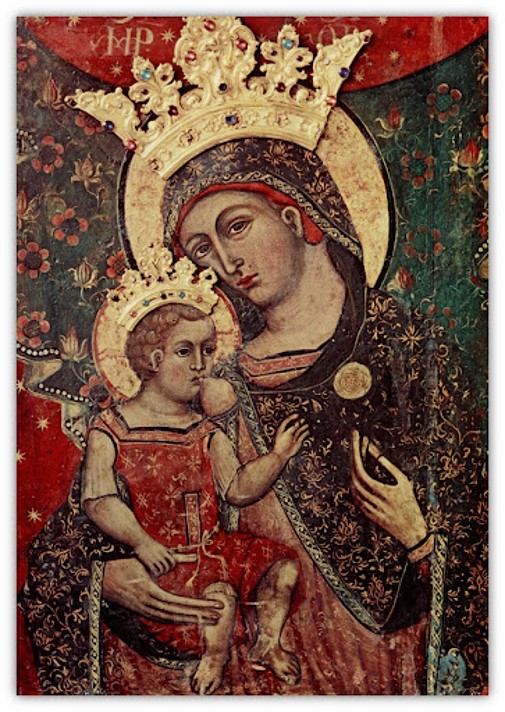
Beata Vergine delle Grazie / The Blessed Virgin of Grace, Udine, Friuli-Venezia Giulia, Italy (1479) – Fourth Sunday of October:
Bl Amado García Sánchez St Audactus of Thibiuca St Cadfarch St Ciriacus of Hierapolis St Claudian of Hierapolis St Ebregislus of Cologne St Felix of Thibiuca St Fortunatus of Thibiuca St Fromundus of Coutances St Maglorius of Wales St Marcius of Monte Cassino St Martin of Vertou (527–601) Abbot, Hermit
St Senoch St Senócus of Tours St Septimus of Thibiuca
Martyrs of Ephesus – 3 Saints: Three Christians Martyred together. All we know about them are the names Mark, Sotericus and Valentina. They were stoned to death near Ephesus, Asia Minor (in modern Turkey). Their relics are enshrined on the island of Tasos.
























 AnaStpaul
You must be logged in to post a comment.