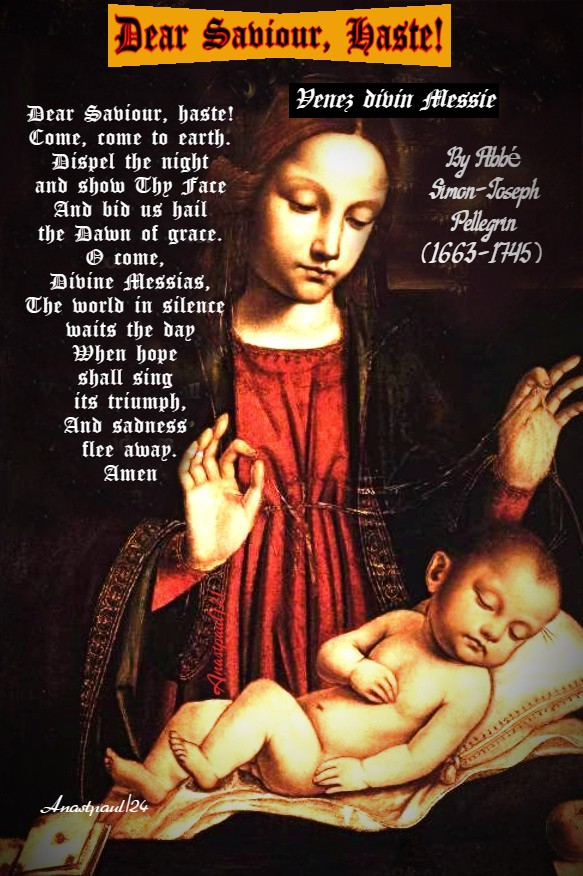
Dear Saviour, haste! Come, come to earth. Dispel the night and show Thy Face And bid us hail the Dawn of grace. O come, Divine Messias, The world in silence waits the day When hope shall sing its triumph, And sadness flee away. Amen
This is the Refrain from a beautiful Advent Hymn by Abbé Simon-Joseph Pellegrin, a French Cluniac Monk, Poet, Composer and Playwright.
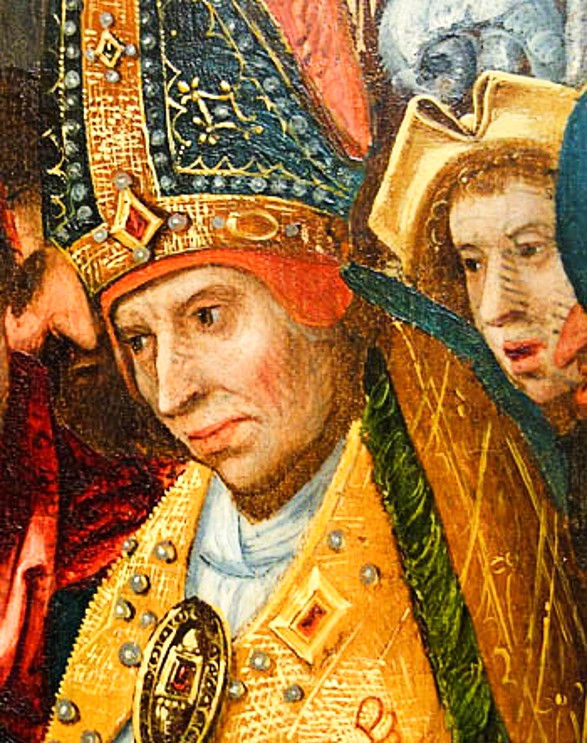
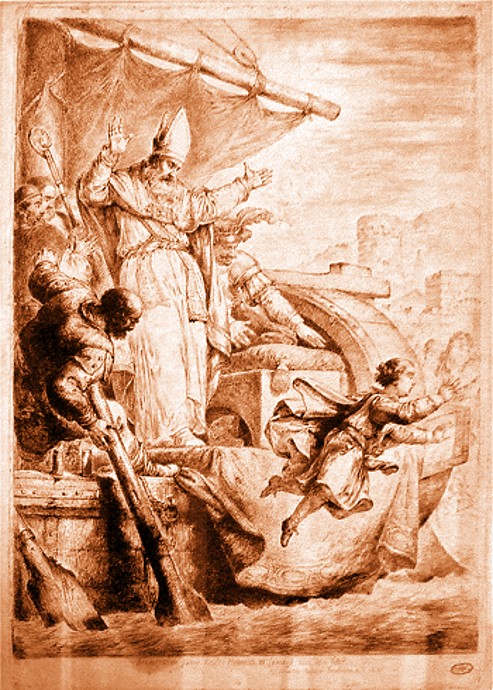
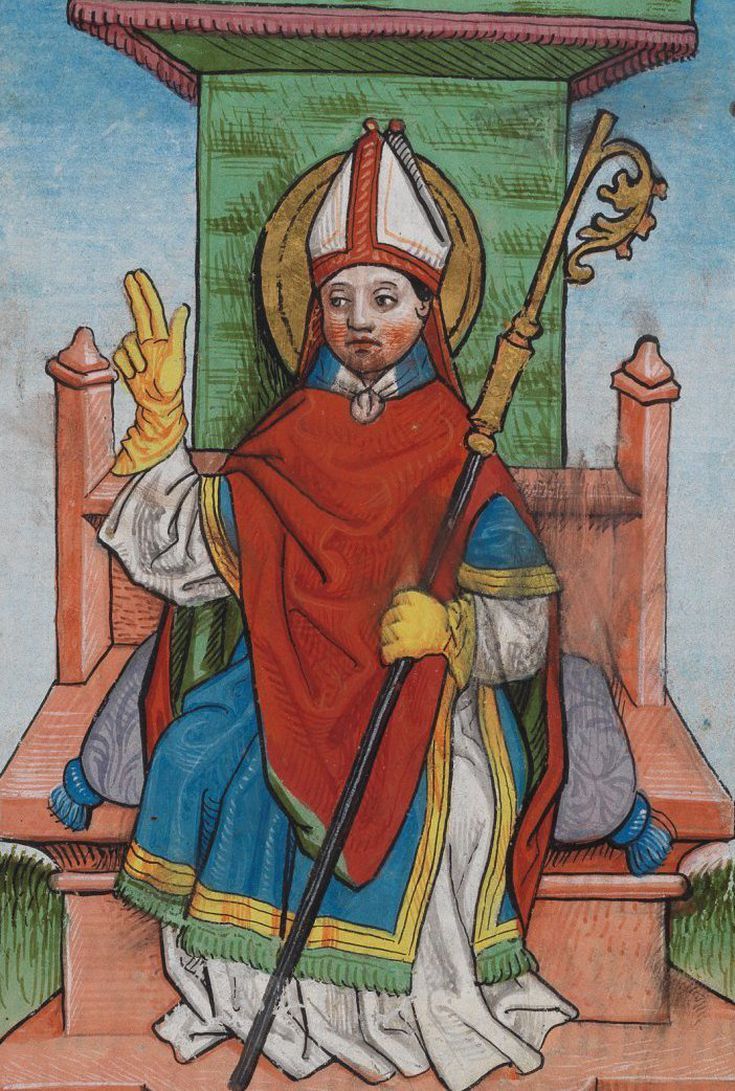
Saint of the Day – 4 December – Saint Anno II (c 1010-1975) Archbishop of Cologne from 1056 until his death. From 1063 to 1065 he acted as Regent of the Holy Roman Empire for the minor Emperor Henry IV, Reformer, founder of Monasteries and builder of Churches. Born in c 1010 in Swabia, Germany and died on 4 December 1075 in Siegburg, Germany of natural causes. He is the Patron of gout sufferers.
He was a founder or co-founder of Monasteries (Michaelsberg, Grafschaft, St Maria ad Gradus, St George, Saalfeld and Affligem) and a builder of Churches, advocated clerical celibacy and introduced a strict discipline in a number of Monasteries. He was a man of great energy and ability, whose action in recognising Pope Alexander II (the authentic Pope during a time of strife in the Church) was of the utmost consequence, for Henry IV and for Germany.
Anno was born to a noble family in Swabia, Germany and was educated in Bamberg, where he subsequently became head of the Cathedral school. In 1046, he became Chaplain to the Emperor Henry III and accompanied him on his campaigns against King Andrew I of Hungary. In 1054, the Emperor appointed him the administrative and liturgical head, at the newly erected Cathedral of Goslar and Archbishop of Cologne two years later.
The tears he abundantly shed during the whole ceremony of his Consecration were a proof of his sincere humility and devotion. The foot of the altar was his soul’s delight, comfort and refuge. The poor he sought out in their cottages and carried to them, sometimes on his own shoulders, blankets and other necessaries. He fasted much, watched the greatest part of the night, subdued his body with hair shirts and preached to his flock with the assiduity and zeal of a St Paul. He reformed all the Monasteries of his Diocese and built two of Regular Canons at Cologne, and three of Benedictines in other parts.
According to contemporary sources, Anno led an extremely ascetic life . Nevertheless, he was a fearsome adversary to anyone perceived as a threat to the interests of his Archdiocese. His plans to seize the prosperous Monastery in Malmedy, challenging the authority of the Imperial Abbey of Stavelot-Malmedy, caused much controversy and ultimately failed. On the other hand, he founded the Benedictine Abbey of Michaelsberg, modelled on the Italian Abbey of Fruttuaria, which soon evolved into a centre of the Cluniac Reforms in Germany.
After the death of Emperor Henry III in 1056, the Archbishop took a prominent part in the government of the Empire, during the minority of the six-year-old heir to the throne, Henry IV. He was the leader of the party which, in April 1062, seized the person of Henry in the Coup of Kaiserswerth and deprived his mother, Empress Agnes, of power. Anno for a short time was able to exercise the chief authority in the Empire but he was soon obliged to share this with his fellow conspirators, Archbishop Adalbert of Bremen and Archbishop Siegfried of Mainz, retaining for himself, the supervision of Henry’s education and the title of Magister.
The office of Arch-Chancellor of the Imperial Kingdom of Italy was at this period regarded as an appanage of the Archbishopric of Cologne and this was probably the reason why Anno had a considerable share in settling a Papal dispute brewing since 1061,- relying on an assessment by his nephew, Bishop Burchard of Halberstadt, he declared Alexander II to be the rightful Pope at a Synod held at Mantua in May 1064 and took other steps to secure his recognition against Empress Agnes’ candidate Antipope Honorius II.
Returning to Germany, however, he found the chief power in the hands of Archbishop Adalbert of Bremen and as he was disliked by the young Emperor, Anno gradually lost ground at the Imperial Court, although he regained some of his former influence, when Adalbert fell from power in 1066. In the same year he was able to secure the succession of his nephew, Conrad of Pfullingen, as Archbishop of Trier. By 1072 he had become Imperial Administrator and thus, the second most powerful man, acting as an arbitrator in the rising Saxon Rebellion.
No City north of the Alps was so rich in great Churches, Sanctuaries, Relics and religious communities as Cologne was. It was known as the “German Rome,” With the growth of the municipal prosperity, the pride of the citizens and their desire for independence, also increased and caused them to feel more dissatisfied with the sovereignty of the Archbishop. This resulted in bitter feuds between the Bishops and the City which lasted for two centuries, with varying fortunes.
The first uprising occurred under Anno II, at Easter of the year 1074. The citizens rose against the Archbishop but were defeated within three days and severely punished. It was reported he had allied himself with William the Conqueror, King of England, against the Emperor. Having cleared himself of this charge, Anno took no further part in public business and died in Siegburg Abbey on 4 December 1075, where he was buried.
In 1064 Archbishop Anno,donated Relics to his favourite foundation, the Abbey of St. Michael on the Michaelsberg, where he also decided his burial place in the same Church which he had Consecrated in 1066 and,when he was Canonised in 1183 by Pope Lucius III, his bones were lifted out of the grave hewn into the rocky subsoil of the Abbey Church and laid in the magnificent Anno Shrine, which today, is the highlight of this beautiful pilgrim Church.
St Peter Chrysologus (c 400-450) “Golden Words” Confessor,, Father & Doctor of the Church – Bishop of Ravenna, Italy. Today we celebrate the Memorial of Saint Peter Chrysologus, a fifth-century Italian Bishop known for testifying courageously to Christ’s full humanity and divinity during a period of the heresy called “Monophysite.” The saint’s title, Chrysologus, signifies “golden speech” in Greek. Named as a Doctor of the Church in 1729 by Pope Benedict XIII., he is distinguished as the “Doctor of Homilies” for the concise but theologically rich reflections he delivered during his time as the Bishop of Ravenna. 176 of his sermons have survived – it is the strength of these beautiful explanations of the Incarnation, the Creed, the place of Mary and John the Baptist in the great plan of salvation, Mary’s perpetual Virginity, the penitential value of Lent, Christ’s Eucharistic presence and the Primacy of St Peter and his successors in the Church. FEAST DAY: 4 December (General Roman Calendar 1729-1969) https://anastpaul.com/2018/07/30/saint-of-the-day-30-july-st-peter-chrysologus-c-400-450-golden-words/
St Ada of Le Mans St Adelmann of Beauvais St Anno II (c 1010-1975) Archbishop of Cologne St Apro
St Bernardo degli Uberti St Bertoara of Bourges St Christianus St Clement of Alexandria St Cyran of Brenne St Eraclius St Eulogio Álvarez López St Ezequiel Álvaro de La Fuente St Felix of Bologna Bl Francis Galvez St Francisco de la Vega González St Heraclas of Alexandria St Jacinto García Chicote Bl Jerome de Angelis St John the Wonder Worker St Maruthas St Melitus of Pontus
PREPARATORY PRAYER: In thy conception, O Virgin Mary, thou wast immaculate; pray for us to the Father, Whose Son Jesus, conceived in thy womb by the Holy Ghost, thou didst bring forth.
Indulgence. 200 days, every time. (Pius VI, 21 November
MEDITATION: Man’s relationship to God, as His child, was severed by sin. The beautiful image of God imprinted on man’s soul, was disfigured by it. But with the Immaculate Conception of the Blessed Virgin Mary, a being full of grace, an object of God’s supreme complacency, entered this world. After the lapse of four thousand years God, in His wisdom, power, and love, for the first time again created a human being, in that state, in which He had originally created our first parents. Mary, from the first moment of her existence was, in virtue of the sanctifying grace, infused into her soul, most intimately united with God and endowed with the most precious gifts of Heaven. Because she was predestined to become the Mother of the Redeemer of mankind, it was fitting that she should unite in herself all the gifts becoming to such an ineffable dignity. Hence, she surpassed in grace and holiness, all other created beings and was Consecrated a worthy temple of the Incarnate Word. Therefore, she was saluted by the Angel as “full of grace” and the Church, in our behalf, addresses the Almighty: “O God, Who through the Immaculate Conception of the Virgin, didst prepare a worthy dwelling-place for Thy Divine Son; grant that, as in view of the death of that Son ,Thou didst preserve her from all taint, so Thou wouldst vouchsafe unto us that, cleansed from all sin by her intercession, we too may arrive at Thine eternal glory.”
PRACTICE: The world considers men according to their rank and station, their wealth and knowledge. God recognises in them but one difference, that caused by the presence or absence of sanctifying grace in their soul. A soul in the state of sanctifying grace is God’s friend; without it, His enemy. A man dying in the state of sanctifying grace is sure of eternal bliss. Therefore, we ought to prize this grace, above all else and do everything in our power, to preserve it. St Leo exhorts us, “Recognise, O man, thy dignity! As thou hast received Divine grace, beware of returning to your former sinful condition by a wicked life!”
PRAYER OF THE CHURCH: O God, Who through the Immaculate Conception of the Virgin didst prepare a worthy dwelling-place for Thy Divine Son; grant that, as in view of Thy Son, Thou didst preserve her from all taint, so Thou wouldst vouchsafe unto us that cleansed from all sin by her intercession, we too may arrive at Thine eternal glory. Through the same Christ our Lord. Amen.
PRAYER: Mary, bright moon of purity, I rejoice with thee because, the mystery of thy Immaculate Conception was the beginning of salvation for the race of man and the joy of the whole world. I thank and bless the ever-blessed Trinity, Who thus did magnify and glorify thee and I beg of thee, to obtain for me the grace, so to profit by thy dear Son’s Passion and Death, that His Most Precious Blood may not have been shed upon the Cross in vain but that, after a holy life, I may reach Heaven in safety.
Thought for the Day – 3 December – Meditations with Antonio Cardinal Bacci (1881-1971)
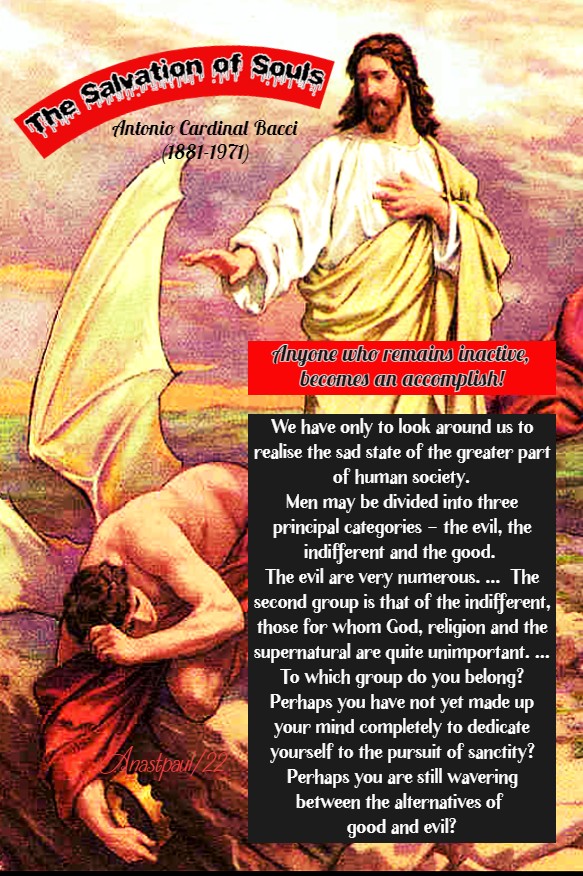
The Salvation of Souls
“We have only to look around us to realise the sad state of the greater part of human society. Men may be divided into three principal categories – the evil, the indifferent and the good. The evil are very numerous. The Holy Spirit tells us that the number of fools is infinite (Eccles 1:15). Now, the greatest and most real folly, is sin because, sin offends God, our supreme good, our Creator and Redeemer and because, it endangers the salvation of the soul. Nevertheless, countless sins are committed. There is an immense number of people who commit sin not merely through human frailty but who have abandoned God absolutely by denying or insulting Him and by striving to eradicate Him from the consciousness of their fellow-men. Their God is themselves!
The second group is that of the indifferent, those for whom God, religion and the supernatural are quite unimportant. They are content to lead materialistic lives without any thought of eternity. It is enough for them to be able to live, make money and to enjoy themselves. Nothing else matters. Their God is the world and its goods! The number of such people is increasing at an alarming rate.
Lastly, there are the good people who desire to become more and more perfect. Unfortunately, there are very few of these now and one would like to see them displaying greater generosity and enthusiasm for the salvation of those around them.
To which group do you belong? Perhaps you have not yet made up your mind completely to dedicate yourself to the pursuit of sanctity? Perhaps you are still wavering between the alternatives of good and evil? Anyone who remains inactive, becomes an accomplish!”
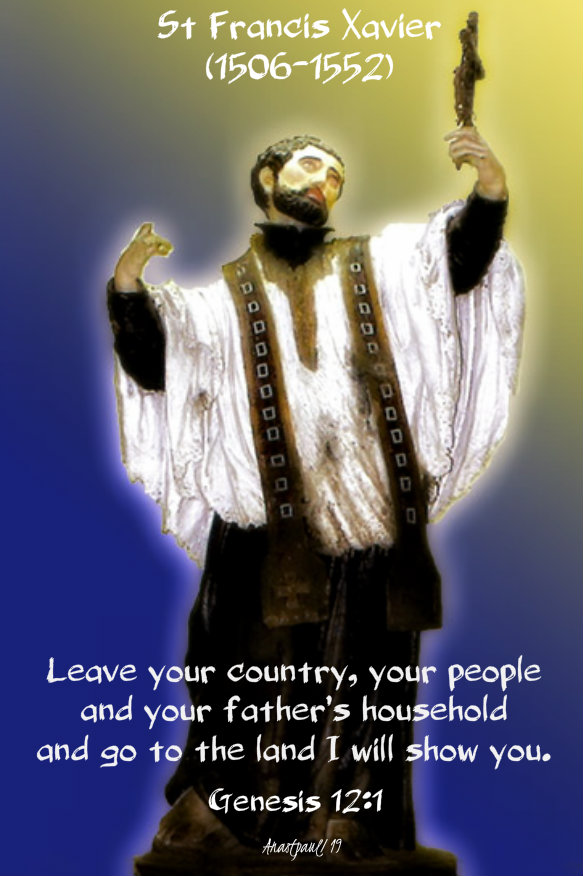
Quote/s of the Day – 3 December – The Memorial of St Francis Xavier SJ (1506-1552) Confessor
“Leave your country, your people and your father’s household and go to the land I will show you.”
Genesis 12:1
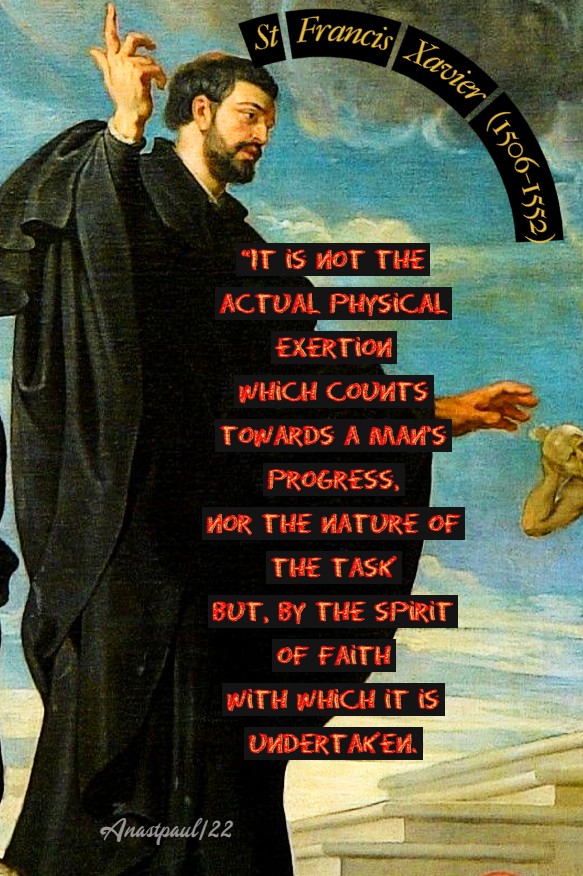
“It is not the actual physical exertion which counts towards a man’s progress, nor the nature of the task but by the spirit of faith with which it is undertaken.”
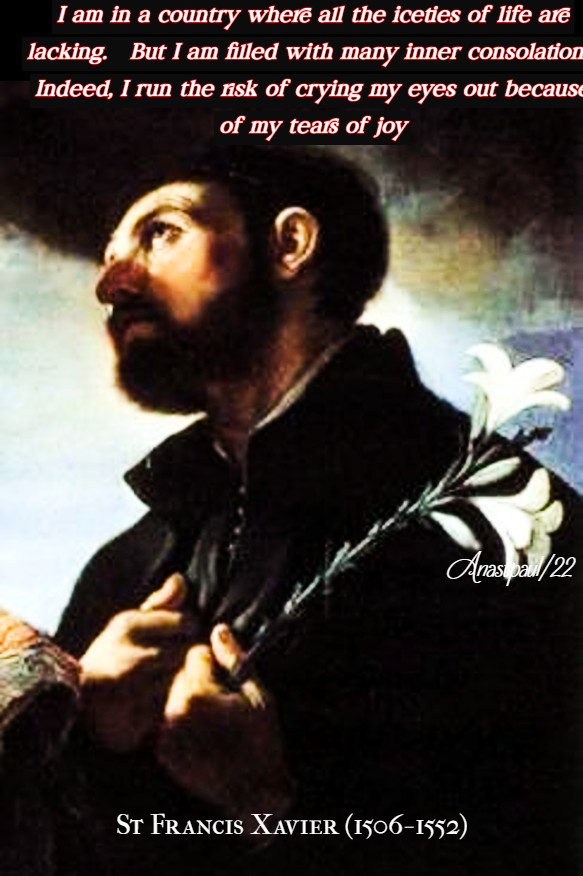
“I am in a country where all the niceties of life are lacking. But I am filled with many inner consolations. Indeed, I run the risk of crying my eyes out because of my tears of joy”
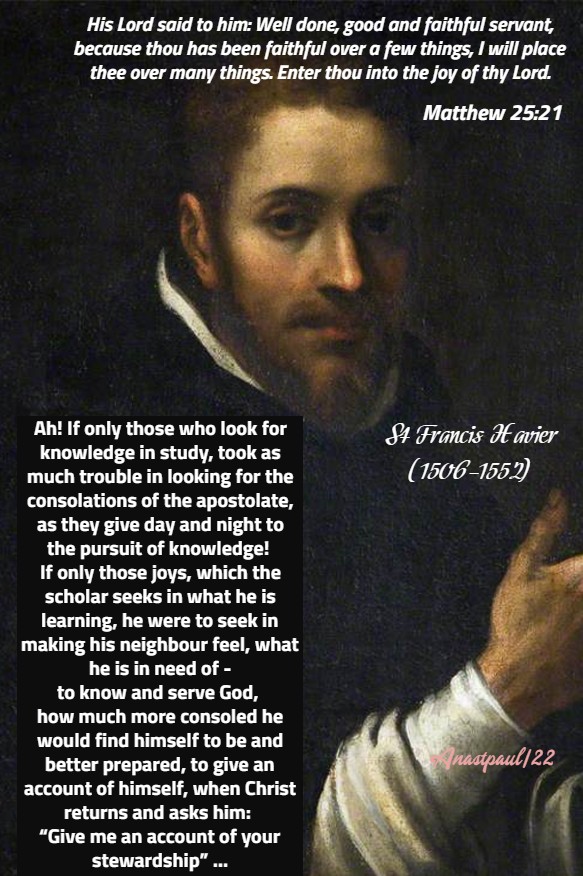
“His Lord said to him: Well done, good and faithful servant because thou has been faithful over a few things, I will place thee over many thing. Enter thou into the joy of thy Lord.”
Matthew 25:21
“Ah! If only those who look for knowledge in study, took as much trouble in looking for the consolations of the apostolate, as they give day and night to the pursuit of knowledge! If only those joys, which the scholar seeks in what he is learning, he were to seek in making his neighbour feel, what he is in need of – to know and serve God, how much more consoled he would find himself to be and better prepared, to give an account of himself, when Christ returns and asks him: “Give me an account of your stewardship” …
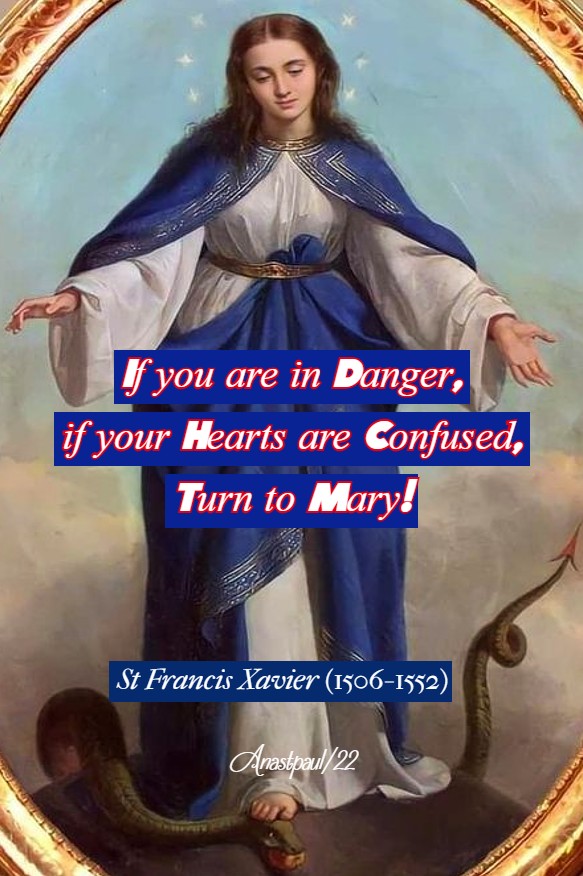
“If you are in danger, if your hearts are confused, turn to Mary!”
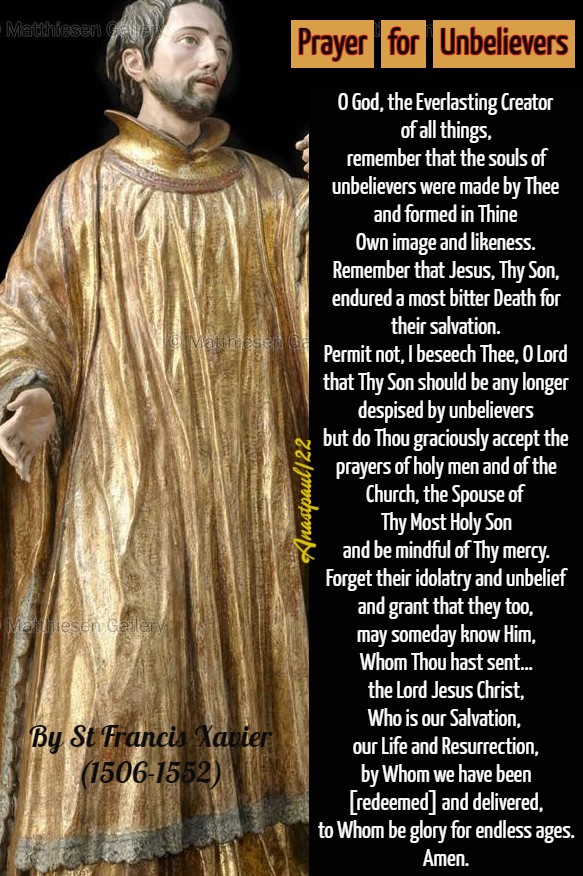
Prayer for Unbelievers By St Francis Xavier (1506-1552)
O God, the Everlasting Creator of all things, remember that the souls of unbelievers were made by Thee and formed in Thine own image and likeness. Remember that Jesus, Thy Son, endured a most bitter Death for their salvation. Permit not, I beseech Thee, O Lord that Thy Son should be any longer despised by unbelievers but do Thou graciously accept the prayers of holy men and of the Church, the Spouse of Thy Most Holy Son and be mindful of Thy mercy. Forget their idolatry and unbelief and grant that they too, may someday know Him, Whom Thou hast sent…the Lord Jesus Christ, Who is our Salvation, our Life and Resurrection, by Whom we have been [redeemed] and delivered, to Whom be glory for endless ages. Amen.
One Minute Reflection – 3 December – The Memorial of St Francis Xavier SJ (1506-1552) Confessor – Romans 10:10-18, Mark 16:15-18 – Scripture search here: https://www.drbo.org/
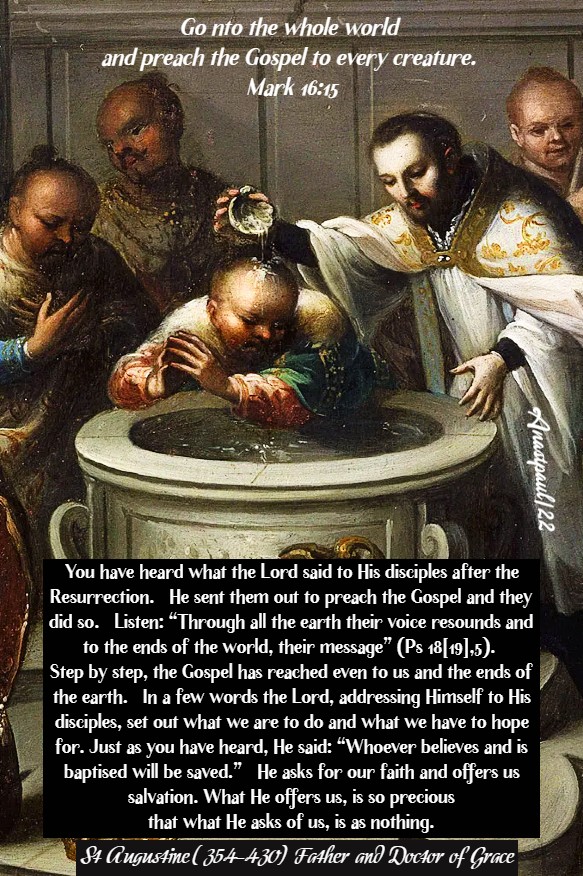
“Go into the whole world and preach the Gospel to every creature.” – Mark 16:15
REFLECTION – “You have heard what the Lord said to His disciples after the Resurrection. He sent them out to preach the Gospel and they did so. Listen: “Through all the earth their voice resounds and to the ends of the world, their message” (Ps 18[19],5). Step by step, the Gospel has reached even to us and the ends of the earth. In a few words the Lord, addressing Himself to His disciples, set out what we are to do and what we have to hope for. Just as you have heard, He said: “Whoever believes and is baptised will be saved.” He asks for our faith and offers us salvation. What He offers us, is so precious that what He asks of us, is as nothing.
“The children of men take refuge in the shadow of Thy wings, O my God… from Thy delightful stream, Thou gives them to drink, for with Thee, is the Fountain of Life” (Ps 35[36],8f.). Jesus Christ is the Fountain of Life. Before the Fountain of Life came to us, we had only a human salvation like that of the beasts, of which the psalm speaks: “Man and beast you save, O Lord” (Ps 35[36],7). But now the Fountain of Life has come even to us, the Fountain of Life died for our sakes. Will He refuse us His Life,Who, for our sakes, gave His Death? He is salvation and this salvation is not worthless, like the other one. Why? Because it does not pass away. The Lord has come. He died but He killed death. In Himself, He brought an end to death. He assumed it and He killed it. Where is death now, then? Look for it in Christ and it is no longer there. It used to be there but there it died. O Life, Death of death! Take heart: it will also die in us. What was fulfilled in the Head will also be fulfilled in the members and death will die in us, too!” – St Augustine (354-430) Father and Doctor of Grace (Sermon 233).
PRAYER – O God, Thou Who were pleased to gather into Thy Church the peoples of the Indies by the preaching and miracles of blessed Francis, mercifully grant that we, who honour his glorious merits, may also imitate the example of his virtues. Through Jesus Christ, Thy Son our Lord, Who lives and reigns with Thee, in the unity of the Holy Ghost, God, world without end. Amen (Collect).
Our Morning Offering – 3 December – The Memorial of St Francis Xavier SJ (1506-1552) Confessor
I Love Thee, God, I Love Thee By St Francis Xavier (1506-1552) Translated by Gerard Manley Hopkins SJ (1844-1889)
I love Thee, God, I love Thee— Not out of hope for Heaven for me Nor fearing not to love and be in the everlasting burning. Thou, my Jesus, after me Didst reach Thine arms out dying, For my sake suffered nails and lance, Mocked and marred countenance, Sorrows passing number, Sweat and care and cumber, Yea and death and this for me, And Thou could see me sinning. Then I, why should not I love Thee, Jesu so much in love with me? Not for Heaven’s sake, not to be Out of hell by loving Thee, Not for any gains I see, But just the way that Thou didst me I do love and will love Thee. What must I love Thee, Lord, for then? For being my King and God. Amen
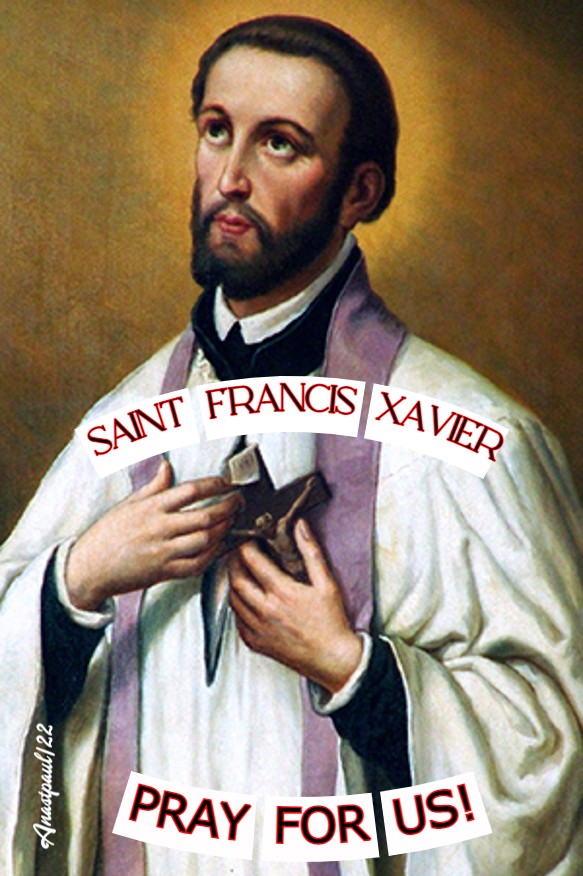
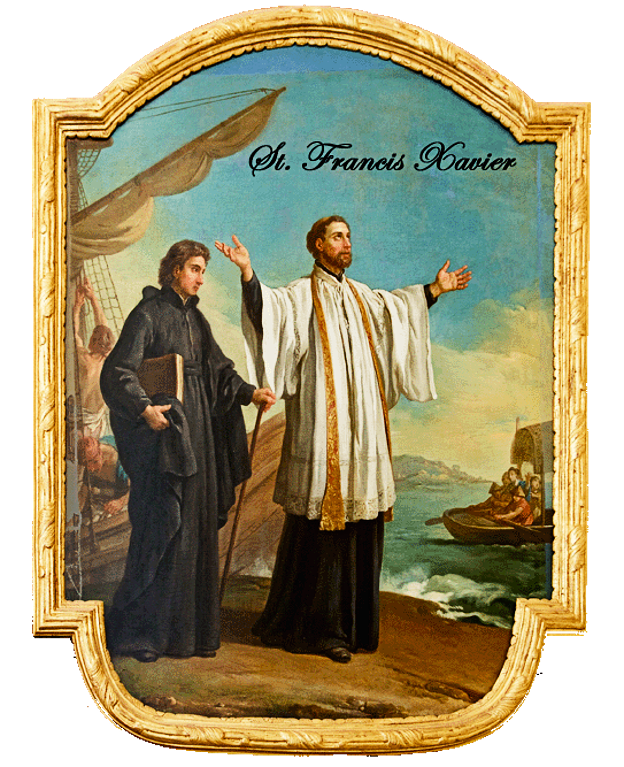
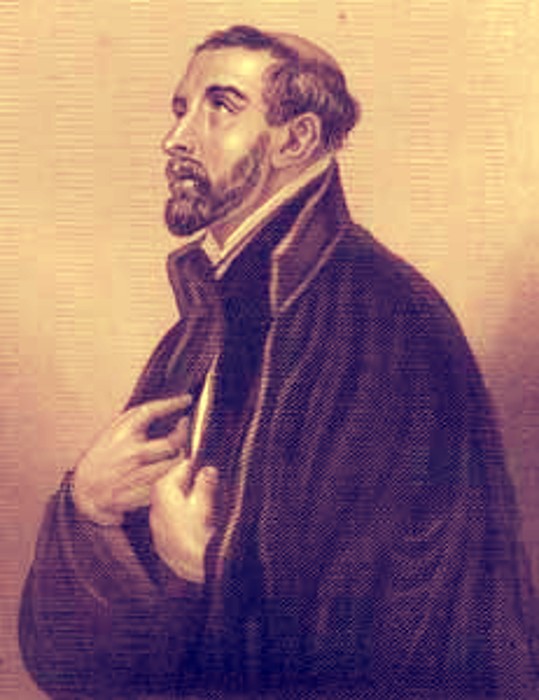
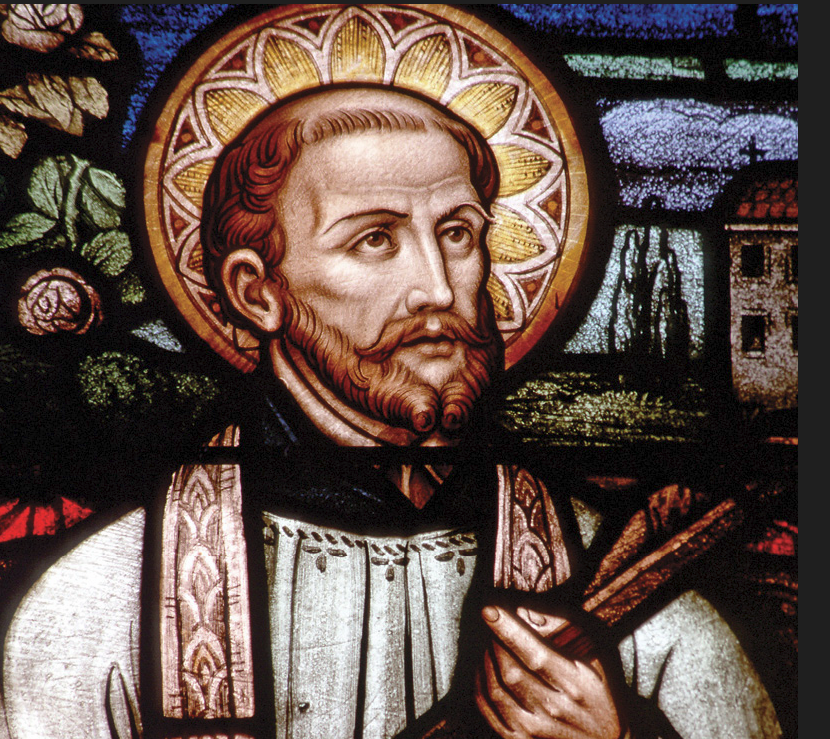
Saint of the Day – 3 December – St Francis Xavier SJ (1506-1552) Confessor, Priest, Missionary, Miracle-worker, co-Founder with St Ignatius Loyola (1491-1556) and St Peter Faber (1506-1546) of the Society of Jesus. One of the Greatest Missionaries since St Paul. St Francis was Canonised on 12 March 1622 by Pope Gregory XV. His body is incorrupt.
St Francis Xavier By Fr Francis Xavier Weninger SJ (1805-1888) Part One -(His early years, before departing for the Indies).
St Francis Xavier,–the great Apostle of the Indies, as he is called in the Bull of his Canonisation–the celebrated Thaumaturgus of the 16th Century, the irreproachable witness of the truth of our holy religion, the ornament of the Society of Jesus and of the entire Catholic Church–was of Royal lineage and was born of illustrious parents, at the Castle of Xavier, in the Kingdom of Navarre.
Having passed his childhood there, he was sent to the University of Paris, to study the liberal arts, for which he evinced an especial inclination. He applied himself so diligently and made so much progress that he was not only created. Doctor of Philosophy but also appointed to instruct others in that science. All his aim was to gain honours and to become great in the eyes of the world. His father intended to recall him home after some years but his sister, who was Prioress in the Convent of the Poor Clares at Gandia and had the reputation of being a Saint, knew, by Divine inspiration, the great work for which her brother was destined by the Almighty and persuaded her father not to insist on his return, saying, in a prophetic manner that Francis was chosen to become the apostle of many nations.
Whilst Xavier was teaching at Paris, St Ignatius came to the same City to finish his studies. Knowing, by Divine inspiration, how much good Francis, who was so highly gifted by the Almighty, would be able to do for the salvation of souls, he sought the friendship of the young Professor and gradually showed him the emptiness, of all temporal greatness and drew him from his eagerness to obtain worldly honours, by repeating the earnest words of Christ: “What will it profit a man if he gain the whole world and lose his own soul!” These words of our Saviour, coming from the lips of a St Ignatius, so deeply pierced the heart of Xavier and made so indelible an impression that he became entirely converted.
Taking St Ignatius as his guide, he followed his precepts and after having most fervently gone through the “Spiritual Exercises,” he resolved to devote himself, with Ignatius, to the greater glory of God.
On the Feast of the Assumption of the Blessed Virgin, in the year 1534, Ignatius, St Francis and five others, made a vow in the Church of Montmartre at Paris, to consecrate their lives to the salvation of souls. Soon after, St Francis, by the order of St Ignatius, went with some of these zealous men to Italy.
At the very beginning of this journey, which was to be performed on foot, St Francis gave a striking proof of the ardour of his spirit. Before his conversion, he had been a great lover of dancing and gymnastic exercises and, so greatly excelled in them that he had taken great pride in these accomplishments. To punish this vanity, he tied his arms and ankles so tightly with small knotted cords, that he could not make the least motion without pain. After the first day’s march, his pains became so intense that he fainted away and was forced to reveal the cause. The cords had cut so deeply into the flesh that they could hardly be seen. The surgeon who was called, declared that a painful operation was necessary to cut the cords out of the flesh.St Francis and his companions, not wishing to be delayed on their way, prayed for aid from on High and, on the following morning they found, not only the cords broken but all the wounds entirely healed. Having given due thanks to the Almighty for this miracle, they continued their journey.
At Venice, St Francis spent two months in the hospital, nursing the sick most tenderly. While there, it happened that he found, among the sick, one who was suffering from a loathsome ulcer. St Francis felt a natural repugnance to approach the poor patient, but, recollecting the maxim of St. Ignatius, “Conquer thyself,” he unhesitatingly went to the sick, embraced him kindly and putting his lips to the ulcer, cleansed it of all offensive matter. As a reward for so heroic a victory over self, God restored the sick man’s health and took from St Francis all repugnance to the most hideous forms of disease.
Two months after this, he was Ordained Priest and said his first Holy Mass, amid a flood of tears, after having prepared himself for it, by forty days of solitude, many prayers, austere fasting and other penances.
At Rome, whither he was called by St Ignatius, he preached for a time with great success. It was at this period that John III., King of Portugal, requested the Pope to send him six of the disciples of St Ignatius, for the Indies. St Ignatius, on account of the small number of his followers, gave only two, Simon Rodriguez and Nicholas Bobadilla but, as the latter fell ill just before the time appointed for setting out, St Francis Xavier., whom Heaven had selected for this mission, was sent in his stead.
No tongue can tell the joy with which the Saint received this news, which fulfilled that which had been shown him, years before, in a mysterious dream. It had appeared to him, in his sleep that he had a negro on his shoulders, whom he was obliged to carry and that he was so fatigued, as to sink to the ground under his burden. He then awoke and found himself in truth, covered with perspiration and extremely tired.
He was soon prepared for his journey from Rome to Lisbon, whence he was to sail for the Indies and having received, from St Ignatius, valuable instructions and from the Vicar of Christ, the Papal Blessing, with the powers of an Apostolic Nuncio, he set out with his companion, Rodriguez, carrying nothing with him but the Crucifix on his breast, his Breviary under his arm and his staff in his hand.
At the holy house of Loretto, where he stopped on his way, he commended his important mission to his divine Mother, and begged, with childlike trust, for her motherly assistance. Feeling in his heart that his prayer had been heard, he was greatly comforted, on leaving this blessed spot. To be continued …
St Ethernan St Hilaria the Martyr St Jason the Martyr St John of Africa St Lucius St Lucy the Chaste St Magina of Africa St Mamas St Marcos García Rodríguez St Maurus the Martyr St Seleucus St Stephen of Africa St Theodore of Alexandria St Theodulus of Edessa St Valeriano Rodríguez García St Veranus Zephaniah the Prophet
Martyrs of Nicomedia: Christians Martyred together in the persecutions of Diocletian – Ambicus, Julius and Victor. c 303 in Nicomedia, Bithynia (modern Izmit, Turkey).
PREPARATORY PRAYER: In thy conception, O Virgin Mary, thou wast immaculate; pray for us to the Father, Whose Son Jesus, conceived in thy womb by the Holy Ghost, thou didst bring forth.
Indulgence. 200 days, every time. (Pius VI, 21 November
MEDITATION: The Blessed Virgin Mary, conceived without sin, is the most blessed daughter of the eternal Father, the real and true Mother of the Divine Son, the elect spouse of the Holy Ghost. But in the world, in what condition do we behold her? She dwells not in a splendid palace; she is not surrounded by a retinue of servants, ready at every moment to do her bidding; she is not exempt from trials and suffering. On the contrary, she is poor; she lives in obscurity and suffered so much on earth that, without shedding her blood, she merits to be styled – the Queen of Martyrs. Her heart was transfixed with the sword of sorrow. Mary is not exempt from tribulations and adversity but one thing God does not permit to touch her, – SIN. Hence Holy Church applies to her the words, “Thou art all fair, O my love and there is not a spot in thee” (Cant iv 7).
PRACTICE: Although we were not preserved from sin like Mary, yet God, in His ineffable goodness and mercy, granted us the grace to be cleansed from sin and to be clothed with the garment of sanctifying grace in Baptism. No treasure of the world can be compared with this prerogative. But as we bear this grace in a fragile vase, we must be most careful to protect and preserve it in ourselves and others, from all danger. Let the Blessed Virgin Mary be our example. Well knowing the inestimable value of the grace conferred upon her, she guarded it with the greatest care. Although exempt from concupiscence and “full of grace,” she was so distrustful of herself, as if she were in continual danger. How much more, then, must we use precaution, to preserve in ourselves and in others, this treasure of grace, since we feel in ourselves constantly, the law of the flesh which resists the law of the spirit and urges us onto evil, whilst the world and the devil, never weary in placing snares for us, in order to accomplish our ruin. Therefore, let us have recourse to Mary and invoking her aid, bravely resist all temptations!
PRAYER OF THE CHURCH: O God, Who through the Immaculate Conception of the Virgin didst prepare a worthy dwelling-place for Thy Divine Son; grant that, as in view of Thy Son, Thou didst preserve her from all taint, so Thou wouldst vouchsafe unto us that cleansed from all sin by her intercession, we too may arrive at Thine eternal glory. Through the same Christ our Lord. Amen.
PRAYER: Mirror of holy purity, Blesed Mary, Virgin Immaculate, great is my joy while I consider that, from thy Immaculate Conception, the most sublime and perfect virtues were infused into thy soul and, with them all, the gifts of the Holy Ghost. I thank and praise the Most Holy Trinity, Who bestowed on thee these high privileges. I pray thee, gentle Mother, obtain for me grace to practise virtue and to make me worthy to become partaker of the gifts and graces of the Holy Ghost.
Thought for the Day – 2 December – Meditations with Antonio Cardinal Bacci (1881-1971)
The Contemplative and the Active Life
“There have always been, in the Church, both contemplatives and active apostles and there have always been people who combined both kinds of life. The contemplatives seek solitude, avoid contact with the external world and preserve a constant intimacy with God. The men of action, on the other hand, fight for the glory of God and for the salvation of their neighbour. Finally, there are those who strive to unite both both forms of spirituality in their work for God. The first group lead the life of Mary, the second that of Martha, while the third imitate both Mary and Martha.
It is this last group which St Thomas Aquinas prefers. It is better, he says, to enlighten, than merely to shine; it is better to pass onto others the fruits of our contemplation, than merely to contemplate. (Summa Theologiae II-II q 188 a 6,3). If we understand and practise his teaching, we can achieve both our own sanctification and the welfare of our neighbour and, can combine the interior life with the external apostolate.”
Quote/s of the Day – 2 December – The Memorial of St Chromatius of Aquileia (Died c 407) Bishop of Aquileia, Theologian, Exegete, Writer and friend of Saints Ambrose and Jerome, defender of Saint John Chrysostom.
Let us pray to the Lord with all our heart and with all our faith, let us pray to Him to deliver us from all enemy incursions, from all fear of adversaries. … The Lord will fight to defend you and you will be silent. It is He who fights, it is He who wins the victory…. And so that He may condescend to do so, we must pray as much as possible. He Himself said, in fact, through the mouth of the prophet – Call on Me on the day of tribulation; I will set you free and you will give Me glory.
“However, in the allegorical or mystical sense, this woman prefigured the Church, which offered the full and entire devotion of it’s faith to Christ … There are twelve ounces to a pound and this is the amount of perfume the Church possesses, having received the teaching of the twelve Apostles, as if it were a precious perfume. Indeed, what more precious is there, than the Apostles’ teaching, which contains both faith in Christ and the glory of the Kingdom of Heaven? ”
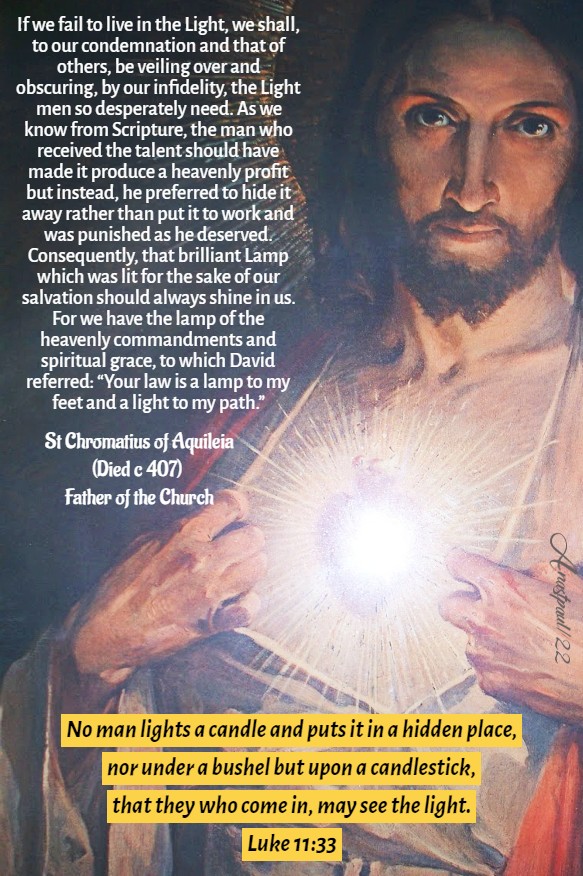
“No man lights a candle and puts it in a hidden place, nor under a bushel but upon a candlestick, that they who come in, may see the light.”
Luke 11:33
“If we fail to live in the Light, we shall, to our condemnation and that of others, be veiling over and obscuring, by our infidelity, the Light men so desperately need. As we know from Scripture, the man who received the talent should have made it produce a heavenly profit but instead, he preferred to hide it away rather than put it to work and was punished as he deserved. Consequently, that brilliant Lamp which was lit for the sake of our salvation should always shine in us. For we have the lamp of the heavenly commandments and spiritual grace, to which David referred: Your law is a lamp to my feet and a light to my path.”
St Chromatius of Aquileia (Died c 407) Father of the Church
One Minute Reflection – 2 December – St Bibiana (Died c 361) Virgin Martyr – Sirach 51:13-17, Matthew 13:44-52.– Scripture search here: https://www.drbo.org/
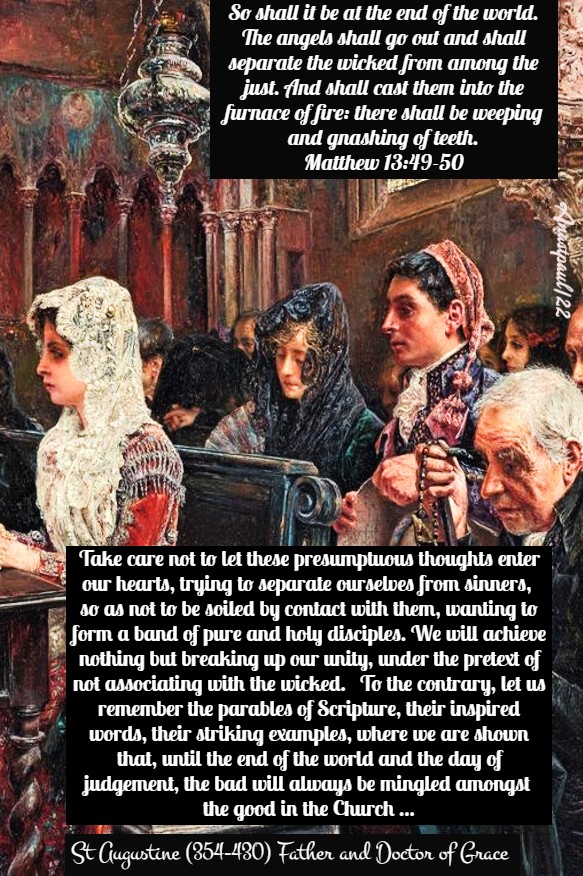
“So shall it be at the end of the world. The Angels shall go out and shall separate the wicked from among the just. And shall cast them into the furnace of fire: there shall be weeping and gnashing of teeth.” – Matthew 13:49-50
REFLECTION – “Our Lord was an example of incomparable patience. He bore with a “devil” among His disciples even to His Passion (Jn 6,70). He said: “Let them grow together until the harvest lest you uproot the wheat when you pull out the weeds” (cf. Mt 13,29f.). As a symbol of the Church, He preached that the net would bring back to shore, namely the end of the world, every kind of fish, both good and bad. And He made it known, in various other ways, whether openly or in parables, that there would always be a mixture of good and bad. But, nevertheless, He stresses, that we have to protect the Church’s discipline when He says: “If your brother sins against you, go and tell him his fault between you and him alone. If he listens to you, you have won over your brother” (Mt 18,15)…
Yet today, we see people who think of nothing but stern commandments, who order that troublemakers be reproved, ‘not giving what is holy to the dogs,’ treating, like the publicans, ‘anyone who despises the Church, cutting off the scandalous member from the body‘ (Mt 7,6 ; 18,17 ; 5,30). Their stormy zeal so troubles the Church, that they pull out the weeds before their time and their blindness makes of them enemies, of the unity of Jesus Christ…
Take care not to let these presumptuous thoughts enter our hearts, trying to separate ourselves from sinners, so as not to be soiled by contact with them, wanting to form a band of pure and holy disciples. We will achieve nothing but breaking up our unity, under the pretext of not associating with the wicked. To the contrary, let us remember the parables of Scripture, their inspired words, their striking examples, where we are shown that, until the end of the world and the day of judgement, the bad will always be mingled amongst the good in the Church, without their participation in the Sacraments being harmful to the good, so long as these latter, have not played a part in their sins.” – St Augustine (354-430) Father and Doctor of Grace (On Faith and Works – Excerpt ch 3-5)
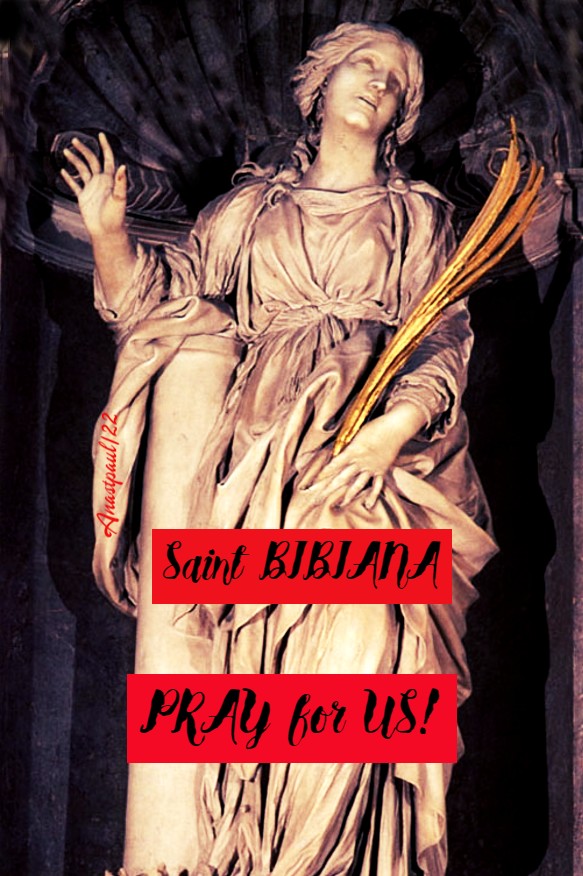
PRAYER – O God, giver of all good gifts, Thou Who in Thy servant, Bibiana, joined the flower of virginity with the palm of Martyrdom, by her intercession unite our hearts to Thee in charity, so that, saved from all dangers, we may obtain the rewards of eternal life. Through Jesus Christ, Thy Son our Lord, Who lives and reigns with Thee, in the unity of the Holy Ghost, God, world without end. Amen (Collect).
Our Morning Offering – 2 December – “The Divine Infancy and The Immaculate Conception”
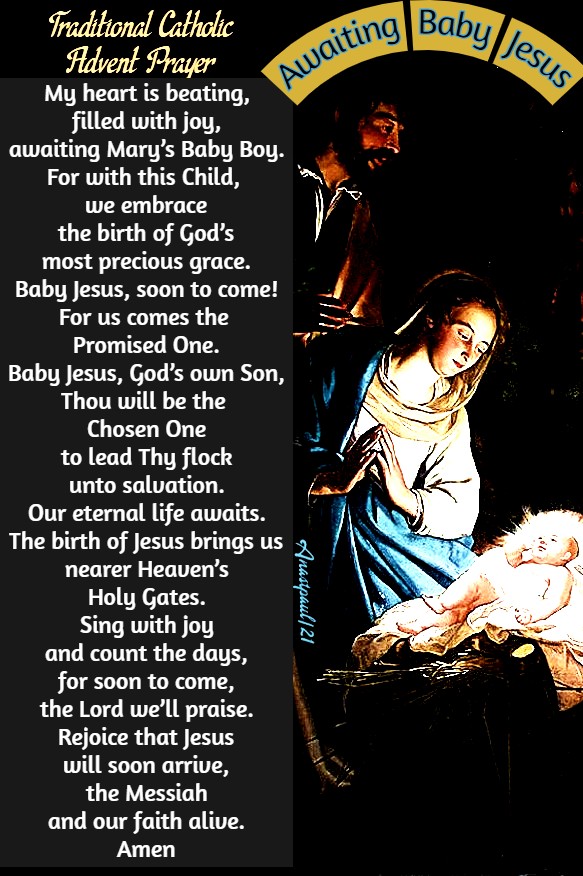
Awaiting Baby Jesus Traditional Catholic Advent Prayer
My heart is beating, filled with joy, awaiting Mary’s Baby Boy. For with this Child, we embrace the birth of God’s most precious grace. Baby Jesus, soon to come! For us comes the Promised One. Baby Jesus, God’s own Son, Thou will be the Chosen One to lead Thy flock unto salvation. Our eternal life awaits. The birth of Jesus brings us nearer Heaven’s Holy Gates. Sing with joy and count the days, for soon to come, the Lord we’ll praise. Rejoice that Jesus will soon arrive, the Messiah and our faith alive. Amen
Saint of the Day – 2 December – Saint Avitus of Rouen (Died c 325) the 3rd Bishop of Rouen i Normandy, modern France. Also known as – Avidien, Avinziano, Avinzio, Avit, Avitianus, Avitien, Avito, Evincianus.
Ancient Bishop
Avitus succeeded Bishop Mellonius and settles in Rouen from 314. Avitus is the first historically attested Bishop by his presence, with Materne II, Bishop of Cologne, at the first Council of Gaul in Arles in 314, where he signed and supported the Decrees promulgated by this Council.
The Acta Archiepiscoporum Rotomagensium tell us that “This blessed pontiff was an honest spirit, impeccable in his manners and attentive to the salvation of souls under his charge.”
He is buried in the crypt of the Church of Saint-Gervais in Rouen, and his feast day is celebrated on 2 December.
St Evasius of Brescia St Habakkuk the Prophet Bl John Amero
Blessed Jan van Ruysbroec (c 1293-1382) Known as John “the Admirable,” “the Ecstatic Doctor,” “the Divine Doctor.” Priest, Hermit, Mystic, Spiritual Director and Spiritual Writer. Beatified on 1 December 1908 by Pope Pius X. About Blessed Jan: https://anastpaul.com/2018/12/02/saint-of-the-day-2-december-blessed-john-van-ruysbroeck/ St Lupus of Verona St Nonnus of Edessa St Oderisius de Marsi OSB (Died c 1105) Italian Cardinal, Abbot of Monte Cassino, Mediator and Peacemaker. St Pimenio in Rome St Pontian
Bl Robert of Matallana St Silvanus
Greek Martyrs of Rome – (9 Saints): Several Greek Christians Martyred in the persecutions of Valerian – Adria, Aurelia, Eusebius, Hippolytus, Marcellus, Mary Martana, Maximus, Neon and Paulina. They were martyred by various means between 254 and 259 in Rome, Italy and are buried in the Callistus catacombs, Rome.
Martyrs of Africa – (4 Saints): Four Christians Martyred in Africa in the persecutions of Arian Vandals – Januarius, Securus, Severus and Victorinus.
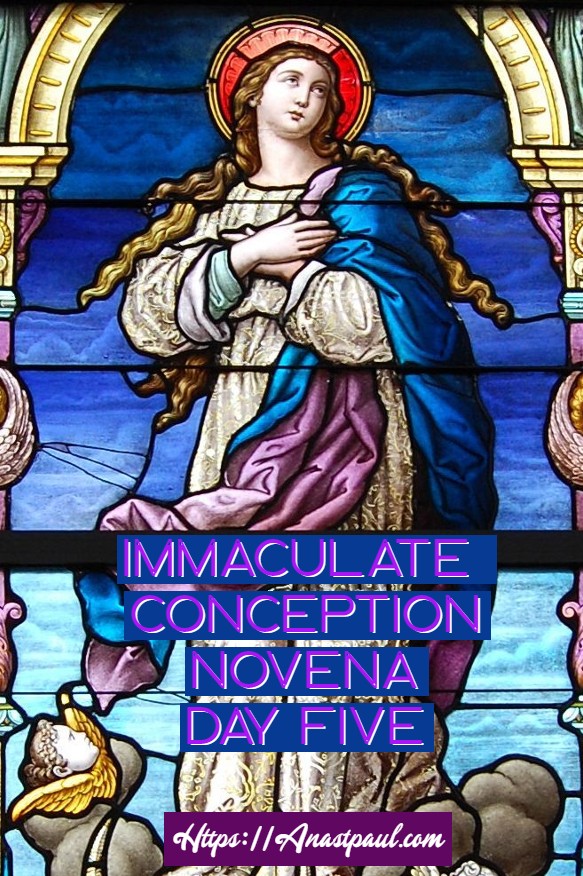
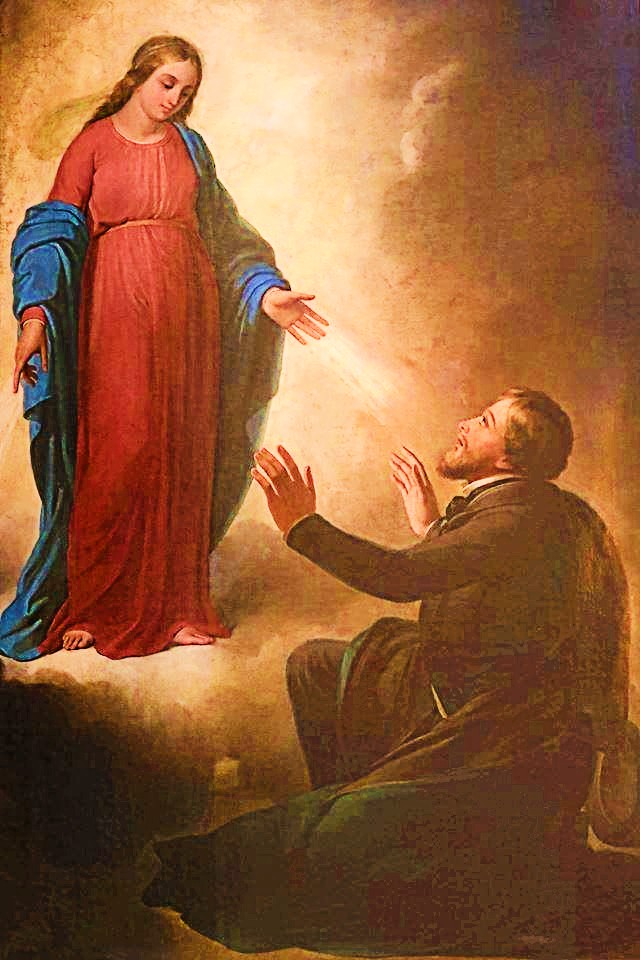
PREPARATORY PRAYER: In thy conception, O Virgin Mary, thou wast immaculate; pray for us to the Father, Whose Son Jesus, conceived in thy womb by the Holy Ghost, thou didst bring forth.
Indulgence. 200 days, every time. (Pius VI, 21 November
MEDITATION: The Immaculate Conception of the Blessed Ever-Virgin Mary inaugurated the fulfilment of the Divine promise made to our first parents in Paradise, in the words addressed to the serpent: “I shall put enmities’ between thee and the woman and thy seed and her seed; she shall crush thy head” (Gen. iii. 15). Mary is the woman in whom Satan never had a part. Her intimate connection with God was announced by the Angel: “Hail, full of grace, the Lord is with thee!” Now was fulfilled the saying of the Psalmist, “The Most High hath sanctified His own tabernacle. God is in the midst, thereof, it shall not be moved: God will help it in the morning early” (Ps. xlv. 5-6). Mary was chosen to be the glorious tabernacle of the Son of God “in the morning early,” that is, in the first moment of her existence. God, called her into being that she might assume the exalted dignity of the Mother of His Son and, therefore, granted her the singular privilege of exemption from Original Sin. In her were fulfilled Solomon’s prophetic words of praise, “Thou art all fair, O my love and there is not a spot in thee” (Cant. iv. 7). It was in view of her Son’s merits, applied to her beforehand that God thus produced in her, the image of the new man regenerated in the Holy Ghost.
PRACTICE: The spirit of darkness holds mankind enslaved but one human being escapes him. A destructive fire lays waste the whole earth but one tree remains unscathed. A terrible tyrant conquers the whole world but one fortified city repels his assaults. This human being retaining liberty, this tree escaping destruction, this city repelling the enemy’s attack is the Blessed Virgin Mary.
Will the Almighty and Merciful God, Who has accomplished such great things in Mary, Who has selected her for His Mother, not to listen to her prayers, when she intercedes for us? St William of Paris exclaims: “No other created being can obtain for us, so many and so great graces from God, as His Mother. By the all-powerful might of her intercession, He honours her – not only as His handmaid but also, as His Mother.” Therefor,e we ought not be surprised when the holy Fathers maintain that a single sigh of Mary, is more effective with God, than the combined intercession of all the Angels and Saints. If, then, Mary’s power is so great, she will surely hear us when we invoke her help, in our combat with Satan. Having conquered him herself, she will also help us to conquer him!
PRAYER OF THE CHURCH: O God, Who through the Immaculate Conception of the Virgin didst prepare a worthy dwelling-place for Thy Divine Son; grant that, as in view of Thy Son, Thou didst preserve her from all taint, so Thou wouldst vouchsafe unto us that cleansed from all sin by her intercession, we too may arrive at Thine eternal glory. Through the same Christ our Lord. Amen.
PRAYER: Mary, thou mystical rose of purity, my heart rejoices with thine at the glorious triumph which thou didst gain over the infernal serpent by thy Immaculate Conception and because thou wast conceived without stain of Original Sin. I thank and praise, with my whole heart, the ever-blessed Trinity, Who granted thee this glorious privilege and I pray thee, to obtain for me strength to overcome all the wiles of the infernal foe, and never to stain my soul with sin. Be thou mine aid; make me, by thy protection, victorious over the common foe of our eternal welfare.
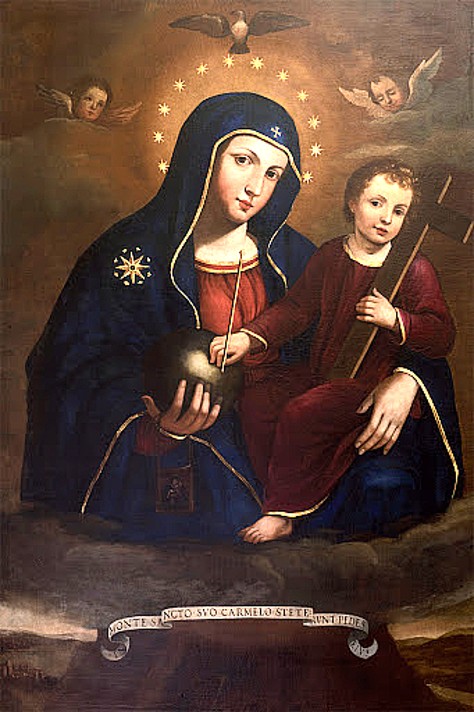
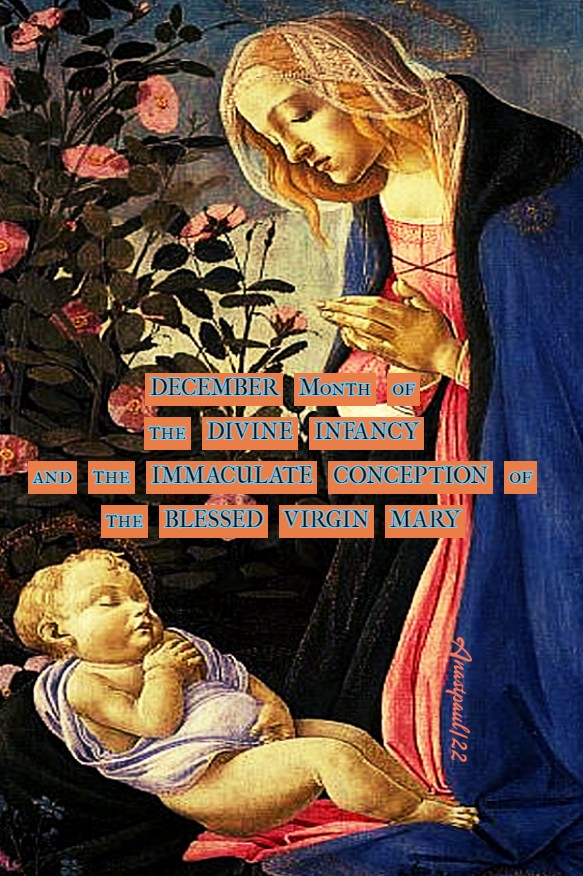
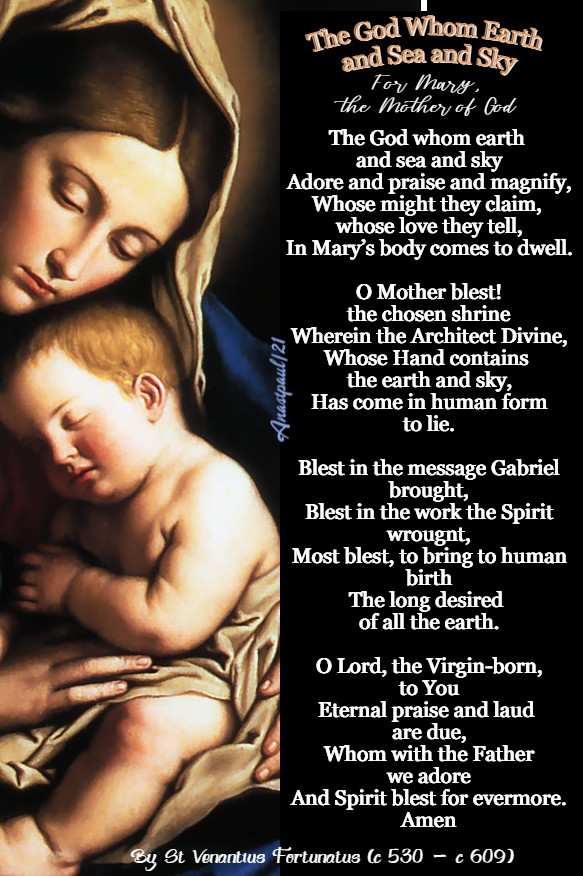
DECEMBER – Month of Devotion to The DIVINE INFANCY and The IMMACULATE CONCEPTION of the BLESSED VIRGIN MARY
The observance of Divine Infancy Month recalls the first Christmas more than 2,000 years ago when Jesus humbled Himself and became Completely Human, while remaining Completely Divine. The Blessed Virgin Mary was chosen to be the glorious Tabernacle of the Son of God. Therefore, in the first moment of her existence, God, called her into being that she might assume the exalted dignity of the Mother of His Son and, therefore, granted her the singular privilege of exemption from Original Sin.
Look to Our Lady – she is already waiting at the crib, desiring to teach us to make our hearts a pleasant crib for the Christ Child to dwell in.
Cultivate a spirit of prayer and attentiveness to His Presence as the Divine Infant by adopting Aspirations suitable to the season, such as:
Divine Infant King Jesus, come down into our hearts! Lord Jesus, through Thy Infant cries in the manger, when Thou was born for me; through Thy tears, when Thou died for me on the Cross; throughThy love, as You live for me in the Tabernacle, have mercy on me and save me. Amen!
Thought for the Day – 1 December – Meditations with Antonio Cardinal Bacci (1881-1971)
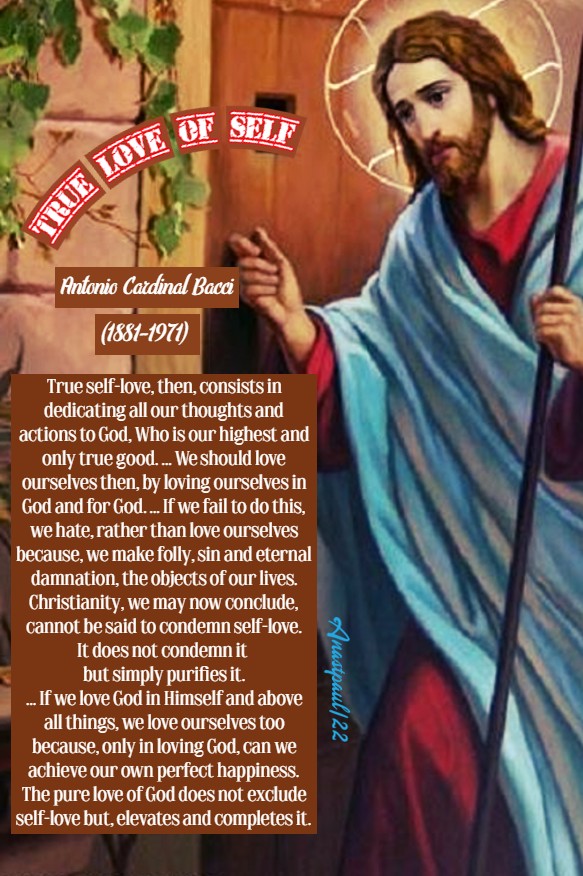
TRUE LOVE of SELF
“St Thomas Aquinas writes that man genuinely loves himself, when he directs all his activities towards God (Summa Theologiae I-II, q 100 a 5 ad 1). True self-love, then, consists in dedicating all our thoughts and actions to God, Who is our highest and only true good.
Anything which does not lead us to God, is vain and useless. Anything which keeps us away from God, separates us from our true good and, therefore, leads us towards everlasting spiritual ruin. We should love ourselves then, by loving ourselves in God and for God. If we fail to do this, we hate, rather than love ourselves because, we make folly, sin and eternal damnation, the objects of our lives. Christianity, we may now conclude, cannot be said to condemn self-love. It does not condemn it but simply purifies it.
The Church has always been opposed to any form of Quietism or Puritanism which would advocate the pure and disinterested love of God to the extent, of excluding, any thought of our own happiness, as the reward of our actions. As if it would be possible to love God, when one had lost Him! On the contrary, if we love God in Himself and above all things, we love ourselves too because, only in loving God, can we achieve our own perfect happiness. The pure love of God does not exclude self-love but, elevates and completes it.”
Quote/s of the Day – 1 December – “The Month of the Divine Infancy and the Immaculate Conception” – Romans 13:11-14, Luke 21:25-33 – Scripture search here: https://www.drbo.org/
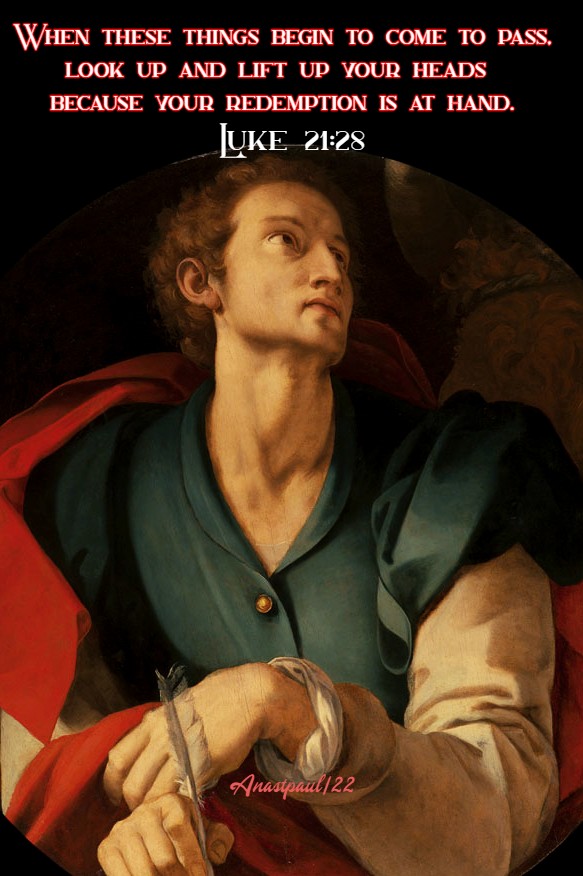
“When these things begin to come to pass, look up and lift up your heads because your redemption is at hand.”
Luke 21:28
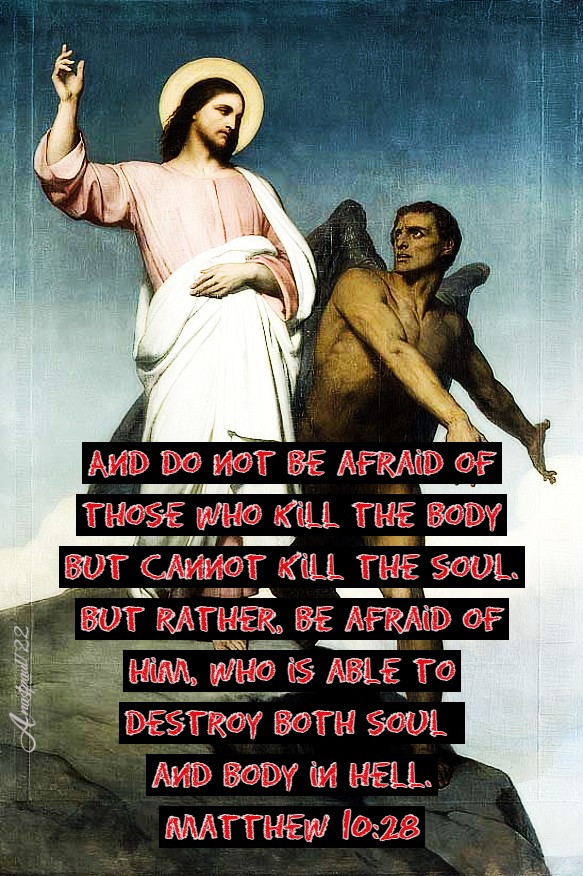
“And do not be afraid of those who kill the body but cannot kill the soul. But rather, be afraid of him, who is able to destroy both soul and body in hell.”
Matthew 10:28
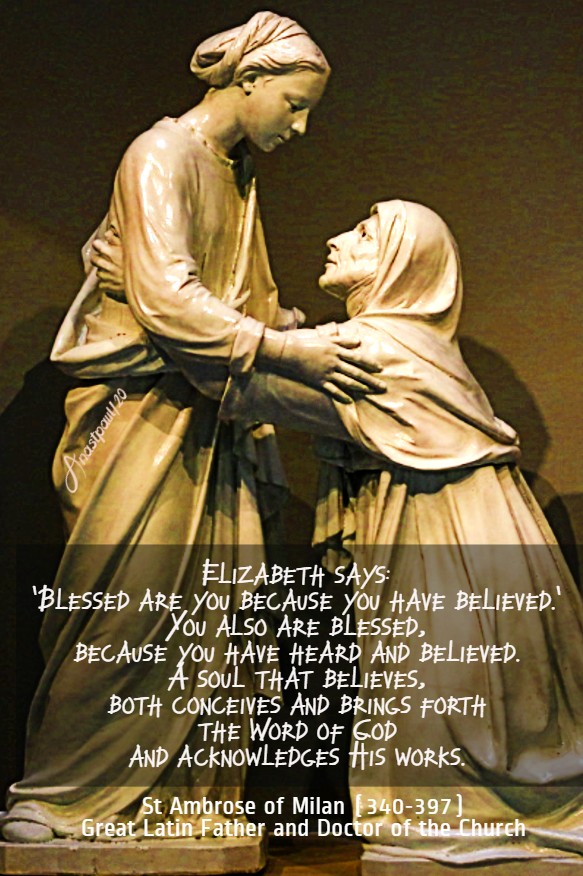
“Elizabeth says: ‘Blessed are you because you have believed.’ You also are blessed, because you have heard and believed. A soul that believes, both conceives and brings forth the Word of God and acknowledges His works.”
St Ambrose of Milan (340-397) Great Latin Father and Doctor of the Church
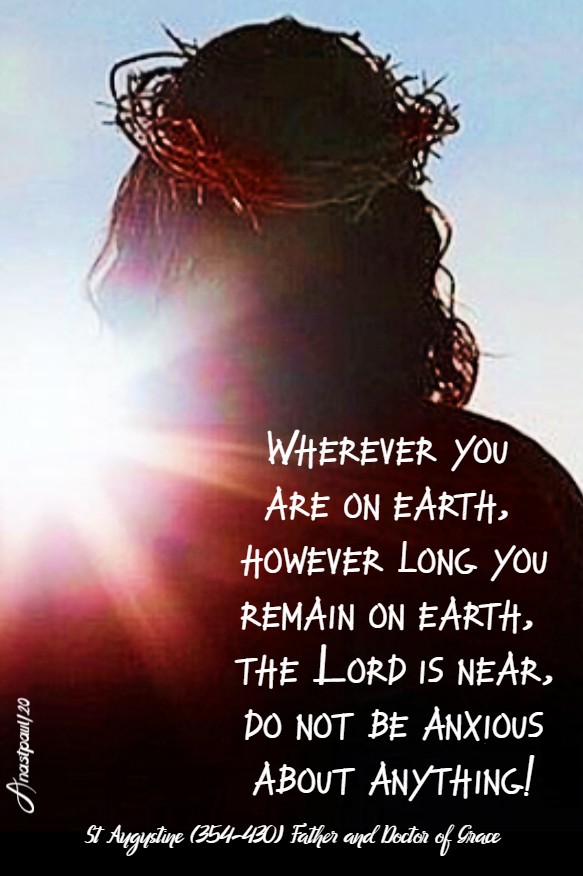
“Wherever you are on earth, however long you remain on earth, the Lord is near, do not be anxious about anything!”
St Augustine (354-430) Father and Doctor of Grace
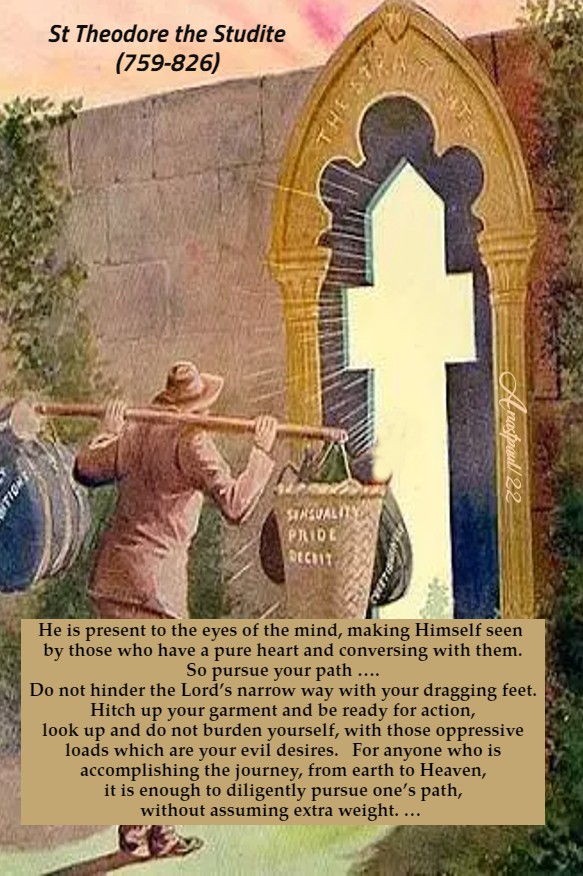
“He is present to the eyes of the mind, making Himself seen by those who have a pure heart and conversing with them. So pursue your path …. Do not hinder the Lord’s narrow way with your dragging feet. Hitch up your garment and be ready for action, look up and do not burden yourself with those oppressive loads which are your evil desires. For anyone who is accomplishing the journey from earth to Heaven, it is enough to diligently pursue one’s path without assuming extra weight. … ”
St Theodore the Studite (759-826) Monk and Theologian at Constantinople
One Minute Reflection – 1 December – “The Month of the Divine Infancy and the Immaculate Conception” – Romans 13:11-14, Luke 21:25-33 – Scripture search here: https://www.drbo.org/
“But when these things begin to come to pass, look up and lift up your heads because your redemption is at hand.” – Luke 21:28
REFLECTION – “We are waiting to celebrate Christ’s Birthday and, according to the Lord’s Promise, we will soon see Him. The Scripture demands from us that we rejoice, to the point of raising our spirit above itself and … leaping for joy at the coming of the Lord…For, even before His advent, the Lord comes to you. Before appearing to the whole world, He comes to visit you personally, He who said: “I will not leave you orphaned; I will come back to you” (Jn 14:18).
In fact, according to the merit and fervour of each one,there is a frequent and familiar advent of the Lord that, in this intermediary period, between his first and last coming, models us on one and prepares us to the other. The Lord comes to us now, so that His First Coming to us, may not be vain and that the last one, may not be that of wrath. Through His present coming, in fact, He works at reforming our pride, in the image of the humility of His first advent, to then remodel our humble body, in the image of the glorified body He will show us when He will return. This is why we should desire and fervently ask this personal coming – which gives us the grace of this first advent and promises us the glory of the last. …
The first was humble and hidden, the last will be resounding and magnificent; the one we are talking about is hidden but it is also magnificent. I say it is hidden, not because it is ignored by whom it concerns but because, it happens secretly in him. … He comes without being seen and He leaves without being noticed. His simple Presence is Light for the soul and for the spirit, by it you may see the invisible and get to know the unknown. This coming of the Lord puts the soul of whom, contemplates it, in a gentle and happy state of admiration. Then, from the inmost depths of man, the cry may burst out: “O Lord, who is like you!” (Ps 34:10). Those who have experienced it know, please God, that those who have not yet had this experience, may feel at least, the desire to !” – Blessed Guerric of Igny (c 1080-1157) Cistercian Abbot (2nd sermon for Advent, 2-4: PL 185, 15-17).
PRAYER – O God, Who, by the message of an Angel, willed to take flesh in the womb of the Blessed Virgin Mary, grant that we, Thy suppliants, who believe her to be truly the Mother of God, may be helped by her intercession with Thee. Through the same Jesus Christ, Thy Son our Lord, Who lives and reigns with Thee, in the unity of the Holy Ghost, God, world without end. Amen (Collect).
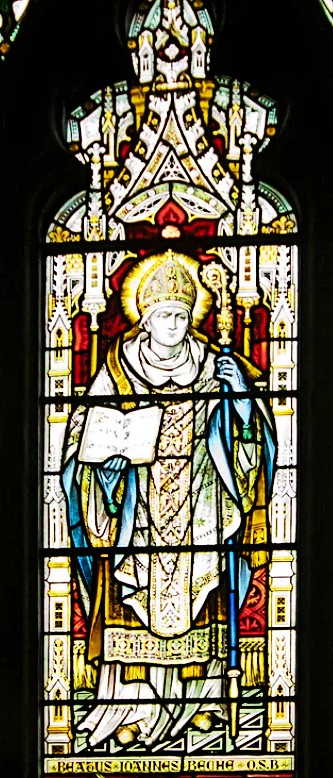
Saint of the Day – 1 December – Blessed John Beche OSB (Died 1539) Benedictine Abbot Martyr, The Last Abbot of St John in Colchester, friend of St John Fisher and St Thomas More, both Martyrs, Born as Thomas Marshall in Colchester, England where he also died on 1 December 1539 by being hanged, drawn and quartered during the persecution of the Church by Henry VIII.
Thomas Marshall, commonly known as John Beche, was a member of the Colchester Beche family, who were a dynasty of renowned pewtersmiths in the town. He was educated at Oxford University (probably Gloucester Hall now Worcester College), where he took his degree of Doctor of Divinity in 1515. He then became the twenty-sixth Abbot of St Werburgh’s, Chester (now Chester Cathedral) and went onto become Abbot of St John the Baptist’s Monastery, Colchester on 10 June 1530.
On 30 March 1534, Abbot Beche took his seat in the House of Lords. In that year, the Act of Supremacy was passed, by which Henry VIII made himself Head of the Church in England and on 7 July, he, the Prior and his community of 14 Monks, signed their agreement to the Act. Many clergymen considered the break with Rome of a temporary nature and that it was possible to distinguish between the King as head of the Church in temporal matters, though not in matters spiritual.
But the Abbot was a strong opponent of the King’s new policy and a friend and admirer of St Thomas More and St John Fisher. Following the execution of three Carthusian Priors, Fisher and More during 1535, his expressions of reverence for them was reported to the authorities. In his homilies, he publicly called them Martyrs of the Catholic Faith and denounced the persecution of the Church.
In November, 1538, Beche denied the legal right of Henry VIII’s royal commission to confiscate his Abbey. He was then committed to the Tower of London on a charge of treason, despite being discharged, he was re-arrested and taken back to Colchester.
The only remaining part of St John’s Abbey is the Gatehouse, above
The Abbot’s servant said that his master denied that the King could suppress the Abbey because it was above the yearly value of 300 specified in the statute. Other witnesses testified that Beche had said that “God would take vengeance for the tearing down of these houses of religion.”, that Fisher and More “died like holy men and it was great sorrow for their deaths” and he claimed that the King had broken with the Catholic Church because he wanted, against the Commandments of God and of the Church, to marry Anne Boleyn. John initially denied these charges but at his trial in Colchester, in November, 1539, he no longer pleaded against the charges. He was convicted and executed. The execution occurred on the Abbot’s lands, probably at Greenstead. His pectoral cross was rescued by the Mannock family of Gifford Hall, Stoke-by-Nayland, who entrusted it to Buckfast Abbey in Devon, where it still remains. On this Cross is inscribed:
“May the Passion of our Lord Jesus Christ bring us out of sorrow and sadness. This Sign of the Cross shall be in the heavens when our Lord shall come to judgement. Behold, O man, the Redeemer suffered for thee. He that will come after Me, let him take up his cross and follow Me.”
Pope Leo XIII decreed the Beatification of Abbot John Beche on 13 May 1895.
St Agericus of Verdun St Agnofleta St Alexander Briant St Ambon of Rome St Ananias of Arbela St Ansanus the Baptizer Bl Antony Bonfadini St Candida of Rome St Candres of Maestricht St Cassian of Rome St Castritian of Milan Bl Christian of Perugia St Constantine of Javron St Declan St Didorus St Domnolus of Le Mans
St Evasius of Asti St Filatus of Rome St Florence of Poitiers St Florentius St Grwst St Jabinus of Rome and Companions Blessed John Beche OSB (Died 1539) Abbot Martyr St Latinus of Rome St Leontius of Fréjus St Lucius of Rome St Marianus St Marina of Rome St Martinus St Nahum the Prophet St Natalia of Nicomedia St Olympiades St Proculus of Narni St Ralph Sherwin St Resignatus of Maastricht Bl Richard Langley St Rogatus of Rome St Simon of Cyrene St Superatus of Rome St Ursicinus of Brescia
Martyrs of Oxford University: A joint commemoration of all the men who studied at one of the colleges of Oxford University and who were later Martyred for their loyalty to the Catholic Church during the official persecutions in the Protestant Reformation in England under Elizabeth I. They are:
Blessed Edward James • Blessed Edward Powell • Blessed Edward Stransham • Blessed George Napper • Blessed George Nichols • Blessed Hugh More • Blessed Humphrey Pritchard • Blessed James Bell • Blessed James Fenn • Blessed John Bodey • Blessed John Cornelius • Blessed John Forest • Blessed John Ingram • Blessed John Mason • Blessed John Munden • Blessed John Shert • Blessed John Slade • Blessed John Storey • Blessed Lawrence Richardson • Blessed Mark Barkworth • Blessed Richard Bere • Blessed Richard Rolle de Hampole • Blessed Richard Sergeant • Blessed Richard Thirkeld • Blessed Richard Yaxley • Blessed Robert Anderton • Blessed Robert Nutter • Blessed Robert Widmerpool • Blessed Stephen Rowsham • Blessed Thomas Belson • Blessed Thomas Cottam • Blessed Thomas Pilcher • Blessed Thomas Plumtree • Blessed Thomas Reynolds • Blessed William Filby • Blessed William Hart • Blessed William Hartley • Saint Alexander Briant • Saint Cuthbert Mayne • Saint Edmund Campion • Saint John Boste • Saint John of Bridlington • Saint John Roberts • Saint Ralph Sherwin • Saint Thomas Garnet • Saint Thomas More.
PREPARATORY PRAYER: In thy conception, O Virgin Mary, thou wast immaculate; pray for us to the Father, Whose Son Jesus, conceived in thy womb by the Holy Ghost, thou didst bring forth.
Indulgence. 200 days, every time (Pope Pius VI, 21 November
MEDITATION: According to the definition of Pope Pius IX, the Immaculate Conception of the Blessed Virgin Mary is that privilege by which she was preserved, in view of the merits of our Saviour Jesus Christ, from Original Sin in the first moment of her conception.
By solemnly proclaiming the Dogma of Mary’s Immaculate Conception, the Church confirmed anew, the fundamental principles of Christianity which, in our times, are so frequently attacked, derided, or forgotten. God reserved the solemn proclamation of this Dogma which seemingly, has no practical bearing on the Christian life, for our age, to recall to our mind the Doctrines resulting from it.
PRACTICE: The most important of these Doctrines, is that of Original Sin, which today is rejected by many as a debasement of human nature and is forgotten by others, as having no practical influence on our moral state. By the promulgation of the Doctrine of the Immaculate Conception of the Blessed Virgin Mary, the Church solemnly declares and defines, as an article of faith, that the Blessed Virgin Mary is conceived without the stain of Original Sin, by a special privilege and grace of God. If, then, Mary’s sinlessness is an exception, the general rule remains in force and all other human beings enter this world in the state of Original Sin. Thus, by the proclamation of the Dogma of the Immaculate Conception, the Church combats human pride and sensuality, the foremost vices of the age.
PRAYER OF THE CHURCH: O God, Who through the Immaculate Conception of the Virgin didst prepare a worthy dwelling-place for Thy Divine Son; grant that, as in view of Thy Son, Thou didst preserve her from all taint, so Thou wouldst vouchsafe unto us that cleansed from all sin by her intercession, we too may arrive at Thine eternal glory. Through the same Christ our Lord. Amen.
PRAYER Mary, unsullied lily of heavenly purity, I rejoice with thee because, at thy conception’s earliest dawn, thou wast full of grace and endowed with the perfect use of reason. I thank and adore the ever-blessed Trinity, Who gave thee such high gifts. I am overwhelmed with shame in thy presence, to see myself so poor in grace. O thou who wast filled with heavenly grace, impart some portion of it to my soul and make to me share the treasures of thy Immaculate Conception.
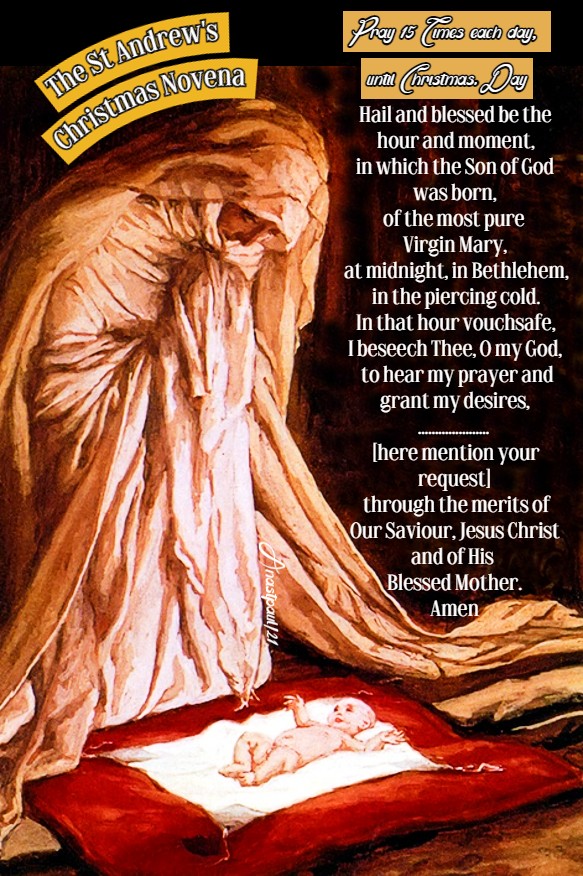
The St Andrew’s Christmas Novena The Christmas Anticipation Prayer
The Novena is not actually addressed to Saint Andrew but to God Himself, asking Him to grant our request in honour of the birth of His Son at Christmas. You can say the prayer all 15 times, all at once; or divide up the recitation as necessary (perhaps five times at each meal). We say ours after the Family Rosary each day, with each member saying it a number of times to total 15.
Prayed as a family, the Saint Andrew Christmas Novena is a very good way to help focus the attention of your family and children on the Advent season. nd the reason for the festivities to come.
Pray 15 Times each day, until Christmas Day
Hail and blessed be the hour and moment, in which the Son of God was born, of the most pure Virgin Mary, at midnight, in Bethlehem, in the piercing cold. In that hour vouchsafe, I beseech Thee, O my God, to hear my prayer and grant my desires, ………………… [here mention your request] through the merits of Our Saviour, Jesus Christ and of His Blessed Mother. Amen
Thought for the Day – 30 November – Meditations with Antonio Cardinal Bacci (1881-1971)
Recollection
“There is a perfect picture of the spiritual and recollected man in The Imitation of Christ.
“The man of interior life soon recollects himself because he never wholly pours forth himself upon exterior things. Exterior labour is no prejudice to him, nor any employment necessary for the time but, as things happen, so he accommodates himself to them. He who is well disposed and orderly in his interior, is not concerned about the strange and perverse doings of ment,” (Bk II c 1:7).
The Imitation of Christ also conta\ins the following passage on the love of solitude.
“Seek a convenient time to attend to thyself and reflect often upon the benefits of God to thee. Let curiosities alone. Read such matters as may produce compunction, rather than give occupation. If you withdraw from superfluous talking and idle visitings and from hearing new things and rumours, you will find time sufficient and proper, to spend in good meditations. The greatest Saints shunned the company of men when they could and chose rather to live unto God in secret. *As often as I have been amongst men, said one, I have returned less a man. (*Ana says – St Albert the Great). This we too often experience when we talk often.” (Bk I c 20, 1-2).
“The cell continually dwelt in, grows sweet” the same chapter continues “but, ill-guarded, it begets weariness” (Bk I c 20, 5).”
Quote/s of the Day – 30 November – The Feast of St Andrew, Apostle of Christ, Martyr on the Cross for Christ
“He found first, his brother Simon and said to him: We have found the Messias.”
John 1:41
This is what the Apostle is claimed to have said, on the occasion of St Andrew’s Martyrdom, according to an ancient account (which dates to the beginning of the sixth century), entitled –
The Passion of Andrew:
“Hail, O Cross, inaugurated by the Body of Christ and adorned with His limbs as though they were precious pearls. Before the Lord mounted you, you inspired an earthly fear. Now, instead, endowed with heavenly love, you are accepted as a gift.
Believers know of the great joy that you possess and of the multitude of gifts you have prepared. I come to you, therefore, confident and joyful, so that you too may receive me, exultant as a disciple of the One Who was hung upon you….
O blessed Cross, clothed in the majesty and beauty of the Lord’s limbs!…
Take me, carry me far from men and restore me to my Teacher, so that, through you, the One who redeemed me by you, may receive me.
One Minute Reflection – 30 November – Feast of St Andrew Apostle – Romans 10:10-18, Matthew 4:18-22 – Scripture search here: https://www.drbo.org/
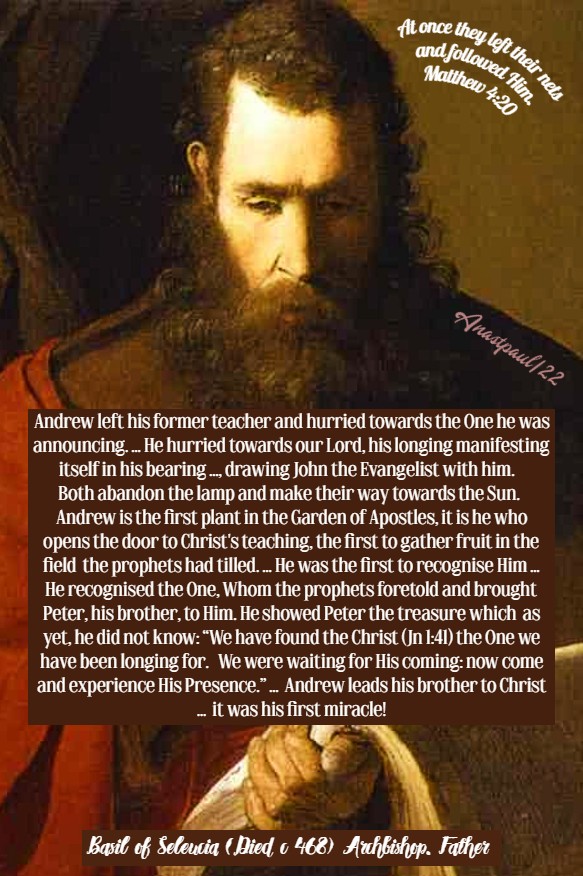
“At once they left their nets and followed Him.” – Matthew 4:20
REFLECTION – “Andrew was the first of the Apostles to acknowledge the Lord as his teacher. … He abandoned John the Baptist’s teaching to attend the school of Christ. … He sought the true Light in the shining of the lamp (Jn 5:35). Beneath its dampened glow he prepared himself for Christ’s splendour. … Teacher though he was, John the Baptist became servant and herald of the Christ Who stood before him: “Behold,” he said, “the Lamb of God who takes away the sin of the world” (Jn 1:29). Behold Him Who delivers us from death; behold Him Who destroys sin. As for me, I was sent, not as the bridegroom but as the one who accompanies Him (Jn 3:29). I came as servant, not as lord.”
Struck by these words, Andrew left his former teacher and hurried towards the One he was announcing. … He hurried towards our Lord, his longing manifesting itself in his bearing … drawing John the Evangelist with him. Both abandon the lamp and make their way towards the Sun. Andrew is the first plant in the Garden of Apostles, it is he who opens the door to Christ’s teaching, the first to gather fruit in the field the prophets had tilled. … He was the first to recognise Him, of Whom Moses said: “A prophet like me, will the Lord your God raise up for you; to him you shall listen” (Dt 18:15). … He recognised the One, Whom the prophets foretold and brought Peter, his brother, to Him. He showed Peter the treasure which as yet, he did not know: “We have found the Christ (Jn 1:41) the One we have been longing for. We were waiting for His coming: now come and experience His Presence.” … Andrew leads his brother to Christ … – it was his first miracle!” – Basil of Seleucia (Died c 468) Archbishop (,).
PRAYER – We humbly pray Thy majesty, O Lord, that, as blessed Andrew was a preacher and ruler in Thy Church, so he may always intercede for us with Thee. Through Jesus Christ, Thy Son our Lord, Who lives and reigns with Thee, in the unity of the Holy Ghost, God, world without end. Amen (Collect).



























You must be logged in to post a comment.