One Minute Reflection – 21 November – The Presentation of the Blessed Virgin Mary – Sir ach24:14-1, Luke 11:27-28 – Scripture search here: https://www.drbo.org/
“Blessed is the womb that bore you” – Luke 11:27
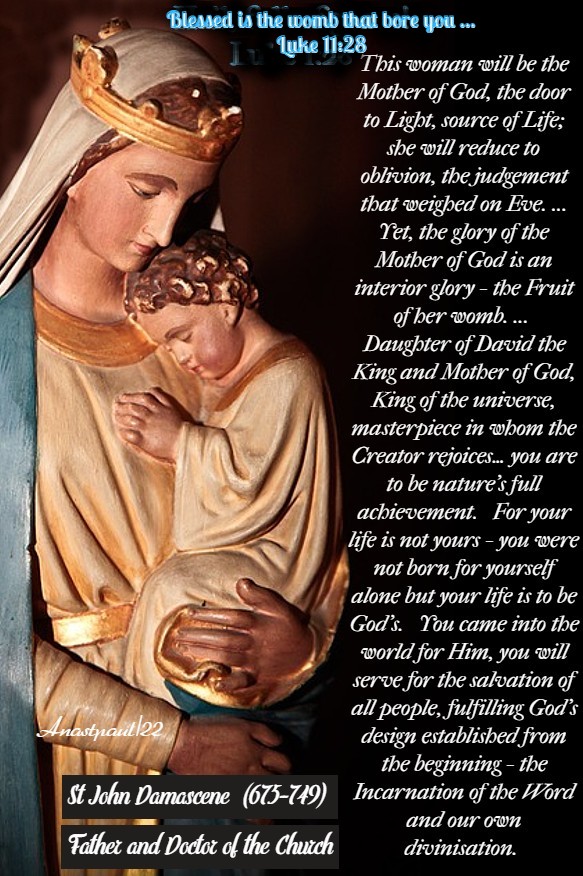
REFLECTION – “This woman will be the Mother of God, the door to Light, source of Life; she will reduce to oblivion the judgement that weighed on Eve. “The rich among the people seek the face” of this woman, “the kings of the nations shall pay her homage” they shall “ offer gifts”…, yet the glory of the Mother of God is an interior glory: the fruit of her womb.
O woman, so worthy of love, thrice happy, “blessed are you among women and blessed is the fruit of your womb.” Daughter of David the king and Mother of God, King of the universe, masterpiece in whom the Creator rejoices…: you are to be nature’s full achievement. For you, life is not yours; you were not born for yourself alone but your life is to be God’s. You came into the world for Him, you will serve for the salvation of all people, fulfilling God’s design established from the beginning: the Incarnation of the Word and our own divinisation. Your whole desire is to feed on the words of God, to be strengthened by their sap, like “a green olive tree in the house of God,” “like a tree planted by running water,” you are the “tree of life” who “yielded its fruit in due season”…
He Who is Infinite, Limitless, came to dwell in your womb; God, the Child Jesus, was nourished by your milk. You are the ever virginal Doorway of God; your hands hold your God; your lap is a throne raised up above the Cherubim… You are the wedding chamber of the Spirit, the “city of the living God, gladdened by the runlets of the stream”, that is to say, the waves of the Spirit’s gifts. You are “all fair, the Beloved” of God.” – St John Damascene (675-749) Monk, Theologian, Father and Doctor of the Church (Homily on the Nativity of the Virgin, # 9 ; SC 80) [ ( Biblical references : Ps 44[45],13; 71[72],11.10; Mt 2,11; Lk 1,42; Is 62,5; Ps 51[52],10; 1,3; cf Gn 2,9, Rv 22,2; cf Ez 44,2; Ps 79[80],2; cf Sg 1,4; Ps 45[46],5; Sg 4,7]. Link to searchable Sacred Scripture here: https://www.drbo.org/
PRAYER – O God, by Whose will the blessed Mary, ever Virgin, the dwelling place of the Holy Spirit, was on this day presented in the temple, grant, we beseech Thee, that by her intercession, we may be found worthy to be brought into the temple of Thy glory. Through Jesus Christ, Thy Son our Lord, Who lives and reigns with Thee, in the unity of the Holy Ghost, God, world without end. Amen (Collect).
The Presentation of the Blessed Virgin Mary By Fr Francis Xavier Weninger SJ (1805-1888) (Excrrpt)
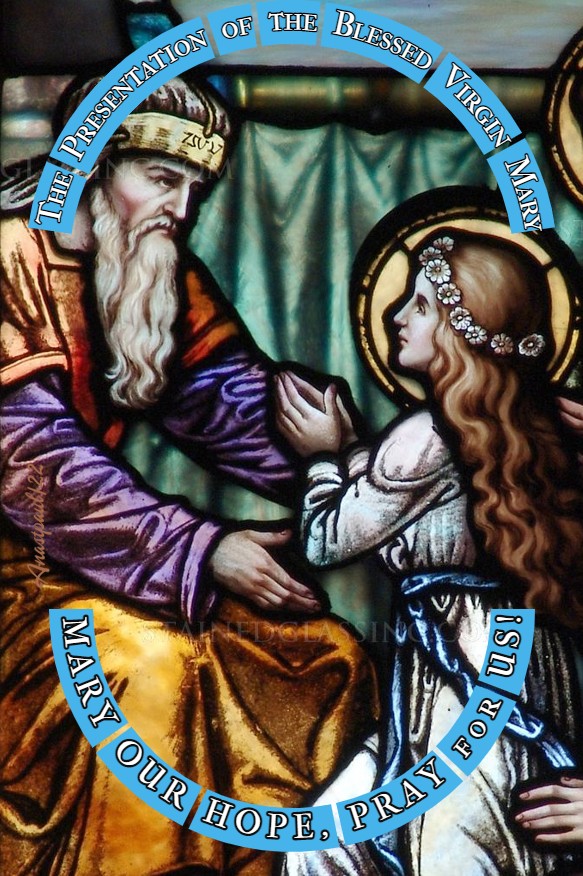
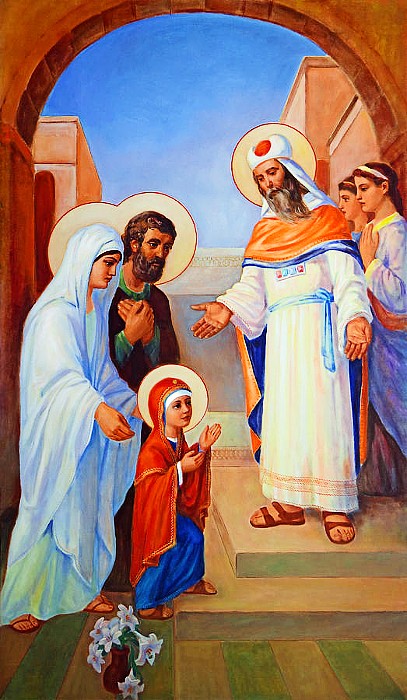
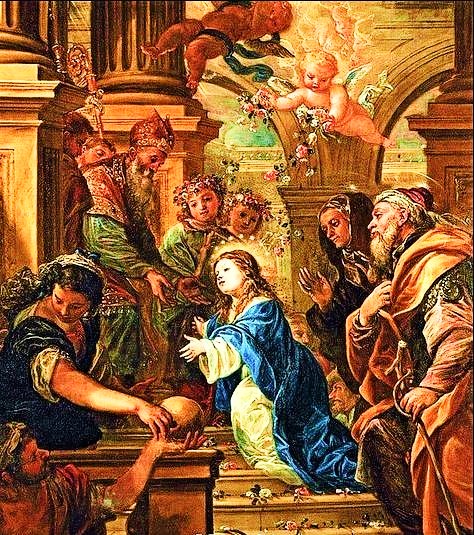
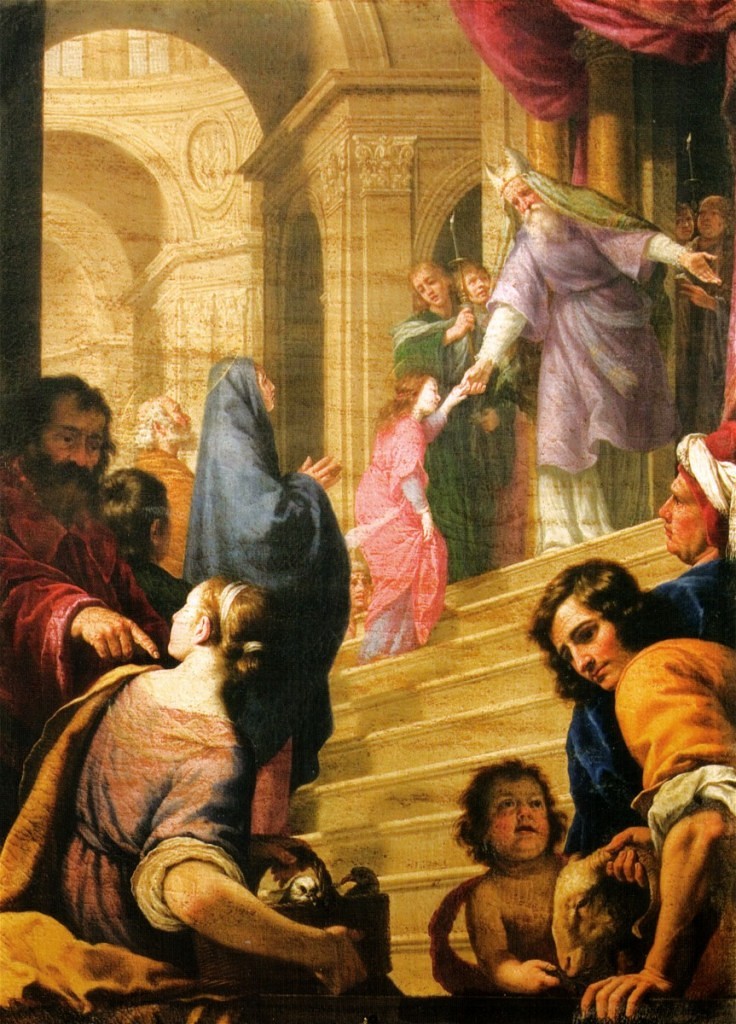
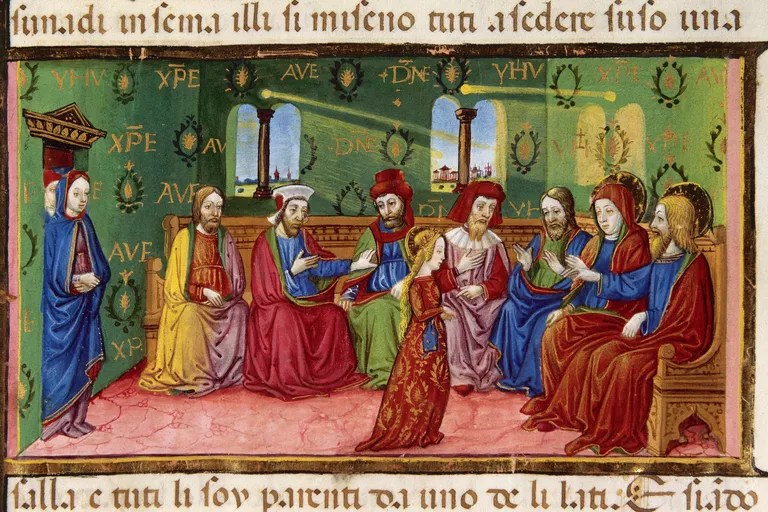
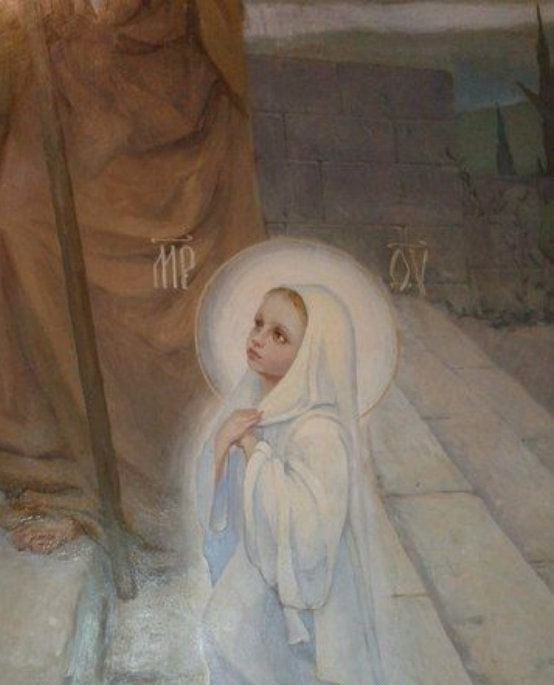
Today’s Festival is called the Presentation of Mary, because on this day, Joachim and Anna, the holy parents of the Blessed Virgin, Consecrated their little daughter to the Divine service in the temple at Jerusalem and Mary Consecrated herself to the Almighty.
At that time, there were two ways of Consecrating children – one was ordained by the law, which required every male child to be offered to God, forty days and every female child, eighty days after its birth. This ceremony was called the Consecration of the child and the purification of the mother.
The second kind of Consecration was a voluntary self-oblation by which some persons devoted themselves to the Almighty. There were also many parents who, either before, or immediately after their child’s birth, Consecrated it to the service of the Lord, sometimes for a few years, sometimes for life. To this end, several separate dwellings had been erected near the Temple, for men, women, youths and maidens, where they remained for the time which had been fixed by themselves or their parents.
Their occupations consisted in decorating the temple and in making the garments which the priests and levites wore during their sacred functions. Thus we read in the first book of Kings, that Anne the spouse of Elkana, made a vow that if she gave birth to a male child, she would Consecrate him to the Lord. The Lord blessed her and she brought forth a son, whom she named Samuel and afterwards, Consecrated to the Most High, through the hands of the High Priest, Heli. In the second book of the Maccabees, we find mention of virgins, who lived and were educated in the Temple, that is, in a building annexed to it.
t is the belief of several holy Fathers, that Joachim and Anna, being already advanced in years and having no issue, made a vow to God that if He would bless them with a child and thus, take from them, the dishonour of being barren, they would Consecrate their offspring to His service in the Temple.
God heard their prayer and blessed them so greatly that they became the parents of the most holy of all human beings, Mary, the ever Blessed Virgin. For three years they kept this sacred treasure at home, after which time, although Mary was their only comfort, they resigned her with pious fortitude, in fulfilment of their vow. Hence they went, with their daughter, to Jerusalem, presented her to the priest in the Temple and Consecrated her, through his hands, to the service of the Almighty.
Practical Considerations of this Feast:
In the third year of her life, Mary, the Blessed Virgin, consecrated herself to the service of the Almighty and this, not for days or years only but forever, for, as long as she lived, she ceased not to serve the Lord.
How is it with you? Did you also begin in your tender years to serve the Lord. Or to whom did you dedicate the years of your life? Ah! confess it with weeping eyes and repentant heart, not to the Lord but to the world, to the flesh, to Satan, you gave the years of your youth and, perhaps you have not even made the resolution to serve your God. Or it maybe, you think it will be time enough, when you are old, although it is unknown to you, whether you will ever count many years. But even had you been assured of this, tell me, do you not deserve to be disowned by the Almighty as a second Cain, since like him, you sacrificed only what was of less value and not, like the pious Abel, what was the best? God cursed him who took from his flock the meanest for his offering. This Curse you also deserve, for not having given to the Lord, your first and best years but reserving your old age for Him. Oh! truly you have reason to weep over this wickedness as long as you live. Humbly beg God to pardon you and resolve, at the same time, to serve Him from this hour most fervently and without ceasing, until your end, as the Blessed Virgin did. You have perhaps but a short time more, hence employ every moment in the service of God. The benefit will be yours and will last through all eternity.
In Consecrating herself to the Almighty, the Blessed Virgin gave herself entirely to Him without any reservation. Soul and body, every power of her soul, every member of her body, her whole heart and life, all was given forevermore to the service of the Most High. Doubtless you resolve today to serve your Lord most fervently for the future. Consecrate yourself, then, today to His service but without any reservation, your whole heart, your entire life, your soul with all its powers, your entire body with all its members, sacrifice all willingly and for vermore to the Lord. God Who desires the whole heart and not a part of it, wishes also your whole soul, your whole body, your entire life.
Do you wish to divide your heart and to give one part of it to the Almighty the other to the world and Satan? To serve God with one member of your body, and to offend Him with another? Do you wish to employ your memory to honour God with good thoughts but to soil your will with wicked desires? Oh! then do not imagine that your sacrifice will be acceptable to God. It will rather be a horror in the eyes of Him Who commands us to serve Him alone, and to sacrifice everythying to His service. Make today, a perfect sacrifice, so that you may, at least in something, follow the Blessed Virgin. And take care that you do not, after the lapse of some time, retract your sacrifice.
You Consecrate, today, your eyes, your tongue,and your hands, with the intention to use them only in God’s service. Guard yourself, lest, after some hours or days, you misuse them in offending the Lord, for, this would be as much robbing the Altar of what you have given to the Most High. Mary did not act thus. It is written: “I am the Lord that hate robbery in a holocaust,” (Isa lxi.)
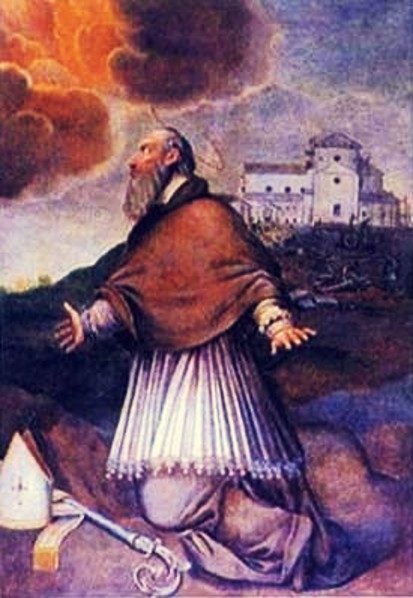
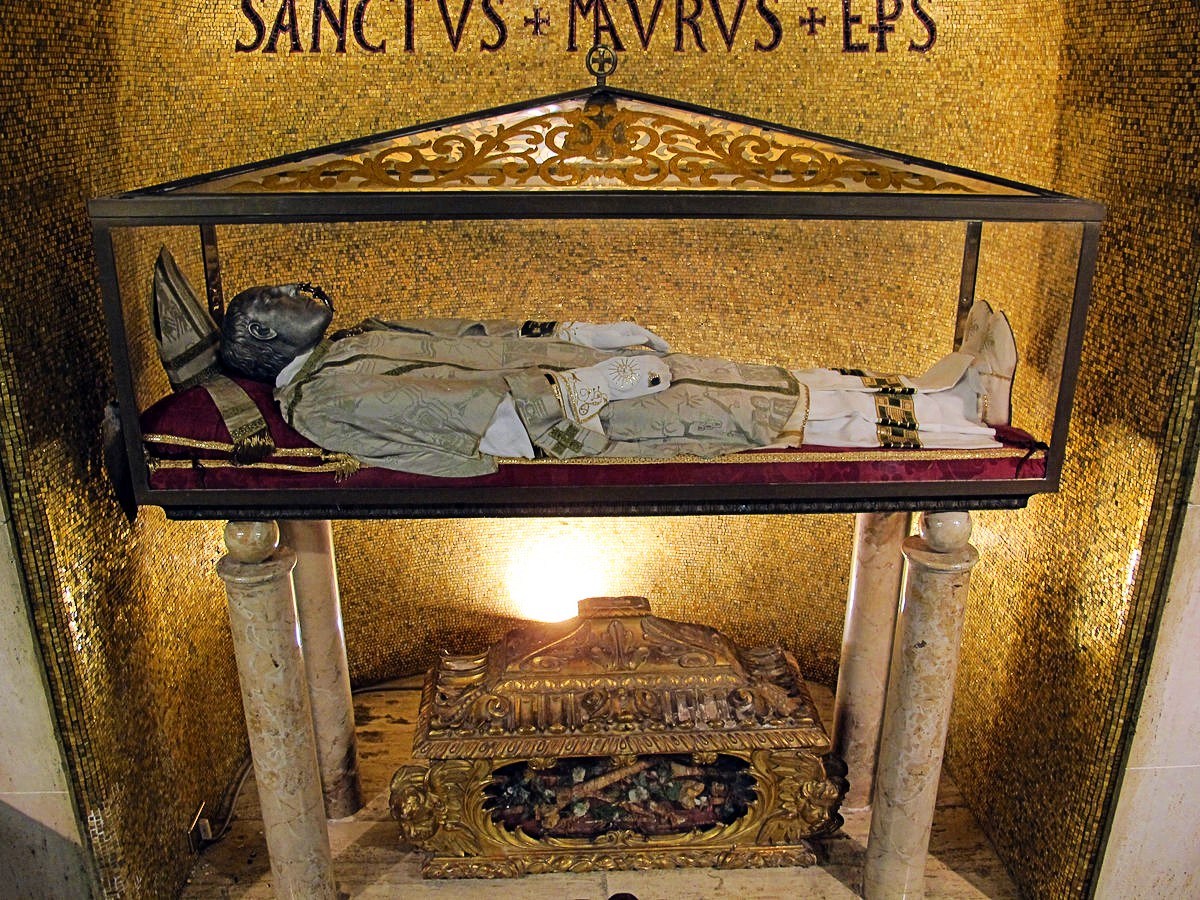
Saint of the Day – 21 November – Saint Maurus of Cesena (Died 946) Bishop, Monk, Abbot. nephew of Pope John IX. Born in Rome, Italy and died on 21 November 946 in Cesena, Flaminia, Italy of natural causes. Patronage – against blindness. Also known as – Maur, Mauro.
Maurus was Ordained then became a Benedictine Monk at Classis in Ravenna, Italy. Having served as Abbot of the Monastery of Classis, in Ravenna, Italy, Maurus became Bishop of Cesena around 934, where he served until his death.
A zealous and devoted shepherd, he found the strength to care for his flock during the day, by withdrawing to pray in the evenings, to a hilltop retreat outside the City. Here, amid a densely wooded forest, he erected for himself a hermitage and Chapel. This retreat symbolically represented for him, Jerusalem’s Mount of Olives, where Christ withdrew to pray. During Lent, Maurus spent each day at his hermitage in solitude, praying and fasting.
Maurus was buried in a marble tomb on Monte Spaziano, Italy next to his small cell where he would retreat for prayer and solitude. His grave was lost for many years but accidentally re-discovered in the 11th century, whereafter his Relics were enshrined in the nearby Benedictine Church. In 1470 they were again moved to the Cathedral of Saint John the Baptist in Cesena with some Relics being enshrined in Ravenna.
Following his death, a number of miracles were attributed to his intercession. Upon arriving at the Church enclosing Maurus’ tomb, a blind woman from France passionately declared her determination never to leave there, unless Maurus obtained the restoration of her sight. Having given the Saint this “ultimatum,” she acted on her words, by erecting for her habitation, a small hut adjacent to the Church and began her prayers. After persevering for eight days in her supplications, the woman received her sight and, thereupon, gave thanks to God and Saint Maurus.
St Amelberga of Susteren St Celsus the Martyr St Clement the Martyr St Colman Iomramha of Inishmore St Columba the Younger St Demetrius of Ostia St Digain Bl Eoin O’Mulkern St Pope Gelasius I St Heliodorus of Pamphylia St Hilary of Vulturno St Honorius of Ostia St Maurus of Cesena (Died 946) Bishop, Priest, Monk, Abbot St Maurus of Porec St Maurus of Verona Bl Nicholas Giustiniani St Rufus of Rome
Martyrs of Asta – 3 Saints: Three Christians Martyred together for their faith during the persecutions of Diocletian. The only details about them to survive are their names – Eutychius, Honorius and Stephen. They were martyred in c 300 at Asta, Andalusia, Spain.
Thought for the Day – 20 November – Meditations with Antonio Cardinal Bacci (1881-1971)
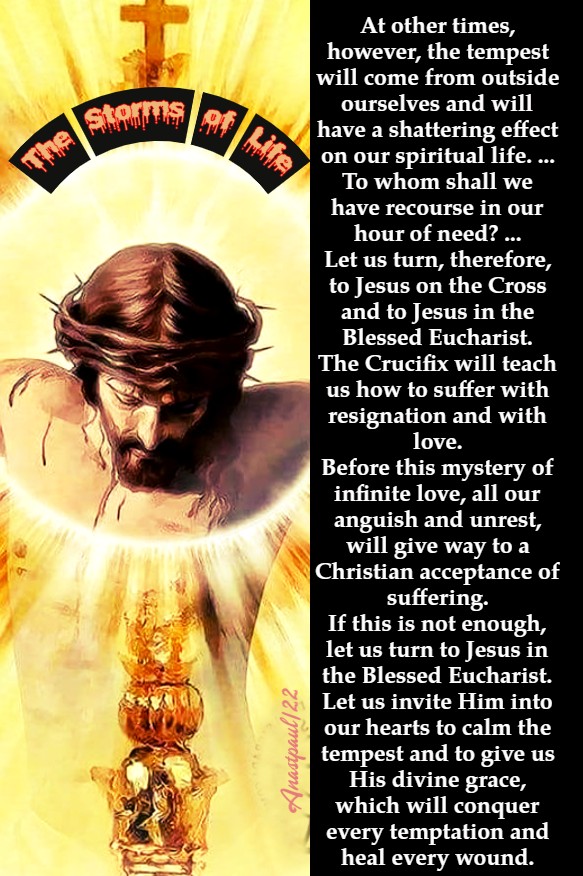
The Storms of Life
“At other times, however, the tempest will come from outside ourselves and will have a shattering effect on our spiritual life. It may be some insult which has seriously wounded us. There may be somebody near to us who has grown quite insufferable. Or perhaps suffering will come to us in the guise of illness, disgrace or loss of our dear ones. We shall feel lonely and abandoned in the midst of the storm. To whom shall we have recourse in our hour of need? Shall we turn to our fellow-men? Perhaps there will be nobody able to understand us perfectly, or, if there is somebody who sympathises with us,he may be able to do nothing for us, save to utter a few kind words.
Let us turn, therefore, to Jesus on the Cross and to Jesus in the Blessed Eucharist. The Crucifix will teach us how to suffer with resignation and with love. Before this mystery of infinite love, all our anguish and unrest, will give way to a Christian acceptance of suffering.
If this is not enough, let us turn to Jesus in the Blessed Eucharist. Let us invite Him into our hearts to calm the tempest and to give us His divine grace, which will conquer every temptation and heal every wound.”
Quote/s of the Day – 20 November – “The Month of the Holy Souls in Purgatory”
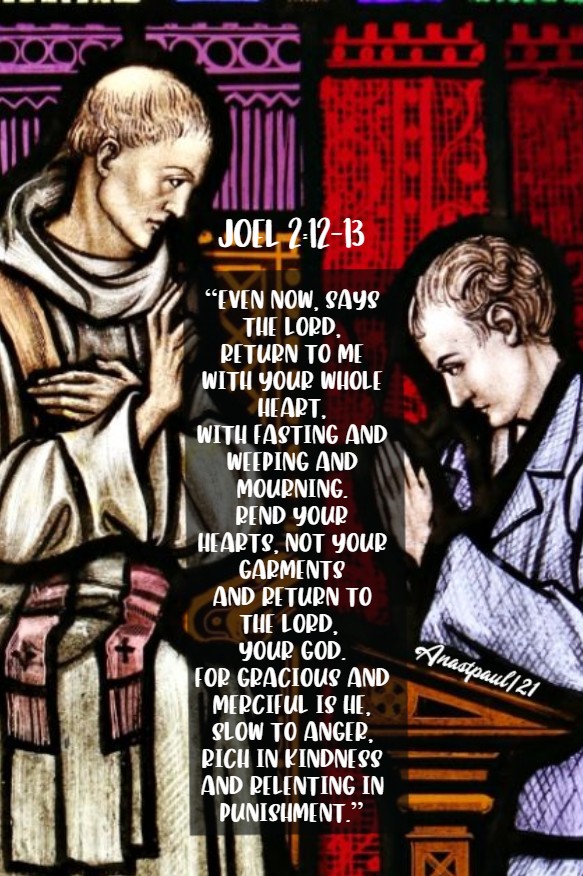
“Even now, says the LORD, return to me with your whole heart, with fasting and weeping and mourning. Rend your hearts, not your garments and return to the LORD, your God. For gracious and merciful is he, slow to anger, rich in kindness and relenting in punishment.”
Joel 2:12-13
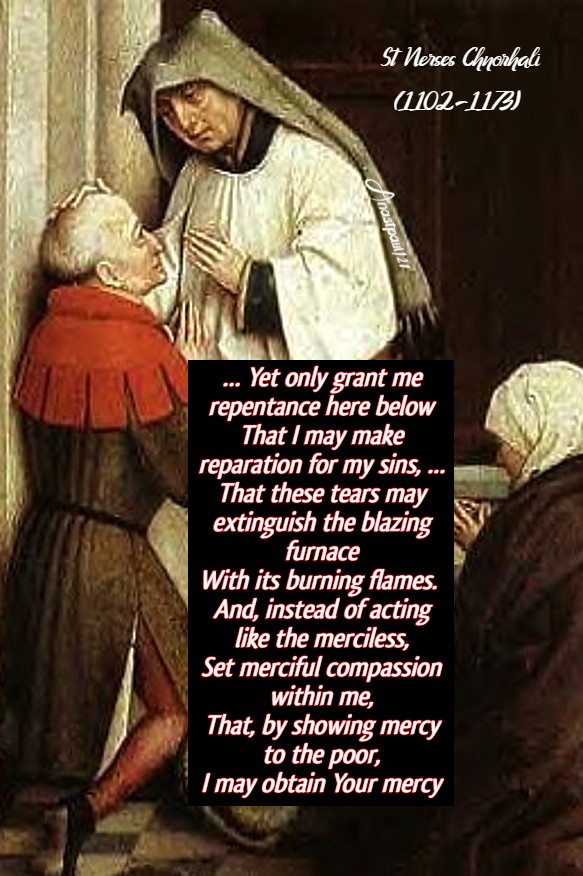
“ … Yet only grant me repentance here below That I may make reparation for my sins, … That these tears may extinguish the blazing furnace With its burning flames. …
And, instead of acting like the merciless, Set merciful compassion within me, That, by showing mercy to the poor, I may obtain Your mercy.”
St Nerses Chnorhali (1102-1173) Armenian Bishop
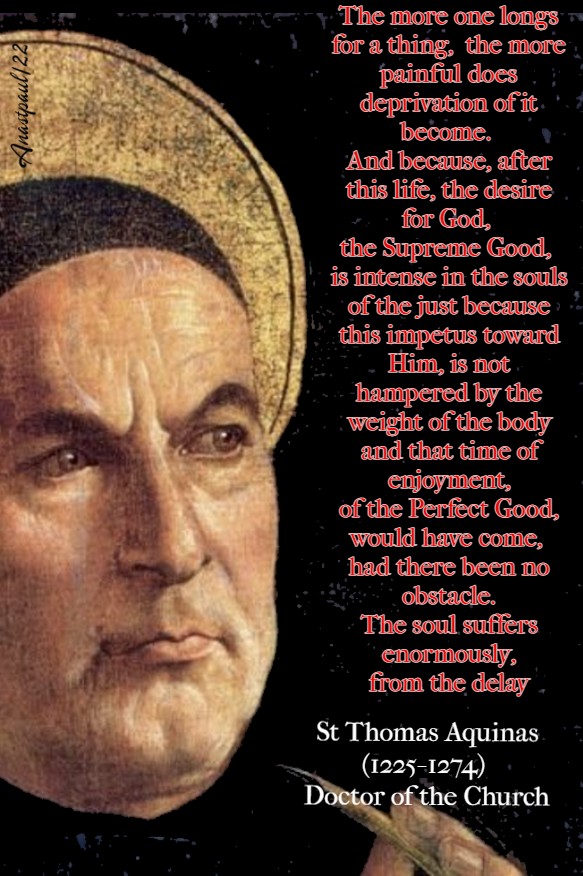
“The more one longs for a thing, the more painful does deprivation of it become. And because, after this life, the desire for God, the Supreme Good, is intense in the souls of the just – (because this impetus toward Him, is not hampered by the weight of the body and that time of enjoyment, of the Perfect Good, would have come) had there been no obstacle. The soul suffers enormously, from the delay.”
St Thomas Aquinas (1225-1274) Angelic Doctor
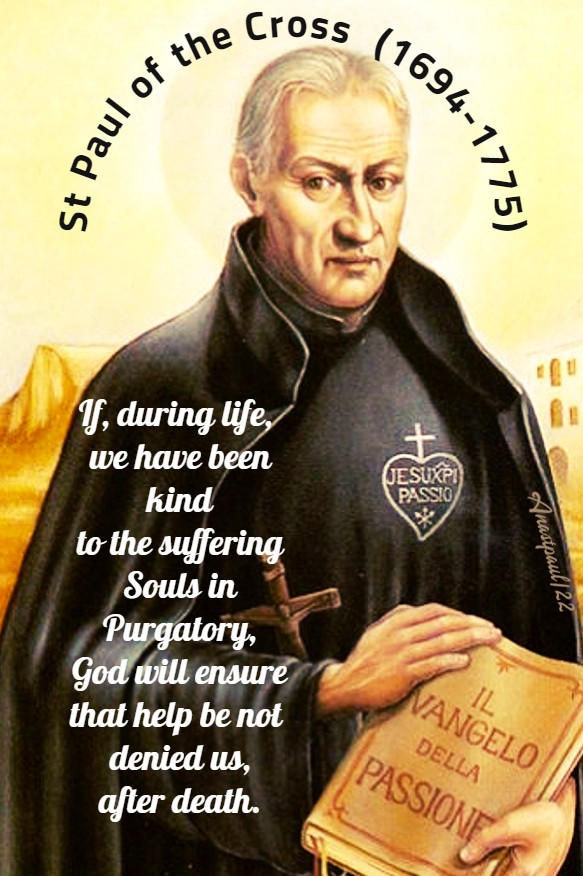
“If, during life, we have been kind to the suffering Souls in Purgatory, God will ensure that help be not denied us, after death.”
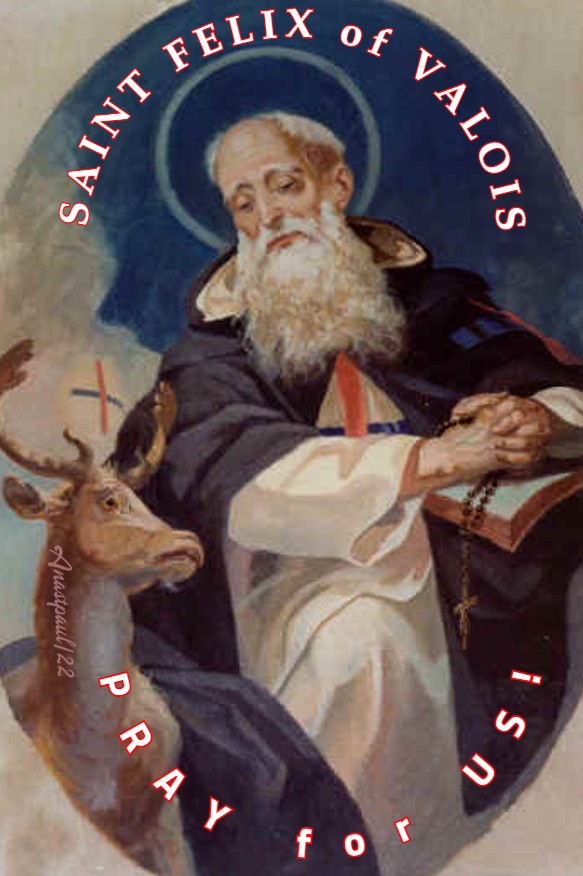
One Minute Reflection – 20 November – The Last Sunday after Pentecost – St Felix of Valois (1127-1212) Confessor – Colossians 1:9-14, Matthew 24:15-35 – Scripture search here: https://www.drbo.org/
“Even so, when you see all these things, know that it is near, even at the door. ” – Matthew 24:33
REFLECTION – “Watch” over your life. Do not let “your lamps” go out and do not keep “your loins ungirded,” but “be ready,” for “you do not know the hour when our Lord is coming.” Meet together frequently, in your search for what is good for your souls, since “a lifetime of faith will be of no advantage” to you, unless you prove perfect at the very end.
In the final days, multitudes of false prophets and seducers will appear. Sheep will turn into wolves and love into hatred. With the increase of iniquity, people will hate, persecute and betray each other. Then the world deceiver will appear in the disguise of God’s Son. He will work “signs and wonders,” and the earth will fall into his hands. He will commit outrages such as have never occurred before. Then humankind will come to the fiery trial, “and many will fall away” and perish. “Those who persevere in their faith will be saved” by the Curse himself. Then “there will appear the signs” of the Truth – first the sign of stretched-out hands in heaven, then the sign of “a trumpet’s blast” and third, the resurrection of the dead but not all the dead. As it has been said, “The Lord will come and all his saints with him.Then the world will see the Lord coming on the clouds of the sky.” TheUnknown Author of the Didache (Didache, 16) .
PRAYER – OGod, Who by heavenly inspiration graciously called forth blessed Felix, Thy Confessor, from the desert to the work of ransoming captives; grant, we beseech Thee, that by his intercession and liberated by Thy grace from the captivity of our sins, we may be led into our heavenly fatherland. Through Jesus Christ, Thy Son our Lord, Who lives and reigns with Thee, in the unity of the Holy Ghost, God, world without end. Amen (Collect).
Our Morning Offering – 20 November – The Last Sunday after Pentecost
Holy God, We Praise Thy Name By Fr Ignaz Franz Poland (1719-1790) (Attri) Archbishop of Schlawa, Germany
Holy God, we praise Thy Name. Lord of all, we bow before Thee. All on earth Thy sceptre claim; all in heav’n above adore Thee. Infinite Thy vast domain, everlasting is Thy reign.
Hark, the loud celestial hymn, angel choirs above are raising. Cherubim and seraphim, in unceasing chorus praising, fill the heav’ns with sweet accord: Holy, holy, holy Lord.
Holy Father, Holy Son, Holy Ghost, three we name Thee While in essence only One, Undivided God, we claim Thee and adoring, bend the knee, while we own the Mystery.
Spare Thy people Lord, we pray, By a thousand snares surrounded. Keep us without sin today, Never let us be confounded. Lo, I put my trust in Thee, Never Lord, abandon me.
Fr Ignaz Franz Poland (1719-1790) Archbishop of Schlawa, Germany, Hymnist, Musician He also functioned as the Assessor for Theological Affairs at the Apostolic Vicariate. He wrote hymn lyrics and compiled religious music. Trans. by Fr Clarence A Walworth (1820-1900) Convert, writer. He was one of the Founders of the Order of the Paulists in the U.S.A.
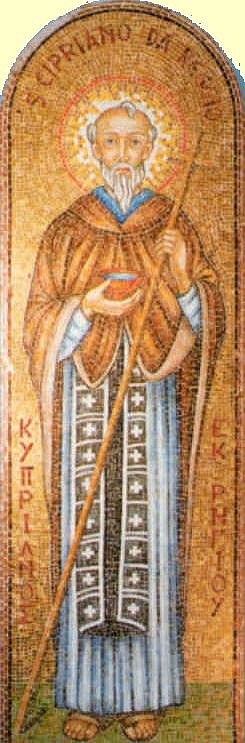
Saint of the Day – 20 November – Saint Cyprian of Calamizzi (c 1125-1190) Abbot, Hermit, Medical Doctor . Born in c 1125 in Reggio di Calabria, Italy and died on 20 November 1190 at the Monastery of San Nicola, Calamizzi, Italy of natural causes. Also known as – Cipriano.
Cyprian, son of a rich, noble doctor, became a doctor himself but then retired at the age of 25 as a Monk to Calanna near Reggio di Calabria Monastery of the Most Holy Redeemer of the Basilians – roughly on the site of the present Parish Church
Cyprian moved on and then lived for twenty years as a Hermit in a cave on his father’s estate at Pavigliana, above Reggio, near the Church dedicated to St Veneranda . He was increasingly visited by people who sought his help, both spiritual and bodily.
Some companions joined him as Hermits. Then the Abbot Paulus from the Monastery of San Nicola at Punta Calamizzi died and its Monks asked Cyprian to be their new Abbot.
Cyprian agreed and took over at the age of 60. There Cyprian became known for his austerity, adherance to the Rule of his Monastery, his charity to poor and his wise counsel to anyone who approached him. He revived the spiritual and cultural life of the Monks, restored the Church of the Monastery and built the bell tower,. He also restored the Monks’ cells and the refectory. He expanded the library, worked to increase the education and spirituality of his Monks and during the day, he laboured as a free Physician to all the poor sick in need of assistance.
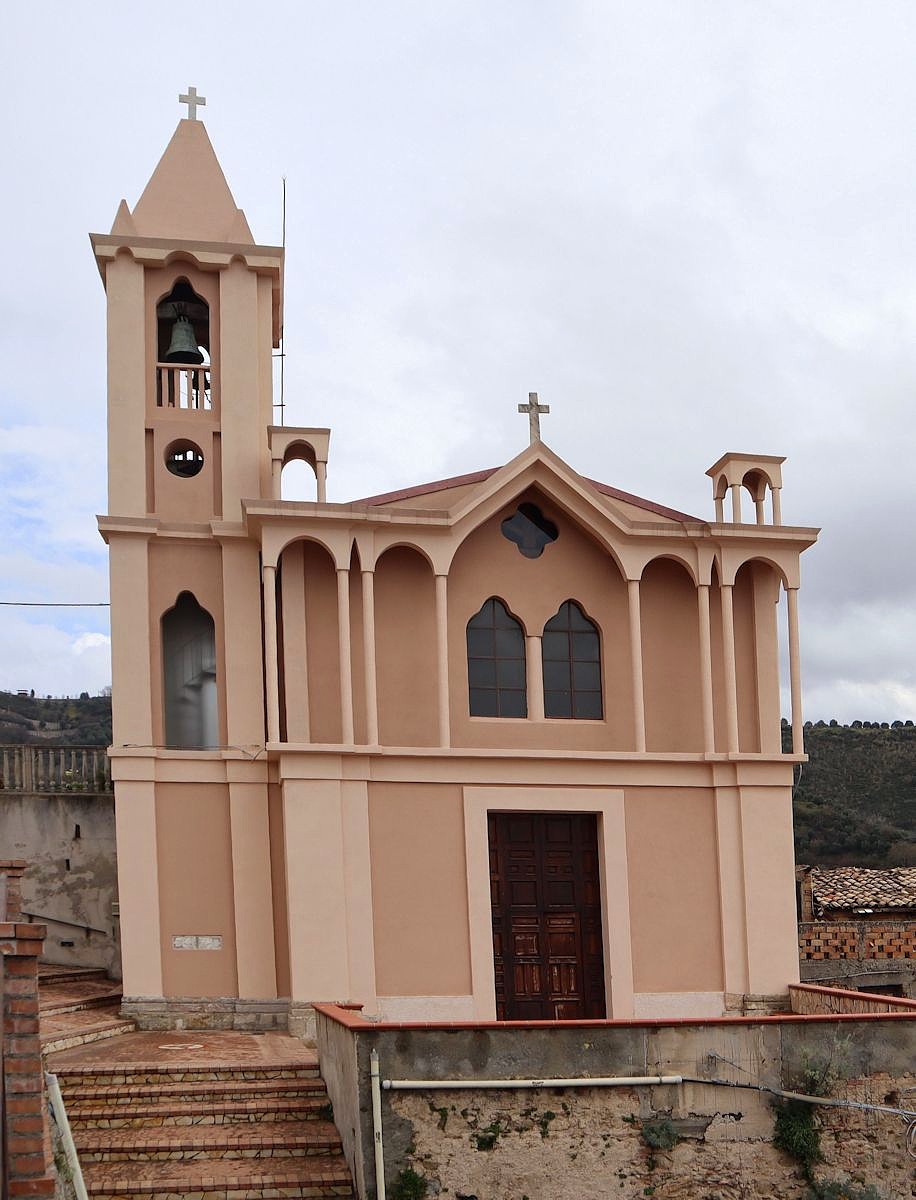
The Calamizzi Parish Church which now stands on the site of St Cyprian’s Monastery
When he broke his leg in an accident whilst driving in his carriage, which was badly set and left him with a limp for the rest of his days also causing a steady decline in his health until he died on 20 November 1190.
Cyprian was buried in the Church of his Monastery at Punta Calamizzi . When the Monastery was destroyed in an earthquake in 1783, the Monks were miraculously unharmed, which they attributed to the intercession of St Cyprian.
St Agapius of Caesarea Bl Ambrose of Camaldoli St Ampelus of Messina St Anatolius of Nicea St Apothemius of Angers St Autbodus of Valcourt St Basil of Antioch St Bernerio of Eboli St Crispin of Ecija St Cyprian of Calamizzi (c 1125-1190) Abbot St Dasius of Dorostorum St Dorus of Benevento St Edmund of East Anglia St Eudo of Carméry St Eustachius of Nicea St Eval of Cornwall St Francisca Desamparados Honorata Lloret Martí St Gaius of Messina St Gregory Decapolites St Hippolytus of Belley St Humbert of Elmham St Leo of Nonantula St Maxentia of Beauvais St Milagros Ortells Gimeno St Nerses of Sahgerd and Companions St Simplicius of Verona St Sylvester of Châlons-sur-Saône St Thespesius of Nicea St Teonesto of Vercelli
Martyrs of Antioch – 3 Saints: Group of three Christians executed together for their faith. No details have survived except their names – Basil, Dionysius and Rusticus. They were martyred in Antioch (Antakya, Turkey).
Martyrs of Heraclea – 3 Saints: A group of 43 Christians Martyred together. The only details about them to survive are three of their names – Agapitus, Bassus and Dionysius. They were martyred in Heraclea, Thrace.
Martyrs of Turin – 3 Saints: Three Christian Martyrs whose original stories were lost and somehow came to be associated with the Theban Legion. They are – Adventor, Octavius and Solutor. They were beheaded in 297 in Turin, Italy. Patronage – Turin, Italy.
Thought for the Day – 19 November – Meditations with Antonio Cardinal Bacci (1881-1971)
The Most Terrifying Passage in the Gospel
“Why should the Eternal Judge punish or reward us, in accordance with our own deeds of charity and of mercy towards our unfortunate fellowmen? Simply because Christianity consists mainly of charity, since God Himself is charity. “God is love and he who abides in love, abides in God and God in him” (1 Jn 4:16). When charity is genuine, being the love of God above all things and of our neighbour as ourselves, it is “the bond of perfection,” (Col 3:14) and, “bears with all things, believes all things, hopes all things endures all things” (1 Cor 13:7). True love, in the Christian sense, presupposes faith, hope and all the other virtues, whereas faith without charity, is as St Paul says, as futile as “a tinkling cymbal” (1 Cor 13:1). Even the devils have faith but their faith will not save them. “He who does not love,” St John tells us, “abides in death” (1 Jn 3:14).”
One Minute Reflection – 19 November – St Elizabeth of Hungary (1207-1231) Widow, – Proverbs 31:10-31, Matthew 13:44-52 – Scripture search here: https://www.drbo.org/
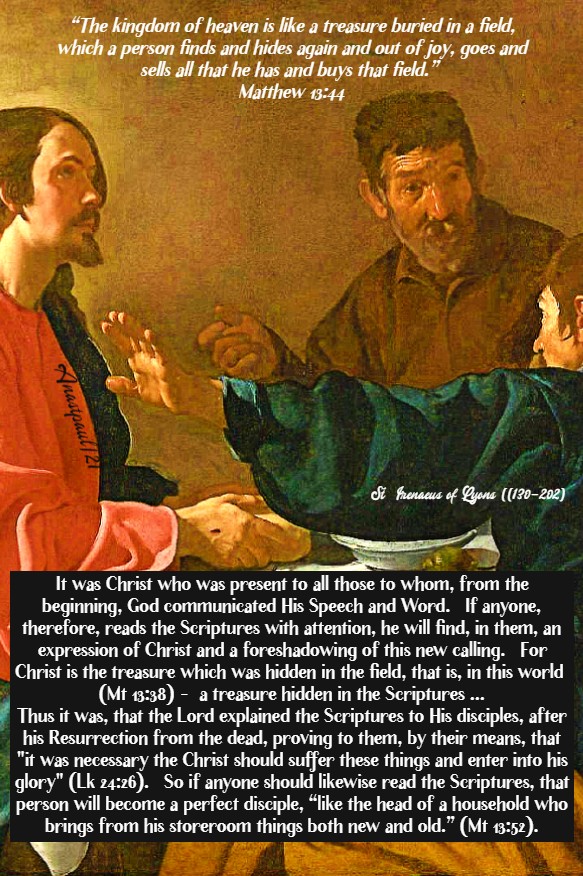
“The kingdom of heaven is like a treasure buried in a field, which a person finds and hides again and out of joy, goes and sells all that he has and buys that field.” – Matthew 13:44
REFLECTION – “It was Christ who was present to all those to whom, from the beginning, God communicated His Speech and Word. If anyone, therefore, reads the Scriptures with attention, he will find in them, an expression of Christ and a foreshadowing of this new calling. For Christ is the treasure which was hidden in the field, that is, in this world (Mt 13:38) – a treasure hidden in the Scriptures, since it was alluded to by means of symbols and parables which, humanly speaking, could not be understood prior to the fulfilment of prophecy, that is to say, before the coming of the Lord. That is why it was said to Daniel the prophet: ” Keep secret the message and seal the book until the end of time ” (12:4) … And Jeremiah also says, “In the last days they shall understand these things.” (23:20) …
When read by Christians, the Law is a treasure, hidden beforehand in a field, but brought to light and interpreted by the Cross of Christ. It shows forth the Wisdom of God and makes known His intentions with regard to our salvation; it prefigures the Kingdom of Christ and preaches, by anticipation, the Good News of our inheritance of the holy Jerusalem. It proclaims beforehand, that those who love God shall advance even to hearing and seeing His Word and, that they will be glorified by this Word …
Thus it was, that the Lord explained the Scriptures to His disciples, after His Resurrection from the dead, proving to them, by their means, that “it was necessary the Christ should suffer these things and enter into his glory” (Lk 24:26). So if anyone should likewise read the Scriptures, that person will become a perfect disciple, “like the head of a household who brings from his storeroom things both new and old.” (Mt 13:52). – St Irenaeus of Lyons ((130-202) Bishop, Martyr, Theologian – Against the Heresies, IV, 26 ; SC 100
PRAYER – O merciful God, enlighten the hearts of Thy faithful people and through the glorious prayers of blessed Elizabeth, make us look upon worldly prosperity as nought and ever rejoice in heavenly consolation. Through Jesus Christ, Thy Son our Lord, Who lives and reigns with Thee, in the unity of the Holy Ghost, God, world without end. Amen (Collect).
Our Morning Offering – 19 November – Feast of Our Lady of Divine Providence and Mary’s Saturday
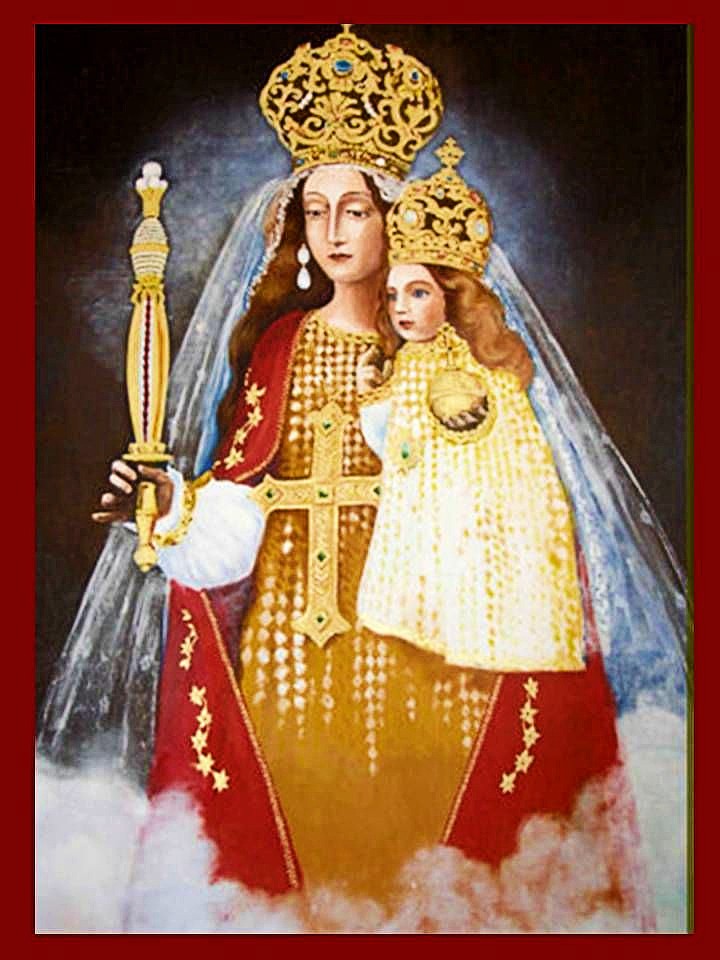
Prayer to Our Lady Mary, Mother of Divine Providence
Virgin Mary, Immaculate Mother of Divine Providence, protect our life and sanctify us with the gift of grace. Obtain for us from the Father of Mercy and the God of consolation, pardon for our sins, reconciliation with our brothers and sisters and comfort in the midst of afflictions. Renew our hearts, that they may become worthy dwelling places of your Divine Son, Jesus. Help us in our struggles against mediocrity, self-seeking and pride, so we can generously serve our neighbour. We entrust ourselves to you, O Mary, in our pilgrimage in this world. We invoke you as our guide and our defence against dangers. In the present tribulations, give us secure refuge. O sweet Mother of Divine Providence, turn your eyes toward us, you who are our hope on earth. Grant that we may have you as our Mother in the glory of Heaven. Amen
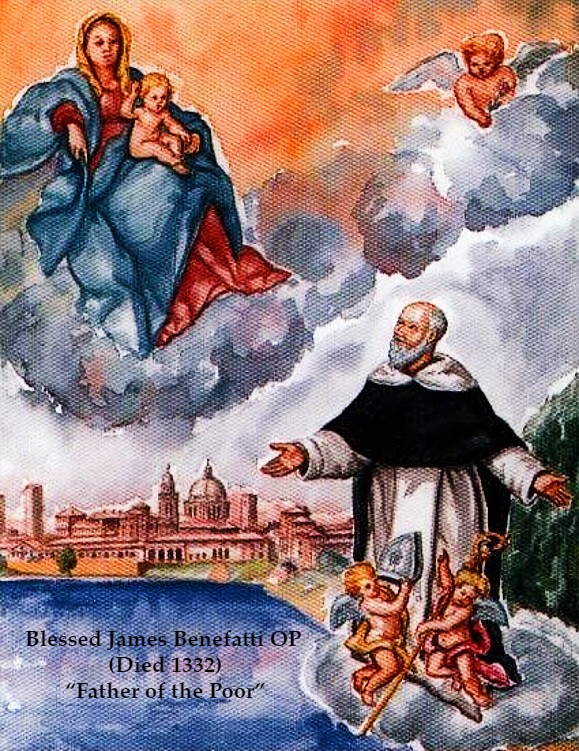
Saint of the Day – 19 November – Blessed James Benefatti OP (Died 1332) “Father of the Poor” Bishop of Mantua, Priest and Friar of the Order of Preachers, Papal Legate in the service of Pope Benedict XI and of Pope John XXII, Apostle of the poor. Born in the late 13th century at Mantua, Italy and died on 19 November 1332 at Mantua, Italy of natural causes. Also known as – James Benefatti, James of Mantua, “Father of the Poor.” Beatified in 1859by Pope Pius IX. His body is incorrupt.
Janes was born in Mantua and also died there, on 19 November 1332. He was both a Doctor of Theology and a Priest. In 1290 James entered the Dominican Convent in his hometown. There he became the friend and brother Friar of Nicholas Boccasino, who later became Pope Benedict XI. Under Pope Denedict XI, James held several important offices, including Papal Legate. And, in the course of his service to the Pope, he also served as Papal Legate for Pope John XXII.
In 1303 James was Consecrated as the Bishop of Mantua (some resources say he was Consecrated in 1304). There, Bishop James was known for his devotion to the poor, earning him the name “Father of the Poor.”
As Bishop, James rebuilt the Cathedral and refurbished Churches in his Diocese. He also actively fought against the hatred and division which plagued the City at that time. After his death, James was credited with many remarkable miracles that occurred and people began to call him Blessed James in gratefulness for his intercession.
Nearly 150 years after his death, in 1480, when repairs were being made to the Church were he was buried, an accident opened his tomb and people were startled to find his body completely incorrupt. Again, in 1604, the same phenomenon occurred.
Blessed James’ cult was confirmed in 1859 by Pope Pius IX.
Prayer
Eternal God, You established Blessed James as a model for Your flock and made him renowned for his zeal for peace and for his mercy towards Your people. By his prayers and example, may we be united in the Truth of Your Word and ever ardent in Your divine love. We ask this through our Lord Jesus Christ, You Son, Who lives and reigns with You and the Holy Spirit, one God, forever and ever. Amen.
St Elizabeth of Hungary TOSF (1207-1231) Widow, Princess, Third Order Franciscans, Mother, Apostle of the poor, the sick, the needy.. She was Canonised on 27 May 1235 by Pope Gregory IX at Perugia, Italy. Patronages – hospitals, nurses, bakers, brides, countesses, dying children, exiles, homeless people, lace-makers, widows. all Catholic charities and the Third Order of Saint Francis. About St Elizabeth: https://anastpaul.wordpress.com/2017/11/17/saint-of-the-day-st-elizabeth-of-hungary-1207-1231-t-o-s-f/ Her Feast Day is 19 November – movedto the 17 November in 1969
St Atto of Tordino St Azas of Isauria St Barlaam of Caves St Barlaam of Antioch St Corbre of Anglesey St David of Augsburg St Ebbe of Minster-of-Thanet St Egbert of York Bl James Benefatti OP (Died 1332) Bishop, Priest of the Order of Preachers. Beatified in 1859 by Pope Pius IX. St James of Sasseau St Maximus of Caesarea St Maximus of Rome
St Medana St Nerses the Great St Obadiah the Prophet St Tuto
Martyrs of Heraclea – 40 Saints: Forty women, a mix of Nuns, widows and other lay women, who were Martyred together. No other details have come down to us. They died at Heraclea, Thrace.
Martyrs of Vienne: – 3 Saints St Exuperius St Felicianus St Severinus
Thought for the Day – 18 November – Meditations with Antonio Cardinal Bacci (1881-1971)
Our Parish
“Just as every Christian belongs to a family, so also, he belongs to a Parish. The Parish should be the necessary complement of the family, in which everyone can receive the complete formation which he needs. The family is the first cell in the organism of the Church. The parents should regard their duties as Sacred and, in a way, Priestly. They are joined together, not only for the purpose of procreating children but, also of educating them. This is a lifty honour and responsibility. They do not possess, however, the means of completing the education of their children. They can do a great deal but they cannot do everything, for they are not, in fact, Priests possessing the necessary means of communicating the supernatural life through the Sacraments and through the authoritative Word of God.
Parents are the natural guardians of their children but, in the Church, there is a spiritual father to assist them, namely, the Parish Priest. No good Catholic should ignore the existence of his Parish Priest and of his Parish. In his Parish Church, he has received the priceless gift of supernatural life through the Sacrament of Baptism. There too, he recited his childhood prayers, obtained forgiveness for his sins in the Confessional, received the Sacrament of Confirmation, made his First Holy Communion and received, perhaps, the Nuptial blessing at his marriage. There will come a day when he will be borne to his Parish Church for the last time, to receive from the Priest, his final blessing and prayers for the repose of his soul.
We should love our Parish, therefore, in the same way as we love our family and, we should cherish our Parish Church. It is not enough to visit any Church but, we should give pride of place to our own, which houses our spiritual family and our spiritual history and holds, for us, so many precious memories of the past. We ought to make a special point of attending it, for our own benefit and that of our children and in order to give good example.”
Quote/s of the Day – 18 November – Feast of the Dedication of the Basilicas of Peter and Paul
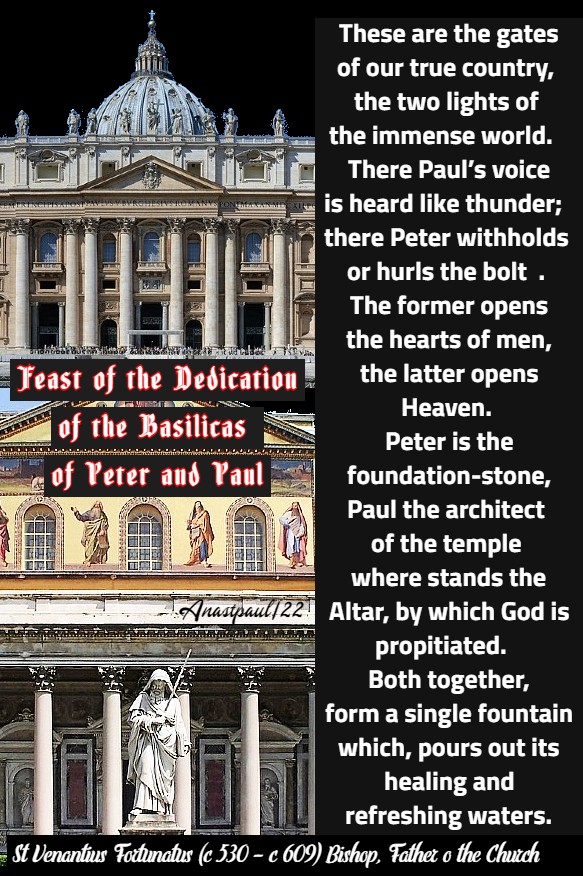
“The present Feast, therefore, deserves to be more than a local solemnity, its extension to the Universal Church, is a subject for the world’s gratitude. Thanks to this Feast, we can all make together in spirit today, the pilgrimage, which our ancestors performed with such fatigue and danger, yet never thought they purchased, at too high a price, its holy joys and blessings. “Heavenly mountains, glittering heights of the new Sion!” These are the gates of our true country, the two lights of the immense world. There Paul’s voice is heard like thunder; there Peter withholds or hurls the bolt . The former opens the hearts of men, the latter opens Heaven. Peter is the foundation-stone, Paul the architect of the temple where stands the Altar, by which God is propitiated. Both together, form a single fountain which, pours out its healing and refreshing waters”
St Venantius Fortunatus (c 530 – c 609) Bishop, Father o the Church
One Minute Reflection – 18 November – Feast of the Dedication of the Basilicas of Peter and Paul – Apocalypse 21:2-5. Luke 19:1-10 – Scripture search here: https://www.drbo.org/
“ … He climbed up into a sycamore tree that he might see Him …” – Luke 19:2
REFLECTION – “I’m writing with the desire to see you, a bold and good shepherd, pasturing and guiding the sheep entrusted to you with perfect zeal and thus, imitating the sweet Master of Truth, Who gave His life for us who are His sheep, who have strayed away from the path of grace. True…, we cannot do this without God and we cannot possess God while remaining on earth. But here is a sweet remedy – when our hearts are reduced to nothing and feeling small, we must do as Zacchaeus did. He was not tall and he climbed a tree to see God. This zeal of his, allowed him to hear these sweet words: “Zacchaeus, go home, for I must dine with you today.”
We must do this too, when we are feeling low, when our hearts are constricted and lacking in charity. We must climb the tree of the most holy Cross and there we shall see, we shall touch God. There we shall find the fire of His inexpressible charity, the love that propelled Him, even to the humiliation of the Cross that raised Him up and made Him desire His Father’s honour and our salvation, with the craving of hunger and thirst… If this is what we want, if our carelessness does not get in the way, we can, in mounting the tree of the Cross, fulfill in ourselves, this word issuing from the mouth of Truth: “When I am lifted up from the earth, I shall draw all things to Myself” (Jn 12,32 Vg). Indeed, when the soul is thus raised up, it sees the blessings of the Father’s goodness and power…, it sees the mercy and lavishness of the Holy Spirit, that is to say, the inexpressible love holding Jesus bound to the wood of the Cross. Nails and bonds cannot hold Him there, only charity… O climb this most holy tree where hang, the ripe fruits of all the virtues that the body of the Son of God bears, ardently hasten. Dwell within the holy and sweet love of God. O sweet Jesus, Jesus love.” – St Catherine of Siena (1347-1380) Doctor of the Church (Letter 119, to the prior of the Olivetan Monks).
PRAYER – O God, Who for us brings each year, the recurrence of the Consecration day of this Thy holy temple and always brings us back safely to the sacred rites, hear the prayers of Thy people and grant that whoever enters this temple, to pray for blessings, may rejoice in having obtained whatever he sought. Through Jesus Christ, Thy Son our Lord, Who lives and reigns with Thee, in the unity of the Holy Ghost, God, world without end. Amen (Collect).
Our Morning Offering – 18 November – Feast of the Dedication of the Basilicas of Peter and Paul
Æterna Cæli Gloria Eternal Glory of Heaven By St Ambrose (340–397) Father and Doctor of the Churh Trans. John Mason Neale, (1818-1866)
Eternal glory of the sky, Blest hope of frail humanity, The Father’s Sole-begotten One, Yet born a spotless Virgin’s Son!
Uplift us with Thine arm of might, And let our hearts rise pure and bright And, ardent in God’s praises, pay The thanks we owe Him everyday.
The Day-star’s rays are glittering clear And tell that day itself is near: The shadows of the night depart; Thou, holy Light, illume the heart!
Within our senses ever dwell, And worldly darkness thence expel; Long as the days of life endure, Preserve our souls devout and pure.
The faith that first must be possessed, Root deep within our inmost breast; And joyous hope in second place, Then charity, Thy greatest grace.
All laud to God the Father be, All praise, eternal Son, to Thee; All glory, as is ever meet, To God the Holy Paraclete.
Beloved Saint Ambrose was a Roman citizen, son of a Roman prefect in Gallia Narbonensis. At age 33 or 34, (374) he was appointed governor of northern Italy. In the same year, Ambrose was selected as Bishop of Milan by popular acclaim. His Hymns first came to widespread notice during a public altercation between St Ambrose and Empress Justina, who had sent soldiers to arrest him. Ambrose and his faithful flock stayed in the Sanctuary of the Church for days, singing and praying. The Empress lost the test of wills and Ambrose’ Hymns have lived for millennia. Alleluia!
Saint of the Day – 18 November – Saint Romano of Antioch (Died c 303) Deacon Martyr . Died by strangulation in prison in Antioch, Syria. Also known as – Romanus of Caesarea, Romano.
The Roman Martyrology reads: “At Antioch, the birthday of St Romanus, Martyr in the time of the Emperor Galerius. When the Prefect Asclepiades broke into the Churches and strove to destroy them completely, Romanus exhorted the Christians to resist him and, after being subjected to dire torments and the cutting out of his tongue (without which, however, he spoke the praises of God), he was strangled in prison and crowned with a glorious Martyrdom. Before him suffered a young boy, named Barula, who, being asked by him. whether it was better to worship one God, Whom the Christians adore, was scourged and beheaded.”
In 303 or 304, at the beginning of Diocletian Persecution, a Deacon called Romanus, served in Caesarea in Palestine. He was living in Antioch, where, in the midst of the persecutions, he encouraged the Christians to stand firm.
During a pagan festival, he upbraided the participants for worshiping idols. Taken prisoner, he was condemned to death by fire and was bound to the stake. When rain extinguished the flames, Romanus was brought before Emperor Galerius who was then in Antioch. At the Emperor’s command, Romanus’ tongue was cut out. Tortured in various ways in prison, he was finally strangled.
Eusebius speaks of his Martyrdom in De martyribus Palaestinae. Prudentius relates other details and gives Romanus a companion in Martyrdom, a Christian boy by name Barulas.
he Church of San Román in Seville is dedicated to Romanus. Prudentius wrote a 1140 line Hymn to Romanus, the Romane Christi fortis, the tenth hymn in his Peristephanon.
Dedication of the Basilicas of Peter and Paul: From the twelfth century the Dedications of the Vatican Basilica of St Peter and the Basilica of St Paul on the Via Ostiense, have been celebrated on this day, as the anniversary of their dedication by St Pope Silvester and St Pope Siricius in the fourth century. In more recent times, this feast has been extended to the whole Roman Rite. As the anniversary of the Dedication of the Basilica of St Mary Major (5 August) honours the motherhood of Our Lady, so this Feast honours the memory of the two Princes of the Apostles. About this Feast: https://anastpaul.wordpress.com/2017/11/18/feast-of-the-dedication-of-the-basilicas-of-sts-peter-and-paul-at-rome-18-november/
St Amandus of Lérins Bl Andreas Murayama Tokuan St Anselm of Lérins St Augusto Cordero Fernández St Barulas St Constant Bl Cosmas Takeya Sozaburo Bl Domingos Jorge St Emiliano Martínez de La Pera Alava St Esteban Anuncibay Letona St Francisco Marco Alemán St Germán García y García Bl Guilminus Bl Ioannes Yoshida Shoun St José María Cánovas Martínez St Keverne Bl Leonard Kimura St Mawes St Maximus of Mainz St Modesto Sáez Manzanares St Mummolus of Lagny St Nazarius of Lérins St Noah the Patriarch
St Oriculus St Patroclus of Colombier St Romfarius of Coutances St Romanus of Antioch (Died c 303) Deacon Martyr St Teofredo of Vellaicum St Thomas of Antioch St Vidal Luis Gómara
Thought for the Day – 17 November – Meditations with Antonio Cardinal Bacci (1881-1971)
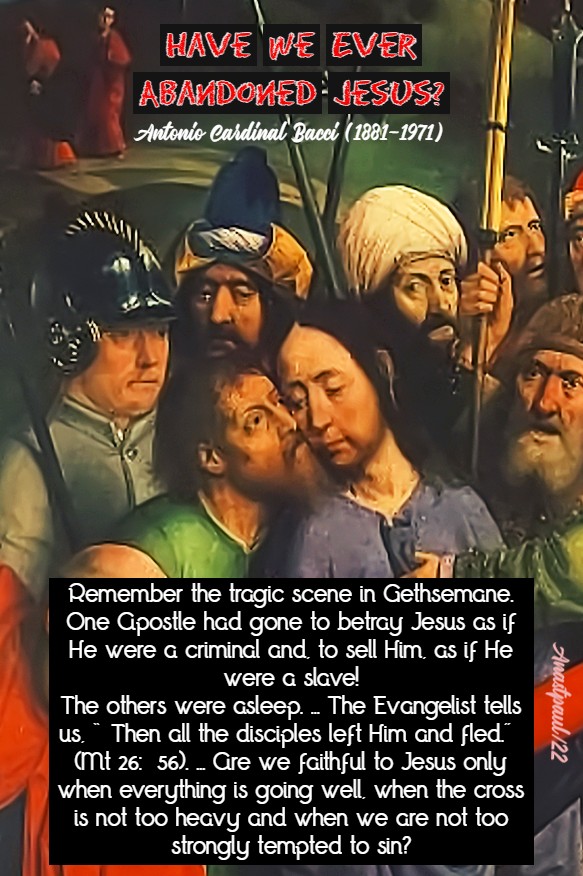
Have We Ever Abandoned Jesus?
“The Apostles did not wish to abandon Jesus in theory but, in practice, they did so. Remember the tragic scene in Gethsemane. One Apostle had gone to betray Jesus as if He were a criminal and, to sell Him, as if He were a slave! The others were asleep. Jesus alone and deserted, was praying for ungrateful humanity. He perspired blood and prepared to drink the bitter chalice of humiliation and of the most ignominious form of death. The hired soldiers arrived and arrested Him, as a seducer of the people.
What was the reaction of the Apostles who had so often promised to be faithful to their Master until death? The Evangelist tells us, “Then all the disciples left Him and fled.” (Mt 26:56).
Let us examine ourselves. Are we faithful to Jesus only when everything is going well, when the cross is not too heavy and when we are not too strongly tempted to sin?”
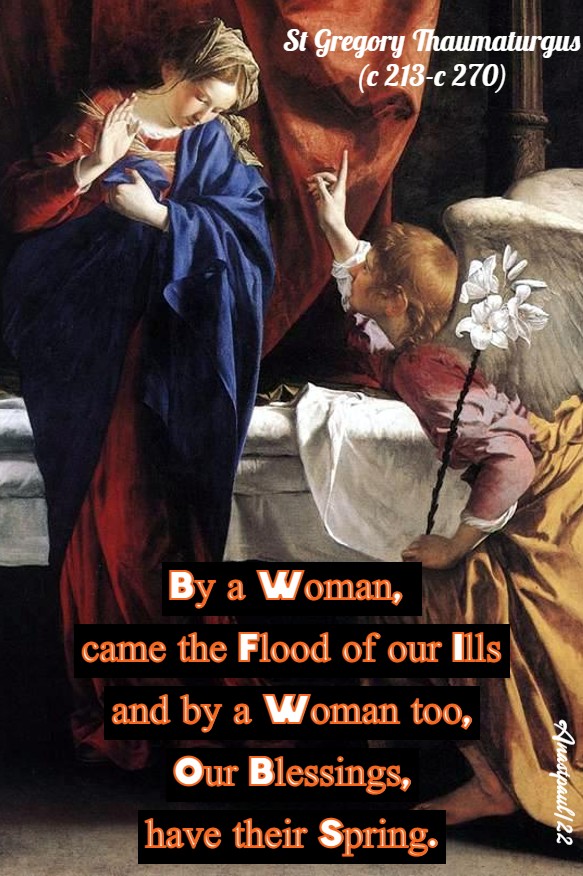
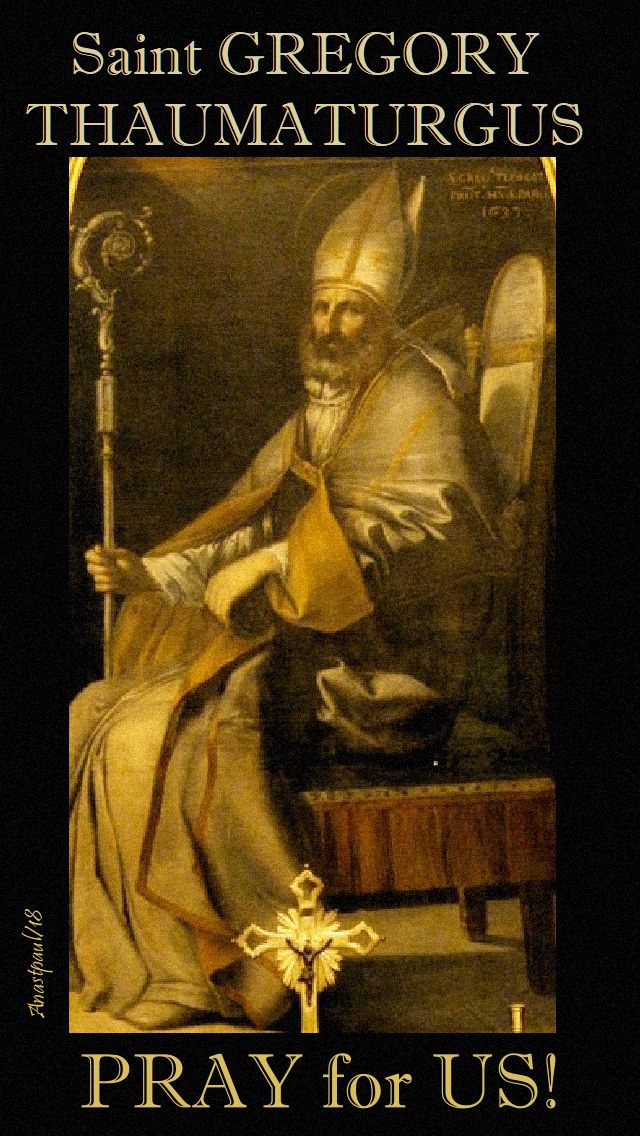
Quote/s of the Day – 17 November – St Gregory Thaumaturgus (c 213-c 270) “the Wonder-Worker,” Bishop, Confessor
“ By a woman, came the flood of our ills and by a woman too, our blessings, have their spring.”
“The Creed” of Saint Gregory Thaumaturgus
There is one God, the Father of the Living Word, Who is His subsistent Wisdom and Power and Eternal Image, perfect Begetter of the perfect Begotten, Father of the Only-begotten Son. There is one Lord, Only of the Only, God of God, Image and Likeness of Deity, Efficient Word, Wisdom comprehensive of the constitution of all things and Power formative of the whole creation, true Son of true Father, Invisible of Invisible and Incorruptible of Incorruptible and Immortal of Immortal and Eternal of Eternal. And there is One Holy Spirit, having His subsistence from God and being made manifest by the Son, to wit to men, Image of the Son, Perfect Image of the Perfect, Life, the Cause of the living, Holy Fount, Sanctity, the Supplier, or Leader, of Sanctification, in Whom is manifested God the Father, Who is above all and in all and God the Son, Who is through all. There is a perfect Trinity, in glory and eternity and sovereignty, neither divided nor estranged. Wherefore, there is nothing, either created or in servitude in the Trinity, nor anything superinduced, as if at some former period, it was non-existent and at some later period, it was introduced. And thus neither was the Son ever wanting to the Father, nor the Spirit to the Son but, without variation and without change, the same Trinity abideth ever.
St Gregory Thaumaturgus (c 213-c 270) “the Wonder-Worker,” Bishop, Confessor
One Minute Reflection – 17 November – St Gregory Thaumaturgus (c 213-c 270) “the Wonder-Worker,” Bishop, Confessor – Sirach 44:16-27; 45:3-20, Mark 11:22-24 – Scripture search here: https://www.drbo.org/
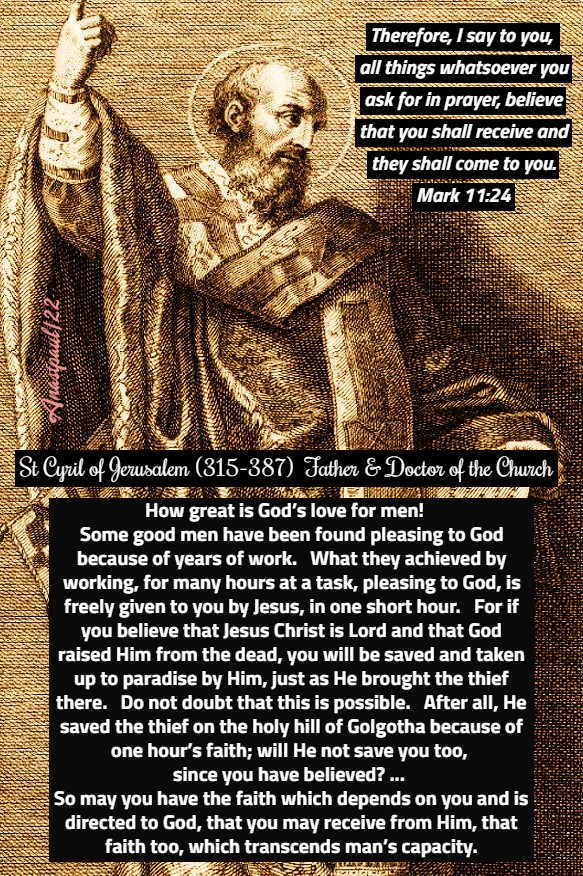
“Therefore, I say to you, all things whatsoever you ask for in prayer, believe that you shall receive and they shall come to you.” – Mark 11:24
REFLECTION – “The one word, faith, can have two meanings. One kind of faith concerns doctrines. It involves, the soul’s ascent to and acceptance of, some particular matter. It also concerns the soul’s good, according to the words of the Lord – Whoever hears My Voice and believes in Him, Who sent Me, has eternal life and will not come to be judged. And again: He who believes in the Son, is not condemned but has passed from death to life.
How great is God’s love for men! Some good men have been found pleasing to God because of years of work. What they achieved by working, for many hours at a task, pleasing to God, is freely given to you by Jesus, in one short hour. For if you believe that Jesus Christ is Lord and that God raised Him from the dead, you will be saved and taken up to paradise by Him, just as He brought the thief there. Do not doubt that this is possible. After all, He saved the thief on the holy hill of Golgotha because of one hour’s faith; will He not save you too, since you have believed?
The other kind of faith is given by Christ, by means of a special grace. To one wise sayings are given through the Spirit, to another perceptive comments by the same Spirit, to another faith by the same Spirit, to another gifts of healing. Now this kind of faith, given by the Spirit as a special favour, is not confined to doctrinal matters, for it produces effects beyond any human capability. If a man who has this faith says to this mountain move from here to there, it will move. For when anybody says this in faith, believing it will happen and having no doubt in his heart, he then receives that grace.
It is of this kind of faith, moreover, that it is said: If you have faith like a grain of mustard seed. The mustard seed is small in size but it holds an explosive force, although it is sown in a small hole, it produces great branches and when it is grown, birds can nest there. In the same way faith produces great effects in the soul instantaneously. Enlightened by faith, the soul pictures God and sees Him as clearly as any soul can. It circles the earth, even before the end of this world, it sees the judgement and the conferring of promised rewards. So may you have the faith which depends on you and is directed to God, that you may receive from Him, that faith too, which transcends man’s capacity.” – St Cyril of Jerusalem (315-387) Archbishop of Jerusalem, Father and Doctor of the Church (An excerpt from the Catecheses, 5).
PRAYER – Grant, we beseech Thee, Almighty God that the venerable feast of Thy blessed Gregory Confessor and Bishop may increase our devotion and promote our salvation. Through Jesus Christ, Thy Son our Lord, Who lives and reigns with Thee, in the unity of the Holy Ghost, God, world without end. Amen (Collect).
May Your Heart Dwell Always in our Hearts! by Saint Francis De Sales (1567-1622) Doctor of Charity
May Your Heart dwell always in our hearts! May Your Blood ever flow in the veins of our souls! O Sun of our hearts, You give life to all things by the rays of Your goodness! I will not go, until Your Heart has strengthened me, O Lord Jesus! May the Heart of Jesus be the King of my heart! Blessed be God. Amen
Saint of the Day – 17 November – St Florinus of Remüs (Died c 856) Priest, Confessor, Miracle-worker. Born in the late 8th Century in Val Venosta, Italy and died in c 856 at Remüs (modern Ramosch), Switzerland of natural causes. His name (from Latin) means “the blooming one.” Patronages – of the Lower Engadine and Vinschgau; from 1288 to 1962 – the Diocese of Chur. Also known as – • Florinus of Chur• Florinus of Finsgowe• Florinus of Matsch• Florinus of Mazia• Florinus of Ramosch• Florinus of Val Venosta• Florinus of Vinschgau• Florinus of Vnuost• Florin, Florian. Additional Memorials – • 7 August (translation of relics to Chur, Switzerland) • 18 December (translation of relics to the Trier, Germany).
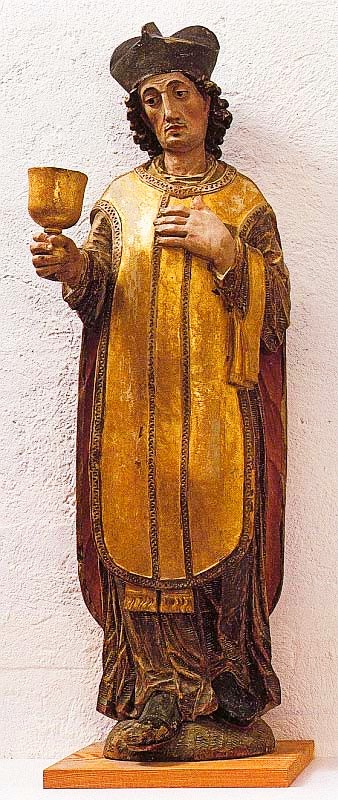
Picture at the Parish Church in Matsch in South Tyrol
According to tradition, Florinus was the son of an Anglo-Saxon father and a Christian Jew who had settled in Vinschgau on their return from a pilgrimage to Rome . Florinus was raised by the Priest Alexander of Remüs. His former protégé, Florinus, who had meanwhile become a Priest, followed him in the pastoral apostolit. The activity which the new shepherd carried out by word and example, was so devoted that Florinus quickly won the love and admiration of his flock.
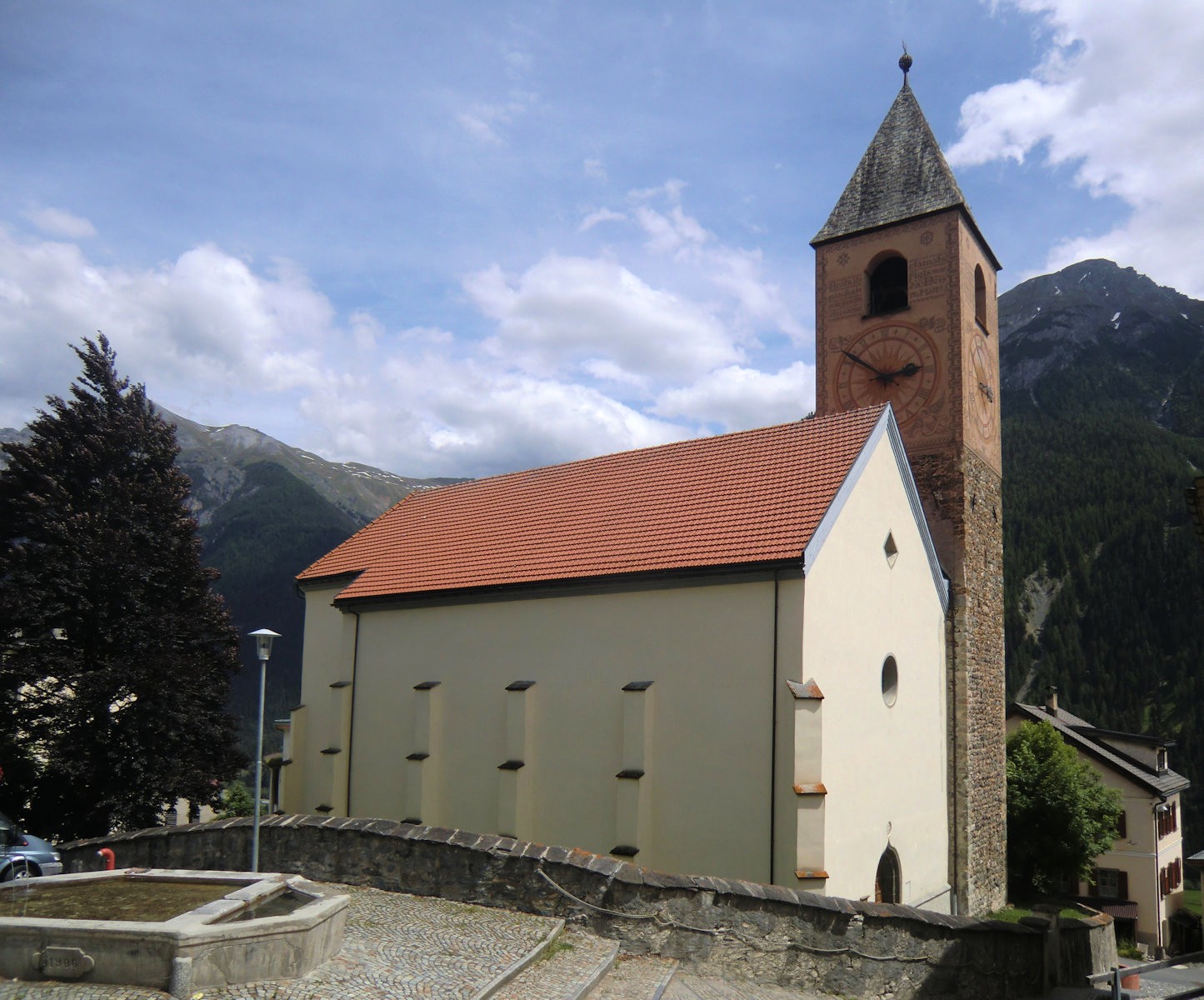
The Church in Ramosch, which used to be dedicated to St Peter and is now to St Florinus
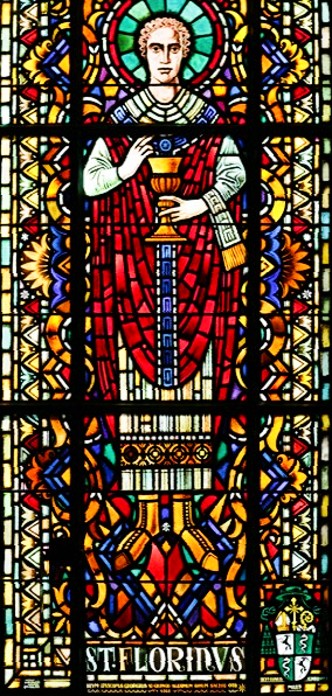
The legend tells of numerous miracles, such as when he fetched the Communion wine, gave it to a poor woman for her ailing husband and, instead refilled the container with water, which turned into wine at the Altar. Hence in art, Florinus is usually depicted holiding a Chalice.
Many miracles also took place at Florinus’ tomb in the Church of Ramosch. As early as 719 there was a Church dedicated to Florinus, presided over by St Othmar of Saint Gallen (feast day yesterday). The Church in Ramosch, was dedicated to Florinus in 930. . Around 950, Duke Hermann of Swabia, brought Florinus’ Relics to the Marienstift in Koblenz, whose Church was then dedicated to Florinus too. After its founding in 1142, the bones came to the Monastery in Schönau near Heidelberg; others are in Regensburg. Because the Founder of the former Monasterywas converted at the grave of Florinus, in Churwalden, he acquired relics for his new foundation.
Stained glass window in the Baptistery in the Chur Cathedral
The Cathedral in Vaduz, built in the 19th Century next to a Chapel dedicated to Florinus and the Parish Church in Matsch is also dedicated to him. Another Chapel, built in 1853 at the end of this village, is dedicated to Florinus and contains a Relic and stands near the courtyard where, according to tradition, Florinus was born. This replaced the Chapel at the place of his birth after it had been destroyed three times by avalanches.
The Miracle of the White Rider: In March 1799 the imperial troops were defeated by the French after a short battle in the Munster valley. The French then scorched, plundered and murdered in Malles and its surroundings. Many residents of Mals grabbed the most necessary belongings and fled hastily. The Matscher people heard, with horror, of the atrocities committed by the French and their fear and concern increased more and more, that the inhuman soldiers might also reach their little village, rob it and burn itto the ground. They gathered in the Parish Church and entreated their Patron, St Florinus to plead for protection and help. Lo and behold, when the enemy found out that the Malser had fled, a detachment of soldiers immediately took up the pursuit and got as far as Rowein before the village of Matsch. Then the Patron Saint of the valley, St Florinus, galloped along on a magnificent white horse and threatened the intruders with his right hand. The white horse, frightening the French so much that they quickly turned and fled down the valley. The village of Mud was saved!
Bust of St. Florinus in Cathedral of Vaduz (Liechtenstein).
St Acisclus St Aignan of Orléans St Alphaeus of Palestine St Eugene of Florence St Eusebio Roldán Vielva St Florinus of Remüs (Died c 856)Priest, Confessor St Giacinto Ansalone St Gregory of Tours
Thought for the Day – 16 November – Meditations with Antonio Cardinal Bacci (1881-1971)
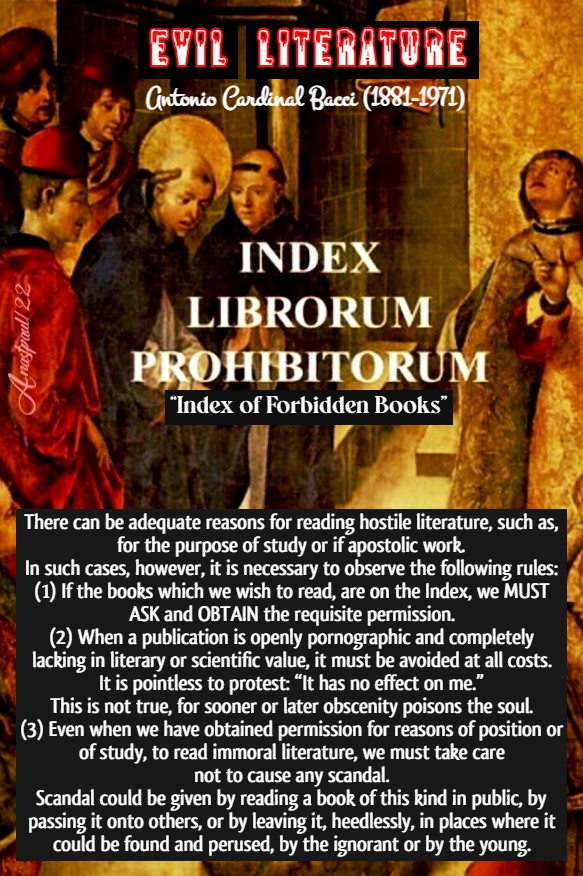
Evil Literature
“There can be adequate reasons for reading hostile literature, such as, for the purpose of study or if apostolic work. In such cases, however, it is necessary to observe the following rules: (1) If the books which we wish to read, are on the Index, we MUST ASK and OBTAIN the requisite permission. (2) When a publication is openly pornographic and completely lacking in literary or scientific value, it must be avoided at all costs. It is pointless to protest: “It has no effect on me.” This is not true, for sooner or later obscenity poisons the soul. (3) Even when we have obtained permission for reasons of position or of study, to read immoral literature, we must take care not to cause any scandal. Scandal could be given by reading a book of this kind in public, by passing it onto others, or by leaving it, heedlessly, in places where it could be found and perused, by the ignorant or by the young.
It maybe that, on these three points, we have something to correct in our own conduct?!”
Quote/s of the Day – 16 November – St Gertrude the Great (1256-1302) Virgin – “The Month of the Holy Souls in Purgatory”
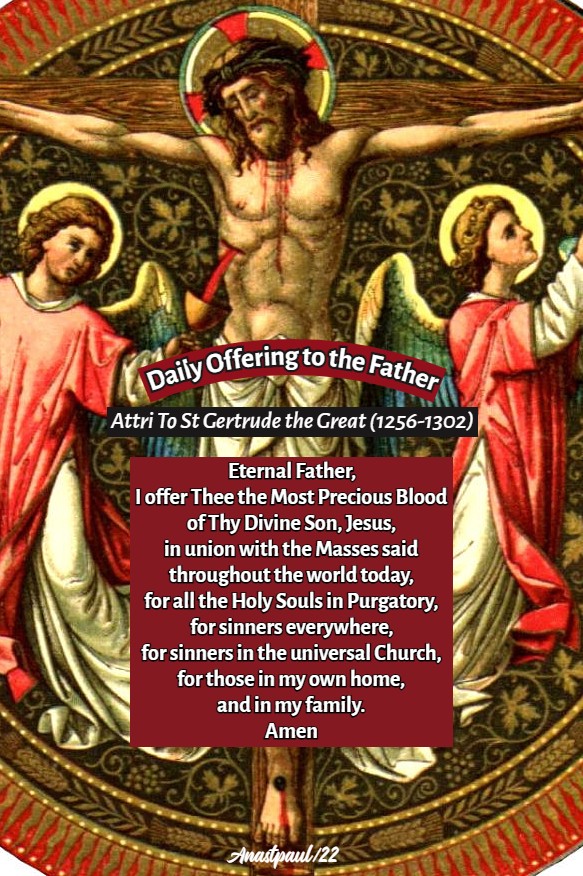
Daily Offering to the Father By St Gertrude the Great (1256-1302) (Attrib)
Eternal Father, I offer Thee the most precious blood of Thy Divine Son, Jesus, in union with the Masses said throughout the world today, for all the Holy Souls in Purgatory, for sinners everywhere, for sinners in the universal Church, for those in my own home, and in my family. Amen
“I praise, adore, bless and thank Thee, to the best of my ability, for Thy wise mercy and Thy merciful wisdom! For Thou, my Creator and my Redeemer, have sought to curb my stiff-necked obstinacy under Thy sweet yoke with the remedy best suited to my infirmity.”
O Sacred Heart of Jesus By St Gertrude the Great (1256-1302)
O Sacred Heart of Jesus, Fountain of eternal life, Your Heart is a glowing Furnace of Love. You are my Refuge and my Sanctuary. O my adorable and loving Saviour, consume my heart with the burning fire with which Your Heart is enflamed. Pour down on my soul those graces which flow from Your love. Let my heart be united with Your Heart. Let my will be conformed to Your Will in all things. May Your Will be the Rule of all my desires and actions. Amen
























You must be logged in to post a comment.