Most Chaste Spouse the Immaculate Virgin Mother of God
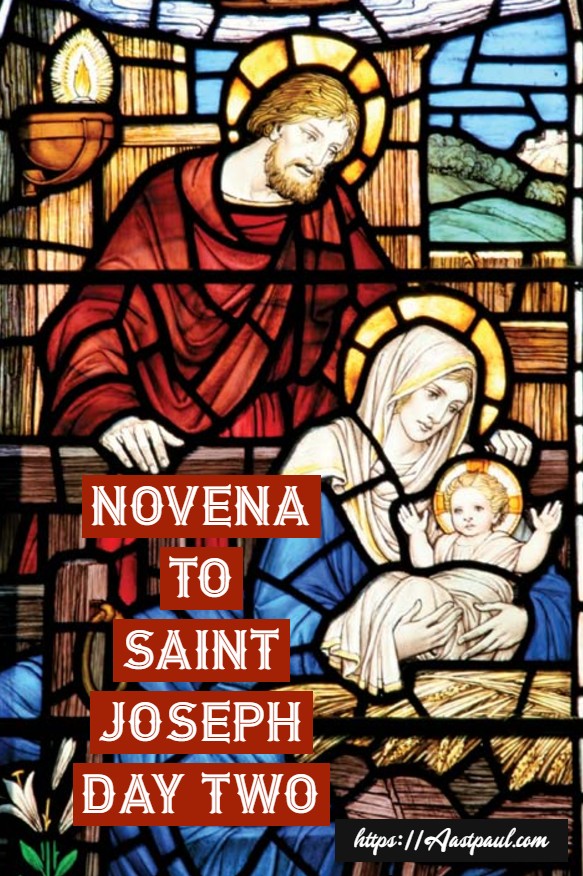
Saint Joseph, Foster Father and Guardian of Jesus and Protector of the Blessed Virgin, to whose faithful keeping , Christ Jesus, Purity and Innocence itself and Mary, the Virgin of virgins, were entrusted, we pray and beseech you by that twofold and most precious charge, by Jesus and Mary, to save us from all uncleanness, to keep our minds untainted, our hearts pure and our bodies chaste. Help us always, to serve Jesus and Mary in perfect chastity. And for this special grace we now implore you, ……………. (Mention your request) We humbly beg you to look graciously upon the beloved inheritance which Jesus Christ purchased by His blood and to aid us in our necessities with your power and strength. May the wholesome fear of God, strengthen us, that virtue may adorn our lives and lead us to heaven. St Joseph, Most Chaste, Pray for us! Amen.
Glory be to the Father and to the Son and to the Holy Spirit, as it was in the beginning, is now and ever shall be, world without end. Amen
Thought for the Day – 13 March – Meditations with Antonio Cardinal Bacci (1881-1971)
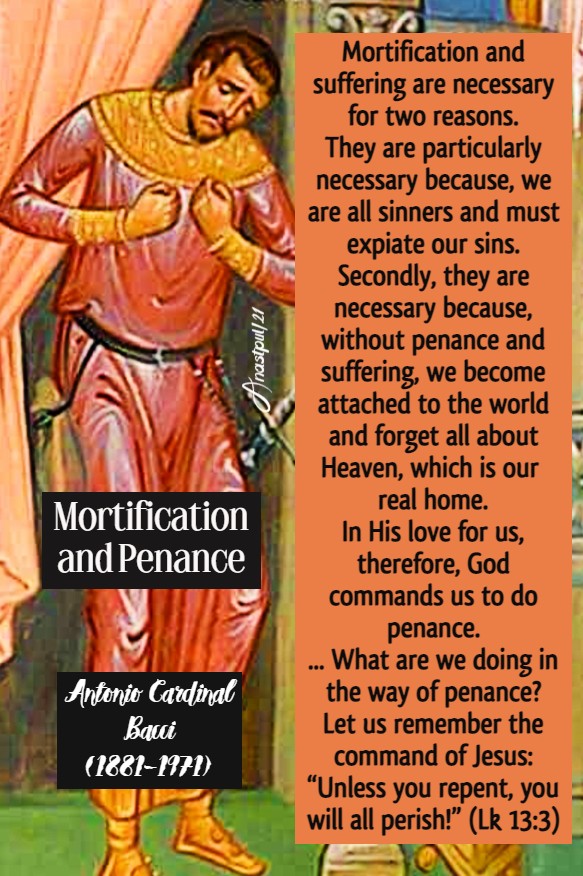
Mortification and Penance
“Our Lord reiterates many times, the command to do penance. “Repent, for the kingdom of God is at hand” (Mt 4:17). He even insists on penance as a necessary condition for salvation. “Unless you repent, you will all perish in the same manner” (Lk 13:3). It is a stern command and it may even seem cruel to some. Why does the infinitely good God, Who is our loving Father, wish us to impose penances and sufferings on ourselves? The answer is simple. God makes us suffer and do penance because He knows that it is necessary for our salvation. It is because He loves us and desires our welfare.
Mortification and suffering are necessary for two reasons. They are particularly necessary because, we are all sinners and must expiate our sins. Secondly, they are necessary because, without penance and suffering, we become attached to the world and forget all about Heaven, which is our real home. In His love for us, therefore, God commands us to do penance.
The Saints were gluttons for penance and mortifiation and went as far as imposing on themelves, sufferings which horrify us today. What are we doing in the way of penance? Let us remember the command of Jesus: “Unless you repent, you will all perish!” (Ibid).”
Day Twenty Five of our Lenten Journey – 13 March – Saturday of the Third Week of Lent, Readings: Hosea 6: 1-6, Psalms 51:3-4, 18-19, 20-21, Luke 18: 9-14
Imitating Christ with Thomas à Kempis (1380-1471)
In You is the source of life and in Your Light Lord, we see light Psalm 35(36)
‘O God, be merciful to me, a sinner.’ – Luke 18:13
YOU thunder forth Your judgements over me, Lord. You shake all my bones with fear and trembling and my soul is very much afraid. I stand in awe as I consider that the heavens are not pure in Your sight. If You found wickedness in the angels and did not spare them, what will become of me? Stars have fallen from heaven, and I — I who am but dust — how can I be presumptuous? They whose deeds seemed worthy of praise have fallen into the depths and I have seen those who ate the bread of angels delighting themselves with the husks of swine.
There is no holiness, then, if You withdraw Your hand, Lord. There is no wisdom if You cease to guide, no courage if You cease to defend. No chastity is secure if You do not guard it. Our vigilance avails nothing if Your holy watchfulness does not protect us. Left to ourselves, we sink and perish but visited by You, we are lifted up and live. We are truly unstable but You make us strong. We grow lukewarm but You inflame us. Oh, how humbly and lowly should I consider myself! How very little should I esteem anything, that seems good in me! How profoundly should I submit to Your unfathomable judgments, Lord, where I find myself to be but nothing!
O immeasurable weight! O impassable sea, where I find myself to be nothing but bare nothingness! Where, then, is glory’s hiding place? Where can there be any trust in my own virtue? All vainglory is swallowed up in the depths of Your judgments upon me.
What is all flesh in Your sight? Shall the clay glory against Him that formed it? How can he, whose heart is truly subject to God, be lifted up by vainglory? The whole world will not make him proud, whom Truth has subjected to itself. Nor shall he who has placed all his hope in God, be moved by the tongues of flatterers. For behold, even they who speak are nothing, they will pass away with the sound of their words but the truth of the Lord, remains forever. (Book 3 Ch 12)
Quote of the Day – 13 March – Saturday of the Third Week of Lent and The Memorial of St Leander (c 534-c 600)
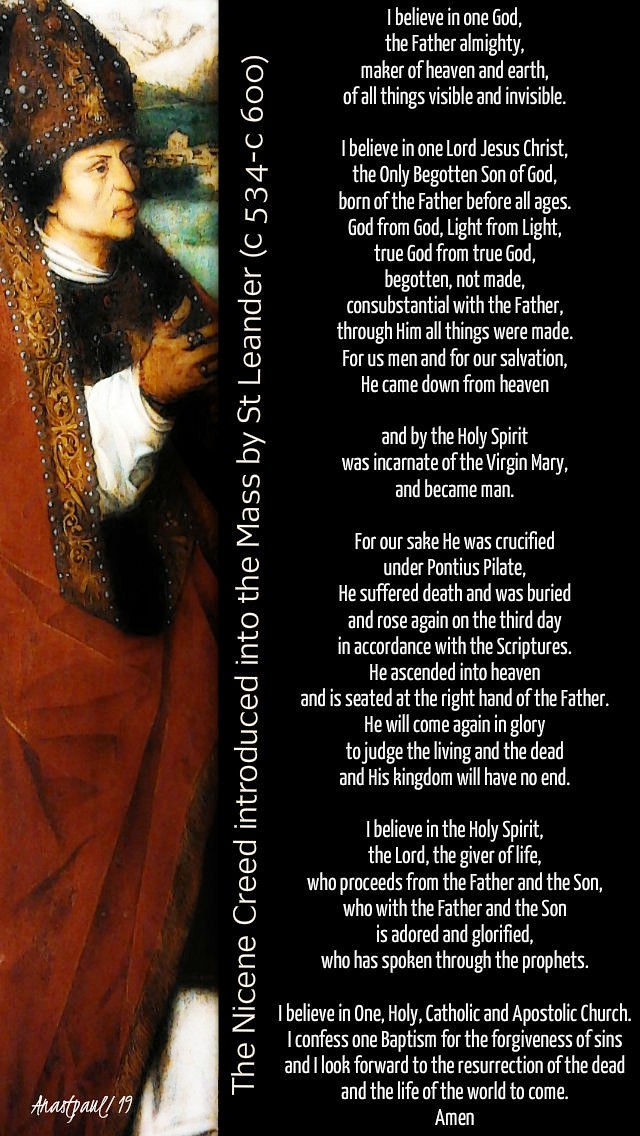
As we pray the Nicene Creed every Sunday, we might reflect on the fact that, this same prayer is being prayed by every Catholic during Mass, throughout the world. Saint Leander introduced its recitation as a means of uniting the faithful. Let’s pray that the recitation, may enhance that unity among Catholics today- each time you pray it, pray in your heart “let them be one.”
The Nicene Creed
I believe in one God, the Father almighty, maker of heaven and earth, of all things visible and invisible.
I believe in one Lord Jesus Christ, the Only Begotten Son of God, born of the Father before all ages. God from God, Light from Light, true God from true God, begotten, not made, consubstantial with the Father, through Him all things were made. For us men and for our salvation, He came down from heaven
and by the Holy Spirit was incarnate of the Virgin Mary, and became man.
For our sake He was crucified under Pontius Pilate, He suffered death and was buried and rose again on the third day in accordance with the Scriptures. He ascended into heaven and is seated at the right hand of the Father. He will come again in glory to judge the living and the dead and His kingdom will have no end.
I believe in the Holy Spirit, the Lord, the giver of life, who proceeds from the Father and the Son, who with the Father and the Son is adored and glorified, who has spoken through the prophets.
I believe in One, Holy, Catholic and Apostolic Church. I confess one Baptism for the forgiveness of sins and I look forward to the resurrection of the dead and the life of the world to come. Amen
“…For everyone who exalts himself will be humbled but he who humbles himself, will be exalted” – Luke 18:14
REFLECTION – “You know what our divine Saviour, who is very truth and goodness, said to His disciples: “Unless your justice abound more than that (…) of the Pharisees, you shall not enter the kingdom of heaven” (Mt 5:20). These words are truly those of Christ. He who would not condemn the woman taken in adultery; who vouchsafed to speak to the Samaritan woman and reveal heavenly mysteries to her in spite of her guilty life; He who consented to eat with the publicans, socially disqualified as sinners; who allowed Magdalen to wash His feet and wipe them with the hairs if her head; He who was so “meek and humble of heart” (Mt 11:29), publicly hurled anathemas at the Pharisees: “Woe to you (…) hypocrites, you will not enter the kingdom of heaven” (Mt 23:13). (…)
Call to mind the Pharisee whom Christ depicts going up to the Temple to pray. What is his prayer? “My God, I am a man altogether irreproachable; I fast, I give tithes (Lk 18:11-12); You cannot find me in fault on any point; You ought to be proud of me.” And in the literal sense, what he said was true – he did observe all these things.
However, what judgement does Jesus pass upon him? This man went out of the Temple without being justified, his heart empty of God’s grace. Why this condemnation? Because the unhappy man glorified himself, for his good actions and placed all his perfection, in merely outward observance, without troubling himself about the inward dispositions of his heart. Therefore, our Lord tells us: “Unless your justice is greater than that of the Pharisees, you will have no part in the Kingdom of heaven.” (…) It is in the heart that perfection lies; for love is the supreme law.” – Bl Columba Marmion (1858-1923) Abbot – The “instruments of good works” (Christ, the Ideal of the Monk)
PRAYER – We turn to You our God and Father and seek Your comfort and assurance. Jesus, our Lord, Your Son, taught us how to pray in humility and all we need to be and do, to reach You. Be patient good Father, as we grow by Your grace. May the prayers of the Mother of Christ, help us to attain our home Through Jesus our Lord, in union with the Holy Spirit, God now and forever, amen.
Our Morning Offering – 13 March – Saturday of the Third week of Lent
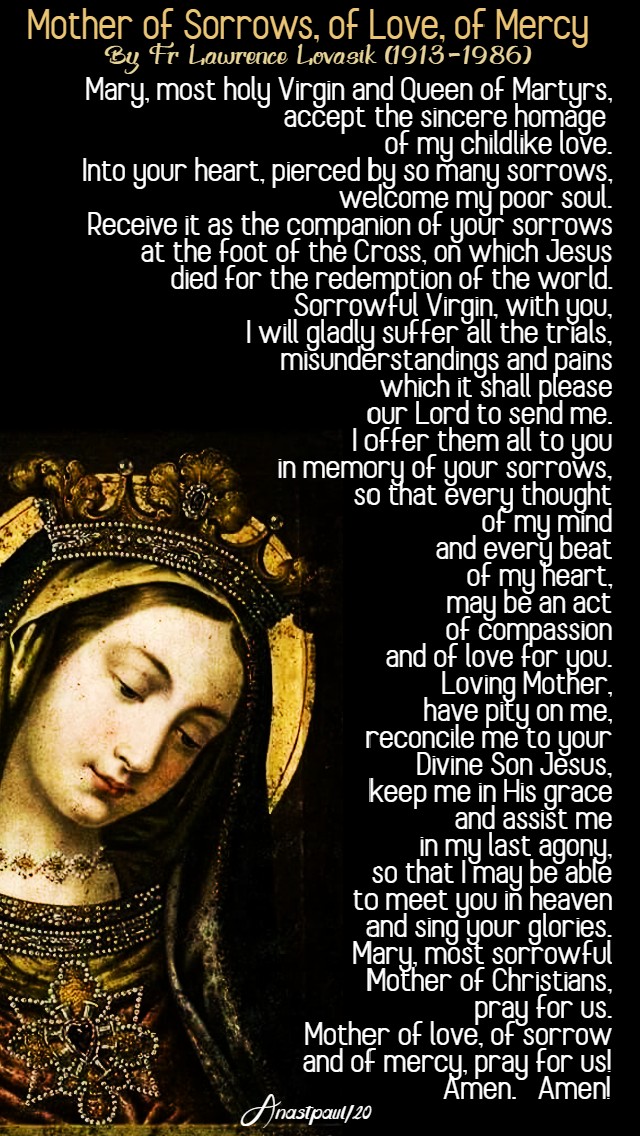
Mother of Sorrows, of Love, of Mercy By Fr Lawrence Lovasik SVD (1913-1986)
Mary, most holy Virgin and Queen of Martyrs, accept the sincere homage of my childlike love. Into your heart, pierced by so many sorrows, welcome my poor soul. Receive it as the companion of your sorrows at the foot of the Cross, on which Jesus died for the redemption of the world. Sorrowful Virgin, with you, I will gladly suffer all the trials, misunderstandings and pains which it shall please our Lord to send me. I offer them all to you in memory of your sorrows, so that every thought of my mind and every beat of my heart, may be an act of compassion and of love for you. Loving Mother, have pity on me, reconcile me to your Divine Son Jesus, keep me in His grace and assist me in my last agony, so that I may be able to meet you in heaven and sing your glories. Mary, most sorrowful Mother of Christians, pray for us. Mother of love, of sorrow and of mercy, pray for us! Amen. Amen!
Saint of the Day – 13 March – Saint Roderick (Died 857) Priest and Martyr of Córdoba. Born as Rodrigo in 9th century southern Spain and died by beheading in 857 in Cordoba, Spain. He is also known as Rodriguez, Rudericus, Roderic, Ruderic. The Roman Martyrology lists him, together with Solomon, under the Latin name of Rudericus in the list for today.
Roderick was a Priest from Cordoba, in Andalusia, a region that had been part of the kingdom of the Visigoths of Spain.
St Roderick by Murillo
He found himself in a not uncommon situation in that territory, then under Arab rule – one of his brothers had remained a Christian and the other had become a Muslim. And he, Roderick, would die at the hands of the Arabs, so that he is usually depicted with the vestments of a Priest and with the palm of the Martyrs.
But, it is not a question of the uusal form of persecution in this case. At the time, the region saw Muslims, Christians and Jews co-exist quite peacefully. Roderick became the victim of family and fraternal disagreements and violence.
The Muslim brother reproached the third brother for his “obstinacy” in remaining a Christian. Roderick tried to make peace between the two but without success.
One day, in fact, Roderick found the two in a physical battle with each other. When he tried to divide them, as is often the case, they both turned on him and began beating him. He collapsed unconscious under their blows. At that point, the Muslim brother took him away on a cart – he seemed dead – and to the amazed people, he gave a lying explanation – he said that Rodrigo was seriously ill and that, feeling death close, he too became a Muslim.
The rumour spread but Roderick, upon his recovery, was unaware of this slander. Healed, he returned to Cordoba in his priestly garb and his brother-accuser, dragged him to the Muslim judge saying – “This one had become a follower of Islam and now he has returned to Christianity, he has betrayed our faith.” This accusation would be regarded as apostasy under Sharia law and would incur the death penalty!
The judge tried to help Roderick save himself, even suggesting a declaration of fidelity to Islam, which would set him free immediately, without asking him for specific commitments on the practice of the Muslim faith. But Roderick maintained his loyalty and refused to deny Christ and His Church, instead, choosing rather to die. We presume he denied the lies told by his brother but there is no account of this. The reluctant judge, then sentenced him to death, at the insistence of that brother. Fratricide, more than persecution.
Roderick was then put to death with another Christian named Solomon, convicted for the same reason. Thrown into the Guadalquivir river, the bodies were recovered by the Christians, who buried Roderick in the Basilica of San Genesio, near Cordova and Solomon, in the nearby Church of Saints Cosmas and Damian.
For both, holiness was proclaimed immediately, from below. The festival has been celebrated since 1581, today, 13 March.
St Roderick’s Convent and Hospital in Cabra, established in the 16th century, bears his name.
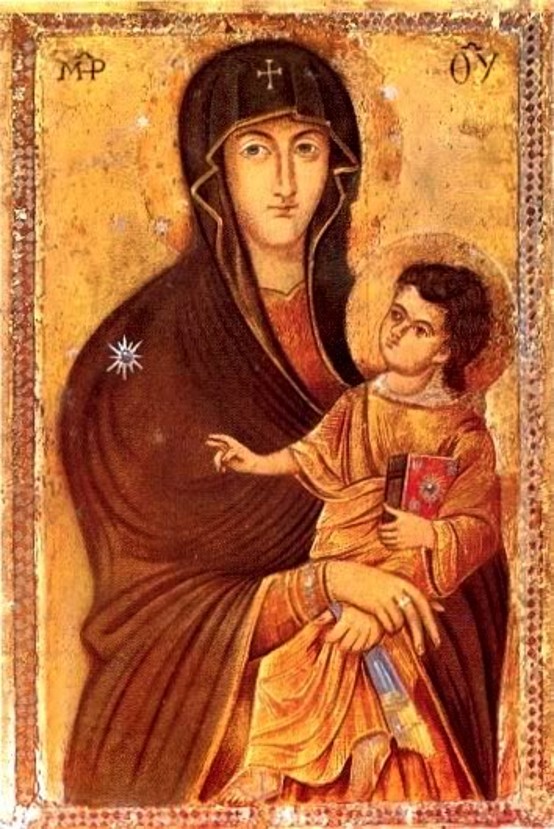
“The Salus Populi Romani” / Our Lady of the Empress, Rome (593) – 13 March:
The Abbot Orsini wrote: “A tradition records that this image spoke to Saint Gregory the Great, in the year 593.”
Salus Populi Romani means literally health or salvation, or Protectress, of the Roman People. The title of Salus Populi Romani reverts to Emperor Constantine the Great and the Edict of Milan when, after Christians were no longer persecuted, the phrase became another of many Marian titles for the Blessed Virgin Mary, Mother of God. The icon Salus Populi Romani, or Our Lady of the Empress, is one of many images believed to have been painted by Saint Luke. When the Blessed Virgin lived with St John, after her Son had ascended into heave, she had few personal belongings but among them was a table built by Christ Himself when He was working in the carpenter shop with his foster father, the good Saint Joseph. Saint Luke, yielding to the repeated requests of pious virgins, painted a portrait of Mary using the tabletop as his canvas. As the portrait was being painted, Saint Luke listened carefully as the Queen of Heaven spoke of her Son’s life, facts that Saint Luke recorded in what became his Gospel. The image is surprisingly large, being five feet high by three and 3/4 but if one considers that a tabletop was used, then this size seems appropriate. Modern examiners admit the painting was made on a thick cedar board. The Virgin Mary holds a map in her right hand, which is an imperial symbol meant to depict the bearer as “Queen,” or in Roman times, “Empress.” The icon came to Rome from Crete in 590 when Pope Gregory the Great was the Holy Father and according to tradition, he went out upon the Tiber in his own vessel to greet the icon. Three years later, Pope Gregory I had the icon carried throughout Rome in solemn procession, as all prayed to the Mother of God for an end to the Black Plague that had been devastating the people of Rome. Pope Gregory’s predecessor, Pope Pelagius, had himself died of the same plague. When the icon of Salus Populi Romani, with the prayerful entourage following alongside the Tiber River, neared Hadrian’s Mausoleum, a choir of angels could suddenly be heard singing the joyous Resurrection hymn as Pope Saint Gregory looked up to see the heavens open. Then, just above Hadrian’s Mausoleum, an angel believed to be Saint Michael appeared. He was holding a sword of vengeance over the City and above him, the Pope saw the Blessed Virgin, seated upon a throne above the angels.
“Regina coeli, laetare, alleluia; Quia quem meruisti portare, alleluia; Resurrexit sicut dixit, alleluia.”
“Queen of Heaven, rejoice, alleluia; for he whom thou didst merit to bear, alleluia; has risen as He said, alleluia; pray for us to God, alleluia.”
The scent of a heavenly perfume filled the air and without hesitation, the holy Pontiff concluded the Regina Coeli:
“Ora pro nobis Deum, alleluia! Gaude et laetare, Virgo Maria, alleluia! Quia surrexit Dominus vere, alleluia. “Ora pro nobis Deum, alleluia.”
Pray for us to God, alleluia! Rejoice and be glad, O Virgin Mary, alleluia! For the Lord has truly risen, alleluia!
At that, the Pope, St Gregory, watched as Saint Michael sheathed his sword. To the great relief of the people of Rome, the Black Plague was ended, at that moment. Since the year 1613, the icon Salus Populi Romani has been kept in the Altar Sanctuary of the Cappella Paolina that was created for it, known in English as the Lady Chapel. The Basilica of Saint Mary Major, where it can be seen. St Mary Major is one of the four ancient Churches of Rome and the Marian Shrine is under the special patronage of the Popes.
St Mochoemoc St Nicephorus of Constantinople Bl Peter II of La Cava St Pientius of Poitiers St Ramirus of Leon St Roderick of Córdoba.(Died 857) Priest and Martyr St Sabinus of Egypt St Sancha of Portugal — Martyrs of Cordoba: Roderick, Salomon,
Martyrs of Nicaea: Arabia Horres Marcus Nymphora Theodora Theusitas Martyrs of Nicomedia Eufrasia Macedonius Modesta Patricia Urpasian
Saint Joseph, you are the faithful protector and intercessor of all who love and venerate you. O most prudent Guardian of the Holy Family, protect our home. Pour forth from heaven. blessings on our family. Remain in our midst. Help us to live in love and harmony, in peace and joy. May the wholesome fear of God, strengthen us, that virtue may adorn our lives and lead us to heaven. To you this day we give the key to our dwelling place. Lock out all things that could do us harm. Lock our home and our loved ones, in the hearts of Jesus and Mary. And for this special grace we now implore you: ……………. (Mention your request) We humbly beg you to look graciously upon the beloved inheritance which Jesus Christ purchased by His blood and to aid us in our necessities with your power and strength. Guardian of the Word Incarnate, we feel confident that your prayers on our behalf, will be graciously heard before the throne of God. St Joseph Most Loving Husband and Guardian, Pray for us! Amen
Glory be to the Father and to the Son and to the Holy Spirit, as it was in the beginning, is now and ever shall be, world without end. Amen
Thought for the Day – 12 March – Meditations with Antonio Cardinal Bacci (1881-1971)
The Love of God
“God’s law is founded on love. We read in the Gospel how the Pharisees asked Jesus which was the greatest commandment of the Law. Jesus replied: “Thou shalt love the Lord thy God with thy whole heart and with thy whole soul and with thy whole mind. This is the greatest and the first commandment. And the second is like it. Thou shalt love thy neighbour as thyself. On these two commandments depend the whole Law and the Prophets” (Mt 22:37-40).
If a man wants to know if he is living a good Christian life, therefore, all he has to do is ask himself if he loves God above everything and his neighbour as himself. If he lacks this love, he is not a true Christian – everything else is insignificant, if not useless. “Love God,” says St Augustine “and do what you will.” Why so? Because, if anyone loves God sincerely, he does not offend Him. Moreover, he serves Him diligently and promotes His honour and glory by every means in his power. Nor does he find it very difficult to do this. Love gives wings to his feet and pours enthusiasm and fervour into his heart. “He who loves does not feel tired,” says St Augustine. “Where there is love,” adds St Bernard, “there is no weariness but a gentle pleasure instead.”
Day Twenty Four of our Lenten Journey – 12 March – Friday of the Third Week of Lent, Readings: Hosea 14: 2-10, Psalms 81: 6-8, 8-9, 10-11, 14 and 17, Mark 12:28-34
Imitating Christ with Thomas à Kempis (1380-1471)
In You is the source of life and in Your Light Lord, we see light Psalm 35(36)
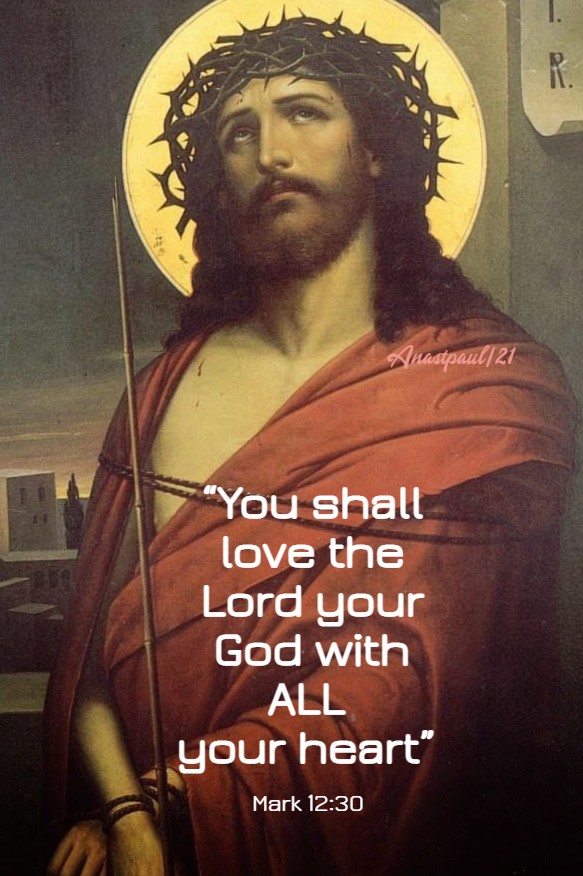
“You shall love the Lord your God with ALL your heart” – Mark 12:30
When Jesus is near, all is well and nothing seems difficult. When He is absent, all is hard.
When Jesus does not speak within, all other comfort is empty. But if He says only a word, it brings great consolation.
[…] How dry and hard you are without Jesus! How foolish and vain if you desire anything but Him! Is it not a greater loss than losing the whole world? For what, without Jesus, can the world give you? Life without Him, is a relentless hell but living with Him, is a sweet paradise. If Jesus be with you, no enemy can harm you.
He who finds Jesus, finds a rare treasure, indeed, a good above every good, whereas he who loses Him, loses more than the whole world. The man who lives without Jesus, is the poorest of the poor, whereas no-one is so rich, as the man who lives in His grace.
It is a great art to know how to converse with Jesus and great wisdom, to know how to keep Him. Be humble and peaceful and Jesus will be with you. Be devout and calm and He will remain with you.
[…] You cannot live well without a friend and if Jesus be not your friend, above all else, you will be very sad and desolate. Thus, you are acting foolishly, if you trust or rejoice in any other.
Choose the opposition of the whole world, rather than offend Jesus. Of all those who are dear to you, let Him be your special love.
Let all things be loved, for the sake of Jesus but Jesus, for His own sake.
[…] Never wish that anyone’s affection be centred in you, nor let yourself be taken up with the love of anyone but, let Jesus be in you and in every good man. Be pure and free within, unentangled with any creature.
You must bring to God, a clean and open heart, if you wish to attend and see how sweet the Lord is. Truly you will never attain this happiness, unless His grace prepares you and draws you on, so that you may forsake all things to be united with Him alone. When the grace of God comes to a man, he can do all things but when it leaves him, he becomes poor and weak, abandoned, as it were, to affliction. Yet, in this condition he should not become dejected or despair. On the contrary, he should calmly await the will of God and bear whatever befalls him in praise of Jesus Christ.
For after winter comes summer, after night, the day and after the storm, a great calm. (Book 2 Ch 8)
Quote/s of the Day – 12 March – Friday of the Third Week of Lent, Readings: Hosea 14: 2-10, Psalms 81: 6-8, 8-9, 10-11, 14 and 17, Mark 12:28-34
“You shall love the Lord your God with ALL your heart”
Mark 12:30
“Whatever you do, do from the heart, as for the Lord and not for others, knowing that you will receive from the Lord the due payment of the inheritance; be slaves of the Lord Christ.”
Colossians 3:23-24
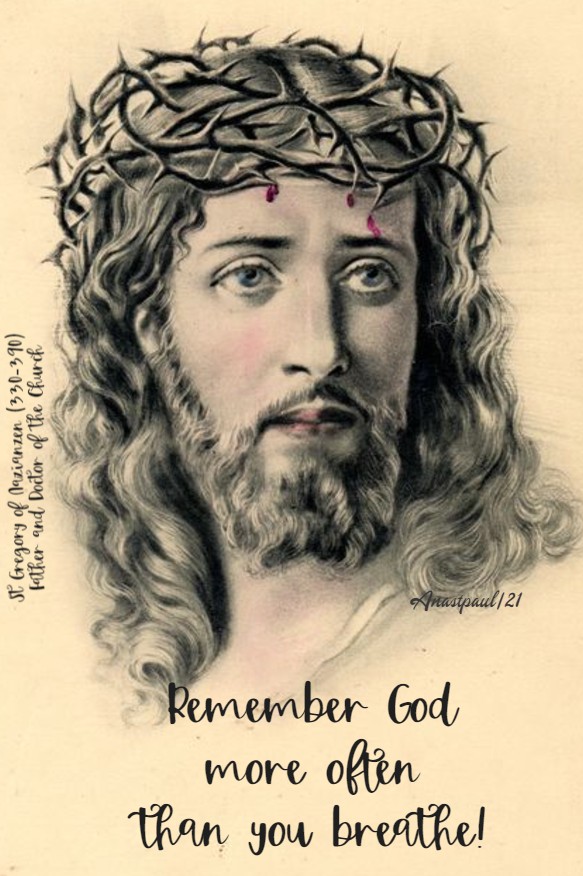
“Remember God more often than you breathe!”
St Gregory of Nazianzen (330-390) Father and Doctor of the Church
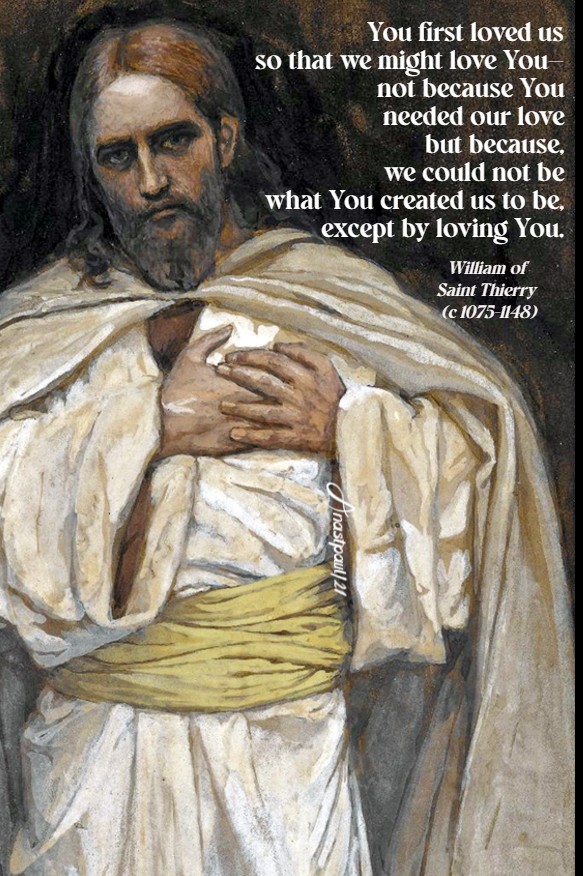
“You first loved us so that we might love You— not because You needed our love but because, we could not be what You created us to be, except by loving You.”
William of Saint Thierry (c 1075-1148)
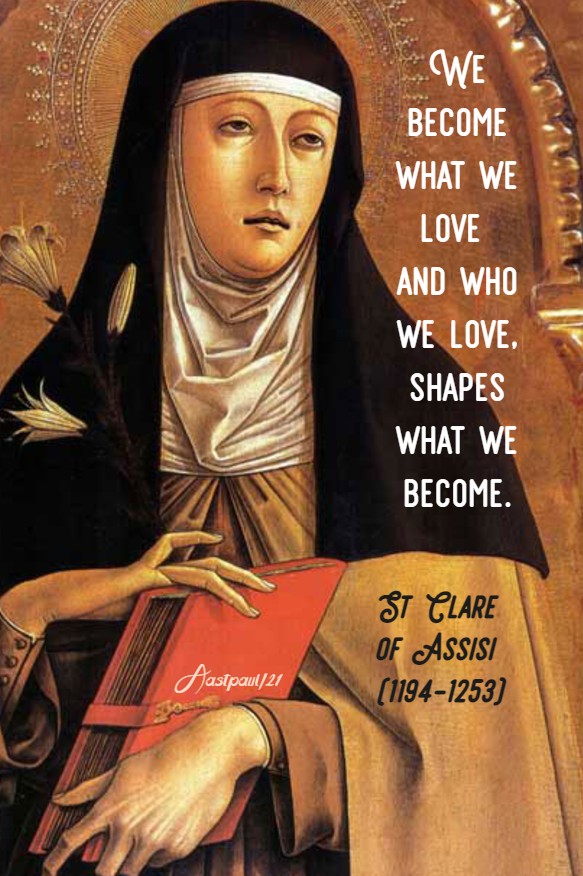
“We become what we love and who we love, shapes what we become.”
St Clare of Assisi (1194-1253)
“He who wishes for anything but Christ, does not know what he wishes; he who asks for anything but Christ, does not know what he is asking; he who works and not for Christ, does not know what he is doing.”
St Philip Neri (1515-1595)
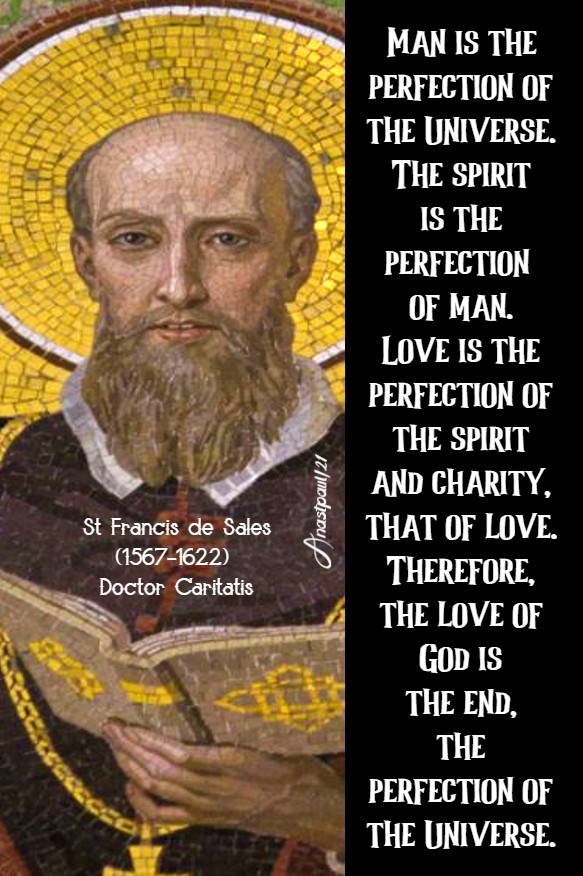
“Man is the perfection of the Universe. The spirit is the perfection of man. Love is the perfection of the spirit and charity, that of love. Therefore, the love of God is the end, the perfection of the Universe.”
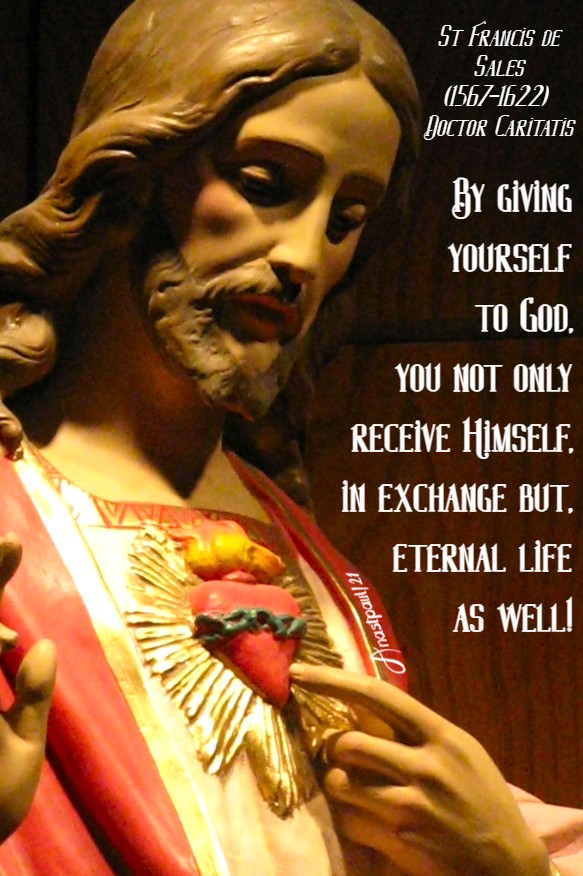
“By giving yourself to God, you not only receive Himself in exchange but, eternal life as well!”
“You shall love the Lord your God with all your heart” – Mark 12:30
REFLECTION – “The great ones of the earth glorify themselves in possessing kingdoms and wealth. Jesus Christ finds all His happiness in ruling over our hearts. This is the sovereignty He desires and, that He decided to conquer, with His death on the cross: “Upon his shoulder dominion rests” (Is 9:5). Many interpreters understand, by these words, … the Cross our divine Redeemer bore on His shoulders. “This heavenly king,” Cornelius à Lapide remarks, “is a completely different master to the devil. The latter loads heavy burdens onto his slaves’ shoulders. Jesus, to the contrary, takes the full weight of His lordship on Himself, He embraces the Cross and wants to die on it, so as to reign over our hearts.” And Tertullian says that, whereas earthly monarchs “carry a sceptre in their hands and wear a crown on their heads as emblems of their power, Jesus Christ bore the Cross on His shoulders. And the Cross was the Throne, to which He ascended to establish His kingdom of love” … Let us then hasten to dedicate all our heart’s love to this God who, to win it, has sacrificed His blood, His life, His whole self. “If you knew the gift of God,” said Jesus to the Samaritan woman, “and who it is who says to you: ‘Give me to drink’” (Jn 4:10). That is to say: if you only knew how great is the grace you receive from God … Oh, if the soul only understood what an extraordinary grace God bestows on it, when He begs for its love in the words: “You shall love the Lord your God ….” Would not a subject who heard his lord say : “Love me” not be entranced? And could God not succeed in winning our hearts when He asks us for it with such great sweetness: “My son, give me your heart?” (Prv 23:26). However, God does not want this heart by halves, He wants the whole of it, without reserve. His commandment is: “You shall love the Lord your God with ALL your heart.” – – St Alphonsus Maria de Liguori (1696-1787) Bishop and Most Zealous Doctor of the Church – 6th Discourse for the Octave of Christmas
PRAYER – Lord Almighty God, You sanctify Your Church, by the gifts of the Holy Spirit. Fulfil in us the words of Your Son that our love for You and Your children may be come to perfection. Grant that by the prayers of St Seraphina, we too may attain our heavenly home. Through Christ our Lord, in union with You and the Holy Spirit, one God, amen.
Our Morning Offering – 12 March – Frdiay of the Third Week of Lent
O Sweet Name of Jesus By Thomas à Kempis (1380-1471)
O sweet Name of Jesus, holy above all names in heaven and on earth and to which every knee, both of men and of angels in heaven, on earth and in hell bends. You are the Way of the just, the Glory of the saints, the Hope of those in need, the Balm of the sick, the Love of the devout and the Consolation of those that suffer. O, Jesus be to me a help and a protector so that Your Name may be blessed for all times. Amen
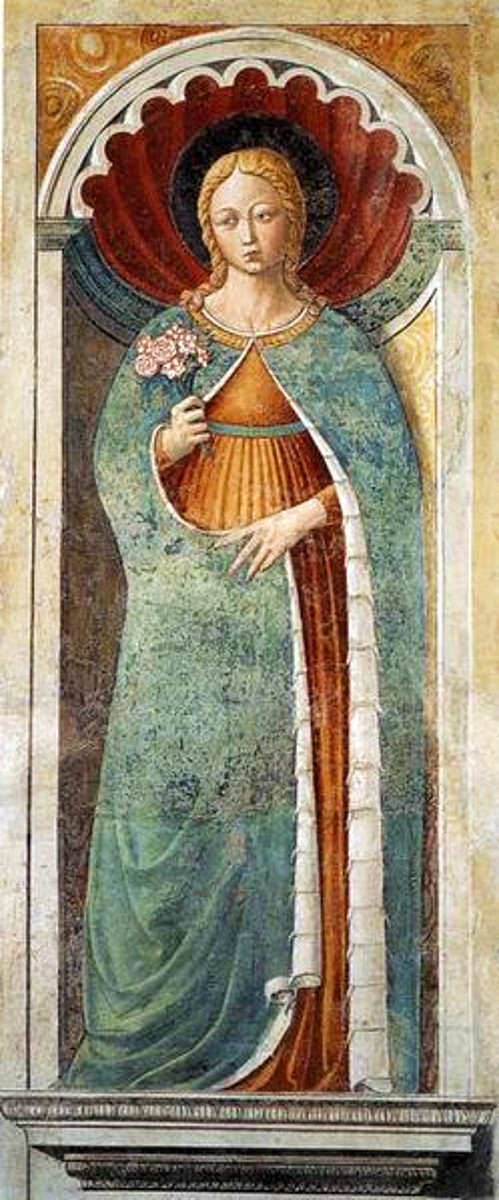
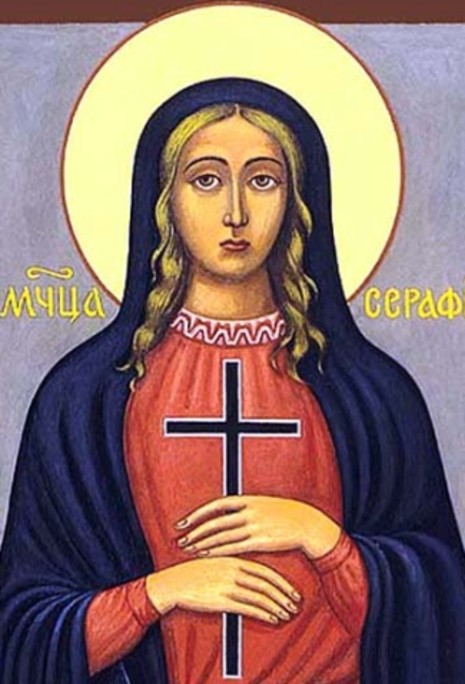
Saint of the Day – 12 March – Saint Seraphina (1238-1253) Virgin. Born as Fina dei Ciardi , in 1238 at San Geminiano, Tuscany, Italy and died on 12 March 1253 of natural causes, aged 15. PATRONAGES– crippled, paralysed and disabled people, spinners. Also known as Fina, Serafina. Saint Seraphina is celebrated in San Gimignano on both 12 March, the anniversary of her death and the first Sunday in August.
Fina dei Ciardi was born in San Gimignano in 1238. The Daughter of Cambio Ciardi and Imperiera, a declined noble family, she lived all her existence in a humble house located in the historic centre of the famous “city of beautiful towers” (today the small road on which her house stands takes her name). There is little record of the first ten years of her life and what information is available comes from legends narrated after her death. Some accounts note Seraphina’s strong devotion to the Virgin Mary and that she went out, only to hear Mass. She was also said to be extraordinarily kind.
In 1248, Seraphina’s life was changed by a serious illness, which began, progressively, to paralyse her (probably a form of tuberculous osteomyelitis). Her deep faith relieved her pain. She refused a bed and chose instead, to lie on a wooden pallet. According to her legend, during her long illness, her body became attached to the wood of the table, with worms and rats feeding on her rotting flesh. During her illness, she lost her father and later her mother died after a fall. In spite of her misfortunes and poverty, she thanked God and expressed a desire that her soul might separate from the body, in order to meet Jesus Christ.
In her reading, St Seraphina had heard of the great sufferings of St Gregory the Great and he became her special Patron. She prayed to him, drew strength from the sufferings that he had to endure and prayed, that he would obtain for her, the patience she needed to bear her own sufferings. She was now so weak and helpless, that it was clear to everyone she could not live very long.
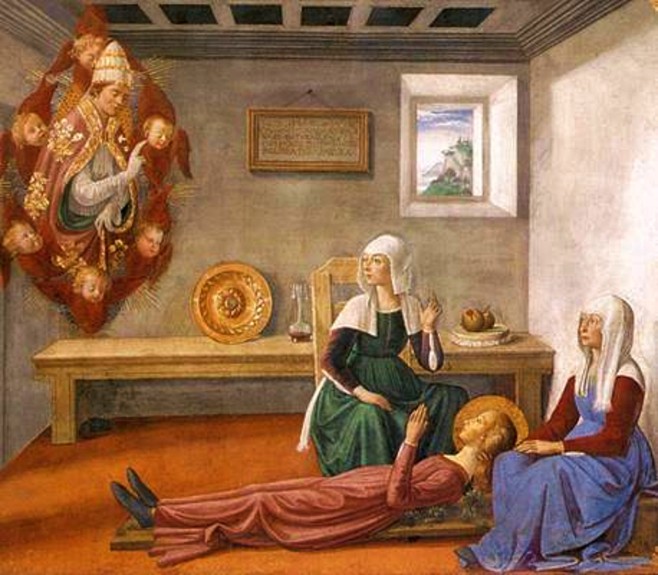
Seraphina’s immense devotion was an example to all the citizens of San Gimignano, who frequently visited her. Visitors were surprised to receive words of encouragement from a desperately ill young girl who was resigned to the will of God. On 4 March 1253, after five years of sickness and pain, her nurses Beldia and Bonaventura, were waiting for her to die. Suddenly, Saint Gregory the Great appeared in Seraphina’s room and predicted, that she would die on the 12th of March .Seraphina died on the predicted date at the age of 15.
Miracles attributed to Seraphina are mentioned in stories, paintings, poems and in notary documents. The most important miracle of her life, was her vision of Saint Gregory, also because she died on Saint Gregory’s Feast day (12 March) as he predicted.
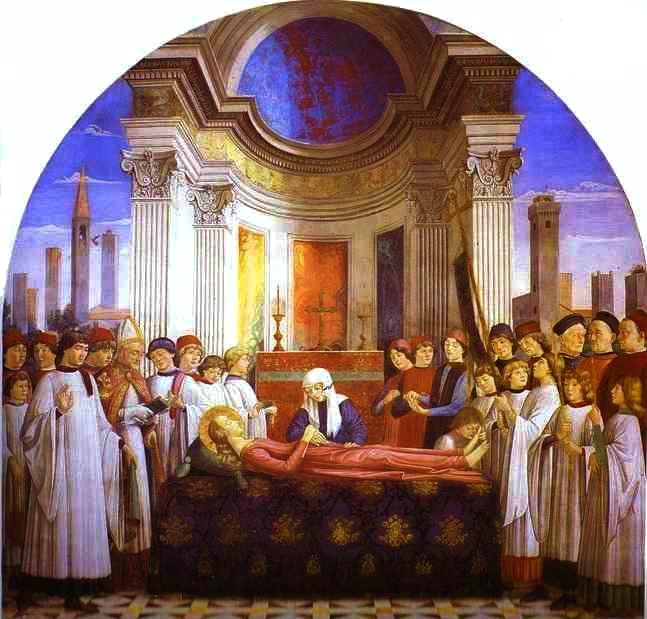
When Seraphina’s body was removed from the pallet that was her deathbed, onlookers saw white violets bloom from the wood and smelt a fresh, floral fragrance throughout her house. The violets grew on the walls of San Gimignano and still grow there today. For this reason, the townspeople call them “The Saint Seraphina violets.” The young girl’s body was brought to the Church and during the transfer, the crowd proclaimed “The Saint is dead!”
For several days, pilgrims went to the Church to venerate Seraphina’s remains and in the same period, there were many evidences of her intercessionary power. One was her nurse Beldia. The woman had a paralysed hand for the labour in supporting Fina’s head during her sickness. While she was near the body, the dead young girl cured Beldia’s hand. Legends say that, at the exact moment of Seraphina’s passing away, all the bells of San Gimignano rang without anyone touching them.
Domenico Ghirlandaio’s Funeral of St Seraphina, details below *-*
Many sick people who visited her grave during the following years were cured and some of these became some of Seraphina’s most fervent devotees.
Another legend tells that during a walk with two of her friends she heard another young girl, Smeralda, crying. Smeralda had broken a pitcher given her to fill with water from well. While she was entertained by other children, she forgot the pitcher on the ground which unfortunately rolled down and broke. Seraphina told her to arrange the pieces and put them under the water and the pitcher became whole and full of water.
Another anecdote about Seraphina’s miracles is the one of Cambio di Rustico, the Ciardi family’s neighbour. On one anniversary of Seraphina’s death, when the townsfolk had a holiday to remember her, Cambio went to cut wood and hurt his leg. Suffering, he asked forgiveness of Saint Seraphina and was very sorry for not having respected her memorial. His cut then miraculously disappeared.
Saint Fina is celebrated in San Gimignano on two separated days. Her first feast is on 12 March – the anniversary of her death – which has been a statutory holiday in the town since 1481. The second feast on the first Sunday of August, commemorates her miraculous intercession for the cessation of two incidents of the Plague, which had ravaged the town in 1479 and 1631.
On both days, her relics are carried in procession in order to bless the town. Her example of devotion has been handed down by the people of San Gimignano through her veneration, despite not being formally canonised by the Church. So, as written in some paintings dedicated to her, it would be correct to call her Blessed Fina. In fact, the official Patron saint of her town, is still Saint Gimignano.
The most important memorial produced in the memory of Saint Fina is the hospital which took her name and was built in 1255, thanks to donations given at her tomb. The hospital gave hospitality to old and poor people and pilgrims too. It became in the following century one of the best in Tuscany. In the hospital’s Chapel, the original oak wood table where Saint Seraphina lay for five years is preserved.
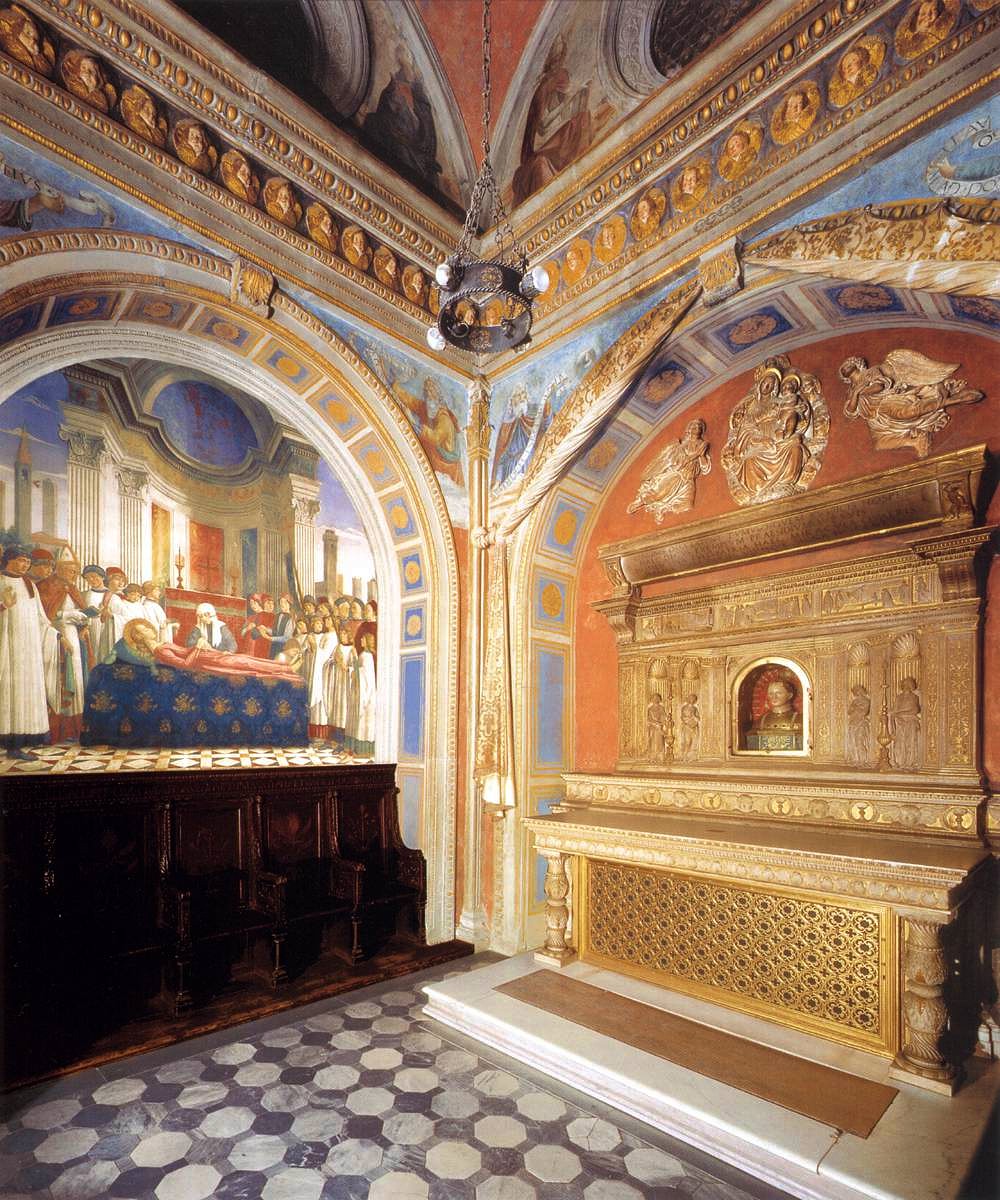
*A Shrine dedicated to Saint Seraphina is a Chapel (designed by Giuliano da Maiano in 1468 and consecrated in 1488) located inside the Church of San Gimignano where, inside theAaltar (built by the brother Benedetto da Maiano), her bones are kept. On the left and right walls of the Chapel there are two frescoes painted by Domenico Ghirlandaio – one shows the vision of Saint Gregory; the other shows the funeral where the violets in blossom on the towers are represented. We also see an angel ringing the bells, Beldia’s cured hand and the self-portrait of the painter and his brother-in-law Mainardi, who painted the Chapel’s ceiling. On the altar there is a bust with Saint Seraphina ’s relics inside.*
View of the Chapel
Inside the Civic Museum of San Gimignano there is a wood tabernacle (by Lorenzo di Niccolò 1402) depicting Saint Seraphina with the town on her lap, an icon of St Gregory and some of her anecdotes. Another image of Fina is in the nearby Sant’Agostino Church, painted by Benozzo Gozzoli. Other artists depicting the Saint’s life were Piero del Pollaiolo and Pier Francesco Fiorentino. In others small Churches in the countryside, further paintings of the Saint reside.
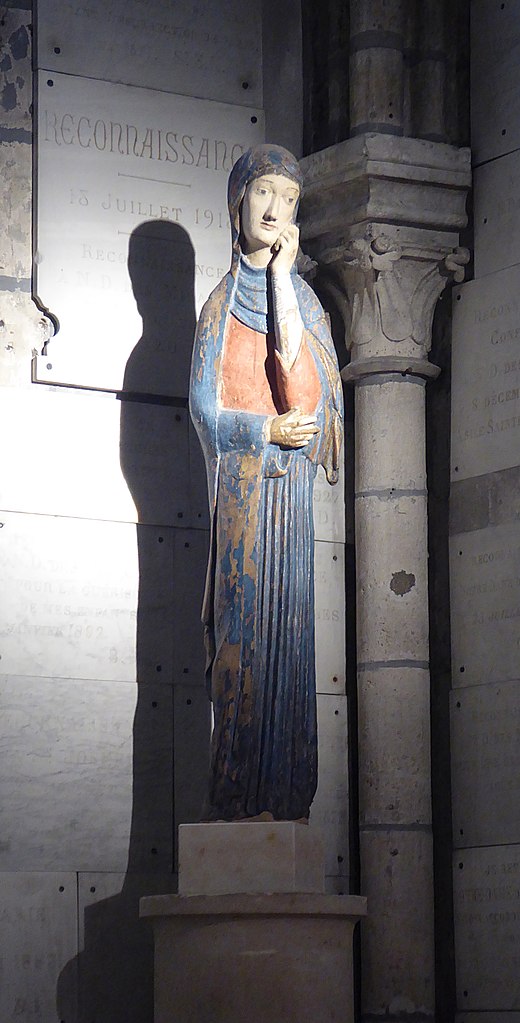
Notre-Dames-des-Miracles / Our Lady of Miracles, St Maur des Fosses, France (1328) – 12 March;
The Abbot Orsini wrote: “Our Lady of Miracles, in the cloister of Saint Maur des Fosses, near Paris. It is said that this image was found made, when the sculptor, named Rumold, was going to work at it in 1328.”
Saint-Maur-des-Fosses is a city that may be considered to be a suburb of Paris, France. There is a miraculous Statue of the Blessed Virgin, Our Lady of Miracles, located in the Church of Saint Nicholas in the city. The Town owes its name to an Abbey that was founded by Queen Nanthild in the year 638 at Les Fosses, which means ‘the moats’ in French. The Abbey was called Sanctus Petrus Fossatensis and was dedicated to the Blessed Virgin Mary, as well as saints Peter and Paul. When the Monks of the Abbey of Saint-Maur de Glanfeuil in western France fled from the Vikings in the year 868, Holy Roman Emperor, King Charles the Bald, asked them to settle at Sanctus Petrus Fossatensis. They did so, bringing with them their relic of Saint Maurus and introducing the rule of Saint Benedict to France in the 6th century. The Abbey, located in a loop of the Marne just before it joined the Seine, became an important pilgrimage site when the relics of Saint Maurus were found to be effective in curing those who suffered from gout and epilepsy. Due to this sudden popularity and, in recognition of it, the name of the Abbey was changed to, Saint-Maur-des-Fosses, or St Maurus of the Moats. In the drought year of 1137, all of Western Europe was without rain. The Monks of the Abbey led a procession of the relics of St. Maurus and, at the conclusion of Mass, there was a violent thunderstorm which brought rain to the region. As should not be surprising, the Abbey was seized during the French Revolution by the enthusiastic proponents of liberty, equality, and brotherhood. Anything of value was looted and the property then sold to speculators. After they were stripped of everything of value, the buildings that remained were demolished and the material used in other building projects, so that today nothing remains but a few vestiges that were collected for display in a museum. Fortunately, the Statue of Our Lady of Miracles miraculously survived. The Statue had been venerated since 1328 because of the miraculous circumstances of its creation and was saved by a locksmith named Hazar. It is now kept at the Church of Saint Nicholas (see below) in Saint Maur-des-Fosses.
St Maximilian of Thebeste St Mura McFeredach St Paul Aurelian St Peter the Deacon St Seraphina (1238-1253) Virgin St Theophanes the Chronographer — Martyrs of Nicomedia – 8 saints: Eleven Christians who were martyred in succession in a single incident during the persecutions of Diocletian. First there were the eight imprisoned Christians, Domna, Esmaragdus, Eugene, Hilary, Mardonius, Maximus, Mígdonus and Peter, about whom we know little more than their names. Each day for eight days one of them would be strangled to death in view of the others so that they would spend the night in dread, not knowing if they were next. Peter was the chamberlain or butler in the palace of Diocletian. When he was overheard complaining about this cruelty, he was exposed as a Christian, arrested, tortured and executed by having the flesh torn from his bones, salt and vinegar poured on the wounds and then being roasted to death over a slow fire. Gorgonio was an army officer and member of the staff in the house of emperor Diocletian, Doroteo was a staff clerk. They were each exposed as Christians when they were overhead objecting to the torture and murder of Peter. This led to their own arrest, torture and executions. Died in 303 in Nicomedia, Bithynia (in modern Turkey) Additional Memorial – 28 December as part of the 20,000 Martyrs of Nicomedia.
To you, O Blessed Joseph, we come in our trials and having asked the help of your most holy spouse, we confidently ask your patronage too. Through that sacred bond of charity, which united you to the Immaculate Virgin Mother of God and through the fatherly love, with which you embraced the Child Jesus, we humbly beg you to look graciously upon the beloved inheritance which Jesus Christ purchased by his blood and to aid us in our necessities with your power and strength and the special grace we now implore: ……………. (Mention your request)
O most prudent Guardian of the Holy Family, defend the chosen family of Jesus Christ. Most beloved father, dispel the evil of falsehood and sin. Our most mighty protector, graciously assist us from heaven in our struggle with the powers of darkness. And just as you once saved the Child Jesus from mortal danger, so now defend God’s Holy Church from the snares of her enemies and from all adversity. Shield each one of us by your constant protection, so that, supported by your example and your help, we may be able to live a virtuous life, to die a holy death and to obtain eternal happiness in heaven. St Joseph Most Prudent, Pray for us! Amen
Glory be to the Father and to the Son and to the Holy Spirit, as it was in the beginning, is now and ever shall be, world without end. Amen
Thought for the Day – 9 December – Meditations with Antonio Cardinal Bacci (1881-1971)
THE SALVATION OF SOULS
“If you still belong to the category of those who desire to be good and virtuous, remember that your obligations do not stop at this. You are obliged to work as hard as possible, for the return of sinners to the fold and for the reawakening of the faith of the indifferent.
A man who really loves God, cannot remain inactive when he witnesses the desertion of so many of his fellow-men, the corruption of public and private morals and the continuous insults offered to the Creator of the human race. ANYONE WHO REMAINS INACTIVE BECOMES AN ACCOMPLISH!
Everyone is obliged to do his best to prevent the spread of such errors and evils. Do NOT make the excuse that there is very little which you can do. Although the resources of those who are still faithful, may be individually insignificant, they become, when combined, an irresistible force.
Remember that you have three invincible weapons – prayer, mortification and sacrifice. These are the weapons which can and should be employed in order to convert the world and to establuish the Kingdom of God.”
Day Twenty three of our Lenten Journey – 11 March – Thursday of the Third Week of Lent, Readings: Jeremiah 7:23-28, Psalms 95:1-2, 6-7,8-9, Luke 11:14-23
Imitating Christ with Thomas à Kempis (1380-1471)
In You is the source of life and in Your Light Lord, we see light Psalm 35(36)
“The kingdom of God has come upon you” – Luke 11:20
Oh, when will these evils end? When shall I be freed from the miserable slavery of vice? When, Lord, shall I think of You alone? When shall I fully rejoice in You? When shall I be without hindrance, in true liberty, free from every grievance of mind and body? When will there be solid peace, undisturbed and secure, inward peace and outward peace, peace secured on every side? O good Jesus, when shall I stand to gaze upon You? When shall I contemplate the glory of Your kingdom? When will You be all in all to me? Oh, when shall I be with You in that kingdom of Yours, which You have prepared for Your beloved from all eternity?
Blessed is the man who for Your sake, O Lord, dismisses all creatures, does violence to nature, crucifies the desires of the flesh in fervour of spirit, so that with serene conscience he can offer You a pure prayer and, having excluded all earthly things, inwardly and outwardly, becomes worthy to enter into the heavenly choirs. (Book 3 Ch 48:3)
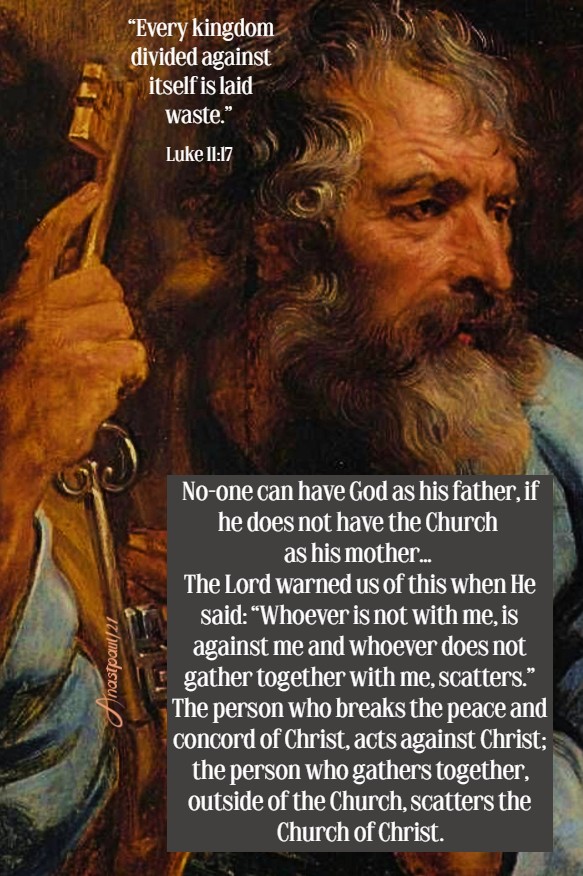
“Every kingdom divided against itself is laid waste.” – Luke 11:17
REFLECTION – “No-one can have God as his father, if he does not have the Church as his mother… The Lord warned us of this when He said: “Whoever is not with me, is against me and whoever does not gather together with me, scatters.” The person who breaks the peace and concord of Christ, acts against Christ; the person who gathers together, outside of the Church, scatters the Church of Christ.
The Lord said: “The Father and I are one.” (Jn 10:30) It is also written of the Father, the Son and the Holy Spirit: “These three are one.” (1 Jn 5:7) From now on, who can believe, that the unity, which has its origin in this divine harmony, which is linked with this heavenly mystery, can be divided up in the Church… through conflicts of will? Whoever does not observe this unity, neither observes the law of God, nor faith, in the Father and the Son – he keeps neither life, nor salvation.
In the gospel, this sacrament of unity, this bond of concord, in indissoluble cohesion, is shown us through the Lord’s tunic. It could neither be divided nor torn but they drew lots, so as to know who would put on Christ (Jn 19:24)… It is the symbol of unity, that comes from on high.” – St Cyprian of Carthage (c 200- c 258) Bishop and Martyr, Father of the Church -On the unity of the Church
PRAYER – Stand by Your Church and Your people Lord, who place all their trust in You. Was away the stain of our sins, make us live in Your presence in unity and love and bring us to the inheritance You have promised. May the love and care of Your Mother and the Mother of Your Church, teach us her holy way. We make our prayer in the unity God our Father, with You, our blessed Saviour and the Holy Spirit, one God for all time and all eternity, amen.
Our Morning offering – 11 March – Thursday of the Third week of Lent
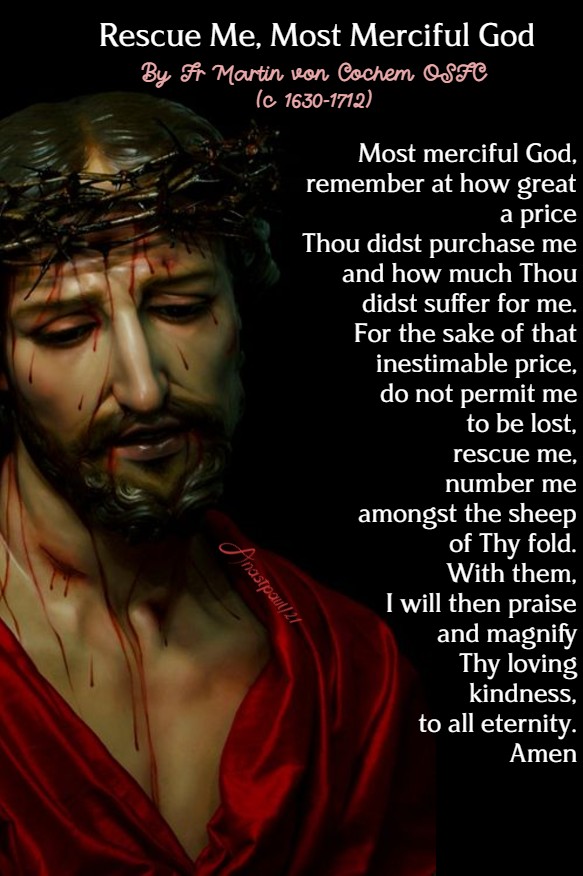
Rescue Me, Most Merciful God By Father Martin von Cochem OSFC (c 1630-1712)
Most merciful God, remember at how great a price Thou didst purchase me and how much Thou didst suffer for me. For the sake of that inestimable price, do not permit me to be lost, rescue me, number me amongst the sheep of Thy fold. With them, I will then praise and magnify Thy loving kindness, to all eternity. Amen
Fr Martin von Cochem was a German Capuchin theologian, preacher and prolific ascetic writer. Father Martin’s works embrace a great variety of subjects: a huge volume of apologetics against Protestantism, the life of Christ, lives of the Saints, edifying narratives, the setting forth of certain points in Christian asceticism, forms of prayer, methods to be followed for the worthy reception of the sacraments, etc. The prayer above is from the renowned “The Four Last Things.”
Saint of the Day – 11 March – Saint Vindician of Cambrai (c 632-c 712) Bishop of Arras-Cambrai. He was a spiritual follower of Saint Eligius (588- 660) (Saint Eloi). Born in c 632 at Bullecourt, France and died in c 712 at Brussels, Belgium of natural causes. St Vindician was a dedicated prelate who visited his Parishes and promoted Monasticism. He also courageously opposed the actions of the Frankish king Thierry III ( 670-687) and his Mayor of the palace, Ebroin, in executing Bishop St Leodegarius of Autun and he secured reparations for the sin from the ruler,
We have no artworks of St Vindician – this is an unknown Bishop Saint
Vindician’s birthplace is given as Bullecourt, near Bapaume. This is the birthplace indicated in the documents dating much later than the Saint’s death but which claim to reproduce an ancient local tradition. Nothing is known of his early years.
On the death of St Aubert, Bishop of Cambrai-Arras (about 668), Vindician was elected his successor. Legend has crept into the history of the holy bishop, but the following facts may be regarded as certain.
In 673 Vindician supervised the translation of the body of St Maxellende to Caudri. In the same year, he Consecrated the Monastery of Honnecourt sur l’Escaut, which was given in 685 to St Bertin. In 675 he signed a charter of donation in favour of the Abbey at Maroilles, rendered illustrious by St Humbert. In the same year, he Consecrated the Church at Hasnon.
In 681, he claimed for his Diocese, the honour of possessing the body of St Léger, the unfortunate victim of the political strife which was then filling Neustria with blood but he did not succeed, the remains of St Léger being confided to Ansoald, the Bishop of Poitiers. His predecessor, St Aubert, had founded the Monastery of St Vaast, the building of which he had been unable to complete, therefore, Vindician ensured that the construction was completed, apparently in 682 and placed it under the protection of King Thierry III, who conferred numerous gifts on the Monastery.
In 685 a certain Abbot Hatta was placed at its head by Vindicianus. In the following year the latter dedicated the Church at Hamaye and acted at the exhumation of the bodies of Sts Eusebia and Gertrude, who had been Abbesses of the Monastery of that name.
He spent his final years at St Vaast Monastery, Arras, which Vindician had completed and an institution that King Thierry supported. Vindician died while on a visit to Brussels, Belgium.
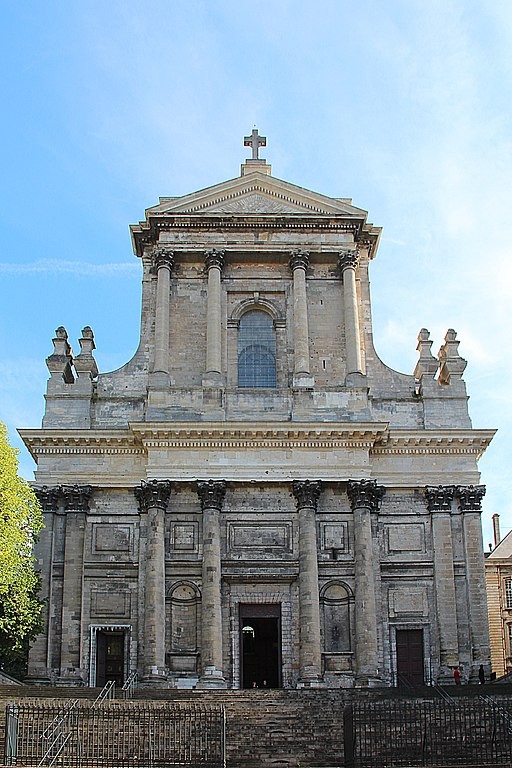
The events of his life after this date (686) are unknown. He was buried at Mont-St-Eloi. The region was ravaged by the Normans in the ninth century and on more than one occasion the relics of the Saint were in danger, until in 1030 Bishop Gerard I of Cambrai had his body removed to the episcopal City. After having been at Douai and Arras, the relics were returned to Mont-St-Eloi in 1453. After still further translations, especially in 1598 and 1601, the body was finally placed in the Cathedral at Arras, which is dedicated to Our Lady and to St Vaast. The Cathedral was badly damaged during World War II but it seems, St Vindician’s relics were safely re-instated after the restoration.
His successor on that See about 695 was St. Abelbert.
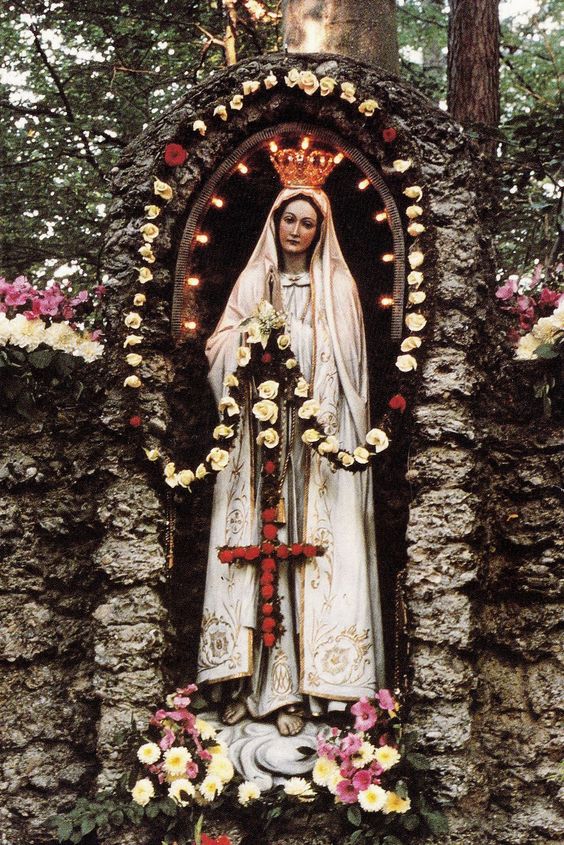
Nossa Senhora das Florestas,/Our Lady of the Forests, Porto, Portugal (12th Century) – 11 March:
The Abbot Orsini wrote: “This image was found again in a forest, where it had been hidden by Queen Matilda, wife of Alphonsus I.”
In searching for information about this title of the Blessed Virgin Mary, I could find no specific reference to Our Lady of the Forests. There are a great number of Catholic Churches and Cathedrals in Porto, Portugal but none of them, seem to speak of an image once known as Our Lady of the Forests. Porto, Portugal, is a City second only to Lisbon in size. Checking with the Diocese, there does not appear to be a Church by the name of Our Lady of the Forests and I could find no mention of such an image. Alphonsus I was the first King of Portugal. His wife, Queen Matilda, better known as Mafalda of Savoy (1125-1158), married him in the year 1146. She was the daughter of Amadeus III of Savoy, Count of the Holy Roman German Empire and her sister was Blessed Umberto. Matilda died young, long before Alphonsus was King – yet her life still had great significance. Alphonsus I was almost constantly at war with the Moors of Andalusia and Portugal did not become formally recognised as an independent Kingdom, until 1179, when Alphonsus I was recognised as King by the Pope. Perhaps there was a crisis during these years of upheaval, when Queen Matilda was forced to hide, in a forest, with a cherished image of the Blessed Virgin Mary, and although this seems not unlikely, I can find no story relating to such an event. Although little is known of Queen Matilda, it is believed that she built a small Abbey Chapel in honour of the Blessed Virgin on the outskirts of Fatima, in a place called the Rock of Fatima. There was also an attached Monastery at this site, that was built by the Cistercians, although nothing remains of that Monastery now and its foundations have become the floor for the Parish Church at Fatima. Built in the 18th century, it was originally called Our Lady of the Rosary. One of Queen Matilda’s descendants was Blessed Margaret of Savoy, who founded a Convent for women. On 16 October 1454, Blessed Margaret was present, when her dying cousin, Sister Filipina, spoke aloud the names of the Saints who came to assist her on her way to heaven. Sister Filipina revealed during that last ecstasy, that in the future, there would be terrible wars and that there would be a monster who would rise in the East as a scourge of all mankind. He would eventually be slain by Our Lady of the Holy Rosary of Fatima. She said: “The Most Holy Virgin will speak about very grave future events, for Satan will wage a terrible war. But he will lose because the Most Holy Virgin Mother of God and of the Most Holy Rosary of Fatima, more terrible than an army in battle array, will defeat him forever.” After saying this, Sister Filipina died in the arms of the holy Foundress, Blessed Margaret. The documents attesting to these events surfaced in the year 2000 but keep in mind. that this revelation was nearly 500 years before the Marian apparitions of Our Lady of Fatima at the Cova da Ira!
St Firmian the Abbot St Firmus the Martyr St Gorgonius the Martyr St Heraclius of Carthage Bl John Kearney Bl John Righi of Fabriano St Marcus Chong Ui-Bae St Peter the Spaniard St Pionius St Piperion the Martyr St Rosina of Wenglingen St Sophronius of Jerusalem St Thalus the Martyr Bl Thomas Atkinson St Trophimus the Martyr St Vigilius of Auxerre St Vincent of Leon St Vindician of Cambrai (c 632-c 712) Bishop St Zosimus of Carthage — Martyrs of Antioch: A group of Christians martyred together by Emperor Maximian Galerius. Martyred in c 300 in Antioch, Syria.
Saint Joseph, you are the faithful protector and intercessor of all who love and venerate you. You know that I have confidence in you and that, after Jesus and Mary, I come to you as an example of holiness, for you are especially close to God. Therefore, I humbly commend myself, with all who are dear to me and all for whom I pray, to your intercession. I beg of you, by your love for Jesus and Mary, not to abandon me during life and to assist me at the hour of my death. Glorious Saint Joseph, Spouse of the Immaculate Virgin, pray for me to have a pure, humble, charitable heart and perfect resignation to the divine Will. Be my guide, my father and my model throughout life, that I may die as you did, in the arms of Jesus and Mary. Loving Saint Joseph, faithful follower of Jesus Christ, I raise my heart to you to implore your powerful intercession in obtaining from the Divine Heart of Jesus all the graces necessary for my spiritual and temporal welfare, particularly the grace of a happy death, and the special grace I now implore: …………….. (Mention your request) Guardian of the Word Incarnate, I feel confident that your prayers on my behalf will be graciously heard before the throne of God St Joseph Most Just, Pray for us! Amen.
Glory be to the Father and to the Son and to the Holy Spirit, as it was in the beginning, is now and ever shall be, world without end. Amen.
Thought for the Day – 10 March – Meditations with Antonio Cardinal Bacci (1881-1971)
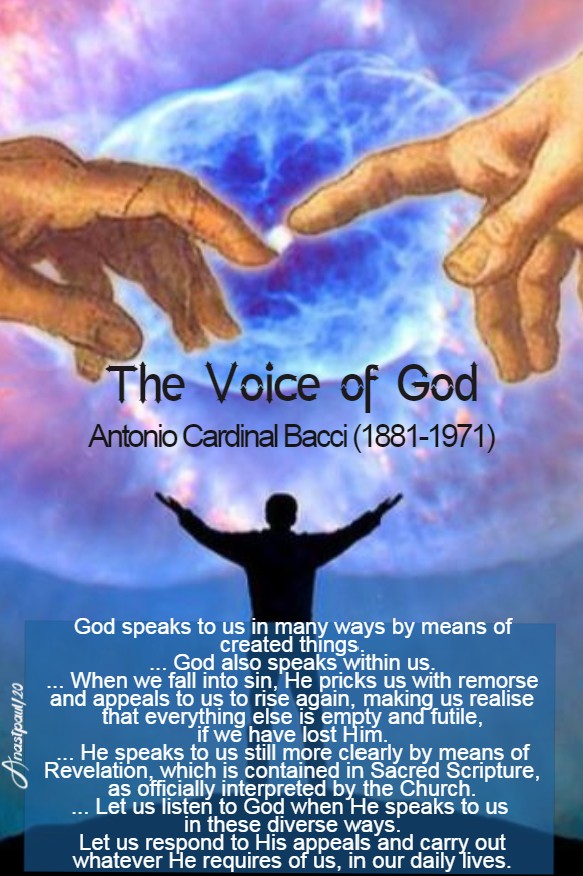
The Voice of God
“God speaks to us in many ways by means of created things. We see His glory in the stars of the firmament, (Cf Ps 13:2), in the seas, mountains and valleys and in the trees and flowers. St Therese was once examining the petals of a flower, when she exclaimed: “How good thou art, O God!”
God also speaks within us. Sometimes, He sees how absorbed we are in worldly affairs and He stirs up, in us, a restlessness and a longing for Heaven. When we fall into sin, He pricks us with remorse and appeals to us to rise again, making us realise that everything else is empty and futile, if we have lost Him. He speaks to us still more clearly by means of Revelation, which is contained in Sacred Scripture, as officially interpreted by the Church.
The revealed Word of God has always been with us to answer the searchings of the human heart and to allay it’s anxieties. The Gospel is as new and as illuminating today, as yesterday. It is a book which we should study reverently and diligently, in order to solve our personal problems and the problems of mankind.
Let us listen to God when He speaks to us in these diverse ways. Let us respond to His appeals and carry out whatever He requires of us, in our daily lives.”
Day Twenty two of our Lenten Journey – 10 March – Wednesday of the Third Week of Lent, Readings: Deuteronomy 4:1, 5-9, Psalms 147:12-13,15-16, 19-20, Matthew 5:17-19 Imitating Christ with Thomas à Kempis (1380-1471)
In You is the source of life and in Your Light Lord, we see light Psalm 35(36)
“Therefore whoever relaxes one of the least of these commandments and teaches others to do the same, will be called least in the kingdom of heaven but whoever does them and teaches them, will be called great in the kingdom of heaven.” – Matthew 5:19
CHRIST: [Say] … “Behold, I am Your servant, ready to obey in all things. Not for myself do I desire to live but for You — would that I could do this worthily and perfectly!”
DISCIPLE: Grant me Your grace, O most merciful Jesus, that it may be with me and work with me and remain with me to the very end. Grant that I may always desire and will, that which is most acceptable and pleasing to You. Let Your will be mine. Let my will always follow Yours and agree perfectly with it. Let my will be one with Yours in willing and in not willing and let me be unable to will or not will anything but what You will or do not will. Grant that I may die to all things in this world and for Your sake, love to be despised and unknown in this life. Give me above all desires the desire to rest in You and in You let my heart have peace. You are true peace of heart. You alone are its rest. Without You all things are difficult and troubled. In this peace, the selfsame that is in You, the Most High, the everlasting Good, I will sleep and take my rest. Amen. (Book 3 Ch 15:2-3;3-4)
Quote/s of the Day – 10 March – Wednesday of the Third Week of Lent, Readings: Deuteronomy 4:1, 5-9, Psalms 147:12-13,15-16, 19-20, Matthew 5:17-19
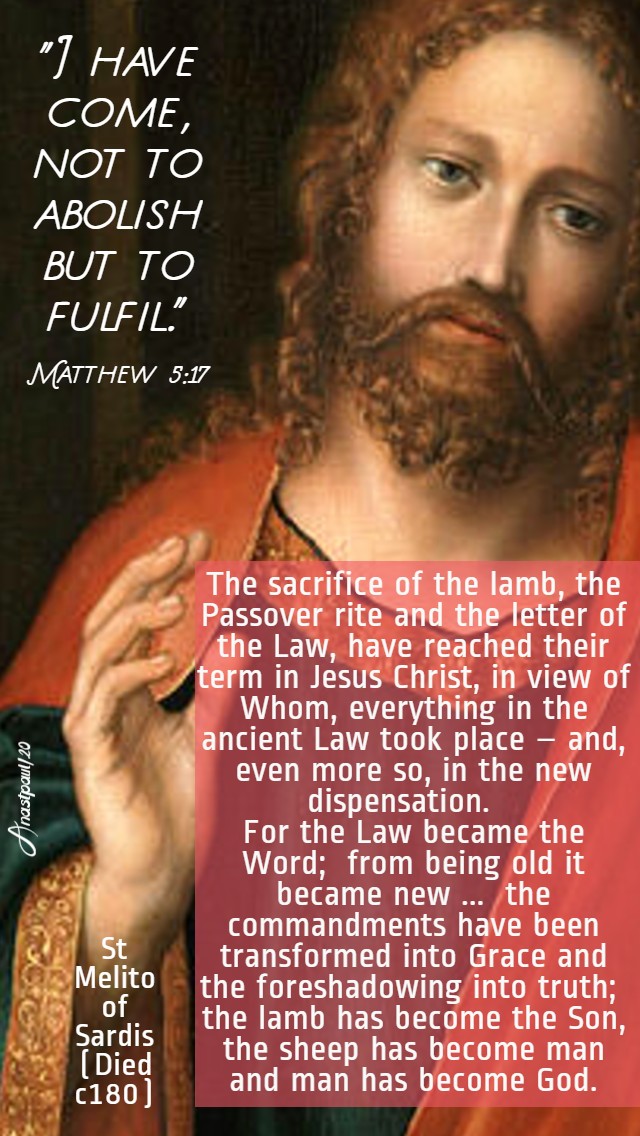
“I have come, not to abolish but to fulfil.”
Matthew 5:17
“The sacrifice of the lamb, the Passover rite and the letter of the Law, have reached their term in Jesus Christ, in view of Whom, everything in the ancient Law took place – and, even more so, in the new dispensation. For the Law became the Word; from being old it became new … the commandments have been transformed into Grace and the foreshadowing into truth; the lamb has become the Son, the sheep has become man and man has become God. …”
St Melito of Sardis (Died c 180) Bishop, Apologist – Paschal Homily
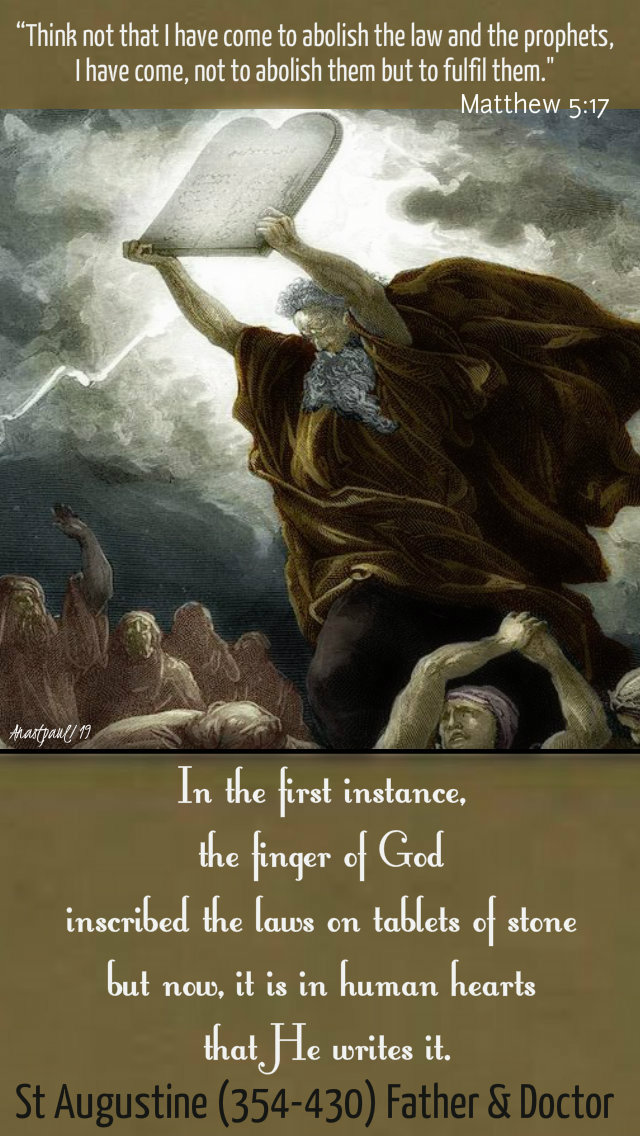
“In the first instance, the finger of God inscribed the laws on tablets of stone but now, it is in human hearts, that He writes it (Ex 31:18; 2 Cor 3:3).”
“The New Testament lies hidden, in the Old; the Old is made accessible, by the New.”
St Augustine (354-430) Father and Doctor of Grace
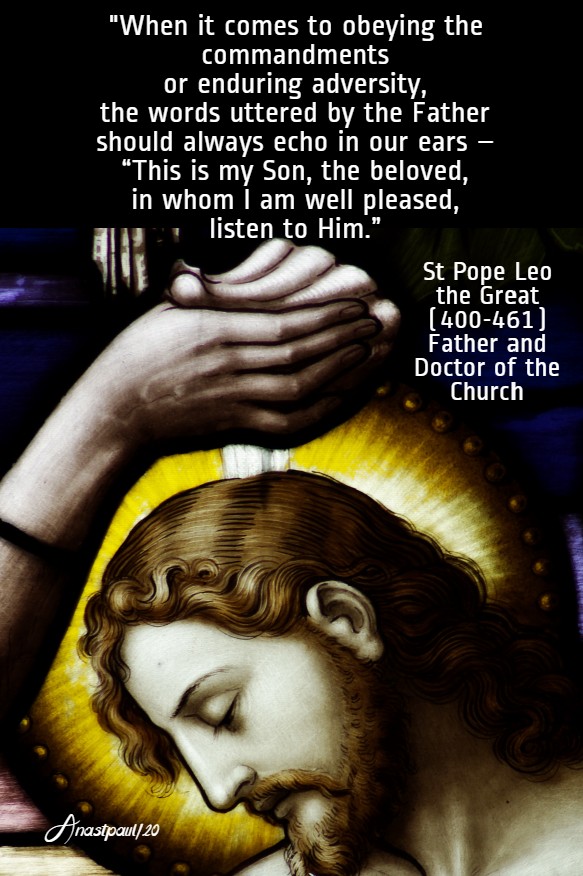
“When it comes to obeying the commandments or enduring adversity, the words uttered by the Father should always echo in our ears – “This is my Son, the beloved, in whom I am well pleased, listen to Him.”
St Pope Leo the Great (400-461) Father and Doctor of the Church
“I have come, not to abolish but to fulfil.” … Matthew 5:17
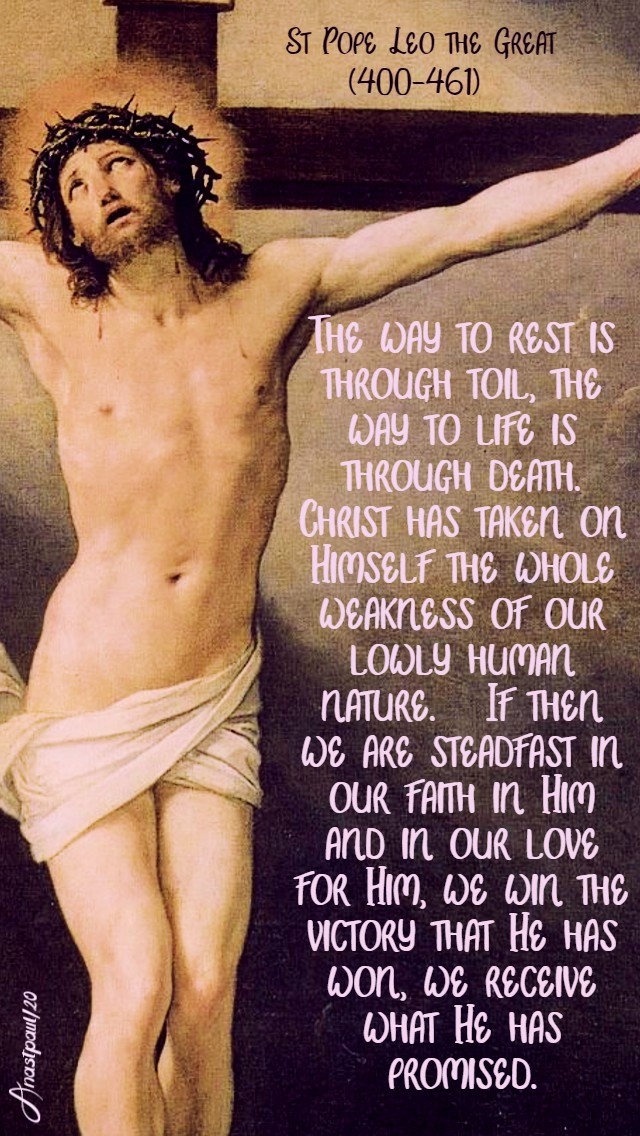
REFLECTION – “In Him the promise made through the shadows of prophecy stands revealed, along with the full meaning of the precepts of the law. He is the one who teaches the truth of prophecy through His presence and makes obedience to the commandments possible, through grace. In the preaching of the holy Gospel all should receive a strengthening of their faith. No-one should be ashamed of the Cross of Christ, through which the world has been redeemed. No-one should fear to suffer for the sake of justice, no-one should lose confidence in the reward that has been promised. The way to rest is through toil, the way to life is through death. Christ has taken on Himself the whole weakness of our lowly human nature. If then we are steadfast in our faith in Him and in our love for Him, we win the victory that He has won, we receive what He has promised. When it comes to obeying the commandments or enduring adversity, the words uttered by the Father should always echo in our ears – “This is my Son, the beloved, in whom I am well pleased, listen to Him.” … St Pope Leo the Great (400-461) – An excerpt from Sermo 51
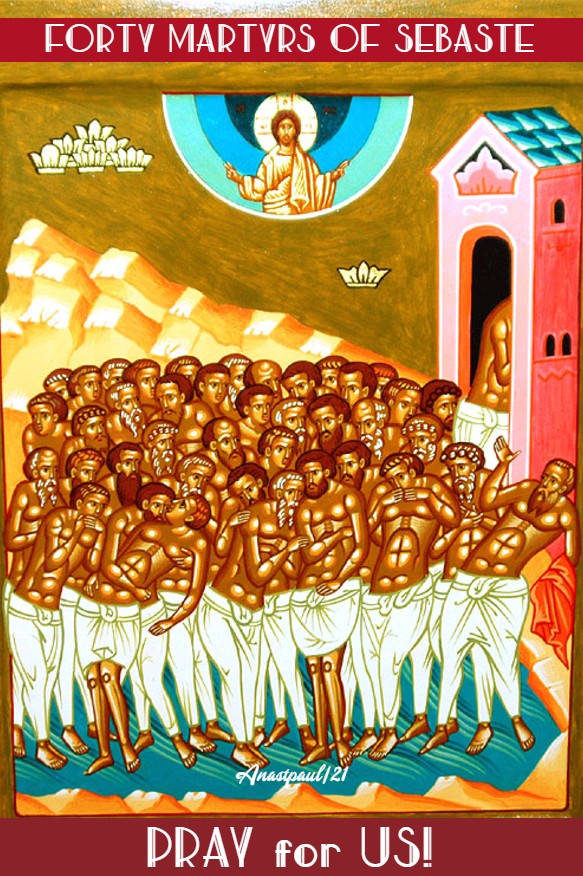
PRAYER – Shed your clear light on our hearts, Lord, so that walking continually in the way of Your commandments, we may never be deceived or misled. May your Angels and the FortyHoly Martyrs of Sebaste, pray for us. May the Mother of Our God and our Mother, be at our side and guide our way. We make our prayer through our Lord Jesus Christ in the unity of the Holy Spirit, one God forever and ever, amen.
Our Morning Offering – 10 March – Wednesday of the Third Week of Lent
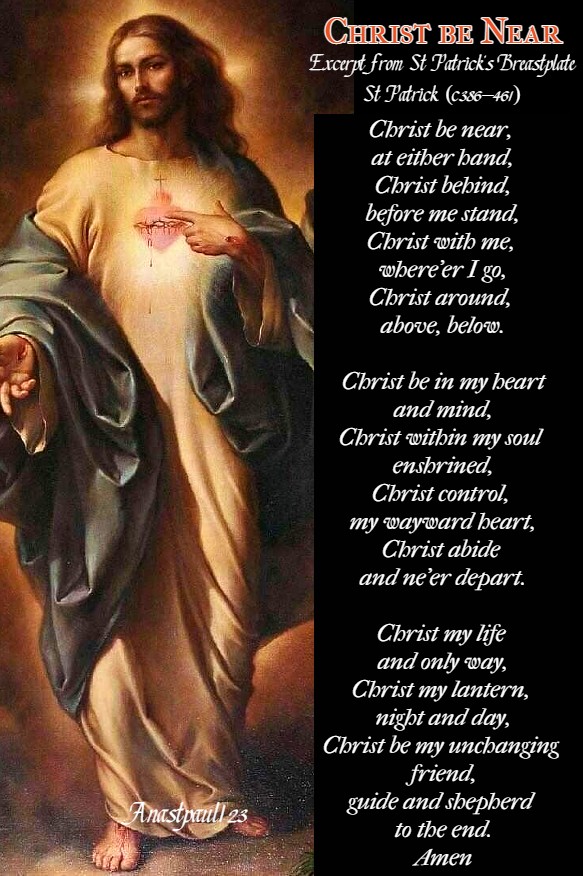
Excerpt from St Patrick’s Breastplate Christ be Near St Patrick (c 386 – 461)
Christ be near, at either hand, Christ behind, before me stand, Christ with me, where’er I go, Christ around, above, below.
Christ be in my heart and mind, Christ within my soul enshrined, Christ control, my wayward heart, Christ abide and ne’er depart.
Christ my life and only way, Christ my lantern, night and day, Christ be my unchanging friend, guide and shepherd to the end.
We have this prayer and his own story in one of the authentic writings of Patrick – his Confessio, which is above all, an act of homage to God for having called Patrick, unworthy sinner, to the apostolate.























 AnaStpaul
You must be logged in to post a comment.