Posted in SAINT of the DAY

Saint of the Day – 10 September – Saint Ambrose Edward Barlow OSB (1585-1641) Martyr

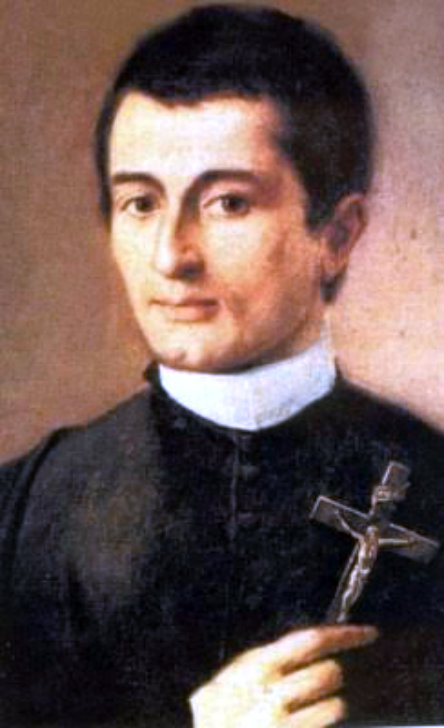
Saint of the Day – 10 September – Saint Ambrose Edward Barlow OSB (1585-1641) – Benedictine Priest, Monk and Martyr.   Born in 1585 in Barlow Hall, England and died by being hanged, drawn, quartered and his body parts boiled in oil, on Friday 10 September 1641 at Lancaster, Lancashire, England.   St Ambrose was 56 years old.   Also known as Ambrose Brereton, Ambrose Radcliffe, Edward Ambrose Barlow.   Additional Memorials – 25 October as one of the Forty Martyrs of England and Wales and 29 October as one of the Martyrs of Douai.st ambrose barlow.jpg
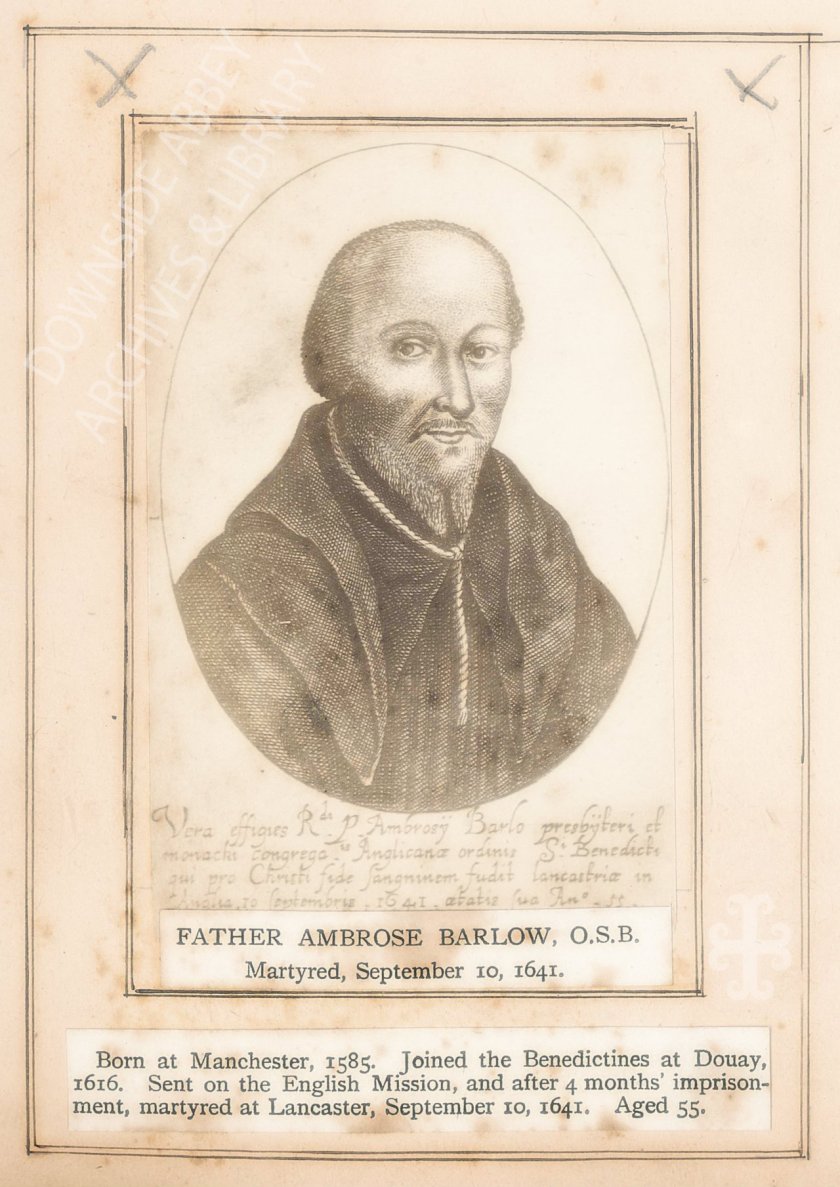
Ambrose was born at Barlow Hall, Chorlton-cum-Hardy, near Manchester in 1585.   He was the fourth son of the nobleman Sir Alexander Barlow and his wife Mary, daughter of Sir Urian Brereton of Handforth Hall.   The Barlow family had been reluctant converts to the Church of England following the suppression of the Catholic Church in England and Wales.   Ambrose’s grandfather died in 1584 whilst imprisoned for his beliefs and Sir Alexander Barlow had two thirds of his estate confiscated as a result of his refusing to conform with the rules of the new established religion.   On 30 November 1585, Ambrose was baptised at Didsbury Chapel and his baptism entry reads “Edwarde legal sonne of Alex’ Barlowe gent’ 30.”   Ambrose went on to adhere to the Anglican faith until 1607, when he converted to Roman Catholicism.
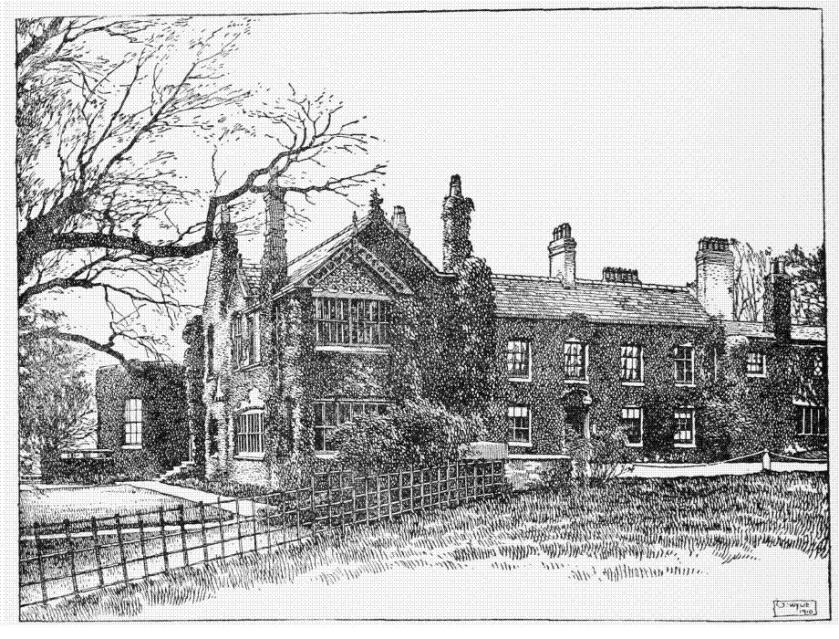
Barlow_Hall
Barlow Hall

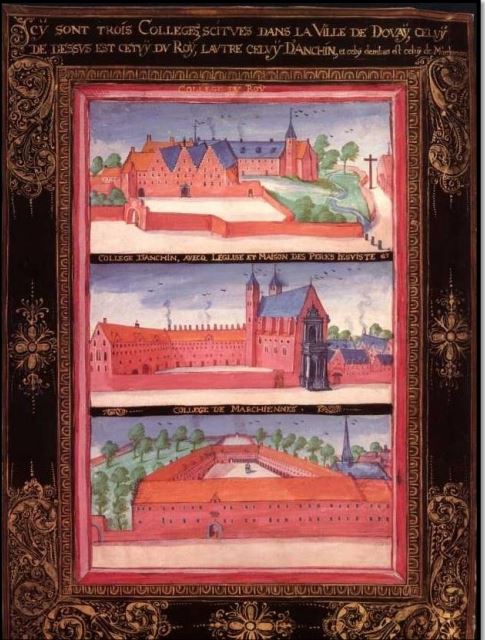
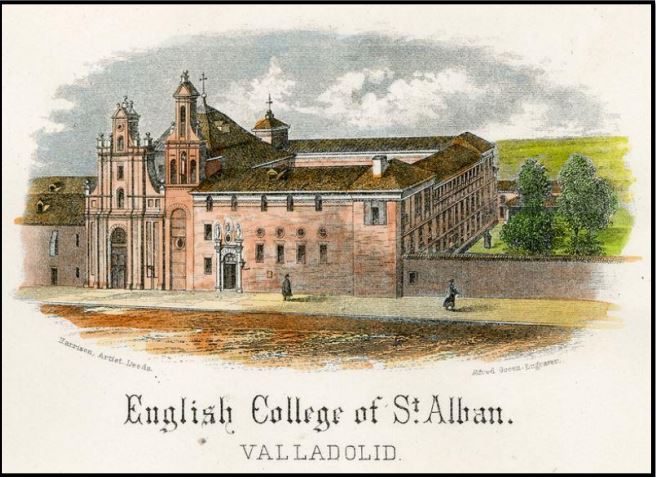
In 1597, Ambrose was taken into the stewardship of Sir Uryan Legh, a relative who would care for him whilst he served out his apprenticeship as a page.   However, upon completing this service, Barlow realised that his true vocation was for the priesthood, so like the sons of many of the Lancashire Catholic gentry, Edward decided to travel to Douai where, since 1569, an English College created by William Allen had operated.  english college douai france.JPGThis missionary college or seminary, working with neighbouring monasteries, was intended to provide university-style education to young men prior to them being sent to England to maintain and promote the Catholic faith.   So he travelled to Douai in France to study before attending the Royal College of Saint Alban in Valladolid, Spain.   In 1615, he returned to Douai where he became a member of the Order of Saint Benedict, joining the community of St Gregory the Great (now Downside Abbey) and was ordained as a priest in 1617.eng college of st alban in valladoid spain
The decision by Ambrose to take religious orders is summarised by Richard Challoner author of Memoirs of Missionary Priests:
“As he grew up and considered the emptiness and vanity of the transitory toys of this life and the greatness of things eternal, he took a resolution to withdraw himself from the world and to go abroad, in order to procure those helps of virtue and learning, which might qualify him for the priesthood and enable him to be of some assistance to his native country.”

Well aware of the activities of English spies on the Continent looking for persons likely to return to England as priests, Edward operated under his mother’s maiden name, Brereton.   Merely entering the country as a Catholic priest was treasonable and hazardous.   Ports were dangerous and officials had descriptions from spies of those attempting to return to these shores.   In Elizabeth I’s “Proclamation against Jesuits”, 1591 it was said:-

“And furthermore, because it is known and proved by common experience…that they do come into the same (realm) by secret creeks and landing places, disguised both in names and persons, some in apparel as soldiers, mariners or merchants, pretending that they have heretofore been taken prisoners and put into galleys and delivered.  Some come as gentlemen with contrary names in comely apparel as though they had travelled to foreign countries for knowledge and generally all, for the most part, are clothed like gentlemen in apparel and many as gallants, yea in all colours and with feathers and such like, disguising themselves and many of them in their behaviour as ruffians, far off to be thought or suspected to be friars, priests, Jesuits or popish scholars.”

After his ordination into the priesthood, Ambrose returned to Barlow Hall, before taking up residence at the home of Sir Thomas Tyldesley, Morleys Hall, Astley.   Sir Thomas’ grandmother had arranged for a pension to be made available to the priest which would enable him to carry out his priestly duties amongst the poor Catholics within his parish. From there he secretly catered for the needs of Catholic ‘parishioners’, offering daily Mass and reciting his Office and Rosary for the next twenty-four years.   To avoid detection by the Protestant authorities, he devised a four-week routine in which he travelled throughout the parish for four weeks and then remained within the Hall for five weeks.   He would often visit his cousins, the Downes, at their residence of Wardley Hall and conduct Mass for the gathered congregation.st ambrose barlow alamy image
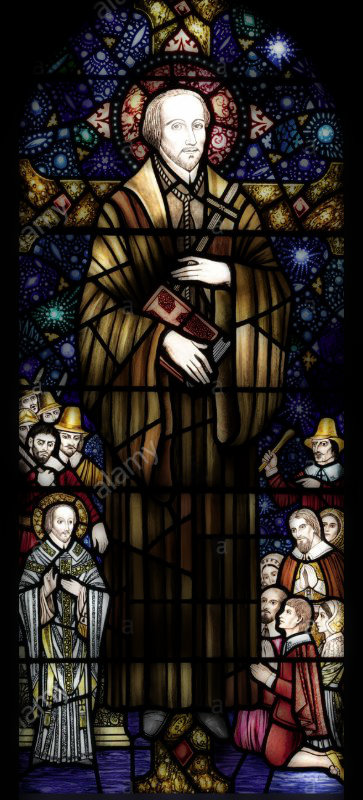
Ambrose was arrested four times during his travels and released without charge.  King Charles I signed a proclamation on 7 March 1641, which decreed that all priests should leave the country within one calendar month or face being arrested and treated as traitors, resulting in imprisonment or death.   Ambrose’s parishioners implored him to flee or at least go into hiding but he refused.   Their fears were compounded by a recent stroke which had resulted in the 56-year-old priest being partially paralysed.   “Let them fear that have anything to lose which they are unwilling to part with”, he told them.

On 25 April 1641, Easter Day, Ambrose and his congregation of around 100 people were surrounded at Morleys Hall, Astley by the Vicar of Leigh and his armed congregation of some 400.   Father Ambrose surrendered and his parishioners were released after their names had been recorded.   The priest was restrained, then taken on a horse with a man behind him to prevent his fallin, and escorted by a band of sixty people to the Justice of the Peace at Winwick, before being transported to Lancaster Castle.

Father Ambrose appeared before the presiding judge, Sir Robert Heath, on 7 September when he professed his adherence to the Catholic faith and defended his actions.   On 8 September, the feast of the Nativity of Mary, Sir Robert Heath found Ambrose guilty and sentenced him to be executed.   Two days later, he was taken from Lancaster Castle, drawn on a hurdle to the place of execution, hanged, dismembered, quartered and boiled in oil.   His head was afterwards exposed on a pike.   His cousin, Francis Downes, Lord of Wardley Hall, a devout Catholic rescued his skull and preserved it at Wardley where it remains to this day.  Saint-ambrose-edward-barlow
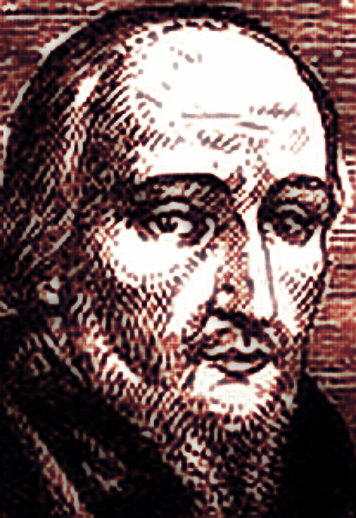
When the news of his death and martyrdom reached his Benedictine brothers at Douai Abbey, a Mass of Thanksgiving and the Te Deum were ordered to be sung.

On 15 December 1929, Pope Pius XI proclaimed Father Ambrose as Blessed at his Beatification ceremony at St Peter’s Basilica.   In recognition of the large number of British Catholic martyrs who were executed during the Reformation, most during the reign of Elizabeth I, Pope Paul VI decreed that on 25 October 1970 he was Canonising a number of people who were to be known as the Forty Martyrs of England and Wales of whom Ambrose was one.

Barlow’s biography from two manuscripts belonging to St Gregory’s Monastery, one of which was written by his brother Dom Rudesind Barlow, President of the English Benedictine Congregation.   A third manuscript, titled “The Apostolical Life of Ambrose Barlow”, was written by one of his pupils for Dom Rudesind and is in the John Rylands Library, Manchester; it has been printed by the Chetham Society.

Several relics of Ambrose are also preserved, his jaw bone is held at the Church of St Ambrose of Milan, Barlow Moor, Manchester, one of his hands is preserved at Stanbrook Abbey now at Wass, North Yorkshire and another hand is at Mount Angel Abbey in St Benedict, Oregon.   His skull is preserved on the stairwell at Wardley Hall in Worsley, at one time, the home of the Downes family and now the home of the Catholic Bishop of Salford.st ambrose barlow's hand
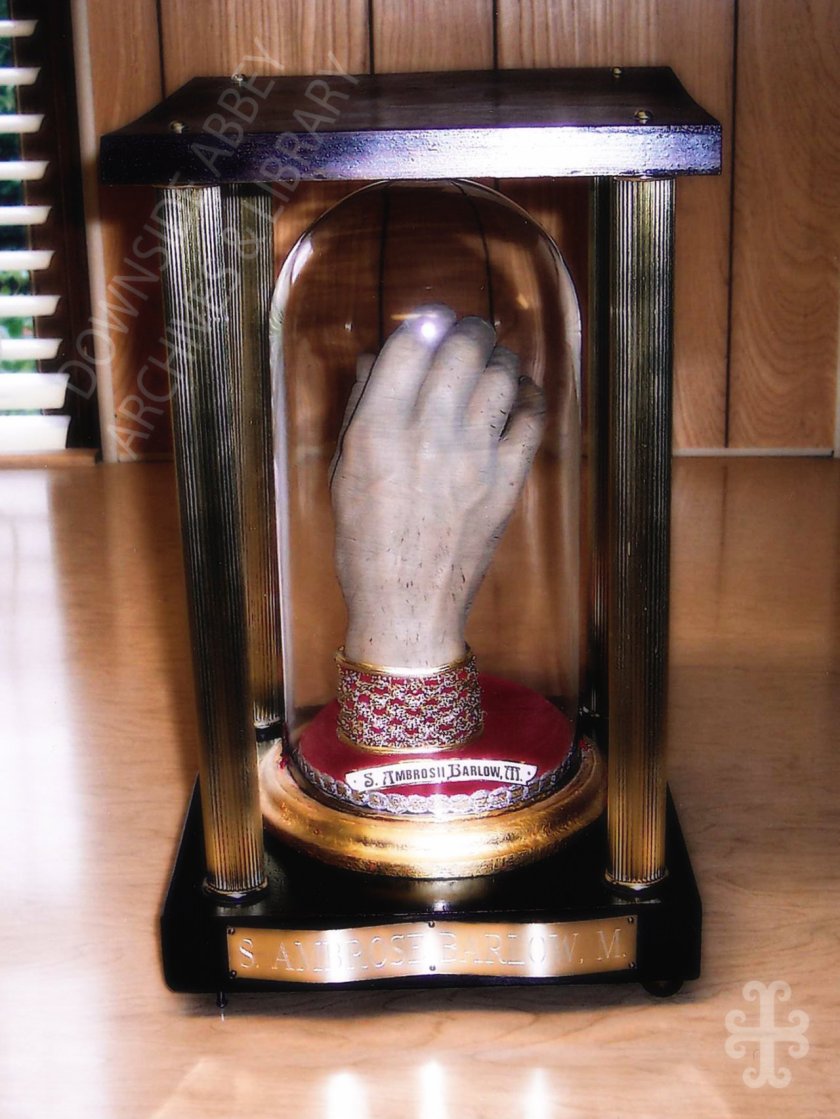
Posted in MARIAN TITLES, SAINT of the DAY

Feast of Our Lady of Life and Memorials of the Saints – 10 September

Beata Vergine Maria della Vita/Our Lady of Life:
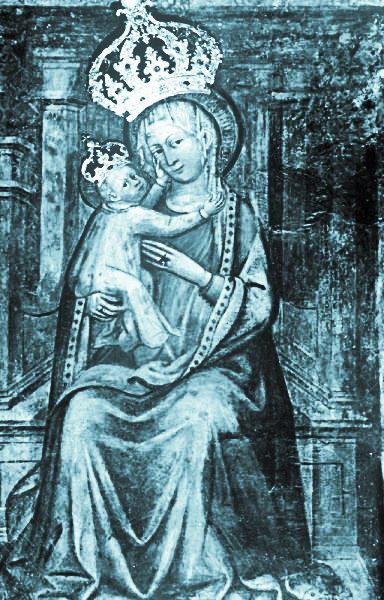
Celebration of the Blessed Virgin Mary as patroness of the Our Lady of Life Hospital in Bologna, Italy, and as depicted in a painting in a sanctuary dedicated to her c 1375 in the hospital.
Patronage – hospitals in the diocese of Bologna, Italy.madonna-della-vita.jpg


St Agapius of Novara
St Alexius Sanbashi Saburo
St Ambrose Edward Barlow OSB (1585-1641) Martyr

St Autbert of Avranches
St Barypsabas
St Candida the Younger
St Clement of Sardis
St Finnian of Moville
St Frithestan
Bl Jacques Gagnot
St Nicholas of Tolentino OSA (1245-1305)
Biography:
https://anastpaul.com/2017/09/10/saint-of-the-day-10-september-st-nicholas-of-tolentino-patron-of-holy-souls/

Bl Ogerius
St Peter Martinez
St Pulcheria
St Salvius of Albi
St Sosthenes of Chalcedon
St Theodard of Maastricht
St Victor of Chalcedon

Martyrs of Bithynia – 3 sister saints: Three young Christian sisters martyred in the persecutions of emperor Maximian and governor Fronto: Menodora, Metrodora, Nymphodora. They were martyred in 306 in Bithynia, Asia Minor (in modern Turkey).

Martyrs of Japan – 205 beati: A unified feast to memorialise 205 missionaries and native Japanese known to have been murdered for their faith between 1617 and 1637.

Martyrs of Sigum – 8 saints: A group of Nicomedian martyrs, condemned for their faith to be worked to death in the marble quarries of Sigum. There were priests, bishops and laity in the group but only a few names have come down to us: Dativus, Felix, Jader, Litteus, Lucius, Nemesian, Polyanus, Victor. They were worked to death c 257 in Sigum.

Martyred in the Spanish Civil War:
• Blessed Félix España Ortiz
• Blessed Leoncio Arce Urrutia
• Blessed Tomàs Cubells Miguel

Posted in DOCTORS of the Church, FATHERS of the Church, ONE Minute REFLECTION, QUOTES of the SAINTS, QUOTES on ALMS, QUOTES on CHARITY, QUOTES on CONVERSION, QUOTES on PRIDE, QUOTES on SIN, SAINT of the DAY, The WORD

One Minute Reflection – 9 September – “Stretch forth your hand” – St Ambrose

One Minute Reflection – 9 September – Monday of the Twenty-third week in Ordinary Time, Year C, Gospel: Luke 6:6-11 and the Memorial of St Peter Claver SJ (1581-1654) “slave of the slaves” and Blessed Frédéric Ozanam (1813–1853) “Servant to the Poor”

“On another sabbath, he went into the synagogue and taught and there was a man there whose right hand was withered.” … Luke 6:6luke 6 6 there was a man thre whose right hand was withred - 9 sept 2019.jpg

REFLECTION – “Are you angry at me because I have healed the whole man on the sabbath day?”   In this place he revivified, with the salutary strength of good works, the hand which Adam stretched out to pluck the fruit of the forbidden tree.   The hand which had withered through a crime, was healed by good deeds.   Christ thereby rebuked the Jews who violated the precepts of the law with evil interpretations.   They thought that they should rest even from good works on the sabbath, since the law prefigured in the present, the form of the future, in which indeed the days of rest from evils, not from blessings, would come.

Then you heard the words of the Lord, saying, “Stretch forth your hand.”   That is the common and universal remedy.   You, who think that you have a healthy hand, beware lest it is withered by greed or by sacrilege.   Hold it out often.   Hold it out to the poor person who begs you.   Hold it out to help your neighbour, to give protection to a widow, to snatch from harm one whom you see subjected to unjust insult.   Hold it out to God for your sins.   The hand is stretched forth, then it is healed.   Jeroboam’s hand withered when he sacrificed to idols, then it stretched out when he entreated God” …  St Ambrose (340-397)-  One of the 4 original Doctors of the Latin Church – Exposition on the Gospel of Luke, 5luke 6 6 there was a man with a withered hand - you think you have a healthy hand st ambrose 9 sept 2019.jpg

PRAYER – God of mercy and love, You offer all peoples the dignity of sharing in your life. Rule over our hearts and bodies this day.   Sanctify us and guide our every thought, word and deed, my our hands be held out to our neighbour in imitation of Your love and mercy.   By the example and prayers of St Peter Claver and Bl Frederic Ozanam, strengthen us to overcome all racial hatreds and to love each other as brothers and sisters.  We ask this through our Lord Jesus Christ, your Son, who lives and reigns with you and the Holy Spirit, one God, for ever and ever amen.

st-peter-claver-pray-for-us 9 sept 2017

bl frederic ozanam pray for us 9 sept 2019

Posted in DOMINICAN OP, ON the SAINTS, PRACTISING CATHOLIC, PRAYERS for CANONISATION, QUOTES on CHARITY, QUOTES on HUMAN DIGNITY, QUOTES on JUSTICE, QUOTES on LOVE, QUOTES on MERCY, SAINT of the DAY

Thought for the Day – 9 September – “One of those privileged creatures who came direct from the hand of God …”

Thought for the Day – 9 September – The Memorial of Blessed Frédéric Ozanam (1813–1853) “Servant to the Poor” and Founder of the St Vincent de Paul Society

A man convinced of the inestimable worth of each human being, Frédéric served the poor of Paris well and drew others into serving the poor of the world.   Through the Saint Vincent de Paul Society, which he founded, his work continues to the present day.

Once, after Frédéric spoke about Christianity’s role in civilisation, a club member said: “Let us be frank, Mr Ozanam, let us also be very particular.   What do you do besides talk to prove the faith you claim is in you?”

Frédéric was stung by the question.   He soon decided that his words needed a grounding in action.   He and a friend began visiting Paris tenements and offering assistance as best they could.   Soon a group dedicated to helping individuals in need under the patronage of Saint Vincent de Paul formed around Frédéric.

Feeling that the Catholic faith needed an excellent speaker to explain its teachings, Frédéric convinced the Archbishop of Paris to appoint Dominican Father Jean-Baptiste Lacordaire OP (1802-1861), the greatest preacher then in France, to preach a Lenten series in Notre Dame Cathedral.   It was well-attended and became an annual tradition in Paris.   Meanwhile, the Saint Vincent de Paul Society was growing throughout Europe.   Paris alone counted 25 conferences.

In 1846, Frédéric, Amelie, and their daughter Marie went to Italy, there he hoped to restore his poor health.   They returned the next year.   The revolution of 1848 left many Parisians in need of the services of the Saint Vincent de Paul conferences.   The unemployed numbered 275,000.   The government asked Frédéric and his coworkers to supervise the government aid to the poor.   Vincentians throughout Europe came to the aid of Paris.

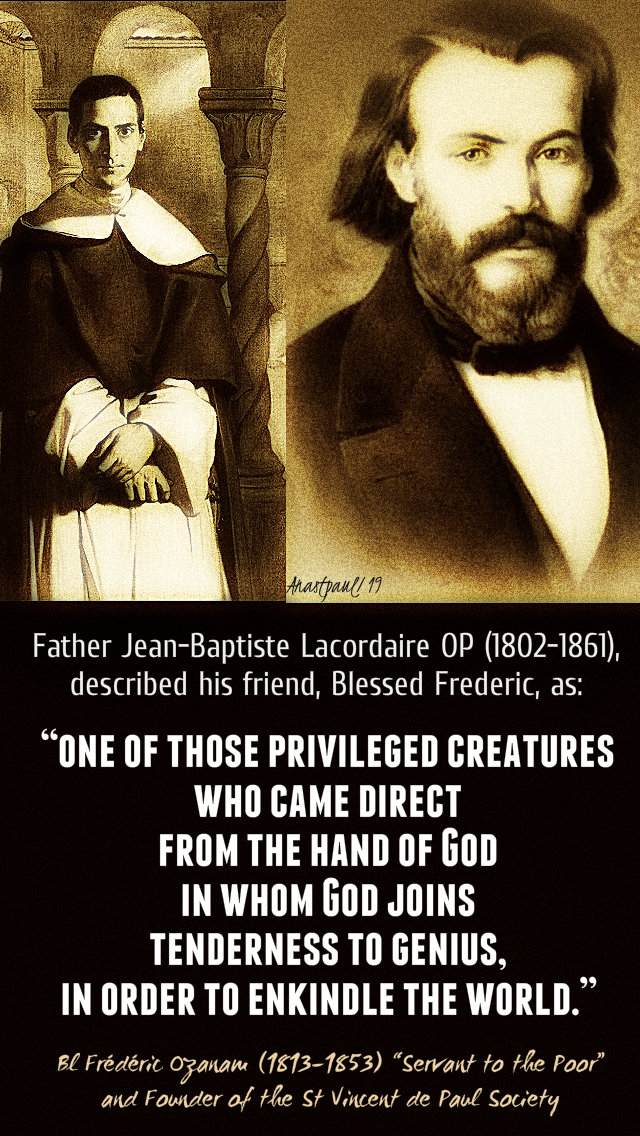
In 1852, poor health again forced Frédéric to return to Italy with his wife and daughter. He died on 8 September 1853.   In his sermon at Frédéric’s funeral, Fr Lacordaire described his friend as “one of those privileged creatures who came direct from the hand of God in whom God joins tenderness to genius, in order to enkindle the world.”one of those priviliged creatures - bl frederic by jean baptiste lacordaire 9 sept 2019.jpg

Frédéric was beatified in 1997.   Since Frédéric wrote an excellent book entitled Franciscan Poets of the Thirteenth Century, and since his sense of the dignity of each poor person was so close to the thinking of Saint Francis, it seemed appropriate to include him among Franciscan “greats.”

His commitment to the plight of those in need and social justice for all, inspires us to look around our communities today—outside our safety zones—and activate the Christian virtues of charity that we are all called to by the life of Jesus.   He said:

“Yours must be a work of love, of kindness, you must give your time, your talents, yourselves.   The poor person is a unique person of God’s fashioning with an inalienable right to respect.   You must not be content with tiding the poor over the poverty crisis, You must study their condition and the injustices which brought about such poverty, with the aim of a long term improvement.”

Prayer for the Canonisation of Blessed Frédéric Ozanam

Lord, you made Blessed Frédéric Ozanam
a witness of the Gospel, full of wonder
at the mystery of the Church.
You inspired him to alleviate poverty and injustice
and endowed him with untiring generosity
in the service of all those suffering.
In family life, he revealed a most genuine love
as a son, brother, husband and father.
In secular life, his ardent passion for the truth
enlightened his thought, writing and teaching.
His vision for our society was a network of charity
encircling the world inspired
by St Vincent de Paul’s love, boldness and humility.
His prophetic social vision appears in every aspect of his life,
together with the radiance of his virtues.
We thank you Lord, for these many gifts.
May the Church proclaim his holiness,
as a saint, a providential light for today’s world!
We ask this prayer through Jesus Christ, our Lord.
Amen

Blessed Frederic, Pray for us too, Amen!bl frederic ozanam pray for us 9 sept 2019 no 2.jpg

Posted in QUOTES of the SAINTS, QUOTES on CHARITY, QUOTES on FAITH, QUOTES on HUMAN DIGNITY, QUOTES on LOVE, QUOTES on MERCY, QUOTES on MISSION, QUOTES on SANCTITY, QUOTES on TIME, QUOTES on VOCATIONS, SAINT of the DAY

Quote/s of the Day – 9 September – from Blessed Frédéric Ozanam, Founder of the St Vincent de Paul Society

Quote/s of the Day – 9 September – The Memorial of Blessed Frédéric Ozanam (1813–1853) “Servant to the Poor” and Founder of the St Vincent de Paul Society

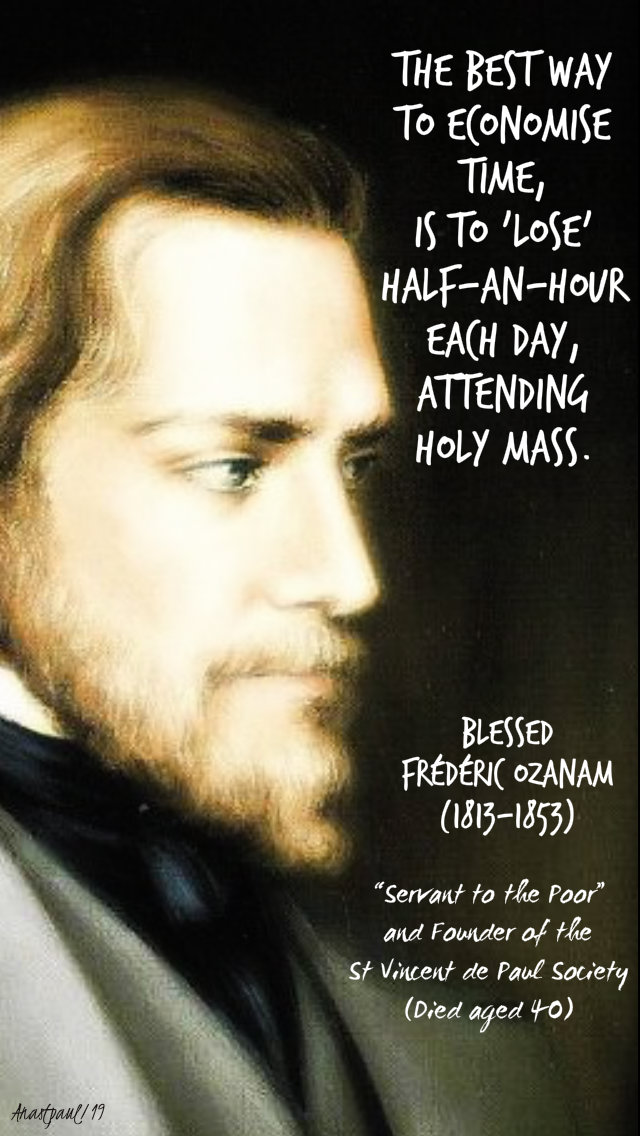
“The best way to economise time,
is to ‘lose’ half-an-hour each day,
attending Holy Mass.”the best way to economise time - bl frederic ozanam attending holy mass 9 sept 2019

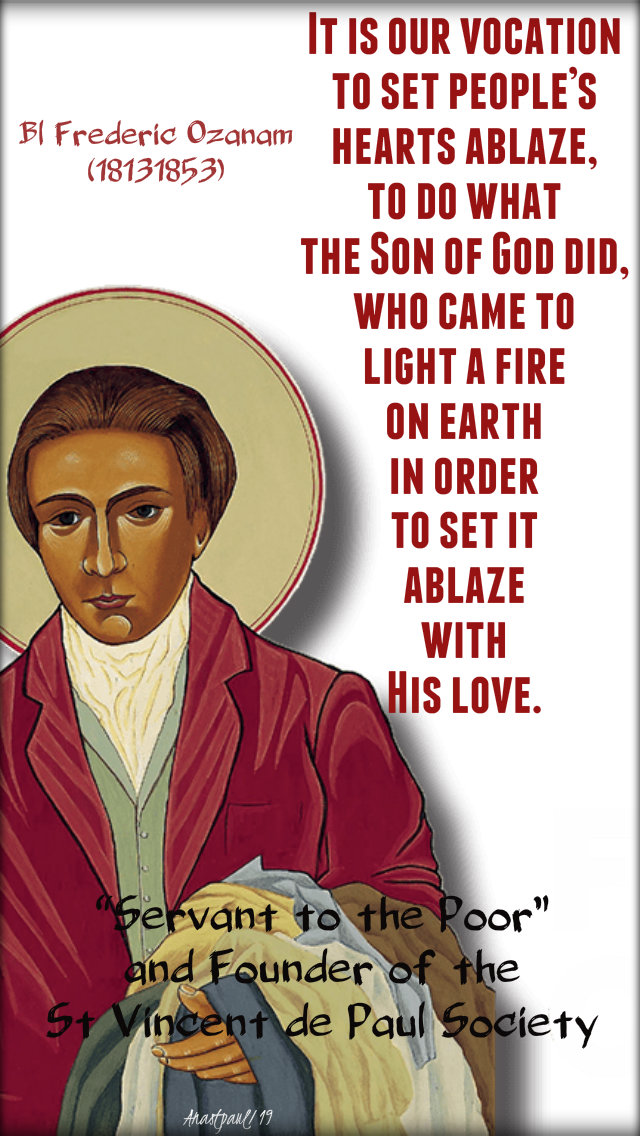
“It is our vocation to set people’s hearts ablaze,
to do what the Son of God did,
who came to light a fire on earth
in order to set it ablaze with His love.”it is our vocation - bl frederic ozanam 9 sept 2019.jpg

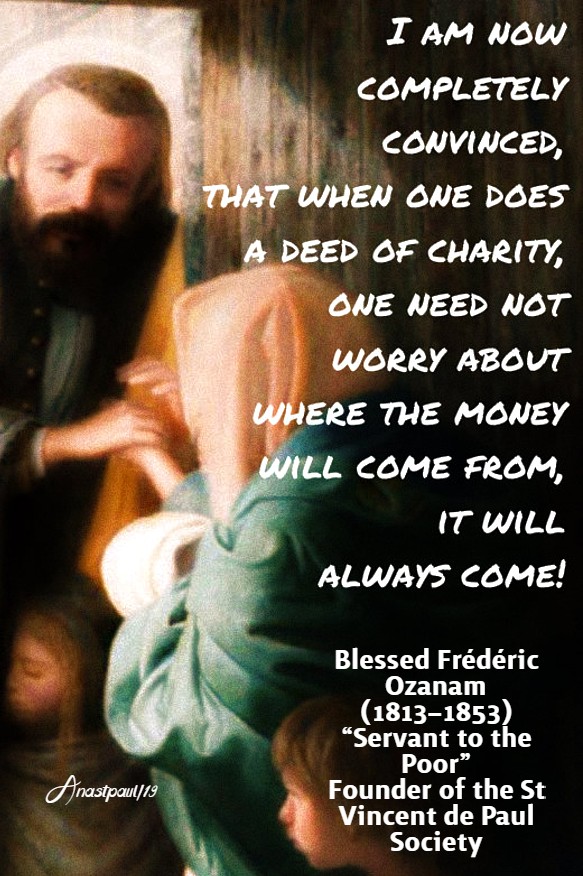
“I am now completely convinced,
that when one does a deed of charity,
one need not worry about
where the money will come from,
it will always come!”

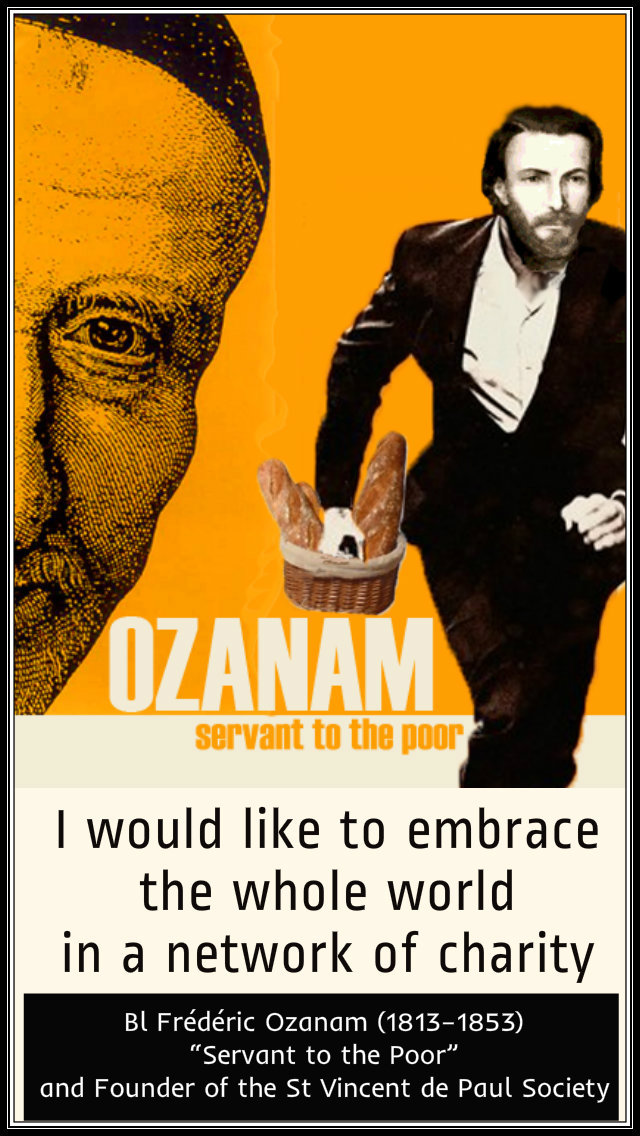
“I would like to embrace
the whole world
in a network of charity.”i would like to embrace the whole world - bl frederic ozanam 9 sept 2019.jpg

“Society today seems to me to be not unlike the wayfarer described in the parable of the Good Samaritan.   For while journeying along the road mapped out for it by Christ, it has been set upon by thieves of evil human thought.   Bad men have despoiled the wayfarer of all his goods, of the treasures of faith and love… . The priests and the Levites have passed him by.   But this time, being real priests and true Levites, they have approached the suffering, wretched creature and attempted to cure him.   But in his delirium he has not recognised them and has driven them away.   Then we weak Samaritans, outsiders as we are, have dared to approach this great sick patient.   Perhaps he will be less affrighted by us?   Let us try to measure the extent of his wounds, in order to pour oil into them.   Let us make words of peace and consolation ringing in his ears.   Then, when his eyes are opened, we will hand him over to the tender care of those, whom God has chosen, to be the guardians and doctors of souls.”

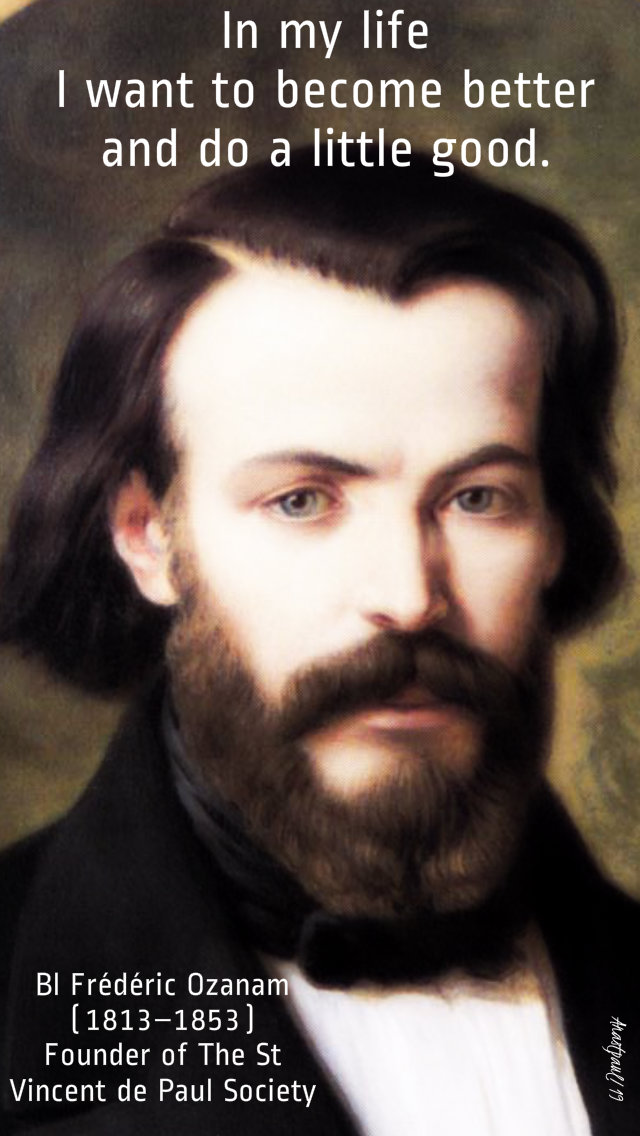
“In my life
I want to become better
and do a little good”

Blessed Frédéric Ozanam (1813–1853)
“Servant to the Poor”in my life i want to become a little better and do a little good - bl frederic ozanam 9 sept 2019

Posted in ArchAngels and Angels, CATHOLIC TIME, Our MORNING Offering, PRAYERS of the SAINTS

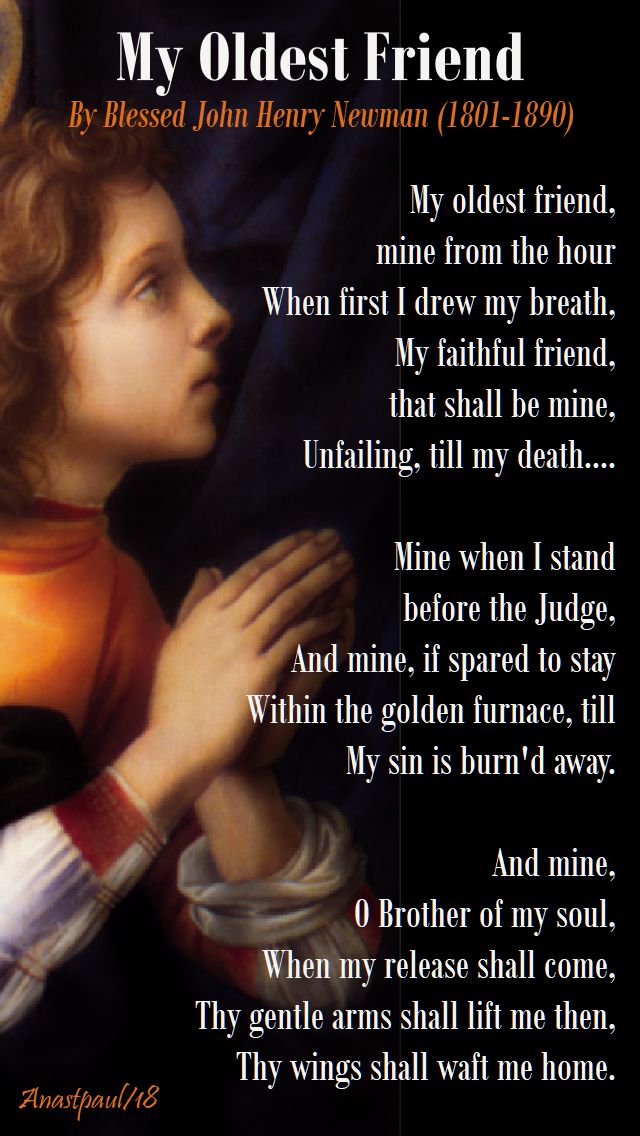
Our Morning Offering – 9 September – My Oldest Friend

Our Morning Offering – 9 September – Monday of the Twenty-third week in Ordinary Time, Year C – Monday the Angels Day

In Catholic Time, Monday is the day in which we remember the Angels. Angels are powerful guardians and each of us is protected by one. Many of the saints had a great devotion to the Angels in general and to their Guardian Angel in particular.

My Oldest Friend
By Blessed John Henry Newman (1801-1890)

My oldest friend, mine from the hour
When first I drew my breath,
My faithful friend, that shall be mine,
Unfailing, till my death….

Mine when I stand before the Judge,
And mine, if spared to stay
Within the golden furnace, till
My sin is burn’d away.

And mine, O Brother of my soul,
When my release shall come,
Thy gentle arms shall lift me then,
Thy wings shall waft me home.my oldest friend - prayer to our guardian angel by bl john henry newman - 2 october 2018.jpg

Posted in SAINT of the DAY

Saint of the Day – 9 September – Blessed Antoine-Frédéric Ozanam (1813–1853)

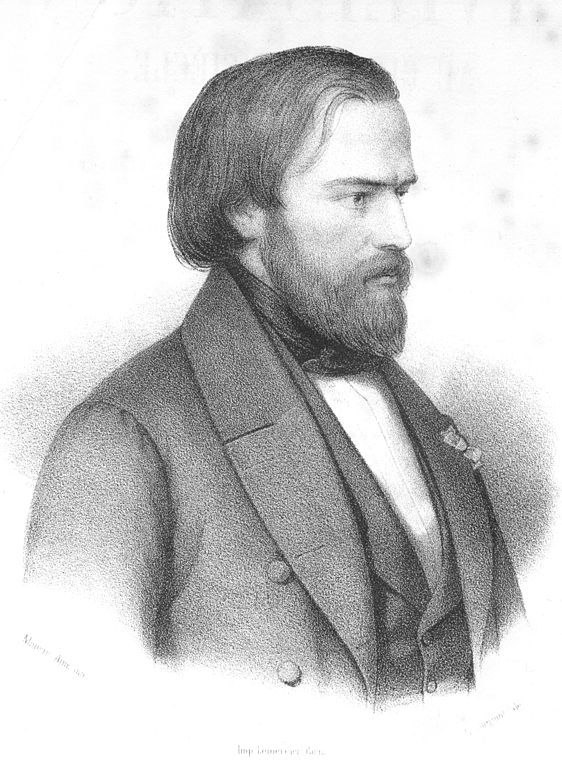
Saint of the Day – 9 September – Blessed Antoine-Frédéric Ozanam (1813–1853) “Servant to the Poor” Married layman, Literary scholar, Lawyer, Journalist, Professor of Law and of Foreign Literature, Apostle of Charity, Writer and Equal Rights Advocate, Doctor of Letters with a thesis on Dante that then formed the basis of Ozanam’s best-known books.  His writings and teaching always revolved around the benefits to individuals and society of Christianity.   Born on 23 April 1813 in Milan, Italy and Died on 8 September 1853 in Marseilles, Bouches-du-Rhône, France of natural causes, aged just 40.   He founded, with colleagues, the Conference of Charity, later known as the Society of Saint Vincent de Paul.   He was Beatified by St Pope John Paul II in the Cathedral of Notre Dame de Paris in 1997.   Patronages – the St Vincent de Paul Society, Politicians, Economists, Social Workers, Teachers, Journalists, Criminologists, Anthropologists, Historians, Geographers.bl Frederic_Ozanam_portrait3.jpg

Antoine Frédéric Ozanam (commonly called Frédéric) was born on 23 April 1813 in Milan, Italy, the son of Jean-Antoine François Ozanam, doctor in medicine and Marie Nantas, daughter of a shopkeeper.   Two years later, the Ozanam family moved back to their home town of Lyon, France.   Frédéric was the fifth of 14 children, only four of whom survived.   In his youth, Frédéric experienced doubt regarding the Catholic faith, during which he was strongly assisted by one of his teachers at the Collège de Lyon, the priest Abbé Noirot.

Ozanam received the degrees of Bachelor of Laws in 1834, Bachelor of Arts in 1835 and Doctor of Laws in 1836.  His father, who had wanted him to study law, died on 12 May 1837.   Although he preferred literature, Frédéric worked in the legal profession in order to support his mother and was admitted to the Bar in Lyon in 1837. At the same time, he also pursued his personal interest and in 1839 he obtained the degree of Doctor of Letters with a thesis on Dante that influenced many of his writings.  A year later he was appointed to a professorship of commercial law at Lyon and in 1840, at the age of 27, assistant professor of foreign literature at the Sorbonne.   His lectures were popular and focused on Christianity as the primary factor in the growth of European civilisation, unlike most of his colleagues, who shared in the predominantly anti-Christian climate of the time. bl OZANAM 2

In June 1841, he married Amélie Soulacroix, daughter of the rector of the University of Lyon and the couple travelled to Italy for their honeymoon.   They had a daughter, Marie.

Ozanam was described as ” … a man of great faith.   He valued friendships and defended his friends no matter what the cost.   He was attentive to details, perhaps to the extreme. …  He showed a great tenderness when dealing with his family. …  He had a great reverence for his parents and revealed his ability to sacrifice his career and his profession in order to please them.”bl frederic - Ozanam.jpg

Upon the death in 1844 of Claude Charles Fauriel, Ozanam succeeded to the full professorship of foreign literature at the Sorbonne.   The remainder of his short life was extremely busy, attending to his duties as a professor, his extensive literary activities and visiting the poor.

While still a student, Frédéric Ozanam and his friends led a discussion group called a “Society of Good Studies.”   At one meeting during a heated debate, one voice issued the challenge, “What is your church doing now?   What is the church doing for the poor of Paris?   Show us your works and we will believe you!”   From this, Frédéric created a group called the “Conference of Charity,” composed of pious friends, who joined works to their words.   The first meeting took place on 23 AprilBl Frederic Ozanam 1833 near the Saint-Sulpice Church, chaired by Emmanuel Bailly who became the group’s mentor.   The Conference was placed under the patronage of Saint Vincent de Paul (1581-1660), Apostle of Charity.  The Society of Saint Vincent de Paul grew rapidly and focused on two areas – visiting the poor families of Paris and nurturing the spiritual life of its members.bl-frederic-ozanam

In his final years, Frederic oversaw the expansion of the society to Italy and then additional countries.   He pioneered a newspaper, The New Era, dedicated to securing justice for the poor and the working classes.   Referring to the poor man as “the nation’s priest,” Frederick said that the hunger and sweat of the poor formed a sacrifice that could redeem the people’s humanity.

Frédéric’s naturally weak constitution fell prey to consumption, which he hoped to cure by visiting Italy but on his return to France, he died in Marseille on 8 September 1853 at the age of 40 of Tuberculosis.   At that time, the St Vincent de Paul Society was active in 29 countries.   Frédéric Ozanam was buried in the crypt of the church of St Joseph des Carmes at the Institut Catholique in Paris.

In 2013, the Society of Saint Vincent de Paul celebrated the bicentennial of the birth of Frédéric Ozanam and its 180 years of existence.   Despite the difficulties of practising faith in some countries, the Society and its members remain faithful to the spirit and ideals originally inspired by Frédéric Ozanam – Go towards the poor, go and meet them in their homes, in respect and brotherhood.562px bl-Frédéric_Ozanam_2.jpg

In 1925, the Diocese of Paris opened the procedure for Canonisation of Frédéric Ozanam. In February 1926, an 18-month old Brazilian boy experienced a miraculous cure from a dangerous form of diphtheria.   On 22 June 1995, after a lengthy enquiry, this was officially recognised as a miracle through the intercession of Frédéric Ozanam.   The 2nd stage was passed on 22 August 1997 with the Beatification of Frédéric Ozanam by St Pope John Paul II.   His cause for Canonisation continues.

THE BEATIFICATION OF BLESSED FREDERIC OZANAM

Ozanam“is recognised as a precursor of the Catholic Church’s social doctrine, whose cultural and religious origins he wanted to know and on which he wrote books which are still in great demand.”    His works were published in eleven volumes (Paris, 1862–1865). Bust_of_Frédéric_Ozanam

Posted in JESUIT SJ, SAINT of the DAY

Memorials of the Saints – 9 September

St Peter Claver SJ (1581-1654) (Memorial)
Biography:
https://anastpaul.com/2017/09/09/saint-of-the-day-9-september-st-peter-claver-s-j/

St Alexander of Sabine
Bl Antoine-Frédéric Ozanam (1813–1853)

St Basura of Masil
St Bettelin
St Dorotheus of Nicomedia
Bl Gaudridus
Bl George Douglas
St Gorgonio of Rome
St Gorgonius of Nicomedia
St Isaac the Great
Bl Jacques Laval
St Joseph of Volokolamsk
St Kieran the Younger
Bl Maria Eutimia Uffing
Bl Mary de la Cabeza
St Omer
St Osmanna
Bl Pierre Bonhomme
St Rufinian
St Rufinus
Bl Seraphina Sforza
St Severian
St Straton
St Teódulo González Fernández
St Tiburtius
St Valentinian of Chur
St Wilfrida
St Wulfhilda

Posted in CATHOLIC-PRAYERS OF THE CHURCH, CHRIST, the WAY,TRUTH,LIFE, DOCTORS of the Church, FATHERS of the Church, PRAYERS of the CHURCH, QUOTES of the SAINTS, QUOTES on CONVERSION, QUOTES on COURAGE, QUOTES on SANCTITY, SOLDIERS/ARMOUR of CHRIST, The FAITHFUL on PILGRIMAGE, The HOLY CROSS, The WORD

Thought for the Day – 8 September – ‘The heavenly trumpet of Christ urges the soldier to battle..’ St Augustine

Thought for the Day – 8 September – Twenty-third Sunday in Ordinary Time, Year C, Luke 14:25–33

“If anyone comes to me without hating his father and mother, wife and children, brothers and sisters and even his own life, he cannot be my disciple.”… Luke 14:26

Saint Augustine comments on this verse from the Gospel proclaimed during today’s Mass:

“The Lord gives the signal for us to stand guard in camp and to build the tower from which we may recognise and ward off the enemy of our eternal life.   The heavenly trumpet of Christ urges the soldier to battle and his mother holds him back.

What does she say or what argument does she give?   Perhaps is it those ten months when you lay in her womb and the pangs of birth and the burden of rearing you?   You must kill this with the sword of salvation.   You must destroy this in your mother that you may find her in life eternal.   Remember, you must hate this in her if you love her, if you are a recruit of Christ and have laid the foundations of the tower.   Passers-by may not say, “This man began to build and was not able to finish.”   That is earthly affection.   It still has the ring of the “old man.”   Christian warfare invites us to destroy this earthly affection both in ourselves and in our relatives.   Of course, no one should be ungrateful to his parents or mock the list of their services to him, since by them he was brought into this life, cherished and fed.   A man should always pay his family duty but let these things keep their place where higher duties do not call.

Mother church is also the mother of your mother.   She conceived you both, in Christ. Know that, her Spouse took human flesh, that you might not be attached to fleshly things. Know that, all the things for which your mother scolds you were undertaken by the eternal Word, that you might not be subject to the weakness of flesh.   Ponder his humiliations, scourging and death, even the death of the cross.”   (Letter 243)

Lord Jesus Christ, Son of God, Have mercy on me a sinner!

Amenthe jesus prayer say it 1000 times per day 8 sept 2019

Posted in EUCHARISTIC Adoration, franciscan OFM, QUOTES of the SAINTS, QUOTES on GRATITUDE, SUNDAY REFLECTIONS, The HOLY EUCHARIST / The HOLY MASS

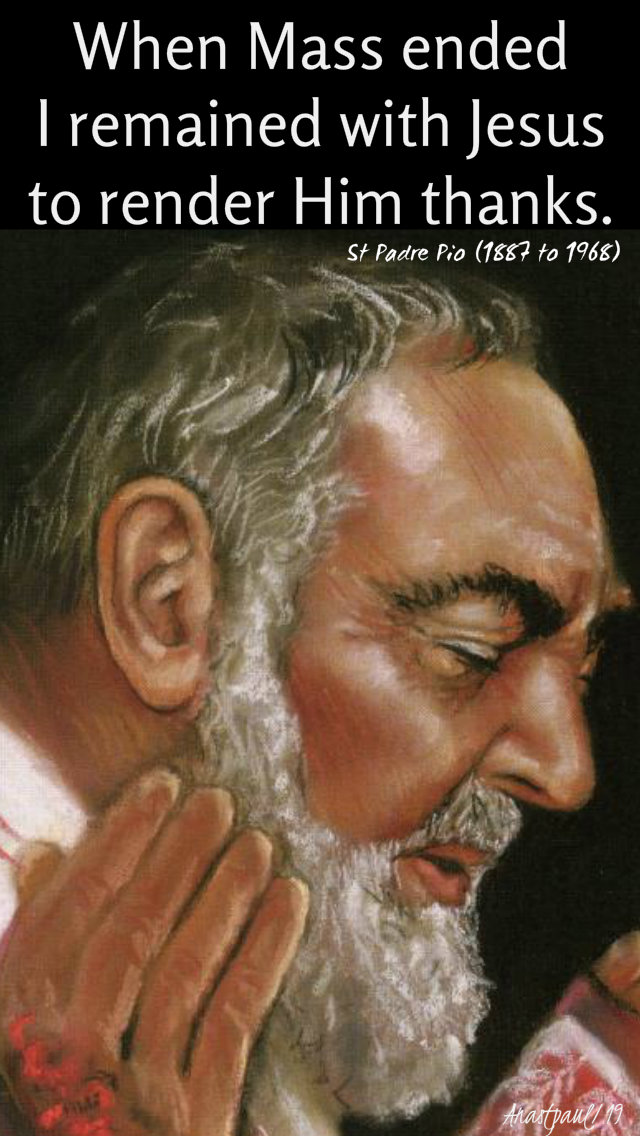
Sunday Reflection – 8 September – “When Mass ended I remained with Jesus to render Him thanks…”

Sunday Reflection – 8 September – Twenty-third Sunday in Ordinary Time, Year C

“When Mass ended I remained with Jesus to render Him thanks.

My thirst and hunger do not diminish after I have received Him in the Blessed Sacrament but rather, increase steadily.

Oh, how sweet was the conversation I held with Paradise this morning.

The Heart of Jesus and my own, if you will pardon my expression, fused.
They were no longer two hearts beating but only one.
My heart disappeared, as if it were, a drop in the ocean.”

St Pio of Pietrelcina aka St Padre Pio (1887 to 1968)

when mass ended i remained with jesus to render him thanks st padre pio 8 sept 2019.jpg

Posted in MARIAN QUOTES, MARIAN TITLES, PRACTISING CATHOLIC, QUOTES of the SAINTS, The BLESSED VIRGIN MARY, The WORD

Quote/s of the Day – 8 September – Forsake her not …

Quote/s of the Day – 8 September – The Feast of the Nativity of the Blessed Virgin Mary

Forsake her not and she will preserve you,
love her and she will safeguard you.

Wisdom 4:6wisdom 4 6 forsake her not and she will preserve you - 8 sept 2019 nativity of our lady.jpg

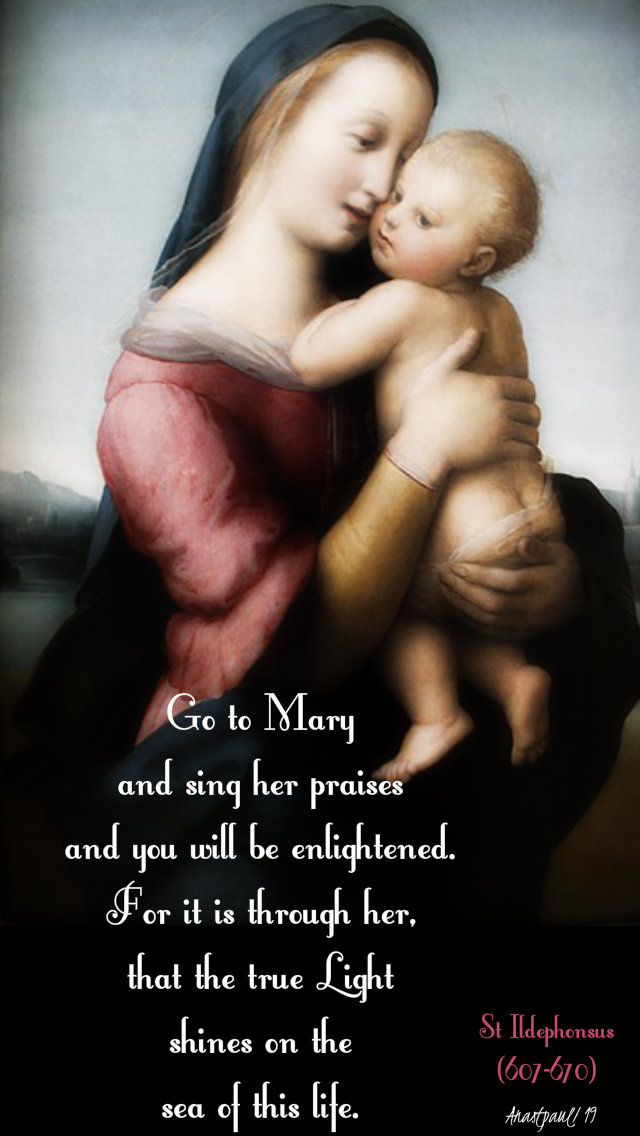
“Go to Mary and sing her praises
and you will be enlightened.
For it is through her,
that the true Light
shines on the
sea of this life.”

St Ildephonsus (607-670)go to mary and sing her praises st ildephonsus the true light shines on the sea of this life 8 sept 2019 nativity of mary

Posted in MARIAN TITLES, ONE Minute REFLECTION, PRACTISING CATHOLIC, The BLESSED VIRGIN MARY, The WORD

One Minute Reflection – 8 September – Falling into the hands of Love eternal….

One Minute Reflection – 8 September – Twenty-third Sunday in Ordinary Time, Year C, Gospel:  Luke 14:25–33 and the Feast of Our Lady of Charity of El Cobre

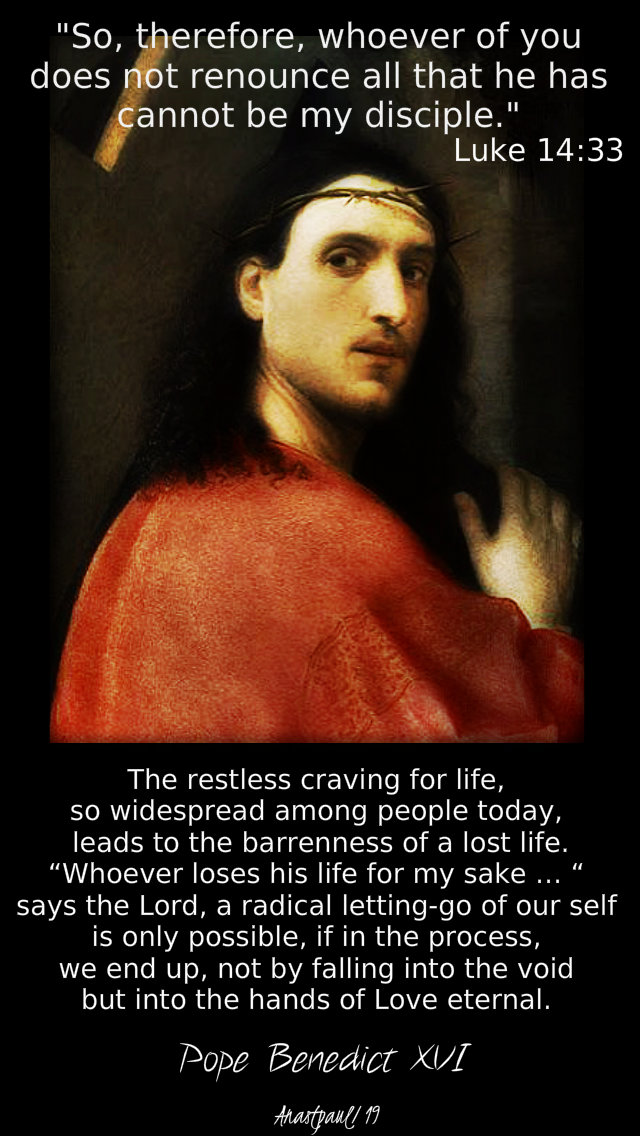
“So, therefore, whoever of you does not renounce all that he has cannot be my disciple.” … Luke 14:33

REFLECTION – “…We realise that the Lord is not speaking merely of a few individuals and their specific task, the essence of what He says applies to everyone.   The heart of the matter He expresses elsewhere in these words:  “For whoever would save his life will lose it and whoever loses his life for my sake, he will save it.   For what does it profit a man if he gains the whole world and loses or forfeits himself?” (Lk 9:24f.).   Whoever wants to keep his life just for himself will lose it.   Only by giving ourselves do we receive our life.   In other words, only the one who love, discovers life.   And love always demands going out of oneself, it always demands leaving oneself.   Anyone who looks just to himself, who wants the other, only for himself, will lose both himself and the other.   Without this profound losing of oneself, there is no life.
The restless craving for life, so widespread among people today, leads to the barrenness of a lost life.   “Whoever loses his life for my sake … “ says the Lord, a radical letting-go of our self is only possible, if in the process, we end up, not by falling into the void but into the hands of Love eternal.
Only the love of God, who loses Himself for us and gives Himself to us, makes it possible for us also to become free, to let go and so truly to find life.   This is the heart of what the Lord wants to say to us in the seemingly hard words of this Sunday’s Gospel.   With his teaching He gives u, the certainty, that we can build on His love, the love of the incarnate God.   Recognition of this is the wisdom of which today’s reading speaks to us.   Once again, we find that all the world’s learning profits us nothing unless we learn to live, unless we discover what truly matters in life.” … Pope Benedict XVISaint Stephen’s Cathedral, Vienna, Sunday, 9 September 2007 – on the occasion of the 850th Anniversary of the Foundation of the Shrine of Our Lady of Mariazell (Feast day today!)luke 14 33 so therefore whoever does not lose his life for my sake - the restless craving for life - pope benedict 8 sept 2019

PRAYER – Since it is from You, God our Father, that redemption comes to us, Your adopted children, look with favour on the family You love, give true freedom to us and to all who believe in Christ, Your Son and our Saviour and bring us all alike, to our eternal heritage.   May we, in turn, give ourselves in true love to You and may the prayers of our glorious and merciful Mother, Our Lady of Charity, lead us to our heavenly home.   We make our prayer through Christ our Lord in the unity of the Holy Spirit, God forever, amen.our lady of charity of el cobre pray for us 8 sept 2019.jpg

Posted in DOCTORS of the Church, franciscan OFM, Our MORNING Offering, PRAYERS of the SAINTS, SACRAMENTS, The HOLY EUCHARIST / The HOLY MASS

Our Morning Offering – 8 September – My Lord, I am Unworthy!

Our Morning Offering – 8 September – Twenty-third Sunday in Ordinary Time, Year C

My Lord, I am Unworthy!
Prayer before Holy Communion
By St Bonaventure (1217-1274)
Doctor of the Church

My Lord,
Who are You
and who am I,
that I should dare to take You
into my body and soul?
A thousand years
of penance and tears
would not be sufficient
to make me worthy
to receive so royal a Sacrament
even once!
How much more am I unworthy of it,
who fall into sin daily,
I, the incorrigible,
who approach You so often
without due preparation!
Nevertheless, Your mercy
infinitely surpasses my unworthiness.
Therefore, I make bold
to receive this Sacrament,
trusting in Your love.
Amenmy lord i am unworthy prayer before holy comm by st bonaventure 8 sept 2019.jpg

Posted in MARIAN TITLES, SAINT of the DAY, The BLESSED VIRGIN MARY

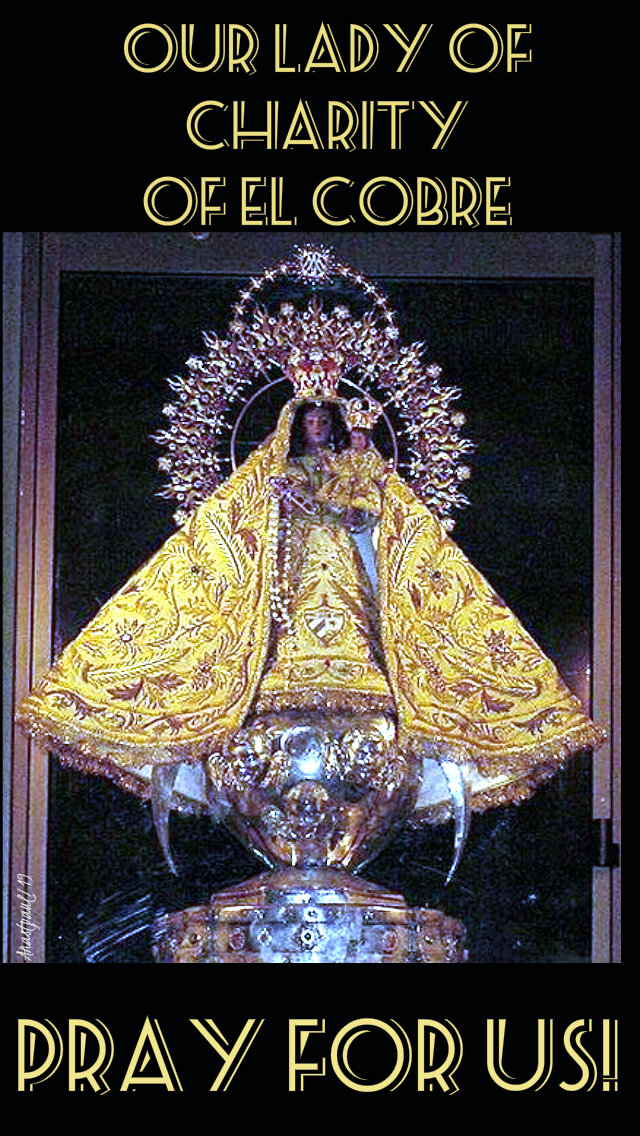
Nuestra Senora de la Virgen de la Caridad / Our Lady of Charity of El Cobre, Cuba (1612) – 8 September

Nuestra Senora de la Virgen de la Caridad / Our Lady of Charity of El Cobre, Cuba (1612) – 8 September – – Queen, Mother and Patroness of the Cuban Peoples.   Patronages – Cuba, Cuban peoples, salt and copper miners.   Our Lady of Charity also known as Our Lady of El Cobre or Nuestra Senora de la Caridad del Cobre or “la Virgen de la Caridad” is a popular Marian title of the Blessed Virgin Mary known in many Catholic countries.

Several known Marian images with the same title exist around the world while a particular Hispanic image is pontifically designated by Pope Benedict XV as the Patroness of Cuba.   The present image is enshrined in the National Shrine Basilica of Our Lady of Charity of El Cobre, built in 1926 and situated in the village El Cobre, near Santiago de Cuba.   Pope Pius XI granted a Canonical Coronation for the image on 20 December 1936.   The feast day of Our Lady of Charity is today, the solemn Nativity of the Blessed Virgin Mary.our lady of charity glass

Various similar Marian images predating the Cuban image have a similar title as well as having been granted a canonical coronation by the Popes and can be found in the Spanish cities of Cartagena, Villarrobledo, Illescas, Loja, La Garrovilla and Toledo, Spain along with its replicated copies in Basilica Minore of Our Lady of Charity in Agoo and the image of Bantay Church in Ilocos Sur, Philippines.

The history of the La Virgen de la Caridad del Cobre, began around 1612.   The image is thought to have been brought by Spaniard colonists from the town of Illescas, a province in Toledo, Spain where a similar statue of the Virgin Mary of Charity was already well-venerated.

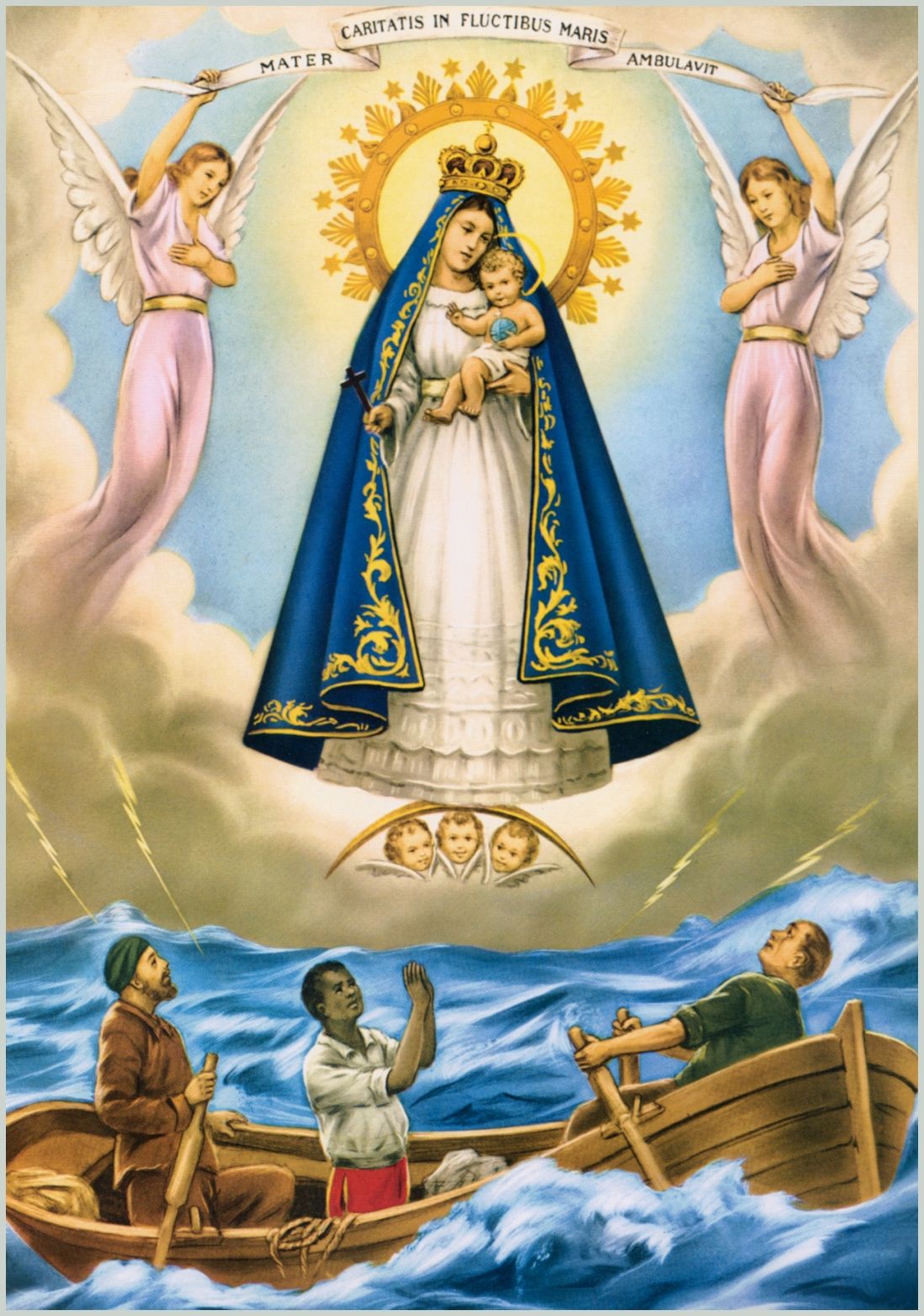
Local legend recalls the Spanish captains who bring with them religious Marian images to guide and protect them from English pirates at sea.   Two Native American or Indian brothers, Rodrigo and Juan de Hoyos and an African slave child, Juan Moreno, set out to the Bay of Nipe for salt.   They are traditionally given the moniker the “three Juans”. They needed the salt for the preservation of the meat at the Barajagua slaughter house, which supplied the workers and inhabitants of Santiago del Prado, now known as El Cobre.   While out in the bay, a storm arose, rocking their tiny boat violently with incoming waves.   Juan, the child, was wearing a medal with the image of the Virgin Mary.   The three men began to pray for her protection.   Suddenly, the skies cleared and the storm was gone.   In the distance, they saw a strange object floating in the water. They rowed towards it as the waves carried it to them.   At first they mistook it for a bird but quickly saw that it was what seemed to be a statue of a girl.   At last they were able to determine that it was a statue of the Virgin Mary holding the child Jesus on her left arm and a gold cross in her right hand.   The statue was fastened to a board with an inscription saying “Yo Soy la Virgen de la Caridad” or “I am the Virgin of Charity.” Much to their surprise, the statue remained completely dry while afloat in the water.our lady of charity 2.jpg

Overjoyed by what they had discovered, they hurried back to Barajagua.   They showed the statue to a government official, Don Francisco Sánchez de Moya, who then ordered a small chapel to be built in her honour.   One night, Rodrigo went to visit the statue but discovered that the image was gone.   He organised a search party but had no success in finding Our Lady of Charity.   Then, the next morning, she was back on the altar, as if nothing had happened.   This was inconceivable as the chapel had been locked.   This event happened three times.   The people of Barajagua came to the conclusion that she wanted to be in a different spot, so they took her to El Cobre.   She was received with much joy in El Cobre and the church there had its bells ring on her arrival.   It was at this point that she became known as “Our Lady of Charity of El Cobre.”   Much to the dismay of people in El Cobre, the disappearance of the statue continued to happen.

One day, a young girl named Jabba was playing outside, pursuing butterflies and picking flowers.   She went towards the mountains of the Sierra Maestra, where she came across the statue on top of a small hill.   There were those who did and those who did not believe the little girl’s testimony but in the end, the Virgin was taken to the spot of her discovery, where a church was erected for her.

576px-Iglesia_El_Cobre_Santiago_de_Cuba_2.jpg
The Minor Basilica of Our Lady of Charity of El Cobre, built in 1926.

Before the famous image on 19 May 1801, a royal edict from king Charles IV of Spain decreed that Cuban slaves were to be freed from the El Cobre copper mines.   The story circulated around the island quickly.   Many felt that the Virgin purposely chose to have her sanctuary in El Cobre because it is located in Oriente Province.   Later folk legends associated the taking of copper materials to their homes after having it blessed near the Virgin’s sanctified image as a form of souvenir and miraculous healing.
Description
The Cuban statue venerated measures about 16 inches tall.   The head is made of baked clay covered with a polished coat of fine white powder.   Her feet rest on a brilliant moon, while angels spread their golden wings on a silver cloud.   The child Jesus raises his right hand as in a blessing, and in his left hand he holds a golden globe.   A popular image of Our Lady of Charity includes a banner above her head with the Latin phrase “Mater Caritatis Fluctibus Maris Ambulavit” – Mother of Charity who walked on the road of stormy seas.   Originally, the robes on the image were white in colour.   Newer robes are embroidered with gold and silver, which includes the national shield of Cuba.   Among Cuban religious devotees, the image is given the familiar title of La Cachita.Cuba,cobre

On 24 September 1915 the Cuban revolutionaries wrote a letter petitioning the Pope Benedict XV to honour her as Patroness of their country.

Pope Benedict XV declared Our Lady of Charity of El Cobre Patroness of Cuba on 10 May 1916 at the written request of the soldier veterans of the Cuban War of Independence.
Pope Pius XI granted a Canonical Coronation for the image during the Eucharistic Congress at Santiago de Cuba on 20 December 1936 by Monsignor Valentin Zubizarreta y Unamunsaga.
St Pope Paul VI, in his Papal bull Quanto Christifideles then raised her sanctuary to the category of Minor Basilica on 22 December 1977 through the appointed Papal legate Cardinal Bernardin Gantin.
St Pope John Paul II solemnly crowned her again during his apostolic visit on 24 January 1998.
Pope Benedict XVI awarded a Golden Rose in honour of the image and her shrine on 27 March 2012.
Pope Francis enshrined a brass statue given to Pope Benedict XVI by Cuban bishops (in May 2008) within the Gardens of Vatican City in August 2014, then enshrined it in 2016.

The Virgin is one of the island’s most treasured figures, representing hope and salvation in the face of misfortune.   Over time, La Cachita “has become a quintessential symbol of Cuban identity.”   She unites both those at home and abroad, across lines of race and class.   Wherever Cuban immigrants settled, they brought with them their devotion to la Caridad.   Emilio Cueto points out the Christian themes suggested by La Cachita:  “She came to Cuba bearing the greatest of gifts—her own child—and appeared not to a priest or bishop but to common men.   She spoke not just to the aboriginal people but also to the Spaniards, Creoles and African slaves.” our lady of charity of el cobre

On his visit to Cuba in 2015, Pope Francis said:

“She has accompanied the history of the Cuban people, sustaining the hope which preserves people’s dignity in the most difficult situations and championing the promotion of all that gives dignity to the human person.   The growing devotion to the Virgin is a visible testimony of her presence in the soul of the Cuban people …. I will have occasion to go to El Cobre, as a son and pilgrim.”pope francis and our lady of charity

In 1954, American author Ernest Hemingway donated his Nobel Prize in Literature medal for The Old Man and the Sea to the people of Cuba at the shrine of Caridad del Cobre in Cuba.   The medal was stolen in 1986 but was recovered days later upon the threat of Raul Castro that it be returned or the thieves suffer the consequences.   After its return, it was, for some time, hidden from view.   The medal is very rarely present in the image and only worn during solemn and Papal occasions.

Posted in FEASTS and SOLEMNITIES, MARIAN TITLES, PURGATORY, SAINT of the DAY, The BLESSED VIRGIN MARY

Twenty Third Sunday in Ordinary Time, Year C +2019, Feasts of Our Lady and Memorials of the Saints – 8 September

Twenty Third Sunday in Ordinary Time, Year C +2019

Nativity of the Blessed Virgin Mary (Feast)
On this Marian Feast Day:
https://anastpaul.com/2017/09/08/feast-of-the-nativity-of-the-blessed-virgin-mary-8-september/

Our Lady of Charity of El Cobre, Cuba

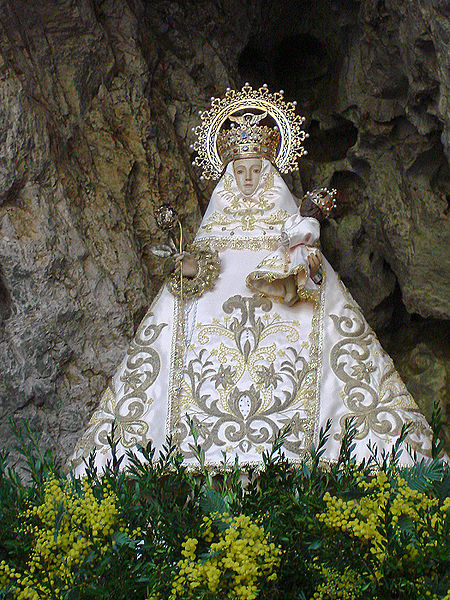
Our Lady of Covadonga:  is a title of the Blessed Virgin Mary and the name of a Marian shrine devoted to her at Covadonga, Asturias.   The shrine in northwestern Spain rose to prominence following the Battle of Covadonga in about 720, which was the first defeat of the Moors during their invasion of Spain.   A statue of the Virgin Mary, secretly hidden in one of the caves, was believed to have miraculously aided the Christian victory.
Our Lady of Covadonga is the patron of Asturias, and a basilica was built to house the current statue.   St Pope John Paul II visited the shrine to honour Our Lady of Covadonga to honour, whose feast day is 8 September.450px our lady of covadonga at -Santina.jpg

Our Lady of Health of Vailankanni:  This is the title given to the Blessed Virgin Mary by people as she twice appeared in the town of Velankanni, Tamil Nadu, India, in the 16th to 17th centuries.   The Feast of the Nativity of Mary, is also commemorated as the feast of Our Lady of Good Health.   The celebration starts on 29 August and ends on the day of the feast.   The feast day prayers are said in Tamil, Marathi, East Indian, Malayalam, Telugu, Kannada, Konkani, Hindi and English.800px-ND_de_Fourvière_ND_de_Vailankanni.jpg

Our Lady of Meritxell:   This is an Andorran Roman statue depicting an apparition of the Virgin Mary.   Our Lady of Meritxell is the patron saint of Andorra.  One 6 January in the late 12th century, villagers from Meritxell, Andorra were going to Mass in Canillo. Though it was winter, they found a wild rose in bloom by the roadside.   At its base was a statue of the Virgin and Child.   They placed the statue in a chapel in the church in Canillo.   The next day the statue was found sitting under the wild rose again.   Villagers from Encamp took the statue to their church but the next day the statue had returned to the rose bush.   Though it was snowing, an area the size of a chapel was completely bare and the villagers of Meritxell took this to mean that they should build a chapel to house the statue and so they did.   On 8-9 September 1972 the chapel burned down and the statue was destroyed, a copy now resides in the new Meritxell Chapel.
The feast day of Our Lady of Meritxell is 8 September and the Andorran National Day.

Our Lady of Ripalta:   Patroness of Cerignola, Foggia in Puglia.Madonna Di Ripalta.jpg

___
St Adam Bargielski
St Adela of Messines
Bl Alanus de Rupe
St Corbinian
St Disibod of Disenberg
St Ethelburgh of Kent
St Faustus of Antioch
St Isaac the Great
St István Pongrácz
St Kingsmark
St Peter of Chavanon
Bl Seraphina Sforza
St Pope Sergius I
St Timothy of Antioch
Bl Wladyslaw Bladzinski

Martyrs of Alexandria – (5 saints)
A group of Christians martyred together in the persecutions of Diocletian – Ammon, Dio, Faustus, Neoterius and Theophilus. Martyred in Alexandria, Egypt.

Martyrs of Japan – (21 beati):
A group of 21 missionaries and converts who were executed together for their faith.
• Antonio of Saint Bonaventure
• Antonio of Saint Dominic
• Dominicus Nihachi
• Dominicus of Saint Francis
• Dominicus Tomachi
• Francisco Castellet Vinale
• Franciscus Nihachi
• Ioannes Imamura
• Ioannes Tomachi
• Laurentius Yamada
• Leo Aibara
• Lucia Ludovica
• Ludovicus Nihachi
• Matthaeus Alvarez Anjin
• Michaël Tomachi
• Michaël Yamada Kasahashi
• Paulus Aibara Sandayu
• Paulus Tomachi
• Romanus Aibara
• Thomas of Saint Hyacinth
• Thomas Tomachi
Died on 8 September 1628 in Nagasaki, Japan
Beatified on 7 May 1867 by Pope Pius XI

Martyred in England:
Bl John Norton
Bl Thomas Palaser

Martyred in the Spanish Civil War:
• Blessed Adrián Saiz y Saiz
• Blessed Apolonia Lizárraga Ochoa de Zabalegui
• Blessed Bonifacio Rodríguez González
• Blessed Dolores Puig Bonany
• Blessed Eusebio Alonso Uyarra
• Blessed Ismael Escrihuela Esteve
• Blessed Josefa Ruano García
• Blessed Josep Padrell Navarro
• Blessed Mamerto Carchano y Carchano
• Blessed Marino Blanes Giner
• Blessed Miguel Beato Sánchez
• Blessed Pascual Fortuño Almela
• Blessed Segimon Sagalés Vilá
• Blessed Tomàs Capdevila Miquel

Posted in MARIAN DEVOTIONS, MARIAN PRAYERS, MARIAN Saturdays, MINI SERIES, PRACTISING CATHOLIC, The BLESSED VIRGIN MARY, The HOLY ROSARY/ROSARY CRUSADE

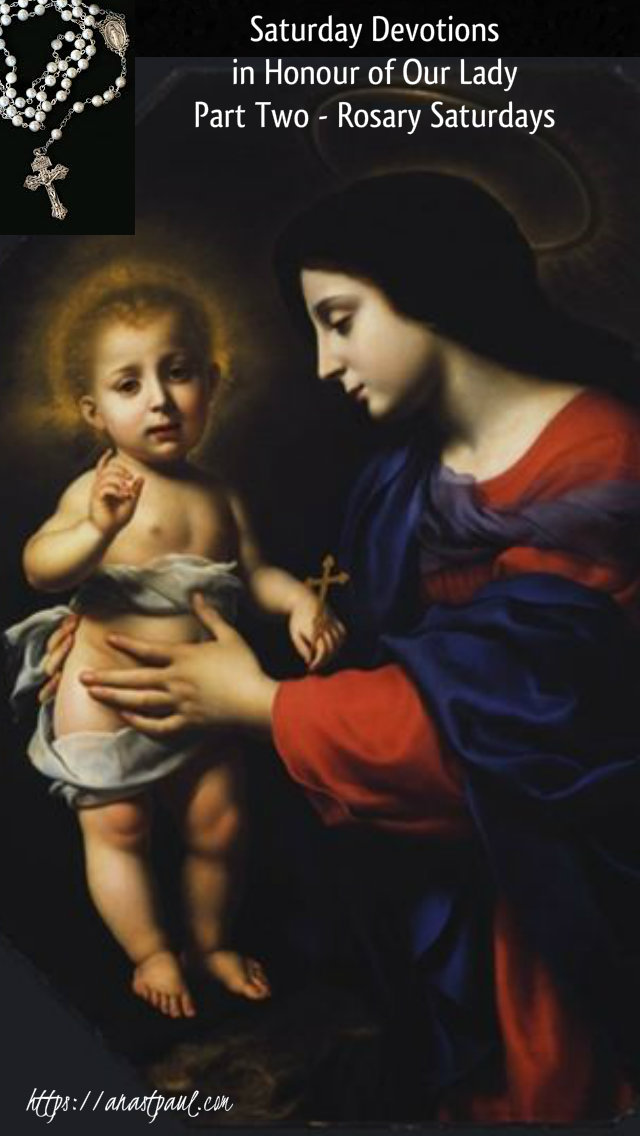
Thought for the Day – 7 September – Saturday Devotions in Honour of Our Lady, Part Two

Thought for the Day – 7 September – – Saturday of the Twenty-second week in Ordinary Time, Year C and a Marian Saturday

The Heart of Mary Saturdays and the Saturday Rosary

By Sr M Jean Frisk SSM

In the message of Fatima, especially in the apparitions of 13 June 13 and 13 July 1917, Mary drew attention to the custom of devoting Saturdays to her and praying the Rosary in reparation.   Lucia, the eldest of the three children heard the following on 13 June:

“My child, behold my heart surrounded with thorns which ungrateful men place therein at every moment by their blasphemies and ingratitude.   You, at least, try to console me, and tell them that I promise to help, at the hour of death, with the graces needed for salvation, whoever, on the First Saturday of five consecutive months, shall confess and receive Holy Communion, recite five decades of the Rosary and keep me company for fifteen minutes while meditating on the fifteen Mysteries of the Rosary with the intention of making reparation to me.”

On 13 July, the children were again admonished to say the Rosary.   At this time, the Blessed Mother asked for the consecration of the world to her Immaculate Heart and for communion of reparation on the first Saturday of each month.   These messages were accompanied by an appeal and a promise – an appeal for prayer and reparation by the people for their transgressions against the divine law, a promise of peace and love in this life and eternal happiness in the next, on the twofold condition of prayer and amendment.

In 1925, Lucia vouched for this message, saying that Mary would assist us at the hour of death if the first Saturdays of five consecutive months were sanctified with confession, communion, praying the rosary and meditation.

This practice refreshed the custom known as the Rosary Saturdays, popular since the seventeenth century and continued to the present at places of pilgrimage.   Both Pope Pius IX and Pope Leo XIII fostered this custom.   St Louis Marie Grignion de Montfort (1673-1716), also fostered the rosary in connection with his missions, which often encompassed Saturdays.

Part One here:
https://anastpaul.com/2019/08/03/thought-for-the-day-3-august-saturday-devotions-in-honour-of-our-lady/saturday devotions in honour of our lady part two rosary saturdays 7 september 2019.jpg

Posted in GOD is LOVE, QUOTES of the SAINTS, QUOTES on DIVINE PROVIDENCE, QUOTES on FAITH, SAINT of the DAY

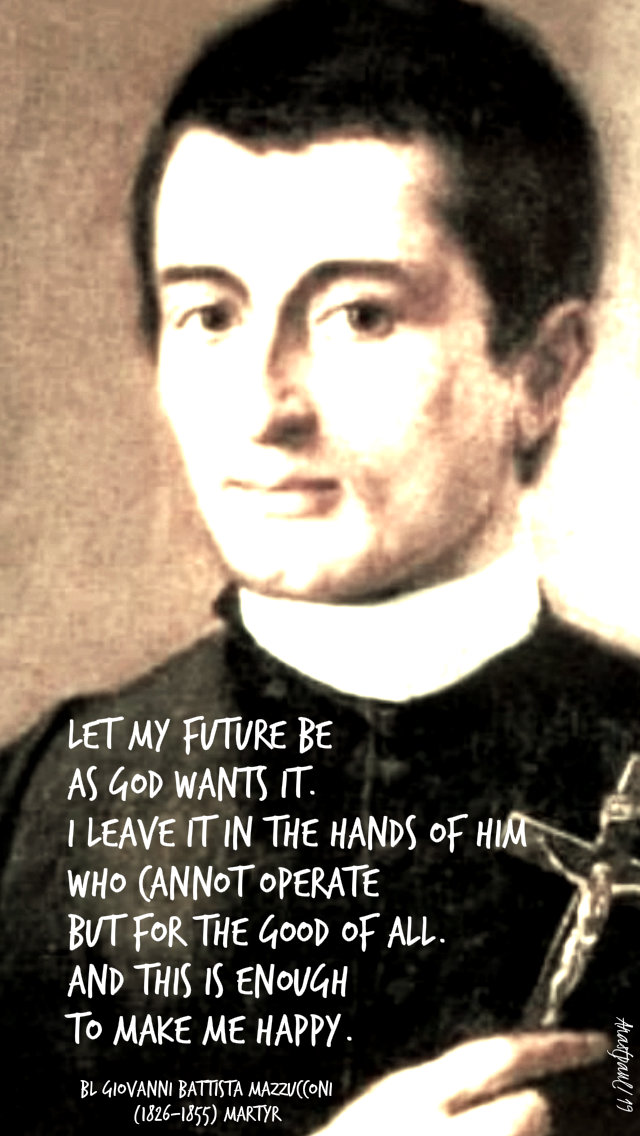
Quote of the Day – 7 September – Let my future be as God wants it

Quote of the Day – 7 September – Saturday of the Twenty-second week in Ordinary Time Year C and the Memorial of Blessed Giovanni Battista Mazzucconi (1826-1855) Martyr

“Let my future be as God wants it.
I leave it in the hands of Him
who cannot operate but for the good of all.
And this is enough to make me happy.”

Blessed Giovanni Battista Mazzucconilet my future be as god wants it - bl giovanni battista mazzucconi 7 sept 2019.jpg

Posted in ONE Minute REFLECTION, PRACTISING CATHOLIC, The WORD

One Minute Reflection – 7 September – The day of Christ the Lord. 

One Minute Reflection – 7 September – Saturday of the Twenty-second week in Ordinary Time Year C, Gospel: Luke 6:1–5

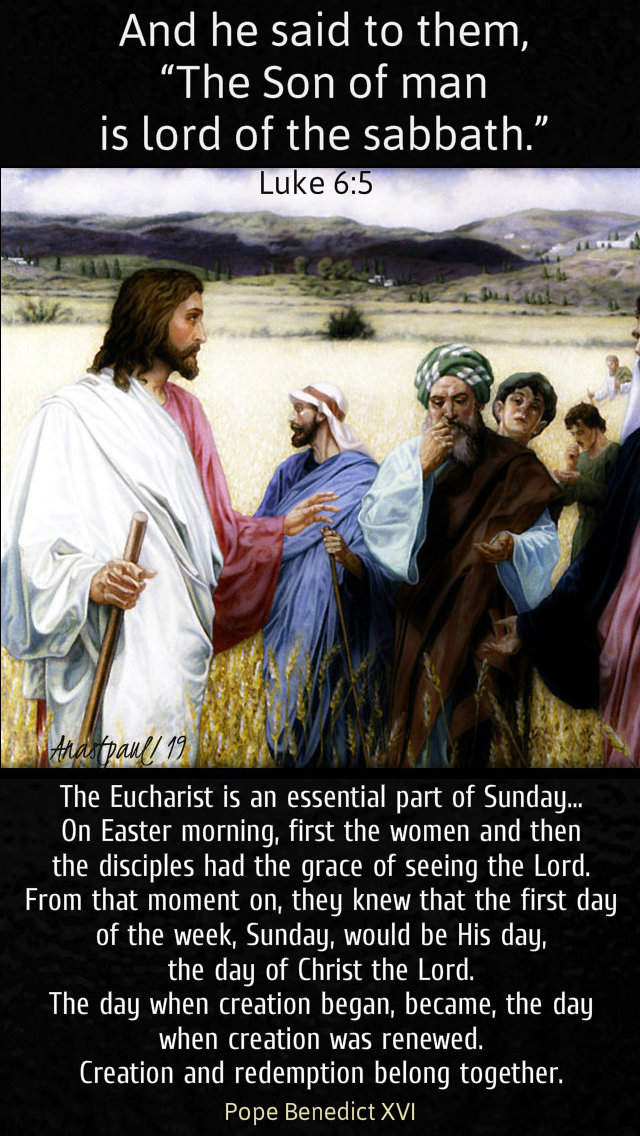
And he said to them, “The Son of man is lord of the sabbath.” … Luke 6:5

REFLECTION – “The Eucharist is an essential part of Sunday… On Easter morning, first the women and then the disciples had the grace of seeing the Lord.   From that moment on, they knew that the first day of the week, Sunday, would be His day, the day of Christ the Lord.   The day when creation began, became, the day when creation was renewed. Creation and redemption belong together.

That is why Sunday is so important. It is good that today, in many cultures, Sunday is a free day and is often combined with Saturday so as to constitute a “week-end” of free time.   Yet this free time is empty if God is not present.

Dear friends! Sometimes, our initial impression is that having to include time for Mass on a Sunday is rather inconvenient.   But if you make the effort, you will realise that this is what gives a proper focus to your free time.   Do not be deterred from taking part in Sunday Mass and help others to discover it too.   This is because the Eucharist releases the joy that we need so much and we must learn to grasp it ever more deeply, we must learn to love it.   Let us pledge ourselves to do this – it is worth the effort!   Let us discover the intimate riches of the Church’s liturgy and its true greatness.   It is not we who are celebrating for ourselves but it is the living God Himself, who is preparing a banquet for us.” …Pope Benedict XVI – 21 August 2005luke 6 5 the sone of man is lord of the sabbath - the eucharist is an essential part of sunday pope benedict 7 sept 2019

PRAYER – Holy God, almighty Father, You taught us to honour Your holy day and the day of rest.   In Your divine Son, Whom You gave to us as our brother and glorified by His Resurrection, You showed us the way to our eternal life.   As His glorified body shines anew on Easter Sunday, we rejoice in our future life with Him and embrace His day as our own, each Sunday renewing His Resurrection.   We run forward to sing Your glory together with our Holy Mother, the Blessed Virgin Mary, to eternity, through our Lord Jesus Christ, with the Holy Spirit, God forever, amen.bl virgin mother of god pray for us 7 sept 2019.jpg

Posted in MARIAN PRAYERS, MARIAN Saturdays, Our MORNING Offering, PRAYERS of the SAINTS, The IMITATION of MARY, Thomas a Kempis

Our Morning Offering – 7 September – Most Merciful Mother of God – Thomas à Kempis

Our Morning Offering – 7 September – Saturday of the Twenty-second week in Ordinary Time, Year C and a Marian Saturday

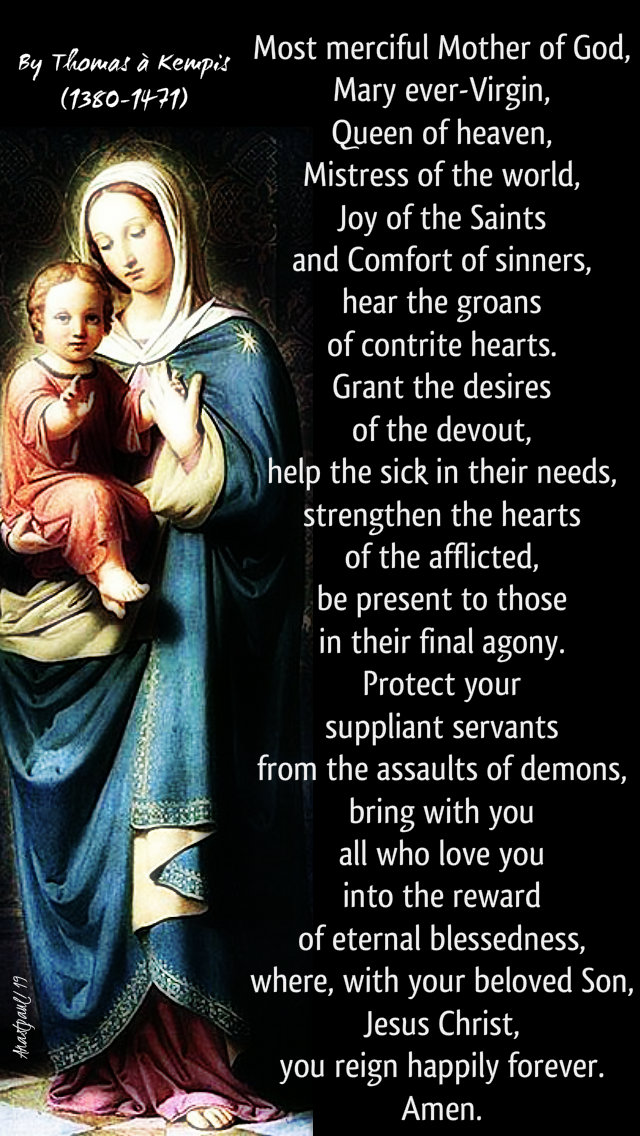
Most Merciful Mother of God
By Thomas à Kempis (1380-1471)

From the Imitation of Mary

Most merciful Mother of God,
Mary ever-Virgin,
Queen of heaven,
Mistress of the world,
Joy of the Saints
and Comfort of sinners,
hear the groans of contrite hearts.
Grant the desires of the devout,
help the sick in their needs,
strengthen the hearts of the afflicted,
be present to those in their final agony.
Protect your suppliant servants
from the assaults of demons,
bring with you
all who love you
into the reward of eternal blessedness,
where, with your beloved Son,
Jesus Christ,
you reign happily forever.
Amen.most merciful mothr of god by thomas a kempis - 7 sept 2019

Posted in SAINT of the DAY

Saint of the Day – 7 September – Blessed Giovanni Battista Mazzucconi (1826-1855) Martyr

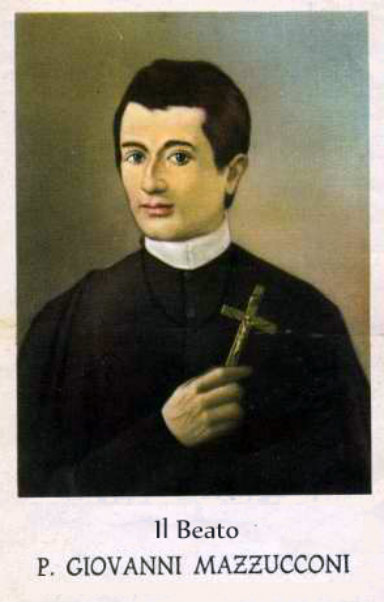
Saint of the Day – 7 September – Blessed Giovanni Battista Mazzucconi (1826-1855) aged 29, Martyr, Priest, Missionary of The Pontifical Institute for Foreign Missions (PIME – from the Latin Pontificium Institutum Missionum Exterarum) – born on 1 March 1826 in Rancio di Lecco, Italy and died on 7 September 1855 in Woodlark Island, Milne Bay, Papua New Guinea.   Patronages – Persecuted Christian, Missionaries and the Pontifical Institute for Foreign Mission.   Blessed Giovanni has a second Memorial on 10 September in the Ambrosian rite in Milan.BL GIOVANNI BATTISTA MAZZUCCONI.jpg

The ninth of the 12 children of Giacomo and Anna Maria Scuri Mazzucconi studied in the seminaries of Monza and Milan.   He commenced his studies for the priesthood in 1845 and with several seminarians he underwent a course of spiritual exercises.   It was at one such retreat that he met the Father Superior who served in India.   This encounter had a profound effect on Mazzucconi who started to cultivate a desire to become a member of a group of missionaries.   His desire was intensified in 1850 when Pope Pius IX asked the Milanese bishops to establish a workshop for the preparation of people for the missions.

In the meantime Giovanni was ordained on 25 May 1850 and the Pontifical Institute for Foreign Missions (PIME) was established with apostolic approval.   Two months later in July 1850, Mazzucconi received an invitation from Msgr Angelo Ramazzotti to become a charter member of the PIME, together with Father Salerio, three other clergymen (Timoleone Raimondi, Angelo Ambrosoli and Paolo Reina) and two catechists (Giuseppe Corti and Luigi Tacchini).

They embarked for Australia in March 1852.   There two groups were established, one for the Island of Rook and the other to Woodlark Island.   They intended to go first to Oceania. Following a three-month journey, the missionaries arrived on 25 July 1852, in Australia, where they studied the language and customs of New Guinea under the tutelage of a Marist for two months.

Upon their arrival at Woodlark Island on 28 October 1852, the mission was divided into three groups with Mazzucconi, Reina, a catechist and their Marist mentor continuing to Rook Island, where they worked for two years under difficult conditions.   It was there that Giovanni immersed himself in the culture of the natives but the weather cut his studies short and he became ill and was sent to Sydney for treatment.

Upon his recovery, he sailed on 18 August 1855, back to Woodlark not knowing that his companions had abandoned the mission stations at Woodlark and Rook.   When his schooner ran aground on a coral reef, the natives ambushed him and he was killed with an axe by one of the locals.   He had approached them but the native nearest him struck him on the head with an axe.   He died of his wounds.   Eight months later Father Raimondi led an expedition to find Mazzucconi and learned of his martyrdom.

The beatification process commenced in Milan and finally, the Congregation for the Causes of Saints discussed the cause and came to the belief that Giovanniwas killed in hatred of the faith.   St Pope John Paul II approved these findings and Beatified him on 19 February 1984.

Blessed Giovanni, writing just before his last missionary journey:

Tomorrow I will embark and Saturday, the day after tomorrow, I will already be on the high seas on my way to Woodlark.   This year, when I sailing to Sydney, on Wednesday of Holy Week, we were overtaken by a hurricane that ripped our sails and snapped our ropes and the top half of a mast.   It then drove us hither and thither all over the sea without direction and with little hope, for four days, until the Easter sun shone again like some new thing above us and we were truly like people raised from the dead.

Well, that God who saved me then will be with me again in this journey and if I do not abandon Him, He will be with me always and while He is with me everything that can happen to me will always be a grace, a blessing for which I should thank Him.   If in danger He wants to withdraw, or pretends to be asleep on the bow of the ship, like the Apostle, I will go to wake Him and let Him see my danger.   And then, if He does not want to listen, I will say – Lord, command me to come to You and my soul will walk on the waters, it will go to His feet and be content forever.

I do not know what He is preparing for me in the journey I begin tomorrow.   I know one thing only, if He is good and loves me immensely, everything else – calm or storm, danger or safety, life or death, are merely changeable and passing expressions of the beloved immutable, eternal Love.   Yes, my beloved brethren, we have another country, another home, a kingdom where we must all meet, where there will no longer be separations or departures, where past sorrows and danger will merely serve to increase our consolation and glory.

giovannimazzucconi2.jpg

Posted in SAINT of the DAY

Memorials of the Saints – 7 September

St Alcmund of Hexham
Bl Alexander of Milan
St Augustalus
St Balin
St Carissima of Albi
St Chiaffredo of Saluzzo
Bl Claude-Barnabé Laurent de Mascloux
St Cloud (522-c 560)
Biography:
https://anastpaul.com/2017/09/07/saint-of-the-day-7-september-st-cloud/
St Desiderio of Benevento
St Dinooth
Bl Eugenia Picco
St Eupsychius of Caesarea
St Eustace of Beauvais
St Evortius of Orleans
St Faciolus
St Festo of Benevento
Bl François d’Oudinot de la Boissière
Blessed Giovanni Battista Mazzucconi (1826-1855) Martyr
St Giovanni of Lodi
St Goscelinus of Toul
St Gratus of Aosta
St Grimonia of Picardy
St Hiduard
Bl Ignatius Klopotowski
Bl John Duckett
Bl John Maki
Bl John of Nicomedia
Bl Ludovicus Maki Soetsu
Madalberta
Bl Maria of Bourbon
St Marko Križevcanin
St Melichar Grodecký
St Memorius of Troyes
St Pamphilus of Capua
Bl Ralph Corby
St Regina
St Sozonte
Bl Thomas Tsuji
St Tilbert of Hexham

Martyrs of Noli: Four Christians who became soldiers and were martyred together for their faith. A late legend makes them member of the Theban Legend who escaped their mass martyrdom but that’s doubtful – Paragorius, Partenopeus, Parteus and Severinus. They were born in Noli, Italy and martyred in Corsica, France. Attribute – soldiers with a banner of Noli.

Martyred in the Spanish Civil War:
• Blessed Antoni Bonet Sero
• Blessed Ascensión Lloret Marcos
• Blessed Gregorio Sánchez Sancho
• Blessed Félix Gómez-Pinto Piñero

Posted in PRACTISING CATHOLIC, The BEATITUDES

Thought for the Day – 6 September – Pope Benedict on the Beatitudes – “becoming images of Christ on earth”

Thought for the Day – 6 September – Pope Benedict on the Beatitudes

Pope Benedict XVI
Excerpt from his Homily on the Beatitudes
St Peter’s Square
Sunday, 30 January 2011

” … The Gospel presents the first great discourse that the Lord addresses to the people on the gentle hills encircling the Sea of Galilee. “Seeing the crowds,” St Matthew writes, “he went up on the mountain, and when he sat down his disciples came to him. And he opened his mouth and taught them” (Mt 5:1-2).

Jesus, the new Moses, “takes his seat on the cathedra of the mountain” (Jesus of Nazareth, Doubleday, New York 2007, p. 65) and proclaims “blessed” the poor in spirit, those who mourn, the merciful, those who hunger for righteousness, the pure in heart, the persecuted (cf. Mt 5:3-10).   It is not a new ideology but a teaching that comes from on high and touches the human condition, the condition that the Lord, in becoming flesh, wished to assume in order to save it.

Therefore “the Sermon on the Mount is addressed to the entire world, the entire present and future and yet it demands discipleship and can be understood and lived out only by following Jesus and accompanying him on his journey” (Jesus of Nazareth, p. 69).

The Beatitudes are a new programme of life, to free oneself from the false values of the world and to open oneself to the true goods, present and future.   Indeed, when God comforts, He satisfies the hunger for righteousness, He wipes away the tears of those who mourn, which means that, as well as compensating each one in a practical way, He opens the Kingdom of Heaven. “The Beatitudes are the transposition of the Cross and Resurrection into discipleship” (ibid., p. 74).   They mirror the life of the Son of God, who let himself even be persecuted and despised until He was condemned to death, so that salvation might be given to men and women.

An ancient hermit says: “The Beatitudes are gifts of God and we must say a great ‘thank you’ to Him for them and for the rewards that derive from them, namely the Kingdom of God in the century to come and consolation here, the fullness of every good and mercy on God’s part … once we have become images of Christ on earth” (St Peter of Damascus, In Filocalia, Vol. 3, Turin 1985, p. 79).

The Gospel of the Beatitudes is commented on with the actual history of the Church, the history of Christian holiness, because, as St Paul writes, “God chose what is weak in the world to shame the strong, God chose what is low and despised in the world, even things that are not, to bring to nothing things that are” (1 Cor 1:27-28).

For this reason the Church has no fear of poverty, contempt or persecution in a society which is often attracted by material well-being and worldly power.   St Augustine reminds us that “it serves nothing to suffer these evils but rather to bear them, in the Name of Jesus, not only with a serene soul but also with joy” (cf. De sermone Domini in monte, i, 5,13: ccl 35, 13).

Dear brothers and sisters, let us invoke the Virgin Mary, the Blessed par excellence, asking her for the strength to seek the Lord (cf. Zeph 2:3) and to follow him always, with joy, on the path of the Beatitudes.”

Blessed Virgin of the Beatitudes, Pray for Us!blessed virgin of the beatitudes 6 sept 2019.jpg

Posted in CHRIST, the WAY,TRUTH,LIFE, PRACTISING CATHOLIC, QUOTES - J R R Tolkien and MORE, QUOTES on MISSION, QUOTES on the CROSS of CHRIST, The HOLY CROSS, The WORD

Quote/s of the Day – 6 September – Becoming new wineskins, following Jesus

Quote/s of the Day – 6 September – Friday of the Twenty-second week in Ordinary Time Year C, Gospel: Luke 5:33–39

“But new wine must be put
into fresh wineskins.”

Luke 5:38luke 5 38 but new wine must be put into fresh wineskins 6 sept 2019.jpg

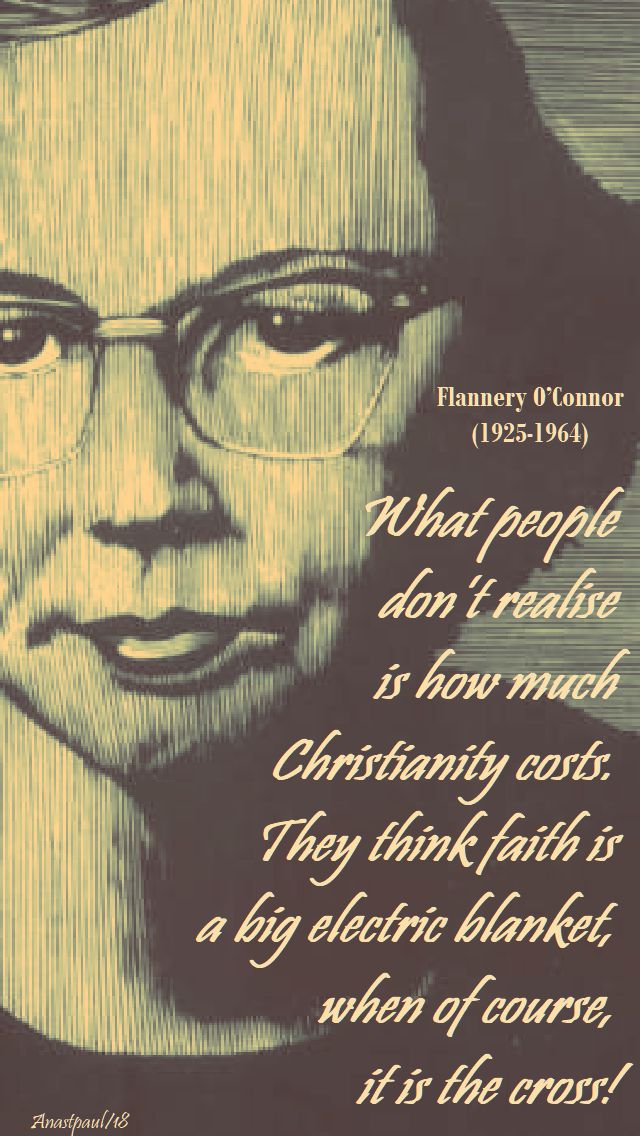
What people don’t realise,
is how much Christianity costs.
They think faith is a big electric blanket,
when of course it is the cross.

Flannery O’Connor (1925-1964)what people don't realise = flannery o'connor - speaking of becoming a saint - 19 april 2018.jpg

The Jesus of the Gospels
is surely not convenient for us.the jesus of the gospels - pope benedict - 25 april 2018.jpg

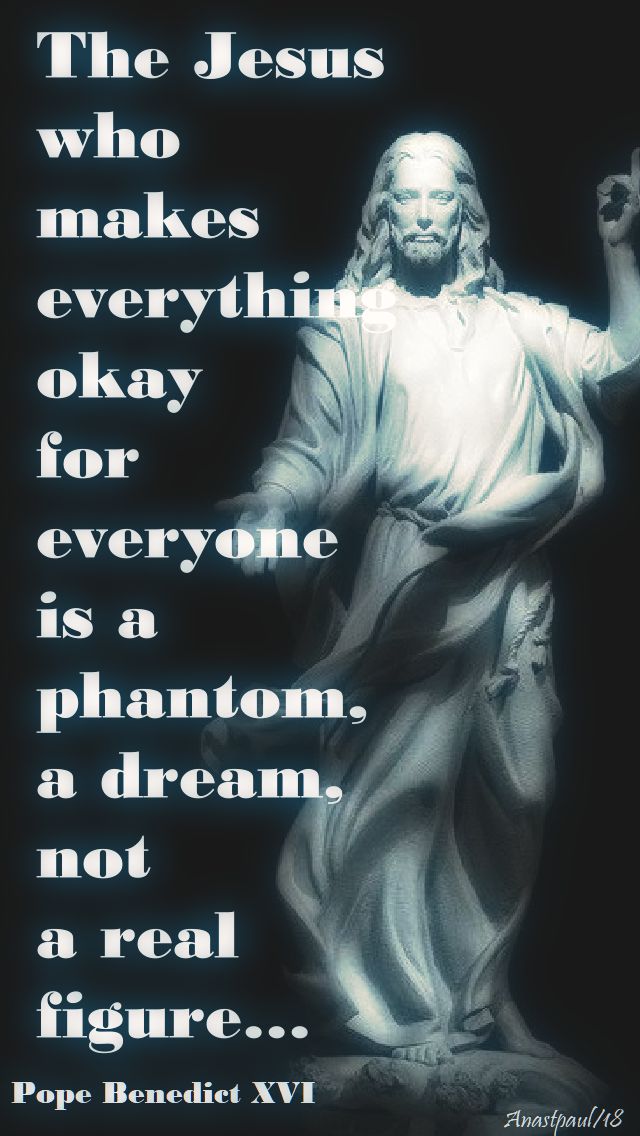
The Jesus, who makes everything
okay for everyone,
is a phantom,
a dream,
not a real figure…

Pope Benedict XVIthe jesus who makes - pope benedict - 25 april 2018.jpg

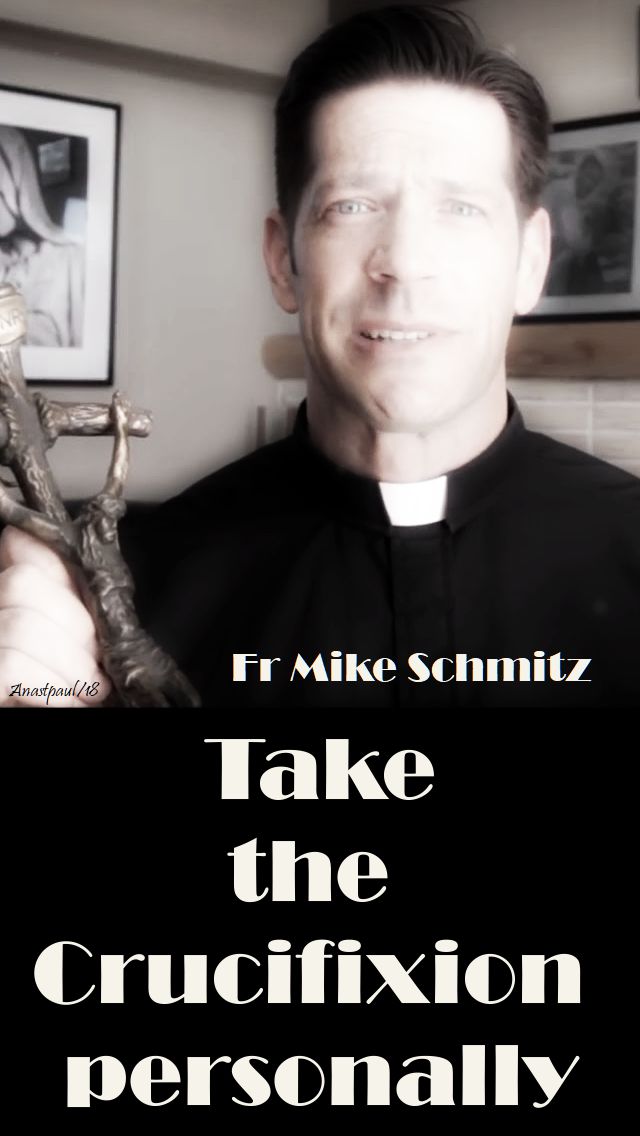
Take the crucifixion personally.

Father Mike Schmitztake the crucifixion - fr mike schmitz - 19 april 2018.jpg

Posted in ONE Minute REFLECTION, The WORD

One Minute Reflection – 6 September – The Christian style

One Minute Reflection – 6 September – Friday of the Twenty-second week in Ordinary Time Year C, Gospel: Luke 5:33–39

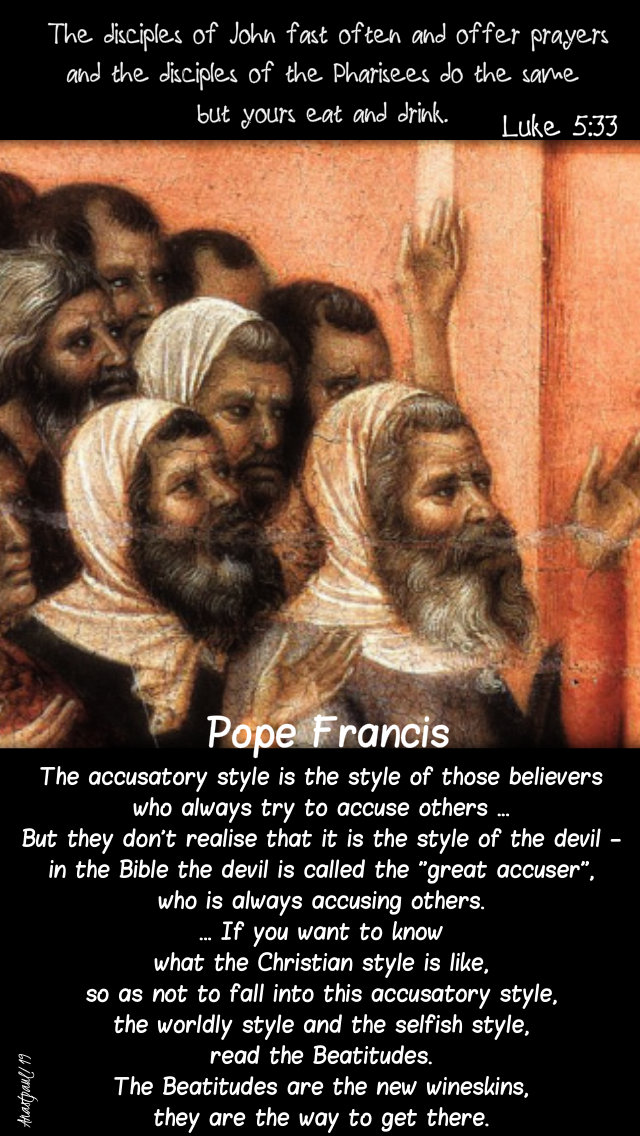
“And they said to him, “The disciples of John fast often and offer prayers and the disciples of the Pharisees do the same but yours eat and drink.” … Luke 5:33

REFLECTION – “The accusatory style is the style of those believers who always try to accuse others, who live by accusing and always disqualify others.   A style, I would say, of failed promoters of justice, they are always trying to accuse others.   But they don’t realise that it is the style of the devil – in the Bible the devil is called the “great accuser”, who is always accusing others.
The Lord has offered you the new wine but you have not changed the bottles, you have not changed.   Worldliness is what ruins so many people, so many people!   Good people, but this spirit of vanity, pride, of being seen, enters in…  The Christian style is that of the Beatitudes – meekness, humility, patience in suffering, love for justice, ability to endure persecution, not judging others…  If you want to know what the Christian style is like, so as not to fall into this accusatory style, the worldly style and the selfish style, read the Beatitudes.   The Beatitudes are the new wineskins, they are the way to get there.” … Pope Francis -Santa Marta, 21 January 2019luke 5 33 the disciples of john - new wineskins - the accussatiry style - pope francis 6 sept 2019.jpg

PRAYER – Lord God, You hold out the light of Your Word as our guide and map.   Open our hearts to learn and to become new in holiness.   Strengthen in our hearts the faith You have given us, so that we may glow anew in the fire Your Spirit has kindled within us.   May the prayers of Your holy saints and the love of our blessed Mother, be a help as we seek to live in holiness.   We make our prayer through Christ our Lord, with the Holy Spirit, God forever amen.virin mary queen of all saints no 2 pray for us 6 april 2019.jpg

Posted in DOCTORS of the Church, franciscan OFM, Our MORNING Offering, PRAYERS of the SAINTS, The HOLY GHOST

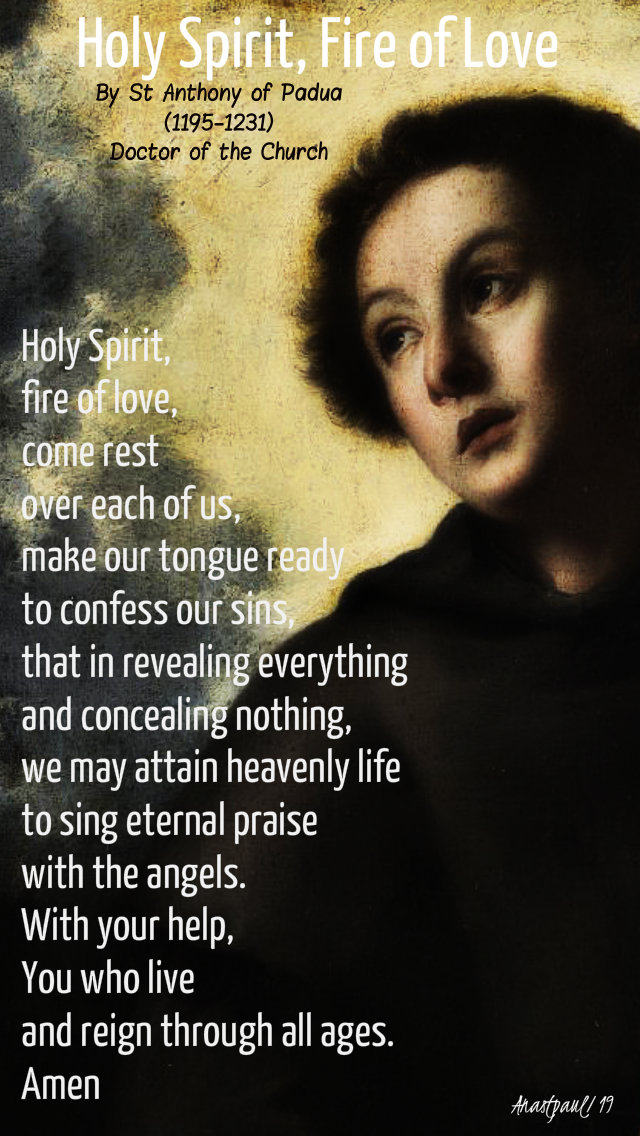
Our Morning Offering – 6 September – Holy Spirit, Fire of Love

Our Morning Offering – 6 September – Friday of the Twenty-second week in Ordinary Time, Year C

Holy Spirit, Fire of Love
By St Anthony of Padua (1195-1231)
Doctor of the Church

Holy Spirit,
fire of love,
come rest over each of us,
make our tongue ready
to confess our sins,
that in revealing everything
and concealing nothing,
we may attain heavenly life
to sing eternal praise
with the angels.
With your help,
You who live
and reign through all ages.
Amenholy spirit fire of love - by st anthony of padua -6 sept 2019.jpg

Posted in DOMINICAN OP, SAINT of the DAY

Saint of the Day – 6 September – Blessed Bertrand de Garrigues OP (c 1195-1230)

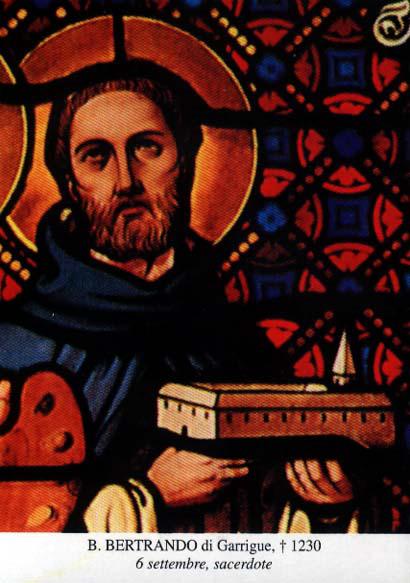
Saint of the Day – 6 September – Blessed Bertrand de Garrigues OP (c 1195-1230) Dominican Priest, Preacher, Evangeliser, Confessor – known as “The Second Dominic” was one of the first companions of Saint Dominic. Born c 1195 at Garrigue, diocese of Nîmes, France and died on 18 April 1230 at Garrigue, diocese of Nîmes, France of natural causes.   It has been said of him that he was ” a true reflection of the holiness of his master.”   Aside from being known as “the beloved companion of Dominic,” “the dearest associate in all his labours, the sharer in his devotions” “the imitator of his sanctity” and “the inseparable companion of his journeys” Bl Bertrand was one of the first 16 followers of St Dominic.Blessed-Bertrand-of-Garrigue-Dominican

Blessed Bertrand was born in c 1195 at Garrigue, France.   Blessed Bertran’s parents were the friends of the Cistercian Sisters of the Convent of Notre Dame of the Woods at Bouchet.   This association of his family must have made a strong impression on the young Bertrand, as we was known to be a pious youth and from an early age expressed a desire to serve as a member of the clergy and fight the heresy of the Albigenses.

As a young priest, Blessed Bertrand was assigned to a band of missionaries, under the direction of Cistercian fathers, who were charged by the Holy See to bring the Albigenses back to a civilised life and to the Church.   It was during this mission work that Blessed Bertrand met Saint Dominic.   The two at once became close friends and spiritual brothers.

“Cast in the same mould and filled with the same spirit, they laboured, prayed and fasted together – all for the glory of God, the benefit of the Church, the good of religion and the salvation of souls  . Doubtless they effected more by their saintly lives and supplications before the throne of mercy than by their sermons, however eloquent and earnest these were.

The early writers speak of none of Saint Dominic’s first disciples more frequently, or in terms of higher praise, than of Blessed Bertrand de Garrigue.   They represent him as pious, candid, humble, zealous, much given to prayer, extremely mortified.

If we may judge by their representation of him, he was a true Israelite in whom there was no guile, greatly beloved by Saint Dominic, one of his most frequently chosen companions in labour and travel.   For this reason, as well as because they had toiled together for years, one can but believe that Bertrand was one of the first to whom Dominic made known his design of establishing an apostolic order, whose primary object should be the salvation of souls through an active ministry and whose field of operation should embrace the world.

In spite of his modesty and retiring manners, Bertrand was the kind of a man who would espouse such a cause with his whole heart, for the grace of God ever impelled him to do all in his power to increase the harvest of heaven.” – (The First Disciples of Saint Dominic, The Very Reverand Victor F. O’Daniel, O.P., S.T.M., Litt.D., 1928)dominicans

Blessed Bertrand received the habit of the Order from Saint Dominic.   It was apparent that in the very early days of the Order, Blessed Bertrand was considered second in rank only to Saint Dominic himself.   This may be evidenced by the fact that Saint Dominic left Blessed Bertrand in charge of the community when he went to Rome in the fall of 1215 to seek papal confirmation of the Order. In 1216 Saint Dominic named Blessed Bertrand as the third prior of the Order, in the Church of St Romanus, when St Dominic travelled to the Vatican to receive final approbation of the order.

Blessed Bertrand was known for his austere life and his obedience.   In fact, Bertrand was often known to wail aloud over his own sins, until Saint Dominic forbade him from wailing for his own sins but instructed him to bemoan the grave sins of the wicked.   In obedience, he immediately took on a life of prayer for the wicked of the world.

The last journey of Saint Dominic and Blessed Bertrand was in 1219 when the pair travelled to Paris where, upon arrival, the two spent the entire night in prayer at the Notre Dame Church, at Roe-Amadour.   Tradition tells us that during this journey the Holy Spirit gave Saint Dominic and Blessed Bertrand the gift of tongues and they were thus able to converse with German pilgrims in their native language.

In obedience to Saint Dominic, it appears that Blessed Bertrand did not speak of any of the miracles of Saint Dominic until after his death and then only to Blessed Jordan of Saxony, the first Master General of the Order after our Father Saint Dominic.

The last apostolic work of Blessed Bertrand was for the Cistercian Sisters of Notre Dame of the Woods at Bouchet, in the Diocese of Valence, where he was giving to these austere sisters a course of sermons on the spiritual life.   At only the age of about 35, Blessed Bertrand grew sick and died while with the Cistercian Sisters in 1230.   His body was buried in the conventual cemetery of the Cistercian Nuns near the apse of the abbatial church.dominican monks and sisters

However, shortly after his death marvellous cures began to come forth through his intercession.   As a consequence, the Cistercian Nuns had an altar erected in his honour in their church and placed a statute of Blessed Bertrand upon the altar.   Blessed Bertrand’s remains, found wholly intact, were afterwards exhumed and placed beneath the altar.   However, the remains of Blessed Bertrand were destroyed by fire in 1561 during the religious wars that followed the Protestant Reformation.bl bernard de garrigue

Years later the cemetery of Notre Dame of the Woods became known as “Saint Bertrand’s Cemetery,” a name that endures to this day.   Blessed Bertrand was beatified when his cultus was confirmed on 14 July 1881 by Pope Leo XIII.

O God,
you joined to the holy patriarch Dominic
a companion and wonderful imitator in Blessed Bertrand.
With the help of his prayers
may we follow in life the faith which he preached
and so obtain the promised rewards in heaven.
We ask this through our Lord Jesus Christ, Your Son,
who lives and reigns with You and the Holy Spirit,
one God, forever and ever.
Amen.

Posted in DOMINICAN OP, SAINT of the DAY

Memorials of the Saints – 6 September

St Arator of Verdun
St Augebert of Champagne
St Augustine of Sens
St Beata of Sens
St Bega
Blessed Bertrand de Garrigues OP (c 1195-1230) “The Second Dominic”
St Cagnoald
St Consolata of Reggio Emilia
St Cottidus of Cappadocia
St Eleutherius the Abbot
St Eugene of Cappadocia
St Eve of Dreux
St Faustus of Alexandria
St Faustus of Syracuse
St Felix of Champagne
St Frontiniano of Alba
St Gondulphus of Metz
St Imperia
St Macarius of Alexandria
St Maccallin of Lusk
St Magnus of Füssen (Died c 666?)
Biography:
https://anastpaul.com/2017/09/06/saint-of-the-day-6-september-st-magnus-of-fussen/
St Mansuetus of Toul
St Onesiphorus
St Petronius of Verona
St Sanctian of Sens
St Zacharius the Prophet

Martyrs of Africa – 6 saints: There were thousands of Christians exiled, tortured and martyred in the late 5th century by the Arian King Hunneric. Six of them, all bishops, are remembered today; however, we really know nothing about them except their names and their deaths for the faith – Donatian, Fusculus, Germanus, Laetus, Mansuetus and Praesidius.

Martyred in the Spanish Civil War:
• Blessed Diego Llorca Llopis
• Blessed Felipe Llamas Barrero
• Blessed Pascual Torres Lloret
• Blessed Vidal Ruiz Vallejo

Posted in MARIAN QUOTES, QUOTES of the SAINTS, QUOTES on SANCTITY, SAINT of the DAY, To JESUS through MARY

Thought for the Day – 5 September – “Be only all for Jesus through Mary. Be Holy”

Thought for the Day – 5 September – The Memorial of St Mother Teresa of Calcutta (1910-1997)

Excerpt from the
Beatification Homily of St John Paul II
of Mother Teresa of Calcutta

World Mission Sunday
Sunday, 19 October 2003

Mother Theresa was Canonised 4 September 2016 by Pope Francis

“The whole of Mother Teresa’s life and labour bore witness to the joy of loving, the greatness and dignity of every human person, the value of little things done faithfully and with love and the surpassing worth of friendship with God.   But there was another heroic side of this great woman that was revealed only after her death.   Hidden from all eyes, hidden even from those closest to her, was her interior life marked by an experience of a deep, painful and abiding feeling of being separated from God, even rejected by Him, along with an ever-increasing longing for His love.   She called her inner experience, “the darkness.”   The “painful night” of her soul, which began around the time she started her work for the poor and continued to the end of her life, led Mother Teresa to an ever more profound union with God.   Through the darknes,s she mystically participated in the thirst of Jesus, in His painful and burning longing for love and she shared in the interior desolation of the poor.

During the last years of her life, despite increasingly severe health problems, Mother Teresa continued to govern her Society and respond to the needs of the poor and the Church.   By 1997, Mother Teresa’s Sisters numbered nearly 4,000 members and were established in 610 foundations in 123 countries of the world.   In March 1997 she blessed her newly-elected successor as Superior General of the Missionaries of Charity and then made one more trip abroad.   After meeting Pope John Paul II for the last time, she returned to Calcutta and spent her final weeks receiving visitors and instructing her Sisters.   On 5 September Mother Teresa’s earthly life came to an end.   She was given the honour of a state funeral by the Government of India and her body was buried in the Mother House of the Missionaries of Charity.   Her tomb quickly became a place of pilgrimage and prayer for people of all faiths, rich and poor alike.   Mother Teresa left a testament of unshakable faith, invincible hope and extraordinary charity.   Her response to Jesus’ plea, “Come be My light,” made her a Missionary of Charity, a “mother to the poor,” a symbol of compassion to the world and a living witness to the thirsting love of God.”

Less than two years after her death, in view of Mother Teresa’s widespread reputation of holiness and the favours being reported, Pope John Paul II permitted the opening of her Cause of Canonisation.   On 20 December 2002 he approved the decrees of her heroic virtues and miracles. … Vatican.va

Her own handwriting below is sent to us today:

“Be only all for Jesus through Mary.   Be Holy”

herwords.st mother teresa handwritingpng.png

St Mother Teresa, Pray for Us!

st mother teresa pray for us no 3 5 sept 2019.jpg

Posted in CHRIST, the WAY,TRUTH,LIFE, QUOTES of the SAINTS, QUOTES on ABORTION, QUOTES on CONVERSION, QUOTES on FAITH, QUOTES on GRACE, QUOTES on HUMILITY, SAINT of the DAY, The WORD

Quote/s of the Day – 5 September – St Mother Teresa

Quote/s of the Day – 5 September – Thursday of the Twenty-second week in Ordinary Time, Year C and The Memorial of St Mother Teresa of Calcutta (1910-1997)

..And immediately she rose and served them.”

Luke 4:39

“Not all of us can do great things.
But we can do small things with great love…..
God doesn’t require us to succeed,
He only requires that we try…….
I can do things you cannot, you can do things I cannot,
together we can do great things.”not all of us can do great things - and immediately she got and served luke 4 39 - st mother teresa 2018

“By blood, I am Albanian.
By citizenship, an Indian.
By Faith, I am a Catholic Nun.
As to my calling,
I belong to the World.
As to my heart,
I belong entirely to
the Heart of Jesus.”by-blood-i-am-an-albanian-st-mother-teresa-28-june-2019-sacred-heart

“The so-called right to abortion
has portrayed the GREATEST of GIFTS
a CHILD
as a competitor
an intrusion and
an inconvenience.”the-so-called-right-to-abortion-st-mother-t 5 sept 2017

“How sad it is,
when someone
comes to you,
looking for Jesus
and all they see.
is you.”how-sad-it-is-when-someone-comes-to-you-lookin-for-jesus-and-all-they-see-is-you-st-mother-teresa-16-may-2019

“You must first learn to forget yourself
so that you can dedicate yourself to God
and to neighbour alike!”

More here:  https://anastpaul.com/2017/09/05/quotes-of-the-day-5-september-the-memorial-of-st-mother-teresa-1910-1997/

St Mother Teresa (1910-1997)you-must-first-learn-to-forget-yourself-st-mother-terea-30-aug-2018-conversations-with-2.jpg

Posted in CATHOLIC Quotes, CONFESSION/PENANCE, ONE Minute REFLECTION, QUOTES on CONVERSION, SAINT of the DAY, The WILL of GOD

One Minute Reflection – 5 September – “Depart from me, for I am a sinful man, O Lord.”

One Minute Reflection – 5 September – Thursday of the Twenty-second week in Ordinary Time, Year C, Gospel: Luke 5:1–11 and the Memorial of St Mother Teresa of Calcutta (1910-1997)

But when Simon Peter saw it, he fell down at Jesus’ knees, saying, “Depart from me, for I am a sinful man, O Lord.” ... Luke 5:8

REFLECTION – “This is the first decisive step of Peter along the path of discipleship, of the disciple of Jesus, accusing himself:  ‘I am a sinner.’   This is Peter’s first step and also the first step for each one of us, if you want to go forward in the spiritual life, in the life of Jesus, serving Jesus, following Jesus, must be this, accusing oneself, without accusing oneself you cannot walk in the Christian life.
There are people who go through life talking about others, accusing others and never thinking of their own sins.   And when I go to make my confession, how do I confess? Like a parrot?   ‘I did this, this…’   But are you touched at heart by what you have done? Many times, no.   You go there to put on make-up, to make-yourself up a little bit in order to look beautiful.   But it hasn’t entered completely into your heart, because you haven’t left room, because you are not capable of accusing yourself.   Do I do this?   It’s a good question to get to the heart.
Today, let us ask the Lord for the grace, the grace to find ourselves face-to-face with Him, with this wonder that His presence gives and the grace, to feel that we are sinners but concretely and to say with Peter – ‘Depart from me, for I am a sinner.”Pope Francis – Santa Marta, 6 September 2018depart from me for i am a sinful man luke 5 8 - this is the first step of peter - pope francis - 5 sept 2019

PRAYER – Heavenly Father, help us to be holy in the way that You have laid out for all of us.   Grant us good Lord, the courage, faith and understanding, to see our own failings and to present ourselves to You for forgiveness, knowing always, that a repentant heart You do not spurn.   May the prayers of St Mother Teresa assist us in using the gifts You have given us, for the Glory of God.   We make our prayer through our Lord, Jesus Christ with the Holy Spirit, one God, forever, amen.st-mother-teresa-pray-for-us-5-sept-2017.jpg