Posted in MORNING Prayers, QUOTES - J R R Tolkien and MORE, QUOTES on WORK/LABOUR, SAINT of the DAY, St JOSEPH

Quote of the Day – 1 May – Tuesday of the Fifth Week of Eastertide and the Memorial of St Joseph the Worker

Quote of the Day – 1 May – Tuesday of the Fifth Week of Eastertide and the Memorial of St Joseph the Worker

“Work done grudgingly, is servitude.
Work done willingly, is service.

Work done lovingly, is a Sacrament!”

Unknownwork done grudgingly - 1 may 2018 - st joseph the worker - unknown author

Posted in CATHOLIC DEVOTIONS of the Month, MARIAN DEVOTIONS, MARIAN PRAYERS, MARIAN QUOTES, MARIAN TITLES, MORNING Prayers, QUOTES of the SAINTS, The BLESSED VIRGIN MARY, The WORD

One Minute Marian Reflection – 1 May – Tuesday of the Fifth Week of Eastertide, the Memorial of St Joseph the Worker and the 1st day of the Month of Mary

One Minute Reflection – 1 May – Tuesday of the Fifth Week of Eastertide, the Memorial of St Joseph the Worker and the 1st day of the Month of Mary

In the sixth month, the angel Gabriel was sent from God to a town of Galilee called Nazareth, to a virgin betrothed to a man named Joseph, of the house of David and the virgin’s name was Mary...Luke 1:26-27in the sixth month the angel Gabriel - luke 1 26-27 - 1 may 2018

REFLECTION – “MARY, THE MOTHER OF GOD:  “When the Blessed Virgin said yes, freely, to the plans revealed to her by the Creator, the divine Word assumed a human nature — a rational soul and a body – which was formed in the most pure womb of Mary. The divine nature and the human were united in a single Person:  Jesus Christ, true God and, thenceforth, true man;  the only begotten and eternal son of the Father and from that mo­ment on, as man, the true son of Mary.   This is why our Lady is the mother of the Incarnate Word, of the second person of the Blessed Trinity, who has united our human nature to Himself for ever, without any confusion of the two natures.   The greatest praise we can give to the Blessed Virgin is to address her loudly and clearly by the name that expresses her very highest dignity: ‘Mother of God’.
Let us offer to our Mother today:
Brief but frequent prayers of love, such as – “Mother of God, your petitions are most powerful.”St Josemaría Escrivá (1902-1975) – “Mother of God and Our Mother,” – Friends of God 274when the blessed virgin said yes, freely, - st josemaria - 1 may 2018

PRAYER – Almighty God and Father, Your ways are not our ways, teach us to willingly agree to them, for You know which way we should go.   Help us to say “yes” always to Your plan and to render ourselves as a sacrament of Your divine love to all we meet.   Fill us with the grace to be your tools to bring glory to Your kingdom.   Our Father, who art in heaven, may Your Will be done on earth as it is in heaven.   Mary Mother of God, pray for us!   Through our Our Lord Jesus Christ with You, in the union of the Holy Spirit, one God forever, amen.holy mary-mother of god - pray-for-us.- 1 may 2017 and 2018

Posted in CATHOLIC DEVOTIONS of the Month, HYMNS, MARIAN DEVOTIONS, MARIAN QUOTES, MORNING Prayers, PAPAL MESSAGES, QUOTES of the SAINTS, The BLESSED VIRGIN MARY

Rejoice! It’s 1 May and the beginning of the Month of the Blessed Virgin Mary

Rejoice! It’s 1 May and the beginning of the Month of the Blessed Virgin Marymay the month of the blessed virgin mary - 1 may 2018

“God wills that all his gifts should come to us through Mary” 

St Bernard of Clairvaux (1090-1153) Mellifluous Doctor

It was in Rome, towards the end of the eighteenth century, one fine evening in May.   A child of the poor gathered his companions around him and led them to a statue of Mary, before which a lamp was burning, as is the custom in that holy city.   There, these fresh young voices sang the Litany of our Lady.   The next day, the little group, followed by other children, again gathered at the feet of the Mother of God.   Next came their mothers, to join the little assembly.   Soon, other groups were formed and the devotion rapidly became popular.   Holy souls, troubled by the disorderly conduct which always increases and becomes graver at the return of the pleasant springtime, saw in these growing practices the hand of God and they co-operated with the designs of Providence by approving and promoting this new devotion, as a public and solemn act of reparation. The Month of Mary was founded! … A Carthusian, A Month with Mary, London: Burns and Oates, 1950.

“This is the month in which, in the churches and individual homes, the most affectionate and fervent homage of prayers and devotions from the hearts of Christians are raised to Mary.  It is also the month in which from His throne, descend upon us, the most generous and abundant gifts of the Divine Mercy.” … Blessed Pope Paul VI, The Month of Mary,1967

In our own times, we Catholics, wanting to be close to her always, offer her special presents in May:  pilgrimages, visits to churches dedicated to her, little sacrifices in her honour, extra Devotions in her honour, floral ‘Crownings’, periods of study and well-finished work offered up to her and a more attentive recitation of the Marian Litanies and the Holy Rosary.

Opening Hymn from the Little Office of Mary

O Mary of all women, 
You are the chosen one,
Who, ancient prophets promised, 
Would bear God’s only Son;
All Hebrew generations 
Prepared the way to thee,
That in your womb the God-man, 
Might come to set us free.

O Mary, you embody 
all God taught to our race,
For you are first and foremost 
In fullness of His grace;
We praise this wondrous honour 
That you gave birth to Him,
Who from you took humanity 
And saved us from our sin.opening hymn from the little office of mary - of mary, of all women - 1 may 2018

Posted in CONSECRATION Prayers, JESUIT SJ, MARIAN PRAYERS, MORNING Prayers, PRAYERS for VARIOUS NEEDS, PRAYERS of the SAINTS, The BLESSED VIRGIN MARY

Our Morning Offering- 1 May – Tuesday of the Fifth Week of Eastertide, the Memorial of St Joseph the Worker and the 1st day of the Month of Mary

Our Morning Offering- 1 May – Tuesday of the Fifth Week of Eastertide, the Memorial of St Joseph the Worker and the 1st day of the Month of Mary

An Act of Consecration to the Blessed Virgin Mary
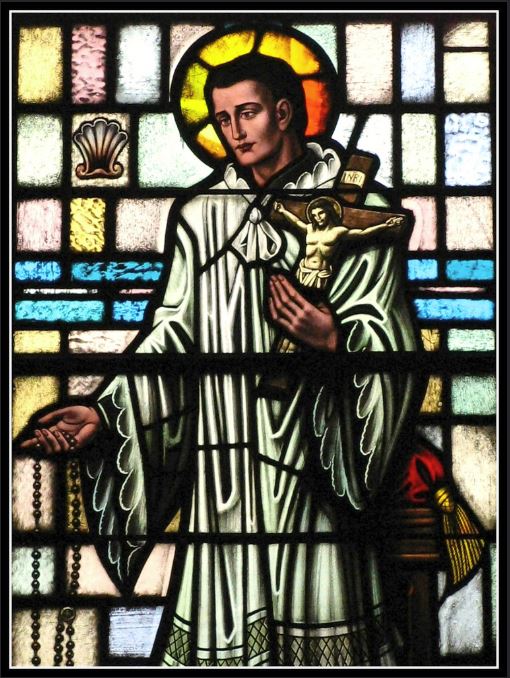
By St John Berchmans S.J. (1599-1621)

Holy Mary, Mother of God and Virgin,
I choose you this day for my queen,
patron and advocate
and firmly resolve and purpose,
never to abandon you,
never to say or do anything,
against you,
nor to permit that aught be done by others,
to dishonour you.
Receive me, then, I beg you,
as your perpetual servant,
assist me in all my actions
and do not abandon me
at the hour of my death.
Amenact-of-consecration-by-st-john-berchmans-one-of-my-best-ever-1-may-2017

Posted in MORNING Prayers, PAPAL PRAYERS, PRAYERS for VARIOUS NEEDS, PRAYERS of the SAINTS, PRAYERS to the SAINTS, SAINT of the DAY, St JOSEPH

Memorial of St Joseph the Worker – 1 May

Memorial of St Joseph the Worker – 1 May

“May Day” has long been dedicated as a special day for labour and working people.  The feast of St. Joseph the Worker was established by Pope Pius XII in 1955 to Christianise labour and give all workers a model and a protector.

By the daily labour in his shop, St. Joseph provided for the necessities of his holy spouse and of the Incarnate Son of God and thus became a role model for labourers.   The liturgy for this feast celebrates the right to work and this is a message that needs to be heard and heeded in our modern society.   How did this connection with St Joseph the Worker, which is nearly as old as Christianity, get made?San_Giuseppe_G

In an effort to keep Jesus from being removed from ordinary life, the Church has from the beginning proudly emphasised that Jesus was a carpenter, obviously trained by Joseph in the satisfaction and the drudgery of that vocation.

Humanity is like God, not only in thinking and loving but also in creating.   Whether we make a table or a cathedral, we are called to bear fruit with our hands and mind, ultimately for the building up of the Body of Christ.   In addition to this, there is a special dignity and value to the work of caring for the family.

An excerpt from the Vatican II document on the modern world said, “Where men and women, in the course of gaining a livelihood for themselves and their families, offer appropriate service to society, they can be confident that their personal efforts promote the work of the Creator, confer benefits on their fellowmen, and help to realise God’s plan in history.”

St Pope Pius X (1835-1914) composed this prayer to St Joseph, patron of working people, that expresses concisely the Christian attitude toward labour.   It summarises also for us the lessons of the Holy Family’s work at Nazareth.

Let us Pray:

Glorious St Joseph,
model of all who devote their lives to labour,
obtain for me the grace to work,
in the spirit of penance, in order thereby,
to atone for my many sins;
to work conscientiously,
setting devotion to duty in preference to my own whims;
to work with thankfulness and joy,
deeming it an honour to employ
and to develop, by my labour,
the gifts I have received from God;
to work with order, peace, moderation and patience,
without ever shrinking from weariness and difficulties;
to work above all with a pure intention
and with detachment from self,
having always before my eyes,
the hour of death and the accounting
which I must then render of time ill spent,
of talents wasted, of good omitted
and of vain complacency in success,
which is so fatal to the work of God.

All for Jesus, all through Mary,
all in imitation of you, O Patriarch Joseph!
This shall be my motto in life and in death,
Amen.

More info on Patronages etc here :

https://anastpaul.wordpress.com/2017/05/01/saint-of-the-day-1-may-st-joseph-the-worker/

prayer-to-st-joseph-the-worker-st-pope-pius-x-1-may-2018

Posted in MARIAN TITLES, SAINT of the DAY, St JOSEPH

Memorial of St Joseph the Worker, Feast of the Madonna of Giubino and Memorials of the Saints – 1 May

St Joseph the Worker (Optional Memorial)

Madonna of Giubino:

The Church of the Madonna of Giubino was built in 1721 to house a miraculous marble-relief icon of the Madonna, which is brought to a country chapel during the summer.   (A copy of the relief is housed in the Church of St Joseph in Brooklyn, New York, giving testimony to the large emigrant community of Calatafimesi who lived in Brooklyn in the early 20th century).   The Church of Maria Santissima di Giubino is dedicated to the patroness of the town.   It has a single nave, with an elegant barrel vault decorated with frescoes and ornamental motifs.   Inside it there are some important works: the painting with the Assumption, Our Lady with Angels and Saints dated 1617, the altar-piece of All Saints, an 18th-century wooden organ and a 15th-century marble alto-rilievo representing Madonna of Giubino with the Infant Jesus.   In 1655 an invasion of grasshoppers was destroying all the crops in the countryside of Calatafimi: the people, assembled in a Church, decided that, after putting all the names of the saints who had an altar in town inside a ballot box, they would choose as a patron that one whose name had been drawn.   After they invoked the Holy Ghost, it was chosen the name of Maria Santissima di Giubino by lots.   The central part of the triptych with the image of the Virgin was soon taken out from the wall in the country church of Giubino and taken in procession:  Calatafimi was free from grasshoppers.   Maria Santissima di Giubino was elected patroness of the town (25 April 1655) and the bas-relief of the Virgin of Giubino was then placed on the high altar of the new Church, designed by Giovanni Biagio Amico (the same planner of the Church of Santissimo Crocifisso) in 1721.   In 1931 the triptych was recomposed in the town sanctuary and restored. There was a new restoration of the Church in 1978.

giubinogiubino.2fiesta madonna giubino

St Aceolus of Amiens
St Acius of Amiens
St Aldebrandus of Fossombrone
St Amator of Auxerre
St Ambrose of Ferentino
St Andeolus of Smyrna
Bl Arigius of Gap
St Arnold of Hiltensweiler
St Asaph of Llanelwy
St Augustine Schöffler
St Benedict of Szkalka
St Bertha of Avenay
St Bertha of Kent
St Brieuc of Brittany
St Ceallach of Killala
St Cominus of Catania
Evermarus of Rousson
Bl Felim O’Hara
St Grata of Bergamo
St Isidora of Egypt
St Jeremiah the Prophet
St John-Louis Bonnard
Bl Klymentii Sheptytskyi
St Marculf
St Orentius of Auch
St Orentius of Loret
St Patientia of Loret
St Peregrine Laziosi (1260-1345) Incorrupt
Bl Petronilla of Moncel
St Richard Pampuri
St Romanus of Baghdad
St Sigismund of Burgundy
St Theodard of Narbonne
St Thorette
St Torquatus of Guadix
Bl Vivald of Gimignano

Posted in MORNING Prayers, QUOTES - J R R Tolkien and MORE, QUOTES on DIVINE PROVIDENCE, SAINT of the DAY, The WORD

Thought for the Day – 30 April – Monday of the Fifth Week of Eastertide and the Memorial of St Joseph Benedict Cottolengo (1786-1842) – known as “The Labourer of Divine Providence”.

Thought for the Day – 30 April – Monday of the Fifth Week of Eastertide and the Memorial of St Joseph Benedict Cottolengo (1786-1842) – known as “The Labourer of Divine Providence”

Speaking of: Trusting in God’s Providence

A letter from Mother Luisita OCDS

“For greater things you were born.

God will provide for all of our needs.   Let us trust that we will receive all from Him who loves us so much and is always watching over us!

As you try to see all things as coming from the hand of God, adore His designs.   I would like to see you have more trust in Divine Providence.   Otherwise, you will be suffering many disappointments and your projects will meet with failure.   Trust, my child, only in God.   Everything human is changeable and the one who is for you today will be against you tomorrow.   You see how good our God is!   We should have more confidence in Him every day and have recourse to prayer, not permitting anything to discourage us or make us sad.   He has given me so much confidence in His Divine Will that I leave everything in His hands and I am at peace.

My beloved child, let us praise God in everything because all that happens is for our own good.   Try to fulfil your duties the best you can and for God alone and always remain happy and serene in all the tribulations of life.   As for me, I have placed all in the hands of God and I have been successful.   We have to learn to detach ourselves a little, trust in God alone and do God’s holy will with joy.

How beautiful it is to be in the Hands of God, searching His Divine Gaze in readiness to do whatever He wishes.”

“Jesus said to his disciples:
“Do not let your hearts be troubled.
You have trust in God, trust also in me.”
John 14:1john 14 1 - do not let your hearts be troubled - 30 april 2018

Posted in JESUIT SJ, MORNING Prayers, QUOTES - J R R Tolkien and MORE, QUOTES of the SAINTS, QUOTES on CHARITY, QUOTES on DIVINE PROVIDENCE, QUOTES on LOVE, QUOTES on MERCY, SPEAKING of .....

Quote/s of the Day – 30 April – Monday of the Fifth Week of Eastertide and the Memorial of St Joseph Benedict Cottolengo (1786-1842) – known as “The Labourer of Divine Providence”.

Quote/s of the Day – 30 April – Monday of the Fifth Week of Eastertide and the Memorial of St Joseph Benedict Cottolengo (1786-1842) – known as “The Labourer of Divine Providence”.

Speaking of:  Recognising God’s Hand

“There is absolutely nothing
that gives us more peace, 
or does more to make us holy,
than obeying the will of God.”there is absolutely nothing - fr jean pierre de caussade - 30 april 2018

“God makes all chosen souls, pass through
a fearful time of poverty,
misery and nothingness.
He desires to destroy in them gradually,
all the help and confidence they derive
from themselves, so that He may be
their sole source of support,
their confidence,
their hope,
their only resource.”god makes all chosen souls pass - fr jean pierre de caussade - 30 april 2018

“We must offer ourselves to God
like a clean, smooth canvas
and not worry ourselves about
what God may choose to paint on it
but at each moment,
feel only, the stroke of His brush.”

Fr Jean Pierre de Caussade (1675-1751)
‘Abandonment to Divine Providence’we must offer ourselves - fr jean pierre de caussade - 30 april 2018

“The poor are Jesus
they are not just an image of Him.”

St Joseph Benedict Cottolengo (1786-1842)the poor are jesus - st joseph benedict cottolengo - 30 april 2018

“The Lord always sets signs on our path
to guide us according to His will, 
to our own true good.”

Pope Benedict XVIthe lord always set signs - pope benedict - 30 april 2018

“If you do this one thing
you will become a saint.
If you don’t do it,
you never will.
The one thing is this:
Let Jesus interrupt your life.”

Father Mike Schmitzif you do this one thing - fr mike - 30 april 2018

Posted in MORNING Prayers, QUOTES of the SAINTS, QUOTES on DIVINE PROVIDENCE, SAINT of the DAY, The WORD

One Minute Reflection – – 30 April – Monday of the Fifth Week of Eastertide and the Memorial of St Joseph Benedict Cottolengo (1786-1842) – known as “The Labourer of Divine Providence”.

One Minute Reflection – 30 April – Monday of the Fifth Week of Eastertide and the Memorial of St Joseph Benedict Cottolengo (1786-1842) – known as “The Labourer of Divine Providence”.

He who gives heed to the word will prosper and happy is he who trusts in the LORD...Proverbs 16:20

REFLECTION – “I am a good for nothing and I don’t even know what to make of myself. But Divine Providence certainly knows what it wants.   It is only up to me to support it. Let us go ahead in Domino“….St Joseph Benedict Cottolengoi am a good for nothing - st joseph benedict cottolengo - 30 april 2018

PRAYER – Lord, by Your grace, we are made one in mind and heart.   Give us a love for what You command and a longing for what You promise, so that, amid this world’s changes, our hearts may be set on the world of lasting joy.   We make our prayer, through our Lord Jesus Christ, in the unity of the Holy Spirit, one God with You, forever and ever, amen.st joseph benedict cottolengo - pray for us no 2 - 30 april 2018

Posted in JESUIT SJ, MORNING Prayers, PRAYERS for VARIOUS NEEDS, QUOTES on DIVINE PROVIDENCE

Our Morning Offering – 30 April – Monday of the Fifth Week of Eastertide

Our Morning Offering – 30 April – Monday of the Fifth Week of Eastertide and the Memorial of St Joseph Benedict Cottolengo (1786-1842) – known as “The Labourer of Divine Providence”.

Prayer of Abandonment – Lord, I Glorify You in Everything
By Fr Jean Pierre de Caussade S.J. (1675-1751)

Lord, may Your kingdom come into my heart
to sanctify me, nourish me and purify me.
How insignificant is the passing moment
to the eye without faith!
But how important each moment is,
to the eye enlightened by faith!
How can we deem insignificant anything
which has been caused by You?
Every moment and every event, is guided by You,
and so contains Your infinite greatness.
So, Lord, I glorify You in everything
that happens to me.
In whatever manner You make me live and die,
I am content.
Events please me for their own sake,
regardless of their consequences,
because Your action lies behind them.
Everything is heaven to me,
because all my moments manifest Your love.
Amenprayer of abandonment by fr jean pierre de caussade - 30 april 2018

Posted in PAPAL SERMONS, SAINT of the DAY, VATICAN Resources

Saint of the Day – 30 April – St Joseph Benedict Cottolengo (1786-1842) – An Intense Day of Love

Saint of the Day – 30 April – St Joseph Benedict Cottolengo (1786-1842) Priest, Founder, Confessor, Apostle of Charity.   Born as Giuseppe Benedetto Cottolengo on 3 May 1786 at Bra, Cuneo, Piedmont region, Italy and died on 30 April 1842 of typhus at Chieri, Turin, Italy.  He was buried in the Mary altar in the main chapel in Valdocco, Italy.   St Joseph was Canonised on 19 March 1934 by Pope Pius XI.   Known as “the labourer of Divine Providence”.

Header - st joseph benedetto cottolengo

“Joseph Benedict Cottolengo was born in Bra, a small town in the Province of Cuneo, on 3 May 1786.   The eldest of 12, six of whom died in infancy, he showed great sensitivity to the poor from childhood.   He embraced the way of the priesthood, setting an example to two of his brothers.   The years of his youth coincided with the Napoleonic period and the consequent hardships in both the religious and social contexts.   Cottolengo became a good priest much sought after by penitents and, in the Turin of that time, a preacher of spiritual exercises and conferences for university students who always met with noteworthy success.   At the age of 32, he was appointed canon of the Santissima Trinità, a congregation of priests whose task was to officiate in the Corpus Domini Church and to ensure the decorum of the city’s religious ceremonies but he felt uneasy in this situation.   God was preparing him for a special mission and, precisely with an unexpected and decisive encounter, made him realise what was to be his future destiny in the exercise of the ministry.

The Lord always sets signs on our path to guide us according to his will to our own true good.   This also happened to Cottolengo, dramatically, on Sunday morning, 2 September 1827.   The diligence from Milan arrived in Turin, more crowded than ever.   Crammed into it was a whole French family.   The mother, with five children, was at an advanced stage of pregnancy and had a high temperature.   After traipsing to various hospitals, this family found lodgings in a public dormitory but the woman’s situation was serious and some people went in search of a priest.   By a mysterious design they came across Cottolengo and it was precisely he who, heavy hearted, accompanied this young mother to her death, amid the distress of the entire family.   Having carried out this painful task, with deep anguish he went to the Blessed Sacrament and knelt in prayer:  “My God, why?   Why did you want me to be a witness?   What do you want of me?  Something must be done!”.   He got to his feet and had all the bells rung and the candles lit and, gathering in the church those who were curious, told them:  “The grace has been granted!   The grace has been granted!”.   From that time Cottolengo was transformed: all his skills, especially his financial and organisational ability, were used to give life to projects in support of the neediest.

In his undertaking he was able to involve dozens and dozens of collaborators and volunteers.   Moving towards the outskirts of Turin to expand his work, he created a sort of village, in which he assigned a meaningful name to every building he managed to build:  “House of Faith”, “House of Hope”, “House of Charity”.   He adopted a “familystyle”, establishing true and proper communities of people with volunteers, men and women religious and lay people, who joined forces in order to face and overcome the difficulties that arose.   Everyone in that Little House of Divine Providence had a precise task:  work, prayer, service, teaching or administration.   The healthy and the sick shared the same daily burden.   With time religious life could be specifically planned in accordance with particular needs and requirements.

 430piccolacasa

Cottolengo even thought of setting up his own seminary to provide specific formation for the priests of his Work.   He was always ready to follow and serve Divine Providence and never questioned it.   He would say:  “I am a good for nothing and I don’t even know what to make of myself.   But Divine Providence certainly knows what it wants.   It is only up to me to support it. Let us go ahead in Domino”.   To his poor and the neediest, he would always call himself “the labourer of Divine Providence”.

St Joseph Benedict Cottolengo 7st joseph benedetto cottolengo.4st joseph benedetto cottolengo.3

He also chose to found beside the small citadels five monasteries of contemplative sisters and one of hermits and considered them among his most important achievements.   They were a sort of “heart” which was to beat for the entire Work.   He died on 30 April 1842, with these words on his lips:  “Misericordia, Domine, Misericordia, Domine.   Good and Holy Providence… Blessed Virgin, it is now up to you”.   The whole of his life, as a newspaper of the time said, was “an intense day of love”.”….Pope Benedict XVI General Audience, Saint Peter’s Square, Wednesday, 28 April 2010.

Today Cottolengo Fathers, Sisters and Brothers still work together in activities focused on communicating God’s love for the poorest. They are spread out all over the world: Ecuador, India, Italy, Kenya, Switzerland, Tanzania and the United States.   Don Cottolengo contracted typhoid while assisting his patients and died in Chieri, Piedmont on 30 April 1842.   Cottolengo was beatified by Pope Benedict XV in 1917 and was Canonised by Pope Pius XI in 1934.
Joseph Benedict Cottolengo was enlisted among the saints of charity by Pope Benedict XVI in his encyclical Deus caritas est.   The parish of Saint Joseph Benedict Cottolengo is located in Grosseto, Italy.   There is a Via San Giuseppe Benedetto Cottolengo in Pisa.

StJosephCottolengo30-4a

The Sisters of St. Joseph Cottolengo pray before the blessed sacrament inside the Chiesa Piccola.jpg
The Sisters of St Joseph Cottolengo pray before the blessed sacrament inside the Chiesa Piccola
cottolengo sisters
Cottolengo Sisters at Prayer
Posted in SAINT of the DAY

Memorials of the Saints – 30 April

St Marie Guyart of the Incarnation (Optional Memorial)

St Adjutor of Vernon
St Aimo of Savigny
St Amator of Córdoba
St Aphrodisius of Alexandria
St Cynwl
St Dedë Plani
St Diodoro of Aphrodisias
St Donatus of Euraea
St Erconwald of London
St Eutropius of Saintes
St Forannan
St Genistus of Limoges
St Giuse Tuân
Bl Gualfardus of Augsburg
Bl Hildegard the Empress
St Joseph Benedict Cottolengo (1786-1842)


St Lawrence of Novara
St Louis of Córdoba
St Mariano of Acerenza
St Maximus of Ephesus
St Mercurialis of Forlì
St Peter of Córdoba
St Pomponius of Naples
St Quirinus of Rome
St Rodopiano of Aphrodisias
St Sophia of Fermo
St Swithbert the Younger
Bl Ventura of Spello
Bl William Southerne

Posted in DOCTORS of the Church, MORNING Prayers, MYSTICS, ON the SAINTS, SAINT of the DAY, The WORD

Thought for the Day – 29 April – Fifth Sunday of Eastertide and the Memorial of St Catherine of Siena (1347-1380) Doctor of the Church

Thought for the Day – 29 April – Fifth Sunday of Eastertide and the Memorial of St Catherine of Siena (1347-1380) Doctor of the Church

Catherine of Siena is one of the most remarkable figures of the fourteenth century and had an influence far beyond her holiness of life.   She took part in the politics of both Church and State and was a beacon of light in a very difficult time.

The mystical experiences that were to last throughout her whole life and an intimacy with her Saviour that transformed her whole existence began when she was but six years old.   She grew up, known for cheerfulness and merriment, with no indication of the astonishing role she was to play in the work of the Church.

In 1364, she became a member of the Third Order of St Dominic and from this time her influence began to grow in Siena as she gathered around her a circle of followers.   She began dictating letters to this circle and to take part in public affairs.   (She had never learnt to write, which was not uncommon for women in that era).   In 1374, she began to interest herself in furthering a crusade against the Turks and in the return of the Pope from Avignon to Rome.   In 1376, she went to Avignon to urge Pope Gregory XI to return to Rome.   With her encouragement, he did but died shortly thereafter. In 1375, whilst on a trip to Pisa, she received the Stigmata.

Pope Gregory’s successor, Urban VI, so alienated the Cardinals who elected him, that they decided to elect another pope.   This was the beginning of the Great Western Schism in which two and later three, popes, divided the allegiance of Christendom.   Catherine was shattered by this division in the Church and went to Rome to work for the reunification of the Church.

Burdened with sorrow and offering herself for the unity of the Church, Catherine died in Rome on 29 April 1380.   She left a huge collection of letters as well as her chief work, The Dialogues.

By the sheer force of her personality, St Catherine converted thousands and the mere sight of her would convert hardened sinners.   We may not have her personality but we can reach into the lives of others and influence them for good.   We cannot have warmth ourselves, without giving it to others.    “Then they said to each other, ‘Did not our hearts burn within us as he talked to us on the road and explained the scriptures to us?’...Luke 24:32

St Catherine of Siena, Pray for us!st catherine of siena pray for us - 29 april 2018


Posted in MORNING Prayers, PAPAL ENCYLICALS, QUOTES of the SAINTS, QUOTES on SANCTITY, SUNDAY REFLECTIONS, The WORD

Sunday Reflection -– 29 April – Fifth Sunday of Eastertide: Holy Gospel of Jesus Christ according to Saint John 15:1-8.

Sunday Reflection -– 29 April – Fifth Sunday of Eastertide:  Holy Gospel of Jesus Christ according to Saint John 15:1-8.john 15 5 - 29 april 2018

“Without Me you can do nothing”  John 15:5

“In Christ it hath well pleased the Father that all fulness should dwell.” (Col 1:19)   He is gifted with those supernatural powers that accompany the hypostatic union, since the Holy Spirit dwells in Him with a fullness of grace than which no greater can be imagined. To Him has been given “power over all flesh”; (Jn 17:2)… . From Him streams into the body of the Church all the light with which those who believe are divinely illumined, and all the grace by which they are made holy as He is holy…

It is He who imparts the light of faith to believers;  it is He who enriches pastors and teachers and above all His Vicar on earth with the supernatural gifts of knowledge, understanding and wisdom, so that they may loyally preserve the treasury of faith, defend it vigorously and explain it and confirm it with reverence and devotion.   Finally, it is He who, though unseen, presides at the Councils of the Church and guides them…

Holiness begins from Christ and Christ is its cause.   For no act conducive to salvation can be performed unless it proceeds from Him as from its supernatural source.   “Without me,” He says, “you can do nothing.”(Jn 15:5)   If we grieve and do penance for our sins if, with filial fear and hope, we turn again to God, it is because He is leading us.   Grace and glory flow from His inexhaustible fullness…

When the Sacraments of the Church are administered by external rite, it is He who produces their effect in souls.   He nourishes the redeemed with His own flesh and blood and thus calms the turbulent passions of the soul;  He gives increase of grace and prepares future glory for souls and bodies.

Christ our Lord wills the Church to live His own supernatural life and by His divine power permeates His whole Body and nourishes and sustains each of the members according to the place which they occupy in the body, in the same way as the vine nourishes and makes fruitful the branches which are joined to it. (cf. Jn 15:4-6).

Venerable Pius XII (1976-1958)  Pope from 1939 to 1958
Encyclical “Mystici Corporis”holiness begins from christ - pope pius XII - 29 april 2018 - 5th sun of easter

Posted in DOCTORS of the Church, DOMINICAN OP, MYSTICS, QUOTES of the SAINTS, QUOTES on DIVINE PROVIDENCE, QUOTES on FAITH, QUOTES on LOVE, QUOTES on SANCTITY, QUOTES on SUFFERING, QUOTES on the CROSS of CHRIST, QUOTES on TRUTH, SAINT of the DAY

Quote/s of the Day – 29 April – Fifth Sunday of Eastertide and the Memorial of St Catherine of Siena (1347-1380) Doctor of the Church

Quote/s of the Day – 29 April – Fifth Sunday of Eastertide and the Memorial of St Catherine of Siena (1347-1380) Doctor of the Church

“Proclaim the Truth
and do not be silent
through fear.”

“Preach the Truth
as if you had a million voices.
It is silence that kills the world.”

“Nothing great is ever achieved,
without much enduring.”

“All the way to heaven is heaven
because Jesus said, “I am the way.”proclaim the truth -nothing great - all the way to heaven - preach the truth - st catherine of siena - 29 april 2018

“Strange that so much suffering is caused
because of the misunderstandings
of God’s true nature.
God’s heart is more gentle
than the Virgin’s first kiss upon the Christ.
And God’s forgiveness to all, to any thought or act,
is more certain than our own being.”

“Everything comes from love,
all is ordained for the salvation of man,
God does nothing without this goal in mind.”

“A soul cannot live without loving.
It must have something to love,
for it was created to love.”strange that so much - everything comes from love - a soul cannot live - st catherine of siena - 29 april 2018

“What is it you want to change?
Your hair, your face, your body?
Why? For God is in love with all those things
and He might weep when they are gone!”

St Catherine of Siena (1347-1380) Doctor of the Churchwhat is it you want to change - st catherine of siena - 29 april 2018

Posted in DOCTORS of the Church, MORNING Prayers, QUOTES of the SAINTS, QUOTES on CHARITY, SAINT of the DAY, The WORD

One Minute Reflection – 29 April – Fifth Sunday of Eastertide and the Memorial of St Catherine of Siena (1347-1380) Doctor of the Church

One Minute Reflection – 29 April – Fifth Sunday of Eastertide and the Memorial of St Catherine of Siena (1347-1380) Doctor of the Church

And the king will say to them in reply, ‘Amen, I say to you, whatever you did for one of these least brothers of mine, you did for me.’….Matthew 25:40

REFLECTION – “Charity is the sweet and holy bond which links the soul with its Creator: it binds God with man and man with God.”…. St Catherine of Sienacharity is the sweet and holy bond - st catherine siena - 29 april 2018

PRAYER – Almighty God, You made St Catherine of Siena, a contemplative lover of the Lord’s sufferings and an ardent servant of her neighbour and the Church. Grant that through her prayer, Your people may be united to Christ in His Mystery and true lovers of His sheep. May we live the commands He gave us and see His face in our neighbour. Through Jesus, our Lord, one God with You in the unity of the Holy Spirit, amen.st catherine of siena - pray for us - 29 april 2018

Posted in DOCTORS of the Church, EASTER, MORNING Prayers, PRAYERS of the SAINTS, The HOLY EUCHARIST / The HOLY MASS

Our Morning Offering – 29 April – Fifth Sunday of Eastertide

Our Morning Offering – 29 April – Fifth Sunday of Eastertide

An Act of Confidence
Before Holy Mass
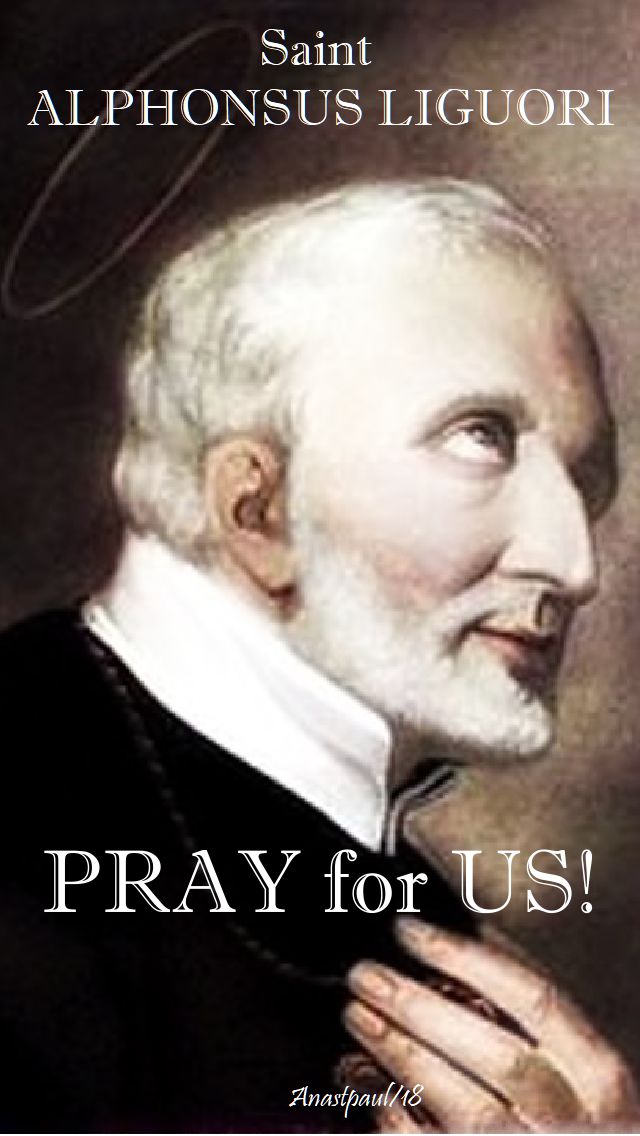
By St Alphonsus Liguori (1696-1787) Most Zealous Doctor

My soul expand your heart.
Your Jesus can do You every good
and indeed, love you.
Hope for great things from Your Lord,
who, urged by love,
comes all love to You.
Yes, my dear Jesus, my hope,
I trust in Your goodness,
that in giving Yourself to me this morning,
You will enkindle in my poor heart,
the beautiful flame of Your pure love
and a real desire to please You,
so that, from this day forward,
I may never will anything
but what You will.
Amenac act of confidence before Holy Mass - st Alphonsus - 29 april 2018 - 5th sunday of easter

Posted in Against STORMS, EARTHQUAKES, THUNDER & LIGHTENING, FIRES, DROUGHT / NATURAL DISASTERS, DOCTORS of the Church, Of HOSPITALS, NURSES, NURSING ASSOCIATIONS, Of the SICK, the INFIRM, All ILLNESS, SAINT of the DAY

Saint of the Day – 29 April – St Catherine of Siena (1347-1380) Doctor of the Church

Saint of the Day – 29 April – St Catherine of Siena (1347-1380) Doctor of the Church, Virgin, Stigmatist, Mystic, Scholastic Philosopher and Theologian, Writer, Reformer, Adviser, Mediator, Dominican Tertiary.   St Catherine was born Caterina Benincasa on 25 March 1347 at Siena, Tuscany, Italy and died on  29 April 1380 in Rome, Italy of a mysterious and painful illness which manifested itself suddenly and was never diagnosed.  Her body was buried in the Dominican church of Santa Maria sopra Minerva in Rome.  The first funerary monument was erected in 1380 by Blessed Raymond of Capua, her Relics were re-enshrined in 1430 and again in 1466, at the High Altar of the Church.  She was Canonised in July 1461 by Pope Pius II.

HEADER - st catherine of siena - large

Patronages – against bodily ills, against fire, against miscarriages,  against sexual temptation, against sickness,  firefighters, nurses, nursing services, people ridiculed for their piety, joint patron of Europe with St Benedict of Nursia, St Gertrude of Sweden, Sts Cyril & Methodius and St Edith Stein,3 Diocese, Siena, Joint Patron of Italy, with St Francis of Assisi, of Varazze, Italy.

Caterina Benincasa was born in Siena on 25 March 1347, the last of 25 children of the wealthy wool-dyer Jacopo Benincasa and Lapa di Puccio dé Piacenti.

catherinesiena-public-domain
St Catherine of Siena2

At the age of six, Catherine received her first vision, near the Church of San Domenico. From this moment onwards the child began to follow a path of devotion, taking the oath of chastity only a year later.   After initial resistance from her family, eventually her father gave in and left Catherine to follow her inclinations.   In 1363, at just 15 years of age, Catherine donned the black cloak of the Dominican Tertiary sisters.   In 1367 she began working tirelessly to help the sick at the hospital of Santa Maria della Scala.As her fame spread throughout Christendom, during a visit to the city of Pisa, Catherine received the stigmata from a wooden cross hanging in the Church of Santa Cristina.   Her many travels abroad to act as mediator for the Papacy included a trip to Avignon, where she urged Pope Gregory to bring the Papal Court back to Rome from its exile in France.

On returning to Siena, Catherine founded the Monastery of Santa Maria degli Angeli in the castle of Belcaro.   With the death of Pope Gregory XI in 1378, his successor Urban VI had to face strong opposition from a number of cardinals who had elected a second Pope with the name of Clement VII, thereby provoking what would later come to be termed the Great Schism of the West.   Pope Urban VI called on Catherine to act as mediator with princes, politicians and members of the Church, with a view to legitimising his election.catherine_1768994b.jpg

St. Catherine of Siena, St. Albert the Great


In 1380, at just 33, Catherine died and was buried in the Rome church of Santa Maria Sopra Minerva.   In 1461 Pope Pius II proclaimed her saint and in 1866 Pius IX included her as one of the patron saints of Rome.   In 1939, along with St Francis of Assisi, St Catherine of Siena was proclaimed patron saint of Italy by Pope Pius XII.

In 1970 Paul VI conferred the title of Doctor of the Universal Church on Catherine and in 1999 she was proclaimed co-patron saint of Europe by Pope John Paul II.

Catherine of Siena is one of the outstanding figures of medieval Catholicism, by the strong influence she has had in the history of the papacy.   She is behind the return of the Pope from Avignon to Rome and then carried out many missions entrusted by the pope, something quite rare for a simple nun in the Middle Ages.

Her writings—and especially The Dialogue, her major work which includes a set of treatises she would have dictated during ecstasies—mark theological thought.   She is one of the most influential writers in Catholicism, to the point that she is one of only four women to be declared a doctor of the Church.   This recognition by the Church consecrates the importance of her writings.

St Catherine’s home now known as The Sanctuary of St Catherine is a major Pilgrimage Site in Siena.   The architecture of this sanctuary dedicated to Saint Catherine isn’t entirely original but the atmosphere definitely is.   As are many of the objects that belonged to the saint.   The rooms have been altered a lot since 1461, when the house was bought by the city of Siena and transformed into a museum.   The idea wasn’t faithful architectural conservation but rather preserving her honour and memory, hence the eclectic art collection celebrating her life and work.   It’s a sensitive place, full of religious passion and historical references and well reflects the extraordinary life of this woman.

oratorio_camera_1_Lensini-e1456502419772
st catherine - child

sanctuary of st catherineThe Oratory of the Bedroom:  this houses the small cubicle where Catherine rested and prayed and the stone where the saint would lay her head.   This space is connected with the first phase of Catherine’s life, where she would withdraw from the world in contemplation.  Images below.

Church of the Crucifix:   The church is home to the wooden crucifix from which Saint Catherine received the stigmata, an event which took place in Pisa, where Catherine had gone in 1375 to persuade the Lords of the city to shun the anti-papal league.   The stigmata remained visible only to the Saint for the rest of her life, miraculously appearing at the moment of her death.chiesa_crocifisso_2_Lensinist catherine sanctuary

Posted in DOCTORS of the Church, SAINT of the DAY

Memorials of the Saints – 29 April

St Catherine of Siena (1347-1380) (Memorial)

Abbots of Cluny: A feast that recognizes the great and saintly early abbots of Cluny Abbey:
• Saint Aymardus of Cluny
• Saint Berno of Cluny
• Saint Hugh of Cluny
• Saint Mayeul
• Saint Odilo of Cluny
• Saint Odo of Cluny
• Saint Peter the Venerable


St Antonius Kim Song-u
St Ava of Denain
St Daniel of Gerona
St Dichu
St Endellion of Tregony
St Fiachan of Lismore
St Hugh of Cluny
St Gundebert of Gumber
St Joseph Benedict Cottolengo
St Paulinus of Brescia
St Peter Verona
Bl Robert Gruthuysen
St Senan of Wales
St Severus of Naples
St Theoger
St Torpes of Pisa
St Tychicus
St Wilfrid the Younger

Martyrs of Cirta: A group of clergy and laity martyred together in Cirta, Numidia (in modern Tunisia) in the persecutions of Valerian. They were – Agapius, Antonia, Emilian, Secundinus and Tertula, along with a woman and her twin children whose names have not come down to us.

Martyrs of Corfu: A gang of thieves who converted while in prison, brought to the faith by Saint Jason and Saint Sosipater who were had been imprisoned for evangelizing. When the gang announced their new faith, they were martyred together. They were – Euphrasius, Faustianus, Insischolus, Januarius, Mammius, Marsalius and Saturninus. They were boiled in oil and pitch in the 2nd century on the Island of Corcyra (modern Corfu, Greece.
Also known as:
• Martyrs of Corcyra
• Seven Holy Thieves
• Seven Holy Robbers
• Seven Robber Saints

Posted in MARIAN QUOTES, MARY, MATER ECCLESIAE, MORNING Prayers, SAINT of the DAY, St Louis-Marie Grignion de MONTFORT

Thought for the day – 28 April – Saturday of the Fourth Week of Eastertide and The Memorial of St Louis Marie Grignion de Montfort (1673-1716)

Thought for the day – 28 April – Saturday of the Fourth Week of Eastertide and The Memorial of St Louis Marie Grignion de Montfort (1673-1716)

Louis’s life is inseparable from his efforts to promote genuine devotion to Mary and the Holy Rosary, the mother of Jesus and mother of the Church. Totus tuus (“completely yours”) was Louis’s prayer; Pope John Paul II chose it as his episcopal motto.

Like Mary, Louis experienced challenges in his efforts to follow Jesus.   Opposed at times in his preaching and in his other ministries, Louis knew with Saint Paul, “Neither the one who plants nor the one who waters is anything but only God, who causes the growth” (1 Corinthians 3:7).
Any attempt to succeed by worldly standards runs the risk of betraying the Good News of Jesus.
Mary is “the first and most perfect disciple” and following her example is a foolproof way to holiness and to God.

St Louis de Montfort, Pray for us!st louis de montfort - pray for us - 28 april 2018

Mary, Mother of God, Mater Ecclesiae, Pray for us!holy mary mother of god pray for us - 9 jan 2018

Posted in MORNING Prayers, QUOTES of the SAINTS, QUOTES on ABORTION, QUOTES on LOVE, QUOTES on SUFFERING, QUOTES on the DEVIL/EVIL, QUOTES on TRUST and complete CONFIDENCE in GOD, SAINT of the DAY

Quote/s of the Day – 28 April – The Memorial of St Pope Pius V (1504-1572), St Louis Marie Grignion de Montfort (1673-1716), St Peter Chanel (1803-1841) Martyr and St Gianna Beretta Molla (1922-1962)

Quote/s of the Day – 28 April – The Memorial of St Pope Pius V (1504-1572), St Louis Marie Grignion de Montfort (1673-1716), St Peter Chanel (1803-1841) Martyr           and St Gianna Beretta Molla (1922-1962)

“All the evils of the world,
are due to lukewarm Catholics.”

St Pope Pius Vall the evils of the world - st pope pius V - 28 april 2018

“God Alone”god alone - st louis de montfort - 28 april 2018

“Take advantage of little sufferings
even more than of great ones.
God considers not so much what we suffer,
as how we suffer. . . Turn everything to profit
as the grocer does in his shop.”

St Louis Marie Grignion de Montfort (1673-1716)take advantage of little sufferings - st louis de montfort - 28 april 2018

“It does not matter, whether or not I am killed,
the religion has taken root on the island,
it will not be destroyed by my death,
since it comes not from men but from God.”

St Peter Chanel (1803-1841) Martyrit does not matter - st peter chanel - 28 april 2018

“Our body is a cenacle, a monstrance:
through its crystal the world should see God.”our body is a cenacle - st gianna molla - 28 april 2018

“Love and sacrifice are closely linked,
like the sun and the light.
We cannot love without suffering
and we cannot suffer without love.”

St Gianna Beretta Molla (1922-1962)love and sacrifice - st gianna molla - 28 april 2018

Posted in BREVIARY Prayers, EASTER, MORNING Prayers, QUOTES of the SAINTS, QUOTES on PRAYER, SAINT of the DAY, The WORD

One Minute Reflection – 28 April – Saturday of the Fourth Week of Eastertide and the Memorial of St Gianna Beretta Molla (1922-1962)

One Minute Reflection – 28 April – Saturday of the Fourth Week of Eastertide and the Memorial of St Gianna Beretta Molla (1922-1962) Today’s Gospel: John 14:7–14

Whatever you ask in my name, I will do it, that the Father may be glorified in the Son; if you ask anything in my name, I will do it...John 14:13-14

REFLECTION – “The stillness of prayer is the most essential condition for fruitful action. Before all else, the disciple kneels down.”…St Gianna Beretta Mollathe stillness of prayer - st gianna molla - 28 april 2018

PRAYER – Since it is from You God, our Father, that redemption comes to us, Your adopted children, look with favour on the family You love, give us true freedom and to all who believe in Christ and bring us all alike to our eternal heritage.   Grant we pray, that by the prayers of Your holy one, St Gianna, we may run this race always in prayer, trusting in Your divine Son’s intercession, to attain the Glory of Your Kingdom and the Light of Your Face.   Through Jesus Christ, in the union of the Holy Spirit, one God with You, forever and ever, amen.st gianna molla - pray for us us - 28 april 2018

Posted in MARIAN PRAYERS, MORNING Prayers, PRAYERS of the SAINTS, SAINT of the DAY

Our Morning Offering – 28 April – Saturday of the Fourth Week of Eastertide and the Memorial of St Louis Marie Grignion de Montfort (1673-1716)

Our Morning Offering – 28 April – Saturday of the Fourth Week of Eastertide and the Memorial of St Louis Marie Grignion de Montfort (1673-1716)

Totus Tuus Ego Sum
I am All Yours
By St Louis Marie Grignion de Montfort (1673-1716)

My powerful Queen,
you are all mine through your mercy,
and I am all yours.
Take away from me all that may displease God
and cultivate in me all that is pleasing to Him.
May the light of your faith
dispel the darkness of my mind,
your deep humility
take the place of my pride,
your continual sight of God
fill my memory with His presence.
May the first of the love of your heart
inflame the lukewarmness of my own heart.
May your virtues take the place of my sins.
May your merits be my enrichment
and make up for all
that is wanting in me before God.
My beloved Mother,
grant that I may have
no other spirit but your spirit,
to know Jesus Christ and His Divine will
and to praise and glorify the Lord,
that I may love God
with burning love like yours.
Amen.totus tuus ego sum - i am all yours - prayer by st louis de montfort - 28 april 2018 - his memorial


Posted in MARIAN QUOTES, QUOTES of the SAINTS, SAINT of the DAY, St Louis-Marie Grignion de MONTFORT, The BLESSED VIRGIN MARY

Saint of the Day – 28 April – St Louis Marie Grignion de Montfort (1673-1716)

Saint of the Day – 28 April – St Louis Marie Grignion de Montfort (1673-1716) Priest, Founder, Confessor, Writer,  Poet, Apostle of the Holy Eucharist and Adoration, Apostle of the Blessed Virgin Mary, Apostle of the Holy Rosary, Preacher, Missionary Apostolic.   St Louis was born on 31 January 1673 at Montfort-La-Cane, Brittany, France – he Died on 28 April 1716 at Saint-Laurent-sur-Sovre, France of natural causes.   He was Canonised on 20 July 1947 by Pope Pius XII.   Patronages: preachers,  Brothers of Saint Gabriel,  Company of Mary, Daughters of Divine Wisdom.

St Louis was known in his time as a preacher and was made a missionary apostolic by Pope Clement XI.   As well as preaching, he found time to write a number of books which went on to become classic Catholic titles and influenced several popes.   He is particularly renowned for his great devotion to the Blessed Virgin Mary and the practice of praying the Rosary.   He is considered as one of the forerunner writers in the field of Mariology.   His most notable works regarding Marian devotions are contained in The Secret of Mary and the True Devotion to Mary.   A “founders statue” created by Giacomo Parisini is located in an upper niche of the south nave of Saint Peter’s Basilica.

Today the universal Church celebrates the feast day of Louis-Marie de Monfort, a 17th century saint who is revered for his intense devotion to the Blessed Virgin Mary.

St Louis Marie is perhaps most famously known for his prayer of entrustment to Our Lady, “Totus Tuus ego sum,” which means, “I am all yours.”   The St Pope John Paul II took the phrase “Totus Tuus” as his episcopal motto.

Born in Montfort, Brittany, on 31 January 1673, St Louis Marie possessed a strong devotion to the Blessed Sacrament as a child and was also intimately devoted to the Blessed Virgin, especially through the Rosary.   He took the name Marie at his confirmation.

He was ordained a priest in June 1700 and assigned to Nantes.   His great desire was to go to the foreign missions, preferably to the new French colony of Canada but his spiritual director advised against it.   His letters of this period show that he felt frustrated from the lack of opportunity to preach as he felt he was called to do.

In November 1700 he joined the Third Order of the Dominicans and asked permission not only to preach the rosary but also to form rosary confraternities.   He began to consider the formation of a small company of priests to preach missions and retreats under the standard and protection of the Blessed Virgin.   This eventually led to the formation of the Company of Mary.   At around this time, he first met Blessed Marie Louise Trichet (1684-1759) when he was appointed the chaplain of the hospital of Poitiers.   That meeting became the beginning of Blessed Marie Louise’s thirty-four years of service to the poor.

He set off to make a pilgrimage to Rome, to ask Pope Clement XI, what he should do. The Pope recognised his real vocation and, telling him that there was plenty of scope for its exercise in France, sent him back with the title of Apostolic Missionary.   On his return from his long pilgrimage to Rome, Montfort made a retreat at Mont Saint Michel “to pray to this archangel to obtain from him the grace to win souls for God, to confirm those already in God’s grace, and to fight Satan and sin”.   These occasions gave him time to think, contemplate and write.

montfortside

For several years he preached in missions from Brittany to Nantes.   As his reputation as a missioner grew, he became known as “the good Father from Montfort”.

He left Nantes and the next several years were extraordinarily busy for him.   He was constantly occupied in preaching missions, always walking between one and another. Yet he found time also to write – his True Devotion to Mary, The Secret of Mary and the Secret of the Rosary, rules for the Company of Mary and the Daughters of Wisdom and many Hymns.   His missions made a great impact, especially in the Vendée.   The heated style of his preaching was regarded by some people as somewhat strange and he was poisoned once.   Although it did not prove fatal, it caused his health to deteriorate. Yet he continued, undeterred.   He went on preaching and established free schools for the poor boys and girls.

San_Luigi_Maria-Grignion-da_Montfort

Daughters of Wisdom
The bishop of La Rochelle had been impressed with Montfort for some time and invited him to open a school there.   Montfort enlisted the help of his follower Marie Louise Trichet who was then running the General Hospital in Poitiers.   In 1715 Marie Louise and Catherine Brunet left Poitiers for La Rochelle to open the school there and in a short time it had 400 students.  On 22 August 1715, Trichet and Brunet, along with Marie Valleau and Marie Régnier from La Rochelle received the approbation of Bishop de Champflour of La Rochelle to make their religious profession under the direction of Montfort.   At the ceremony Montfort told them:  “Call yourselves the Daughters of Wisdom for the teaching of children and the care of the poor.”   The Daughters of Wisdom grew into an international Order and the placing of Montfort’s founders statue in Saint Peter’s Basilica was based on that Order.

Death and burial
Worn out by hard work and sickness, he finally came in April 1716 to Saint-Laurent-sur-Sèvre to begin the mission which was to be his last.   During it, he fell ill and died on 28 April of that year.   He was 43 years old and had been a priest for only 16 years.   His last sermon was on the tenderness of Jesus and the Incarnate Wisdom of the Father. Thousands gathered for his burial in the parish church and very quickly there were stories of miracles performed at his tomb.   Exactly 43 years later, on 28 April 1759, Marie Louise Trichet also died in Saint-Laurent-sur-Sèvre and was buried next to Montfort.   On 19 September 1996, St Pope John Paul II (who beatified Trichet) came to the same site to meditate and pray at their adjacent tombs.

Detail of the wax reclining of Saint Louis-Marie Grignion de Montfort

Spirituality
“God Alone”:   was the motto of Saint Louis and is repeated over 150 times in his writings.
The Incarnation:  “The Incarnation of the Word is for him the absolute central reality.”
Love of the Blessed Virgin Mary
Fidelity to the Cross
Missionary Zeal

Total Consecration to Mary
In Montfort’s approach to Marian consecration, Jesus and Mary are inseparable.   He views “consecration to Jesus in Mary” as a special path to being conformed to, united and consecrated to Christ, given that:

” …of all creatures the one most conformed to Jesus Christ, it follows that among all devotions that which most consecrates and conforms a soul to our Lord is devotion to Mary, His Holy Mother and that the more a soul is consecrated to her, the more will it be consecrated to Jesus Christ.”

“God the Father made an assemblage of all the waters and He named it the sea.      He has made an assemblage of all His graces and He has called it Mary.”

Louis de Montfort influenced a number of popes
In the 19th century, Pope Pius IX considered it the best and most acceptable form of Marian devotion, while Pope Leo XIII granted indulgences for practicing Montfort’s method of Marian consecration.   Leo beatified Montfort in 1888, selecting for Montfort’s beatification the day of his own Golden Jubilee as a priest.
In the 20th century St Pope Pius X acknowledged the influence of Montfort’s writings in the composition of his encyclical Ad diem illum.
Pope Pius XI stated that he had practised Montfort’s devotional methods since his early youth.   Pope Pius XII declared Montfort a saint and stated that Montfort is the guide “who leads you to Mary and from Mary to Jesus.”
St Pope John Paul II once recalled how as a young seminarian he “read and reread many times and with great spiritual profit” a work of de Montfort and that:  “Then I understood that I could not exclude the Lord’s Mother from my life without neglecting the will of God-Trinity.”   According to his Apostolic Letter Rosarium Virginis Mariae, the pontiff’s personal motto was “Totus Tuus.”   The thoughts, writings, and example of St Louis de Montfort were also singled out by St Pope John Paul II’s encyclical Redemptoris Mater as a distinctive witness of Marian spirituality in the Roman Catholic tradition

While the saint is best known for his spiritual writings, he was also a poet and during his missions managed to compose more than 20,000 verses of hymns.    Montfort’s hymns and canticles were, for the most part, meant to be sung in village churches and in the homes of the poor.   Some authors argue that a reading of Saint Louis’s hymns is essential for an understanding of him as a man and for appreciating his approach to spirituality. He is also said to have carved at least three statues depicting the Madonna and Child.

St Louis Marie Grignion de Montfort, Pray for us!

statue-saint-louis-marie-grignon-montfort-slmg20bc


Posted in SAINT of the DAY

Memorials of the Saints – 28 April

St Louis Marie Grignion de Montfort (1673-1716) (Optional Memorial)

St Peter Chanel (1803-1841) Martyr (Optional Memorial)


St Adalbero of Augsburg
St Agapio of Cirtha
St Artemius of Sens
St Benedict of the Bridge
St Cronan of Roscrea
St Cyril of Turov
Bl Gerard of Bourgogne
St Gianna Beretta Molla (1922-1962)

Bl Józef Cebula
Bl Luchesius
St Pamphilus of Sulmona
St Prudentius of Tarazona

St Alexander
St Aphrodisius of Beziers
St Berthold
St Buonadonna
Carino Peter of Balsamo
St Firmiano
St Germaine
St Guido Spada
St Luchtighern of Ennistymon
St Marie Louise Trichet Jesus
St Mark of Galilee
St Peter of Bearn
St Primianus
St Probe
St Tellurium

Martyrs of Alexandia:
Didymus
Theodora

Martyrs of Durostorum:
Dada
Maximus
Quintilian

Martyrs of Languedoc:
Agapius
Aphrodisius
Caralippus
Eusebius

Martyrs of Nicomedia:
Caralampo
Eusebius

Martyrs of Prusa:
Acacius
Menander
Patritius
Polyenus

Martyrs of Ravenna:
Ursicinus
Valeria
Vitalis

Martyrs of Vietnam:
Gioan Baotixta Ðinh Van Thành
Phaolô Pham Khac Khoan
Phêrô Nguyen Van Hien

Pilgrims of Gallinaro:
Arduin
Bernhard
Gerard
Hugh

Posted in MARIAN QUOTES, MARIAN TITLES, MIRACLES, MORNING Prayers, QUOTES of the SAINTS, SAINT of the DAY

Thought for the Day – 27 April – Friday of the Fourth Week of Eastertide and the Feast of Our Lady of Montserrat

Thought for the Day – 27 April – Friday of the Fourth Week of Eastertide and the Feast of Our Lady of Montserrat

“If I were a leper my mother would hug me.   She would kiss my wounds without fear or hesitation. —Well then, what would the Blessed Virgin Mary do?

When we feel we are like lepers, all full of sores, we have to cry out:  Mother!       And the protection of our Mother will be like a kiss upon our wounds, which obtains our cure. “…St. Josemaria Escriva  (1902-1975) – The Forge, no. 190

when we feel we are like lepers - st josemaria no 2- 27 april 2018

Approximately 28 miles northwest of Barcelona, Spain, is the mountain of Montserrat. Located on the mountain is the Benedictine Monastery and Marian Shrine of Montserrat where since the 8th century pilgrims have journeyed to see the miraculous image of Our Lady of Montserrat.

According to tradition, the image of Our Lady was found on the mountain in 718 AD.   The Benedictine Monks chose to build their monastery around the statue of Our Lady because they were unable to lift or move it.   The statue of Our Lady of Montserrat remains on the mountain today, enshrined within the sanctuary in a beautifully decorated chapel.   Our Lady is depicted seated on a throne holding the Child Jesus. Her face and hands have darkened over time due to external elements for which she is affectionately called “La Morenita.”

Saints Peter Nolasco, Ignatius Loyola, and Josemaria Escriva are counted among the many pilgrims that throughout the centuries have gone to Our Lady of Montserrat to seek her intercession.   St Josemaria was deeply devoted to Our Lady of Montserrat.   During the 1940’s, he frequently visited the shrine and made an especially important visit in 1946 before departing for Rome, which would become his new permanent home and where would begin an important period in the history of Opus Dei.

A CARESS FROM HIS HEAVENLY MOTHER: CURED OF DIABETES

Despite his move to Rome, St Josemaria’s love for the Blessed Virgin Mary under this advocation continued throughout his life.   And it was on the feast of Our Lady of Montserrat, 27 April 1954, that he was cured of diabetes, after a very severe attack which brought him to the point of death.   The story is told by Jose Miguel Cejas in his book Josemaría Escrivá, un hombre, un camino y un mensaje (“Josemaria Escriva, a man, a way and a message”):

“27 April 1954 and life was going on as usual in Villa Tevere, the headquarters of the Opus Dei prelature in Rome. It was the feast of Our Lady of Montserrat, an ordinary day, filled with prayer and work in the warm Italian springtime.   Recently Escriva’s diabetes had intensified.   Every week he went for a blood test and the results were progressively worse, in spite of a strict diet and the high doses of insulin he was given daily.   Escriva did not lose his peace of mind over this:  God led him along paths of abandonment, humility, simplicity and trust.   That day, following the doctor’s instructions, at ten to one in the afternoon, Alvaro del Portillo had given him an injection with a new prescription of delayed-action insulin.   Afterwards they went down to the dining-room.

Escriva sat down at table and suffered a physical collapse.   He realised that he could be about to die and his instant reaction was to ask for absolution.
“Alvaro, give me absolution.”
“But, Father, what are you saying?”
“Absolution!”
As Fr Del Portillo was too surprised to do anything, Escriva began the words for him, “Ego te absolvo – ” and fell unconscious on the floor.

It was an anaphylactic shock.   Del Portillo gave him absolution, put some sugar in his mouth and made him swallow it, dashed water in his face and moved his head and limbs and quickly summoned a doctor.   Some minutes later, Escriva slowly began to come round, though he found that he could not see anything.

The doctor was astonished, since these types of insulin reaction are normally fatal. However, after some hours Escriva felt better and recovered his sight again.   From that day on, his diabetes was cured.   It had been a caress from his Heavenly Mother, on the feast of Our Lady of Montserrat.”

Our Lady of Montserrat, pray for us!our lady of montserrat pray for us - 27 april 2018

St Josemaria Escriva, pray for us!st josemaria - pray for us

Posted in DOCTORS of the Church, FATHERS of the Church, MORNING Prayers, QUOTES - J R R Tolkien and MORE, QUOTES of the SAINTS, QUOTES on SIN, QUOTES on SUFFERING, QUOTES on the CROSS of CHRIST, QUOTES on the DEVIL/EVIL, SPEAKING of ....., The PASSION

Quote/s of the Day – 27 April – Friday of the Fourth Week of Eastertide “Speaking of: Sin and Suffering”

Quote/s of the Day – 27 April – Friday of the Fourth Week of Eastertide

“Speaking of:  Sin and Suffering”

“The dragon, sits by the side of the road,
watching those who pass.
Beware lest he devour you.
We go to the Father of Souls
but it is necessary,
to pass by the dragon.”

St Cyril of Jerusalem (315-387) Father & Doctor of the Churchthe dragon sits by the side - st cyril of jerusalem - 27 april 2018

“Only those who do not fight
are never wounded.”

St John Chrysostom (347-407) Father & Doctor of the Church

only those who do not fight - st john chrysostom - 27 april 2018

“The life of each and every one of us has been written.
The crucifix is my autobiography.
The blood is the ink.
The nails the pen.
The skin the parchment.
On every line of that body, I can trace my life.
In the crown of thorns I can read my pride.
In the hands that are dug with nails,
I can read avarice and greed.
In the flesh hanging from him like purple rags,
I can read my lust.
In feet that are fettered, I can find the times
that I ran away and would not let Him follow.
Any sin that you can think of is written there.”

Venerable Archbishop Fulton Sheen (1895-1979)the life of each and every one of us - ven fulton sheen - 27 april 2018

“My key to heaven
is that I loved Jesus
in the night.”

St Mother Teresa (1910-1997)my key to heaven = st mother teresa - 27 april 2018

“Don’t waste your suffering.”

St John Paul the Great (1920-2005)don't waste your suffering - st john paul - 27 april 2018

Posted in CATHOLIC-PRAYERS OF THE CHURCH, MORNING Prayers, PAPAL PRAYERS, PRAYERS for VARIOUS NEEDS, PRAYERS of the CHURCH, PRAYERS of the SAINTS, QUOTES of the SAINTS, QUOTES on FAITH, QUOTES on PEACE, QUOTES on SUFFERING, QUOTES on WORRY/ANXIETY, SAINT of the DAY, The BLESSED VIRGIN MARY, The WORD

One Minute Reflection – 27 April – Friday of the Fourth Week of Eastertide and the Feast of Our Lady of Montserrat

One Minute Reflection – 27 April – Friday of the Fourth Week of Eastertide and the Feast of Our Lady of Montserrat – Gospel today John 14:1-6

“Let not your hearts be troubled;  believe in God, believe also in me.“…John 14:1john 14 1

REFLECTION – “I will not mistrust Him, Meg, although I shall feel myself weakening and on the verge of being overcome with fear.   I shall remember how St Peter at a blast of wind, began to sink, because of his lack of faith and I shall do as he did:  call upon Christ and pray to Him for help.   And then I trust He shall place His holy hand on me and in the stormy seas hold me up from drowning.”…St Thomas More (1478-1535)i will not distrust him Meg - st thomas more - 11 jan 2018

PRAYER – “[Lord God] I believe in You, increase my faith.   All my hopes are in You, secure my trust.   I love You, teach me to love You more each day… I adore You as my first beginning, I long for You as my final end.   I praise You as my constant helper and call on You as my loving protector.   Guide me by Your Wisdom, correct me with Your Justice, comfort me with Your Mercy, protect me by Your Power… Lord, enlighten my understanding, enflame my will, purify my heart, sanctify my soul.   Help me to repent of my past sins and to rise above my human weaknesses and to grow stronger as a Christian…”(from the Universal Prayer by Pope Clement XI (1649-1721))

lord god I believe - from the universal prayer - pope clement XI - 27 april 2018

Posted in DOCTORS of the Church, MARIAN PRAYERS, PRAYERS of the SAINTS, SAINT of the DAY

Our Morning Offering – 27 April – Friday of the Fourth Week of Eastertide and the Feast of Our Lady of Montserrat (718)

Our Morning Offering – 27 April – Friday of the Fourth Week of Eastertide and the Feast of Our Lady of Montserrat (718)

O Most Blessed and Sweet Virgin Mary
By St Thomas Aquinas (1225-1274) Doctor of the Church

0 most blessed and sweet Virgin Mary,
Mother of God, filled with all tenderness,
Daughter of the most high King,
Lady of the Angels,
Mother of all the faithful,
On this day and all the days of my life,
I entrust to your merciful heart,
my body and my soul,
all my acts, thoughts, choices,
desires, words, deeds,
my entire life and death,
So that, with your assistance,
all may be ordered to the good
according to the will of your beloved Son,
our Lord Jesus Christ.
Ameno most blessed and sweet virgin mary - st thomas aquinas - 27 april 2018


Posted in MARIAN TITLES, SAINT of the DAY

Feast of Our Lady of Montserrat – 27 April

Feast of Our Lady of Montserrat (718) – 27 April, is a Marian title associated with a venerated statue of the Madonna and Child venerated at the Santa Maria de Montserrat monastery on the Montserrat Mountain in Catalonia, Spain. She is the Patron Saint of Catalonia, an honour she shares with Saint George (Sant Jordi in Catalan). Pope Leo XIII granted the image a Canonical coronation on 11 September 1881. The image is one of the Black Madonnas of Europe, hence its familiar Catalan name, La Moreneta (“the little dark-skinned one” or “the little dark one”). Believed by some to have been carved in Jerusalem in the early days of the Church, it is more likely a Romanesque sculpture in wood from the late 12th century. An 18th century polychromed statue of the same image is also displayed in Saint Peter’s basilica, previously stored in the Vatican Museums which was gifted by the President of Brazil, Joao Goulart on the Papal election of Pope Paul VI in 1963. The image has been on display for Papal masses since the Pontificate of Pope Benedict XVI.

hope-montserrat

Blackened by candles that burned before the statue day and night, this particular image dates back to at least the twelfth century.    St Ignatius of Loyola made an annual pilgrimage to Montserrat as have a million or more pilgrims every year in modern times.
The mountain named Montserrat rises 20 miles northwest of Barcelona, in the region of Catalonia, which takes it names from the Spanish, Catalan, for “sawn mountain” probably because its rock outgrowths seem to be the teeth of a saw
 from a distance. These most unusual lofty cone-shaped jags are almost perpendicular.   The highest cone rises to a height of nearly 4,000 feet, while the circumference around the entire base of the mountain is measured at about 12 miles.   The church which contains the miracle-working statue of the Madonna and Child sits about halfway up the mountain.
According to tradition, the miraculous image was first known as La Jerosolimitana (the native of Jerusalem), since it is thought to have been carved there in the early days of the Church.   The statue was eventually given to St Etereo, Bishop of Barcelona, who brought it to Spain.
In the seventh century, when Saracen infidels invaded Spain, the Christians of Barcelona heroically defended it for three years until defeat appeared imminent.   Knowing that they could hold out no longer, they decided to take their treasured image of Our Lady to a secret, safe place.   Quietly, with the knowledge of the Bishop and the Governor of the city, a group brought the statue to Montserrat, placing it in a small cave, on 22 April 718. A complete account  of the origin of the miraculous image, the cause of its removal and the place of its hidden security were recorded and  in the archives of Barcelona.
Even though the location of the statue was eventually forgotten, the people of Barcelona never forgot the holy image for almost 200 years.   Then, in 890, shepherd boys from Monistrol, a village at the foot of Montserrat, were sent unbeknown to them to be the source of the discovery of the treasure.
While tending their flocks that night the shepherds were surprised by lights and the sound of singing coming from the mountain.   When this happened once again, they reported the situation to their priest, who looked into the matter.   He, too, heard the singing and saw the mysterious lights, so he 
reported this to the Bishop, who also witnessed the same occurrences.   At last the statue of Our Lady was discovered in the cave and brought out and placed in a small church that was soon built;  this little church developed into the present church that was completed in 1592.
In 888 there had already been a chapel dedicated to Our Lady and it was at that spot that the present shrine is located.   Eventually a monastery was added, which grew rapidly, because of the miracles wrought there by the Blessed Virgin.   According to the caretakers of the shrine, the statue that still presides over the monastery was introduced in the twelfth or thirteenth century.   This statue might have replaced an earlier one, which could have been destroyed during one of the many wars.
Carved in wood, the statue is in a sitting position and measures slightly over three feet in height.   In Romanesque style, the figure is slender, with an elongated face and a delicate expression.   The dress of the Virgin consists of a tunic and cloak both gilded and plain in design which is draped.   Beneath the crown is a veil adorned with stars, squares, and stripes in subtle shades of colour.   The right hand of the Virgin holds a sphere, while the other is extended in a graceful gesture.   The Child Jesus sits on His Mother’s lap and also wears a crown and lovely garments.   His right hand is raised in blessing; His left hand holds an object that resembles a large pine cone.   A cushion serves as the Madonna’s footrest;  she is seated upon a chair that has large legs and whose back is topped by cone-shaped finials.   The statue is highly revered not only as a religious treasure but also because of its artistic value.   It is almost completely gilded, save the face and hands of both Our Lady and the Child Jesus 
[and His feet also].   Unlike many old statues which are black because of the kind of wood or the effects of the original paint, the dark colour of Our Lady of Montserrat is attributed to the innumerable candles and lamps used in its veneration.   Because of this dark colour it is affectionately called La Moreneta, The Dark Little One.   Thus, the Virgin of Montserrat is classified among the Black Madonnas.
The image is in an alcove behind the main altar.   It can be reached by climbing decorated stairs to the side of the church. The stairs lead to a large room which is directly behind the alcove where the statue is enthroned. This large room is called the Camarin de La Virgen, the Chamber of the Virgin.   A large number of people can fit in the space to pray beside the throne of the Blessed Mother.   The pilgrim cannot touch the image, however, since it is protected by a glass. 

A_Virgem_de_Mont_Serrat
Although not located on the peak of the mountain as are the sanctuaries of Monte Cassino and Le Puy, the monastery is situated high enough from the surrounding area to make one think it safe from attack.   Yet the monastery sustained considerable damage during the Napoleonic invasion.   Additional harm was inflicted during civil wars and revolutionary disturbances.   The treasured image of the Madonna and Child was hidden during these times but was soon restored to its place of honour when the church and buildings were quickly repaired.   These buildings were spared during the Spanish Civil War of 1936-1939 by the Autonomous Government of Catalonia. 

800px-Abbey_of_Montserrat_02
Benedictines settled in the monastery hundreds of years ago and still maintain the sanctuary and provide hospitality to the steady stream of pilgrims who go there.   The number of historical figures connected to the sanctuary or who have visited it, including one of its hermits, Bernat Boil, who accompanied Christopher Columbus to the New World, thus becoming the first missionary to America.   One of Montserrat’s first abbots became Julius II, the Renaissance Pope for whom Michelangelo worked.   Emperor Charles V and Philip II of Spain both died with blessed candles from the sanctuary in their hands.   King Louis XIV of France had intercessory prayers said at Montserrat for the Queen Mother and Emperor Ferdinand III of Austria made generous financial gifts to the monastery.   All the kings of Spain prayed at the shrine, as did Cardinal Roncalli, who later became St Pope John XXIII. 

basilica of the Abbey of Montserrat, Catalonia, Spainour lady of montserrat
Some of the Saints who visited there were St Peter Nolasco, St Raymond of Penafort, St Vincent Ferrer, St Francis Borgia, St Aloysius Gonzaga, St Joseph Calasanctius, St Anthony Mary Claret and St Ignatius, who as a knight was confessed by one of the monks.   After spending a night praying before the image of Our Lady of Montserrat, he began his new life and the founding of Jesuit order.   A few miles away is Manresa, a pilgrim shrine of the Society of Jesus.   The shrine holds the cave wherein St Ignatius Loyola retired from the world and wrote his Spiritual Exercises.
The Virgin of Montserrat was declared the Patron Saint of the Diocese of Catalonia by Leo XIII.   The statue has always been one of the most celebrated images in Spain.
A historian wrote:  “In all ages the sinful, the suffering, the sorrowful, have laid their woes at the feet of Our Lady of Montserrat and none have ever gone away unheard or unaided.” 

montserrat