Posted in franciscan OFM, MORNING Prayers, QUOTES of the SAINTS, The BLESSED VIRGIN MARY, The WORD

One Minute Reflection – 14 August – The Memorial of St Maximillian Kolbe

One Minute Reflection – 14 August – The Memorial of St Maximillian Kolbe

Mine are counsel and advice; mine is strength; I am understanding….Proverbs 8:14

Proverbs 8-14

REFLECTION – “When we dedicate ourselves to Mary, we become instruments in her hands, just as she is an instrument in God’s hands.   Let us then be guided by her, for she will provide for the needs of body and soul and overcome all difficulties and anxieties.”…St Maximillian Kolbe

when we dedicate ourselves to Mary - st maximillian kolbe

PRAYER – My Lord and my God, You who are the fruit of Mary’s blessed womb and the most Divine Son of our Father, grant that I may always have recourse to You, through her who bore You. Grant that she may help and comfort me and lead me to You. Mary, Holy and loving Mother of God, pray for us all, amen

st maximillian - pray for us

Posted in CONSECRATION Prayers, franciscan OFM, MORNING Prayers, SAINT of the DAY, The BLESSED VIRGIN MARY

Our Morning Offering – 14 August

Our Morning Offering – 14 August

Consecration to the Immaculata – By St Maximillian Kolbe

O Immaculata, Queen of Heaven and earth,
Refuge of sinners and our most loving Mother,
God has willed to entrust the entire order of mercy to you.
I, ……………(name), a repentant sinner,
cast myself at your feet, humbly imploring you
to take me with all that I am and have,
wholly to yourself as your possession and property.
Please make of me, of all my powers of soul and body,
of my whole life, death and eternity, whatever most pleases you.
If it pleases you, use all that I am and have without reserve,
wholly to accomplish what was said of you:
“She will crush your head,” and
“You alone have destroyed all heresies in the whole world.”
Let me be a fit instrument in your immaculate and merciful hands
for introducing and increasing your glory to the maximum
in all the many strayed and indifferent souls
and thus help extend as far as possible,
the blessed kingdom of the most Sacred Heart of Jesus.
For wherever you enter you obtain the grace of conversion
and growth in holiness, since it is through your hands
that all graces come to us from the most Sacred Heart of Jesus.
Allow me to praise you, O Sacred Virgin
Give me strength against your enemies
Amen

A shorter version of the prayer can be used for the daily renewal of the consecration:

Daily Consecration Renewal to the Immaculata
By St Maximillian Kolbe

Immaculata, Queen and Mother of the Church,
I renew my consecration to you for this day
and for always, so that you might use me
for the coming of the Kingdom of Jesus in the whole world.
To this end, I offer you all my prayers,
actions and sacrifices of this day.
Amen

daily consecration renewal to the immaculata by st maximillian kolbe

Posted in franciscan OFM, SAINT of the DAY

Saint of the Day – 14 August – St Maximillian Kolbe OFM Conv – “MARTYR of CHARITY” and “Apostle of Consecration to Mary”

Saint of the Day – 14 August – St Maximillian Kolbe OFM Conv – “MARTYR of Charity” and “Apostle of Consecration to Mary”- Born Maksymilian Maria Kolbe(7 January 1894 at Zdunska Wola, Poland as Raymond Kolbe – 14 August 1941 by lethal carbonic acid injection after three weeks of starvation and dehydration at the Auschwitz, Poland death camp).   His body was burned in the ovens and the ashes scattered.   Some relics have been preserved and distributed by the friars at Niepokalanów, Poland.   He was Beatified on 17 October 1971 by Pope Paul VI – his beatification miracles include the July 1948 cure of intestinal tuberculosis of Angela Testoni and August 1950 cure of calcification of the arteries/sclerosis of Francis Ranier.   He was Canonised on 10 October 1982 by St Pope John Paul II, who declared him a ‘Martyr of Charity.’   Patronages – drug addicts, political prisoners, families, journalists, prisoners, amateur radio, the pro-life movement, Esperanto.  St John Paul II declared him “The Patron Saint of Our Difficult Century”. Due to Kolbe’s efforts to promote consecration and entrustment to Mary, he is known as the “Apostle of Consecration to Mary”.

Childhood
Maximilian Kolbe was born on 8 January 1894 in Zduńska Wola, in the Kingdom of Poland, which was a part of the Russian Empire, the second son of weaver Julius Kolbe and midwife Maria Dąbrowska.   His father was an ethnic German and his mother was Polish. He had four brothers.

Kolbe’s life was strongly influenced in 1906 by a childhood vision of the Virgin Mary. He later described this incident:  “That night I asked the Mother of God what was to become of me.   Then she came to me holding two crowns, one white, the other red.   She asked me if I was willing to accept either of these crowns.   The white one meant that I should persevere in purity and the red that I should become a martyr.  I said that I would accept them both.”

Franciscan Friar
In 1907, Kolbe and his elder brother Francis joined the Conventual Franciscans.   They enrolled at the Conventual Franciscan minor seminary in Lwow later that year.   In 1910, Kolbe was allowed to enter the novitiate, where he was given the religious name Maximilian.   He professed his first vows in 1911 and final vows in 1914, adopting the additional name of Maria.   He was sent to Rome in 1912, where he attended the Pontifical Gregorian University.   He earned a doctorate in philosophy in 1915 there. From 1915 he continued his studies at the Pontifical University of St Bonaventure where he earned a doctorate in theology in 1919 or 1922 (sources vary).   He was active in the consecration and entrustment to Mary.   During his time as a student, he witnessed vehement demonstrations against Popes St. Pius X and Benedict XV in Rome during an anniversary celebration by the Freemasons.   According to Kolbe:

“They placed the black standard of the “Giordano Brunisti” under the windows of the Vatican.   On this standard the archangel, St Michael, was depicted lying under the feet of the triumphant Lucifer.   At the same time, countless pamphlets were distributed to the people in which the Holy Father was attacked shamefully.”

Soon afterward, Kolbe organised the Militia Immaculatae (Army of the Immaculate One), to work for conversion of sinners and enemies of the Catholic Church, specifically the Freemasons, through the intercession of the Virgin Mary.   So serious was Kolbe about this goal that he added to the Miraculous Medal prayer:

“O Mary, conceived without sin, pray for us who have recourse to thee.   And for all those who do not have recourse to thee;  especially the Masons and all those recommended to thee.”


In 1918, Kolbe was ordained a priest.   In July 1919 he returned to the newly independent Poland, where he was active in promoting the veneration of the Immaculate Virgin Mary. He was strongly opposed to leftist – in particular, communist – movements.   From 1919 to 1922 he taught at the Kraków seminary.   Around that time, as well as earlier in Rome, he suffered from tuberculosis, which forced him to take a lengthy leave of absence from his teaching duties.   In January 1922 he founded the monthly periodical Rycerz Niepokalanej (Knight of the Immaculate), a devotional publication based on French Le Messager du Coeur de Jesus (Messenger of the Heart of Jesus).    From 1922 to 1926 he operated a religious publishing press in Grodno.   As his activities grew in scope, in 1927 he founded a new Conventual Franciscan monastery at Niepokalanów near Warsaw, which became a major religious publishing center.   A junior seminary was opened there two years later.

Between 1930 and 1936, Kolbe undertook a series of missions to East Asia.   At first, he arrived in Shanghai, China but failed to gather a following there.   Next, he moved to Japan, where by 1931 he founded a monastery at the outskirts of Nagasaki (it later gained a novitiate and a seminary) and started publishing a Japanese edition of the Knight of the Immaculate.   The monastery he founded remains prominent in the Roman Catholic Church in Japan.   Kolbe built the monastery on a mountainside that, according to Shinto beliefs, was not the side best suited to be in harmony with nature.   When the atomic bomb was dropped on Nagasaki, Kolbe’s monastery was saved because the other side of the mountain took the main force of the blast.   In mid-1932 he left Japan for Malabar, India, where he founded another monastery;  this one however closed after a while.   Meanwhile, the monastery at Niepokalanów began in his absence to publish the daily newspaper, Mały Dziennik (The Little Daily), in alliance with the political group, the National Radical Camp (Obóz Narodowo Radykalny).   This publication reached a circulation of 137,000, and nearly double that, 225,000, on weekends.

Death at Auschwitz
After the outbreak of World War II, which started with the invasion of Poland by Germany, Kolbe was one of the few brothers who remained in the monastery, where he organised a temporary hospital.   After the town was captured by the Germans, he was briefly arrested by them on 19 September 1939 but released on 8 December.   He refused to sign the Deutsche Volksliste, which would have given him rights similar to those of German citizens in exchange for recognising his German ancestry.   Upon his release he continued work at his monastery, where he and other monks provided shelter to refugees from Greater Poland, including 2,000 Jews whom he hid from German persecution in their friary in Niepokalanów.   Kolbe also received permission to continue publishing religious works, though significantly reduced in scope.   The monastery thus continued to act as a publishing house, issuing a number of anti-Nazi German publications.   On 17 February 1941, the monastery was shut down by the German authorities.   That day Kolbe and four others were arrested by the German Gestapo and imprisoned in the Pawiak prison.   On 28 May, he was transferred to Auschwitz as prisoner #16670.

Continuing to act as a priest, Kolbe was subjected to violent harassment, including beating and lashings and once had to be smuggled to a prison hospital by friendly inmates.   At the end of July 1941, three prisoners disappeared from the camp, prompting SS-Hauptsturmführer Karl Fritzsch, the deputy camp commander, to pick 10 men to be starved to death in an underground bunker to deter further escape attempts.   When one of the selected men, Franciszek Gajowniczek, cried out, “My wife! My children!”, Kolbe volunteered to take his place.  (The last pic below with St John Paul is at the Canonisation of St Maximillian).

According to an eye witness, an assistant janitor at that time, in his prison cell, Kolbe led the prisoners in prayer to Our Lady.   Each time the guards checked on him, he was standing or kneeling in the middle of the cell and looking calmly at those who entered. After two weeks of dehydration and starvation, only Kolbe remained alive.   “The guards wanted the bunker emptied, so they gave Kolbe a lethal injection of carbolic acid.   Kolbe is said to have raised his left arm and calmly waited for the deadly injection.” His remains were cremated on 15 August, the feast day of the Assumption of Mary.

Kolbe’s influence has found fertile ground in his own Order of Conventual Franciscan friars, in the form of continued existence of the Militia Immaculatae movement.   In recent years new religious and secular institutes have been founded, inspired from this spiritual way.   Among these the Missionaries of the Immaculate Mary – Father Kolbe, the Franciscan Friars of Mary Immaculate, and a parallel congregation of Religious Sisters, and others.   The Franciscan Friars of Mary Immaculate are even taught basic Polish so they can sing the traditional hymns sung by Kolbe, in the saint’s native tongue.   According to the friars,

“Our patron, St. Maximilian Kolbe, inspires us with his unique Mariology and apostolic mission, which is to bring all souls to the Sacred Heart of Christ through the Immaculate Heart of Mary, Christ’s most pure, efficient and holy instrument of evangelisation – especially those most estranged from the Church.”

Kolbe’s views into Marian theology echo today through their influence on Vatican II.   His image may be found in churches across Europe.   Several churches in Poland are under his patronage, such as the Sanctuary of Saint Maxymilian in Zduńska Wola or the Church of Saint Maxymilian Kolbe in Szczecin.   A museum, Museum of St. Maximilian Kolbe “There was a Man”, was opened in Niepokalanów in 1998.

In 1963 Rolf Hochhuth published a play significantly influenced by Kolbe’s life and dedicated to him, The Deputy.   In 2000, the National Conference of Catholic Bishops (U.S.) designated Marytown, home to a community of Conventual Franciscan friars, as the National Shrine of St. Maximilian Kolbe.   Marytown is located in Libertyville, Illinois, and also features the Kolbe Holocaust Exhibit.   In 1991, Krzysztof Zanussi released a Polish film about the life of Kolbe.   The Polish Senate declared the year 2011 to be the year of St Maximilian Kolbe.

First-class relics of Kolbe exist, in the form of hairs from his head and beard, preserved without his knowledge by two friars at Niepokalanów who served as barbers in his friary between 1930 and 1941.   Since his beatification in 1971, more than 1,000 such relics have been distributed around the world for public veneration.   Second-class relics such as his personal effects, clothing and liturgical vestments, are preserved in his monastery cell and in a chapel at Niepokalanów and may be viewed by visitors.

St Maximillian Pray for us!


Posted in SAINT of the DAY

Memorials of the Saints for today – 14 August

St Maximillian Kolbe (Memorial) – https://www.youtube.com/watch?v=4sStd5Uq3fA

Bl Aimo Taparelli
St Antony Primaldo
St Arnulf of Soissons
St Athanasia of Timia
St Callistus of Todi
St Demetrius of Africa
St Domingo Ibáñez de Erquicia
St Eberhard of Einsiedeln
St Eusebius of Palestine
St Eusebius of Rome
St Fachanan of Ross
St Francisco Shoyemon
Bl Juliana Puricelli
St Marcellus of Apamea
Bl Sanctes Brancasino
St Ursicius of Nicomedia
St Werenfridus
__

Martyred in the Spanish Civil War: 11 Beati
Ángel de la Red Pérez
Antonio María Martín Povea
Basilio González Herrero
Ezequiél Prieto Otero
Félix Yuste Cava
Joaquín Frade Eiras
Jocund Bonet Mercadé
José García Librán
Ricardo Atanes Castro
Segundo Pérez Arias
Vicente Rubiols Castelló

Posted in MORNING Prayers, SAINT of the DAY

Thought for the Day – 13 August – The Memorial of Sts Pontian & Hippolytus

Thought for the Day – 13 August – The Memorial of Sts Pontian & Hippolytus

“It is in their captivity that Saints Pontian and Hippolytus reconciled with one another. Both died of torture and deprivation.

We have lived in an age when so many in the Church have divided themselves into factions, forsaking unity in Christ for the cause of ideology.   Being a member of Christ’s Body has, sadly, become for so many a question of choosing sides.   Sts Pontian and Hippolytus serve as a sign of contradiction to all this.

The substance of the apostolic faith is far greater than the pretenses of ideology that we would use to subvert the communion of the Church.  Great suffering revealed this truth to Saints Pontian and Hippolytus — I wonder what it will take for us to reach this conclusion?

Let us pray that the tired ideologies of the present will quickly become a thing of the past and that we all will find the richness of the apostolic faith, the faith of the martyrs Pontian and Hippolytus, unity and peace. “….Fr Steve Grunow CEO of Word on Fire

Sts Pontian and Hippolytus, pray for us!

sts pontian and hippolytus pray for us

Posted in MORNING Prayers, QUOTES of the SAINTS, SAINT of the DAY

Quote of the Day – 13 August – The Memorial of Sts Pontian & Hippolytus

Quote of the Day – 13 August – The Memorial of Sts Pontian & Hippolytus

“Fly to the Catholic Church!

Adhere to the only faith which continues to exist from the beginning,

that faith which was preached by Paul

and is upheld by the Chair of Peter.”

St Hippolytus

fly to the catholic church - st hippolytus

Posted in MORNING Prayers, SAINT of the DAY, The WORD

One Minute Reflection – 13 August – The Memorial fo Sts Pontian and Hippolytus

One Minute Reflection – 13 August – The Memorial fo Sts Pontian and Hippolytus

“Ask and it will be given to you; search and you will find; knock and the door will be opened to you.
Everyone who asks receives; everyone who searches finds; everyone who knocks will have the door opened.”…Matthew 7:7-8

christ, like a skillful physician - st hippolytus

REFLECTION – “Christ, like a skillful physician, understands the weakness of men.   He loves to teach the ignorant and the erring He turns again, to His own true way. He is easily found by those who live by faith and to those of pure eye and holy heart, who desire to knock at the door, He opens immediately.”….St Hippolytus

PRAYER – Lord God, Your Son has told us, ‘to knock and the door shall be opened’ – help us to be ever strong in faith that we may remember and trust that You will always open the door if we turn to You, at all times and in all circumstances, in true faith, hope, trust and love. St Hippolytus, pray for us, amen.

st hippolytus pray for us

Posted in CATHOLIC-PRAYERS OF THE CHURCH, MORNING Prayers, PRAYERS of the SAINTS, The HOLY EUCHARIST / The HOLY MASS

Our Morning Offering – 13 August

Our Morning Offering – 13 August

A Eucharistic Offering
By Thomas à Kempis (1380-1471)

Lord, all things in heaven and earth are Yours.
I desire to offer myself to You
in free and perpetual oblation,
so that I may forever be with You.
Lord, in simpliciy of heart,
I offer myself this day to You,
to be Your servant in service
and sacrifice of perpetual praise.
Accept me with the oblation of Your precious Body,
which this day I offer You in the presence
of Your holy angels, here invisibly present,
so that it may be to my salvation
and to the salvation of all people. Amen

a eucharistic offering - by thomas a kempis

Posted in SAINT of the DAY

Saints of the Day – 13 August – St Pope Pontian and St Hippolytus – Martyrs

Saints of the Day – 13 August – St Pope Pontian and St Hippolytus – Martyrs

St Pope Pontian (c 200 – October 235 in Sardinia, Roman Empire)   St Pope Pontian was the Bishop of Rome from 21 July 230 to 28 September 235.   In 235, during the persecution of Christians in the reign of the Emperor Maximinus the Thracian, Pontian was arrested and sent to the island of Sardinia.   He resigned to make the election of a new pope possible.

St Hippolytus (170 – 235 AD) was the most important 3rd-century theologian in the Christian Church in Rome, where he was probably born. Photios I of Constantinople describes him in his Bibliotheca (cod. 121) as a disciple of Irenaeus, who was said to be a disciple of Polycarp, and from the context of this passage it is supposed that he suggested that Hippolytus so styled himself. However, this assertion is doubtful. He came into conflict with the popes of his time and seems to have headed a schismatic group as a rival to the Bishop of Rome. He opposed the Roman bishops who softened the penitential system to accommodate the large number of new pagan converts. However, he was very probably reconciled to the Church when he died as a martyr.   Patronages –  horses, prison guards, officers and workers, Bibbiena, Italy, Laterina, Italy.

Today the Church celebrates the witness of the martyrs Saints Pontian and Hippolytus — theirs is not only a story of martyrdom but of reconciliation, forgiveness and enemies becoming friends.

St. Pontian was the successor to the apostles Peter and Paul, the bishop of the Church of Rome.   He was arrested during a persecution of the Church ordered by the Roman emperor Maximinus in the third century.   He was sentenced to a “living death” — slavery in the salt mines of Sardinia.

St. Hippolytus might have been remembered as a heretic and a schismatic if not for the strange workings of God’s providence.   He felt the bishop of Rome was not adequate enough in his defense of the apostolic faith, so he broke away from the Church’s communion and established himself as the Bishop of Rome.   He was the first “anti-pope.”  This distinction did not save him from arrest for being a Christian.   He too was sentenced to a “living death” in the mines of Sardinia.

It is in their captivity that Saints Pontian and Hippolytus reconciled with one another. Both died of torture and deprivation.

Pope Fabian had the bodies of both Pontian and Hippolytus brought back to Rome in 236 or 237 and buried in the papal crypt in the Catacomb of Callixtus on the Appian Way.   The slab covering his tomb was discovered in 1909.   On it is inscribed in Greek: Ποντιανός Επίσκ (Pontianus Episk; in English Pontianus Bish).   The inscription “Μάρτυρ”, “MARTUR” had been added in another hand.

Pontian’s feast day was previously celebrated on 19 November, but since 1969 both he and Hippolytus are commemorated jointly on 13 August.

sts pontian and hippolytus

Posted in SAINT of the DAY, The BLESSED VIRGIN MARY

Memorials of the Saints and Feast of the Blessed Virgin Mary – 13 August

St Hippolytus of Rome (Optional Memorial)
St Pope Pontian (Optional Memorial)

Our Lady, Refuge of Sinners:  St. John Damascene calls Mary a city of refuge to all who flee to Her.   This idea of a city of refuge is an old Scriptural fact calling attention to the humanity, the pity, of the old Jewish Law, which established certain cities of refuge where criminals might find escape from the arm of the authorities.   For instance there were no less than six Levitical Cities, three on either side of the Jordan, where men who had been guilty of the act of involuntary homicide might find protection and immunity, until they were released from banishment by the death of the High Priest.   These six cities were obliged to receive the homicides and to lodge them without any charge.   But there were at least 48 cities which had this privilege of asylum.   Nor was it a peculiarly Jewish custom.   Even the Greeks and Romans had their cities of asylum.   The Jewish idea was brought into Christianity.   One of the beautiful customs in the Middle Ages was “the right of sanctuary,” by which those who ran foul of the law could not be taken so long as they remained in the Church, or sanctuary.   And this is Our Lady, Refuge of Sinners!

Refuge-of-Sinners

St Anastasius the Monk
St Anastasius the Priest
St Benildus
St Cassian of Imola
St Cassian of Todi
St Concordia
St Conn O’Rourke
Bl Gertrude of Altenberg
St Helen of Burgos
St Herulph of Langres
Bl Jakob Gapp
Bl John of Alvernia
St Junian of Mairé
St Ludolph
Bl Mark of Aviano
St Maximus the Confessor
St Nerses Glaietsi
St Patrick O’Healy
Bl Pierre Gabilhaud
St Radegund
St Radegunde
St Wigbert of Fritzlar
Bl William Freeman

Martyred in the Spanish Civil War:
• Blessed Francesc Castells Areny
• Blessed Inocencio García Díez
• Blessed José Bonet Nadal
• Blessed José Boher y Foix
• Blessed José Juan Perot y Juanmarti
• Blessed Jose Tàpies y Sirvant
• Blessed Josep Alsina Casas
• Blessed Luciano Hernández Ramírez
• Blessed Maria de Puiggraciós Badia Flaquer
• Blessed Mateo Despóns Tena
• Blessed Modesto García Martí
• Blessed Pascual Araguàs y Guàrdia
• Blessed Pedro Martret y Molet
• Blessed Silvestre Arnau y Pascuet
Martyred Claretians of Barbastro – 51 beati:
• Blessed Agustín Viela Ezcurdia
• Blessed Alfons Miquel Garriga
• Blessed Alfons Sorribes Teixidó
• Blessed Antolín Calvo y Calvo
• Blessed Antoni Dalmau Rosich
• Blessed Atanasio Vidaurreta Labra
• Blessed Eduardo Ripoll Diego
• Blessed Esteve Casadevall Puig
• Blessed Eusebi Maria Codina Millà
• Blessed Felipe de Jesús Munárriz Azcona
• Blessed Francesc Roura Farró
• Blessed Francisco Castán Meseguer
• Blessed Gregorio Chirivas Lacamba
• Blessed Hilario Llorente Martín
• Blessed Jaume Falgarona Vilanova
• Blessed Joan Baixeras Berenguer
• Blessed Joan Codinachs Tuneu
• Blessed José Amorós Hernández
• Blessed José Blasco Juan
• Blessed José Figuero Beltrán
• Blessed José Pavón Bueno
• Blessed Josep Maria Badía Mateu
• Blessed Josep Ormo Seró
• Blessed Josep Ros Florensa
• Blessed Juan Díaz Nosti
• Blessed Juan Echarri Vique
• Blessed Juan Sánchez Munárriz
• Blessed Leoncio Pérez Ramos
• Blessed Lluís Escalé Binefa
• Blessed Lluís Lladó Teixidor
• Blessed Lluís Masferrer Vila
• Blessed Manuel Buil Lalueza
• Blessed Manuel Martínez Jarauta
• Blessed Manuel Torras Sais
• Blessed Miquel Masip González
• Blessed Nicasio Sierra Ucar
• Blessed Pedro García Bernal
• Blessed Pere Cunill Padrós
• Blessed Rafael Briega Morales
• Blessed Ramon Illa Salvia
• Blessed Ramon Novich Rabionet
• Blessed Salvador Pigem Serra
• Blessed Sebastià Riera Coromina
• Blessed Sebastián Calvo Martínez
• Blessed Secundino Ortega García
• Blessed Teodoro Ruiz de Larrinaga García
• Blessed Tomàs Capdevila Miró
• Blessed Wenceslau Clarís Vilaregut
They were martyred on 2 August through 18 August 1936 in Barbastro, Huesca, Spain and Beatified on 25 October 1992 by Pope John Paul II.

Posted in MORNING Prayers, QUOTES of the SAINTS, SAINT of the DAY

Thought for the Day – 12 August – The Memorial of St Jane Frances de Chantal (1572-1641)

Thought for the Day – 12 August – The Memorial of St Jane Frances de Chantal (1572-1641)

Saint Jane Frances de Chantal left behind a legacy of service, suffering, meekness and obedience.   She was willing to soften herself, giving up control of her life to the Lord and following the direction given to her.   Not without loss and sacrifice, her life was difficult—all of which she embraced with patience and joy.   When the daily struggles of our lives become too great, we might think of the message of St Jane Frances:  “You want to be humble? Try to know yourself well; desire for others to know you as imperfect; love contempt, in all its forms and in any which way it may come.   Don’t hide your defects;  let them be known, accepting with love the abjection that will come by them.   Never let your heart to be weakened because of a fault committed.   Distrust self and trust only and continuously in God, persuaded that not able to do anything by yourselves, you can do all with His grace and powerful help.”

St Jane de Chantal – pray for us!

st jane de chantal - pray for us 2

Posted in MORNING Prayers, QUOTES of the SAINTS, SAINT of the DAY, Uncategorized

Quote/s of the Day – 12 August – The Memorial of St Jane Frances de Chantal (1572-1641)

Quote/s of the Day – 12 August – The Memorial of St Jane Frances de Chantal (1572-1641)

“Hold your eyes on God and leave the doing to Him.
That is all the doing you have to worry about.”

hold your eyes on god - st jane de chantal

“We should go to prayer with deep humility
and an awareness of our nothingness.
We must invoke the help of the Holy Spirit
and that of our good angel
and then remain still in God’s presence,
full of faith, that He is more in us than we are in ourselves.”

st jane quote

“With God there is no need for long speeches.
In heaven the angels utter no other word than this: “HOLY.”
This is their entire prayer and in paradise they are occupied
with this single word as an act of homage,
to the single Word of God, who lives eternally….
In prayer, more is accomplished by listening than by talking.”

St Jane Frances de Chantal

with god there is no need for long speeches - st jane de chantal

“She was full of faith and yet all her life long,
she had been tormented by thoughts against it.
Nor did she once relax in the fidelity God asked of her.
And so I regard her as one of the holiest souls
I have ever met on this earth.”

St Vincent de Paul

she was full of faith and yet - st vincent de paul


Posted in PATRONAGE - IN-LAW PROBLEMS, QUOTES of the SAINTS, SAINT of the DAY, WIDOWS and WIDOWERS

Saint of the Day – 12 August – St Jane Frances de Chantal VHM (1572-1641)

Saint of the Day – 12 August – St Jane Frances de Chantal VHM (1572-1641) – Mother, Widow, Foundress – born on 28 January 1572 at Dijon, Burgundy, France and died on  13 December 1641 at the Visitationist Convent, Moulins, France of natural causes.   Her relic sreside  at Annecy, Savoy    She was Beatified on 21 November 1751 by Pope Benedict XIV and Canonised on 16 July 1767 by Pope Clement XIII.   Patronages – against in-law problems, against the death of parents, forgotten people, parents separated from children, widows.

OLYMPUS DIGITAL CAMERA

Jane Frances de Chantal was born in Dijon, France, on 28 January 1572, the daughter of the royalist president of the Parliament of Burgundy.   Her mother died when Jane was 18 months old.   Her father became the main influence on her education.   She developed into a woman of beauty and refinement, lively and cheerful in temperament.   She married the Baron de Chantal when she was 21 and then lived in the feudal castle of Bourbilly.   Baron de Chantal was accidentally killed by an arquebus while out shooting in 1601.   Left a widow at 28, with four children, the broken-hearted baroness took a vow of chastity.   Her mother, step mother, sister, first two children and now her husband had died.   Chantal gained a reputation as an excellent manager of the estates of her husband, as well as of her difficult father-in-law, while also providing alms and nursing care to needy neighbours.

During Lent in 1604, the pious baroness met Saint Francis de Sales, the bishop of Geneva who was preaching at the Sainte Chapelle in Dijon.   They became close friends and de Sales became her spiritual director.   She wanted to become a nun but he persuaded her to defer this decision.   Later, with his support, and that of her father and brother (the Archbishop of Bourges) and, after providing for her children, Chantal left for Annecy, to start the Congregation of the Visitation.   The Congregation of the Visitation was canonically established at Annecy on Trinity Sunday, 6 June 1610.   The order accepted women who were rejected by other orders because of poor health or age.   During its first eight years, the new order also was unusual in its public outreach, in contrast to most female religious who remained cloistered and adopted strict ascetic practices.   The usual opposition to women in active ministry arose and Francis de Sales was obliged to make it a cloistered community following the Rule of St Augustine.   When people criticised her for accepting women of poor health and old age, Chantal famously said, “What do you want me to do?   I like sick people myself, I’m on their side.”st jane frances de chantal

Saint_François_de_Sales_donnant_à_sainte_Jeanne_de_Chantal_la_règle_de_l'ordre_de_la_Visitation_Noël_Hallé

Her reputation for sanctity and sound management resulted in many visits by (and donations from) aristocratic women.   The order had 13 houses by the time de Sales died, and 86 before Chantal herself died at the Visitation Convent in Moulins, aged 69.   St. Vincent de Paul served as her spiritual director after de Sales’ death.   Her favourite devotions involved the Sacred Heart of Jesus and the Heart of Mary.   Chantal was buried in the Annecy convent next to de Sales.   The order had 164 houses by 1767, when she was canonised.   Chantal outlived her son (who died fighting Huguenots and English on the Île de Ré during the century’s religious wars) and two of her three daughters but left extensive correspondence.   Her granddaughter also became a famous writer, Marie de Rabutin-Chantal, marquise de Sévigné.

Posted in MORNING Prayers, QUOTES of the SAINTS, SAINT of the DAY, The WORD

One Minute Reflection – 12 August

One Minute Reflection – 12 August

Then Jesus said to his disciples, “Whoever wishes to come after me must deny himself, take up his cross, and follow me…”…Matthew 16:24

REFLECTION – “These words are the foundation of all Christian and religious perfection.
To deny self is to renounce to all, the will of the flesh:
all our inclinations, desires, pleasures, satisfactions, softness, tastes, humour, preferences, habits, susceptibility, aversions and repugnance to rough things;
in other words, to renounce in all and for all, our perverse self.”…St Jane de Chantal

these words are the foundation - st jane de chantal

PRAYER – Lord, You chose St Jane Frances to serve You, both in marriage and in religious life. By her prayers help us to be faithful in our vocation and always to work against our perverse inclinations. Only in You and with You and through You may we attain perfection. Lead us Lord! We ask this through our Lord Jesus Christ, your Son, who lives and reigns with you and the Holy Spirit, one God, for ever and ever. St Jane de Chantal, pray for us, amen.

st jane de chantal - pray for us

Posted in MORNING Prayers, PRAYERS of the SAINTS, SAINT of the DAY

Our Morning Offering – 12 August

Our Morning Offering – 12 August

Prayer of Saint Jane de Chantal (1572-1641)

O Holy Mother of the children of God!
When shall I rest in your immortal arms?
Our souls should be wholly consumed by this desire.
But I will restrain myself and peacefully await the hour
which the divine Saviour has destined for me,
to overwhelm me with that bliss.
In the meantime let us have only one desire,
to please Him by doing His holy will in all things.
What God wishes for us, let it be done:
we are His for time and eternity. Amen

prayer of st jane de chantal

Posted in SAINT of the DAY

Memorials of the Saints – 12 August

St Jeanne de Chantal/Jane Frances (Optional Memorial)

St Anicetus of Marmora
St Antôn Nguyen Ðích
Bl Charles Meehan
St Discolio of Vercelli
St Euplus of Catania
St Eusebius of Milan
St Felicissima the Blind
St Giacobe do Mai Nam
St Gracilian
St Herculanus of Brescia
Bl Pope Innocent XI
St Jambert of Canterbury
Bl Józef Stepniak
Bl Józef Straszewski
St Julian of Syria
Bl Karl Leisner
St Macarius of Syria
St Merewenna
St Micae Nguyen Huy My
St Murtagh of Killala
St Photinus of Marmora
Bl Pierre Jarrige de la Morélie de Puyredon
St Porcarius of Lerins
St Simplicio of Vercelli
St Ust

Martyrs of Augsburg – 4 saints: The mother, Hilaria, and three friends of of Saint Afra of Augsburg. While visiting the tomb of Saint Afra who were seized by the authorities and martyred when they visited Afra’s tomb – Digna, Eunomia, Euprepia and Hilaria. They were burned alive c 304.

Martyrs of Rome – 5 saints: A group of Christians martyred together in the persecutions of Diocletian. We know little more than their names – Crescentian, Juliana, Largio, Nimmia and Quiriacus.
• c.304 in Rome, Italy
• buried on the Ostian Way outside Rome.

Martyred in the Spanish Civil War:
Martyrs of Barbastro – 6 beati: Six Claretian brothers and priests who were martyred together in the persecutions of the Spanish Civil War.
• Gregorio Chirivas Lacamba
• José Pavón Bueno
• Nicasio Sierra Ucar
• Pere Cunill Padrós
• Sebastián Calvo Martínez
• Wenceslau Clarís Vilaregut
They were martyred on 12 August 1936 in Barbastro, Huesca, Spain and Beatified on 25 October 1992 by Pope John Paul II.

Martyrs of La Torre de Fontaubella – 4 beati: Four parish priests who were murdered together in the persecutions of the Spanish Civil War.
• Antoni Nogués Martí
• Joan Rofes Sancho
• Josep Maria Sancho Toda
• Ramon Martí Amenós
They were martyred on 12 August 1936 in La Torre de Fontaubella, Tarragona, Spain and Beatified on 13 October 2013 by Pope Francis. Their beatification celebrated in Tarragona, Spain.

Martyrs of Puerta de Hierro – 5 beati: Five nun in the Archdiocese of Madrid, Spain, all members of the Daughters of Charity of Saint Vincent de Paul, and all martyred together in the Spanish Civil War.
• Estefanía Saldaña Mayoral
• María Asunción Mayoral Peña
• María Dolores Barroso Villaseñor
• María Severina Díaz-Pardo Gauna
• Melchora Adoración Cortés Bueno
They were martyred on 12 August 1936 in Puerta de Hierro, Aravaca, Madrid, Spain and Beatified on
27 October 2013 by Pope Benedict XVI.

Bl Antoni Perulles Estivill
Bl Atilano Dionisio Argüeso González
Bl Buenaventura García-Paredes Pallasá
Bl Carles Barrufet Tost
Bl Domingo Sánchez Lázaro
Bl Enrique María Gómez Jiménez
Bl Félix Pérez Portela
Bl Gabriel Albiol Plou
Bl José Jordán Blecua
Bl Josep Nadal Guiu
Bl Juana Pérez Abascal
Bl Manuel Basulto Jiménez
Bl Manuel Borràs Ferré
Bl Miquel Domingo Cendra
Bl Pau Figuerola Rovira
Pedro José Cano Cebrían
Ramona Cao Fernández

Posted in franciscan OFM, MORNING Prayers, PRAYERS of the CHURCH, PRAYERS of the SAINTS, SAINT of the DAY, The HOLY EUCHARIST / The HOLY MASS

Thought for the Day – 11 August – The Memorial of St Clare of Assisi Clare (a name meaning “shining with light”)

Thought for the Day – 11 August – The Memorial of St Clare of Assisi

Clare (a name meaning “shining with light”)

The 41 years of Clare’s religious life are a model of piety and sanctity.   She demonstrated an indomitable resolve to lead the simple, literal gospel life as Francis taught her, resisting worldly pressures to dilute the rules of her order.   Through her commitment to the Gospel and her unwavering life of prayer, Clare established a new manner for women to live in community and serve the Lord—one of poverty and humility, service and contemplation, and generous concern for others.   Saint Clare continues to inspire us today through the example set forth in her life, as well as her writings which survive her.

Her life is one of simple focus.   From an early age she dedicated herself to the Lord and through a lifetime of humility, service, obedience, patient suffering, prayer and contemplation, Clare refined her being into a “model of perfection.”   Miracles aside, the daily life of poverty and labour resonates today, reminding us of the Lord’s call to us:  “He who is last shall be first.”   Saint Clare depended completely on the Lord, looking to the Eucharist as a source of joy and sustenance and never taking the gifts of God for granted.   Today, on her feast day, we might slow down and contemplate our relationship with the Lord, our dependence, the value we place upon our Eucharistic gift and privilege.   How well do we live the advice of Saint Clare:  “Totally love Him, Who gave Himself totally for your love.”

St Clare, shining with light – Pray for us!

ST CLARE PRAY FOR US 2

O wondrous blessed clarity of Clare!
In life she shone to a few;
after death she shines on the whole world!
On earth she was a clear light;
Now in heaven she is a brilliant sun.

O how great the vehemence of the
brilliance of this clarity!
On earth this light was indeed kept
within cloistered walls,
yet shed abroad its shining rays;
It was confined within a convent cell,
yet spread itself through the wide world.

– Pope Innocent IV

st clare pray for us 3


Posted in EUCHARISTIC Adoration, franciscan OFM, MORNING Prayers, QUOTES of the SAINTS, SAINT of the DAY, The BLESSED VIRGIN MARY, The HOLY EUCHARIST / The HOLY MASS

Quote/s of the Day – 11 August – The Memorial of St Clare of Assisi

Quote/s of the Day – 11 August – The Memorial of St Clare of Assisi

“He, Christ, is the splendour of eternal glory, “the brightness of eternal light and the mirror without cloud.”
Behold, I say, the birth of this mirror. Behold Christ’s poverty even as he was laid in the manger and wrapped in swaddling clothes. What wondrous humility, what marvellous poverty!
The King of angels, the Lord of heaven and earth resting in a manger!
Look more deeply into the mirror and meditate on His humility, or simply on His poverty.
Behold the many labours and sufferings He endured to redeem the human race.
Then, in the depths of this very mirror, ponder His unspeakable love which caused Him to suffer on the wood of the cross and to endure the most shameful kind of death.
The mirror Himself, from His position on the cross, warned passers-by to weigh carefully this act, as He said:
“All of you who pass by this way, behold and see if there is any sorrow like mine.”
Let us answer His cries and lamentations with one voice and one spirit:
“I will be mindful and remember and my soul will be consumed within me.”

Gerard_Seghers_-_St._Clare_and_St._Francis_of_Assisi_in_adoration_before_the_Child_Jesus
Gerard Seghers – St. Clare and St. Francis of Assisi in adoration before the Child Jesus.

“We become what we love and who we love shapes what we become.
If we love things, we become a thing.
If we love nothing, we become nothing.
Imitation is not a literal mimicking of Christ,
rather it means becoming the image of the beloved,
an image disclosed through transformation.
This means we are to become vessels of God’s
compassionate love for others.”

St Clare’s second letter to Blessed Agnes of Prague

we become what we love - st clare

“ Blessed be You, O God, for having created me. ”

St Clare’s Last Words

blessed be you o god - st clare

“Cling to His most sweet Mother,
who carried a Son whom the heavens could not contain;
and yet she carried Him in the little enclosure of her holy womb
and held Him on her virginal lap.”

cling to his most sweet Mother - st clare

“Gaze upon Him, consider Him, contemplate Him, 
as you desire to imitate Him.
….Totally love Him, Who gave Himself totally for your love.”

“They say that we are too poor
but can a heart which possesses the infinite God be truly called poor?
We should remember this miracle of the Blessed Sacrament when in Church.
Then we will pray with great Faith to Jesus in the Holy Eucharist:
‘Save me, O Lord, from every evil – of soul and body.’”

St Clare of Assisi

gaze upon Him, consider Him - st clare

St Pope John Paul II said of Saint Clare: 

“her whole life was a Eucharist because …
from her cloister she raised up a continual ‘thanksgiving’ to God 
in her prayer, praise, supplication, intercession, weeping, offering and sacrifice. 

She accepted everything from the Father in union with the infinite ‘thanks’ of the only begotten Son.

her whole life was a Eucharist - st john paul


Posted in franciscan OFM, MORNING Prayers, QUOTES of the SAINTS, SAINT of the DAY, The WORD

One Minute Reflection – 11 August – The Memorial of St Clare of Assisi

One Minute Reflection – 11 August – The Memorial of St Clare of Assisi

(Wisdom) is the refulgence of eternal light,
the spotless mirror of the power of God….Wisdom 7:26

REFLECTION – “Every day, look into the spotless mirror that is Jesus Christ and study well your reflection.
In that way, you may adorn yourself, mind and body, with every virtue.”…St Clare of Assisi

every day look into the spotless mirror - st clare of assisi

PRAYER – Lord Jesus, help me to dwell often on the manner in which I am following You. Let me strive each day to become more and more like You in all things and eventually, to become the light of You to all the world around me. St Clare of Assisi, you who were a light to all those around you, pray for us, amen.

st clare of assisi - pray for us

Posted in franciscan OFM, MORNING Prayers, PRAYERS of the CHURCH, SAINT of the DAY

Our Morning Offering – 11 August

Our Morning Offering – 11 August

Franciscan Prayer
St Francis and St Clare

Almighty, eternal, just and merciful God,
grant us in our misery the grace to do for You alone
what we know You want us to do
and always to desire what pleases You.
Thus, inwardly cleansed, interiorly enlightened
and inflamed by the fire of the Holy Spirit,
may we be able to follow in the footprints
of Your beloved Son, our Lord Jesus Christ.
And, by Your grace alone,
may we make our way to You, Most High,
Who live and rule in perfect Trinity and simple Unity
and are glorified God all-powerful forever and ever.
Amen.

-from ‘A Letter to the Entire Order’
Francis and Clare: The Complete Works. Regis J. Armstrong, OFM
CAP. and Ignatius C. Brady, OFM

almighty eternal just and merciful god - st francis and st clare

Posted in EYES - Diseases, of the BLIND, franciscan OFM, INCORRUPTIBLES, MORNING Prayers, PATRONAGE - TELEVISION

Saint of the Day – 11 August – St Clare of Assisi (1194-1253)

Saint of the Day – 11 August – St Clare of Assisi (1194-1253) – Virgin, Religious, Founder, Mystic, Friend and Follower of St Francis, Miracle-Worker – (16 July 1194 at Assisi, Italy – 11 August 1253 of natural causes).   St Clare was Canonised on 26 September 1255 by Pope Alexander IV.   St Clare was born Chiara Offreduccio (sometimes spelled Clair, Claire, etc.) is an Italian saint and one of the first followers of Saint Francis of Assisi.   She founded the Order of Poor Ladies, a monastic religious order for women in the Franciscan tradition and wrote their Rule of Life, the first set of monastic guidelines known to have been written by a woman.    Following her death, the Order she founded was renamed in her honour as the Order of Saint Clare, commonly referred to today as the Poor Clares.   Patronages – embroiderers, needle workers, eyes, against eye disease, for good weather, gilders, gold workers, goldsmiths, laundry workers, television (proclaimed on 14 February 1958 by Pope Pius XII because when St Clare was too ill to attend the Holy Mass, she had been able to see and hear it, on the wall of her room.), television writers, Poor Clares, Assisi, Italy, Santa Clara Indian Pueblo.  st-clare-of-assisi-header-info 2jpg

st-clare-of-assisi-header

St Clare was born in Assisi, the eldest daughter of Favorino Sciffi, Count of Sasso-Rosso and his wife Ortolana.   Traditional accounts say that Clare’s father was a wealthy representative of an ancient Roman family, who owned a large palace in Assisi and a castle on the slope of Mount Subasio. Ortolana belonged to the noble family of Fiumi and was a very devout woman who had undertaken pilgrimages to Rome, Santiago de Compostela and the Holy Land.   Later in life, Ortolana entered Clare’s monastery, as did Clare’s sisters, Beatrix and Catarina (who took the name Agnes).

As a child, Clare was devoted to prayer.   Although there is no mention of this in any historical record, it is assumed that Clare was to be married in line with the family tradition.   However, at the age of 18 she heard Francis preach during a Lenten service in the church of San Giorgio at Assisi and asked him to help her to live after the manner of the Gospel.   On the evening of Palm Sunday, 20 March 1212, she left her father’s house and accompanied by her aunt Bianca and another companion proceeded to the chapel of the Porziuncula to meet Francis.  There, her hair was cut and she exchanged her rich gown for a plain robe and veil.

Francis placed Clare in the convent of the Benedictine nuns of San Paulo, near Bastia. Her father attempted to force her to return home.   She clung to the altar of the church and threw aside her veil to show her cropped hair.   She resisted any attempt, professing that she would have no other husband but Jesus Christ.   In order to provide the greater solitude Clare desired, a few days later Francis sent her to Sant’ Angelo in Panzo, another monastery of the Benedictine nuns on one of the flanks of Subasio.   Clare was soon joined by her sister Catarina, who took the name Agnes.   They remained with the Benedictines until a small dwelling was built for them next to the church of San Damiano, which Francis had repaired some years earlier.

Other women joined them and they were known as the “Poor Ladies of San Damiano”. They lived a simple life of poverty, austerity and seclusion from the world, according to a Rule which Francis gave them as a Second Order (Poor Clares).

San Damiano became the centre of Clare’s new religious order, which was known in her lifetime as the “Order of Poor Ladies of San Damiano.”   San Damiano was long thought to be the first house of this order, however, recent scholarship strongly suggests that San Damiano actually joined an existing network of women’s religious houses organised by Hugolino (who later became Pope Gregory IX).   Hugolino wanted San Damiano as part of the order he founded because of the prestige of Clare’s monastery.   San Damiano emerged as the most important house in the order and Clare became its undisputed leader.   By 1263, just ten years after Clare’s death, the order had become known as the Order of Saint Clare.   In 1228, when Gregory IX offered Clare a dispensation from the vow of strict poverty, she replied:  “ I need to be absolved from my sins but not from the obligation of following Christ.”   Accordingly, the Pope granted them the Privilegium Pauperitatis — that nobody could oblige them to accept any possession.

Unlike the Franciscan friars, whose members moved around the country to preach, Saint Clare’s sisters lived in enclosure, since an itinerant life was hardly conceivable at the time for women.   Their life consisted of manual labour and prayer. The nuns went barefoot, slept on the ground, ate no meat and observed almost complete silence.

For a short period, the order was directed by Francis himself.    Then in 1216, Clare accepted the role of abbess of San Damiano.   As abbess, Clare had more authority to lead the order than when she was the prioress and required to follow the orders of a priest heading the community.   Clare defended her order from the attempts of prelates to impose a rule on them that more closely resembled the Rule of Saint Benedict than Francis’ stricter vows.   Clare sought to imitate Francis’ virtues and way of life so much so that she was sometimes titled alter Franciscus, another Francis.   She also played a significant role in encouraging and aiding Francis, whom she saw as a spiritual father figure and she took care of him during his final illness.

After Francis’s death, Clare continued to promote the growth of her order, writing letters to abbesses in other parts of Europe and thwarting every attempt by each successive pope to impose a rule on her order which weakened the radical commitment to corporate poverty she had originally embraced.   She did this despite enduring a long period of poor health until her death.   Clare’s Franciscan theology of joyous poverty in imitation of Christ is evident in the rule she wrote for her community and in her four letters to Agnes of Prague.

In 1224, the army of Frederick II came to plunder Assisi.   Clare went out to meet them with the Blessed Sacrament in her hands.   Suddenly a mysterious terror seized the enemies, who fled without harming anybody in the city.

Before breathing her last in 1253, Clare said:  “ Blessed be You, O God, for having created me.”

On 9 August 1253, the papal bull Solet annuere of Pope Innocent IV confirmed that Clare’s rule would serve as the governing rule for Clare’s Order of Poor Ladies.   Two days later, on 11 August Clare died at the age of 59.   Her remains were interred at the chapel of San Giorgio while a church to hold her remains was being constructed.   At her funeral, Pope Innocent IV insisted the friars perform the Office for the Virgin Saints as opposed to the Office for the Dead (Bartoli, 1993).   This move by Pope Innocent ensured that the Canonisation process for Clare would begin shortly after her funeral.   Pope Innocent was cautioned by multiple advisers against having the Office for the Virgin Saints performed at Clare’s funeral (Bartoli, 1993).   The most vocal of these advisers was Cardinal Raynaldus who would later become Pope Alexander IV, who in two years time would canonise Clare (Pattenden, 2008).   At Pope Innocent’s request the canonisation process for Clare began immediately.   While the whole process took two years, the examination of Clare’s miracles took just six days.   On 26 September 1255, Pope Alexander IV Canonised Clare as Saint Clare of Assisi.   Construction of the Basilica of Saint Clare was completed in 1260, and on October 3 of that year Clare’s remains were transferred to the newly completed basilica where they were buried beneath the high altar.   In further recognition of the saint, Pope Urban IV officially changed the name of the Order of Poor Ladies to the Order of Saint Clare in 1263.

Some 600 years later in 1872, Saint Clare’s relics were transferred to a newly constructed shrine in the crypt of the Basilica of Saint Clare, where her relics can still be venerated today.    Her body is incorrupt.

OLYMPUS DIGITAL CAMERA

20100813-assisi-santa-chiara-10
St Clare’s Garment in the Centre with St Francis’ on each side

St-Clare-of-Assisi-relic

st clare relics

In art, Clare is often shown carrying a monstrance or pyx, in commemoration of the occasion when she warded away the soldiers of Frederick II at the gates of her convent by displaying the Blessed Sacrament and kneeling in prayer.

Pope Pius XII designated Clare as the Patron Saint of television in 1958 because when St Clare was too ill to attend the Holy Mass, she had been able to see and hear it, on the wall of her room.

There are traditions of bringing offerings of eggs to the Poor Clares for their intercessions for good weather, particularly for weddings.  This tradition remains popular in the Philippines, particularly at the Real Monasterio de Santa Clara in Quezon City.   According to the Filipino essayist Alejandro Roces, the practice arose because of Clare’s name. In Castilian clara refers to an interval of fair weather and in Spanish, it also refers to the white or albumen of the egg.

Posted in SAINT of the DAY

Memorials of the Saints on 11 August

St Clare of Assisi (Memorial) – https://www.youtube.com/watch?v=cBHAb9_fwqc

St Alexander the Charcoal Burner
St Cassian of Benevento
St Chromatius the Prefect
St Digna of Todi
St Equitius of Valeria
St Gaugericus of Cambrai
Bl Jean-Georges Rehm
Bl John Sandys
St Lelia
St Philomena
St Rusicola of Arles
St Rufinus of Marsi
St Susanna of Rome
St Taurinus of Evreux
Bl Theobald of England and Companion
St Tiburtius of Rome
Bl William Lampley

Martyred in the Spanish Civil War
Bl Armando Óscar Valdés
Bl Benjamín Fernández de Legaria Goñi
Bl Carlos Díaz Gandía
Bl Rafael Alonso Gutiérrez
Bl Ramon Rosell Laboria

Posted in FEASTS and SOLEMNITIES, MORNING Prayers, QUOTES on SUFFERING, SAINT of the DAY

Thought for the Day – 10 August – The Feast of St Lawrence

Thought for the Day – 10 August – The Feast of St Lawrence

“The esteem in which the Church holds Lawrence is seen in the fact that today’s celebration ranks as a feast.   We know very little about his life.   He is one of those whose martyrdom made a deep and lasting impression on the early Church.   Celebration of his feast day spread rapidly.
Once again we have a saint about whom almost nothing is known, yet one who has received extraordinary honour in the Church since the fourth century.   Almost nothing—yet the greatest fact of his life is certain:  He died for Christ.   We who are hungry for details about the lives of the saints are again reminded that their holiness was after all, a total response to Christ, expressed perfectly by a death like this.”  (Fr Don Miller OFM)

St Lawrence, your total and complete response to Christ is our example today, please pray for us!

ST LAWRENCE PRAY FOR US.2

Posted in DOCTORS of the Church, FEASTS and SOLEMNITIES, MORNING Prayers, QUOTES of the SAINTS, QUOTES on SUFFERING, SAINT of the DAY

Quote/s of the Day – 10 August – The Feast of St Lawrence

 Quote/s of the Day – 10 August – The Feast of St Lawrence of Rome

“Sheltered under the name of Jesus Christ,
I do not fear these pains, for they do not last long.”

“Learn, unhappy man, how great is the power of my God;
for your burning coals give me refreshment
but they will be your eternal punishment.”

St Lawrence

learn unhappy man - st lawrence

“(St Lawrence) loved Christ in his life, he imitated Him in his death…After all, we shall not be able to give a better proof of love than by imitating His example…”

“Christ humbled himself:  you have something, Christian, to latch on to.
Christ became obedient. – Why do you behave proudly?
After running the course of these humiliations and laying death low,
Christ ascended into heaven – let us follow Him there.
Let us listen to the Apostle telling us, ‘If you have risen with Christ,
savour the things that are above and is, seated at God’s right hand.’ “

(From a sermon delivered by St. Augustine in about 400 AD on the occasion of the Feast of Saint Lawrence.)

st lawrence imitated Christ in his life - st Augustine

Posted in DOCTORS of the Church, FEASTS and SOLEMNITIES, MORNING Prayers, QUOTES of the SAINTS, QUOTES on SUFFERING, SAINT of the DAY, The WORD

One Minute Reflection – 10 August

One Minute Reflection – 10 August

“I say to you, unless a grain of wheat falls to the ground and dies, it remains just a grain of wheat;  but if it dies, it produces much fruit.   Whoever loves his life loses it and whoever hates his life in this world will preserve it for eternal life.”…John 12:24-25

REFLECTION – “The Roman Church commends this day to us as the blessed Laurence’s day of triumph, on which he trod down the world as it roared and raged against him; spurned it as it coaxed and wheedled him; and in each case, conquered the devil as he persecuted him.   For in that Church, you see, as you have regularly been told, he performed the office of deacon; it was there that he administered the sacred chalice of Christ’s blood;  there that he shed his own blood for the name of Christ…And we too, brethren, if we truly love Him, let us imitate Him.   After all, we shall not be able to give a better proof of love than by imitating His example;  for Christ suffered for us, leaving us an example, so that we might follow in His footsteps.” …(From a sermon delivered by St. Augustine in about 400 AD on the occasion of the Feast of Saint Lawrence.)

the roman church commends this day to us-st augustine on st lawrence

PRAYER – Lord God, You inspired St Lawrence with so ardent a love that his life was renowned for the service of Your people and his death for the splendour of his martyrdom.   Help us to love what he loved and to life as he showed us.   St Lawrence, Martyr for Christ and His Church, pray for us.   Through our Lord, Jesus Christ, in union with the Holy Spirit, one God forever and ever amen.

ST LAWRENCE PRAY FOR US

Posted in CATHOLIC-PRAYERS OF THE CHURCH, MORNING Prayers, PRAYERS of the SAINTS

Our Morning Offering – 10 August

Our Morning Offering – 10 August

The Universal Prayer
Attributed to Pope Clement XI (1700-1721)

Lord, I believe in You:  increase my faith.
I trust in You:  strengthen my trust.
I love You:  let me love You more and more.
I am sorry for my sins:  deepen my sorrow.
I worship You as my first beginning,
I long for You as my last end.

I praise You as my constant helper
and call on You as my loving protector.
Guide me by Your wisdom,
correct me with Your justice,
comfort me with Your mercy,
protect me with Your power.
I offer You, Lord, my thoughts: to be fixed on You;
my words:  to have You for their theme;
my actions:  to reflect my love for You;
my sufferings:  to be endured for Your greater glory.
I want to do what You ask of me:
in the way You ask,
for as long as You ask, because You ask it.

Lord, enlighten my understanding, strengthen my will,
purify my heart and make me holy.
Help me to repent of my past sins
and to resist temptation in the future.
Help me to rise above my human weaknesses
and to grow stronger as a Christian.
Let me love You, my Lord and my God,
and see myself as I really am: a pilgrim in this world,
a Christian called to respect and love all those lives I touch,
those in authority over me or those under my authority,
my friends and my enemies.
Help me to conquer anger with gentleness,
greed by generosity, apathy by fervour.
Help me to forget myself and reach out toward others.
Make me prudent in planning, courageous in taking risks.
Make me patient in suffering, unassuming in prosperity.

Keep me, Lord, attentive at prayer,
temperate in food and drink, diligent in my work,
firm in my good intentions.
Let my conscience be clear, my conduct without fault,
my speech blameless, my life well-ordered.
Put me on guard against my human weaknesses.
Let me cherish Your love for me, keep your law
and come at last to Your salvation.
Teach me to realise that this world is passing,
that my true future is the happiness of heaven,
that life on earth is short and the life to come eternal.
Help me to prepare for death with a proper fear of judgment,
but a greater trust in Your goodness.
Lead me safely through death to the endless joy of heaven.
Grant this through Christ Our Lord. Amen

EXCERPT 3 NO 2 FROM THE UNIVERSAL PRAYER - POPE CLEMENT XI

Posted in ALTAR BOYS, DEACONS, SACRISTANS, BREWERS, CHEFS and/or BAKERS, CONFECTIONERS, FEASTS and SOLEMNITIES, SAINT of the DAY

Saint of the Day – 10 August – St Lawrence of Rome (Died 258) – Martyr

Saint of the Day – 10 August – St Lawrence of Rome (Died 258) – Martyr and Deacon (Archdeacon – distributor of alms and “Keeper of the Treasures of the Church”) Born at Huesca, Spain –  cooked to death on a gridiron on 10 August 258). St Lawrence was one of the seven Deacons of the City of Rome, under Saint Pope Sixtus II who were martyred in the persecution of the Christians by decree of the Roman Emperor Valerian ordered in 258.    His remains were  buried in the cemetery of Saint Cyriaca on the road to Tivoli, Italy.   His tomb was opened by Pelagius to inter the body of Saint Stephen the Martyr and his mummified head removed to the Quirinal Chapel.   The gridiron believed to have been his deathbed is in San Lorenzo in Lucina and his garments in Our Lady’s Chapel in the Lateran Palace.   Patronages – against fire, against lumbago, of archives, archivists, armories, armourers, brewers, butchers, chefs, cooks, comedians, comediennes, cutlers, deacons, glaziers, laundry workers, librarians, libraries, paupers, the poor, restauranteurs, schoolchildren, students, seminarians, stained glass workers, tanners, vine growers, vintners, wine makers, Ceylon, Sri Lanka, 38 cities and dioceses.

ST LAWRENCE

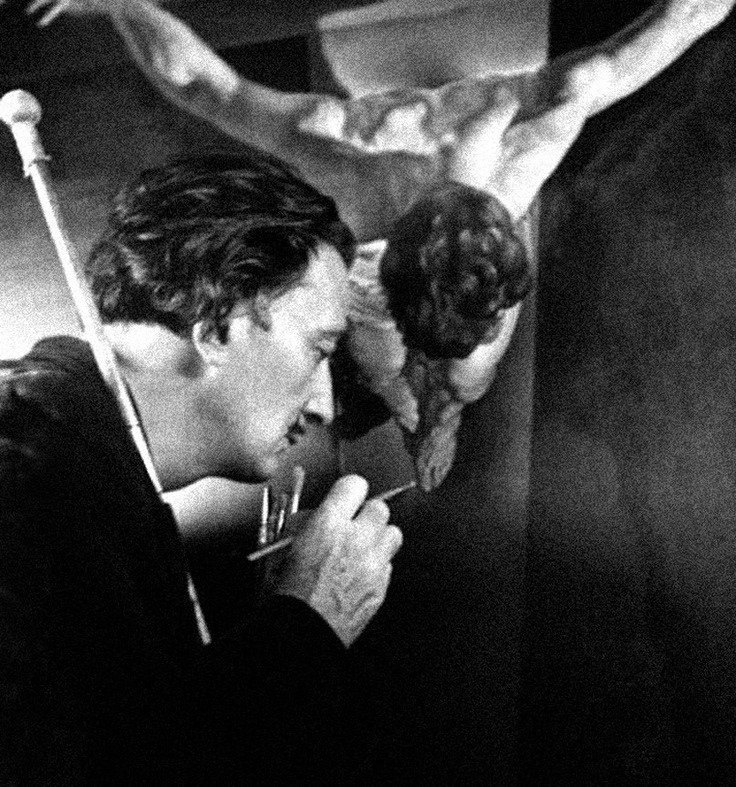
Saint Lawrence was chief of the seven Roman deacons of Pope Sixtus II who had been his mentor in Spain and taken him to Rome and ordained him as Deacon there, after he had been called to the Holy Office.   In 258, Emperor Valerian increased his persecutions of the Christians.   One day when Pope Sixtus II was in the cemetery of Saint Calistus celebrating Mass accompanied by some members of his clergy, he was arrested.   Along with him, the other six Roman deacons were arrested.   As the soldiers took the Pontiff to be put to death, Lawrence followed him in anguish crying out:  “Where are you going, my father, without your son? Where are you going, Holy Pontiff, without your deacon?   Isn’t it the custom to offer the sacrifice with an assistant?   Let me prove I am worthy of the choice you made when you entrusted me with the distribution of the Blood of Our Lord.” 
ST LAWRENCE 3
St Pope Sixtus II with the St Lawrence

The Pope replied to Saint Lawrence:  “I am not leaving you, my son.  They are lenient on old men, not the youth. A greater combat is reserved for you.  You will follow me in three days.” With the Pontiff’s execution, Lawrence was the highest ranking church authority left in Rome.

Saint Lawrence was brought before Cornelius Secularis, prefect of Rome under the Emperor Valerian, who, according to Dom Prosper Guéranger in his Liturgical Year:  “aimed at ruining the Christians by prohibiting their assemblies, putting their chief men to death, and confiscating their property.”   Saint Lawrence asked for a short delay, so he could gather these riches for the prefect and true to the promise of Pope Sixtus, returned three days after the pontiff’s death to hand them over.   However, heeding Pope Sixtus II’s final words, Lawrence used his three days to distribute the material wealth of the Church to the poor, before the Roman authorities could lay their hands on it.

When the archdeacon returned, instead of bringing vessels of gold and silver, he brought the poor of the city, saying, “Behold, these choice pearls, these sparkling gems that adorn the temple, these sacred virgins, I mean, and these widows who refuse second marriage…. Behold then, all our riches.”   In response to his boldness, Cornelius ordered the scourging and torture of Saint Lawrence upon the rack.

st lawrence arrested

From the Liturgical Year:
“…Lawrence was taken down from the rack about midday.   In his prison, however, he took no rest but wounded and bleeding as he was, he baptised the converts won to Christ by the sight of his courageous suffering.   He confirmed their faith and fired their souls with a martyr’s intrepidity.   When the evening hour summoned Rome to its pleasures, the prefect recalled the executioners to their work, for a few hours’ rest had sufficiently restored their energy to enable them to satisfy his cruelty.” 

Surrounded by this ill-favoured company, the prefect thus addressed the valiant deacon:  ‘Sacrifice to the gods, or else the whole night long shall be witness of your torments.’ ‘My night has no darkness,’answered Laurence, ‘and all things are full of light to me.’   They struck him on the mouth with stone, but he smiled and said, ‘I give Thee thanks, O Christ.’

Then an iron bed or gridiron with three bars was brought in and the saint was stripped of his garments and extended upon it while burning coals were placed beneath it.   As they were holding him down with iron fork, Lawrence said ‘I offer myself as a sacrifice to God for an odour of sweetness.’   The executioners continually stirred up the fire and brought fresh coals, while they still held him down with their forks.   Then the saint said:  ‘Learn, unhappy man, how great is the power of my God; for your burning coals give me refreshment but they will be your eternal punishment. I call Thee, O Lord, to witness:  when I was accused, I did not deny Thee;  when I was questioned, I confessed Thee, O Christ; on the red-hot coals I gave Thee thanks.’   And with his countenance radiant with heavenly beauty, he continued:  ‘Yea, I give Thee thanks, O Lord Jesus Christ, for that Thou hast deigned to strengthen me.’ He then raised his eyes to his judge and said:  ‘See, this side is well roasted; turn me on the other and eat.’ Then, continuing his canticle of praise to God [he said]:  ‘I give Thee thanks, O Lord, that I have merited to enter into Thy dwelling place.’

As he was on the point of death, he remembered the Church.  The thought of the eternal Rome gave him fresh strength and he breathed forth this ecstatic prayer:  ‘O Christ, only God, O Splendour, O Power of the Father, O Maker of heaven and earth and builder of this city’s walls!   Thou has placed Rome’s sceptre high over all;  Thou hast willed to subject the world to it, in order to unite under one law the nations which differ in manners, customs, language, genius, and sacrifice.   Behold the whole human race has submitted to its empire and all discord and dissensions disappear in its unity.   Remember thy purpose:  Thou didst will to bind the immense universe together into one Christian Kingdom.   O Christ, for the sake of Thy Romans, make this city Christian;  for to it Thou gavest the charge of leading all the rest to sacred unity.  All its members in every place are united – a very type of Thy Kingdom;  the conquered universe has bowed before it.  Oh! may its royal head bowed in turn! Send Thy Gabriel and bid him heal the blindness of the sons of Iulus, that they may know the true God.   I see a prince who is to come – an Emperor who is a servant of God.   He will not suffer Rome to remain a slave; he will close the temples and fasten them with bolts forever.’

08-10-LawrenceMartyred
Martyrdom of St Lawrence - Titian
Jusepe de Ribera Spanish 1591–1652
Bernini_Martyrdom_Lawrence

Thus he prayed and with these last words, he breathed forth his soul.   Some noble Romans who had been conquered to Christ by the martyr’s admirable boldness, removed his body:  the love of the most high God had suddenly filled their hearts and dispelled their former errors.   From that day, the worship of the infamous gods grew cold;  few people went now to the temples but hastened to the altars of Christ.   Thus Lawrence, going unarmed to the battle, had wounded the enemy with his own sword.”
The burned body of Saint Lawrence was carried away by converted Roman Senators who buried him in a grotto in the Verano field, near Tivoli.   On this day, the reliquary containing his burnt head is displayed in the Vatican for veneration.   His feast spread throughout Italy and northern Africa after his martyrdom—and even Saint Augustine of Hippo wrote a beautiful sermon on St Lawrence’s life, connecting his “treasures of the Church” to martyrdom and the Holy Eucharist.   Emperor Constantine built a beautiful basilica in Lawrence’s honour.   Saint Lawrence is especially honoured in the city of Rome, where he is one of the city’s patrons.   There are several churches in Rome dedicated to him, including San Lorenzo in Panisperna, traditionally identified as the place of his execution.  The gridiron on which he was grilled is venerated there today.

... Relic of St Lawrence of Rome by Lawrence OP
Grill of St. Lawrence
High altar
San Lorenzo 2
ST LAWRENCE 5

Since the Perseid Meteor Shower typically occurs every year in mid-August, on or near Saint Lawrence’s feast day, some refer to the shower as the “Burning Tears of Saint Lawrence.”   Saint Lawrence, for his care and love of the poor, is considered their patron.   For having saved the treasures of the Church—including its documents, he is recognized as the patron saint of librarians.   For his courage in being grilled to death, he is also the patron saint of cooks and kitchen workers.
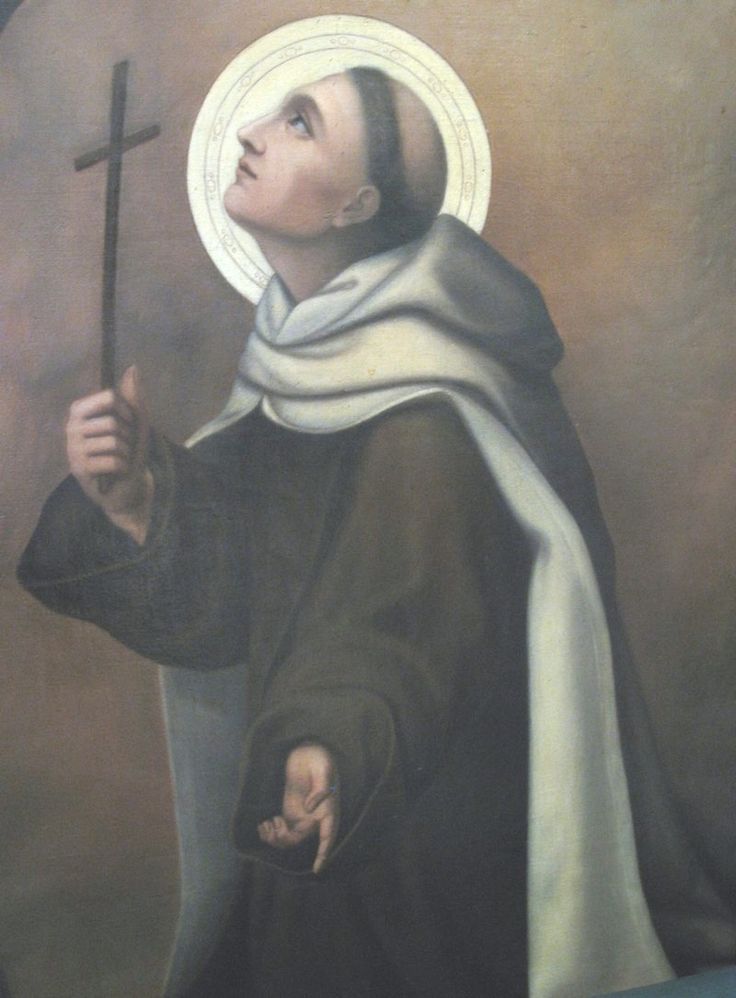
St Lawrence pray for us all!

Posted in FEASTS and SOLEMNITIES, SAINT of the DAY

Feasts and Memorials of the Saints – 10 August

St Lawrence of Rome (Feast) – https://www.youtube.com/watch?v=HlX5vBVi7kM
Our Lady of Good Success

St Agathonica of Carthage
St Agilberta of Jouarre
Bl Amadeus of Portugal
St Aredius of Lyon
St Asteria of Bergamo
Bl Augustine Ota
St Bassa of Carthage
St Bessus
St Bettelin
St Blane
Bl Claude-Joseph Jouffret de Bonnefont
St Deusdedit the Cobbler
Bl Edward Grzymala
Bl Franciszek Drzewiecki
Bl Francois François
St Gerontius
Bl Hugh of Montaigu
Bl Lazare Tiersot
St Paula of Carthage
St Thiento of Wessobrunn

Martyrs of Alexandria – 260+ saints: A large number of Christians who died in Alexandria, Egypt between 260 and 267 in the persecutions of Decius and Valerian, whose names have not come down to us and who are commemorated together.

Martyrs of Rome – 165 saints: Group of 165 Christians martyred in the persecutions of Aurelian. 274 in Rome, Italy.

Martyred in the Spanish Civil War:
• Blessed Antonio González Penín
• Blessed José Toledo Pellicer
• Blessed José Xavier Gorosterratzu Jaunarena
• Blessed Juan Martorell Soria
• Blessed Victoriano Calvo Lozano

Posted in CARMELITES, MORNING Prayers, QUOTES of the SAINTS, SAINT of the DAY

Thought for the Day – 9 August – The Memorial of St Teresa Benedicta of the Cross

Thought for the Day – 9 August – The Memorial of St Teresa Benedicta of the Cross

“Dear brothers and sisters!   The love of Christ was the fire that inflamed the life of St Teresa Benedicta of the Cross.   Long before she realised it, she was caught by this fire.   At the beginning she devoted herself to freedom.   For a long time Edith Stein was a seeker.   Her mind never tired of searching and her heart always yearned for hope.   She traveled the arduous path of philosophy with passionate enthusiasm.   Eventually she was rewarded:  she seized the truth.   Or better: she was seized by it.   Then she discovered that truth had a name:  Jesus Christ.  From that moment on, the incarnate Word was her One and All.   Looking back as a Carmelite on this period of her life, she wrote to a Benedictine nun:  “Whoever seeks the truth is seeking God, whether consciously or unconsciously”.

Although Edith Stein had been brought up religiously by her Jewish mother, at the age of 14 she “had consciously and deliberately stopped praying”.   She wanted to rely exclusively on herself and was concerned to assert her freedom in making decisions about her life.   At the end of a long journey, she came to the surprising realisation:  only those who commit themselves to the love of Christ become truly free.

This woman had to face the challenges of such a radically changing century as our own. Her experience is an example to us.  The modern world boasts of the enticing door which says: everything is permitted.   It ignores the narrow gate of discernment and renunciation……Pay attention!   Your life is not an endless series of open doors!   Listen to your heart!   Do not stay on the surface but go to the heart of things!   And when the time is right, have the courage to decide!   The Lord is waiting for you to put your freedom in his good hands.

…St Teresa Benedicta of the Cross says to us all:  Do not accept anything as the truth if it lacks love. And do not accept anything as love which lacks truth!   One without the other becomes a destructive lie.
Finally, the new saint teaches us that love for Christ undergoes suffering.   Whoever truly loves does not stop at the prospect of suffering:  he accepts communion in suffering with the one he loves.”…(Excerpt from the Homily of St Pope John Paul for the Canonisation of St Teresa Benedicta – Sunday, 11 October 1998)

St Teresa Benedicta of the Cross – Pray for us!

st teresa benedicta pray for us.2


Posted in CARMELITES, MORNING Prayers, POETRY, QUOTES of the SAINTS, SAINT of the DAY

Quote/s of the Day – 9 August – The Memorial of St Teresa Benedicta of the Cross

Quote/s of the Day – 9 August – The Memorial of St Teresa Benedicta of the Cross

“Today I stood with you beneath the cross
And felt more clearly than I ever did
That you became our Mother only there.

But those whom you have chosen for companions
To stand with you around the eternal throne,

They must stand with you beneath the Cross,
And with the lifeblood of their bitter pains,
Must purchase heavenly glory for those souls
Whom God’s own Son entrusted to their care.”
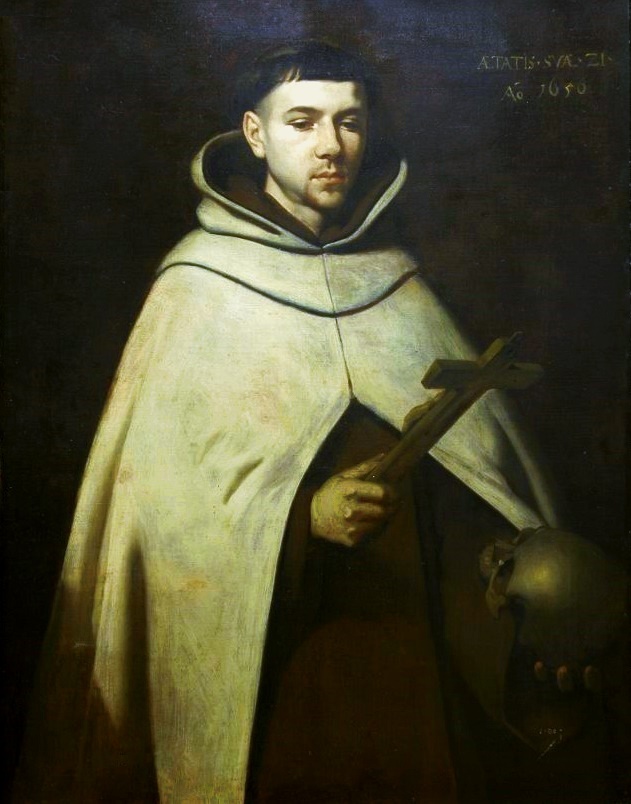
St Teresa Benedicta of the Cross – Good Friday 1938

today i stood with you beneath the cross - st teresa benedicta

“Our love of neighbour is the measure of our love of God.
For Christians — and not only for them —
no one is a ‘stranger’.
The love of Christ knows no borders”

St Teresa Benedicta of the Cross

our love of neighbour is the measure of our love of god - st teresa benedicta