Posted in MORNING Prayers, SAINT of the DAY

Thought for the Day – 1 July

Thought for the Day – 1 July

Junipero’s missionary life was a long battle with cold and hunger, with unsympathetic military commanders and even with danger of death from non-Christian native peoples. Through it all his unquenchable zeal was fed by prayer each night, often from midnight till dawn. He baptised over 6,000 people and confirmed 5,000. His travels would have circled the globe. He brought the Native Americans not only the gift of faith but also a decent standard of living. He won their love, as witnessed especially by their grief at his death when the music was drowned out by the weeping!
The word that best describes Junipero is zeal. His motto “always forward, never back” is a great watchword for all of us. His life inspires us each to serve the Lord with the entirety of our hearts, souls and lives. What a difference we might make in the world if we were to embrace our apostolic calling with the same vigor and commitment that St Junipero did!

St Junipero Serra, pray for us!

stjuniperoserra pray for us

Posted in DOCTORS of the Church, MORNING Prayers, QUOTES of the SAINTS

Quote of the Day – 1 July

Quote of the Day – 1 July

“Whenever anything disagreeable or displeasing happens to you, remember Christ crucified and be silent.”

St John of the Cross – Doctor of the Church


Posted in CATHOLIC DEVOTIONS of the Month, QUOTES of the SAINTS, The WORD

One Minute Reflection – 1 July

One Minute Reflection – 1 July

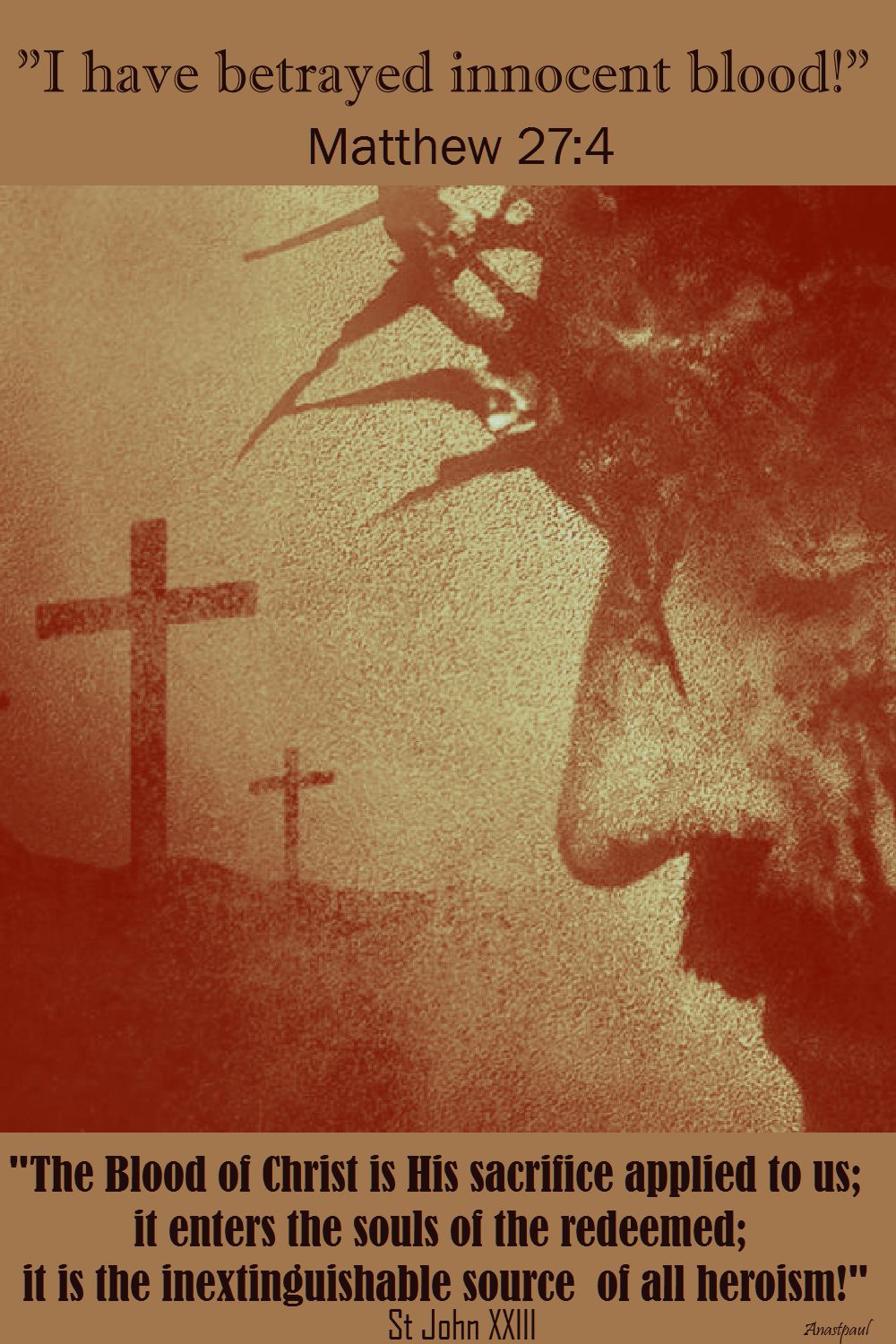
“I have betrayed innocent blood!”………..Matthew 27:4

REFLECTION – “The Blood of Christ is His sacrifice applied to us; it enters the souls of the redeemed; it is the inextinguishable source of all heroism!”……St John XXIII

PRAYER – Lord Jesus, You became Man in order by your Passion and Death and the draining of your Blood on the Cross, might prove to us how much You, our God, love us. Protect us, dear Jesus, from ever running away from the sight of blood. Strengthen our weak human wills so that we will not only not run away from the cross but welcome every opportunity to shed our blood in spirit in union with your Precious Blood, so that, dying to ourselves in time we might live with You in Eternity. Amen

the blood of christ-st john XXIII

Posted in CATHOLIC DEVOTIONS of the Month

July Devotion – The Most Precious Blood

July Devotion – The Most Precious Blood

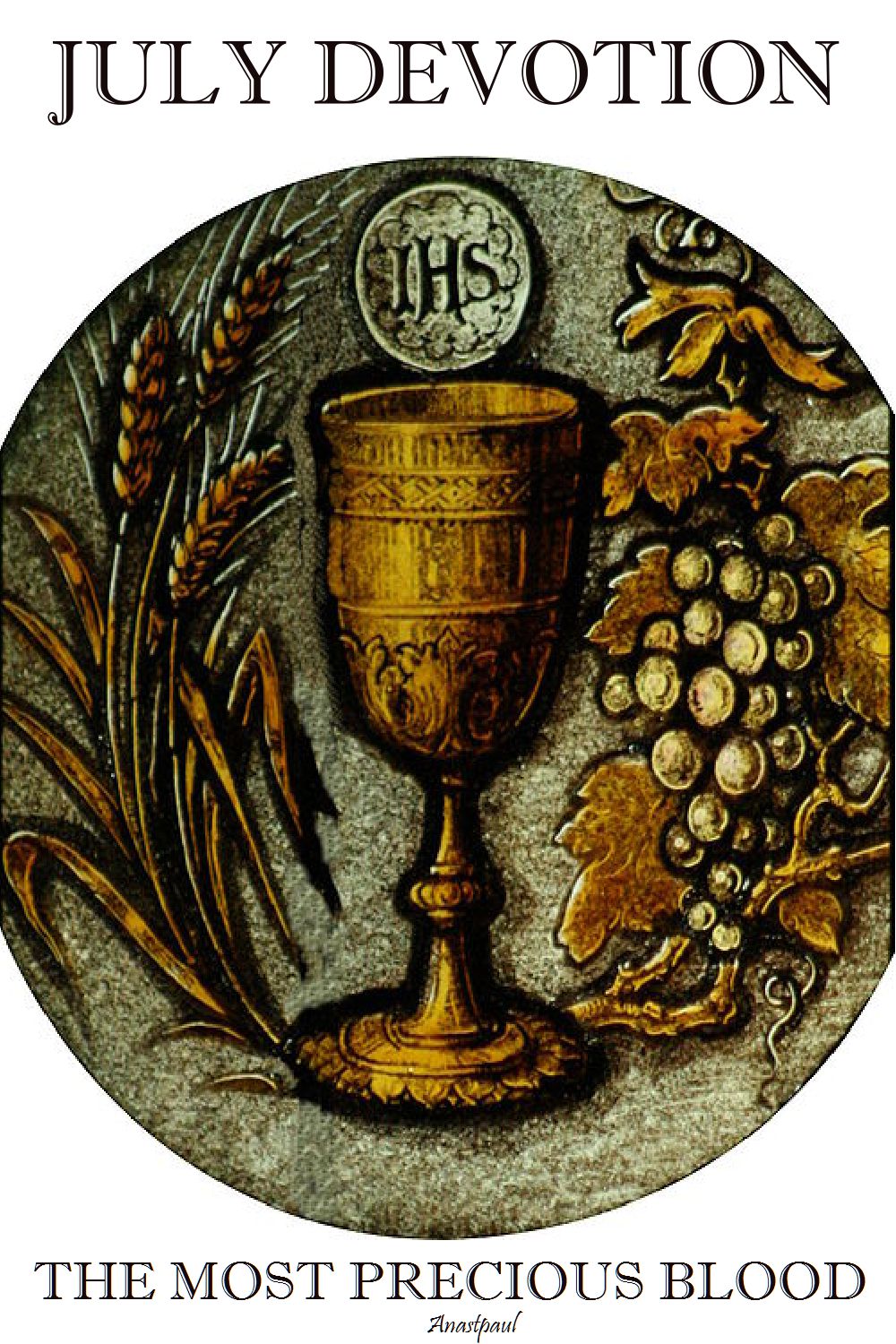
July is the month dedicated to the Precious Blood of Jesus.   Among devotions to the humanity of Christ (e.g., Divine Infancy, Sacred Heart) the Precious Blood of Jesus has the most biblical precedent since it is mentioned so frequently in the New Testament (over 75 times).   Saint Peter, our first Pope, specifically refers to the blood of Christ as “the precious blood of Christ, as of a lamb unspotted and undefiled” (1 Peter 1:19, D-R). In fact, it might even be said that the entire Old Testament is a lesson in “blood sacrifice” as an anticipation of Christ’s obedient and merciful sacrifice on the wood of the life-giving cross.
St. Paul could rightfully be called the “Theologian of the Precious Blood.” The Apostle even tell us to place our “faith in His blood”:
“Whom God hath proposed to be a propitiation, through faith in his blood, to the shewing of his justice, for the remission of former sins” (Romans 3:25 D-R).
This reveals that the Precious Blood of Jesus is not an abstraction, but a true devotion to the Divine Person of Christ.
In Ephesians, the Apostle teaches us that our redemption was purchased “through His blood” (Eph 1:7), and in Hebrews, he teaches that the entire New Covenant is rooted in the Precious Blood of Jesus.
Saint John the Apostle stresses the love of God and the Precious Blood when he writes: “he hath loved us and washed us from our sins in his own blood” (Rev 1:5, D-R). Elsewhere, Saint John explains that the Blood of Jesus continues to be applied to us: “But if we walk in the light, as he also is in the light, we have fellowship one with another:   And the blood of Jesus Christ his Son cleanses us from all sin” (1 Jn 1:7).

In recent times the devotion has been encouraged by Blessed Gaspar Buffalo, founder of the Congregation of the Precious Blood of Jesus Christ. When Pope Pius IX was in exile from Rome in 1849, he had as his companion Don Giovanni Merlini, the third general of that Congregation. This saintly priest suggested to the pope that he make a vow to give the feast of the Precious Blood to the entire church, if he should regain the papal territory. Without binding himself by the vow, the pope immediately extended the feast to the whole Church to be celebrated on 1 July each year.

july devotion - the mos pecrous blood

Posted in QUOTES of the SAINTS, SAINT of the DAY

Saint of the Day – 1 July – St Junipero Serra O.F.M., Apostle of California – 1 July

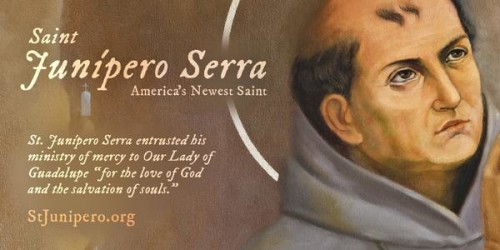
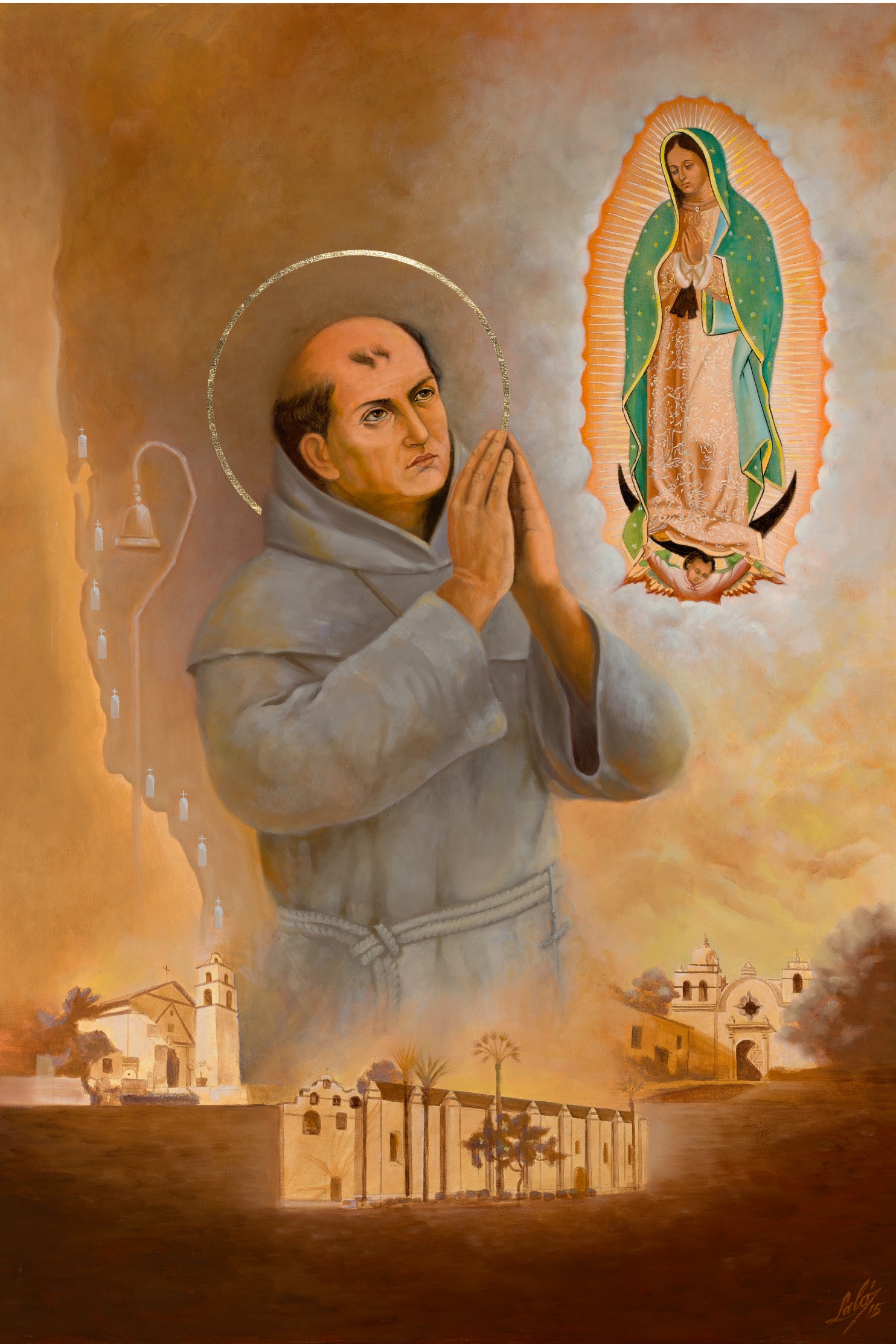
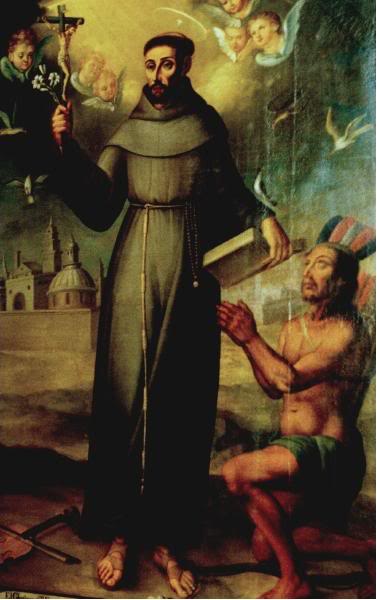
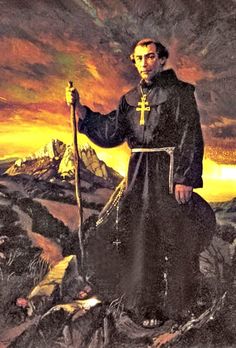
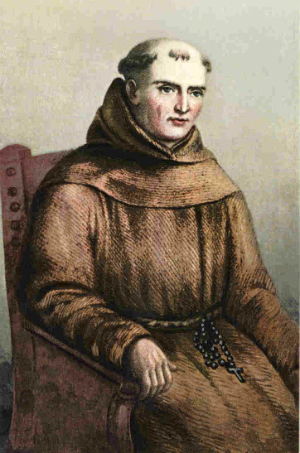
Saint of the Day – 1 July – St Junipero Serra  O.F.M., Apostle of California- 1 July – Priest, Religious Friar, Missionary, Theologian, Philospher, Teacher, Evangelist – (born Miguel Jose 24 November 1713 at Petra, Spanish Majorca as Miguel Jose Serra –  28 August 1784 of tuberculosis at Mission San Carlos, California of natural causes).  His remains are  buried at Carmel, Monterey, California.   Patronages – Vocations, Hispanic Americans, California.   Attributes Franciscan habit, wearing a large crucifix, or holding a crucifix accompanied by a young Native American boy.

st junipero serra.9

Miguel Jose Serra was born in Majorca, Spain.   At the young age of 16, he entered into service to God, joining the Order of Saint Francis and taking the name Junipero—in honour of Saint Juniper, the saintly friar companion of Saint Francis.   Ordained at age 24, Junipero studied in Parma, the capital of Majorca and taught philosophy and theology at the monastery of San Francisco at Lullian University for over a decade.   Serra was known as a brilliant, articulate scholar — a moving speaker and a clear, precise writer — but he did not remain long in academic life.   In 1749, at the age of 37, Junipero answered the call for missionaries and left Europe, heading to the New World Western mission territories.

Junipero left Cadiz, Spain and sailed for Vera Cruz, Mexico.   During the voyage, he suffered an insect bite which led to significant physical difficulties with his leg– an ailment which remained for the rest of his life.   Upon arrival in the New Work, he traveled by foot (as would become his custom, despite his physical limitations) to Mexico City to dedicate his mission vocation at the shrine of Mexico’s Our Lady of Guadalupe.   He then received his first assignment—the rugged, mountainous region of Mexico known as Sierra Gorda. Friar Junipero embraced his mission work, learning the language of the native Pame Indians and translating the Catechism for them.   He remained at Sierra Gorda for nine years, strengthening and building missions.

st junipero serra.13

Soon, word of Blessed Junipero’s commitment and skill spread and he was re-assigned. His next mission was to journey from Mexico City into the coastal villages and mining camps.   Again, despite his continuously infected and now ulcerated leg, he walked over 6,000 miles over eight years, preaching, converting, baptising and establishing missions. Before he was finished, Junipero would establish and oversee construction of 21 missions in California and Mexico.   He was appointed Superior of Baja California and later “padre president” of the region.   He linked his 21 missions—each a one-day 30 mile walk from each other—by a dirt road, named “El Camino Real.”

Throughout his mission work, Father Serra sought to protect the native peoples, who were often ill-treated by the Spanish settlers and rulers.   He struggled valiantly with military leaders, eventually becoming instrumental in the establishment of the “Regulations”—effectively, the first “bill of rights” for native peoples in the New World. He also spent time with the indigenous of the region, learning their language, teaching European farming techniques, animal husbandry, and arts and crafts.   During his homily at Serra’s beatification, Pope John Paul II said: “Relying on the divine power of the message he proclaimed, Father Serra led the native peoples to Christ. He was well aware of their heroic virtues—as exemplified in the life of Blessed Kateri Tekakwitha [July 14]—and he sought to further their authentic human development on the basis of their new-found faith as persons created and redeemed by God. He also had to admonish the powerful, in the spirit of our second reading from James, not to abuse and exploit the poor and the weak.”

Despite constant setbacks, ill health, cold, hunger and threat of bodily harm from military leaders and native Indians, Blessed Junipero never turned from his mission task.   He kept with determination to his watchword, “Always to go forward and never to turn back.”

Numerous miracles were attributed to the intercession of Friar Serra, recorded by his biographer, Palau:

“When he [Serra] was traveling with a party of missionaries through the province of Huasteca [in Mexico], many of the villagers did not go to hear the word of God at the first village where they stopped; but scarcely had the fathers left the place when it was visited by an epidemic, which carried away sixty villagers, all of whom, as the curate of the place wrote to the reverend father Junípero, were persons who had not gone to hear the missionaries.   The rumour of the epidemic having gone abroad, the people in other villages were dissatisfied with their curates for admitting the missionaries; but when they heard that only those died who did not listen to the sermons, they became very punctual, not only the villagers but the country people dwelling upon ranchos many leagues distant.
Their apostolic labours having been finished, they were upon their way back and at the end of a few days’ journey, when the sun was about to set, they knew not where to spend the night, and considered it certain that they must sleep upon the plain. They were thinking about this when they saw near the road a house, whither they went and solicited lodging.   They found a venerable man, with his wife and child, who received them with much kindness and attention and gave them supper.   In the morning, the Fathers thanked their hosts and taking leave, pursued their way.   After having gone a little distance they met some muleteers, who asked them where they had passed the night.   When the place was described, the muleteers declared that there was no such house or ranch near the road, or within many leagues.   The missionaries attributed to Divine Providence the favour of that hospitality and believed without doubt that these hosts were Jesus, Mary, and Joseph, reflecting not only about the order and cleanness of the house (though poor) and the affectionate kindness with which they had been received, but also about the extraordinary internal consolation which their hearts had felt there.” 

At the age of 70, and after traveling 24,000 miles, Father Junípero Serra died at Mission San Carlos Borromeo and is buried there under the sanctuary floor.   He was beatified by Pope John Paul II on 25 September1988 and is Canonised by Pope Francis on 23 September 2015 in the Basilica of the National Shrine of the Immaculate Conception in Washington.   The zeal with which Blessed Junipero lived his life inspires us each to serve the Lord with the entirety of our hearts, souls and lives.   What a difference we might make in the world if we were to embrace our apostolic calling with the same vigour and commitment that Blessed Junipero did!

st junipero serra.2st junipero serrast junipero serra.11st junipero serra.4

Posted in SAINT of the DAY

Thought for the Day – 30 June

Thought for the Day – 30 June

At one time, it was a crime to be a Christian and it still is in certain parts of the world.
In places less distant from us than a days plane trip, Christians are outlawed and imprisoned.
How would we respond in those circumstances?
Are you willing to give up everything for the sake of Christ – or – are you just talking?

Holy Martyrs of the Church of Rome, pray for us!

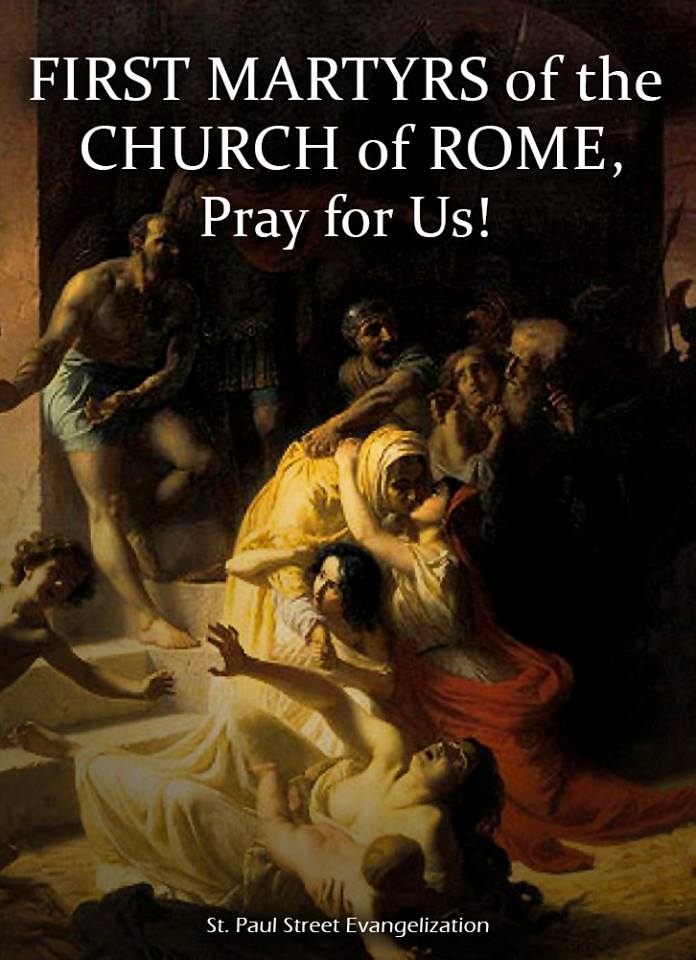
FIRST MARTYRS OF THE CHURCH OF ROME - JUNE 30

Posted in QUOTES of the SAINTS, SAINT of the DAY

Quote of the day – 30 June

Quote/s of the Day – 30 June

“Of the many questions I ask myself none preoccupies me as much as the conundrum that so many evolving human beings, proud and confident of their progress, are turning their backs on God. It is disturbing that in an age of such remarkable progress in all sorts of fields we should be faced with denial and belittlement of God like a rampant infectious disease. How has the image of God become so eclipsed that so many are no longer moved by it? Does the fault lie only with them? Or is something required of us to make it shine on the world once more in all its radiance, and dare we hope that study of the God concept will at least alleviate this greatest of all needs?”

of the many questions I ask myself...bl titus brandsma

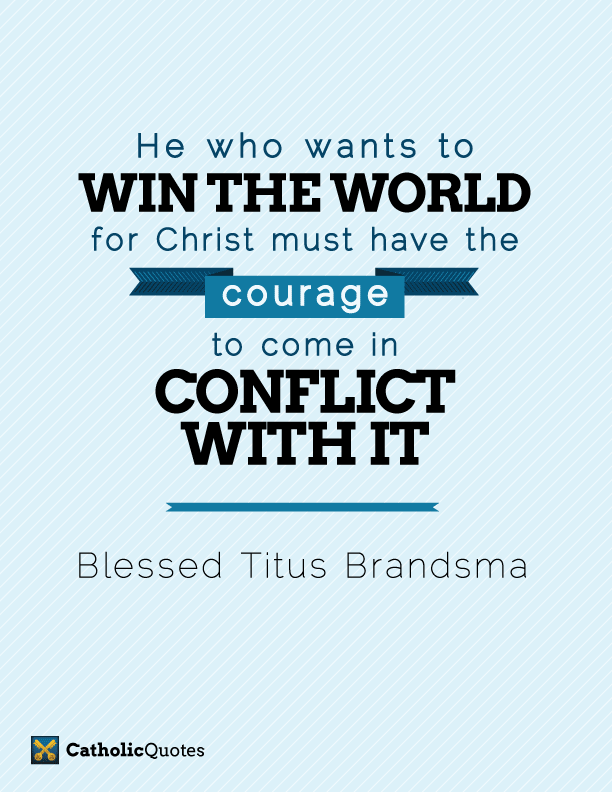
“He who wants to win the world for Christ,must have the courage, to come in conflict with it.”

he wh wants to win the world-bl titus brandsma

Blessed Titus Brandsma

Posted in QUOTES of the SAINTS, SAINT of the DAY, The WORD

One Minute Reflection – 30 June

One Minute Reflection – 30 June

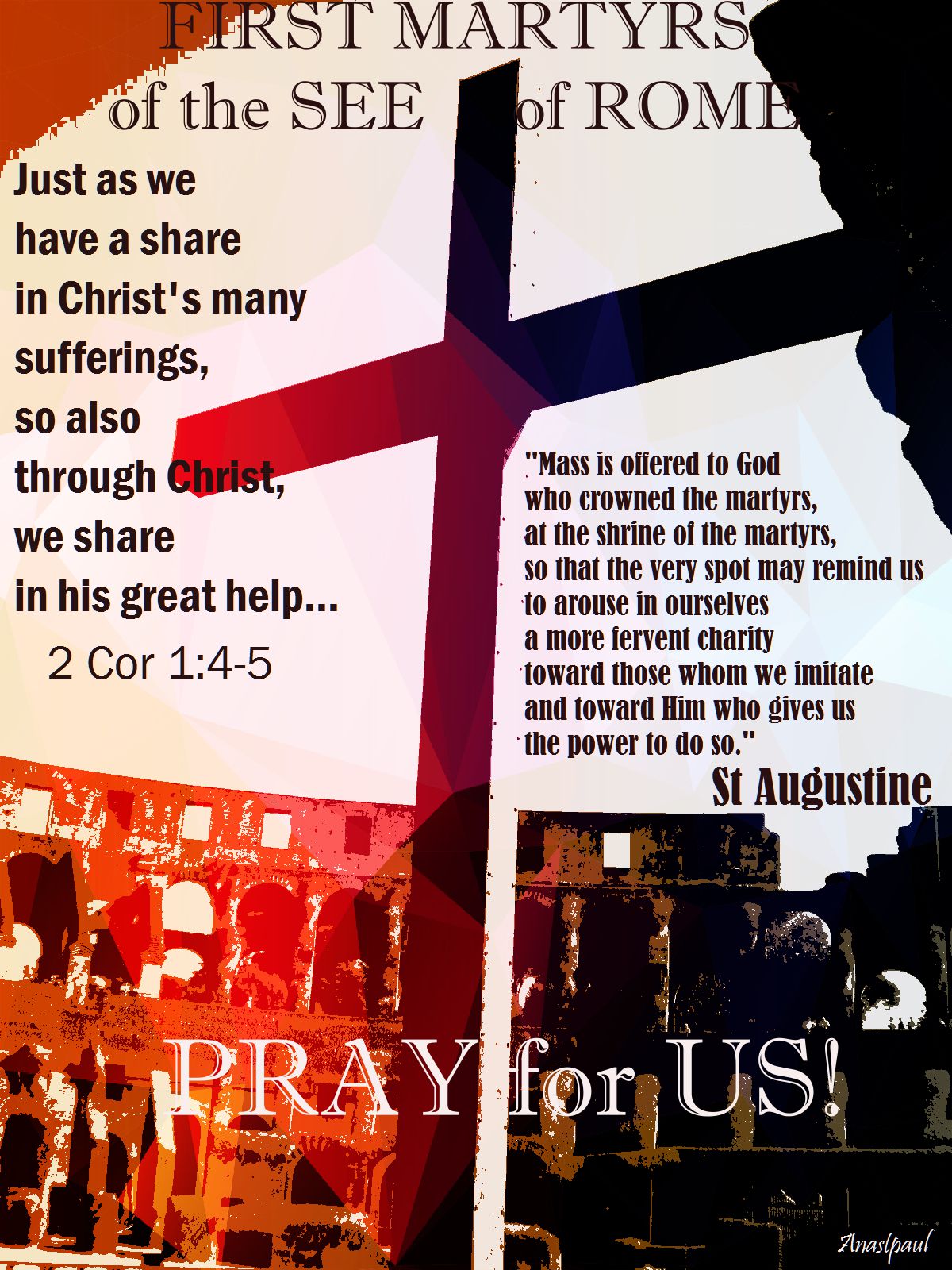
Just as we have a share in Christ’s many sufferings, so also through Christ, we share in his great help……2 Cor 1:4-5

REFLECTION – “Christians celebrate the memory of the martyrs with religious ceremony in order to arouse emulation and in order that they may be associated with their merits and helped by their prayers. But to none of the martyrs do we erect altars as we do to the God of martyrs; we erect altars at their shrines. For what bishop standing at the altars over the bodies of martyrs ever said: We offer to Peter or Paul or Cyprian?
Mass is offered to God who crowned the martyrs, at the shrine of the martyrs, so that the very spot may remind us to arouse in ourselves a more fervent charity toward those whom we imitate and toward Him who gives us the power to do so.”……..St Augustine

PRAYER – Lord God, you consecrated with the blood of the martyrs the fertile beginnings of the Roman Church. Grant us the grace to rejoice at the martyrs’ victory and strengthen us with firm courage as we remember their endurance of such a trial. Through our Lord Jesus Christ, in union with the Holy Spirit, one God forever and ever. Holy Martyrs of the early Church of Rome, Pray for us, amen.

first martyrs of the church of rome.- pray for us

Posted in MORNING Prayers, PRAYERS of the SAINTS

Our Morning Offering – 30 June

Our Morning Offering – 30 June

Prayer before an Image of Jesus Crucified
by Blessed Titus Brandsma (Martyr)

Dear Lord, when looking up at Thee,
I see Thy loving eyes on me;
Love overflows my humble heart,
Knowing what a faithful friend Thou are.
A cup of sorrow I foresee,
Which I accept for love of Thee,
Thy painful way I wish to go;
The only way to God I know.
My soul is full of peace and light;
Although in pain, this light shines bright.
For here Thou keepest to Thy breast.
My longing heart to find there rest.
Leave me here freely all alone,
In cell where never sunlight shone.
Should no one ever speak to me,
This golden silence makes me free!
For though alone, I have no fear;
Never wert Thou, O Lord, so near.
Sweet Jesus, please, abide with me!
My deepest peace I find in Thee

PRAYER BEFORE JESUS CRUCIFIED BY BL TITUS BRANDSMA

Posted in SAINT of the DAY

Saint/s of the Day – 30 June – The First Martyrs of the Church of Rome

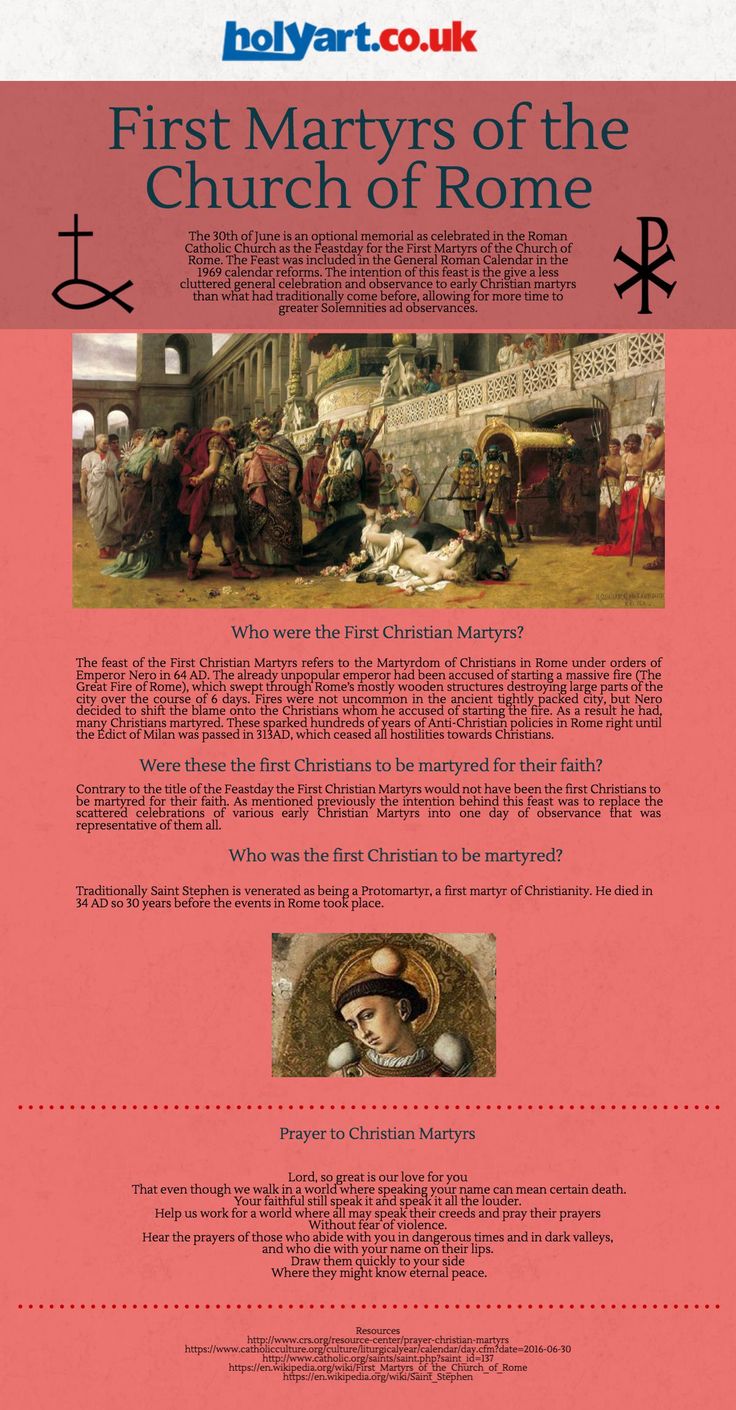
Saint/s of the Day – 30 June – The First Martyrs of the Church of Rome – the First Martyrs of the Church of Rome were Christians martyred in the city of Rome during Nero’s persecution in 64. The event is recorded by both Tacitus and Pope Clement I, among others.

There were Christians in Rome within a dozen or so years after the death of Jesus, though they were not the converts of the “Apostle of the Gentiles” (see Romans 15:20). Paul had not yet visited them at the time he wrote his great letter in A.D. 57-58.

There was a large Jewish population in Rome.   Probably as a result of controversy between Jews and Jewish Christians, the Emperor Claudius expelled all Jews from Rome in A.D. 49-50.   Suetonius the historian says that the expulsion was due to disturbances in the city “caused by the certain Chrestus” [Christ].   Perhaps many came back after Claudius’s death in A.D. 54.   Paul’s letter was addressed to a church with members from Jewish and gentile backgrounds.

In July of A.D. 64, more than half of Rome was destroyed by fire.   Rumour blamed the tragedy on Nero, who wanted to enlarge his palace.   He shifted the blame by accusing the Christians.   According to the historian Tacitus, a “great multitude” of Christians were put to death because of their “hatred of the human race.” Peter and Paul were probably among the victims.

first martyrs of the church of rome.1A.

Threatened by an army revolt and condemned to death by the senate, Nero committed suicide in A.D. 68 at the age of thirty-one.

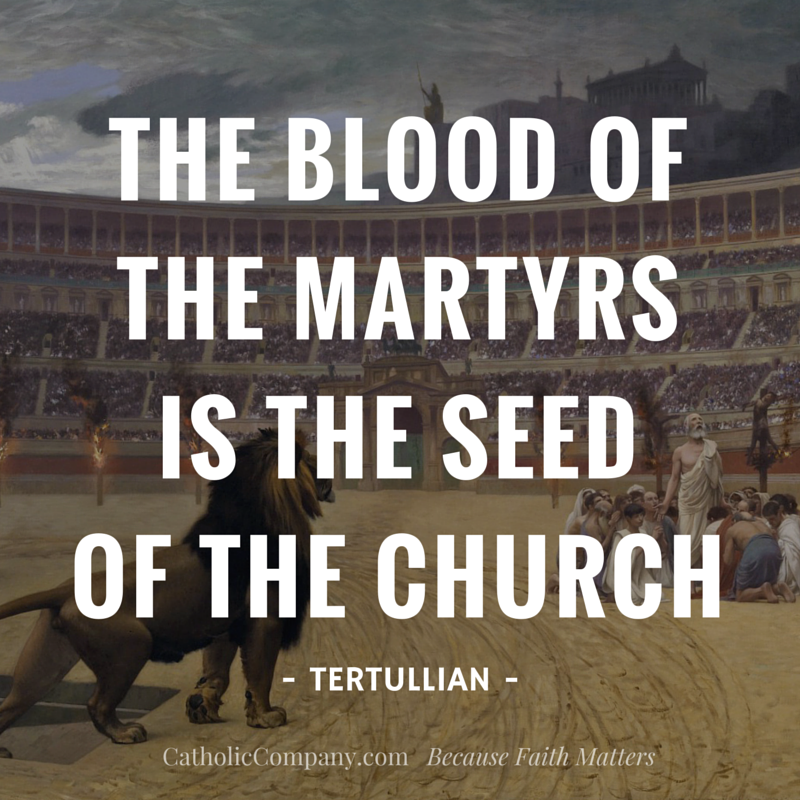
Wherever the Good News of Jesus was preached, it met the same opposition as Jesus did and many of those who began to follow Him shared His suffering and death.   But no human force could stop the power of the Spirit unleashed upon the world.   The blood of martyrs has always been, and will always be, the seed of Christians.

The-Blood-of-the-Martyrs-is-the-Seed-of-the-Church-Tertullian.png

Posted in SAINT of the DAY

Saints Memorials – 30 June

First Martyrs of the Church of Rome (Optional Memorial) – https://www.youtube.com/watch?v=cyXr3UySmPA

St Adolphus of Osnabrück
St Alpinian of Limoges
St Alrick the Hermit
Bl Ambrose de Feis
Bl Anthony de Tremoulières
Bl Arnulf of Villers
St Austriclinian of Limoges
St Basilides of Alexandria
St Bertrand of Le Mans
St Clotsindis of Marchiennes
Bl Elisabeth Heimburg
St Emiliana of Rome
St Erentrude
St Eurgain
St Gaius
Bl Gennaro Maria Sarnelli
Bl Jacob Clou
St Leo the Deacon
St Lucina of Rome
St Lucina of the Callistus Catacombs
St Marcian of Pampeluna
St Martial of Limoges
St Ostianus
St Otto of Bamberg
St Peter of Asti
St Petrus Li Quanhui
Bl Philip Powel
St Raimundus Li Quanzhen
Bl Raymond Lull
St Theobald of Provins
Bl Vasyl Vsevolod Velychkovskyi
St Vihn Son Ðo Yen
Bl Zenon Kovalyk

Martyrs of Africa – 7 saints: Seven Christians martyred together. No detail about them have surived but the names – Cursicus, Gelatus, Italica, Leo, Timotheus, Zoilus, and Zoticus. Date and precise location in Africa unknown.

Posted in FATHERS of the Church, MORNING Prayers, SAINT of the DAY, The APOSTLES & EVANGELISTS

Thought for the Day – 29 June

Thought for the Day – 29 June

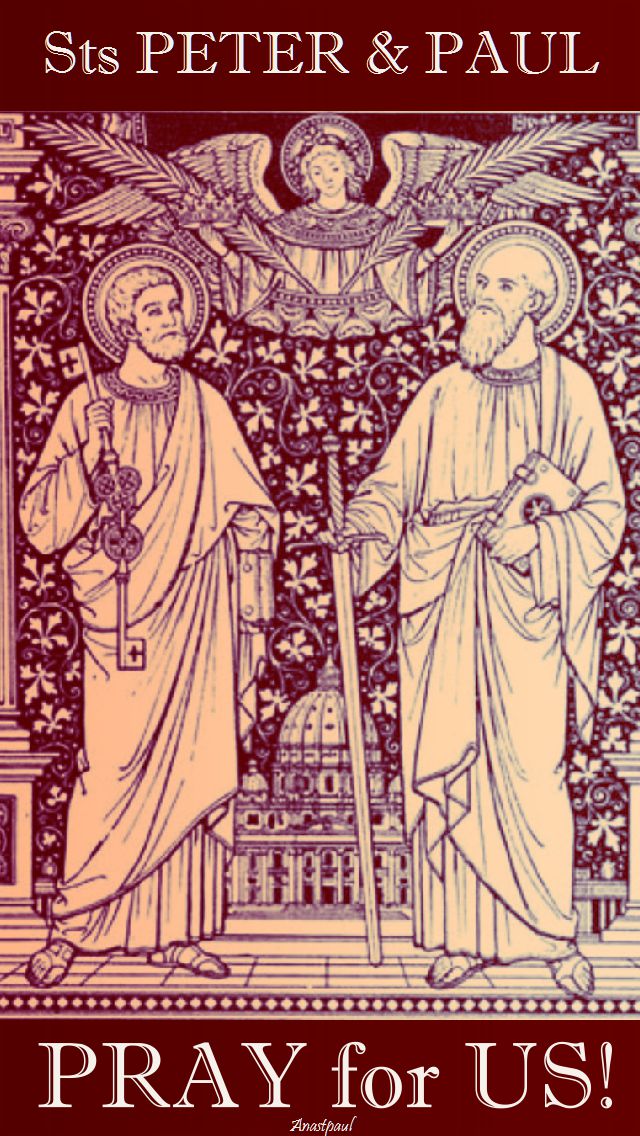
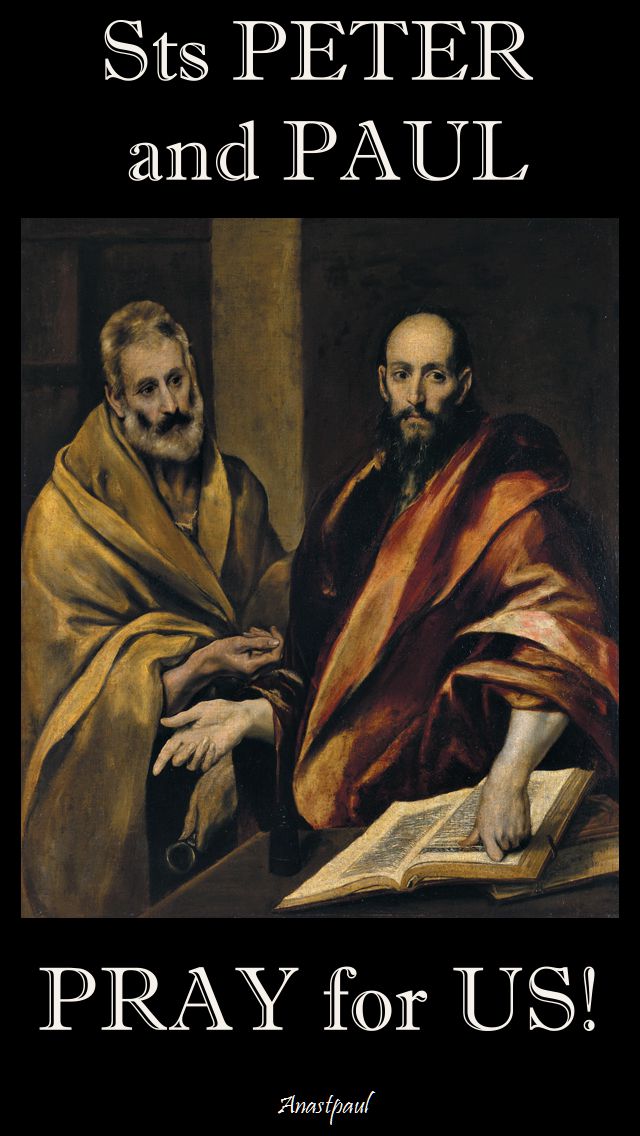
By their lives and labours, Peter and Paul established the faith and by their deaths they bore witness to is power and truth.   They are part of the Church’s own confession of faith – they were the architects of that faith and they have left their mark indelibly upon Christian history and belief.   After Christ, these two are the cornerstones of the Church and as such they are enshrined in the Church’s memory.   They embody in themselves everything a Christian admires in being a follower of Christ, they are Apostles, Martyrs, Witnesses, Evangelists, Teachers, Prophets and Founders of Churches wherever they went in the footsteps of our Lord.   The two great basilicas in Rome are dedicated to them – St Peter’s is the largest Church in Christendom and St Paul’s Outside the Walls, carries the history of all our Popes and is the site of the Martyrdom of St Paul.
We owe our faith to these two great Fathers and hold them in hallowed love and memory.
Like Jesus Himself, their deaths are our lives!

Sts Peter and Paul, pray for us and for the entire universal Church, protect us by your prayers.

sts peter and paul - pray for us.2

Posted in DOCTORS of the Church, FATHERS of the Church, FEASTS and SOLEMNITIES, MORNING Prayers, QUOTES of the SAINTS, SAINT of the DAY, The APOSTLES & EVANGELISTS

Quote/s of the Day – 29 June

Quote/s of the Day – 29 June

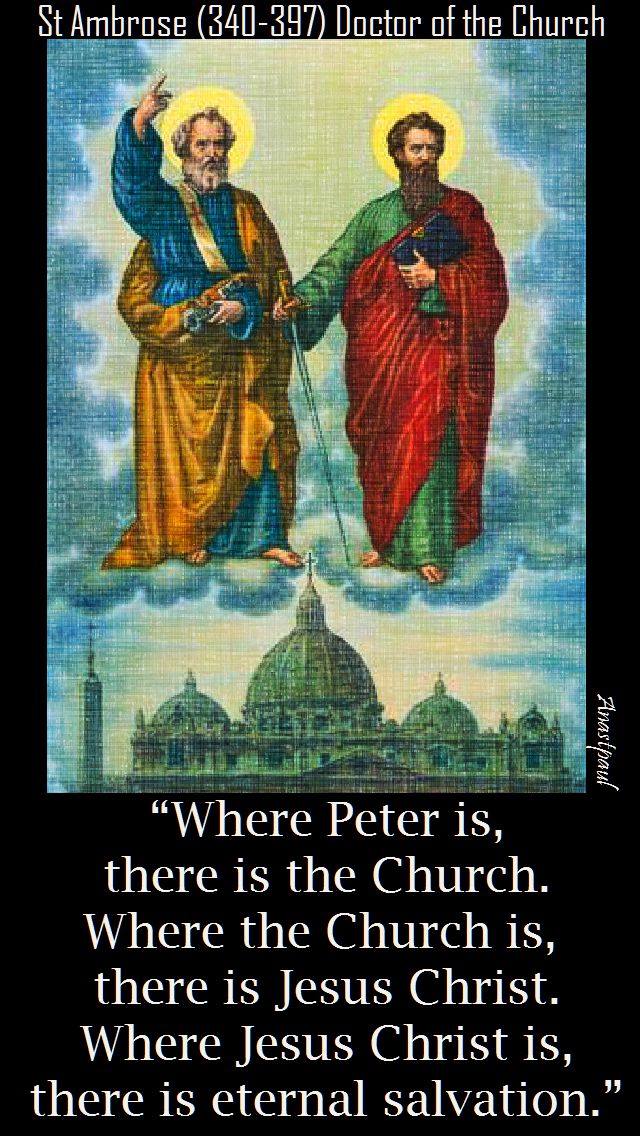
“Where Peter is,
there is the Church.
Where the Church is,
there is Jesus Christ.
Where Jesus Christ is,
there is eternal salvation.”

St Ambrose (340-397)
One of the original four Doctors of the Church

where peter is 2

where peter is, there is the church - st ambrose

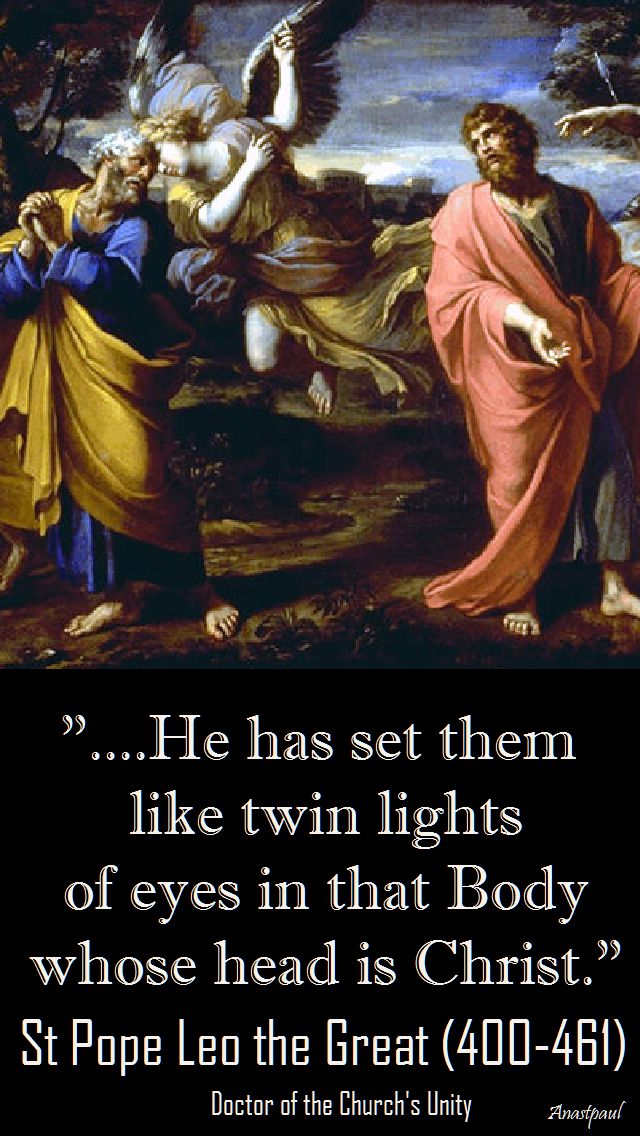
“There must be general rejoicing, dearly beloved,
over this holy company whom God has appointed
for our example in patience and for our confirmation in faith.
But we must glory even more in the excellence of their fathers,
Peter and Paul, whom the grace of God has raised
to such a height among all the members of the Church
that He has set them like twin lights
of eyes in that Body whose head is Christ.”

St Pope Leo the Great (400-461) Doctor of the Church’s Unity

he has set them like twinlight - st pope leo the great


Posted in FATHERS of the Church, FEASTS and SOLEMNITIES, MORNING Prayers, QUOTES of the SAINTS, SAINT of the DAY, The APOSTLES & EVANGELISTS, The WORD

One Minute Reflection – 29 June

One Minute Reflection – 29 June

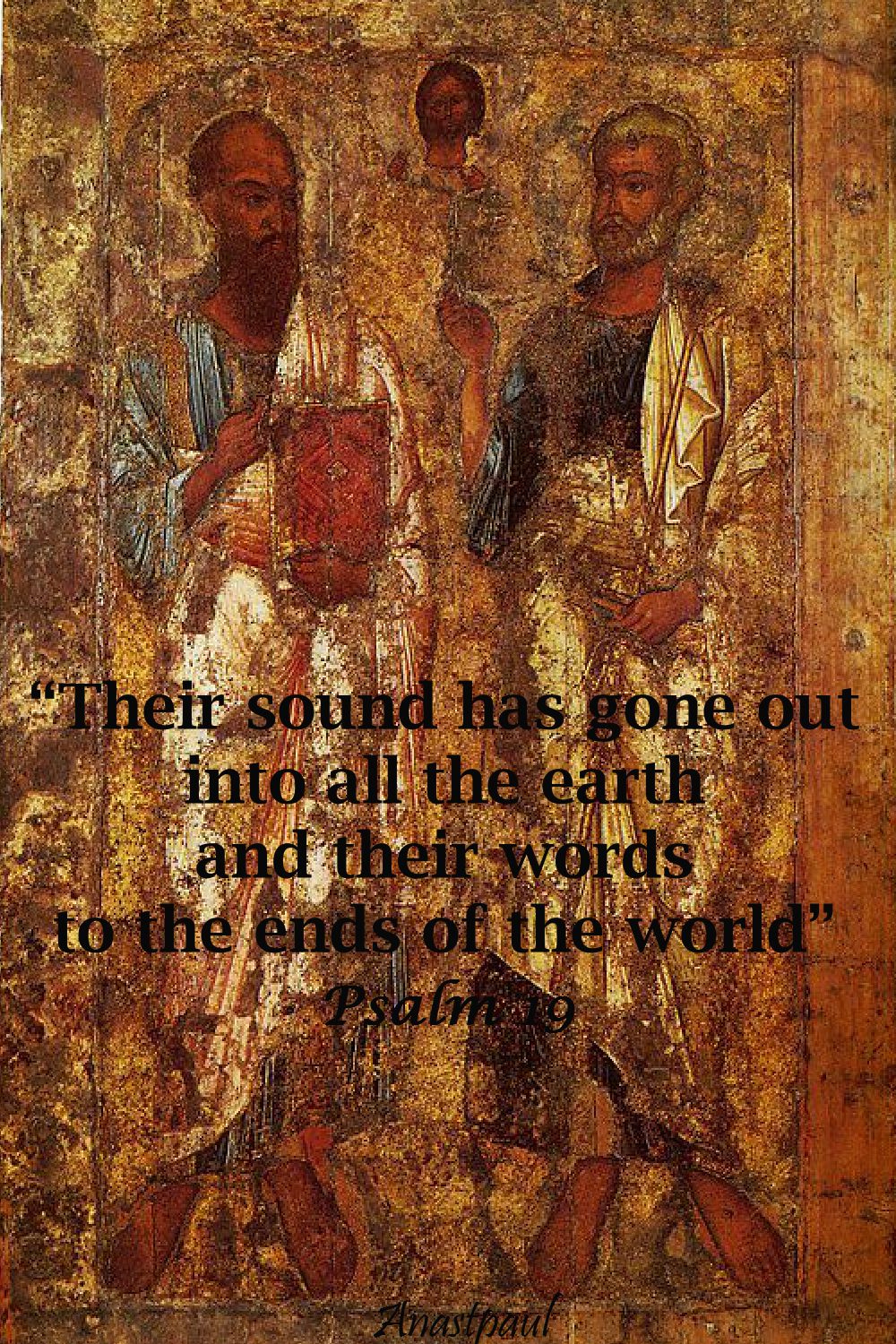
“Their sound has gone out into all the earth and their words to the ends of the world” ……….Psalm 19

psalm 19 - sts peter and paul

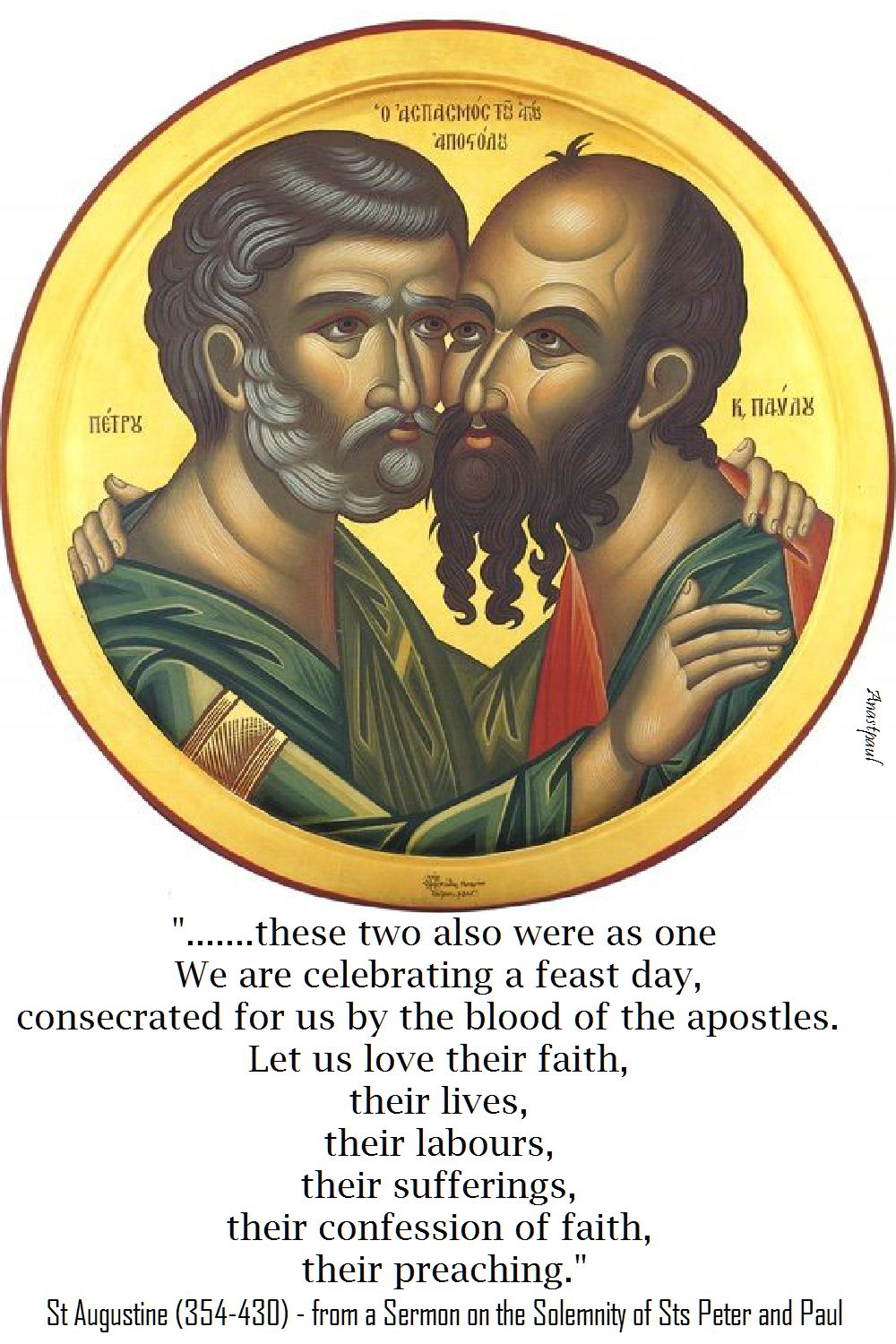
REFLECTION – “There is one day for the passion of two apostles. But these two also were as one; although they suffered on different days, they were as one. Peter went first, Paul followed. We are celebrating a feast day, consecrated for us by the blood of the apostles. Let us love their faith, their lives, their labours, their sufferings, their confession of faith, their preaching.”………St Augustine

these two also were as one-staugustine

PRAYER – Almighty God, whose blessed Apostles Peter and Paul glorified you by their martyrdom: grant that your Church, instructed by their teaching and example and knit together in unity by your Spirit, may ever stand firm upon the one foundation, which is Jesus Christ our Lord;  who lives and reigns with you, in the unity of the Holy Spirit, one God, for ever and ever. Sts Peter and Paul, pray for us and for the universal Church, amen.

sts peter and paul - pray for us

Posted in FEASTS and SOLEMNITIES, MORNING Prayers, PRAYERS of the CHURCH, SAINT of the DAY

Our Morning Offering – 29 June

Our Morning Offering – 29 June

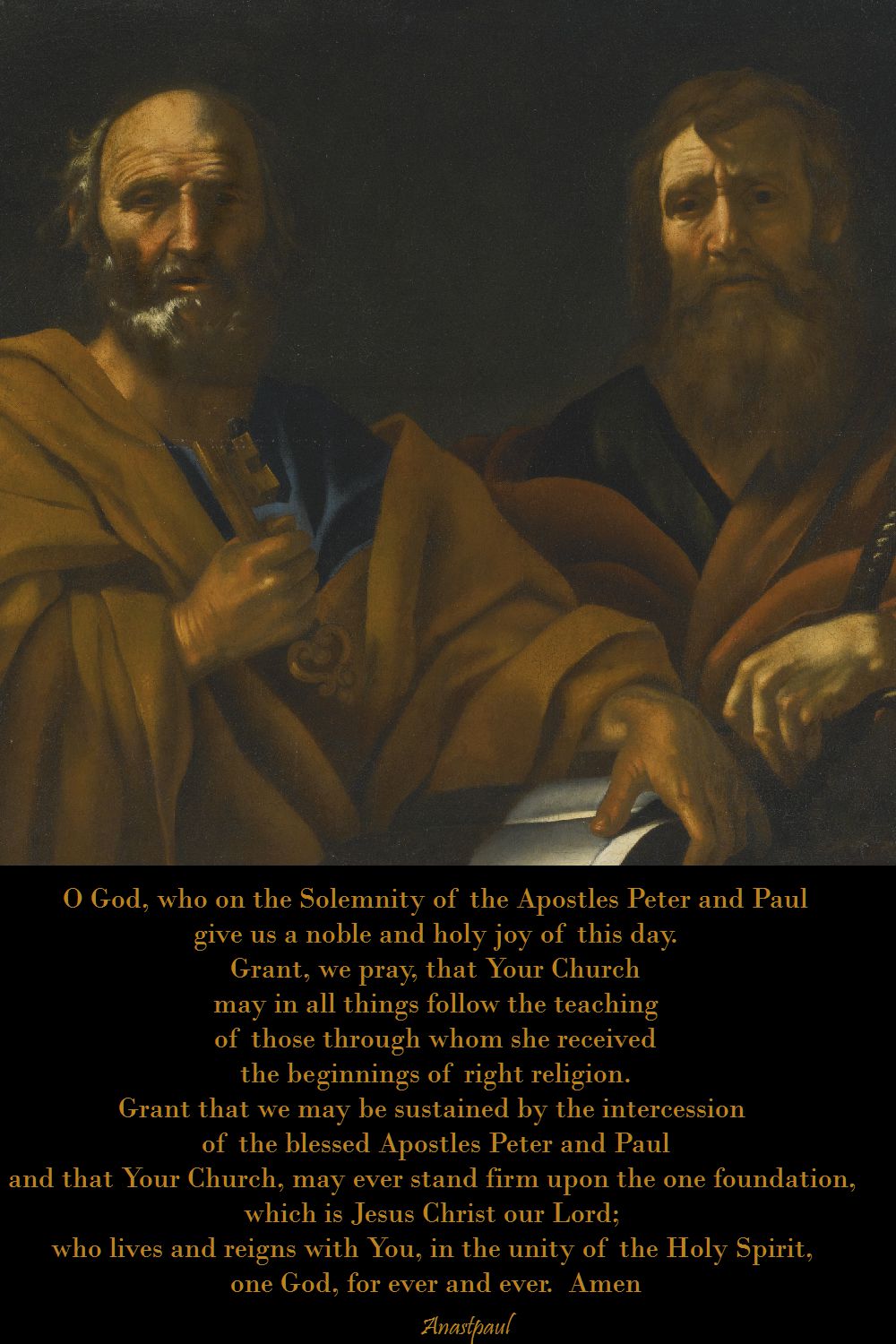
O God,
who on the Solemnity of the Apostles Peter and Paul
give us a noble and holy joy of this day.
Grant, we pray, that Your Church
may in all things follow the teaching
of those through whom she received
the beginnings of right religion.
Grant that we may be sustained
by the intercession
of the blessed Apostles Peter and Paul
and that Your Church,
may ever stand firm upon the one foundation,
which is Jesus Christ our Lord;
who lives and reigns with You,
in the unity of the Holy Spirit,
one God, for ever and ever.
Amen

prayer on the solemnity of the apostles peter and paul

Posted in FEASTS and SOLEMNITIES, SAINT of the DAY, The APOSTLES & EVANGELISTS, The WORD

Blessed and Holy Solemnity of Sts Peter and Paul – 29 June

Blessed and Holy Solemnity of Sts Peter and Paul – 29 June – Today we celebrate St Peter and Paul as co-founders of the Church.   St Peter is also celebrated on 22 February (feast of the Chair of Peter, emblematic of the world unity of the Church), 1 August (Saint Peter in Chains) and 18 November (feast of the dedication of the Basilicas of Peter and Paul). St Paul is also celebrated on 25 January – his conversion and 16 February (Saint Paul Shipwrecked).

St Peter Patronages:  Universal Church, against fever, against foot problems, against frenzy, bakers, bridge builders, butchers, clock makers, cobblers, shoe makers, fishermen, harvesters, locksmiths, longevity, net makers, papacy, popes, ship builders, shipwrights, stone masons, watch makers, Isle of Guernsey, Exeter College, Oxford, England, 17 dioceses, 46 cities, 3 abbeys

St Paul Patronages:  against hailstorms, against snake bites, against snakes, Catholic Action, Cursillo movement, lay people, authors, writers, evangelists, journalists, reporters, missionary bishops, musicians, newspaper editorial staff, public relations personnel and work, publishers, rope braiders and makers, saddle makers; saddlers, tent makers, Malta, Bath Abbey, England, 16 dioceses, 28 cities,
peter and paul HEADER 3Peter-and-Paul-Stroman_school_circa_1620_saints_peter_and_paul.jpg - header

SOLEMNITY OF STS PETER AND PAUL

(Excerpt) HOMILY OF HIS HOLINESS BENEDICT XVI

St Peter’s Basilica
Wednesday, 29 June 2005

Dear Brothers and Sisters,

The Feast of the Holy Apostles Peter and Paul is at the same time a grateful memorial of the great witnesses of Jesus Christ and a solemn confession for the Church: one, holy, catholic and apostolic. It is first and foremost a feast of catholicity. The sign of Pentecost – the new community that speaks all languages and unites all peoples into one people, in one family of God -, this sign has become a reality. Our liturgical assembly, at which Bishops are gathered from all parts of the world, people of many cultures and nations, is an image of the family of the Church distributed throughout the earth.

Strangers have become friends; crossing every border, we recognize one another as brothers and sisters. This brings to fulfilment the mission of St Paul, who knew that he was the “minister of Christ Jesus among the Gentiles, with the priestly duty of preaching the Gospel of God so that the Gentiles [might] be offered up as a pleasing sacrifice, consecrated by the Holy Spirit” (Rom 15: 16).
The purpose of the mission is that humanity itself becomes a living glorification of God, the true worship that God expects: this is the deepest meaning of catholicity – catholicity that has already been given to us, towards which we must constantly start out again. Catholicity does not only express a horizontal dimension, the gathering of many people in unity, but also a vertical dimension: it is only by raising our eyes to God, by opening ourselves to him, that we can truly become one.

Like Paul, Peter also came to Rome, to the city that was a centre where all the nations converged and, for this very reason, could become, before any other, the expression of the universal outreach of the Gospel. As he started out on his journey from Jerusalem to Rome, he must certainly have felt guided by the voices of the prophets, by faith and by the prayer of Israel.magnificent glass sts peter and paul
The mission to the whole world is also part of the proclamation of the Old Covenant: the people of Israel were destined to be a light for the Gentiles. The great Psalm of the Passion, Psalm 22[21], whose first verse Jesus cried out on the Cross: “My God, my God, why have you forsaken me?”, ends with the vision: “All the ends of the earth shall remember and turn to the Lord; all the families of the nations shall bow down before him” (Ps 22[21]: 28). When Peter and Paul came to Rome, the Lord on the Cross who had uttered the first line of that Psalm was risen; God’s victory now had to be proclaimed to all the nations, thereby fulfilling the promise with which the Psalm concludes.

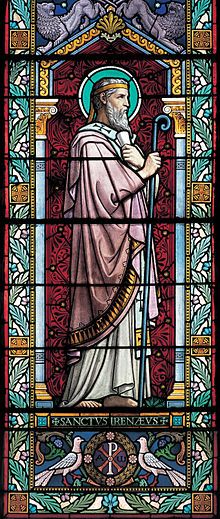
Catholicity means universality – a multiplicity that becomes unity; a unity that nevertheless remains multiplicity. From Paul’s words on the Church’s universality we have already seen that the ability of nations to get the better of themselves in order to look towards the one God, is part of this unity. In the second century, the founder of Catholic theology, St Irenaeus of Lyons, described very beautifully this bond between catholicity and unity and I quote him. He says: “The Church spread across the world diligently safeguards this doctrine and this faith, forming as it were one family: the same faith, with one mind and one heart, the same preaching, teaching and tradition as if she had but one mouth. Languages abound according to the region but the power of our tradition is one and the same. The Churches in Germany do not differ in faith or tradition, neither do those in Spain, Gaul, Egypt, Libya, the Orient, the centre of the earth; just as the sun, God’s creature, is one alone and identical throughout the world, so the light of true preaching shines everywhere and illuminates all who desire to attain knowledge of the truth” (Adv. Haer. I 10, 2). The unity of men and women in their multiplicity has become possible because God, this one God of heaven and earth, has shown himself to us; because the essential truth about our lives, our “where from?” and “where to?” became visible when he revealed himself to us and enabled us to see his face, himself, in Jesus Christ. This truth about the essence of our being, living and dying, a truth that God made visible, unites us and makes us brothers and sisters. Catholicity and unity go hand in hand. And unity has a content: the faith that the Apostles passed on to us in Christ’s name.

… We have said that the catholicity of the Church and the unity of the Church go together. The fact that both dimensions become visible to us in the figures of the holy Apostles already shows us the consequent characteristic of the Church: she is apostolic. What does this mean?sts peter and paul - snip

The Lord established Twelve Apostles just as the sons of Jacob were 12. By so doing he was presenting them as leaders of the People of God which, henceforth universal, from that time has included all the peoples. St Mark tells us that Jesus called the Apostles so “to be with him, and to be sent out” (Mk 3: 14). This seems almost a contradiction in terms. We would say: “Either they stayed with him or they were sent forth and set out on their travels”. Pope St Gregory the Great says a word about angels that helps us resolve this contradiction. He says that angels are always sent out and at the same time are always in God’s presence, and continues, “Wherever they are sent, wherever they go, they always journey on in God’s heart” (Homily, 34, 13). The Book of Revelation described Bishops as “angels” in their Church, so we can state: the Apostles and their successors must always be with the Lord and precisely in this way – wherever they may go – they must always be in communion with him and live by this communion.

… Today’s Gospel tells of the profession of faith of St Peter, on whom the Church was founded: “You are the Messiah… the Son of the living God” (Mt 16: 16). Having spoken today of the Church as one, catholic and apostolic but not yet of the Church as holy, let us now recall another profession of Peter, his response on behalf of the Twelve at the moment when so many abandoned Christ: “We have come to believe; we are convinced that you are God’s holy one” (Jn 6: 69). …

Let us pray to the Lord that the truth of these words may be deeply impressed in our hearts, together with his joy and with his responsibility; let us pray that shining out from the Eucharistic Celebration it will become increasingly the force that shapes our lives.B.Vivarini, Apostel Petrus und Paulus - The Apostles Peter and Paul / Vivarini -
 

Posted in FEASTS and SOLEMNITIES, SAINT of the DAY, The BLESSED VIRGIN MARY

The Solemnity of Sts Peter and Paul, Saints’ Memorials and Feasts

Sts Peter and Paul Apostles (Solemnity)

Our Lady of Linares

St Anastasius of Bourges
St Benedicta of Sens
St Cassius of Narni
St Ciwg ap Arawn
St Cocha
Bl Hemma of Gurk
St Ilud Ferch Brychan
St Judith of Niederaltaich
St Marcellus of Bourges
St Mary, the Mother of John Mark
Bl Pierre of Tarentaise the Elder
St Salome of Niederaltaich
St Syrus of Genoa
Bl William of Sann

Martyrs of China
Ioannes Baptista Wu Mantang
Magdalena Du Fengju
Maria Du Tianshi
Paulus Wu Anju
Paulus Wu Wanshu

Posted in FATHERS of the Church, MORNING Prayers, QUOTES of the SAINTS, SAINT of the DAY, The WORD

One Minute Reflection – 28 June

One Minute Reflection – 28 June

Everyone who looks upon the Son
and believes in him shall have eternal life………….John 6:40

john 6-40

REFLECTION – “The Father made God visible to human beings through numerous mysteries to prevent them from losing everything – even their very lives. For the glory of God is the living person and the life of a person is the vision of God.”………..St Irenaeus – Father of the Church

the fathr made god visible-st irenaeus

PRAYER – Heavenly Father, You left us Your Church and Your Vicar the Holy Father our Pope, to insure our contact with You. Let me always cling to Your Church and follow its teachings in every detail and with all my heart. St Irenaeus, please pray for us all the members of Body of Christ, the one Holy Catholic and Apostolic Church, amen.

st irenaeus - pray for us

Posted in FATHERS of the Church, MORNING Prayers, SAINT of the DAY

Thought for the Day – 28 June

Thought for the Day – 28 June

The Church is fortunate that St Irenaeus was involved in many of its controversies in the second century.   He was a student, well trained no doubt, with great patience in investigating, tremendously protective of apostolic teaching but prompted more by a desire to win over his opponents than to prove them in error.

As bishop of Lyons he was especially concerned with the Gnostics, who took their name from the Greek word for “knowledge.”   Claiming access to secret knowledge imparted by Jesus to only a few disciples, their teaching was attracting and confusing many Christians.   After thoroughly investigating the various Gnostic sects and their “secret,” Irenaeus showed to what logical conclusions their tenets led.   These he contrasted with the teaching of the apostles and the text of Holy Scripture, giving us, in five books, a system of theology of great importance to subsequent times.   Moreover, his work, widely used and translated into Latin and Armenian, gradually ended the influence of the Gnostics.
St Irenaeus’ deep and genuine concern for other people will remind us that the discovery of truth is not to be a victory for some and a defeat for others.   Unless all can claim a share in that victory, truth itself will continue to be rejected by the losers, because it will be regarded as inseparable from the yoke of defeat.   And so, confrontation, controversy and the like might yield to a genuine united search for God’s truth and how it can best be served……….Fr Don Miller, OFM

St Irenaeus pray for us all!

ST IRENAEUS PRAY FOR US

Posted in FATHERS of the Church, MORNING Prayers, QUOTES of the SAINTS, SAINT of the DAY

Quotes of the Day – 28 June

Quotes of the Day – 28 June

“Our way of thinking is attuned to the Eucharist
and the Eucharist in turn, confirms our way of thinking.”

our way of thinking - st irenaeus

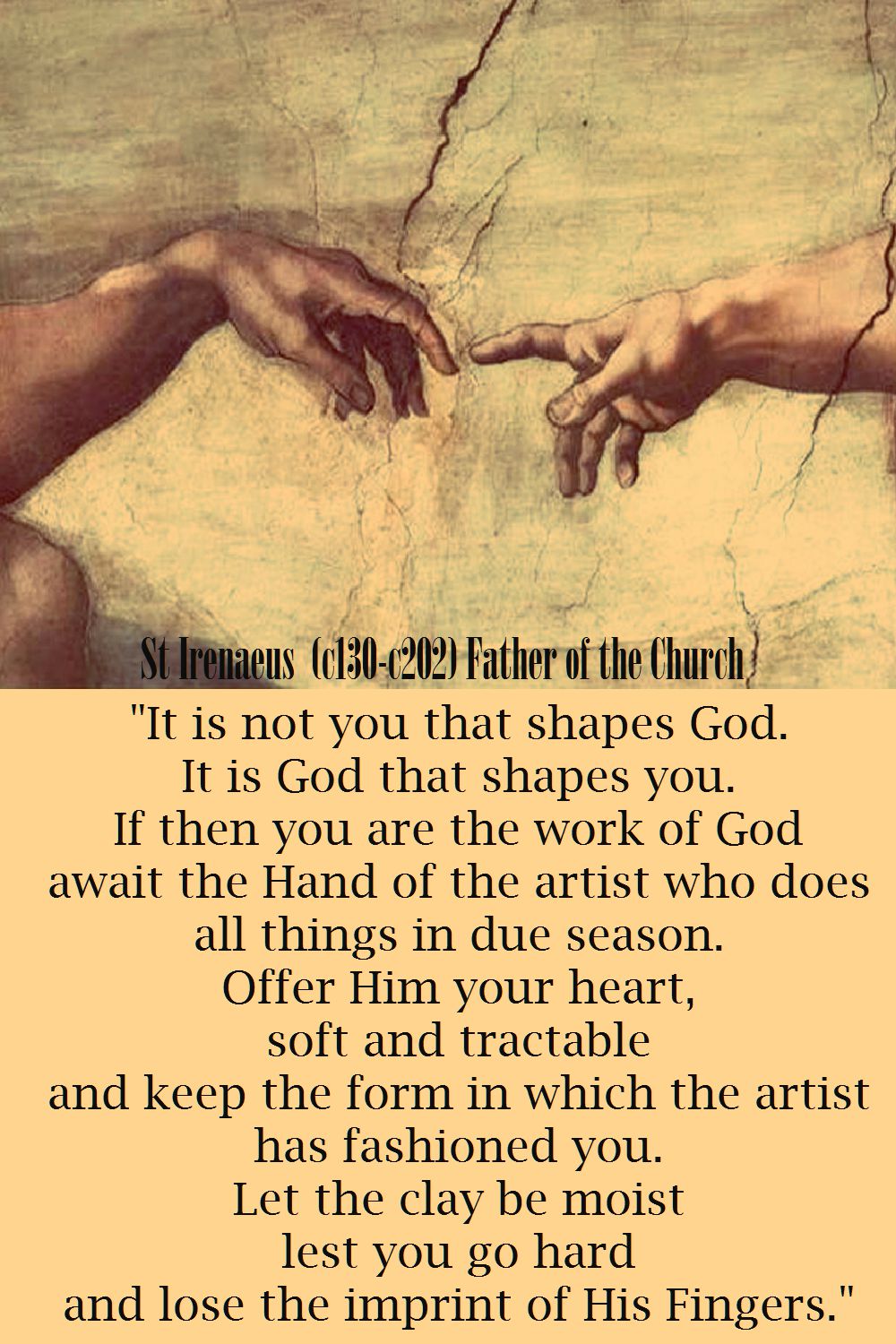
“It is not you that shapes God.
It is God that shapes you.
If then you are the work of God
await the Hand of the artist who does
all things in due season.
Offer Him your heart,
soft and tractable
and keep the form in which the artist
has fashioned you.
Let the clay be moist
lest you go hard
and lose the imprint of His Fingers.”

it is not you that shapes god-strenaeus

“The preaching of the Church truly continues
without change and is everywhere the same.
It has the testimony of the Prophets
and Apostles and all their disciples.”

the preaching of the church

“Being obedient she (Mary)
became the cause of salvation for herself
and for the whole human race.
The knot of Eve’s disobedience was untied
by Mary’s obedience:
what the virgin Eve bound through her disbelief,
Mary loosened by her faith.”

being obedient-st irenaeus

“As long as any one has the means
of doing good to his neighbours
and does not do so,
he shall be reckoned a stranger
to the love of the Lord.”

as long as any one has the means-st irenaeus

St. Irenaeus (c130-c202), pray for us!

Posted in FATHERS of the Church, MORNING Prayers, PRAYERS of the SAINTS, SAINT of the DAY

Our Morning Offering – 28 June

Our Morning Offering – 28 June

O Lamb of God
by St Irenaeus

O Lamb of God,
who takes away the sin of the world,
look upon us and have mercy upon us;
You who art Yourself both victim and Priest,
Yourself both Reward and Redeemer,
keep safe from all evil
those whom You have redeemed,
O Saviour of the world.
Amen

o lamb of god by st irenaeus

Posted in SAINT of the DAY

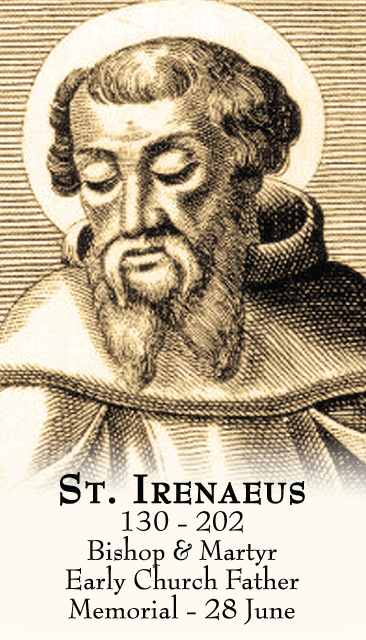
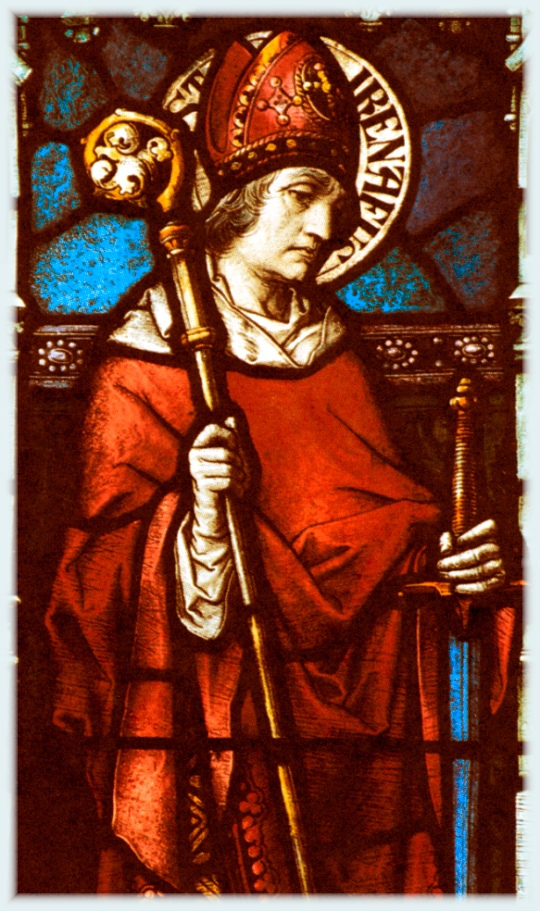
Saint of the Day – 28 June – St Irenaeus (c 130-202) Bishop Martyr

Saint of the Day – 28 June – St Irenaeus (c 130-202) – Bishop, Martyr & Father of the Church – (c 130 in Smyrna, Asia Minor (modern Izmir, Turkey) – martyred in 202 in Lyons, France)   His tomb and relics were destroyed by Calvinists in 1562 but his head is thought to be in Saint John’s church, Lyons, France.   Patronage – archdiocese of Mobile, Alabama.

Card_430-St-Irenaeus-front

St Irenaeus was born during the first half of the 2nd century (the exact date is disputed: between the years 115 and 125 according to some, or 130 and 142 according to others), and he is thought to have been a Greek from Polycarp’s hometown of Smyrna in Asia Minor, now İzmir, Turkey.    Unlike many of his contemporaries, he was brought up in a Christian family rather than converting as an adult.

During the persecution of Marcus Aurelius, the Roman Emperor from 161–180, Irenaeus was a priest of the Church of Lyon.   The clergy of that city, many of whom were suffering imprisonment for the faith, sent him in 177 to Rome with a letter to Pope Eleuterus concerning the heresy Montanism and that occasion bore emphatic testimony to his merits.   While Irenaeus was in Rome, a massacre took place in Lyon.   Returning to Gaul, Irenaeus succeeded the martyr Saint Pothinus and became the second Bishop of Lyon.st-irenaeus-3

The new bishop divided his activities between the duties of a pastor and of a missionary (as to which we have but brief data, late and not very certain), during the religious peace which followed the persecution of Marcus Aurelius.   Almost all his writings were directed against Gnosticism.   The most famous of these writings is Adversus haereses (Against Heresies).

St Irenaeus linked the Church at the time of the twelve apostles and the Church of the second century.   He wrote and taught the faith handed on by the apostles and preserved it when it was attacked.   His chief concern was unity among the churches.st-irenaeus-2

The date of the death of Irenaeus is usually given as about the year 202/203.   According to a late tradition he suffered martyrdom under Septimius Severus.san-ireneo-de-lyon


Posted in SAINT of the DAY

Saints – 28 June

St Irenaeus of Lyons (Memorial)

Bl Almus of Balmerino
St Argymirus of Córdoba
St Attilio of Trino
St Austell of Cornwall
St Benignus of Utrecht
St Crummine
Bl Damian of Campania
St Egilo
St Heimrad
St John Southworth
St Lupercio
St Papias the Martyr
St Pope Paul I
Bl Teresa Maria Mastena
St Theodichildis
St Vincentia Gerosa

Martyrs of Africa – 27 saints: 27 Christians martyred together. The only details about them to survive are the names – Afesius, Alexander, Amfamon, Apollonius, Arion, Capitolinus, Capitulinus, Crescens, Dionusius, Dioscorus, Elafa, Eunuchus, Fabian, Felix, Fisocius, Gurdinus, Hinus, Meleus, Nica, Nisia, Pannus, Panubrius, Plebrius, Pleosus, Theoma, Tubonus and Venustus. Unknown location in Africa, date unknown.

Martyrs of Alexandria – 8 saints: A group of spiritual students of Origen who were martyred together in the persecutions of emperor Septimius Severus – Heraclides, Heron, Marcella, Plutarch, Potamiaena the Elder, Rhais, Serenus and Serenus. They were burned to death c.206 in Alexandria, Egypt.


Martyrs of China:
St Lucia Wang Cheng
St Maria Chi Yu
St Maria Du Zhauzhi
St Maria Fan Kun
St Maria Zheng Xu

Martyrs of Korea:
Bl Matthaeus Choe In-gil
Bl Paul Yun Yu-il
Bl Sabas Ji-Hwang
Martyrs of Ukraine
Bl Severian Baranyk
Bl Yakym Senkivsky

Posted in DOCTORS of the Church, FATHERS of the Church, MORNING Prayers, QUOTES of the SAINTS, SAINT of the DAY

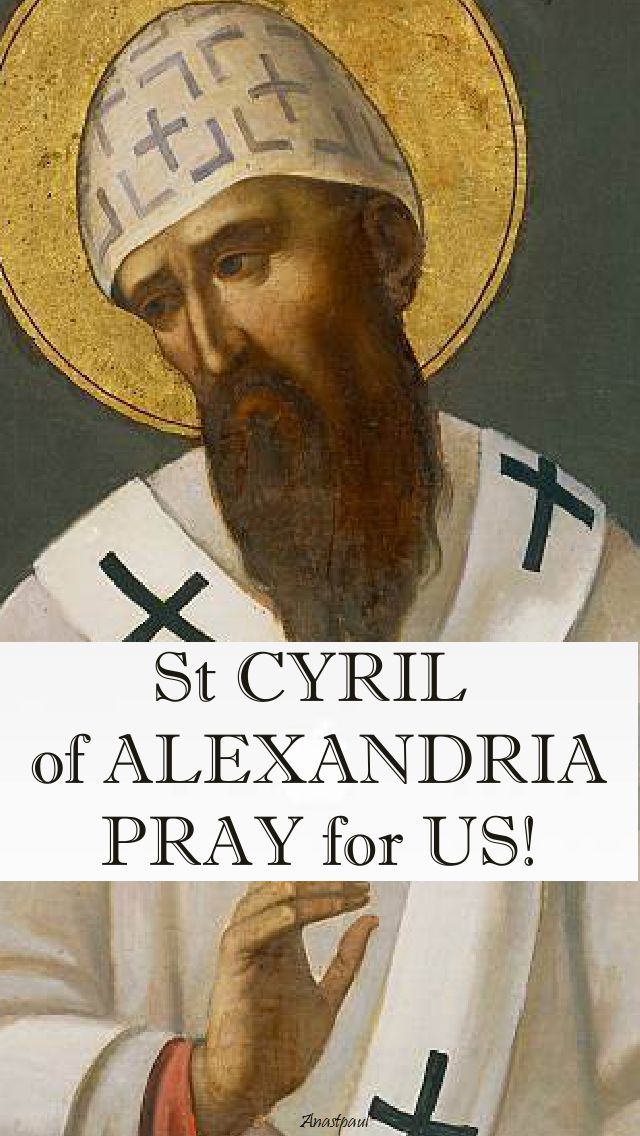
Thought for the Day – 27 June – The Memorial of St Cyril of Alexandria (376-444) Father and Doctor of the Incarnation

Thought for the Day – 27 June – The Memorial of St Cyril of Alexandria (376-444) Father and Doctor of the Incarnation

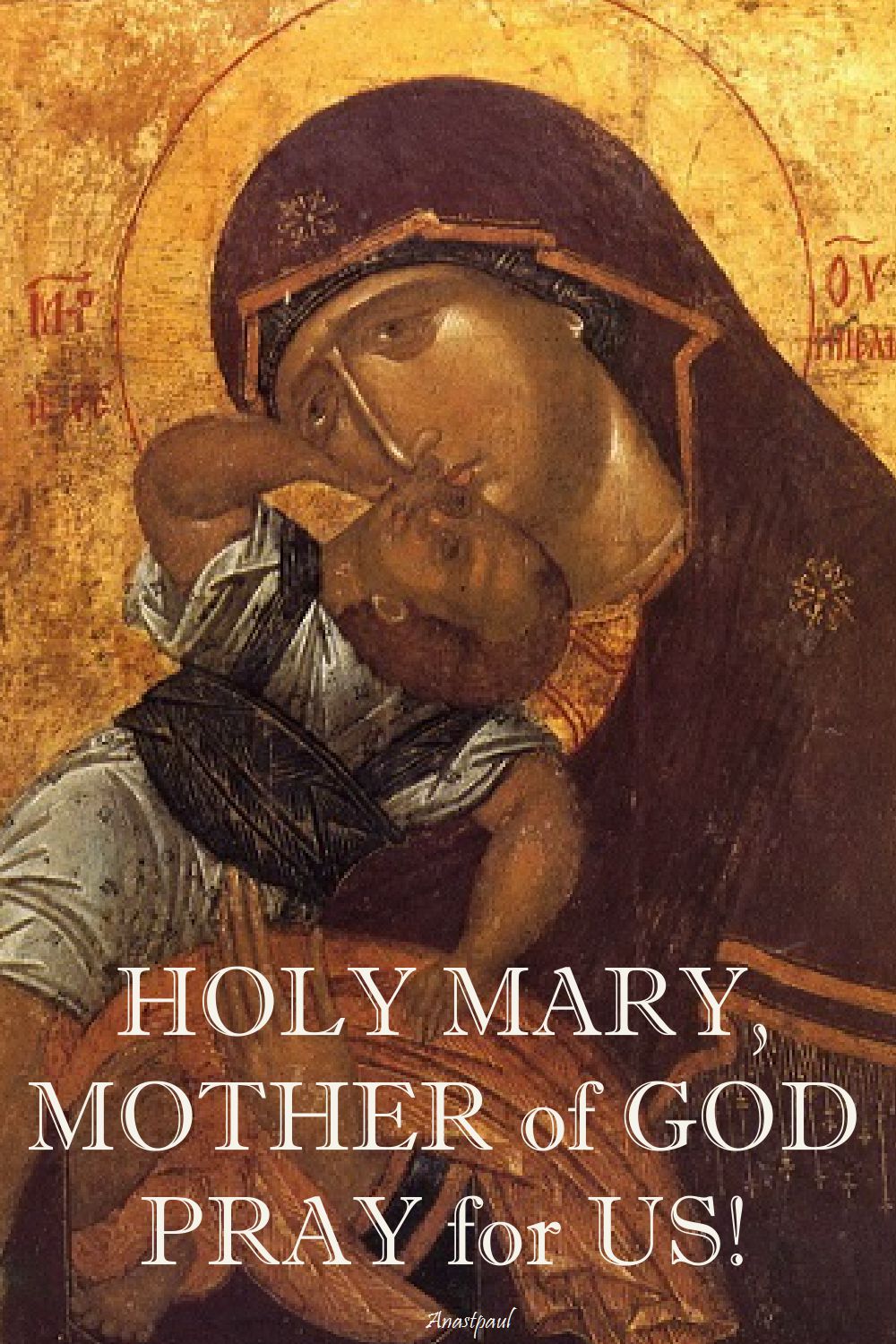
Theotokos is the official name of Mary and it is well to remember the great battle that was fought (and to my mnd, continues to fought today) over this title.  SHE IS the Mother of God – the Son of God was born of her in His human nature, without ceasing to be God. The whole mystery of the Incarnation is bound up in Mary and she is at the very heart of the work of Jesus’ Redemption of mankind!
St Cyril of Alexandria’s battle raged over the combined front of the Divinity of Christ and therefore, Mary the Mother of the Divinity, is summed up thus:   “Only if it is one and the same Christ who is consubstantial with the Father and with men can He save us, for the meeting ground between God and man is the flesh of Christ. Only if this is God’s own flesh can man come into contact with Christ’s divinity through His humanity, through his earthy mother, Mary.  Because of our kinship with the Word made flesh we are sons of God.   The Eucharist consummates our kinship with the word, our communion with the Father, our sharing in the divine nature—there is very real contact between our body and that of the Word.”

St Cyril of Alxandria, pray for us.
Mary, Mother of God, pray for us.

st cyril of alexandria pray for usholy mary mothr of god pray for us

Posted in DOCTORS of the Church, FATHERS of the Church, MORNING Prayers, QUOTES of the SAINTS, SAINT of the DAY

Quote/s of the Day – 27 June – Memorial of St Cyril of Alexandria (376-444) Father and Doctor

Quote/s of the Day – 27 June – Memorial of St Cyril of Alexandria (376-444) Father and Doctor

“He who receives Communion is made holy and divinised in soul and body
in the same way that water, set over a fire, becomes boiling…
Communion works like yeast that has been mixed into dough
so that it leavens the whole mass;
…Just as by melting two candles together you get one piece of wax,
so, I think, one who receives the Flesh and Blood of Jesus
is fused together with Him by this Communion
and the soul finds that he is in Christ and Christ is in him.”

as two pieces of wax-st cyril of alexandria

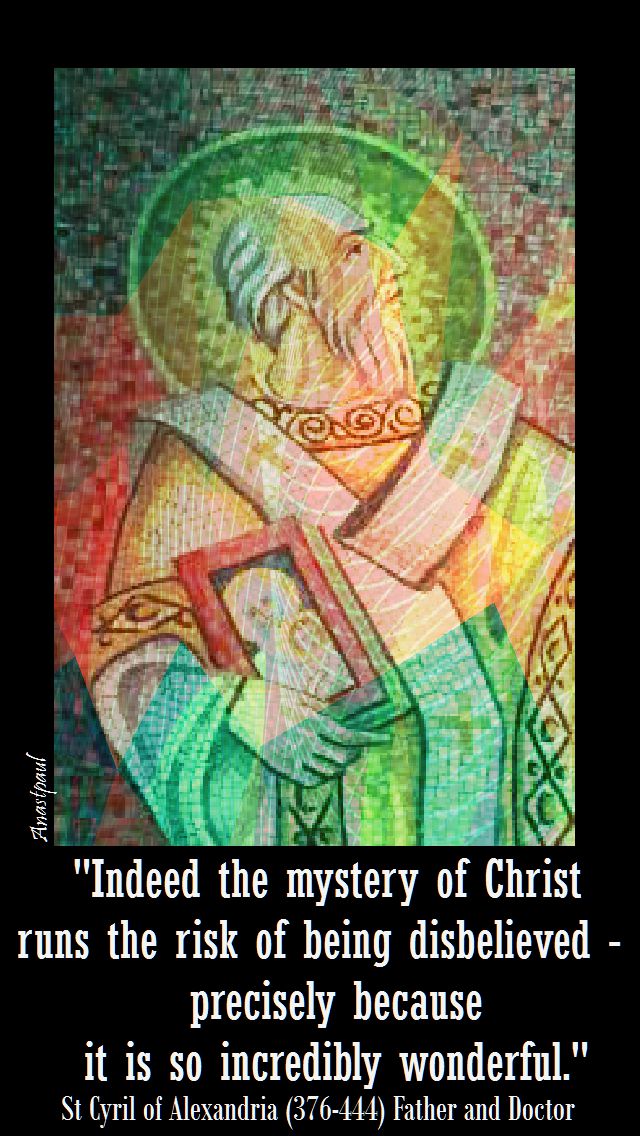
“Indeed the mystery of Christ runs the risk
of being disbelieved – precisely because
it is so incredibly wonderful.”

indeed the mystery of christ - st cyril of alexandria

“It is like employing a small tool on big constructions,
if we use human wisdom
in the hunt for knowledge of reality.”

“Our Saviour went to the wedding feast
to make holy the origins of human life.”

our saviour went to the edding feast-st cyril of alexandria

ST CYRIL OF ALEXANDRIA

Posted in DOCTORS of the Church, FATHERS of the Church, MORNING Prayers, QUOTES of the SAINTS, SAINT of the DAY, The WORD

One Minute Reflection – 27 June

One Minute Reflection – 27 June

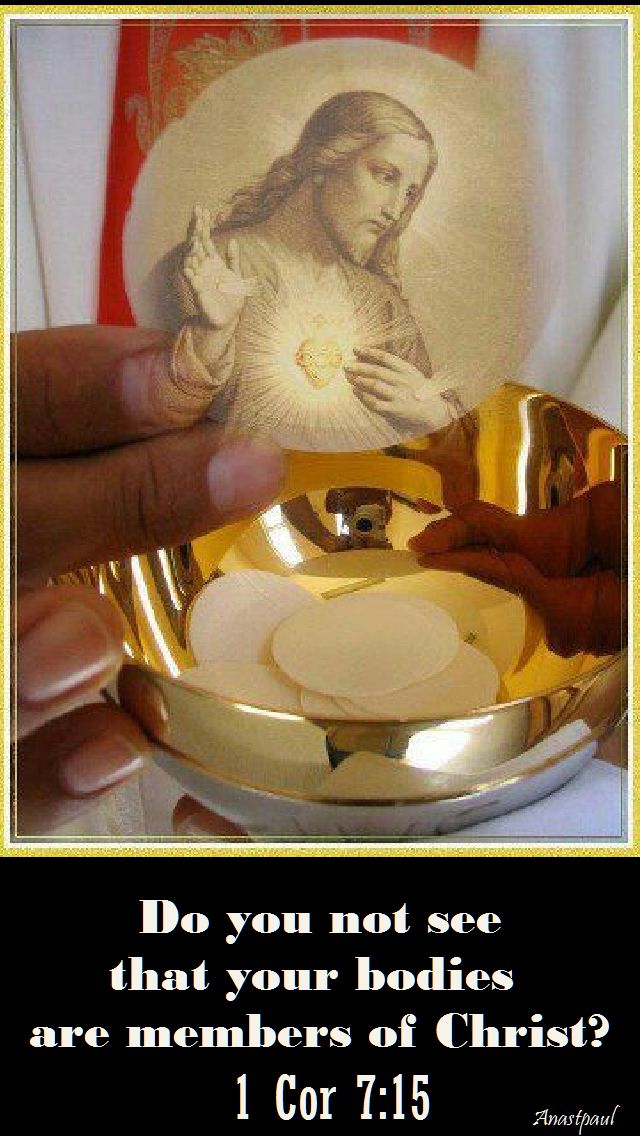
Do you not see that your bodies are members of Christ?………..1 Cor 7:15

1 corinthians 7-15

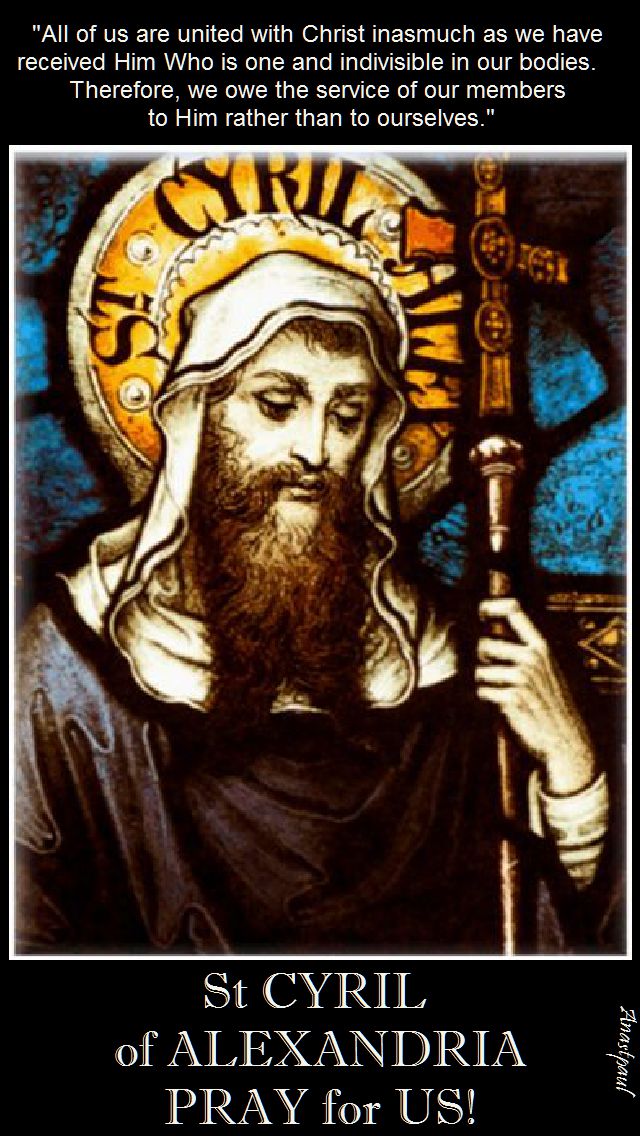
REFLECTION – “All of us are united with Christ inasmuch as we have received Him Who is one and indivisible in our bodies.   Therefore, we owe the service of our members to Him rather than to ourselves.”………. St Cyril of Alexandria (376-444) Doctor and Father of the Church (Saint of the Day)

PRAYER – Almighty God and Father, help me to put all my faculties at the disposal of Christ so as to be His link to others and with the world around me.   Let me give myself wholly to Him this day and every day. St Cyril of Alexandria, defender of the divinity of Christ and the Mother of God, intercede for us, amen.

all of us are united - st cyrill of alexandria

Posted in DOCTORS of the Church, FATHERS of the Church, MORNING Prayers, PRAYERS of the SAINTS, SAINT of the DAY, The BLESSED VIRGIN MARY

Our Morning Offering – 27 June

Our Morning Offering – 27 June

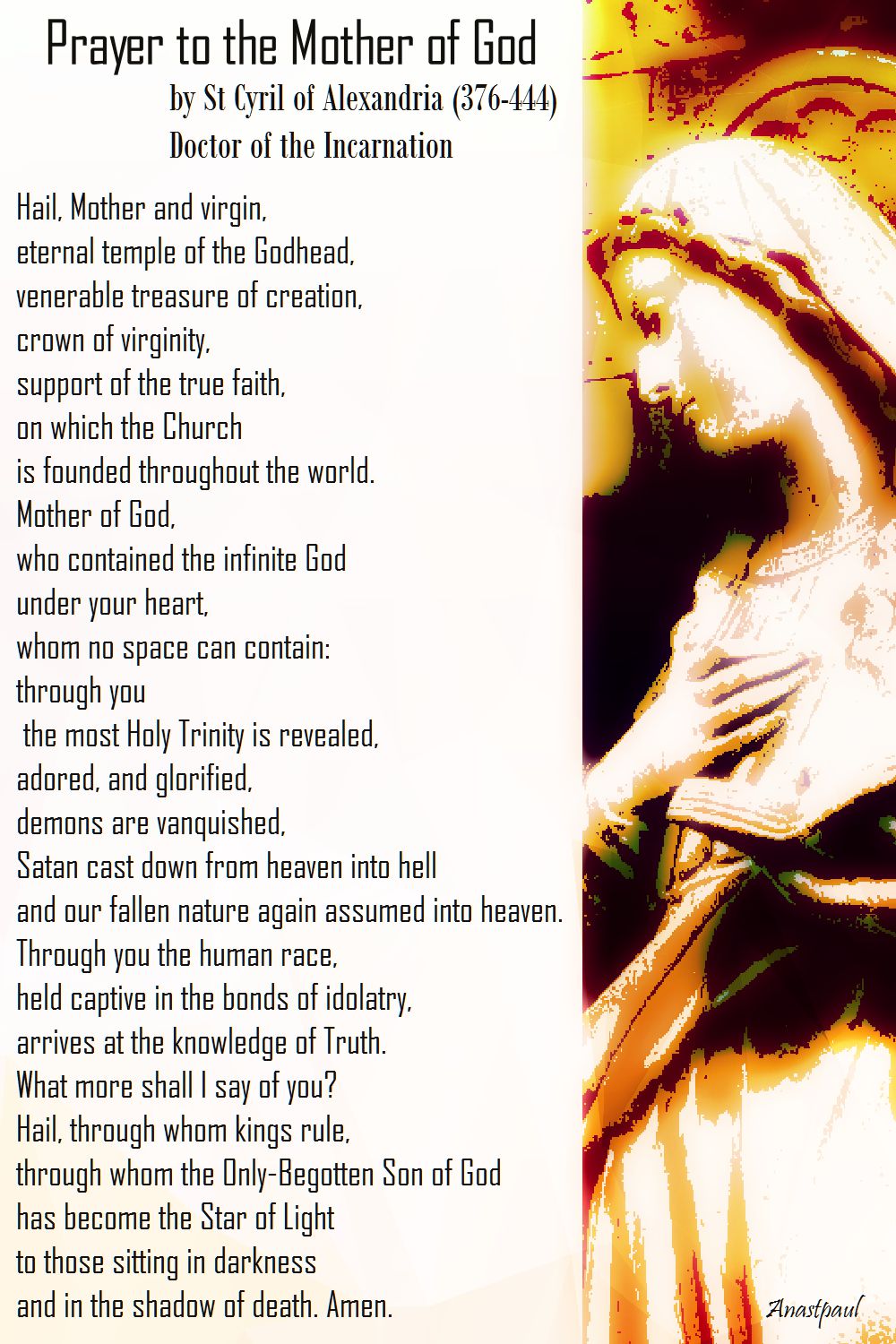
Prayer to the Mother of God
by St Cyril of Alexandria (Saint of the Day) 

Hail, Mother and virgin,
eternal temple of the Godhead,
venerable treasure of creation,
crown of virginity,
support of the true faith,
on which the Church is founded
throughout the world.
Mother of God,
who contained the infinite God
under your heart,
whom no space can contain:
through you
the most Holy Trinity is revealed,
adored, and glorified,
demons are vanquished,
Satan cast down from heaven into hell
and our fallen nature again
assumed into heaven.
Through you the human race,
held captive in the bonds of idolatry,
arrives at the knowledge of Truth.
What more shall I say of you?
Hail, through whom kings rule,
through whom the Only-Begotten
Son of God
has become the Star of Light
to those sitting in darkness
and in the shadow of death. Amen

prayer to the mother of god - st cyril of alexandria

Posted in DOCTORS of the Church, FATHERS of the Church, SAINT of the DAY

Saint of the Day – 27 June – St Cyril of Alexandria – Doctor & Father of the Church – “The Pillar of Faith” & “Seal of all the Fathers” – Doctor Incarnationis (Doctor of the Incarnation) Added by Pope Leo XIII in 1883

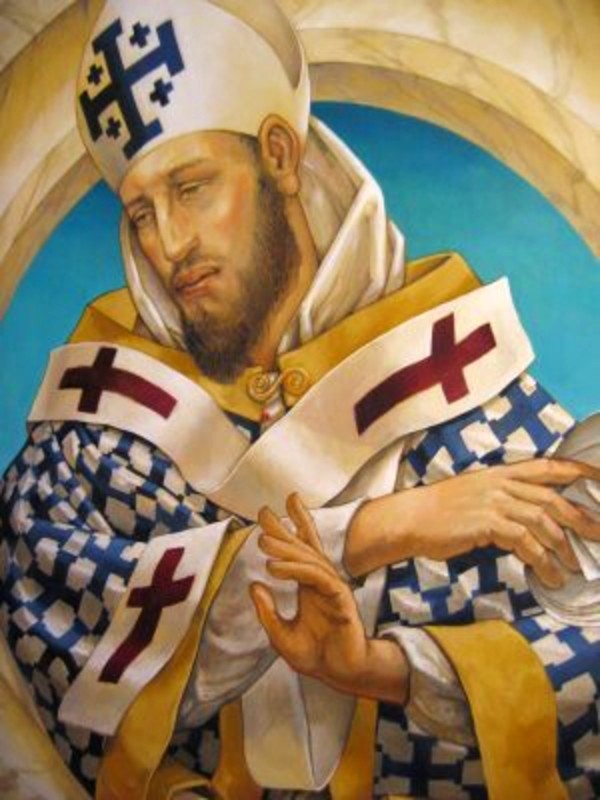
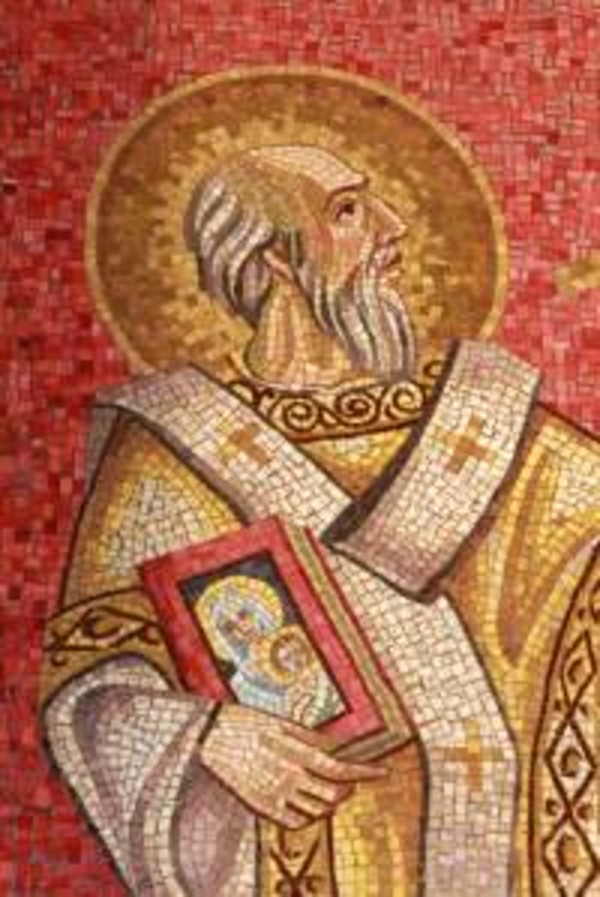
Saint of the Day – 27 June – St Cyril of Alexandria – Doctor of the Church “The Pillar of Faith” & “Seal of all the Fathers” – Doctor Incarnationis (Doctor of the Incarnation) Added by Pope Leo XIII in 1883 – (376 at Alexandria, Egypt – 444 at Alexandria, Egypt of natural causes, his relics are in Alexandria).   Bishop, Confessor, Writer, Defender of the Faith.   Patron of Alexandria, Egypt.   Attributes – book, pen or scroll, indicative of his work as a writer, the Blessed Virgin Mary holding the Child Jesus, representing his advocacy of the doctrine of Mary as Mother of God.

On June 27, Roman Catholics honour St. Cyril of Alexandria.   An Egyptian bishop and theologian, he is best known for his role in the Council of Ephesus, where the Church confirmed that Christ is both God and man in one person.

st cyril of alexandria 4

Cyril was most likely born in Alexandria, the metropolis of ancient Egypt, between 370 and 380.   From his writings, it appears he received a solid literary and theological education.   Along with his uncle, Patriarch Theophilus of Alexandria, he played a role in an early fifth-century dispute between the Egyptian and Greek churches.   There is evidence he may have been a monk before becoming a bishop.

When Theophilus died in 412, Cyril was chosen to succeed him at the head of the Egyptian Church.   He continued his uncle’s policy of insisting on Alexandria’s preeminence within the Church over Constantinople, despite the political prominence of the imperial capital.   The two Eastern churches eventually re-established communion in approximately 418.st-cyril-of-alexandria upsize

Ten years later, however, a theological dispute caused a new break between Alexandria and Constantinople.   Cyril’s reputation as a theologian, and later Doctor of the Church, arose from his defense of Catholic orthodoxy during this time.

In 428, a monk named Nestorius became the new Patriarch of Constantinople.   It became clear that Nestorius was not willing to use the term “Mother of God” (“Theotokos”) to describe the Virgin Mary.   Instead, he insisted on the term “Mother of Christ” (“Christotokos”).   During the fourth century, the Greek Church had already held two ecumenical councils to confirm Christ’s eternal preexistence as God prior to his incarnation as a man.   From this perennial belief, it followed logically that Mary was the mother of God.   Veneration of Mary as “Theotokos” confirmed the doctrine of the incarnation, and Christ’s status as equal to the God the Father.   Nestorius insisted that he, too, held these doctrines.   But to Cyril, and many others, his refusal to acknowledge Mary as the Mother of God seemed to reveal a heretical view of Christ which would split him into two united but distinct persons:  one fully human and born of Mary, the other fully divine and not subject to birth or death.

Cyril responded to this heretical tendency first through a series of letters to Nestorius (which are still in existence and studied today), then through an appeal to the Pope, and finally through the summoning of an ecumenical council in 431.   Cyril presided over this council, stating that he was “filling the place of the most holy and blessed Archbishop of the Roman Church,” Pope Celestine, who had authorised it.st cyril_of alex mosaic - small

The council was a tumultuous affair.   Patriarch John of Antioch, a friend of Nestorius, came to the city and convened a rival council which sought to condemn and depose Cyril.   Tension between the advocates of Cyril and Nestorius erupted into physical violence at times and both parties sought to convince the emperor in Constantinople to back their position.

During the council, which ran from June 22 to July 31 of the year 431, Cyril brilliantly defended the orthodox belief in Christ as a single eternally divine person who also became incarnate as a man.   The council condemned Nestorius, who was deposed as patriarch and later suffered exile.   Cyril, however, reconciled with John and many of the other Antiochian theologians who once supported Nestorius.

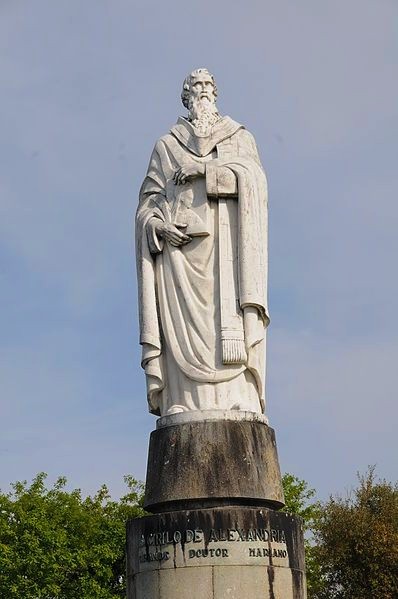
St. Cyril of Alexandria died on June 27, 444, having been a bishop for nearly 32 years. Long celebrated as a saint, particularly in the Eastern Catholic and Eastern Orthodox churches, he was declared a Doctor of the Church in 1883.st-cyril-of-alexandria-statue


Posted in SAINT of the DAY, The BLESSED VIRGIN MARY

Saints’ Memorials and Feast Days of the Blessed Virgin Mary – 27 June

St Cyril of Alexandria (Optional Memorial)

Our Lady of Perpetual Succour:  The picture of Our Lady of Perpetual Succour is painted on wood, with background of gold.   It is Byzantine in style and is supposed to have been painted in the thirteenth century.   It represents the Mother of God holding the Divine Child while the Archangels Michael and Gabriel present before Him the instruments of His Passion.   Over the figures in the picture are some Greek letters which form the abbreviated words Mother of God, Jesus Christ, Archangel Michael and Archangel Gabriel respectively.

It was brought to Rome towards the end of the fifteenth century by a pious merchant, who, dying there, ordered by his will that the picture should be exposed in a church for public veneration.   It was exposed in the church of San Matteo, Via Merulana, between Saint Mary Major and Saint John Lateran.   Crowds flocked to this church and for nearly three hundred years many graces were obtained through the intercession of the Blessed Virgin.   The picture was then popularly called the Madonna di San Matteo.   The church was served for a time by the Hermits of Saint Augustine, who had sheltered their Irish brethren in their distress.

These Augustinians were still in charge when the French invaded Rome, Italy in 1812 and destroyed the church.   The picture disappeared; it remained hidden and neglected for over forty years but a series of providential circumstances between 1863 and 1865 led to its discovery in an oratory of the Augustinian Fathers at Santa Maria in Posterula. The pope, Pius IX, who as a boy had prayed before the picture in San Matteo, became interested in the discovery and in a letter dated 11 Dececember 1865 to Father General Mauron, C.SS.R., ordered that Our Lady of Perpetual Succour should be again publicly venerated in Via Merulana and this time at the new church of Saint Alphonsus.    The ruins of San Matteo were in the grounds of the Redemptorist Convent.   This was but the first favour of the Holy Father towards the picture.   He approved of the solemn translation of the picture (26 April 1866) and its coronation by the Vatican Chapter (23 June 1867).   He fixed the feast as duplex secundae classis, on the Sunday before the Feast of the Nativity of Saint John the Baptist and by a decree dated May 1876, approved of a special office and Mass for the Congregation of the Most Holy Redeemer.   This favour later on was also granted to others.   Learning that the devotion to Our Lady under this title had spread far and wide, Pius IX raised a confraternity of Our Lady of Perpetual Succour and Saint Alphonsus, which had been erected in Rome, to the rank of an arch-confraternity and enriched it with many privileges and indulgences.   He was among the first to visit the picture in its new home and his name is the first in the register of the arch-confraternity.

Two thousand three hundred facsimiles of the Holy Picture have been sent from Saint Alphonsus’s church in Rome to every part of the world.   At the present day not only altars but churches and dioceses (e.g. in England, Leeds and Middlesbrough; in the United States, Savannah) are dedicated to Our Lady of Perpetual Succour.   In some places, as in the United States, the title has been translated Our Lady of Perpetual Help but generally Catholics throughout the rest of the world use the proper title.Patronage:
• The Redemptorist Order, Haiti 1 Arch and 7 Diocese around the world, 3 cities in various parts of the world.


Mother of God of Gietrzwald:   Our Lady appeared for the first time to Justyna Szafrynska (13) when she was returning home with her mother after having taken an examination prior to receiving the First Holy Communion.   The next day, Barbara Samulowska (12) also saw the ‘Bright Lady’ sitting on the throne with Infant Christ among Angels over the maple tree in front of the church while reciting the rosary.   The girls asked “Who are you?” she answered, “I am the Blessed Virgin Mary of the Immaculate Conception!”. “What do you require, Mother of God?”, they asked, the answer was:  “I wish you recite the rosary everyday!”  There were 13 more apparitions from 27 June 1877 to 16 September 1877.
2 February 1970 – Pope Paul VI elevated the church in Gietrzwald to the rank of Basilica Minor.

11 September 1977 – One hundredth anniversary of Our Lady apparitions in Gietrzwald. Masses of faithful gathered with the representatives of the Episcopal Conference of Poland headed by Cardinal Karol Wojtyla who prayed:  “Remember, the Blessed Virgin Mary, no one has heard that anybody who has entrusted his needs to your maternal kindness has been disappointed.   Therefore, full of trust in face of pleading might of your heart, we are laying down in your generous hands, the health of your servant and our Primate.   Look at his loyalty and devotion, with which he has been serving you for many years as priest and bishop and restore in full his strength so that he may see your glory in the days of the jubilee of the basilica of Our Lady of Czestochowa and direct the Church in Poland for many years.”   The primate who was too ill to attend recovered.

11 September 1977 – During the ceremonies, the decree of the Warmian Bishop, Jozef Drzazga, was read approving the devotion to Our Lady’s apparitions in Gietrzwald as not contradicting Christian faith and morality and recognizing the miraculous and divine nature of the events.


St Adeodato of Naples
St Aedh McLugack
St Anectus of Caesarea
St Arialdus of Milan
St Arianell of Wales
Bl Benvenutus of Gubbio
St Brogan
St Crescens of Galatia
St Crescentius of Mainz
Bl Daniel of Schönau
Bl Davanzato of Poggibonsi
St Desideratus of Gourdon
St Dimman
St Felix of Rome
St Ferdinand of Aragon
St Gudene of Carthage
St Joanna the Myrrhbearer
St John of Chinon
St Ladislas I of Hungary
St Sampson of Constantinople
St Spinella of Rome
St Tôma Toán
St Zoilus of Cordoba

Martyrs Killed Under Communist Regimes in Eastern Europe: Among the thousands of Christians murdered by various Communist regimes in their hatred of the faith, there were 25 members of the Ukrainian Greek Catholic Church and Russian Byzantine Catholic Church, priests, bishops, sisters and lay people, whose stories are sufficiently well documented that we know they were murdered specifically for their faith in eastern Europe and whose Causes for Canonization were opened. Their Causes were combined and they were beatified together. They have separate memorials but are remembered together today. They are –

• Andrii Ischak • Hryhorii Khomyshyn • Hryhorii Lakota • Ivan Sleziuk • Ivan Ziatyk • Klymentii Sheptytskyi • Leonid Feodorov • Levkadia Harasymiv • Mykola Konrad • Mykola Tsehelskyi • Mykolai Charnetskyi • Mykyta Budka • Oleksa Zarytskyi • Ol’Ha Bida • Ol’Ha Matskiv • Petro Verhun • Roman Lysko • Stepan Baranyk • Symeon Lukach • Vasyl Vsevolod Velychkovskyi • Volodomyr Bairak • Volodymyr Ivanovych Pryima • Yakym Senkivsky • Yosafat Kotsylovskyi • Zenon Kovalyk

Beatified – 27 June 2001 by Pope John Paul II in Ukraine

Posted in MORNING Prayers, QUOTES of the SAINTS, SAINT of the DAY

Thought for the Day – 26 June

Thought for the Day – 26 June

Opus Dei, which means Work of God, emphasizes that men and women can become holy by performing their daily duties with a Christian spirit.   In his homily, Pope John Paul II emphasised the importance of every believer following God’s will, as had the newly sainted founder of Opus Dei.   “The Lord has a plan for each one of us.  Saints cannot even conceive of themselves outside of God’s plan: they live only to fulfill it.”

St Josemaria is a good example of what one person with conviction can do.   Granted, we all have differing personalities and talents but still each of us can do great things with the grace of God and, let us never forget “we are all called to be saints! – a saint is a person who lets the light shine through.”

Let us go forth!   St Josemaria, Pray for us!

a saint is a person who lets the light shine through

st josemaria - pray for us 2