Quote/s of the Day – 16 January – 1 Peter 5:1-4, 10-11; Matthew 16:13-19 – Scripture search here: https://www.drbo.org/
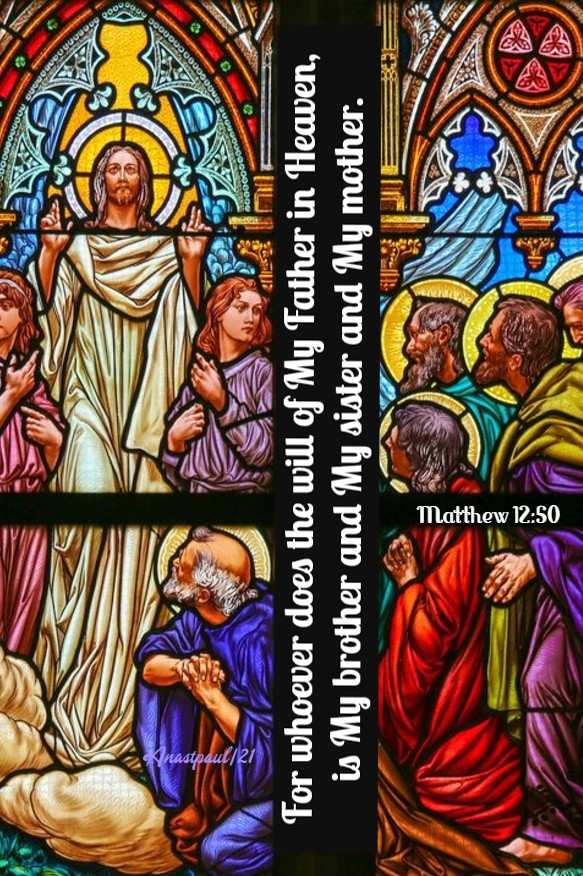
“Whatsoever thou shalt bind upon earth, it shall be bound also in Heaven and whatsoever thou shalt loose on earth, it shall be loosed also in Heaven.”
Matthew 16:19
“But He still follows behind us and counsels us, although we have despised Him, He still does not cease to call us. We turn our backs on His face, so to speak, when we reject His Words, when we trample His Commandments underfoot but He, Who sees that we reject Him, still calls out to us by His Commandments and waits for us by His patience, stands behind us and calls us back when we have turned away.”
St Pope Gregory the Great (540-604) Father & Doctor of the Church
“We fight the monsters of Africa in imagination but, from lack of attention, we allow ourselves, in reality, to be killed by the little serpents which lie in our way!”
(Intro to the Devout Life III:37)
“Do not content yourself with confessing your venial sins merely as to the fact but accuse yourself too, of the motive which induced you to commit them.”
(Introduction to the Devout Life, Part II, Chapter 19).
St Francis de Sales (1567-1622) Doctor Caritatis
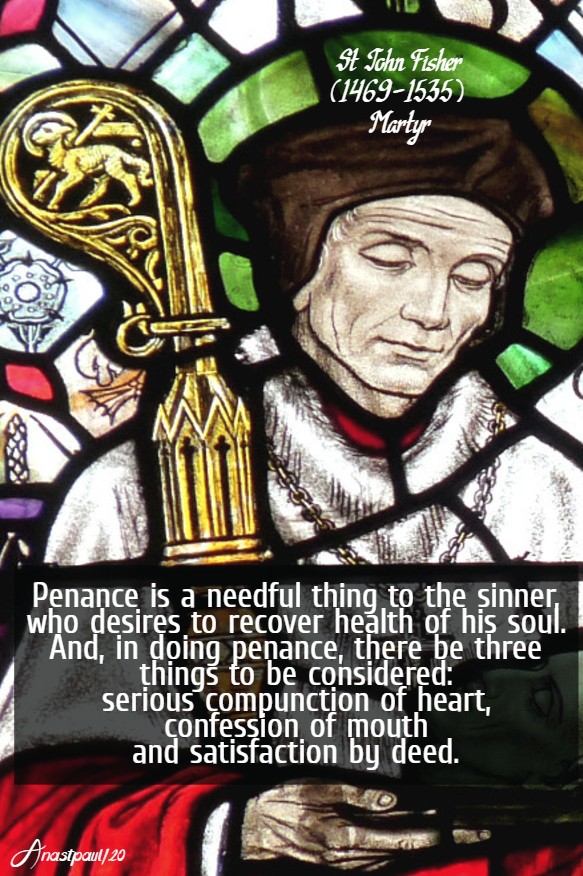
“Yet, after all it is the natural and most suitable means of preparation. It helps us to bring into subjection, that lower nature which rebels against the sovereignty of our King. It detaches us from finding our satisfaction in earthly things. It is, in itself, an act of obedience to our King. It renders us humble and teaches us to put our necks under the yoke. It saves us from being separated from the Kingdom we are to share by the long prison of Purgatory. Learn from all this, to love penance!”
One Minute Reflection – 16 January – “The Month of the Holy Name of Jesus and the Holy Family” – Saint Pope Marcellus I (Died 309) – 1 Peter 5:1-4, 10-11; Matthew 16:13-19 – Scripture search here: https://www.drbo.org/
“Whatsoever thou shalt bind upon earth, it shall be bound also in Heaven and whatsoever thou shalt loose on earth, it shall be loosed also in Heaven.” – Matthew 16:19
REFLECTION – “For our wellbeing and salvation, all the Holy Scriptures warn us constantly and humbly, to confess our sins, not only before God but also before a holy and god-fearing man. This is what the Holy Ghost advises us to do through the mouth of James the Apostle: “Confess your sins to one another and pray for one another that you may be healed” (5:16) … and the psalmist says: “I confess my faults to the Lord and Thou took away the guilt of my sin” (Ps 31:5).
We are always wounded by our sins and, in the same way, we should always have recourse to the medicine of Confession. For indeed, if God wants us to confess our sins, it is not because He would be unable to know what they are but because, the devil wants to find something of which to accuse us before the Judgement Seat of the Eternal Judge. That is why he would rather we thought more about excusing them than accusing ourselves of them. Our God, to the contrary, being good and merciful, wants us to confess them in this world, so that we may not be ashamed because of them in the next. So, if we confess them, then He, on His part, shows Himself to be merciful; if we acknowledge them, then He forgives … As for ourselves, my brethren, we are really your spiritual physicians, seeking with all concern to heal your souls.” – St Caesarius of Arles (470-543) Bishop, Father of the Church (Sermon to the laity No 59 ).
PRAYER – O Lord, we beseech Thee, graciously hear the prayers of Thy people, that we may be helped by the merits of blessed Marcellus, Thy Pope and Martyr, whose sufferings we celebrate. Through the same Jesus Christ, Thy Son our Lord, Who lives and reigns with Thee, in the unity of the Holy Ghost, God, world without end. Amen (Collect).
Our Morning Offering – 16 January – “The Month of the Holy Name of Jesus and the Holy Family”
My Most Sweet Lord Morning Offering Of St Alphonsus Liguori (1696-1787) Most Zealous Doctor
My most sweet Lord, I offer and consecrate to Thee. this morning all that I am and have – my senses, my thoughts, my affections, my desires, my pleasures, my inclinations, my liberty. In a word, I place my whole body and soul in Thy Hands. Amen.
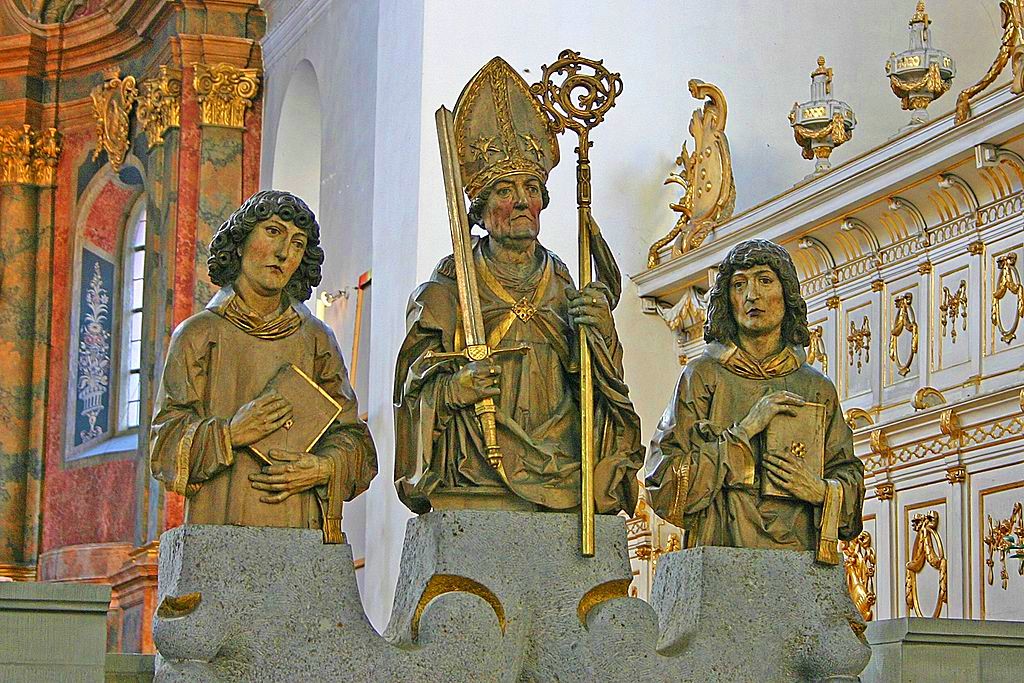
Saint of the Day – 16 January – Saint Melas (Died c385) Bishop of Rhinocolura, between Egypt and Palestine. Born in his Diocese and died in exile in c385 of natural causes after many sufferings for the Church of Christ. Also known as – Melantius.
The Roman Martyrology states today : “At Rhinocorura in Egypt, in the reign of the Emperor Valens, the holy Bishop, Saint Melas, who rested in peace after suffering exile and other painful trials fothe Catholic Faith.”
The First Council of Ephesus
The City of Rhinocolura is known as an Episcopal Seat in Egypt (its Bishop, Ermogenes, had in fact participated in the Council of Ephesus).
Melas was a native of this City and became its Bishop in the second half of the 4th Century. We owe all that is known about his life to the Catholic Historian Sozomen, who praises his virtues.
The Emperor Valens (died 378) persecuted all the Bishops faithful to the faith of Nicaea, so Melas, having refused to adhere to the Arian doctrines, was a victim of the persecution and sent into exile. The Imperial Commissioners, arriving with an arrest warrant, found him in the Church busy cleaning the lamps. Having learned that they were looking for Bishop Melas, he introduced the Imperial envoys into his home and refreshed them before revealing his identity to them. Won over by Melas’s kindness, they gave him a chance to escape but he was too attached to the Holy and True Faith and too eager toconfess his conviction, to accept such a compromise and went into exile instead.
Sozomen speaks of Melas’ successor to the See of Rhinocolura, namely his brother Solon but the Historian does not provide any further information on Melas. Therefore, it is unknown whether, after the death of Valens, he was able to return from exile and be reinstated in his pastoral office.
Western Martyrologies have kept St Melas in their lists and St Melas is always venerated on the date of 16 January.
St Honoratus of Fondi Abbot Bl James of Luino St James of Tarentaise Bl Joan of Bagno di Romagna Bl Konrad II of Mondsee St Leobazio St Liberata of Pavia St Melas (Died c385) Bishop of Rhinocolura and Confessor St Otto of Morocco St Peter of Morocco St Priscilla of Rome St Sigeberht of East Anglia
Thought for the Day – 15 January – Meditations with Fr Richard Frederick Clarke SJ (1839-1900)
Meditations for Christmastide “The Holy Infancy” From “The Devout Year” By Fr Richard Frederick Clarke SJ (1839-1900)
“Herod’s Vengeance”
+1. When Herod found that the Magi did not return with the information respecting the King Whom they were seeking, he became uneasy. The plan he had cunningly devised had come to naught; the rival Monarch seemed likely to escape his hands. One day perhaps he or his children, would be dethroned by Him. O empty fears! That little Child seeks no worldly honour; He will not interfere with any earthly monarch. The secret fear which destroys the peace of unscrupulous men is often as empty as Herod’s. The terrors they suffer are the just rewards of their evil deeds. How often I have been anxious and troubled because my pride could not brook being humbled!
+2. But Herod was utterly unscrupulous, as well as ambitious. There was one way in which he could secure his end. By putting to death all the young children in the country around Bethlehem, he would compass the death of this Royal Child Who threatened his safety. Pride and ambition not only blind men but make them utterly indifferent to the sufferings of others and the laws of right and wrong. I, too, have often recklessly made others suffer to gratify myself and carry out my own selfish ends!
+3. When Herod came to die, how awful must have been the terrors of his guilty conscience! The blood of those children slaughtered at his command had long cried out to Heaven for vengeance. Each one of them added to his remorse and eternal misery in hell. If evil men could foresee the consequences to themselves of the sins they commit, they would dread sin, even venial sin, far more than any earthly misery they could suffer.
P.S: This King Herod I died in a most awful manner. Modern research believes he suffered from chronic kidney disease complicated by a very gruesome and uncomfortable case of maggot-infested gangrene of the genitals.
“[21] And upon a day appointed, Herod being arrayed in kingly apparel, sat in the judgement seat and made an oration to them. [22] And the people made acclamation, saying: It is the voice of a god and not of a man. [23] And forthwith an Angel of the Lord struck him because he had not given the honour to God and being eaten up by worms, he gave up the ghost.”
In Acts 12:1-7 we read of this same Herod killing St James, the brother of St John and the first of the Apostles to be Martyred and then he, Herod, wishing to impress the Jews, went on to arrest St Peter. But the Lord released St Peter from his chains – which chains may now be venerated at St Peter’s Basilica in Rome. Scripture search here: https://www.drbo.org/
Quote/s of the Day – 15 January –The Feast of St Macarius of Egypt (c300-390) Priest, Abbot, Hermit, Desert Father of the Church, Spiritual student of Saint Anthony Abbot, Ascetic, Miracle-worker , known as “The Glowing Lantern.”
“As the Lord put on the body, leaving behind all principality and power, so Christians put on the Holy Ghost and are at rest.”
“When you do not have a lot of time for prayer, use the time which you do have. God will accept your will; remember the publican’s repentance in prayer is pleasing unto God. Be careful not to put a price on your prayer, it is God’s business, not ours.”
“Reading spiritual books enlightens our minds and shows us the road to salvation. It nurtures the soul, in the same manner, as physical food, nurtures the body.”
“The soul who really loves God and His Christ, even if it has done thousands of good works, thinks he has done nothing because of his insatiable hunger for God. Even if he has exhausted the body through fasting and vigils, he believes that he has not yet begun to be virtuous. In spite of the gifts of the Holy Ghost, the heavenly revelations and mysteries, he believes that he has not yet done anything because of his immense and insatiable love of the Lord. In faith and in love, he is always hungry and thirsty!”
One Minute Reflection – 15 January – “The Month of the Holy Name of Jesus and the Holy Family” – St Paul the Hermit (c227-c342) The First Hermit in the Thebaid region of Egypt, is regarded as the first Christian hermit, who lived alone in the desert from his sixteenth to the one hundred and thirteenth year of his life. – Philippians l 3:7-12; Matthew 11:25-30 – Scripture search here: https://www.drbo.org/
“Thou hast hid these things from the wise and prudent and revealed them to the little ones.” – Matthew 11:25
REFLECTION – “When more obscure Mysteries are presented to your timid nature by your faith, Christian soul, take courage and say [like Mary], “ How shall this be done …?” (Lk 1:34), not in a controversial spirit but with the love of a disciple. Let your questioning be your prayer, your love, your piety, your humble desire – not seeking to plumb the depths of God’s majesty but looking for salvation, in the healing acts of the God, Who saves us. …
No-one “knows a man’s thoughts, except the spirit of the man which is in him; so also, no-one comprehends the thoughts of God, except the Spirit of God” (1 Cor 2:11). Hasten then to be a sharer in the Holy Spirit. He is present when He is called upon; nor could He be called upon, if He were not present. When, on being called upon, He comes, it is with the abundance of the blessings of God. He is the flowing of “the river which gives joy to God’s city” (Ps 45:5). And if, when He comes, He finds you humble and still and respecting the Words of God, He will rest upon you (Lk 1:35) and He will reveal to you, what God the Father withdraws from the wise and prudent of this world and those things, will begin to dawn upon you which Wisdom (1 Cor 1:24) could say to the disciples when on this earth but which they were unable to bear, until the Spirit of Truth came, Who was to teach them all Truth (Jn 16:12-13).” – William of Saint-Thierry O.Cist.
PRAYER – O God, Who each year give us the joyful feast of blessed Paul, Thy Confessor, mercifully grant that we may imitate the deeds of him, whose anniversary we celebrate. Through Jesus Christ, Thy Son our Lord, Who lives and reigns with Thee, in the unity of the Holy Ghost, God, world without end. Amen (Collect).
Our Morning Offering – 15 January – The Feast of St Macarius of Egypt (c300-390) Priest, Abbot, Hermit, Desert Father of the Church, Spiritual student of Saint Anthony Abbot, Ascetic, Miracle-worker , known as “The Glowing Lantern.”
Holy Angel Do Not Cast Me Away! By St Macarius of Egypt (c300-390)
Holy Angel, to whose care this poor soul and wretched body of mine have been given, do not cast me away because I am a sinner, do not hold aloof from me because I am not clean. Do not yield your place to the Spirit of Evil; guide me by your influence on my mortal body. Take my limp hand and bring me to the path which leads to salvation. Yes, holy Angel, God has given you charge of my miserable little soul and body. Forgive every deed of mine which has ever offended you at any time in my life; forgive the sins I have committed today. Protect me during the coming night and keep me safe from the machinations and contrivances of the Enemy that I may not sin and arouse God’s anger. Intercede for me with the Lord; ask Him to make me fear Him more and more and to enable me to give Him the service His goodness deserves. Amen
Saint of the Day – 15 January – St John Calabytes (Died c450) Beggar Hermit, Monk. Born at Constantinople (modern Istanbul, Turkey) and died in c450 in Rome of natural causes. Also known as – John Calybita, John Calabites, John Calibita, John Chalybita, John Kalabytes, John the Hut-Dweller, Giovanni… There are many versions of our Beggar Saint’s life, some more romantic than others. However extreme some versions might seem, the facts remain the same as does the approximate year of his death. He is our friend and waits to intercede in Heaven, on our behalf.
The Roman Martyrology reads today: “At Rome, St John Calybita. For some time living unknown to his parents in a corner of their house and later in a hut on an island in the Tiber, he was recognised by them only at his death. Being renowned for miracles, he was buried where he had died and, a Church was subsequently erected in his honour in the same place.”
John was the 3rd son of the Senator and General Eutropius in Constantinople and lived at the beginning of the 5th Century. His mother, Theodora, was also of high birth. His parents were Christians but they sadly believed in their own greatness too. While his older brothers competed for excellent careers, John was allowed to cultivate piety above all.
After completing his studies of rhetoric, his parents allowed him to visit the Monastery of the Ecoimetes, or “sleepless ones” in our language because the Monks used the night for prayer. John chose a spiritual guide among the Monks who advised him to study Sacred Scripture and thus discover his vocation.
His parents were happy to oblige and bought him the Holy Scriptures, the most beautiful copy, decorated with gold and precious stones. As he read the Book of Books, John’s joy grew visibly. He was drawn to devote himself entirely to God in the monastic state. But his parents would not allow this. He left this Monastery in the Bosporus and asked to be accepted into another at Ireneon, today Chiboukli. After passing the test, he was accepted among them. Night prayer was a real delight to him.
But, after six years, he felt a deep sense of homesickness. He told the Abbot: “The desire to see my parents does not give me peace for a moment. I ask permission to return to them. The tempter thinks that he will thus turn me away from God but I trust in your prayer and in Christ, Who is at war beside me, that I will be victorious, even if I return to my parents.” The Abbot recommended the tried brother to the monastic family for prayer and allowed him to leave.
St John reveals his identity to his parents on his deathbed
When he arrived home, he was not recognised because of his poor clothing and ascetic appearance. They accepted him as a holy beggar and even allowed him to set up a hut in a corner of the garden and brought him modest food every day. After three years, he fell seriously ill and asked to visit his mother. Then the beggar revealed himself to his parents. They recognised him from the Gospel book he showed them. He breathed his last in their arms shortly afterwards.
He was buried next to the hut and in 468, a Church was built on his grave, to which pilgrims from near and far came and venerated John Calabytes as a Saint.
In Constantinople, Saint John the Calabytes, who, as is reported, lived for some time in a corner of his father’s house, then in a ‘kalyba’ (hut), completely devoted to contemplation and hidden from his parents, who only recognised him as he lay dying, through the golden scroll of the Gospel, which they had given gave to their son.
St Maurus OSB (c512-584) Benedictine Monk, Abbot and Deacon, Miracle-worker. Maurus was the first disciple of Saint Benedict of Nursia (512–584). He is mentioned in Saint Gregory the Great’s biography of the latter as the first oblate, offered to the Monastery by his noble Roman parents as a young boy, to be brought up in the monastic life. The formula and blessing of St Maurus were universally adopted and approved for use in the Blessing of the Sick. His Life and Miracles: https://anastpaul.com/2021/01/15/saint-of-the-day-15-january-saint-maurus-osb-c-512-584/
St Blaithmaic of Iona
St Bonitus of Clermont (c623-706) Bishop, Confessor, Chancellor of the Kingdom, Governor of Provence, Diplomatic peacemaker, Protector of Slaves and active advocate for its abolition, a man of deep devotion and Asceticism, Promoter of monasticism, builder of Churches and Monasteries., Miracle-worker. Heir to a rich heritage, he used his resources not only to beautify Churches and Monasteries but also, to relieve the miseries of the poor. Bonitus is a much loved and endearing Saint in France and, in some ways, a very modern figure. His Zealous Life of Devotion: https://anastpaul.com/2024/01/15/saint-of-the-day-15-january-saint-bonitus-of-clermont-c623-706-bishop-confessor/
St Britta St Ceolwulf of Northumbria St Emebert of Cambrai St Ephysius of Sardinia St Eugyppius Bl Geoffrey of Peronne Bl Giacomo Villa St Gwrnerth St Habacuc the Prophet St Isidore of Scété St Isidore the Egyptian St Ita of Killeedy
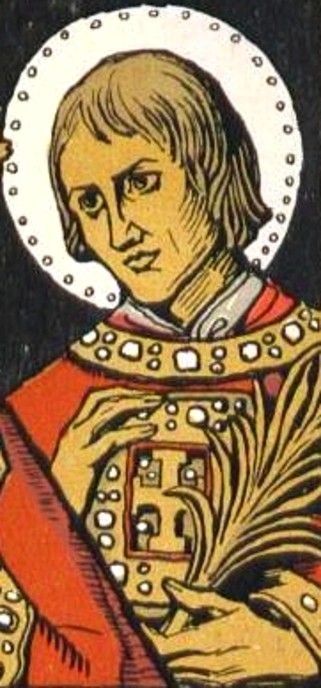
St John Calabytes (Died c450) Beggar Hermit
St Liewellyn St Lleudadd of Bardsey St Malard of Chartres St Maximus of Nola St Michaeas the Prophet Bl Peter of Castelnau St Placidus
Thought for the Day – 14 January – Meditations with Fr Richard Frederick Clarke SJ (1839-1900)
Meditations for Christmastide “The Holy Infancy” From “The Devout Year” By Fr Richard Frederick Clarke SJ (1839-1900)
“The Magi Return Home”
+1. Before the Magi left Jerusalem for Bethlehem, Herod had enjoined them that they should return and tell him where the newborn King of the Jews was to be found , declaring that he, too, desired to come and adore Him. Hypocrite and treacherous liar he was, his real object was to destroy his supposed rival. He made no scruple of planning the murder of One Who might possibly supplant him. Those who love worldly honour are always unscrupulous. It has the power of blinding the eyes and deadening the conscience and making men esteem evil as good and good as evil!
+2. The Magi seem to have been deceived by Herod’s fair, words and to have promised to return with the information he desired. Good men are always trustful and lacking in suspicion of evil. We all judge others by ourselves. If you want to know your own characte, ask yourself whether your judgement of others is a charitable or uncharitable one.
+3. When the Magi had completed their visit to Bethlehem, they prepared to return to Herod. But an Angel warned them to avoid the City where he dwelt and to go back to their own Country by some other way. We need never fear lest our charitable judgements should do harm. God will provide against this. It is our harsh and severe judgements which are productive of so much evil to ourselves and others .
Quote/s of the Day – 14 January – St Hilary (315-368) Confessor, Bishop, Father and Doctor of the Church
“The time for speaking is come, for the time for silence is past. Let Christ now appear, for Antichrist has begun his reign. Let us lay down our lives for our sheep, for thieves have got into the fold and a furious lion is prowling around it. Let us prepare for Martyrdom, f or the angel of satan hath transformed himself into angel of light!”
“He confesses Christ, the better to deny Him; he tries to procure a unity which shall destroy peace; he puts down some few heretics, so that he may also crush the Christians; he honours Bishops that they may cease to be bishops: he builds up Churches that he may pull down the Faith!”
(On antichrist and his prophet – sound familiar?)
“As the living Father has sent Me and as I live because of the Father, so he who eats Me, he also shall live because of Me.” John 6:58
“He is in the Father by reason of His Divine Nature, we are in Him, by reason of His Human Birth and He is in us, through the Mystery of the Sacraments. This, surely, is what He wished us to believe; this is how He wanted us to understand the perfect Unity that is achieved through our Mediator, Who lives in the Father, while we live in Him and Who, while living in the Father, lives also in us. This is how we attain to Unity with the Father. Christ is in very truth in the Father by His Eternal Generation; we are in very truth, in Christ and He likewise is in us.”
“No matter how sinful one may have been, if he has devotion to Mary, it is impossible that he be lost.”
One Minute Reflection – 14 January – “The Month of the Holy Name of Jesus and the Holy Family” – St Hilary (315-368) Confessor, Bishop, Father and Doctor of the Church – 2 Timothy 4:1-8; Matthew 5:13-19 – Scripture search here: https://www.drbo.org/
“I am not come to destroy but to fulfil.” – Matthew 5:17
REFLECTION – “Grace which was formerly veiled, so to speak, in the Old Testament, has been fully revealed in the Gospel of Christ by a harmonious disposition of the times, just as God usually disposes of everything with harmony … But within this wonderful harmony, we notice a great difference between the two ages. On Sinai, the people did not dare draw near the place where the Lord was giving His Law; in the Upper Room, the Holy Ghost comes down on all those assembled there, while waiting for the fulfilment of the promise (Ex 19:23; Acts 2:1). In the first instance, the Finger of God inscribed the laws on tablets of stone but now, it is in human hearts where He writes it (Ex 31:18; 2 Cor 3:3). Formerly the Law was written without and brought fear to sinners but now, it has been given to them within, to make them righteous …
Indeed, as the Apostle Paul says, everything written on the stone tablets, “you shall not commit adultery, you shall not kill. .. you shall not covet” and whatever other commandments there may be, are summed up in this saying: “You shall love your neighbour as yourself. Love does no evil to the neighbour; hence, love is the fulfilment of the Law” (Rm 13:9f.; Lv 19:18) … This charity has been “poured into our hearts through the Holy Ghost Who is given to us” (Rm 5:5).” – St Augustine (354-430) Father and Doctor of Grace (On the spirit and the letter, 28-30).
PRAYER – O God, Who gave to Thy people blessed Hilary, as a minister of salvation, grant we beseech Thee that we, who cherished him on earth as a teacher of life, may be found worthy to have him as an intercessor in Heaven. Through Jesus Christ, Thy Son our Lord, Who lives and reigns with Thee, in the unity of the Holy Ghost, God, world without end. Amen (Collect).
Our Morning Offering – 14 January – “The Month of the Holy Name of Jesus and the Holy Family” – St Hilary (315-368) Confessor, Bishop, Father and Doctor of the Church
In the Name of the Father, Son and Holy Ghost By St Hilary (315-368) Father & Doctor of the Church
Father, keep us from vain strife of words. Grant to us constant profession of the Truth! Preserve us in a true and undefiled faith so that we may hold fast to that which we professed when we were Baptised in the Name of the Father, Son and Holy Ghost, that we may have Thou for our Father, that we may abide in Thy Son and in the fellowship of the Holy Ghost. Through Jesus Christ, Our Lord. Amen
Saint of the Day – 14 January – Saint Datius of Milan (Died 552) Bishop and Confessor, Bishop of Milan from c529 until his death in 552, Defender of the Faith against heresy, protector and charitable shepherd of his flock. In Chapter 4 (Book 3) of his Dialogues, St Gregory the Great describes Datius as an Exorcist. It is not known when and where he was born but he died between February and March in 552 in Constantinople during his exile, of natural causes. Also known as – Dacius, Dasius, Dazio.
The Roman Martyrology reads today: “At Milan, St Datius, Bishop and Confessor, mentioned by Pope St Gregory.”
Of Saint Datius, the 26th Bishop of Milan, we must remember his intelligent and zealous charity. When, in 535-536, a terrible famine struck the region, he obtained from the Prefect, Cassiodorus, to distribute, to the starving population, the grain reserves, kept in Pavia and Tortona.
This is a sign of how much Datius was esteemed by the ruling powers and how insistent he was in knocking, until the door of the Prefect’s heart opened.
Datius was known for his learning and his personal piety. As Bishop Datius ordered the history of the Church in Milan known as Historia Datiana, to be compiled although some deny that it was Datius who instigated the compilation.
He was imprisoned and exiled by Arian Ostrogoths for defending the true Faith. During his exile he went to Constantinople where he supported Pope Vigilius against Emperor Justinian in the Three Chapters Controversy of 545. Datius also attended the Council of Constantinople in 551 which condemned the Arian Bishop Mennas.
Datius died in Constantinople and his body was later translated from Chalcedon to Milan and buried in the Church of San Vittore al Corpo (Saint Victor Maurus) where it is still venerated today.
Bl Amadeus of Clermont St Barbasymas St Caldeoldus of Vienne St Datius of Milan (Died 552) Bishopand Confessor St Engelmaro St Eufrasio of Clermont St Euphrasius the Martyr
St Felix of Nola (Died c 253) Priest, Confessor, Apostle of Charity .Patronages – against eye disease, against eye trouble, against false witness, against lies, against perjury, domestic animals, of Nola, Italy. The Roman Martyrology states of him today: “At Nola in Campania, the birthday of St Felix, Priest, who (as is related by Bishop, St Paulinus of Nola), after beomg subjected to torments by the persecutors, was cast into prison and extended, bound hand foot, on (snail) shells and broken earthenware. During the night, however, his bonds were loosened and he was delivered by an Angel. The persecution over, he brought many to the Faith of Christ by his exemplary life and teaching and renowned for many miracles, he rested in peace.” A Miraculous Life: https://anastpaul.com/2019/01/14/saint-of-the-day-14-january-st-felix-of-nola-died-c-253/
St Felix of Rome St Fermin of Mende St Fulgentius of Ecija St Glycerius of Antioch
St Macrina the Elder (Died c 340) Widow, Grandmother of St Basil the Great, St Gregory of Nyssa, St Peter of Sebaste and St Macrina the Younger. The Roman Martyrology says today: “St Macrina, disciple of St Gregory Thaumaturgus and the grandmother of St Basil, whom she brought up in the Faith.” Her Faith-filled Life: https://anastpaul.com/2023/01/14/saint-of-the-day-14-january-st-macrina-the-elder-died-c-340-widow/
St Malachy the Prophet St Nino of Georgia Bl Odoric of Pordenone
St Paul of Africa St Potitus Bl Rainer of Arnsberg St Sabas of Sinai St Sava of Serbia St Successus of Africa St Theodolus of Sinai Bl William de Sanjulia
Martyrs of Mount Sinai: A group of Monks on Mount Sinai who were Martyred by desert Bedouins. Their names and exact number have not come down to us. Martyred by Bedouins.
Martyrs of Raithu – 43 Saints: A group of 43 Monks in the Raithu Desert near Mount Sinai, Palestine, near the Red Sea. They were Martyred for their faith by desert Bedouins. Their names have not come down to us. Martyred by Bedouins.
Thought for the Day – 13 January – Meditations with Fr Richard Frederick Clarke SJ (1839-1900)
Meditations for Christmastide “The Holy Infancy” From “The Devout Year” By Fr Richard Frederick Clarke SJ (1839-1900)
“Their Gifts (3) Myrrh”
+1. Myrrh is the herb used most often for embalming. It has the power to prevent corruption and preserve the purity and freshness of the body with which it is in contact. It was offered to Our Lord as a testimony, not only of the perfect and unsullied purity of those to whom He is united, by the bonds of charity but too, in evidence of the power of His Sacred Body, to save from corruption, those who partake of it in the Blessed Sacrament of the Altar.
+2. Thus Myrrh was offered to Our Lord as possessing a truly Human Body, as truly Man and too, truly God. We must never lose sight of this fact of Christ’s Humanity, in which, He has all the sympathy and interest, in all concerning us, all His desire to help us, all His wisdom, prudence, patience, appreciation of our griefs and sorrows and all this, to a degree, compared with which, our best friend on earth does not deserve the name. Why do I not have recourse to Him more frequently?
+3. Myrrh is too, the symbol of mortification. If our bodies are to be pure, we must mortify our evil desires and give up that which is very attractive to our lower nature. If we desire great purity of heart, we must mortify ourselves in things lawful and deny ourselves even that which we might enjoy without sin. Do I do this?
Quote/s of the Day – 13 January – “The Month of the Holy Name of Jesus and the Holy Family” – Octave Day of Epiphany – Feria Major – Isaias 60:1-6; Matthew 2:1-12 – Scripture search here: https://www.drbo.org/ –
“We have seen His Star in the east and are come to adore Him.”
Matthew 2:2
Grant me, O my God By St Vincent Ferrer OP (1350-1419)
Good Jesus, let me be penetrated with love to the very marrow of my bones, with fear and respect toward Thee. Let me burn with zeal for Thy honour, so that I may deeply resent, all the outrages committed against Thee, especially those of which, I myself have been guilty. Grant further, O my God, that I may humbly adore and acknowledge Thee, as my Creator and penetrated with gratitude for all Thy benefits, I may never cease to render Thee thanksgiving. Grant that I may bless Thee in all things, praise and glorify Thee, with a heart full of joy and gladness and obeying Thee with docility in every respect, I may one day, despite my ingratitude and unworthiness, be seated at Thine table together with Thine Holy Angels and Apostles, to enjoy ineffable delights for all eternity! Amen
“Do much for God and do nothing without love: refer everything to this love; eat and drink with it in mind!”
(Letter to Madame de Chantal)
“The love of God, is the end, the perfection and the excellence of the universe.”
(Treatise on the Love of God Book 10, Chapter 1)
St Francis de Sales (1567-1622) Doctor of Charity
“See too, how, out of reverence, they adore Him in silence and acknowledge Him for their God, kissing His Feet and offering Him their gifts of Gold, Frankincense and Myrrh. Let us too, with the holy Magi, adore our little King Jesus and let us offer Him all our hearts.”
St Alphonsus de Liguori (1696-1787) Most Zealous Doctor
One Minute Reflection – 13 January – “The Month of the Holy Name of Jesus and the Holy Family” – Octave Day of Epiphany – Feria Major – Isaias 60:1-6; Matthew 2:1-12 – Scripture search here: https://www.drbo.org/
“And seeing the Star, they rejoiced with exceeding great joy.” – Matthew 2:10
REFLECTION – “Jesus is born poor in a stable; the Angels of Heaven indeed acknowledge Him but men abandon and forsake Him on earth. Only a few shepherds come and pay Him homage. But our Redeemer was desirous of communicating to us the grace of His redemption and begins, therefore, to manifest Himself to the Gentiles, who knew Him least. Therefore, He sends a Star to enlighten the holy Magi, in order that they may come and acknowledge and adore their Saviour. This was the first and sovereign grace bestowed upon us–our vocation to the Faith which was succeeded by our vocation to grace, of which men were deprived.
Behold the Wise Men, who immediately, without delay, set off upon their journey. The Star accompanies them as far as the cavern where the Holy Infant lies. On their arrival, they enter and what do they find? They found the Child with Mary. They find a poor maiden and a poor Infant wrapped in poor swaddling-clothes, without anyone to attend on Him or assist Him. But, lo! on entering into the little shed, these holy pilgrims feel a joy which they had never felt before; they feel their hearts chained to the dear little Infant Whom they behold. The straw, the poverty, the cries of their little Saviour–oh, what darts of love! Oh, what blessed flames are they to their enlightened hearts! The Infant looks upon them with a joyful countenance and this is the mark of affection, with which He accepts them amongst the first-fruits of His Redemption.
The holy Kings then look at Mary, who does not speak –she remains silent but with her blessed countenance which breathes the sweetness of paradise, she welcomes them and thanks them for having been the first to come and acknowledge Her Son (as indeed He is) for their Sovereign Lord. See too, how, out of reverence, they adore Him in silence and acknowledge Him for their God, kissing His Feet and offering Him their gifts of Gold, Frankincense and Myrrh. Let us too, with the holy Magi, adore our little King Jesus and let us offer Him all our hearts.” – St Alphonsus de Liguori (1696-1787) Bishop, Founder of the Redemptorists, Most Zealous Doctor (The Adoration of the Magi),
PRAYER – O God, Thou Who by the guidance of a star this day revealed Thy Only-begotten Son to the Gentiles, mercifully grant that we, who know Thee now by faith, may come to behold Thee in glory. Through the same Jesus Christ, Thy Son our Lord, Who lives and reigns with Thee, in the unity of the Holy Ghost, God, world without end. Amen (Collect).
Our Morning Offering – 13 January – “The Month of the Most Holy Name of Jesus and of the Holy Family” – The Eighth Day, The Octave of the Epiphany
Jesus Refulsit Omnium Jesus, Light of All the Nations By St Hilary (315-368) Father & Doctor of the Church Doctor of the Divinity of Christ
Jesus, the merciful Redeemer of all nations, shone forth on this day; let the faithful of every race celebrate Him in their songs of praise.
A Star, shining in the heavens, announces His Birth; it leads the way and guides them to His Crib.
Prostrating, they adore the Infant wrapped in swaddling clothes; they confess Him to be the true God, offering Him their mystic gifts.
Thirty years of His life had passed and He, the infinitely pure God, seeks the laver of baptism.
John, the favoured Baptist trembles as he bends the head of Jesus beneath the waters–that Jesus whose Blood was to purify the whole earth from its sins.
The Divine Voice of the Father is heard from Heaven, bearing testimony to His Son and the Holy Ghost, too, is present, the Giver of holy grace.
We beseech Thee in humble supplication, O Jesus! protect Thy people; we ask it of Thee by the power Thou didst show when Thou didst command the water to be changed into wine.
May praise, honour and all power be to the Trinity forever and forever. Amen
(Verses 4-6 omitted on the image). I could not find the name of the Translator of this version of this Hymn, often referred to as “the oldest” Christmas Hymn.
Saint of the Day – 13 January – St Agritius of Trier (c260-c335) the 4th Bishop of Trier Born in Syria and died in 335 of natural causes in his See of Trier. Also known as – Agricius of Trier, Agrecius of Trèves, Agrizio di Treviri, Agrice, Aguy. Additional Memorials – 9 January in Trier , 29 May when the Holy Relics are venerated.
The Roman Martyrology reads today: “At Treves, St Agritius, Bishop.”
In a manuscript from the Monastery of San Massimino, there is a Life of Agritius which constitutes the second part of the Life of Saint Helena. It was almost certainly written in the 11th Century and it is recorded with authority that its author, writing between 1030 and 1045, was a member of the Clergy of the Cathedral of Trier, perhaps Angibaldo, the Chancellor of the Bishop Poppo.
Furthermore, Agritius is remembered as the Bishop in various Calendars of Trier on 13 January and, by the hagiographer of San Massimino.
Of course, we know little of our Saint’s life exce[t that Agritius participated, together with the Exorcist Felix, at the Council of Arles in 314 and that he died before 336, since in the Chronicon of Saint Jerome, it is written that in 336, precisely, St Athanasius, in exile, was welcomed in Trier by Saint Maximinus, Agritius’ successor.
The Life of Agritius, however, although woven with legend, has a considerable historical-literary value, as it is one of the oldest historical documents of Trier and bears witness to the life and mentality dominant in that Church in the 10th Century.
According to this Life, therefore, Agritius, then the Bishop of Antioch, at the request of Helena, mother of Constantine, was appointed by Pope Sylvester as the Bishop of Trier, the 4th shepherd of this Diocese. Trier, two centuries after the first preaching had relapsed into full paganism and Agritius, despite many serious difficulties, undertook the work of rebuilding Christianity, aided by Helena, who gave him precious Relics of the Saviour, a Nail from the Cross and the Holy Tunic and the Relics of Lazarus and Martha. The translation of the latter is represented in an ivory from the Byzantine era depicting Agritius and Pope Sylvester on a cart while carrying the urn to Trier. Sylvester is also said to have given Agritius and his successors, the primacy over the Bishops of Gaul and Germany but this privilege, inserted in the Vita, is undoubtedly apocryphal and probably echoes that granted by Pope John XIII on 22 January 969 to Bishop Thierry.
Pilgrims view Christ’s Holy Tunioc in Trier
The date of Agritius’ death, established by some as 344, by others as 368, is almost certainly to be indicated as 335 due to the testimony of Jerome mentioned above. Agritius is celebrated on 13 January and, in the Diocese of Trier, also on 9 January. The translation of the Relics is celebrated on 29 May on the Feast Day of St Maximinus, St Agritius successor. You can read St Maximinus’ life here: Saint of the Day – 29 May – St Maximinus of Trier (Died c 346)
Panny Marie Vítězné / Our Lady of Victory, Prague, Czech Republic (1620), Home of the Infant of Prague: 13 January: Among shrines dedicated to Our Lady of Victory, that at Prague has become world-famous because it is also the home of the Statue of the Infant of Prague. This Wonderful Shrine which I have been blessed to venerate: https://anastpaul.com/2021/01/13/our-lady-of-victory-prague-and-memorials-of-the-saints-13-january/
St Agritius of Trier (c260-c335)Bishop St Andrew of Trier St Berno of Cluny St Designatus of Maastricht St Elian of Brittany St Enogatus of Aleth St Erbin of Cornwall St Glaphyra St Gumesindus of Córdoba St Hermylus St Hildemar of Arrouaise Bl Ida of Argensolles Bl Ivetta of Huy Widow, Mother, Recluse, Mystic
Thought for the Day – 12 January – Meditations with Fr Richard Frederick Clarke SJ (1839-1900)
Meditations for Christmastide “The Holy Infancy” From “The Devout Year” By Fr Richard Frederick Clarke SJ (1839-1900)
“Their Gifts (2) Frankincense”
+1. The offering of Frankincense to anyone has always been regarded, by the common consent of mankind, as an acknowledgment of inherent Deity. When the Christians were commanded to throw a grain of incense on the altar of Jupiter or Minerva, it was in acknowledgment of their divinity. The Magi, then, by this offering to Christ of Incense, were the first Gentile witnesses to His Divinity. They made thereby, an implicit Act of Faith in His Godhead and proved the honour they paid Him to be that highest honour which belongs to God alone.
+2. Frankincense is, moreover, a symbol of all which is sweetest and most fragrant. What is so sweet to Jesus, as the complete offering of ourselves to Him, implied in the homage paid to Him as God! Jesus, my God, my all, I offer Thee my heart, my soul, myself!
+3. Frankincense is the material symbol under which prayer is indicated in Holy Scripture. In the Apocalypse, the Angel offers the prayers of the Saints in a golden censer and there continually appears, from earth, the cloud of prayers as a cloud of Incense. Among them, my prayers arise. Are they such as will be fragrant and pleasing to God?
Quote/s of the Day – 12 January – “The Month of the Holy Name of Jesus and the Holy Family” – Within the Octave – Feast of the Holy Family of Jesus, Mary and Joseph – Colossians 3:12-17; Luke 2:42-52 – Scripture search here: https://www.drbo.org/
“And He went down with them and came to Nazareth and was subject to them.”
Luke 2:51
“EVERY FAMILY should have a room where CHRIST is welcome in the person of the hungry and thirsty STRANGER.”
St John Chrysostom (347-407) Father and Doctor of the Church
“So, taking Christ’s genealogy from Joseph – a husband in chastity, he was father in the same way. … Are you saying that he did not conceive Jesus through the operation of nature? Well then, what the Holy Spirit operated, He did for them both. For Joseph was “a just man,” Matthew tells us (1:19). Both husband and wife were just. The Holy Spirit dwelt within their mutual justice and gave each of them, a Son!”
“Peace in Society depends on peace in the Family.”
(Marriage and concupiscence 1,11; Sermon 51)
St Augustine (354-430) Father and Doctor of Grace
“God, to whom Angels submit themselves and who principalities and powers obey, was subject to Mary and not only to Mary but Joseph atoo, for Mary’s sake. God obeyed a human creature – this is humility without precedent. A human creature commands God; it is sublime beyond measure!”
St Bernard (1090-1153) Father and Doctor of the Church
“To all fathers of families, Joseph is verily the best model of paternal vigilance and care. In the most holy Virgin Mother of God, mothers may find an excellent example of love, modesty, resignation of spirit and the perfecting of faith. And in Jesus, Who was subject to His parents, the children of the family, have a Divine Pattern of obedience which they can admire, reverence and imitate.”
One Minute Reflection – January – “The Month of the Holy Name of Jesus and the Holy Family” – Within the Octave – Feast of the Holy Family of Jesus, Mary and Joseph – Colossians 3:12-17; Luke 2:42-52 – Scripture search here: https://www.drbo.org/
“When Jesus was twelve years old …” – Luke 2:42
REFLECTION – “The public teaching of the Lord, had as we read, its beginnings from His twelfth year, for herein should be foreshadowed the number of those announcing the faith that was to be preached. Nor was it that He was heedlessly unmindful of His parents according to the flesh, who in the flesh was filled with grace and wisdom, that He was found in the temple after three days but ,for a sign that was believed dead, would present Himself to our faith, risen in heavenly glory and divine honour, after the three days of that triumphal passion.
“How is it that you sought me. Did you not know that I must be about my Father’s business.” (Lk 2:49) There are two generations in Christ: the one is Paternal, the other Maternal; that which is Paternal is more Divine, the Maternal, that whereby He has stooped to our need and benefit. And, therefore, what was accomplished in the manner above nature, above age, above what was usual, must not be ascribed to His human excellence but must be referred to the power of His Divinity. Elsewhere, His Mother pleads with Him for a miracle, here she requires of Him a reason, since she still looks to the things that are human. But while here, He is described as being but twelve years old, there, He is spoken of as having disciples. See how the Mother has learnt to know her Son, so that she seeks a miracle from Him now, in His full strength, Who was astonished at this wonder in His Boyhood.” – St Ambrose (340-397) Great Latin Father and Doctor of the Church (Writings Octave of the Epiphany).
PRAYER – O Lord Jesus Christ, Thou Who while subject to Mary and Joseph, hallowed family life with virtues beyond description, grant us by their combined intercession, that, having been taught by the example of the Holy Family, we may attain unto their everlasting companionship. Who lives and reignest with God the Father, in the unity of the Holy Ghost, God, world without end. Amen
Saint of the Day – 12 January – Blessed Lucia (1370-1430) Consecrated Virgin, Founder of a Community of Nuns known as the “Poor Sisters of St Chiara” adopting the original Rule of St Clare of Assisi. Born in 1370 in Norcia, Perugia, Umbria, Italy and died on 12 January 1430 of natural causes at her Convent in Valcaldara di Norcia. Patronage – of Valcaldara. Also known as – Lucia of Norcia and Lucia of Valcaldara di Norcia.Her body is Incorrupt.
Lucia, born into a wealthy family in Norcia, consecrated herself totally to the Lord when she was only fifteen years old. With seven companions, she founded a religious Community which took up residence in her father’s house. Their choice of life was a great example to the entire City and on 28 January 1386 the City Council decided to help them. Previously, the Patriarch of Jerusalem, Ferdinand, administrator of the Diocese of Spoleto-Norcia (1370-1390), had recognised them as a valid Community, naming the Convent after Saint Jerome.
In 1390, Lucia founded another Convent and the Church of Santa Maria in Valcaldara (a hamlet of Norcia). With her companions she submitted to the Bishop’s obedience, “they wore ash and eremitic habits, lived a community life and observed the evangelical norm, not professing for many years any Rule approved by the Church”. In 1407 the two Convents united, with the approval of Bishop Augustine, giving life to the Convent of St Chiara. They called themselves the “Poor Sisters of St Chiara” expressing their desire to follow her Rule, although they could not officially observe it as it had been replaced by the Rule of Urban IV.
Lucia died in Valcaldara on 12 January 1430 and was immediately venerated and invoked as a Saint. Her body, still incorrupt today, kept in its shrine of 1637, is exhibited in the Church of the Poor Clares of Santa Maria della Pace, the nametaken by the Convent took after the earthquake of 1703. In Valcaldara, the celebrations in honour of their Patron Saint are solemnly celebrated with great festivities.
St Caesaria of Arles St Caroticus Bl Emmanuel d’Abreu St Eutropius St Ferreolus of Grenoble Bishop Martyr Bl John Gaspard Cratz St John of Ravenna Blessed Lucia (1370-1430) Virgin. Her Body is Incorrupt. St Martinian of Belozersk St Peter of Abessala St Probus of Verona St Quinctus the Soldier St Satyrus
St Tatiana of Rome (Died c 226) Virgin, Martyr. Patronage – students, school children. The Roman Martyrology reads today: “At Rome in the time of the Emperor Alexander, St Tatiana, Martyr who was torn with iron hooks and combs, thrown to the beasts and cast into the fire but, having received no injury, was beheaded and thus, went to Heaven.” Her Life and Death: https://anastpaul.com/2023/01/12/saint-of-the-day-12-january-saint-tatiana-of-rome-died-c-226-virgin-martyr/
St Tigrius St Victorian of Asana Bl Vincent da Cunha
Martyrs of Africa – 44 Saints: A group of 44 Christian soldiers murdered together for their faith in Africa. The only details that survive are four of their names – Castulus, Modestus, Rogatus and Zoticus.
Martyrs of Ephesus – 42 Saints: Forty-two Monks Martyred at a Monastery in Ephesus (modern Turkey) during the persecutions of the Iconoclast Byzantine Emperor Constantine V. Their names have not come down to us. Martyred c 762.
Martyrs of Iona – 38 Saints: Thirty-eight Monks Martyred in Iona, Ireland. Their names have not come down to us. They were Martyred in 750 at Iona, Ireland.
Thought for the Day – 11 January – Meditations with Fr Richard Frederick Clarke SJ (1839-1900)
Meditations for Christmastide “The Holy Infancy” From “The Devout Year” By Fr Richard Frederick Clarke SJ (1839-1900)
“Their Gifts (1) Gold”
+1. Why did the Magi offer gold to the Babe in Mary’s arms? It was in recognition of Him as their King. It was the tribute by which they declared themselves His vassals professed their loyal submission to His sway. This is the very foundation of all supernatural virtue, not only to acknowledge Christ as our King but, to pay Him the homage which is His due as the Sovereign Lord of Heaven and earth.
+2. The Magi too, by their offering of gold, gave to Him, the most precious gift they had to give. They were the first Christian almsgivers and their almsgiving was a pattern to all who should follow them. They gave liberally; they gave royally; they gave gifts which cost them something. Is this the character of my almsgiving, or do I give sparingly and grudgingly? I must not forget that Christ sees and remembers, not only the amount of the gifts I give to Him but too, the spirit in which they are given.
+3. The gold of the Magi also signifies the virtue of charity, without which we can do nothing to please God. Charity is the gold, fire tried, which He counsels the tepid to buy of Him. It is the virtue which is the standard, by which the value of all other virtues is tested. It is the virtue which caused Jesus Christ to Come and dwell upon earth. Oh, that I had more self-denying charity to others, more of the gold wherewith Heaven is bought!
You must be logged in to post a comment.