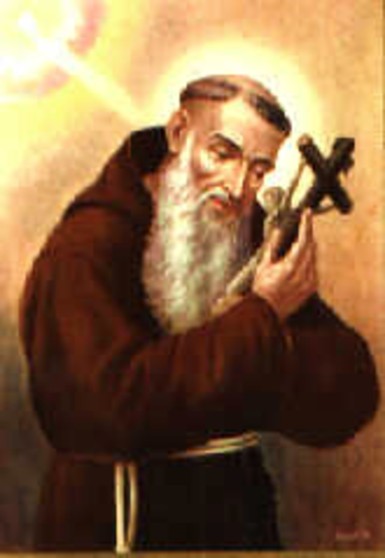
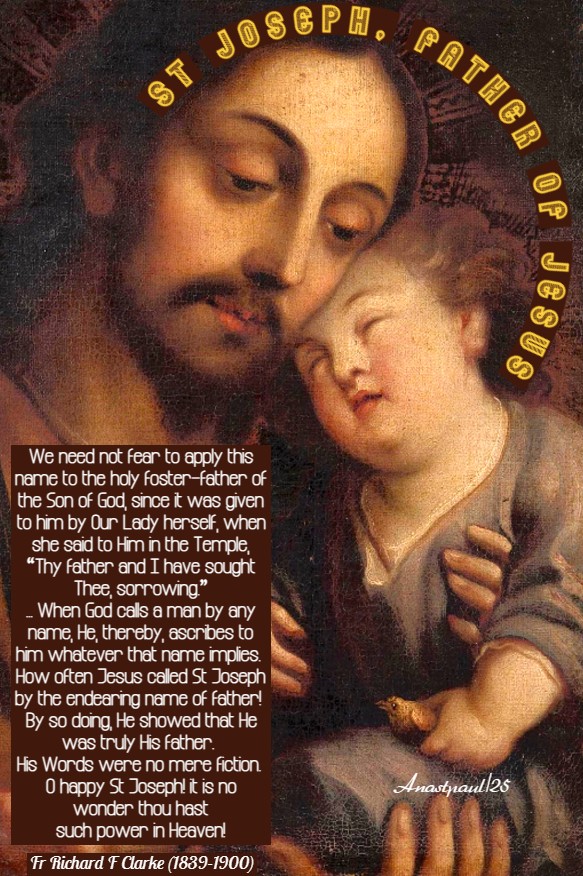
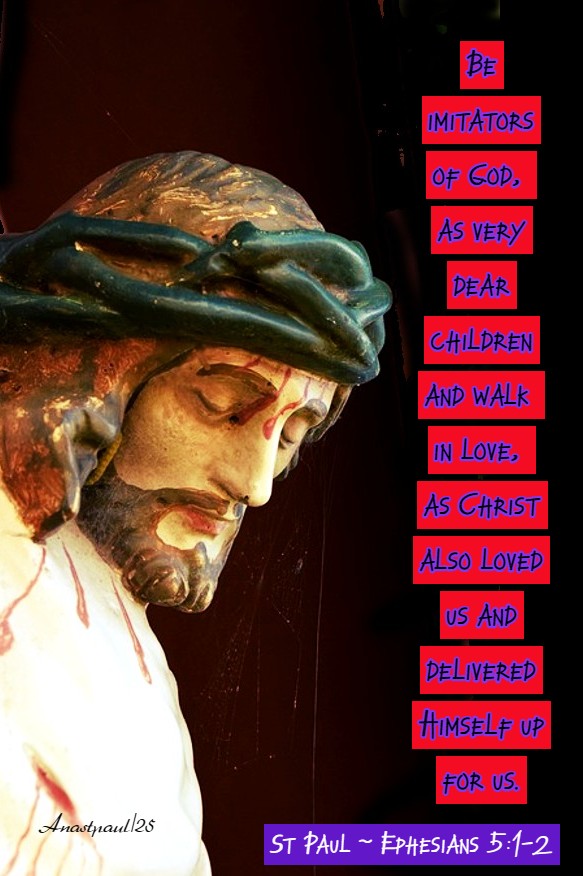
One Minute Reflection – 9 September – “The Month of The Seven Sorrows of the Blessed Virgin Mary and The Holy Cross” – St Peter Claver SJ (1581-1654) Confessor, Priest of the Society of Jesus, Missionary –Wisdom 10:10-14; Matthew 10:34-42 – Scripture search here: https://www.drbo.org/
“He who findeth his life, shall lose it and he, who shall lose his life for Me, shall find it. ” – Matthew 10:39
REFLECTION – “Let us consider these words of our Lord: that, He wishes “to draw all things to Himself” (Jn 12:32). Someone who wishes to draw all things, first of all, gathers them together and afterward, draws them. This is what our Lord does – first of all, He calls us back from straying and wandering outside, making us collect our senses, faculties, words, deeds and, within, our thoughts, intentions, imagination, desires, inclinations, mind, will and love. Then, when everything is rightfully returned to good order, God draws us to Himself. For we must first of all be separated from every exterior or interior possession, to which we are attached, putting all our satisfaction in them. This kind of detachment is a painful cross and, all the more painful as the attachment becomes firmer and stronger …
Why does God rarely allow one day and night, to resemble the previous day and night? Why is it that what assisted your devotion today, is of no help at all tomorrow? Why do you have a host of images and thoughts which come to nothing? My dear child, accept this cross from God and bear it – it will turn into a truly lovable cross, if you would hand these trials over to God, accept them from Him with true abandonment and thank God for them: “My soul magnifies the Lord” in everything (cf Lk 1:46). Whether God takes or gives, the Son of Man must be raised up on the Cross … Dear child, leave all that behind; rather, give your attention to true abandonment … and think about accepting to bear the cross of temptation, rather than going in search of spiritual sweetness … Our Lord has said: “If anyone wishes to come after Me, let him take up his cross and follow Me” (Lk 9:23).” – Fr JohannesTauler OP (c1300-1361) Dominican Priest and Friar, renowned Preacher and Theologian , leaving us more than 80 sermons.(Sermon 59, 4th for the Exaltation of the Cross).
PRAYER – God of mercy and love, Thou offer all peoples the dignity of sharing in Thy Light and Life. By the example and prayers of St Peter Claver, strengthen us to love each other as brothers. Through Jesus Christ, Thy Son our Lord, Who lives and reigns with Thee, in the unity of the Holy Ghost, God, world without end. Amen
Our Morning Offering – 9 September – “The Month of The Seven Sorrows of the Blessed Virgin Mary and The Holy Cross”
O Blessed Lady, Mediatrix and Advocate By St Bernard (1090-1153) Father and Doctor of Light
Our Mediatrix and Advocate O blessed Lady, you found grace, brought forth the Life, and became the Mother of Salvation. May you obtain the grace for us to go to the Son. By your mediation, may we be received by the One who through you, gave Himself to us. May your integrity compensate with Him for the fault of our corruption and may your humility, which is pleasing to God, implore pardon for our vanity. May your great charity cover the multitude of our sins and may your glorious fecundity confer on us, a fecundity of merits. Dear Lady, our Mediatrix and Advocate, reconcile us to your Son, recommend us to Him and present us to your Son. By the grace you found, by the privilege you merited, by the Mercy you brought forth, obtain for us the favour we ask of you, O blessed Lady. Amen
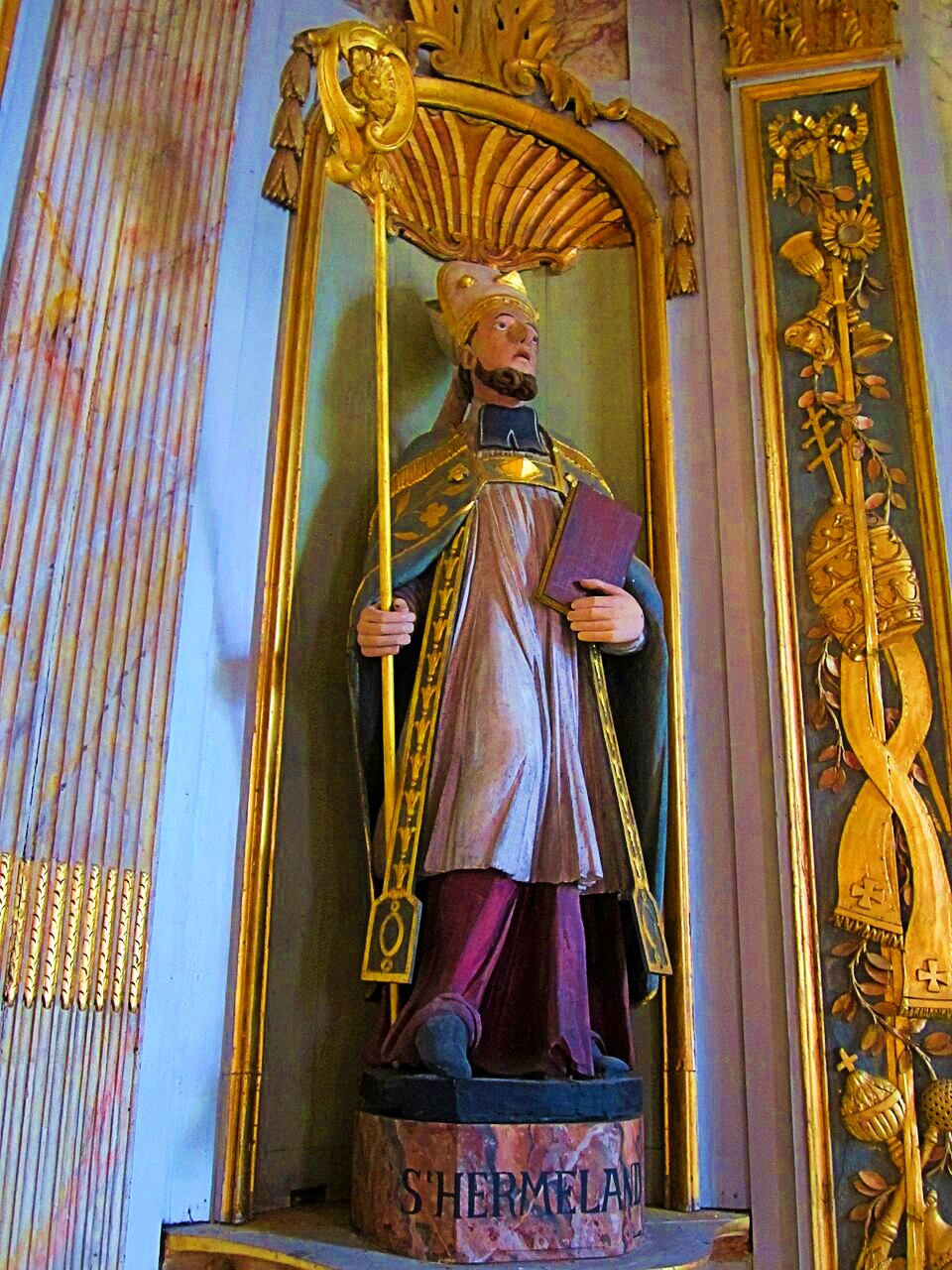
Saint of the Day – 9 September – Saint Valentinian of Chur (c480-548) Bishop of Chur in Switzerland, known as a man of bountiful generosity and care of the needy and of refugees. Born in around 480 and died earlyin January 548 in Chur in Switzerland of natural causes. Also known as – Valentianus. Name means: “the strong one” (Latin). He is also celebrated on 7 January (the date of his burial).
The Bishops Coat of Arms in Chur, Switzerland
Valentinian was the second in the line of Bishops of Chur as mentioned in Diocesan documents . He was praised for his charity towards refugees, the needy and prisoners.
He is said to have expanded the Oratory founded by St Lucius of Chur into a Monastery.
Paulinus, his nephew – and possible successor as Bishop of Chur – placed a marble inscription on his grave whichprovided some information about St Valentinian. But unfortunately, since the 17th Century (protestant excess) except for a fragment, it has been lost and is only recorded in literature.
7 January 548 was the date of Valentinian’s burial and is celebrated as his Feast Day in Chur.
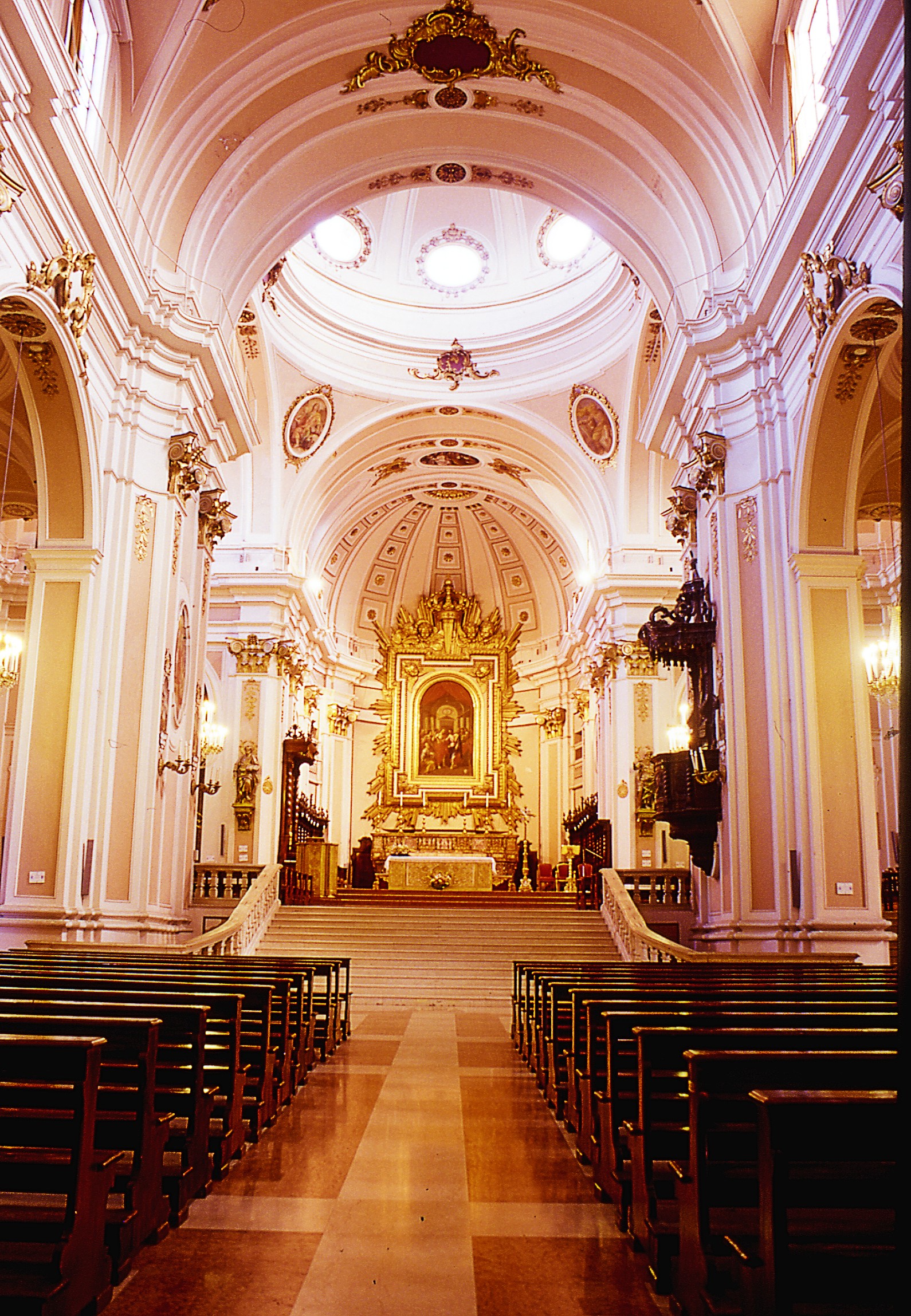
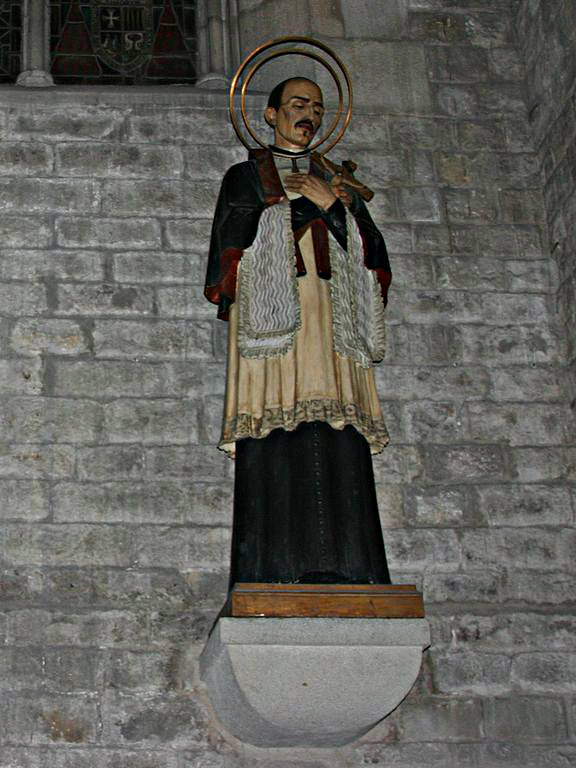
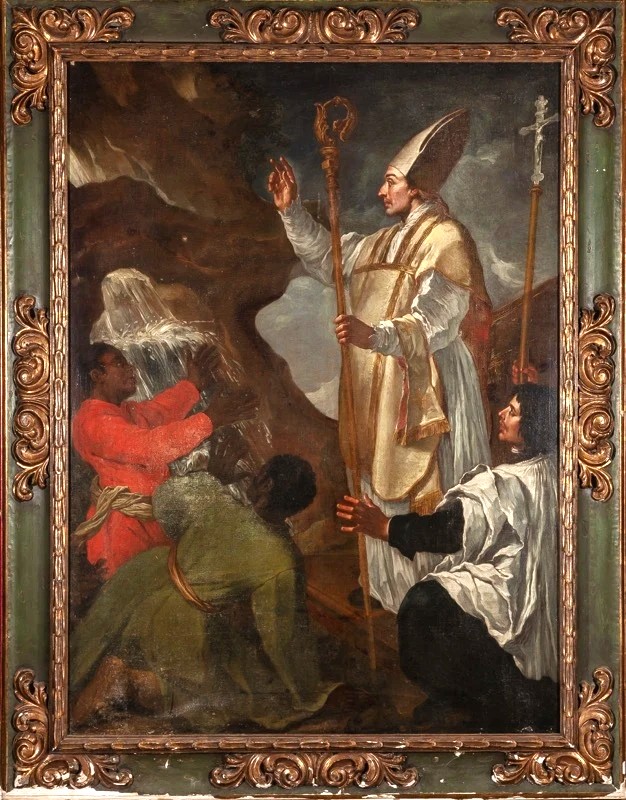
St Peter Claver SJ (1581-1654) Confessor, Priest of the Society of Jesus, Missionary, Confessor, Patron of the missions to African peoples and Human Rights Defender, Apostle of Charity. Also known as “The Apostle of Cartagena” and “The Slave of the Slaves.” Biography: https://anastpaul.com/2017/09/09/saint-of-the-day-9-september-st-peter-claver-s-j/
St Gorgonius of Nicomedia (Died c303) Martyr, Confessor, Soldier, Imperial Court Official and companions, St Dorotheus. After many horrific tortures these two were finally strangled to death in 303 in Nicomedia, Bithynia (modern Izmit, Turkey). The Roman Martyrology reads today: “At Nicomedia, the holy Martyrs, Gorgontius, Dorotheus and others. The greatest honours had been conferred on them by the Emperor Diocletian but, as they detested the cruelty which he exercised against the Christians, they were, by his orders, suspended in his presence and lacerated with whips; then their skin being torn from their bodies and vinegar and salt poured over them, they were burned on a gridiron and finally, strangled. After some time, the body of the blessed Gorgonius was brought to Rome and deposited on the Latin Way. Thence, it was transferred to the Basilica of St Peter and later some Relics went to France.” His Life and Death: https://anastpaul.com/2023/09/09/saint-of-the-day-9-september-st-gorgonius-of-nicomedia-died-c303-confessor-martyr/
St Alexander of Sabine St Basura of Masil St Bettelin St Dorotheus of Nicomedia (Died c303) Martyr, Soldier St Gorgonio of Rome St Gorgonius of Nicomedia(Died c303) Martyr, Soldier St Isaac the Great St Joseph of Volokolamsk (c1439-1515) Abbot, Founder
Bl Maria Eutimia Uffing Bl Mary de la Cabeza St Omer St Osmanna St Rufinian St Peter of Nicomedia (Died c303) Martyr, Soldier St Severian St Straton St Tiburtius St Valentinian of Chur (c480-548) Bishop St Wulfhilda
Thought for the Day – 8 September – Meditations with Saint Alphonsus Maria de Liguori (1696-1787) Bishop, Confessor, Most Zealous Doctor of the Church
“Preparation for Death” By St Alphonsus Maria de Liguori (1696-1787)
CONSIDERATION IV
The Certainty of Death “It is appointed unto men, once to die.” (Heb ix: 27)
THIRD POINT: Death is certain. But, God, many Christians already know this; they believe it, they see it; how then can they live so forgetful of death, as if they would never. have to die? If after this life, there were neither a Heaven nor a. hell, could they think less of it than they do now? And, it is on this account, they lead such wicked lives.
My brother, if you wish to lead a proper life, endeavour to live during the days which may remain to thee, keeping death ever in view. “O death, thy judgement is good.” (Ecclus xli: 3). Oh how well does he, who judges of things and regulates his actions, act; who judges and regulates them, with death ever in view.
The memory of death makes us lose all the affection which we feel for earthly things. “Let the end of this life be thought upon and there will be nothing in this world, to be loved,” observes St Lawrence Justinian. “For all that is in the world, the lust of the flesh and the lust of the eyes and the pride of life. (St John ii: 16). All the pleasures of the world may be reduced to the pleasures of sense, the pleasures of riches and honours but he who thinks that, within a short time he will be reduced to ashes and that, he will be food for worms under the earth, despises all the pleasures the world can give him. And the Saints, indeed, who have kept death ever in view, have despised all the goods of this world. To keep death ever in view, St Charles Borromeo kept a skull upon a little table, so that he might continually contemplate it. Cardinal Baronius had these words inscribed upon his ring: “Remember death !” The Venerable Father Juvenal Ancina, Bishop of Saluzzo, had this motto written on a skull: “What thou art I was once; what I am thou wilt be.” Another Saint, a Hermit, being asked when dying why he was so rejoiced, answered, “I have kept death ever before my eyes and, therefore, now that it is come, I see nothing new in it.”
What folly would it not be for a traveller, if when travelling, he were only to think of making himself great in that country through which he only has to pass, without minding the being reduced to live miserably in that country where he will have to spend his whole life? And is he not foolish, who seeks his happiness in this world, where he has to remain but a few days,and who, by so doing, runs the risk of being unhappy in the world to come, where he will have to remain forever?
He who possesses anything which is borrowed, does not place his affections on it, knowing, as he does, within a short time, he will have to restore it. All the goods of this world are but given to us as a loan, it is indeed foolish to place our affections upon them, being obliged, within so short a time, to leave them. Death will come and deprive us of all. All the gains and the riches of this world will end in a dying gasp, a funeral and a descent into the grave. The house which you have built, within a short time you will have to give up to someone else. The tomb will be the place where your body will have to dwell until the day of judgement and, from the tomb, your body will have to pass either to Heaven or to hell, whither your soul will have gone before.
Affections andPrayers
Therefore, will all be finished for me in death? I shall find nothing else, O my God, than that little which I have done through my love for Thee. And what am I waiting for? Am I waiting until death shall come and find me miserable and defiled with sin, as I am now? If I were now to die, I should die restlessly and should be very dissatisfied with my past life. No, my Jesus, I do not wish to die so dissatisfied. I thank Thee that Thou hast given me time to mourn over my sins and to love Thee. I will begin from this moment. But, above all things, I grieve for having offended Thee, O my Sovereign Good but I love Thee more than anything, more than my life itself. I yield myself entirely to Thee my Jesus, from this hour I attach myself wholly to Thee. I would press Thee to my heart and from this moment, I deliver my soul into Thy keeping.
“Into Thy Hands I commend my spirit.” I will not wait to give my soul into Thy keeping until the time shall come when it shall be commanded to leave this world with that summons: “Go forth, Christian soul.” I will not wait until that moment arrives to beg Thee to save me. “O Jesus, be a Jesus to me.” Save me now, O my Saviour, by giving me Thy pardon and by giving me the grace of Thy holy love. If this consideration which I have this day read, should be the last warning which Thou shouldst give me and the last mercy, Thou shouldst show me, then stretch forth Thy Hand and take from me all my indifference; give me fervour; grant that I may obey Thee with great love in all Thou mayst require of me. Eternal Father, for the love of Jesus Christ, give me holy perseverance and the grace to love Thee and to love Thee and Thee alone during the life that may yet remain to me.
Quote/s of the Day – 8 September – The Feast of theNativity of the Blessed Virgin Mary, Mother of God
“Behold, the virgin shall be with child and bear a son … ”
Matthew 1:23
“Today, the Virgin is born, tended and formed and prepared, for her role as Mother of God, Who is the universal King of the ages. … Therefore, let all creation sing and dance and unite to make worthy contribution to the celebration of this day. … Let everything, mundane things and those above, join in festive celebration. Today, this created world is raised to the dignity of a holy place for Him, Who made all things. The creature is newly prepared to be a Divine dwelling place for the Creator!”
St Andrew of Crete (660-740) Bishop, Father of the Church
Praeclara Custos Virginum! Blest Guardian of All Virgin Souls! By Anonymous Latin, 18th Century Trans. Fr Edward Caswall C.Orat. (1814–1878)
Blest Guardian of all virgin souls! Portal of bliss to man forgiven! Pure Mother of Almighty God! Thou hope of earth and joy of Heaven!
Fair Lily, found amid the thorns! Most beauteous Dove with wings of gold! Rod from whose tender root there sprang That healing Flow’r long since foretold!
Thou Tow’r, against the dragon proof! Thou Star, to storm-toss’d voyagers dear! Our course lies o’er a treacherous deep; Thine be the light by which we steer.
Scatter the mists that round us hang; Keep far the fatal shoals away And while through darkling waves we sweep, Open a path to life and day.
O Jesu, born of Virgin bright! Immortal glory be to Thee! Praise to the Father infinite And Holy Ghost eternally. Amen
This Hymn originated as the Hymn for Vespers in the Office of the Purity of the Blessed Virgin Mary. It is used for Matins on the Solemnity of the Immaculate Conception. Tune: “From High Heaven” Leipzig melody, 1539.
One Minute Reflection – 8 September – The Feast of theNativity of the Blessed Virgin Mary, Mother of God –Pentecost XVI – Proverbs 8:22-35; Matthew 1:1-16 – Scripture search here: https://www.drbo.org/
“And Jacob begot Joseph, the husband of Mary and of her was born Jesus , Who is called Christ.” – Matthew 1:16
REFLECTION – “Dearly beloved, the day of the blessed and ever venerable Virgin Mary so long desired, is here. Let our land rejoice in the greatest exultation. Let it shine in the light of the birth of such a virgin. For she is the flower of the field, from her bloomed the precious lily of the valley. Through her birth the nature inherited from our first parents is changed. their sin is blotted out. That unhappy curse of Eve in which it was said – ‘In sorrow shalt thou bring forth children,‘ is, in the case of Mary, ended, for she bore the Lord in joy.
Eve mourned – Mary rejoiced! Eve carried tears in her womb, Mary joy. Eve gave birth to the sinner, Mary to Innocence. The mother of the human race brought punishment into the world; the mother of the Lord salvation. Eve was the source of sin, Mary of grace. Eve harmed, by bringing death, Mary aided, by giving life. The former wounded, the latter healed. Obedience replaced disobedience; fidelity atones for infidelity.
Now Mary may play melodies upon the organ. Now may the active fingers of the young mother strike the timbrels. Now may choirs sing out with joy. Now let the sweetest Songs mingle with the varying harmonies. Hear how she, our timbrel-player, sings – ‘My soul magnifies the Lord and my spirit rejoices in God my Saviour. Because He has regarded the lowliness of His handmaid, for, behold, henceforth all generations shall call me blessed. Because He Who is mighty has done great things for me. The miraculous new birth conquered the prevalent error. The canticle of Mary silenced the wailing of Eve.” – St Augustine (354-430) Bishop, Father and Doctor of Grace (Sermon on the Feast of the Nativity of the Virgin Mary).
PRAYER – Bestow upon Thy servants, we beseech Thee, O Lord, the gift of heavenly grace, that, as the child-bearing of the Blessed Virgin stood for the beginning of our salvation, so may the solemn Feast of her Nativity, bring about an increase of peace. Through Christ, Thy Son our Lord, Who lives and reigns with Thee, in the unity of the Holy Ghost, God, world without end. Amen (Collect).
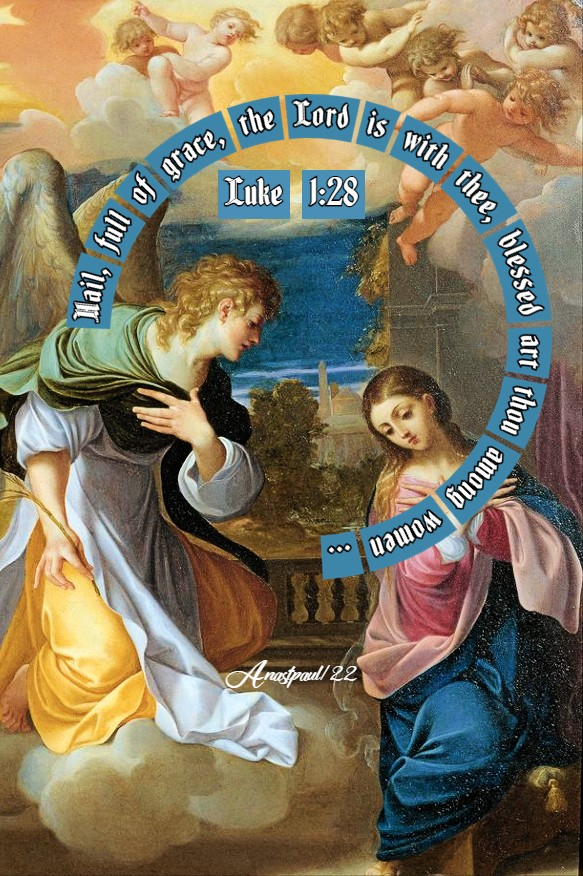
Our Morning Offering – 8 September – “The Month of The Seven Sorrows of the Blessed Virgin Mary and The Holy Cross” – The Nativity of the Most Blessed Virgin Mary
The Angels’ Birthday Song to Mary Unknown Author
“Thy nativity, O Virgin Mother of God, gives joy to the whole world, because from thee shall rise, the Sun of Justice, Christ our Lord. ”
Hail to the Flower of grace divine! Heiress, hail of David’s line! Hail Redemption’s heroine! Hail to the Virgin pre-elect! Hail to the work without defect Of the supernal Architect!
Hail to her ordained of old Deep in enmities untold, Ere the blue waves of ocean rolled, Ere the primordial founts had sprung, Ere in ether the globe was hung, Ere the morning stars had sung!
Welcome the beatific morn When the mother of life was born, Whom all lovely gifts adorn! What a thrill of ecstatic mirth Danced along through heaven and earth. At the tidings of Mary’s birth!
How was hell to its centre stirred! How sang Hades when it heard Of her coming, so long deferred! Happy, happy, the Angel band Chosen by Mary’s side to stand As her defence on either hand!
Safe beneath their viewless wings Mother-elect of the King of kings, Fear no harm from hurtful things! What though Eden vanished be, More than Eden we find in thee! Thou our joy and jubilee!
Saint of the Day – 8 September – Blessed Seraphina Sforza OSC (c1424-1478) Abbess, Widow. Born in c1424 at Urbino, Italy as Sueva and died on 8 September 1478 at Pesaro, Italy of natural causes. Her Body is Incorrupt. Also known as – Sueva Sforza, Sveva da Montefeltro. Additional Memorial on some calendars due to the Feast Day of the Nativity of the Most Blessed Virgin Mary – 9 September.
Anonymous 15th Century image
Seraphina, who belonged to the family of the Counts of Urbino, became an orphan at an early age. Her maternal Uncle, Prince Colonna, undertook to raise the child. During her stay in Rome, the girl’s noble disposition unfolded itself like a flower. God and virtue had the strongest attraction for her and the vanity of the world had no value in her sight.
Scarcely had she arrived at young womanhood when, at the wish of her relatives, she was betrothed to the widowed Prince Alexander Sforza, Governor of Pesaro. A difficult task awaited the young wife but she proved equal to it. The Prince had two children by his first marriage, a son and a daughter. Seraphina embraced them with as much affection as if they had been her own children and they, in turn, loved and esteemed their stepmother as their own mother. She also completely won the affection of her husband. After a few years, the Prince was obliged to take up arms to assist his brother, the Duke of Milan. He believed that he could entrust the Government to no-one better than to his young wife, for he marveLled at her wisdom and skill in the management of the household.
Detail from the Sforza Triptych showing Seraphina (possibly) and Alexander by the Workshop of Rogier van der Weyden from circa 1460
The Prince’s absence extended over a period of six years. Seraphina carried out her tasks, so perfectly that everyone admired her wise foresight and impartiality. She was loved and honoured by all for her brilliant virtues and extraordinary generosity. She sought and obtained God’s blessing on her undertakings by abundant almsgiving.
When her husband returned, it was to be expected that Blessed Seraphina Sforza would receive due credit for her success. But God sometimes permits His servants to be treated in a very different way. A woeful change had taken place in the Prince. He had abandoned himself to a dissolute life and he had become so reckless, as to bring a paramour into his home and reduce Seraphina to the condition of a servant. But she held her peace, suffered and prayed. The very presence of his lawful wife, however, was an unbearable reproach to the profligate; he aimed to take her life. When his attempts failed, he forcibly ejected her from the Palace, ordering her to hide herself in the Monastery of the Poor Clares and there Seraphina went.
Although happy to serve God in the midst of the spouses of Christ, Seraphina, nevertheless, continued to wear secular garb, so as to make it easier for the Prince to return to his duties. She prayed unceasingly for his conversion. The Prince tried to force her to take the religious Habit but, only when she was assured, it was God’s will, did she receive the Habit and take the vows. She was a perfect religious, faithful even in the most trifling ordinances.
Her perfect sacrifice brought about her husband’s conversion. At last, he realised what he had done. He came to the Convent and on his knees begged his holy wife for forgiveness. For nine years he lived on, striving to the best of his ability, to make amends for his sins and for the scandal he had given. Blessed Seraphina Sforza lived eighteen years longer in the Convent and promoted its temporal and spiritual welfare, especially during the last three years when she was appointed as the Abbess.
On the Feast of the Nativity of the Blessed Virgin, 8 September 1478, Blessed Seraphina Sforza went to receive her heavenly crown. Pope Benedict XIV approved the perpetual veneration paid to her. Her Incorrupt body rests in the Cathedral of Pesaro. (From: The Franciscan Book of Saints).
The Sfofza Triptycg by the Workshop of Rogier van der Weyden from circa 1460
St Adrian (Died 306) Confessor, Lay Martyr, Royal Court Guard in Roman Imperial Court at Nicomedia in Asia-Minor during the time of Emperor Maximian in the early 4th Century. Patronages – against the plague/epidemics, against epilepsy, arms dealers, butchers, guards, soldiers. The Roman Martyrology reads this day: “At Nicomedia, St Adrian, with twenty three other Martyrs, who ended their Martyrdom on the 4th day of March by having their limbs crushed, after enduring many torments, under the Emperors Diocletian and Maximian. Their remains were carried to Byzantium by the Christians and buried with due honours. Afterwards, the body of St Adrian was taken to Rome on this day, on which his festival is celebrated.” His Life and Death: https://anastpaul.com/2023/09/08/saint-of-the-day-8-september-st-adrian-died-306-confessor-martyr/
Martyrs of Alexandria – 5 Saints: A group of Christians Martyred together in the persecutions of Diocletian – Ammon, Dio, Faustus, Neoterius and Theophilus. Martyred in Alexandria, Egypt.
Martyrs of Japan – (21 Beati: A group of 21 Missionaries and Converts, who were executed together for their faith. They were: Antonio of Saint Bonaventure, Antonio of Saint Dominic, Dominicus Nihachi, Dominicus of Saint Francis, Dominicus Tomach, Francisco Castellet Vinale, Franciscus Nihachi, Ioannes Imamura, Ioannes Tomachi, Laurentius Yamada, Leo Aibara, Lucia Ludovica, Ludovicus Nihachi, Matthaeus Alvarez Anji, Michaël Tomachi, Michaël Yamada Kasahashi, Paulus Aibara Sandayu, Paulus Tomachi, Romanus Aibar, Thomas of Saint Hyacinth, Thomas Tomachi Died on 8 September 1628 in Nagasaki, Japan Beatified on 7 May 1867 by Pope Pius XI.
Thought for the Day – 7 September – Meditations with Saint Alphonsus Maria de Liguori (1696-1787) Bishop, Confessor, Most Zealous Doctor of the Church
“Preparation for Death” By St Alphonsus Maria de Liguori (1696-1787)
CONSIDERATION IV
The Certainty of Death “It is appointed unto men, once to die.” (Heb ix: 27).
SECOND POINT: “It is appointed” It is, therefore, quite certain – we are all condemned to die. St Cyprian says that we are all born with the halter round our neck and, we approach nearer to death at every step we take. My brother, as your name has one day been entered into the Register of Baptism, so too, it will one day be entered into the Register of Deaths. … As you have often heard the death-bell toll for others, even so will others hear it toll for you.
But what would you say, if you were to see a condemned man going to the scaffold jesting, laughing, looking about him, thinking only of plays, festivities and amusements? And are not you advancing on the road to death? And of what are you thinking? Look into that grave and see your friends and your relations upon whom, justice has already been executed. What fear do those feel, who are condemned to die, when they behold their companions suspended on the gallows and dead! Behold, then, those corpses, each one of which repeats to you: “Yesterday for me and to-day for thee.” (Ecclus xxxviii: 23). The portraits of those of your friends even, say the same to you, as do their memoranda-books, their houses, their beds, and even the clothes they have left behind them.
What greater folly, therefore, can there be than to know we must die and, after death, an eternity of joy or an eternity of pain awaits us; to know upon that moment, our eternal happiness or our eternal unhappiness depends and yet, not to care to make our reckoning sure and to use all the means we can, to make our death a happy one. We pity all these who die suddenly and who are not prepared for death and why, therefore, do we not strive to be ever prepared to die because, the same sudden death, may happen to us? But sooner or later, either with warning or without it, whether we think it or whether we do not think it, we shall have to die and, at every hour, at every moment, we approach nearer to our gallows, even to that last illness which will be the cause of our death.
At every age, the houses, the streets and the cities, are again inhabited by fresh people and, the old inhabitants are borne to the grave, their last resting-place. As the days of life are for ever finished for these, so will the time come ,in which, neither I nor you, nor any of those who are now living, will be any more living upon this earth. Our “memorial is perished with us.” (Ps ix: 6) . We shall all then be living in eternity which will be for us ,either an eternity of endless joy, or an eternity of endless woe. There is no middle way; this is certain and is an Article of Faith that either one lot or the other, will be ours.
Affections and Prayers
My beloved Redeemer, I should not have the courage thus to appear before Thee, did I not behold Thee hanging upon that Cross, wounded, derided and dead, for me. My ingratitude has been great but Thy Mercy has been still greater. Thy wounds, Thy Blood, Thy Death, are my hope. I deserved hell from the moment I committed my first sin; how many times afterwards have I not again offended Thee and not only hast
Thou preserved my life but with so much pity and so much love, Thou hast offered me pardon and peace; how, therefore, can I fear being driven from Thee, now that I love Thee and now I have no other desire, than Thy blessed favour. Yes, I love Thee with all my heart, my dearest Lord and I desire nothing else than to love Thee. I love Thee, and am very sorry for having scorned Thee, not so much because I have rendered myself worthy of hell, as for having offended Thee, my God. Who hast loved me so much. Take me to Thy bosom, O my Jesus and add Mercy to Mercy. Let me never more be ungrateful to Thee and change my heart entirely. Grant that my heart which at one time esteemed Thy Love of no account and which has so often exchanged it for the miserable gratifications of this world, may. be wholly Thine and grant that it may burn in continual flames of love for Thee.
I hope to come to Paradise, there to love Thee forever, I cannot hope for a place there, among the innocent; my place will be amongst the penitent but, amidst those, I will love Thee more than the innocent. For the glory of Thy Name, let a sinner be seen by Heaven to burn with a great love for Thee, a sinner who has so often offended Thee. I resolve, from this day fonward, to be Thine only and to think of nothing but of loving Thee. Assist me with Thy Light and with Thy Grace that strength maybe given to me to fulfil this, my desire which Thou Thyself hast given me through Thine Love.
Quote/s of the Day – 7 September – “The Month of The Seven Sorrows of the Blessed Virgin Mary and The Holy Cross” and Our Lady’s Saturday – Ecclesiasticus 24:14-16; Luke 11:27-28 – Scripture search here: https://www.drbo.org/
“Behold, I stand at the gate and knock. If any man shall hear My Voice and open the door to Me, I shall come into him and shall sup with him and he with Me.”
Apocalypse 3:20
“… Rather blessed are those, who hear the Word of God and keep it.”
Luke 11:28
“We too are blessed when we are mindful of carrying Him constantly in our heart. Certainly, Christ’s Conception in Mary’s womb was a great marvel but it is no less of a marvel to see Him become the guest of our heart.”
“May Christ be heard in our language, may Christ be seen in our life, may He be perceived in our hearts”
One Minute Reflection – 7 September – “The Month of The Seven Sorrows of the Blessed Virgin Mary and The Holy Cross” and Our Lady’s Saturday – Ecclesiasticus 24:14-16; Luke 11:27-28 – Scripture search here: https://www.drbo.org/
“Blessed is the womb which bore Thee … blessed are they who hear the word of God and keep it.” – Luke 11:27,28
REFLECTION – “It is true of the Virgin Mary that she conceived Christ in her womb but all, who are chosen, share in carrying Him in their heart with love. Blessed, yes, blessed indeed, is the woman who carried Jesus in her womb for nine months (Lk 11:27). We too are blessed, when we are mindful of carrying Him constantly in our heart. Certainly, Christ’s conception in Mary’s womb was a great marvel but it is no less of a marvel to see Him become the guest of our heart. That is the meaning of John’s testimony: “Behold, I stand at the gate and knock. If any man shall hear My Voice and open the door to Me, I shall come into him and shall sup with him and he with Me ” (Apoc 3:20).
… Here again, my brothers, let us consider our dignity and ,our resemblance to Mary. The Virgin conceived Christ in her womb of flesh and we, carry Him in the womb of our heart. Mary nourished Christ by giving His lips milk from her breast and we, can offer Him a varied meal with the good works which delight Him!” – St Peter Damian (1007-1072) Cardinal Bishop of Ostia, Doctor of the Church (Sermon 45).
PRAYER – Grant, we beseech Thee, O Lord God, unto all Thy servants, that they may remain continually in the enjoyment of soundness, both of mind and body and by the glorious intercession of the Blessed Mary, always a Virgin, may be delivered from present sadness and enter into the joy of thine eternal gladness.Through the same Jesus Christ, Thy Son our Lord, Who lives and reigns with Thee, in the unity of the Holy Ghost, God, world without end. Amen (Collect).

Saint of the Day – 7 September – Saint Madalberta of Mauberge (Died c706) Abbess. Born into the Merovingian Dynasty in Franc/Belgium in the 7th Century she died in c706 at Mauberge Abbey in Hainaut, in northern France, of natural causes. Also known as – Madelberte, Machtelberthe.
Madalberta was the daughter of Saint Vincent of Soignies and Saint Waltrude. She had the happiness of being educated in the Monastery of Mauberge by their Aunt, Saint Aldegonde, with her sister Aldetrudis. The latter, upon the death of their Aunt, was chosen second Abbess of Maubeuge and succeeded by her sister Madalberta. The image below shows this holy family of Saints.
Madalberta’s succession occurred in around 697 when she succeeded sister Saint Aldetrude, as the Abbess of Maubeuge.
She died in 705 or 706. Her Relics were translated from Maubeuge to Liege by St Hubert about the year 722. Below we see a Church in her name at Liege (Belgium) and presume her Relics might still lie there.
St Alcmund of Hexham Bl Alexander of Milan St Augustalus St Balin St Carissima of Albi St Chiaffredo of Saluzzo Bl Claude-Barnabé Laurent de Mascloux St Desiderio of Benevento St Dinooth Bl Eugenia Picco St Eupsychius of Caesarea St Eustace of Beauvais St Evortius of Orleans (Died c340) Bishop St Faciolus St Festo of Benevento Bl François d’Oudinot de la Boissière St Giovanni of Lodi St Goscelinus of Toul St Gratus of Aosta St Grimonia of Picardy St Hiduard Bl John Duckett Bl John Maki Bl John of Nicomedia Bl Ludovicus Maki Soetsu St Madalberta of Mauberge (Died c706) Abbess Bl Maria of Bourbon
Martyrs of Noli: Four Saints: Christians who became soldiers and were martyred together for their faith. A late legend makes them member of the Theban Legend who escaped their mass martyrdom but that’s doubtful – Paragorius, Partenopeus, Parteus and Severinus. They were born in Noli, Italy and martyred in Corsica, France. Attribute – soldiers with a banner of NoliM
Thought for the Day – 6 September – Meditations with Saint Alphonsus Maria de Liguori (1696-1787) Bishop, Confessor, Most Zealous Doctor of the Church
“Preparation for Death” By St Alphonsus Maria de Liguori (1696-1787)
CONSIDERATION IV
The Certainty of Death “It is appointed unto men, once to die.” (Heb ix: 27).
FIRST POINT: The sentence of death is written against all men; thou art man, thou hast to die., St Augustine observes “our good things and our evil things are uncertain, death alone is certain.”
It is uncertain, whether the new-born infant will be poor or rich, whether it will have good or bad health, whether it will die young or old but, it is quite certain it will have to die. Every noble, every Monarch, will be cut off by death. And when death arrives, there is no strength able to resist it. Fire may be resisted, water may be resisted, the sword may be resisted, the power of princes may be resisted but when death comes, there is no power able to resist. Belluacensis relates that a certain King of France whose last moment was fast approaching, exclaimed,: “Behold, that I, with all my power, am unable to make death wait one more hour for me!” When the end of life is indeed come, not even for one moment can it be deferred! “Thou hast appointed his bounds which he cannot pass.” (Job xiv: 5).
Should you, therefore, live, dear reader, for all the years which you hope still one day must come and one hour of that day which will be the last for you. For myself, who am now writing and for you, who will read this little book, there is a day and there is a moment decreed, in which I shall no longer write, neither will you read. “What man is, he that liveth and shall not see death?” (Ps cxxxix: 47). The sentence is passed. There has never been a man as foolish as to flatter himself he will not have to die. That which happened to your ancestors will also happen to you. Of all those, who, at the beginning of the last Century were living in your country, behold not one of them remains. Even the Princes, the Kings of the world, have passed away; nothing remains of them but a marble mausoleum with a grand inscription which now serves to warn us that a little dust confined within the tomb is all which remains of the grand ones of this world. St Bernard asks: “Tell me where are the lovers of the world?” and he replies, “Nothing remains of them, save ashes and worms.”
Therefore, we must endeavour to obtain, not that happiness which has an end but that which is eternal, for our souls are eternal; for of what use would it be, to be happy, (even were it possible for true happiness to be felt by that soul which is at enmity with God), I repeat, to be happy in this life, if in the life to come, you must be unhappy for all eternity? You have built that house to your satisfaction but you must reflect and think, soon you will have to leave it, to remain corrupting in a tomb. You have obtained that dignity which renders you superior to others but death will soon come and will make you lower than the lowest peasant on the earth.
Affections and Prayers
Alas, wretched one who I am, who for so many years have only offended Thee, O God of my soul. Alas, that those years have already passed away and perchance, death is drawing nigh and I feel my conscience troubled and filled with remorse. Oh, that I had ever served Thee my Lord! How foolish have I not been, to have lived so many years and instead of trying to fit myself for the other world, I have laden myself with debts to the Divine Justice.
My dear Redeemer, give me light and strength now to make my reckoning sure with Thee. Death for me, perhaps, now stands nigh at hand. I should like to prepare myself for that great moment in which my everlasting happiness, or unhappiness depends. I thank Thee for having waited so long for me and since Thou dost give me time to atone for what I have done amiss, look upon me, O’my God and tell me what I must do for Thee. Dost Thou wish me to grieve over the offences. I have committed against Thee? I do grieve over them, they do displease me very much indeed. Dost Thou wish me to spend the years and days which may remain to me, in loving Thee? Yes, then I will do so.
O God, during the years which are past, many times have I desired to do this but my desires have afterwards proved failures. No, my Jesus, I will no longer be ungrateful for the many favours Thou hast bestowed upon me. If now, at least, I do not try to love Thee, how shall I be able when the hour of death approaches to hope for pardon in Paradise? Behold now I do really firmly resolve to place myself in Thy service. But Thou must give me strength, Thou must not abandon me. But Thou didst not abandon me when I offended Thee, therefore, do I indeed greatly hope for Thy gracious assistance, now that I have resolved to leave all, in order to please Thee. Accept me, therefore and love me, O God, Thou Who art worthy of infinite love. Accept the traitor, who being now repentant, embraces Thy feet and loves Thee and asks Thee for mercy. I love Thee, O my Jesus, I love Thee with all my heart, I love Thee much more than I love myself. Behold I am Thine alone. Dispose of me and all that is mine, as it may please Thee; give me perseverance in obeying Thee give me Thy Love and then do with me as Thou wilt.
Quote/s of the Day – 6 September – Ferial Day – Galatians 5:16-24, 6:1-10; Luke 7:11-16 – Scripture search here: https://www.drbo.org/
“Young man, I say to thee, arise!” Luke 7:14
“Even for restoring the dead to life, the Saviour did not stop at acting by Word alone, although it was the bearer of Divine Commands. For such a surpassing work, He took His own Flesh as His assistant – if one might put it that way – that He might show, that it has the power to give life and, that He might cause it to be seen that it is entirely One with Him. … Thus, He not only conferred to His Word the power to raise the dead but He even touched the dead, to show that His Body is Life-giving and, through His Flesh, He caused life to pass into their corpses. If the touch alone of His Sacred Flesh restores life to a corrupting body, what profit shall we not discover in His Life-giving Eucharist when we make of it our food? It will wholly transform into its own property which is immortality, those who participate in it.”
St Cyril of Alexandria (376-444) Father & Doctor of the Church
One Minute Reflection – 6 September – “The Month of The Seven Sorrows of the Blessed Virgin Mary and The Holy Cross” – Ferial Day – Galatians 5:16-24, 6:1-10; Luke 7:11-16 – Scripture search here: https://www.drbo.org/
“Young man, I say to thee, arise!” – Luke 7:14
REFLECTION – “In the Gospels, we find three dead people who are visibly restored to life but, thousands who are invisibly so … The Synagogue Official’s daughter (Mk 5:22f.), the widow of Naim’s son and Lazarus (Jn 11) … are symbols of three kinds of sinner whom Christ still raises today. The young girl was still in her father’s house … the widow of Naim’s son was no longer in his mother’s house but not, as yet, in the tomb … Lazarus had already been buried …
And so, there are some people whose sins remain in their hearts but who have not put them into practice … They have consented to sin and death is within their souls but, it has not yet been carried outside. Now, it often happens … that people experience this in themselves – after hearing the Word of God, our Lord seems to say to them: “Arise!” They accuse themselves of the consent they gave to evil and draw breath, to live in salvation and uprightness … Others, having given their consent, go as far as the deed. They carry out the dead thing, hidden in the concealment of their dwelling and expose it before everyone. Are we to despair of them?Did not our Saviour say to that young man: “I tell you, arise!?” Did not He give him back to his mother? This is how it is with someone who has behaved like that – if he is touched and moved by the Word of Truth, he rises again at Christ’s Word, he comes back to life. He was able to go a step further along the way of sin but he could not die forever.
As for those who are so bound fast in evil habits as to their removing even the sight of the evil things they do, they undertake to defend their evil deeds, they are angered if one rebukes them … Such as these, crushed under the weight of a habit of sinning, are, as though buried in the tomb … That stone placed over the sepulcher is the tyrannical force of the habit which crushes the soul and does not allow it, either to arise or to breathe…
Listen, then, dearest brethren and behave in such a way that those who live, live and those who are dead revive … Let all those dead people repent … Let those who live, preserve that life of theirs and let those who are dead, be quick to come back to life again!” – St Augustine (354-430) Bishop, Father and Doctor of Grace (Sermon 98).
PRAYER – Grant, we beseech Thee, O Lord God, unto all Thy servants, that they may remain continually in the enjoyment of soundness, both of mind and body and by the glorious intercession of the Blessed Mary, always a Virgin, may be delivered from present sadness and enter into the joy of thine eternal gladness.Through the same Jesus Christ, Thy Son our Lord, Who lives and reigns with Thee, in the unity of the Holy Ghost, God, world without end. Amen (Collect).
Our Morning Offering – 6 September – “The Month of The Seven Sorrows of the Blessed Virgin Mary and The Holy Cross” and Friday devoted to the Passion
Faithful Cross! Above All Other By St Venantius Fortunatus (c 530 – c 609)
Faithful Cross! above all other, one and only noble tree! None in foliage, none in blossom, none in fruit thy peer may be; sweetest wood and sweetest iron, sweetest weight is hung on thee.
Bend thy boughs, O tree of glory! Thy relaxing sinews bend; for awhile the ancient rigour that thy birth bestowed, suspend and the King of heavenly beauty gently on thine arms extend.
Praise and honour to the Father, praise and honour to the Son, praise and honour to the Spirit, ever Three and ever One: One in might and One in glory while eternal ages run.
Saint of the Day – 6 September – Saint Faustus of Syracuse (Died c607) Abbot. Died in c607 in Syracuse, Sicily of natural causes.
We know nothing about St Faustus except that he was the Abbot of the Monastery of Santa Lucia in Syracuse in Sicily during the late 6th and early 7th Centuries and that he wonderfully taught the child Zosimus, who would later become the Abbot and also the Bishop of the City of Syracuse and even more, a Saint!
One of his pupils, was St Zosimus who died in c660 and who had been in the Monastery of Santa Lucia since childhood. He became a Monk, then Abbot and finally, in 649, Zosimus wasappointed as the Bishop of Syracuse and is celebrated on 30 March.
St Cagnoald St Consolata of Reggio Emilia Martyr. No fuirther information has survived. St Cottidus of Cappadocia
St Eleutherius the Abbot (Died c 585) Monk and Abbot. A wonderful simplicity and spirit of compunction were the distinguishing virtues of this holy sixth century Abbot. His Lifestory: ttps://anastpaul.com/2020/09/06/saint-of-the-day-saint-eleutherius-the-abbot-at-spoleto-died-c-585/
St Eugene of Cappadocia St Eve of Dreux, France, Martyr. No other information has survived. St Faustus of Alexandria St Faustus of Syracuse (Died c607) Abbot St Felix of Champagne
St Mansuetus of Toul St Onesiphorus St Petronius of Verona Bishop and Confessor St Sanctian of Sens St Zacharius the Prophet
Martyrs of Africa – 6 Saints: There were thousands of Christians exiled, tortured and Martyred in the late 5th Century by the Arian King Hunneric. Six of them, all Bishops, are remembered today; however, we really know nothing about them except their names and their deaths for the Christ and the Faith – Donatian, Fusculus, Germanus, Laetus, Mansuetus and Praesidius.
Thought for the Day – 5 September – Meditations with Saint Alphonsus Maria de Liguori (1696-1787) Bishop, Confessor, Most Zealous Doctor of the Church
“Preparation for Death” By St Alphonsus Maria de Liguori (1696-1787)
CONSIDERATION III
“For what is your life? It is even a vapour which appeareth for a little time.” (St James iv: 14)
THIRD POINT: Therefore, is it not folly for the short and paltry pleasures of this brief life to incur the risk of dying a miserable death? and, with that death, to begin a wretched eternity? Oh, of how much importance is that last moment, that last gasp, that last closing of the view! It is an eternity, either of every joy, or of every pain which is at stake, a life forever happy, or forever miserable! Let us think – Jesus Christ was willing to die a bitter and cruel death, in order to obtain for us a peaceful and happy death. For this end, He calls us so many times; He gives us so many lights; He admonishes us with so many threats, in order that we may be induced to spend that last moment in the grace of God. Even the Pagan Antisthenes, when he was asked what was the greatest blessing in this world, answered: “A happy death!” And what ought a Christian to say, who knows by faith that, from the moment of death, eternity begins; so that in that moment, he lays hold of one of the two wheels which draws with it, either eternal happiness or eternal suffering? If there were two tickets in a lottery, upon which Hell might be written on one and Heaven on the other, with what care would you not try to draw out that one, upon which Paradise was written? O God, how must those unhappy wretches tremble who are condemned to throw the die upon which their life or death depends! What fear will be yours when you will find yourself near to that last moment; when you will say: “Upon this moment, which is drawing so near, depends my eternal life or death! Now, it is to be decided whether I shall be forever blessed, or forever miserable.”
Sr Bernardine of Sienna tells of a certain Prince who, when dying, in great terror, exclaimed: “I have many lands and palaces in this world but if I should die during this night, I know not what lodging will be mine!” My brother, if thou believest that thou hast to die and there is an eternity and, once only thou canst die, so if thou once makest a mistake, the mistake will be forever without any hope of remedy, why is it, thou dost not begin, from this moment, in which thou readest these words, to do all which liest in thy power, to secure for thyself, a happy death?
S Andrew Avellino said tremblingly: “Who knows what will be my lot in the life to come? Whether I shall be saved or condemned to eternal death?” St Louis Bertrand also trembled so much, he was unable to take rest because of this thought which would suggest itself to him: “Who knows whether thou wilt be lost?” And thou, who has committed so many sins, dost thou not tremble? Be quick and make amends in time; resolve to give thyself indeed to God and begin, at least from this time forward, a life, the remembrance of which, may not grieve but may fill thee with joy at the hour of death. Give thyself to prayer, frequent the Sacraments, quit dangerous occasions, and, if necessary, leave even the world, so that thou mayest secure to thyself an eternal salvation and understand, to secure this eternal life, no precaution can be too great!
Affections andPrayers
O my dear Saviour, how much am I not indebted to Thee! How couldst Thou bestow so many favours upon one so ungrateful; upon such a traitor as I have been to Thee? Thou hast created me and in creating me Thou didst foresee all the offences I should commit against Thee. Thou didst redeem me by dying for me and even then, Thou didst know of all the ingratitude I should show towards Thee. When I was placed in this world, I turned away from Thee and thus, was I dead indeed in sin, until Thou, with Thy grace didst restore me to life. I was blind and Thou didst enlighten me. I had lost Thee and Thou didst enable me to find Thee. I was Thy enemy and Thou didst make me Thy friend. O God of mercy, grant me to feel how deeply I am indebted to Thee and make me mourn over my offences against Thee. Avenge Thyself upon me by making me very sorry for my sins but do not punish me by depriving me of Thy grace and of Thy love. O Eternal Father, I detest and abhor more than any other evil, the offences I have committed against Thee. Have mercy upon me, for the love of Jesus Christ. Behold Thy Son upon the Cross. “His Blood be upon me.” May that Divine Blood flow down and wash my soul. O King of my heart, “Thy Kingdom come!”
I am resolved to drive away every affection that is not felt for Thee. I love Thee more than anything; come and reign alone in my soul. Let me love Thee and let me love Thee only! I would please Thee as much as it is possible and I would give Thee entire satisfaction during the life which remains to me. Bless, O my Father, this my desire and give me grace ever to be one with Thee. I consecrate all my affections to Thee and, from this day forward, I would be Thine alone, Who art my Treasure, my Peace, my Hope, my Love, my All and, all this I hope for through the merits of Thy Dearly Beloved Son.
Quote/s of the Day – 5 September – St Lawrence Justinian (1381-1455) Bishop and Patriarch of Venice, Confessor
“The Holy Ghost descends on those who are of one mind because He loves unity, peace and concord.”
“The heart of Mary became, as it were, a mirror of the Passion of the Son, in which might be seen, faithfully reflected, the spitting, the blows and wounds and all which Jesus suffered.”
One Minute Reflection – 5 September – “The Month of The Seven Sorrows of the Blessed Virgin Mary and The Holy Cross” – t Lawrence Justinian (1381-1455) Bishop of Venice, Confessor – Ecclesiasticus 44:16-27; 45:3-20, Matthew 25:14-23 – Scripture search here: https://www.drbo.org/
“Well done, good and faithful servant … Enter thou into the joy of thy Lord.”- Matthew 25:21
REFLECTION – “The Word of the Father, Only-begotten Son of God, Sun of Justice (Mal 3:20), is the great Merchant Who has brought us the price of our redemption. It is a truly precious exchange which we can never value sufficiently, when a King, Son of the King Most High, has become the Coin, the Gold has paid our dues, the Just Man is given for the sinner. Truly unmerited mercy, perfectly disinterested love, astonishing goodness…, it is a completely disproportionate purchase, in which the Son of God is delivered up for the servant, the Creator is put to death for the one He has created, the Lord is condemned for His slave.
O Christ, these are Thine Works, Thou Who descended from Heaven’s brightness into our hellish darkness, to bring light to our gloomy prison. Thou came down from the Right Hand of the Divine Majesty, into our human misery, to redeem the human race, Thou Who descended from the Father’s glory to death on the Cross, to triumph over death and its author. Thou art the only One and there is no other but Thee Who could have been drawn to redeem us through Thine Own Goodness…
Let all the merchants of Teman (Bar 3:23) withdraw from this place … it is not they but Israel [Thy] beloved whom [Thou hast] chosen, Thou Who hide these mysteries from the wise and prudent and have revealed them to those babes and humble servants of Thine (Lk 10:21) … O Lord, I willingly embrace this purchase since it concerns me!… I remember all the things Thou hast done, Thou Who desire that I should keep them alive … Therefore, I shall profit by this talent which Thou hast lent to me until Thy return and will stand before Thee with great joy. O God, grant that I may then hear these sweet words: “Well done, good and faithful servant! Enter thou into the joy of thy Lord” (Mt 25:21).” – St Bernard O.Cist. (1091-1153) Cistercian Monk, known as the Last Father and the Mellifluous Doctor of the Church (Selected sermons, no 42: The Five Purchases).
PRAYER – Grant, we beseech Thee, Almighty God that the venerable feast of Thy blessed Confessor and Bishop, may increase our devotion and promote our salvation. Through Jesus Christ, Thy Son our Lord, Who lives and reigns with Thee, in the unity of the Holy Ghost, God, world without end. Amen (Collect).
Our Morning Offering – 5 September – “The Month of The Seven Sorrows of the Blessed Virgin Mary and The Holy Cross” – Our Lord instituted the most holy Eucharist on a Thursday, so it is fitting that we remember this greatest of Sacraments on this day.
O Heart of Jesus in the Blessed Sacrament By The League of the Sacred Heart 1929 (Ireland)
O Heart of Jesus in the Blessed Sacrament, overflowing with gentleness, tenderness and charity, I bury in the abyss of Thy Mercy, all my iniquities and all my negligence. I offer Thee my labours and my sufferings, my sorrows and my miseries, I recommend to Thee my life and my death. Solace my doubts Sweet Jesus, calm my fears and grant, that day-by-day, I may become more united to Thy Sacred Heart, learning Thy love and Thy holiness. Amen
Saint of the Day – 5 September – Saint Lawrence Justinian (1381-1455) Bishop of Venice, Confessor, Patriarch of Venice, Reformer, Spiritual writer. Born on 1 September 1381 at Venice, Italy and died there on 8 January 1455 of natural causes. Also known as – Lorenzo Giustiniani, Laurence…Laurentius…Patriarch of Venice. Patronage – Venice, Italy.
St Lawrence Justinian (1381-1455) Patriarch of Venice By Father Francis Xavier Weninger SJ (1805-1888)
St Lawrence was a descendant of the noble house of Giustiniani, greatly famed in Genoa, Venice and Naples. He was born in 1381, of very pious parents but early lost his father, Bernard. His mother, on whom now devolved the education of her children, redoubled her care but Lawrence gave her very little trouble, as he was naturally inclined to virtue. One day, she made him understand that she feared he harboured ambition or pride secretly in his heart but, he answered: “fear not, mother, I have only one ambition and that is to become a great servant of the Lord and to be more pious than my brothers.” His conduct in youth bore witness to his words, for although he lived at a period when the morals of the whole City were very corrupt, his edifying life was regarded by everyone, with surprise and admiration.
St Lawrence Justinian as a young man by Bellini
To escape the danger which threatened him, he prayed most fervently to God to give him the grace to know the vocation to which he was called. While, one day, kneeling before a Crucifix and an image of the Blessed Virgin, he said his prayers for this intention he experienced a heavenly vision of the Divine Majesty and felt, deep within him, an intense desire to leave the world and to serve God in the Religious state. He obeyed the heavenly Voice, renounced the world and all its allurements, went to the Regular Canons of St George, in Alga, an Island near Venice and requested to be received among their number. His request was granted and he began his Novitiate cheerfully but he soon manifested in his conduct indications that he was no beginner in the science of holiness but a proficient. His Superiors had much more difficulty in moderating his zeal than in animating it.
St Lawrence Justinian Statue at the Church of St John the Evangelist, Evora, Portugal.
Amongst other austerities which he practiced to mortify himself, it was specially noticed that, even on the coldest days, he never warmed himself by the fire and that, in summer, he took nothing to allay his thirst, except with his meals at noon and evening. He was never seen taking the air in the Convent garden, or enjoying the beauty and fragrance of the flowers. The only time when he visited his home, was when he was called to see his dying mother. Still more to be admired, is the fortitude with which he bore a very painful and dangerous operation on his throat for the removal of a great tumour. He, himself encouraged the Surgeon to begin fearlessly: “Cannot Christ,” said he, “give me as much fortitude as He gave to the three youths in the furnace?” Not even a sigh escaped him during the operation he repeated only the names of Jesus and Mary. When those present uttered their profound astonishment at his self-control, he said: “How little is my suffering compared with that of the holy Martyrs, who were tortured with burning torches and red hot irons, or roasted over a slow fire!”
After Lawrence had been Ordained Priest, he daily said Mass with great devotion and seldom without tears. During the Mass on Christmas-night, Heaven bestowed upon him the grace to behold his Saviour in the form of a lovely Child, to the inexpressible comfort of his heart.
St Lawrence Justinian Adoration of the Infant
Although he desired to remain free from all Offices of honour, he was chosen general of his Order and sometime later was nominated as the Bishop of Venice, by Pope Eugenius IV. The humble servant of the Almighty endeavoured, in every possible manner, to escape this dignity but, at last, obliged by obedience, he accepted it.
As the Bishop, he altered nothing of the austerities he had practiced in the Monastery; he visited his whole Diocese and, with Apostolic zeal, animated his flock to observe the Commandments of God and the Church. His income he used for the benefit of the Church and the relief of the poor.
St Lawrence, St John the Baptist, St Franics and ??
Besides several collegiate Churches, he founded fifteen Religious houses and daily fed a great number of poor. The answer he gave to one of his relatives, who requested a contribution out of the Episcopal revenues as a marriage-portion for his daughter, must not be omitted: “It will not satisfy you if I give you but little,” said he “and, if I give you much, you alone will receive it and many others will have nothing. No, the Episcopal revenues must not be used for worldly luxuries but to comfort the needy. Be not offended, therefore, that I cannot fulfil your desire.” Thus spoke the holy Bishop, whom Pope Nicholas V. soon after raised to a still higher dignity.
The Patriarch of Grado died and, as the Pope desired to nominate Lawrence as his own successor but being convinced, at the same time that the Venetians would not consent to part with their Bishop, he transferred the Patriarchal Chair to Venice and declared St Lawrence as the first Patriarch of Venice. This City had indeed great reason to use all possible means not to lose the Saint, as only on his account, God averted a terrible and well-deserved punishment from its walls!
St Lawrence Justinian the First Patriarch of Venice
There lived, at that time, in the Island of Corfu, a Hermit, famous for his holiness, who, one day, said to a Venetian noble, who visited him: “The inhabitants of Venice have provoked God’s wrath, by despising His Words and had not the tears of your Patriarch cried to Him, you would all have long since gone to destruction, like the inhabitants of Sodom!”
While the holy Patriarch was assiduously occupied with the functions of his high station, his strength gradually gave way and he felt his end approaching. On the Feast of the Nativity of Christ, he felt, during Holy Mass, an intense desire to be admitted into the Presence of his God. A fever, which seized him soon after Mass, ended with his death in a very few days.
St Lawrence in Glory
He lay on the bare floor and not even in his last day, could he be persuaded to make use of a softer bed:
“Jesus Christ,” said he, “died upon the hard wood of the Cross and you desire that a sinner, like me, should lie, soft and comfortable!” After receiving the holy Sacraments, he gave his last instructions to those around him: “Keep the Commandments of the Lord,” said he, “nothing is more noble or excellent than to serve God.” After having finished his discourse, he raised his eyes to Heaven and said: “I am coming, O my Jesus!” and his soul went to God. Thus ended, in the seventy-third year of his age, the earthly career of this great and holy Patriarch. That his life in Heaven had begun, was known by the manner in which the Lord honoured his holy body, from which emanated a heavenly fragrance; as also, by the miracles which, at the intercession of the Saint, took place at his Tomb, in favour of the infirm and the possessed.
St Lawrence Justinian (1381-1455) Bishop of Venice, Confessor, Reformer, Spiritual writer. The Roman Martyrology states of him today: “The Feast of St Lawrence Justinian, first Patriarch of Venice, who, by glorious miracles and virtues, illustrated the Episcopal dignity which he received against his will on this day. His birthday into Heaven is 8 January.” A Saint for Our Times: https://anastpaul.com/2021/09/05/saint-of-the-day-5-september-saint-lawrence-justinian-1381-1455/
St Charbel Bl Florent Dumontet de Cardaillac St Genebald of Laon Bl Gendtilis
Blessed Gerbrand of Dokkum OPraem (Died 1267) Priest Abbot, a supporter of the Crusades. He encouraged the Frisians to join the Crusade and, in 1268, as a result of his zeal, was awarded, by Pope Clement IV, the Title of ‘Sacrae Militiae Dux‘ (Leader of the Crusade). Gerbrand was a close friend of Saint Louis IX of France (1226-1270). A Life of Zeal: https://anastpaul.com/2023/09/05/saint-of-the-day-5-september-blessed-gerbrand-of-dokkum-opraem-died-1267-abbot/
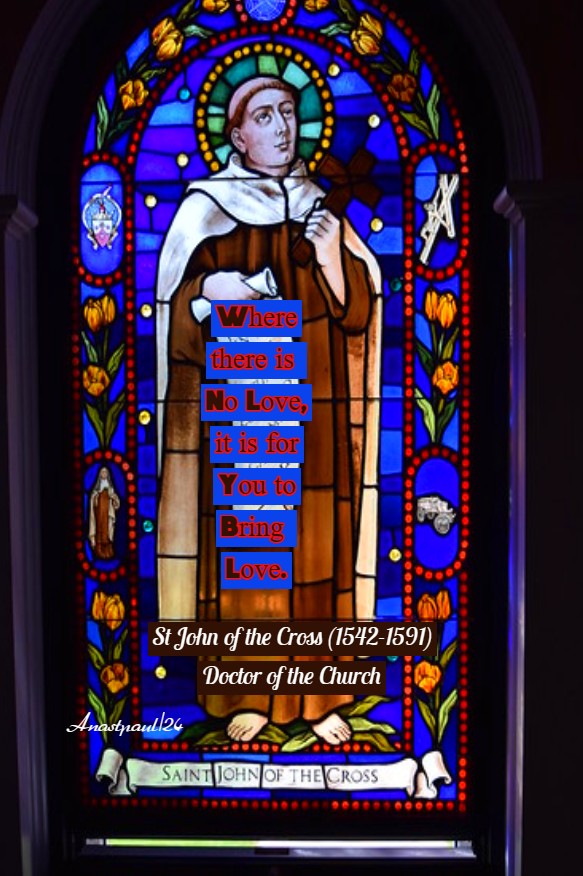
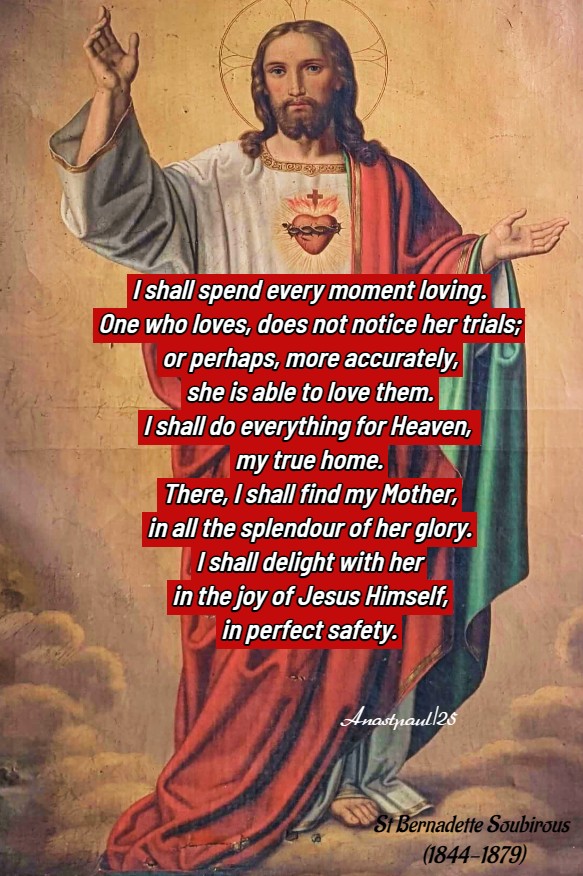
St Guise Hoang Luong Canh Blessed John the Good OSA (c 1168-1249) Bishop Blessed Jordan of Pulsano Abbot
St Obdulia Bl Phêrô Nguyen Van Tu St Romulus of Rome St Victorinus of Amiterme St Victorinus of Como Bl William Browne
Martyrs of Armenia – 1,000 Saints: A group of up to 1,000 Christian soldiers in the 2nd Century Imperial Roman Army of Trajan, stationed in Gaul. Ordered to sacrifice to pagan gods, they refused and were transferred to Armenia. Ordered again to sacrifice to pagan gods, they refused again. Martyrs. We know the names of three of them but nothing else – Eudoxius, Macarius and Zeno.
Martyrs of Capua – 3 Saints: Three Christians who were Martyred together. Long venerated in Capua, Italy. We know their names, but little else – Arcontius, Donatus and Quintius. They were martyred in Capua, Italy.
Martyrs of Nicomedia – 80 Saints: A group of 80 Christians, Lay and Clergy, Martyred together in the persecutions of Valens. We know little more than the names of three of them – Menedemo, Teodoro and Urbano. They were locked on a boat which was then set on fire on the shore of Nicomedia, Bithynia (in modern Turkey) c370.
Martyrs of Porto Romano – 4+ Saints: A group of Christians Martyred together in the persecutions of Marcus Aurelius. We know little more than their names – Aconto, Herculanus, Nonno and Taurino. c180 at Porto Romano, Italy.
Thought for the Day – 4 September – Meditations with Saint Alphonsus Maria de Liguori (1696-1787) Bishop, Confessor, Most Zealous Doctor of the Church
“Preparation for Death” By St Alphonsus Maria de Liguori (1696-1787)
CONSIDERATION III
“For what is your life? It is even a vapour which appeareth for a little time.” (St James iv: 14)
SECOND POINT. King Hezekiah wept and said: “I have cut my life off like a weaver; . . . from day even to night, wilt Thou make an end of me.” (Isa xxxviii: 12)
Oh! how many who are busy weaving, that is, planning and executing their worldly designs, which they have undertaken with such care, are overtaken by death which cuts off all. At the hour of death, all the glory of everything which is worldly, vanishes away, applause, amusements, pomps and grandeur.
Great secret of death! which makes us see that which the lovers of the world do not see. Fortunes which have been envied, the grandest dignities, the proudest triumphs, lose all their splendour, when they are reviewed from the bed of death!
The notions of certain false happiness which we have formed in our own minds, these are changed into exceeding great indignation against our own folly. The black and gloomy shadow of death covers and obscures all dignities even though they be Royal. Our passions now, make the things of this earth appear different from what they really are – death unveils them and makes us see, what in truth they are, nothing but smoke, dust, vanity and misery. O my God! of what avail are riches, possessions and kingdoms, in death, when nothing is needed but a coffin and a simple robe to cover the body? Of what avail are honours, when nothing remains of them but a funeral train and a pompous burial which will assist the soul in no way if it be lost? Of what avail is beauty, if nothing remains of it but worms, corruption and horror, even before death and afterwards, nothing but a little foul dust? “He hath made me also a byword of the people.” (Job xvii: 6). That rich man dies, that minister, that captain and then, he will be spoken of everywhere ; if he has led a wicked life, he will become a byword of the people and he will serve as a warning to others, being an example of the vanity of the world and also, an example of Divine justice. In the grave, his ashes will be mingled with the ashes of the poor. “The small and great are there.” (Job iii: 19). Of what use has the beautiful form of his body been to him, if now he is only a mass of corruption? What has the authority he possessed availed him, if his body is now thrown into a grave to corrupt and his soul has been cast into hell to burn? Oli ! what misery to be the object of these sad reflections to others, instead of making them for his own profit.
Let us, therefore, be persuaded that the proper time for satisfying the stings of a remorseful conscience, is during the time of life and not at the hour of death. Let us hasten now to do that which, at that time we shall not be able to do. “The time is short.” All things quickly pass away and end, therefore, let us so act, that all we do, may serve towards obtaining our eternal salvation.
Affections andPrayers:
O God of my soul, O Infinite Goodness, have mercy upon me, who have so often offended Thee. I did indeed know that by sinning I should lose Thy grace and, I did not mind losing it but teach me what I can do to regain it. If Thou desirest that I should repent of my sins, I do repent with my whole heart; I would even like to die of grief at having once sinned. If it is Thy wish that I should hope for pardon from Thee, I do truly hope for it, through the merits of Thy Blood. If Thou desirest that I should love Thee above all things, I will leave all; I will renounce all the joys and the riches which the world can give me and I will love Thee above all other things, O my most adorable Saviour. If Thou wiliest that I should demand graces of Thee, I ask for these too that Thou wilt never let me offend Thee anymore and that, Thou wilt make me to love Thee and then do with me whatsoever Thou wilt!
Quote/s of the Day – 4 September – Ferial Day – Galatians 5:16-24, Luke 7:11-16 – Scripture search here: https://www.drbo.org/
“Young man, I say to thee, arise!”
Luke 7:14
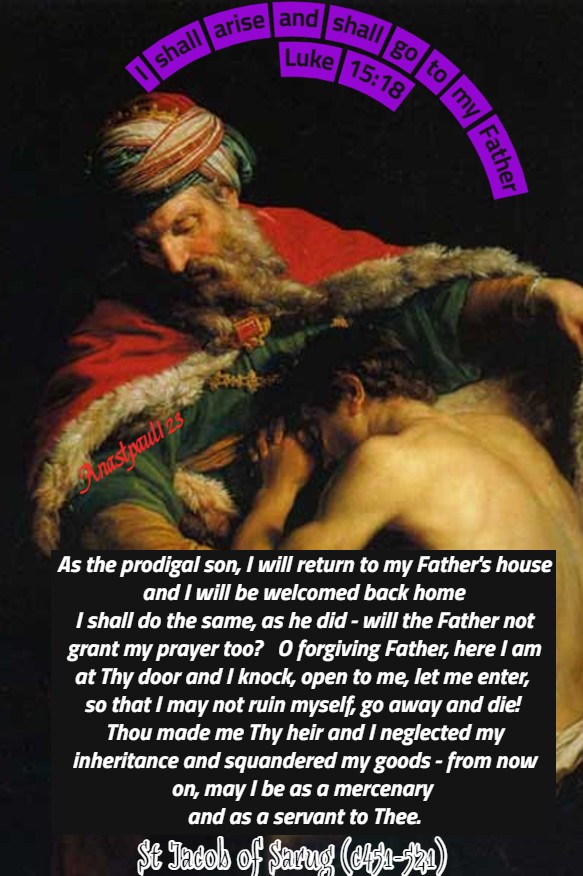
“I shall arise and shall go to my Father”
Luke 15:18
“Awake, O Sleeper and Rise from the Dead”
Ephesians 5:14
“Listen to the Lord’s appeal: ‘Come, then, return to Me and learn to know Me as your Father, Who repays good for evil, love for injury and boundless charity for piercing wounds!”
St Peter Chrysologus (c400-450) “Golden Words” Father & Doctor of the Church
“As the prodigal son, I will return to my Father’s house and I will be welcomed back home. I shall do the same, as he did – will the Father not grant my prayer too? O forgiving Father, here I am at Thy door and I knock, open to me, let me enter, so that I may not ruin myself, go away and die! Thou made me Thy heir and I neglected my inheritance and squandered my goods – from now on, may I be as a mercenary and as a servant to Thee.”
St Jacob of Sarug (c451-521) Bishop, Theologian, Poet, Writer, Father
You must be logged in to post a comment.