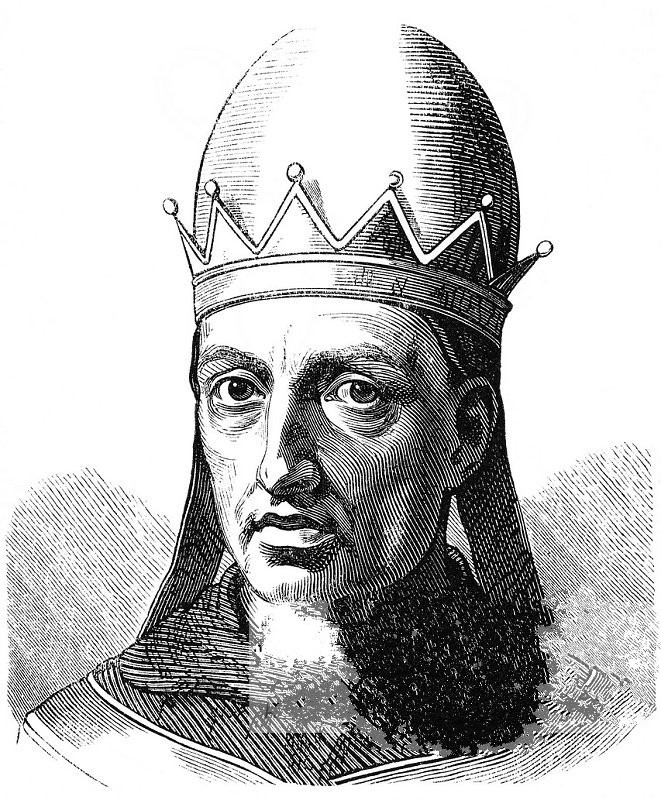
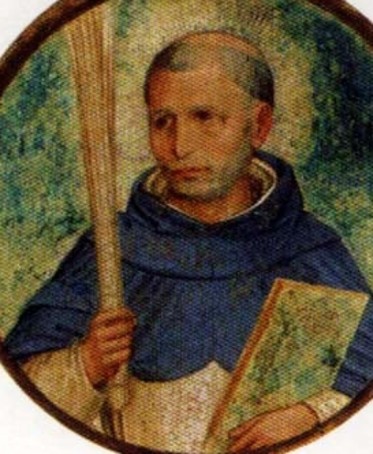
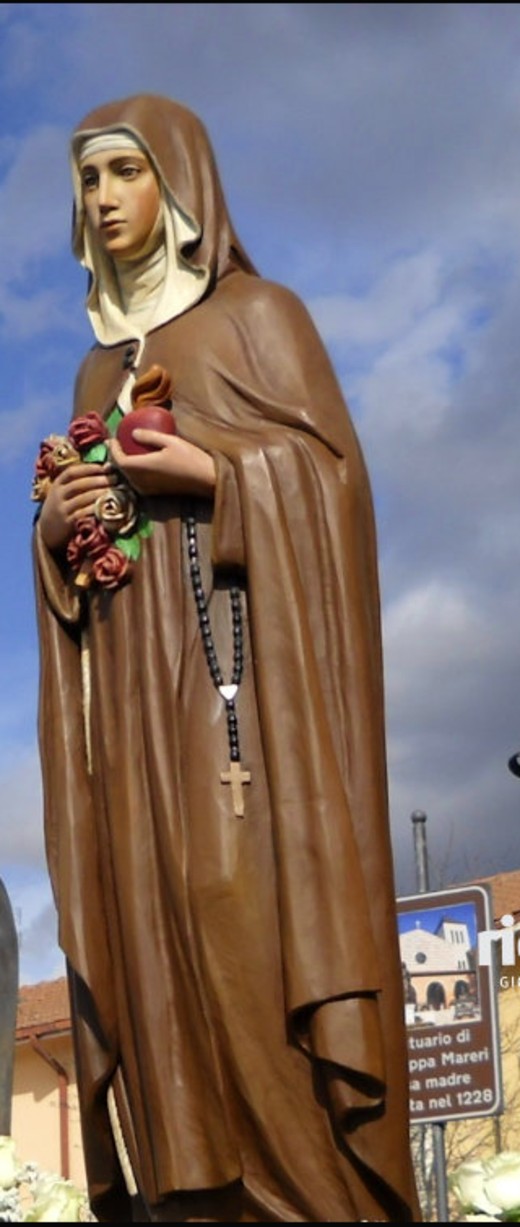
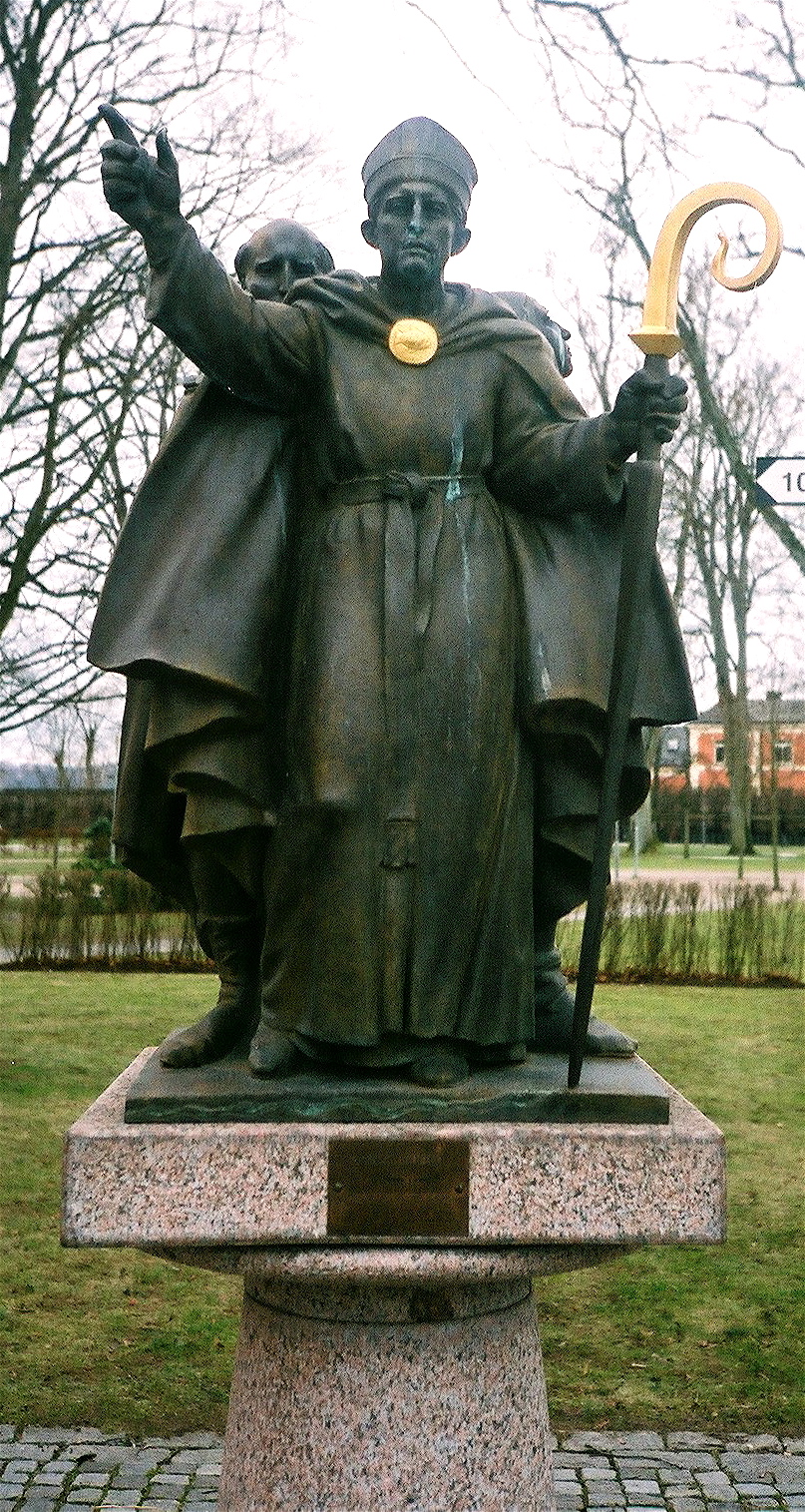
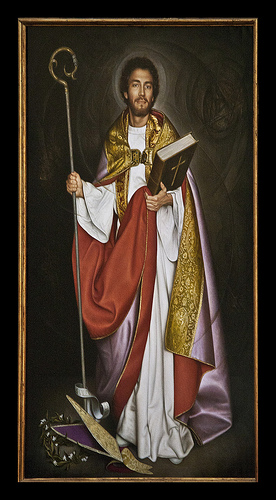
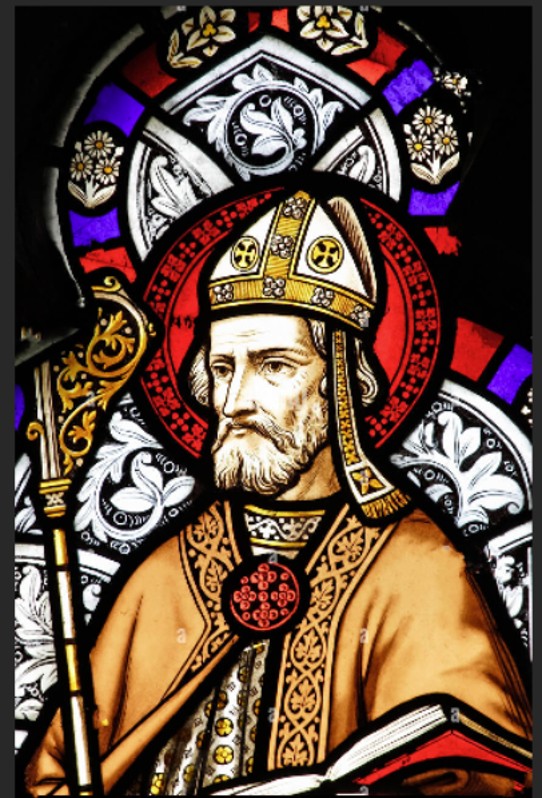
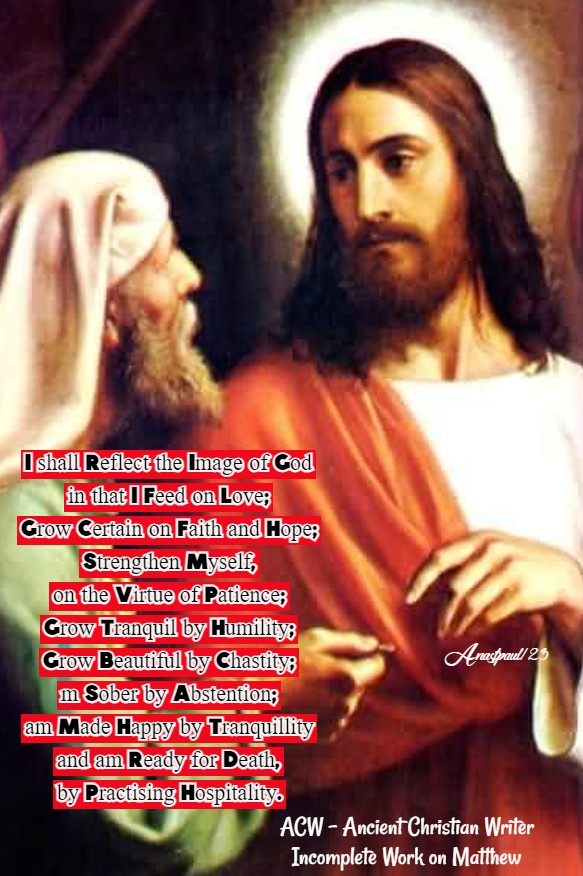
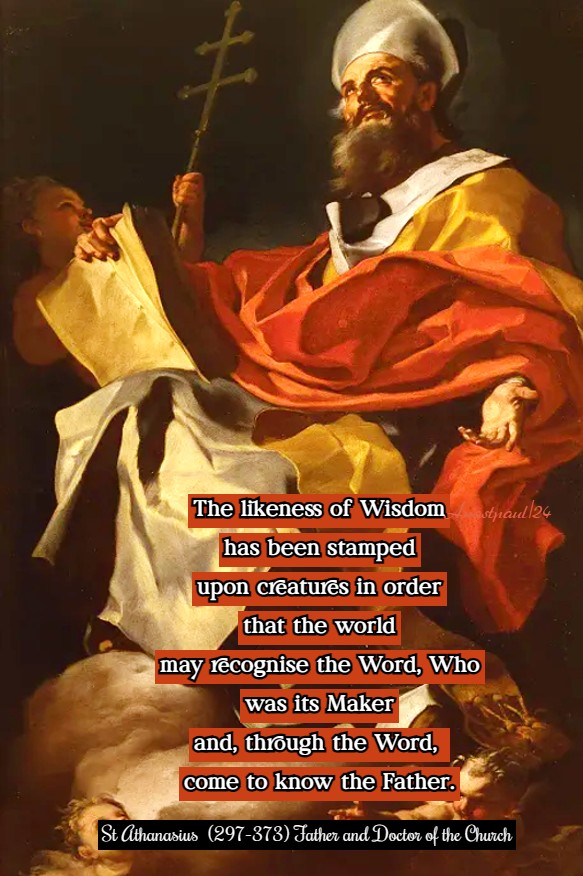
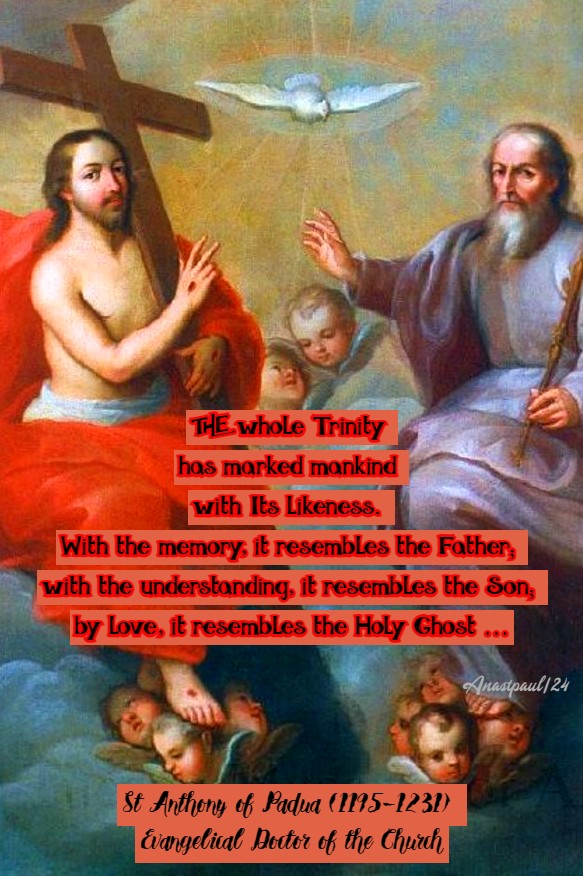
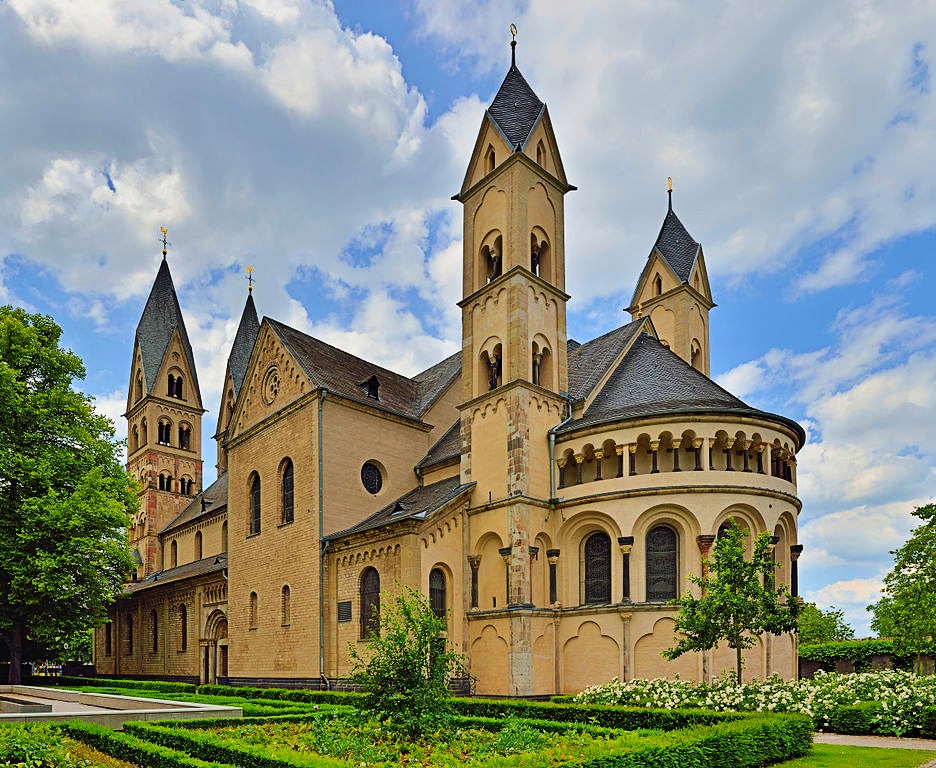
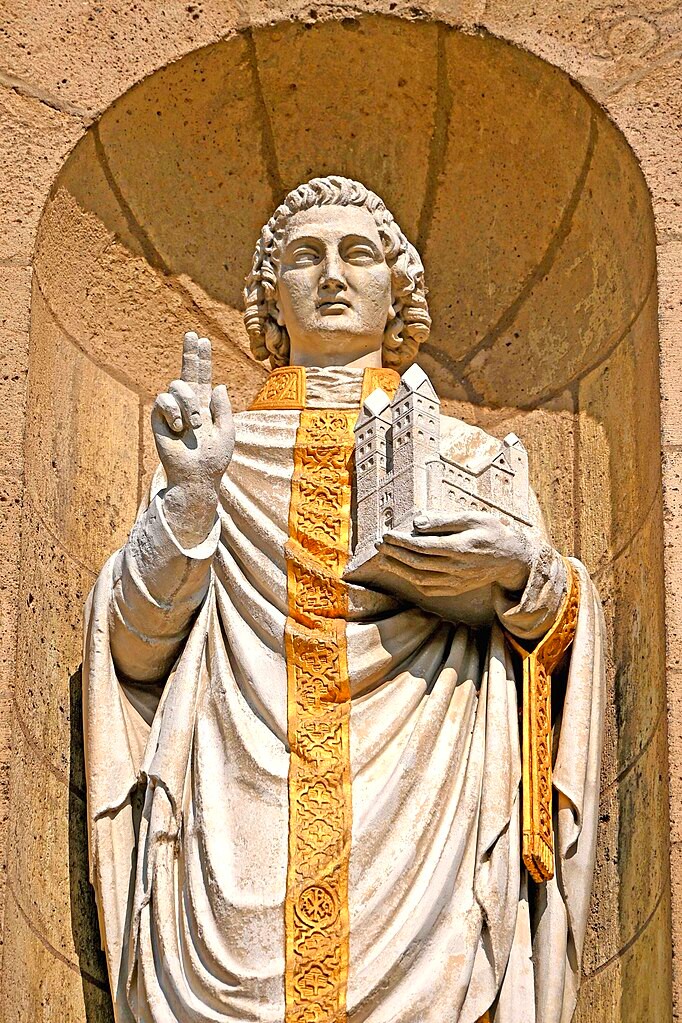
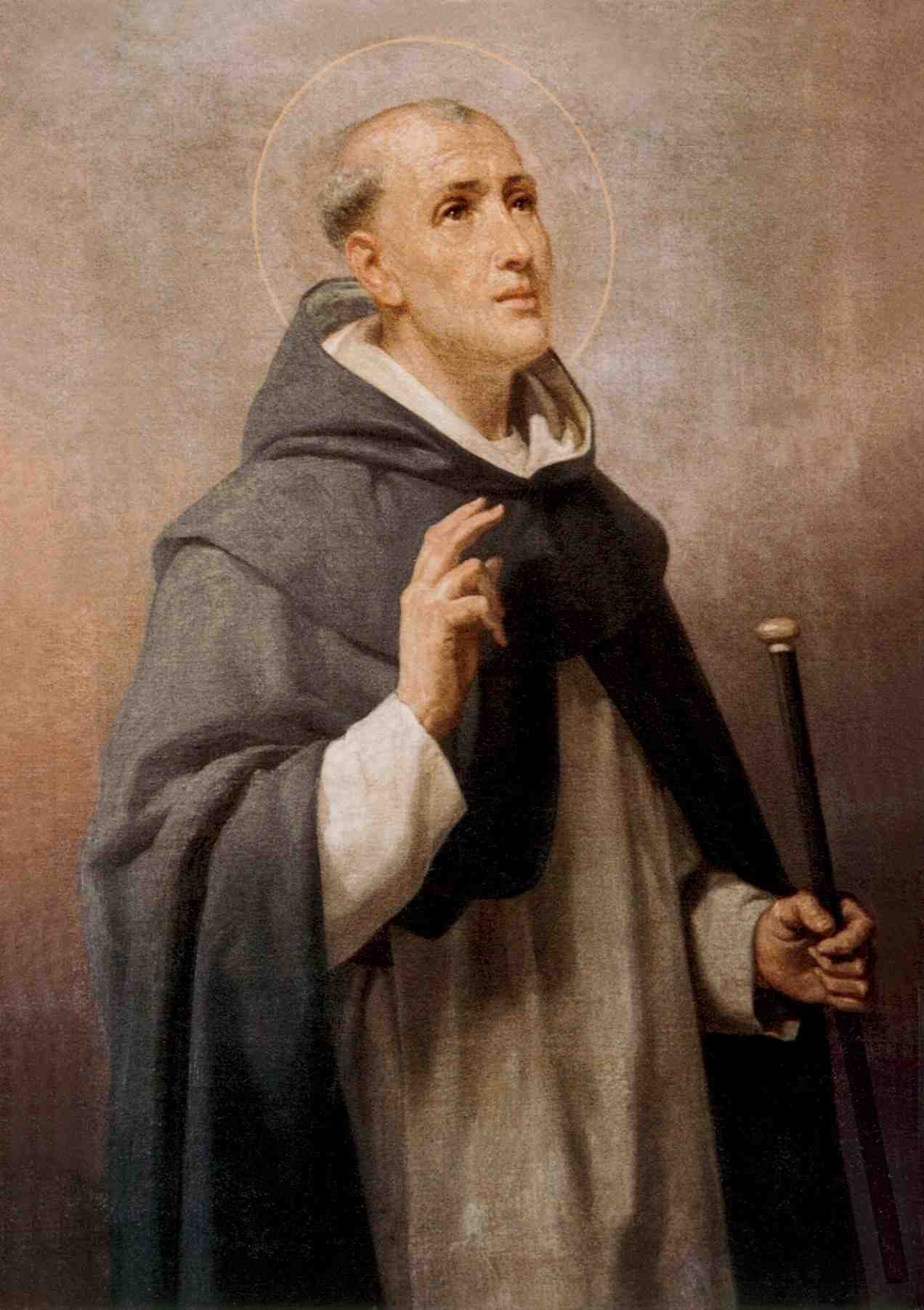
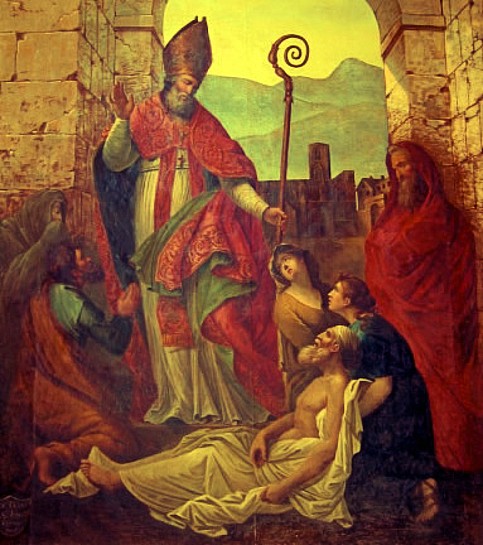
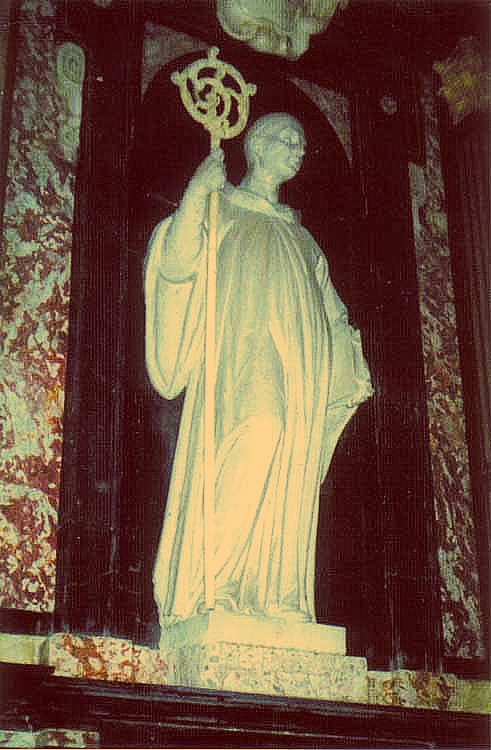
Saint of the Day – 2 September – Saint Lanfranco of Vercelli (5th Century) Bishop of Vercelli in Italy. Most information regarding his life is unknown.
Lanfranco was the eleventh in the chronology of the Bishops of Vercelli, Italy, successor to Saint Emiliano I. He governed the Diocese for nine years, at the end of the 5th Century.
It is recorded: “After his death, he was canonically acclaimed as a Saint by all writers, both in Vercelli and foreign”.
The name of this holy Bishop of Vercelli has never been included in the Roman Martyrology but it does indicates how legitimate the cult as “Saints” and “Blessed” of those to whom these titles have been recognised for centuries, in the Diocesan calendars and catalogues.
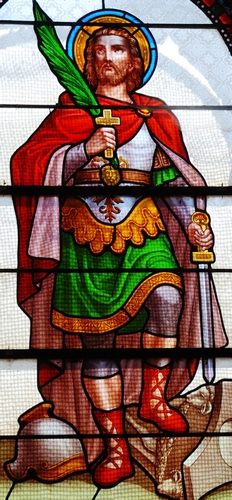
St Prospero of Tarragona St Theodota of Bithynia St Valentine of Strasbourg St William of Roeskilde
Marytrs of Nicomedia – 3 Saints: Three Christians who were Martyred together in the persecutions of Diocletian. No details about them but their names have survived – Concordius, Theodore and Zenone. They were martyrd in Nicomedia, Bithynia (in modern Turkey).
The Holy Martyrs of September (Died 1792) – 191 beati: Also known as – Martyrs of Paris, Martyrs of Carmes. They were massacred by a mobs on 2 September and 3 September 1792 and Beatified on 17 October 1926 by Pope Pius XI. THEIR LIVES AND DEATHS: https://anastpaul.com/2021/09/02/saint-s-of-the-day-2-september-
Martyrs of 2 September – 10 Saints: A group of ten Martyrs; their names are on old Martyrologies but we have lost all record of their lives and deaths. They were Canonised: Antoninus, Diomedes, Eutychian, Hesychius, Julian, Leonides, Menalippus, Pantagapes, Philadelphus, Philip.
Holy Bishops of Rennes: Honours all the Bishops of the Diocese of Rennes, France who have been recognised as Saints and Beati. They include Saint Maximinus of Rennes Saint Modéran of Rennes Saint Rambert of Rennes Saint Riotisme of Rennes Saint Servius of Rennes Saint Synchronius of Rennes
Month of The Seven Sorrows of the Blessed Virgin Mary and The Holy Cross
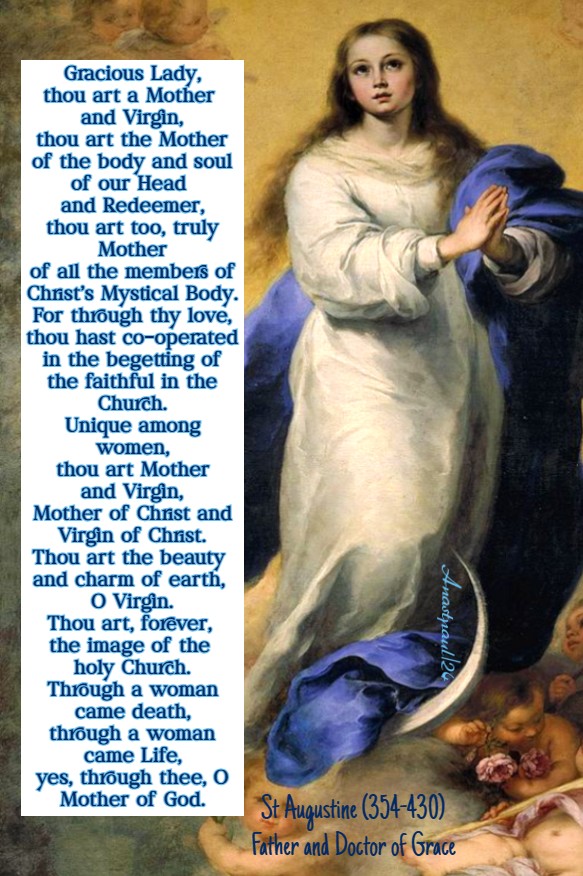
The Seven Sorrows of the Blessed Virgin Mary
1, The prophecy of Simeon 2. The Flight to Egypt 3. Loss of Child Jesus for 3 days 4. Meeting Jesus carrying His Cross 5. The Crucifixion of Jesus 6. The Pieta – receiving Jesus’ Body The Burial of Jesus
Bid me bear, O Mother Blest, On my heart, the wounds imprest, Suffered by the Crucified!
An Indulgence of 50 days each time. Plenary Indulgence once a month under the usual conditions.
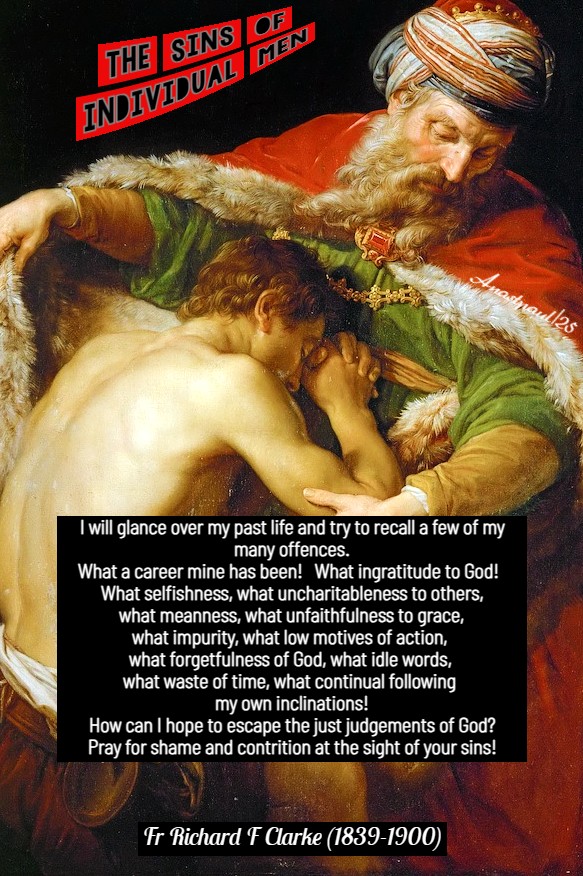
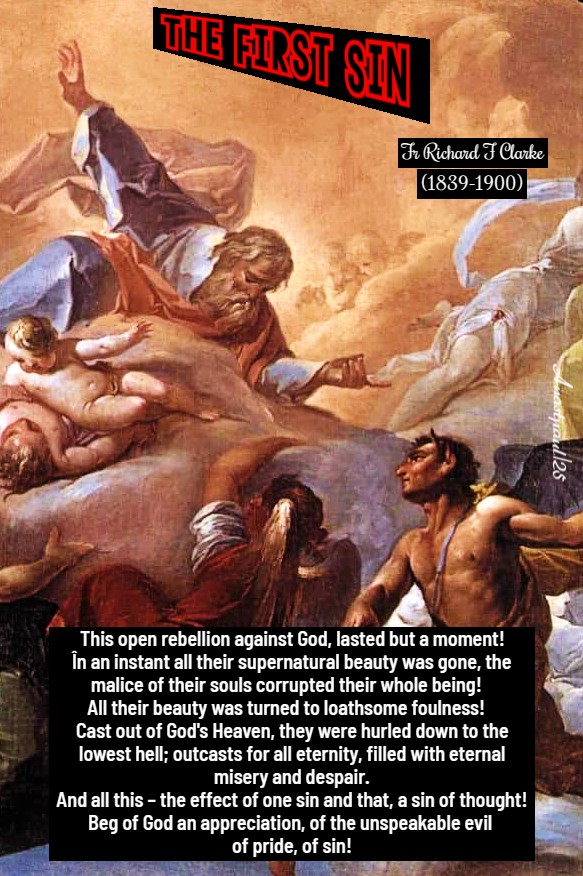
“Yet, after all, it is reasonable that the charitable should suffer when we remember that the Lord and model of all charity, suffered all things simply because of His charity. What else caused His Agony in the Garden, His cruel Scourging at the Pillar, and His dereliction on the Cross? It was all the result of His Divine Charity. We, therefore,, if we are to follow in His steps, must expect to encounter the same results as a reward for any charity if it resembles His, however remotely. If we are wise, we shall rejoice in any sign that we are to be honoured by sharing our Master’s lot!” Fr Richard Frederick Clarke SJ (1839-1900)
Thought for the Day – 1 September – Meditations with Saint Alphonsus Maria de Liguori (1696-1787) Bishop, Confessor, Most Zealous Doctor of the Church
“Preparation for Death” By St Alphonsus Maria de Liguori (1696-1787)
CONSIDERATION II
“An end, the end is come.” (Ezek vii: 2)
SECOND POINT: Philip II, King of Spain, being near death, called his son to him and casting aside his royal robe and showing him his breast which was all gnawed by worms, said to him: “Prince, see how we die and see how all the grandeur of this world is finished.” Theodoret spoke truly when he said, that “death fears neither riches nor guards, nor the purple; rottenness follows and health fails.” So that everyone who dies, although he may be a Prince, takes nothing with him to the grave; all the glory remains upon the bed where he died. “For he shall carry nothing away with him when he dieth, neither shall his pomp follow him.” (Ps xlix: 17).

St Antoninus relates that when Alexander the Great was dead, a certain philosopher, exclaiming, said: “Behold he who was treading upon the earth yesterday, now, by that same earth is possessed. Yesterday, the whole earth was not enough for him, now, he lies in about seven spans thereof. Yesterday, he conducted his armies over the earth and now, he is taken by a few men to be put under the earth.”
But ratherlet us listen to God, when He says: “Why are earth and ashes proud?” (Ecclus x: 9). Man, dost thou not see, that thou art nothing but dust and ashes and of what, therefore, art thou proud ? Why, therefore, dost thou spend thy years and thy thoughts in seeking to make thyself great in this world? Death will soon come and then, all thy grandeur will come to an end and also all thy designs. “And then, all his thoughts perish.” (Ps cxlvi: 3).
Oh how much happier was the death of St Paul the Hermit, who lived for sixty years shut up in a cave, than the death of Nero, who was the Emperor of Rome? How much happier was the death of Felix, a Capuchin Lay Brother, than the death of Henry VIII, who lived in Royal splendour but who was the enemy of God? But we must consider, that these holy men, in order to die such a happy death, gave up everything – their country, the hopes and pleasures which the world offered them and they embraced a life which was poor and despised. They buried their lives in this world, so that they might not be buried when dead, in hell!
But how can the worldly, who are living in sin in worldly pleasure, in dangerous occasions, how can they, I repeat, hope to die a happy death? God now threatens those who are living in sin that when they are on the bed of death, they will seek Him but they will not find Him. “Ye shall seek me and shall not find me.” (St John vii: 34) God says, that that will be the time for vengeance but not for mercy. “To Me belongetl vengeance and recompence.” (Deut xxxii: 35). Reason tells us the same, for at the hour of death, a worldly man will find his mind fails him, his heart dark and hardened because of his evil habits, his temptations will be very strong; how can he, who in life has been wont to yield to sin and to let sin conquer him, how can such an one, I say, ever expect to be able to resist temptation at the hour of death? An all-powerful Divine grace is then needed to change his heart but will God give him this Divine grace? Has he deserved it, during the unholy life he has led And does he deserve it now that he is dying? And yet, this is a question concerning his eternal happiness or his eternal misery! How is it then that he, who thinks upon this and believes in the Truths of Faith, does not give up everything, so as to give himself entirely to God, Who, according to our works, so will He judge us?
Affections andPrayers
Ah, Lord, how many nights have I, wretched one who I am, laid me down to sleep at enmity with Thee!? O God, what a wretched state was my soul then in! It was hated by Thee and it did not ‘mind Thy hatred. Once I was condemned to hell, the sentence only remained to be executed. But Thou, my God, hast never ceased to seek me, and to invite me to pardon. But who is it who can assure me that I am pardoned now? Must I live, my Jesus, in this fear until the time shall come for me to be judged? But the grief that I feel at having offended Thee; the desire which I have, to love Thee and much more, Thy great compassion, my Beloved Redeemer; make me hope to remain in Thy blessed favour. I am very sorry for having offended Thee, O Thou Sovereign Good and I love Thee beyond all things. I have resolved to lose all, rather than lose Thy grace and Thy holy Love. Thou desirest that heart which seeks Thee to rejoice. “Let the heart of them rejoice who seek the Lord.” (i Chron xvi: 10). O Lord, I detest my offences against Thee; give me courage and confidence do not reproach me with my ingratitude, for I am very conscious of it, I detest it. Thou hast said: “I have no pleasure in the death of the wicked but that the wicked turn from his way and live.” (Ezek xxxiii: 11). Yes, my God, I will leave all and be converted to Thee. I seek Thee, I desire Thee and I love Thee more than all things. Give me Thy holy Love and I ask for nothing more.
Quote/s of the Day – 1 September – Pentecost XV – Galatians 5:25-26; 6:1-10; Luke 7:11-16 – Scripture search here: https://www.drbo.org/
“Young man, I say to thee, arise!”
Luke 7:14
“Rather blessed are those who hear the Word of God and keep it.’”
Luke 11:28
“She began to bathe His feet with her tears and wiped them with the hair of her head and kissed His feet and anointed them with ointment.”
Luke 7:38
“Make ready then the vessel of your soul that you may become a son of God and an heir of God and joint-heir with Christ (Romans 8:17); if, indeed, you are preparing yourself that you may receive; if you are drawing near in faith that you may be made faithful; if of set purpose, you are putting off the old man!”
St Cyril of Jerusalem (315-387) Father and Doctor of the Church
“Do not content yourself with confessing your venial sins merely as to the fact but accuse yourself too, of the motive which induced you to commit them.”
(Introduction to the Devout Life, Part II, Chapter 19).
“Christ was more concerned with St. Peter’s repentance and remorse, than with his sin.”
One Minute Reflection – 1 September – “The Month of The Seven Sorrows of the Blessed Virgin Mary and The Holy Cross” – St Giles (c650 – c710) Abbot – Pentecost XV – Galatians 5:25-26; 6:1-10; Luke 7:11-16 – Scripture search here: https://www.drbo.org/
Young man, I say to thee, arise!” – Luke 7:14
REFLECTION – “Let no-one who is Christian doubt that even now, dead people rise. Certainly, every human being has eyes, by which he can see dead people rising, in the way this widow’s son, whom we just heard about in the Gospel, arose. But not everyone can see people who are spiritually dead rise. For that, it is necessary to have already risen interiorly. It is greater to raise someone, who is to live forever than to raise someone, who will have to die again.
The young man’s mother, this widow, was transported with joy at seeing her son rise. Our Mother, the Church, also rejoices when she sees her children’s spiritual resurrection everyday. The widow’s son was dead with the death of the body but these latter, are dead with the death of the soul. People wept tears over the visible death of the former but people were not concerned by the invisible death of the latter – they did not even see it. The only One Who did not remain indifferent, is the One Who knew these deaths – only the One, Who could give life back to them, knew these deaths. For if the Lord had not come to raise the dead, the Apostle Paul would not have said: “Awake, O sleeper, arise from the dead and Christ will give you Light.” (Eph 5:14).” –St Augustine (354-430) Father and Doctor of Grace (Sermon 98).
PRAYER – May the pleading of blessed Giles Abbo,t make us acceptable unto Thee O Lord, we pray that what we may not have through any merits of our own, we may gain by means of his patronage. Through Jesus Christ, Thy Son our Lord, Who lives and reigns with Thee, in the unity of the Holy Ghost, God, world without end. Amen (Collect).
Our Morning Offering – 1 September – “The Month of The Seven Sorrows of the Blessed Virgin Mary and The Holy Cross”
What Can I Say? By St Anselm (1033-1109) Magnificent Doctor Marian Doctor
My most merciful Lady, what can I say about the fountains that flowed from your most pure eyes when you saw your only Son before you, bound, beaten and suffering? What do I know of the flood that drenched your matchless face, when you beheld your Son, your Lord and your God, stretched on the Cross without guilt, when the flesh of your flesh was cruelly butchered by wicked men? How can I judge, what sobs, troubled your most pure breast, when you heard, “Woman, behold your son,” and the disciple, “Behold, your Mother,” when you received as a son the disciple in place of the Master, the servant for the Lord? Amen
From “The Prayers and Meditations of Saint Anselm with the Proslogion,” Benedicta Ward, trans,1973, Penguin classics, Penguin Group (UK).
Saint of the Day – 1 September – St Constantius (Died c570) Bishop of Aquino, Italy. Gifted with the charism of Prophecy, St Gregory the Great himself says, in particular, that our Saint shone through the gift of prophecy and miracles. Patronage -Co-Patron with St Thomas Aquinas of the City of Aquino and the Diocese of Sora-Cassino-Aquino-Pontecorvo, Italy, Also known as – Constance, Costantino… Constanzo…
The Roman Martyrology reads today: “At Aquino, Saint Constantius, a Bishop renowned for the gift of prophecy and many virtues.”
Aquino Cathedral dedicated to the Co-Patrons, St Constantius and St Thomas Aquinas
What we know about Constantius comes from two passages of St Gregory the Great, who reports that this holy Bishop of Aquino had died not long before, during the Pontificate of Pope John. Gifted with a prophetic spirit, when he was at the end of his life, his neighbours, who, mourning his imminent loss, anxiously asked him who they would have after him, Constantius replied: “After Constantius a muleteer and after the muleteer, a clothes washer, alas, miserable you, Aquino and let that be enough for you!”
Having said this, he died. His Deacon Andrew, who had previously governed mules and horses, succeeded him in the pastoral care and when he died, Giovinius, who had been a clothes washer in the same City, was elevated to the Episcopal dignity. He was still alive when Aquino was devastated by the Lombards, some of the inhabitants were killed by the invaders, some perished by a fierce pestilence, so that after his death, it was no longer known who the Bishop was bishop, nor for whom anyone should be the Bishop. Thus was fulfilled what the man of God had announced – after the death of his two successors, his Church would no longer have any Shepherd.
Already in narrating the deeds of Saint Benedict, St Gregory had recalled that a cleric of Aquino, tormented by the devil, had been directed by Bishop Costantius to many sanctuaries of Martyrs. These, however, did not want to restore his health, to demonstrate how much grace there was in Benedict, who, in fact, having had the cleric before him, with his prayers immediately freed him from the enemy.
We,, therefore, have from St Gregory the Great himself two certain data for the chronology of the life of St Constantius – he was already the Bishop of Aquino while Saint Benedict (Died 547) was still alive and he died during the Pontificate of John III (561-573). But although St Gregory does not expressly declare the identity of the person, this appears evident from the expressions he uses.
After the long period of abandonment following the Lombard devastation, the Episcopal See of Aquinas was reconstituted and sought the memories of its Patron Saint. Even if the legend, written by the Cassinese Deacon several centuries after the life of the Saint it deals with, could not have been very reliable, it is, nevertheless, for us evidence of the cult paid to Constantius in the reborn Diocese.
On 10 December 1742, Bishop Spadea proceeded to examine the Relics of the Patron Saint, found under the Altar of the ancient Cathedral dedicated to Saint Peter. After having honoUrably placed them in a new wooden urn, he had them translated to the new Cathedral dedicated to St Constantius, where they were placed under the High Altar. The same Bishop also informs us that, until 1644, the body of the Saint had been preserved in a Church dedicated to him, far from the City walls and no longer existing. The Cathedral of St Constantius, destroyed in May 1944, was rebuilt by Bishop Biagio Musto and dedicated, in October 1963, to Saints Constantius and St Thomas Aquinas, Co-Patron.
Twelve Holy Brothers: Martyrs of the South – A group of Martyrs who died c303 at various places in southern Italy. In 760 their relics were brought together and enshrined in Benevento, Italy as a group. Saint Arontius of Potenza, Saint Donatus of Sentianum, Saint Felix of Sentianum, Saint Felix of Venosa, Saint Fortunatus of Potenza, Saint Honoratus of Potenza, Saint Januarius of Venosa, Saint Repositus of Velleianum, Saint Sabinian of Potenza, Saint Sator of Velleianum, Saint Septiminus of Venosa, Saint Vitalis of Velleianum. One tradition describes Saint Boniface of Hadrumetum and Saint Thecla of Hadrumetum as their parents.
St Abigail the Matriarch St Aegidius St Agia St Anea St Arcanus St Arealdo of Brescia Bl Colomba of Mount Brancastello St Constantius (Died c570) Bishop of Aquino St Donatus of Sentianum St Felix of Sentianum
Thought for the Day – 31 August – Meditations with Saint Alphonsus Maria de Liguori (1696-1787) Bishop, Confessor, Most Zealous Doctor of the Church
“Preparation for Death” By St Alphonsus Maria de Liguori (1696-1787)
CONSIDERATION II
“An end, the end is come.” (Ezek vii: 2)
FIRST POINT: BY the worldly, those only are considered happy, who enjoy the things of this world, its pleasures, its riches, its pomps but death puts an end to all these joys of earth, “For what is your life? it is even a vapour which appeareth for a little time.” (St James iv:14). The vapours which arise from the earth, sometimes when raised in the air and clothed with the light of the sun, cause a beautiful appearance but how long does it last? It vanishes with a little wind. Behold that great man, who to-day is courted, feared and almost adored, to-morrow, when he is dead, he will be despised, reviled and scorned.
When death comes, all must be left. The brother of that great servant of God, Thomas à Kempis, boasted of having built a beautiful house but a friend told him one day that there was one great defect. What is it? he demanded. “The defect,” replied the other, “is, that you have had a door made in it.” “ Indeed!” exclaimed he “is the door a defect?” “Yes,” replied the friend, “because one day you will have to be carried out of that door dead and thus will you have to leave your house and all which is in it.”
Death, in short, despoils man of all the things in this world. What a sad sight it is to see a Prince carried forth from his palace, never more to enter it and to see others take possession of his furniture, his money and of all his other goods! He is left in the grave with a garment on which will scarcely cover his body. There is no-one now to prize and to flatter him, neither are there any who take account of his last commands. Saladin, who acquired many Kingdoms in Asia, when dying, said, that when his body was taken to be buried, a man should go before it, with his shirt suspended to a pole, crying: “This is all which Saladin carries to the grave!” When the body of that Prince is shut up in the grave, the flesh will soon fall off and his skeleton will no longer be distinguished from other skeletons. St Basil crys: “Contemplate the sepulchre and see whether you can distinguish who was the servant and who was the lord!?”
Diogenes was one day observed by Alexander the Great to be anxiously seeking for something amidst certain skulls. “What dost thou seek?” inquired Alexander, with curiosity. “ I am seeking,” he replied, “the skull of thy father, King Philip and I cannot distinguish it, if thou canst find it, show it to me.” In this world, men are born of unequal rank but after death all will be equal, observes Seneca. And Horace said, that death makes the spade equal to the sceptre.
Finally, when death comes: “the end comes” everything is ended and everything must be left and nothing is taken to the grave, of all the things of this world.
Affections and Prayers
Since, my dear Lord, Thou dost grant me understanding to know that all that the world esteems, is but vanity and foolishness, give me strength to leave all its allurements before death may come to snatch me from them. Alas ! wretched me, how often because of the miserable pleasures and possessions of this world, have I not offended and lost Thee.
O Thou Infinite Good, O my Jesus, O my Heavenly Physician, look upon my poor miserable soul and upon the heavy wounds I have made with my sins and do Thou have mercy upon me. “If Thou wilt, Thou canst make me clean.” I know Thou wilt make me clean but, in order to cleanse me, Thou desirest that I should repent of all the injuries I have done Thee. I do indeed repent!
Quote/s of the Day – 31 August – Ecclesiasticus Sir 31:8-1, Luke 12:35-40 – Scripture search here: https://www.drbo.org/
“Jesus said to His disciples: gird your loins and light your lamps”
Luke 12:35
“ The fire of the Lord is Light Eternal; the lamps of believers are lit at this fire: “Gird your loins and light your lamps,” (Lk 12:35). It is because the days of our life are still night that a lamp is necessary. This is the fire which, according to the testimony of the disciples at Emmaus, the Lord Himself set within them: “Were not our hearts burning within us while He spoke to us on the way and opened the scriptures to us?” (Lk 24:32). He gives us evident proof of this fire’s action, enlightening man’s inmost heart. That is why the Lord will come in fire (Is 66,15) so as to devour our faults at the resurrection, fulfil each one’s desires with His Presence and cast His Light over their merits and mysteries.”
St Ambrose (340-397) Father and Doctor of the Church
“Hope, O my soul, hope! You know neither the day, nor the hour. Watch carefully, for everything passes quickly, even though your impatience, makes doubtful, what is certain and turns a very short time, into a long one.”
St Teresa of Jesus of Avila (1515-1582) Doctor of the Church
One Minute Reflection – 31 August – “The Month of the Immaculate Heart of Mary” – St Raymond Nonnatus 1204-1240) Priest, Confessor, Cardinal, Friar of the Mercedarian Order. – Ecclesiasticus Sir 31:8-1, Luke 12:35-40 – Scripture search here: https://www.drbo.org/
“You also must be ready, for at an hour you do not expect, the Son of Man will come.” – Luke 12:40
REFLECTION – “Prepare to meet your God, O Israel, for He is coming!” (cf Am 4:12) And you too, my brothers, “be on guard. The Son of Man will come when you least expect Him.” Nothing is more certain than His coming but, nothing is more uncertain, than when He will come. For we know so little of the times and moments which the Father has determined in His Power, in such a way that even the Angels, who surround Him, do not know the day or the hour (Acts 1:7; Mt 24:36).
Our last day will also come, that is certain but when and how is very uncertain for us. As someone said before, all we know is that “face-to-face with the elderly, He stands on the threshold, whereas face-to-face with young people, He keeps Himself concealed.” (St Bernard) … That day must not seize us unexpectedly, unprepared, like a thief in the night. … May fear, remaining awake, make us ever ready until security follows upon the fear and not fear upon security. The person who is wise says, “I will be on my guard against guilt,” (Ps 18:24), since I cannot preserve myself from death. For he knows that “the just man, though he die early, shall be at rest.” (Wis 4:7) Even more, those who were not enslaved to sin during their lifetime, triumph over death. How beautiful this is, my brothers, what happiness to be not only in security when faced with death but even more, to triumph over it with glory, strong through the testimony of one’s conscience!” – Blessed Guerric of Igny (c1080-1157) Cistercian Abbot (Liturgical Sermons Vol 1 the 3rd. Sermon for Advent, 1).
PRAYER – O God, Who made blessed Raymund, Thy Confessor, famous for delivering Thy faithful from the captivity of the infidels, grant us, by his intercession that, having been released from the bonds of our sins, we may with free minds, do what is pleasing to Thee. Through Jesus Christ, Thy Son our Lord, Who lives and reigns with Thee, in the unity of the Holy Ghost, God, world without end. Amen (Collect).
Our Morning Offering – 31 August – “The Month of the Immaculate Heart of Mary” the Last Day and Mary’s Saturday
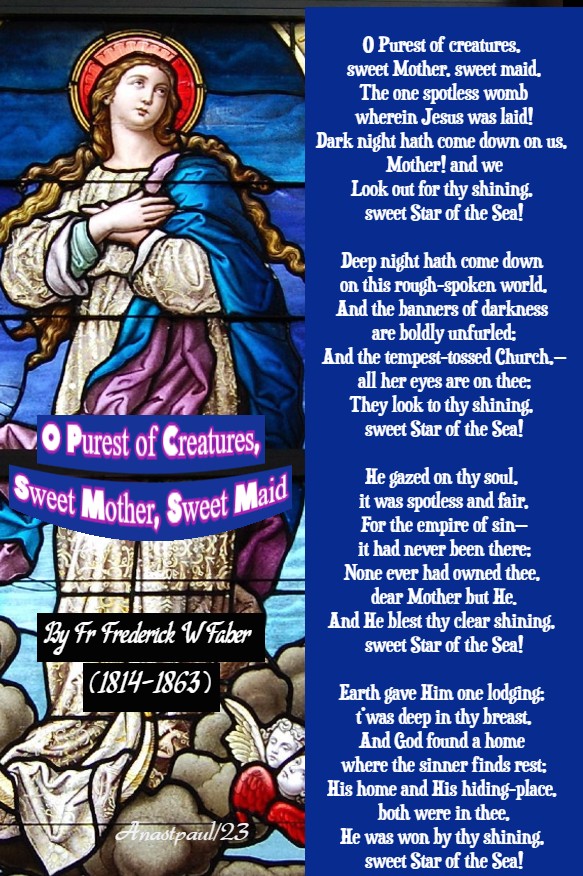
O Purest of Creatures, Sweet Mother, Sweet Maid By Fr Frederick W Faber C.Orat. (1814-863)
O Purest of creatures, sweet Mother, sweet maid, The one spotless womb wherein Jesus was laid! Dark night hath come down on us, Mother! and we Look out for thy shining, sweet Star of the Sea!
Deep night hath come down on this rough-spoken world, And the banners of darkness are boldly unfurled; And the tempest-tossed Church,— all her eyes are on thee; They look to thy shining, sweet Star of the Sea!
He gazed on thy soul, it was spotless and fair, For the empire of sin—it had never been there; None ever had owned thee, dear Mother but He. And He blest thy clear shining, sweet Star of the Sea!
Earth gave Him one lodging; t’was deep in thy breast, And God found a home where the sinner finds rest; His home and His hiding-place, both were in thee, He was won by thy shining, sweet Star of the Sea!
Saint of the Day – 31 August – Saint Cuthburga of Wimborne (Died c725) the 1st Abbess and Founder of Wimborne double Monastery, Queen, Mother, Widow, Nun She was the sister of Ine, King of Wessex and was married to the Northumbrian King Aldfrith, thus she was also a Queen. Also known as – Cuthburg, Cuthburgh.
Cuthburga was the sister of King Ina of Wessex, a great King who, in about 726, went to Rome with his wife, Ethelburga, ending his days as a Monk.
She was given in marriage to King Aldfrith of Northumbria in around 688. There are different accounts of this marriage. Some say that it was short and was never consummated; others – that it was long and produced a son, who was around eight years old, when his father died.
In any case, with the approval of her husband, Cuthburga retired from the world and went first to the Monastery of Barking, near London which was ruled, at that time, by St Hildelitha.
In 705 King Aldfrith died, whereupon Cuthburga journeyed back to her native Wessex and asked her brother, King Ina, for some land on which to found a Monastery. In the year 713 she founded the Monastery of Wimborne.
She was reported to have been a beautiful woman, kind to others but severe to herself and assiduous in fasting and prayer. She reposed in about 725 and was buried in the Church at Wimborne, where her Sepulchre can still be seen.
NB: – PLEASE NOTE: the second image above which has been obtained on Google and was originally displayed on an Anglican Site for the Church below (obviously EX-Catholic since stolen by Henry VIII) contains a very disturbing motif on the top right corner. It is a Free Masonic Symbol indicating the Square and the Compass (a sexual symbol!). As you know, the head of the Church of England is the current reigning Monarch and also the Head of the Free Masons in the UK, with all the ‘Royal’ family holding senior degree Offices – hence, their ‘so-called’ Churches quite freely display our Saints with added Masonic symbols, having been ‘adopted by them as special Masonic friends!’
St Ammi of Caesarea St Aristides the Philosopher St Barbolenus of Bobbio St Bonajuncia OSM Confessor St Caesidius St Cuthburga of Wimborne (Died c725) Abbess St Cwenburgh of Wimborne
Apologies dear friends, Breathing Catholic will be out of action for a while. Our entire area is in darkness due to a violent storm. Electricity Pylons have been uprooted and the lines supply quite a large area. It is almost precisely a year ago when we experienced a very similar storm and ensuing electricity disaster, leaving us for more than 3 days without power. We are praying that it will not be as long this time. Please keep us in your prayers 🙏
Our Morning Offering – 29 August – The Beheading of St John the Baptist
God Called Great Prophets to Foretell By the Benedictine Nuns of Stanbrook Abbey, UK
God called great Prophets to foretell the coming of His Only Son; the greatest, called before His Birth, the Baptist, John, the chosen one.
John searched in solitude for Christ and recognised Him when He came. He showed the world the Lamb of God and, trusting, hailed Him in our name.
That lonely voice cried out the Truth by men derided and denied. As witness to the law of God in faithful Martyrdom he died.
We praise Thee, Trinity in One, the glorious Light of unknown ways, the hope of all who search for Thee, Whose generous Love fills all our days.
In the Divine Office, God Called Great Prophets to Foretell, is used for Morning Prayer on the Memorial of the Beheading of St John the Baptist, as well as with Evening Prayer I on Solemnity of the Birth of St John the Baptist.
St Adelphus St Adausia of Rome St Alberic of Bagno de Romagna St Basilia of Sirmium Bl Bronislava St Candida of Rome St Edwold the Hermit St Euthymius of Perugia St Maximian of Vercelli St Medericus St Nicaeus of Antioch St Paul of Antioch St Repositus of Velleianum Bl Richard Herst St Sabina of Troyes St Sator of Velleianum St Sebbe of Essex (c626-695) King, Monk St Velleicus St Victor of La Chambon St Vitalis of Velleianum
Thought for the Day – 28 August – Meditations with Saint Alphonsus Maria de Liguori (1696-1787) Bishop, Confessor, Most Zealous Doctor of the Church
“Preparation for Death” By St Alphonsus Maria de Liguori (1696-1787)
CONSIDERATION I
“Dust thou art and unto dust shalt thou return.” (Gen iii:19)
THIRD POINT: My brother, in this description of death, thou seest thyself and that which one day thou wilt be, “Dust thou art and unto dust shalt thou return.” Reflect, for in a few years, nay, perhaps in a few months and even days, thou wilt become a mass of corruption and worms. By thinking upon this, Job became a Saint: “I have said to corruption, Thou art my father, to the orm, Thou art my brother and sister.” (Job xvii: 14).
Everything must have an end and if, when the hour of death arrives, thy soul is lost, everything will be lost for thee. St Lawrence Justinian says: “Consider thyself as dead already, since thou knowest thou must die. If now the hour of thy death were approaching, what is there of good which thou wouldst not like to have done? Now, that thou art living, reflect that one day thou must die.” Bonaventure observes, that in order to guide the vessel aright, the pilot must place himself at the helm, even so must a man, if he wishes to lead a holy life, reflect that death is ever nigh. Therefore, St Bernard observes: “Look upon the sins of youth and blush; look on the sins of manhoodj and weep; look upon the present evil habits of thy life and tremble and hasten to make amends!”
When Camillus de Lellis beheld the graves of the dead, he said within himself: “If all these dead bodies could come back again to life, what would they not do to gain eternal life? and I, who have now the opportunity, what am I doing for my soul!?” Yet, it was humility on the part of this Saint which caused him to say this.
But perhaps, my brother, thou might with reason, fear, lest thou shouldst be like that barren fig-tree, concerning which our blessed Lord said: “Behold these three years I come, seeking fruit on this fig-tree and find none.” (St Luke xiii:7). Thou, who for many more years than three hast been living in this world, what fruit hast thou yielded? “Take care,” remarks St Bernard, “for the Lord does not require flowers only but seeks for fruit too, that is to say, not only good desires and resolutions but also good works.”
Therefore, take care to make good use of the time which God, in His mercy, grants to you; do not wait until “time shall be no longer,” to desire to do good when it shall be said unto you “Time shah be no longer – depart!” Make haste, it is now almost time to leave the world; make haste, what is done, is done.
Affections and Prayers
Look upon me, O my God, for I am that tree which, for so many years deserved to hear these words: “Cut it down, why cumbereth it the ground?” (St Luke xiii; 7) yes because, during the many years I have been in the world, I have yielded no ether fruit than the briars and thorns of sin. But Thou, O Lord, dost not wish me to despair. Thou hast said to all those who seek Thee that they shall find Thee. “Seek and ye shall find.” I do seek Thee, my God and I do desire Thy grace. I am indeed sorry for all the sins I have committed against Thee. I would grieve even to death because of them. During the past years, I have often fled from Thee but now, I value Thy friendship more than all the kingdoms of the world. I will no longer resist Thy calls.
Thou dost wish me to be Thine alone. I yield myself wholly to Thee, without any reserve. Thou didst give Thyself entirely for me, upon the Cross, now I give myself entirely to Thee.
Thou hast said: “If ye shall ask anything in My Name, I will do it.” (St John xiv: 14). My Jesus, I trust in this Thy great Promise and in Thy Name and through Thy Merits, I seek of Thee Thy grace and Thy Holy Love. Let Thy grace and Thy most Holy Love abound in my soul, where sin did once abound. I thank Thee greatly, for having given me the Spirit to make this prayer to Thee. Whilst Thou dost inspire me to pray, it is a sign that Thou wilt graciously hear me. Hear me, O my Jesus and give me a great love towards Thee and give me a great desire to please Thee and then, the strength to follow that desire!
Quote/s of the Day – 28 August – The Feast of St Augustine (354-430) Bishop, Confessor, Great Western Father and Doctor of the Church
“Let Us Hate Our Sins and Love Him Who Will Exact Punishment for Them. What then should the Christian do? He ought to use the world, not become its slave. And what does this mean? It means having, as though not having. … Are we really certain that we love Him? Or do we love our sins more? Therefore, let us hate our sins and love Him Who, will exact punishment for them. He will come whether we wish it or not. Do not think that because He is not coming just now, He will not come at all. He will come, you know, not when and provided He finds you prepared, your ignorance of the time of His coming, will not be held against you.”
“… Every man is both debtor and creditor… A beggar asks you for alms but you, too, are God’s beggar, for when we pray we are all beggars of God. We stand – or rather, prostrate ourselves – at our Father’s door (cf Lk 11:5); we beseech Him with groans, anxious to receive a grace from Him and this grace is God Himself! What does the beggar ask of you? Bread. And what is it that you are asking of God but Christ, Who said: “I am the Living Bread come down from Heaven” (Jn 6:51).”
“Martha’s life is our own world; Mary’s life, the world we are waiting for. Let us live this one in uprightness, so that we may gain the other, in its fullness. What do we already possess of that life here below? … At this moment precisely, we are leading the life to come to a certain extent – you have gathered together, away from matters of business, apart from family cares and are present here to listen. When you act like this, then you resemble Mary.”
“The great wealth of Christians is found in the needs of the poor, provided we grasp how to put our possessions to good use. The poor are always before us; if we entrust our wealth to them, we shall not lose it.”
Watch, O Lord! With Those Who Wake, or Watch, or Weep Tonight By St Augustine (354-430) Father and Doctor of Grace
Watch, O Lord, with those who wake, or watch, or weep tonight and give Thy Angels and Saints, charge over those who sleep. Tend Thy sick ones, O Lord Christ. Rest Thy weary ones. Bless Thy dying ones. Soothe Thy suffering ones. Pity Thy afflicted ones. Shield Thy joyous ones. And all, for Thine Love’s sake. Amen
Almighty Father, Come Into Our Hearts By St Augustine (354-430)
Almighty Father, come into our hearts and so fill us with Thy Love that forsaking all evil desires, we may embrace Thee, our only good. Show us, O Lord our God, what Thou art to us. Say to our souls, I Am your salvation, speak so, that we may hear. Our hearts are before Thee, open our ears, let us hasten after Thy Voice. Hide not Thy Face from us, we beseech Thee, O Lord. Open our hearts, so that Thou may enter in. Repair the ruined mansions, that Thou may dwell therein. Hear us, O Heavenly Father, for the sake of Thy Only Son, Our Lord Jesus Christ, who lives and reigns with Thee and the Holy Ghost, one God, now and forever. Amen
One Minute Reflection – 28 August – “The Month of the Immaculate Heart of Mary” – St Augustine (354-430) Bishop, Confessor, Great Western Father and Doctor of the Church – 2 Timothy 4:1-8, Matthew 5:13-19 – Scripture search here: https://www.drbo.org/
“Neither do men light a candle and put it under a bushel but upon a candlestick …” – Matthew 5:15
REFLECTION – “What sort of candlestick is this which bears such a light? I will teach you. Be lamps yourselves and you will have a place on this lampstand. Christ’s Cross is one great lampstand. Whoever wants to shine out should not be ashamed of this wooden candlestick. Listen to me and you will get the point – the candlestick is the Cross of Christ …
“So will your light shine before others, so that they may see your good works and glorify” Glorify Whom? Not yourself, since to seek your own glory is to want to be extinguished! “Glorify your heavenly Father.” Yes, that they may glorify Him, your heavenly Father, when they see your good works…
Listen to the Apostle Paul: “May I never glory except in the Cross of our Lord Jesus Christ, through which the world has been crucified to me and I to the world” (Gal 6:14).” – St Augustine (354-430) Bishop, Confessor, Father and Doctor of the Church
PRAYER – Give heed to our humble prayers, Almighty God and through the intercession of blessed Augustine, Thy Confessor and Bishop, kindly grant Thy oft-given mercy to those upon whom Thou bestows great hope in Thy forgiveness. Through Jesus Christ, Thy Son our Lord, Who lives and reigns with Thee, in the unity of the Holy Ghost, God, world without end. Amen (Collect).
Our Morning Offering – 28 August – “The Month of the Immaculate Heart of Mary” – The Feast of St Augustine (354-430) – Bishop, Confessor, Father and Doctor of Grace
Blessed Virgin Mary, Holy Mary! By St Augustine (354-430) Father & Doctor of the Church
Blessed Virgin Mary, who can worthily repay thee with praise and thanksgiving for having rescued a fallen world by thy generous consent! Receive our gratitude and by thy prayers, obtain the pardon of our sins. Take our prayers into the sanctuary of Heaven and enable them to make our peace with God. Holy Mary, help the miserable, strengthen the discouraged, comfort the sorrowful, pray for thy people, plead for the clergy, intercede for all women consecrated to God. May all who venerate thee, feel now, thy help and protection. Be ready to help us when we pray and bring back to us, the answers to our prayers. Make it thy continual concern, to pray for the people of God, for thou were blessed by God and were made worthy to bear the Redeemer of the world, Who lives and reigns forever. Amen
Saint of the Day – 28 August – St Julian of Auvergne (Died c304) Martyr. Born in Vienne, Dauphiny, Gaul (modern France) and died there by being beheaded. Patronages – against headaches, of Canons, Auvergne, Briounde, Baldissero Torinese, Italy and Barbania, Italy. Also known as – Julian of Brionde, Julian of Brioude, Julian of Briounde, Giuliano…
The Roman Martyrology reads today : “At Brioude, in Auvergne, St Julian, Martyr, during the persecution of Diocletian. Being the companion of the blessed tribune, Ferreol and secretly serving Christ under a military garb, he was arrested by the soldiers and killed in a barbarous manner by having his throat cut.”
Julian was a 4th Century Martyr from the Auvergne region of France. Although the main focus of his worship was in the small Village of Brioude, he was originally from the City of Vienne and also associated with Clermont. He was most famous through his association with an aristocratic family of Bishops of the time, his most notable proponents being St. Gallus of Clermont and St Gregory of Tours (the latter best known for his Ten Books of Histories). Gregory wrote a Vita of Julian.
Little is known of the life of St Julian. The persecution in Vienne, under the auspices of the Governor Crispinus (although this is disputed) forced him to leave the Town, as advised by his friend and fellow Saint, the Tribune Ferréol.
He also feared that his parents might prevent the Martyrdom he longed for. He hid in the house of a poor woman within the region of Clermont but upon hearing pagans nearby, he revealed himself and presented himself for execution.
Having decapitated the Saint, his executioners took his head to Vienne, leaving the body to be buried in Brioude by two old men, who received an invigorating miracle which made them feel young again thereafter.
His feast is usually kept on 28 August but in the Towns of his Patronage it is moved to 29 in order to avoid confliction with St Augustine.
Although the main focus of his cultus is in the small Village of Brioude, he was originally from the City of Vienne and also associated with Clermont. He was most famous through his familial association with an aristocratic family of Bishops of the time, His most notable proponents being St Gallus of Clermont and St Gregory of Tours (the latter best known for his Ten Books of Histories). St Gregory wrote a Vita of Julian.
In 543, Bishop Gallus instituted Rogations and the people of Clermont processed to the Church of St Julian at Brioude in order to seek his intercession against the plague which beset their City.
A Church was built over Julian’s Tomb which later became the Basilica of Saint-Julien de Brioude, the largest Romanesque in Auvergne, see below. The Feast of Saint Julian, celebrated in Brioude on 28 August, drew such crowds to the Saint’s Relics that in the mid-11th Century, the Chapter was obliged to build a hostel to care for the indigent pilgrim and the sick.
Very early on the site of Julian’s death also became a place of pilgrimage and a small Shrine was erected over the miraculous Fountain which had sprung up where he had been Martyred. In the Miracles of Julian, St Gregory of Tours tells of numerous instances of people cured by drinking water from the Fountain and there is a particularly large number of miracles attested to the cure of headaches. A Holy Mass is still celebrated near the Spring, on the Feast Fay of the Saint, during the Patronal celebrations of the Town.
St Augustine (354-430) – Bishop of Hippo, Confessor, Doctor of Grace and one of the original Four Fathers & Doctors of the Latin Church, Theologian, Preacher, Writer a None of these titles, though accurate, would please him, however, as much as the simple one he used to describe himself: ‘Servant of God.’ For, whatever we achieve in life, whatever gifts and talents we have been given, are of little value unless they lead us, as they did Augustine, to know, love and serve God ever more deeply.
Thought for the Day – 27 August – Meditations with Saint Alphonsus Maria de Liguori (1696-1787) Bishop, Confessor, Most Zealous Doctor of the Church
“Preparation for Death” By St Alphonsus Maria de Liguori (1696-1787)
CONSIDERATION I
“Dust thou art and unto dust shalt thou return.” (Gen iii:19)
SECOND POINT: In order more clearly to see what indeed thou art, my Christian soul, St John Chrysostom observes: “Go to a sepulchre, contemplate dust, ashes, worms and sigh.” See how that corpse becomes, at first yellow and then black. Afterwards, there is seen upon the body, a white and unpleasant mould. Then there issues forth a foul and corrupt matter which sinks into the ground. In that corruption many worms are generated which feed upon the flesh. The rats then come to feast upon the body, some on the outside, others entering into the mouth and bowels.
The cheeks, the lips and the hair fall in pieces; the ribs are the first to become bare of flesh, then the arms and the legs. The worms after, having consumed the flesh eat each other, and, in the end, nothing remains of that body but a fetid skeleton which, in course of time, is divided, the bones being separated and the head falling from the body, they “become like the chaff of the summer threshing-floors and the wind carried them away“ ” (Dan ii:35.)
Behold, then, what man is – a little dust upon a threshing-floor which is carried away by the wind! Behold that nobleman, who was considered to be the life and soul of society, where is he? Go into his room, he is not there; if you look into his bed, it belongs to another; his clothes, his arms, others have already taken and divided them. If you wish to see him, you must seek for him in that grave where he is changed into all that is unpleasant and into fleshless bones.
O my God, that that body fed with so many delicacies, clothed with so much pomp, attended by so many servants, should be reduced to this ! O ye Saints, ye, who for the love of that God, Whom ye loved alone, upon this earth, knew how to mortify your bodies and now, your bones are kept and prized as sacred relics in golden shrines and your souls which are beatified, rejoice in the presence of God, waiting for the final Day, when your bodies even, will again become the companions of your souls in glory, as they were once the companions of your souls, in bearing the cross of this world. This is the true love of the body, so to burden it with mortifications here, that it may be happy in eternity and to deny it those pleasures here which would render it unhappy in eternity.
Affections andPrayers
Behold, therefore, O my God, to what my body will become reduced, through which I have so often offended Thee, it will be reduced even to worms and corruption. But this does not grieve me, O my God, nay, it rather cheers me, for this my flesh to become putrid and consumed which made me lose Thee, O my Sovereign Good. But it does grieve me very much, to think that I should have taken so much delight in those wretched pleasures which have so often displeased Thee. But I will not distrust Thy Mercy. Thou hast waited for me to give me pardon. “Therefore will the Lord wait that He may be gracious unto thee.” (Isa xxx: 18) And Thou wilt pardon me if I repent. Yes, Thou wilt, for I do repent with all my heart for having despised Thee, O God of Infinite Goodness. I will repeat to Thee as did St Catherine of Genoa, “No more sins, my Jesus, no more sins.” No, I will no longer abuse Thy patience, neither will I wait to embrace Thee until the hour of death. O my Crucified Love, now will I embrace Thee, now will I commend my soul into Thy keeping. “Into Thy Hands, I commend my spirit.”
My soul has been many years in this world without loving Thee, give me light and strength to love Thee during the life which remains to me. I will not wait until the hour of death to love Thee, from this moment, 1 will love Thee and embrace Thee and unite myself to Thee and, I promise, never more to leave Thee.
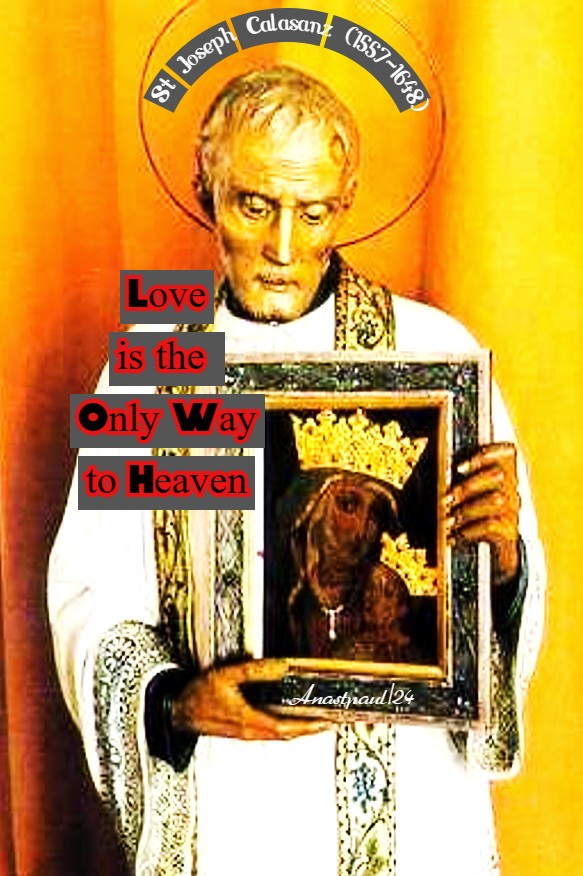
Quote/s of the Day – 27 August – St Joseph Calasanz (1557-1648) Confessor, Priest
“If, from the very earliest years, a child is instructed in both religion and letters, it can be reasonably hoped that his life will be happy.”
“Like the saplings of plants, the young are easily influenced, as long as someone works to teach their souls. But if they are allowed to grow hard, we know well that the possibility of one day bending them, diminishes a great deal and is sometimes utterly lost.”
“LOVE is the only way to HEAVEN.”
“Keep, O Lord, my heart at peace, always close to Thee. Thou Who calms the wild waves of the sea.”
One Minute Reflection – 27 August – “The Month of the Immaculate Heart of Mary” – St Joseph Calasanz (1557-1648) Confessor, Priest –Wisdom 10:10-14; Matthew 18:1-5 – Scripture search here: https://www.drbo.org/
“And whoever receives one such little child for My sake, receives Me.” – Matthew 18:5
REFLECTION – “Could God not have made the human person perfect right from the beginning? For God, Who has always been identical with Himself and Who is not created, everything is possible. But because the existence of the created beings began after God’s, they are necessarily inferior to God, Who made them … Thus, since they are created, they are not perfect. When they have just been born, they are small children and as small children, they are neither accustomed to, nor have they had practice in, perfect conduct … Thus, God could give perfection to the human person right from the beginning but, the human person was incapable of receiving this perfection, for he was only a small child.
And that is why, in the last times, when our Lord gathered up all things in Himself (Eph 1:10), He came to us, not in His power but, in such a way, we were able to see Him. For He could have come to us in His inexpressible glory but, we were not yet able to bear the greatness of His glory. … Although the Word of God was perfect, with humankind He became a small Child, not for Himself but because of the state of childhood, in which was humankind.” – St Irenaeus (c130-202) Bishop of Lyons, Martyr, Father of the Church (Against the Heresies IV 38, 1-2).
PRAYER – O God, Who through St Joseph, Thy Confessor, did graciously will to provide Thy Church with a new method for the training of youth, in the spirit of understanding and holiness grant, we beseech Thee, that, following his example and through his intercession, we may live and teach so as to acquire an everlasting reward. Through esus Christ, Thy Son our Lord, Who lives and reigns with Thee, in the unity of the Holy Ghost, God, world without end. Amen (Collect).
Morning Prayer To Be Conformed to the Divine Will Unknown Author Breviary Prayer
Most Holy Trinity, Godhead IndIvisible, Father, Son and Holy Ghost, our first beginning and our last end, Thou hast made us in accord with Thine Own Image and likeness.
Grant that all the thoughts of our minds, all the words of our tongues, all the affections of our hearts and all the actions of our being may always be conformed to Thine Holy Will.
So may we, having seen Thee veiled in appearance here below, by means of faith, come at last to contemplate Thee face-to-face, in the perfect possession of Thee, forever in Heaven. Amen
Saint of the Day – 27 August – Saint Narnus of Bergamo (Died c345) Bishop and Confessor, of Bergamo which is a suffragan of the Archdiocese of Milan. Died in c345 in Bergamo, Italy of natural causes. Additional Memorial – 15 January in Bergamo. Also known as – Narno.
The Roman Martyrology reads today: “At Bergamo, St Narnus, who was Baptised by the blessed Barnabas and Consecrated by him as the first Bishop of that City.”
Narnus is venerated as the 1st Bishop of Bergamo. Christian tradition holds that he was Consecrated during the Apostolic Age by St Barnabas, although Narnus probably lived later than that.
The oldest source which mentions Narnus is from the 13th Century and was written by Brother Branca da Gandino, a Friar. He considers Narnus a Bishop of Bergamo. He probably held the Episcopal Office towards the middle of the 4th Century, according to some scholars in the years 334-345 and they also affirm that it was St Ambrose, who consecrated him as the 3rd Bishop of Bergamo.
The place of his birth is uncertain, some say Castione, some Ogna, some Villa d’Ogna but the consensus is Ogna (Bergamo). It is believed that he built the primitive Alexandrian Basilica, of which St Grata was the promoter.
He died in his seat of Bergamo, towards 345 or around 375 (?) and was buried four metres deep from the choir, in the Crypt of the ancient Alexandrian Church which was the ‘martyrium’ of St Alessandro and, at the same time, a Cathedral and there, he was honoured with an Altar and venerated every year with solemn liturgies.
In 1561, the ancient Basilica of St Alessandro had to be demolished and the Relics of St Narnus, together with those of his successor St Viatore and other Saints, were transferred to the Church of St Vincenzo, today’s Cathedral of ST Alessandro, where they are still venerated. During these works, an ancient Tombstone was found which indicated the place where both St Narnus and St Viatore were buried, in Latin: “episcopus Narnus Christi Confessor” that is, St Narnus has the title of ‘Confessor’ which, in ancient times, also included Martyrs, it is thought that perhaps he had suffered mistreatment in his youth, during the persecution of Diocletian.
Bergamo St Alexander Cathedral – a magnificent art-encrusted interior
In the following centuries there were four other recognitions of the Relics; in a calendar of the 11th Century and in one of the 13th Century, owned by the Monastery of St Grata, the Feast of St Narnus is placed on 27 August, a date which was then passed into other ‘Catalogs’ and also into the Roman Martyrology.
On the figure of the Bishop of Bergamo, there is a vast bibliography, as well as a discrete ancient iconography. In the Diocese of Bergamo, his memory is celebrated on 15 January.
Bergamo Cathedral an astoundingly beautiful Cathedral both inside and out
Feast of the Seven Joys of Our Lady – This Feast is also known as “The Franciscan Crown,” The Seven Joys of the Virgin. Today was kept by the Franciscans as the Feast of the Seven Joys of the Virgin Mary. As an expression of the Seraphic Order’s devotional life, it corresponds to the Feast of the Holy Rosary, which began among the Dominicans and the observance on 15 September of the Seven Sorrows of the Virgin, https://anastpaul.com/2022/08/27/27-august-feast-of-the-seven-joys-of-our-lady-the-franciscan-crown/
St Agilo of Sithin St Angelus of Foligno St Anthusa the Younger St Arontius of Potenza St Baculus of Sorrento St Carpophorus St David Lewis St Decuman St Ebbo of Sens St Etherius of Lyons St Euthalia of Leontini St Fortunatus of Potenza
St Gebhard of Constance St Giovanni of Pavia St Honoratus of Potenza St John of Pavia St Licerius of Couserans St Malrubius of Merns St Narnus of Bergamo (Died c345) Bishopand Confessor St Phanurius St Poemen Bl Roger Cadwallador St Rufus of Capua St Sabinian of Potenza St Syagrius of Autun
Martyrs of Tomi – 5 Saints: A group of 17 Christians imprisoned and excuted for their faith during the persecutions of Diocletian. They miraculously were unburned by fire and untouched by wild animals. We know the names and a few details on five of them – John, Mannea, Marcellinus, Peter and Serapion. They were tied to stakes and burned alive; they emerged unharmed – thrown to wild animals in the amphitheatre; the animals ignored them; they were beheaded in 304 in Tomi, Mesia (modern Costanza, Romania).
Martyrs of Nagasaki – 14 Beati: A group of fourteen missionaries and Japanese native Christians, who were Martyred together for their faith. They died on 16 August 1627 in Nagasaki, Japan and were Beatified on 7 May 1867 by Pope Pius IX. They are – Blessed Antonius of Saint Francis, Blessed Bartolomé Díaz Laurel, Blessed Caius Akashi Jiemon, Blessed Francisca Pinzokere, Blessed Francisco of Saint Mary, Blessed Franciscus Kuhyoe, Blessed Leo Kurobyoe Nakamura, Blessed Lucas Tsuji Kyuemon, Blessed Ludovicus Matsuo Soyemon, Blessed Magdalena Kiyota, Blessed Maria Shobyoe, Blessed Michaël Koga Kizayemon, Blessed Thomas Sato Shin’emon, Blessed Tsuji Shobyoe.
You must be logged in to post a comment.