Posted in MARIAN TITLES, SAINT of the DAY

Nossa Senhora da Lapa / Our Lady of the Grotto, Sernancelhe, Viseu, Douro, Norte, Portugal, 1498 and Memorials of the Saints – 10 June

Nossa Senhora da Lapa / Our Lady of the Grotto, Sernancelhe, Viseu, Douro, Norte, Portugal, 1498 – 10 June:
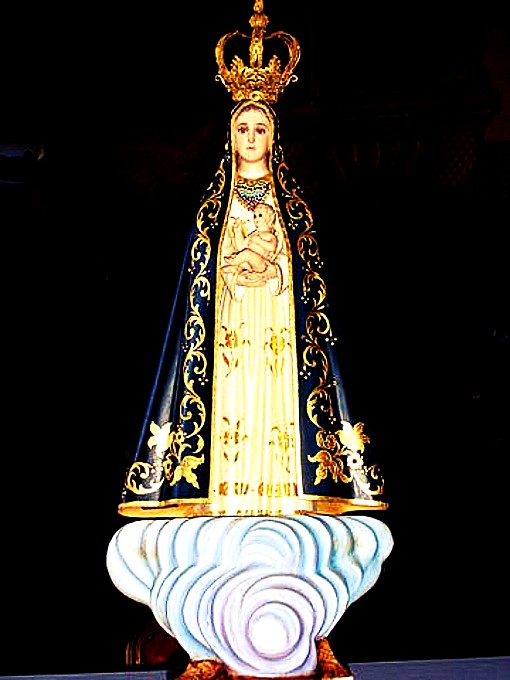
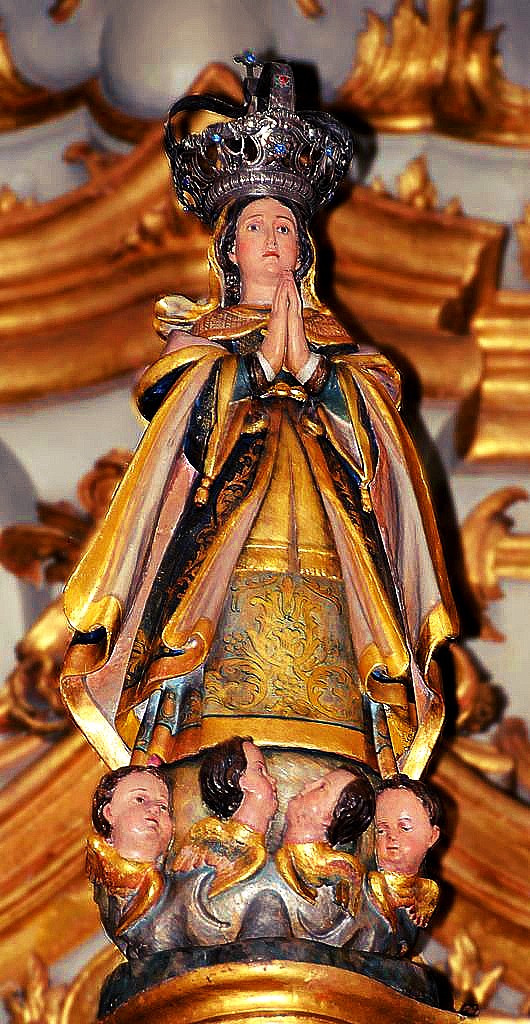
In 1498, a mute girl was herding her flock in the hills of Quintela, outside the Town of Sernancelhe in north central Portugal, when she found a Statue of the Virgin and Child in the cleft of a rock. Young Joana made the Statue an object of personal devotion, carrying it back and forth from home, where she made clothes for it, to the hills, where she would set it on a rock, surround it with flowers and pray, while the sheep grazed nearby. Her mother began to feel the “doll” was distracting the girl from her chores and one day threw it in the fireplace. Suddenly Joana spoke, for the first time in her life: “Mother! That’s Our Lady of the Grotto! What are you doing?” The girl grabbed the unburnt image out of the fire. She was cured but her mother’s arm became paralysed! After they both prayed, the mother regained use of her arm. As word spread through the area, people began coming to venerate the Statue, and the Parish Priest suggested moving it to the Church. But three times, the image vanished from the Church, reappearing in its original place between the rocks. So, a Chapel was built there, enclosing the location where Joana found the Statue. People believed that in 982, nuns fleeing the Islamic conqueror Almanzor, had hidden the image there.
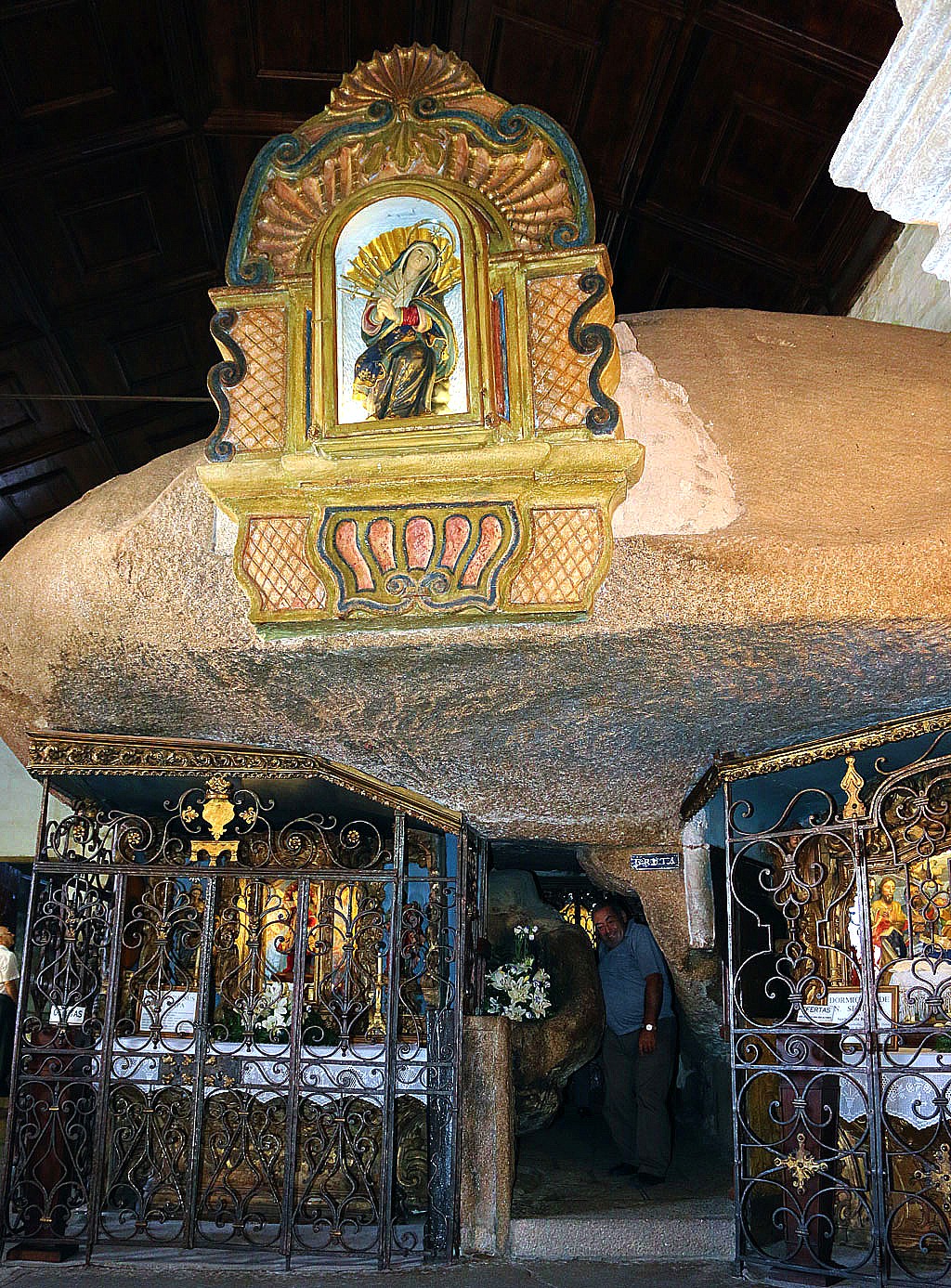
Nossa Senhora da Lapa became one of Portugal’s major pilgrimage destinations, attracting devotion from colonies in Brazil and India, as well as from the Portuguese aristocracy. In 1575, Pope Gregory XIII approved the request of King Sebastian to transfer the Shrine to the Society of Jesus. Between 1610 and 1635, the Jesuits rebuilt the Church, decorating the interior with azulejo tilework. Later, they added a college and housing for pilgrims, students and themselves. From the 1700s to the 1900s, the complex changed hands several times, repeatedly taken over by the state then returned to the Church. Since 1929, it has belonged to the Roman Catholic Diocese of Lamego.

n addition to the huge boulders within the Sanctuary, another unusual feature of the Shrine is a crocodile hanging from the ceiling (as in the Church of Our Lady of the Cherry Tree in Belgium)—a wooden replica of the long-decayed stuffed skin, which some say a pilgrim brought to thank the Virgin for her help against the beast in India. A more fanciful local story relates that a monstrous lizard menaced a girl who was spinning by hand while watching her flock. After invoking Our Lady of Lapa, she was able to subdue the animal by stuffing its mouth with balls of wool, then lead it home by a thread to be killed and mounted.

Although the Shrine’s fame has been eclipsed by that of Fatima, it still hosts three big pilgrimages annually: on 10 June Portugal Day, on `15 August Feast of the Assumption (preceded by novenas) and on 8 September Feast of Mary’s Birth.
Bl Amata of San Sisto
St Amantius of Tivoli
St Asterius of Petra
St Bardo of Mainz
Blessed Bogumilus of Gniezno (c 1135-c 1182) Bishop, Camaldolese Hermit
St Caerealis of Tivoli
St Censurius of Auxerre
St Crispulus of Rome

Blessed Edward Johannes Maria Poppe (1890-1924) Priest – Apostle of Eucharistic Adoration, especially amongst children and of the Blessed Virgin Mary, Evangeliser, Reformer, Spiritual Director of Seminarians, Supporter of the Labourer.
Biography:

https://anastpaul.com/2017/06/10/saint-of-the-day-10-june-blessed-edward-joannes-maria-poppe/

Bl Elisabeth Hernden
Bl Elizabeth Guillen
St Evermund of Fontenay
St Faustina of Cyzicus
Bl Gerlac of Obermarchtal
St Getulius of Tivoli

Blessed Henry of Treviso (1250-1315) Layman, Widower and Father. Over two hundred miracles were reported within a few days after his death. Beatified by Pope Benedict XIV on 23 July 1750.
About Blessed Henry:

https://anastpaul.com/2020/06/10/saint-of-the-day-10-june-blessed-henry-of-treviso-1250-1315/

St Illadan of Rathlihen
St Ithamar of Rochester

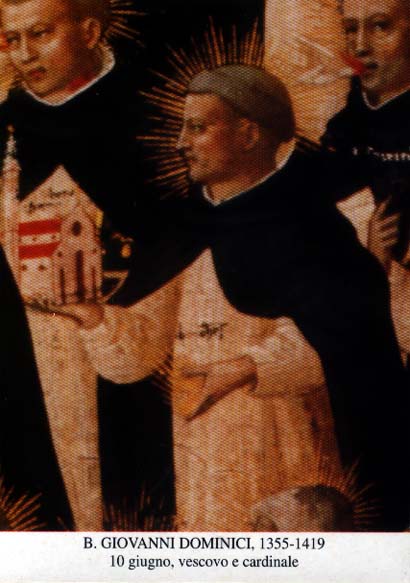
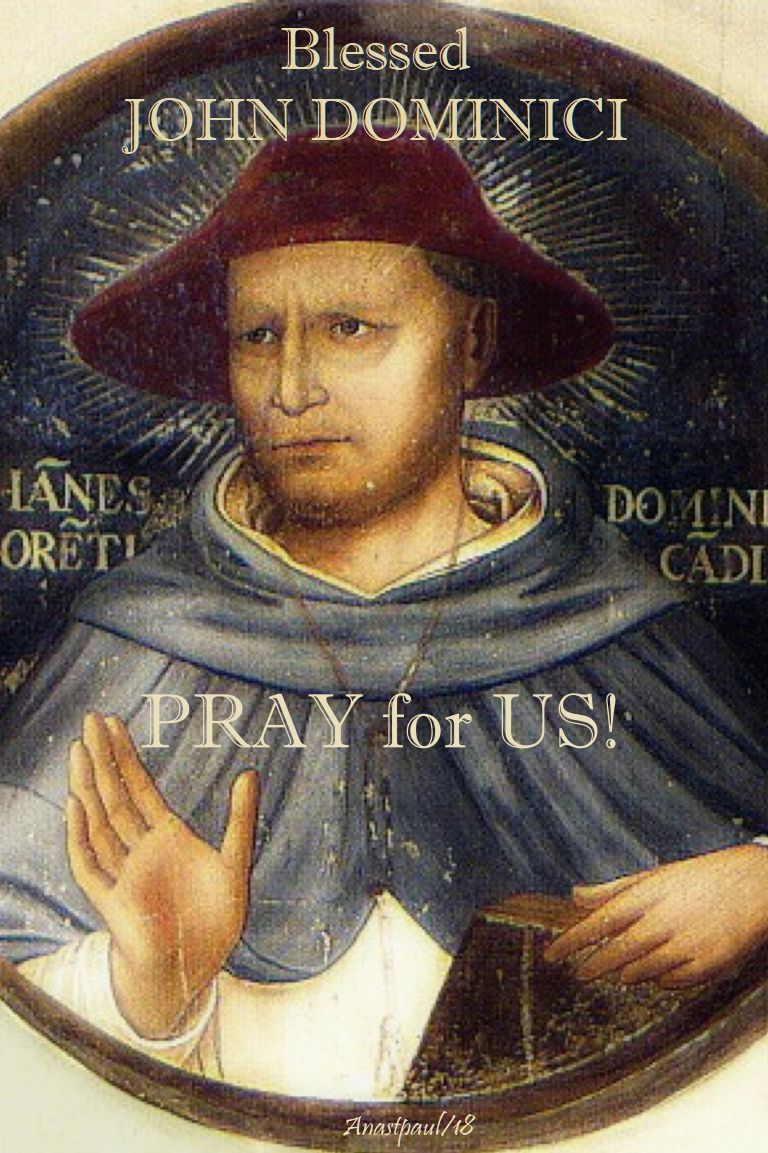
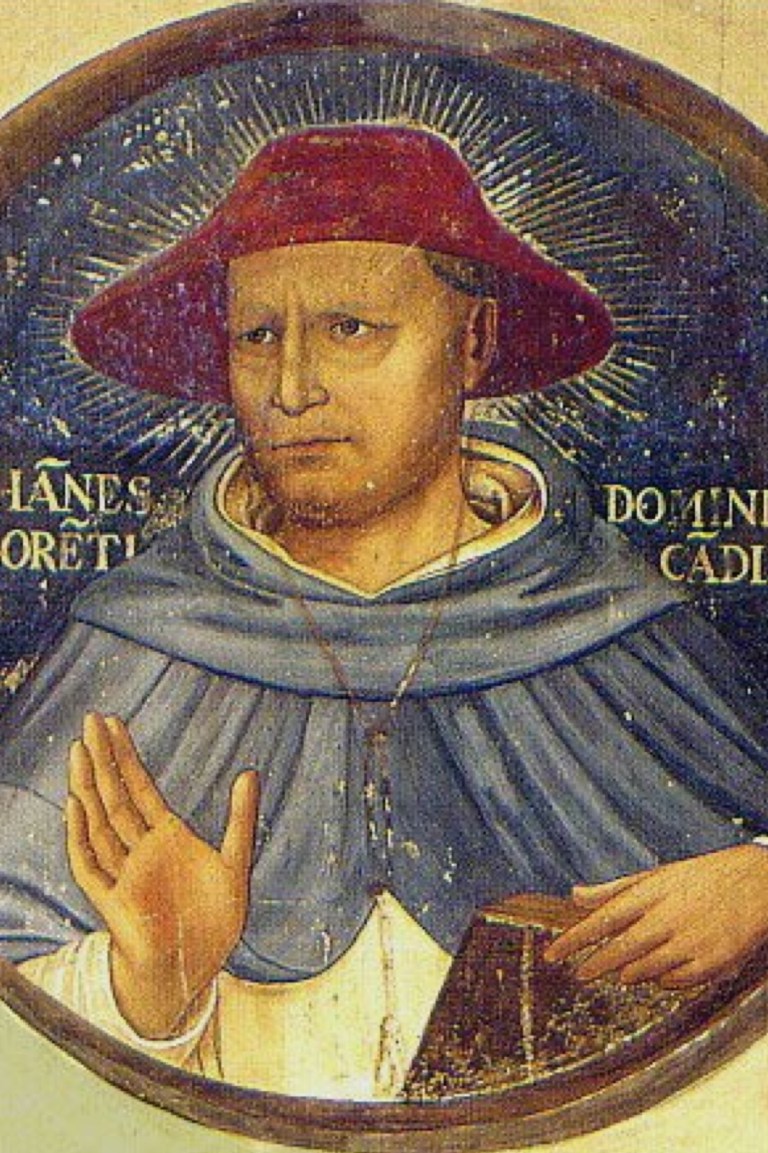
Blessed John Dominici OP (c 1355-1419) ArchBishop, Cardinal, Religious Friar, Theologian, Preacher, Confessor, Reformer, Papal Legate, Papal Counsellor and Confessor, Writer, Evangeliser . Beatified by Pope Gregory XVI in 1837.
His Life:

https://anastpaul.com/2018/06/10/saint-of-the-day-10-june-blessed-john-dominici-o-p-c-1355-1419/

Bl José Manuel Claramonte Agut
Bl Joseph Kugler
St Landericus of Novalese
St Landericus of Paris
Bl Mary Magdalene of Carpi
St Maurinus of Cologne
St Primitivus of Tivoli
St Restitutus of Rome
Bl Thomas Green
St Timothy of Prusa
Bl Walter Pierson
St Zachary of Nicomedia
—
Martyrs of North Africa – 17 saints: A group of seventeen Christians martyred together in North Africa; the only surviving details are two of their names – Aresius and Rogatius. Both the precise location in North Africa and the date are unknown.

Martyrs of the Aurelian Way – 23 saints: A group of 23 martyrs who died together in the persecutions of Aurelian. The only details that survive are three of their names – Basilides, Mandal and Tripos. c.270-275 on the Aurelian Way, Rome, Italy.
Posted in MORNING Prayers, SAINT of the DAY

Thought for the Day – 10 June -Tenth Sunday of the Year B and the Memorial of Bl John Dominici O.P. (c 1355-1419)

Thought for the Day – 10 June -Tenth Sunday of the Year B and the Memorial of Bl John Dominici O.P. (c 1355-1419)

Why should we worry what future generations think of us?   That seems pretty insecure, to worry about what others who don’t even exist yet think.   It seems much better to worry about whether or not we are doing the right thing.   That’s not easy in our culture, because there is not widespread agreement on precisely what that right thing is.

Most of us will fade into the past without much comment by future generations.   That shouldn’t frighten us; it should motivate us.   Doing the right thing for people of faith–acting according to the demands of our human nature and according to the commands of God–should be the primary motivation:  not some imagined stamp of approval down the road but the approval of our loving Maker.   For people who don’t believe in God or an afterlife, it is even more critical to do what is right because it doesn’t seem like being on the right side of history matters much if you’re not going to exist.

Historical hindsight can be 20/20 but too often our rearview mirror gives a picture that is not so clear.   Bl John Dominic knew not to worry about the vicissitudes of human chroniclers, agonising about his place in the historical annals.   Instead, he acted according to his well-formed conscience and the promptings of the Holy Spirit.   That is why he is a great saint.   He was a world-famous celebrity, now mostly forgotten, except by the One who truly matters. (Br Dominic Bouck)

Blessed John Dominici, Pray for us!bl john dominici - pray for us - 10 june 2018

Posted in DOMINICAN OP, SAINT of the DAY, Uncategorized

Saint of the Day – 10 June – Blessed John Dominici O.P. (c 1355-1419)

Saint of the Day – 10 June – Blessed John Dominici O.P. (c 1355-1419) ArchBishop, Cardinal, Religious Friar, Theologian, Preacher, Confessor, Reformer, Papal Legate, Papal Counsellor and Confessor, Writer, Evangeliser – born on 1356 at Florence, Italy and died on 10 June 1419 of a fever at Buda, Hungary.  Bl-JohnDominic

Although John had little education and suffered from a speech impediment that caused him to stammer and stutter, he possessed a tremendous drive to improve himself, overcome his obstacles and serve our Lord.   He also had a great memory and later in life became a great theologian and preacher.   John Dominic met St Catherine of Siena when he was young, entered the Order of Preachers and was an integral part of a major reform movement.   This reform helped to revitalise the Order after its decimation by the plague and general laxity of observance.   Not only was he a major force in the Dominican Order but he became a cardinal in the Church and an official legate for the Pope.   Most importantly, he worked to resolve the Great Western Schism.   He also brought Fra Angelico, the world famous painter and St Antoninus, a brilliant theologian and reformer, into the Order.

Born in c 1355 at Florence, Italy, John spent a great deal of his youth in or around the Dominican church of Santa Maria Novella.   He joined the Order at the age of 17, despite his lack of education and his speech impediment, even while the Dominicans are scholars and preachers.   After entering the Order, Blessed John studied in Pisa and Florence and received a degree from the University of Paris.   As a priest, Blessed John once believed that his speech impediment would threaten his vocation but it was cured through the intervention of Saint Catherine of Siena.   Blessed John spent 12 years in Venice as a preacher.

In 1392, Blessed John found himself to be the Vicar provincial serving in Rome.   At the time, Blessed Raymond of Capua was the Master General of the Order and he helped rebuild the Order after the ravages of the Plague and helped return regular discipline to the Order’s members.

Blessed John founded Dominican convents in Venice, Fiesole, Chioggia, Citta de Castello, Cortona, Lucca and Fabriano and was a correspondent of Blessed Clara Gambacorta, advising her of how to restore discipline to Dominican nuns of the day.   For a time, he lost papal support because of support for the Dominican White Penitents in Venice but was later welcomed back and resumed his work in the Order.

Most importantly, Blessed John worked to provide a Christian education to young people. He opposed pagan ideas that were taking hold in the humanism of his day and was a confessor and adviser to Pope Gregory XII.   He was made Cardinal of San Sisto in 1407 and Archbishop of Ragusa in 1408.   In these roles, he helped to heal the Western Schism and convinced Pope Gregory XII to call the Council of Constance and to abdicate the papacy causing the anti-popes to also drop their claims to the papal throne.Blessed John Dominic

He was appointed the Papal legate to Milan, Genoa, Hungary and Bohemia for Pope Martin V and, in that role,  worked to settle the disputes caused by the death of Jon Hus and to heal the Hussite Schism.   However, while Blessed John was able to convert some, he was unable to resolve the Hussite Schism.

John is widely known for his scripture commentaries and hymns.   His portrait was painted by Fra Angelico and a his memoir was written by St Antonius of Florence, who joined the Order after hearing Blessed John preach.

Blessed John died on 10 June 1419 at Buda, Hungary, from a fever and he was buried in the Saint Paul the Hermit church there.   His tomb became a site of miracles and his remains were venerated and miracles reported, until the destruction of the church during a Turkish invasion.   His cultus was confirmed in 1832 and he was beatified by Pope Gregory XVI in 1837.