Posted in ArchAngels and Angels, SAINT of the DAY

Saint of the Day – 7 February – Saint Lorenzo Maiorano (Died 545) Bishop

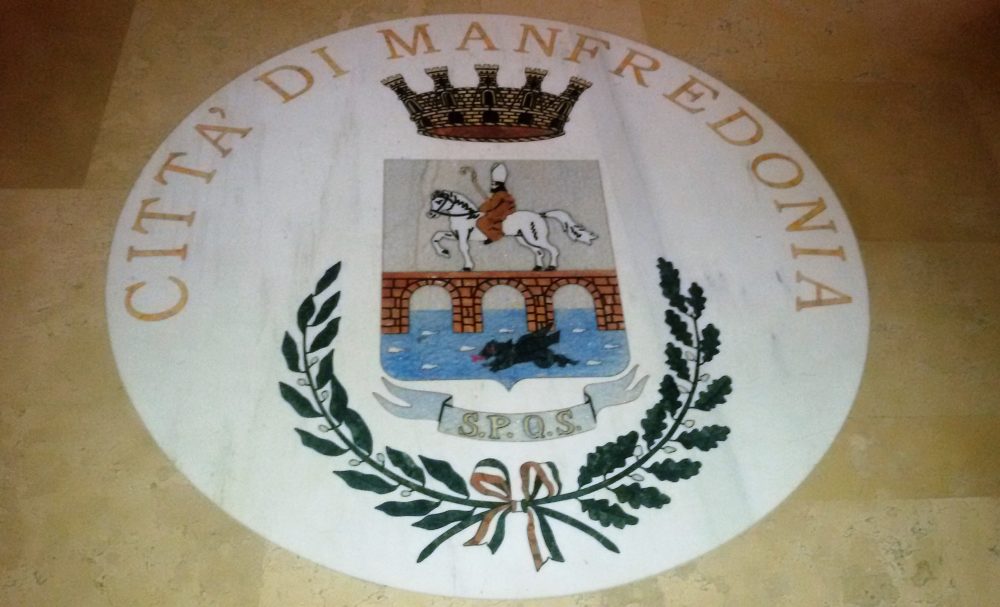
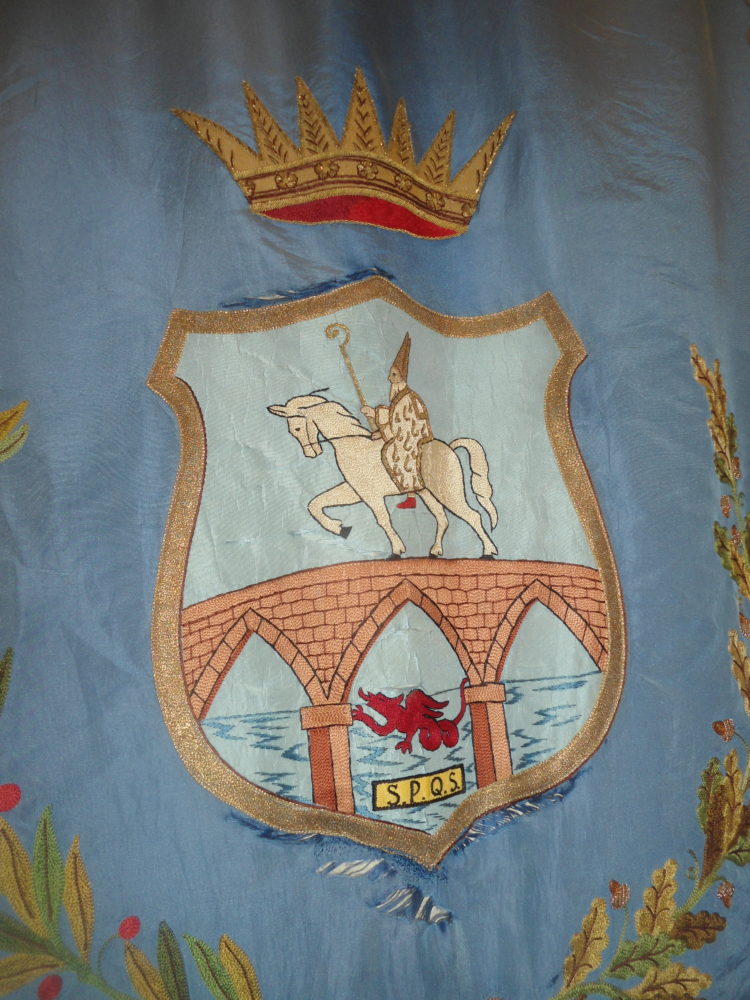
Saint of the Day – 7 February – Saint Lorenzo Maiorano (Died 545) Bishop of Siponto in Italy, Miracle-worker gifted with Prophecy and visions. Collaborator with St Michael in the Apparition at Gargano, known as “The Defender of the People.” Born in Constantinople in the 5th Century and died on 7 February 545 in Siponto, Italy. Patronages – of the City and Archdiocese of Manfredonia, he is the Co-patron with St Philip Neri and Our Lady of Siponto. St Lorenzo is also called the “Patron Saint of Foreigners” by the citizens of Siponto, having been a foreigner himself. Also known as – “The Defender of the People.” Lawrence Majoranus, Lawrence of Siponto, Lorenzo of Siponto, Laurence, Patron of Foreigners.
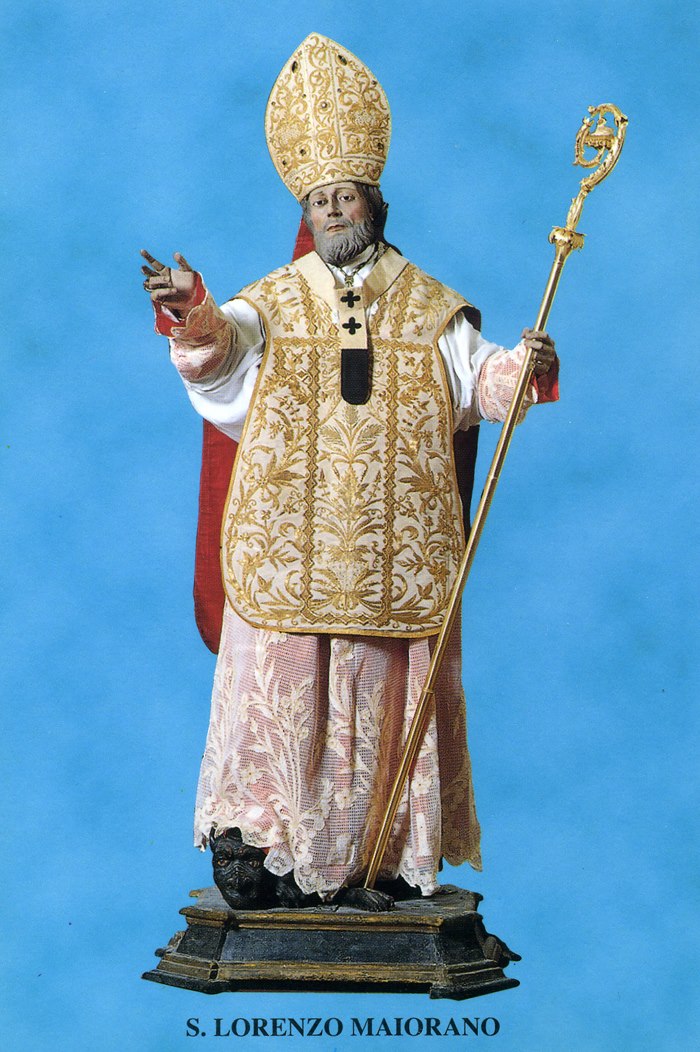
it is agreed that Lorenzo Maiorano was originally from the East, more precisely, from Constantinople, the seat of the Byzantine Empire.

The Bishopric of Siponto, now Manfredonia (the name it took in 1256 from King Manfred), after the death of Bishop Felix, which occurred at the time of the Eastern Emperor Zeno (474-491), during the struggles between Odoacer and Theodoric (489-493), remained vacant for a year. When peace returned, the Sipontos sent a delegation to Constantinople to ask for a successor, this must have happened in one of the last years of the 5th century, when Siponto was still under Byzantine rule because it is known that from the same 5th Century to the entire 8th Century, Puglia was under Roman jurisdiction.

The Emperor Zeno, still alive before 491, designated Lorenzo his relative, who accepted and left, bringing with him precious Relics of Sts Stephen and Agatha. It is also believed that Lorenzo brought with him, the Icon of Our Lady of Siponto (Maria Santissima di Siponto). It is said that the Icon was painted by an anonymous painter in Constantinople in the fifth century and was exhibited in one of the most important Churches there.
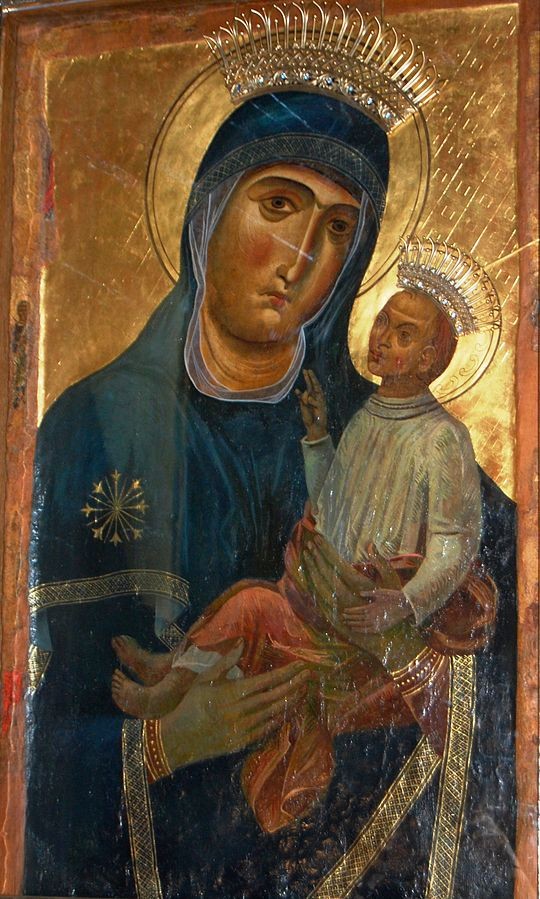
Our Lady of Siponto

At this point there are variances in the records – in one Vita, it is made to understand that Lorenzo was Consecrated Bishop in Constantinople itself, while in the other version, it is said that he reached Rome to be Consecrated by Pope Gelasius I (492-496).

It is recalled that this was the time when the Emperors only nominated Bishops for their regions, to be Consecrated by the Pope or sometimes only to ask for his approval. This situation would only be resolved much later, with the struggle between the Papacy and the Empire, with the so-called “Investiture controversy.”

Having become Bishop of Siponto, a strategic City due to its position on the sea, Lorenzo beyond the merits of shepherd of souls, linked his name to the extraordinary event of the Apparition of the Archangel Michael on the Gargano.

It was the year 490 and a gentleman named Elvio Emanuele Gargan, had lost the most beautiful bull of his herd. After long searches he found the animal crouched inside an inaccessible cave, since he could not be reached, he decided to kill the bull and fired an arrow from his bow but the arrow inexplicably, instead of hitting the bull, spun around and rebounded, hitting the shooter instead!
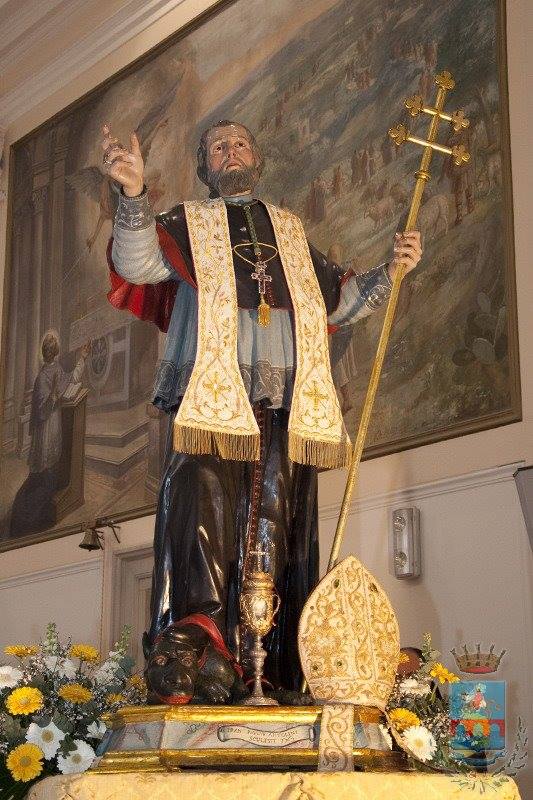
St Lorenzo without his festival Vestments

Shocked, he went to the Bishop of Siponto, Lorenzo and told what had happened. Bishop Lorenzo prescribed three days of prayer and fasting. On the third day, the Archangel Michael revealed himself to the Bishop, with the invitation to dedicate that cave to Christian worship. But Lorenzo hesitated and did not execute the will of St Michael because the pagan cult was still very much alive on the mountain where the cave was located.
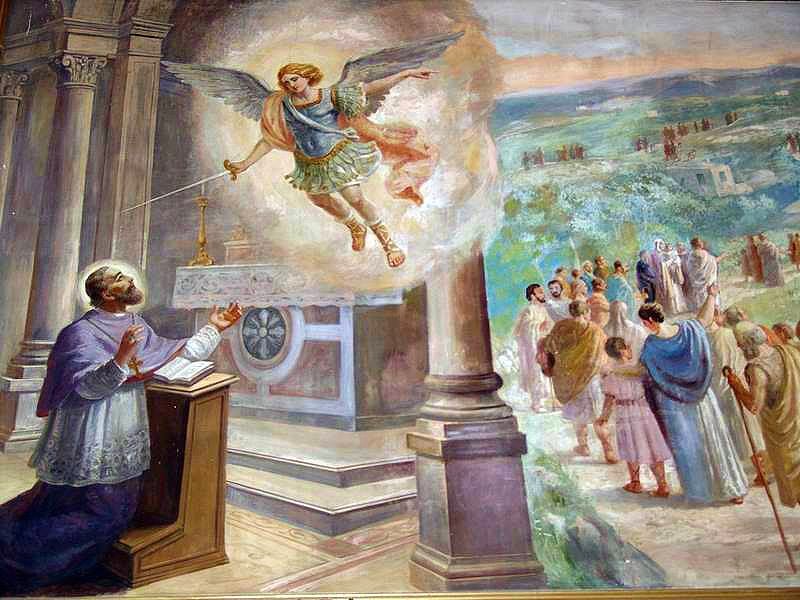
After two years, in 492, Siponto was besieged by the barbarian King Odoacer, the Christian forces were now their close to collapsing, when our Saint Lorenzo managed to obtain a three-day truce from the King which the Bishop and the faithful employed more in prayer and penance, than in reconstituting their strength for a battle already lost at the start.

At this juncture the Archangel reappeared to the Bishop, to tell him that he would give his help if the Sipontines attacked the enemy. The promise came true and when the besiegers resumed hostilities, a storm of sand and hail suddenly fell on the barbarians, who, frightened, fled.
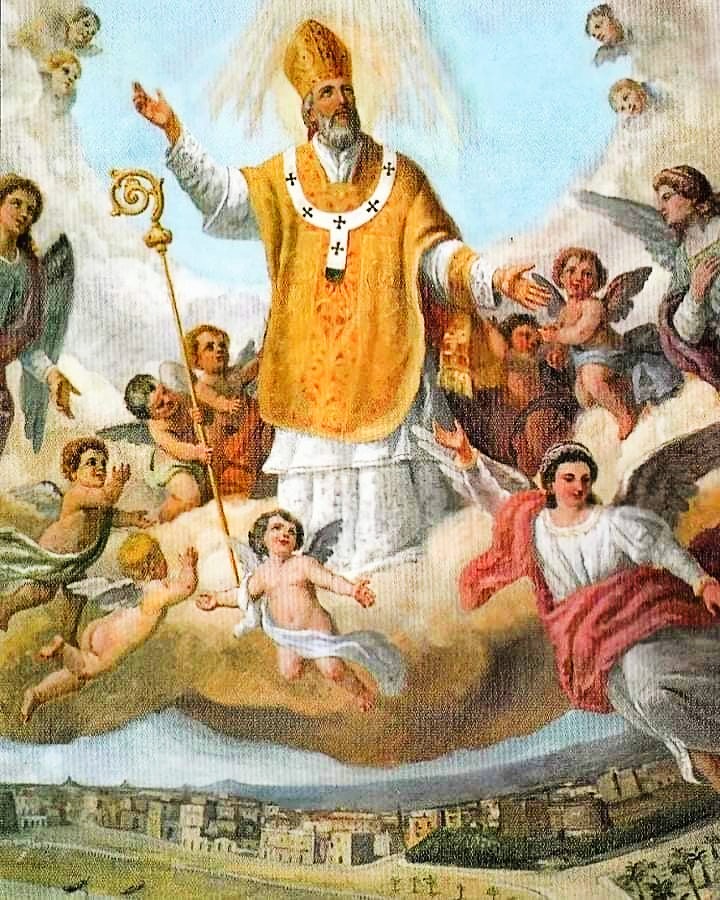
St Lorenzo under the storm of sand and hail

The City was saved and Bishop Lorenzo, with all the population, went up to Monte dell’Arcangelo in procession to thank him but once again, Lorenzo did not dare to enter the cave. This uncertainty, prompted him the following year, to seek the advice of Pope Gelasius I, who ordered him to occupy that cave and to go there with the Bishops of Puglia to Consecrate it, after a triduum of fasts.
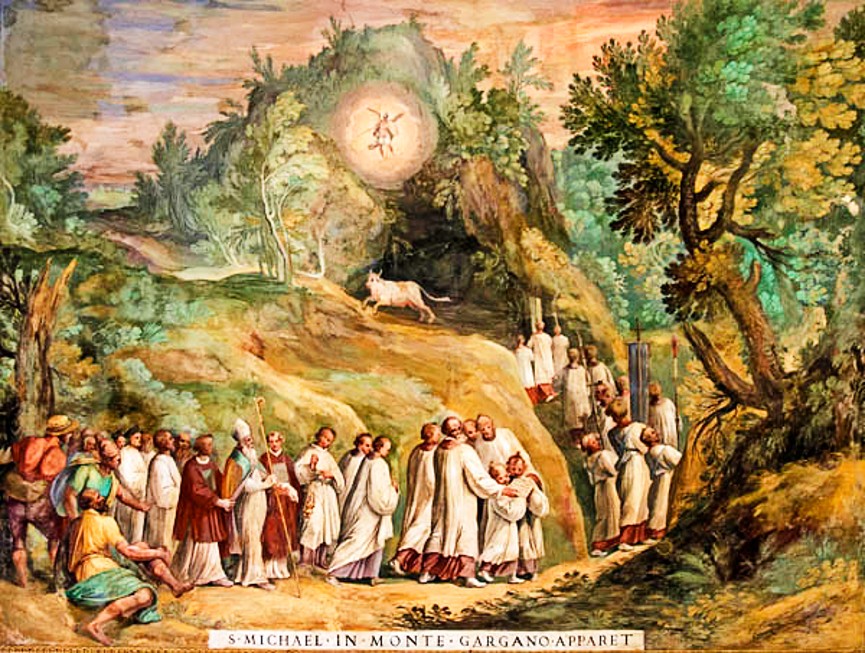
But the Archangel Michael manifested himself for the third time to the undecided Bishop, telling him that it was not necessary to Consecrate the cave because it was already Consecrated by Michael’s presence, so Lorenzo could enter and celebrate Holy Mass.

Legend has it that when Bishop Lorenzo entered the cave, he found an Altar covered in red cloth, with a crystal Cross on it. He then had a Church built at the entrance to the cave, which he dedicated to St Michael on 29 September 493. Fom here began that uninterrupted cult over the centuries, which has seen crowds of pilgrims of all classes, Kings and Queens, future Saints, Popes starting from Gelasius I himself, come to the Sanctuary and the Sacred Grotto, all united by the desire to visit this mystical cave where, according to the words of the Archangel to St Lorenzo, “the sins of men can be forgiven.

It is also known that by invoking the help of St Michael, Lorenzo managed to repel an incursion of Neapolitans against Siponto.
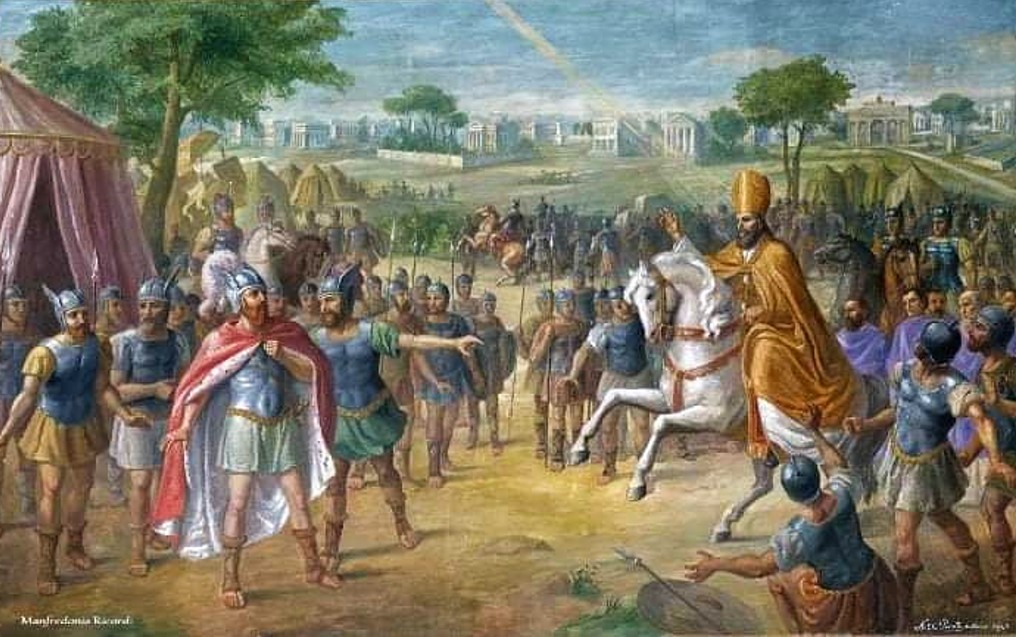
He had various Churches built, including one in honour of St John the Baptist which he had decorated with paintings, as well as the one on the Gargano. He had the gift of prophecy and predicted the imminent disasters of the Gothic War; he met with Totila, King of the Ostrogoths (d. 552) obtaining that Siponto was spared from destruction.

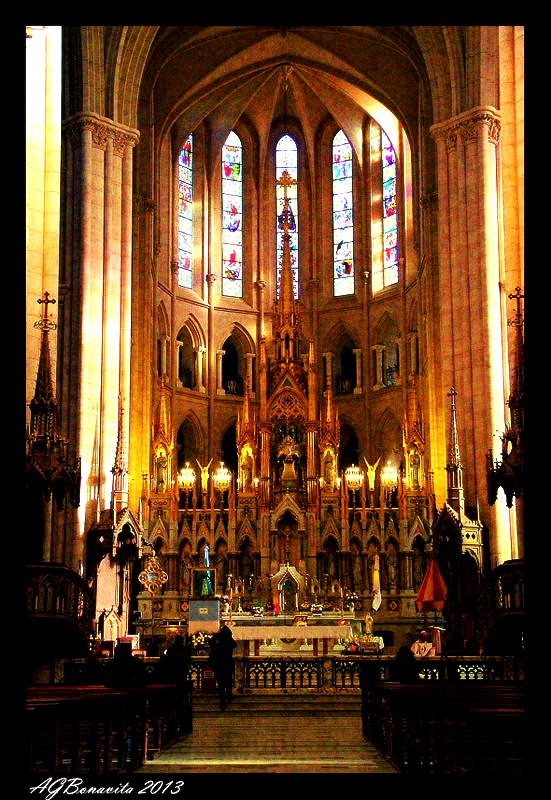
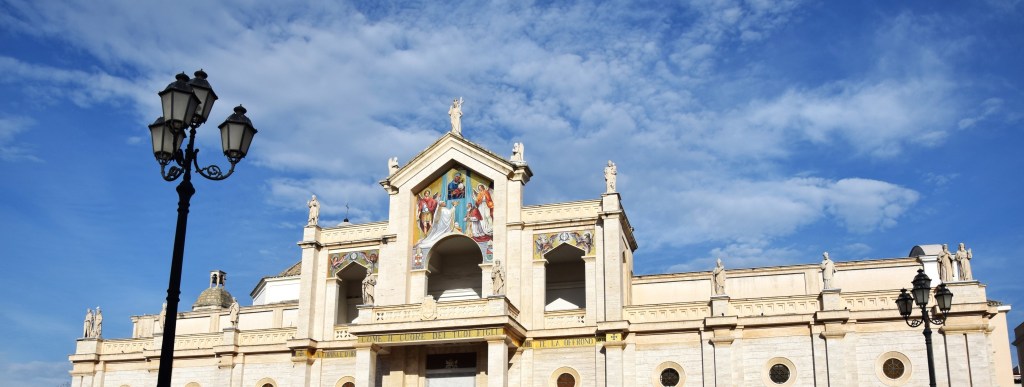
Lorenzo died in Siponto on 7 February perhaps in 545. His remaining Relics are now in Cattedrale di San Lorenzo Maiorano, where they were translated in 1327 by Bishop Matteo Orsini from Siponto Cathedral, where they lay under the High Altar. During the fire and the destruction of the first Cathedral by the Turks in 1620, the body of Saint Lorenzo was also destroyed, except for the right arm, which remains in the Cathedral today.
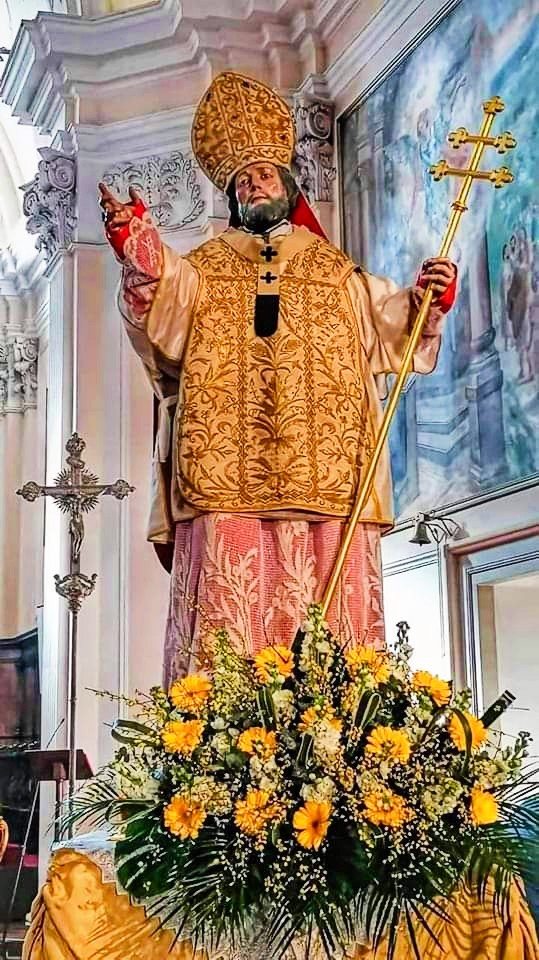
The festivities of St Lorenzo’s Feast

The Feast Day of the Appartion is 8 May.
https://anastpaul.com/2018/05/08/saint-of-the-day-8-may-apparition-of-michael-the-archangel-at-monte-gargano-italy-492/
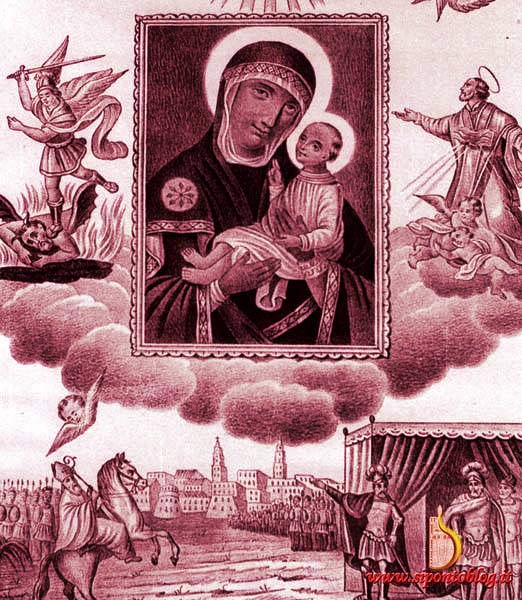
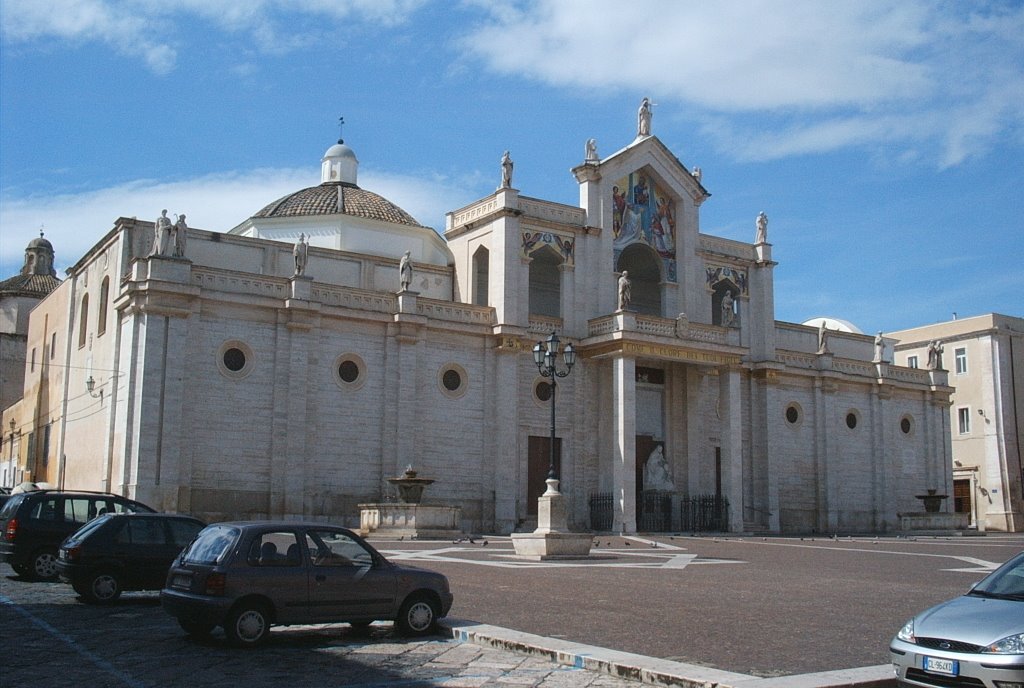
The life of St Lorenzo
Posted in ArchAngels and Angels, MARIAN TITLES, MIRACLES, SAINT of the DAY

The Third Sunday after Easter, Mother’s Day! 🌺 – Apparition of St Michael the Archangel at Monte Gargano, Italy (492), Nuestra Señora de Luján, Argentina / Our Lady of Luján (1600s) and Memorials of the Saints – 8 May

The Third Sunday after Easter +2022

Mother’s Day! 🌺

Apparition of St Michael the Archangel at Monte Gargano, Italy (492)
About this Apparition:

https://anastpaul.wordpress.com/2018/05/08/saint-of-the-day-8-may-apparition-of-michael-the-archangel-at-monte-gargano-italy-492/
Nuestra Señora de Luján, Argentina / Our Lady of Luján: (1600s) – 8 May:
HERE:

https://anastpaul.com/2021/05/08/apparition-of-st-michael-the-archangel-at-monte-gargano-italy-492-nuestra-senora-de-lujan-argentina-our-lady-of-lujan-1600s-and-memorials-of-the-saints-8-may-2021/

St Acacius of Byzantium
Bl Aloysius Luis Rabata
St Amatus Ronconi
Bl Angelo of Massaccio
St Arsenio of Mount Scete
St Benedict II, Pope

St Boniface IV, Pope (c 550-615) Bishop of Rome from 608 until his death, Deacon, assistant and disciple of St Pope Gregory the Great, Papal Treasurer under Pope Gregory. In other words, he was the first official in connection with the administration of papal property. he converted the Pantheon into a Church. This was the first pagan temple in Rome to be transformed. On 13 May 609, the Pantheon was consecrated to the Blessed Virgin and all the Christian Martyrs. Boniface ordered 28 cartloads of bones from the Catacombs to be reburied under the high Altar of the new Church.

Bl essed Clara Fey (1815-1894) Religious Sister and Founder of the Sisters of the Poor Child Jesus.
Her Life:

https://anastpaul.com/2019/05/08/saint-of-the-day-8-may-blessed-clara-fey-1815-1894/

St Desideratus of Bourges
Bl Domenico di San Pietro
St Gibrian
St Helladius of Auxerre

Blessed Henri Vergès FMS (1930-1994) Martyr, Religious Brother of the Order of Marist Brothers, Teacher, Missionary, one of the Nineteen Martyrs of Algeria
His Life and Death:

https://anastpaul.com/2020/05/08/saint-of-the-day-8-may-blessed-henri-verges-fms-1930-1994-martyr/

St Ida of Nivelles
St Martin of Saujon
St Metrone of Verona
St Odrian of Waterford
St Otger of Utrecht
St Peter of Besançon
Bl Pietro de Alos
Bl Raymond of Toulouse
Bl Teresa Demjanovich
Bl Ulrika Fransiska Nisch
St Victor Maurus the Moor (Died c 303) Martyr, Layman, ex-Soldier.
St Wiro of Utrecht

Posted in MARIAN TITLES, MIRACLES, SAINT of the DAY

Apparition of St Michael the Archangel at Monte Gargano, Italy (492), Nuestra Señora de Luján, Argentina / Our Lady of Luján: (1600s) and Memorials of the Saints – 8 May 2021

Apparition of St Michael the Archangel at Monte Gargano, Italy (492)
About this Apparition:

https://anastpaul.wordpress.com/2018/05/08/saint-of-the-day-8-may-apparition-of-michael-the-archangel-at-monte-gargano-italy-492/
Nuestra Señora de Luján, Argentina / Our Lady of Luján: (1600s) – 8 May:

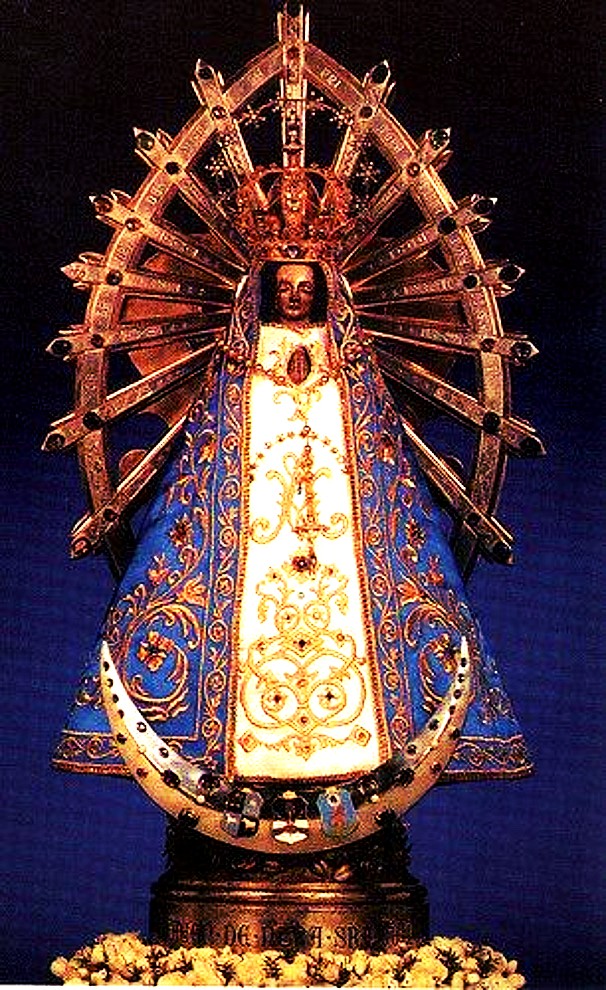
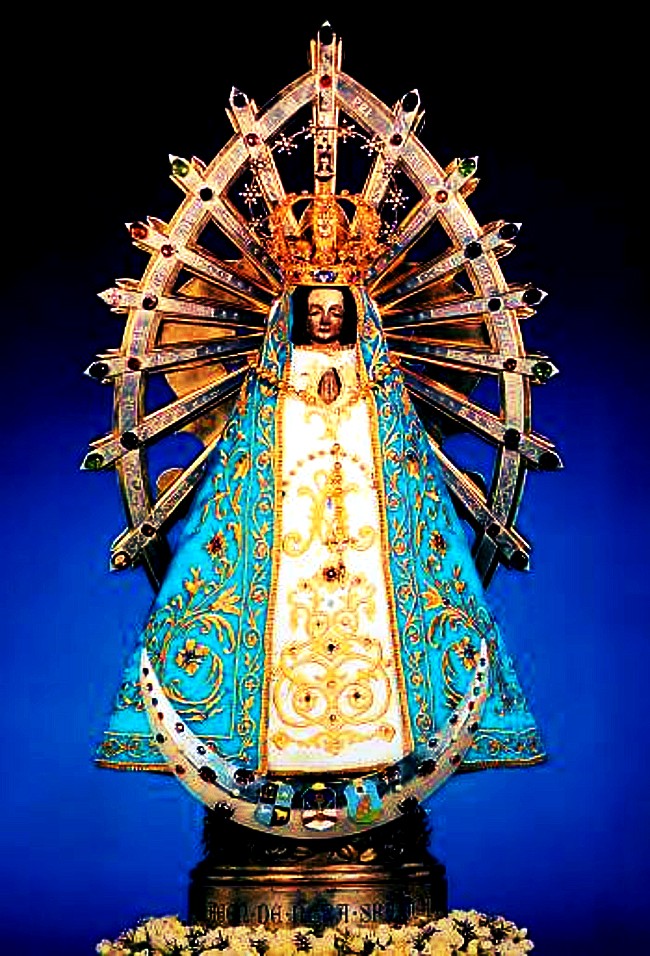
The Virgin is a two feet tall terracotta Statue of Our Lady. It was made in Brazil and sent to Argentina in May 1630. Its original appearance seemed inspired by Murillo’s Immaculates. In 1887, to preserve and protect it, the image was given a solid silver covering.
It is usually clothed with a white robe and sky blue cloak, the colours of the Argentinian flag. Only the dark oval face with big blue eyes and the hands folded in prayer are now visible.
Tradition tells us that a settler ordered the image of Mary Immaculate in 1630 because he intended to create a Shrine in her honour to help reinvigorate the Catholic faith in Santiago del Estero, his region. After embarking from the Port of Buenos Aires, the caravan carrying the image stopped at the residence of Don Rosendo Oramas, located in the present town of Zelaya.
When the caravan wanted to resume the journey, the oxen refused to move. Once the crate containing the image were removed, the animals started to move again. Given the evidence of a miracle, people believed the Virgin wished to remain there. The image was venerated in a primitive Chapel for 40 years. Then the image was acquired by Ana de Matos and carried to Luján, where it currently resides. A Basilica was built in its honour, where the image now resides above the high Altar.

Among the Popes who have honoured Our Lady of Luján are Clement XI, Clement XIV, Pius VI, Pius IX, Leo XIII, Pius XI, Pius XII, and John Paul II. In 1824, Fr John Mastai Ferretti, visited the Shrine on his way to Chile. He later became Blessed Pope Pius IX and defined the dogma of the Immaculate Conception on 8 December 1854.
Cardinal Eugenio Pacelli served as the Papal Legate to the XXXII International Eucharistic Congress ,held in Buenos Aires in October 1934 and visited the Basilica on 15 October. When he became Pope Pius XII, he made a radio address to the pilgrims in Luján on the occasion of the First Marian Congress in Argentina in 1947.
In 1982, during the Falklands War, John Paul II became the first Pope to visit Our Lady of Luján. During this visit the Pope celebrated an outdoor Mass in the square of the Basilica of Our Lady of Luján and bestowed upon her the Golden Rose. Both in his homily of 11 June and his Angelus back in Rome reflecting on the trip, he commented on Our Lady’s never failing maternal solicitude for the faithful in times of distress. On 11 June 1982, John Paul II personally bestowed a Papal Golden Rose on Our Lady of Luján.

St Acacius of Byzantium
Bl Aloysius Luis Rabata
St Amatus Ronconi
Bl Angelo of Massaccio
St Arsenio of Mount Scete
St Benedict II, Pope
St Boniface IV, Pope (c 550-615) Bishop of Rome fro 608 until his death

Bl essed Clara Fey (1815-1894) Religious Sister and Founder of the Sisters of the Poor Child Jesus.
Her Life:

https://anastpaul.com/2019/05/08/saint-of-the-day-8-may-blessed-clara-fey-1815-1894/

St Desideratus of Bourges
Bl Domenico di San Pietro
St Gibrian
St Helladius of Auxerre

Blessed Henri Vergès FMS (1930-1994) Martyr, Religious Brother of the Order of Marist Brothers, Teacher, Missionary, one of the Nineteen Martyrs of Algeria
His Life and Death:

https://anastpaul.com/2020/05/08/saint-of-the-day-8-may-blessed-henri-verges-fms-1930-1994-martyr/

St Ida of Nivelles
St Martin of Saujon
St Metrone of Verona
St Odrian of Waterford
St Otger of Utrecht
St Peter of Besançon
Bl Pietro de Alos
Bl Raymond of Toulouse
Bl Teresa Demjanovich
Bl Ulrika Fransiska Nisch
St Victor Maurus
St Wiro of Utrecht

Posted in ArchAngels and Angels, MARIAN TITLES, MIRACLES, SAINT of the DAY

8 May – Apparition of Michael the Archangel at Monte Gargano, Italy (492), Feast of Our Lady of Luján and Memorials of the Saints

Apparition of Michael the Archangel at Monte Gargano, Italy (492)

Our Lady of Luján:  The Virgin is a two feet tall terracotta statue of Our Lady.   It was made in Brazil and sent to Argentina in May 1630.   Its original appearance seemed inspired by Murillo’s Immaculates.   In 1887, to preserve and protect it, the image was given a solid silver covering.   It is usually clothed with a white robe and sky blue cloak, the colors of the Argentinian flag.   Only the dark oval face with big blue eyes and the hands folded in prayer are now visible.
Tradition says that an ox-drawn wagon was taking the statue from Buenos Aires to Santiago del Estero.   The animals stopped at the Luján River and refused to cross. Through trial and error the teamsters discovered that it the box with the Virgin was in the wagon, the oxen would not move;  if it was removed, then away they went.   After testing this several times, the people realised that Our Lady wanted to stay in Luján and so she is there today.
The image was first taken to the nearby home of Don Rosendo.   He built a primitive chapel for it which lasted 40 years.   A bigger shrine was completed in 1685.   A new sanctuary was built in the 19th century.   The image was crowned canonically in 1887.   In 1930 Pope Pius XII gave the sanctuary the title of Basilica.
Patronages:
• Agentina (proclaimed on 8 September 1930 Pope Pius XI)
• Argentinian military chaplains
• Paraguay
• Uruguay

Virgen_de_Luján-Réplica

St Acacius of Byzantium
Bl Aloysius Luis Rabata
St Amatus Ronconi
Bl Angelo of Massaccio
St Arsenio of Mount Scete
St Benedict II, Pope
St Boniface IV, Pope
St Desideratus of Bourges
Bl Domenico di San Pietro
St Gibrian
St Helladius of Auxerre
St Ida of Nivelles
St Martin of Saujon
St Metrone of Verona
St Odrian of Waterford
St Otger of Utrecht
St Peter of Besançon
Bl Pietro de Alos
Bl Raymond of Toulouse
Bl Teresa Demjanovich
Bl Ulrika Fransiska Nisch
St Victor Maurus
St Wiro of Utrecht