St Hermengild (Died 585) Martyr, Confessor, King. The Roman Martyrology reads: “At Seville in Spain, St Hermenegild, son of Leovigild, Arian King of the Visigoths, who was incarcerated for the confession of the Catholic Faith. By order of his wicked father, he was beheaded because he had refused to receive communion from an Arian Bishop, on the Paschal Solemnity and thus exchanging an earthly for a heavenly Kingdom, he entered the abode of the blessed, both as a King and as a Martyr.” His Life and Death: https://anastpaul.com/2023/04/13/saint-of-the-day-13-april-st-hermenegild-died-585-martyr-confessor/
St Carpus of Pergamus Bl Edward Catherick Bl Francis Dickenson St Guinoc St Ida of Boulogne (c1040-1113) Widow Bl Ida of Louvain Bl James of Certaldo Bl John Lockwood
Blessed Margaret of Castello OP (1287-1320) Italian professed member of the Third Order of the Order of Preachers of St Dominic. Margaret was disabled and became known for her deep faith and holiness. Her body is incorrupt. Beatified on 19 October 1609 by Pope Paul V (concession of indult for Mass and Office). About Blessed Margaret: https://anastpaul.wordpress.com/2018/04/13/saint-of-the-day-13-april-blessed-margaret-of-castello-o-p-1287-1320/
St Martius of Auvergne Bl Miles Gerard St Papylus of Pergamus St Proculus of Terni St Ursus of Ravenna Bishop and Confessor
Martyrs of Dorostorum – 3 Saints: A lector and two students Martyred together in the persecutions of Diocletian – Dadas, Maximus and Quinctillianus. Beheaded c303 in Dorostorum, Lower Mysia (modern Sillistria, Bulgaria.
Twentieth Sunday after Pentecost Twenty-eighth Sunday in Ordinary Time
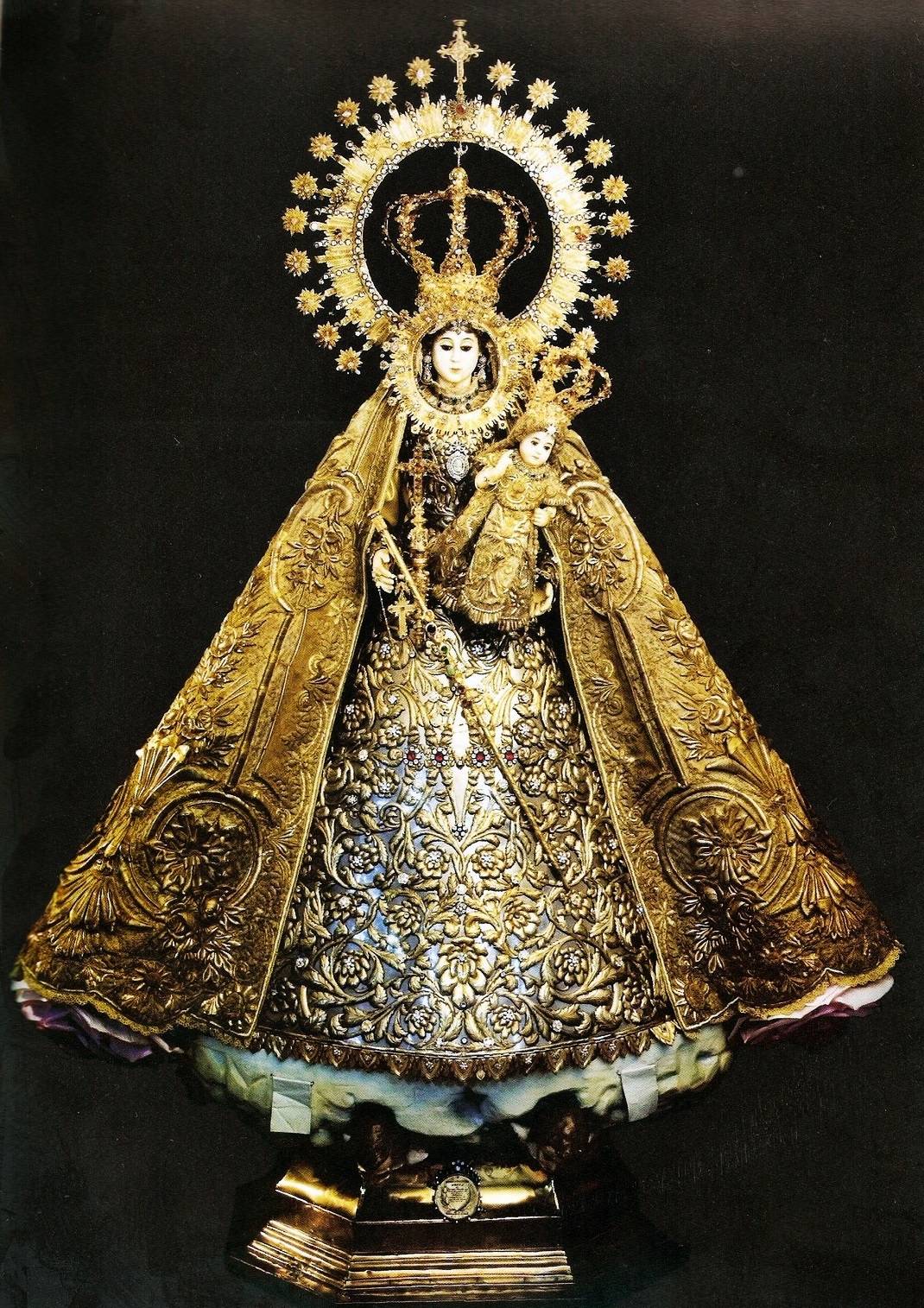
La Naval de Manila / Our Lady of the Most Holy Rosary , Quezon City, Philippines (1593) – Second Sunday of October: Also known as Nuestra Señora del Santísimo Rosario / The Grand Lady of the Philippines.
In 1593, the Governor General of the Philippines commissioned a Statue of Our Lady of the Rosary for the Dominican Church in Manila. A un-named Chinese sculptor carved the hardwood body and ivory hands and face, which has Asian features. About 4’8″ tall, the image is dressed in cloth of gold, with a crown and a halo of 24 stars and adorned with precious donated jewels. Our Lady holds the Child Jesus with her left hand and a Rosary with her right. The title “La Naval” refers to Our Lady’s help in the naval battles of Lepanto in 1571 and Manila in 1646, when a small Catholic fleet repeatedly repelled Dutch invaders. The Catholic Church in Manila first celebrated the feast of “La Naval” on 8 October 1646. Pope Pius X’s Apostolic Delegate crowned the Statue on 5 October 1907. Pope Pius XII also sent an Apostolic Letter on the occasion of the tricentenary of the Battle of La Naval de Manila on 31 July 1946. The Japanese bombing of 27 December 1941 destroyed the Church of Santo Domingo in Manila’s old walled city. Hidden for safekeeping, the holy Statue moved in 1954 to its present location in the Santo Domingo Shrine in Quezon City.
In 1646, naval forces of the Dutch Republic made several repeated attempts to conquer the Philippines in a bid to control trade in Asia. The combined Spanish and Filipino forces who fought, requested the intercession of the Virgin through the Statue prior to battle. They were urged to place themselves under the protection of Our Lady of the Rosary and to pray the Rosary repeatedly. They went on to rebuff the continued attacks by the superior Dutch fleet, engaging in five major battles at sea and losing only fifteen members of the Spanish Navy. After the Dutch retreat, in fulfillment of their vow, the survivors walked barefoot to the Shrine in gratitude to the Virgin. Later, on 9 April 1662, the Cathedral chapter of the Archdiocese of Manila declared the naval victory a miraculous event owed to the intercession of the Virgin Mary, declaring:
“Granted by the Sovereign Lord through the intercession of the Most Holy Virgin and devotion to her Rosary, that the miracles be celebrated, preached and held in festivities and to be recounted amongst the miracles wrought by the Lady of the Rosary, for the greater devotion of the faithful to Our Most Blessed Virgin Mary and Her Holy Rosary.“
St Cassius St Cerbonius of Populonia St Cerbonius of Verona St Clarus of Nantes Bl Demestrius of Albania Bl Edward Detkens St Eulampia St Eulampius St Florentius the Martyr St Fulk of Fontenelle St Gereon St Gundisalvus Bl Hugh of Macon St John of Bridlington OSA (1319-1379) Priest, Prior of the Monastery of the Canons Regular of St Augustine. Bl Leon Wetmanski St Maharsapor the Persian St Malo the Martyr St Patrician St Paulinus of Capua
Bl Pedro de Alcantara de Forton de Cascajares St Pinytus of Crete Bl Pontius de Barellis St Tanca St Teodechilde St Victor of Xanten
Martyrs of Ceuta – 7 beati: A group of seven Franciscan Friars Minor missionaries to Muslims in the Ceuta area of modern Morocco. Initially treated as madmen, within three weeks they were ordered to convert to Islam and when they would not they were first abused in the streets, then arrested, tortured and executed. • Angelo • Daniele di Calabria • Donnolo • Hugolinus • Leone • Nicola • Samuele They were beheaded in 1227 in Mauritania Tingitana (Ceuta, Morocco). Local Christians secreted the bodies away and gave them proper burial in Ceuta. They were Beatified in 1516 by Pope Leo X.




 AnaStpaul
You must be logged in to post a comment.