Quote/s of the Day – 16 October – The Memorials of St Margaret Mary Alacoque (1647-1690) and St Gerard Majella (1725-1755)
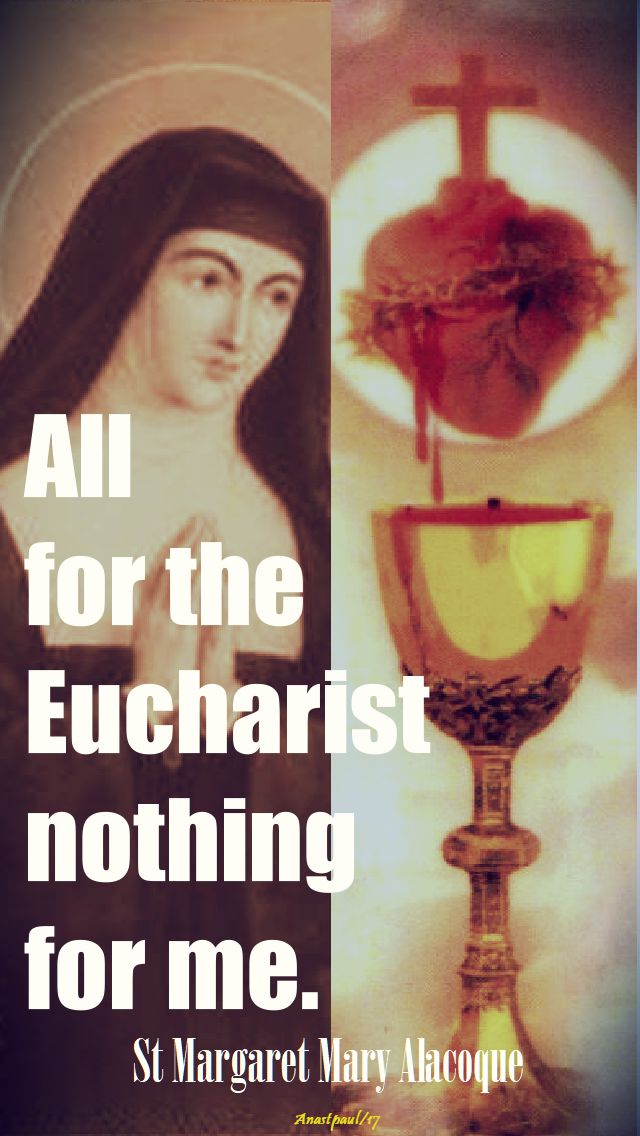
“All for the Eucharist nothing for me.”
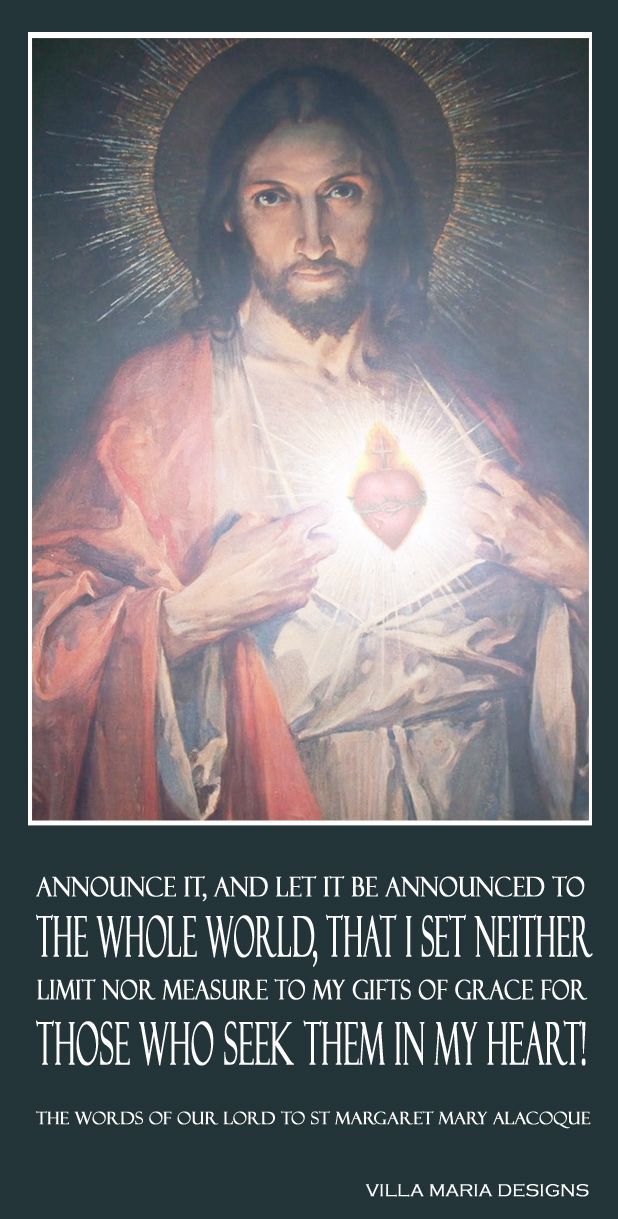
“Announce it and let it be announced to the whole world, that I set neither limit nor measure to my gifts of grace, for those who seek them in my Heart.” Revelations of Our Lord to St Margaret Mary Alacoque
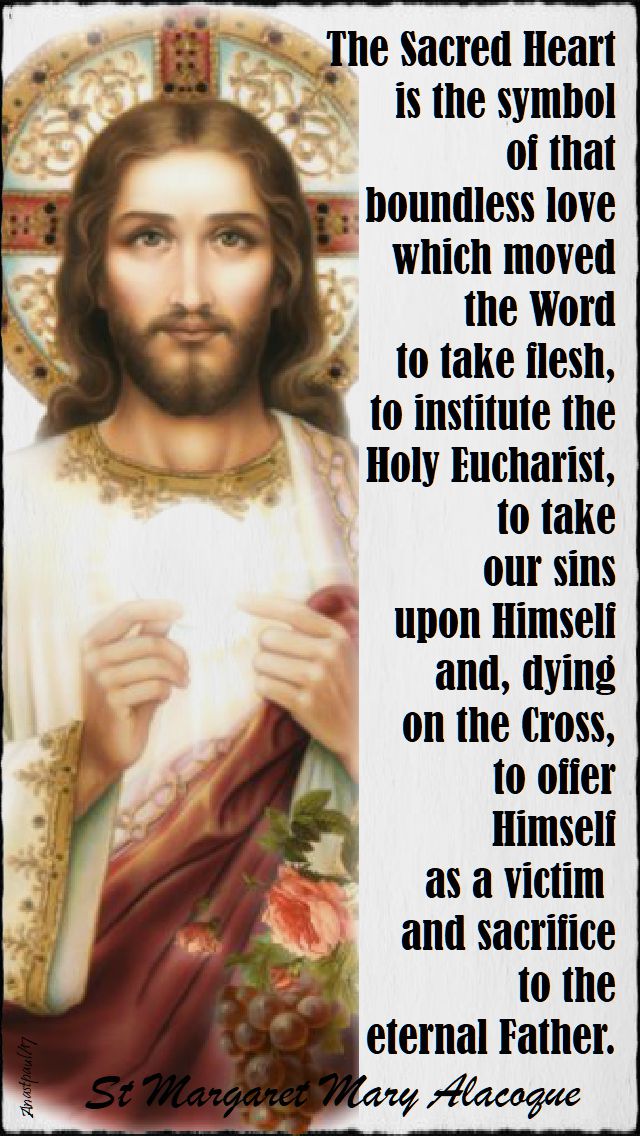
“The Sacred Heart is the symbol of that boundless love which moved the Word to take flesh, to institute the Holy Eucharist, to take our sins upon Himself and, dying on the Cross, to offer Himself as a victim and sacrifice to the eternal Father.”
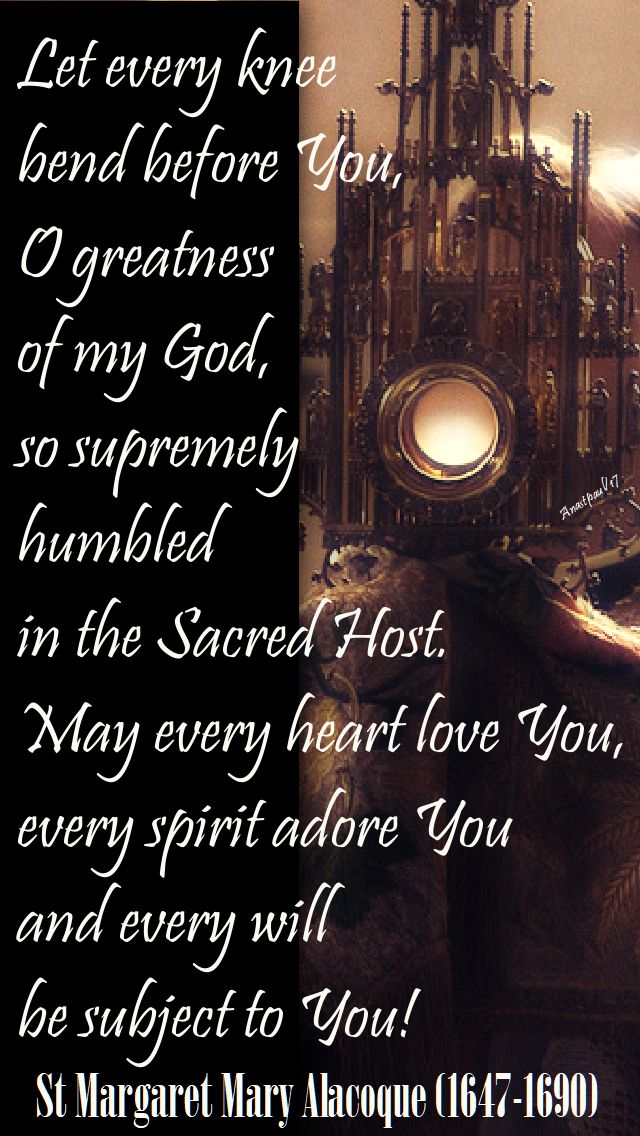
“Let every knee bend before You, O greatness of my God, so supremely humbled in the Sacred Host. May every heart love You, every spirit adore You and every will be subject to You!
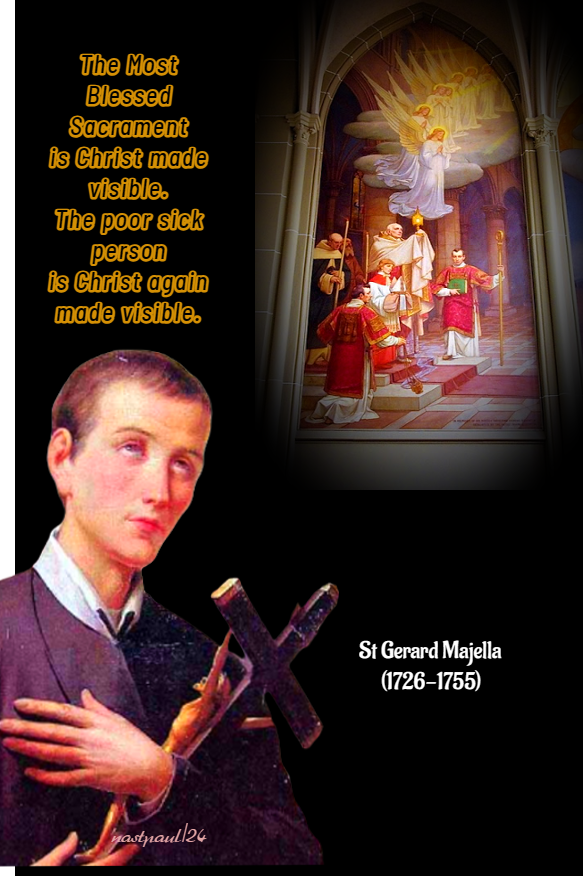
“The Most Blessed Sacrament is Christ made visible. The poor sick person is Christ again made visible.”
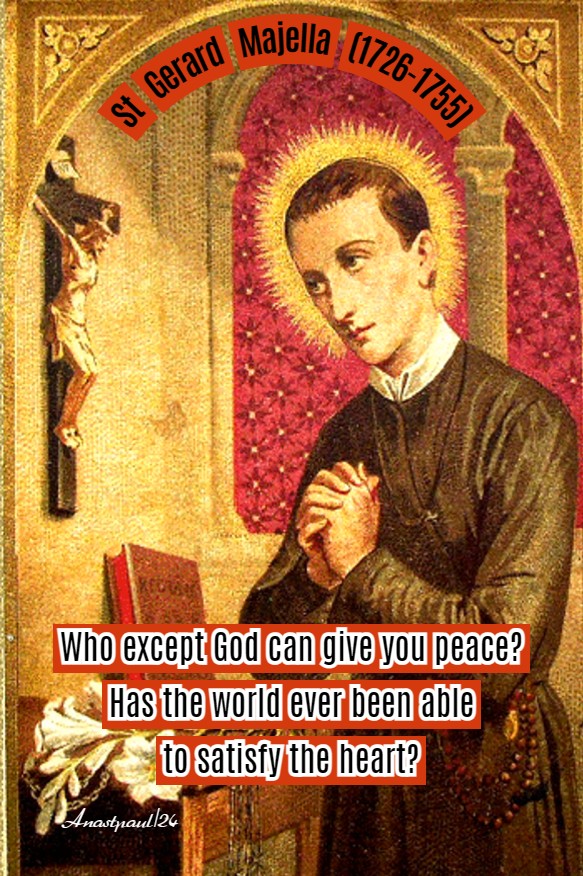
“Who except God can give you peace? Has the world ever been able to satisfy the heart?”
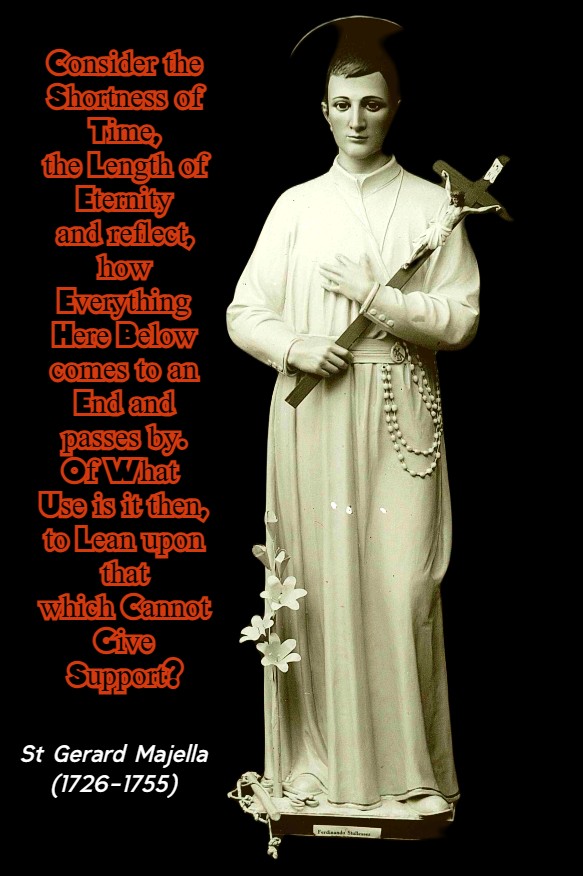
“Consider the shortness of time, the length of eternity and reflect how everything here below comes to an end and passes by. Of what use is it to lean upon that, which cannot give support? “
“Jesus, I am committing myself to accepting the things in life I cannot change and I ask for the grace of serenity. I am committing myself to changing the things in life I can change and I ask for the grace of courage. I am committing myself to knowing the difference and I ask for the grace of wisdom.”
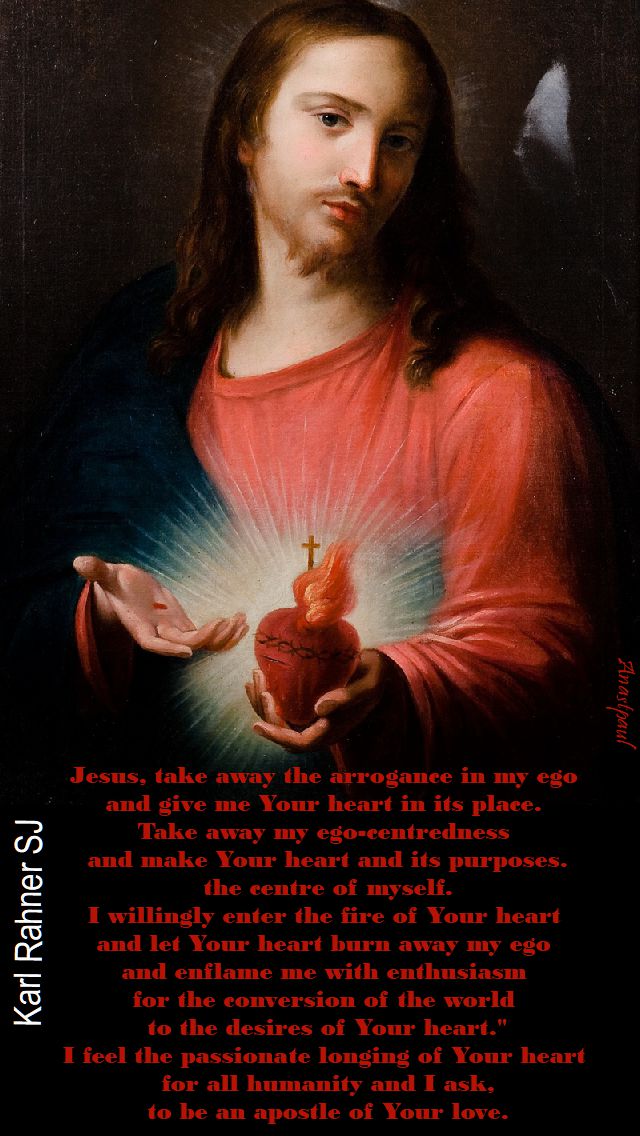
“Jesus, take away the arrogance in my ego and give me Your heart in its place. Take away my ego-centredness and make Your heart and its purposes. the centre of myself. I willingly enter the fire of Your heart and let Your heart burn away my ego and enflame me with enthusiasm for the conversion of the world to the desires of Your heart.” I feel the passionate longing of Your heart for all humanity and I ask to be an apostle of Your love.”
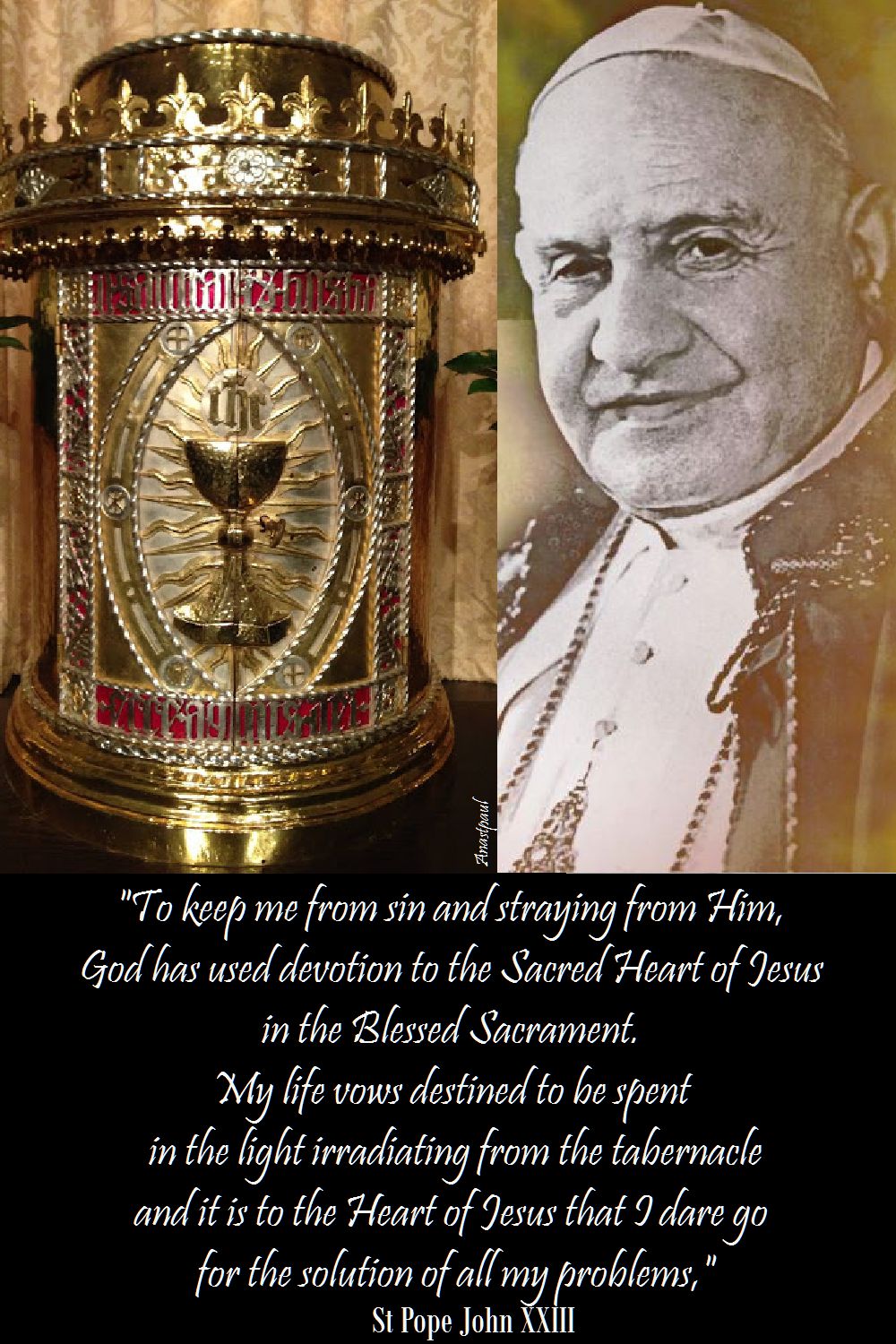
“To keep me from sin and straying from Him, God has used devotion to the Sacred Heart of Jesus in the Blessed Sacrament. My life vows destined to be spent in the light irradiating from the tabernacle and it is to the Heart of Jesus that I dare go for the solution of all my problems,”
O Heart all lovable
and all loving of my Saviour,
be the Heart of my heart,
the soul of my soul,
the spirit of my spirit,
the life of my life
and the sole principle of all my thoughts,
words and actions,
of all the faculties of my soul
and of all my senses,
both interior and exterior. Amen
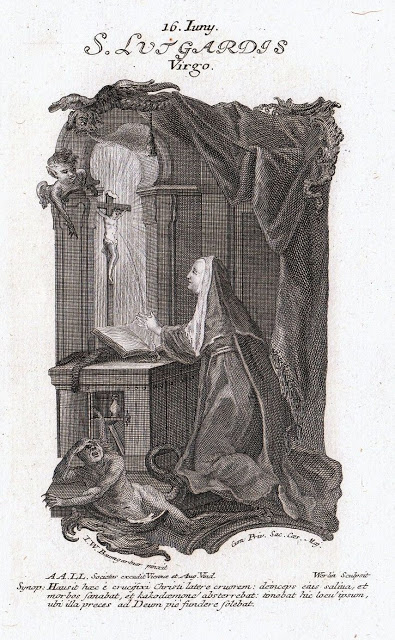
Saint of the Day – 16 June – St Lutgarde of Aywières (1182-1246 –The first known female stigmatic of the Church and one of the first promoters of devotion to the Sacred Heart – Religious, Mystric, Miracle-Worker, Stimatist, Visionary (1182 at Tongres, Limburg, Belgium – 16 June 1246 at Aywieres (modern Awirs), Belgium of natural causes, just as night office began on the Saturday night following Feast of the Holy Trinity) Her relics were transferred to Ittre, Belgium on 4 December 1796 to avoid destruction in the French Revolution. Patronages – birth, childbirth, blind people, againts blindness, disabled, handicapped of physically challenged people, Belgium, Flanders, Belgium. Attributes – • woman with Christ showing her His wounded side, blind Cistercian abbess, Cistercian nun being blinded by the Heart of Jesus, Cistercian to whom Christ extends his hand from the cross, woman in attendance when Christ shows his Heart to the Father
When Lutgarde was twelve, her parents placed her in the care of the Benedictine sisters at St. Catherine’s monastery near Liège, Belgium. The convent allowed visitors and young men came to court the beautiful young woman. Once when an ardent fellow and Lutgarde were talking, Christ appeared to her. Opening His garment, Christ showed Lutgarde the wound in His side bleeding as if recently opened and He said to her, “Do not seek any longer the caresses of unseemly love. Contemplate here what you should love and why you should love it. Here, I pledge to you are the delights of total purity, which will follow it.”When the confused young man tried to resume their conversation, Lutgarde chased him off. “Get away from me, you fodder of death,” she said, “for I have been overtaken by another lover.”
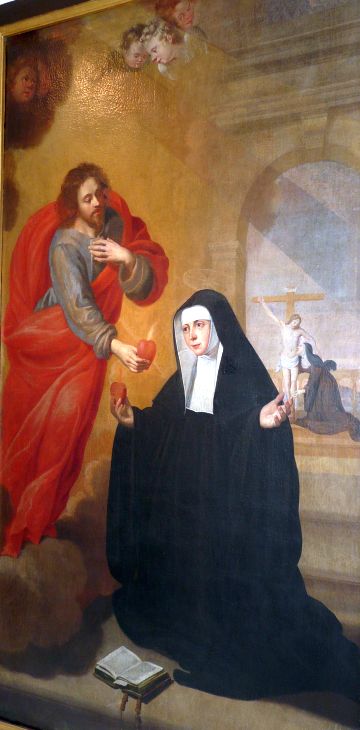
St. Lutgarde made unusually rapid progress in the spiritual life. She opened herself fully to Christ in prayer and He favoured her with an intimate experience of His presence. He gave her gifts of healing and of understanding the convent’s Latin prayers. But she asked him to take them back because both kept her from focusing on loving Him. Then the Lord said to her, “What do You want?” “I want Your heart,” she said. “No, rather it is Your heart that I want,” replied the Lord. “So be it, Lord,” said Lutgarde, “so long as Your heart’s love is mingled with mine and I have and hold my heart in You. For with You as my shield, my heart is secure for all time.”
St Lutgarde spent nine years in St. Catherine’s convent and she was elected to be Superioress of the community there. The year was 1205, when the saint was twenty-three years old. Far from being flattered or pleased by her elevation to this dignity, Lutgarde regarded it as a disaster. Indeed, it seems to have moved her to look elsewhere and to seek some other Order. She thought St. Catherine’s could provide her with sufficient opportunities for living as a contemplative as long as she was an obscure member of the community but not when she took her place at its head. While taking up her role as Superior, it was natural that her thoughts should turn to the austere Cistercian nuns, commonly known as Trappists, who had by this time, many flourishing convents in the Low Countries.
She asked the advice of a learned preacher of Liege, Jean de Lierre, who urged her to give up her post as prioress and leave the Benedictine Order for the Cistercian convent of Aywieres, (Awirs) which had recently been founded near Liege but had been transferred to a site in Brabant, near the village of Lillois. She was very reluctant to accept this particular choice because French was spoken in Brabant and she felt it would be unwise to enter a convent where she would not understand the language of her superiors or spiritual directors. Meanwhile, Christ Himself intervened and spoke the following words to her: “It is My will that you go to Aywieres, and if you do not go, I will have nothing more to do with you.” As if this were not enough, Lutgarde was also admonished by a saintly friend, who has since been venerated as St. Christine “the Admirable” who told her to go to Aywieres and so with no further possibility of doubt as to the convent of the Cistercian Order to which she was called, Lutgarde left St. Catherine’s without consulting her community and went to Aywieres.
When the nuns of St. Catherine’s discovered their loss, they were inconsolable, but it was too late to do anything about it. Lutgarde, in her turn, prayed earnestly for the peace of the community she had left and was assured by the Blessed Virgin that her prayers would be answered. Indeed, Thomas of Cantimpre ends the first book of his life of St. Lutgarde with the comment: “The indubitable effect of these prayers is to be seen even today [some fifty years later] in the community of St. Catherine’s. For this particular convent continues to grow in fervour more than ever, and to increase, at the same time, in temporal prosperity.”
Three times she fasted for periods of seven years, subsisting only on bread and liquids. The saint dedicated each fast for the Lord’s purposes: once for Lutgarde of Aywières the conversion of heretics, a second time for the salvation of sinners and a final time for Emperor Frederick II, who was threatening the church. Before her death she prophesied the latter’s demise, which occurred in 1250.
St Lutgardis is considered one of the leading mystics of the 13th century.[ A life of Lutgardis, Vita Lutgardis, was composed less than two years after her death by Thomas of Cantimpre, a Dominican friar and a theologian of some ability. Lutgardis was venerated at Aywières for centuries and her relics were exhumed in the 16th century. Works of art depicting the saint include a baroque statue of Lutgardis on the Charles Bridge by Matthias Braun in Prague and a painting by Goya.
Thomas Merton, in his biography of the Saint, reports that she had a particular devotion to St. Agnes, the Roman virgin martyr. She was one day praying to St. Agnes when “suddenly a vein near her heart burst, and through a wide open wound in her side, blood began to pour forth, soaking her robe and cowl.” She then sank to the floor and “lost her senses.” She was never known to have been wounded in this way again but it is known that she kept the scar until the end of her life. This took place when she was twenty-nine years old. Witnesses to this event were two nuns, one named Margaret, the other Lutgarde of Limmos, who washed the Saint’s clothes.
Thomas Merton also tells that on many occasions, this saintly Cistercian, in meditating on Christ’s Passion, would fall into ecstasy and sweat blood. A priest who had heard of this sweat of blood watched for an opportunity to witness it himself. One day he found her in ecstasy, leaning against a wall, her face and hands dripping with blood. Finding a pair of scissors, he managed to snip off a lock of the Saint’s hair which was wet with blood (he did so thinking to have proof of the event and also to have the lock of hair as a relic) As he stood marveling at the blood on the lock of hair, the Saint suddenly came to herself. Instantly the blood vanished; not only from her face and hands but also from the lock in his hands and also the blood that was on his hands! Thomas Merton writes “At this, the priest was so taken aback that he nearly collapsed from astonishment.”
St. Lutgarde spent four decades at Aywières entirely devoted to the heart of Christ. Five years before her death, that is, in 1241, St. Lutgarde received the revelation that she would enter heaven on the third Sunday after Pentecost, when the Gospel of the Great Marriage Feast would be sung. She died in 1246.
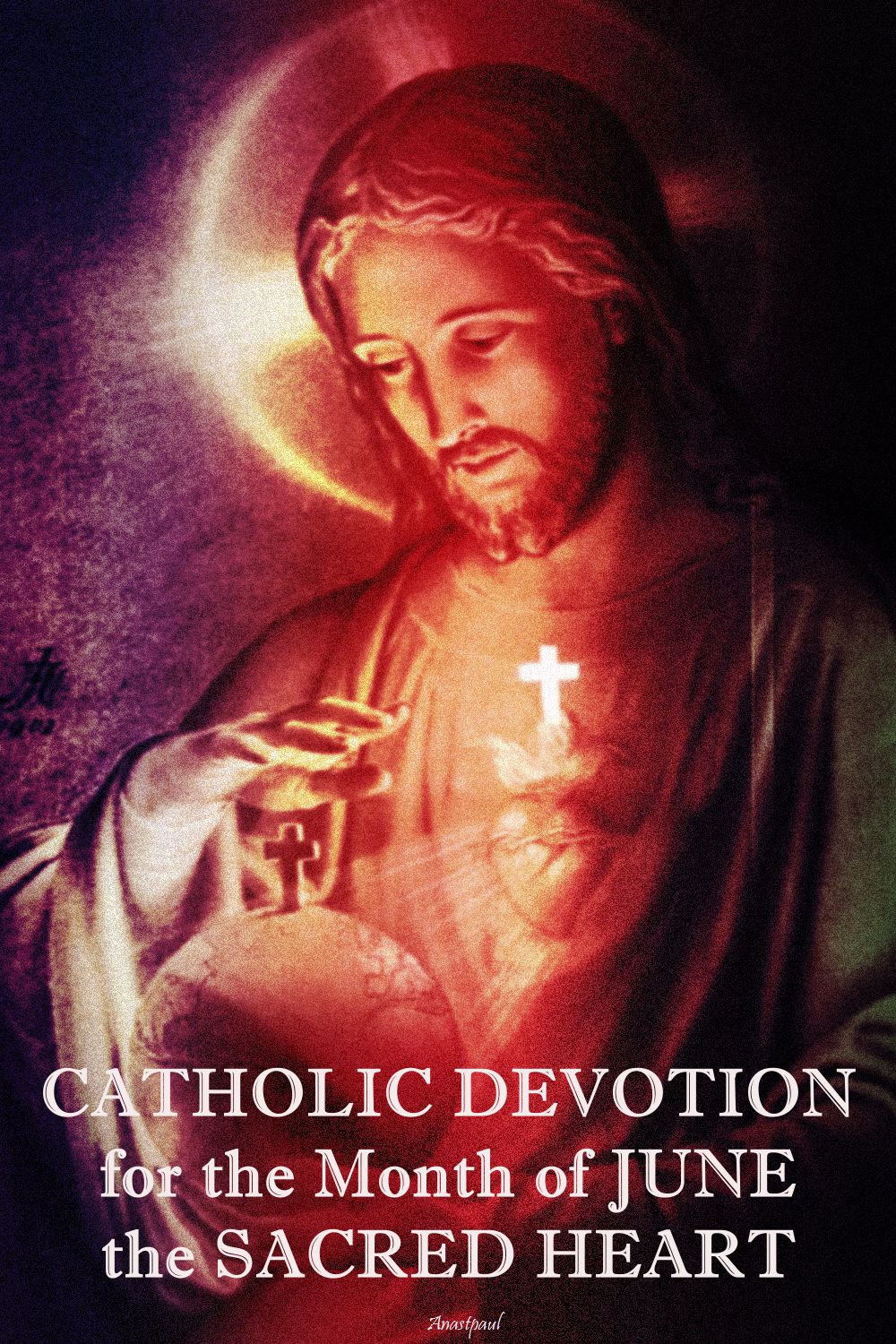
The Month of June is dedicated to the Sacred Heart.
The Church celebrates the Solemnity of the Sacred Heart of Jesus on the Friday following the second Sunday after Pentecost.
In addition to the liturgical celebration, many devotional exercises are connected with the Sacred Heart of Jesus.
Of all devotions, devotion to the Sacred Heart was, and remains, one of the most widespread and popular in the Church.
Understood in the light of the Scriptures, the term “Sacred Heart of Jesus” denotes the entire mystery of Christ, the totality of His being and His person considered in its most intimate essential: Son of God, uncreated wisdom; infinite charity, principal of the salvation and sanctification of mankind. The “Sacred Heart” is Christ, the Word Incarnate, Saviour, intrinsically containing, in the Spirit, an infinite divine-human love for the Father and for His brothers. Excerpted from the Directory on Popular Piety and the Liturgy
Devotion to the Sacred Heart was also an essential component of Pope John Paul II’s hopes for the “new evangelisation” called for by the Church.
“For evangelisation today,” he said, “the Heart of Christ must be recognized as the heart of the Church: It is He who calls us to conversion, to reconciliation. It is He who leads pure hearts and those hungering for justice along the way of the Beatitudes. It is He who achieves the warm communion of the members of the one Body. It is He who enables us to adhere to the Good News and to accept the promise of eternal life . It is He who sends us out on mission. The heart-to-heart with Jesus broadens the human heart on a global scale.”
Here are some of the relevant documents: Leo XIII in his Encyclical Letter Annum sacrum (1889) on the consecration of mankind to the Sacred Heart; Pius XI in Caritate Christi Compulsi (On The Sacred Heart) and Miserentissimus Redemptor (On Reparation To The Sacred Heart); Pius XII in his Encyclical Letter Haurietis aquas; Paul VI in his Apostolic Letter Investigabiles divitias Christi (1965) and John Paul II in Message on the centenary of the consecration of mankind to the Sacred Heart of Jesus (1999), in L’Osservatore Romano, 12 June 1999.





 AnaStpaul
You must be logged in to post a comment.