Posted in SEPTEMBER-The SEVEN SORROWS of MARY and The HOLY CROSS

Thought for the Day – 25 September – Scapular of the Seven Sorrows of Mary

Manual of Devotions in Honour of The Seven Dolors of the Blessed Virgin Mary by Father Sebastian

OF THE SCAPULAR AND THE ROSARY OF OUR LADY OF SEVEN DOLOURS.

Devotion to our Blessed Lady is as ancient as the Church herself. But the long wars and dissensions which had desolated Europe, the ignorance, neglect of duties, and the consequent brutality of manners which ensued from this state of things, had greatly diminished it. However, an immense number of miracles which took place in the early part of the thirteenth century, communicated to it a new vigour and a wider extension. The instruments of mercy which the Blessed Virgin made use of to produce this effect were the Rosary, which was revealed to St. Dominic, in the year 1206, and the Scapulars of the Seven Dolours and of Mount Carmel, the first of which she herself gave to the seven Founders of the Order of Servites, and the second to St. Simon Stock.
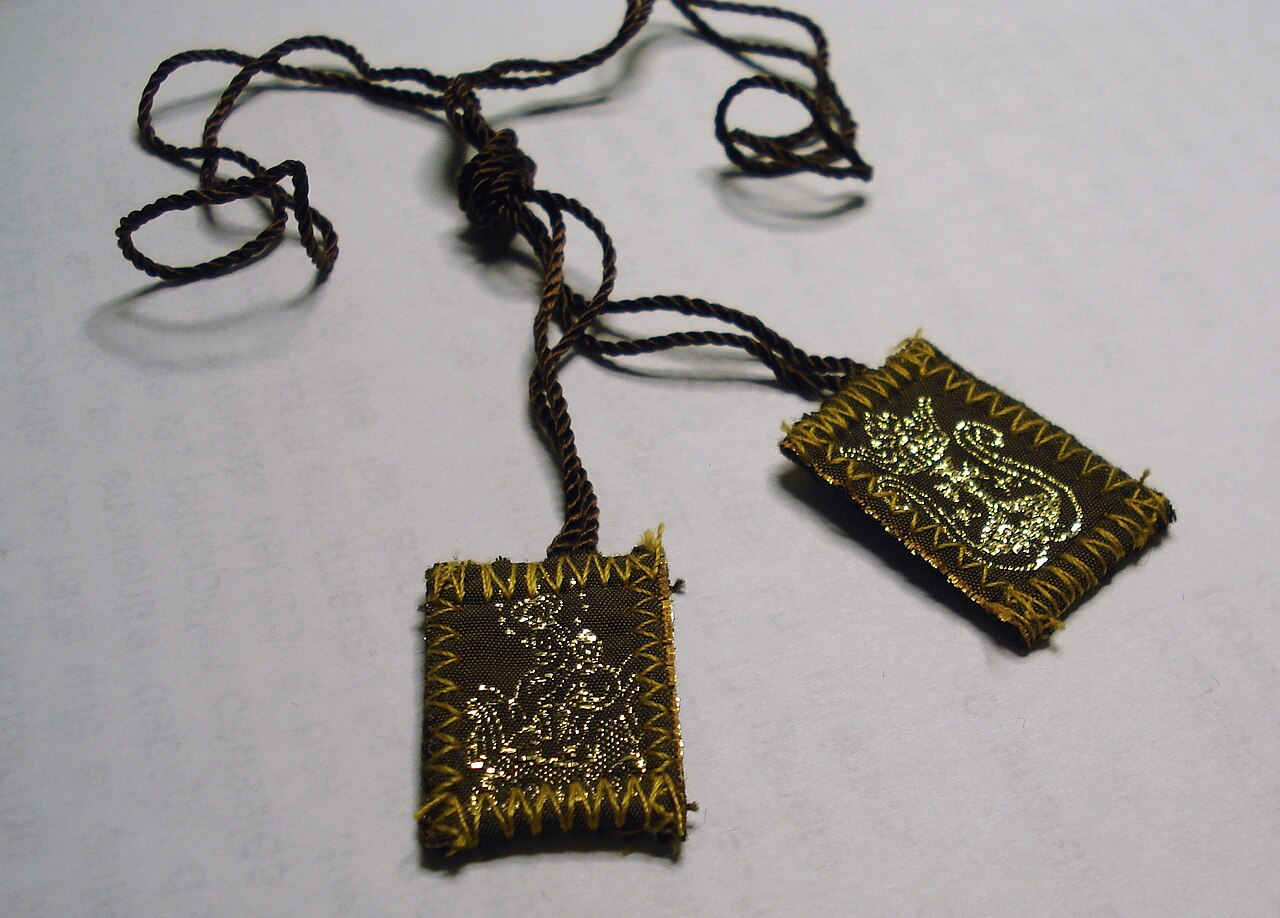
Scapular of the Seven Sorrows of Mary

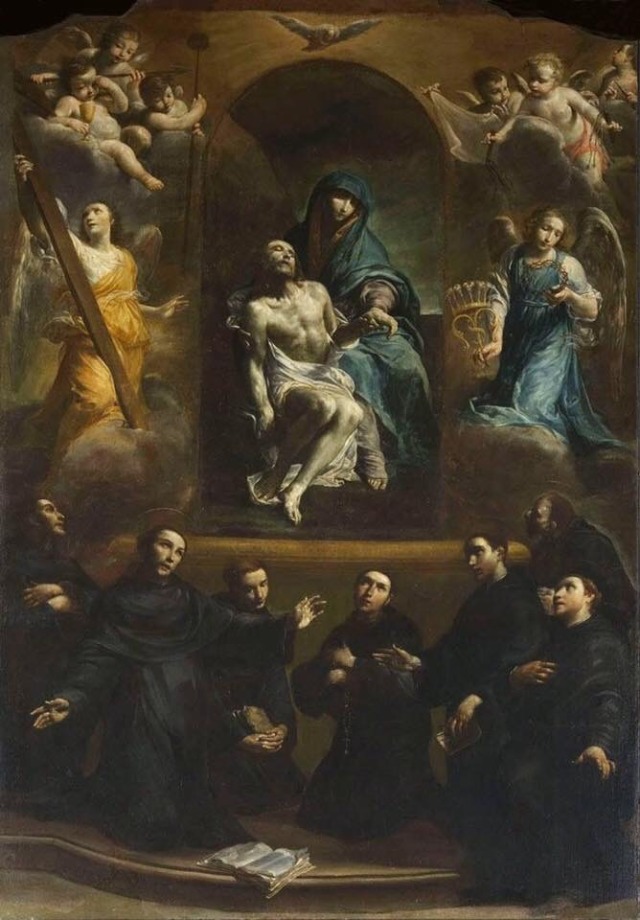
In the year 1233 seven noblemen of the city of Florence, whose names were Buonfiglio Monaldi, Buonagiunta Manetti, Manetto dell’ Antella, Amedeo degli Amidei, Ugiccione Uguccioni, Tostegno de’ Tostegni, and Alexis Falconieri, members of a pious Confraternity for honouring the Blessed Virgin, had assembled on the festival of the Assumption, to pay their homage and celebrate her triumph. At one and the same time the Mother of God appeared to each, and told them that they were to quit the world, and embrace a more perfect state of life. They did not hesitate to obey this heavenly voice, and having consulted with the blessed Ardingo, Bishop of Florence, as to the mode of life which they should adopt, they renounced their dignities, distributed their goods to the poor, and clothed themselves in grey habits, and retired to a small house outside the town, on the feast of the Nativity of their holy Patroness (8th September, 1233).

If, at any time, they were obliged to enter the city of Florence, in order to consult the Bishop, the people assembled about them in crowds, and the little children used to exclaim, “Here are the servants of Mary! Here are the servants of Mary!” Amongst these children was St. Philip Benizzi, who was then hardly five months old, and who, in after years, was called by our Blessed Lady to assume the habit of her servants. This humble retreat of the seven Solitaries soon became so besieged by visitors, that they were obliged to look out for a more retired place.

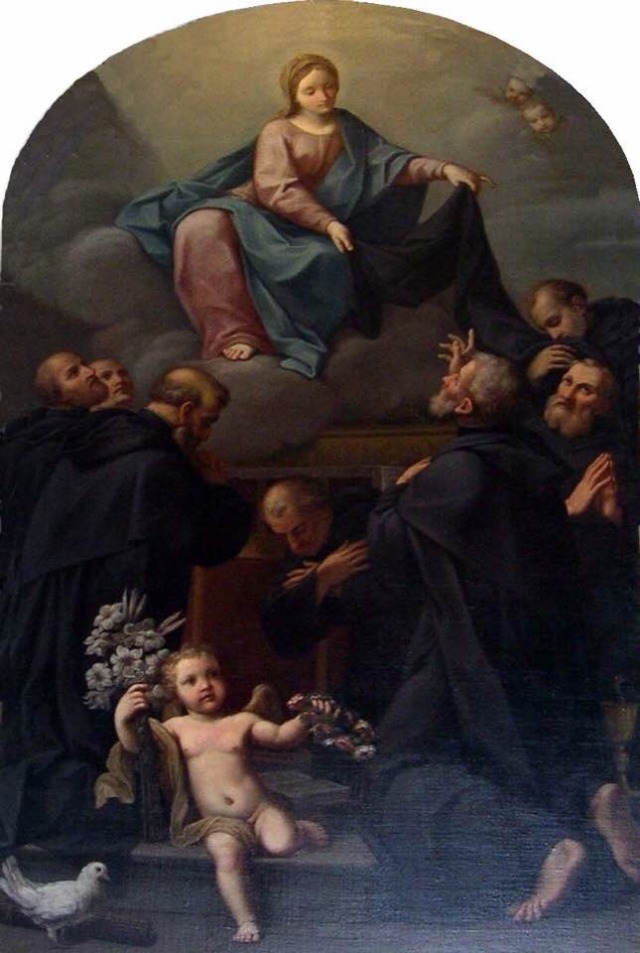
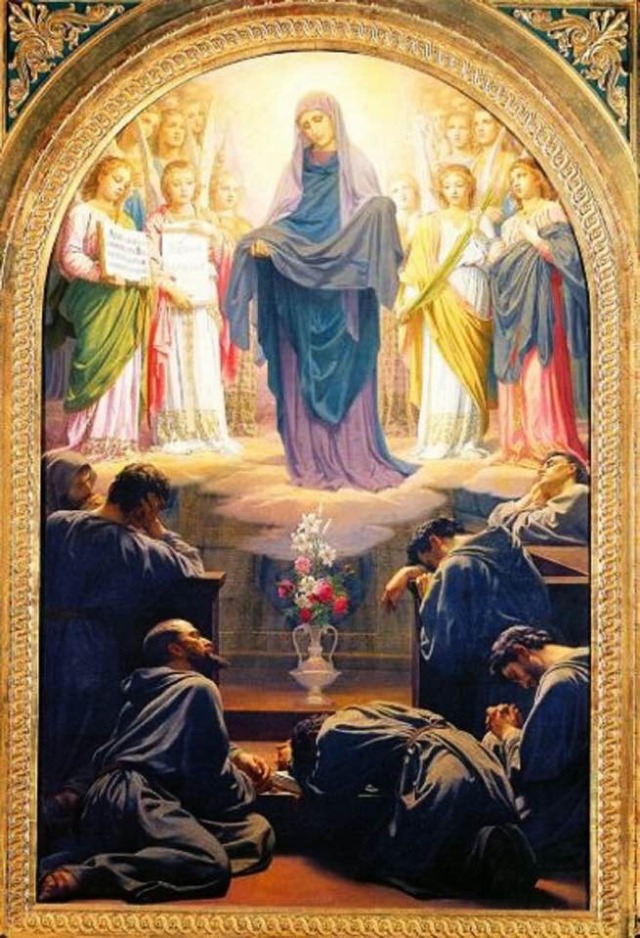
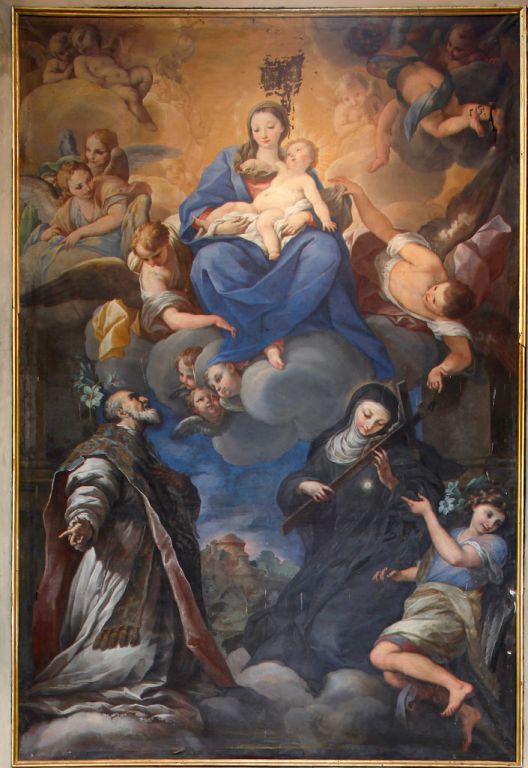
Their good Mother indicated to them the summit of Mount Jenario, where they removed and passed six years, principally occupied about their own sanctification, in the practice of the most austere penance, and assiduous meditation on the Passion of our Lord, and on the Dolours of his Blessed Mother. The venerable Bishop Ardingo had more than once exhorted them to establish an Order devoted to the Blessed Virgin, but in vain. The co operation of heaven became necessary to overcome the diffidence of these holy men, and triumph over their humility. On the evening of one Good Friday, whilst they were absorbed in profound meditation, they saw their august patroness descending from heaven, surrounded by a number of heavenly spirits, some of whom carried the instruments of the Passion; another, the rules of St. Augustine; one amongst them had in his hand a palm; another a scroll,on which the following words were engraven in golden letters, “Servants of Mary.” Finally there was one who carried in his hands a black habit of a new form.

The seven anchorites, filled with astonishment at this glorious apparition, waited respectfully for the Blessed Virgin to make known her will. Mary, in the attitude of a Mother overwhelmed with affliction, and, at the same time, full of maternal tenderness, approached them, and, pointing to the objects placed before their eyes, said : “Receive this habit which I present to you, and receive also the rule of St. Augustine, which you are to follow, so that, being designated by the name of my servants, you may one day obtain the palm of eternal life offered to you.” The holy Solitaries immediately adopted the habit of their new Institute, by the spirit of which they, and so many of the faithful, were to be sanctified, through the continual meditation on the Passion of Jesus Christ, and on the bitter sorrows of his Holy Mother.

In order that all the world might be able to clothe themselves in the livery of the Servants of Mary, they instituted a smaller habit of the same form, material, and colour, with that of the religious of the Order, and desiring also to give to the faithful an easy method of honouring the principal Dolours of Mary, they instituted a Rosary divided into seven parts, each of which is composed of one Pater and seven Aves. Mary promised to the seven holy founders, and more particularly to the Blessed Alexis, to protect in a special
manner, on all occasions, but particularly at the hour of death, those who
honour her Dolours.
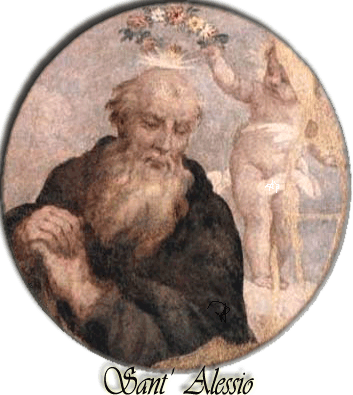
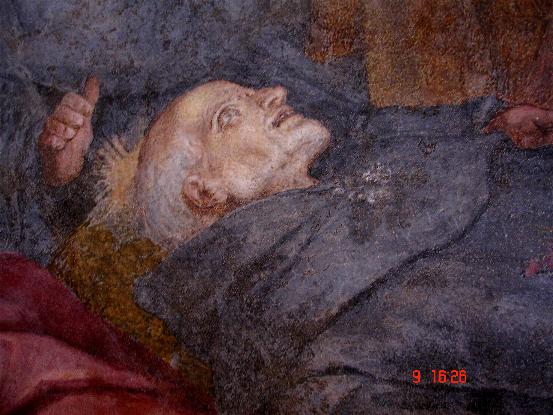
St Alexis, last to die

But if we desire to secure this precious protection of the Blessed Virgin Mary, we must not be satisfied with meditating at long intervals on her Dolours, and with wearing the habit of mourning which reminds us of them. Our compassion, if it be a true one, ought to cause us to avoid that which is the true cause of her sorrow-that is to say, everything that offends God.
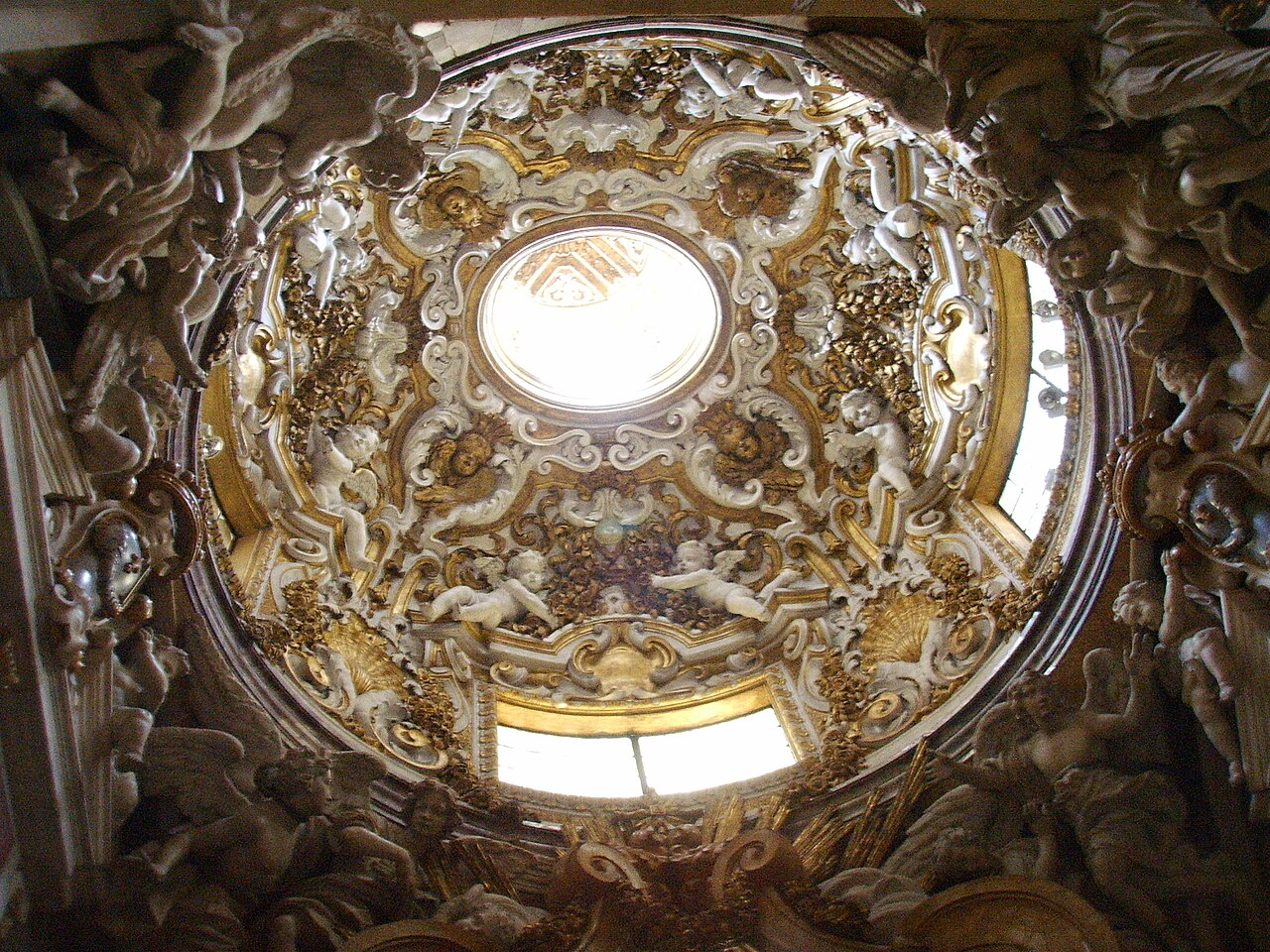
Ceiling in the Servite mother church, Santissima Annunziata, Florence
Posted in SAINT of the DAY

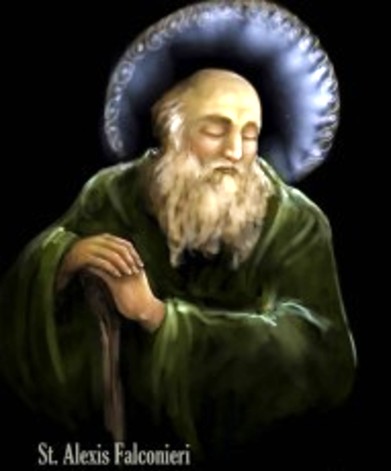
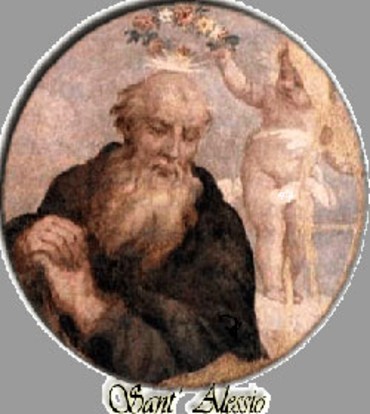
Saint of the Day – 17 February – Saint Alexis Falconieri (13th century –1310)

Saint of the Day – 17 February – Saint Alexis Falconieri (13th century –1310) Religious, one of Seven Founders of the Servites, who are celebrated together on the anniversary of his death.   Born 13th century at Florence, Italy and died on 17 February 1310 at Monte Sennario, Italy.   Patronage – Orvieto, Italy.st alexis falconieri

He was the son of Bernardo Falconieri, a merchant prince of Florence and one of the leaders of the Republic.   His family belonged to the Guelph party and opposed the Imperialists.

Falconieri grew up in the practice of the most profound humility.   He became a wealthy noble in one of Italy’s most wealthy and cultured cities.   He joined the Laudesi, a pious confraternity of the Blessed Virgin and there met the six future companions of his life of sanctity.   He was favoured with an apparition of the Mother of God on 15 August 1233, as were these companions.  She asked these seven young nobles to dedicate their lives to God and they did, founding a religious order. 7 holy founders servites 6

They took up a common life together and were later again visited by Mary, who held a black habit and told them, “I have chosen you to be my first Servants, and under this name you are to till my Son’s vineyard.   Here, too, is the habit which you are to wear, its dark colour will recall the pangs which I suffered on the day when I stood by the cross of my only Son.”

7 holy founders servites 57 holy founders servites 3

Falconieri at once abandoned all and retired to La Camarzia, a house on the outskirts of the town and was bestowed the title of Founder and Mystic.

With humility, he traversed, the streets of the city through which he had lately moved as a prominent citizen, as a mendicant, in quest of alms for his brethren.   So deep and sincere was his humility that, though he lived to the great age of over 100 years, he always refused to enter the Priesthood, of which he deemed himself unworthy.

His duties were confined principally to the material needs of the various communities in which he lived  . In 1252 the new church at Cafaggio, on the outskirts of Florence, was completed under his care, with the financial assistance of Chiarissimo Falconieri.   Saint Giuliana Falconieri, his niece, was trained in sanctity under his personal direction.st alexis falconieri 2

The influence exerted on his countrymen by Falconieri and his companions may be gathered from the fact that in a few years ten thousand persons had enrolled themselves under the banner of the Blessed Virgin in the Servite Order.

He died in Monte Senario on 17 February 1310.

His shrine and entombed body is near the church of the Santissima Annunziata in Florence.   Pope Clement XI declared Falconieri worthy of the veneration of the faithful,  on 1 December 1717 and accorded the same honour to his six companions on 3 July 1725.

About these holy men:
https://anastpaul.wordpress.com/2018/02/17/saints-of-the-day-17-february-the-seven-holy-founders-of-the-servite-order-osm-formation-on-15-august-1233/

st alexis falconieri death

Posted in SAINT of the DAY

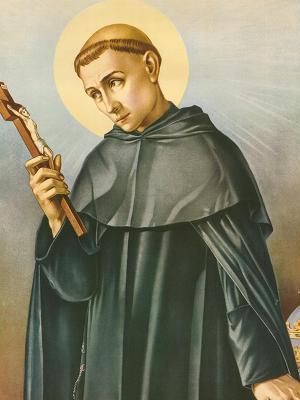
Saint of the Day – 23 August – St Philip Benezi OSM (1233-1285)

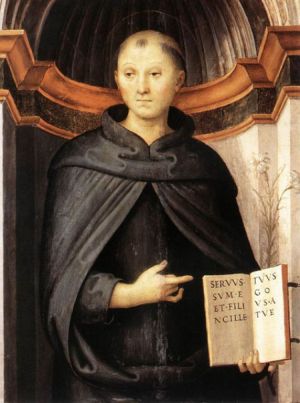
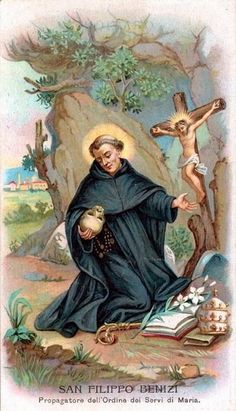
Saint of the Day – 23 August – St Philip Benezi OSM (1233-1285) Co-Founder, Servite Priest Confessor, Superior, Reformer, Preacher, Medical Doctor.  Born on15 August (Feast of the Assumption and the day that the Blessed Virgin appeared to the first of the Founders of the Servite Order) 1233 at district of Oltrarno, Florence, Italy -and died on 22 August (Octave of the Assumption i.e. the Feast of the Immaculate Heart of Mary) 1285 at Todi, Italy).  Patronages – Minor Basilica of Monte Senario (Vaglia) in the Diocese of Florence, Tuscany, Italy; Zamboanga del Norte, Philippines. The Church of the Servites of Mary in Todi, Umbria, contains the body of St Philip Benizi, where the Statue below resides and is the work of Bernini.   St Philip was Beatified on 8 October 1645 by Pope Innocent X and Canonised on 12 April 1671 by Pope Clement X – he was first Servite to be Canonised.

img-Saint-Philip-Benizi-1

Saint Philip Benizi was born in Florence on the Feast of the Assumption, 1233 of a noble family.   That same day the Order of Servites was founded by the Mother of God.   As an infant one year old, Philip spoke when in the presence of these new religious and announced the Servants of the Virgin.   Amid all the temptations of his youth, he longed to become a Servant of Mary and it was only the fear of his own unworthiness which made him yield to his father’s wish and begin to study medicine.   He received the bonnet of a doctor of medicine at Padua.

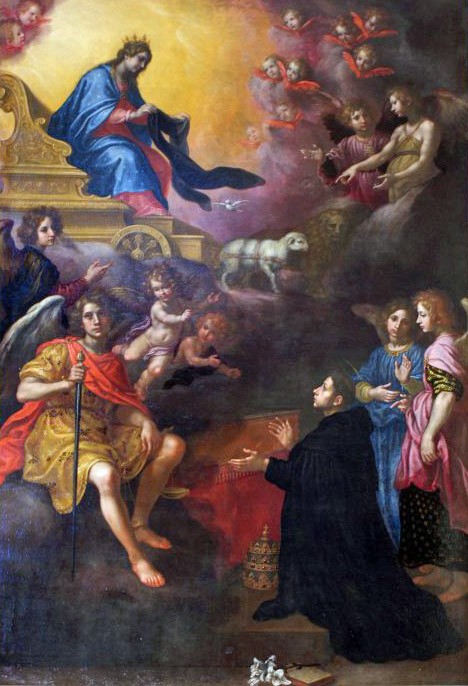
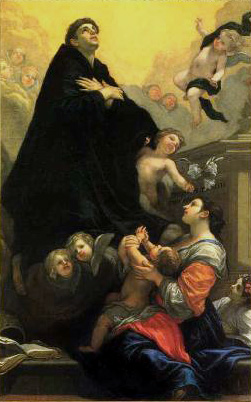
After long and weary waiting, his doubts were solved one day by Our Lady Herself, who in a vision during a Mass in Florence offered in the Servite Chapel, bade him enter Her Order.   Still Philip dared only offer himself as a lay brother and saying nothing of his studies, in this humble state he strove to do penance for his sins.   Two Dominican Fathers traveling with him one day recognised the great talents, wisdom and knowledge which he had succeeded in concealing.   They talked to his Superiors and he was told to prepare for the priesthood.   As a priest he did immense good.   He pacified many dissensions, common among the city-states of those days.   One day he met a leper, almost naked and having no money, gave him his tunic.   When the leper put it on, he was instantly cured.

Thereafter ,honours were accorded him in rapid succession;  he became General of the Order and only by flight did he escape elevation to the Papal throne;   he retired to a grotto in the mountains until the conclave had ended.   His preaching restored peace to Italy, wasted by civil wars.   He was sent not only to various cities of that country but to the Netherlands and Germany, where he converted many, not without opposition and even a flogging by rebels.   At the Council of Lyons, he spoke to the assembled prelates with the gift of tongues.   Amid all these favours Philip lived in extreme penitence, constantly examining his soul before God and condemning himself as only fit for hell.

Saint Philip, although he was free from every stain of mortal sin, was never weary of beseeching God’s mercy.   From the time he was ten years old he daily prayed the Penitential Psalms.   On his deathbed he recited verses of the Miserere, his cheeks streaming with tears;  during his agony he went through a terrible contest to overcome the fear of damnation.   But a few minutes before he died, all his doubts disappeared and were succeeded by a holy trust.   He uttered the responses to the final prayers in a low but audible voice and when at last the Mother of God appeared before him, he lifted up his arms with joy and breathed a gentle sigh, as if placing his soul in Her hands.   He died on the Octave of the Assumption – the Feast of the Immaculate Heart of Mary, 1285.

An ancient chronicle recounts that “in the time of his transfer, when the brothers took the sarcophagus in which his most holy body laid, from one part of the church to a more honourable part of the church, they noticed that all of the images in the church turned towards his precious body and kneeled in supplication, miraculously praying to him.
“That same day the whole city of Todi was filled with a sweet soft smell that came
from the religious reliques and having secretly opened the tomb, the brothers were clearly alerted by everyone who ran from the city, after having touched the holy reliques, they reacquired the sight of the marvelous general.   The son of
a widow, who died that same day, was brought to the tomb and he was immediately revived.   Also many paralyzed people, handicapped people and sick people, while praying in the church that day of the transfer, were cured.   So many in fact, sick and deformed came to the tomb of the man of God and returned home healthy and happy, thanking God infinitely.”

It is said that the title of “Our Lady of the Divine Providence”, came from Saint Philip Benizi, fifth superior of the Servants of Mary, who one day called out for the protection of the Virgin when the brothers had nothing to eat.   St Philip then found two baskets of bread at the door of the monastery and no one knew how they got there.

Five scenes from his life were painted in the early 16th century by the Florentine Andrea del Sarto: “His Charity to a Leper,” “The Smiting of the Blasphemers,” “The Cure of the Woman Possessed with a Devil,” “The Resurrection of Two Children near the Tomb of the Saint” and “The Veneration of his Relics.”   These are murals and too faded to post.

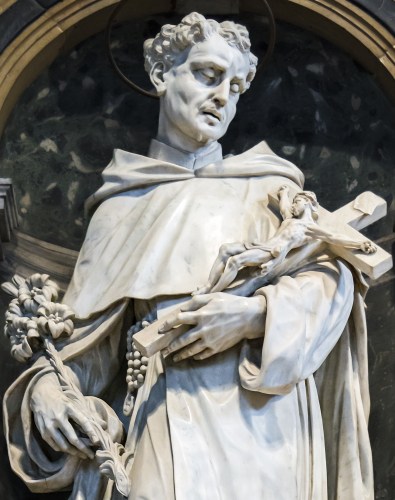
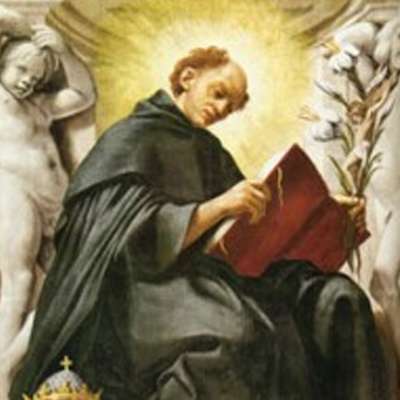
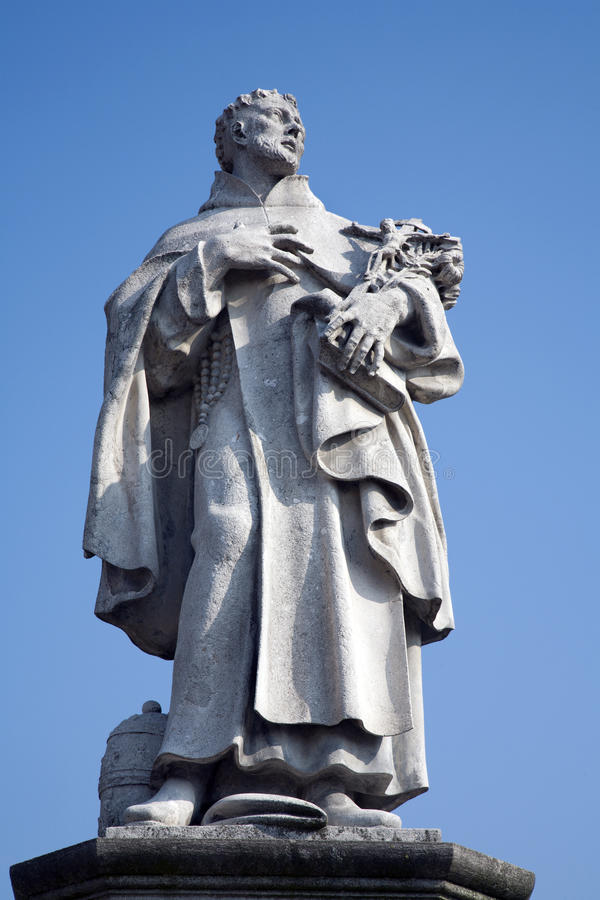
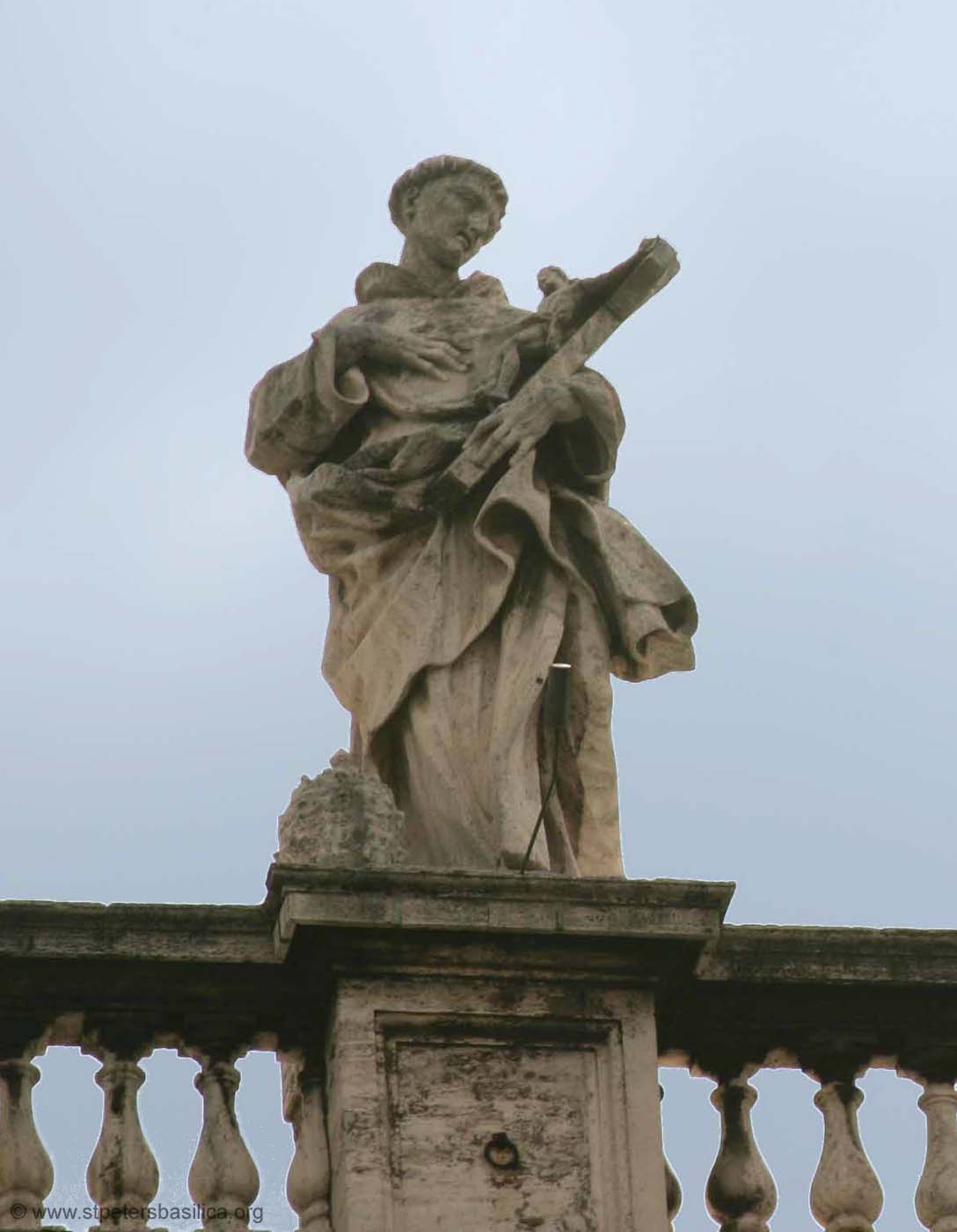
There is a Statue of him on the Charles Bridge in Prague, Czech Republic.   Designed in 1714, this Statue was made from Salzburg marble and donated by the Servites’ Convent in Prague.   The Statue portrays him holding a Crucifix, a book and a spray.   At his feet, there is the Crown of the Pope. A clay model of this statue can be found in the Salzburg museum. The second statue below is on the Colonade at St Peter’s.