Posted in DOCTORS of the Church, FATHERS of the Church, PRAYERS of the SAINTS, SAINT of the DAY

Our Morning Offering – 2 January – The Memorial of St Basil the Great (329-379) and St Gregory of Nazianzen (330-390)

Our Morning Offering – 2 January – The Memorial of St Basil the Great (329-379) and St Gregory of Nazianzen (330-390)

Prayer of St Basil the Great (329-379)

O Lord our God,
we beseech You,
and ask for the gifts we need.
Steer the ship of our life to Yourself,
the quiet harbour of all storm-stressed souls.
Show us the course which we are to take.
Renew in us the spirit of docility.
Let Your Spirit curb our fickleness;
guide and strengthen us to perform
what is for our own good,
to keep your commandments
and ever to rejoice in Your glorious
and vivifying presence.
Yours is the glory and praise for all eternity.
Amenprayer of st basil the great - 2 jan 2018

Posted in DOCTORS of the Church, FATHERS of the Church, QUOTES of the SAINTS, SAINT of the DAY

Saint/s of the Day – 2 January – St Basil the Great (329-379) and St Gregory of Nazianzen (330-390) Fathers and Doctors of the Church

Saint/s of the Day – 2 January – St Basil the Great (329-379) and St Gregory of Nazianzen (330-390) Fathers and Doctors of the Church – two bodies one spirit!

Great-Eastern-Fathers-e1480804176965
L to R: St. Basil, St. Gregory of Nazianzus, St. John Chrysostom, Painting (Icon) by Viktor Vasnetsov

st gregory and st basil my snip

St Basil was born in 329 at Caesarea, Asia Minor (modern Turkey) and he died on 1 January 379 at Caesarea, Asia Minor (modern Turkey) of natural causes.   He is known as the Father of Eastern Monasticism, was a Monk, Bishop, Confessor, Theologian, Reformer, Apostle of Charity, Lawyer, Teacher, Writer and Doctor of the Church.   Patronages – Russia, Cappadocia, Hospital administrators, Reformers, Monks, Education, Exorcism, Liturgists.

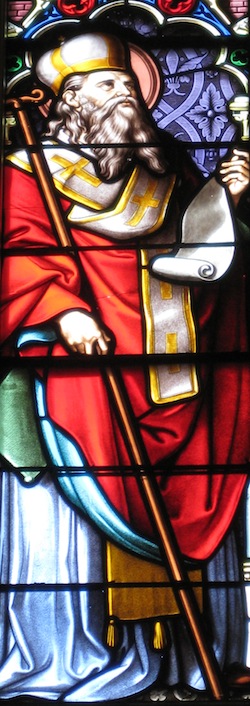
basil_the_great__basilica_window_

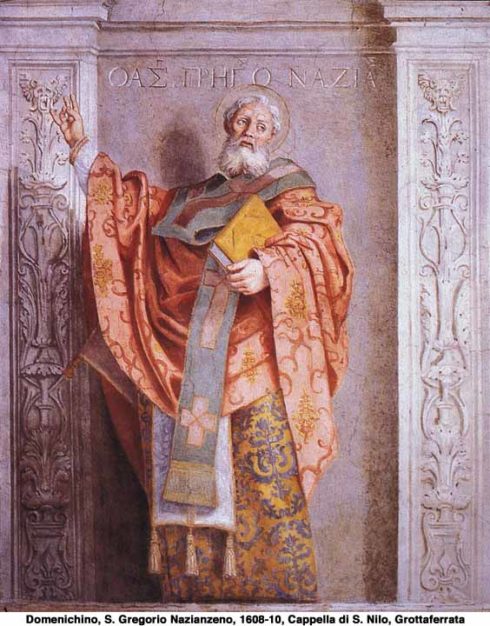
St Gregory was born in 330 at Arianzus, Cappadocia, Asia Minor and he died on 25 January 390 of natural causes.  He is known as “The Theologian” was a Monk, Bishop, Confessor, Theologian (because of his outstanding teaching and eloquence), Orator, Rhetorician, Philosopher, Writer, Poet, Reformer and Doctor of the Church.   Patronages – • for harvests• poets.gregory_nazianzen__basilica_window_

St Basil the Great, was born of a noble Christian family at Caesarea in Cappadocia in 330.  His was a pious family – his mother, father and four of his nine siblings were canonised, including Saint Gregory of Nyssa.    He was the Grandson of Saint Macrina the Elder.   As a youth Basil was noted for organising famine relief and for working in the kitchens himself, quite unusual for a young noble.   He studied in Constantinople and Athens with his friend Saint Gregory Nazianus.   He then ran a school of oratory and law in Caesarea. Basil was so successful, so sought after as a speaker, that he was tempted by pride.   His life changed radically after he encountered Eustathius of Sebaste, a charismatic bishop and ascetic.   Abandoning his legal and teaching career, Basil devoted his life to God.   A letter described his spiritual awakening:
“I had wasted much time on follies and spent nearly all of my youth in vain labors, and devotion to the teachings of a wisdom that God had made foolish.   Suddenly, I awoke as out of a deep sleep.   I beheld the wonderful light of the Gospel truth and I recognised the nothingness of the wisdom of the princes of this world.”St. Basil the Great

He sold all that he had, gave away the money and became a priest and monk together with his best friend St Gregory of Nazianzen.

He founded monasteries and drew up rules for monks living in the desert;  he is considered as key to the founding of eastern monasticism as Saint Benedict of Nursia was to the west.   He became the Bishop and Archbishop of Caesarea.   Conducted Mass and preached to the crowds twice each day.   He fought Arianism and assisted St Gregory at the council of Constantinople, which completed the Nicene Creed.   He is considered a Father of the Church and is one of the original four Doctors of the Eastern Church.

St Gregory of Nazianzen was the best friend of St Basil the Great.   After studying together in Athens, they returned to their native Cappadocia (now Eastern Turkey) to serve the Lord.   It was during the time of the Arian heresy which contested the full divinity of Christ and orthodox bishops were sorely needed who could teach the true doctrine of the Church with clarity and depth.   Gregory, who admirably met these requirements, was made the bishop of the small town of Nazianzen but later was elevated to the highest ecclesiastical see after Rome, becoming the Patriarch of Constantinople.   As such, he presided over the First Ecumenical Council of Constantinople in 381 which completed the creed that we commonly call the Nicene Creed, recited in Sunday worship by Catholics and Orthodox Christians.

St Gregory’s teaching was so profound and accurate that he is one of the few teachers in the history of the Church known as “the theologian.”St.-Gregory-of-Nazianzus-e1480804203636

Basil and Gregory were defining figures as the early Church which sought to figure out just how to describe Jesus as fully human and fully divine.   They helped the Church articulate this mystery and refute persistent strains of thought that would emphasise one aspect of Jesus’ nature over another.   Both were largely responsible for safeguarding the faith that has guided the Church for thousands of years.   Their doctrinal contributions are codified in the Nicene Creed we recite at Mass.

Both Basil and Gregory were declared doctors of the Church, a title given to 36 saints who are known for elucidating the faith by their words or example.   Their relics rest in the reliquary chapel in the Basilica, and their images are captured in stained glass windows there.

Sts. Basil the Great and Gregory Nazianzen, friends and scholars who defended the faith, pray for us!

Posted in DOCTORS of the Church, FATHERS of the Church, MORNING Prayers, QUOTES of the SAINTS, SAINT of the DAY, The WORD

One Minute Reflection – 30 August

One Minute Reflection – 30 August

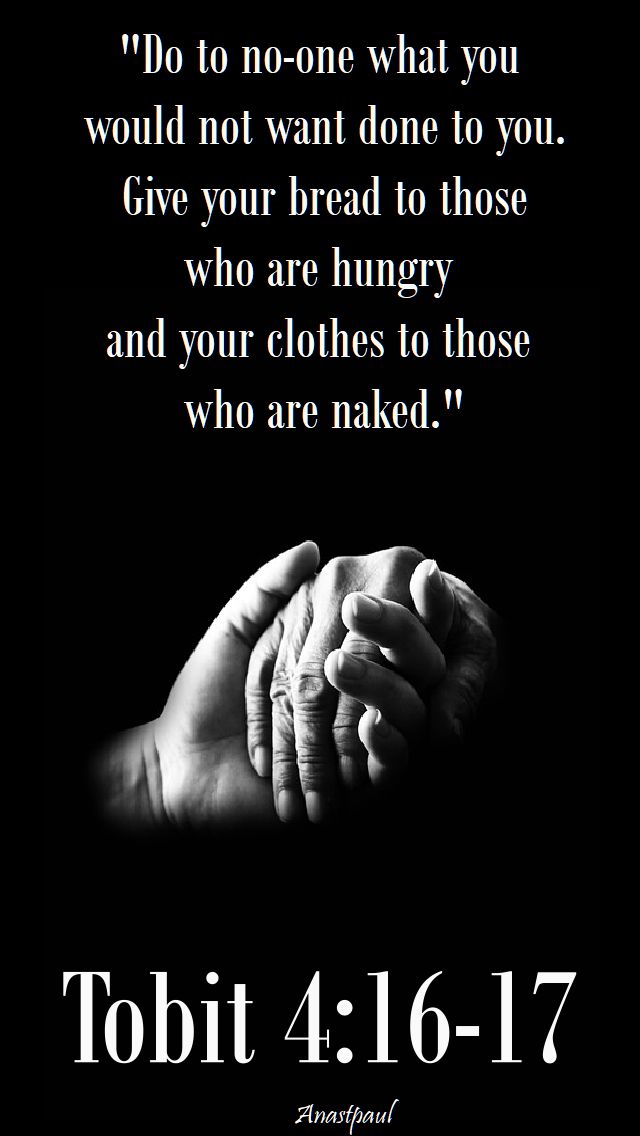
“Do to no-one what you would not want done to you.
Give your bread to those who are hungry
and your clothes to those who are naked.”… Tobit 4:16-17tobit 4 16 - 17

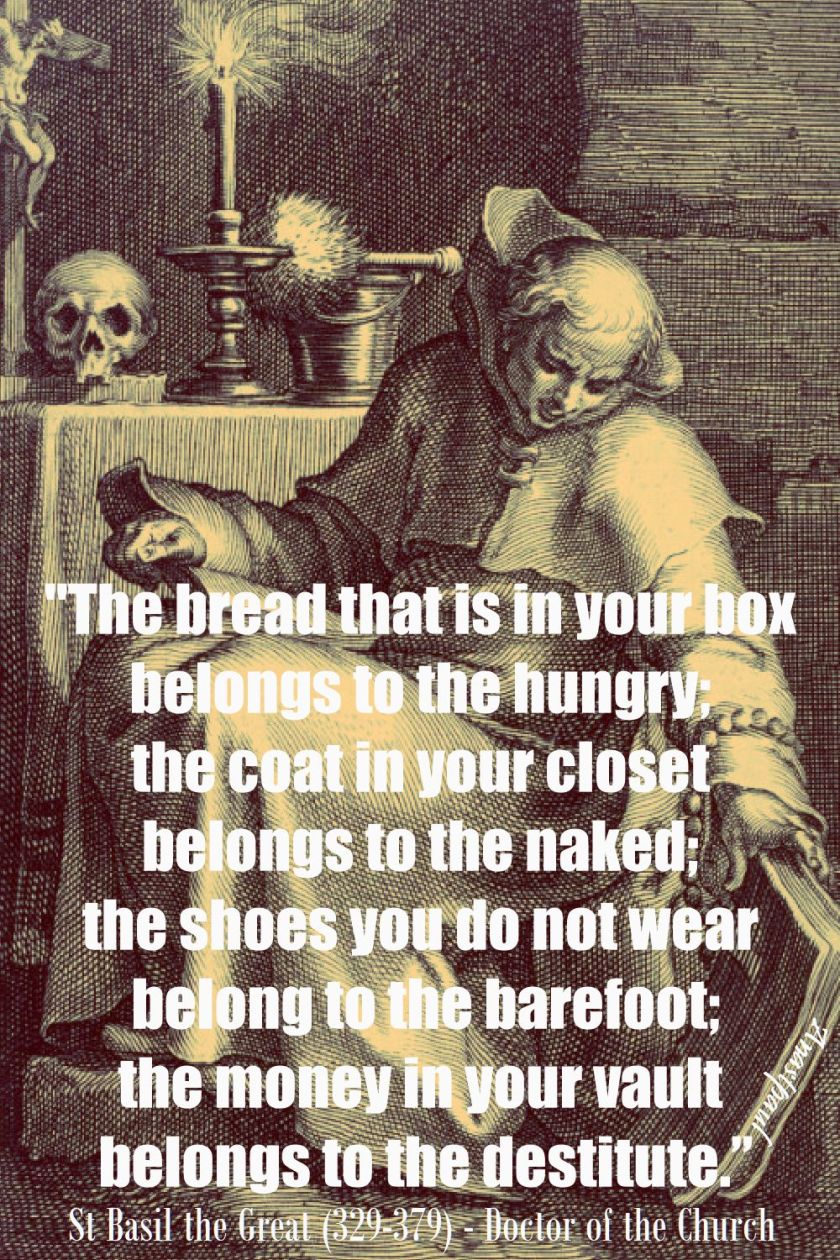
REFLECTION – “The bread that is in your box belongs to the hungry;
the coat in your closet belongs to the naked;
the shoes you do not wear belong to the barefoot;
the money in your vault belongs to the destitute.”…..St Basil the Great (329-379) – Doctor of the Churchthe bread that is in your box - st basil the great

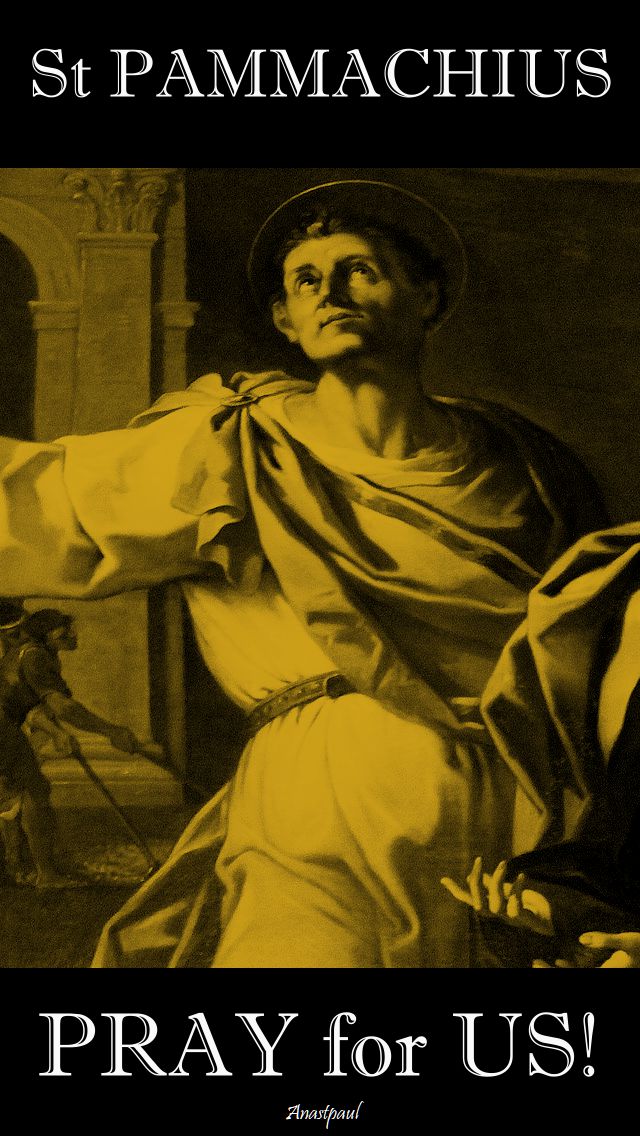
PRAYER – God our Saviour, through the grace of Baptism you made us children of light. Hear our prayer, that we may always walk in that light and work for truth, love and charity, as Your witnesses before men. St Pammachius, you lived a life of total charity to those most in need, please pray for us, amen.st pammachius pray for us

Posted in DOCTORS of the Church, FATHERS of the Church, MORNING Prayers, QUOTES of the SAINTS

Quote of the Day – 13 July

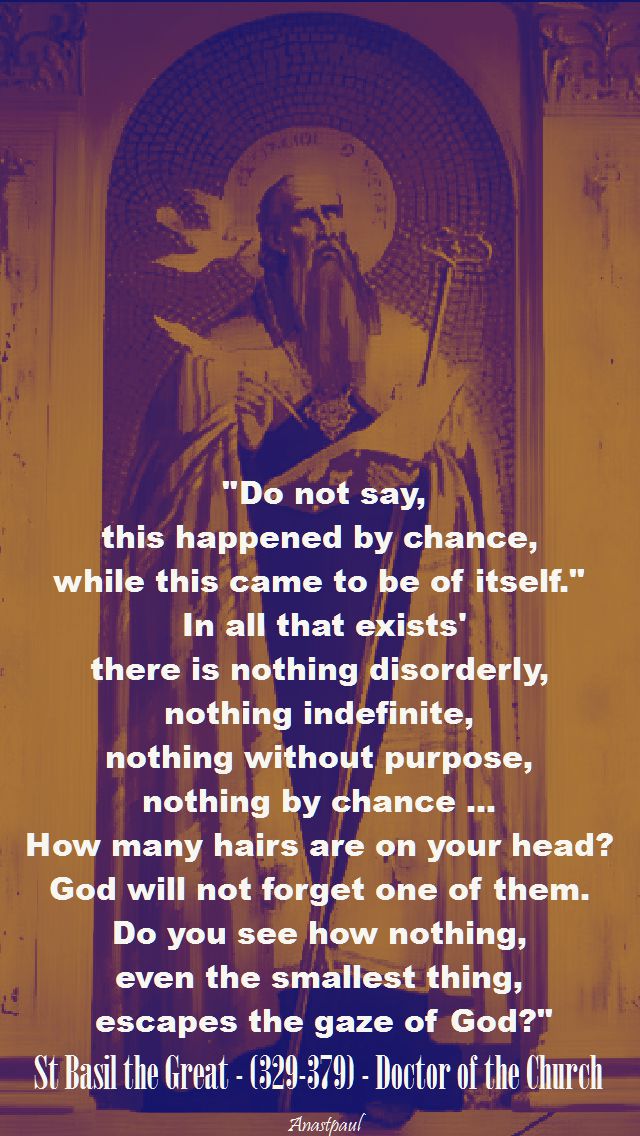
“Do not say,
this happened by chance,
while this came to be of itself.”
In all that exists’
there is nothing disorderly,
nothing indefinite,
nothing without purpose,
nothing by chance …
How many hairs are on your head?
God will not forget one of them.
Do you see how nothing,
even the smallest thing,
escapes the gaze of God?”
Saint Basil the Great (329-379)
Father & Doctor of the Church

do not say, this happened by chance-st basil the great


Posted in MORNING Prayers, PRAYERS of the SAINTS

Our Morning Offering – 6 July

Our Morning Offering – 6 July

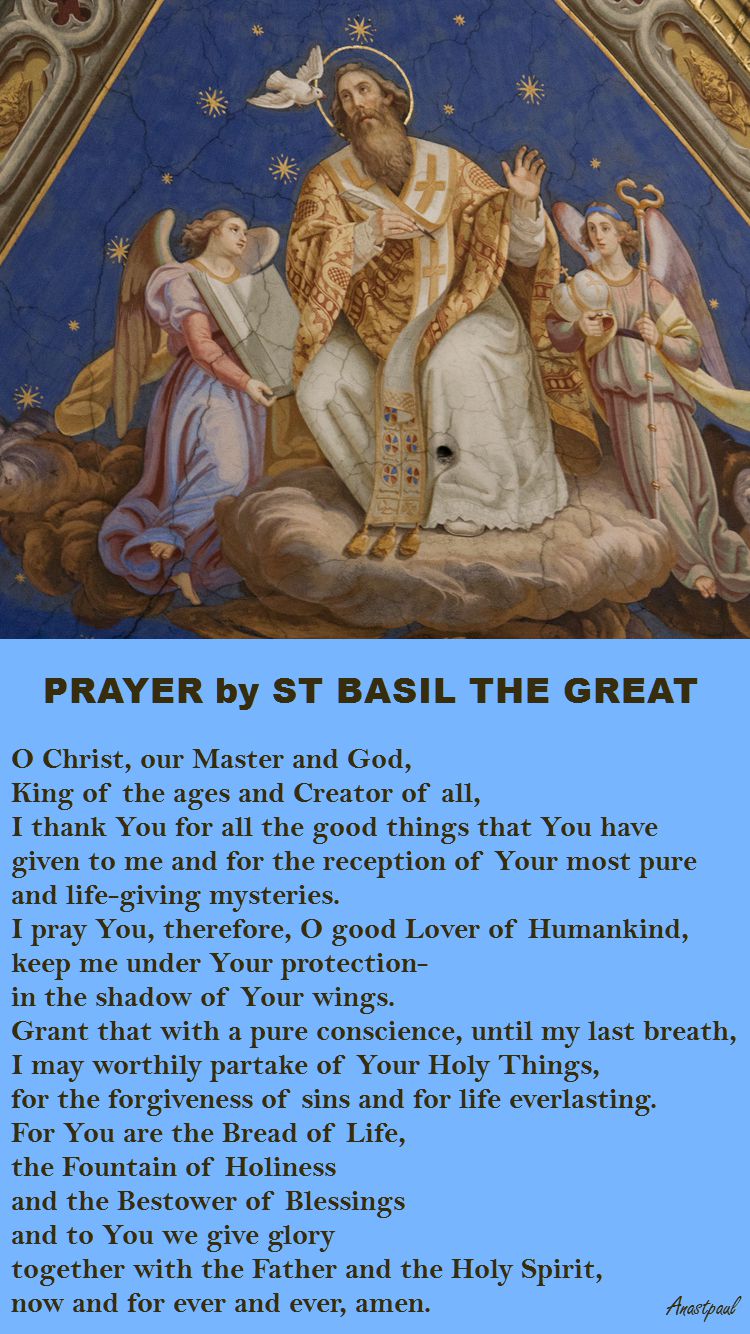
PRAYER by ST BASIL THE GREAT  (329-379)  Doctor of the Church

O Christ, our Master and God,
King of the ages and Creator of all,
I thank You for all the good things that You have given to me
and for the reception of your most pure and life-giving mysteries.
I pray You, therefore, O good Lover of Humankind,
keep me under Your protection in the shadow of Your wings.
Grant that with a pure conscience, until my last breath,
I may worthily partake of Your Holy Things,
for the forgiveness of sins and for life everlasting.
For You are the Bread of Life,
the Fountain of Holiness
and the Bestower of Blessings
and to You we give glory together
with the Father and the Holy Spirit,
now and for ever and ever, amen.

O CHRIST OUR MASTER AND GOD BY ST BASIL

Posted in LENT, MORNING Prayers, QUOTES of the SAINTS

Quote of the Day – 1 March

Quote of the Day – 1 March

“There is still time for endurance, for patience, time for healing, time for change.   Have you slipped?   Rise up.   Have you sinned?   Cease.   Do not stand among sinners but leap aside.   For when you turn away and weep, then you will be saved.”

St Basil the Great

lent-st-basil-the-great

Posted in MORNING Prayers, PRAYERS of the SAINTS

Our Morning Offering – 7 January

Our Morning Offering – 7 January

O Christ, our Master and God,
King of the ages and Creator of all,
I thank You for all the good things
that You have given to me and for
the reception of Your most pure
and life-giving mysteries.
I pray You, therefore,
O good Lover of Humankind,
keep me under Your protection-
in the shadow of Your wings.
Grant that with a pure conscience,
until my last breath,
I may worthily partake of Your Holy Things,
for the forgiveness of sins
and for life everlasting.
For You are the Bread of Life,
the Fountain of Holiness
and the Bestower of Blessings
and to You we give glory
together with the Father and the Holy Spirit,
now and for ever and ever,amen.
~~~ by St Basil the Great

o-christ-our-master-and-god-by-st-basil

Posted in MORNING Prayers, SAINT of the DAY

Thought for the Day – 2 January

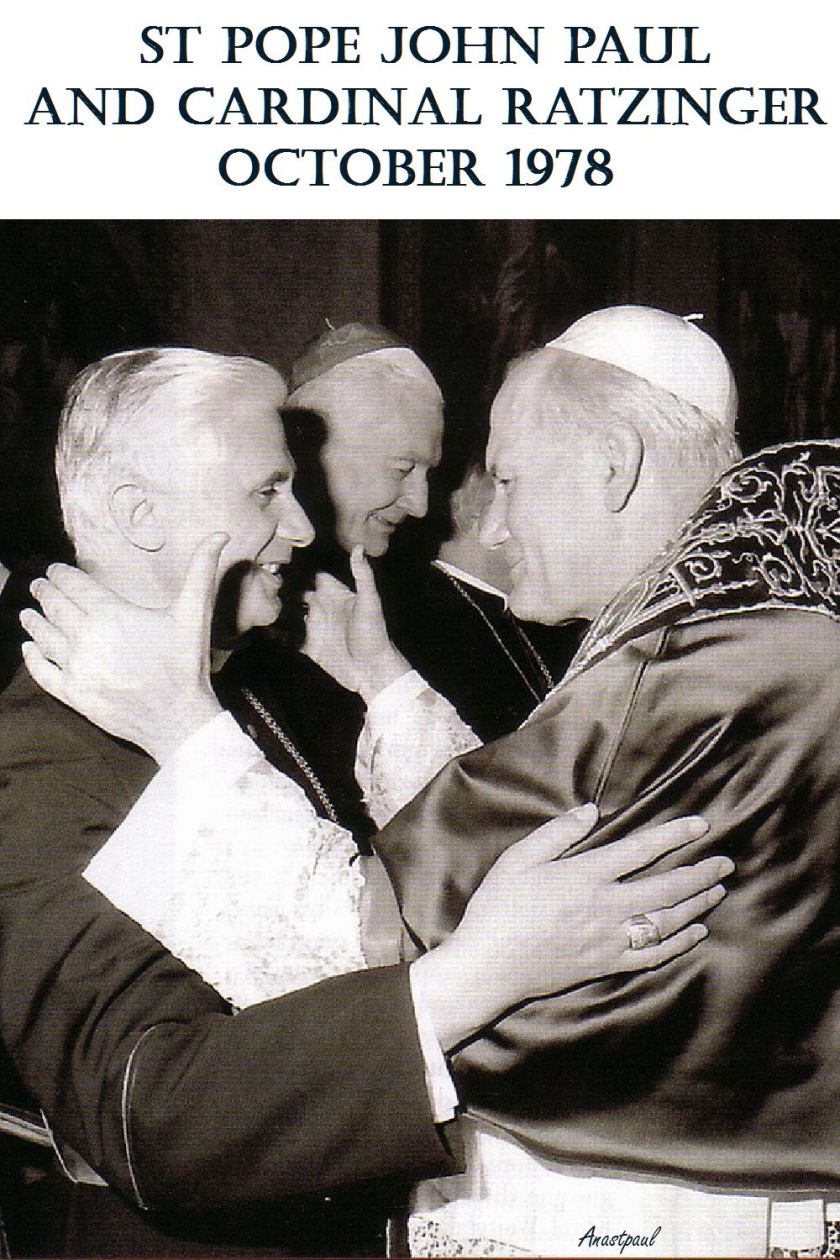
Learning of these two great Doctors of the Church, St Basil the Great and St Gregory of Nazianzen and their lifelong friendship, their collaboration, most especially against the battle against Arianism, cannot help but call to our minds a similar and immensely brilliant collaboration and personal friendship, which yielded endless fruit for the life of the Church.

Do you know of whom I speak?   Of course – St Pope John Paul and Pope Benedict XVI – one already in the Halls of Heaven.  Both these great modern fathers are “Doctors” of the Church – whether yet recognised officially or not and the one blessedly still with us is a saint amongst the faithful.

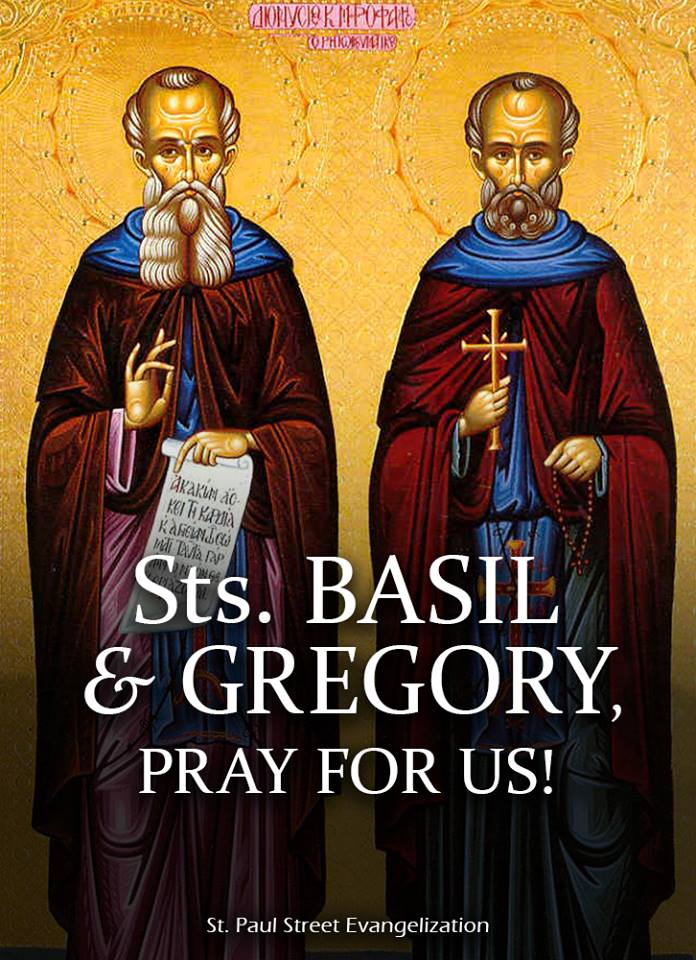
Sts Basil and Gregory Pray for us!

friendssts-basil-and-grefory-jan-2

Posted in QUOTES of the SAINTS, SAINT of the DAY

Quote/s of the Day – 2 January

Quote/s of the Day – 2 January

“The hairsplitting difference between
formed and unformed makes no difference to us.
Whoever deliberately commits abortion
is subject to the penalty for homicide.”

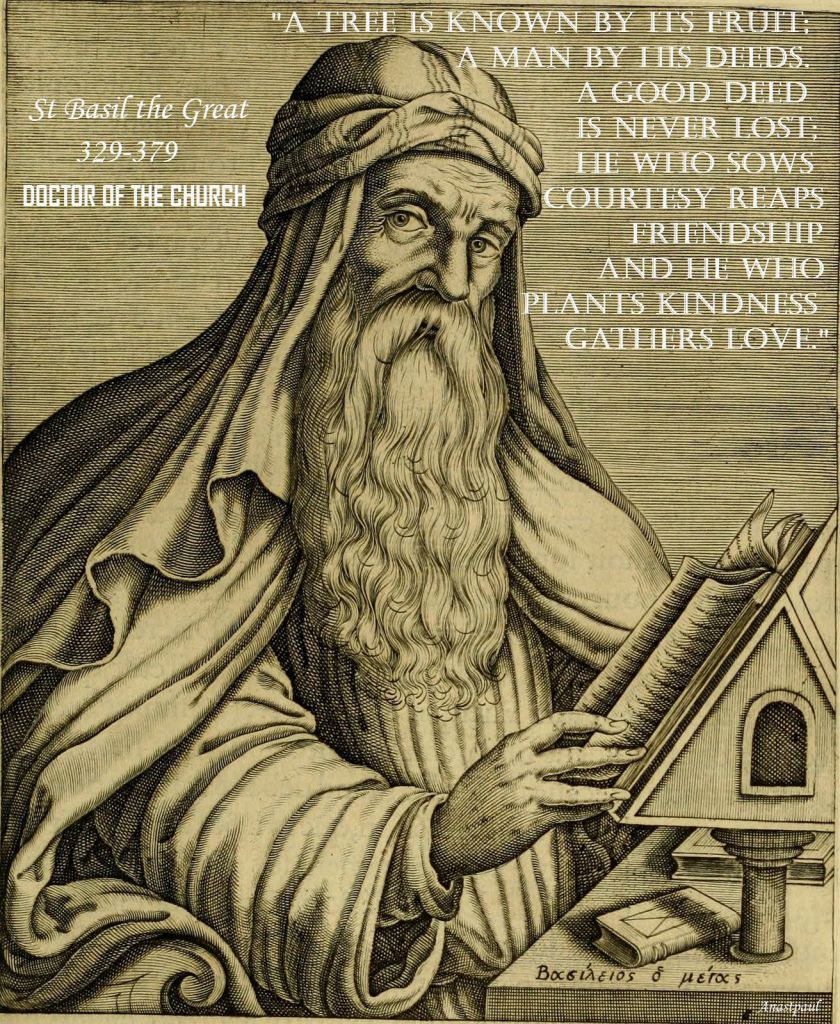
“A tree is known by its fruit;
a man by his deeds.
A good deed is never lost;
he who sows courtesy reaps friendship
and he who plants kindness gathers love.”

St Basil (329-379) Doctor of the Church

quote-of-the-daya-tree-is-known

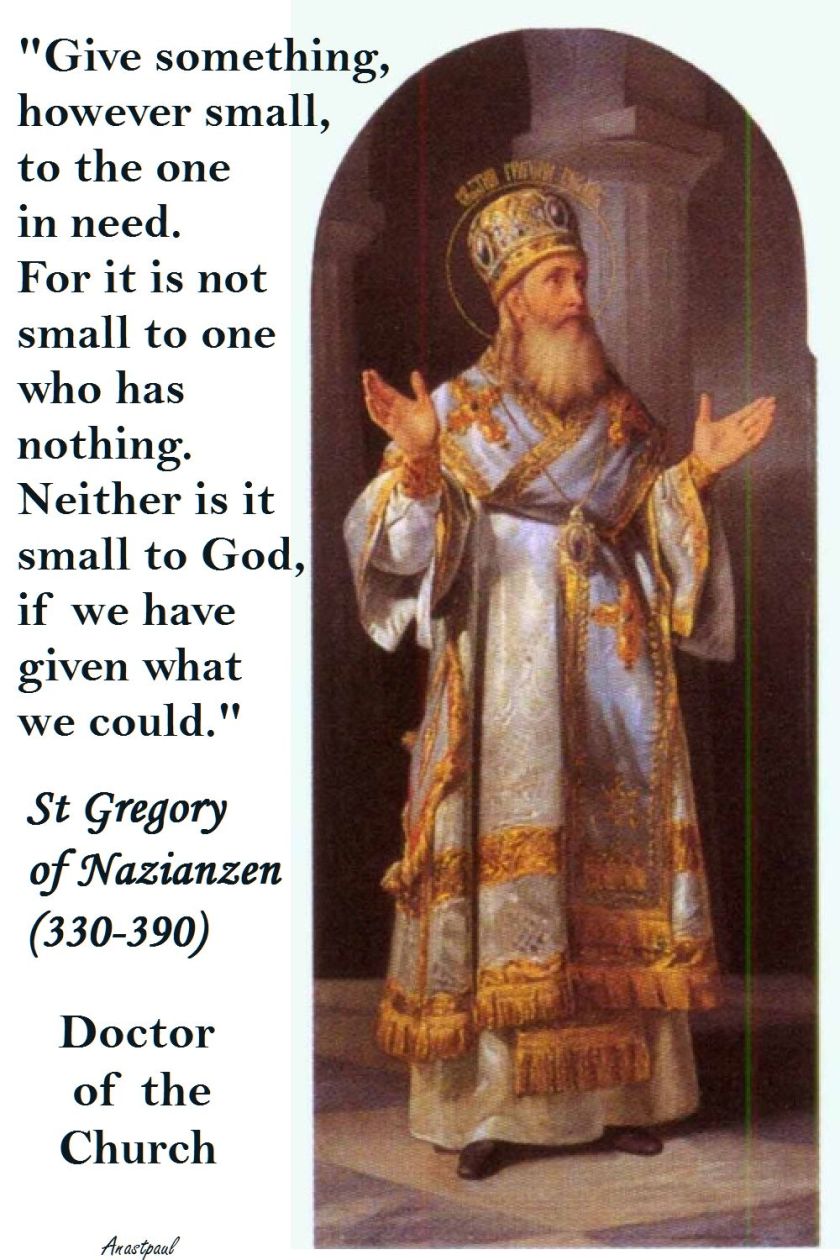
“Give something, however small,
to the one in need.
For it is not small to one who has nothing.
Neither is it small to God, if we have given what we could.”

“If anyone does not believe that Holy Mary
is the Mother of God, such a one is a stranger
to the Godhead.”
St Gregory of Nazianzen (330-390) Doctor of the Church

give-somethin

stranger


Posted in Uncategorized

Saint/s of the Day -2 January

Saint/s of the Day -2 January – Sts Basil the Great and Gregory Nazianzen

ST BASIL the GREAT – (329-379) Bishop, Confessor and Doctor of the Church – Patron of  Hospital administrators, Reformers, Monks, education, exorcism, Liturgists, Russia, Cappadocia.

St Basil the Great, the illustrious doctor and intrepid champion of the church, was born towards the close of the year 329 at Caesarea, the metropolis of Cappadocia. His parents were Cappadocians by birth, both equally illustrious for their nobility and descended from a long line of renowned heroes.  Our saint’s father, St. Basil the Elder, and his wife, St. Emmelia, adorned the conjugal state by their saintly conversation. Their marriage was blessed with ten children, of which they left nine living, all eminent for virtue; those that were married and lived in the world seeming no way inferior in piety to those who served God in holy virginity, as St. Gregory Nazianzen tells us. Four were sons and the other five daughters. St. Macrina the Younger, was the eldest of all these children, and assisted her mother in training up the rest in perfect virtue. The eldest among the boys was St. Basil; the other three were Naucratius, St. Gregory of Nyssa, and St. Peter of Sebaste. Our saint was the fruit of his mother’s prayers, and in his infancy by the same means recovered his health in dangerous sickness, when he had been given over by the physicians, as St. Gregory of Nyssa relates. He received the first tincture of virtue from his grandmother, St. Macrina the Elder, under whose care he passed his infancy in a country house near Neocaesarea, in Pontus; and he testifies himself that during his whole life he never forgot the strong impressions of piety which her exhortations and holy example made upon his tender mind.

Basil was educated in Caesarea, Constantinople, and Athens in the fourth century. He enjoyed stimulating university life. There he met Gregory Nazianzen, a quiet, scholarly man. The two became close friends.

Basil traveled through the East and studied monastic life. As a result, he formed his own monastic group. Gregory joined him. From their discussions, Basil composed a rule of life for monks. He allowed monks and nuns to operate hospitals and guesthouses and work outside the community. His principles still influence Eastern monasticism.

The two friends lived the monastic life for only about five years. Then Gregory had to return home to care for his father, who was a bishop. When Gregory got home, he was ordained a priest, although he did not think himself worthy. He watched over his father’s diocese.

In 374, Basil was made bishop of Caesarea. The Church called on him to refute the Arian heresy, which claimed that Jesus was not God. Emperor Valens promoted the heresy. Basil believed the Church must remain independent of the emperor and boldly defended the Church. He preached morning and evening to large crowds. When a famine struck, he gave his money to people who were poor. He organized a soup kitchen and served the people himself. Basil even built a town, which included a church, a hospital and a guesthouse.

Basil continued to write for the Church and to clarify the doctrines of the Trinity and the Incarnation. When one town was falling away from the faith, Basil ordained Gregory bishop and sent him there. Gregory went unhappily because he disliked conflict. The two friends were later reconciled.

St Basil died on the 1 or 2 of January 379.  We commemorate and celebrate his memory on 2 January.   The emperor had tried to tax St Basil’s diocese (area) so much, that he would not be able to pay. However, the many faithful followers, gave him money and jewels to help pay the taxes. The tax-collector was so amazed that he refused the money. t Basil had no way of knowing who to return the money and jewels to.  So, he had many cakes baked and in them placed the coins and jewels; he then distributed these cakes to the poor. Traditionally Basil’s cakes or sweet bread) is made in Orthodox households and they are also brought to the church. There they (called  Vasilopita) are blessed and cut by the priest; pieces are cut to honour Jesus Christ, the Mother of God, St Basil, the priest, the poor and others.


St Gregory of Nazianzen (330-390) Bishop, Theologian, Doctor of the Church Patron of Harvests and Poets

St Gregory who, from his profound skill in sacred learning, is surnamed the Theologian, was a native of Arianzum, an obscure village in the territory of Nazianzum, a small town in Cappadocia not far from Caesarea His parents are both honoured in the calendars of the church: his father on the 1st of January and his mother Nonna on the 5th of August.

After his baptism at 30, Gregory gladly accepted his friend Basil’s invitation to join him in a newly founded monastery. The solitude was broken when Gregory’s father, a bishop, needed help in his diocese and estate. It seems that Gregory was ordained a priest practically by force and only reluctantly accepted the responsibility. He skillfully avoided a schism that threatened when his own father made compromises with Arianism. At 41, Gregory was chosen suffragan bishop of Caesarea and at once came into conflict with Valens, the emperor, who supported the Arians.

For 30 years, Constantinople had been under the leadership of supporters of the Arian movement. The bishops of the surrounding areas begged Gregory to come and restore the faith, and again he went, dreading the task. When protection for Arianism ended with the death of Valens, Gregory was called to rebuild the faith in the great see of Constantinople, which had been under Arian teachers for three decades. Retiring and sensitive, he dreaded being drawn into the whirlpool of corruption and violence. He first stayed at a friend’s home, which became the only orthodox church in the city. In such surroundings, he began giving the great sermons on the Trinity for which he is famous. In time, Gregory did rebuild the faith in the city but at the cost of great suffering, slander, insults and even personal violence. An interloper even tried to take over his bishopric.

His last days were spent in solitude and austerity. He wrote religious poetry, some of it autobiographical, of great depth and beauty. He was acclaimed simply as “the Theologian.”


Both Basil and Gregory were misunderstood, but in spite of this, they rebuilt the faith. Basil died at age 49. Gregory resigned from Constantinople because of opposition and spent his last years reading, writing his autobiography, and enjoying his gardens.