
Saint of the Day – 14 June – Saint Fortunatus of Naples (4th Century) Bishop Confessor, a fierce Defender of the Faith against Arianism. He is the first historically-attested Bishop of Naples, as one of the recipients of a letter written by those who took part in the Arian Council of Philippopolis in the 340s -he was a fierce opponent of Arianism. His term as the Bishop is held to be 347 to 359. Also known as – Fortunato. Additional Memorial – 8 November, the day when it celebrates the memory of all the “Bishop Saints of the Church of Naples.”

The date of Fortunatus Episcopate is not totally precise, but is believed to have been towards the middle of the 4th Century, at the time that the Arian heresy was raging.
The heresy arose from the heretic Arius of Alexandria (280-336), who stated that the Word, Incarnated in Jesus Christ, is not of the same substance as the Father but represents the first of His creatures.
The heresy unleashed, a sometimes violent struggle, between the two positions existing in the Church. The Bishop of Naples, Fortunato did everything to preserve his Diocese from the Arian heresy, despite the attempt of the favourable eastern Bishops, who, having fled from the Council of Sardica (now Sofia in Bulgaria), wanted to draw him to their side.
It is known that he had a cemetery Basilica built which took his name, in the Sanità valley, not far from the Catacombs of St Gaudiosus and, which took on primary importance. In this Basilica Fortunato waslater buried and the mortal remains of the Bishops of Naples were also interred there. St Maximus,ae 10th Bishop of Naples, who was a victim of the Arian struggle, had died in exile in the East and which fact, his successor, St Severius, had reported to Naples.
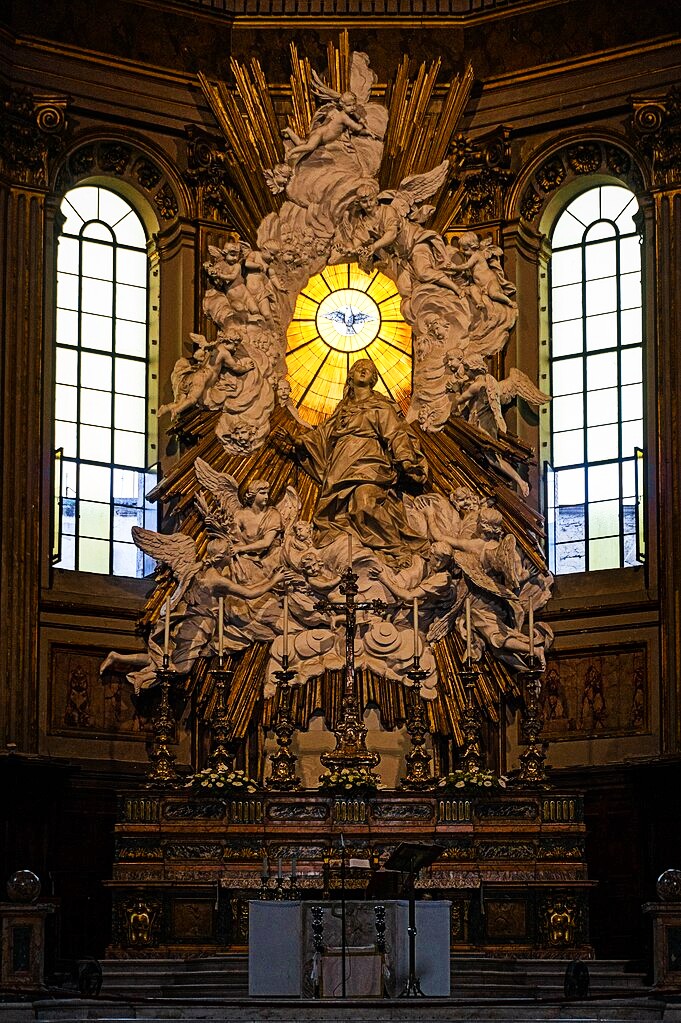
Under the Episcopate of Bishop John the Scribe (Died 849), the Relics of St Fortunatus and St Maxomus were moved to the ancient Cathedral of Naples.
And from that same period is the famous “Marble Calendar ” of Naples, sculpted in the 9th Century and still preserved in the rooms of the current Cathedral which bears the name of our Saint Fortunatus on 14 June and which, on the same date, is then reported in other Neapolitan Calendars and in the Roman Martyrology.
Even today, many Neapolitans bear his name, this testifies to the long and incessant cult enjoyed over the centuries by the holy Bishop Fortunatus, about whom, unfortunately, only little information has been passed to us.



 AnaStpaul
You must be logged in to post a comment.